
🔥 Would you like to save this?
The cabin smelled like Chanel No. 5 and Lucky Strikes, simultaneously. Seats were wider than your first apartment’s sofa, and the engine drone rattled your molars so hard you’d wonder if a filling was working loose. Nobody — not one soul — removed their shoes at a security checkpoint, because there wasn’t one. Flying in the 1950s was equal parts glamour and endurance test, a strange cocktail of five-star dining and propeller noise loud enough to make your ears ring for a day. Here are ten details from that era that would leave today’s boarding-pass holders genuinely speechless.
29. Passengers Wore Suits, Ties, Dresses, and Heels Just to Board a Plane
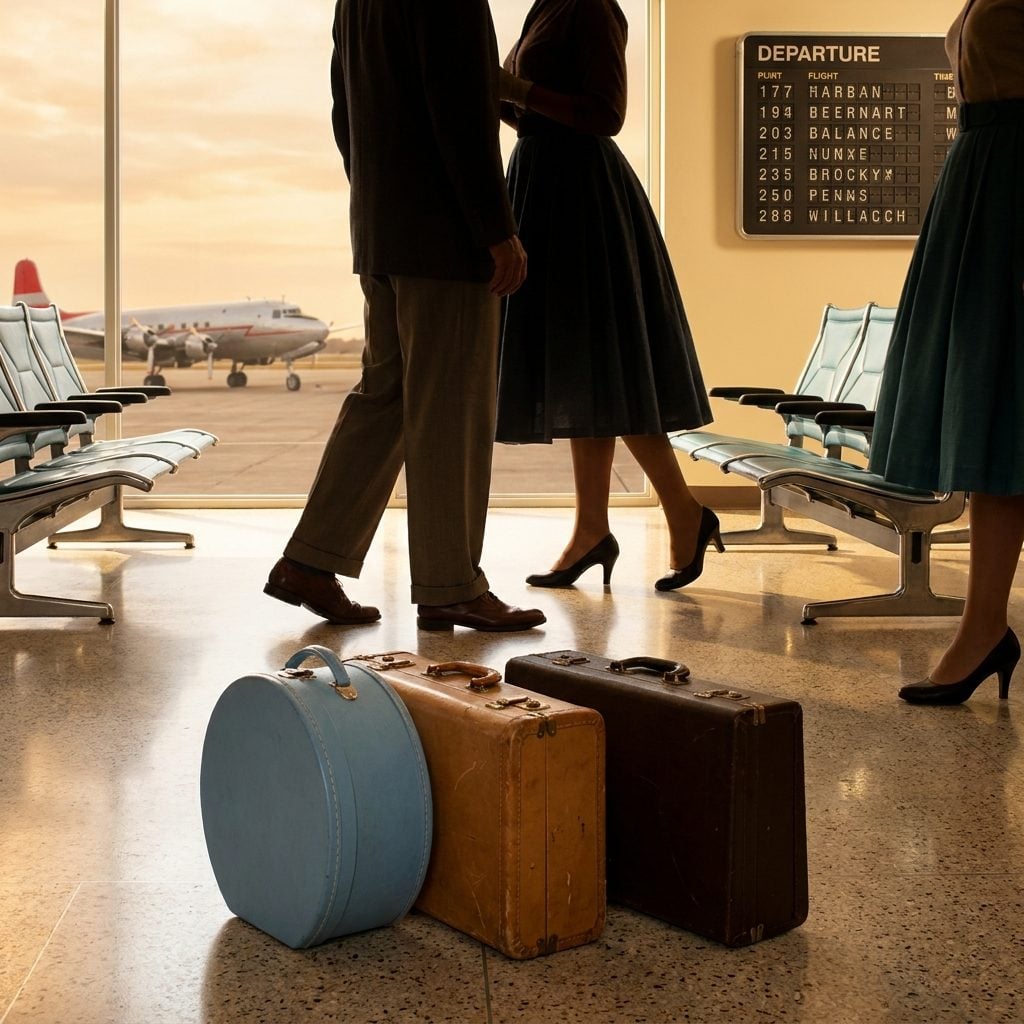
Air travel was a social event, and you dressed for it the way you’d dress for a restaurant that required a jacket. Men wore pressed suits. Women wore dresses with gloves, sometimes hats. Children looked like miniature adults headed to church. The terminal itself felt like a theater lobby, and boarding was the opening act.
Part of this was cultural expectation. Part of it was cost — a round-trip from New York to Los Angeles in 1955 ran the equivalent of thousands of dollars in today’s money, and when you’re spending that kind of money, you don’t show up in flip-flops. I sometimes think about this when I’m standing in a modern boarding line behind someone in pajama pants. Honestly? I can’t decide which era got it more wrong.
28. Real Porcelain Plates and Metal Cutlery Instead of Plastic Everything
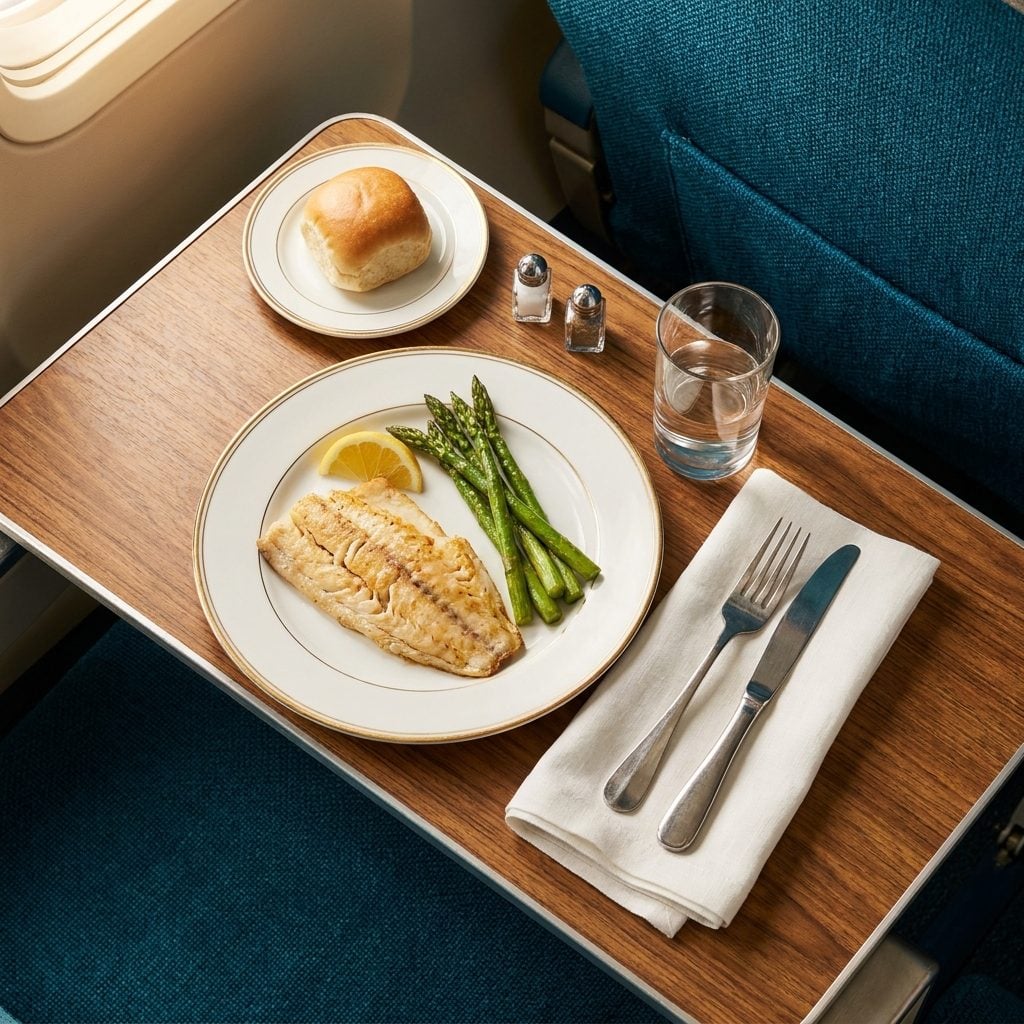
Forget the sealed foil tray. In the 1950s, your airline meal arrived on actual dishware — white porcelain, sometimes with the carrier’s logo glazed into the rim. Real forks. Real knives with some weight to them. Glass glasses. Linen napkins that someone had to wash and fold after every single flight.
The logistics were wild to consider. Ground crews loaded hundreds of individual porcelain pieces into galley carts, attendants served multi-course meals in a pressurized metal tube, and then everything got collected, scrubbed, and reloaded for the next departure. Breakage was constant. The expense was staggering. Airlines did it anyway because flying was supposed to feel like dining out, not grabbing something from a vending machine.
27. Carved Roasts, Lobster Tails, and Multi-Course Dining at 25,000 Feet
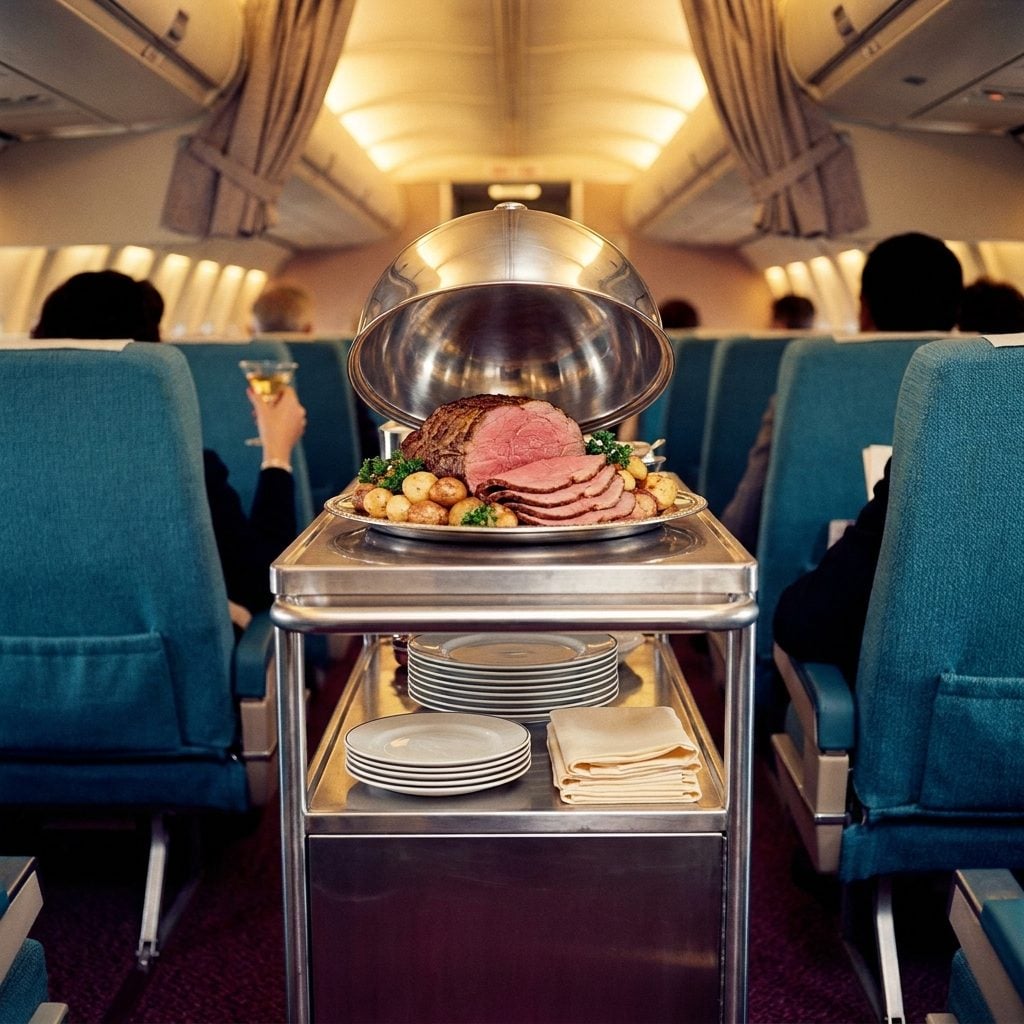
On premium routes, flight attendants carved roasts tableside. In the aisle. At altitude. Sit with that image: someone wielding a sharp knife over a joint of beef while the plane hit a pocket of turbulence over Kansas. It happened routinely, and apparently nobody found it alarming.
First-class passengers on international flights could expect lobster thermidor, filet mignon, cheese courses, dessert trolleys, and champagne that wasn’t terrible. Even coach class on certain carriers got meals that would embarrass a modern business-class tray. Pan Am’s Clipper service was famous for this, but TWA, BOAC, and others competed fiercely on food quality. When every airline flies roughly the same planes at roughly the same speed, the steak becomes your competitive edge. Simple as that.
26. Stewardesses Hired Under Strict Weight Limits, Height Rules, and Age Caps
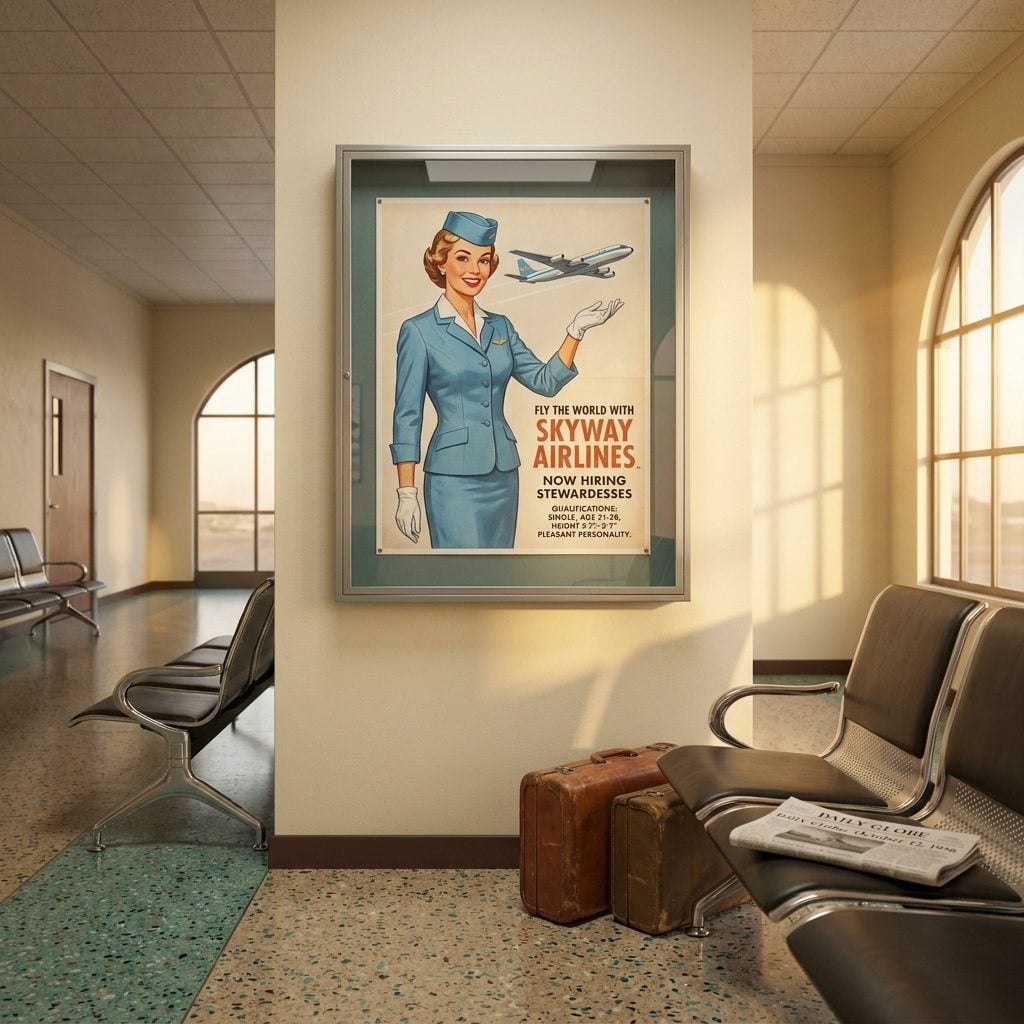
Airlines published their requirements openly, and nobody blinked. Height between 5’2″ and 5’6″. Weight under 135 pounds — sometimes under 125. Age between 21 and 26. Clear skin, good teeth, a “pleasant disposition.” Some carriers demanded nursing credentials. Many enforced minimum attractiveness standards that were, let’s be honest, exactly as uncomfortable as they sound.
Regular weigh-ins were standard. A few extra pounds could mean a warning; more could mean termination. All of this was printed in hiring brochures as though it were perfectly normal, because in the 1950s it was. The profession was marketed more like modeling than safety work, and that framing tells you everything about what airlines were actually selling to passengers.
25. The Unmarried Rule: Lose Your Wings If You Wore a Wedding Ring
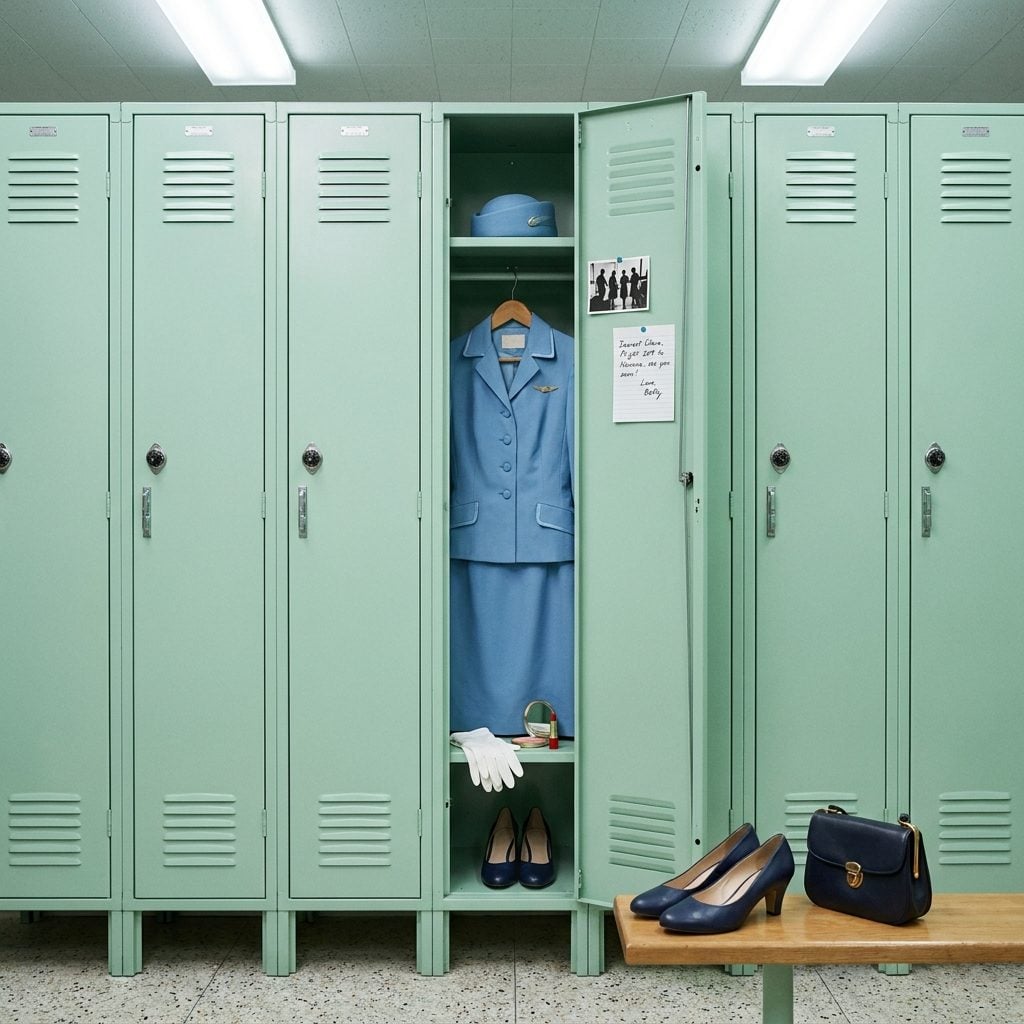
Get married, get fired. That was the policy at nearly every major U.S. airline through the 1950s and well into the 1960s. The reasoning, such as it was, held that married women would become distracted, less dedicated, or — the quiet part said aloud — less appealing to male passengers.
“We were told point-blank: your career ends the day you say ‘I do.'”
Some women hid engagements. Others accepted the tradeoff, treating the job as a few-year adventure before settling down. No single lawsuit killed the marriage ban. It eroded gradually through the 1960s and 1970s as labor laws caught up and the workforce pushed back. But for an entire generation of flight attendants, the choice was binary: the ring or the wings.
24. The Deafening Roar of Piston Engines That Made Conversation Nearly Impossible
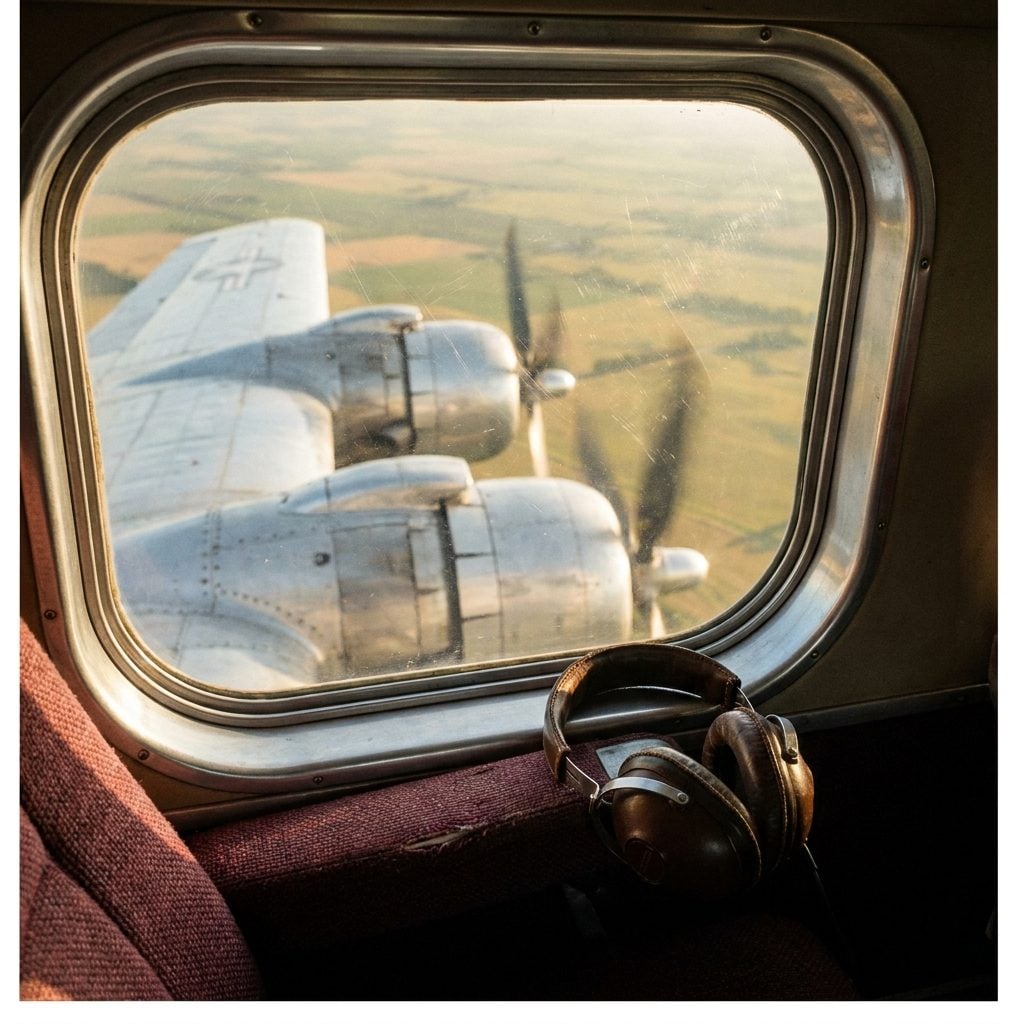
Modern jets are quiet enough for conversation, even napping, coast to coast. A 1950s Lockheed Constellation or Douglas DC-6? Forget it. Those four massive piston engines generated a sustained roar that penetrated every surface of the fuselage, and passengers nearest the props sometimes stuffed cotton in their ears just to cope.
You didn’t chat with your seatmate — you shouted, or you gave up and read. The vibration was relentless, a deep rattle in your sternum and your teeth that some passengers described as physically exhausting. They’d arrive at their destination drained not from time-zone confusion but from hours of full-body acoustic punishment. When jets finally arrived in the late 1950s, the drop in noise was one of the very first things people noticed and praised. That tells you how bad the old propeller cabins really were.
23. Lower Cruising Altitudes That Kept You Closer to Every Storm Cloud
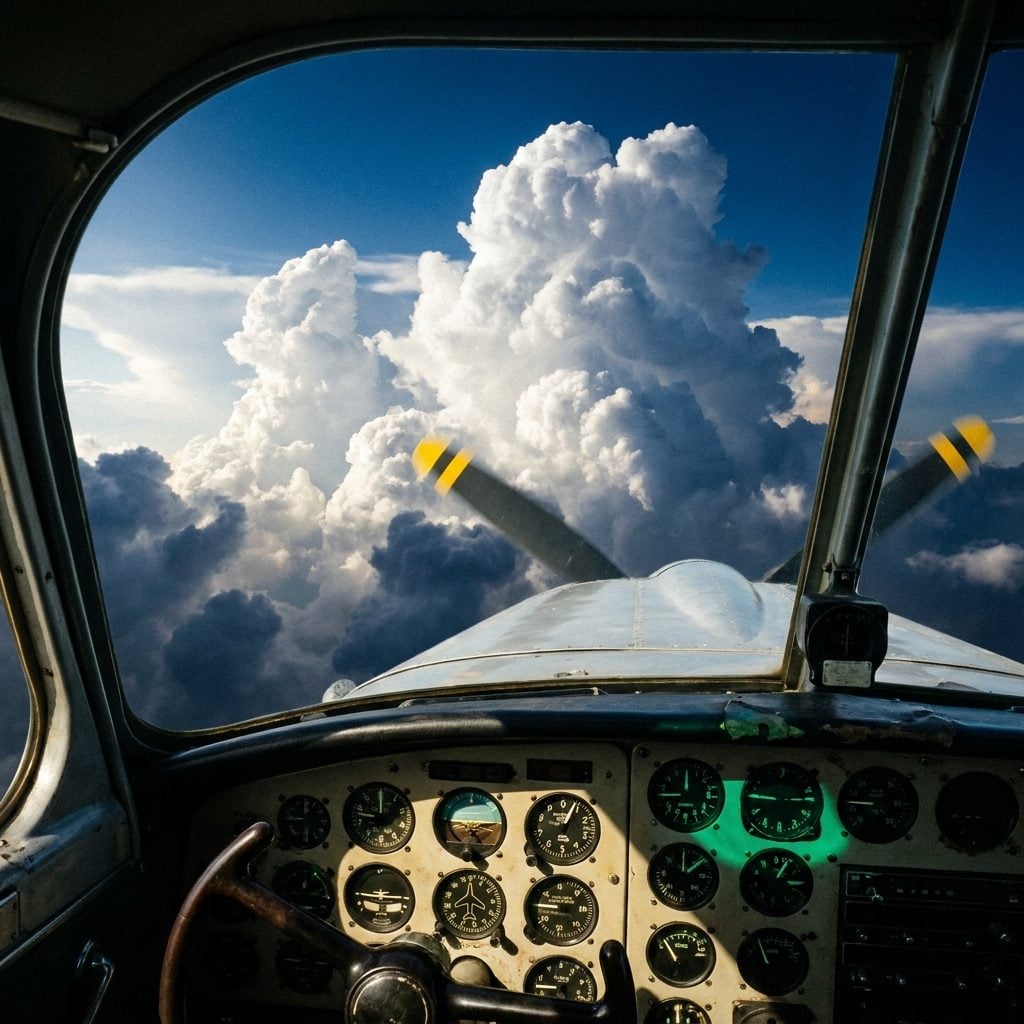
Piston-engine aircraft cruised somewhere between 10,000 and 20,000 feet. Modern jets sit between 35,000 and 40,000. That gap matters enormously because weather lives down low.
At those altitudes, you couldn’t climb over thunderstorms. You flew around them, skirted their edges, or sometimes barreled straight through because radar was primitive and forecasting amounted to an educated guess. Passengers watched lightning flash at eye level outside their windows — not below them, at eye level. And because pressurization systems were less refined, cabin altitude ran higher, which meant more ear pain, more headaches, more general misery on top of the bumps. The smooth, above-the-weather cruise we take for granted now? It simply didn’t exist.
22. Turbulence So Rough That Passengers Gripped Armrests for Entire Flights
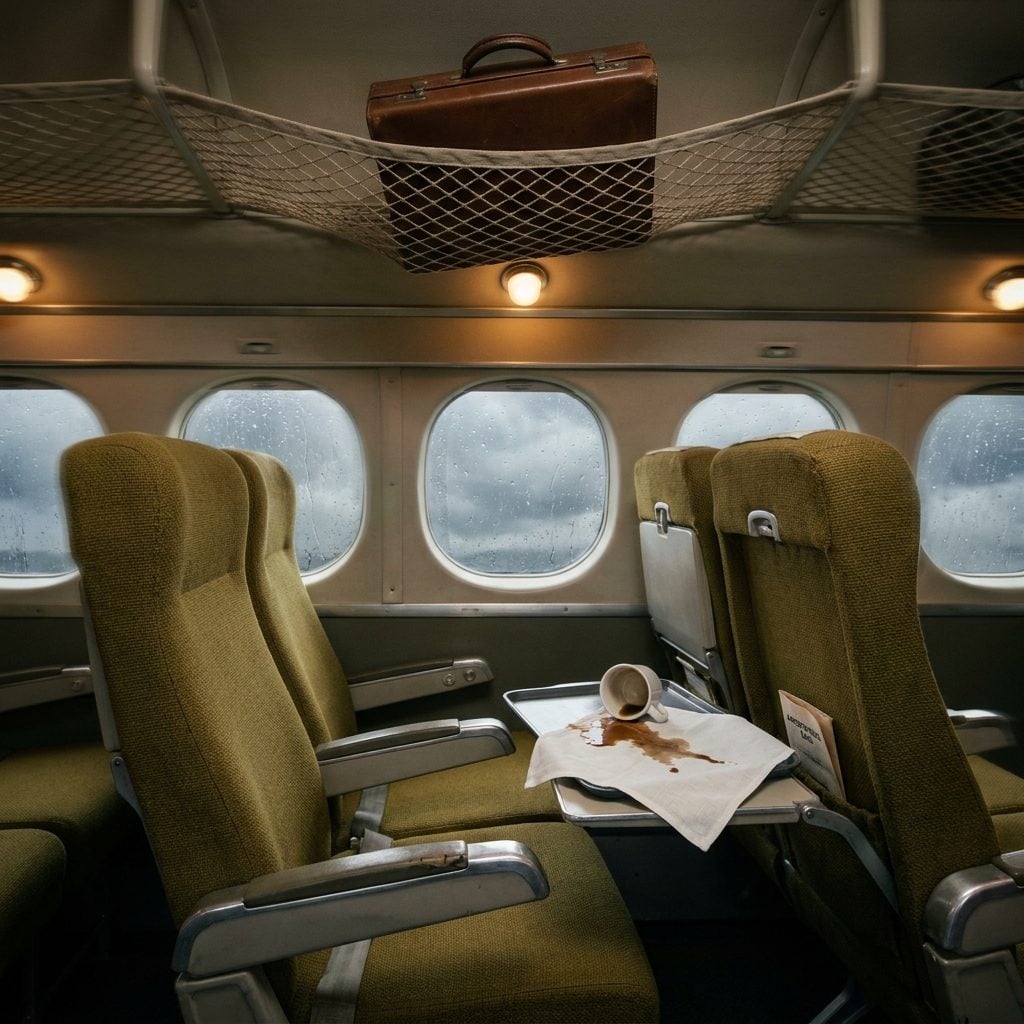
The airsickness bag wasn’t a quaint formality. It got used. A lot.
Piston aircraft were lighter, flew lower, and had wings shaped for a different aerodynamic era — all of which meant they reacted far more violently to atmospheric disturbance. A bump that a modern 737 shrugs off with a gentle sway could send a DC-4 lurching hard enough to launch an unsecured coffee cup off the tray table. And those tray tables didn’t latch the way ours do now, which made the problem worse.
Frequent flyers of the era developed a kind of fatalism about it. You accepted the bouncing. You held your drink with both hands. You kept your seatbelt cinched not because a sign nagged you, but because the alternative was bruising your forehead on the ceiling. Vintage airline posters — all those serene illustrations of smiling passengers gazing at cloud banks — conveniently left this part out.
21. Onboard Lounge Areas Where You Could Stand Up, Walk Over, and Have a Drink With Strangers
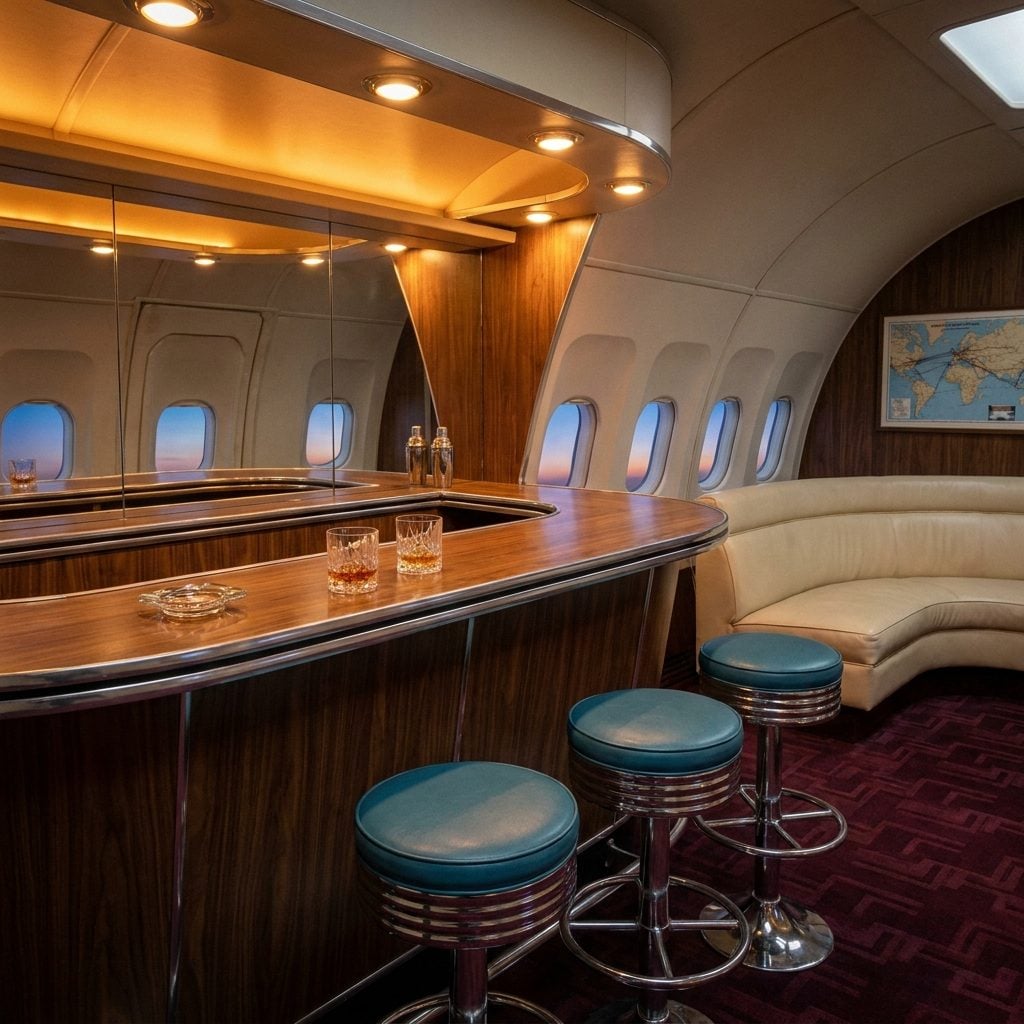
Some aircraft — particularly on long-haul routes — had actual lounge spaces. Not a curtained-off section with marginally better seats. A lounge. With a bar, barstools, and sometimes a piano, though the piano thing gets slightly exaggerated every time someone retells it.
Boeing’s Stratocruiser, which entered service in the late 1940s and flew through the 1950s, featured a lower-deck cocktail lounge accessed by a spiral staircase. You’d unbuckle, descend the stairs, and find yourself in a small bar where strangers were already two Manhattans deep over the Atlantic. The whole social dynamic was alien to modern air travel. People lingered. They talked to each other on purpose. The flight wasn’t a block of dead time between departure and arrival — it was the point.
20. Children Toured the Cockpit Mid-Flight and Walked Away With Airline Wings Pinned to Their Shirts
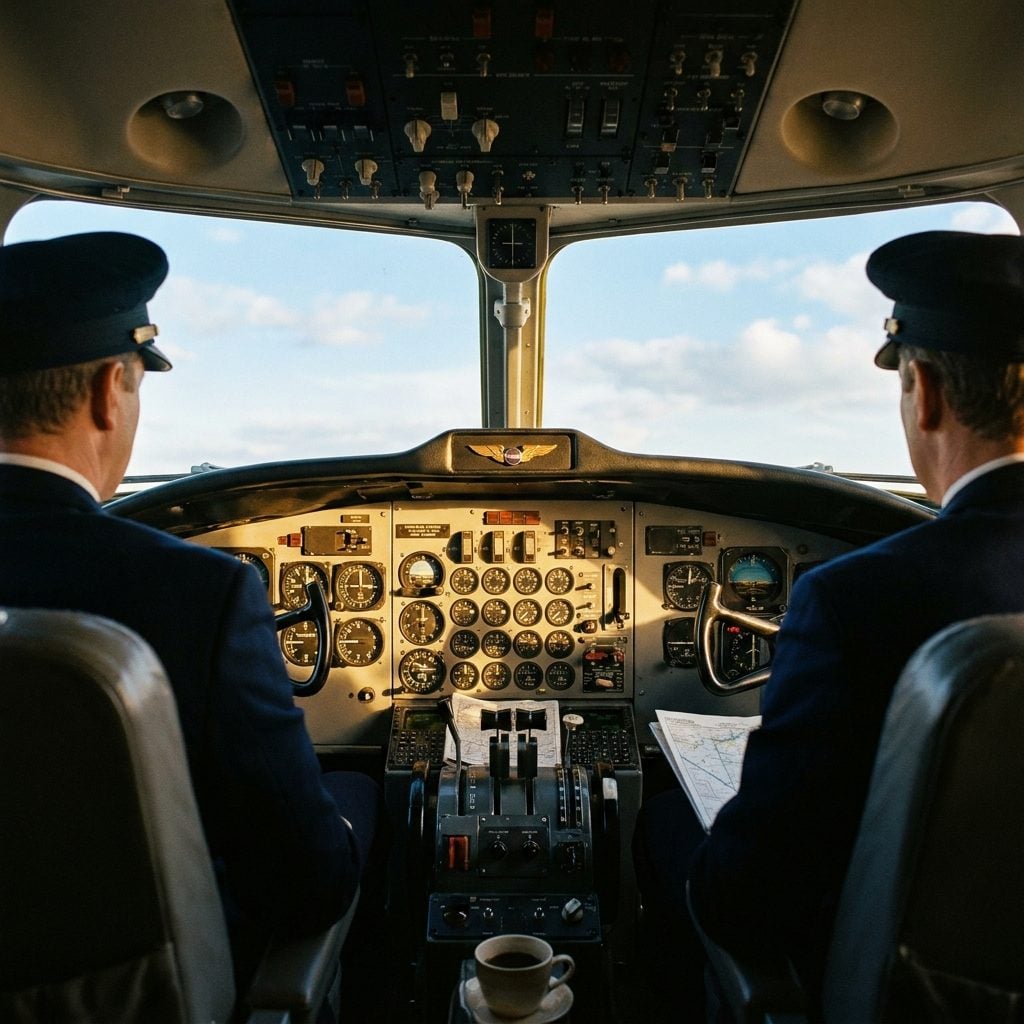
Somewhere over Ohio, a stewardess would crouch down, tap a kid on the shoulder, and ask if they’d like to meet the captain. The answer was always yes. Up the aisle, through the curtain, and suddenly a seven-year-old was standing in a cockpit full of gauges, toggle switches, and two men in peaked caps who looked like they ran the world.
The pilot would explain one or two instruments, maybe let the kid hold the yoke for a second (the co-pilot’s hands never actually leaving the controls), and then came the prize: a small metal pin shaped like wings, pressed into a tiny palm with real ceremony. Pan Am’s were gold-toned. TWA’s had a little globe. United’s had a shield. Kids pinned them to their collars and didn’t take them off for days.
Nobody signed a waiver. No parent hovered. The whole ritual lasted maybe four minutes, but it minted a lifelong memory. Ask anyone who flew as a child in the 1950s what they remember most, and half of them will mention those wings before they mention the destination.
19. Airport Security Was Basically a Polite Suggestion
🔥 Would you like to save this?
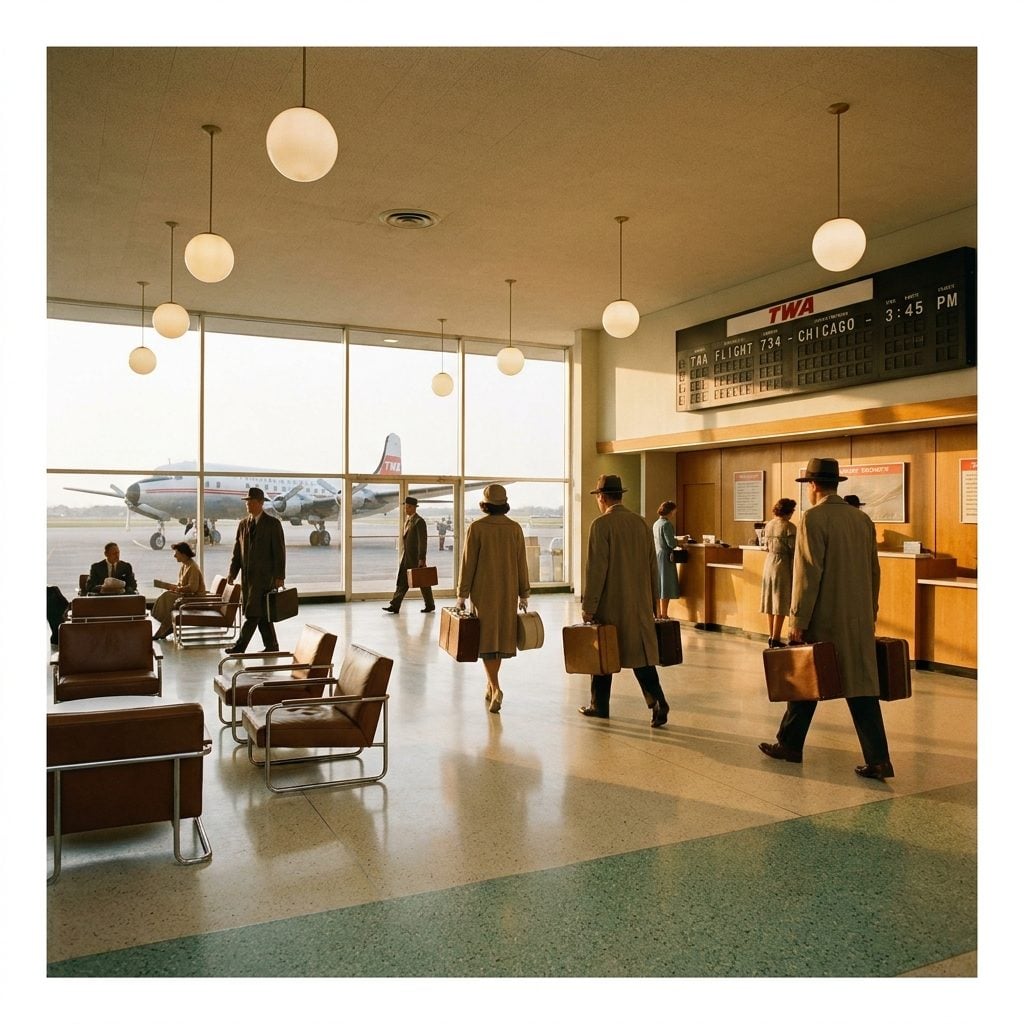
There was no security line because there was no security. That sentence alone would make a modern traveler’s head spin, but it was the simple truth of flying in the 1950s. You walked into the terminal, checked your bag at the counter if you felt like it, and strolled to your gate. No metal detectors. No X-ray machines. No removing shoes, belts, or dignity.
The concept of hijacking an American commercial aircraft barely existed in the public imagination. The first significant wave of U.S. airline hijackings didn’t begin until the late 1960s, and even then, security measures came slowly. In the 1950s, the biggest risk assessment an airline made about a passenger was whether their luggage weighed too much.
Airports felt more like train stations: open, public, breezy. You could carry anything onto a plane. A pocketknife, a lighter, a wrapped gift. Nobody asked and nobody cared.
18. You Could Show Up Twenty Minutes Before Your Flight and Still Feel Early
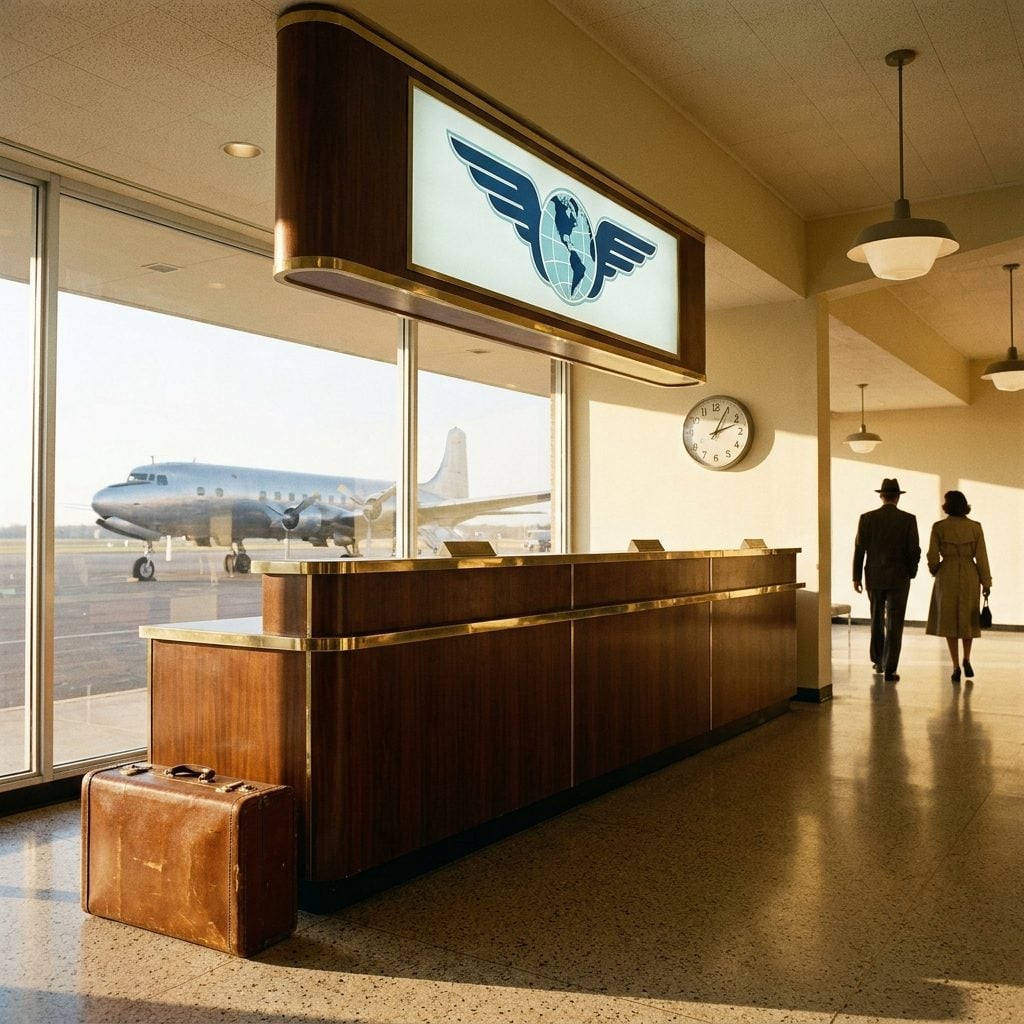
Twenty minutes. That was generous, actually. Some travelers arrived ten minutes before departure, checked a bag, and made their gate with time to buy a magazine. The idea of arriving two or three hours early for a domestic flight would have seemed genuinely insane to a 1950s traveler, like showing up for dinner at noon.
Without security checkpoints, without the labyrinthine TSA queue, without the need to remove half your wardrobe and send it through a conveyor belt, the distance between the terminal entrance and your seat on the aircraft was measured in minutes, not hours. Airports were designed for this speed. They were smaller, simpler, and built on the assumption that passengers were adults who knew where they were going.
17. Your Whole Family Could Walk You Right to the Gate and Wave as You Boarded
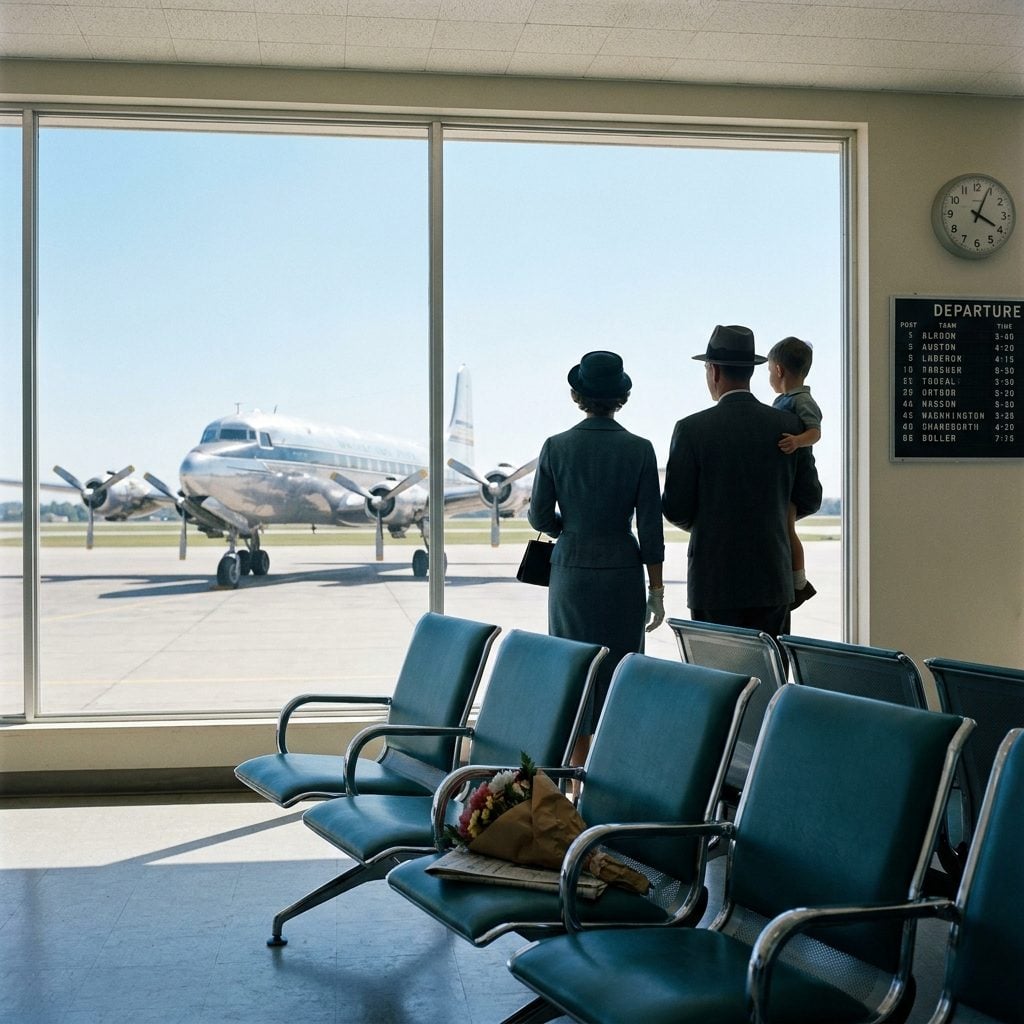
The goodbye happened at the gate, not at the curb. This is maybe the single detail about 1950s air travel that hits hardest when you describe it to someone under thirty.
Your mother, your father, your kids, your sweetheart, your entire extended family if they wanted to come along could walk with you through the terminal, sit beside you in the gate area, and stand at the window watching your plane push back. No ticket required. No ID check. The airport was a public building, as open as a library or a post office, and the departure gate was where the real emotional business of travel happened.
Fathers knelt down to hug children. Couples kissed against a backdrop of propellers and tarmac. Grandparents pressed their hands against the glass. And when the plane taxied away, the people left behind stayed at the window, watching until it was a silver speck. I honestly can’t think of a modern travel experience that carries the same weight. The curb drop-off at departures doesn’t come close.
16. Entire Families Spent Sunday Afternoons on Airport Observation Decks Just Watching Planes
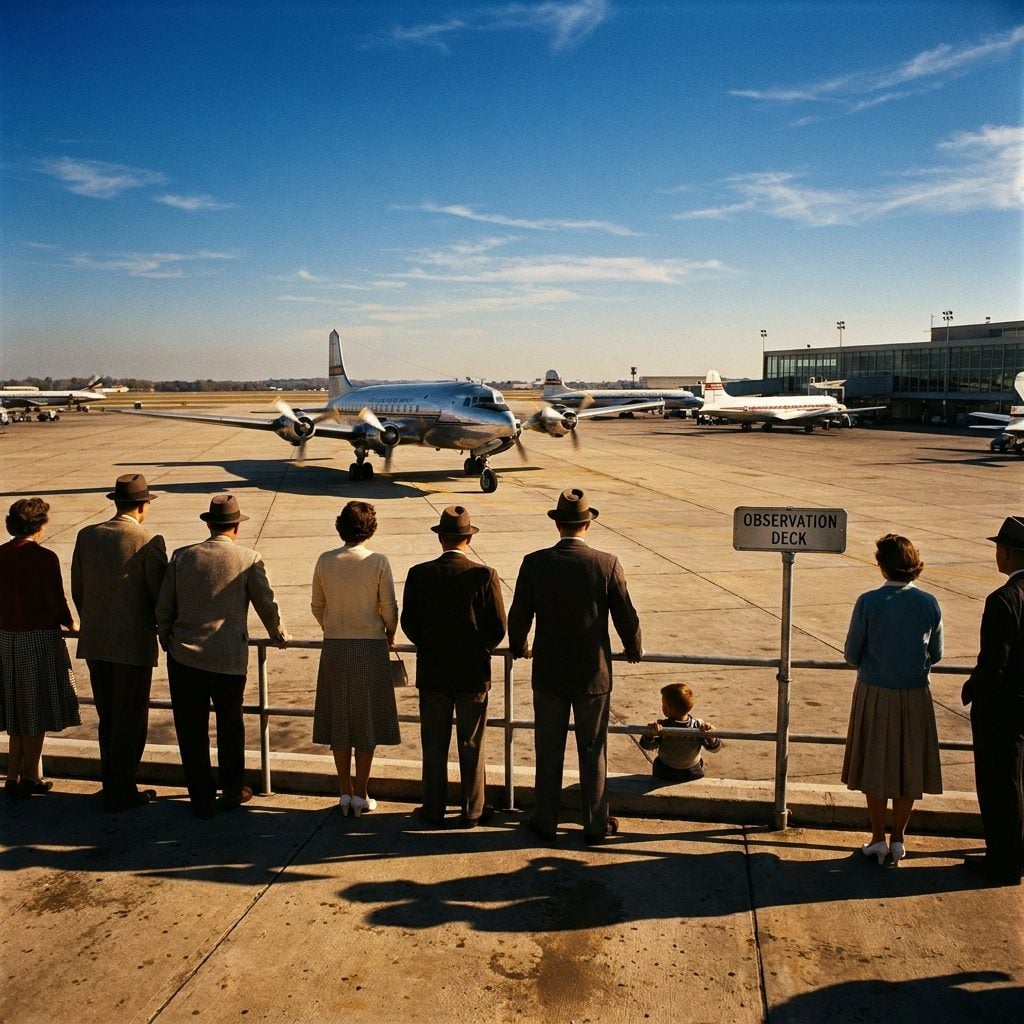
Going to the airport was the activity. Not going somewhere. Just going to the airport.
Most major terminals in the 1950s had open-air observation decks, usually on the roof or an upper floor, where anyone could stand behind a railing and watch aircraft land and take off from a hundred yards away. Idlewild (before it became JFK), Midway in Chicago, Los Angeles International, Washington National. They all had them. Some charged a dime. Most were free.
Families packed sandwiches. Kids pressed binoculars to their faces. Teenagers leaned on the railing and tried to look bored while secretly being thrilled. The roar of a Constellation’s engines at full throttle, close enough to feel in your chest, was free entertainment that rivaled anything at the movies. The observation deck was democracy in action: rich, poor, travelers, non-travelers, all standing shoulder to shoulder watching the same Lockheed Super Constellation rotate off the runway.
Security concerns killed most of them by the 1970s and 80s. A few airports have tried to bring them back. It’s not the same.
15. Glamorous Airport Restaurants Where You Ate Steak and Watched 747s Roll By (Well, Constellations)
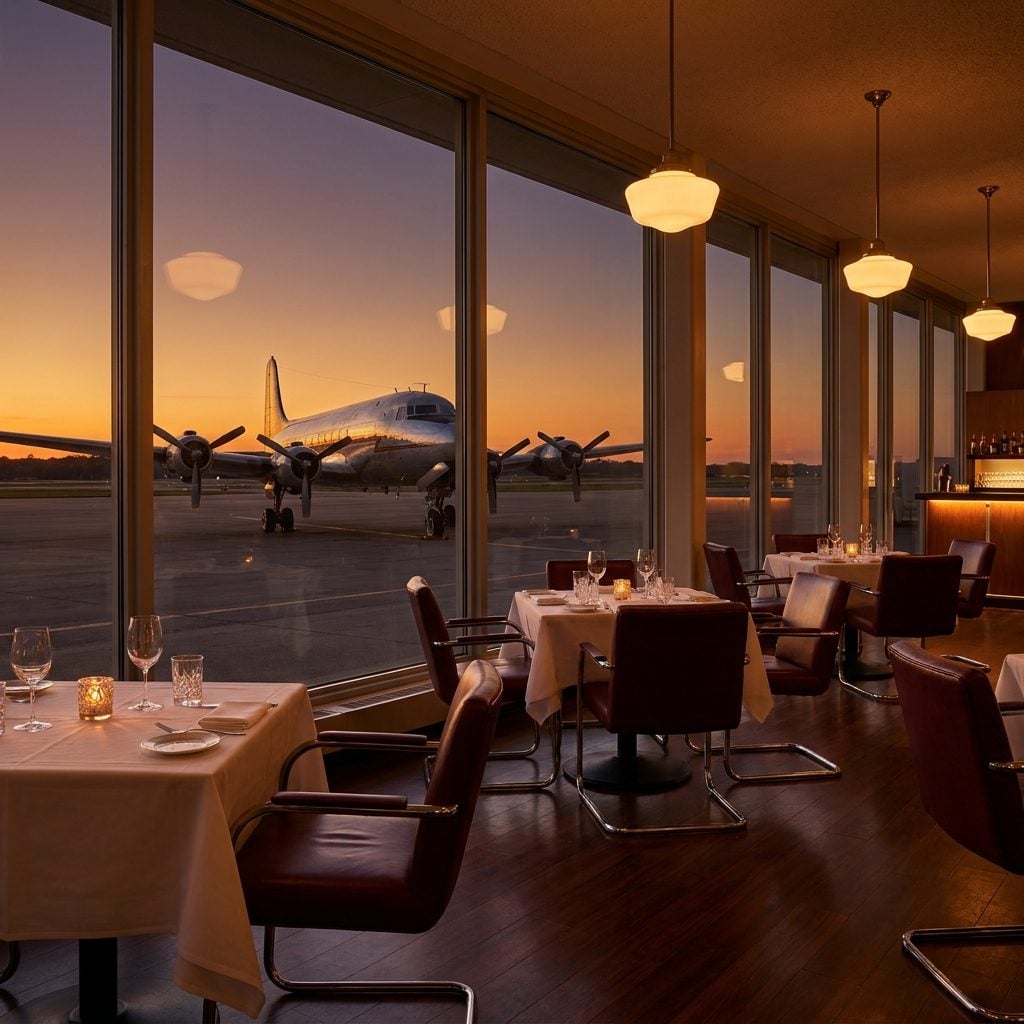
Before airport food meant a $14 wilted Caesar salad in a plastic clamshell, terminals had actual restaurants. White tablecloths. Cloth napkins. Waiters in jackets. And the best ones had floor-to-ceiling windows facing the runway, turning dinner into a spectacle.
The Terrace Room at LaGuardia. The Ambassador Club dining room at Idlewild. Kansas City’s rooftop restaurant with its panoramic view. These weren’t afterthoughts or concessions. They were destinations in themselves. People who had no intention of flying reserved tables for anniversary dinners, business lunches, Saturday evening cocktails. The view was the draw: massive silver aircraft taxiing past your window while you worked through a shrimp cocktail and a filet mignon, the rumble of engines providing the soundtrack.
Menus were serious. Prices were reasonable for a nice restaurant, not marked up by the captive-audience tax that defines modern airport dining. And nobody rushed you. You lingered over coffee and watched the sun set behind a row of Lockheed Constellations. It felt like living in the future.
14. Propeller Aircraft Still Ruled the Skies and Every Flight Sounded Like a Thunderstorm
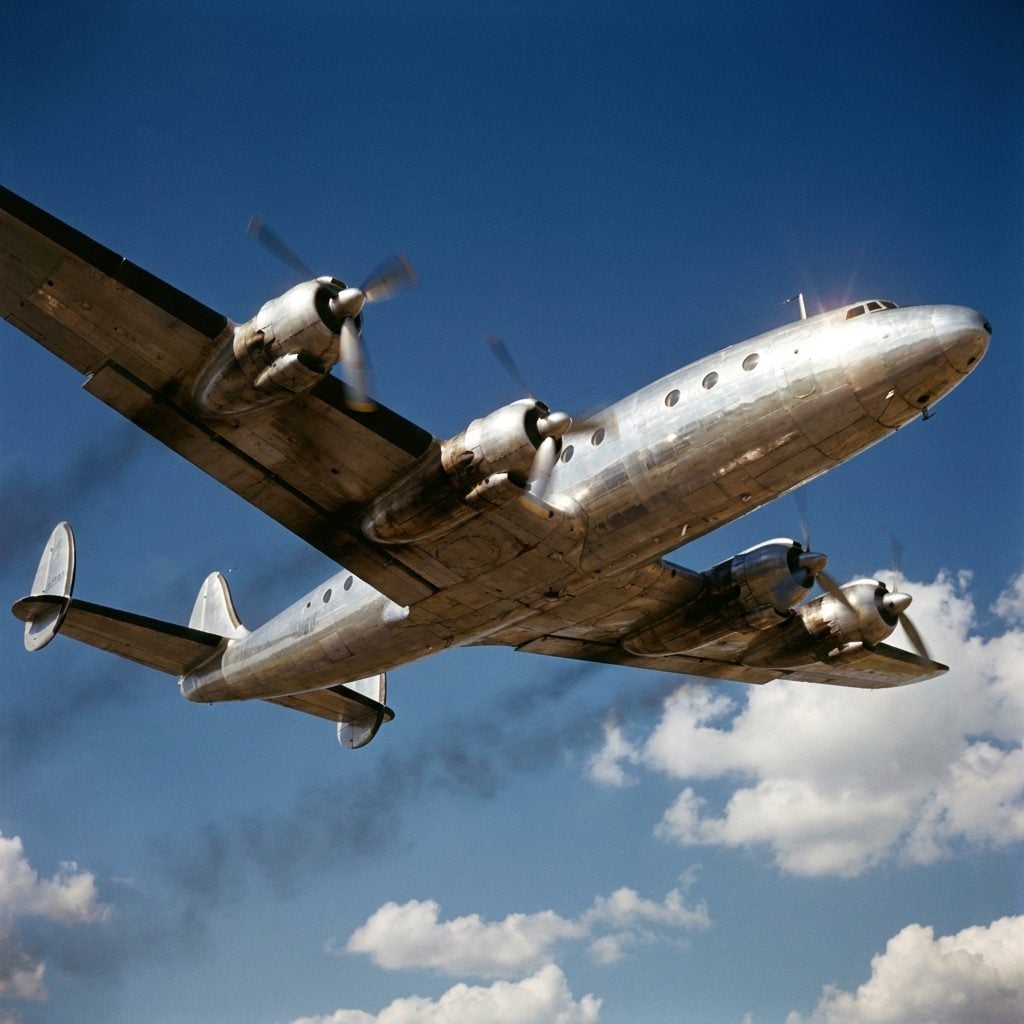
Four massive radial engines, each one louder than a modern rock concert, vibrating the entire fuselage at a frequency you could feel in your molars. That was commercial aviation for most of the 1950s. The Douglas DC-6, the DC-7, the Lockheed Constellation with its distinctive triple tail. Beautiful machines, every one of them. And loud enough to rattle your fillings.
Conversation during flight required a near-shout or a lean-in that put your mouth inches from someone’s ear. Reading was possible. Sleeping was aspirational. The props created a rhythmic drone that some passengers found hypnotic after the first hour and others found maddening for the entire six hours to Los Angeles.
But there was something viscerally satisfying about propeller flight that jets never quite replicated. You could see the engines working. The props were right outside your window, spinning in that strange optical blur, and you understood, in a physical and immediate way, what was keeping you in the air. The machine was not hiding anything from you.
13. The Day Jets Arrived and Suddenly California Was Only Five Hours Away
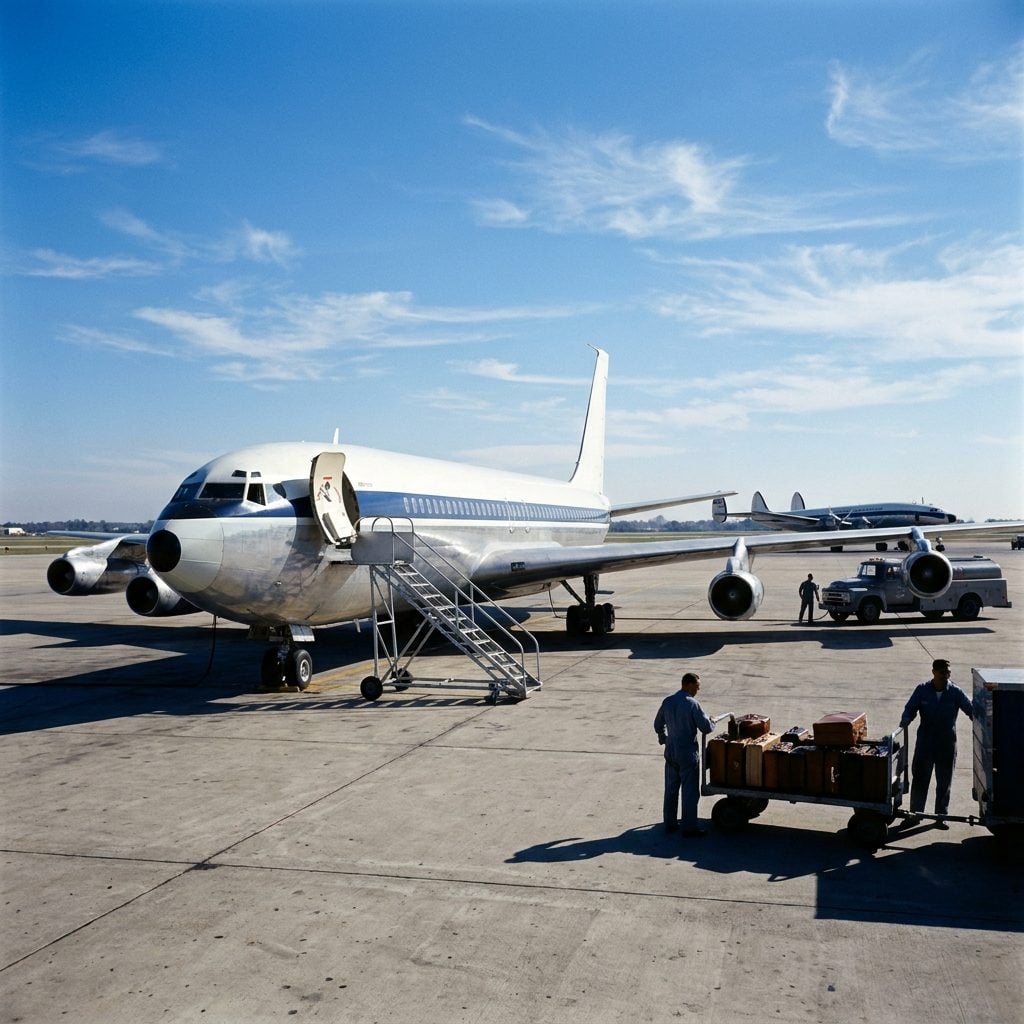
October 26, 1958. Pan American World Airways Flight 114, a Boeing 707, flew from New York to Paris. Commercial jet travel had arrived in America, and nothing about flying would ever be the same.
The difference wasn’t subtle. It was violent. A trip that took eleven grinding, vibrating, fuel-stop-requiring hours in a prop plane could now be done in five and a half. The cabin was quieter. Smoother. Higher. Jets flew above most of the weather that made propeller flights a white-knuckle endurance test. Passengers who had spent years accepting that a cross-country trip meant the better part of a day suddenly found themselves arriving before lunch.
And the planes looked different. Swept wings. No propellers visible from the cabin. A cleaner, more futuristic silhouette on the tarmac. People who saw a 707 for the first time described it with genuine awe. It looked like it belonged to a different century than the Constellation parked beside it, which, in a sense, it did.
12. Flights Were Rare Enough That Getting on a Plane Felt Like a Genuine Event
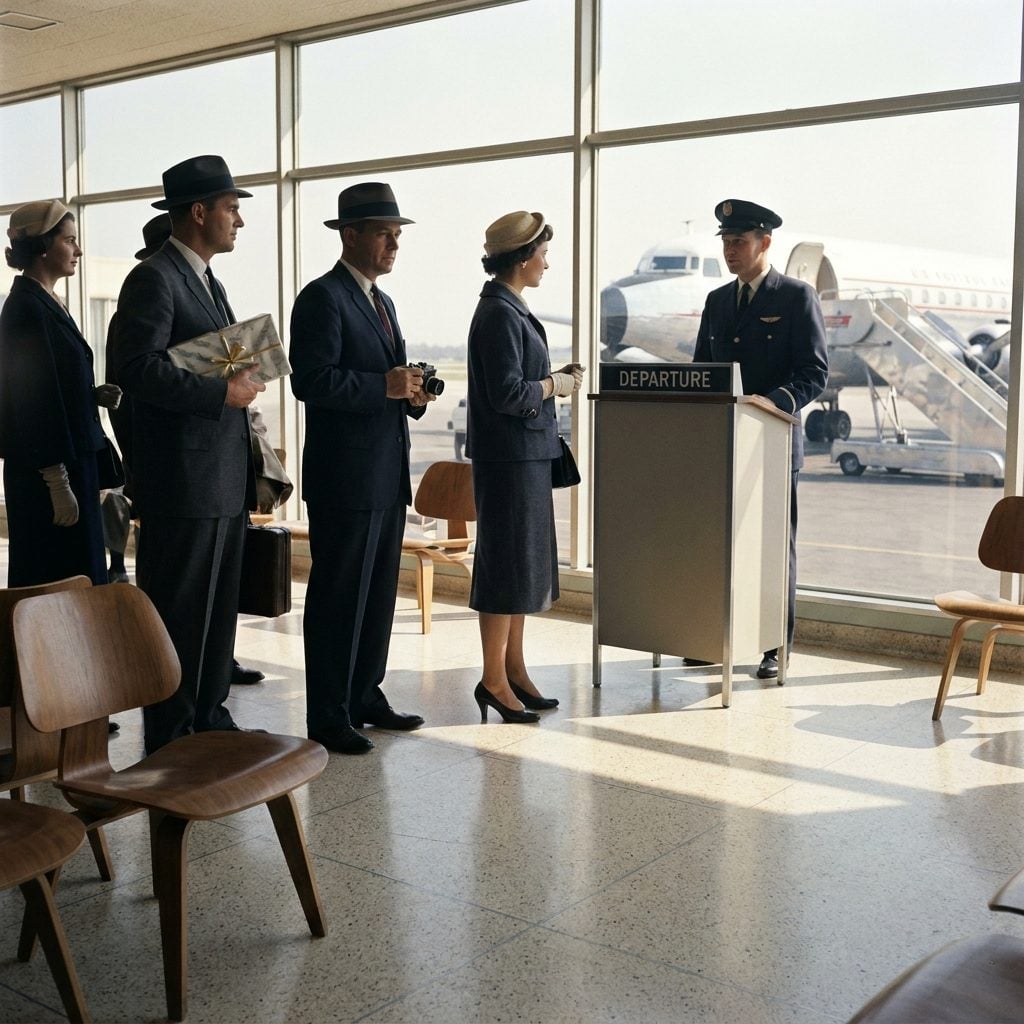
Nobody flew casually in the 1950s. There were no weekend getaway fares, no Tuesday afternoon shuttle to Boston, no budget carriers running six flights a day between the same two cities. Airlines operated limited schedules, and securing a seat sometimes meant planning weeks in advance. This scarcity did something powerful to the psychology of travel: it made every flight feel important.
People dressed for it. Men wore suits and ties. Women wore hats and gloves. Not because airlines required it (though some came close), but because boarding an aircraft was an occasion that warranted your best clothes, the way a night at the theater or a fine restaurant did. You were doing something most of your neighbors had never done and might never do.
Flying wasn’t transportation. It was an event with wings.
The ritual extended beyond clothing. Families drove you to the airport. Coworkers wished you well. You might receive a bon voyage card. And when you returned, people actually wanted to hear about it, because air travel was still novel enough to generate real stories. The modern experience of flying, where it’s essentially a bus with altitude, would have been incomprehensible.
11. A Single Round-Trip Ticket Could Cost More Than a Month’s Rent
🔥 Would you like to save this?
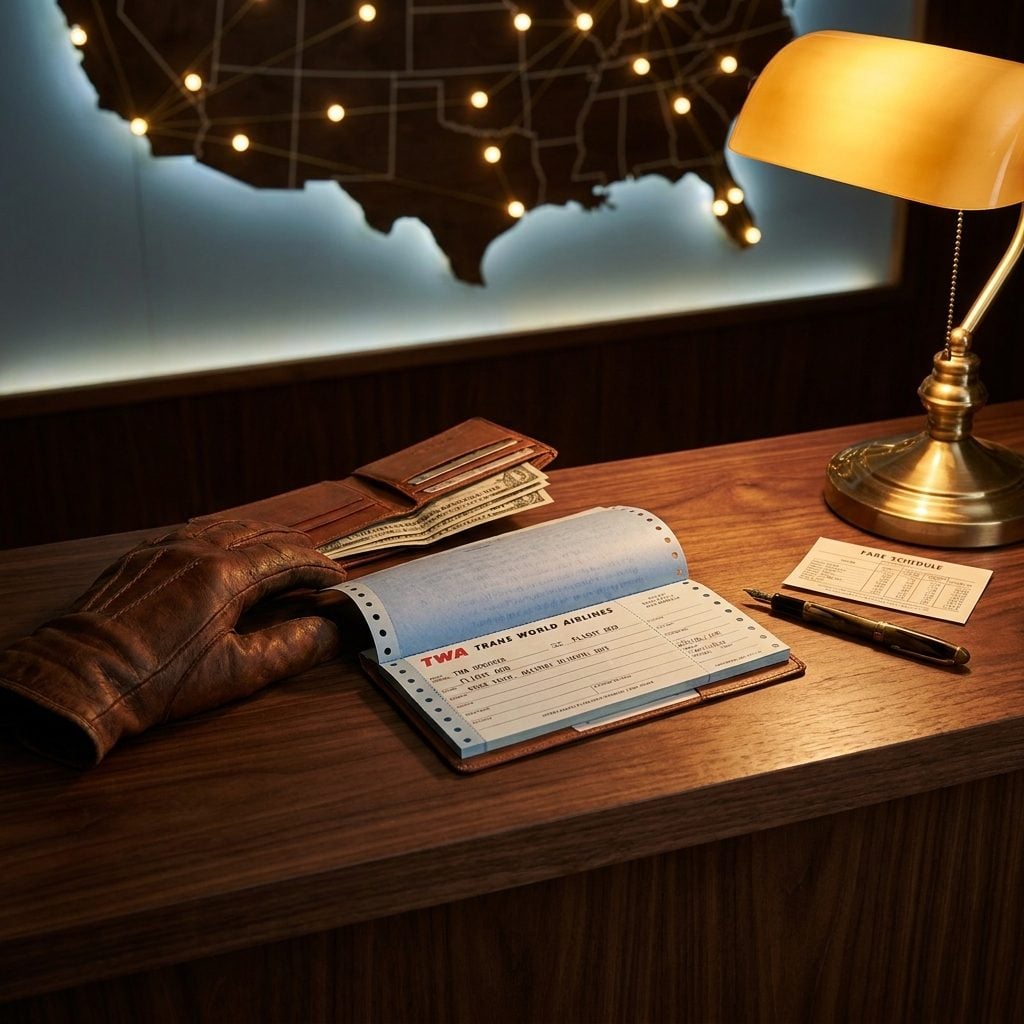
Here’s the part the nostalgia tends to skip: flying in the 1950s was wildly, absurdly expensive. A round-trip coach ticket from New York to Los Angeles cost around $208 in 1955 dollars. Adjusted for inflation, that’s roughly $2,300 today. For coach. First class could easily double that.
The average American household income in 1955 was about $4,400 a year. So a single cross-country round trip could consume nearly 5% of a family’s annual earnings. The equivalent today would be like spending $3,500 to $4,000 on a domestic coach ticket. This is why air travel was genuinely elite in this era, not in the marketing sense but in the demographic reality of who could afford it.
Who Actually Flew?
Business travelers on company expense accounts. Wealthy families. Military personnel on government orders. The occasional middle-class family splurging on a once-in-a-decade trip. That’s largely who filled those beautiful cabins with their white tablecloths and carved roast beef. The democratization of air travel didn’t really begin until deregulation in 1978, when competition drove fares down and turned flying from a luxury into a commodity.
So when we remember the elegance and ceremony of 1950s air travel, it helps to remember the price tag that made that elegance possible. The airlines could afford to serve lobster thermidor because they were charging what amounts to first-class international fares for a seat to Chicago.
10. Flying Was a Black-Tie Affair, and Nobody Thought That Was Weird
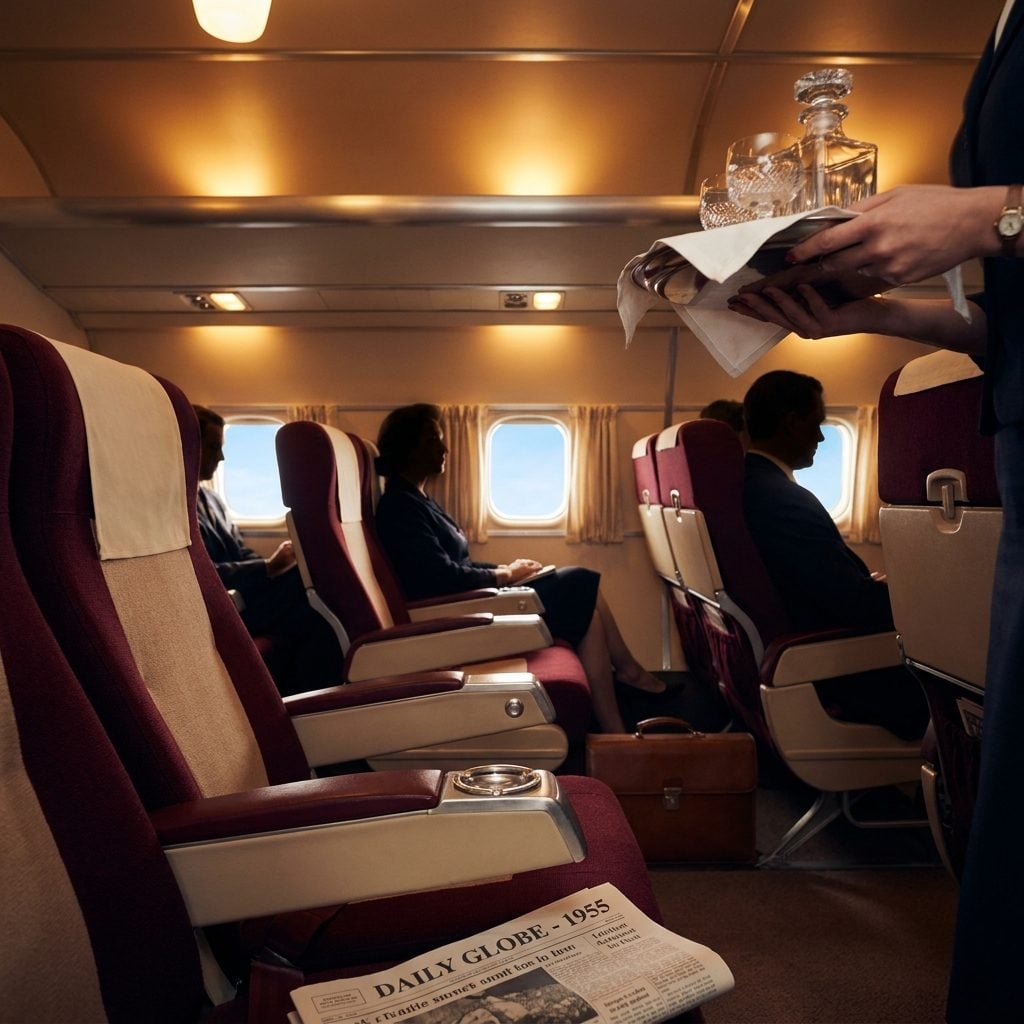
Men wore suits. Women wore gloves. Not because the airline demanded it, but because stepping onto a commercial aircraft in 1955 carried the social weight of a wedding or dinner at the Waldorf. You dressed for the occasion because it was an occasion — a round-trip ticket from New York to Los Angeles ran the equivalent of several thousand dollars today, so the passenger list skewed hard toward executives, diplomats, and people with actual wealth.
The cabin reinforced every bit of it. Linen napkins, real silverware, bone china plates. Flight attendants addressed you by name, checked from a manifest. No overhead bins stuffed with rollaboards, because nobody was flying to a budget conference in Orlando. The whole enterprise had the hush of a private club suspended at 20,000 feet — and it made no apologies for that.
What’s strange in hindsight: nobody resented any of it. The formality was part of the deal. You were doing something extraordinary, so you looked extraordinary. Boarding in sweatpants and flip-flops would have been as bewildering as showing up to the opera in a bathrobe.
9. Air Sickness Bags Got a Real Workout at Those Lower Altitudes
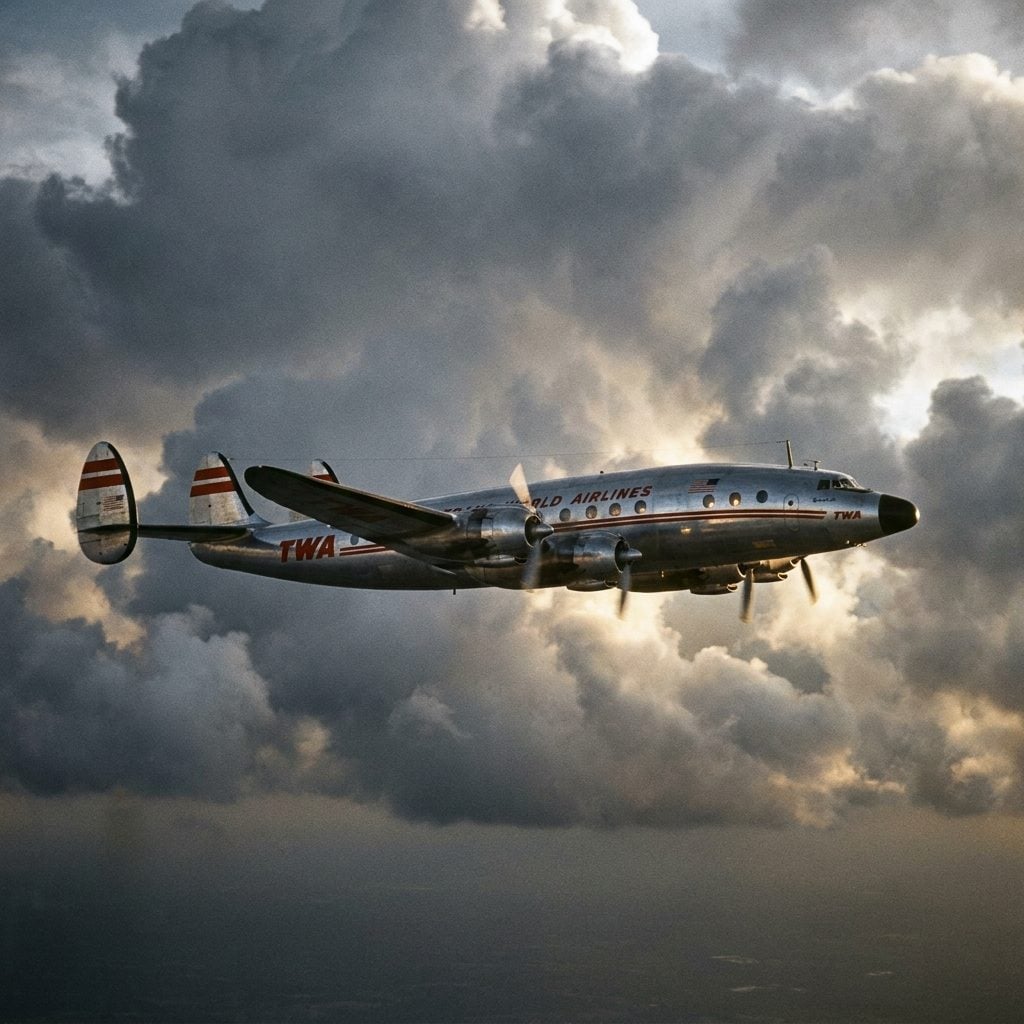
Turbulence wasn’t occasional. It was the baseline.
Piston-engine aircraft like the DC-6 and Lockheed Constellation cruised at roughly 15,000 to 25,000 feet — right in the guts of weather systems that modern jets sail above at 35,000 or higher. Louder, bumpier, and considerably less pressurized. Four radial engines roaring outside the fuselage made normal conversation a shouting match. Your coffee sloshed, your stomach lurched, and that air sickness bag wasn’t some formality tucked into the seat pocket for nervous types. People used it. Often.
Airlines factored this right into the experience — some carriers handed out complimentary Dramamine before takeoff. Flight attendants trained to handle airsick passengers the way a nurse handles post-op patients, calmly and without flinching, because on a choppy four-hour haul from Chicago to San Francisco with two fuel stops, somebody was going to need help. Lavender and rubbing alcohol hung in the cabin air as reliably as engine exhaust.
8. Ashtrays Built Right Into the Armrests Like They Were Load-Bearing
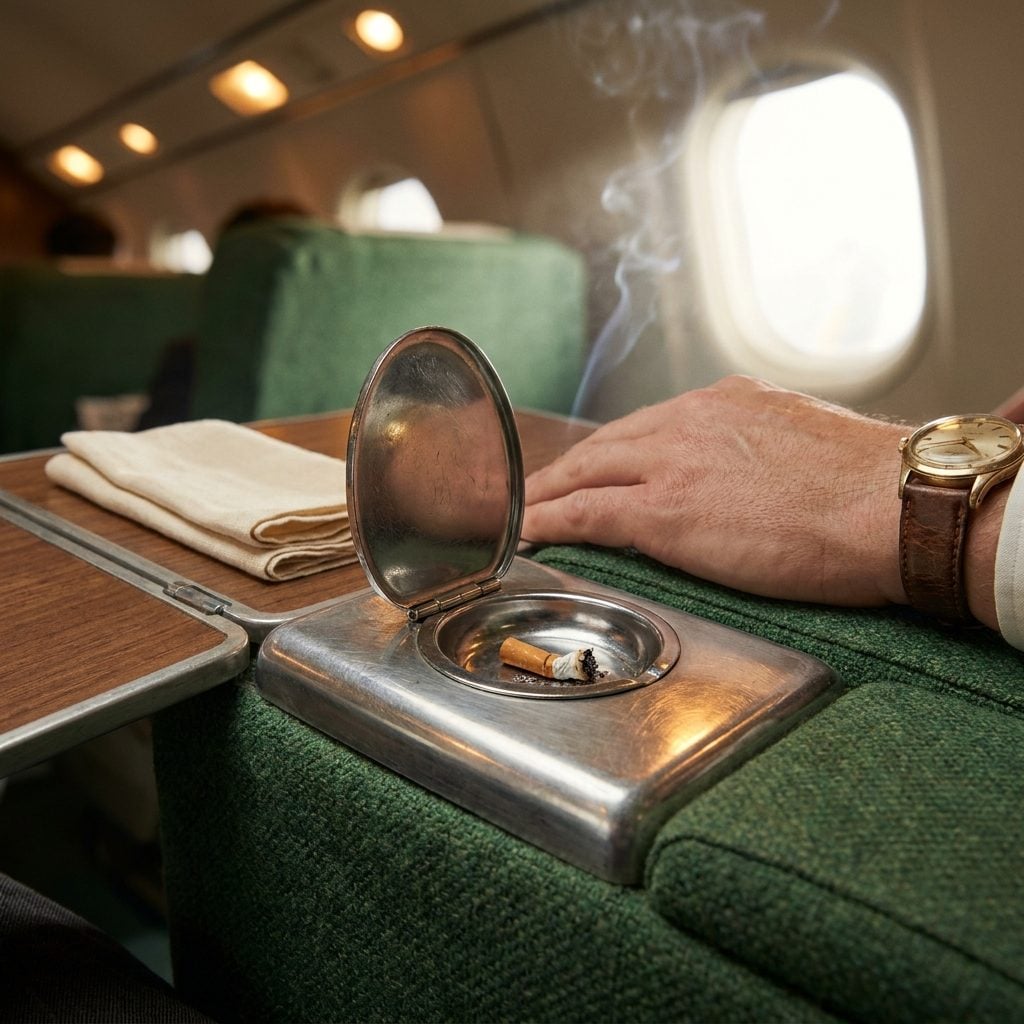
Not on the plane. In the plane. Machined into the aluminum armrest with a satisfying little flip-top lid, as permanent and considered as the seat belt buckle itself. Engineers at Douglas and Boeing designed these into the seat framework alongside the reading light and the recline mechanism. People would smoke at 20,000 feet. Why wouldn’t they?
The cabin air carried a permanent bluish haze — cigarette smoke mixing with faint engine oil and that metallic scent all prop-era aircraft shared. Nobody complained. Most adults smoked, and the idea that secondhand smoke posed a health risk was still years from public consciousness. The ashtray was just furniture, like a cupholder. Less controversial, honestly, than a cupholder.
7. The Seat Pitch That Modern Airlines Would Call ‘Premium Economy’ Was Just… Economy
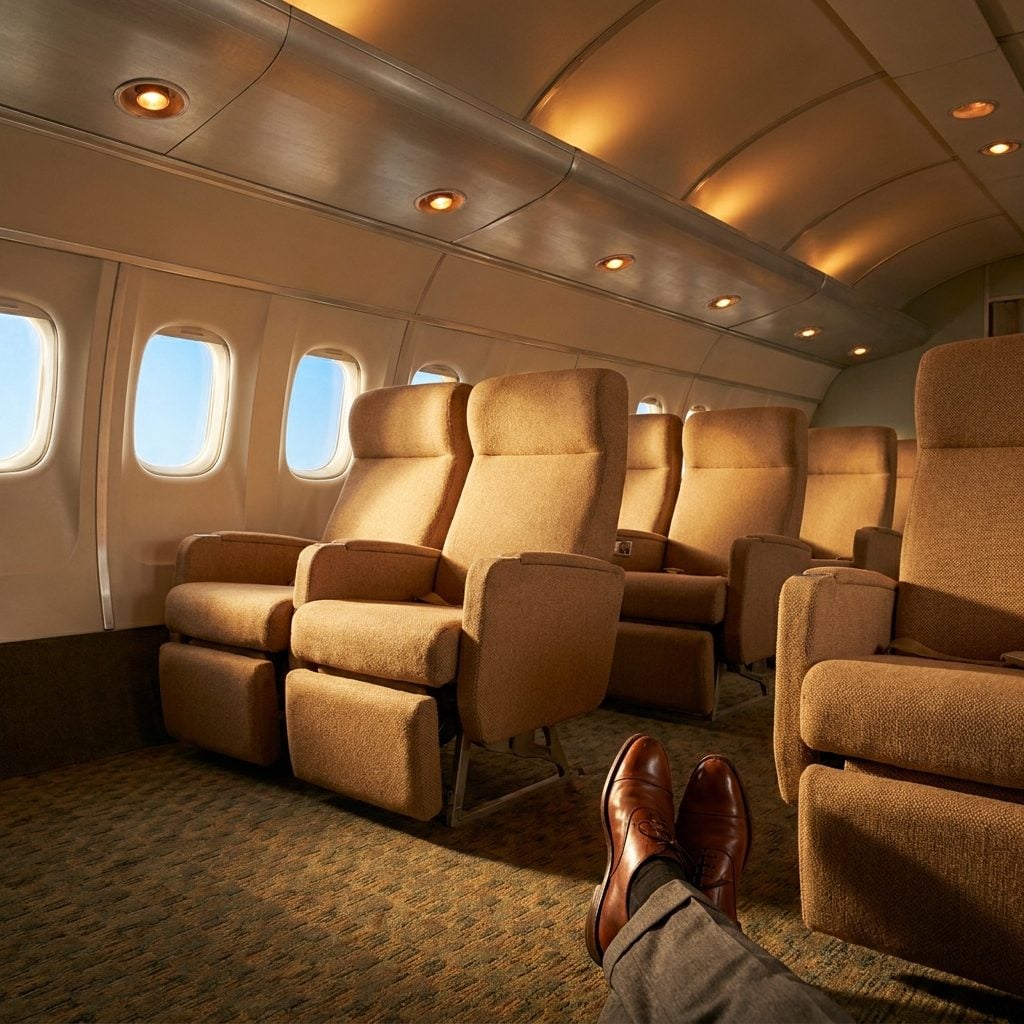
Thirty-six inches of legroom. Sometimes more. Standard coach class on a 1950s airliner — a number that would make a modern traveler weep into their complimentary half-can of ginger ale.
The generous spacing wasn’t born from some philosophy of passenger comfort, though. Weight distribution, fuselage structural requirements, and the simple fact that a DC-6 carried maybe 50 to 70 people all played a role. The economics demanded high ticket prices rather than high density. Comfort was almost a byproduct — accidental luxury, if you want to be cynical about it.
But the experience was real regardless. You could cross your legs without performing geometry. You could stand up without that awkward half-crouch against the seat ahead. The person in front of you could recline fully and your kneecaps survived intact. Civilized is the word people always reach for, and it fits, because there was — quite literally — room to be civilized.
6. Airline Ads That Sold You a Fantasy, Not a Fare
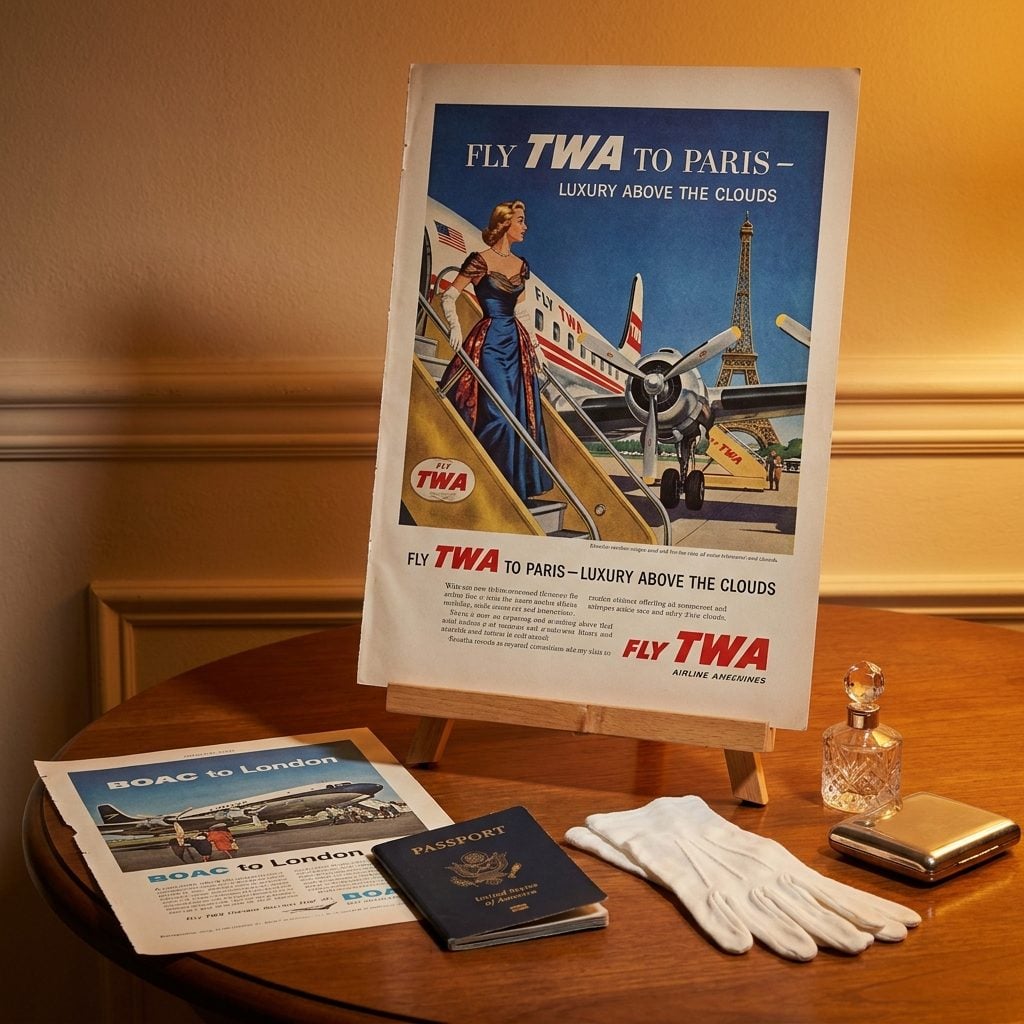
Nobody was advertising $49 one-way tickets to Fort Lauderdale. The marketing apparatus of 1950s commercial aviation ran entirely on aspiration. Magazine spreads showed women in cocktail dresses stepping onto boarding stairs. Men in fedoras gazed pensively from cabin windows. The tagline wasn’t “Fly for Less.” It was closer to “Fly to a Better Version of Yourself.”
Pan Am’s globe logo. TWA’s twin-globe emblem. United’s shield. Prestige brands, all of them, competing on sophistication rather than seat sales. A full-page spread in Life might feature a gourmet meal served on bone china at altitude, with copy that read like a luxury hotel brochure — the aircraft itself almost secondary to the lifestyle it promised.
What killed this? Not just deregulation in 1978. It was the fundamental math of aviation becoming affordable. Once everyone could fly, the exclusivity evaporated. And the advertising followed the economics straight down to “Bags Fly Free.” Brutal, that trajectory.
5. Your Pilot Probably Flew B-17s Over Germany Before He Flew You to Miami
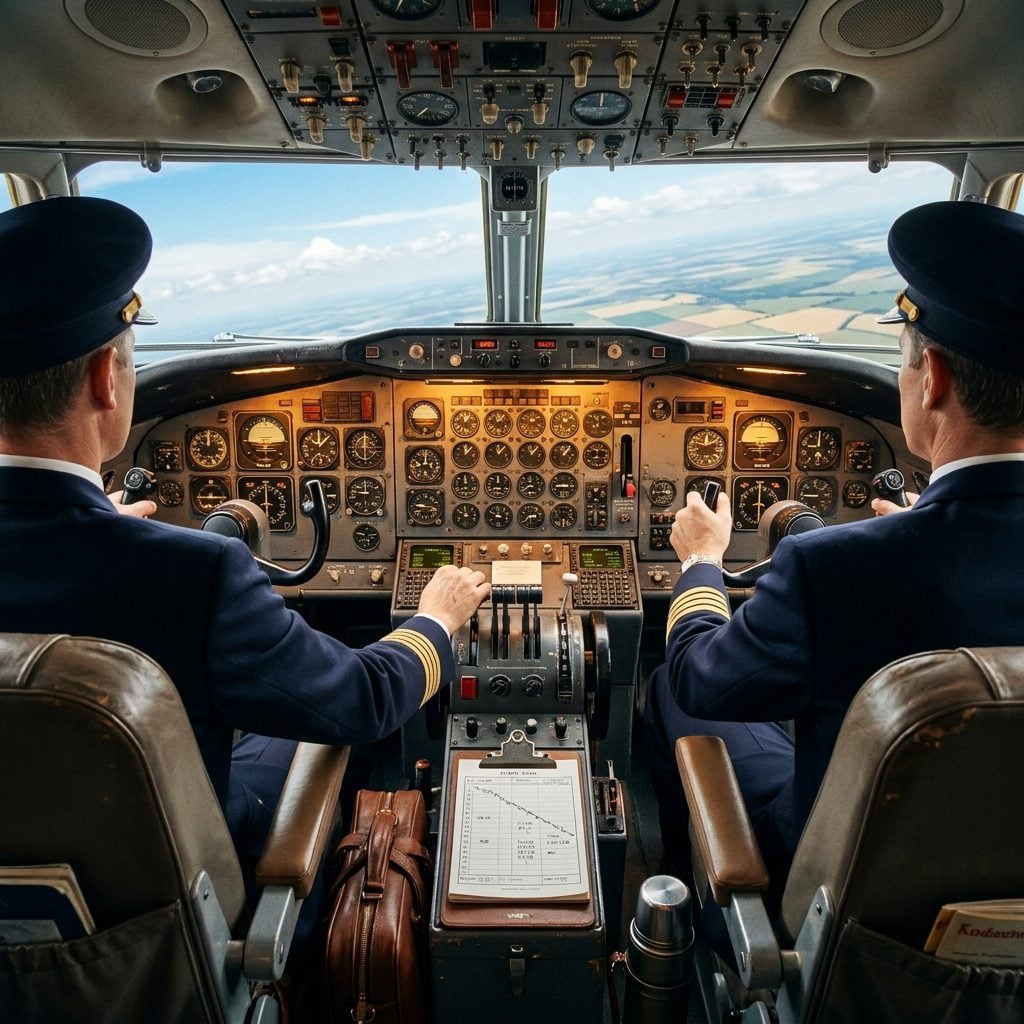
More often than not, the cockpit of a 1950s airliner belonged to someone who’d spent the previous decade flying combat missions. World War II and Korea produced an enormous surplus of trained military pilots, and the booming postwar airline industry absorbed them by the thousands. These men — and they were, with vanishingly rare exceptions, all men — knew how to fly heavy multi-engine aircraft through terrible conditions because they’d done it while people shot at them.
Passengers sensed this, even without articulating it. The captain’s voice on the intercom carried a clipped authority that wasn’t theatrical. It was habitual. When the ride got rough over the Rockies and the cabin shook hard enough to rattle every cup on the coffee service, that calm drawl from the flight deck wasn’t a performance. It belonged to a man who’d flown through flak over Dresden and found a little chop over Denver genuinely unremarkable.
“The golden age of airline captains wasn’t golden because of the uniforms or the four stripes. It was golden because the men wearing them had already survived the worst flying conditions imaginable, and they brought that quiet confidence into every cockpit.”
4. Those Airline Route Maps and Travel Brochures People Actually Framed
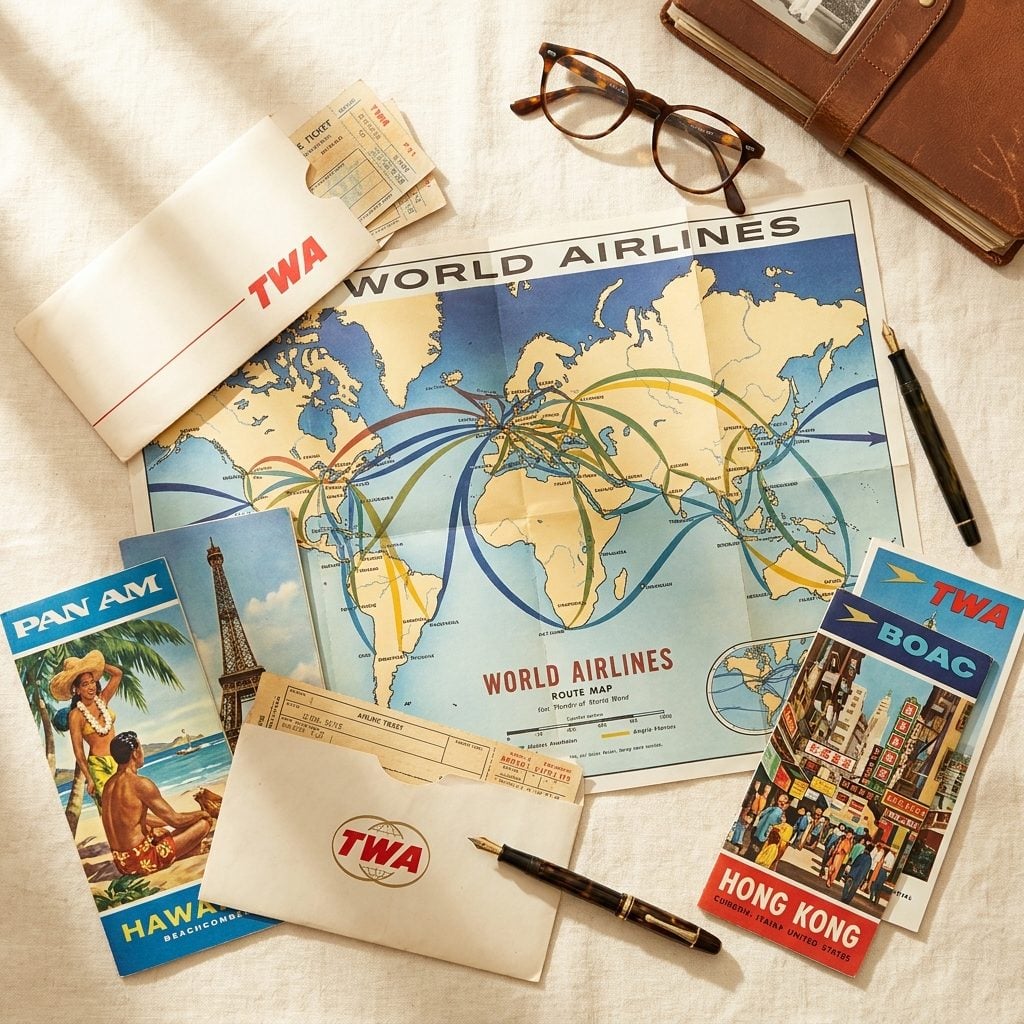
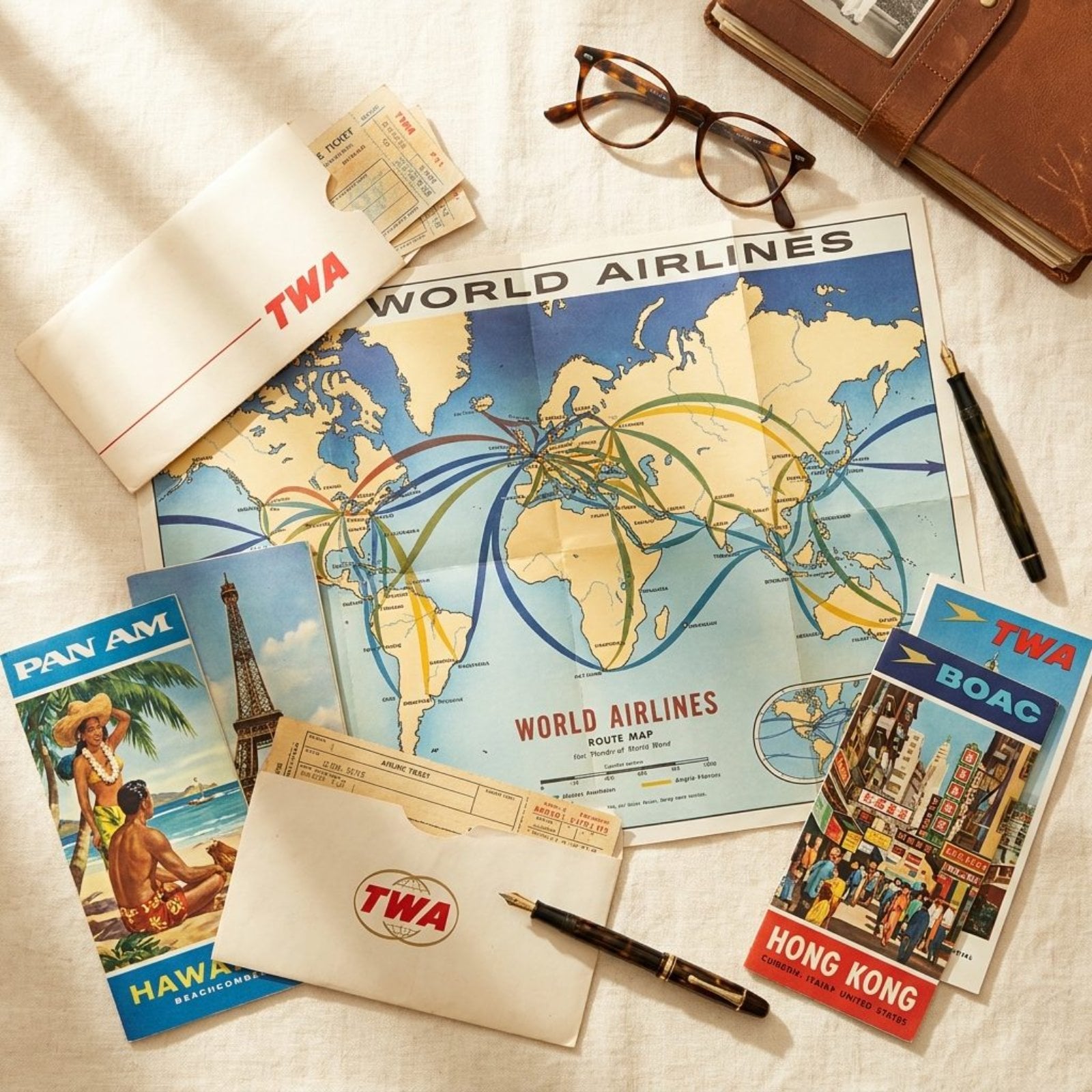
They came in the seat pocket, folded into thick accordions of color. Pan Am’s route maps showed sweeping curved lines arcing across oceans — New York to Lisbon to Calcutta in one elegant graphic. TWA printed theirs with illustrated vignettes of each destination along the route: little watercolor scenes of the Eiffel Tower, a Hawaiian beach. Not informational handouts. Keepsakes.
Passengers took them home. Pinned them to den walls, slid them into family photo albums alongside vacation snapshots, tucked them into scrapbooks. Airlines knew this and invested accordingly, hiring top illustrators and graphic designers to produce materials that doubled as souvenirs. Heavy paper stock. Four-color printing. Typography with actual weight and personality — the kind of care you’d expect from a gallery catalog, not a seat-pocket insert.
3. Weather Forecasting Was More Art Than Science, and Your Flight Felt It
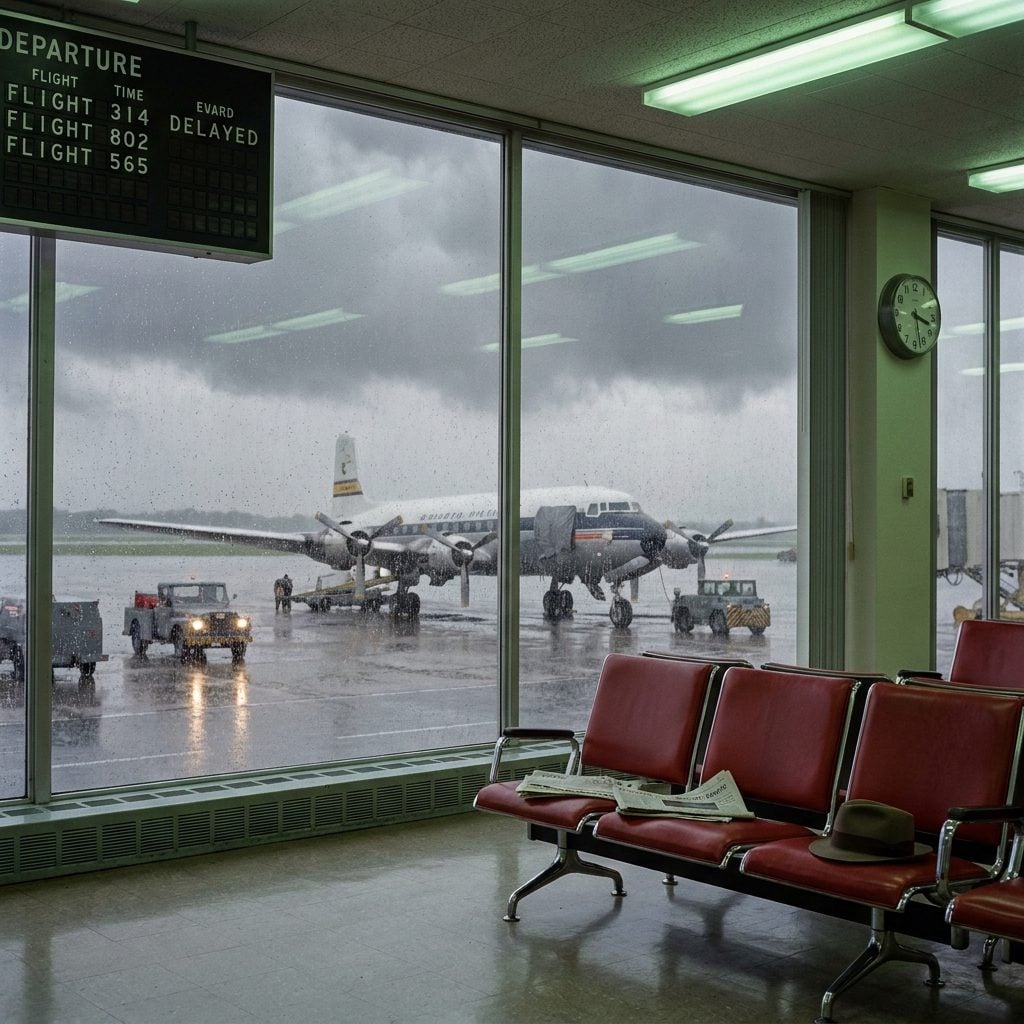
Modern passengers get irritated when a thunderstorm delays their connection by forty minutes. In the 1950s, weather didn’t delay your flight. Weather defined it.
Pilots relied on surface reports, rudimentary radar, and a generous amount of educated guessing. Satellite imagery didn’t exist. Doppler radar was barely born. The jet stream was understood as a concept but nobody tracked it in real time the way dispatchers do now. So flights got canceled. Rerouted. Held on the tarmac for hours. Diverted to alternate airports in cities you’d never heard of, where you’d sit in a cramped terminal eating vending-machine sandwiches while someone tried to determine whether the ceiling in Pittsburgh had lifted.
Passengers mostly accepted it, because the alternative was driving or taking the train, and everyone grasped that launching a pressurized aluminum tube into a sky full of weather was still a fairly new proposition.
I’ll admit something: there’s a part of me that finds the uncertainty almost appealing in retrospect. Not the discomfort — obviously not. But the acknowledgment that weather was bigger than the schedule. That nature still held veto power over the timetable. We’ve lost that humility somewhere between real-time radar and push notifications.
2. For Most Passengers, This Was Literally the First Time They’d Left the Ground
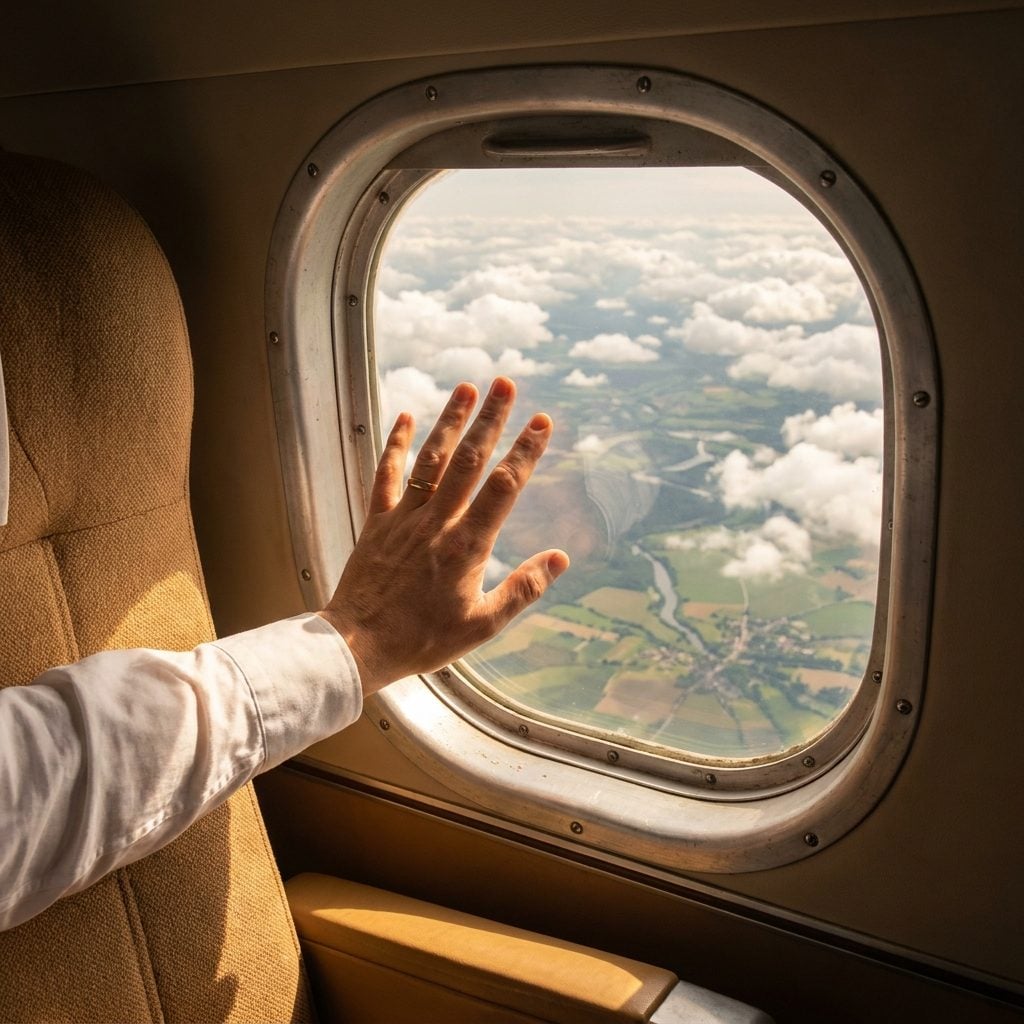
We forget this constantly. In a world where a toddler might rack up dozens of flights before kindergarten, it’s hard to internalize that for millions of Americans in the 1950s, their first commercial flight happened at 30, or 40, or 55. Some never flew at all.
Consider what that does to the experience inside the cabin. The person beside you wasn’t bored. Wasn’t annoyed by the legroom or the food or the flight time. They were quietly terrified, or quietly thrilled, or a volatile cocktail of both — gripping the armrest during takeoff with white knuckles and then pressing their face to the window like a kid seeing snow for the first time. Clouds seen from above were a revelation. Farmland from altitude was genuinely astonishing. Nobody had Instagram fatigue about aerial views because nobody had aerial views.
Airlines catered to this directly. First-flight certificates were a real thing, printed on heavy card stock with the passenger’s name. Flight attendants trained to reassure nervous passengers, explain the sounds of the landing gear, walk them through what turbulence actually was. The whole operation assumed a significant share of people on board were living through something unprecedented in their lives. And it treated that fact with a kind of seriousness we’ve since discarded.
1. The Open-Air Observation Decks Where Kids Spent Whole Afternoons Watching Planes
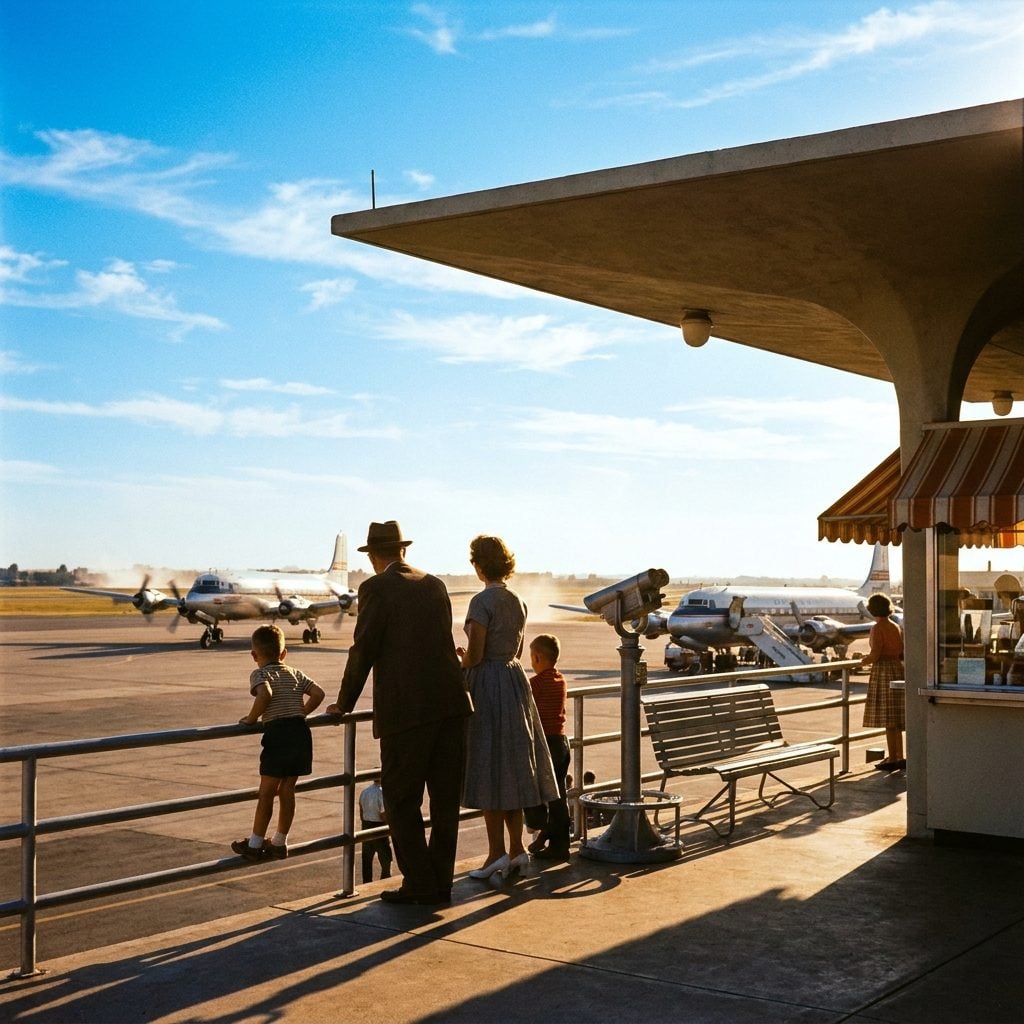
Before security perimeters. Before restricted zones. Before anyone imagined an airport could be anything other than a place where the public gathered to watch the extraordinary spectacle of human flight — airports had open-air observation decks. Rooftop terraces, sometimes. Chain-link fence along the tarmac edge, other times. Free, open to anyone, and on a Saturday afternoon in 1957, absolutely packed.
Families drove to the airport the way they drove to the beach. Kids pressed their faces against the railing and watched propliners taxi, four engines coughing blue exhaust. The ground shook when a Constellation powered up for takeoff. You could feel the heat, smell the avgas, hear that particular rising scream of radial pistons reaching full power. Better than any movie, and free.
Fathers pointed out aircraft types to sons who already knew them all from recognition charts in Popular Mechanics. Mothers unpacked sandwiches wrapped in wax paper. Grandparents sat on benches and remembered when all of this was impossible.
Nobody needed a boarding pass to be there. The airport belonged to everyone.
Those decks are mostly gone now. A few airports have tried recreating the experience behind glass, with sealed observation areas on the secure side. It falls flat. You can’t feel the engines through glass. You can’t smell the fuel. What made those observation decks work wasn’t the view — it was the proximity, the rawness, the sense that you were standing at the edge of something powerful and only a railing separated you from it.
🔥 Would you like to save this?
Please note that some of the imagery in this article were created with the aid of AI image generators.