
🔥 Would you like to save this?
The bedspread smelled like industrial detergent and someone else’s cigarette smoke, and you didn’t care because you were on vacation. The ice bucket was already sweating on the dresser. Your dad was out by the car, wrestling luggage off the roof rack under a buzzing neon sign that turned the whole parking lot pink. Everything about a 1960s motel was a little bit strange, a little bit wonderful, and completely accepted without a second thought. Here are ten of those things.
39. Room Keys Attached to Oversized Plastic Fobs the Size of a Small Canoe Paddle
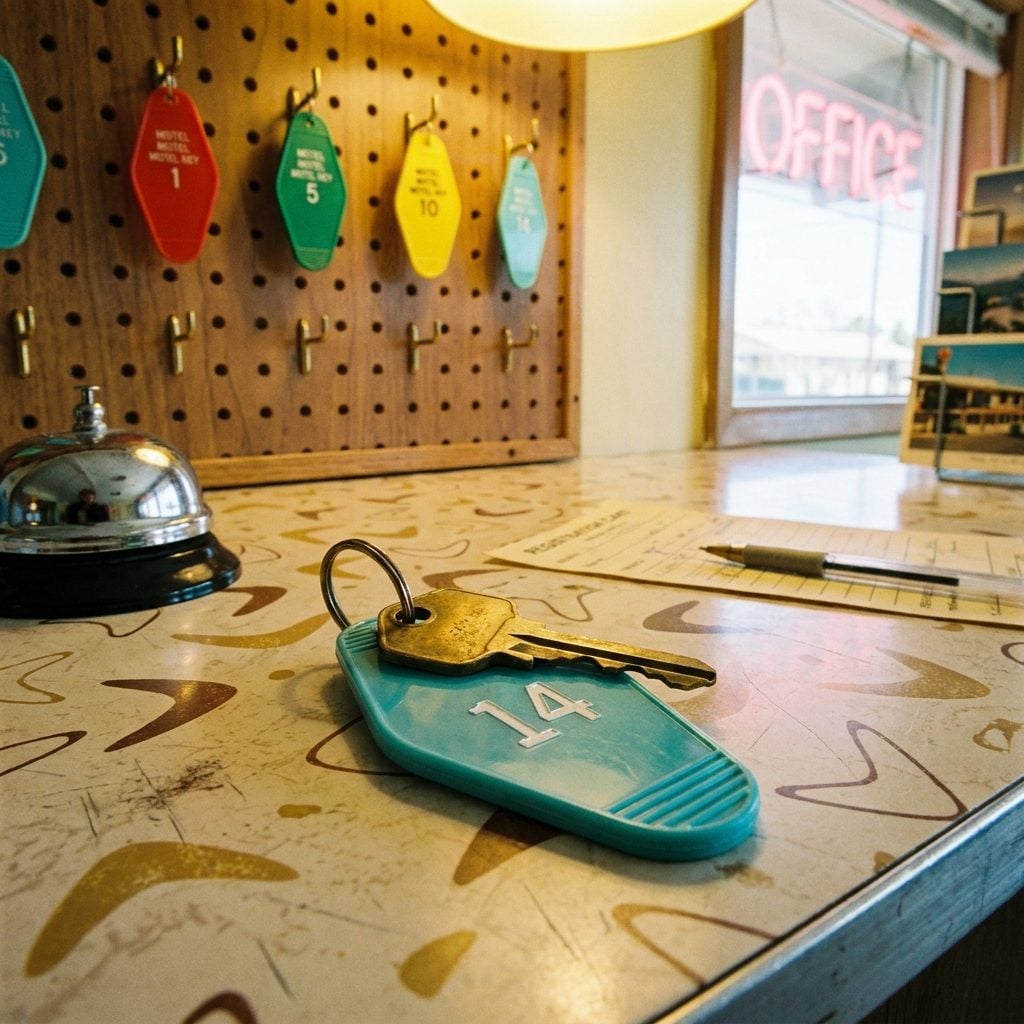
They were built to be impossible to pocket, and yet people pocketed them constantly. That diamond-shaped turquoise plastic fob was the size of a TV remote and twice as heavy, stamped with the room number in raised white digits worn smooth after a few thousand check-ins. The whole design philosophy was bulk: make it too awkward to accidentally leave town with. Didn’t work.
Nobody swiped a magnetic stripe. You walked up to a desk, a real human handed you a real brass key, and you carried it around in your pocket like a talisman for the next twelve hours. Lose it? That meant a sheepish trip back to the front office and a five-dollar charge that felt like a felony.
38. The Vacancy / No Vacancy Neon Sign That Decided Your Family’s Fate at 10 PM
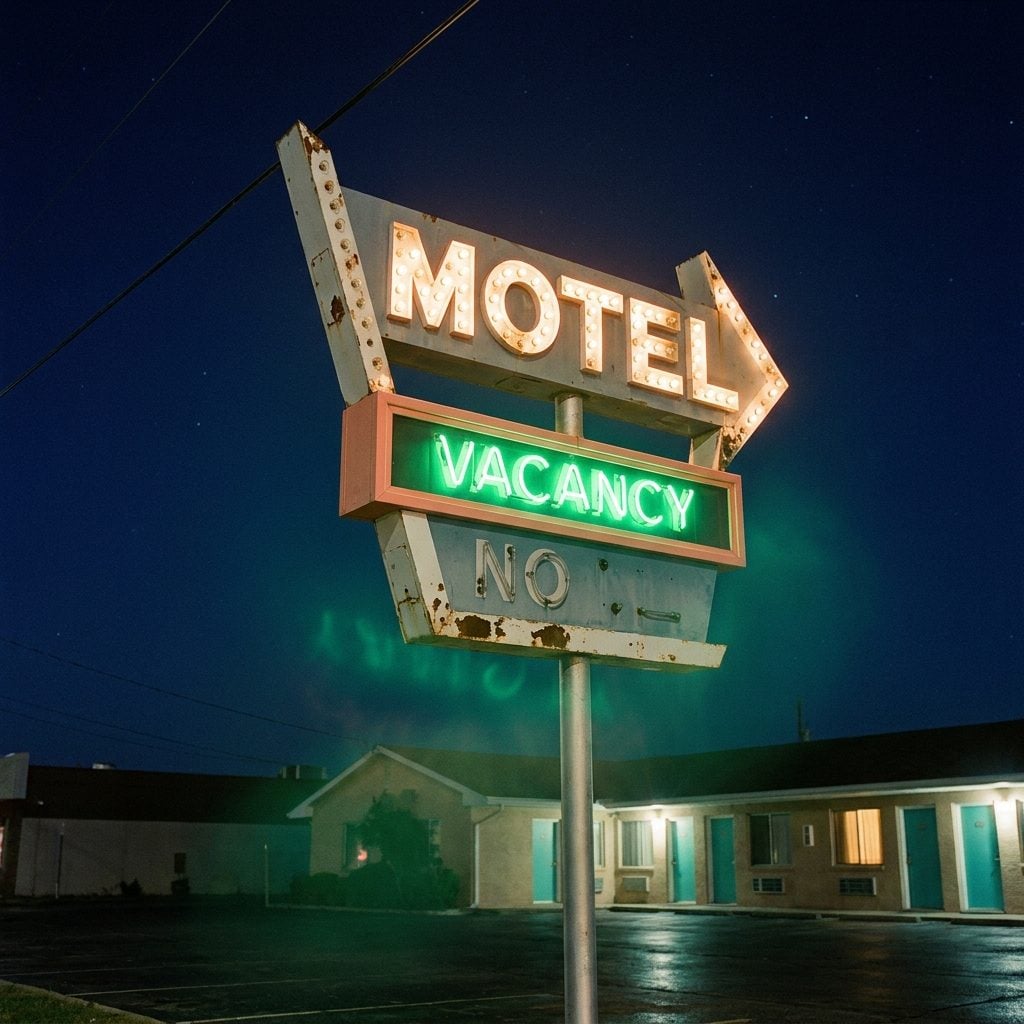
If you grew up in the back seat of a station wagon, you know this sign settled whether you’d sleep in a bed or keep driving. That green VACANCY glow was the most beautiful word in the English language at 10 PM on a summer highway. Your dad slowed the car. Your mom leaned forward. Everyone held their breath.
The NO part lurked above it—dark glass tubing waiting to ruin your night. When it flickered on, the whole family groaned in unison, and your father muttered something unrepeatable and pulled back onto the highway toward the next exit, the next sign, the next gamble. Nobody called ahead. No app, no website, no 1-800 number that actually worked after nine. You just drove until green neon said yes.
37. Payphones in the Lobby or Beside the Ice Machine
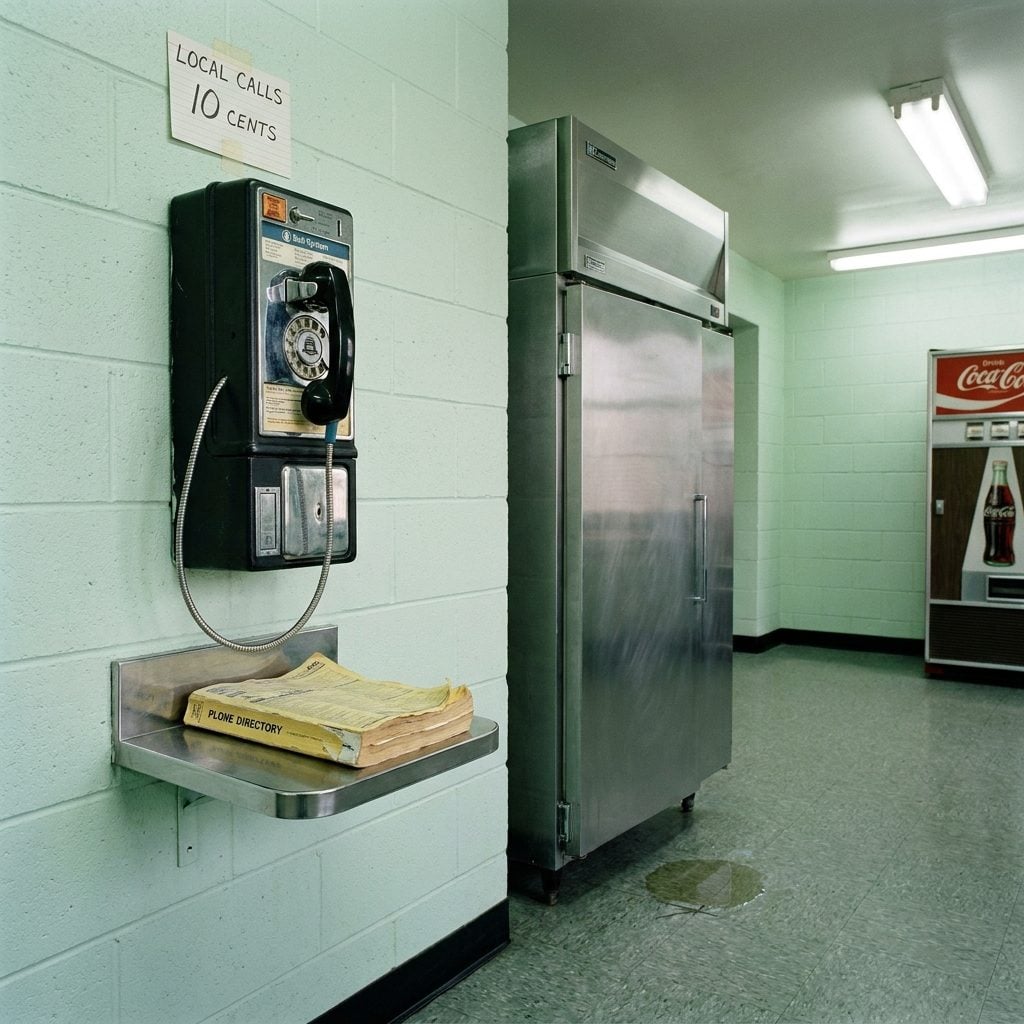
Always next to the ice machine. Always. Like they were contractually bound. You’d shuffle down the outdoor corridor in bare feet, fill that flimsy plastic bucket with ice that smelled vaguely of freezer burn, and there it was: a chrome Bell System payphone bolted to the wall, receiver dangling slightly because someone hadn’t hung it up right.
Local calls cost a dime. Long distance required a pocketful of quarters or an operator who sounded like she’d rather be doing literally anything else. The phone book dangling from a metal cable was missing its cover and half its pages. But it worked—you could reach another human being for pocket change, standing in your swim trunks on cold linoleum, dripping pool water onto a floor nobody was going to mop until Thursday.
36. Outdoor Swimming Pools Right Beside the Parking Lot, No Fence, No Lifeguard, No Questions
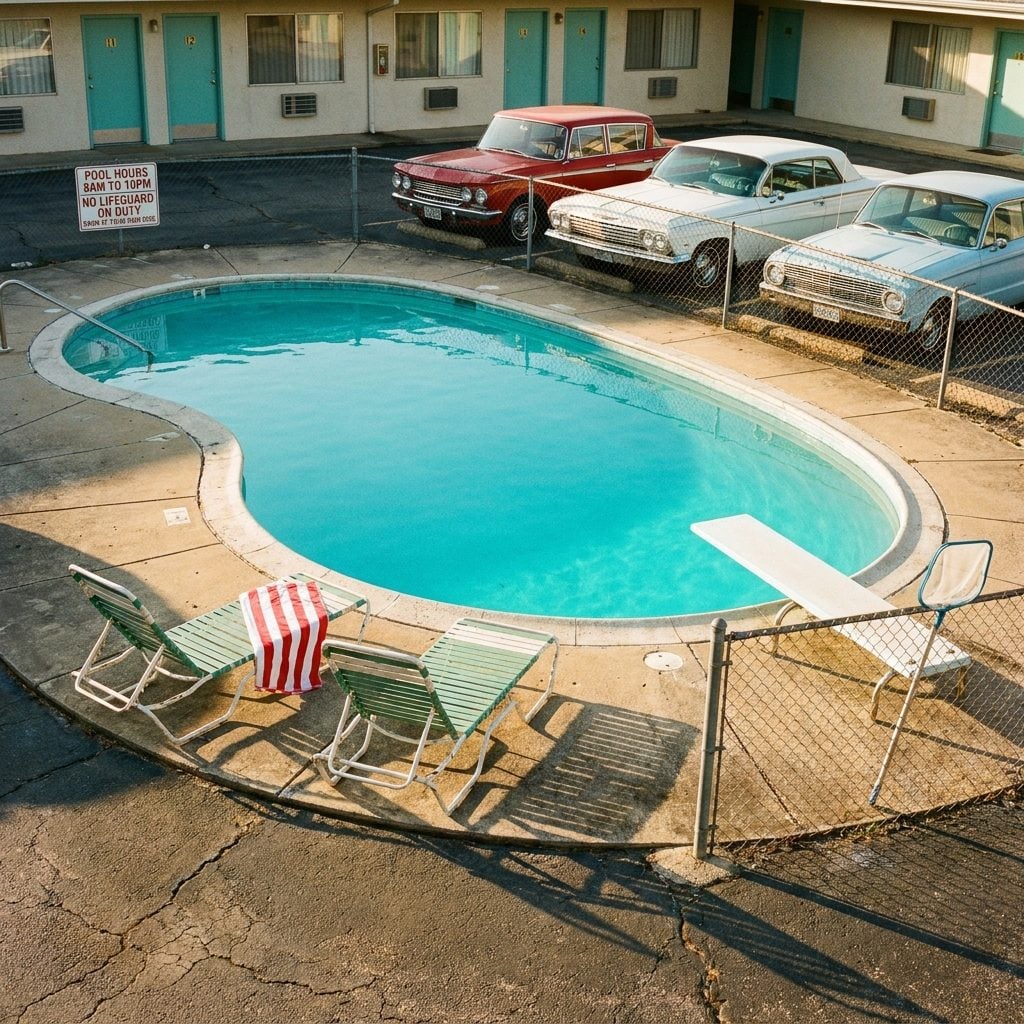
The chlorine hit you from the parking lot. Twelve feet separated the pool from your dad’s Buick bumper—no gate, no fence on three sides, maybe a chain-link afterthought on the fourth. A diving board hung over water that couldn’t have been more than five feet deep, and a sign reading NO LIFEGUARD ON DUTY had faded into more of a polite suggestion than a warning.
Kids cannonballed in unsupervised for hours. Somebody’s dad might glance over from a lawn chair, beer in hand, every twenty minutes or so. That constituted the safety plan. The water ran either too warm or ice cold—there was no middle ground—and there was always a single Band-Aid floating near the drain. Nobody mentioned it.
35. A Printed Gideon Bible in the Nightstand Drawer
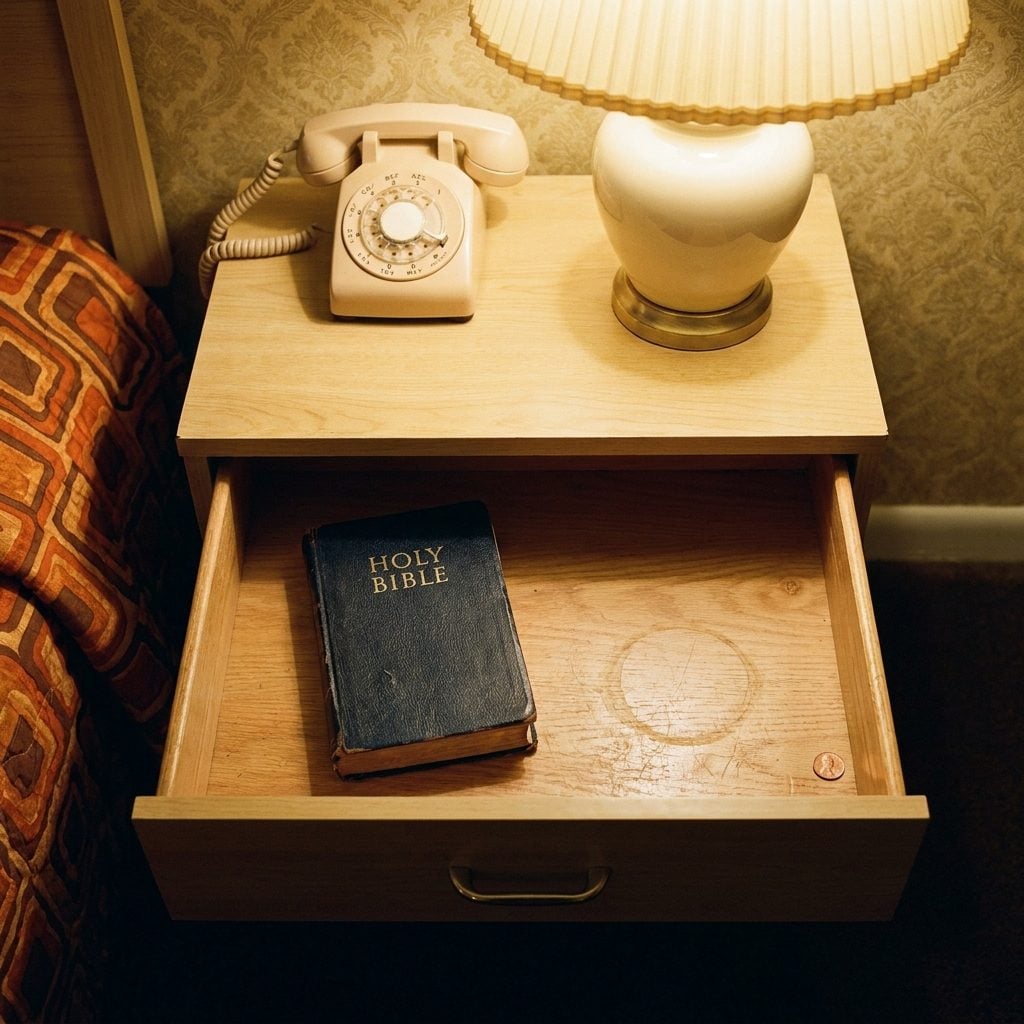
You never packed one. You never asked for one. But open that nightstand drawer and the Gideon Bible sat waiting like it had been expecting you personally.
Dark blue or maroon cover, gold lettering slightly worn from a thousand idle thumbings. Some had notes scribbled in the margins by previous guests—intimate and unsettling in equal measure. Others held a bookmark ribbon placed at a random psalm, left by someone you’d never meet. The Gideons International had been placing Bibles in hotel rooms since 1908, and by the 1960s the practice was so universal that finding one felt less like religion and more like finding a towel on the rack. Just part of the room, as expected as the ashtray on the dresser.
34. Rotary Phones on the Bedside Table That Connected You to the Front Desk and Basically Nowhere Else
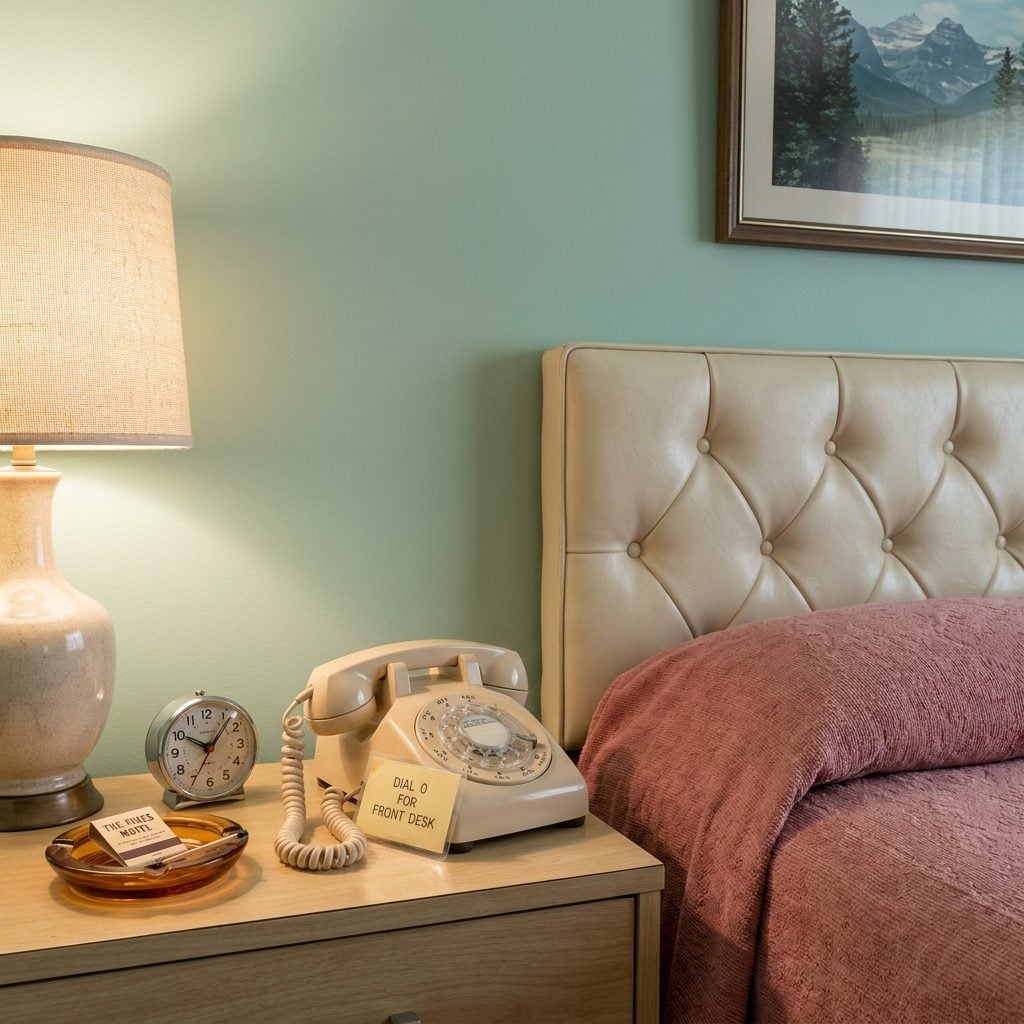
Dial 9 for an outside line. Dial 0 for the front desk. That laminated card propped against the phone was the entire user manual. The beige rotary phone sat on the nightstand like a small anchor—heavy enough to moor a dinghy—with a coiled cord stretched to twice its intended length by a decade of guests pacing while they talked.
Dialing was physical labor. Stick your finger in the hole, drag the dial around, wait for it to click back. Long distance calls went through the motel switchboard and showed up on your bill at checkout, always more expensive than you’d braced for. The whole ritual made calling someone feel like a deliberate act, not muscle memory.
33. Smoking and Non-Smoking Rooms Listed as Separate Selling Points
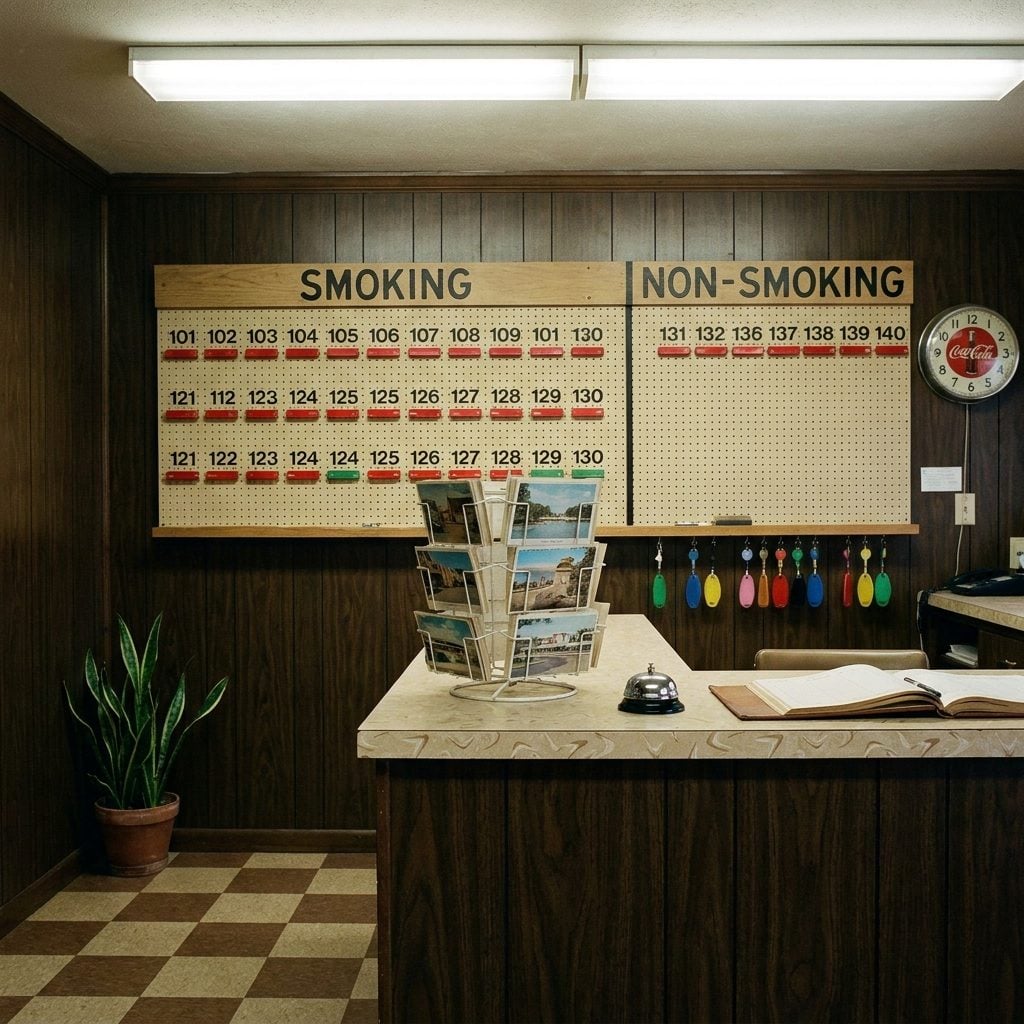
Non-smoking was the afterthought. Look at any motel’s room breakdown and the ratio said everything: twenty-eight smoking rooms, four non-smoking, shoved to the far end past the ice machine, practically in a different area code. Requesting one felt faintly eccentric, like asking for a room without a ceiling.
Here’s the thing nobody acknowledged: those non-smoking rooms still reeked of smoke. They’d been smoking rooms six months earlier. A new sign on the door and a spritz of Lysol constituted the entire renovation. The curtains held grudges. The carpet held grudges. That ceiling tile above where the bed used to face the TV? It held the worst grudge of all.
32. Wall-to-Wall Shag or Low-Pile Commercial Carpet in Colors Nature Never Intended
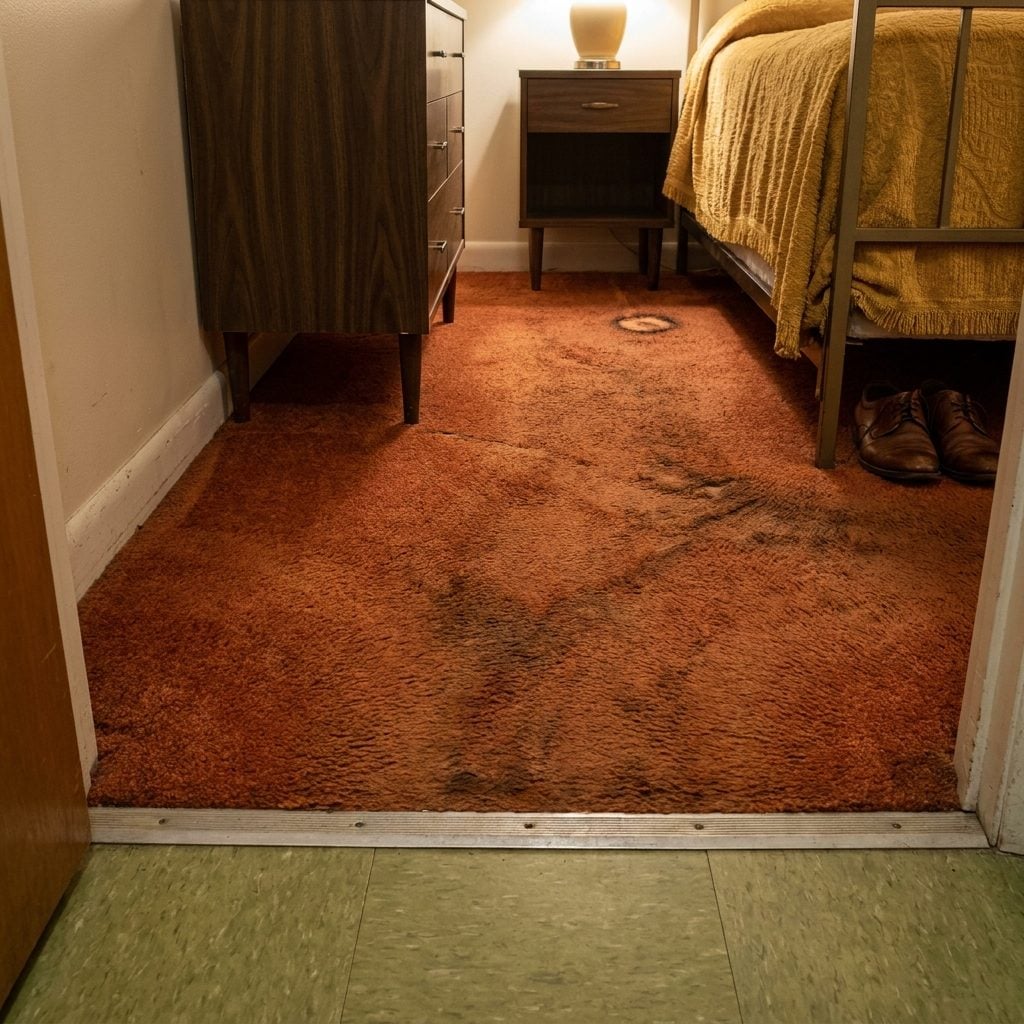
Burnt orange. Harvest gold. Avocado green. A brown so aggressive it could only be described as “earth tone” by someone who had never touched actual earth. These were the sanctioned carpet colors of the American motel, installed with the confidence of people who never planned to rip them out.
The carpet told stories if you bothered to look—burn marks near the nightstand where a cigarette rolled off at 2 AM, a mysterious stain by the bathroom door that housekeeping had been navigating around since the Kennedy administration, wear paths from the door to the bed grooved into the pile like deer trails through brush. And the texture? Somewhere between industrial felt and a Brillo pad. It existed for concealment, not comfort. Every color was strategic. You pick burnt orange because burnt orange forgives everything.
I walked barefoot on one of these once. Once.
31. Wood-Paneled Walls That Made Every Room Feel Like a Basement Rec Room
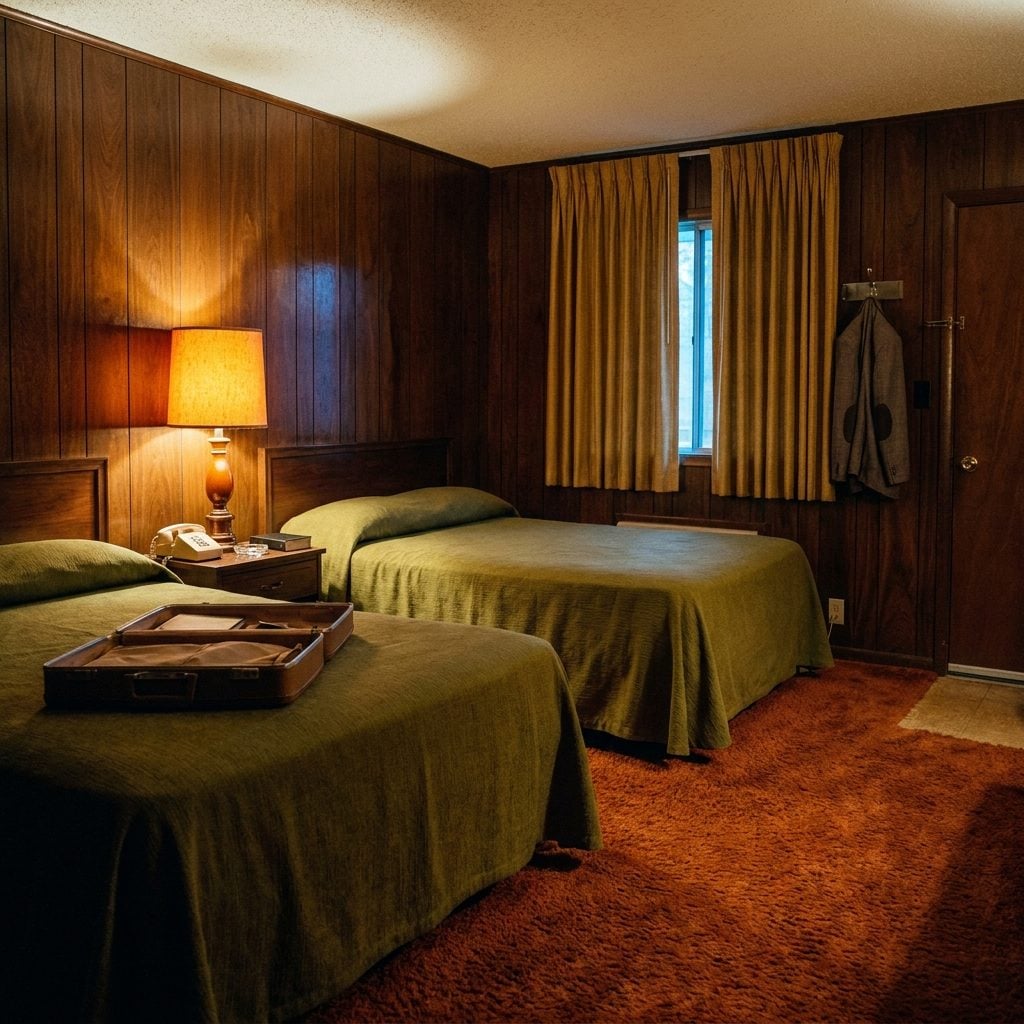
That smell hit you the second you opened the door — part adhesive, part pine-scented cleaner, part something unnameable that had soaked into the grooves of those four-by-eight sheets over a decade of cigarette smoke and humid summers. The paneling was never real wood, of course. Photograph-on-particleboard, printed to look like walnut or knotty pine, buckling slightly near the bathroom where the steam got to it.
Nobody complained. We hung our jackets on the hook screwed directly into it, set our suitcases against it, and fell asleep staring at fake grain lines three feet from our faces in the double bed nearest the wall. All that dark paneling swallowed what little light the room had, which hardly mattered since the lamp bolted to the nightstand only threw a 40-watt glow anyway.
30. Colorful Bedspreads with Bold Geometric Patterns You Could See from Orbit
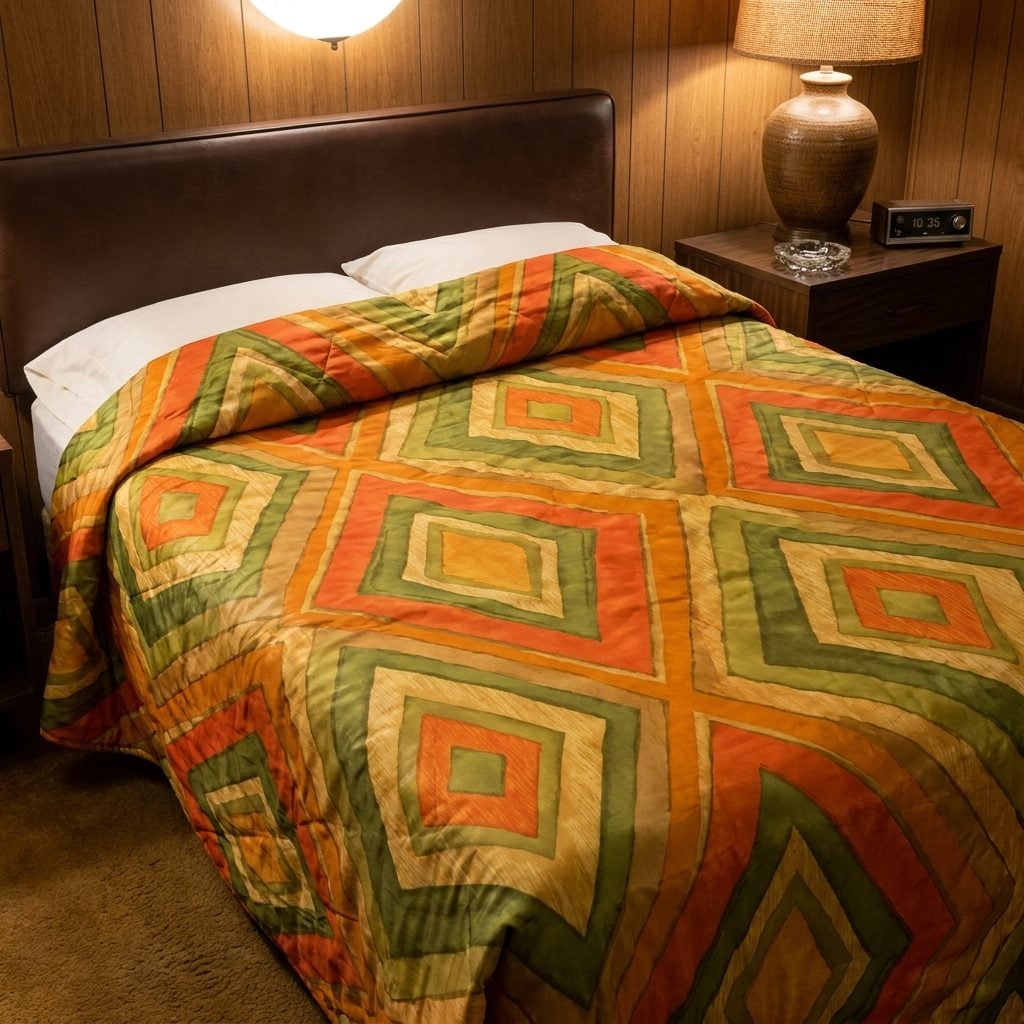
Orange triangles. Avocado green zigzags. A repeating diamond pattern in harvest gold and brown that looked like someone had wallpapered the bed. These bedspreads were loud in a way that modern hotel bedding — all those sterile white duvets — has completely walked away from. And lord, they were heavy. Pulling one up to your chin felt like being pinned under a sandbag that someone had decorated with a fever dream.
The fabric was some kind of synthetic blend that repelled water, wrinkles, and probably most cleaning products, with a texture somewhere between burlap and felt. I don’t think anyone washed these things. You just kept using them until the pattern faded to a ghost of itself, and then you kept using them some more.
29. Tiny Bars of Motel Soap Wrapped in Wax Paper That Dissolved in Two Showers
🔥 Would you like to save this?
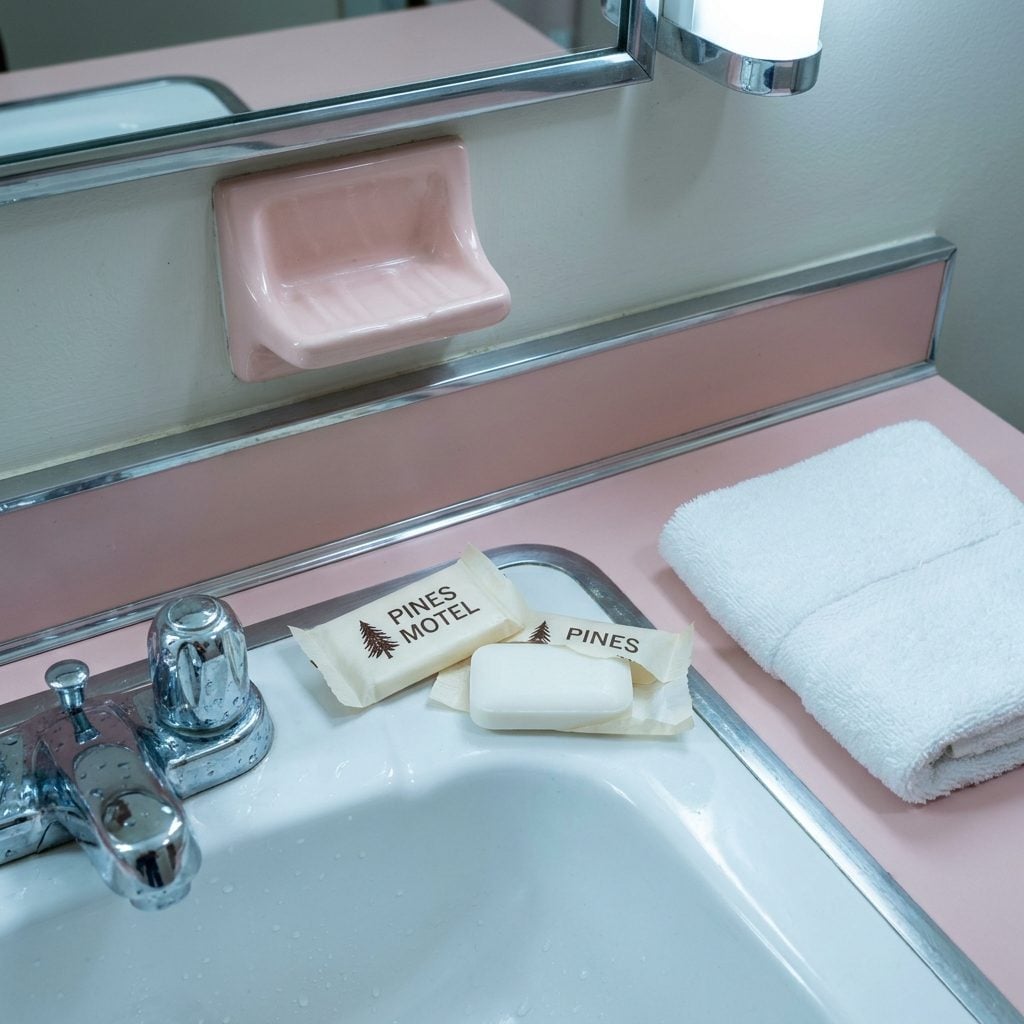
Half the size of a deck of cards. White, sometimes pink. Wrapped in paper so thin it tore when you looked at it, printed with the motel’s name in a typeface that screamed brother-in-law-with-a-printing-press. The soap itself lathered reluctantly, like it resented being asked.
You’d burn through the whole bar in a single shower and still feel only partially clean. But here’s what I remember more: unwrapping a fresh one was a tiny ritual. A small confirmation that yes, this room was yours for the night, someone had prepared it for your arrival, and there was something waiting on the edge of the sink just for you. That quiet gesture mattered more than the soap’s actual cleaning power ever did.
28. Plastic Ice Buckets with Metal Tongs That Made You Feel Like a Cocktail Host
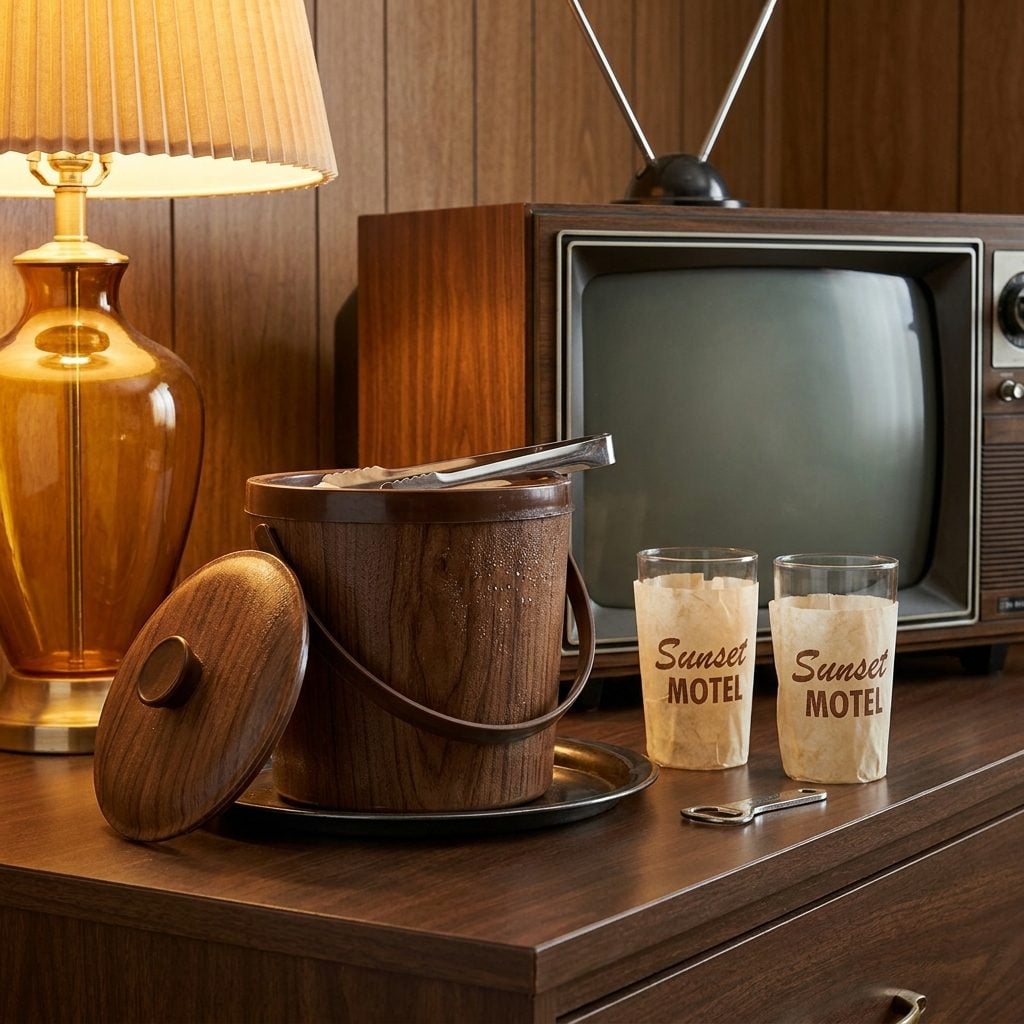
Brown or gold plastic with a faux-woodgrain finish, a lid that never quite seated right, and tongs so flimsy they bent if you grabbed more than two cubes. Every motel room had one, usually sitting on the dresser beside the TV. Using it made you feel slightly more civilized than eating drive-through in a parking lot warranted.
Dad would fill it from the outdoor ice machine. Mom would wrap it in a hand towel to keep it cold. By morning? A bucket of lukewarm water with two surviving ice chips floating in it. Nobody ever emptied it before checkout. I think about the housekeepers sometimes.
27. Coin-Operated Ice Machines Humming in an Outdoor Breezeway at Midnight
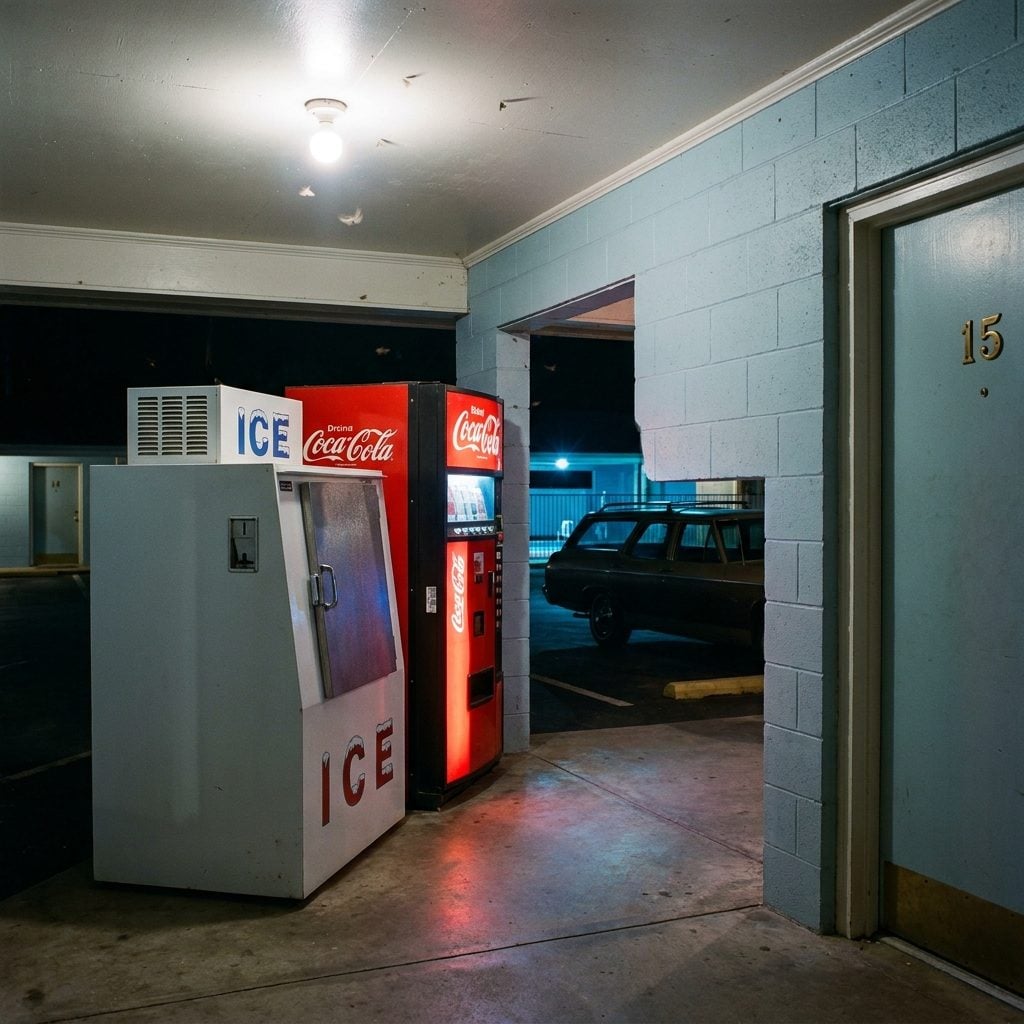
That mechanical groan. You heard it before you saw it — usually around a corner near the stairwell or tucked into an alcove between rooms 14 and 15. The ice machine lived outdoors, exposed to everything, buzzing and shuddering behind a Coke machine that still sold glass bottles.
Going to get ice was a kid’s errand and an adult’s escape. Kids got to wander the motel alone for five minutes, which felt enormous. Adults got to step outside barefoot, breathe the night air, hear the highway, and stand in the blue glow of the vending machines without anyone needing a single thing from them. Just one quiet minute.
The ice came out in one solid block you had to bang against the inside of the bucket to break apart. Your fingers went numb. The breezeway smelled like chlorine from the pool and warm concrete, and you carried the bucket back with both hands, cold seeping through the plastic. Last errand of the day. Done.
26. The Postcard Rack in the Lobby That Spun Like a Lazy Susan of Lies
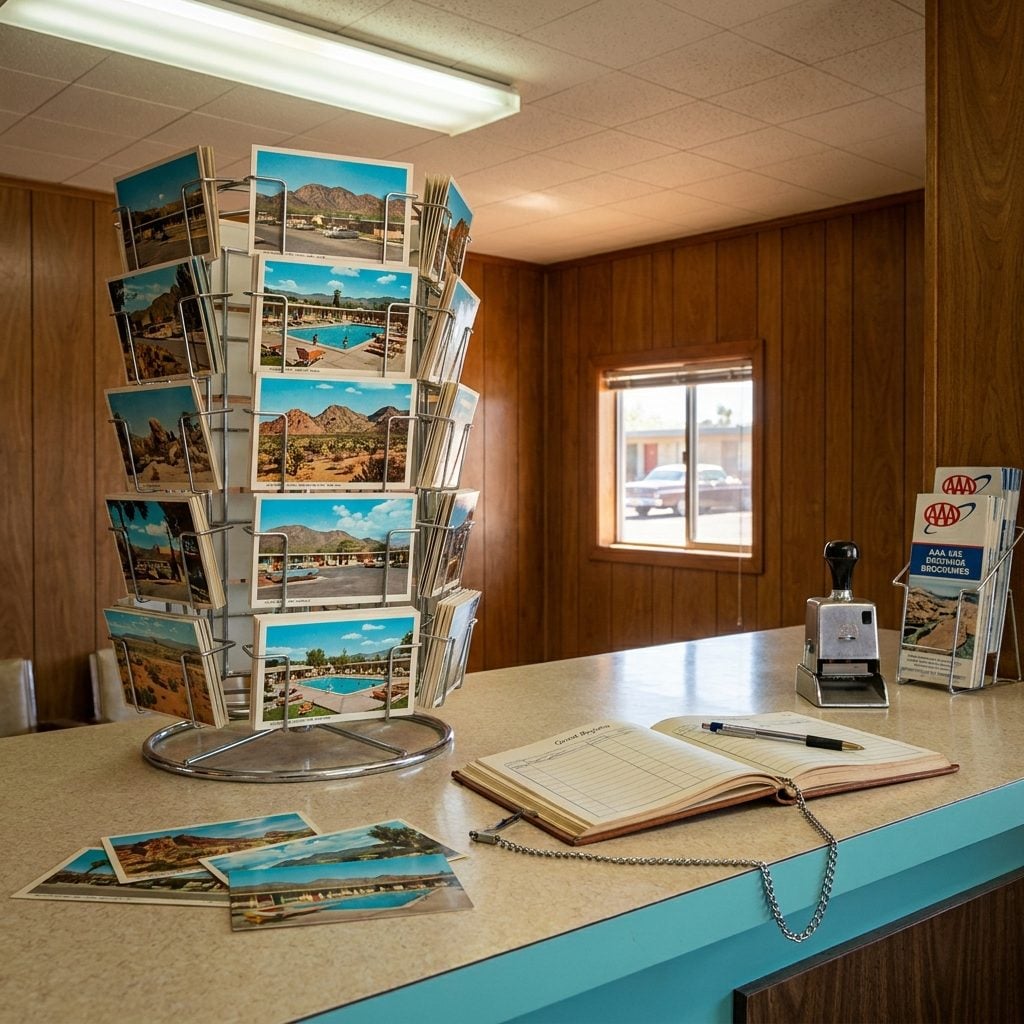
Every postcard showed the motel looking better than it actually looked. Bluer pool. Greener grass. Cars from two model years ago parked at flattering angles, all under a sky in that particular shade of Kodachrome blue that doesn’t exist in nature. And the building somehow appeared to have twice as many rooms as it did.
You’d spin the rack, pick the one showing the pool — even if the pool was closed — and write something to your grandmother on the back using the pen chained to the front desk. “Having a great time. Weather is beautiful. The pool is nice.” Three sentences. A stamp. Done.
The postcard version of any motel was the motel it wanted to be. And we were kind enough to send that version home to people we loved.
25. A Front-Desk Bell You Dinged and Then Waited Like It Was 1887
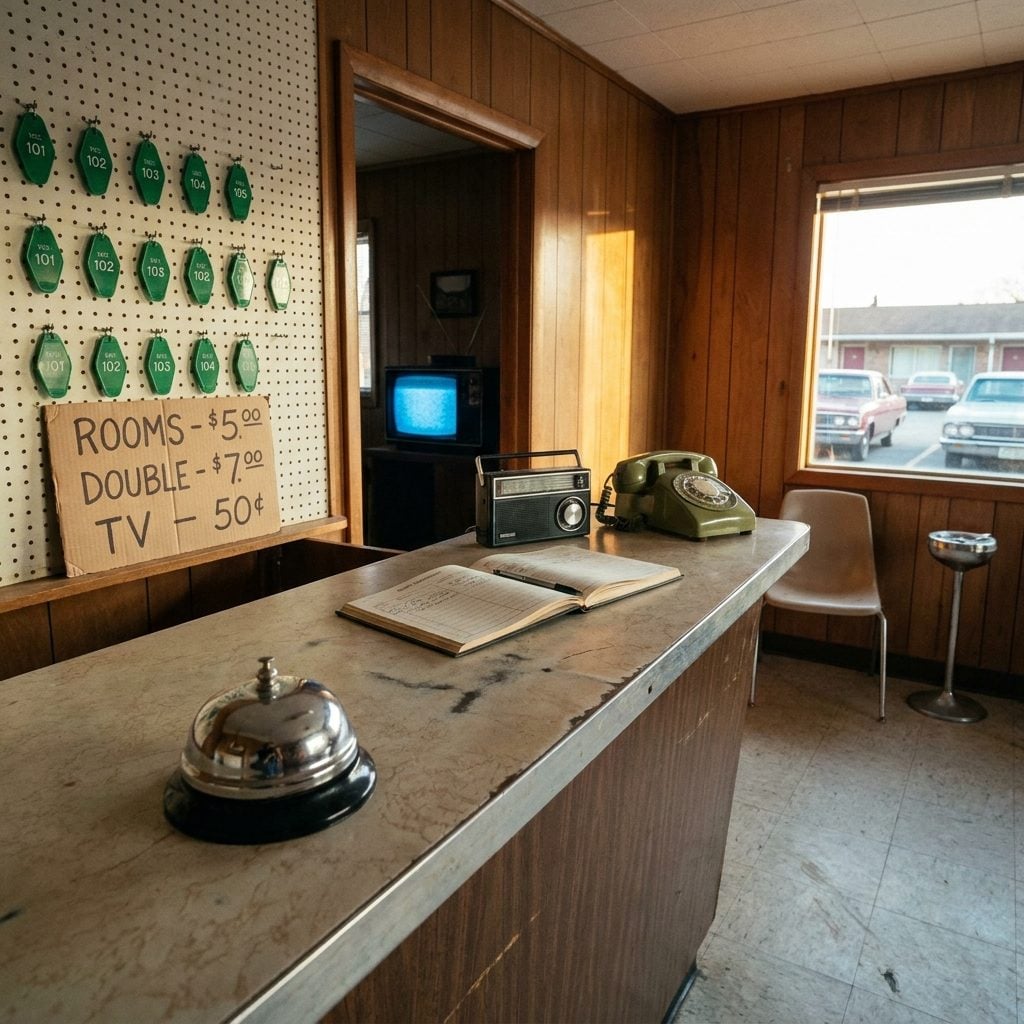
Chrome dome, black base, and a sound that carried through the entire lobby — probably into the manager’s living quarters behind the office, too. You’d walk in, see no one, and hit it. Then you’d just stand there with your hands on the counter, reading the posted rates on a piece of cardboard, studying the wall of keys on hooks behind the desk, half-wondering if anyone was actually going to appear.
Someone always did. Usually from a back room, sometimes from outside where they’d been watering the strip of grass in front of room one. The whole transaction took three minutes. Cash. A key on a diamond-shaped plastic fob with the room number stamped into it. Directions involving the phrase “down and around.” That was it.
24. Carports and Parking Spaces Right Outside Your Door, Ten Feet from the Bed
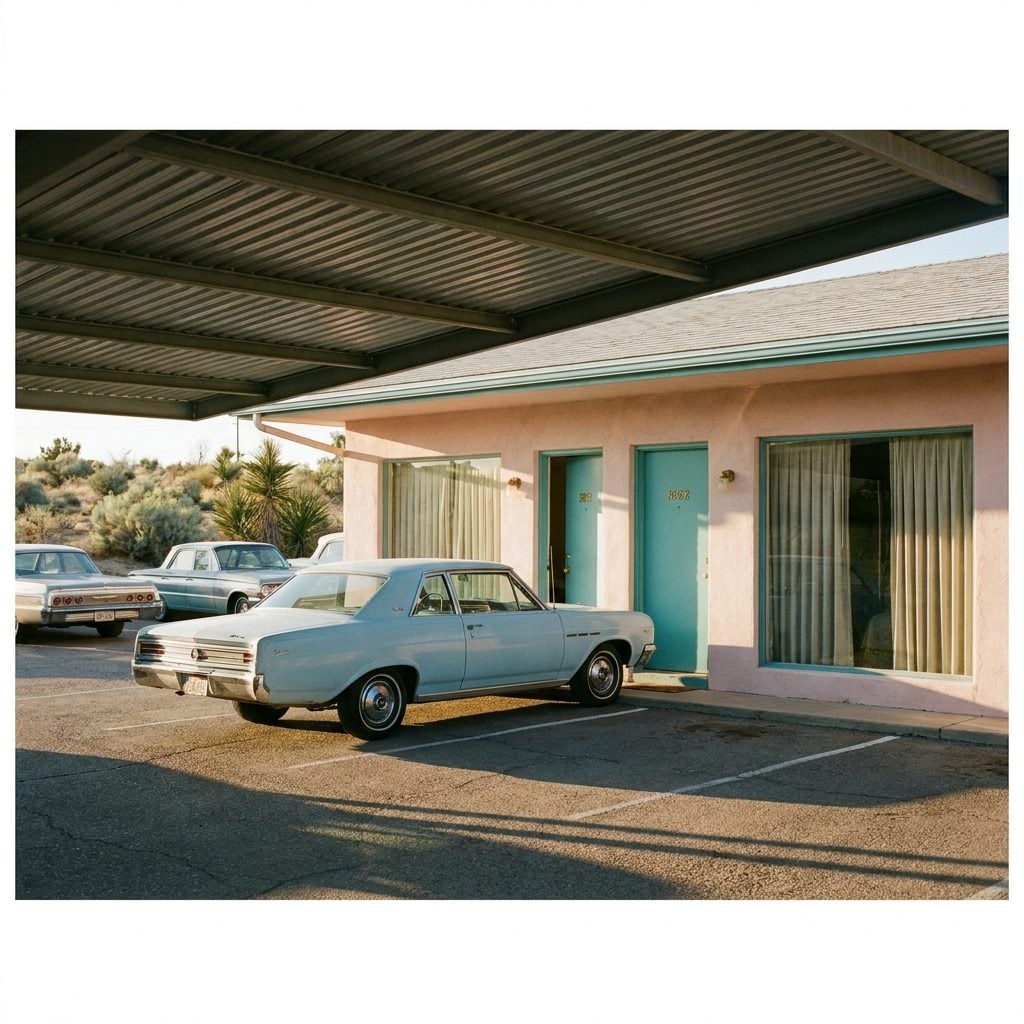
You could practically touch your car from the pillow. That was the entire premise of a motor hotel — the reason the word “motel” exists — and nobody found it strange that the only thing separating you from a Buick Skylark’s front grille was a curtain and a wall thinner than a magazine. The proximity was the feature, not a flaw.
Some places had actual carports with corrugated metal roofs over each space. Rain on those roofs at 2 a.m.? I can still hear it if I close my eyes. A sound like that stays with you.
23. The Single-Story Motor Court Layout Where You Could See Every Room from the Pool
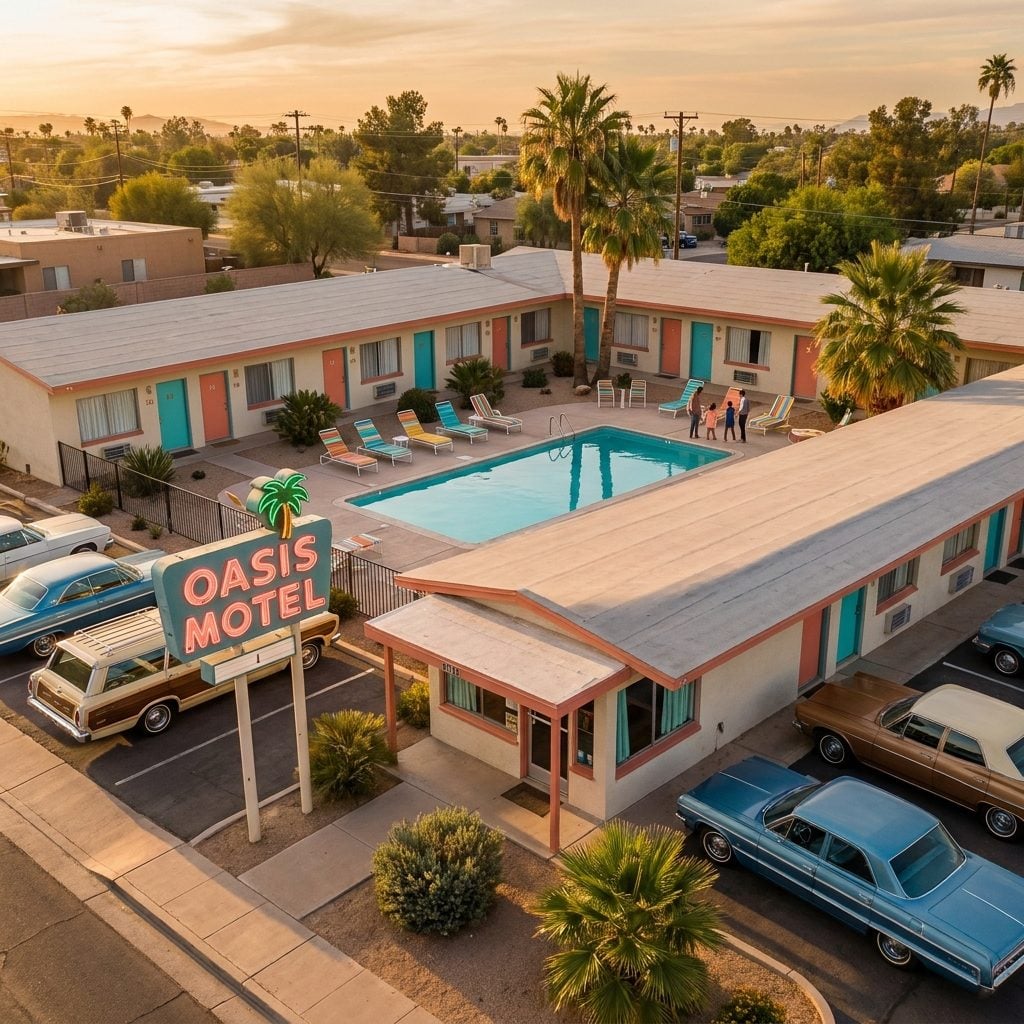
An L-shape or a U-shape. Sometimes a full rectangle around a central courtyard with a pool dead center. Every door faced inward, every window looked at every other window, and the whole arrangement gave off the vibe of a very relaxed minimum-security facility where the inmates wore swim trunks.
Privacy? Not the selling point. Something closer to accidental community was, even if nobody used that word. You’d see the same families at the pool, at the ice machine, loading their cars before dawn. Kids from room 7 played with kids from room 12 without anyone exchanging last names. The layout forced a kind of temporary neighborhood into existence for one night at a time — strangers thrown together in a shared fishbowl, and somehow it worked.
I miss that. Corridor hotels killed it. Now you walk from elevator to room and never see another guest until checkout. Worse in every way.
22. Rooms Advertised as “Air-Conditioned” on the Roadside Sign Like It Was a Luxury Feature
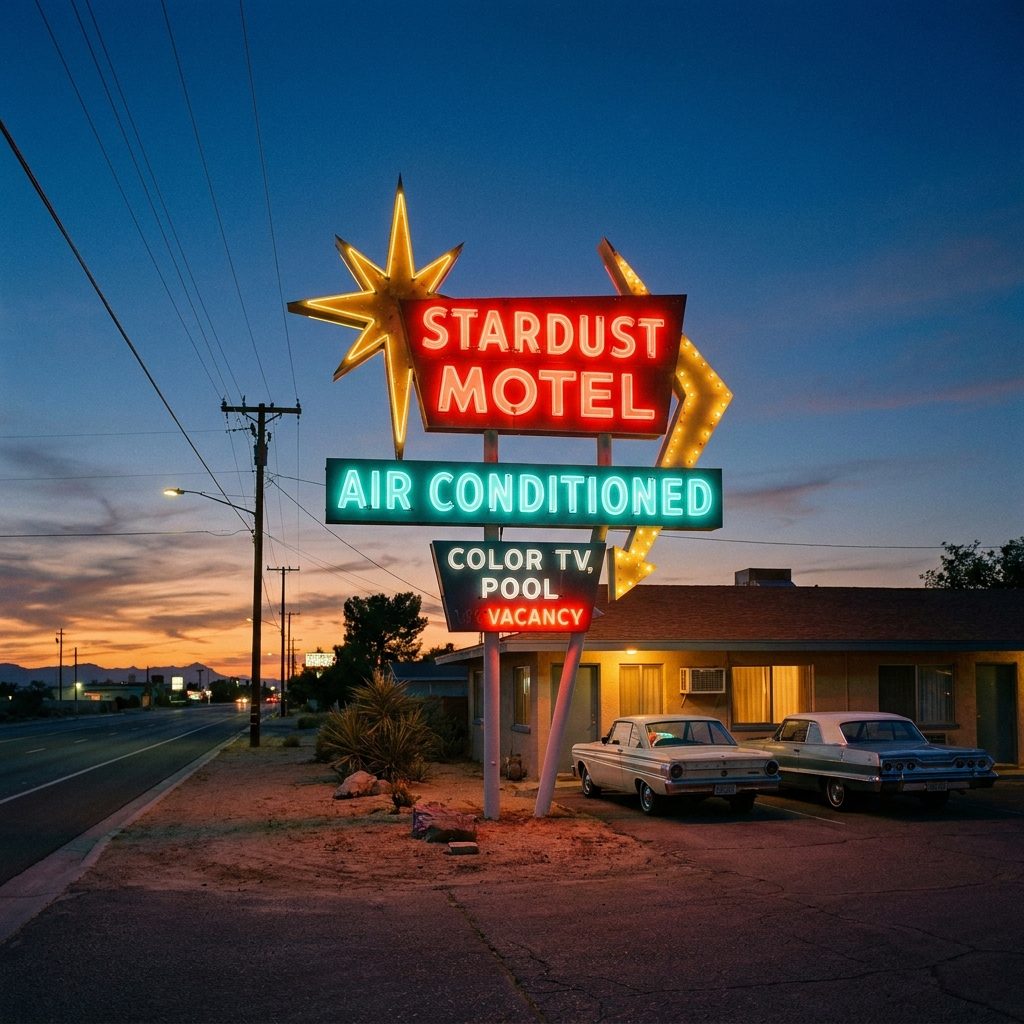
AIR CONDITIONED. Right there on the sign, in letters as big as the motel’s name. Sometimes bigger. As if climate control were a draw on par with a swimming pool or color TV. And driving through the Texas Panhandle in August with no AC in the car? It absolutely was.
The unit itself was a window box that sounded like a dishwasher full of gravel, with two settings: “arctic” and “off.” You’d crank it to high, pull the bedspread up because now the room was freezing, and fall asleep to the rattle. That rattle was the sound of being indoors, horizontal, and no longer baking in a station wagon. Nobody minded it. Most of us loved it.
21. The Black-and-White Television Bolted to a Metal Stand Like It Might Walk Off
🔥 Would you like to save this?
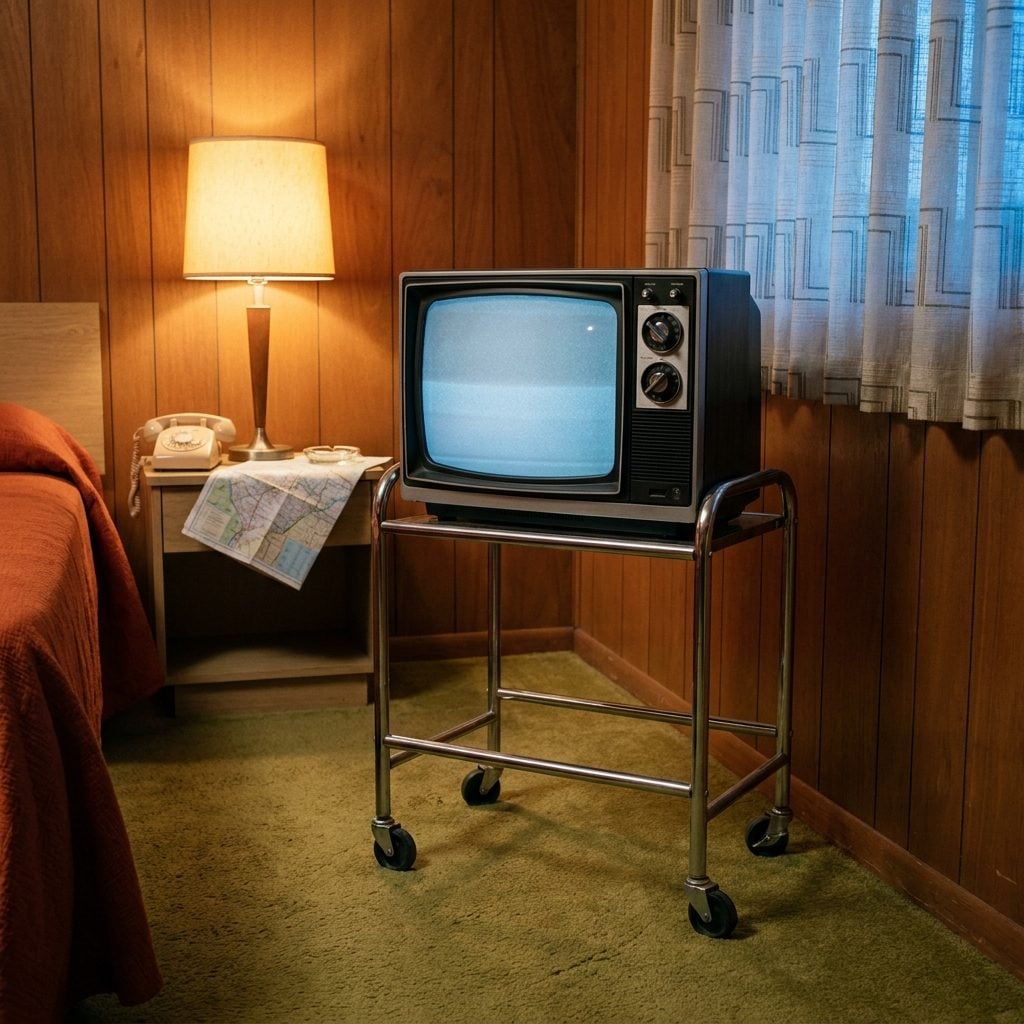
That set weighed about forty pounds and sat on a wheeled metal stand that hadn’t rolled smoothly since Eisenhower’s second term. The screen was maybe fourteen inches across, and it picked up three channels if you were lucky, four if you were near a city. You’d fiddle with the dial while your dad showered, watching the picture swim from static into something resembling a person.
Nobody questioned why the TV was chained to the stand or why the stand was sometimes bolted to the floor. Theft prevention in its most straightforward form. The picture was grainy, the sound tinny, and none of it mattered because you were watching television in a motel room, which felt impossibly luxurious when you were nine years old.
20. Rabbit-Ear Antennas You Had to Hold at Exactly the Right Angle
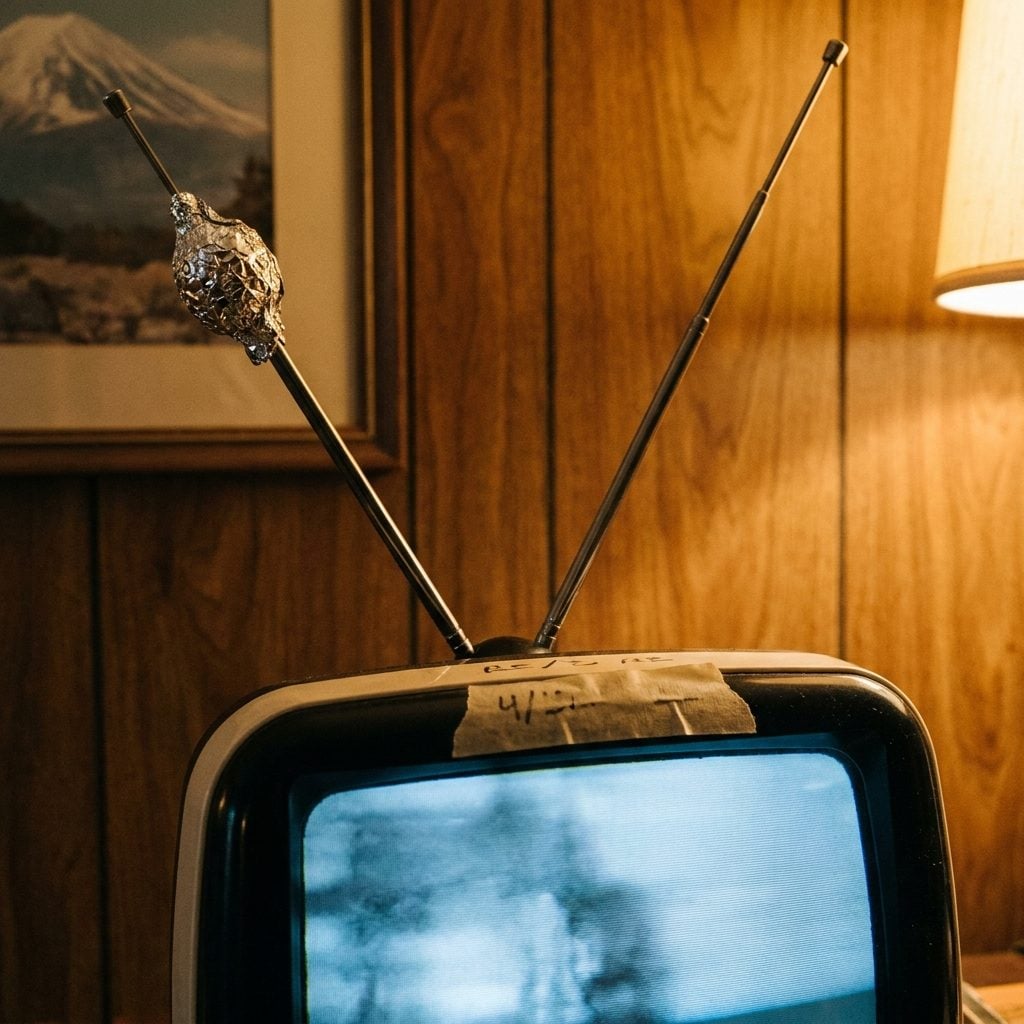
Every motel room had a pair of rabbit ears perched on top of the television, and every guest became a freelance broadcast engineer the moment they checked in. You’d extend one ear, tilt it left, get half a picture. Extend the other, tilt it right, lose the picture entirely. Someone always had to stand next to the TV holding one antenna at a forty-five degree angle while the rest of the family watched from the bed.
The second you let go, the picture dissolved. Wrapping aluminum foil around the tips was the universally accepted fix, and it sometimes actually worked. I’m still not entirely sure why.
19. The Small Writing Desk Stocked with Free Motel Stationery Nobody Used for Writing
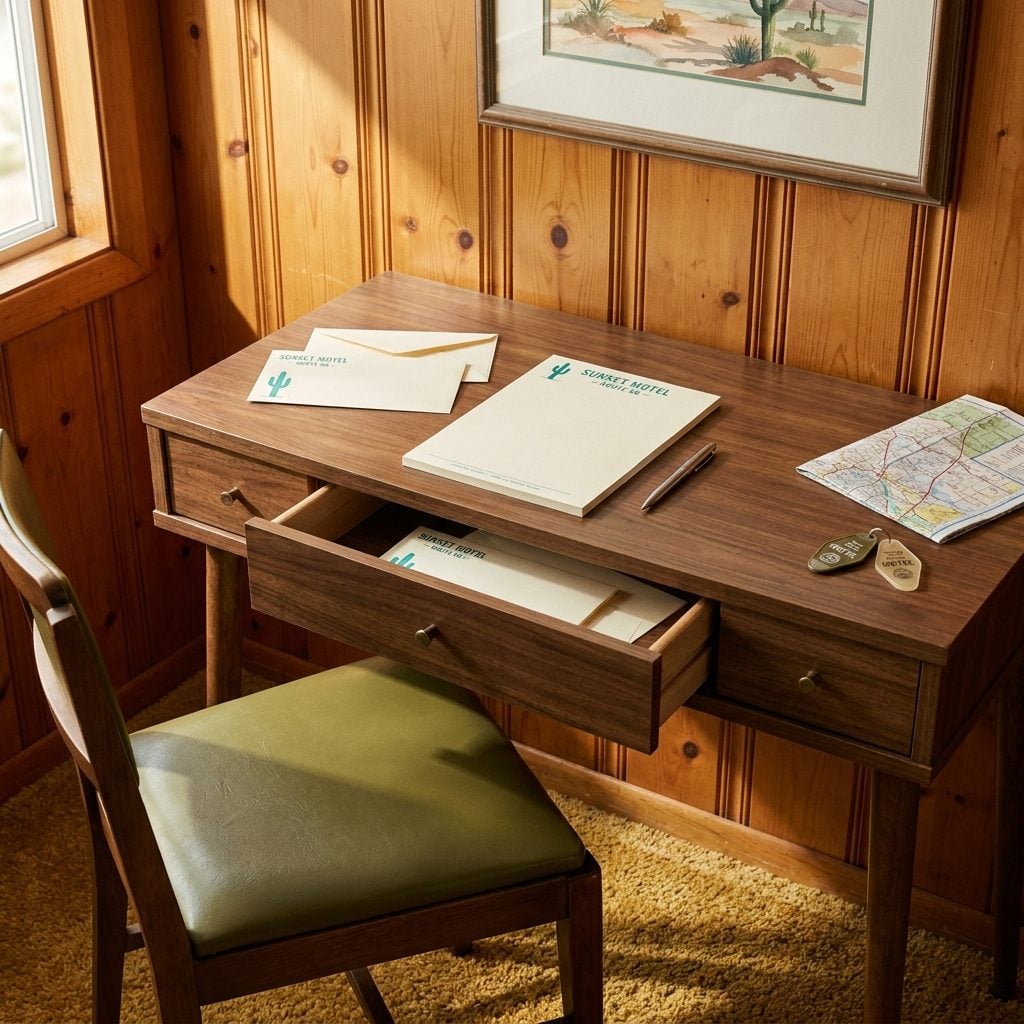
Against one wall, always too close to the air conditioner, sat a narrow wooden desk with a single drawer. Inside that drawer: a pad of paper printed with the motel’s name and address, two envelopes, and a ballpoint pen that may or may not have worked. The stationery implied that you might sit down and compose a letter during your stay, as if you’d traveled three hundred miles to catch up on correspondence.
Kids used it for tic-tac-toe. Dads used it to tally up gas receipts. Moms occasionally wrote a postcard at it. Nobody ever wrote an actual letter. But the desk made the room feel civilized, like you were a guest somewhere that expected certain standards, and the pen always ended up in somebody’s purse by checkout.
18. Matchbooks Printed with the Motel Name That Ended Up in Every Junk Drawer in America
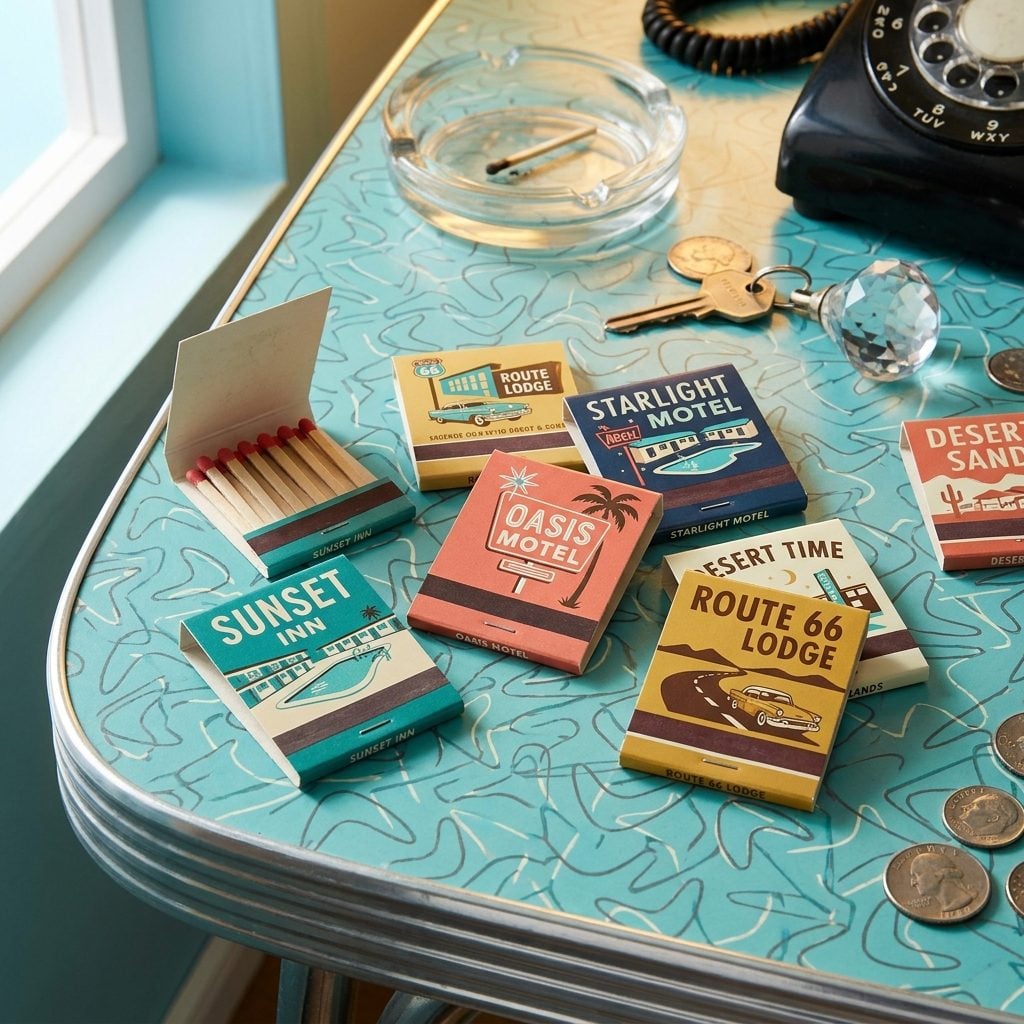
Free. Always free. Sitting in a small bowl at the front desk or tucked next to the ashtray in your room. The matchbook had the motel’s name on the front, maybe a little illustration of the building or the pool, and the address and phone number on the back. You grabbed one whether you smoked or not.
These things migrated. They traveled home in coat pockets and glove compartments, settled into kitchen junk drawers between rubber bands and expired coupons, and surfaced years later like tiny archaeological artifacts. “The Flamingo Motor Court, Tucumcari, NM.” Suddenly you’re ten again, standing in a parking lot in the desert heat, waiting for your father to get the key.
A matchbook was the original check-in souvenir. Nobody bought it, nobody asked for it, and everybody kept it.
17. The Wire Rack of Local Brochures That Planned Your Entire Vacation for You
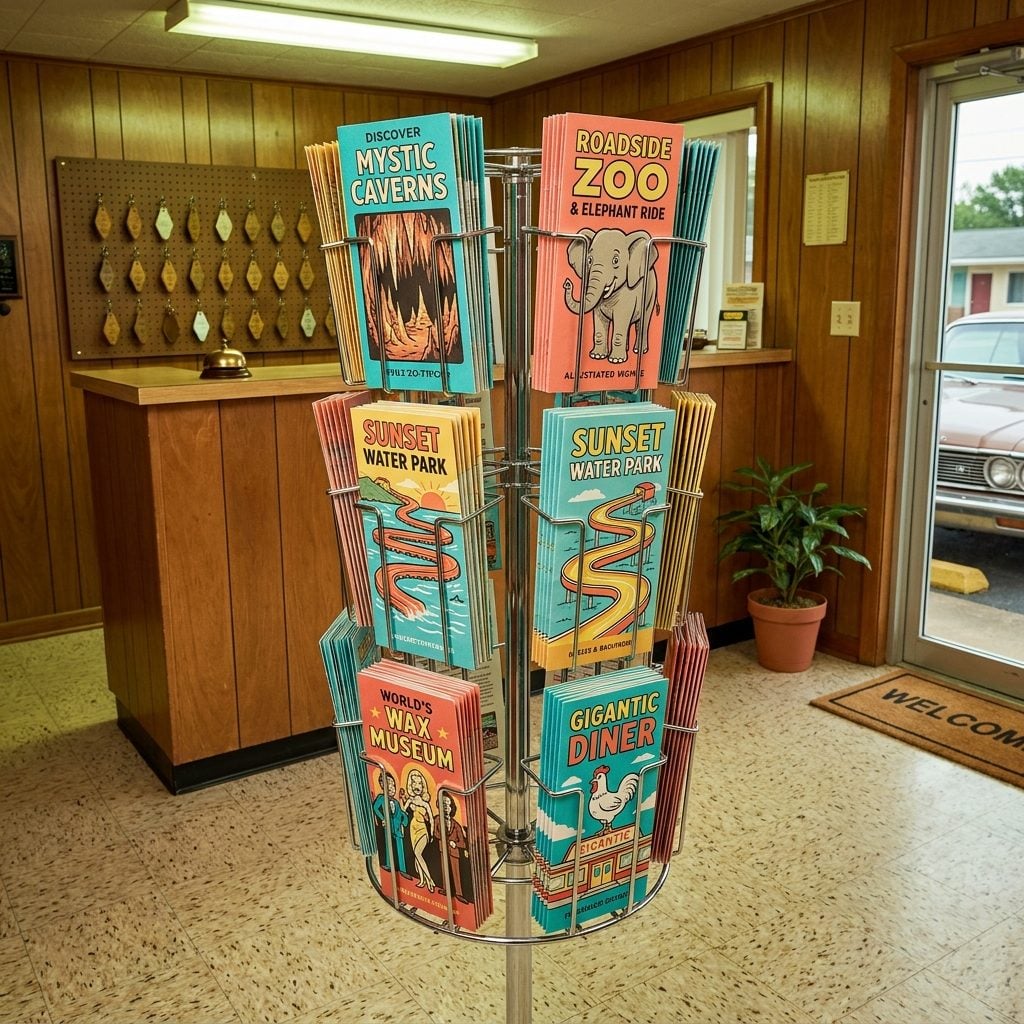
Standing next to the front desk or mounted on the lobby wall: a spinning wire rack crammed with trifold brochures for every attraction within a hundred-mile radius. Mystery caverns. Reptile gardens. Miniature golf shaped like a pirate ship. A diner that claimed to have the world’s best pecan pie. Each brochure was printed on glossy paper with colors slightly too saturated, making every attraction look like the most exciting place on Earth.
You’d grab a fistful while your parents checked in, then spread them across the motel bedspread like a hand of cards. This was how itineraries happened. Not guidebooks, not travel agents. A wire rack in a motor lodge lobby in 1964.
16. Curtains with Patterns So Bold They Could Be Seen from the Parking Lot
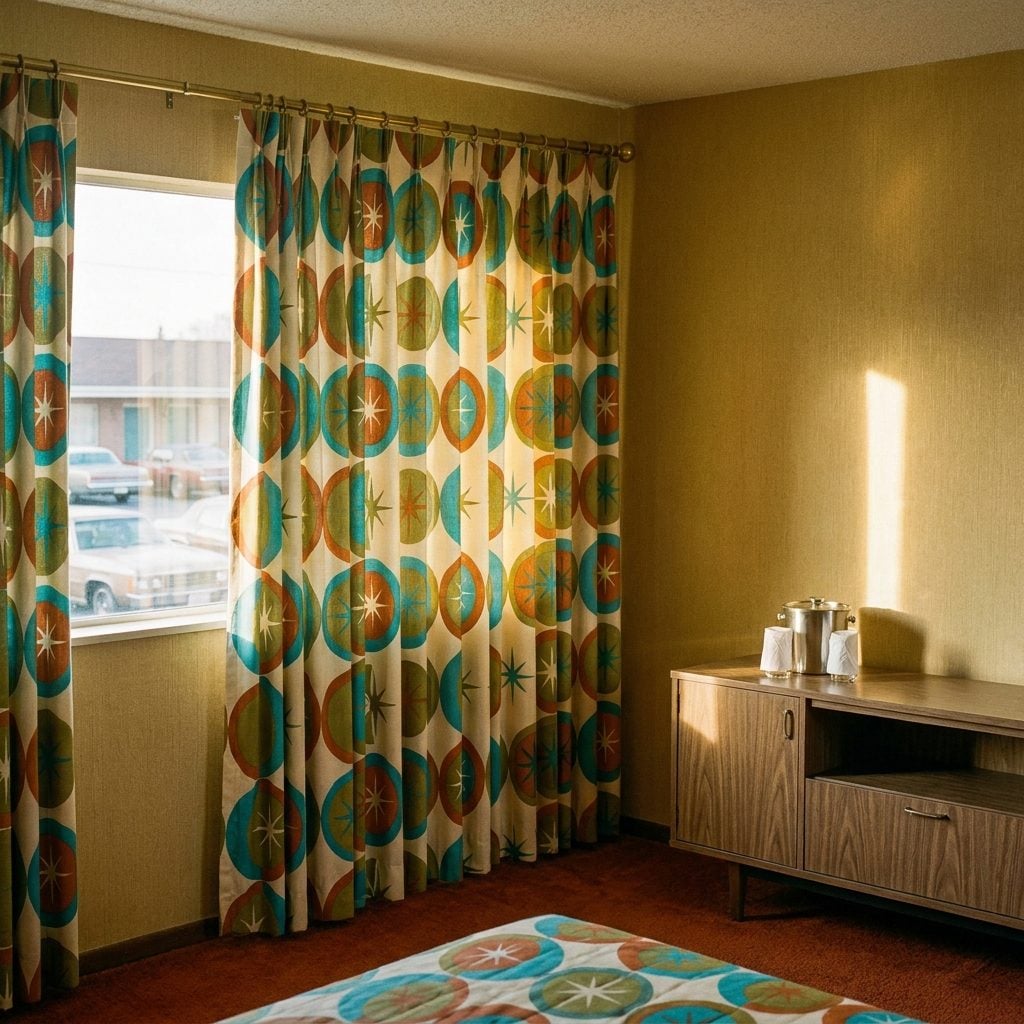
Heavy, lined, and pulled shut by a cord that always stuck halfway. The fabric was either an aggressive floral in harvest gold and avocado, or an atomic-age geometric in turquoise and brown that looked like something from a missile-launch control room. These curtains blocked light like they were guarding state secrets, which was the whole point when you needed to sleep past six in a room facing east.
The smell was distinct. Cigarette smoke baked into polyester over hundreds of guests and dozens of summers. You learned not to press your face against them.
They matched nothing else in the room and matched everything else in the room simultaneously, because every surface in a 1960s motel room was committed to the same fearless color palette.
15. Bathroom Tile in Pink, Mint Green, or Powder Blue That Nobody Thought Was Unusual
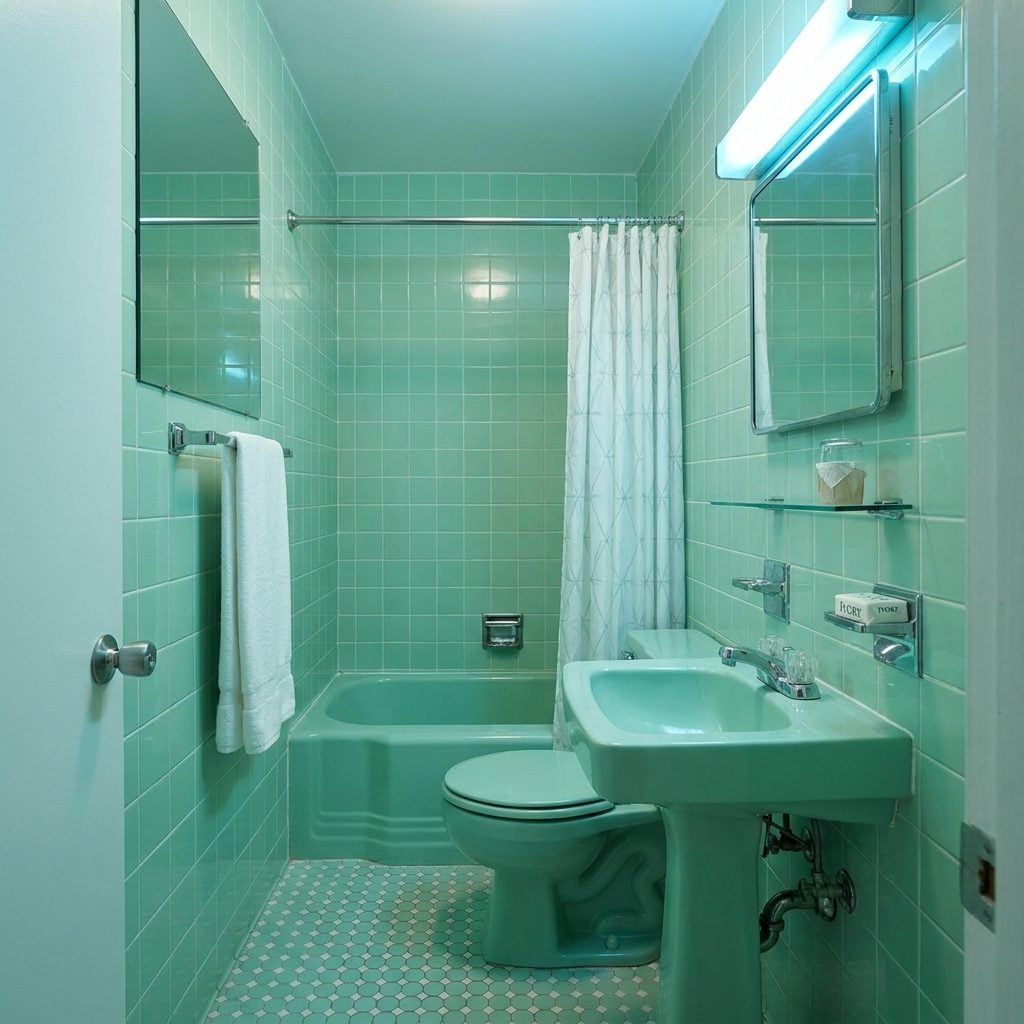
Walk into a 1960s motel bathroom and the tile hit you like a paint swatch from a cotton candy factory. Pink. Not blush, not rose, not salmon. Pink. The toilet was pink. The sink was pink. The bathtub was pink. The floor tile was pink with little pink accent tiles. Everything matched in a way that felt both thorough and slightly unhinged.
Mint green was the other heavyweight. Powder blue had its following. Yellow showed up occasionally, usually in Florida. These weren’t accent colors. This was total commitment. The entire bathroom existed inside a single hue, and if you needed visual relief, your only option was the white grout lines between the tiles.
14. The Wall-Mounted Bottle Opener That Assumed You’d Brought Your Own Beverages
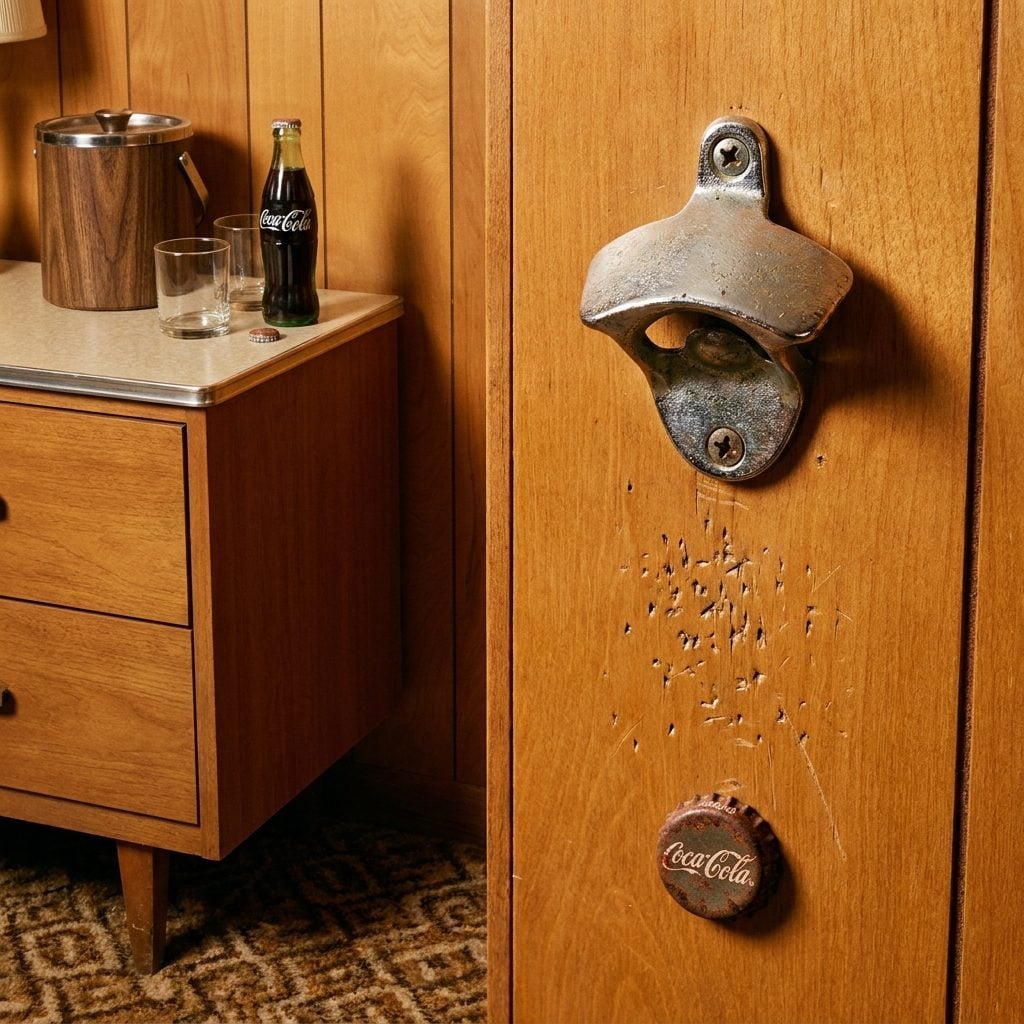
Screwed right into the wall near the sink or the dresser, no explanation needed. A simple cast-metal bottle opener, sometimes chrome, sometimes painted to match the room’s color scheme, always mounted at exactly the right height to pop the cap off a bottle of Coca-Cola or something stronger. A small semicircle of paint chips and tiny dents in the wall below it told the story of a thousand opened bottles.
No minibar. No room service menu. Just a bottle opener on the wall and the implicit understanding that you’d handle your own refreshments. The ice machine was down the hall. The rest was your business.
13. The Family Who Owned the Place and Lived Right There Behind the Office
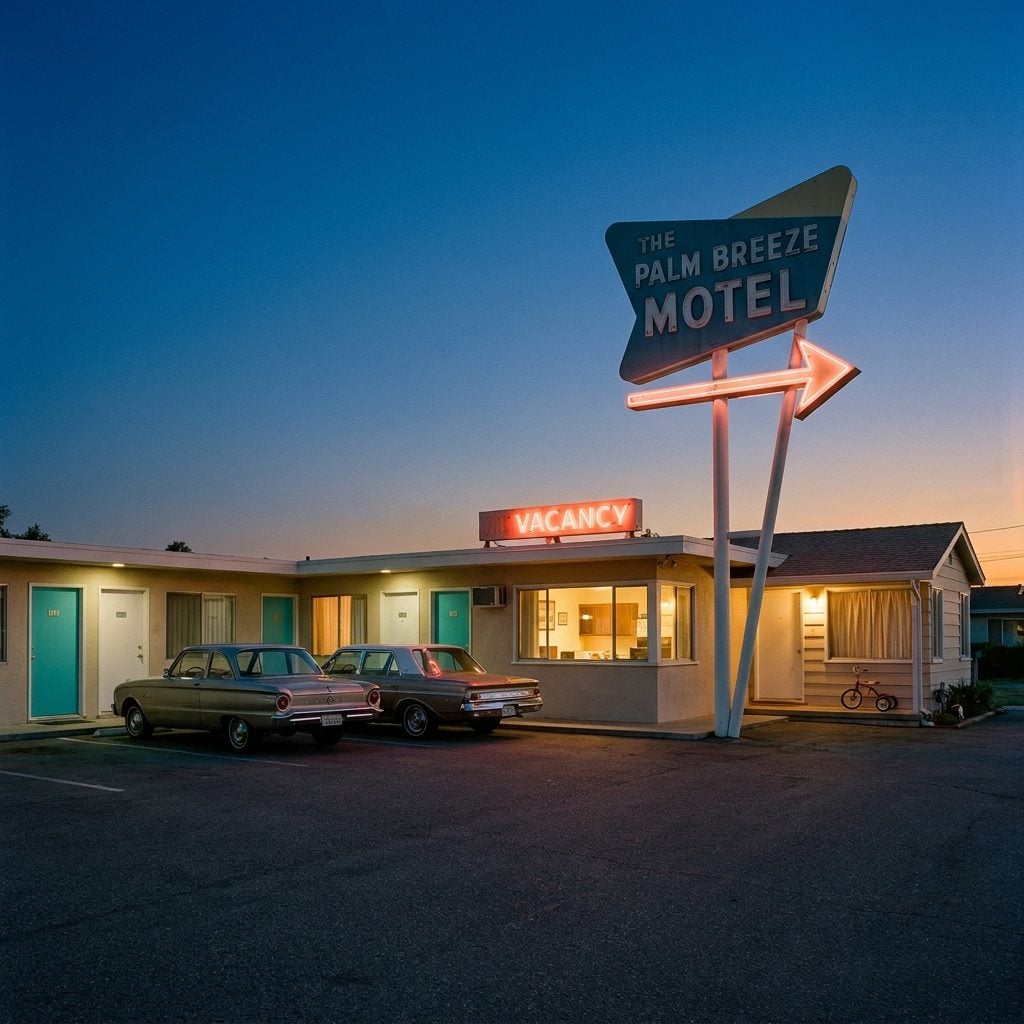
You checked in with the person who owned the building, who also cleaned the rooms, fixed the plumbing, mowed the strip of grass between the parking lot and the road, and lived in an apartment attached to the back of the office. Their kid might be doing homework at the front desk. Their dog might be asleep on the office floor. A television was always on somewhere behind a curtain.
This was the entire business model for thousands of independent motels across America. One family, one mortgage, one neon sign they turned on at dusk and off when the last room filled. They knew which rooms had the best mattresses and which ones got hot in the afternoon. They’d tell you where to eat and mean it, because they ate there too.
Chain hotels made these families mostly obsolete by the 1980s. The buildings are still out there, a lot of them, with the “office” apartment still visible around back if you know what you’re looking at.
12. Magic Fingers: The Vibrating Bed You Fed Quarters Like a Jukebox
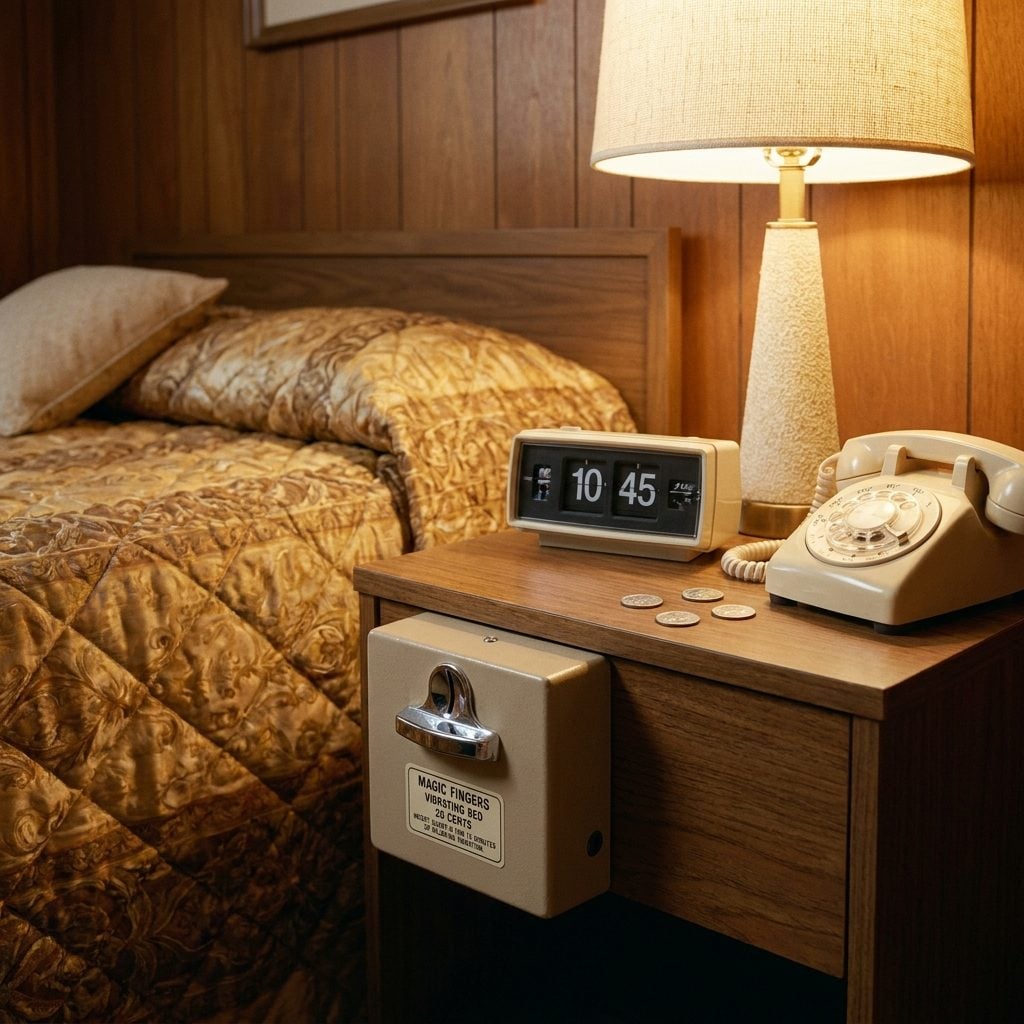
Twenty-five cents for fifteen minutes of “relaxing massage.” The metal coin box was bolted to the nightstand, and dropping a quarter into the slot activated a small motor attached to the bed frame that made the entire mattress vibrate with the gentle intensity of a washing machine on spin cycle. It was not relaxing. It was not a massage. It was, however, the single greatest novelty a child could encounter in a motel room.
Adults tried it once, maybe twice, then ignored it. Kids begged for quarters. The machine hummed and buzzed and made the headboard rattle against the wall, and when the fifteen minutes ran out, the sudden silence was almost louder than the vibration had been.
Magic Fingers was a real company, founded in 1958, and at its peak those coin boxes were installed in thousands of motel rooms across the country. The company quietly faded in the 1980s, but the concept remains one of the most universally remembered details of midcentury motel travel. If you’re over fifty and you stayed in roadside motels as a kid, you remember the sound of that quarter dropping into the slot.
11. The Postcard-Sized Room Rate Sign Hanging in the Office Window
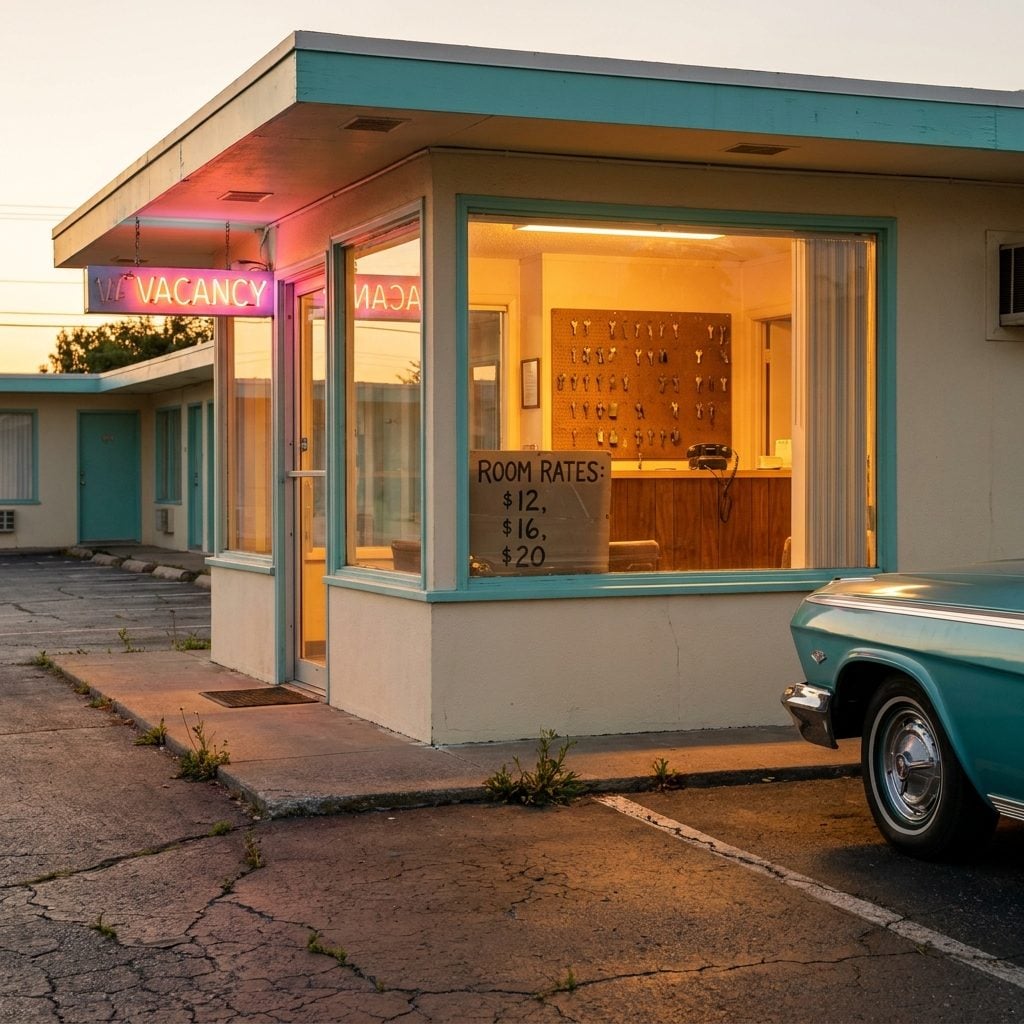
Six dollars. Single. Eight dollars. Double. Right there in the window, handwritten on a card no bigger than a recipe index. No algorithm, no surge pricing, no “rates may vary based on demand.” The number was the number, and you could read it from your car before you even turned off the engine.
That little sign did something websites will never replicate — it made the whole transaction feel honest. You knew what you were paying before you spoke to a soul. Price looked right? Pull in. Too steep? Drive another twenty minutes to the next place. There was no “book now before this deal expires” countdown clock cranking up your blood pressure.
Most of these signs were written in felt-tip marker on cardstock. Some enterprising owners used press-on letters from the hardware store, and a few had printed plastic signs with slots for changeable numbers — the kind where the eight always looked suspiciously like a three.
10. Separate Ice Water Cups Sealed in Paper Sleeves
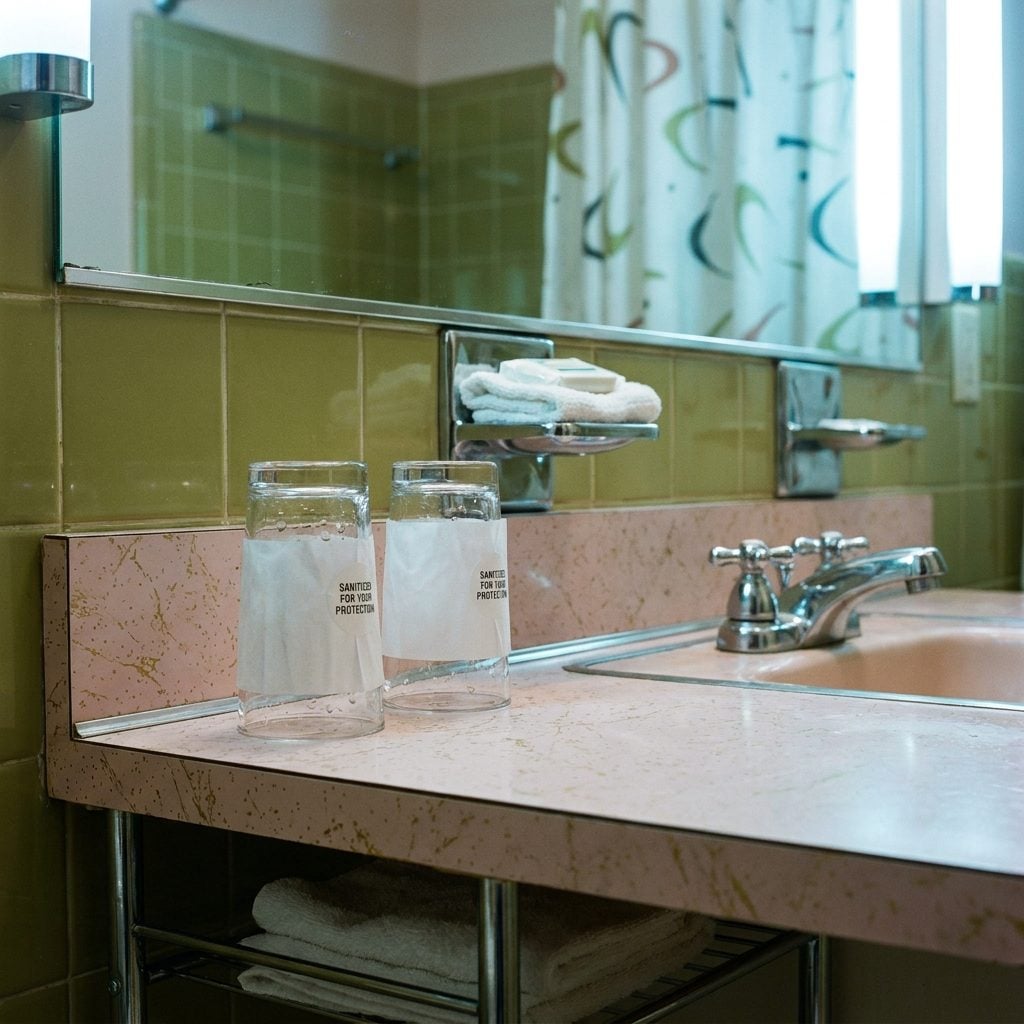
“Sanitized for your protection.” Those four words, printed on a paper band wrapped around a glass that was almost certainly just rinsed under the tap by the maid twenty minutes ago. And we believed it. Completely. Without a flicker of doubt.
The glasses were always that same slightly thick, slightly cloudy clear glass with a faint ridge around the rim. You’d tear the paper sleeve off like opening a tiny present, fill it with ice from the bucket you’d just hauled from the machine down the breezeway, and drink lukewarm tap water that tasted vaguely of copper pipes. Felt civilized, though. Genuinely did. Something about that paper seal made you feel like a guest rather than a customer, even if the whole ritual was theater.
9. TV Channels Changed with a Clunky Rotary Dial on the Set
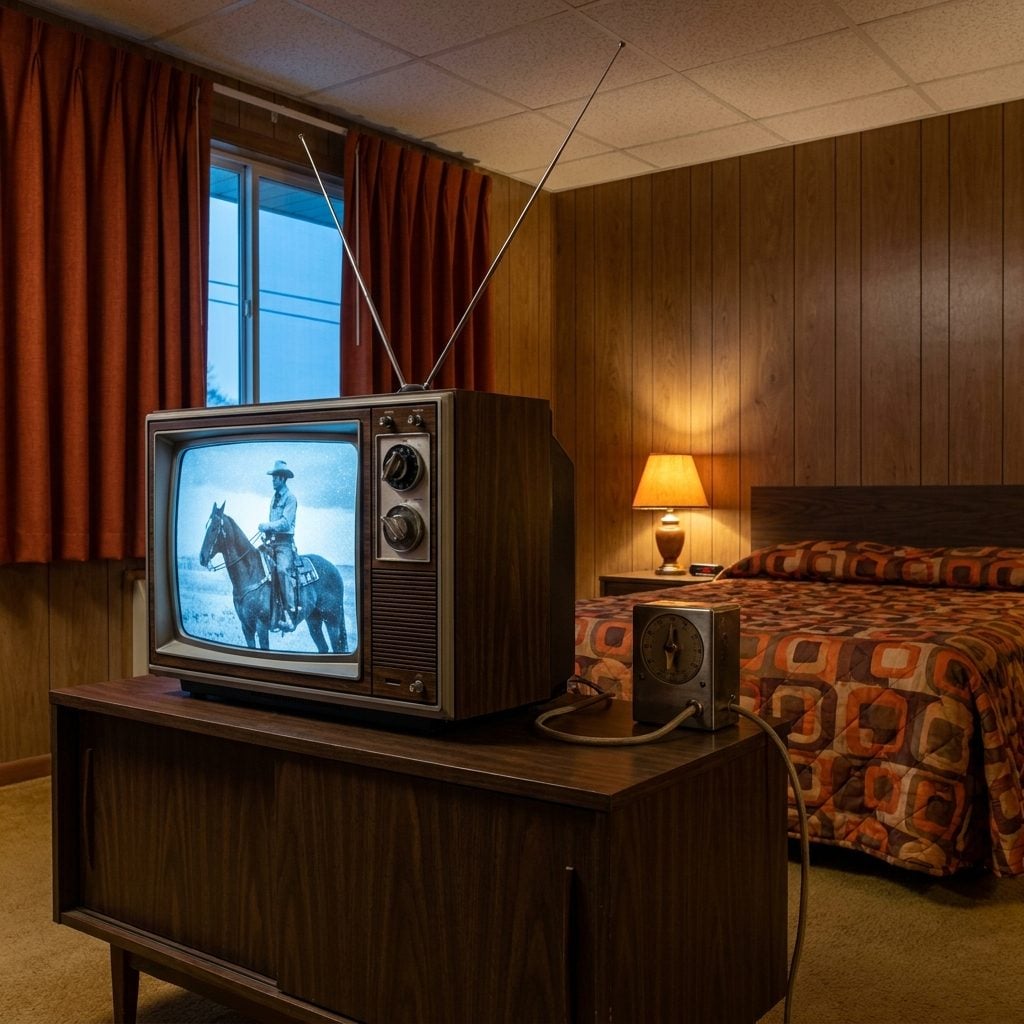
KA-CHUNK. KA-CHUNK. KA-CHUNK.
That was the sound of finding something to watch. Each channel demanded a physical, deliberate rotation of a dial that resisted your fingers just enough to feel like a commitment — channels 2 through 13, half of them pure static. You’d spin through all twelve positions, settle on whatever was least snowy, and watch it. No browsing. No scrolling through hundreds of options for forty minutes before giving up and rewatching something old. You watched what the antenna gods gave you, and you were grateful.
And in plenty of motels, the TV wasn’t even free. A coin box bolted to the nightstand demanded a quarter for a set window of viewing time. You’d hear the mechanism click, the screen would warm to life, and you had maybe an hour before it went dark again. Put another quarter in or go to sleep. Those were your choices, full stop.
8. Fold-Out Luggage Racks with Striped Fabric Straps
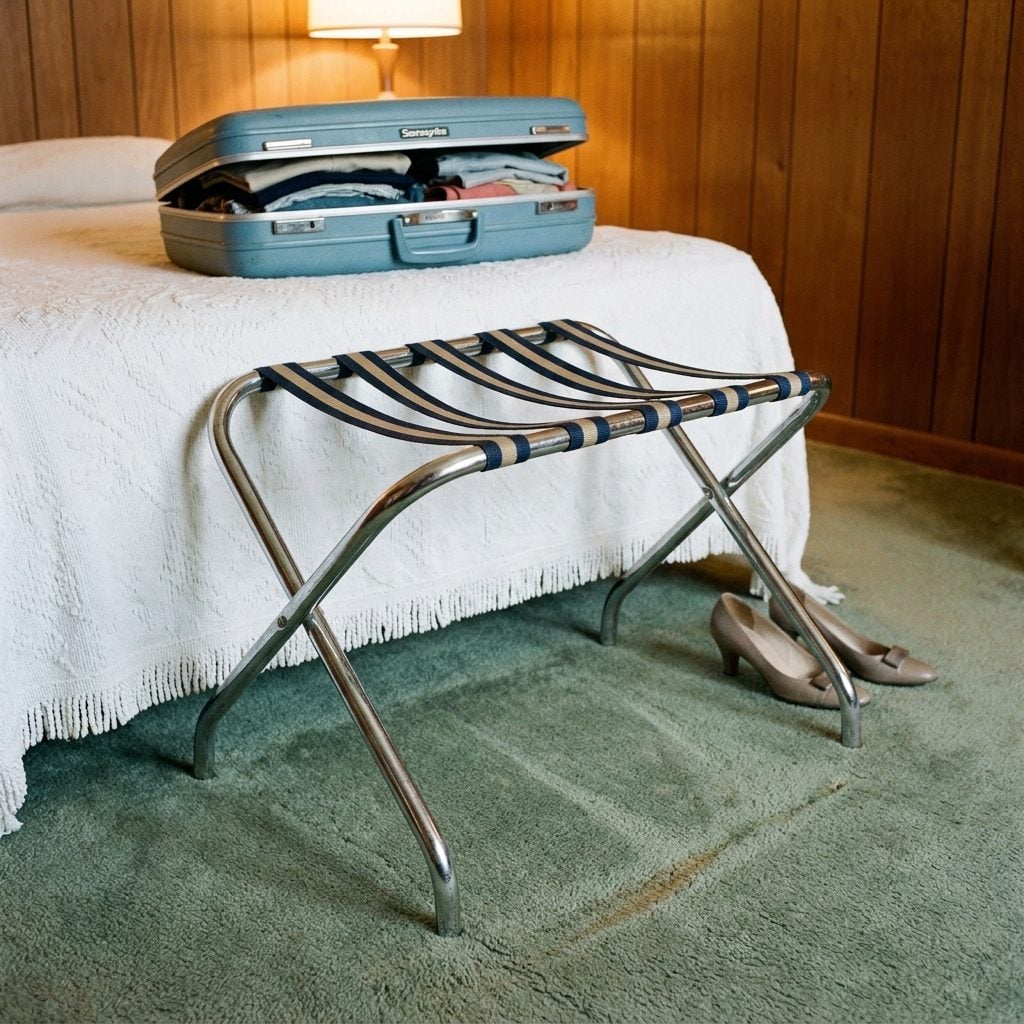
Every single one of these things looked like it was about to collapse. The chrome tubes were never quite tight at the joints, and the fabric straps — always in some variation of brown-and-tan or navy-and-white — bowed dramatically under anything heavier than a weekender bag. You’d set your hard-shell suitcase on it and hold your breath for a second.
But they held. Every time. I can’t recall a single luggage rack failure in my entire childhood, and my father packed like he was relocating permanently for a two-night stay in Sarasota. Those straps were industrial-grade, woven tight enough to support a small adult. Quietly brilliant design for something that probably cost the motel next to nothing at wholesale.
7. Guest Registries Signed by Hand in Cursive at the Front Desk
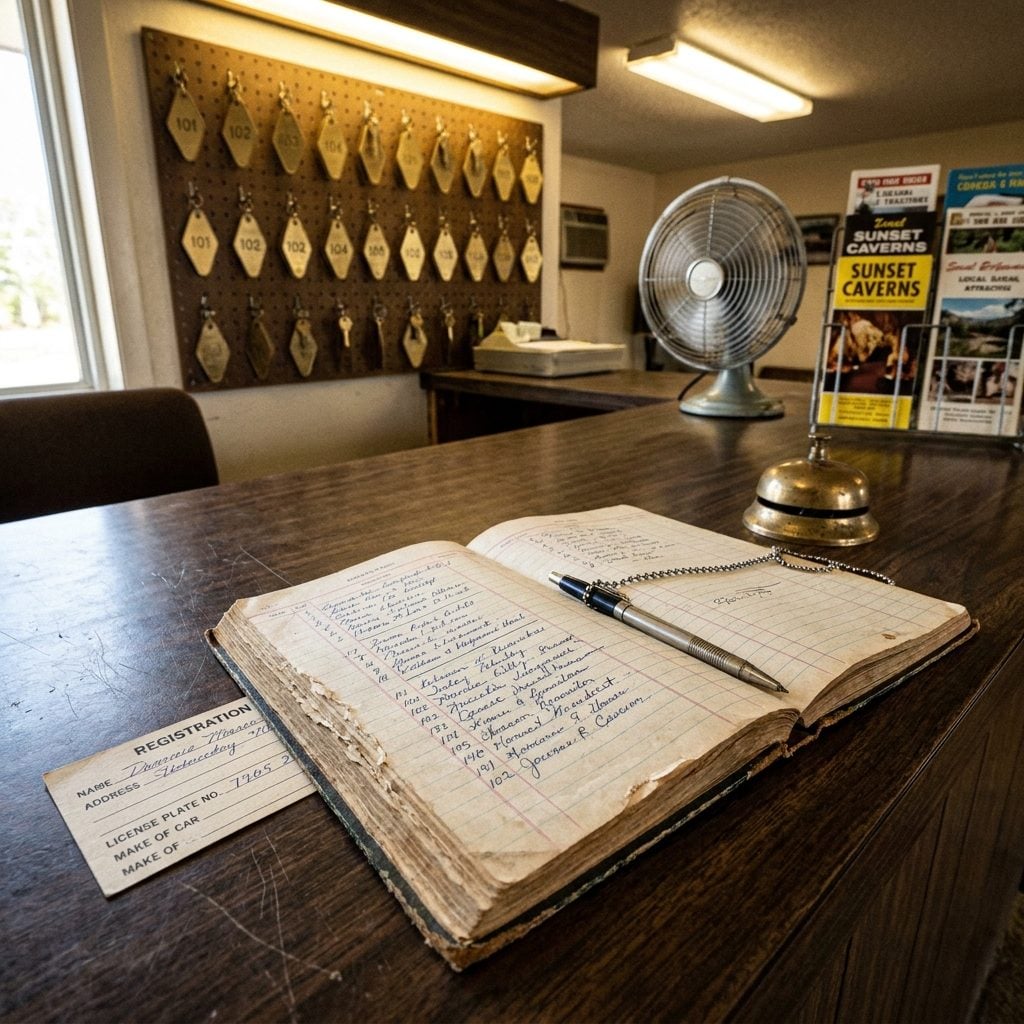
Name. Home address. Make and model of car. License plate number. How many nights. Method of payment. All of it, written by hand in a leather-bound book that anyone at the desk could flip through if they were nosy enough.
Nobody thought twice about any of this. You signed your actual name, wrote your actual home address, and the clerk turned the book around and read it upside down while fishing for your room key. Privacy wasn’t a concept that applied to motel check-in — the registry was the entire system. No confirmation number, no email, no digital backup. If the motel burned down, so did every record of who’d stayed there. That was just how it worked, and nobody lost sleep over it.
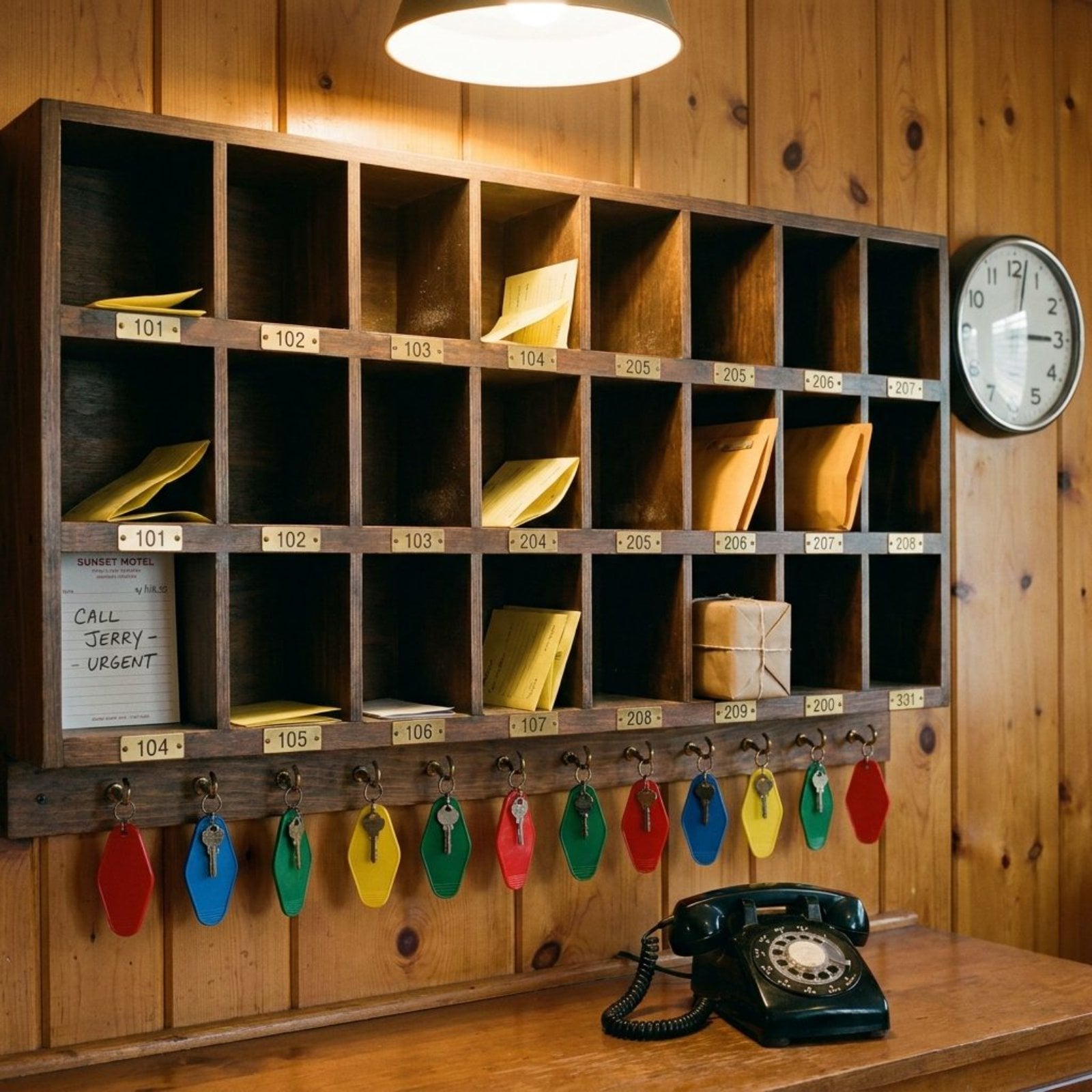
6. Metal Mail Slots and Message Cubbies Behind the Front Desk
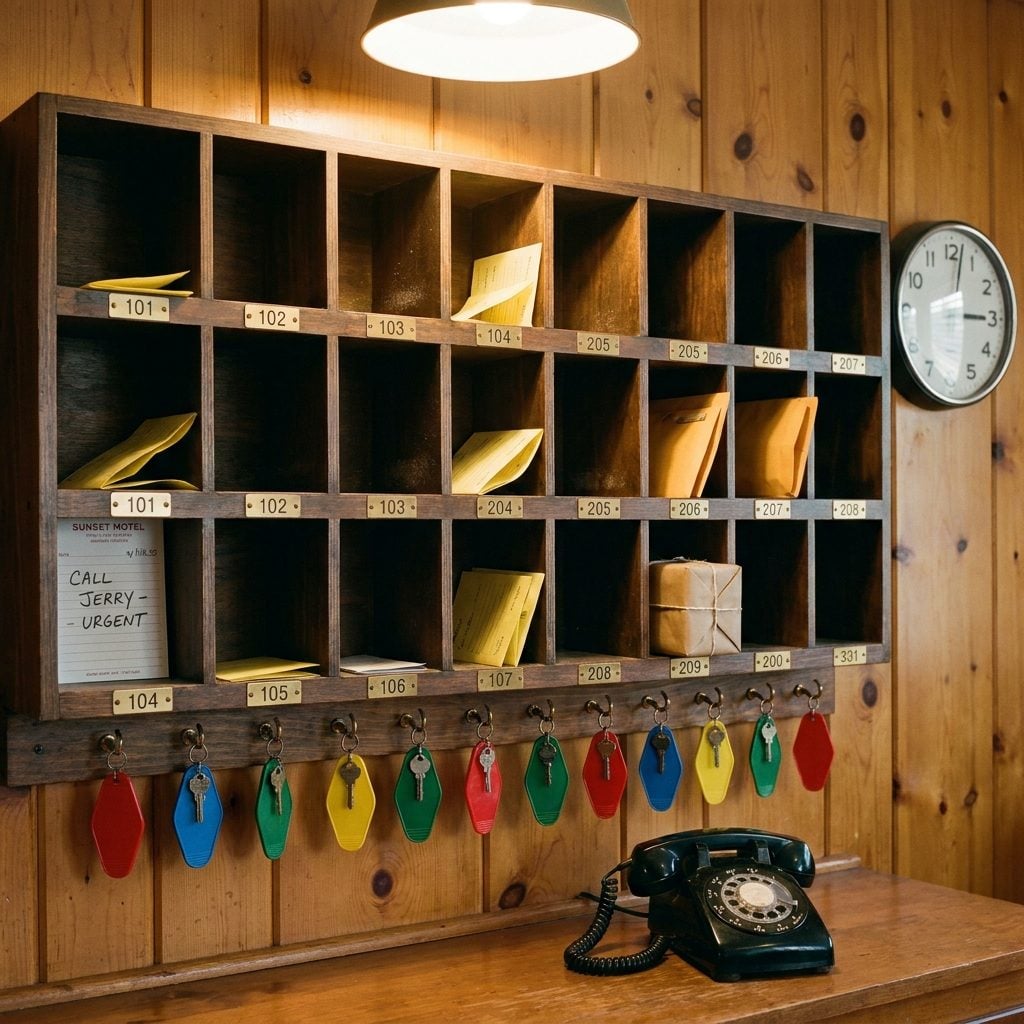
Before voicemail, before texting, before the front desk could ring your room phone — because half the rooms didn’t have phones — there was the cubby wall. Your room number, a little wooden box, and whatever messages piled up while you were out seeing the sights.
“Your wife called. Please call back.” “Reservation at the restaurant confirmed for 7.” Folded slips of paper in the clerk’s handwriting, tucked into your slot like tiny dispatches from the outside world. You’d check the cubby every time you walked through the lobby. Same impulse as reaching for your phone every ninety seconds today — different century, same itch, same small dopamine hit when something was actually waiting there for you.
5. Maid Service Signs That Hung from the Doorknob Instead of Cards
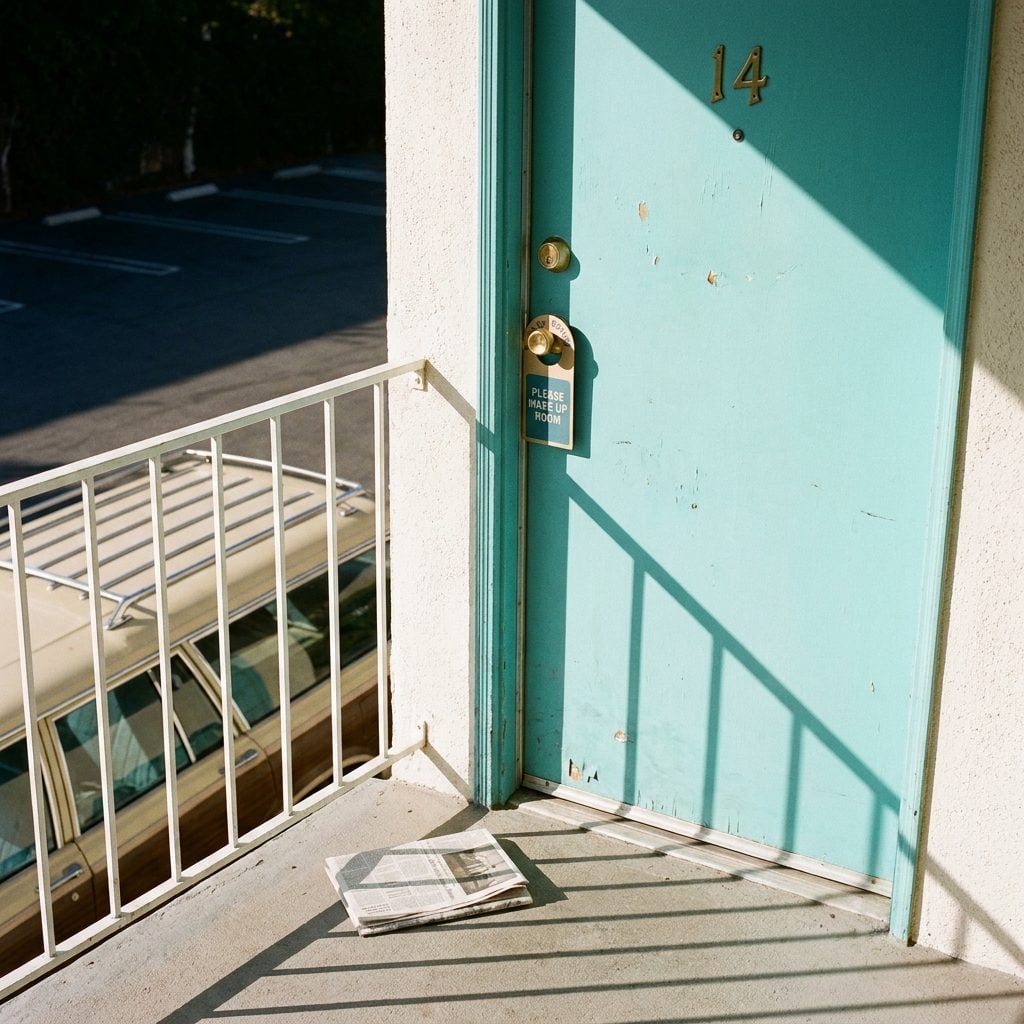
Flimsy cardboard with a hole punched to fit over the knob. One side said “Do Not Disturb.” The flip side said “Please Make Up Room.” That single piece of cardboard was the entire communication system between you and housekeeping — and if it fell off in the night, which it did constantly, you’d wake up to a maid walking in at 8 AM.
I lost count of how many times my mother shrieked because the sign had slipped off and someone was already inside the room with fresh towels. The maid would apologize. My mother would apologize. Everyone would apologize profusely. Then it would happen again the next morning because nobody thought to improve the design for three decades. You’d think someone, somewhere, would have invented a latch mechanism or a magnetic version. Nope. Cardboard and gravity, every time.
4. That Universal Motel Smell: Chlorine, Cigarette Smoke, and Burnt Coffee
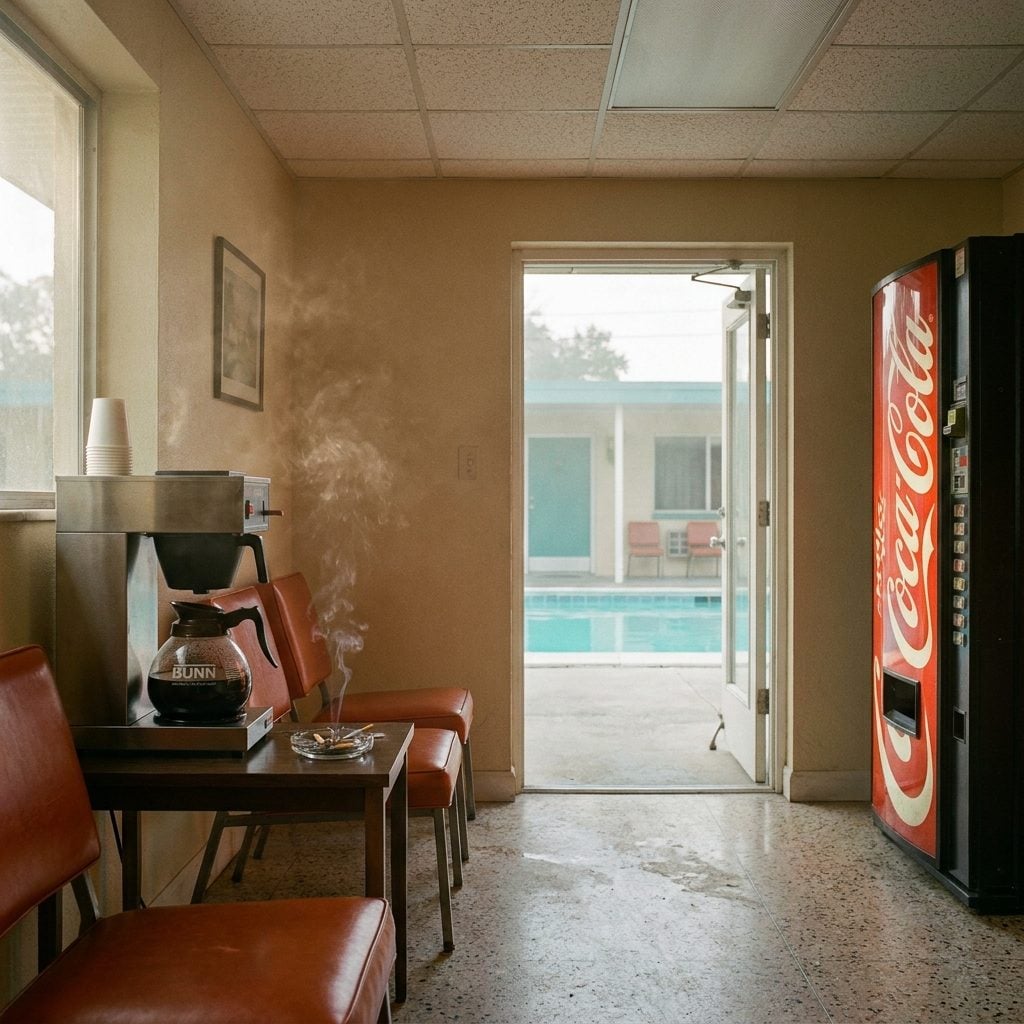
You knew it before you saw the room. The second you stepped out of the car, it hit you — chlorine from the pool that was always slightly too warm, cigarette smoke embedded so deeply into the curtains and bedspreads that no amount of Lysol could extract it, and somewhere, always, a pot of coffee that had been sitting on a burner since the Eisenhower administration.
Here’s what’s hard to explain to anyone who didn’t grow up with it: that smell wasn’t unpleasant. It was vacation. It meant you were somewhere other than home, sleeping in a bed that wasn’t yours, with a pool outside your door and nothing on the calendar tomorrow. Chlorine and burnt Folgers. That was the cocktail of freedom.
3. Tiny Bathroom Windows with Textured Privacy Glass You Could Never See Through
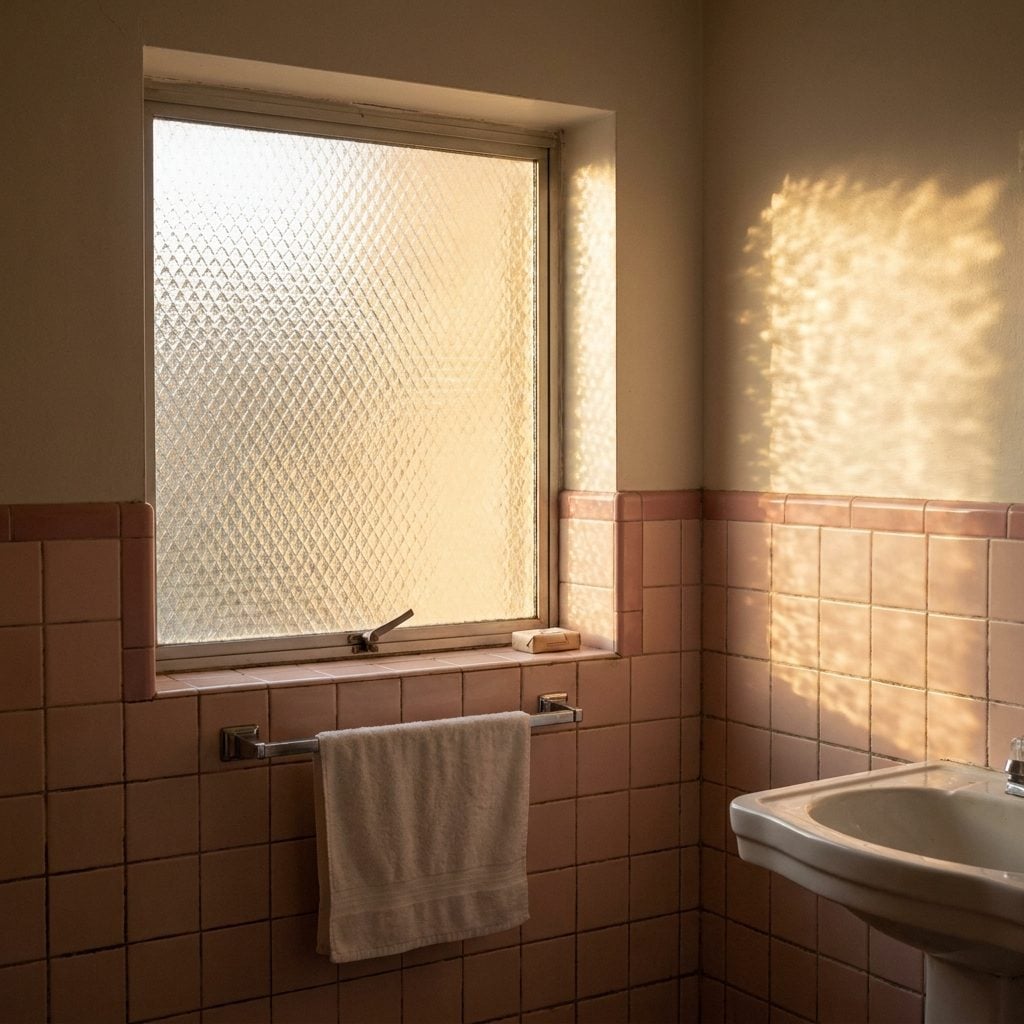
What, exactly, were they protecting us from? The window was eight inches wide, twelve inches tall, mounted six feet off the ground, and made of glass so heavily textured you couldn’t tell if it was day or night outside. The only thing visible through it was a vague suggestion of color — green meant trees, gray meant the building next door, orange meant sunset. Probably.
These windows cranked open with a tiny aluminum handle that was either frozen stuck or spinning freely with no connection to anything mechanical. Ventilation was the stated purpose, but the actual airflow was negligible. What they really provided was a small rectangle of natural light in a room that otherwise had the ambiance of a submarine. And somehow, that was enough. You didn’t question it. You were just glad the bathroom wasn’t completely dark.
2. Early Morning Wake-Up Calls Handled by a Real Person at the Front Desk
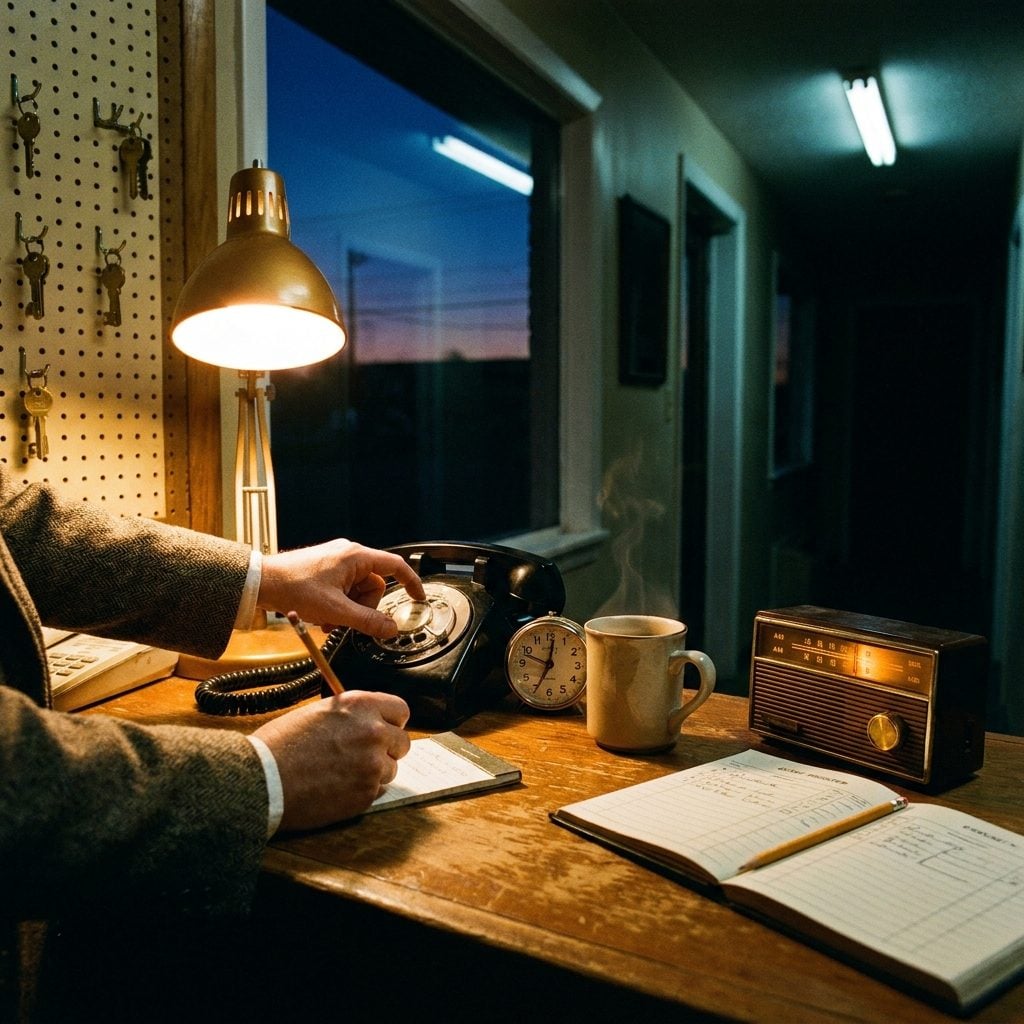
“Could you ring me at six?” That’s all it took. You’d mention it to the clerk on your way to the room, and they’d scribble your room number and time on a list. Come morning, an actual human picked up an actual telephone and dialed your room. The phone rang, you fumbled for the receiver, and a voice said, “Good morning, it’s six o’clock.”
Sometimes you got a chatty one. “Good morning, looks like it’s going to be a nice day.” Sometimes just the facts — time, click, dial tone. Either way, another person had thought about you at the exact moment you needed to be thought about. There was something unexpectedly kind about that, a warmth that had nothing to do with the weather.
Automated wake-up call systems replaced this in the 1980s and nobody protested. But something small and human vanished from the first thirty seconds of your morning. A recorded message telling you it’s 6 AM doesn’t carry the same weight as a stranger who sounds like she’s already had two cups of coffee wishing you a good day. Not even close.
1. A Glass Ashtray on Every Flat Surface Like Smoking Was a Constitutional Right
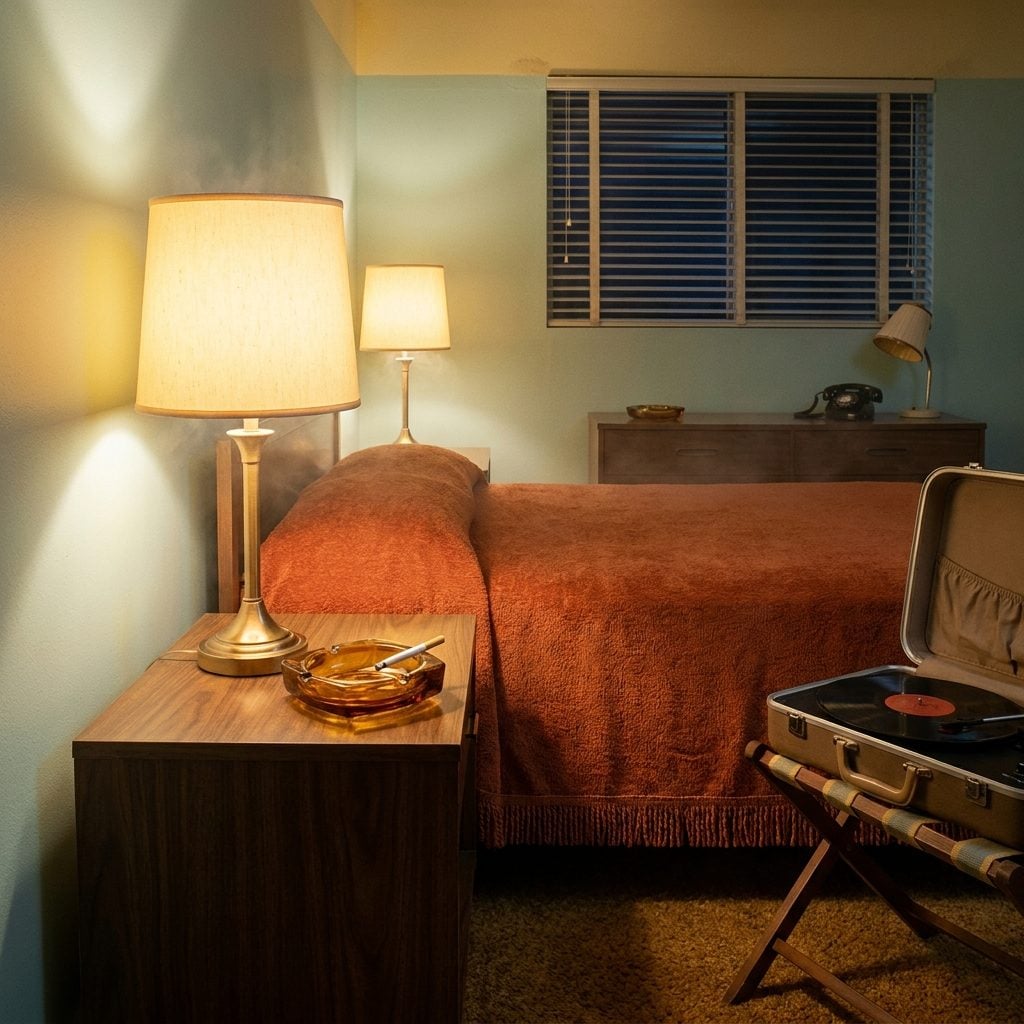
Every room had at least two, sometimes three — one on the nightstand, the amber glass ashtray on the dresser near the phone, and one bolted right into the bathroom wall next to the toilet like some kind of permanent civic installation. Heavy, thick-bottomed things with notched edges for resting your Pall Mall while you flipped through whatever TV Guide the last guest left behind. Always that same smoky amber or avocado green. Never clean enough, either. Housekeeping gave them a swipe with a damp rag, maybe, but run your thumb across the bottom and you’d feel it — gritty, faintly greasy, carrying the ghost of a hundred strangers’ Winstons.
Nobody found this odd. Not the guests, not the maids, not your parents who didn’t even smoke but never once thought to request a room without them. Hotels set ashtrays out the way diners set out salt shakers — reflexively, without discussion. And kids treated them like catch-alls: loose change, gum wrappers, seashells hauled back from the beach. That was the sixties. An ashtray wasn’t a lifestyle choice or a controversy. It was furniture, same as the lamp.
🔥 Would you like to save this?
Please note that some of the imagery in this article were created with the aid of AI image generators.