
🔥 Would you like to save this?
Before train travel became a compromise, the rails knew how to make an entrance.
The 1960s station had its own charge: polished shoes on terrazzo, cigarette smoke under the clock, porters moving luggage like choreography, dining cars already promising a better version of lunch than anyone deserved. The train did not ask passengers to shrink themselves into plastic seats and apologize for having legs. Passengers got aisles, linen, observation windows, bar cars, and the strange pleasure of going somewhere without being treated like cargo.
The glamour came from more than speed or scenery. Ceremony did the work. These 18 details are the pieces that turned getting there into a rolling spectacle.
18. The Drumbeat of the Rail Joints That Measured Out the Miles
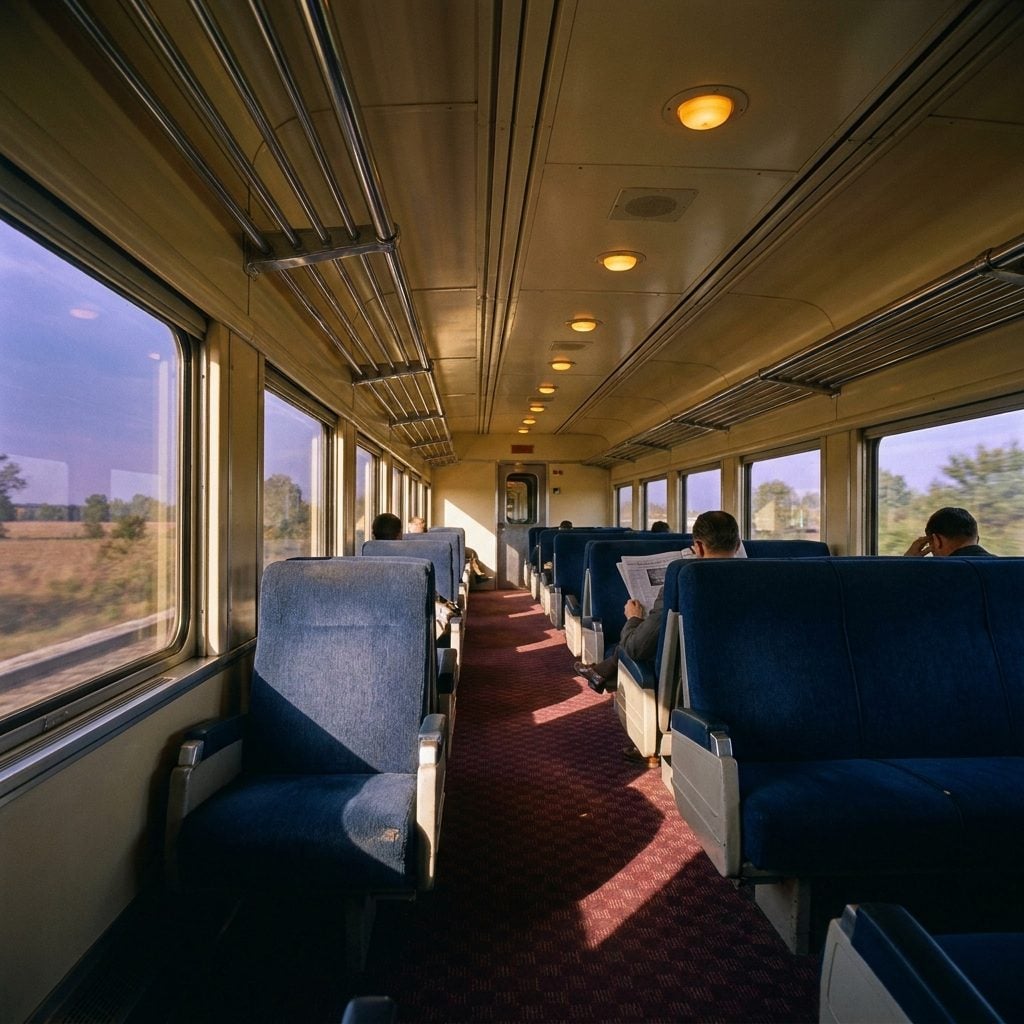
Every train had its own rhythm. Not metaphorically, a literal beat, felt in the seat cushion and heard through the window glass, produced by the wheels crossing the expansion gaps between sections of track. Click-clack. Click-clack. A steady 4/4 time that varied only when the train slowed for a station or climbed a grade.
Long-distance passengers learned to sleep to it. Children counted it. Some people, decades later, said it was the most genuinely soothing sound they ever heard. No recording has quite captured it.
17. The Conductor’s Ritual Punch of Your Ticket Stub
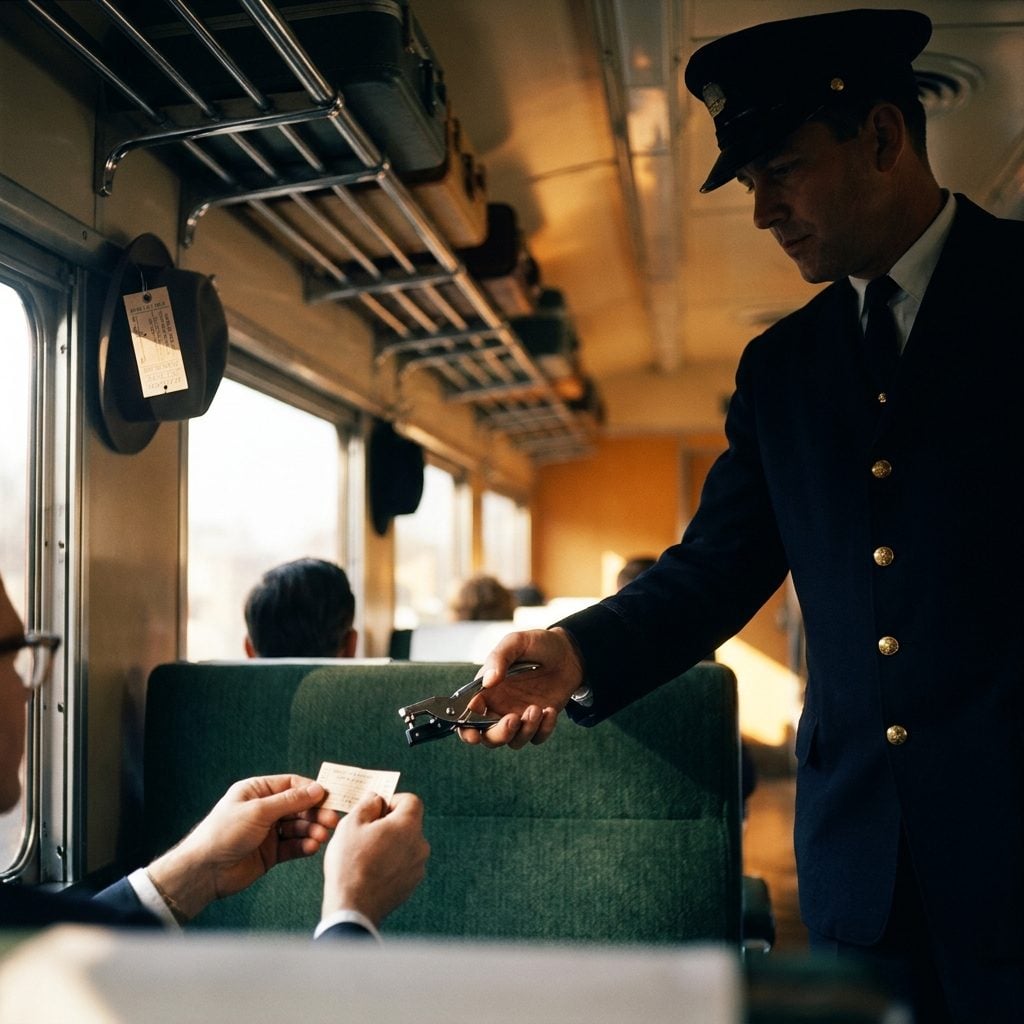
The conductor moved through the car with a rhythm that felt as official as anything in the federal government. He took your ticket, read it, and punched it with a small chrome tool that made a clean, definitive sound, a sound that meant your seat was confirmed, your journey was real, and you were going somewhere.
Then he tucked the stub into the little metal clip above your seat, visible to anyone who cared to look. It stayed there the whole trip, a small flag of your destination.
16. The Club Car’s Leather Swivel Stools at the Bar Counter
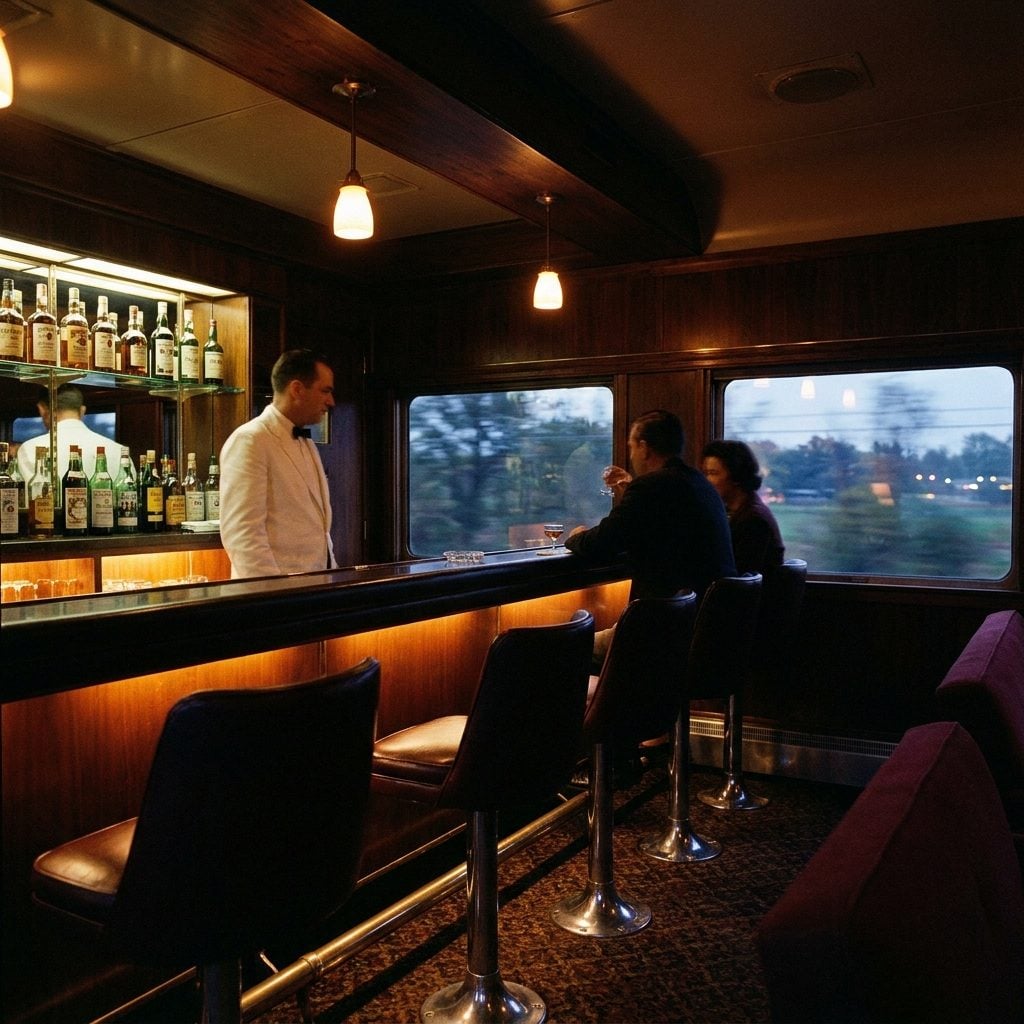
There was something about sitting at a moving bar that the 1960s understood perfectly and we have largely abandoned. The club car’s bar counter ran along one side of the car with swivel stools bolted to the floor, bolted because the train moved, obviously, but it gave the whole setup a pleasing permanence.
You could sit there for hours. Nobody rushed you. The bartender had nowhere to be either. Outside the windows, the country slid past like a very long film with no plot.
15. The Overnight Bag Stowed in the Net Pocket Behind the Seat Ahead
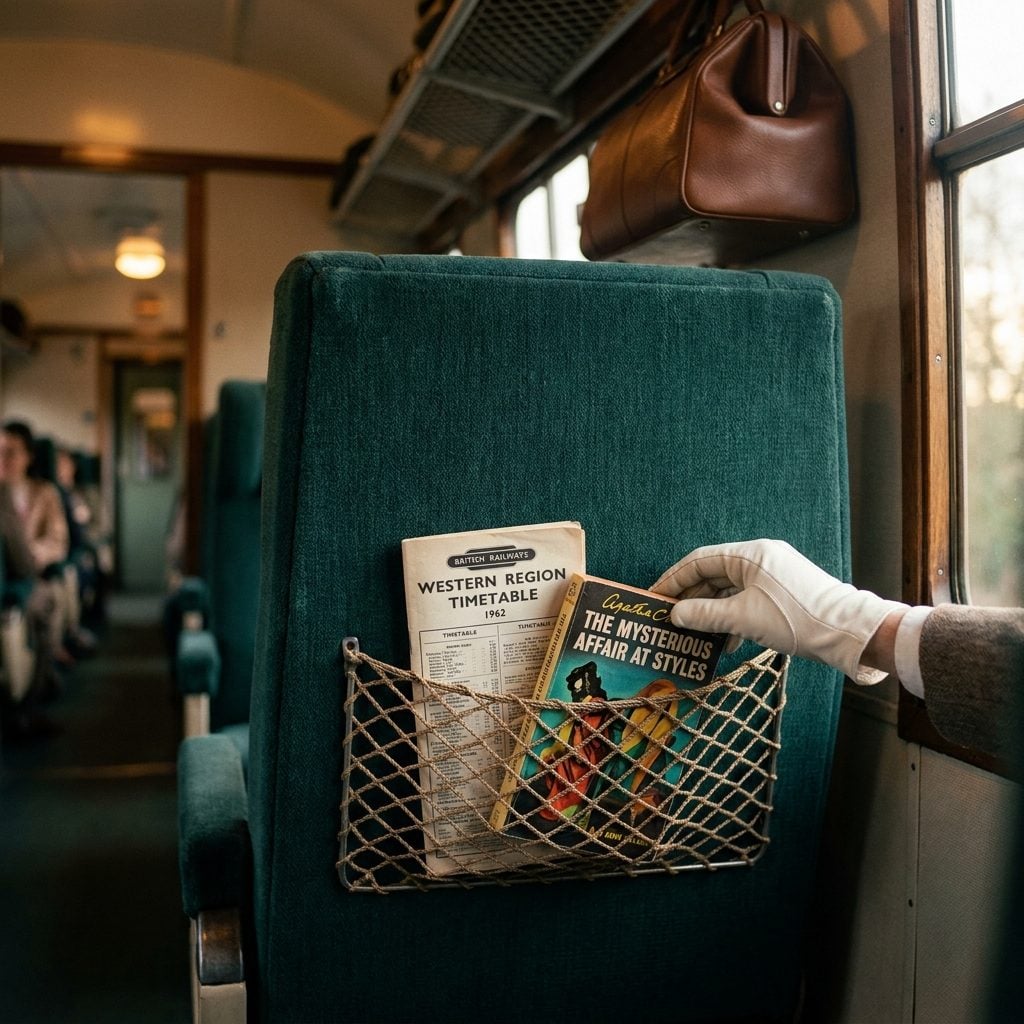
The seat-back pocket was a small domestic system. Into it went the timetable, the magazine bought at the station newsstand, the folded telegraph blank someone might still be using, and whatever novel you’d brought for the long stretch after dinner. Retrieving something from it required a specific lean-forward move that every rail passenger knew without being taught.
14. The Starched Pillowcase Left on Your Seat by the Sleeping Car Porter
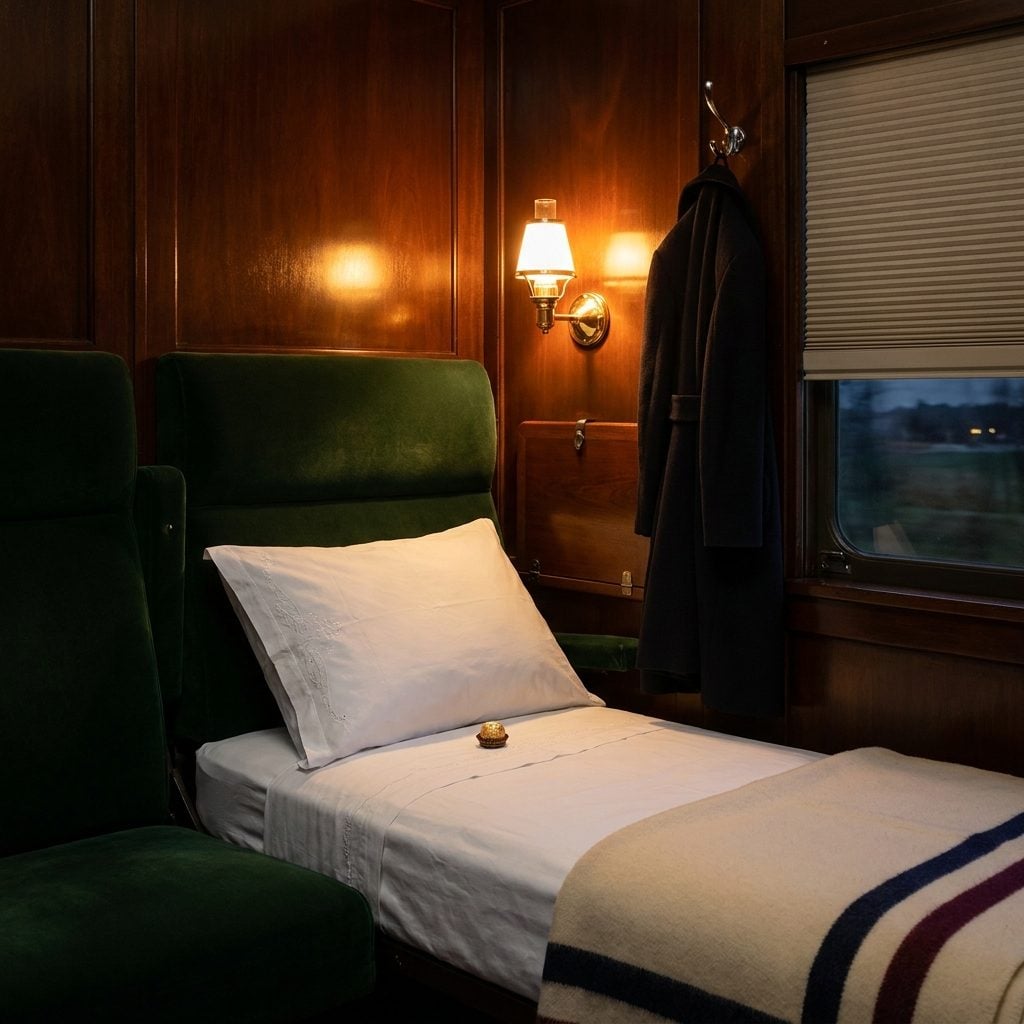
You’d come back from dinner to find your compartment changed. The seat had become a bed. The pillow had arrived in a pillowcase ironed so crisp it held a faint crease across the center. A small foil-wrapped candy sat on top of it, and the window shade had been pulled exactly halfway.
Nobody had asked you what you wanted. The porter knew what everyone wanted. He’d done it a thousand times, on a thousand nights, and it was done right every time.
13. The Observation Car’s Curved Rear Window Looking Back Down the Track
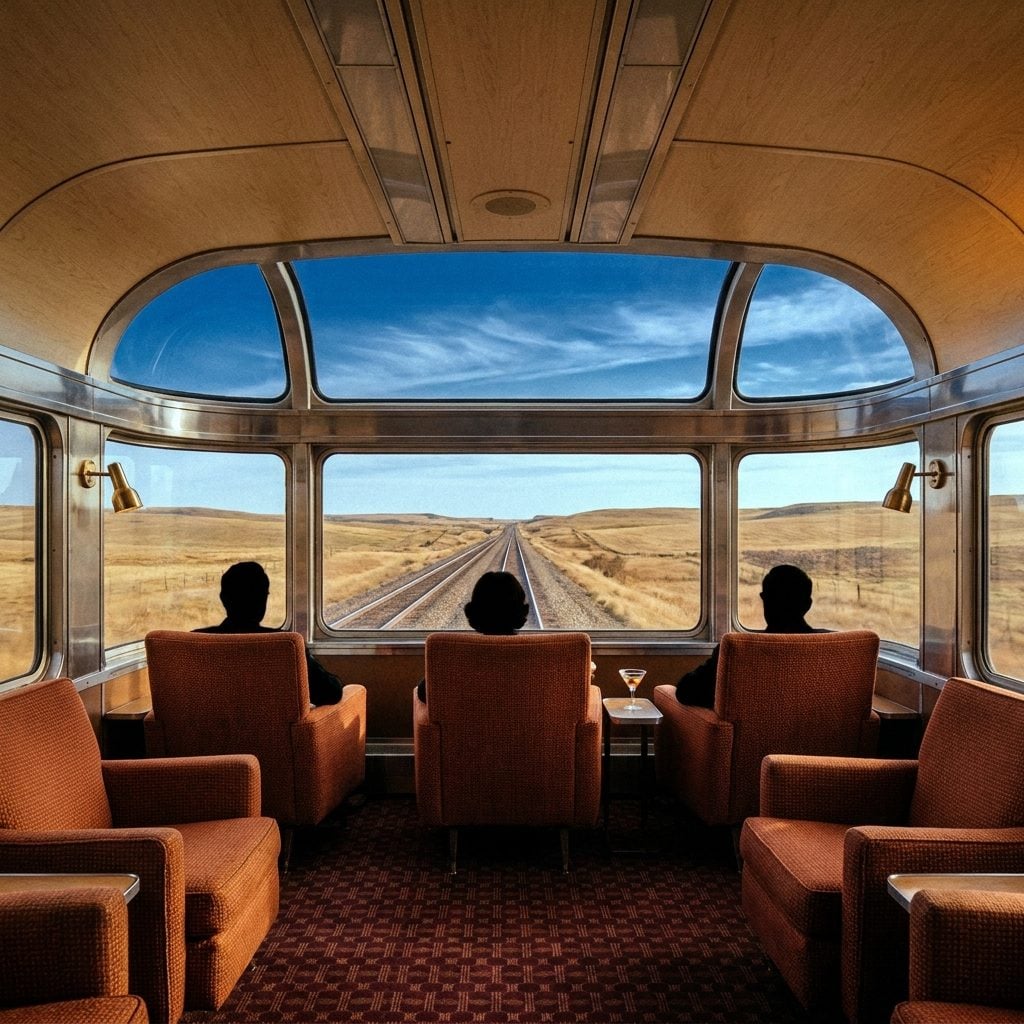
The observation car was the closest thing to a moving philosophy the railroads ever built. That curved rear window showed you where you’d been, the track narrowing to a point, the landscape opening behind you, the past literally retreating as you watched. Nobody was looking forward in that car. Everyone was watching the world let go.
It was the best seat on any train, and the people who knew about it got there early and stayed until the dining car called them away.
12. The Telegraphed Ahead Reservation Confirmed by a Slip at the Station Window
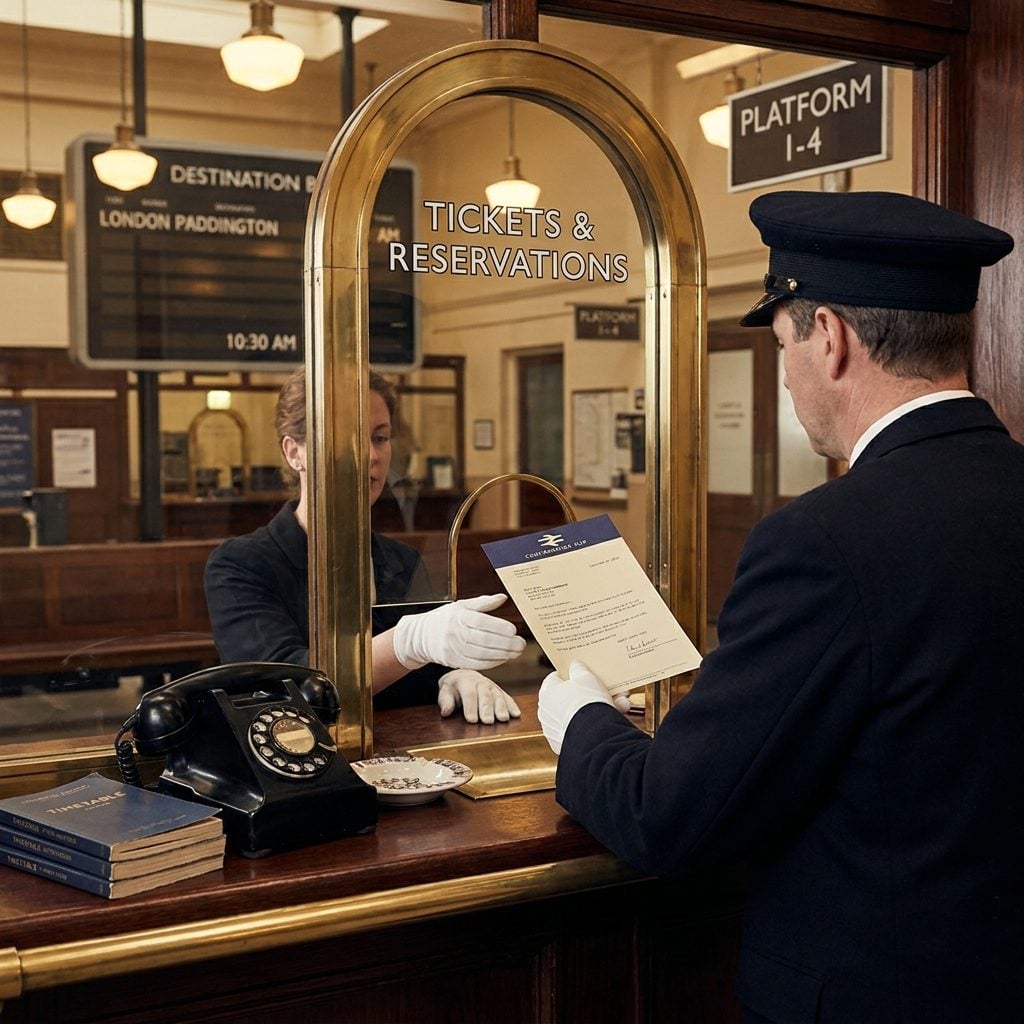
Before any of it, before the station, the platform, the porter, there was the reservation slip. You’d booked by telephone or in person, and somewhere down the line a telegraph had confirmed your sleeping car space, your dinner seating, your connection. The slip itself was a small printed card: your name in capital letters, your car number, your berth.
People carried those slips in their breast pockets or their handbags with the same care they’d carry a passport. Because for the length of that journey, it was one.
11. The Fold-Down Metal Washbasin Hidden Inside the Roomette Wall
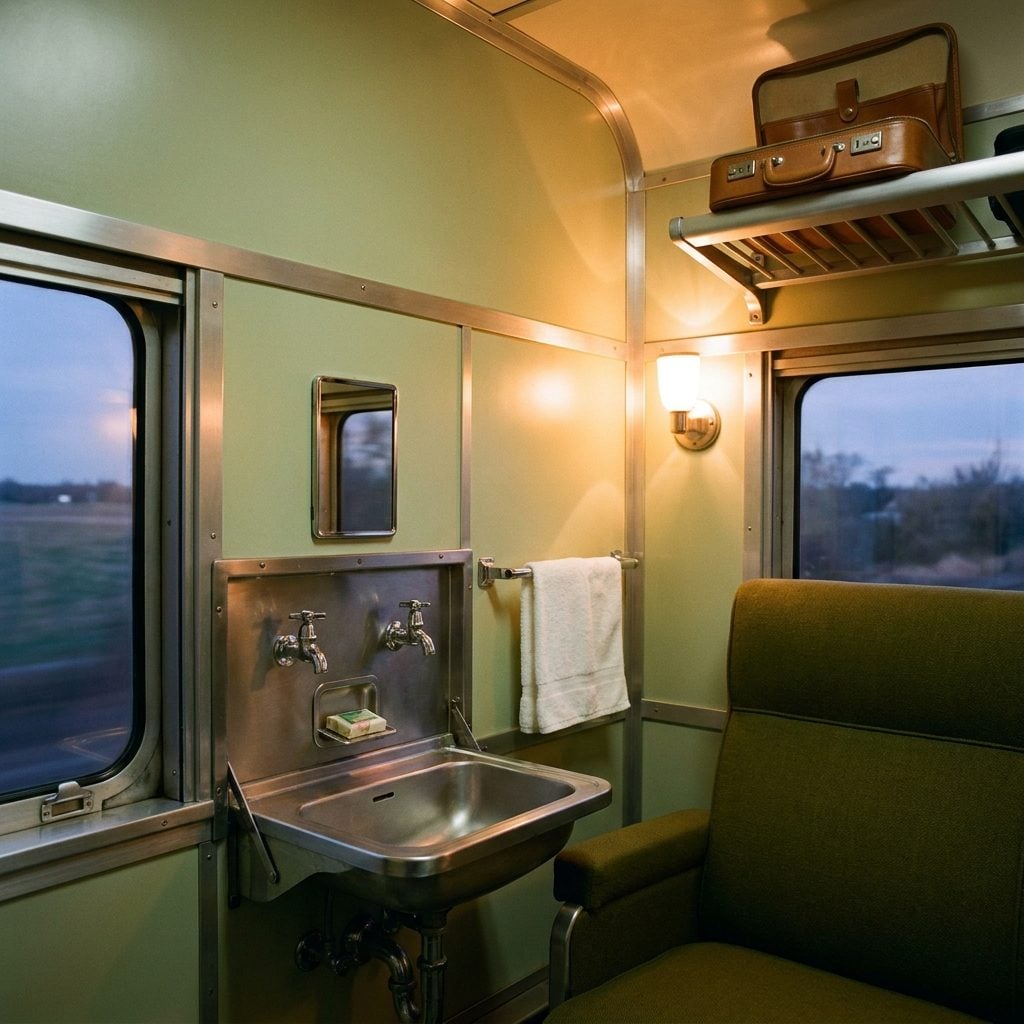
You pressed a chrome latch and a small sink appeared from the wall like a secret. Cold water on the left, hot on the right, a tiny bar of soap wrapped in wax paper sitting in a recessed dish. The mirror above it was just big enough to shave by, or to check your lipstick before walking to the dining car.
The whole arrangement folded back flush when you were done — not a trace of plumbing visible, your roomette turned sitting room again, as if the sink had never existed. Pullman engineers had been refining this disappearing act since the 1930s, and by the 1960s the mechanism closed with one hand, smooth as a dresser drawer.
10. The Heavy Silver Sugar Tongs in the Dining Car
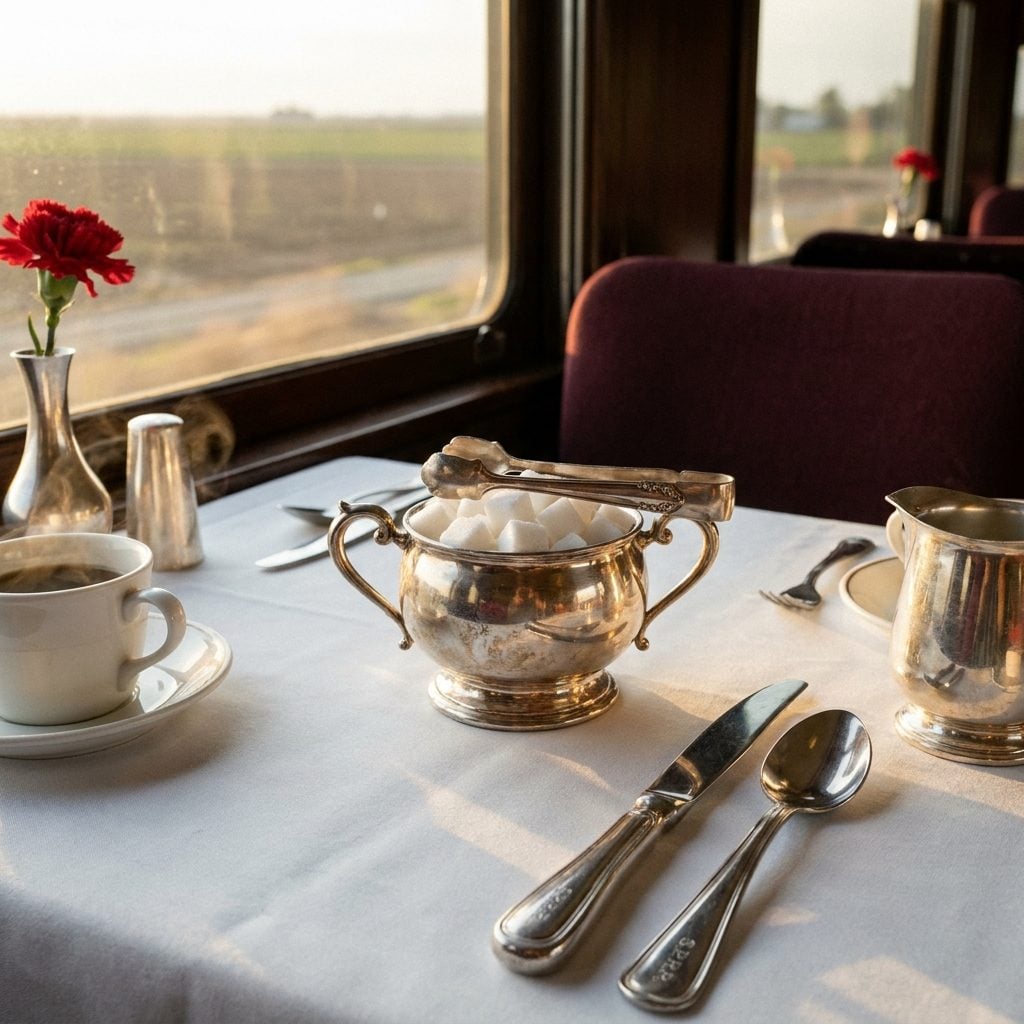
Nobody used sugar tongs at home. But on a train, your coffee came with a silver-plated bowl of sugar cubes and a pair of tongs to lift them, and you handled them like you’d been doing it your whole life.
The tongs were heavier than they needed to be. That was deliberate — weight as signal. Every piece of silverware on those white linen dining car tables carried more heft than its kitchen equivalent, because the railroad wanted you to feel the gap between eating and dining. Two sugar cubes, dropped from silver tongs into a china cup, while Kansas rolled by outside. That was the sales pitch, and it worked.
9. The Redcap Who Carried Your Luggage Straight From the Taxi to the Platform
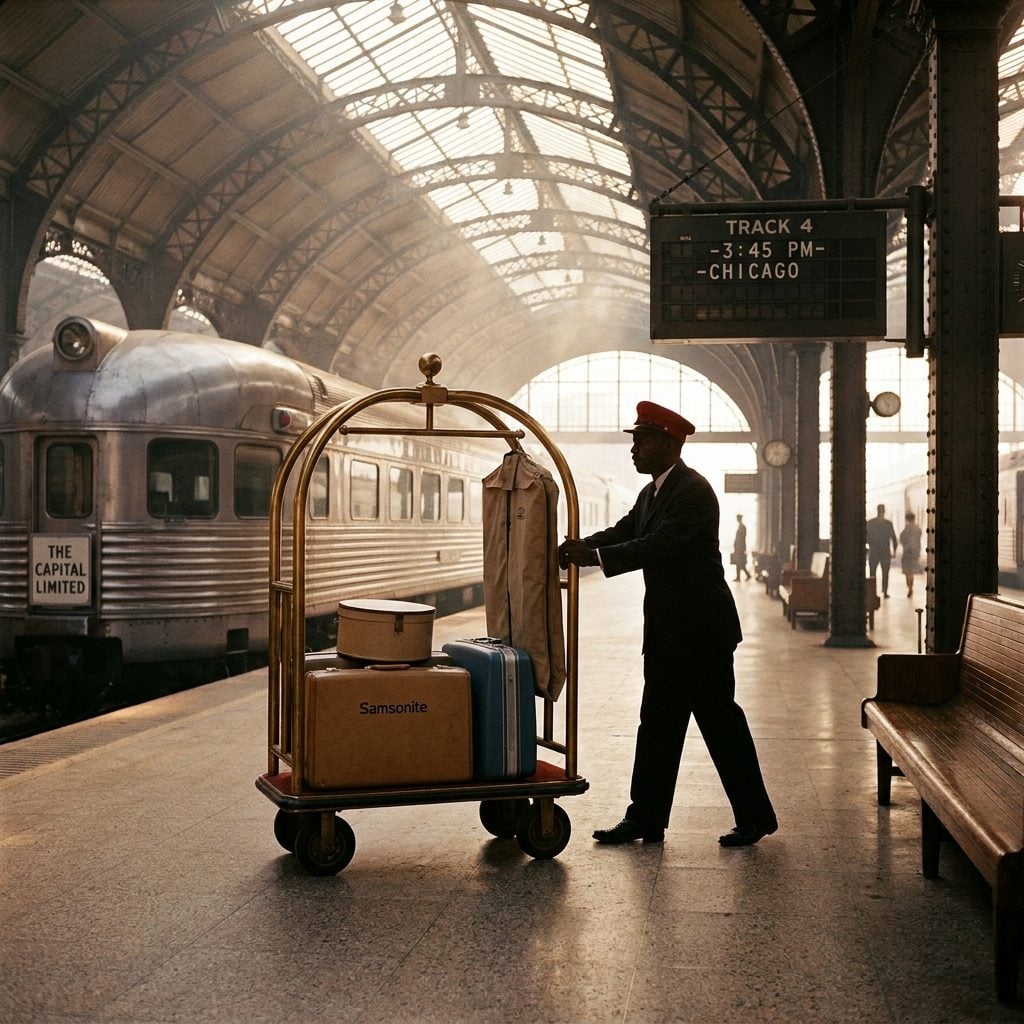
You didn’t touch your own bags. A man in a red cap met you at the curb, loaded everything onto a wheeled cart, and walked you through the station to your platform. He knew the train numbers, knew which car was yours, and moved through the crowd the way a pilot fish moves through water. You just followed.
Tipping was expected — a dollar a bag was standard, more if you had a trunk. The redcaps at Penn Station and Union Station in Chicago were institutions. Some worked the same terminals for decades and remembered regulars by name.
The whole exchange took minutes. But it reset something in you. Someone was handling things. You weren’t a pedestrian hauling luggage through a building anymore — you were a passenger, and the trip had started the moment the redcap took your suitcase.
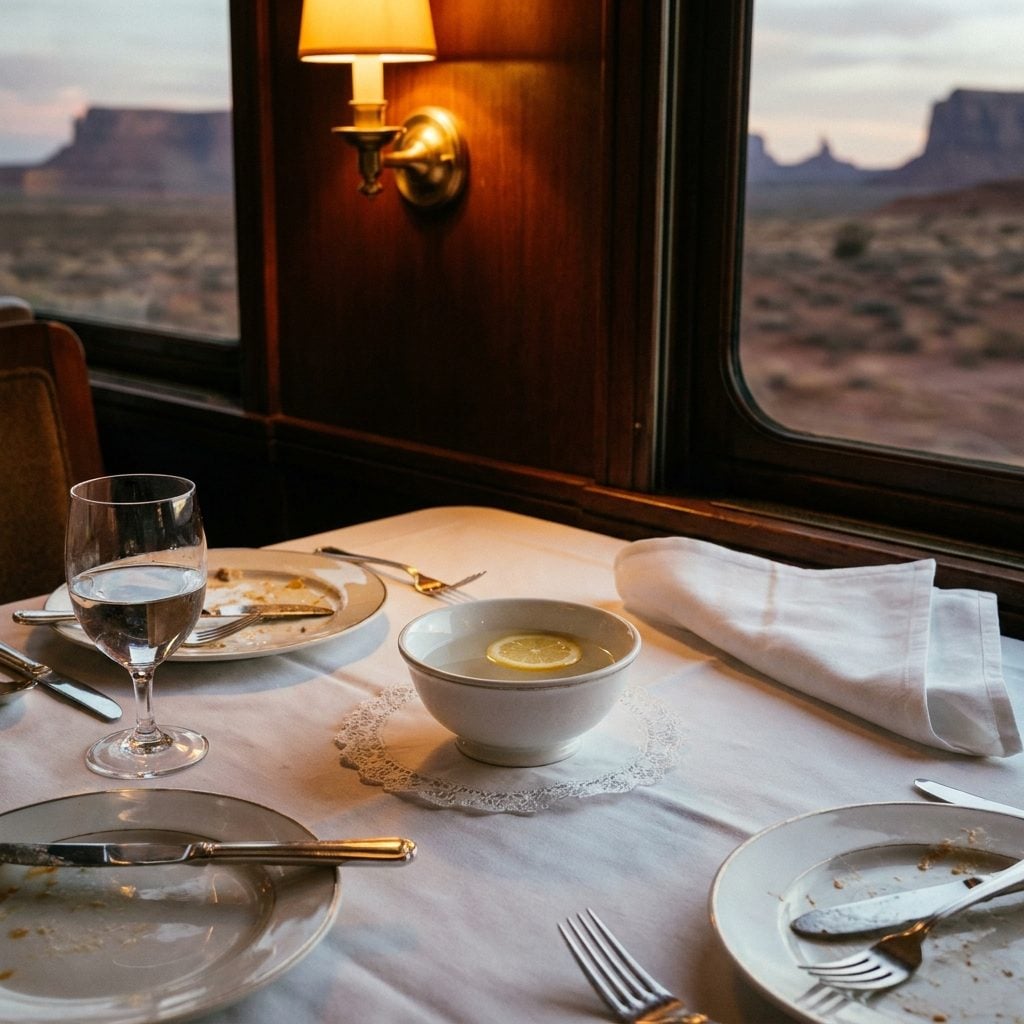
8. The Finger Bowls Brought Out After the Fish Course
🔥 Would you like to save this?
A small china bowl of warm water with a lemon slice floating in it, set down in front of you between courses. No explanation offered.
If you knew what it was, you dipped your fingertips, dried them on your napkin, and the bowl vanished. If you didn’t? You watched someone else do it first. That quiet moment of social calibration — happening at sixty miles an hour between Albuquerque and Los Angeles — belonged to the theater of it all. The Super Chief and the 20th Century Limited ran their dining cars like fine restaurants, and finger bowls were the quiet proof that the railroad meant it.
7. The Timetable Booklet You Could Read Like a Novel
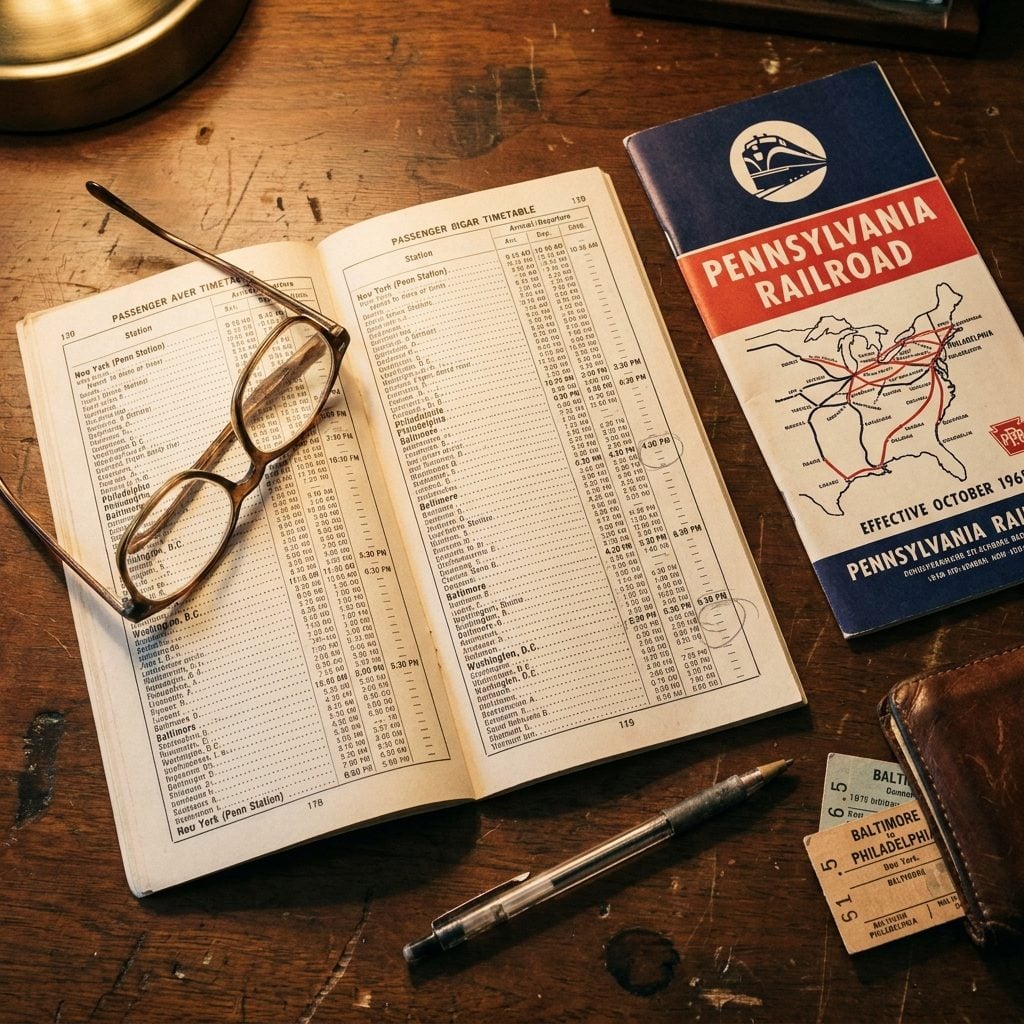
Dense columns of station names, arrival times, departure times, footnotes marked with daggers and asterisks. The official system timetable ran on thin paper — sometimes forty or fifty pages — and reading one was a genuine skill. You cross-referenced train numbers with station stops with days of operation. Miss a footnote and you’d be standing on a platform in Omaha on a Tuesday wondering where your Wednesday-only connection went.
People collected them. Some riders kept every timetable from every trip, filed by railroad and year. The covers were handsome, usually two-color printing with the railroad’s logo and a route map, and they fit in a jacket pocket. Fresh off the press they smelled like ink. Give them a month and they smelled like old paper. There was no in-between.
6. The Vista Dome Car Where Every Seat Was a Window Seat
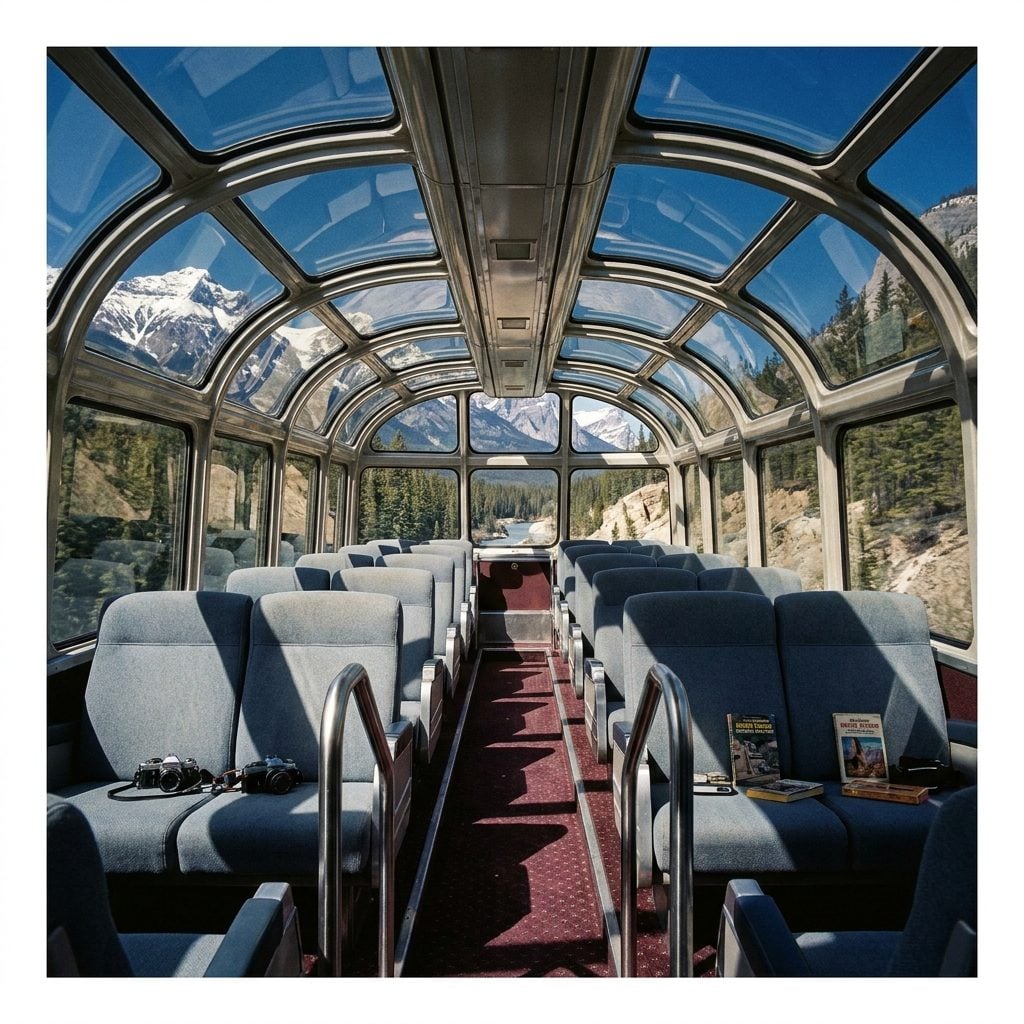
Glass on three sides and above you. The dome car was a greenhouse on rails — curved windows rising above the roofline so you could see the sky, the mountain passes, the whole sweep of landscape without craning your neck against a flat side window.
The California Zephyr through the Rockies. The Empire Builder across Montana. Routes practically designed around what you could see from the dome, and the railroads scheduled their timetables so the best scenery passed during daylight. Seats up there filled first. People camped out with paperbacks and cameras, staking claims right after boarding, reluctant to give up the perch even for lunch.
The curved glass distorted things slightly at the edges, and honestly that made it better. The world looked wider from up there, panoramic in a way a flat window couldn’t touch.
5. The Quiet Weight of the Vestibule Door Between Cars
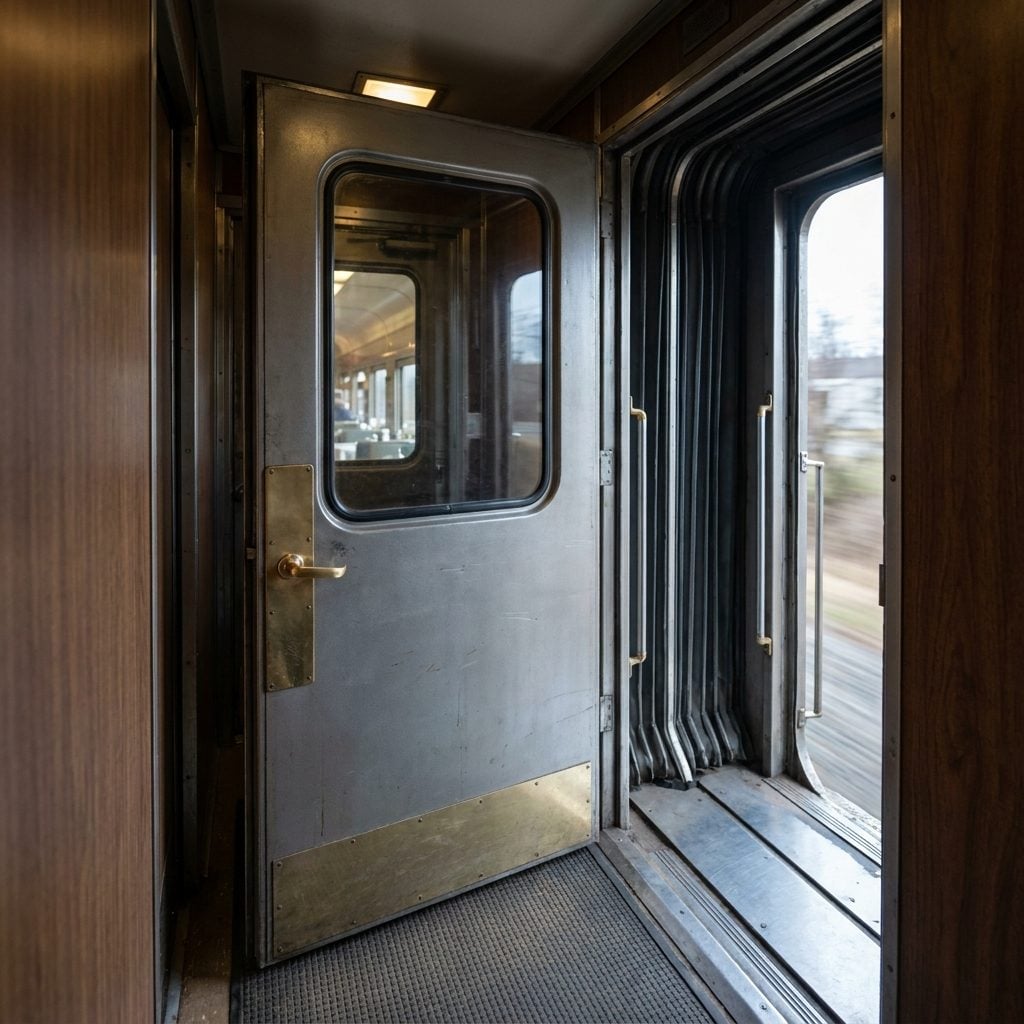
Heavy. Genuinely heavy — steel-framed with a thick glass window and a brass handle that required a real pull. You hauled it open, stepped onto the shifting metal plates between cars where the noise and wind hit you all at once, then pulled open the next door and quiet swallowed you again.
That roaring gap was the threshold. You passed from the hush of the sleeping cars through ten seconds of cold air and locomotive racket into the clatter and warmth of the dining car. One world ended. Another began. And the vestibule, that brief violent interruption, made you appreciate both.
4. The Morning Call From the Porter Fifteen Minutes Before Your Stop
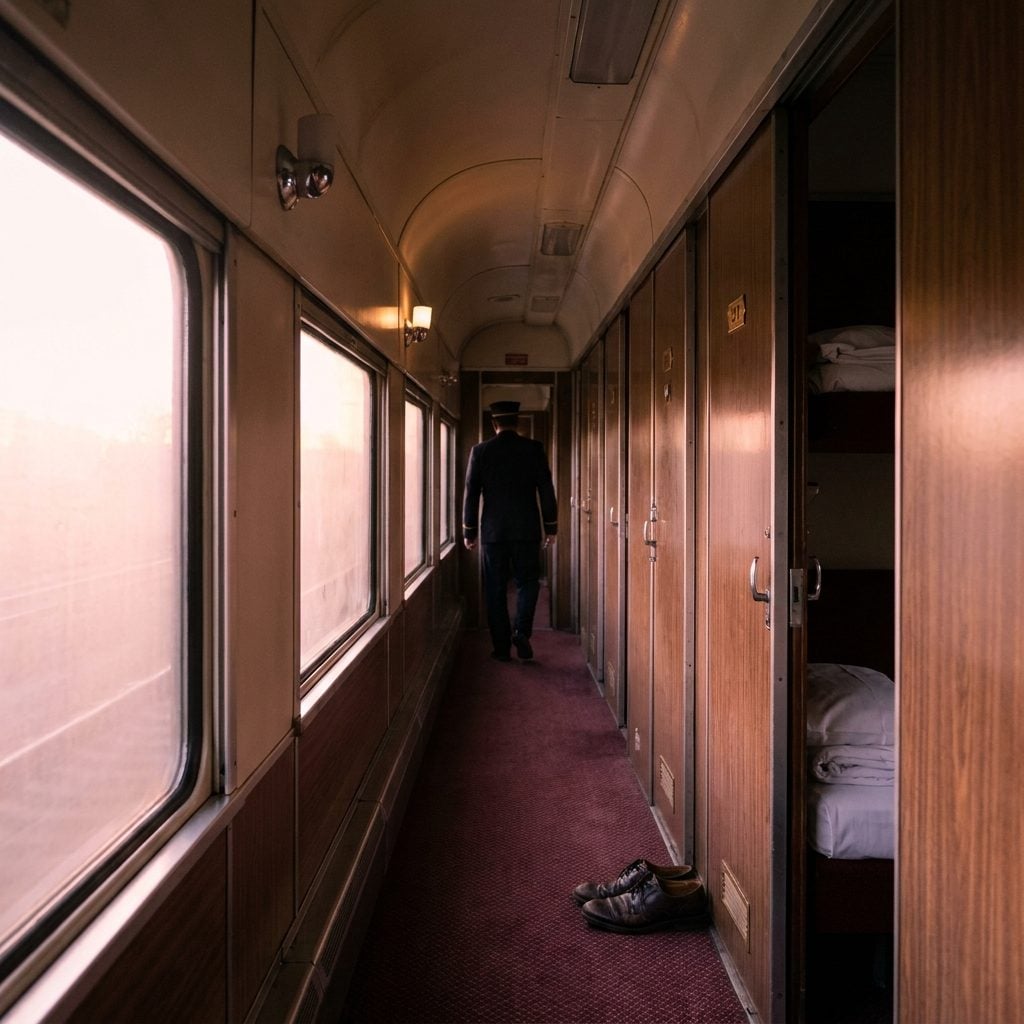
A knock. Two knuckles on the roomette door — firm but not loud. Then a voice: your station was fifteen minutes out.
No alarm clock, no crackling PA announcement. Just a person who knew which stop was yours because he’d written it down when you boarded, and who timed the knock so you’d have exactly enough minutes to dress, splash water on your face at the fold-down basin, and gather your things without rushing. Quiet competence. The kind nobody trains for anymore because the systems that rewarded it are gone.
3. The Fresh Carnation Pinned to the Headrest of Your Reserved Seat
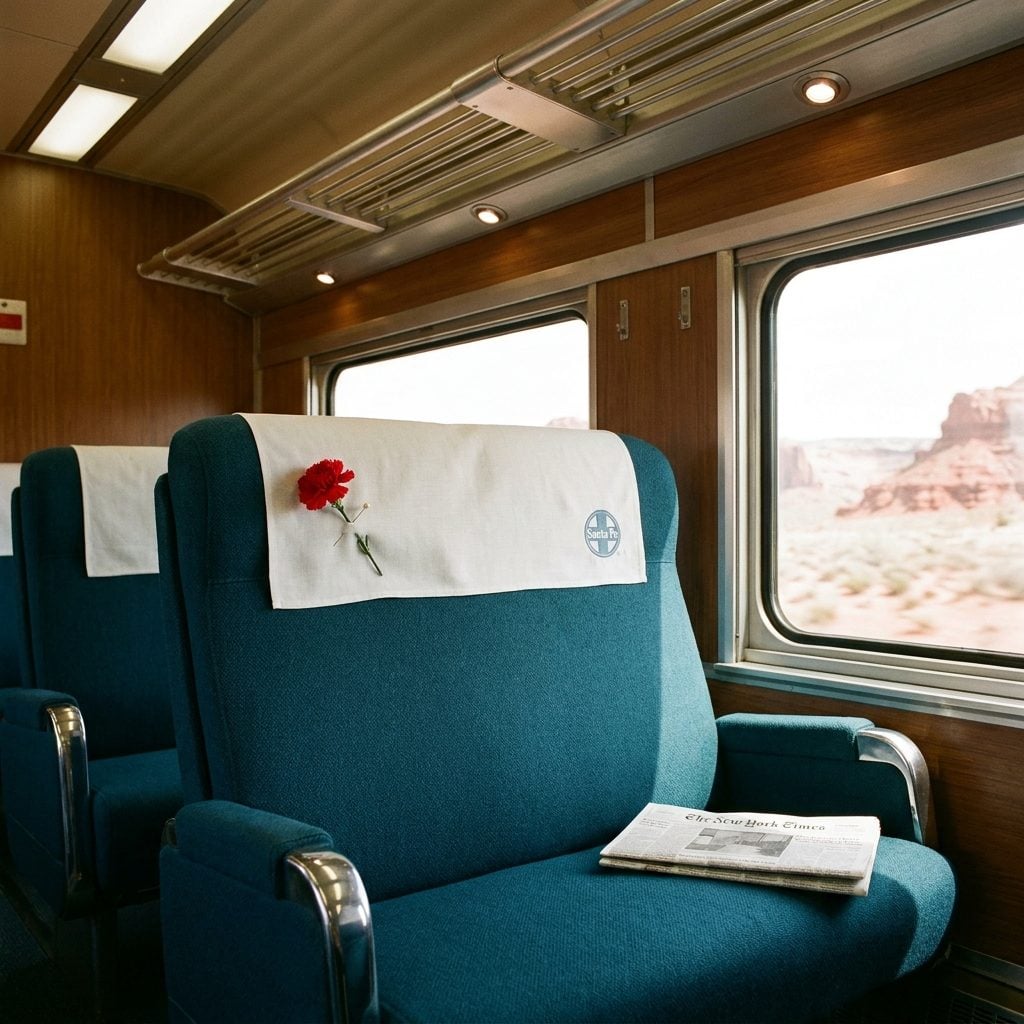
Some lines did this. Not all. The Santa Fe Super Chief was famous for it — you found your seat and there was a fresh flower, usually a carnation, pinned to the antimacassar on the headrest. White or red, depending on the day. It served no functional purpose whatsoever.
And that was the whole reason it mattered. A flower on a train seat is pure gesture. A small declaration that someone thought about you being here before you arrived, and went to the trouble anyway.
2. The Station Newsstand Where You Bought a Paperback and a Pack of Gum for the Trip
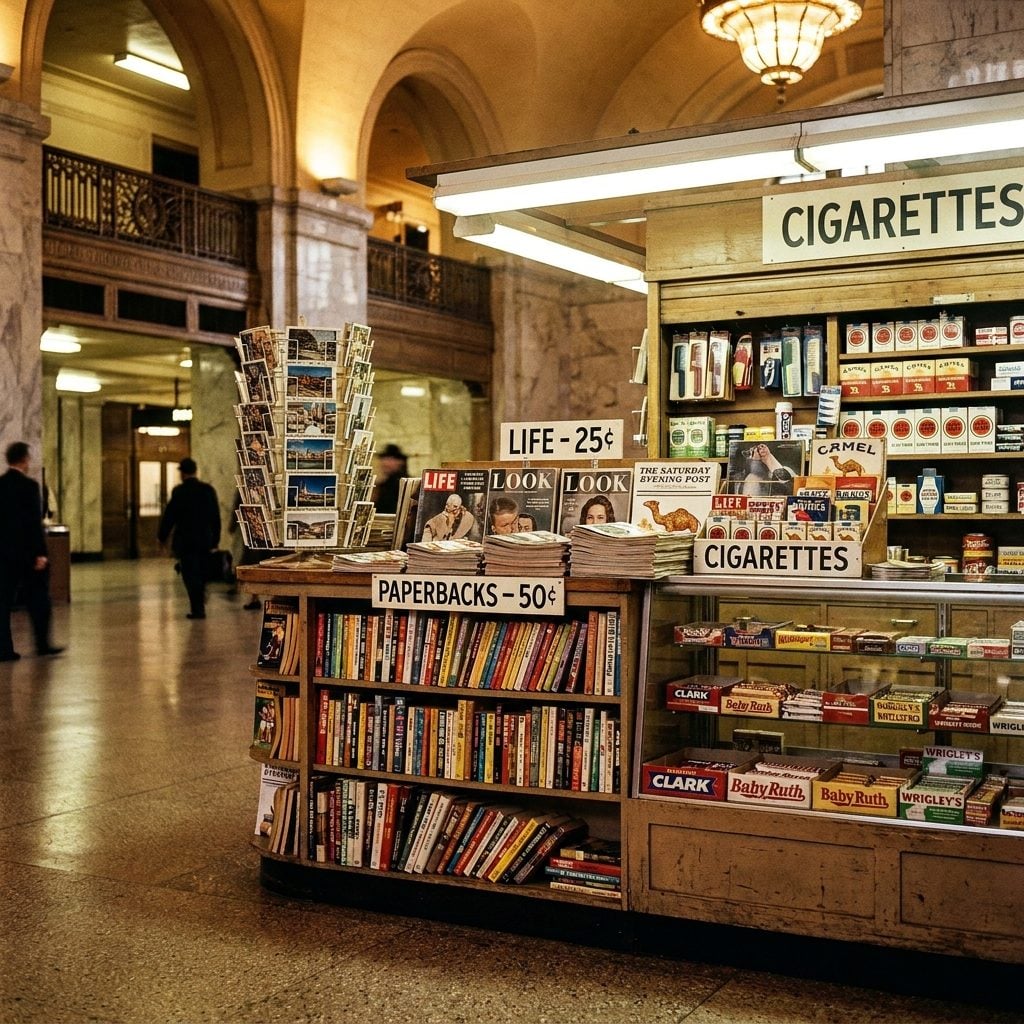
Every major station had one, usually right near the gate — a wooden rack of paperbacks with their spines out, a glass counter full of candy bars and chewing gum, a spinning wire display of postcards, and a man behind the register who could make change without looking at the coins.
You bought a book you’d never buy at a regular bookstore. That was the unwritten rule. Something trashy, something with a painted cover — a spy novel or a western or a mystery with a woman in a red dress on the front. Trip reading. The kind of book that belonged to the hours between departure and arrival and nowhere else, a book you’d leave on the seat when you got off and never think about again.
The gum was Wrigley’s, almost always. Spearmint or Juicy Fruit. You unwrapped the first stick before you even found your seat. I can’t prove it, but I’m fairly sure the smell of Juicy Fruit still carries, for a certain generation, the faint sense of going somewhere.
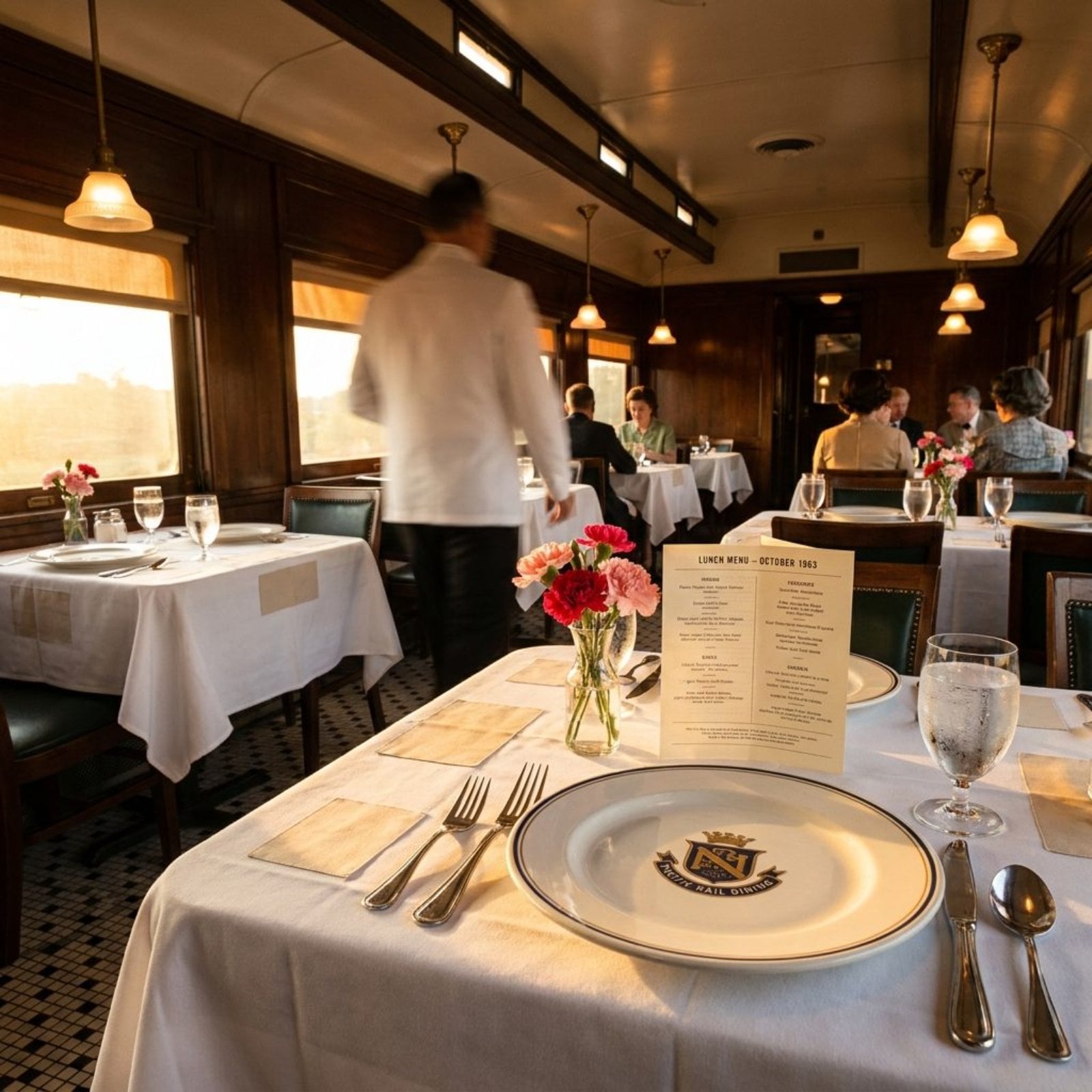
1. The Diner’s Printed Menu Card That Changed at Every Meal
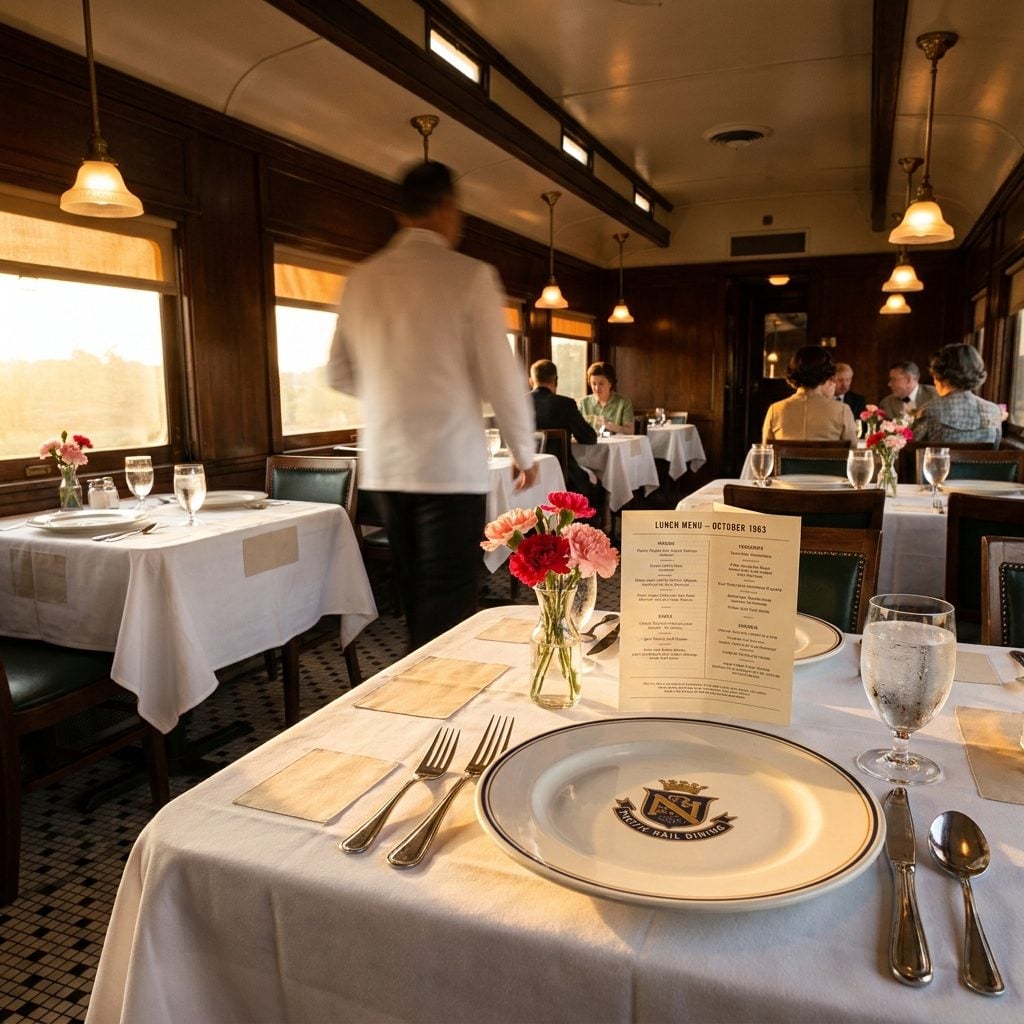
Three times a day, a fresh menu card appeared at your place setting. Breakfast was one card, thick cream stock, printed in two colors, lunch was another, dinner a third. Each listed the current day’s offerings as though the kitchen car were a proper restaurant consulting the market that morning.
The cards got pocketed by half the passengers as souvenirs. The railway companies knew it, printed extra, and said nothing.
🔥 Would you like to save this?
Please note that some of the imagery in this article were created with the aid of AI image generators.