
The smell hit you before the doorbell rang. Something involving cream of mushroom soup, canned pineapple, and a Pyrex dish big enough to bathe a toddler in. Seventies dinner parties operated on a single, unwavering principle: if it could be molded, suspended, or drowned in sauce from a packet, it belonged on the table. 27 dishes that arguably defined a decade that nobody eats or serves anymore.
🔥 Would you like to save this?
Ham and Banana Hollandaise Casserole, the Dish Nobody Asked For Twice
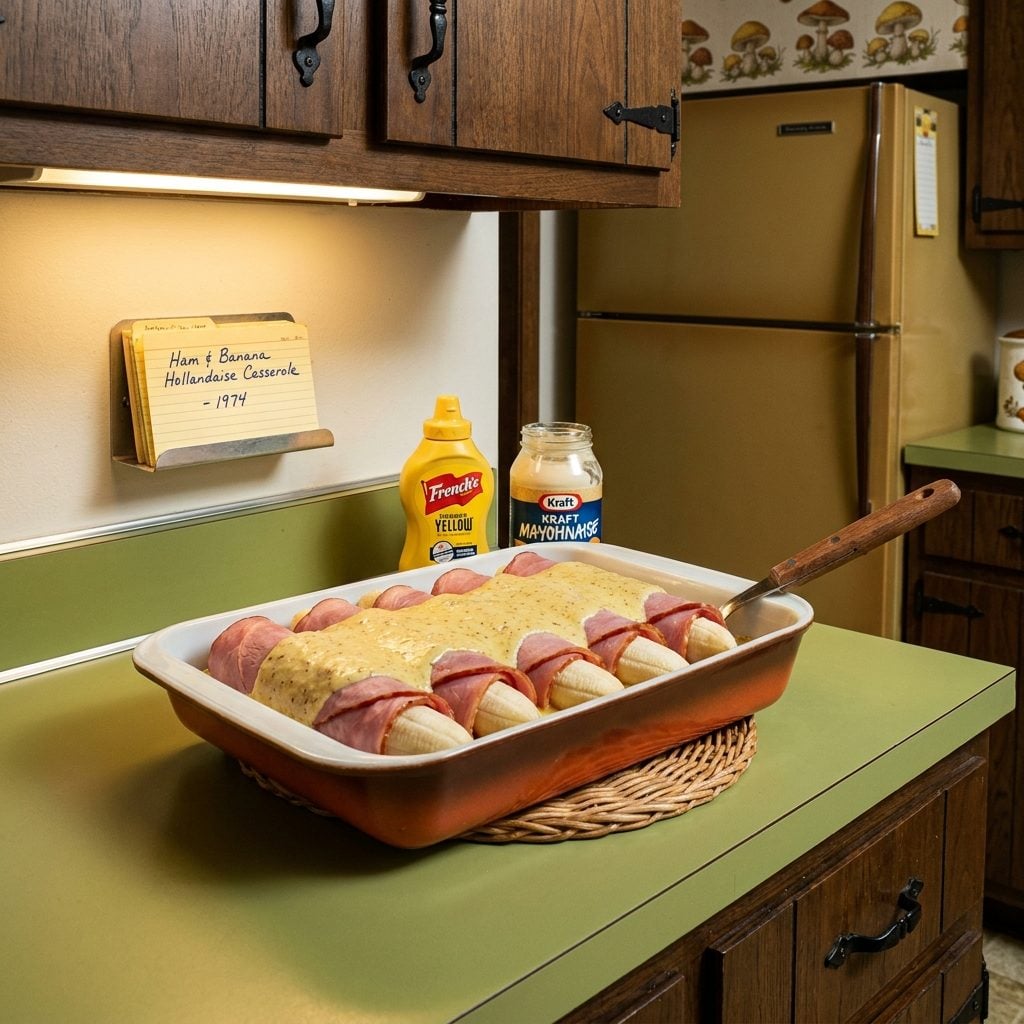
Bananas. Wrapped in ham. Blanketed in hollandaise. Someone looked at a perfectly innocent piece of fruit and a respectable cut of pork and thought, yes, these two need to get acquainted inside a Pyrex at 350 degrees. The recipe showed up in multiple cookbooks of the era, always photographed with the kind of earnest sincerity that made you think a culinary breakthrough had occurred.
The hollandaise came from a packet, naturally — and the bananas went soft and weirdly sweet in the oven, producing a texture nobody was braced for. Guests smiled through their first bite with the polite determination of people defusing a bomb. There was never a second helping. Leftovers sat untouched in the fridge until someone quietly pitched them on Tuesday, maybe Wednesday, after the smell became undeniable.
Lime Jell-O Salad with Shredded Carrots and Pineapple Trapped Inside Like Fossils
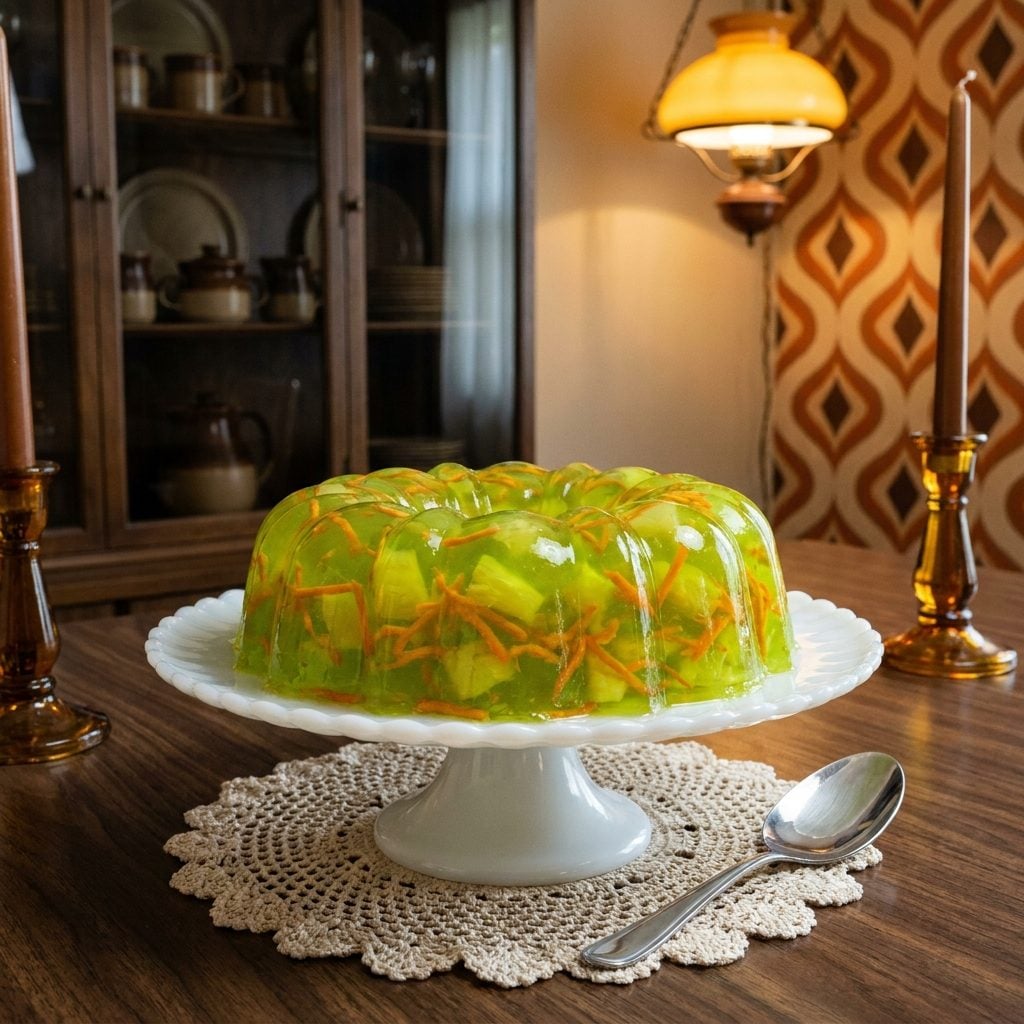
It jiggled when you set it on the table, and everyone pretended that was appetizing. The lime Jell-O salad turned up at potlucks, holiday dinners, and any gathering where one dish needed to exist the night before. Shredded carrots floated at odd angles inside the green gelatin while canned pineapple chunks drifted to the bottom or the middle, depending on when you remembered to stir and whether the Jell-O had partially set first.
Calling it a salad — that was the real audacity. No lettuce. No dressing. Nothing that would qualify as a vegetable in any honest accounting. But it occupied its own special plate right next to the actual salad, and everybody took a polite sliver. The sliver sat on your plate, glistening, untouched, while you filled up on rolls and pretended you were saving room.
The Fondue Pot Filled with Molten Velveeta That Ruined a Generation of Forks
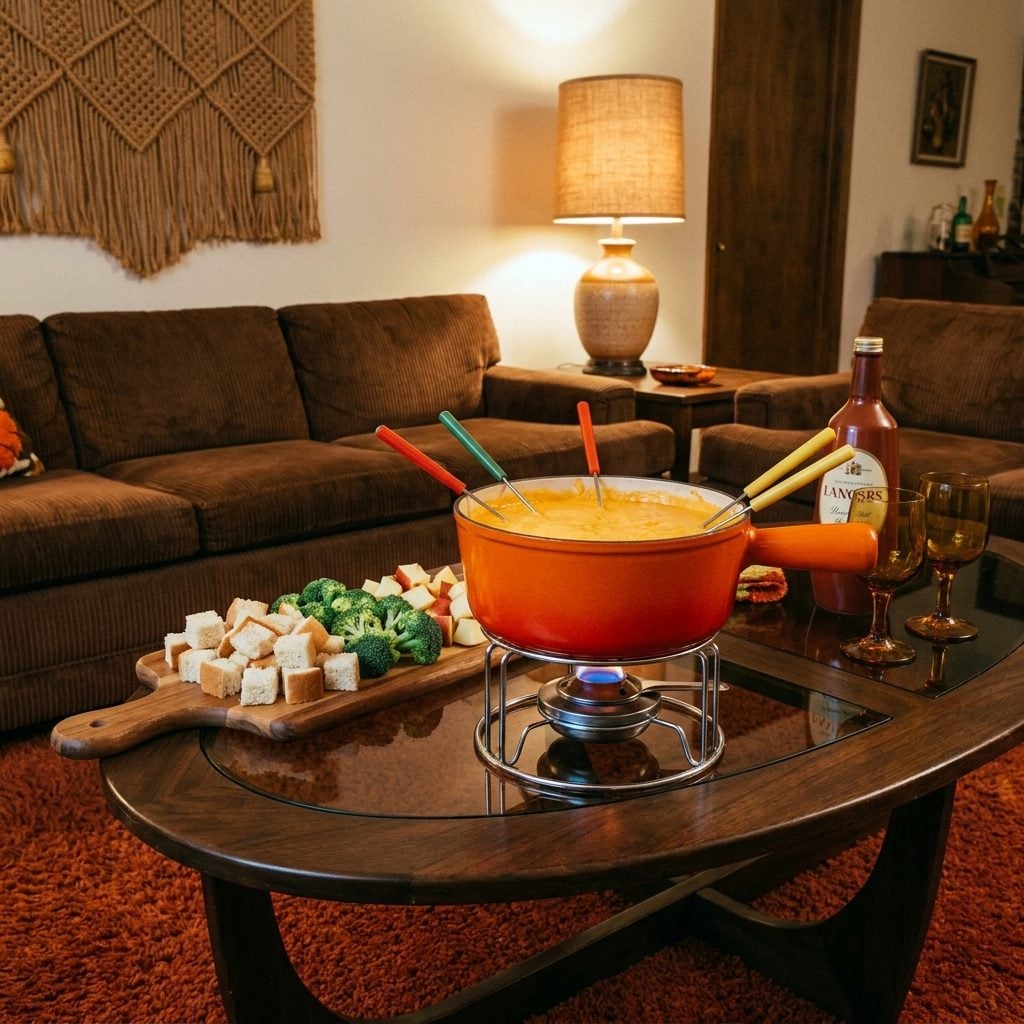
Every couple married between 1971 and 1979 received at least one fondue set. Most got two. The pot lived in the back of a cabinet for eleven months straight, then surfaced for a dinner party where it squatted on the coffee table, Sterno flame flickering underneath, filled with cubed Velveeta melted with a splash of beer or a can of Ro-Tel.
Within minutes the cheese hardened on the fondue forks into an orange shellac. Bread cubes fell off and sank to the bottom of the pot like tiny drowning victims. By evening’s end the Sterno had died and what remained was a solid orange puck requiring overnight soaking. I’m convinced half the fondue pots in America still have a permanent Velveeta residue baked into their enamel — an archaeological record of optimism gone wrong.
Aspic Molds Containing Seafood and Olives, Because Savory Gelatin Seemed Like a Fine Idea
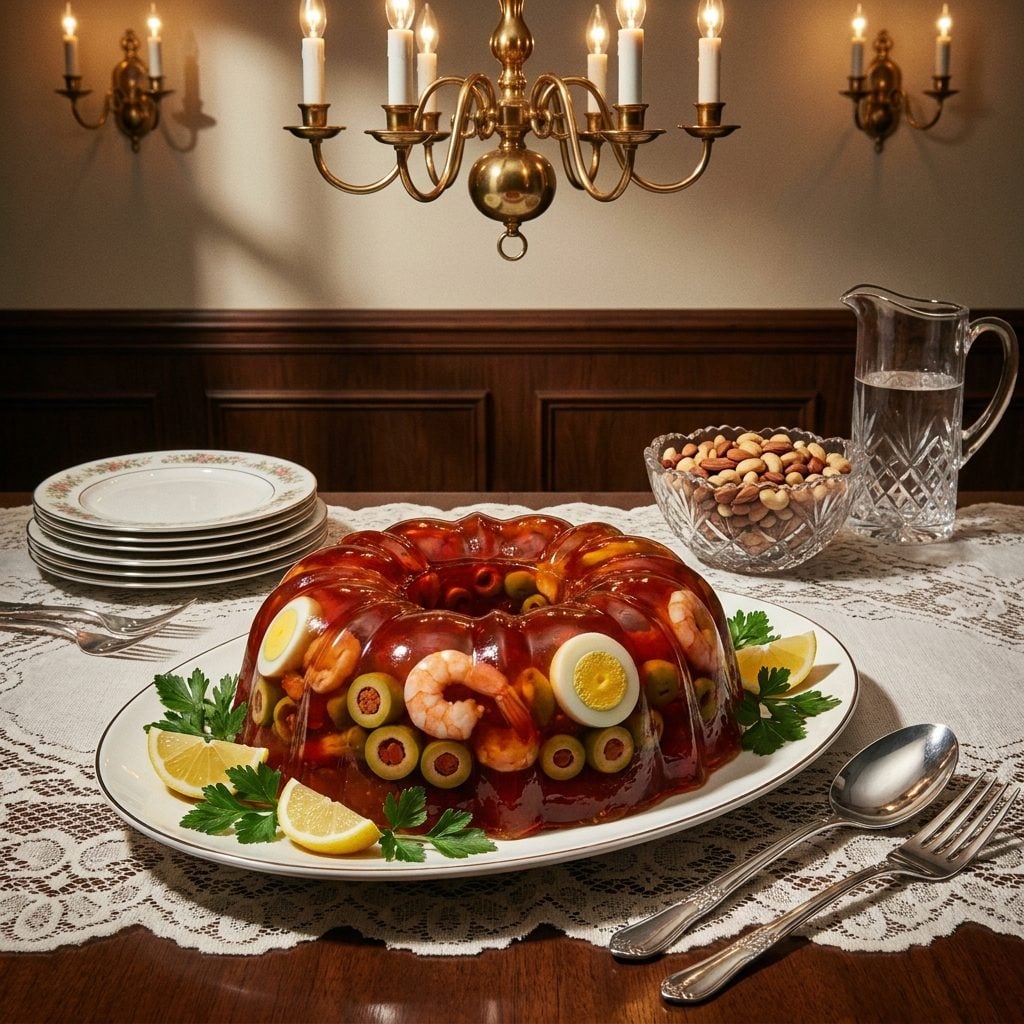
Aspic required commitment. You dissolved unflavored gelatin in consommé or tomato juice, arranged shrimp, sliced olives, and hard-boiled egg halves in a decorative mold, poured the liquid over everything, and then waited hours. The real test came when you flipped the mold onto a platter and walked it to the dining room, praying the whole way that gravity wouldn’t betray you.
Cold, slippery, vaguely meaty gelatin encasing seafood that was already questionable before it got entombed. Guests poked at it with their forks. Conversation stalled. Someone eventually took a spoonful, and the entire structure collapsed sideways.
Now, aspic has legitimate roots in French cooking, where it’s made with bone-stock gelatin that carries genuine flavor. The American dinner party version — built on Knox packets and Campbell’s broth — bore roughly the same resemblance to the original as a photocopy bears to a painting. It vanished from tables by the early eighties. Nobody mourned.
Cocktail Meatballs Simmered in Grape Jelly and Chili Sauce
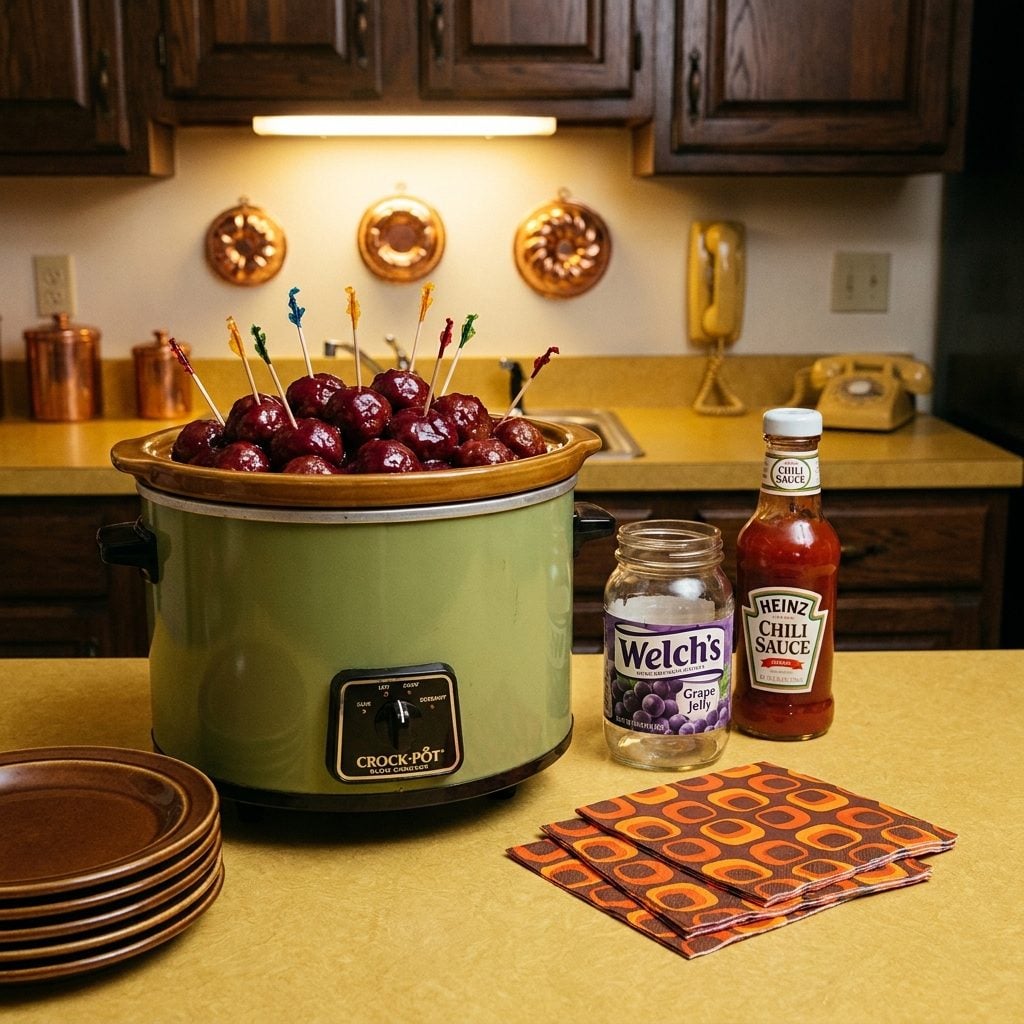
Frozen meatballs cooked in a mixture of Welch’s grape jelly and bottled chili sauce. Read that again. And yet this was served at nearly every cocktail party, Super Bowl gathering, and neighborhood potluck from about 1973 well into the Reagan years.
The strange thing? They weren’t terrible. Grape jelly melted into a sweet, sticky glaze that caramelized at the edges of each meatball, and the chili sauce brought enough vinegar and spice to keep the whole affair from veering into candy territory. People ate them by the dozen — spearing them with frilled toothpicks, licking their fingers, reaching for one more while pretending they weren’t. It was compulsive eating disguised as hors d’oeuvres.
The grape jelly meatball was the 1970s dinner party’s open secret: everyone served it, everyone ate it, and nobody admitted it was good.
Tuna Noodle Casserole Topped with Crushed Potato Chips Because Breadcrumbs Weren’t Fancy Enough
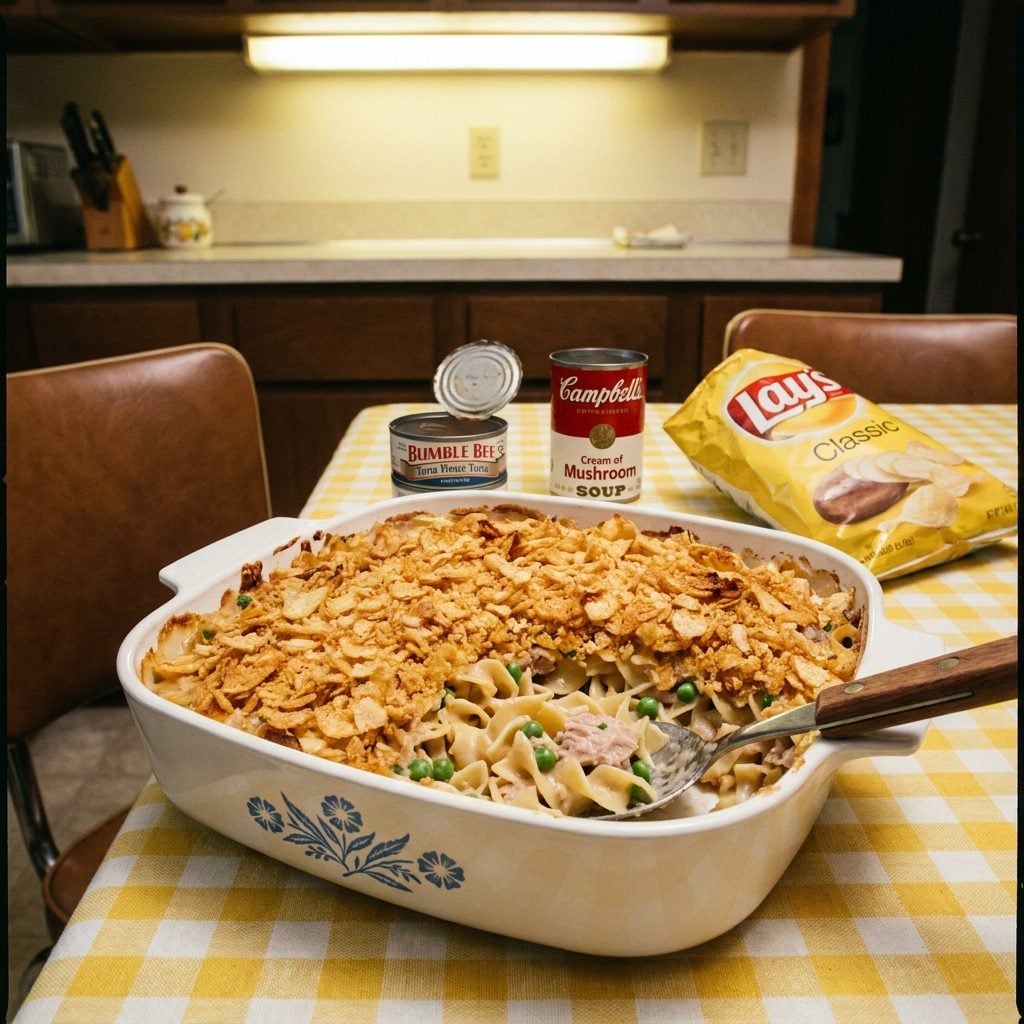
Cream of mushroom soup. A can of tuna, drained. Wide egg noodles, boiled past al dente into full surrender. Frozen peas if you were feeling ambitious. Mix it all in a Corning Ware dish, crush a fistful of Lay’s potato chips on top, bake at 350 until the edges bubble.
A weeknight staple that somehow clawed its way up to company-dinner status through sheer repetition. The crushed-chip topping was what separated it from ordinary Tuesday fare — those chips browned in the oven and formed a salty, greasy crust that shattered when you broke through with a spoon. Was it good? Warm. Filling. The kids ate it without a hostage negotiation. In the seventies, that cleared the bar by a mile.
Pineapple Rings Stuffed with Mayonnaise and Shredded Cheddar, Presented as a Salad
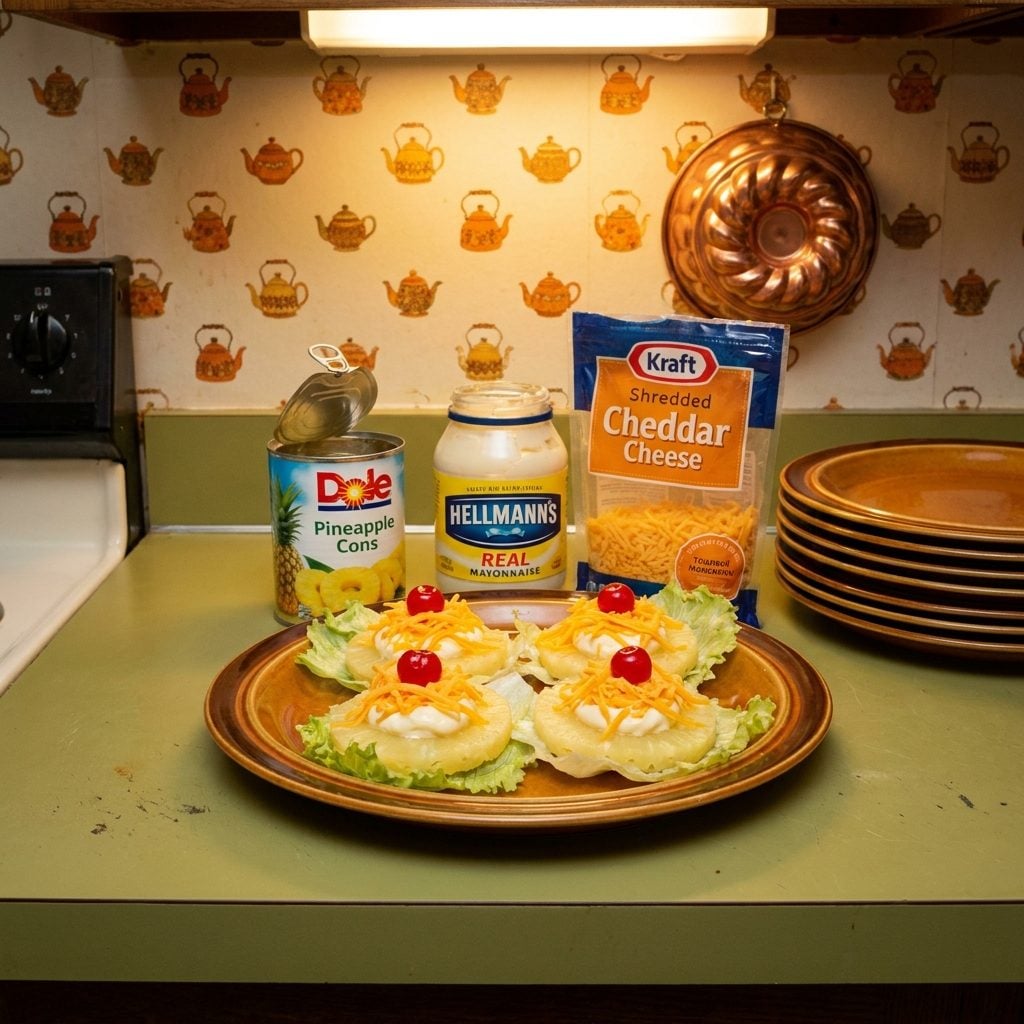
Sit with this one for a moment. A canned pineapple ring on a leaf of iceberg lettuce, its center hole plugged with a tablespoon of mayonnaise, topped with shredded sharp cheddar. Maraschino cherry perched on top if the host felt festive. Served cold. Labeled a salad.
Junior League cookbooks and church potluck collections across the South and Midwest printed this recipe like it was gospel. Cold sweet pineapple, room-temperature mayo, rubbery cheese — the combination bewildered on every level, yet people made it constantly because it required no cooking, it assembled in minutes, and it looked like effort had been made. In 1974, that was sometimes the whole game.
Chicken à la King Served in Puff Pastry Shells, the Height of Seventies Sophistication
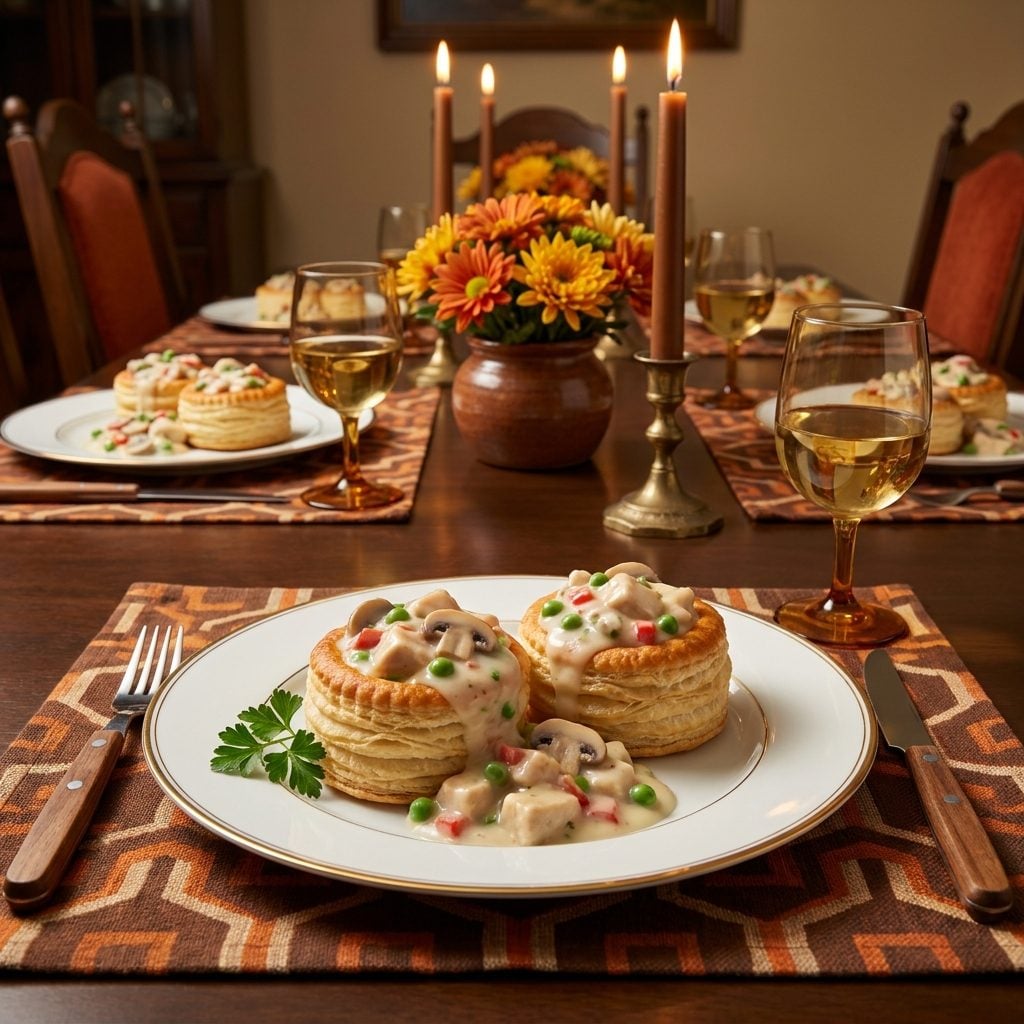
When a seventies hostess wanted to signal that this was a real dinner party — not burgers on paper plates — she reached for Chicken à la King.
Diced chicken in a white cream sauce with mushrooms, pimentos, and peas. Sometimes a splash of sherry if the cook was feeling continental. It arrived spooned into Pepperidge Farm frozen puff pastry shells, those flaky little cups that puffed up golden in the oven and caved in the instant a fork touched them. The shells did the heavy lifting. They transformed chicken-in-gravy into something that looked restaurant-adjacent, and you could find boxes of them in every supermarket freezer, stacked next to the Stouffer’s and Sara Lee pound cakes. They cost almost nothing, and they made the cook feel like Julia Child — which, honestly, was the entire emotional engine of seventies entertaining.
Deviled Ham Spread Piped onto Crustless White Bread Tea Sandwiches
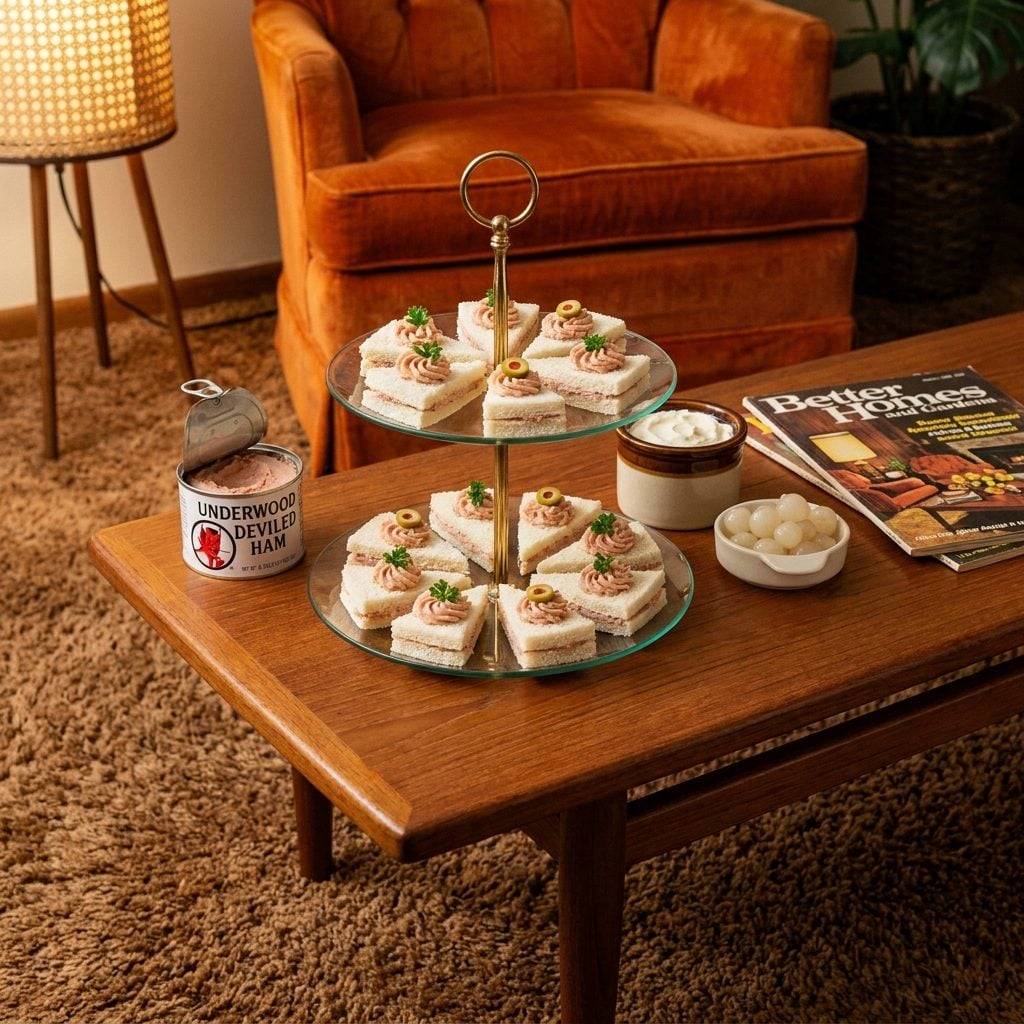
That little red devil on the Underwood can — you knew exactly what waited inside. A salty, ground-to-oblivion paste that tasted like ham’s distant memory, seasoned with something vaguely spicy, packed so tight it made a sucking sound when you scooped it out.
For company, hostesses mixed the deviled ham with cream cheese so it could be piped, loaded it into a pastry bag, and squeezed decorative rosettes onto crustless white bread cut into triangles or fingers. Arranged on tiered trays, they looked dainty, almost elegant. They tasted like a salt lick dressed up for Sunday services. You’d eat three before your brain caught up with your hand, then quietly drift toward the vegetable tray and pretend you’d been there all along.
Swedish Meatballs Floating in That Suspicious Creamy Canned-Soup Gravy
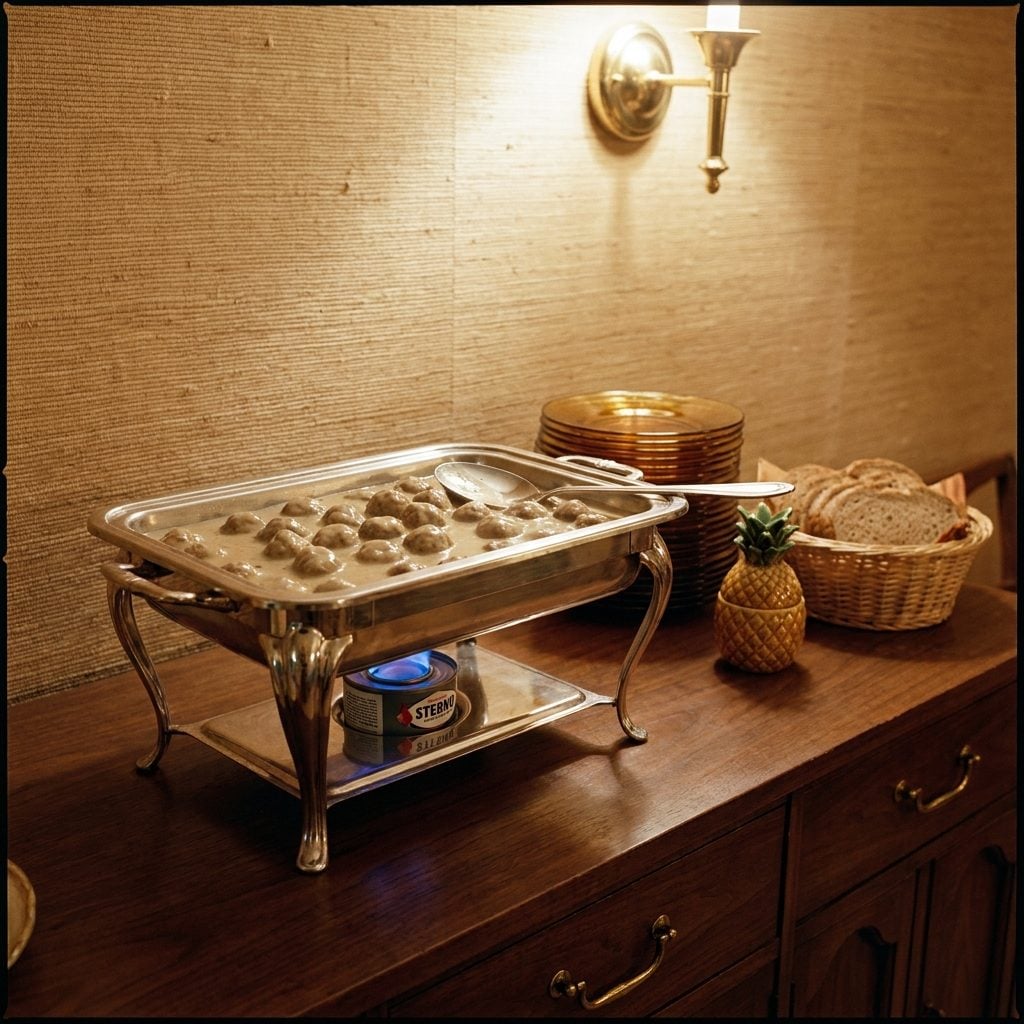
One can of cream of mushroom soup. A container of sour cream. Frozen meatballs from a bag. Three ingredients, one chafing dish, and somehow this qualified as Scandinavian cuisine for an entire decade of American dinner parties.
The gravy defied physics — too thick to pour, too thin to hold a shape, a color that existed nowhere in the natural world. Institutional beige with a faint mushroom-y sheen. Hostesses kept the chafing dish lit all evening, and by 10 p.m. the sauce had reduced to something resembling warm spackle. Nobody ever sent the leftovers home with guests. That fact alone tells you what you need to know.
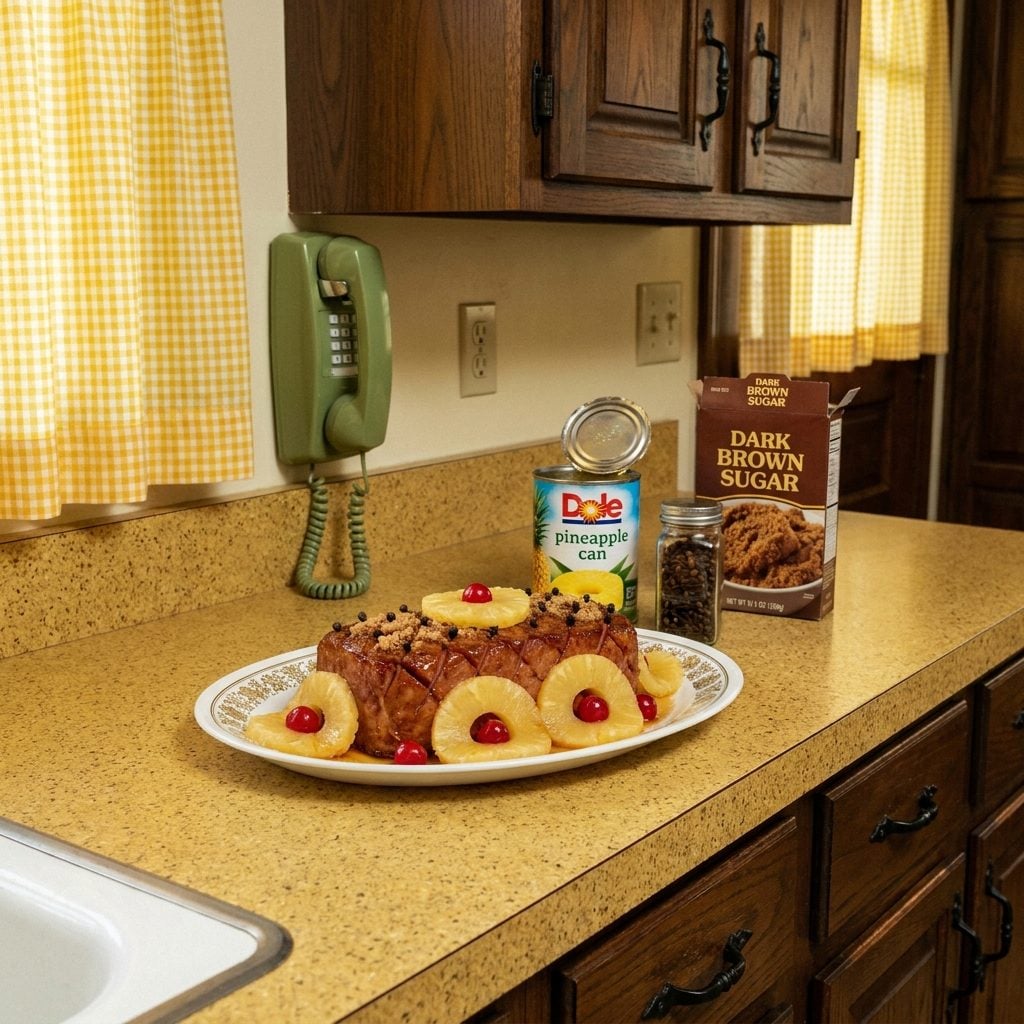
Spam Slices Glazed with Cloves and Canned Pineapple Rings
🔥 Would you like to save this?
Somebody, at some point, looked at a can of Spam and thought: this needs cloves and pineapple, like a ham. And then millions of people agreed.
The preparation was almost ceremonial. Score the top in diamonds. Stud each intersection with a whole clove. Arrange pineapple rings with surgical precision, each anchored by a cherry on a toothpick. Brush with a brown sugar glaze. Bake until the kitchen smelled like a luau held inside a processing plant. Here’s what’s strange — it sort of worked. The sugar caramelized, the pineapple juice cut through the salt, and if you squinted hard enough at the platter you could convince yourself it was a small holiday ham. You’d be wrong, but you could convince yourself.
Watergate Salad: Pistachio Pudding, Cool Whip, Marshmallows, and Audacity
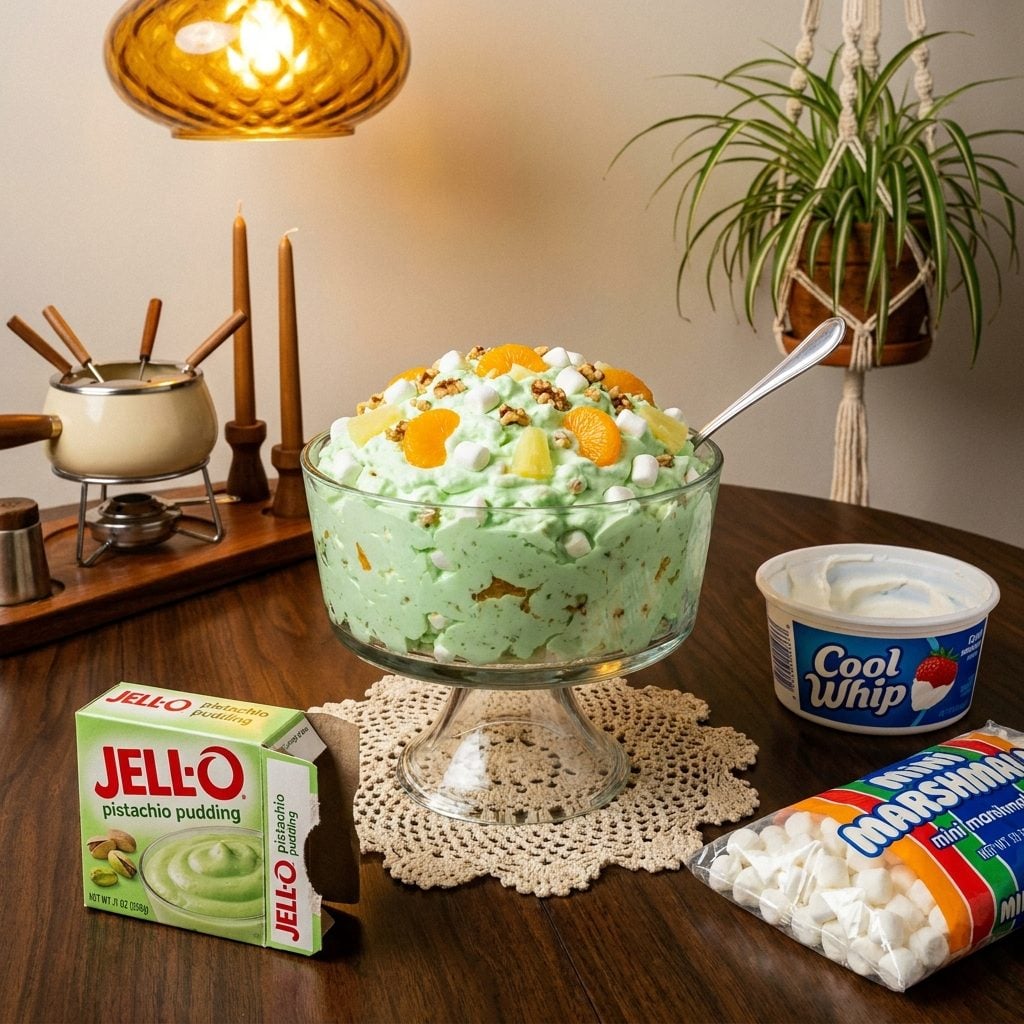
Not a salad. Not even remotely. Dessert wearing a disguise, and everyone at the table knew it, and nobody said a word. Instant pistachio pudding powder folded into Cool Whip — that was the base. From there, the additions read like a dare: miniature marshmallows, canned crushed pineapple (drained, if you were feeling refined), chopped walnuts, and sometimes mandarin orange segments thrown in as a vitamin C alibi.
That color, though. A green so specific and so artificial it matched nothing in a produce aisle. Matched the appliances perfectly.
The name supposedly came from the Watergate Hotel, though nobody has ever confirmed a connection. What’s confirmed is that between the mid-seventies and early eighties, no church potluck, no neighborhood cookout, no Thanksgiving buffet was complete without at least one bowl of this stuff materializing, unannounced, like a relative nobody invited but everyone expected.
Tomato Aspic Served as a Completely Serious Appetizer Course
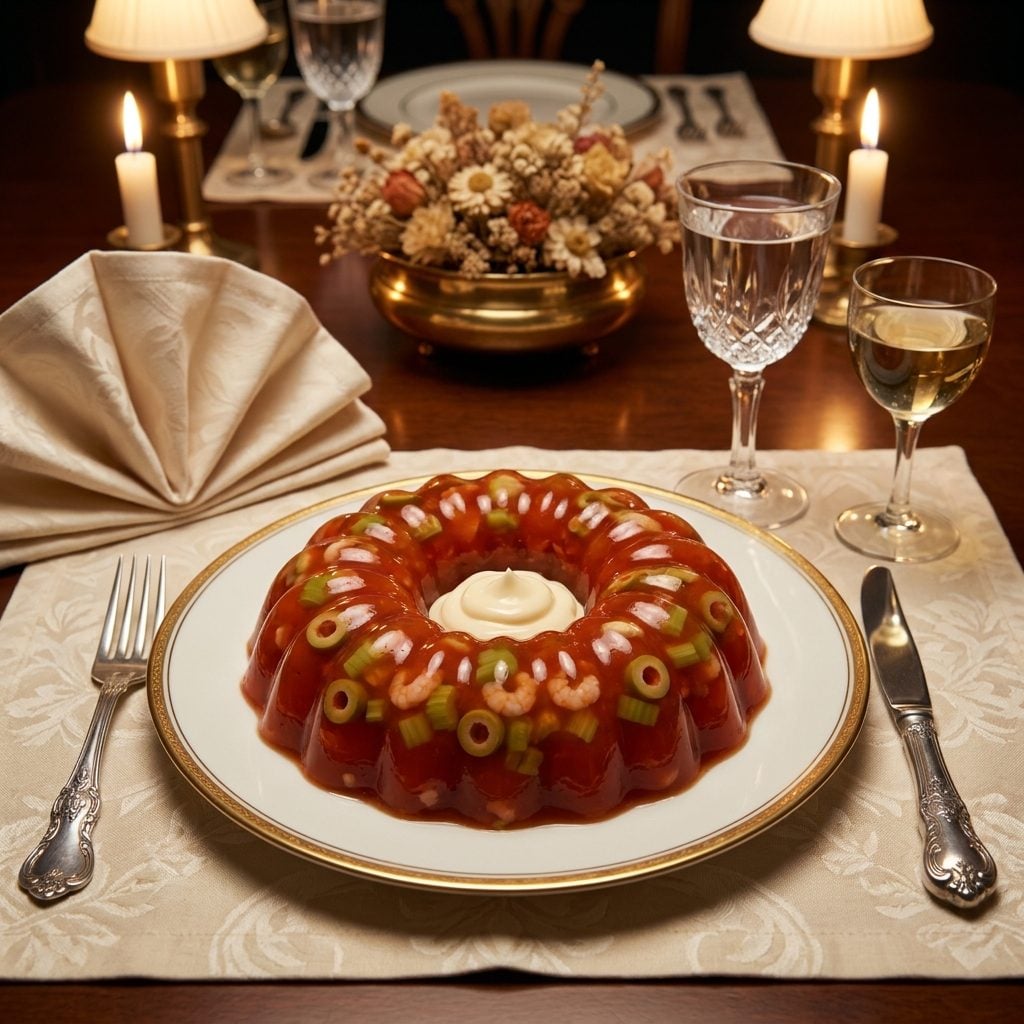
Gelatin made from tomato juice, seasoned with Worcestershire sauce and lemon, set in a ring mold, and served cold with a straight face. Your mother’s bridge club treated it with the reverence of a soufflé.
The ambitious versions had things suspended inside. Diced celery. Sliced olives. Tiny shrimp, frozen forever in their translucent red tomb, gazing up at you from the plate like accusatory little witnesses. The whole production jiggled when you set it on the table, which somehow did not undermine its status as a formal first course. And the finishing touch? A mayonnaise garnish. Mayonnaise, on gelatin, made from tomato juice, as the opener to a sit-down dinner. Guests would compliment it. I have no theory for why.
Stuffed Celery Packed with Pimento Cheese or Cheez Whiz
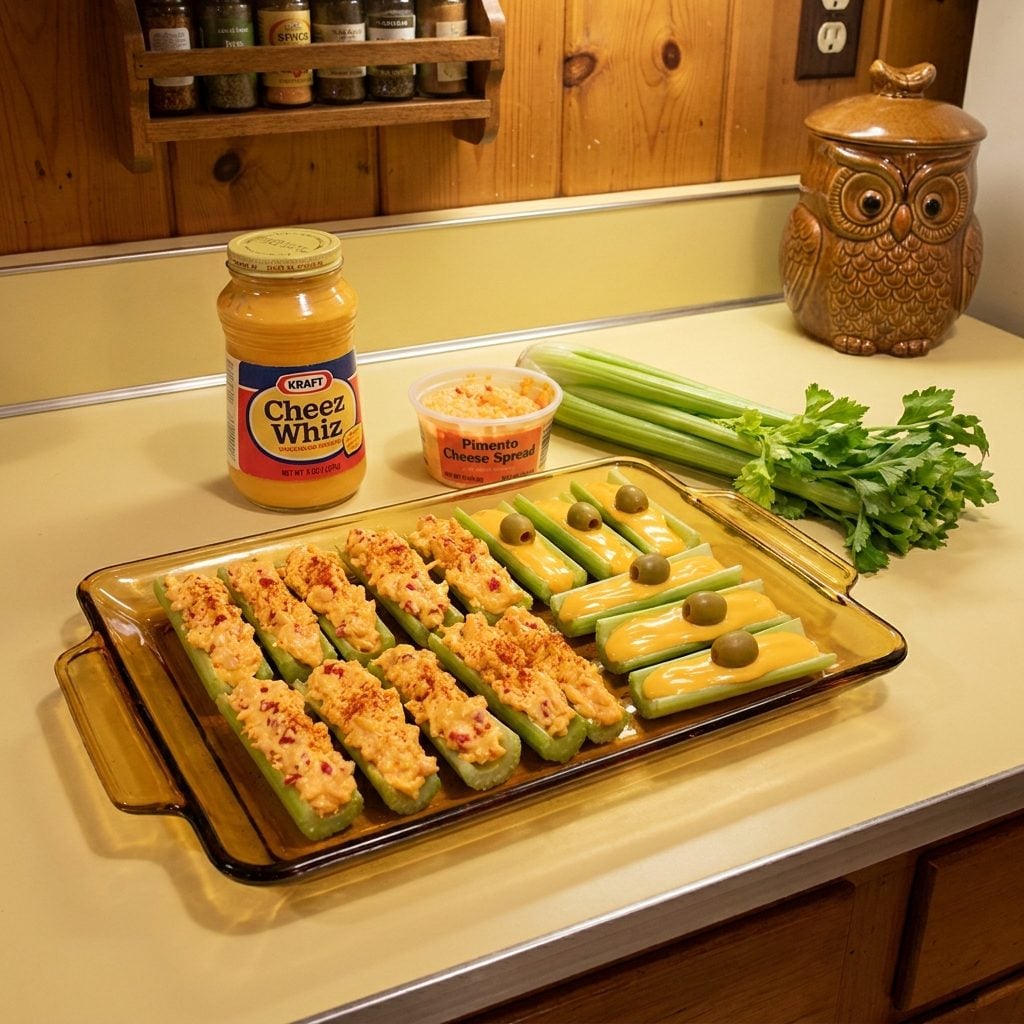
Every party. Every single one. A celery stalk with its concave channel filled with something orange, arranged on a tray like tiny canoes loaded with cargo nobody requested.
Cheez Whiz was the express route — straight from the jar, piped or spooned into the groove, done in five minutes. Pimento cheese required marginally more effort and conferred marginally more status, the way putting on actual shoes instead of slippers technically counts as getting dressed. Some hostesses went off-script with cream cheese and chopped walnuts, or cream cheese blended with dried onion soup mix, which at least had the decency to taste like something identifiable.
Seven-Layer Salad Buried Under a Thick Blanket of Mayonnaise
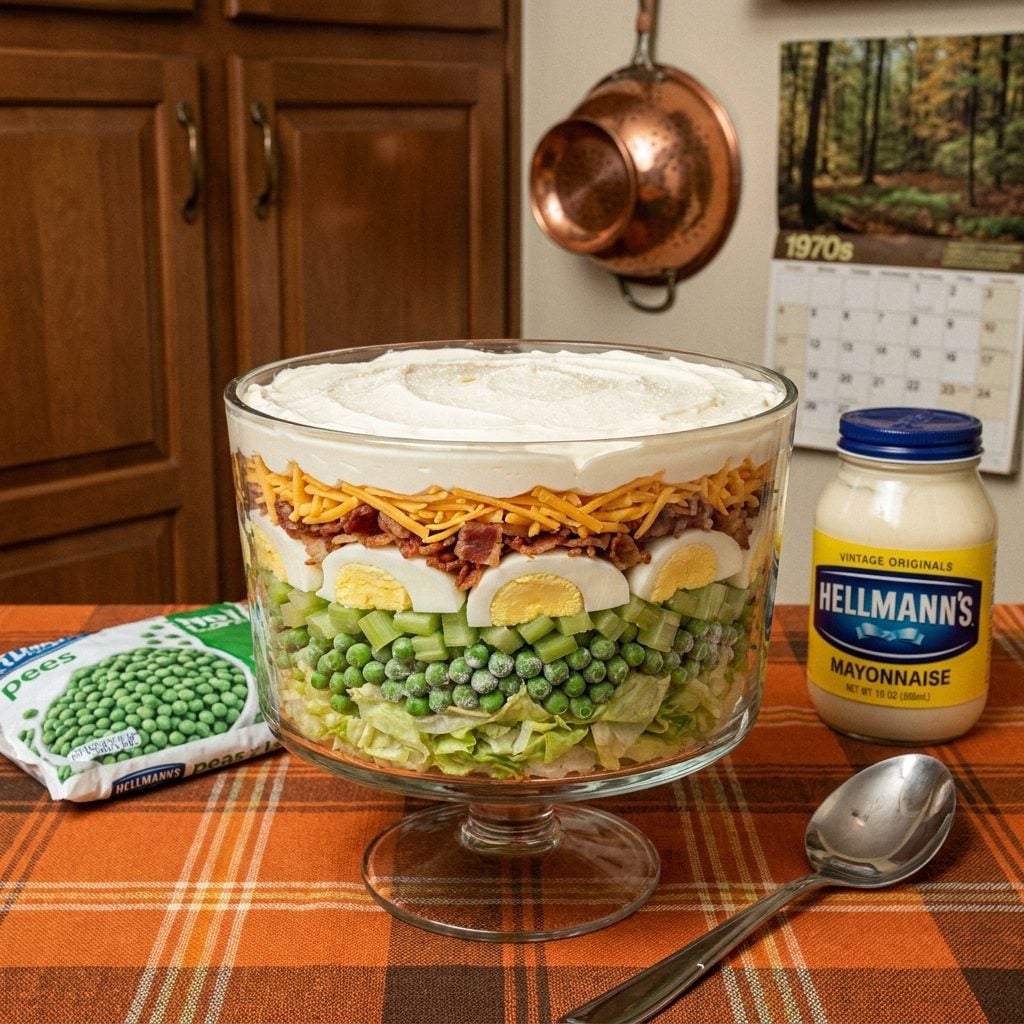
Glass bowl. Non-negotiable. You needed transparency so people could admire the layers, because the layers were the entire point — iceberg lettuce, frozen peas (uncooked), hard-boiled eggs, bacon bits from a jar, shredded cheddar, and then, sealing the whole thing shut like grout on a tile floor: a solid half-inch of mayonnaise spread edge to edge.
Recipes specified the mayo should form a complete seal. Not a drizzle. Not a garnish. A seal, as if the salad beneath might try to escape overnight.
Sugar was sometimes sprinkled on top of the mayo. That sounds like a prank, but it appeared in every printed version of this recipe from the early seventies through the mid-eighties. You assembled the whole thing the night before and refrigerated it, which meant the frozen peas slowly thawed into a soft green layer while the mayo grew a slight crust. Potluck crowds fought over this. I have no explanation.
Beef Stroganoff Made Almost Entirely from Canned Soup and Sour Cream
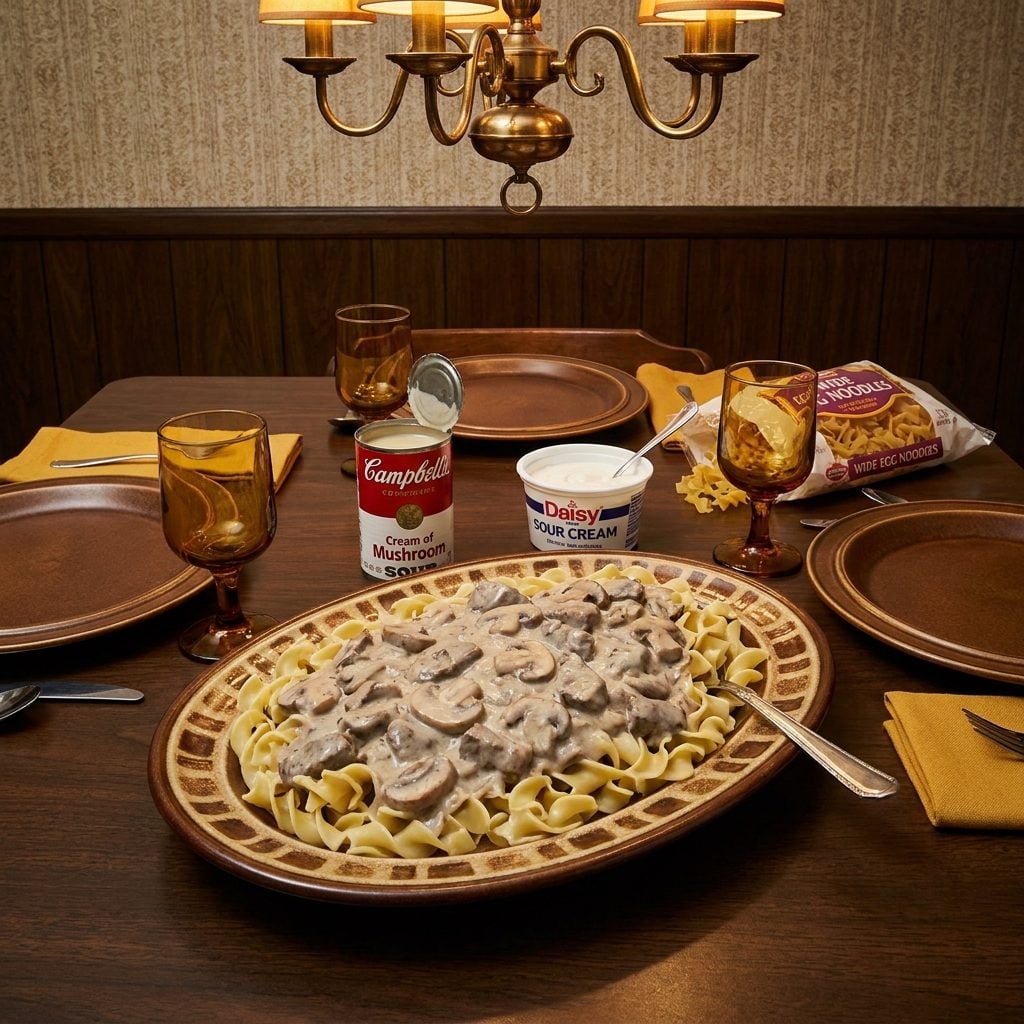
Real stroganoff involves reducing stock, building a roux, finishing with crème fraîche. The 1970s version involved opening two cans and a plastic tub.
Brown some beef strips — or ground beef, if we’re being honest about what most households actually used. Add a can of cream of mushroom soup. Stir in sour cream. Dump it over egg noodles. Fifteen of your twenty minutes went to waiting for water to boil. The sauce had that unmistakable canned-soup sheen, a texture that coated a spoon and refused to let go. Tasted fine, in the way that mushroom soup and sour cream mixed together will always taste fine. But calling it stroganoff was generous. More like a weeknight shortcut wearing a Russian name tag.
The Candle Salad: Bananas, Pineapple Rings, Whipped Cream, and Pure Denial
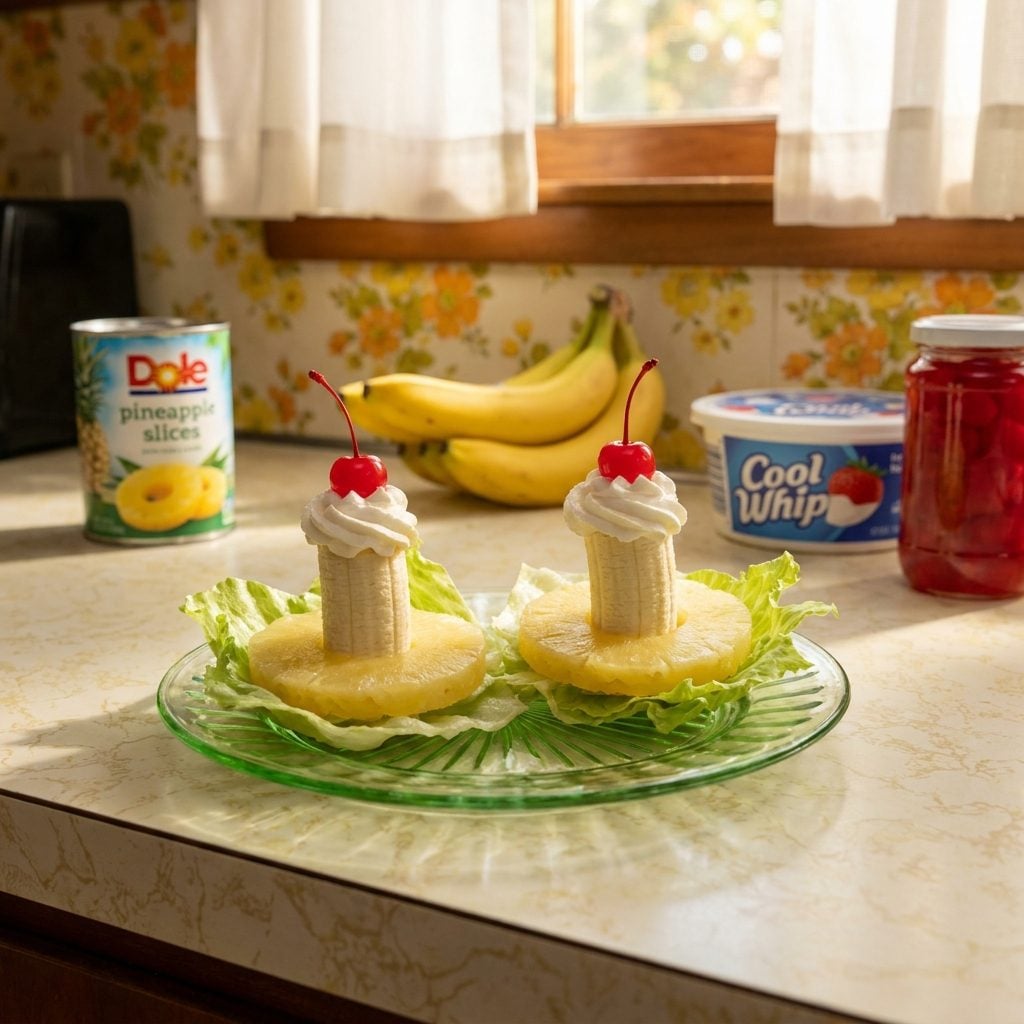
A banana, standing upright in the hole of a pineapple ring, topped with a dollop of whipped cream and a cherry. Arranged on a lettuce leaf. Called a salad. Served to company.
Nobody discussed why this looked the way it looked. Entire generations of women assembled these for luncheons, church dinners, and ladies’ auxiliary meetings without breaking composure. Cookbooks printed the recipe straight-faced. Guests consumed them straight-faced. The collective agreement to ignore the obvious was one of the grand unspoken social contracts of mid-century American dining — and possibly its most impressive achievement. If you want proof that 1970s entertaining operated under an entirely different reality, look no further.
Salmon Mousse Molded into Fish Shapes and Decorated with Olive-Slice Eyes
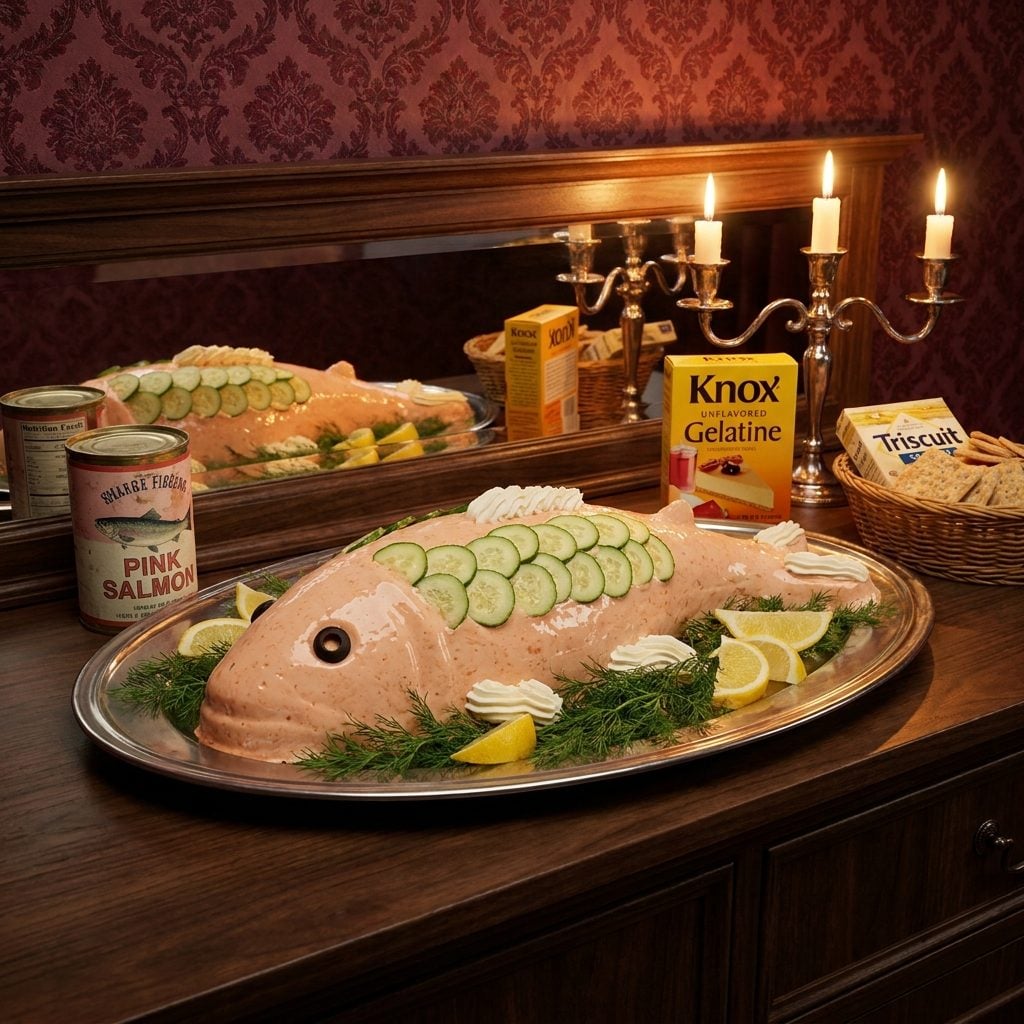
Canned salmon, unflavored gelatin, cream cheese, lemon juice, Worcestershire — all of it blended, poured into a fish-shaped copper mold, and chilled overnight so it could emerge the next day looking somewhere between a culinary feat and a gag gift.
Decorating was where ambitions flared. Cucumber slices became scales. A black olive slice became the eye. Piped cream cheese outlined the fins, and dill fronds suggested seaweed. The finished product sat on a silver tray ringed by crackers, and guests were expected to walk up, hack off a chunk with a butter knife, and spread it on a Triscuit while carrying on polite conversation as though nothing strange was happening.
Flavor? Honestly not bad. But the presentation demanded a level of whimsy that no dinner party hosted after about 1986 has been able to pull off with a straight face.
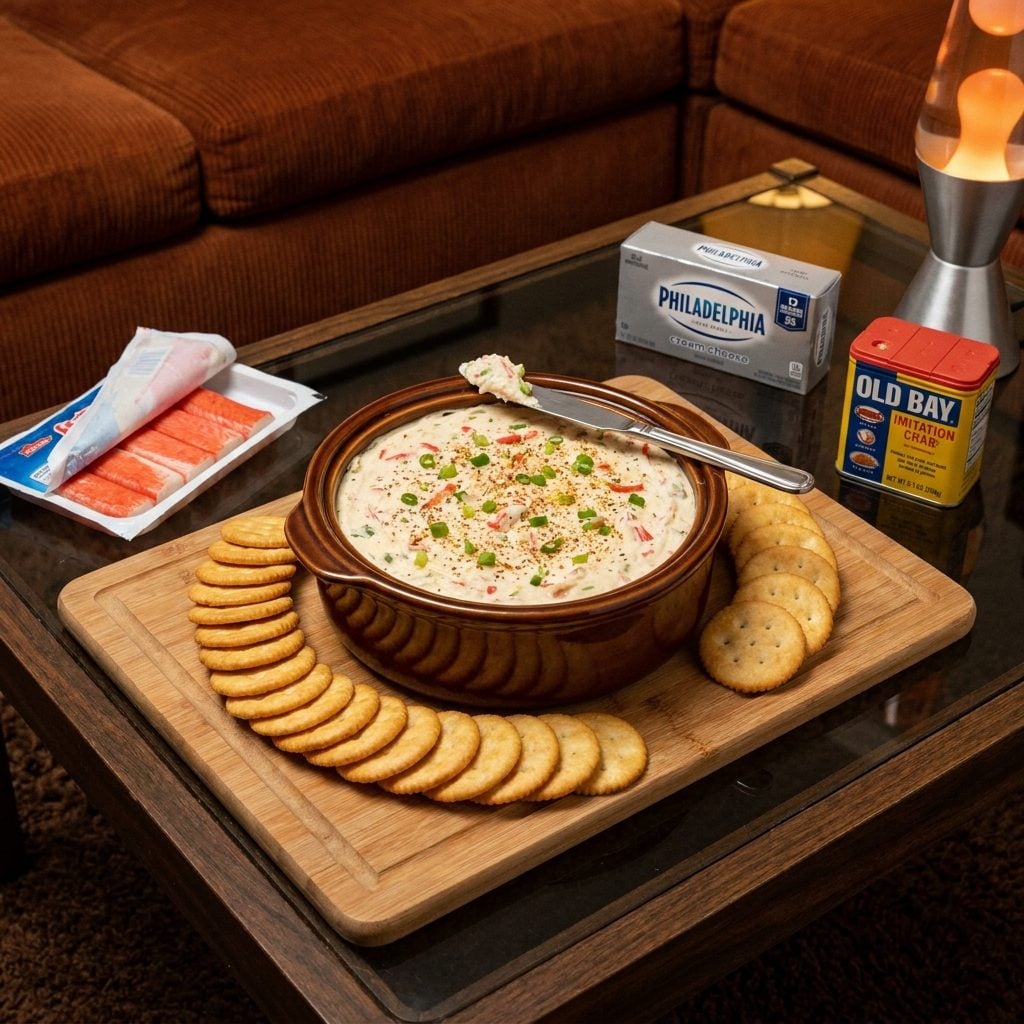
Mock Crab Dip Made from Cream Cheese and Imitation Seafood That Fooled Nobody
🔥 Would you like to save this?
Imitation crab was one of the more optimistic food products of its era — pollock, processed and dyed to vaguely resemble crab. It resembled crab the way a mall Santa resembles joy. Close enough if you didn’t scrutinize. Nobody scrutinized, because this dip was at every gathering from coast to coast.
A brick of cream cheese, softened. A package of imitation crab, shredded. Some lemon juice. Maybe cocktail sauce swirled on top, maybe Old Bay if the hostess was feeling ambitious. Ritz crackers for scooping — always Ritz — served from a ceramic crock that spent eleven months a year in the back of a cabinet. You made it when you wanted the appearance of effort without the burden of actual effort. There’s a certain dignity in that kind of honesty.
Porcupine Meatballs with Rice Sticking Visibly Out of the Beef
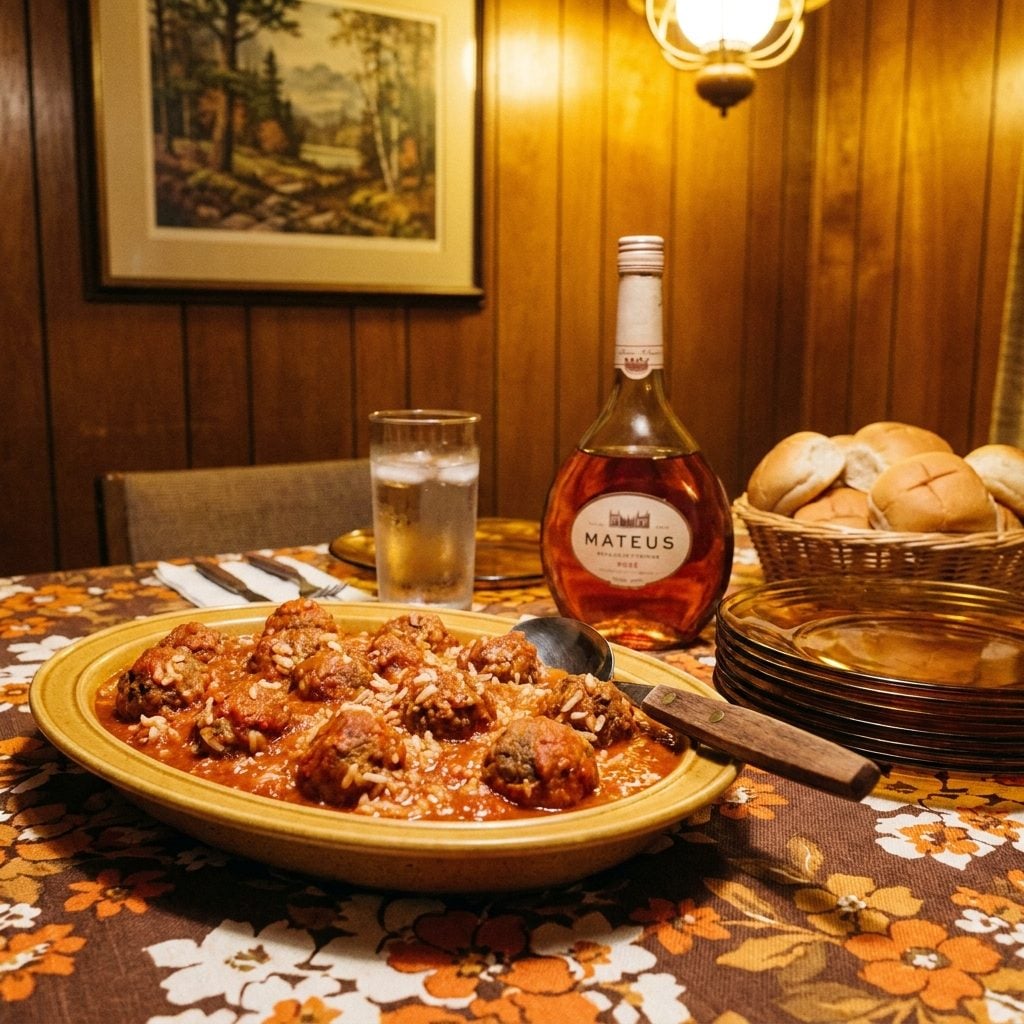
Rice grains jutting out of ground beef like tiny white quills — that was the charm, and also the entire liability. Porcupine meatballs earned their name from uncooked rice mixed into the meat before braising, and as the rice puffed up it poked through the surface in a pattern that was supposed to read as playful. It read as something from a biology textbook.
The sauce was always tomato soup, sometimes doctored with Worcestershire, and your mom served them over more rice, which felt redundant but went unchallenged. Flavor-wise, they were fine. Beefy, starchy, salty, perfectly edible. But the visuals? No amount of parsley garnish could make a platter of spiked meat spheres look like something you’d present to company with a straight face.
Pear Halves Topped with Mayonnaise and Shredded Cheddar
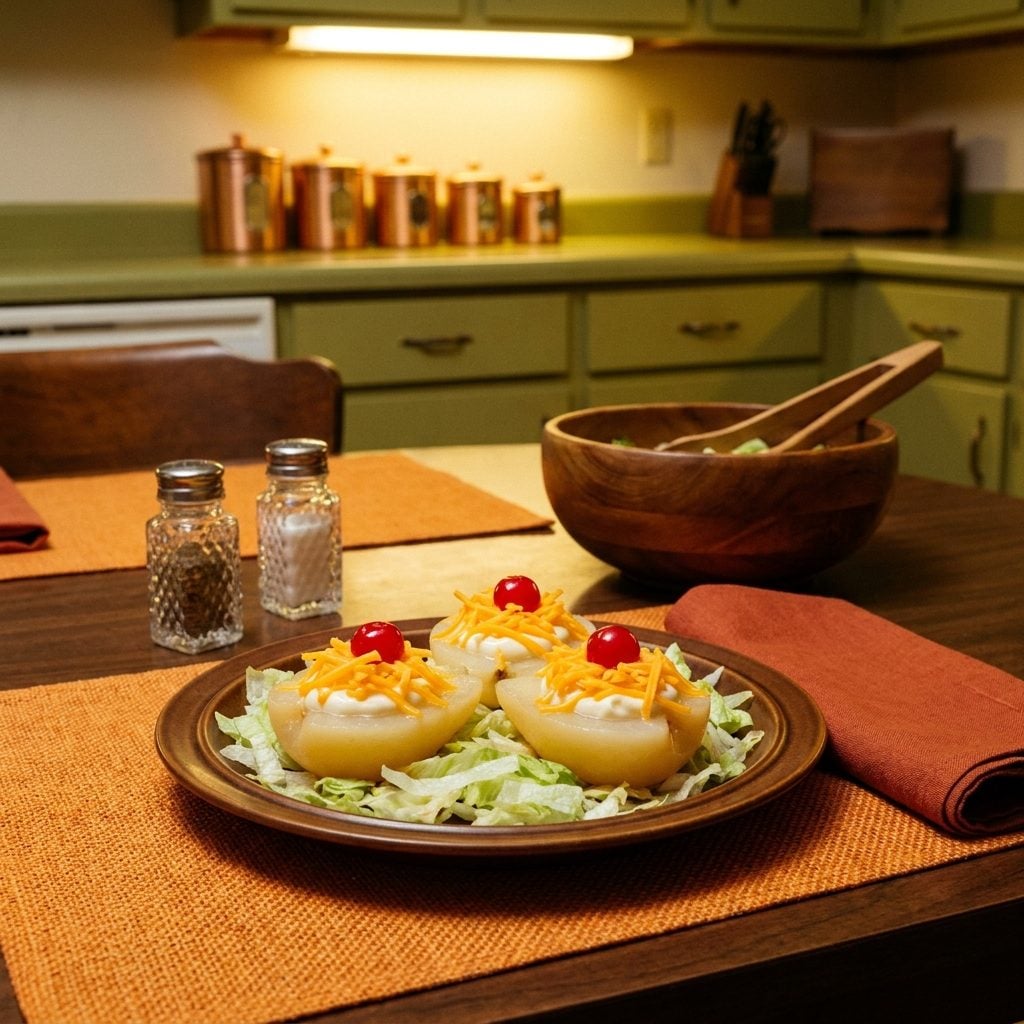
Canned pear half, cavity-side up. Dollop of Hellmann’s in the center. Pile of shredded sharp cheddar on top. Maraschino cherry to finish. On a lettuce leaf, naturally, because the lettuce made it a salad.
This showed up without irony at PTA luncheons, church suppers, and holiday tables where someone’s aunt insisted it was “refreshing.” Cold, slippery fruit paired with room-temperature mayonnaise and waxy orange cheese — the combination only made sense if you grew up eating it, and even then you had questions. The pear was too sweet. The mayo was too visible. The cheddar was aggressively orange. Yet it sat on the buffet line like it had earned its spot, and for roughly fifteen years, nobody argued.
Chipped Beef on Toast Served Proudly at Brunches and Buffets
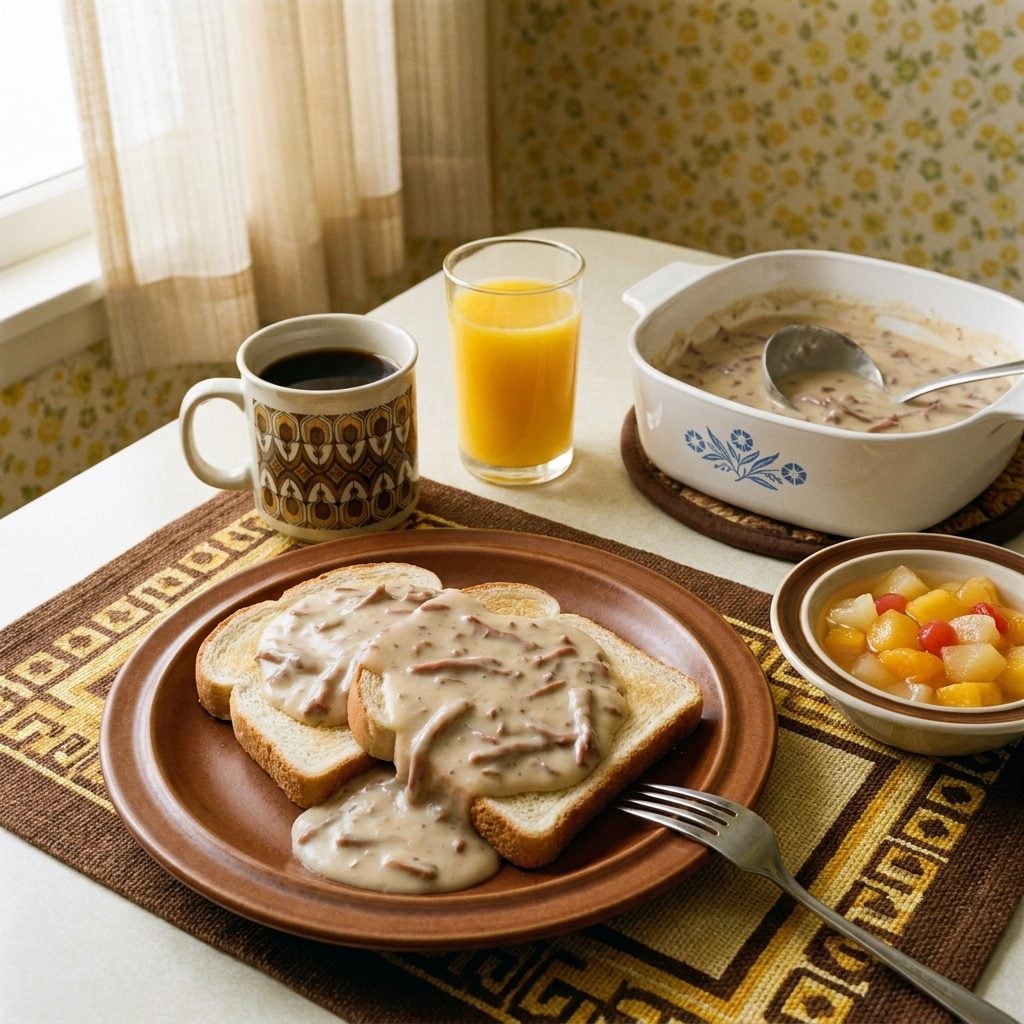
The military called it SOS. Civilians called it “creamed chipped beef.” Nobody called it appetizing, but it appeared on brunch tables throughout the decade like it had a standing invitation.
Dried beef from a jar — those dark burgundy curls of salt and preservatives — torn into shreds and stirred into a thick white sauce built from butter, flour, and milk. Poured over toast. Sometimes over biscuits if you were feeling fancy. The gravy was the color of old paste, the beef was chewy in a way that raised questions about its original form, and the whole production looked like something you’d eat during a power outage rather than serve to the neighbors. And yet people genuinely liked it. That’s the part I still can’t square.
Ambrosia Salad Overloaded with Marshmallows, Coconut, and Canned Mandarin Oranges
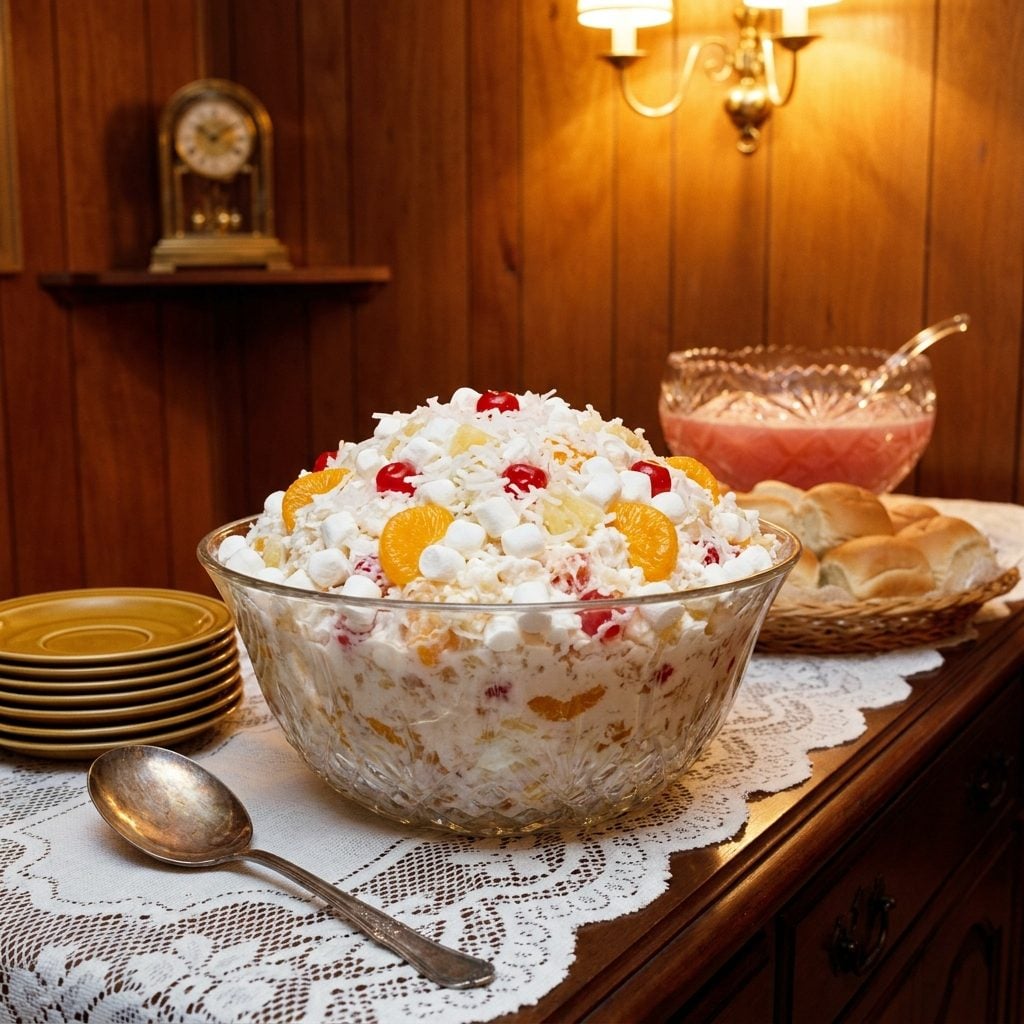
Calling it a salad required a leap of faith. Everything after that was marshmallows and sheer commitment.
Cool Whip, miniature marshmallows, canned mandarin oranges, pineapple tidbits, shredded sweetened coconut, maraschino cherries, and sometimes sour cream for “tang.” Proportions varied wildly — some versions were mostly fruit with a whisper of cream, while others were a bowl of marshmallows with fruit trapped inside, barely visible, fighting for air. It appeared at Thanksgiving, Christmas, Easter, and any potluck where someone needed a dish that required zero cooking and could survive at room temperature for the duration of an evening. By then the coconut had gone soggy, the marshmallows had dissolved into a sweet slick, and the whole thing resembled something you’d find in a tide pool. Everyone took a spoonful anyway.
Cheese Balls Rolled in Chopped Nuts and Surrounded by Ritz Crackers
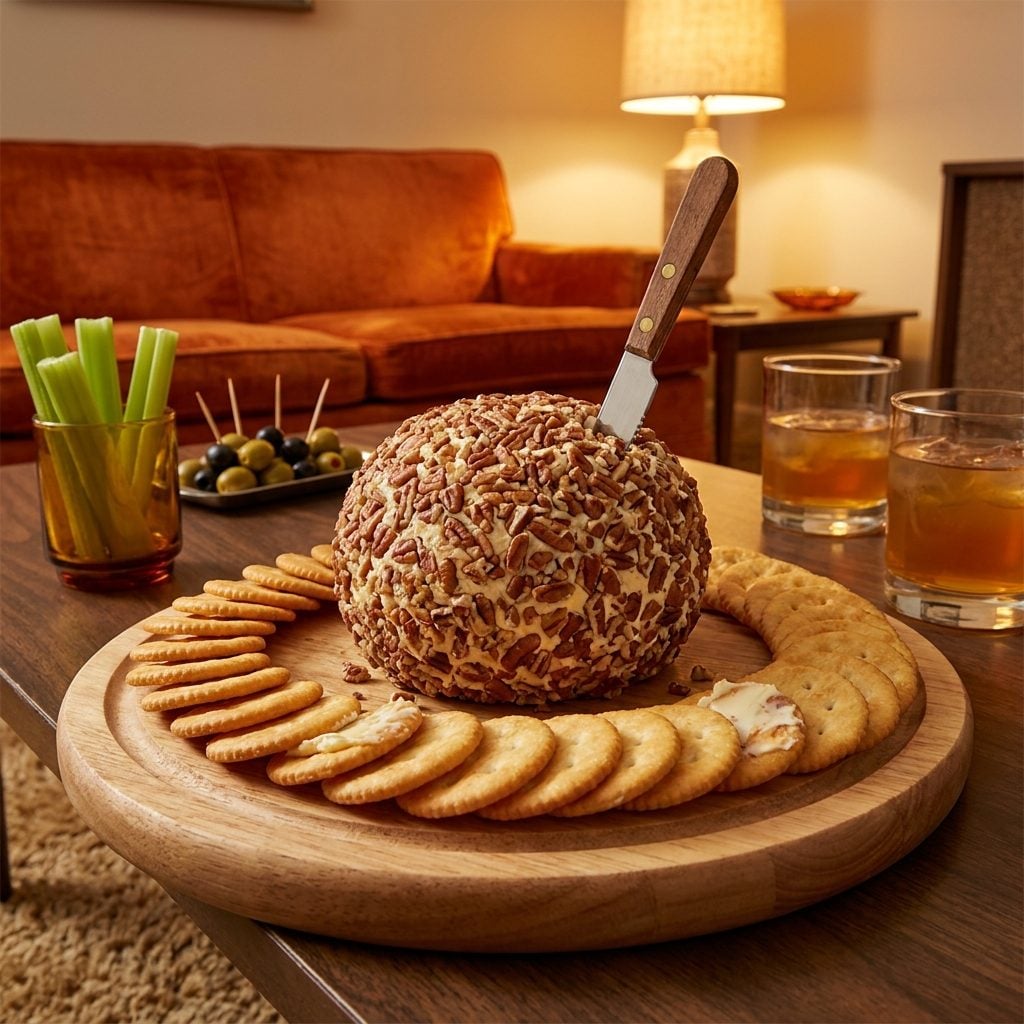
Every holiday party had one. A dense, fist-sized orb of cream cheese and shredded cheddar, seasoned with Worcestershire and onion powder, rolled in chopped pecans or walnuts until it resembled a small planet. It sat on a board ringed by Ritz crackers fanned into a perfect circle — a circle that survived exactly four minutes before someone wrecked it.
Those first bites were genuinely good. Crunchy nuts, salty cracker, tangy cheese. But then you’d hit the center: cold, dense, tasting mostly like cream cheese that had been flirting with flavor without following through. Late in the evening the cheese ball sat there with a crater gouged into one side, a butter knife abandoned at a tragic angle, and zero takers. Nobody came back for seconds. Not once.
Turkey Tetrazzini Baked in Giant Casserole Dishes After Holidays
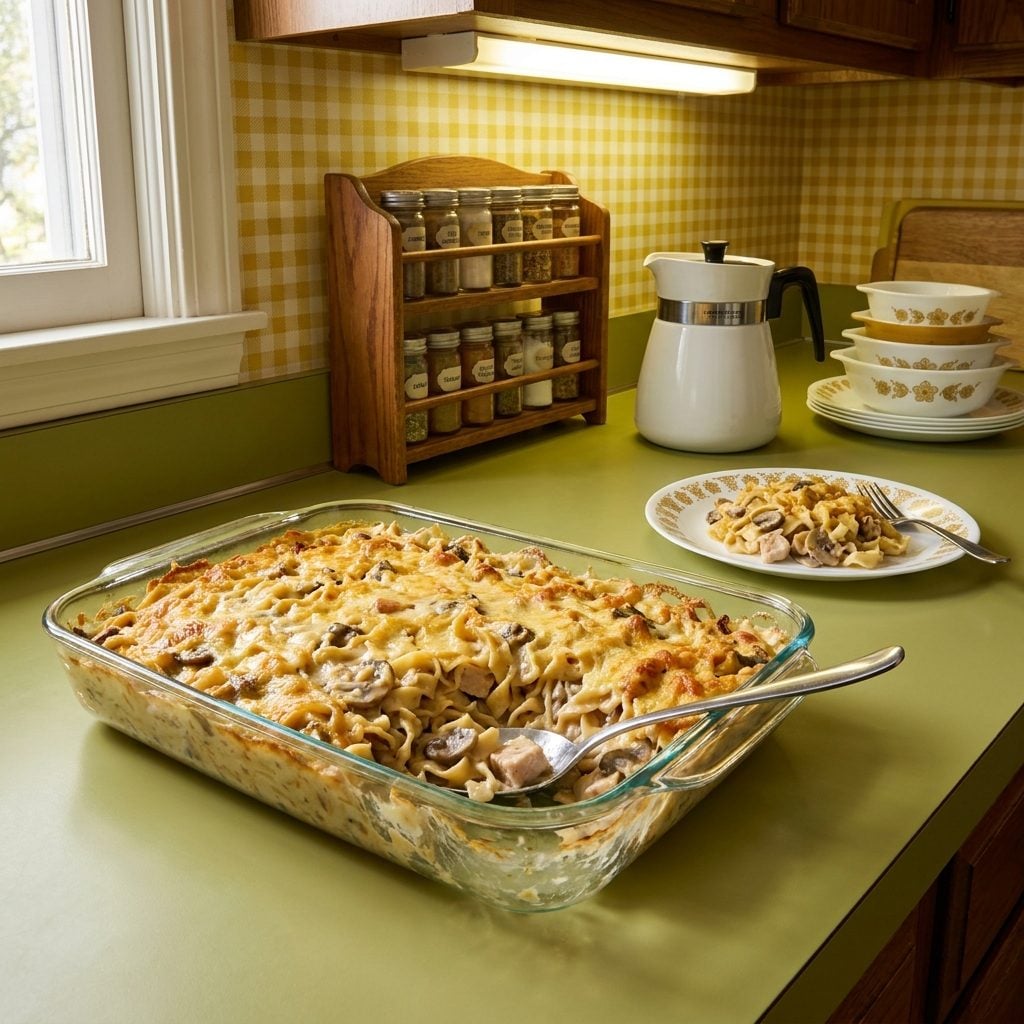
The day after a holiday, when the turkey carcass sat in the fridge wrapped in aluminum foil like a sad silver football, someone would announce they were making tetrazzini. Nobody cheered.
Spaghetti noodles, leftover turkey torn into stringy pieces, cream of mushroom soup, maybe some actual mushrooms from a can, a splash of sherry if the cook had aspirations. All stirred together, dumped into the biggest Pyrex in the house, topped with breadcrumbs and Parmesan from the green can, then baked until a crust formed that crackled when you broke through with a spoon. Underneath? A beige, gluey tangle of noodles and poultry that tasted like Thanksgiving’s morning-after regret. It made enough to feed twelve and you ate it for four days straight because throwing it away felt wasteful. You resented every bite after the second night, but you finished it. You always finished it.
Mini Cocktail Sausages Simmered in Barbecue Sauce and Bourbon
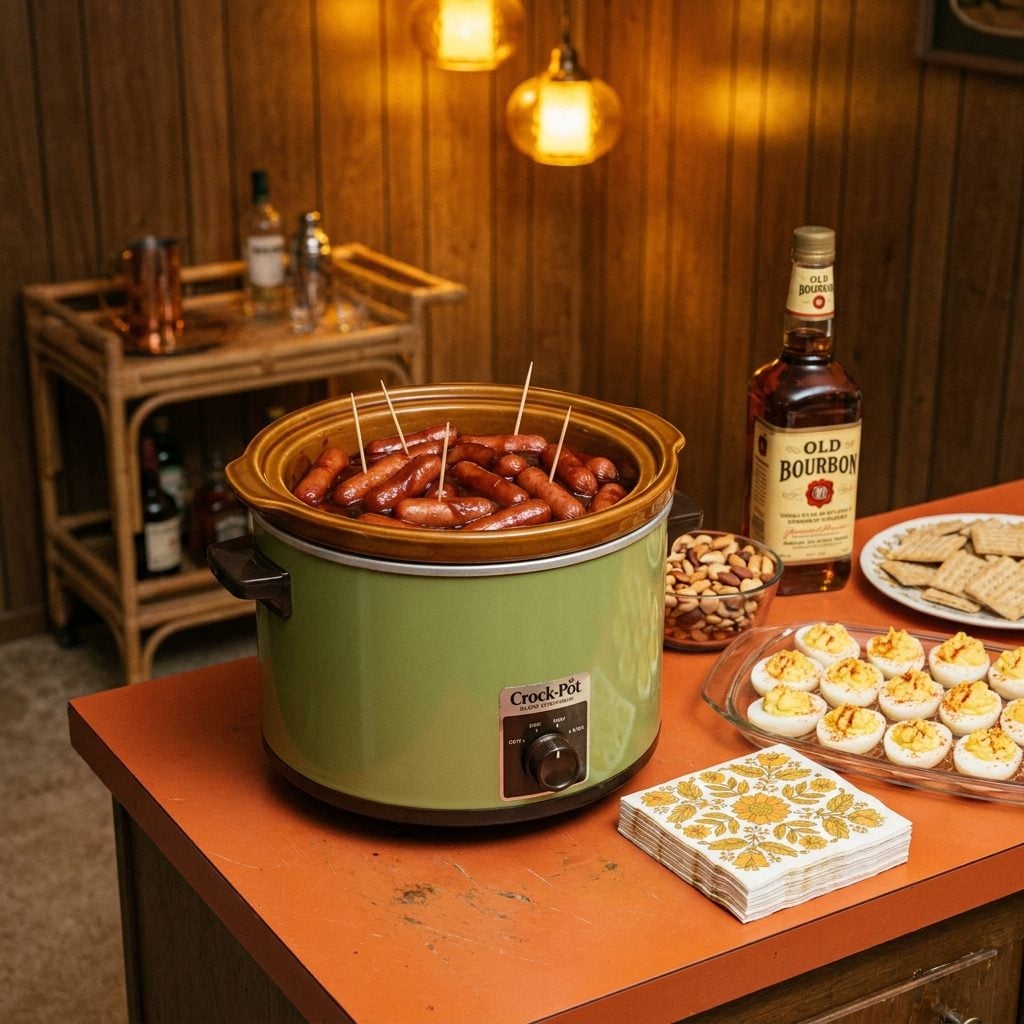
That avocado-green Crock-Pot sat on the counter like a small domestic shrine, and inside it: two packages of cocktail wieners bobbing in a mixture of bottled barbecue sauce and grape jelly. Sometimes bourbon went in too. Toothpicks poked up at angles like tiny flagpoles staking claims.
People ate these by the fistful. The sauce reduced into a sticky, sweet glaze that was almost entirely sugar and tasted like nothing found in nature, but that didn’t slow anyone down. Your fingers got tacky. You wiped them on your pants. You went back for five more. The whole ritual played out in the kitchen or the rec room, standing up, while someone’s dad held court about the Steelers.
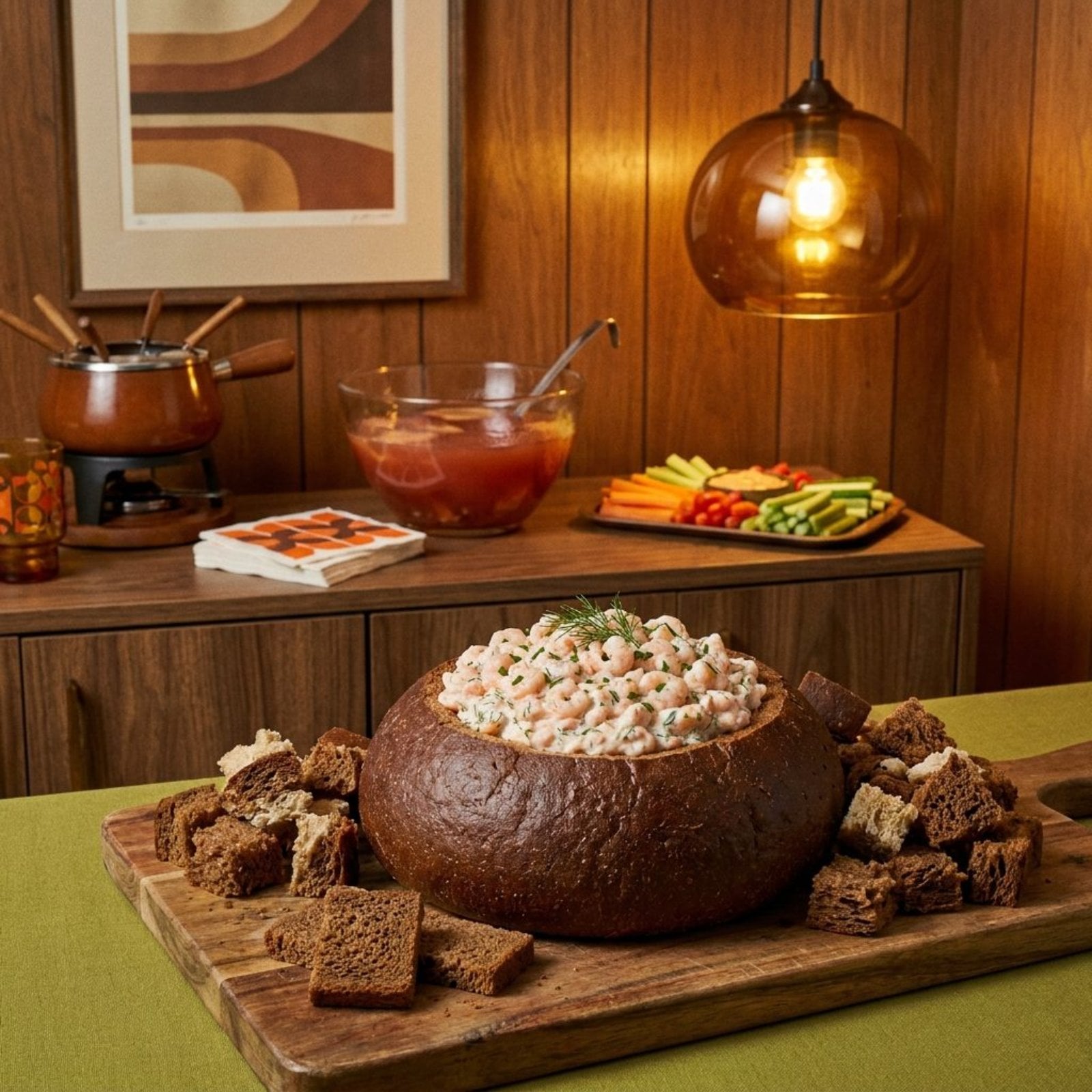
Shrimp Dip Served Cold in Hollowed-Out Pumpernickel Bread Bowls
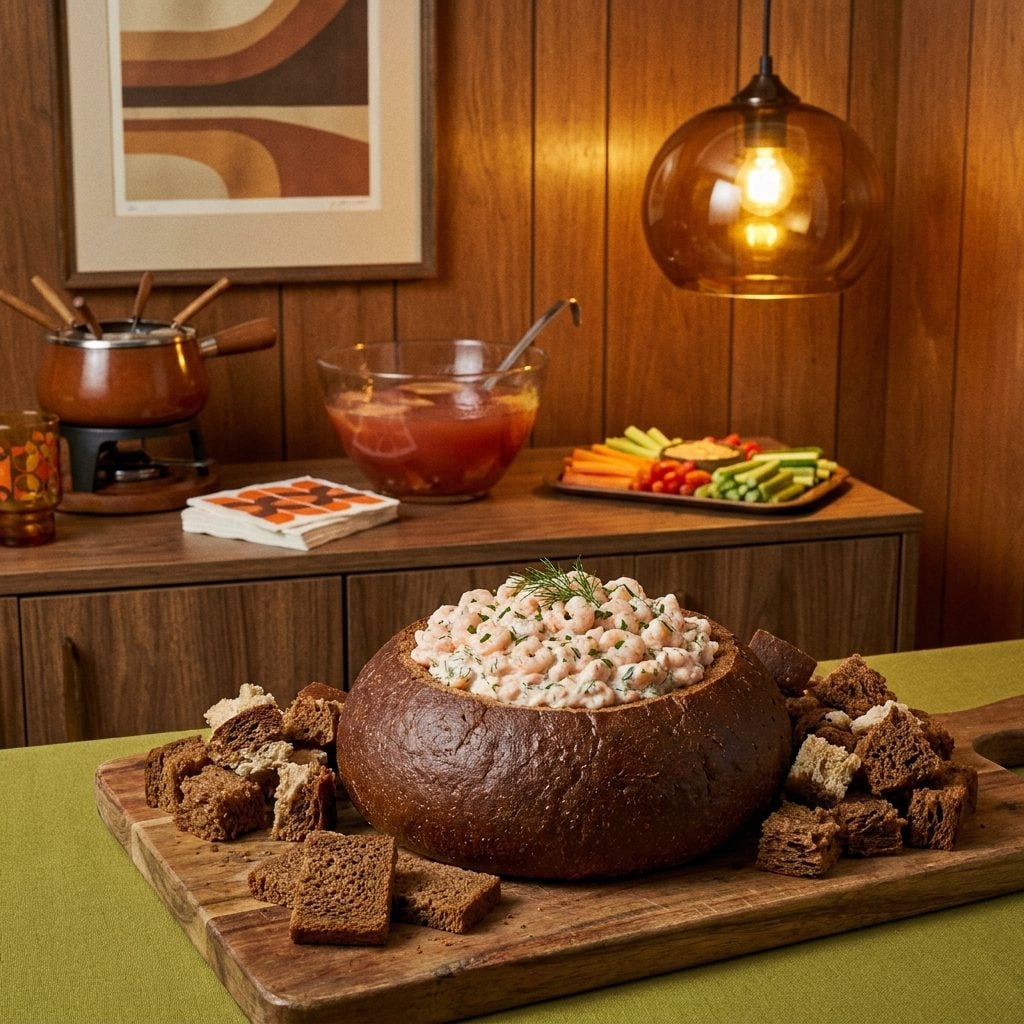
Someone would carve out the inside of a pumpernickel round, fill it with cold shrimp dip, and arrange the torn bread innards around the perimeter for dipping. Elegant. Or so the theory went. The dip itself was cream cheese, cocktail sauce, canned shrimp (rinsed, theoretically), lemon juice, and maybe some horseradish if the host felt ambitious.
For the first twenty minutes it looked great. After that the bread bowl went soggy from the inside, collapsing gradually like a delicious sinkhole. The canned shrimp carried that particular metallic sweetness you either grew up accepting or encountered as an adult and immediately distrusted. And the dip developed a skin if left out too long — which it always was, because nobody at a 1970s party refrigerated a single thing until the last guest was out the door.
🔥 Would you like to save this?
Please note that some of the imagery in this article were created with the aid of AI image generators.