
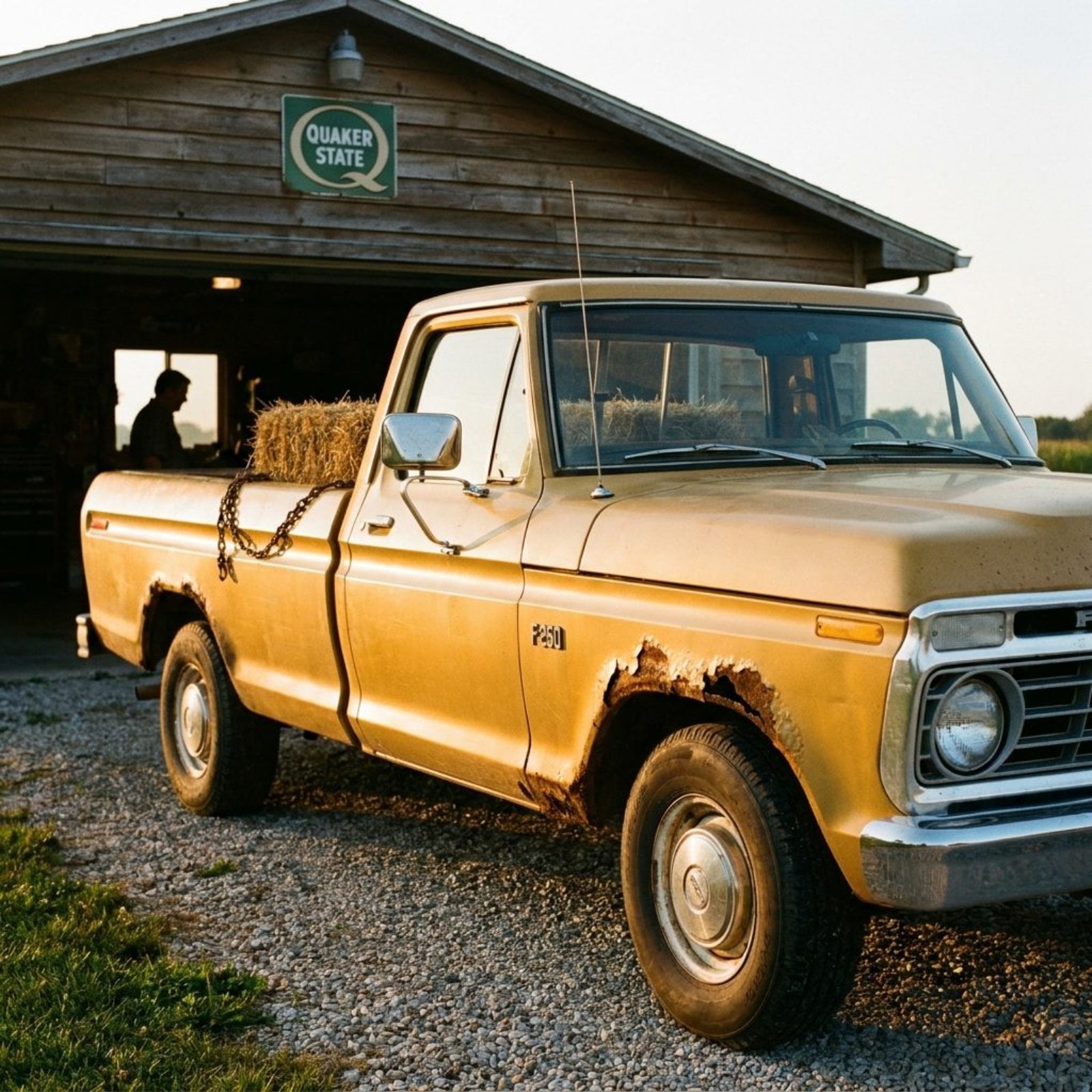
The bench seat ran wall to wall. The choke knob stuck out of the dash like a little chrome mushroom. The floor was metal, actual metal, and in January you could feel every degree of that through your boots. Pickup trucks in the 1970s were working machines with zero pretense, zero cup holders, and absolutely no interest in your comfort. What they had instead was character by the truckload. Here are 29 details that’ll make you say ‘oh man’ and make everyone under 30 say ‘what is that.’
🔥 Would you like to save this?
The Rust Blooms Around the Wheel Wells That Showed Up Before the Payments Were Done
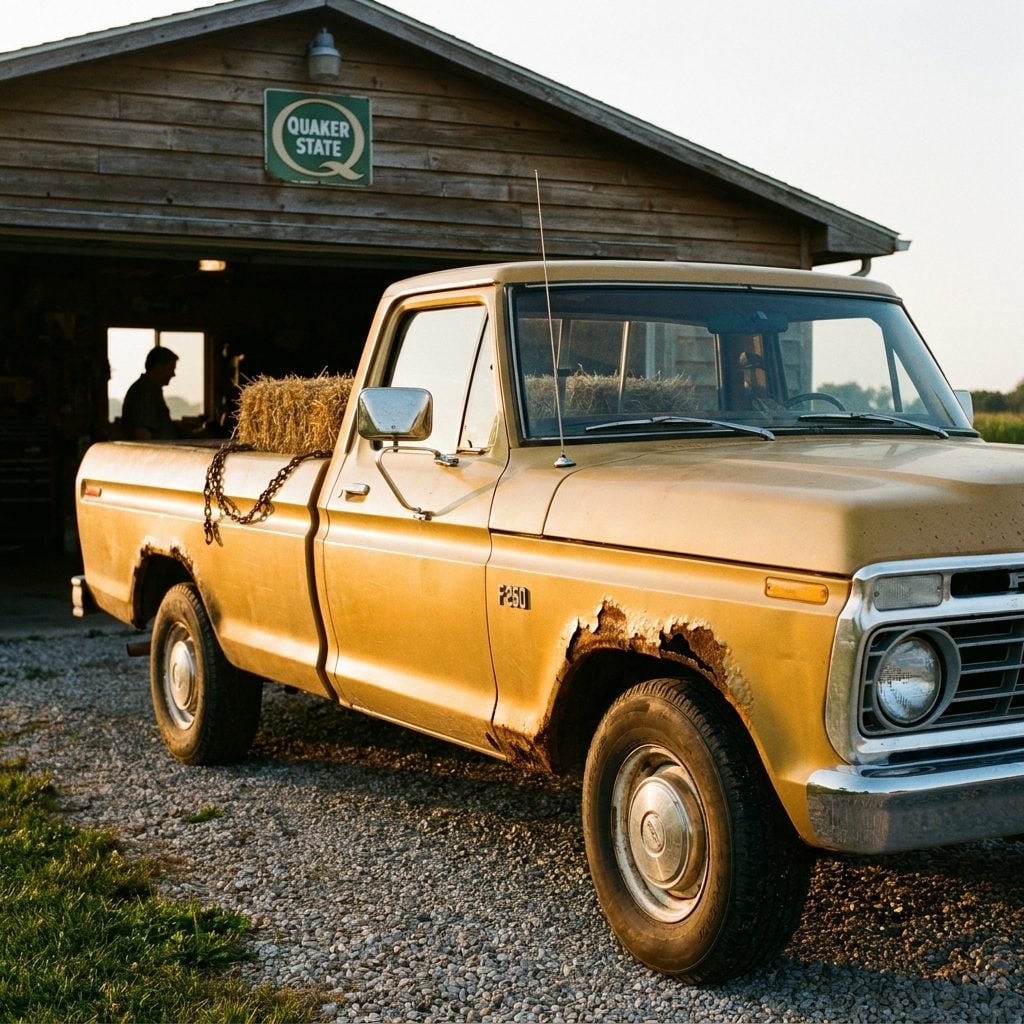
The truck might be sitting in the driveway on its third year of payments and already the wheel wells were going. Not rust in the abstract, either, actual bubbling, lifting, flaking corrosion that spread like a slow burn from the inner lip of the arch outward. You’d see it start as a faint brown blush under the paint, then the paint would tent up, and then one afternoon you’d kick it lightly with your boot and a chunk the size of a playing card would just fall off onto the concrete.
Road salt was the villain, officially. But so was the steel itself, and the fact that nobody undercoated anything from the factory. A 1977 truck in the Snow Belt was basically on a countdown from the moment it left the dealer lot. Owners patched it with Bondo, sprayed it with Rust-Oleum, and kept driving. The truck still ran fine. The rust was just something you lived with, like a bad knee.
The AM Radio Presets That Slammed Into Place Like a Staple Gun
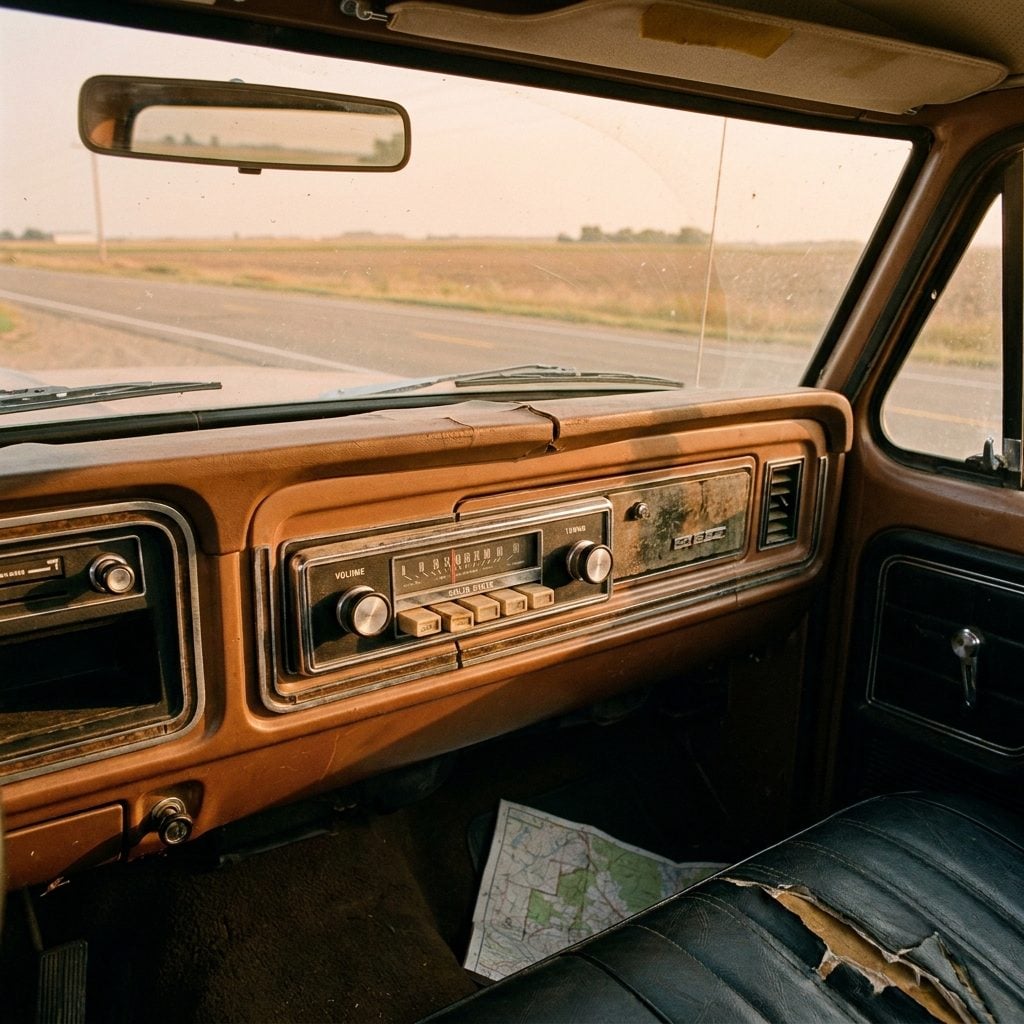
Five buttons. That was your whole music library. You’d set each one by pulling the button out, tuning to your station manually, and pushing it back in, a process that felt vaguely scientific for about thirty seconds in 1974. Once they were set, pressing one of those presets produced a sound like a heavy-duty stapler firing: a satisfying, slightly alarming mechanical thunk as the whole mechanism physically repositioned to your frequency.
If you were moving between radio markets on a long highway run, half your presets were useless by the time you crossed the state line. You’d just scan. The tuning dial moved with a slightly greasy resistance, and you’d wobble it left and right trying to pull in a country station from 200 miles away through a wall of static. FM was available by then, but plenty of base-model trucks never got the upgrade.
Truck Doors So Heavy They Shut Like a Bank Vault and Opened Like a Workout
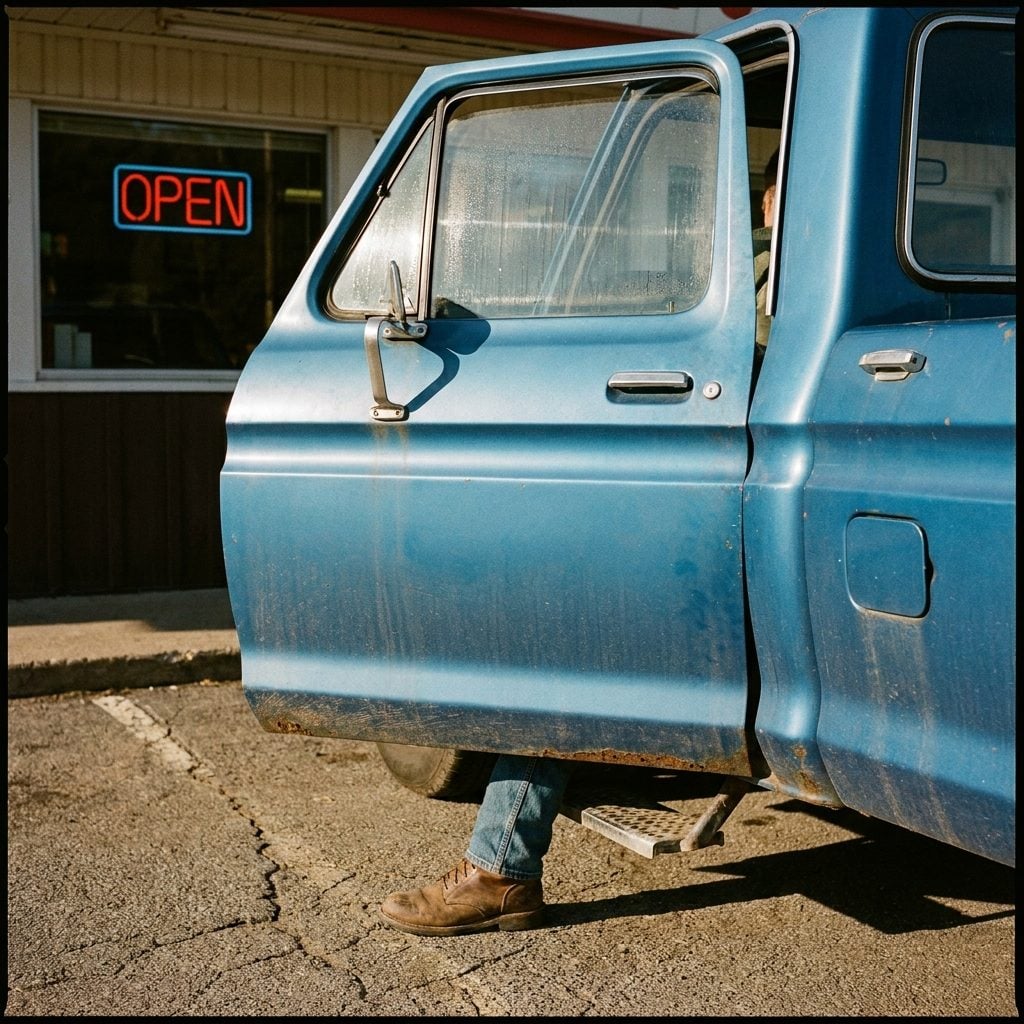
You didn’t close a 1970s truck door. You committed to it. You’d grab the interior pull strap, swing it toward you with your whole shoulder, and the latch would catch with a deep, resonant chunk that you felt in your sternum. It sounded like a Mosler safe being secured. Kids riding shotgun for the first time would flinch at it every time.
Opening from the outside required finding the handle at just the right angle and giving it a firm pull, none of this modern whisper-open business where the door swings free on its own with a touch. The hinges were heavy cast steel, the door skin was actual metal, and the whole assembly probably weighed more than the entire door module on a current compact crossover. There was something trustworthy about it, even if your shoulder said otherwise on a cold morning.
No Power Steering on Base Models: Parking Was a Sport
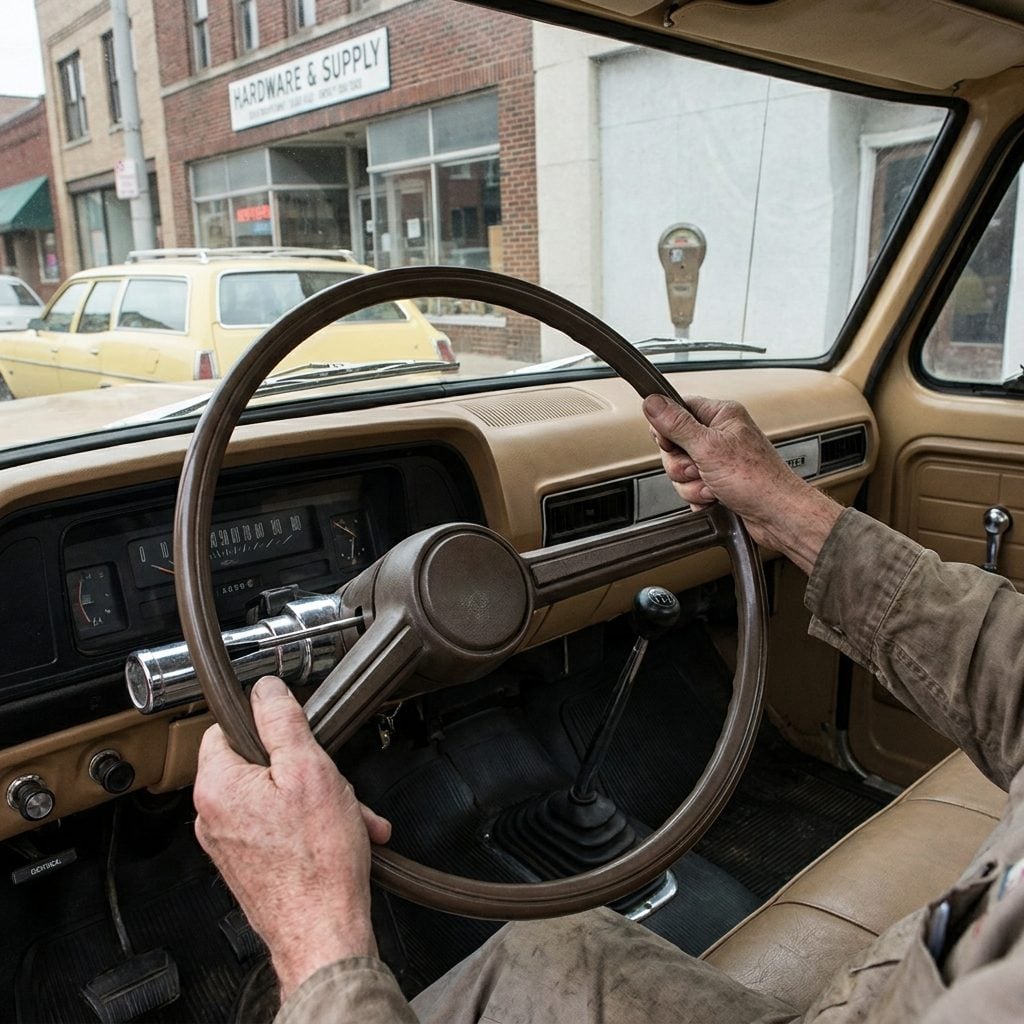
Parallel parking a base-model 1970s pickup with no power steering and a full-size turning radius was a genuine athletic event. At highway speed, the unassisted steering was manageable, tiring, but manageable. At five miles an hour in a tight lot, you were hauling on that wheel with both arms like you were trying to redirect a ship. Drivers with weaker wrists avoided parallel spots entirely, which was a rational life choice.
The steering wheel itself was enormous, which was the engineering’s way of giving you a mechanical advantage. It helped. A little. What it couldn’t fix was that the front axle on a loaded half-ton simply did not want to pivot that hard at low speed without hydraulic assistance. Power steering was an option, a real one people actually ticked on the order sheet, but the bean-counter base spec left it off, and plenty of work trucks went out the door without it. Those drivers developed forearms that impressed people at picnics.
The Rust Blooms Around the Wheel Wells That Showed Up Before the Payments Were Done
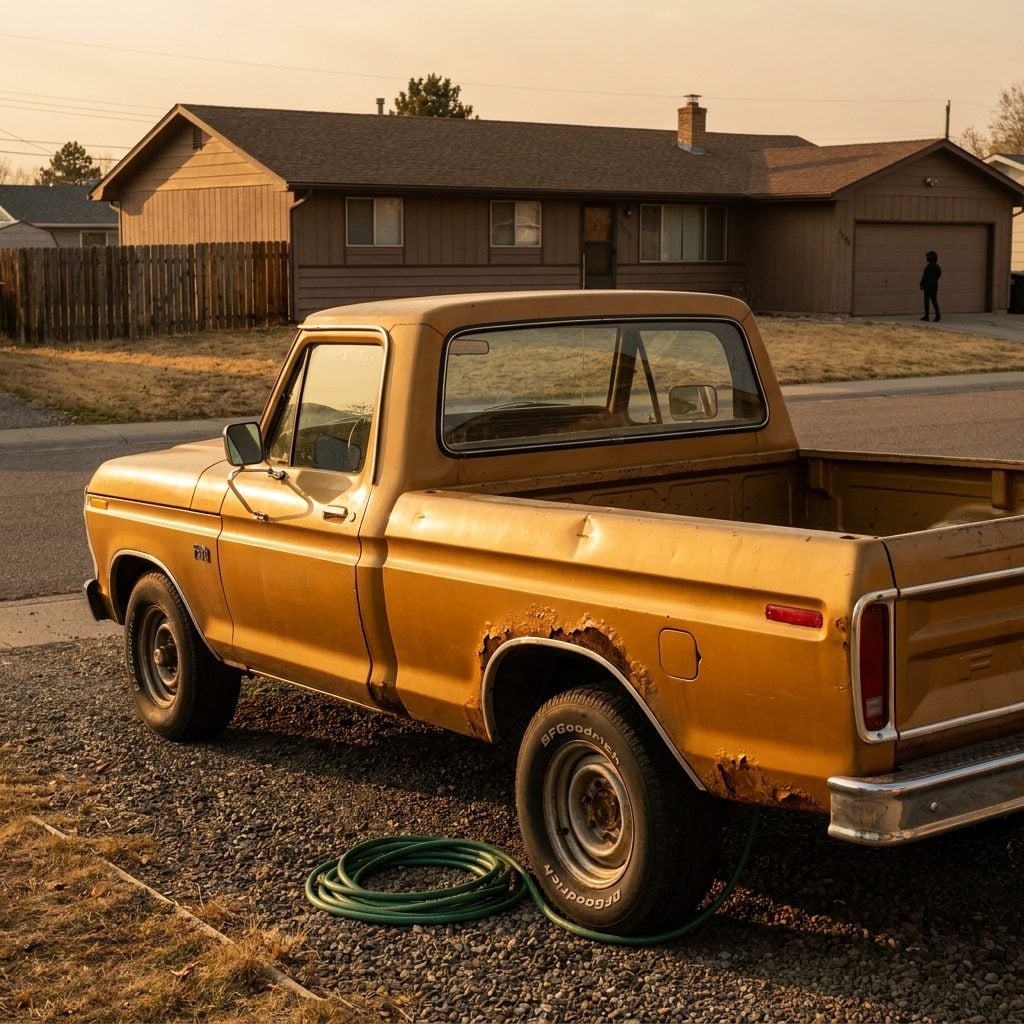
It started as a bubble. Just a small raised patch in the paint, maybe the size of a quarter, sitting right at the lip of the rear wheel well. You could press it with your thumb and feel it give slightly, like a blister. By the following spring it was the size of your palm, orange-brown and flaking, and by year seven the metal had actually opened up into a ragged hole you could see the tire through.
Road salt was the culprit, always, but truck manufacturers in the 1970s treated rust-proofing as something close to optional. The steel was thick and honest but completely unprotected inside the wheel arches. Dealerships sold rustproofing packages as add-ons, which tells you everything. You were essentially paying extra to get the truck you should have been sold in the first place.
The AM Radio Presets That Slammed Mechanically Into Place Like a Staple Gun
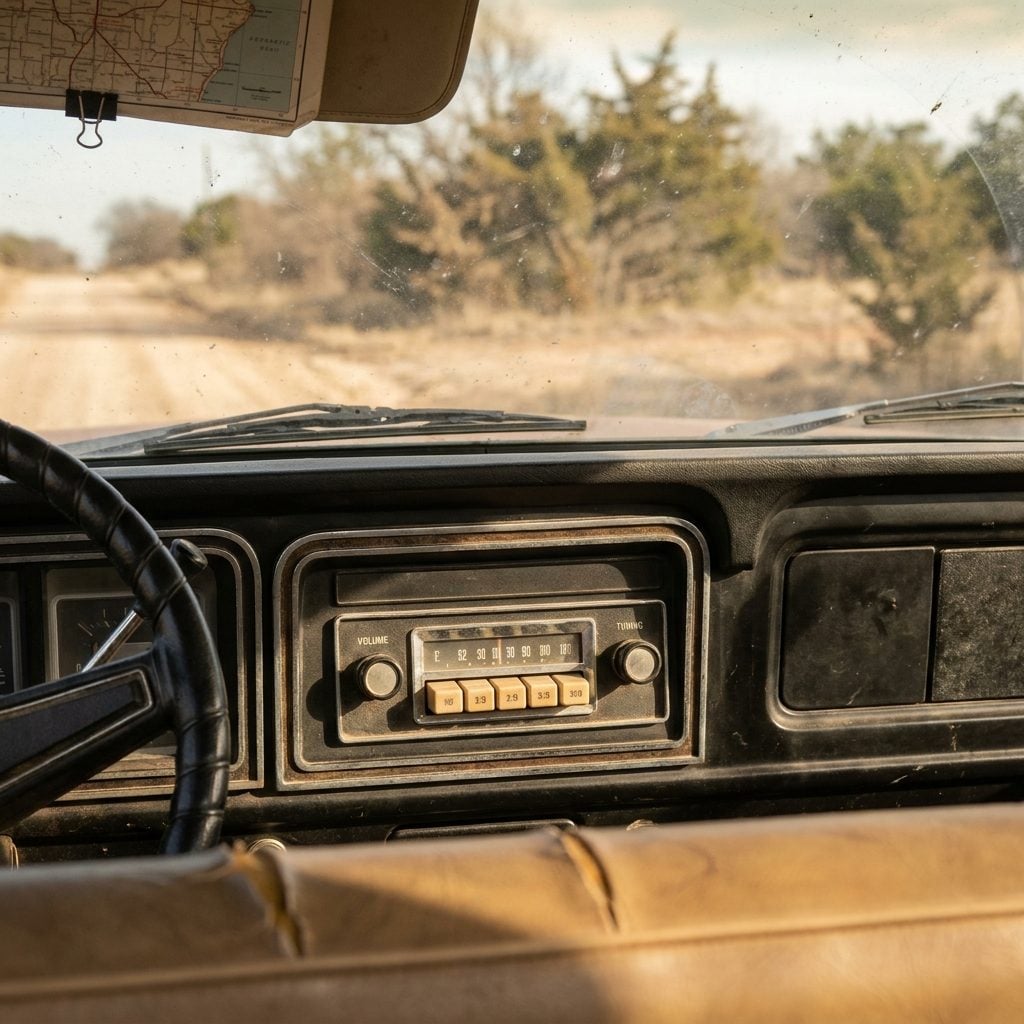
Those buttons didn’t respond to a gentle touch. You had to mean it. You pressed one of those rectangular preset tabs with your thumb and the whole radio mechanism made a sound somewhere between a staple gun and a mousetrap springing, a sharp mechanical chunk that you could feel vibrate up through the dash. The needle jumped to wherever someone had physically set the string inside weeks ago when they tuned it by hand.
Five presets, maybe six. You assigned them yourself by pulling the button out, tuning to the station, and pushing it back in. The whole system was purely mechanical, no memory chips, no software. It worked perfectly for a decade and then one day a button stuck or the string snapped and that was the end of preset three forever.
No Power Steering on Base Models: Parking Was a Sport
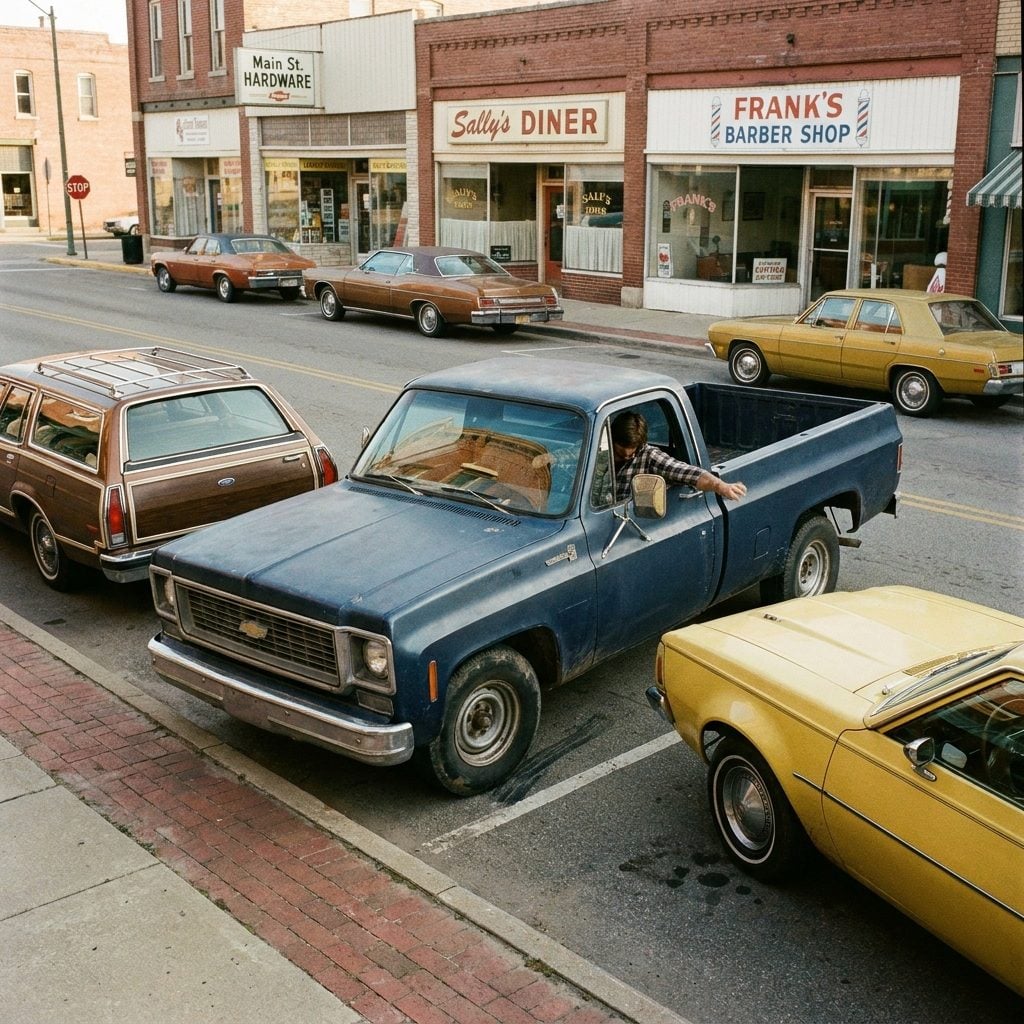
The base-model work truck in 1975 came without power steering the same way it came without a radio or a passenger-side mirror: those were upgrades you paid for. What it came with was a recirculating ball steering box that required actual physical effort to turn, effort that multiplied dramatically at low speeds and hit its peak at a dead stop in a gravel lot.
Parking a fully loaded base-model pickup in a tight spot was a two-handed, two-shouldered operation. You planted your feet against the floor, gripped that enormous steering wheel at nine and three, and pushed. The wheel would groan and creep. Your forearms burned. The tires scrubbed against the pavement with a sound like someone dragging furniture. Men who drove these trucks every day for a living developed forearms that could have belonged to a different species.
Seat Belts Permanently Wedged Between the Cushions Because Nobody Was Wearing Them Anyway
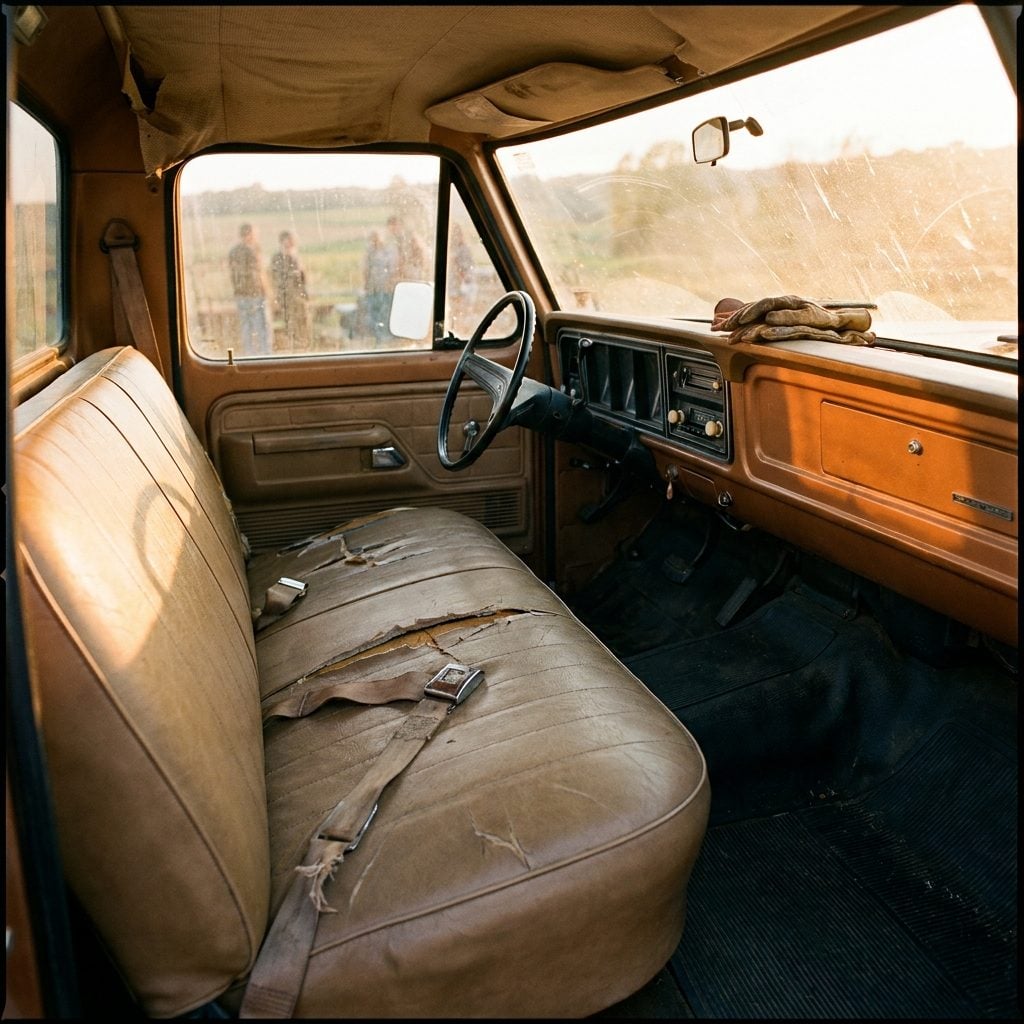
They were there. Technically. Coiled in that vinyl crease between the seat cushion and the seatback like they’d been there since the factory and would stay there until the truck died. Nobody tucked them away on purpose, they just migrated there naturally because nobody was using them, and a loose lap belt flopping around on a bench seat is its own kind of annoying.
The two-point lap belt was already standard equipment by the mid-1970s, but the cultural compliance hadn’t caught up yet. You wore it maybe on the highway if you thought about it, maybe not even then. Kids rode in the bed. Nobody said anything. The vintage bench seat itself was the whole interior, and the belt was just something that occasionally bit you in the thigh when you slid across it to reach the glove box.
Paint Colors With Names Like Avocado Green, Burnt Orange, and Medium Gold Metallic That Sounded Delicious and Looked Incredible
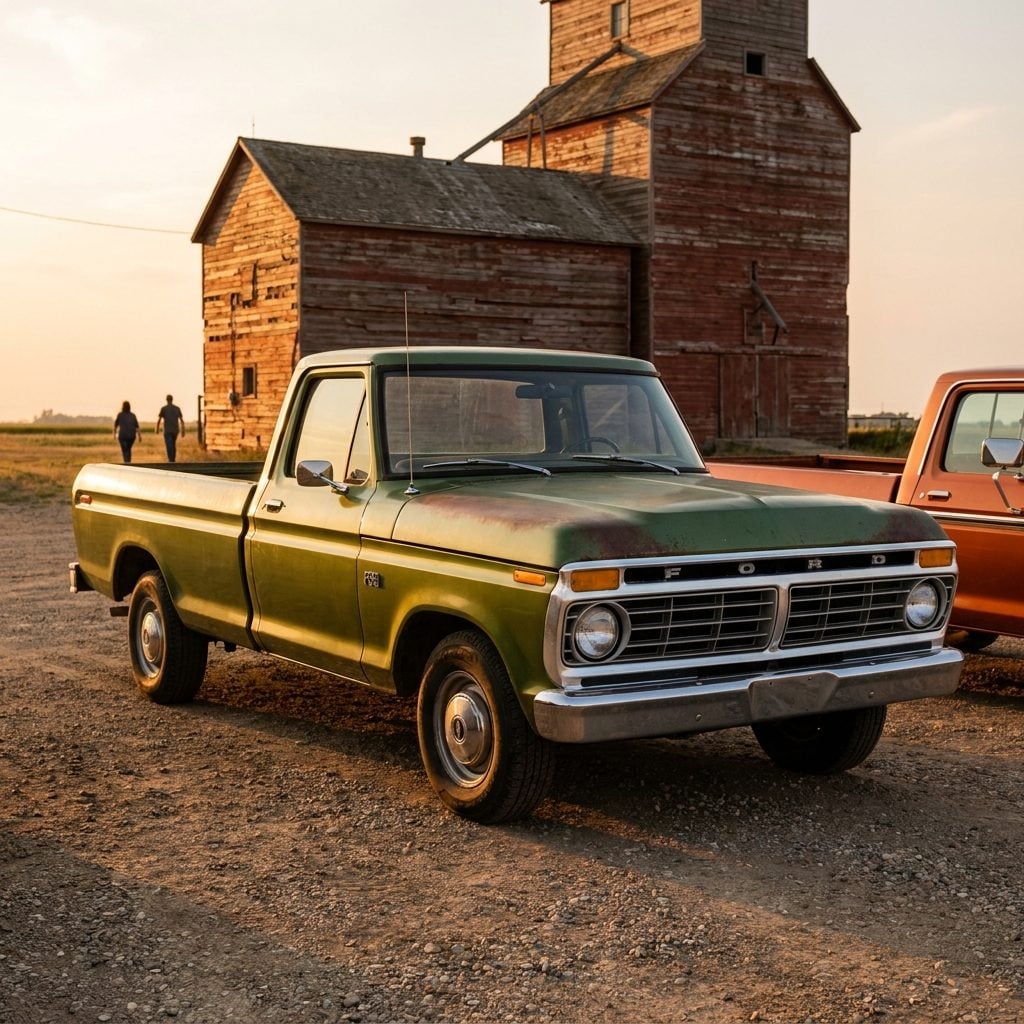
These weren’t just colors. They were commitments. Ford, Chevy, and GMC printed color chips with names that read like a Southwestern dinner menu: Avocado Gold, Burnt Sienna, Dark Chamois, Medium Fern. Nobody blinked. You picked Medium Gold Metallic the same way you picked a kitchen appliance, and there was genuine coordination happening because your refrigerator at home was probably the same shade.
The 1970s truck palette reflected the decade’s broader design philosophy, which was essentially: more is more, and brown is a primary color. These trucks looked right in their era, parked on dirt, working in fields, sitting outside a hardware store. The colors aged into something almost beautiful, going chalky and oxidized at the edges in a way that no modern truck color ever could.
Chrome Bumpers Built Like Structural Steel That Could Survive a Hit Modern Plastic Bumpers Would Never Forget
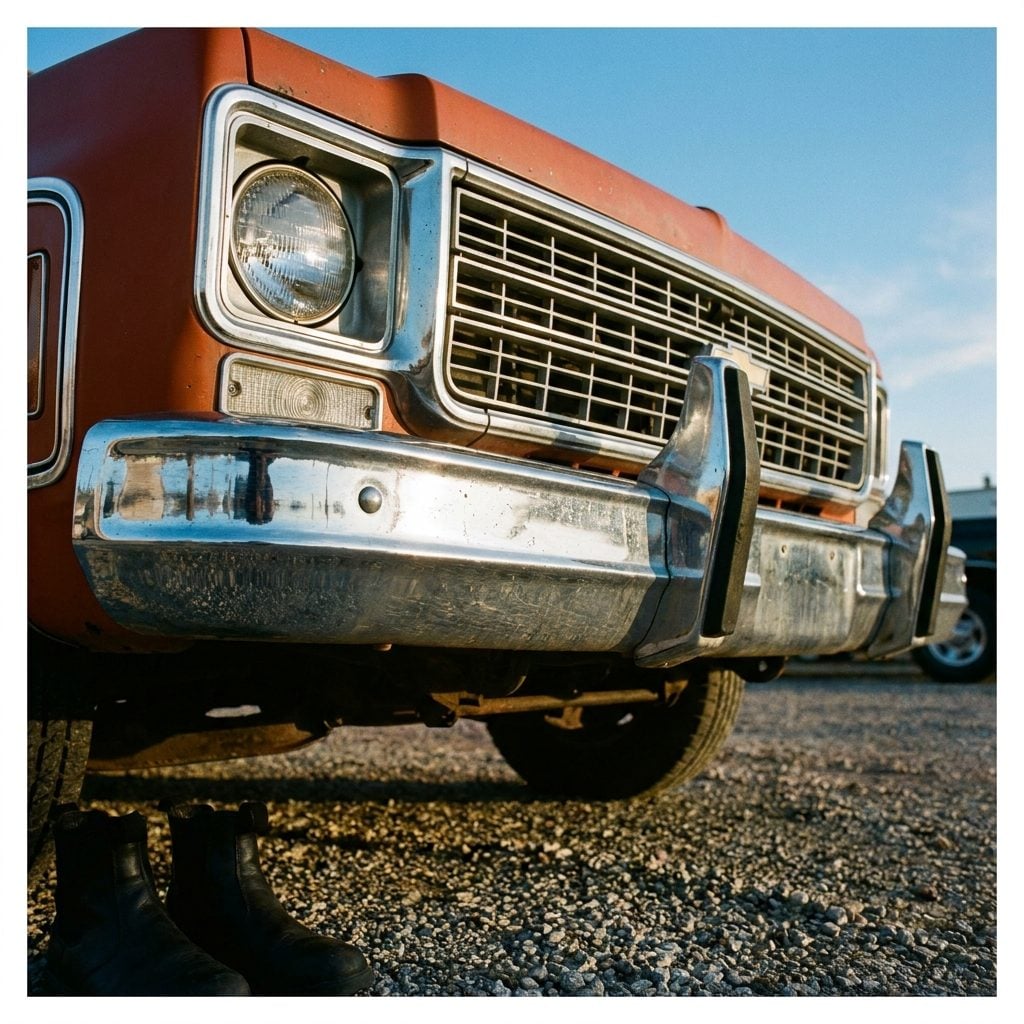
Pick one up sometime if you ever find one at a salvage yard. Both hands. Your lower back will remind you for a week. Those bumpers were not decorative. They were stamped steel, chrome-plated, and mounted to the frame with hardware that expected impact. Minor collisions in parking lots happened, paint was exchanged, and the bumper was fine. The other car’s bumper was also fine. Nobody called a body shop.
Today’s plastic fascias are engineered to crumple and absorb energy, which is actually better for the humans inside. Fine. But there was something satisfying about a truck that wore its front end like armor and had the minor dents and chrome chips to prove it had been places. The chrome bumper was honest in a way a painted plastic cover never quite is.
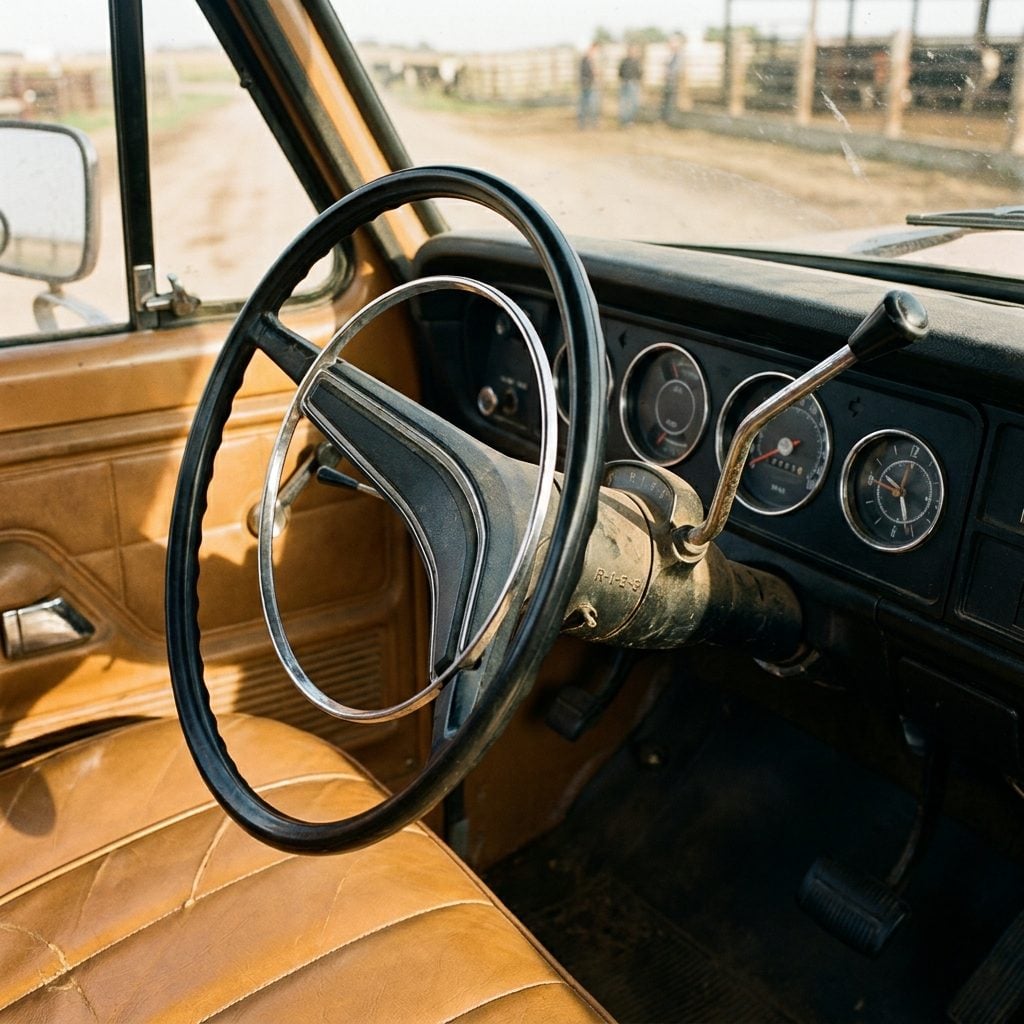
Three-on-the-Tree: The Column-Mounted Manual Shifter That Required a Diagram and a Prayer to Operate
🔥 Would you like to save this?
Three forward gears and reverse, all controlled by a lever growing out of the steering column at a slightly wrong angle that made your elbow do something your elbow had never done before. The shift pattern was stamped right there on the column housing because Ford and Chevy knew you were going to forget. First gear required an upward-and-toward-you motion. Reverse required the opposite, plus optimism.
It sounds backward now, and it was. The floor-mounted four-speed in the same era was objectively easier to use, but three-on-the-tree had a practical logic behind it: a bench seat that fits three across needs nothing on the floor in the middle. You could slide from driver’s side to passenger without leaving the cab. That mattered when there were three of you and one door worked. The whole system was a workaround for a problem modern trucks solved by adding a console and calling it luxury.
‘Three-on-the-tree’ wasn’t a nickname mechanics invented. It was the name everyone used because the alternative was explaining that there were three gears and they were operated from the steering column, which took longer to say and made people want to leave the conversation.
Crank Windows That Required Genuine Effort and a Certain Kind of Dedication
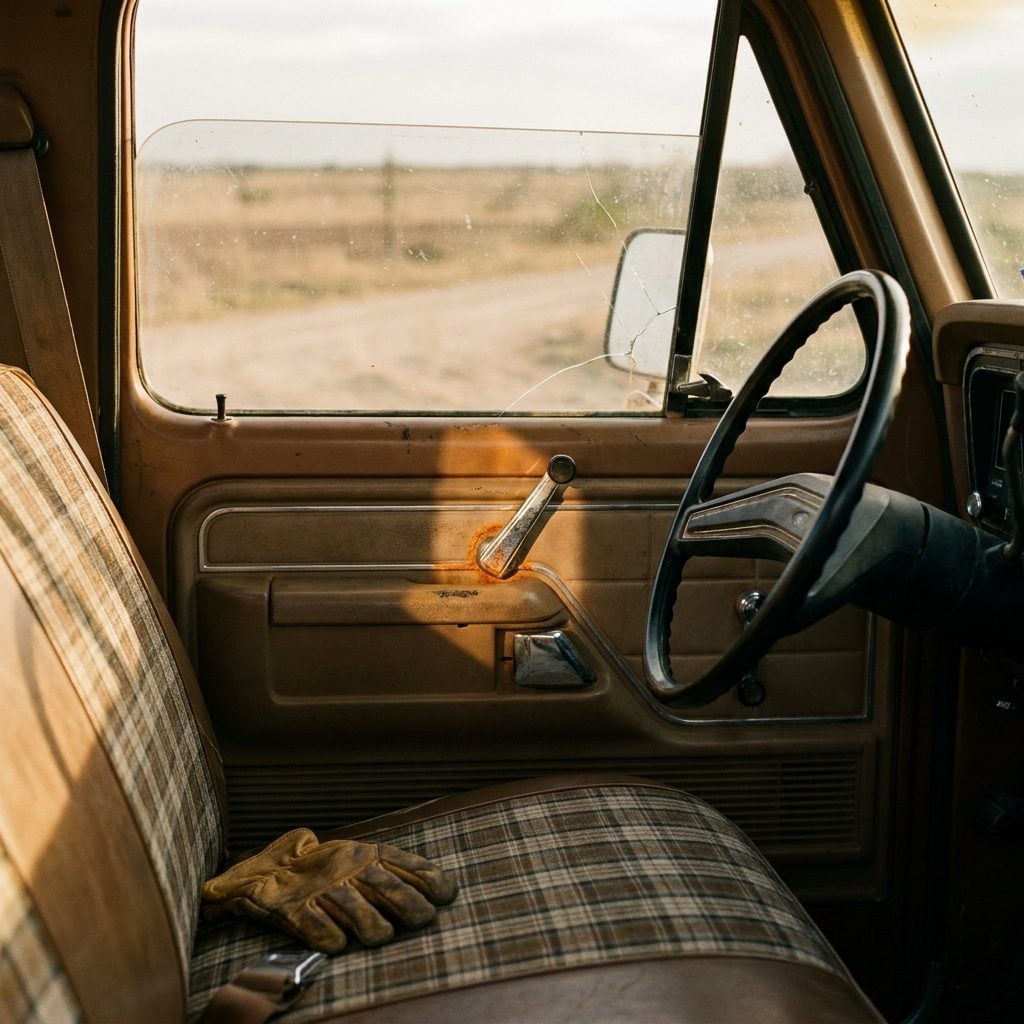
That window crank wasn’t turning on its own. After a few years of summer heat and zero lubrication, you needed both hands on it and your shoulder pressed against the door for leverage. The handle would fight back about halfway down, grinding in that specific way that told you it was going to get worse before it got better.
Nobody complained. You just developed a technique. You’d give it a fast quarter-turn, pause, muscle through the resistance, and pray it didn’t strip. If a passenger wanted their window down, that was their problem to solve.
Those Serrated-Edge Metal Ignition Keys That Were Basically a Weapon in Your Pocket
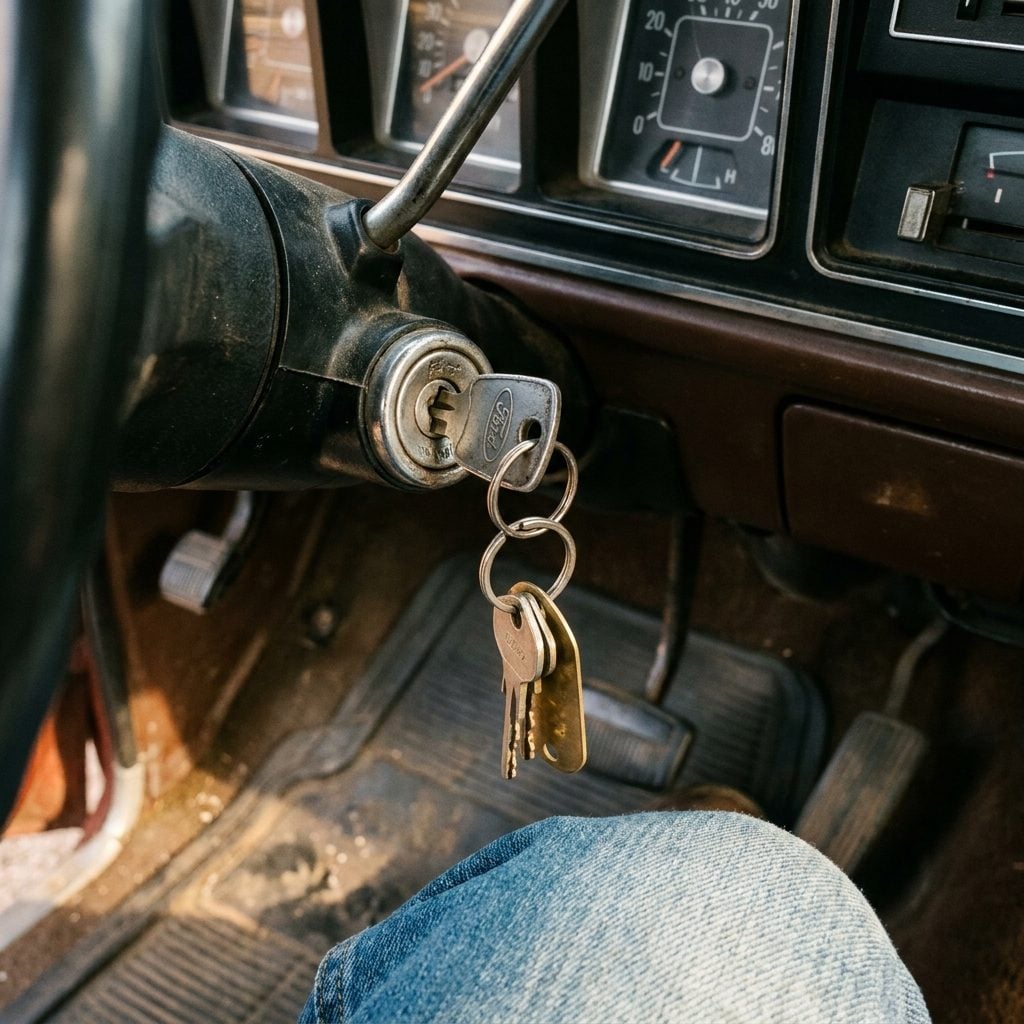
Every ignition key from the 1970s was cut from actual steel stock and felt like it. The serrations were deep and sharp, and if you kept it in your front pocket, you knew exactly where it was at all times because it was slowly working through the fabric lining. A few months in, you’d have a hole the exact shape of a Ford key.
These weren’t the soft-stamped keys that came later. These were objects with mass. Drop one on concrete and it made a satisfying clunk. Lose one in the grass and you’d find it by touch, probably on your knee.
The Rear Window Gun Rack That Nobody Thought Twice About
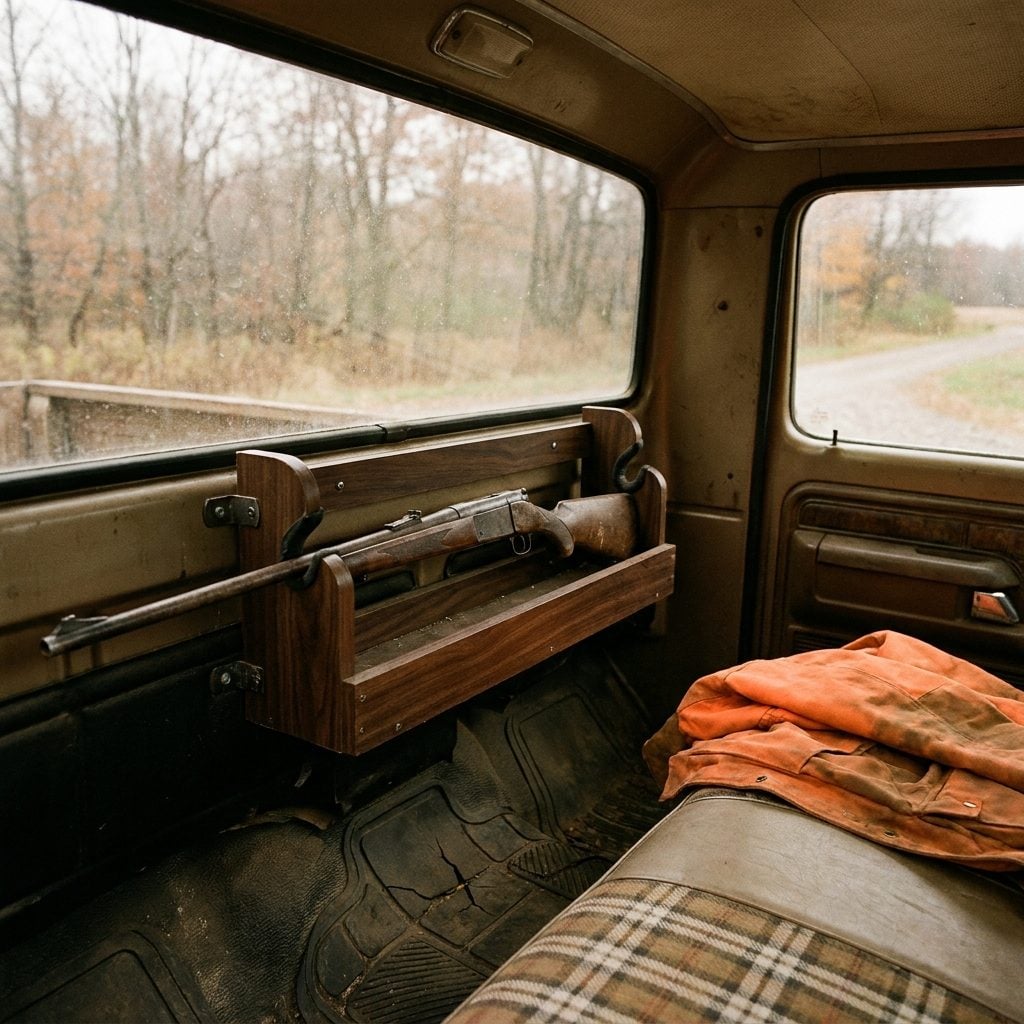
In rural counties across most of the country, this was as unremarkable as a radio antenna. The rack sat right across the rear window, two padded cradles in dark stained wood, a rifle or shotgun resting across them in plain view of every car that pulled up behind you at a stop sign.
It was hunting season gear. It was practical storage. It wasn’t a statement. The truck bed had a toolbox and muddy boots and maybe a bag of feed, and the cab had the gun rack. Everything in its place.
Schools had parking lots full of these trucks. Nobody called anyone. That was just Tuesday.
The Rusted Toolbox Bolted Into the Bed Like It Had Been There Since the Beginning of Time
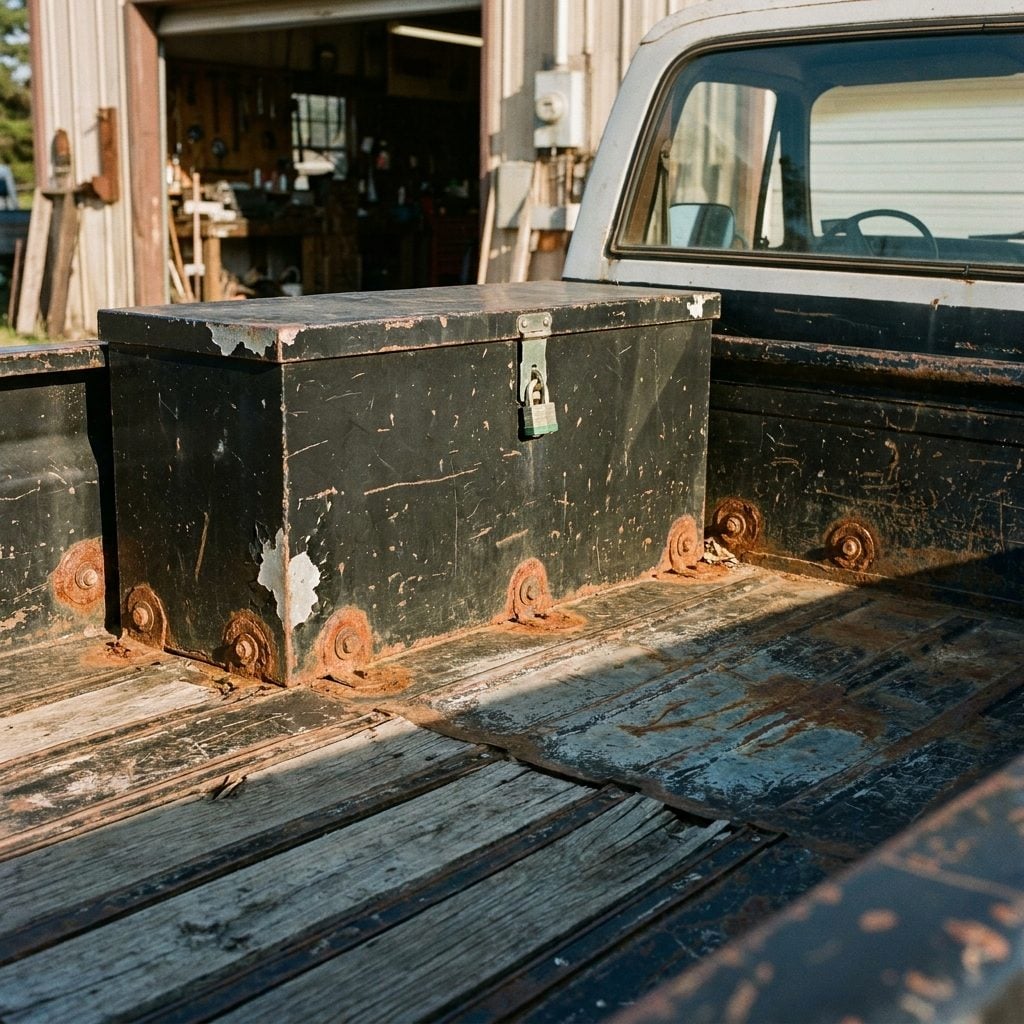
That toolbox wasn’t going anywhere, and it had been proving that for about seven years. The bolts went straight through the bed floor, sealed underneath by rust so thick it had essentially become structural. Trying to remove it would have taken a grinder and a commitment to ruining your Saturday.
Inside: half a box of mixed-size sockets, three wrenches of uncertain ownership, electrical tape, a flashlight with dead batteries, and something rattling in the corner that nobody could identify without actually opening it in daylight.
Fuel Tanks Tucked Behind the Seat Like That Was Completely Fine
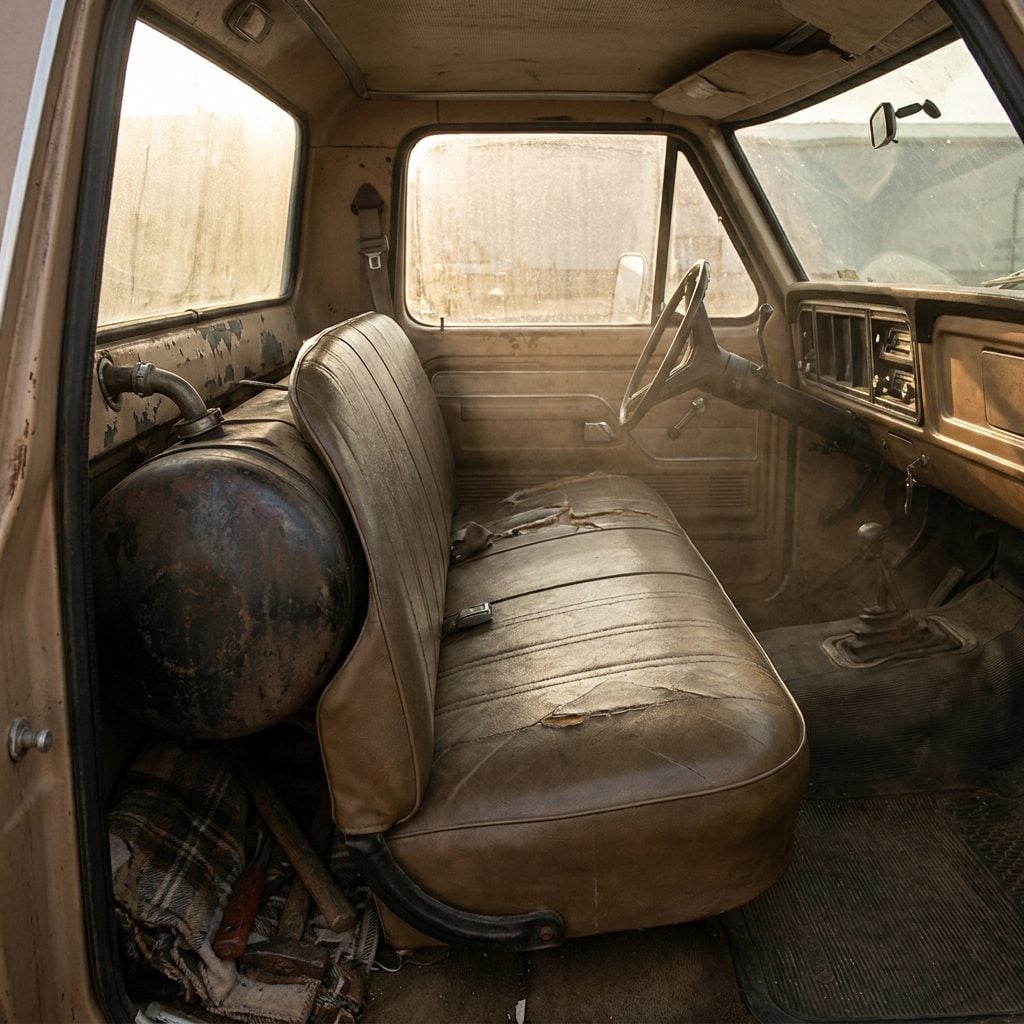
On certain models, including early Chevy C-10s, the main fuel tank sat inside the cab behind the bench seat. Behind. The. Seat. Just a few inches of sheet metal between you and a tank of gasoline on every drive.
Nobody advertised this as a feature, but nobody seemed particularly alarmed by it either. It was just where the tank went. If the cab smelled a little like gas on a warm afternoon, you rolled down the window. With both hands. Because crank handles.
Steering Wheels the Diameter of a Hula Hoop
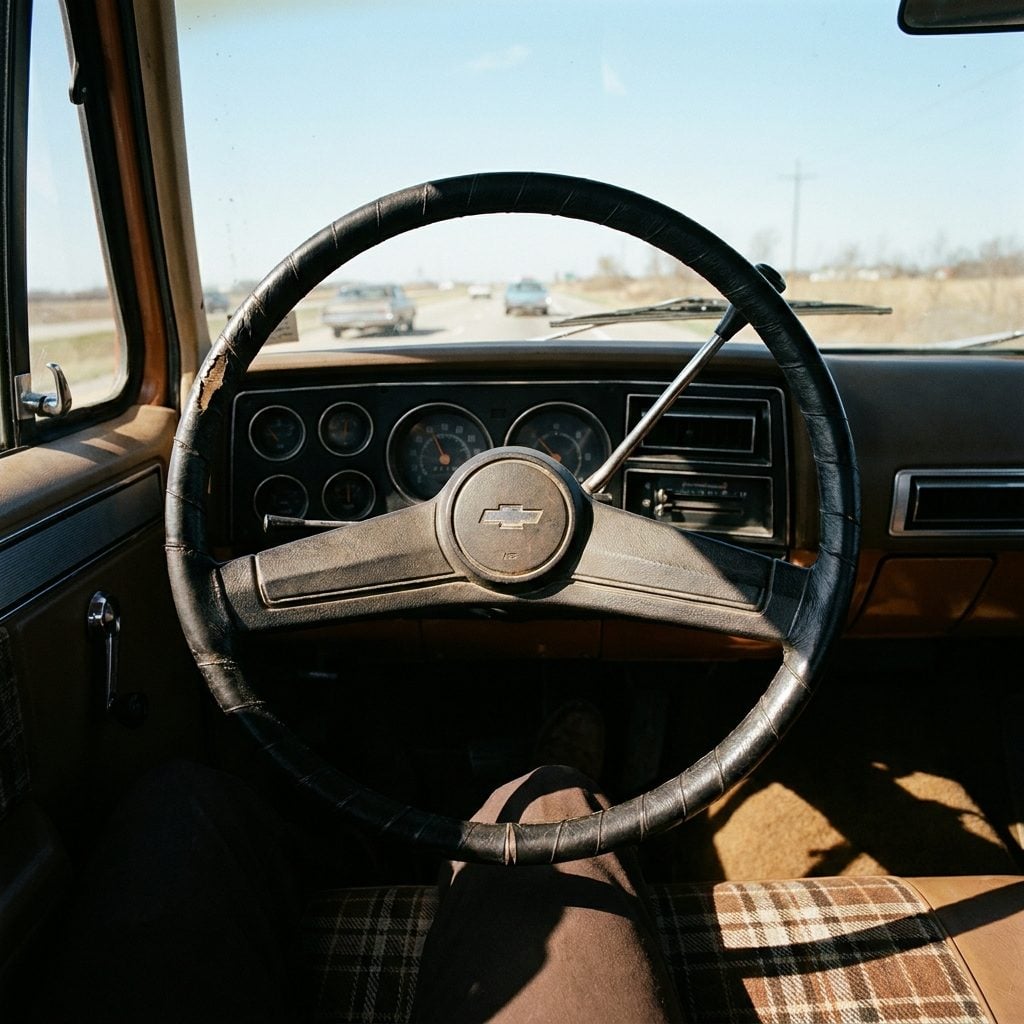
Before power steering became standard equipment in trucks, the wheel had to be big. Physics demanded it. You needed that extra leverage to haul a two-ton vehicle through a parking lot without dislocating a shoulder, and the engineers gave you circumference instead of assistance.
The result was a steering wheel that genuinely looked like it belonged on a tugboat. It sat right in your lap at a stop. Parallel parking meant spinning it hand-over-hand like you were reeling in a very large fish.
When power steering did arrive as an option, some old-timers didn’t trust it. Too easy, they said, as if difficulty had been the point all along.
The Manual Choke Knob That Taught You Patience Every Single Cold Morning
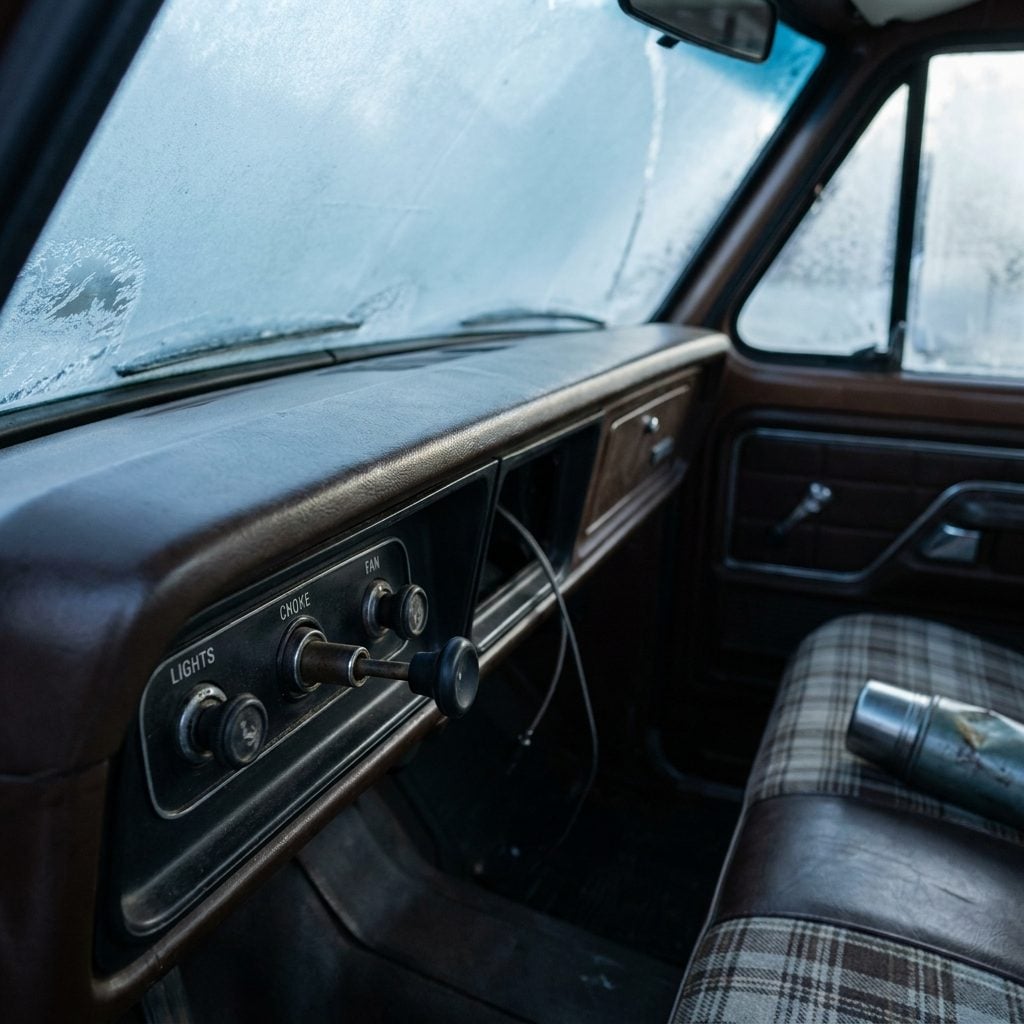
You pulled it out all the way on a cold morning, let the engine catch and settle into its rough, fast idle, then spent the next four minutes slowly, incrementally pushing it back in while the truck decided whether it was ready. Push it in too fast and the engine stumbled and died. Then you were starting over, probably late.
It was a negotiation. The truck had terms. Some mornings those terms included sitting there with your breath fogging the windshield while the choke worked through its business at whatever pace it chose.
Vent Windows That Made HVAC Look Like Somebody’s Stupid Idea
🔥 Would you like to save this?
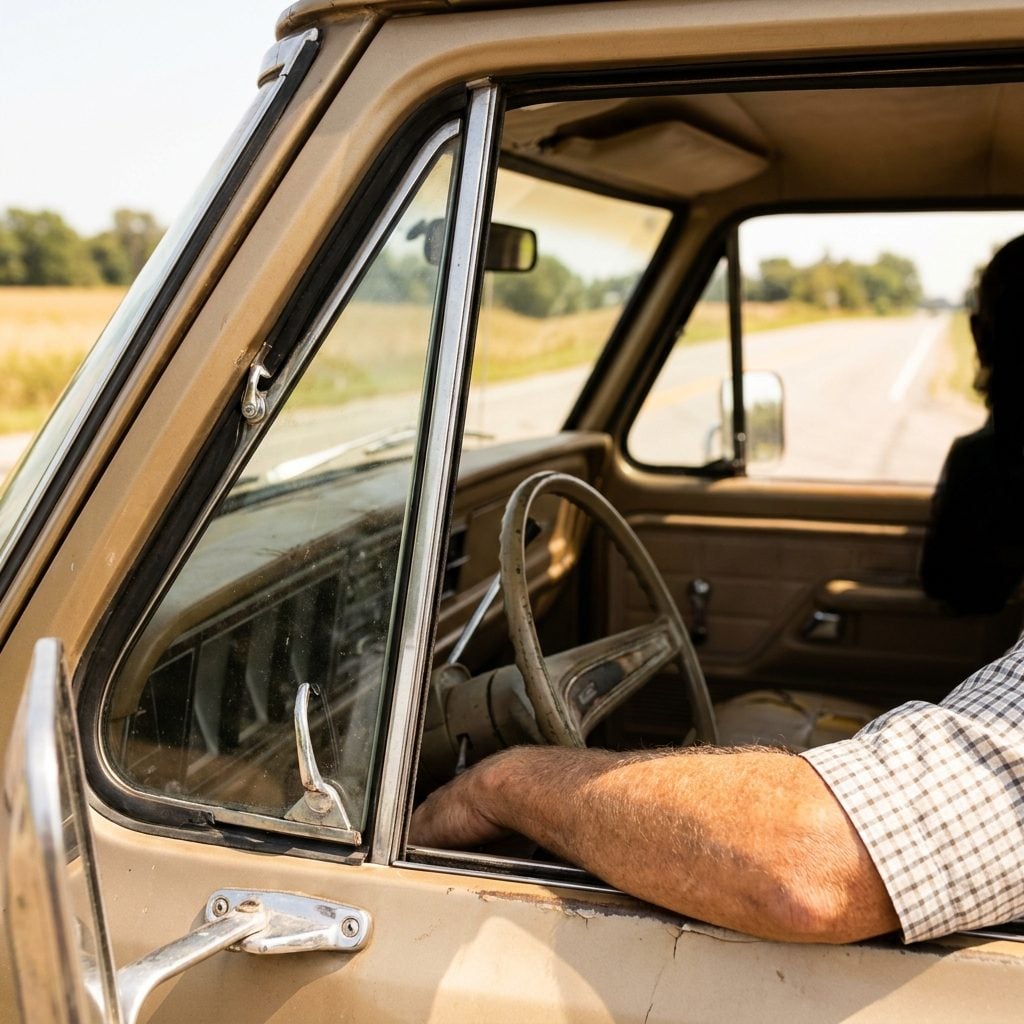
That little triangular pane swiveled open on a pivot latch, and when it was angled just right at highway speed, it channeled a column of air directly into your left ear with the focused precision of something designed in a wind tunnel. Which, in a way, it sort of was.
Before air conditioning was standard, the vent window was the entire HVAC system. You angled it for your face in summer. You closed it in rain. You occasionally forgot to close it in rain. The result was a wet left arm and a lesson about complacency.
Modern trucks don’t have them. Modern trucks have climate control systems with separate zones and digital displays. And yet, on a dry August highway doing 65, nothing has ever worked quite as well or as immediately as that little wing snapping open.
The Single Side Mirror That Meant the Passenger Was on Their Own
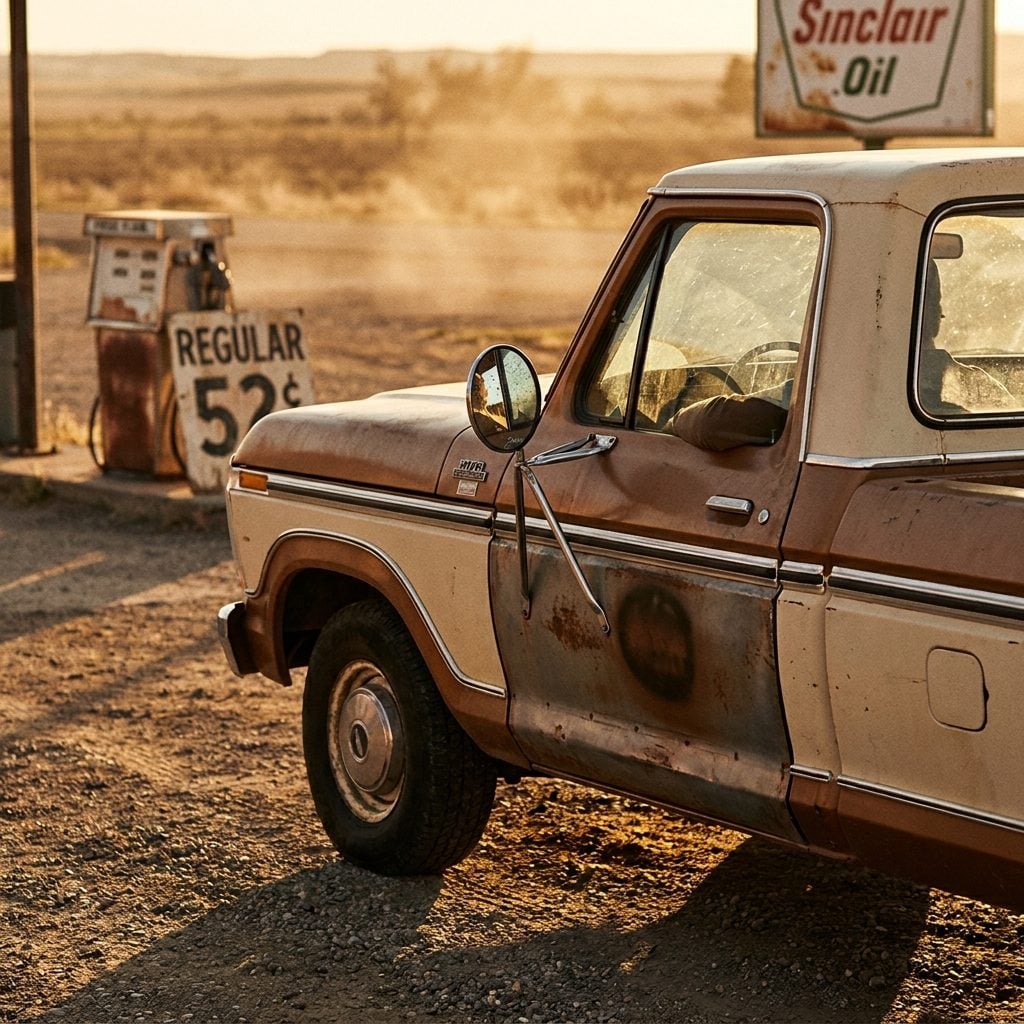
The driver’s mirror was chrome, convex, and mounted with the confidence of a man who figured that was plenty. The passenger side? Smooth metal. Not a bracket, not a ghost hole, nothing. Passenger mirrors cost extra on base trims, and most fleet buyers and budget shoppers checked “no” without blinking.
What this meant in practice: the person riding shotgun had absolutely no read on what was happening behind them and neither did the driver on that side. Changing lanes required either a full shoulder check, a prayer, or a deeply trusting relationship with fate. It didn’t seem to bother anyone at the time. That’s the part that would make a 25-year-old’s head tilt sideways.
The Headliner That Gave Up and Started Drooping Like a Sad Theater Curtain
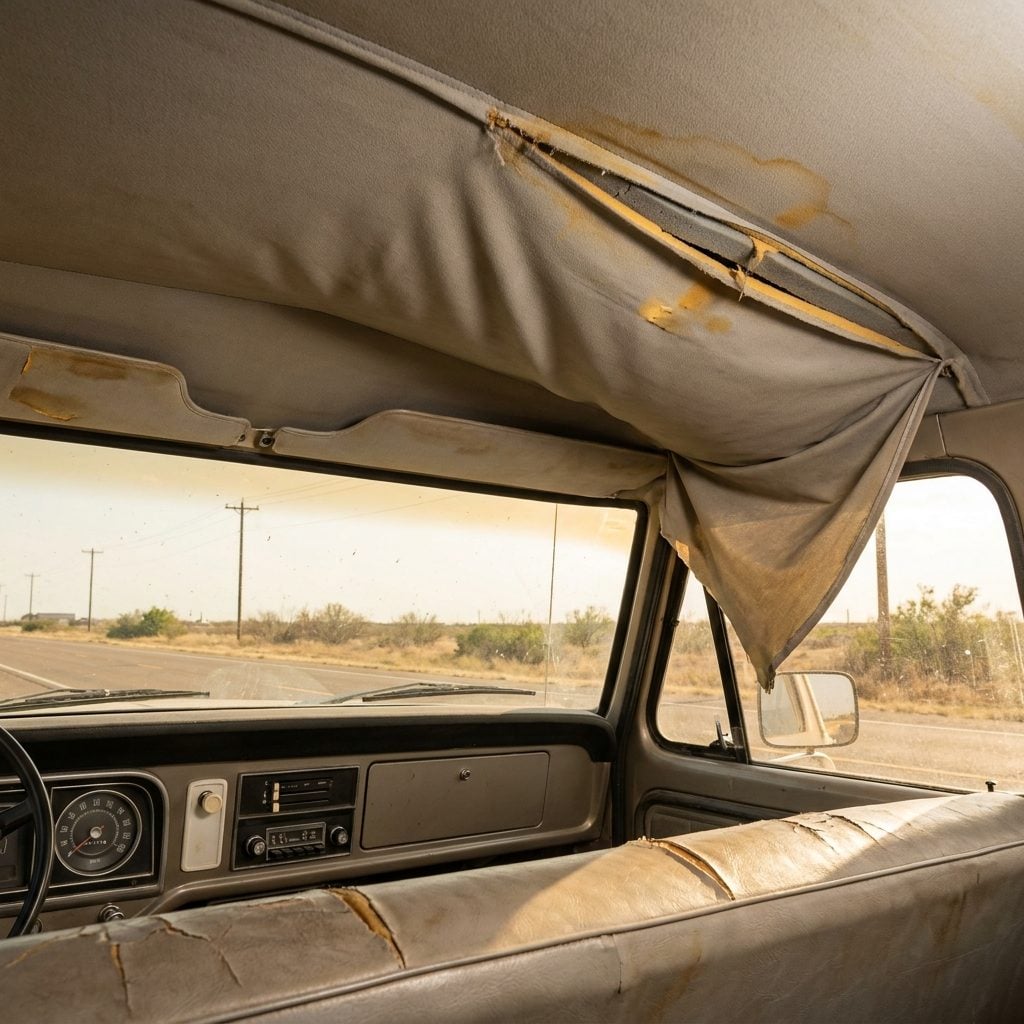
It always started at one corner near the rear window. A little bubble, then a sag, then a whole cascading surrender of glue that had spent fifteen summers failing against cigarette smoke and parked-in-the-sun heat. By the time most 1970s trucks hit their second decade, the headliner wasn’t so much a ceiling as a suggestion of one.
Owners responded in creative ways. Thumbtacks were popular. So was a line of staples running in a cheerful arc across the middle. Some people just tucked it up and forgot about it until it fell on someone’s face at a stoplight. A few ambitious souls pulled the whole thing out and drove without a headliner entirely, which somehow seemed fine at the time.
Wooden Bed Rails Somebody Built on a Saturday Because the Hardware Store Was Right There
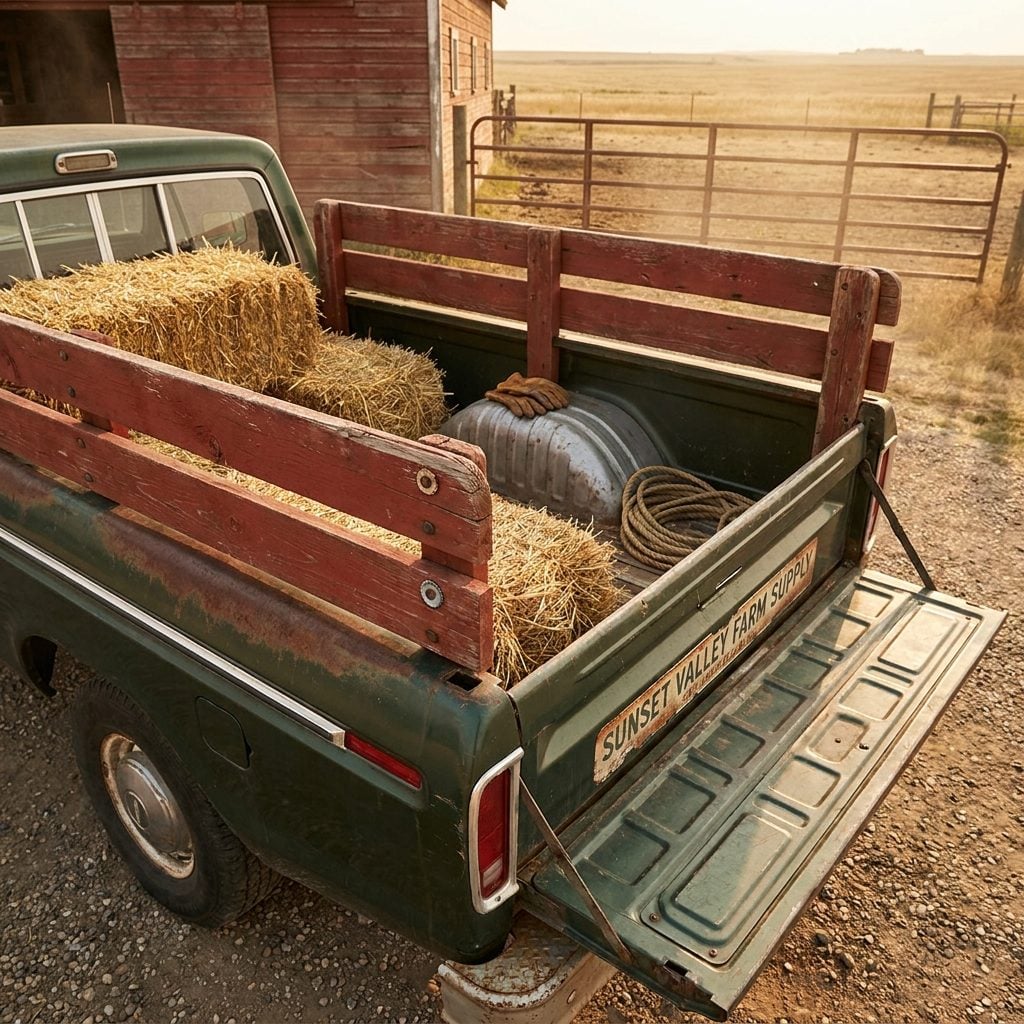
Factory beds were slick steel, and slick steel let anything round roll straight out the back on the first left turn. The solution, worked out independently by about a million truck owners, was to build wooden rails and bolt them in. No two were alike.
Some guys used oak. Some used whatever two-by-sixes were left over from a fence project. The finish ranged from linseed oil to barn paint to nothing at all, which turned gray by the second winter. The bolt pattern was usually improvised, and at least one bolt per side was always tighter than the others because somebody stripped the thread and just forced it.
What’s wild looking back: these things worked. Cargo stayed put. The rails outlasted the trucks in some cases. No product, no instructions, no YouTube tutorial. Just a Saturday morning and a tape measure that was probably slightly off.
Bench Seats Wide Enough for Three People to Slide Across During Every Turn
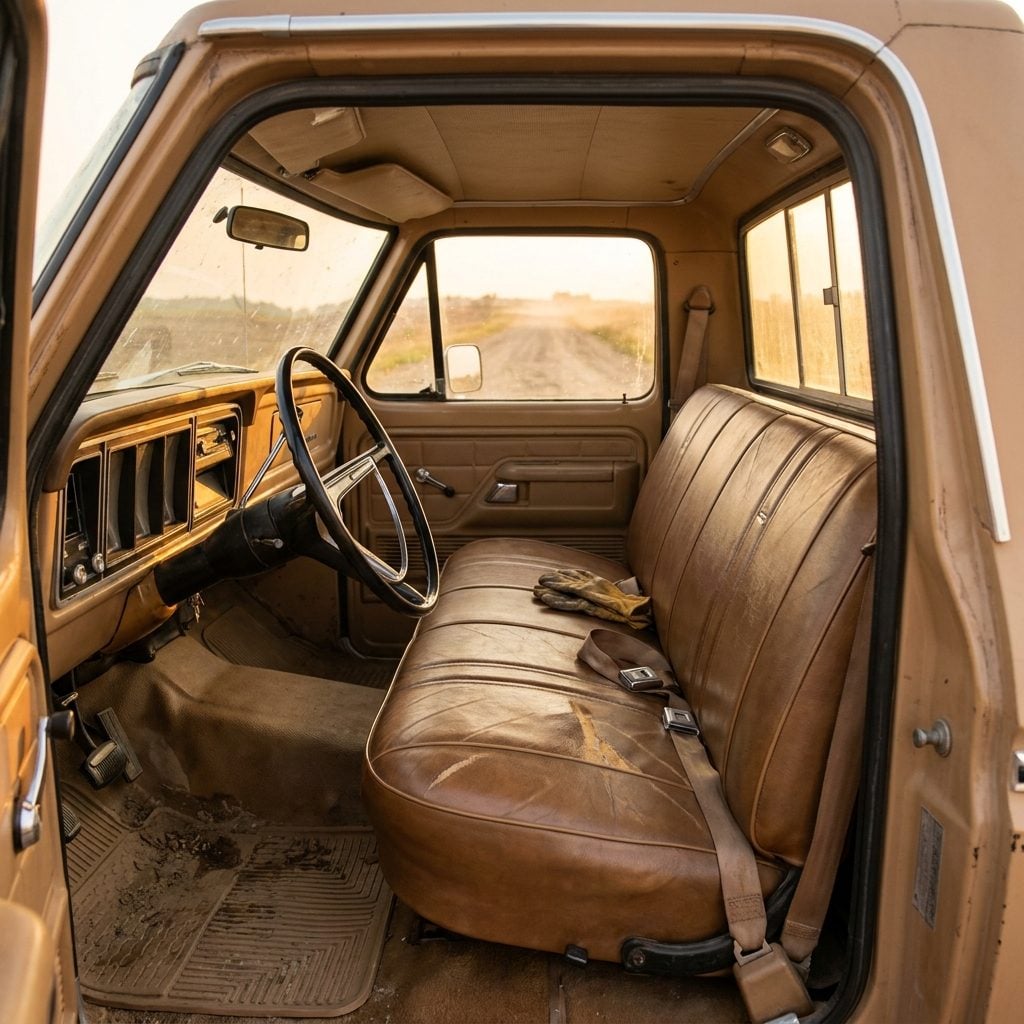
Three across was the default configuration—not an option package, not a feature, just how trucks came. One continuous slab of brown or tan vinyl, slick as a waterslide and roughly as good at keeping you in place. Your kid sat in the middle and worked the radio because they happened to be closest. Your wife rode shotgun with one hand braced against the dashboard on every right turn.
No center console divided you. No cupholders waited to crash into. Just open vinyl real estate, warm in winter from engine heat bleeding through the firewall, and absolutely punishing in July. You learned to throw a towel over the seat before climbing in. Skip that step and you paid the price in blistered skin.
Here was the best part—or the worst, depending. Everybody slid. Hard left turn, the middle passenger ended up in the driver’s lap. Hard right, they crushed whoever sat by the door. Seat belts were lap-only and most people didn’t bother anyway. I rode that middle seat for years as a kid, and honestly? I’m still not sure how any of us survived a trip to the hardware store without incident.
Metal Dashboards That Became Scorching Hot in Summer and Freezing Cold in Winter
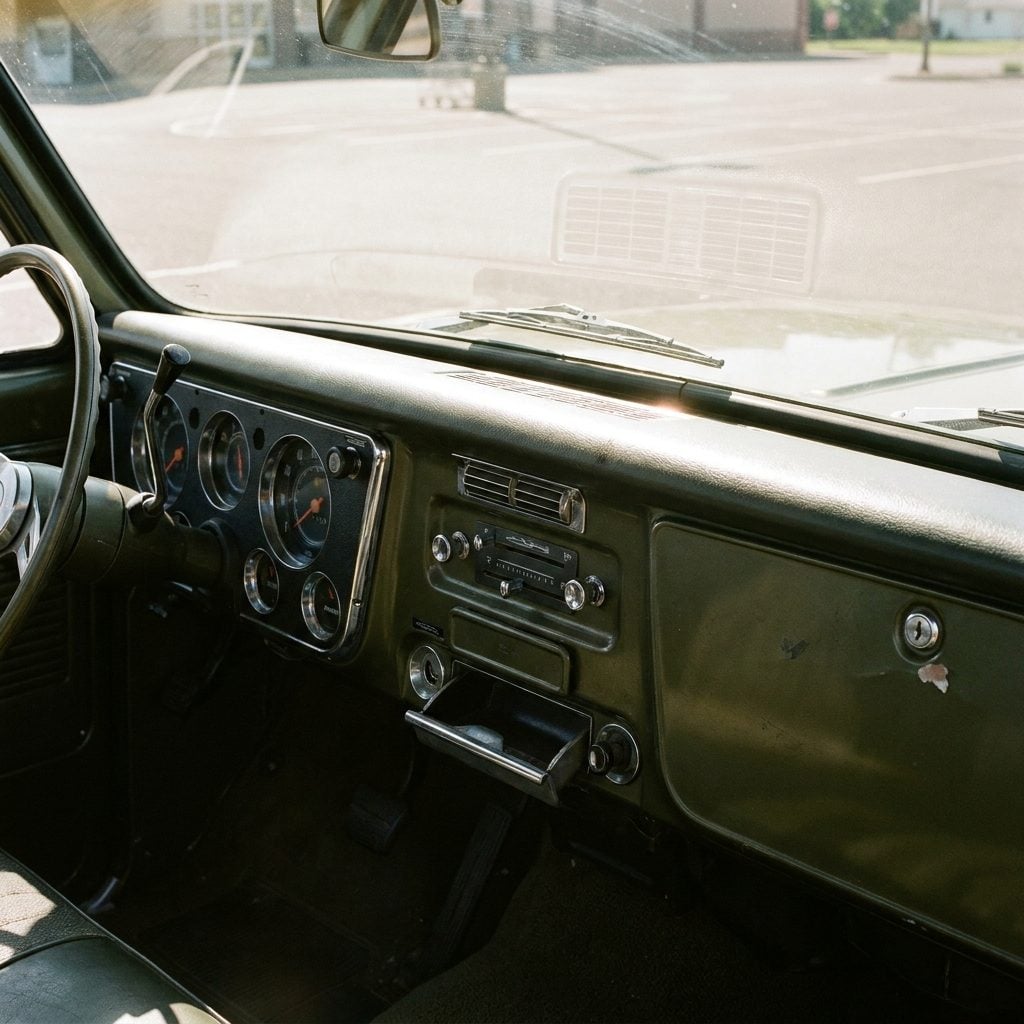
Touch it in August and you’d yank your hand back like you’d grabbed a stove burner. Not an exaggeration. Seventies truck dashboards were painted steel—no foam padding, no vinyl wrap, no soft-touch anything. Metal. Same material as the fenders, just bolted inside the cab rather than outside.
Winter brought a different kind of misery: the dashboard radiated cold until the heater finally caught up, which took a good long stretch of driving. Summer turned the entire surface into a griddle. Kids learned fast not to rest their forearms on it. And in a collision? Nobody talked about that much. “Safety feature” hadn’t quite reached the truck interior yet—a grim fact that wouldn’t surprise anyone who ever saw one of these dashboards up close and realized there was literally nothing between your skull and a sheet of stamped steel.
No Cup Holders Anywhere Because People Simply Didn’t Expect Them
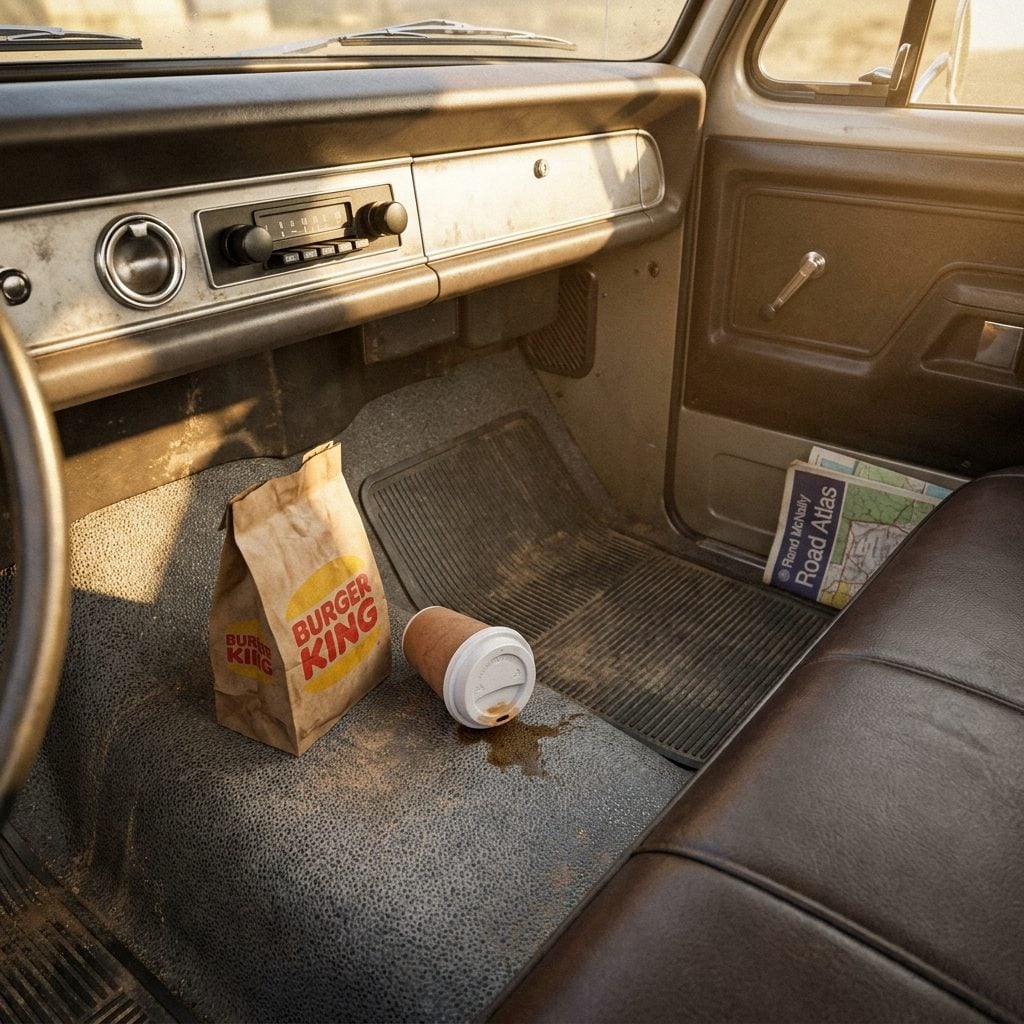
This is the one that genuinely baffles younger people. Where did you put your drink?
You didn’t. Or you wedged it between your thighs and hoped for the best. Cup holders weren’t a thing—not in trucks, not in most cars. A permanent beverage station inside a vehicle? The idea barely existed in 1973. You had an ashtray, because smoking while driving was considered normal. You had a glovebox, because you might keep actual gloves in it. But a dedicated spot for your coffee? Your problem entirely.
Some guys balanced a thermos on the seat. Some clamped one of those flimsy wire holders to the window crank—an aftermarket contraption that worked about half the time. Most just drank their coffee before climbing in, because that was the sensible approach and nobody had yet decided that every waking moment of American life demanded a beverage within arm’s reach. Wild how that expectation crept up on us.
Floor-Mounted Dimmer Switches You Operated With Your Left Foot
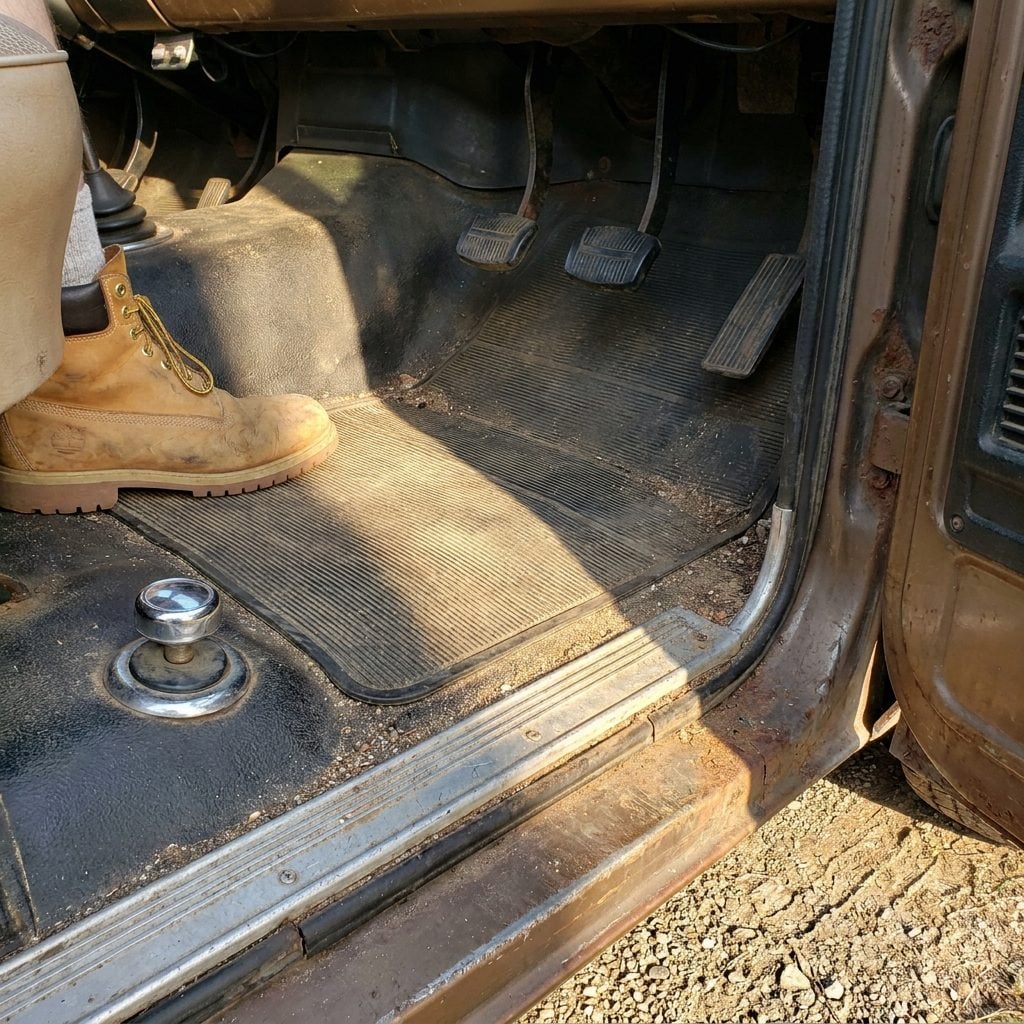
A little chrome button sticking up from the floorboard, about the size of a half dollar—you felt around for it with your left foot. Click once for high beams. Click again for low. That was the dimmer switch, and it lived on the floor of every truck built before the late seventies.
Operating it required a specific kind of muscle memory that nobody under thirty has developed. You’d be rolling down a dark two-lane at night, oncoming headlights approaching, and your left foot would find that button without you thinking about it. Stomp. Low beams. Pass the other truck. Stomp. Highs back on. Two seconds, zero hand movement—the whole exchange happened almost unconsciously.
Automakers eventually relocated it to the turn signal stalk, which was probably safer. But something about the floor switch felt right. The physical click under your boot. The mechanical directness. You were operating the truck with both feet and both hands, and it gave driving a tactile weight that column-mounted switches never quite replicated. I miss that, frankly, though I realize I shouldn’t.
AM Radios With a Single Tiny Speaker Buried Somewhere in the Dashboard
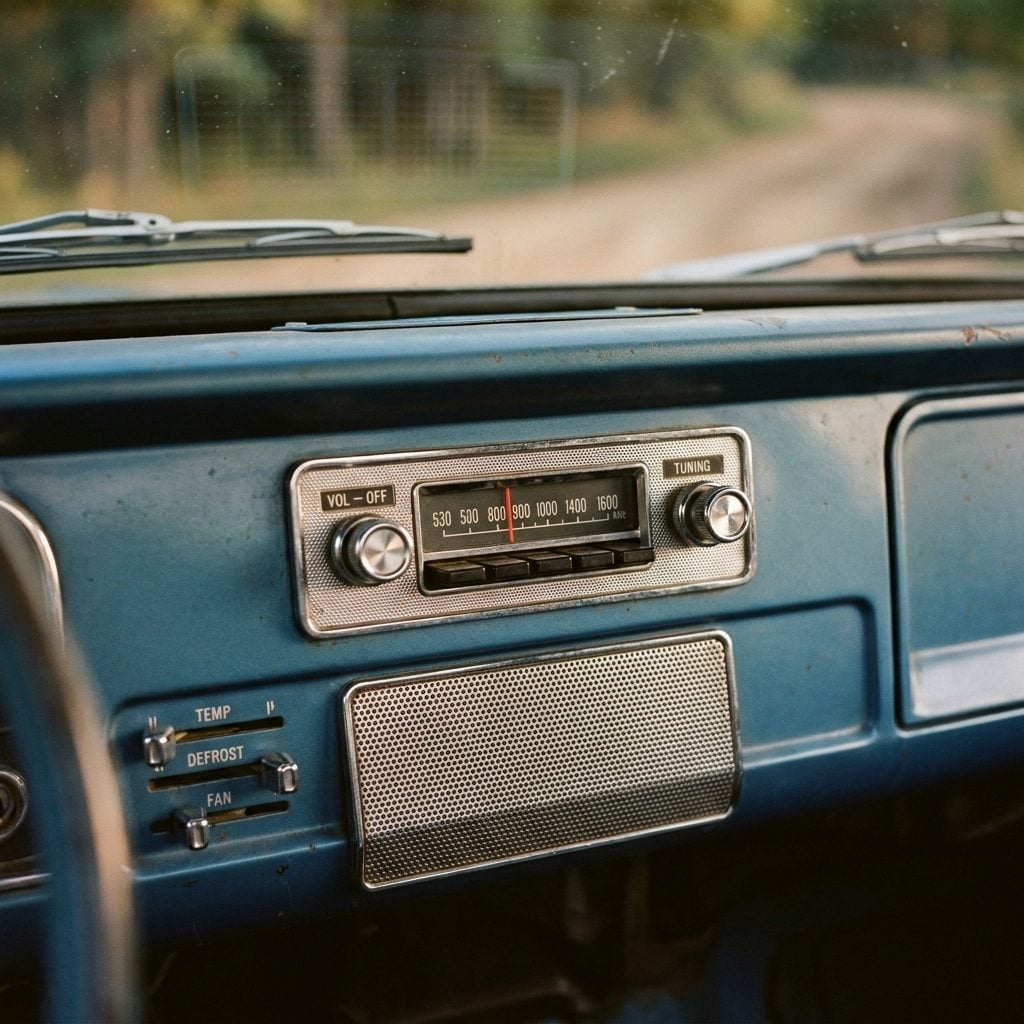
Two knobs. One dial. The whole entertainment system.
Left knob turned the radio on and controlled volume. Right knob tuned the station. Between them sat a narrow dial with AM frequencies printed in tiny white numbers—no FM, no cassette deck, at least not from the factory. And one speaker, maybe three inches across, hidden behind a small perforated grille somewhere in the center of the dash. That was it.
You didn’t listen to music in a seventies truck. You listened to a suggestion of music, filtered through static, engine noise, and wind roar from windows that had to stay open because the AC was broken or never existed.
Country stations and farm reports came through reasonably well. Anything with bass? Lost cause. That single speaker had the audio fidelity of a telephone receiver, and it competed with road noise that modern trucks have been engineered to suppress into silence. But here’s the thing nobody expects to hear: you fiddled with the tuning knob until something came through halfway clear, and you were satisfied. Genuinely satisfied. Because it was all you had, and expecting quality audio from a 1974 truck interior would have been like expecting power windows on a hay wagon.
Sliding Rear Cab Windows That Leaked Just Enough to Keep Your Collar Damp
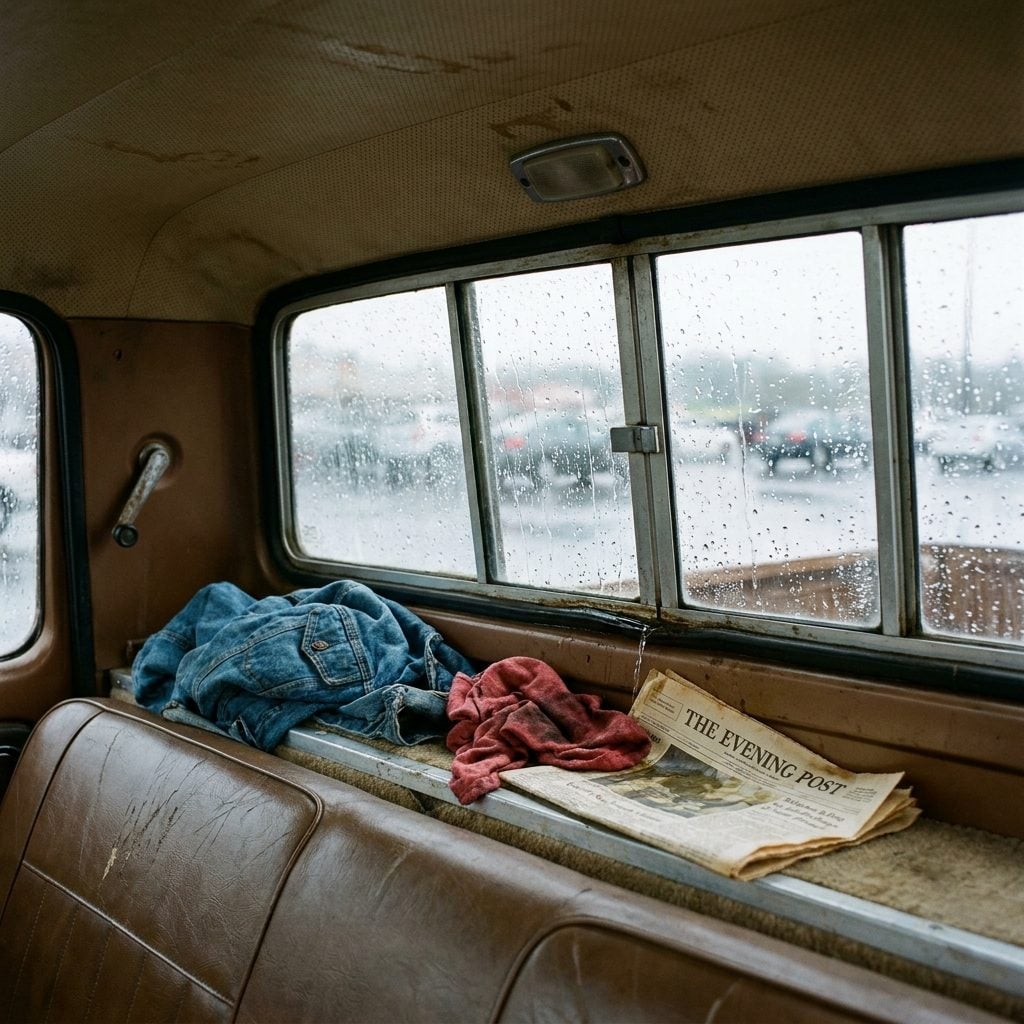
That little horizontal slider in the back glass was supposed to be ventilation — and it was, technically, the same way a hole in a boat is technically a drain. On dry days it worked fine: slide it open, get a cross-breeze through the cab, feel clever about the whole arrangement. But the first decent rain exposed everything. The rubber channel seal had roughly the weatherproofing integrity of a wet napkin.
Water didn’t pour in. That would’ve been too obvious, too fixable. Instead it seeped — a slow, determined trickle that crept down the back of the seat, pooled on the ledge behind the bench, and soaked whatever jacket or newspaper you’d tossed back there. You’d reach behind your head at a stoplight and your fingers would come back wet. “I should fix that,” you’d think. You never fixed that.
Nobody considered removing the slider, though. Too useful the rest of the year. You just learned to keep a rag on the rear ledge and accepted dampness as one of those truck-ownership realities that didn’t have a solution so much as a workaround.
Cigarette Lighters Built Into the Dashboard and Used Constantly by Everyone
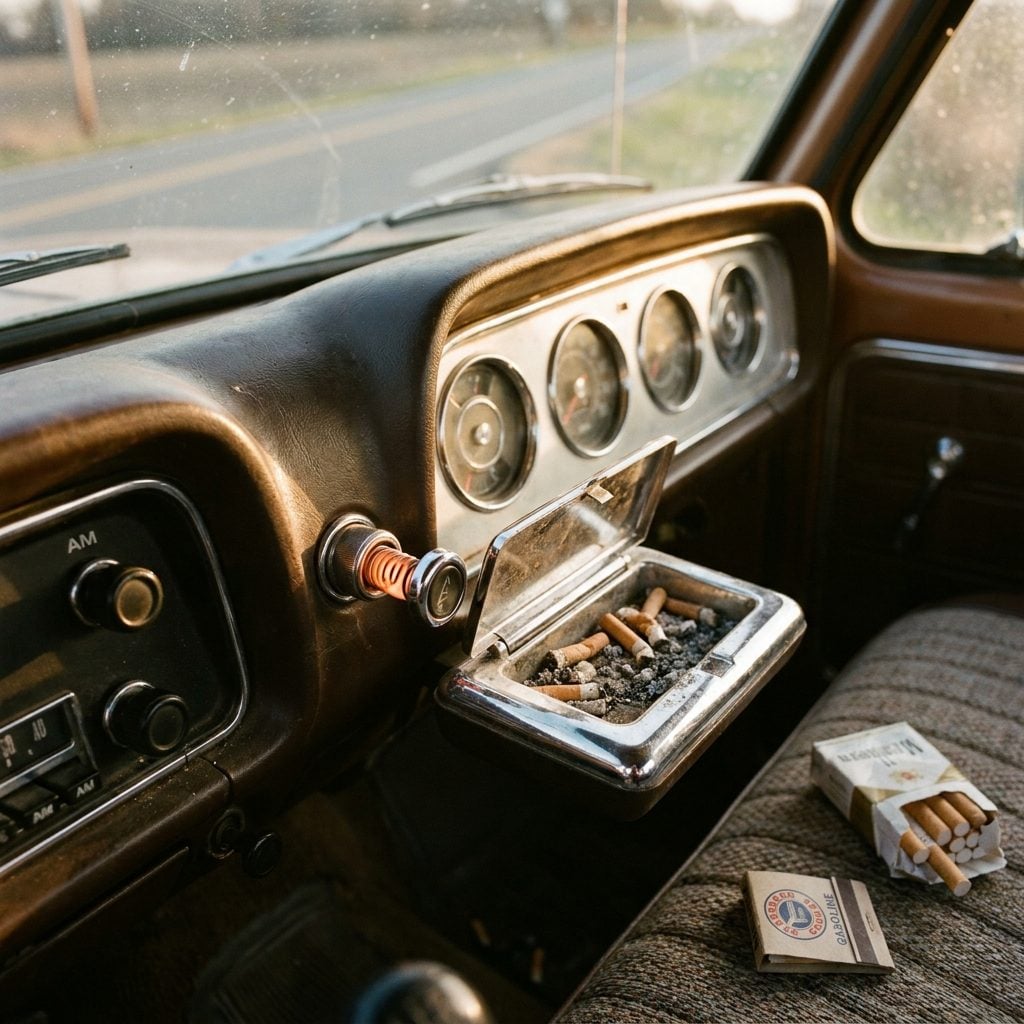
That orange glow was as familiar as the ignition itself. Push it in, wait for the click, pull out a little cylinder of superheated nichrome wire like it was the most normal thing in the world. Because it was. Every truck had one. Every car had one. The ashtray sat six inches away, already half full by Tuesday.
Nobody thought twice about any of it. Your dad lit up while backing out of the driveway. Your uncle lit up hauling fence posts. The lighter socket carried the same factory authority as the steering wheel, and the ashtray was built into the dash with the same precision as the speedometer — some trucks had two ashtrays, one in the dash and one on the door, because your passenger probably smoked too. Of course they did. Everybody did.
What I remember most is the mechanical weight of the thing. That spring-loaded pop when it was ready. The brief smell of heated metal before tobacco took over. Kids were told not to touch it, which guaranteed every kid touched it exactly once.
No Extended Cab Because Kids Just Piled Into the Front Bench, Three or Four Deep
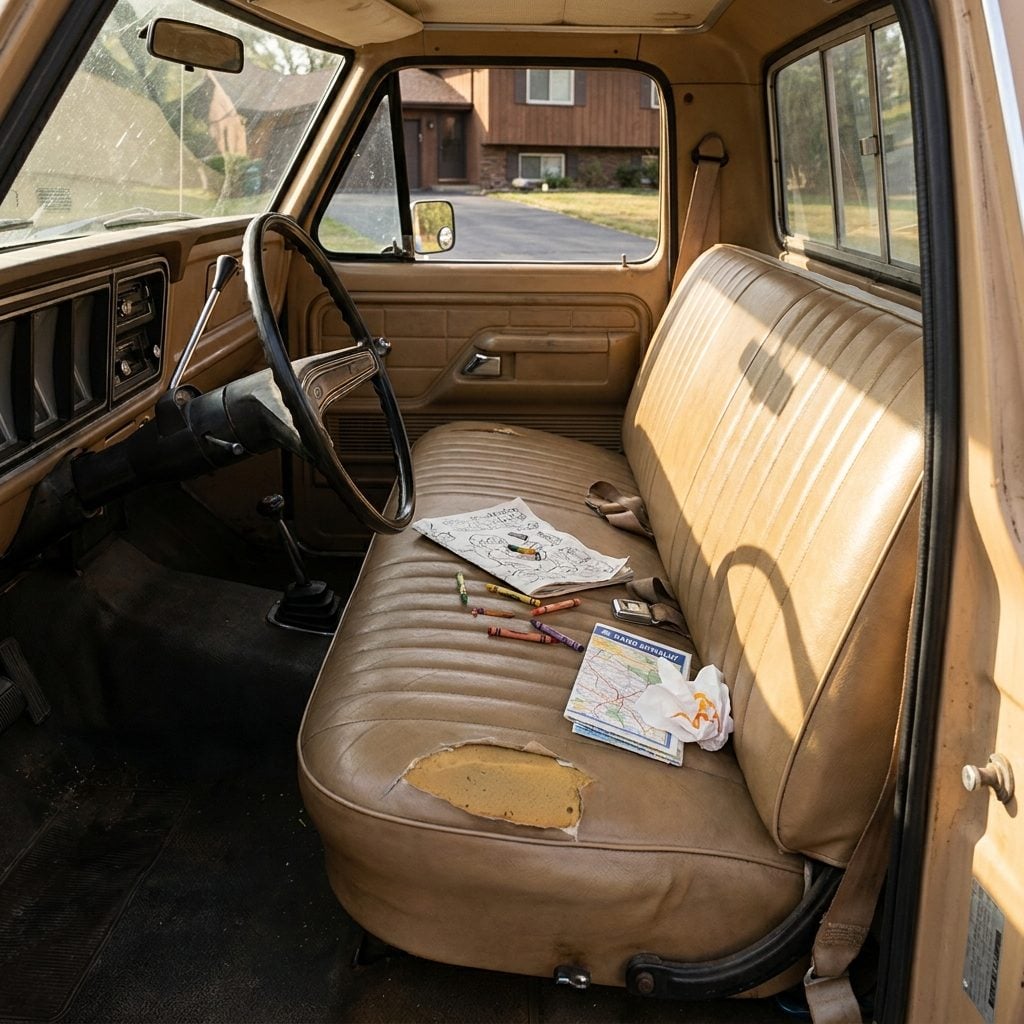
Extended cabs didn’t really exist yet. Nobody missed them. A 1970s pickup had one row, one bench, and somehow it held a family.
The math never worked on paper but always worked in practice. Dad drove. Mom sat shotgun with the youngest on her lap. The middle kid wedged between them — knees pressed against the gearshift or the AM radio knobs — and the oldest perched by the passenger door with an arm draped out the window. No car seats, no booster seats, no seatbelts in use even when they technically existed somewhere under the bench cushion, buried and forgotten.
On really ambitious trips a kid might sit on the transmission hump, which was hot and vibrating and deeply uncomfortable but still counted as a legitimate seat. Meanwhile the truck bed belonged to the dog, the toolbox, and any kid over ten who swore they preferred it back there. Honestly? They probably did. Best ride in the house.
Spare Fan Belts, Radiator Hoses, and a Full Tool Kit Stuffed Behind the Seat
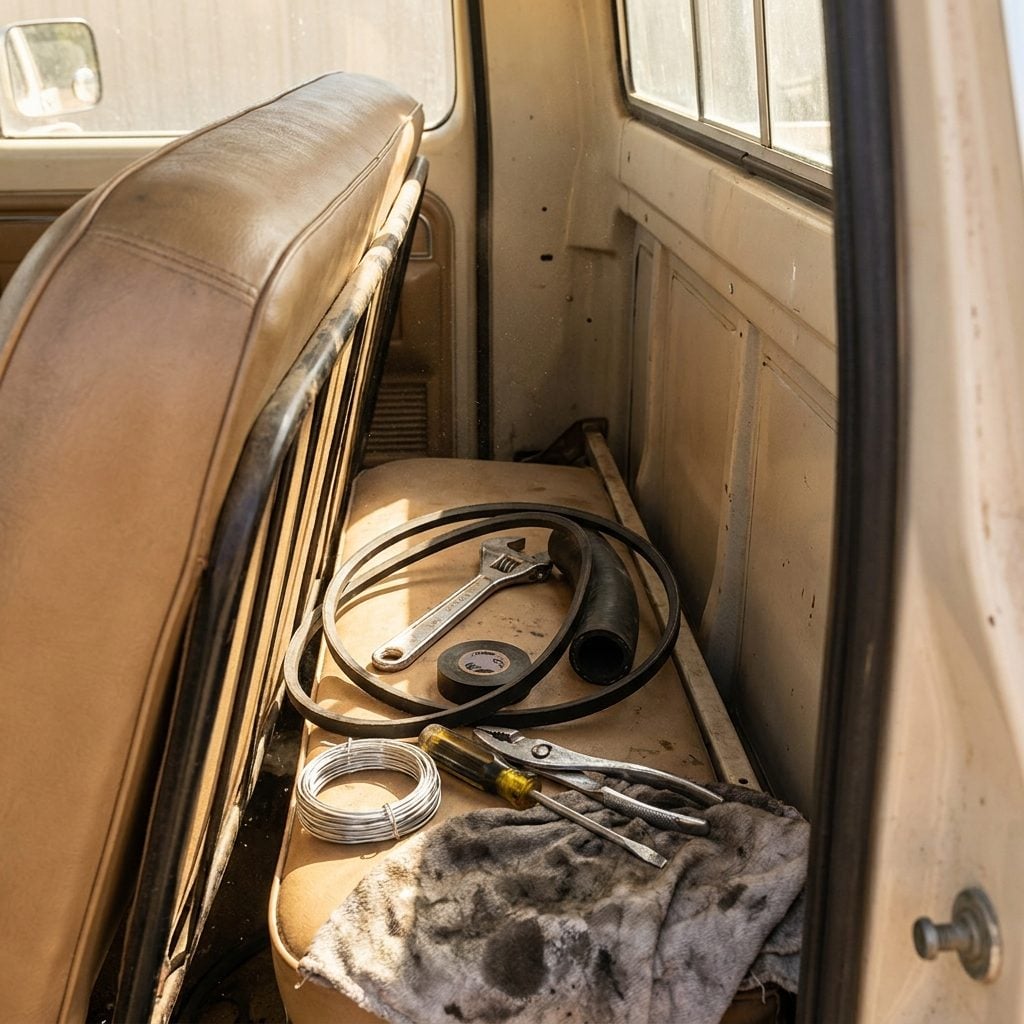
Behind that bench seat lay a narrow canyon of preparedness that would make a doomsday prepper nod with respect. Crammed into the six-inch gap between the seatback and the rear wall: a coiled spare fan belt — sometimes two, different sizes — a length of radiator hose, a roll of electrical tape, a crescent wrench, a flathead screwdriver, pliers, maybe a short length of baling wire, and absolutely a rag that had been there since the Ford administration.
None of this was paranoia. A 1970s truck engine was going to strand you at some point. Not might — going to. The fan belt would snap on a county road forty minutes from anywhere, or the radiator hose would split at the clamp. When it happened, you pulled over, popped the hood, and fixed it yourself on the shoulder while semis blew past you. Nobody called a tow truck for a fan belt. You’d have been embarrassed to.
That space behind the seat was the truck’s immune system, and every owner stocked it based on whatever had broken last. Pure personal experience, curated by failure.
Cold Vinyl Seats That Could Practically Remove Skin from Bare Legs on Winter Mornings
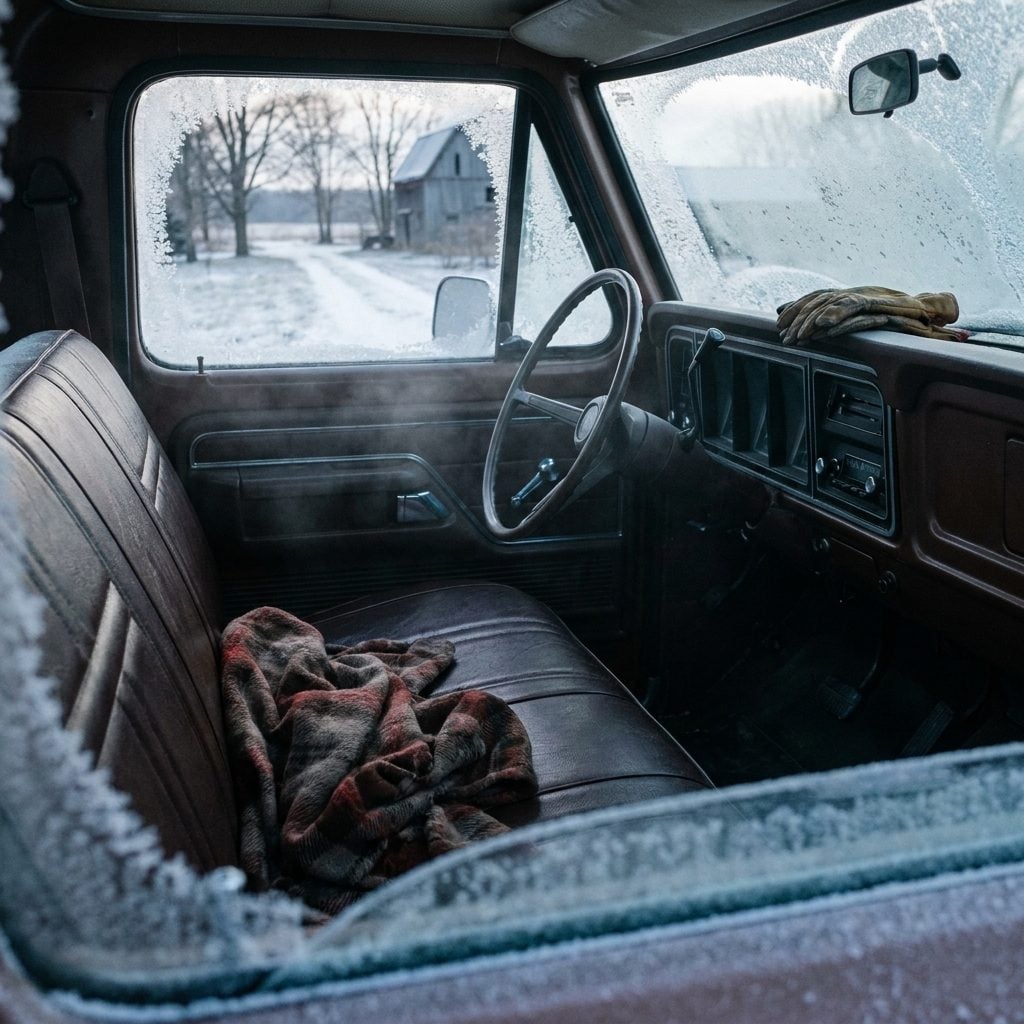
Vinyl in July was a torture device. But vinyl in January was something else entirely — a substance so cold it felt wet, so rigid it might as well have been a park bench carved from ice. You’d open the truck door at 6:45 a.m., your own breath already hanging in a cloud, and lower yourself onto that seat with full knowledge of what was coming.
Cold hit the backs of your thighs first. Then your lower back. Then, if your jacket was thin, your shoulder blades. Vinyl didn’t absorb warmth. It actively rejected it. Five minutes into the drive you’d managed to create one warm patch — roughly the size of a dinner plate, directly under you — while the rest of the bench remained hostile territory, unreachable and arctic.
You didn’t sit in a 1970s truck in winter. You endured it until the heater caught up, which took about twelve minutes and two miles of driving.
Cloth seats existed on some higher-trim models, but most work trucks came with vinyl because it was wipeable, durable, and cheap. Comfort wasn’t on the spec sheet. So you dealt with it the way everyone’s grandfather dealt with it: a folded blanket on the seat, October through March, smelling like motor oil and dog. That blanket was the most luxurious thing in the entire vehicle, and I don’t mean that as a joke. It genuinely was.
Manual Brakes That Required Prayer, Both Feet, and a Terrifying Stopping Distance When Hauling Anything
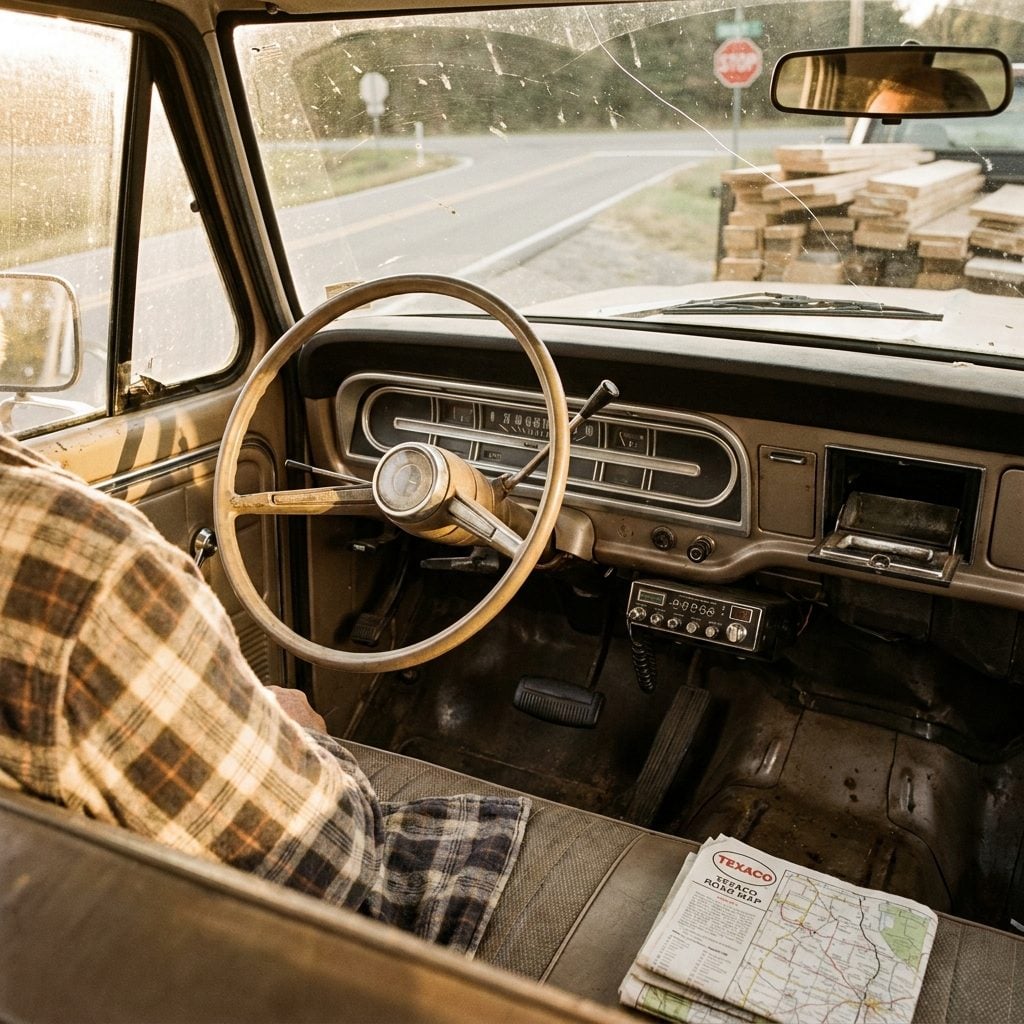
No power assist. Your leg, a mechanical linkage, and whatever friction the drums felt like contributing. Stopping an unloaded truck already felt like making a polite request the vehicle might choose to ignore. Throw a half-ton of firewood in the bed and that brake pedal became something closer to a diplomatic overture.
You learned to plan stops a quarter-mile out. Downshifting was your real brake — the pedal on the floor was a backup plan, and you pushed it like you were trying to punch a hole through the firewall. “Pumping the brakes” wasn’t some figure of speech for people who drove these trucks. You literally did it at every intersection, sometimes with both feet if things got exciting.
Tiny Rearview Mirrors That Vibrated So Badly You Could Barely Tell If Those Were Headlights or Fireflies
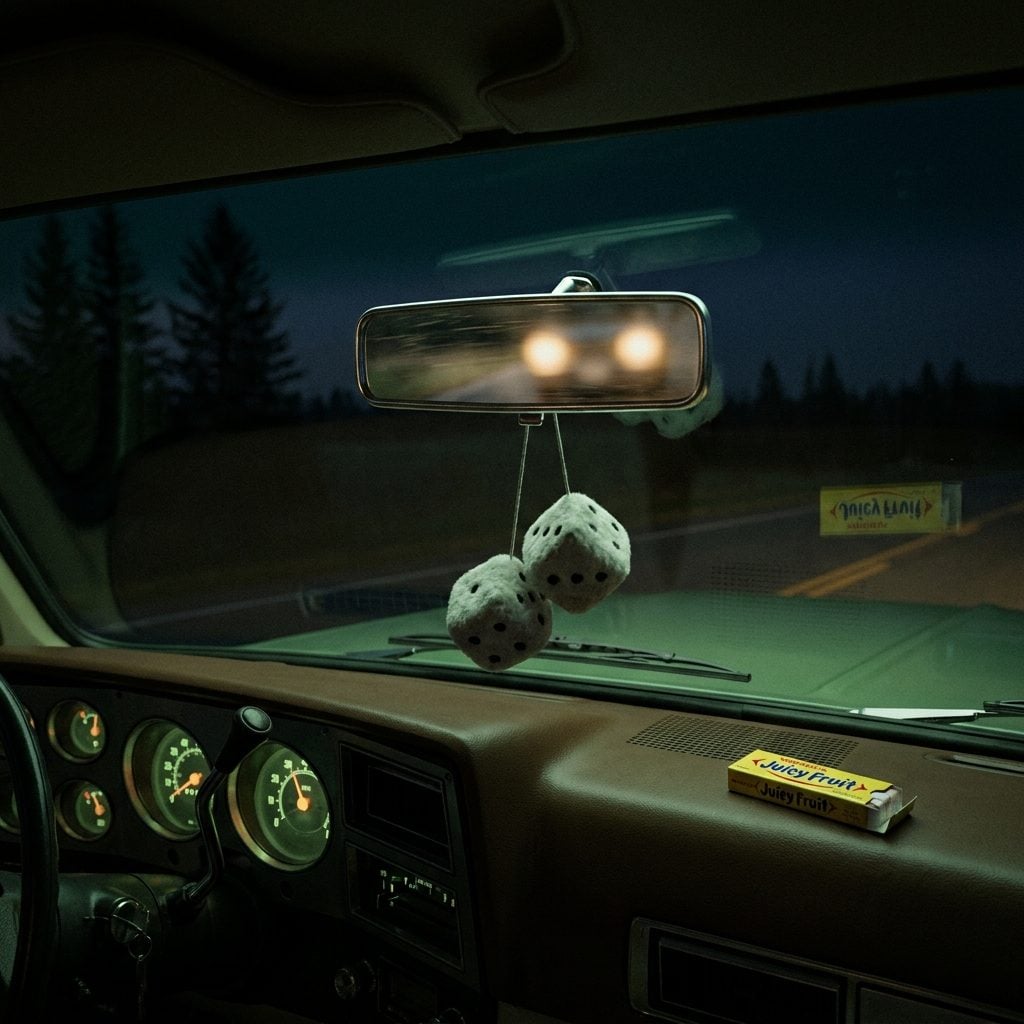
Five inches wide. Maybe six if you were lucky. That was the whole rearview mirror — glued to the windshield with a bracket that had loosened sometime during the Ford administration. Above 40 mph the thing buzzed like a tuning fork, turning the reflection into a Monet painting of whatever was behind you.
So lane changes on the highway were an act of faith. You’d glance at the mirror, see a smeared blob of light that could be a Kenworth or a distant barn, and then crane your neck around like an owl. Your blind spot? That was most of the area behind the cab. The mirror’s contribution to safety was largely ornamental, and everybody knew it, and nobody cared enough to fix it because the replacement from the parts counter buzzed just as bad.
Ice Scrapers and Work Gloves Permanently Living on the Dashboard Like They Paid Rent
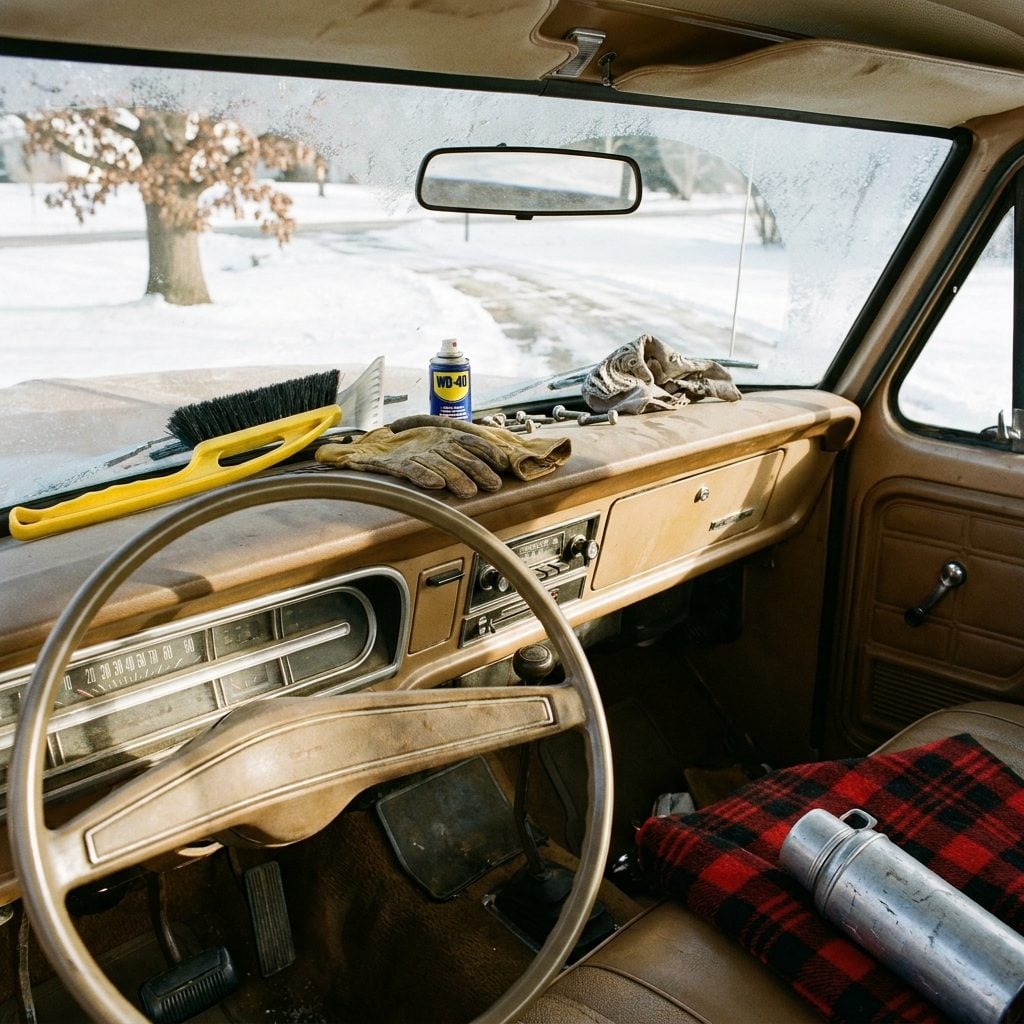
Nobody put these away. The dashboard of a ’70s pickup was a shelf, and those items had permanent residency — a yellow plastic scraper with a cracked brush end, a pair of leather work gloves so stiff from repeated soaking and drying they’d hold their shape standing upright like little leather ghosts.
Sometimes a bandana joined them. Maybe a can of WD-40 rolling gently side to side on every turn. Summer would bake everything onto the vinyl, and by October you’d peel the gloves off the dash surface like removing a bumper sticker. Then you’d use them anyway, because they were right there and what else were you going to do, go inside the house? No glovebox organization system. No console tray. Just a flat metal shelf baking in the sun, accumulating the essentials of a working life the way a riverbank collects driftwood.
Tailgates So Heavy That Closing Them Required Both Hands, Full Momentum, and Occasionally a Running Start
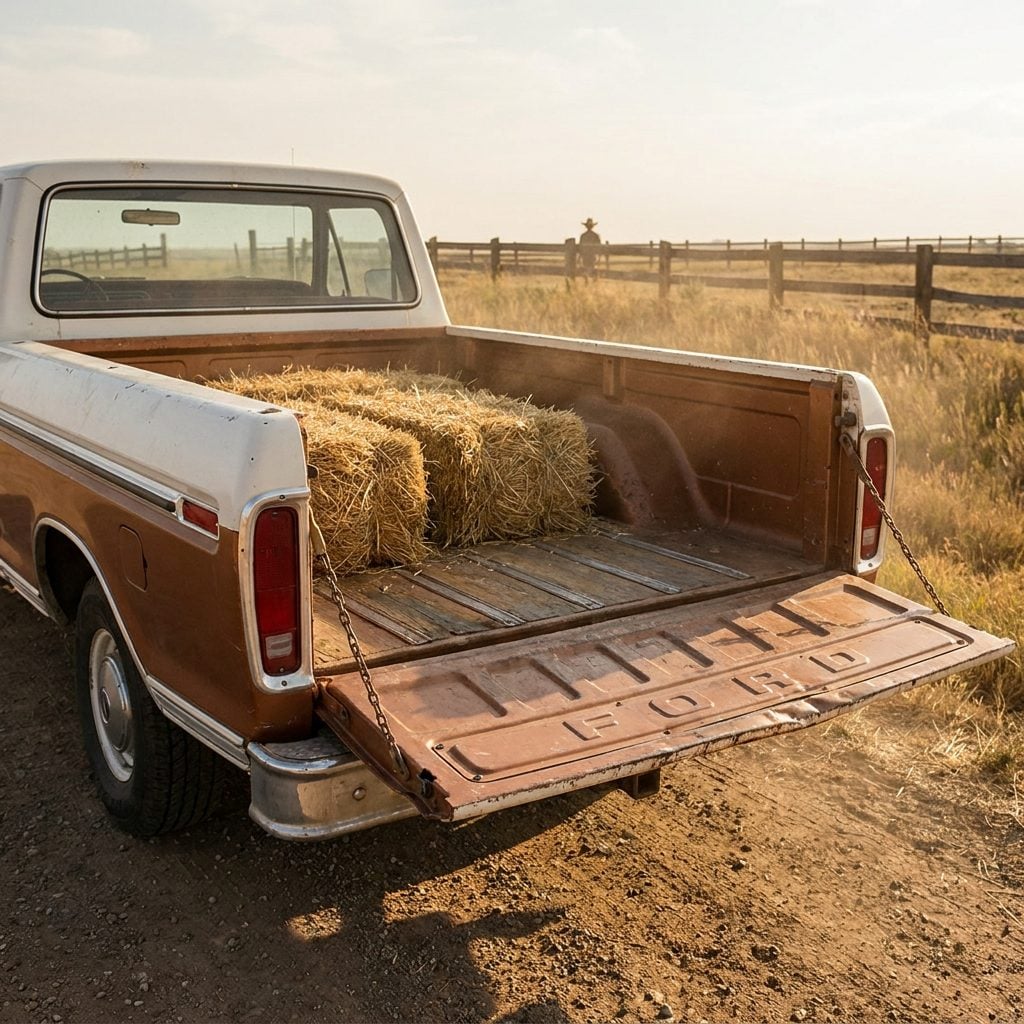
A slab of stamped steel swinging on two chains — that was a 1970s pickup tailgate. Dropping it open was simple enough; gravity handled that part, and the bang could be heard across a parking lot. Closing it was the event.
You grabbed the top edge with both hands, heaving upward, walking your grip higher as it rose. Getting the latch to catch meant slamming it home with genuine force. Kids would take a running start, throwing their whole body weight into it. Sometimes two of them teamed up like it was a barn-raising.
And if the latch pins were worn? Three slams, each louder than the last. Then you’d give up, tie the thing shut with baling twine, and drive home with it half-closed. Honestly, a tailgate held shut by twine was the natural resting state of most pickups by about 1978. The latches surrendered before the trucks did.
Manual Brakes That Required Prayer, Both Feet, and a Terrifying Stopping Distance When Hauling Anything
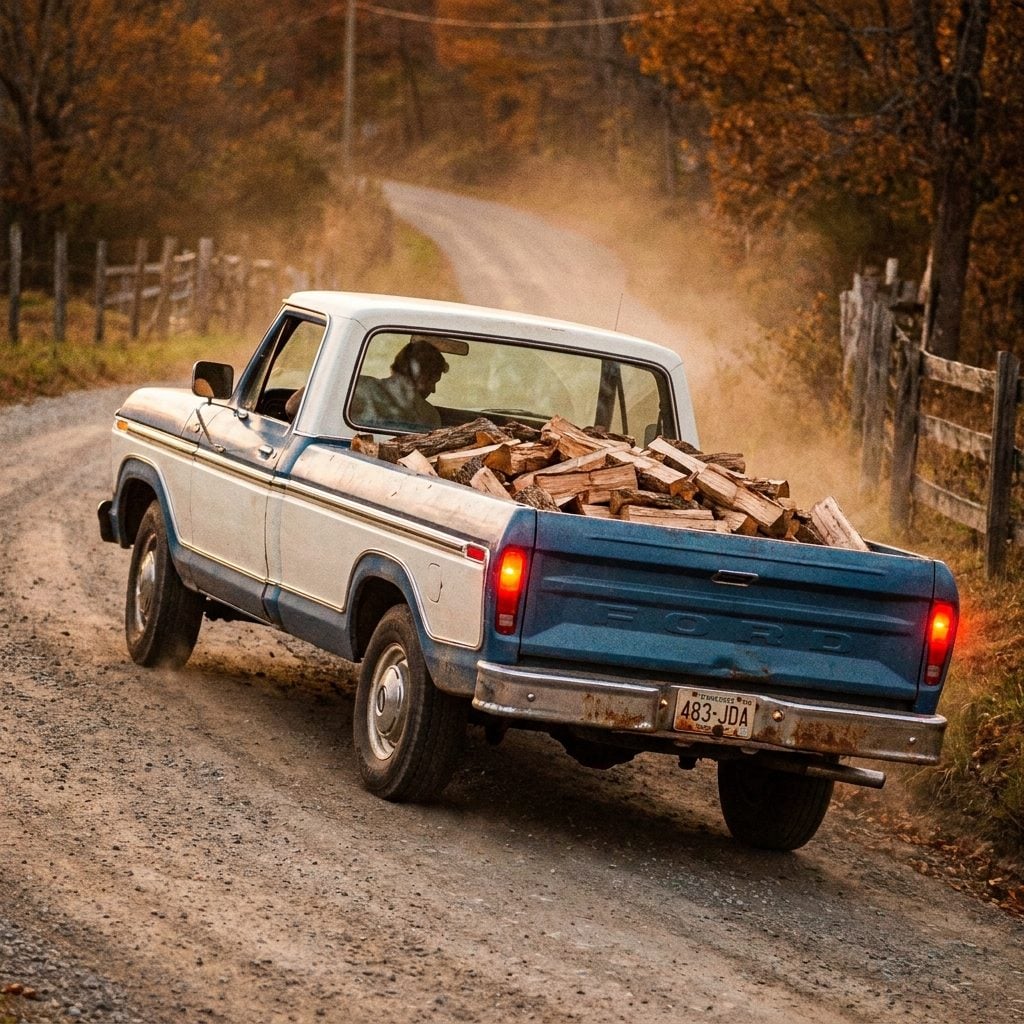
Pump once. Pump twice. Push harder. Realize you’re not actually slowing down. That was life behind the wheel of a loaded 1970s pickup running manual drum brakes on all four corners — no power assist, no anti-lock anything, just your leg strength pitted against momentum and whatever grade the road decided to throw at you.
The pedal felt like stepping on a brick, and it responded about as well as one. Unloaded, you could manage. But hook up a trailer or stack the bed with firewood and suddenly your stopping distance ballooned to something absurd. You learned to read traffic three intersections ahead because surprise stops weren’t a concept your truck recognized or respected.
Downhill grades with a full load? That’s where people found God. You’d ride the brakes until something under the truck started smelling hot, gear down, white-knuckle the wheel — and the whole rig would pick up speed anyway, almost out of spite. Every driver who lasted more than a season had a personal brake-fade story. Most of them ended with a ditch, a curb, or an unplanned visit to some gas station parking lot at the bottom of the hill. A few ended worse than that, but those guys didn’t tell the story themselves.
Engine Blocks So Loud That Every Conversation Paused the Moment You Hit the Gas
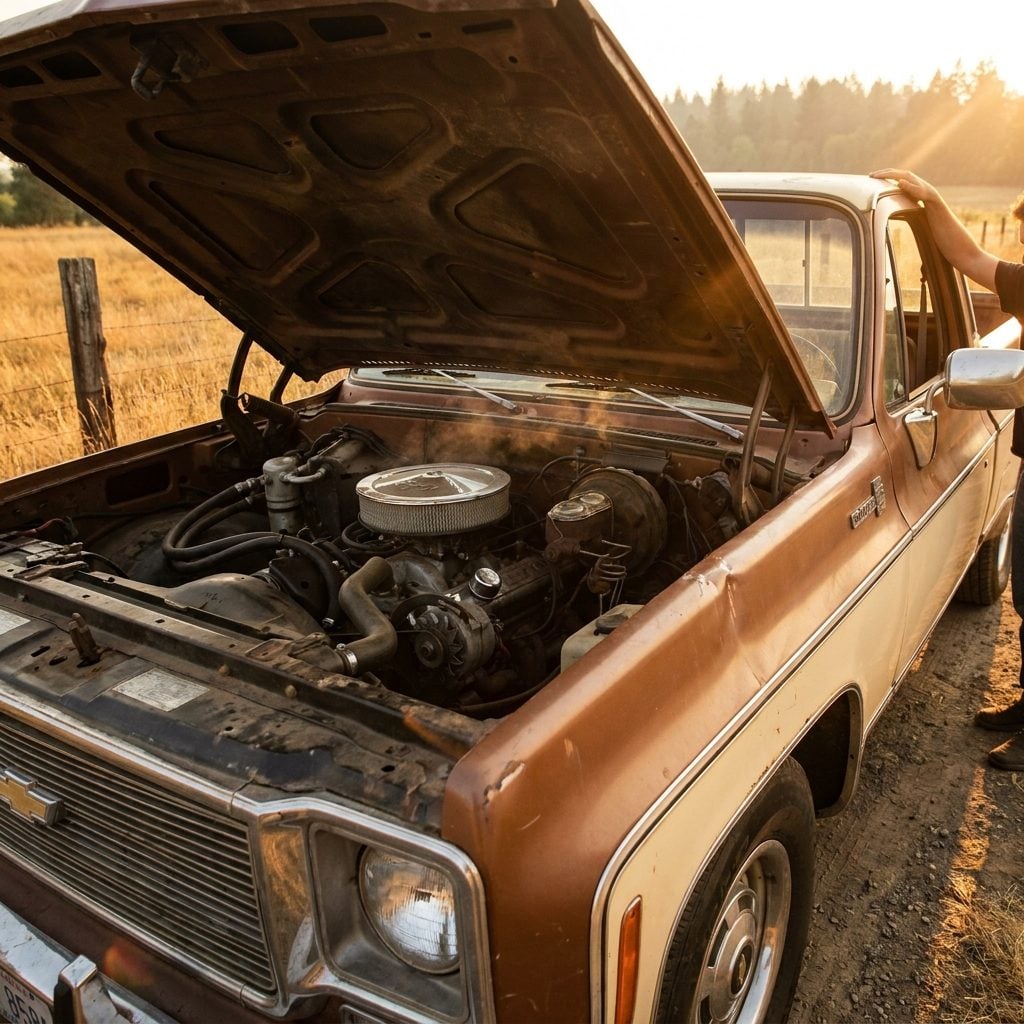
That 360 or 390 cubic-inch V8 didn’t idle so much as it argued with itself. You felt it in your sternum before your ears caught up. Pulling onto a highway meant shouting at whoever sat next to you, and they’d just nod like they understood — which, no, they absolutely didn’t.
Nobody called it a problem. Quiet engines belonged to sedans. A truck that didn’t rattle the rearview mirror at 3,000 RPM seemed suspicious, honestly — like it lacked conviction. The roar was proof the thing worked, and you accepted that bargain without a second thought.
Under-Seat Storage Stuffed With Chains, Maps, Gloves, and Oily Shop Rags
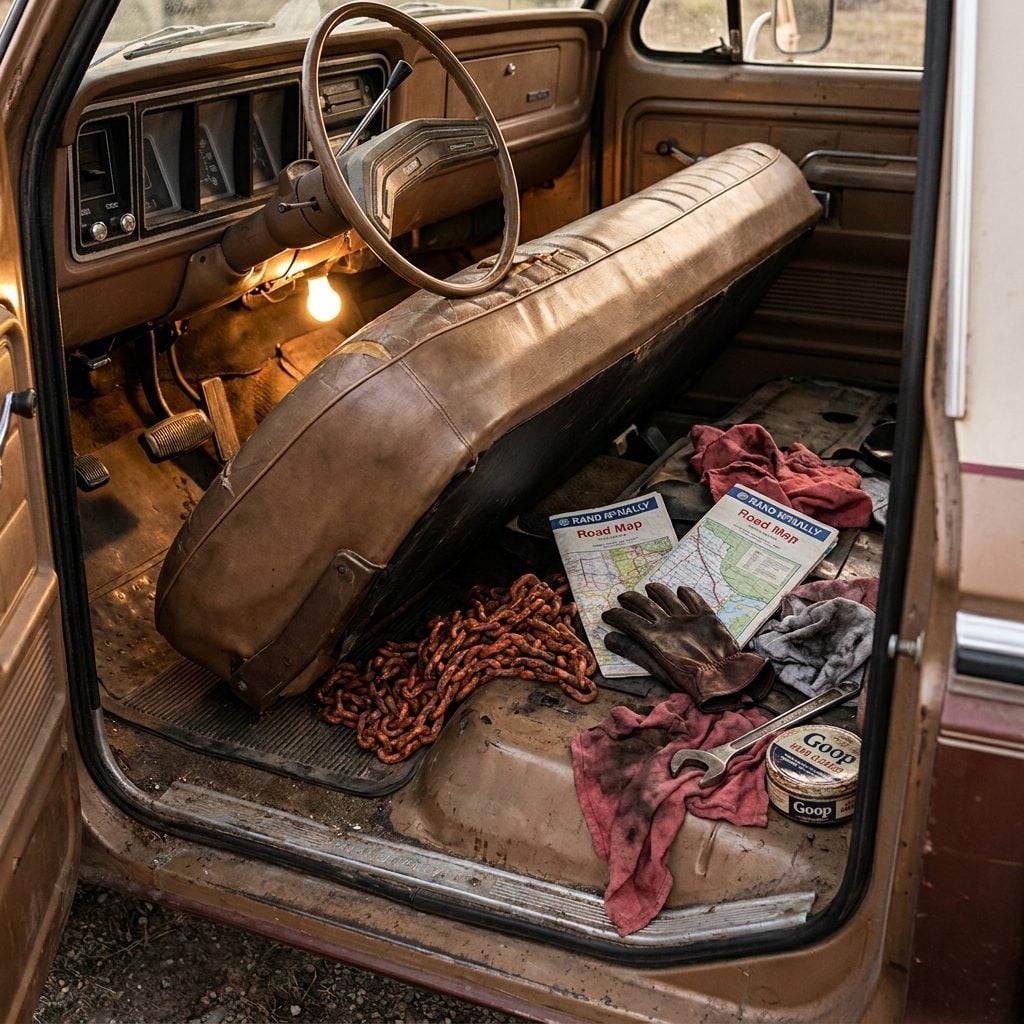
No center console. No glove box big enough for anything beyond registration papers and a penlight. The space under that bench seat served as your entire mobile office, emergency kit, and junk drawer rolled into one greasy cavity.
Tilt the seat forward and you’d find a log chain that hadn’t been untangled since 1974, a Rand McNally atlas folded wrong so many times it refused to close flat, three mismatched work gloves (never a pair, always three — some kind of cosmic law), and shop rags so saturated with 10W-40 they bordered on hazardous material. Buried somewhere near the back, a tube of hand cleaner with a cracked cap that had been leaking onto everything else for months.
Organization? Please. You shoved things under there and hoped the right item surfaced when you needed it. It usually did.
Farm Dogs Riding Loose in the Truck Bed Like It Was Their God-Given Right
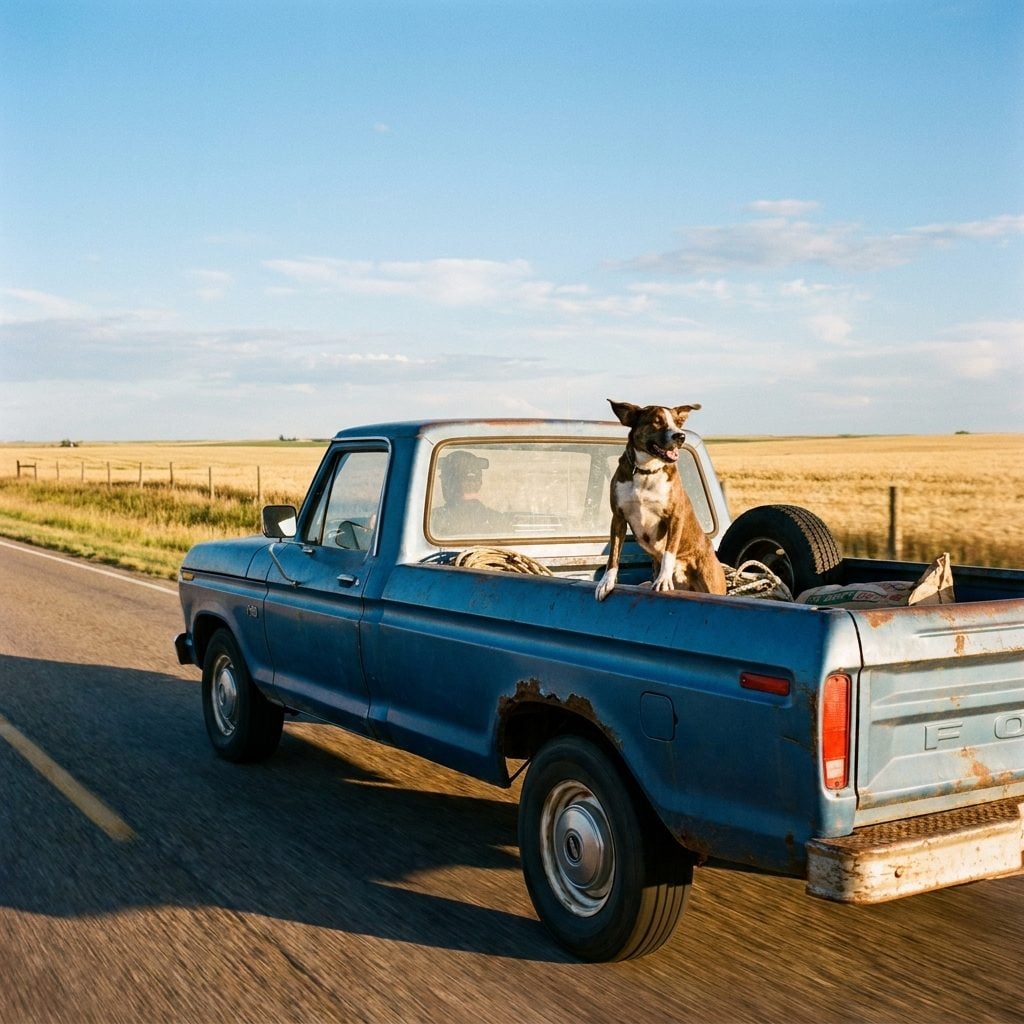
No leash. No crate. No harness bolted to a tie-down point. Just a dog — four paws on corrugated steel, nose pointed into a 55-mile-per-hour headwind with the total focus of an air traffic controller.
Every farm truck had one, and the dog knew the routine better than most human passengers. Jump in when the tailgate dropped. Find a spot between the spare tire and the toolbox. Ride standing through town so the whole world could witness you. He’d lean into the curves like he’d studied the road his whole life, shifting weight with a grace nobody taught him. Why would anyone worry? The dog had been doing this since puppyhood.
At the time, nobody considered it reckless. Dogs rode in the back, hung their heads over the side, and were already waiting at the tailgate by the time you parked. Try explaining any of this to someone now and watch their face cycle through about six different expressions before settling on horrified.
That Permanent Cologne of Gasoline, Motor Oil, Cold Coffee, and Marlboro Reds Baked Into Every Surface
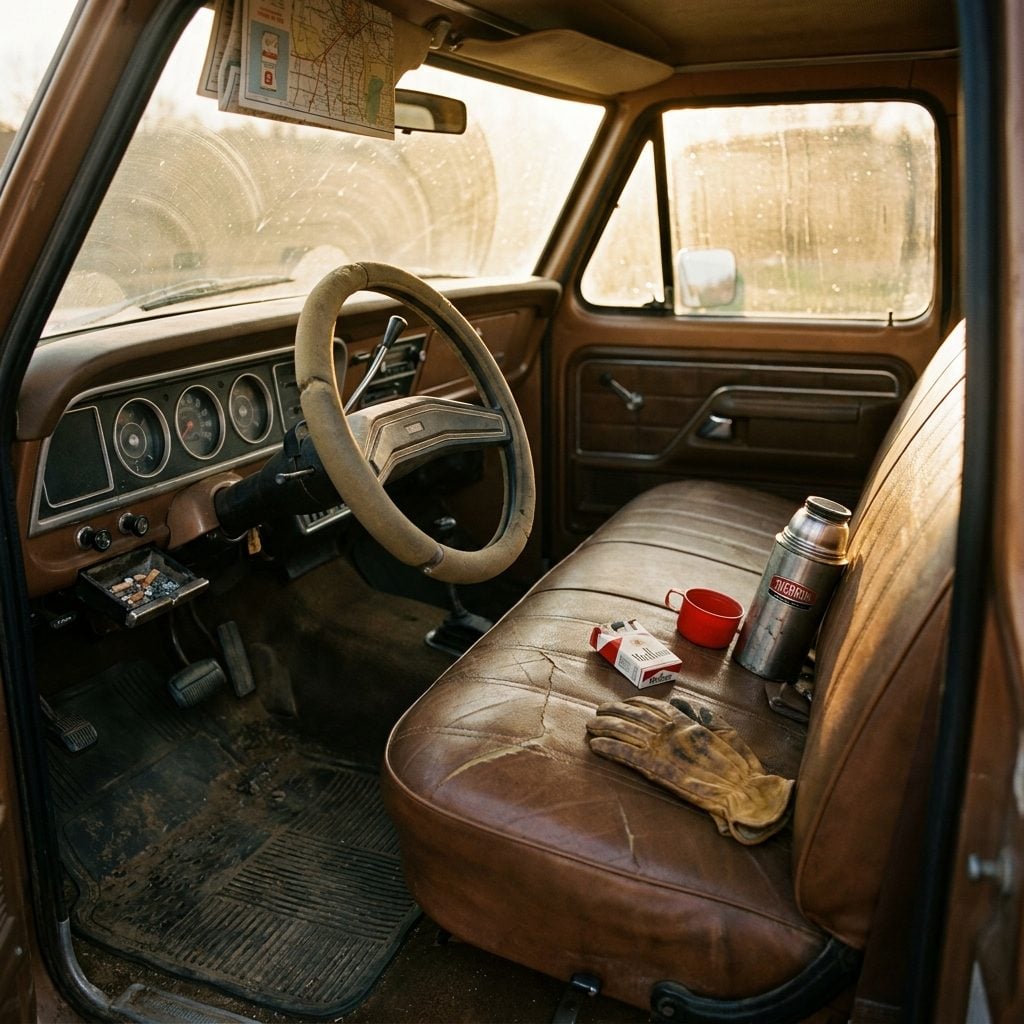
Nobody bought an air freshener for a work truck in 1974. The cab just accumulated its own signature, layer by slow layer, until the smell became structural — spilled coffee from a steel Thermos soaking into seat foam, gasoline vapors creeping through the firewall, motor oil living permanently on every surface your hands ever touched. Steering wheel, shift knob, window crank — all of it carried that sweet petroleum film you couldn’t wash off even if you tried.
And then the cigarettes. Ash packed into the dashboard tray, ash ground into the rubber floor mat, a permanent blue haze overhead turning the headliner from cream to nicotine amber over a single winter. Roll the windows down and you’d get maybe thirty seconds of relief before the tailpipe exhaust caught up.
Here’s what catches people off guard when you describe it: that smell wasn’t bad. Not to the people who lived with it daily. Part gas station, part roadside diner, part your grandfather’s jacket pocket — it was what momentum and labor and a truck earning its keep smelled like. I can still conjure it if I close my eyes long enough. And no, nothing from an AutoZone shelf will ever replicate it. Probably better for everyone’s lungs that way.
🔥 Would you like to save this?
Please note that some of the imagery in this article were created with the aid of AI image generators.