
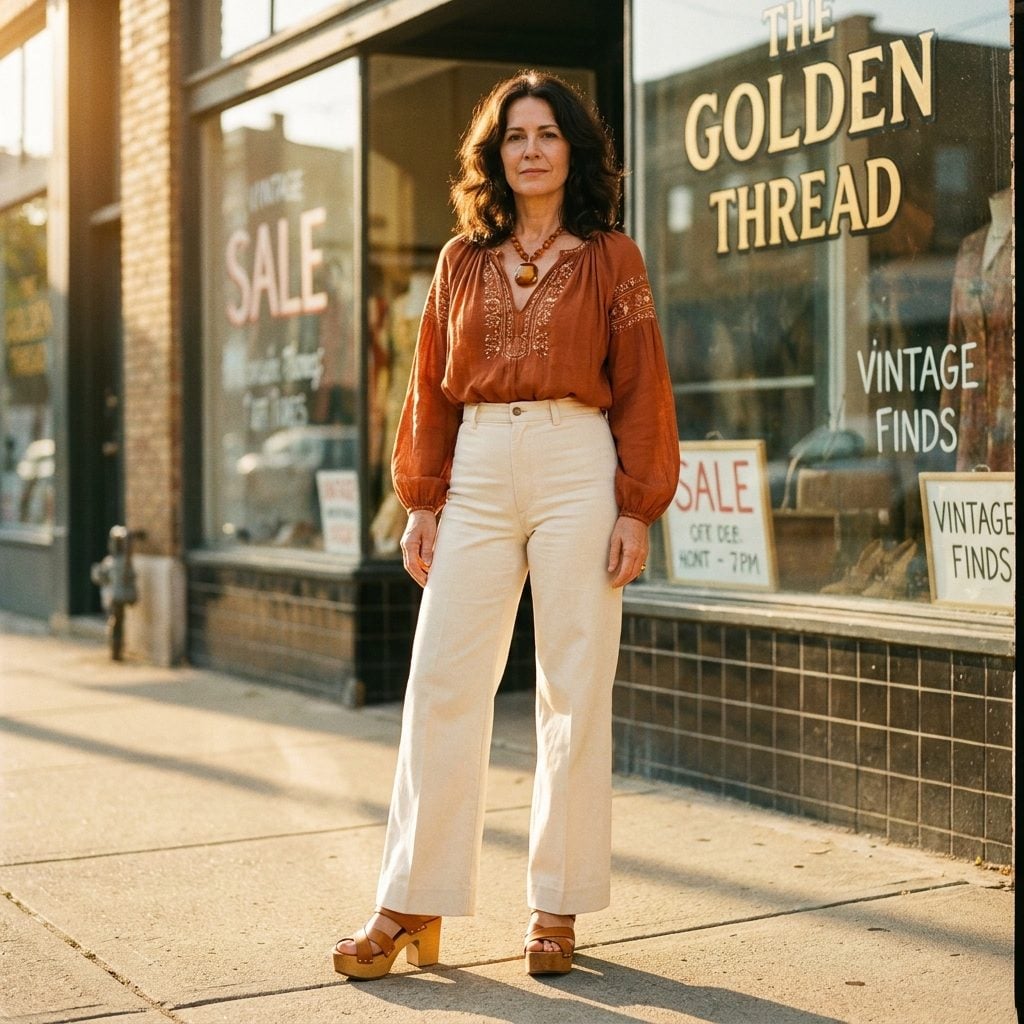
The smell of Babe perfume. A macramé bag with fringe that caught on everything. The particular sound of wooden platform clogs on a linoleum floor. If any of that just landed somewhere in your chest, you already know where we’re going. The 1970s had a specific visual language that we spoke fluently, earth tones and halter tops and mood rings and all, and looking back now, some of it was genuinely chic, some of it was absolutely unhinged, and all of it was completely ours.
Would you like to save this?
The Polyester Jumpsuit With the Plunging Neckline and a Belt That Could Double as a Seatbelt
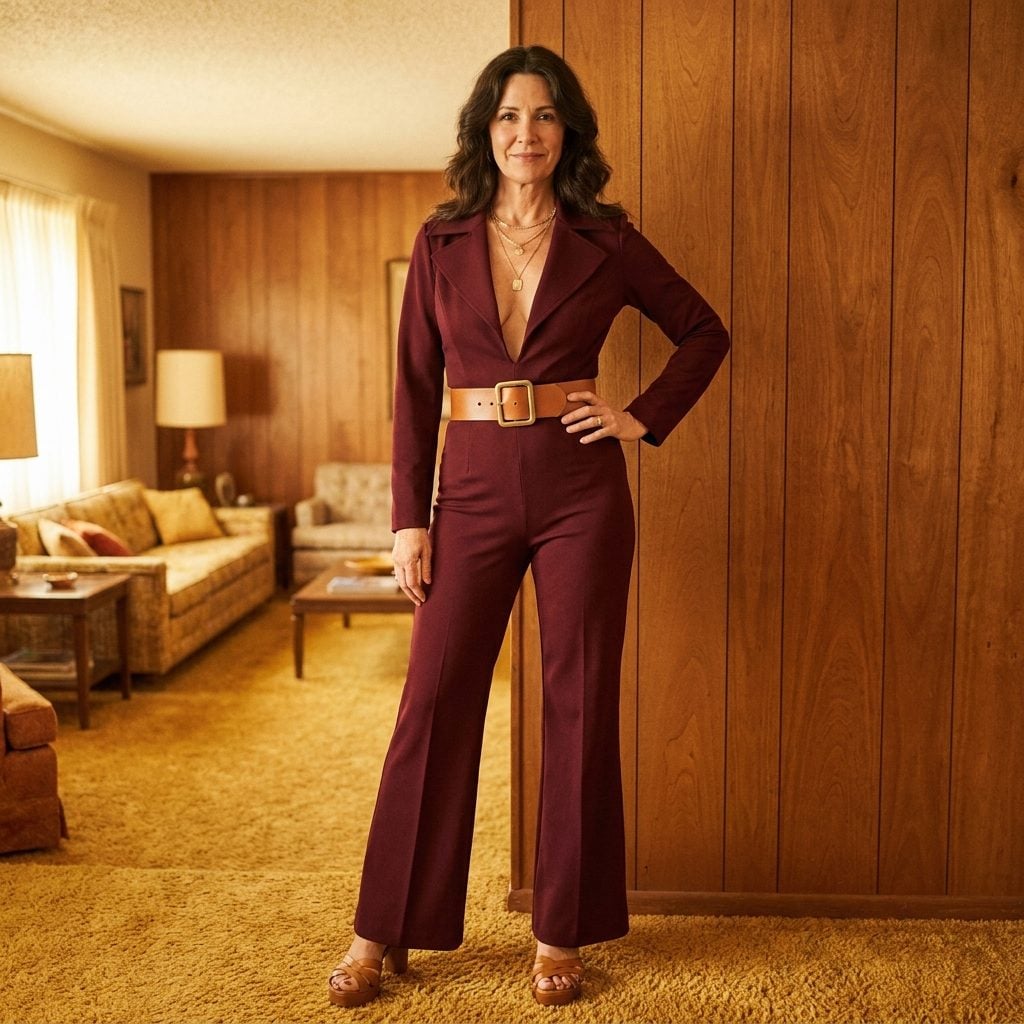
You had to commit to this look before you even left the house. The belt wasn’t a finishing touch, it was a structural decision. Four inches wide, stiff as cardboard for the first six months, and you wore it cinched so tight that sitting down was more of a controlled descent. The jumpsuit underneath was 100% polyester, which meant it held its shape beautifully and also trapped heat like a greenhouse. Nobody complained.
The plunging neckline was the whole point. Not subtly open, aggressively open, down past the sternum, held in place by absolutely nothing except optimism and a good bra that you definitely weren’t wearing. This was the outfit you wore to your friend’s house for a dinner party that somehow turned into dancing in the living room at midnight, and you felt like the most dangerous woman alive.
Platform Sandals So High They Turned Grocery Shopping Into a Balance Exercise
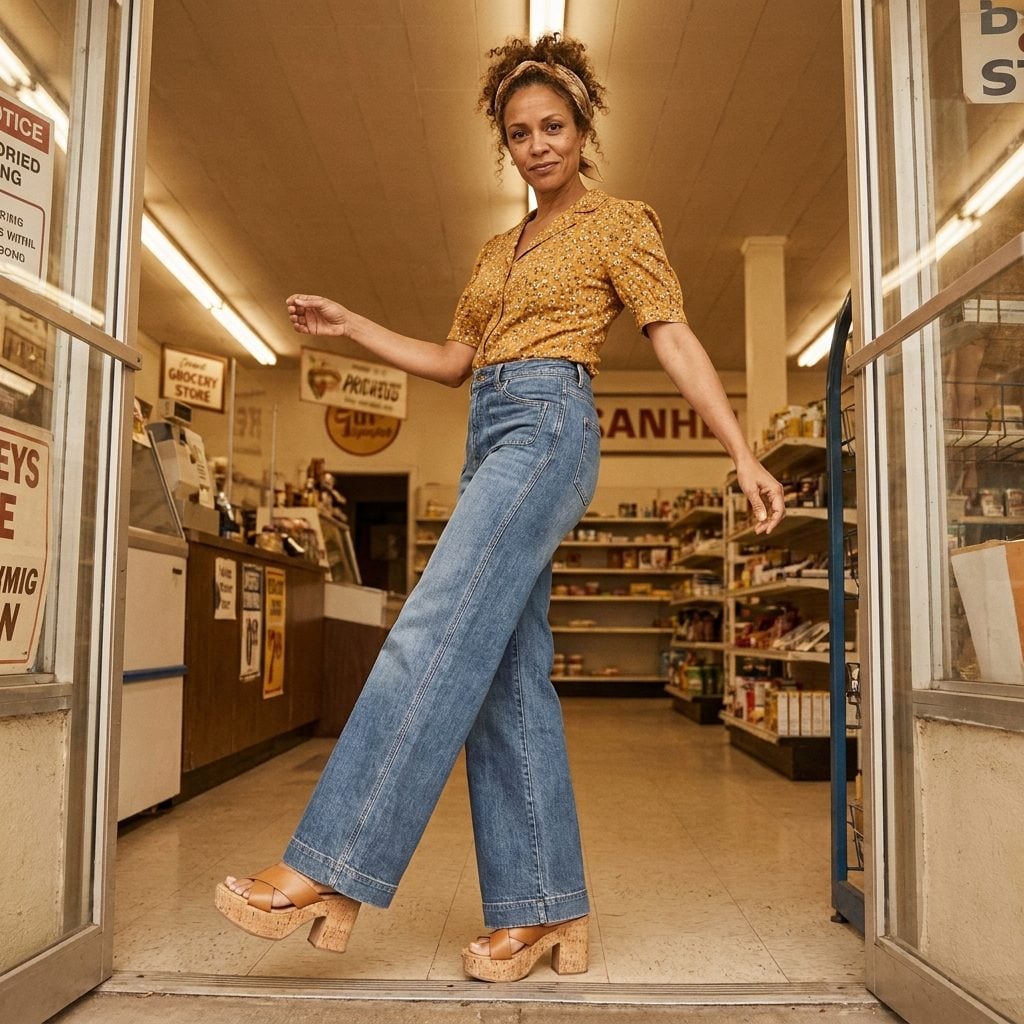
Four inches of cork sole and absolutely no ankle support. The straps were the width of a shoelace, the buckle was purely decorative, and the sound they made on linoleum was somewhere between a horse trot and a construction site. We wore them to everything. The pharmacy. The post office. A long day at the office where the elevator was broken.
What Gen Z doesn’t understand is that height wasn’t the goal, the silhouette was. Those platforms made your wide-leg jeans hang perfectly, gave your whole body a long, continuous line, and made an ordinary Tuesday feel like a scene from a movie. Yes, we fell. No, we didn’t stop wearing them.
The Halter-Neck Disco Dress in Shimmering Lamé That Caught Light From Across the Room
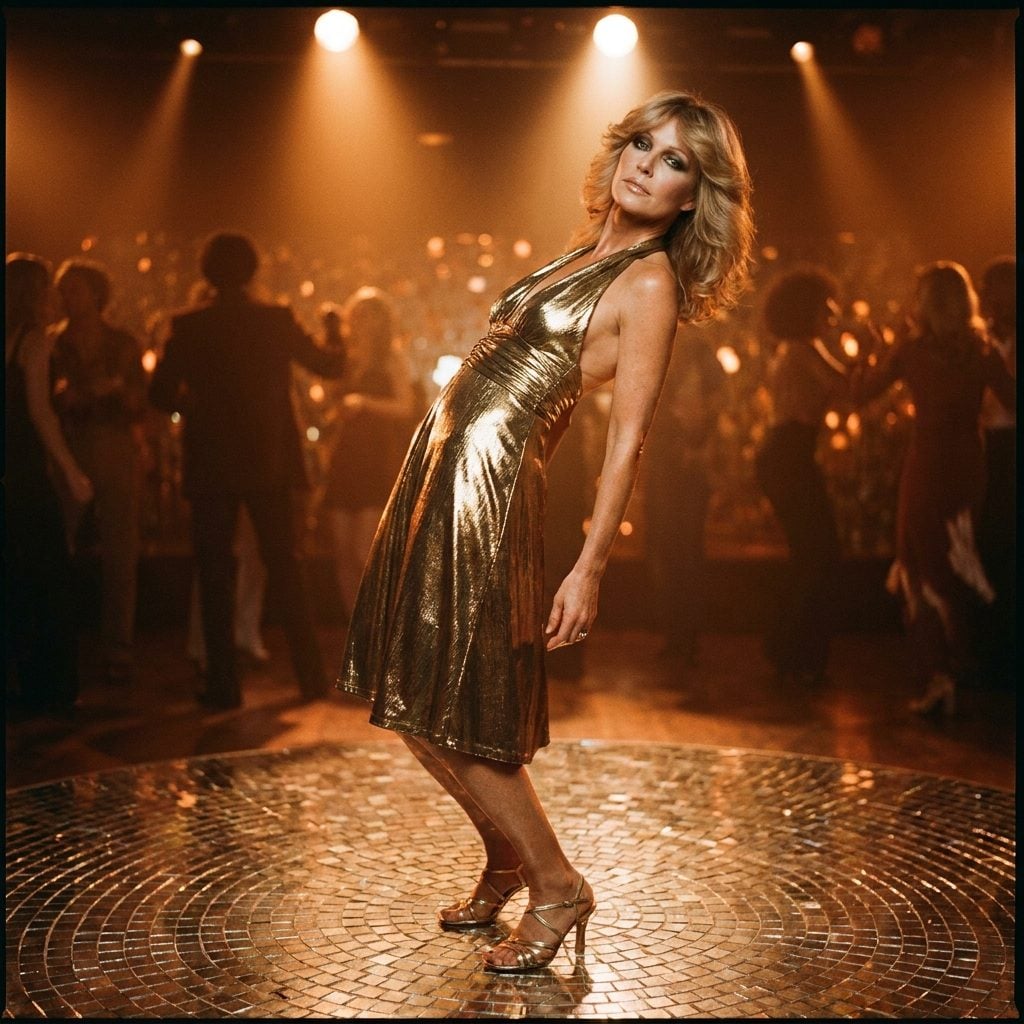
Gold lamé was not a subtle fabric. It announced you from the doorway before you’d even checked your coat. Under a disco ball it fractured light in every direction, you weren’t just wearing a dress, you were contributing to the atmosphere of the room.
The halter neck meant your back was bare to the waist, which was somehow considered appropriate for a Thursday night. You held it all together with two thin strings tied at your neck, and you danced in it for four hours straight and it never moved. They don’t make polyester-lamé blends like that anymore. Genuinely, the structural integrity was remarkable.
Bell-Bottom Jeans Wide Enough to Completely Swallow a Pair of Platform Shoes
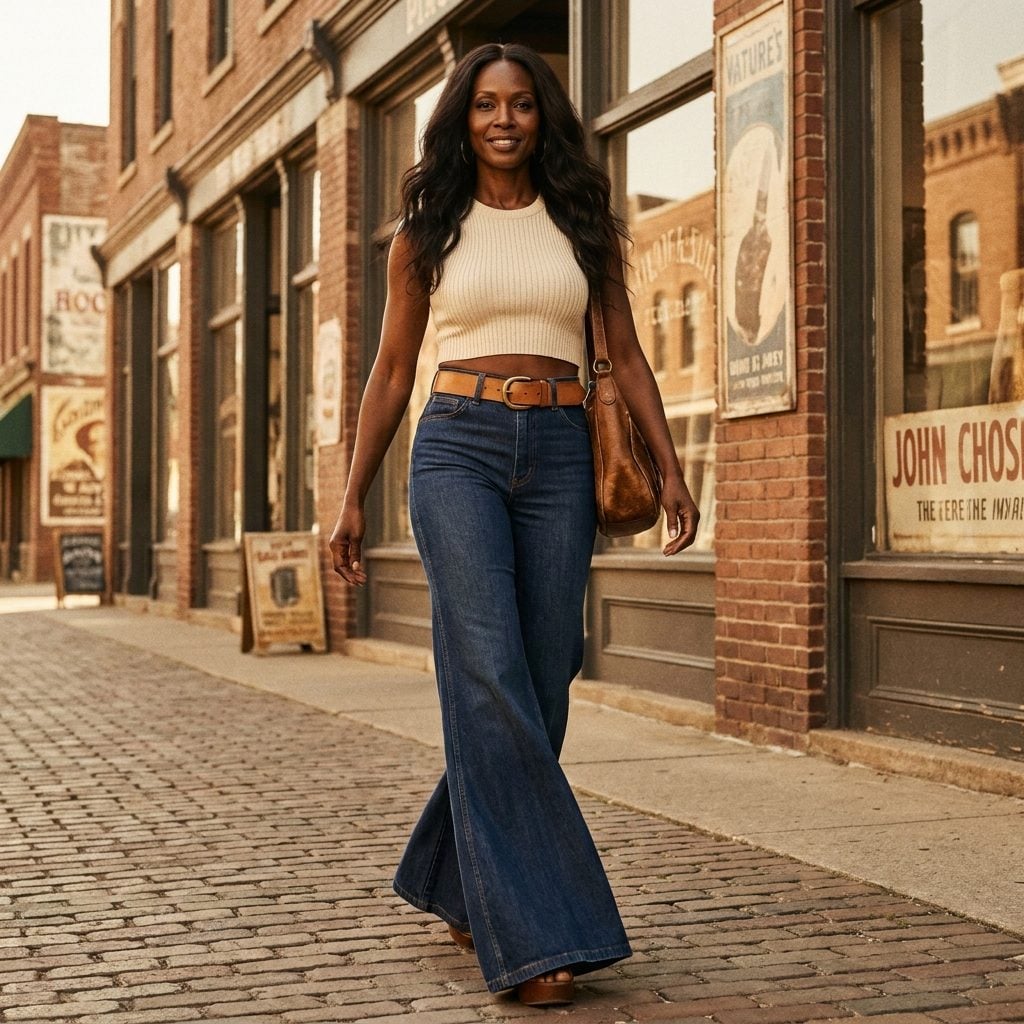
The hem dragged on the floor and we considered that a feature. Frayed hems were proof of loyalty to the silhouette, you wore these jeans so faithfully that the pavement slowly destroyed them, and that was fine, that was correct. The platforms underneath were completely invisible, which was part of the optical illusion: you appeared to be floating slightly above the ground, a denim cloud drifting through a shopping center.
Getting them hemmed was not an option anyone considered. You bought them long, you wore them long, and if the wet cuffs bothered you after a rainy day, you kept that information to yourself.
“The bells were so wide you could fit both hands inside one leg. We measured. It was a thing people did.”
The Faux-Fur Trimmed Suede Coat That Carried the Permanent Scent of Cigarette Smoke and Chanel No. 5
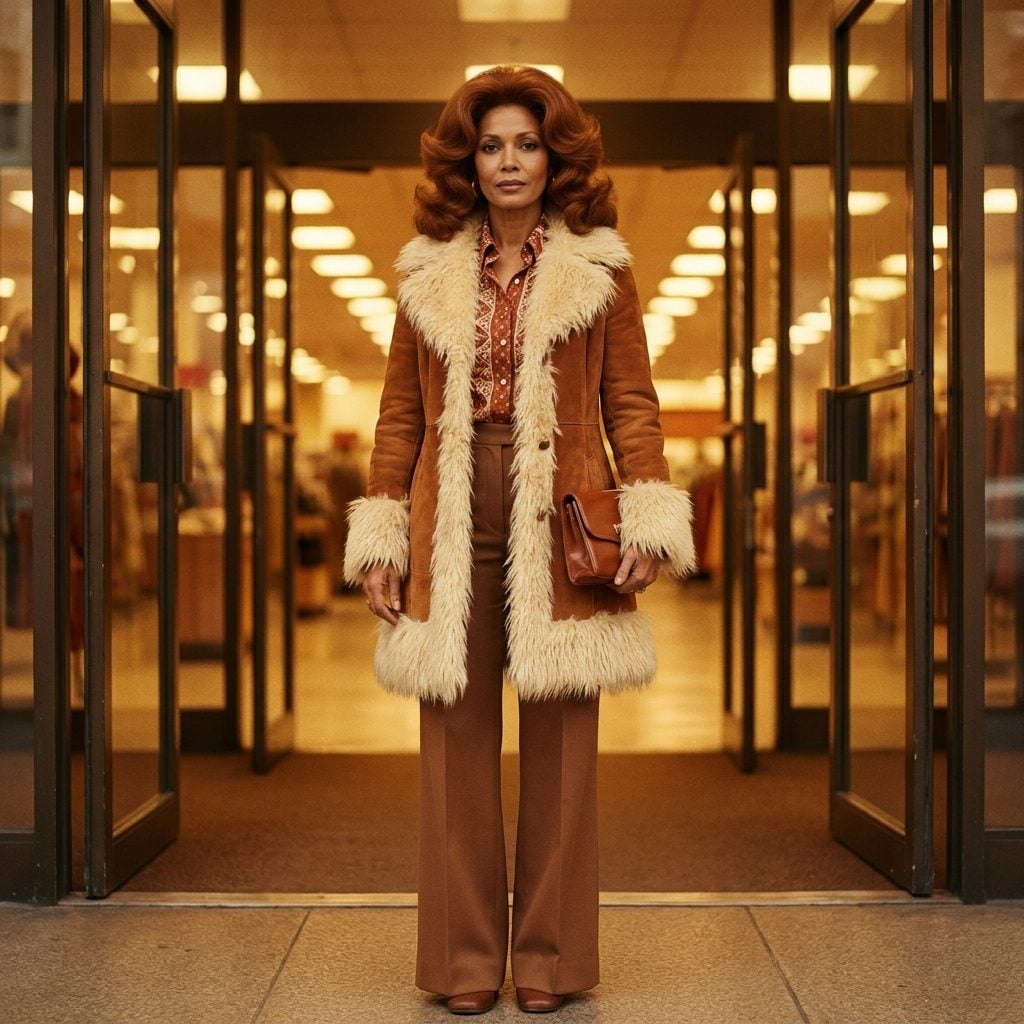
Every stylish woman of a certain age had this coat, or a version of it, and every single one smelled exactly the same: the inside carried that specific combination of department store perfume, cigarette smoke from a restaurant booth, and something faintly musky that was just the suede itself doing its thing. It was not an unpleasant smell. It was the smell of going somewhere.
The faux fur trim was never quite white, it was that particular shade of cream that aged into ivory and then into something more interesting. Dramatic collar. Wide lapels. Belt that you tied instead of buckled because the buckle got too cold in winter and nobody needed that.
You wore this coat to every occasion that required looking like you had your life sorted. You did not always have your life sorted. The coat covered that completely.
The Matching Knit Pantsuit in Avocado Green That You’d Recognize From a Mile Away
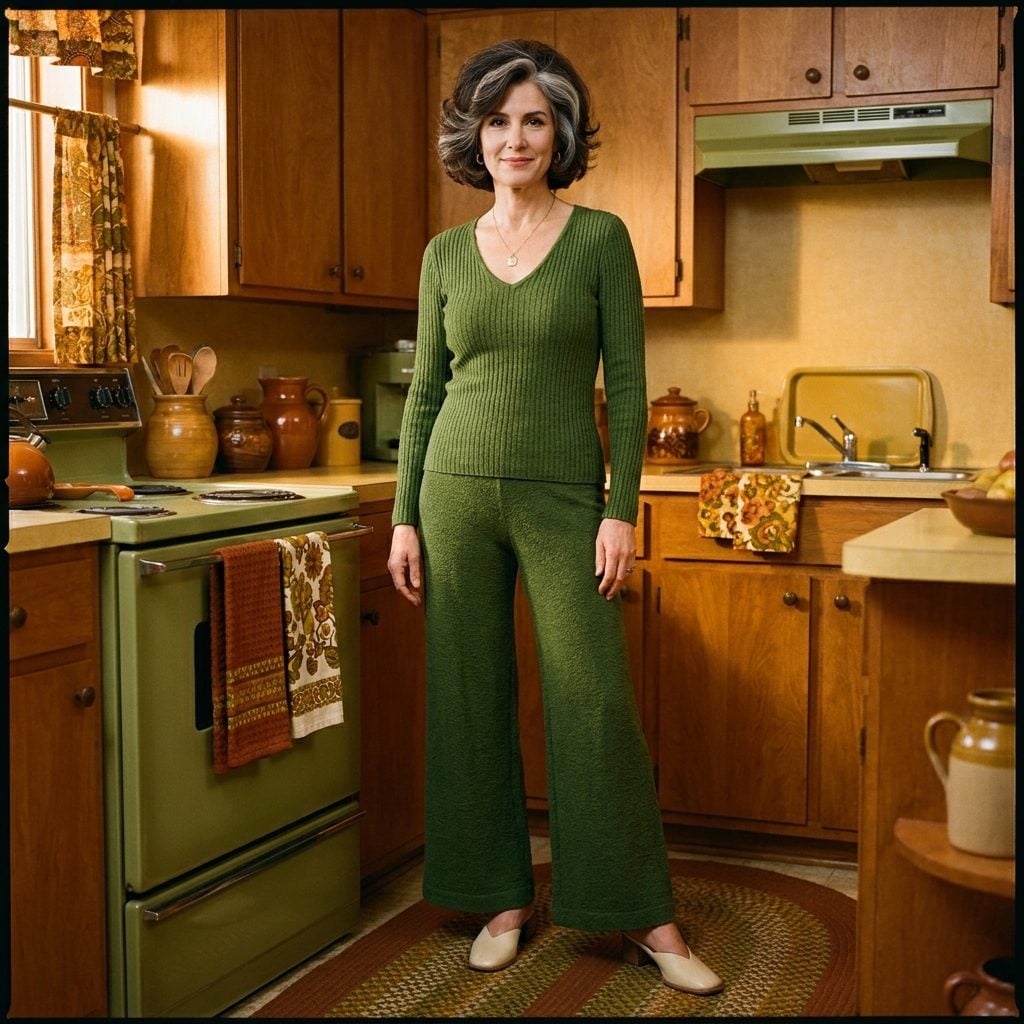
Avocado green. Burnt orange. Harvest gold. These were not just colors in the 1970s, they were a whole worldview. The matching knit pantsuit was the decade’s answer to power dressing: comfortable, coordinated, and slightly aggressive in its commitment to a single hue from collar to ankle.
The fabric was acrylic, which meant it pilled eventually but never truly wore out. It was also, it must be said, warm. Extremely warm. This was the outfit you wore to your mother’s for Sunday lunch and also to the school fundraiser and also to a job interview, because a matched set communicated that you were a woman who had things under control. The color scheme just happened to match the kitchen appliances. That was not considered a problem.
Hot Pants and Knee-High Vinyl Boots for a Completely Normal Tuesday Night Out
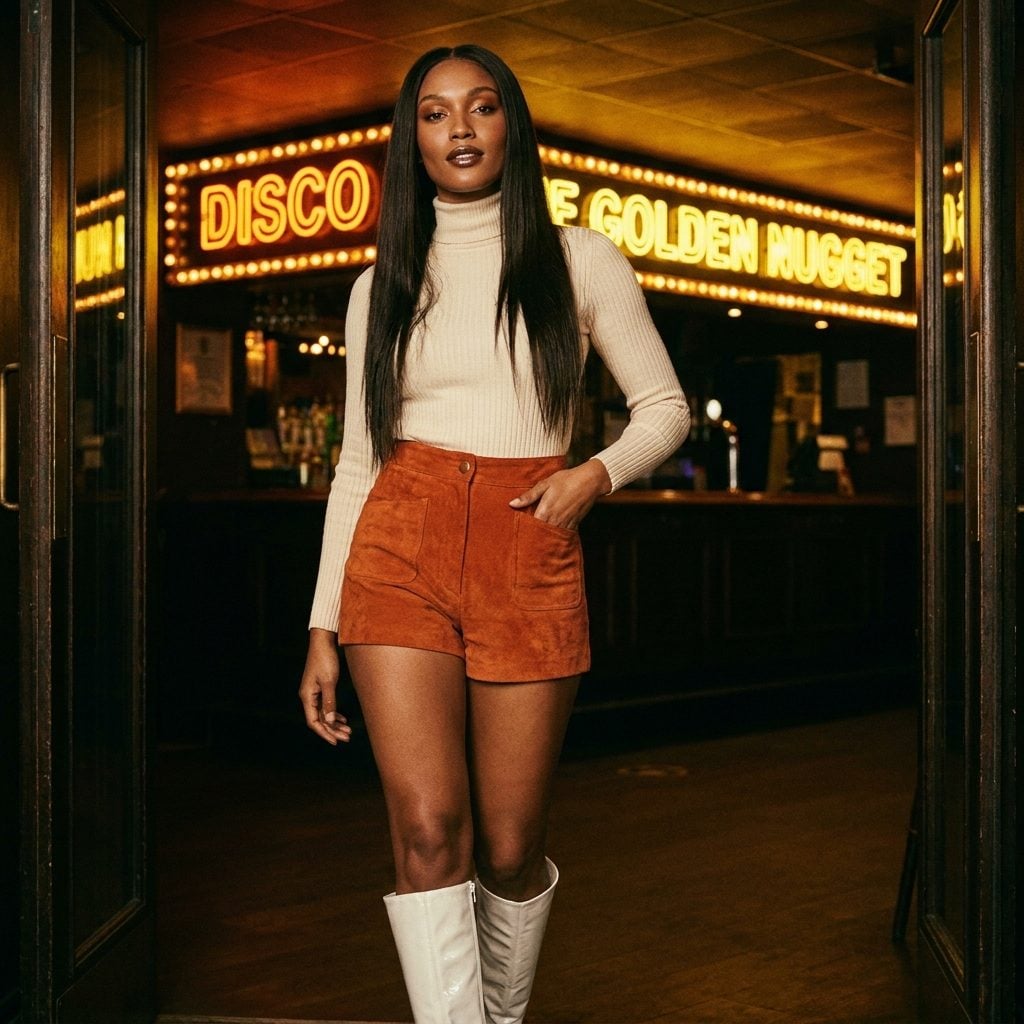
Hot pants were not a club-only proposition in the 1970s. Women wore them to dinner. To the cinema. To run errands, with the vinyl boots, in actual weather. The boots were not leather, vinyl was the point, shiny and molded and slightly squeaky when you walked fast. They came in white, cream, black, and occasionally a red that bordered on fire engine.
Paired with a ribbed turtleneck tucked in at the high waist, this was considered a polished evening look. Not risqué. Not edgy. Just: Tuesday. Gen Z has reclaimed the micro-short moment but they haven’t quite matched the cheerful, completely unself-conscious confidence with which the 1970s woman tucked her turtleneck into her hot pants and walked out the front door without a second thought.
The Silky Pussy-Bow Blouse Tucked Into High-Waisted Flared Trousers Like You Owned Every Room
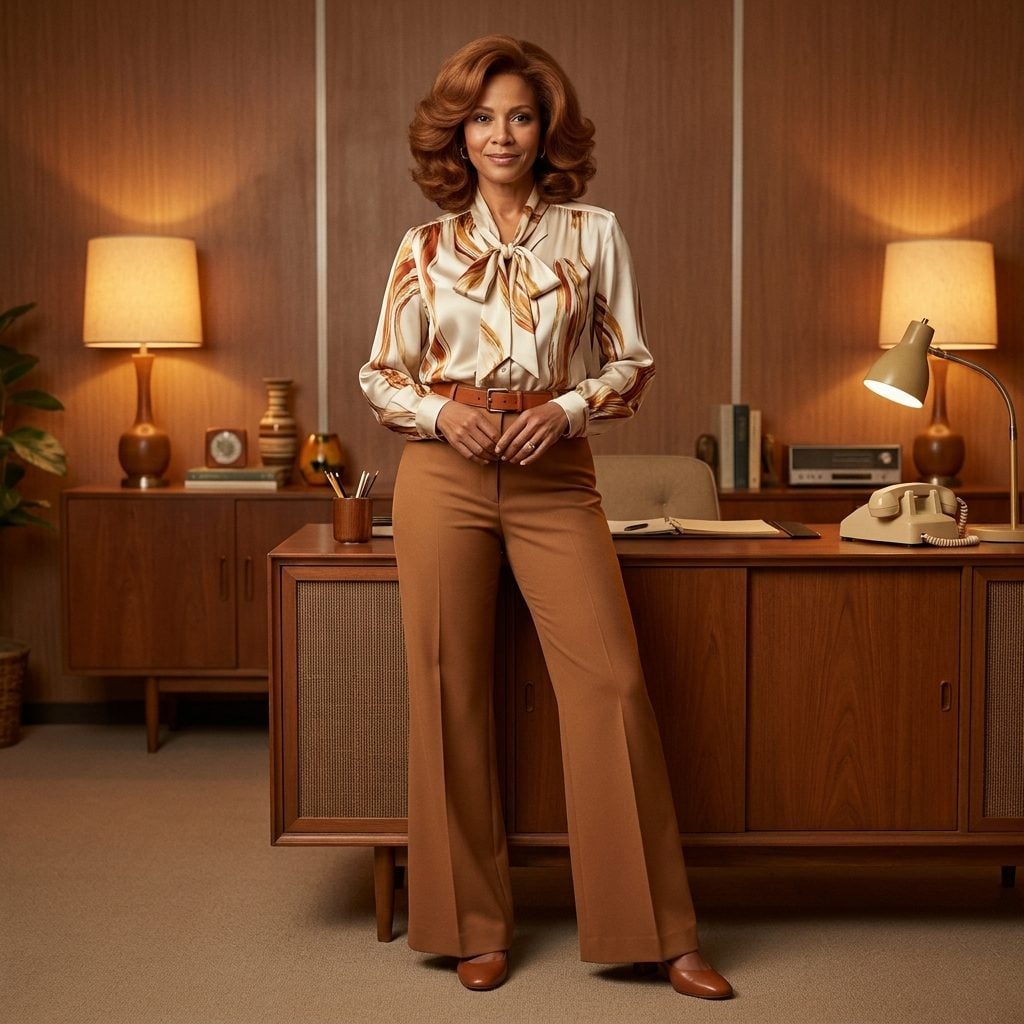
The pussy-bow blouse was the 1970s power move before anyone called it power dressing. It said: I am feminine, I am in charge, and I tied this bow myself without a mirror. That last part was occasionally a lie, getting the bow right was a two-minute project minimum, and asymmetrical bows were a genuine crisis.
Silky fabric in abstract prints was the standard, rust paisleys, geometric shapes in brown and cream, the occasional fern. It tucked into the high-waisted trousers so smoothly that the whole ensemble looked poured on, which was the goal. This outfit walked into a boardroom or a parent-teacher conference with exactly the same energy: composed, elegant, and ready for anything.
Wooden Platform Clogs Loud Enough to Announce You From Three Rooms Away
You could hear us coming. That’s not an exaggeration, the hollow knock of a wooden platform clog on a linoleum floor was its own announcement, a percussive declaration that someone stylish had arrived. We wore them to school, to the grocery store, to literally every occasion that wasn’t a funeral, and possibly some that were.
The Swedish import that became a 1970s obsession, popularized through brands like Olof Daughters and later wooden platform clogs sold at department stores everywhere, these were the shoe that taught us to walk in a completely different way: part stomp, part glide, full commitment. Your ankles either got strong or you twisted them. There was no middle ground.
The Crocheted Maxi Dress Worn Over a Bikini (Yes, as an Outfit)

The logic was: it’s a dress AND a cover-up, which means you never have to choose, which means you can go directly from the beach to a restaurant without changing, which was considered the height of practicality in 1973. The fact that everyone could see your entire bikini through the crochet was not considered a flaw. It was, in fact, the feature.
Every aunt, every older sister, every woman who’d spent a summer in Malibu had one of these. They came in cream, in rust, in olive green, and the really advanced ones had little tassels at the hemline that dragged through the sand and collected it like a broom. We wore ours until the yarn started pilling and then we wore them some more.
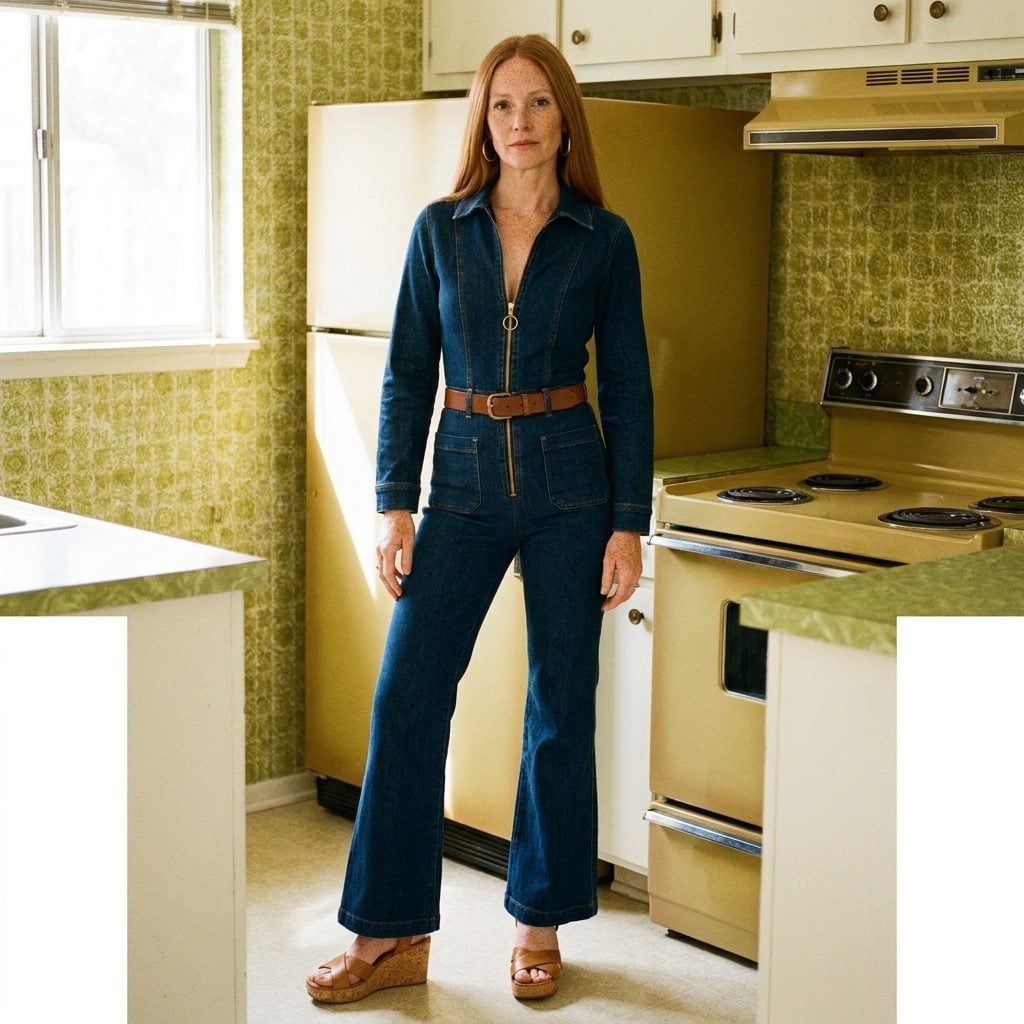
The Denim Jumpsuit With a Front Zipper Running From Collarbone to Waist
Would you like to save this?
That zipper wasn’t just a closure. It was a decision you made every morning, how far down do I pull this today?, and the answer told people a great deal about your intentions for the afternoon.
The denim jumpsuit was the decade’s great utility garment: one piece, no coordination required, instantly done. The front zipper version was its flashier cousin, manufactured in stiff indigo cotton that softened after approximately forty washes. Paired with a wide leather belt and wedges, it was the outfit for running errands, visiting friends, or inexplicably, attending casual dinner parties.
The one problem nobody discusses: restroom logistics. The entire jumpsuit situation required a level of athletic commitment that we quietly accepted as a reasonable price for looking this good.
Wrap Dresses in Loud Geometric Prints That Rewired the Entire Decade
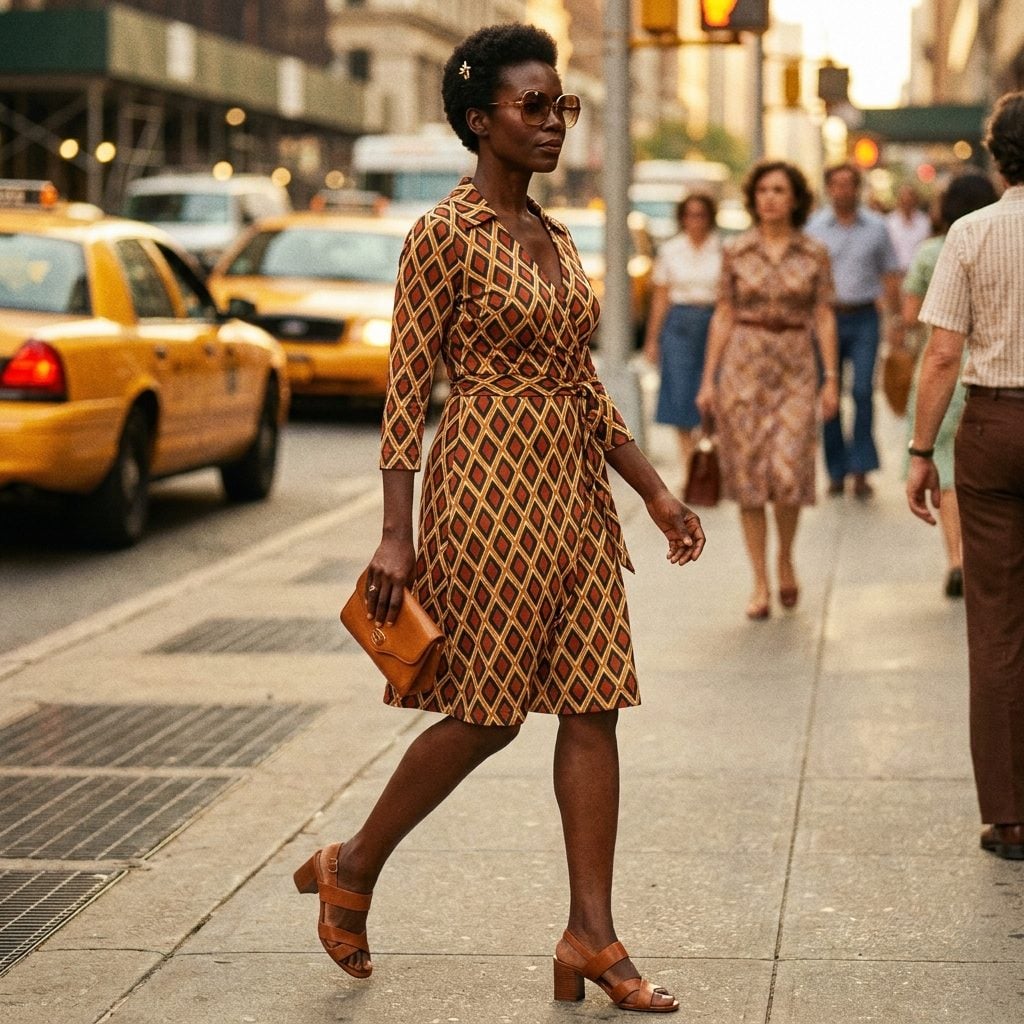
Diane von Furstenberg invented the modern wrap dress in 1972 and proceeded to sell five million of them by 1976. That number is not a typo. The geometric print version, loud, graphic, unapologetic, was the one that meant you were a woman who had places to be and opinions about things.
We wore them to work, to dinner, to school pickups, to everything. The genius was the adjustable waist: you tied it as tight or as loose as you needed, which meant the same geometric wrap dress fit on good days and difficult ones. That kind of emotional versatility in a garment should not be underestimated.
Wide-Lapel Leisure Suits in Powder Blue Polyester (The Outfit That Peaked at Saturday Night Fever)
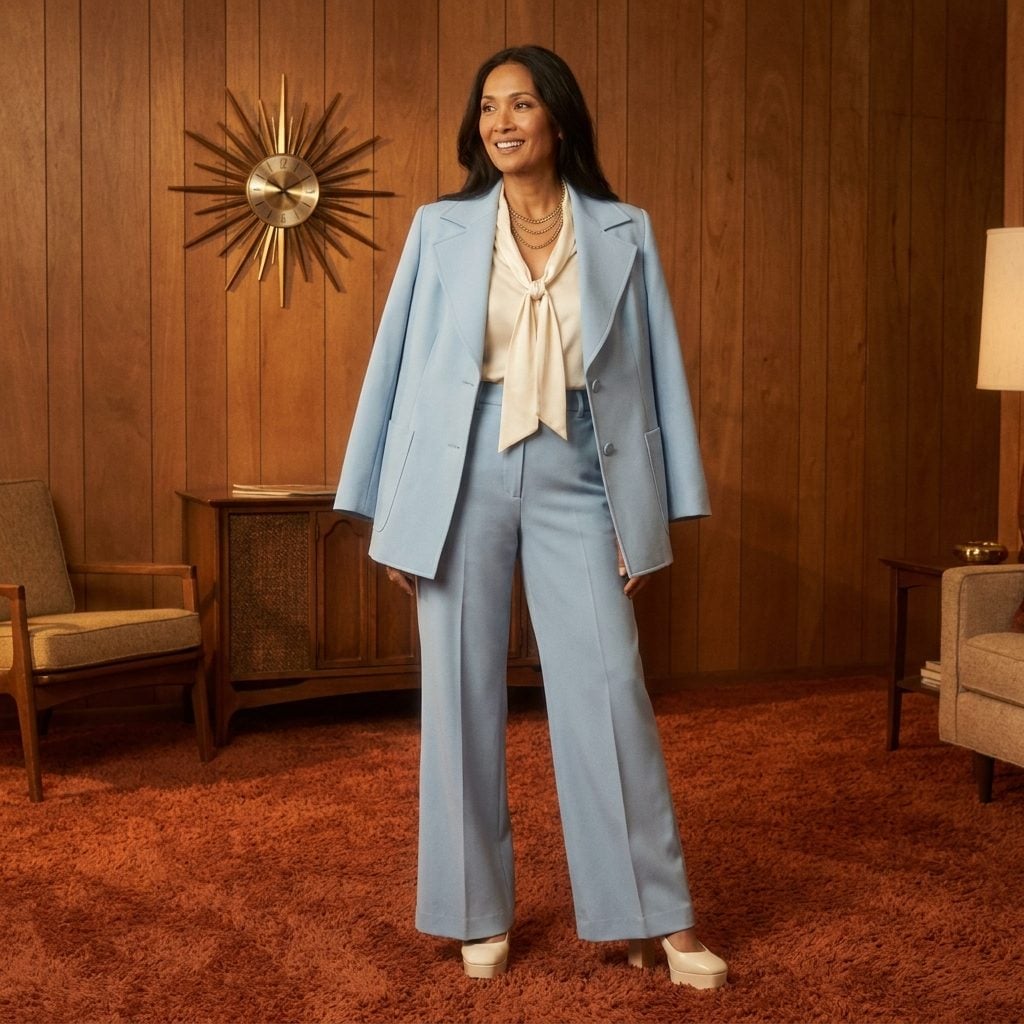
Polyester got a bad reputation it never entirely deserved. Yes, it didn’t breathe. Yes, static electricity was a genuine lifestyle problem. But a wide-lapel leisure suit in powder blue, with its silky drape and its barely-there weight, felt expensive in a way that cotton simply didn’t. We were not wrong about that.
The women’s leisure suit was borrowed directly from menswear and made no apologies for it. Wide lapels, wide trousers, a blouse underneath with a collar large enough to be its own separate statement. In cream or powder blue, it was the outfit of someone who had figured things out.
“We all had one hanging in the closet. The question was which color, and the answer was always both.”
Tube Tops and Ultra-Low-Rise Satin Pants: The Summer Party Uniform of 1977
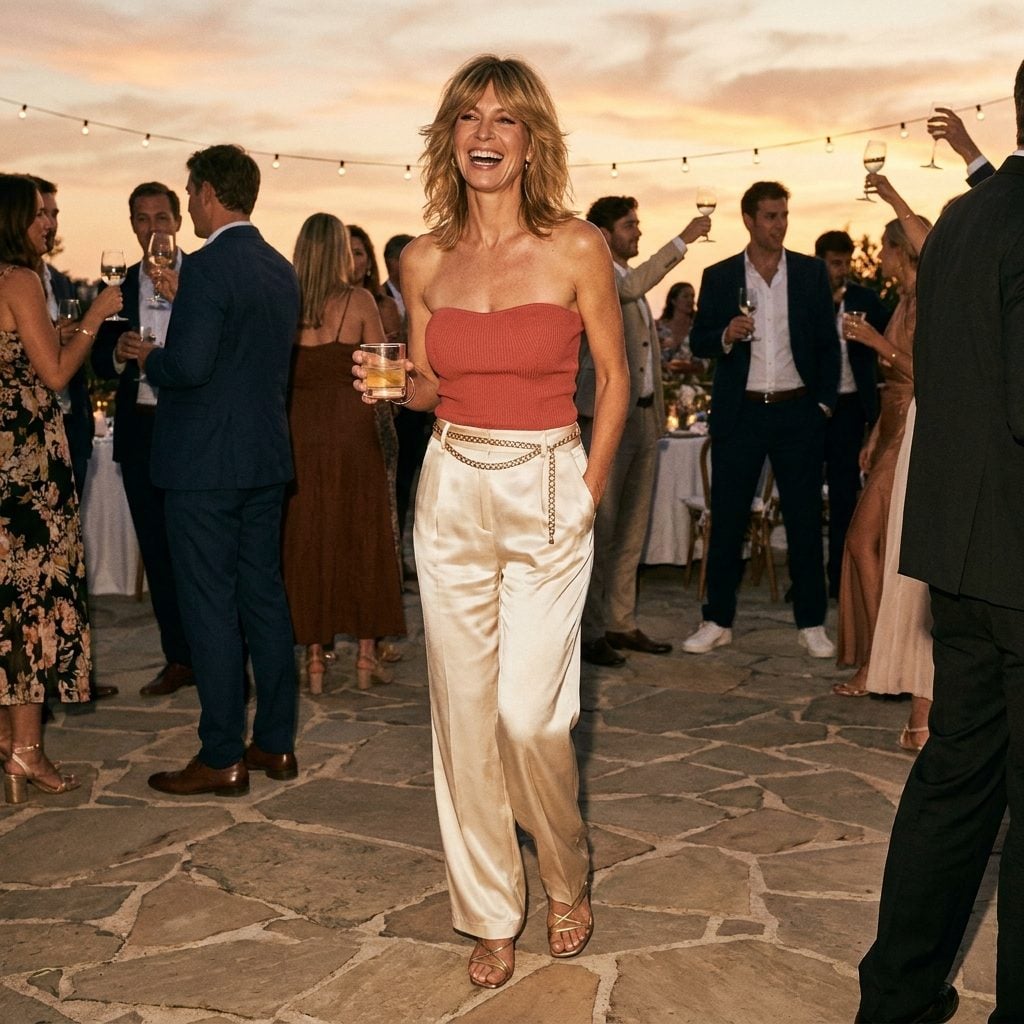
There was a gap. A deliberate, architectural gap between the bottom of the tube top and the top of the satin pants. We styled that gap. We thought about it. We wore a thin gold chain belt specifically to draw attention to it. By today’s standards this is a completely normal thing to do, but the particular confidence it required in 1977, at a backyard party, holding a sweating glass of something, was its own kind of era-specific bravery.
The satin wide-leg pants in champagne or blush were the fancy version of the decade’s denim obsession. And the tube top was the era’s great democratizer: one piece of ribbed cotton that somehow worked on everyone, required no fitting, and could be found at every mall in America for under ten dollars.
The Fringed Suede Vest You Wore for Three Consecutive Years Without Questioning It
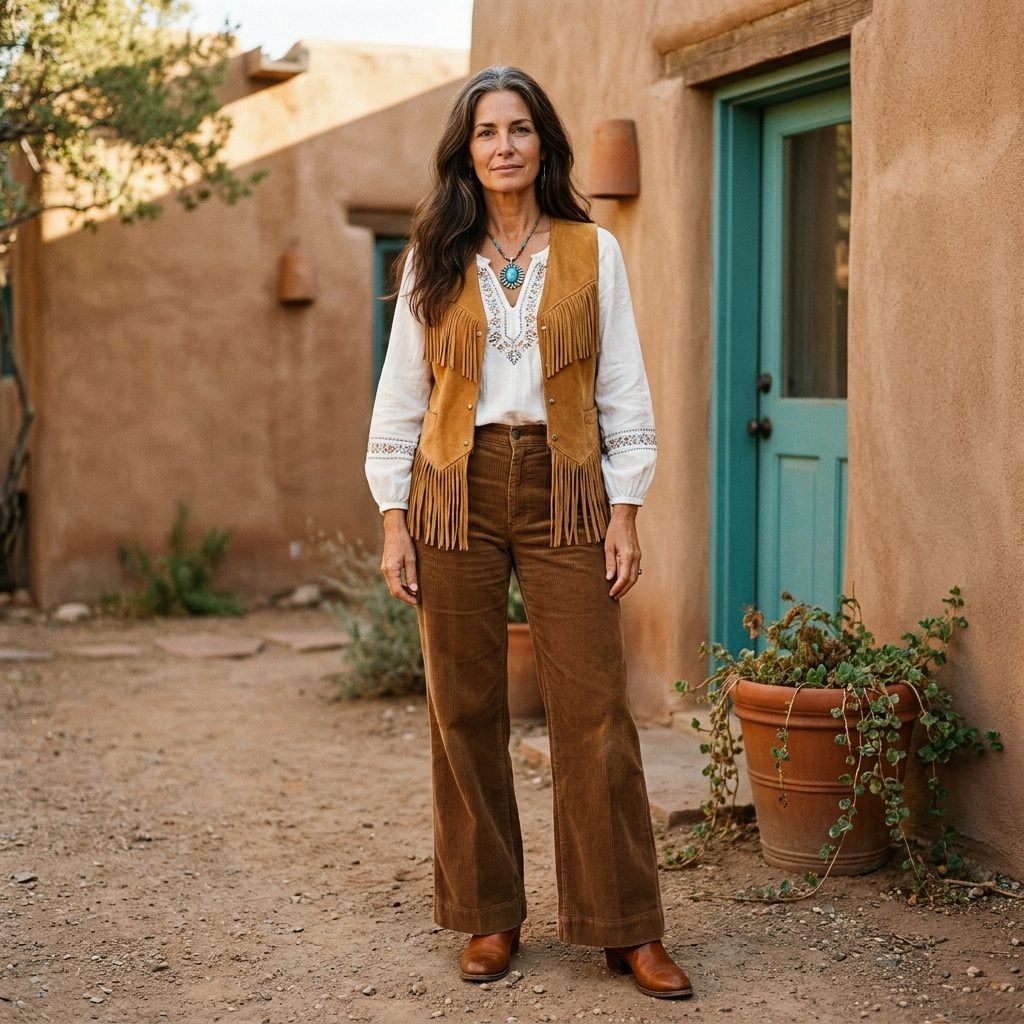
Every woman we knew had one. The specific shade varied, some ran golden tan, some were a deeper walnut brown, but the weight of it, the way it settled on your shoulders and moved when you walked, was universal. The fringe swayed. You were aware of the fringe swaying. It felt very much like the point.
We wore the fringed suede vest over peasant blouses, over turtlenecks in winter, over band tees before band tees were a style statement. It went to Woodstock-adjacent outdoor concerts. It went to college lectures. One woman we knew wore hers to a job interview at a law firm and got the job, which probably says more about 1974 than about interview strategy.
The fringe never quite went away. It just became something you stored in a cedar closet and rediscovered thirty years later, still perfect.
White Go-Go Boots That Worked With Mini Dresses, Bell-Bottoms, and Basically Everything Else
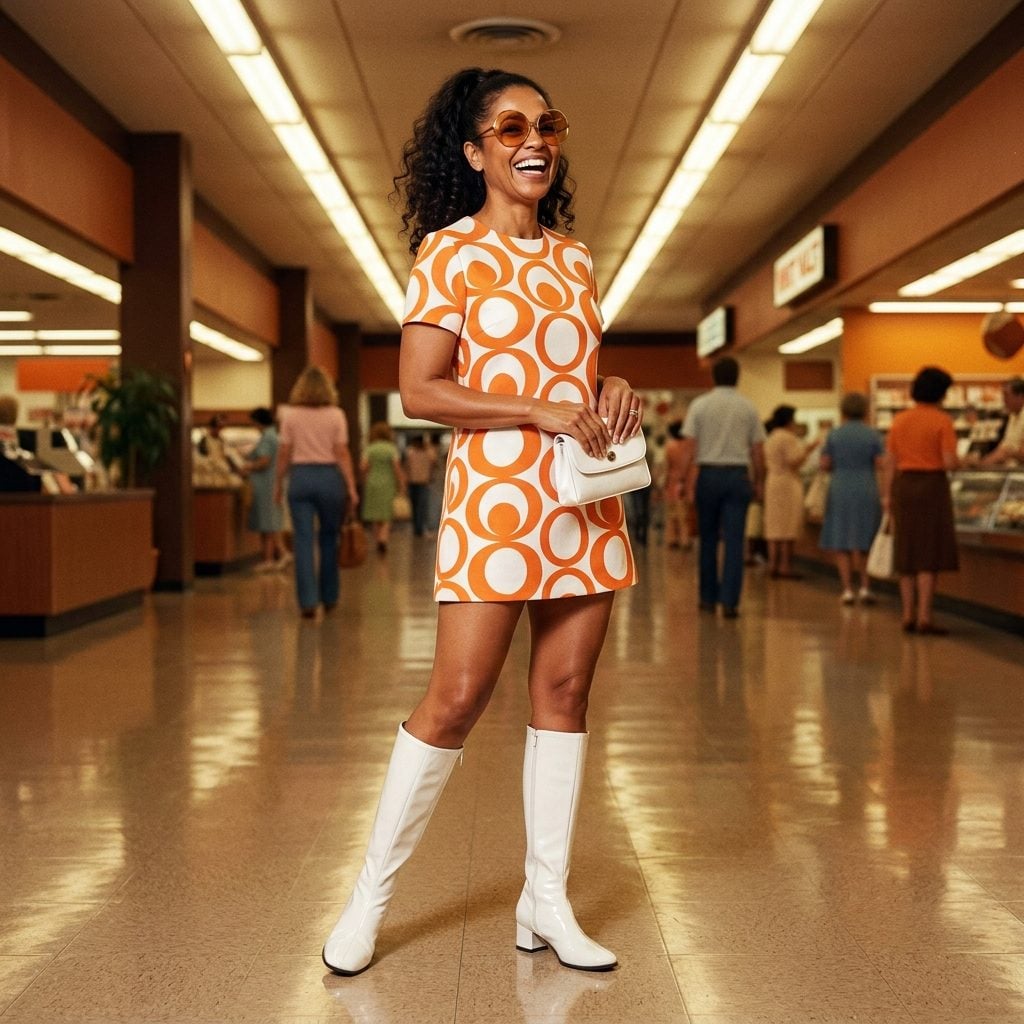
The go-go boot had its actual fashion peak in the mid-1960s, Nancy Sinatra, all that, but it lingered deep into the 1970s with a quiet stubbornness that we respected. By then, everyone owned a pair of the vinyl knee-high version in white, and nobody was letting go of them just because the decade had changed.
The remarkable thing was the versatility. A mini dress: yes. Wide-leg bell-bottoms with two inches of boot visible above the hem: also yes. A peasant skirt: somehow still yes. The white go-go boots were the rare piece that didn’t negotiate with the rest of your outfit, they simply arrived and everything rearranged itself around them.
Cleaning them was a ritual: a damp cloth, some vinyl polish, a careful hand. They scuffed easily and we cared enormously. Some things were worth the effort.
Elephant-Leg Pants So Wide They Practically Created Their Own Weather System
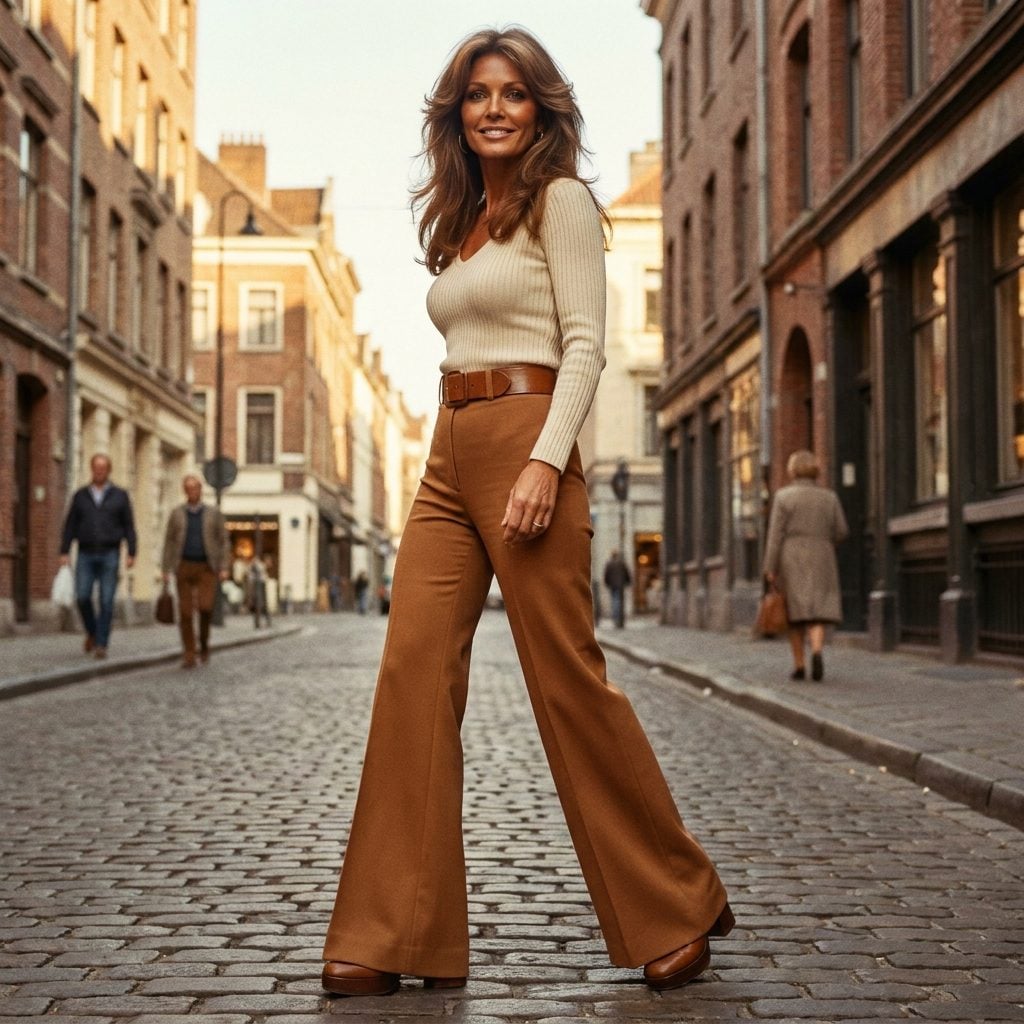
The hem had to drag on the ground. That wasn’t a fit problem, that was the point. We’re talking trousers so aggressively flared from the knee down that they functioned less as clothing and more as a curtain system for your lower body. You couldn’t see your feet. You couldn’t see the sidewalk. Occasionally, you couldn’t see the cat.
They were usually polyester in some shade of tobacco, mustard, or chocolate brown, and you wore them with a belt thick enough to hold back a horse. The silhouette was deliberate: tiny waist cinched to a point, then an absolute explosion of fabric below. Every step created a satisfying swoosh. We thought this was elegance, and honestly? We weren’t entirely wrong.
The Satin Disco Shirt Unbuttoned to a Level That Would Violate Dress Codes Today
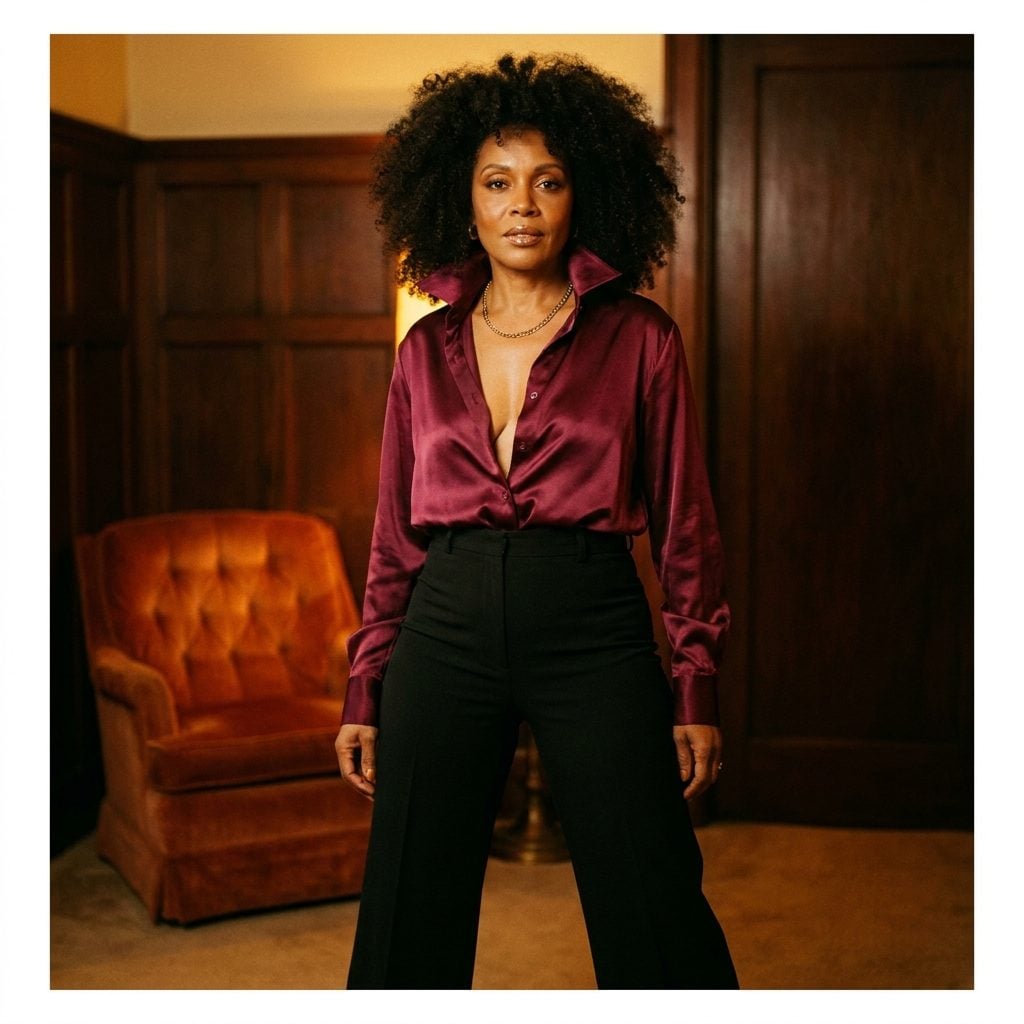
There was a specific number of buttons that were acceptable to leave undone in the 1970s, and the answer was: more than you think. The satin disco shirt, liquid, luminous, available in every jewel tone from peacock to plum, was engineered for maximum chest exposure. Not for men. For everyone. We wore them to parties with wide-leg trousers and called it dressed up, because it was.
The collar alone was an architectural achievement. Wide, pointed lapels that required no ironing because the satin simply fell in a way that looked intentional. You wore a gold chain in the open neckline. You wore it to dinner. You wore it to your cousin’s wedding. You felt, not incorrectly, like a minor celebrity.
A Macramé Vest Layered Over a Turtleneck and Maxi Skirt Like a Textile Thesis Statement
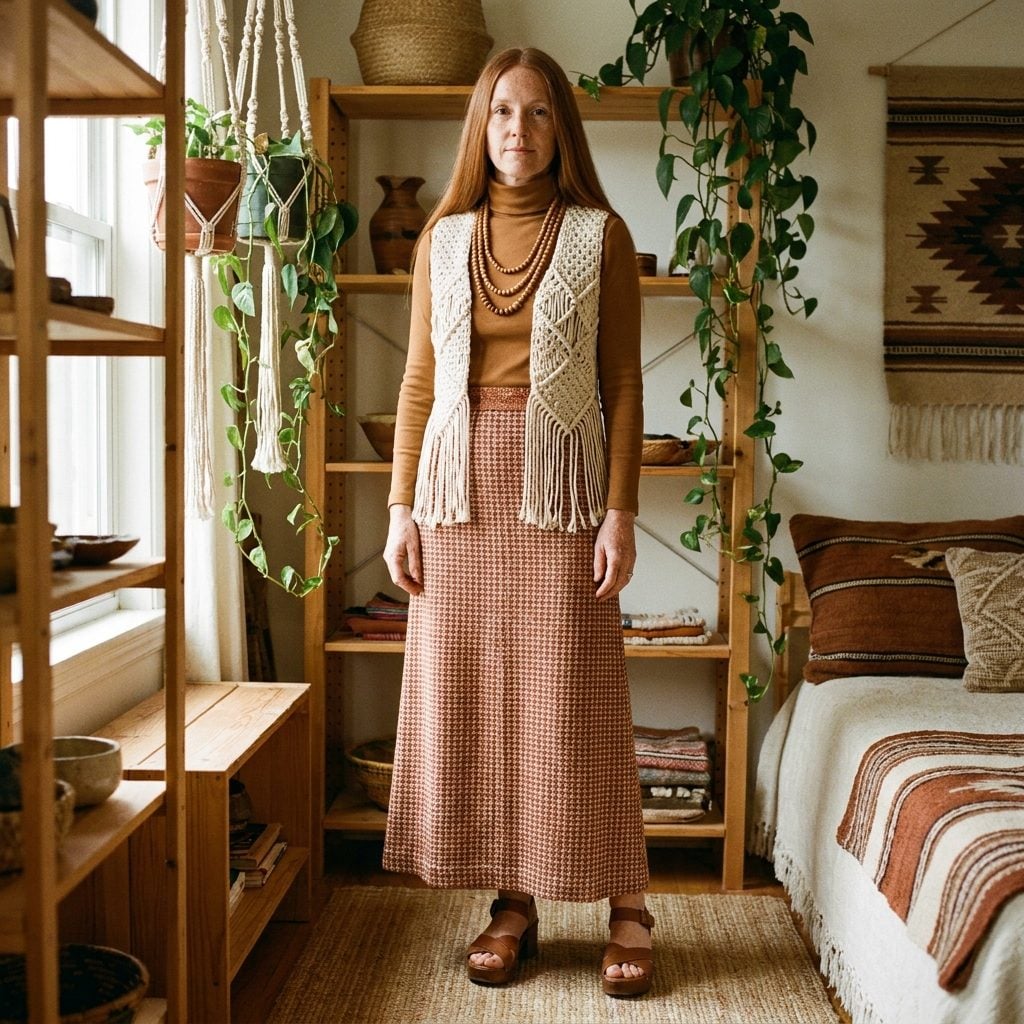
Someone in your neighborhood made it. Or you made it yourself in a crafts class. Or you bought it at a craft fair from a woman named Deborah who also sold beeswax candles and dream catchers. Either way, you owned a macramé vest, and you layered it over a turtleneck without a single second thought.
The vest was knotted cotton in natural or cream, sometimes with wooden beads woven into the fringe. It went over a ribbed turtleneck in tobacco or camel, and the whole thing fell to somewhere around the hip over a floor-grazing maxi skirt. This was called an outfit. It was considered put-together. And listen, there was something genuinely beautiful about it. Handcrafted, tactile, completely unironic. We were making a statement about art and craft and labor, even if the statement was mostly: I like knots.
High-Waisted Sailor Pants With Buttons So Decorative They Were Basically Jewelry
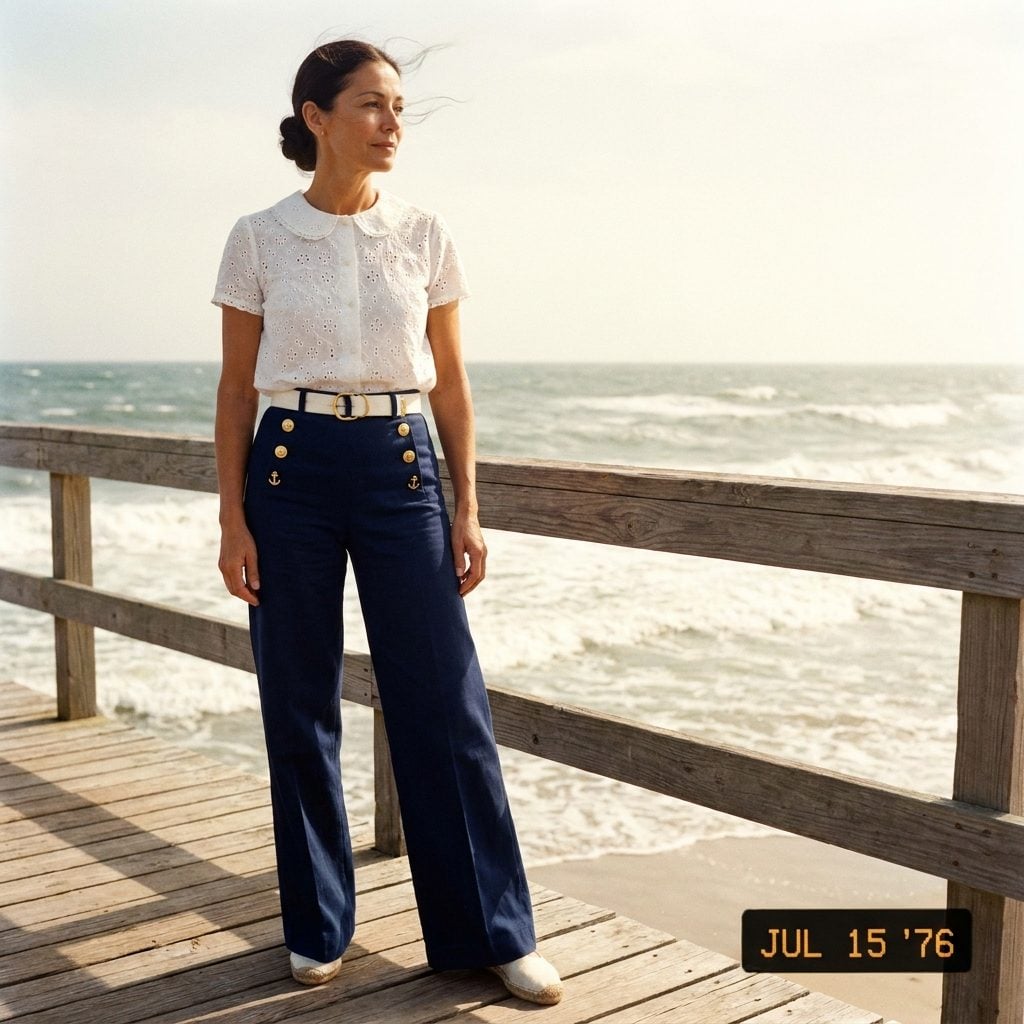
The buttons were the whole point. Two rows of them, usually brass or gold-tone, marching up a flat front panel that required no zipper because the panel simply folded across and buttoned. Getting dressed in the morning felt mildly nautical. You were not sailing anywhere. You were going to the shops.
These pants hit at the natural waist, actually at the waist, not below it, not at the hip, and from there, they either fell straight or flared wide. Paired with a broderie anglaise top and espadrilles, the look was summer vacation in the South of France, even if you were in Ohio. We did love a themed trouser.
‘The buttons were so large and decorative, they functioned as accessories. Nobody asked if you were wearing jewelry, the pants were the jewelry.’
The Quilted Housecoat You Wore Like It Was Couture and Answered the Front Door in Without Shame
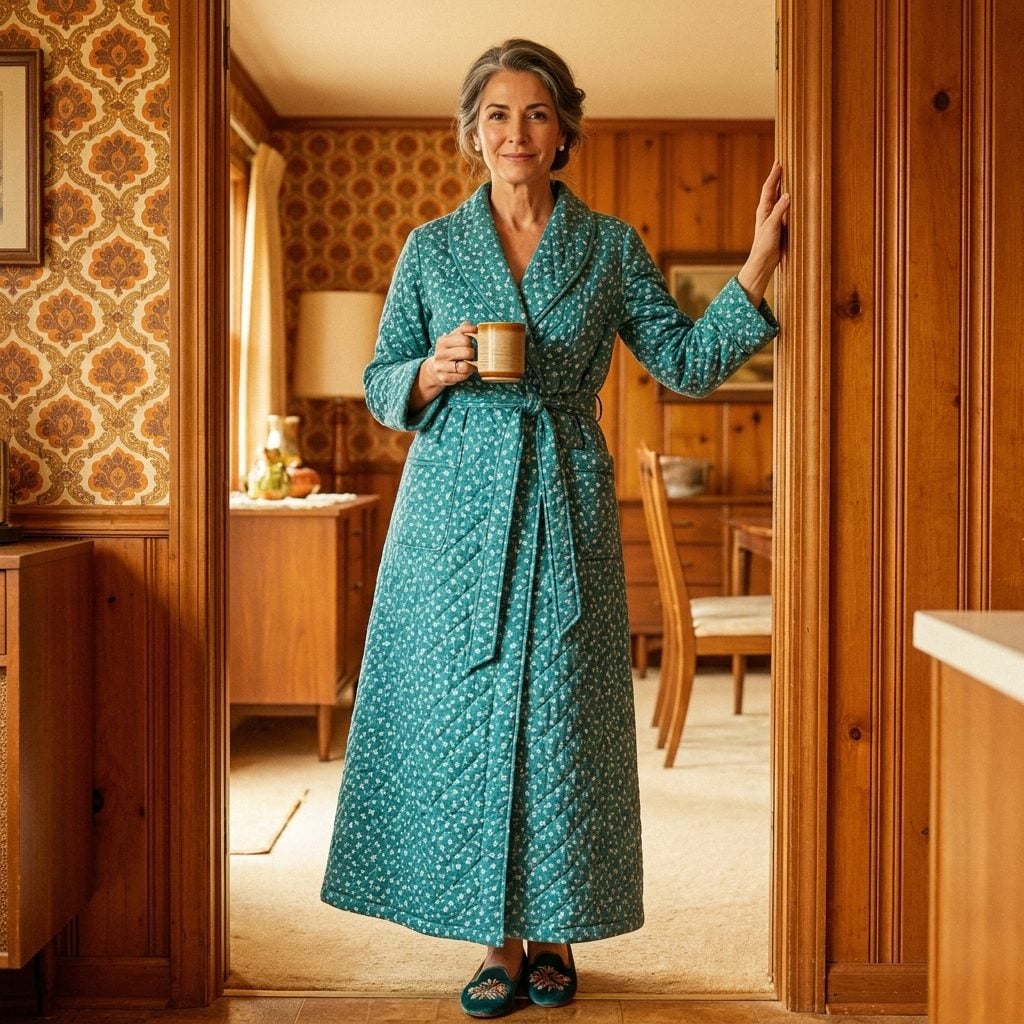
This was not loungewear. Do not call it loungewear. The quilted housecoat occupied a category of its own: domestic glamour, available in every household between 1968 and 1981. Floor-length, wide-lapeled, belted at the waist with a matching fabric sash, and quilted in patterns that ranged from tiny florals to abstract geometric to something that looked loosely like a Chinese screen print.
Your mother had one. Your grandmother had four. And when the doorbell rang on a Saturday morning, there was absolutely no question of changing out of it. You answered the door, coffee in hand, housecoat trailing behind you, and you looked, somehow, completely dignified. The fabric had weight. The construction was serious. It was a robe that had decided it was better than that.
A Floor-Length Hostess Gown in Sequins or Metallic Thread That Treated Dinner at Home Like a Black-Tie Event
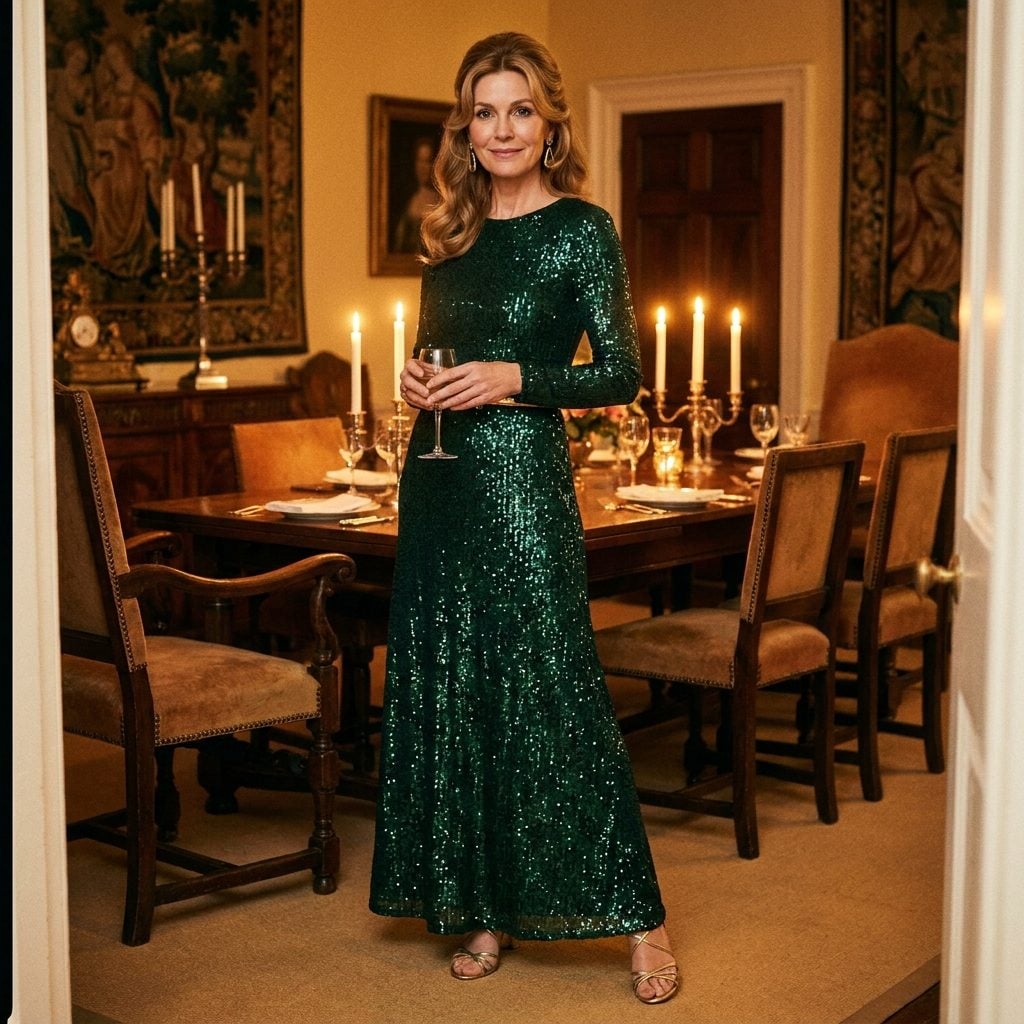
For hosting a dinner party in the 1970s, you needed a hostess gown. Not a nice dress. A gown. Floor-length, often sequined or shot through with metallic thread, with long sleeves and a deep neckline, because the occasion, twelve people, fondue, Burt Bacharach on the record player, absolutely demanded it.
These weren’t worn to go out. They were worn specifically to stay in, which makes them even more committed as a fashion statement. You were saying: I dressed for this dinner at my own table with the same seriousness I would bring to a ballroom. The sequins caught the candlelight. The fabric swished when you moved between kitchen and dining room. Guests felt the full weight of being hosted.
Department stores stocked entire sections of them. Sears had them. JCPenney had them. They came in emerald, sapphire, burgundy, and a particular shade of burnt orange that appeared in approximately 40% of all 1970s photographs.
Patchwork Denim Jeans Stitched Together From Every Shade of Blue You’d Ever Owned
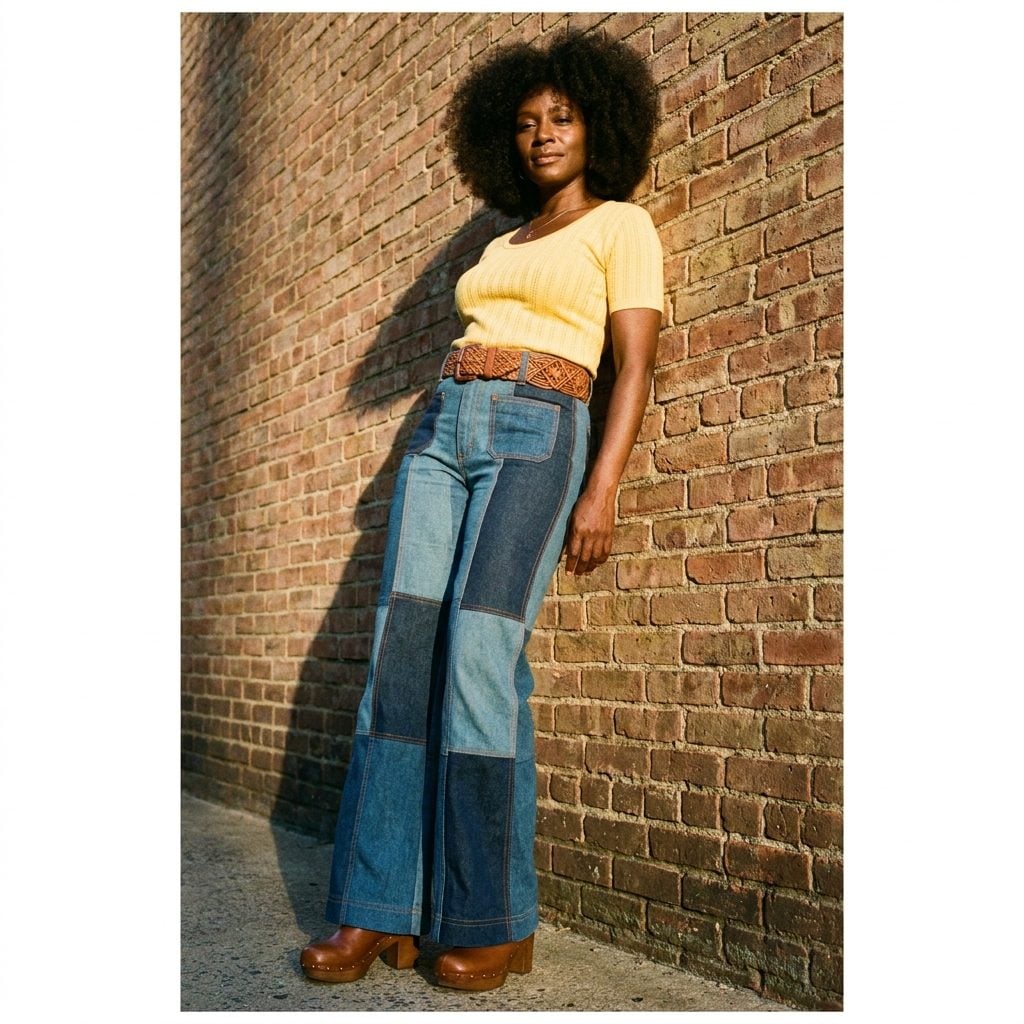
No two pairs were exactly the same, which was the whole idea. Patchwork denim jeans were assembled from scraps, sometimes literally from jeans that had worn through at the knee, cut apart and rearranged. The result was a pair of trousers that looked like a fabric collage: pale blue here, dark indigo there, a square of nearly-white chambray somewhere in the middle, all held together with visible contrast stitching in white or orange.
They were the perfect garment for an era obsessed with handcraft and individual expression. No factory could replicate the specificity of a patchwork pair, or at least, that was true until factories started trying. The high-waist, the slight flare at the hem, the thick topstitching: worn with a tucked-in knit top and platform clogs, this was the 1970s distilled into a single outfit.
A Poncho That Made Every Suburban Woman Look Vaguely Ready for Woodstock
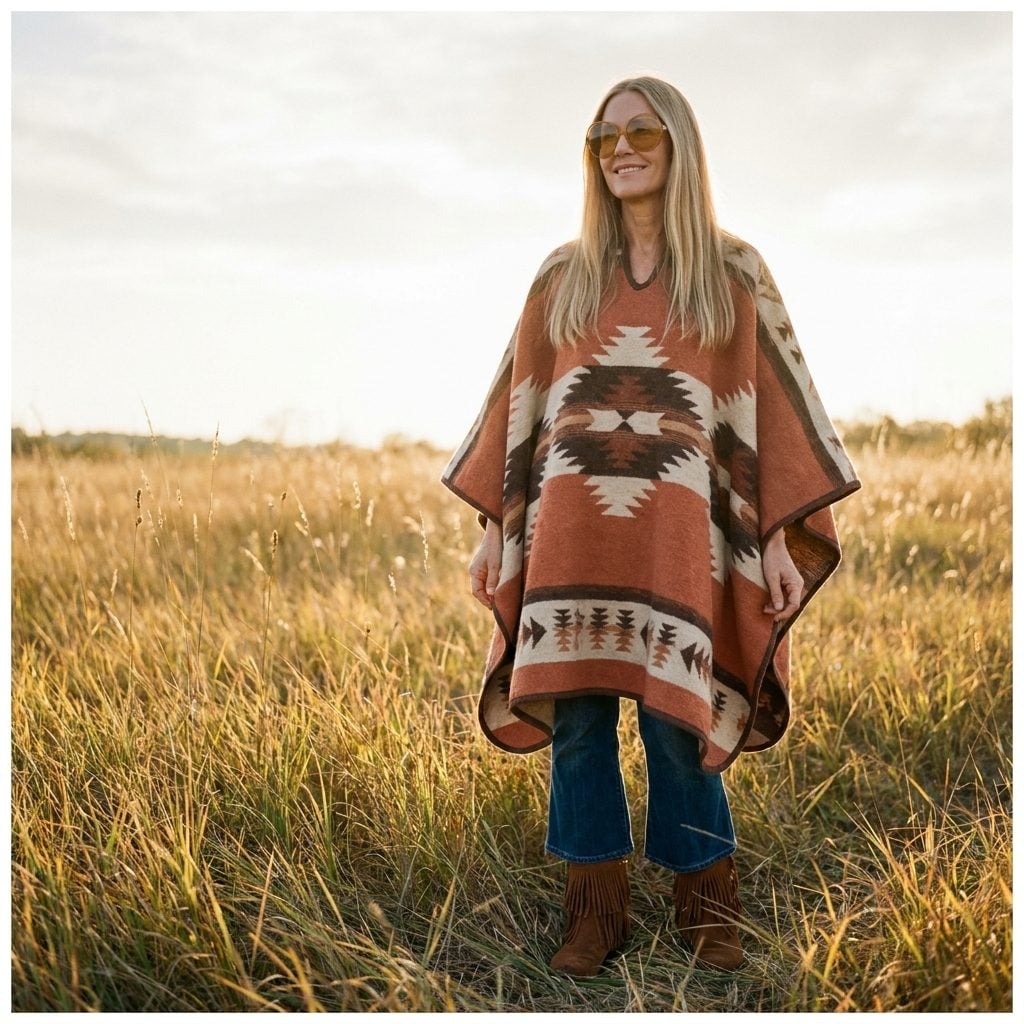
Arms out, it was basically a blanket with ambitions. Arms down, you were a geometric pattern in human form. The poncho required no fitting, no tailoring, and absolutely no zippers, you simply dropped it over your head and became 1970s. This was its genius and its limitation simultaneously.
They came in woven wool with Aztec or Native-inspired patterns in terracotta, cream, and chocolate, or in crocheted acrylic in whatever colors your aunt had leftover from her last project. You wore them with wide-leg jeans and suede fringe boots and big round sunglasses, and for a specific window of time in the early 1970s, this was not a costume. This was a Tuesday.
Every woman owned one. Women who had never been within four states of a music festival owned one. It was comfortable, it was warm, and it communicated, vaguely, aspirationally, that you had a free spirit. The poncho asked nothing of you except to exist within it, which is an underrated quality in clothing.
The Ribbed Turtleneck Tucked Into Corduroy Flares With a Brass Belt Buckle the Size of a License Plate
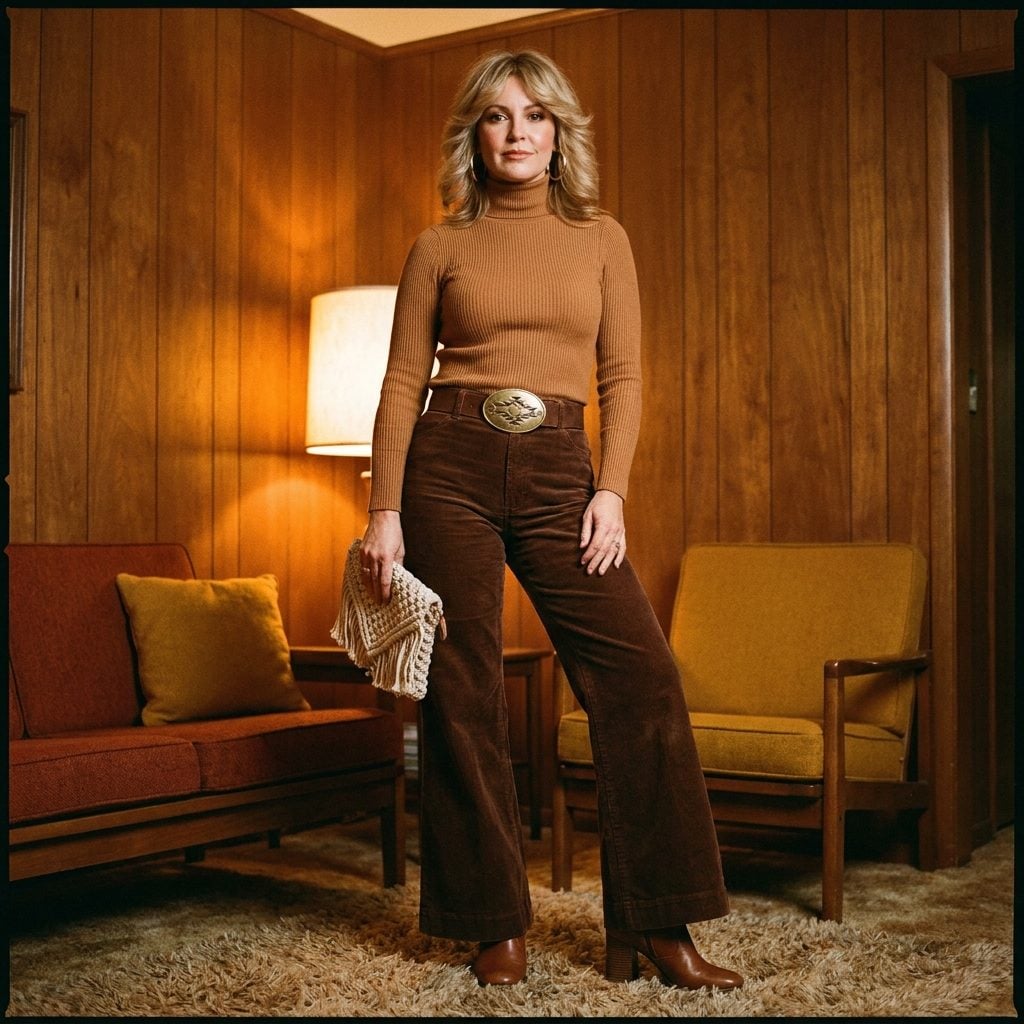
That belt buckle wasn’t an accessory. It was a statement of intent, a declaration that you had arrived and intended to be noticed from across the room. The corduroy made a sound when you walked, a soft rhythmic swish that announced you before you rounded any corner, and the turtleneck tucked in so tight you had to readjust it approximately every twenty minutes.
We found these at JCPenney and Sears, usually displayed on a mannequin with a coordinating vest on top (because why not?), and we wore the full look to everything: school, holiday dinners, the mall, Sunday errands. The buckle left a dent in your stomach if you sat down too fast. Gen Z wouldn’t understand a single element of this outfit, and honestly, they’re poorer for it.
The Velvet Pantsuit That Made You Feel Like You Were Hosting Your Own Talk Show
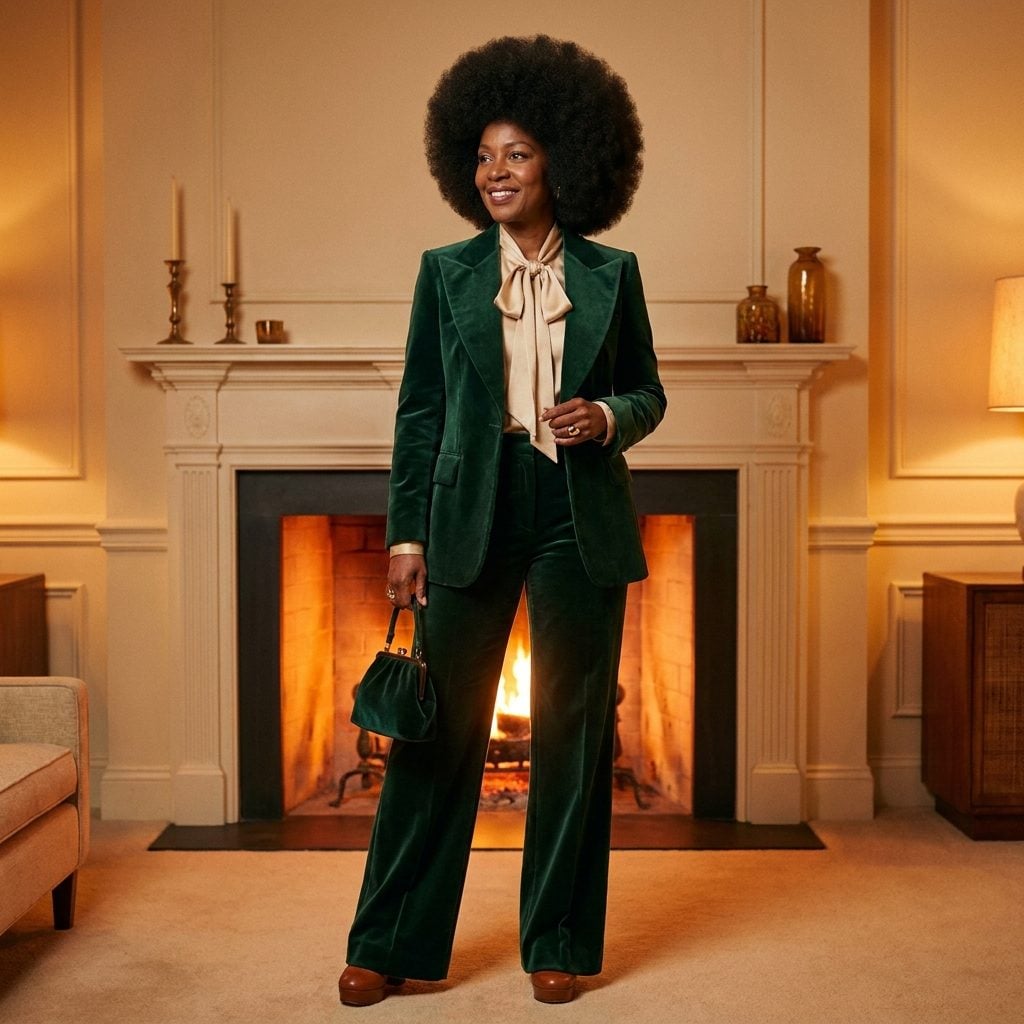
There is no modern garment that generates quite the same combination of authority and festivity as a well-cut velvet pantsuit. You wore this to holiday parties and felt like you could moderate a panel discussion or accept a Grammy at any moment. The lapels were wide. The trousers were wider. The entire silhouette was enormous and completely intentional.
Burgundy was the color of choice. Forest green was a close second. Navy velvet for the woman who considered herself the practical one. Your mother might have worn hers with a cream blouse tied in a bow; your cooler aunt wore hers with nothing underneath and a single gold chain. Both were correct.
The Prairie Dress With More Ruffles Than One Garment Has Any Right to Contain
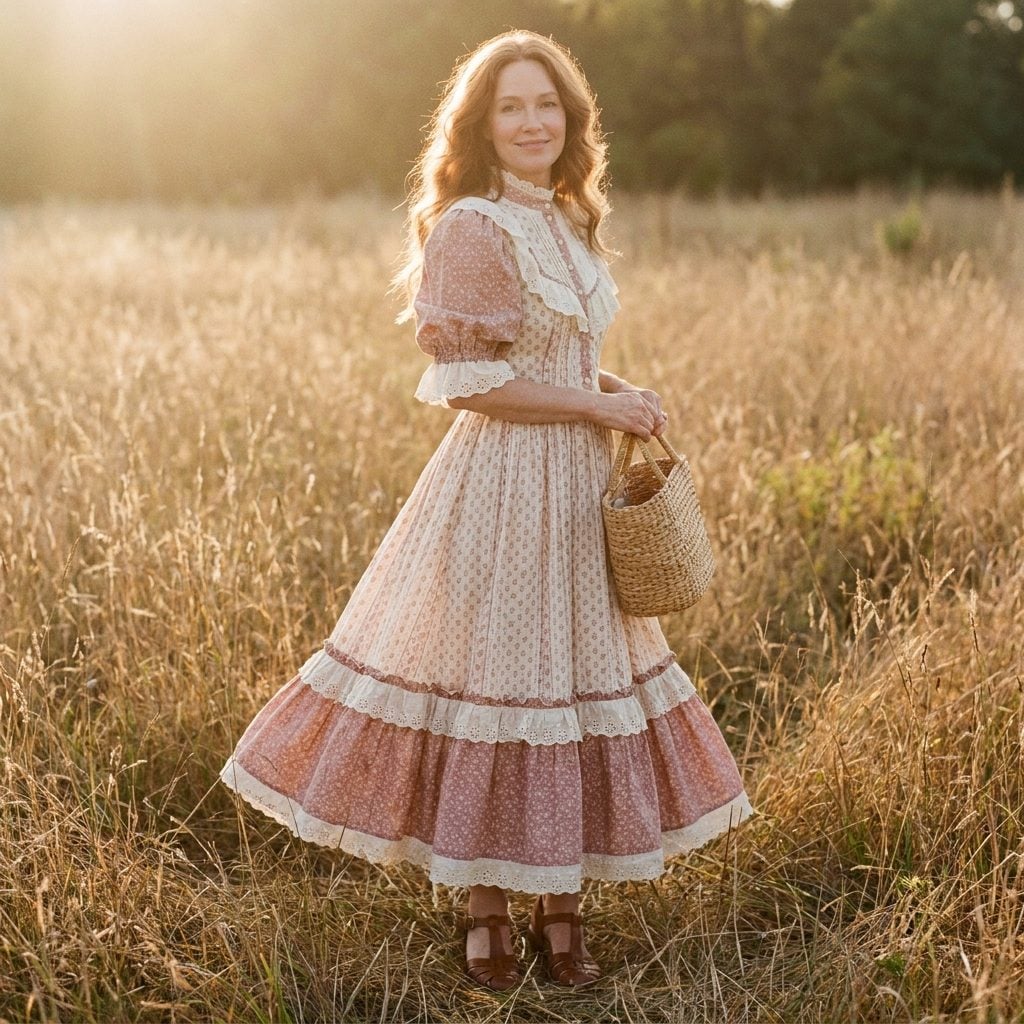
Gunne Sax made the definitive version of this dress, and if you had one, you knew you had something. The ruffles were layered. The lace was delicate, the sleeves were puffed to a degree that today’s Gen Z would read as a costume, and the entire garment said “I am simultaneously wholesome and very fashion-forward,” which in 1975 was a perfectly coherent message.
Girls wore these to school dances, to Easter Sunday, to any occasion that required looking “nice” without looking like their mother. The irony is that their mothers were also wearing a version of this. Laura Ingalls Wilder was quietly setting trends for an entire decade.
Candie’s Wooden Slide Heels Worn With Tube Socks Because We Had No Fear
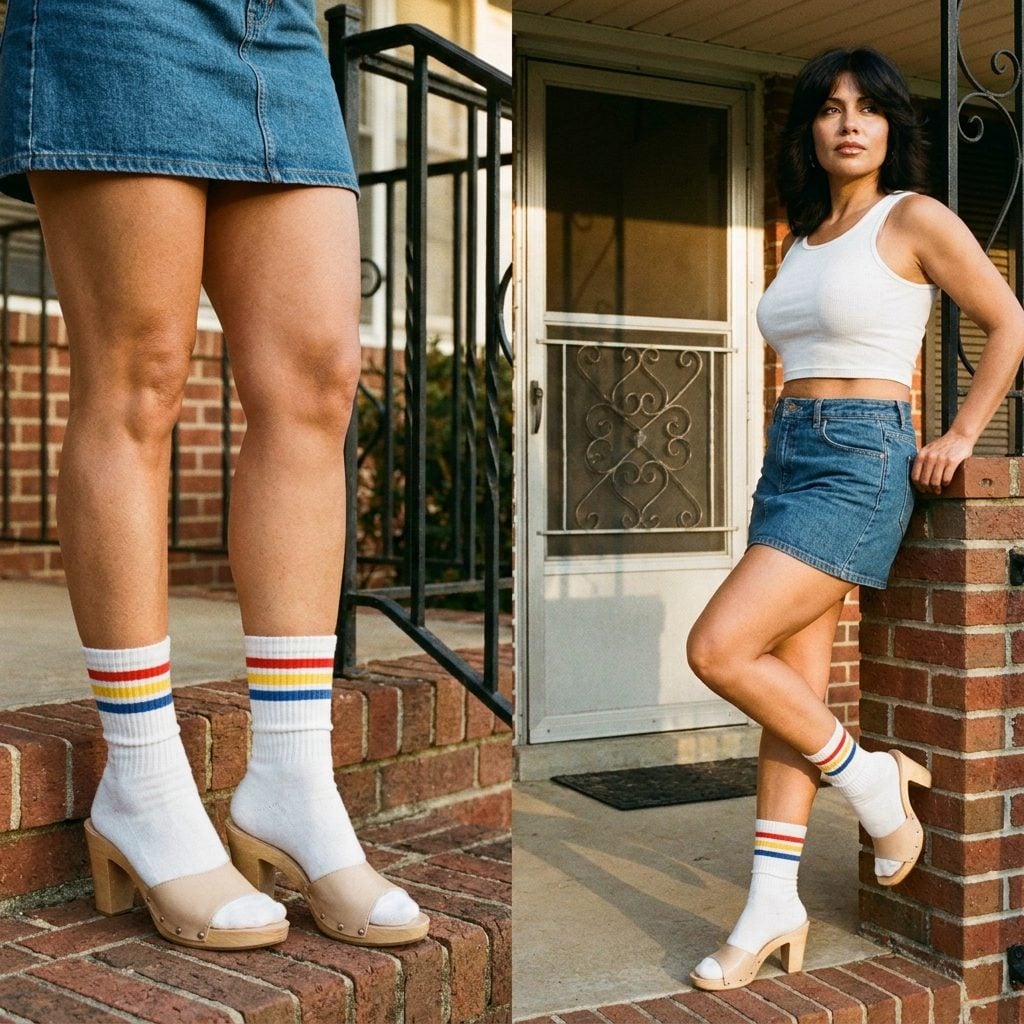
Candie’s slides had a wooden sole, a single leather strap over the toes, absolutely zero arch support, and a heel high enough to qualify as an adventure sport. We wore them with tube socks. On purpose. With short skirts. And we thought, genuinely and without irony, that this was the peak of cool.
The sound those wooden soles made on a hallway floor was its own kind of status symbol. Everyone knew you were coming. You couldn’t sneak anywhere in Candie’s, and you didn’t want to. The tube socks pulled up to mid-calf completed the look in a way that defies explanation to anyone born after 1985. Gen Z is currently bringing tube socks back, so perhaps we were simply ahead of schedule.
“The sound those wooden soles made on a hallway floor was its own kind of status symbol. Everyone knew you were coming.”
The Iron-On Letter T-Shirt Paired With Gym Shorts That Were, Respectfully, Extremely Short
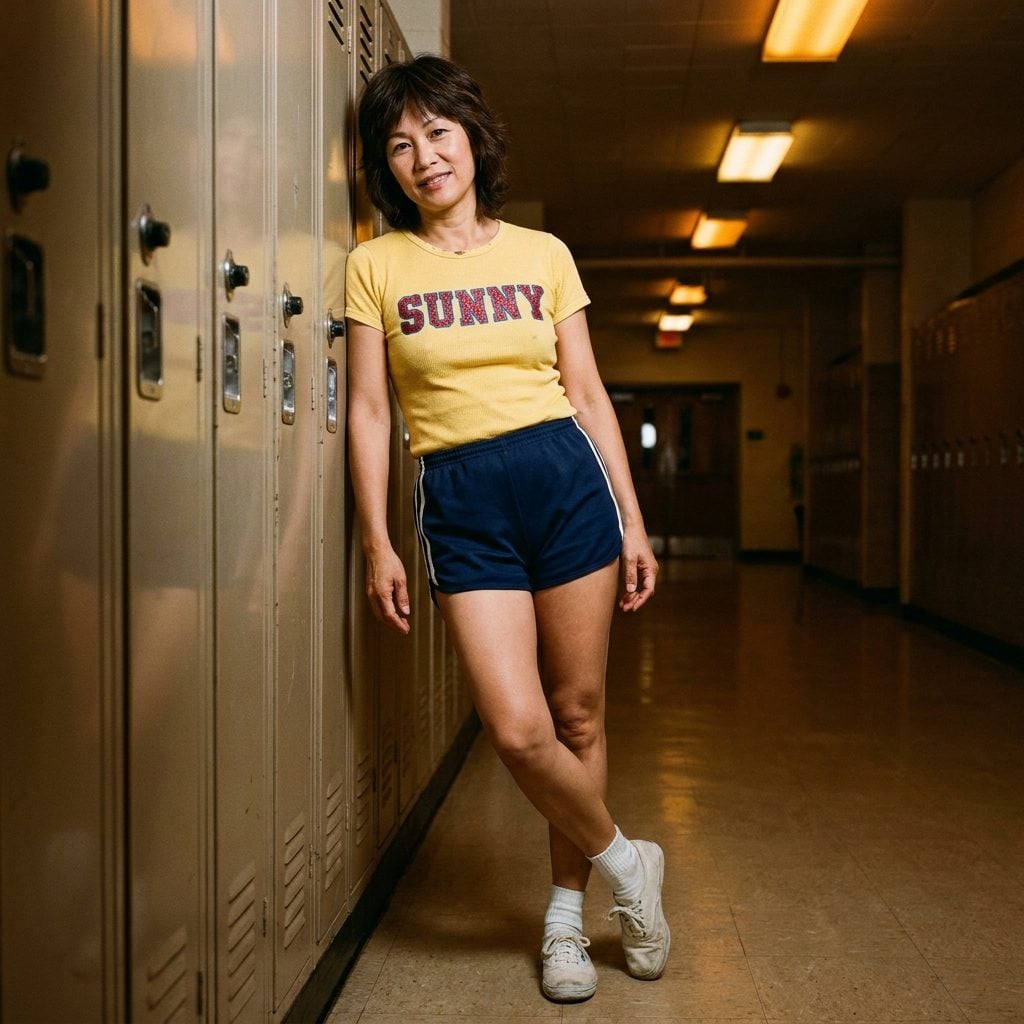
The iron-on letters came in sheets from the craft aisle at Kmart, you pressed them on with a household iron and a damp cloth, and they lasted approximately four washes before one of the letters started peeling up at a corner. And then you kept wearing it anyway, the peeling letter flopping slightly, because that shirt was yours and you’d made it yourself.
The gym shorts require their own moment of reflection. They were short. We understand that now. At the time they were simply what shorts looked like, what gym class looked like, what Saturday looked like, and nobody questioned it because everyone was wearing the same ones. Paired together, this outfit was the unofficial uniform of the American summer from roughly 1974 to 1981.
The Wrap Jersey Dress in a Swirling Earth-Tone Print That Looked Good on Every Single Body
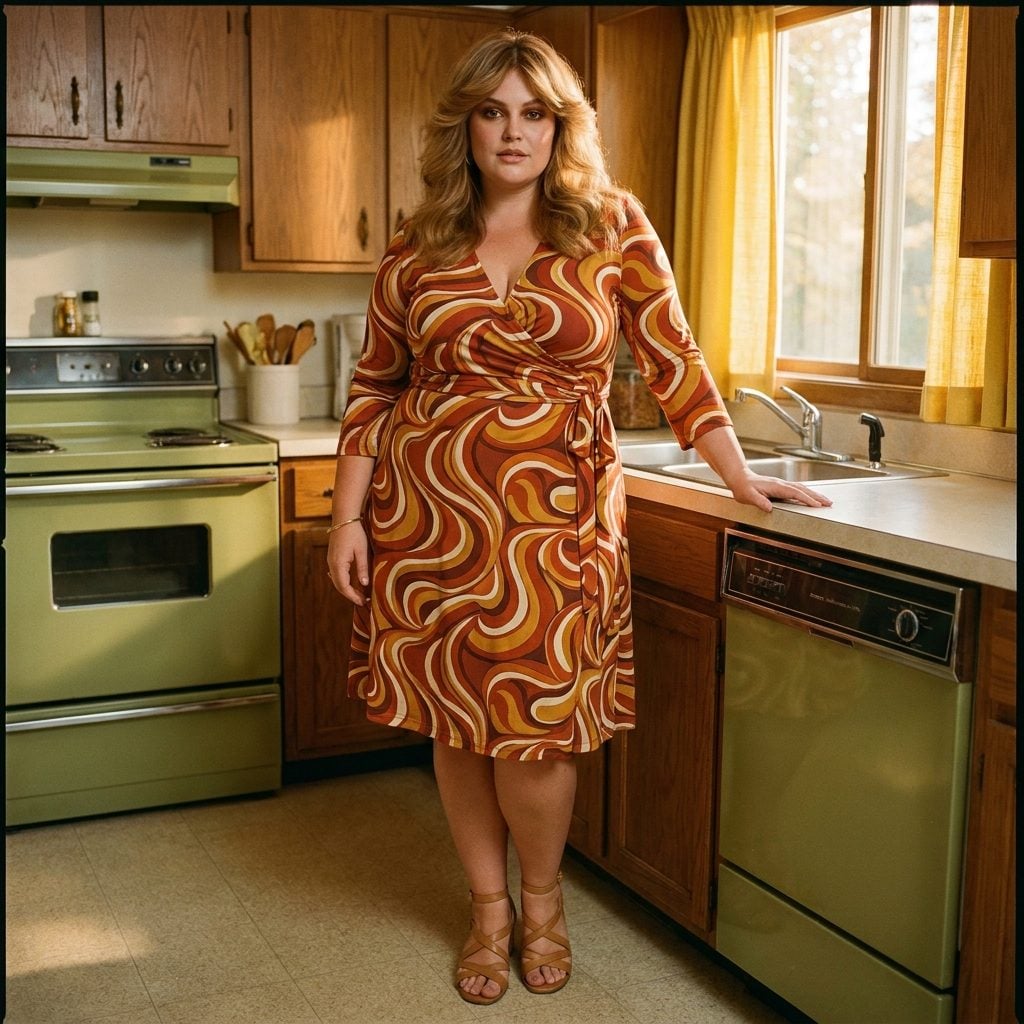
Diane von Furstenberg’s wrap dress arrived in 1974 and immediately became the great equalizer. Every body looked right in it, and women understood this instinctively, which is why they bought them in every print available and wore them to work, to dinner, and everywhere in between.
The jersey fabric meant it packed without wrinkling, which felt like an actual miracle in an era before wrinkle-release spray. The prints were the real story: swirling, bold, earth-toned in ways that Gen Z would now call “very Pinterest” but we just called Tuesday. You could find DVF originals at department stores and knock-offs at every chain in the mall, and both versions held their shape beautifully for years.
The Shaggy Afghan Coat That Made Every College Student Look Like an Off-Duty Rock Star (or a Wet Sheepdog, Depending on the Weather)
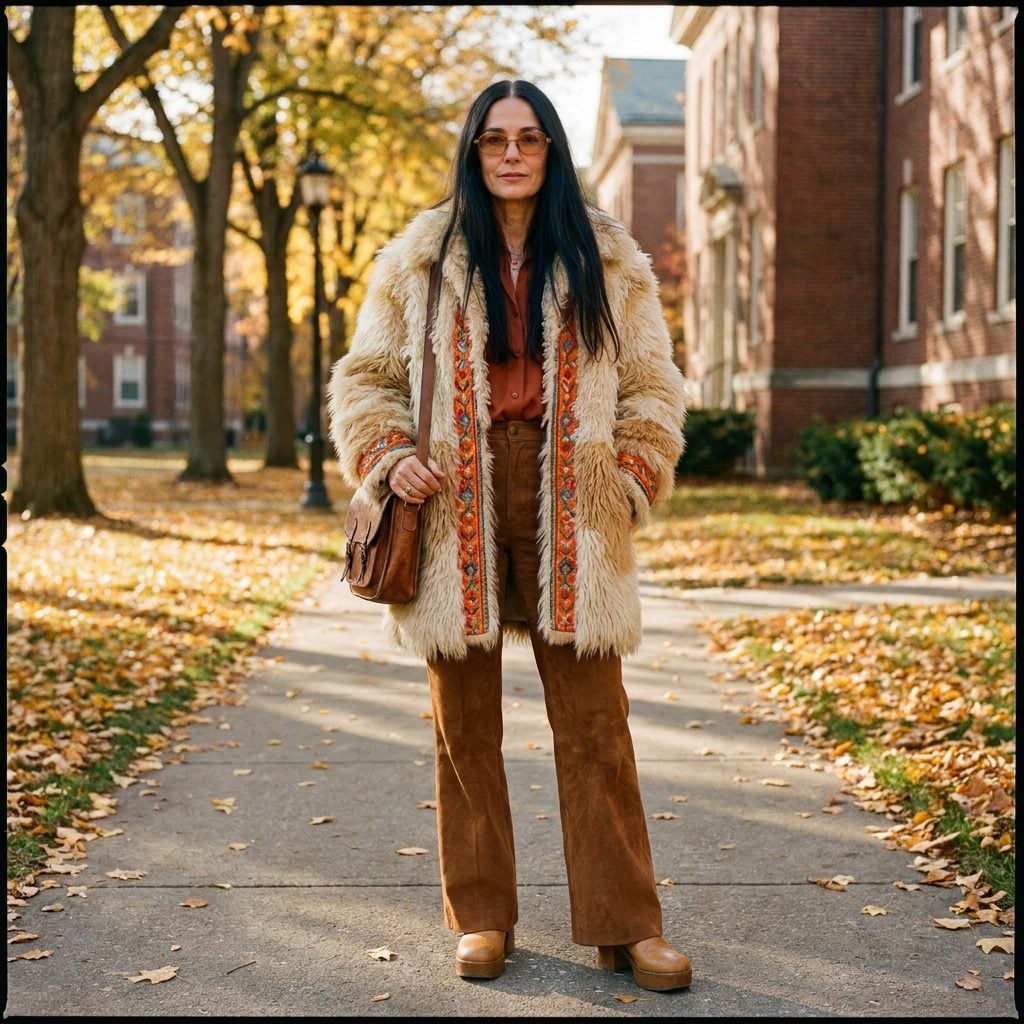
These came from import shops that smelled of patchouli and incense, or sometimes directly from a friend who’d been to Morocco or claimed they had. The embroidery was intricate and colorful along every edge, and when you put it on for the first time you felt, without question, that you were moments away from being photographed by a Rolling Stone photographer outside a concert venue.
The problem was rain. In dry weather, an Afghan coat was a masterpiece. In rain, or even heavy humidity, it turned into something that smelled deeply and specifically of wet animal and took approximately three days to fully dry. We wore them anyway. We wore them constantly. We wore them to class and to protests and to concerts and on dates.
Nobody who grew up in the 1970s saw one of these coats recently without feeling a specific, complicated emotion that is equal parts pride and nostalgia and slight embarrassment. All at once. That’s fashion.
Would you like to save this?
Please note that some of the imagery in this article were created with the aid of AI image generators.