
🔥 Would you like to save this?
Editor’s note: We aimed for 35 but only found 10 genuinely distinct items worth including in this first installment. Tightening this up rather than padding with duplicates.
The suitcase weighed thirty pounds before you put a single thing in it. The bathroom counter at home looked ransacked. Somewhere between the kitchen and the station wagon, your mother tucked a zippered pouch of traveler’s checks into her purse with the solemnity of someone transporting state secrets. Packing for a 1970s vacation was its own multi-day event — and the stuff that went into those bags would leave anyone under forty genuinely bewildered.
35. The Massive Hard-Shell Samsonite Suitcase That Could Survive a Plane Crash and Probably Did
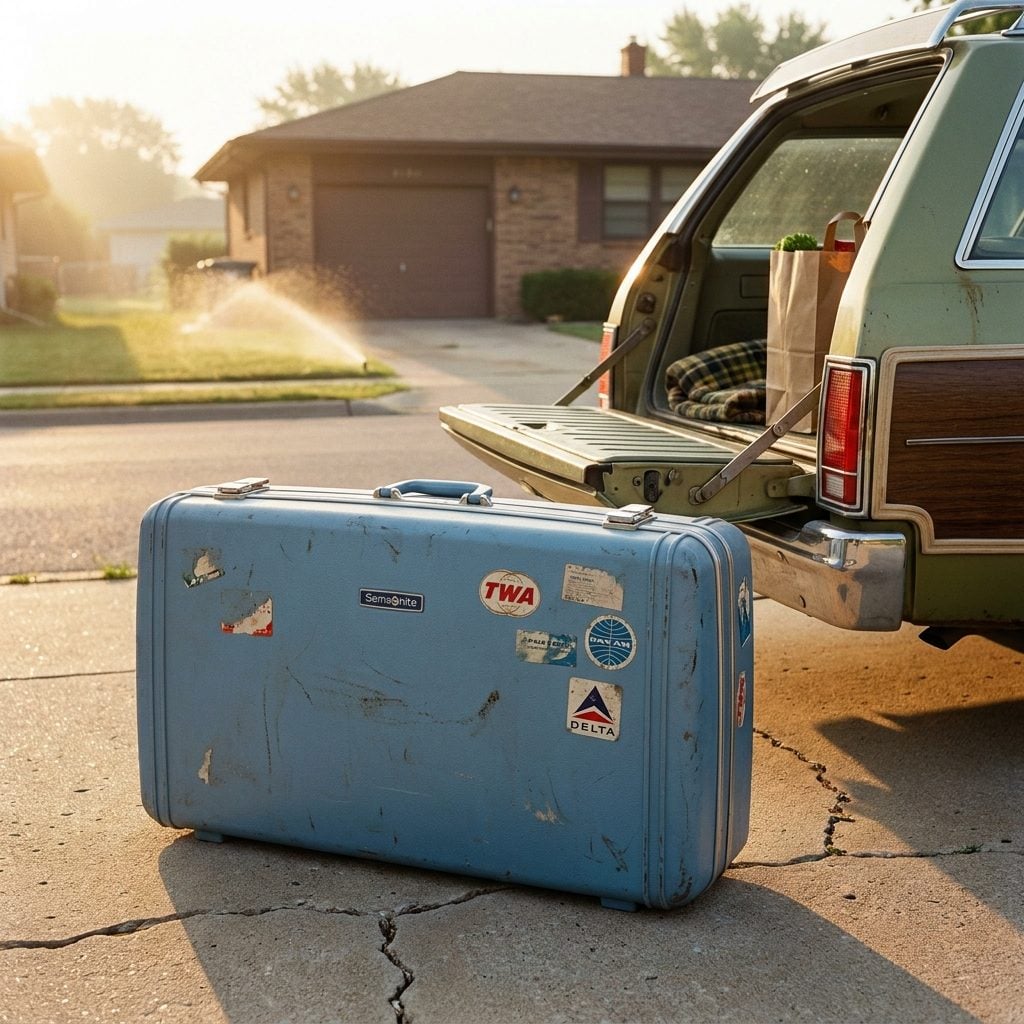
You didn’t roll this thing. You hoisted it, white-knuckled the rigid handle, and your shoulder filed a formal complaint for days afterward. The Samsonite Saturn or Silhouette — powder blue, maybe ivory — was built from some kind of indestructible polypropylene shell that airport baggage handlers couldn’t dent, though God knows they gave it an honest effort. Those chrome latches clicked shut with a finality that meant business.
Forty pounds empty? Sure. Nobody blinked. We’d just pack heavier and let Dad deal with it, because there were no wheels, no telescoping handles, no ergonomic anything. You gripped and you walked.
The inside had fabric dividers and elastic straps that maintained the illusion of organization for about thirty seconds before everything shifted into a compressed mass of polyester and denim. But the shell held. You could stack three of these on a motel luggage rack and the bottom one wouldn’t even groan.
34. A Printed Paper Road Atlas Folded Beyond All Recognizable Geometry
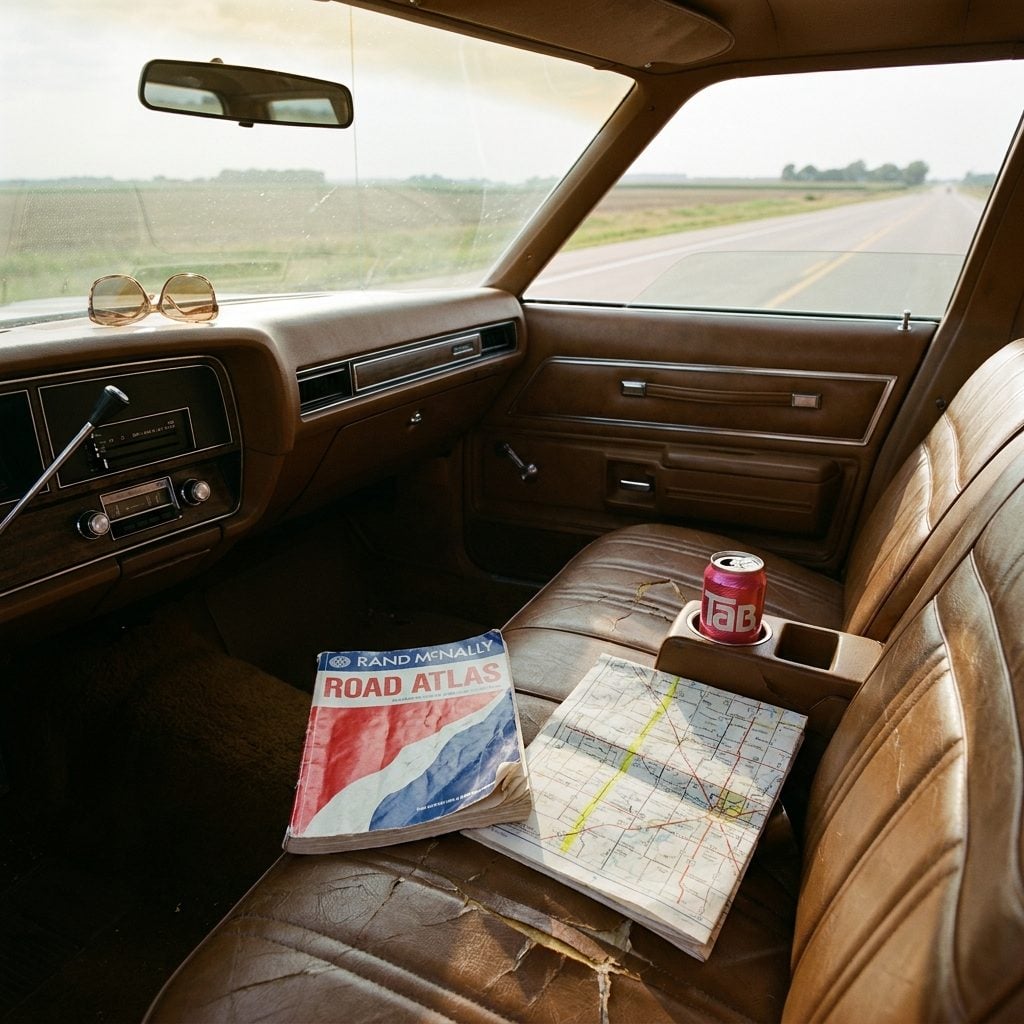
No human being has ever successfully refolded a Rand McNally road atlas. I refuse to believe otherwise. By day two of any road trip, the thing had been wrestled into a shape closer to a paper football than a reference book, and it lived on the passenger-side floor for the remainder of the vacation.
Mom would study it the night before at the motel — tracing the route with her finger, scribbling exit numbers on scratch paper because she didn’t trust herself to find the right page at 60 miles an hour. Smart woman. Dad, naturally, would refuse to consult the atlas at all until they were irreversibly lost, at which point he’d grab it from the floor and hold it against the steering wheel while driving. A whole generation survived this somehow.
33. Pantyhose Carefully Rolled to Avoid Snags During Travel
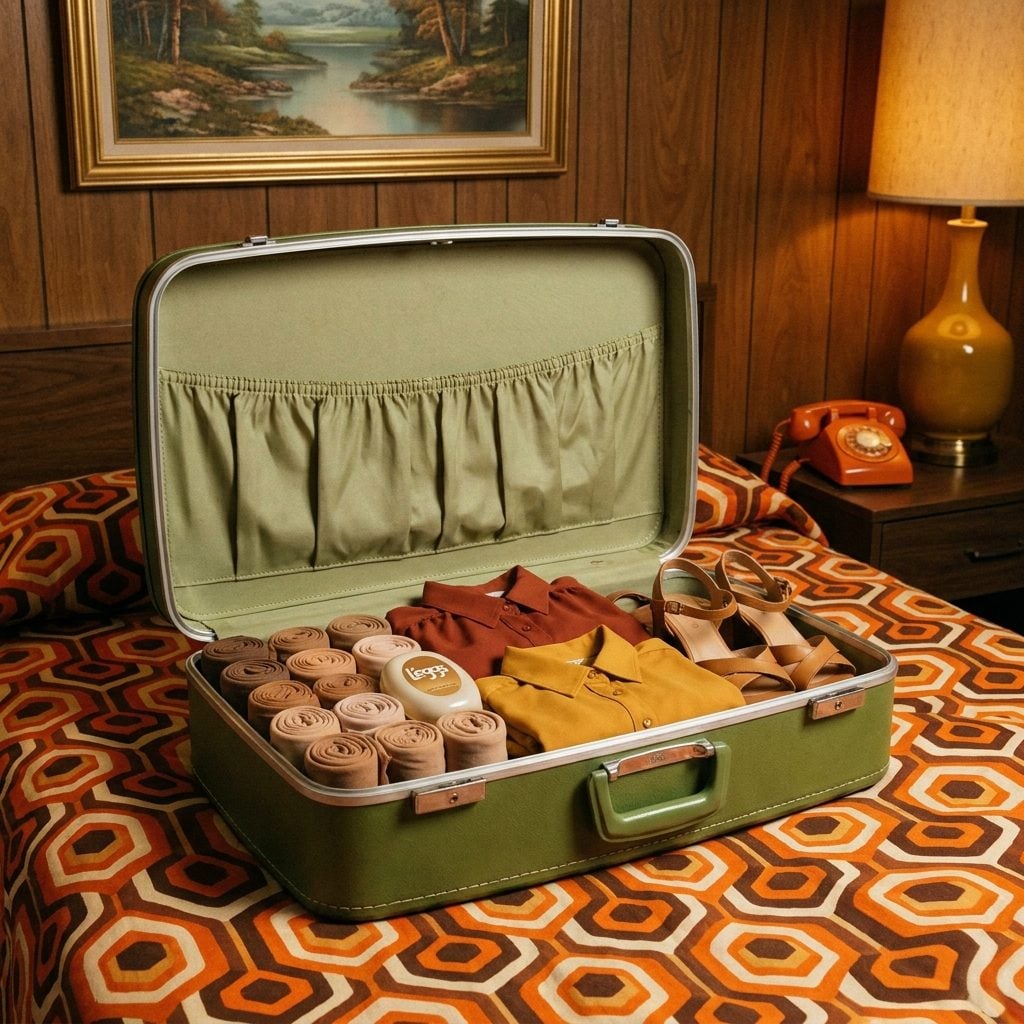
Every pair got its own careful roll. Snag one with a fingernail during packing and you’d just ruined your dinner outfit. The L’eggs egg was a common travel companion — that weird plastic capsule that looked like it came from a gumball machine. Three or four pairs per trip was standard, because pantyhose in the 1970s existed in a permanent state of near-death.
And you wore them everywhere. Howard Johnson’s for dinner. The hotel lobby. A restaurant blasting air conditioning at arctic levels where you were actually grateful for the extra layer. Bare legs at a sit-down restaurant? Borderline scandalous.
32. A Separate Cosmetic Case Packed With Enough Aqua Net to Damage the Ozone Layer
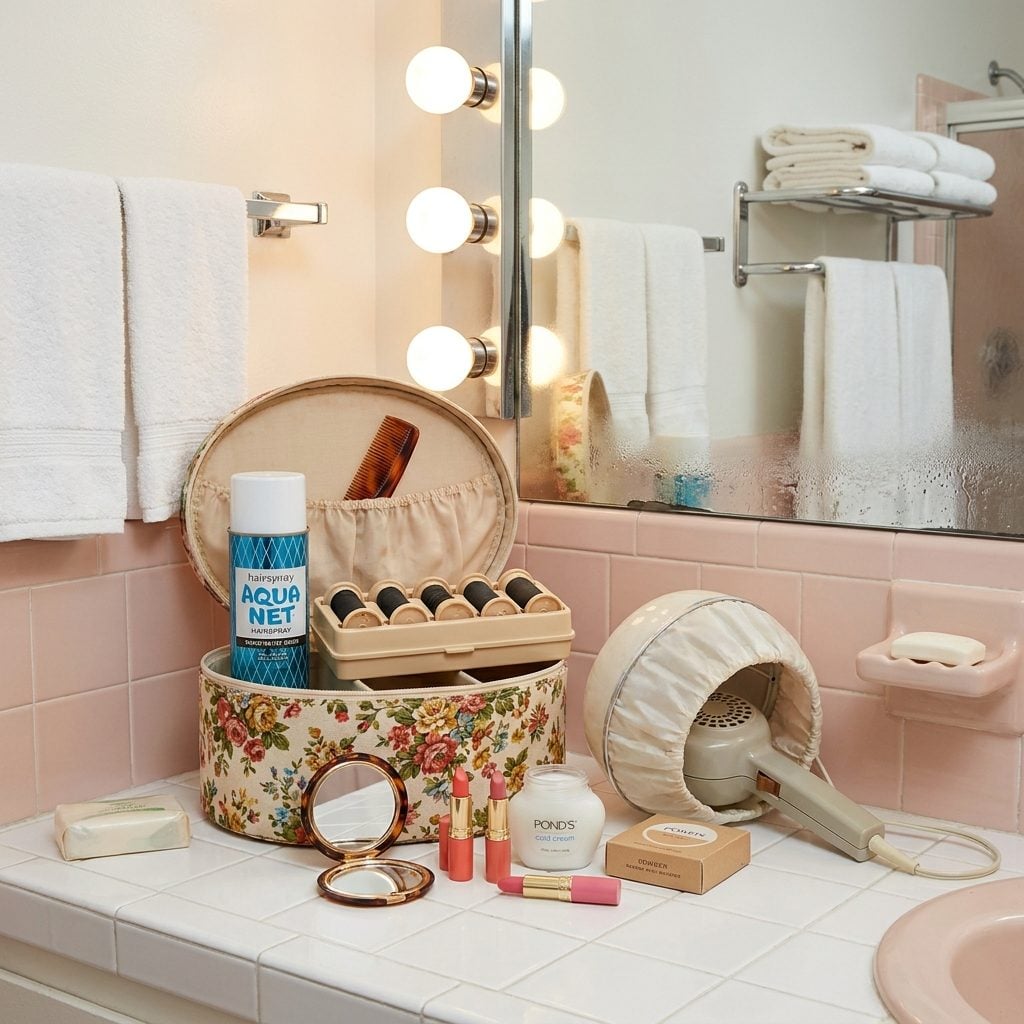
Not a bag. A portable salon. The cosmetic case — train case, if you’re being proper — had its own handle, its own latches, and received more careful treatment than the rest of the luggage combined. Every square inch inside was claimed: a woman’s entire beauty routine packed tight as a jigsaw puzzle.
Aqua Net in the full-size can, because travel sizes were for quitters. Hot rollers rattling in their plastic tray. Pond’s cold cream. A compact. Three lipsticks in variations of coral that looked identical to everyone except their owner, who could distinguish them the way a sommelier distinguishes Burgundies. And the whole thing smelled like a department store perfume counter that had been sealed in a box for eight hours in a hot trunk.
31. A Polaroid Camera With Extra Film Cartridges Stored Like Buried Treasure
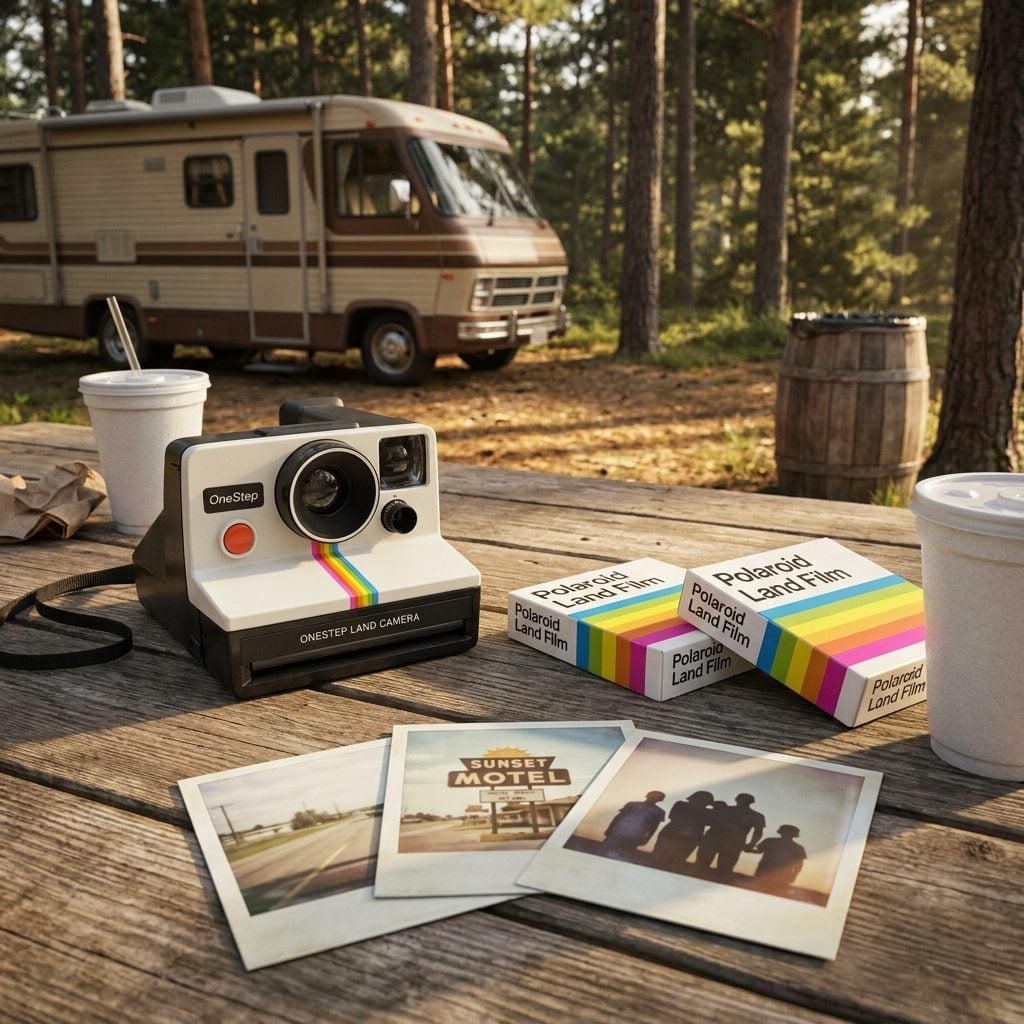
Film cartridges cost real money — enough that they earned a specific pocket in the carry-on or got tucked into a suitcase compartment wrapped in a sock for protection. You didn’t burn through Polaroid film carelessly. Every shot was a small financial negotiation.
Then you’d pull the photo out and wave it around like that helped. It didn’t. Polaroid themselves said not to do that. Everyone did it anyway, every single time. The image would slowly materialize — always a little too dark or a little too washed out — and you’d declare it a good one regardless, because wasting another shot to find out was off the table.
30. Baby Oil Mixed With Iodine for “Tanning” (a.k.a. Controlled Self-Destruction)
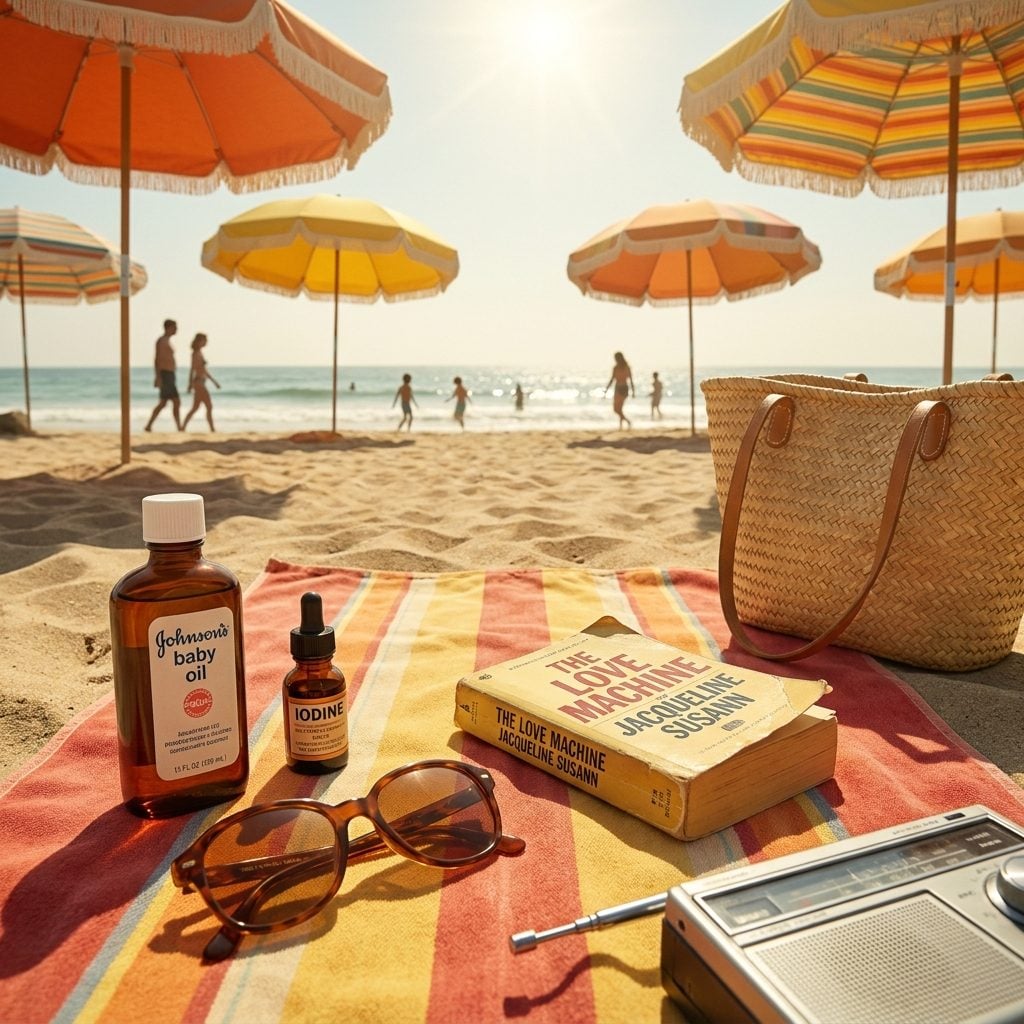
We need to talk about this one. You took baby oil. Added iodine. Mixed them in a bottle or just poured both directly onto your skin, then lay in full direct sunlight for hours with the explicit goal of getting as dark as possible, as fast as possible. Holding a reflective foil shade under your chin was considered advanced technique, like you’d really cracked the code.
SPF existed on paper but not in practice. Coppertone made sunscreen, sure — it smelled like coconut and offered a protection factor of roughly “good luck.” So the baby oil and iodine method dominated, producing burns so severe that aloe vera became a vacation staple rather than something your grandmother kept on the kitchen windowsill.
I misunderstood what the iodine actually did for years. Nothing helpful, turns out — at least not for tanning. It just tinted the oil brown so you looked darker before any sun had done its work. Psychological warfare against your own epidermis.
29. A Portable Travel Iron Because Hotel Irons Were Never Trusted
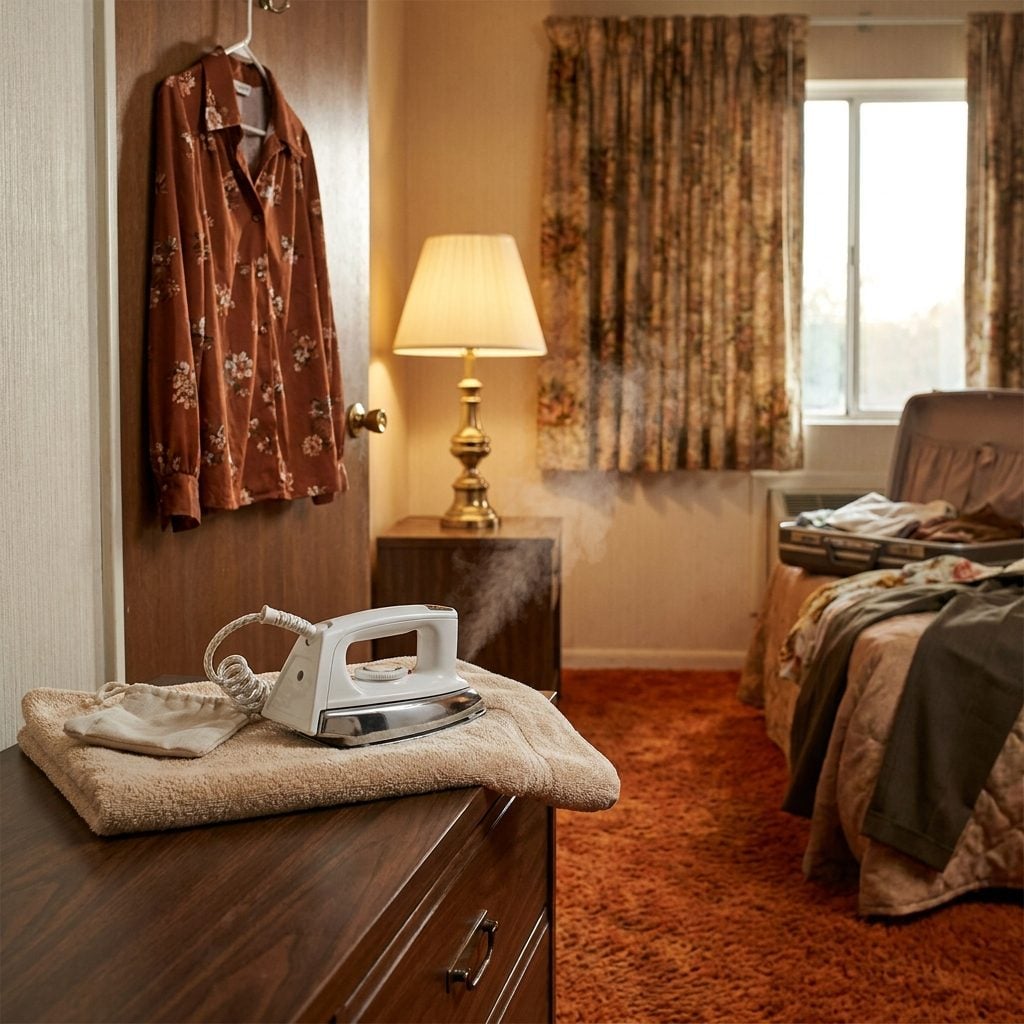
About the size of a stapler. Half as effective. The portable travel iron was a monument to optimism — it heated up to a temperature best described as “warm” and required your full body weight pressed down on it to coax a crease out of anything heavier than a handkerchief.
But women packed them anyway, because the alternative was trusting whatever iron the motel supplied, which was either missing, broken, or coated in something mysterious and brown. You’d set up shop on the dresser with a towel underneath, spend twenty minutes on a single blouse, and call the whole ordeal a win. Nobody complained. Well — everybody complained. But you did it anyway.
28. A Matching Three-Piece Luggage Set in Avocado Green or Harvest Gold
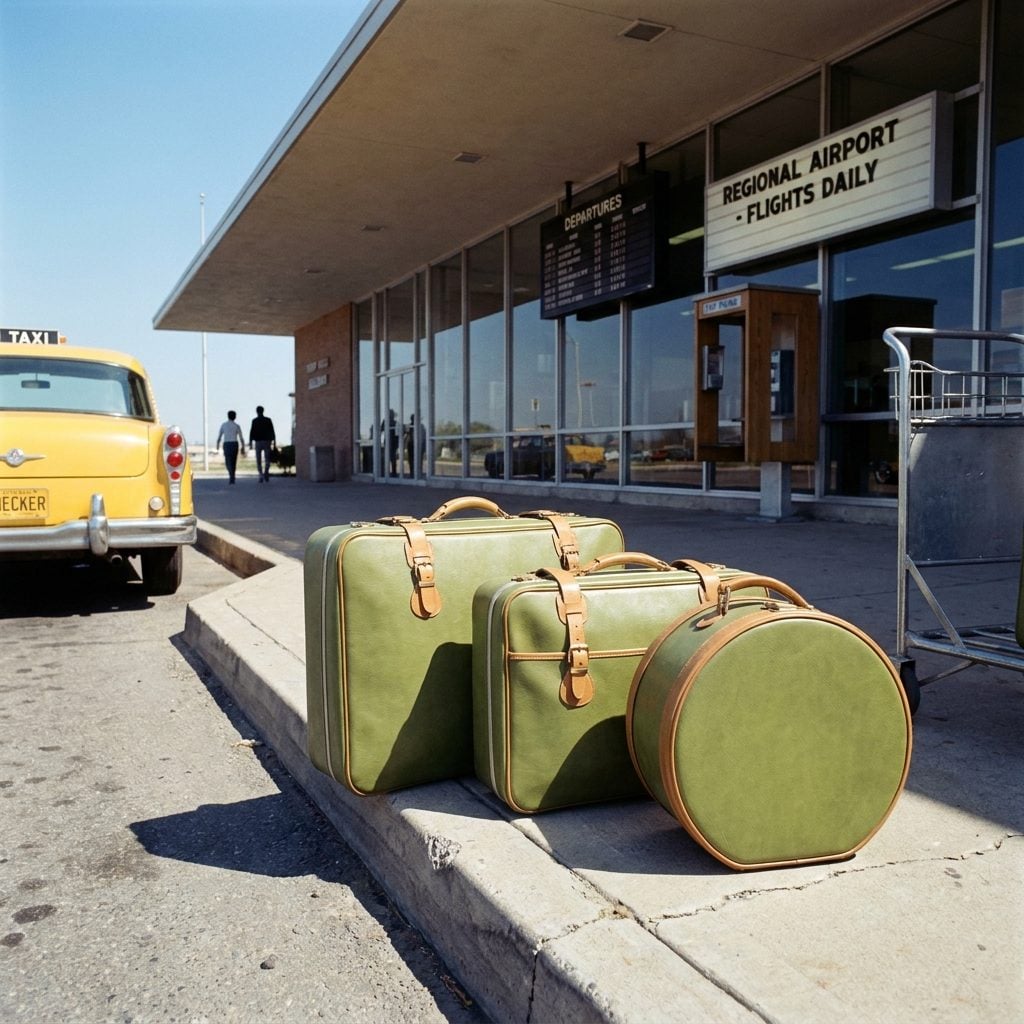
Coordinated luggage was identity. You spotted your family’s bags on the carousel, on the sidewalk at pickup, stacked in the wagon, because they all matched — that specific shade of green found nowhere else in the natural world. Avocado. Harvest gold. Burnt orange. These were apparently the only three colors manufactured between 1970 and 1979.
The set usually arrived as a wedding gift or a milestone birthday present: the big one, the medium one, and the round cosmetic case that seemed redundant but was somehow always the first thing packed and the last thing surrendered. My mother still has her harvest gold set in the basement. The latches don’t work anymore. She will never throw it away.
27. A Stack of Traveler’s Checks Tucked Into a Zippered Wallet With Religious Seriousness
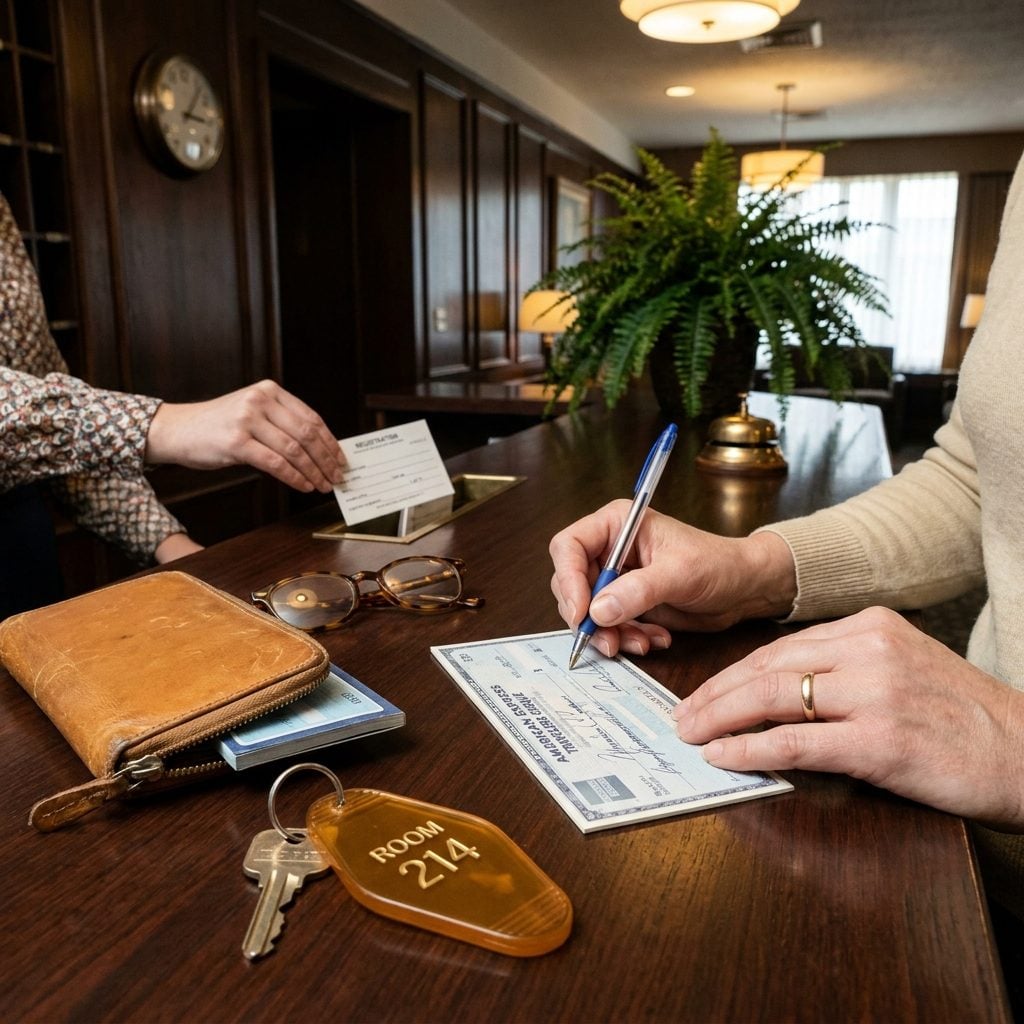
Signed once when you bought them. Signed again when you used them. The receipt with the serial numbers stayed in a completely separate location from the checks themselves — that was the rule, and the rule was sacred. Lose the checks? Fine, replaceable. Lose the receipt? You’ve just lost your vacation money forever.
American Express traveler’s checks were the currency of 1970s family travel, feeling more official than cash and more trustworthy than anything else available. Mom kept them in a zippered pouch inside her purse, which was itself zipped inside her carry-on, and she confirmed their continued existence roughly every forty-five minutes like a nurse checking vitals.
The whole system seems absurd now — we carry a thin piece of plastic and tap it on things. But there was something grounding about counter-signing a check at a Holiday Inn front desk. It made you feel like a grown person conducting grown business. I miss it, a little. Not enough to actually go back to it, but a little.
26. A Vinyl Toiletry Bag With a Broken Zipper Held Together by Sheer Determination
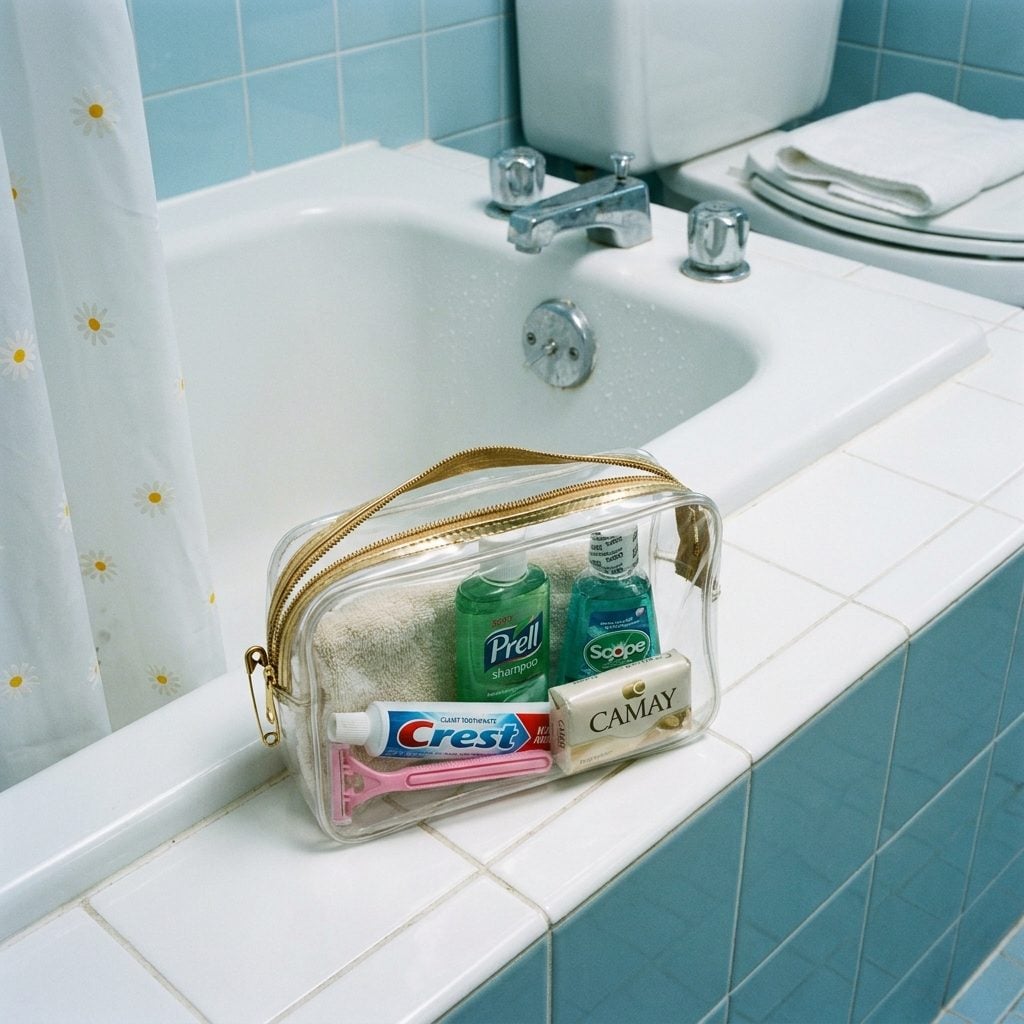
Every woman had one. Clear vinyl, usually, so you could see exactly how little toothpaste remained and how badly the shampoo cap had leaked. The zipper had surrendered sometime during the Ford administration, but a safety pin kept the whole operation functional enough. Nobody was replacing it when it still technically worked.
Inside: Crest, Prell, a pink razor, Camay soap in the wrapper because motel soap was the size of a postage stamp. Maybe a folding toothbrush that never quite folded back right. The bag carried a faintly chemical smell from years of leaked products mingling with warm vinyl — a scent so specific that if someone bottled it, half the women reading this would tear up from the memory alone.
The toiletry bag was never replaced. It was inherited.
That bag outlasted marriages, cars, and entire decades. It went on every trip, got wiped out with a damp cloth when something inevitably burst, and was tossed back into the suitcase for next time. Replacing it would have felt like a betrayal of some unspoken pact between a woman and her luggage. Some bonds are irrational. This was one.
25. The Terry Cloth Cover-Up That Pulled Double Duty at the Beach and the Lunch Counter
🔥 Would you like to save this?
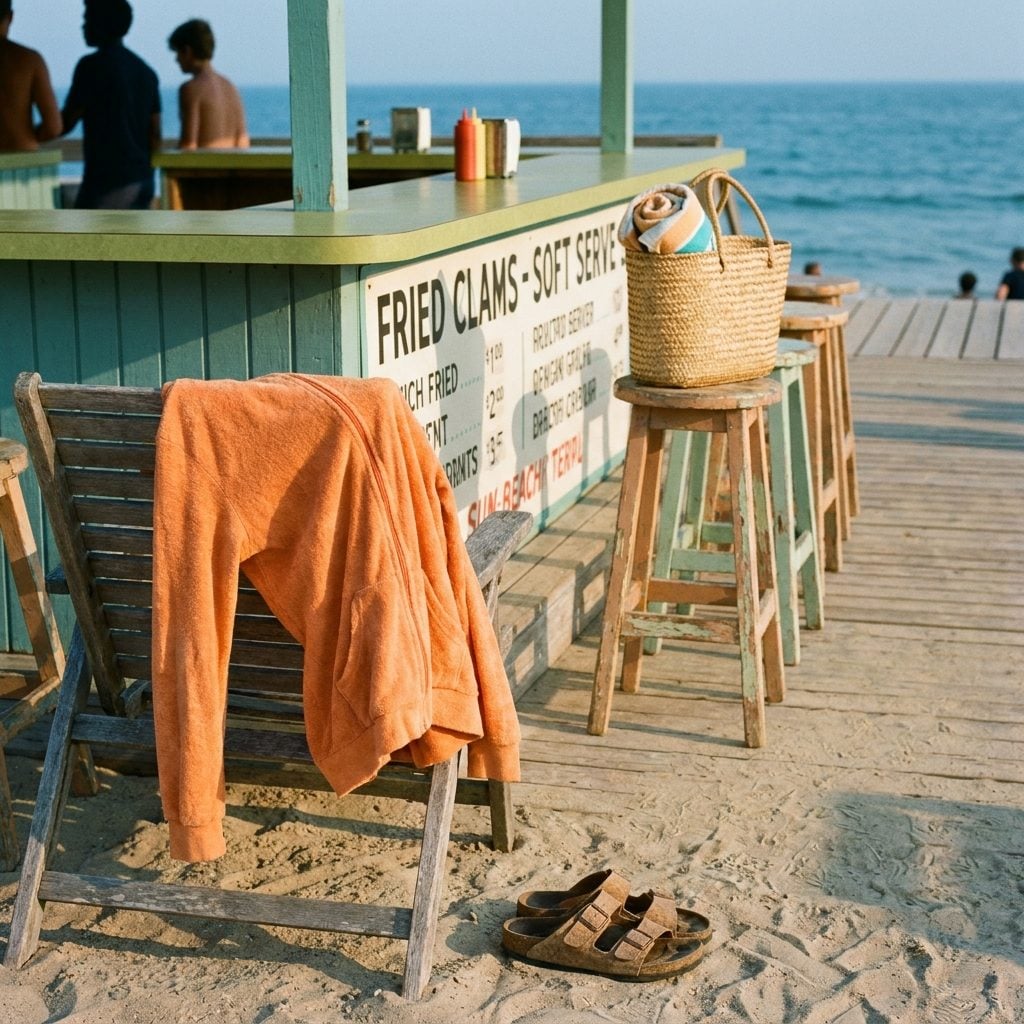
One garment, zero shame. The terry cloth cover-up went from the sand to the seafood shack without a second thought, still slightly damp at the hem, and nobody blinked. It came in sherbet colors — tangerine, lemon, mint. Some had a hood. Some zipped. By day two, every single one smelled like Coppertone and salt.
You weren’t going to change clothes six times on vacation. This was your personal uniform from ten in the morning until the sun dropped low enough for a sundress. It absorbed pool water, hid a wet swimsuit, and had pockets deep enough for a room key and some lip balm. Restaurants didn’t care. Hostesses seated you with a smile, damp hem and all.
Try walking into a casual dining spot today in a beach cover-up that’s still dripping. The looks alone would send you back to the car. But in 1974, vacation dress codes lived somewhere between “not naked” and “shoes required,” and terry cloth fit right in that generous gap.
24. Oversized Plastic Hair Rollers for Fixing Feathered Vacation Hair Overnight
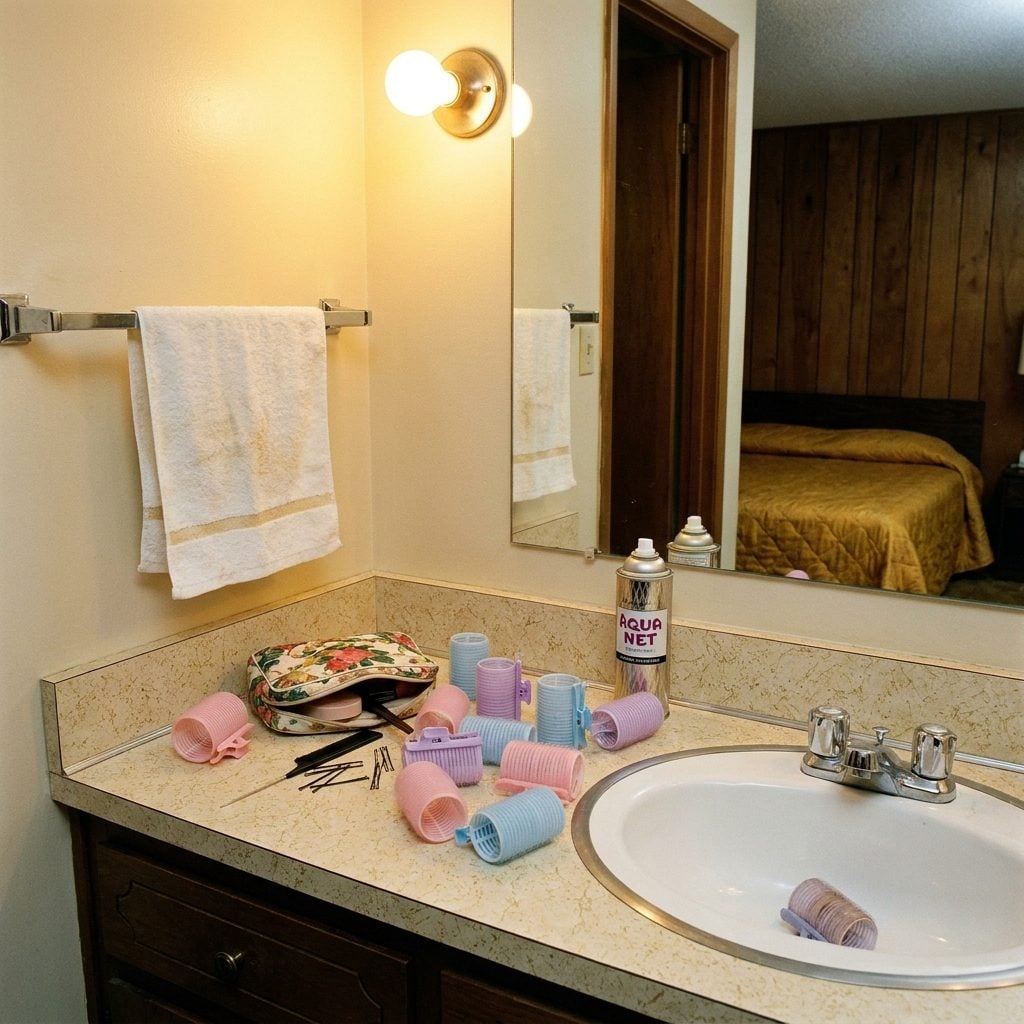
Nobody packed a blow dryer in 1975. I mean, technically they existed, but they weighed four pounds and moved air with all the force of someone breathing on a birthday candle. So the rollers came instead.
Jumbo plastic rollers in pink, lavender, and pale blue, snapped shut with little plastic picks that dug into your scalp if you rolled onto the wrong side at 2 a.m. You slept in them. You suffered in them. Morning meant unwinding them over the motel bathroom sink, finger-combing everything into a Farrah-adjacent feathered sweep, and spraying half a can of Aqua Net into the humid air.
The bathroom counter of any shared motel room looked like a roller factory had detonated. They’d roll off the counter into the sink, onto the floor, behind the toilet. Three weeks after you got home, one would turn up in your suitcase like a stowaway.
23. The Transistor Radio That Went to the Beach, the Pool, the Campsite, and the Backseat
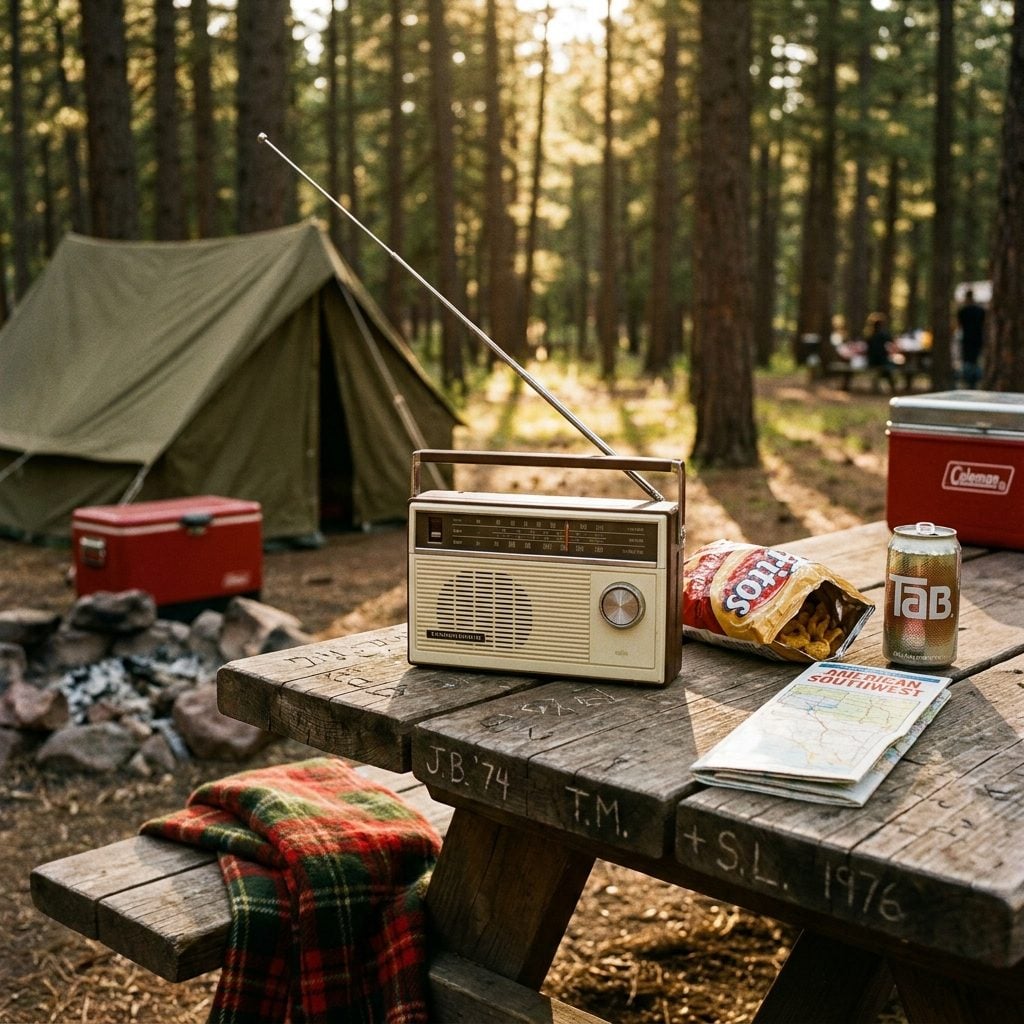
Smaller than a paperback, tinny as a tin can, and always tuned to the wrong station until you tilted it fifteen degrees to the left. The transistor radio was the portable soundtrack of every 1970s vacation — and it sounded like music playing inside a cardboard box. We loved it anyway.
It ran on a single 9-volt battery, which your dad tested by touching both terminals to his tongue. Reception depended on geography, weather, antenna angle, and apparently divine whim. You’d get three perfect minutes of “Hotel California” and then static would swallow the guitar solo whole.
22. A Sewing Kit for Emergency Hem Repairs and Missing Buttons
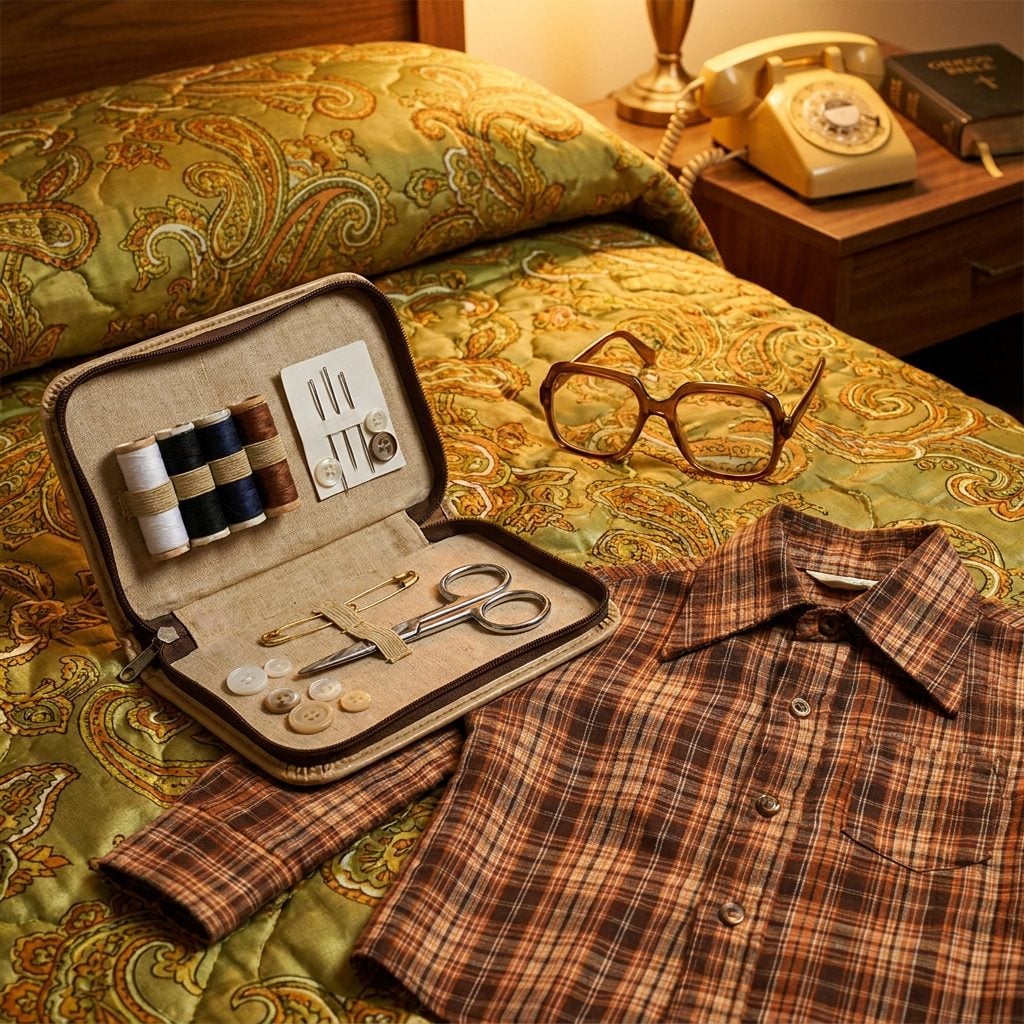
Not a suggestion. A requirement. Every woman who packed for a 1970s vacation included a small sewing kit — usually a zippered vinyl pouch the size of a wallet — because there was no Target three miles away. Sometimes there was no anywhere for two hundred miles.
Inside: four or five spools of thread in basic colors, a few needles stuck into a tiny cardboard holder, a couple of safety pins, a pair of folding scissors so dull they could barely cut thread, and two or three spare buttons that matched nothing you actually owned. Weighed almost nothing. Took up less space than a bar of soap.
And it got used. Straps broke. Hems caught on car doors. Kids popped buttons off dress shirts ten minutes before the one nice dinner of the trip. Your mother would sit on the edge of the motel bed, glasses perched on her nose, stitching a seam back together under a lamp that gave off roughly the same light as a firefly. Superhuman patience. I never once saw her complain about it, which made it more impressive.
21. A Stash of Quarters Reserved Specifically for Pay Phones
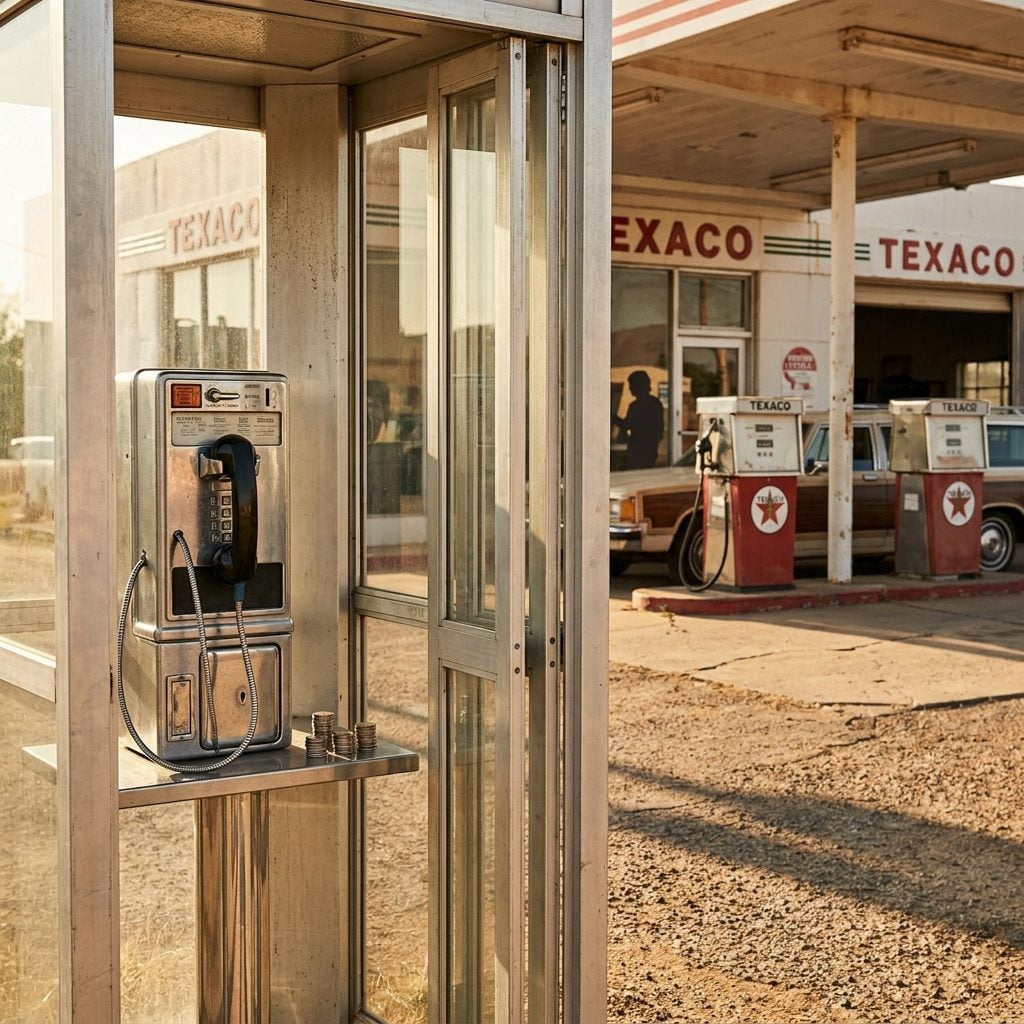
Somewhere in the bottom of every purse, sealed in a small coin purse or a twist of foil, lived the quarters. Not spending money. Not arcade money. Pay phone money. Sacred, untouchable, rationed like wartime rations but shinier.
Calling home from vacation meant finding a pay phone that worked, which was its own little odyssey — gas stations, motel lobbies, the glass booth outside the grocery store with the folding door that never closed all the way. You’d stack your quarters on the little metal shelf, dial the number, and when the operator said “please deposit seventy-five cents for the first three minutes,” you’d feed the coins in one by one, each satisfying clunk registering your commitment to the call.
Three minutes. That was the opening bid. After that, the operator cut in with the warmth of a parking meter: “Please deposit twenty-five cents for an additional minute.” So conversations were ruthlessly efficient. “We’re fine. The motel’s fine. The kids are fine. Yes, we locked the back door. Goodbye.”
20. A Kodak Instamatic Camera Loaded With Flash Cubes That Fired Exactly Four Times
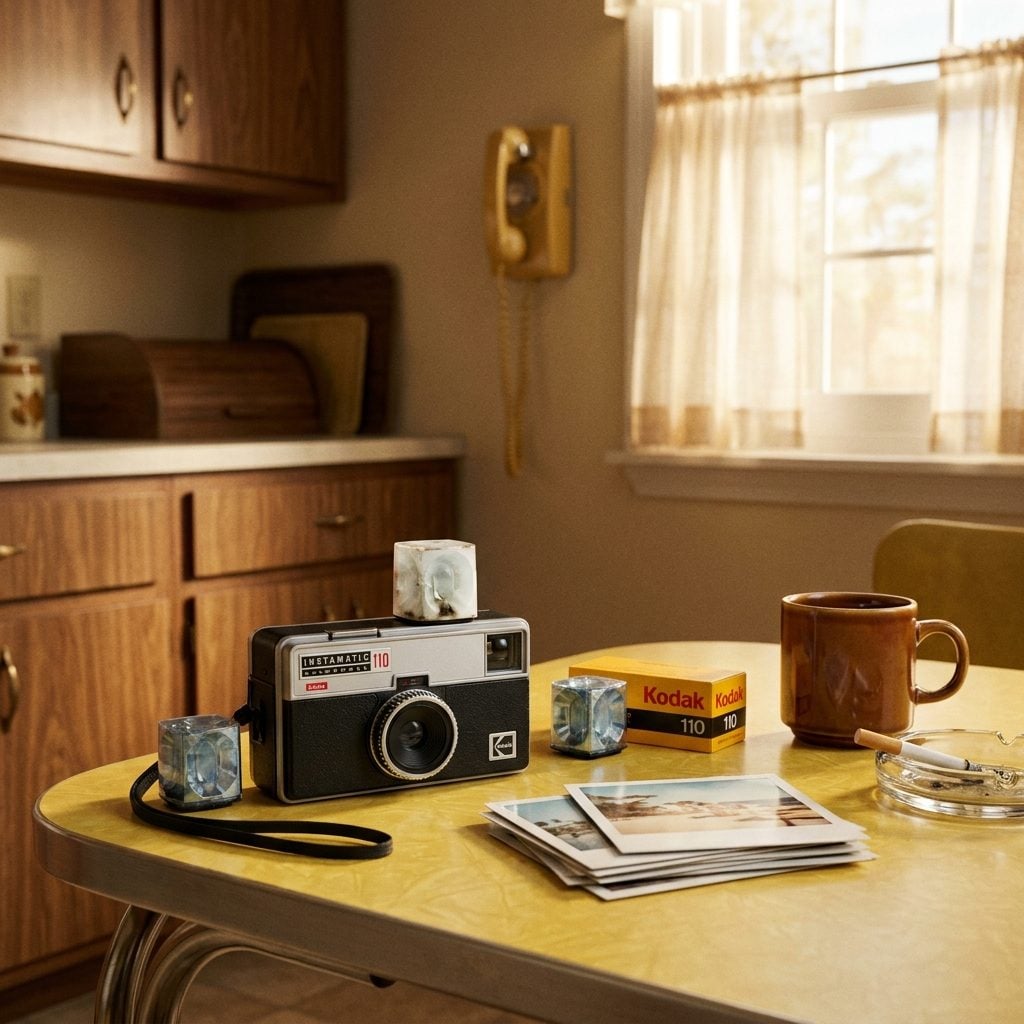
Twenty-four exposures. That’s what a roll of 110 film gave you, and every single frame cost money to develop, so you did not waste shots on your lunch. The Kodak Instamatic was the undisputed vacation camera of the 1970s: boxy, plastic, lighter than a sandwich, capable of producing photos that were slightly blurry, slightly off-center, and absolutely irreplaceable.
But the flash cubes — those were the real spectacle. A clear plastic cube with four tiny bulbs, each facing a different direction. You’d snap a photo, the bulb would fire with a bright pop and turn milky white, then you’d rotate the cube to the next fresh one. Four flashes per cube. After that, you had a spent cube rattling around in your purse like a tiny burned-out chandelier.
Indoor shots were a gamble. Outdoor shots washed out. The viewfinder showed you approximately what the camera saw, in the same way a weather forecast shows you approximately what will happen. But those prints that came back from the Fotomat three weeks later? Gold. Crooked horizons, red eyes, thumb in the corner, and all.
19. The Travel Alarm Clock With the Folding Faux-Leather Case
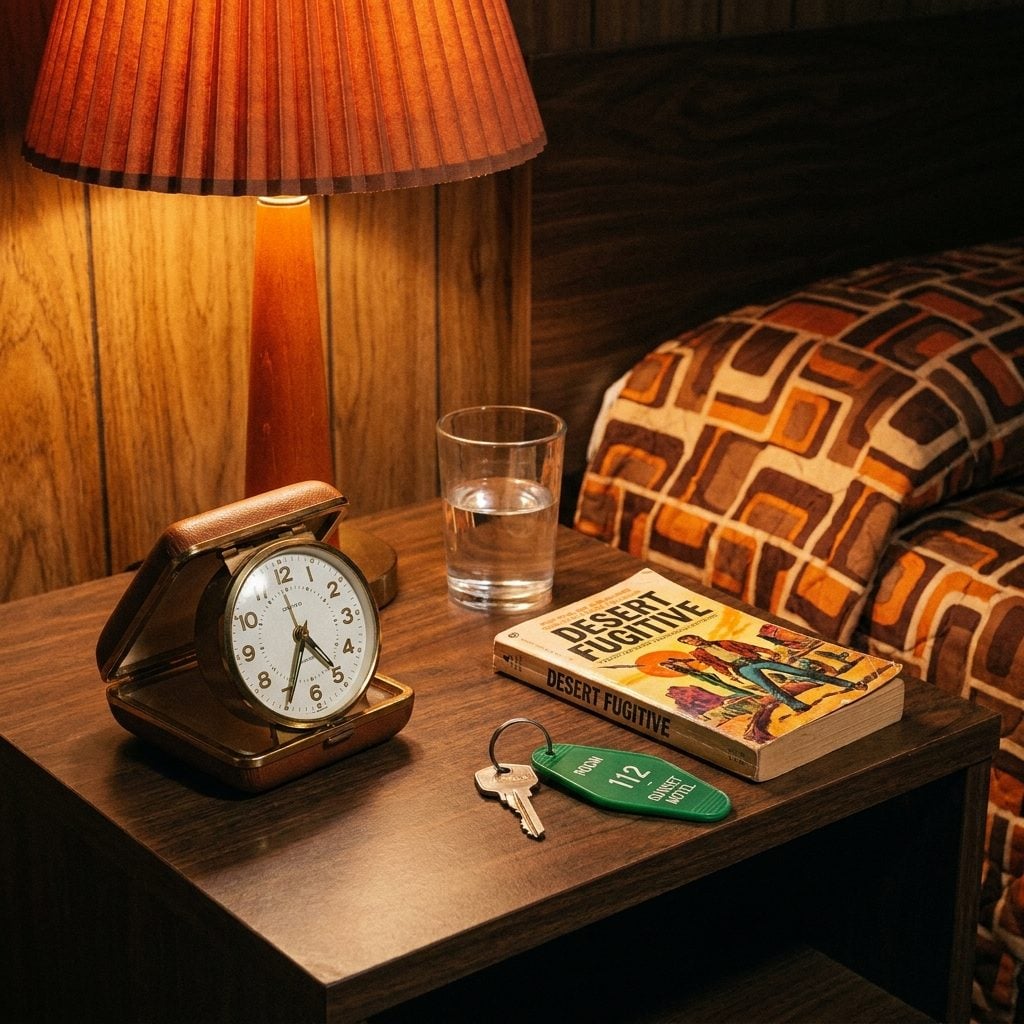
Hotel wake-up calls required trusting a stranger at the front desk to remember you existed at 6 a.m. Nobody trusted that stranger. So into the suitcase went the folding travel alarm clock, a compact mechanical timepiece in a hinged faux-leather case that snapped shut like a tiny book.
You’d set it by turning a small knob on the back, listening for the tick to confirm it was wound, then place it on the nightstand — where it would tick loud enough to make you wonder if you’d actually sleep at all. The alarm itself was a metallic, furious buzzing, like a hornet sealed inside a tin can. It didn’t ease you into consciousness. It attacked you. No snooze button, either. You were awake, and that was final.
18. A Cooler Packed With Homemade Sandwiches to Avoid Expensive Roadside Diners
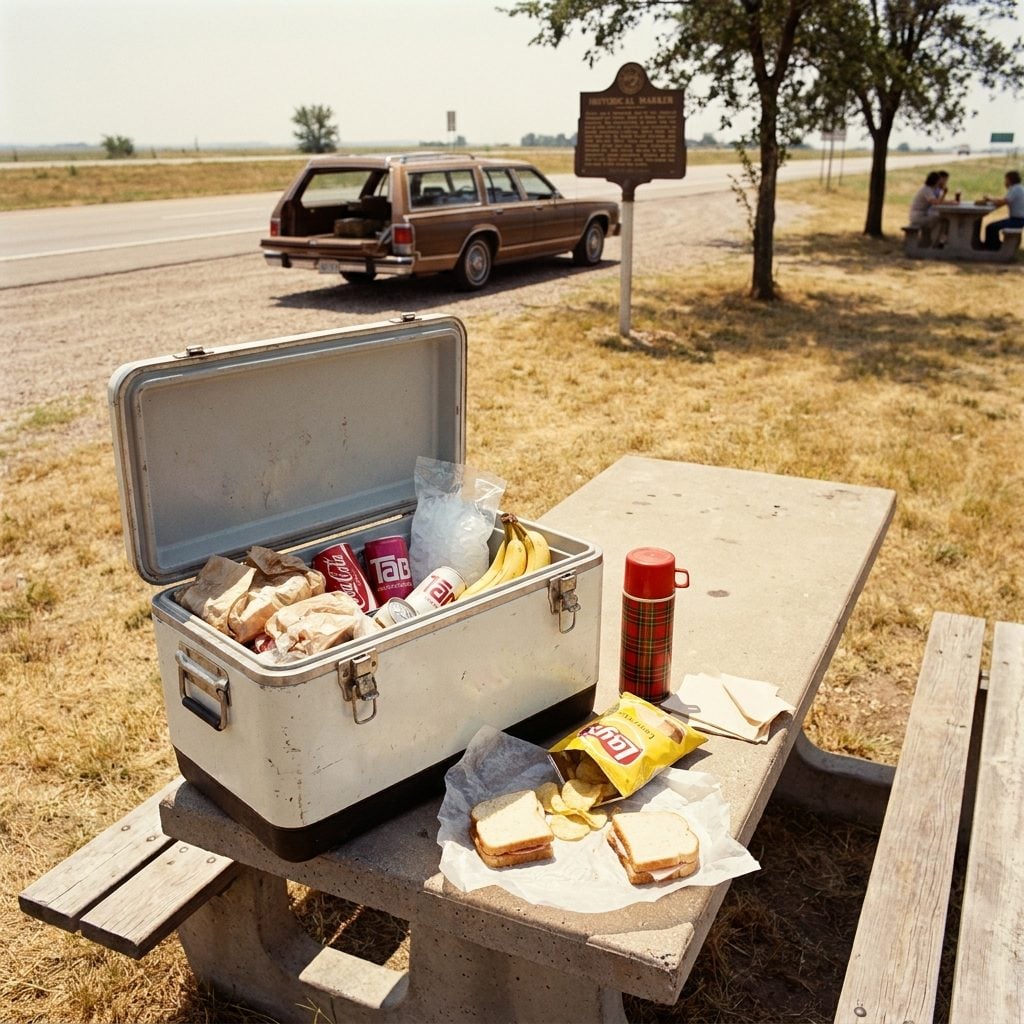
The cooler was packed the night before departure. Not the morning of — the night before. Your mother was not about to assemble a dozen sandwiches at 5 a.m. with a station wagon still needing loading.
Bologna on white bread with yellow mustard. Peanut butter and jelly. Maybe some deviled ham from a can if she was feeling generous. Each wrapped in wax paper — not plastic bags, because wax paper was what you used — and stacked into the metal cooler alongside cans of soda, a bag of ice that would be half melted by noon, and a bunch of bananas destined to be bruised beyond recognition by the first rest stop.
Lunch happened at a roadside picnic table. Concrete, always in full sun, near a historical marker nobody read. Your father would announce this was “better than any restaurant” while eating a sandwich with warm mustard and soggy bread — and he meant it. A family of five in a roadside diner could demolish the vacation budget by a full day, so the man had conviction on his side even if the bread was questionable.
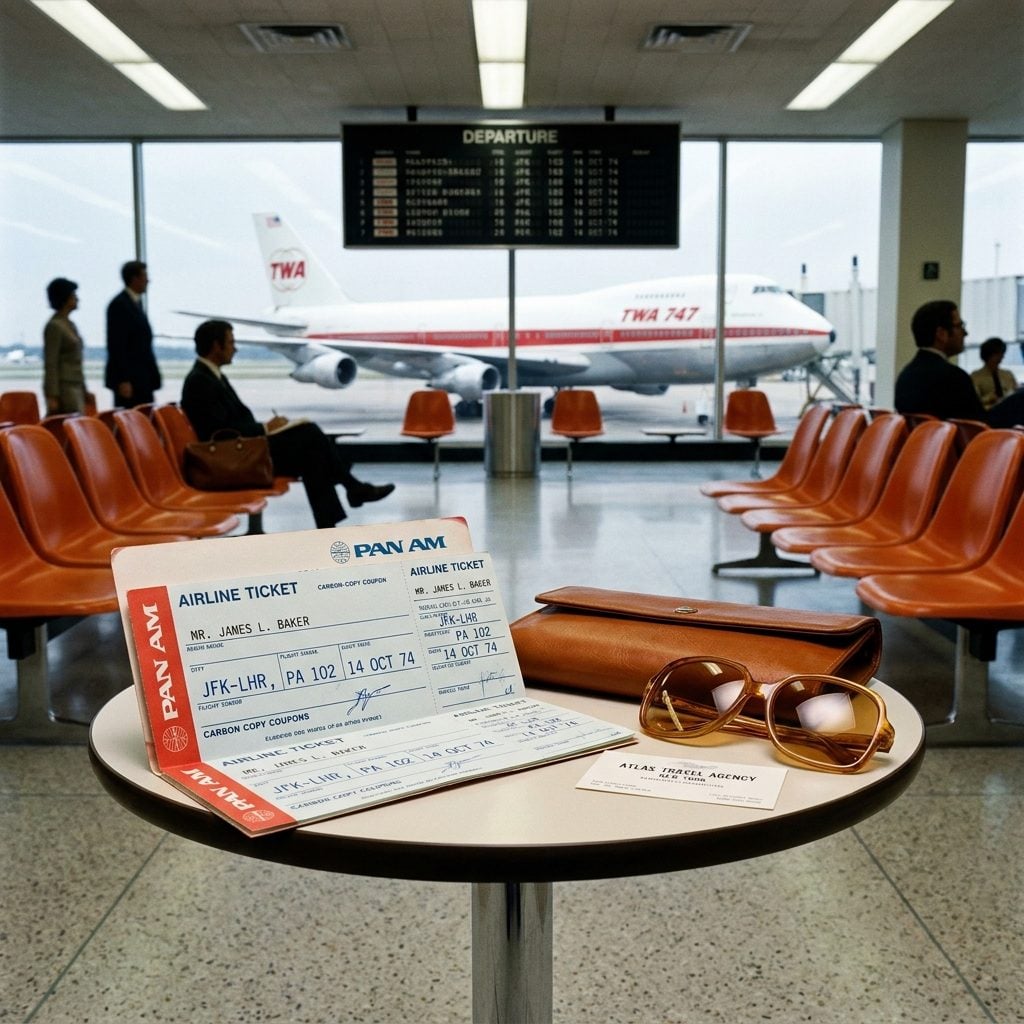
17. A Paper Airline Ticket Booklet Guarded More Carefully Than Jewelry
🔥 Would you like to save this?
Multi-page carbon-copy document in a cardboard sleeve, issued by a human being at a travel agency who hand-wrote your itinerary and filed the pink copy. Losing it was not an inconvenience — it was a full-blown catastrophe. No reprinting at a kiosk. No kiosk at all, anywhere.
The ticket booklet lived in your purse inside a specific pocket, checked four times between the house and the airport, touched only at the counter when a uniformed agent tore out the appropriate coupon with a practiced rip. Each leg of the trip had its own page. Each page had its own coupon. The whole system ran on paper and trust and carbon ink that smudged if you so much as looked at it wrong.
You checked for three things before leaving the house: wallet, keys, airline ticket. In that order. Lose any one and the vacation was over before it started.
Your mother probably also had the travel agent’s business card tucked in beside it, just in case. Functionally, that card was her IT department — her entire support infrastructure for anything that went sideways between home and gate.
16. A Bottle of Sea & Ski Tanning Lotion With SPF Levels Barely Above Zero
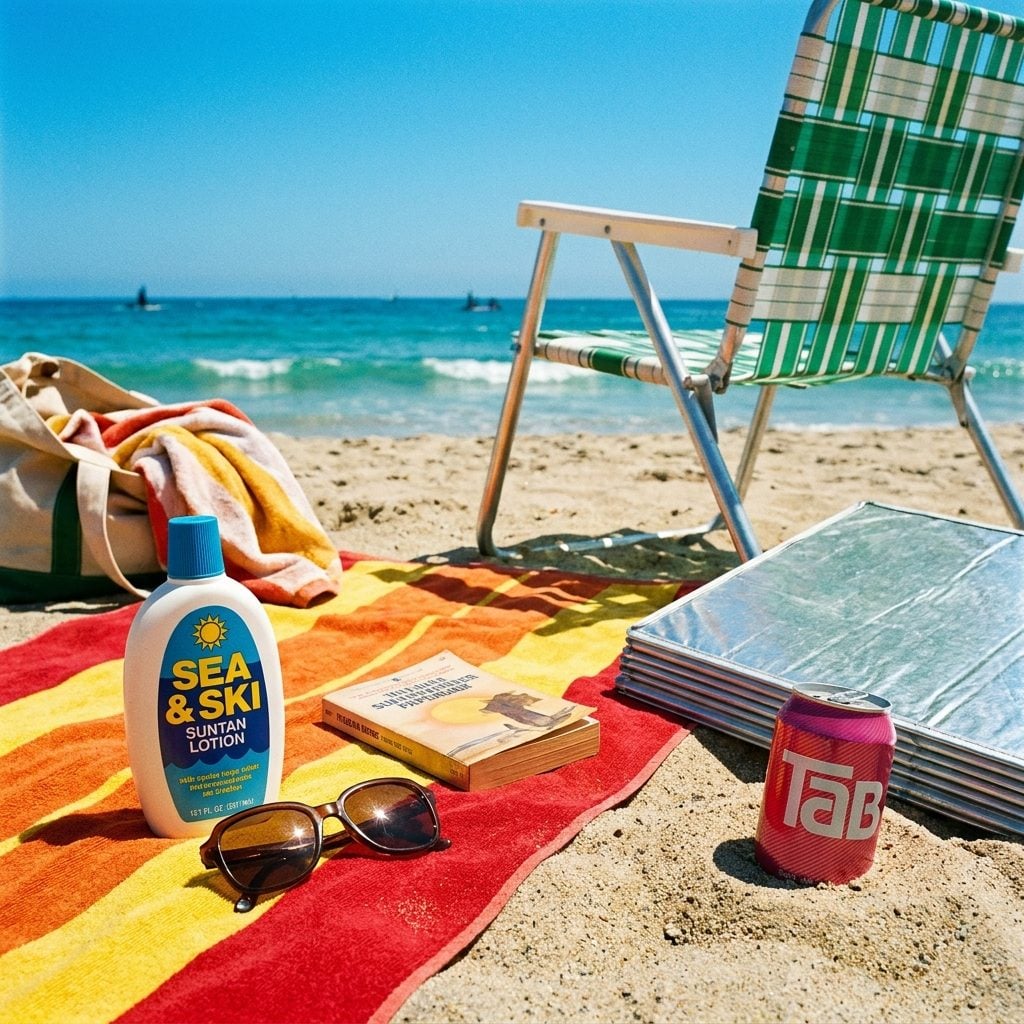
The goal was not sun protection. The goal was color. Sea & Ski tanning lotion delivered a coconut-scented promise of bronze skin by Wednesday and a painful reality check by Thursday.
SPF 2. Maybe 4 if you were “being careful.” The bottle was small, white and blue, and the lotion inside had the consistency of warm cooking oil. You’d slather it on and lie under direct UV radiation on a towel, rotating every thirty minutes like something on a spit. Occasionally someone would refold a towel into a reflector panel to speed things up, which — viewed from any modern dermatological perspective — was genuinely unhinged.
What stays with me is the smell. Coconut and something vaguely chemical, baked into the vinyl of car seats, embedded in beach towels that never fully surrendered it even after three washes. Catch a whiff of coconut suntan oil today and you’re instantly nine years old, sitting in hot sand, watching your mother turn the color of a football.
15. Platform Sandals That Turned Every Wet Motel Walkway Into a Slip-and-Slide
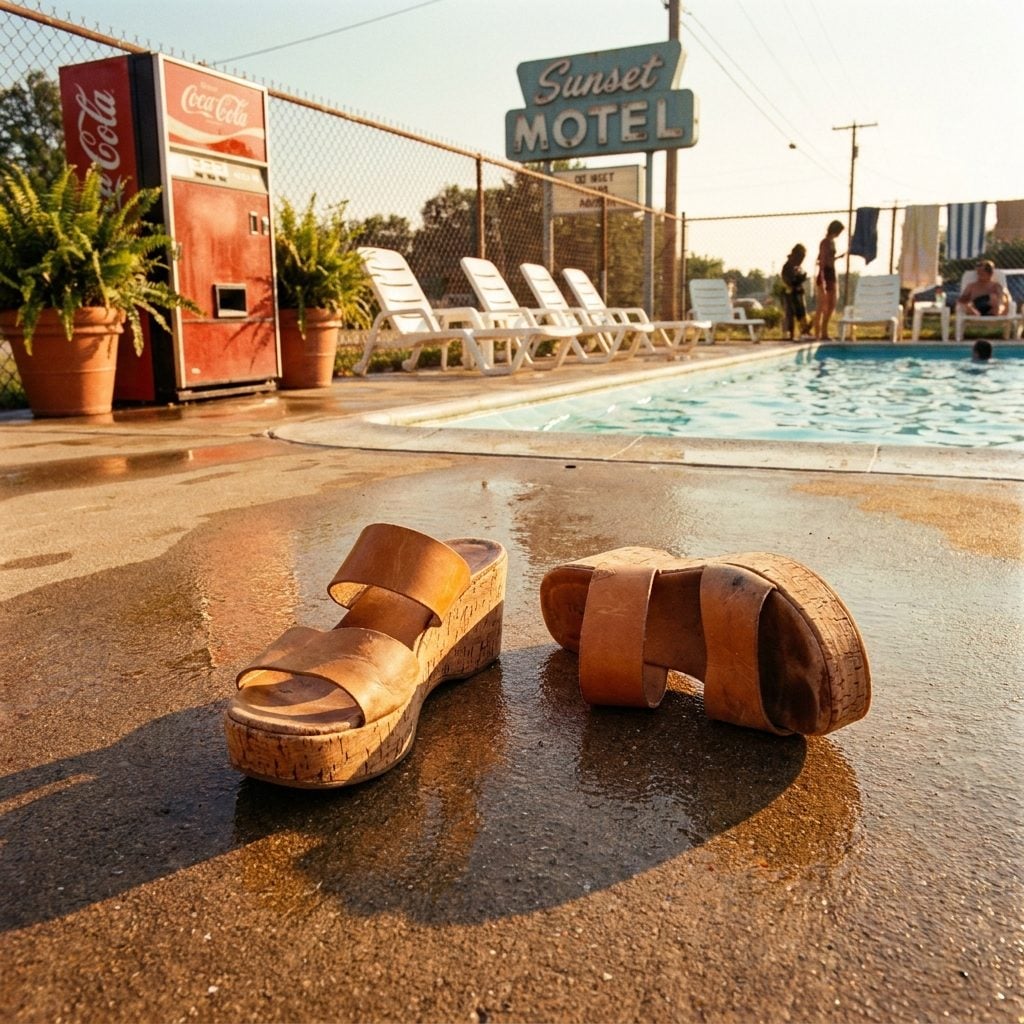
Cork soles, three inches minimum, with a single wide strap across the toes in tan or white. They looked incredible with a halter dress and absolutely treacherous on any surface slicker than dry pavement. The motel pool deck after a rain shower? Full contact sport.
Nobody packed flat sandals as a backup — that wasn’t how it worked. You committed to the platform and accepted the consequences, which sometimes included a spectacular wipeout on the concrete stairs outside Room 214. Ankle wobble was constant, blisters were guaranteed, and the look was completely non-negotiable.
14. The Giant Straw Beach Tote That Ate Half the Back Seat
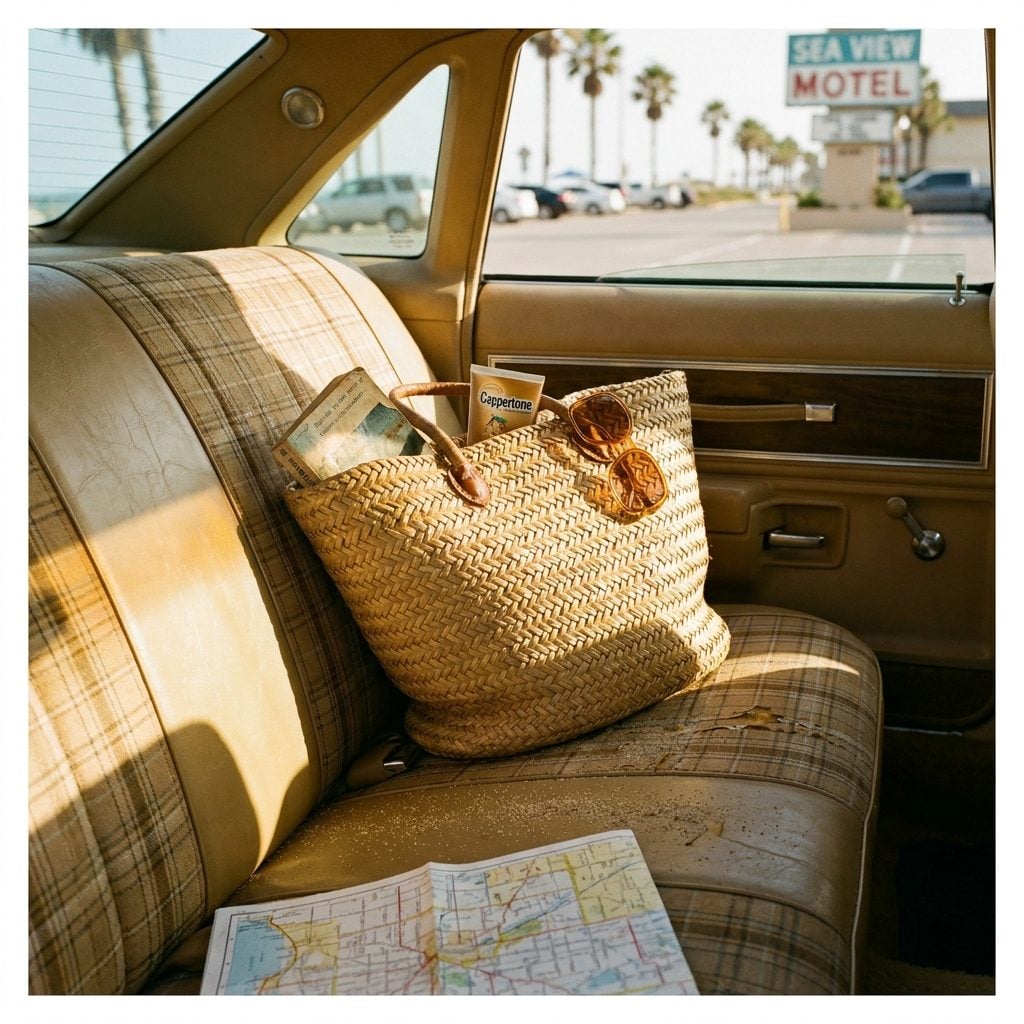
Roughly the size of a laundry basket and just as structurally unsound. Woven straw with leather handles, or macramé with wooden beads that clacked against each other every time the car hit a bump. This bag held everything — suntan oil, a trashy novel, a pack of Virginia Slims, the room key on its oversized plastic fob, loose change, a comb — and somehow still had sand in the bottom from last year’s trip.
Handles started fraying by day three. The straw poked your thigh through your sundress. None of it mattered. You slung the bag over one shoulder and you were a woman on vacation, which was the only credential that counted.
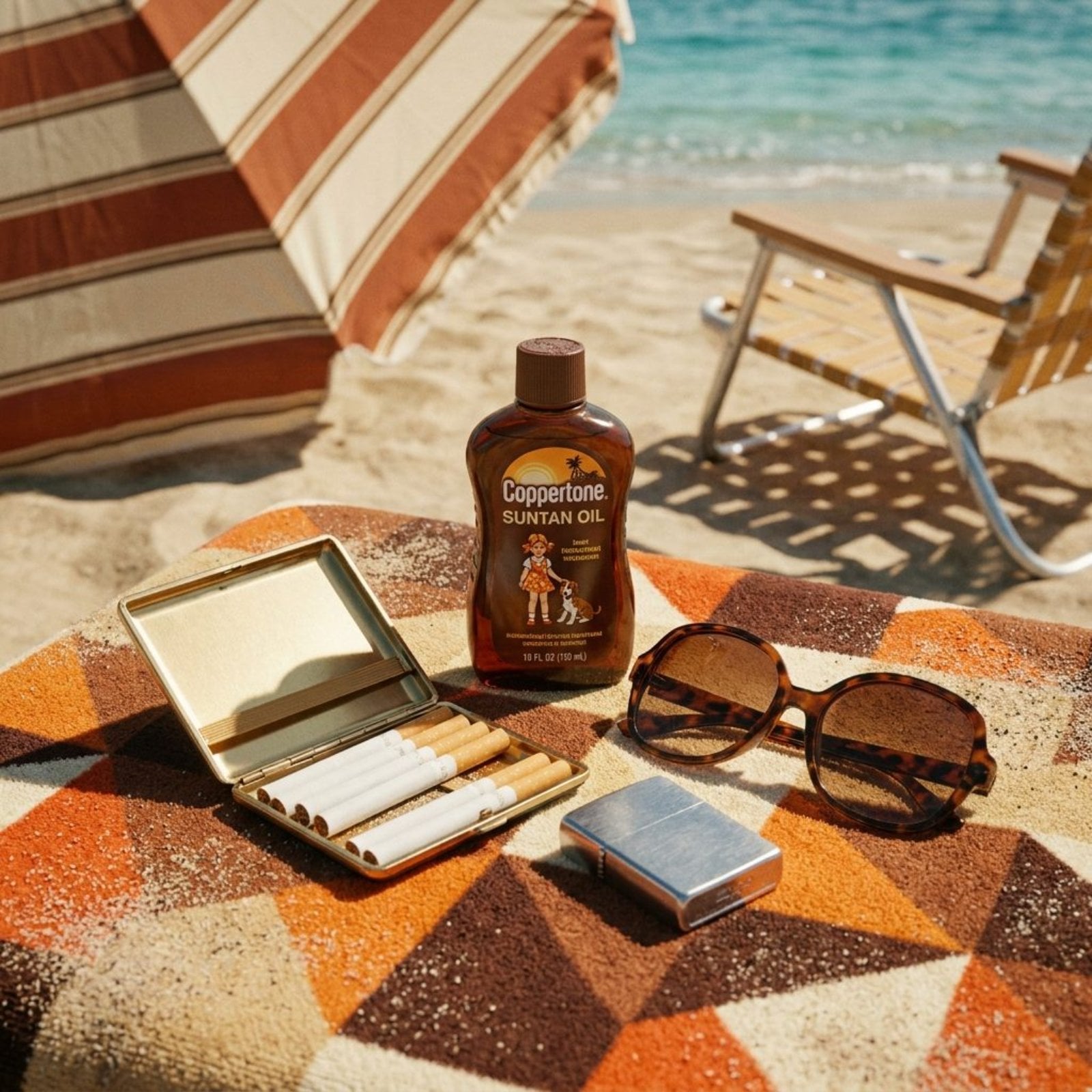
13. A Cigarette Case and Lighter Packed Right Beside the Sunscreen
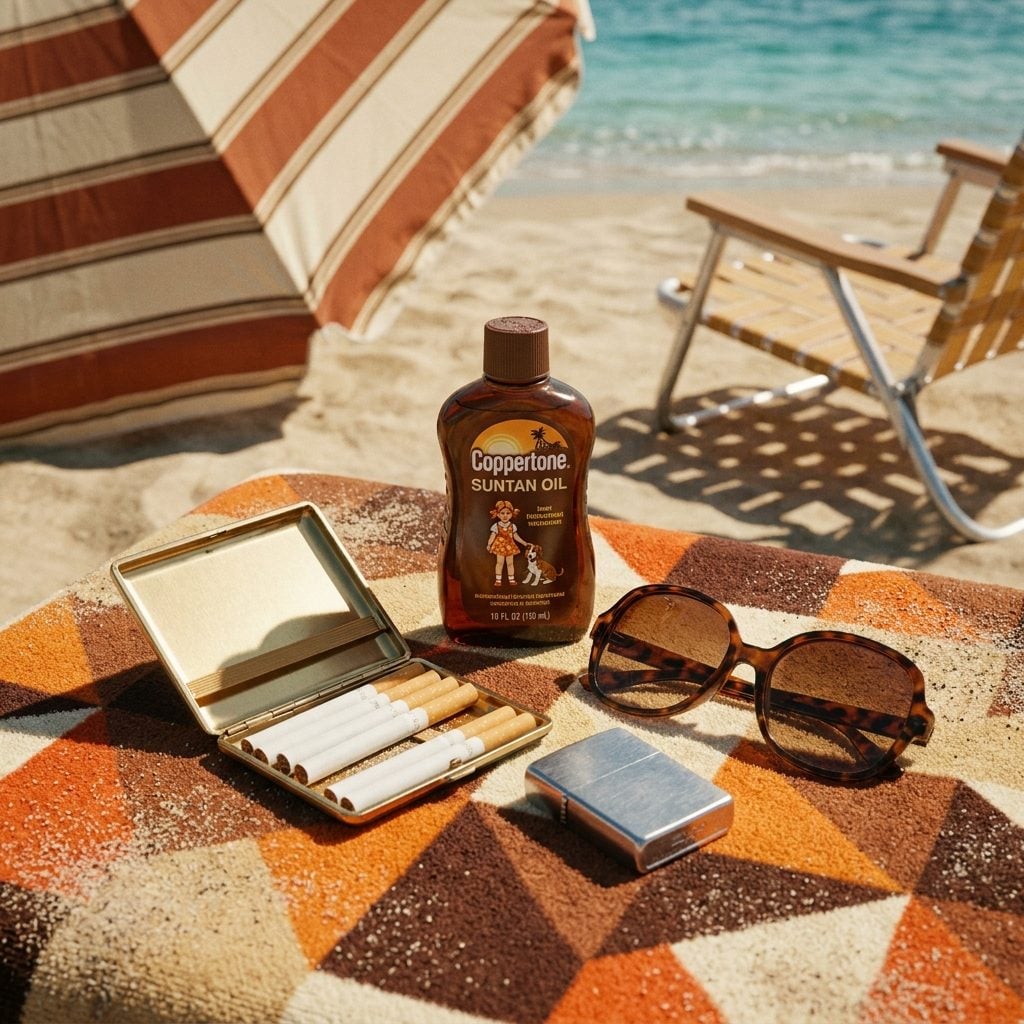
Right there in the beach bag, no irony, no shame — a slim gold or silver cigarette case tucked next to the Coppertone and a Bic lighter or, if she was fancy, a monogrammed Zippo. Smoking on the beach was what you did between swims. The ashtray in the motel room wasn’t decorative. Essential furniture, same as the bed.
And the case itself was a whole accessory category. Engraved, enameled, sometimes with a tiny built-in mirror on the inside lid. Women coordinated them with their jewelry. I’m not going to pretend any of this was healthy. But it was a completely different universe of what counted as vacation essentials, and nobody blinked at any of it.
12. Foldable Lawn Chairs Strapped Into the Trunk Like They Owed Money
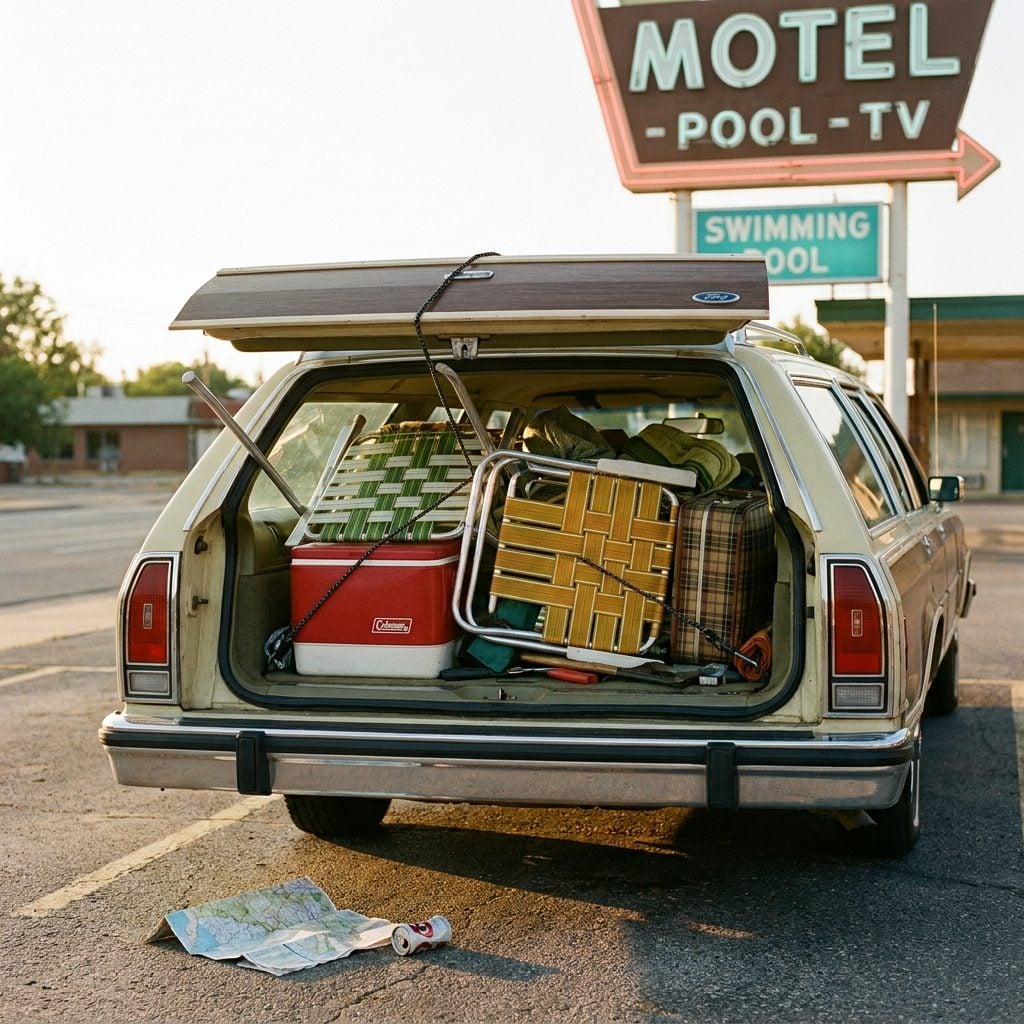
Aluminum frames. Woven plastic webbing in green-and-white or orange-and-yellow. They weighed almost nothing but consumed the space of a small refrigerator when you tried to cram four of them into a station wagon trunk that already held two suitcases, a cooler, and a bag of road snacks.
Dad’s packing solution always involved bungee cords and profanity. The chairs rode half-in, half-out, trunk lid propped open with a rope, webbing flapping in the highway wind for hours. By the time you arrived, one chair had a torn strap and another had somehow folded itself into a shape that defied geometry. Did anyone suggest leaving a chair behind? Never. The chairs were coming.
But they were free seating anywhere — motel parking lot, beach, roadside overlook, the grassy strip beside the pool. Unfold them and you were home.
11. The Vanity Case Filled With Frosted Lipstick and Electric-Blue Eye Shadow
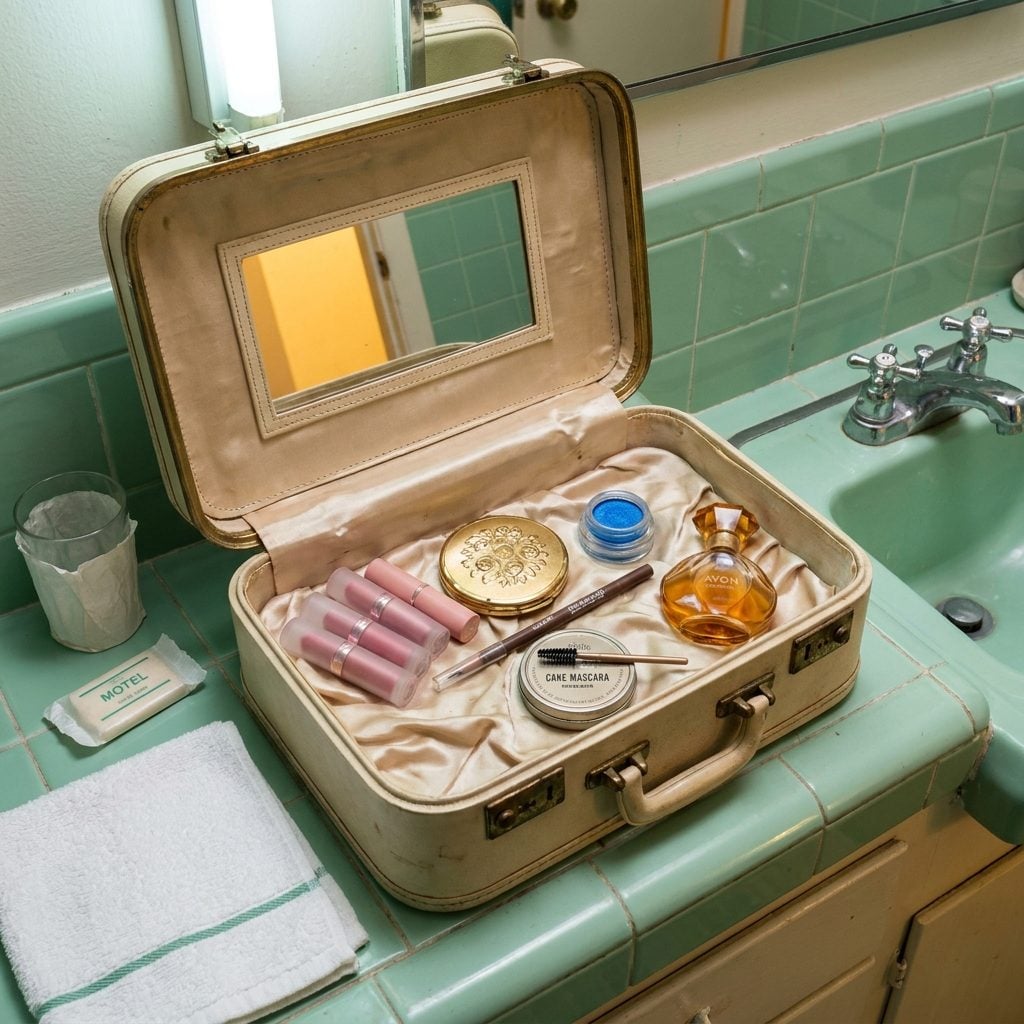
Not a makeup bag. A shrine.
Hard-sided, usually pastel or cream leatherette, with a flip-up mirror on the inside lid and little elastic loops meant to hold lipstick tubes upright. The latch closed with a satisfying click. Inside: a compact of pressed powder, a tube of Yardley or Revlon frosted pink lipstick, a pot of Maybelline cream eye shadow in that specific electric blue nobody would touch today, a brown eyebrow pencil, and a cake mascara that required actual spit or water to activate.
The vanity case rode on her lap during the drive or in the footwell where it slid forward every time Dad braked. Last thing packed, first thing opened at the motel — because fixing your face before walking into the lobby was simply what a woman did in 1974.
10. A Stack of Postcards You Fully Intended to Mail to Every Relative Back Home
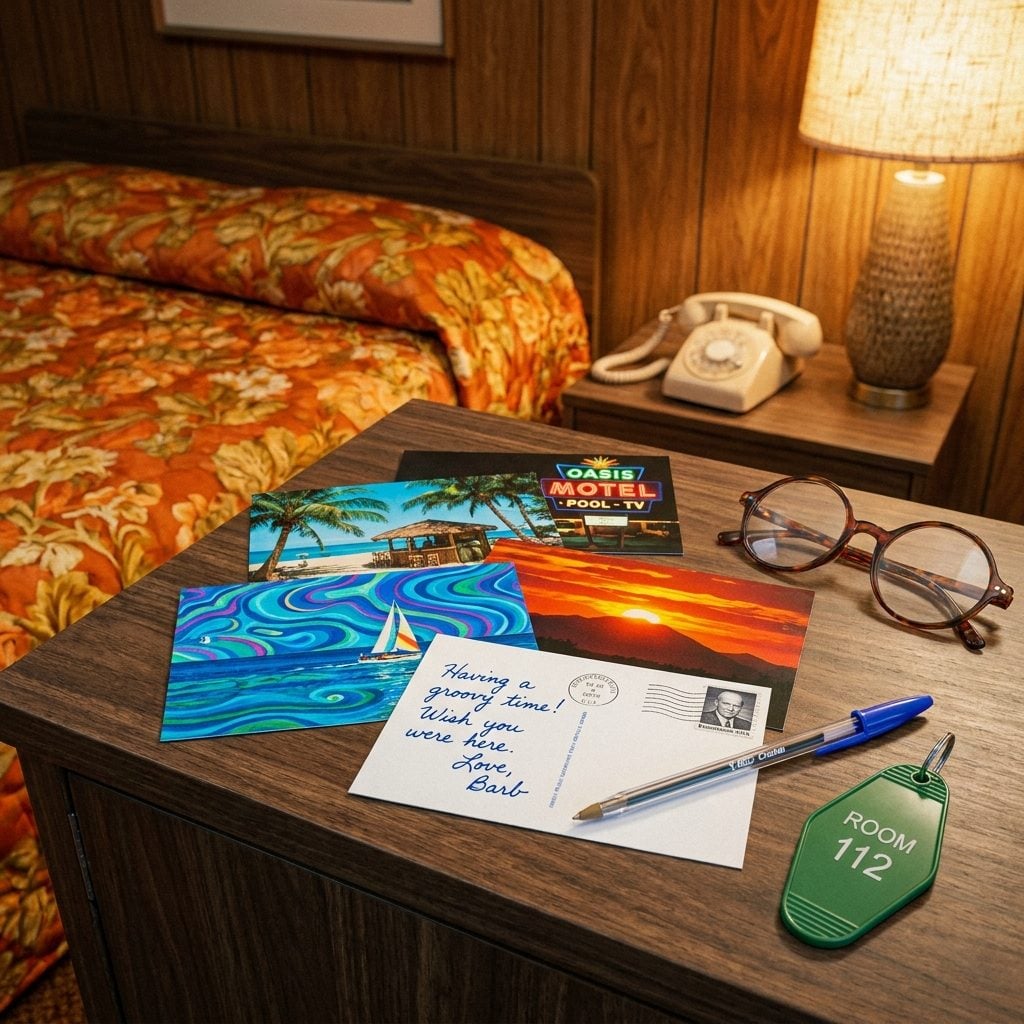
Bought in a spinning wire rack at the motel gift shop or the gas station. Always too many. Always the same shot of whatever tourist attraction was closest, in colors so oversaturated the sky looked purple and the ocean looked like mouthwash.
The writing ritual happened poolside or at the motel room desk, ballpoint pen pressing through cheap cardstock: “Weather is beautiful. Wish you were here. Love, The Hendersons.” Stamps from the front desk. Half the stack never got mailed — they ended up in a kitchen junk drawer at home, a small paper museum of places your family actually went, with your mother’s handwriting on the back proving it happened.
9. A Paperback Romance Novel With a Cracked Spine and Sand in the Pages
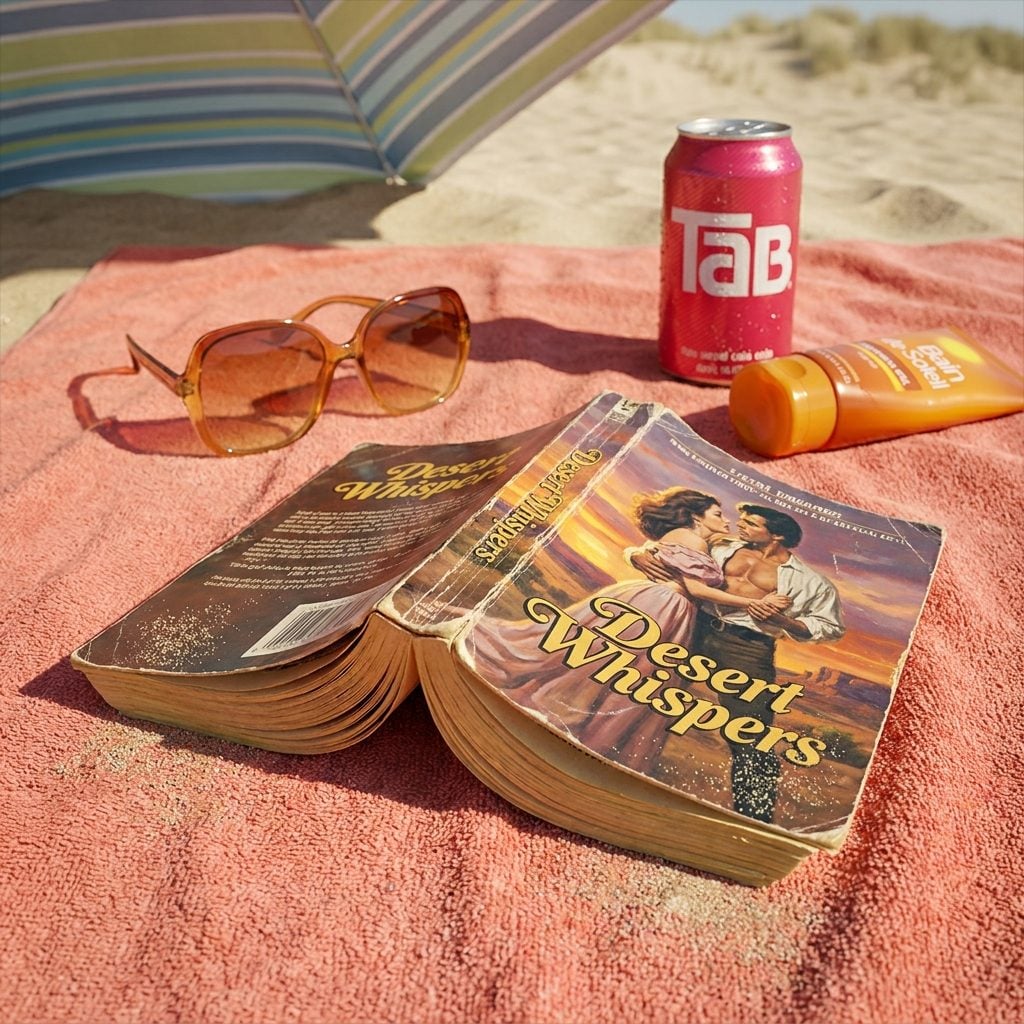
The cover always featured a shirtless man with feathered hair clutching a woman whose dress was losing a serious battle with gravity. Harlequin, Silhouette, or maybe a Danielle Steel from the airport bookshop. Spine pre-cracked because it had already been read once at home and was now on its second tour of duty as official beach reading.
Sand got into the pages on day one and never left. You’d find grains falling out months later when you opened it to lend to your sister. The top corner was permanently folded where she’d marked her place before falling asleep by the pool. No bookmarks. Bookmarks were for people who didn’t vacation hard enough.
8. A Can of Tab or Fresca Packed Into the Cooler for the Long Drive
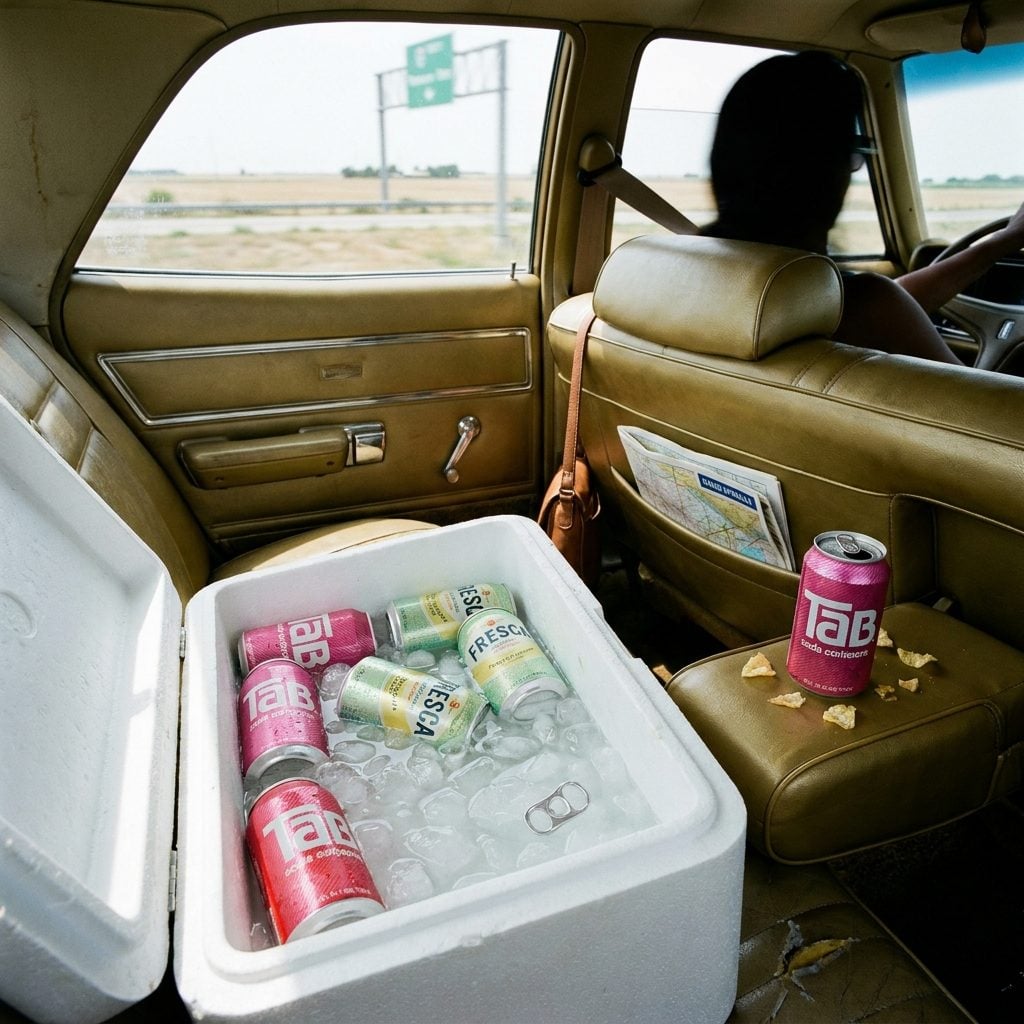
Not for the kids. The kids got whatever was cheapest. Tab was Mom’s — pink can, saccharin sweetness, slightly metallic aftertaste that she genuinely seemed to enjoy. Or Fresca, in that pale green can, grapefruit-flavored and zero calories, which in the 1970s basically qualified as a health drink.
It sat in a Styrofoam cooler between blocks of ice already half-melted by hour two. The can came out dripping wet, no koozie, no napkin. She’d pop the pull-tab — that old-style kind that came completely off — and it’d end up in the ashtray or on the floorboard. Then a long sip while Dad drove and the kids fought in the back seat. Her vacation had officially started.
7. The Scarf Specifically Reserved for Riding in Convertibles With the Top Down
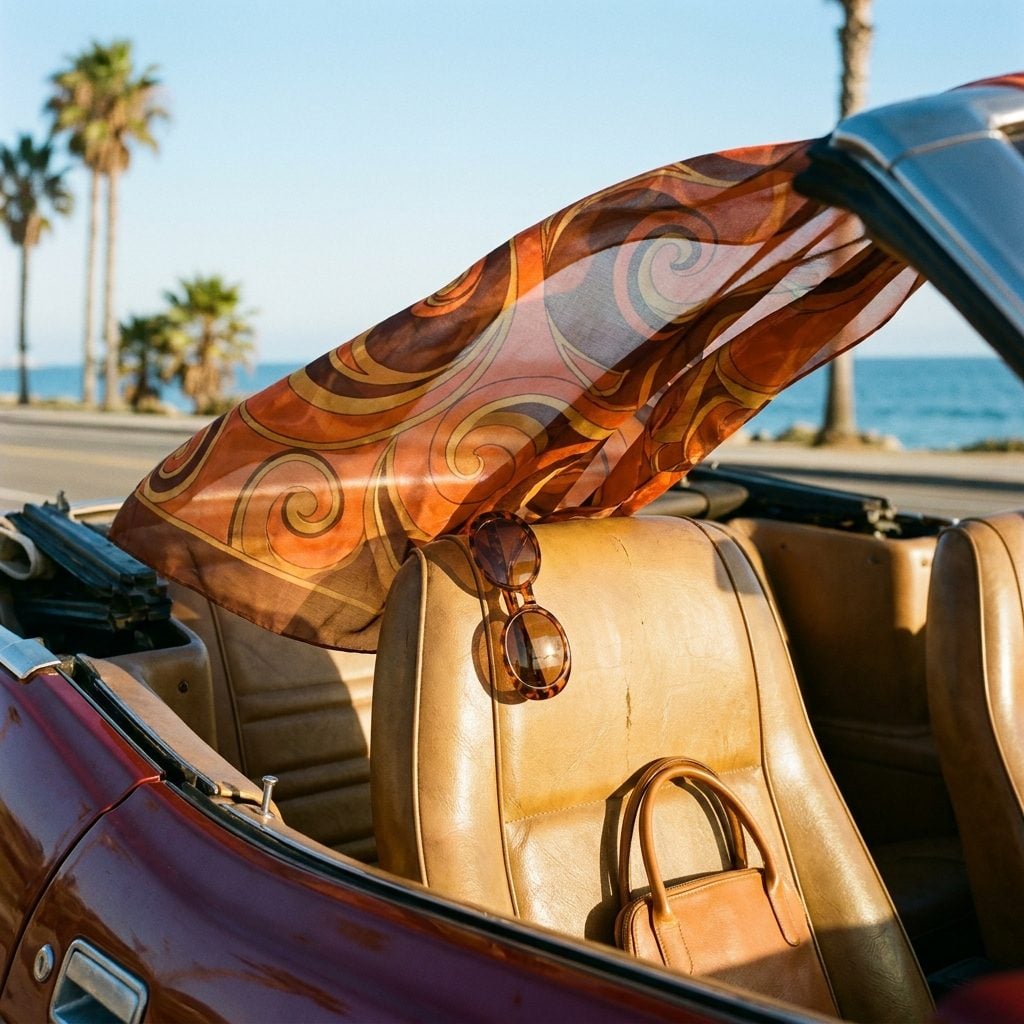
Sheer, usually polyester, often in a swirl of orange and brown or turquoise and gold. Not a fashion scarf — a piece of tactical equipment. You tied it over your set, knotted it under the chin, and hoped for the best at highway speeds.
Because the hair. Good Lord, the hair. It had been rolled, teased, and sprayed with enough Aqua Net to function as load-bearing infrastructure, and no amount of ocean breeze was going to undo three hours of bathroom mirror labor. The scarf was the last line of defense between a woman and humidity-induced chaos. Grace Kelly made the look glamorous. Your aunt Diane in a rented Mustang made it look practical. Both were right.
6. A Travel-Sized Bottle of Jean Naté Splash That Announced Your Arrival Poolside
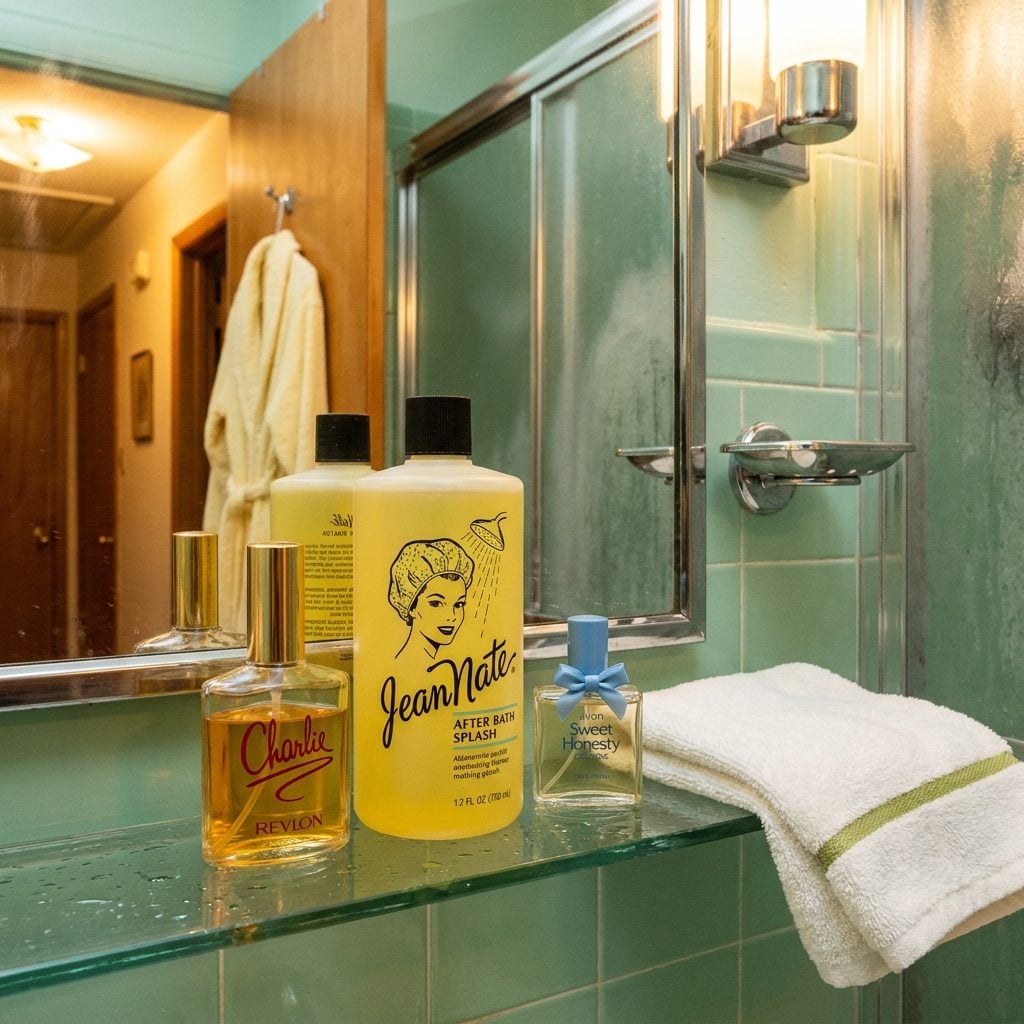
The yellow bottle. You know the one. Jean Naté After Bath Splash, lemon and lavender, applied so liberally after every shower that the motel bathroom smelled like it for the next guest too. Or maybe it was Charlie by Revlon, in that gold-capped bottle — the perfume equivalent of walking into a room and clearing your throat very loudly.
These were not subtle fragrances. A woman in 1976 did not dab perfume behind her ears and hope someone noticed. She doused herself in Jean Naté from collarbone to ankles and let the entire pool deck know she was freshly showered and ready for the early bird dinner. Restraint? Foreign concept. Why whisper when you could broadcast?
The bottles were always slightly sticky. Caps never stayed on properly in the suitcase. Everything packed near them smelled like Jean Naté for weeks afterward — which, honestly, was the best souvenir of all.
5. The Disposable Shower Cap from a Previous Motel, Reused Until It Disintegrated
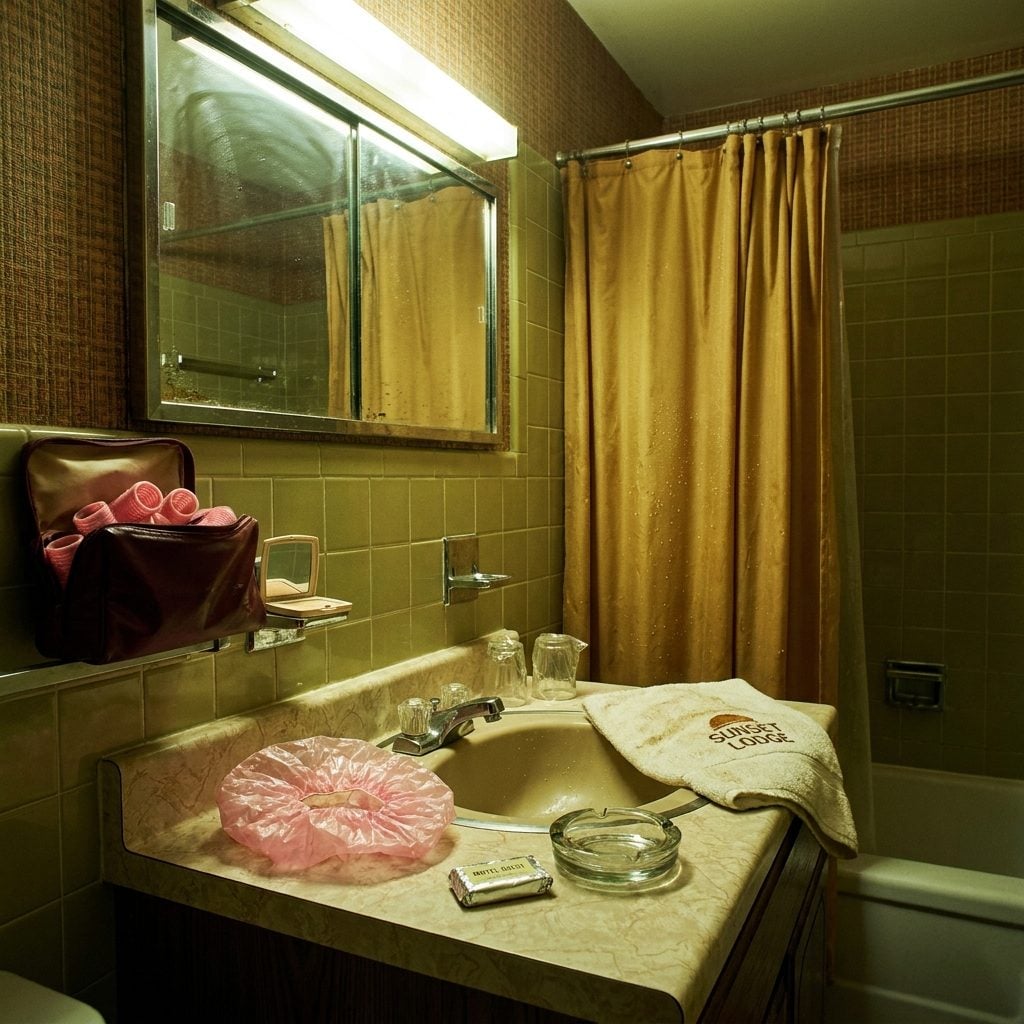
Nobody bought these. They accumulated — one from a Holiday Inn in Myrtle Beach, another from a Ramada somewhere in the Poconos — cycling through trips like tiny, crinkly hitchhikers that refused to stay behind. The plastic was so thin you could read a newspaper through it, and by the third reuse the elastic had given up entirely.
Mom would fold it into a square no bigger than a playing card, tuck it into her cosmetics case right alongside its spiritual cousin: the miniature shampoo bottle she’d been secretly refilling from a Prell bottle at home. Souvenirs? No. Trophies of thrift. Proof that nothing from a motel room — not one blessed thing — was too small to repurpose. She’d have taken the wallpaper if it peeled cleanly enough.
4. The Tiny Souvenir Pouch Stuffed with Arcade Tokens and Boardwalk Change
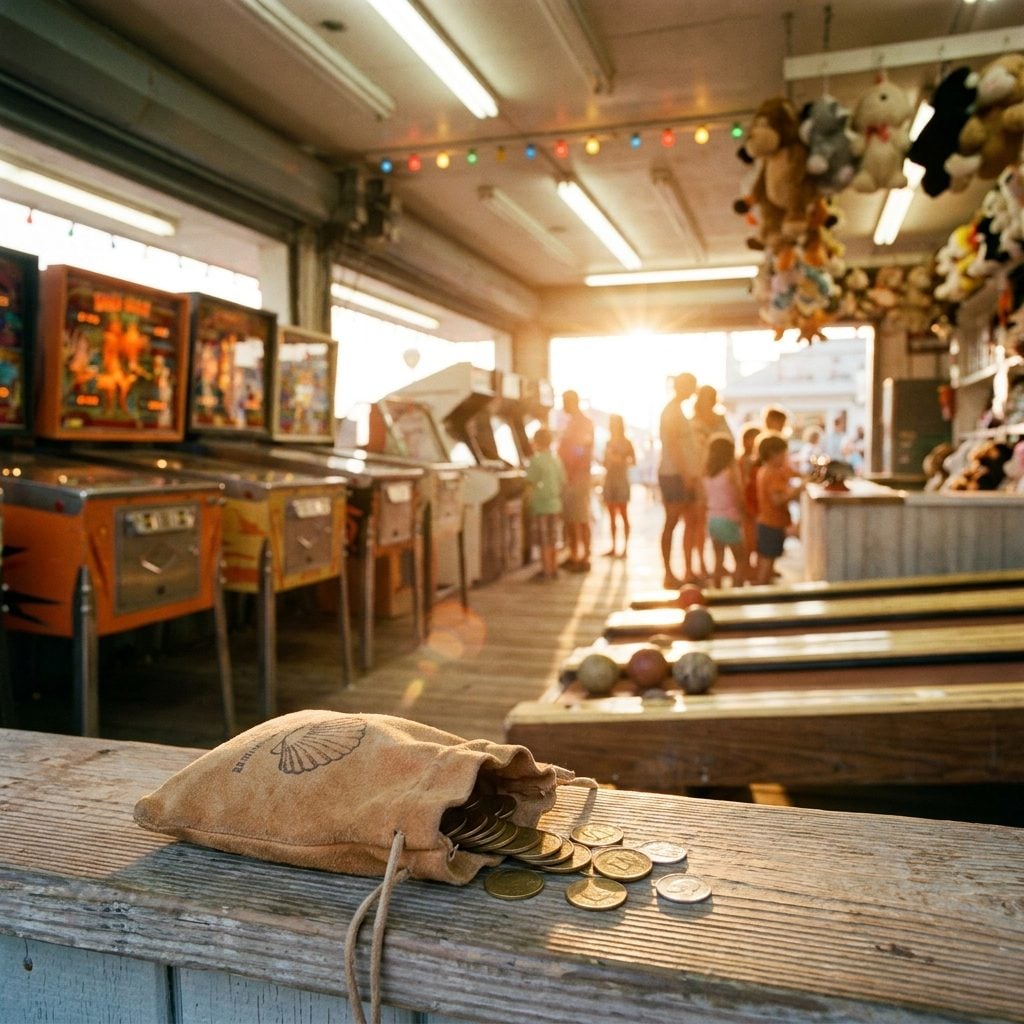
It smelled like pennies and sunscreen. Every family had one: a small drawstring pouch, suede or vinyl, stamped with a dolphin or a seashell and the name of whatever beach town you’d visited two summers back. Inside — a clattering mess. Arcade tokens from three different establishments, a handful of dimes earmarked for the mechanical fortune teller, and exactly one Canadian quarter that kept showing up no matter how many times you tried to spend it. That quarter was immortal.
Kids guarded this pouch with their lives on the boardwalk because the weight of it in your shorts pocket meant freedom, meant you could play one more round of Skee-Ball without begging permission from anyone. Currency and status, all in a bag the size of your fist.
3. The Beach Blanket So Thick with Trapped Sand It Weighed Twice What It Should
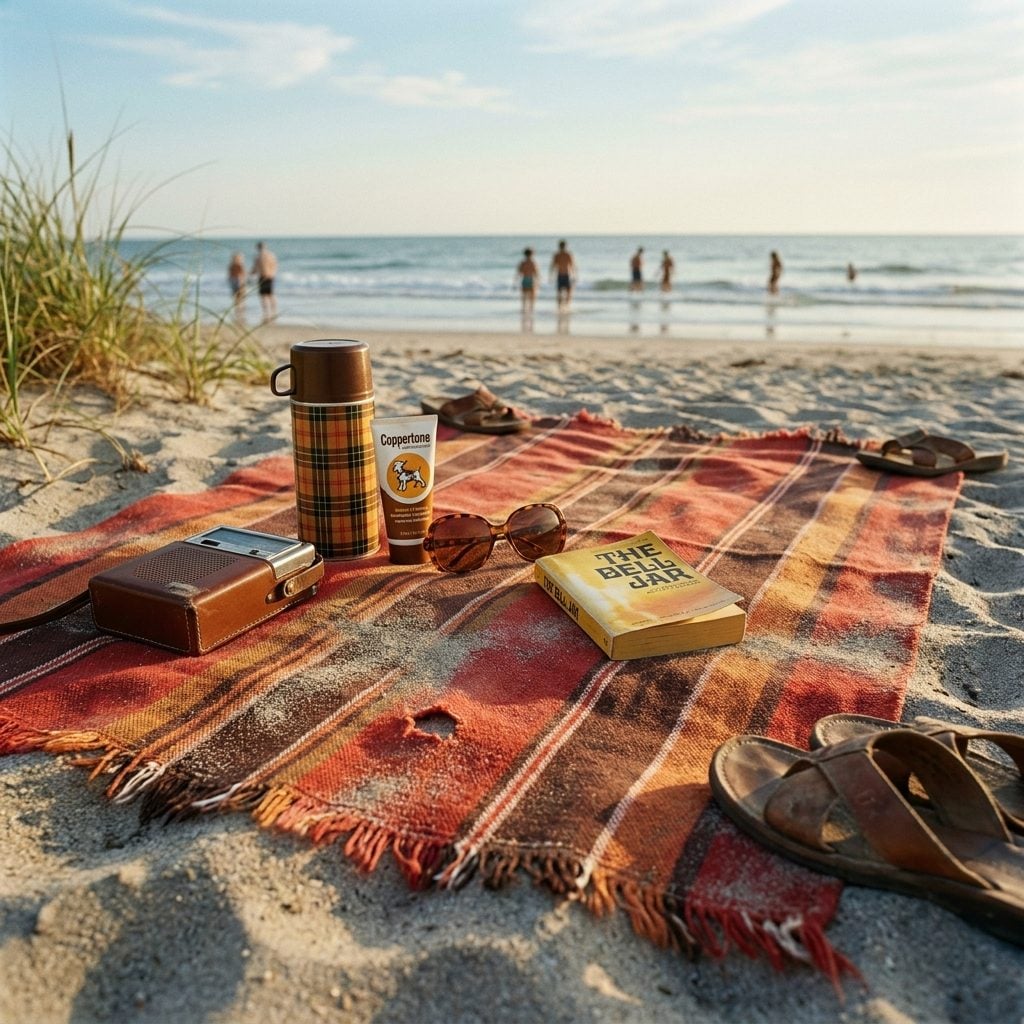
You never washed the sand out. You shook it, hung it over the porch railing, folded it aggressively — and still, when you unrolled it the following July, a small beach fell out onto the station wagon’s cargo area. Heavy woven cotton in stripes that had faded from bold to muted over five or six summers. The fringe along the edges? Long gone.
It lived in the trunk or the hall closet, rolled into a cylinder and cinched with a bungee cord. Replacing it would have been absurd — the sand was practically structural at that point, load-bearing. And honestly, there was something good about spreading it out on a new beach and recognizing grains from the old one. Cheap time travel. The best kind.
2. The Envelope of S&H Green Stamps and Clipped Coupons for Every Roadside Stop
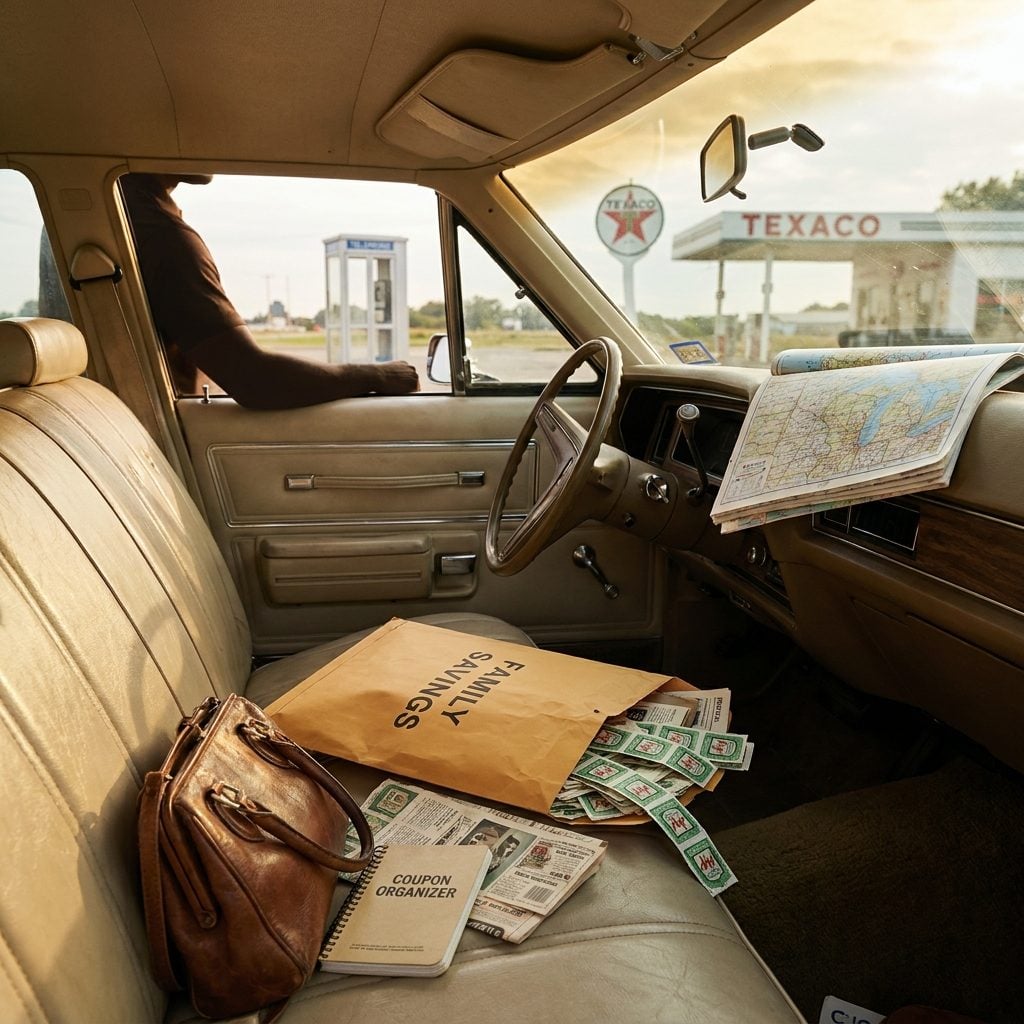
Somewhere between the road atlas and the box of Kleenex on the front seat, there was always an envelope. Thick. Slightly greasy at the corners. Stuffed with S&H Green Stamps in various stages of being licked and pressed into booklets, mixed with coupons clipped from newspapers and magazines, organized by absolutely no system anyone else could decipher.
Mom knew which gas stations gave double stamps and which Howard Johnson’s accepted the manufacturer coupon for Sanka. She could produce exactly the right scrap of paper from that chaotic envelope with a speed that made you think some invisible filing system lived inside her head — even though the physical evidence screamed otherwise. Her travel budget’s stealth advantage, right there on the bench seat in a manila envelope.
By the late seventies the Green Stamps program was fading, but loyalty ran bone-deep. Some women kept collecting right up until their local redemption center shuttered, then mourned it like they’d lost a neighbor.
1. The CB Radio Microphone Dangling from the Dashboard for “Breaker Breaker” Highway Chatter
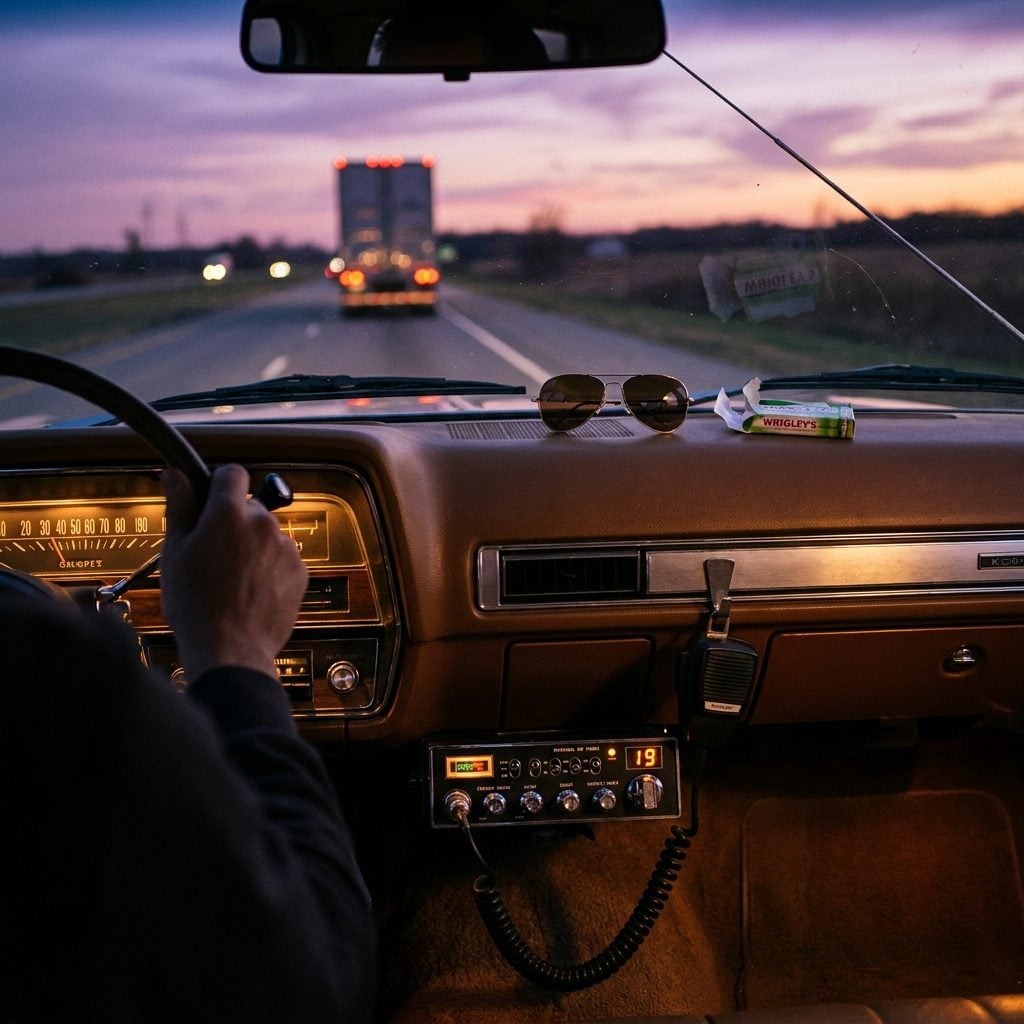
Technically, this had nothing to do with packing — but every family vacation car in the late seventies had one bolted under the dash, and Dad considered it essential travel equipment on par with the spare tire. That black box with silver knobs and a coiled microphone cord became the car’s entire social life on long, featureless highway stretches.
Channel 19 was the truckers’ channel, and listening to it beat any radio station by a mile. Speed trap warnings, weather reports relayed from three states away, conversations so colorful they’d make your mother lunge for the volume knob. And the handle names — Dad always picked something like “Silver Fox” or “Road Runner,” which the kids found absolutely mortifying. He didn’t care. He was having the time of his life.
The CB was theater. Dad became a completely different person with that microphone in his hand.
By 1982 or so the fad had cooled and most units gathered dust behind the glove box. But for a solid stretch of the late seventies, no road trip was complete without someone keying up and announcing, in their best trucker drawl, that there was a Smokey parked on the shoulder at mile marker 47.
🔥 Would you like to save this?
Please note that some of the imagery in this article were created with the aid of AI image generators.