
🔥 Would you like to save this?
I was and am a fan of the TV show “The Love Boat” so I simply couldn’t resist this article.
The smell of Coppertone and salt air, the snap of a new Samsonite suitcase latch, the rustle of tissue paper between garments packed days in advance. Boarding a cruise ship in the 1980s wasn’t just a departure — it was a fashion event, and every woman on that gangway knew it. The outfits alone could fill a glossy magazine spread: poolside caftans, jewel-toned dinner gowns with shoulders wide enough to clear a doorframe, coordinated shore-day ensembles that looked effortless and absolutely were not. Here are 30 looks that would still stop traffic on any pier.
30. Oversized Designer Sunglasses with Tinted Lenses That Covered Half Your Face

The frames were enormous — Nina Ricci, Christian Dior, Carrera — with gradient tinted lenses shifting from deep brown at the top to barely-there honey at the bottom. They sat on your face like a visor crossed with a windshield. Magnificent, frankly.
Sun protection wasn’t really the point. Presence was. A woman could board a gangway wearing those frames and look like she was arriving at Cannes rather than a three-day Bahamas loop out of Fort Lauderdale. And the tortoiseshell acetate alone weighed more than some of today’s entire eyewear collections — you felt them on your nose all day and didn’t mind one bit.
29. The Nautical-Striped Knit Top Paired with Crisp White Slacks
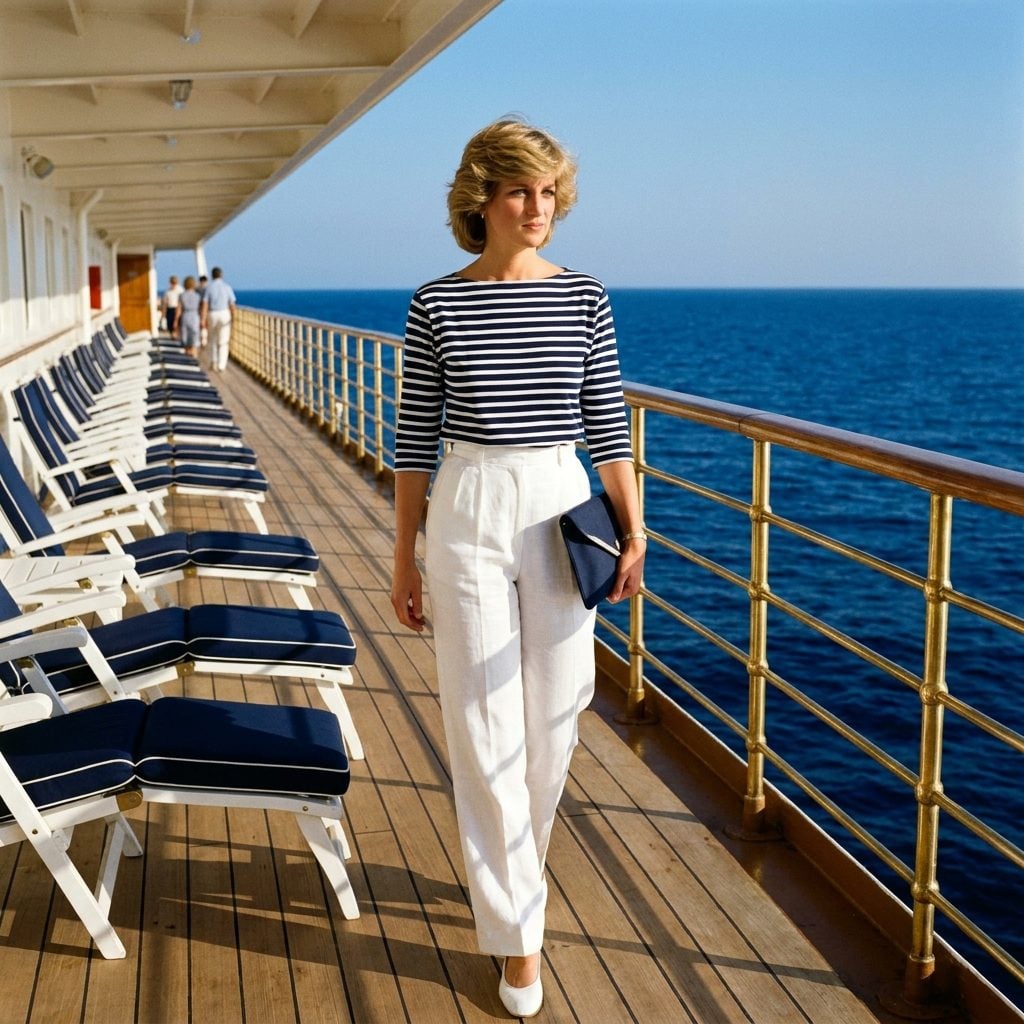
Navy and white stripes on a boat. Yes, it was literal. And it worked every single time — the navy striped boat-neck top tucked into white wide-leg trousers gave you a silhouette somewhere between Grace Kelly and your most put-together aunt.
The genius lived in the proportions: fitted knit on top, generous width below. High waists on those trousers drew a long vertical line that made everyone look like they had somewhere important to be on C Deck. A thin gold chain at the collarbone, and that was it. Nobody needed more than that, and nobody tried.
28. High-Waisted Shorts with a Tucked-In Polo, the Universal Shore-Day Uniform
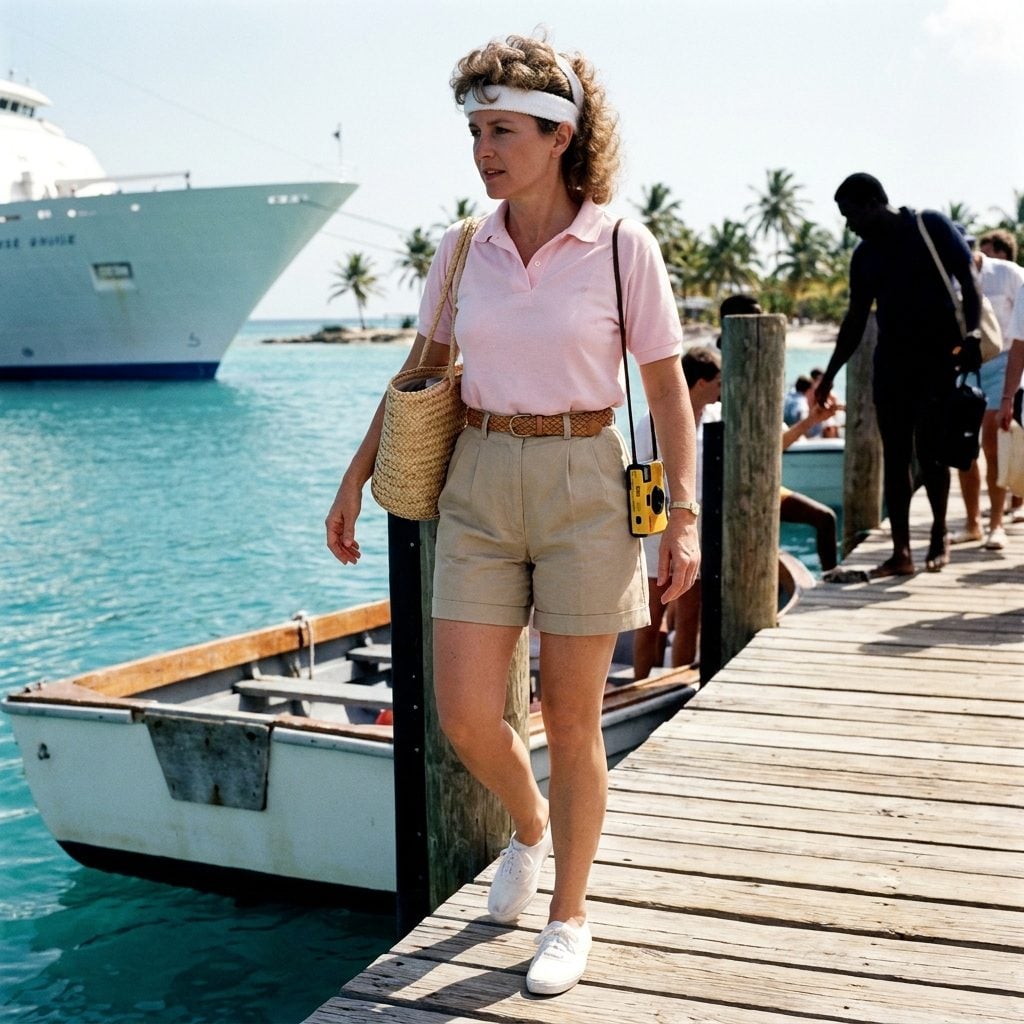
Pleated, khaki, high-waisted, hemmed right above the knee. Those shorts alone made a case for intentional dressing that most modern cruise-goers have quietly abandoned. Add a pastel polo shirt tucked in tight with a woven leather belt cinching the waist? Now it’s an outfit, not just clothes.
This was what you wore to haggle over straw bags at the port market and still look composed doing it. Polo collar standing up slightly, catching the breeze. Pleats adding a touch of structure that separated the whole thing from beachwear. It communicated vacation and standards simultaneously, which is a harder trick than it sounds.
27. Bright Tropical Print Sundresses That Could Be Spotted from the Upper Deck
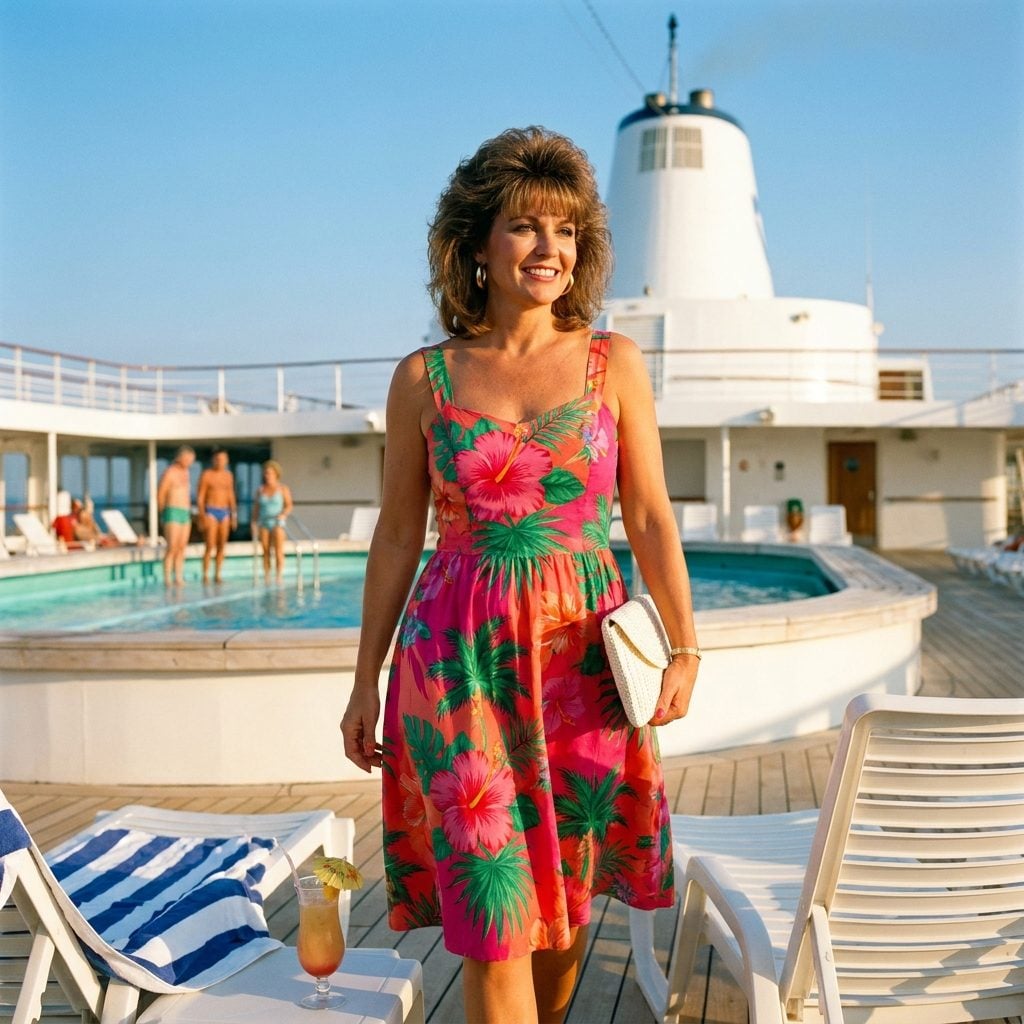
You could hear these dresses before you saw them. No — you could practically feel them. Hibiscus blossoms the size of dinner plates, palm fronds in Kelly green, parrots nobody asked for but everyone accepted. Subtlety was not invited.
A tropical print sundress on an 1980s cruise had zero interest in restraint. Wearing one was a woman’s announcement that she’d left her real life at the terminal and intended to be someone louder for the next five days. The fabric — usually a cotton-poly blend that dried fast after a rogue splash — ran forgiving enough to survive a lunch buffet without regret, which mattered more than anyone admitted out loud.
26. Shoulder-Padded Dinner Dresses in Jewel Tones That Owned the Dining Room
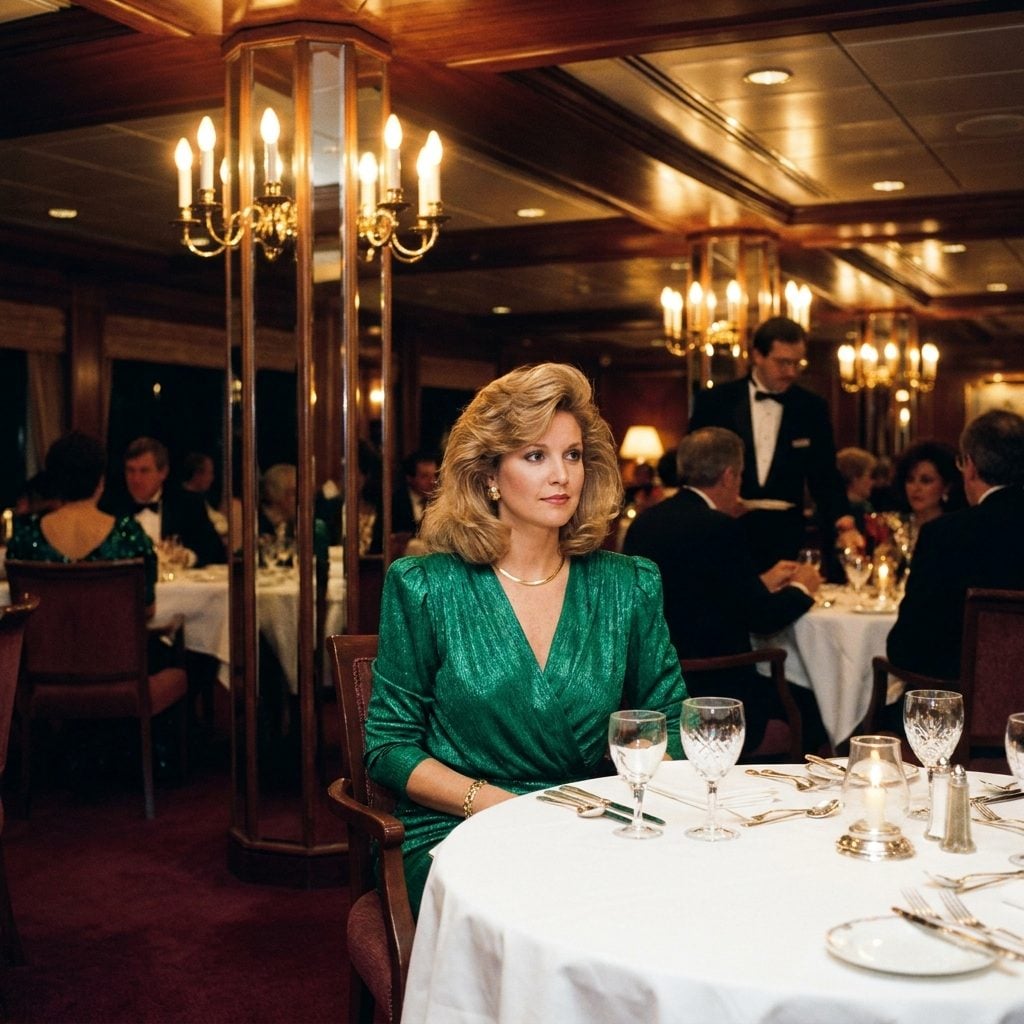
Shoulders first. Always. A woman walked into the Captain’s Dinner in an emerald silk dinner dress with shoulder pads that needed their own seating assignment, and the room rearranged itself around her.
Jewel tones were non-negotiable for formal nights — sapphire, amethyst, ruby, emerald — and no pastels after 6 PM, period. The fabric carried a slight sheen that caught brass chandelier light in those wood-paneled dining rooms, turning every seated figure into something from a Dynasty production still. Gold cuff bracelets and clip-on earrings completed the standard uniform.
Nobody has dressed for a cruise dinner that well since. I keep waiting to be proven wrong. The structured silhouette, the deliberate color choices, the understanding that formal meant formal — it was a different contract between the passenger and the evening, and both parties held up their end.
25. White Canvas Keds for Every Shore Excursion and Embarkation Walk
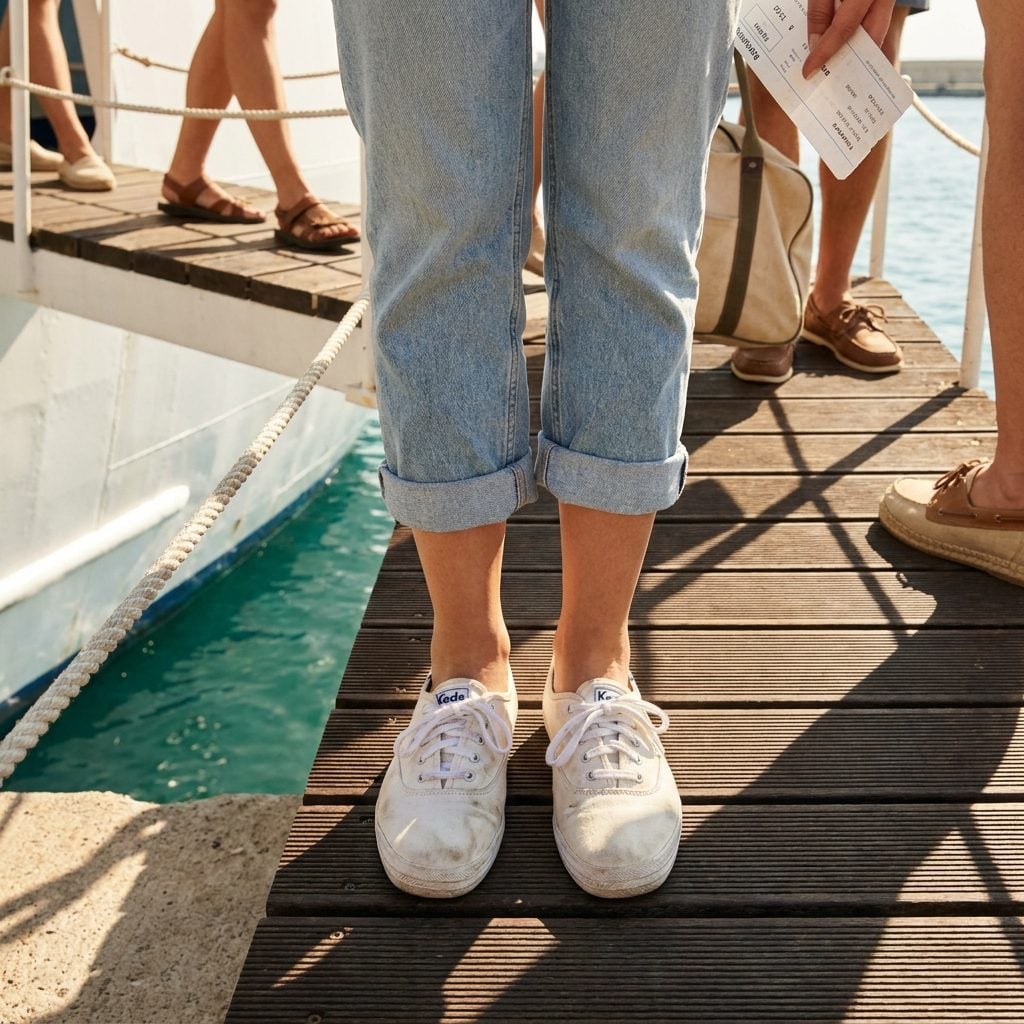
Flat. White. Canvas. The white canvas Keds were the one shoe every woman packed regardless of what else made it into the suitcase — they paired with the sundress, the shorts, the slacks, and the tracksuit because they committed to nothing and therefore went with everything.
By day three they’d picked up a scuff on the rubber toe cap and a faint pink stain from something spilled at the pool bar. Nobody cared. That was their charm. Cheap enough to be semi-disposable, and they actually looked better a little beaten up, which is a quality most shoes can’t claim.
24. Wide-Brim Straw Sun Hats with Grosgrain Ribbon Bands
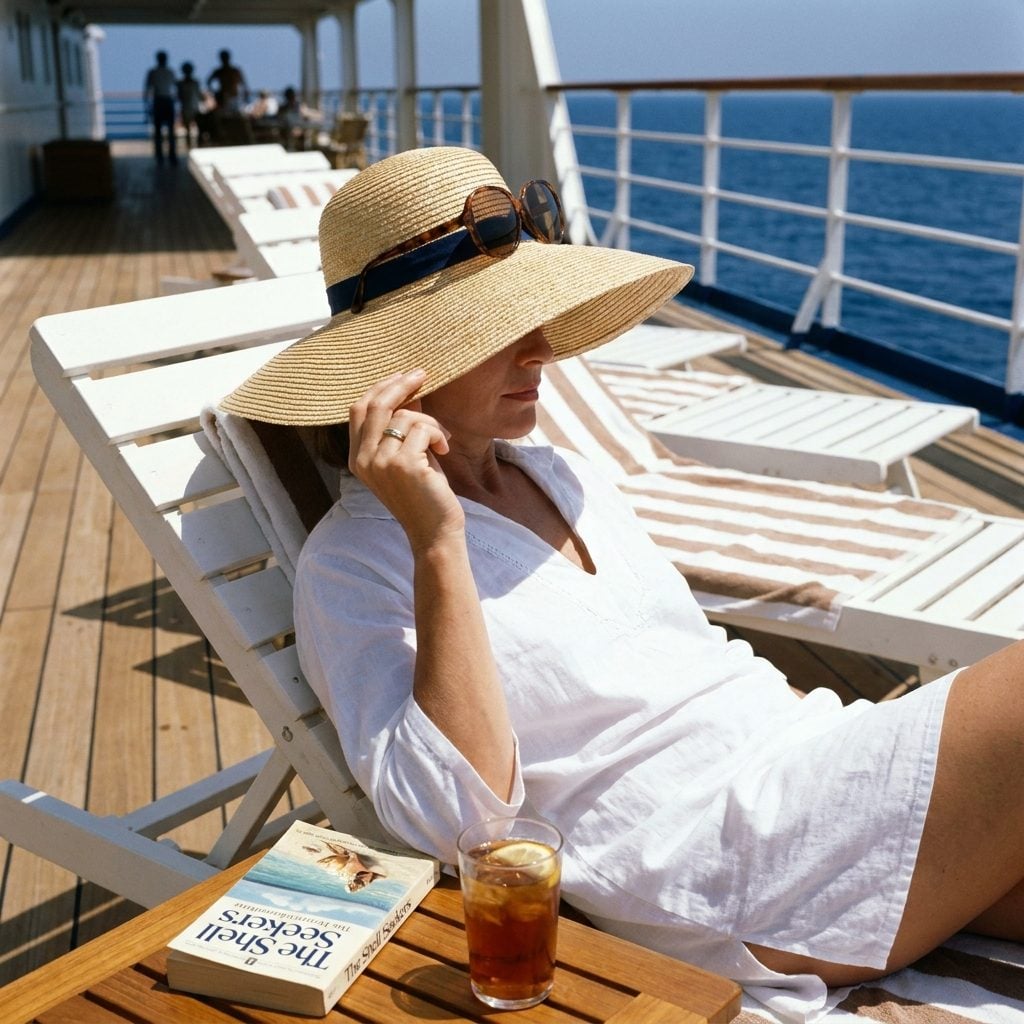
Wide enough to shade your shoulders and your neighbor’s paperback. A wide-brim straw hat with a navy grosgrain ribbon on an 1980s cruise deck functioned as a territorial marker — place it on a lounger, and that lounger was claimed. No further negotiation required.
They came from everywhere: a boutique at home, a port market on last year’s trip, or the one gift shop on the Lido Deck that charged triple for the same hat. The straw was usually packable, which meant it arrived slightly crushed and spent the first hour on deck being reshaped by determined fingers and occasional swearing. By the end of the week it smelled like salt and sunscreen. Most women kept theirs for years after, hanging on a bedroom doorknob through every winter until the next departure.
23. Gold Chain Belts Draped Over Resort Dresses Like Liquid Jewelry
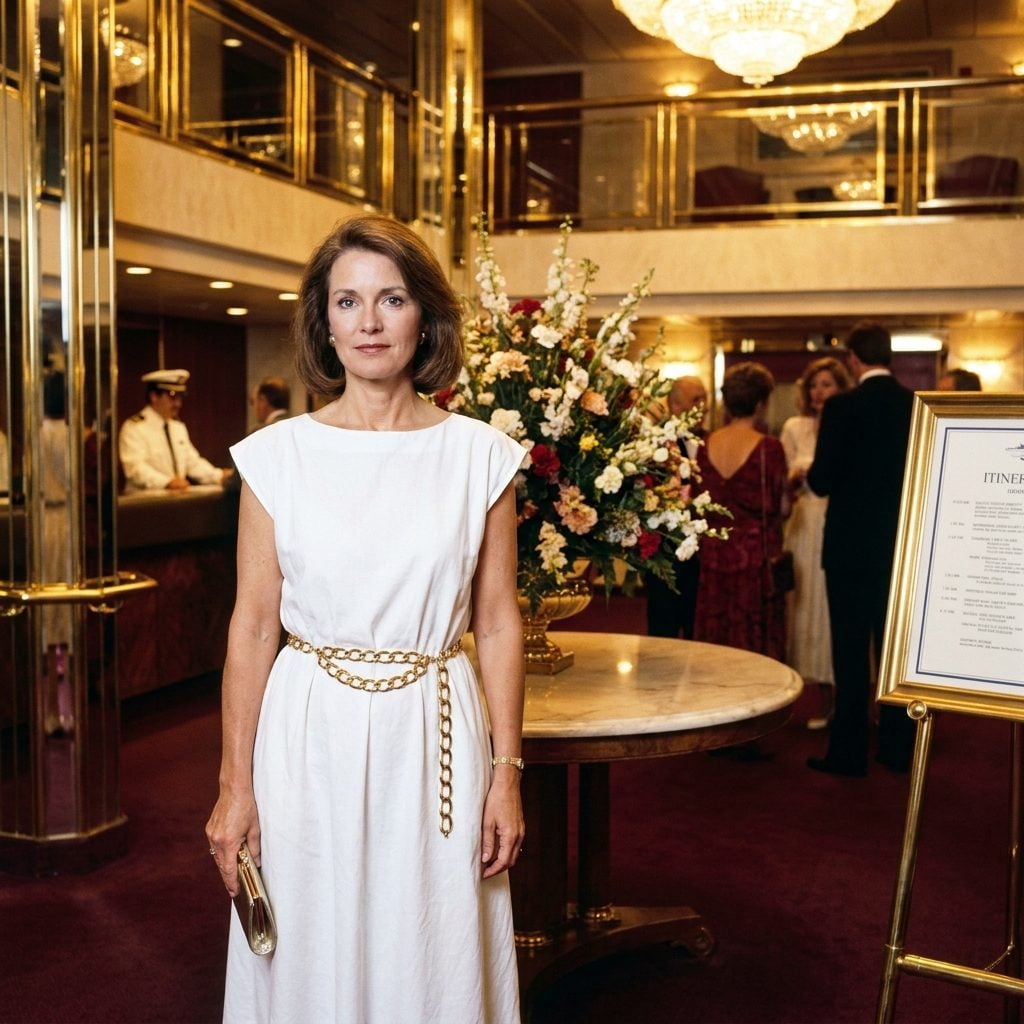
One piece of hardware could rewrite an entire outfit. A gold chain belt looped once or twice at the natural waist over a simple cotton dress turned something forgettable into something deliberate, the links catching overhead light in the ship’s atrium like they’d been designed for exactly that room.
Department store jewelry counters sold them in every variation — interlocking ovals, flat serpentine links, chunky rope-style chains with a decorative clasp dangling at the hip. They weighed almost nothing but looked substantial. More importantly, they solved a real problem. The shapeless resort dress was everywhere in the ’80s, and it needed intervention. Add the chain, and suddenly a waistline appeared where cotton had been vague and noncommittal.
22. Matching Velour Tracksuits for Travel Days and Embarkation Morning
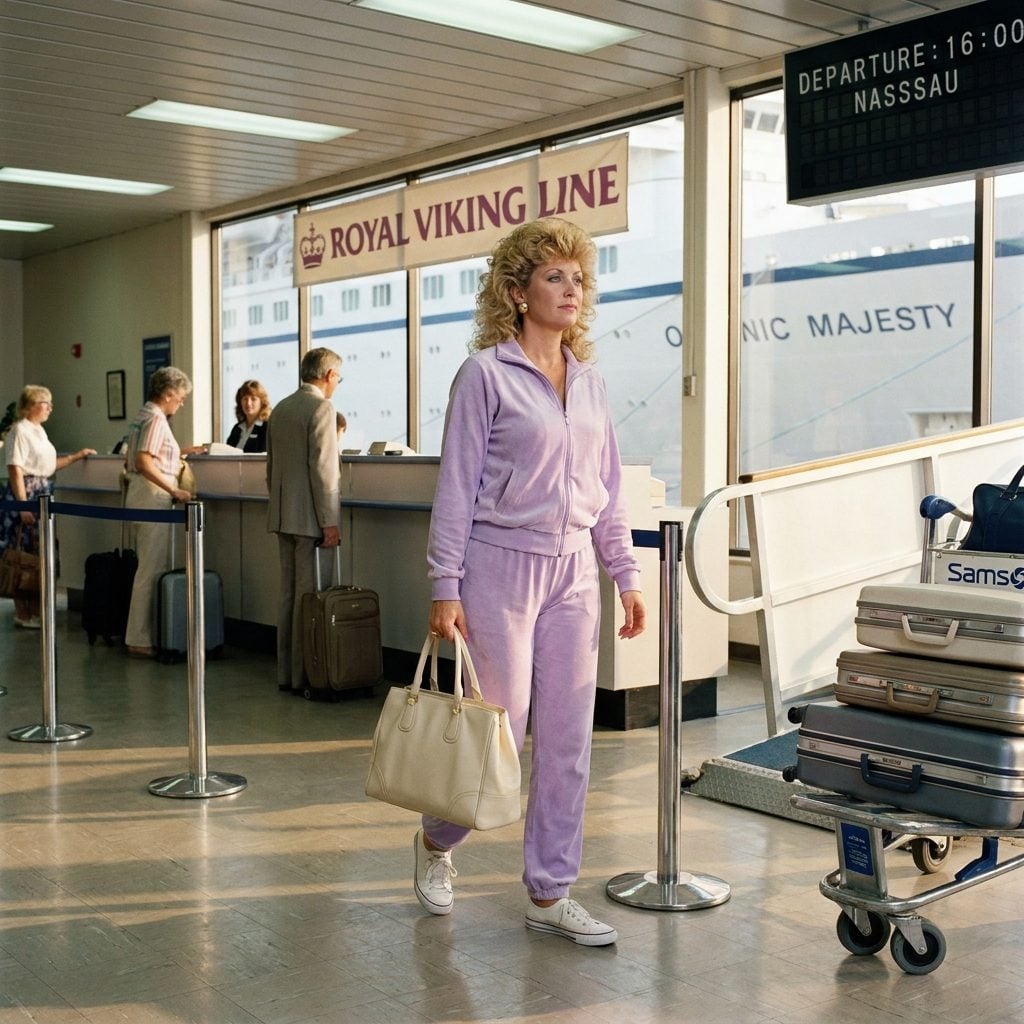
The travel outfit before travel outfits had a name. A matching velour tracksuit in pastel lavender or dusty rose, zipped to the collarbone, was the embarkation-morning uniform for women who refused to choose between comfort and looking pulled together.
Velour had a softness that cotton sweats couldn’t touch, plus a subtle sheen under fluorescent terminal lighting that gave jogging pants a polish they had absolutely no business possessing. You wore it through the airport, through the terminal, up the gangway, and straight to your stateroom, where it came off and the sundress went on. Transitional clothing in the most literal sense — an outfit that existed solely to bridge the gap between real life and vacation, then disappear into the bottom of a drawer until the trip home.
21. Flowy Caftans Worn Over Swimsuits by the Pool, the True Power Move
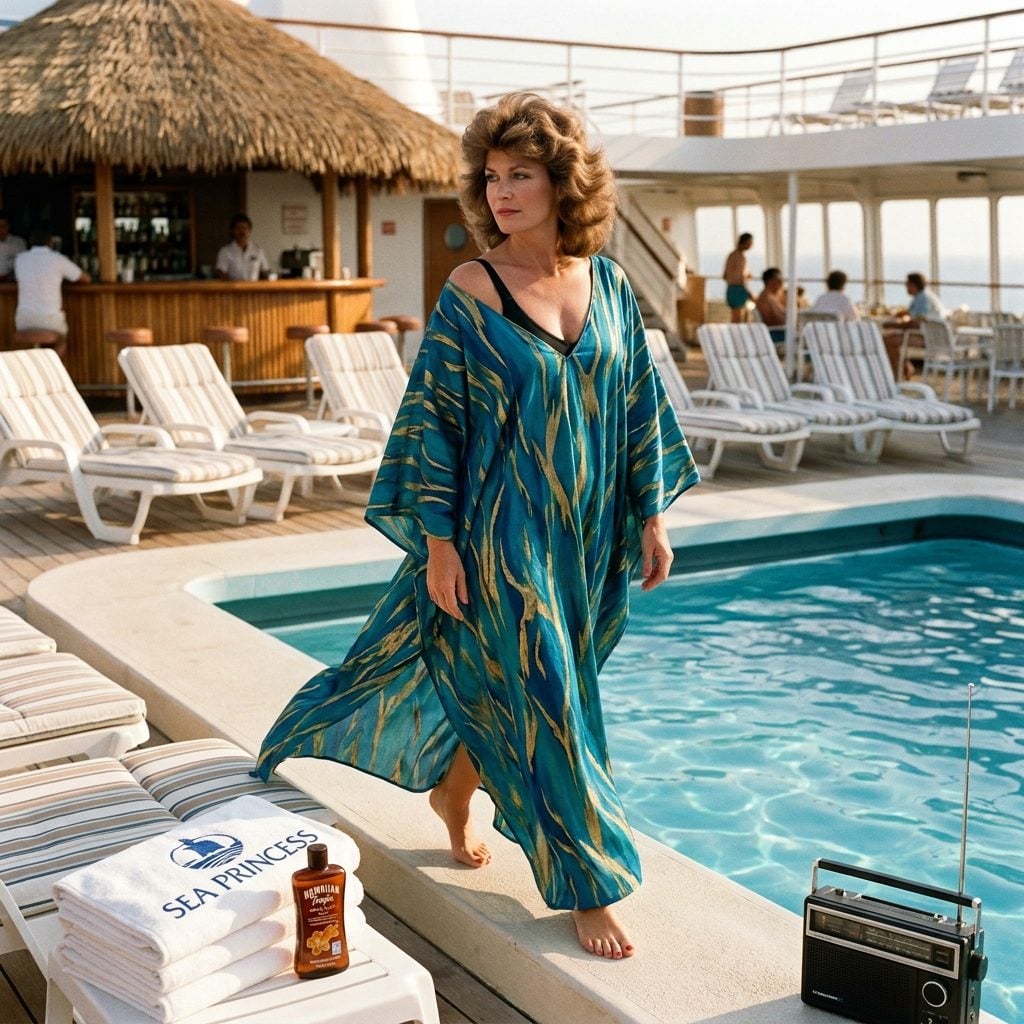
The caftan was never about covering up. A woman in a peacock blue caftan billowing across the pool deck at 2 PM had decided that this particular stretch of teak and chlorinated water was her domain, and the fabric was the announcement.
Floor-length, usually some combination of saturated color and abstract print, light enough to catch every slight Caribbean breeze. Underneath: a black one-piece, maybe a tankini if it was 1987 or later. The caftan handled everything else. It turned the walk from stateroom to lounger into something worth watching — an unhurried procession that said I am in no rush and you are welcome to notice.
Most came from department store resort collections or port towns on previous trips. They packed flat, wrinkled gracefully, and made a woman look like she owned the vessel. Here’s what gets me: no other single garment on board accomplished that much with that little effort. A caftan is basically a very confident rectangle.
20. One-Piece Swimsuits With Bold Geometric Patterns That Owned the Lido Deck
🔥 Would you like to save this?
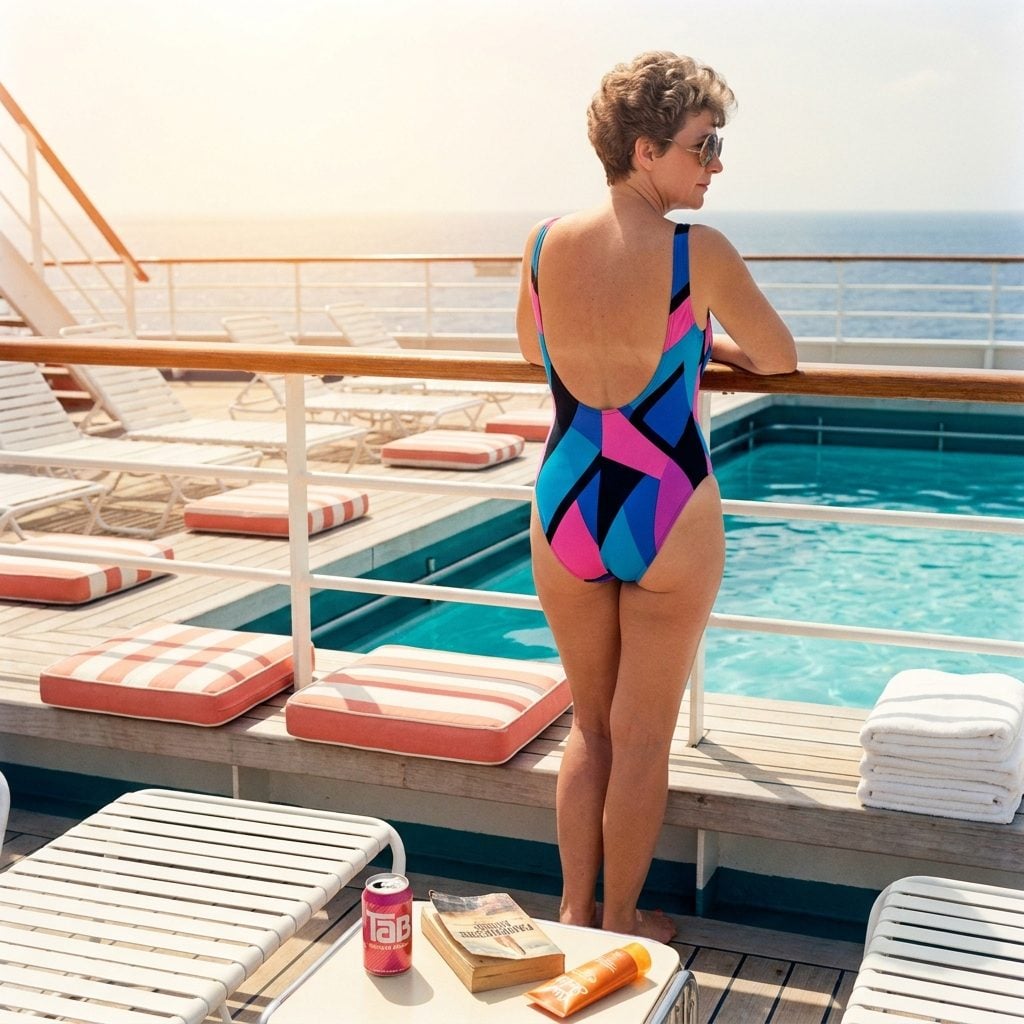
The geometry did the talking. Sharp chevrons in electric blue, hot pink triangles slicing across black fields, asymmetrical color blocks that looked like someone had taken a ruler to a sunset. These weren’t shy swimsuits. They were declarations, and the geometric one-piece was the single most important garment a woman packed for an ’80s cruise.
What made these work was the tension between coverage and confidence. A one-piece that covered more skin than a bikini but commanded more attention, because the pattern acted like architecture across the body. High-cut legs lengthened everything from hip to ankle. The scoop back did its part. And the pattern itself created visual movement, drawing the eye along diagonal lines that no solid-color suit could match.
Pair it with an oversized pair of sunglasses and a can of something diet, and the Lido Deck became a personal runway between the hours of eleven and two.
19. Colorful Terrycloth Cover-Ups That Turned the Pool Bar Into a Fashion Show
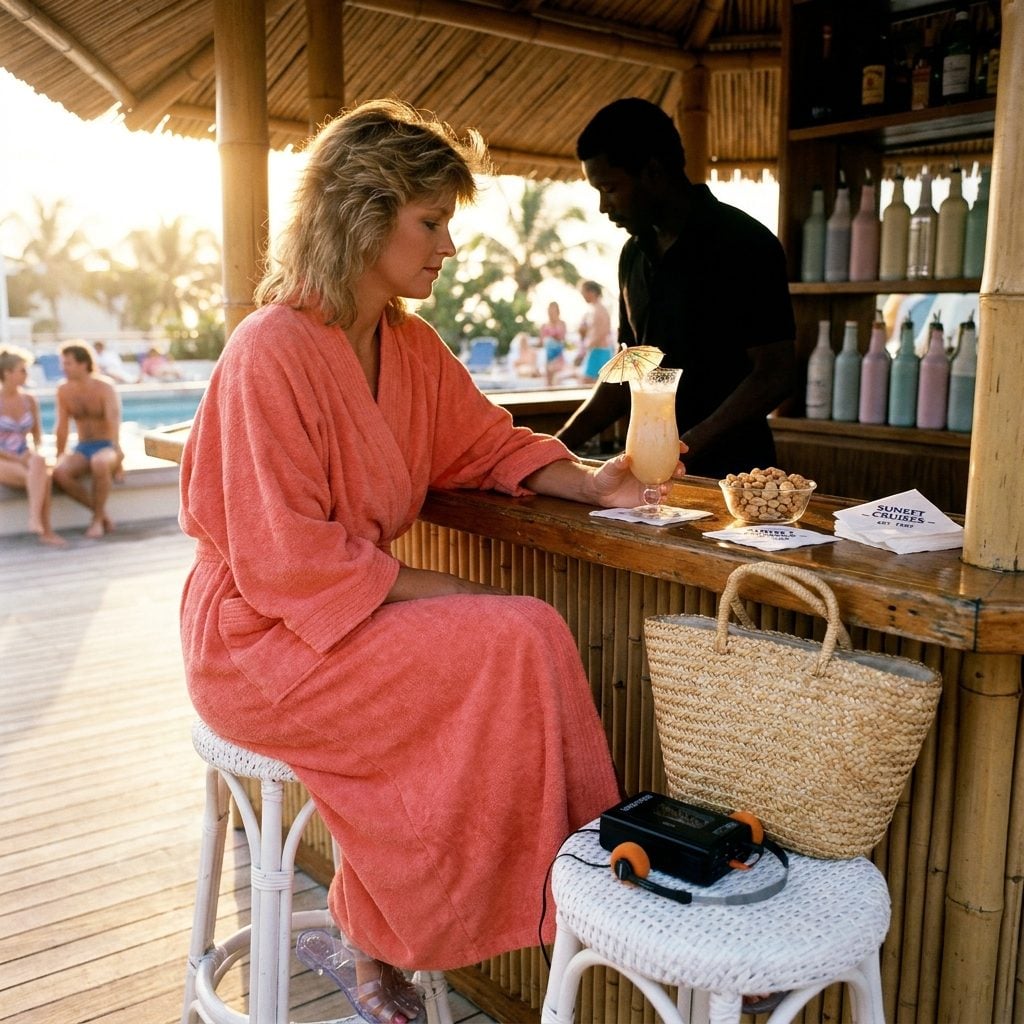
That fabric. Thick, thirsty, unapologetically plush. A terrycloth cover-up in coral or turquoise or canary yellow wasn’t just something you threw on after the pool. It was the outfit. Women wore these to the bar, to the buffet, through the photo line, sometimes straight into the elevator and back to the cabin without ever changing.
The best ones had dolman sleeves and a self-belt that could cinch or hang loose depending on the hour. The fabric held warmth from the sun and smelled faintly of chlorine and coconut oil for the rest of the trip. Nobody ironed them. Nobody needed to.
18. Pastel Linen Pants With Lightweight Blouses for Port Days That Felt Like a Magazine Spread
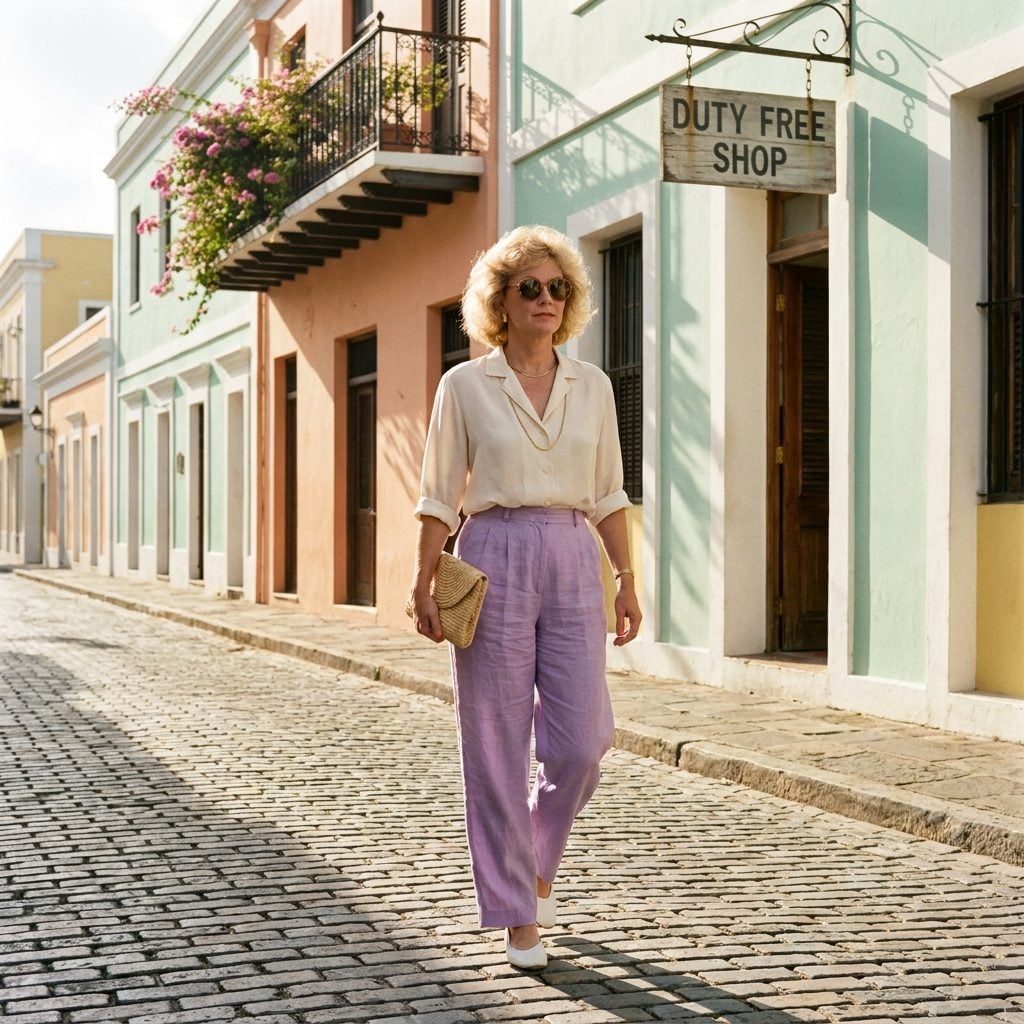
Linen wrinkles. Everyone knew it, nobody cared. That was half the point. The wrinkles were proof you were somewhere warm, doing something leisurely, and had packed clothes that breathed instead of clung. Pastel linen wide-leg pants in lavender or soft peach, paired with a cream silk blouse with the sleeves pushed up, made every port-of-call walkthrough look like an editorial for Travel & Leisure.
The proportional logic here was quietly brilliant. Wide through the leg, fitted at the natural waist, soft through the blouse. Nothing tight, nothing restrictive, but everything intentional. The palette stayed cool because the fabrics stayed cool. A thin gold chain at the collarbone, a pair of leather flats, and the whole thing moved with a kind of unhurried ease that synthetic fabrics could never replicate.
17. Chunky Gold Hoop Earrings That Made Formal Night Feel Like a Coronation
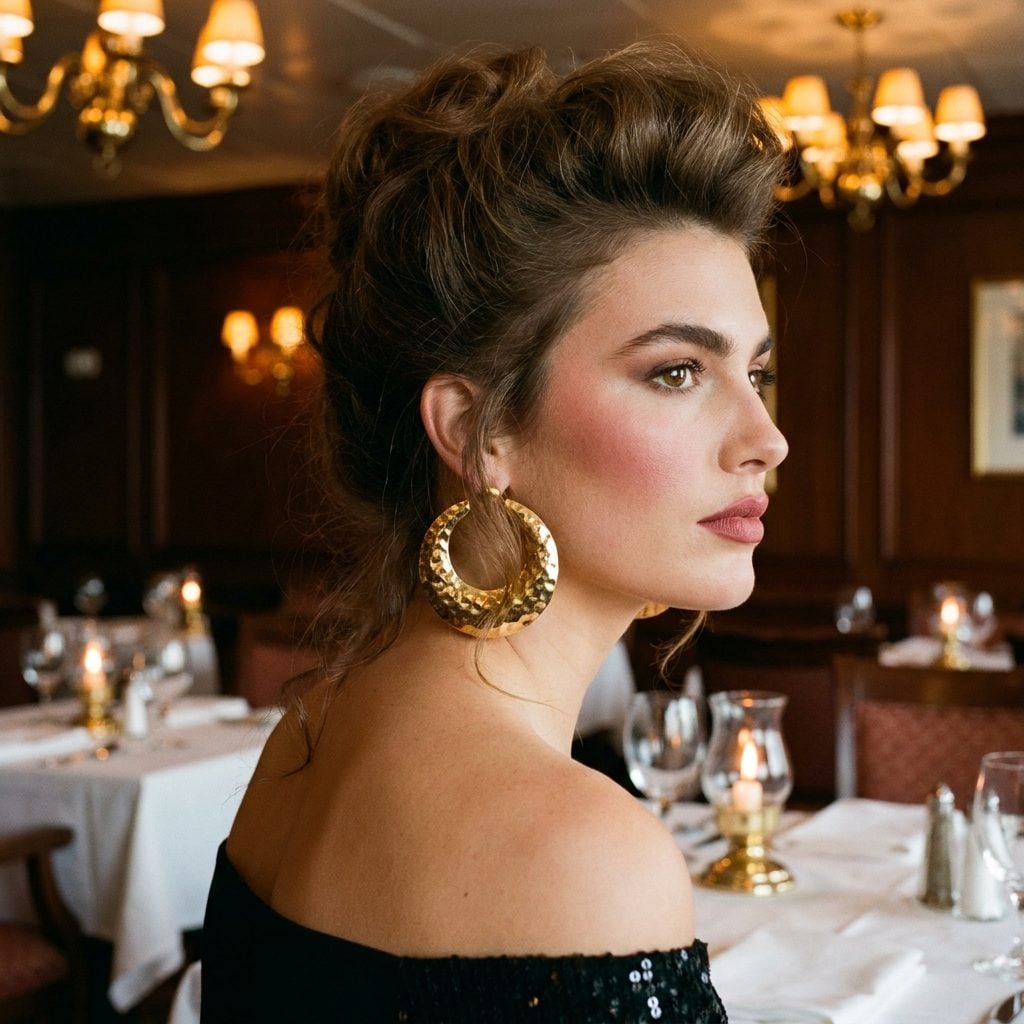
The earring was the outfit’s engine. Remove it and a black evening top became ordinary. Add a pair of chunky gold hoops, two inches in diameter with a hammered texture that scattered candlelight across your jaw, and suddenly the whole look had weight and intention.
Formal night on an ’80s cruise was serious business. Three-course dinners, assigned seating, the captain making rounds. Women dressed for it the way you’d dress for a wedding reception. And the gold hoops were the single most reliable finishing move in the arsenal. They worked with updos. They worked with shoulder pads. They caught every flicker of every candle on every white tablecloth in the dining room.
I’d argue these did more for formal night than any dress ever did.
16. Espadrille Wedges Paired With Evening Outfits Because the Deck Was Never Quite Level
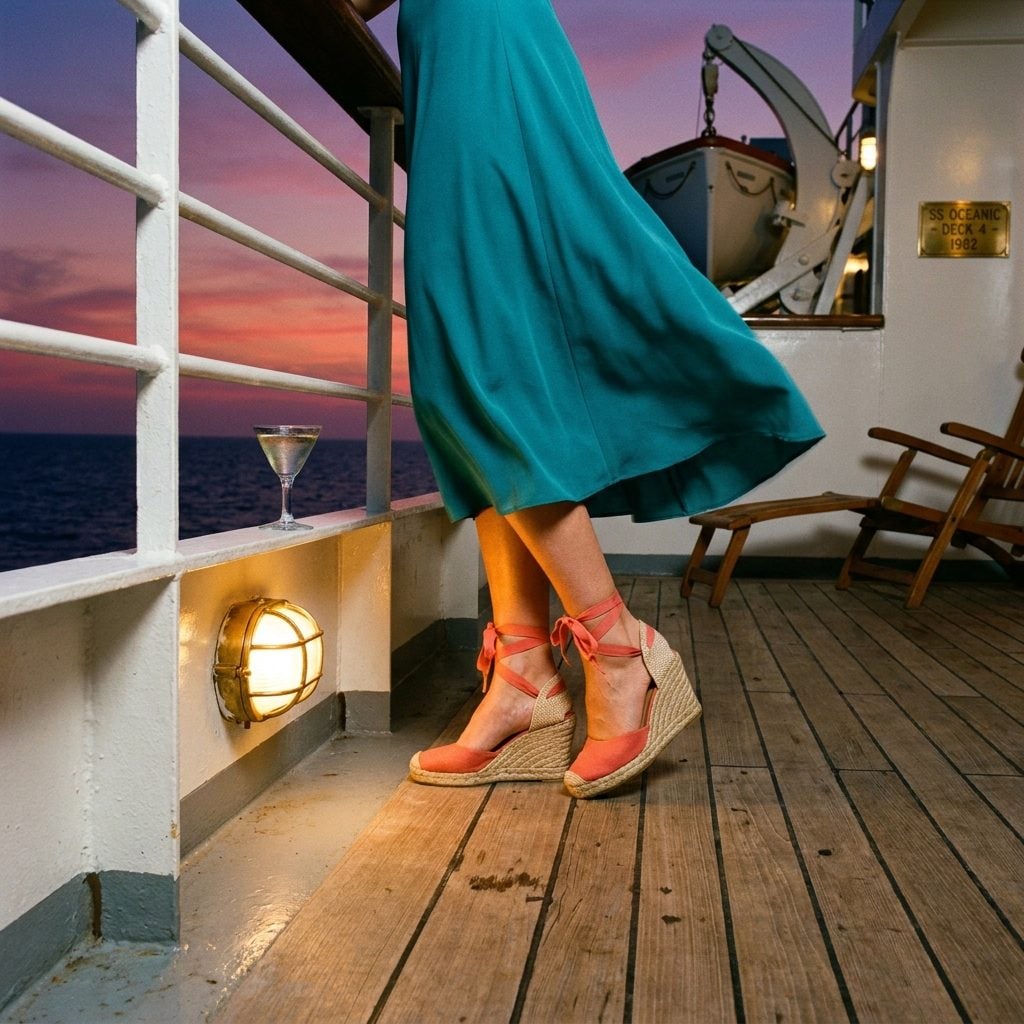
Stilettos on a moving ship. Think about it for exactly two seconds and you’ll understand why the espadrille wedge became the unofficial formal shoe of the ’80s cruise circuit.
That wide jute platform gave you the height without the ankle-breaking risk, and the canvas or ribbon straps kept everything locked down when the ship decided to remind you that you were, in fact, at sea. Women wore these with evening dresses. With wide-leg trousers and silk camisoles. With rompers that had shoulder pads. The coral and natural tones worked with everything the Caribbean demanded, and the jute texture added a texture contrast against dressier fabrics that no patent leather pump could match.
Practical and pretty. The combination that actually lasts.
15. The Preppy Sweater Draped Over the Shoulders for Cool Evenings at Sea
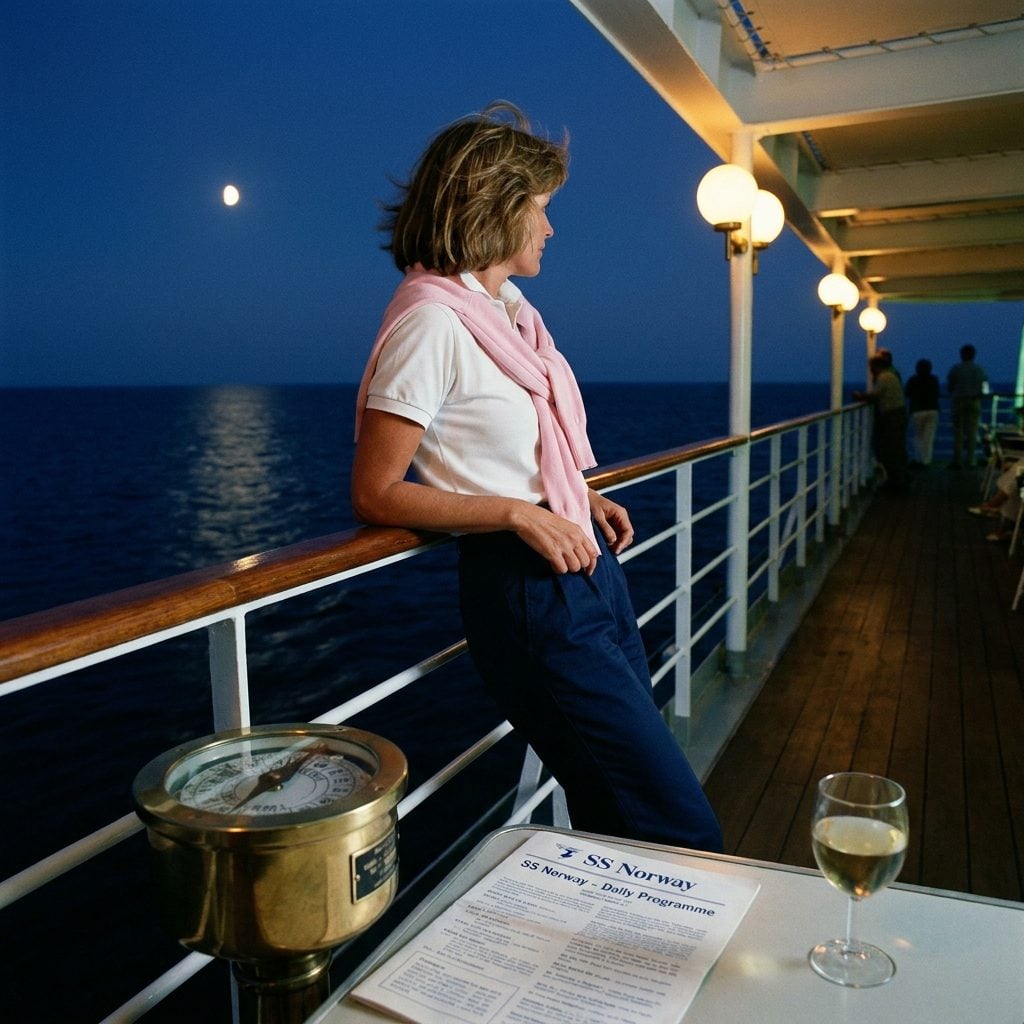
Nobody actually wore the sweater. That was the whole point.
It lived on the shoulders, sleeves tied in a loose knot at the collarbone, functioning as equal parts warmth layer and social signal. A pastel pink cotton crewneck draped over a white polo shirt said: I belong on this ship. I’ve been on ships before. I know it gets cool after nine and I planned accordingly, but not so aggressively that I brought a jacket.
The drape worked because the sweater was never too heavy. Lightweight cotton or a thin lambswool. Anything bulky killed the silhouette and turned the look into someone fighting the cold instead of casually acknowledging it. The best ones had a little cable knit texture and came in colors that existed nowhere in nature but looked entirely correct against a navy night sky and a white ship railing.
14. Wrap Dresses in Vibrant Tropical Colors That Handled Every Dinner From Casual to Captain’s
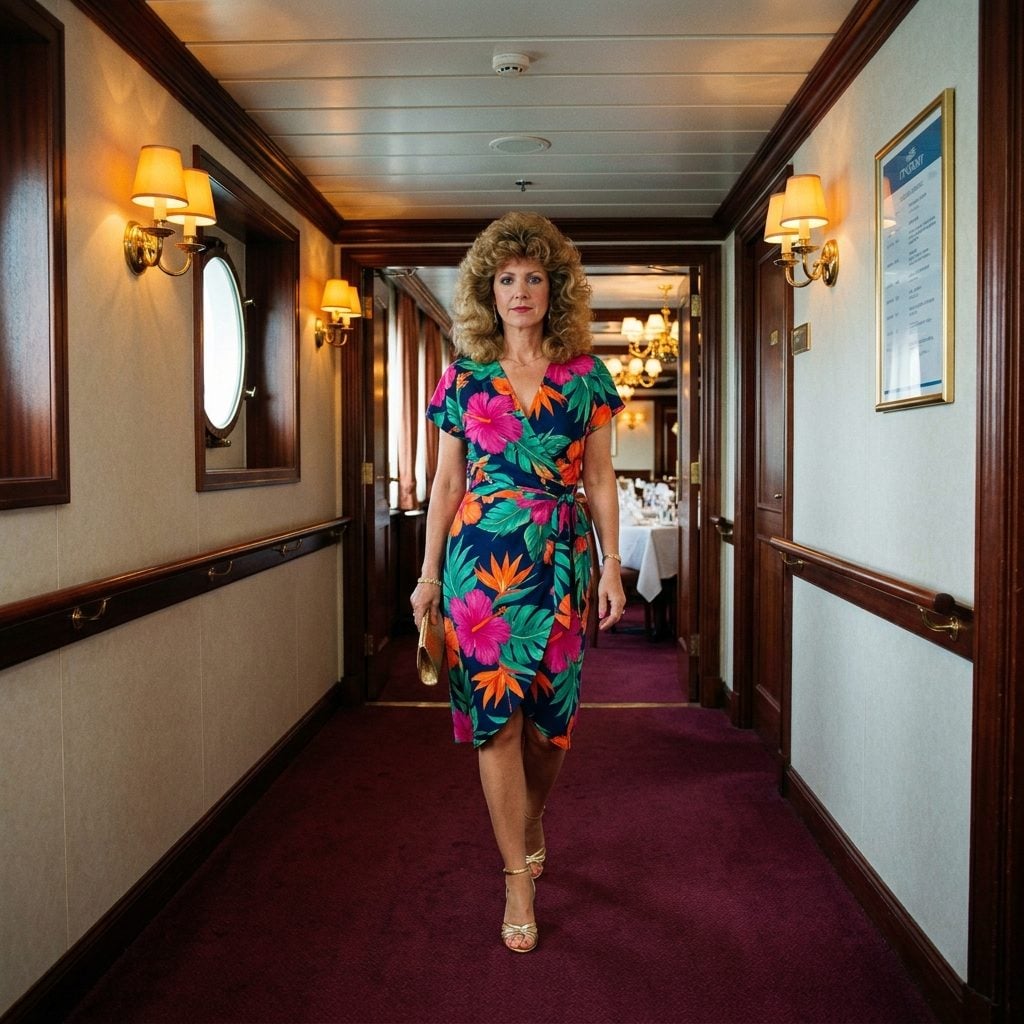
One dress, seven nights, zero repeats. That’s how it felt. A tropical print wrap dress with hibiscus blooms in fuchsia and jade read as casual at the poolside grill on Monday and as dressy in the main dining room on Thursday, depending entirely on the shoes and earrings it traveled with.
The style driver here was the wrap construction itself. It adjusted. To the buffet lunches, to the formal-night expectations, to the body after a week of midnight dessert bars. The V-neckline lengthened the torso. The flutter sleeves kept upper arms comfortable in air conditioning that every ’80s cruise ship cranked to sub-arctic levels. And the tropical print gave permission to wear color in a way that felt appropriate to the setting rather than costume-like.
13. Statement Costume Jewelry Featuring Oversized Gems That Sparkled Under the Disco Ball
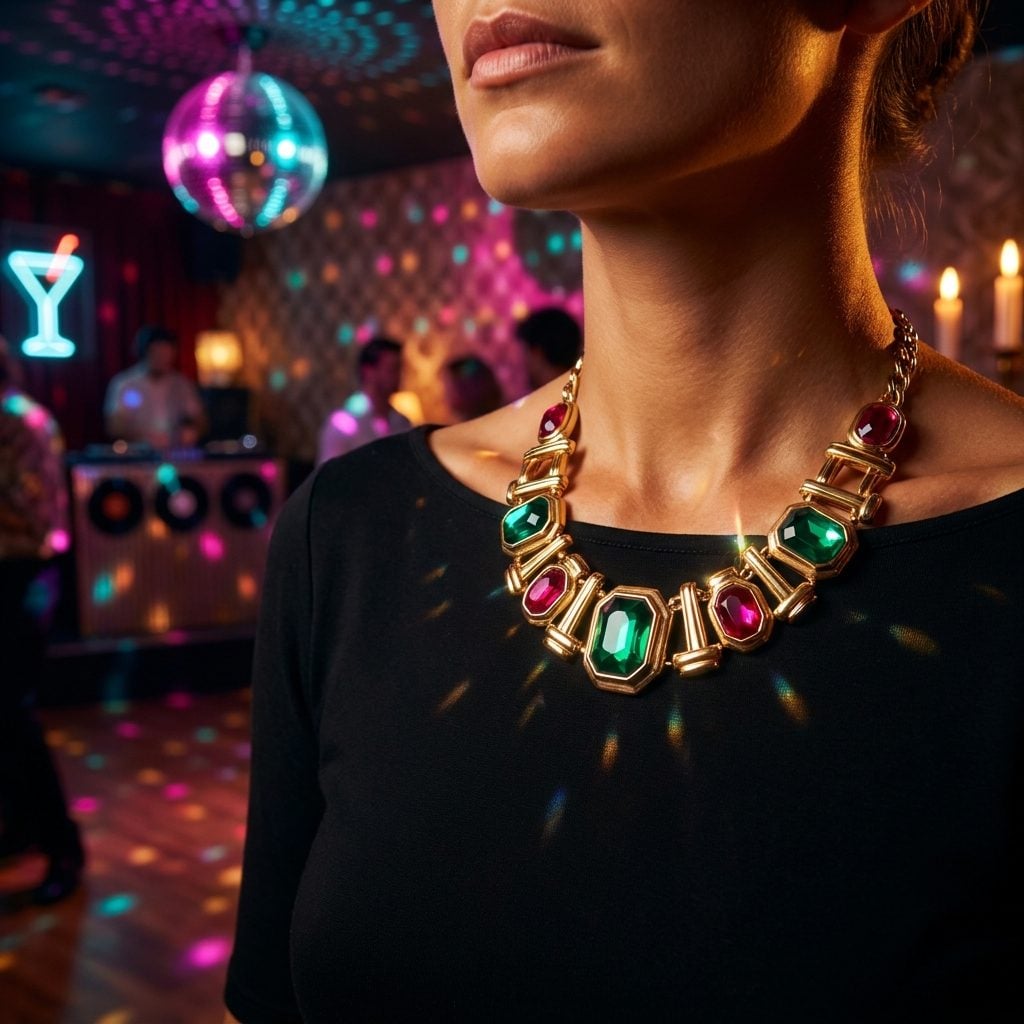
Real or fake didn’t matter. What mattered was scale.
These were not dainty pendants. They were architectural projects. Faux emeralds the size of thumbnails set in ornate gold-toned statement necklaces that sat heavy on the collarbone and caught every colored light the ship’s disco had to offer. Women wore them with simple black tops specifically because the jewelry needed a blank canvas to do its work.
The psychology of this choice was direct: you’re on vacation, you’re in international waters, the rules about subtlety don’t apply here. These pieces gave a Tuesday night dance floor the energy of New Year’s Eve. And the disco ball did the rest, scattering light off every faceted surface until the whole room sparkled.
12. White Sailor-Style Trousers With Navy Accents That Made Every Woman Look Like She Owned the Yacht
🔥 Would you like to save this?
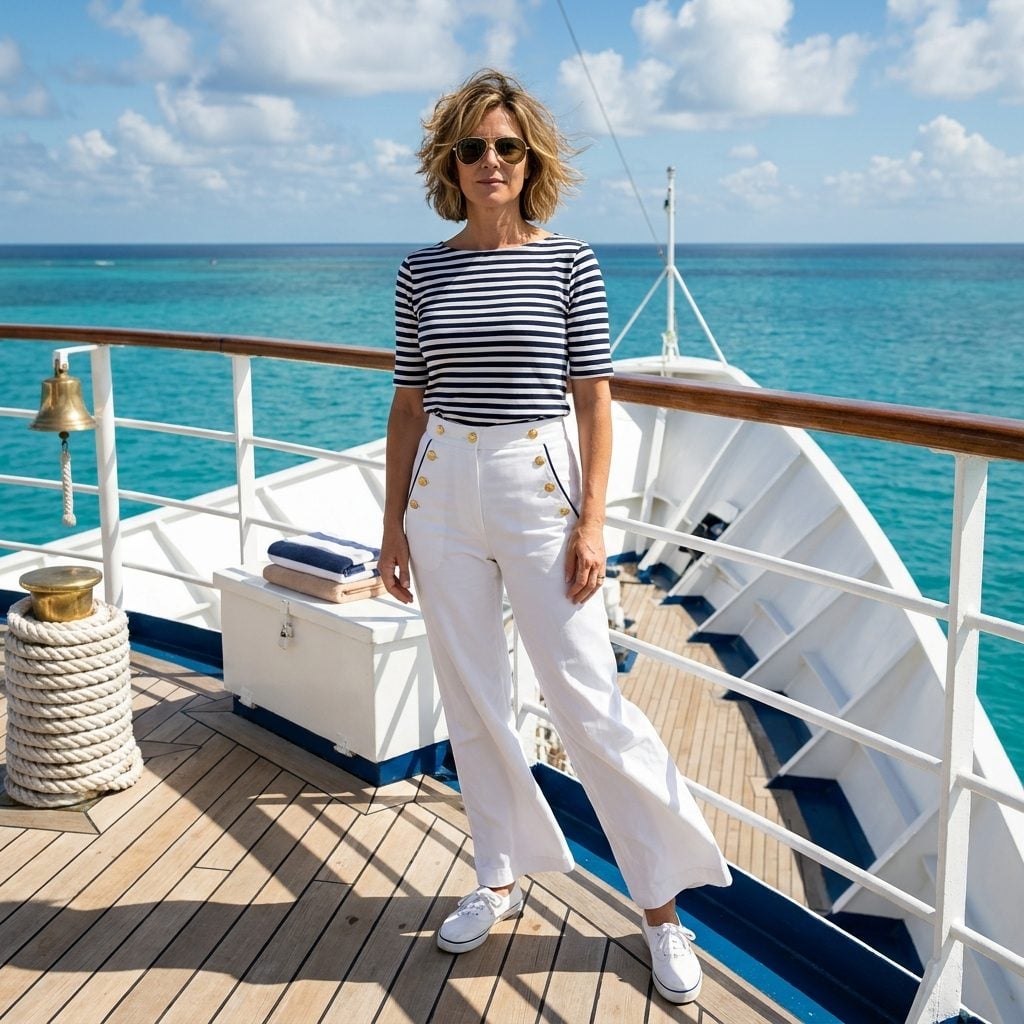
White sailor trousers with brass buttons and navy piping were the single most nautically committed thing a woman could wear on a cruise, and somehow they never read as costume. They read as authority.
The wide leg balanced the high waist. The brass buttons provided the only metallic accent the outfit needed. And the navy piping running down each side seam created a vertical line that made everyone look about two inches taller than they actually were. Pair with a navy Breton stripe top, push the aviators up the bridge of your nose, and suddenly you weren’t a passenger. You were the captain’s wife, or possibly the captain.
11. Brightly Colored Windbreakers for Breezy Deck Walks That Rustled With Every Step
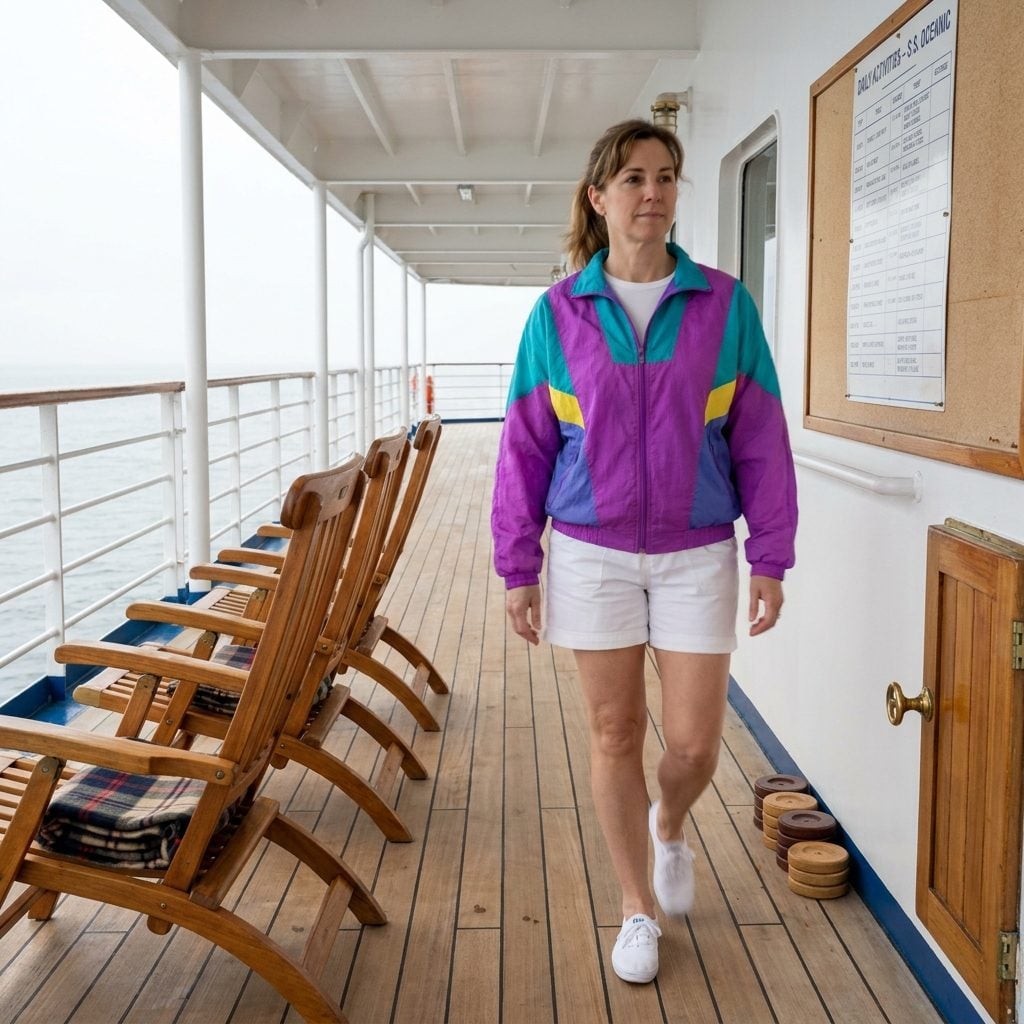
That sound. The persistent, papery rustle of nylon against nylon with every arm swing. You could hear a colorblock windbreaker coming down the promenade deck before you saw it, and when you did see it, it was impossible to miss: electric purple with teal panels, or hot coral with canary yellow shoulders, or some combination that existed only in the 1986 cruise-wear section of a Sears catalog.
These were layering pieces that became the outfit. The morning deck walk, the pre-breakfast lap around the ship, the shuffleboard tournament that nobody admitted to caring about but everyone showed up for. The windbreaker handled the ocean breeze, packed into nothing, and added the only color the grey morning sea wasn’t providing.
Zip it halfway. White tee underneath. White sneakers. The formula never varied because it never needed to.
10. Silk Scarves Tied Around the Neck or Knotted Into Sun-Bleached Hair
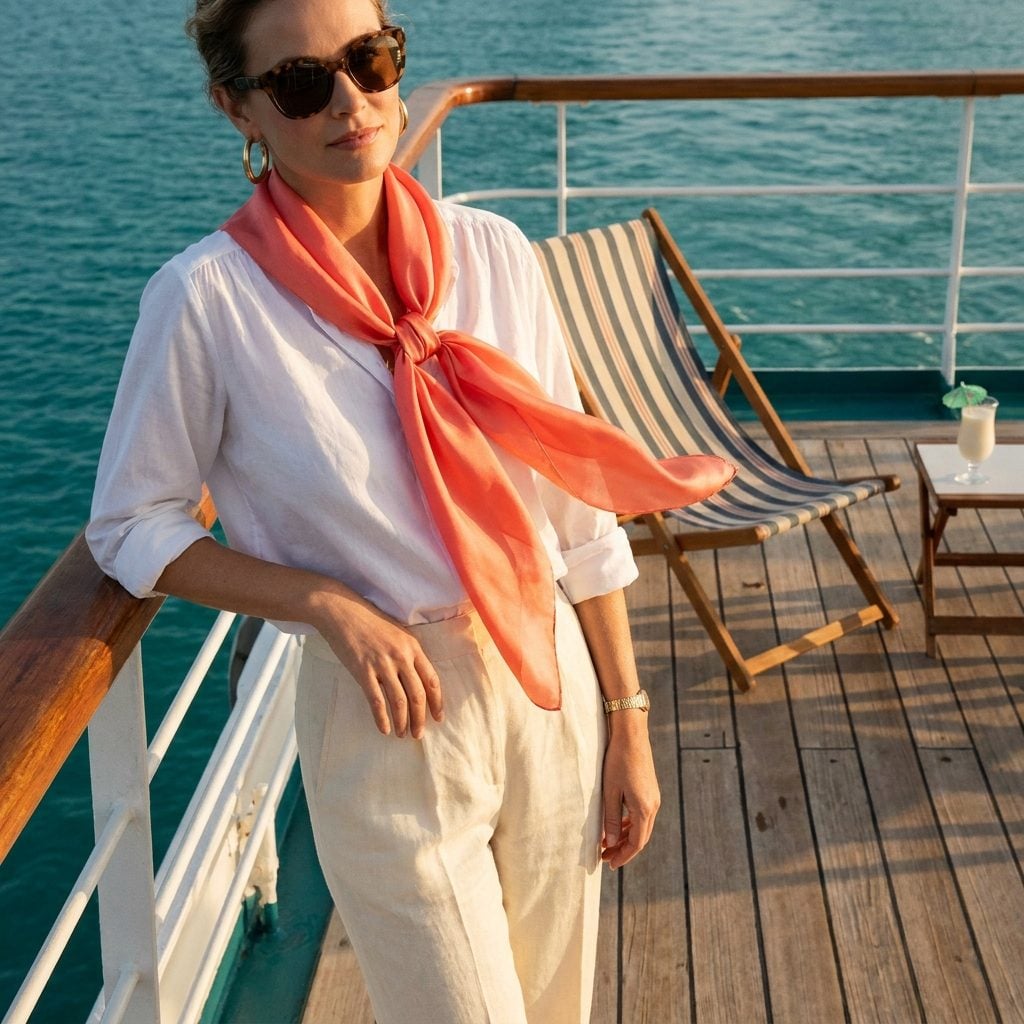
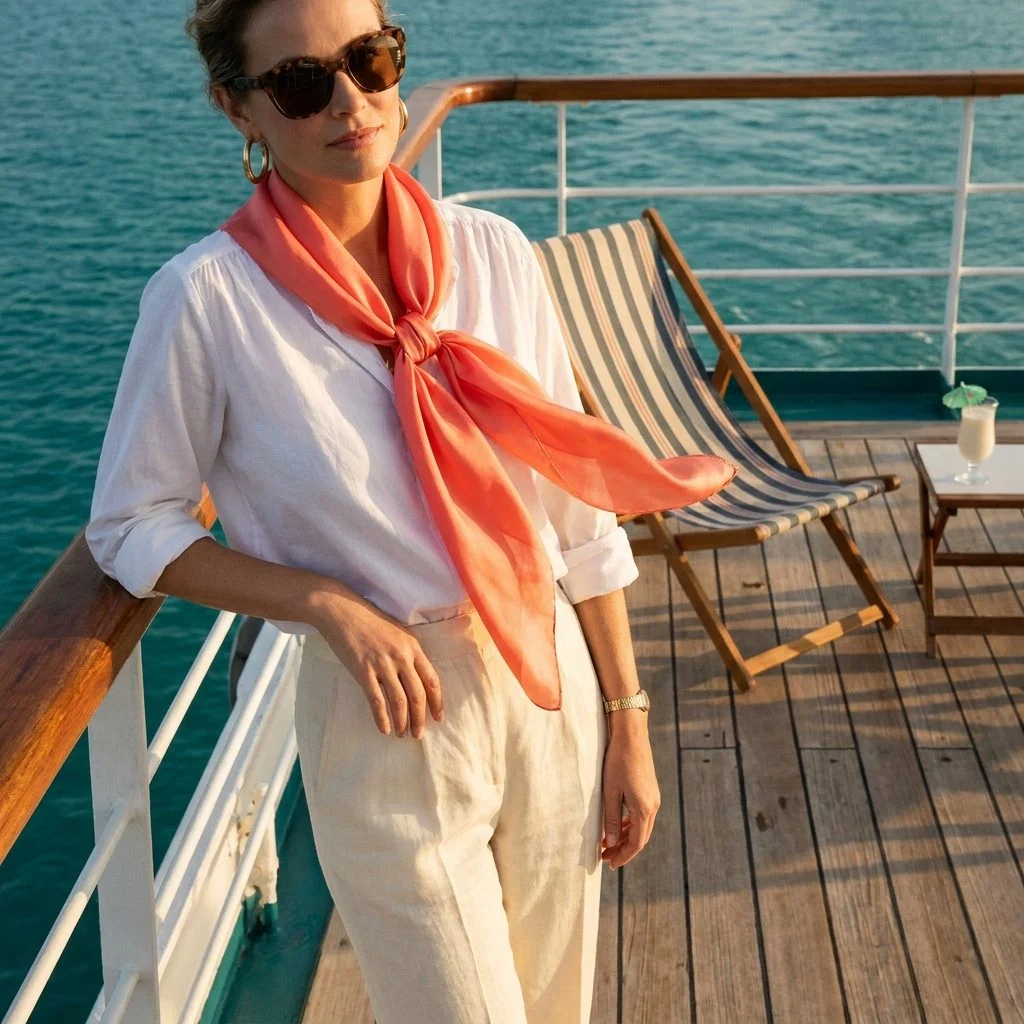
The scarf did more than accessorize — it declared that this woman packed with intention. A square of silk, maybe Hermès if she’d splurged at duty-free, maybe a department store knockoff with an equestrian print, folded into a narrow band and knotted just below the jawline. The tails fluttered against her collarbone when she walked the Lido Deck.
Some women tied them into their hair instead, wrapping the silk around a high ponytail or threading it through a loose braid. Either way, the printed silk scarf was a signal: she was on vacation, but her standards hadn’t stayed home. And the pattern choices alone told a story. Nautical chains. Abstract florals in teal and fuchsia. Paisley in burgundy and gold.
9. Sequined Cocktail Dresses That Made Captain’s Dinner a Full Production
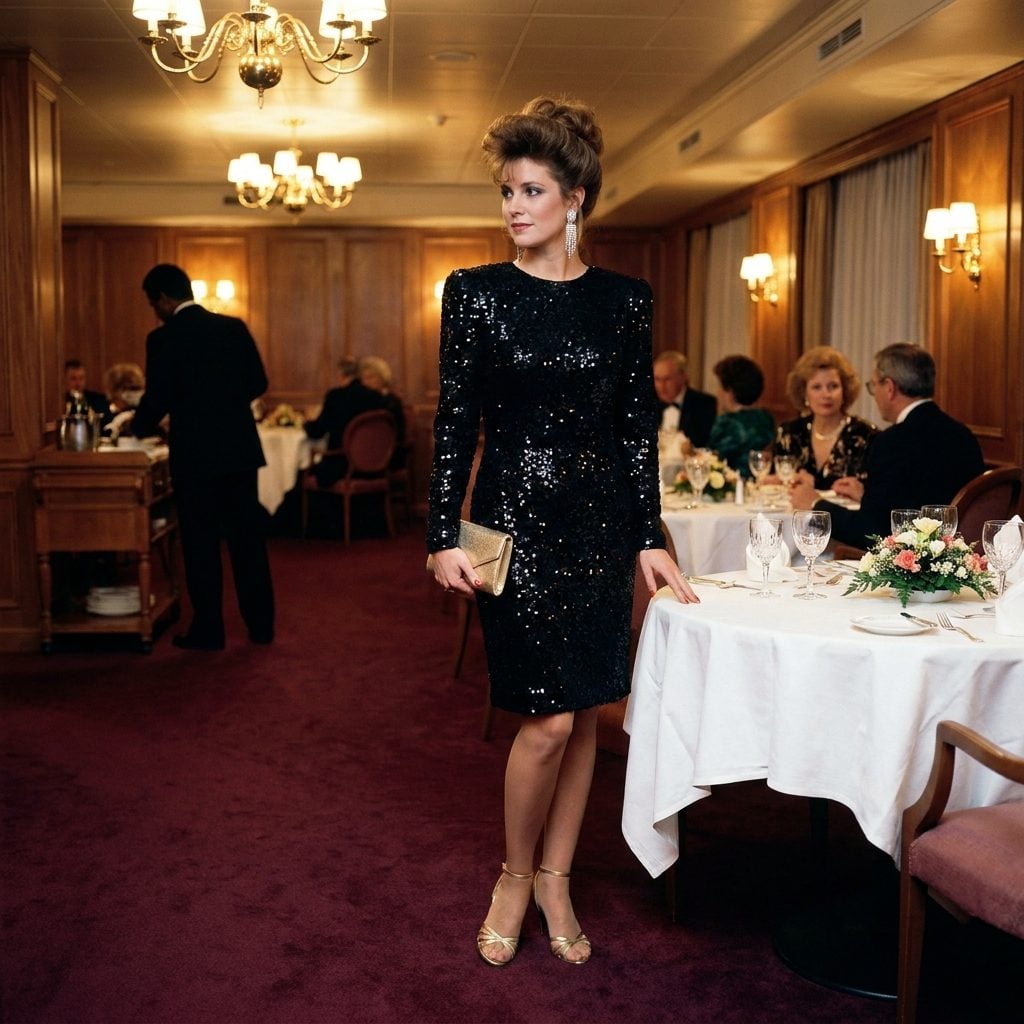
Nobody underdressed for captain’s dinner. Nobody. The black sequined cocktail dress wasn’t a choice so much as an obligation — women packed them in garment bags they’d hang in those impossibly narrow cabin closets for the entire voyage. Dense sequins, unapologetic, catching every flicker from the dining room’s brass fixtures.
Padded shoulders gave the silhouette authority. The waist cinched. Hem at the knee or just above. It was armor dressed as evening wear, and honestly? The woman in it owned every room she entered, including the one where the captain stood shaking hands at the door.
8. Gold Charm Bracelets Collected One Caribbean Port at a Time
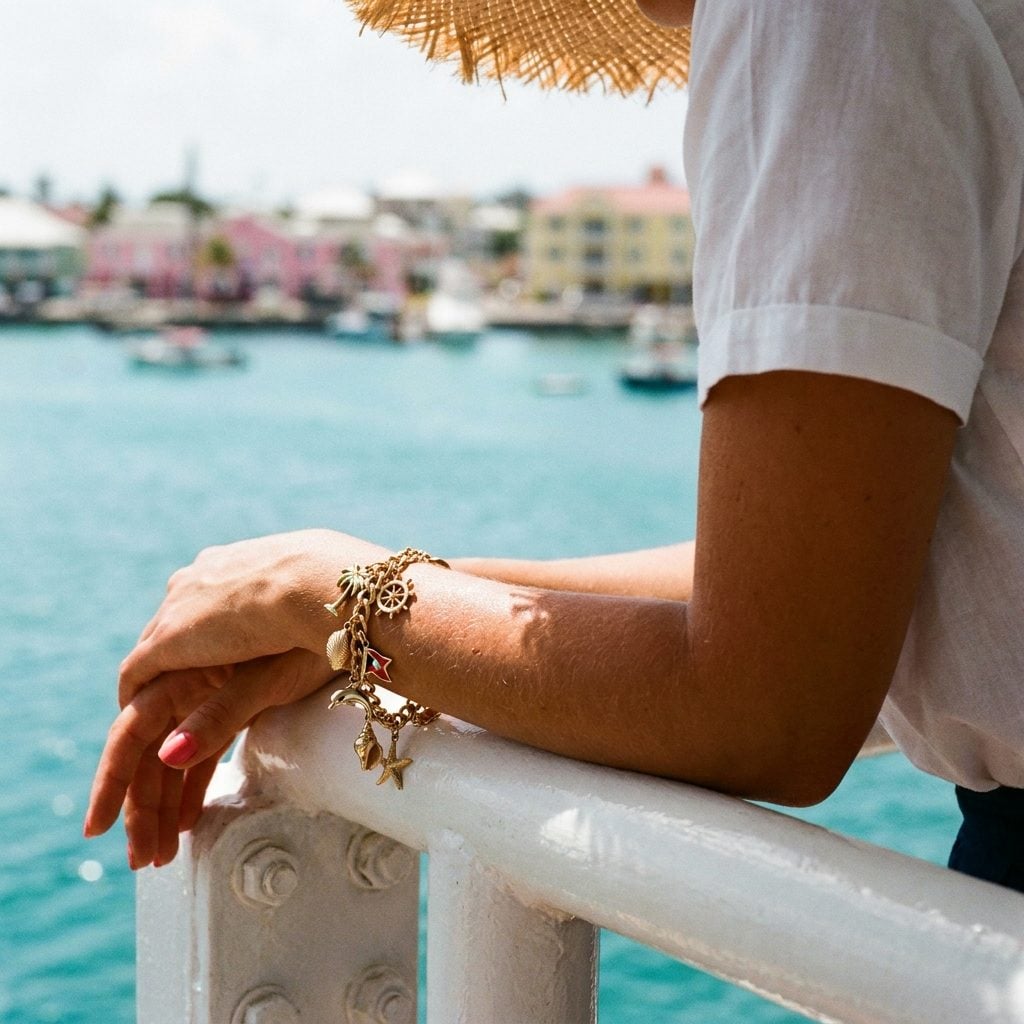
Every port added weight. A tiny palm tree from Nassau. A conch shell from St. Thomas. A miniature ship’s wheel purchased from a vendor whose table was set up right on the dock, between the taxi stand and the rum shop. The gold charm bracelet jangled against the dinner table, clinked against cocktail glasses, and by the final night it told the whole itinerary without a word spoken.
These weren’t fine jewelry. Most charms were 14-karat at best, some gold-plated, bought in a rush between disembarking and the all-aboard horn. But that was exactly right — they were souvenirs you wore, evidence of places touched however briefly, and the sound they made was the sound of a vacation still in progress.
7. Pleated Tennis Skirts That Never Saw a Tennis Court
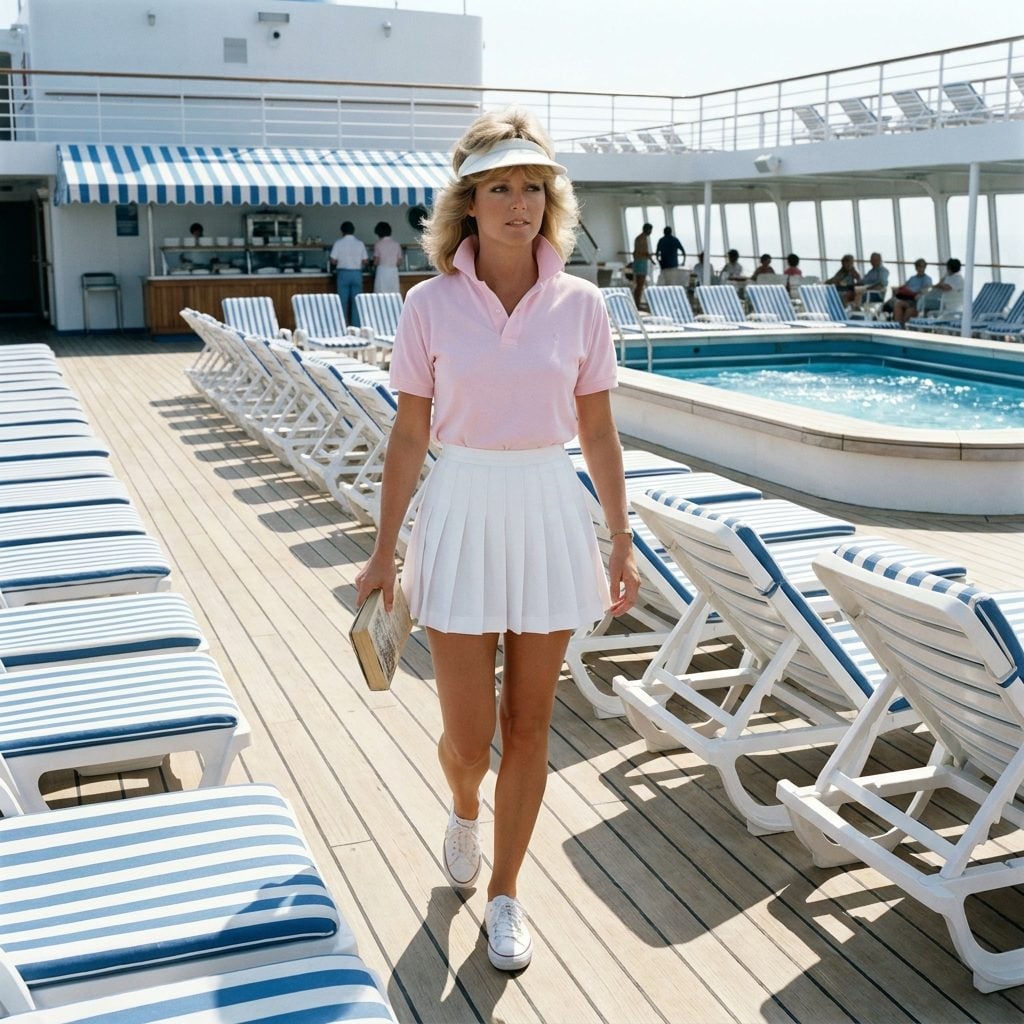
A white pleated tennis skirt with a pastel polo shirt, collar popped. The daytime uniform for a certain kind of cruise passenger, and the tennis court up on Deck 9 had absolutely nothing to do with it.
The pleats moved. They caught air when you walked, fanned out when you turned at the buffet line, and created a silhouette that read as athletic without requiring any actual athletics. Add a white visor and canvas sneakers and the whole outfit communicated leisure as a lifestyle — not something you squeezed into an afternoon, but something you inhabited.
6. Colorful Beaded Necklaces Layered Three Deep Over Resort Wear
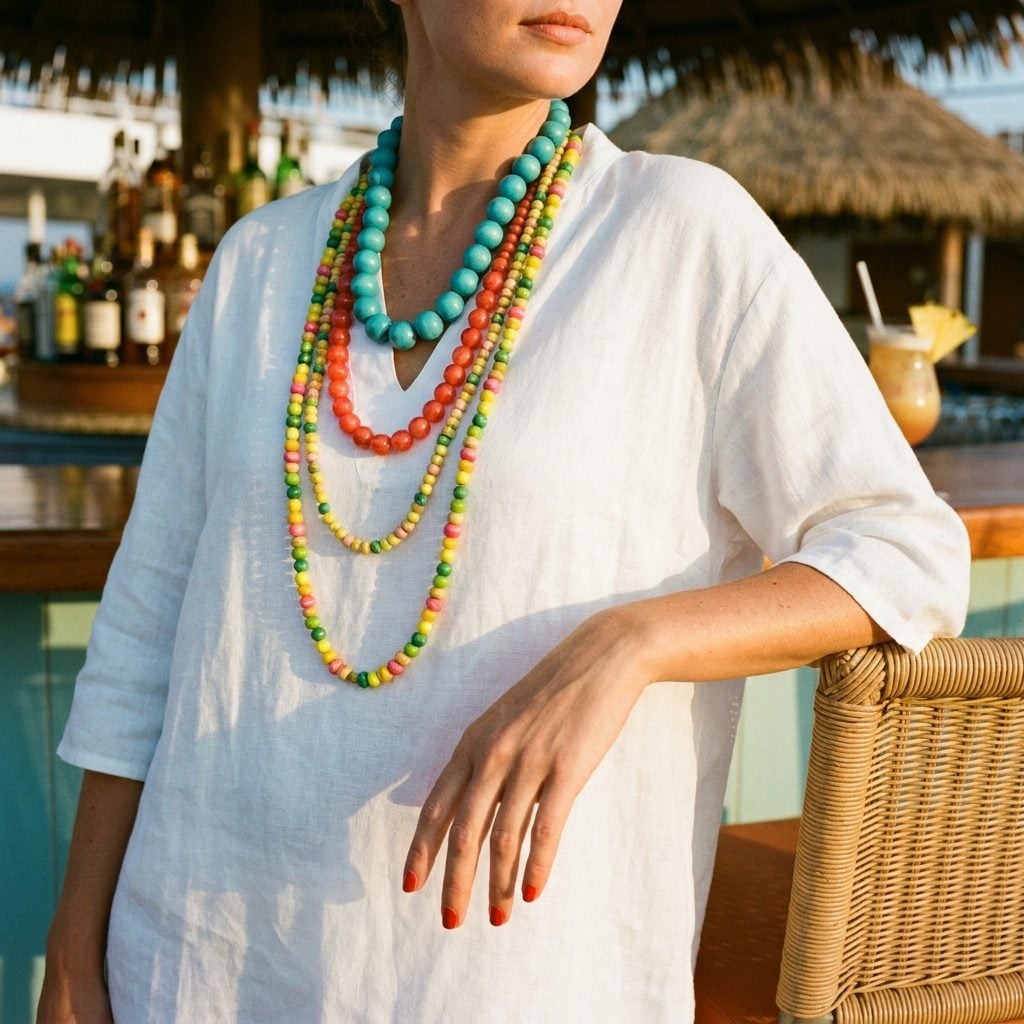
One strand was never enough. The strategy was accumulation: a chunky turquoise beaded necklace picked up at a market in Cozumel, a strand of coral-red glass beads from the ship’s gift shop, and something longer in mixed tropical colors that swung forward when you leaned in for your piña colada. Layered together over a plain white tunic, they filled the neckline with noise and color and the specific energy of being somewhere warm on purpose.
The beads clicked against each other. You could hear a woman wearing them before you saw her — which was, I think, part of the design.
5. Leather Deck Shoes Worn Smooth by Cobblestones in Every Port Town
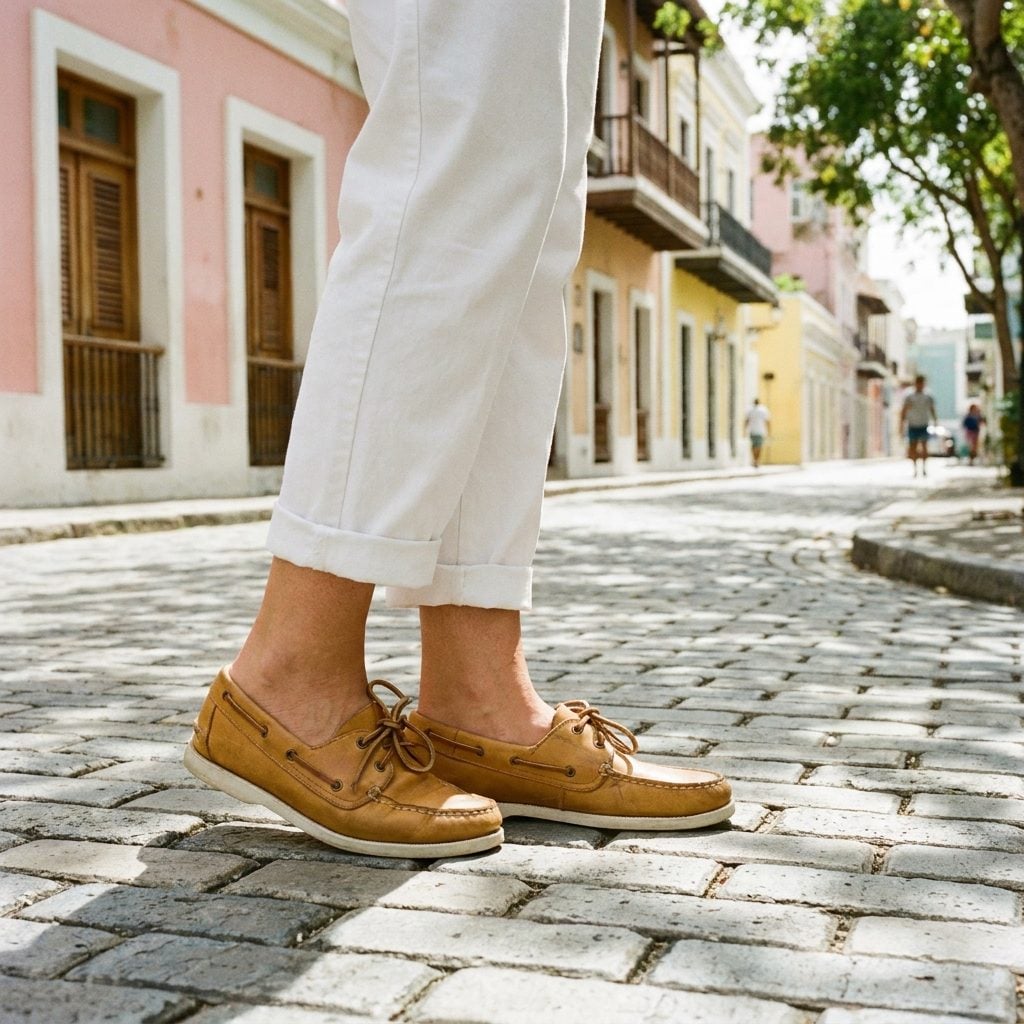
Sperry Top-Siders or their department-store equivalent. Tan leather boat shoes with white rubber soles, worn without socks, the leather softening and darkening over the course of a seven-day itinerary until they looked like they’d been yours for years.
These were the shore excursion shoe. Flat enough for cobblestones, casual enough for markets, just structured enough that they didn’t look like surrender. Women slipped them on with white cropped pants and a cotton blouse and covered miles of port town without thinking about their feet once. High praise for any shoe from any decade.
4. Off-the-Shoulder Peasant Blouses Paired With White Pants and a Sunburn
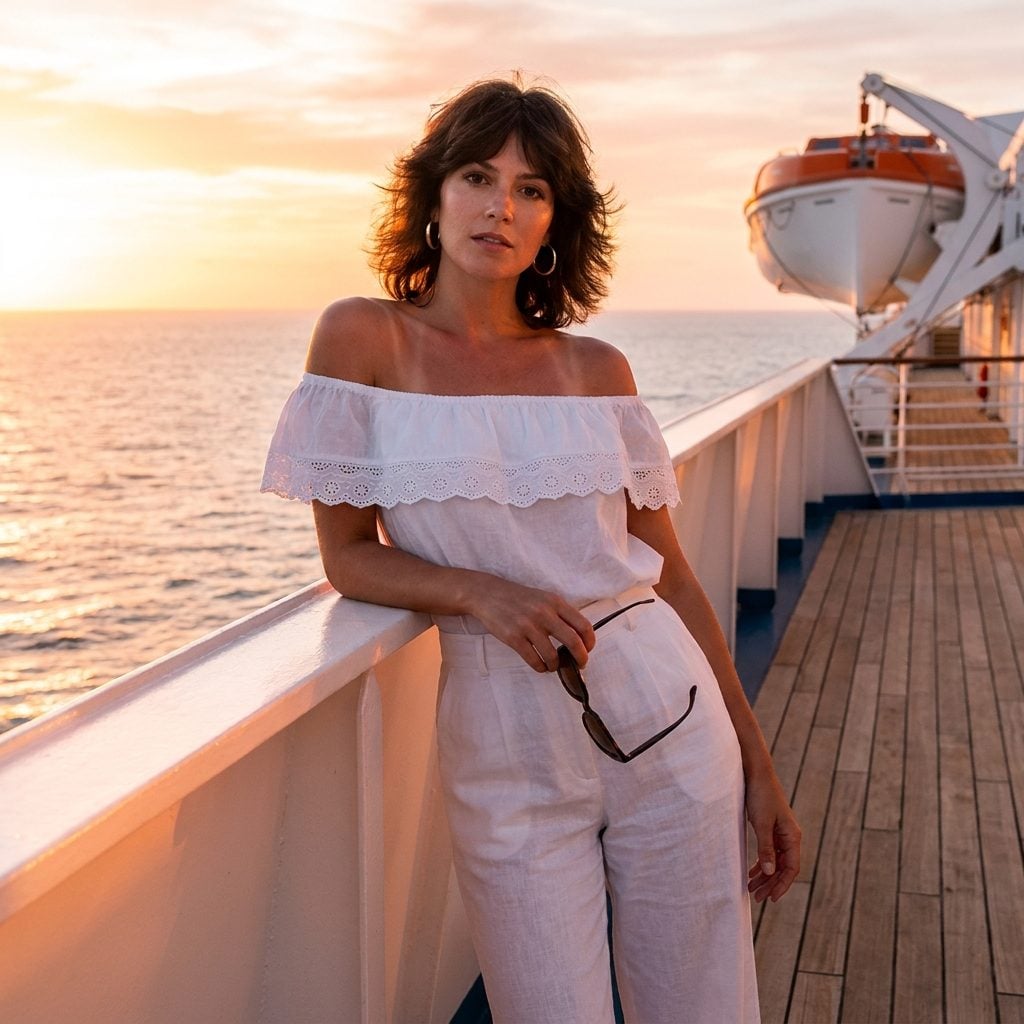
The elastic gathered neckline sat just below the shoulder, exposing collar bones and whatever tan line the afternoon sun had already started. A white cotton peasant blouse with eyelet lace trim, tucked loosely into white linen wide-leg pants. The all-white silhouette against a Caribbean sunset was a cruise ship cliché, sure — but it was a cliché because it worked every single time.
What made the peasant blouse the default warm-weather top of the 1980s was its forgiveness. Loose through the body, romantic at the neckline, it absorbed a week’s worth of buffet dinners while still looking considered. Throw on gold hoop earrings and you had sunset-deck attire that cost almost nothing and photographed like something out of a glossy editorial spread.
3. Large Woven Beach Totes Stuffed With Paperbacks, Sunscreen, and a Disposable Camera
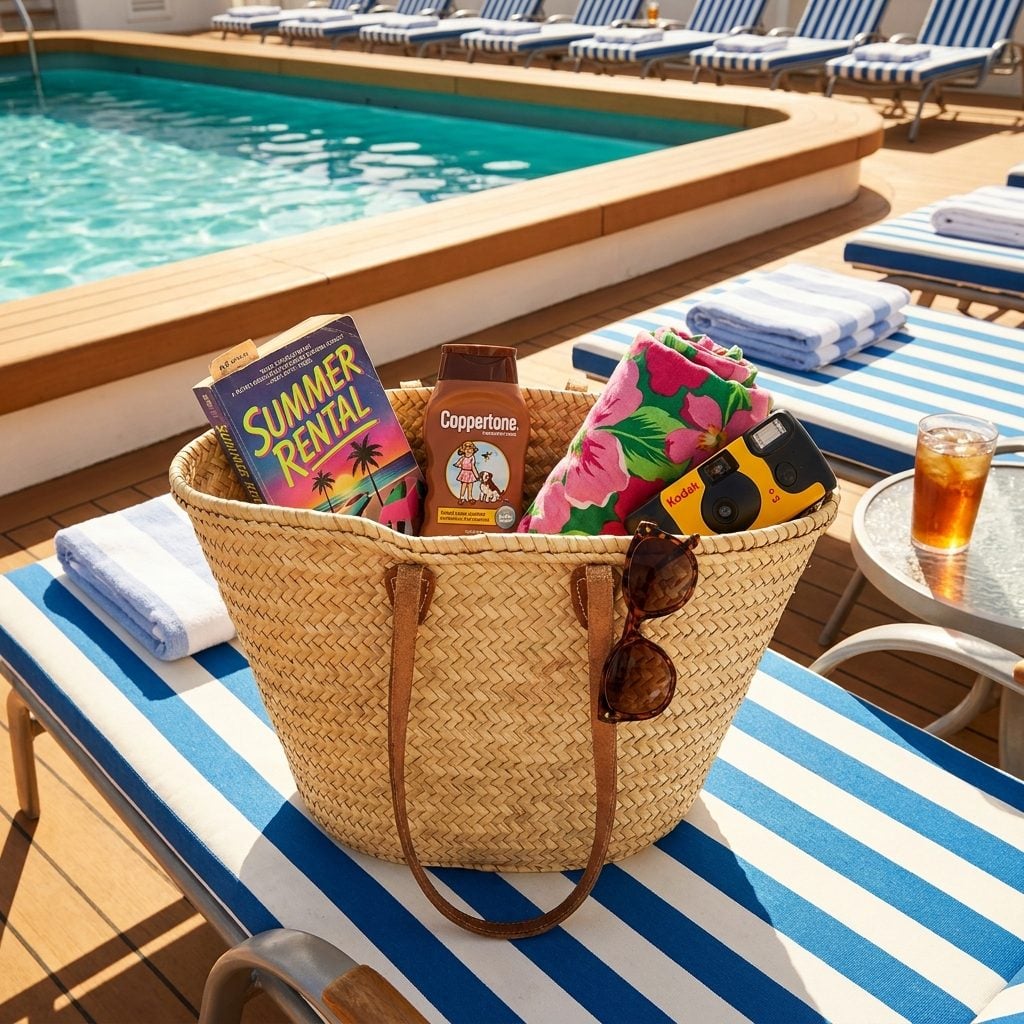
The woven straw tote was never elegant and was never trying to be. Wide-mouthed and unstructured, with leather handles that went soft in the salt air. It held everything: a Danielle Steel paperback with a cracked spine, a tube of Coppertone, a rolled sarong, oversized sunglasses, a room key on a plastic tag, and somewhere at the bottom, a yellow Kodak disposable camera with maybe eleven exposures left.
You slung it over one shoulder and it announced your plans for the next four hours. Pool deck. Maybe the beach at the next port. Definitely nowhere that required a zipper.
2. Pastel Blazers Thrown Over Everything for Formal Evenings

A pastel blazer with pushed-up sleeves turned any dress into formal evening attire. Reliable math. Lavender over black. Mint over navy. Soft pink over cream. The blazer provided structure, the padded shoulders did the heavy lifting on silhouette, and the pastel kept everything from reading too corporate for a vacation.
Those pushed-up sleeves were non-negotiable. Every woman on every 1980s cruise shoved them to mid-forearm, exposing a bracelet or a watch, as if she’d just come from somewhere important and was headed somewhere better. Small gesture. Changed the entire posture of the jacket.
These blazers lived on the back of the cabin door, single hanger, ready for any evening that called for looking like you’d made an effort. On a cruise, that was most of them.
1. Permed Hair With Enough Volume and Hairspray to Survive a Sea Breeze
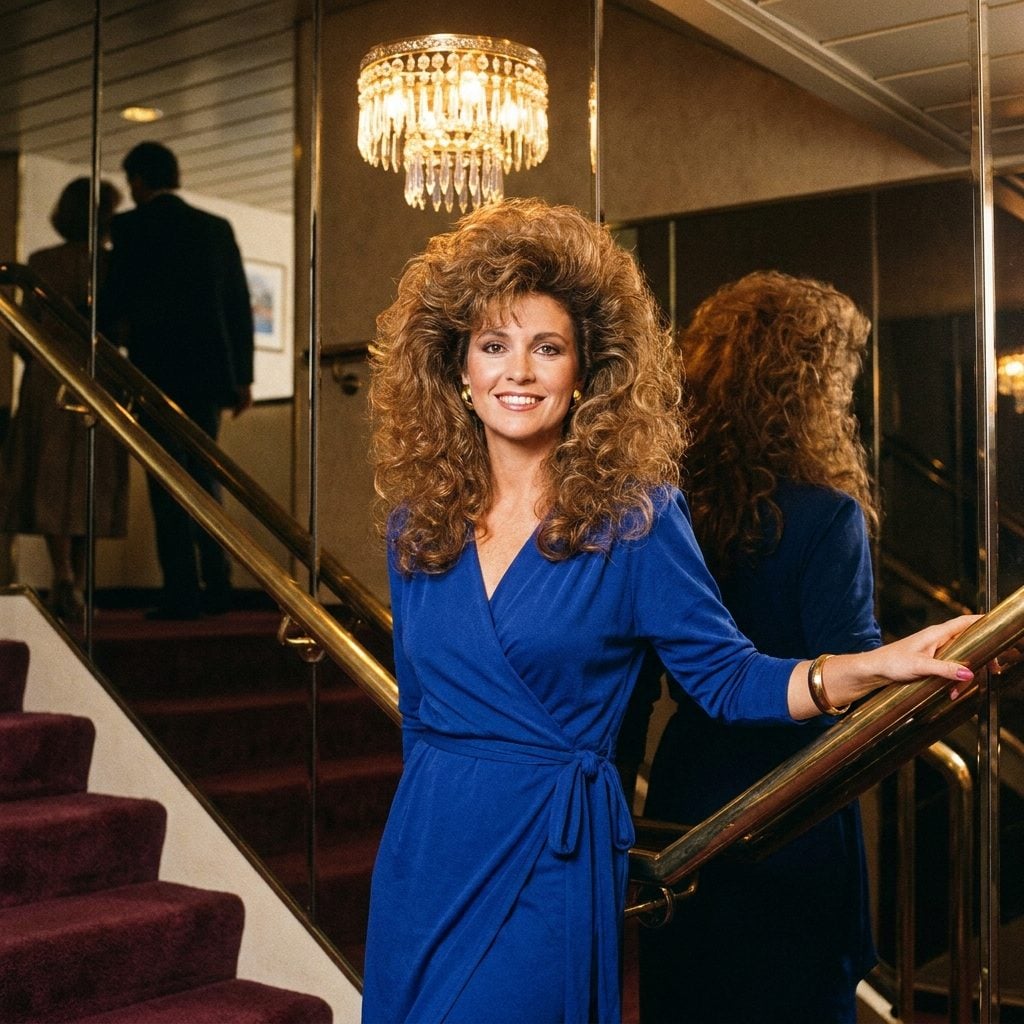
The perm was scaffolding. Weeks before embarkation, women sat in salon chairs while rods and solution rebuilt their hair from the molecular level up, creating a foundation of curl that could be blown out, teased, sprayed, and trusted to hold against humidity, ocean wind, and a solid week of salt air.
And the hairspray — Aqua Net, mostly — applied in clouds thick enough to taste. By the second morning, the bathroom of every shared cabin carried that sweet, chemical, slightly floral scent. The can traveled in a Ziploc bag in checked luggage. It was not optional equipment.
What all that volume actually accomplished: it framed the face for photographs. Every cruise had a ship photographer stationed at the dining room entrance, the captain’s reception, the gangway before port stops. A perm at full height guaranteed you looked finished in every single one of those shots. The whole thing was engineered for documentation, when you think about it — a hairstyle designed less for life than for the evidence of it.
🔥 Would you like to save this?
Please note that some of the imagery in this article were created with the aid of AI image generators.