
🔥 Would you like to save this?
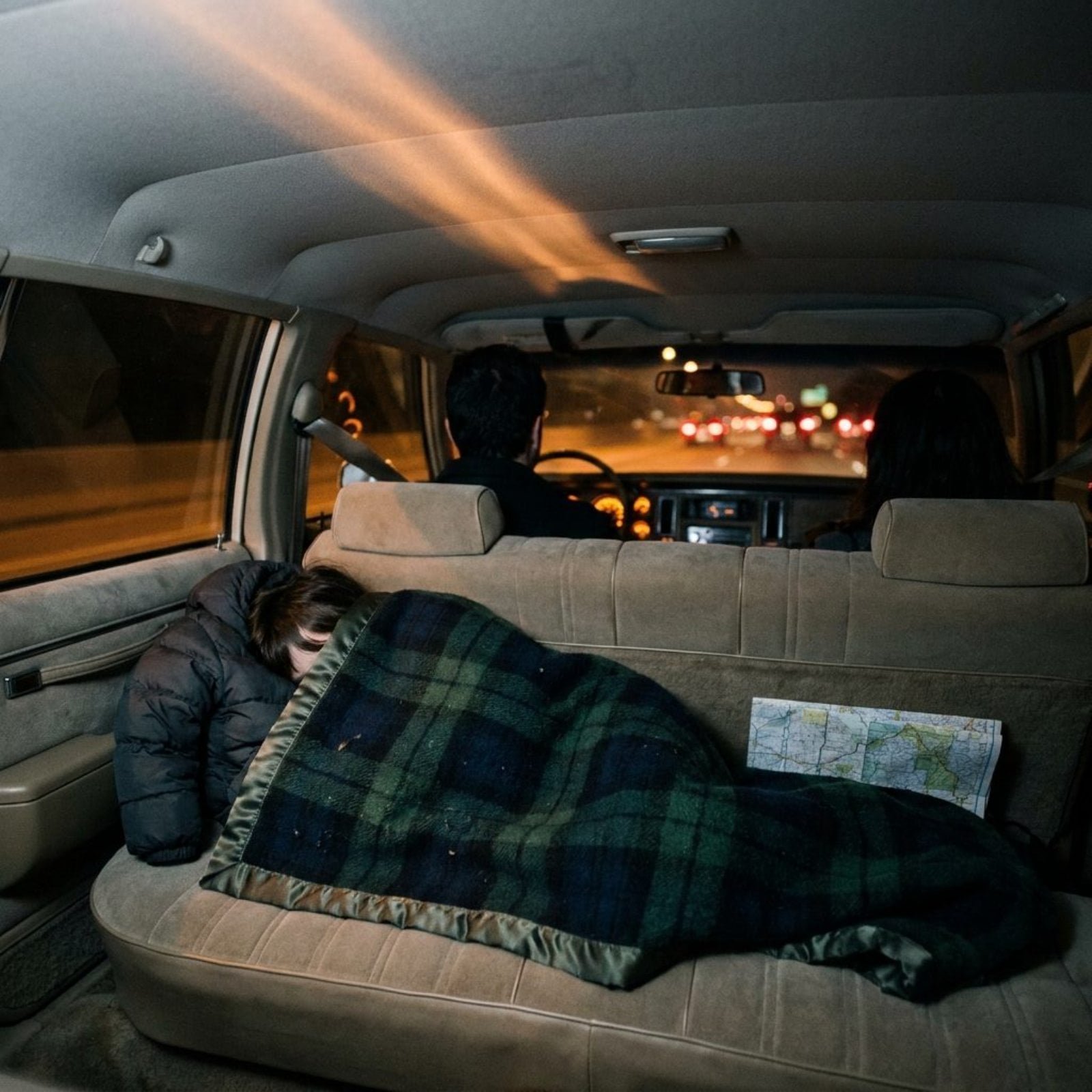
The vinyl was already hot before you even sat down. That particular tackiness against bare summer thighs, the faint chemical smell of a sun-cooked dashboard, the total absence of anything resembling entertainment except your own window and your own imagination — that was the backseat in the 1980s. No screens. No climate control. Most states didn’t enforce seat belts. Just you, the road noise, and a sibling whose elbow kept drifting into your territory. Here are the memories.
27. Sliding Endlessly Across Giant Vinyl Bench Seats During Every Sharp Turn
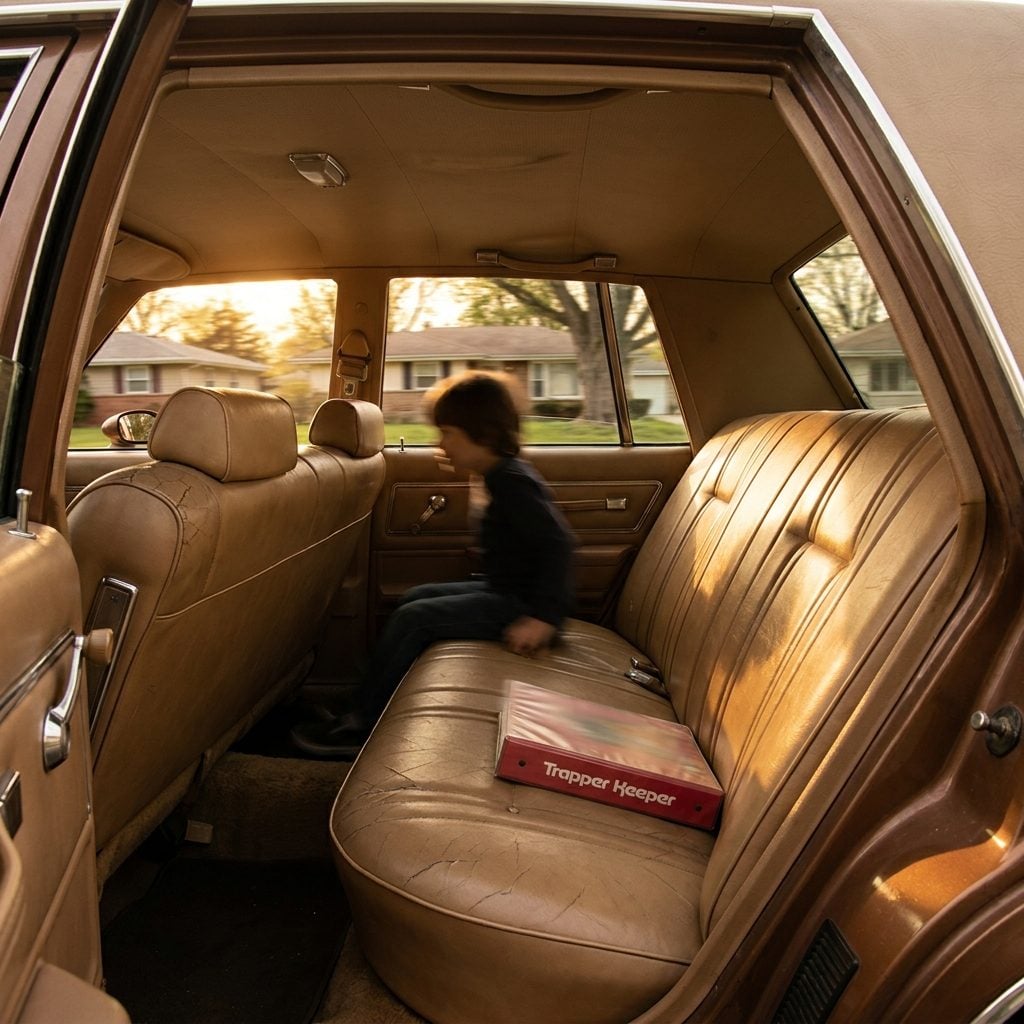
Three kids on a vinyl bench seat with no seat belts was human air hockey. Every right turn sent you crashing into your sister, every left turn launched you into the door panel, and even gentle curves produced this slow, inevitable drift sideways that you couldn’t stop no matter how hard you planted your feet.
Nobody designed those seats with friction in mind. They were built for adults in polyester slacks — not kids in shorts whose sweaty legs somehow both stuck AND slid at the same time. You’d brace a hand on the front seat. Mom would swat it away without looking.
26. Burning Your Bare Legs on Sun-Baked Seat Belt Buckles in July
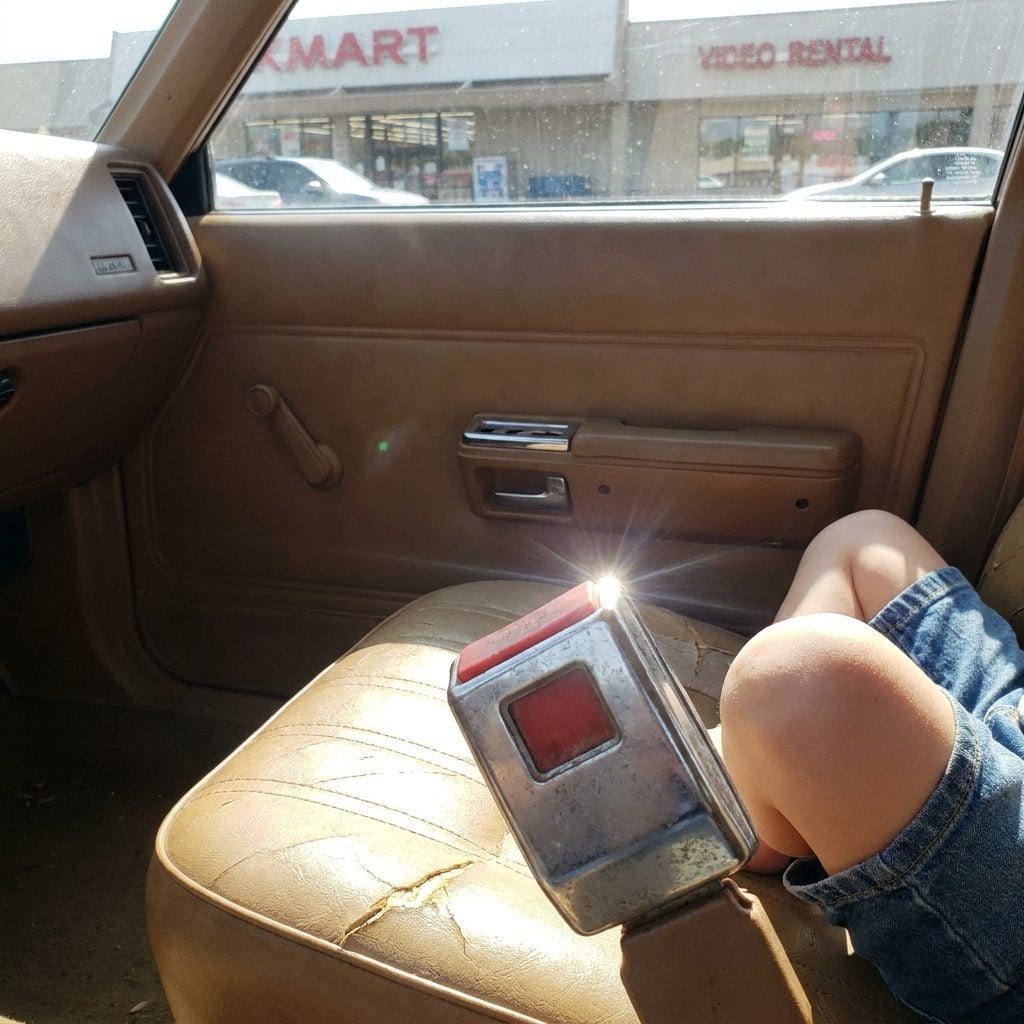
That chrome buckle was a branding iron by mid-afternoon.
You’d come running out of the grocery store, yank open the car door, and the interior heat hit you like opening an oven. But the real ambush came when you sat down. The buckle had been absorbing direct sunlight for forty-five minutes on the exposed seat surface, and when it pressed against the back of your thigh — God. The hiss you made was involuntary. Everybody I grew up with has a faint, unexplainable mark on the back of one leg. This is the reason.
25. Lying Flat Across the Entire Backseat on Long Road Trips Like It Was a Bed
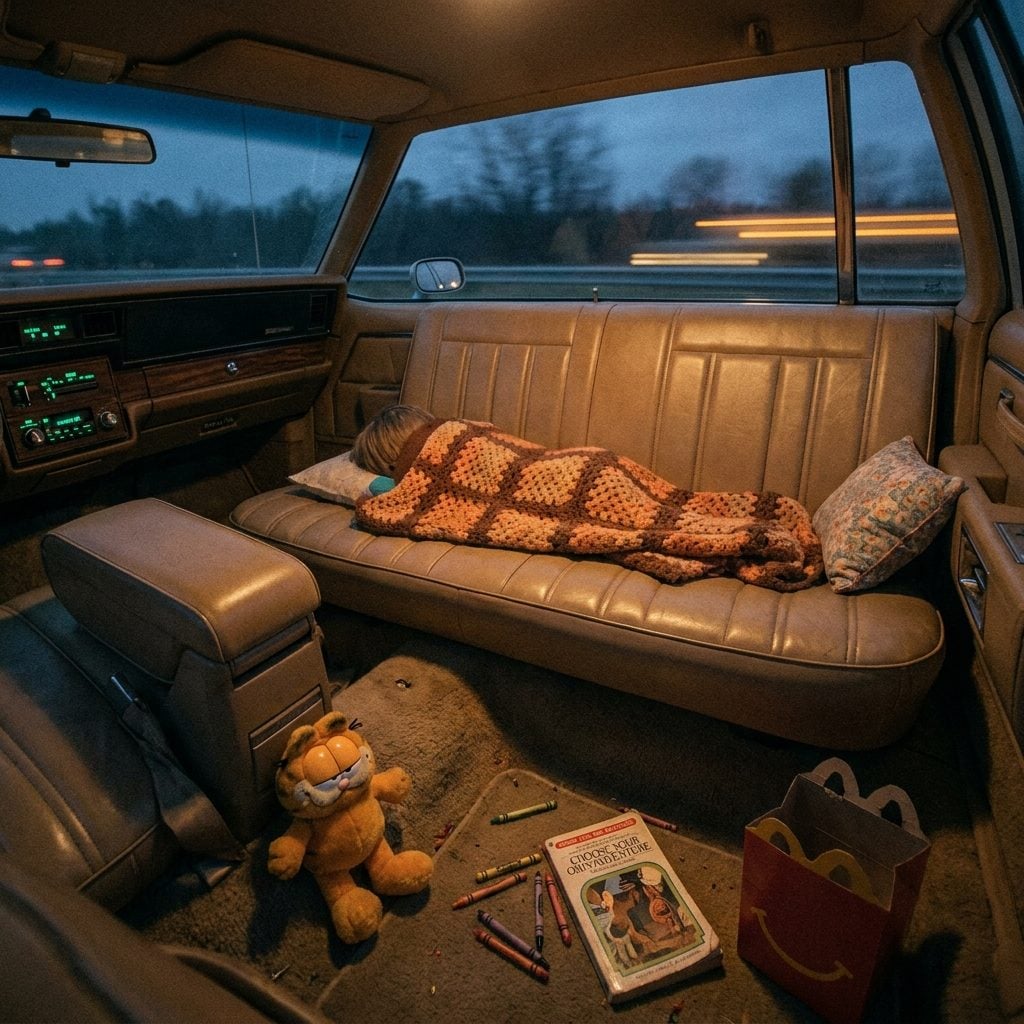
Bed, fort, reading nook, wrestling ring — the backseat was all of them. On drives longer than two hours, lying completely flat was expected. Your parents wanted you unconscious. A couch pillow, a thin blanket that smelled like the linen closet, and you were out cold somewhere outside Dayton.
No car seat. No booster. No shoulder belt — because in most 1980s sedans the rear seats only had lap belts, and those got buried in the seat crack within the first ten minutes. You just lay there, on a highway, at full speed. Everyone was fine with it. I think about this every time I spend twenty minutes adjusting a five-point harness. We survived on luck and wide bench seats.
24. Watching the World Through Windows Coated With a Faint Haze of Cigarette Smoke
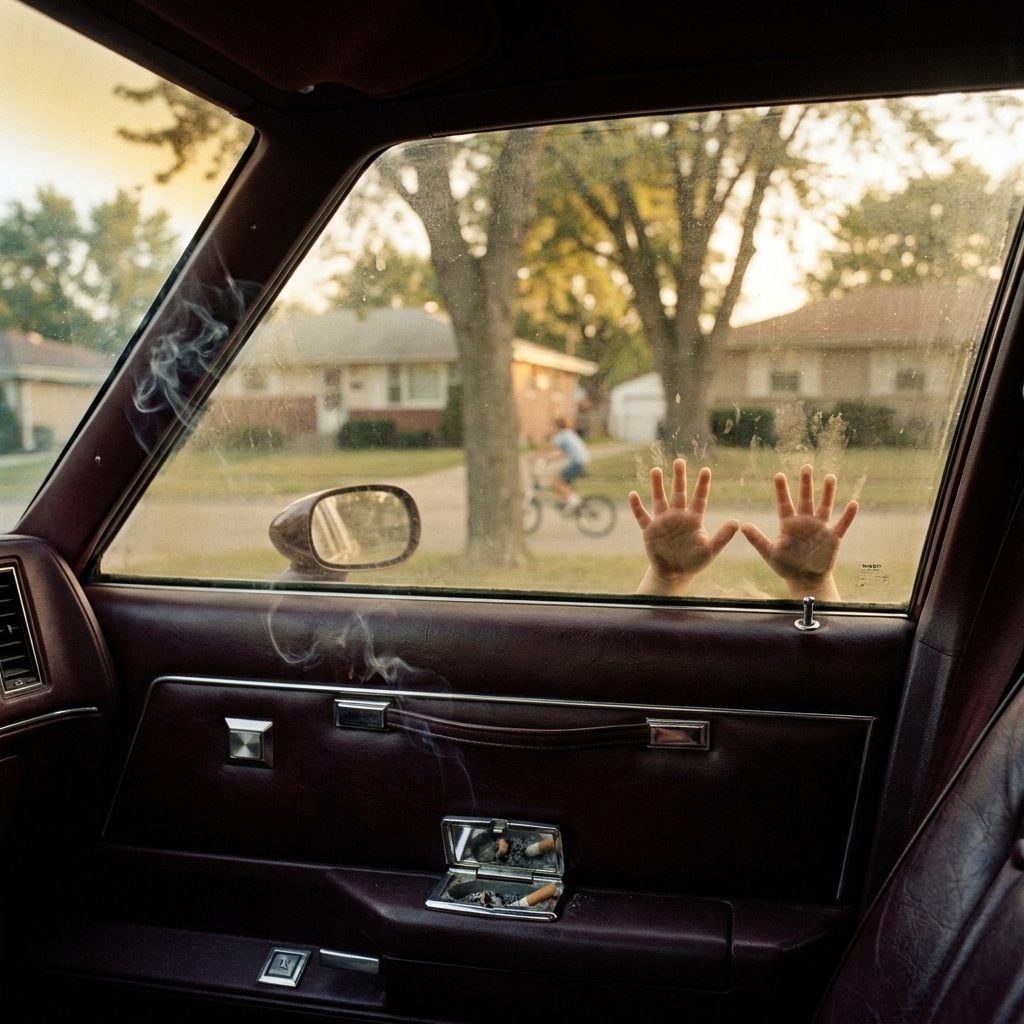
Everything outside looked like a Polaroid that hadn’t fully developed. That yellowish film on the window’s interior was so gradual you never noticed it — until someone actually cleaned the glass and the world outside snapped into focus, shockingly bright and sharp.
Both parents smoked. Windows cracked an inch, maybe two. The armrest ashtray overflowed on the regular. And nobody — absolutely nobody — considered that the three kids in the back were essentially hotboxing Marlboro Reds for a six-hour drive to Grandma’s house. You breathed through it. Your jacket reeked when you arrived. That was just normal.
23. Fighting Siblings Over the ‘Good’ Window Seat for the Entire Drive
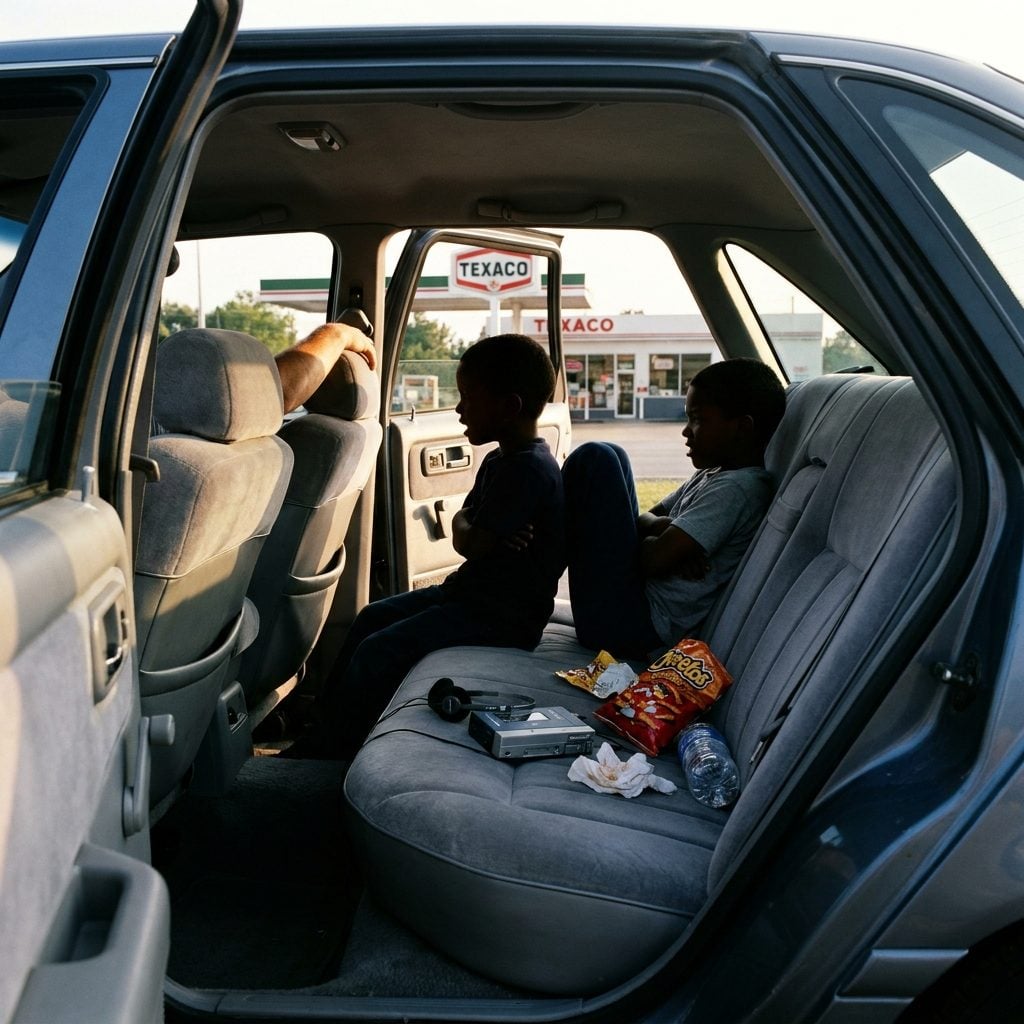
The right-side window seat was objectively better. I don’t remember why. It just was — and negotiations started before anyone left the house.
Middle seat was punishment. You got the hump, zero window access, and both siblings’ elbows in your ribs simultaneously. The only leverage the middle kid held was the power to annoy both window people equally, and believe me, that leverage got exercised with surgical precision. Parents tried rotating systems: alphabetical, age-based, alternating by day. None survived contact with reality. By hour two, someone was crying. By hour three, everyone had retreated into furious silence. Good times.
22. Using the Rear Package Shelf as Unofficial Toy and Snack Storage
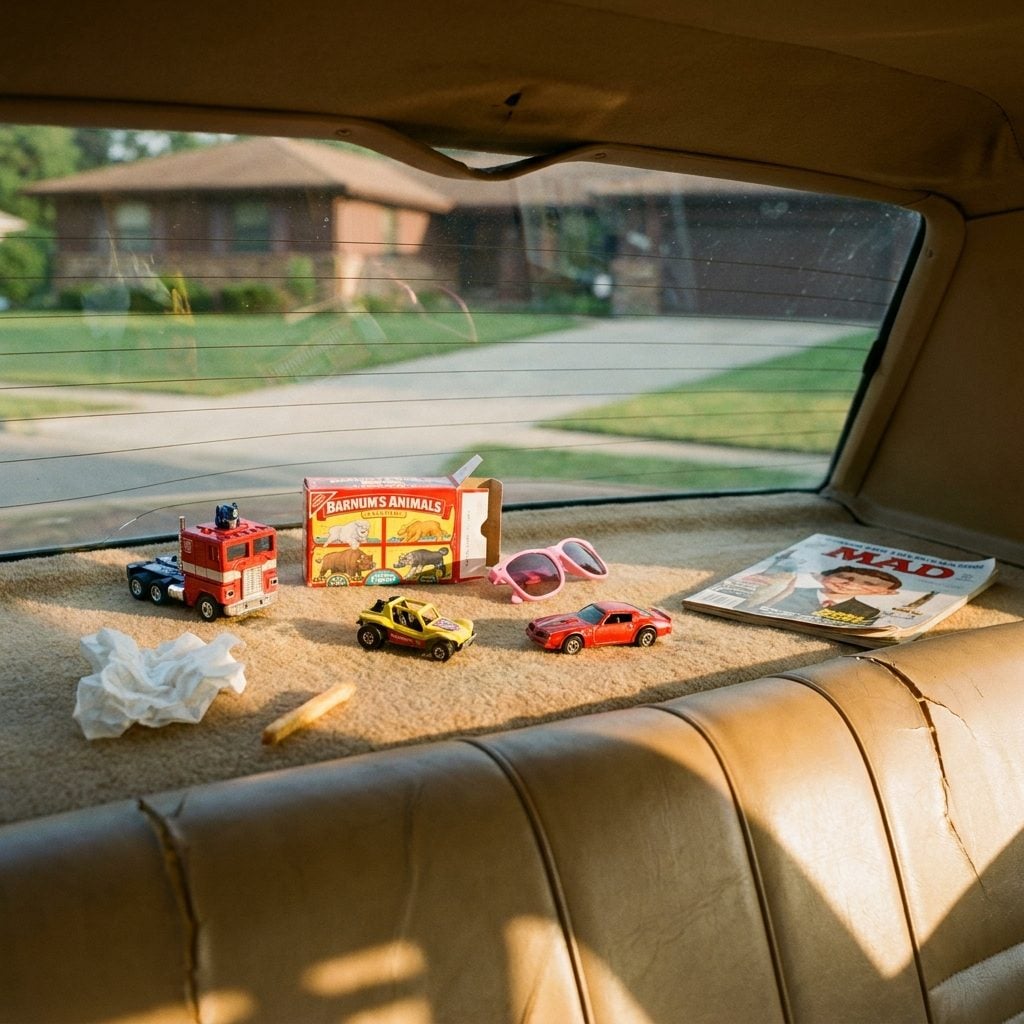
That carpeted ledge behind the backseat wasn’t designed for storage — it existed to cover the trunk. But every kid in America claimed it as a shelf, and every parent eventually surrendered.
Hot Wheels lived up there permanently. So did a crushed box of Nilla Wafers, a single mitten from two winters ago, and whatever fast-food toy came with last Tuesday’s lunch. Hit the brakes and everything launched forward into the backseat like a tiny avalanche. Accelerate and it all slid back. The world’s worst conveyor belt. We loved it.
21. Riding Without Air Conditioning While Every Window Stayed Cranked Fully Open
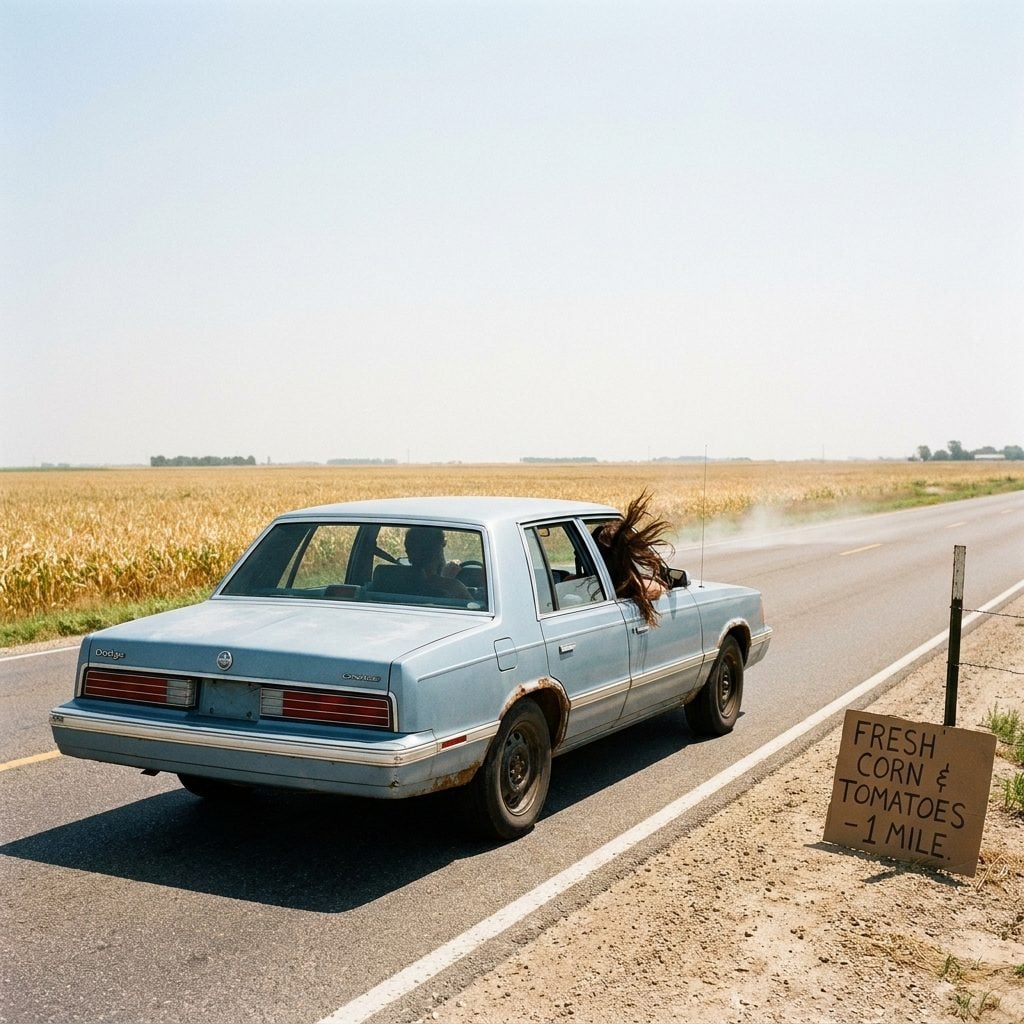
AC was a luxury option. Plenty of families didn’t have it, or had it and it didn’t work — which was somehow worse, because you could see the vents right there, doing absolutely nothing.
So all four windows went down. Cranked to the bottom. And the noise was unbelievable — highway wind at speed turns a car interior into a roaring tunnel where conversation becomes shouting and your hair becomes a disaster that won’t be resolved until you reach the motel. Backseat passengers caught the full brunt: hot wind, road grit, occasionally a bug to the face. You’d arrive somewhere looking like you’d weathered a minor catastrophe, and nobody batted an eye because everybody else looked the same way.
20. Feeling the Rhythmic Thump-Thump of Old Highway Expansion Joints for Hours on End
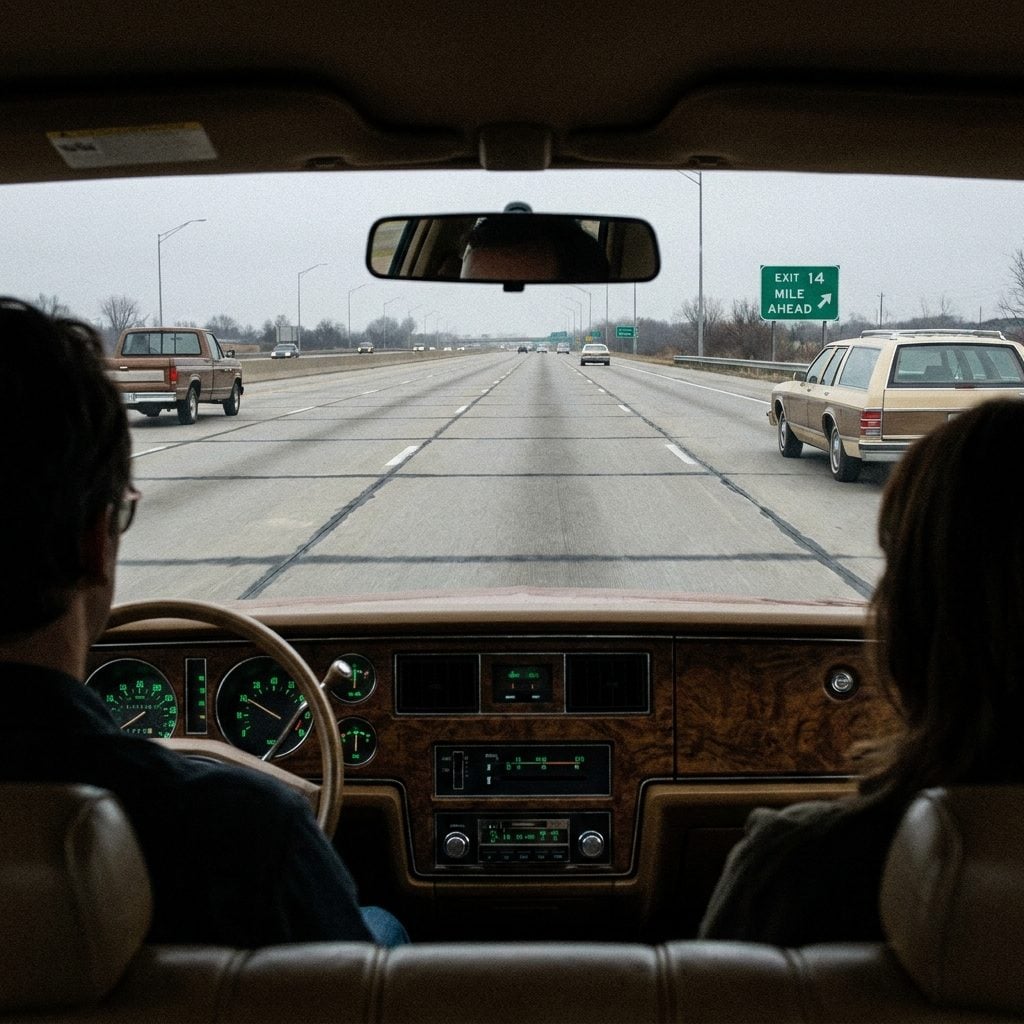
Thump-thump. Thump-thump. Thump-thump.
You felt it in your teeth. Old concrete highways had expansion joints every few yards, and the tires hitting them set up this metronomic pulse that was either maddening or deeply hypnotic depending on where your head was at. After forty-five minutes or so, it became the heartbeat of the trip — you stopped hearing it consciously, but your body locked into the cadence. Modern highways are mostly continuous asphalt now, eerily smooth by comparison. I genuinely miss that thump. It meant you were going somewhere.
19. Trying to Sleep While Sticking Slightly to Hot Vinyl Seats on Summer Nights
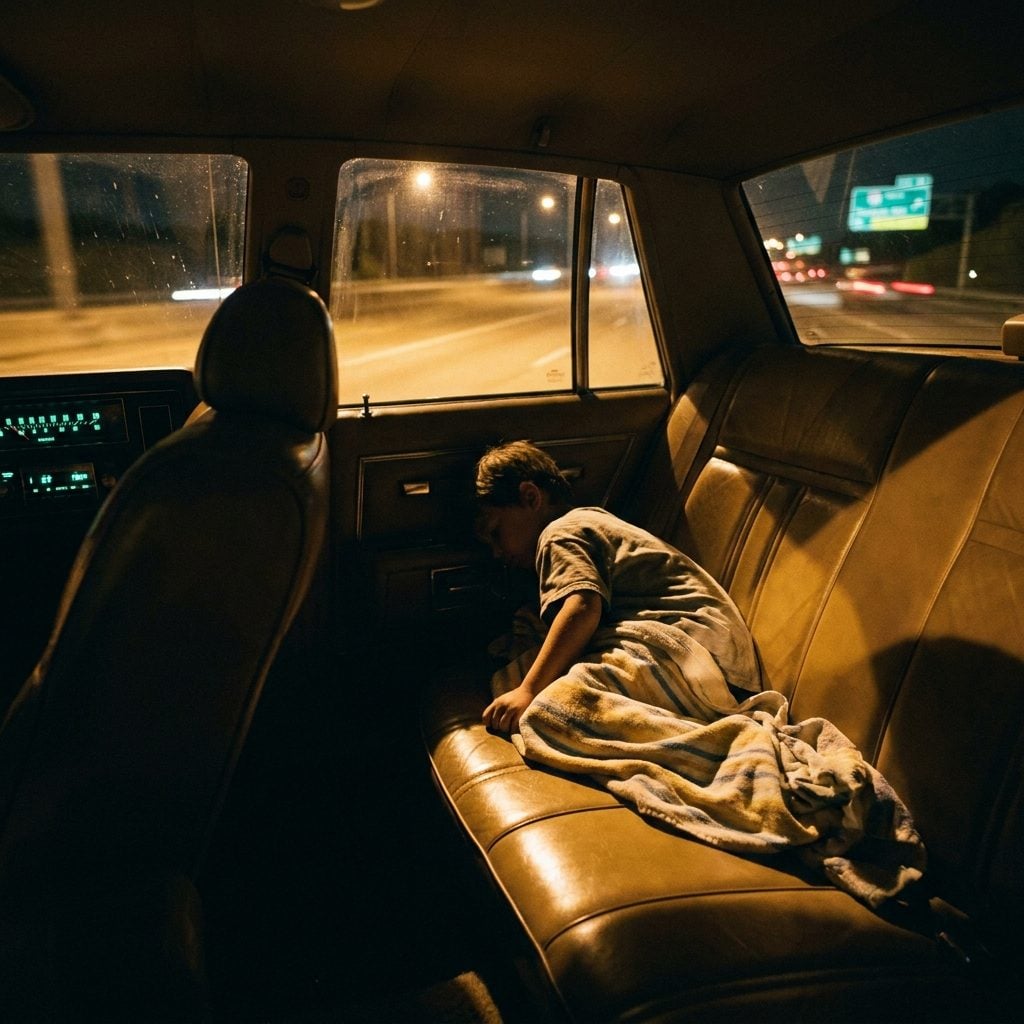
That noise — your own skin peeling off vinyl in a silent car — was mortifying and completely unavoidable. Every shift in position produced this awful, sticky separation sound that made your older brother snicker from the far side of the seat.
Falling asleep on vinyl in summer meant committing to a position. You’d settle in, accept that the backs of your thighs were now chemically bonded to the seat, and hold still. Moving meant restarting the whole uncomfortable adhesion process from scratch. Some parents threw a beach towel over the seat as a buffer. Helped for maybe ten minutes before it bunched underneath you and became its own separate problem. The faint squeak of sweaty skin on vinyl — honestly, I can hear it right now just typing this.
18. Watching Parents Unfold Gigantic Paper Road Maps Across the Entire Front Seat
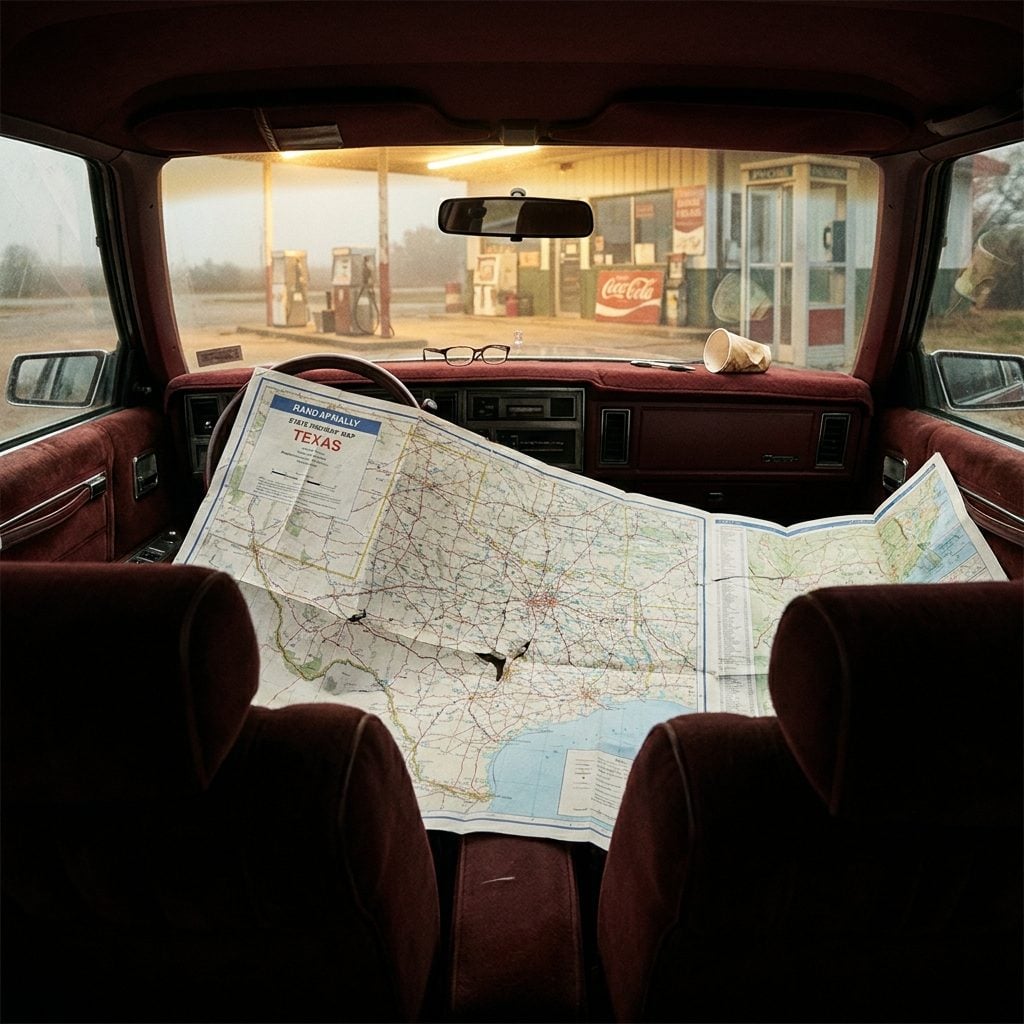
Navigation in the 1980s was a two-person, full-body sport. Dad would pull into a gas station lot, and Mom would wrestle a map the size of a tablecloth out of the glove compartment. It never refolded correctly. Not once. Not in the entire decade.
From the backseat, all you saw was the back of this enormous paper wall, your parents’ muffled argument about whether they’d already passed Route 9, and occasional fingers stabbing at the map with real conviction. “We’re NOT lost” was the official position — contradicted by every available piece of evidence. Eventually the map got shoved back into the glove compartment in a crumpled ball roughly twice its original volume, and you’d pull back onto the road heading in a direction that may or may not have been correct. Nobody would mention the argument again until the next gas station.
The glove compartment of every 1980s family car contained at least four maps, none of them for the state you were currently in.
17. The Crackle of CB Radio Chatter From Truckers Bleeding Through Dad’s Speakers
🔥 Would you like to save this?
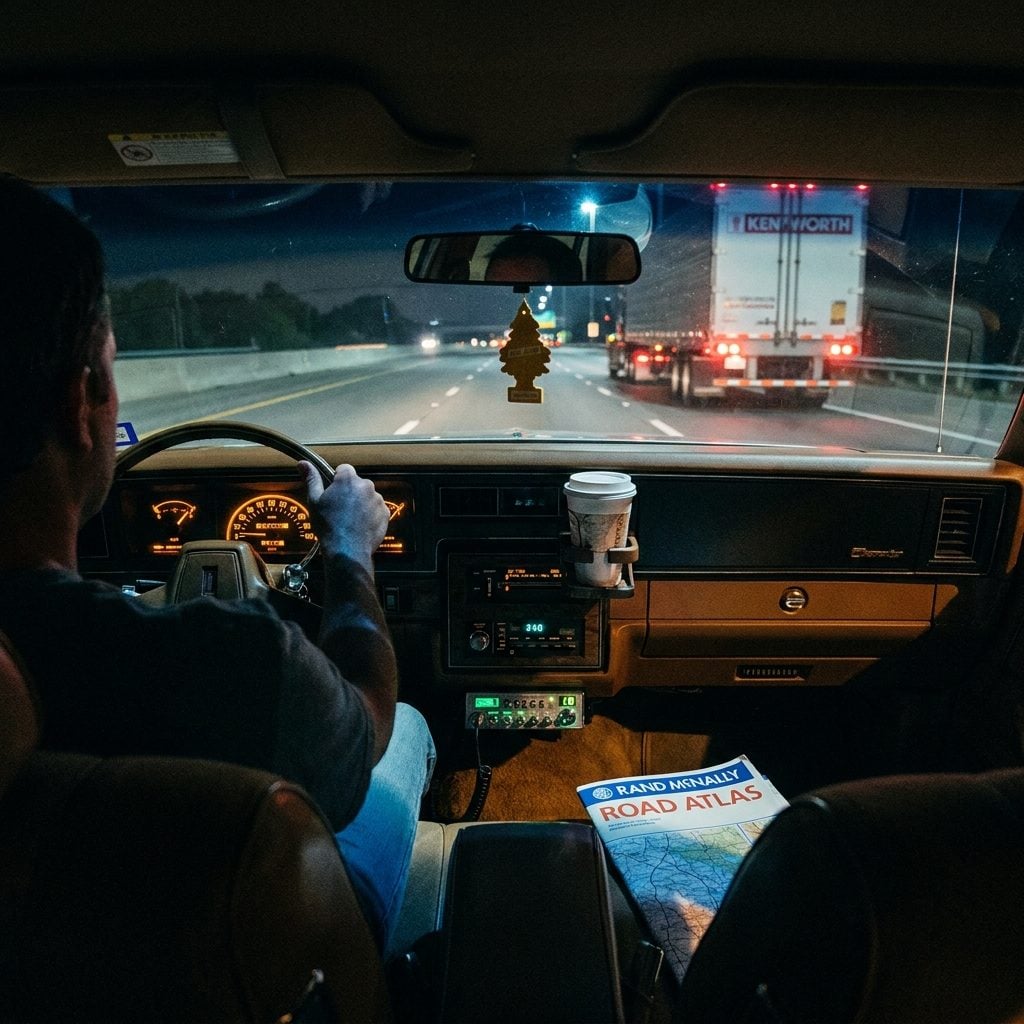
That squelch. That burst of static followed by some drawling voice warning about a “bear in the bushes at mile marker 142.” You had zero idea what any of it meant, but you were absolutely riveted. Dad’s CB—usually a Cobra or Uniden bolted under the dash—turned every highway trip into a live radio drama starring anonymous truckers with handles like “Mudflap” and “Nighthawk.”
Nobody warns you about the static between transmissions. Constant hiss, just this steady roar of white noise that your brain eventually filed away as background, same as the engine. And if Dad keyed the mic to respond? The whole car went silent like church. Even Mom stopped mid-sentence.
16. Adults Arguing Over Directions Because There Was No GPS Safety Net
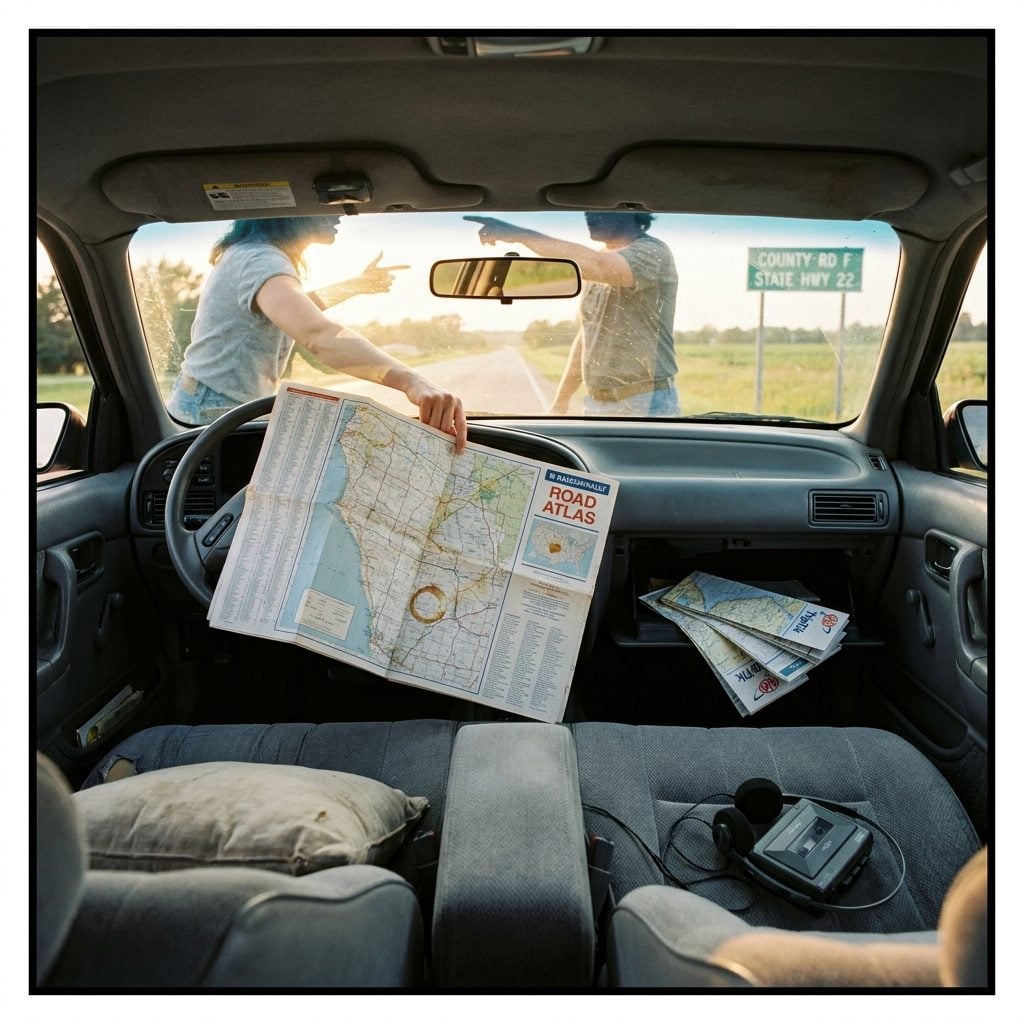
“I told you it was the second exit, not the third.” Growing up in the ’80s backseat meant hearing some version of this sentence on a near-hourly basis during any road trip worth the name. Out came the Rand McNally, big as a tablecloth and twice as unwieldy. Mom would rotate it to match the direction the car was heading. Dad would insist he didn’t need it.
The silence after a wrong turn had its own flavor. Not angry, exactly—more like two people independently constructing closing arguments.
Backseat kids? We learned to read the tension like weather. When Mom started folding the map back up with those sharp, deliberate creases, you knew to stay very, very still.
15. Getting Blasted by Scorching Air From Floor Vents That Barely Warmed the Backseat
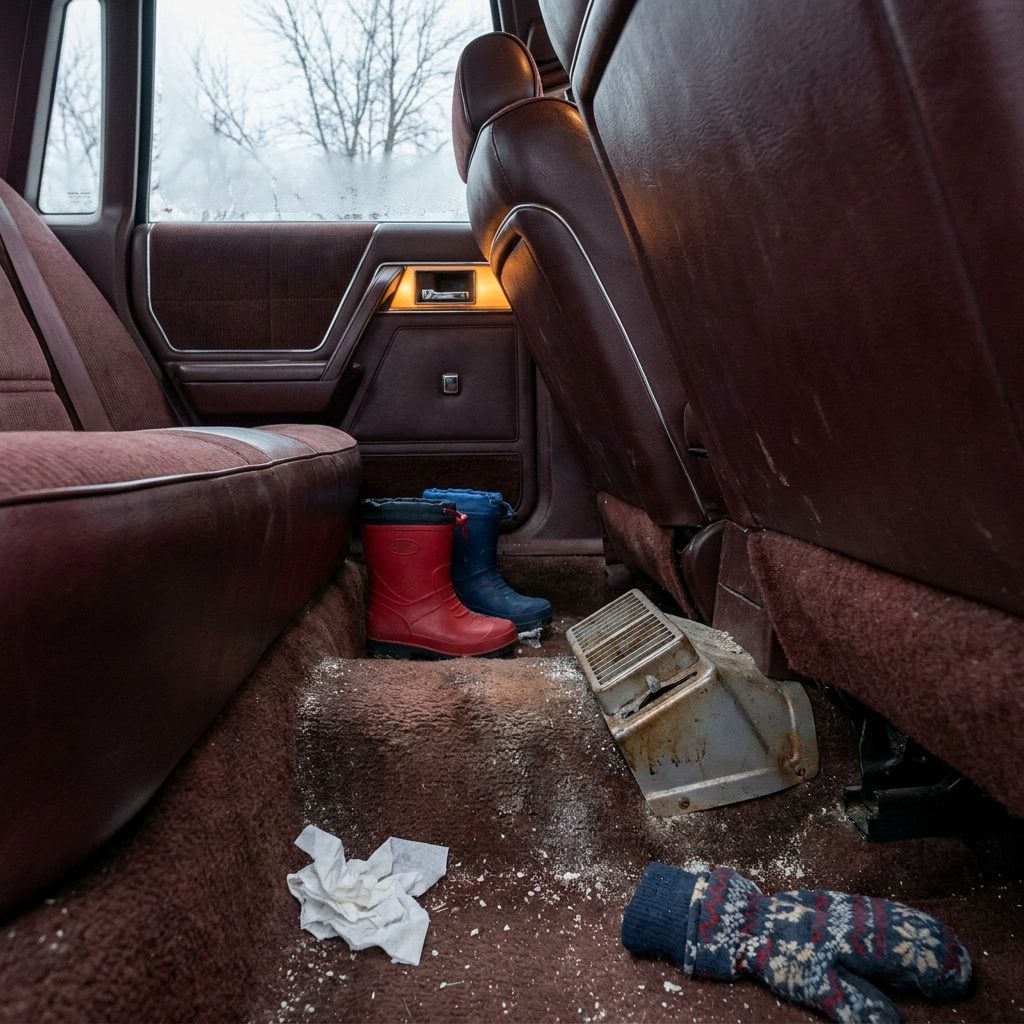
Front seat passengers: tropical paradise. Backseat: arctic tundra with cloth upholstery.
Those little rectangular floor vents under the front seats were theoretically meant to channel warm air backward, but what they actually delivered was a thin jet of scalding heat aimed at one ankle while the rest of your body slowly froze. You’d press your feet right against the grate until the rubber sole of your boot started going soft, face still cold enough to see your breath. The engineering was, let’s say, aspirational.
14. Fast-Food Wrappers Slowly Colonizing the Floor Near Everyone’s Feet
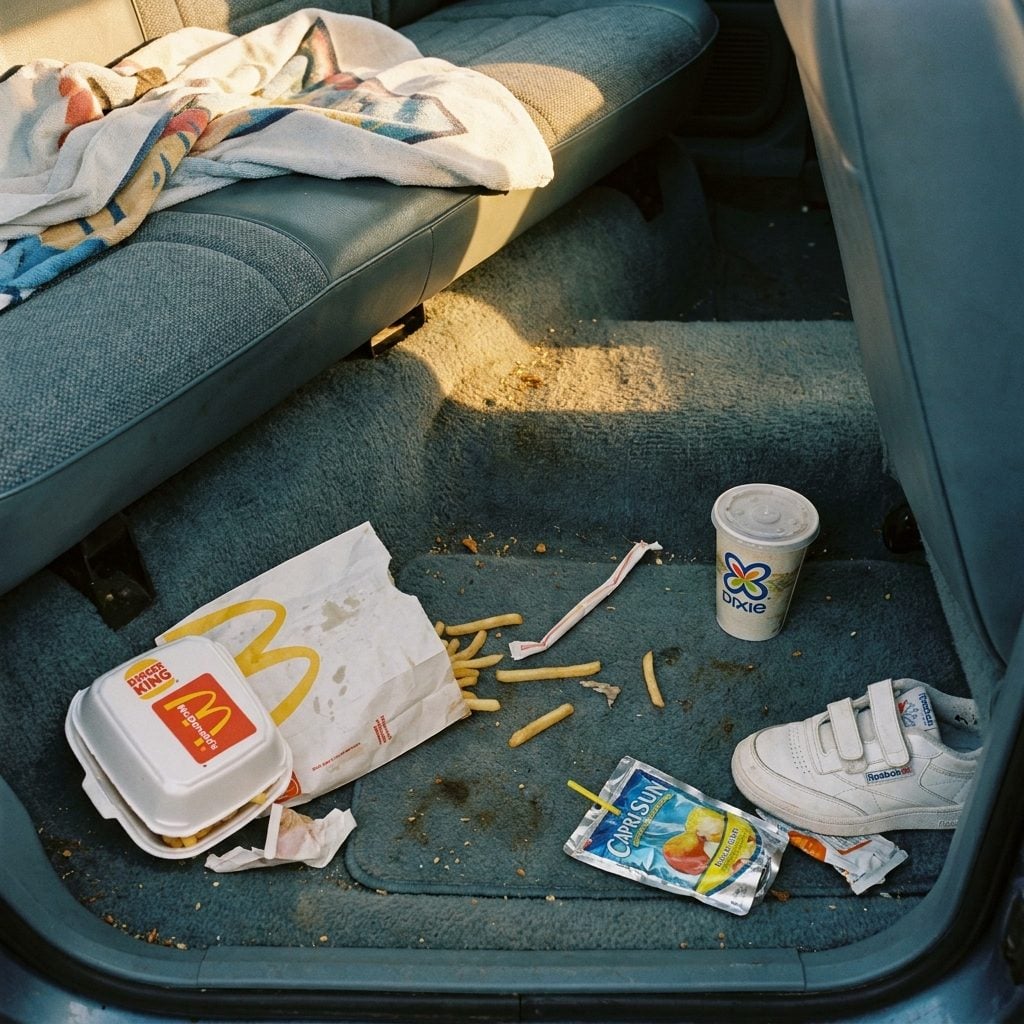
Nobody cleaned it up. That’s the part that would horrify a modern parent. The wrappers just… accumulated, forming a geological record of every drive-through stop since Tuesday.
McDonald’s styrofoam clamshells. Burger King paper crowns ground flat under someone’s sneaker. Stray fries that rolled beneath the seat and became fossils. A Capri Sun pouch with the straw punched clean through both sides, leaking slightly onto everything nearby. By day three of any trip, the backseat floor resembled a crime scene staged entirely with condiment packets. And the smell—a warm blend of ketchup and car carpet—I can still summon it if I close my eyes hard enough. My wife finds this disturbing.
13. Playing the License Plate Game for Six Straight Hours Because There Was Nothing Else
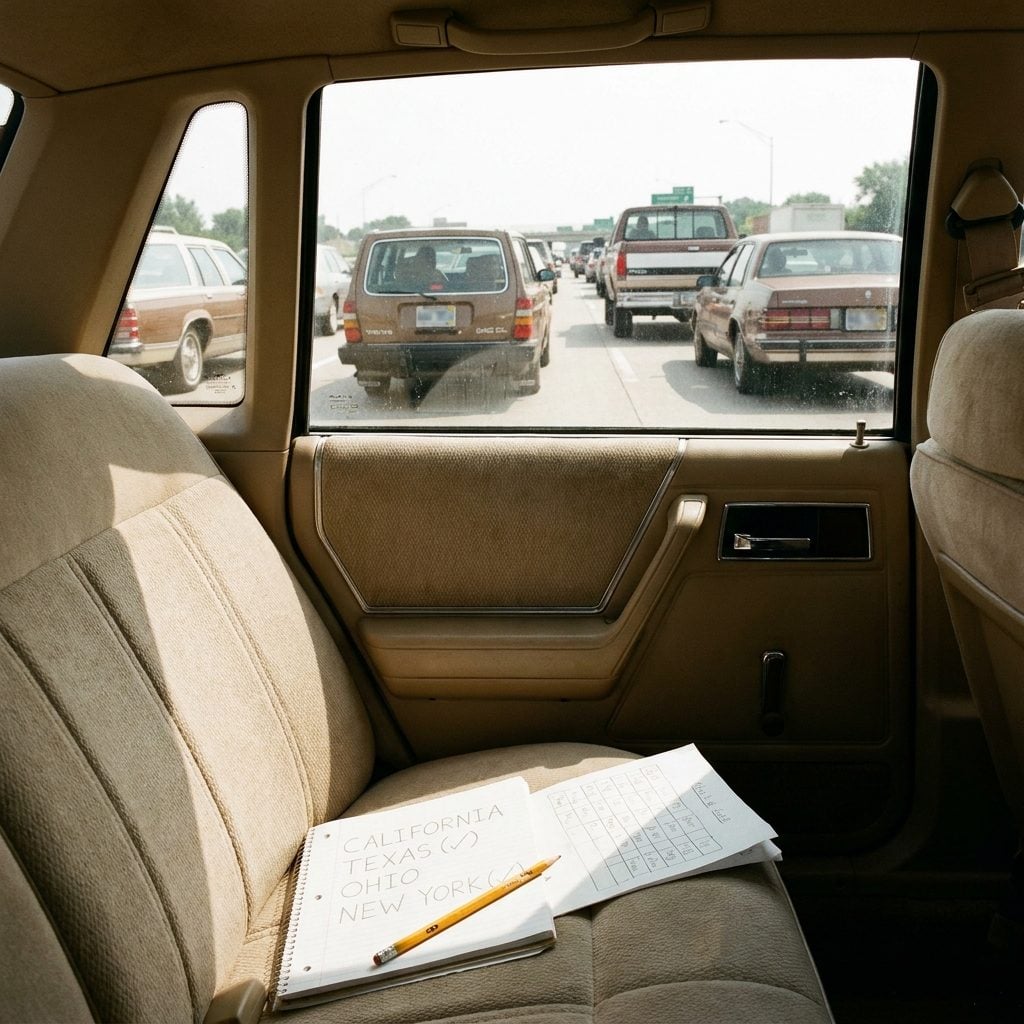
Hawaii and Alaska were mythical. You wrote them on the list anyway, just in case some maniac had driven their car from Honolulu to the I-70 corridor. The game required nothing—no batteries, no quarters, no equipment. A spiral notebook, a pencil with a gnawed eraser, and a willingness to stare at traffic longer than any person reasonably should.
The first twenty states came fast. Then around state 30 you hit the wall, and suddenly you were scanning every rest stop parking lot with the focus of someone defusing a bomb. Spotting Montana or Vermont on a Southern highway felt like a genuine personal achievement. You’d announce it to the car. Nobody reacted. Didn’t matter—you wrote it down with full ceremony anyway, because the notebook was the only scoreboard and you were winning against yourself.
12. Sitting Shoulder-to-Shoulder With Siblings Because Seat Contours Barely Existed
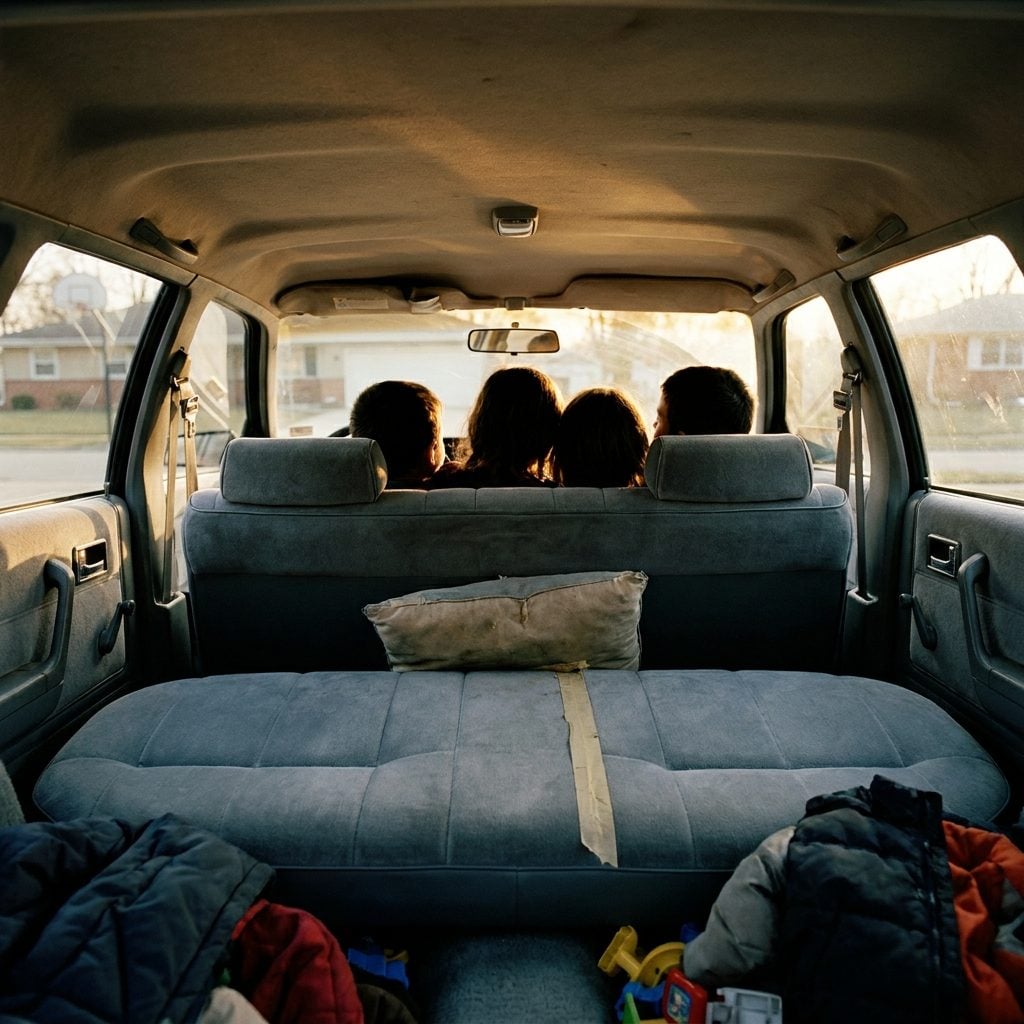
Three kids, one bench seat, zero personal space. The 1980s rear bench was a flat slab of velour or vinyl with the ergonomic sophistication of a park bench—no contours, no bolsters, no center armrest, just fabric stretched across foam and three small humans packed onto it with strong opinions about territory.
The invisible border meant everything. “You’re on my side” carried the gravity of a diplomatic incident. Some families used a pillow as a partition. Others relied on masking tape. I knew one kid whose mom drew a line directly on the seat fabric with a ballpoint pen, which frankly tells you everything about how things were going by hour four of a family drive to Myrtle Beach.
11. Watching Luggage Stacked Dangerously High Behind the Rear Seat of the Station Wagon
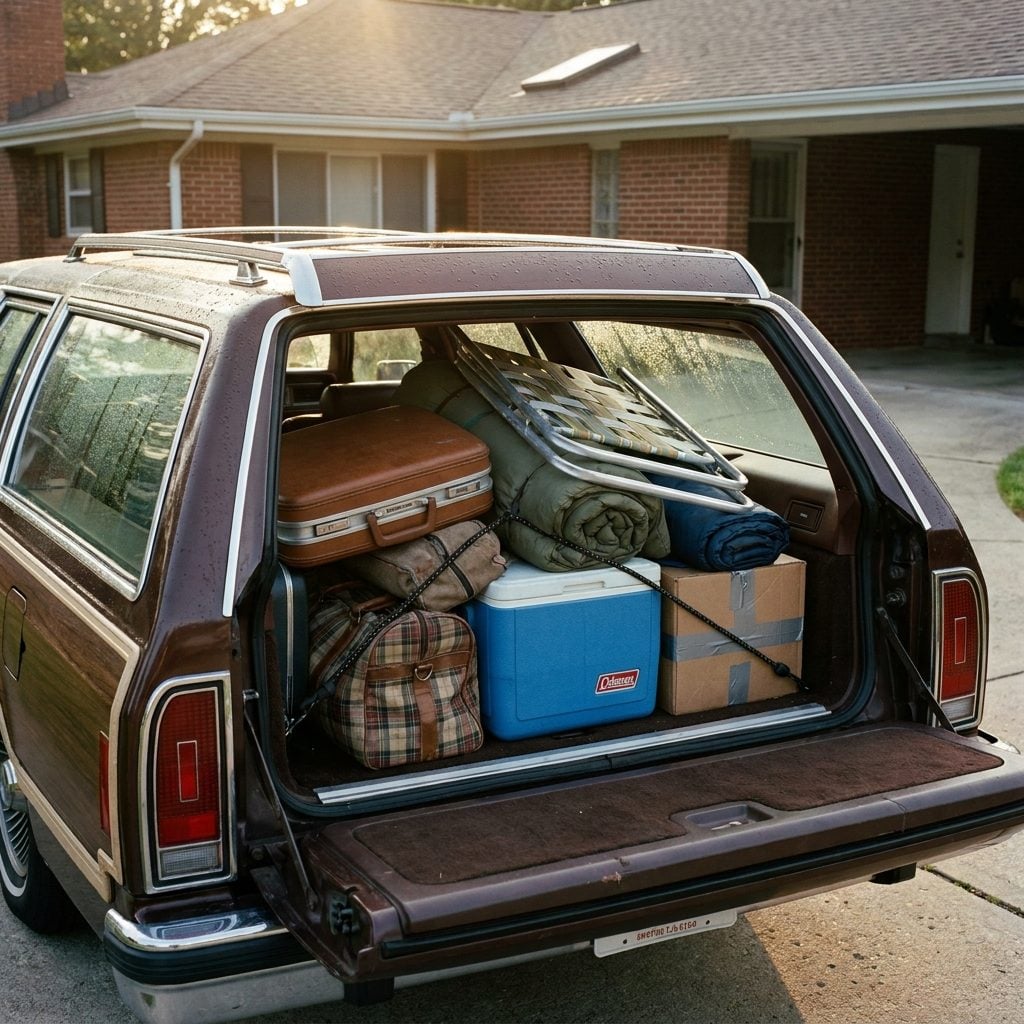
A Samsonite hard-shell, a Coleman cooler, two duffels, a taped-up cardboard box of unknown contents, three sleeping bags, and a folded lawn chair. All stacked behind the rear seat with nothing between you and certain burial except a bungee cord and sheer faith.
Every hard brake sent something shifting. You’d hear the cooler slide, then the duffel on top would tip forward, and you’d spend the next ten minutes twisted around trying to shove it all back into place with one arm while your seatbelt—if you were even wearing one—dug into your neck. The adults up front never seemed remotely concerned. “It’s fine,” Dad would say. In retrospect, that was less a safety assessment than a plea to the universe.
10. Riding Backward in Rear-Facing Station Wagon Seats and Waving at Strangers
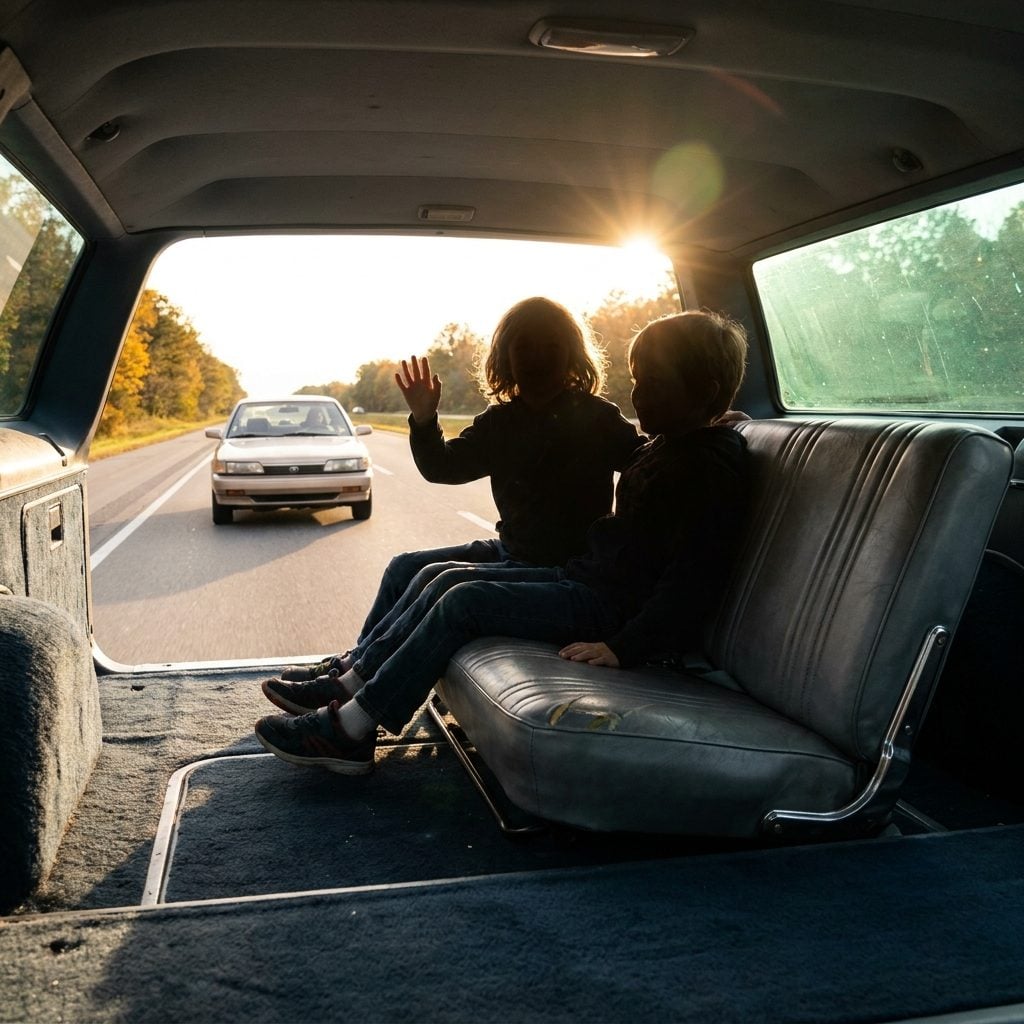
No seatbelts. No airbags. Facing the wrong direction entirely. Your parents put you in the way-back of the station wagon on purpose, mostly so you’d stop bothering them, and it felt like the greatest seat in the house.
The rear-facing third row in wagons like the Olds Custom Cruiser or the Ford Country Squire had the structural integrity of a camping chair bolted to the floor pan. Cushion was maybe two inches thick. But the whole point—really the only point—was waving at the car behind you until they waved back. Some people responded instantly. Others stared straight ahead, refusing to engage. A rare few made faces, and those people? Absolute legends, every one.
The exhaust fumes were real, by the way. That faint gasoline headache tagged along on every trip. Nobody connected those dots for years.
9. The Ashtray in the Door Panel That Doubled as Accidental Knee Contact Every Single Trip
🔥 Would you like to save this?
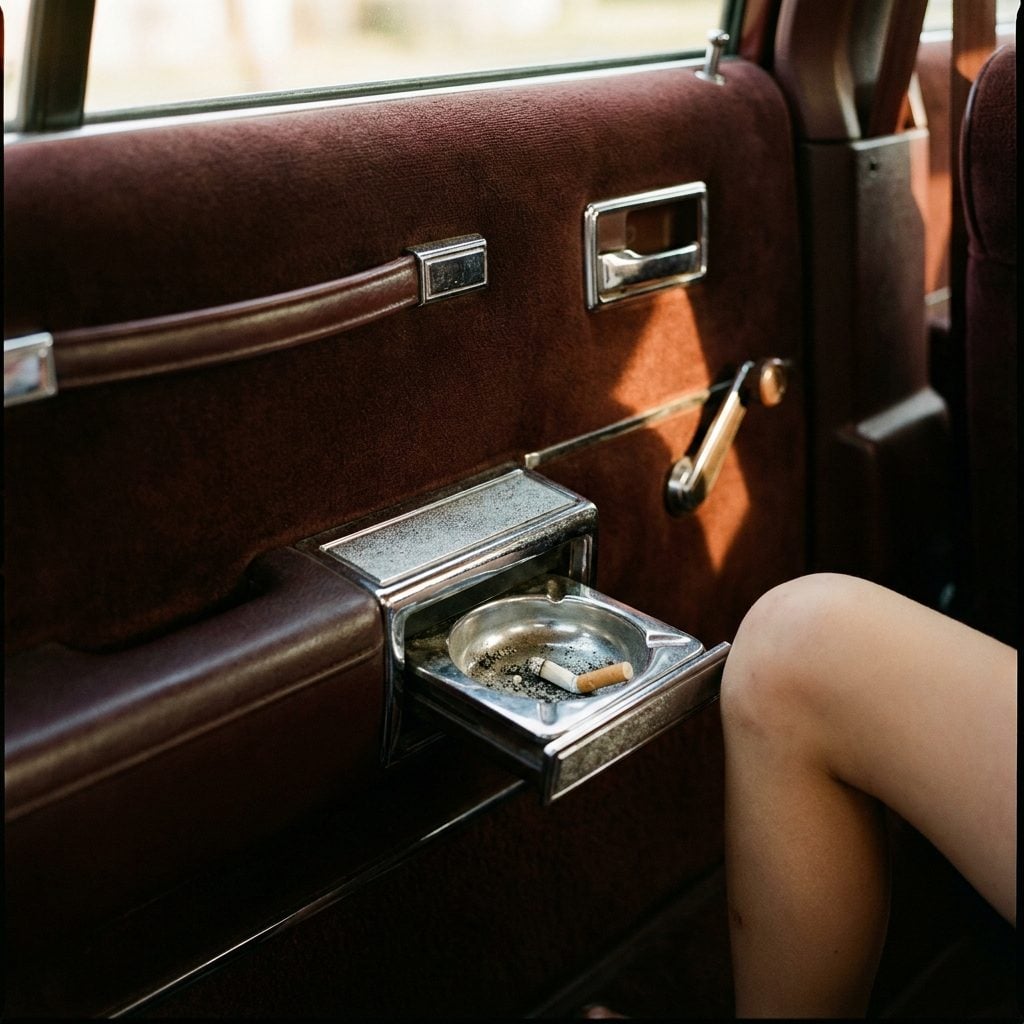
Every rear door had one. A tiny chrome-trimmed tray that pulled out at the exact height where a kid’s kneecap lived, designed—allegedly—for cigarettes but functioning primarily as a weapon.
That sharp metal edge caught you on every bump. Every turn. Every sudden stop. And the tray was always slightly open because the spring mechanism wore out roughly six weeks after the car rolled off the lot. Inside: a grey film of old ash, maybe a petrified wad of gum someone jammed in there years ago. Nobody in the backseat smoked. The ashtray existed purely to bruise small legs and collect debris nobody wanted to examine too closely.
8. Hearing Loose Items Rattle Constantly Inside the Car But Never Once Finding Them
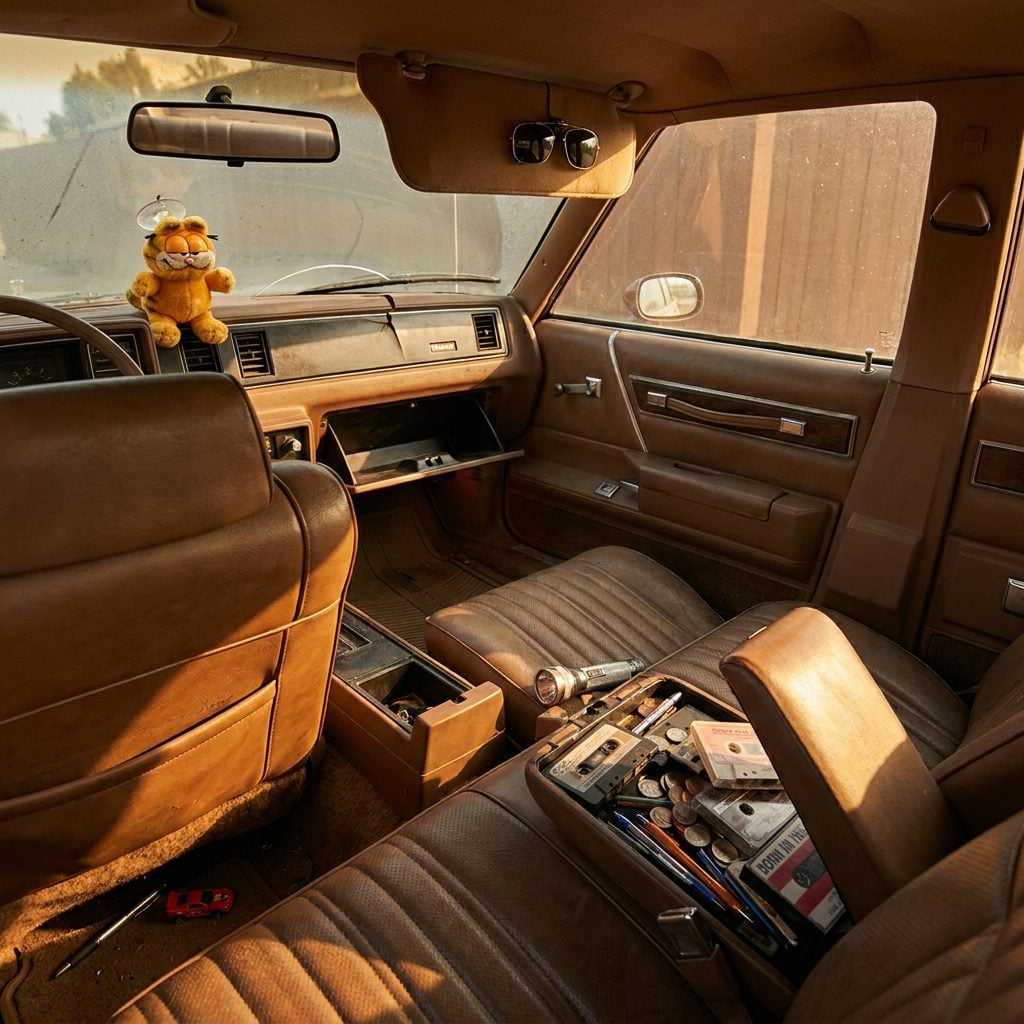
Somewhere behind the dashboard, a single object rolled back and forth with every turn. Left: roll. Right: roll. Hard brake: thunk. This had been going on for seven months. Nobody knew what it was. Nobody would ever know.
The 1980s family car was an acoustic puzzle. Loose items colonized the spaces between panels, inside door cavities, under seats, in the strange void between the rear window shelf and the trunk. A pen. A marble. A Hot Wheels car from 1982 that had migrated into the heating duct and now resided there permanently, its little metal axles chattering every time you crossed railroad tracks. You’d press your ear to the door panel like a doctor listening for a heartbeat. Nothing useful. The rattle always seemed to originate from somewhere just left of wherever you were paying attention.
I’m convinced some of those cars are rusting in junkyards right now, and if you picked one up and shook it, something would still roll.
7. Holding Onto the Cold Metal Door Handle During Every Sharp Corner Like Your Life Depended on It
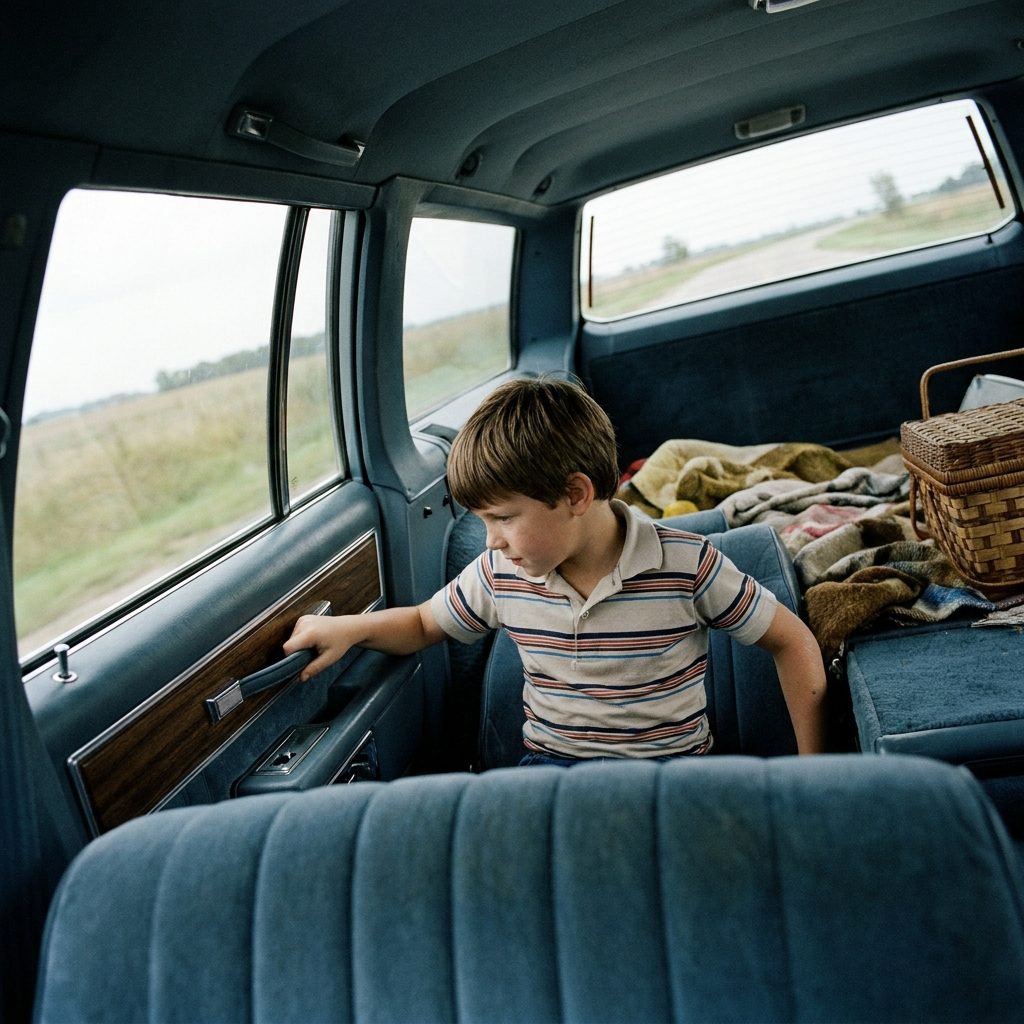
That chrome grab handle above the rear passenger window was never warm. Not once. Not in July, and definitely not in December when the metal felt like it could fuse to your fingers. Every time Dad took a cloverleaf on-ramp or Mom whipped into the grocery store lot a little too enthusiastically, your hand shot up and locked onto that thing with survival-level grip strength.
No seatbelts on, of course — or at least not reliably buckled. The handle WAS the seatbelt, and everyone understood this without discussion. You’d slide across the vinyl bench seat, hip-check your sibling into the opposite door, and the only thing between you and the window was a fistful of freezing chrome.
GM handles had a slightly different curve than the Ford ones. Chrysler’s felt flimsy. I white-knuckled all three brands before age ten, so I consider myself something of an authority. There was a brief, glorious half-second of zero gravity during the sharpest turns when your rear end actually left the seat — and no rollercoaster since has come close.
6. AM Radio Songs Fading to Static Between Towns, Then Ghosting Back Three Miles Later
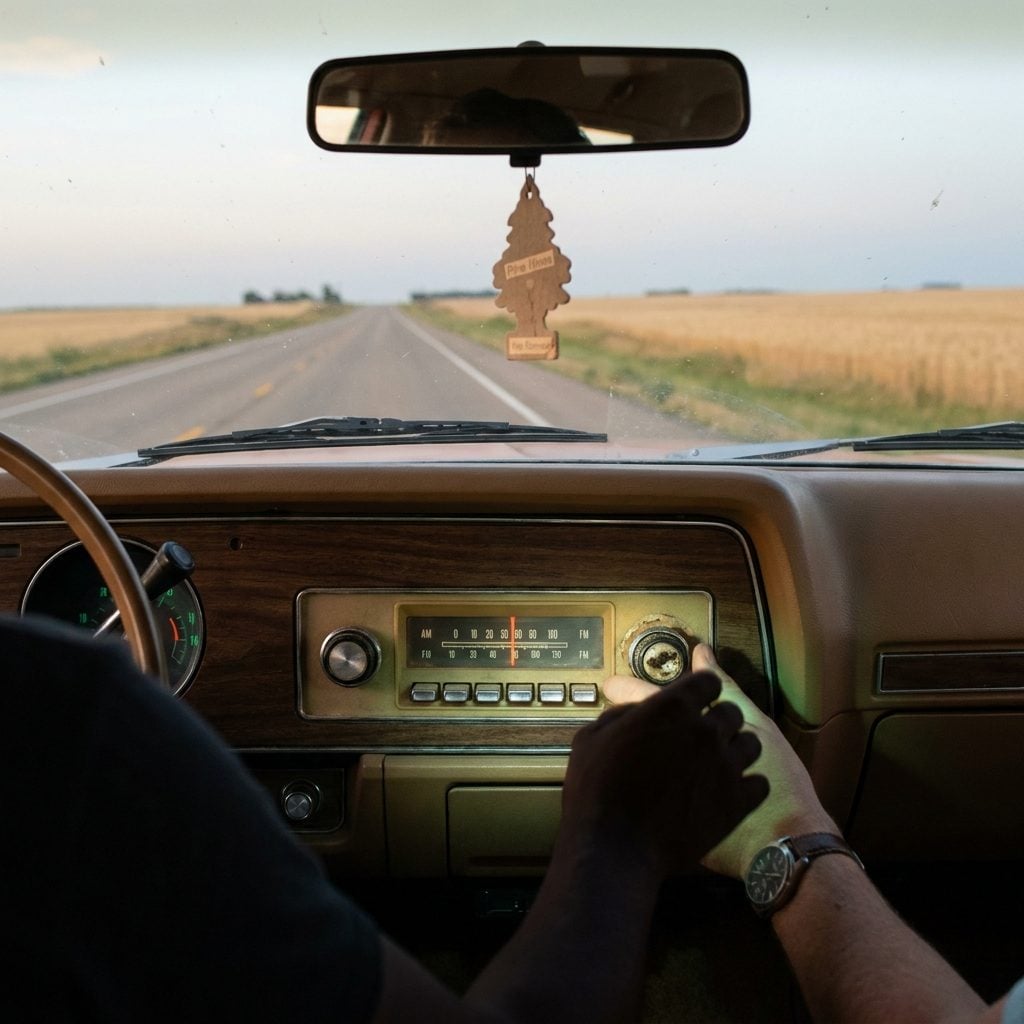
You’d be halfway through “Eye of the Tiger” and the signal would just dissolve into white noise — slowly, like someone turning down the volume inside the music itself. The DJ’s voice would get tinny, then underwater, then gone. Nothing left but a soft hiss and road noise filling the gap.
Nobody changed the station. Unspoken rule. You waited. Three miles, maybe five, and the song would swim back in mid-verse or mid-commercial, casual as anything. Sometimes a completely different station bled through first — a sermon from Tulsa, a cattle auction report, a country song your dad would tolerate for exactly four seconds before spinning the dial back.
That tuning knob had real mechanical resistance. Each click felt deliberate. And the orange needle behind the little plastic window would slide left and right like a tiny compass hunting for something worth hearing.
5. The Static Shock From Cloth Upholstery That Hit You Like a Tiny Lightning Bolt Every Winter
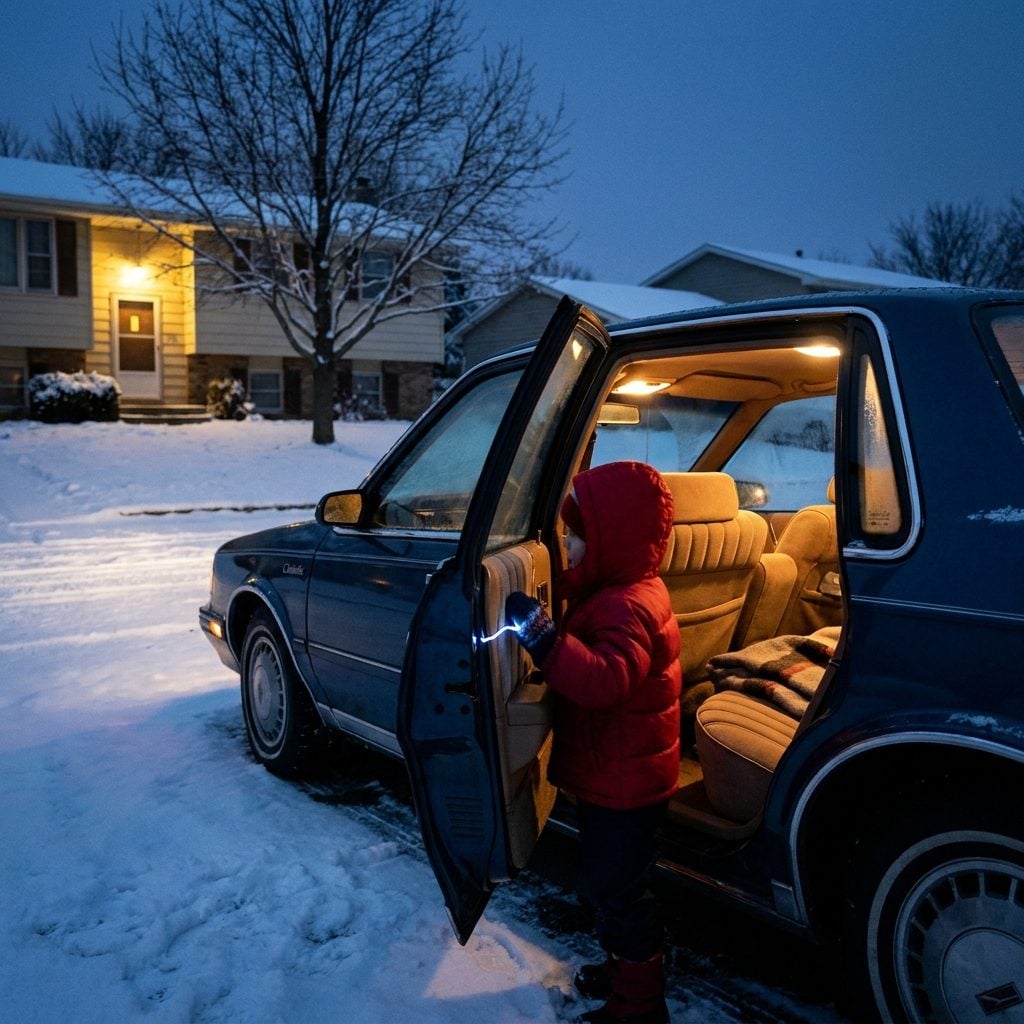
Forty-five minutes in a heated car wearing a puffy nylon coat on cloth seats, and you were basically assembling a capacitor with your body. The second your finger touched the metal door handle to get out — snap. A visible blue spark in the dark. Hurt just enough to make you flinch, never enough to make you do anything differently next time.
Some kids developed the knuckle technique: touch the metal with a fist first to spread out the discharge. Others just grabbed the door frame and accepted the zap like a toll you paid for arriving somewhere. I got shocked so routinely climbing out of our 1986 Oldsmobile Cutlass that I started to believe certain cars were simply meaner than others. A superstition, sure. But that Olds gave me evidence.
4. Watching Rainwater Creep Inside the Side Window Seal Like a Slow-Motion Horror Movie
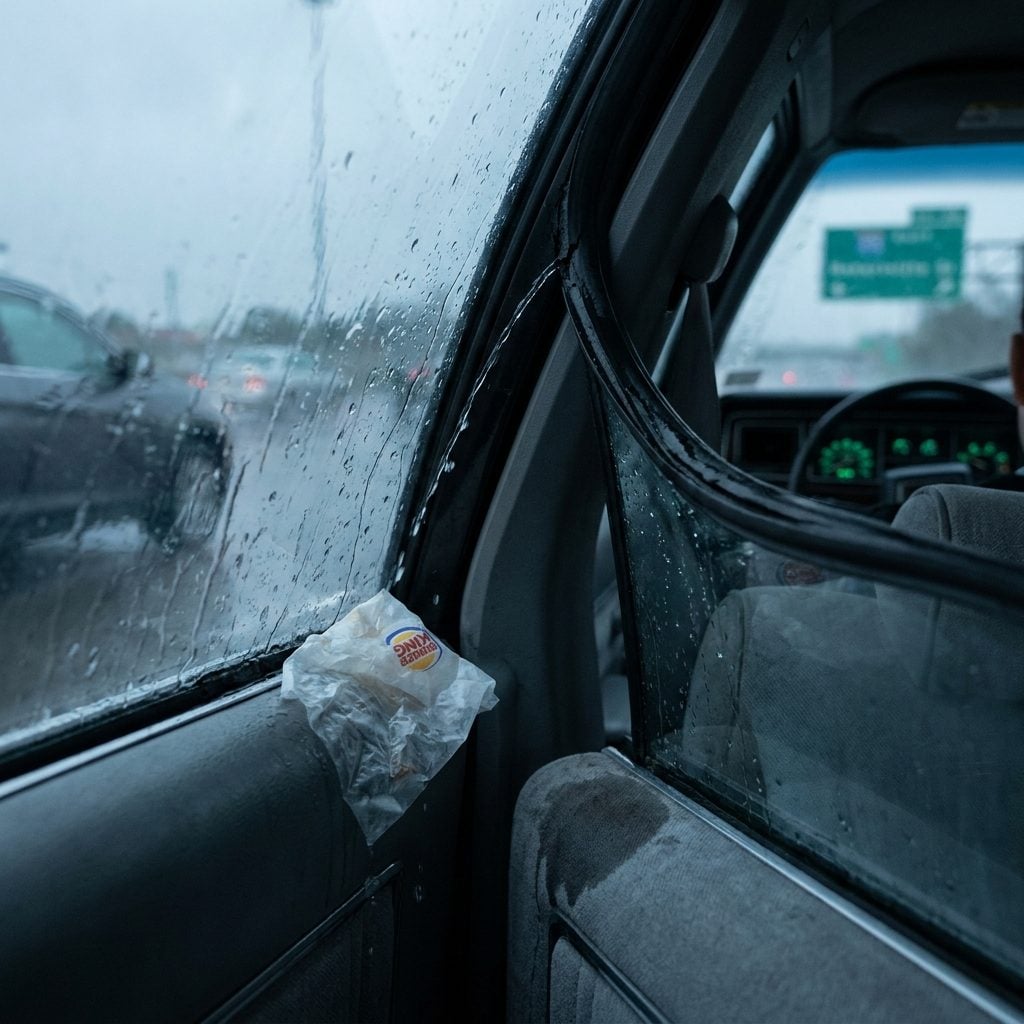
It always started as a single bead. One tiny drop sitting on the inside of the rubber window seal, trembling with the vibration of the road. You’d stare at it, willing it to hold. It never held.
Within ten minutes of a serious highway downpour, that bead had company. A thin rivulet would trace its way down the inside of the glass, pooling in the little groove at the bottom of the window frame. Your mom would hand back a wad of Burger King napkins. You’d press them against the leak and they’d be soaked through in seconds — so then you’d stuff a sock in the gap, because that’s what passed for roadside repair in a backseat.
Station wagons were the worst offenders, especially around the rear hatch. But even sedans with a few years on them sprouted these mysterious leaks as the rubber seals got brittle, cracked, and pulled away from the frame. Nobody ever seemed to get them properly fixed. You just knew which window leaked and sat on the dry side when it rained.
3. Reading Burma-Shave Signs One Post at a Time Like the World’s Slowest Punchline
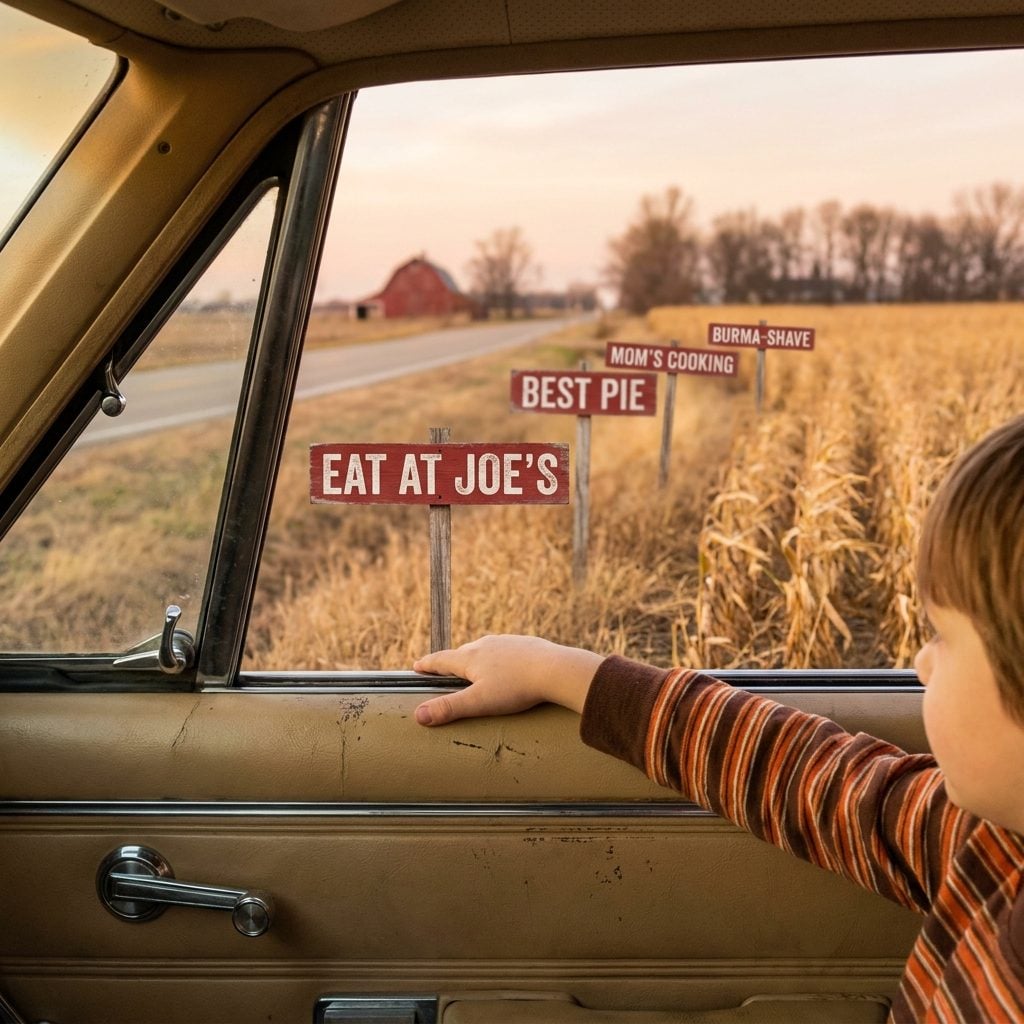
Five signs. Five wooden posts. One terrible rhyme. And you read every single one out loud, every single time, for two thousand miles of American highway.
The format never varied: four short lines building to a punchline on the fifth post, spaced far enough apart that you actually had to wait between them. “Don’t stick / your elbow / out too far / it might go home / in another car.” Then the sixth sign: BURMA-SHAVE. Even the brand name landed like a rimshot.
By the 1980s, the originals were long gone — torn down in 1963 when the company sold. But homemade tributes and reproductions kept turning up along rural highways, especially through the Midwest and Plains states. Farmers put them up for kicks. Historical societies replanted them. They became folk art by accident, which is the best kind.
Reading them was a group sport. Your brother would claim the first two posts, you’d grab the next two, and whoever was fastest got the punchline. Competitive, cooperative, completely pointless. Perfect.
2. Watching Mom or Dad Walk Around the Car Locking Every Door One by One Before Walking Away to Ensure It’s Properly Locked
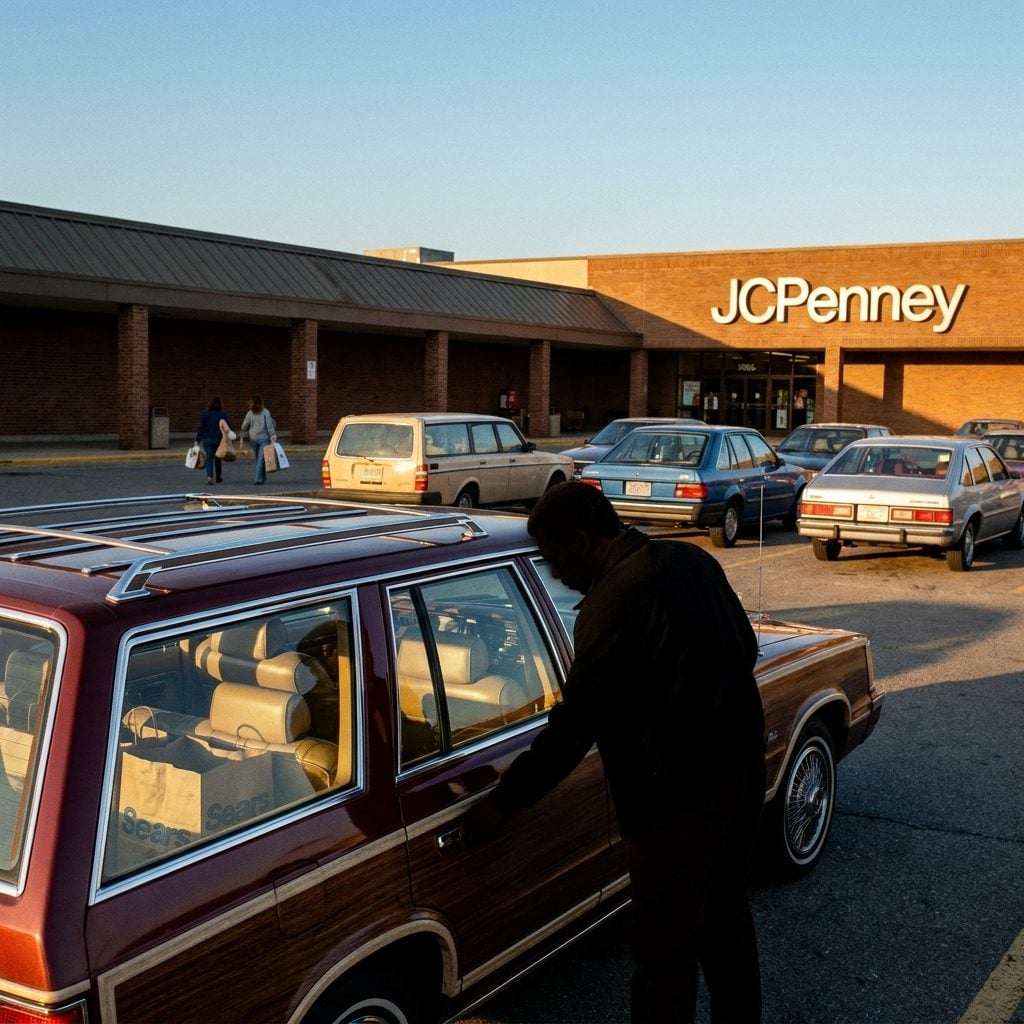
Four doors. Four separate trips around the car. Push the lock down, close the door, test the handle, move to the next one. The whole thing had the gravity of a bomb disposal operation.
Central locking existed in the 1980s, technically — luxury cars had it. Yours did not. So your parents performed this perimeter walk every time they parked: mall, grocery store, church, restaurant, anywhere. Some people locked from the inside before closing each door, reaching in to push the plunger down. Others preferred the key method, saving the driver’s door for last because that was the only one the key worked on from outside. There was a whole philosophy to it, and everyone had strong opinions they’d never been asked for.
The backseat contribution to this process was pulling the lock plunger back up approximately four seconds after it had been pushed down. Just to see. What happened was yelling.
1. The Tiny Rear Window Fogging Up Completely Until You Were Sealed in Your Own Little World
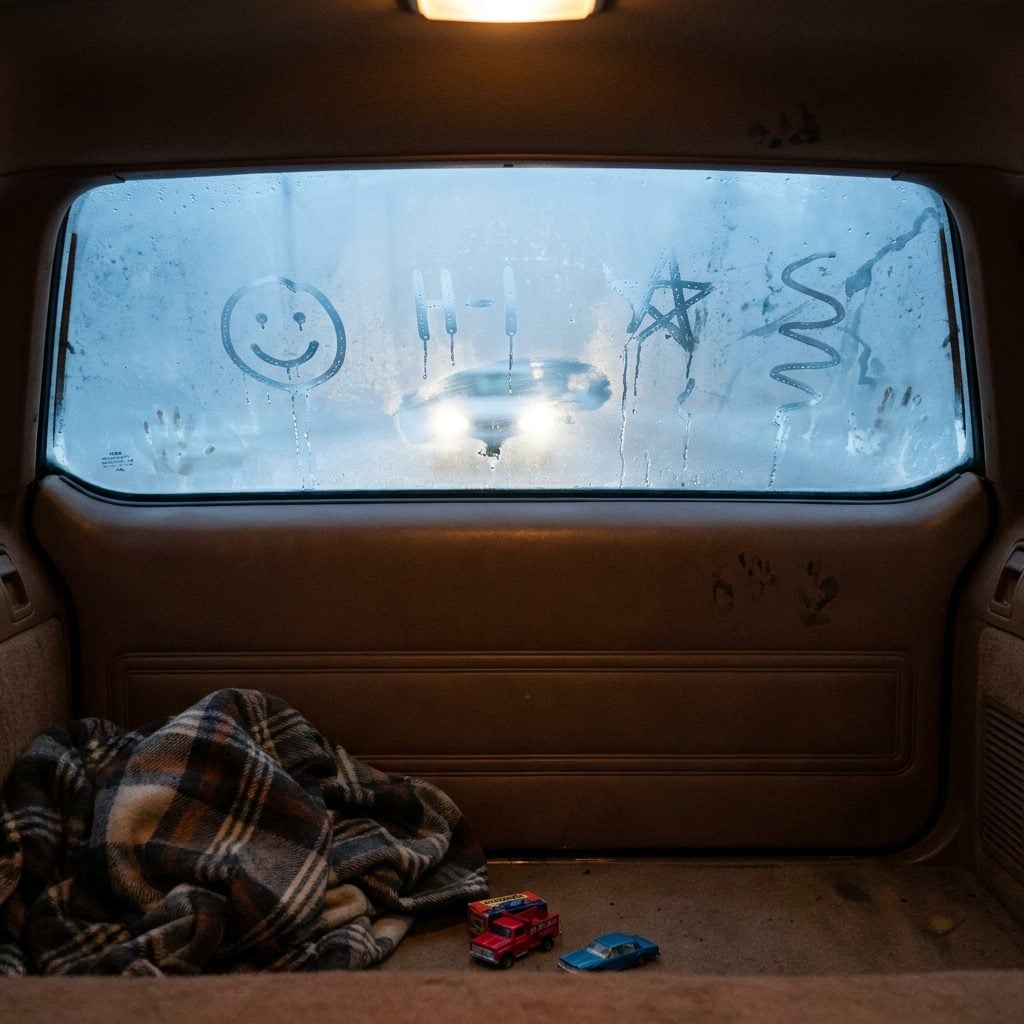
Three kids breathing in a closed car with the heater cranked. By mile twenty, that rear window was gone — completely opaque, a smooth gray canvas of condensation that erased everything behind you.
Then the art began. You’d press a fingertip to the cold glass and draw: your name, a smiley face, a rude word you’d wipe away before anyone noticed. Water would bead and run in streaks below your finger lines, and within minutes you’d built a whole dripping gallery back there. That squeaking sound of a wet finger on fogged glass? Lives in your bones.
Station wagons were ideal because the rear-facing third-row seat put you right up against the back window — a giant rectangle of fog, all yours. Sedans gave you the smaller rear windshield, shared with siblings, which meant territorial disputes over drawing space that could escalate with alarming speed into full shoving matches.
Parents never turned around to check. The fog was a curtain. Whatever happened behind that veil was backseat business, and everyone preferred it that way. You could write SOS on the glass and the only person who’d see it was the driver behind you — and they’d just laugh.
🔥 Would you like to save this?
Please note that some of the imagery in this article were created with the aid of AI image generators.