
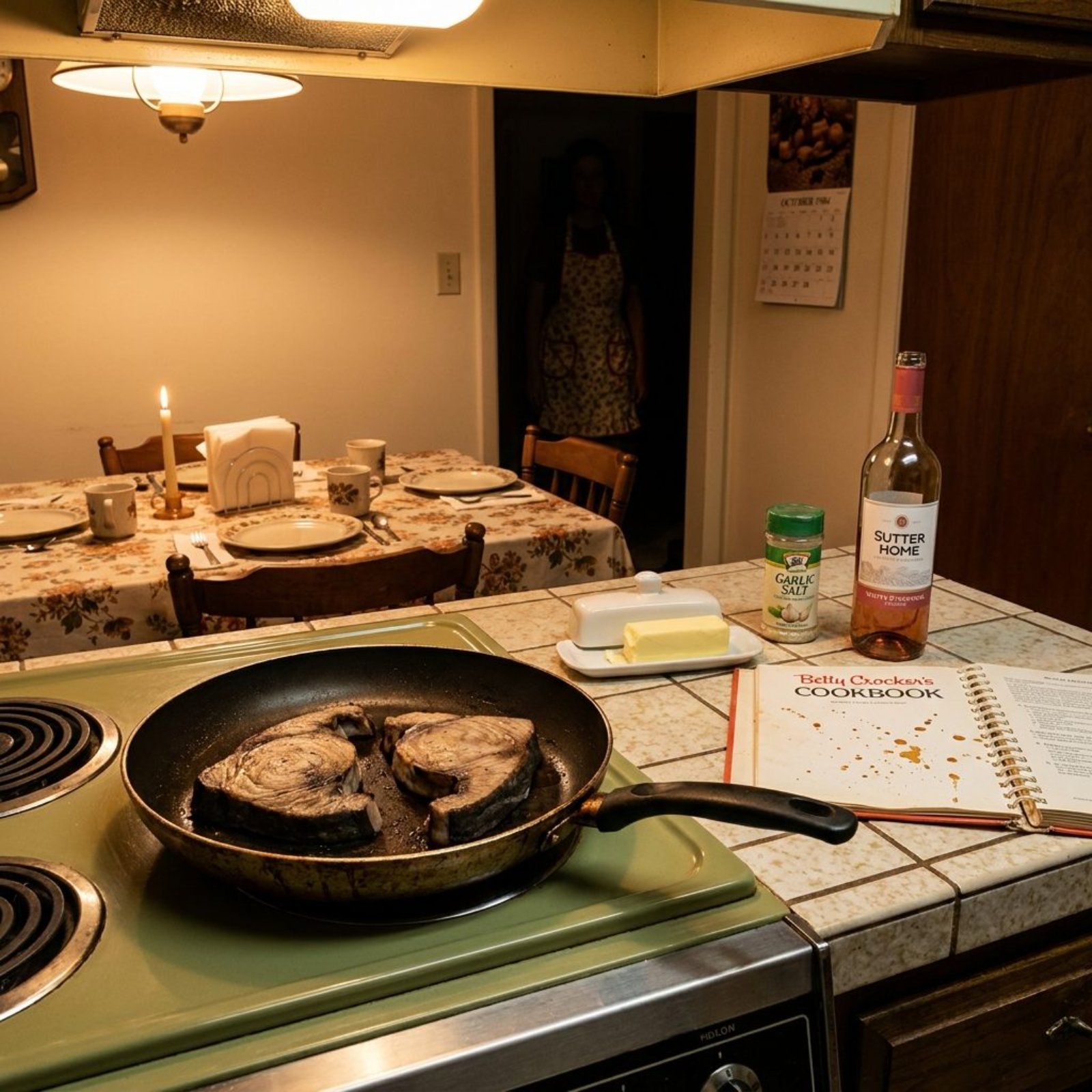
The fondue pot is back in the cabinet. The Jell-O mold has been unmolded, photographed, and quietly buried. Somewhere between Reagan’s second term and the invention of the farmers market, an entire canon of dinner party food quietly became unspeakable. We served these dishes with total confidence, in our best Dansk serving bowls, to guests who ate every bite and asked for the recipe. Here are 35 things that defined the 1980s dinner party table, remembered with equal parts affection and genuine bewilderment.
The Fondue Pot That Went Communal Whether You Liked It or Not
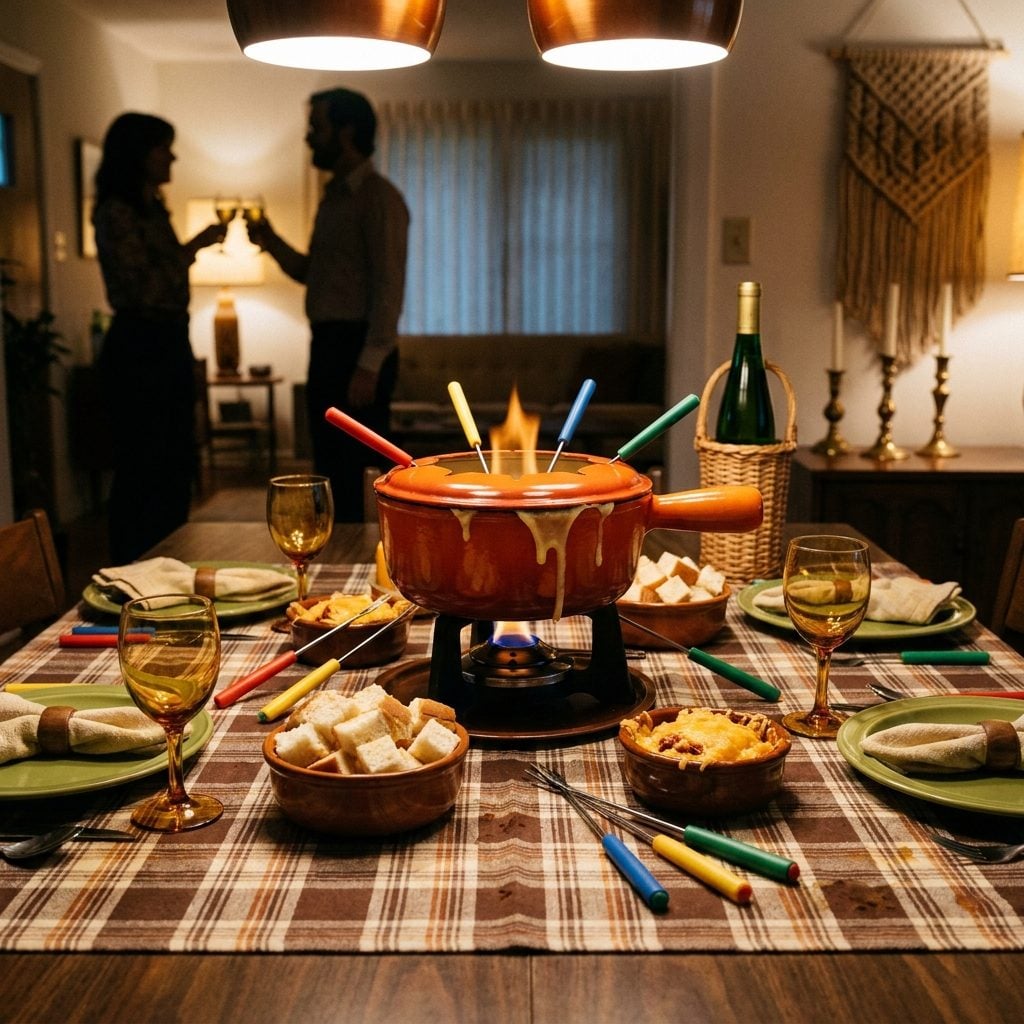
Everyone reached in. That was the whole point. Six people, six forks, one shared pot of bubbling Gruyère, and a basket of white bread cut into cubes that turned soggy before they even made it to the table. Nobody wore gloves. Nobody hesitated. The fondue pot was the centerpiece of a civilized dinner party, and hygiene was simply not part of the equation.
Would you like to save this?
The colored fork handles were supposed to help you track yours. They didn’t. By the second round of dipping, the system had collapsed entirely and someone’s bread had definitely fallen in and been retrieved with a regular dinner fork. Fondue sets were the air fryers of 1983, and nearly every household had one buried in a cabinet by 1987.
Liver and Onions, Served Proudly, With No Apology Whatsoever
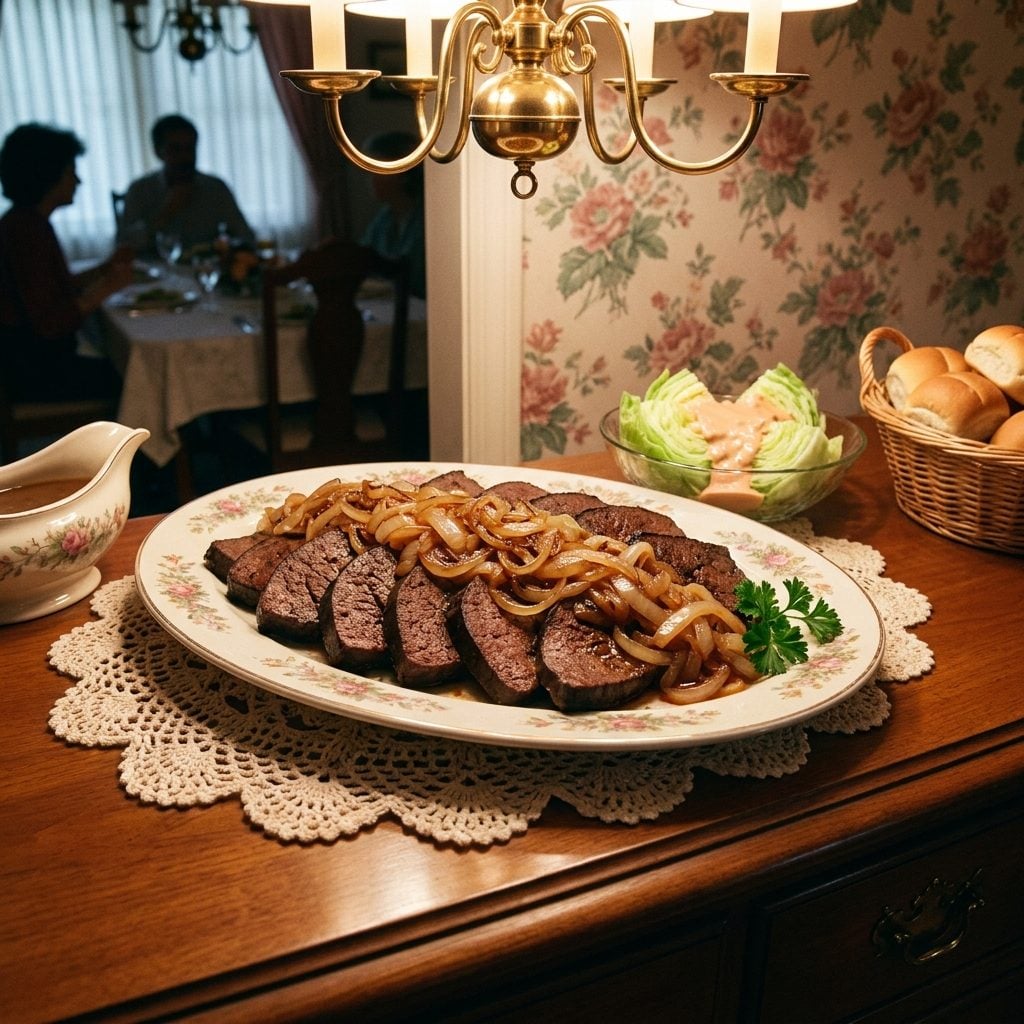
Someone’s mother made it. Someone’s mother-in-law made it. And whoever made it considered it a gift, a proper meal, the kind that showed you were a serious cook rather than someone who just threw together a casserole. The liver arrived on the good platter, the one normally reserved for Christmas, surrounded by slick caramelized onions and a single sad piece of parsley.
Nobody said anything. You served yourself a polite portion, cut it into smaller pieces to make it look more consumed than it was, and reached for extra rolls. The host beamed. This was cooking. This was effort. This was love, expressed through organ meat.
Canned Asparagus in Ham Rolls, Drowned in Hollandaise From a Packet
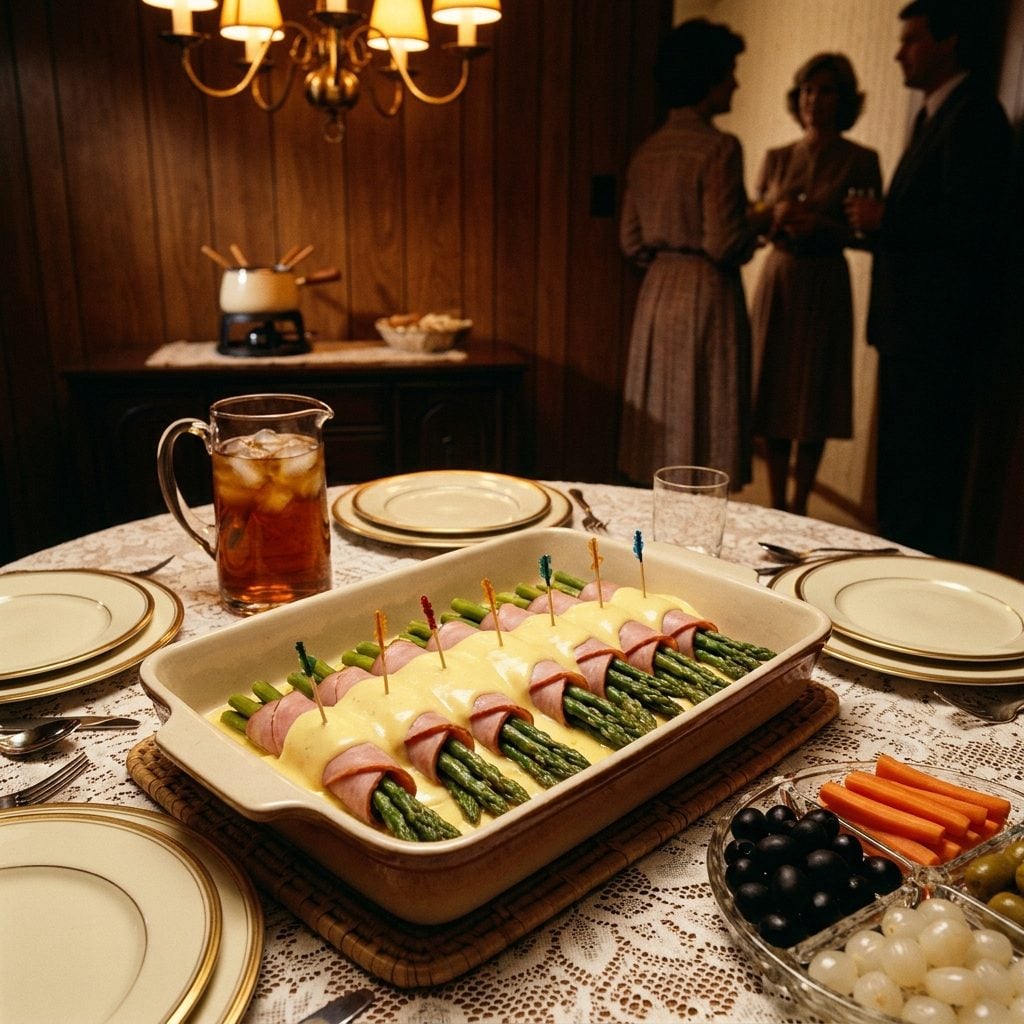
The hollandaise was not made fresh. Let’s be clear about that. It came from a foil packet, whisked with water over medium heat until it achieved a consistency somewhere between gravy and spackle. It was then poured generously over rolls of thin ham wrapped around spears of canned asparagus that had been sitting in brine since approximately 1979.
And yet. Someone brought this to a dinner party. Someone put it on their best baking dish, stuck toothpicks with little plastic frills into each roll, and carried it to the table like it was beef Wellington. The confidence required for this dish has not been matched in the decades since.
The Tuna Mold: A Mayonnaise Suspension Situation That Somehow Made It to the Good China
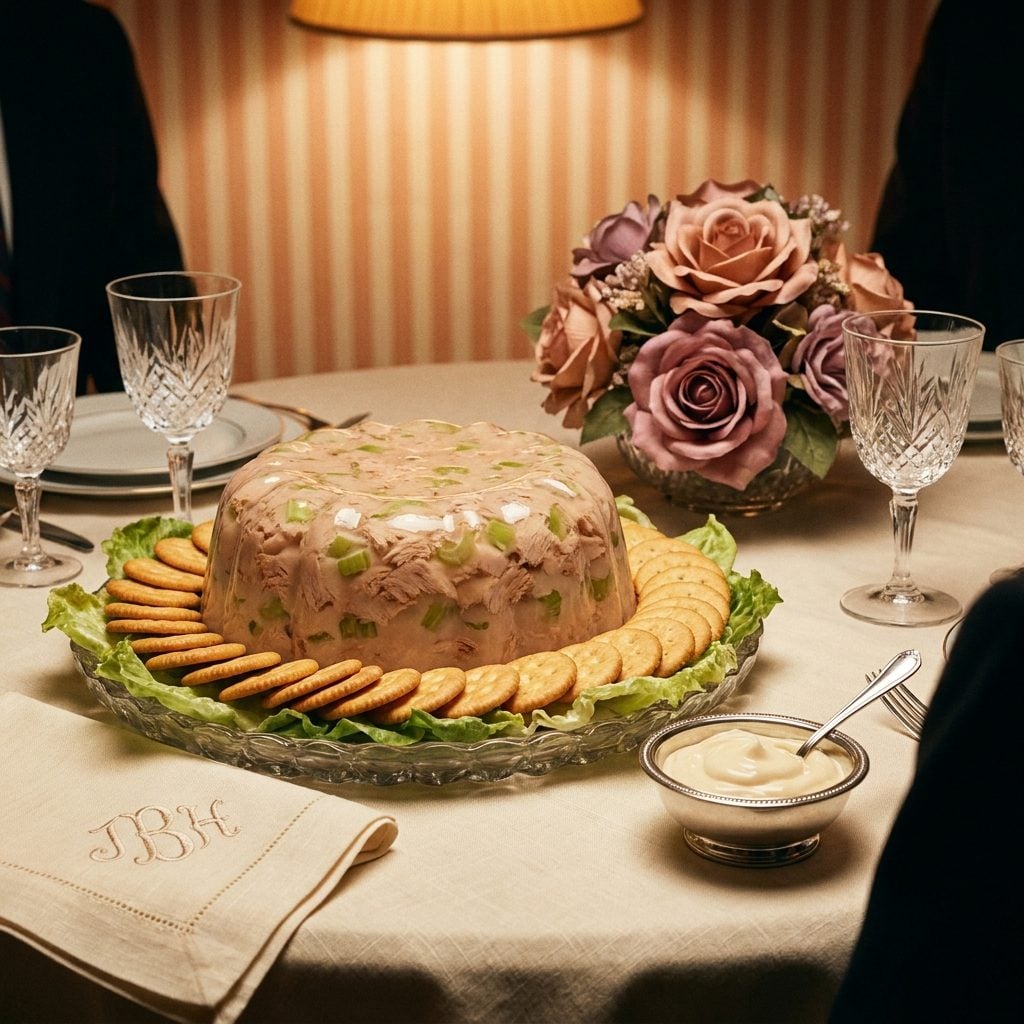
Cold. Wobbly. Studded with celery. Surrounded by crackers that were doing their best. The tuna mold arrived at the table having been unmolded from a Bundt pan or a ring mold, and the fact that it held its shape was treated as a culinary achievement rather than a warning sign.
The gelatin was usually Knox unflavored, mixed with cream cheese and canned tuna and enough mayonnaise to qualify as a structural material. It was served chilled, which was both its greatest virtue and its most fundamental problem. Someone always went back for seconds. That’s the part that’s hardest to explain.
Spam With Pineapple and a Cherry on Top, Plated for Company
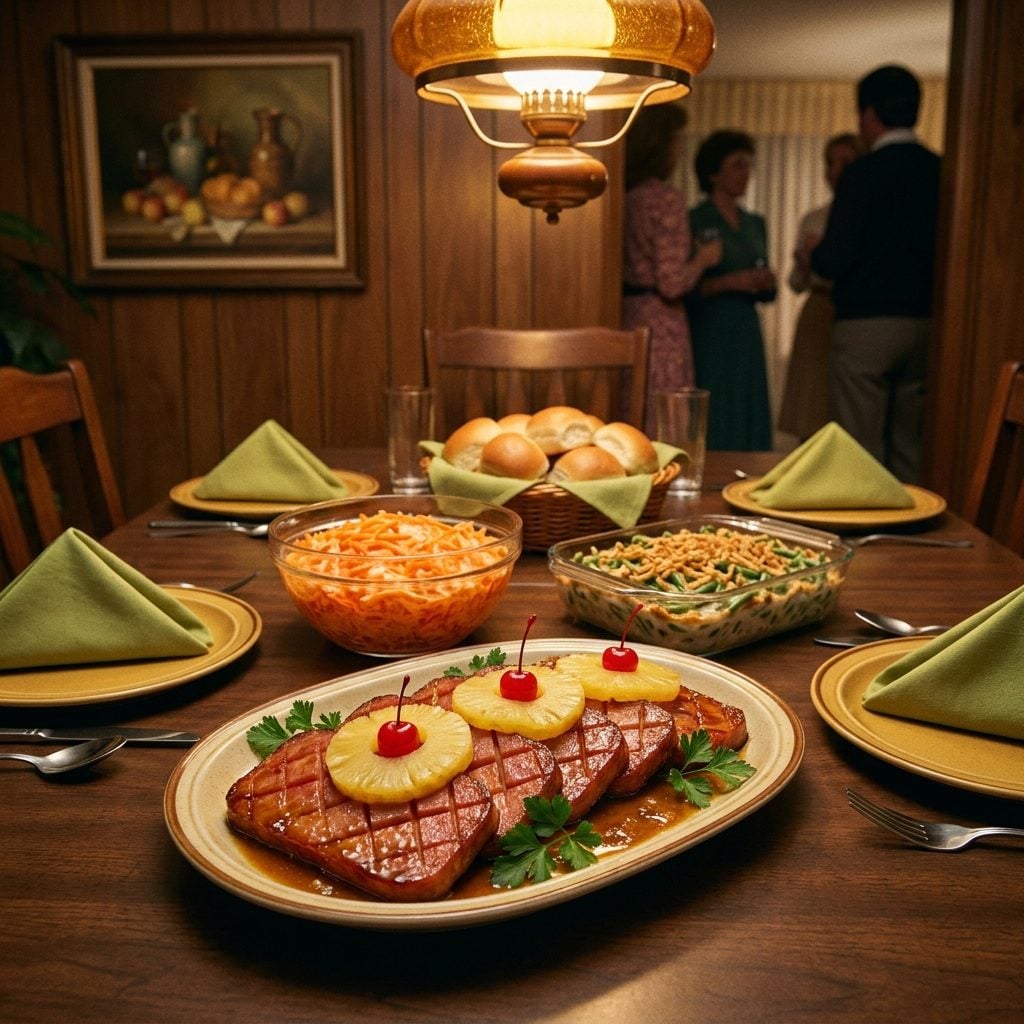
This dish had the confidence of a crown roast. Spam, sliced thick, scored in diamonds, glazed with brown sugar and dry mustard, topped with a canned pineapple ring and a maraschino cherry so red it looked digitally enhanced. It came to the table on the platter usually reserved for Easter ham, because that is essentially what the host believed this was.
The Hawaiian influence was aspirational. Pineapple on anything in the 1980s signaled sophistication, an awareness of the world beyond the county line. The cherry was simply decoration, though someone always ate it first and felt slightly guilty about it.
The Brussels Sprouts That Had Been Boiled Past the Point of Any Reasonable Return
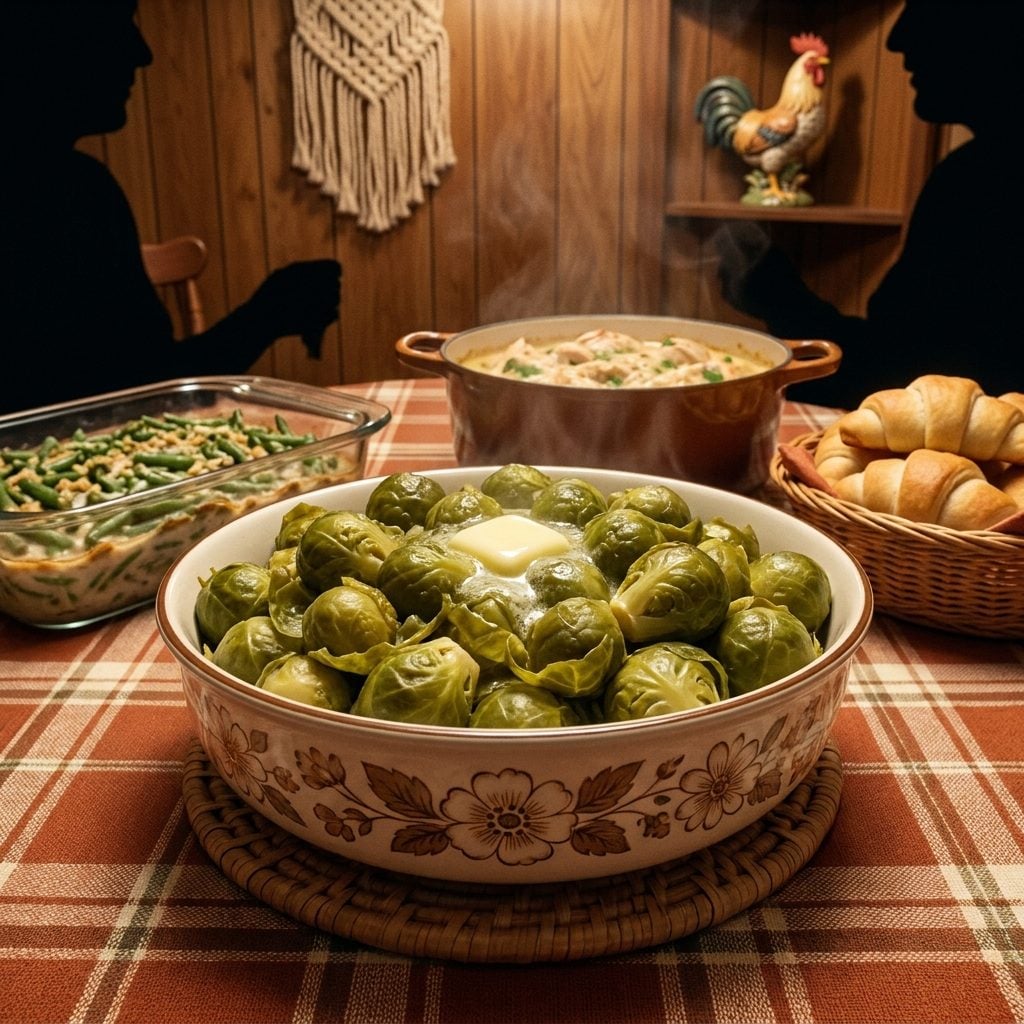
Army green. Soft enough to cut with a spoon. Releasing a sulfur compound into the dining room that suggested something structural had gone wrong in the walls. These were not roasted, not halved, not tossed in anything interesting. They were boiled in a pot of water with no salt, for a period of time that would concern a scientist, and then transferred to the good serving bowl with a pad of margarine on top.
The host considered this a vegetable. Technically, they were not wrong. But whatever nutritional and textural virtue a Brussels sprout possesses had evacuated the premises sometime around the forty-minute mark. Everyone took two and moved the rest under a crescent roll.
Instant Mashed Potatoes Piped Into Decorative Roses Because Presentation Mattered
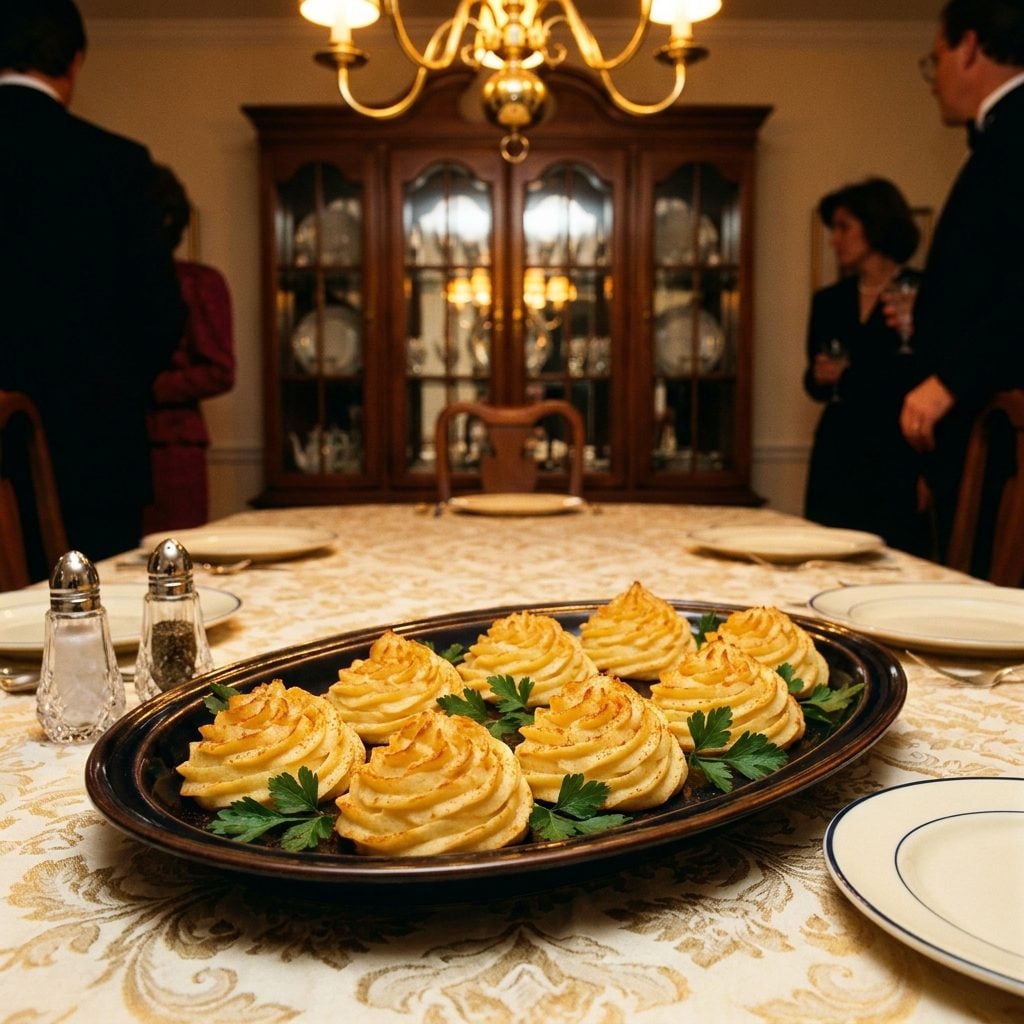
They came from a box. Everyone at the table knew they came from a box. And still, someone had loaded them into a pastry bag, fitted it with a star tip, and piped eight identical rosettes onto the serving platter with a steadiness of hand that deserved genuine respect.
The paprika dusting was not optional. Neither was the broiler pass that browned the tips just slightly. This was effort, applied to a product that required only boiling water, and the result was something that looked, if you didn’t look closely, like it belonged in a French bistro. Presentation mattered in 1983. It still does, honestly. The potatoes were just different.
Cocktail Meatballs Simmered in Grape Jelly and Ketchup
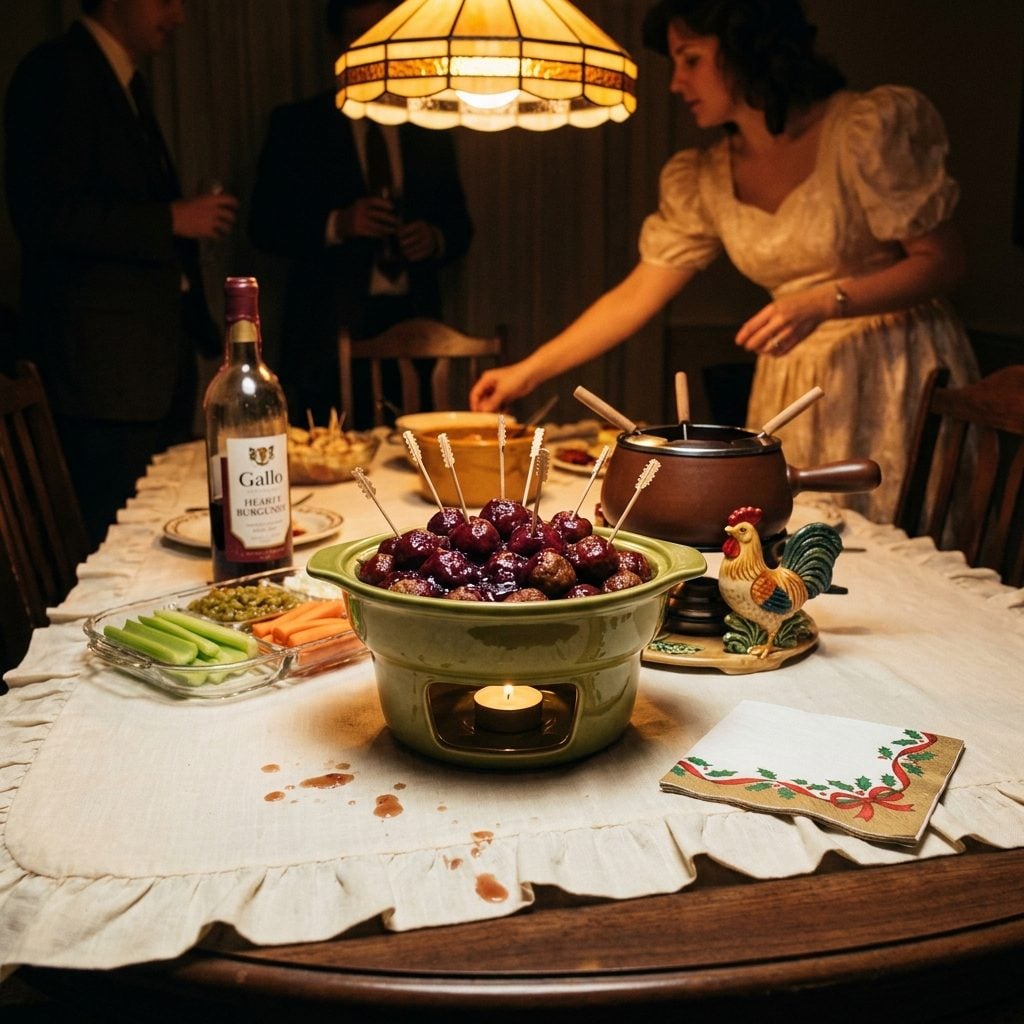
Nobody warned us. There was no intervention, no moment where a responsible adult stood up and said: wait, grape jelly? Instead, every party host from 1982 to 1991 just heated up a can of Ocean Spray and a squeeze bottle of Heinz in a slow cooker and called it entertaining. And we ate them. Every single one.
The thing is, they were genuinely good. That sweet-tangy glaze clung to each meatball like a lacquer, and the toothpick made it feel fancy in a way that was completely delusional and also completely correct for the era. The slow cooker bubbled on the buffet table all night. People went back three times and acted surprised at themselves.
Canned Peach Halves Stuffed with Cottage Cheese on a Bed of Iceberg
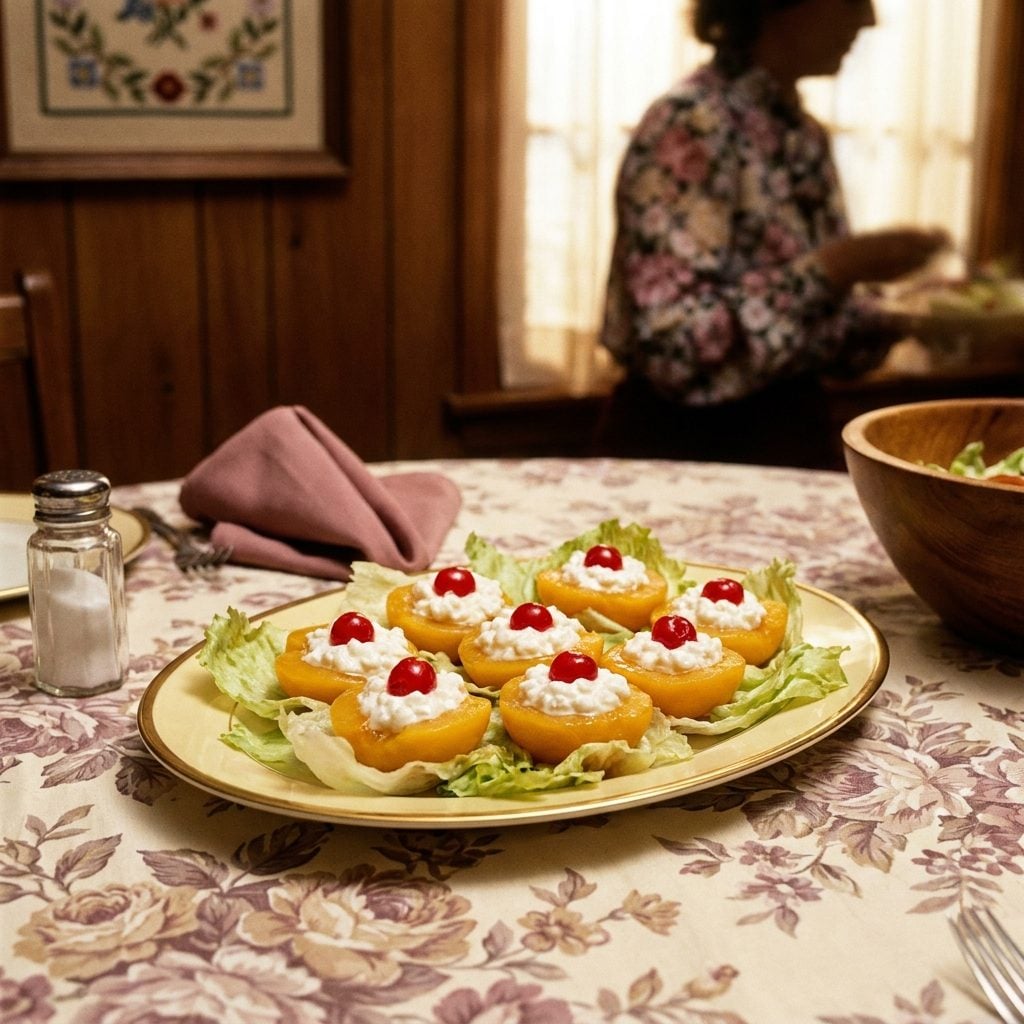
This was considered a salad. That word was doing a tremendous amount of heavy lifting in the 1980s.
The peach half came from a can, Del Monte, always Del Monte, and it sat in its own syrup long enough to take on a faint metallic sweetness that no amount of cottage cheese could disguise. The iceberg underneath went limp within twenty minutes. The maraschino cherry on top was mandatory. This was the era when “fruit plus dairy on lettuce” counted as a light first course, and everyone went along with it because the bar for produce presentation was basically at floor level.
The Glazed Ham Armored in Whole Cloves and Canned Cherries
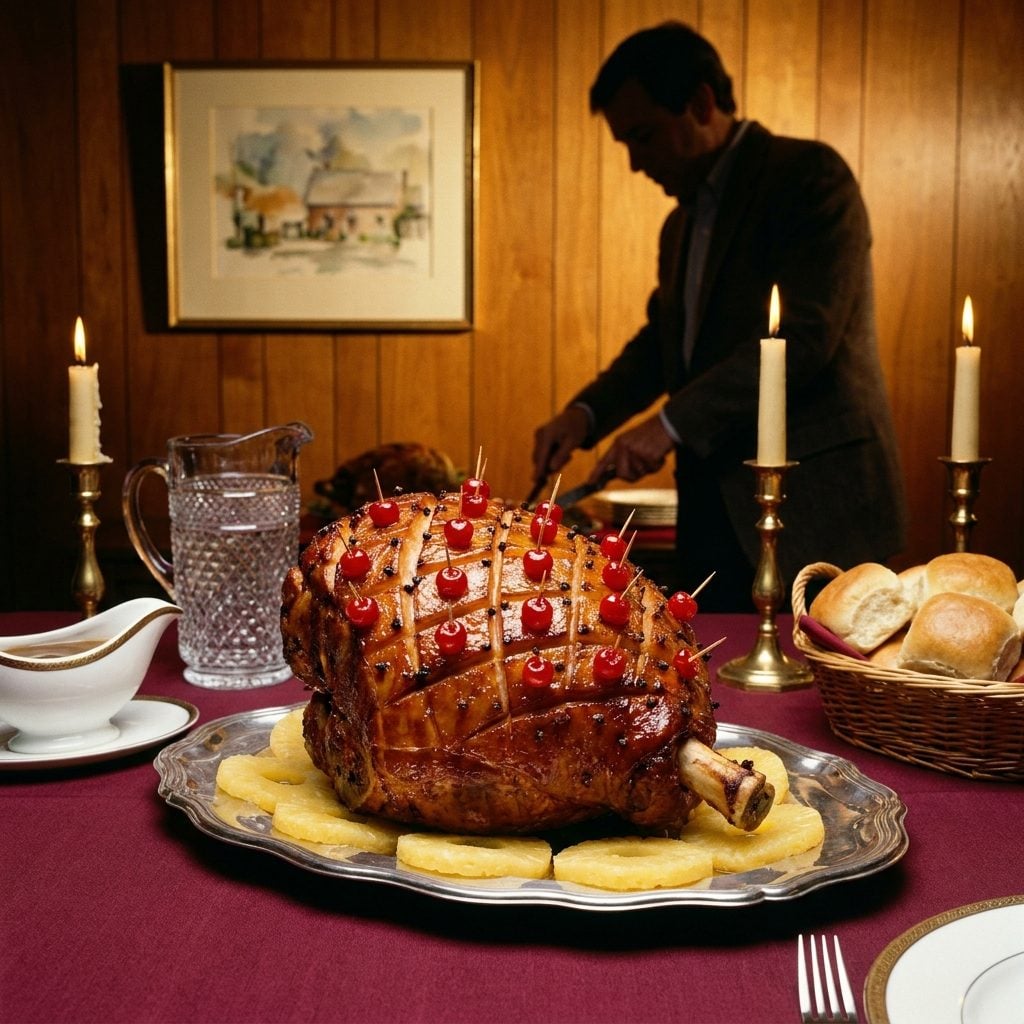
It entered the room like a dignitary. Carried on its silver platter, studded with cloves in a diamond grid that took actual geometric effort, cherries pinned at every intersection like decorations on a general’s uniform. This was the centerpiece. This was what the whole party was about.
The glaze was brown sugar and something from a jar, apricot preserves, maybe, or a packet that came with the ham itself. It didn’t matter. What mattered was the presentation, and in 1985, a ham dressed this way was the culinary equivalent of a floral centerpiece and a hostess gift combined.
The cloves were, of course, inedible. Nobody ate the cloves. They just sort of… absorbed into the experience.
Creamed Chipped Beef Ladled Over Toast Points at 8 PM
Would you like to save this?
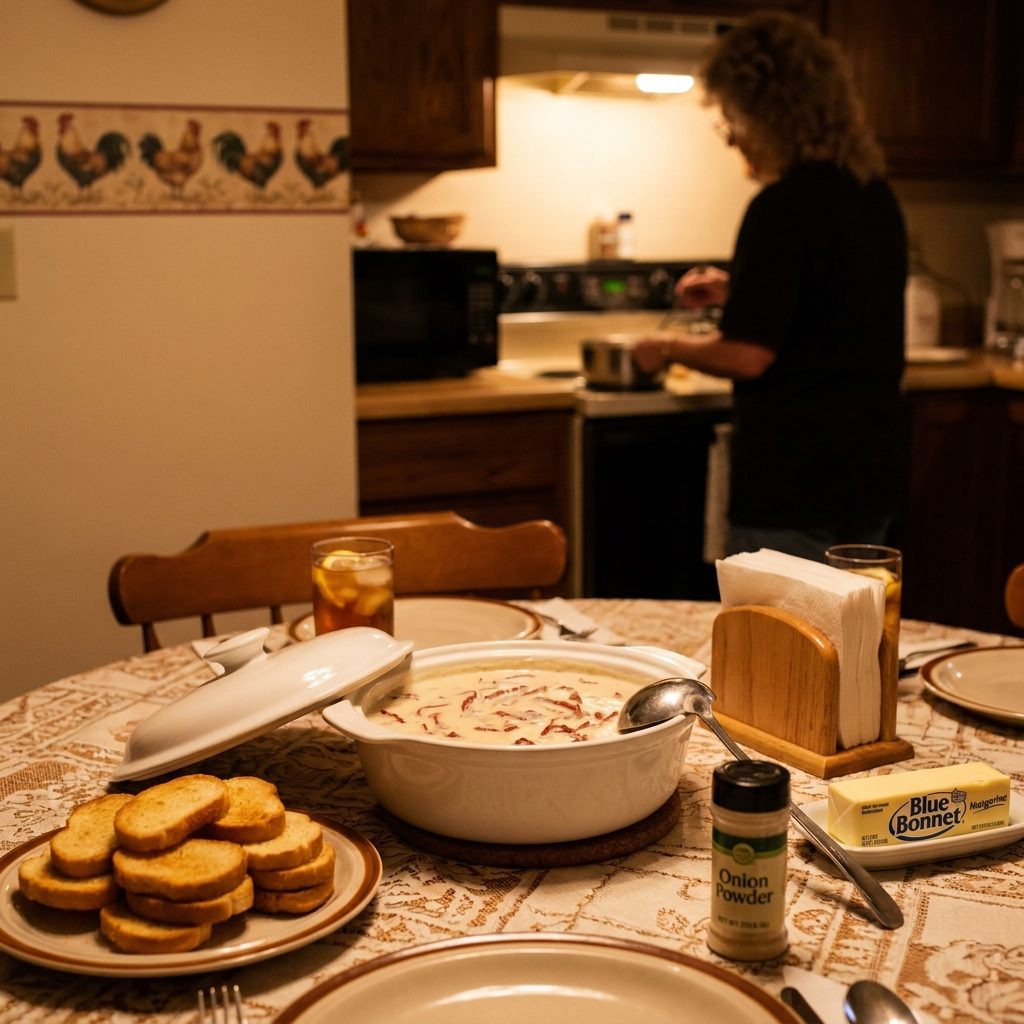
Creamed chipped beef had already had its moment, it was military mess-hall food from two wars back, but somehow it survived into the Reagan era as a dinner-party offering, served over toast triangles with complete conviction. The bechamel was thick. The beef was the kind that came in a glass jar and looked slightly alarming until it hit the sauce.
The toast points were key. Not toast. Toast points. The diagonal cut elevated the entire thing into something that felt intentional rather than desperate, and in the 1980s, that was enough.
Shrimp Cocktail Ringing a Bowl of Thousand Island Dressing Instead of Cocktail Sauce
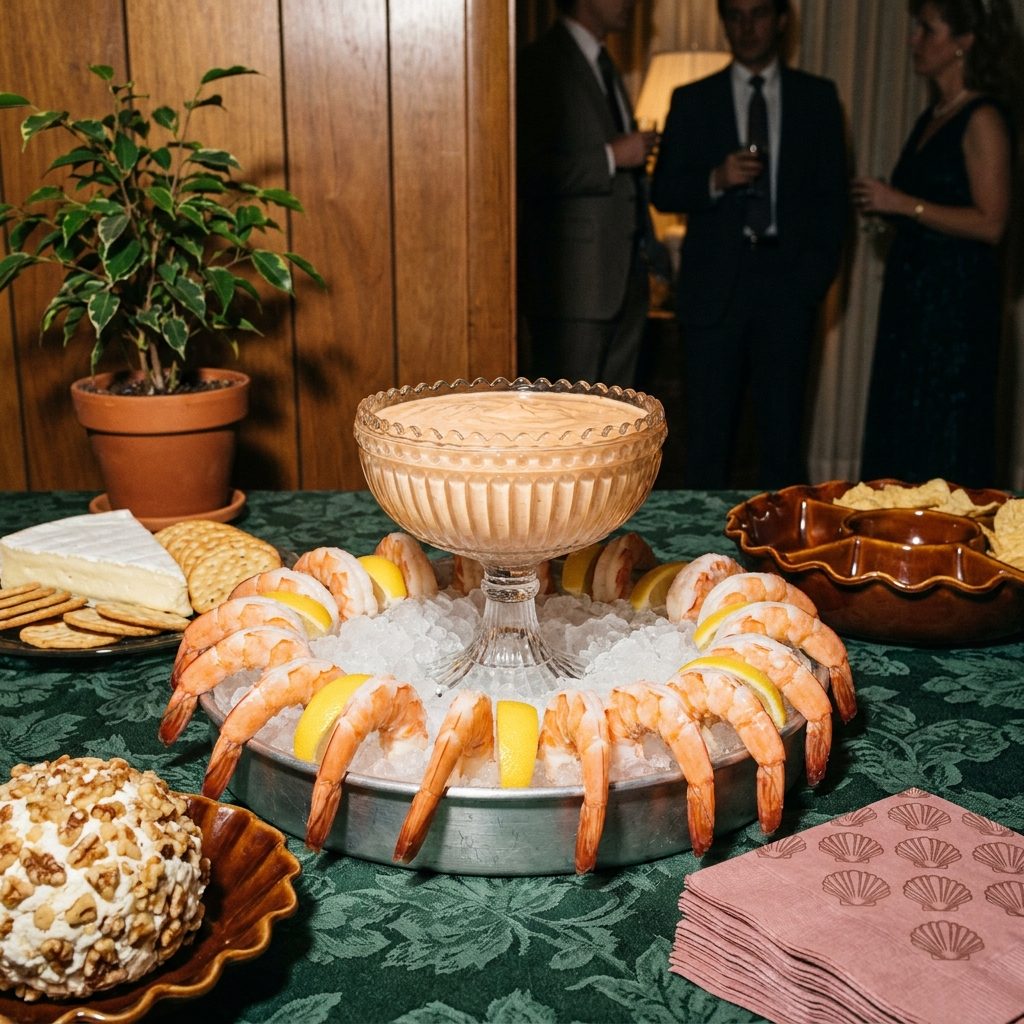
Shrimp cocktail was the status item. Putting it out meant you had arrived, financially and socially. The shrimp hung over the rim of the bowl in that satisfying wheel pattern, and guests immediately knew this was not a potluck. This was a dinner party.
The Thousand Island substitution for proper cocktail sauce remains unexplained by history. It was sweeter, pinker, and had relish in it, which raised questions nobody asked at the time. The shrimp didn’t seem to mind. Neither did anyone else.
Jell-O Salad with Shredded Carrots, Raisins, and the Confidence of a Casserole
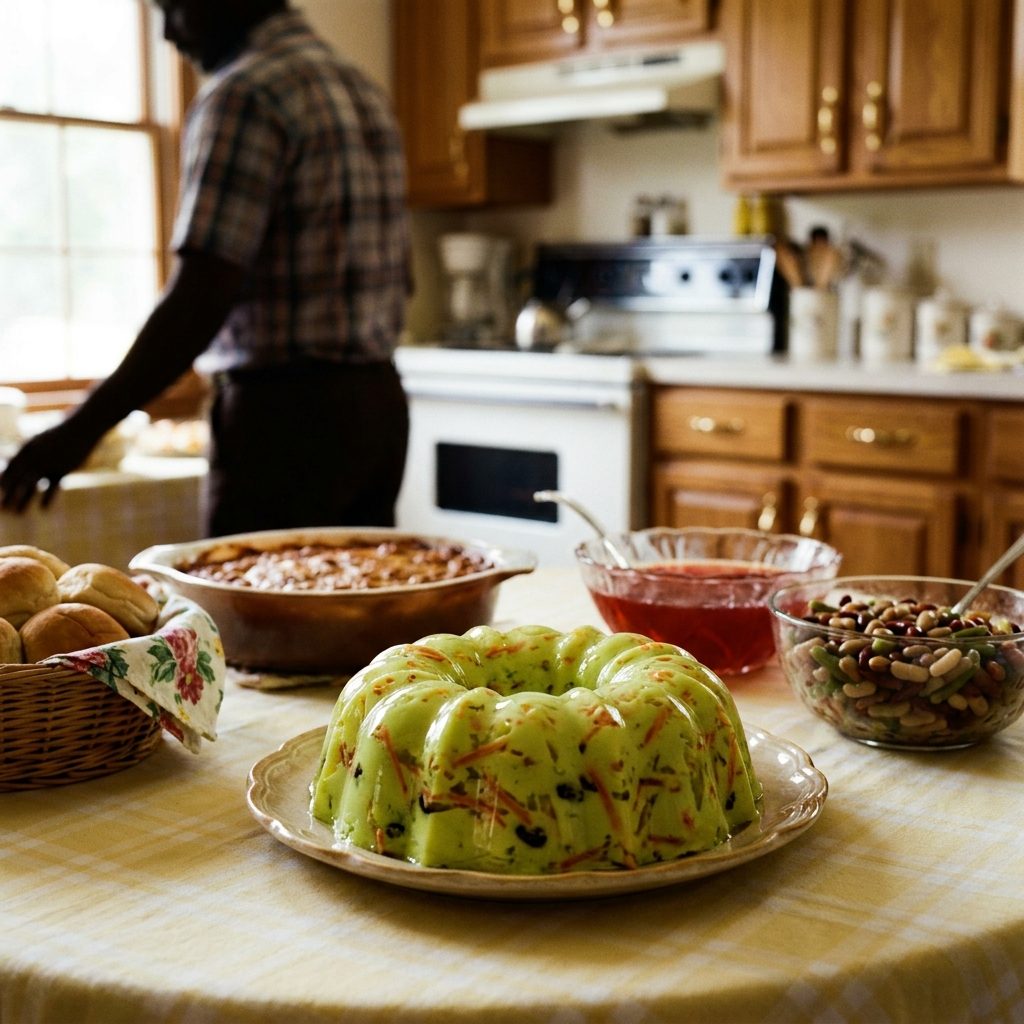
The mold shape was half the point. A bundt Jell-O salad that released cleanly onto its plate was a technical achievement, and the host knew it. It wobbled with quiet pride.
Inside that lime-green gelatin: shredded carrots (raw), raisins (inexplicably), sometimes crushed pineapple for moisture and a certain tropical optimism. It was served as a salad without apology. At some tables it sat between the green bean casserole and the dinner rolls as if this were a completely natural place for suspended fruit-and-vegetable gelatin to be.
I cannot tell you it was good. I can tell you it was always the first thing to be discussed afterward, and somehow that made it the most memorable thing on the table.
Stuffed Celery Loaded with That Fluorescent Orange Cheese Spread in the Foil Tub
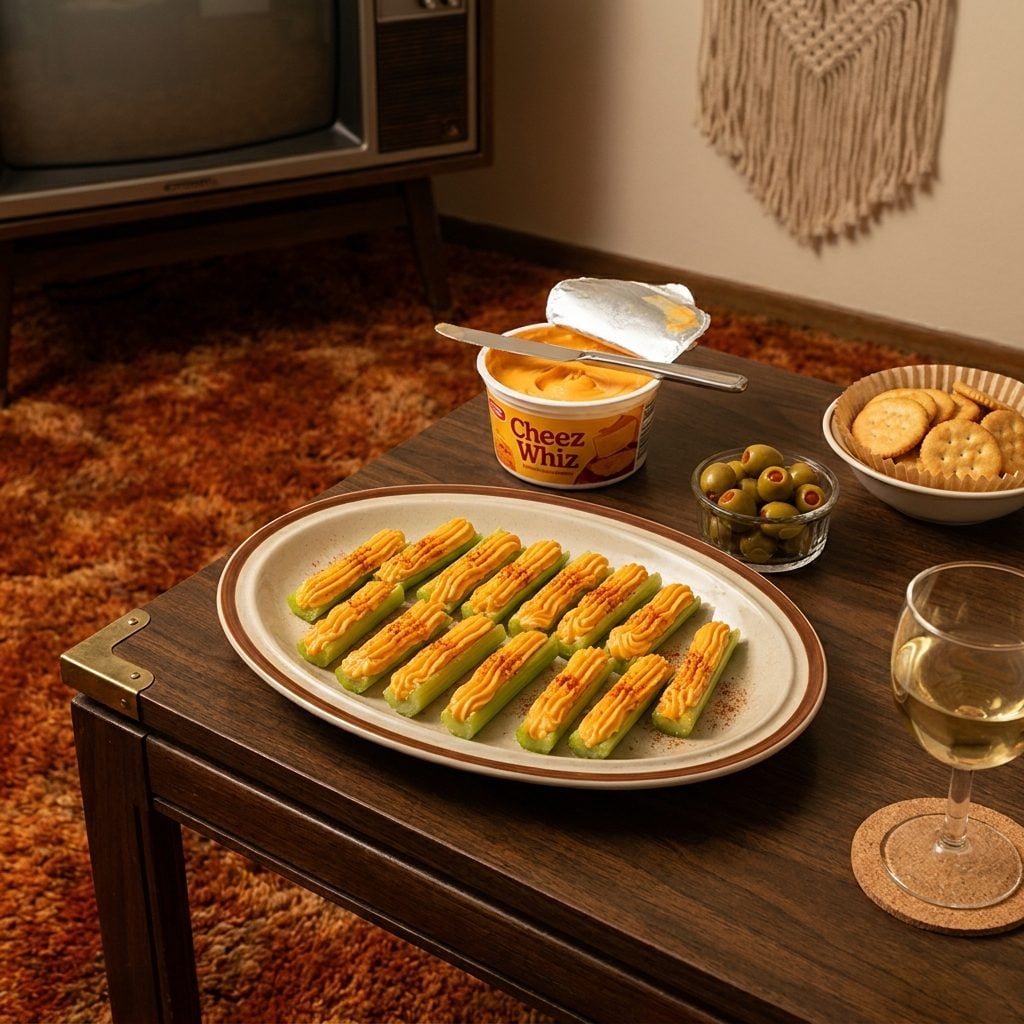
The celery was the vessel. The cheese was the reason. That fluorescent orange spread came in a foil tub with a plastic lid, and it was piped or spooned into the celery’s hollow with whatever level of care the host was willing to apply that evening. Sometimes there was a paprika dusting on top, which was the 1980s equivalent of a microherb garnish.
Wispride, Kraft Cracker Barrel, or plain old Cheez Whiz: the brand didn’t matter. The color did. That particular shade of processed orange sat on a white serving dish and glowed under incandescent light like a small, edible beacon. You ate four pieces before dinner without thinking about it, and then you weren’t hungry, and that was fine.
Deviled Eggs That Had Been Sweating Under Plastic Wrap Since 3 in the Afternoon
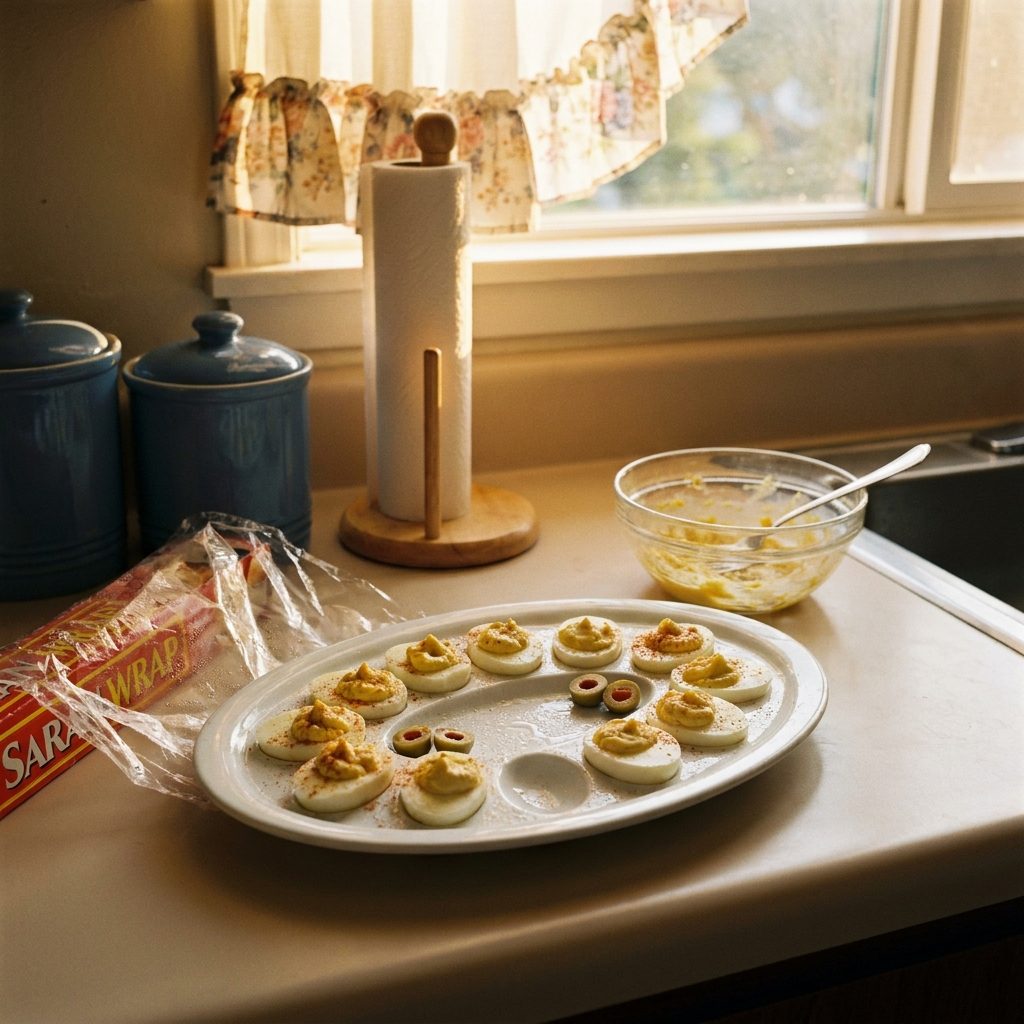
Six hours under plastic wrap was standard. Nobody questioned the timeline. The deviled eggs were made after lunch because that was when you had time, and the party was at seven, and so they sat in the refrigerator developing a light skin on the filling and a faint condensation ring on the platter.
The paprika was non-negotiable. Not smoked paprika, just paprika, the orange kind from a McCormick tin that had been in the spice cabinet since the Carter administration. It didn’t add flavor. It added effort, and that was its entire purpose.
Every gathering had a deviled egg person, and that person’s eggs disappeared first, every time, no matter what else was on the table. Some traditions survive their era. This one absolutely should.
Canned Mixed Vegetables Folded Into Absolutely Every Casserole Known to Man
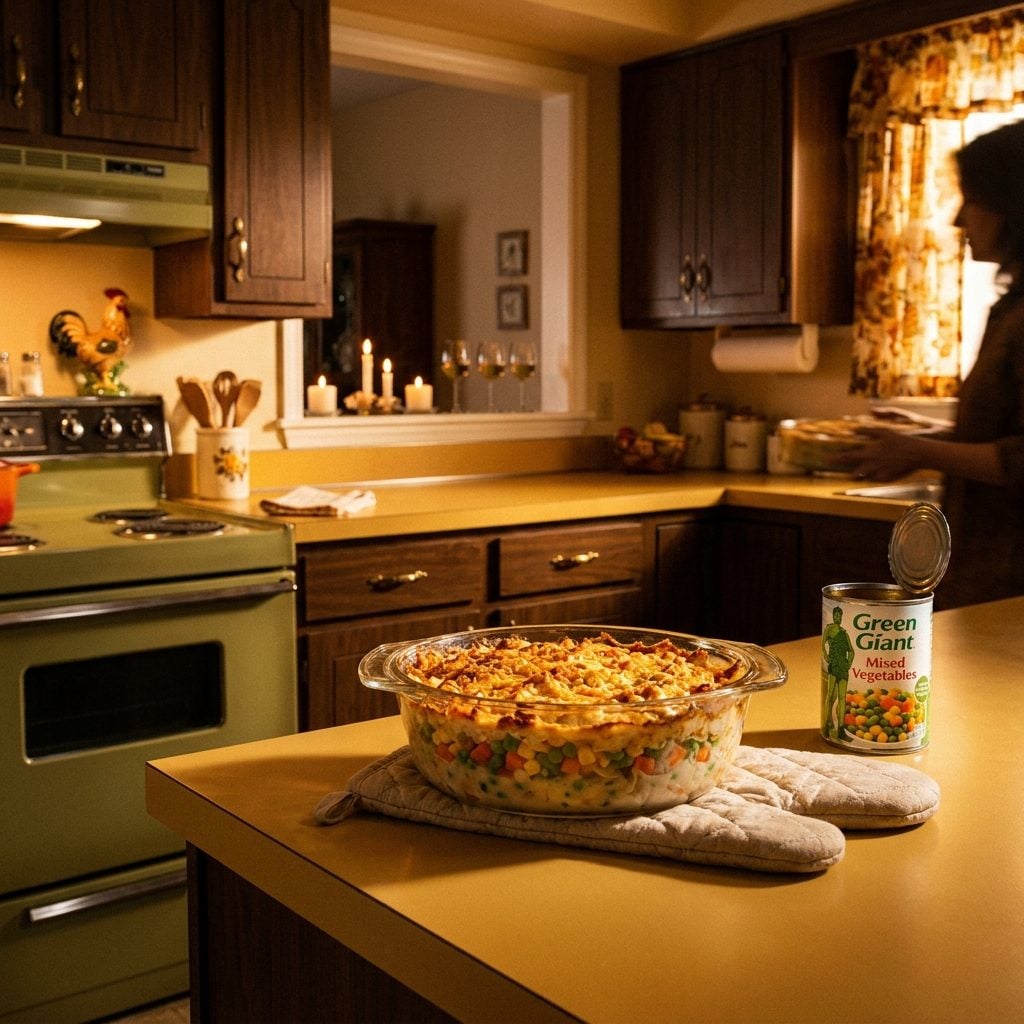
The can opener was the most-used appliance in every kitchen that hosted a 1980s dinner party, and the evidence ended up suspended in cream-of-mushroom soup. Canned mixed vegetables, that specific medley of diced carrots, limp peas, corn kernels, and green beans that all somehow tasted identical, got folded into tuna casseroles, chicken casseroles, rice casseroles, and at least one memorable dish that defied classification.
Nobody questioned it. The vegetables were technically vegetables. They counted. And if you drained them first, you were considered a serious cook.
Chicken à la King Poured Over Puff Pastry Shells Like It Was Fine Dining
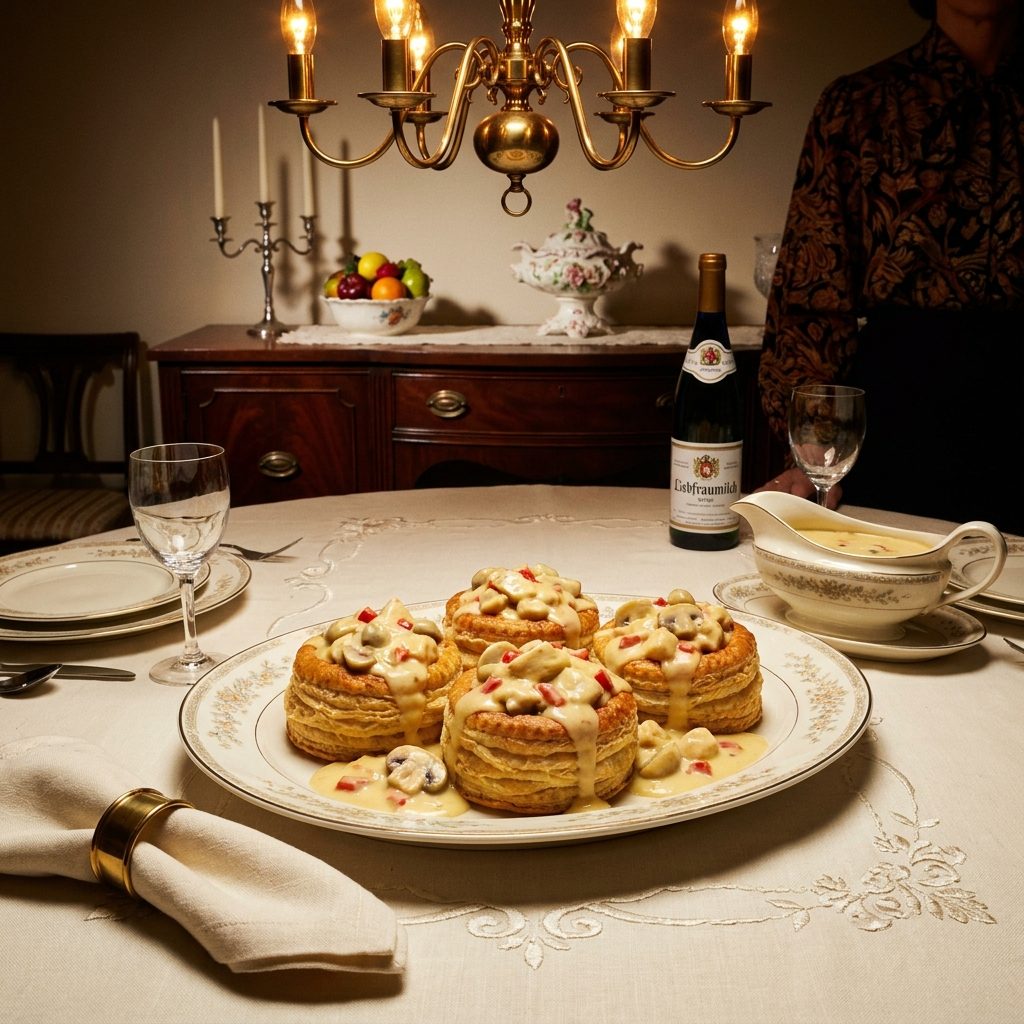
Chicken à la King was the dish that made home cooks feel like caterers. Ladled over a Pepperidge Farm puff pastry shell, those little gold cups that came frozen in a red box, it signaled occasion. The pimento was mandatory. The mushrooms were from a can. The sauce was essentially cream of chicken soup with ambition.
Guests always asked for the recipe. The answer involved a can opener and fifteen minutes of stirring, which the host would deliver with theatrical modesty.
Vienna Sausages Served Directly From the Tin, Stabbed With Toothpicks
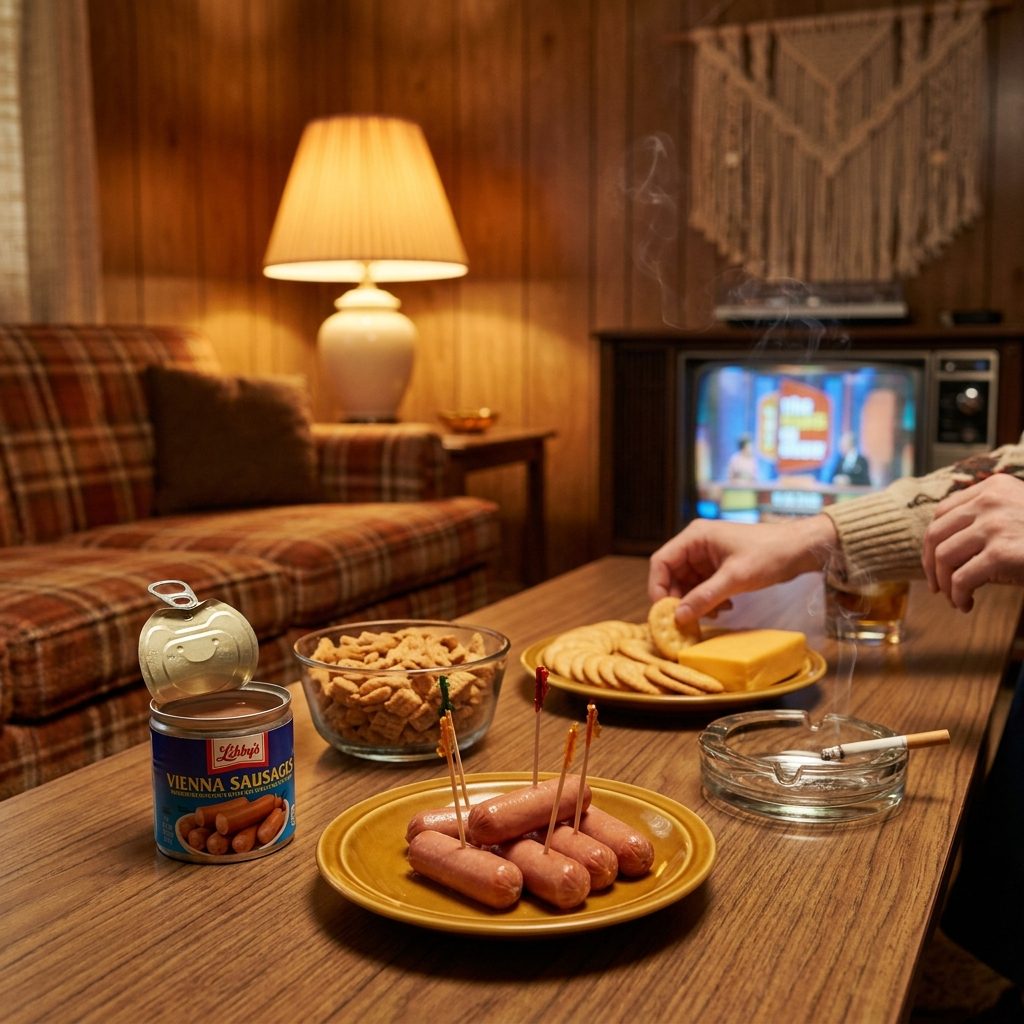
At some point in the 1980s, someone decided the tin itself was a serving vessel. There sat the Vienna sausages in their cloudy brine, a fistful of frilled toothpicks jammed into the top ones like tiny festive flags, placed next to the Velveeta and Chex Mix as if it were the most natural thing in the world.
Here’s what’s remarkable: no one thought this was beneath them. Vienna sausages at a cocktail hour were a perfectly acceptable act of hospitality. The bar was different then. The bar was, specifically, a can of sausages.
Corned Beef Molded Into a Ring Around a Pile of Canned Peas
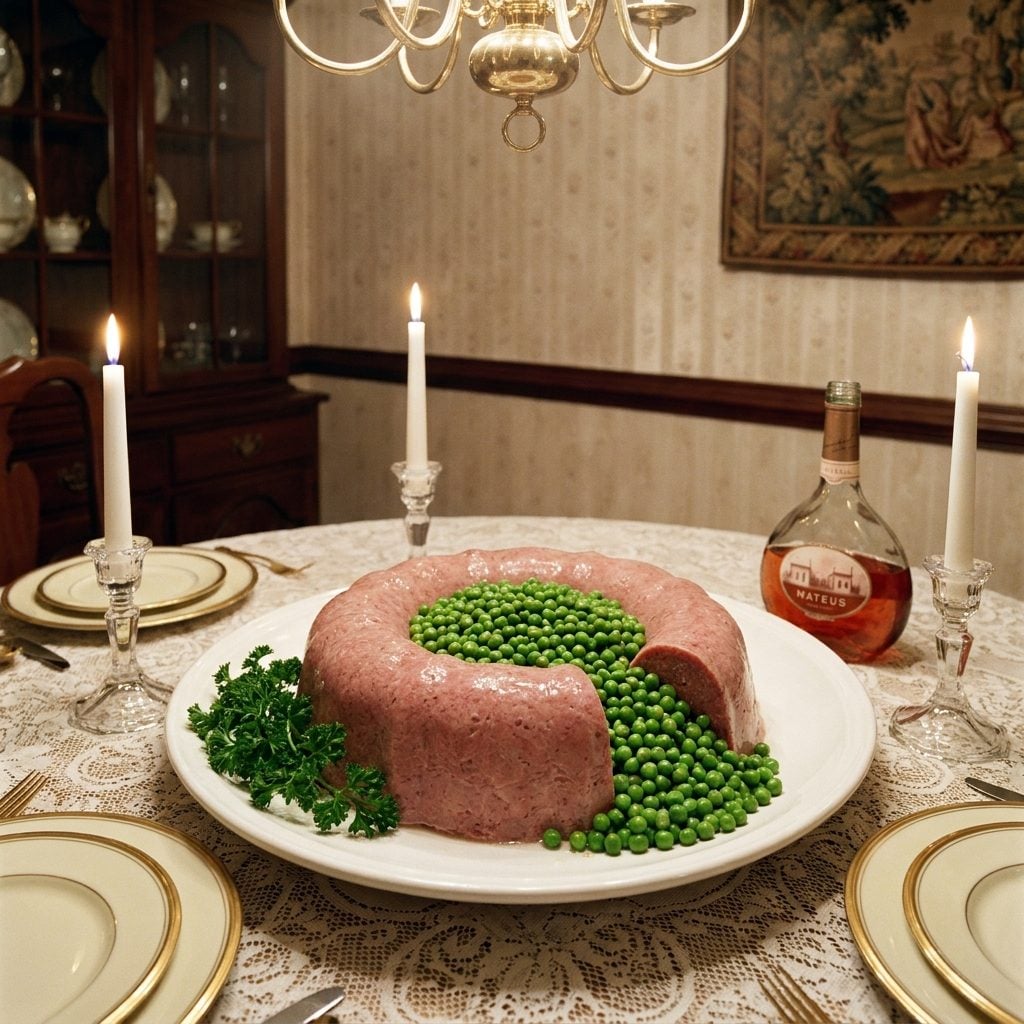
Gelatin molds and molded meat forms occupied an entire decade of dinner party presentation, and the corned beef ring was their unsettling peak. You pressed canned corned beef into a bundt pan, unmolded it onto a platter, and filled the center with drained canned peas. A ring of parsley went around the edge. You called it done.
The shape suggested effort. The ingredients suggested otherwise. And yet people genuinely loved this dish, the slightly gelatinous exterior, the dense salty interior, and would have been confused by any suggestion that it was strange.
“The shape suggested effort. The ingredients suggested otherwise.”
Swordfish Steaks Cooked Past the Point of No Return
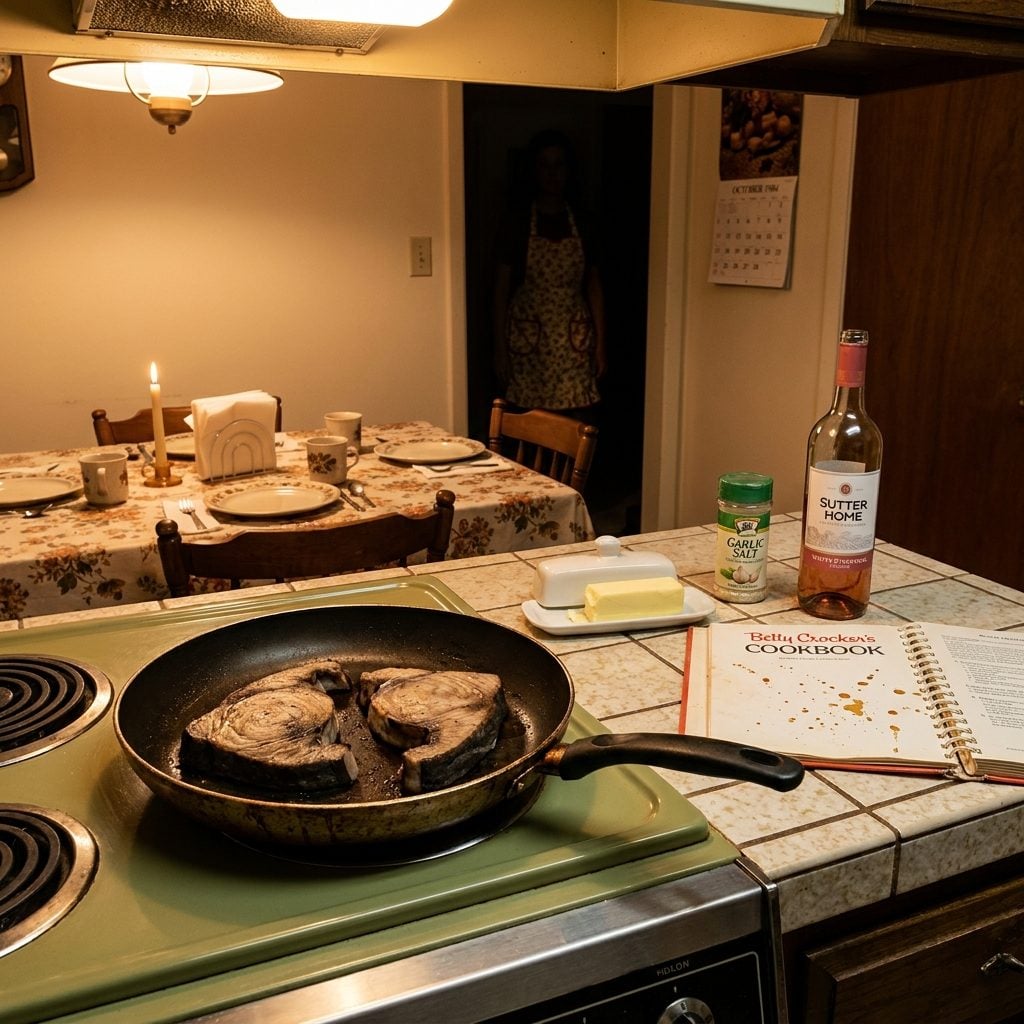
Swordfish was the prestige fish of the 1980s dinner party. It was expensive, it was substantial, it looked impressive in the pan. Unfortunately, the prevailing food safety wisdom of the era held that fish had to be cooked completely through, no translucency permitted, no moisture acceptable, no mercy.
The result was a gray, faintly rubbery slab with the texture of a slightly damp chalkboard eraser. Guests cut into it politely and asked for more wine. The host accepted this as a success. Nobody had food poisoning, which was apparently the entire rubric.
Seven-Layer Salad Drowning Under Two Inches of Mayonnaise and Bacon Bits
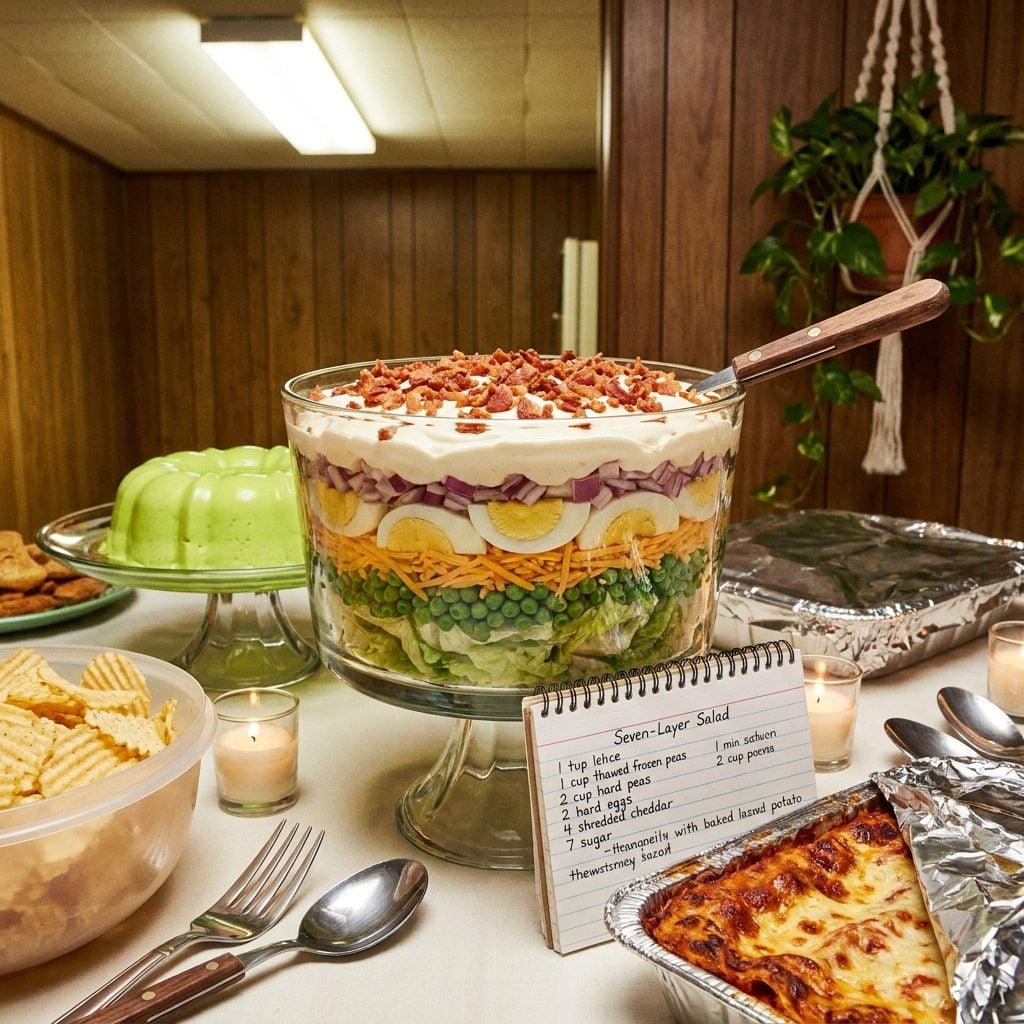
The genius of the seven-layer salad was that you could see every layer through the glass bowl, a neat cross-section of iceberg, peas, egg, onion, and cheese, right up until the moment someone spread a solid inch of Best Foods mayonnaise across the top like they were waterproofing a roof.
Then came the bacon bits. Then it sat in the refrigerator overnight, which was somehow considered an improvement.
Guests spooned through all that mayo to reach the vegetables beneath, and they did so without complaint, because this was considered a salad. A real salad. With vegetables in it.
The Giant Bowl of Ambrosia Salad Nobody Could Quite Define as a Food Group
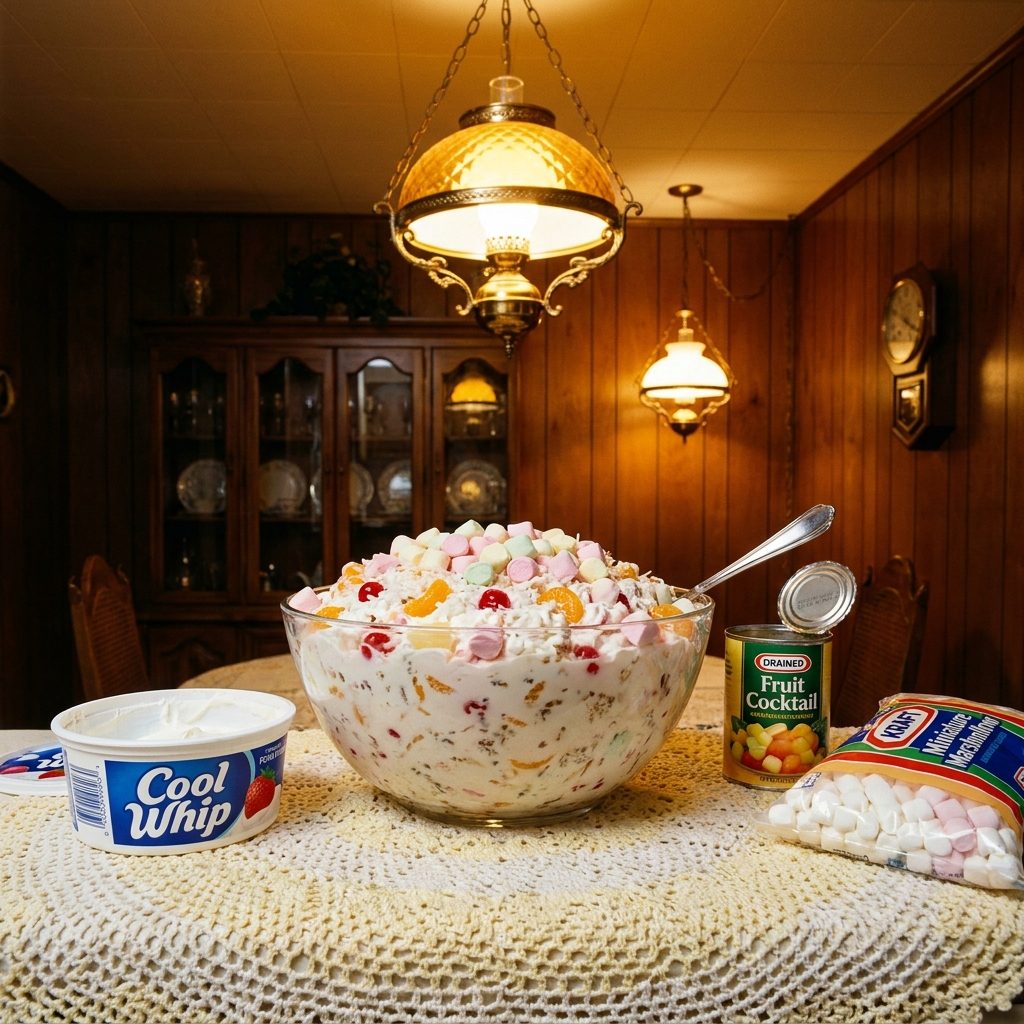
Was it a salad? Was it a dessert? Was it a side dish? Nobody knew. Nobody asked. The bowl just appeared at every gathering, white and fluffy and flecked with orange and cherry red, smelling faintly of coconut and aerosol dairy, and people helped themselves as though its category had been settled long ago.
The miniature marshmallows were non-negotiable. So was the Cool Whip. Recipes that substituted fresh whipped cream were considered experimental, possibly suspicious.
Frozen TV Dinners Transferred Onto China Plates So the Host Could Maintain a Pretense
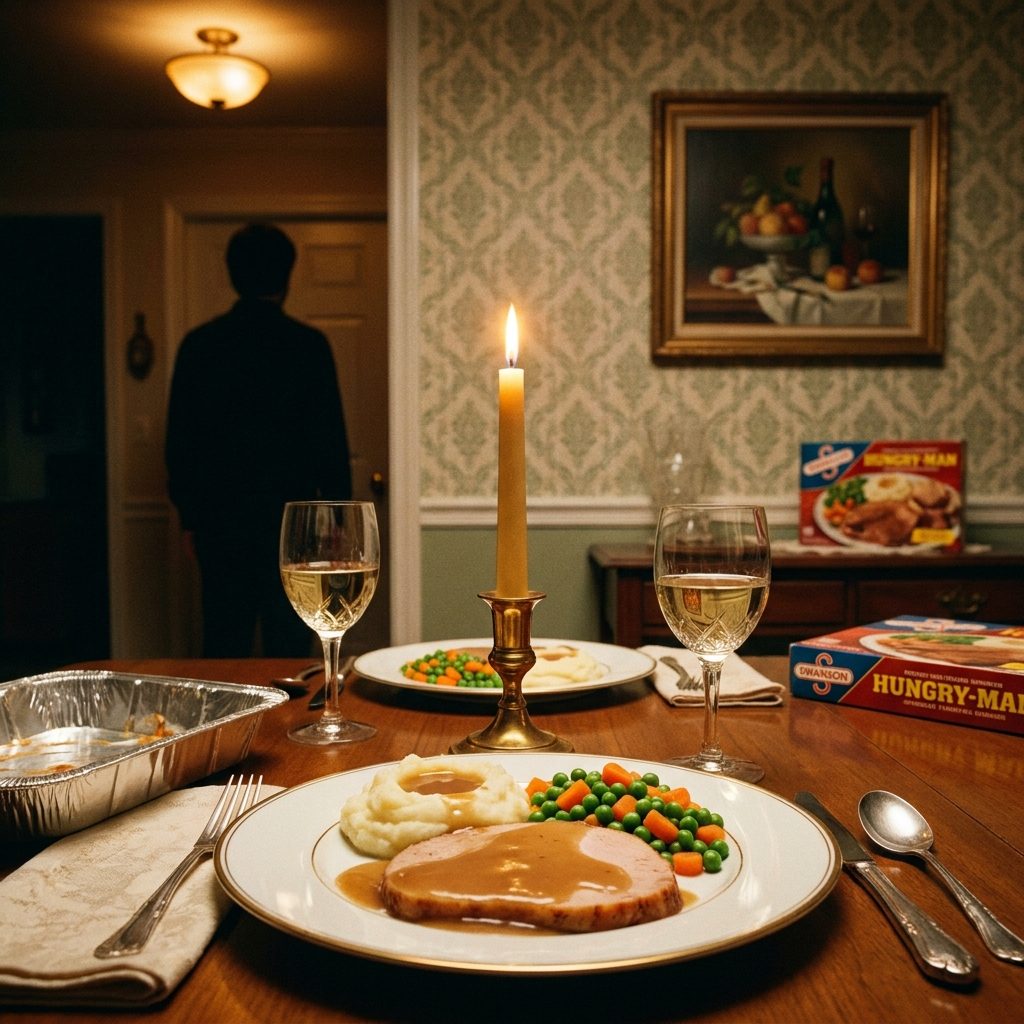
This happened. It happened at actual dinner parties hosted by actual adults who were trying. The Swanson tray would come out of the oven, and someone would carefully slide each compartment’s contents onto a china plate, the turkey slice, the little whipped potato dome with its gravy crater, the pile of peas, and carry it to the table with the composure of a person who had absolutely not done this.
The foil tray was always still visible somewhere. On the counter. In a stack by the sink. Guests understood the situation and said nothing, because the candles were lit and the wine was poured and that was more than enough.
Deep-Fried Smelt Served Whole, Heads On, Like This Was Completely Normal
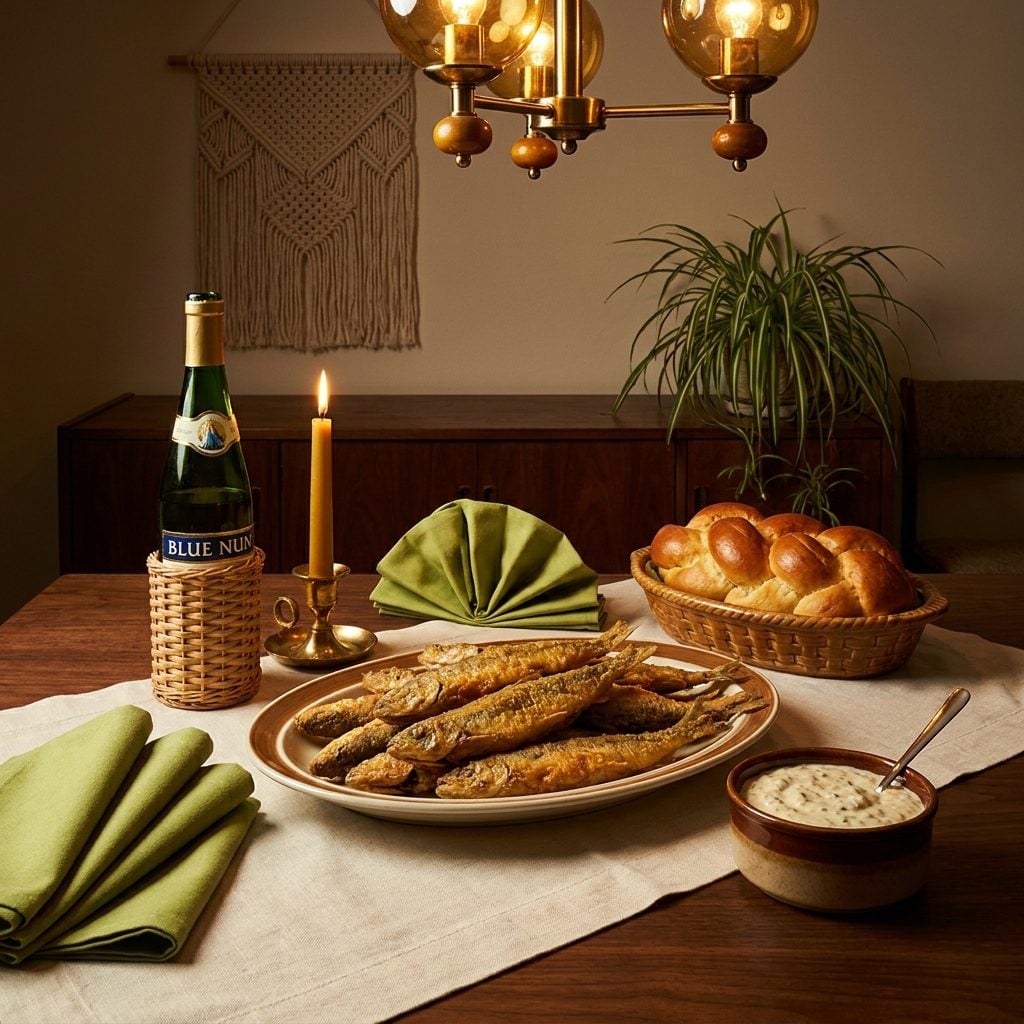
The host would set that platter down with genuine pride, and the guests would dig in without a second thought. Whole smelt, fried hard until the bones went soft enough to eat, tails curled from the oil, tiny heads pointing accusingly at whoever reached for them first. This was considered a treat. A specialty. Something you pulled out for company.
If you put this out at a dinner party today, half the table would quietly excuse themselves to get more wine and never come back. The other half would photograph the fish faces and post them. But in 1982, this was hospitality. This was effort. And honestly, the crunch on those little tails was not bad at all.
The Chip Dip That Was Just Lipton Onion Soup Mix Stirred Into Sour Cream (And Somehow Always Gone First)
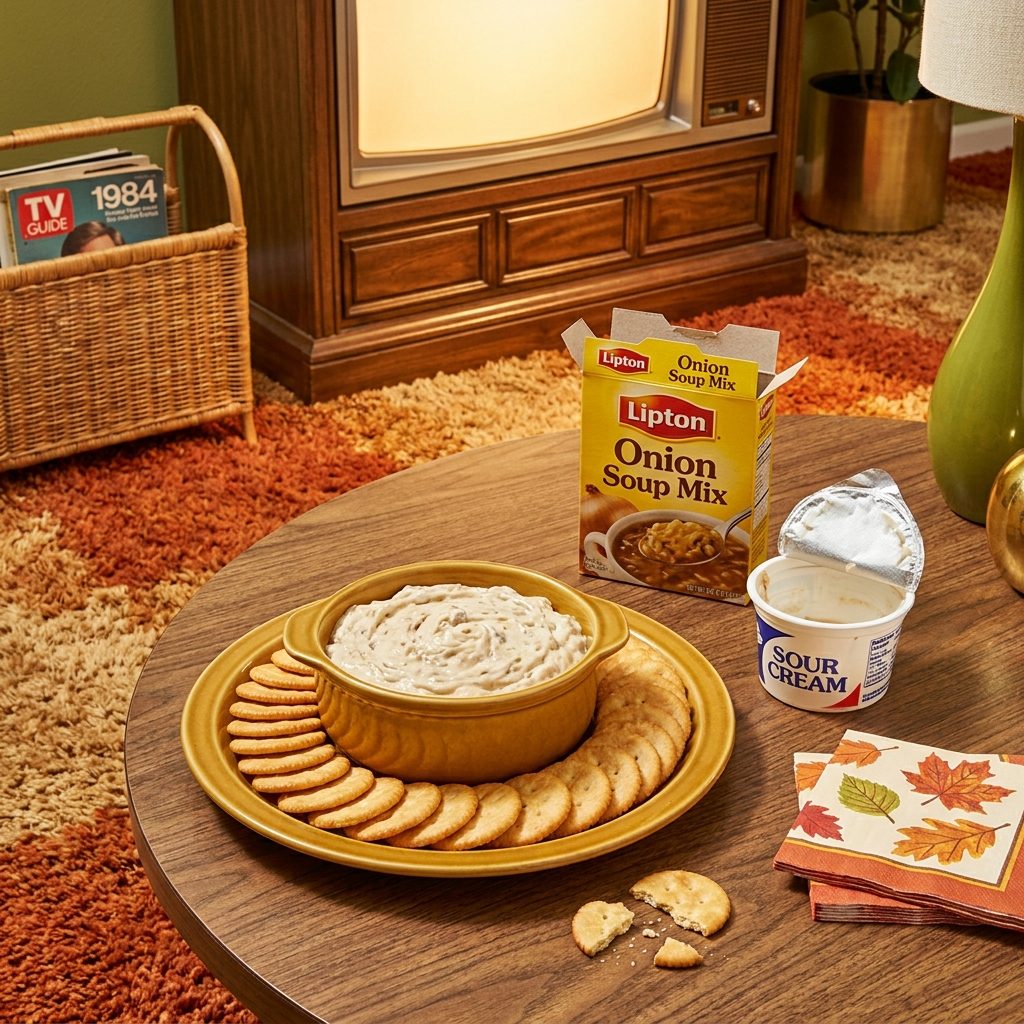
Two ingredients. Zero ambiguity. You stirred the packet into the sour cream, let it sit in the fridge for an hour if you remembered, put it in whatever ceramic bowl was closest to the front of the cabinet, and surrounded it with Ritz crackers that had been open since Tuesday. That was the dip. That was always the dip.
No one questioned it. No one asked about the sodium content or suggested swapping in Greek yogurt. You ate seventeen crackers before the other guests arrived and felt fine about it. The bowl was always the first thing to empty, which tells you everything you need to know about the 1980s and also about people.
Prune Whip in Crystal Goblets, Presented Like It Was the Grand Finale of a French Restaurant
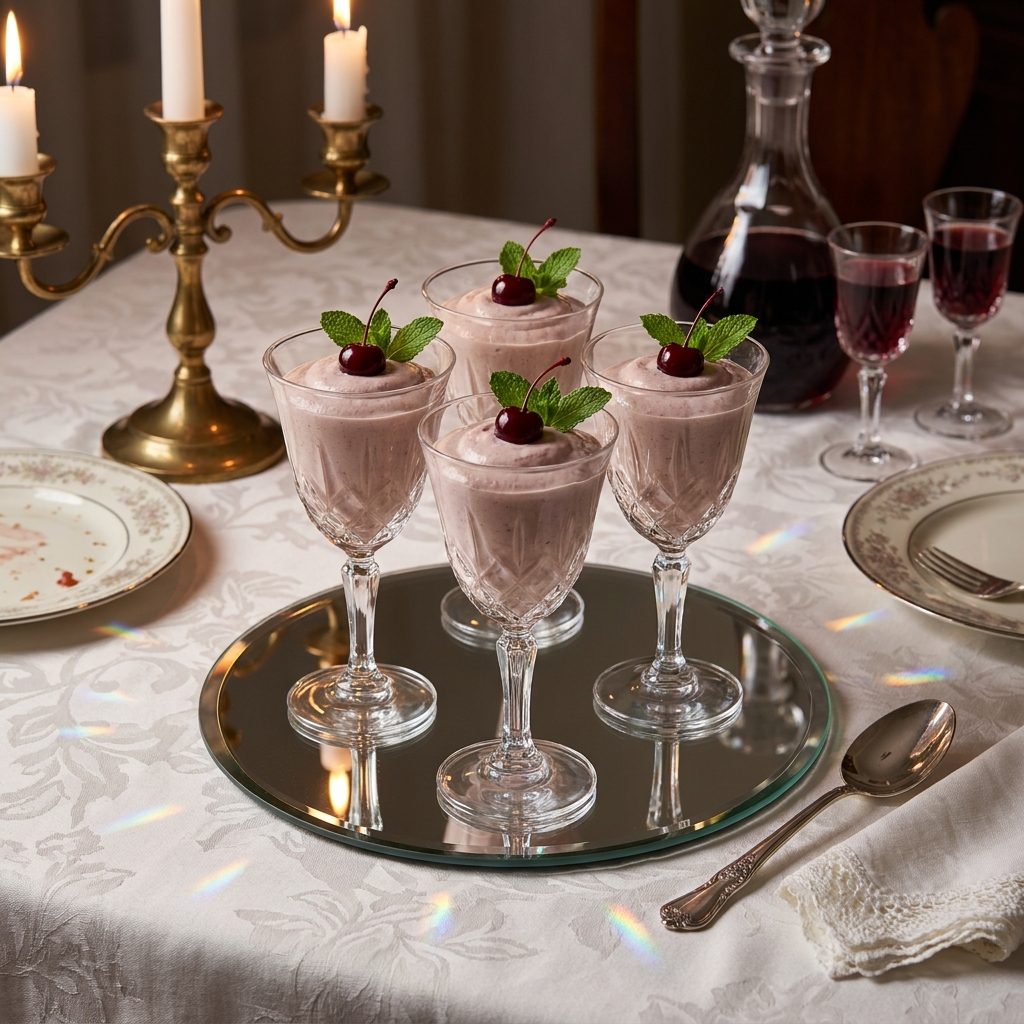
Here is what prune whip is: stewed prunes, whipped. Sometimes with egg whites folded in to make it feel lighter than it was. Served cold in your best stemware with a maraschino cherry on top, because presentation mattered and the cherry made it festive.
The hostess would bring these out from the kitchen with real ceremony, the tray held slightly aloft, the goblets catching the candlelight. Guests would murmur appreciatively. Someone would say it was very elegant. Someone else would ask for the recipe.
This was a dessert that existed in a sincere and earnest universe where prunes were a legitimate treat and crystal goblets made everything forgivable. That universe is gone. These goblets are now at every Goodwill in America, still waiting for their purpose.
Would you like to save this?
Please note that some of the imagery in this article were created with the aid of AI image generators.
