
Editor’s note: We aimed for 29 but only found 28 genuinely distinct items worth including. Tightening this up rather than padding with duplicates.
Would you like to save this?
The television went off at midnight and that was it. No scrolling, no streaming, no device to disappear into. The house just got quiet, and if you wanted to be entertained, you had to make it happen yourself. What followed was some of the best family time anyone ever had, mostly because no one had a choice. Here are 29 ways we filled those hours, and some of them we miss more than we’d like to admit.
The Sunday Afternoon Drive That Had No Destination and That Was Exactly the Point

Nobody had a plan. Dad would say ‘let’s just take a ride’ and somehow that was a complete sentence. The car smelled like vinyl and old french fries, the radio played whatever it wanted, and the only objective was watching things go by out the window.
In retrospect, those drives were doing something real. The family was together in a sealed metal box with nowhere to be and nothing to look at except each other and the scenery. Arguments dissolved after about fifteen minutes on the highway. By the time you turned around, everyone was slightly calmer than when they left.
Putting on a Bill Cosby or Bob Newhart Record and the Whole Living Room Losing It Together
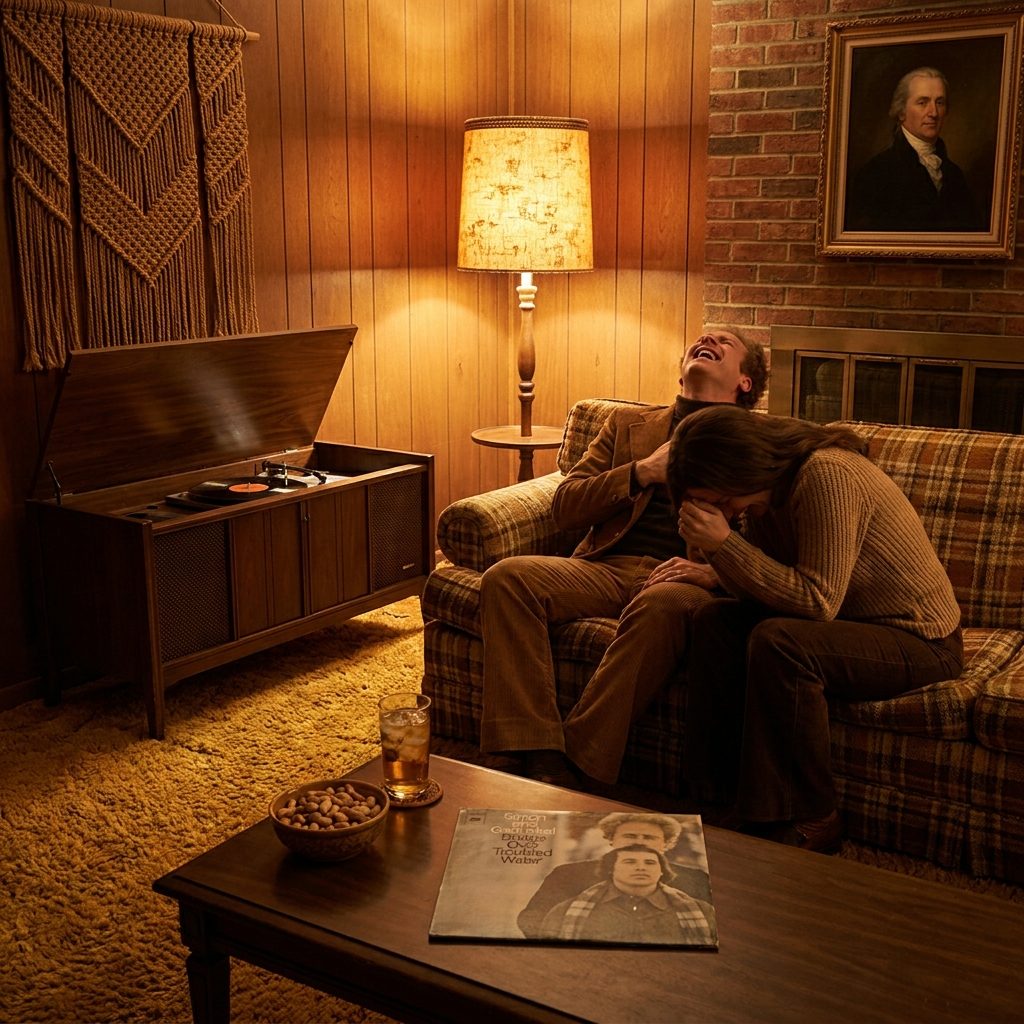
Comedy albums were a communal experience in a way nothing else quite was. You’d drop the needle on a Bill Cosby record and within thirty seconds the whole room was already grinning because they knew what was coming.
The funny thing is, everyone had heard the bits before. That was part of it. The anticipation was half the joke. Dad would start laughing before the punchline landed, which made Mom laugh at Dad, which made the kids laugh at both of them. The record was almost beside the point.
Reading the Sunday Funnies Out Loud While Someone Else Was Still Trying to Read Them Silently
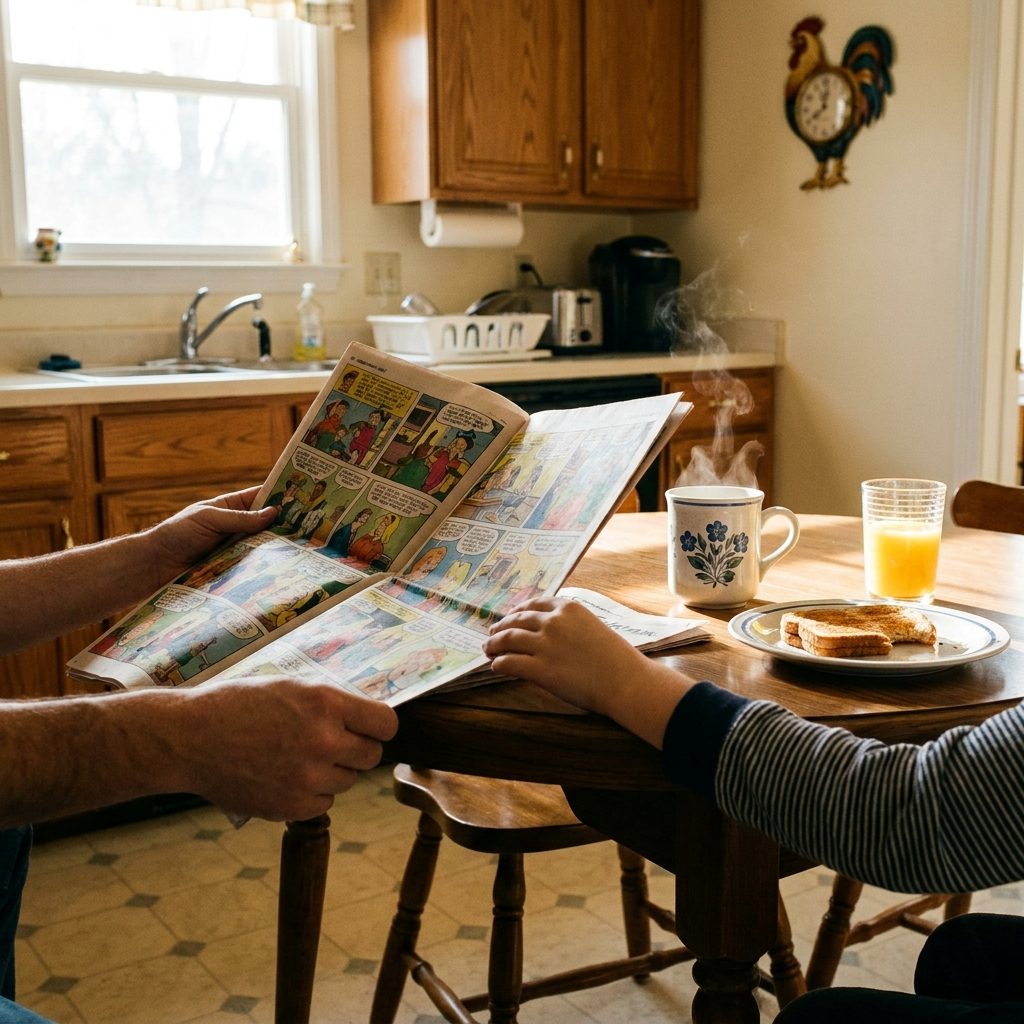
Someone always read Garfield out loud even though everyone in the room was perfectly capable of reading it themselves. That was fine. That was the ritual.
The Sunday comics section was enormous, almost architectural, folded into quarters and then quarters again, smudging orange ink on your fingers. Everybody had a strip they went to first. Somebody’s dad always lingered over the political cartoon looking serious, which struck everyone else as deeply strange given that Peanuts was right there.
The Aluminum Foil Antenna Situation, Which Was Both Ridiculous and Completely Serious
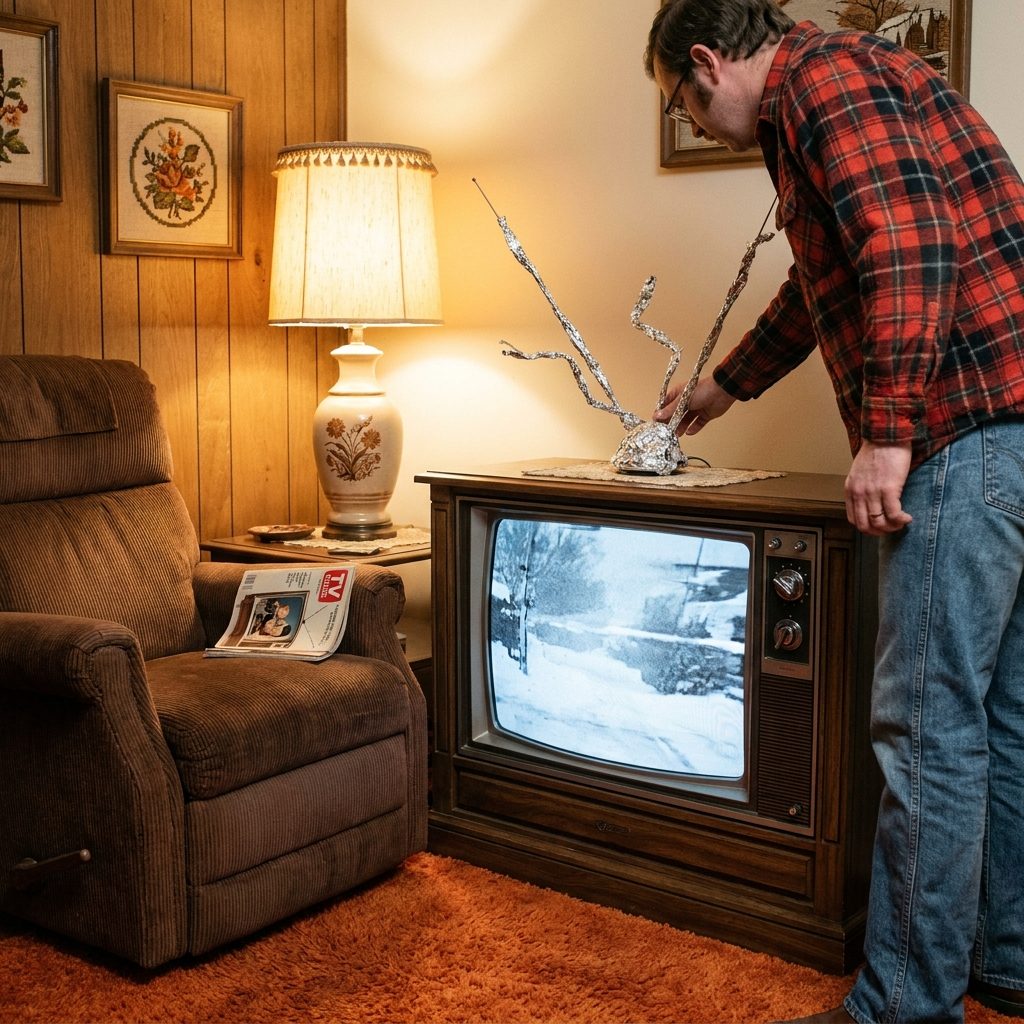
Someone was always holding the antenna while someone else watched the TV and called out directions like an air traffic controller. ‘Left. More left. No, back. BACK. Okay, don’t move, don’t breathe, just stay exactly like that forever.’
The aluminum foil was not optional, it was a full commitment. Three layers minimum, shaped into something between a sculpture and a prayer. And it worked, sort of, depending on cloud cover and what channel you were trying to pull in. ABC came in fine. NBC was negotiable. PBS was a spiritual exercise.
Stovetop Popcorn Night, Including the Burned Batch That Was Eaten Anyway
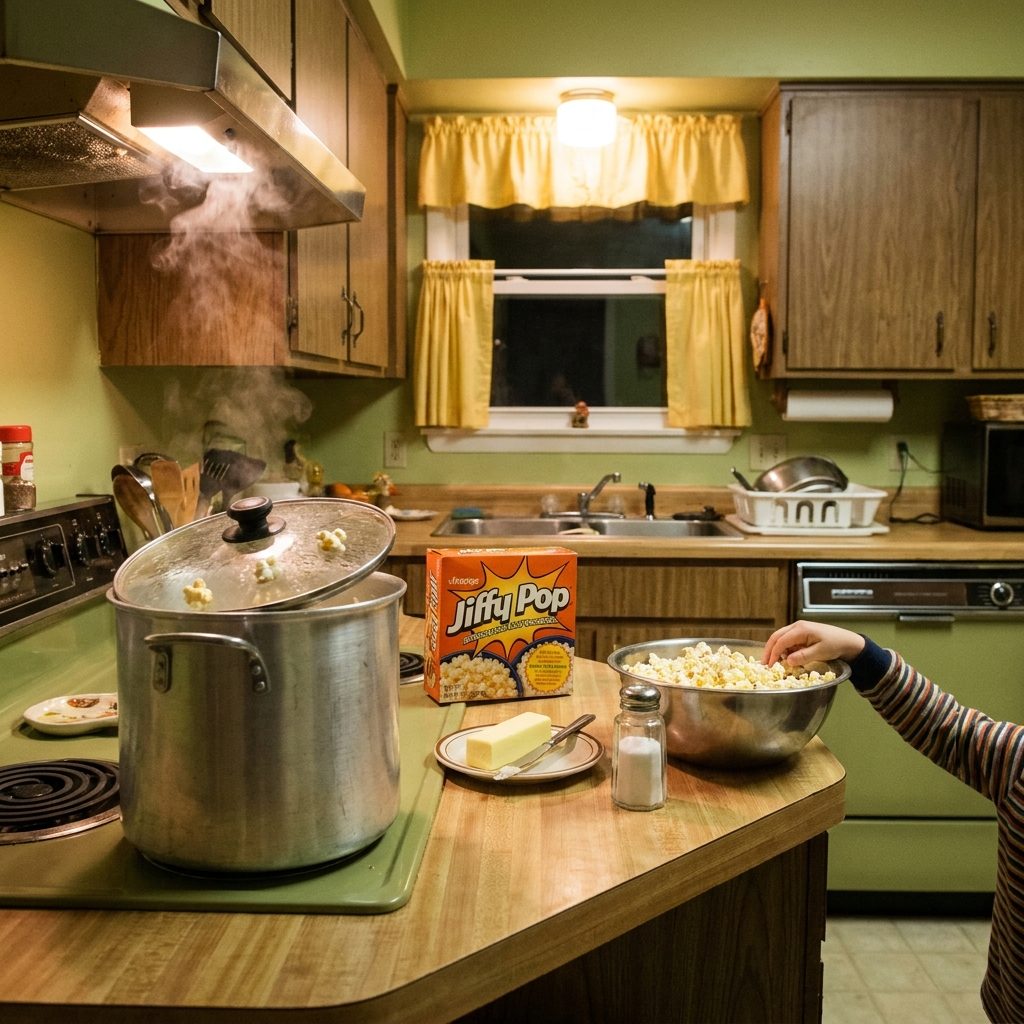
The burned batch was a feature, not a bug. You’d fish out the scorched kernels anyway, eat them slightly guiltily, and decide they were almost better than the good ones.
Stovetop popcorn required participation. Somebody had to watch it, shake the pot, argue about how much butter was too much butter (there was no such amount). The whole house smelled like it for an hour. When microwave popcorn arrived and made the whole process clean and easy and odorless, something was genuinely lost, and nobody acknowledged it at the time.
The Blanket Fort That Took Two Hours to Build and Was Abandoned by 9 PM
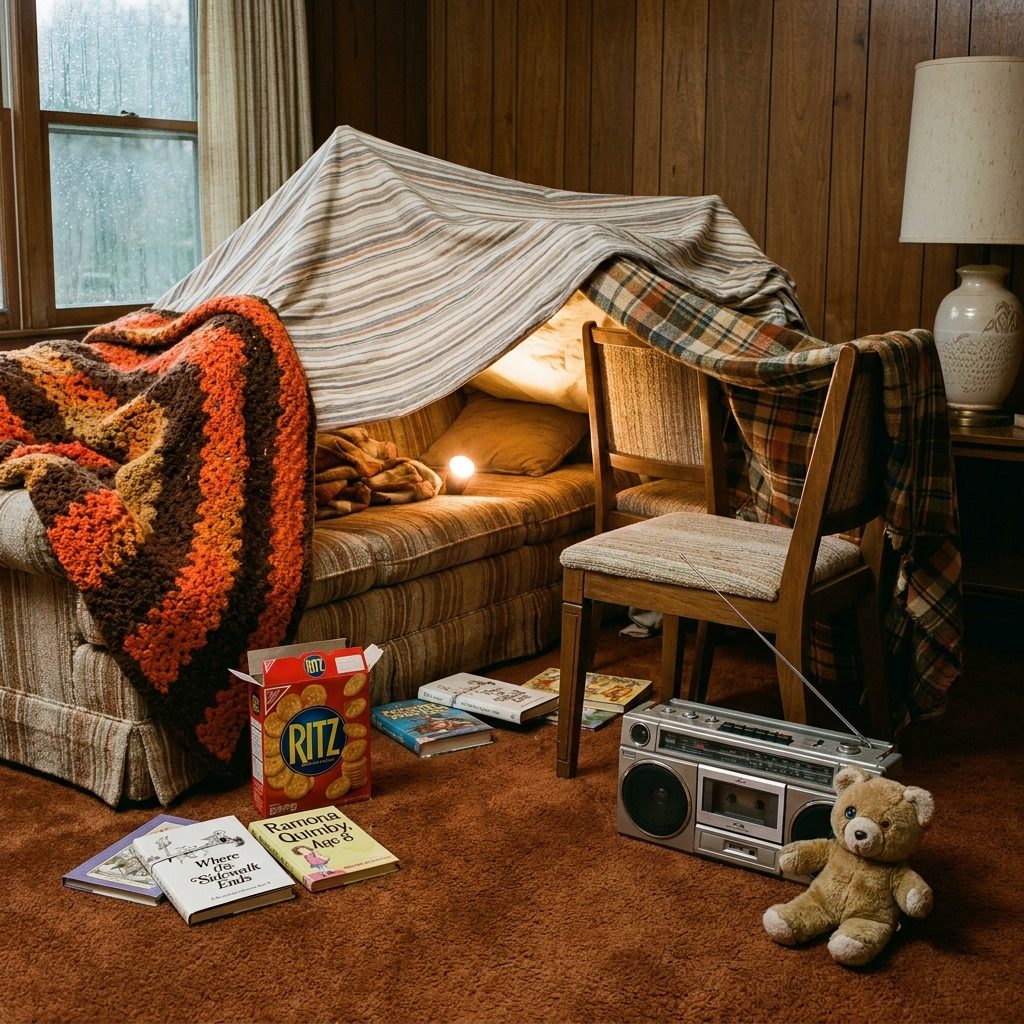
The construction phase was the best part. Arguments over which blanket could be used (not the good one), whether the fort needed a door versus a window, how to keep the ceiling from collapsing. Engineering problems that felt genuinely urgent.
Inside, with a flashlight and a box of crackers, the whole house disappeared. The sound of rain on the window, the weird warm smell of wool and carpet, the low ceiling pressing in: that was a completely different world six feet from the couch.
The Photo Album Marathon Where Parents Had Strong Opinions About Every Single Image
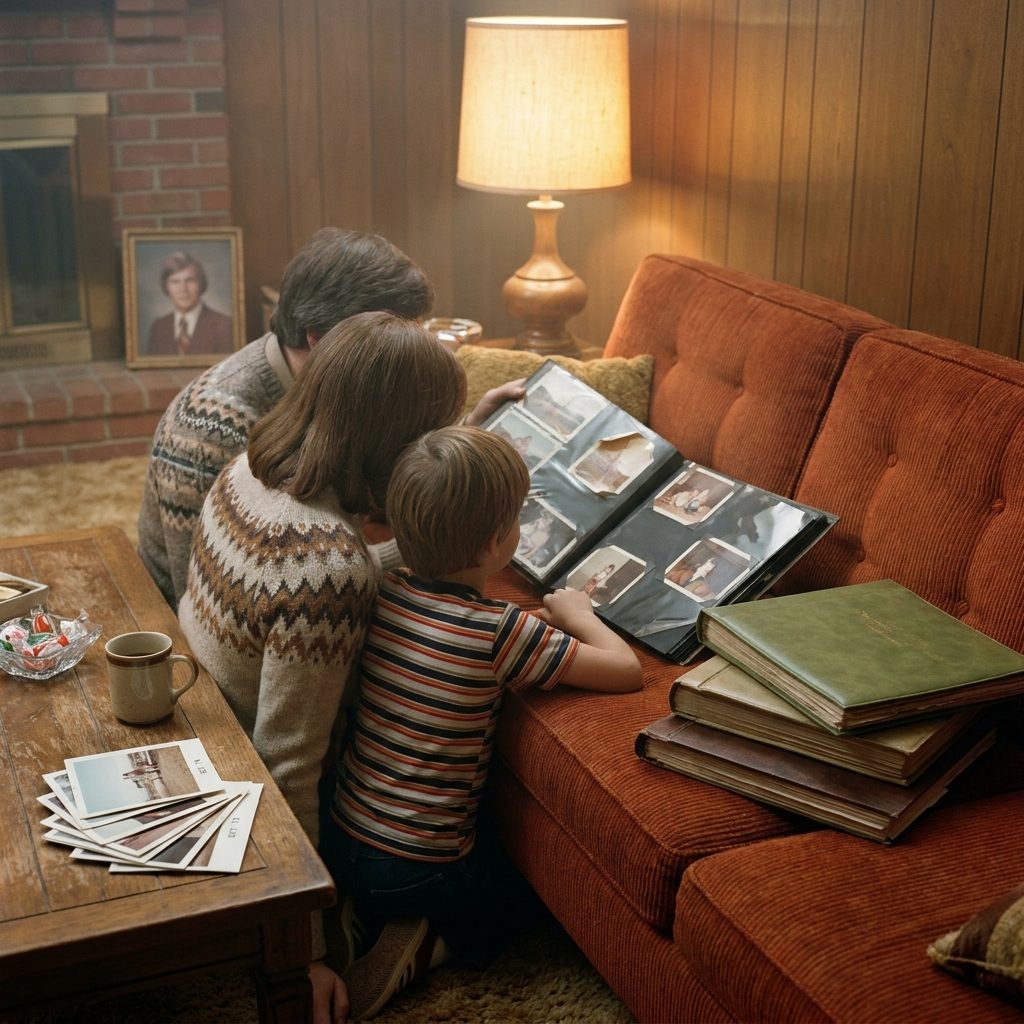
Every photo required a full briefing. Who was standing next to who, why there was a look on someone’s face, what happened approximately twenty minutes after the shutter clicked. The narration was relentless and completely indispensable.
Those magnetic-page albums from the 70s and 80s had an adhesive that eventually destroyed half the photos, slowly yellowing everything from the edges in. At the time they seemed like the safest possible storage. Nobody knew. We were doing our best.
The real thing those albums were doing, in the long run, was handing down a story. Not just ‘here is a picture of your grandmother at the shore’ but ‘here is what kind of person she was, here is what that summer cost us, here is where you come from.’ That is a hard thing to replicate on a phone screen.
Driveway Basketball Until the Hoop Was Just a Dark Shape Against the Sky
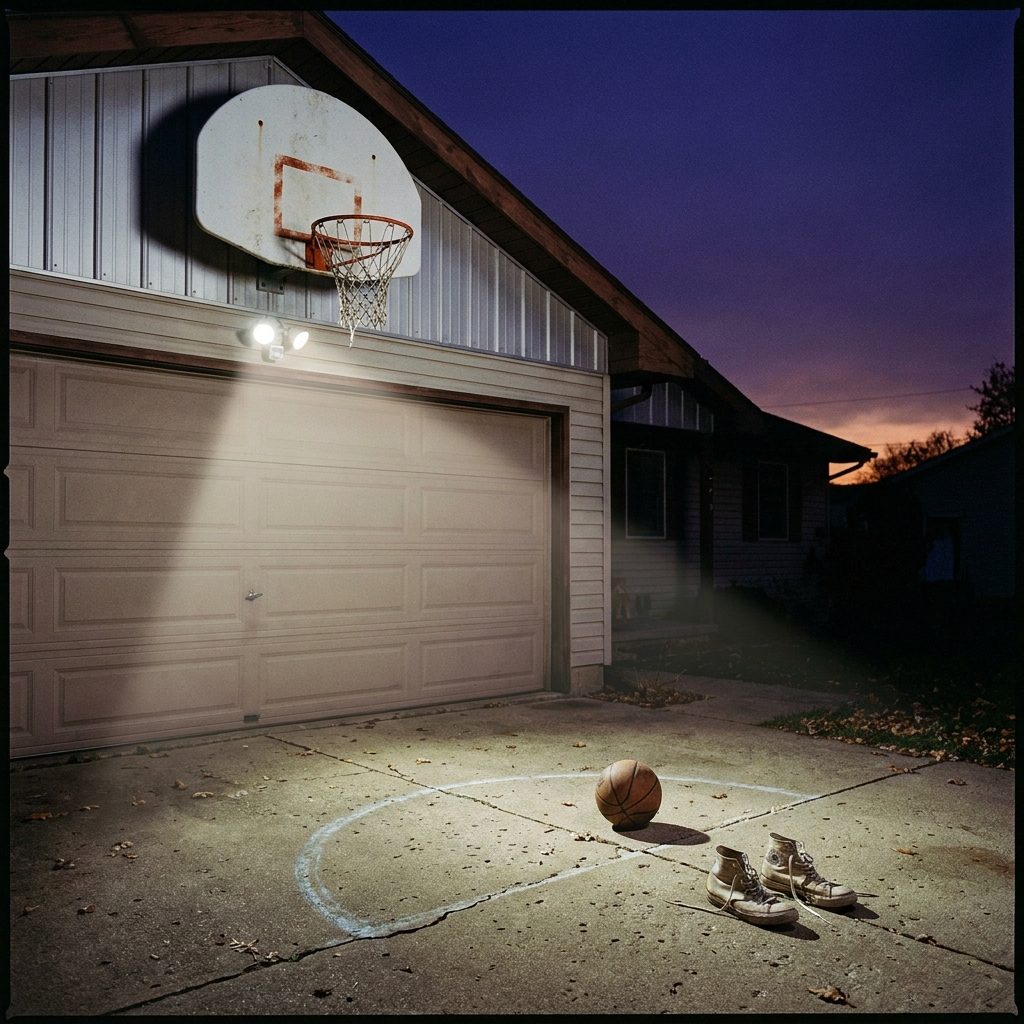
You kept playing past the point of being able to see clearly because stopping meant going inside, and nobody wanted to be the one who said it was time to stop.
Driveway basketball had its own physics: the cracked patch near the left baseline that killed your dribble, the part of the net that was just a single strand of string by August, the ball that was always slightly underinflated and somehow better for it. Every driveway had its own rules built around its own imperfections.
The motion light would kick on and for a few minutes you’d have perfect visibility, and then someone would stand still too long and it would click off again and you’d both be shouting at it. That light going out the final time was the actual end of the night, whether you admitted it or not.
Backyard Barbecues Where the Adults Disappeared Outside for Six Hours Straight
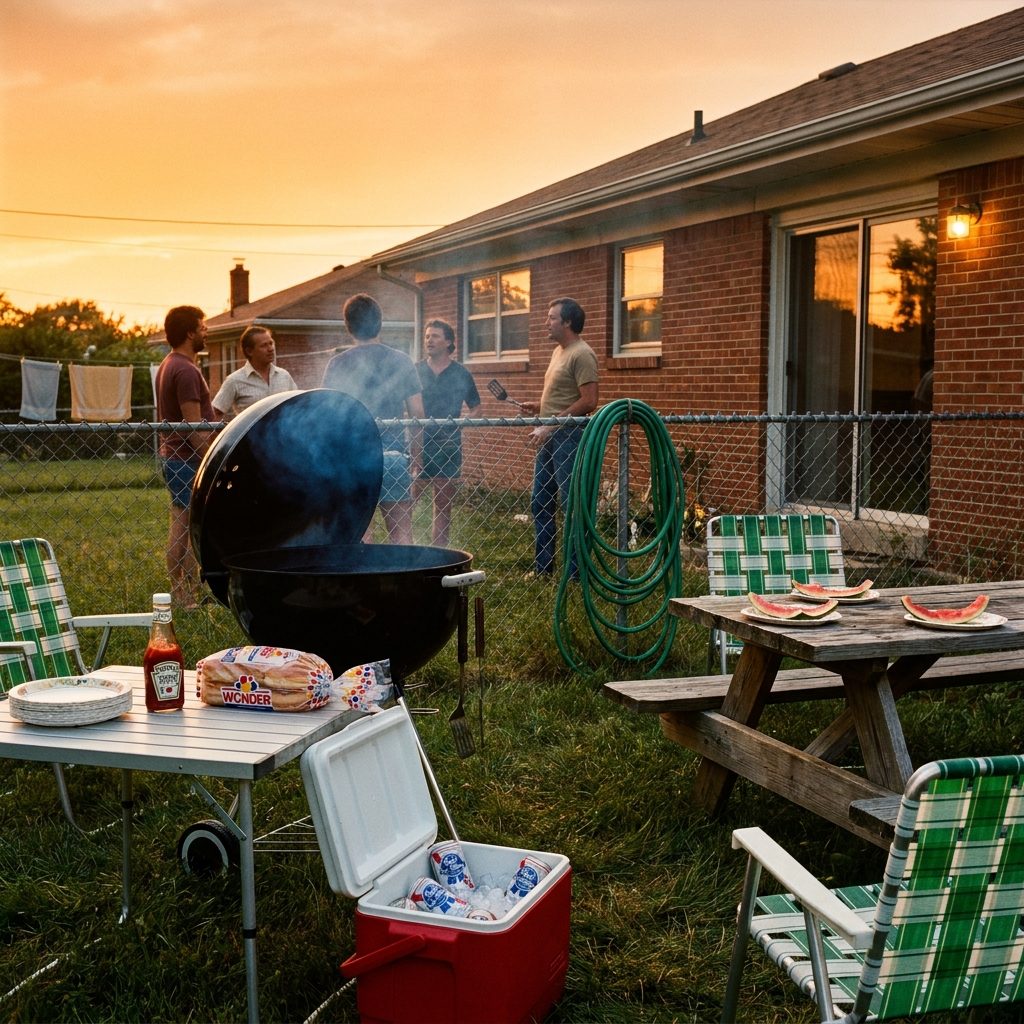
Nobody called it a party. It was just a barbecue. But somehow the adults materialized at three in the afternoon and were still out there at nine, when the lightning bugs were going and you’d already eaten two helpings of potato salad and a popsicle from the freezer and come back outside and they were still talking. About the same things, you were pretty sure.
The grill was the anchor. As long as there was something on it, nobody had to explain why they hadn’t gone home yet. The kids eventually gave up orbiting and went feral in the backyard. The adults didn’t notice. They were in the middle of something important, apparently, and it could not be rushed.
Playing Charades When Company Came Over and Suddenly Dad Was a Mime
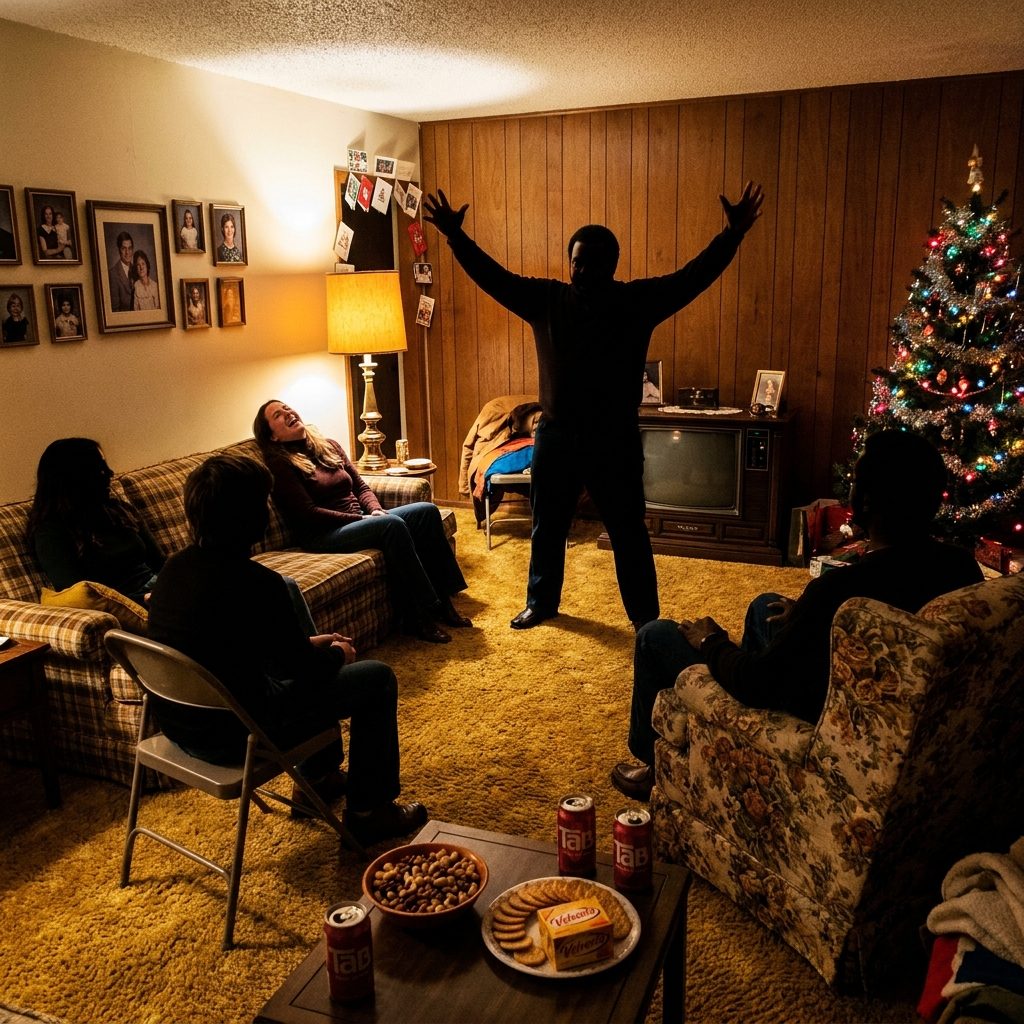
At some point every holiday gathering produced a shoebox lid with folded paper inside it, and someone’s uncle was standing in the middle of the living room holding up three fingers to indicate three words and flapping his arms like a bird while everyone yelled wrong answers at full volume. The furniture had been pushed back. Folding chairs had appeared from somewhere.
Charades required nothing. No board, no batteries, no instructions. Just people willing to look completely ridiculous in front of family, which turned out to be a very low bar once somebody’s dad got competitive about it.
Watching ‘America’s Funniest Home Videos’ Like It Was Game Seven of the World Series
Would you like to save this?
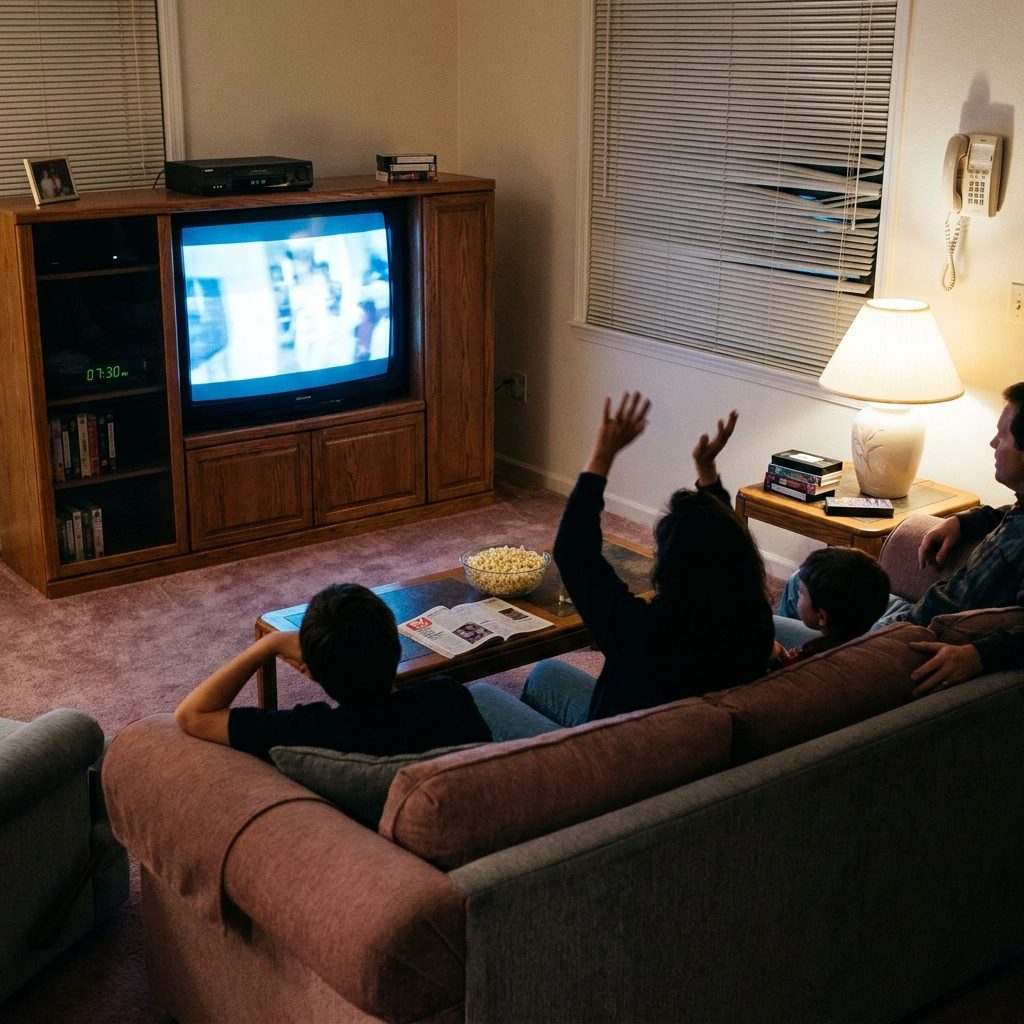
Sunday nights, eight o’clock. Bob Saget’s voice came out of that big boxy TV and everyone sat down without being told to. Not because it was prestige television. Because a man was about to get hit in the groin with a wiffle ball bat, and the whole family wanted to be there for it.
The voting at the end felt genuinely important. The $10,000 winner was discussed. Someone always argued the wrong clip won. This was a show that required audience participation, delivered from the couch, at volume.
Making Prank Phone Calls From the Kitchen Wall Phone and Hanging Up in Pure Terror
Is your refrigerator running? You better go catch it.
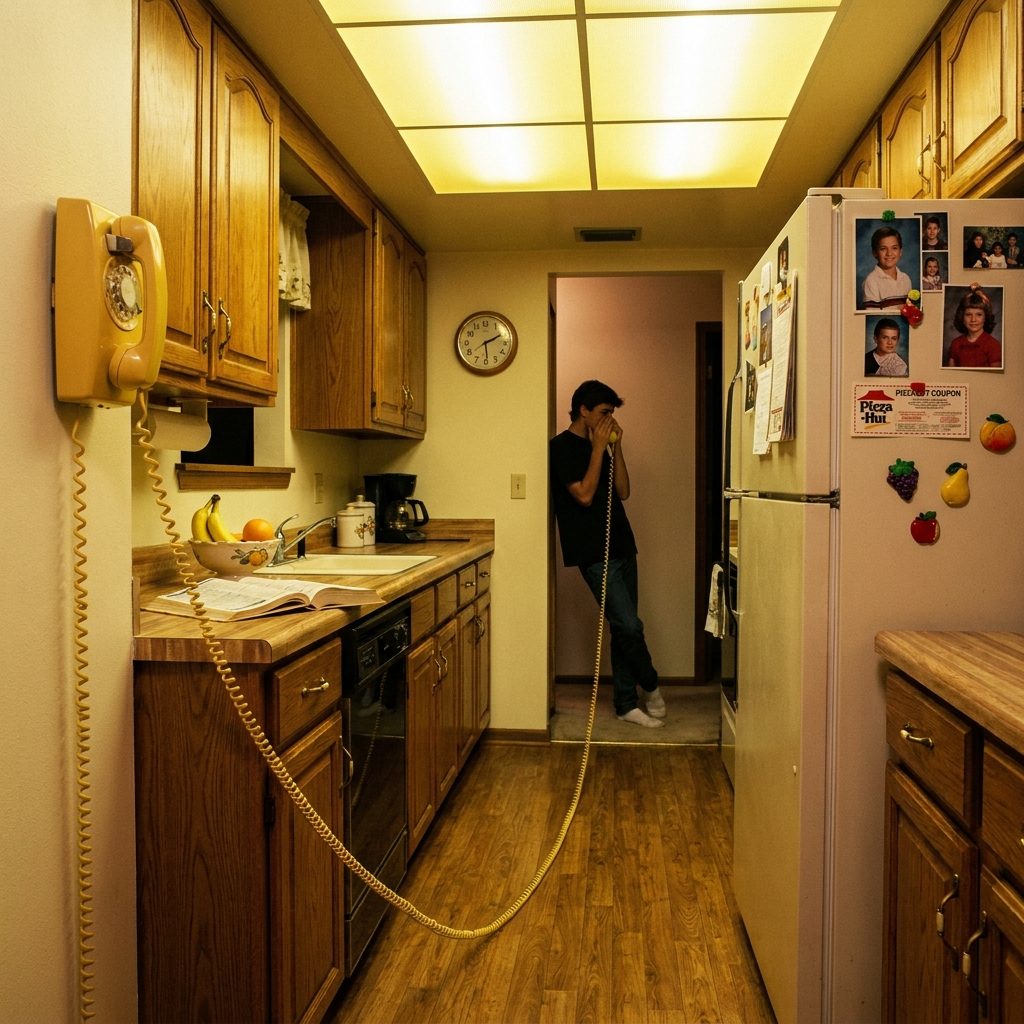
Every kid had a phase. You got the phone book, you picked a name that sounded funny, and you dialed the number with the sick thrill of someone defusing a bomb in reverse. The moment the line picked up your heart rate doubled. If they sounded angry, you hung up before the second syllable. If they played along, you panicked and hung up anyway. The wall phone made it worse because the cord only reached so far and you couldn’t exactly flee the scene.
Listening to Vinyl Records All the Way Through Because Nobody Was Getting Up to Skip
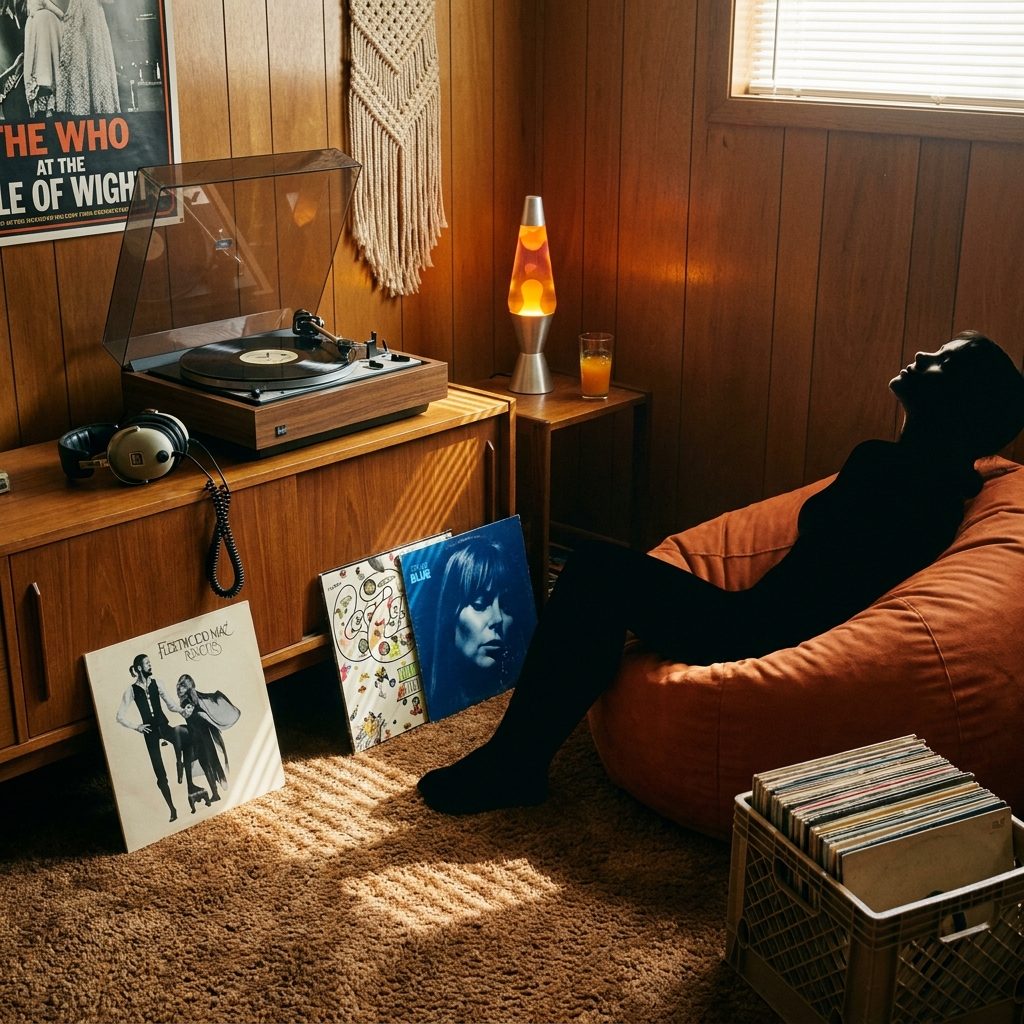
Side one, then side two. That was the deal. Getting up to skip a track meant walking across the room, lifting the tonearm, moving it a quarter inch without scratching anything, and setting it back down, a surgical procedure that nobody could be bothered with. So you listened to the whole album. The filler tracks, the long instrumental fade-outs, the weird spoken-word interlude on side two that your dad claimed was the whole point.
This was actually a gift, though nobody would have described it that way at the time. The album as a continuous object, meant to be heard start to finish. That idea has not survived.
Bowling Night With the Whole Extended Family, Including Everyone’s Strange Aunt
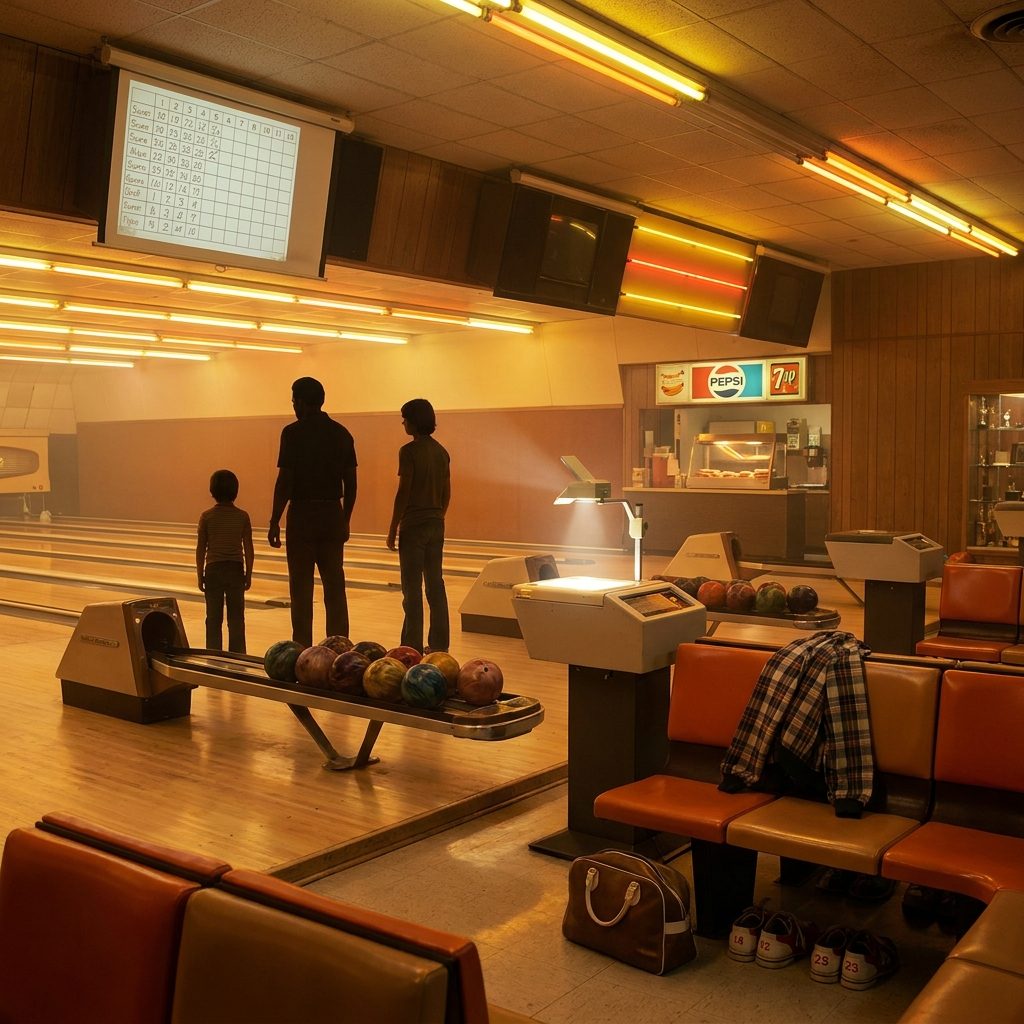
Weeknight bowling happened because someone called someone and made it happen through actual phone calls, plural, over several days. And then twelve people showed up at the alley in two separate cars, someone’s uncle already arguing about lane assignments.
The rental shoes. The scoresheet that one person always insisted on keeping by hand even after the overhead projector was available. The child who bowled with two hands and still beat the adults in frame six. The aunt who only came for the nachos from the snack counter and didn’t actually bowl but counted as a team member somehow.
You couldn’t have planned it better, and nobody was planning it at all.
Flashlight Tag After Dark When the Whole Neighborhood Was the Playing Field
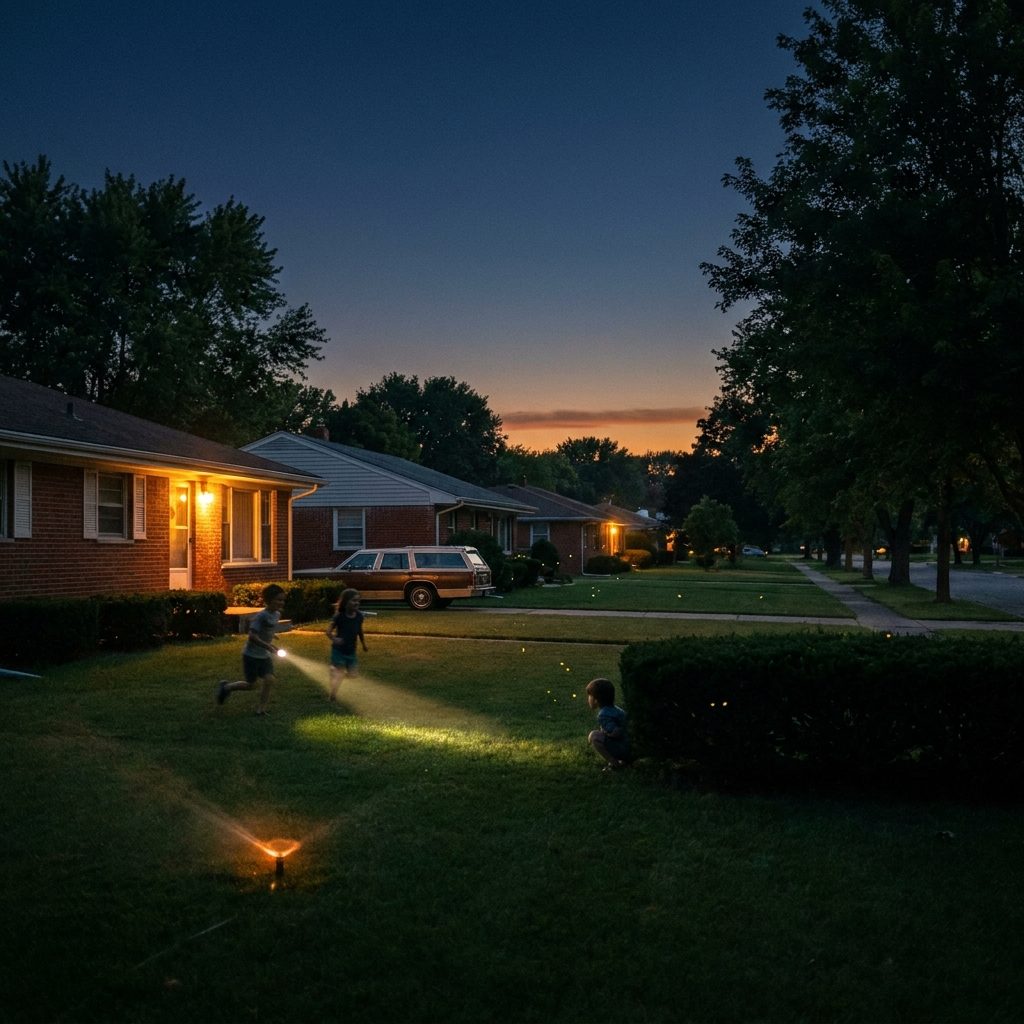
The rules were approximate and changed depending on who was running. Someone had a flashlight, someone else needed to not get caught in the beam, and the entire neighborhood was fair territory, front yards, side yards, the gap behind the Hendersons’ garage. You went until a parent’s voice came out of a lit doorway and the game dissolved.
What made it work was the dark. Real dark, suburban-street dark, where you could actually hide behind a hedge and disappear. Kids don’t have that anymore, not really.
Counting Cows Out the Station Wagon Window Across Four States
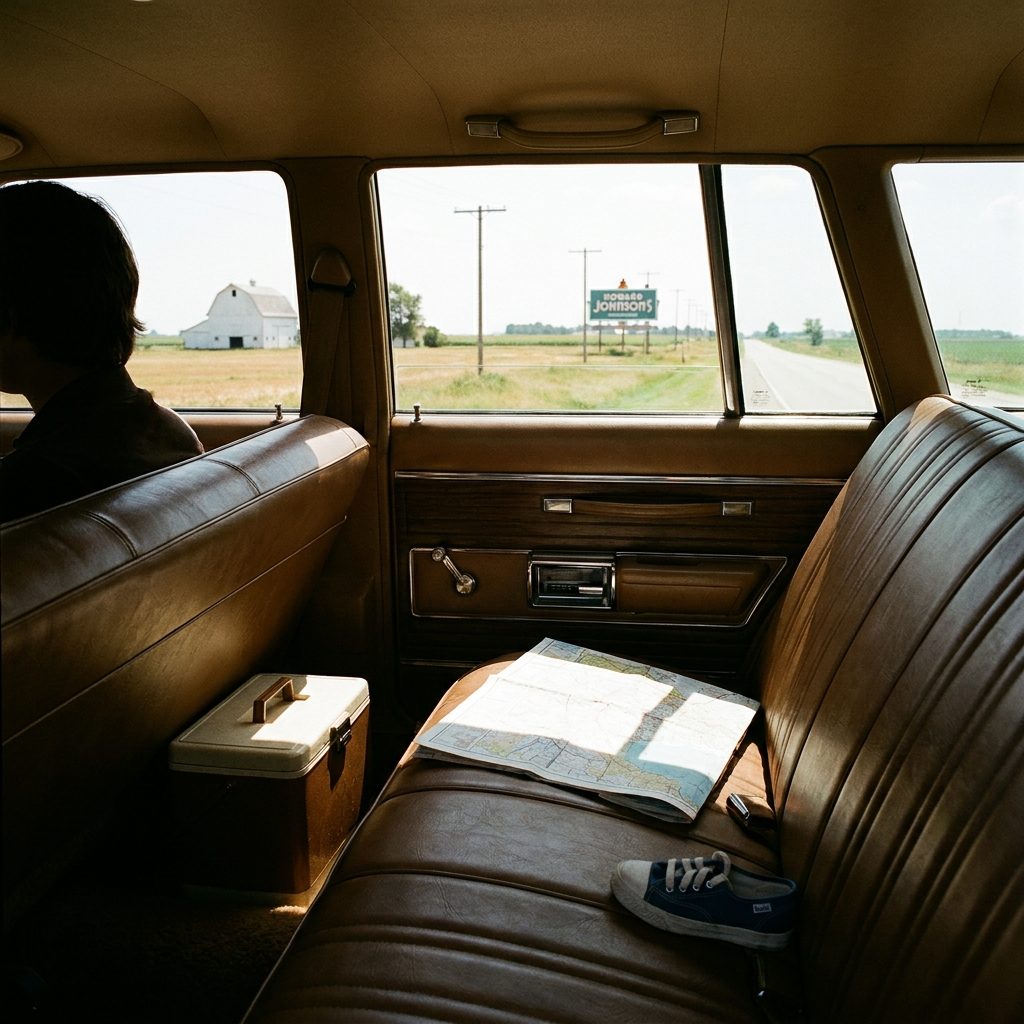
You ran out of games somewhere around the third hour. The license plate game was dead. The alphabet signs game collapsed because there were no signs. So you stared out the window at whatever America was putting out there: silos, fields, a horse trailer, a grain elevator, clouds that looked like things and then didn’t.
Counting cows sounds like it needs rules but it doesn’t. You just counted. If a cemetery passed, you lost them all and started over. Someone’s older sibling made that rule up on the spot and it stuck for the rest of the trip. Nobody questioned it. There was nothing else to do, and somehow that was fine.
Gathering Around the One Controller and Waiting Your Turn Like It Was a Religious Ritual
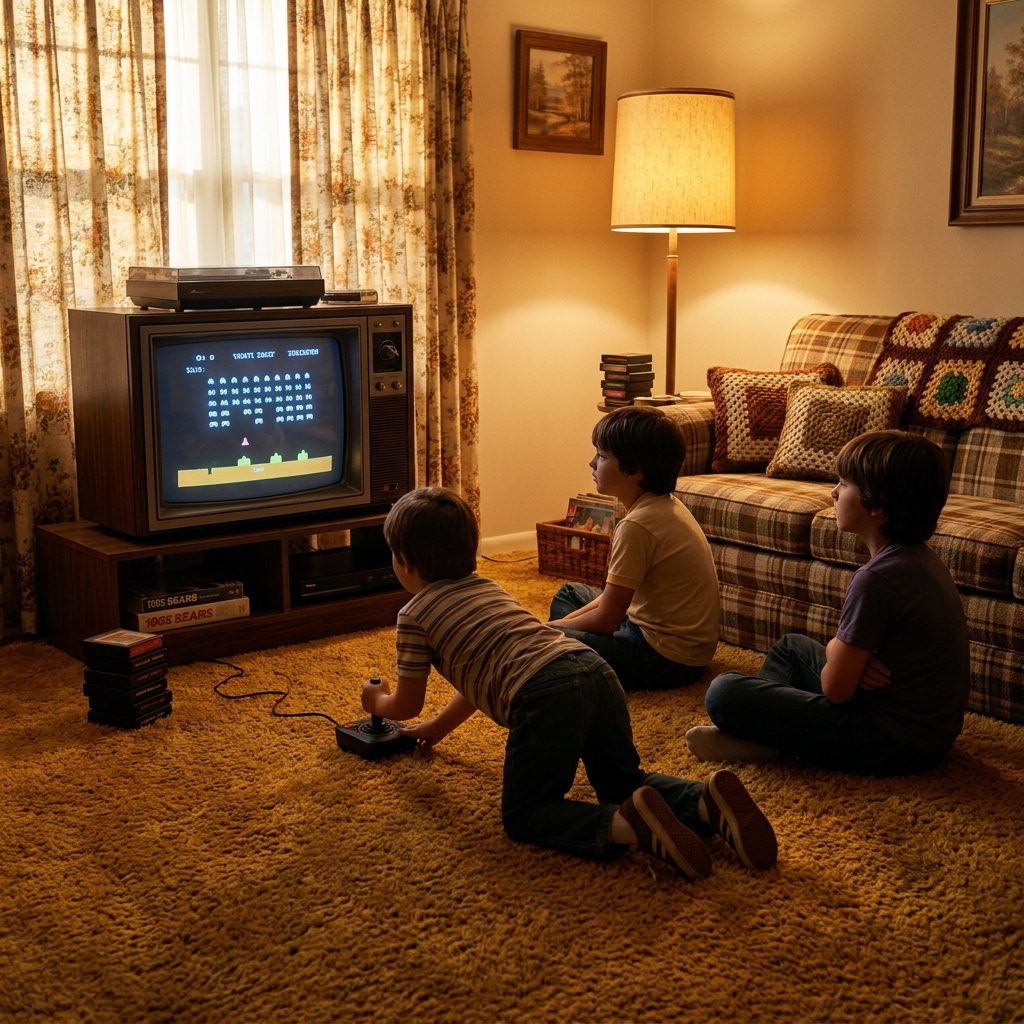
One controller. Three kids. The math never worked, but somehow we accepted it completely. Whoever was holding that gray NES rectangle was basically royalty, and the rest of us sat on the carpet like courtiers, arms folded, watching every life with the intensity of a parole board.
The unspoken rules were ironclad: you got two lives, or one level, or until you died, depending on whoever yelled their version of the rules loudest before the game started. Disputes were frequent. Appeals went nowhere. And somehow, the waiting was half the fun, kibitzing, groaning, offering unsolicited advice that was always ignored. Nobody stared at a separate screen. Everyone was in the same room, watching the same thing, completely together.
The Garage Model Kit That Took Three Weekends and Smelled Like Glue for a Month
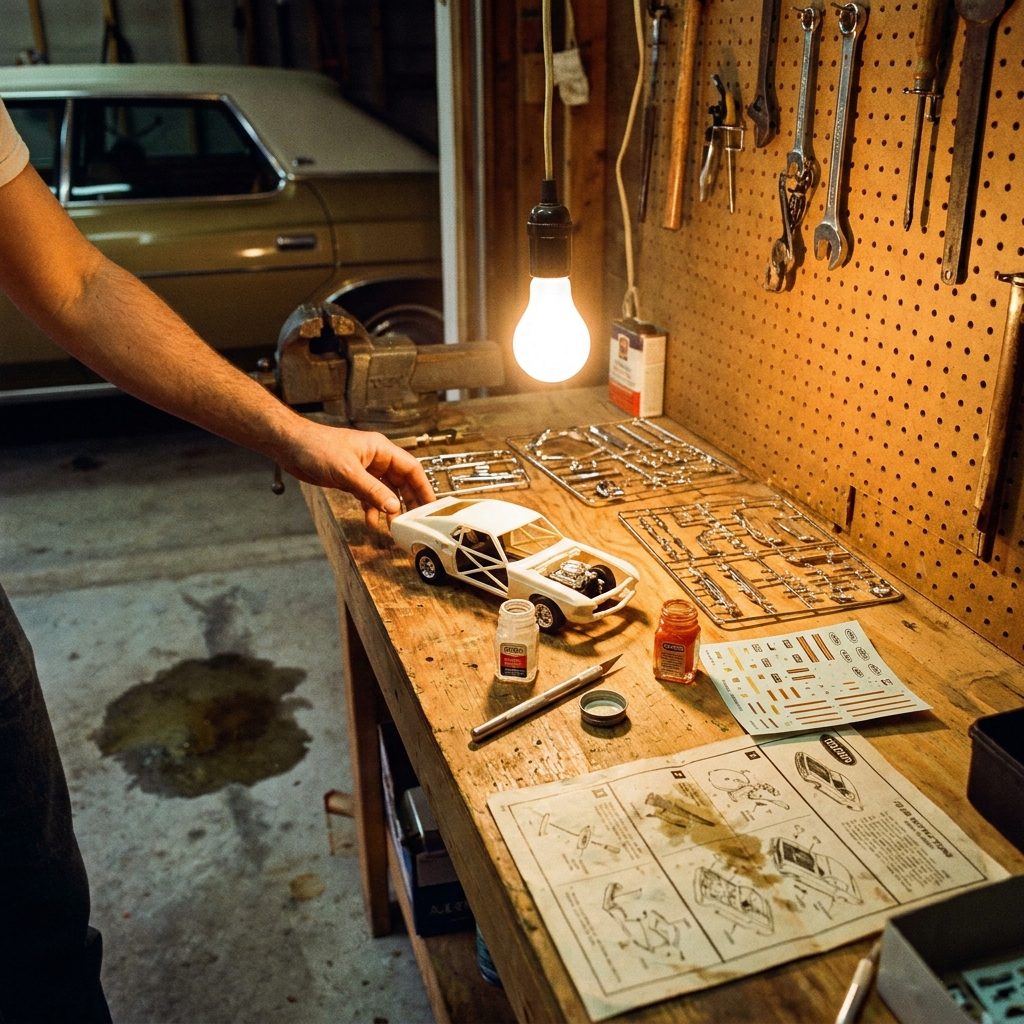
The instruction sheet was always one fold too complicated, and at least two of the tiny chrome pieces would launch themselves into the concrete floor, never to be seen again. But none of that mattered once the Testor’s glue came out. That smell, sharp, sweet, slightly dangerous, meant the weekend was going exactly right.
Model kits were a whole ritual. Weeks of work condensed into the specific pleasure of snapping a part off its sprue tree and sanding the nub smooth before anyone told you to. Dads and kids building side by side, mostly in silence, occasionally arguing about whether the decals went on before or after the clear coat.
The finished model went on a shelf in the bedroom and collected dust for years. Nobody threw them away.
Reading Every Word on the Cereal Box Because That Was Simply Breakfast
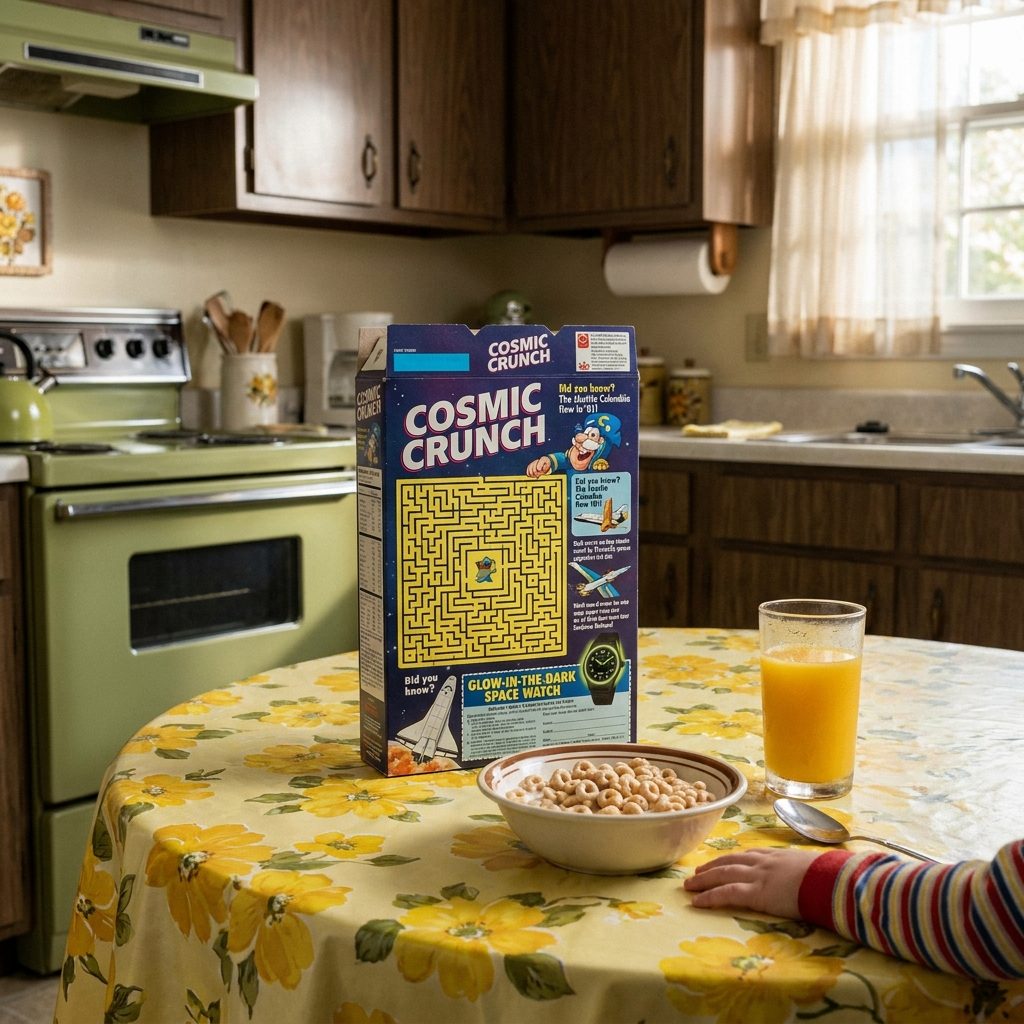
Every word. The nutritional information. The little cartoon character’s backstory. The rules of the mail-away sweepstakes for a BMX bike you were never going to win. The maze on the back that you’d already solved twice this week.
The cereal box was the original scroll. It sat there across from you every single morning, and you read it like it contained new information, even when it absolutely did not. Brands knew this, the backs of boxes were designed with the same care as a magazine spread, packed with games, offers, and licensed characters specifically because they had a captive audience staring at them for eight to twelve uninterrupted minutes every weekday.
Nobody talked. Everyone read. It was the most peaceful meal of the day.
Watching the Thunderstorm Roll In From the Porch Like It Was Free Television
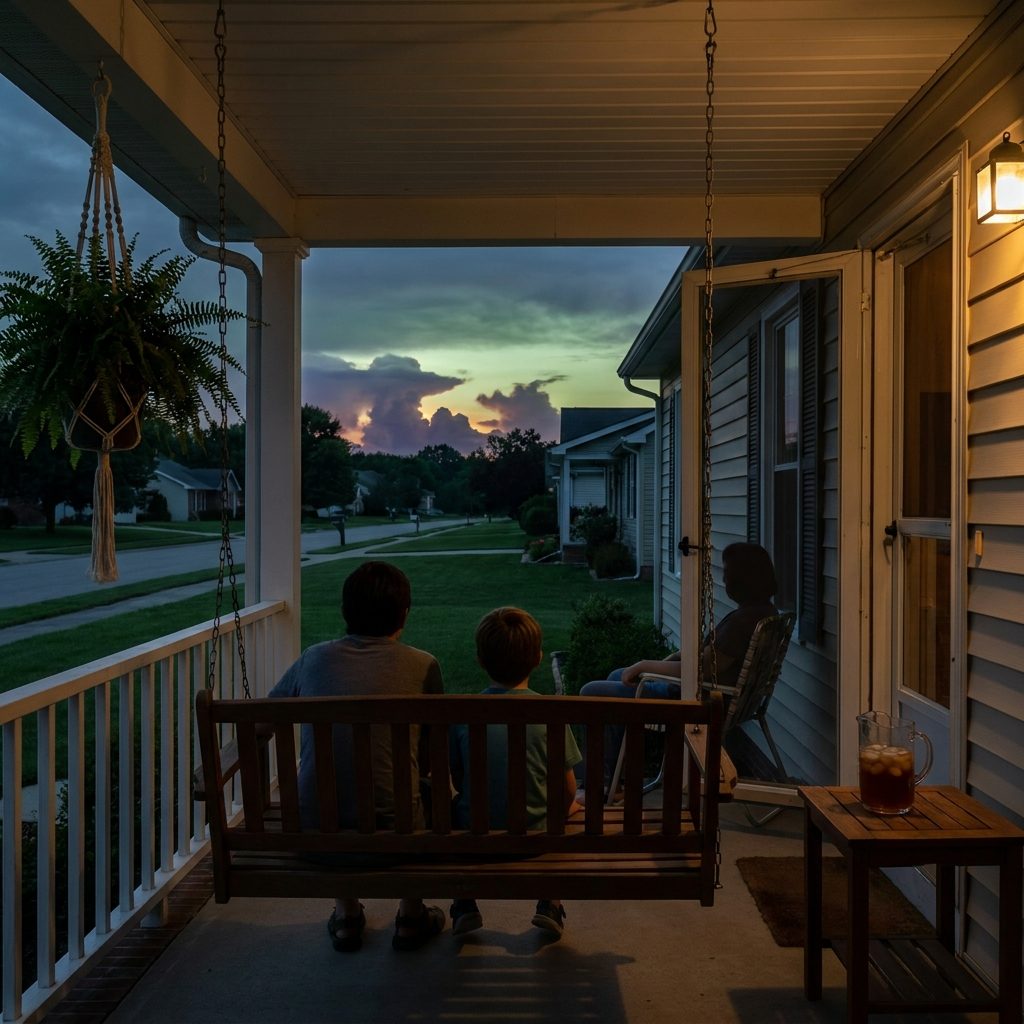
There’s a specific kind of stillness that arrives about ten minutes before a summer thunderstorm, the air goes thick and green, the birds go quiet, and the temperature drops just enough to notice. We went to the porch for that. Chairs dragged forward, someone sent inside for the iced tea, and then everyone just watched.
No commentary required. The storm provided it. The far-off flicker of lightning, the count to the thunder, the debate over whether it was getting closer or tracking north. The moment the first fat drops hit the sidewalk and sent up that specific smell, petrichor, though we didn’t know the word, felt like a small reward.
It’s strange to think about now. A whole family, outside, watching weather. Completely unhurried. Nobody needed to be entertained. The sky was doing it.
One Controller, Five Kids, and an Unspoken Honor System About Whose Turn It Was
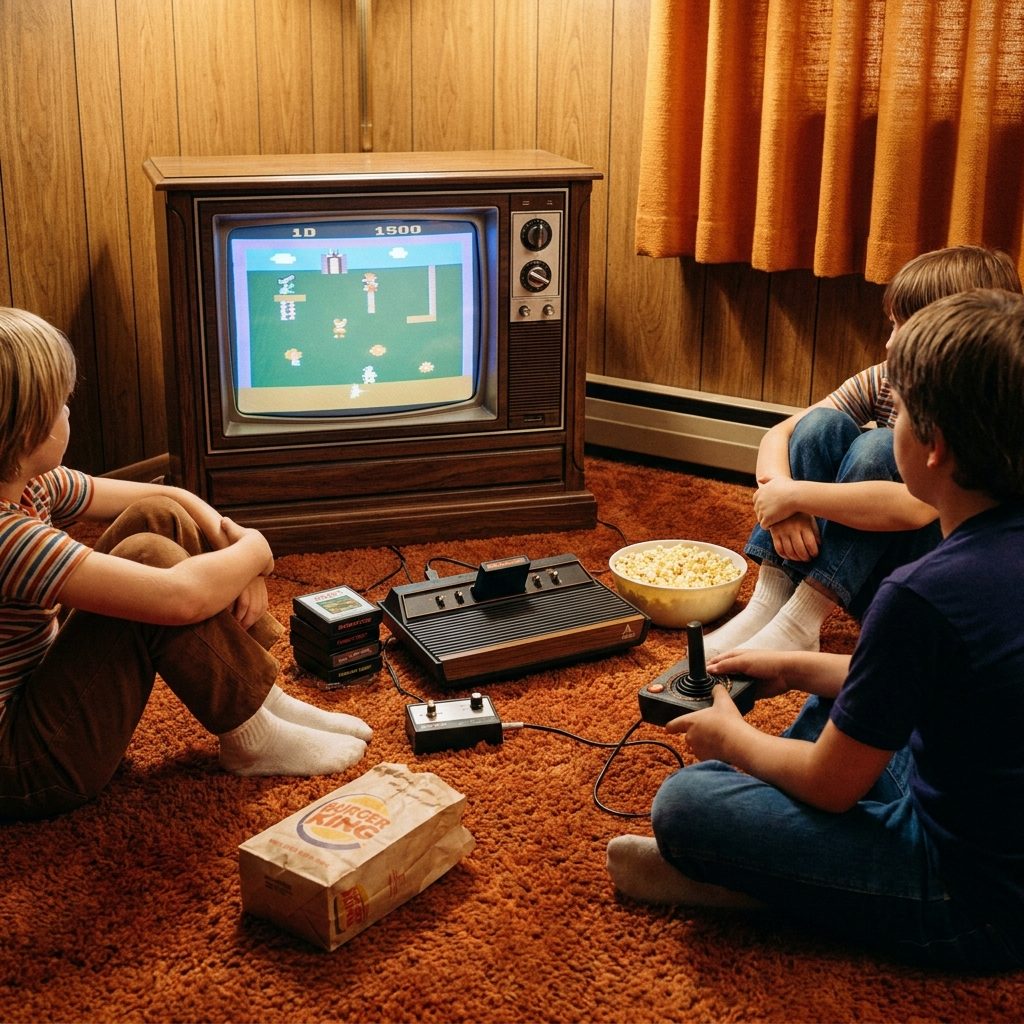
Whoever died had to hand over the joystick. That was the whole system. No timer, no app, no parental enforcement. Just the social contract of a group of kids who understood that hoarding the controller too long was a serious breach of backyard civilization.
The Atari 2600 came with exactly one joystick in the box unless someone bought the extra. So one kid played and four watched, calling out advice that was mostly wrong, occasionally grabbing the controller to demonstrate something they then immediately failed to do themselves. The watching was somehow as good as the playing. You learned the game. You studied the moves. You were ready when your turn came.
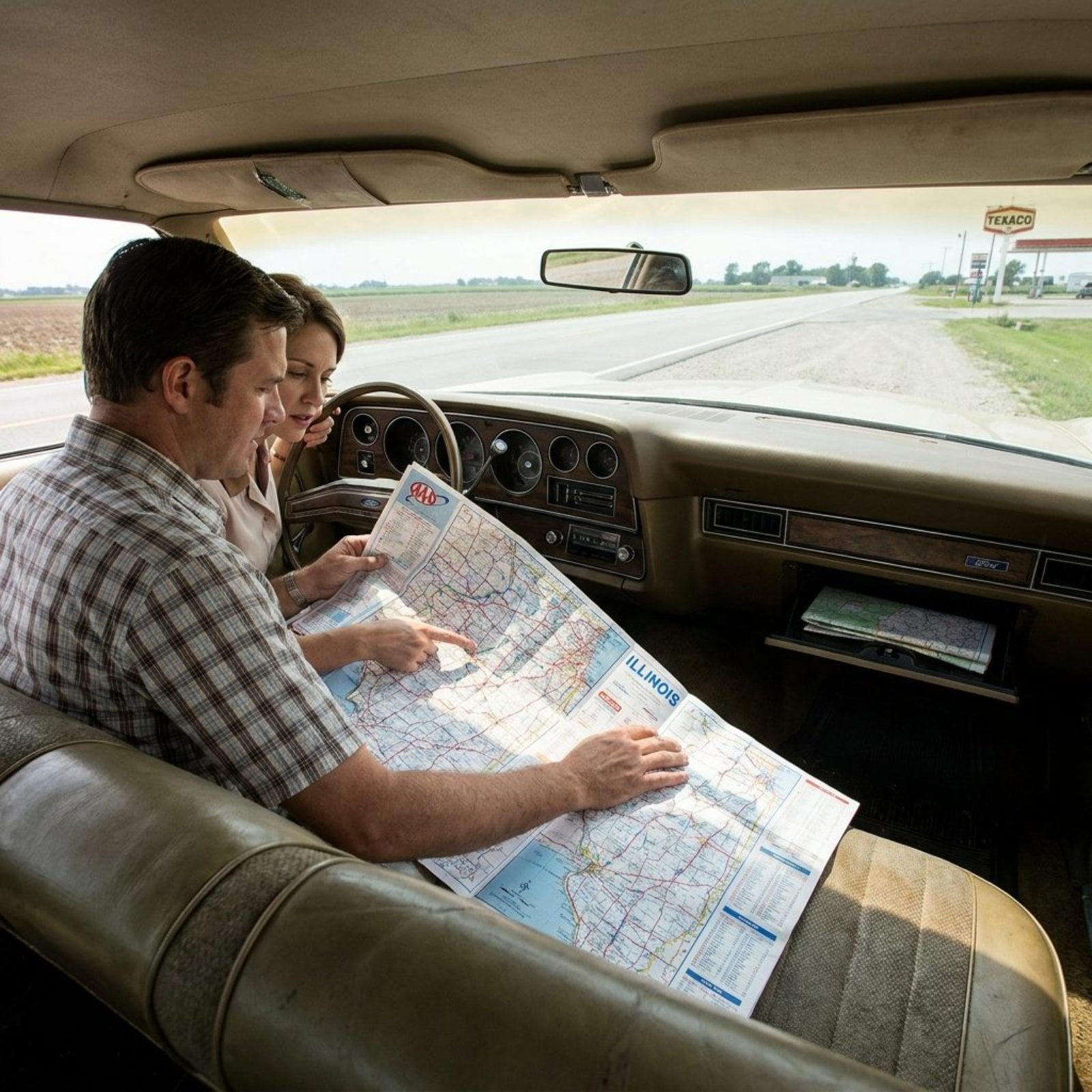
The Accordion-Fold Map That Absolutely Would Not Refold the Way It Came
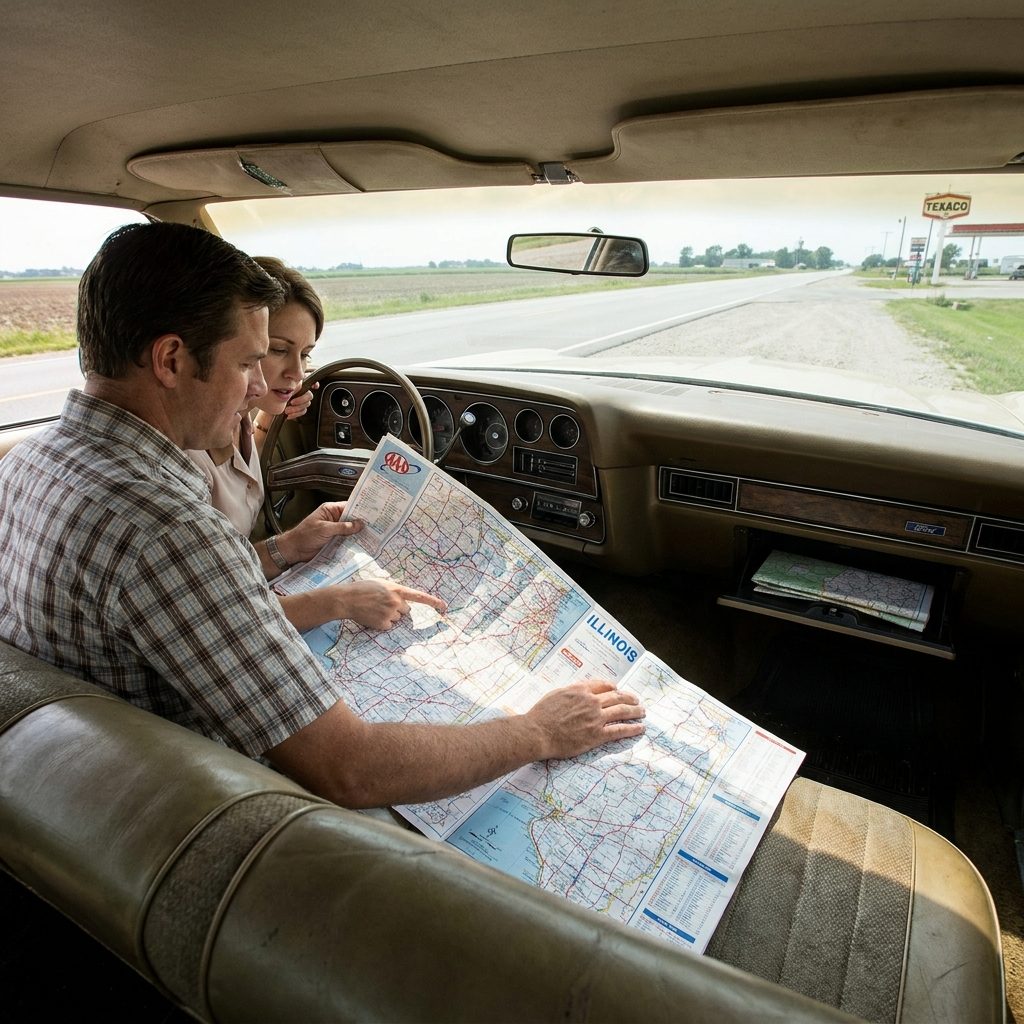
The map came out of the glove box neatly folded. It did not go back that way. It never went back that way. By the end of a road trip, whatever you had was a vaguely rectangular wad of paper that suggested it had once been a map of Ohio.
What made it truly great was the argument. Dad reading it one way, mom rotating it, someone in the back seat saying they thought you were supposed to turn left three miles ago. The map had no recalculating. No cheerful voice saying “in 500 feet, turn right.” It had grid references and patience, two things that did not always coexist on a summer afternoon in Indiana.
“The map was always right. The problem was always the reader. Though nobody ever admitted that out loud.”
The Jigsaw Puzzle That Colonized the Dining Room Table for Two Solid Weeks
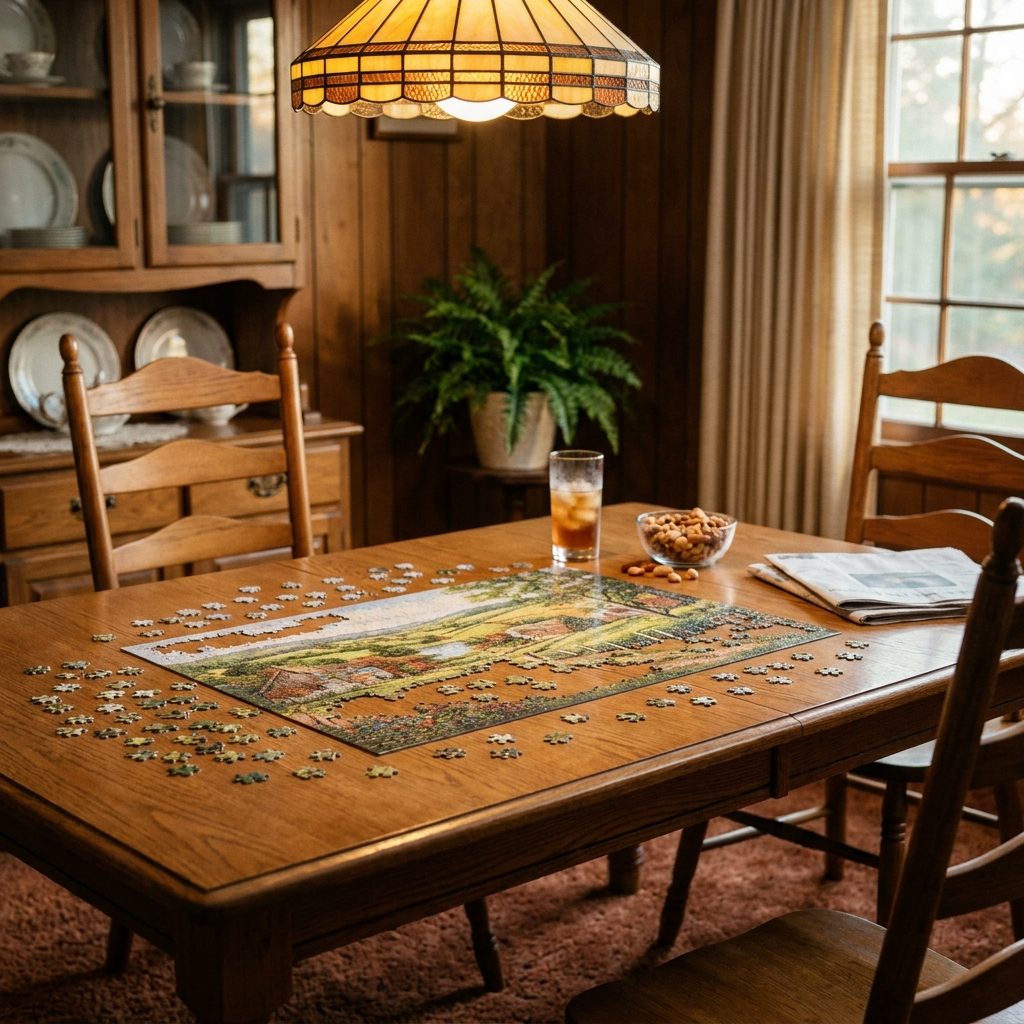
Nobody announced it was starting. Someone just opened the box on the dining table after Thanksgiving dinner, and suddenly the family was eating on TV trays for the next two weeks. Border pieces went first — obviously — and then the sky pieces sat there mocking everyone for days, that unbroken expanse of pale blue taunting you with its sameness.
There was always one person who wandered by claiming they weren’t interested, then quietly placed six pieces and walked away like nothing happened. And the final piece? Missing. Under the radiator, stuck to someone’s sock, or simply gone from this earth. You’d stare at that one empty hole and feel a grief that was completely out of proportion to the situation but also completely real.
Slip ‘N Slide Saturdays That Ended With at Least One Grass Burn and Zero Regret
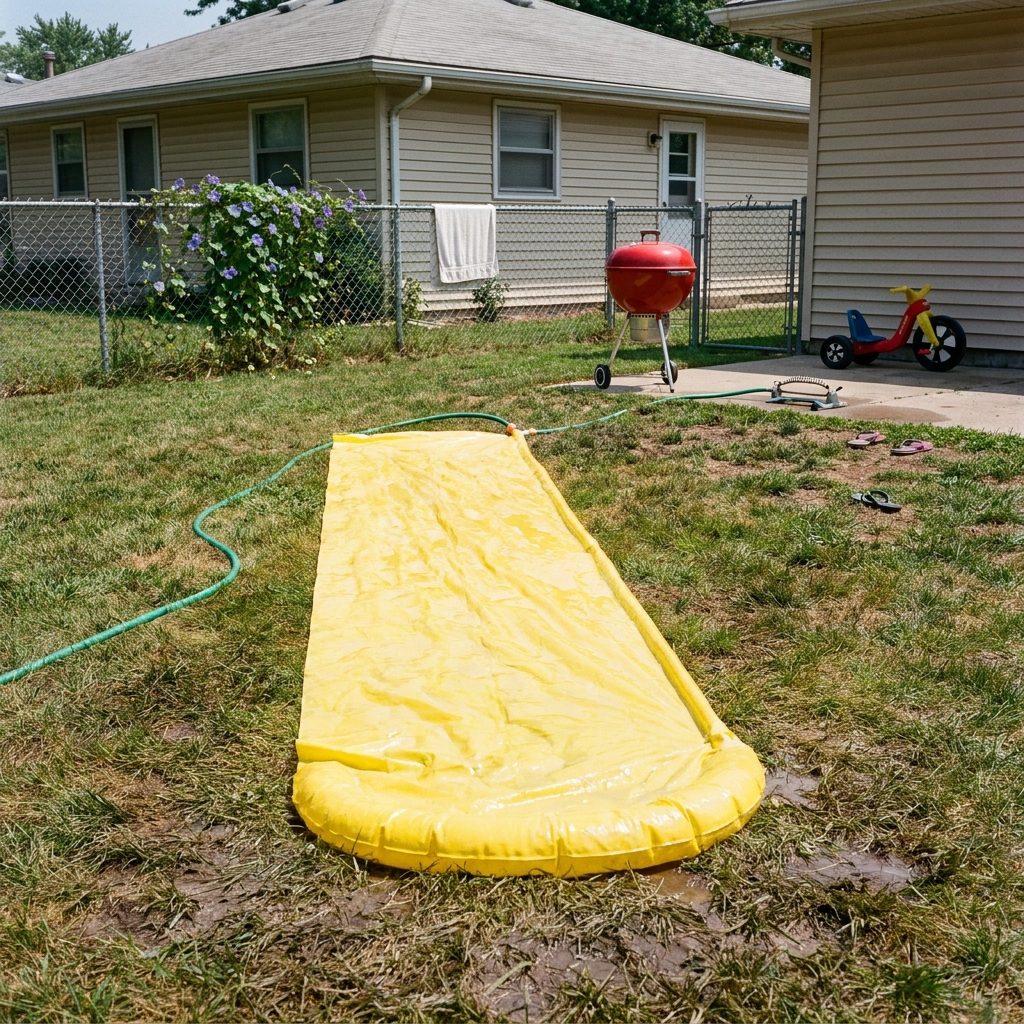
That yellow plastic sheet was maybe twenty feet long and dirt cheap, and it provided more entertainment per square foot than anything else in the backyard. The trick was committing to the running start without hesitation — something kids under ten were uniquely wired for because overthinking hadn’t been invented for them yet.
First few runs? Glorious. By the fifth, the slide had migrated three feet to the left, exposing bare dirt and one suspicious rock nobody remembered being there. By the tenth run, someone had a grass-stained belly that looked like road rash, a parent was yelling something about the water bill, and nobody cared even slightly. The hose stayed on. It always stayed on.
The Card Game Marathon Where Someone Accused Grandma of Cheating and She Did Not Deny It
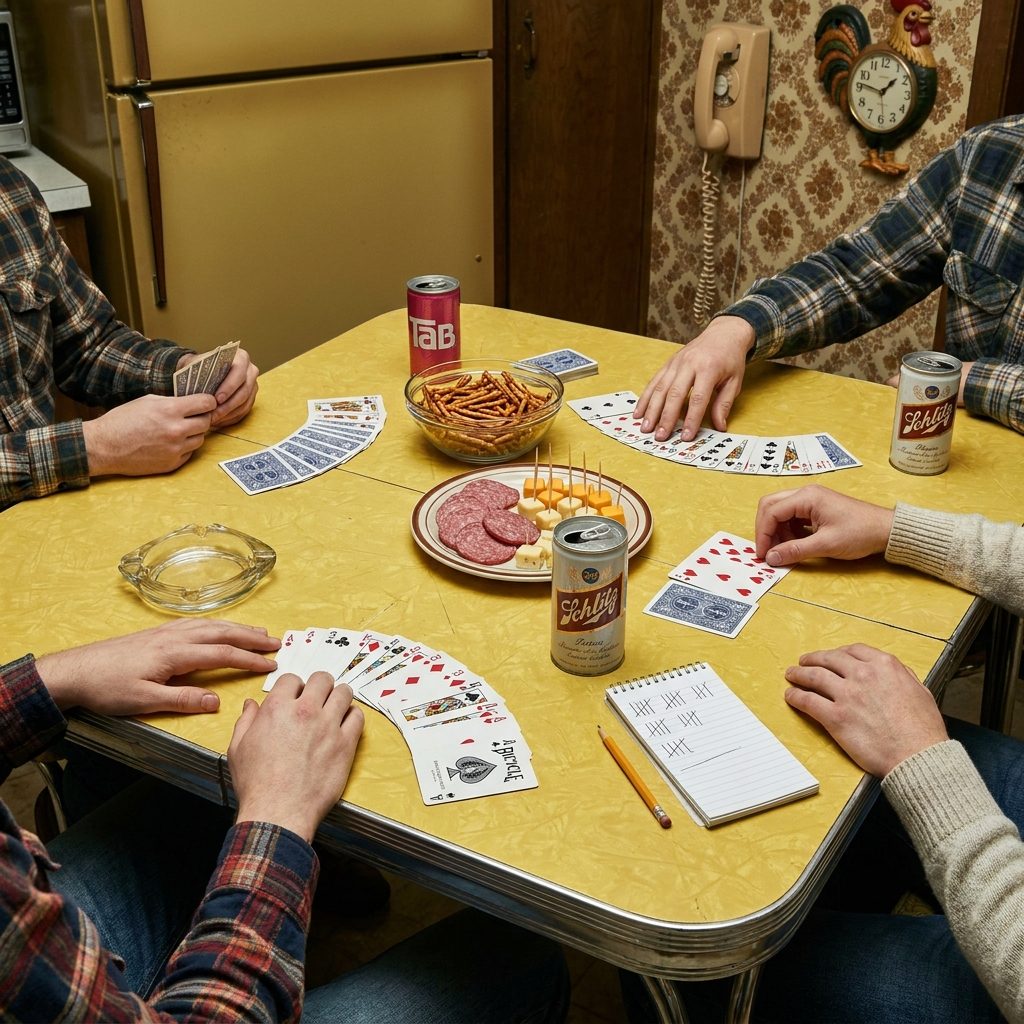
Rummy, Spades, Hearts, Crazy Eights, or some regional variant nobody outside your zip code had ever heard of. Every family had a card game. Every family had someone who took it far too seriously — usually a grandparent, and usually that grandparent won.
The rules were always slightly different from how anyone else on the planet played, because they’d been passed down through a generational game of telephone spanning decades and multiple time zones. Disputes were settled by volume. There was no rule book. There was Grandma’s word, and Grandma’s word was final, and Grandma had definitely just drawn from the wrong pile on purpose. She’d look you dead in the eye while doing it, too.
Putting On a Talent Show in the Living Room Where the Talent Was Mostly Optional
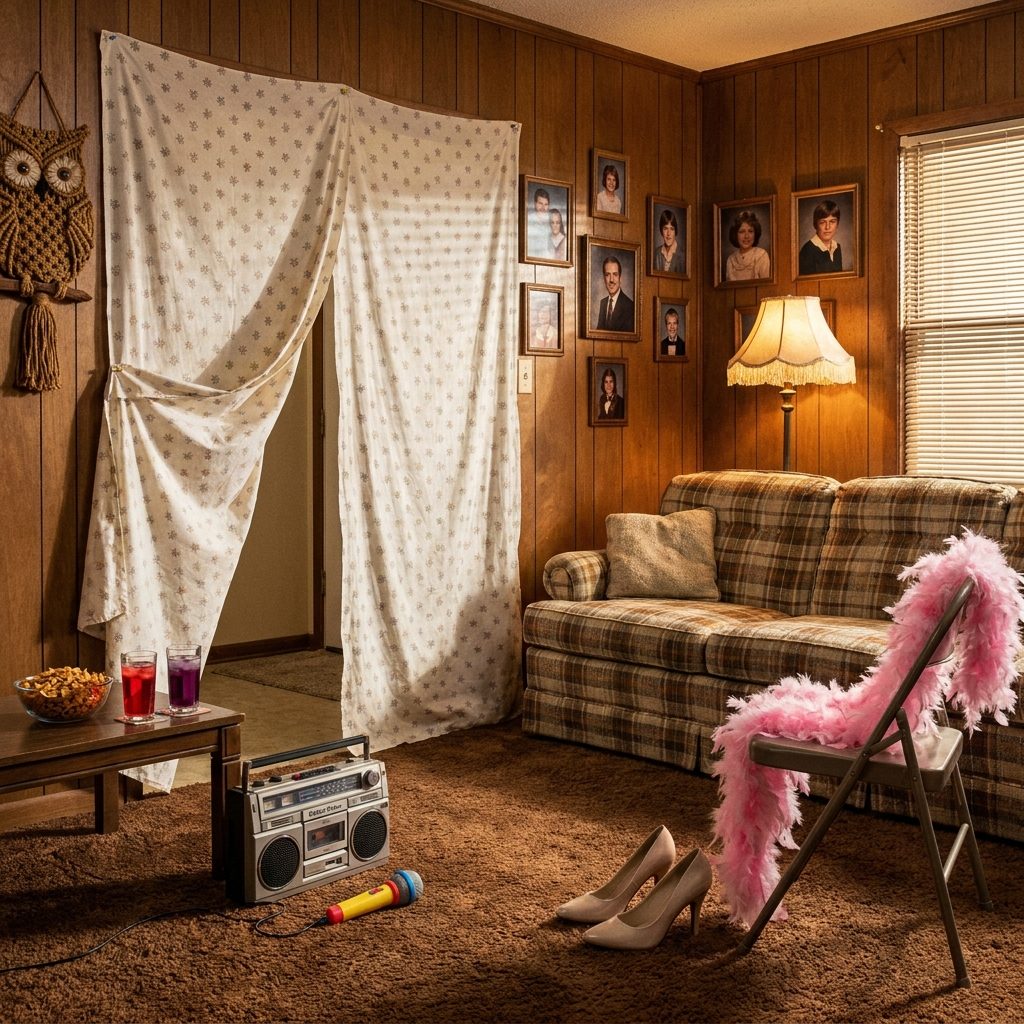
The bedsheet went up across the doorway. Someone appointed themselves the announcer. Acts ranged from a gymnastics routine performed on carpet — which is just falling with ambition — to a lip-sync of “Like a Virgin” that probably should have been stopped but wasn’t.
Parents sat on the couch and clapped for everything. Generous, considering most of it was objectively terrible. The magic trick failed. The comedy bit was one knock-knock joke repeated three times with increasing desperation. The dance routine ended when someone kicked a lamp. But here’s what I think about now: there was no audience beyond the people who loved you enough to sit through it, and that was the whole universe you needed. Every kid now performs for strangers on a screen. I’m not sure that’s better. Probably isn’t.
The Encyclopedia Set That Was Both Furniture and the Entire Internet Before the Internet

A door-to-door salesman sold these to your parents for what was probably a car payment, and they sat on the shelf like sacred texts nobody worshipped but everyone referenced. When a question came up at dinner that nobody could answer, someone said “go look it up,” and you physically walked to the bookshelf, pulled out the right volume, and found the entry using alphabetical order like some kind of medieval scholar. Which — honestly — felt satisfying in a way that typing a question into a search bar never has.
You always found something else along the way, though. Went looking for “Saturn” and got lost reading about “Samurai” for forty-five minutes. No algorithm fed you the next thing. You stumbled into knowledge sideways, by pure accident, because the pages were right there and your eyes wandered. That kind of serendipity is almost impossible to engineer now.
The Homemade Ice Cream Crank That Turned Every Kid Into Free Labor
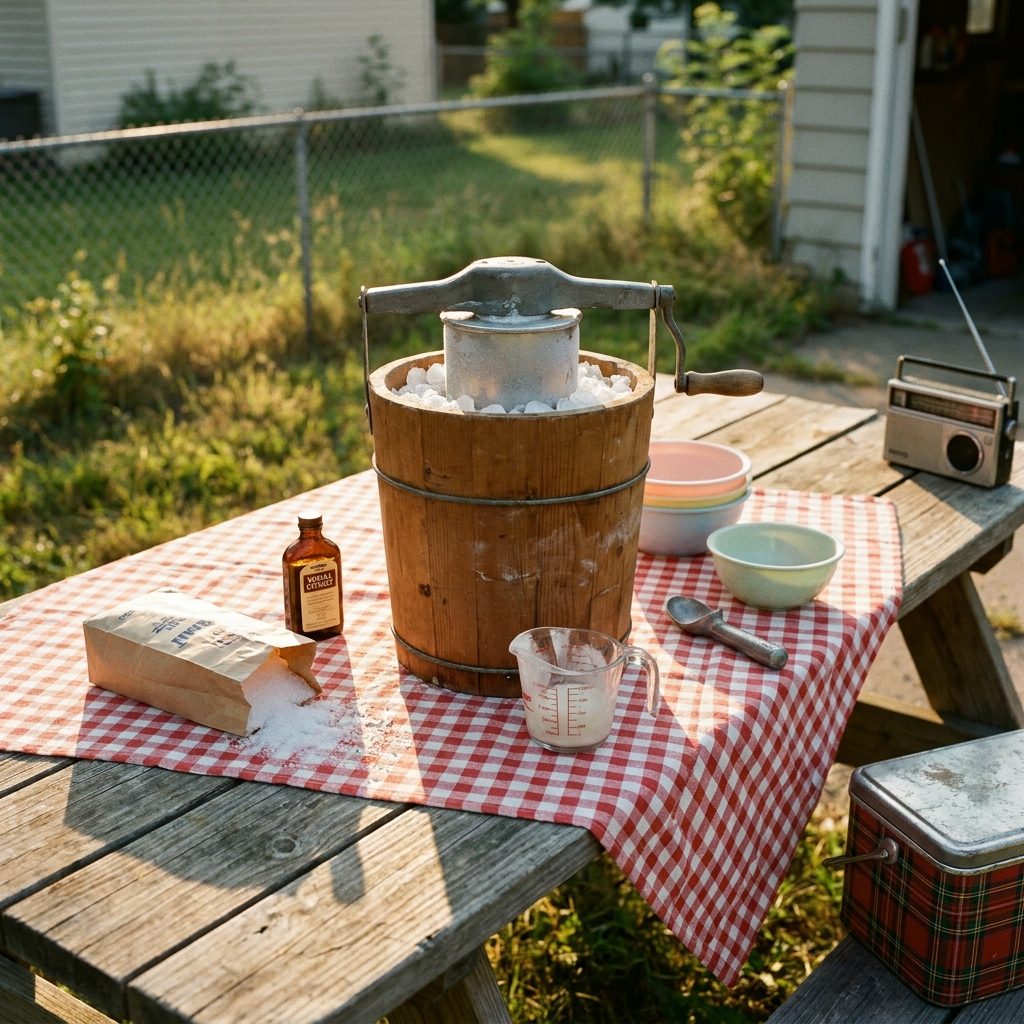
Rock salt. Nobody warned you about the rock salt. Your arm would go numb cranking that wooden bucket while your dad kept adding ice and insisting it was “almost done.” It was never almost done.
The whole production ate a Sunday afternoon and yielded maybe six small bowls. Consistency ran a little icier than store-bought, a little grainier — and nobody cared. We’d accidentally eaten rock salt at least once, and that didn’t stop us either.
The labor WAS the entertainment, honestly. Cranking got passed around like a relay baton, somebody always tried sneaking a taste before it had set, and somebody always got yelled at for it. The ice cream itself was fine. The arguing and the passing and the waiting in the sun? That was the actual point.
The Spirograph Set That Promised Geometric Perfection and Delivered Slipping Gears and Torn Paper
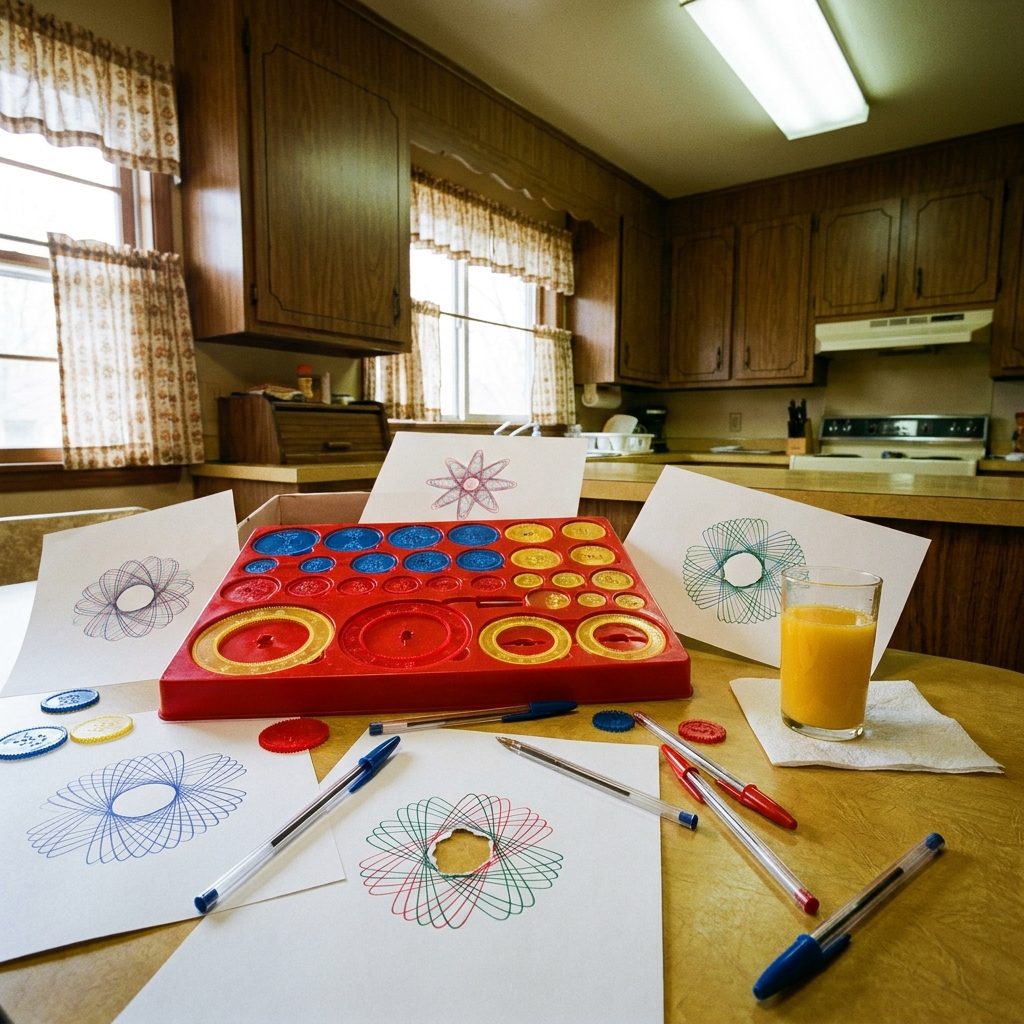
Every attempt started with ambition. You’d pick the biggest gear, the smallest wheel, line up three colors, and begin. For about four rotations it was going to be the most beautiful thing anyone had ever created.
Then the gear slipped.
Pen tore through the paper. Start over on a fresh sheet, press a little lighter, hold your breath. The successful ones really were gorgeous — hypnotic overlapping curves that looked pulled from a college math textbook. We’d tape them to the fridge like they were Rembrandts. The failures, which outnumbered the successes by a hilarious margin, went straight in the trash without ceremony.
Taping Songs Off the Radio and the Sacred Art of Hitting Record at Exactly the Right Moment
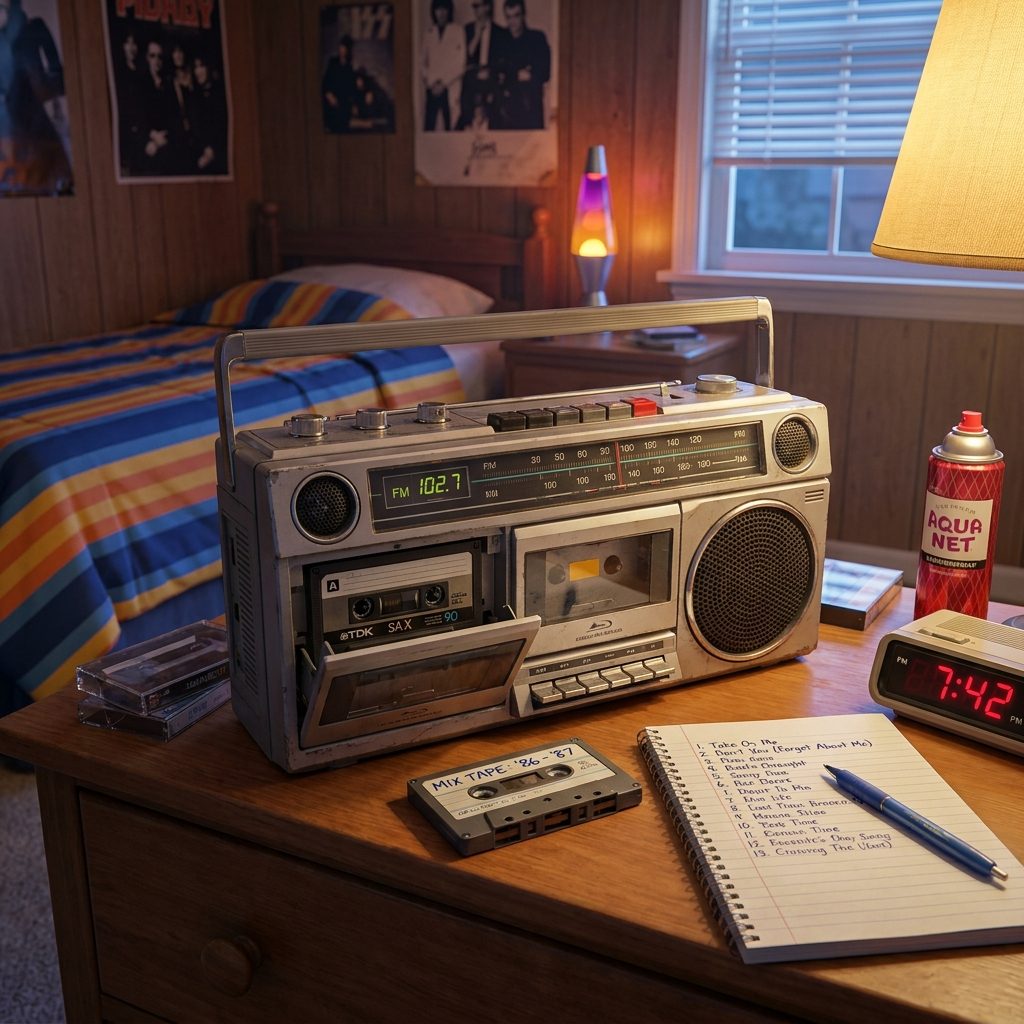
You’d sit there for an hour waiting for one song. The DJ would talk over the intro, you’d miss the first three seconds, and the tape would run out mid-chorus on the B-side. These were the indignities of building a mixtape from live radio. We accepted every one.
The real skill was anticipation. You learned which DJs front-loaded their sets with the good stuff and recognized the telltale fade-out of the song before yours. Your thumb hovered over that Record button like a gunfighter’s over a holster. And when you nailed it — clean recording from the first note to that last beat of silence before the next track — the rush was absurd. Disproportionate to the achievement. Absolutely real.
I’m convinced this is where an entire generation actually learned patience. Not from school. Not from church. From waiting for Casey Kasem to finally count down to your song.
The Kitchen Table Séance Phase That Lasted Exactly One Sleepover Too Long
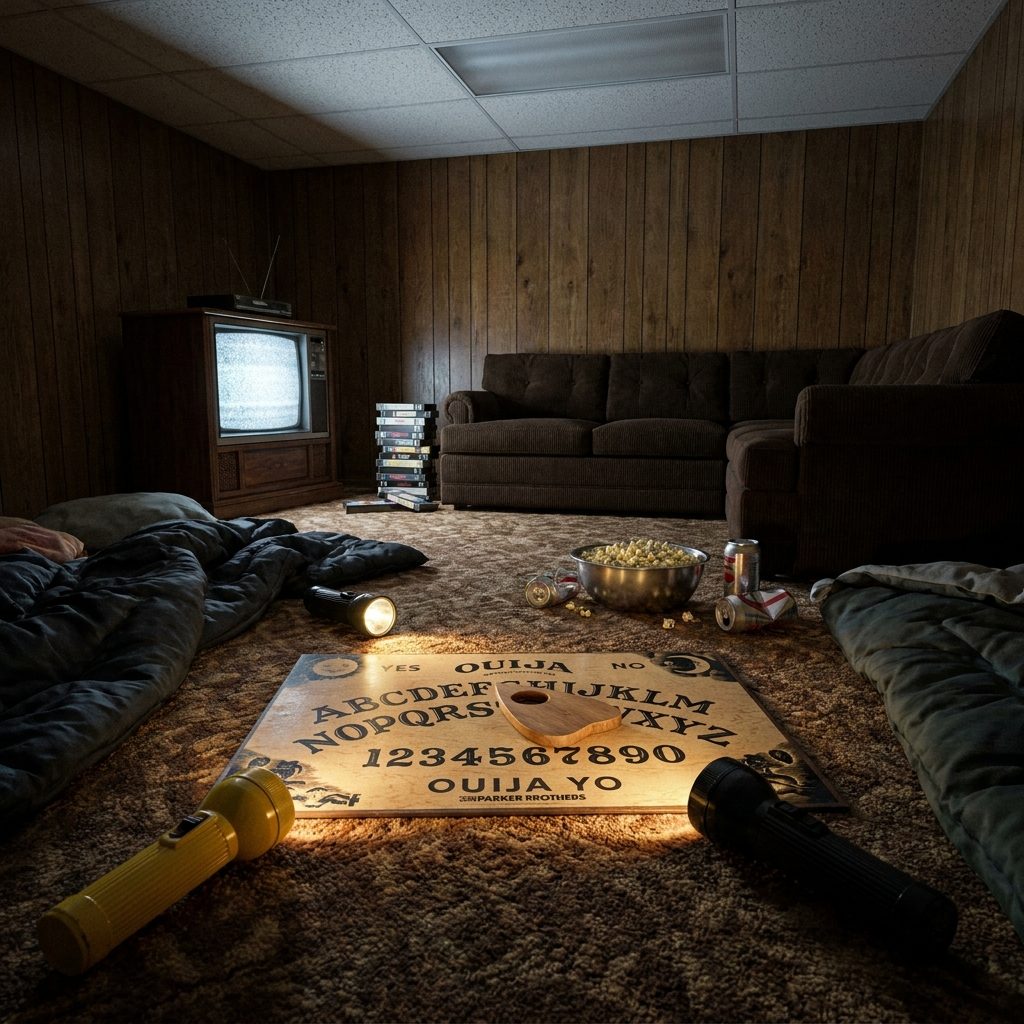
Someone always swore they weren’t moving it. Someone was always lying.
The Ouija board came out at sleepovers like clockwork — usually around 11 PM, after the pizza but before real tiredness set in. Basement lights off. Flashlights on. And for roughly forty-five minutes, a group of kids who couldn’t agree on a pizza topping would collectively channel “spirits” that had surprisingly strong opinions about who liked who at school.
The fear was real, though. I don’t care how old you are now or how rational you’ve become — if you played Ouija in a dark basement in 1986 and the planchette started moving while everyone screamed they weren’t pushing it, some tiny part of your brain still hasn’t fully recovered. Board goes back in the box. Lights snap on. Nobody sleeps great. And then six months later, same basement, same board, same kids who swore they’d never do it again. Every time.
Would you like to save this?
Please note that some of the imagery in this article were created with the aid of AI image generators.