
Nobody announced it. There was no ribbon-cutting, no front-page headline declaring that the world had just shifted under our feet. But somewhere between the beep of a digital watch and the whir of a VCR rewinding at midnight, the 1980s rewired how we lived, worked, communicated, and killed time. Some of these gadgets sat on our desks. Some lived in our pockets or rode shotgun in the car. All of them changed something, quietly and permanently. Here are 35 of them.
Would you like to save this?
The Sony Walkman That Turned Every Sidewalk Into a Personal Movie Soundtrack
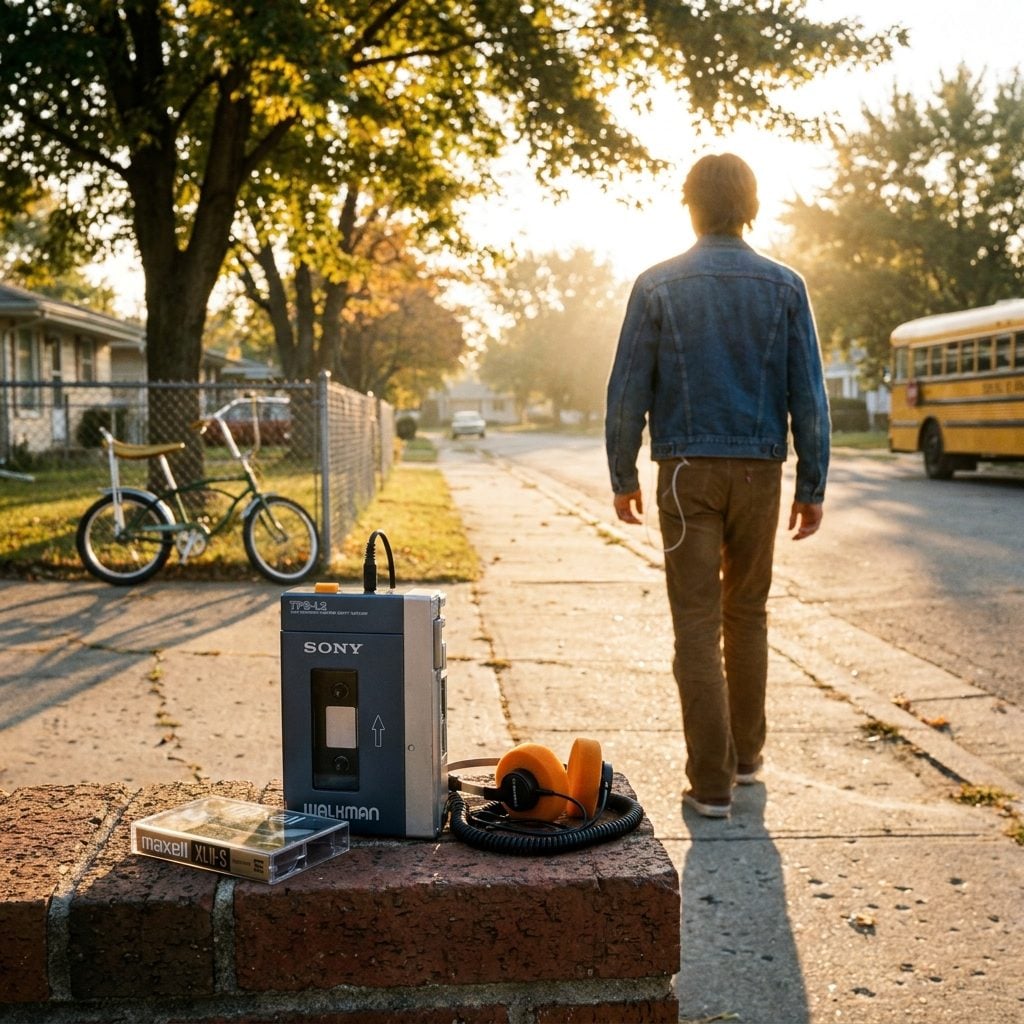
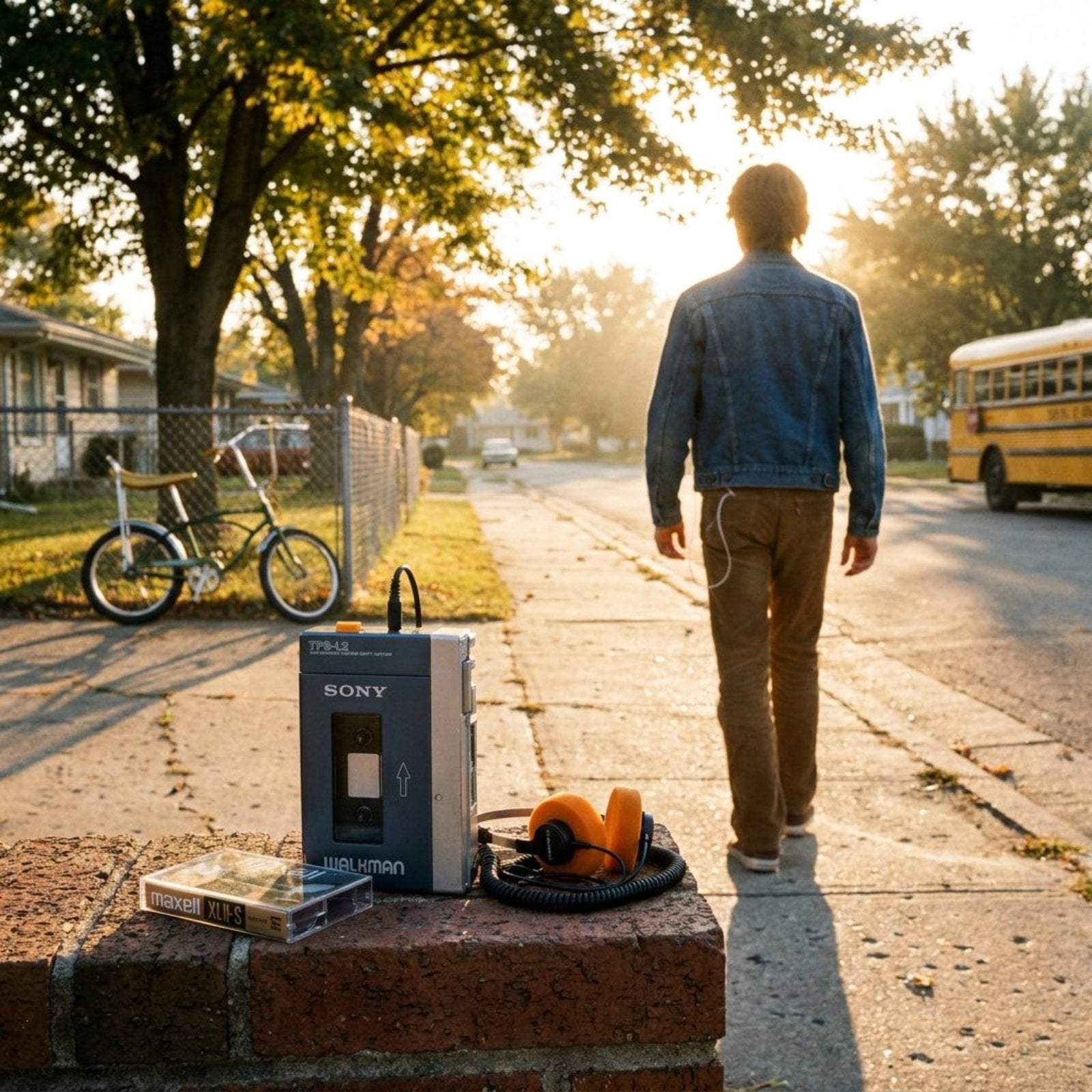
Before the Walkman, music was stationary. It lived in the living room, in the car, on a boombox in the backyard. Then Sony shipped a little silver brick with a belt clip in 1979, and by 1982 every kid in America was walking to school inside their own private concert hall.
The foam on those orange headphones compressed flat within a month. The door latch on the cassette compartment eventually stopped clicking properly. None of that mattered. What mattered was pressing play on Side B of a carefully assembled mixtape and feeling, for the first time, like the world had a soundtrack specifically written for you.
The VCR With the Blinking ’12:00′ That Taught a Generation Technological Helplessness
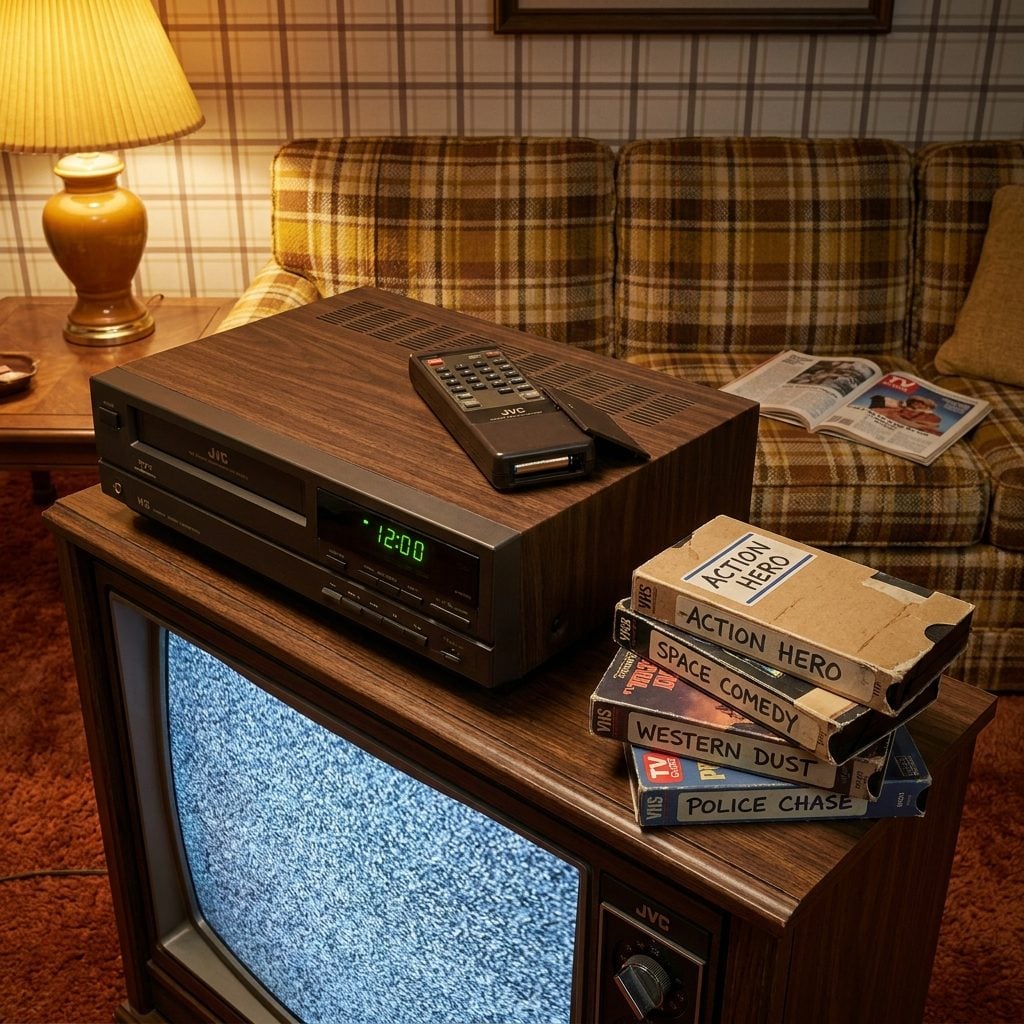
Every household in America had one. Almost no household in America ever successfully programmed one.
The manual was usually still sealed in the original plastic bag inside the Styrofoam box in the garage, because why would you need a manual to set a clock? And yet that green 12:00 blinked, and blinked, and blinked, year after year, an eternal monument to the gap between what consumer electronics promised and what they actually delivered. Dad claimed he knew how to fix it. He did not.
The VCR was genuinely transformative, the idea that you could record a TV show and watch it later was almost philosophically disorienting in 1983. Time-shifting, they called it. What most families actually used it for: renting Beverly Hills Cop seventeen times and never once successfully recording the Super Bowl on purpose.
The Cordless Phone That Let the Whole Kitchen Become a Phone Booth
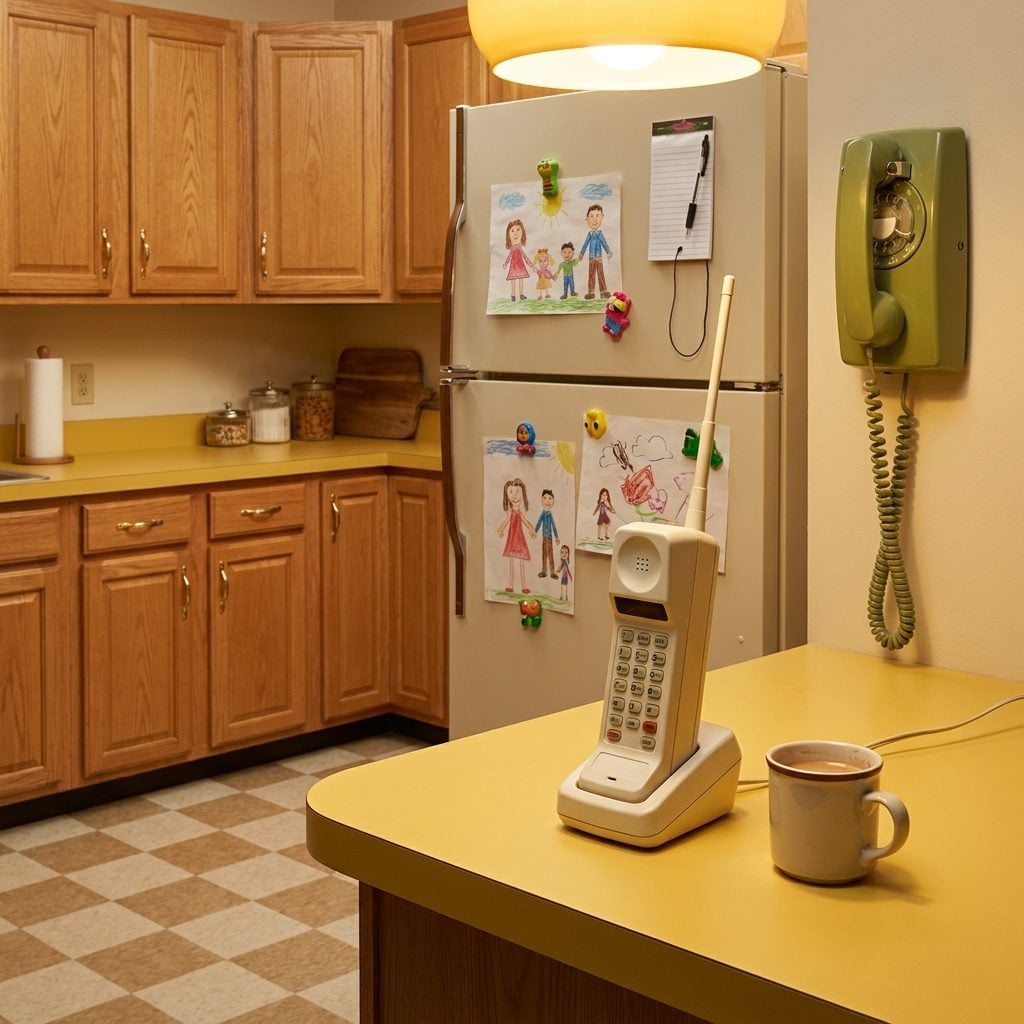
For roughly forty years, making a phone call meant standing in one spot. The phone was bolted to the wall, the cord had about six feet of useful range, and private conversations happened in the hallway with the door mostly shut and one hand cupped around your mouth.
The cordless phone ended all that. Suddenly you could pace. You could wander to the window. You could check what was in the refrigerator mid-sentence. The kitchen became genuinely multipurpose in a way it had never been.
The static was awful. You had to keep the handset within forty feet of the base or the call dropped into white noise. And if someone in the neighborhood had the same model, you could occasionally hear their conversations with perfect clarity, which was either horrifying or the best entertainment of 1987, depending on your perspective.
The IBM Personal Computer That Quietly Moved the Office Into the Spare Bedroom
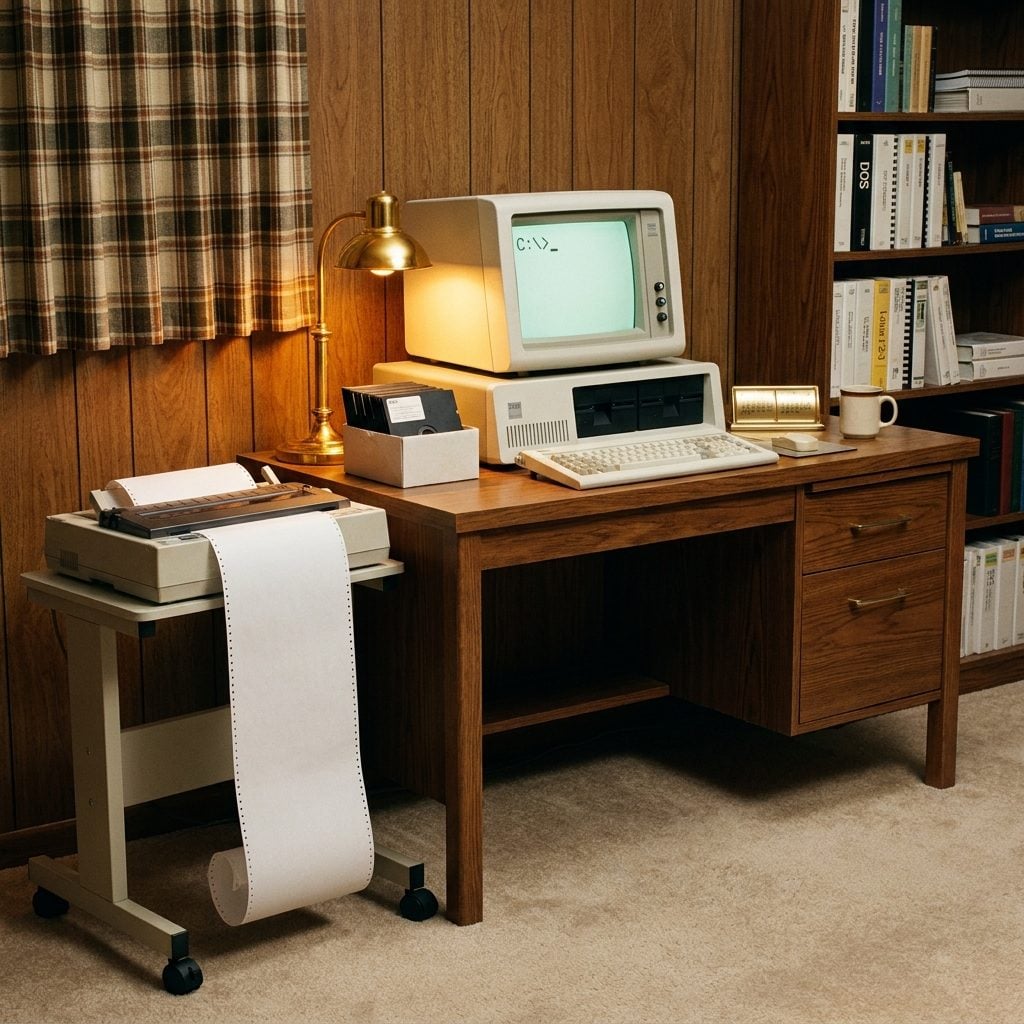
August 12, 1981. IBM introduced the 5150, and within three years a significant slice of middle-class America had one sitting in what used to be called the spare bedroom and was now called, with some ceremony, the home office.
VisiCalc. WordStar. Lotus 1-2-3. Software names that sound like rejected band names today but genuinely rewired how people thought about work. The idea that a family could own the same computing power that corporations had spent millions on a decade earlier was not a small thing.
The keyboard made a sound no laptop has ever replicated, a deep, authoritative clack that made typing feel like operating heavy machinery. That sound alone convinced people they were being productive, which might be the IBM PC’s most underrated feature.
The Nintendo Entertainment System That Pulled an Entire Industry Back From the Cliff
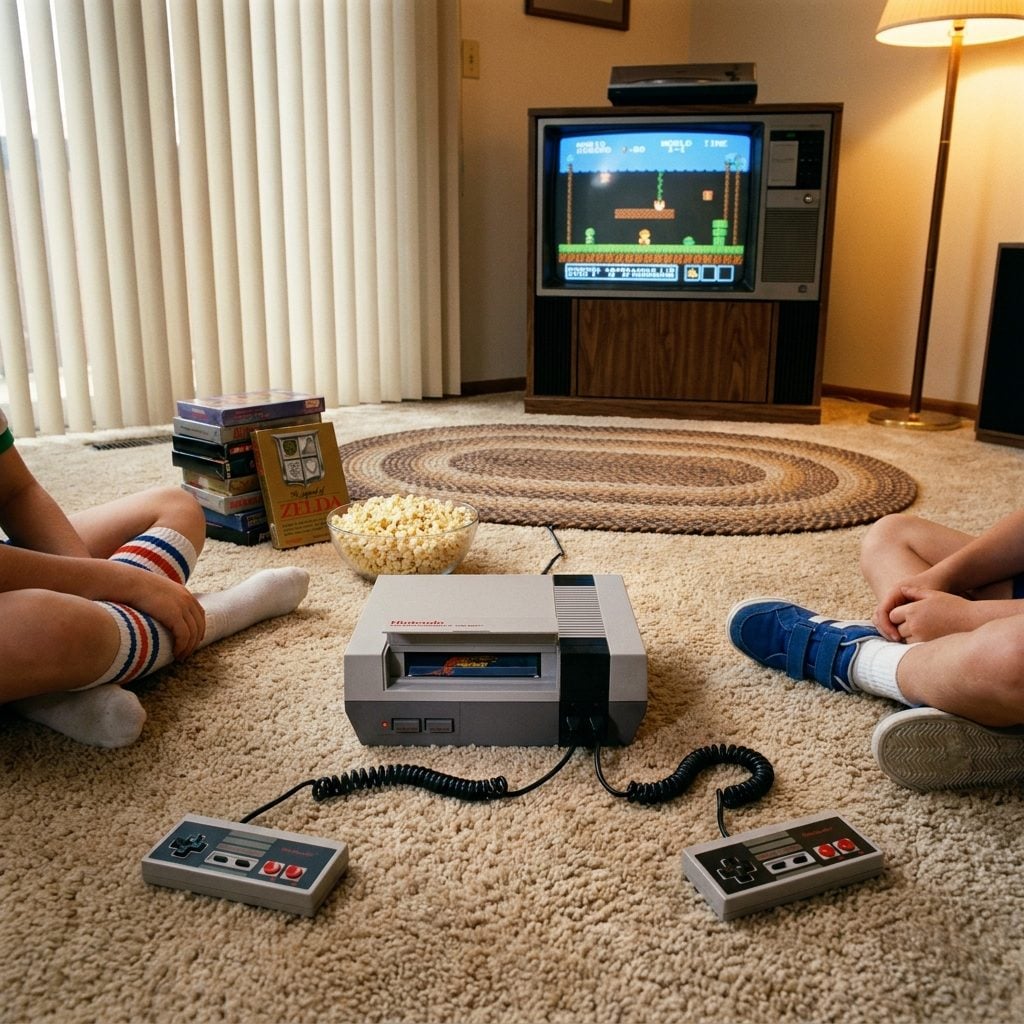
By 1983, the American video game industry had cratered so completely that Atari buried unsold cartridges in a New Mexico landfill and retailers stopped giving games their own shelf space. Two years later, Nintendo released the NES bundled with Duck Hunt and the R.O.B. robot, and within a year it was the best-selling toy in the country.
What made it work wasn’t just the games, though Super Mario Bros. was genuinely unlike anything anyone had played. It was the controllers, simple, sturdy, just a D-pad and two buttons, and the packaging, which positioned the NES as an “entertainment system” rather than a video game, sidestepping the word retailers had learned to fear.
Saturday mornings were never the same. Entire friendships were built around who had which cartridges and who could get to World 8.
The Microwave Oven That Colonized Every Kitchen Counter in America
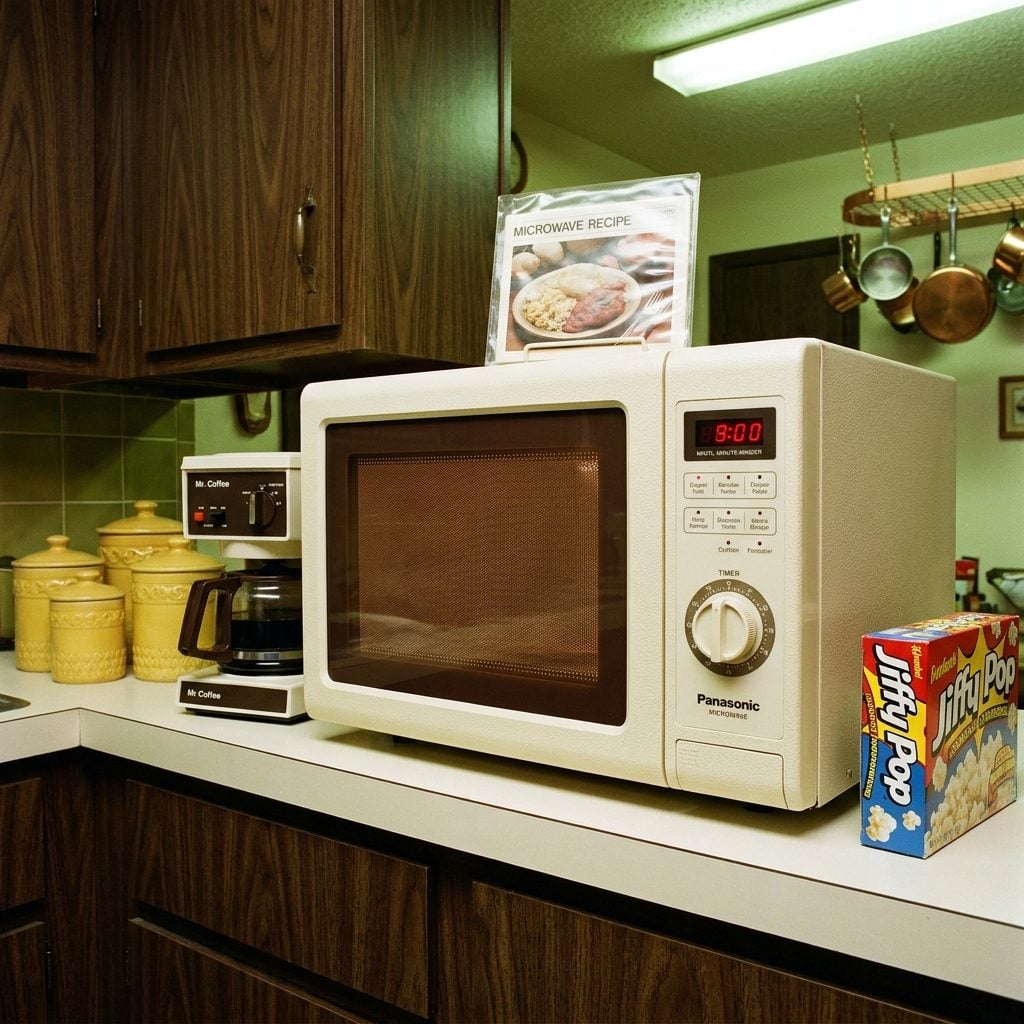
Microwave ovens existed through most of the 1970s, but they were the size of filing cabinets and cost more than a used car. Then prices collapsed, and by 1983 they were everywhere, sitting on counters like a second appliance with the confidence of something that had always been there.
The early recipe books were spectacular in the wrong way. Microwave lasagna. Microwave roast chicken. Microwave baked Alaska, theoretically. Most families landed on a much shorter list: reheating coffee, defrosting hamburger meat in a puddle of gray liquid, and making Jiffy Pop feel unnecessary. The beep at the end had a particular authority to it.
The Answering Machine That Ended the Era of Calls Disappearing Into Thin Air
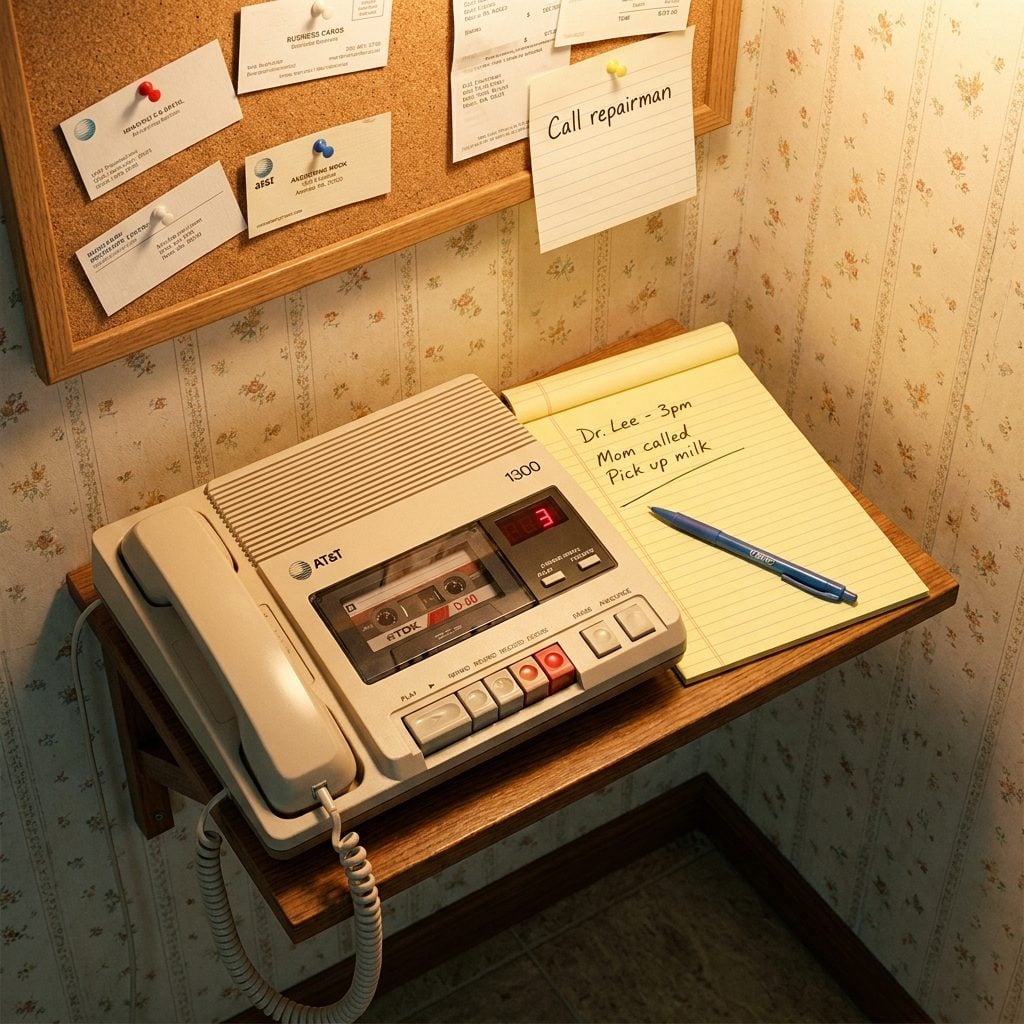
Before the answering machine, if you weren’t home, the phone rang into an empty house and that was it. The call was simply gone. Whoever called might try again, might not. The uncertainty was just a feature of life.
The answering machine ended that completely. Suddenly there was a record. A small red number on the front of a beige box told you, with some gravity, that someone had wanted to speak with you. The outgoing message became a minor form of self-expression, the families who kept it brisk and professional, the ones who recorded something trying to be funny, the ones who let the kids do it.
Playing back messages when you got home had a specific ritual to it. Pressing rewind, waiting for the tape to finish, pressing play, hearing that slightly warped cassette audio. Three messages. One hang-up, one from Mom, one from someone who clearly had the wrong number but left a long detailed message anyway.
The CD Player That Made Your Entire Cassette Collection Feel Embarrassingly Old
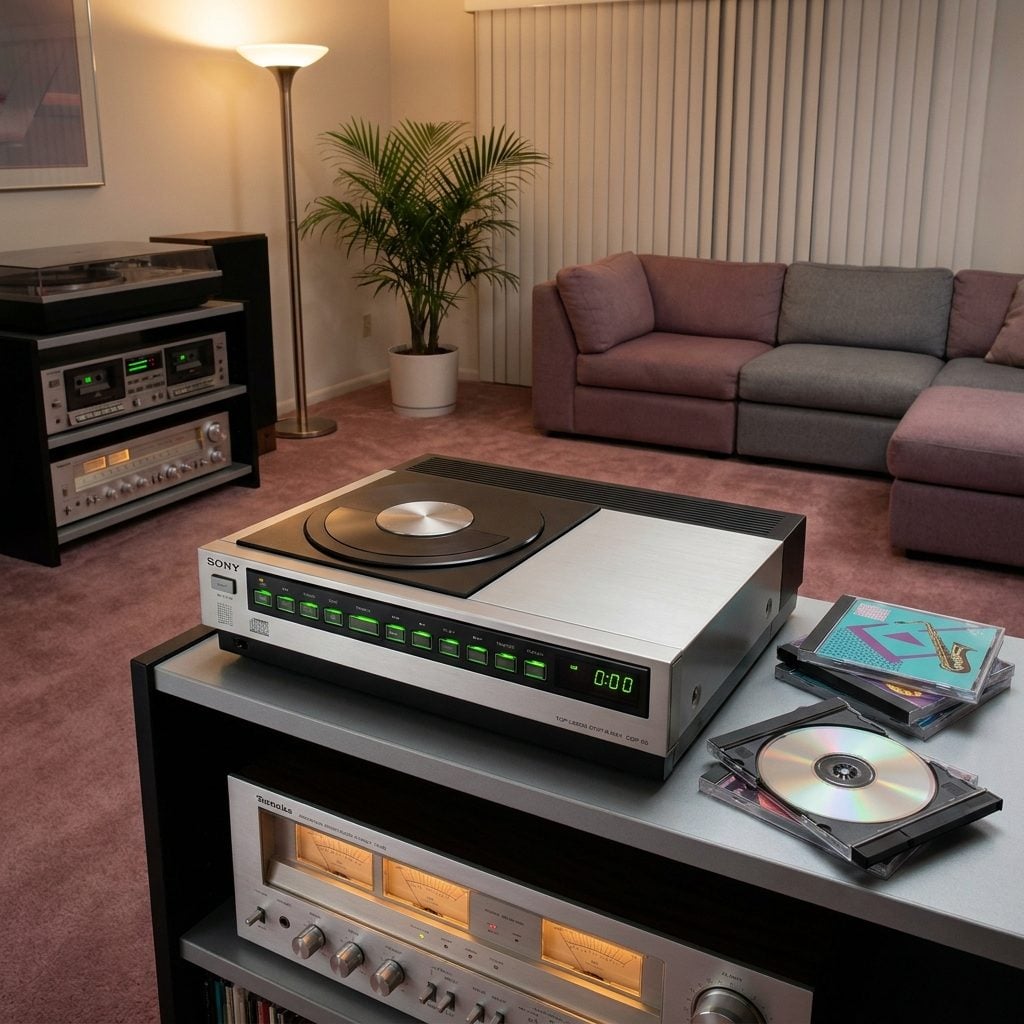
The pitch was almost too good to be true: no hiss, no wow, no flutter, no degradation, a disc that would supposedly last forever. Audio salespeople in 1983 and 1984 were practically evangelical about it, and they weren’t entirely wrong.
The first time you heard a CD on a decent system, the silence between the notes was genuinely disorienting. Cassettes had always filled that silence with a faint steady tape hiss that you’d stopped hearing years ago, the way you stop hearing an air conditioner. Its absence felt almost clinical.
Jewel cases were their own small drama. They cracked if you looked at them wrong. The little clear plastic teeth that held the disc in place snapped off within a year. And yet the format felt like the future so completely that by 1988, cassette racks at the record store had quietly started shrinking without anyone making a formal announcement.
The Suction-Cup TV Antenna You Rotated by Hand While Someone Yelled ‘Right There!’
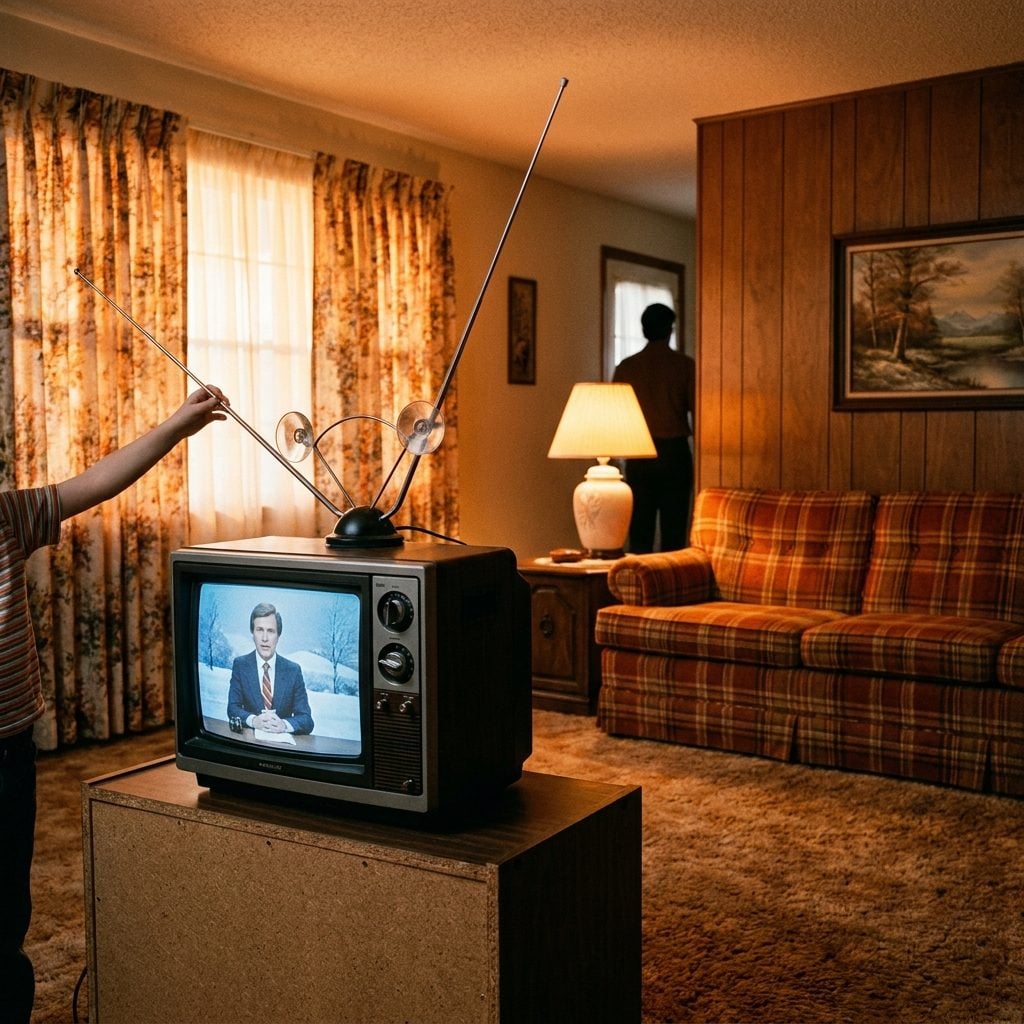
Everyone in the house had a role. One person stood at the TV, one hand gripping the antenna arm at exactly the right angle discovered through fifteen minutes of trial and error. The other person sat on the couch and issued commands. Left. No, back. No, that was it, go back.
The suction cups never actually held. They’d drift slowly across the top of the set over the course of an evening until the picture went to snow again. We accepted this as normal. The concept of a stable television signal felt like something that happened in wealthier neighborhoods.
The Home Stereo Equalizer With the Glowing Sliders Nobody Actually Understood
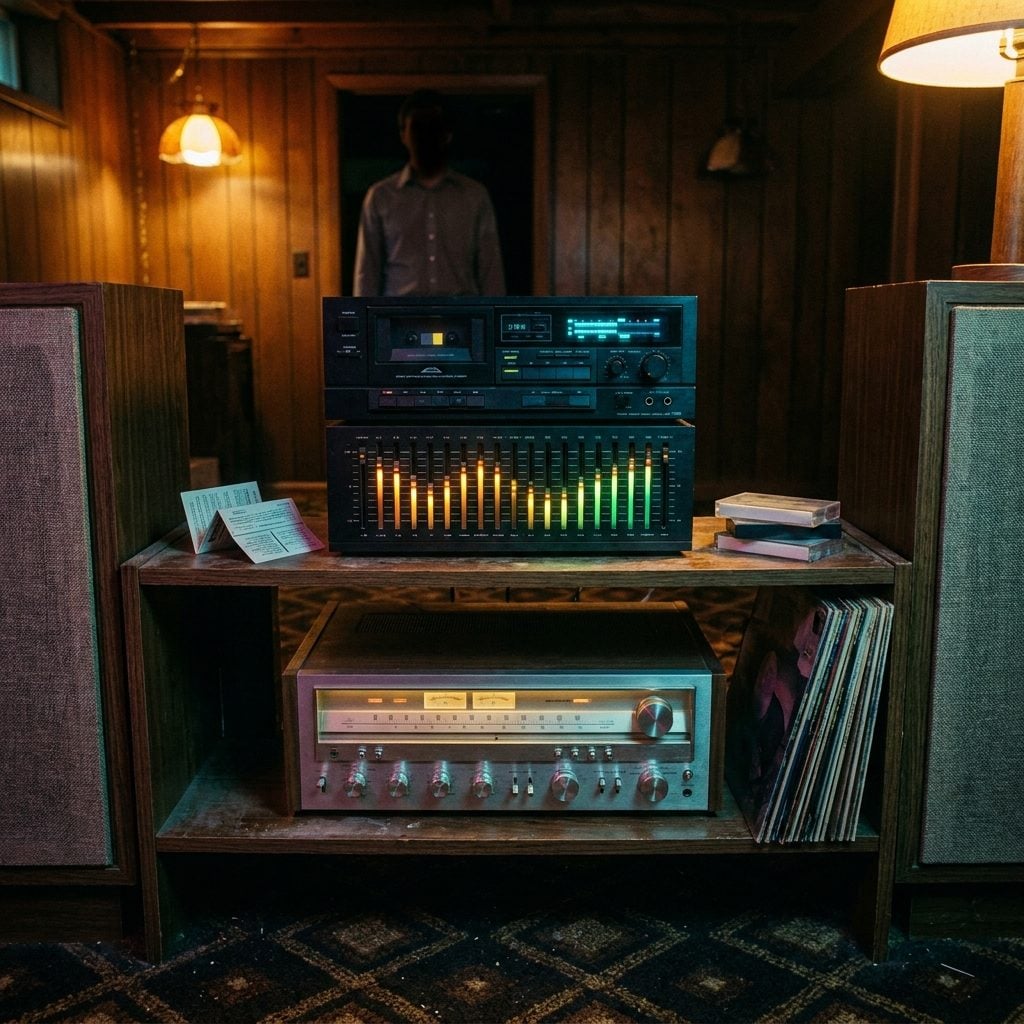
The sliders were always in some dramatic mountain-range formation: bass frequencies boosted into the red, treble cranked all the way up, the midrange dipped into a valley for reasons nobody could explain. It looked technical. That was the point.
Most of us had no working theory about what the individual frequency bands actually controlled. But moving the sliders felt like something a sound engineer at a concert venue would do, which was close enough. The green and amber LEDs bouncing on the VU meters beside it completed the effect. Pure theater, housed in brushed aluminum.
The Electric Can Opener That Permanently Occupied One Corner of the Kitchen Counter
Would you like to save this?
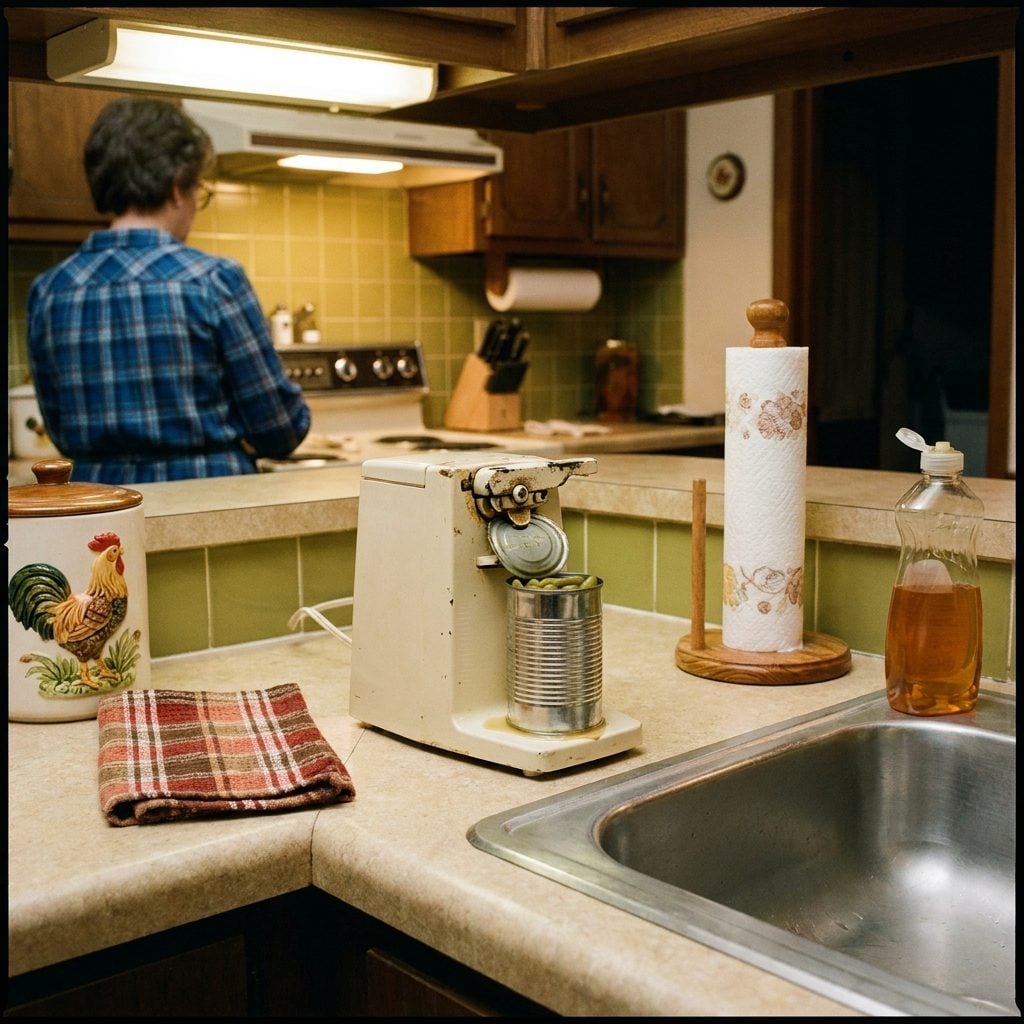
It lived in the same spot for twenty years. Not stored in a cabinet, not tucked away, permanently anchored to the counter corner like load-bearing kitchen infrastructure. Moving it would have felt structurally unsound.
The little magnet on the lid-lifting arm was what made it feel futuristic when it first arrived. You pressed the lever down, the motor whirred, and the lid separated itself and clung there without you having to touch it. We were very impressed by this in 1979 and somehow stayed impressed until 1994.
At some point it started cutting jagged instead of smooth, and nobody replaced it for another four years.
The Bread Maker That Briefly Convinced Suburban America It Was Artisanal
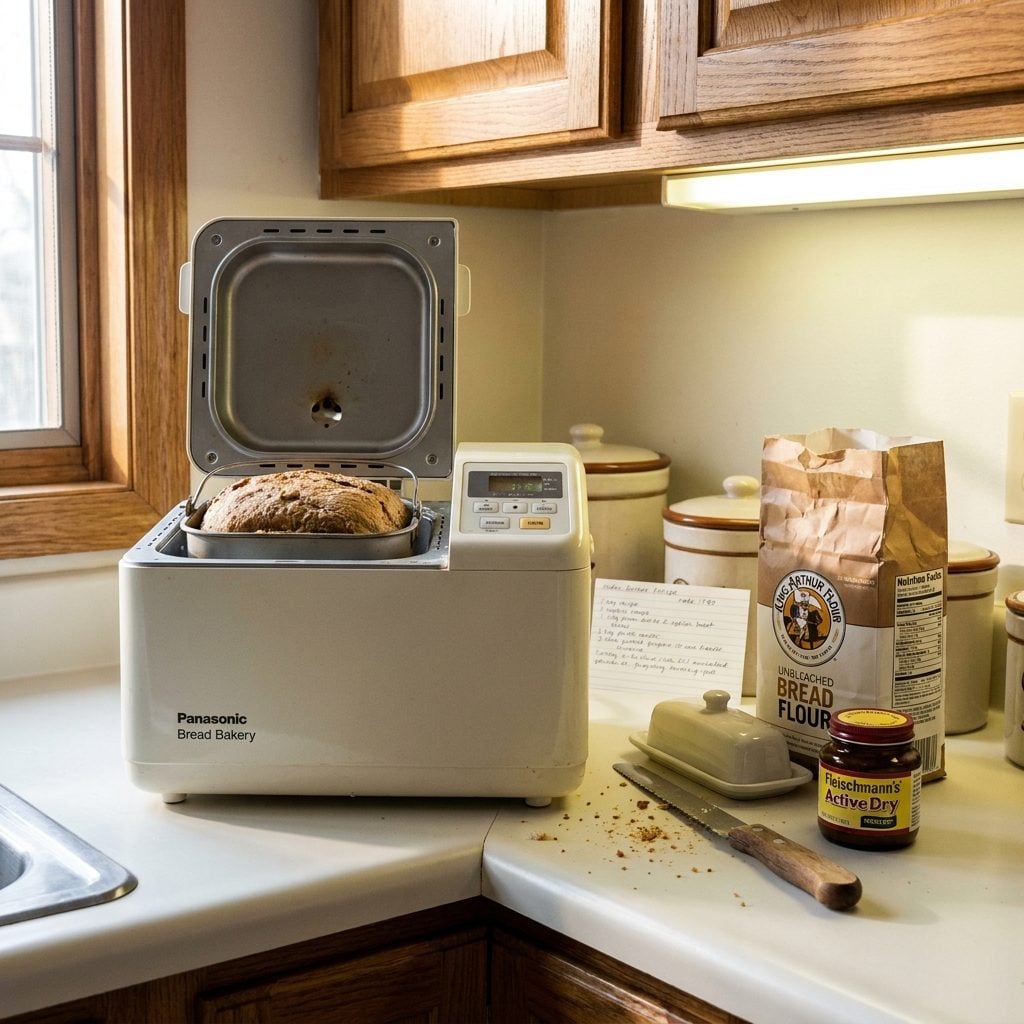
For about eighteen months at the end of the decade, the bread maker was proof that you were doing something meaningful with your life. You’d measure out the flour the night before, drop in the yeast packet, set the timer, and wake up to a loaf waiting in the kitchen. The loaf was dense enough to use as a door stop. Nobody mentioned this.
The paddle-shaped hole in the bottom of every single loaf was the era’s most consistent quirk. You could spot a bread-machine household by the way they sliced around it without comment.
The Digital Thermometer That Finally Retired the Glass Mercury Stick
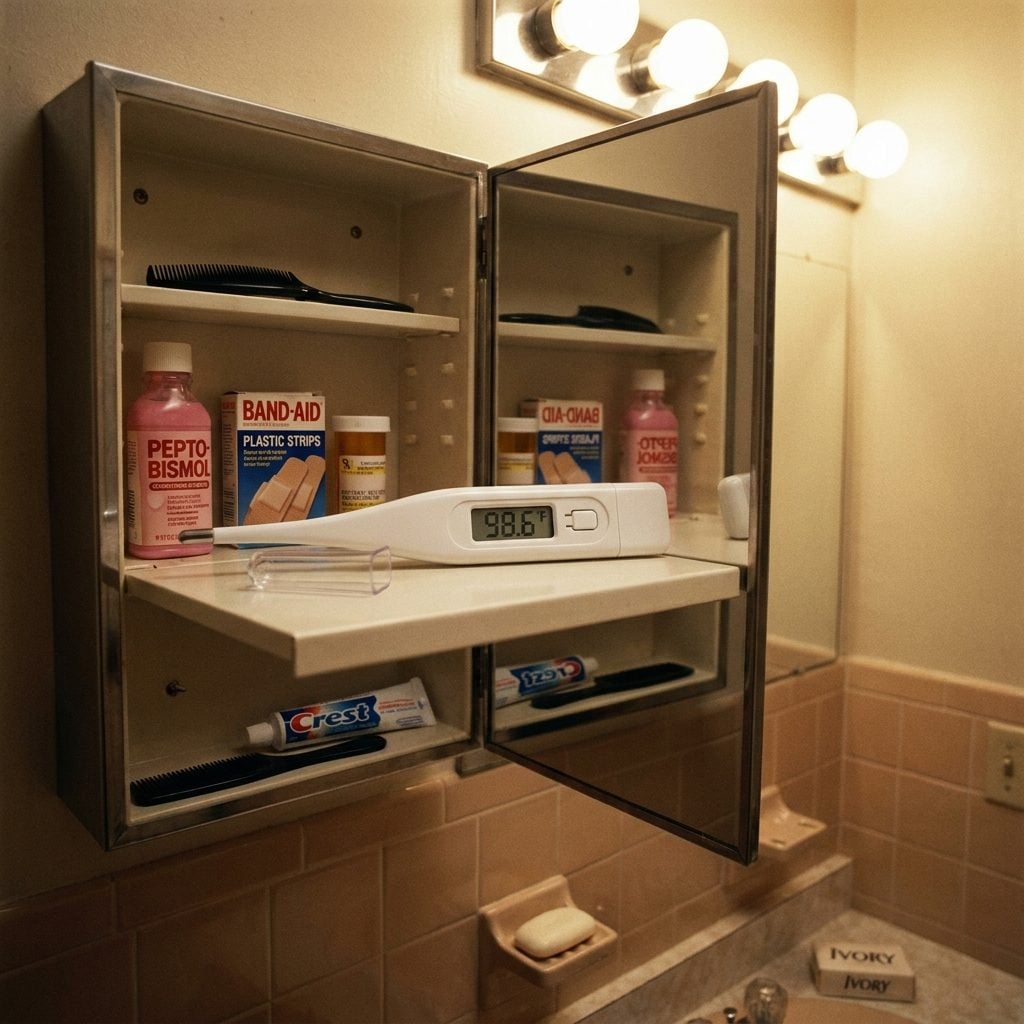
The glass mercury thermometer required you to shake it down with a sharp wrist-snap before use, read the result by holding it under the bathroom light at a specific angle, and then squint. There was always a moment of uncertainty about whether you were reading 99.6 or 100.2, and the stakes felt significant.
The digital version beeped. It gave you a number. It was unambiguous. This felt like an enormous leap forward in the management of sick days, and honestly, it was.
The Home Tanning Lamp That Looked Medically Questionable Even in 1986
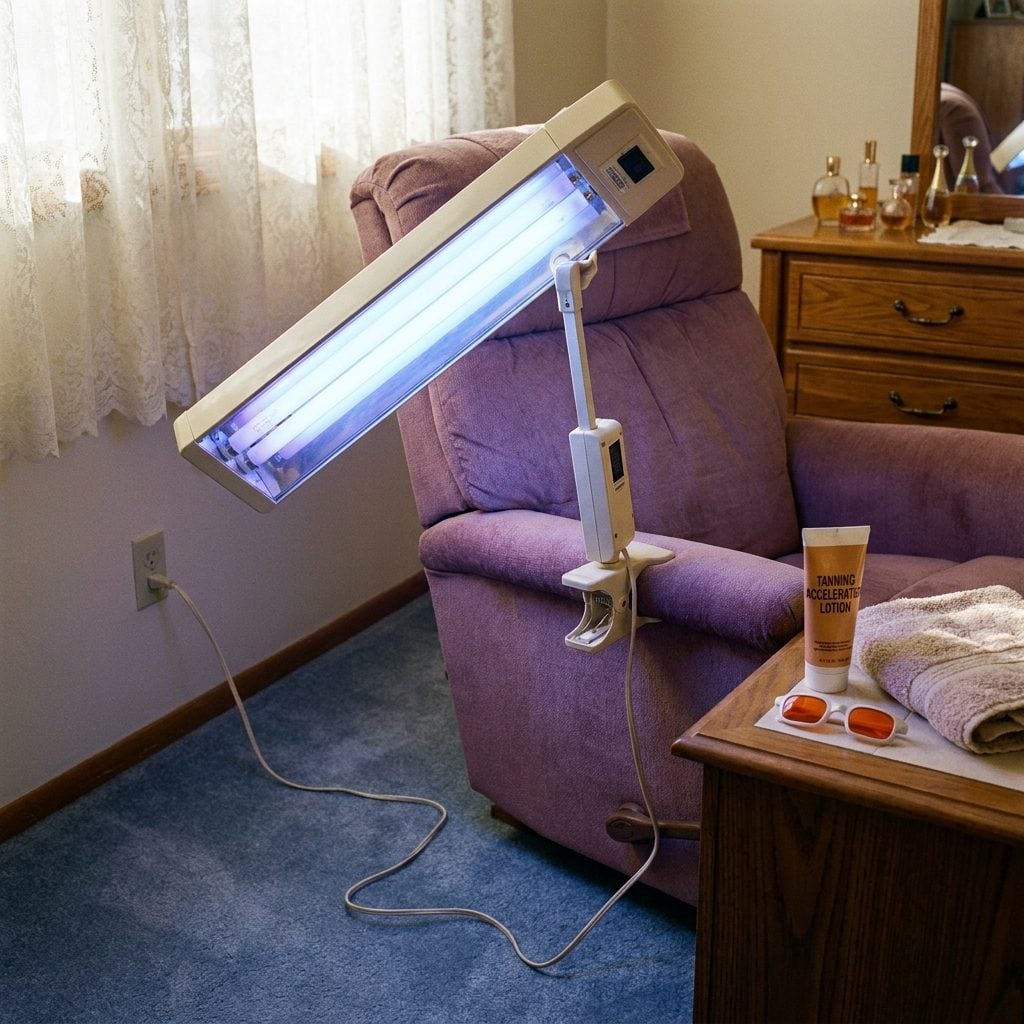
The goggles that came with it looked like something a welder would reject. Small, dark plastic rectangles on an elastic band, supposedly protecting your eyes from UV radiation while the rest of your face absorbed it unimpeded. Most people left them on the side table.
The lamp itself had the aesthetic of medical equipment that hadn’t passed a review board. It was positioned at specific angles according to a paper instruction sheet with diagrams that looked like they’d been photocopied four times. The whole setup radiated an energy that said: this will probably be fine.
Dermatologists now speak of this era with the same tone archaeologists use when describing a really interesting mistake.
The Giant Floor-Standing Air Purifier Humming Beside the Family Room Couch
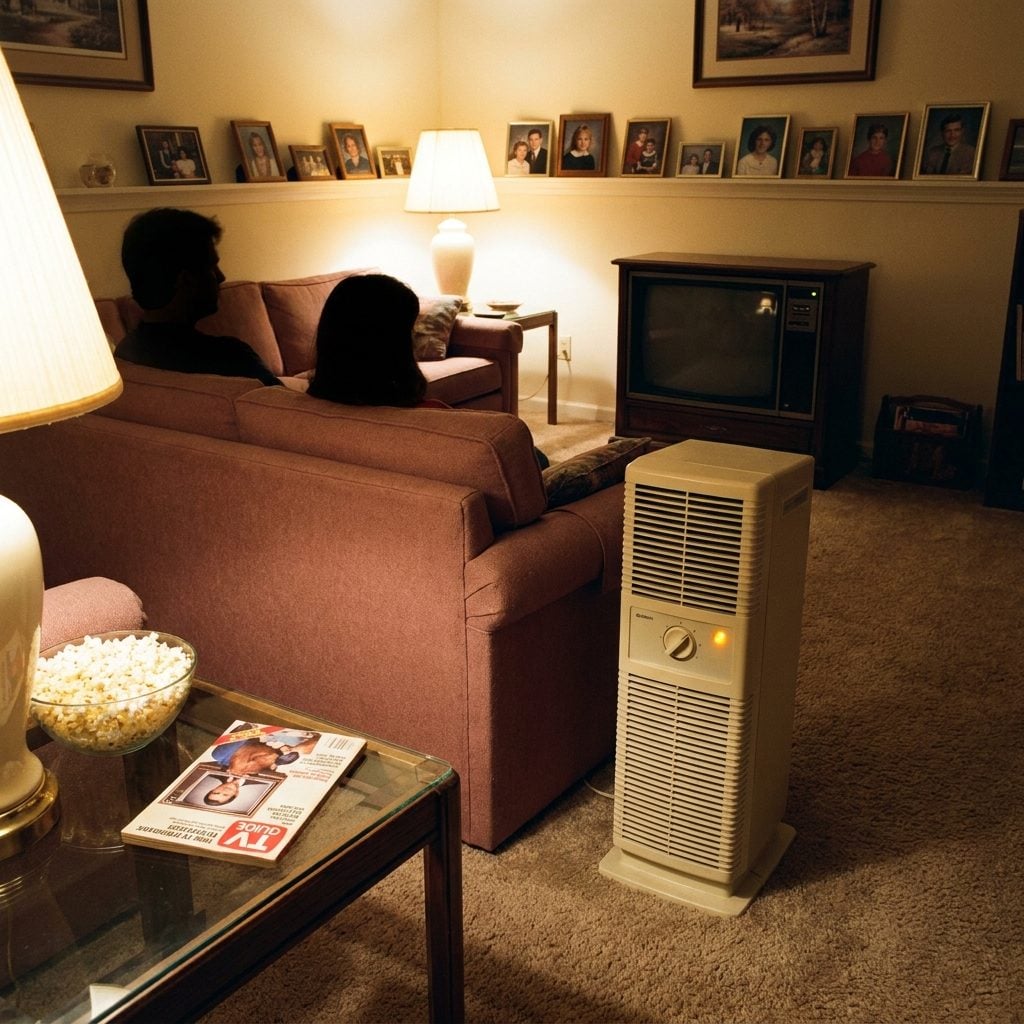
It ran constantly. That was the whole point, you set it to medium, tucked it beside the couch, and it just hummed there for the rest of the decade, presumably removing something from the air. Nobody was entirely sure what. Dust? Odors? Bad energy? The box had used the word ‘ions’ and that was enough.
The sound it made was oddly comforting at night. A low, steady white noise presence. When it eventually died, the silence it left behind felt wrong in a way that took a week to get used to.
The Cassette Adapter That Made Your CD Player and Car Stereo Awkward Partners
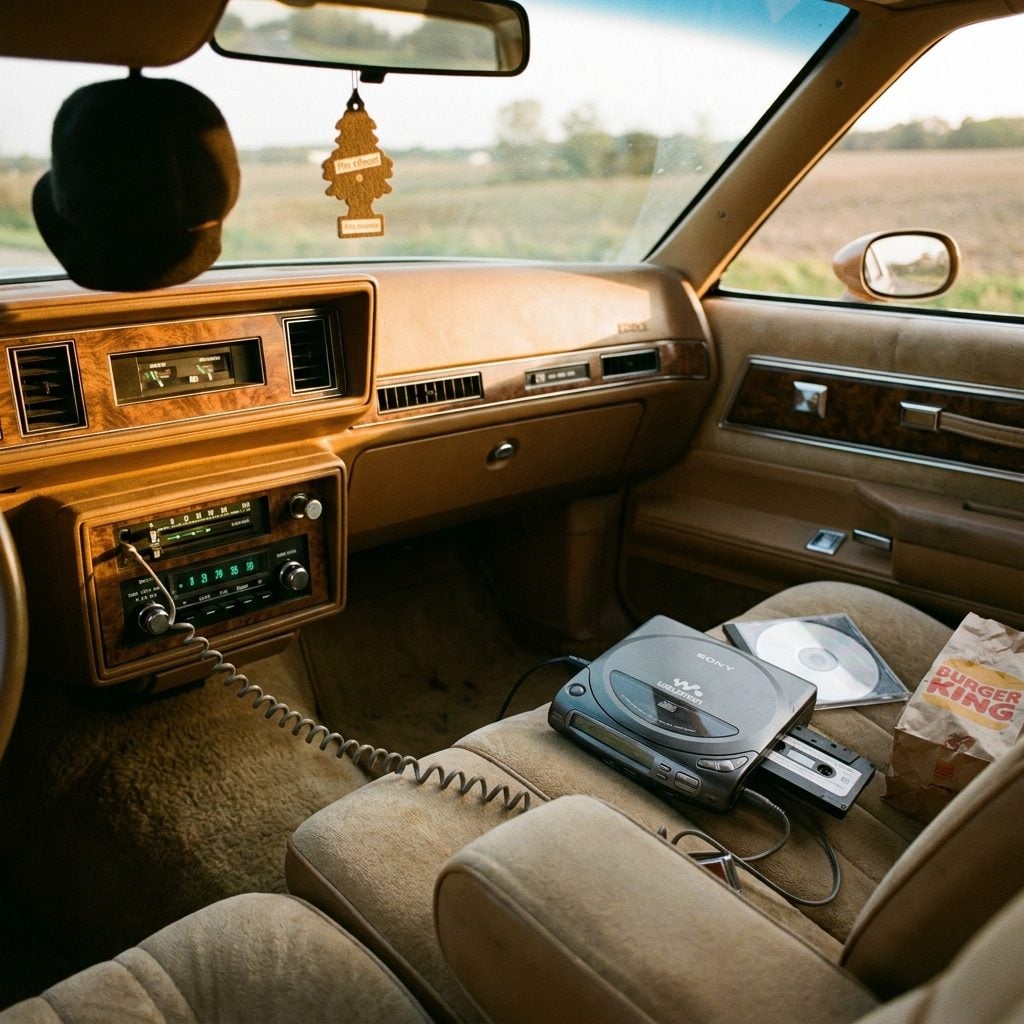
The cord always got tangled. Always. You’d fish the cassette adapter out of the glove box, plug the skinny cable into the CD player’s headphone jack, shove the fake cassette into the tape deck, and spend the next forty seconds adjusting volume levels on two separate devices while trying not to drift into the next lane. And it worked, sort of. There was always a faint warble, like the music was being broadcast from a slightly different dimension.
This little gray plastic rectangle was the bridge between two eras of audio technology, and it was glorious in its awkwardness. Nobody questioned why they needed a cassette that wasn’t a cassette to play a disc that replaced cassettes. We just did it, and we felt incredibly modern doing it.
The Car Phone Mounted Between the Seats That Said ‘I Have Arrived’
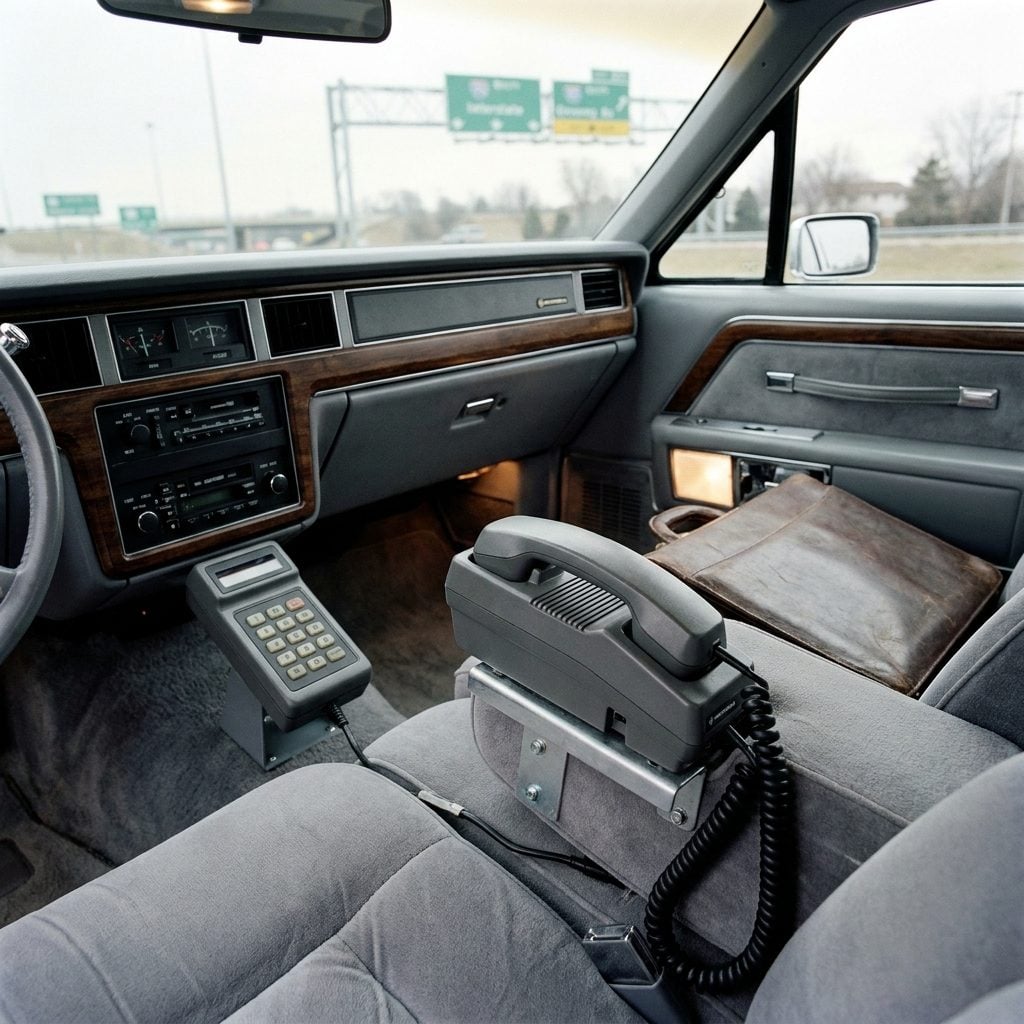
The car phone didn’t just make calls. It announced something. If you had one of those gray brick units hardwired between the front seats, people in the parking lot knew before you even opened your mouth. Real estate agents, insurance executives, guys who described themselves simply as “in sales”, they all had one, and they all managed to take calls in the most visible possible locations.
The hardware itself was enormous by any modern standard: a separate handset, a mounting bracket that took up half the console, and an antenna bolted to the trunk lid. Monthly service costs were staggering. None of that mattered. You were reachable. You were mobile. That was the whole point, and the world was going to know it.
The Electric Pencil Sharpener That Sounded Like a Dental Drill Every Morning
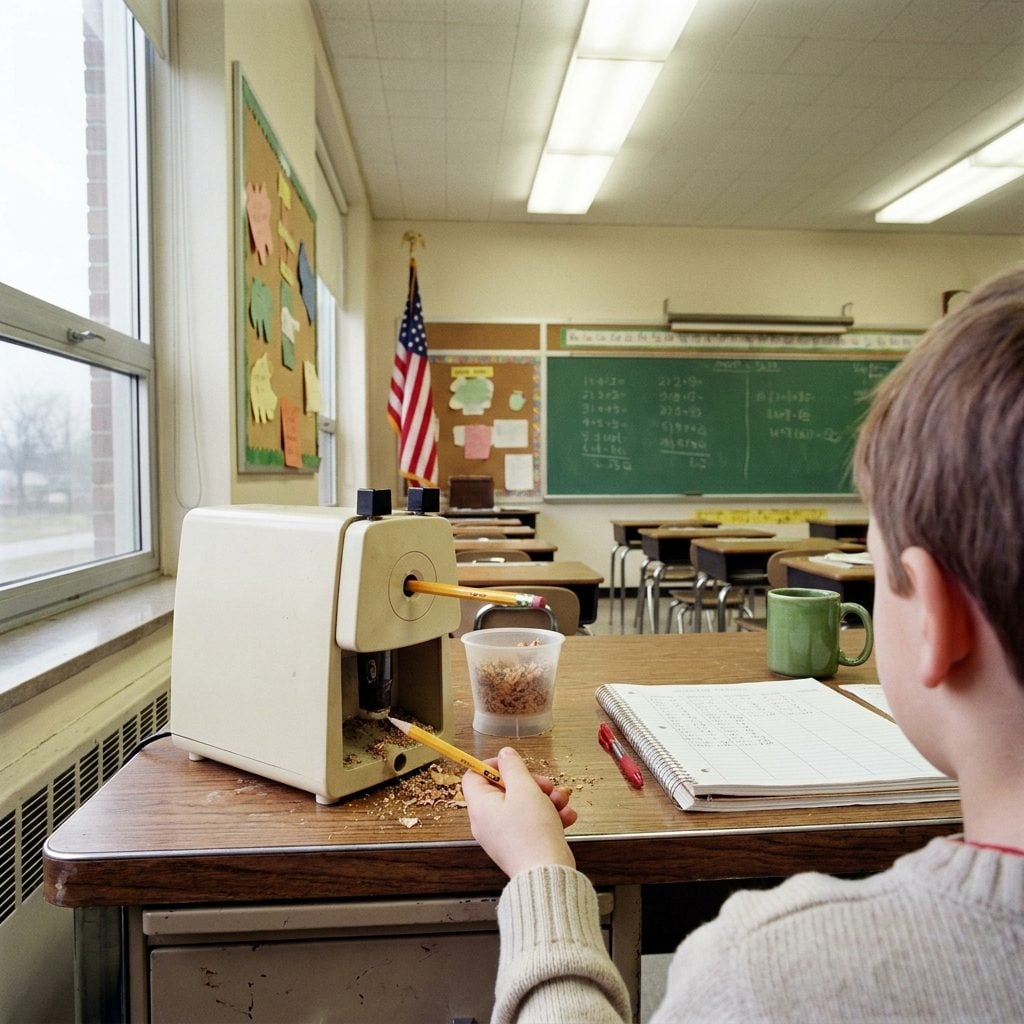
You could hear it from the hallway. That grinding whir, somewhere between a blender and a bandsaw, was the unofficial start-of-day sound for every elementary school in America from about 1982 onward. The machine sat on the teacher’s desk like a small appliance that had wandered in from a diner kitchen, cream-colored and completely enormous for what it did.
The real danger was holding the pencil in too long. You’d pull it out a perfect sharp spike, feel proud, then drop it immediately and snap the tip. Back to the machine. The line forming behind you said nothing, but you felt it.
The Automatic Sprinkler Timer That Made Weekend Lawn Maintenance Practically Optional

Before this gadget showed up, somebody had to remember to water the lawn. That somebody was always the same person, and that person was always slightly resentful about it. The automatic sprinkler timer changed the entire emotional contract of suburban lawn ownership. You set the dial on a Saturday afternoon, the satisfying click of each small plastic tab, and the lawn took care of itself while you slept.
It sounds minor. But the 1980s suburban lawn was a genuine obsession, a social performance visible from the street. Having the timer meant you were serious. It meant your grass would be green even if you were on vacation, even if you forgot, even if you simply didn’t feel like dealing with it. For a certain kind of homeowner, that was everything.
The Electronic Spell Checker Students Treated Like a Pocket Oracle
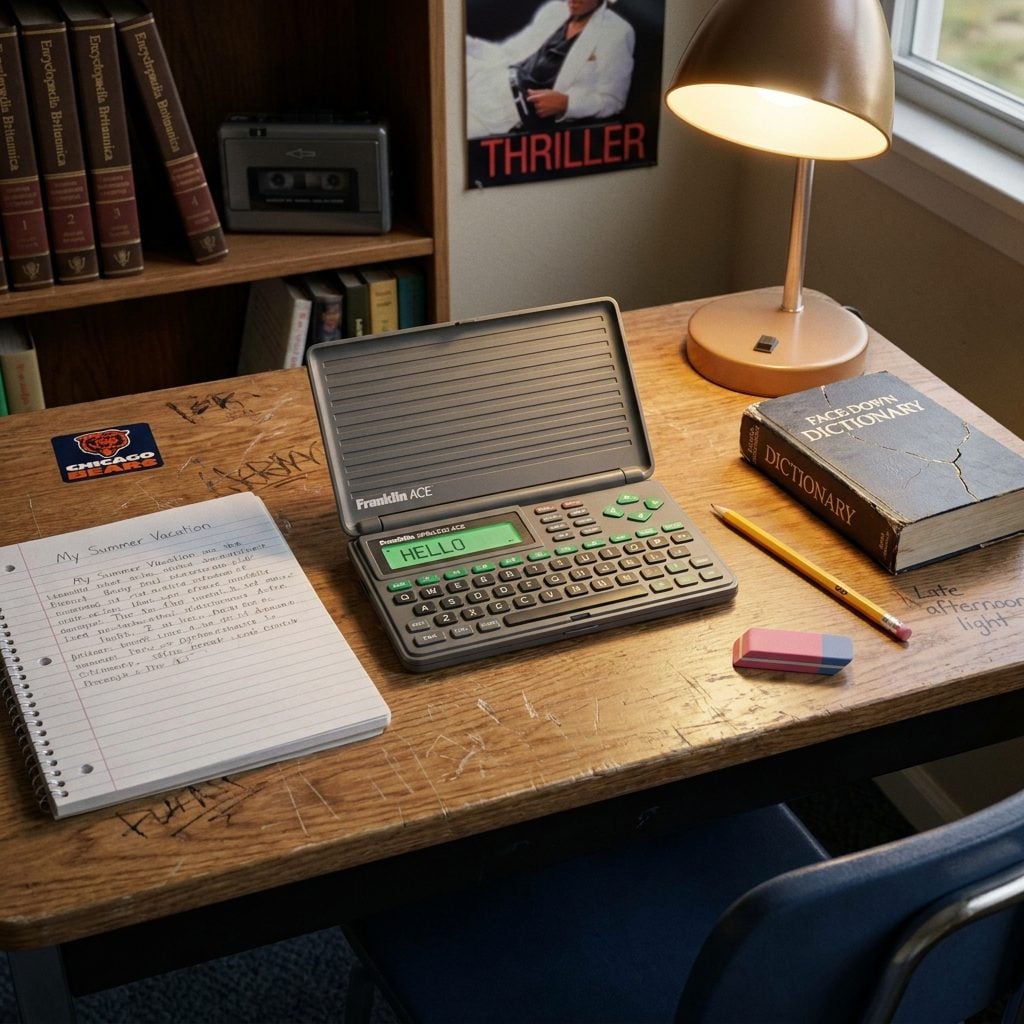
Franklin Spelling Ace. Those two words unlock something in the brain of every person who went through middle school in the 1980s. You’d type in your best phonetic guess at a word, the little green LCD would flash, and a list of possibilities would scroll across in tiny dot-matrix letters. It felt, genuinely, like the future.
The device was marketed at students, bought by parents who hoped it would replace the dictionary habit (it did), and used almost exclusively to settle arguments about whether something had one L or two. Teachers were suspicious of it. Some banned it outright. That only made it more appealing, obviously.
“You typed in your best phonetic guess and waited for the little green screen to tell you whether you were right. It never stopped feeling like a minor miracle.”
The Remote-Controlled Ceiling Fan That Made You Feel Like You Were Living in the Future
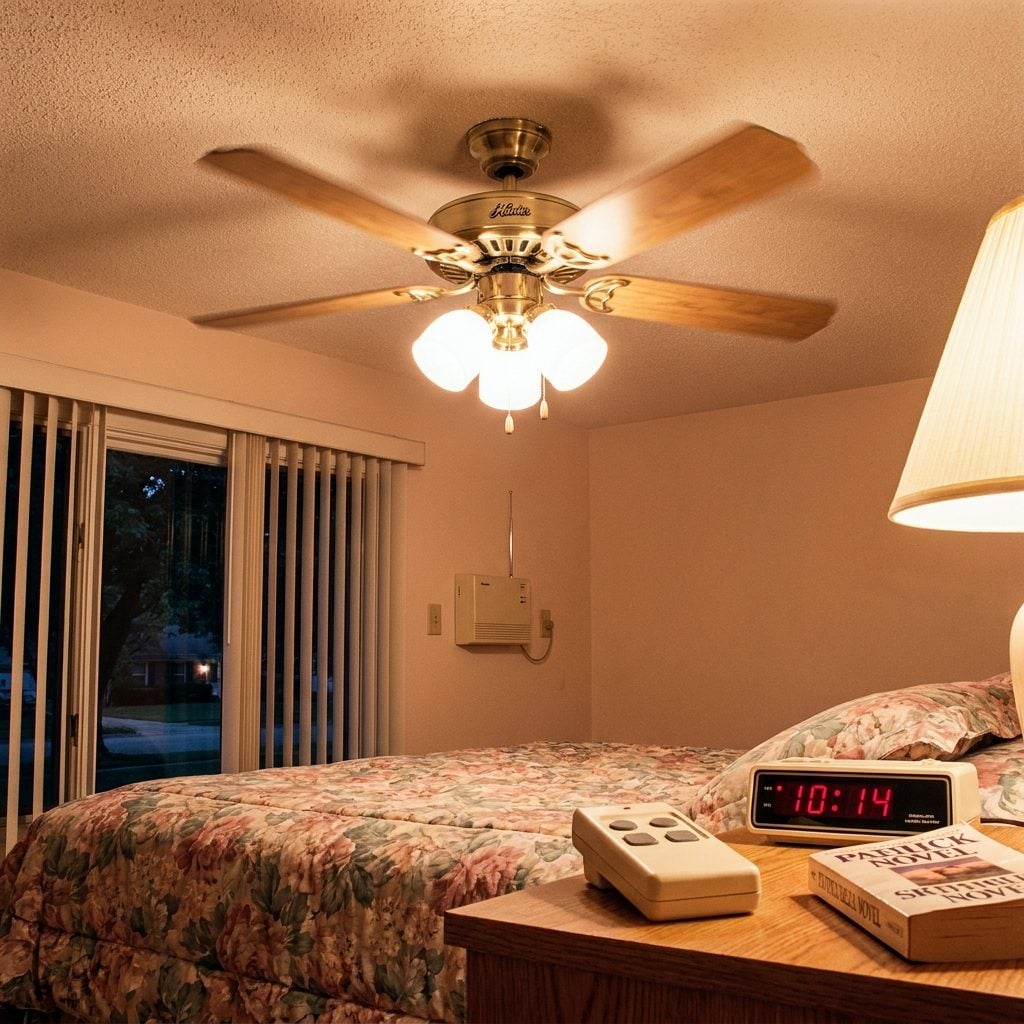
Ceiling fans were everywhere by the mid-1980s. They were practical, they were stylish in a particular brass-and-oak way, and they were, apparently, now remote controlled, which seemed completely unnecessary and absolutely worth having. The receiver module clipped inside the canopy, a small handheld unit lived on the nightstand, and you could adjust the fan speed without getting out from under the covers.
It’s a small thing. But there was something about pressing a button from bed and watching the blades slow from high to medium that felt genuinely sci-fi for a suburban Tuesday night in 1986. We hadn’t even gotten used to remote controls on televisions yet. Controlling the ceiling felt audacious.
The Desktop Rolodex That Held Every Professional Relationship You’d Ever Need
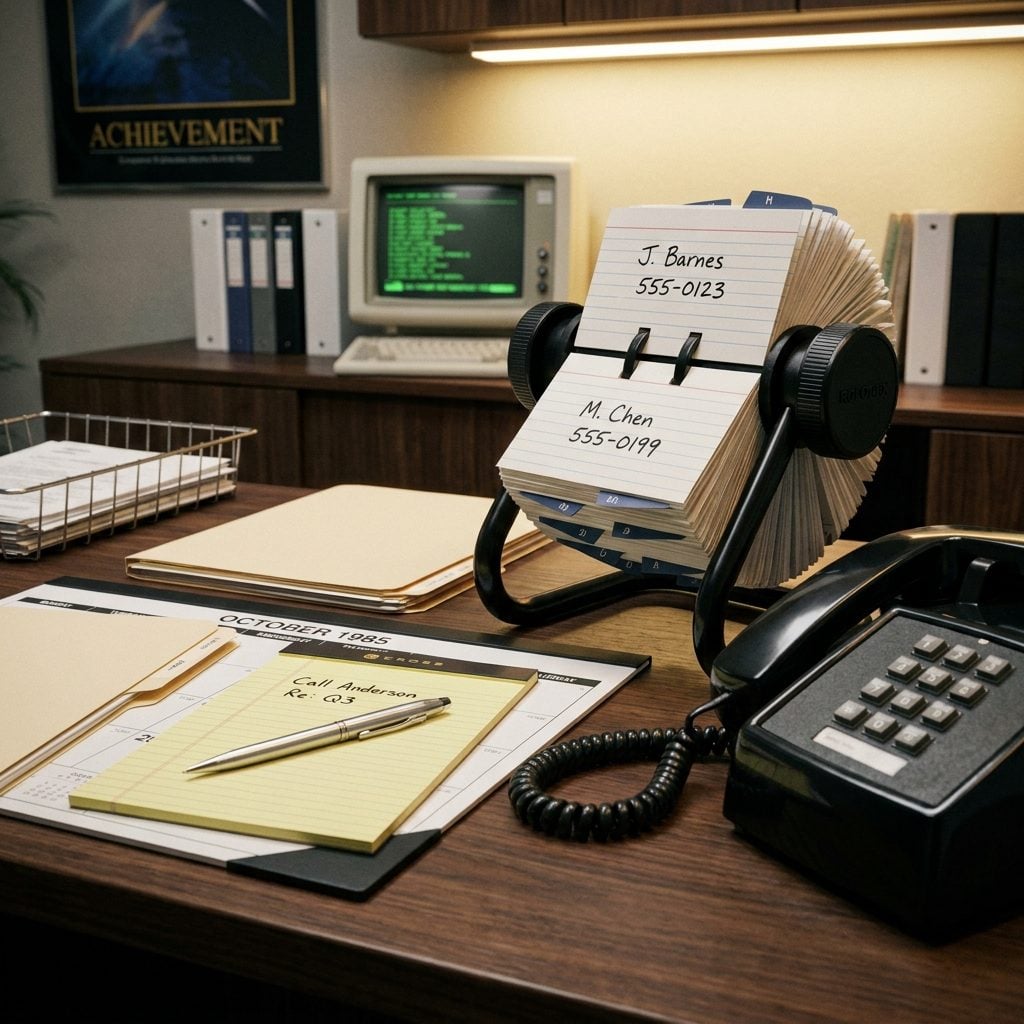
The Rolodex wasn’t just an address book with a motor. It was a map of how far you’d gotten. The cards accumulated over years, some typed neatly, some scrawled in a hurry, some crossed out and rewritten when someone changed firms or got divorced. Flipping through it made a very particular sound, a soft rapid-fire flutter of card edges, and experienced people could find a name in it faster than anyone found anything in a computer.
It sat beside the phone because it existed in service of the phone. That was the whole office operating system: you called people, you wrote down what they said, you filed the number in the Rolodex. The relationship was the card. When someone got fired or the account went away, you didn’t delete anything. You just stopped spinning to that section.
The Battery Charger Station Filled With Rechargeable AAs Nobody Fully Trusted
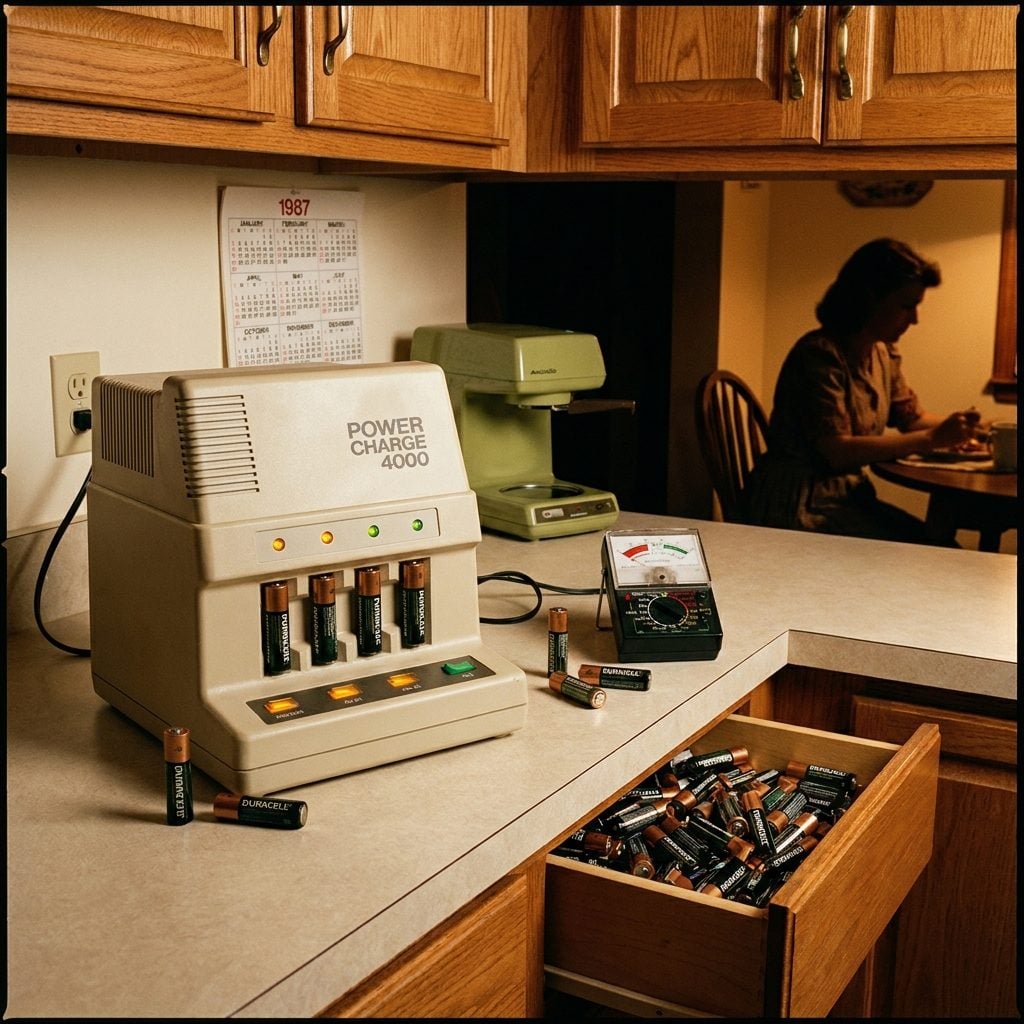
The charger lived on the kitchen counter next to the junk drawer, its little indicator lights cycling from red to green in a process that took about fourteen hours and still felt unreliable. You’d pull a freshly charged battery out, pop it into the Walkman, and get maybe forty-five minutes before the thing started dragging like a dying animal. We all went through this. We kept doing it anyway.
The premise was sound: rechargeable NiCad batteries would save money and reduce the constant hemorrhage of AAs that every flashlight, remote control, and handheld game in the house demanded. In practice, they developed a “memory effect” nobody fully understood, which meant they’d hold less and less charge over time until they were basically decorative. The disposables always won in the end.
The Illuminated Doorbell Chime Box Playing Westminster on a Loop Until 2003
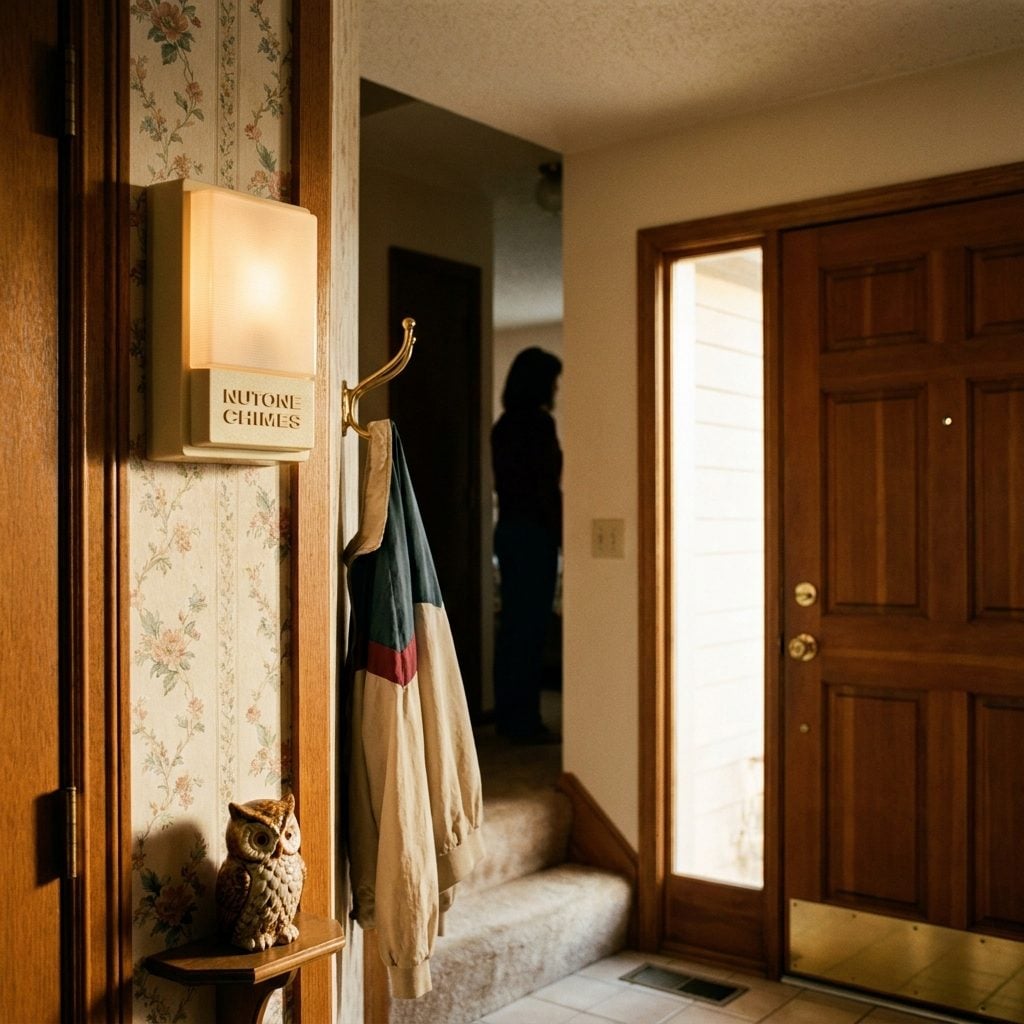
That glowing rectangle on the wall near the front door was such a fixture of 1980s homes that most people stopped actually seeing it. It just existed, humming faintly, casting a faint amber warmth into the hallway at night like a tiny nightlight that also announced visitors by playing the first eight notes of Westminster Chimes. Always Westminster. Nobody ever cracked open the instruction manual to find the other three melody options.
The illuminated housing was genuinely clever design, you could find the doorbell in a dark house, and guests could find the button outside. But the real legacy of these chime boxes is how they made “the doorbell sound” a universal cultural shorthand. Any cartoon, any sitcom, any movie needed two bonk notes and everyone knew exactly what it meant. That sound came from a box exactly like this one.
The Giant Stereo Cabinet Speakers That Turned Every Basement Into a Concert Venue
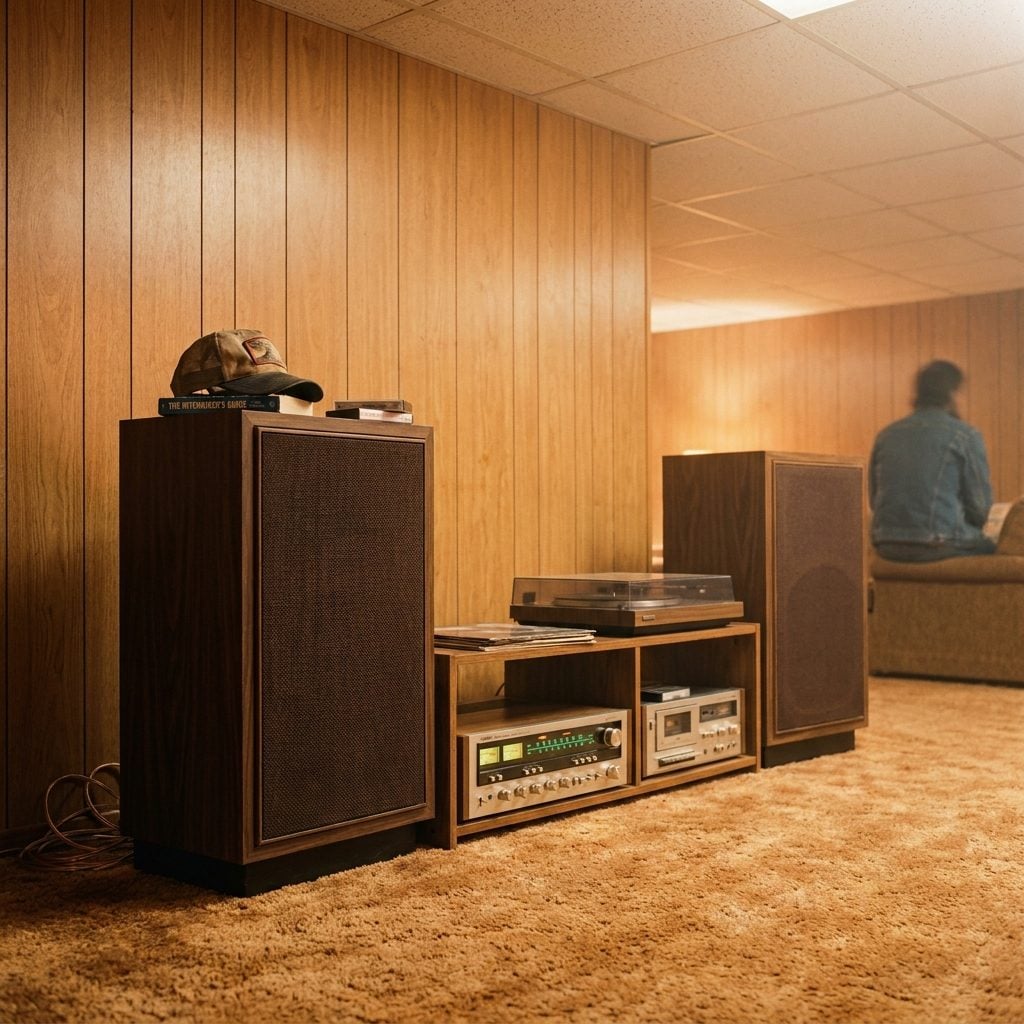
These were not speakers. They were furniture. They were architecture. You positioned them like load-bearing walls and the room organized itself around them.
Fisher, Pioneer, JBL, Cerwin-Vega, the brand didn’t matter as much as the woofer size, which every dad knew to the inch. A ten-inch woofer was respectable. Twelve inches was serious. Fifteen inches meant the neighbor’s dog occasionally barked in response. The fabric grille covered a speaker cone the size of a dinner plate, and when you turned the receiver up past the halfway point on the dial, the whole basement became physically different air.
Nobody streams music into a room the way those speakers filled one. The sound had weight. Bass frequencies you felt in your sternum. They got handed down, moved to garages, used until the surrounds rotted out. Some of them are still playing somewhere.
The Portable TV With the Telescoping Antenna Kids Smuggled Into Every Camping Trip and Bedroom
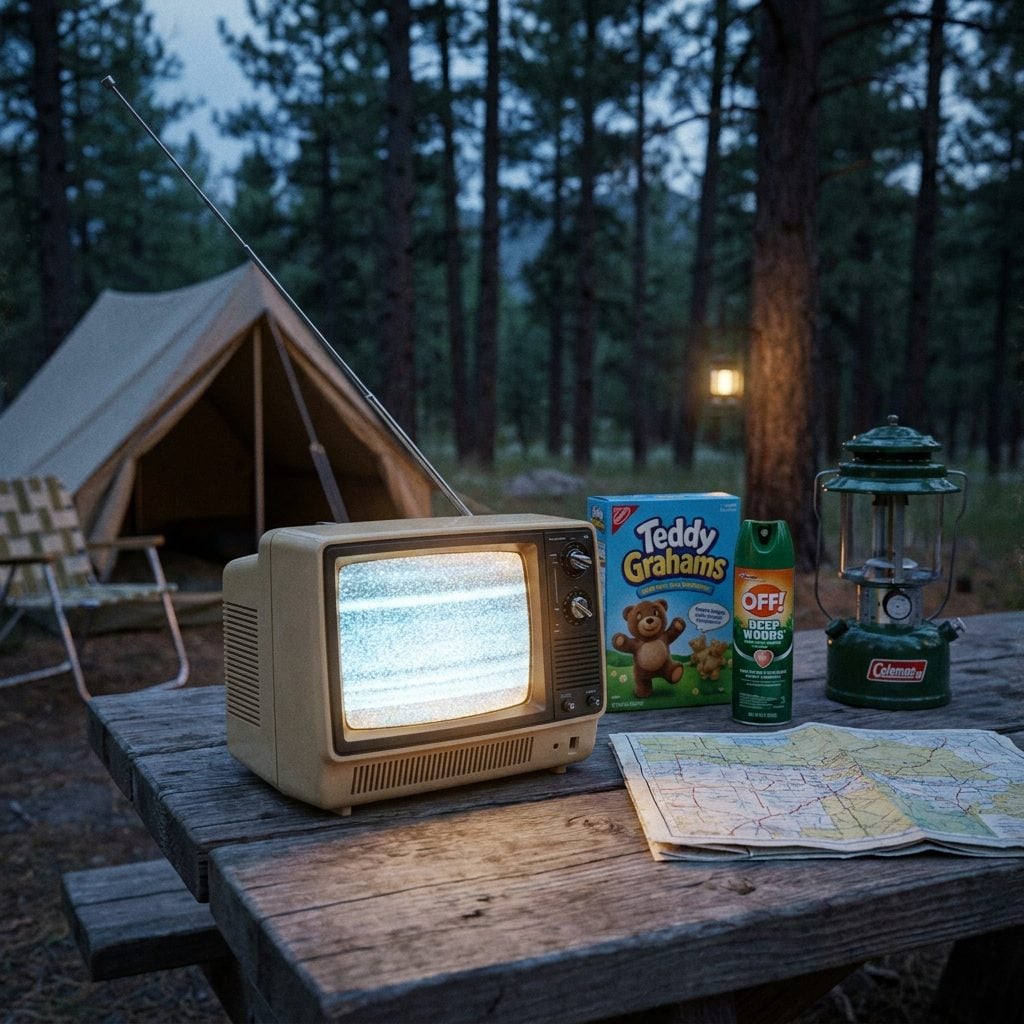
Sanyo made one. Sony made one. GE made one. Every version promised liberation from the living room, and every version delivered exactly the same compromise: a screen the size of a paperback book showing a picture that was about sixty percent image and forty percent snow, depending on where you held the antenna and whether you were willing to stand with one arm raised for the duration of The A-Team.
The camping version was particularly delusional. You’d get three channels in the backyard and zero at the actual campsite, but the antenna came up anyway, aimed at nothing. Kids brought them to sleepovers. Teenagers hid them in closets for late-night viewing. The battery life was whatever four D-cells felt like giving you that night, which was never enough.
The Home Laminating Machine Teachers and Type-A Parents Treated Like Actual Magic
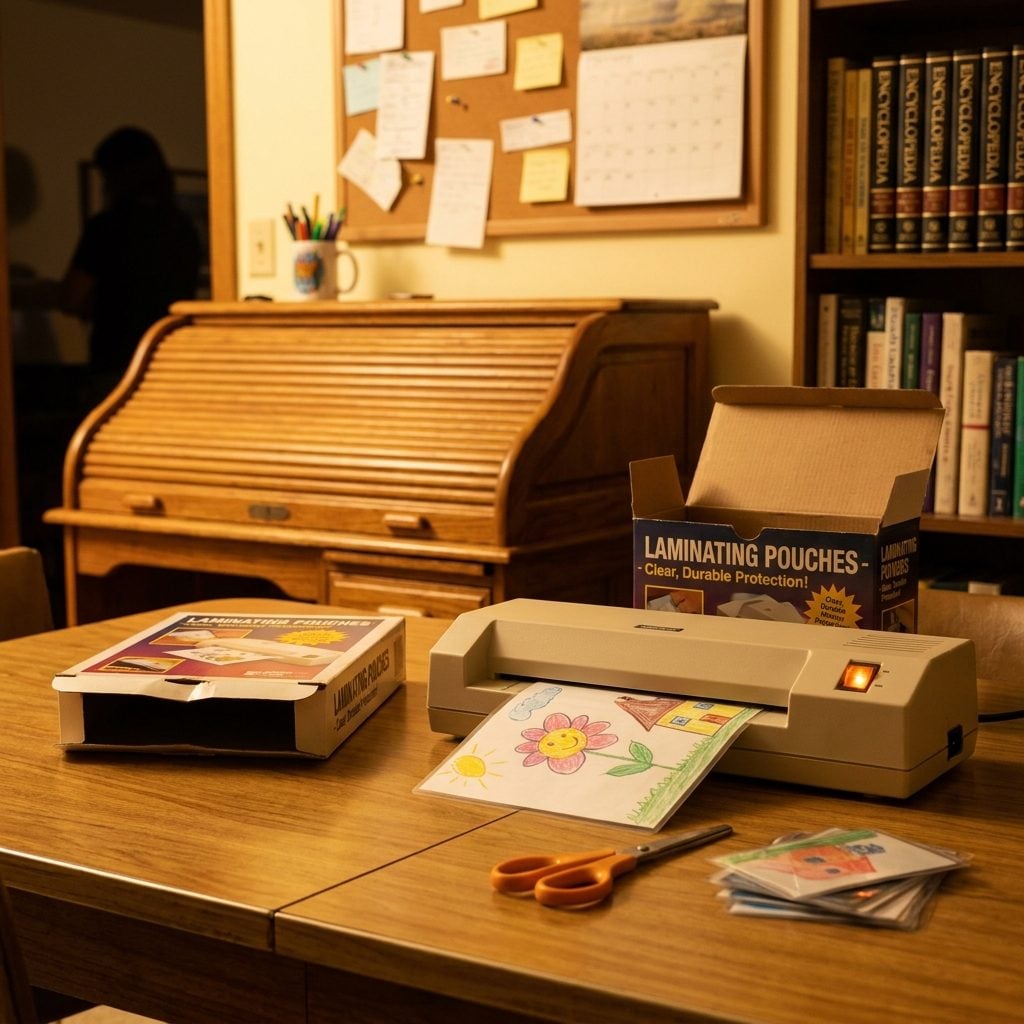
The warm-up time alone made it feel ceremonial. You’d flip the switch, wait for the little light to change, and then feed your document through with the focus of someone operating medical equipment. What came out the other side, glossy, rigid, permanent, felt like a minor miracle every single time.
Teachers laminated everything: sight-word cards, classroom rules, the birthday chart. Parents laminated the pediatrician’s number, emergency contacts, the chore chart that was definitely going to work this time. Someone always laminated a poem they liked from a magazine. The machines ran hot, occasionally ate documents at an angle, and left a faint chemical smell in whatever room they lived in. None of that mattered. The laminated object felt official. Preserved. Serious.
The Home Intercom System That Let Suburban Parents Announce Dinner Without Moving
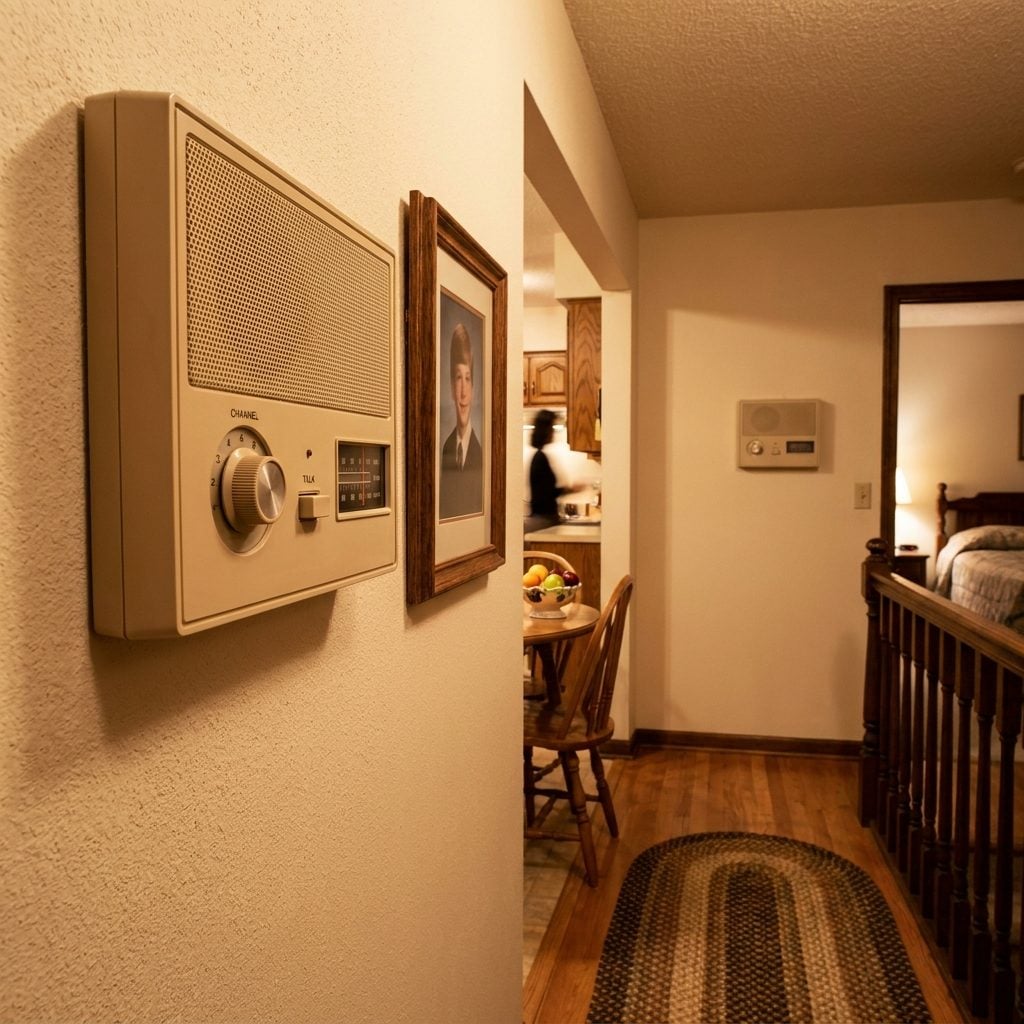
NuTone put these in new construction homes throughout the late 1970s and 80s, and the houses that had them felt genuinely futuristic to everyone who visited. A master station in the kitchen, satellite units in each bedroom, sometimes one in the garage. The whole house was theoretically wired for communication.
In practice, every family used it exactly one way: the parent pressed the talk button and said “dinner’s ready” or “time to get up” or, with increasing volume across three uses, the child’s full name. The children used it to broadcast music from the AM/FM radio built into some units, which annoyed everyone. The intercom was a convenience that mostly served as a slightly more civilized version of yelling, which the family continued doing anyway.
The Electric Carving Knife That Lived in the Drawer 364 Days a Year and Owned Thanksgiving

It spent eleven and a half months in a kitchen drawer, still in the box it came in, which was inside a larger box or a zippered pouch depending on the model. Nobody touched it. Nobody thought about it. Then Thanksgiving morning arrived and whoever was in charge of the turkey would retrieve it with the gravity of someone unsheathing a ceremonial sword.
Hamilton Beach and Black and Decker dominated the category, and the sound those reciprocating blades made, a high mechanical buzzing that filled the whole dining room, was the specific audio signature of a holiday meal beginning. Kids found it slightly alarming. Dads found it deeply satisfying. It sliced through a turkey breast with a smoothness that a regular carving knife, handled by someone who had only carved a turkey once per year for their entire adult life, genuinely could not match.
Would you like to save this?
Please note that some of the imagery in this article were created with the aid of AI image generators.