
🔥 Would you like to save this?
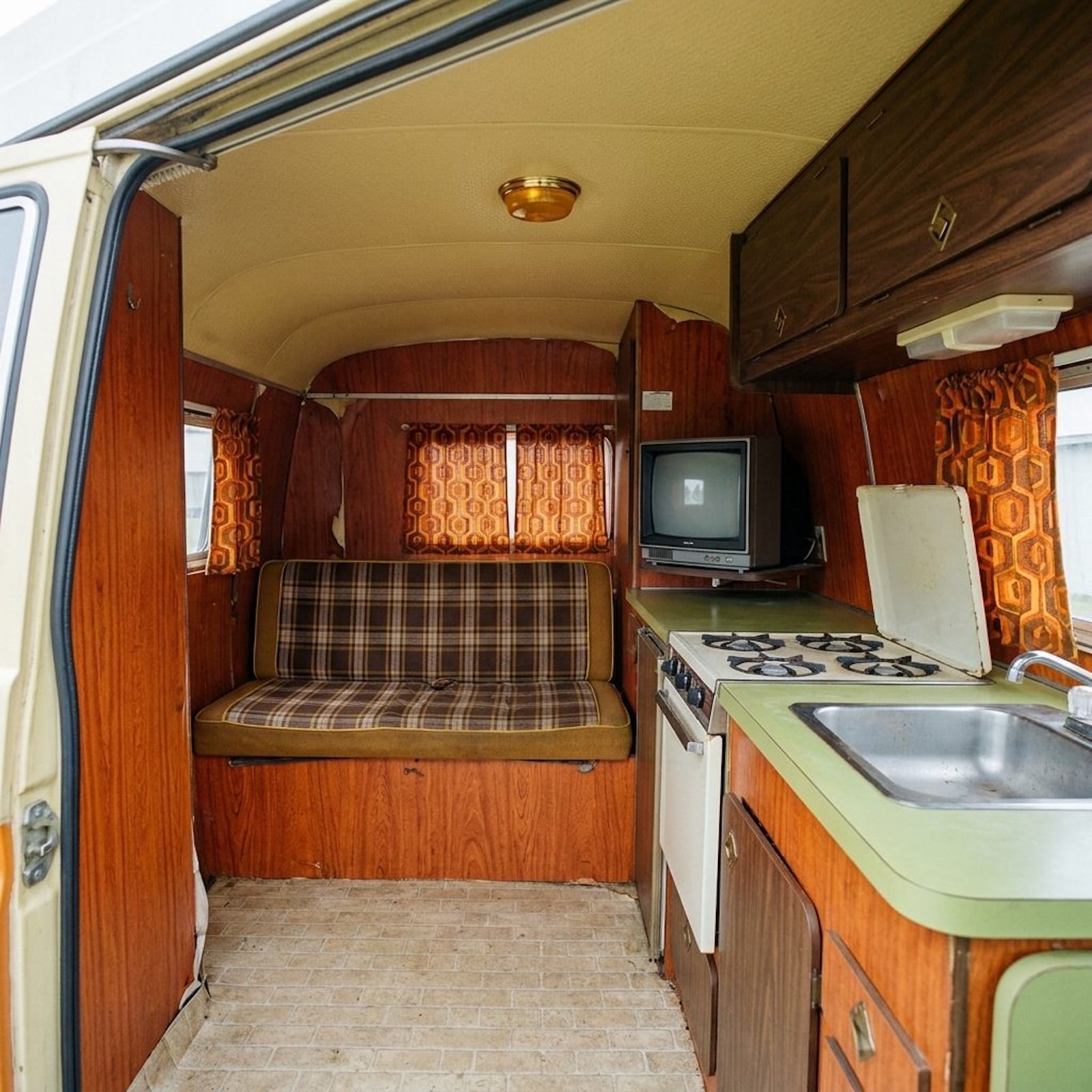
Somewhere between the second gas crisis and the invention of the SUV, an entire generation parked their camper vans in side yards and forgot about them. The paneling stayed brown. The plaid stayed plaid, and that little chemical toilet stayed exactly where it was, judging everyone. Now those same vans are getting pulled out of retirement and rebuilt into rolling cabins that would make a Scandinavian architect weep into her coffee. There are many different directions the same tired shell can go — and none of them involve orange curtains.
24. Cast-Iron Cabin in the Woods, on Four Wheels
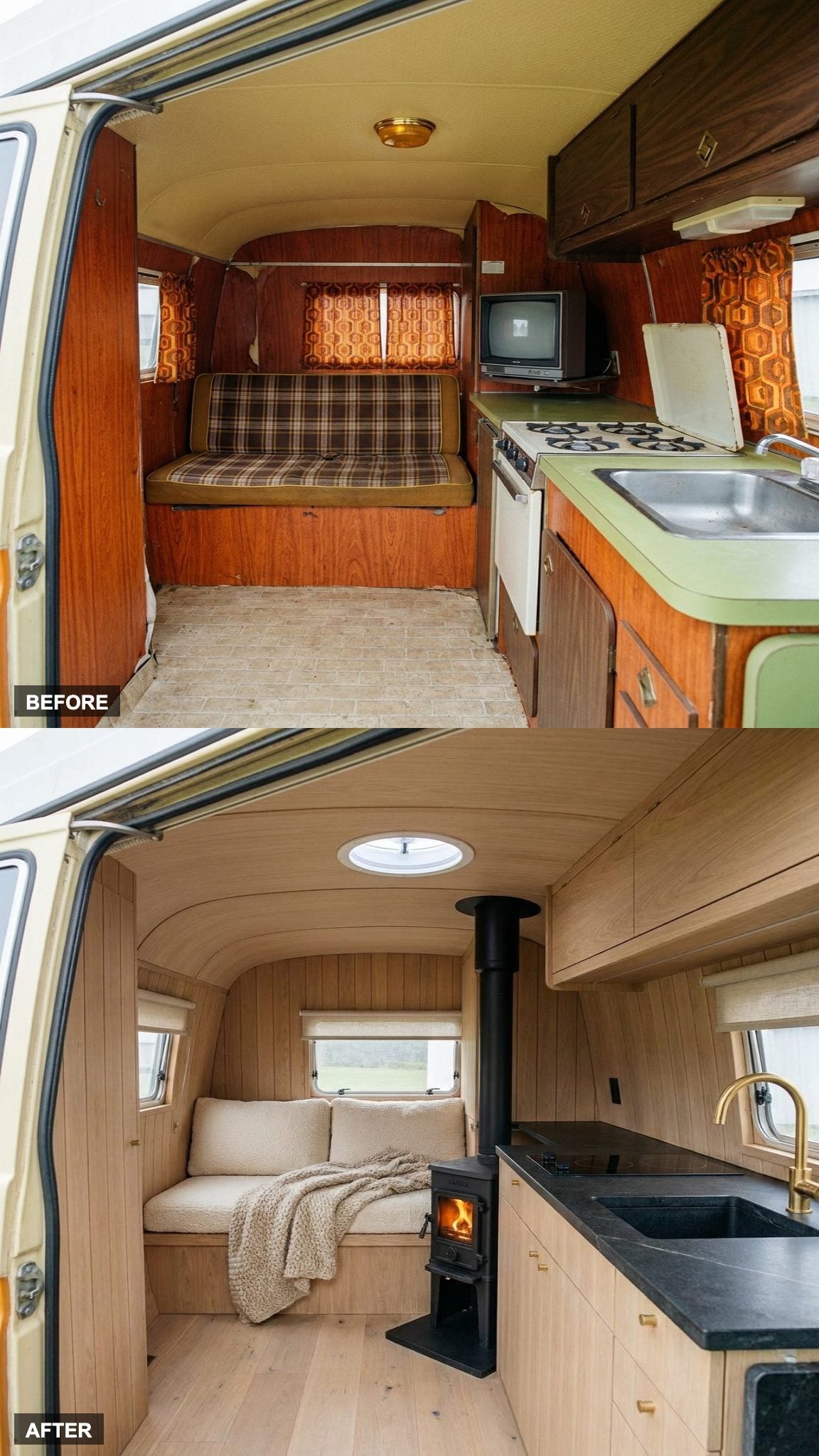
The wood stove is the whole argument. Everything else in the van reorganizes itself around that small black cube of cast iron, because heat sources always win the room. Pair it with a skylight directly above the flue and the van suddenly reads as a small building instead of a vehicle.
White oak paneling does the quiet work — vertical boards stretch the ceiling upward visually, which is the trick every tiny space needs and almost none of them use. The plaid is gone. Nobody misses it.
23. Desert Adobe Cocoon with Terracotta and Cactus Green
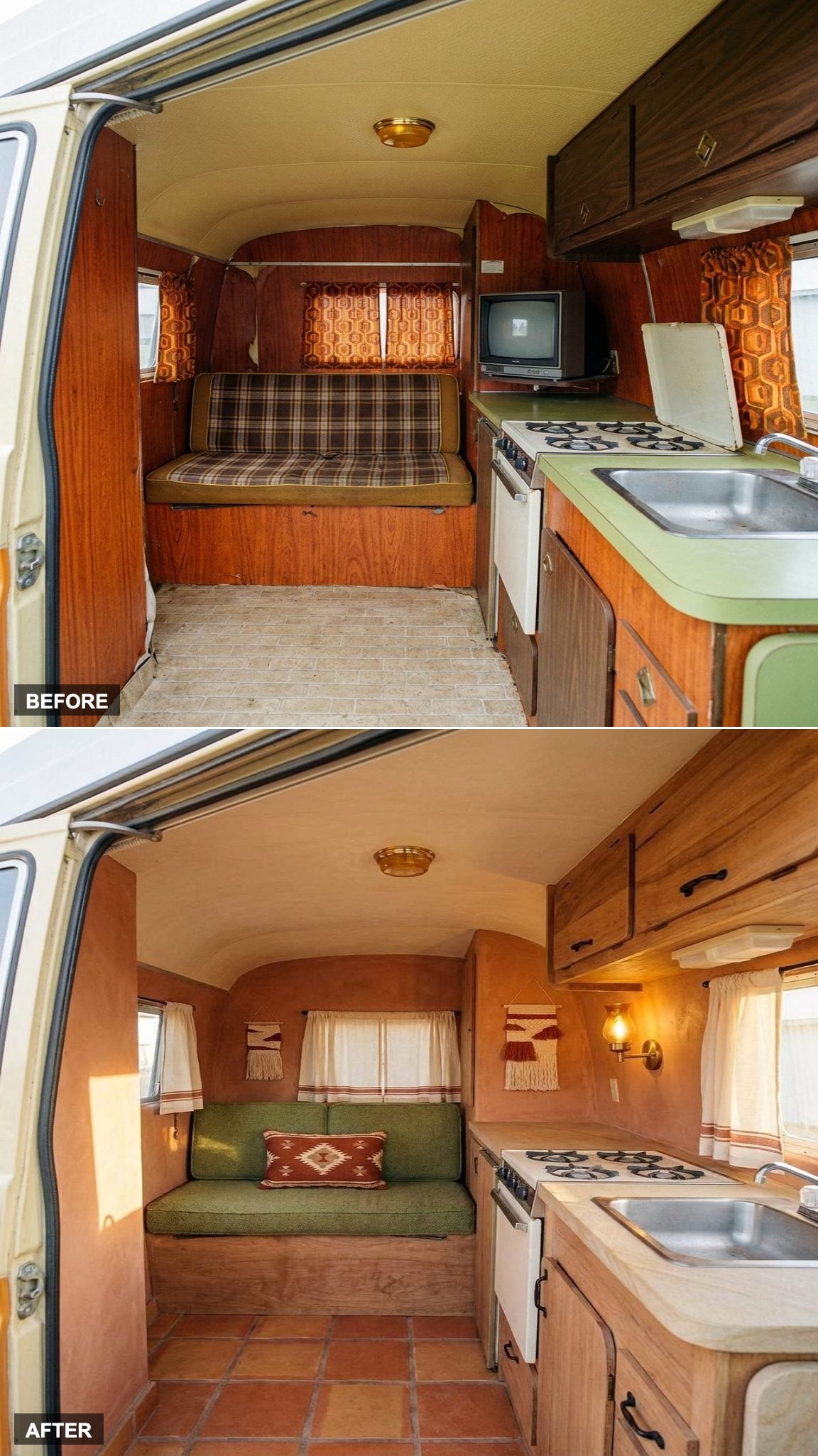
Lime-washed plaster walls inside a van sound like a bad idea until you see it done well. The texture eats reflections instead of bouncing them around, so light going flat is now light going soft, and terracotta reads warmer than orange ever managed.
Cactus green against rust upholstery. It’s the same palette a good adobe bar in Santa Fe has been running for forty years, and it works in a van for the same reason it works in the bar — nobody’s trying too hard.
22. Full Off-Grid Solar Rig with Nothing Wasted
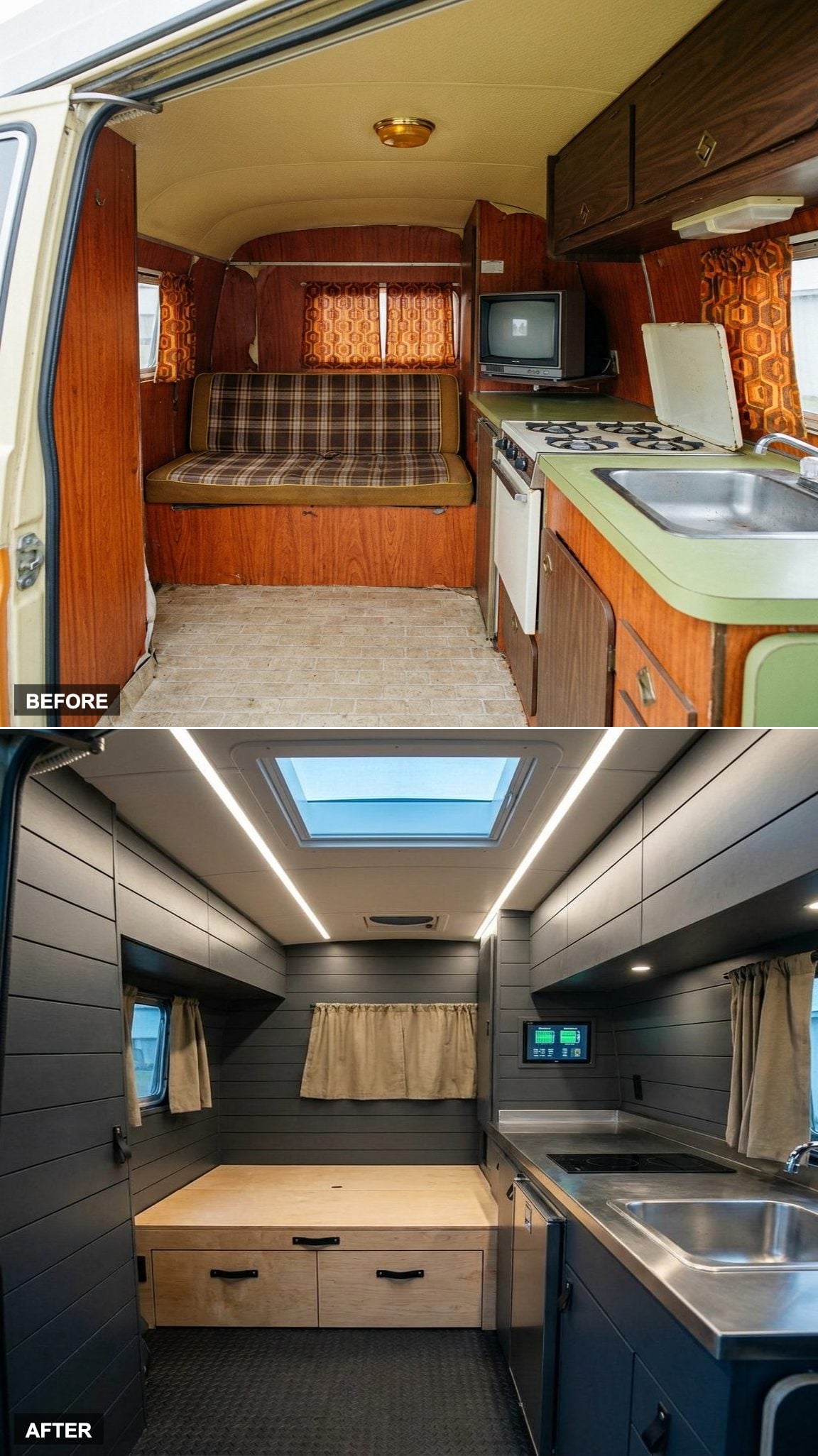
This one is for the person who actually lives in it. Every square inch pays rent — the bed folds down over drawers that hold weeks of everything, and the galley is stripped down to the four things a working kitchen really needs.
Birch ply with black leather pulls. That’s the tell. It’s what boat builders and Danish cabinet makers reach for when they want something that lasts twenty years without complaining.
21. Coastal Cottage Charm with Beadboard and Sea Glass
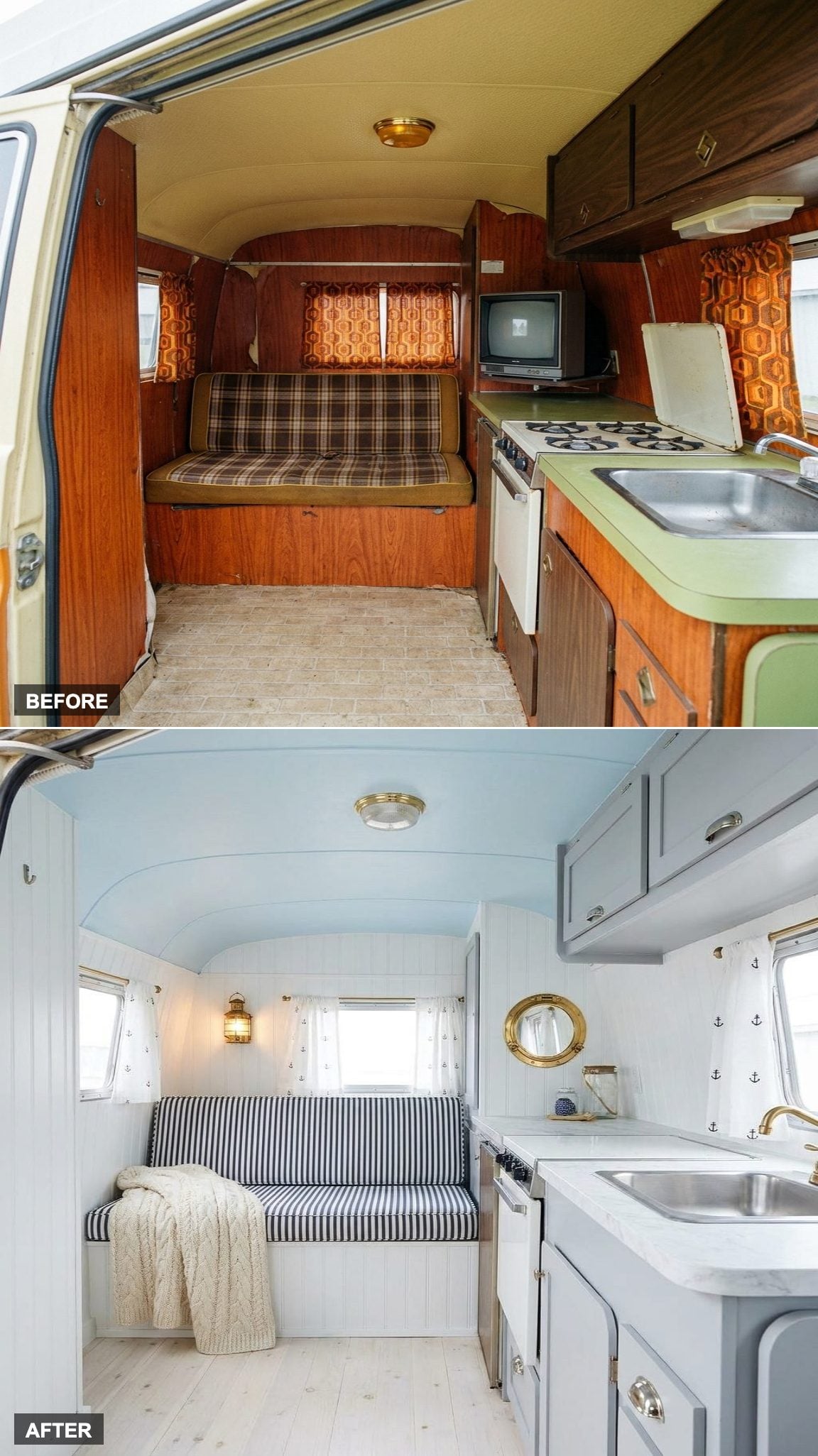
Beadboard everywhere is a bold move in a space this small. The vertical grooves do exactly what wide-plank floors do for a room — they pull the eye and make the whole thing feel taller than it actually is.
Sky-blue ceiling. Nobody expects it. But it reads as sky, the brain fills in the rest, and suddenly the van feels like a screened porch on the Cape.
20. Japanese Teahouse Minimalism on the Move
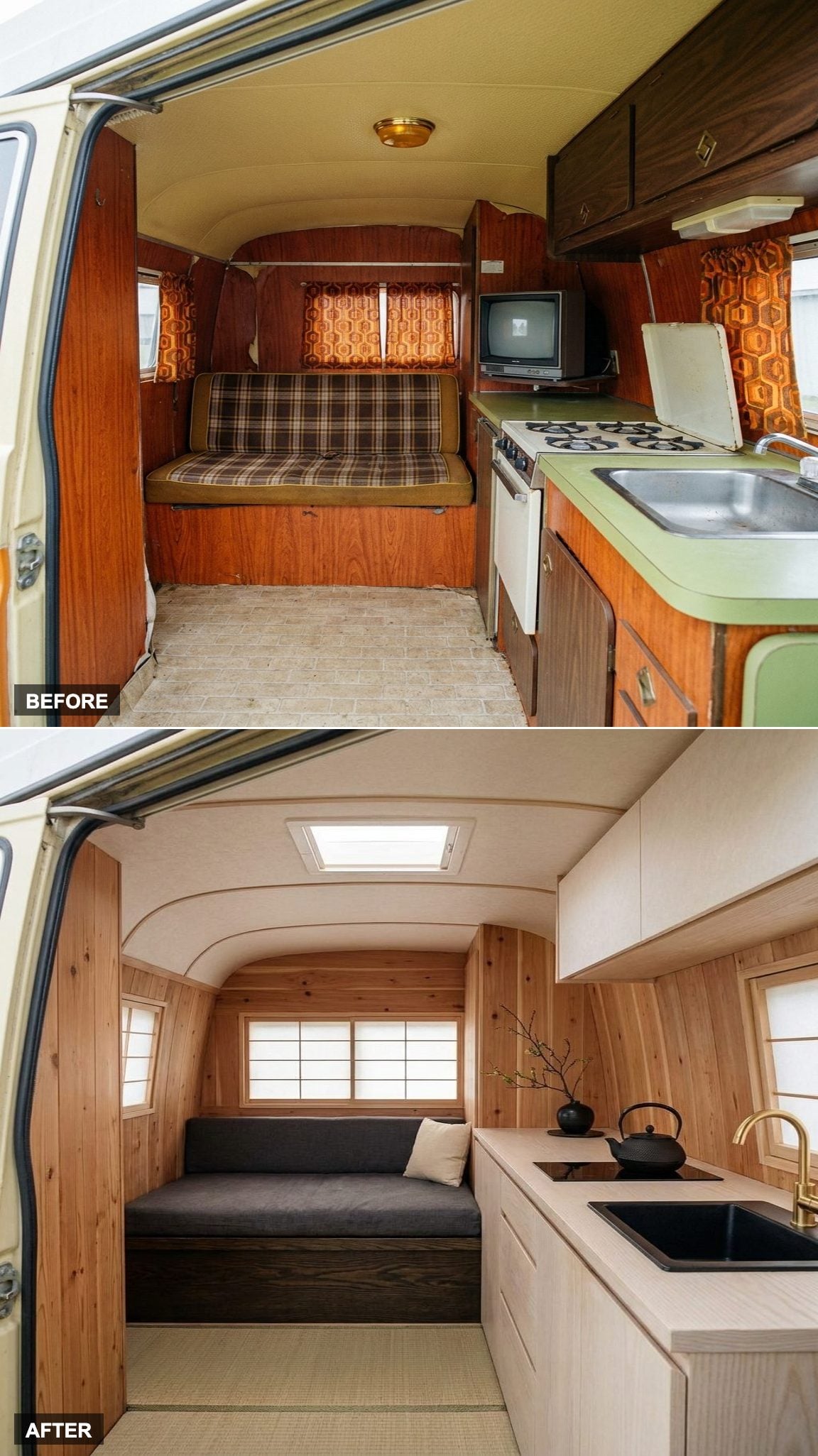
The single branch in the black vase does more styling work than six throw pillows ever could. One object, chosen carefully, given room to be seen.
Cedar planks throughout mean the van smells like a bathhouse from the moment the door opens. Nobody talks about how a build smells. They should.
19. Alpine Ski Chalet with a Sheepskin Everywhere
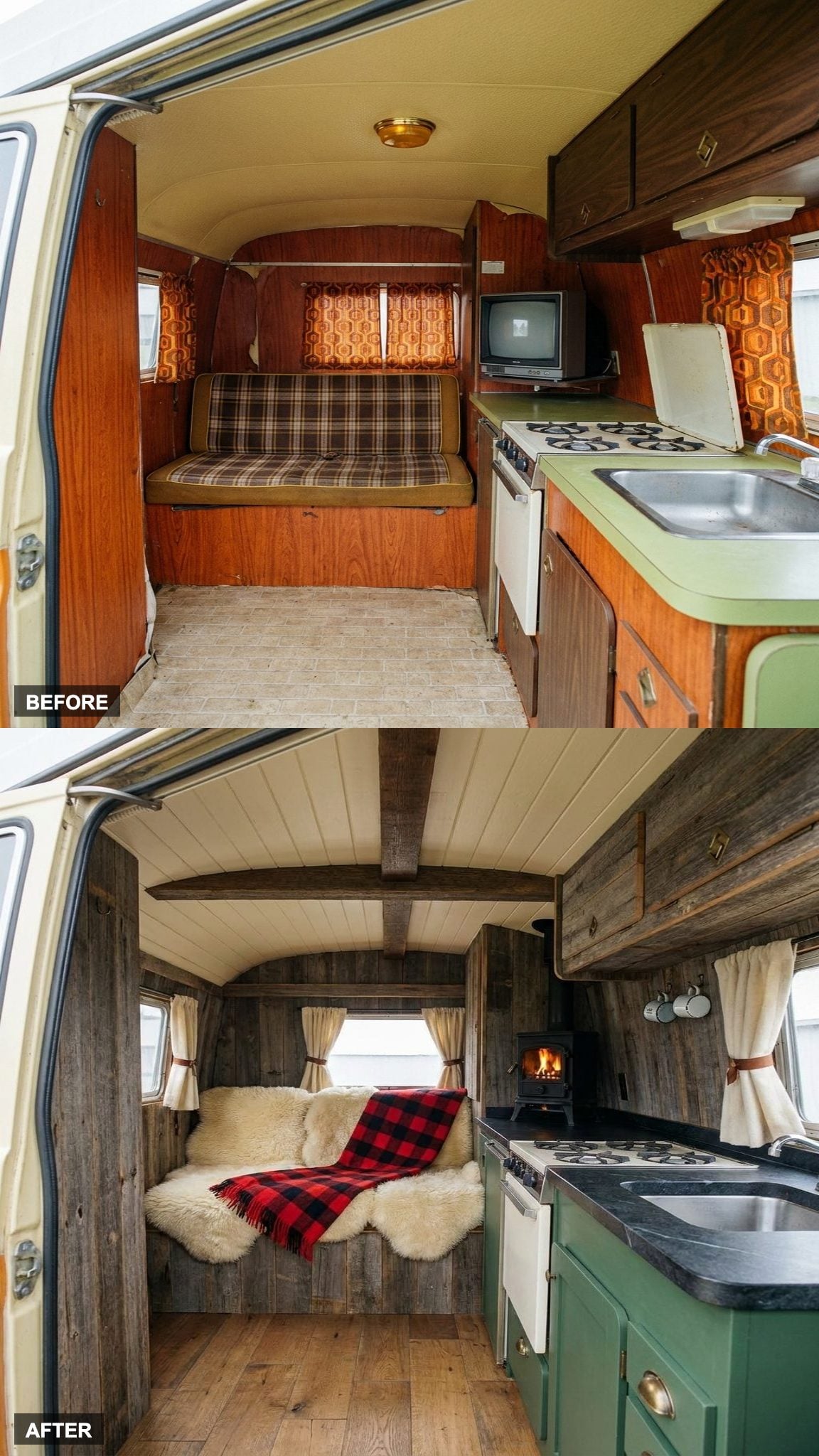
Weathered gray barnwood against forest-green cabinets is a color pairing that has been quietly winning in mountain houses for a hundred years. Gray reads neutral without turning cold, green reads warm without turning loud, and the two of them get along the way old married couples do — with very little discussion.
Layer sheepskin on top and the van goes from vehicle to après-ski in about eleven seconds.
18. Moroccan Riad on Wheels with Brass and Pattern
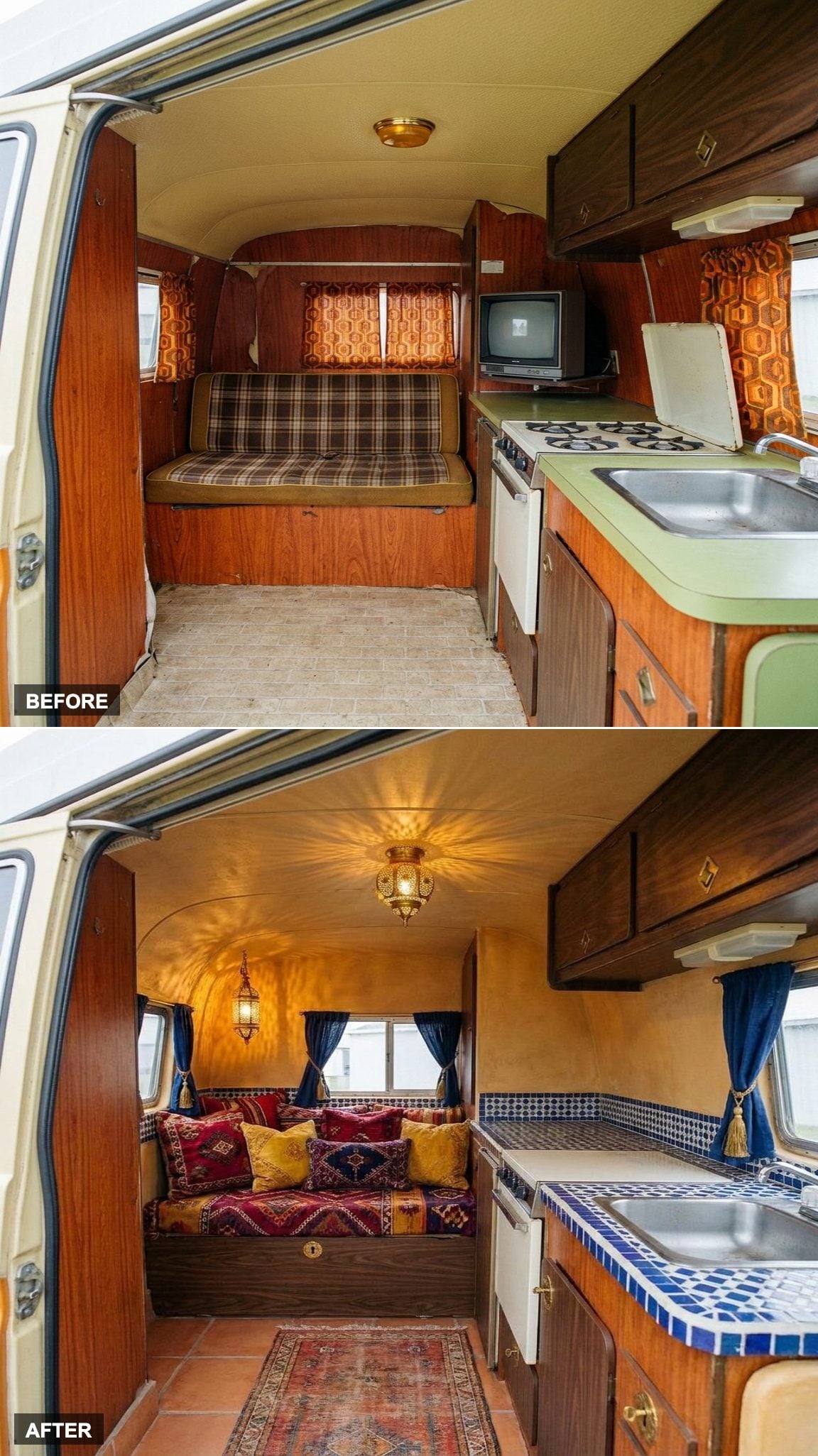
The pierced brass lantern is the whole show. Turn it on after dark and the ceiling of the van becomes a slowly moving pattern of stars, and that kind of light quality is nearly impossible to fake with anything modern.
Kilim cushions in mismatched jewel tones look chaotic in photos and calm in person. One of design’s better lies.
17. Mid-Century Airstream Energy Without the Airstream
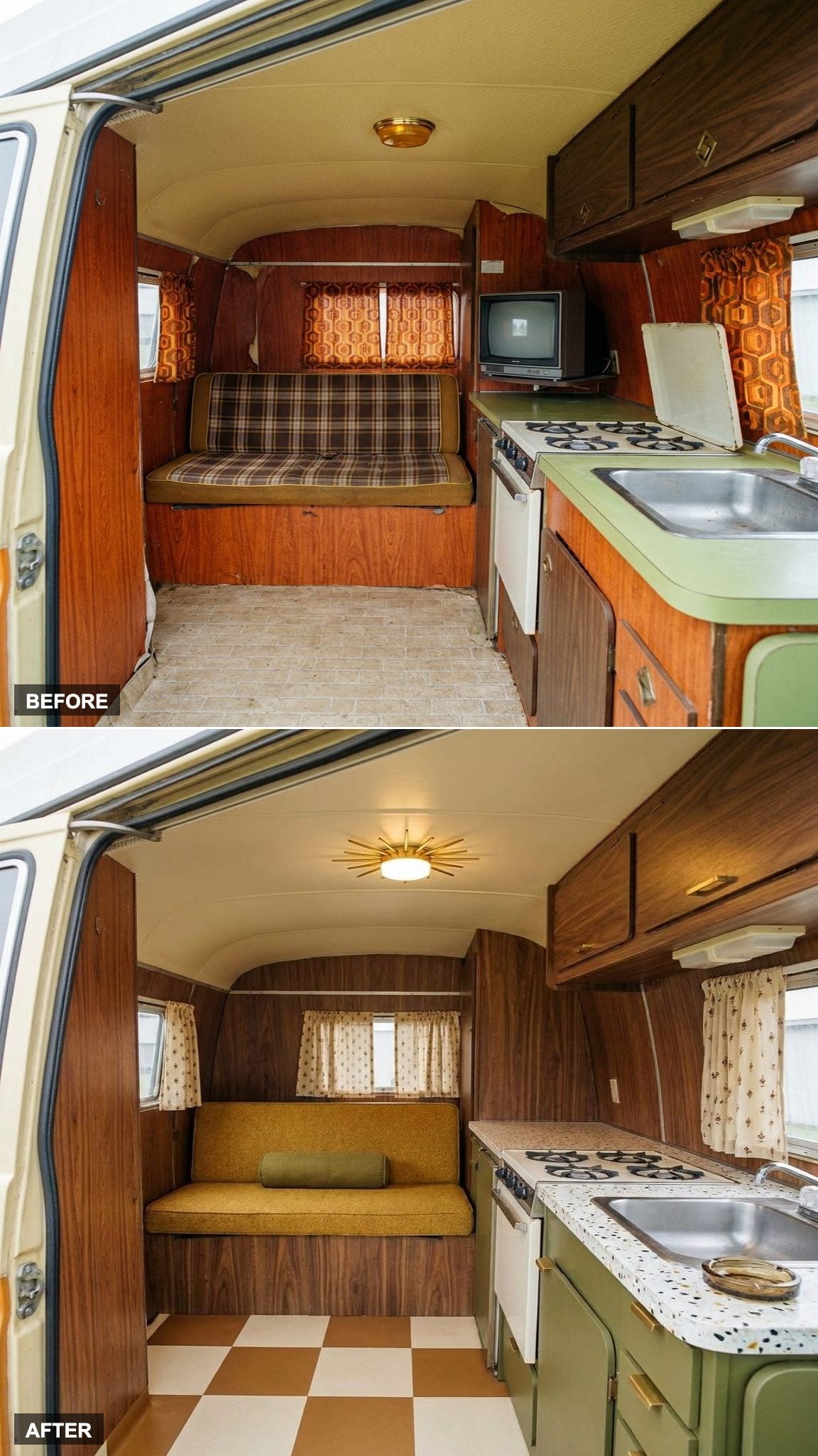
Walnut, mustard, and olive green is the palette every good 1962 living room ran, and it still works in a van because the color logic was right the first time. Warm neutrals plus two saturated warm accents. Nothing to argue with.
The terrazzo counter with the black and mustard chips? That’s the piece that keeps the whole build from feeling like a costume. Real materials read as real. Fake ones never do.
16. Rugged Overland Expedition with Molle and Bombproof Everything
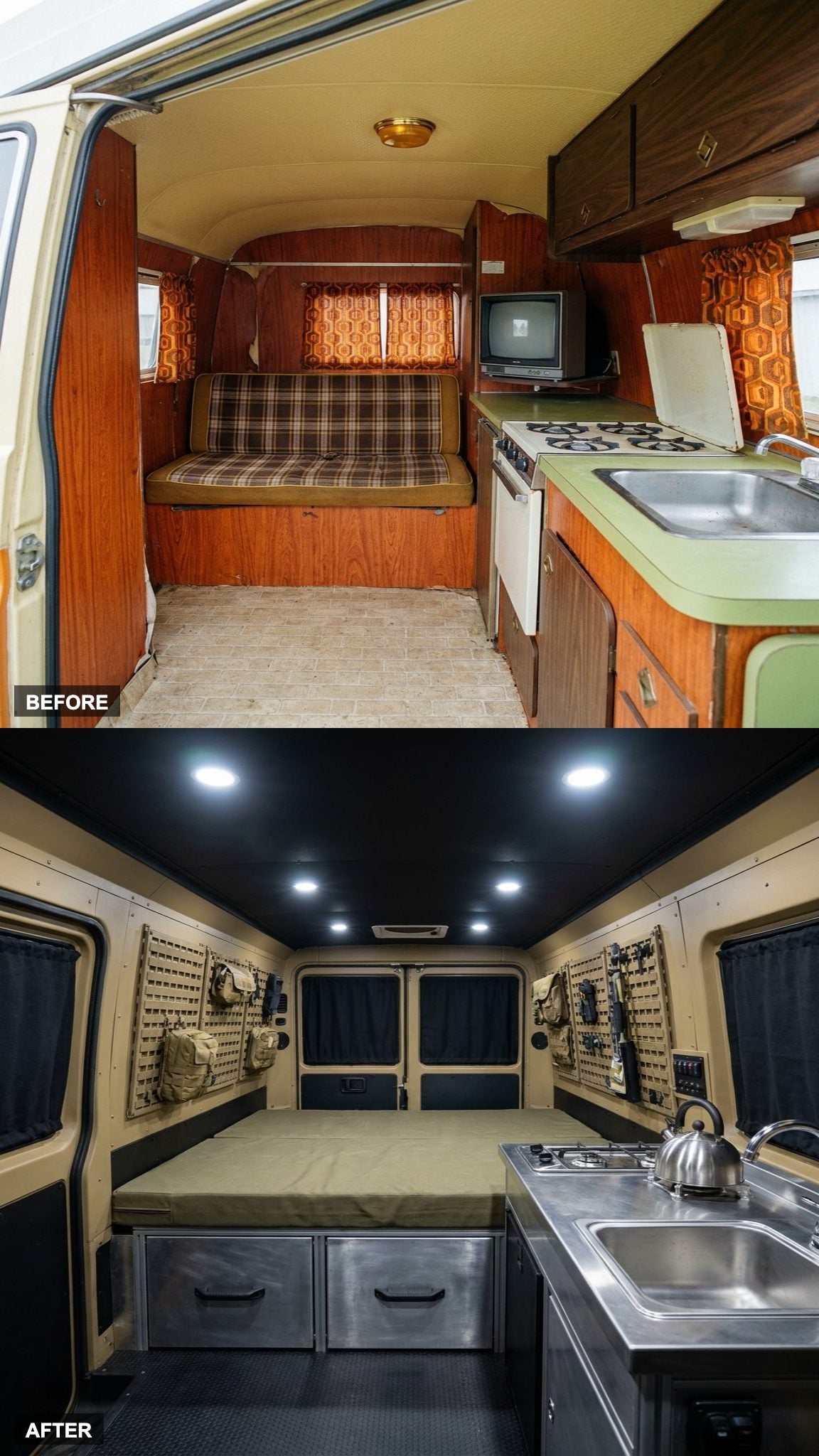
Everything in this build is bolted to something. That’s the design language, and it’s the whole reason nothing rattles when you drop into a washboard road at forty.
Molle webbing panels are the smart move. Gear changes with the trip, and the wall changes with it. Same van in Baja and Labrador, entirely different loadout.
15. French Country Kitchen You Happen to Sleep In
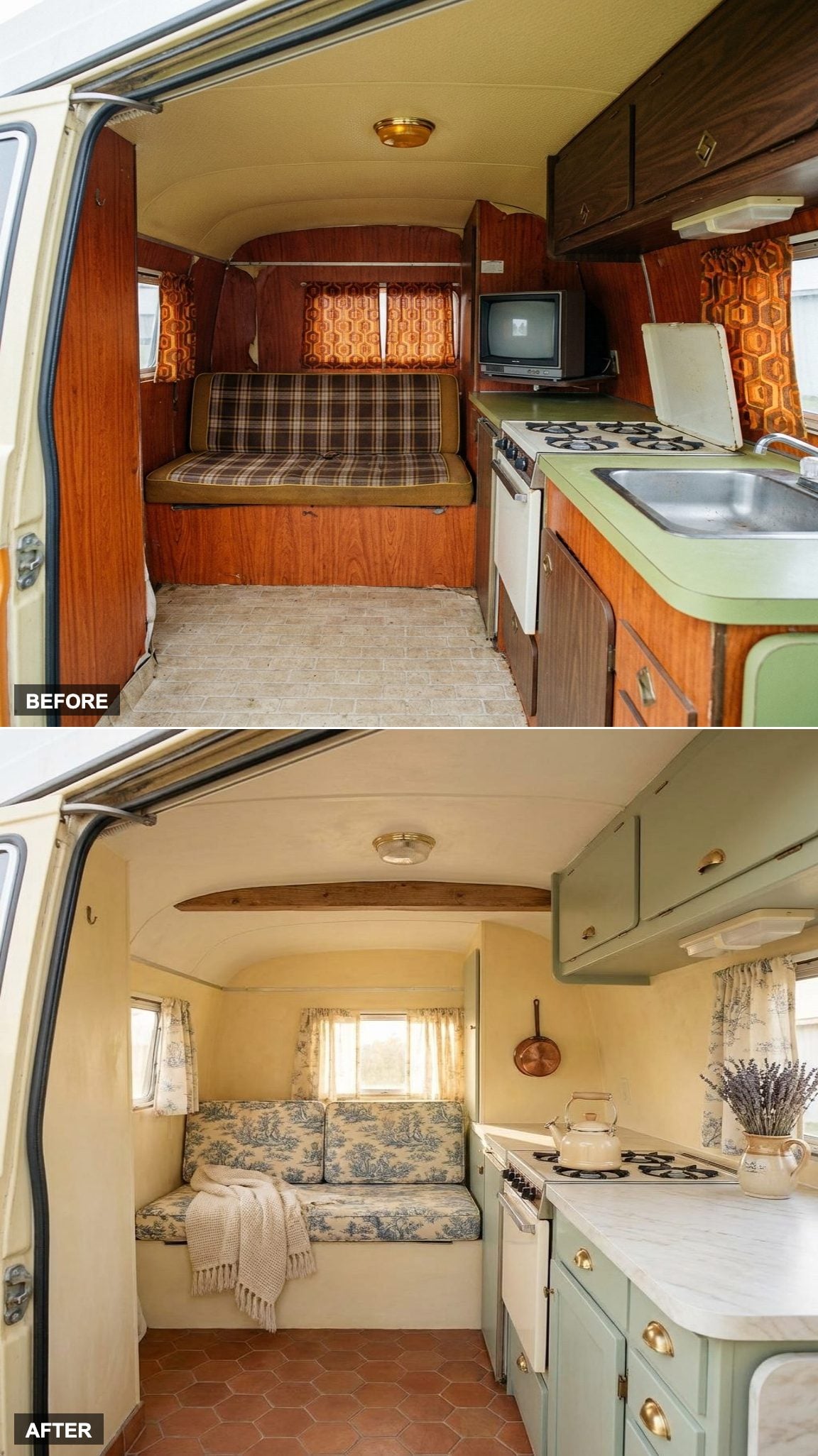
Butter-yellow walls in a space this small could go wrong fast. The reason they don’t is the sage-green cabinets underneath — yellow above, green below, cream in between, which is the exact color grammar a Provence farmhouse has been running for two centuries.
Dried lavender in a small jug isn’t decorating. It’s the point.
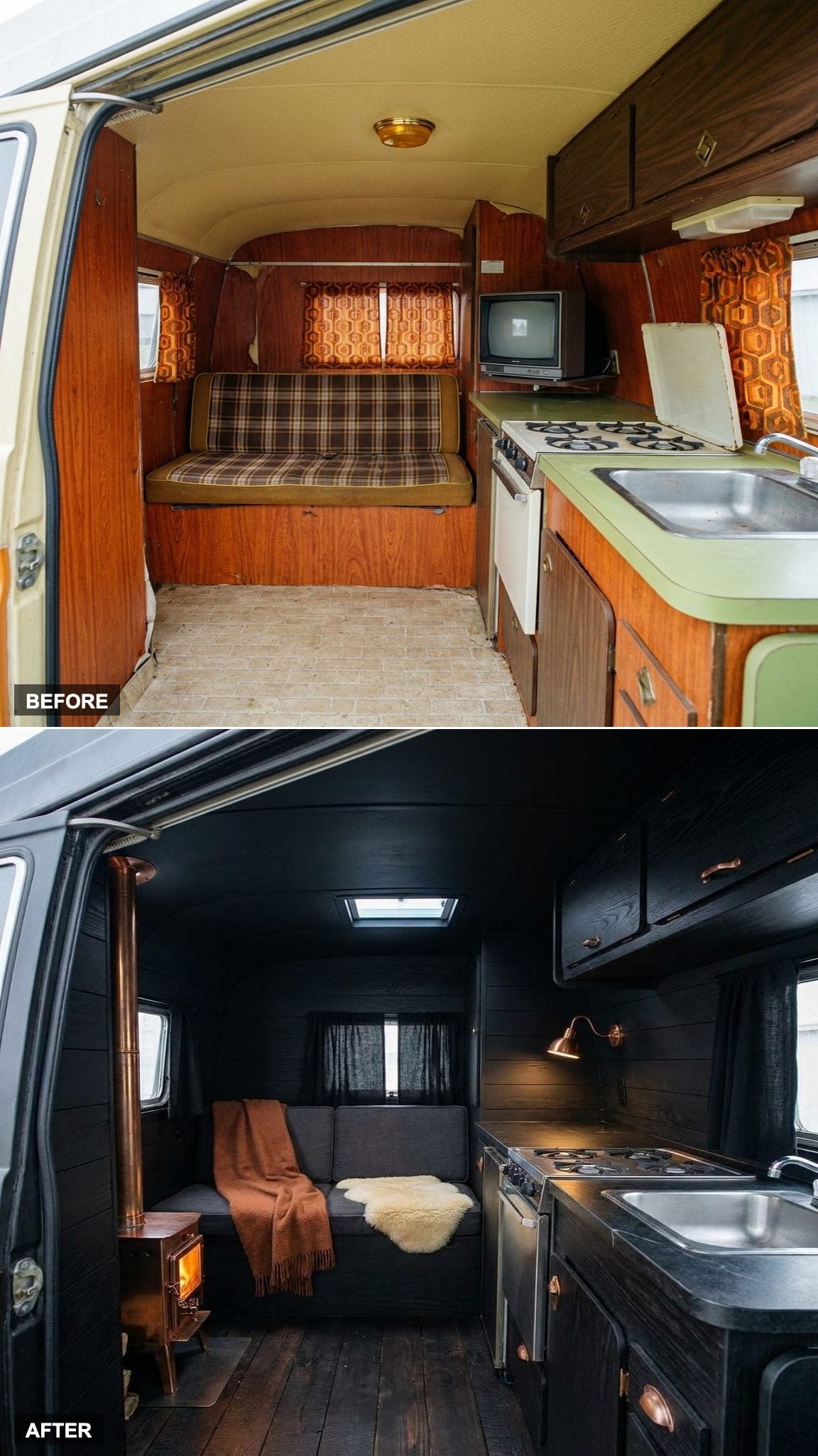
14. Black Cabin Moody Retreat with Copper Accents
🔥 Would you like to save this?
Painting a small space black terrifies most people, and it shouldn’t. Black walls disappear at the edges and the room actually reads as bigger because the eye can’t find the corners.
Copper is the only right choice here. Brass would go too warm, chrome too cold, and anything painted would look like a stage set. Copper against black is what old distilleries look like — and that’s a compliment.
13. Coastal Baja Surf Van with Faded Everything
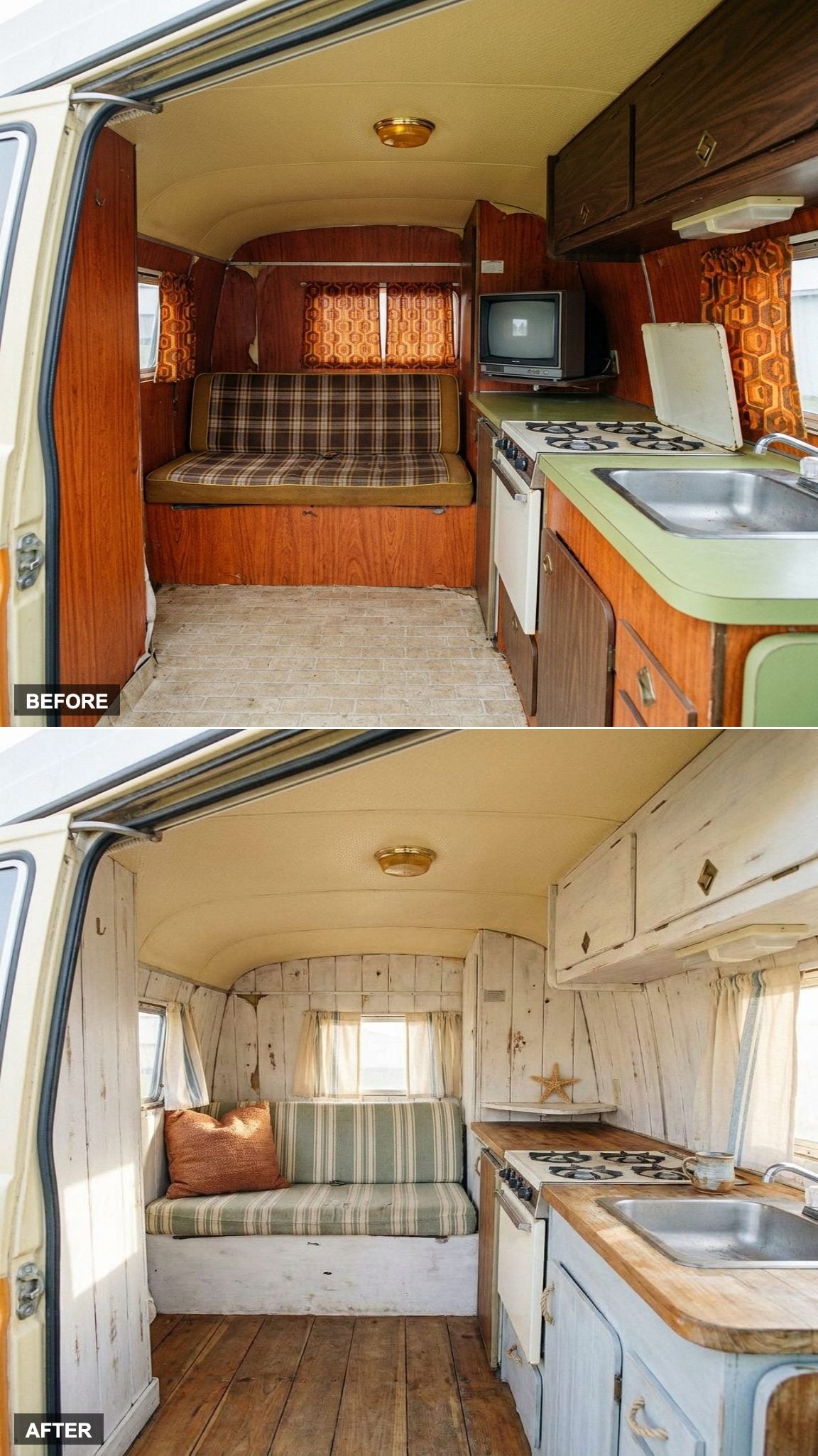
This build looks like it has been on the road for six years, and that’s the entire aesthetic. Nothing new, nothing shiny, every surface earned its patina somewhere between Todos Santos and San Diego.
Faded is a color. Most people don’t understand this. The palette here is essentially four versions of things that used to be brighter, and it works because the sun already did the design work.
12. Scandinavian Sauna Vibe with Blonde Wood and Black Steel
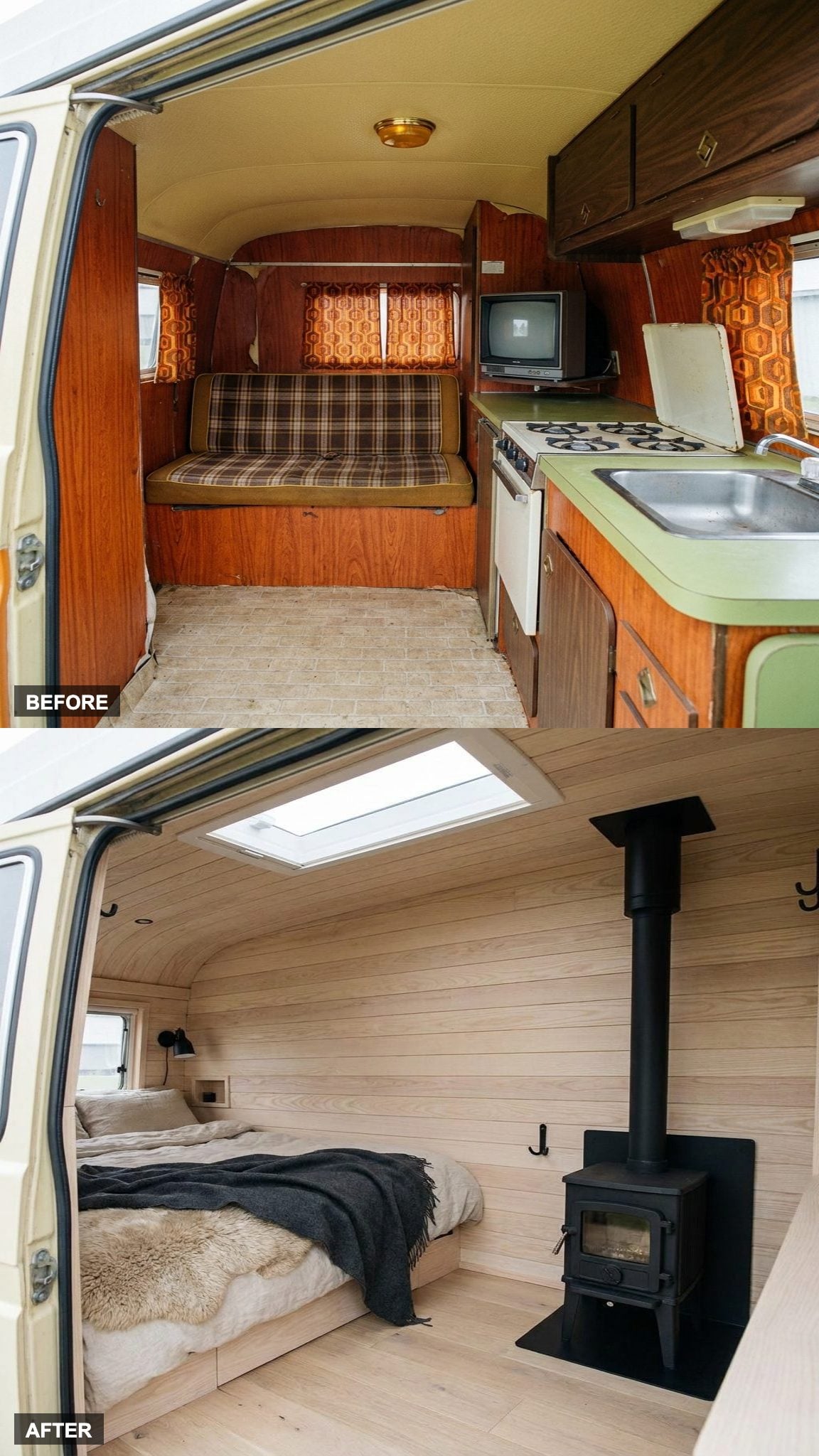
Blonde ash paneling does something the original wood-grain vinyl never could — it bounces light instead of drinking it. Add a rooftop skylight and suddenly a coffin-sized van reads like a floating cabin above a fjord. The matte-black wood stove sits low and compact, anchoring the room without eating the floor plan alive.
Oatmeal linen against ink-black steel. That’s the texture play doing real work.
11. Vintage Volkswagen Westfalia Reborn in Mustard and Teak
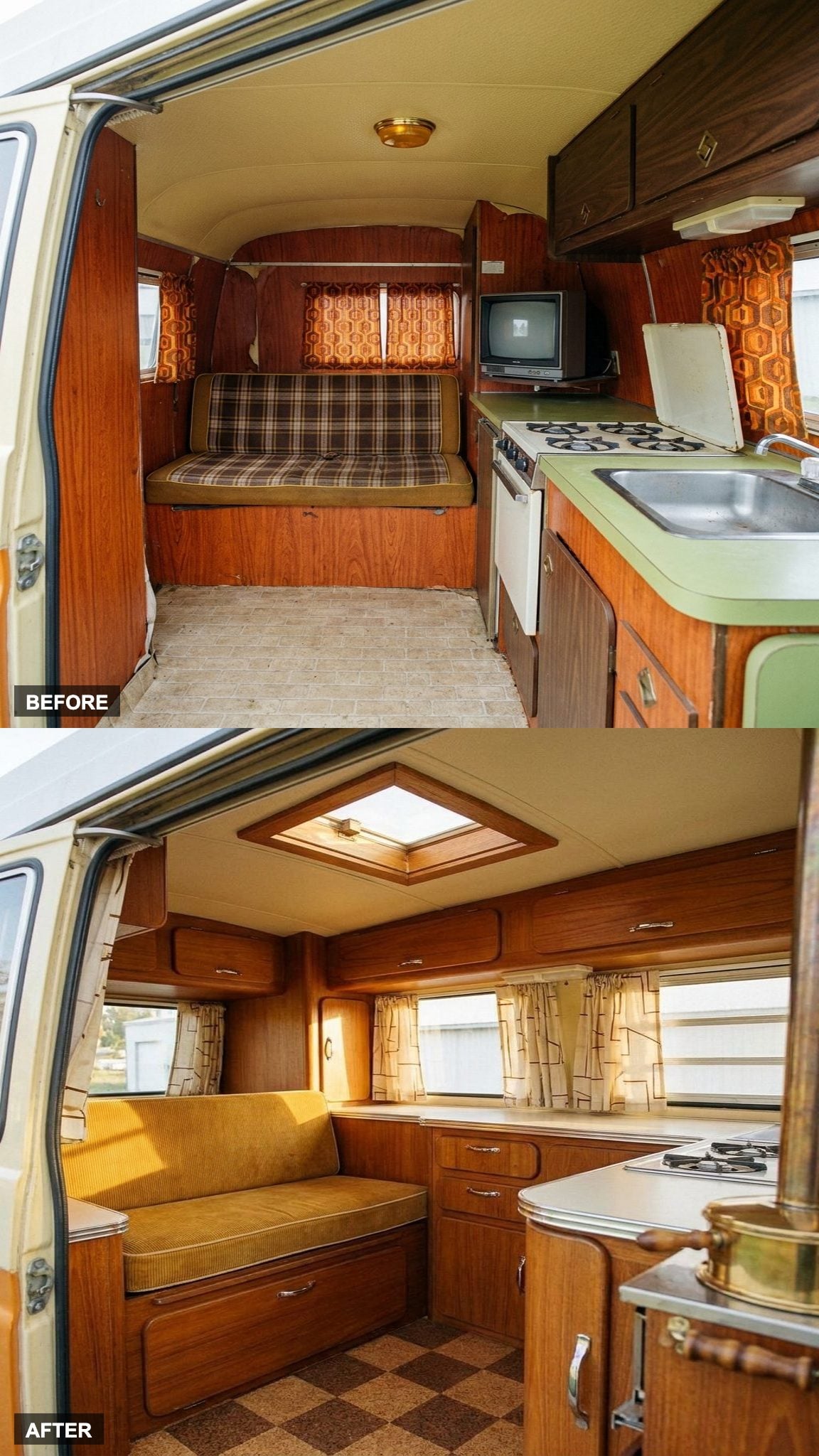
Mustard corduroy has no business looking this good in 2024, and yet. The ribbed texture catches afternoon light like nothing else in a van, and against warm teak veneer it reads as intentional homage rather than a costume rental.
The clever move is the brass-topped stove — small enough to belong, warm enough to erase the plasticky memory of the original interior. Cork checkerboard flooring seals the era without dragging the build into theme-park territory.
10. Pacific Northwest Cedar Cabin on Wheels
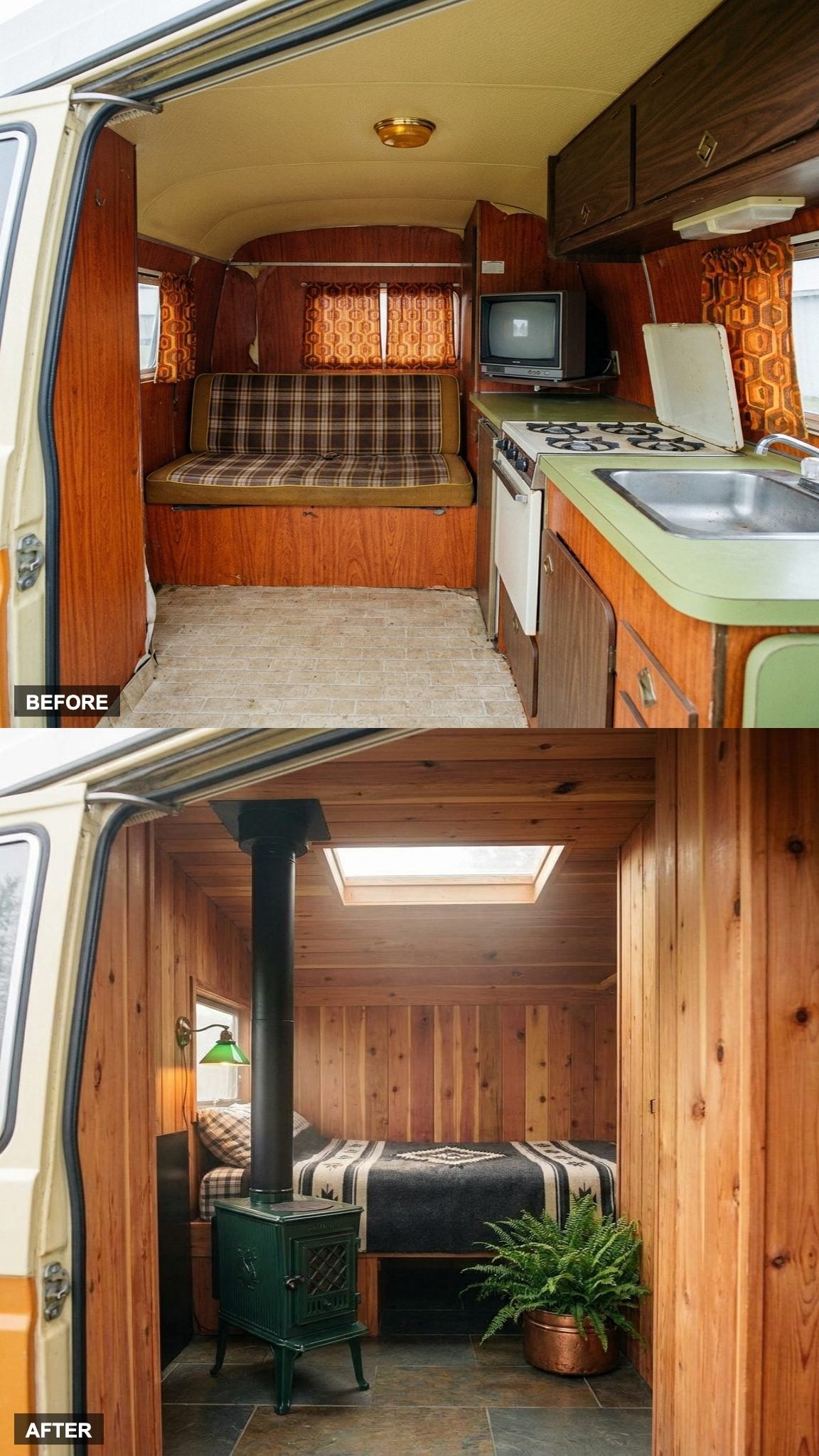
Cedar plank walls smell like the thing they look like, which matters more in a van than in a house — every time the sun warms them, the whole space exhales pitch and forest.
The forest-green stove is the leverage point. Black would disappear against the wood tones and leave the room flat, but green promotes the stove from appliance to furniture and pulls the fern (and everything beyond that skylight) into the same conversation.
9. French Alpine Refuge with Toile and Copper
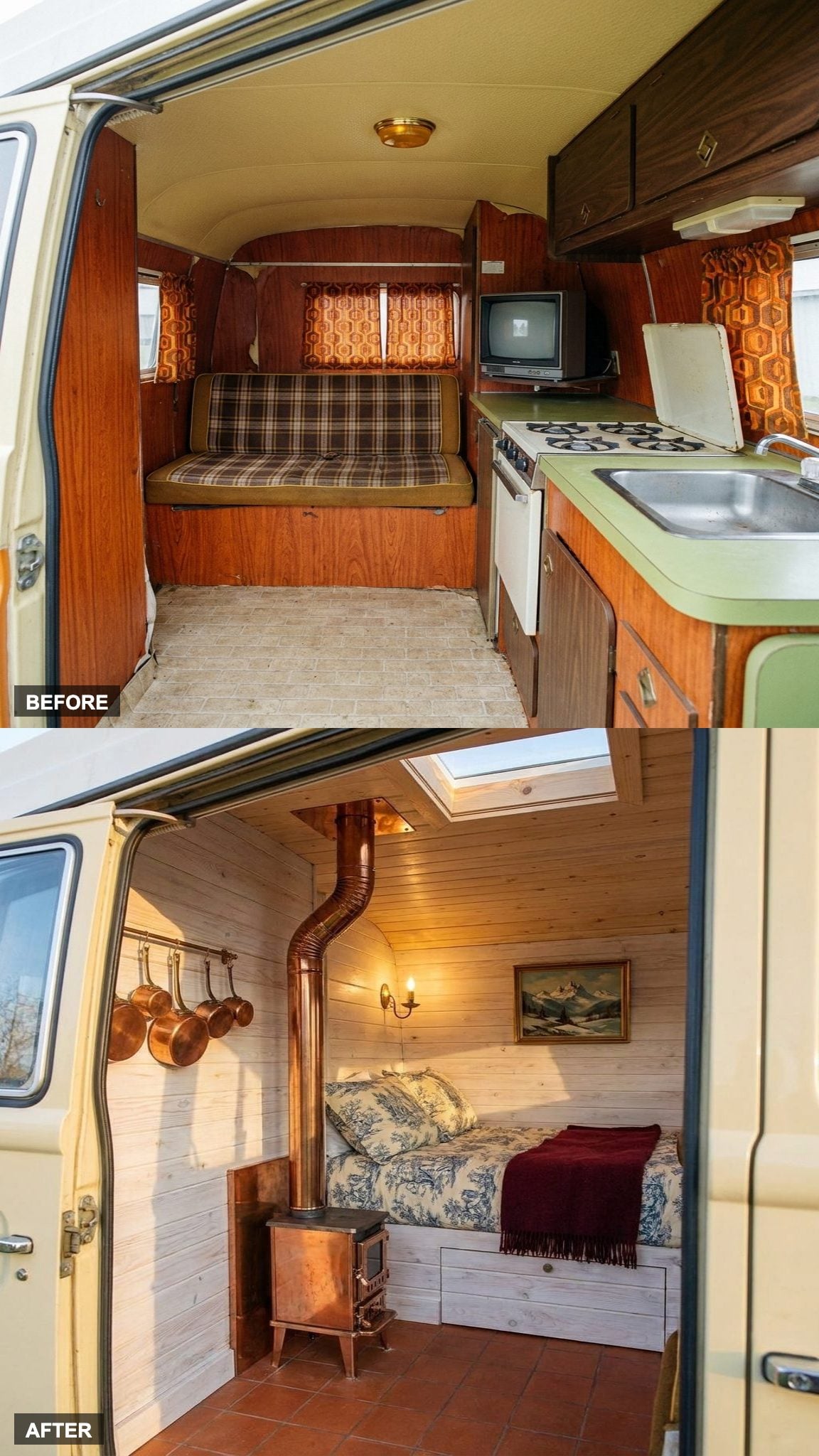
Toile de Jouy in a camper van sounds absurd until you see it up close. That blue-and-cream pastoral print would read as ironic in a Manhattan loft and completely sincere in a mountain van. Context does all the heavy lifting.
Copper carries the scheme. The stove, the hanging pots, the low glow of it against whitewashed pine — every hard edge in the van gets softened by that one metal choice.
8. Desert Modernist with Concrete and Ochre
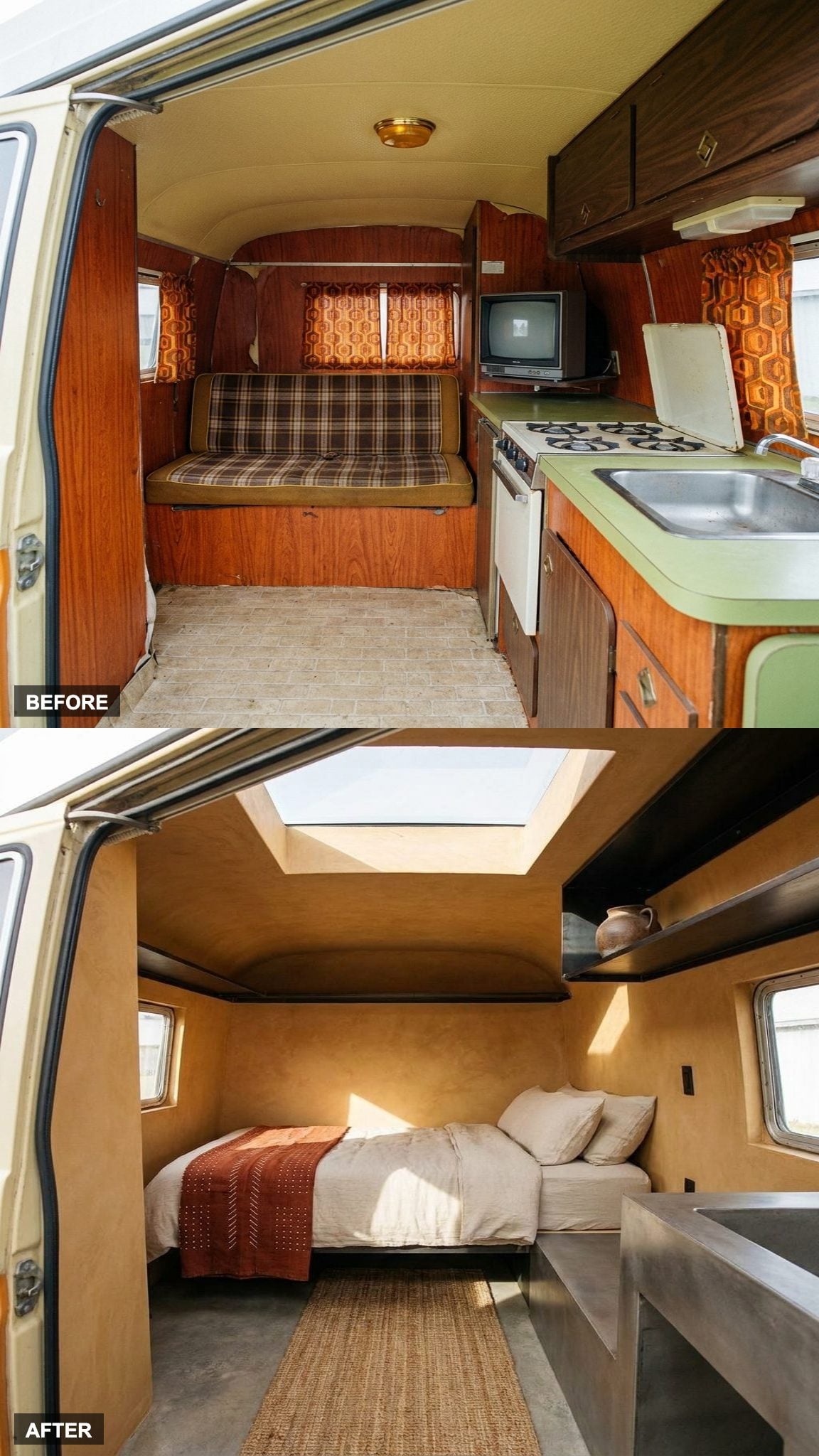
Micro-cement inside a van is a commitment. It weighs something, it takes days to cure, and if you get the color wrong you live with the mistake for years. Get it right and the whole box reads like a slice of Marfa lifted onto four wheels.
The cylindrical stove floating on raw steel is the single most impactful choice here — sculptural, not utilitarian, and it changes the entire read of the room.
7. British Shepherd’s Hut Charm in Sage and Ticking Stripe
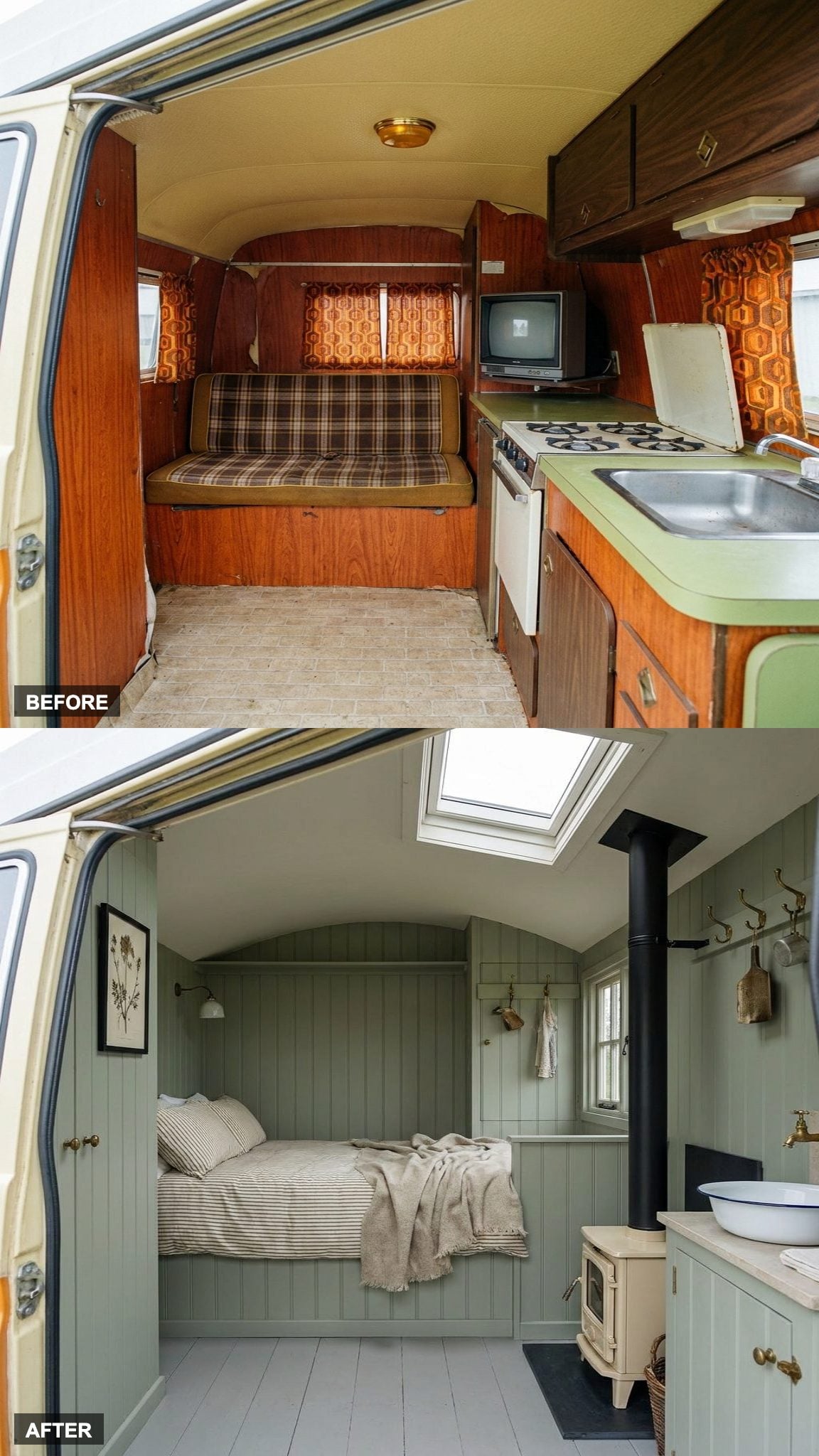
Sage-green beadboard is the color equivalent of a cup of tea after a long walk in bad weather — it doesn’t try to be exciting, and that’s precisely why it works in a space this small. Ticking stripe against it hums quietly rather than shouting.
The cream-enamelled stove is doing something quietly clever. It echoes the enamel washbasin, which stitches the practical corners of the van into the same visual sentence as the bed.
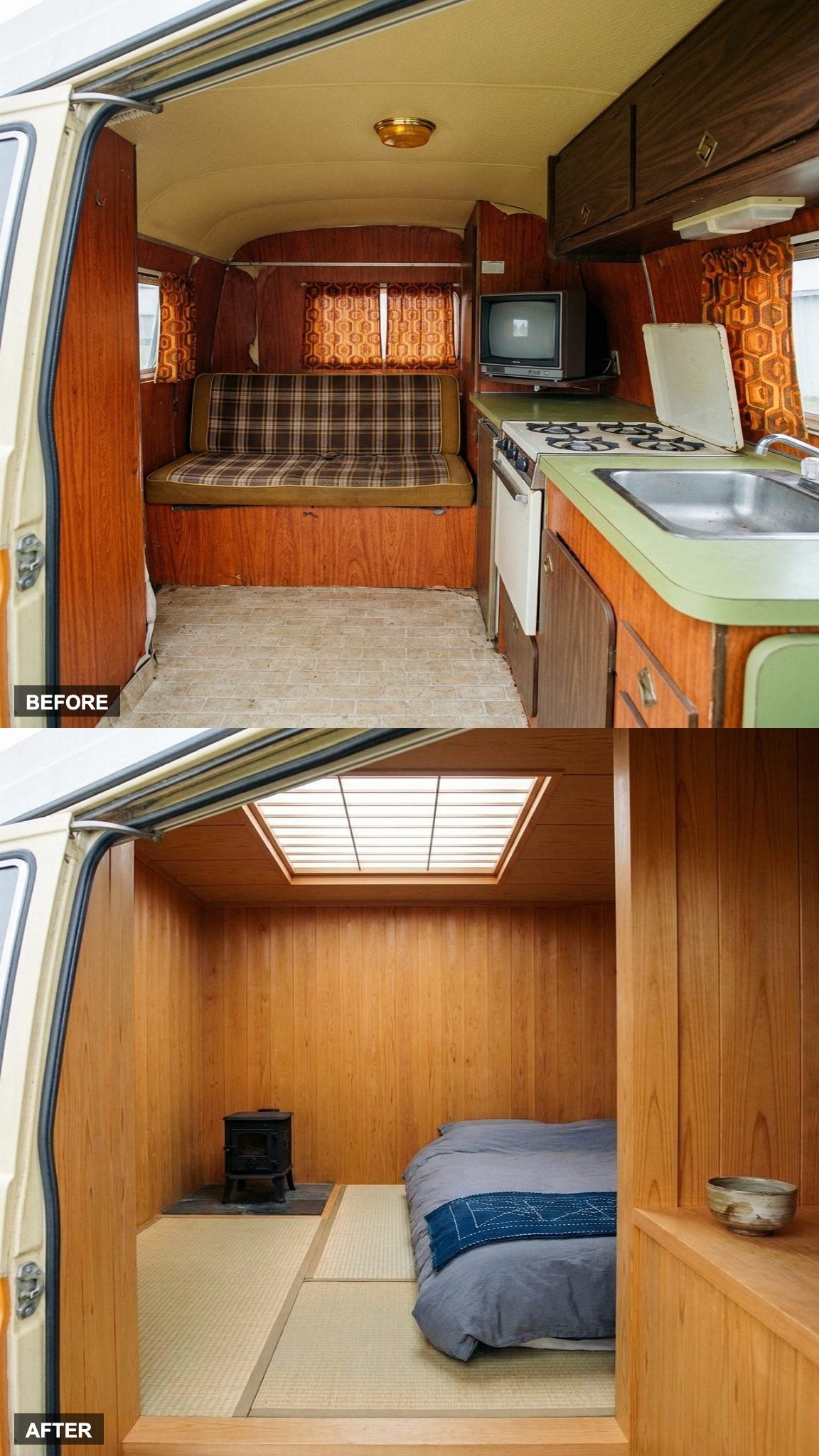
6. Tokyo Ryokan Van with Tatami and Shoji Light
🔥 Would you like to save this?
The shoji-filtered skylight is the whole reason this build works. Direct light in a room built this way would feel wrong — almost aggressive against the hinoki. Diffused through paper, it becomes something you could nap under at 2pm without guilt.
Tatami on a van floor is impractical and correct. It flexes underfoot, smells like cut grass, and forces you to slow down before your foot even lands.
5. Coastal Norwegian Fjord Cabin in White and Wool
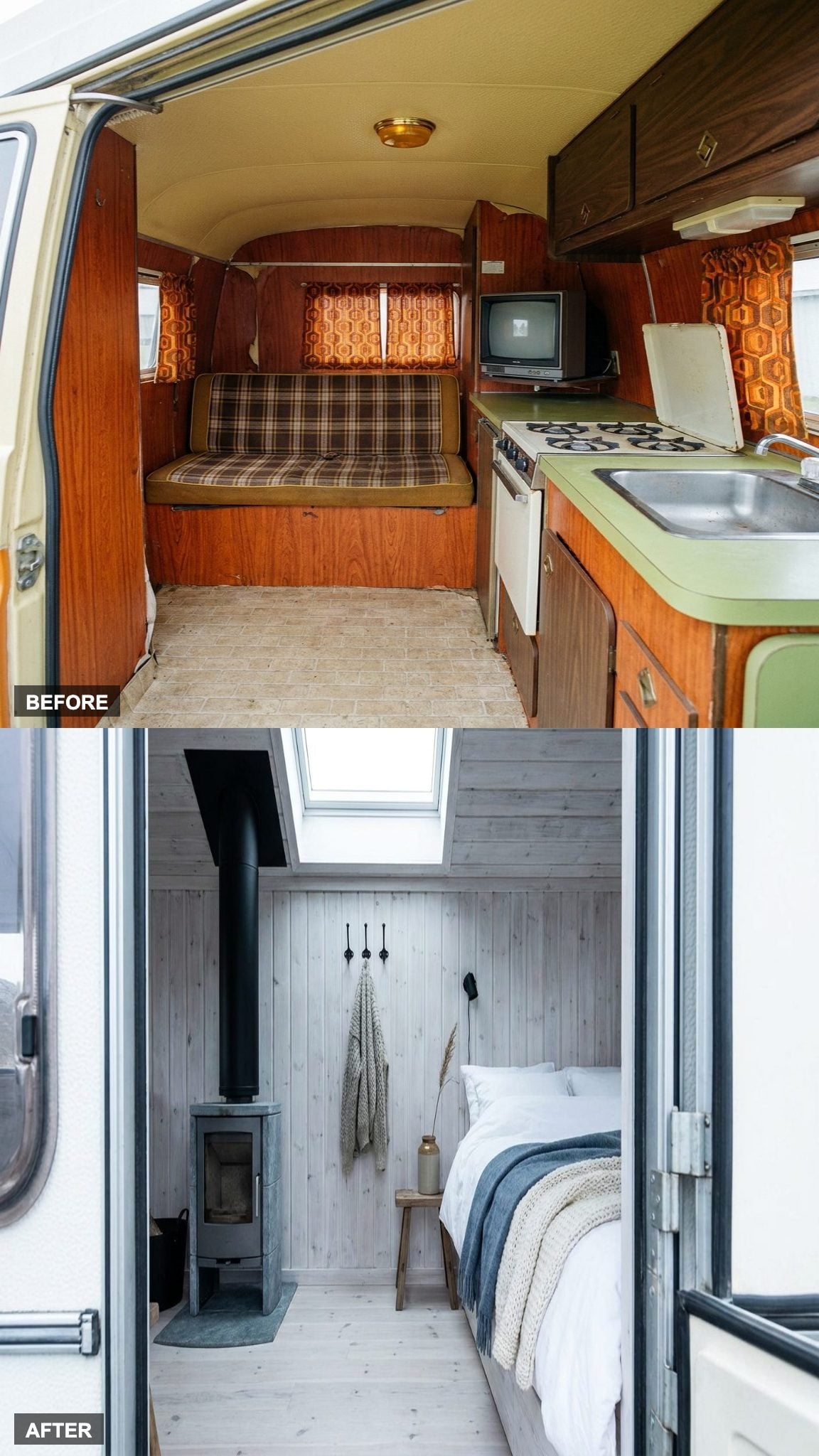
Whitewashed pine isn’t the same as painted pine. The grain still breathes through it, keeping the walls from ever going drywall-flat, and in a small vehicle that distinction is the whole difference between finished and cheap.
Soapstone as the stove material is the clever spec. It holds heat for hours after the fire dies. In a space this size, that means one evening burn carries you through the night.
4. Southwestern Adobe with Vigas and Wool Rugs
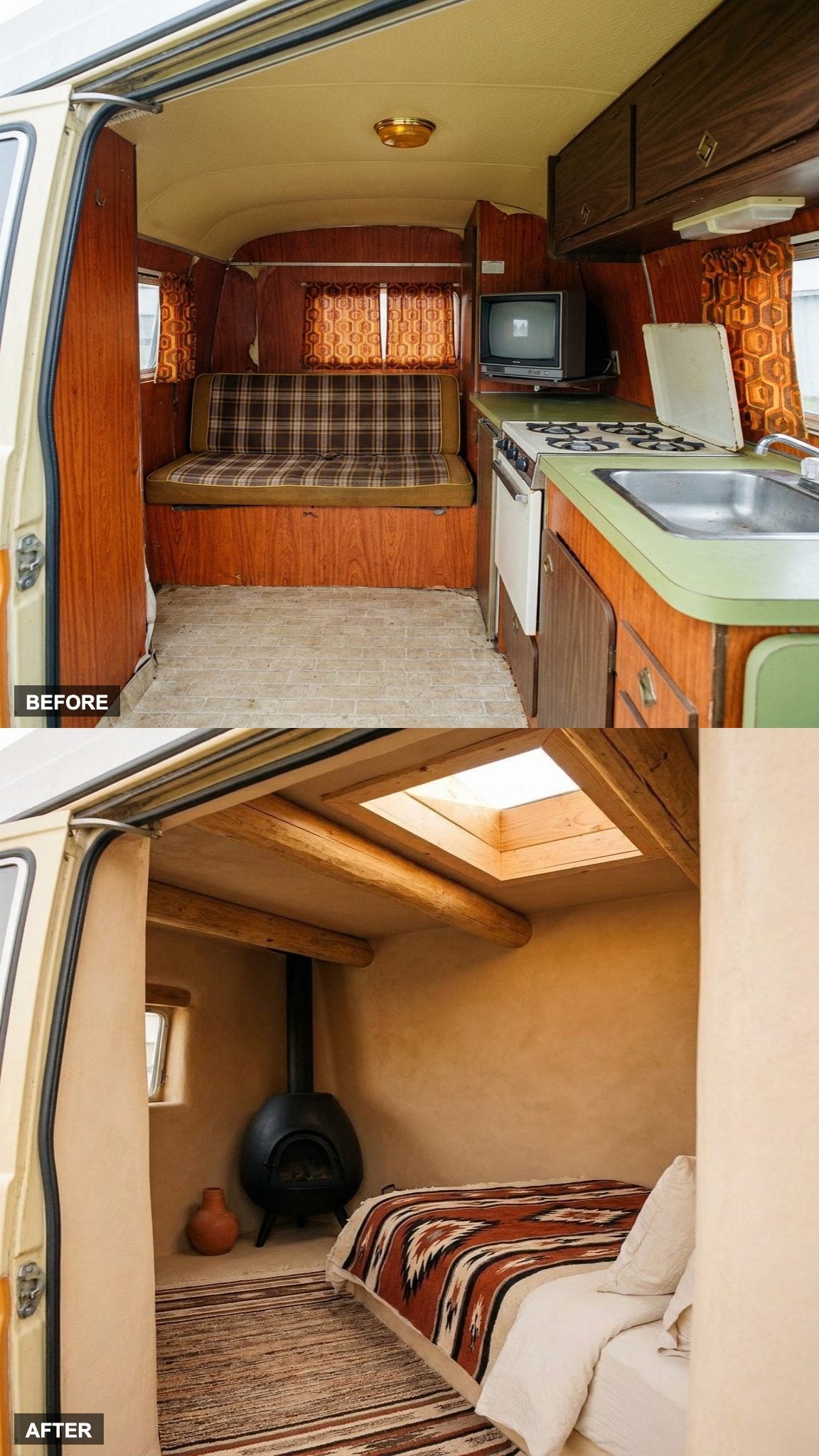
Clay plaster inside a van is a wild decision and it pays off every time someone crosses the threshold. The walls stop looking like walls and start looking like the inside of something older — something dug rather than built.
The rust-and-cream Chimayo wool blanket is the color anchor. Every other tone in the room derives from it, which is exactly why nothing in the space fights with anything else.
3. Industrial Blackout Van with Steel and Leather
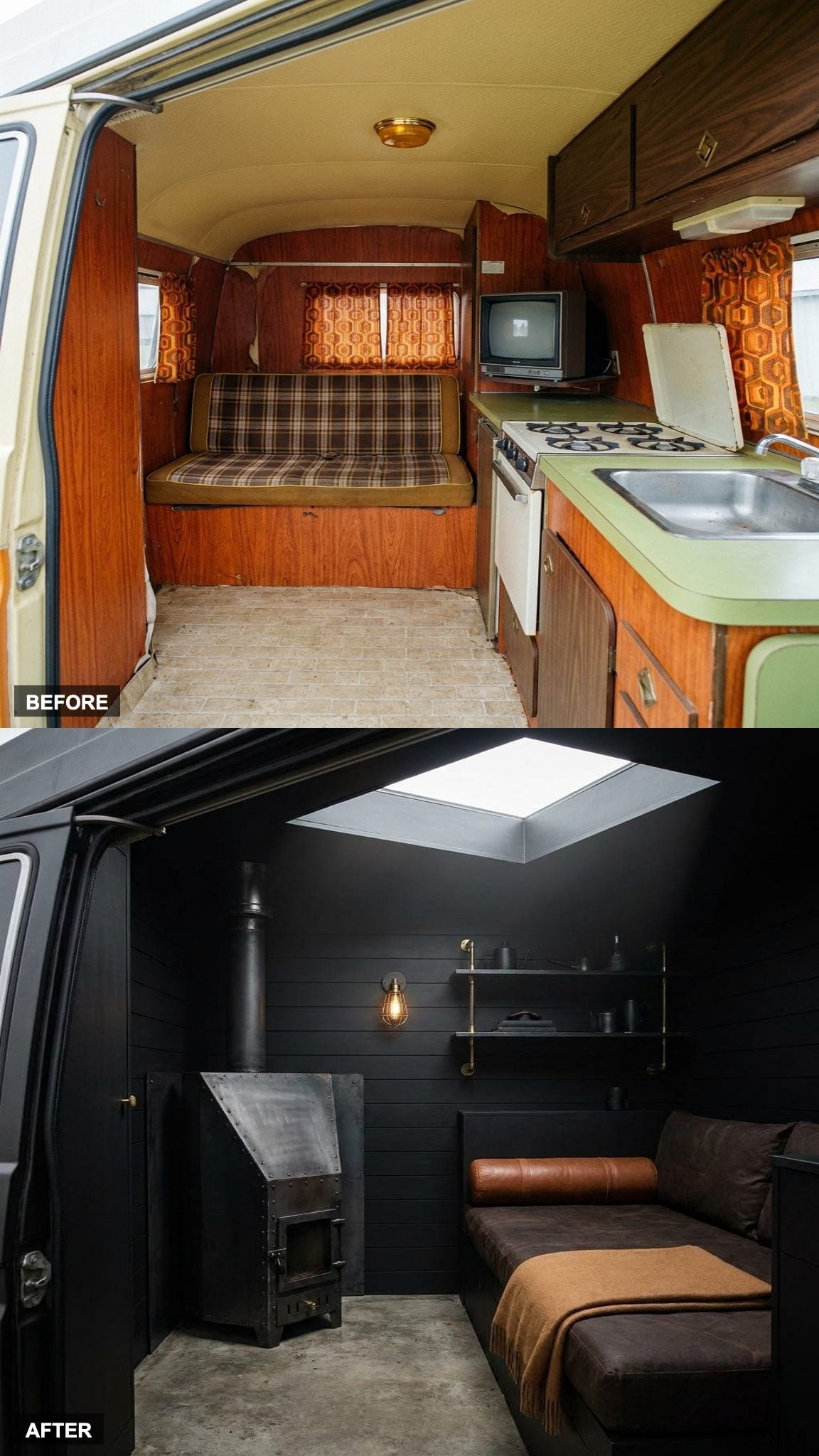
Blackout interiors terrify most people. They assume a dark room in a small vehicle will feel like a cave, but in a van with a properly cut skylight the opposite happens — dark walls simply vanish, and the beam of daylight coming down through the roof becomes the entire room.
Cognac leather against matte black. One material drinks light, the other kicks it back, and the pairing has never once gotten old.
2. Bohemian Weaver’s Studio with Tassels and Terracotta
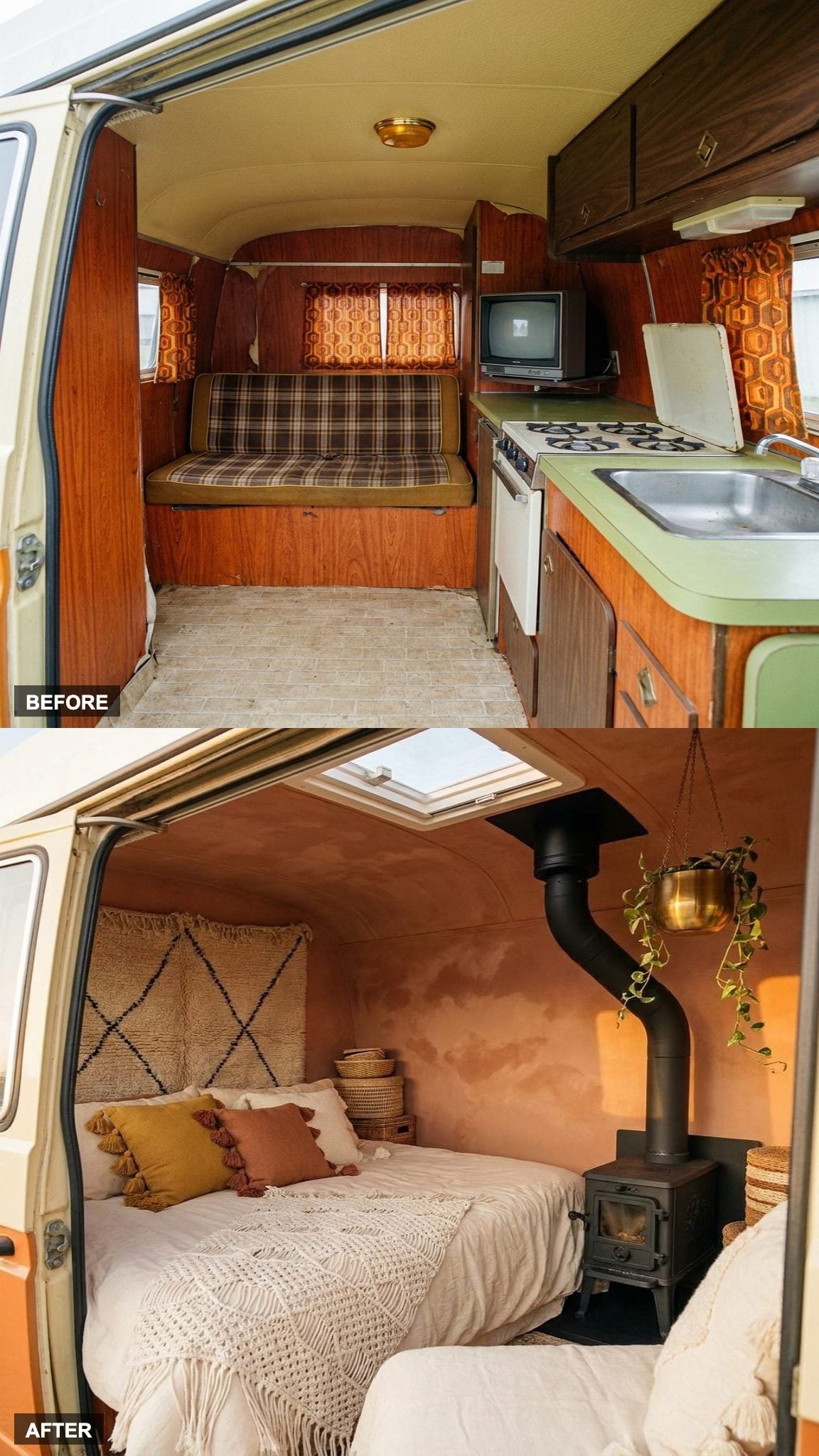
Terracotta lime wash has movement built into it — the color shifts as the day moves, so the interior never looks quite the same twice. That living quality is what rescues boho from tipping into cliche.
Layering does the heavy lifting. Macrame, tassels, weavings, baskets, and rugs stack in a way that would read cluttered in a house and reads correct in a van, because a van should feel occupied rather than staged.
1. Nordic Hunting Lodge in Deep Green and Antler
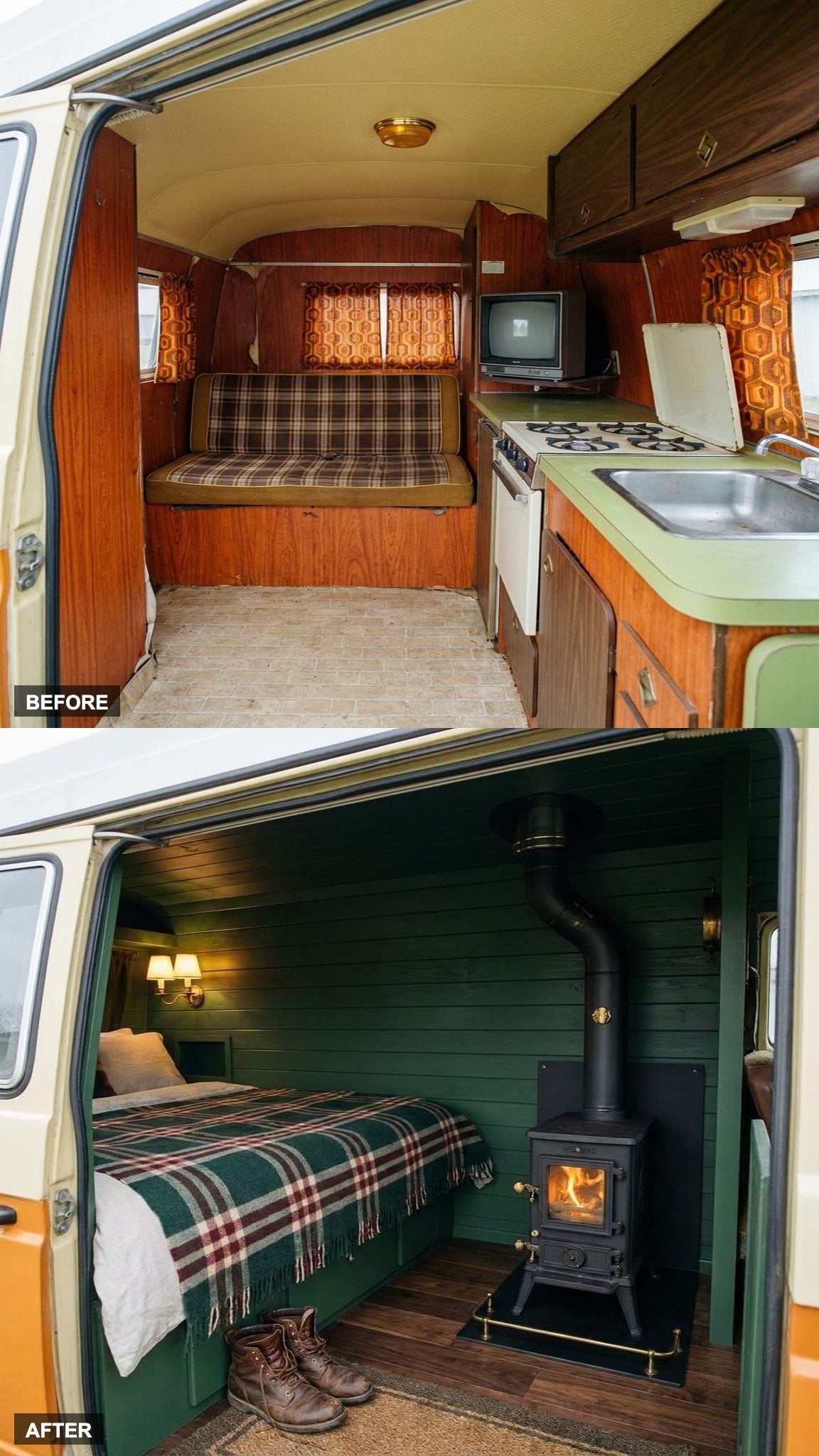
Painting van walls a saturated forest green sounds claustrophobic until you notice what it does to the seams and joins that usually betray a build. Everything becomes one continuous room rather than a box with visible corners.
Oxblood in the plaid wool is the color nobody thinks to add and everybody should. It warms the green without competing for attention, and it makes the whole scheme feel lived-in instead of decorated.
🔥 Would you like to save this?
Please note that some of the imagery in this article were created with the aid of AI image generators.