
🔥 Would you like to save this?
The vinyl seat burned the backs of your thighs before the car even left the driveway. Dad had been loading the trunk since 6 a.m., wedging things into gaps like a man solving a geometry problem with luggage. Half of what went into that station wagon wouldn’t make sense to a kid today. The other half wouldn’t even be legal. Here’s what we packed.
The Road Atlas Folded Into a Shape No Human Could Ever Refold
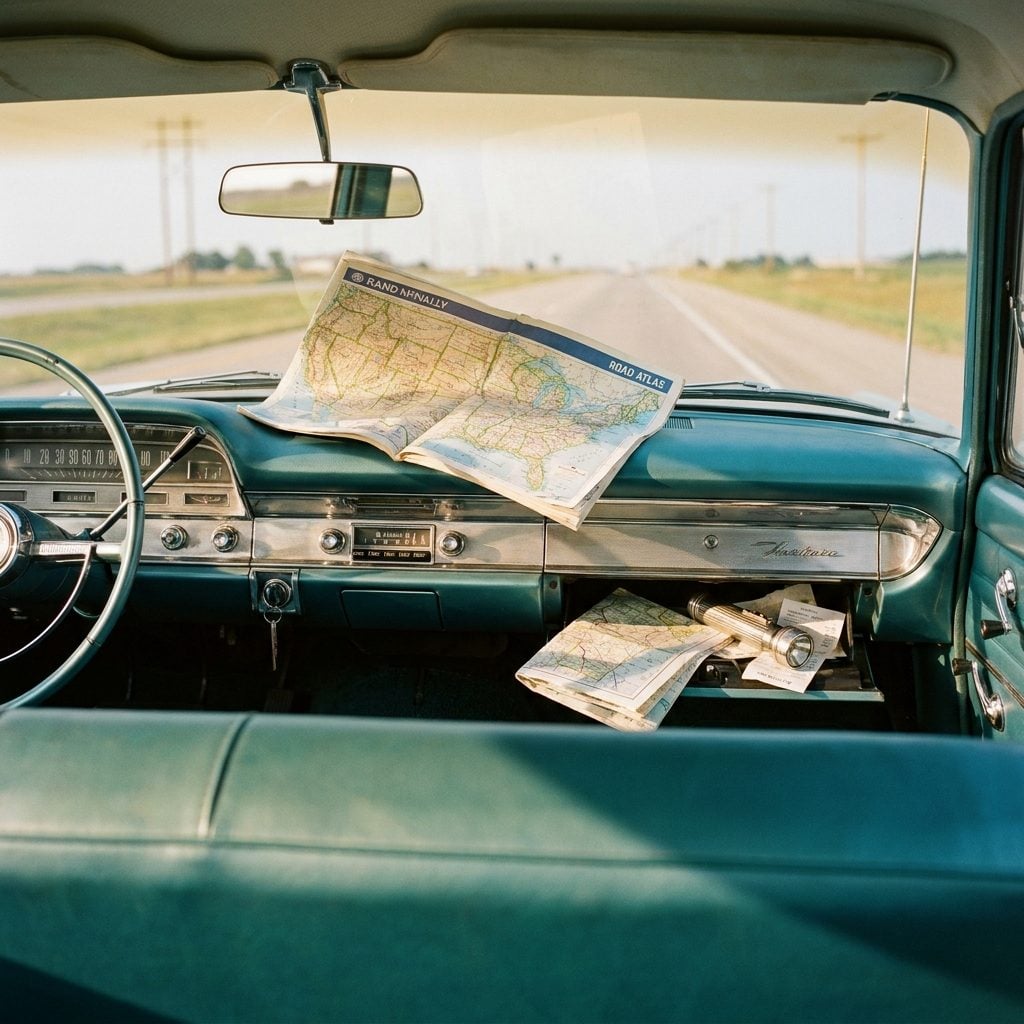
Nobody ever refolded one correctly. Not once. Your father couldn’t do it. The gas station attendant who volunteered to help couldn’t either. The Rand McNally road atlas lived in permanent origami failure, stuffed into the glove box at roughly triple its original thickness.
Mom was the navigator. She’d trace a finger along a red line while Dad drove, and they’d argue about whether Route 40 or the interstate was faster — an argument conducted with a confidence that GPS has completely obliterated. The atlas had coffee rings on Pennsylvania. A torn corner somewhere around Missouri. Dog-eared pages everywhere and nowhere useful.
A Metal Picnic Cooler Packed With Sandwiches and Glass Soda Bottles
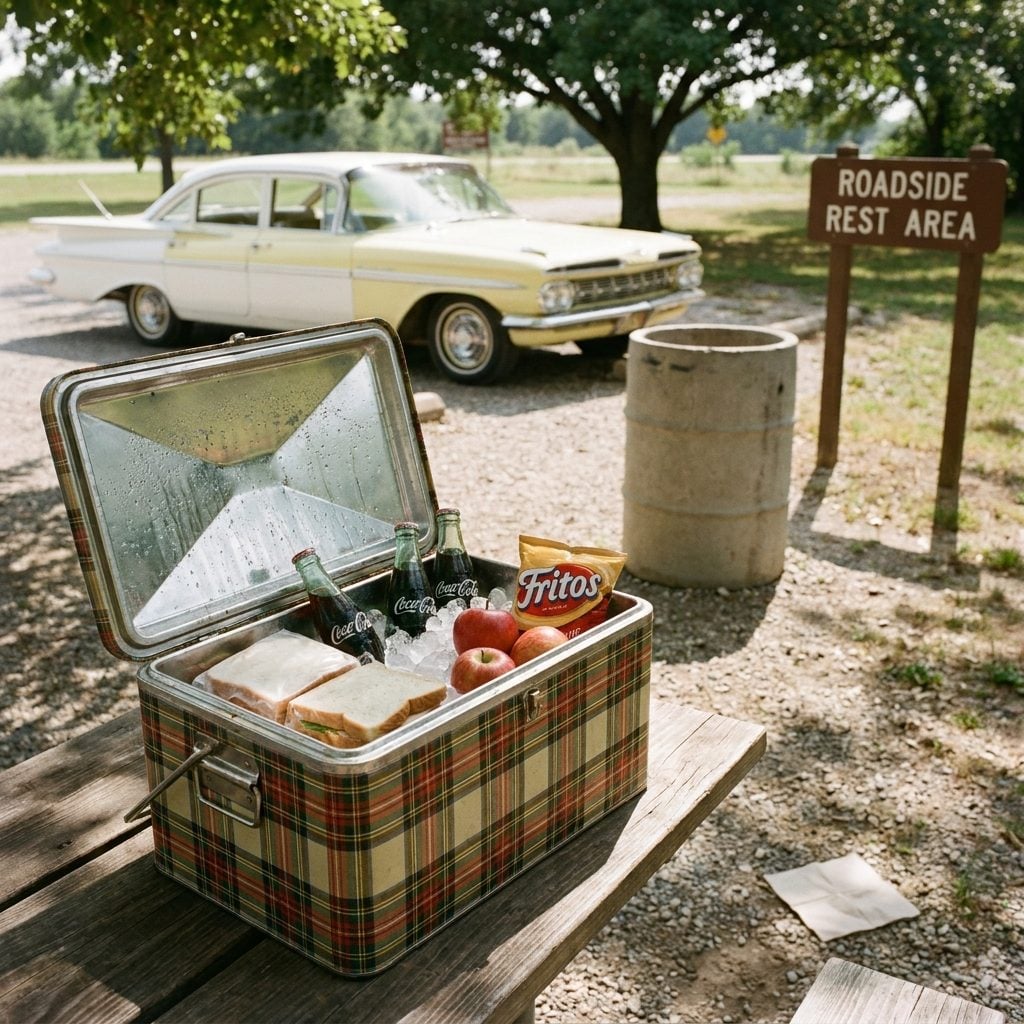
That thing weighed a small fortune empty. Full of ice, sandwiches in wax paper, and six glass Coca-Cola bottles, it required two hands and a grunt to get into the trunk. The metal exterior had a plaid or floral pattern that peeled at the corners after a few summers. No wheels. No drain plug on the early ones. Just cold metal and blind hope.
By hour three, the ice had surrendered into a lukewarm soup that soaked through the wax paper and turned every sandwich damp and vaguely apologetic. You ate it anyway — at a concrete picnic table bolted to the ground at a rest stop that offered shade, a trash barrel, and absolutely nothing else. Somehow those waterlogged sandwiches tasted better than they had any right to.
The Plaid Thermos Full of Coffee That Kept Dad Awake Through Ohio
Glass-lined, metal-jacketed, wrapped in that tartan pattern that apparently came standard on anything meant for the outdoors in 1964. The cap doubled as a cup. Coffee inside stayed hot for an unreasonable stretch and tasted faintly of whatever had been in there last — also coffee — so nobody noticed the ghost flavor.
Dad poured himself a cup somewhere around dawn, steering with one knee on a two-lane highway. That was just called driving. I still picture that dented plaid cylinder every time I see someone ordering a pour-over at a rest stop Starbucks, as if rest stops and pour-overs belong in the same sentence.
A Second Thermos of Kool-Aid for the Kids, Because One Thermos Was Never Enough
Cherry, mostly. Sometimes grape if your mother felt reckless about stains. It went into a smaller Thermos — the kid-sized one — lukewarm by lunchtime, room temperature by two. You drank from the cap, passed it to your sibling, who wiped the rim with a shirt sleeve and considered that sufficient sanitation.
The sugar content would horrify a modern pediatrician. Nobody blinked. The backseat was already a crime scene of animal cracker crumbs and melted crayons, so one more layer of red sugar water on the vinyl changed nothing. That Thermos was the only peace treaty that held between siblings separated by a coloring book and three hundred miles of highway.
The Canvas Water Bag Hanging From the Front Bumper Like a Desert Talisman
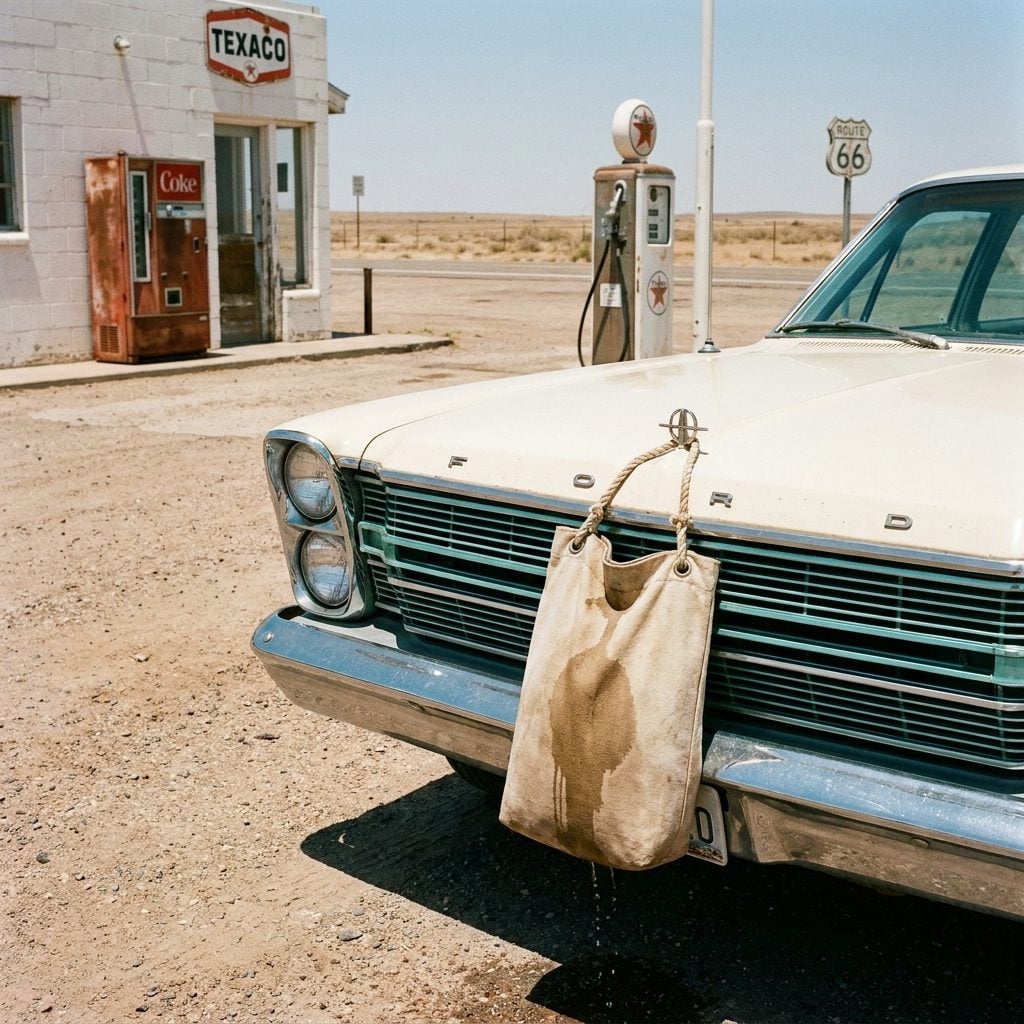
If you’ve never seen one: the concept sounds completely unhinged. A bag made of canvas, filled with water, tied to the front bumper of a moving car. Evaporation through the fabric kept the water cool. That was the entire engineering. Evaporation and wind.
And it worked. Families heading through the Southwest or across any long desert stretch hung one on the bumper, the hood ornament, the side mirror bracket — wherever it caught airflow. Part radiator insurance, part emergency drinking water, part signal to other drivers that you’d done this before and came prepared. Once air conditioning became standard and interstates replaced the old desert two-lanes, canvas water bags vanished from bumpers almost overnight. For a solid decade though, that damp canvas sack was as much a part of the road trip as the spare tire.
The AAA TripTik: A Spiral-Bound Route Book That Made You Feel Like a Navigator
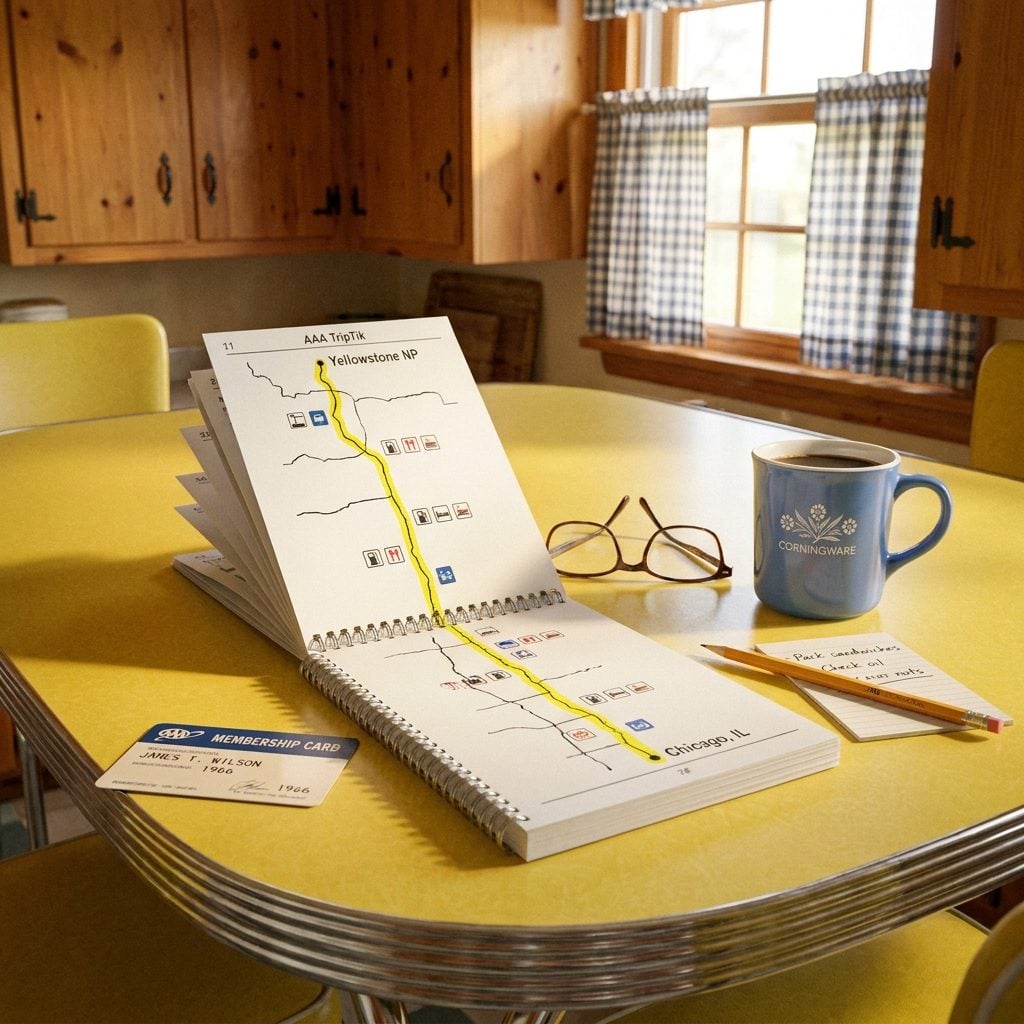
Weeks before departure, you walked into the AAA office, and a real human being sat down and planned your route. They highlighted it on spiral-bound strip maps — page by narrow page — showing only the roads you’d actually drive. Each page covered maybe fifty miles. Flip, flip, flip. A mission briefing for a station wagon.
Hotels were marked. Construction zones noted. Detour suggestions penciled in the margins. The whole production was so specific to your exact trip that it was worthless to anyone else, which somehow made it feel more important. Like classified documents for a family vacation to the Smoky Mountains. My parents kept ours in a drawer for years afterward, as if we might need evidence we’d been there.
The Cigar Box Full of Loose Change for Tolls, Tips, and Pay Phones
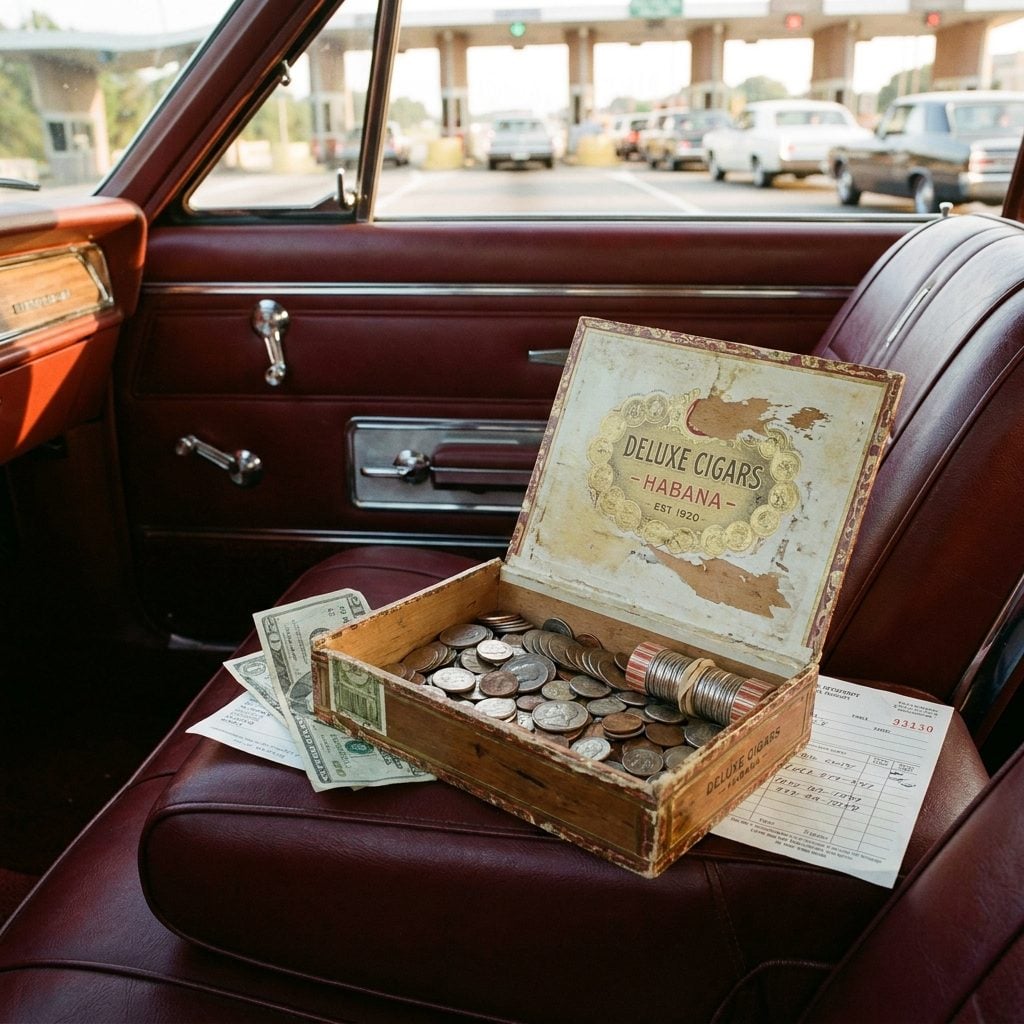
Dutch Masters or White Owl — the brand didn’t matter. What mattered was the repurposing: the world’s least organized coin purse, rattling on the front seat with every bump. It was the sole funding source for anything under a dollar.
Toll booths. Pay phones. Newspaper boxes. Vending machines. Tipping the gas station attendant who cleaned your windshield, because that was a real thing that happened regularly. The cigar box bankrolled all of it.
Quarters were precious. Dimes were useful. Pennies were dead weight, but nobody tossed them. And buried under the coins — always, without fail — a rubber band, a bent paper clip, and a phone number scrawled on a scrap of paper that no one in the family could identify anymore. Every cigar box had this exact archaeological layer.
The Polaroid Camera That Made You Wait Sixty Seconds for a Blurry Miracle
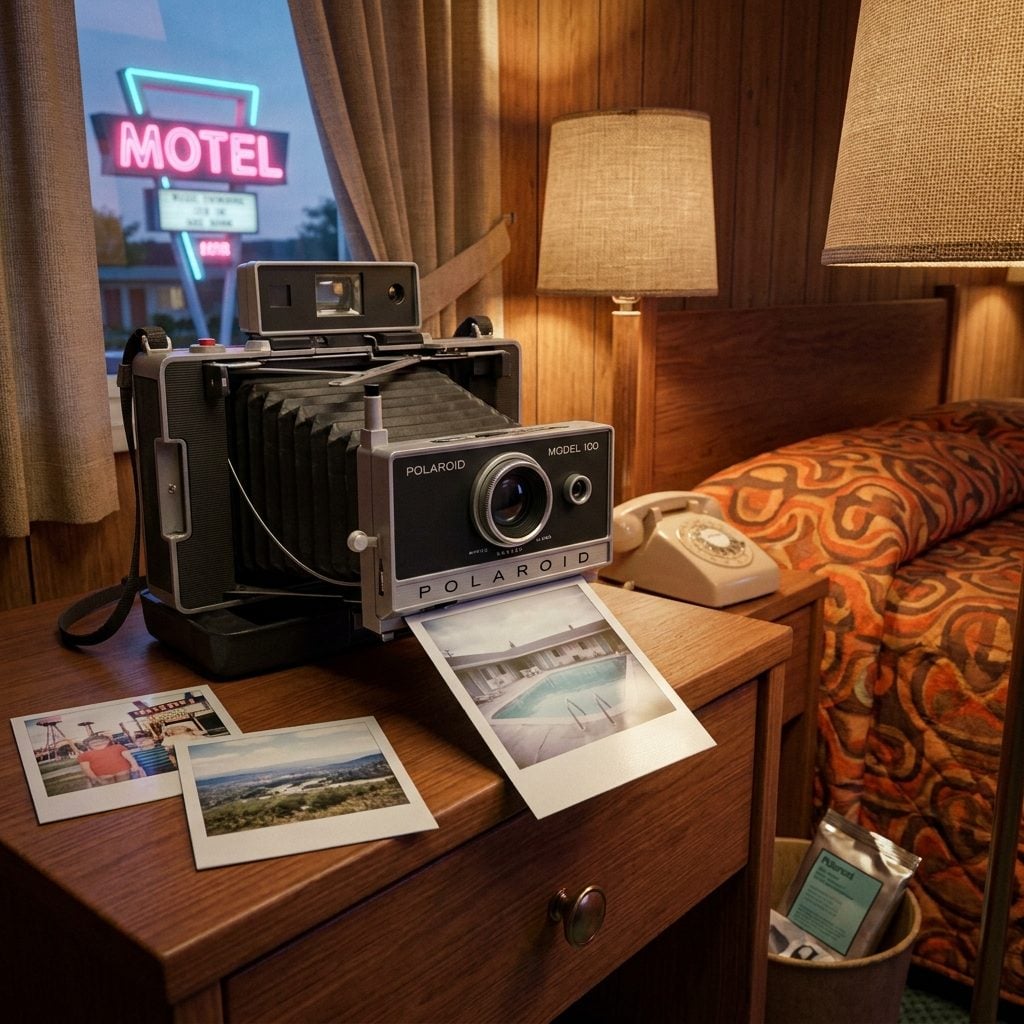
Pull the tab. Count to sixty — or, more honestly, count to twenty and peek early because patience was never the family’s strong suit. Peel apart the layers. Find a brownish, slightly wet, vaguely recognizable image of whatever you’d just aimed at.
Absolute magic.
The Polaroid rode in the front seat, loaded and ready. Dad would pull over at a scenic overlook or a state line sign, and the whole family arranged themselves while Mom squinted through the viewfinder and said “hold still” three times. The prints went into a shoe box in the trunk. By the time you got home, half of them had fused together permanently — married to each other in a way no amount of careful peeling could undo.
The Kodak Instamatic and a Sleeve of Flash Cubes That Popped and Burned
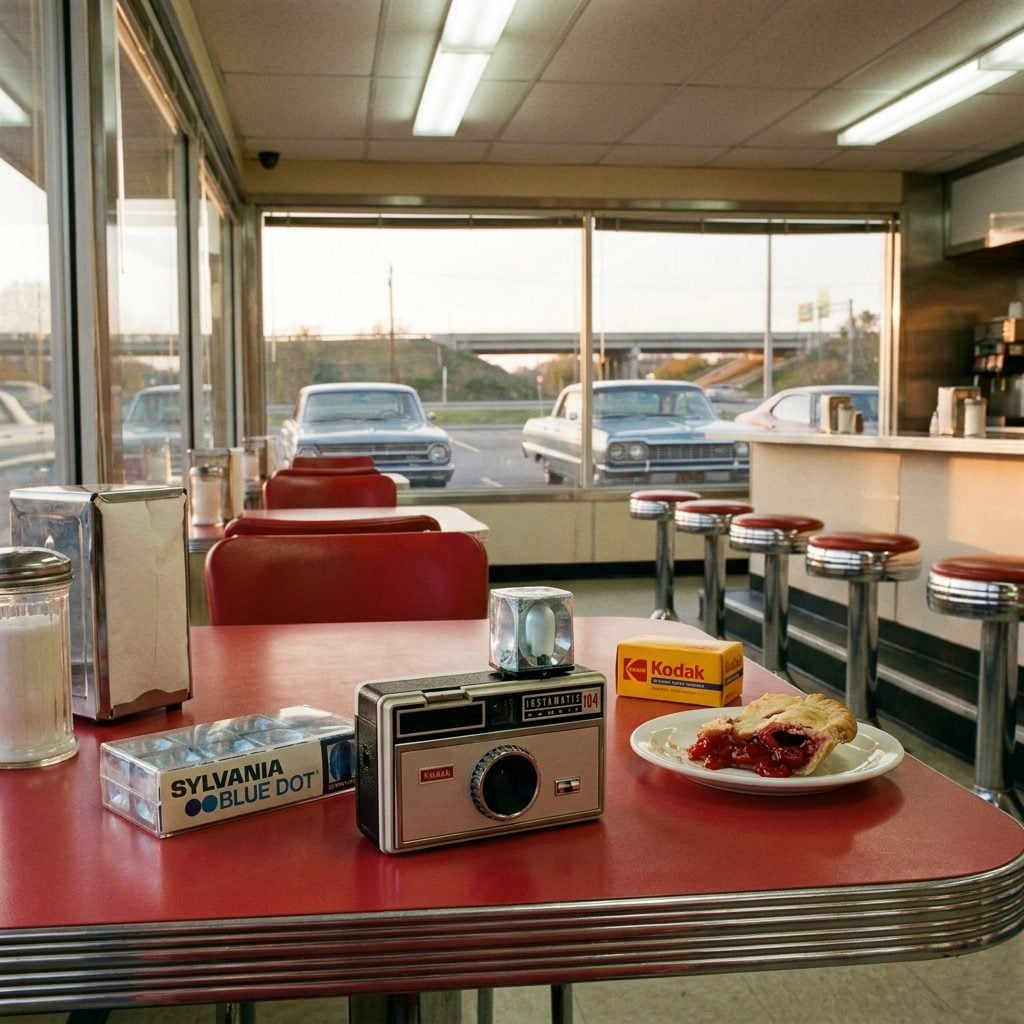
The flash cube rotated one quarter turn with each shot, and when all four bulbs were spent, you popped it off and stuck on a fresh one. Used cubes came off hot. The spent bulbs went cloudy white. Kids collected them like tiny burnt trophies, which looking back seems like a safety concern nobody raised.
The Instamatic itself was a brick — a satisfying, drop-it-on-concrete-and-it-still-works brick. You loaded a film cartridge that clicked into place with a sound that meant business. 126 film. Twelve exposures, maybe twenty if you sprung for the bigger cartridge. And that was it. No deleting. No retakes. Every click cost money.
You had no idea what your pictures looked like until you got home and dropped the film at the drugstore. Then you waited. A week. A full week of wondering. And when the envelope came back, half the shots were thumbs, three were blown out, and one — just one — was perfect. That one went into a frame on the hallway wall and stayed there for decades.
Flashlight Batteries Packed Separately in a Plastic Bag to Prevent Corrosion
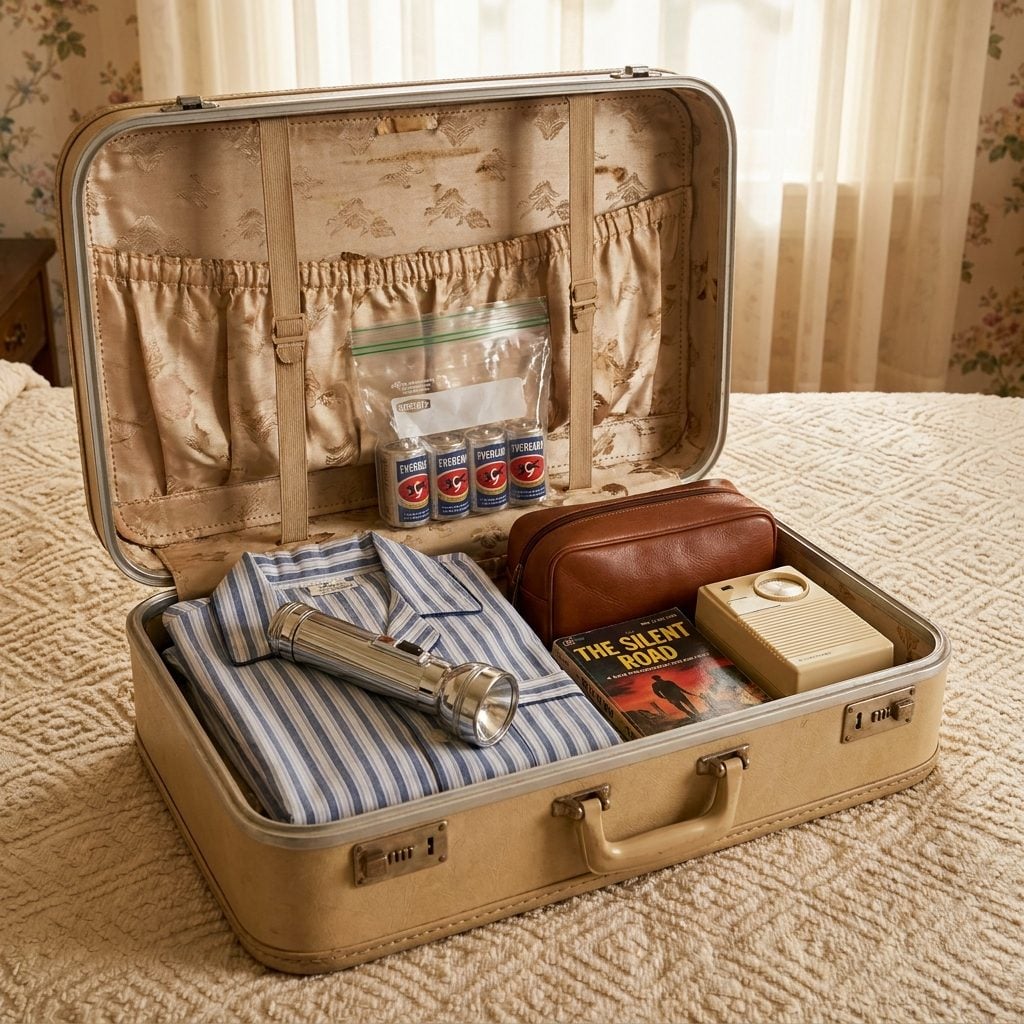
Dad’s department entirely. Flashlight in the suitcase. Batteries in a separate plastic bag, tucked into a side pocket. Because if you left them loaded and they leaked, you’d open the case to find a corroded mess of white-green crust and a useless chrome tube — exactly when you needed light at the campsite or the motel with the burned-out porch bulb.
Eveready D-cells, usually. That nine-lives cat staring at you from the label. Heavy. Packed with the same gravity as the first-aid kit and the spare tire iron, because flashlight readiness was non-negotiable in 1965. No phone screens existed to light the path between the car and the motel room door at midnight. You had the flashlight, or you had the dark. Those were your options.
The Paper Bags for Car Sickness Tucked Under Every Seat
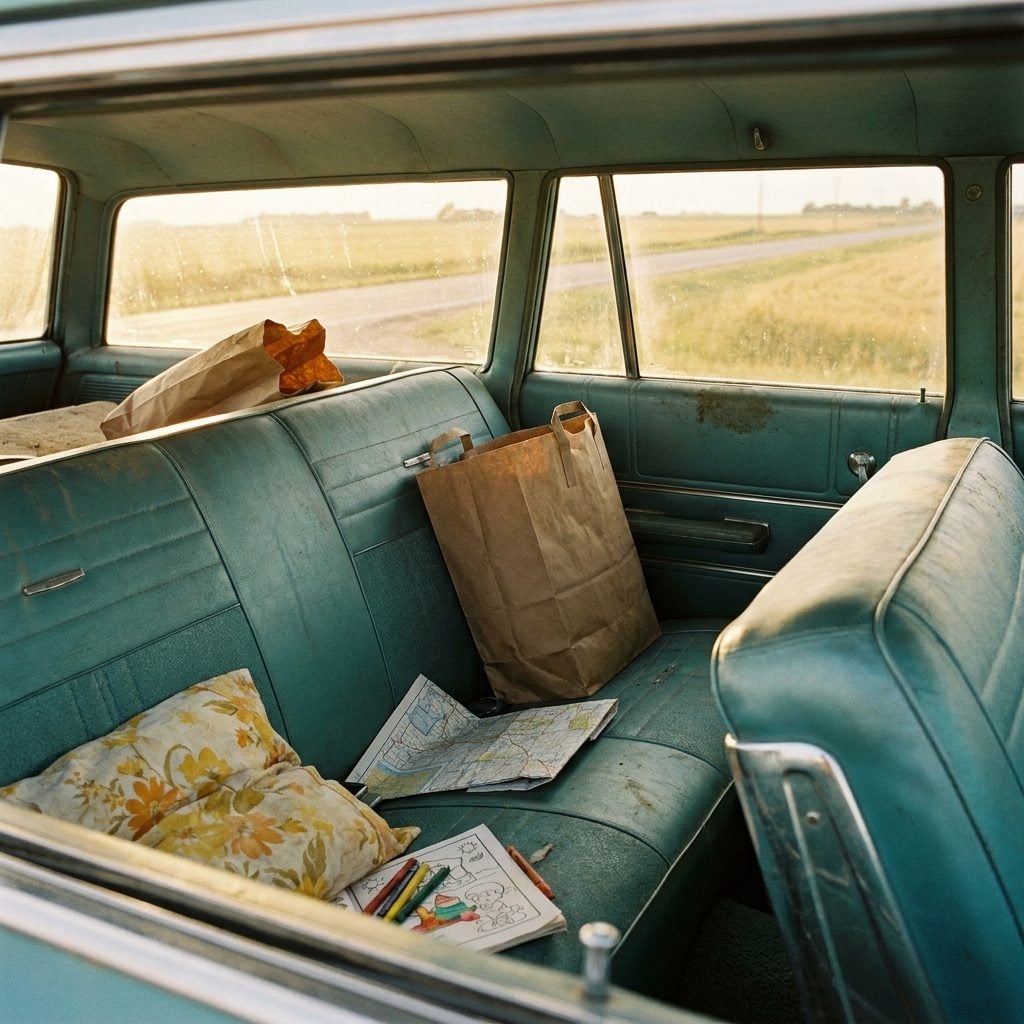
That particular shade of brown. You knew what those bags were for before anyone said a word — Mom kept three or four folded flat, shoved between the front seat and the door, and the unspoken rule was you didn’t ask about them unless you needed one right now.
They weren’t specialty items. Just grocery bags from the A&P or Piggly Wiggly, drafted into service against the grim realities of winding mountain roads and backseat heat. No air conditioning. Windows cracked two inches because Dad said more than that “eats gas.” Your brother turning green somewhere outside Knoxville.
The worst part wasn’t using one. It was the sound of someone else opening one.
The Little Sewing Kit for Quick Clothing Repairs That Mom Never Left Behind
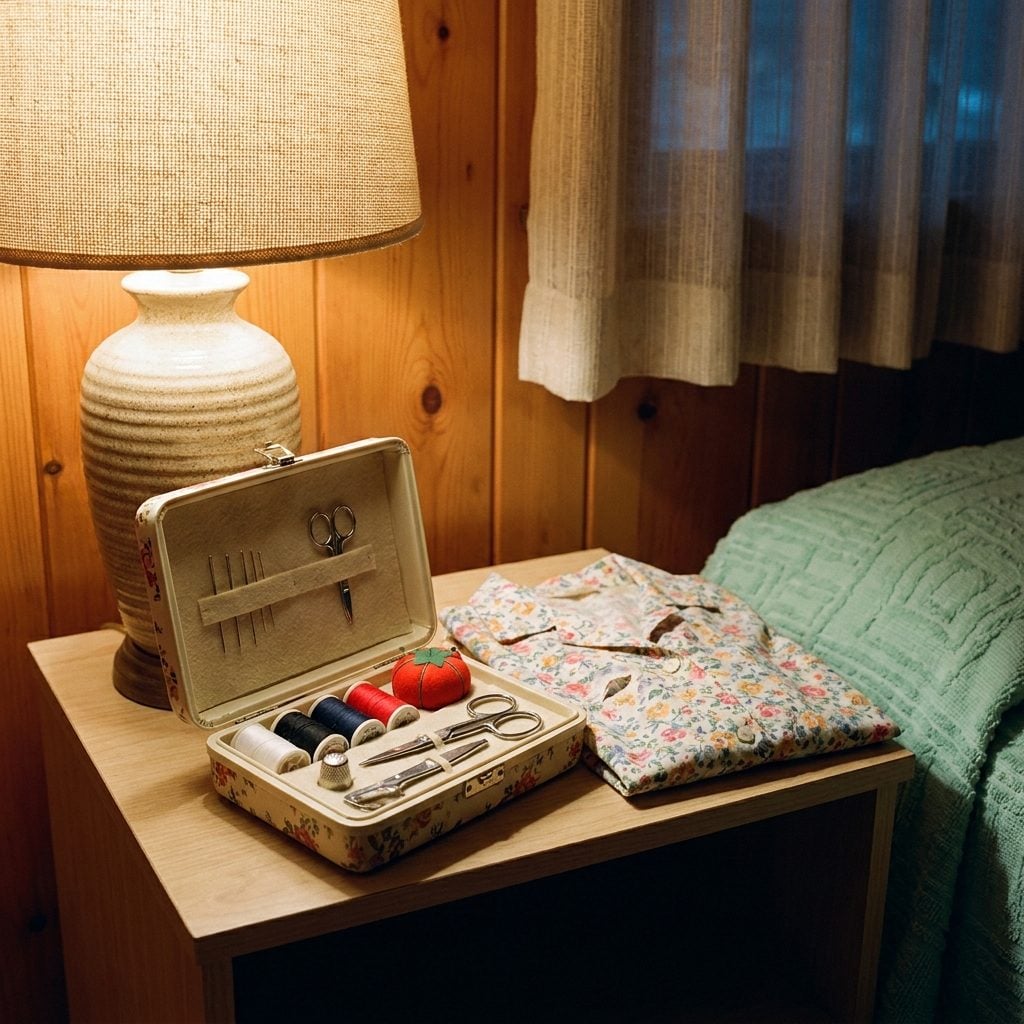
Forty cents’ worth of thread and a few needles, and Mom acted like she’d packed a field hospital. But she wasn’t wrong — somewhere between the car door and the motel pool, somebody’s shorts would lose a button, a strap would snap, or a hem would come undone from a kid sliding across vinyl for six hours straight.
The kit itself was always tiny. Hard little case no bigger than a deck of cards, thread in four colors max, a tomato pincushion that had been in the family since before you were born. She could fix a ripped seam in three minutes flat on the edge of a motel bed while Dad squinted at the road atlas, probably planning tomorrow’s wrong turn.
The Vinyl Train Case Packed With Every Toiletry Known to Mankind
🔥 Would you like to save this?
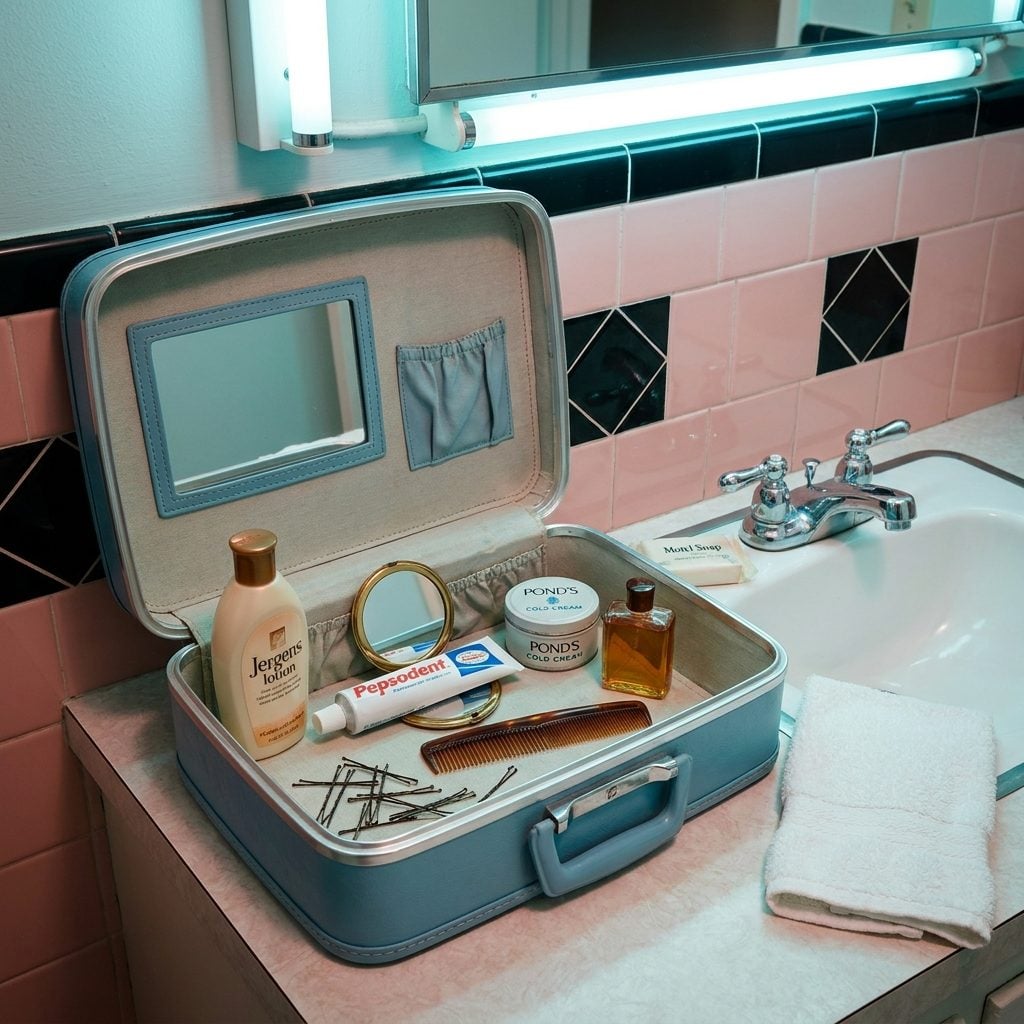
Every woman had one, and no two were packed the same way. They all weighed roughly nine hundred pounds for their size, though. The vinyl train case was the original carry-on — except it never went on a plane. It rode shotgun on the floorboard or got wedged between suitcases in the trunk, always slightly too big for the space it occupied.
Inside: Pond’s Cold Cream in a heavy glass jar. Jergens lotion. Bobby pins loose in every crevice. A compact. Lipstick in a gold tube. Pepsodent. Maybe a small bottle of Evening in Paris perfume that had survived three vacations already. The little mirror inside the lid was always slightly warped, which meant you checked your face but never entirely trusted what you saw.
And the smell. Warm vinyl and cold cream and something floral you couldn’t quite name. That was the smell of Mom getting ready in a motel bathroom with the door half open, fluorescent light buzzing overhead.
Hair Rollers and a Can of Aqua Net, Because Vacation Hair Still Had Standards
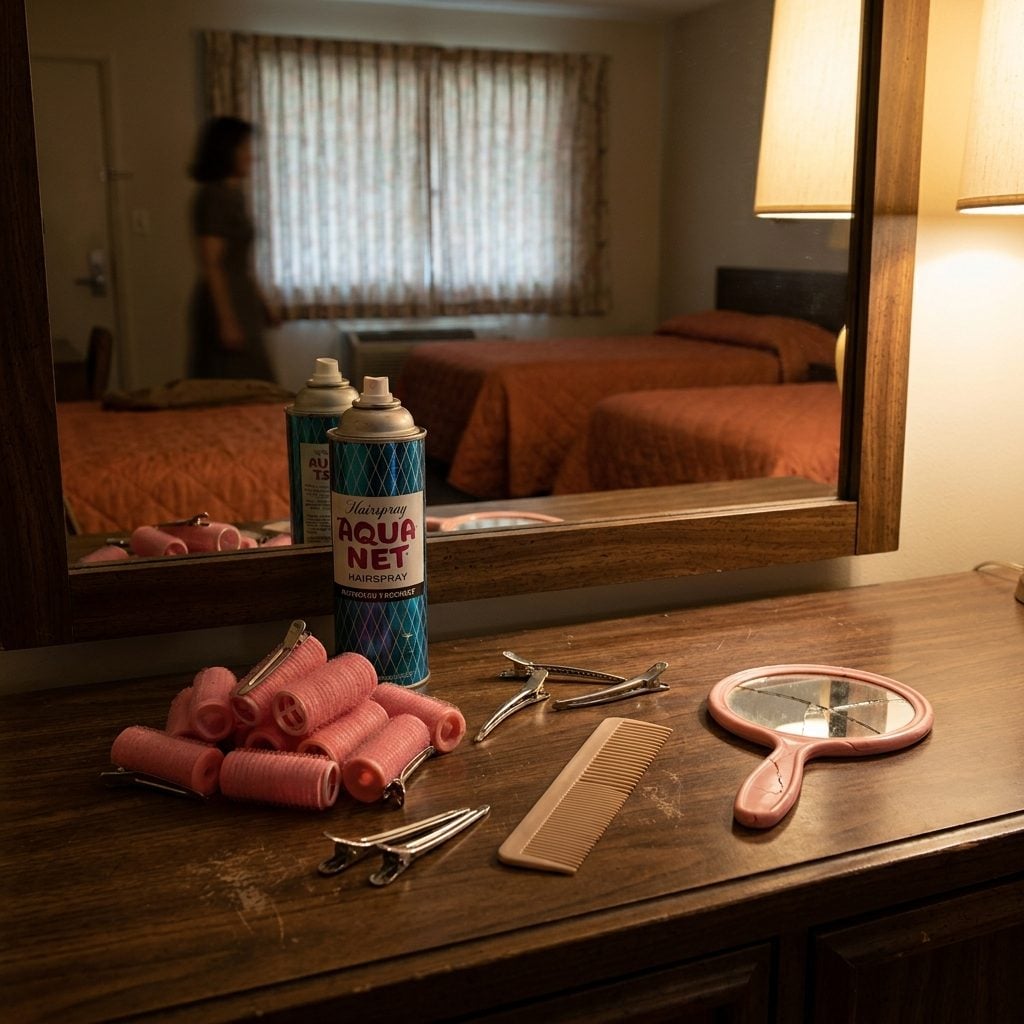
Vacation or not, you were not leaving a motel room with flat hair. That simply wasn’t done.
Mom slept in rollers the night before any outing involving a restaurant, a scenic overlook with a camera, or frankly any situation where other humans might see her. The foam rollers were pink or blue, held with metal clips that left tiny dents in your scalp. And the Aqua Net — good lord. One can per trip, minimum, and it could shellac a hairstyle into place through open-car-window wind, Gulf Coast humidity, and a full day at Yellowstone. That blue-and-white can mattered as much as the road atlas. The motel bathroom reeked like a salon for twenty minutes after she finished, and if you walked through the cloud you’d taste it on your tongue for an hour.
A Clothesline and Clothespins for Drying Swimsuits at Every Roadside Motel
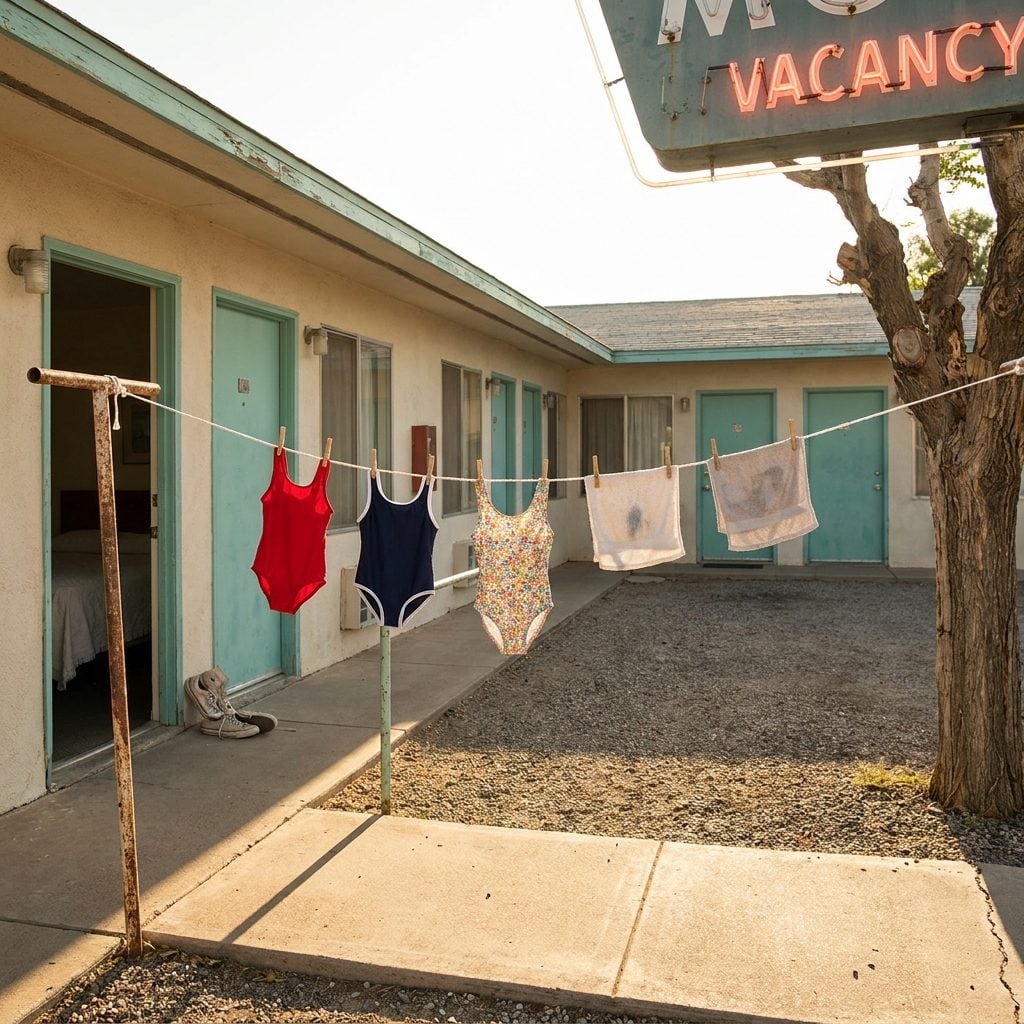
You packed a length of cotton clothesline the way you packed underwear. Just assumed.
Every motel stop, Dad would rig it between the bathroom door handle and the curtain rod, or outside between the car mirror and a fence post if the weather cooperated. Wet swimsuits, washcloths, a pair of socks someone splashed in the creek — everything got clipped up. The wooden clothespins lived in a Ziploc bag that smelled of cedar and mildew simultaneously, a combination that shouldn’t work but somehow defined summer travel. By morning everything was stiff and faintly crunchy from drying in hot air, but it was dry. That’s all that mattered when you had three days of driving left and no laundromat in the plan.
Foldable Aluminum Lawn Chairs That Turned Any Highway Shoulder Into a Dining Room
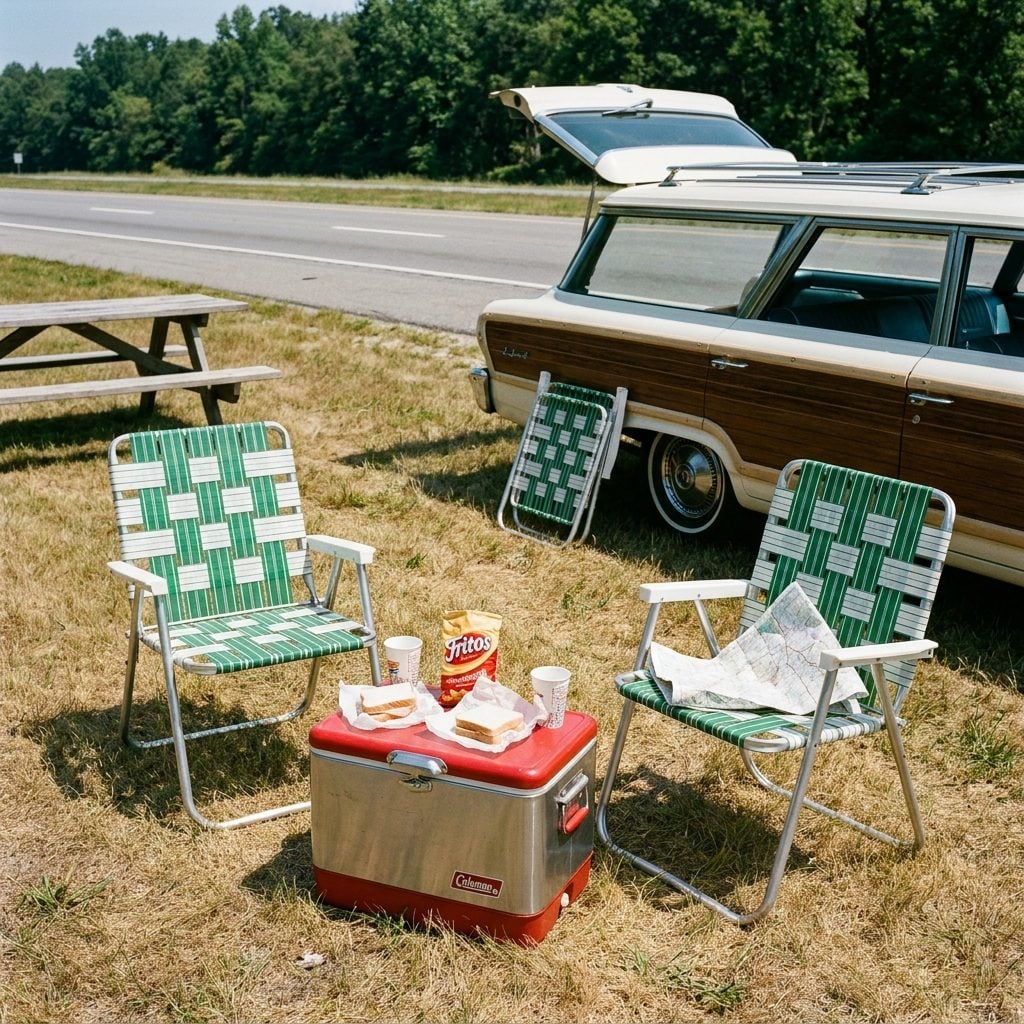
Weighed almost nothing. Made a sound like a screen door when you unfolded them. The nylon webbing branded a waffle pattern into the back of your thighs within ten minutes. Perfect.
The aluminum folding lawn chairs lived in the very back of the station wagon, wedged behind the suitcases, and at every rest stop and scenic pullover Dad would wrestle them out and set them on whatever patch of grass looked least ant-infested. A Coleman cooler served as the table. You ate bologna sandwiches on white bread, drank warm Kool-Aid from a thermos, and somehow — inexplicably — it beat any restaurant meal on the entire trip. I’ve eaten at nicer places since. None of them had that particular combination of highway breeze and warm mustard.
The Transistor Radio That Picked Up Static, Baseball, and Exactly One Country Station
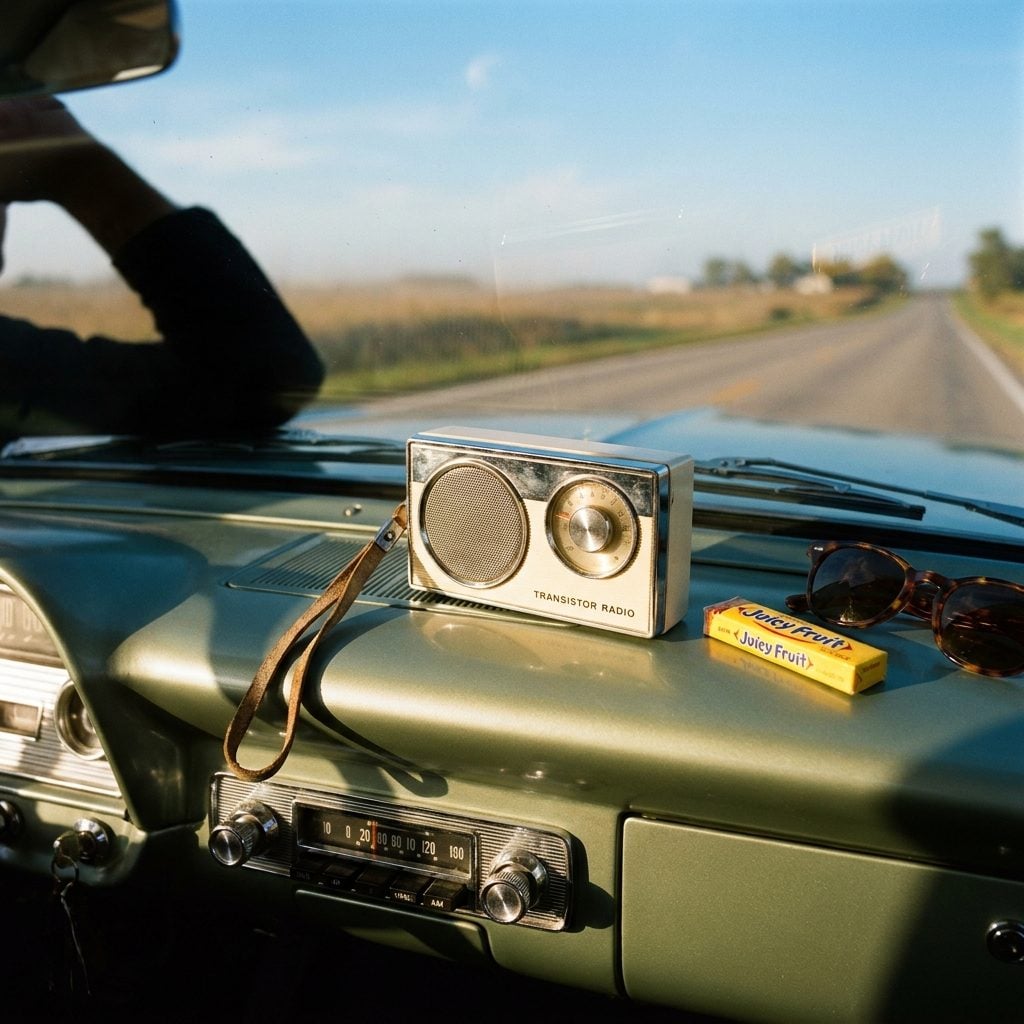
The car radio got you maybe four clear stations in any given stretch of highway, two of which were preaching, so somebody brought a transistor radio. That tiny speaker picking up a Cardinals game through waves of static felt like a lifeline to civilization.
It ran on a single 9-volt battery that Dad swore would last the whole trip. Never did. You’d hold it at different angles near the window, tilting it like a divining rod, trying to pull in a signal through the hills of West Virginia or across the Kansas flatlands where every station was fifteen minutes of farm reports followed by Patsy Cline. At night in the motel, lights off, you could sometimes catch distant AM stations from cities hundreds of miles away — voices drifting in from places you’d never visit. That felt like magic. Honestly, it kind of was.
Decks of Playing Cards So Worn You Could Identify the Ace of Spades by Its Bent Corner
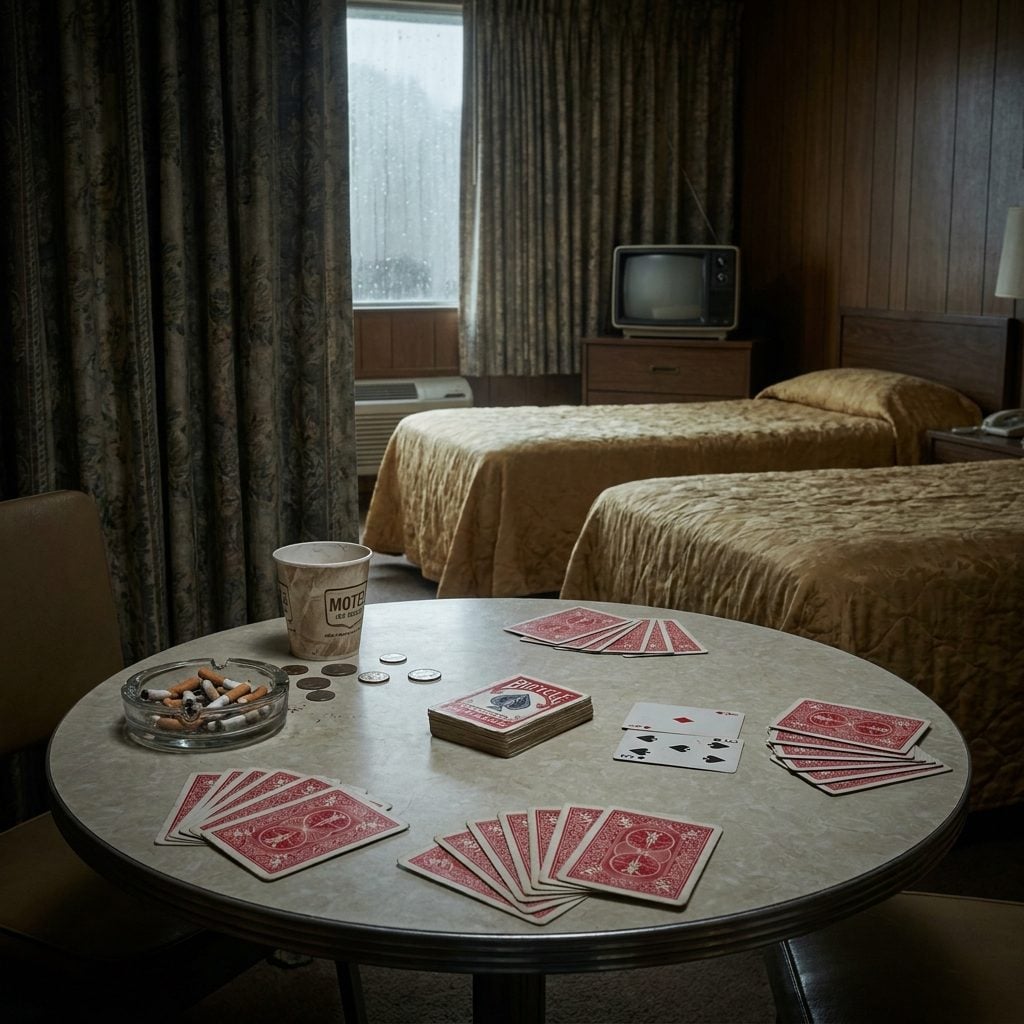
Rain was the sworn enemy of every 1960s family vacation, and playing cards were the first line of defense.
The deck lived in the glove compartment or the side pocket of a suitcase, held together with a rubber band because the box had disintegrated two trips ago. Go Fish for the little kids. Rummy for the older ones. War when you were desperate and nobody could agree on anything else. Solitaire when everyone was napping and the motel TV pulled in two channels, both fuzzy. Those cards were so handled that the finish was gone, the edges furry, and the seven of hearts still wore a grape jelly stain from a previous July that nobody remembered inflicting.
Travel Board Games With Magnetic Pieces That Still Managed to Disappear
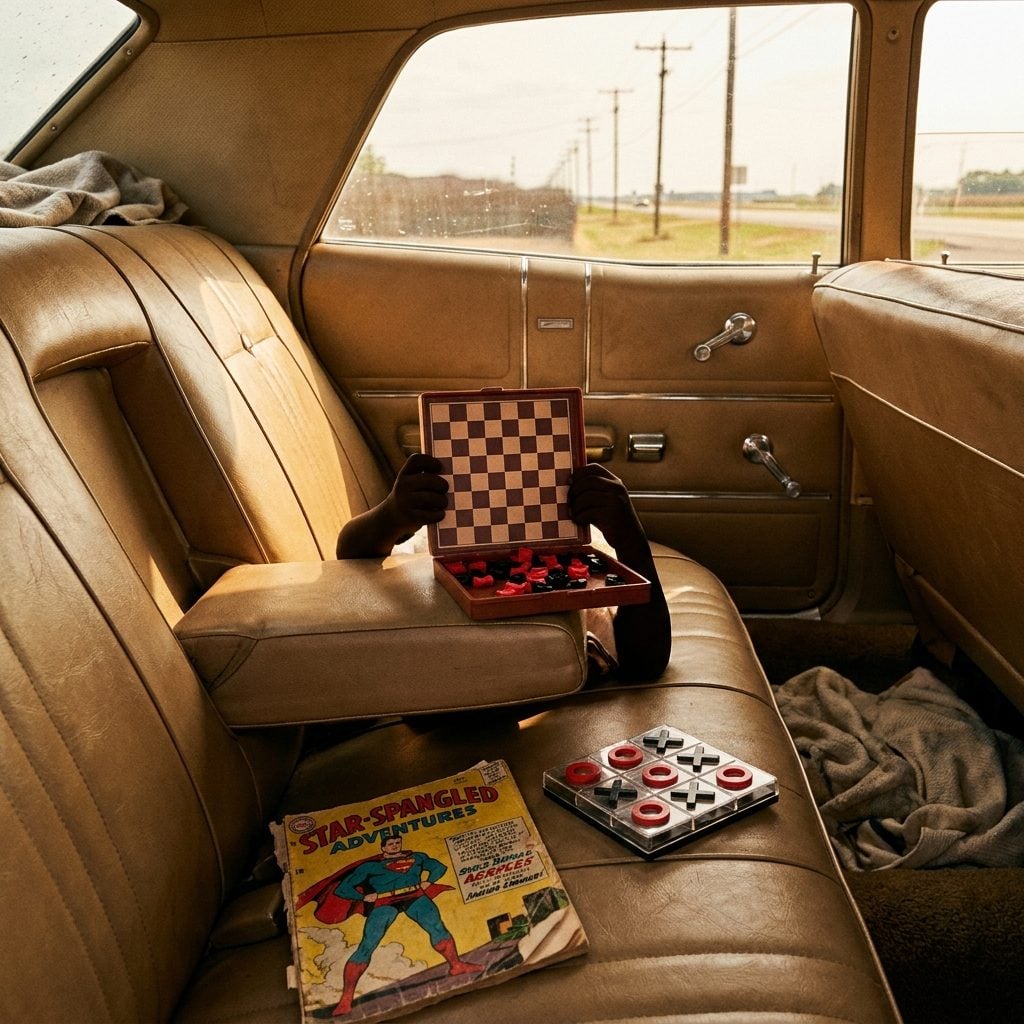
“Magnetic” was a generous word for the attraction those pieces had to the board. One pothole and half your chess pieces were under the seat with the French fries from three states ago.
But we packed them anyway — the little hinged cases that folded shut with a satisfying click. Travel checkers was the favorite because you could play it without thinking too hard while your legs were asleep and your brother’s elbow was jammed in your ribs. The pieces were flat discs barely thicker than a dime, and their grip on the board was more of a polite suggestion than actual physics. I lost the same red checker in every car we ever owned.
A Shoebox Full of Peanuts, Crackers, and Hard Candy That Was the Entire Snack Economy
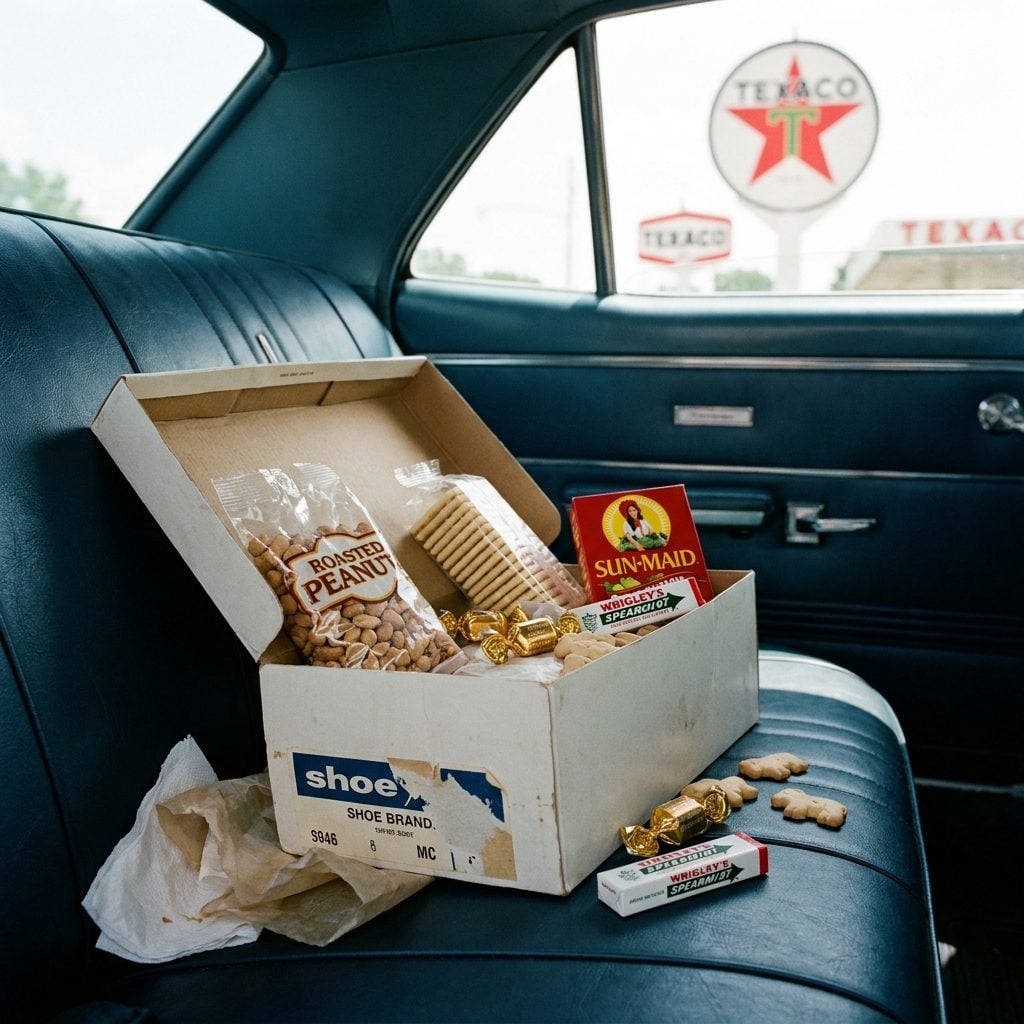
No convenience stores every three exits. No stopping for snacks “whenever you want.” There was a shoebox, and the shoebox was law.
Mom packed it the night before departure with the strategic precision of someone rationing supplies for a space mission. Planters peanuts in the tin. Saltines in their wax-paper sleeve. A bag of hard butterscotch candies that fused together in the heat into one amber mass you’d crack apart with your teeth. Maybe some raisins if she was feeling nutritious. Animal crackers for the youngest. A few sticks of Wrigley’s Spearmint that vanished before you crossed the state line — every time, without fail.
You didn’t get to pick. You got what was in the box. And somehow a warm saltine cracker eaten with your feet propped on a suitcase in the back of a Ford wagon tasted like freedom itself. I can’t explain that. I just know it’s true.
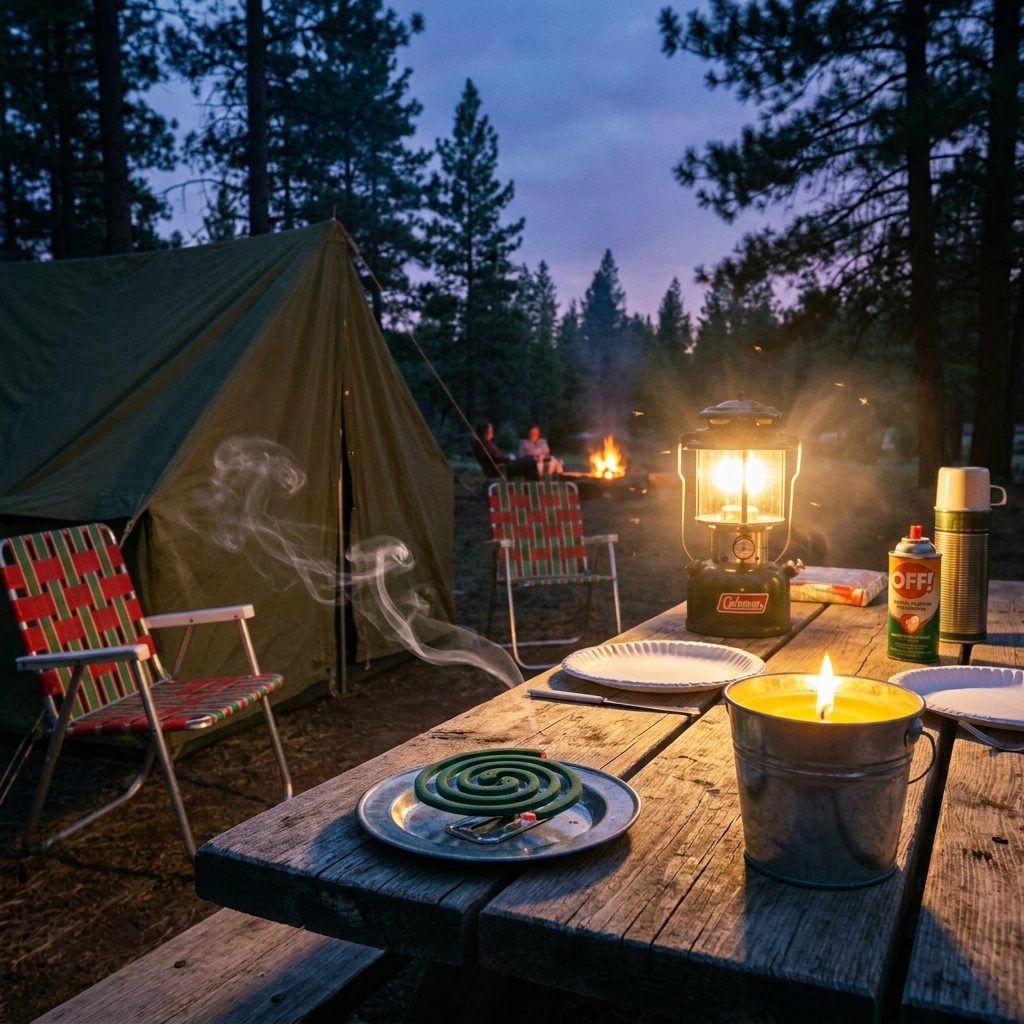
Mosquito Coil Tins and Citronella Candles That Smelled Like Summer Surrender
🔥 Would you like to save this?
That thin green spiral looked like a flattened snake and smelled like a chemistry experiment gone wrong in somebody’s garden shed. You’d light the tip, blow out the flame, set the coil on its little tin stand, and let it smolder through the evening — releasing smoke that was supposed to repel mosquitoes but really just made your clothes reek for the rest of the trip.
Citronella candles came in those short tin buckets. Every flat surface around the campsite got one, like tiny sentries standing guard over nothing in particular. Did they work? Debatable at best. But citronella, wood smoke, and bug spray together — that was the unofficial cologne of any 1960s campground after dark. You didn’t question the ritual. You lit everything and hoped.
The Extra Fan Belt and Greasy Toolkit Dad Kept Under the Spare Tire
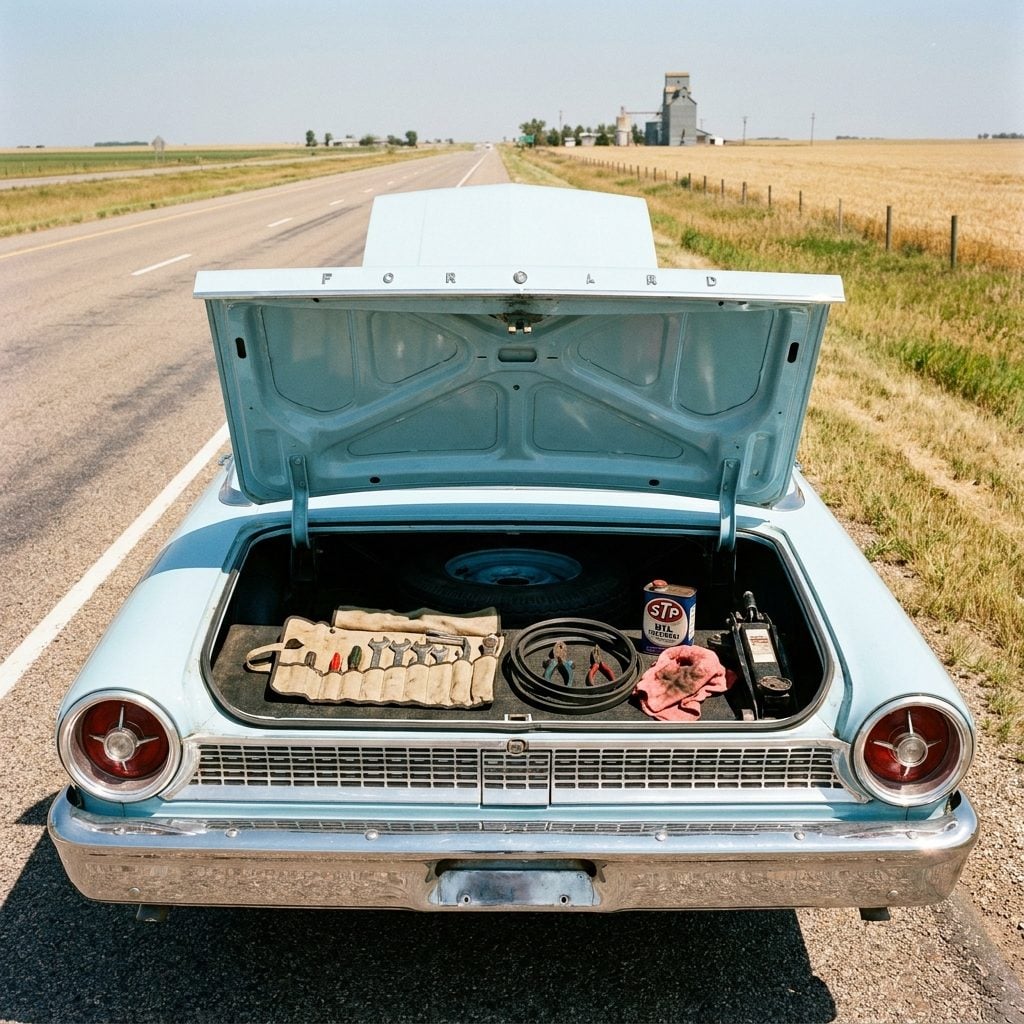
Every father in America kept one coiled up in the trunk, right next to the jack and a canvas pouch of wrenches that weighed about eight pounds. The spare fan belt. A broken belt on a two-lane highway in Kansas meant you were walking to the next gas station, and the next gas station might be a very long walk.
Cars broke down constantly — this wasn’t paranoia. Radiator hoses split, belts snapped, points fouled. Roadside assistance? That meant flagging down a stranger. So dads carried tools and actually used them, hands deep in the engine bay while the family perched on a guardrail eating warm sandwiches from the cooler, watching him swear quietly at a distributor cap. Nobody called anyone. You fixed it or you waited for someone who could.
A Red Metal Gas Can Strapped in the Trunk Because Empty Stretches Were Real
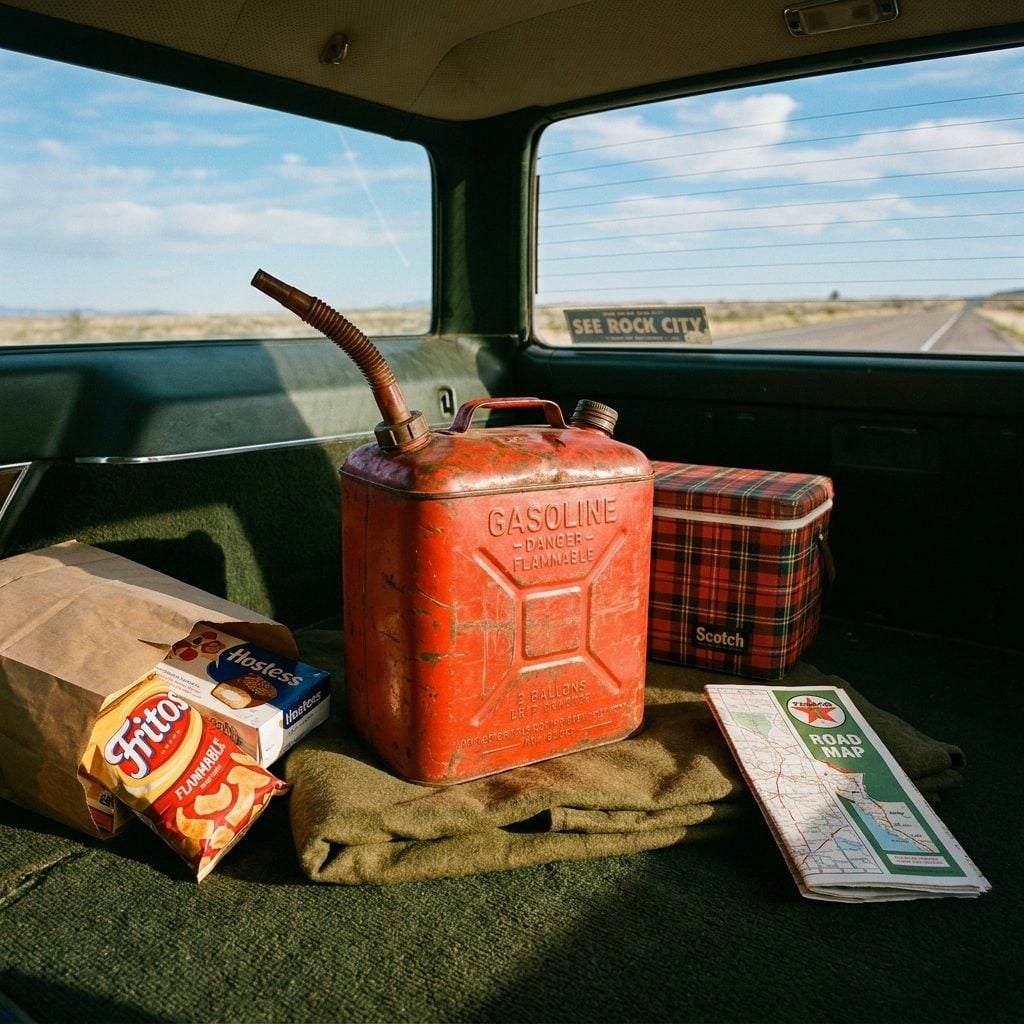
Between towns in Nevada or West Texas, gas stations could be impossibly far apart, and the gauge on a 1965 Impala wasn’t what you’d call a precision instrument. So you carried gas. An actual metal can, red, sloshing faintly every time you hit a bump.
The smell was inescapable. No matter how tight you screwed that cap, the trunk had a permanent gasoline perfume that mixed with hot vinyl and road dust into something your brain filed under “vacation.” We were all casually transporting a small bomb in the back of the car, but nobody seemed concerned. Different era entirely.
The Canvas Tent Repair Kit With Patch Glue That Never Fully Dried
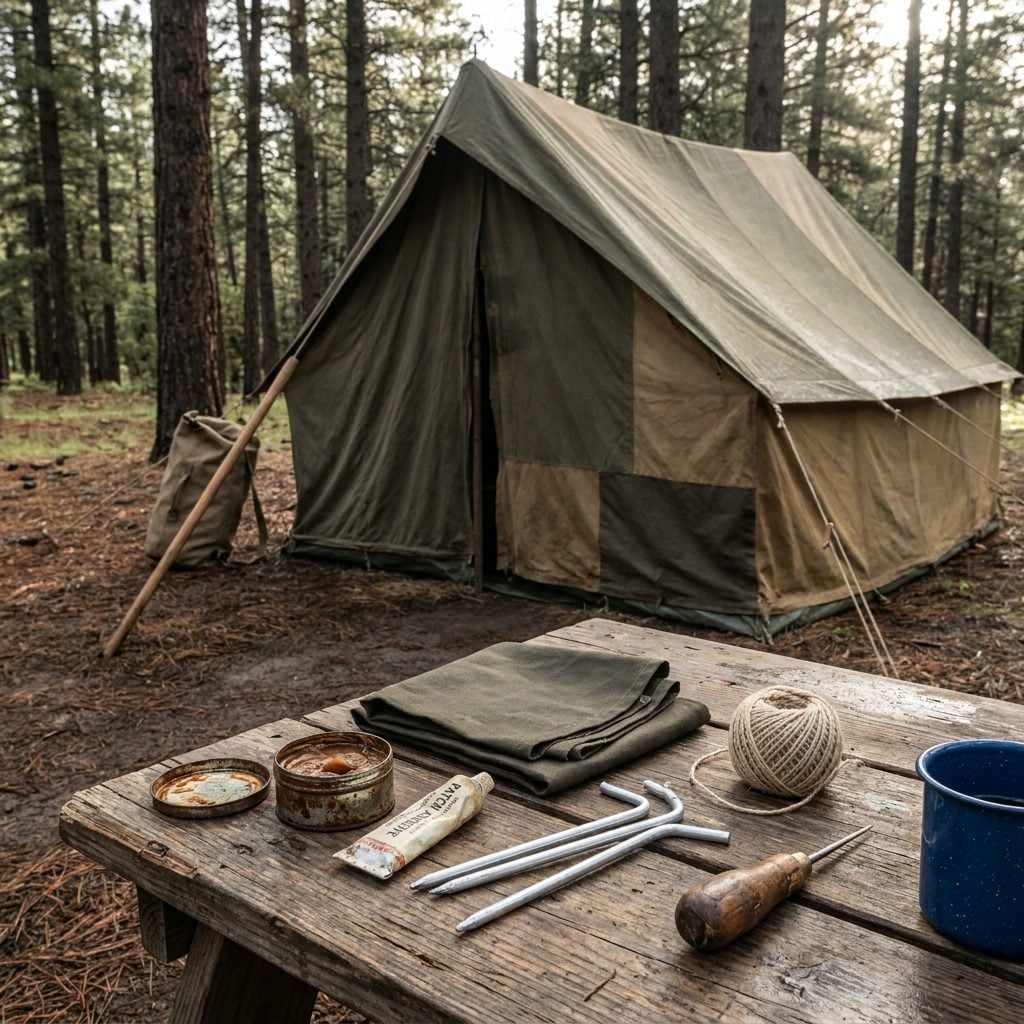
Canvas tents leaked. Known fact of life. They leaked at the seams, leaked where a branch poked through during a wind gust, and leaked in spots that defied all logic. So you carried the repair kit.
Inside a small canvas pouch you’d find squares of patching fabric, a tube of adhesive with the consistency of rubber cement and the drying time of a geological formation, a few spare stakes, and a sewing awl that nobody was entirely confident about using. You’d smear on the glue, press the patch into place, and hold it there for what felt like fifteen minutes while mosquitoes feasted on every exposed inch of skin. Then it would rain again and the whole process repeated. There was no winning — just maintenance, performed in the dark, with damp hands and a flashlight clenched between your teeth.
The Beach Umbrella With a Pointed Metal Pole You Had to Stab Into the Sand
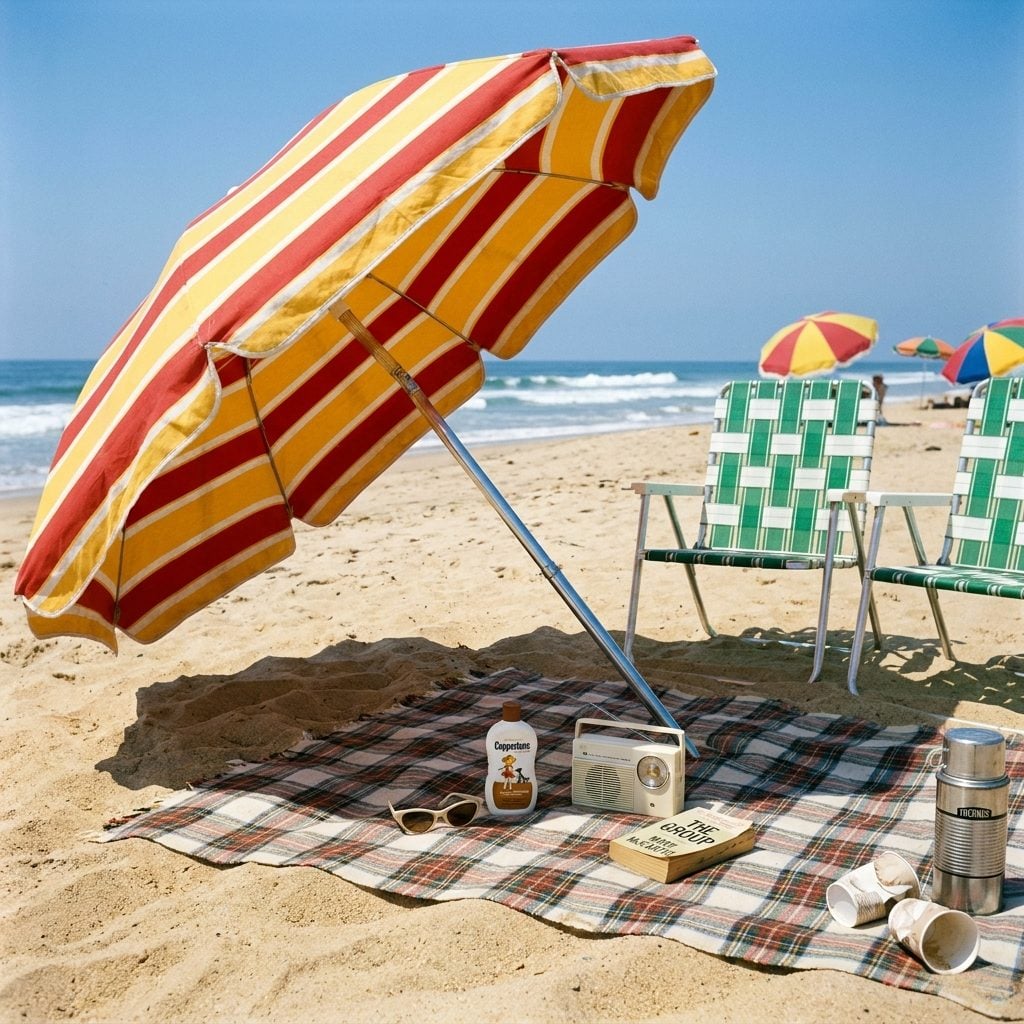
Forget screw-in anchors — those came later. In the 1960s, a beach umbrella was a six-foot cotton canopy on a chrome pole sharpened to a point at the bottom. Planting it was a full-body workout. You’d drive the thing into the sand with both hands, twisting and shoving, then step back and pray.
It never really held. A decent gust would send the whole contraption cartwheeling down the beach like a cotton-striped tumbleweed, and some poor dad would go sprinting after it in his swim trunks while everyone watched. That pole was a weapon — you could have defended a castle gate with it. But we just jammed them into public beaches next to toddlers and called it shade.
A Stack of Penny Postcards and Mom’s Little Address Book for Vacation Updates
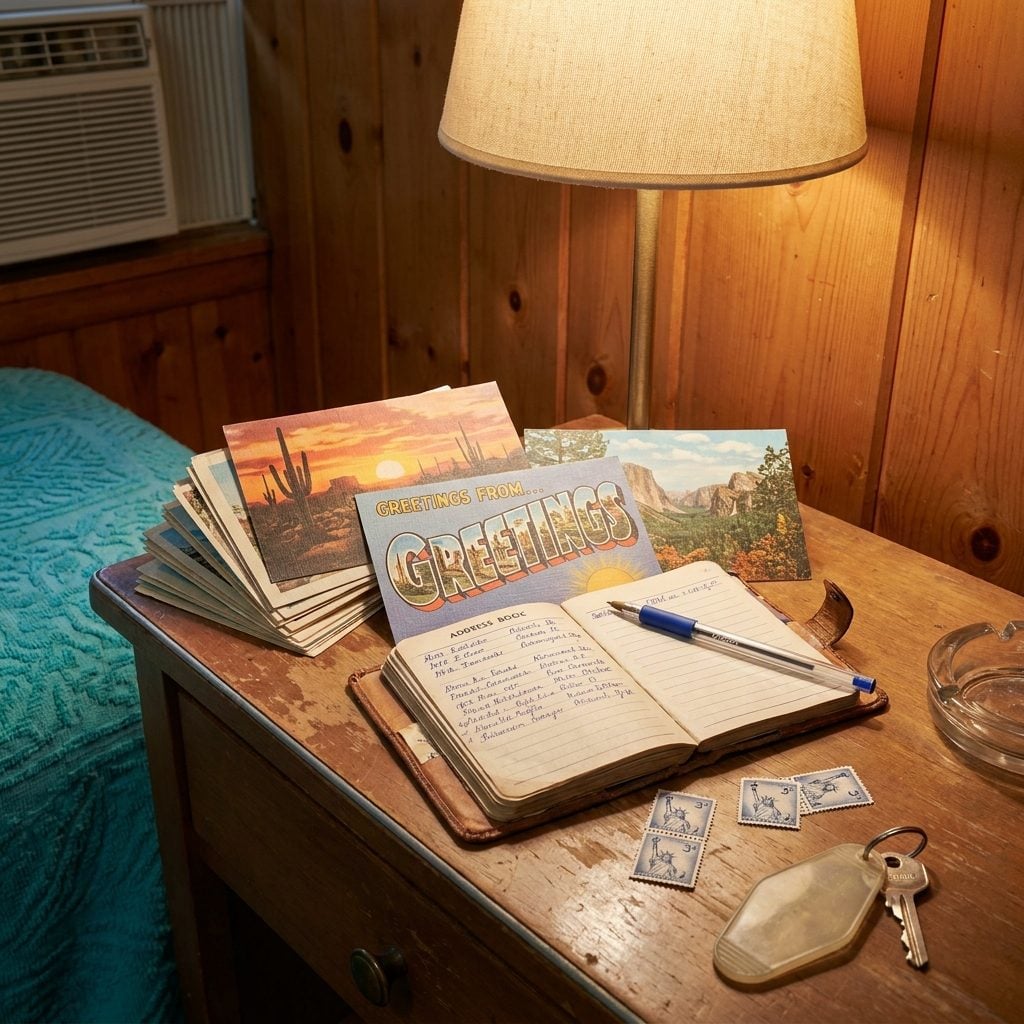
Before you left, Mom packed the address book. Small thing — leather or vinyl cover, alphabetical tabs, every aunt, cousin, neighbor, and friend’s address in her careful handwriting. That was the technology. That was how people knew you were having a good time somewhere.
Every evening at the motel, or sometimes at a restaurant while waiting for food, she’d work through the postcards. Quick, cheerful messages. “Beautiful drive through the Ozarks! Kids loved the caves. Wish you were here!” Each one needed a stamp and would arrive home roughly the same time you did, which made the whole exercise sort of pointless. But that was also entirely the point, wasn’t it?
You picked postcards at every stop — the spinning wire racks at gas stations, the gift shop at the caverns, the diner counter. Souvenirs and broadcast messages rolled into one, and the address book was your distribution list.
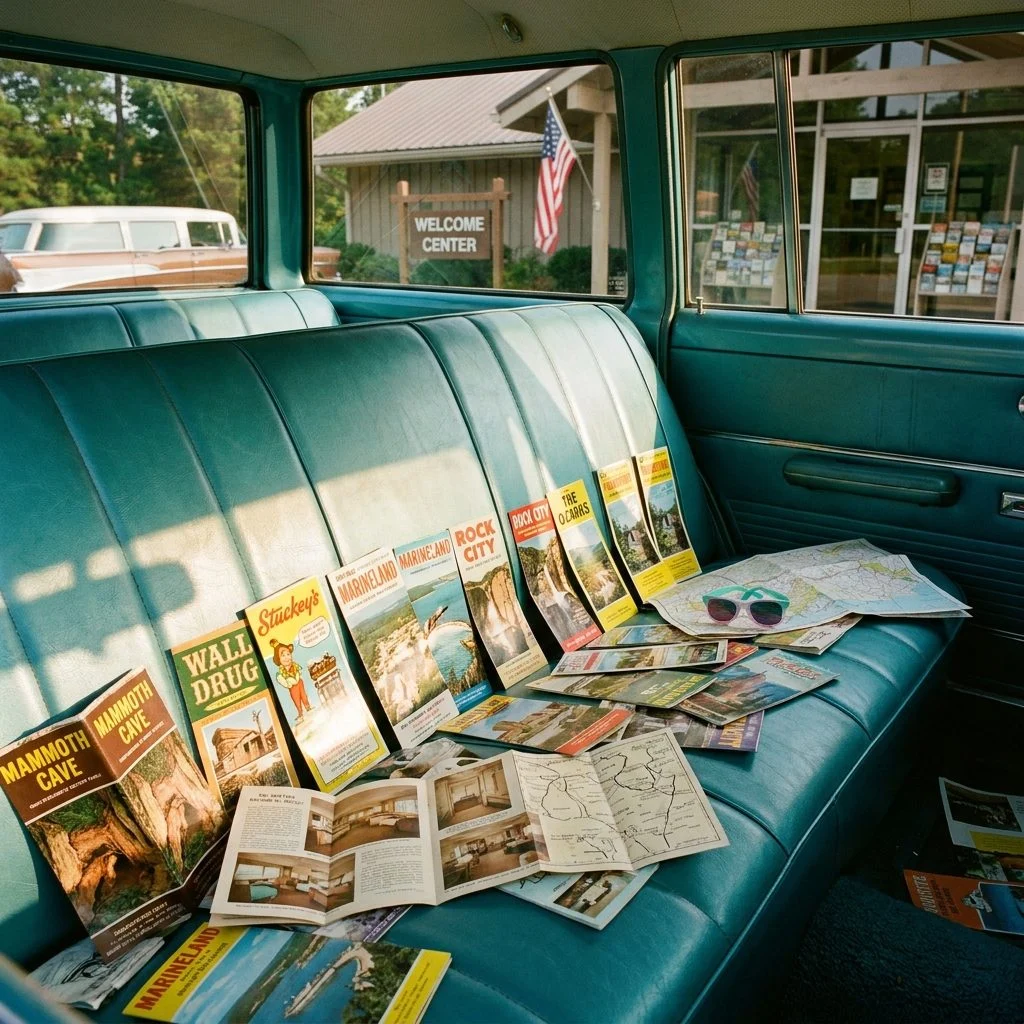
Travel Brochures Collected at Every Gas Station and Roadside Welcome Center
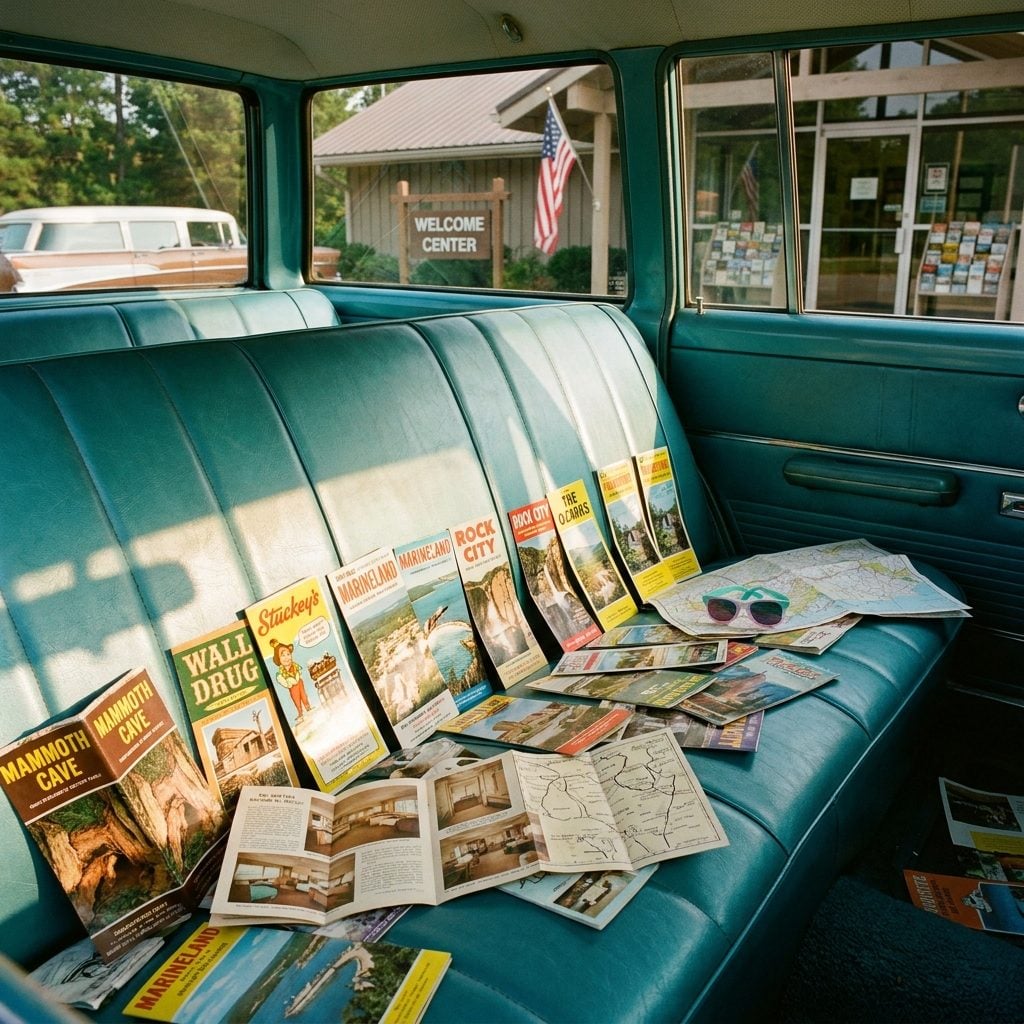
Every state line had a welcome center, and every welcome center had a wall of free brochures, and every kid in the backseat grabbed approximately forty of them. A tri-fold piece of glossy paper with a photo of a waterfall and the words “FUN FOR THE WHOLE FAMILY” — that was all it took to reroute an entire vacation. Who needed research?
Gas stations had their own racks, too, wedged between the restroom key on a hubcap and the vending machine full of warm Nehi. Wire spinners loaded with brochures for Mystery Spot, Reptile Gardens, or some place where you could pan for gold. Half the spontaneous detours of the 1960s happened because a nine-year-old found a brochure with an alligator on it and wouldn’t shut up about it for the next forty miles.
The Folgers Coffee Can Wedged Between the Front Seats as the Family Trash Bin
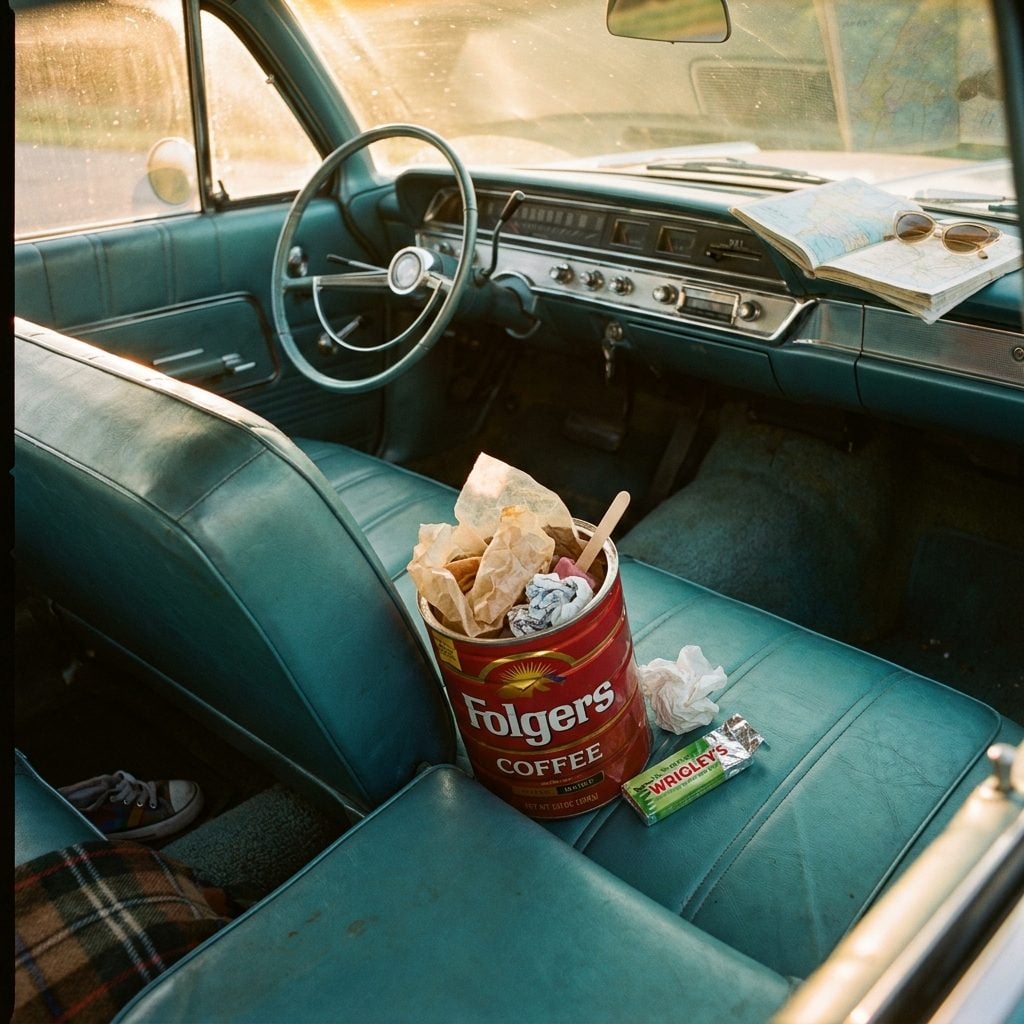
That hollow metallic thunk every time someone tossed in a balled-up napkin. Every family had one, and it was always a coffee can — not a paper bag, not a proper bin. A metal coffee can with the lid pried off, parked on the floor between Mom and Dad like it had squatter’s rights.
By hour three, the thing overflowed. Popsicle sticks, gas station receipts, cellophane from a cracker pack. Nobody emptied it until the next fuel stop, and by then it smelled like a compost experiment running at highway speed with the windows cracked two inches. Ripe doesn’t cover it.
But the can endured. It rode along for the entire vacation, growing more disgusting each day, and when you finally pulled into the driveway it went straight into the garage trash without ceremony. Then next July — a fresh can. Nobody discussed the rotation. It just happened.
The Tackle Box Packed With Hooks, Sinkers, and Blind Optimism About Finding a Lake
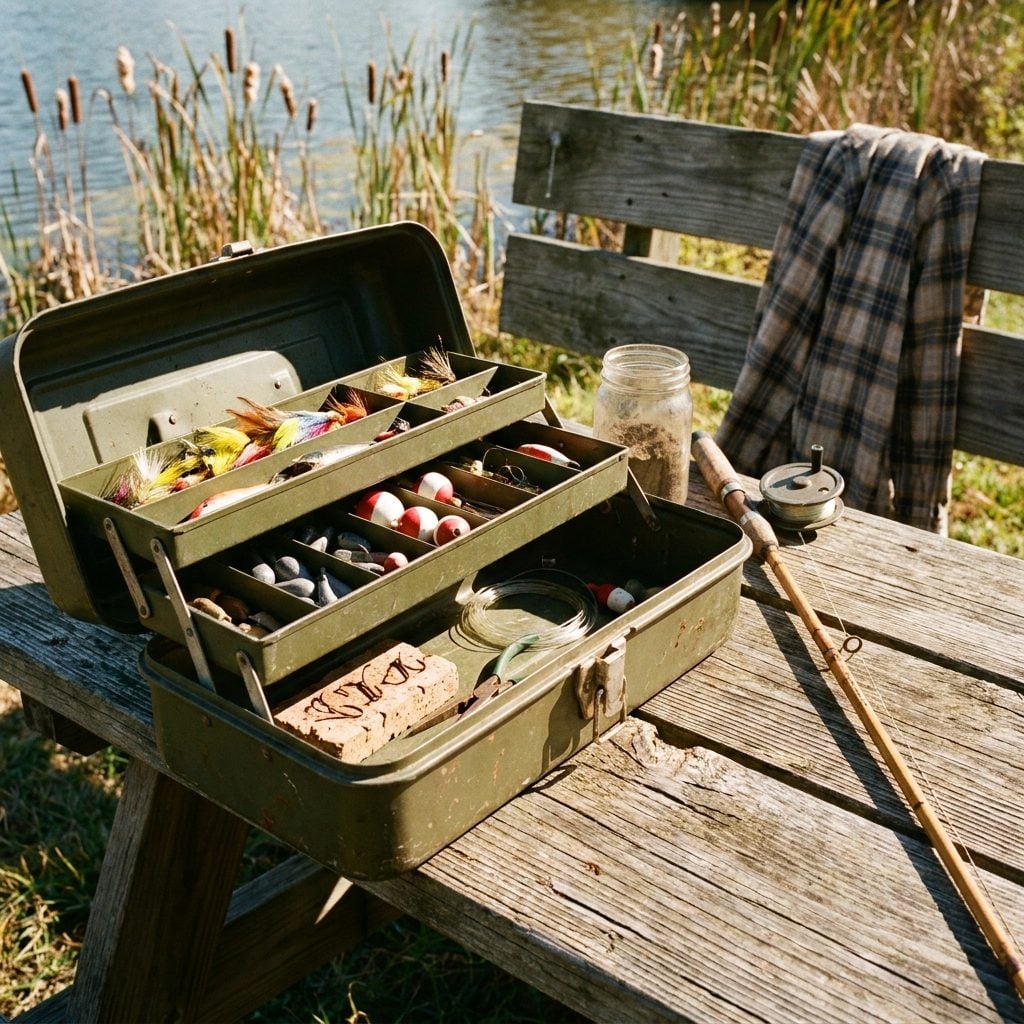
Dad packed that metal tackle box like we were headed to a chartered deep-sea outing in the Florida Keys, not a KOA campground outside Tulsa. Inside: tangled monofilament line, feathered lures that had never caught a single thing, loose lead sinkers rattling around, and hooks jabbed into a wine cork so they wouldn’t stab anyone digging through the trunk.
“If we pass a good lake, we’ll stop.” That was always the plan. We almost never stopped. And when we did, the fish had no interest in us whatsoever — not the lures, not the worms, not the stale bread someone tried as a last resort. But that tackle box traveled thousands of miles across multiple summers, and its weight in the trunk alone made Dad feel like the trip held possibilities beyond the itinerary Mom had typed up on onion skin paper. Potential energy, stored in rusty hooks.
Rubber Swim Caps and Inflatable Arm Floaties, Because Motel Pools Had Zero Lifeguards
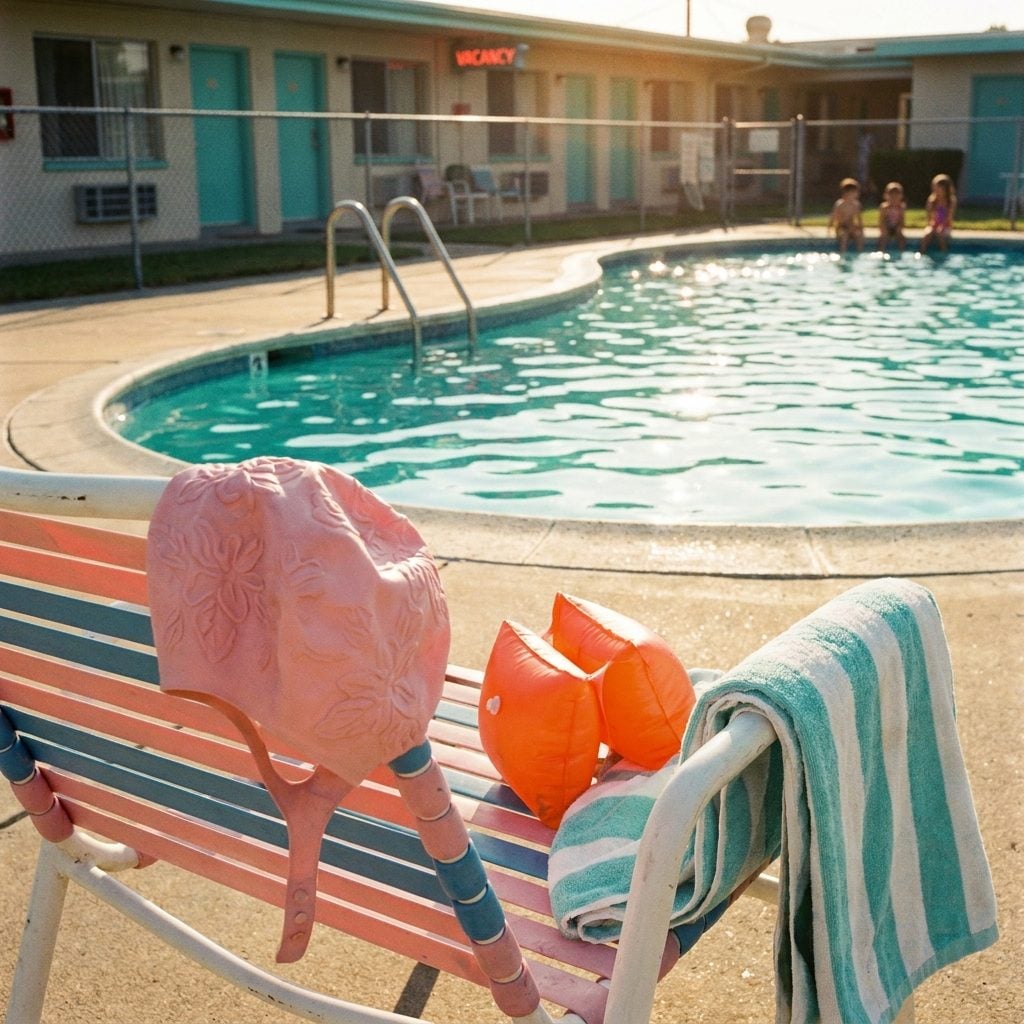
That floral-textured rubber cap smelled like a tire factory and pulled your hair out strand by strand when you peeled it off. Mom insisted anyway. Chlorine would ruin your hair, she said — as if a six-year-old’s hair had some kind of social standing to protect.
The rubber swim cap covered only half the safety protocol. For the rest, Dad blew up a pair of bright orange inflatable arm floaties until he was dizzy, pinched them shut with his teeth while fumbling with the plug, then wrestled them onto your arms where they immediately began losing air. Twenty minutes in the water and they’d gone slack, sliding down to your wrists like deflated sausages.
Motel pools in the sixties had no lifeguard, no depth markings you could actually read, and a sign reading SWIM AT YOUR OWN RISK in letters so small you had to be standing right next to it. Mom watched from a lawn chair with her Reader’s Digest, glancing up roughly every forty seconds. That — the Reader’s Digest glance — was the entire safety infrastructure.
A Bundle of Comic Books Bought at the Drugstore Specifically to Survive the Long Drive
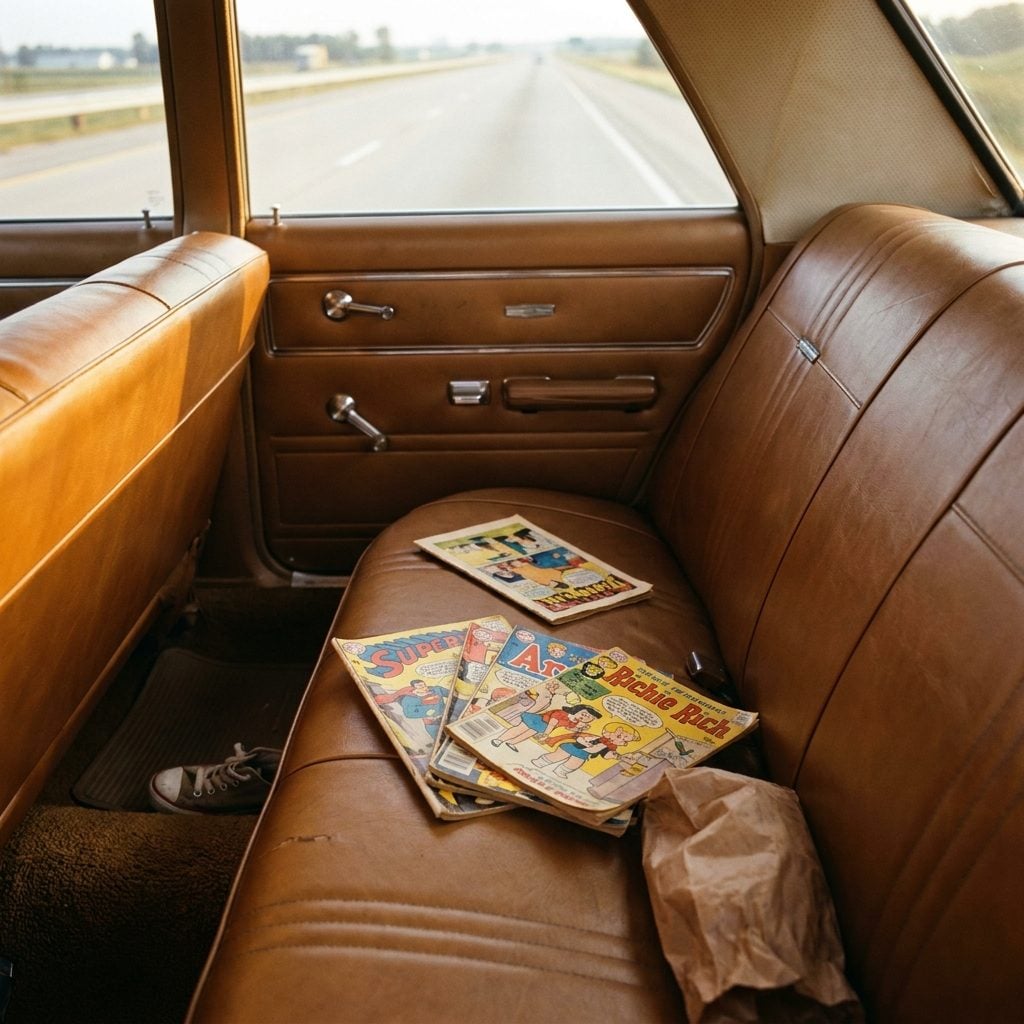
The drugstore stop before a long trip was its own ritual. Dad grabbed aspirin and road snacks, Mom picked up a paperback, and the kids got to choose three comics apiece from that squeaky wire spinner rack near the register. Cheap enough that nobody argued.
Archie. Superman. Richie Rich. Maybe a Sad Sack if you were feeling odd about it. You rationed them across state lines, read each one twice, then traded with your sibling somewhere around Indiana. And once you’d exhausted every panel? You ended up combing the classified ads in the back pages. Sea monkeys. X-ray glasses. A seven-foot monster that was definitely just a poster you’d tape to your closet door and immediately regret.
The Souvenir Pennant Collection, Rolled Up Tight and Guarded Like State Secrets
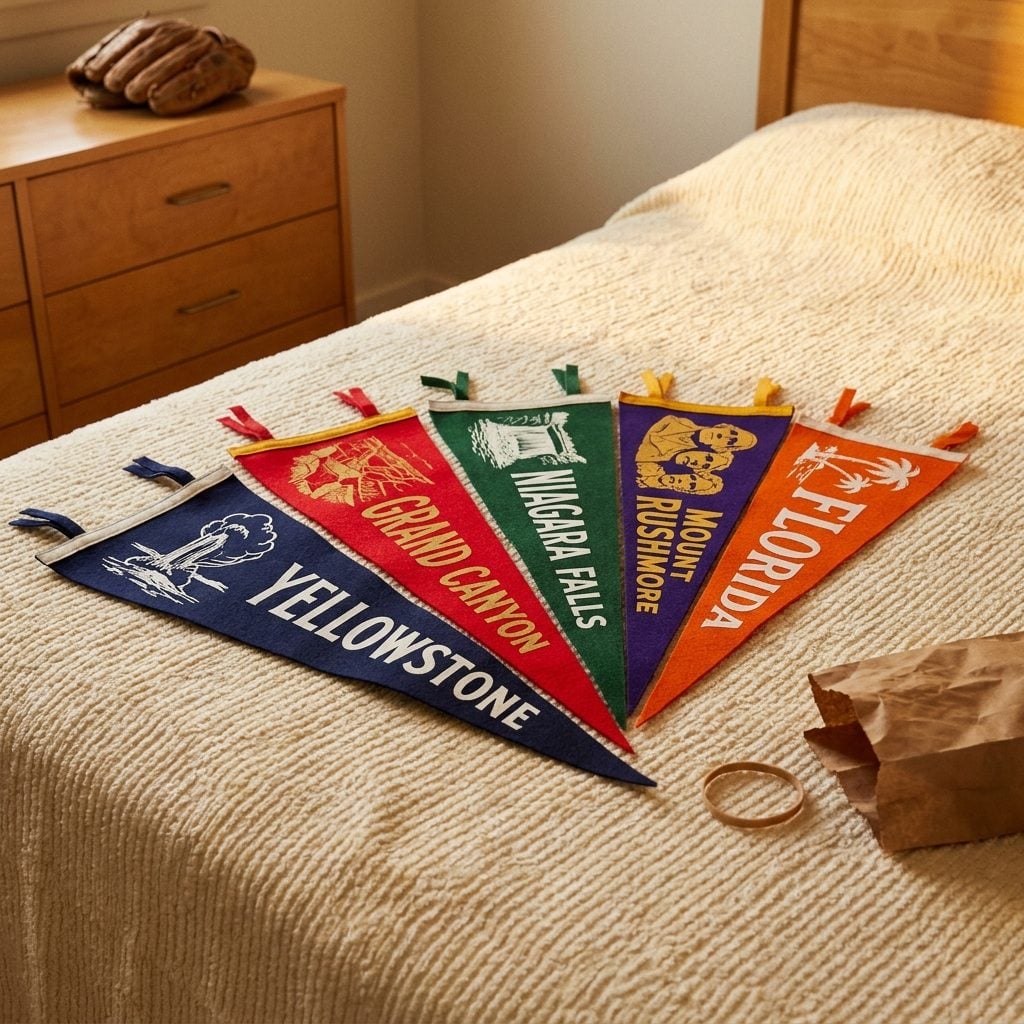
A felt triangle in some screaming color with the destination name screen-printed in blocky letters. You’d have done anything for it, and you treated it like contraband the whole drive home — rolled tight with a rubber band, tucked somewhere safe so it wouldn’t crease.
These weren’t headed for a scrapbook. The real destination was your bedroom wall. Tacked up with thumbtacks in a row above the bed, each felt pennant proved you’d actually been somewhere. Yellowstone. The Grand Canyon. Niagara Falls. Wall Drug, which arguably didn’t deserve the honor but earned it because you begged until your parents caved.
Here’s what nobody talks about: the collection mattered more than most of the actual places. You could stand in your room and trace an entire summer left to right across that wall — a travel résumé assembled one thumbtack at a time. Most kids didn’t take it down until they left for college. Some never did.
🔥 Would you like to save this?
Please note that some of the imagery in this article were created with the aid of AI image generators.