
🔥 Would you like to save this?
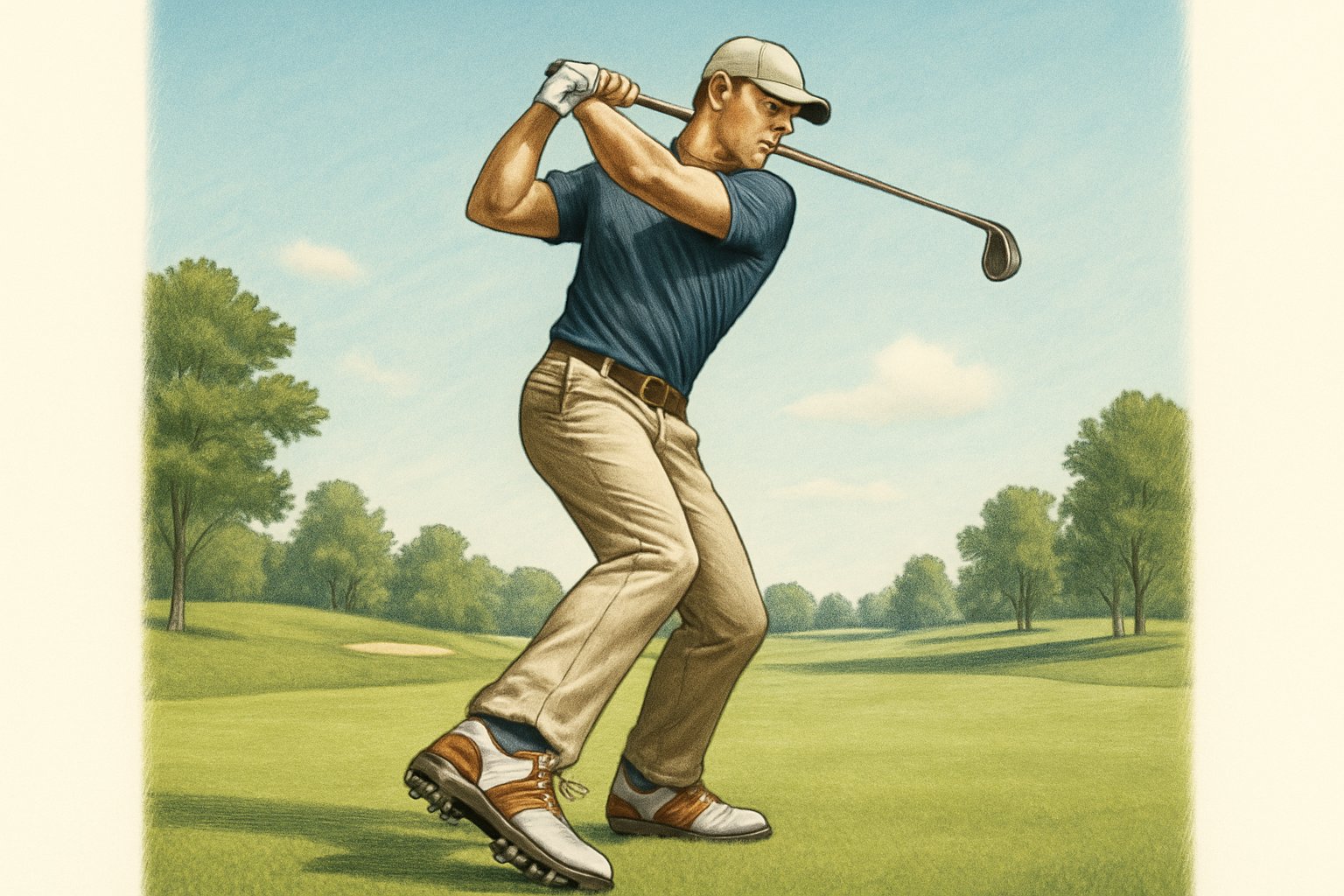
Most golfers obsess over their swing plane and grip pressure, but completely ignore the two pieces of equipment that literally keep them grounded. Your golf shoes absolutely affect your swing mechanics by influencing your stability, balance, weight transfer, and power generation throughout every swing. The connection between your feet and the ground creates the foundation for everything that happens above.
You might think a shoe is just a shoe, but the wrong footwear can cost you 25 yards of distance while the right pair can transform your consistency. From traction technology that prevents slipping during your follow-through to proper fit that maintains your posture, every aspect of your golf shoes plays a role in your swing efficiency.
The science behind how different shoe types, weather conditions, and even customization options impact your performance reveals why Tour professionals are just as particular about their footwear as their clubs.
The Relationship Between Golf Shoes And Swing Mechanics
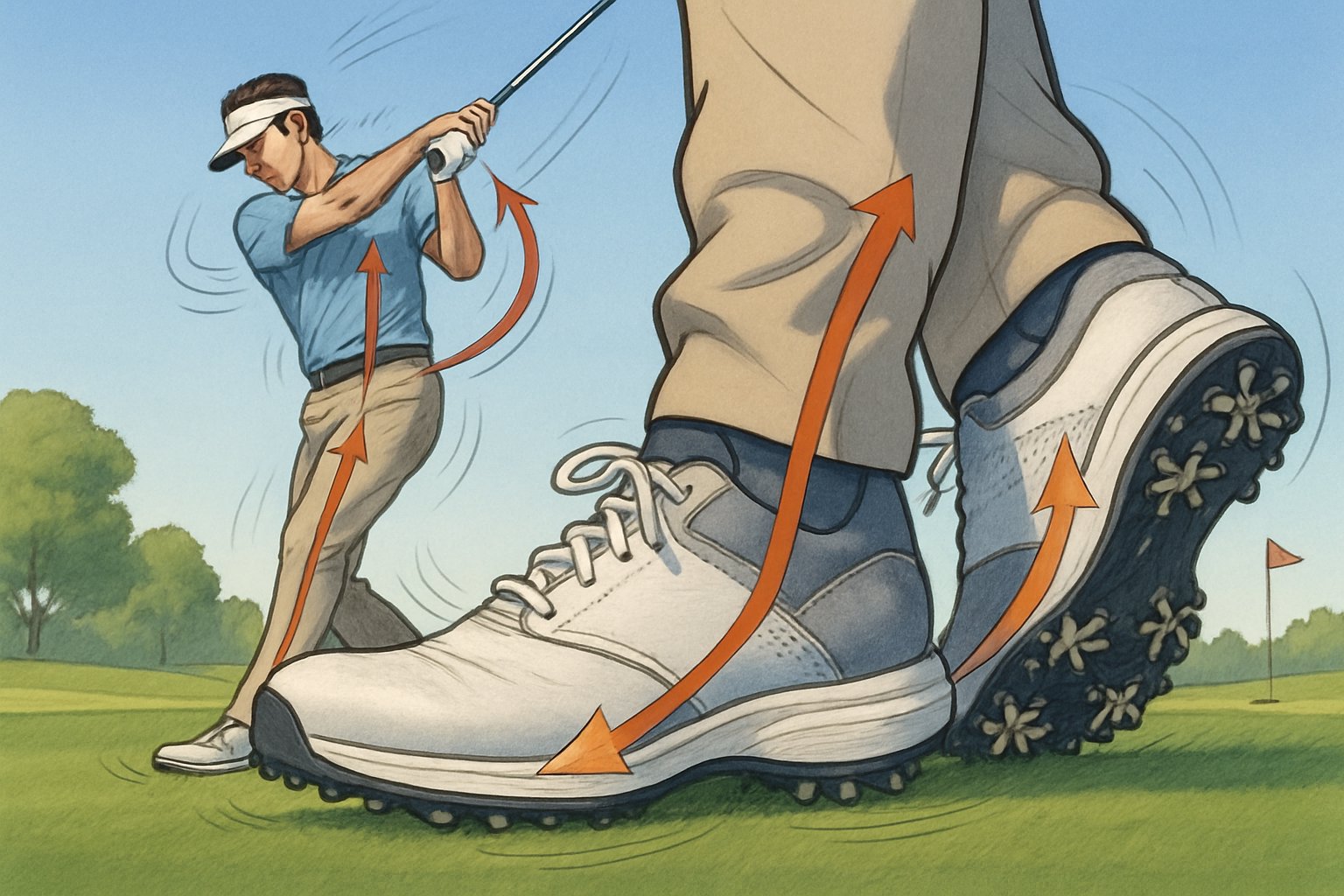
Golf shoes create a foundation that directly influences how force travels through your body during the swing. The connection between your feet and the ground determines your ability to generate power while maintaining control through impact.
How Footwear Influences Stability
Your golf shoes serve as the anchor point for every swing you make. Without proper traction, you’re basically trying to hit a drive while standing on ice—and who wants that?
Properly fitting golf shoes enhance stability and comfort, which directly impacts your swing mechanics. The cleats or spikes on your shoes dig into the turf, creating multiple contact points that resist lateral movement.
Key stability factors include:
- Cleat configuration and depth
- Sole width and design
- Upper construction and support
- Heel-to-toe drop ratio
Modern golf shoes use strategically placed cleats that grip during your backswing and follow-through. The outer edge of your trail foot needs traction as you rotate, while your lead foot requires stability as you shift weight forward.
Golf shoe cleats minimize slippage risk and help maintain a steady stance throughout the swing sequence. This stability lets you focus on your swing, not your footing.
Transferring Power From The Ground Up
Power in golf starts from the ground and moves upward through your kinetic chain. Your shoes act as the critical interface between earth and body, determining how efficiently you can harness this ground force.
The golf swing generates force through weight transfer and rotation. When you push against the ground during your downswing, Newton’s third law ensures the ground pushes back with equal force.
Your shoes must provide enough grip to handle this force without slipping. Testing has shown that poor footwear can cost golfers significant distance, with some losing up to 25 yards due to inadequate traction.
Power transfer depends on:
- Traction during weight shift
- Rotational stability through impact
- Consistent contact with the ground
- Proper energy return from the sole
Athletic golf shoes with responsive midsoles can return energy during your swing. That spring-like effect helps maintain tempo and can add distance when paired with solid mechanics.
Impact On Balance Throughout The Swing
Balance issues plague golfers at every skill level, and your shoes play a larger role than you might expect. Ill-fitting shoes affect swing mechanics by creating discomfort that disrupts your natural balance patterns.
Your feet contain thousands of nerve endings that provide feedback about your position and movement. Shoes that pinch, slip, or feel unstable send conflicting signals to your brain during the swing.
Changing between different golf shoes can alter swing mechanics, affecting your low point and requiring technique adjustments. This explains why some golfers struggle with consistency when switching footwear.
Balance factors affected by shoes:
- Weight distribution across the foot
- Proprioceptive feedback from the ground
- Comfort level throughout the round
- Consistent setup positioning
Orthopedic golf shoes can improve swing mechanics by enhancing posture and comfort. Better posture leads to more consistent spine angles and improved balance throughout your swing.
The relationship between your shoes and balance even goes beyond the swing. Fatigue from uncomfortable footwear can mess with your posture and balance as the round drags on.
How Different Types Of Golf Shoes Affect Your Game
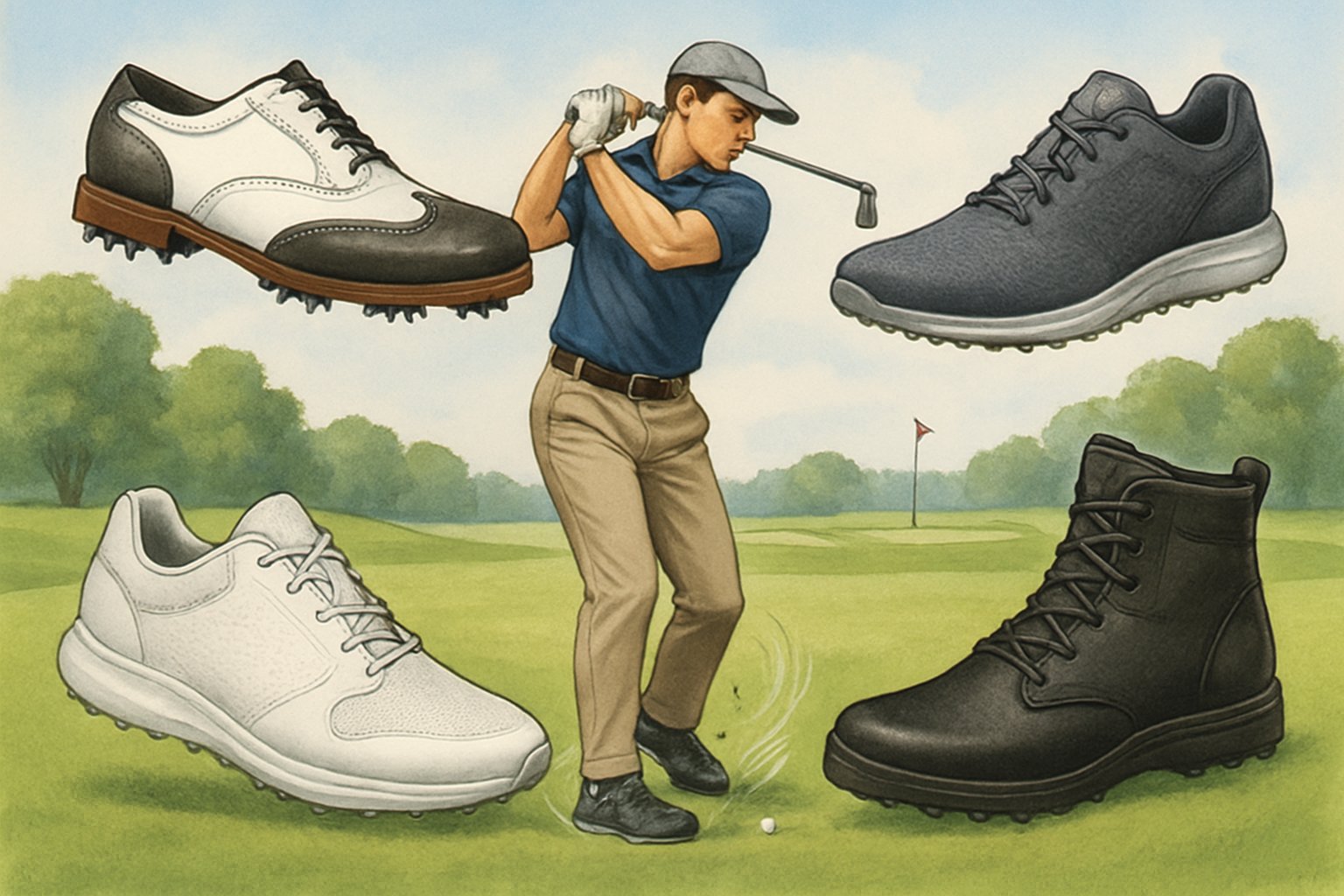
The design elements of your golf shoes directly impact your swing stability, power transfer, and overall performance. Your choice between spikes or spikeless designs, material construction, and profile height can mean the difference between a solid foundation and slipping at the worst possible moment.
Spiked Vs. Spikeless Design Differences
Traditional spiked golf shoes feature replaceable cleats that bite into the turf like a defensive lineman digging in for a goal-line stand. These spikes provide maximum traction during your swing, preventing any lateral movement that could throw off your mechanics.
The aggressive grip of spiked shoes becomes crucial when you’re generating serious clubhead speed. Your feet stay planted through impact, allowing for better weight transfer and more consistent ball striking.
Spikeless designs offer a different approach with molded rubber nubs or patterns on the sole. While they provide less aggressive traction than traditional spikes, they excel in versatility and comfort.
You can wear spikeless shoes from the parking lot to the 19th hole without changing footwear. Course conditions significantly influence which design works best for your specific playing environment.
The trade-off comes down to maximum performance versus convenience. Spikes win on wet mornings when dew makes every surface slippery, while spikeless options work well on firm, dry courses.
Material Choices And Their Benefits
Leather golf shoes are still the gold standard for durability and weather protection. Full-grain leather molds to your foot over time, creating a custom fit that synthetic materials struggle to match.
Leather excels in wet conditions, offering superior waterproofing when properly treated. The material breathes better than many synthetics, keeping your feet comfortable during long rounds.
Synthetic materials bring advantages in weight reduction and quick-drying properties. Modern synthetic golf shoes often incorporate mesh panels for enhanced breathability and flexibility.
These materials typically cost less than leather while offering consistent performance. They resist scuffing and maintain their appearance longer than traditional leather options.
Hybrid constructions combine leather and synthetic elements strategically. Manufacturers place leather in high-wear areas while using synthetics for flexibility and weight savings.
Your material choice affects swing mechanics through comfort and stability. Uncomfortable shoes create distractions that can derail your focus during critical shots.
Profile Height: Low, Mid, And High-Cut Options
Low-profile golf shoes sit close to the ground, giving you a stable platform with minimal material between your foot and the turf. This design offers better ground feel and connection to your swing foundation.
The lower profile reduces ankle restriction, allowing for more natural foot movement during your swing. Many tour professionals prefer this style for the enhanced stability it provides.
Mid-cut designs add ankle support without the bulk of high-top styles. These shoes work well for golfers who need additional stability but don’t want to sacrifice mobility.
The extra material around the ankle can help prevent rolling or twisting during aggressive swings. This protection becomes valuable on uneven lies or sloped terrain.
High-cut options provide maximum ankle support but can restrict natural movement patterns. These shoes work best for golfers with previous ankle injuries or those who prioritize support over mobility.
The relationship between shoe height and swing mechanics varies based on your individual biomechanics and comfort preferences. Your ankle flexibility and swing style determine which profile height optimizes your performance.
Traction Technology And Its Effect On Swing Consistency
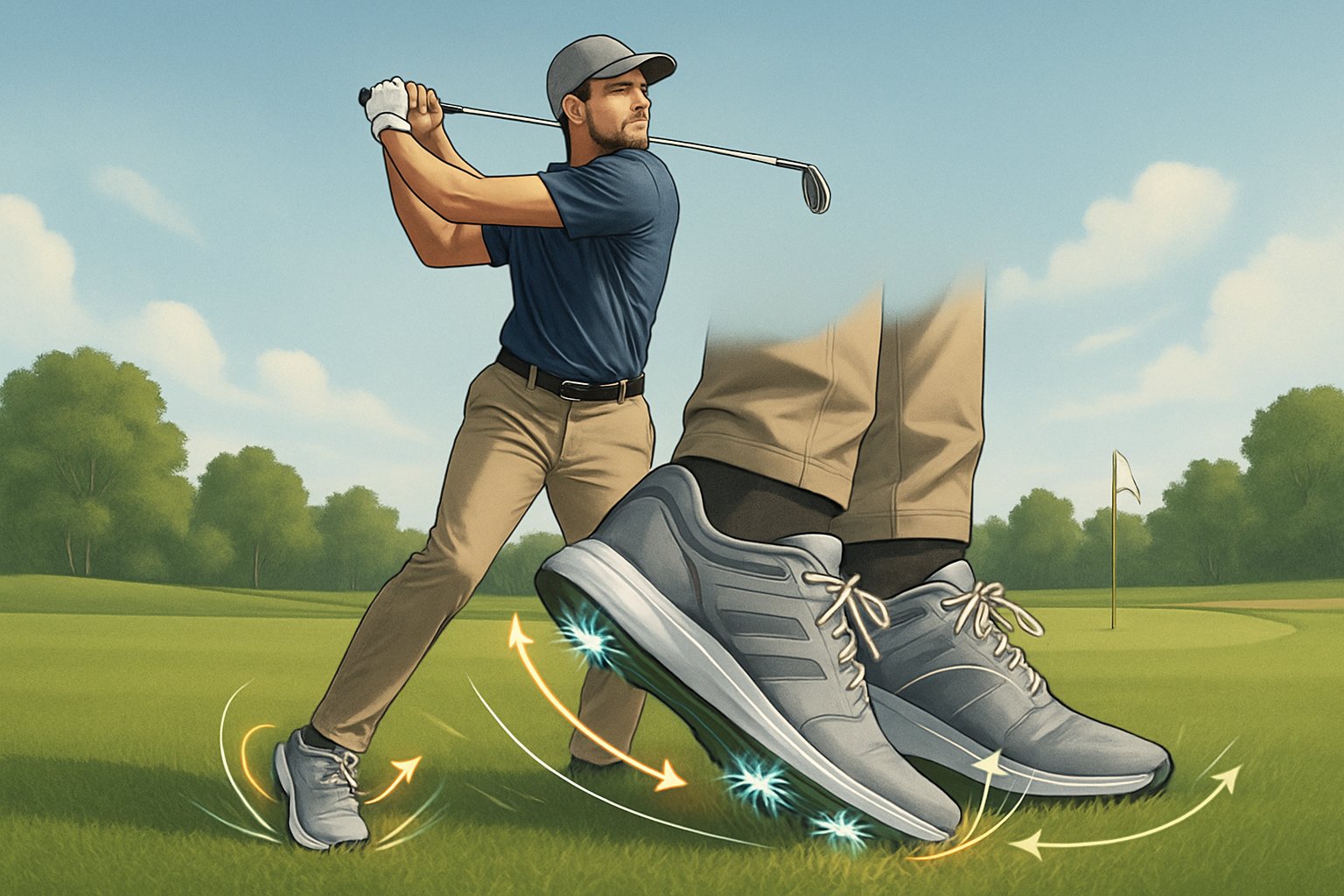
Modern golf shoes use advanced traction systems that directly impact your ability to maintain consistent swing mechanics. The grip technology beneath your feet determines how well you can transfer power through the ground and maintain balance throughout your swing sequence.
Grip On Different Course Conditions
Your traction needs change dramatically based on course conditions, and smart golfers adjust accordingly. Wet morning rounds demand different grip patterns than dry afternoon play.
Spike configurations work differently across various terrains:
| Condition | Optimal Traction | Performance Impact |
|---|---|---|
| Wet grass | Deep cleats/spikes | Prevents lateral sliding |
| Dry fairways | Shallow lugs | Maintains stable base |
| Sand/loose soil | Wide grip pattern | Reduces foot penetration |
Replaceable spikes give you the flexibility to match conditions. You wouldn’t use the same club for every shot, so why use the same traction system for every round?
Modern spikeless shoes now feature advanced rubber compounds that adapt to different surfaces. These designs use strategic lug placement and varying hardness levels across the sole.
Your swing consistency suffers when your feet can’t find purchase on the ground. Golf shoes provide stability and grip that helps maintain proper alignment throughout your swing sequence.
Preventing Slippage During The Downswing
The downswing generates tremendous rotational forces that can cause your feet to slip at the worst possible moment. Your trail foot pushes against the ground while your lead foot braces for impact.
Critical slip points occur during specific swing phases:
- Transition: Weight shift from back to front foot
- Impact zone: Maximum ground force application
- Follow-through: Rotational stress on lead foot
Quality traction technology addresses each of these phases. The foundation of a powerful swing requires unwavering stability as immense forces transfer through your feet during the swing sequence.
Your footwork becomes more aggressive as you improve, making traction even more crucial. Better players generate more ground force, which means they need more grip to handle the increased stress.
Some players perform better with less traction while others need maximum grip to maintain stability throughout their swing. Testing different traction levels helps you find the optimal balance for your swing style.
Fit And Comfort: Foundation For Powerful Swings
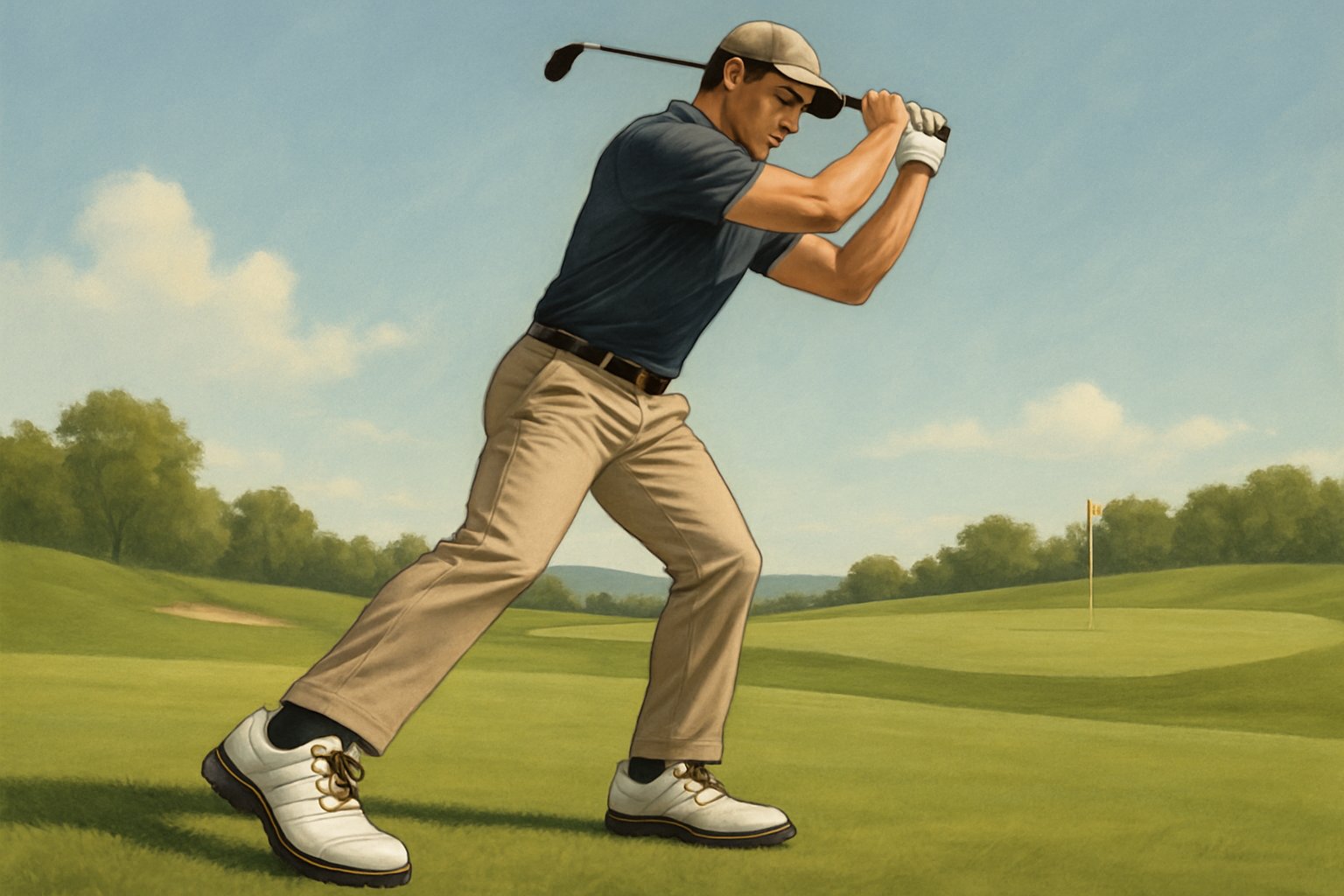
Proper shoe sizing and adequate arch support directly impact your ability to maintain balance and generate power throughout your swing. Golf shoes with proper arch support and cushioning help prevent foot fatigue while maintaining swing mechanics.
Importance Of Proper Sizing
Your golf shoes should feel like a natural extension of your feet, not a medieval torture device. Shoes that are too tight restrict blood flow and create pressure points that force you to shift weight unnaturally during your swing.
Loose-fitting shoes create an entirely different problem. Your feet slide around inside the shoe, making it impossible to maintain consistent contact with the ground. This sliding motion disrupts your balance and timing.
Key sizing considerations:
- Length: Half-inch space between longest toe and shoe front
- Width: No pinching at the widest part of your foot
- Heel: Minimal slippage during walking motion
The wrong size affects your swing’s foundation before you even address the ball. Proper fit helps you maintain balance and transfer weight effectively, which directly influences swing consistency.
Arch Support For Consistent Form
Your arches are like shock absorbers and stability platforms every time you swing. Without support, your feet collapse inward or outward, and that messes with your whole kinetic chain.
Good arch support keeps your foot lined up the way it’s supposed to. When your feet are in the right spot, your knees, hips, and shoulders fall in line, and you get the power transfer you’re after.
Arch support benefits:
- Less foot fatigue over 18 holes
- Keeps your stance width steady
- Stops pronation during weight shifts
- Lets your hips rotate the right way
If you skip arch support, your body starts making weird adjustments just to stay balanced. That usually means you’ll hit the ball inconsistently and lose distance.
Shoe Wear And Its Role In Swing Efficiency
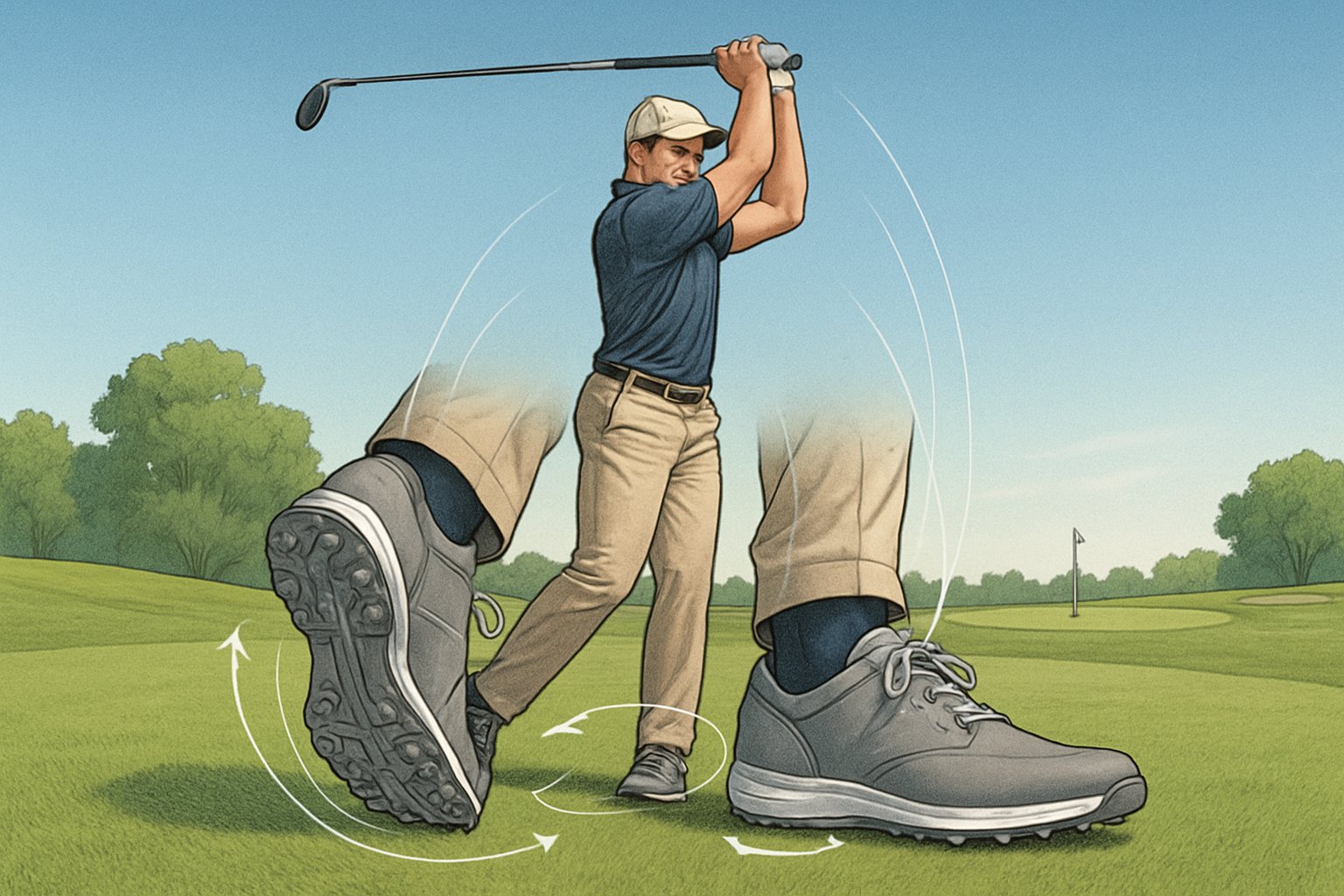
Worn-out golf shoes sneakily ruin your swing mechanics. When soles and cleats break down, you lose traction and your stance shifts, making it tough to stay balanced or transfer weight smoothly.
Recognizing Worn Out Soles
Your shoes will tell you when they’re done—you just have to pay attention. The most obvious sign? Visible wear patterns on the outsole, especially around the heel and forefoot where you put the most pressure.
Watch for these red flags:
- Smooth or slippery spots where the grip is gone
- Uneven wear that hints at bad weight distribution
- Flattened or stiff midsole foam that’s lost its cushion
- Missing or loose cleats that kill your grip
Check the heel drag area closely—most golfers wear it down first. If you see a lot of material missing or the inner foam peeking through, your shoes are probably wrecking your stability more than you think.
Spike placement matters too. Worn or loose cleats make your base wobbly, forcing your body to compensate and sapping your power.
When To Replace Your Golf Shoes
Most golfers wait way too long before replacing shoes. By then, you’ve probably already picked up some bad habits to make up for lost traction. The usual guideline is 300-400 rounds, but honestly, it depends on your swing and the courses you play.
Swap out your shoes ASAP if you’re:
- Slipping mid-swing, especially on wet grass
- Getting foot fatigue after 9 holes when you didn’t before
- Losing balance during your backswing or follow-through
- Seeing the sole separate or cracks in the uppers
Solid ground contact is everything. Footwear can seriously impact your swing efficiency. Don’t wait until you’re skating around on wet grass.
If you play a lot in rough conditions—wet, sandy, or lots of cart paths—expect to replace shoes more often.
Customization And Adjustability In Modern Golf Shoes
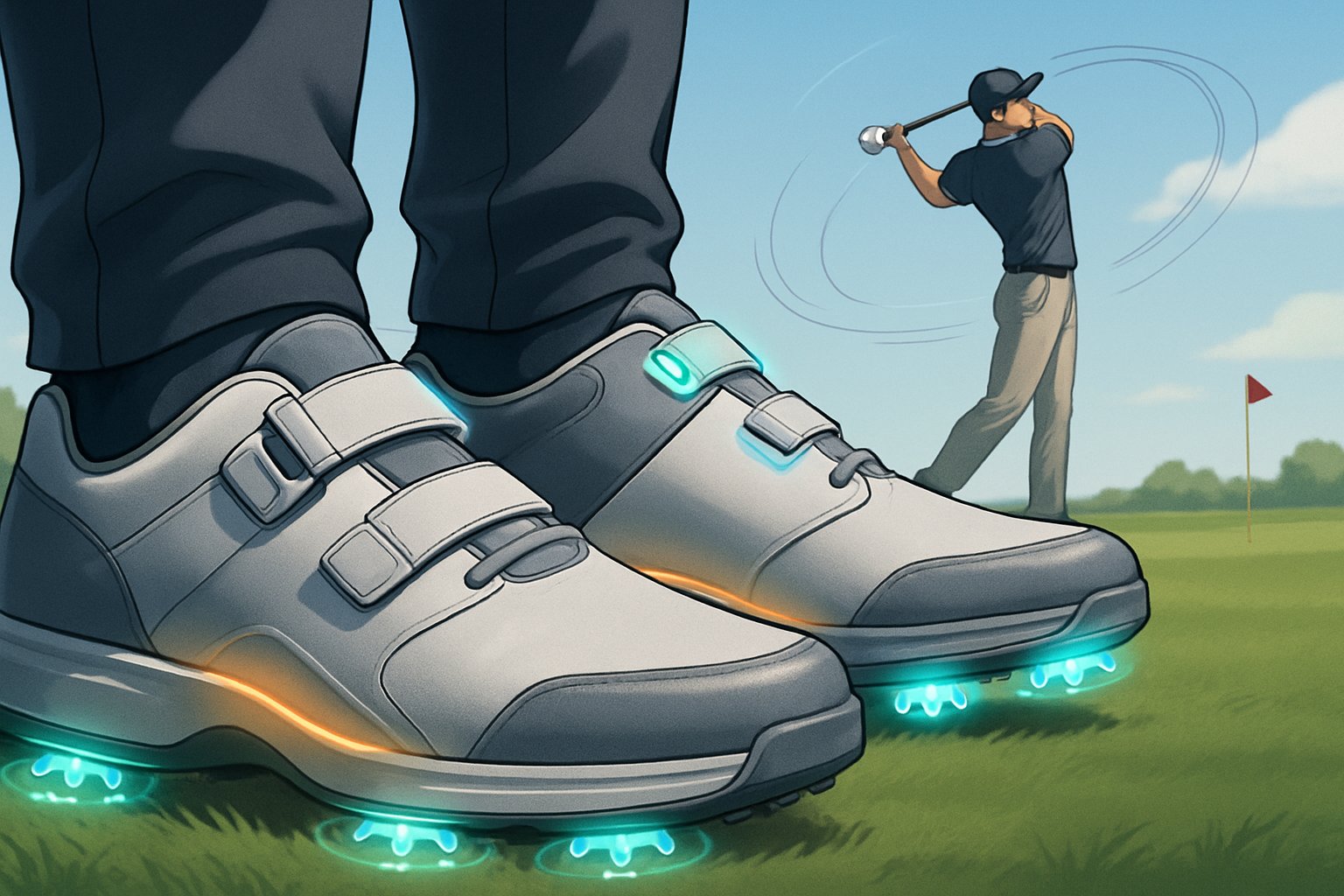
Modern golf shoes come loaded with fitting systems and adjustable features that can change how stable and comfortable you feel. Advanced lacing and custom-fit tech let you tweak your shoes to match your feet every round.
Custom-Fit Options For Enhanced Performance
Some shoes use heat-moldable materials that adapt to your exact foot shape. Warm them up, and they’ll form to you, cutting out pressure points and hot spots.
BOA dial systems are everywhere now. One quick twist and you can adjust tension on the fly—no more fiddling with laces. It’s precise and way less guesswork than old-school tying.
You’ll also find interchangeable insoles with different arch supports. Swap them out for low, medium, or high arches, depending on what your feet need that day.
Brands have finally gotten smarter about width. Now you can pick from several widths in the same size, so your foot doesn’t slide around in the shoe.
Some shoes let you adjust heel and forefoot cushioning, which helps keep your weight balanced throughout your swing.
Lacing Systems And Foot Security
Traditional lacing still works if you do it right. Heel-lock lacing uses the top eyelets to keep your heel down during the backswing.
Speed lacing systems use elastic cords and toggles for quick, even pressure—no pressure points, just a snug fit.
Asymmetrical lacing lets you adjust each side of the shoe separately, which is great if your feet aren’t exactly the same shape.
A lot of modern shoes have internal harnesses that support your midfoot, separate from the lacing.
Velcro closures are a lifesaver for golfers with arthritis or dexterity issues. Super adjustable, no fuss.
Influence Of Weather And Course Conditions On Shoe Choice
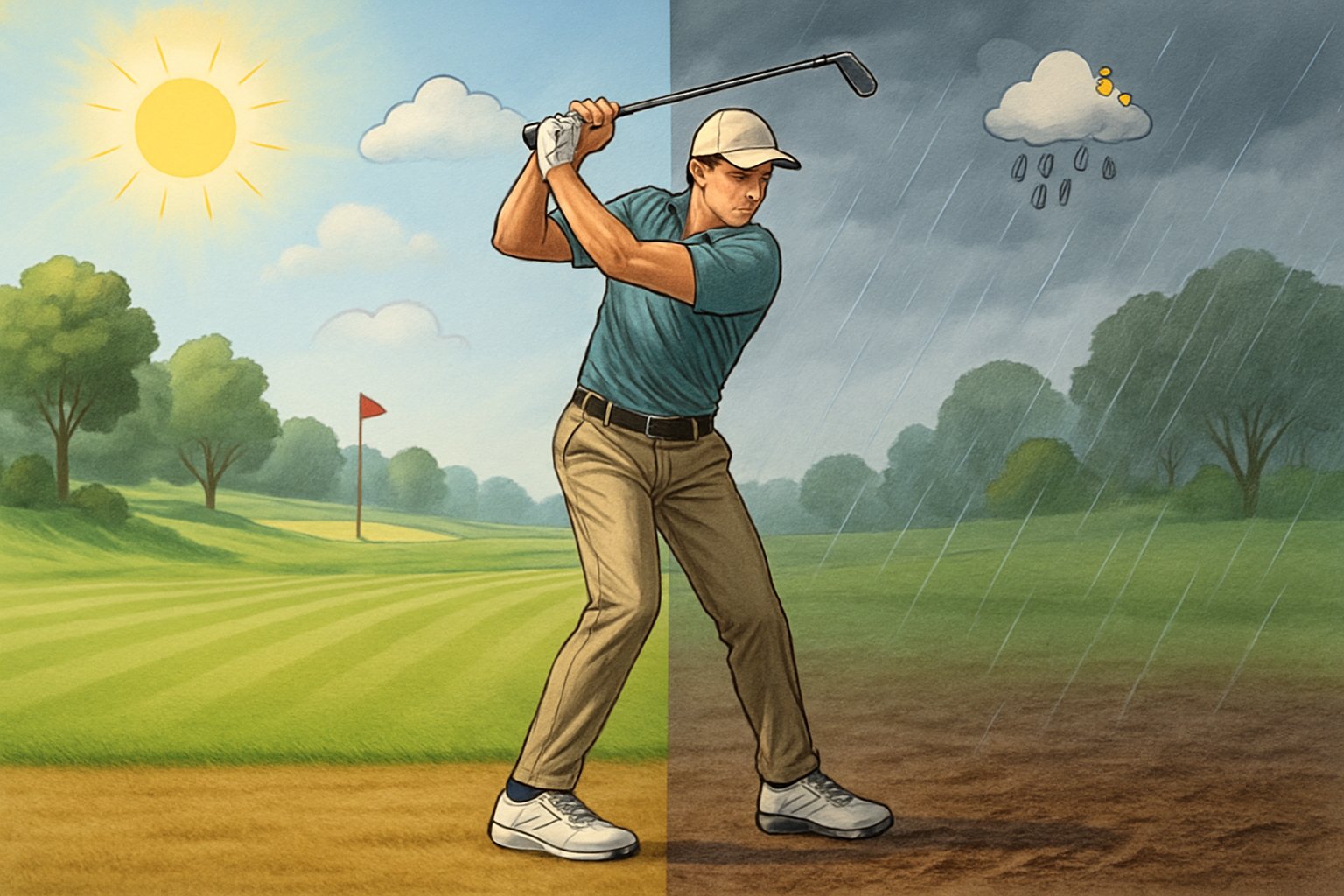
Weather’s not going to ask if you’re ready before it messes with your round. Your footwear choice suddenly matters a lot more when it’s wet, cold, or windy.
Wet conditions call for waterproof shoes with real traction—nothing kills confidence faster than sliding mid-backswing.
Dry, firm days mean you can focus on comfort and breathability instead of grip.
Here’s a quick breakdown:
| Condition | Priority Features | Shoe Type |
|---|---|---|
| Wet/Muddy | Waterproofing, aggressive spikes | Spiked shoes |
| Dry/Firm | Breathability, comfort | Spikeless or minimal spikes |
| Soft/Sandy | Ground penetration, stability | Traditional spikes |
| Hard/Fast | Grip without damage | Spikeless with good tread |
Morning dew can be sneakily slippery, even if it’s sunny. Spikeless shoes might leave you sliding around when you least expect it.
Windy days make a stable base even more important. Good shoes anchor you when gusts threaten your balance.
Extreme temps change everything. Cold stiffens shoe materials, and heat can make your feet swell and ache.
It makes sense to match your shoes to the course and weather, not just stick with one favorite pair.
Common Footwear Mistakes That Sabotage Your Swing
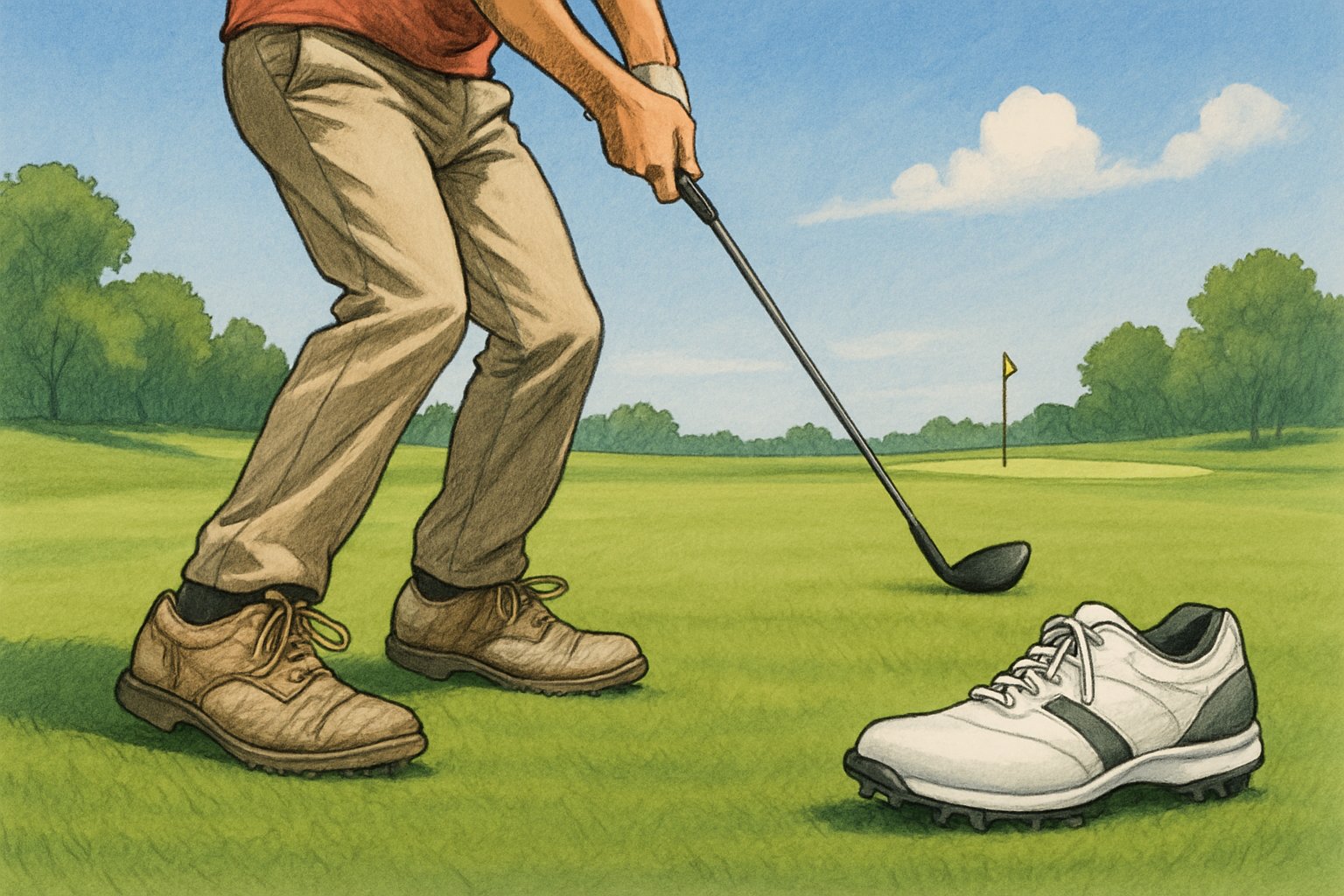
Wearing the Wrong Size is a sneaky game-killer. Your feet swell as you play, but lots of golfers squeeze into shoes that are too tight. That throws off your balance and forces weird compensations.
Fashion Over Function might look cool in the clubhouse, but it won’t help your score. Trendy sneakers don’t have the lateral support or grip you need for solid swings.
Ignoring Spike Condition is a recipe for slipping. Worn spikes can’t hold turf, so your lower body slides and your swing falls apart.
| Mistake | Impact on Swing |
|---|---|
| Loose shoes | Poor weight transfer |
| Worn spikes | Loss of traction |
| Wrong sole type | Reduced stability |
Mixing Shoe Types between rounds messes with your muscle memory. Switching pairs day by day can mess with your mechanics, forcing constant tweaks.
Neglecting Arch Support leaves your foundation weak. Tired feet lead to sloppy footwork and, honestly, a pretty rough round.
Using Old, Worn-Out Shoes is like building your swing on mush. No grip, no support, and no chance at consistency.
Choosing The Perfect Pair For Your Swing Style
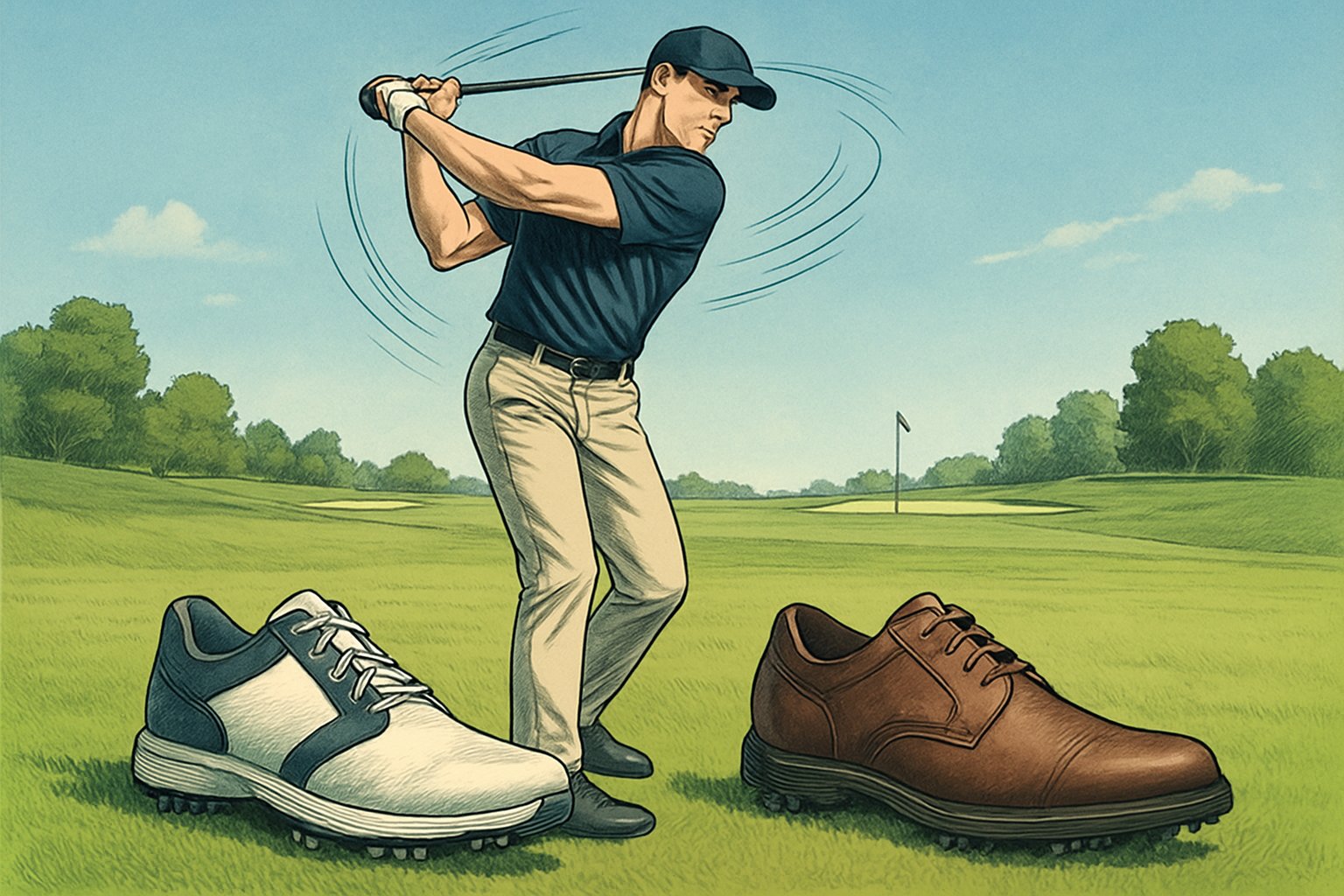
Your swing is as personal as your putter grip, so your shoes should fit your style—not just your foot. Switching shoes all the time can throw off your mechanics, shifting your low point and making you adjust your technique.
Power Players—if you swing hard, look for:
- Wider soles for better ground contact
- Aggressive traction to stop slipping
- Firm heels to handle all that torque
Smooth Swingers—if you’re more about tempo, you’ll want:
- Breathable uppers for comfort
- Moderate traction so you’re not stuck in the ground
- Flexible forefoot for easy movement
Conditions matter too. Wet mornings? Go waterproof. Dry, firm fairways? Try lighter, spikeless shoes.
Honestly, fit matters more than the logo. Try different models, do your homework, and ask around—it pays off.
Here’s a tip: shop for shoes in the afternoon, when your feet are a bit swollen. That way, you won’t end up with shoes that pinch during late rounds.
Comfort builds confidence, and confidence leads to better swings. The right shoes boost stability, comfort, and grip, and that’s how you start playing better.
Don’t rush. Your swing really does start from the ground up.
Final Thoughts On Investing In Quality Golf Shoes
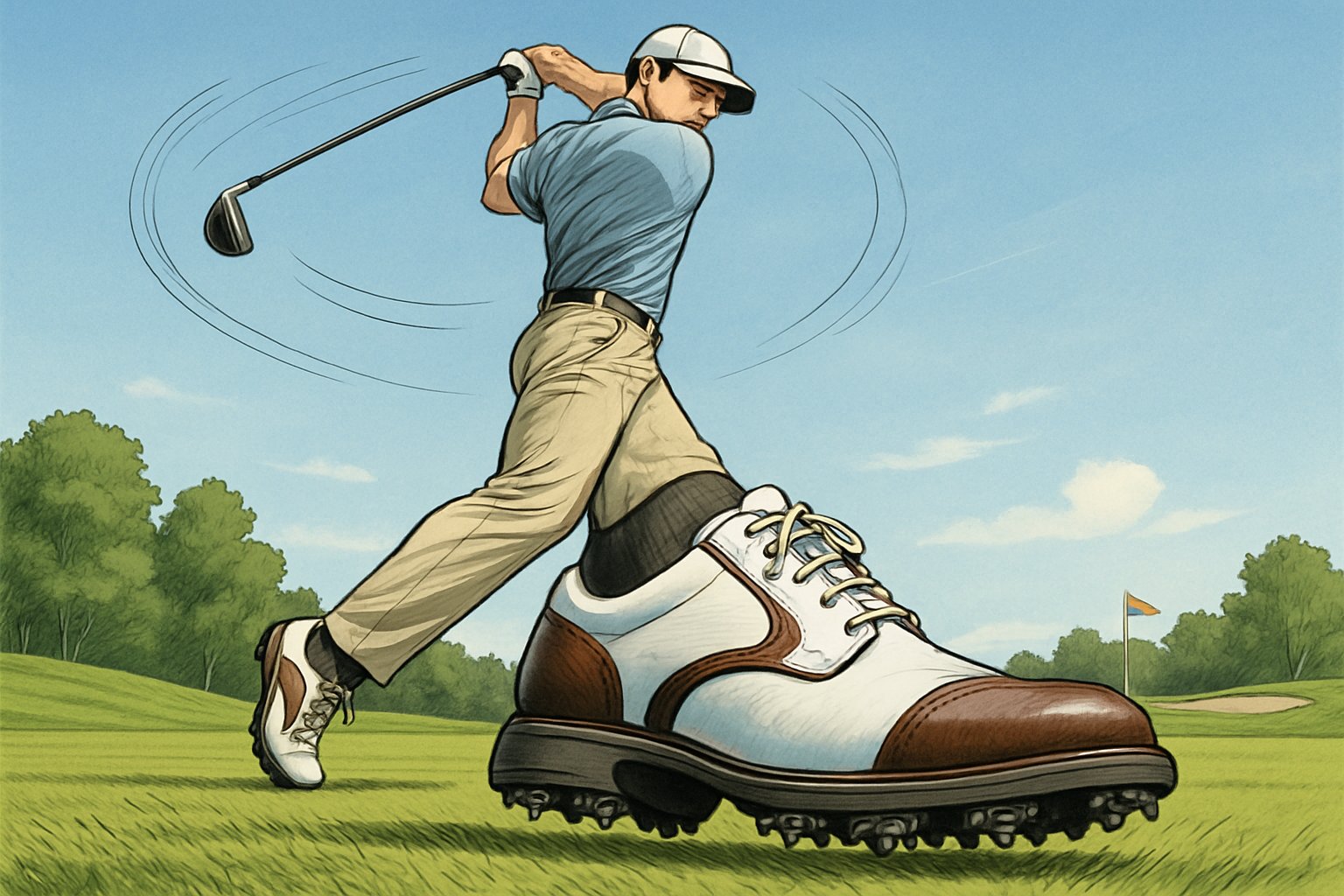
Your swing isn’t just about your grip or how you stand. Golf shoes genuinely affect your swing—they mess with your stability, balance, and how you shift your weight.
The Foundation Factor
Shoes are the foundation of your whole golf game. If your foundation wobbles, well, so does everything else. That’s just how it goes.
Golf shoes with proper grip and traction keep you from slipping mid-swing. When your feet stay put, you’re way more likely to make solid contact and send the ball where you want.
Comfort Equals Performance
Let’s be real, 18 holes is a long walk—easily 6 to 8 miles on your feet. Quality golf shoes with cushioned insoles reduce fatigue when you’re out there for hours.
If your feet get tired, your posture slumps and your swing falls apart. It’s not magic, just basic physics and a bit of common sense.
The Investment Reality
| Benefit | Impact on Swing |
|---|---|
| Stability | Prevents lateral movement |
| Traction | Maintains consistent footing |
| Comfort | Reduces fatigue-related errors |
| Support | Improves weight transfer |
Professional golfers understand that footwear impacts performance. They aren’t picking shoes just to match their belt—there’s more to it.
Honestly, quality golf shoes are equipment, not just an afterthought. Your feet need a solid platform if you want your swing to work the way you hope.
🔥 Would you like to save this?
Please note that some of the imagery in this article were created with the aid of AI image generators.