
🔥 Would you like to save this?
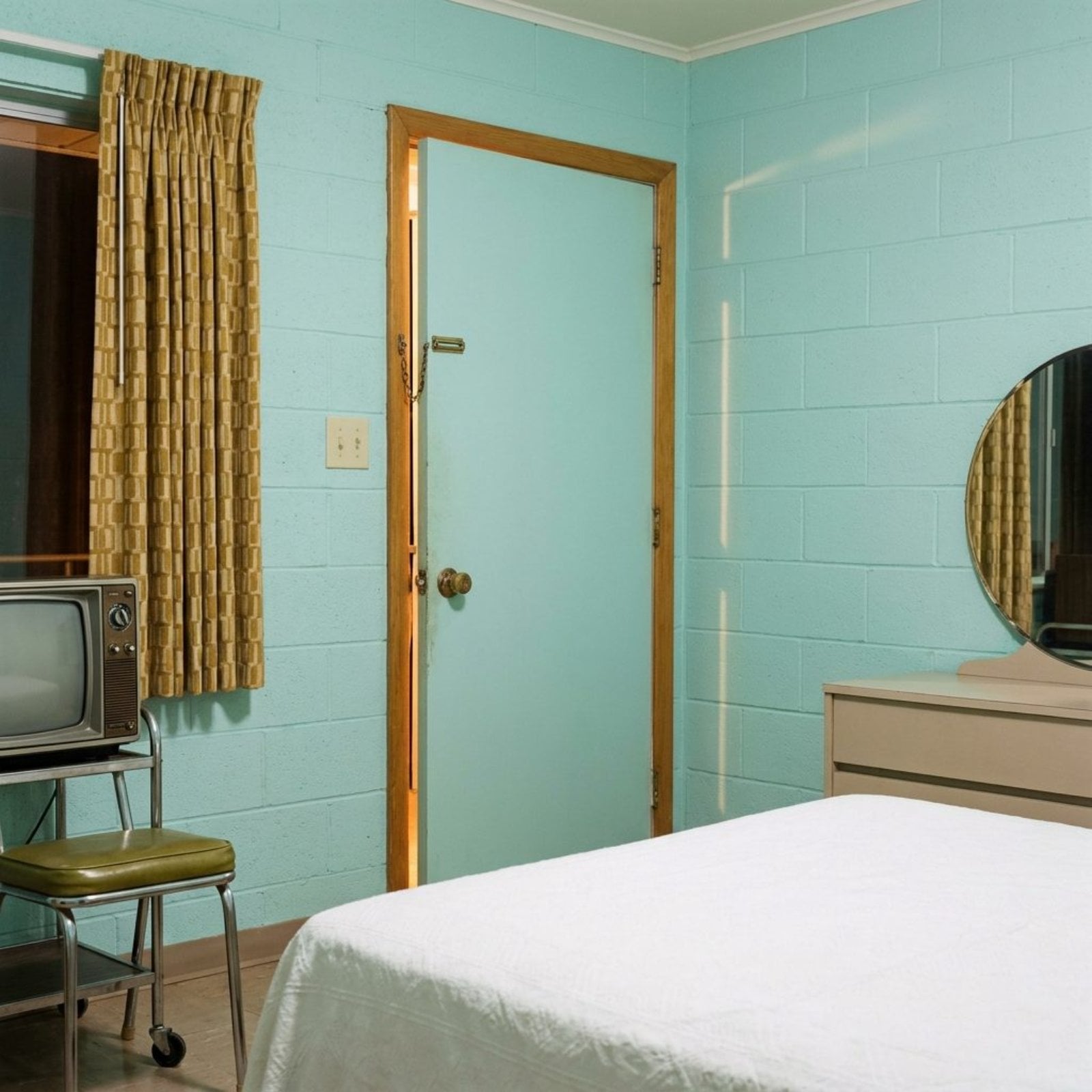
The vacancy sign was buzzing pink before you even pulled off the highway. You’d been driving since before lunch, the backseat was a war zone, and the sight of that low-slung building with its kidney-shaped pool and numbered doors felt like genuine arrival. Not just a place to sleep. An event. Motels in the 1960s had a specific kind of grandeur, modest by any later standard and yours for about $12 a night, but charged with the feeling that someone had thought about your comfort. What follows will take you straight back there.
29. The Color Television Card You Fed a Quarter Into by the Bed
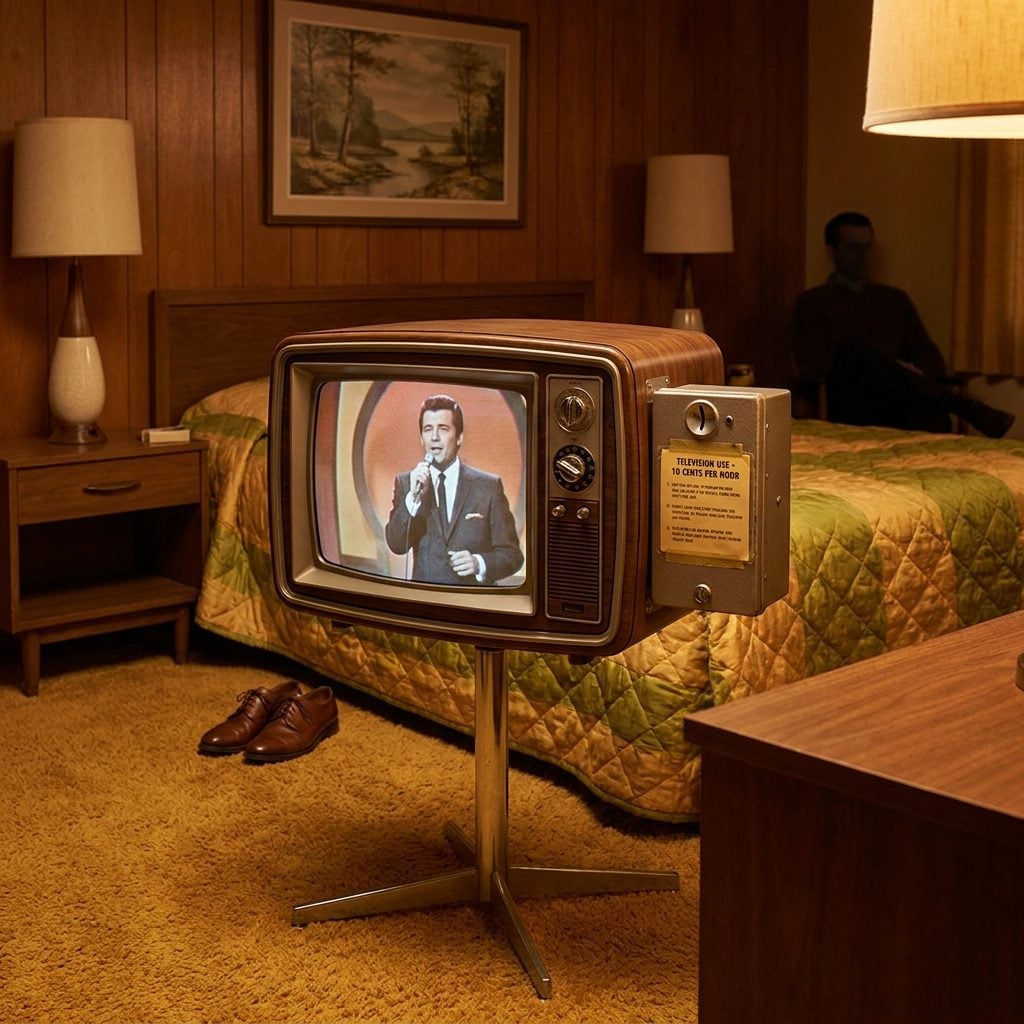
Color television was still a luxury at home in the early 1960s, and some motels knew it. The coin box bolted to the nightstand offered two hours of color TV for a quarter, a timer ticking quietly until the screen went dark. You fed it another coin without thinking twice.
It felt like pure indulgence. At home there was a black-and-white set with rabbit ears. Here was color, right there in the room, and the only catch was remembering to keep change on the nightstand before the late movie started.
28. The Lobby Newsstand Stocked Fresh Every Morning Before Sunrise
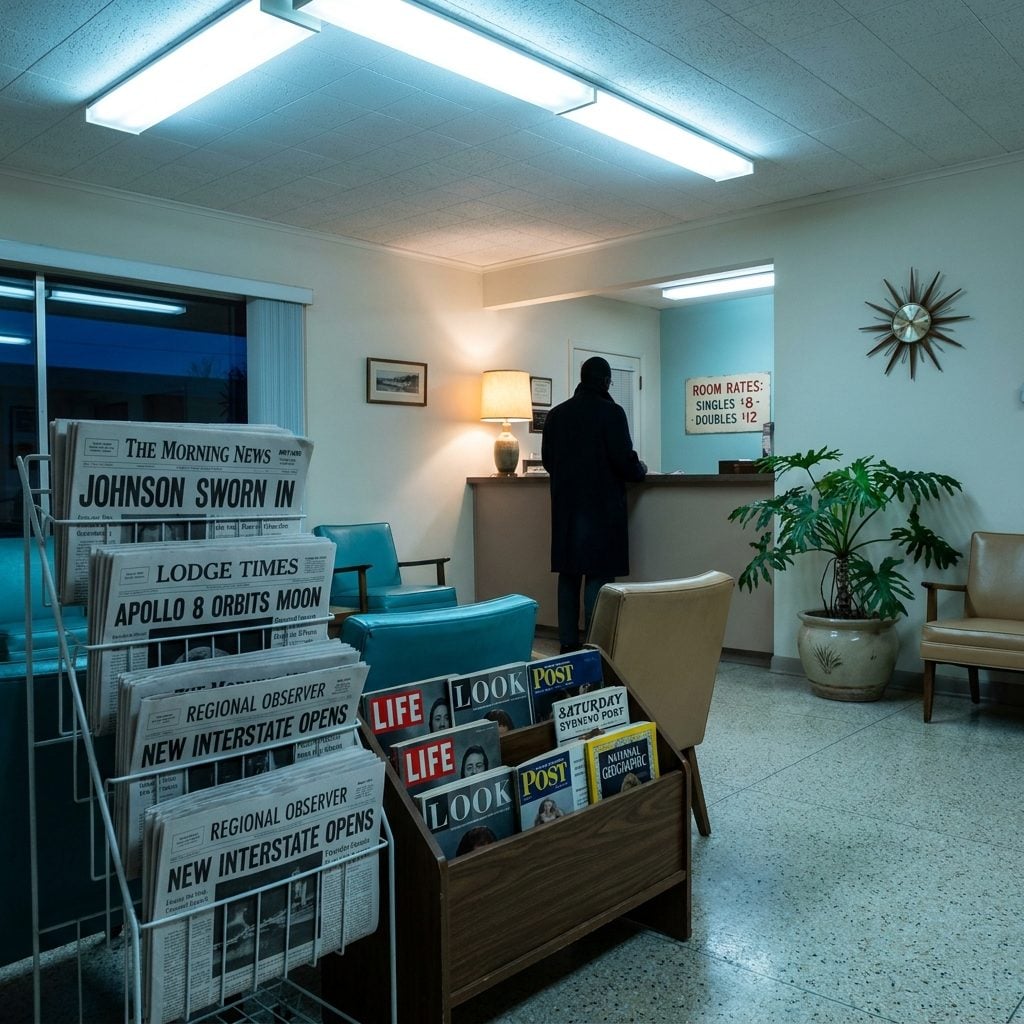
By 6 a.m. the rack was full. Three or four newspapers folded and stacked, the morning edition still carrying that fresh-ink smell that mixed with the lobby’s coffee. You grabbed a paper on the way to breakfast and it felt like the right way to start the day, like a small proof that the world outside was still running on schedule.
27. The Complimentary Postcard of the Motel Itself, Left on the Dresser
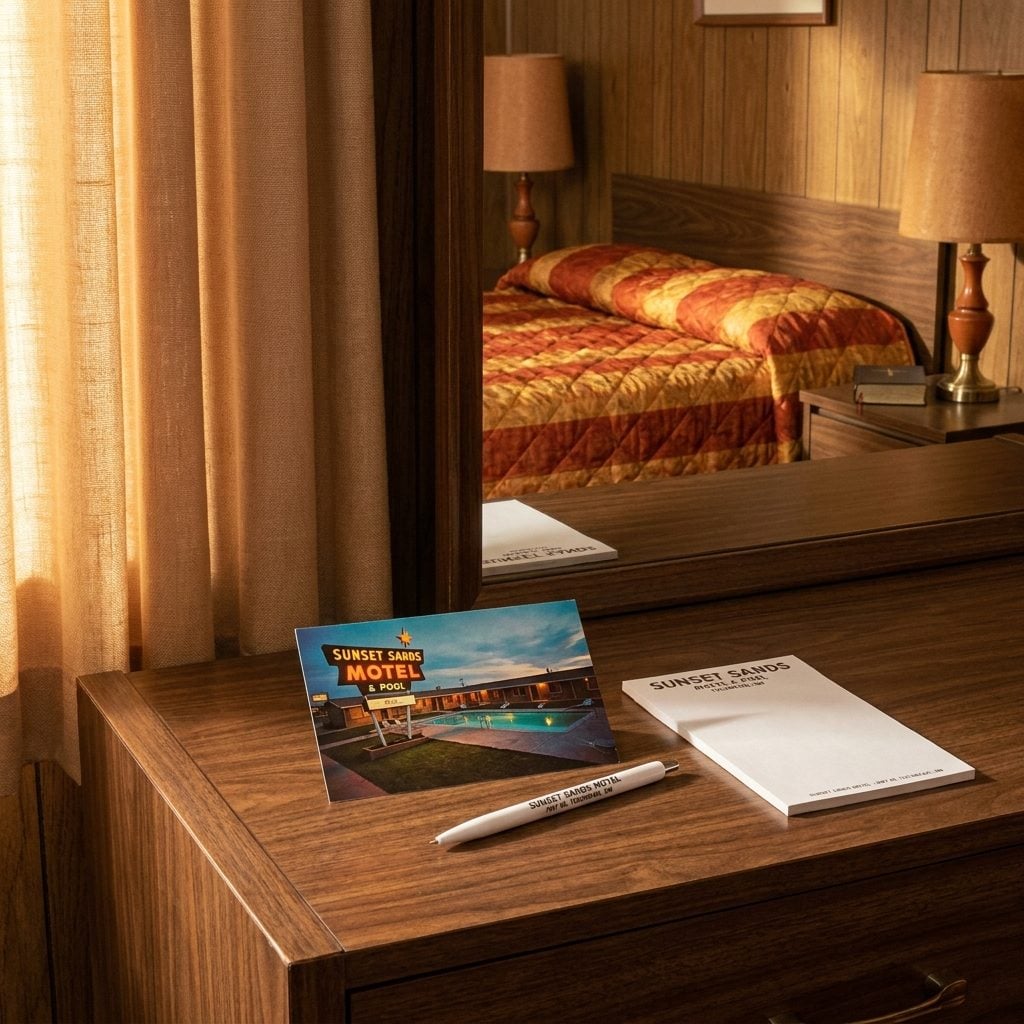
It was just sitting there on the dresser when you checked in. A glossy postcard printed in that hyper-saturated color that made every motel pool look like the Caribbean, the sign lit up, the parking lot full, the whole place looking better than it had from the highway.
The implied invitation was clear. Write someone. Tell them where you are. The motel’s own name and address were already printed on the back, which was either convenient or a little self-promotional, depending on your mood.
26. The Plastic Tumbler Sealed in a Paper Sleeve Beside the Bathroom Sink
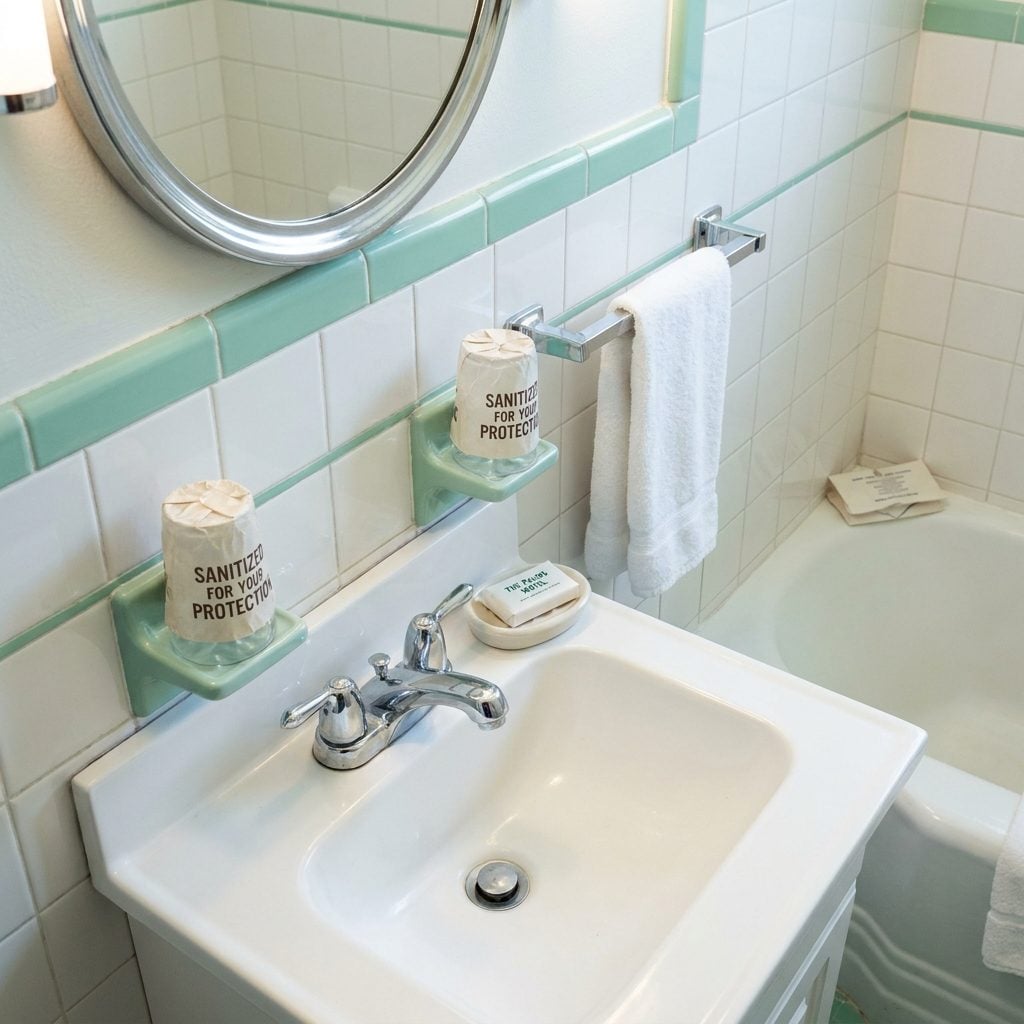
The paper sleeve said “Sanitized For Your Protection” in a font that meant business. The tumbler inside was clear plastic, slightly cloudy from the factory, and it held exactly enough water for brushing your teeth or taking an aspirin. Peeling that sleeve off felt oddly official, like a small ceremony of occupancy.
Hotels have been wrapping glasses ever since, in increasingly elaborate packaging. The original paper sleeve, though, was the whole promise in three words. Someone had been here before you. Someone had cleaned up. You were safe to proceed.
25. The Cement Block Ice Machine at the End of Every Corridor
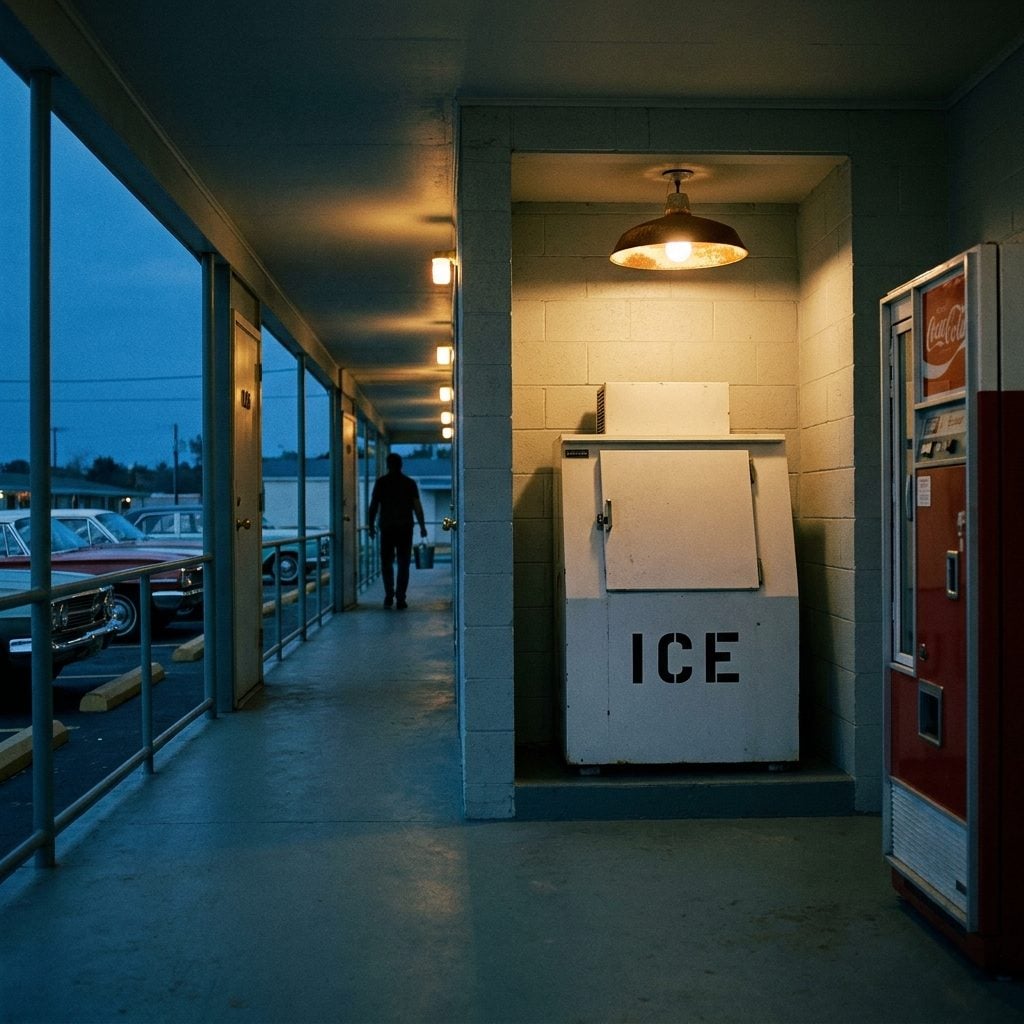
It sat at the end of the corridor inside a little cement block alcove, humming loud enough to hear from three doors away. The lid was heavy, the interior was a cold fog, and the ice came out in perfect half-moon crescents that clinked into your plastic bucket like something you’d ordered.
The walk to the ice machine was its own small ritual, door propped with the chain, bucket in hand, bare feet on warm concrete. It was the motel’s way of telling you the night was just getting started.
24. The Courtesy Coffee Delivered to Your Door at Whatever Time You Wrote on the Card
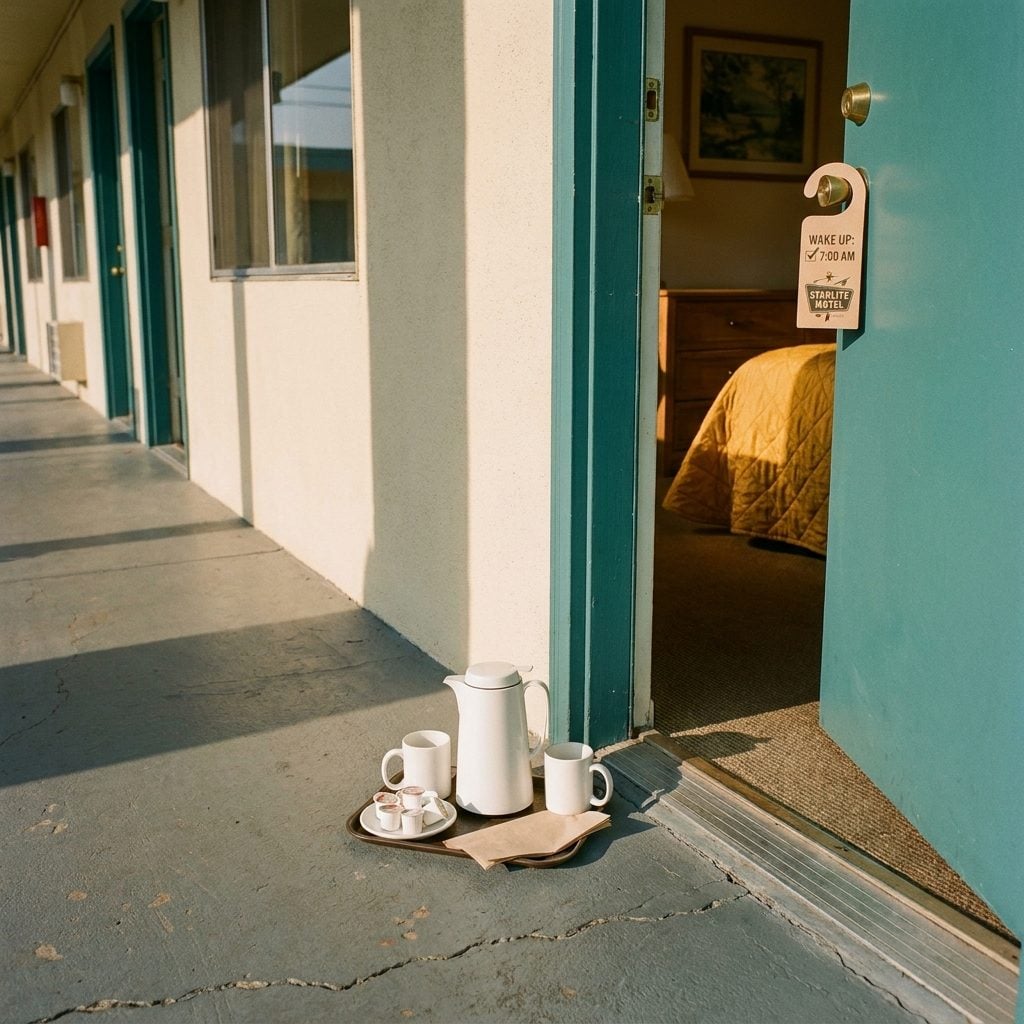
The little card hung from the door handle the night before, you checked a box, wrote a time, and went to sleep. By morning it was there: a pot of coffee on the threshold, two cups, sugar, creamer, the whole thing arranged on a small tray as if someone had been thinking about you since midnight.
Room service it wasn’t. But it was better than hunting for a diner at 6 a.m. in an unfamiliar town. It was the motel saying: we knew you were coming, we had it ready. That still counts for something.
23. The Matching Luggage Rack, Dresser, and Nightstand Set in Actual Furniture-Grade Wood
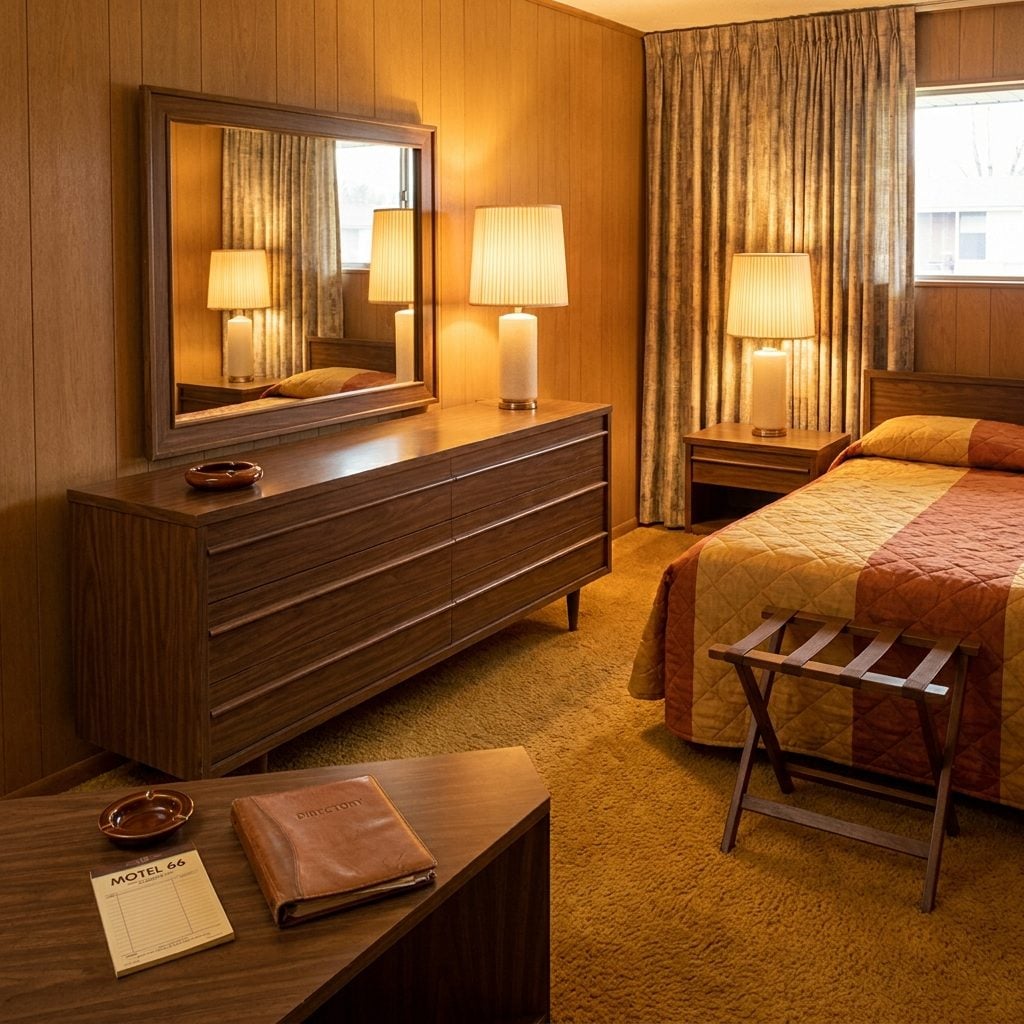
Not pressed board. Not laminate over particle dust. Actual furniture, a dresser with real drawer glides, nightstands with a little weight to them, all of it matching, all of it part of a set that somebody had clearly ordered together from a commercial supplier who understood that traveling people deserved a room that felt intentional.
This was the era before motel rooms started to feel like storage units with beds in them. The wood-grain furniture set said: someone furnished this room. That distinction mattered more than it sounds.
22. The Paper Placemat on the In-Room Breakfast Tray With the Motel’s Own Logo
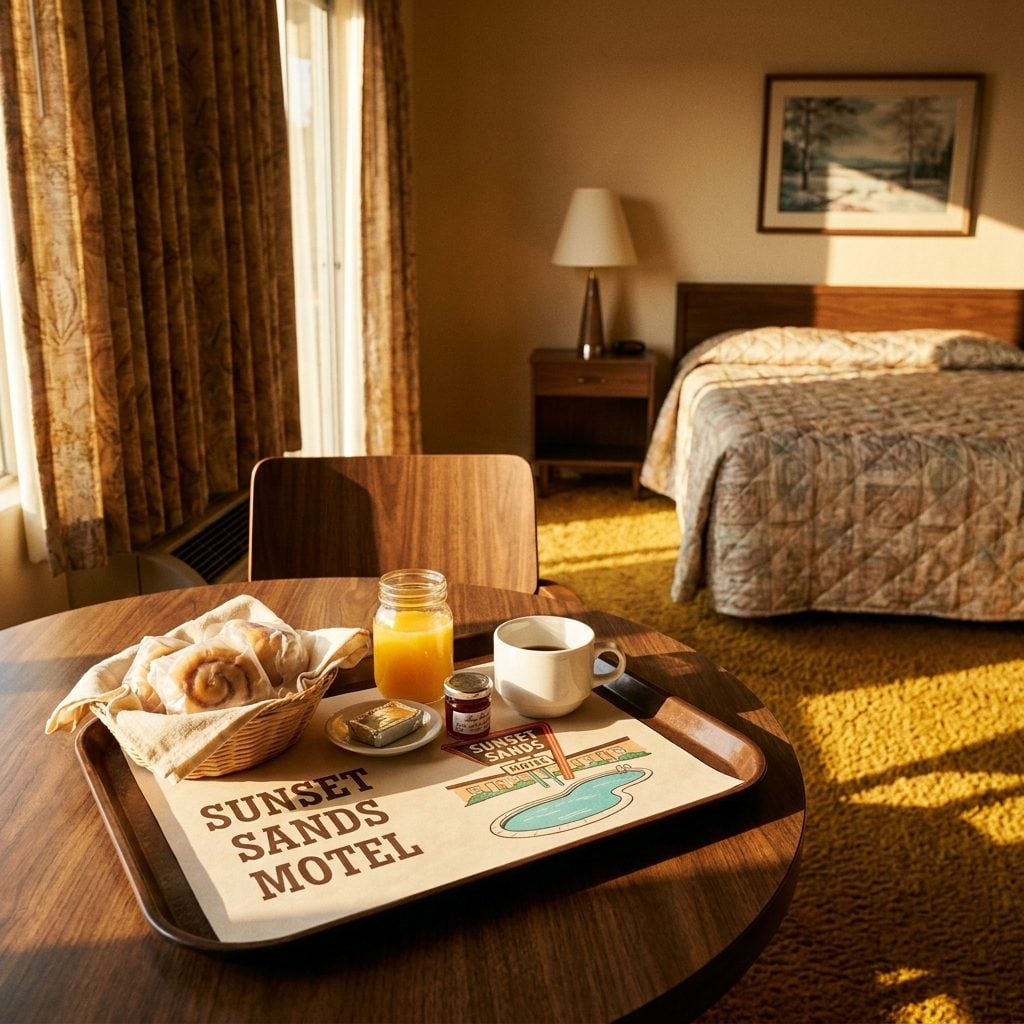
The paper placemat did more work than it had any right to. Printed with the motel’s name in a clean mid-century logo, a small illustration of the sign or the pool, maybe a little map of the local area around the edges, it turned a tray of sweet rolls and orange juice into something that felt like a restaurant had come to you.
21. The Lobby Candy Dish Filled With Individually Wrapped Starlight Mints
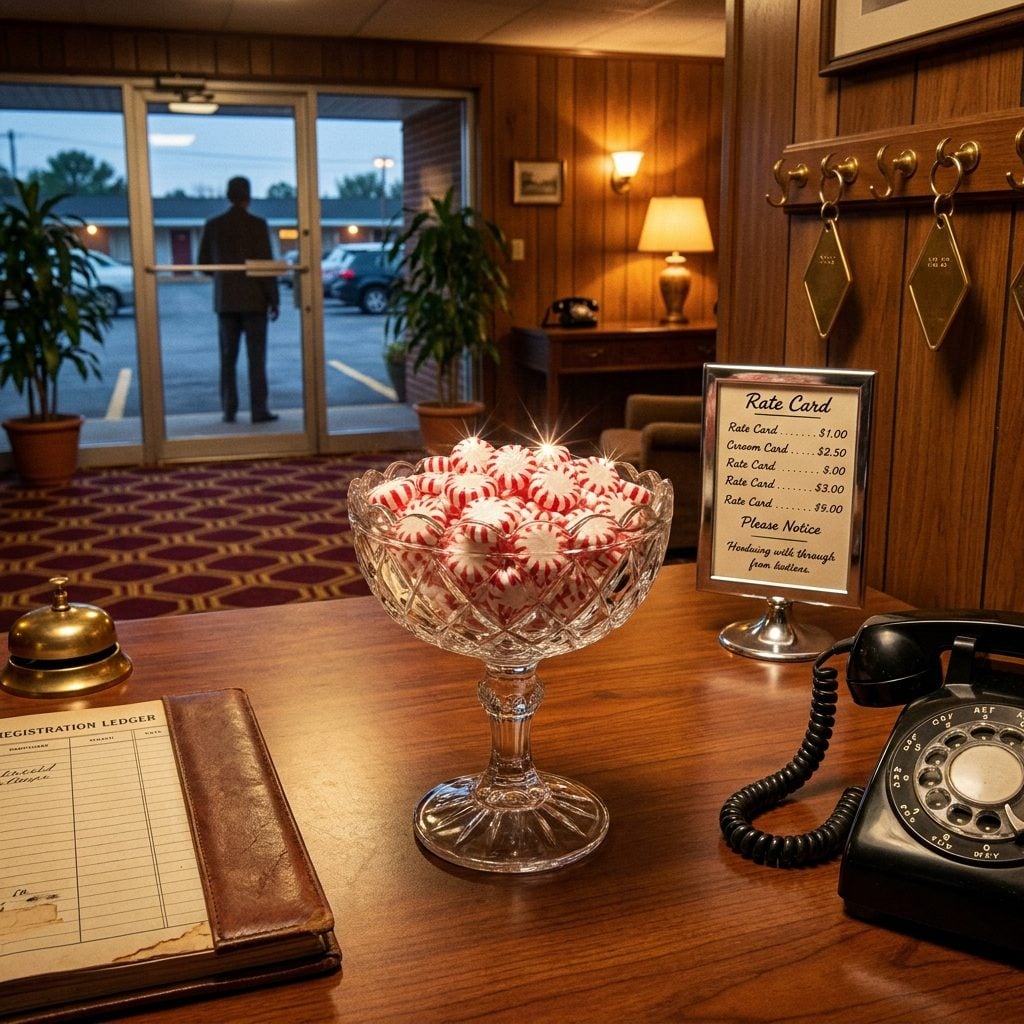
It sat right there on the corner of the check-in desk, a cut-glass dish, always full, always the same candy. Starlight mints in their tight little cellophane twists. You grabbed one on the way in and one on the way out and maybe a third one for the road while your parents were signing the register.
Nobody called it an amenity. Nobody had to. It was just there, refilled without comment, a quiet signal that this was a place that thought about small things.
20. The Double-Bolted Security Chain That Let You Crack the Door Without Opening It
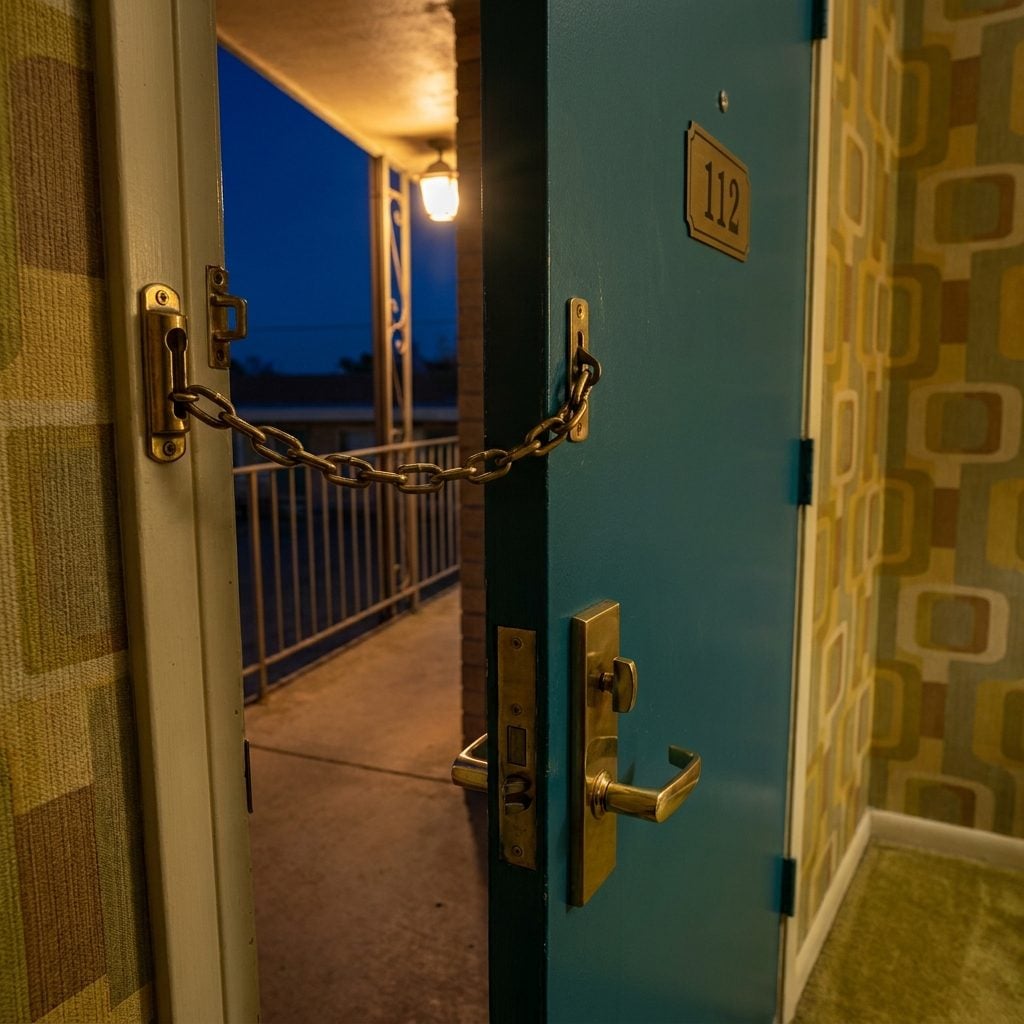
Before the peephole became standard, there was the chain. You slid it across every single night, even in a perfectly safe town on a perfectly quiet Tuesday, because the chain was the point. It meant the door was yours now.
It made a specific sound, a soft metal-on-metal rattle as the links settled, and that sound was the sound of the room belonging to you. Hotels eventually moved to swing bars and then to electronic latches. The chain is mostly gone now, but the ritual of sliding it across never really left.
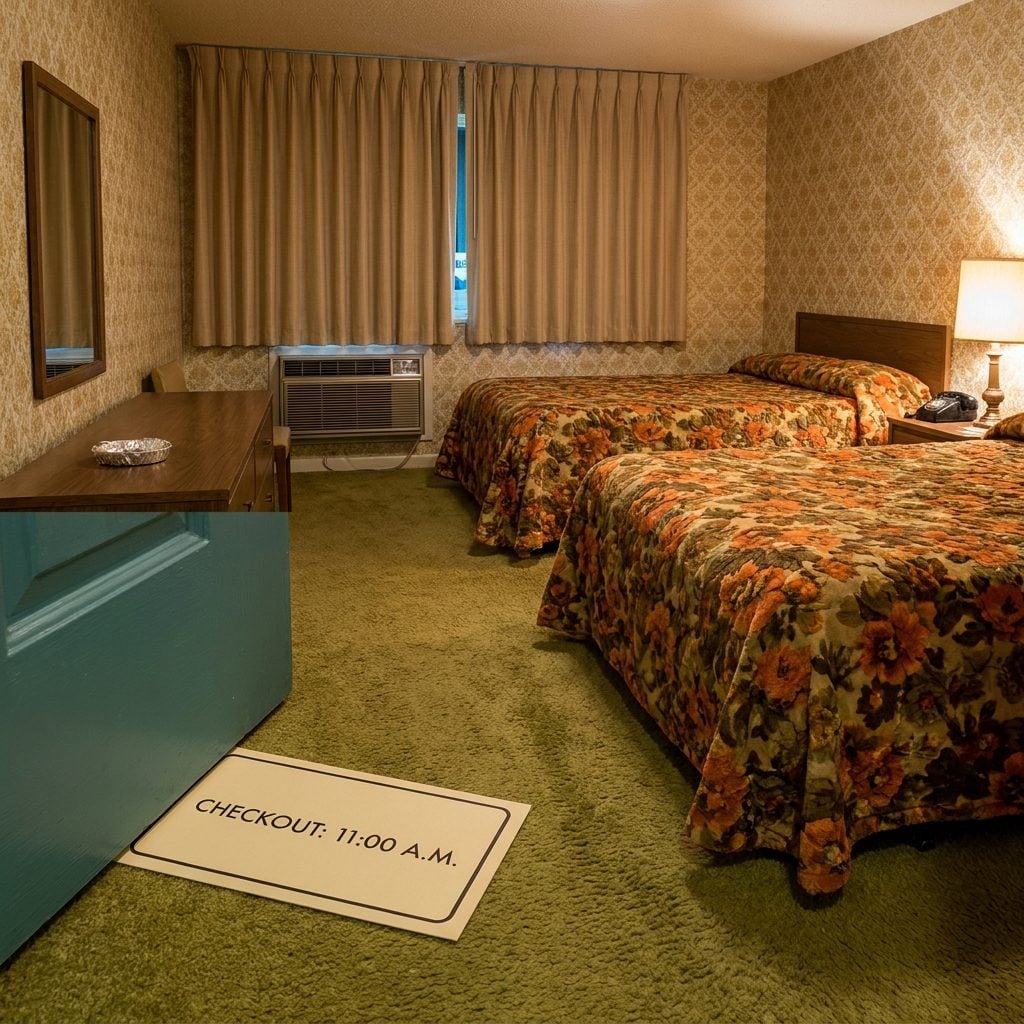
19. The Printed Checkout Time Reminder Card Slipped Under Your Door at Night
🔥 Would you like to save this?
Sometime after ten, it appeared. Slid silently under the door while the television was still on, landing face-up on the carpet with a soft papery whisper. The checkout reminder card: cream stock, clean type, 11:00 A.M. underlined.
It wasn’t a demand. It was a courtesy, the motel’s way of settling things before morning got complicated. You picked it up, set it on the nightstand, and fell asleep knowing the schedule. That small card did a lot of quiet work.
18. The Coin-Operated Television Mounted on a Swivel Bracket Above the Dresser
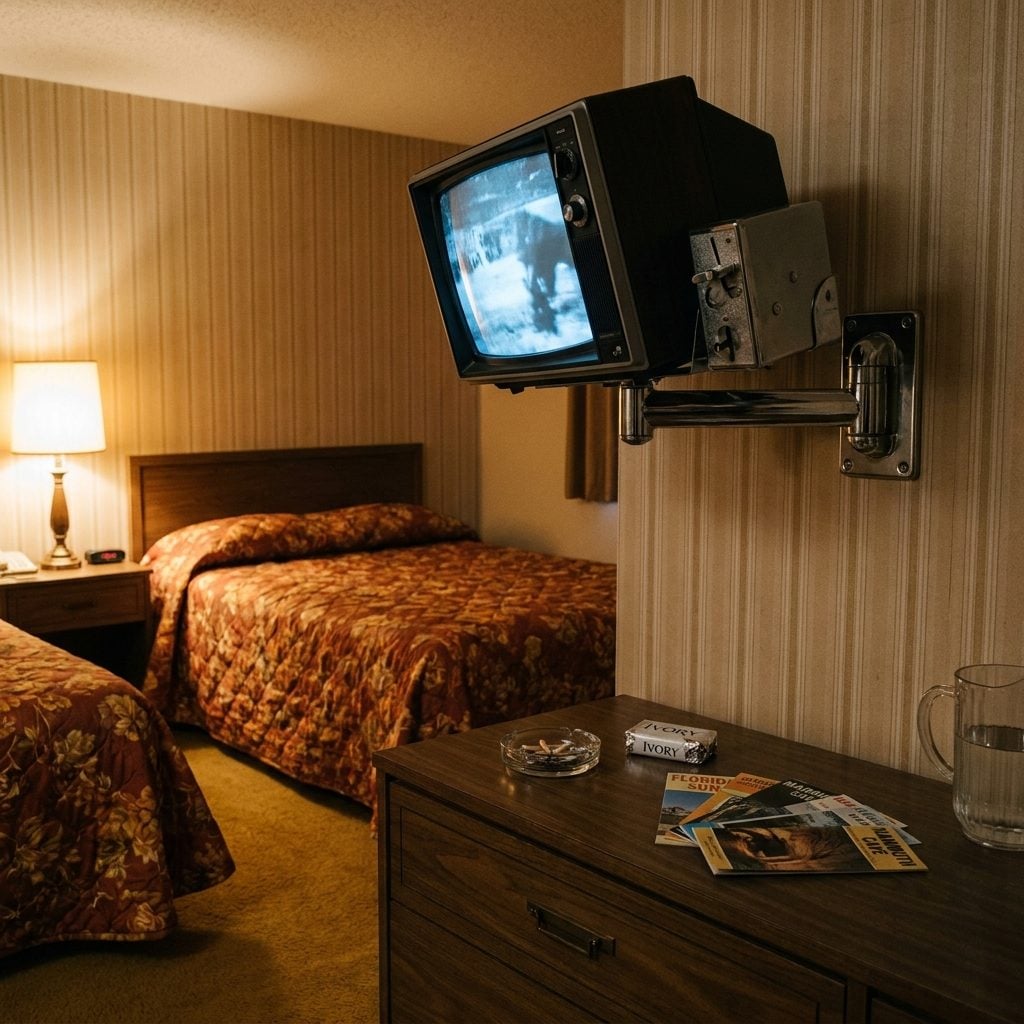
Twenty-five cents bought you an hour. Slot the coin, the set clicked on, and the picture came in warm and slightly snowy from the mounted bracket above the dresser. The swivel let you tilt it toward whichever bed was closer, and tilting it was always someone’s job.
When your time ran out, the screen went to static mid-sentence. You either fed it another quarter or you turned the lights out and went to sleep. There was something clarifying about that. Television as a deliberate choice, not a background hum.
17. The Outdoor Corridor Light Fixture That Threw a Warm Cone Over Every Room Door
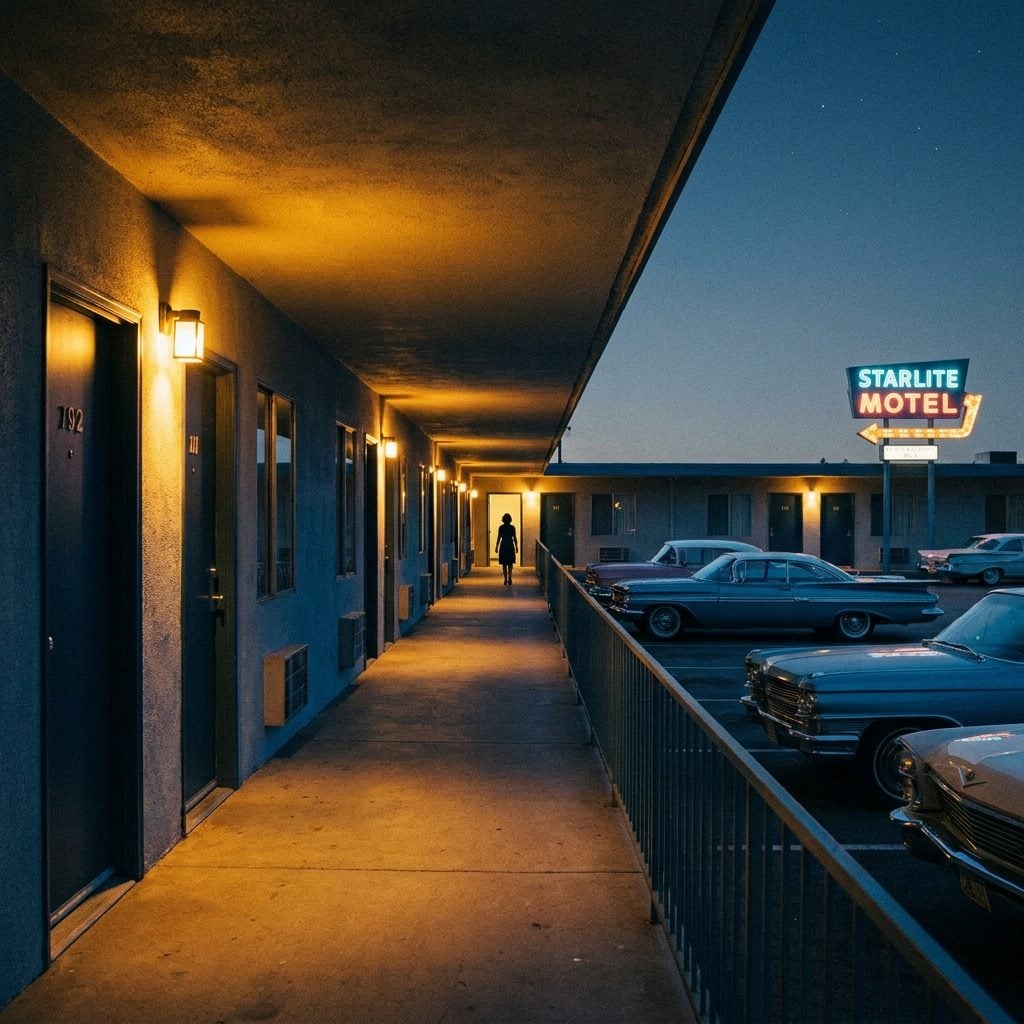
Every room had its own cone of light over the door, warm amber against the painted concrete, a small theater of arrival. You walked toward your number through that corridor and the pools of light marked the distance like runway lights.
The design was simple: a white enamel shade, a bare bulb, a bracket screwed into the stucco. It wasn’t decorative. It was just the way motels were built in that decade, when the outside walkway was still part of the experience and arriving at your room door still felt like something worth lighting properly.
16. The Paper Sanitation Band Wrapped Across the Toilet Seat
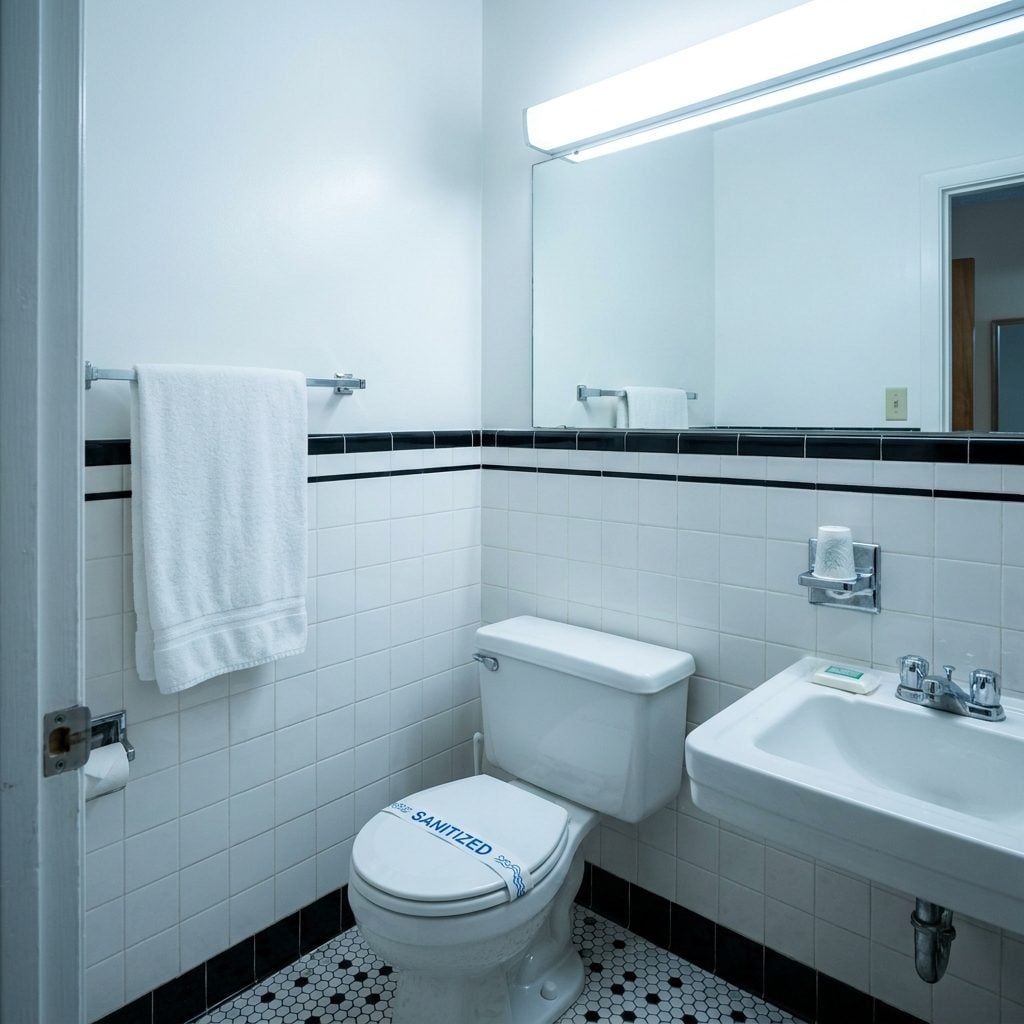
That paper strip was doing a lot of reassuring work for something that weighed almost nothing. It stretched across the toilet seat in a neat band, the word SANITIZED printed in blue, and the message was clear: no one has touched this since we did.
Whether you believed it completely is beside the point. The band meant someone had been in here, had thought about you, had prepared. Removing it on the first night always felt slightly ceremonial, the official start of the stay.
15. The Laminated Restaurant and Attraction Map Left on the Nightstand
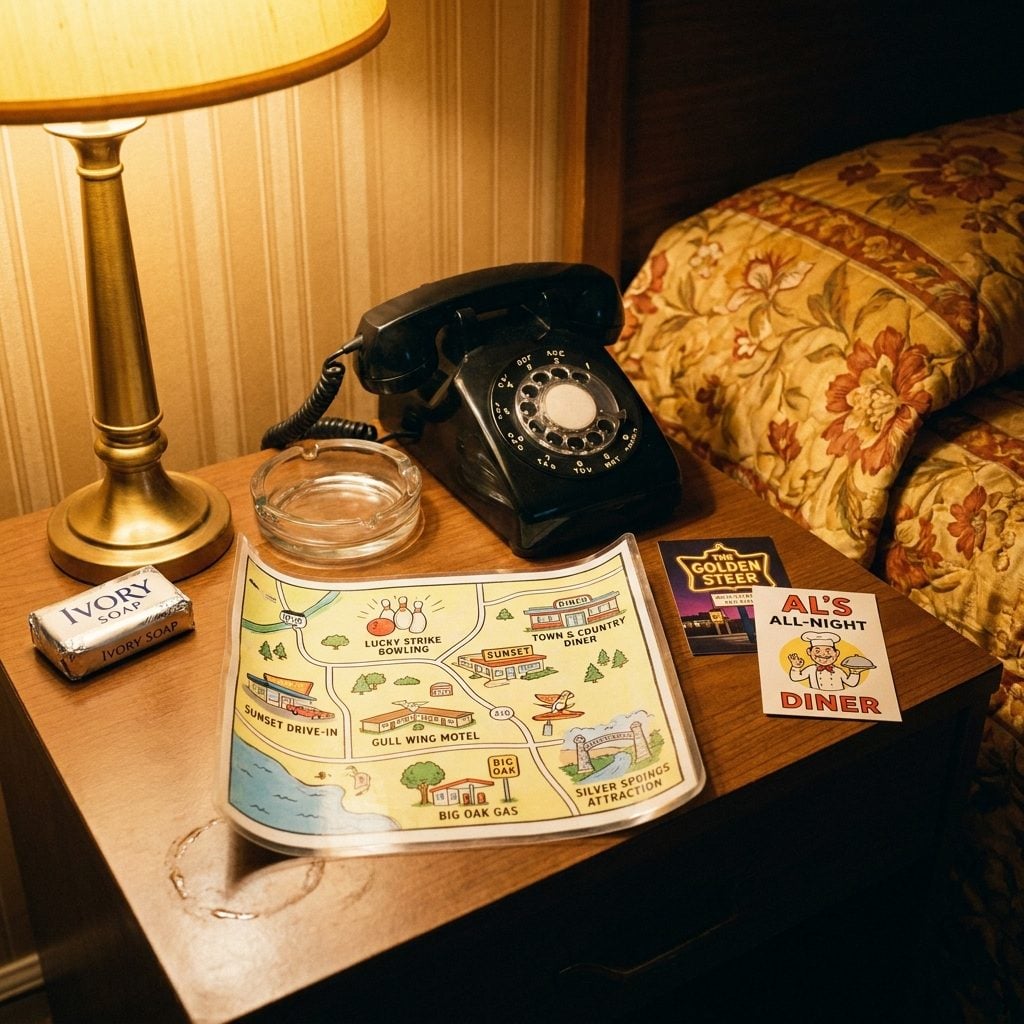
It was always slightly sticky at the corners from years of handling and re-laminating, and the illustrated map of the area looked like it had been drawn by someone who really loved this town and wanted you to know about the steakhouse on Route 9.
The hand-lettered restaurant names, the small cartoon drawings of local landmarks, the motel’s own name circled in red at the center, it was the entire philosophy of the American road trip condensed onto one laminated sheet. Someone put it there for you. That still counts.
14. The Matching Bedside Lamps With Their Pleated Fabric Shades on Every Double
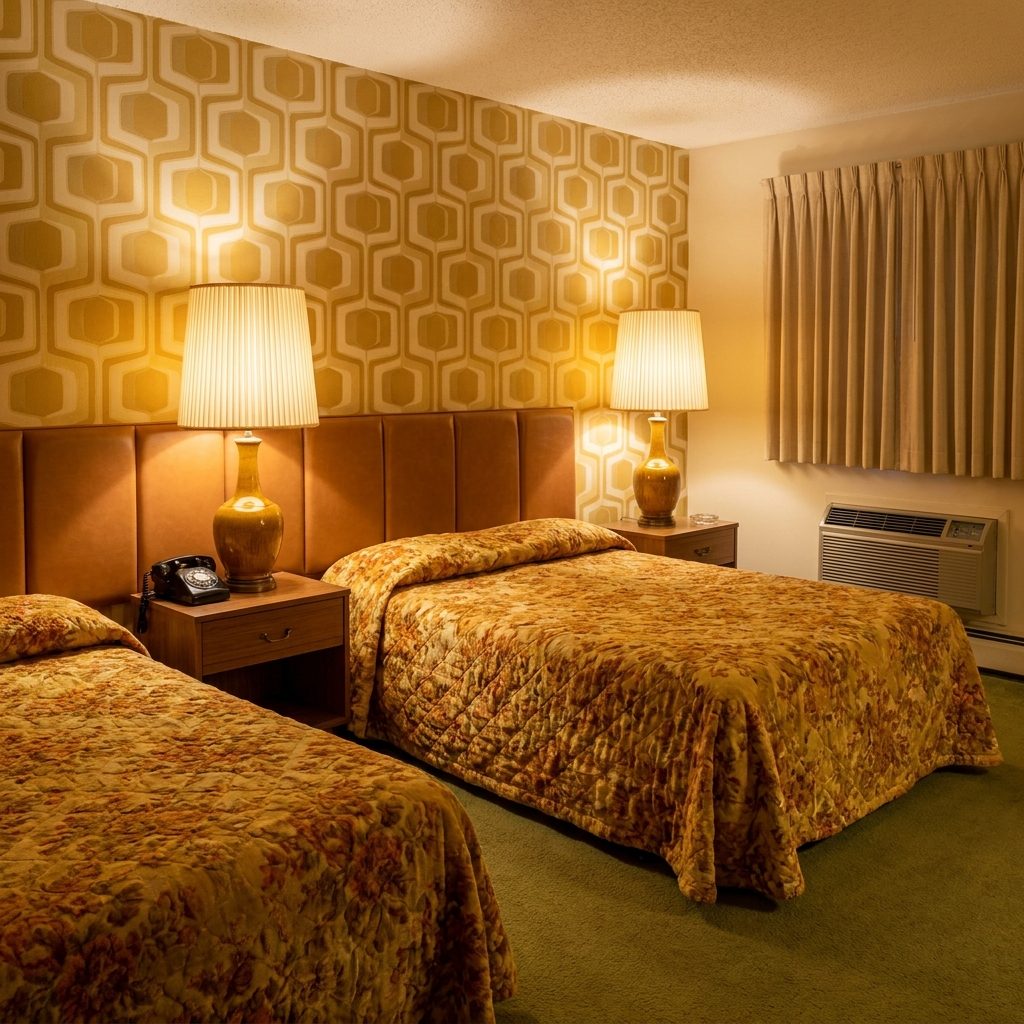
Everything in the room came in twos, but the lamps made it official. Matching ceramic bases, matching pleated shades, both throwing the same warm circle of light onto the same bedspread from the same height. The symmetry was part of what made a motel room feel like a room and not just a space you were sleeping in temporarily.
The pleated shade was the detail. Those tight even folds in off-white or pale gold fabric, slightly translucent when lit. Every motel in America seemed to have a version of exactly this lamp. It was as standardized as the ice bucket and just as comforting.
13. The Vibrating Magic Fingers Bed That Cost a Quarter
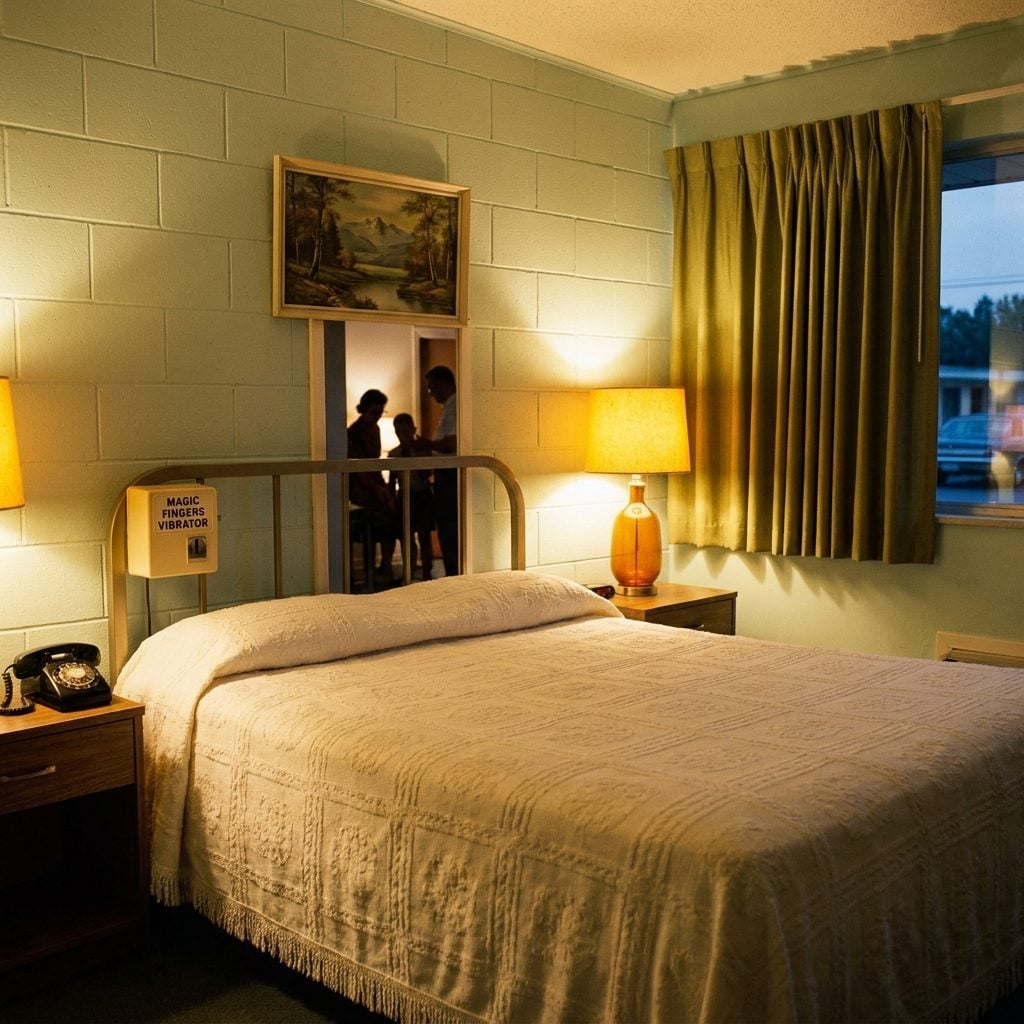
Twenty-five cents bought you fifteen minutes of mechanical relaxation that felt, in 1965, like something out of a science fiction magazine. The Magic Fingers box bolted right to the headboard, cream plastic with a coin slot and a small instruction card explaining how to insert the quarter and lie very still. The bed would begin to hum and shimmy beneath you. It was not subtle. You could hear it two rooms down.
By the late 1970s it had largely faded, replaced by nothing, just the ordinary stillness of a bed that didn’t do anything. Plenty of guests miss it still.
12. The Separate Dressing Area Just Outside the Bathroom Door
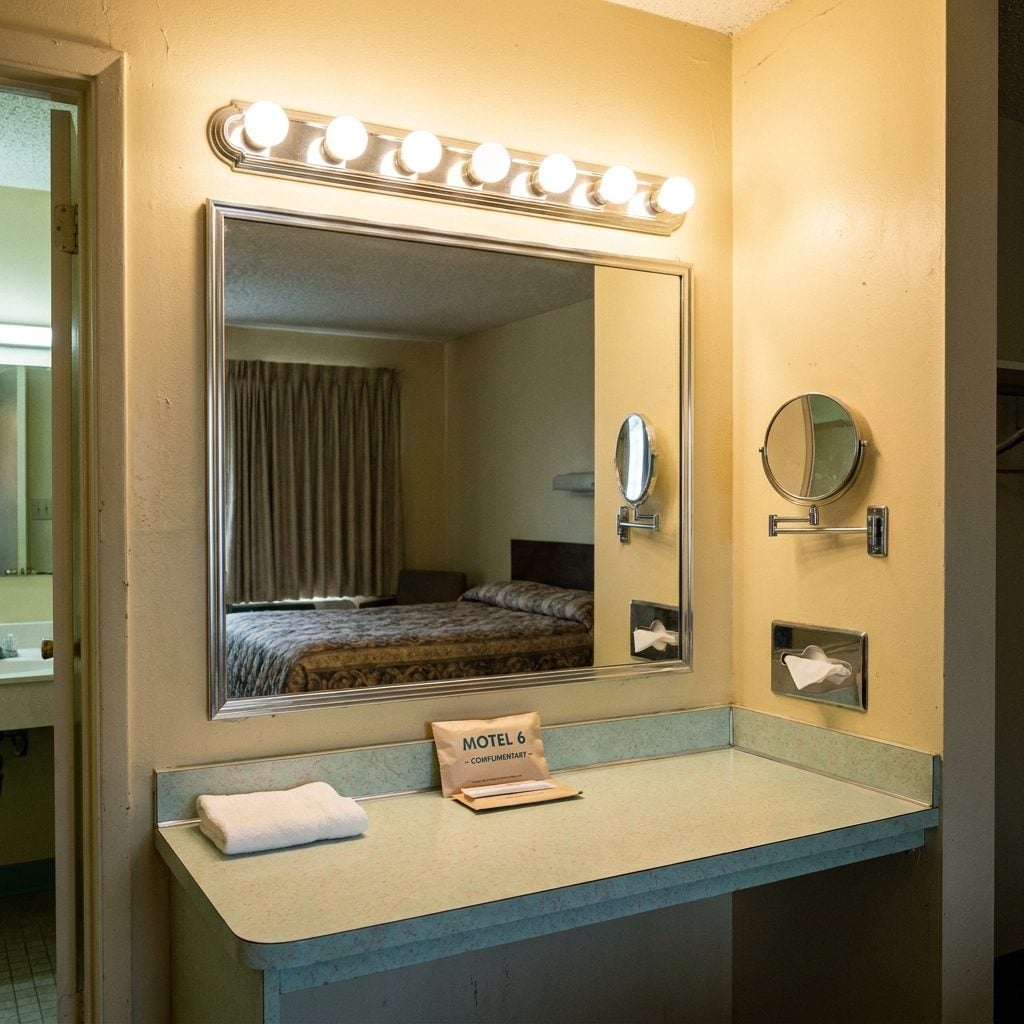
The dressing alcove was a genuine piece of thoughtful design. It sat between the bathroom door and the main room, a counter, a wide mirror, a row of those round globe bulbs that made everyone look like they were getting ready for a stage performance. The logic was practical: one person could shower while another stood at the mirror doing their hair, and nobody had to negotiate bathroom time.
It felt like a touch of hotel luxury that had been graciously extended to the motel-going public. That Formica counter in pink speckle or seafoam green, the chrome tissue dispenser, the folded hand towel placed just so, it was a small ceremony of welcome.
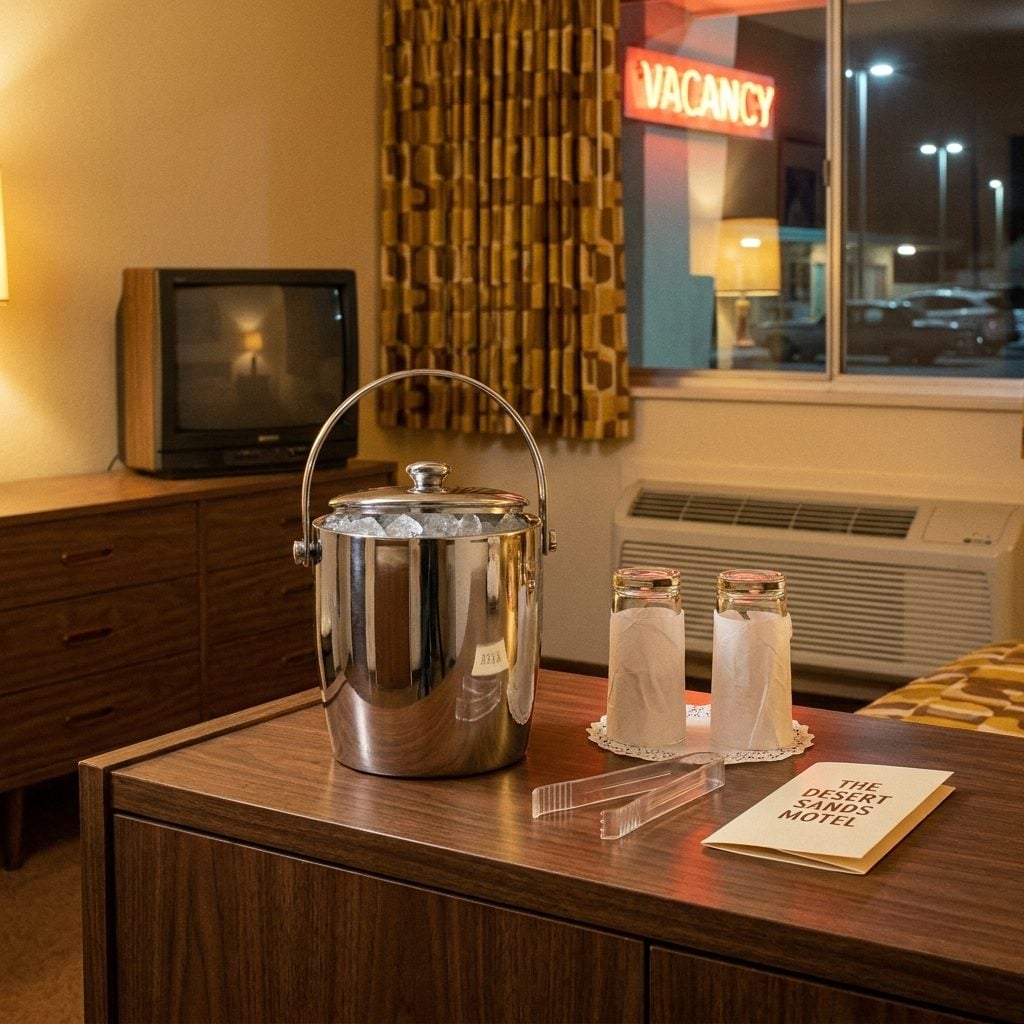
11. The Ice Bucket Delivered Nightly Without Being Asked
🔥 Would you like to save this?
The ice bucket appeared on the dresser every evening, chrome and gleaming, packed with cracked ice and accompanied by two wrapped glasses on a paper doily. Nobody called down to request it. It was simply there when you returned from dinner, an unspoken assumption that of course you would want ice, of course you had brought something worth cooling.
The wrapped glasses were their own small formality. The paper sleeve printed with the motel’s name made an ordinary drinking glass feel sanitary and considered. It was hospitality presented as a matter of course, not a premium add-on.
10. The Heated Swimming Pool Sign Glowing Blue in the Dark
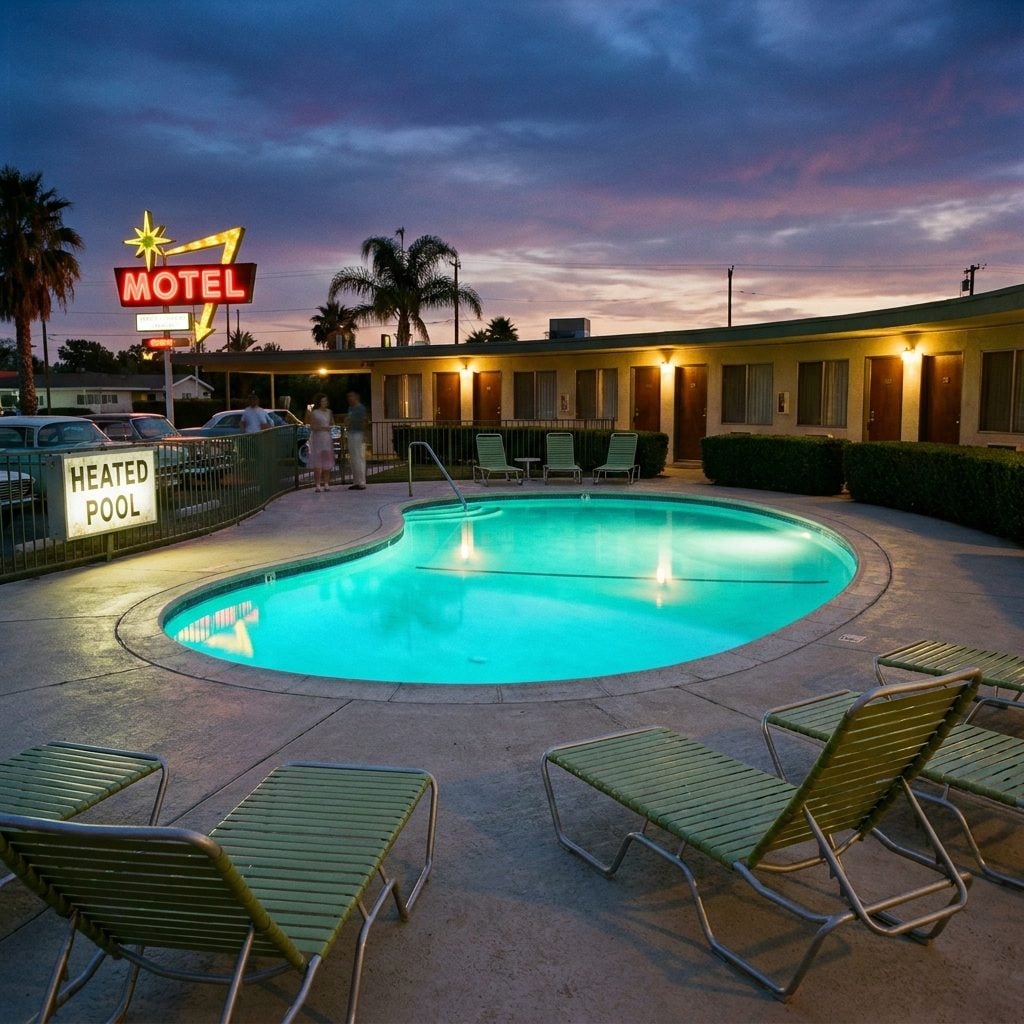
That sign mattered. “Heated Pool” in backlit plastic letters meant you could actually use it, not just look at it through the window and decide the temperature had turned. For a family driving Route 66 in late September, a heated pool was the difference between a good memory and a Tuesday night watching Bonanza on a twelve-inch screen.
The pool itself was almost always kidney-shaped, the concrete deck a little rough underfoot, the underwater light turning everything an impossible aqua blue after dark. Standing at the edge looking down into that glow felt genuinely exotic for a kid from the midwest.
9. The Complimentary Shoeshine Cloth in a Foil Packet
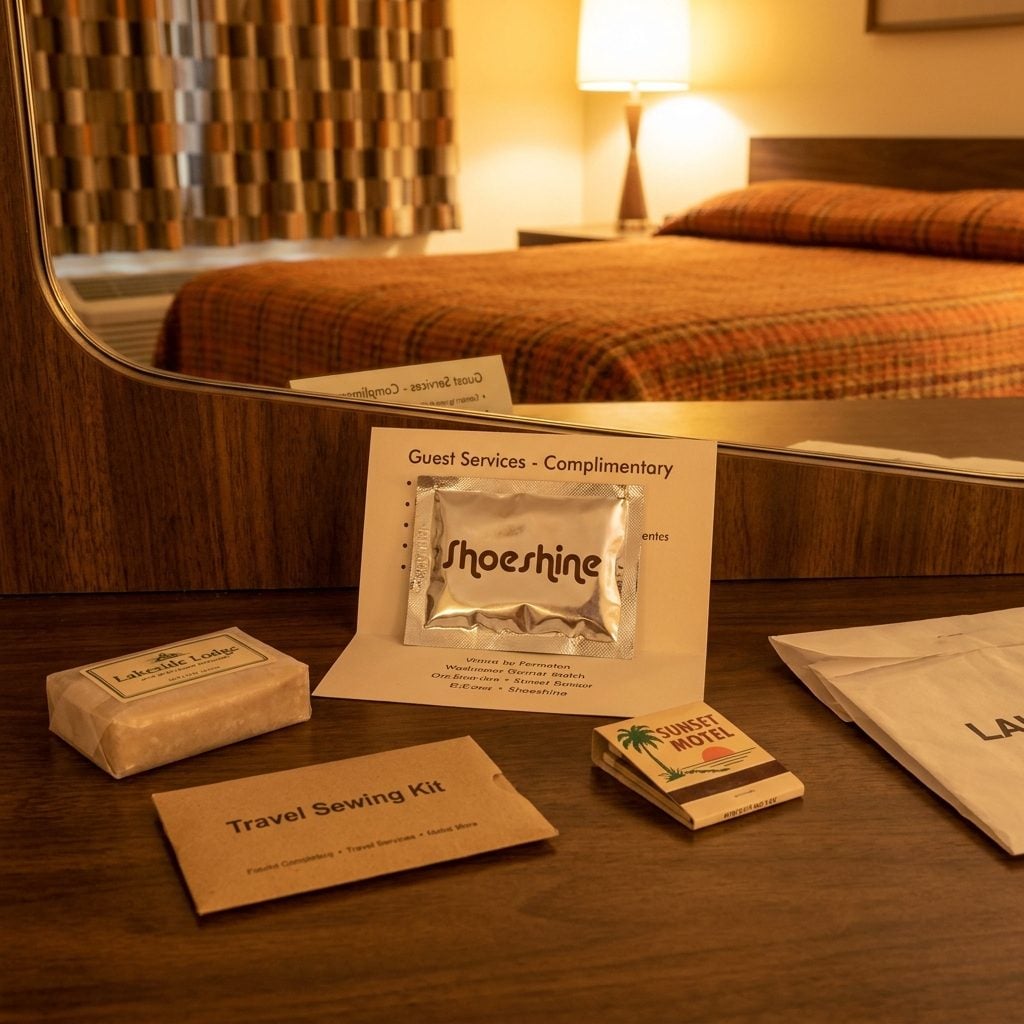
The foil shoeshine packet sat in the dresser drawer or on top of it, grouped with the sewing kit and the matchbook, arranged as if someone had given real thought to what a traveler might need in the night. Inside was a small cloth pre-treated with polish, you buffed your shoes right there on the bathroom tile before a morning meeting, and somehow this felt like a genuine service.
The matchbook was the piece that dated the whole arrangement fastest. By the 1990s both were gone from most properties, replaced eventually by nothing, then by a QR code pointing to the spa menu.
8. The Individual Room Air Conditioner That Rattled Like a Freight Train
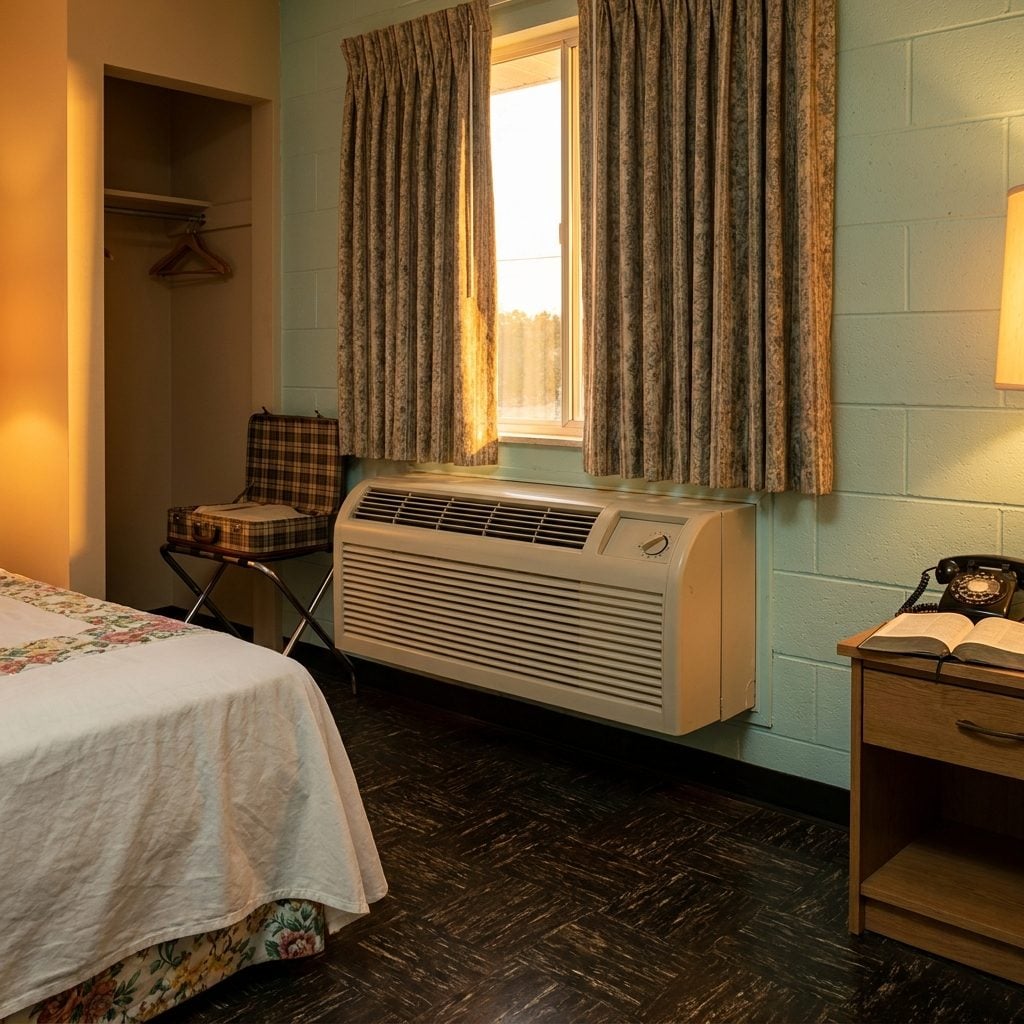
It took up a third of the wall below the window and it announced itself the moment it switched on, a sustained mechanical roar that was either deeply comforting or impossible to sleep through, depending entirely on what you grew up with. The dial had three settings. Nobody ever used the middle one.
What felt luxurious about it in 1963 was the cold itself. Air conditioning in a car was still a premium option. Having your own unit in your own room, controllable by your own hand, was a genuinely modern pleasure. The rattle was just part of the agreement.
7. The Laminated Card Listing Every In-Room Amenity in Careful Detail
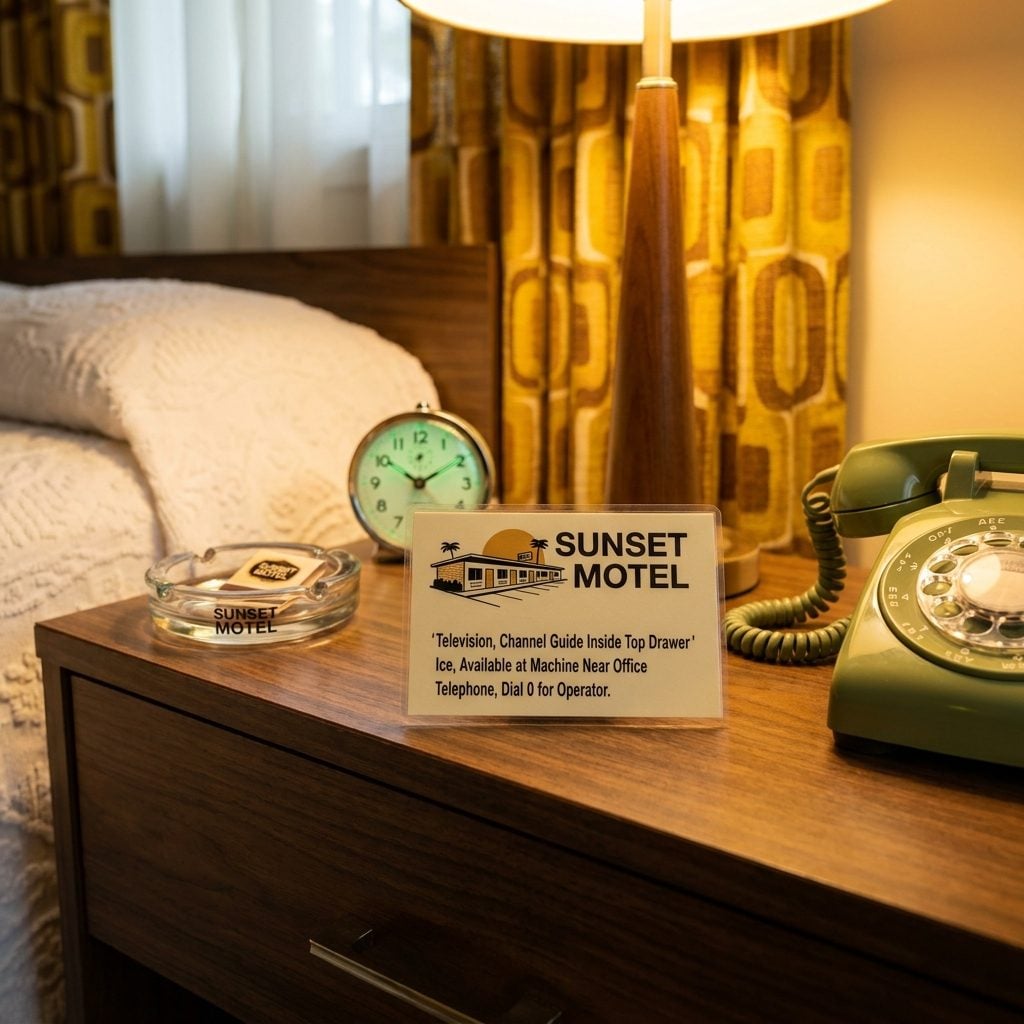
The laminated card was a complete orientation to your temporary world, and somebody had written it with care. It told you which channel had the news, where the ice machine lived, how to reach the operator, what time the office closed, and whether the pool hours applied to children. It was printed on cream card stock and laminated so it would survive years of handling, which it did.
There was something quietly civilized about a property that assumed you might have questions and answered them before you asked. Modern hotels have replaced the laminated card with an app that requires a download and a login. The laminated card was better.
6. The Connecting Room Door with Its Own Lock on Both Sides
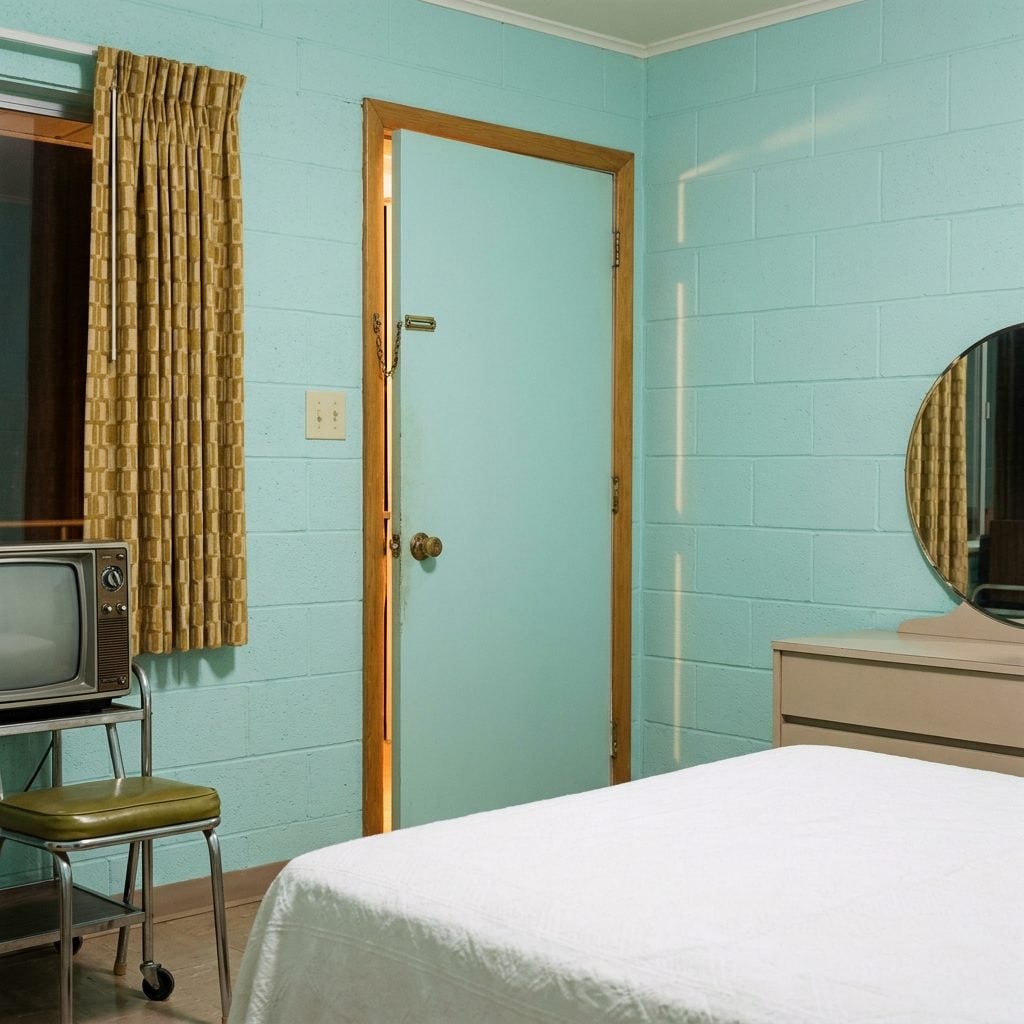
The connecting door made a motel into something closer to a private suite. Two rooms, two bathrooms, one family, the parents on one side, the kids on the other, and a solid-wood door between them that could be latched from either direction. For a family of five in the summer of 1967, this was a significant upgrade from one room and four people arguing about who got the rollaway.
The chain lock on each side was the important part. It told the children that the door could be closed and it told the parents that it could be locked. Both facts mattered, possibly equally.
5. The Separate Dressing Area With Its Own Vanity Mirror and Padded Stool
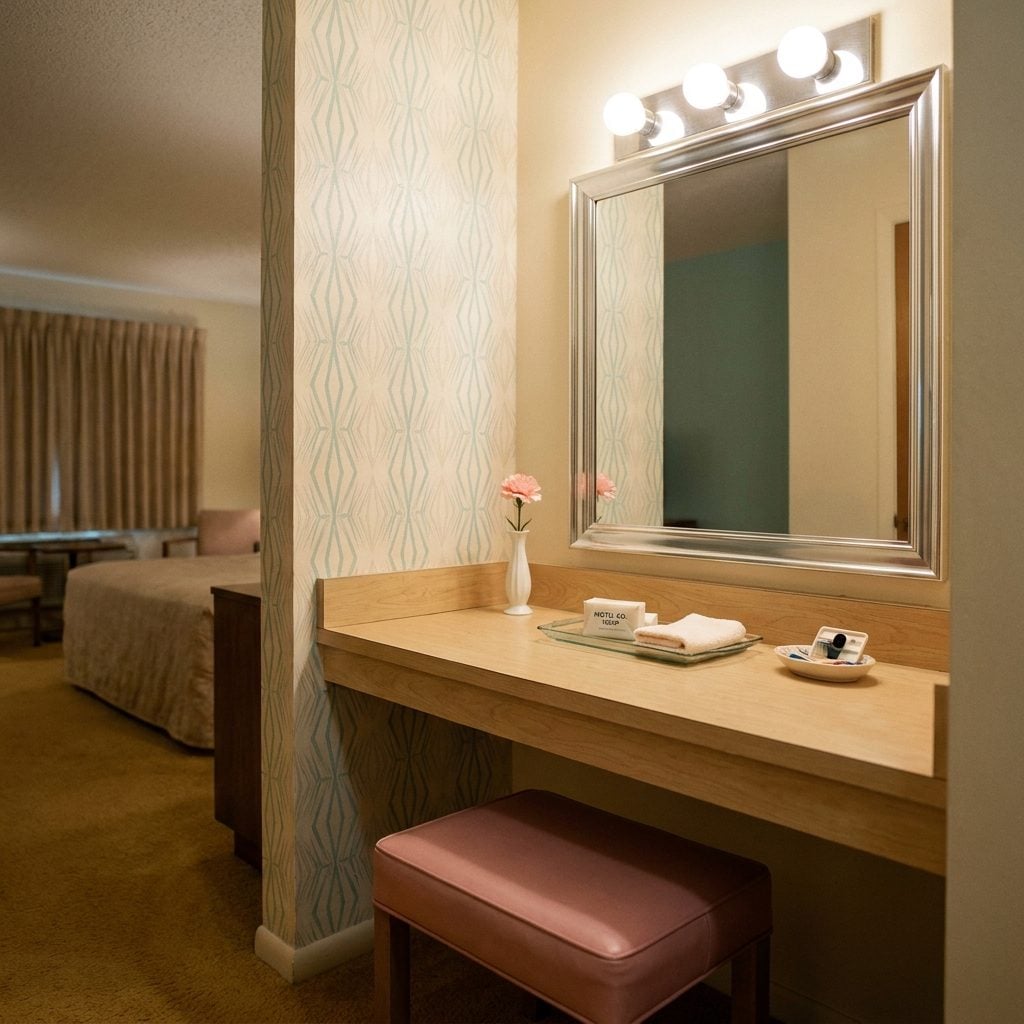
Most homes in 1960 had one bathroom mirror and a bedroom dresser. The motel dressing area was something else entirely. It was a dedicated zone, separated from the sleeping space and designed with a single purpose: making you feel attended to. The padded stool. The row of bulbs above the mirror. The little glass tray arranged just so.
For a lot of travelers, this was the most purely luxurious square footage in the building. Not because it was opulent, but because it said someone had thought about you specifically. About what you might need before dinner. About the ritual of getting ready in a place that wasn’t home.
4. The Coin-Operated Magic Fingers Vibrating Bed
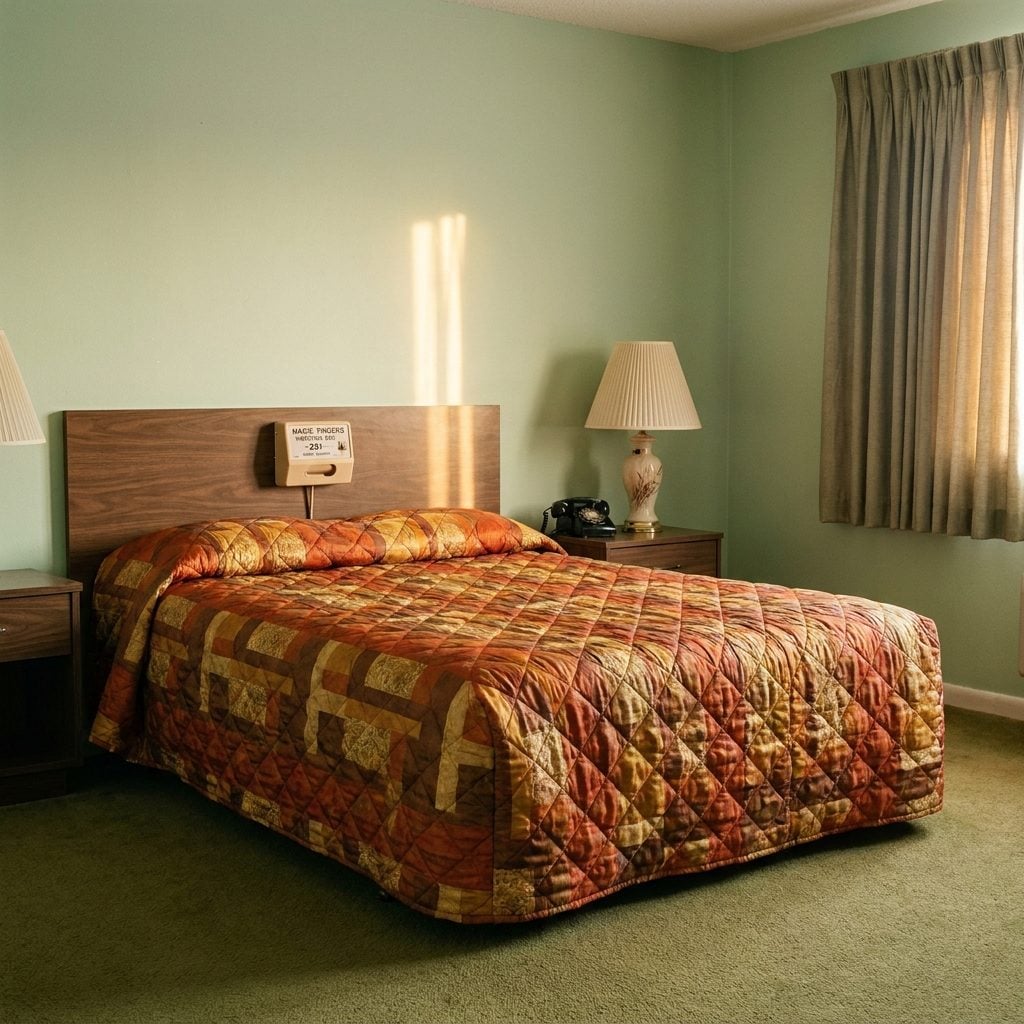
A quarter bought you fifteen minutes of gentle, low-frequency vibration pulsing through the mattress. That was the whole transaction. And yet in the early 1960s, roughly five thousand motels offered it as a premium amenity, not a gimmick.
The Magic Fingers units were manufactured by a single company out of Englewood, New Jersey, and at their peak they were pulling in real money for motel operators, a few quarters per room per night adds up when you’re running forty rooms. The technology was absurdly simple. The appeal was not complicated. After a full day on a hot interstate in a car with no air conditioning, horizontal and buzzing felt like a genuine reward.
3. The Tile Mosaic Decorative Wall Behind the Check-In Desk
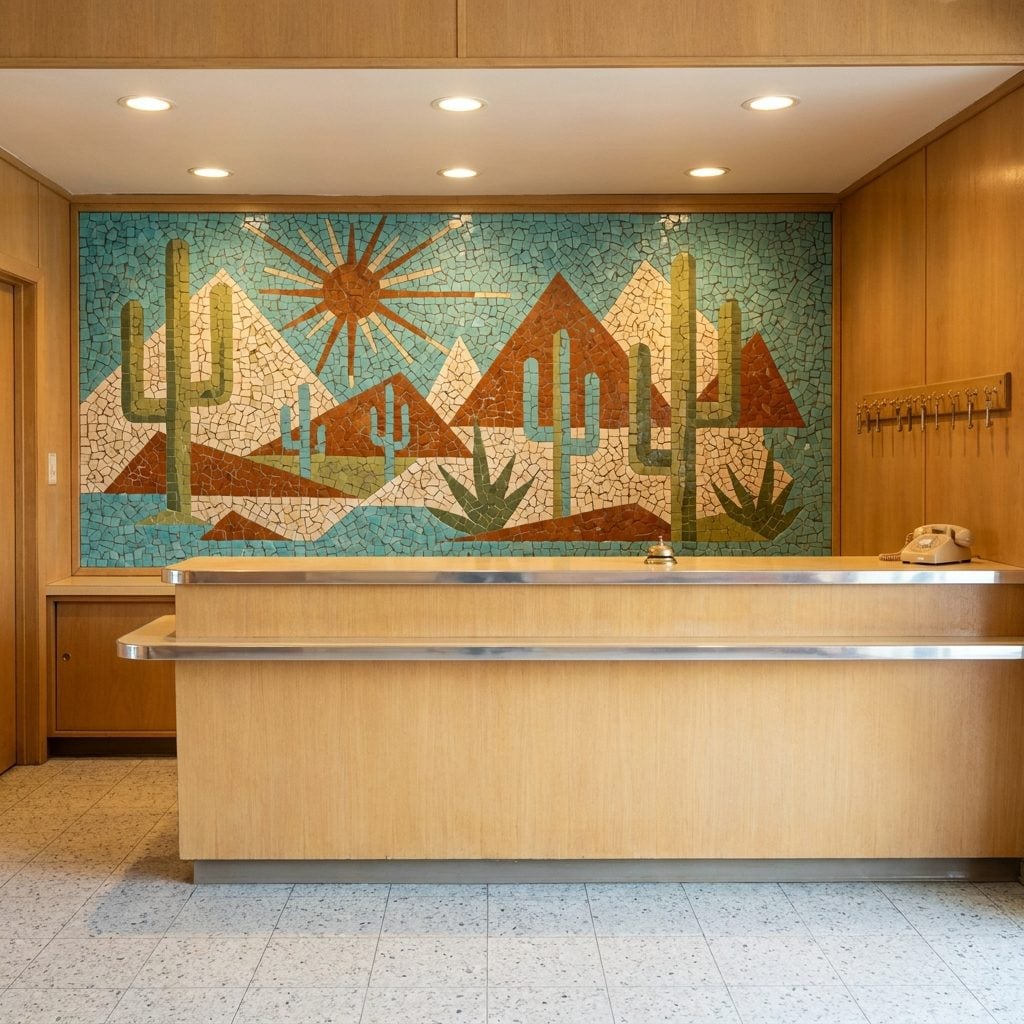
Somewhere between the parking lot and the room key, there was always a moment in the lobby where you stopped. The tile mosaic had a way of doing that. These weren’t decorations slapped on as an afterthought. Motel owners in the late 1950s and early 1960s commissioned them specifically, often from regional ceramic artists, and they were sized to fill the entire wall behind the check-in desk.
Turquoise and burnt sienna were the dominant palette in the Southwest. Seafoam and coral showed up in Florida. The upper Midwest got angular geometric fields in harvest gold and chocolate brown. They looked expensive because they were expensive, and that was entirely the point. Walking in off a dusty two-lane highway and seeing something that deliberate on a wall said: this place takes itself seriously.
2. The Fold-Out Luggage Rack That Saved Your Suitcase From the Floor
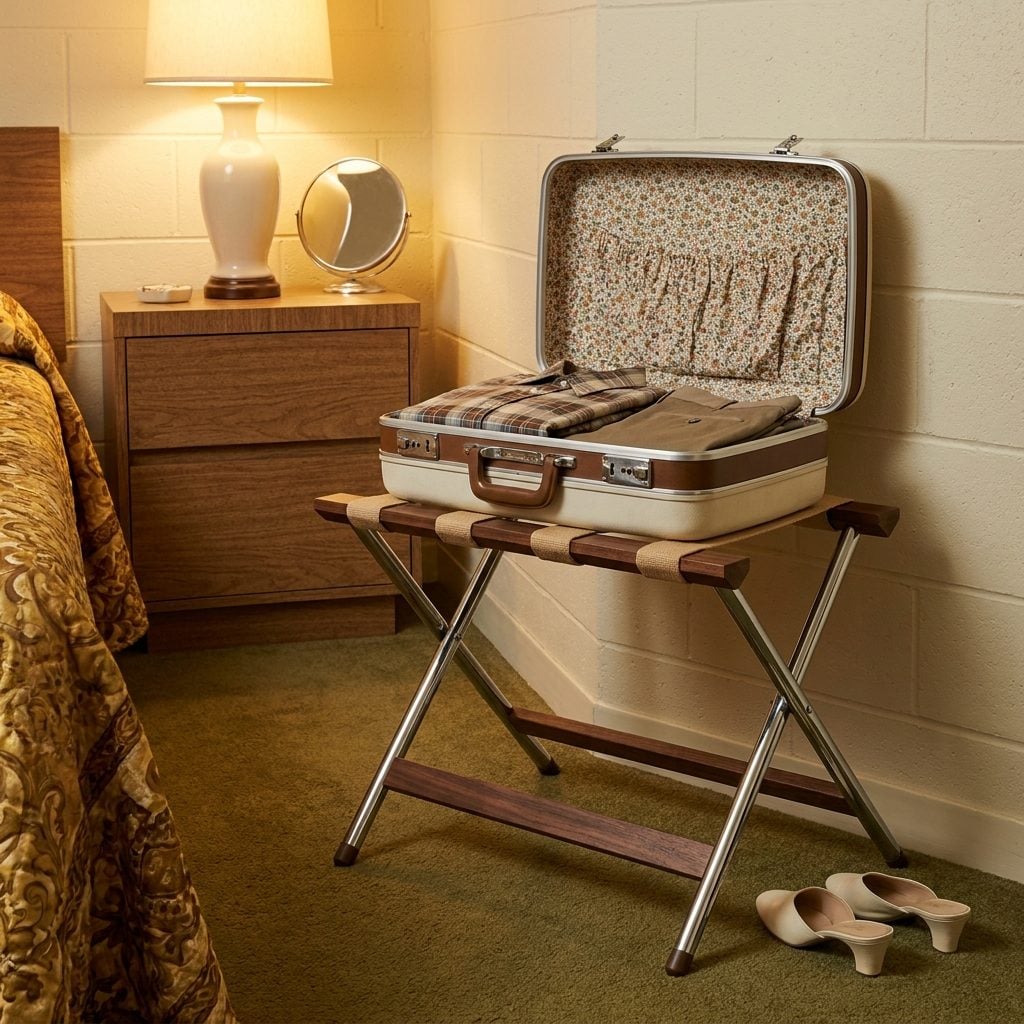
It folded flat against the wall when not in use, tucked beside the dresser like it had always been there. Open it up and the woven webbing straps pulled taut across the chrome frame, ready to receive a suitcase that had spent the last six hours in a hot trunk.
The luggage rack kept your bag off the carpet and at standing height, which meant you could pack and unpack without bending over the floor of a room you’d be in for exactly one night. Practical, yes. But there was also something about the gesture itself. A dedicated surface for your things. A signal that your belongings were expected and had a place to land.
1. The Glass-Walled Telephone Booth Just Off the Lobby
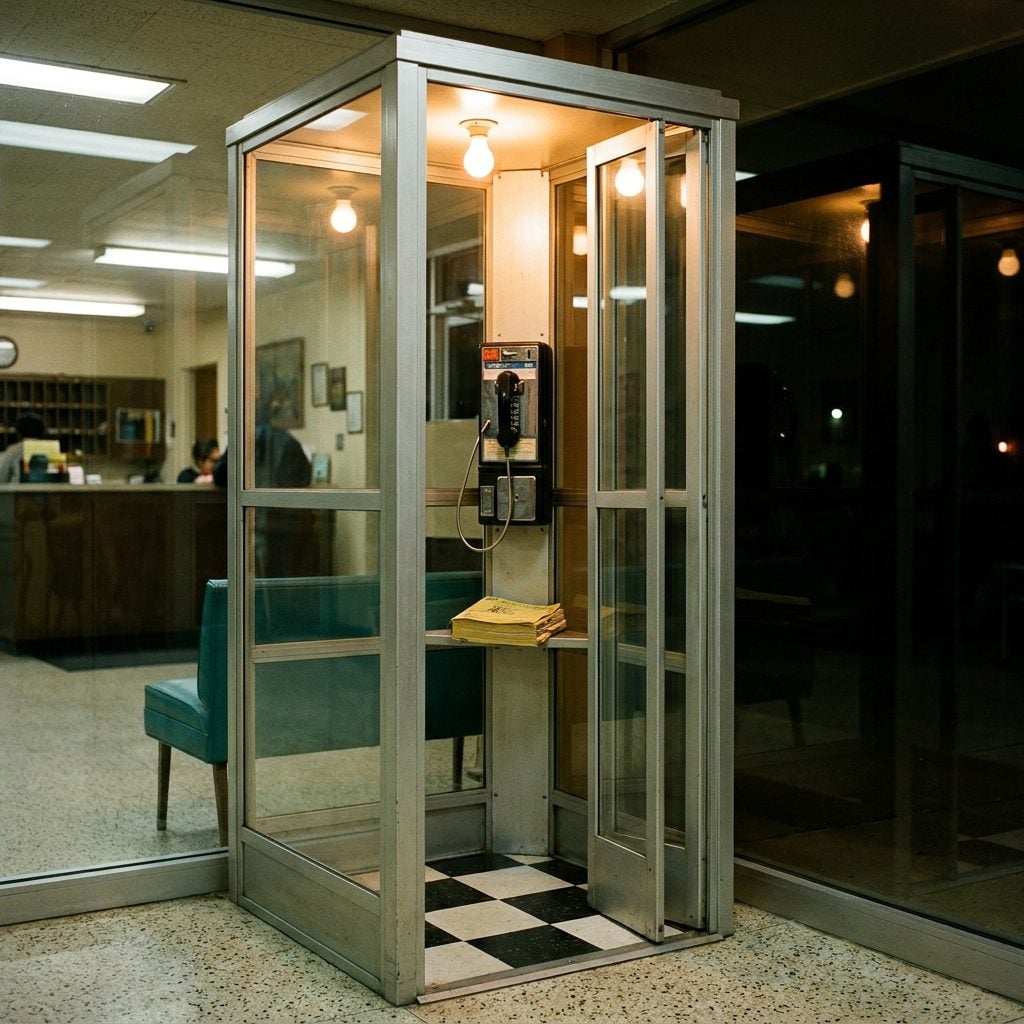
The glass telephone booth off the lobby was its own small world. You pulled the folding door shut, the interior light clicked on automatically, and for three minutes the rest of the motel ceased to exist. It smelled like Bakelite and whatever perfume the last person had been wearing.
Long-distance calls were expensive enough in 1963 that people planned them. You didn’t call home to report that you’d arrived safely on a whim. You went to the booth with coins counted out in your palm, the operator’s voice walking you through the connection, and the low hiss of the line before someone picked up a thousand miles away. That booth was where the trip became real to the people you’d left behind.
🔥 Would you like to save this?
Please note that some of the imagery in this article were created with the aid of AI image generators.