
🔥 Would you like to save this?
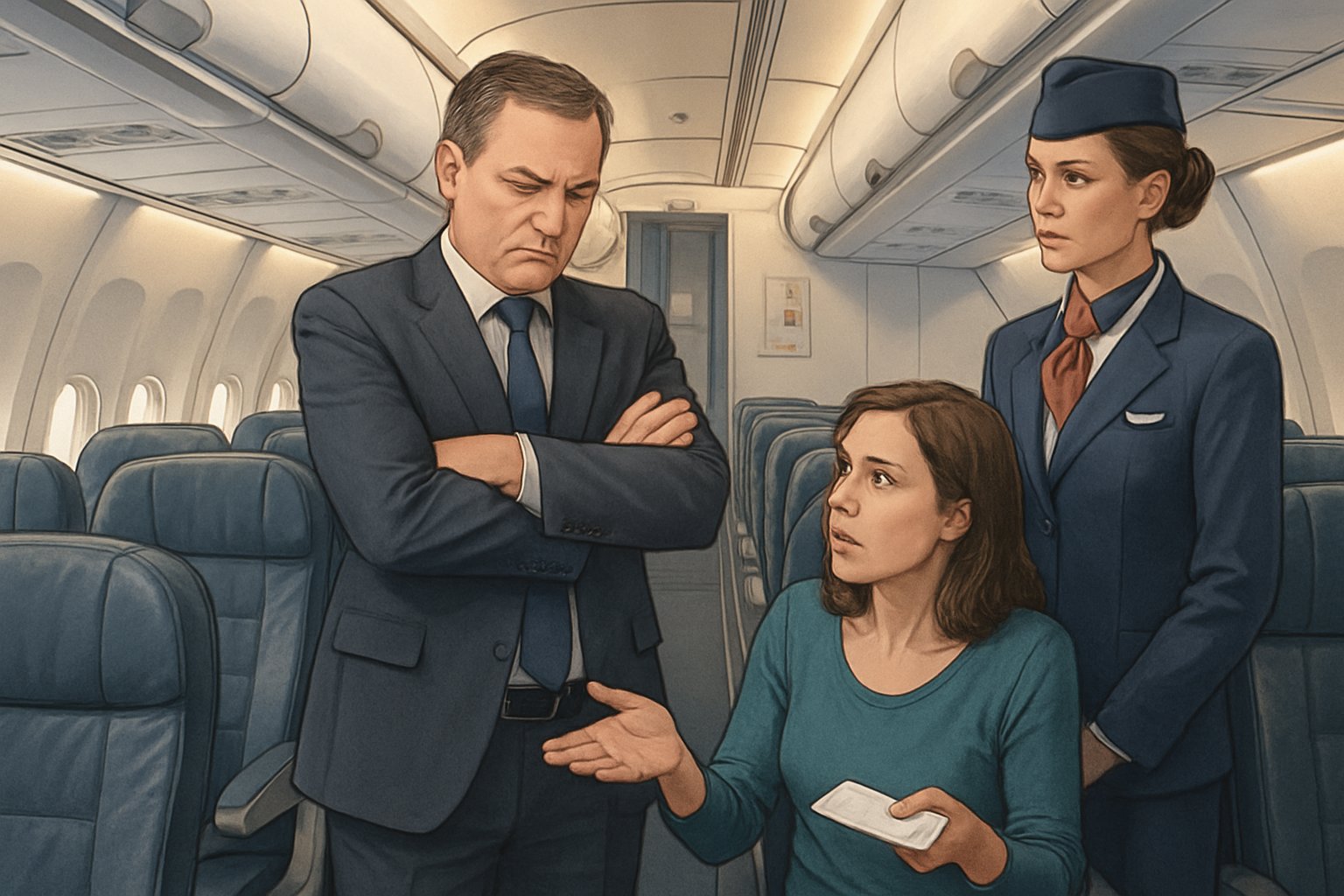
Air travel brings plenty of awkward moments, but few rival the discomfort of being asked to switch seats. Maybe it’s a family hoping to sit together, or someone eyeing a better view. These requests can leave you in a tricky spot. You can’t be kicked off a flight just for politely refusing to swap seats—passengers have the right to sit in the seat they booked or paid for.
A lot of the confusion about seat swapping comes from viral social media stories and those dramatic cabin confrontations that make the news. While refusing seat swap requests can sometimes lead to removal from flights, that almost always happens when someone gets disruptive or aggressive—not just because they said “no.” Knowing your rights and a little etiquette can help you avoid starring in one of those viral videos.
Airlines have their own policies about seat assignments, passenger rights, and when they can actually remove someone from a flight. Deciding to keep your assigned seat isn’t just a matter of preference. There’s a mix of safety rules, legal protections, and social dynamics at play—stuff every traveler should probably know before their next flight.
Understanding Airline Seat Swap Policies
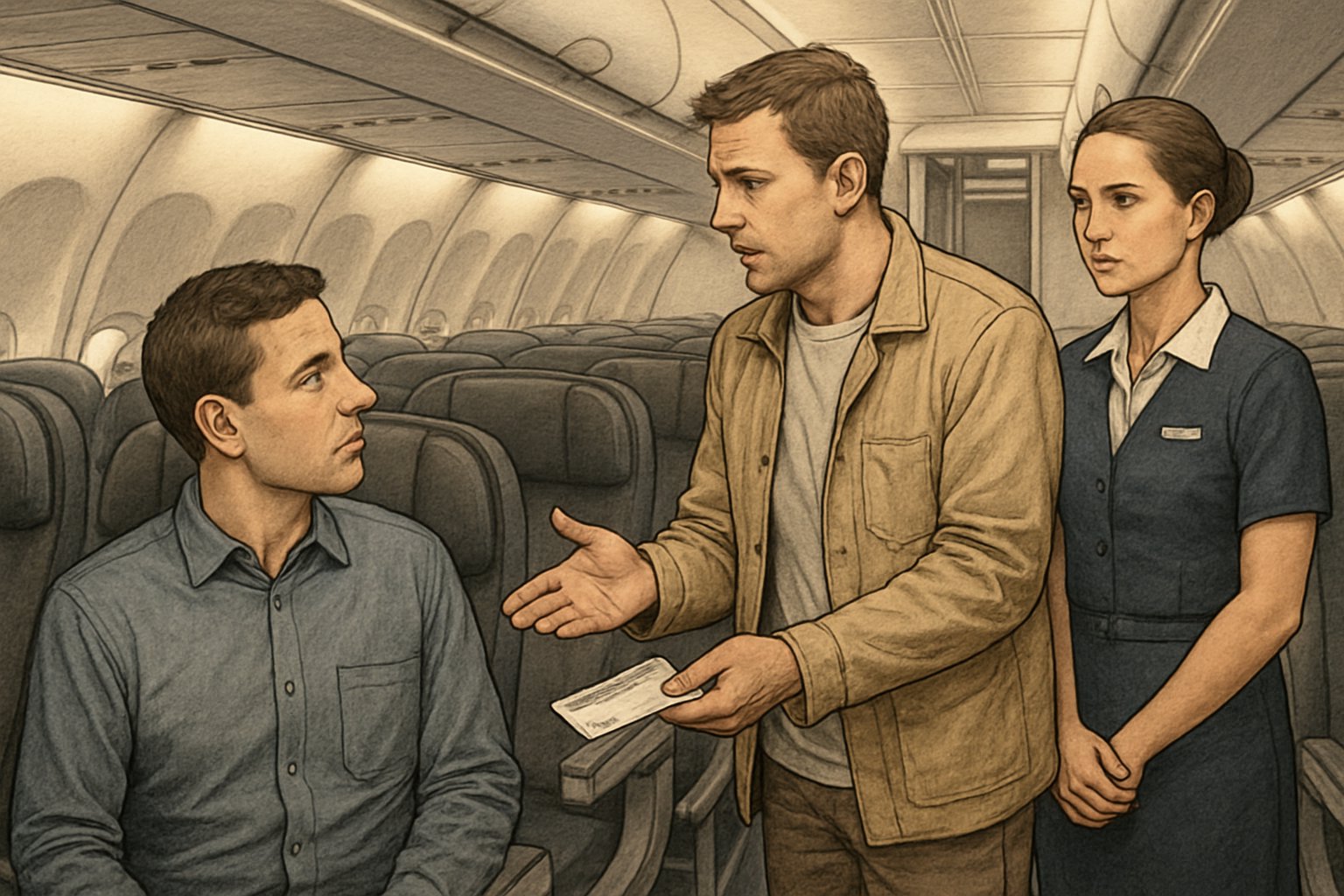
Airlines have policies about seat changes, but honestly, things get murky when it comes to passengers refusing to swap voluntarily. Cabin crew call the shots on board, enforcing boarding policies and safety rules as they see fit.
Official Airline Rules Regarding Seat Changes
Most airlines don’t have a rule saying you must swap seats because another passenger asks. If you booked your seat, it’s yours—no matter if someone else wants to sit with their family or just prefers your spot.
They do reserve the right to move you for operational reasons, safety, or if the plane changes. But that’s not the same as a fellow passenger asking you to trade.
A few differences to keep in mind:
- Airline-initiated changes: These are usually mandatory, and sometimes they’ll offer compensation.
- Passenger requests: Completely voluntary. You don’t have to say yes.
- Safety-related moves: Required if the crew decides it’s necessary.
Your ticket contract gives you the right to your assigned seat. Airlines can’t force you to accommodate someone else’s seating preference, though they might ask nicely.
Most airlines also note that seat assignments aren’t guaranteed until boarding wraps up. That’s really to protect themselves from liability if the aircraft changes—not to referee passenger disputes.
Airline Staff Authority on Board
Flight attendants have a lot of authority when it comes to seating once you’re on the plane. They can move people for weight distribution, safety compliance, or to manage disruptive behavior.
But crew members can’t make you swap seats just because someone else asks. Their authority covers operational needs, not passenger preferences.
Crew can:
- Move people for safety
- Resolve disputes that affect the flight
- Enforce federal aviation rules
- Keep order and security in the cabin
Gate agents handle most seating stuff before you board. Once you’re in your seat, changes usually need crew approval.
Staff might encourage voluntary swaps if it helps families sit together, but refusing isn’t against any rule or regulation. At the end of the day, their main concern is getting the flight out safely and on time.
The Role of Cabin Crew in Enforcing Policies
Cabin crew step in as mediators when disputes pop up, but they aren’t there to force anyone into an unwanted arrangement. Their main job is to make sure everyone follows safety rules and federal aviation requirements.
Flight attendants might ask you to consider swapping, especially for families with little kids or passengers with disabilities, but these are just requests—not orders.
Crew might intervene if:
- There’s a safety concern (like someone blocking an emergency exit)
- Operational needs pop up (like crew rest requirements)
- Someone’s not following seatbelt or accessibility rules
- A dispute could delay departure
Crew members know passengers have valid reasons to say no—maybe you paid for an upgrade, have a medical need, or just really want your window seat.
The crew’s enforcement powers only really matter if someone’s behavior threatens safety or breaks regulations. Just saying “no” to a swap doesn’t cross that line.
Reasons for Refusing to Swap Seats
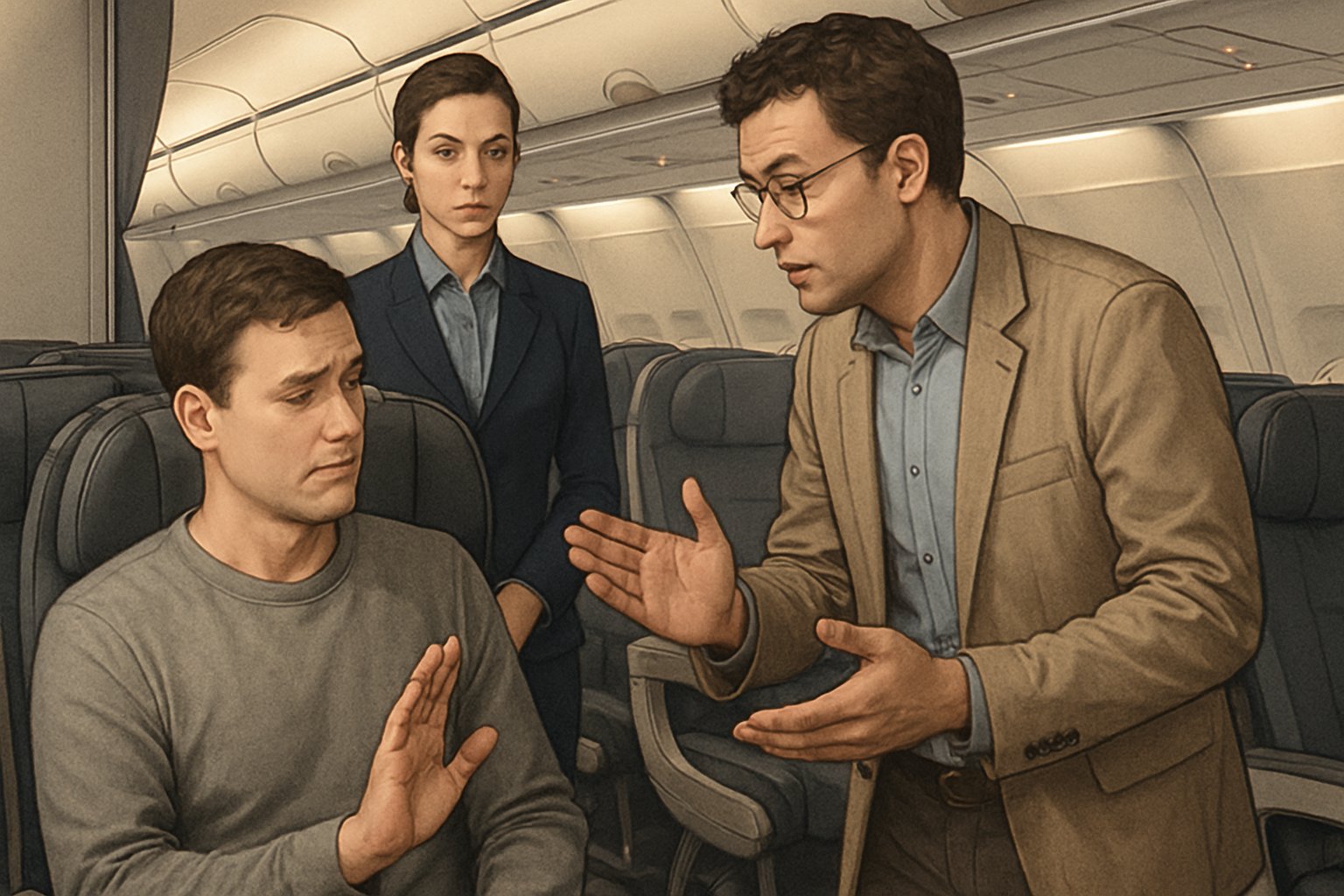
You don’t have to give up your seat just because someone asks. There are plenty of legitimate reasons people want to stay put—from comfort needs to the extra money they spent on a better seat.
Personal Preferences and Needs
Picking a seat isn’t always random. Sometimes it’s about your travel needs. Maybe you grabbed an aisle because you need to get up a lot, or you’ve got long legs that need space.
Window seats? Some folks feel safer there, or maybe they just want to take photos or avoid being bumped. Plenty of people avoid the dreaded middle seat to skip feeling boxed in.
Sleep matters, too. If you picked a spot away from galleys and bathrooms, you probably want some peace and quiet on a red-eye.
Refusing to swap seats can get awkward, but your comfort counts. A polite “no” is totally fine if your seat choice has a purpose.
Medical or Accessibility Requirements
Sometimes, medical conditions mean you need a specific seat—even if nobody else can tell. Maybe you need an aisle for medical equipment, frequent meds, or mobility issues that make climbing over people tough.
Some travelers need to avoid certain parts of the plane because of anxiety, claustrophobia, or motion sickness. Others have to sit in a way that helps with vertigo or sensory issues.
Common medical needs:
- Aisle seats for prosthetics or devices
- Window seats for anxiety
- Quiet spots for sensory sensitivities
- Bulkhead seats for service animals
You don’t have to share your medical reasons with other passengers. A simple, “I have medical reasons for needing this seat,” covers it.
Paid Upgrades and Special Reservations
If you paid extra for your seat, you shouldn’t be expected to give it up. Exit rows, bulkheads, and preferred zones cost more for a reason.
Plenty of people support refusing swaps if you paid extra. These seats might have better legroom, priority boarding, or more overhead bin space.
Perks you might have paid for:
- Extra legroom (sometimes several inches)
- Early boarding
- More overhead space
- Better meal service timing
Airlines also honor special requests—like seats for frequent flyers or those with status. Trading away a seat you carefully chose and paid for? That kind of defeats the purpose of the whole system.
Consequences of Declining a Seat Swap
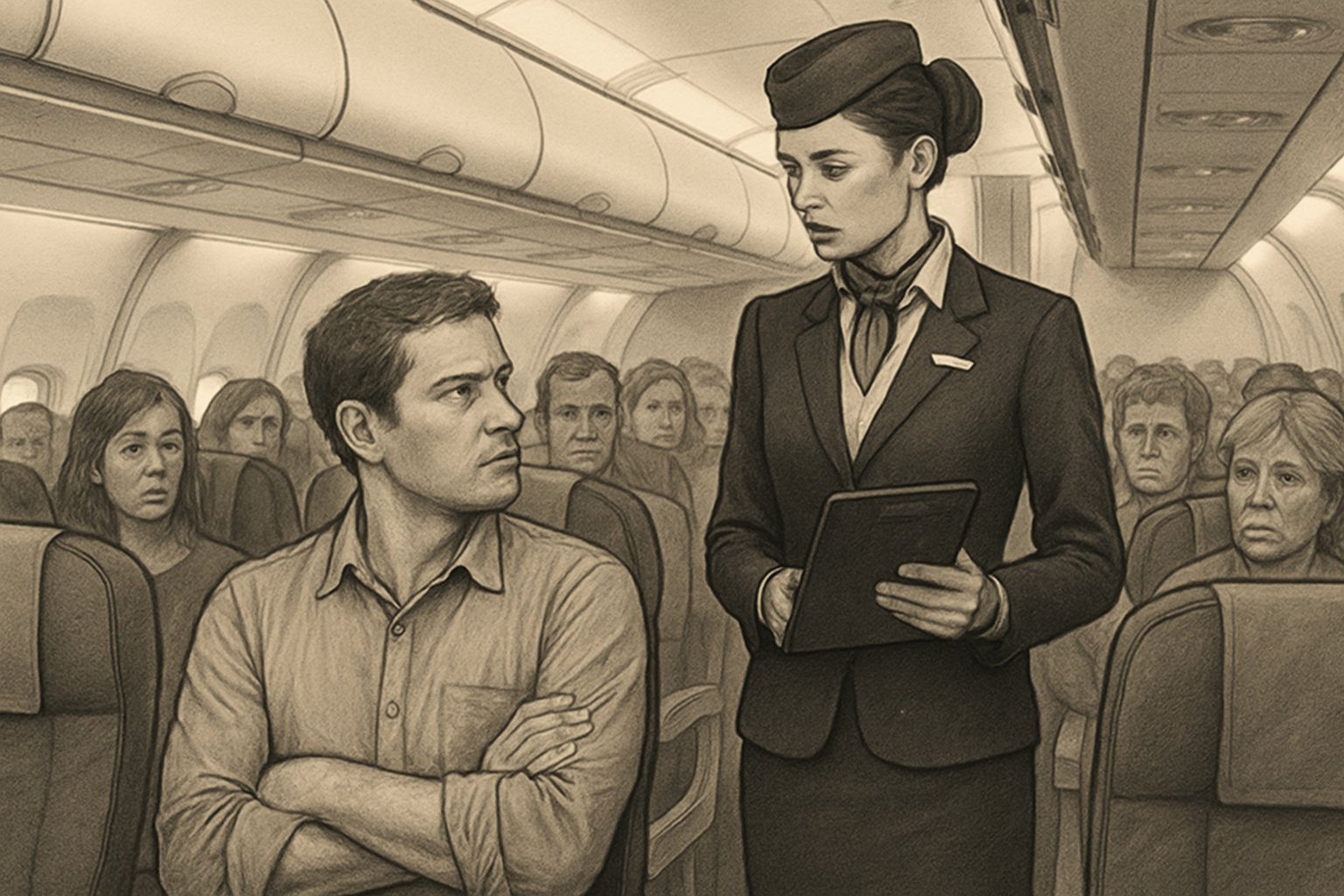
Refusing a seat swap almost never leads to serious trouble, but it can make things awkward with other passengers or crew. The worst-case scenario is being asked to leave, but honestly, that only happens if things really spiral out of control.
Can You Be Asked to Leave the Aircraft?
You can’t be forced to give up your seat just because someone else wants it. Airlines have to honor your boarding pass, especially if you paid extra for legroom or an aisle.
Still, flight attendants can step in if a seat-swap situation gets disruptive. If you get belligerent or cause a scene while refusing, the crew can remove you.
The difference is in how you refuse, not the refusal itself. A calm “no, thank you” won’t get you booted. Yelling, arguing, or making a scene? That’s a different story.
Most airlines back up passengers who say no to unreasonable swap requests. You paid for your seat—you get to keep it.
Potential for Conflict with Other Passengers
Turning down a swap can create tension, especially when families are involved. Some people get pushy or try to make you feel guilty if you say no.
Viral videos love these seat-swap showdowns. What should be a private conversation sometimes turns into a spectacle, making the flight uncomfortable even if you’re in the right.
You might run into:
- Guilt trips about splitting up families
- Repeated requests after you’ve already declined
- Other passengers chiming in to pressure you
- Loud complaints about your decision
Best bet? Stay calm and polite, but stick to your answer. Most people will eventually move on and ask someone else.
Impacts on Future Bookings or Loyalty Programs
Saying no to a seat swap doesn’t affect your airline status or future bookings. Airlines don’t keep tabs on who refuses swaps.
Your frequent flyer miles, elite status, and booking history are safe. These choices are personal, not something airlines track or punish.
If someone causes a real disturbance, airlines might put a note on their record. Disruptive behavior can affect future travel, but just declining a seat swap won’t.
Some folks worry that saying no could hurt their chances at upgrades or good treatment later. There’s no evidence for that—staff know people have real reasons for keeping their seats.
Legal Rights of Passengers
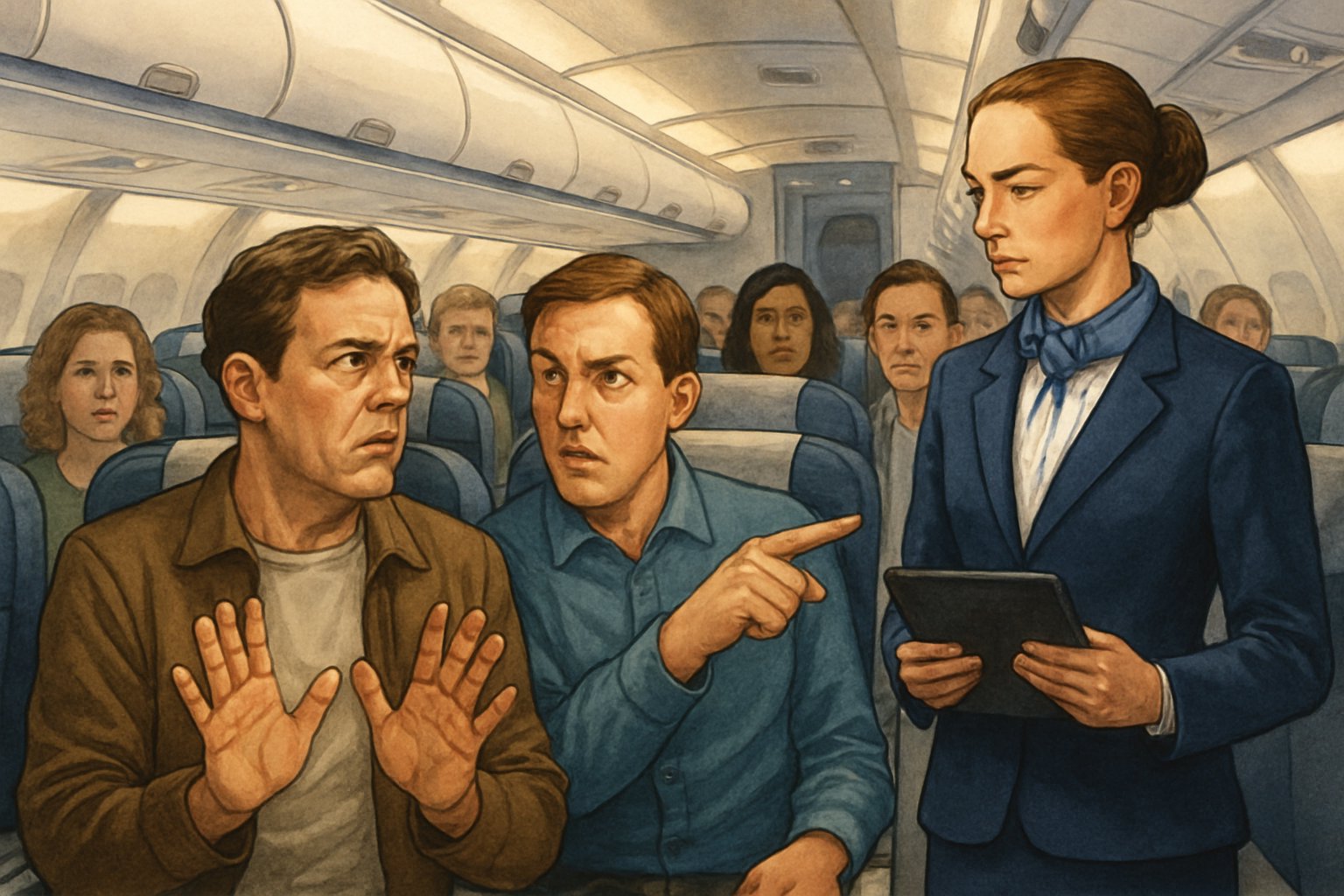
Airlines can refuse transport for reasons in their contract of carriage, but they can’t discriminate. Your protection depends on whether you’re flying domestically in the U.S. or internationally under different laws.
Your Rights Under U.S. Department of Transportation Regulations
The Department of Transportation gives airlines broad authority to remove passengers, but only for real safety or operational reasons. Airlines can refuse to transport you for reasons in their contract, as long as it’s not discriminatory.
Valid removal reasons:
- Intoxication or drug use
- Messing with crew duties
- Refusing safety instructions
- Disruptive behavior
Refusing a seat swap doesn’t count unless it somehow turns into a safety or contract issue.
Airlines may refuse transport if someone is drunk or interfering with the crew. But a polite “no” to a seat swap? That’s not enough.
Your ticketed seat gives you the right to sit there. Airlines can’t just boot you for no reason, especially after you’ve boarded.
International Aviation Laws and Protections
International flights follow different rules, and sometimes these offer even more protection for passengers.
Key international protections:
- The Montreal Convention covers international air travel
- EU Regulation 261/2004 for flights within Europe
- Stronger compensation for delays and cancellations
International rules usually require airlines to have a clear safety or security reason to remove someone. Wanting to help another traveler isn’t enough.
Your rights change depending on where you’re flying. Flights from Europe often provide stronger protections than those from the U.S.
International airlines have to follow the rules of their home and destination countries, creating a web of protections that, more often than not, favor passengers over airline convenience.
Etiquette and Best Practices for Seat Swapping
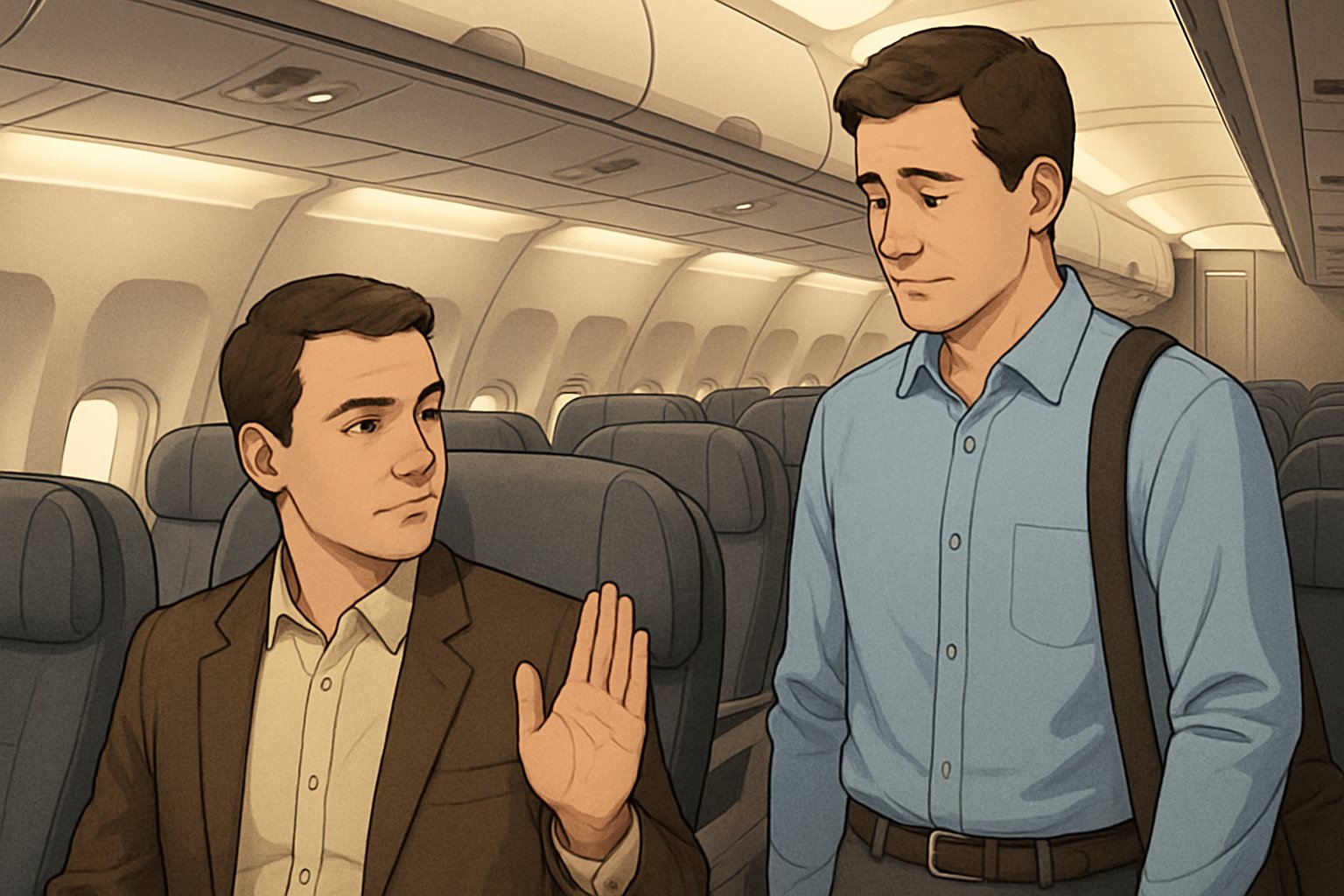
You have every right to keep your assigned seat, and you can decline a swap without feeling guilty. Sometimes, though, it makes sense to accept—it’s all about the situation and your comfort.
How to Politely Decline a Request
You really don’t owe anyone your seat, no matter what story they give you. Just a quick, “I’m sorry, but I need to stay in my assigned seat,” covers it.
A few phrases that work well:
- “I’d prefer to keep my seat, thank you.”
- “I’m not comfortable switching today.”
- “I need to stay put, sorry.”
Skip the long explanations. You don’t have to share your reasons or personal details. Over-explaining just opens the door for more debate.
Don’t let guilt trips sway you. People might mention honeymoons, anniversaries, or family emergencies, but honestly, those aren’t your responsibility.
If someone keeps pushing after you’ve said no, flag down a flight attendant. They know how to step in and take the heat off you.
Stay friendly but firm. You can say, “I understand you’re disappointed, but I won’t be switching seats.” That’s enough.
When It’s Appropriate to Accept or Refuse
The golden rule for seat swaps is pretty simple: only say yes if it’s an even trade or a better seat for you. Swapping your aisle for another aisle nearby? Sure, that’s reasonable.
Definitely refuse if:
- They want you to move to a worse seat
- You paid extra for your spot
- You have specific needs (medical, anxiety, claustrophobia)
- You picked your seat for a reason, like a tight connection
Maybe accept if:
- The swap is truly equal
- You’re getting an upgrade
- You don’t really care where you’re sitting
Watch out for these:
- Requests involving middle seats when you’ve got an aisle or window
- Moving from an exit row to a standard seat
- Going from the front to the back of the plane
- Last-minute asks after you’re already settled
Switching seats can complicate things for flight attendants, who need to know where everyone is for safety. So, saying “no” isn’t just about you—it also helps keep things organized in case of an emergency.
Handling Disputes and Escalation
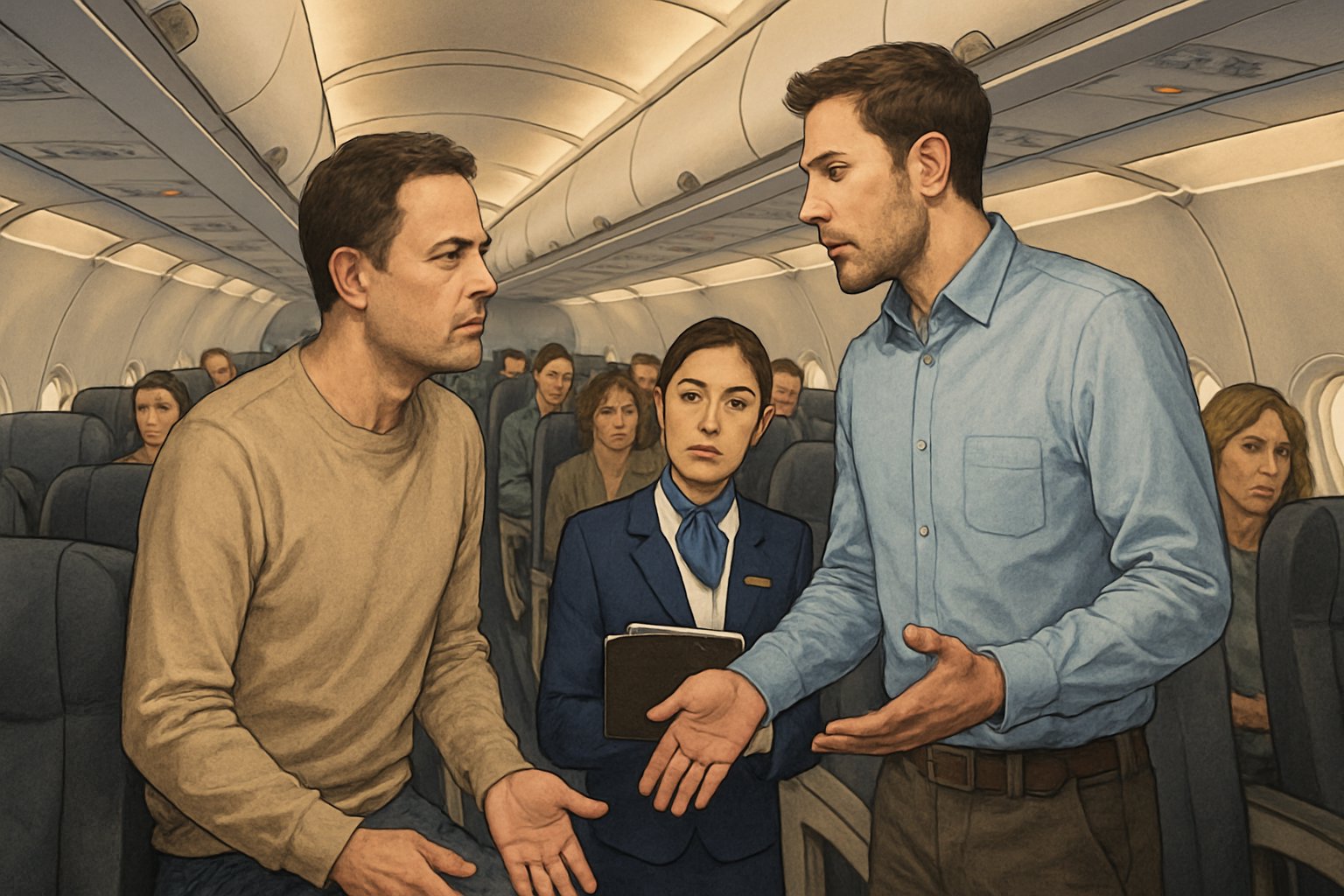
Sometimes, seat swap requests get heated. Knowing how to handle tense moments can keep things from blowing up. Flight attendants are there to help, and as a passenger, you’ve got rights if someone crosses the line.
Getting Cabin Crew Involved
Flight attendants are your go-to when things get uncomfortable. They’re trained in conflict resolution strategies and have the final say on seating.
Call a flight attendant right away if:
- Another passenger gets verbally aggressive
- Someone ignores your “no”
- You feel pressured or uneasy
- There’s any hint of physical intimidation
Hit your call button or walk to the galley—no need for drama. Just explain, “The passenger in 12A is pressuring me to switch seats and won’t take no for an answer.”
Flight attendants listen to both sides and then decide what’s best. They’ll focus on safety and comfort, not just personal preference. If someone’s causing trouble, the crew typically moves the disruptive person instead of you.
Just a note: Crew members aren’t there to broker seat swaps. Their job is to keep things running smoothly and safely for everyone.
Steps to Take if Confronted by Other Passengers
When another passenger gets confrontational, how you react can either calm things down or make it worse. Good conflict resolution starts with keeping your cool and setting clear boundaries.
Here’s a quick approach:
- Stay calm and speak quietly—yelling just draws more attention.
- Use firm, polite language—“I understand your situation, but I won’t be switching seats.”
- Keep it brief—short answers help avoid drawn-out arguments.
- Don’t make it personal—focus on the request, not the person.
If they keep pushing, don’t get sucked into a back-and-forth. Just repeat, “I’ve made my decision and won’t be changing it.”
If things get ugly, document it. Note their seat number, the time, and anything threatening they said. This helps the crew handle it properly.
You never have to give in to unreasonable or aggressive demands. Your ticket is for your seat, and nobody has the right to bully you out of it.
Social Implications and Cultural Perspectives
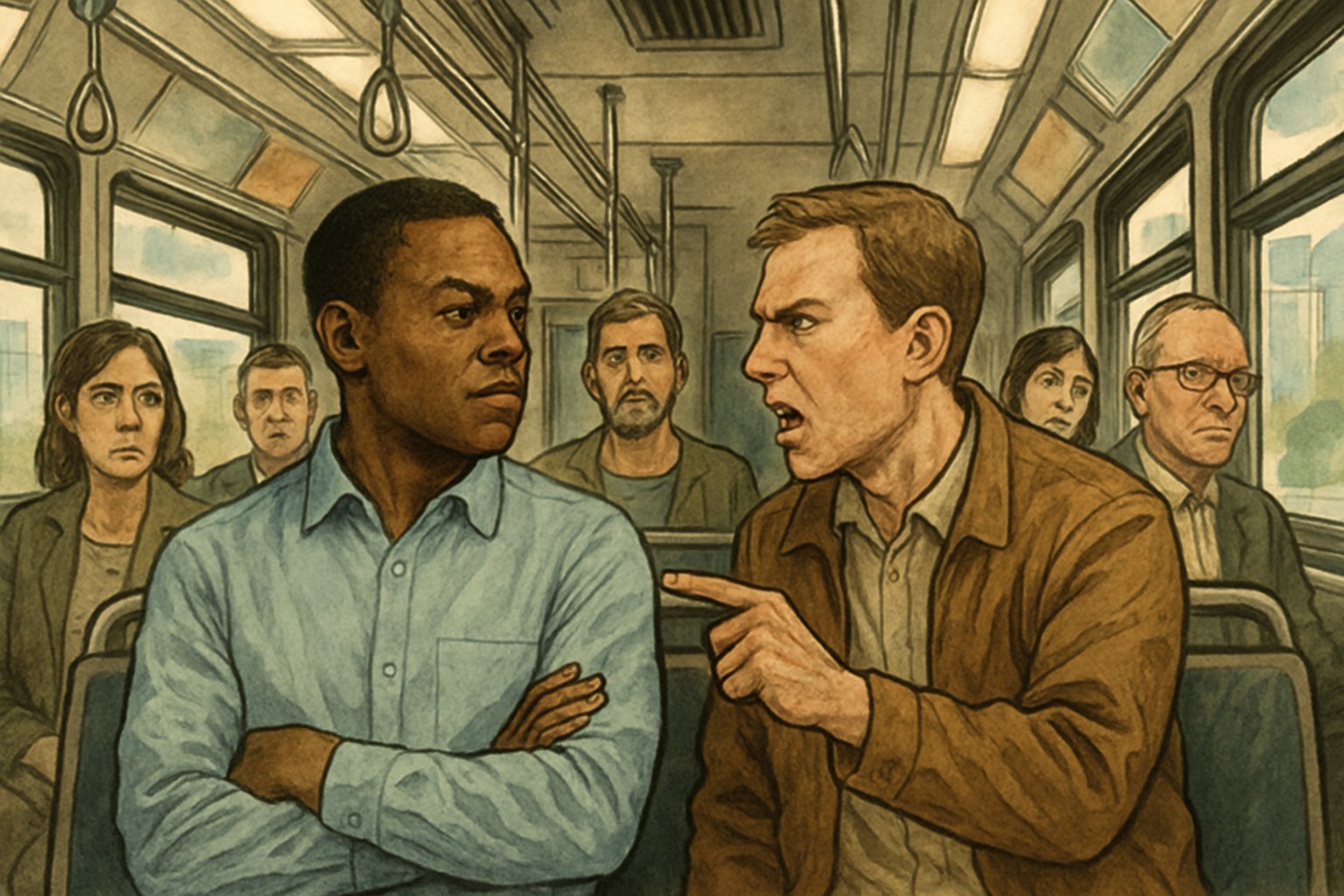
Attitudes about seat swapping aren’t the same everywhere. Depending on where you’re flying and the cultures on board, your refusal might be seen in totally different ways.
Attitudes Toward Seat Swapping Around the World
In collectivist cultures—think East Asia or parts of Latin America—saying no to a family that wants to sit together can seem selfish. Cultural perspectives on food shape social interactions, and that kind of thinking spills over into how people handle shared spaces like planes.
Western vs. Eastern Expectations:
- North America/Europe: People usually respect individual rights and paid upgrades.
- Asia: Group harmony matters more than individual preference.
- Middle East: Family unity sometimes trumps seat assignments.
How you refuse a swap can matter, too. In Japan, for instance, people might avoid a blunt “no” and feel awkward turning someone down directly.
Your own background shapes how you see these situations. Americans often stick to their paid seat, while folks from collective cultures might expect more flexibility.
Differing Expectations by Airline and Route
Budget airlines have their own vibe—on Spirit or Ryanair, most people know it’s every passenger for themselves. You get what you pay for, and not much more.
Route-Specific Patterns:
- Domestic flights: Less need to worry about cultural sensitivity.
- International routes: Mixed expectations can make things confusing.
- Holiday destinations: More families, so more swap requests.
Long-haul flights to vacation spots? That’s where you’ll see the most seat swap requests, especially on routes to places like Disney World or beach resorts. Family seating is a big issue there.
Business class brings its own weird pressure. Some expect premium cabin passengers to be extra accommodating, but honestly, if you paid a fortune for that seat, why should you have to move?
Tips for Ensuring a Smooth Flight Experience
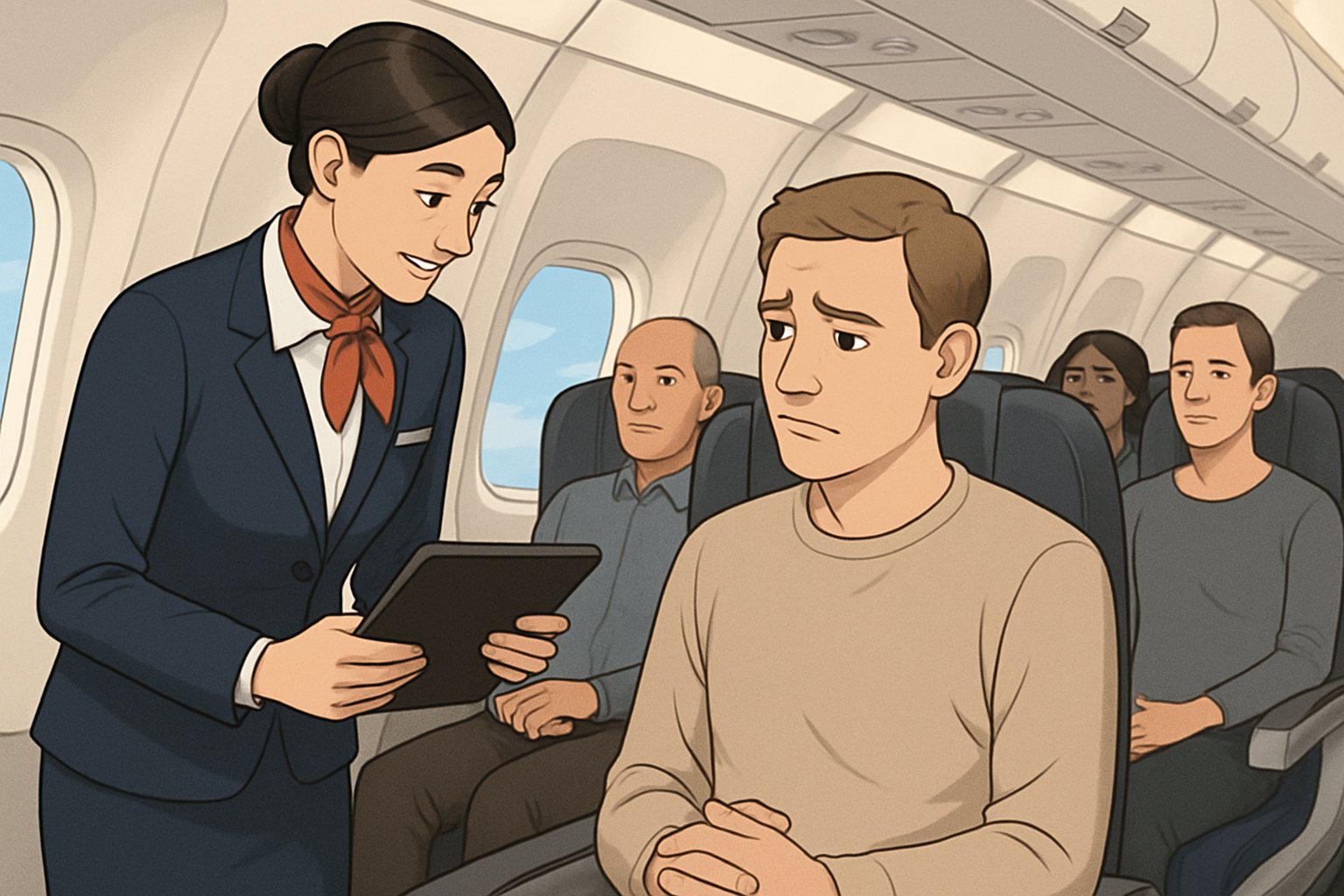
Be polite and respectful to crew members and fellow passengers. Your attitude really shapes your flight, and honestly, airline staff tend to remember the people who treat them decently.
Arrive early and just get through security without making a fuss. If you’re sprinting through the airport or arguing with TSA, you’re asking for trouble—and probably a missed flight.
Read your airline’s contract of carriage before you pack your bags. It’s not exactly thrilling reading, but you’ll find out what can get you removed from a flight, and you’ll dodge any nasty surprises.
Pack appropriately and stick to the baggage rules. Flying etiquette means knowing what you can actually bring onboard. No one wants to be the person holding up the line because of a forgotten rule.
Stay sober and don’t overdo it with the drinks. Drunk passengers cause more headaches than turbulence.
Keep your voice down and respect personal space. The cabin isn’t your living room, and nobody wants to hear your life story over speakerphone.
Follow crew instructions right away—no need to argue. If a flight attendant asks you to do something, just comply. It’s not worth making a scene.
Be patient with delays or mechanical hiccups. Getting mad at things nobody can control? That’s not going to get you in the air any faster.
Dress appropriately for your flight. Airlines do have dress codes, and if you show up in something too revealing, you might not get on board.
Turn off electronic devices when told, and pay attention to safety demos. These aren’t just friendly suggestions—they’re federal rules.
🔥 Would you like to save this?
Please note that some of the imagery in this article were created with the aid of AI image generators.