
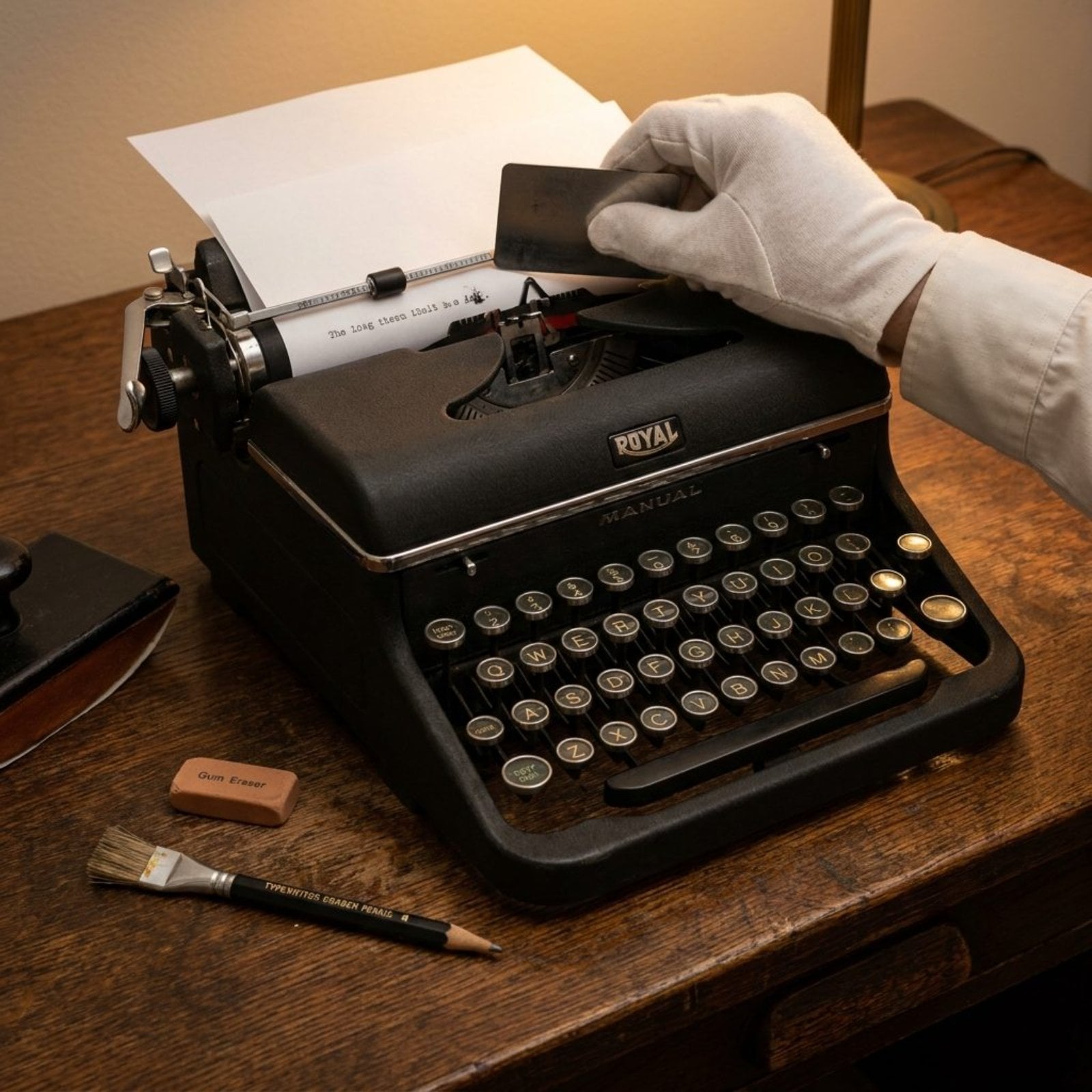
The steno pad was already open before the boss finished his first sentence. That was just how it worked. In the 1940s, a good secretary wasn’t support staff, she was the entire operation behind the operation, and the list of things she was expected to master, silently and without complaint, was genuinely staggering. Some of it was skill. Some of it was theater. All of it was expected to look effortless. Here’s what that actually looked like.
🔥 Would you like to save this?
Take Flawless Shorthand Dictation at Astonishing Speed Without Asking Anyone to Repeat Themselves
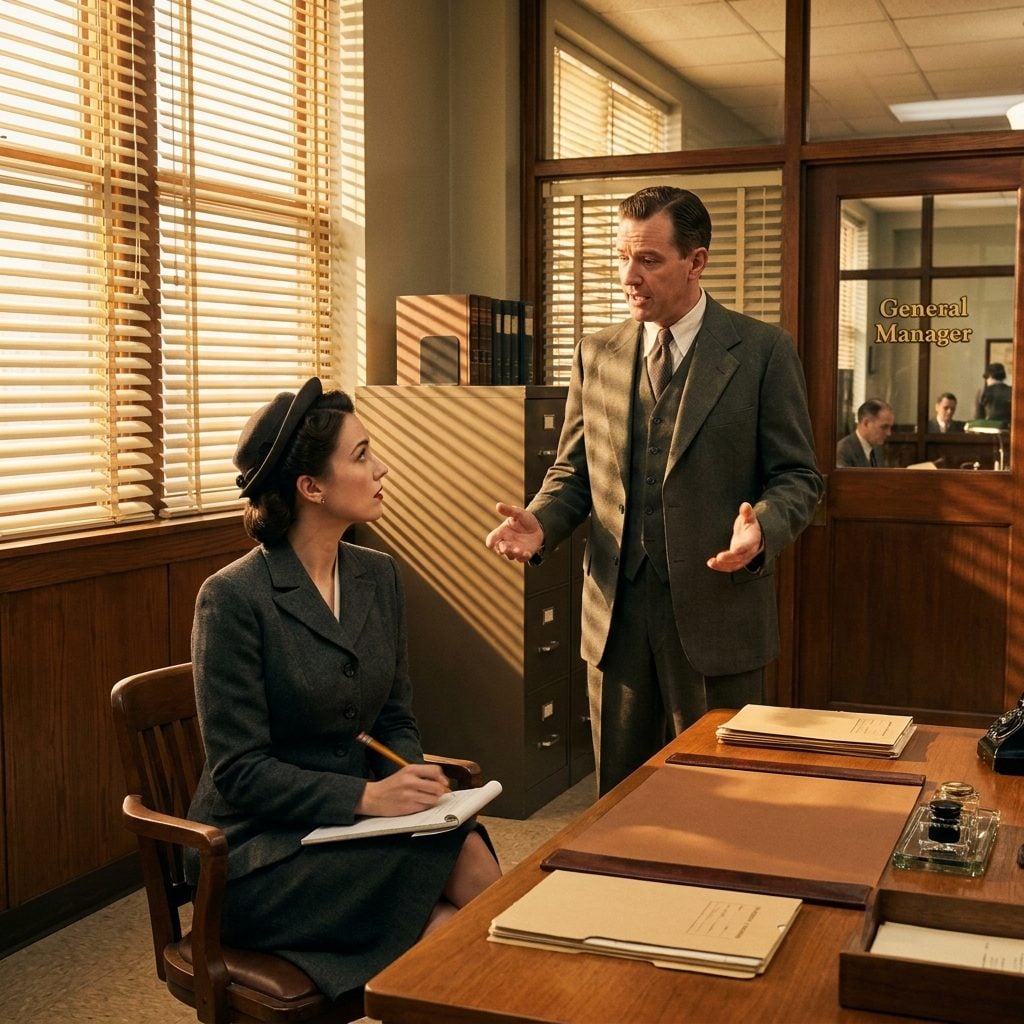
Gregg shorthand looked like someone had let a nervous bird walk across a notepad, all curves and hooks and tiny loops that meant absolutely nothing to anyone who hadn’t spent months memorizing the system. The secretary had to hold the whole thing in her head while simultaneously writing, nodding at appropriate intervals, and not betraying even a flicker of panic when the boss picked up speed during the important part of the memo.
Asking him to repeat himself wasn’t really an option. Not once, not ever. Speed expectations hovered around 100 words per minute for entry-level positions and crept higher from there. You came to the desk ready, or you came to the desk wrong.
Type Entire Letters Perfectly on the First Try to Avoid Wasting Expensive Paper
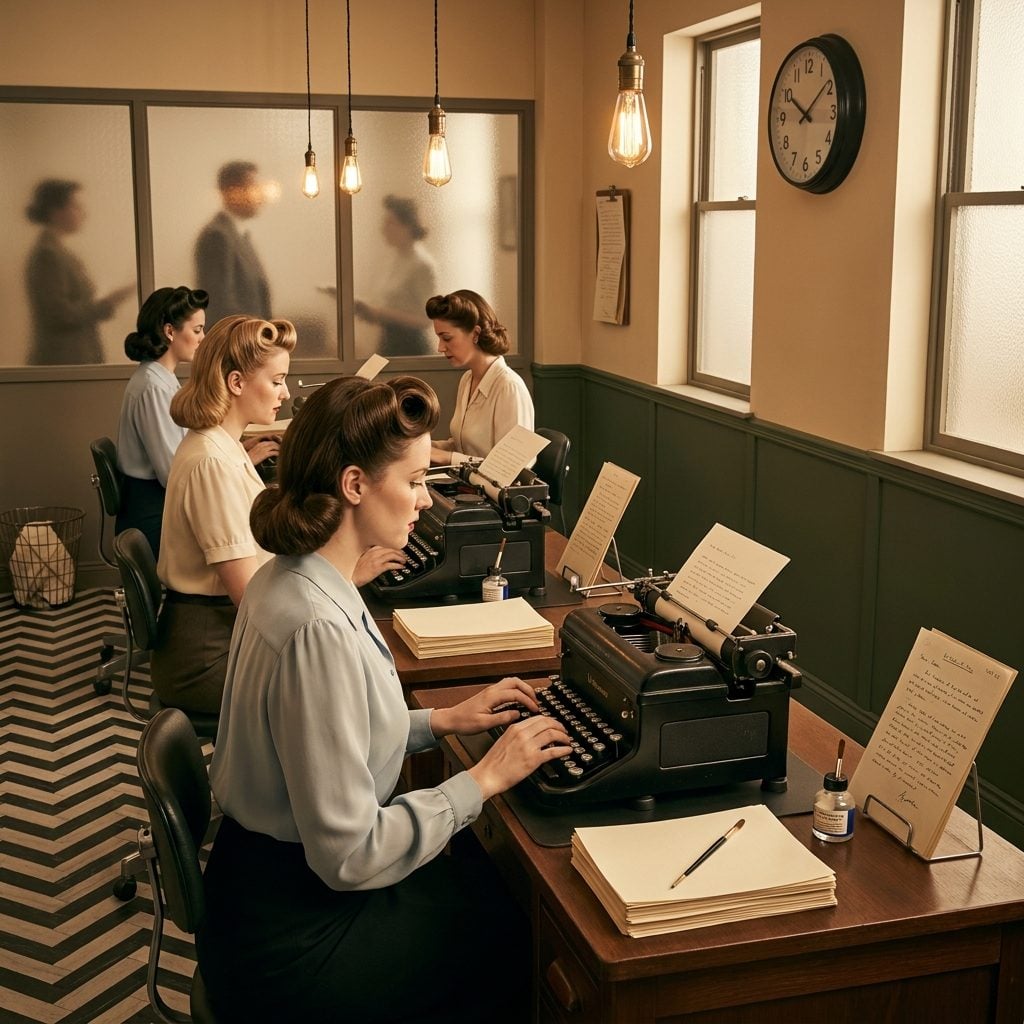
Every sheet of bond paper cost money, and the expectation was painfully clear: one letter, one draft, done. Correction fluid barely existed in practical form. Erasure left a ghost smear the boss would absolutely notice. Strikethrough was an insult to the recipient. The pressure of that blank white page sitting in the carriage was real and specific and entirely unforgiving.
What this produced, over years of practice, was a kind of muscle-memory perfectionism that most people today genuinely cannot imagine. You rehearsed the letter in your head first. You read the shorthand notes twice. Then you typed like you meant it.
Re-Thread Ribbon Into a Typewriter Without Smearing Ink Across Both Hands
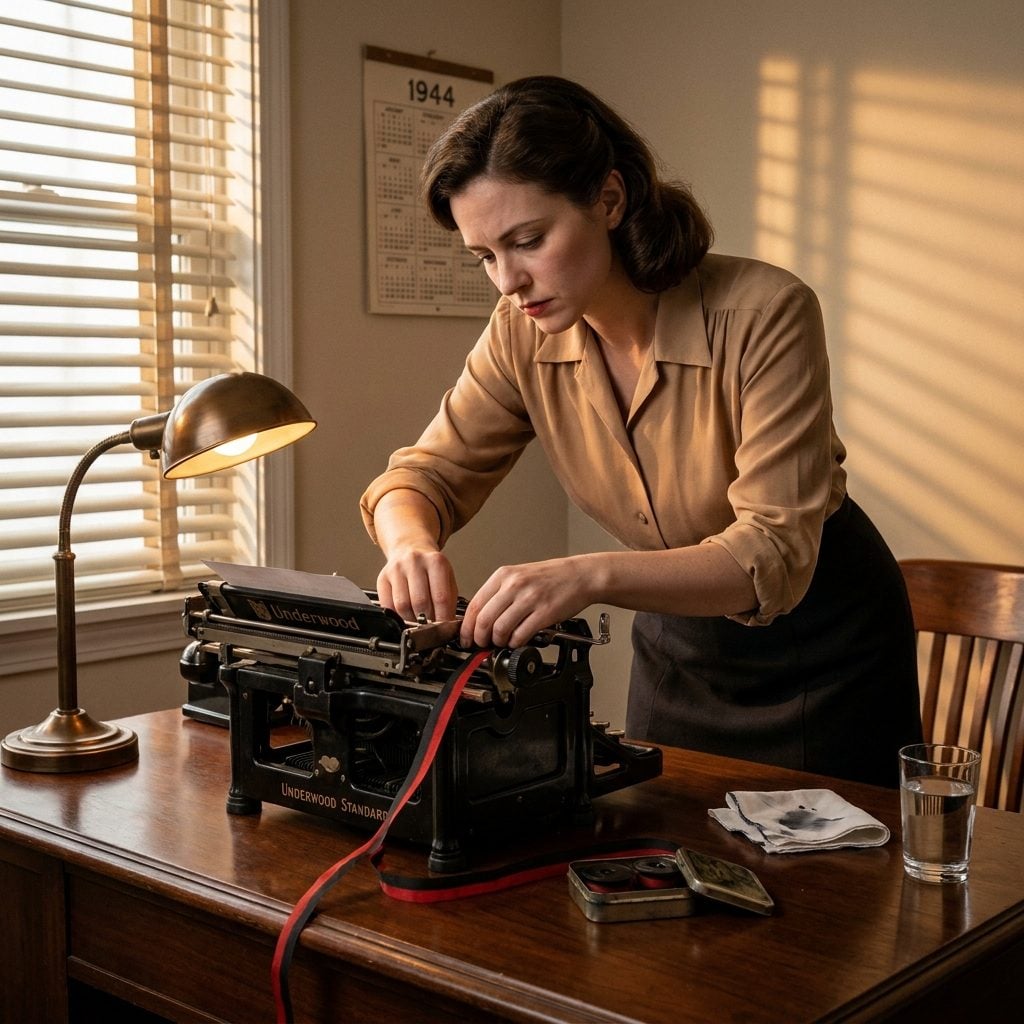
Typewriter ribbon replacement was theoretically simple and practically catastrophic. The ribbon was a continuous loop of inked fabric wound between two small spools, and somewhere in the process of threading it through the guide hooks and around the tiny metal fingers, your hands became a crime scene. Ink that color, dense, almost petroleum black, did not wash off quickly.
The trick was to handle the ribbon only at the edges and never, under any circumstances, let it accordion-fold while you worked. Experienced secretaries kept a clean rag in their desk drawer specifically for this. New ones learned why within the first week.
Answer Multi-Line Switchboards While Sounding Calm, Cheerful, and Impossibly Professional
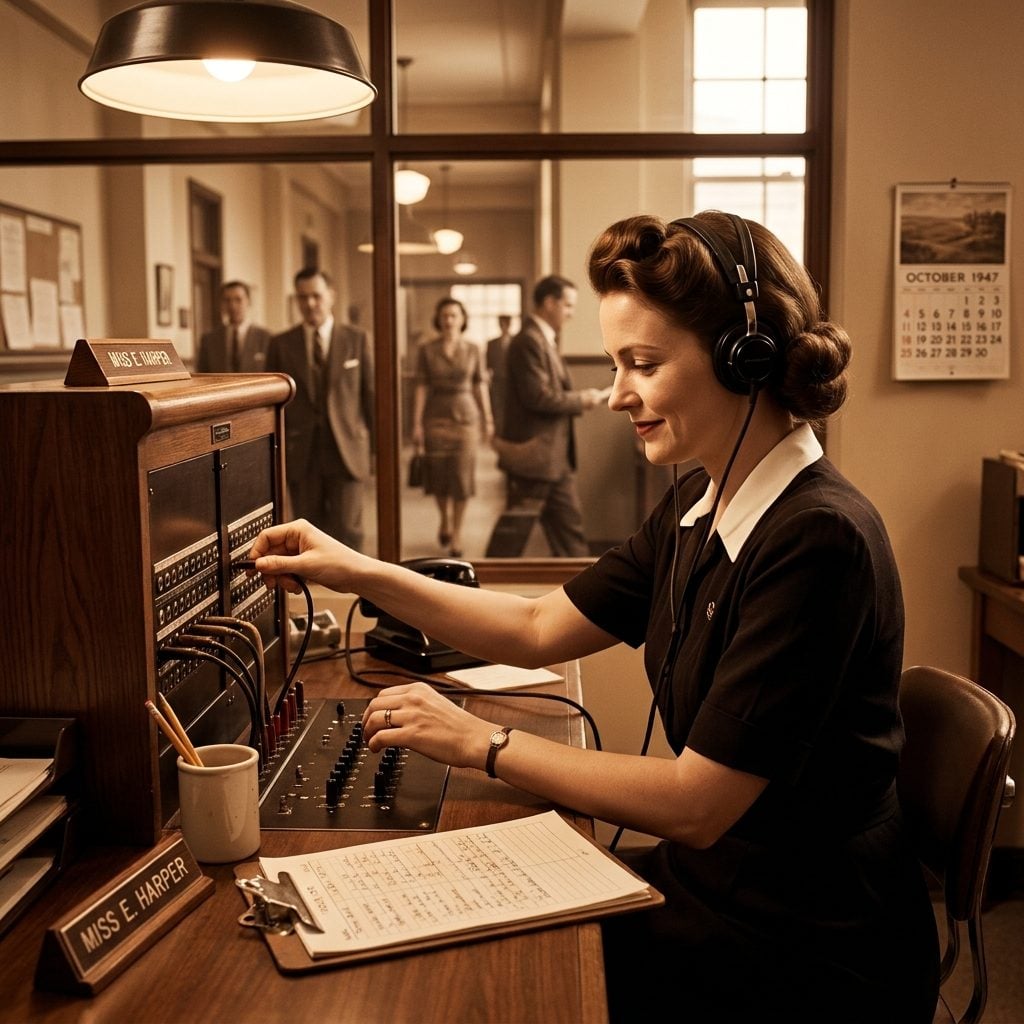
A busy office switchboard in the 1940s looked like something between a pipe organ and a puzzle box. Calls came in as lights, and you answered with a plug and a cord, connected them with another plug and another cord, tracked who was holding and who had been mistakenly disconnected, and did all of this while the line for the general manager lit up for the third time in two minutes.
The professional requirement wasn’t just competence. It was composure. You were the voice of the company to every single caller, and sounding rattled was not a performance option. Women hired for this role were often specifically evaluated on their telephone voice in the interview.
Memorize Executives’ Schedules Without Relying Entirely on Written Calendars
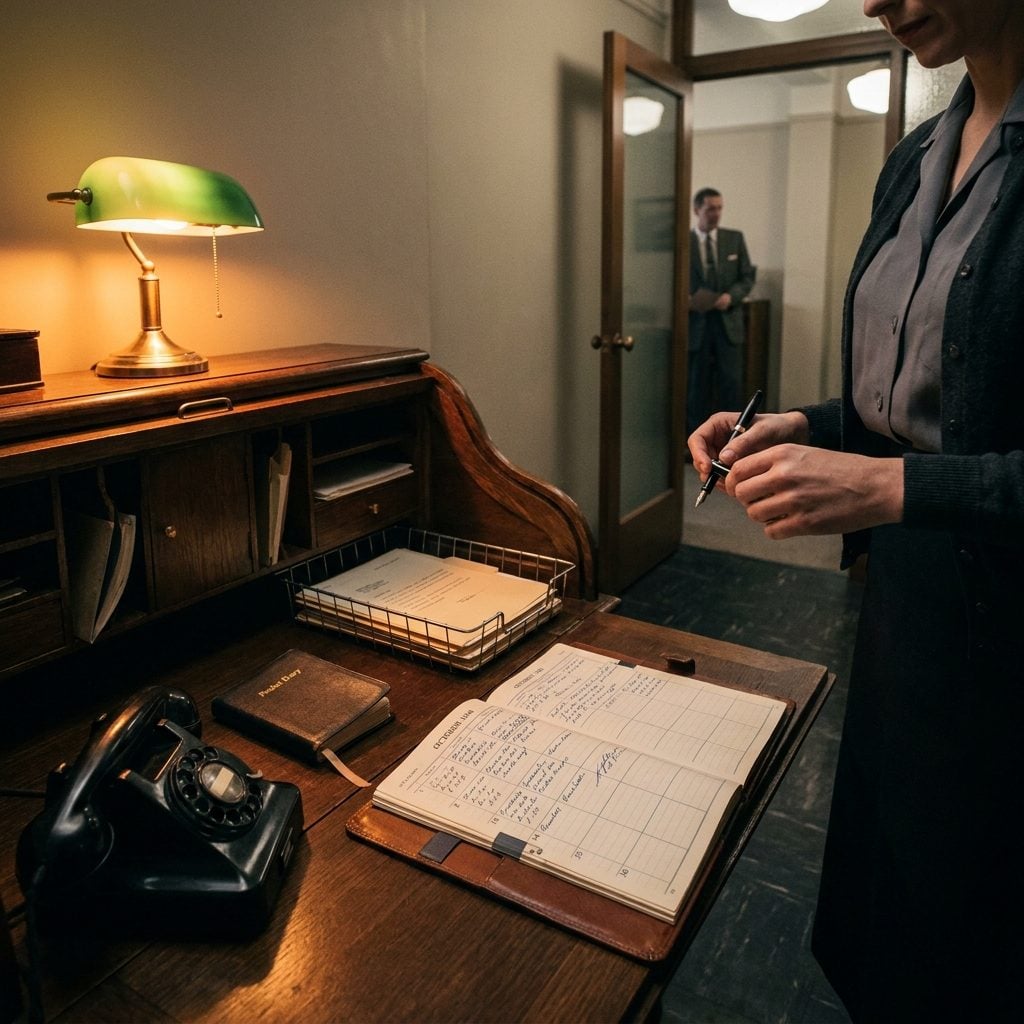
Before Outlook, before shared digital calendars, before anyone could just check their phone, the secretary was the calendar. She carried the schedule in her head as a kind of living backup system, because a misplaced appointment book was not an excuse and ‘I didn’t know about that meeting’ was a professional disaster waiting to happen.
This meant memorizing not just times and names but context: who couldn’t be in the same room together, which client needed to be greeted at the elevator, when the boss needed ten minutes alone before a difficult call. The written diary was the record. The secretary’s memory was the real system.
Brew Coffee Strong Enough to Satisfy Exhausted Wartime Managers

Wartime rationing made decent coffee a small act of determination. Sugar was rationed, cream was rationed, and the coffee itself came in whatever grade the market allowed that week. Despite all that, the office pot was expected to be hot, strong, and ready when the managers arrived in the morning, and again after lunch, and often again around three.
The percolator was the instrument, and getting it right meant knowing your machine’s particular timing, the grind, the water ratio, and exactly when to turn down the heat before it went bitter. This knowledge was entirely unwritten and earned through experience. Nobody taught it. You just figured it out, probably after one disastrous pot that got you a look you never forgot.
Use Carbon Paper Correctly Without Creating a Blue-Smudged Disaster
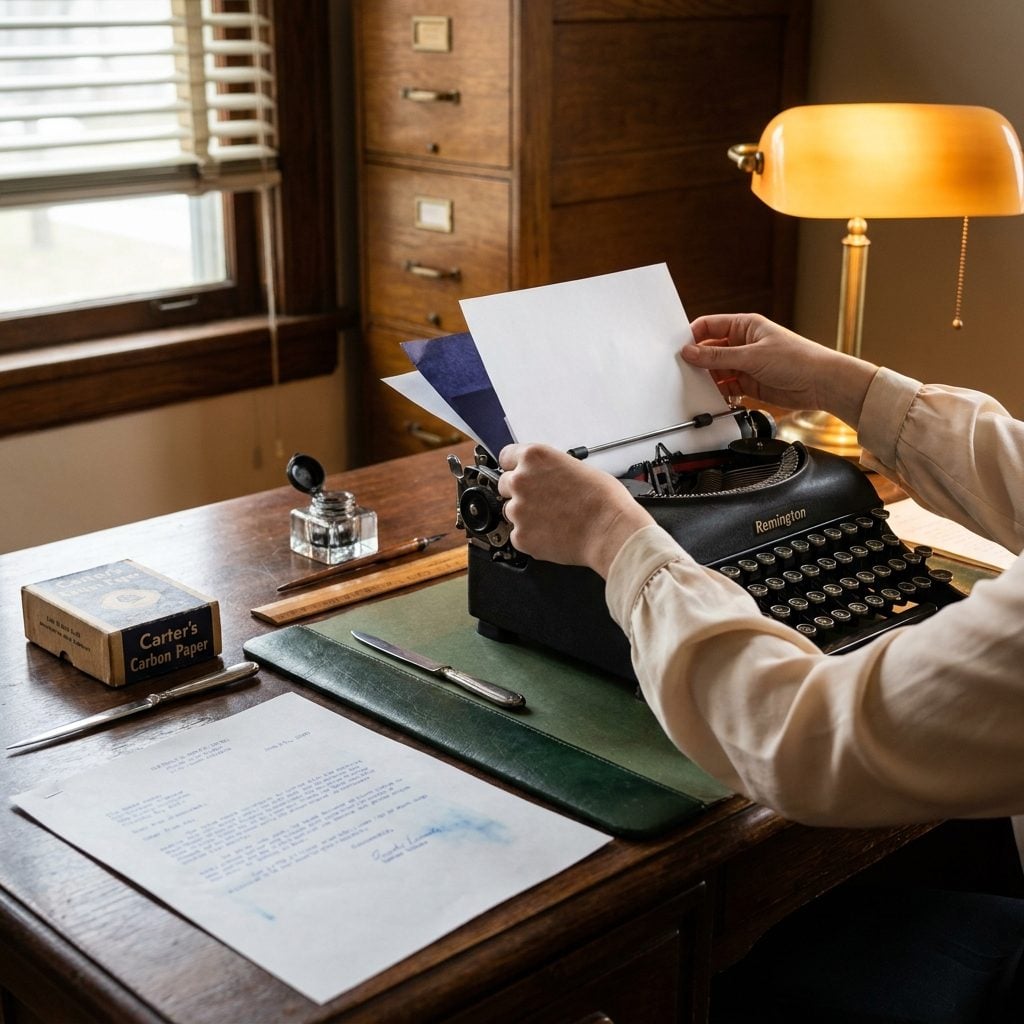
Carbon paper was essentially a sheet of dark blue or black pigment coated onto a thin film, and if you touched the wrong side with bare fingers you knew it immediately, completely, and permanently until you found a way to get the color off your skin at the washroom sink. Inserting a carbon set into the typewriter carriage required aligning the original sheet, the carbon sheet face-down, and the copy sheet behind it, in the right order, every single time, before rolling them in together.
Get it reversed and your copy was blank. Get it slightly crooked and the copy text crept toward the margin. Handle it carelessly and blue fingerprints appeared on the letter you were about to present to someone important. Offices generating multiple copies used two or three carbon sheets stacked together, which multiplied both the output and the risk considerably.
Address Envelopes in Impeccable Cursive Handwriting That Made the Company Look Good
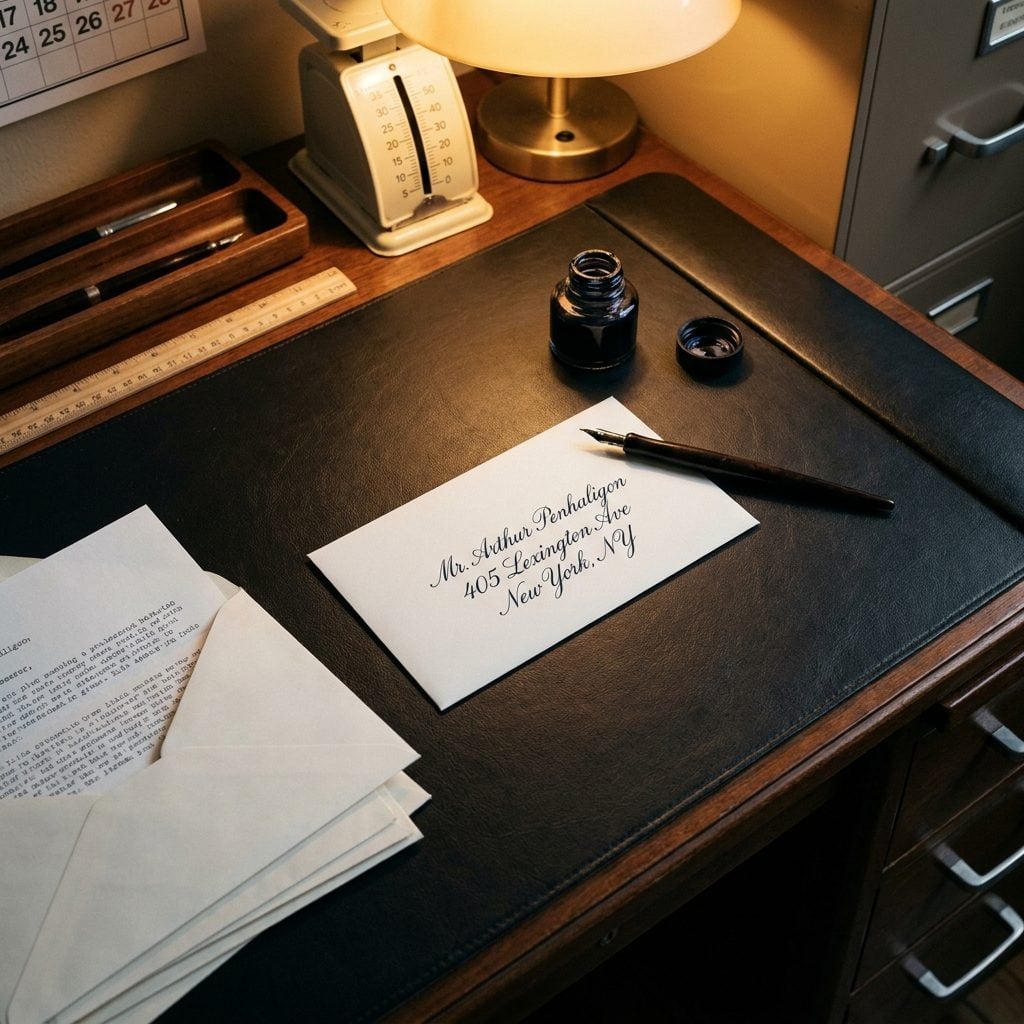
Palmer Method penmanship was drilled into schoolchildren from the 1890s onward, and by the 1940s a well-trained secretary’s cursive was nearly as standardized and legible as a printed typeface. The expectation was consistency: every capital letter the same height, every word spaced with the same rhythm, no letters that tilted or cramped toward the right margin.
Envelope addressing was not casual work. This was the first thing a client or business contact saw, and a sloppy address suggested a sloppy company. Some offices used pen nibs with ink specifically for correspondence, keeping a separate ballpoint for internal work, because the difference in impression was considered worth the extra step.
The envelope was the handshake. It arrived before the letter did.
The In-Tray Stack That Communicated the Entire Office Power Structure at a Glance
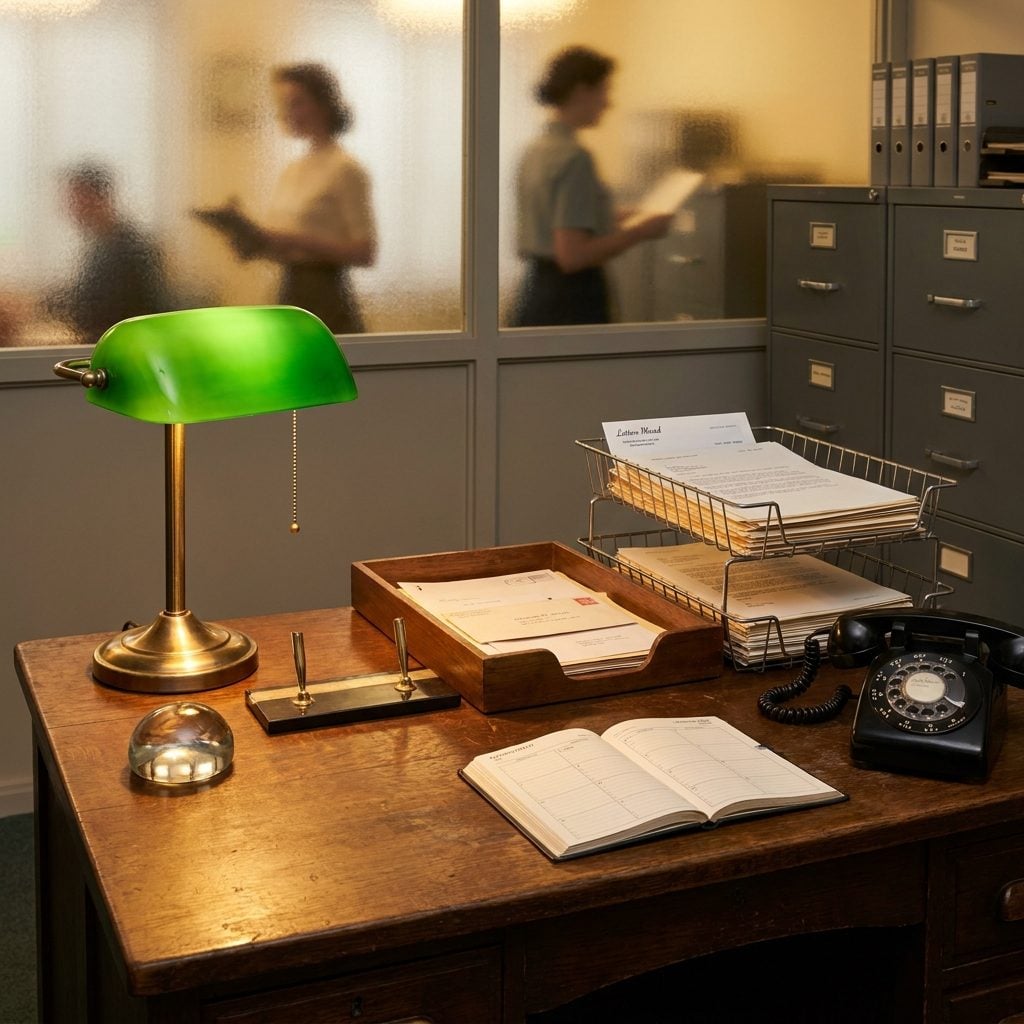
The in-tray wasn’t just a bin for paper. It was a daily announcement about whose work mattered most and in what order. The boss’s correspondence went on top, always. Memos from department heads came next. Routine internal mail sat at the bottom and could wait until someone remembered it.
Getting this wrong wasn’t a clerical error. It was a political one. A well-trained secretary understood, without being told, that the physical position of a document signaled urgency, importance, and respect. Some offices had written rules. Most didn’t need them.
Refilling the Inkwell Without Leaving a Single Blue-Black Stain Anywhere It Didn’t Belong
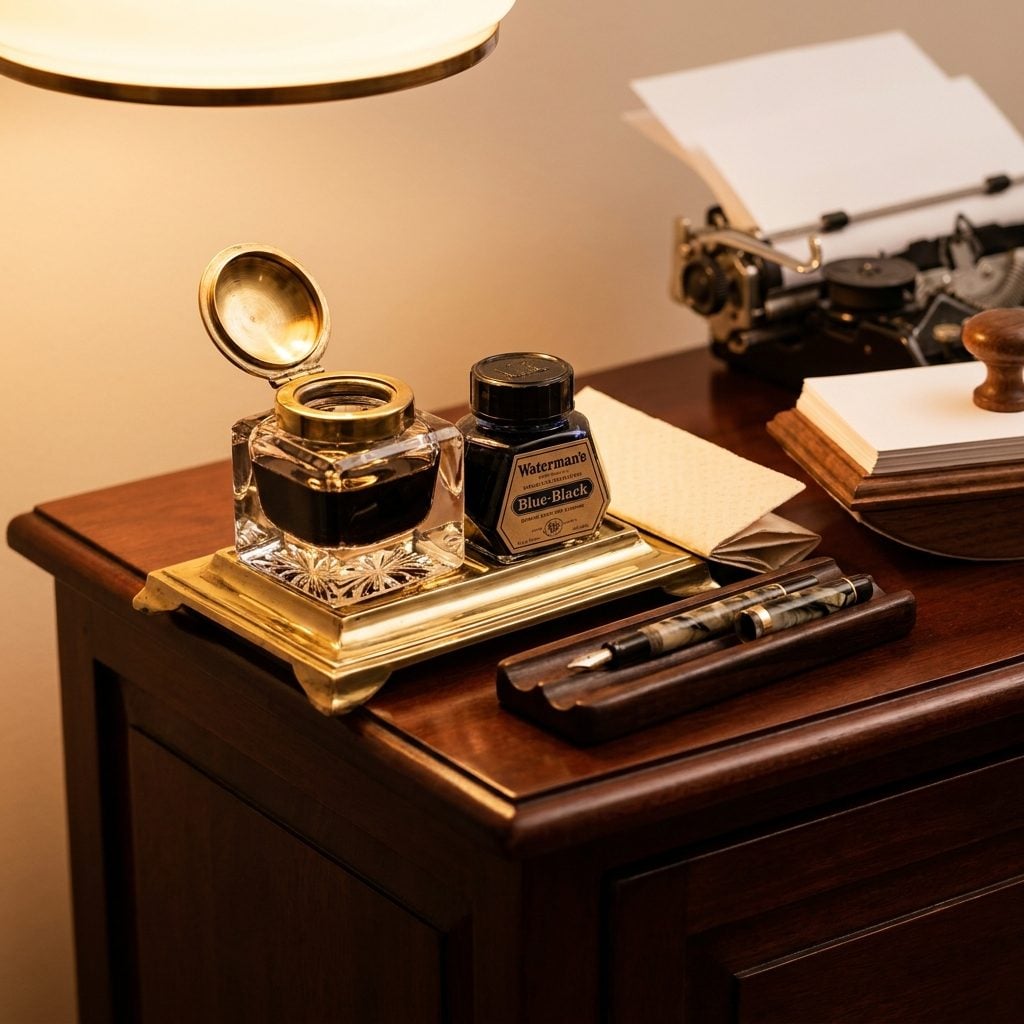
Ink was everywhere in a 1940s office and getting it on yourself was genuinely bad news. Fountain pens needed filling, inkwells ran dry, and the process involved small glass bottles of blue-black ink that absolutely would tip over at the worst possible moment onto whatever you happened to be wearing that day.
The technique mattered. You tilted the bottle, you watched the nib, you used blotting paper as a buffer. A secretary who could do this quickly and cleanly, without drama, without a single dark spot on the desk blotter or her cuffs, had mastered something that sounds trivial now and genuinely was not.
The Mimeograph Machine: Running Copies While Trying Not to Pass Out From the Fumes
Nobody who used a mimeograph machine in the 1940s has ever forgotten the smell. It was sharp, chemical, almost sweet in a way that made your eyes water, and it clung to everything including the copies themselves, which came out warm and faintly purple-smelling. People didn’t love this. They also didn’t complain about it, because what else were you going to do.
Operating one required real skill. You typed your master stencil without errors because corrections were difficult and messy. You cranked at the right speed. You didn’t let the drum run dry or the paper jam. And you accepted that your hands were going to be a specific shade of purple for the rest of the afternoon.
The Polite, Immovable Barrier Between Every Uninvited Visitor and the Boss’s Inner Sanctum
Every secretary in a 1940s office ran a quiet security operation and most people walking through the door never quite realized it. The standard greeting, the slight pause before asking for a name, the deliberate check of the appointment book even when she already knew the answer: all of it was technique. A way of buying time and making a decision.
The goal was never rudeness. It was calibrated pleasantness while simultaneously figuring out whether this person was expected, welcome, harmless, or a problem. Salesmen were the most common challenge. They arrived confident and left having spoken to no one important, often without fully understanding how that had happened.
Taking a Phone Message So Precisely That the Boss Could Act On It Without Ever Calling Back to Clarify
🔥 Would you like to save this?
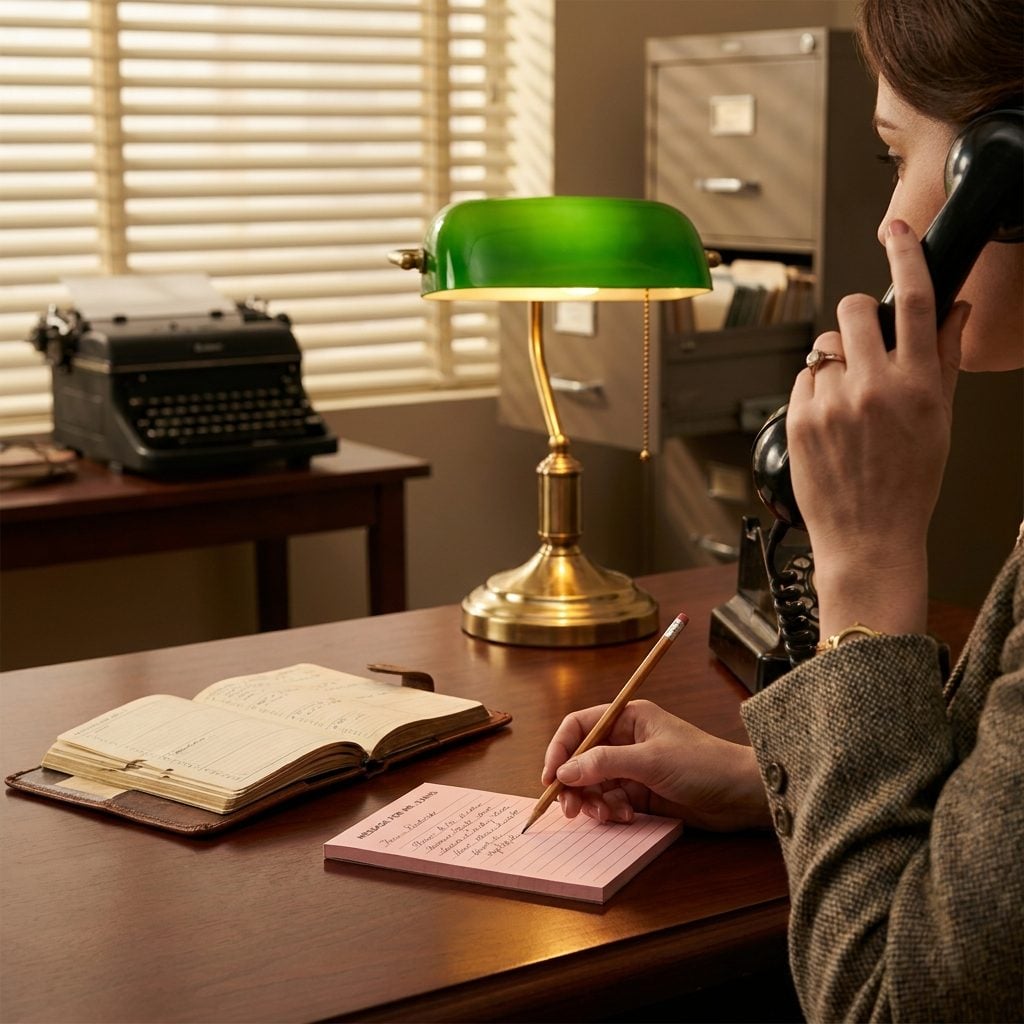
No voicemail. No email. No way for the caller to leave their own message, spell their own name, repeat their own number. Just a secretary with a pencil and a pink message pad, and the clear understanding that if she got any of it wrong, someone might miss a deal, a meeting, or an important call from someone who would not be calling back.
A good message included the caller’s full name (spelled correctly, confirmed if necessary), their organization, their number with the exchange prefix, the time and date, and a brief, accurate summary of the reason for the call. All of this transcribed while maintaining a professional, unhurried telephone manner. It was, in practice, active stenography under social pressure.
Reading a Room Well Enough to Know Exactly When the Boss Needed Rescuing From His Own Meeting

There was an art to this and it had no written rules. Interrupt too early and you disrupted a productive meeting, irritated the boss, and embarrassed yourself in front of whoever was in that room. Interrupt too late and the meeting ran into the next appointment, or someone important was left waiting in the outer office, growing less patient by the minute.
Reading the signals required everything: knowing the boss’s schedule cold, knowing which visitors tended to run long, knowing the sound of a meeting that had gone productive versus one that had stalled. Some secretaries developed an almost telepathic sense of timing that their bosses relied on completely while never acknowledging directly.
A Cross-Reference Filing System Memorized Well Enough to Find Any Document in Under a Minute
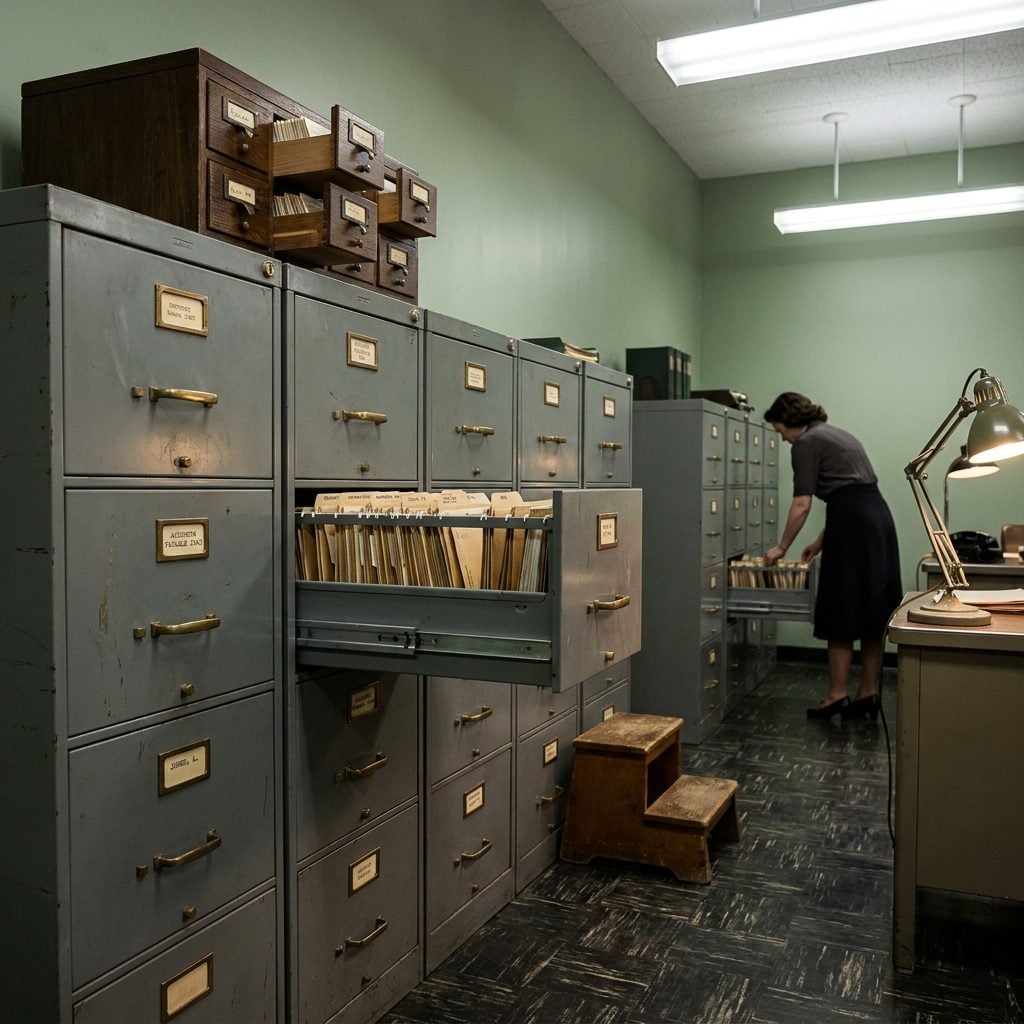
The filing system in a busy 1940s office was not a simple alphabet list. Documents were filed under a primary name or subject, cross-referenced under secondary names, and sometimes a third. A letter from the Whitmore Manufacturing Company about a contract dispute might live under W for Whitmore, with a cross-reference card under C for contracts, and another under the attorney’s name if legal was involved.
All of this lived in the secretary’s head. Not because she had written notes, though she did, but because she had put every document in herself and remembered where things went. New secretaries spent weeks learning a predecessor’s system. Experienced ones could pull a two-year-old memo faster than most people could find a pen.
Knowing Everything Going On in the Building While Acting Like She Knew Absolutely Nothing
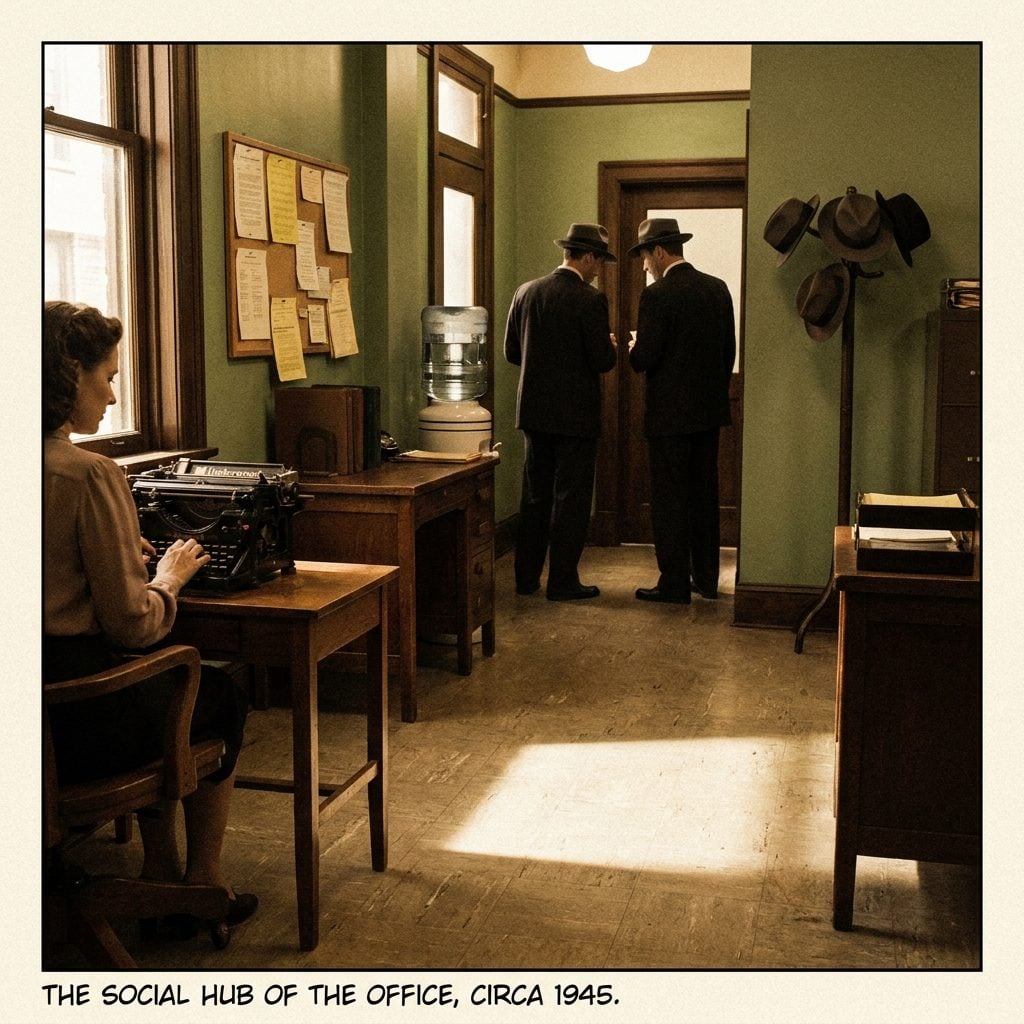
Every office had one secretary who knew things. Not because she went looking, but because information moves through the person who answers the phone, routes the mail, types the correspondence, books the meeting rooms, and overhears the conversations that happen two feet from her desk while people pretend she isn’t there.
The skill was not in gathering. It was in managing. She knew which piece of gossip was genuinely useful and which was dangerous to repeat. She knew who needed a quiet heads-up and who absolutely could not be told anything. She held personnel information, marital tensions, business secrets, and office feuds in a kind of careful suspension, acting on none of it publicly, aware of all of it privately.
This was never in any job description. It was, in many offices, the most valuable thing she did.
Balance the Petty Cash Ledger to the Exact Penny, Every Single Day
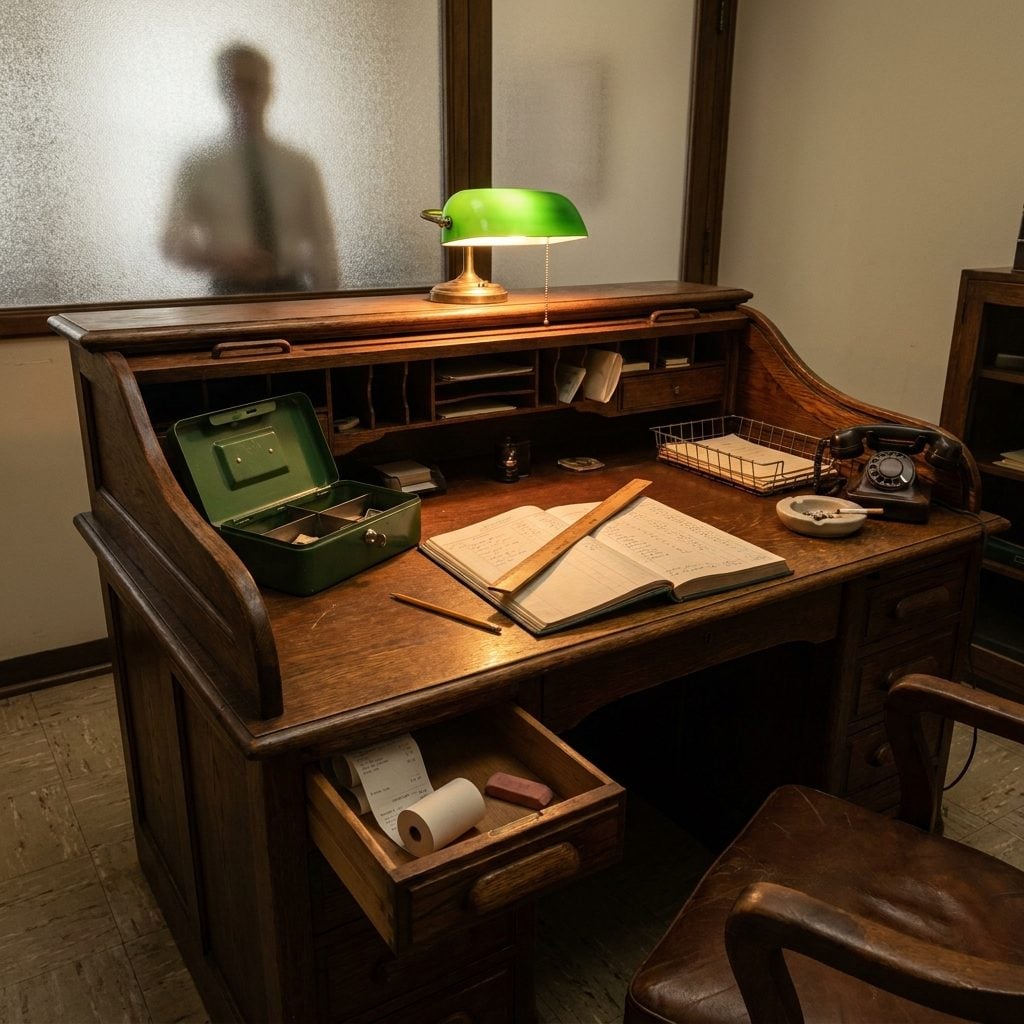
One cent off and the whole thing had to be redone from the top. There was no rounding, no “close enough,” no explaining away a three-penny gap with a shrug. The petty cash ledger was a small book that carried enormous weight, every coffee run, every box of paper clips, every cab receipt from a rainy Tuesday had to sit in those ruled columns in perfect agreement with the coins left in the tin.
Most women learned this not in school but in the first week on the job, usually after staying an hour past closing to find a missing nickel. The arithmetic was done by hand, checked twice, initialed, and set on the supervisor’s desk before you reached for your coat. A secretary who kept clean petty cash was a secretary who got trusted with bigger things.
The Giant Wall Calendar With the Colored Pins That Only She Understood
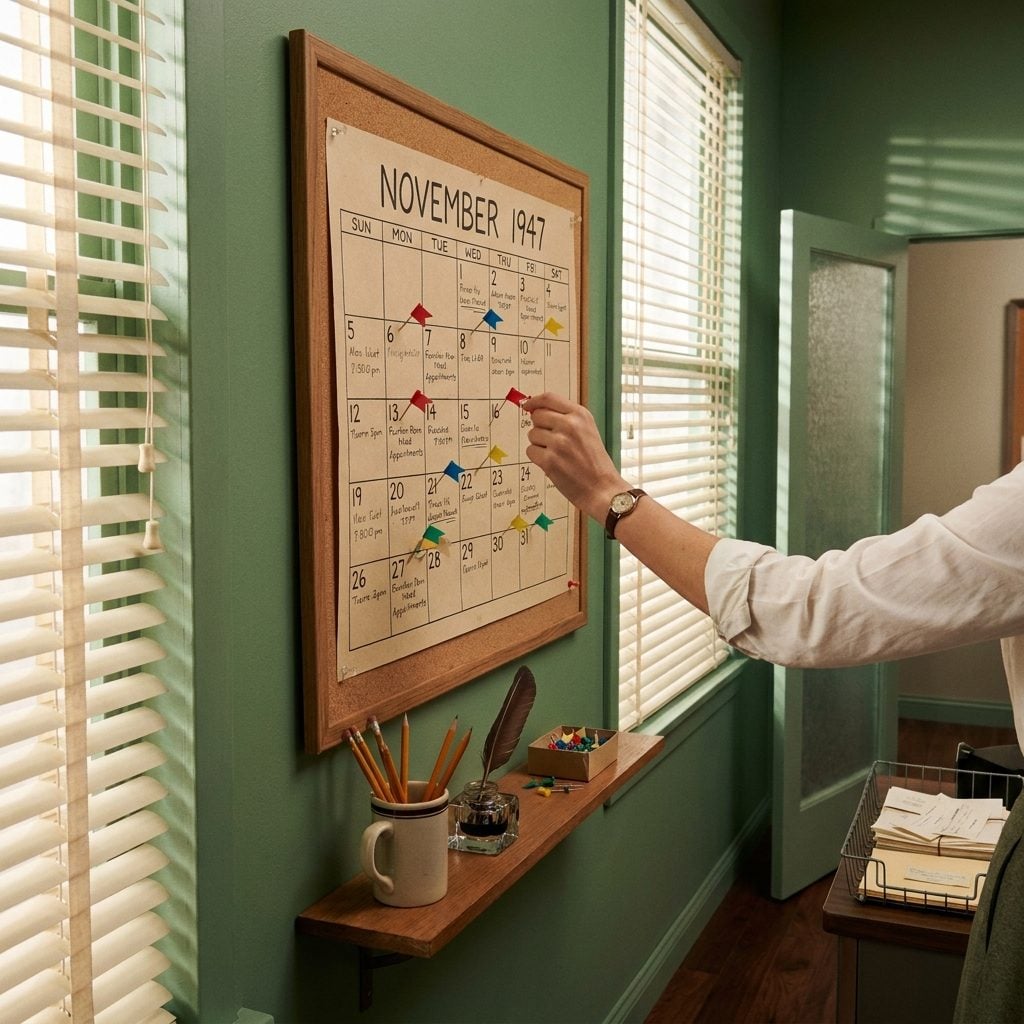
Nobody else in the building could read it, and that was, in a way, the whole point. Red pins meant Mr. Hargrove’s standing Thursday lunch. Blue was the weekly partner meeting that moved every time somebody’s golf game changed. Yellow flags were the ones she’d double-booked once and would never double-book again.
The wall calendar was a living document, updated in pencil so things could be erased without the paper tearing, with pen only when something was confirmed. She kept the color code in her head, not written down anywhere, which gave her a kind of quiet power. When she was out sick, the office simply did not know what was happening that week. And everyone was very nice to her after that.
Talk a Furious Caller Down Without Once Putting Him Through to the Boss

The receiver would still be warm from the last difficult call. A supplier insisting the invoice was paid, a client certain his appointment had been confirmed for Tuesday when it was very clearly Wednesday, a creditor who’d been transferred three times and was through being polite. She handled all of it without so much as a raised eyebrow.
The skill here wasn’t just politeness, it was a specific kind of strategic calm. You acknowledged the frustration without validating the accusation. You bought time without lying. You made the caller feel heard without committing the company to anything. This was not taught in any course. It was learned by answering the phone a thousand times and developing the exact right tone: warm, firm, completely unbothered.
“I’ll make sure he receives that message personally”, the sentence that ended a hundred near-disasters without involving anyone above the second floor.
Remember That Mr. Whitmore Takes His Coffee Black and His Cigarettes Lucky Strike, Not Chesterfield
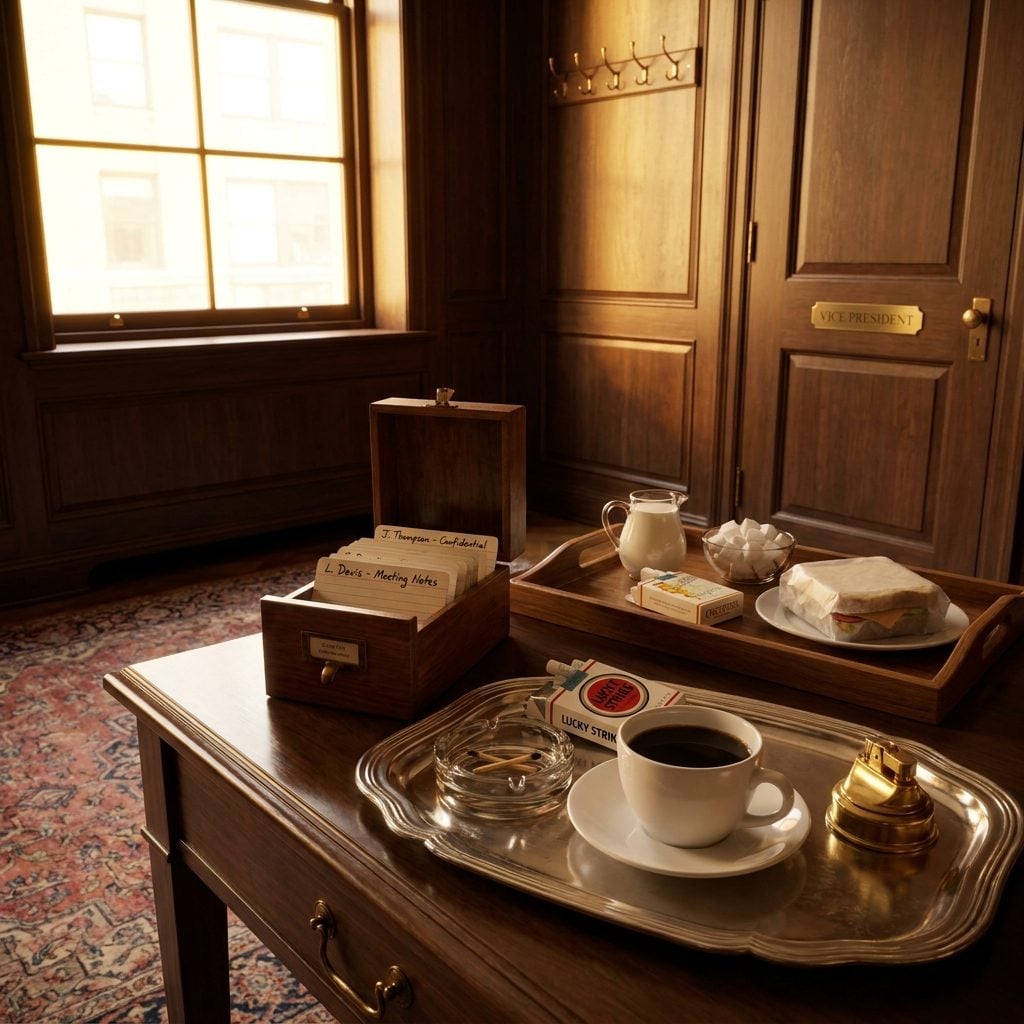
She kept a card file. Alphabetical, one card per executive, updated whenever a preference changed. Mr. Whitmore switched from Chesterfields to Lucky Strikes in March of ’44 and she noted it the same afternoon. Mr. Delancey took his sandwich on white bread, never rye, and always wanted the pickles on the side, a detail she’d memorized after exactly one mistake.
This was called “anticipating needs” in the secretarial handbooks of the era, phrased as a professional virtue. In practice it meant carrying a quietly remarkable amount of information about other people’s minor comforts inside your head at all times, without ever being asked to and without ever being thanked for it specifically. It was simply expected. Part of the job. On par with typing sixty words per minute.
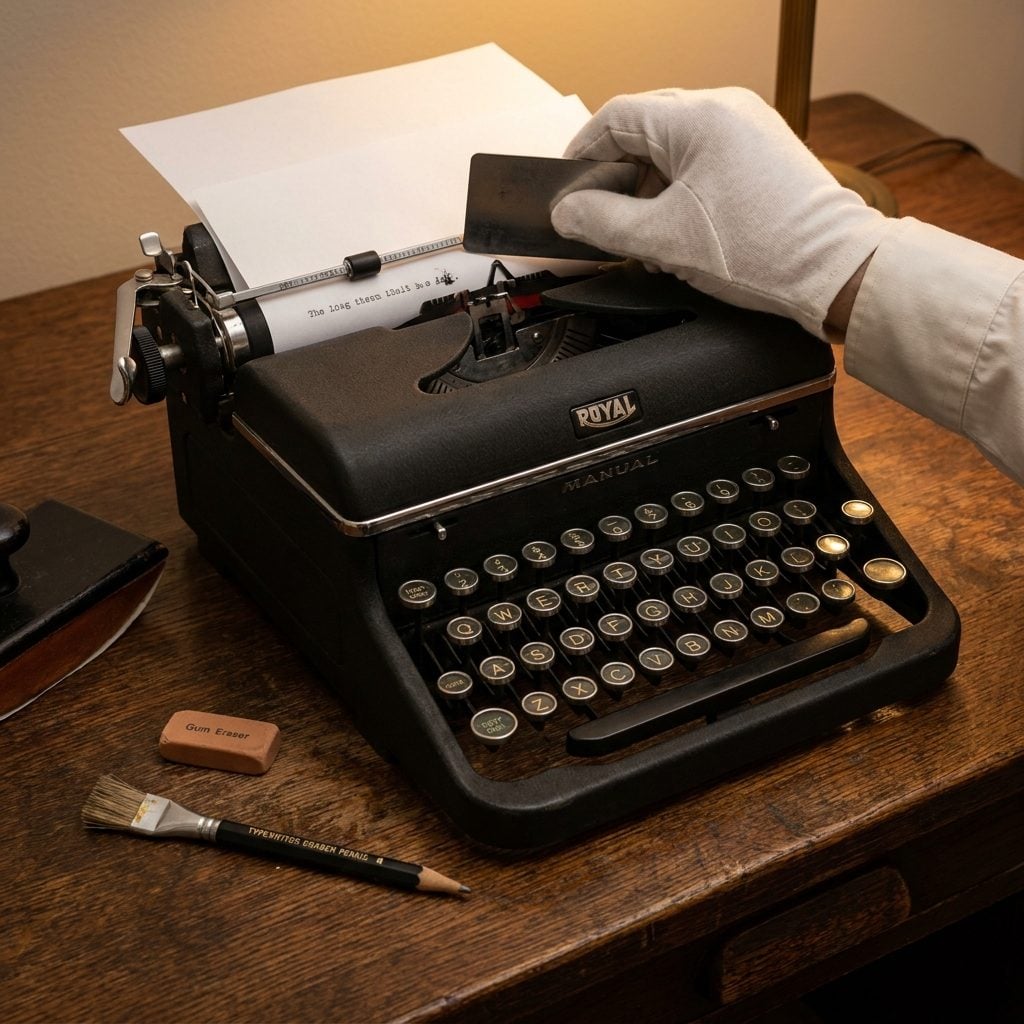
Erase a Typing Error So Cleanly the Page Still Looked Perfect
🔥 Would you like to save this?
The eraser shield was a tiny piece of perforated metal, maybe two inches wide, that looked like it belonged in a dentist’s office. You pressed it flat against the paper so only the offending letter showed through one of the small cut-out shapes, then erased through the hole without smudging the letters on either side. Done wrong, you got a grey smear across three words and a hole in the paper. Done right, you got nothing, a clean page that gave no indication anything had ever gone wrong.
Correction fluid didn’t arrive in most offices until the late 1950s, and even then, plenty of supervisors considered it sloppy. Until then, the erase-and-retype method was the professional standard. A secretary with a light hand and a good eraser shield could fix a mistake so completely that the carbon copy didn’t even tell on her.
Fold a Business Letter Into a Perfect Rectangle That Slid Into the Envelope on the First Try
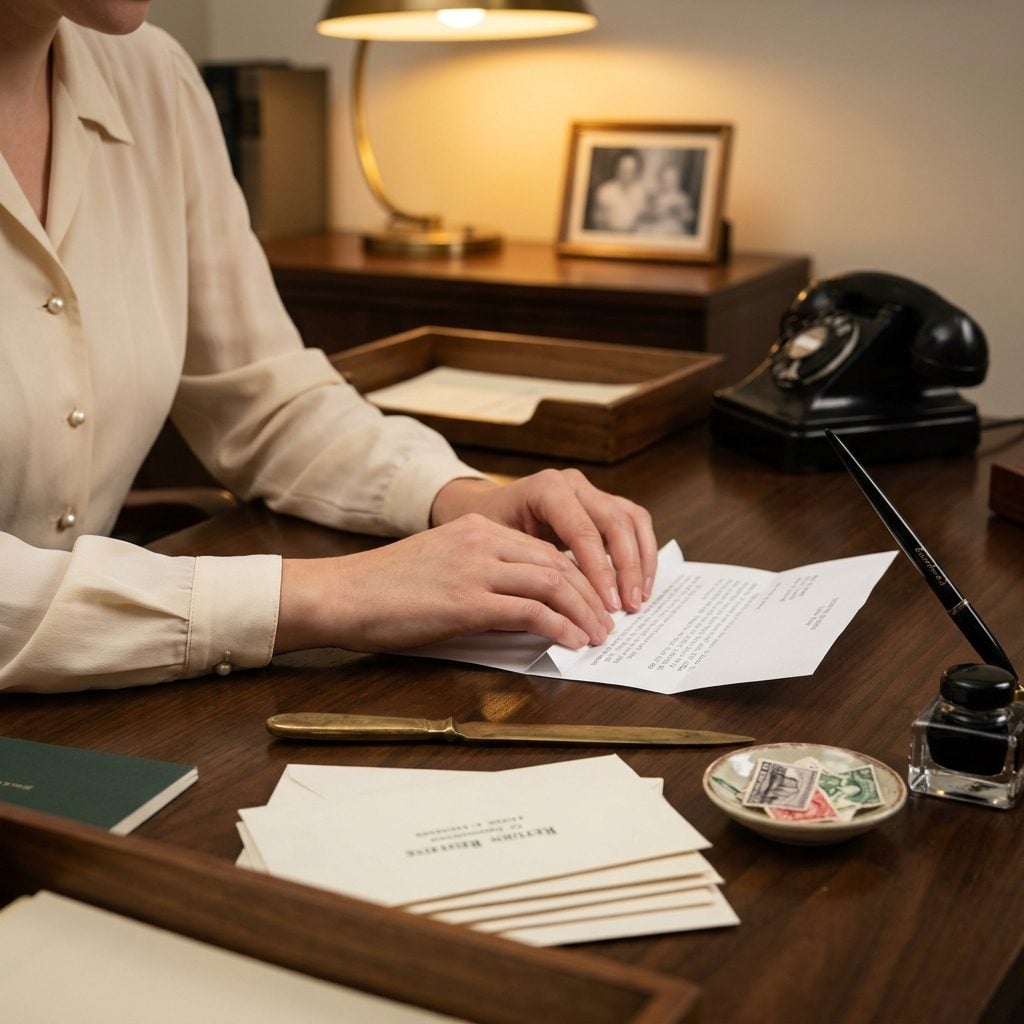
Three folds. Every one knife-sharp, perfectly even, aligned so the company letterhead peeked out when the recipient opened the envelope. Nobody taught you this in secretarial school — not really. You learned by ruining about forty letters your first week and watching the senior girl at the next desk do it without even glancing down.
The trick was folding against the desk edge, not in midair, because midair folds drifted. And if the letter didn’t glide into the envelope smoothly — if you had to cram or wiggle it — the whole thing screamed amateur. Executives judged firms by their mail. Sloppy fold, sloppy company. Period.
Sharpen a Pencil to a Perfect Point Using Only a Manual Sharpener Bolted to the Wall
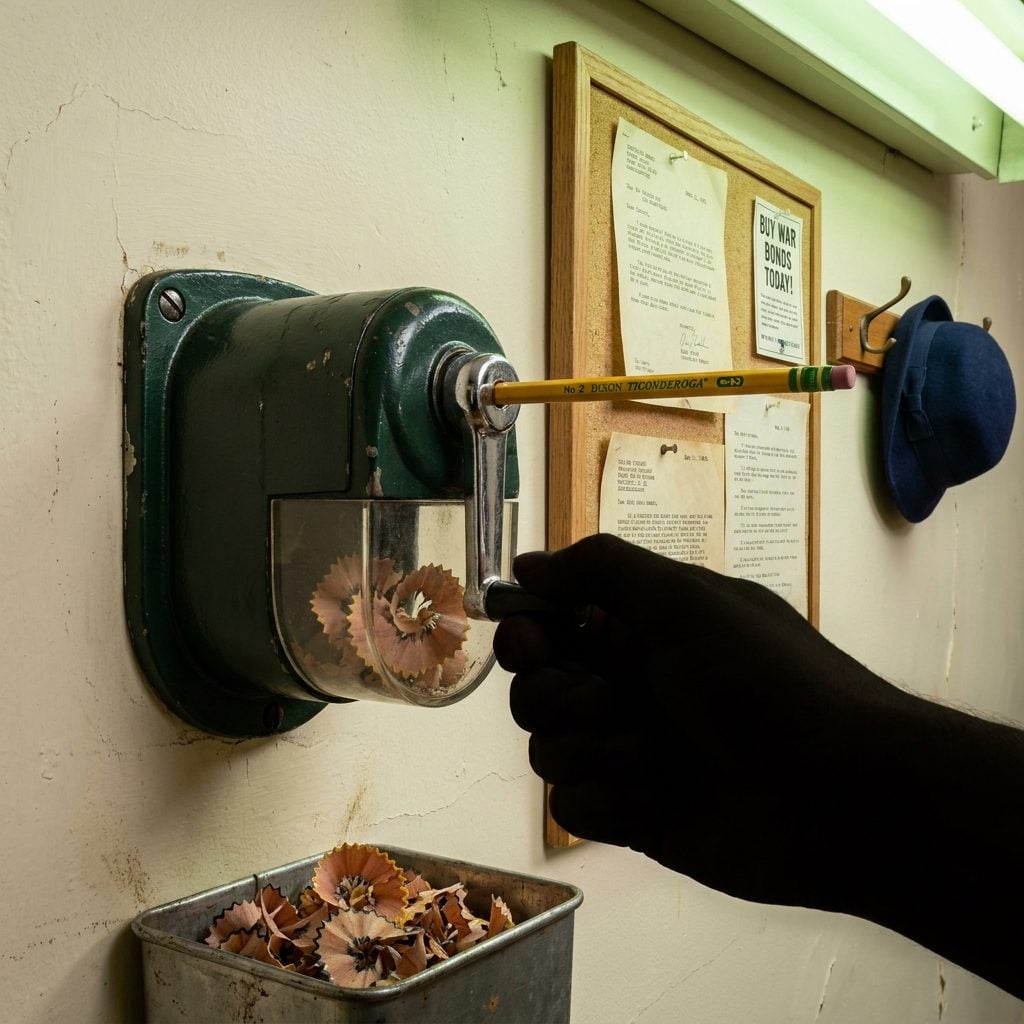
Too sharp and the point snapped the second you pressed down. Too dull and your shorthand looked like you’d written it during an earthquake. That wall-mounted cast-iron sharpener had a sweet spot you found entirely by feel and sound — two full turns, maybe three, listening for the pitch to change.
Every secretary had her preferred pencil hardness. Most kept a fistful of freshly sharpened ones in their desk drawer like ammunition, ready to grab without breaking stride during dictation.
Compose a Polished Letter From Nothing More Than the Boss’s Vague, Rambling Instructions
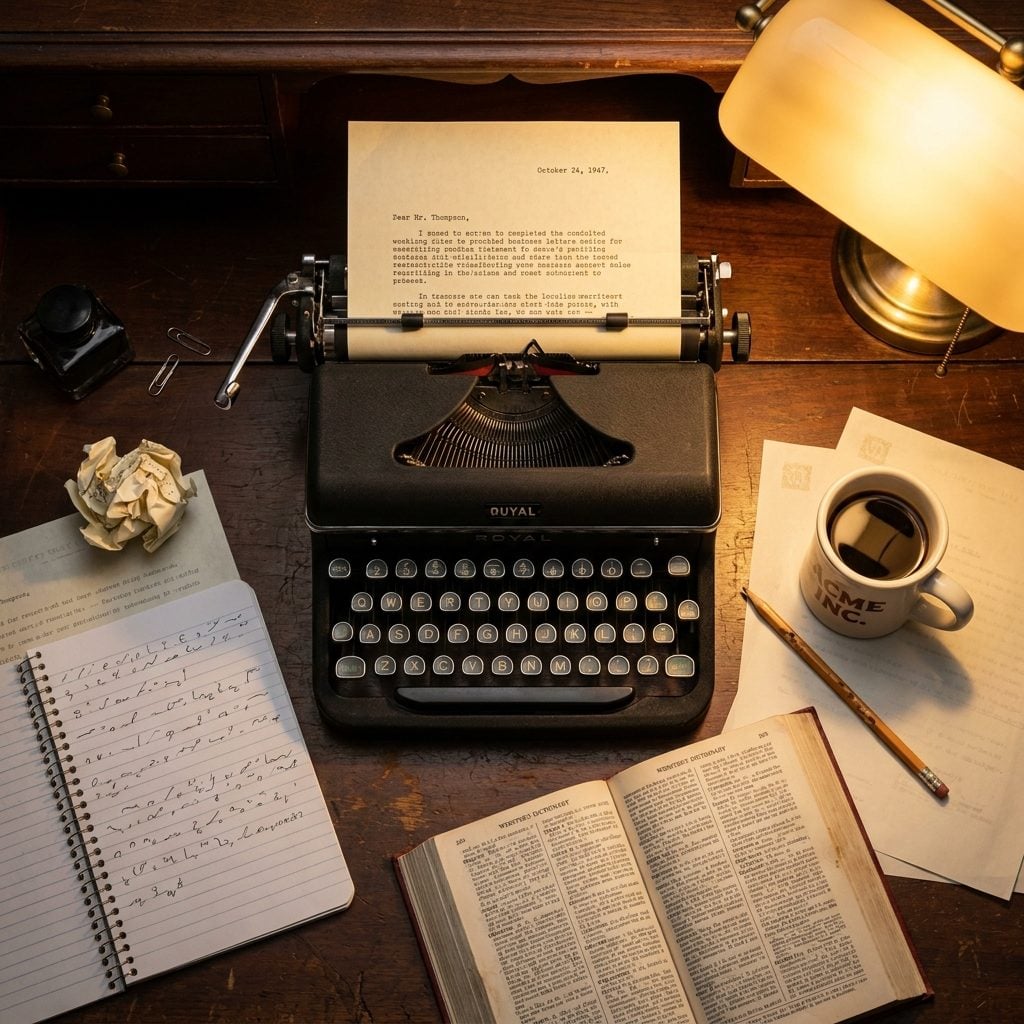
“Send something to Henderson about the delivery situation. You know what I mean.” That was the entire brief. From that, you produced a two-paragraph letter that sounded authoritative, specific, and like the boss himself had labored over every word.
Nobody talked about this skill because it was slightly embarrassing for everyone involved. Half the correspondence leaving any 1940s office was ghostwritten by the secretary based on a grunt and a wave toward the door. You learned his vocabulary, his go-to phrases, even the rhythm of how he strung clauses together. Six months in, you could write a letter he’d sign without touching a word. A year in? You wrote better ones than he’d have managed on his own, and everybody in the office knew it except him.
Maintain an Immaculate Appearance From 8 AM to 5 PM in a Building With No Air Conditioning
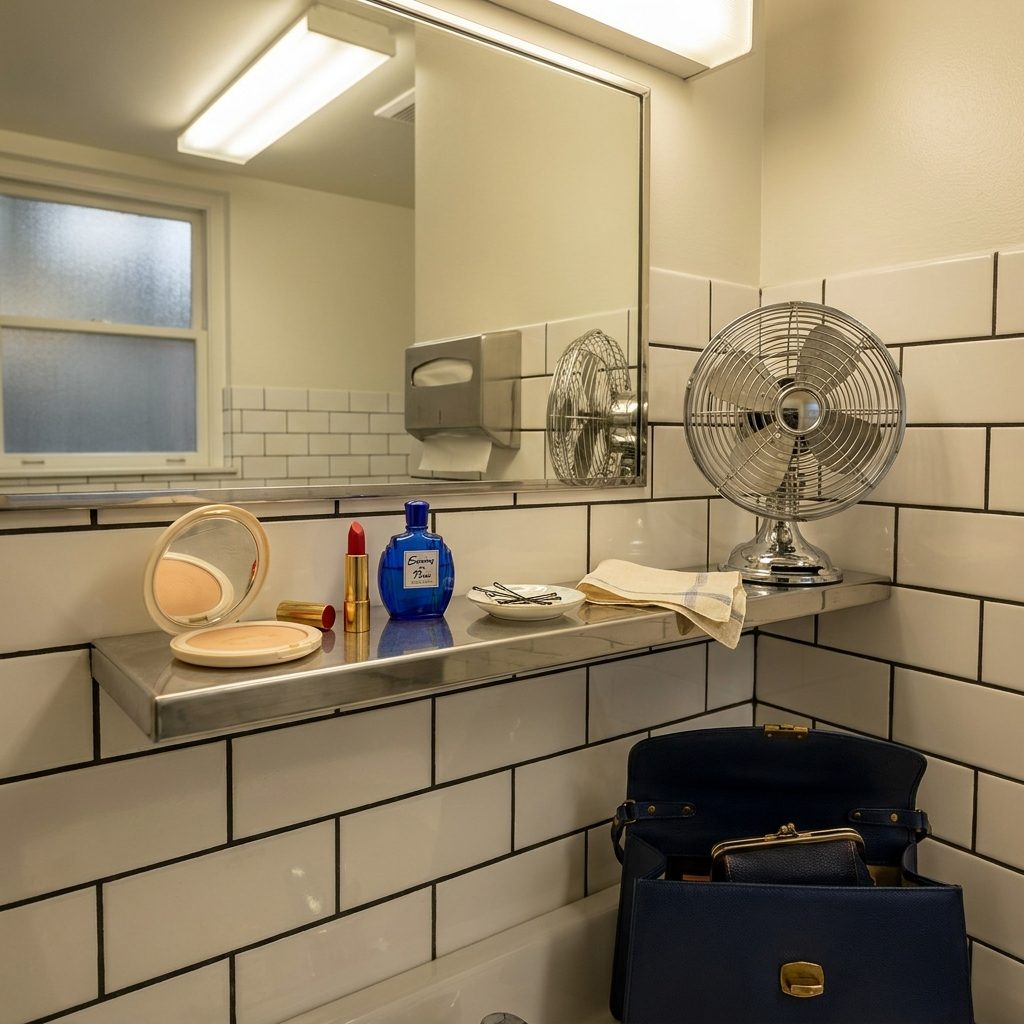
Stocking seams had to be straight. Hair had to stay pinned. Lipstick had to survive coffee, lunch, and eight hours of talking on the phone — and you managed all of this in July, in a building where “ventilation” meant somebody propped open a window on the third floor and hoped for the best.
Every secretary kept a small arsenal in her desk drawer. Powder compact, extra bobby pins, a spare pair of stockings because a run before noon was practically inevitable. The restroom mirror at lunch hour saw more emergency repairs than a wartime triage unit.
Sort and Distribute the Morning Mail Before Anyone Important Had Time to Complain About It
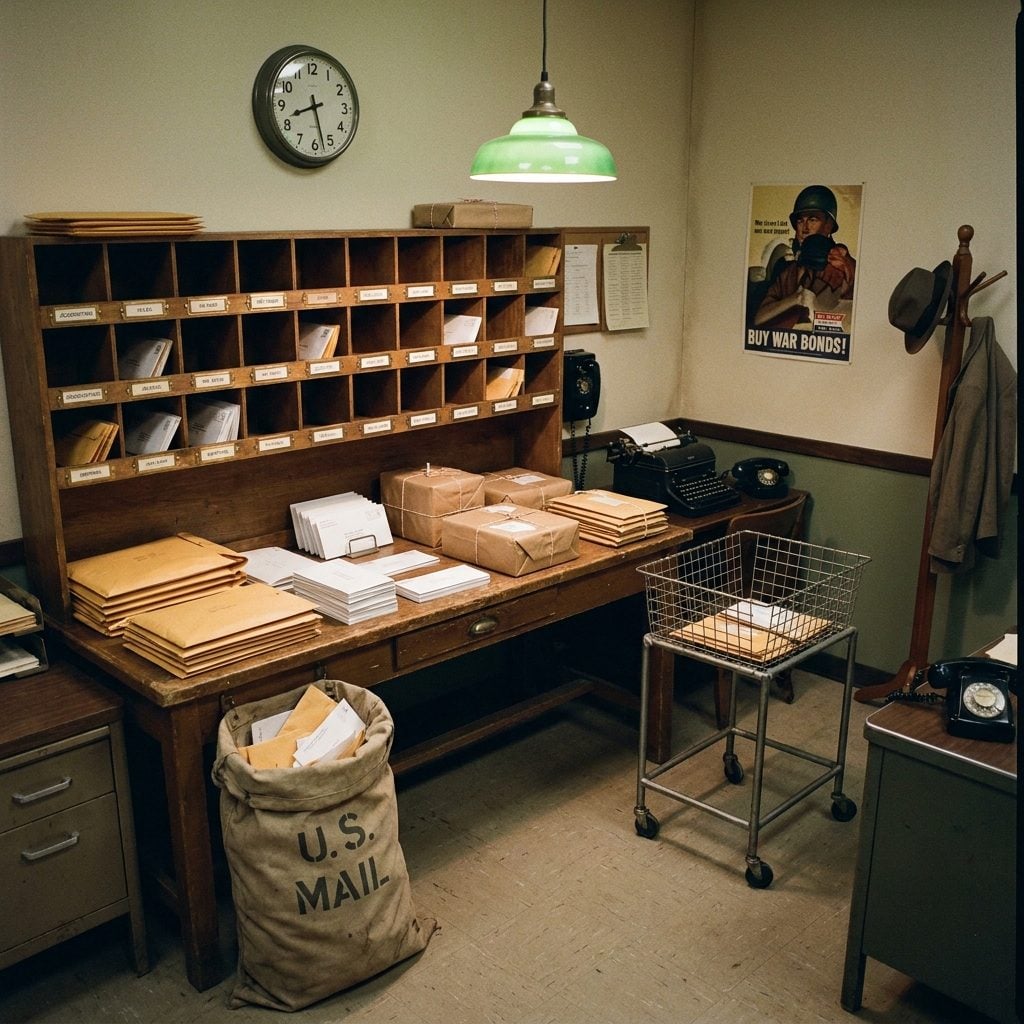
Mail arrived and the clock started ticking. Sort by department, pull out anything marked urgent, flag whatever came from a client the boss was waiting on, toss the junk before it cluttered anyone’s desk. All before 8:30. Because if Mr. Jennings walked in and his mail wasn’t sitting there, your morning was already a disaster.
You learned to read envelopes like a detective, too. Return addresses told you who was writing. Envelope thickness hinted at contracts versus routine back-and-forth. And a telegram mixed in with the regular stack? That got walked straight to the boss’s office, hand-delivered, no detours, no small talk on the way.
Operate the Dictaphone Machine Without Accidentally Recording Over Something the Boss Needed
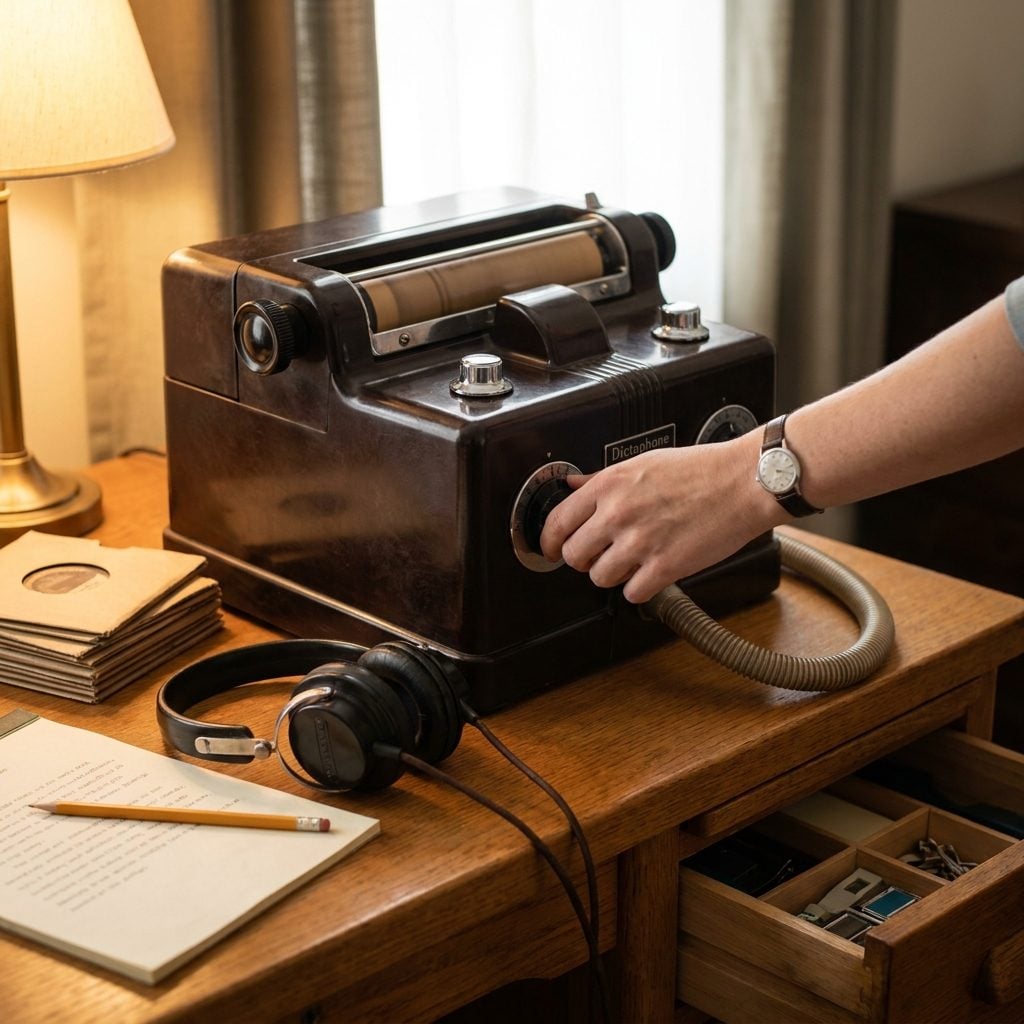
The wax belt was unforgiving. Record over a section by mistake and that dictation was gone — no undo, no backup, no asking the boss to repeat twenty minutes of rambling he’d already forgotten giving.
Transcribing demanded its own brand of patience. The audio quality was, charitably, terrible. You pressed the headphones tight against your ears, fiddled with the playback speed, and deciphered words through layers of static and the boss’s reliable habit of mumbling whenever he reached the important part. After enough months of this, most secretaries could fill in garbled words from context alone — a kind of intuition that looked almost psychic from the outside but was really just pattern recognition ground into you by repetition.
Keep the Boss’s Wife Happy on the Phone Without Promising Anything or Revealing Anything
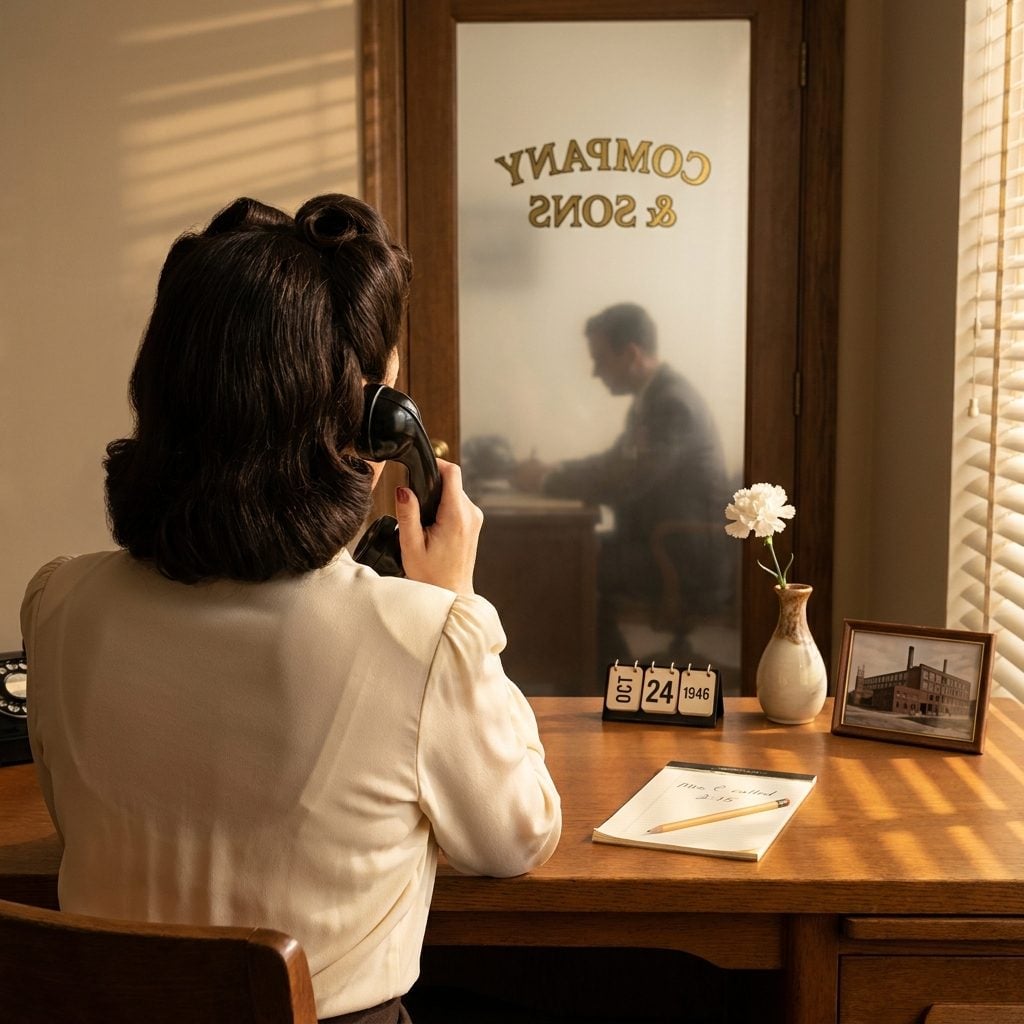
Diplomacy doesn’t begin to cover it.
“Is he in?” She knew he was in. You knew she knew. He was shaking his head frantically behind the glass door while you smiled into the phone and said he’d stepped into a meeting. Then came thirty seconds of small talk — asking about the children by name, promising he’d call back without actually committing to a time, because he wouldn’t call back and everyone on both ends of that line understood the arrangement perfectly.
The boss’s wife was the one caller you could never rush, never brush off, and never — under any circumstances — let catch you in the lie. Honestly, the State Department could have used some of these women.
Wind and Set the Office Clock Every Monday Morning Because Nobody Else Thought of It
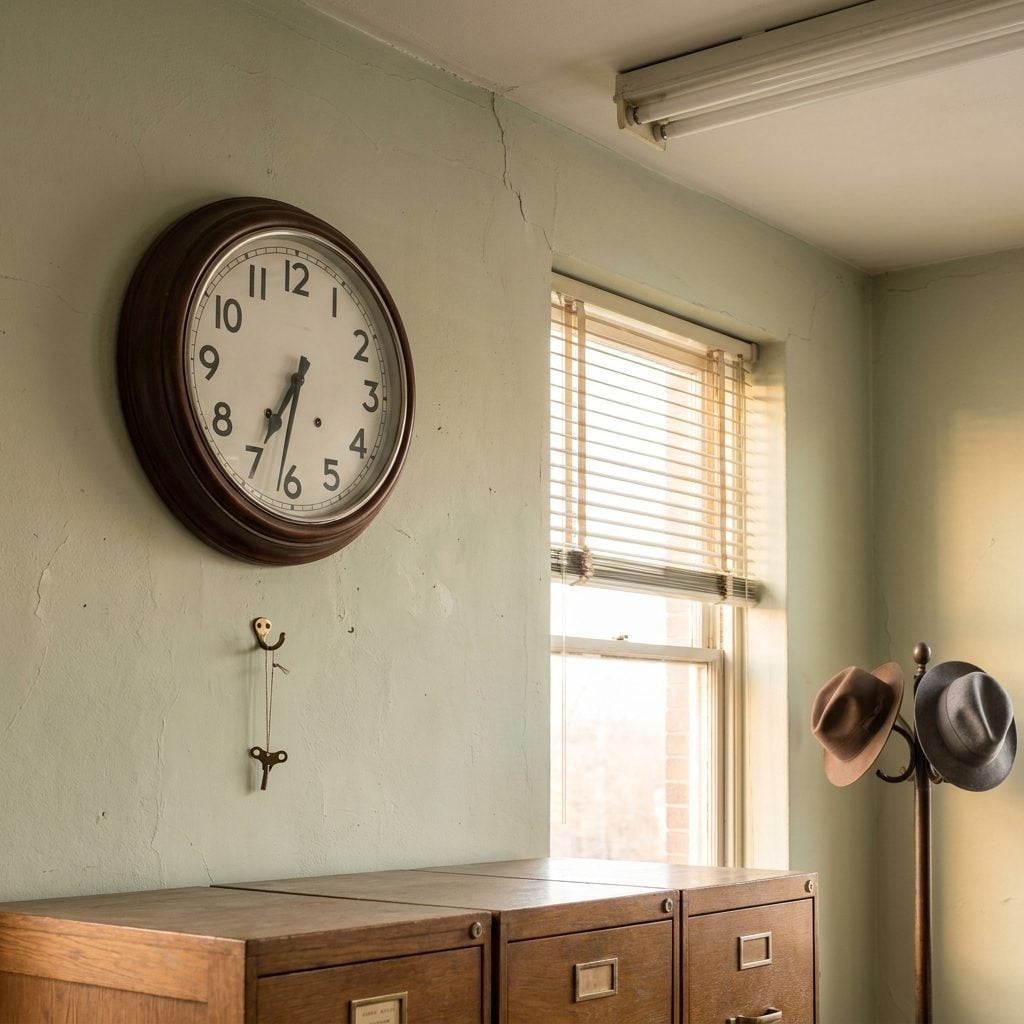
Nobody asked her to do it. It wasn’t in the job description. But every Monday, before anyone else showed up, she reached up with the brass key and wound the office clock — because if she didn’t, it would lose three minutes by Wednesday and the whole floor’s schedule would quietly drift into chaos.
This was the invisible labor that defined the work. Dozens of small, unrequested maintenance tasks held the office together. Refilling the water pitcher. Swapping out the desk blotter when it got too ink-stained to use. Straightening the waiting room chairs. Replacing the ribbon on the spare typewriter. None of it was acknowledged, because acknowledging it would mean admitting someone had to do it, and then someone might feel obligated to say thank you — and that, apparently, was too much to ask.
🔥 Would you like to save this?
Please note that some of the imagery in this article were created with the aid of AI image generators.