
🔥 Would you like to save this?
A whole roast on fine china, carried down a corridor at sixty miles an hour, and not a drop spilled. That was dinner service on an American streamliner in the 1950s. The silver was heavy enough to feel like you’d earned it, the tablecloth was pressed, and the scenery outside kept moving while your soup held perfectly still.
We’ve been chasing that feeling ever since. Never quite catching it. Here’s what it actually looked like when getting there was the best part of the trip.
26. Waiters Balancing Full Trays as the Train Swayed
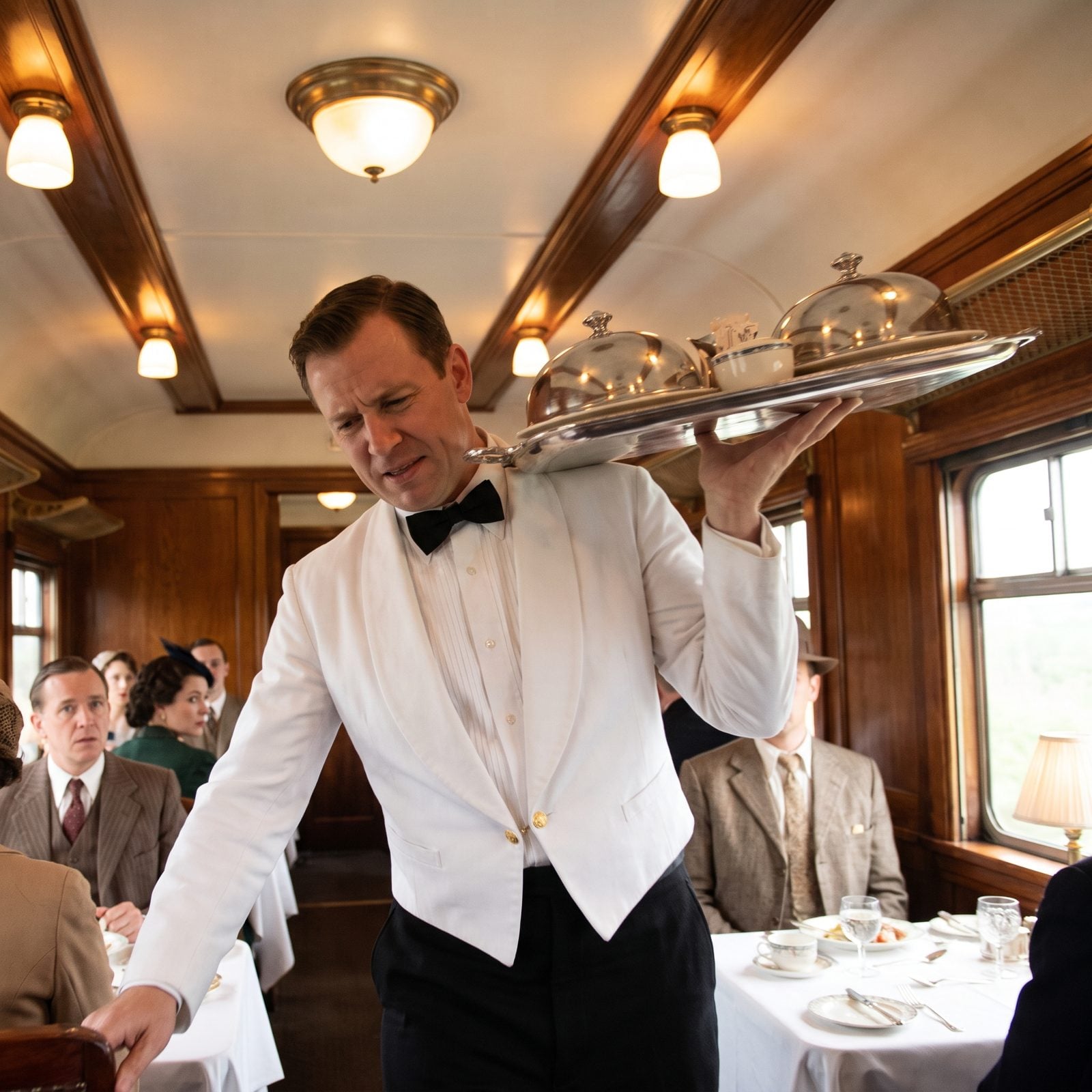
You’ve seen a waiter sidestep a sway with a tray held flat above his shoulder, but you’ve never seen it done at sixty miles an hour over a bad stretch of track. That was the job. A dining-car waiter learned to read the roadbed through the soles of his feet, feeling a curve coming and leaning into it before the car did.
Most of these men were Black, working some of the few union-protected service jobs open to them back then, and they were very good at it. A full tray of covered dishes and a pot of coffee, carried the length of a rocking car, set down without a rattle. The ones who’d been at it for years made it look like the train was holding still for them.
25. White Tablecloths Pressed Before Every Single Sitting
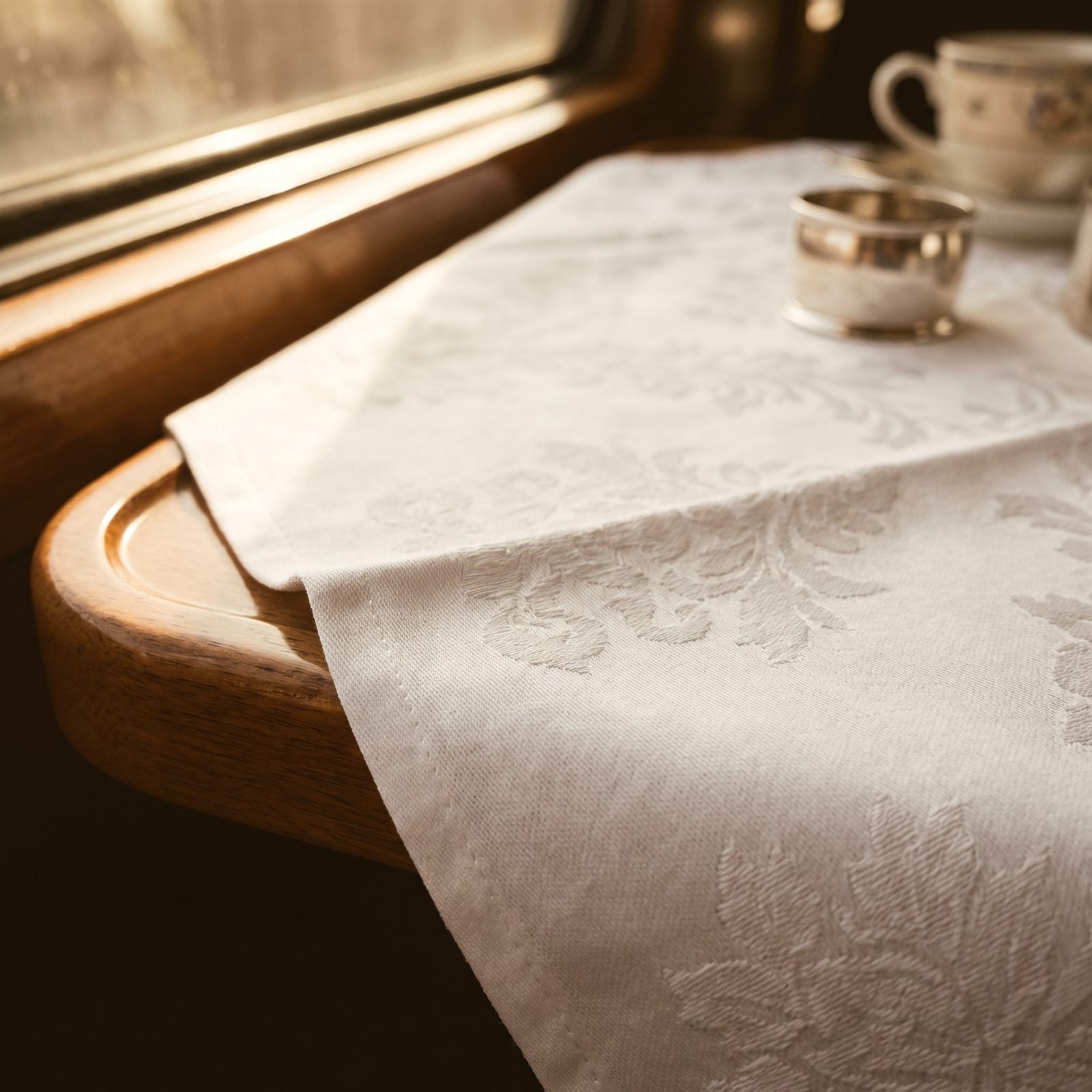
Starched cotton damask, folded crisp enough to stand a crease in. Between every seating the cloth came off and a fresh one went down, dressed smooth with a flick of the wrist before the next party sat.
A railroad could burn through hundreds of tablecloths on a single long run. They went down to commissary laundries at the division points, got boiled, pressed, and loaded back on. The dining car used more linen than a hotel its size ever would, because that table turned over again and again across two time zones.
24. Railroad Silver Heavy Enough to Feel in Your Hand
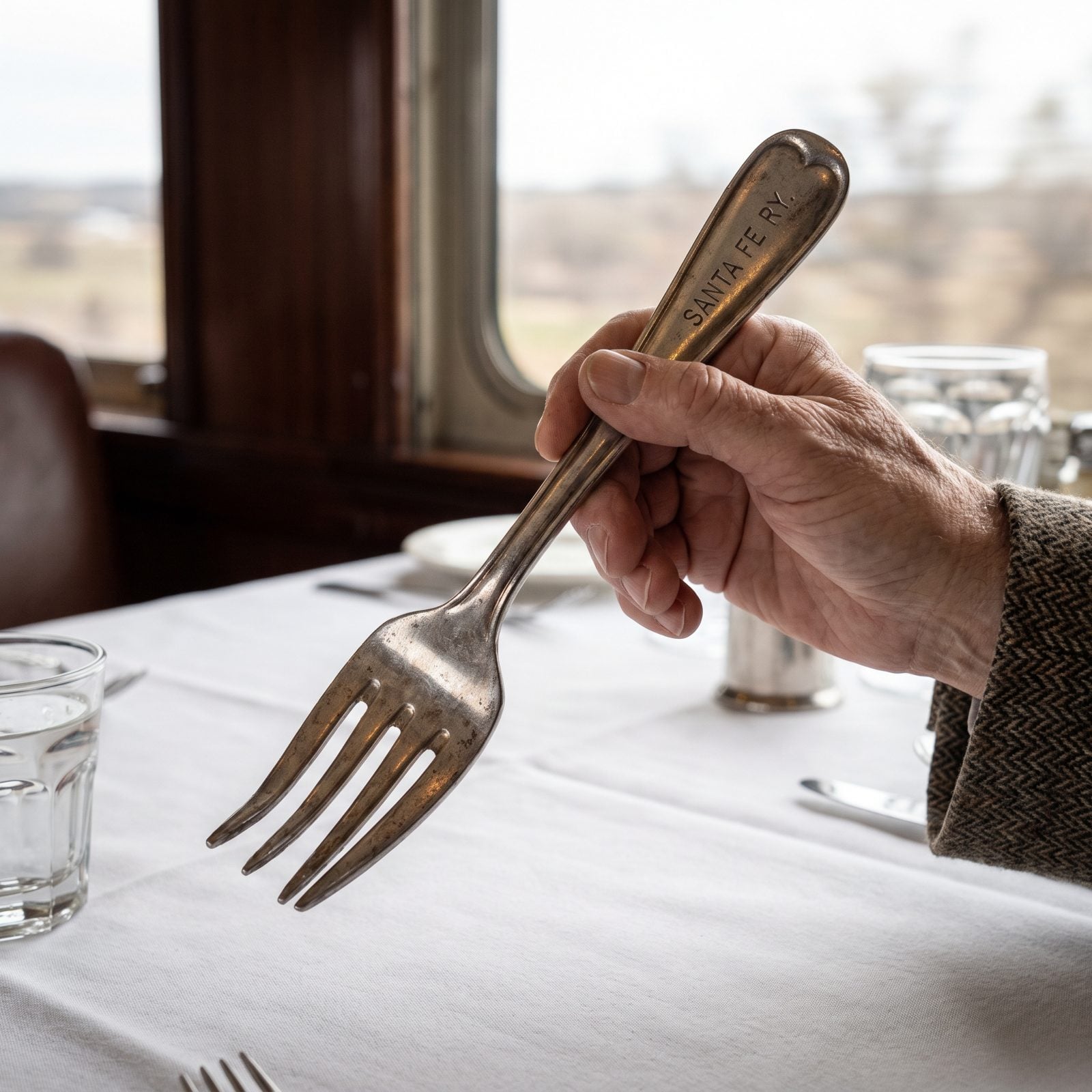
Pick up the dinner fork and you felt it right away. Heavy. Railroad flatware was made thick and durable to survive constant handling, commissary washing, and the jostle of a moving car, and the heft read as quality the moment it touched your palm.
Each piece was stamped on the back with the railroad’s mark, partly for pride and partly because silver walked off trains the way hotel towels do. Pull a spoon over now at an antique show and you can still read the crest. That weight is the whole memory in your hand.
23. China Stamped With the Railroad’s Own Emblem
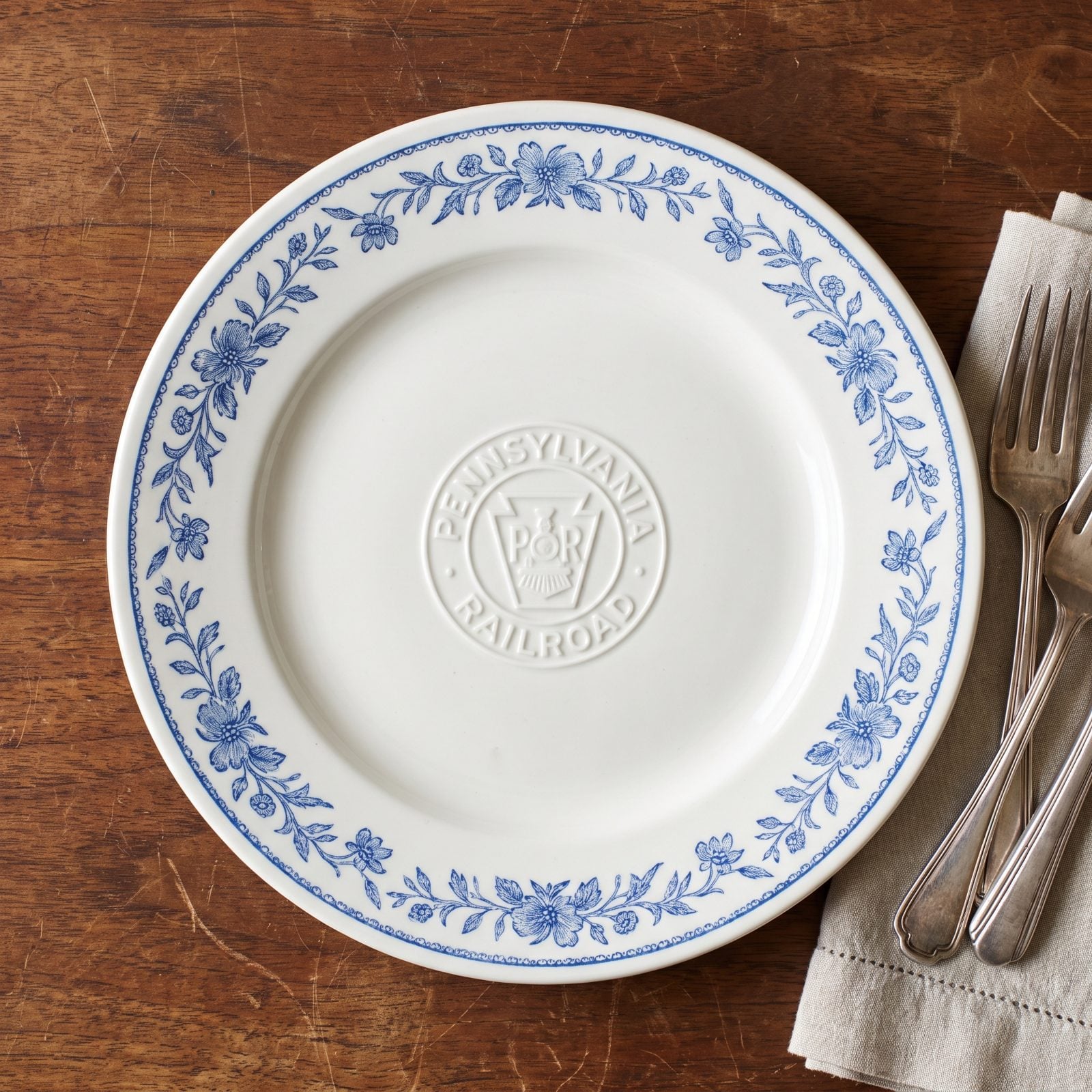
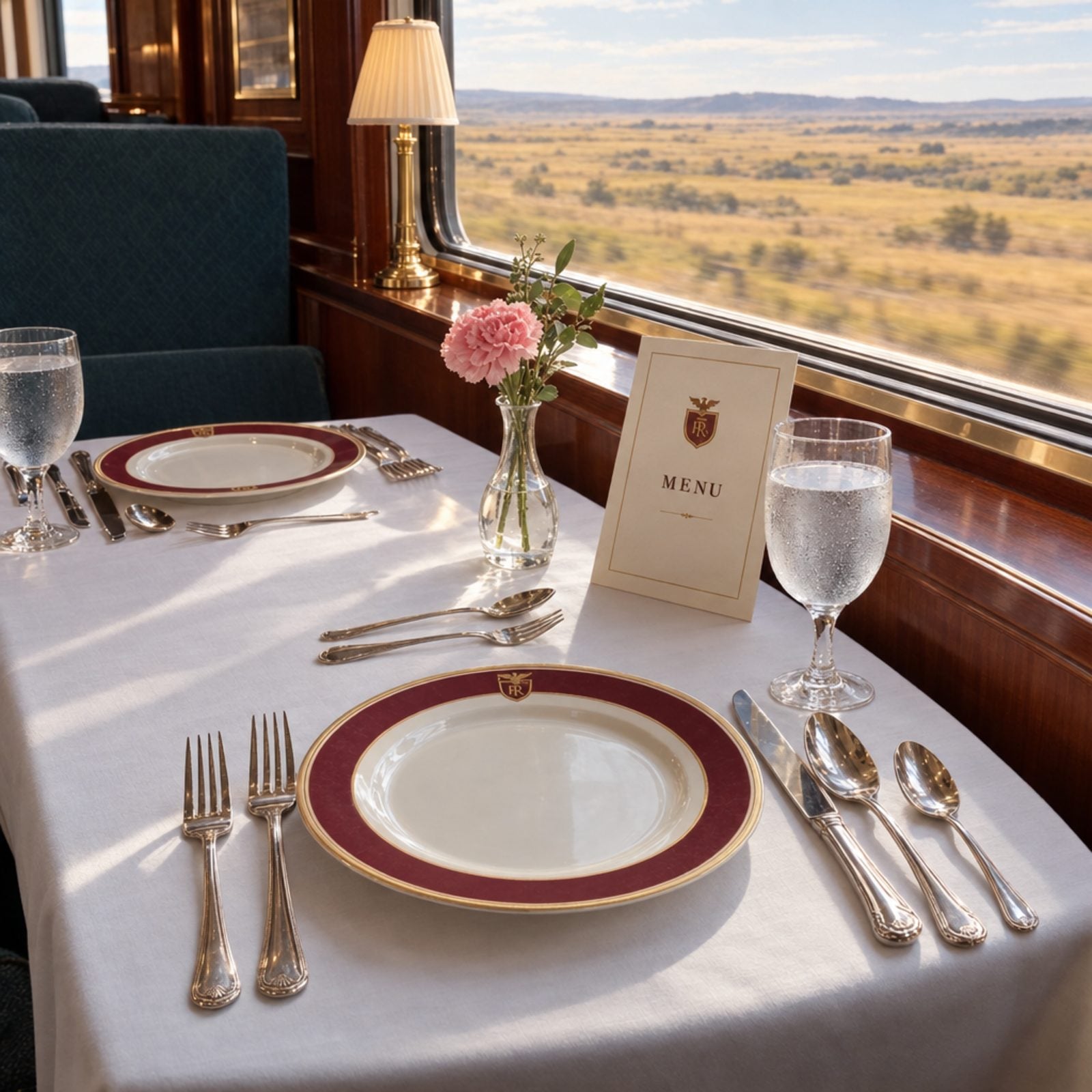
The plate told you which railroad you were riding before you’d read a word. Each line had its own china pattern, its emblem worked into the rim in maroon, gold, or cobalt, often tied to the route itself.
These weren’t delicate. Thick vitrified restaurant porcelain, built to take a hard life. And collectors spend real money chasing single pieces now, because a railroad’s dining china was its signature on the table, a little piece of the line you carried right up to your fork.
22. Fresh Flowers in a Little Bud Vase on Every Table
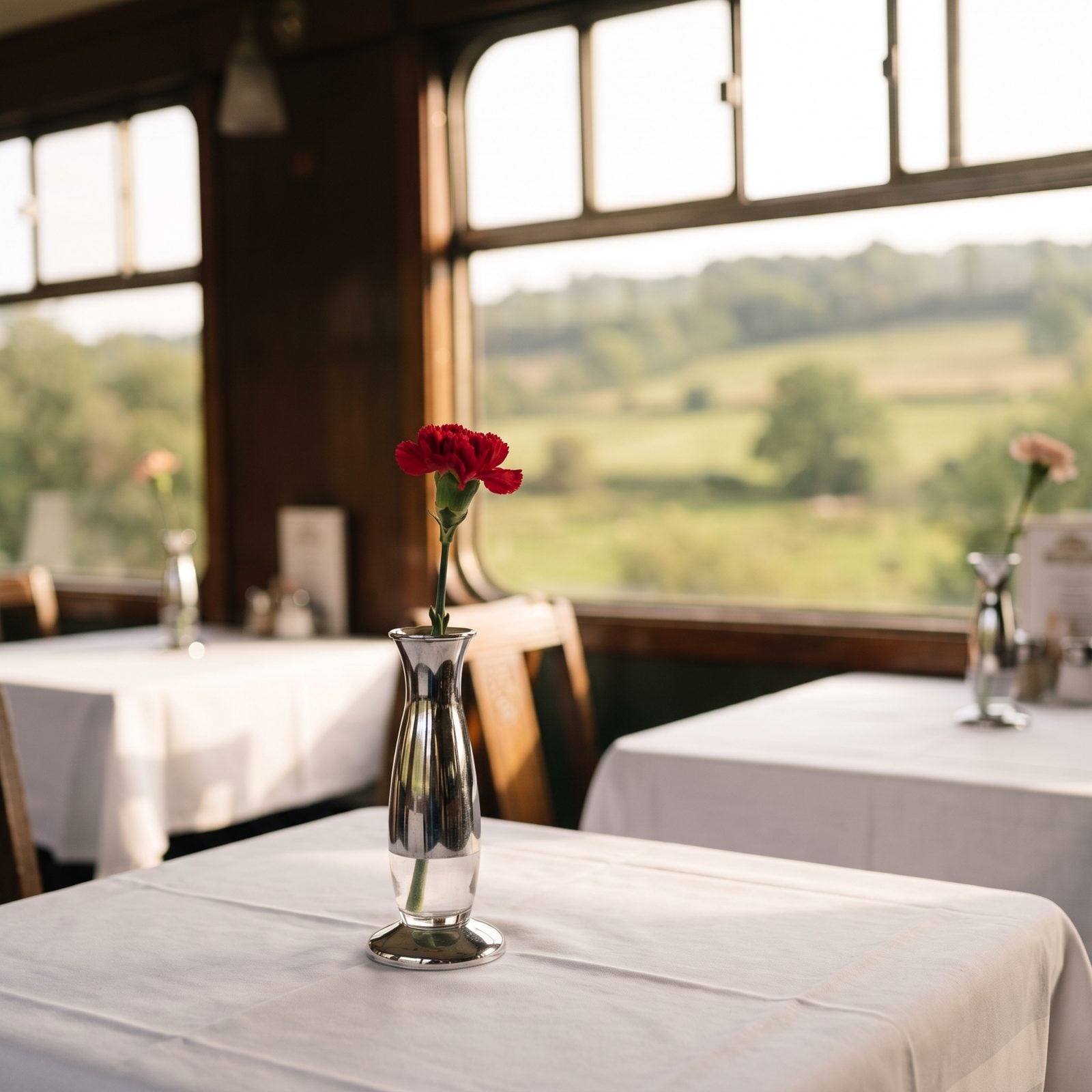
A single carnation in a small vase, maybe a sprig of greenery, sitting there on the white cloth while the whole country rolled by the window. That little detail did more than you’d think. It said someone had bothered.
The flowers got refreshed at major stops, stocked by the commissary along with the meat and the linen. You were crossing a thousand miles of nothing in particular, and there on your table was something alive and tended. That’s the touch we miss most. Nobody ever sets a fresh flower in front of you on an airplane.
21. Jackets, Ties, Hats, and Gloves Just to Eat Dinner
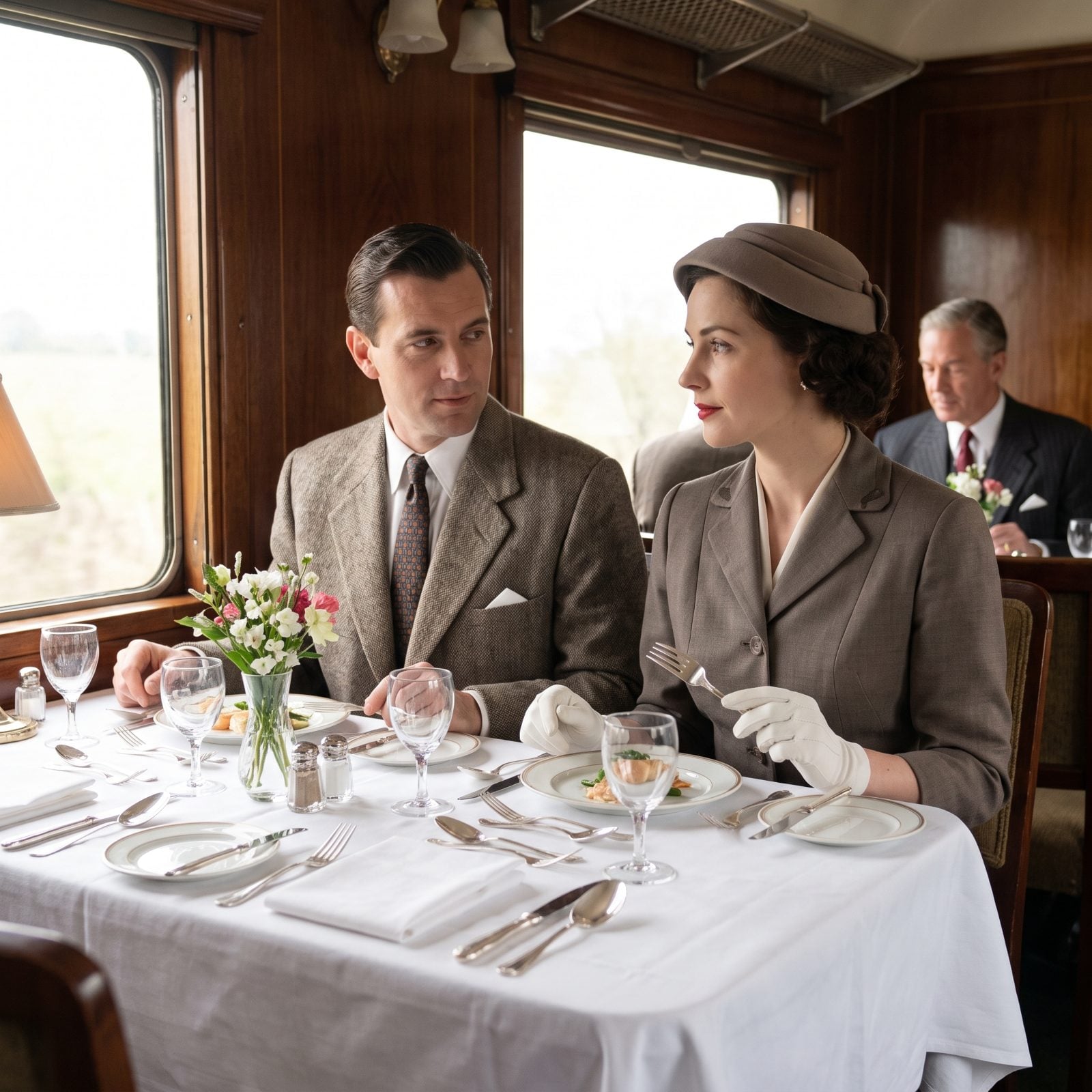
You didn’t just wander into the dining car. You dressed for it. Men put the jacket back on and straightened the tie, while women wore a day dress, short gloves, maybe a small hat still pinned in place from the station.
The hat went on the hook or the empty seat, the gloves came off for the meal and went back on after. Nobody was putting on airs. Dinner on a train was an occasion, and the whole car dressed for it as a matter of course. Nobody showed up in what you’d now call travel clothes. There weren’t any travel clothes. There was just how you dressed.
20. A Steward Working the Train to Take Your Reservation
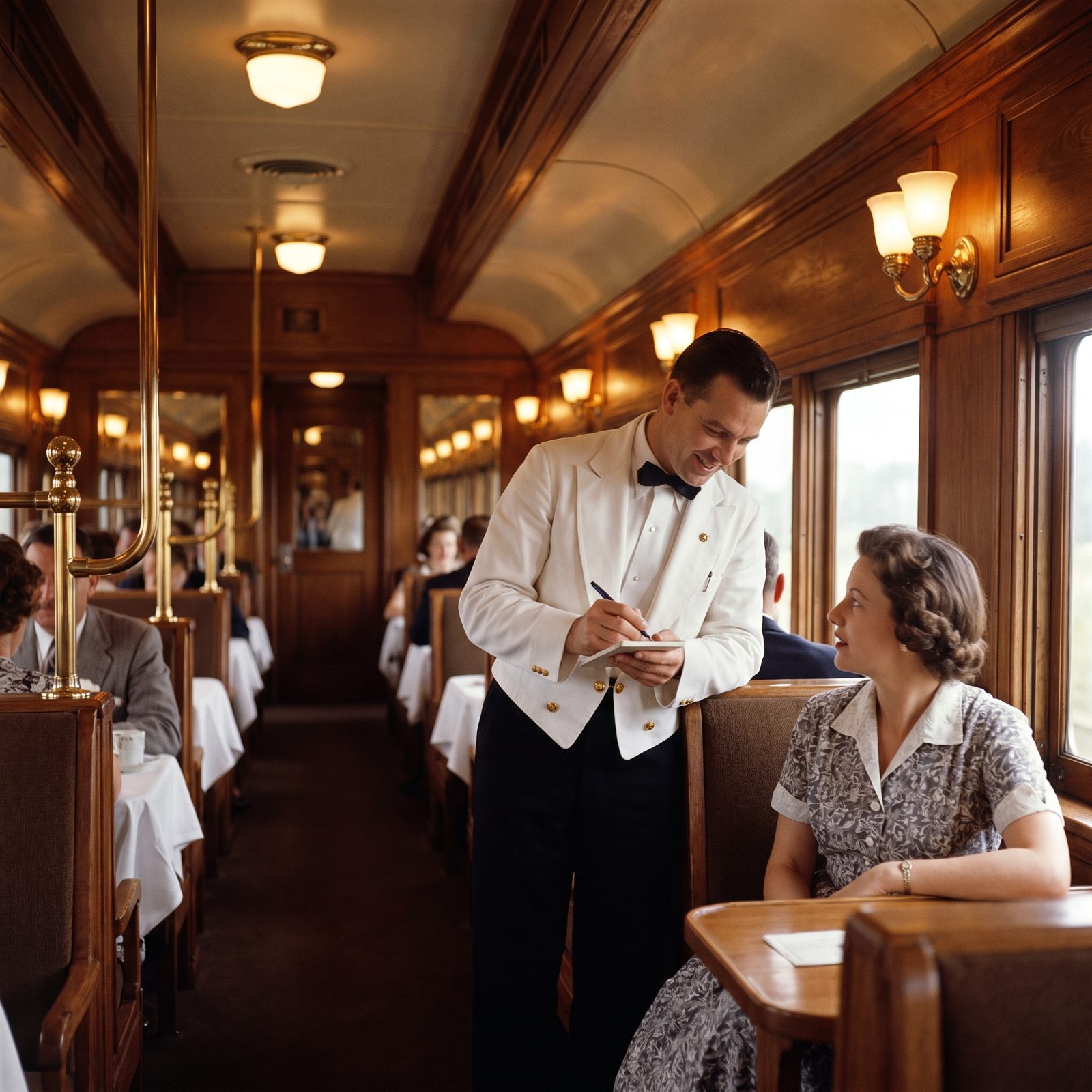
Before you ever smelled the kitchen, the steward found you. He walked the length of the train, car by car, pad in hand, asking which seating you’d like and marking you down for a table.
It was a quiet bit of logistics dressed up as courtesy. A galley the size of a closet could only feed so many at once, so the whole train got spread across the evening by one man and his pencil. You didn’t scan a code. A person came to your seat, learned your name, and held a table for you.
19. Dinner Seatings Called by a Steward’s Chime
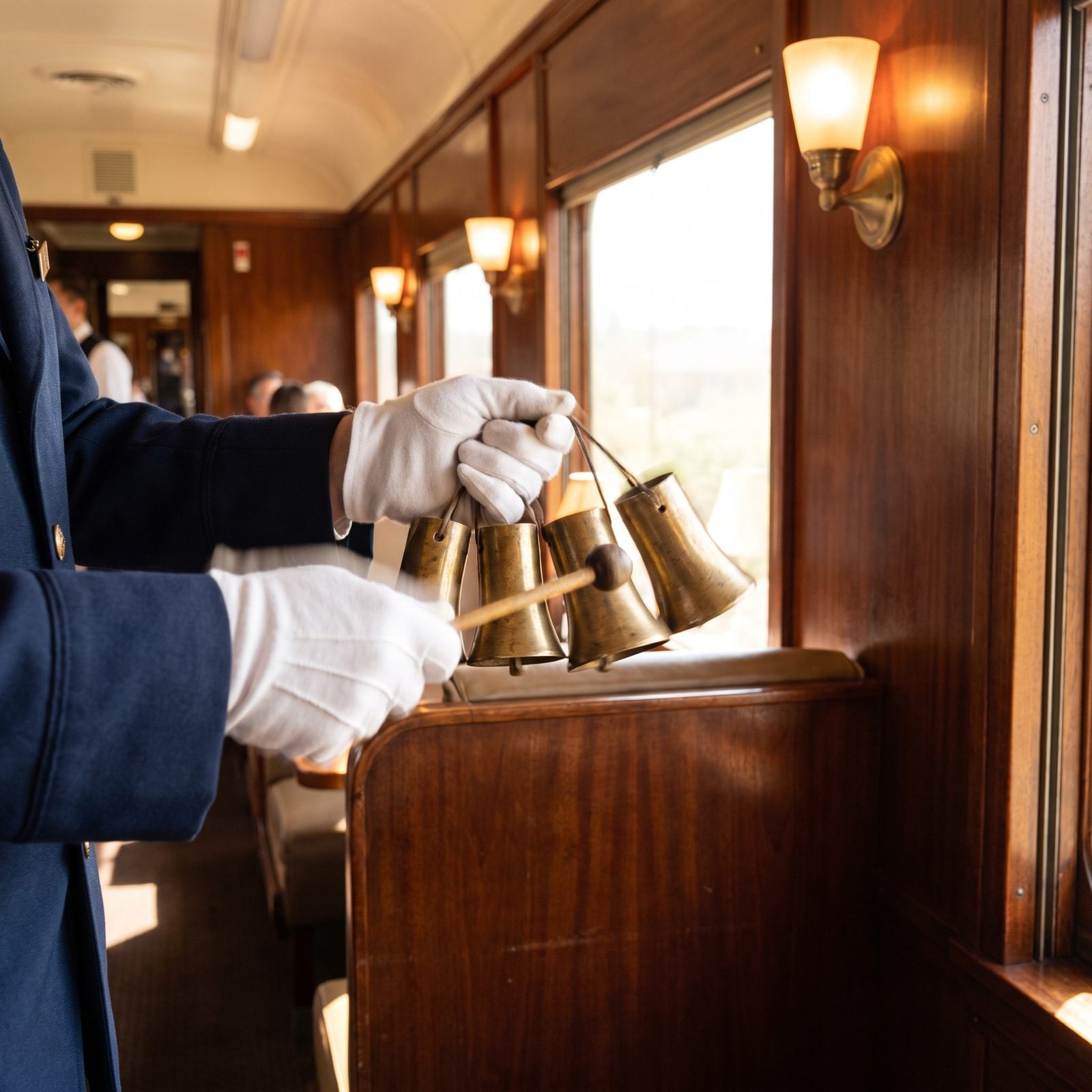
The sound carried through two or three cars. A steward walked the aisle striking a small set of melodic chimes, three or four notes, and that was your cue. First call for dinner.
You’ve got a sound living in your memory for almost everything, and for a lot of people this is the one that means the trip is really underway. The chime meant the galley was ready, your seating was up, and it was time to make your way forward through the swaying cars to a set table.
No speaker, no announcement, no screen. Just a few notes carried down the aisle, and the whole car knew what they meant.
18. Being Seated With Total Strangers at a Four-Top
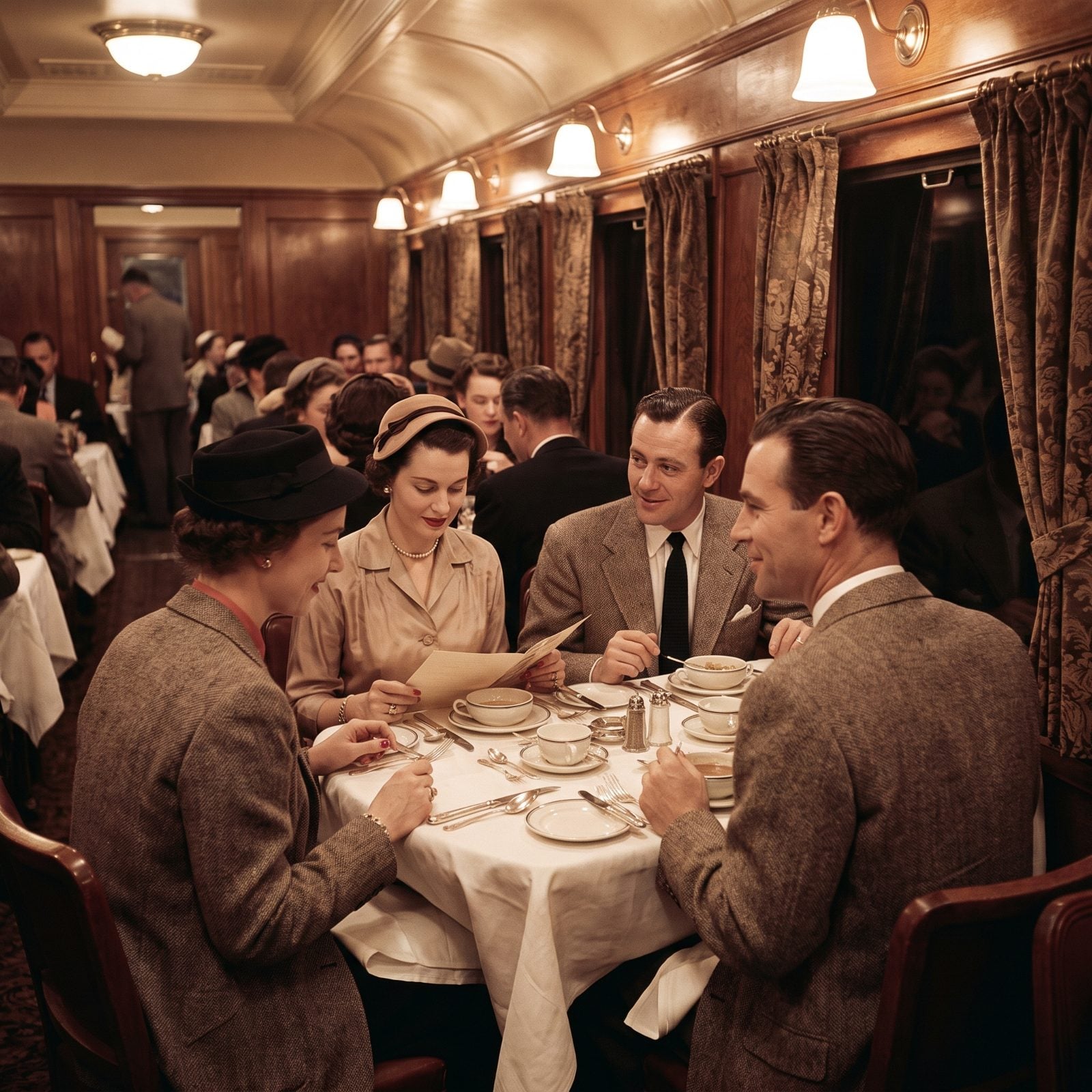
Space was tight, so the steward seated you wherever there was room. Which meant you, traveling alone or as a pair, often ended up across the cloth from people you’d never met and would never see again.
You passed the salt, you asked where they were headed, you found out a stranger from Ohio had an opinion about your route. By Nebraska you knew each other’s business, and by Utah you’d said goodbye for good. It’s the kind of small human collision that doesn’t really happen anymore, now that everyone travels sealed inside their own headphones. A shared table made strangers into company for an hour.
17. Printed Menus That Showed Off the Country Outside
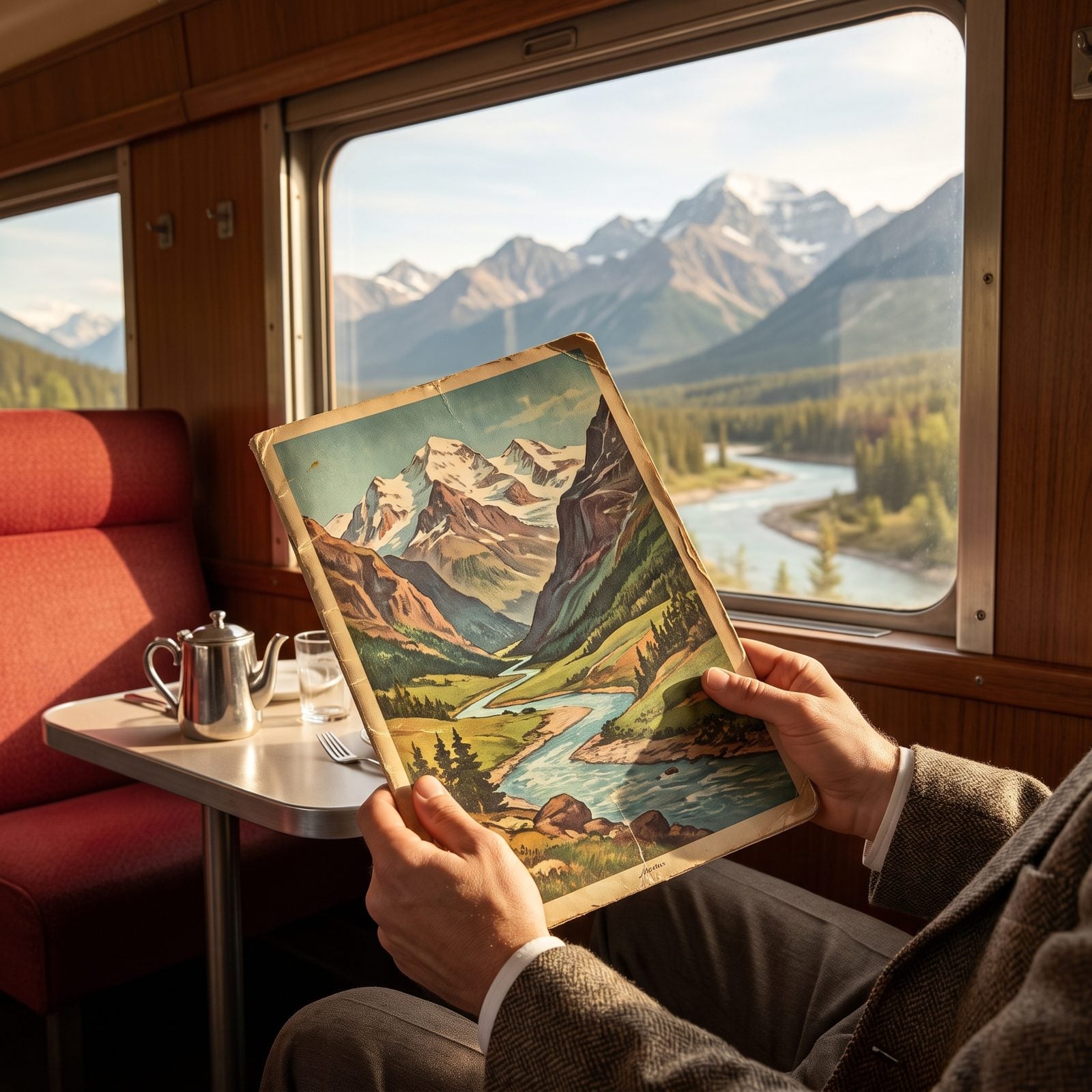
The menu was half meal, half souvenir. The cover carried a full-color scene from the route you were riding, a mountain pass, a canyon, a river the line was famous for running alongside, rendered in that bright travel-poster style that made the whole country look like a promise.
Inside, the day’s dishes in handsome serif type, often naming the specialty the railroad hung its reputation on. People slid them into coat pockets to keep. A menu that showed you the landscape you were about to see understood exactly what it was selling. Not food. The trip.
16. Regional Specialties Named for the Railroad
🔥 Would you like to save this?
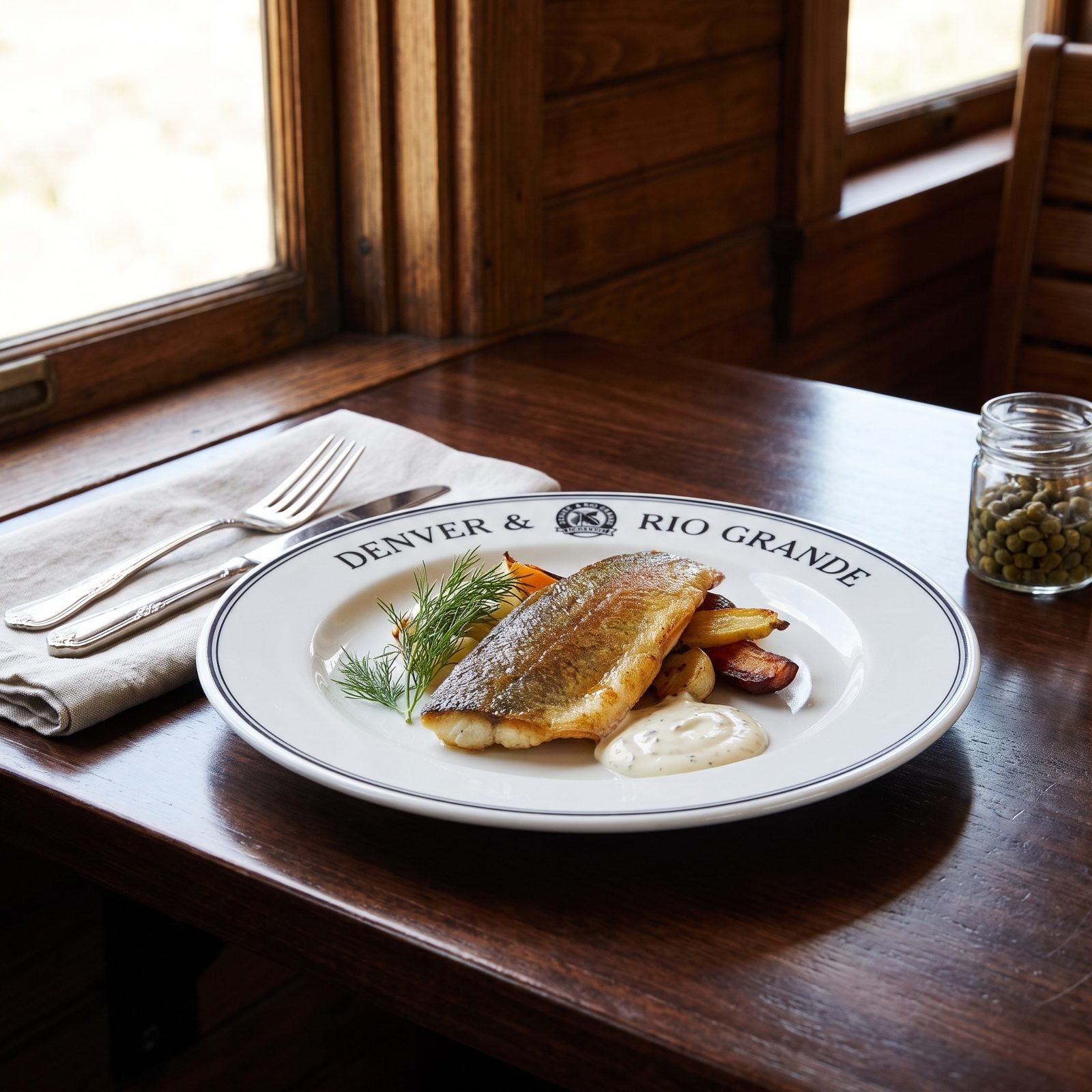
Every railroad had a dish it hung its reputation on. The Great Northern put its name on mountain trout; the Santa Fe built legend around French toast thick as a brick. These weren’t menu items so much as signatures, cooked the same way car after car, so a regular could order by the railroad’s name and know exactly what landed in front of him.
You weren’t just eating dinner. You were eating the line itself, the chef trading on a hundred miles of reputation with every plate.
15. Full Breakfasts Cooked to Order
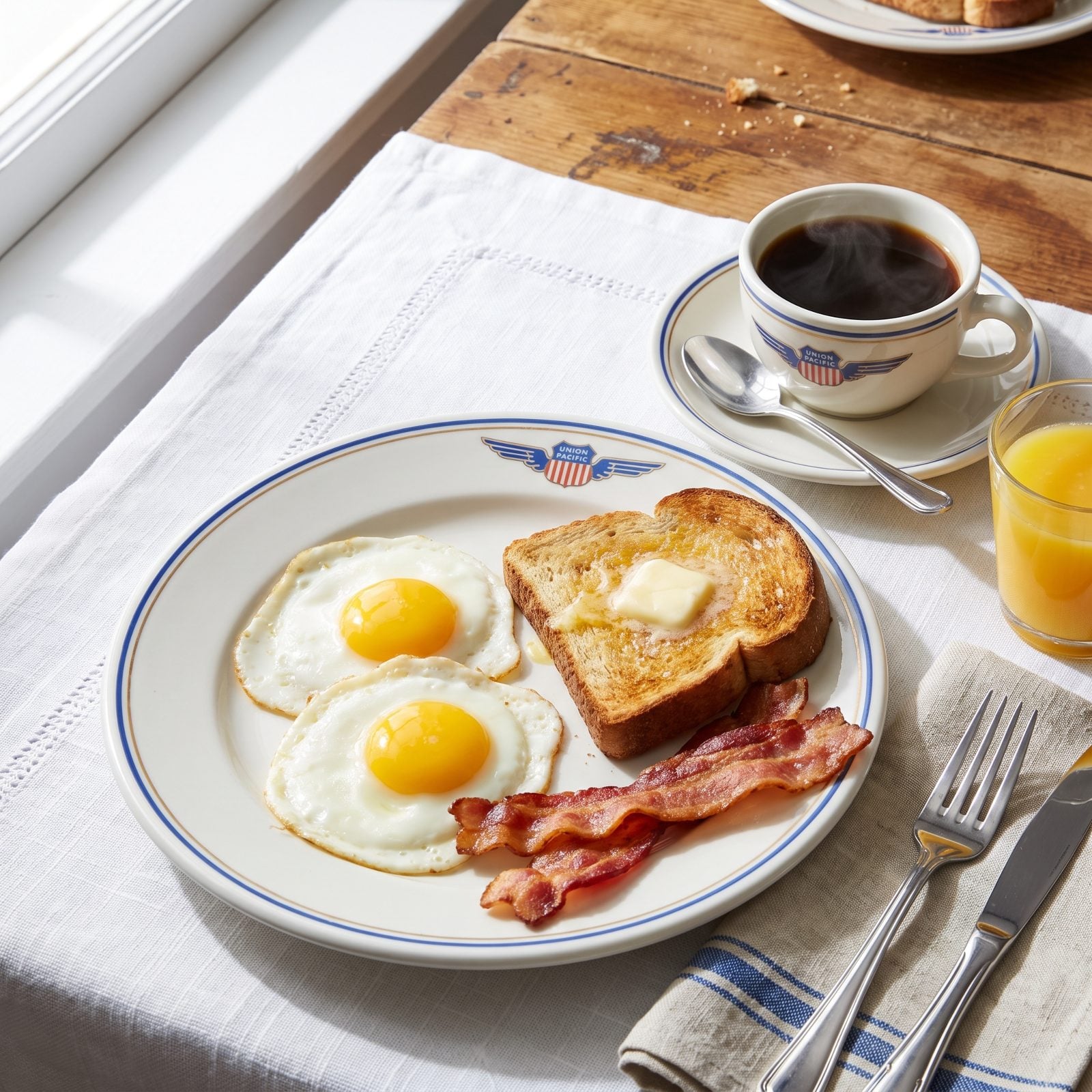
No buffet. No steam table. You told the waiter how you wanted your eggs, and twenty feet away a cook in a hot galley cracked them to order while the train took a curve. Over easy meant over easy. Three-minute egg meant three minutes.
The menu ran long, too. Griddle cakes, ham steak, grapefruit halves, grits below a certain latitude. Breakfast on a train was the one morning meal nobody rushed, because where else did you have to be? You were already going there.
14. Steaks Broiled in a Tiny Moving Kitchen
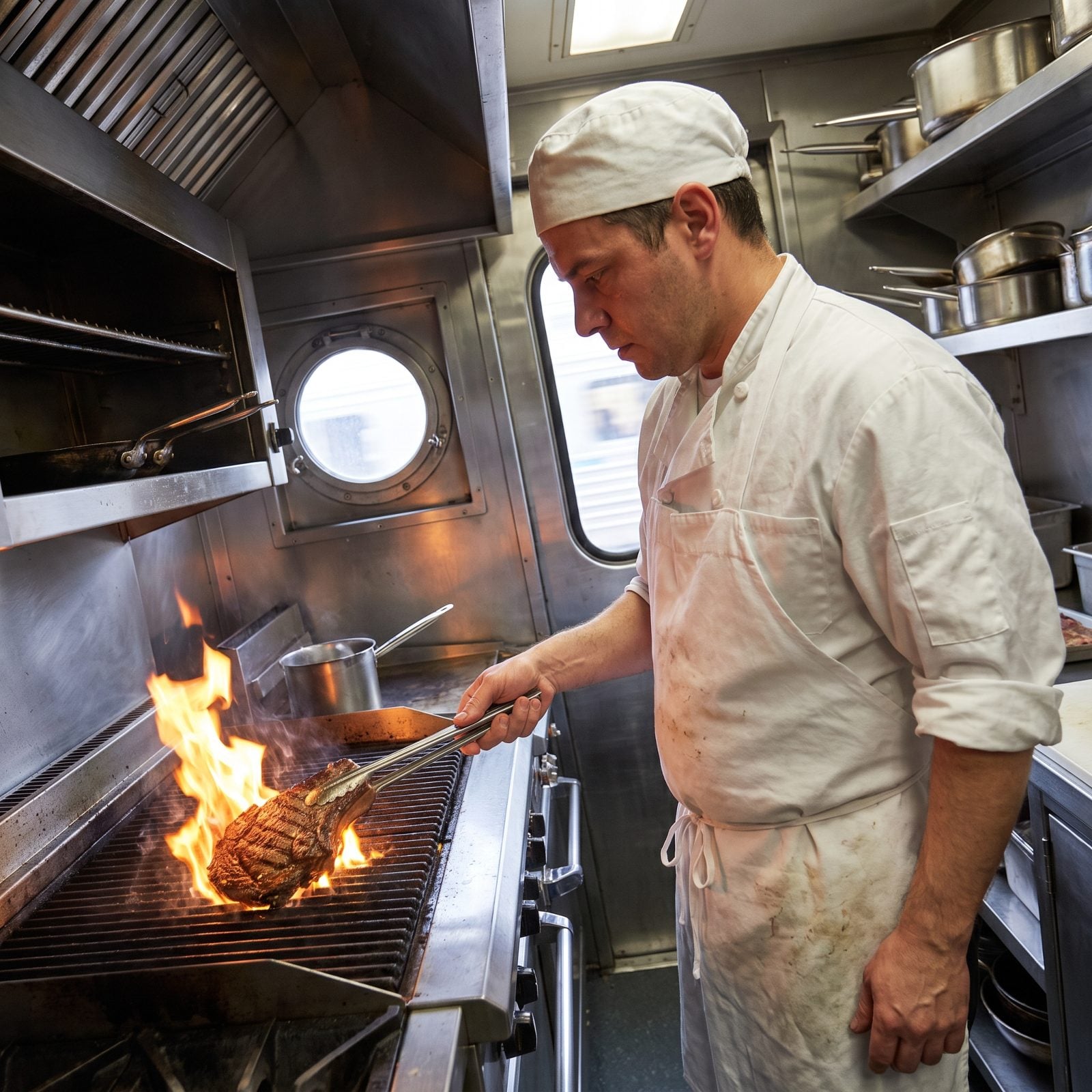
Picture broiling a two-inch steak while the floor sways under you. That was the galley cook’s whole job — a kitchen barely wider than a hallway, a broiler throwing real heat, plates stacked on every ledge, a dish rail to keep them from flying on the curves.
The steaks came out right anyway. Medium rare at speed, charred edge, pink center, carried the length of a rocking car without a wobble. Anyone who’s cooked on a camp stove knows how easily things go flying. These men did it at sixty miles an hour and made it look dull.
13. Silver Coffee Pots Left at the Table
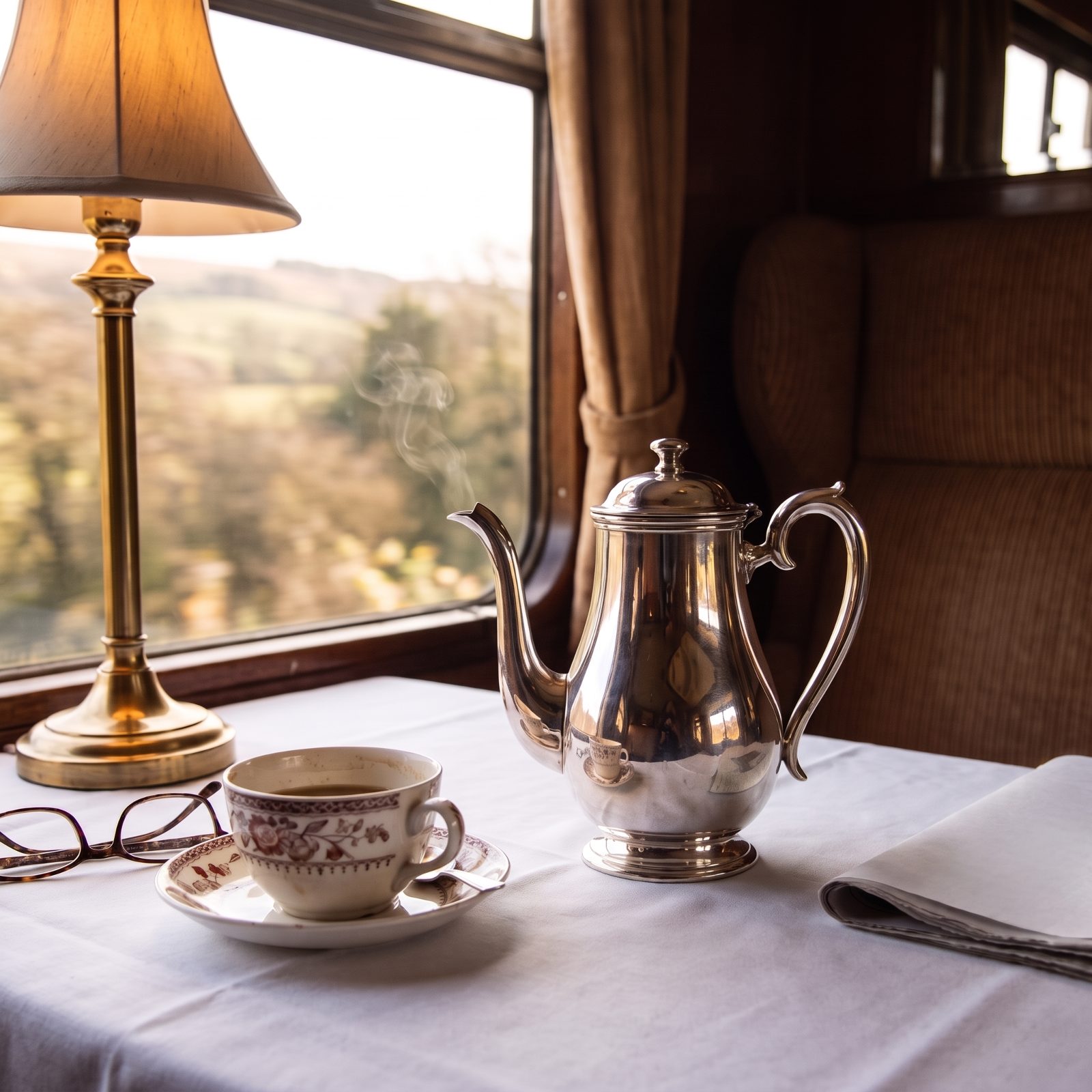
The waiter poured your first cup, then set the whole pot down and left it. Heavy plated silver with a swan neck, your name as good as on it for the duration. No one hovered. No one asked if you were still working on that.
Refill yourself, linger, watch the country go by. That silver pot beside your cup said the table was yours as long as you wanted it.
12. Individual Toast Racks at Breakfast
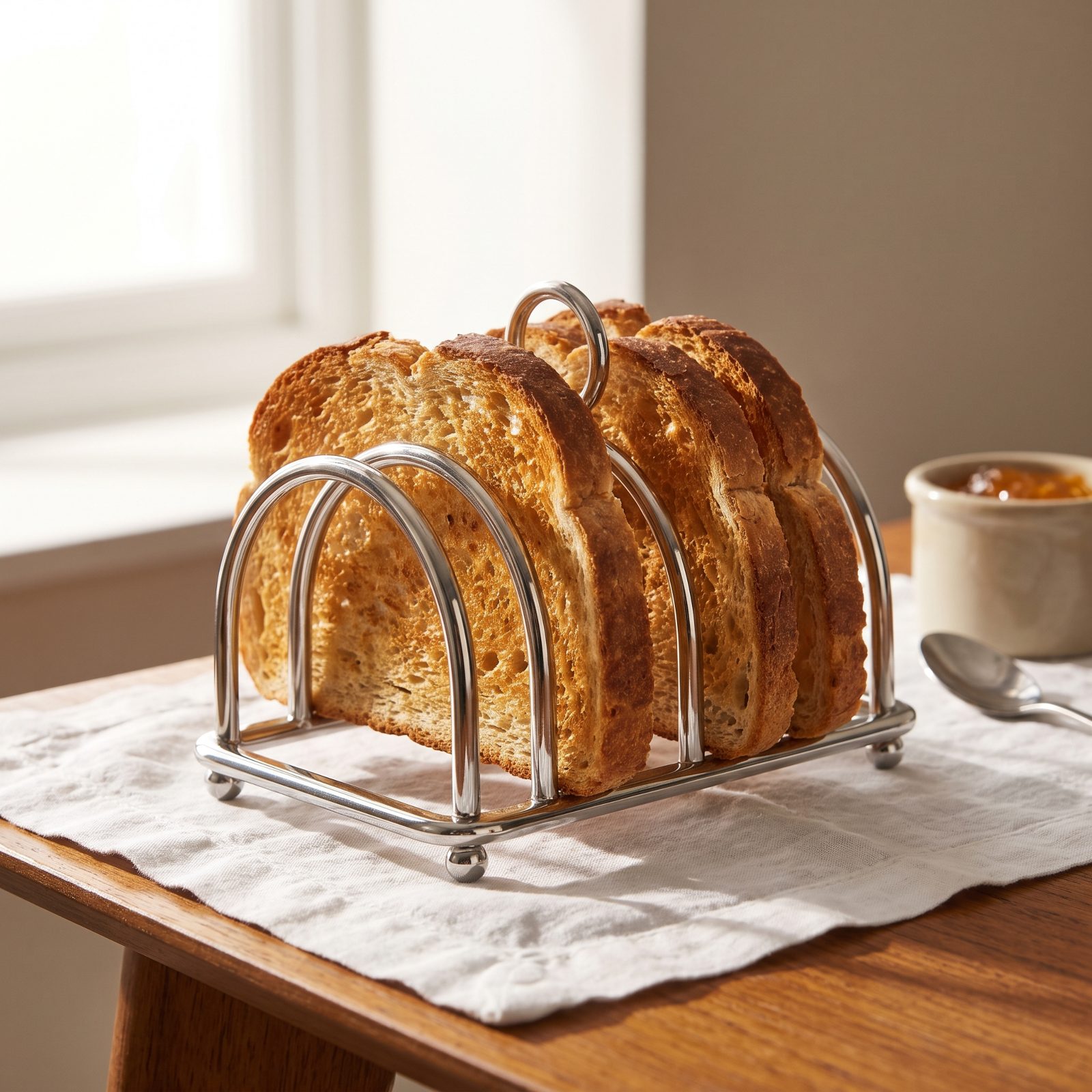
Toast stood up. Four slices slotted into a little silver rack so they stayed crisp instead of steaming soft against each other on a plate — a detail so small you almost didn’t register it, and exactly the kind of thing that told you where you were.
Butter in its own dish, marmalade in a glass pot. Nobody buttered it for you. The rack just kept it right until you got to it.
11. Finger Bowls Following Formal Courses
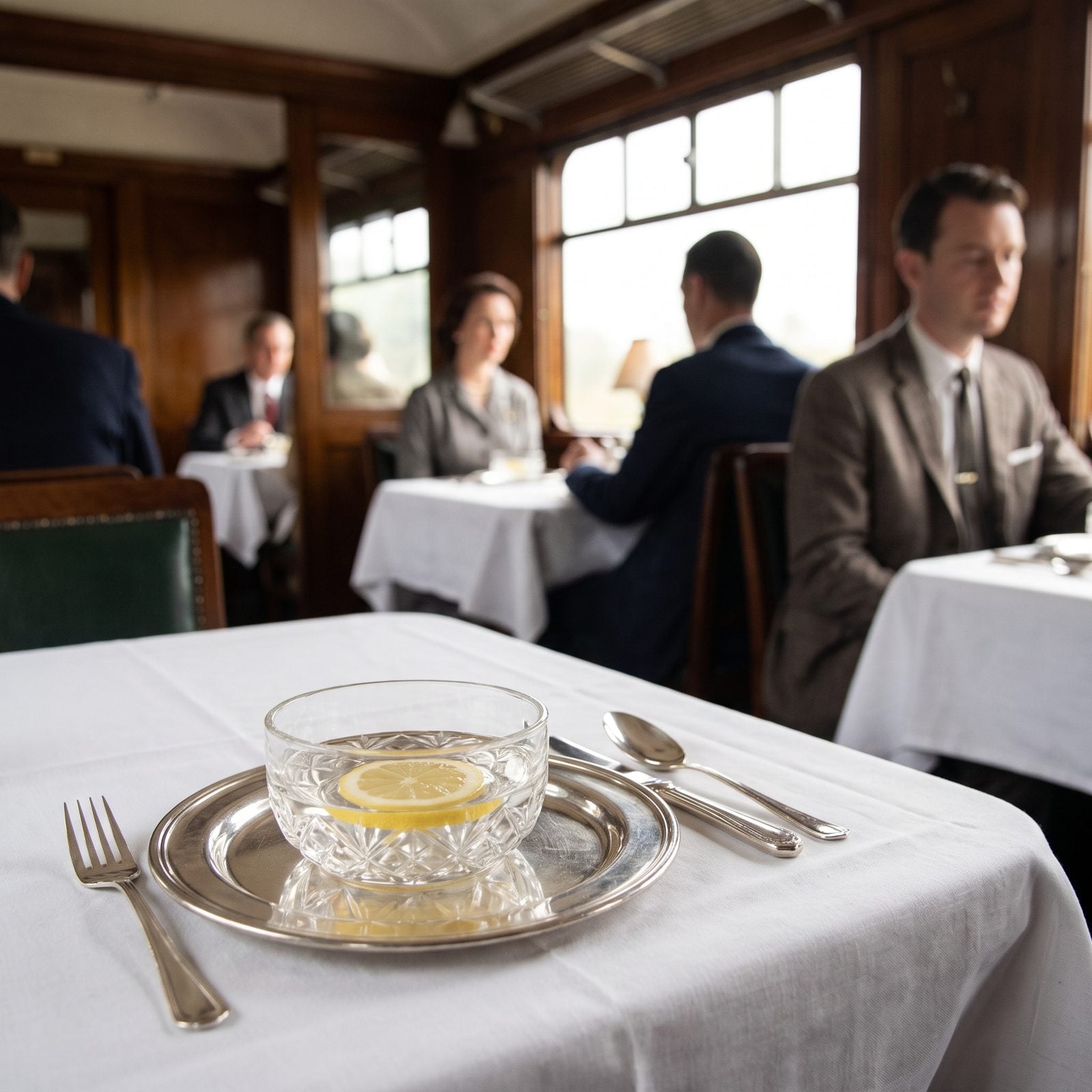
After the course that got your hands involved — the lobster, the squab — the waiter brought a glass bowl of warm water with a lemon slice floating in it. You dipped your fingertips, dried them on the napkin, and the meal moved on.
A dining car could have skipped this. It was moving, it was tight on space, and most passengers were in work clothes an hour earlier. They did it anyway, because the whole point was that for this one hour, you were somewhere formal.
10. Celery and Olives Served on Relish Trays
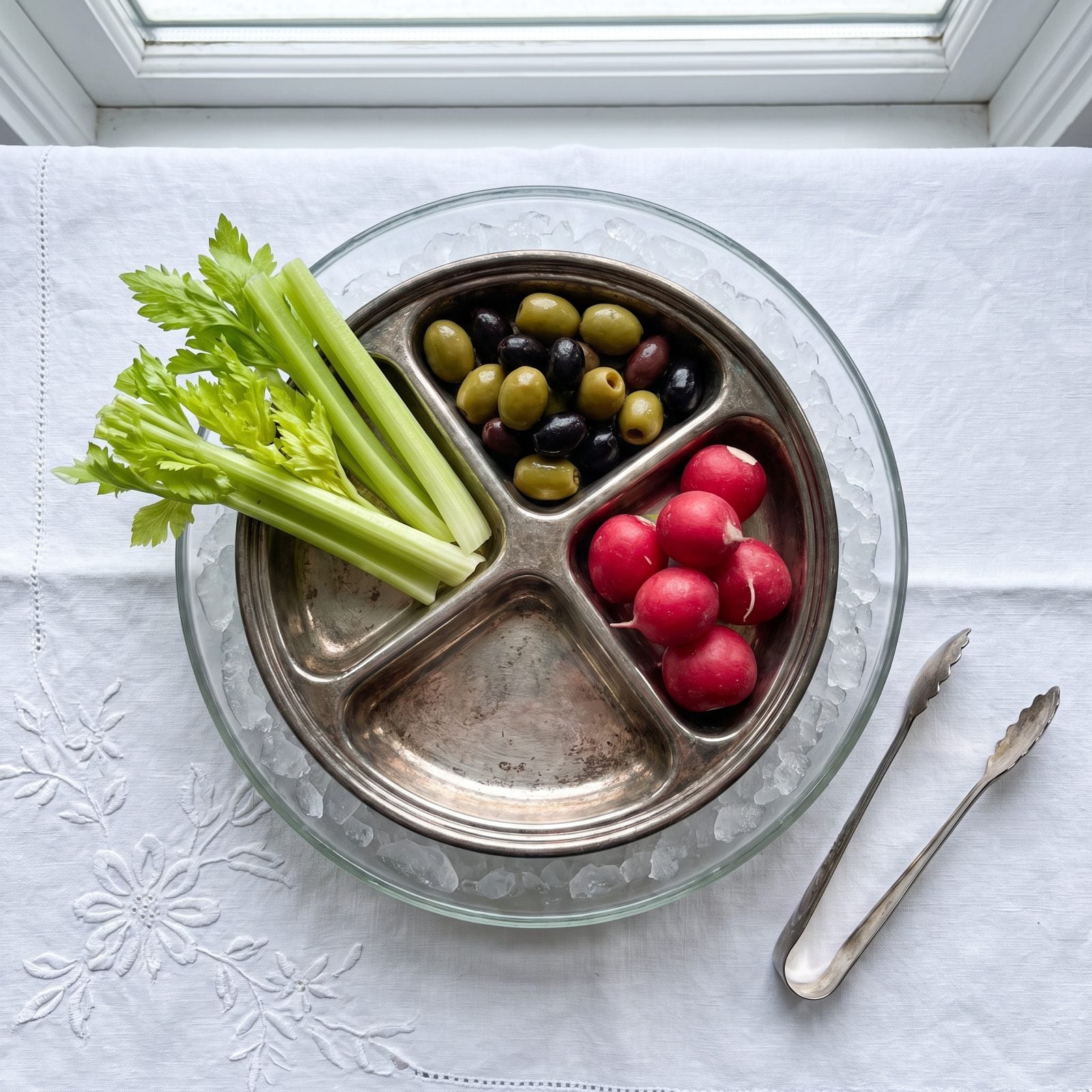
Before the entree arrived, down came a divided silver tray on ice: celery standing tall, olives both colors, radish roses somebody had actually carved, maybe a few carrot sticks. You nibbled while the kitchen worked.
Nobody remembered it for the flavor. It was the pause, the thing that filled the gap between sitting down and being served, so you were never stuck at an empty table watching the fields go by with nothing in front of you.
9. Pie Sliced From a Whole Dessert in the Galley
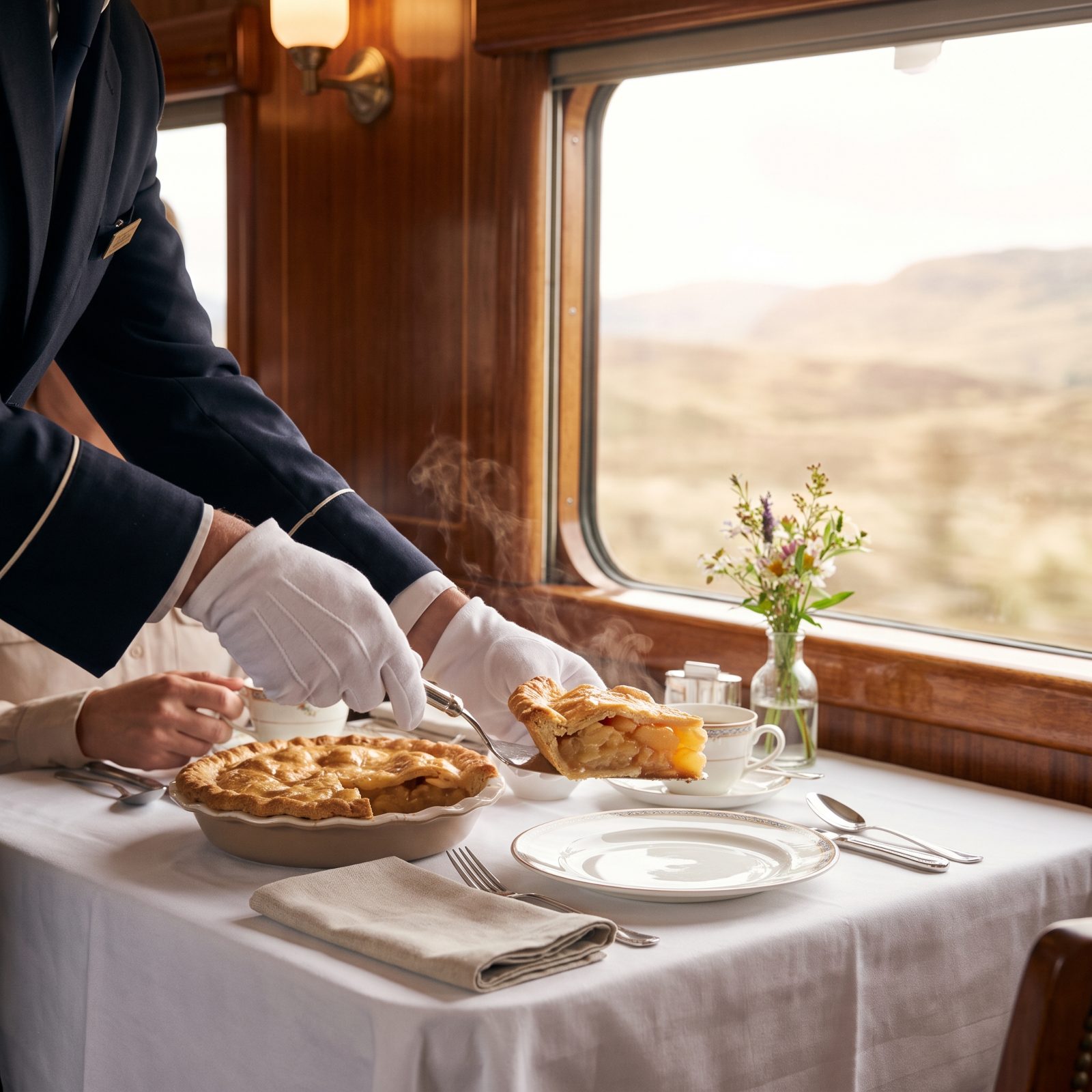
No pre-cut wedges waiting under a plastic dome. The pie sat whole in the galley, and the waiter cut your slice to order — the knife going through flaky crust, the wedge lifted onto your plate still holding its shape.
Apple, cherry, lemon meringue, depending on the line and the day. Baked somewhere, maybe in the car, maybe at the terminal commissary, it arrived as a full pie that got smaller as the meal went on. That’s generosity you could see.
8. Ice Cream Served in Metal Dishes
🔥 Would you like to save this?
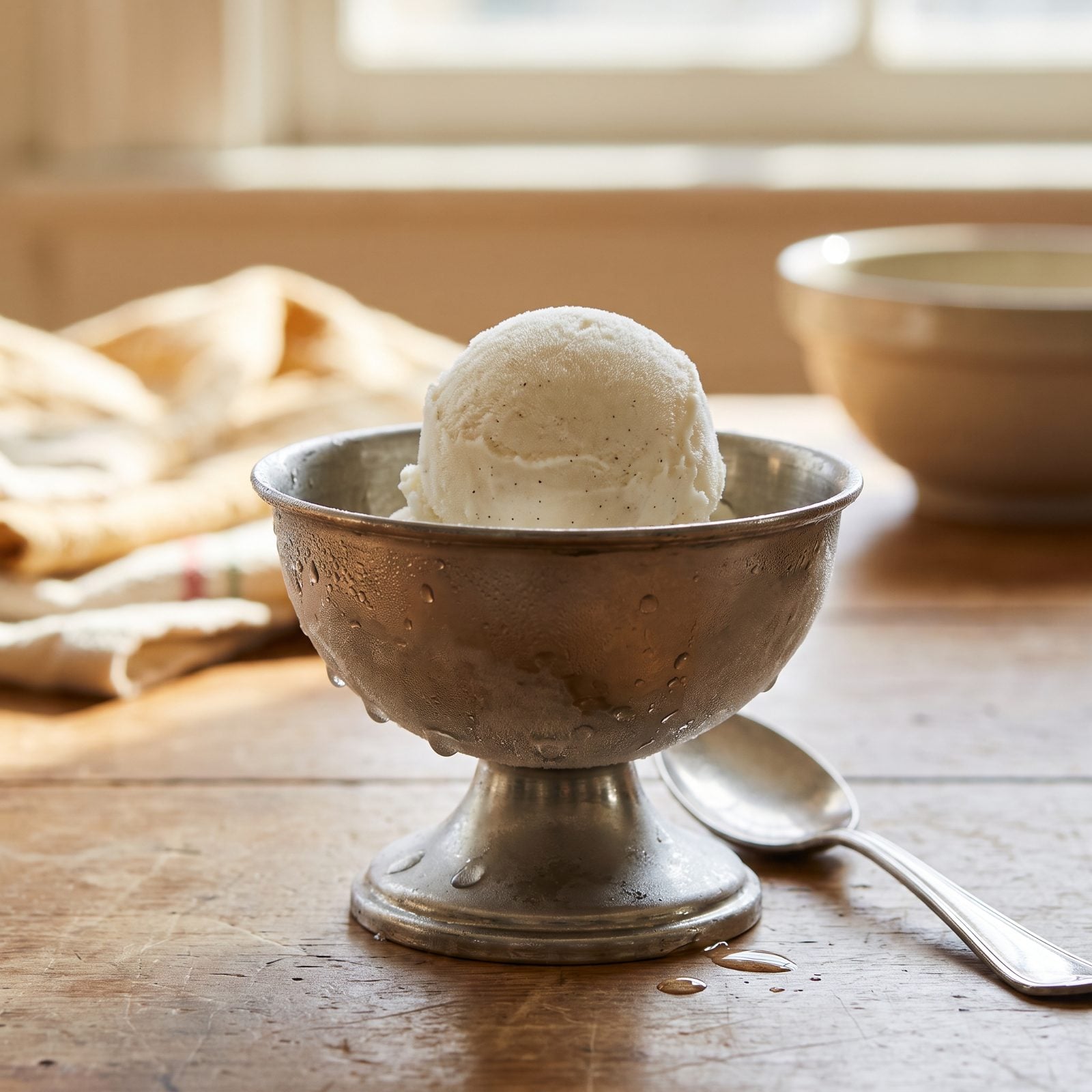
The ice cream arrived in a footed silver dish gone frosty cold, the kind that fogged up the second it hit the warm air of the car. The metal kept it harder, longer — which mattered on a train crossing Kansas in July.
Vanilla mostly. Maybe a sauce, maybe a cookie leaning against it. Half the pleasure was the cold silver against your fingers, half the scoop itself, melting slow because somebody had chilled the dish on purpose.
7. Children’s Menus With Railroad Illustrations
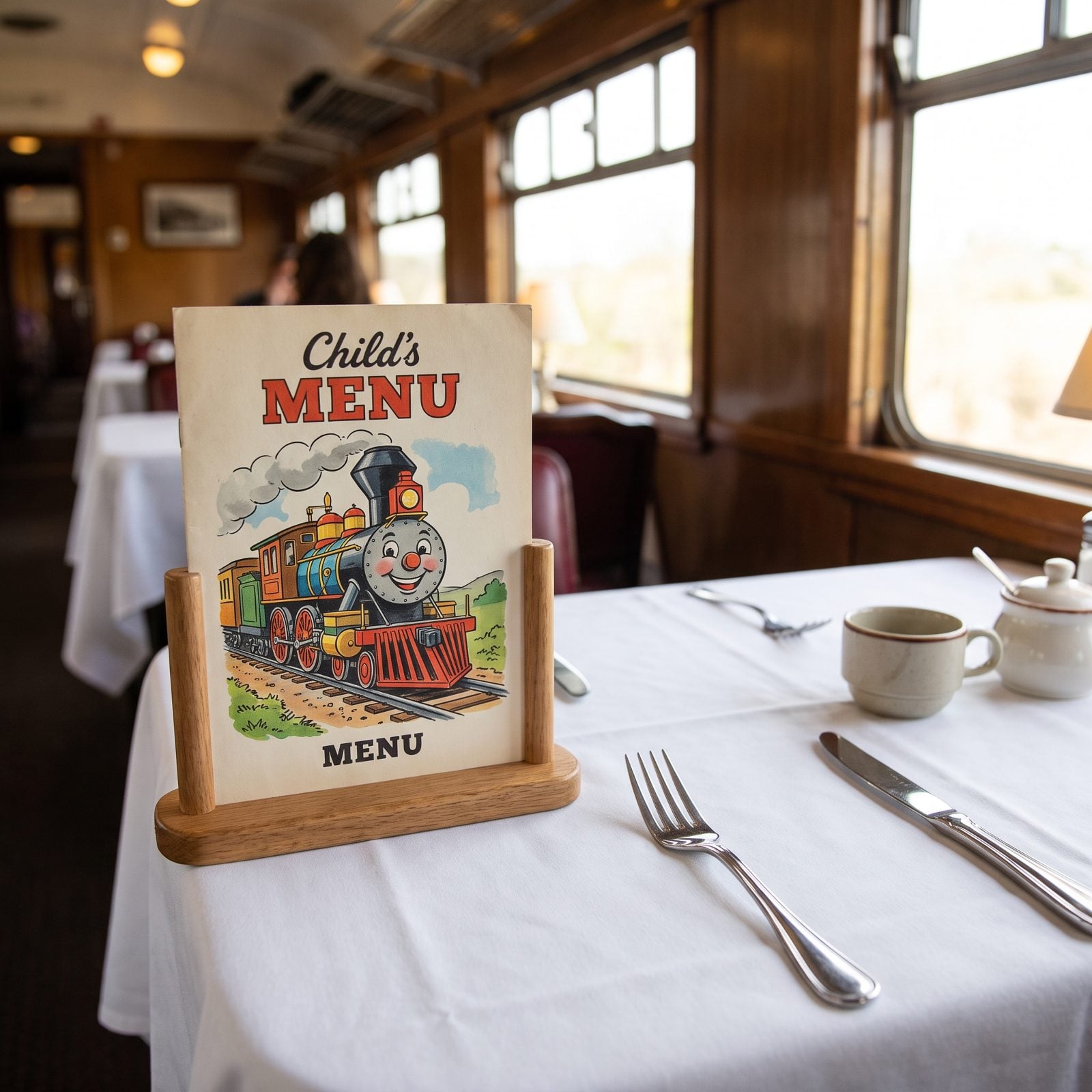
The kid at the table got their own menu, and it was the best thing on the table. A cartoon engine on the cover, a friendly conductor, sometimes a maze or a puzzle, smaller portions of things a child would actually eat.
You kept it. Into the scrapbook or the glovebox or a drawer, and forty years later it fell out of a book and put you right back in that seat — feet not touching the floor, watching the country roll by with a glass of milk in a heavy railroad glass.
6. Dining-Car Matchbooks Kept as Souvenirs
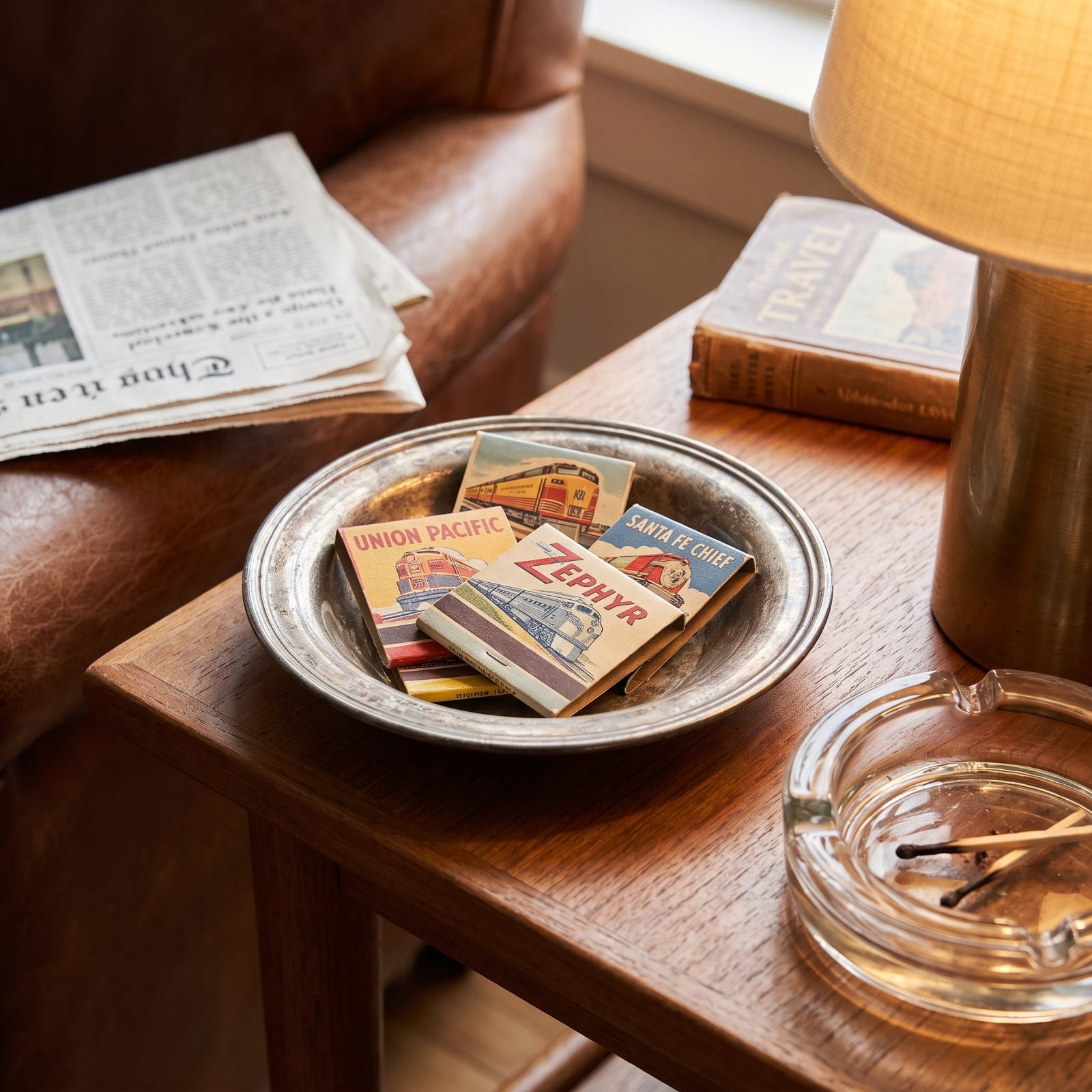
You pocketed one without thinking. Everybody did. The matchbook sat in that little silver dish next to the ashtray, free for the taking, and it slipped into a coat pocket somewhere between the soup and the dessert.
These were small advertisements the railroad handed you for nothing, and somehow they outlasted almost everything else from the trip. Deco locomotives stamped in gold, a route map folded inside, the dining-car crest embossed on the flap. Somebody came home from a four-day crossing and the one thing that survived in the junk drawer for the next thirty years was a matchbook that still smelled faintly of sulfur and tobacco. Funny what sticks around.
5. Handwritten Meal Checks Presented on Small Trays
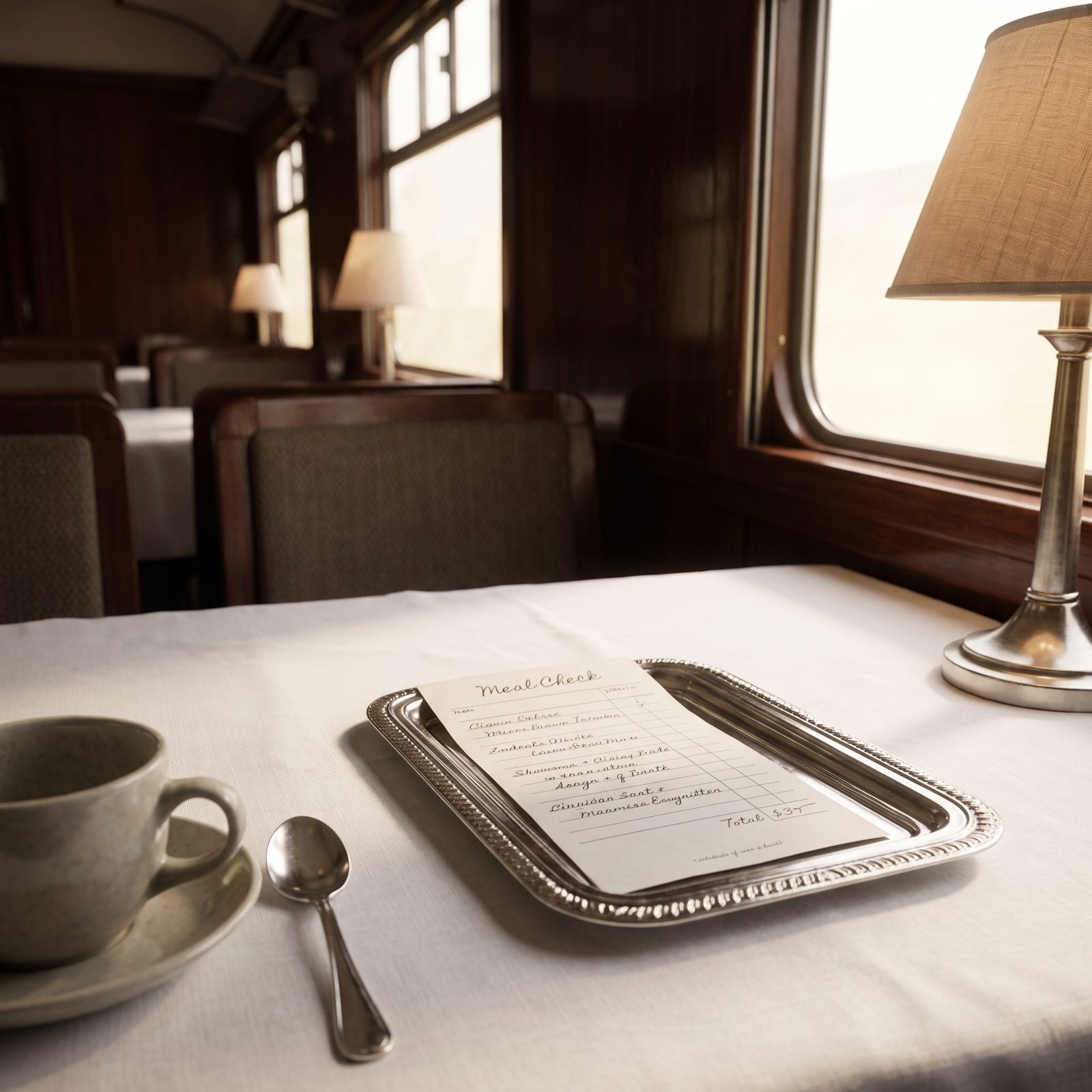
The check never came in a leather folder slapped down on the table. It arrived on a small silver tray, filled out by hand, with the waiter standing at a respectful angle while you fished out your billfold.
And here’s the part people forget: you wrote your own order. The railroad handed you a printed check and a pencil, and you marked down what you wanted yourself — a system that kept the kitchen honest and the mistakes to a minimum in a space the size of a walk-in closet. The waiter carried it back, the food came, and the same card returned at the end with the total inked in careful cursive.
Those checks survive too. Collectors hunt them because the menu is printed right there on the card, prices and all, a frozen snapshot of what a bowl of consommé cost somewhere outside Albuquerque in 1954.
4. A Chef Working Over Coal- or Oil-Fired Equipment
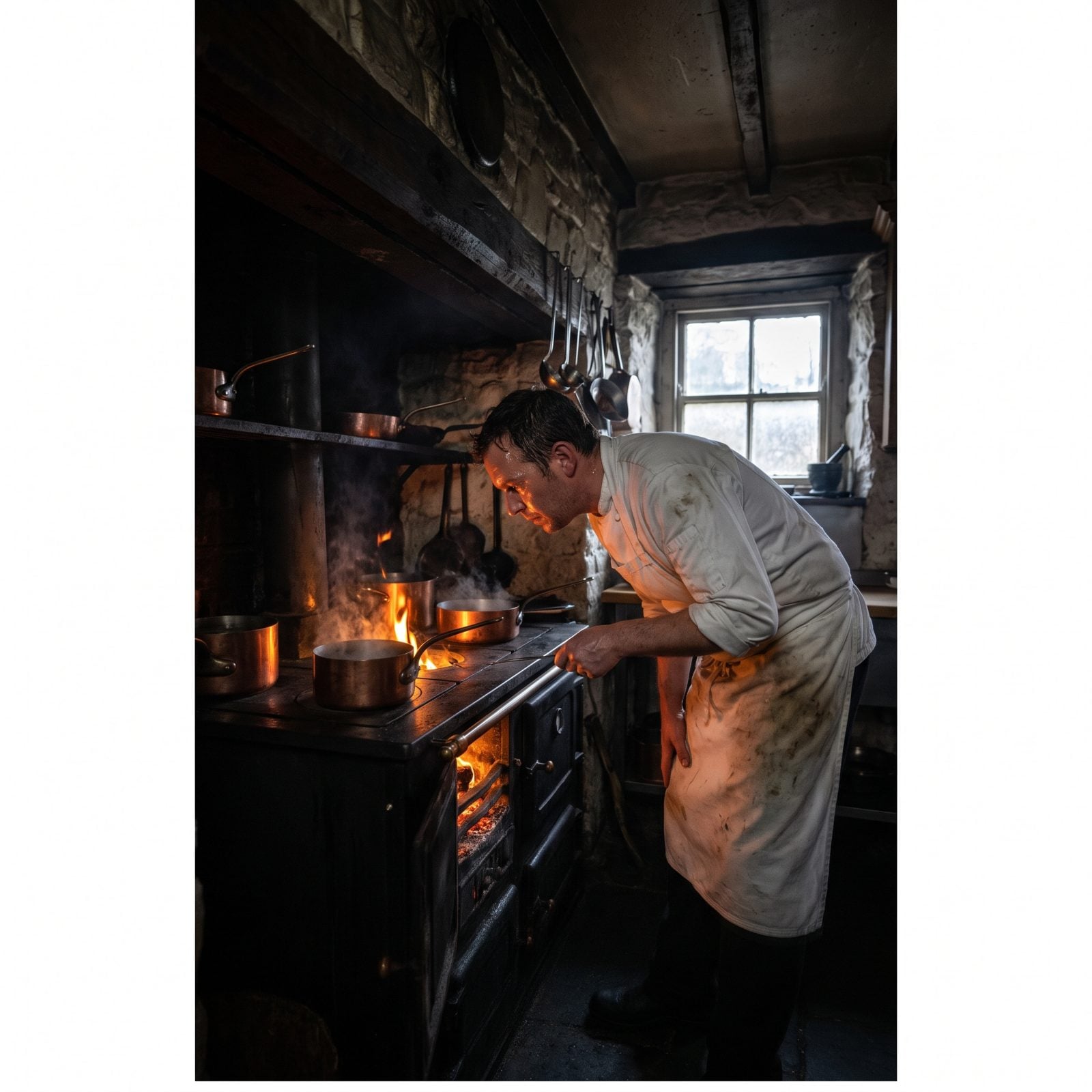
Picture cooking for ninety people, four services a day, on a stove that pitches and sways, over a coal fire you’re feeding by hand, in a room narrower than the hallway at home. That was the job.
The galley chef pulled off small miracles in a space measured in inches. Ranges burned coal or fuel oil, the heat ferocious and hard to tame, and a sudden curve could send a pot of soup sliding if nobody was watching it. Plates lived in felt-lined racks so they wouldn’t shatter. Everything had a bracket, a lip, or a hand on it at all times.
And the food came out right. Fresh trout, roast beef carved to order, biscuits that rose despite all the rocking. A railroad’s whole reputation for its tables lived or died on a man most passengers never laid eyes on.
3. Fresh Provisions Loaded During Station Stops
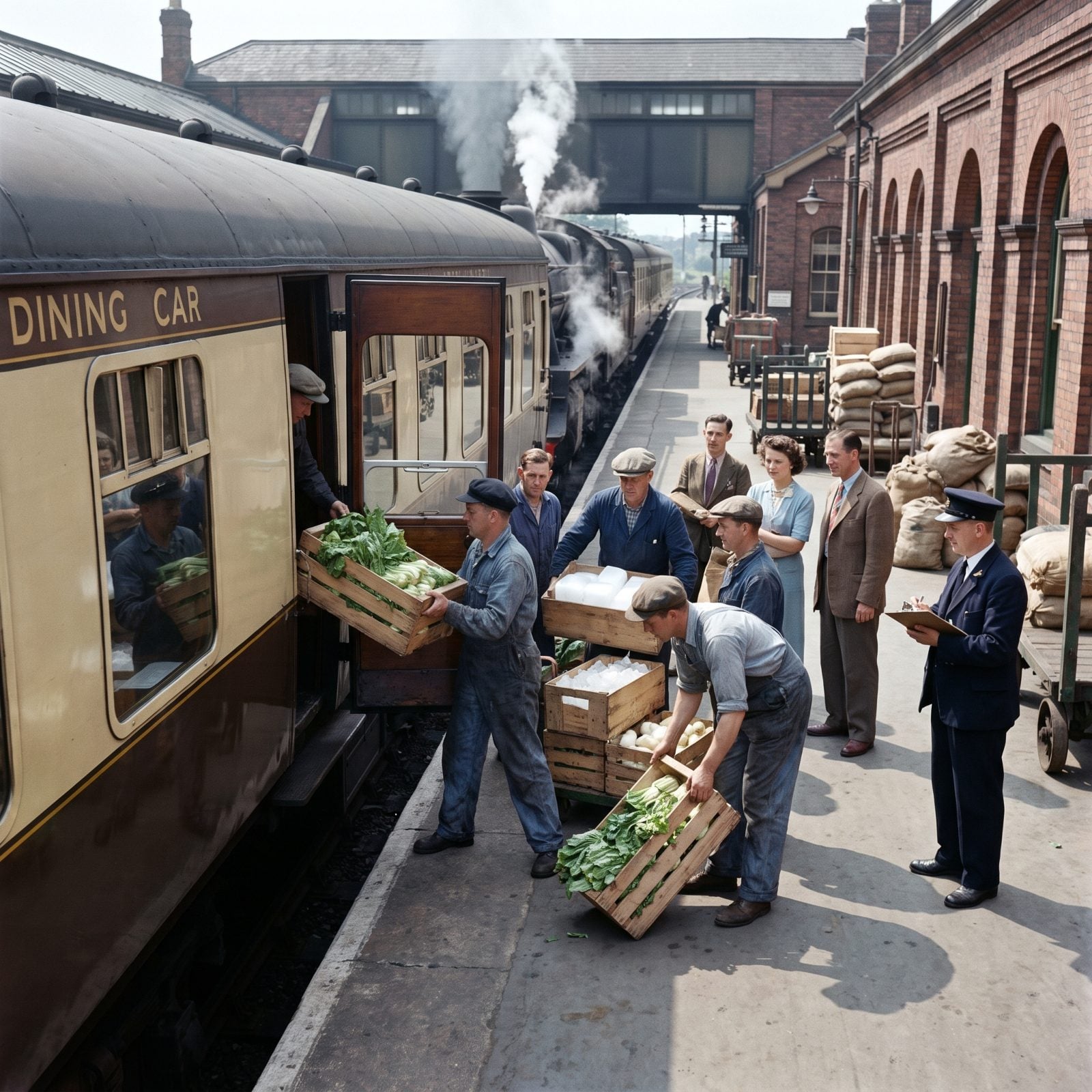
The train stopped and the real work began out on the platform. While passengers stretched their legs, the dining car took on supplies in a scramble that had to finish before the whistle blew.
Fresh was the whole game. A long run couldn’t carry four days of lettuce, so commissary crews met the train at key stations with crates of produce, blocks of ice wrapped in burlap, milk cans, and sometimes a side of beef still swinging on its hook. The loading ran down to the minute. Miss that window and dinner suffered three hundred miles later.
Which meant your plate reflected the country you were crossing. Trout where the rivers ran cold, melons from the valleys, coffee that kept coming because somebody loaded another sack of beans at a stop you slept straight through.
2. Art Deco Wall Sconces Casting a Warm Glow
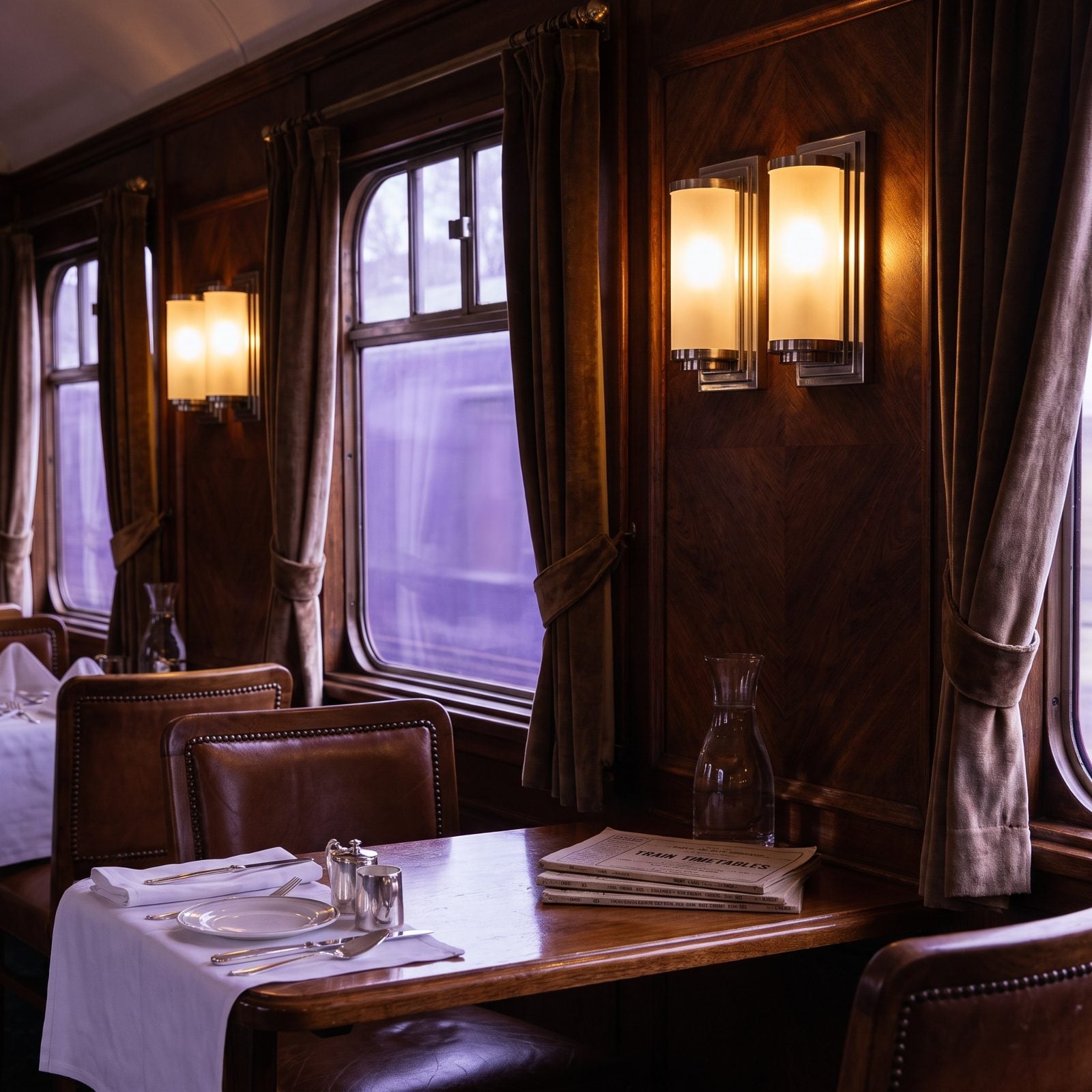
As the light outside drained to violet, the sconces came up and the whole car changed character. Brushed chrome and frosted glass, stepped in those confident Deco geometries, throwing a warm amber wash up the curved walls.
Nobody lights a room like this by accident. The glow was deliberately low and warm — soft enough to flatter the linen and the silver, strong enough to read a menu by. Mounted between the picture windows, the sconces turned the glass into mirrors after dark, doubling the tables and the candlelight so the car felt twice as full and twice as alive.
1. Picture Windows Framing the Passing Landscape
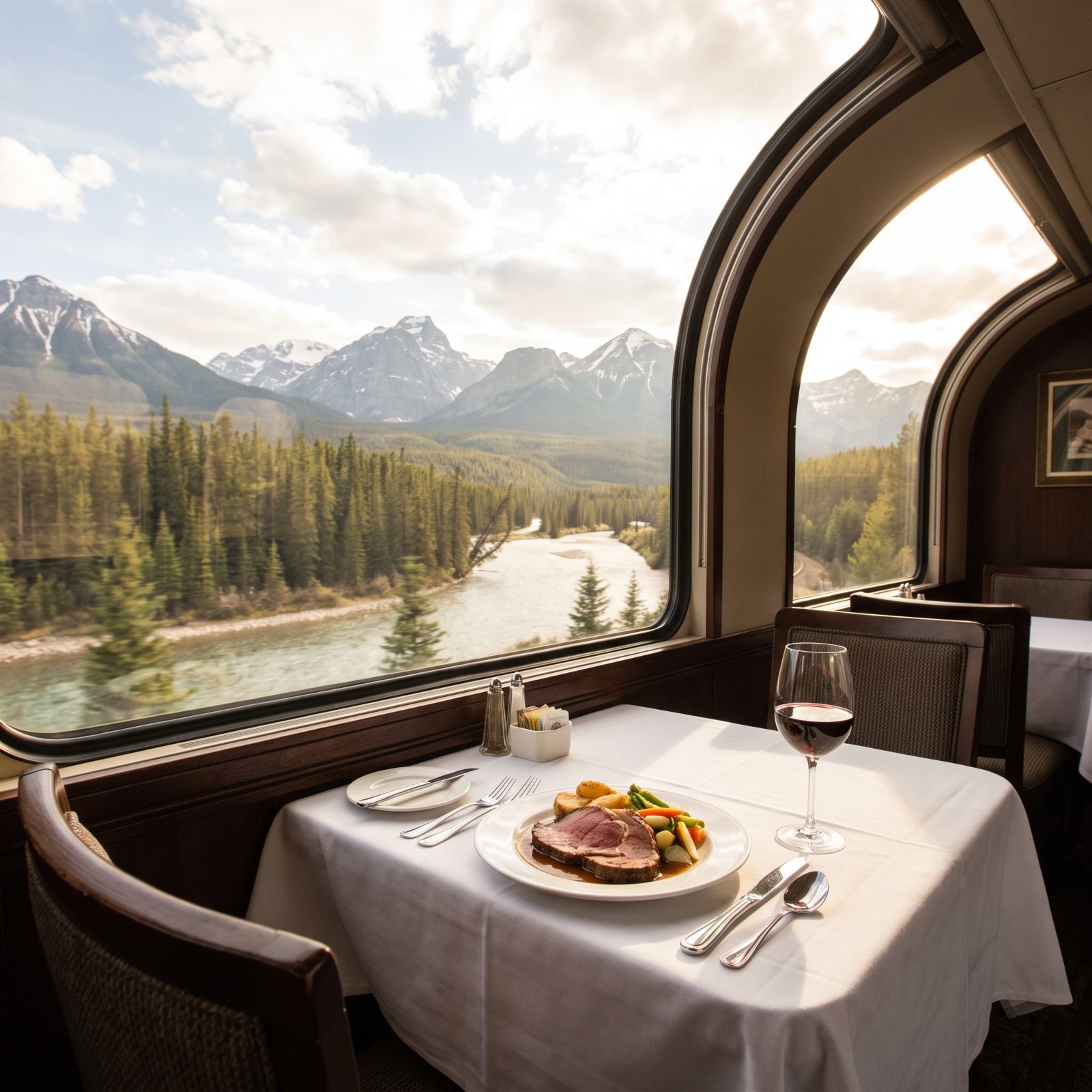
You could eat roast beef while the Rockies slid past the glass. That was the appeal, plain and simple.
The picture windows were the dining car’s best trick and the one thing no restaurant on solid ground could offer. Wide, chrome-trimmed, wiped clean at every stop, they turned a meal into a moving landscape. Desert at breakfast, river canyons by lunch, prairie going gold at supper. The country came right up to your table and never stopped moving.
It’s the memory people hold onto longest. Not the menu, not the price — the feeling of a fork halfway to your mouth while a thousand miles of America scrolled by at eye level, the light shifting on the linen as the sun dropped. No screen has ever matched it. Nothing since has really tried.
🔥 Would you like to save this?
Please note that some of the imagery in this article were created with the aid of AI image generators.