
🔥 Would you like to save this?
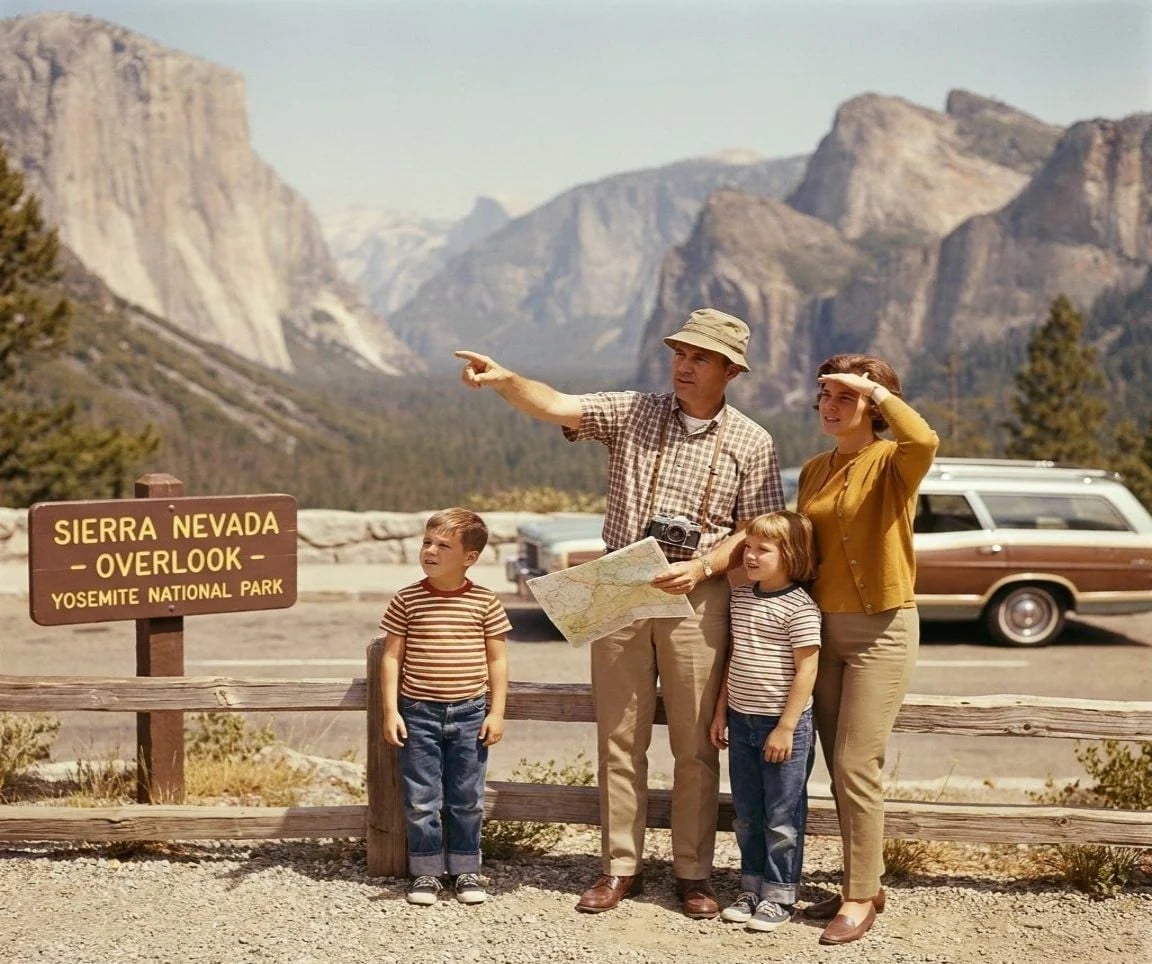
The tailgate of a wood-paneled station wagon slams shut on a cooler heavy enough to make everybody negotiate over who carries it, and somewhere in the glovebox, a road map is folded wrong and will never fold right again.
That was a trip to the park in 1970. Dad squinting at paper, Mom passing back warm sandwiches, everybody sunburned and happy. The mountains haven’t moved, but nearly everything we bring to them has. Campsites book online, phones identify constellations, coolers plug into batteries, and the humble park trip has been reinvented piece by piece. These 28 before-and-afters show just how much changed.
28. Loading the Wagon: Paper Maps and Metal Coolers vs. Rooftop Boxes and Power Stations
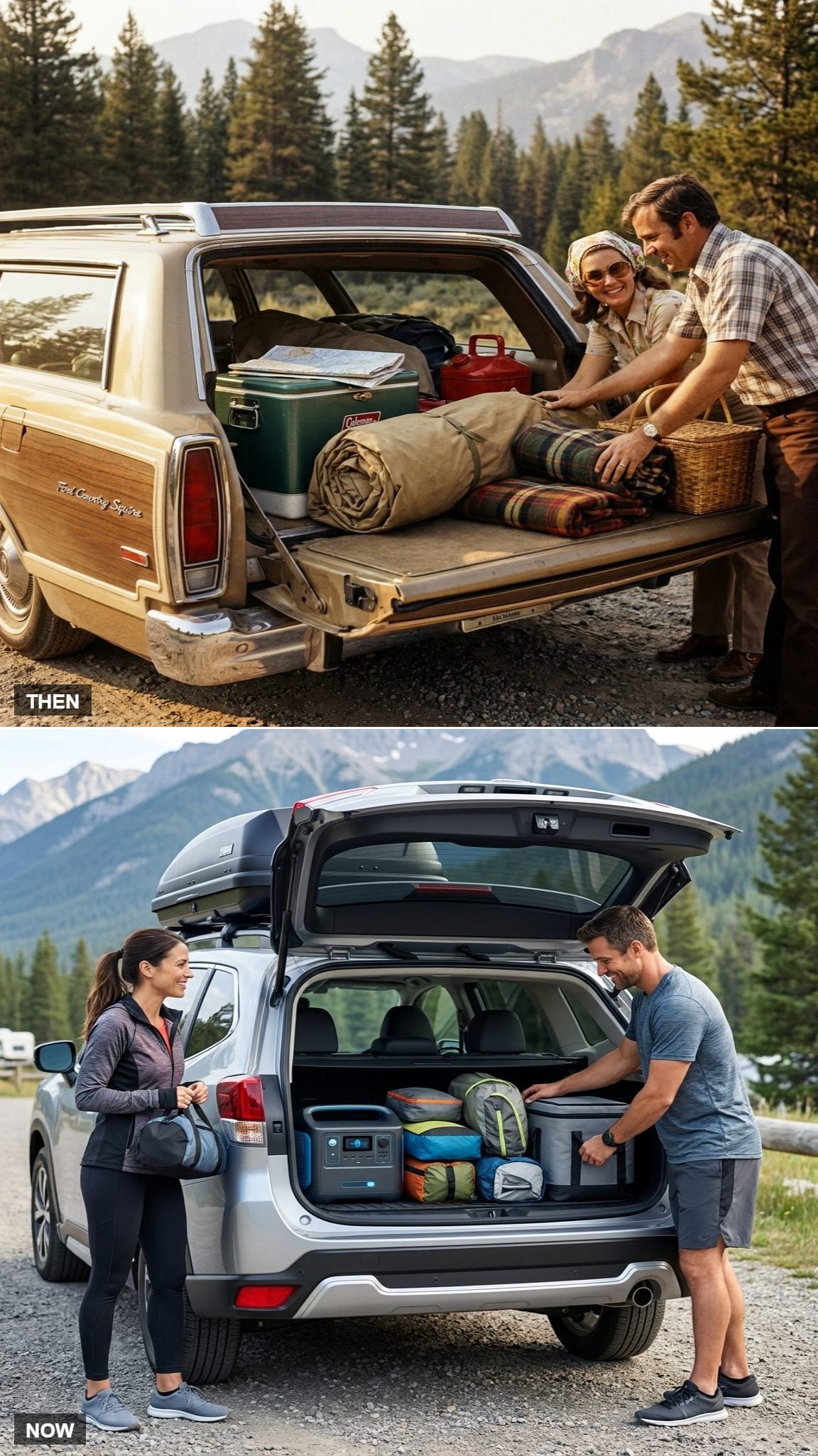
The 1970 station wagon was a feat of Tetris and denial. Metal coolers, canvas tents, wool blankets, camp chairs, sleeping bags, and cooking gear disappeared into the cargo area while Dad packed by instinct and Mom held the maps that never refolded quite the same way twice.
Now the black rooftop cargo box swallows the tent, a portable power station can keep small campsite electronics running, and GPS knows the campground before you do. Lighter, smarter, quieter. Nobody has to argue over which crease in the map represents the highway anymore.
27. Getting Directions: The Wooden Ranger Station vs. the App in Your Pocket
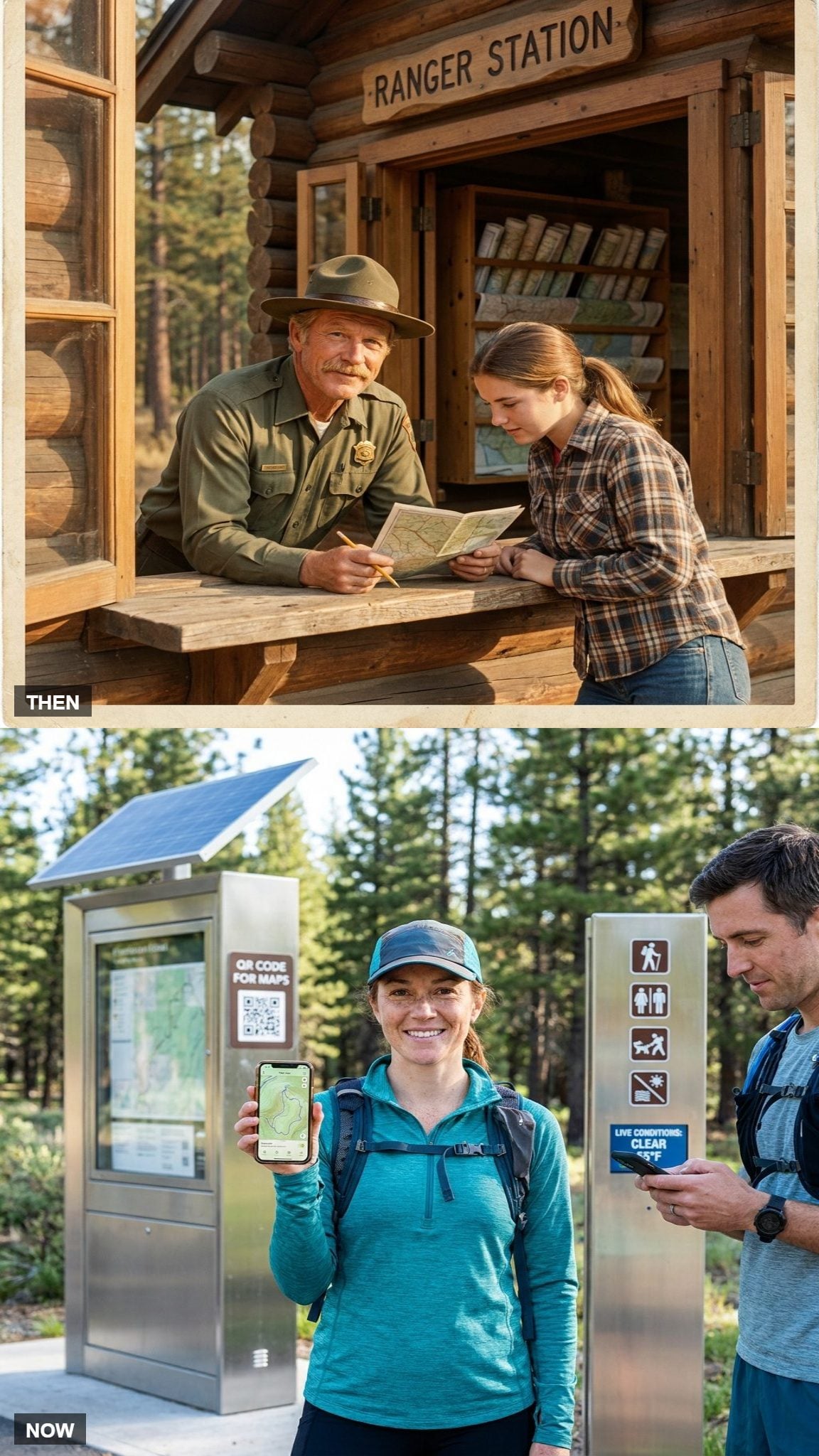
You might plan your hike at a wooden window in 1970. A ranger pulled a printed map from a rack, circled a junction with a pencil, pointed out the water stops, and passed along whatever trail conditions the staff knew that day. Ten minutes later, the map in your hand had marks that actually meant something.
Now much of that information can ride in your pocket: trail mileage, elevation, closures, weather, downloadable maps, and alerts. Faster, unquestionably. The ranger station still has one advantage, though. You can ask it a question the app didn’t anticipate.
26. Paying to Get In: The Cash Booth vs. the Digital Pass
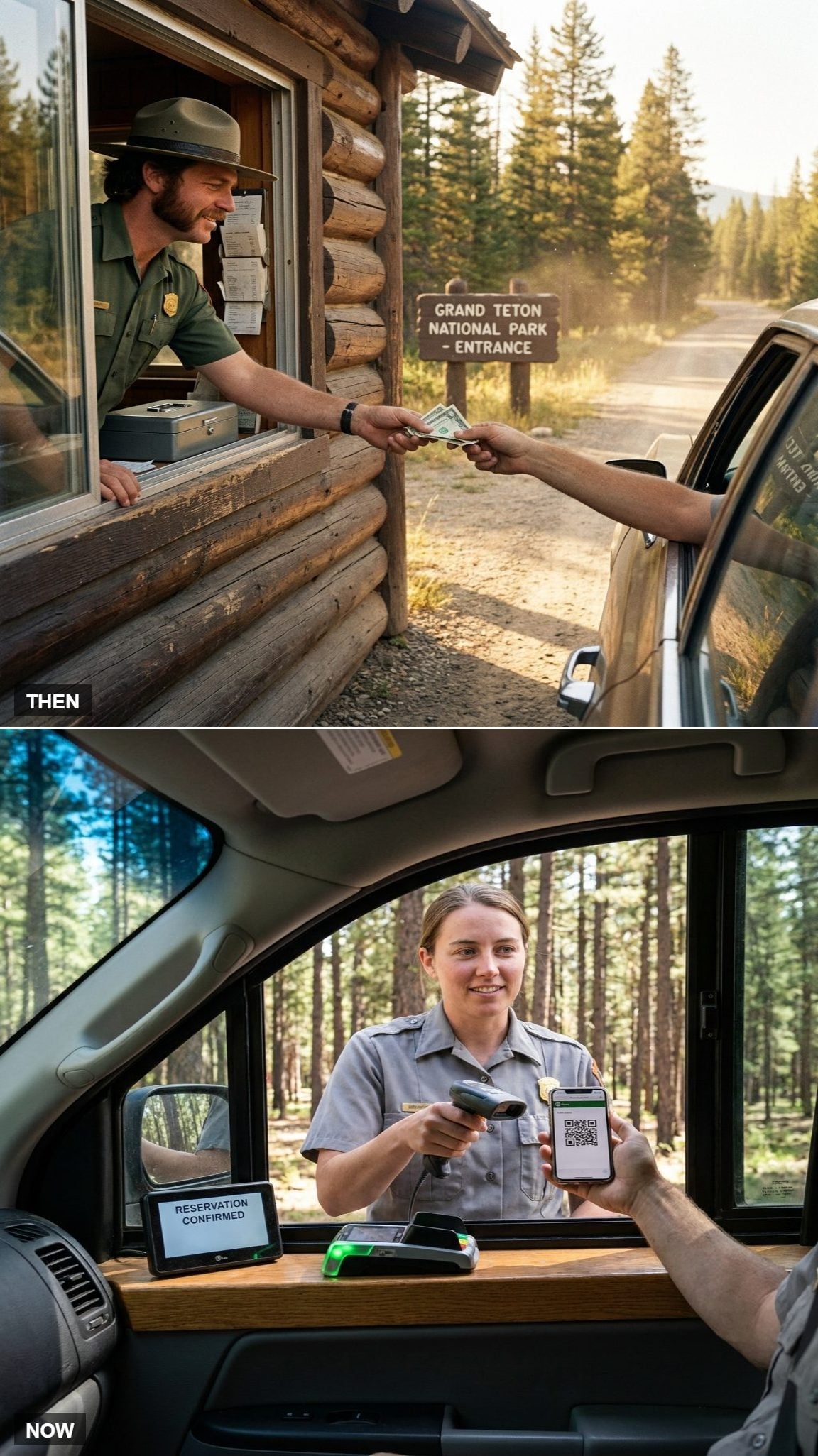
Cash through the window was once the simplest way into many parks. The ranger handed back change and a paper receipt or permit, and the whole transaction could be finished before the family in the back seat had settled whatever argument started at the last gas station.
Digital passes now let visitors pay before reaching the gate, while some especially busy park experiences, roads, shuttles, campgrounds, or attractions may use advance reservations of their own. The exact rules vary by park and season, which makes checking before the trip more important than it once was.
25. Making Camp: Wrestling Canvas vs. the Tent That Pops Itself
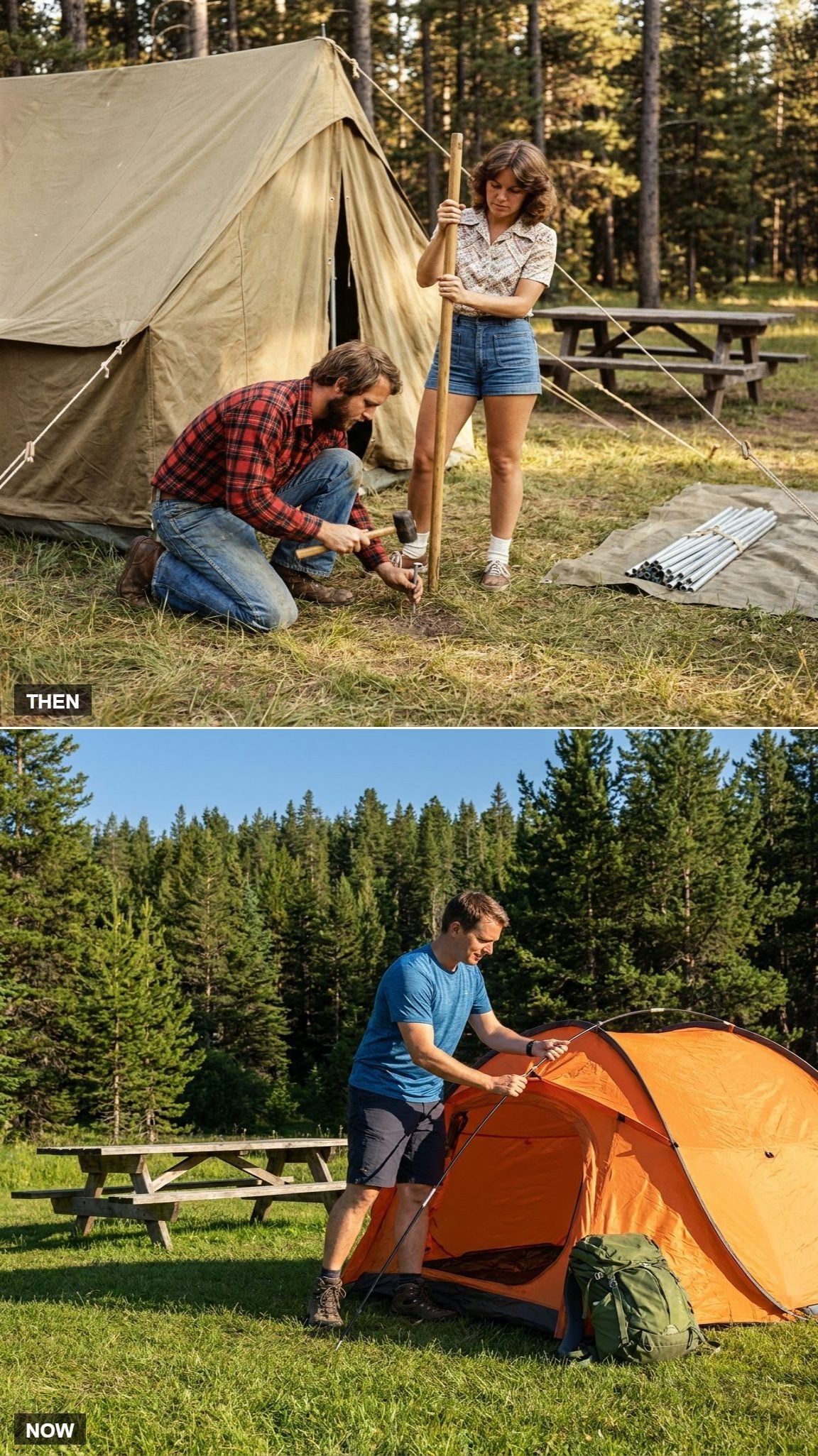
A big canvas cabin tent could turn arrival into a family construction project. Heavy fabric, loose poles, guy lines, stakes, and instructions somebody swore were packed in the box. If the canvas stayed damp too long afterward, the smell could follow you into the next summer.
Today, you can throw an instant pop-up tent into shape in minutes, or skip tent setup entirely with a camper van or trailer. The campsite goes from parking space to temporary home before anyone has time to accuse anyone else of losing a tent pole.
24. Turning In: Bulky Bags on Foam Pads vs. Inflatable Everything
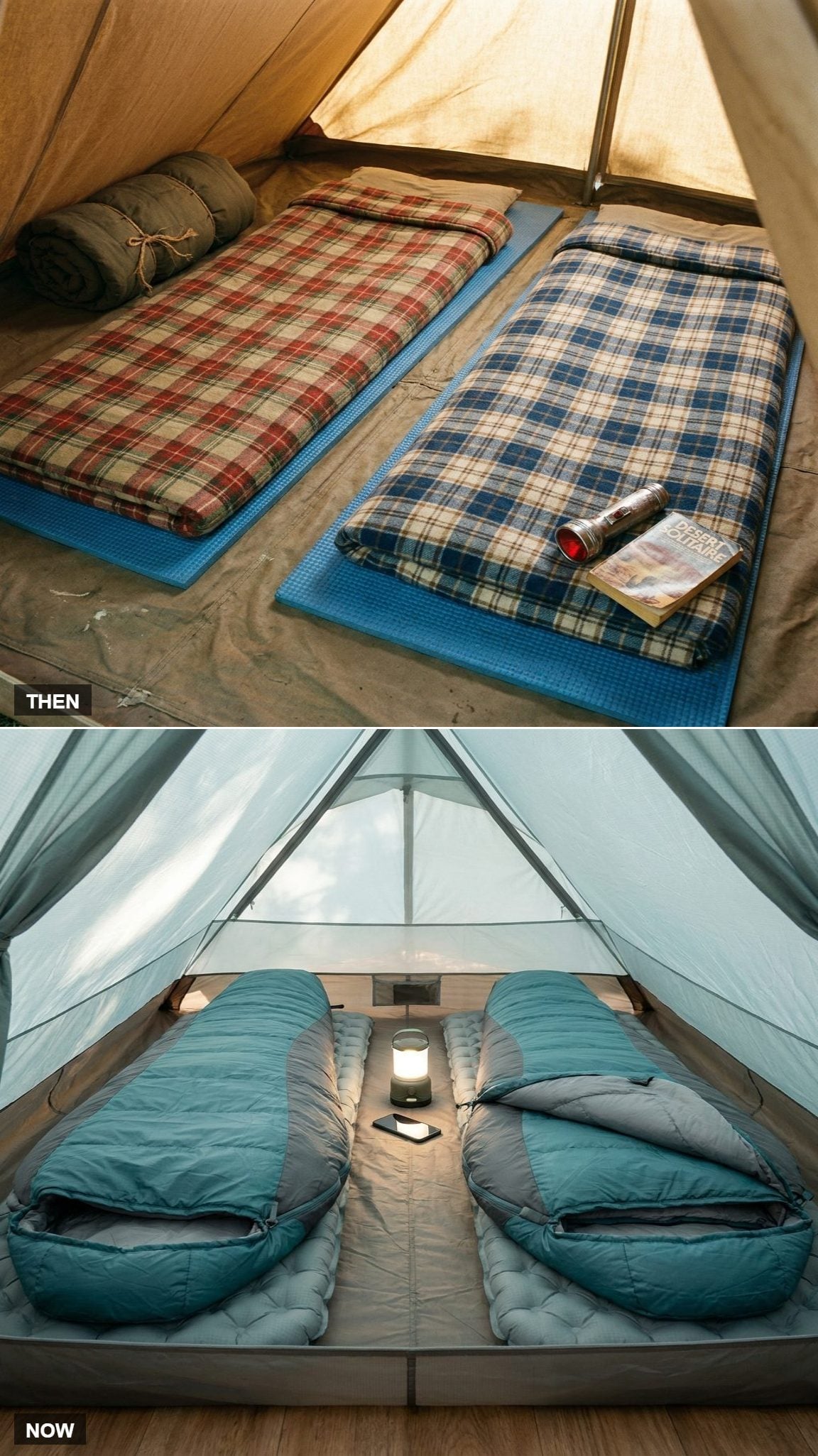
Plenty of 1970s family sleeping bags were enormous by current standards: thick, rectangular, often flannel-lined, and better suited to the station wagon than a backpack. Underneath might be a simple foam pad that provided some insulation and rather less forgiveness when a root chose exactly the wrong place to spend the night.
Now an inflatable insulated sleeping pad can provide real cushioning and insulation while packing down remarkably small. Modern sleeping bags can shrink dramatically too. The ground hasn’t become softer. The equipment finally learned how to negotiate with it.
23. Cooking Out: Cast Iron on Coals vs. Propane and Induction
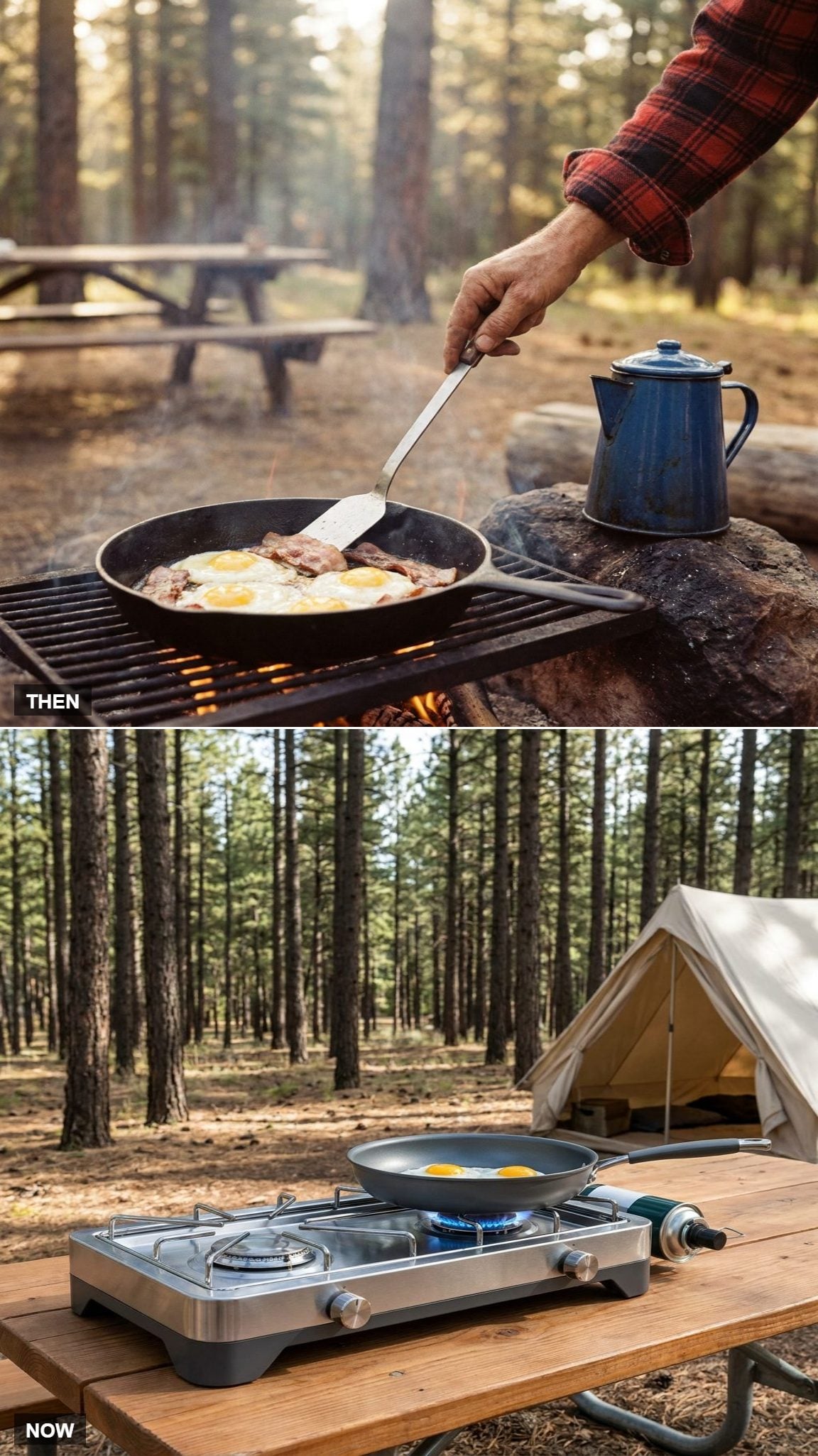
Breakfast could come off a cast-iron skillet over a campfire, and part of the skill was learning what the fire intended to do next. Too much heat and breakfast hurried. Too little and everybody stared at the pan while the coffee finished first.
A two-burner propane stove offers a controllable flame at the turn of a knob, while some RVs and powered campsites now make induction cooking possible too. The old cook managed the fire as much as the food. Today’s cook can concentrate on the eggs.
22. Staying Hydrated: The Metal Canteen vs. the Filter Bottle
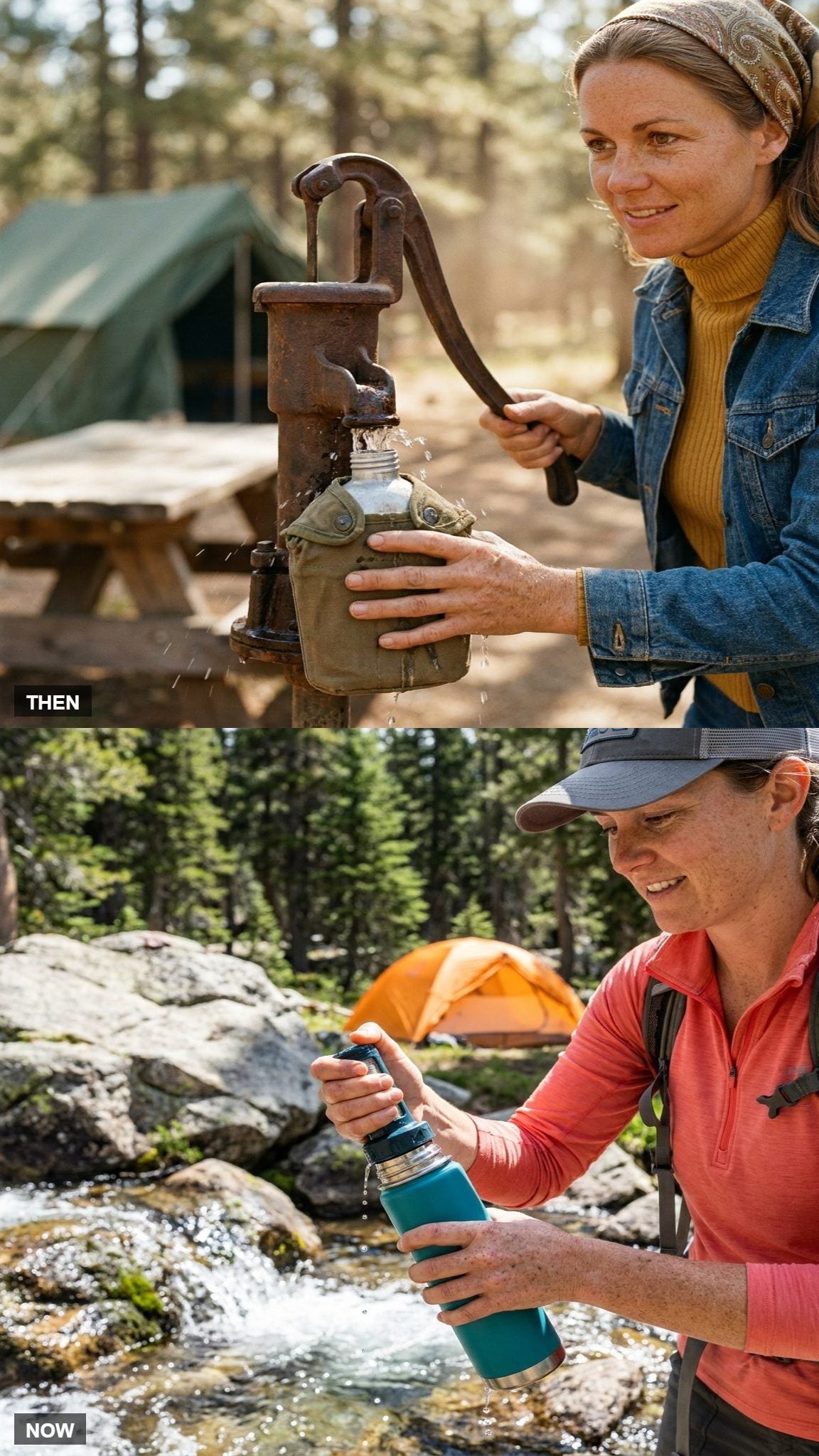
The aluminum canteen came in a canvas sleeve and could leave the water tasting faintly metallic by noon. Around developed campgrounds, drinking water might come from a spigot or hand pump, and whatever you carried had to last until the next reliable source.
Now you carry a teal insulated stainless steel water bottle and can add a portable water filter or other treatment system for backcountry use. Different filters protect against different contaminants, so the equipment still has to match the water source. What changed is how many practical treatment options fit into a pack.
21. Capturing It: 35mm Film and 24 Chances vs. Hundreds of Digital Frames
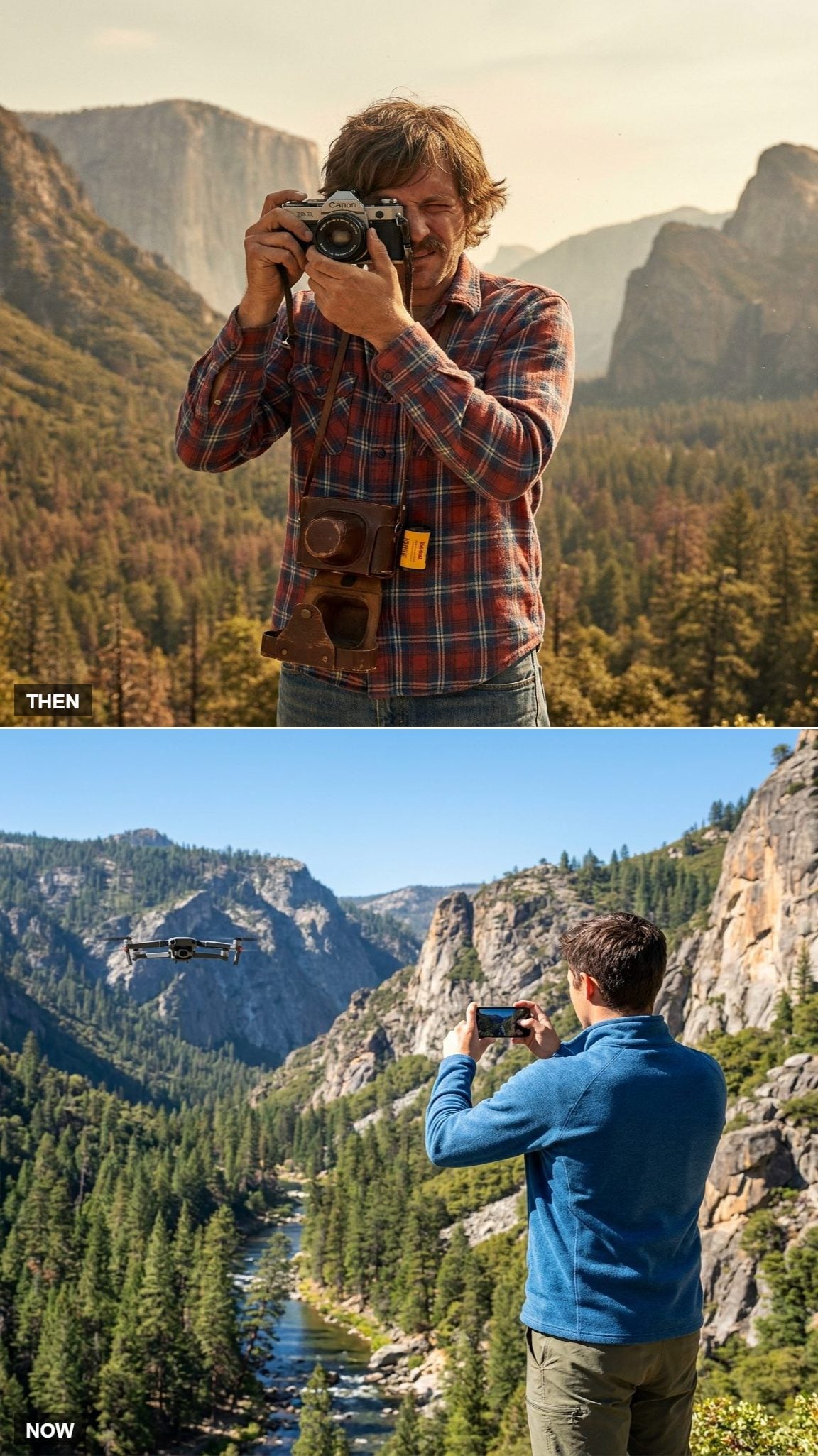
Twenty-four exposures, maybe thirty-six if you bought the larger roll, and every press of the shutter used one. That made composition feel consequential. You waited for the light, framed the mountain, clicked once, and moved on without immediately checking whether the photograph worked.
Digital photography removed the arithmetic. A phone or camera can produce hundreds of images in a day, review them instantly, and keep shooting until the expression, animal, waterfall, or sunset looks right.
Film rationed the shutter. Digital gave it an unlimited appetite.
20. Watching Wildlife: Binoculars vs. the 600mm Zoom
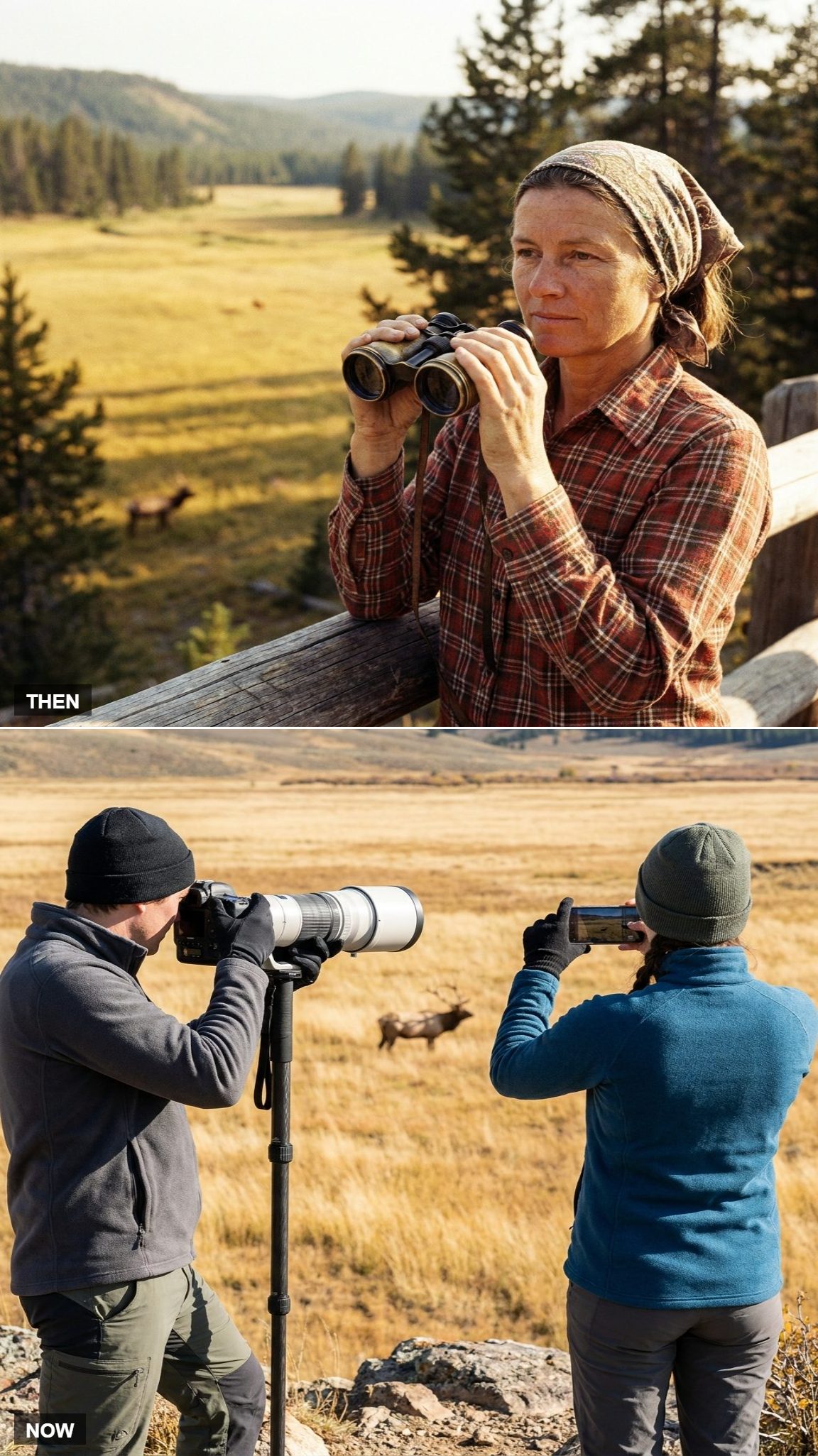
A pair of binoculars and your own patience could handle a great deal of wildlife watching in 1970. Spot an elk across the meadow, describe exactly which dead tree it was standing beside, then pass the binoculars down the line until everybody finally found the same brown shape.
Long modern lenses and digital cameras can capture extraordinary detail from a safe distance, and those photographs can be shared almost immediately. The technology doesn’t replace binoculars or patience. It simply gives the encounter a very different souvenir.
19. What You Wore: Denim and Plaid vs. Technical Trail Gear
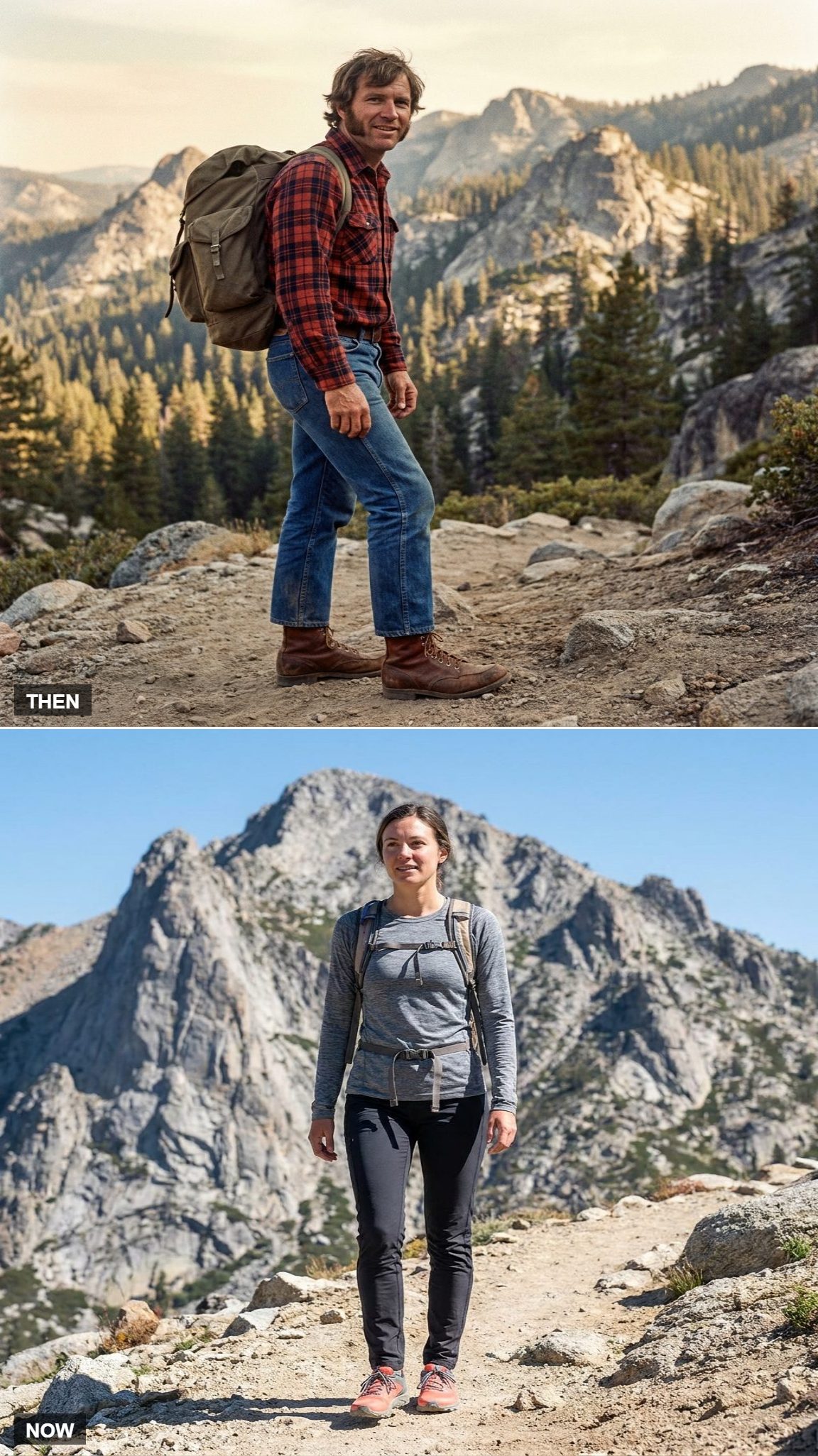
A lot of casual hikers once headed out in clothes that weren’t designed by an outdoor laboratory. Denim, cotton shirts, wool layers, and substantial leather boots did the job because they were already in the closet. Wet cotton stayed wet, and heavy boots could make themselves known by the end of the day.
Today it’s a gray moisture-wicking hiking shirt, quick-dry pants, and a pair of coral trail running shoes that feel almost suspiciously light. The performance advantage is difficult to argue with.
The old photographs still have denim and flannel going for them.
18. Paper Trail Guides vs. GPS Hiking Apps
🔥 Would you like to save this?
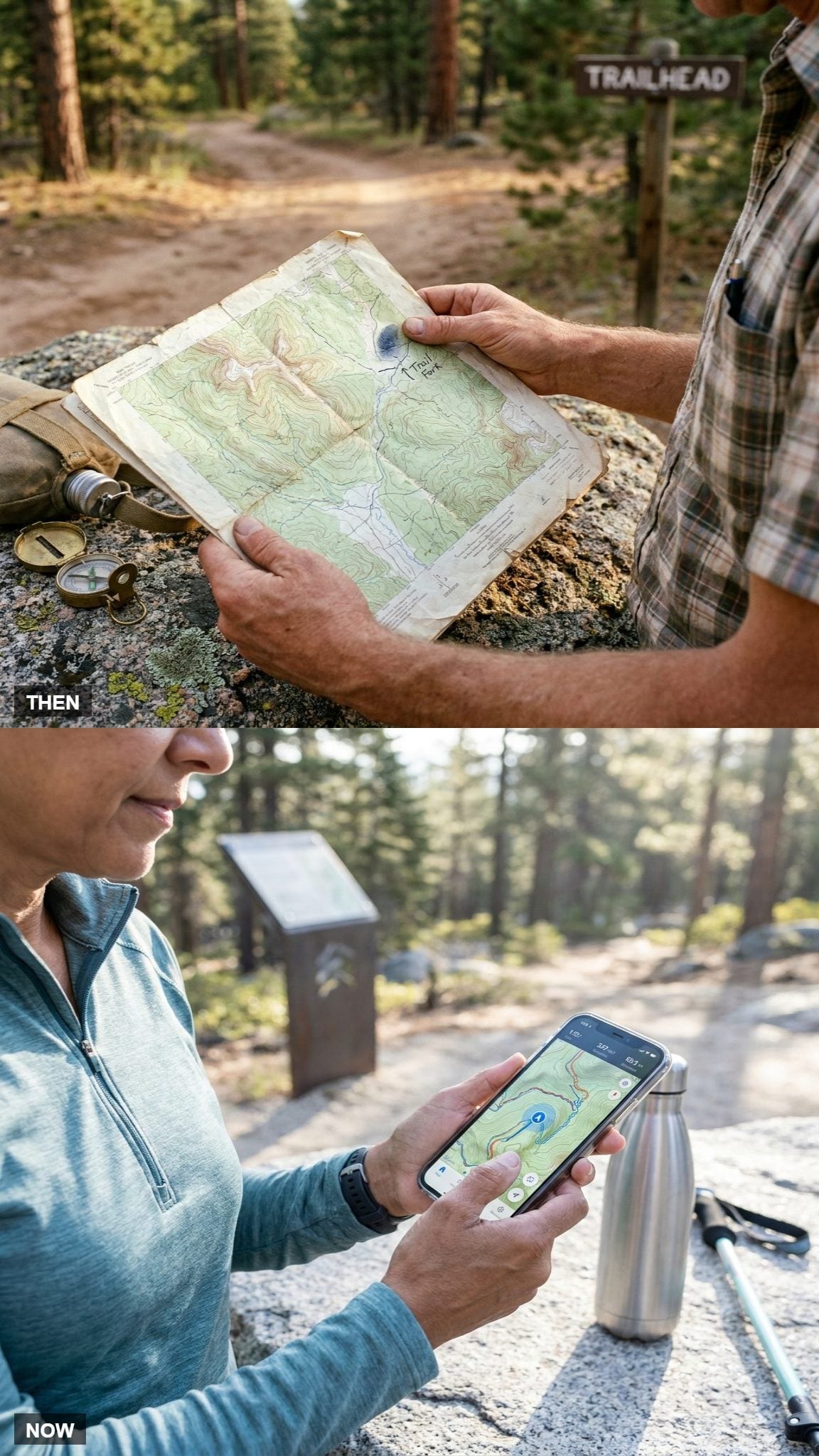
In 1970, a paper map could spend the day softening in a shirt pocket, with trail junctions, contour lines, and handwritten notes doing the work. Miss a turn and there was no pulsing dot to announce the mistake.
Now an offline map can show your position as you move, even where cell service disappears, provided the map has been downloaded and the device is working. GPS doesn’t make getting lost impossible, but it can make recognizing a navigation mistake much faster.
17. Mailing Lodge Postcards vs. Posting in Real Time
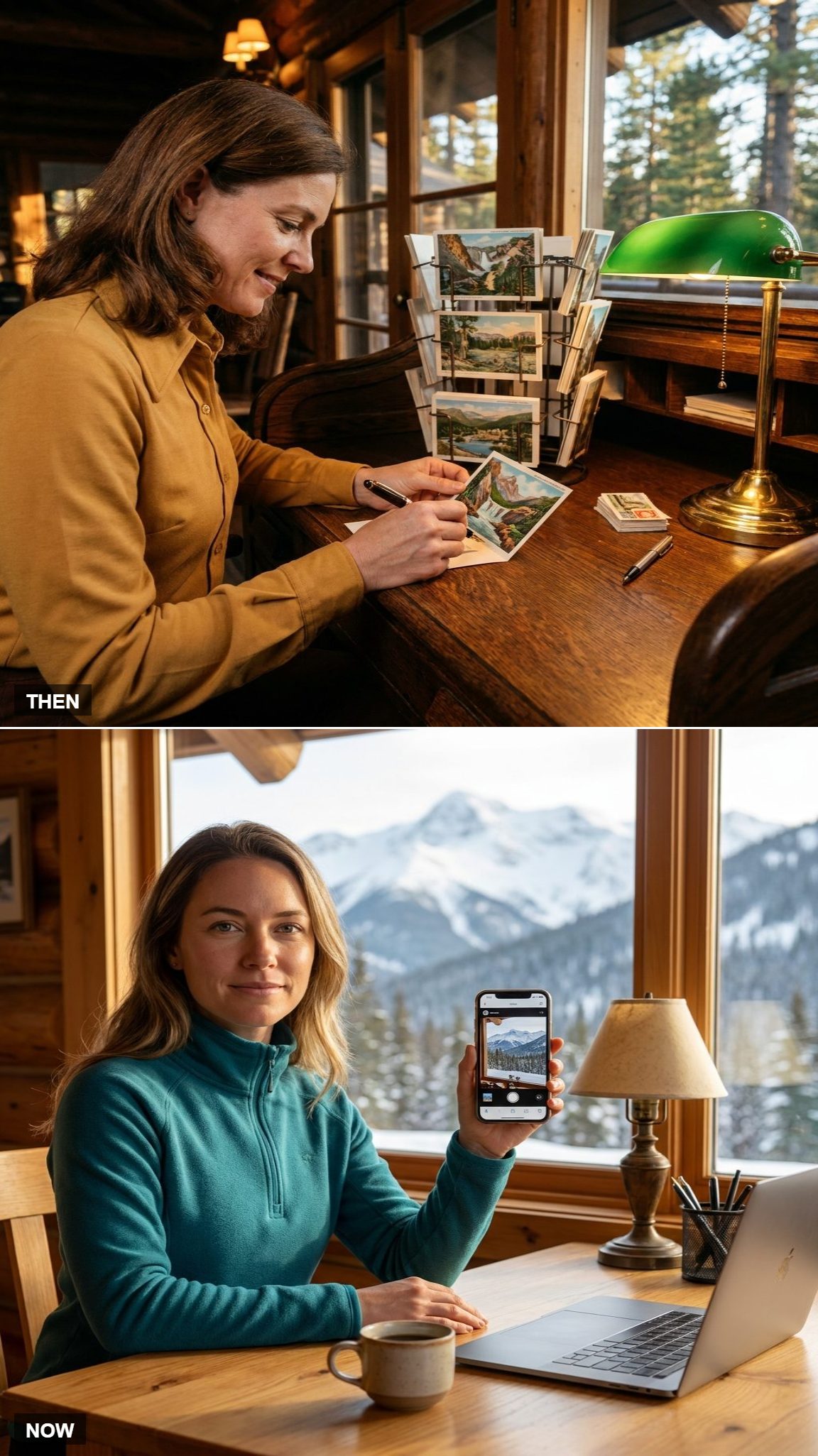
The postcard was a slow message in a bottle. You picked the one with the best painted sunset, wrote three cramped lines to your mother, added a stamp, and dropped it in the lodge mailbox. There was a decent chance you would beat it home.
Now the mountain can hit your feed before you’ve even lowered the phone. Wherever there’s service, photographs and messages leave the park almost instantly.
A postcard took longer. It also had an excellent chance of surviving forty years in a shoebox.
16. First-Come Campsites vs. Booking Months Ahead
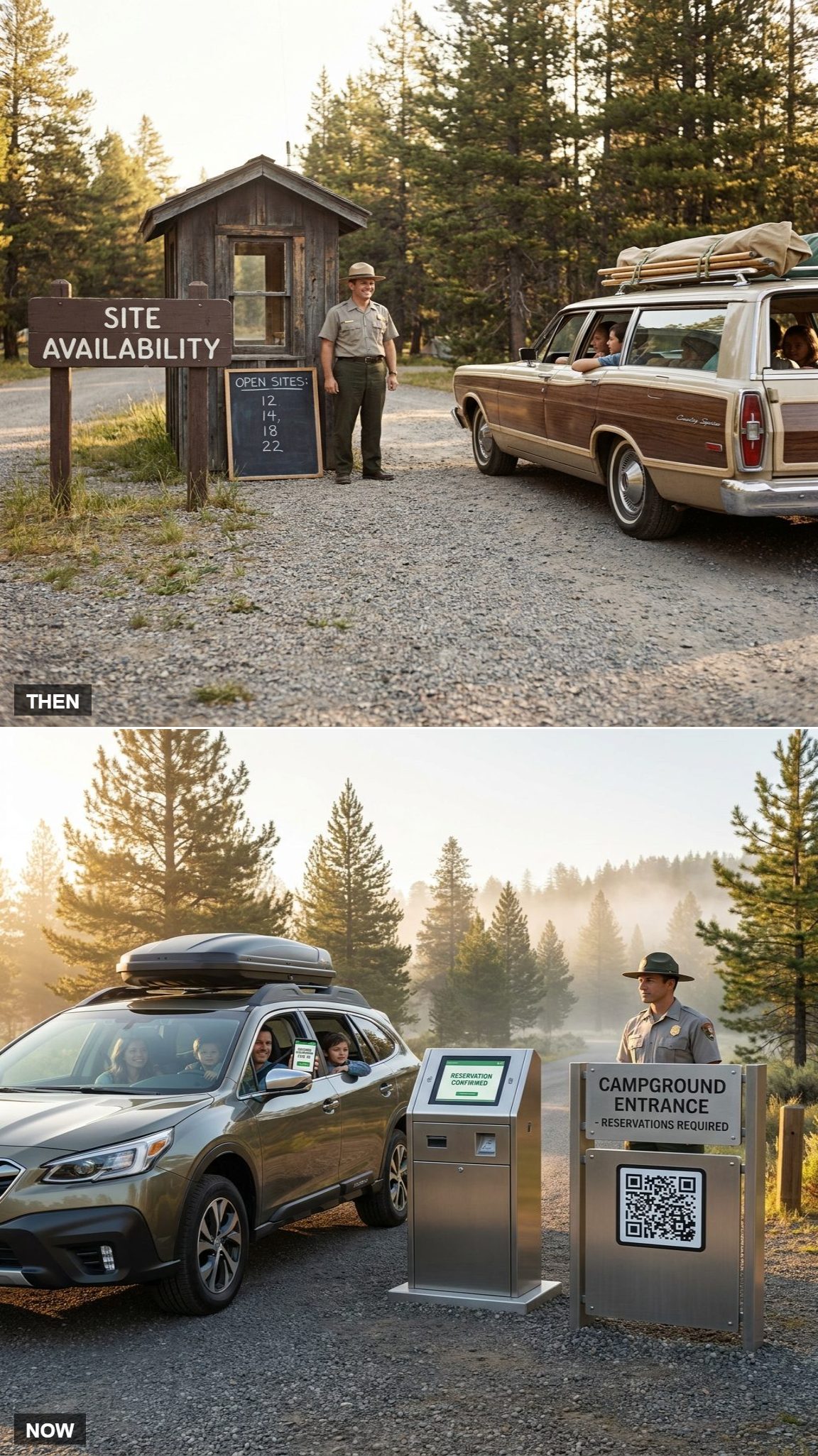
First-come, first-served camping once played a larger role in many park trips. You arrived, checked what was available, and hoped the campground still had a site that didn’t put the picnic table somewhere awkward.
Many sought-after campgrounds can now be reserved months ahead, and the most popular dates reward people who understand exactly when the booking window opens. Other campgrounds still retain first-come sites or release reservations on different schedules, so the old gamble hasn’t disappeared completely.
15. No A/C on Mountain Roads vs. Climate-Controlled Comfort
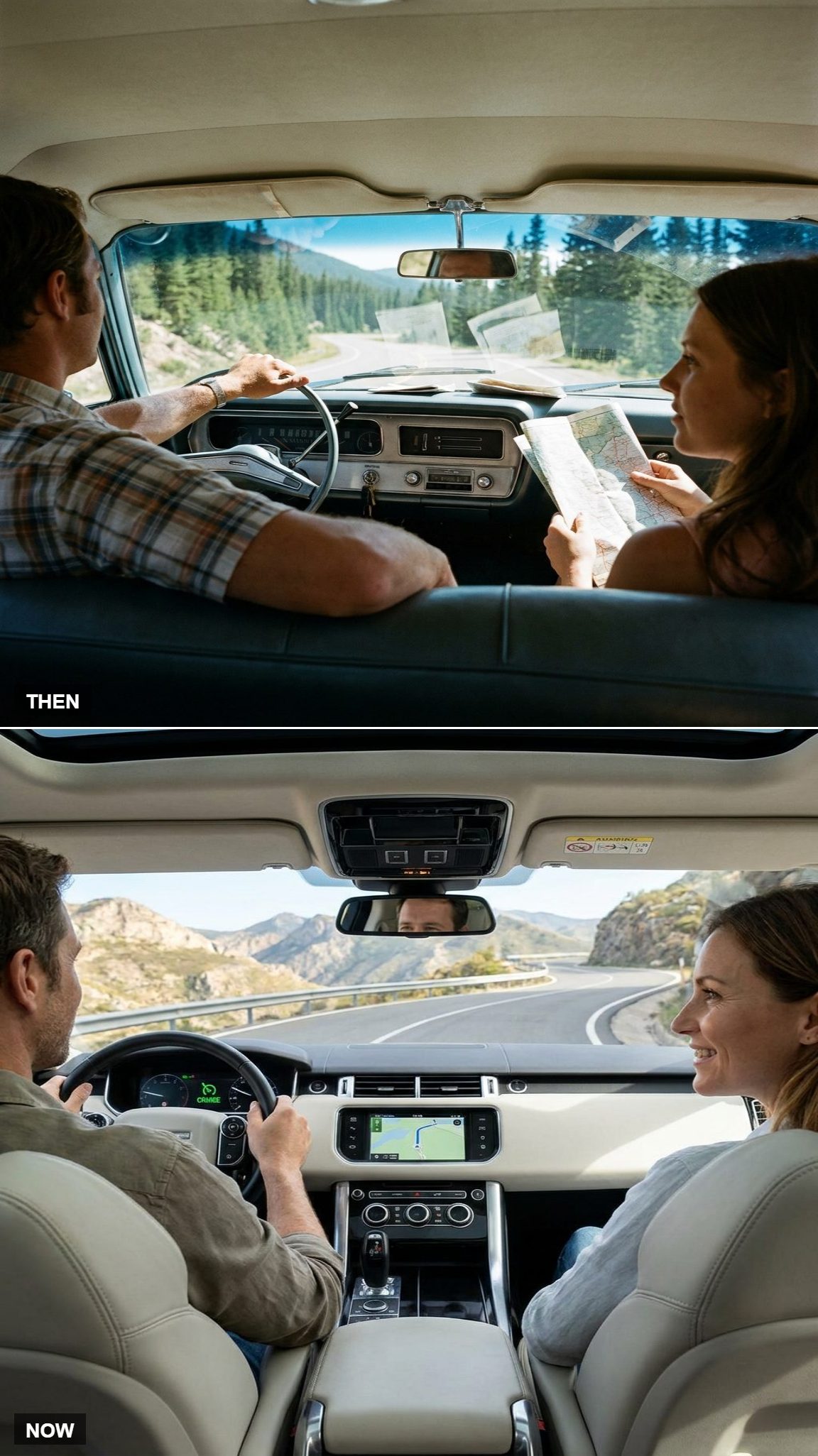
The 1970 mountain drive could come with wind roar and sweat. Air conditioning was still an extra-cost option on many family cars, so windows went down, maps fluttered, and the back seat received the full mixture of hot air and switchback-induced complaints.
Today’s cabin can hold a steady temperature while cruise control and driver-assistance systems take some repetition out of a long highway approach. The driver still drives the road. The car simply handles more of the background work.
You may arrive at the overlook with considerably less evidence that you’ve just spent three hours crossing mountains.
14. Gathering Around a Lantern vs. Solar LED Lighting
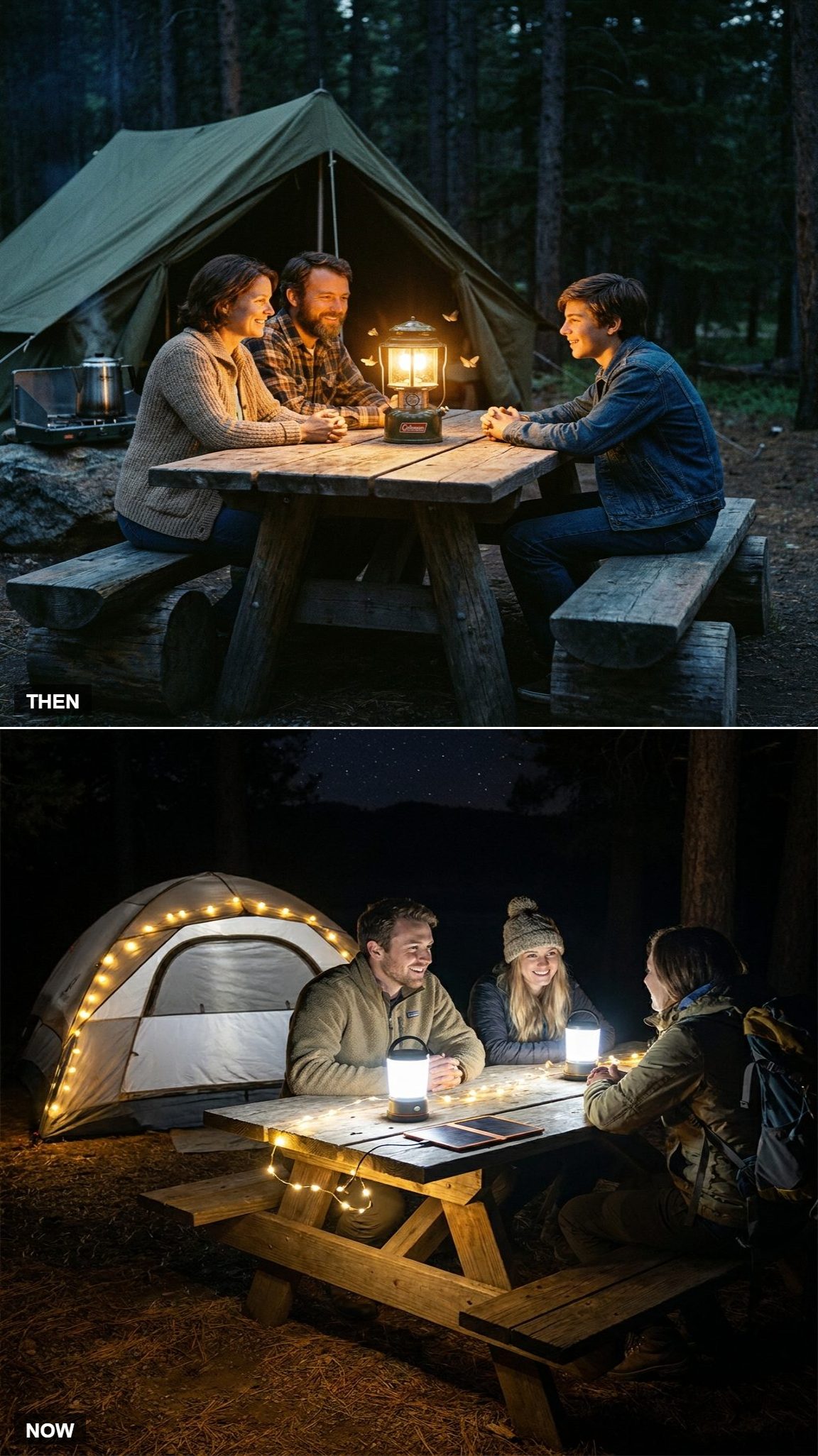
The Coleman lantern was the campfire’s quieter cousin. Pump it, light the mantle, and a bright circle appeared around the picnic table while everything beyond it dropped rapidly into darkness. Moths usually found the arrangement before the neighbors did.
Rechargeable LEDs and solar string lights spread illumination around the campsite instead. A light can hang over the table, another inside the tent, another beside the cooler, all without a bottle of lantern fuel.
13. Mounted Exhibits vs. Interactive Digital Displays
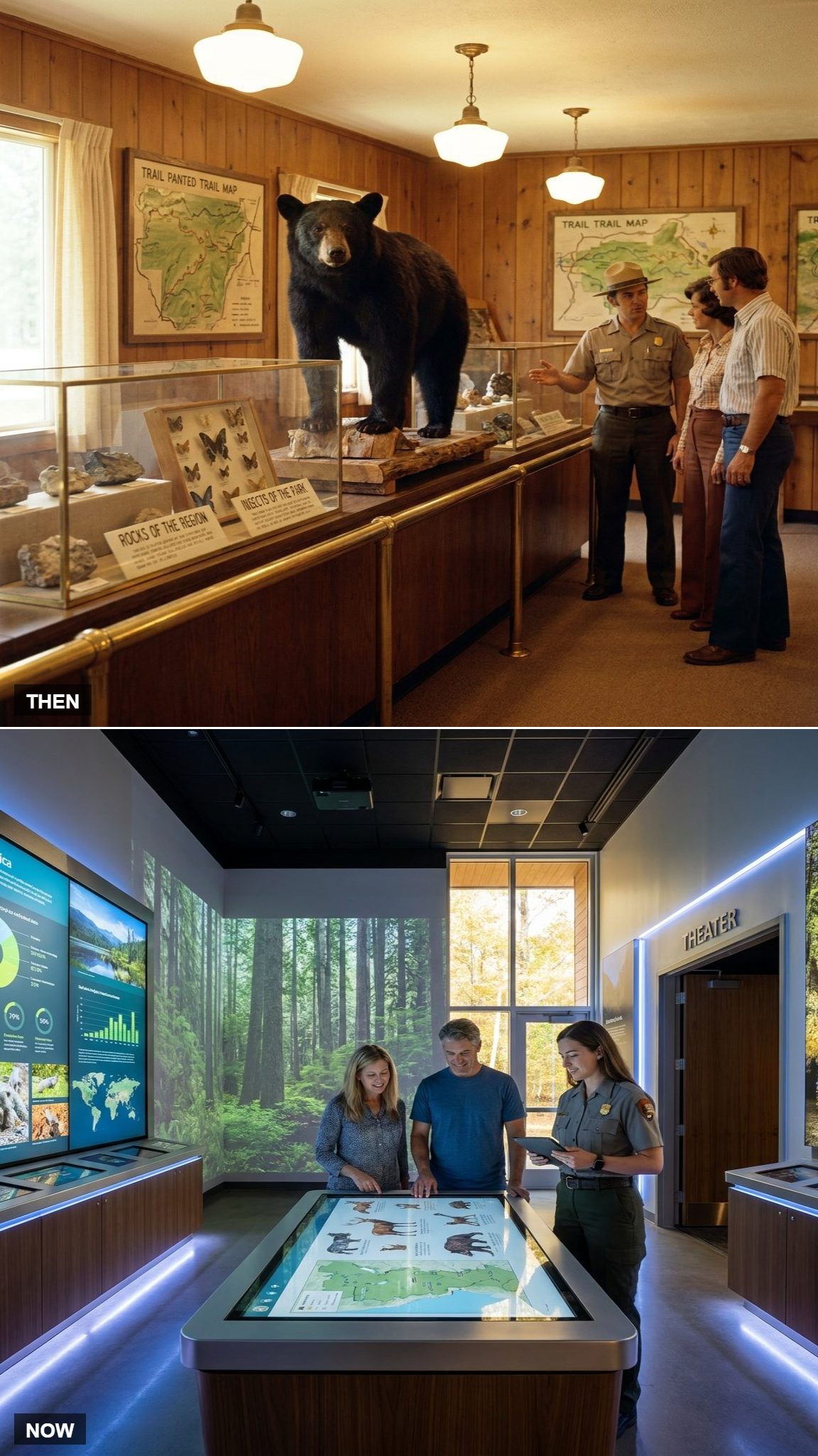
The old visitor center could be a quiet room of mounted specimens, rock samples, dioramas, relief maps, photographs, and typed labels. Some displays looked as if they had been there since the building opened, which was occasionally part of their charm.
Newer visitor centers may add touchscreens, projection walls, interactive maps, films, and searchable wildlife information while still using traditional artifacts and exhibits. Kids can explore far more material without waiting for somebody to replace a faded card in a glass case.
The stuffed bear hasn’t necessarily left. It just has competition.
12. Souvenir Patches vs. Branded Outdoor Gear
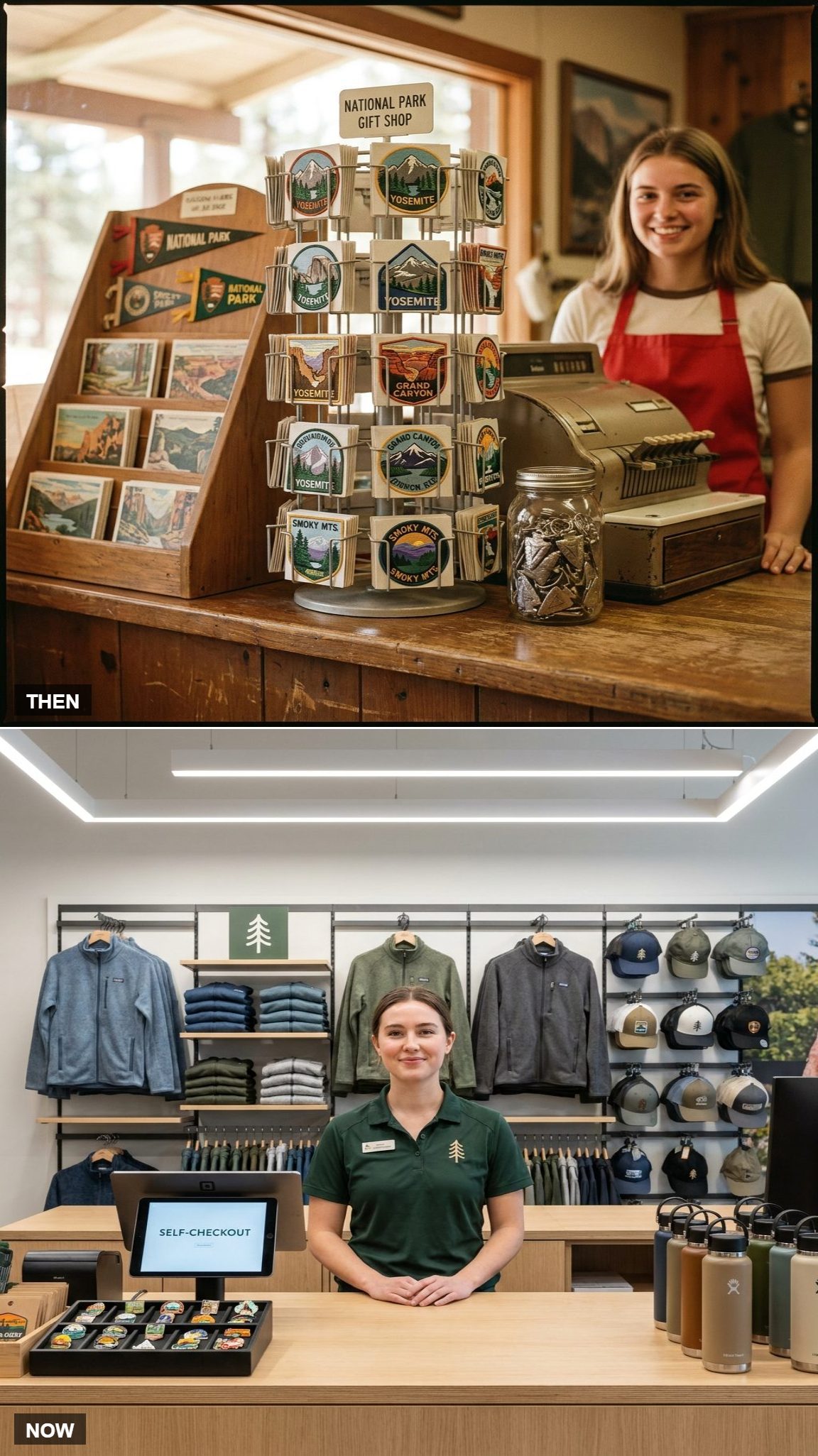
A patch was once enough. Sew it onto a jacket or backpack, add another after the next trip, and eventually the fabric became a stitched travel record. Postcards, pennants, pins, decals, and keychains filled out a souvenir universe that didn’t need much closet space.
Today’s park stores and gateway shops can look like miniature outdoor retailers, with technical fleece, insulated bottles, ball caps, enamel pins, books, and specialty collections alongside the familiar patches.
11. Interpretive Signs vs. Audio Tours and Digital Guides
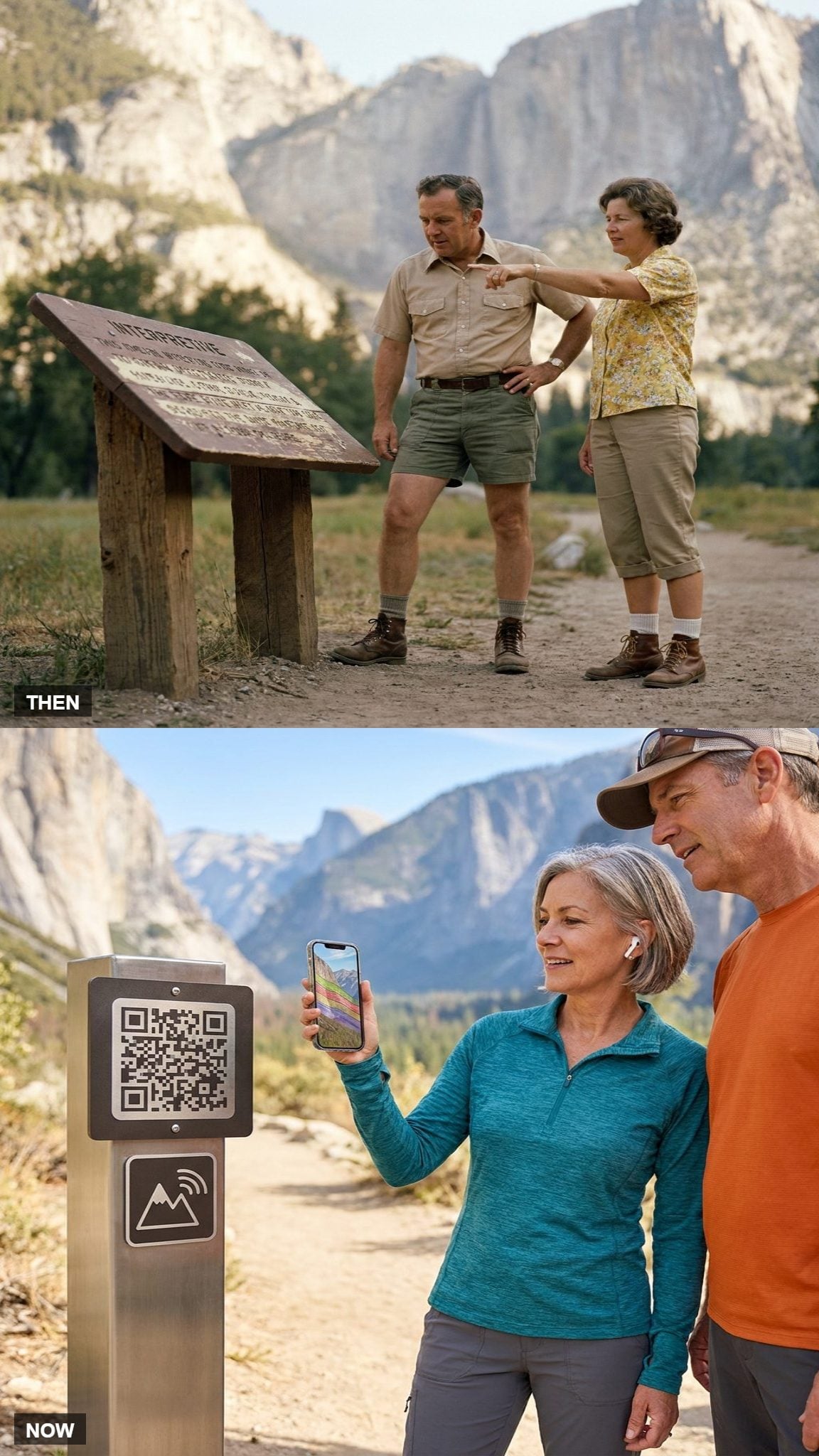
You stopped, you read, you learned. An interpretive sign along the trail explained the rock layers, identified the trees, or told you why a building stood where it did. The lesson stayed bolted to the landscape.
The sign is still there, but some parks and heritage sites now supplement it with QR codes, downloadable audio, digital maps, videos, or other phone-based interpretation. That can add voices, archival photographs, accessibility features, and layers of information a single panel could never hold.
The best part hasn’t changed: eventually you look up from the explanation and see the thing itself.
10. Shoreline Tackle vs. Digital Regulations and Modern Gear
🔥 Would you like to save this?
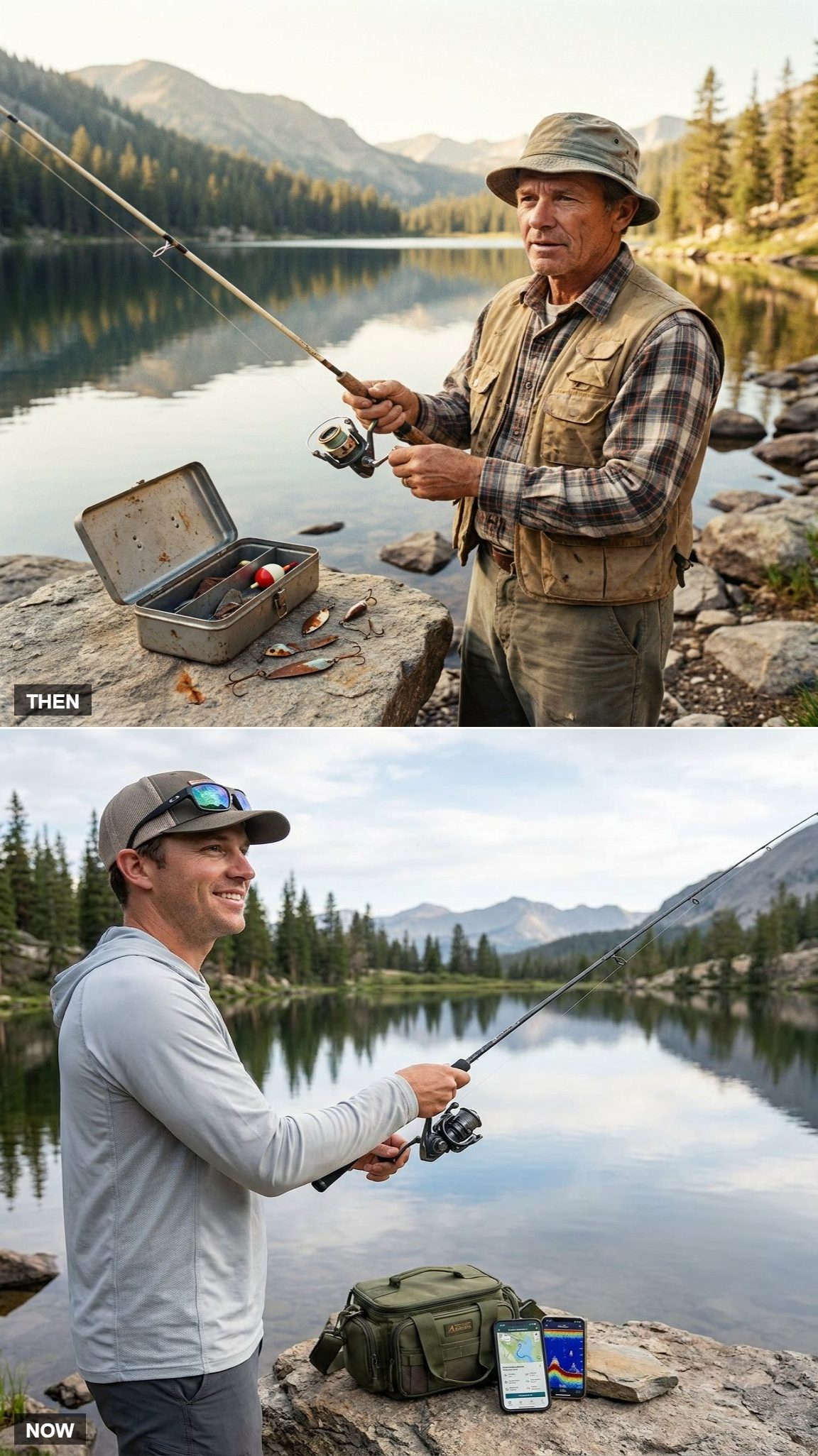
Fishing in 1970 might mean a fiberglass rod, a rattling tackle box, a red-and-white bobber, and a folded copy of the current fishing regulations. The gear was uncomplicated. The morning could still disappear while you stared at one small patch of water.
Today’s angler can carry lighter rods and reels, neatly organized tackle, digital maps, weather information, and current regulations on a phone. Depending on the location, other modern tools can help with conditions or planning too.
The bobber still works exactly as advertised.
9. Campground Simplicity vs. RVs and Modern Amenities
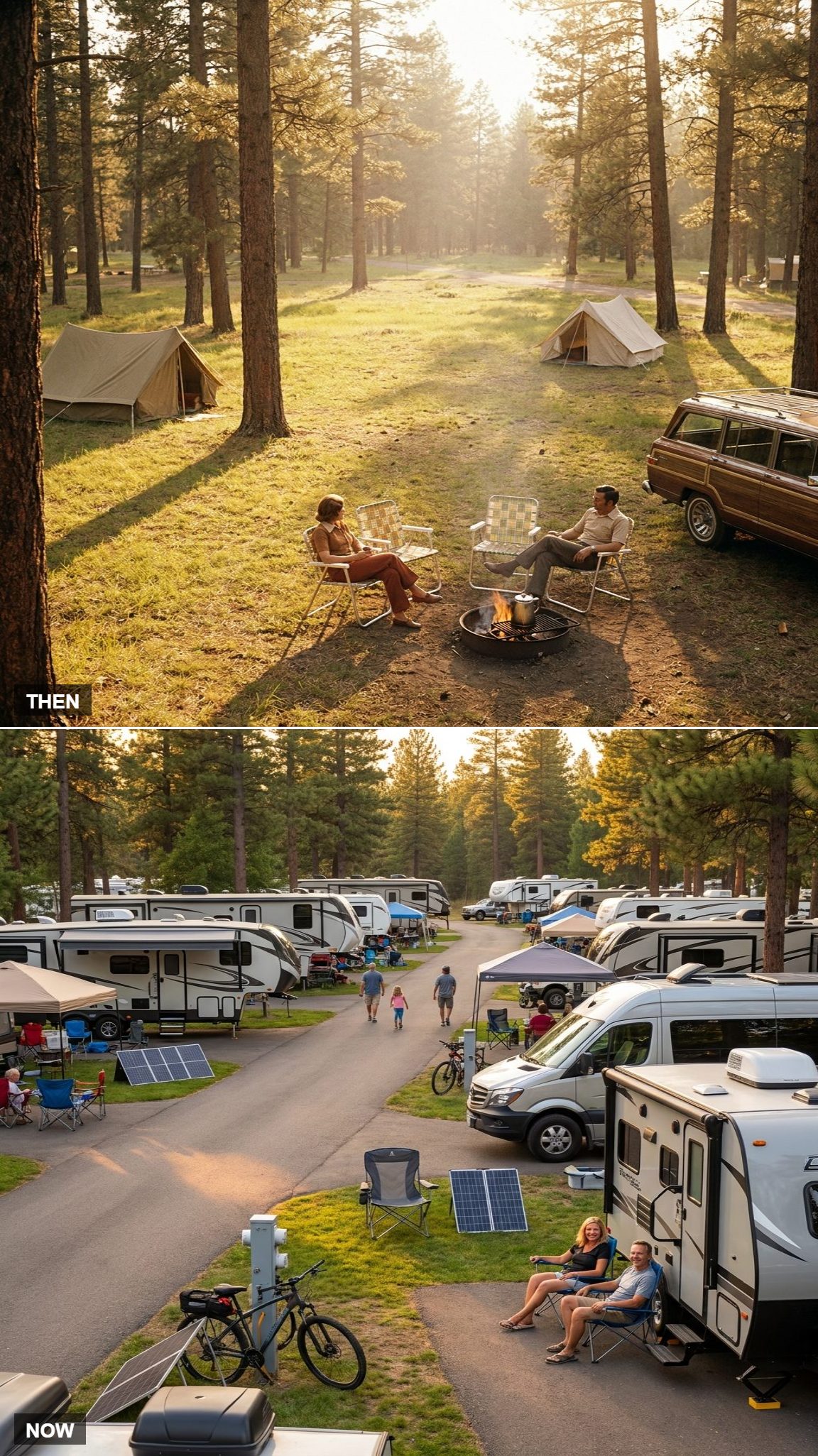
National park campgrounds were already busy places in 1970, but the equipment occupying a campsite could be considerably simpler: a tent or small trailer, folding chairs, a lantern, a cooler, and perhaps a radio turned low enough not to start a dispute with the next site.
Today’s campground can accommodate an astonishing amount of portable civilization. RV slide-outs, awnings, solar panels, battery systems, refrigerators, elaborate camp kitchens, and entertainment devices can all arrive in a single vehicle. Generator use is generally restricted by campground rules and quiet hours, but the amount of equipment has undeniably grown.
The campsite still gives you a picnic table and a patch of earth. What families build around them has changed almost beyond recognition.
8. Reading the Night Sky: Naked Eye and a Dog-Eared Star Chart vs. the App That Names Everything
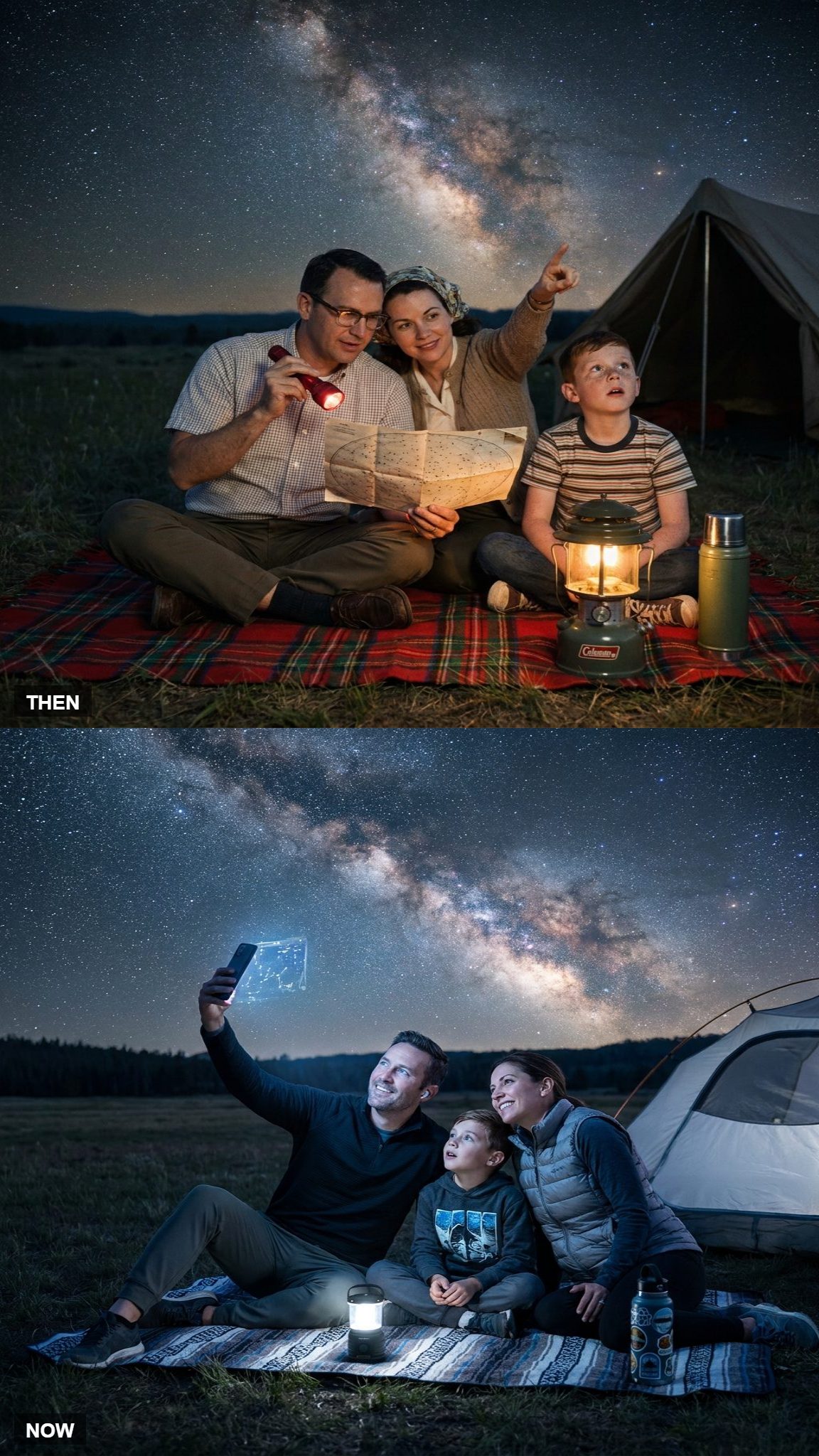
In 1970, the sky did most of the teaching. You let your eyes adjust, somebody pointed out Orion or the Big Dipper, and a folded star chart came out under a dim red light while everyone tried to match marks on paper to points overhead.
Now you can point a phone toward the sky and watch labels appear over constellations, planets, satellites, and other objects. Identification that once required a chart and some practiced recognition can happen almost immediately.
The app answers “What is that?” wonderfully. Whether you put the phone away afterward is still entirely up to you.
7. The Scenic Pull-Off: A Gravel Shoulder vs. the Engineered Overlook
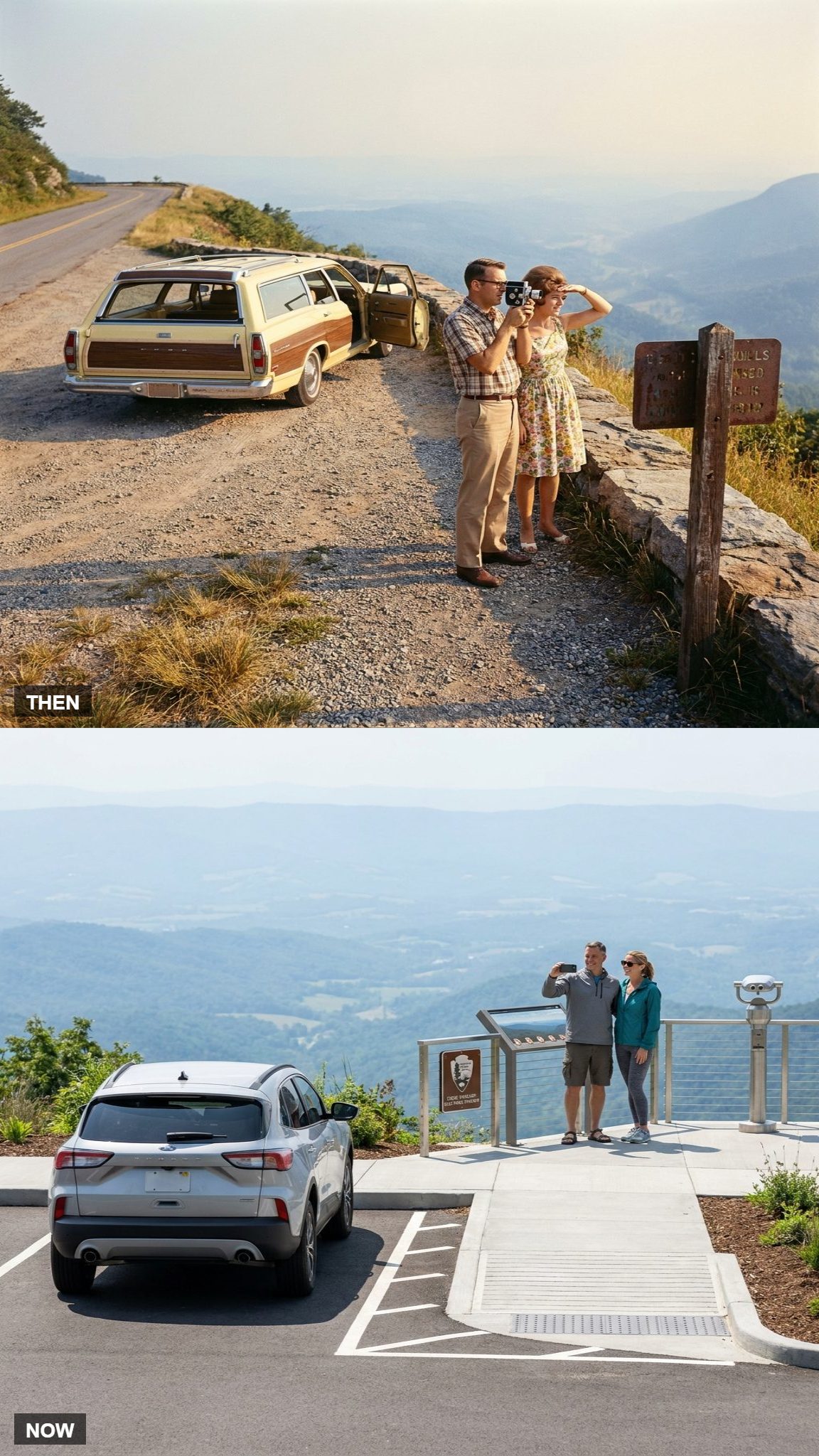
Some scenic stops were once little more than convenient wide spots: gravel under the tires, perhaps a simple sign or barrier, and a view that appeared before the facilities did. Others were already formal overlooks, particularly along major park roads built specifically around scenic driving.
Many newer or rebuilt viewpoints put considerably more thought into what happens after the car stops. Paved parking, guardrails or stone walls, interpretive panels, accessible paths, and carefully positioned viewing areas can bring more visitors safely to the same landscape.
The engineering is easier to notice now. The mountains remain stubbornly unimpressed.
6. Backcountry Trails: Faded Blazes vs. Clear Junction Signs
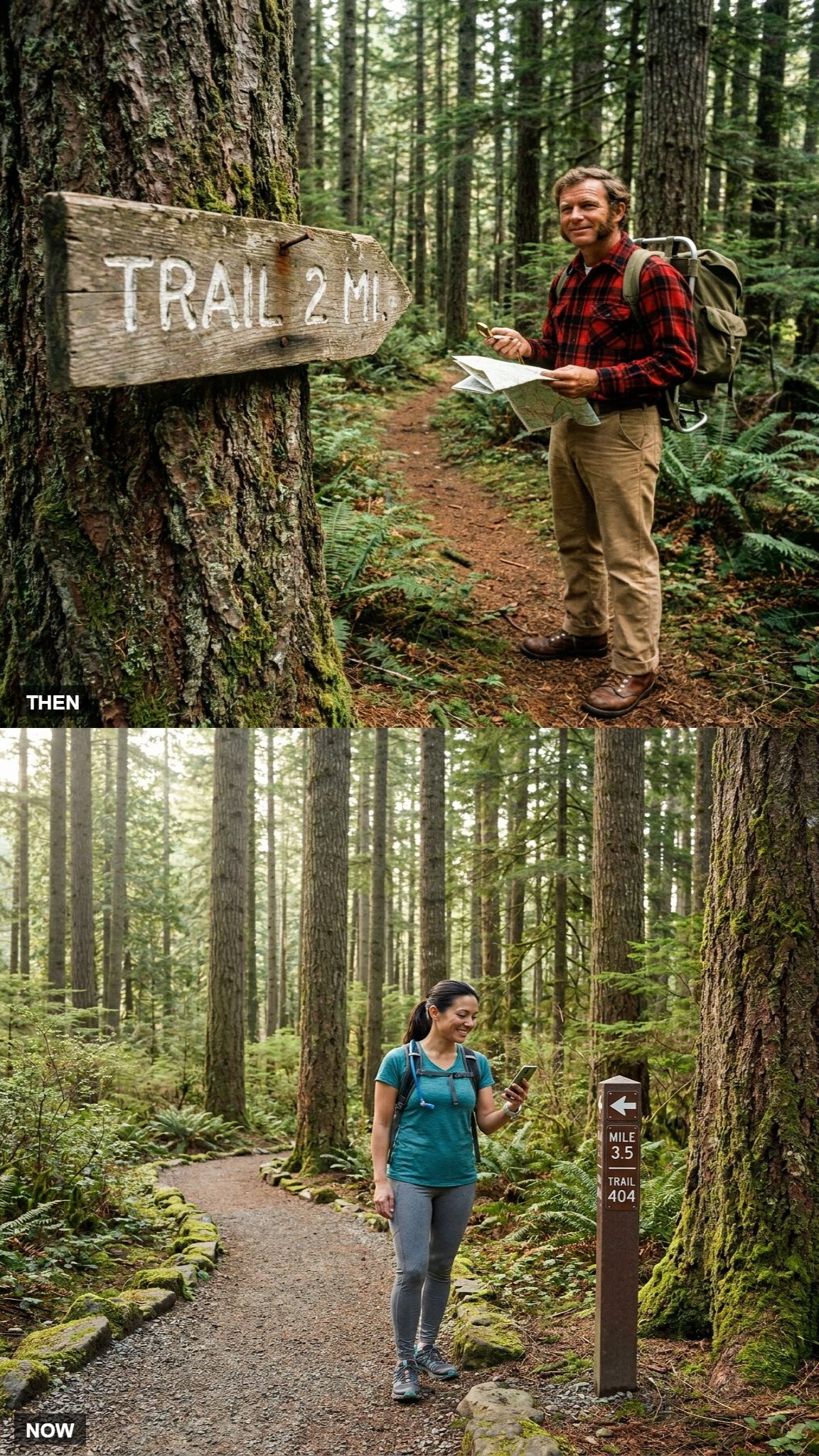
Backcountry trails have always varied enormously, but an older route might be identified by a blaze on a tree, a small metal marker, a cairn, or a weathered sign that made perfect sense to the person who installed it twenty years earlier. At an uncertain junction, hikers had to combine those clues with the map in their hands.
Many heavily used trails today have more standardized trailhead information, signed junctions, mileage markers, maintained tread, and clearer route identification. Remote wilderness routes can still be faint or sparsely marked, which is exactly why those improvements shouldn’t be mistaken for a guarantee.
The trail itself remains pleasantly analog. Paint, posts, rocks, and boot marks still do a surprising amount of the work.
5. Camp Food: Bologna Sandwiches and Beans vs. Freeze-Dried Meals and a Powered Cooler
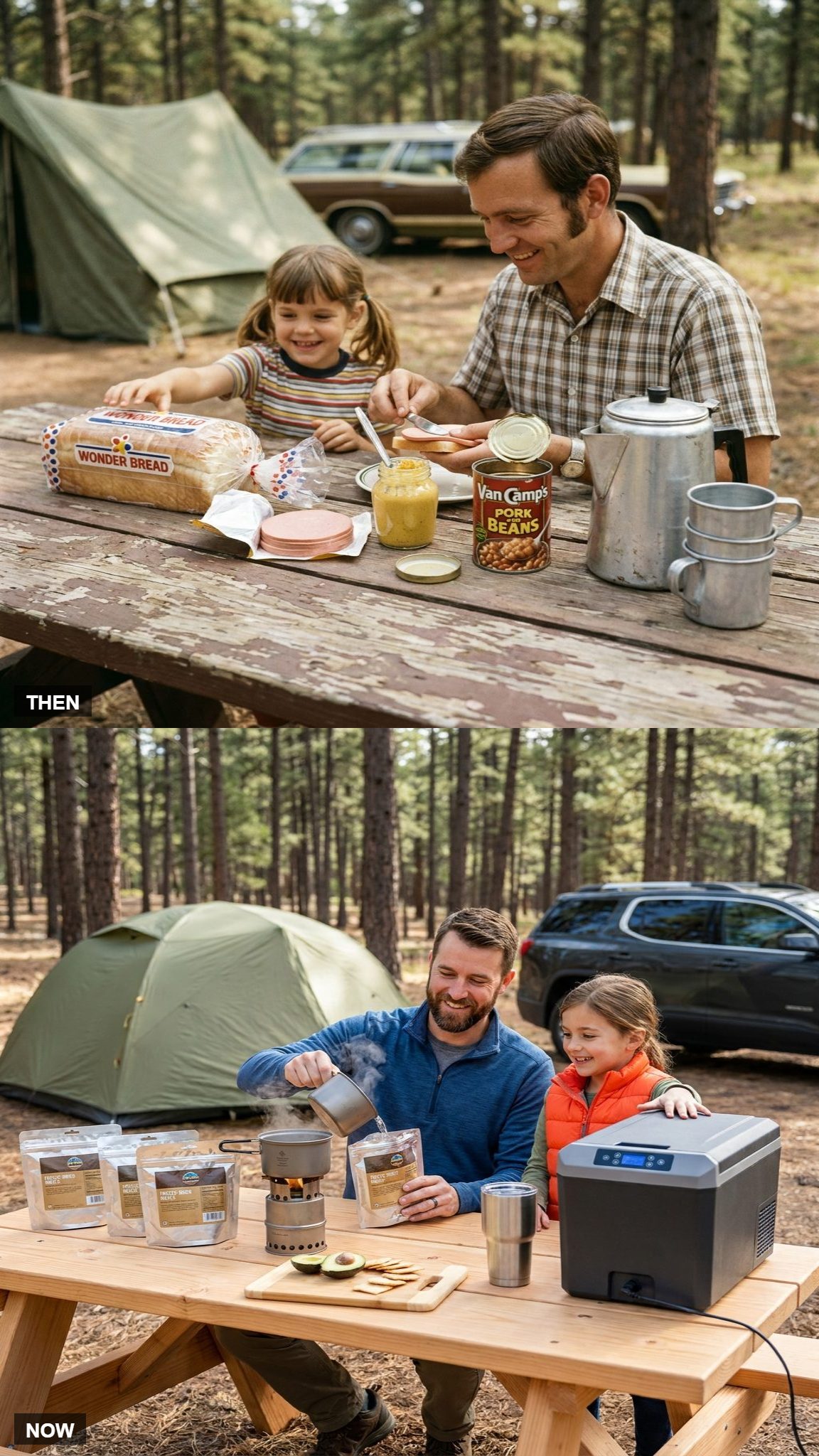
In 1970, lunch might come out of a paper sack that had ridden in the car all morning. White bread, bologna, mustard, fruit, cookies, canned beans for later, and whatever the cooler could keep cold until dinner. Nobody expected the campground menu to resemble a restaurant.
Now there’s a foil pouch labeled beef stroganoff waiting for boiling water, while a powered cooler can maintain a steady temperature without spending the week slowly becoming a bathtub of melted ice. Lightweight backpacking meals have improved too, which means dinner after a long hike can be considerably more ambitious than crackers and something from a can.
4. Getting the News: The Campground Bulletin Board vs. the Weather Alert in Your Pocket
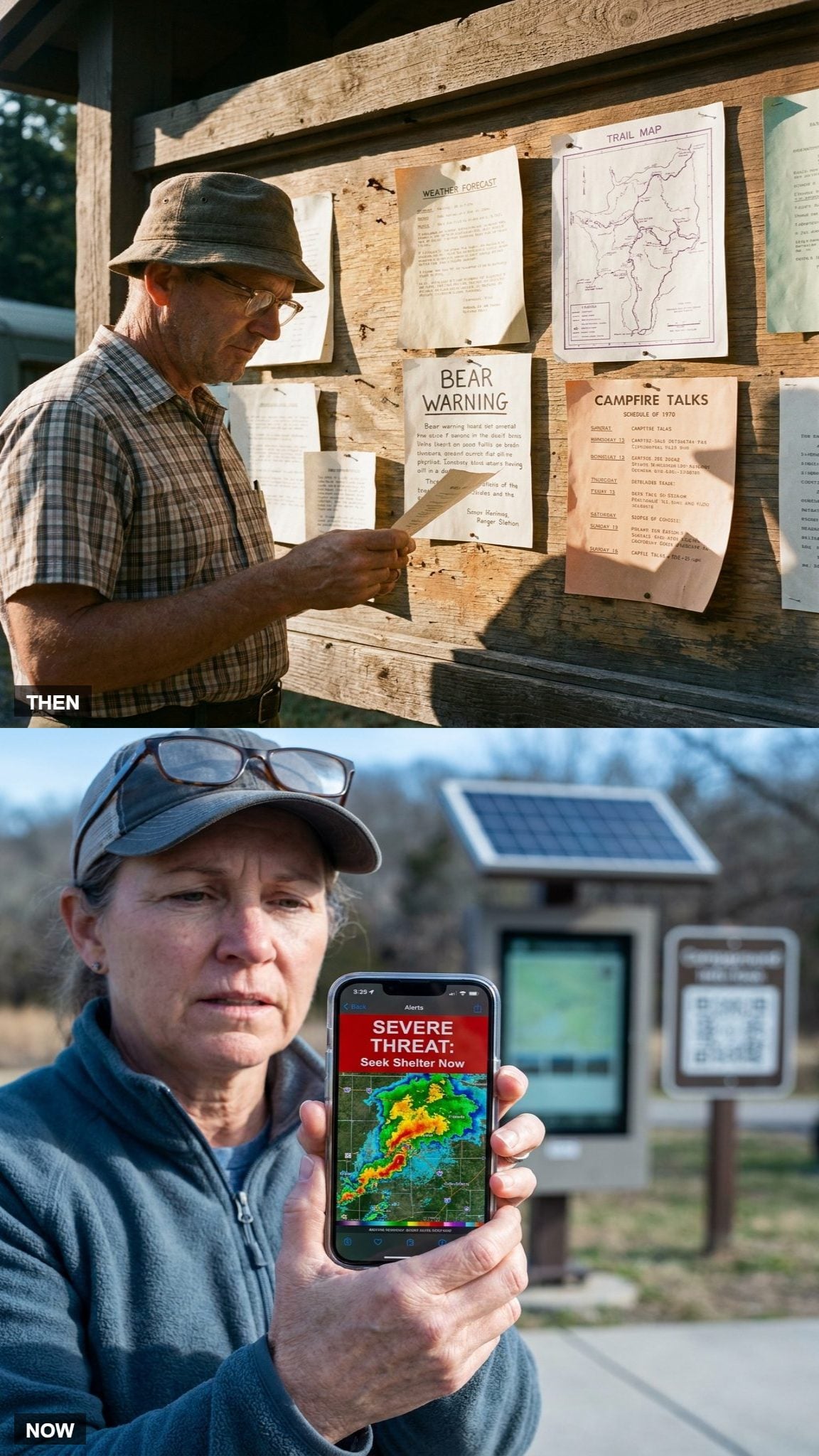
In 1970, a campground bulletin board could carry an impressive amount of local intelligence. Bear notices, ranger-program schedules, fire restrictions, trail information, weather notes, and lost-and-found messages accumulated beneath thumbtacks while campers stopped to see what had changed.
Urgent information can now reach a phone directly where service and alert systems allow it. A severe-weather warning in the middle of the night has an advantage over a notice waiting beside the ranger station until breakfast.
3. Where You Slept: The Bare-Bones Park Cabin vs. the Glamping Tent With a Real Bed
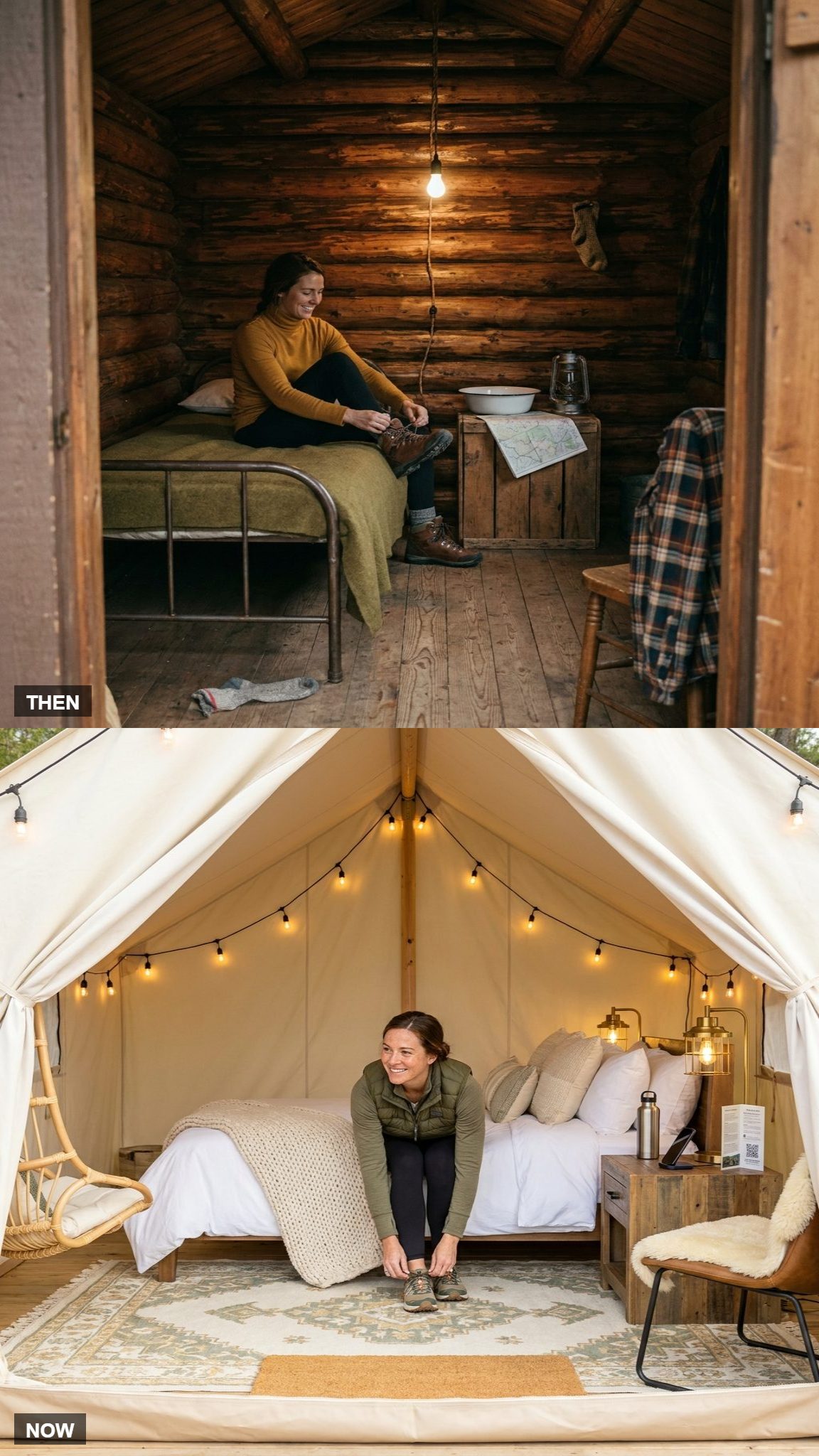
A basic park or gateway cabin in 1970 might offer little more than solid walls, simple beds, a few pieces of furniture, and enough shelter to keep the weather outside. Bathrooms and other amenities varied enormously, but luxury wasn’t necessarily the point. The cabin got you close to the park without asking you to sleep on the ground.
Now there are safari-style tents and other glamping accommodations at some park gateways with queen beds, real linens, wood stoves, decks, electricity, and sometimes private plumbing. Canvas survived. Roughing it became negotiable.
2. What You Did All Day: Simple Park Days vs. E-Bikes, Tours, and Programs
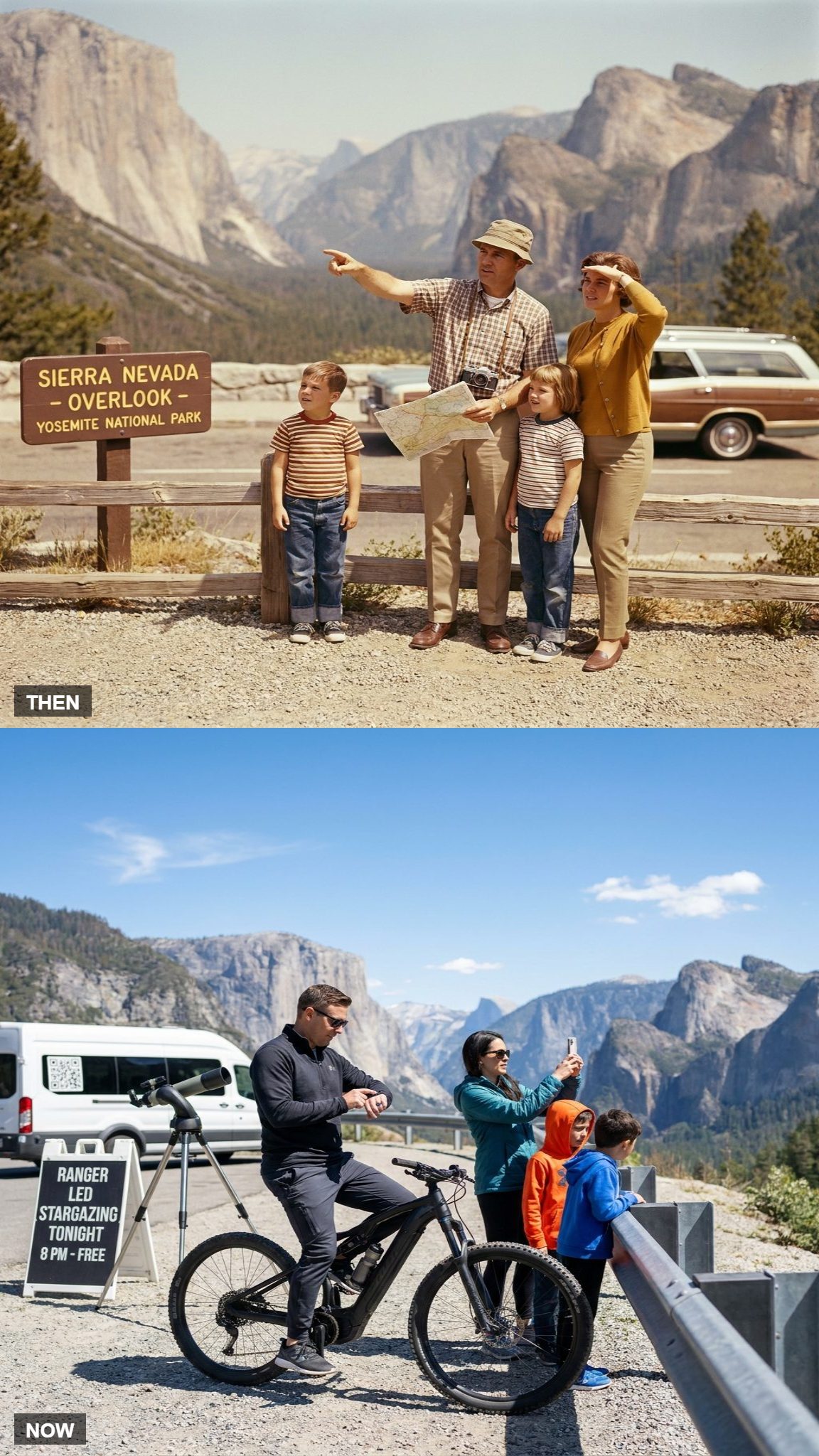
A national park day in 1970 could already include far more than hiking: ranger walks, fishing, boating, scenic drives, horseback riding, museum visits, campfire programs, and whatever else a particular park offered. Still, plenty of families were perfectly content to hike, look, picnic, and let an afternoon disappear without booking anything.
Today’s menu can be considerably more organized. Depending on the park and local rules, visitors may find guided walks, photography programs, astronomy events, bike or e-bike opportunities, shuttle tours, workshops, and reservation-based activities competing for space on the itinerary.
There is more help than ever for filling a park day.
Leaving part of it empty is still free.
1. Coming Home With It: A Shoebox of Printed Photos vs. a Cloud Library and a Travel Reel
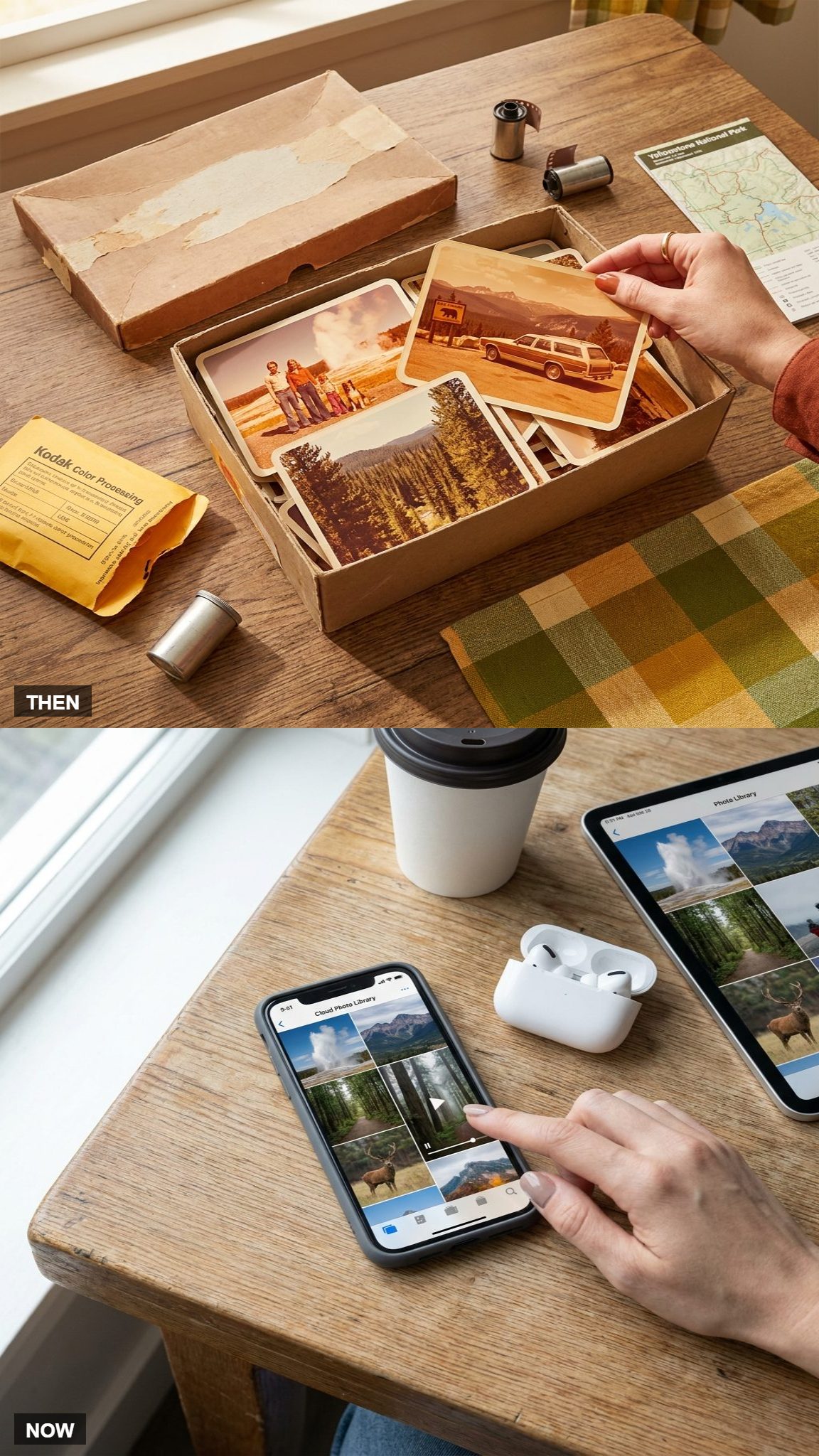
After a 1970 trip, the pictures had a second life. Film went for processing, prints came home in an envelope, the best ones found an album, and the rest accumulated in boxes that somehow survived every closet purge for the next forty years.
Now the photographs may be backed up before the car reaches home. Hundreds or thousands can land in a cloud library, while a carefully chosen handful become a travel reel, shared album, or post that friends see immediately.
The old trip left behind fewer pictures because film imposed a limit.
The new one leaves behind a searchable mountain of them. The hard part is deciding which twenty deserve to become the shoebox.
🔥 Would you like to save this?
Please note that some of the imagery in this article were created with the aid of AI image generators.