
🔥 Would you like to save this?
The terminal smelled like coffee and Aqua Net. Somebody’s grandmother was crying at Gate 7, but happy-crying, because her son was coming home from Denver and a jet arrival still felt like an event. Nobody was taking off their shoes. Nobody was staring into a phone. The building carried a kind of Sunday-clothes formality, even when the carpet was loud and the air was full of smoke.
Not every airport was grand, and not every coach passenger ate from china. But across terminals large and small, flying involved more people, more ritual and far more physical ceremony than it does now. The counters, lounges, uniforms, stairways and mechanical boards made the journey visible. Fifty years later, much of it has been replaced by screens, kiosks and systems designed to move us through without requiring anyone to look up.
26. Checking In at the Counter
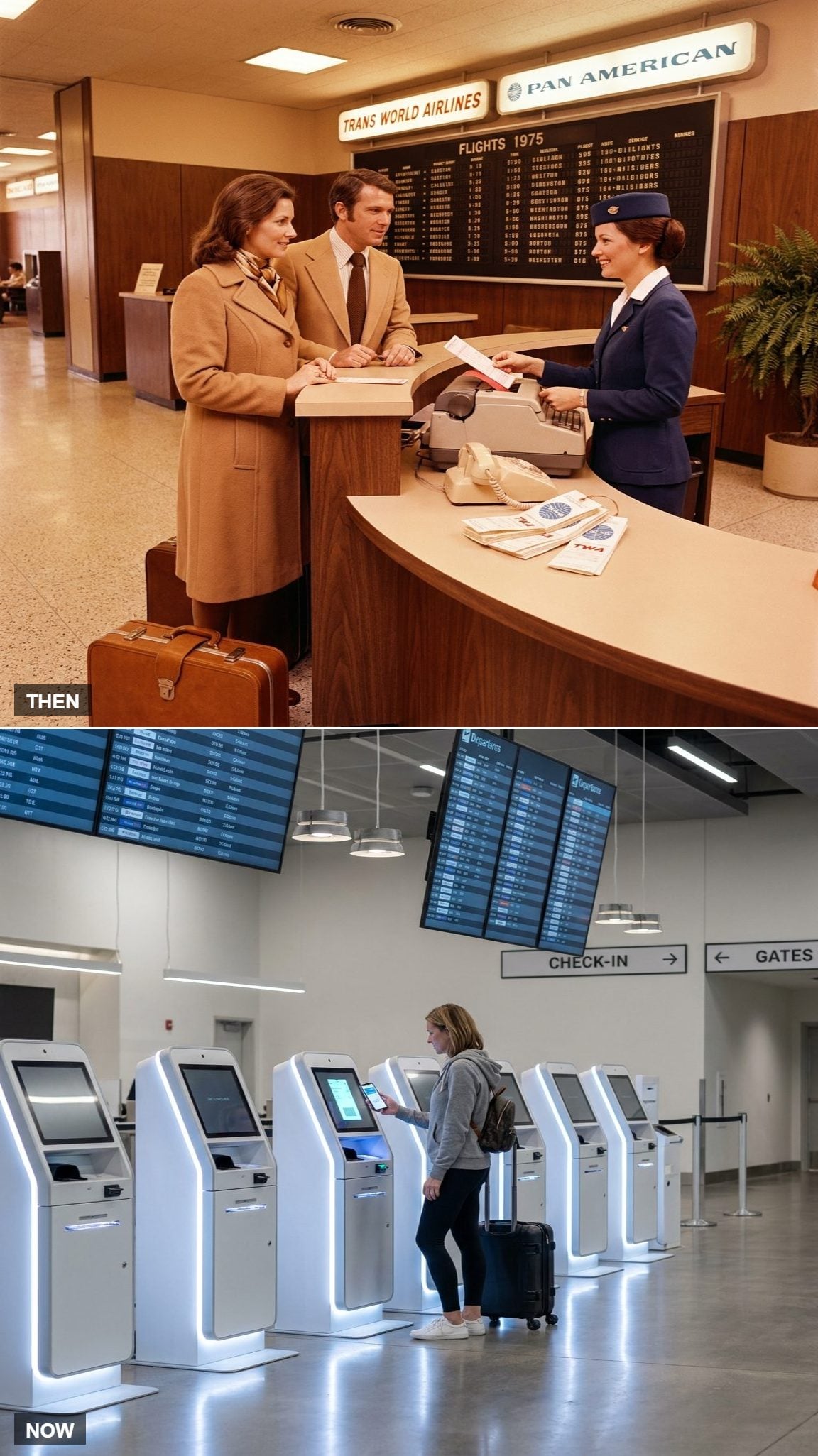
In 1975 the check-in counter was where the trip officially began. A human being took your ticket, wrote your name on the luggage tag by hand, and told you to have a wonderful flight. She meant it. The whole exchange took maybe four minutes and involved eye contact.
Now a screen asks if you want to upgrade for ninety-nine dollars. You scan your own phone, print your own tag, wrestle it onto your own bag, and drop it on a conveyor belt that may or may not send it to the right city.
Somewhere along the way, we stopped being customers and started being unpaid employees.
25. Getting Through Security
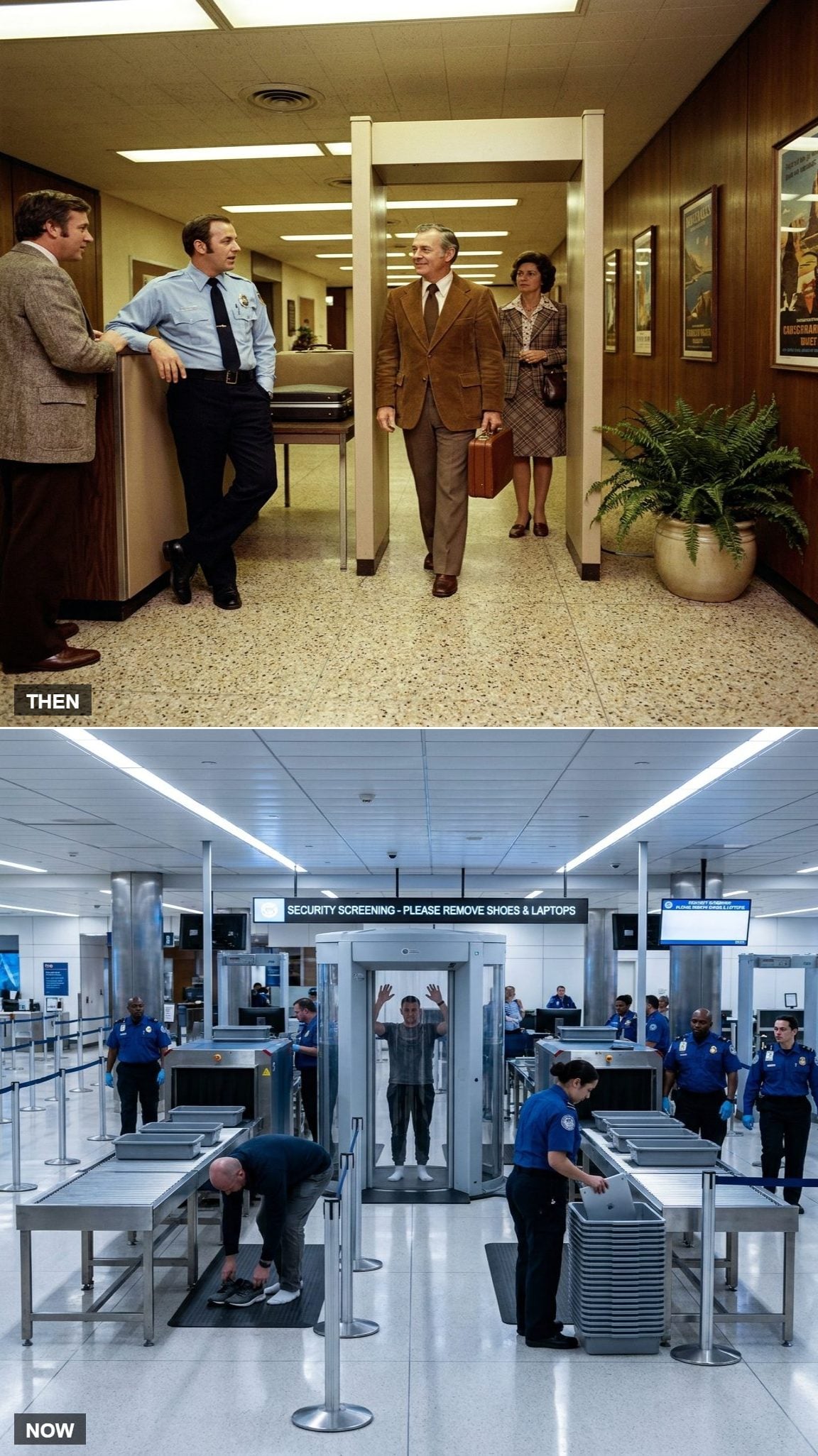
By 1975, U.S. passengers were already subject to universal screening, including metal detectors and carry-on inspection. You walked through with your shoes on and your dignity intact. If the metal detector beeped, someone waved a wand at you for eight seconds and sent you on your way.
Post-9/11 the whole ritual became a small humiliation. Shoes off. Belt off. Laptop out. Liquids in a baggie. Arms up in a scanner that can apparently see through your jeans. You’ve stood in that line at 5am with one sock falling off. Everyone has.
24. The Departure Lounge
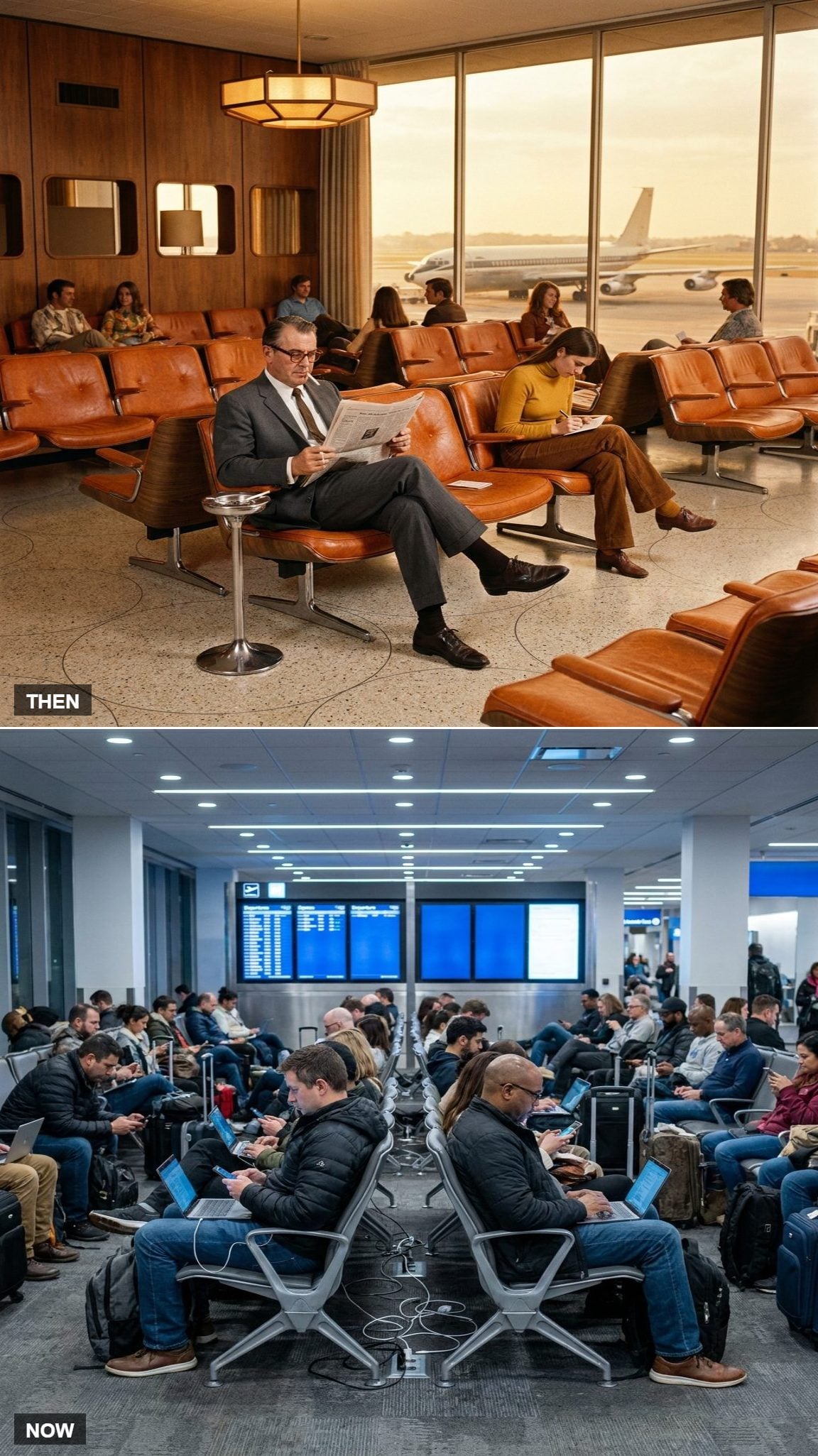
The lounge was a room for waiting. Actually waiting. You sat, you smoked, you read, you looked out the window at your plane. Nobody was optimizing. The ashtrays were built into the chairs. So were the chairs, come to think of it.
Now the gate is a charging station with seats. You’ve hunted for an outlet at LaGuardia at six in the morning and you’ve watched a grown man have a small crisis because his phone hit 4%. The window and the jet are still there — nobody looks at them anymore.
23. The In-Flight Experience
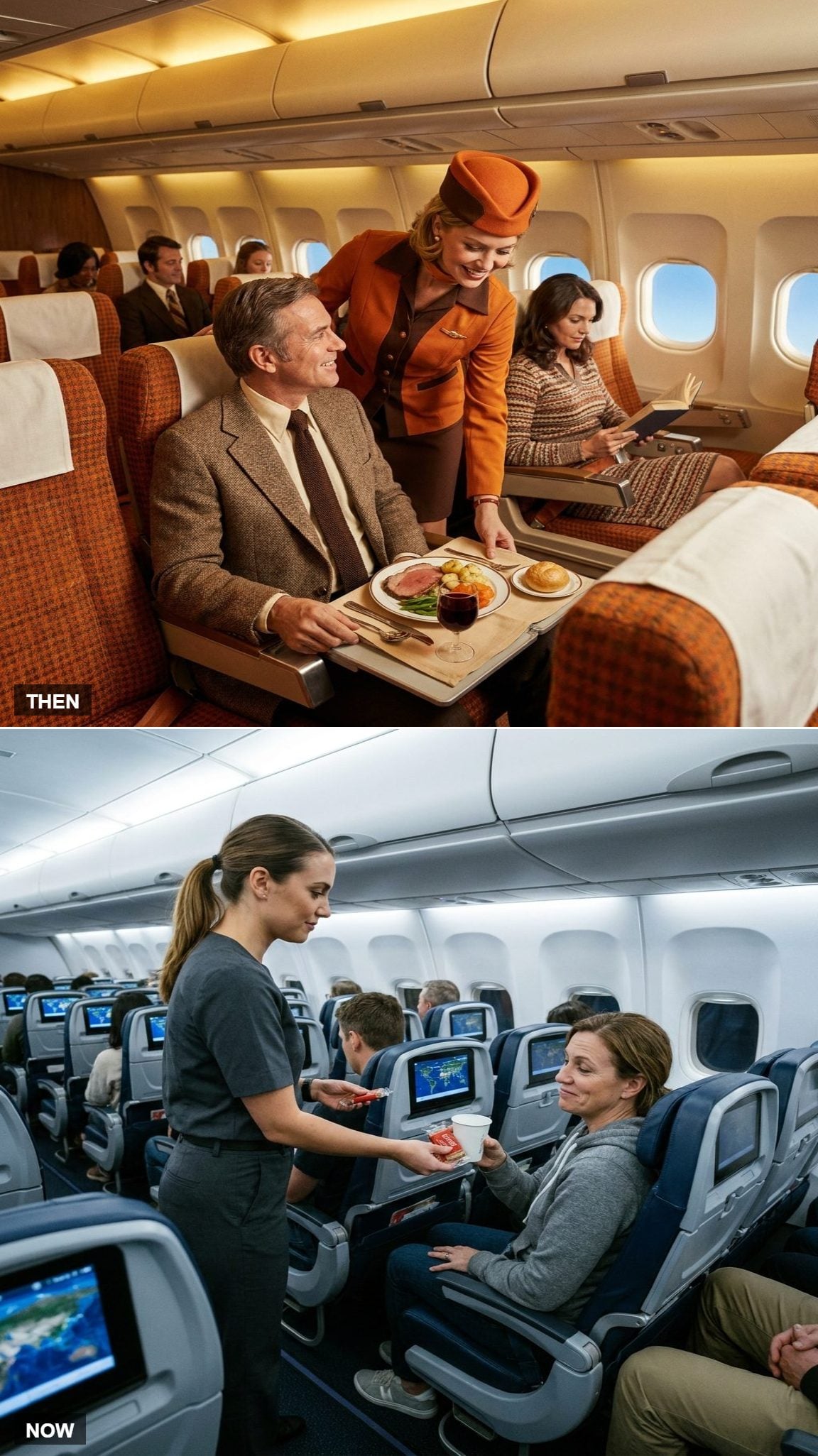
Coach in 1975 was not spacious by any reasonable standard, but the cabin felt less stripped down. Pillows and blankets appeared without a fee. Flight attendants moved through the aisle with time to spare. The lights were softer, the overhead bins were smaller, and the whole trip carried the rhythm of something being hosted rather than processed.
Now the seat is engineered down to the inch. Every extra has a price, every cart movement has a schedule, and the cabin feels designed around efficiency first and comfort second. The technology is better, the safety is better, and the entertainment would have looked like science fiction in 1975.
What disappeared was not luxury so much as the sense that the flight itself was part of the journey, rather than the sealed tube you endure to reach it.
22. The Flight Crew Uniforms
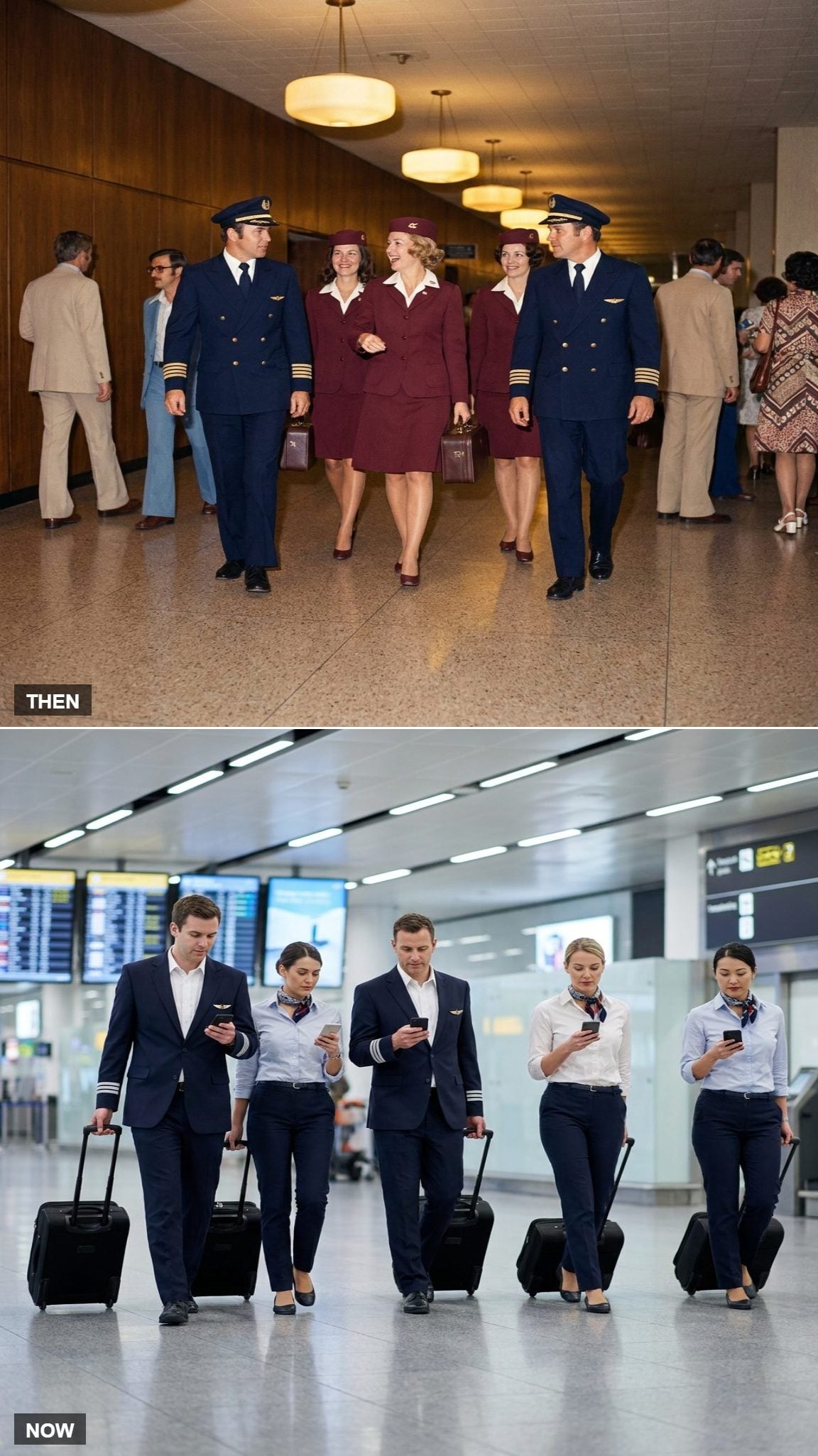
Airline uniforms in 1975 were designed by actual couturiers. Pucci did Braniff. Halston did Braniff again. The crew walked through the terminal like a small ceremony — structured, coordinated, impossible to miss.
The modern uniform is a polo shirt and slacks. Practical, washable, forgettable. The suitcases are all the same black four-wheeled roll-aboard, and you cannot tell the crew from the passengers until they scan the boarding passes.
21. Baggage Claim
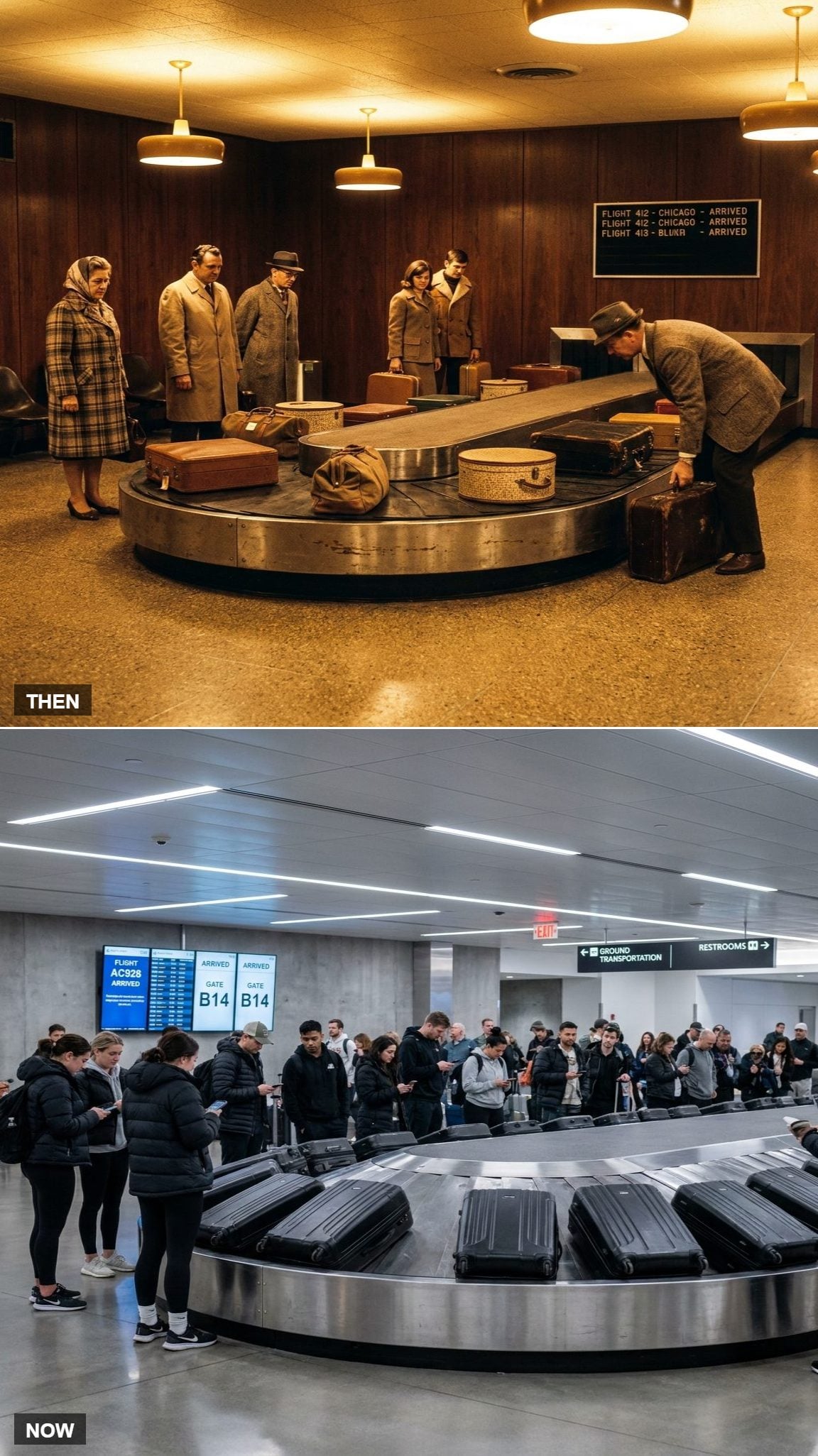
Six people, six suitcases, all different. You spotted yours from thirty feet away because it was the only tan one. The whole thing took four minutes.
Now everyone owns the same black four-wheeled rectangle. A crowd presses in around the carousel, phones out, waiting to identify their bag by the ribbon they tied around the handle three years ago. Half the time the bag is in Charlotte anyway.
20. The Terminal Itself
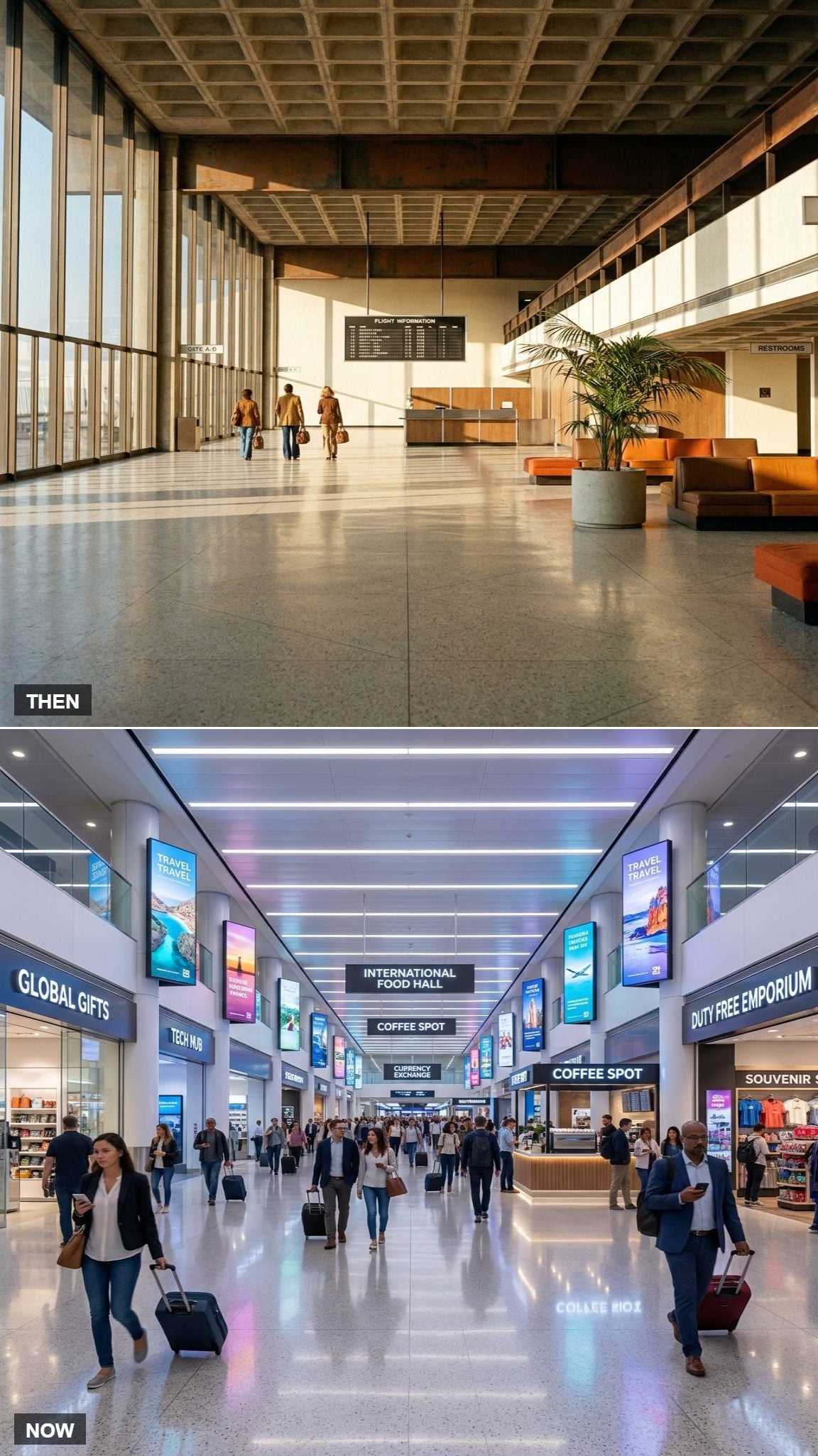
The 1975 terminal was a real building. Eero Saarinen designed the TWA Flight Center and the soaring main terminal at Dulles. Ceilings soared because someone decided they should. Air travel was still a civic event and the buildings said so out loud.
The modern terminal is a shopping mall with jetways. Every square foot has been rented to a Hudson News, a Shake Shack, an advertising screen for a bank you have never heard of. The architecture is still under there somewhere. You just can’t see it through the retail.
19. The Smoking Lounge Where Everyone Actually Relaxed
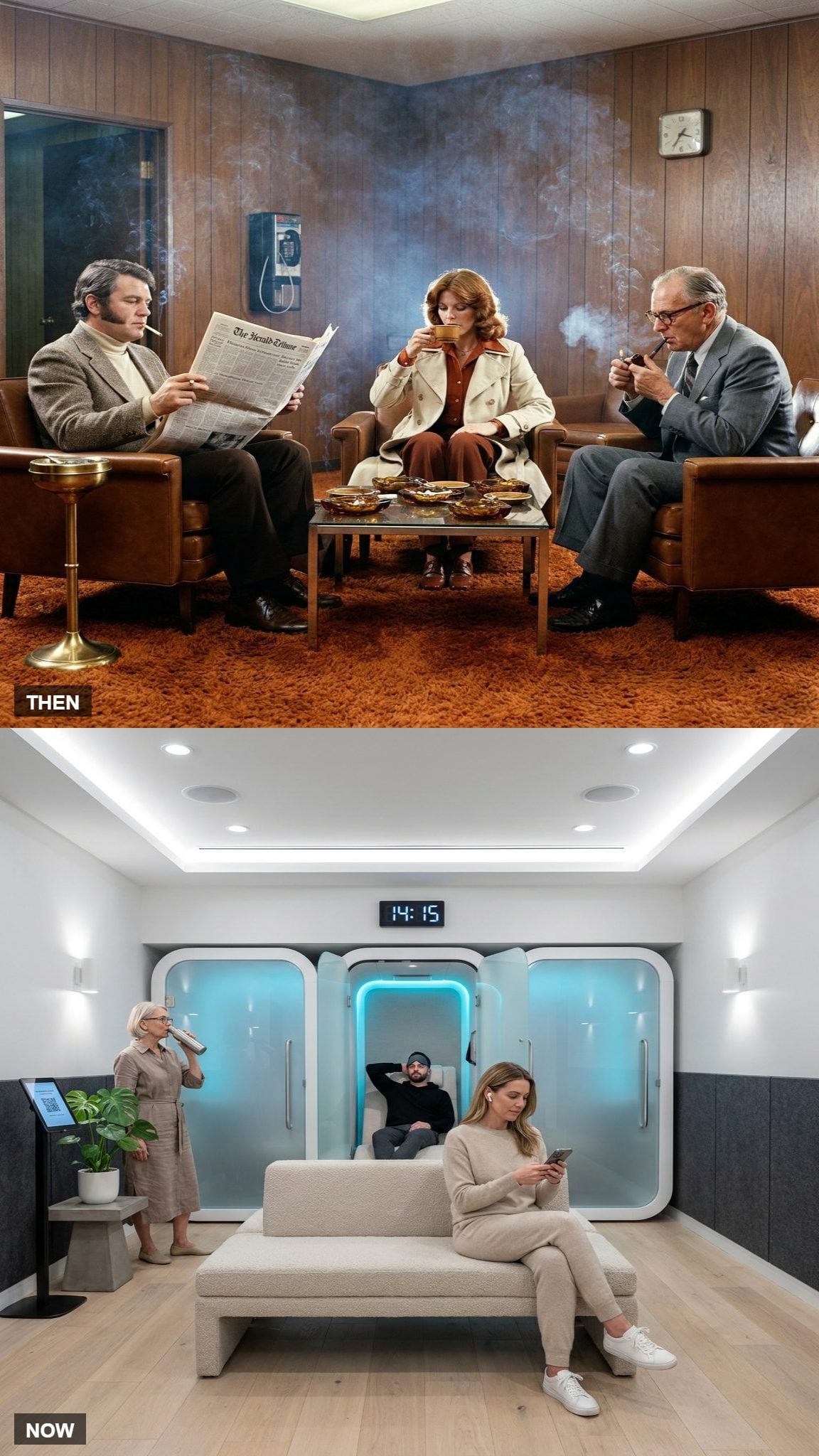
The 1975 smoking lounge is a museum piece now, and thank goodness for that. Still, there was a strange civility to the room. Travelers sat down, they talked, and they read newspapers cover to cover because the flight was still two hours out and nobody had anywhere more urgent to be than that leather chair.
The modern equivalent? A wellness pod, which is what we built once we admitted airports had become unbearable. You pay for silence. You pay for a place to close your eyes. The old lounge came free with the ticket.
18. The Modest Duty-Free Counter
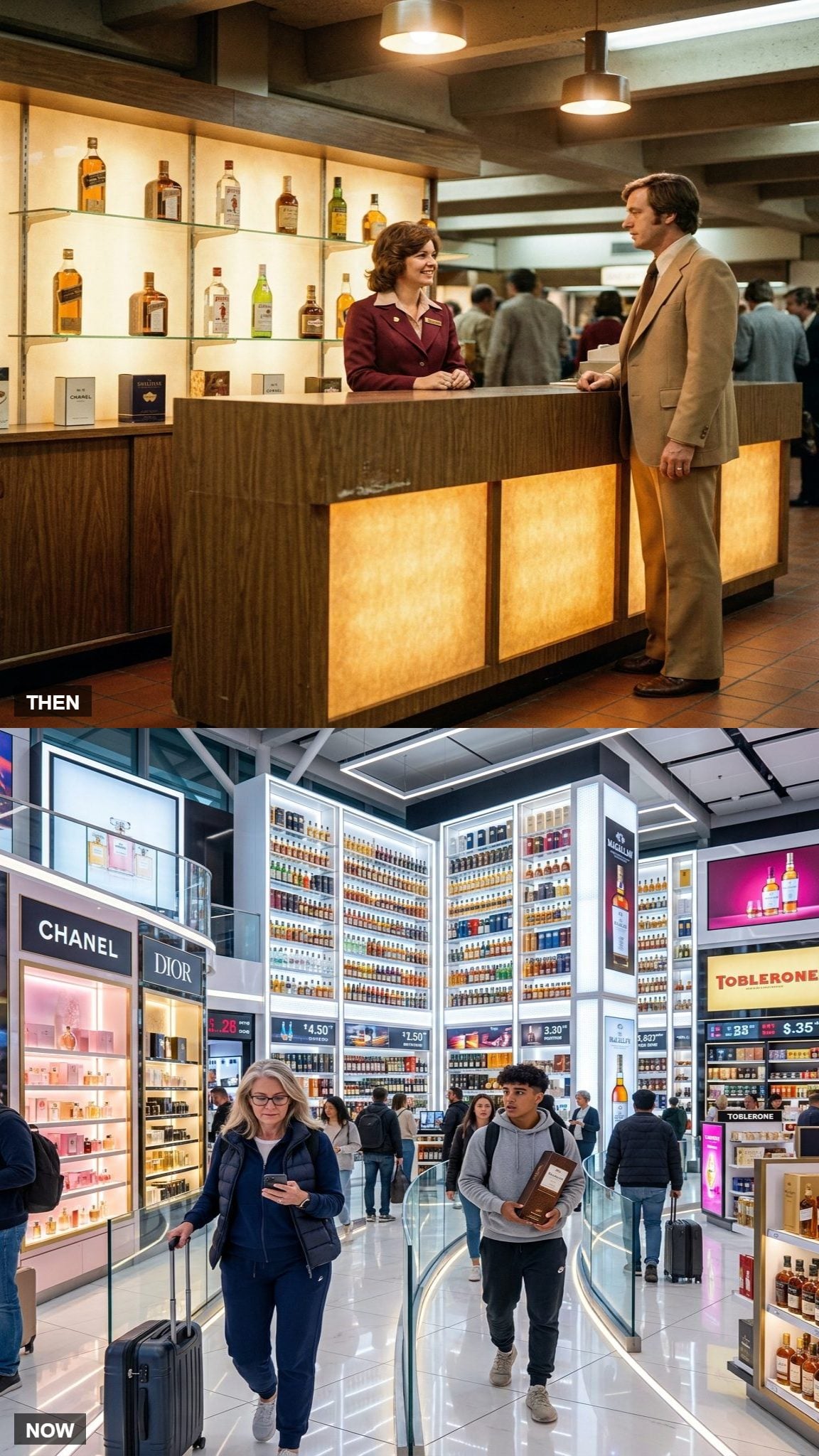
The 1975 duty-free was a counter, not a store. A dozen bottles, some perfume, a friendly attendant who actually recommended things. You bought a gift for your wife because it seemed like the right moment — not because a maze of shelving forced you past six brands on the way to your gate.
17. The Control Tower Before the Screens Took Over
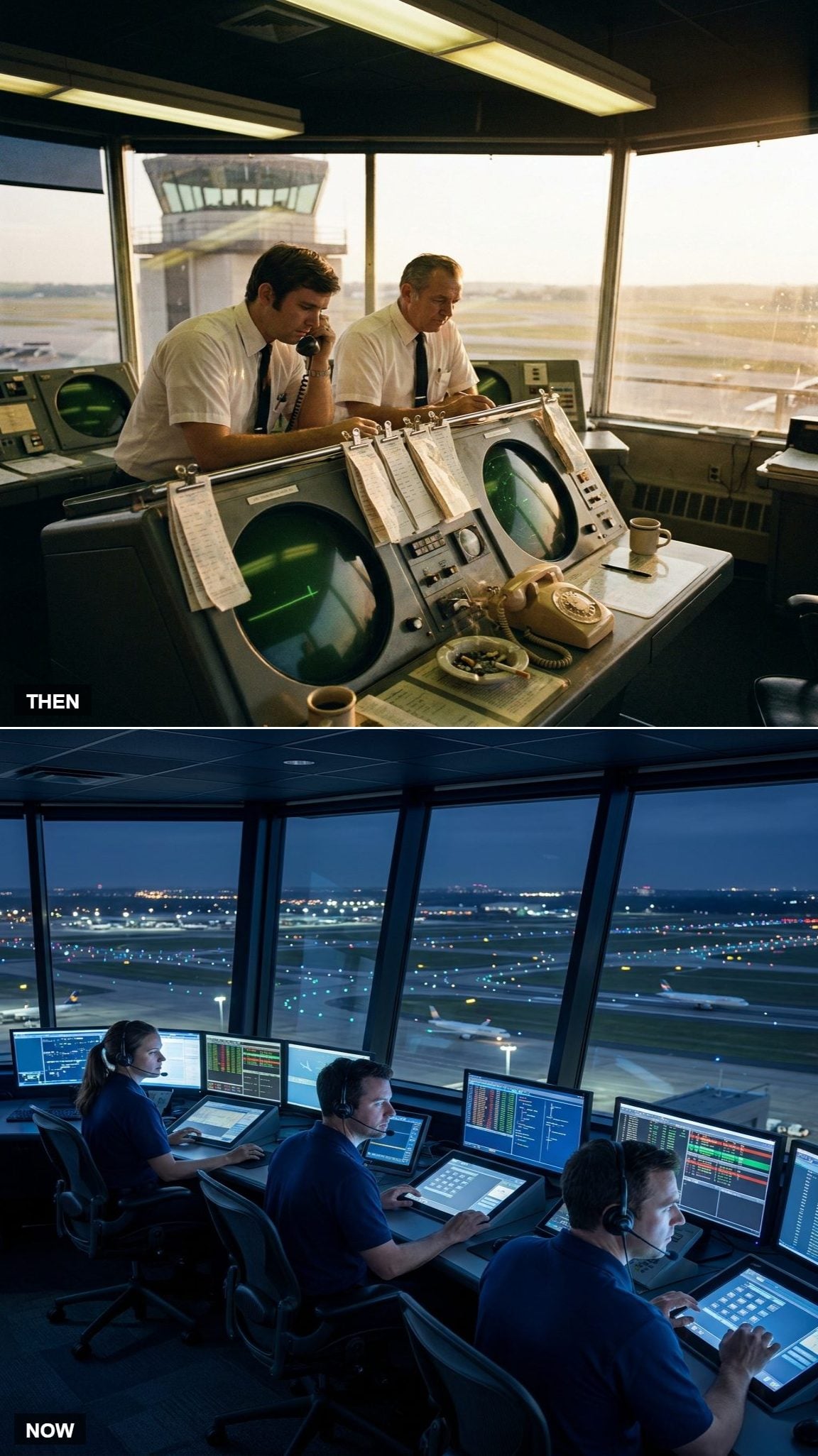
Green phosphor, paper strips, a rotary phone. The 1975 tower ran on human attention and a handful of analog tools, and it moved a nation’s worth of airplanes safely from one coast to the other every single day.
Modern towers glow blue with data. More screens, more redundancy, safer almost certainly. But there’s a specific romance to the idea of a man in a skinny black tie watching a blip on a green screen and knowing that blip is carrying two hundred people to Chicago.
16. The Airplane Lavatory
🔥 Would you like to save this?
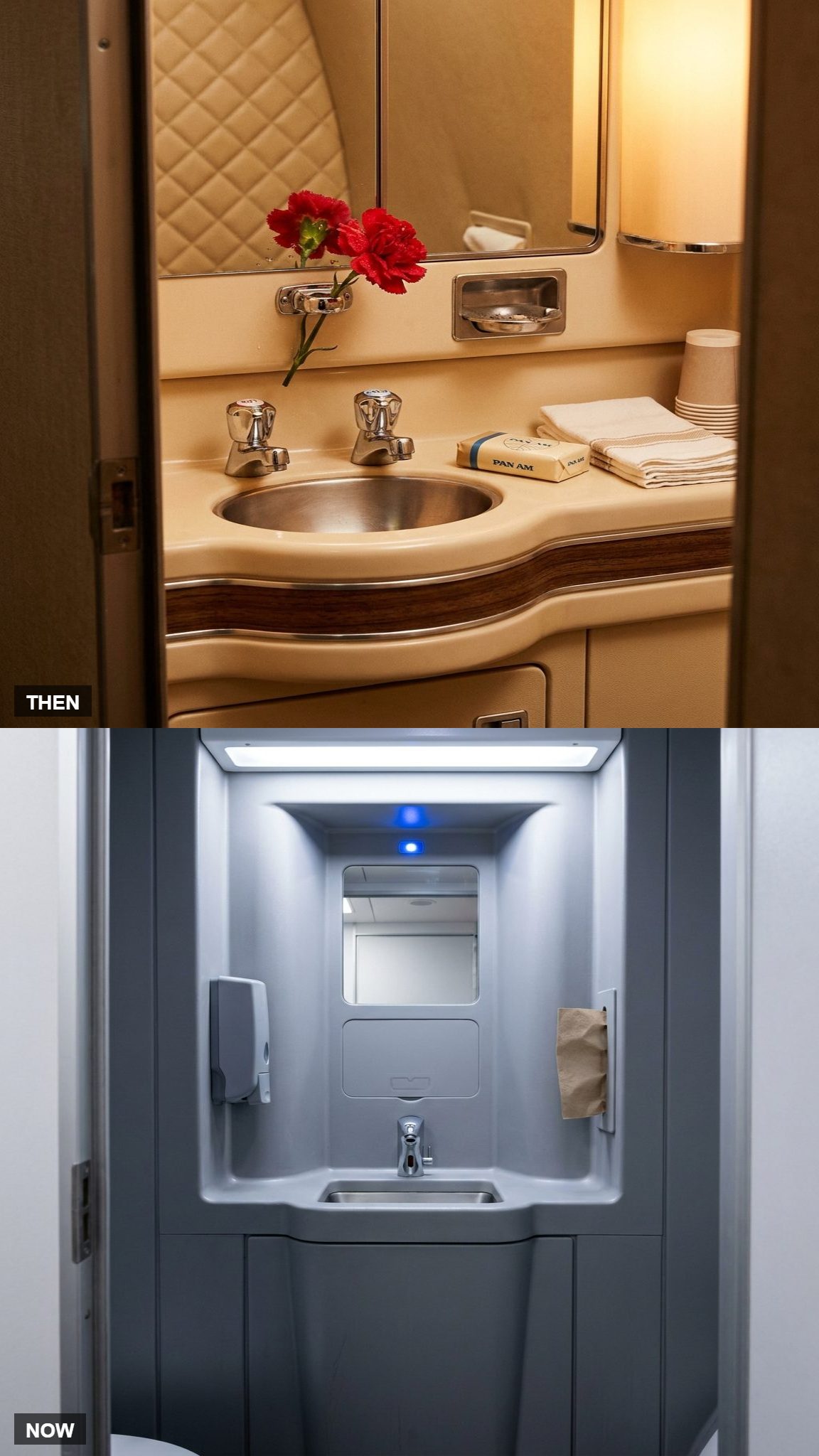
The 1975 lavatory was cramped, sure, but somebody had put a real flower in there. A carnation, clipped to the wall next to a wrapped bar of soap and a linen hand towel that got laundered between flights. Two separate taps for hot and cold, and a tiny ashtray built into the panel because of course there was.
Now? Molded plastic in every direction. A touchless faucet that works two times out of three, and a folded paper towel if you’re lucky. The blue occupancy light is the only thing anyone put any thought into.
15. The Payphone Bank
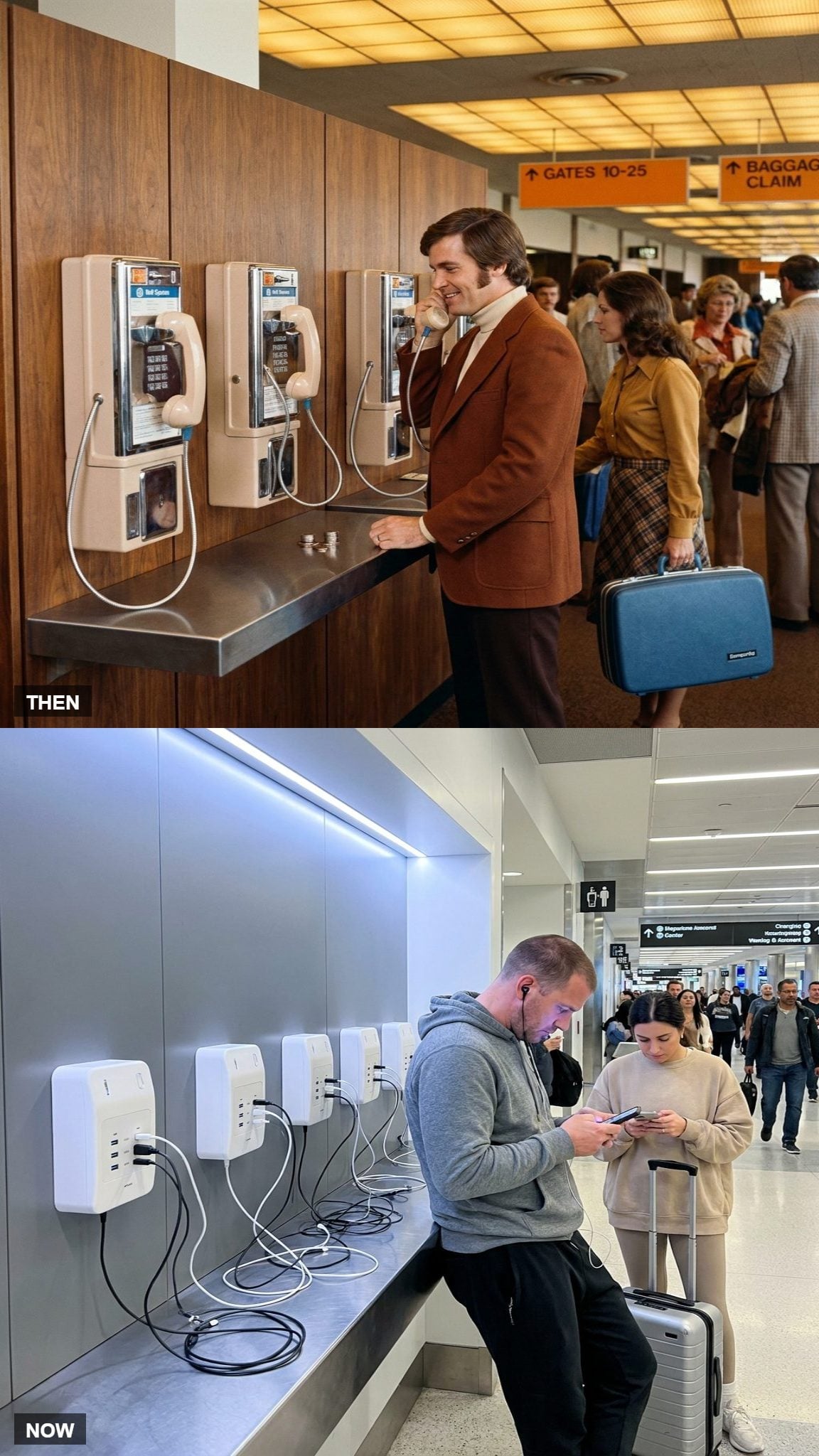
Making a call meant lining up quarters on the little metal shelf and hoping the connection held. But the phones had a bit of dignity to them — chrome trim, warm wood dividers, someone had thought about the person standing there for eight minutes with a receiver pressed against his cheek.
The charging station is functional. Nothing more. Tangled cables. Everyone hunched. Nobody talking. The traveler in 1975 was calling his wife to say he’d landed; the traveler now is scrolling through the same feed she is, seven states away.
14. The Airport Bar
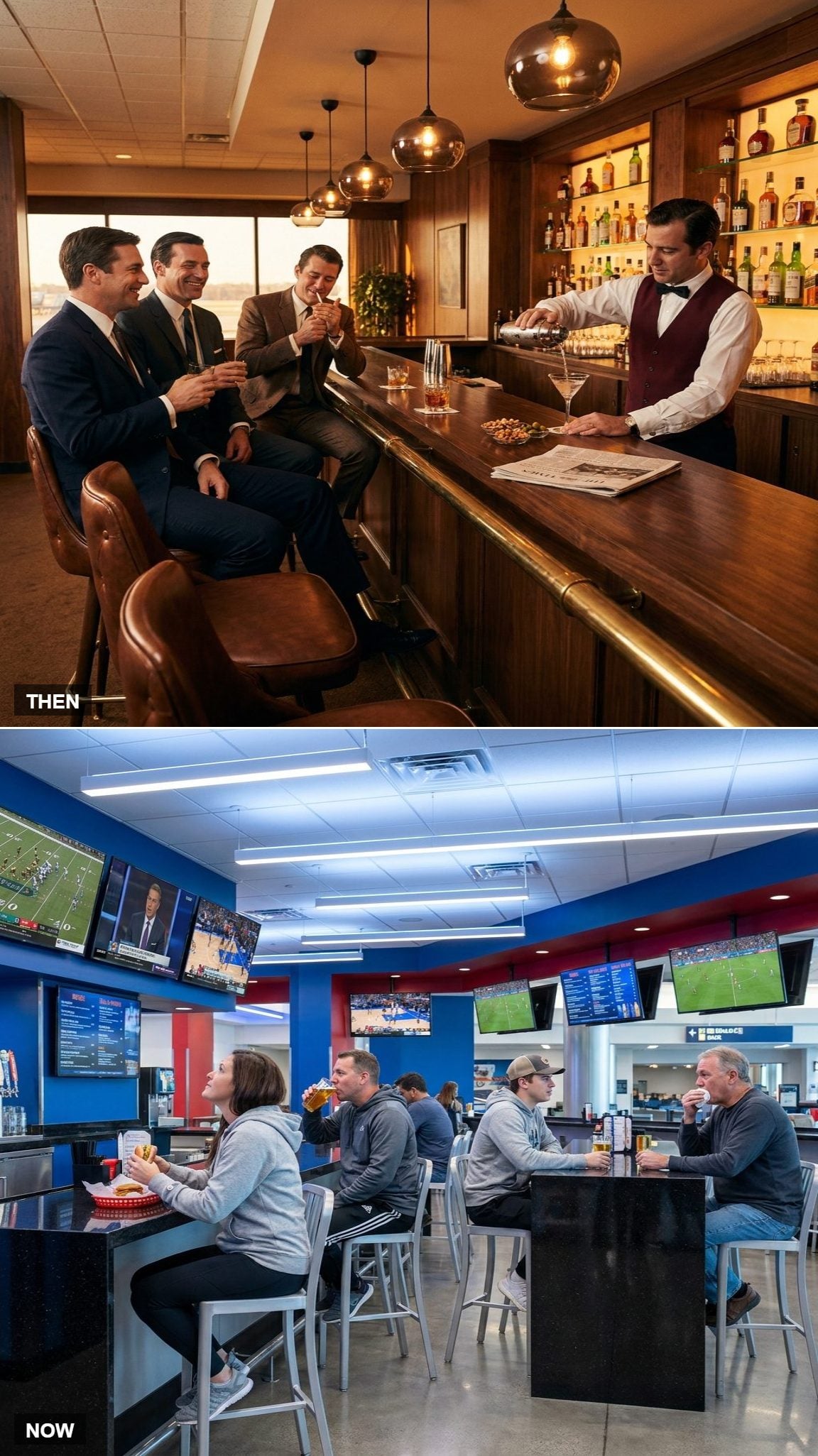
The airport bar in 1975 was a place adults went to have a drink before a flight, and that was the whole idea. Low light. A bartender who made a proper martini. A bowl of mixed nuts, and maybe you struck up a conversation with the guy on the next stool because there was no reason not to.
The airport bar now is a TV showroom that also serves beer. Eight screens minimum. Nobody talks. The nuts are gone.
The bar in 1975 assumed you had somewhere to be. The bar now assumes you have somewhere to look.
13. Customs and Immigration
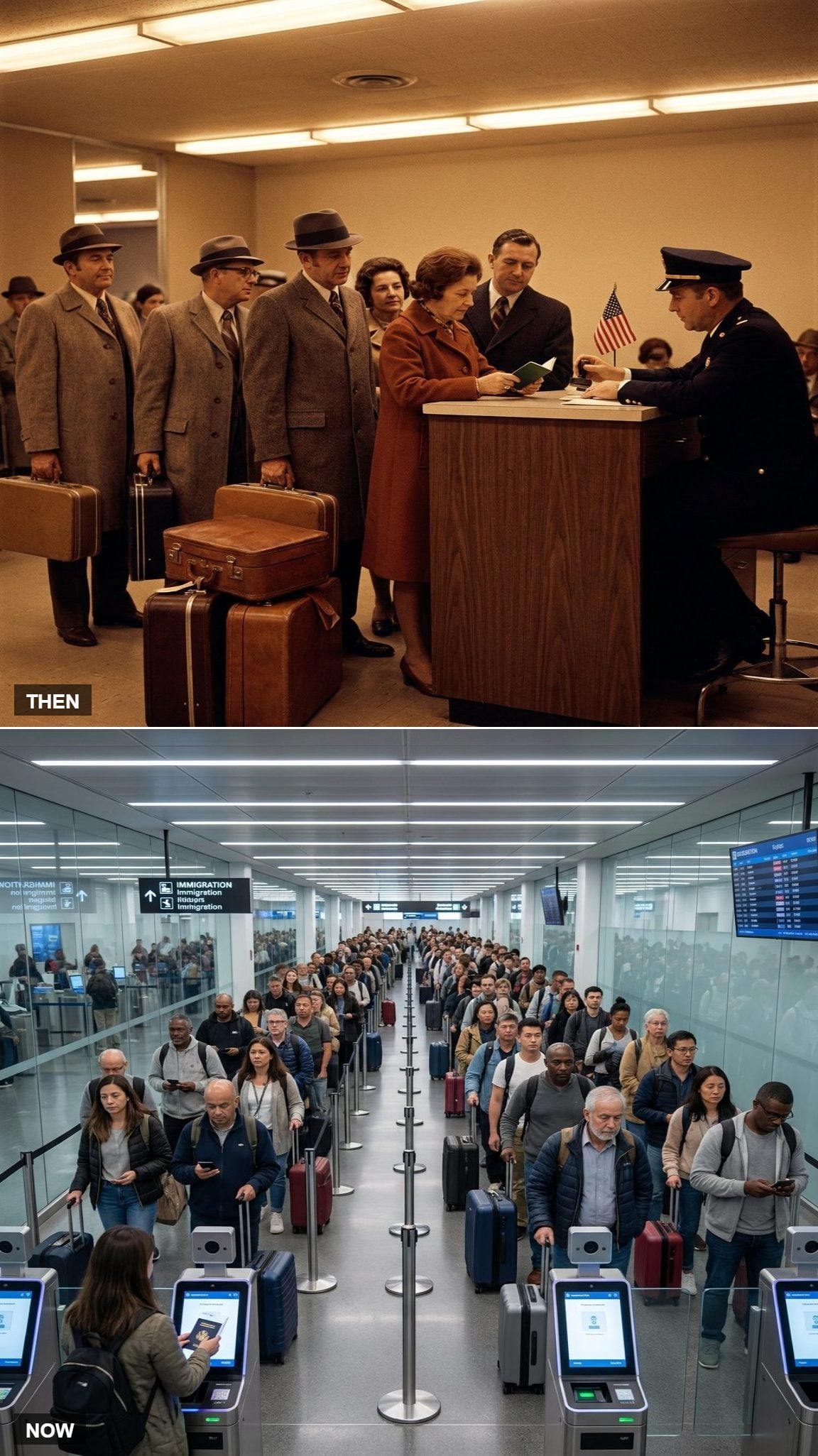
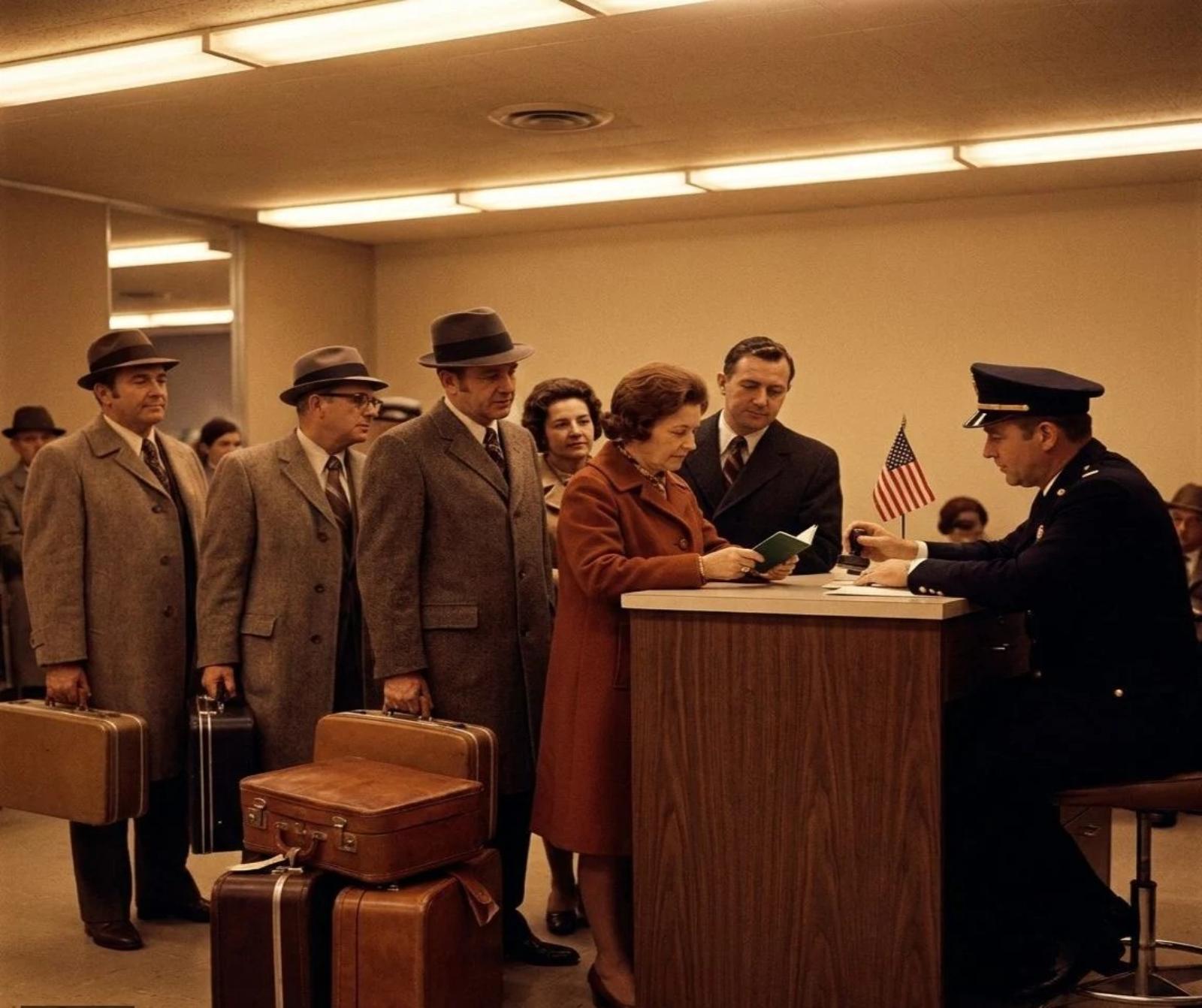
Six people in line, a wooden podium, an officer who looked at your face, looked at the passport, stamped it, and said welcome home. Under a minute.
Now the line snakes back on itself four times. There’s a kiosk that takes your picture and rejects your passport twice before it works. The officer at the end doesn’t look up.
12. The Newsstand
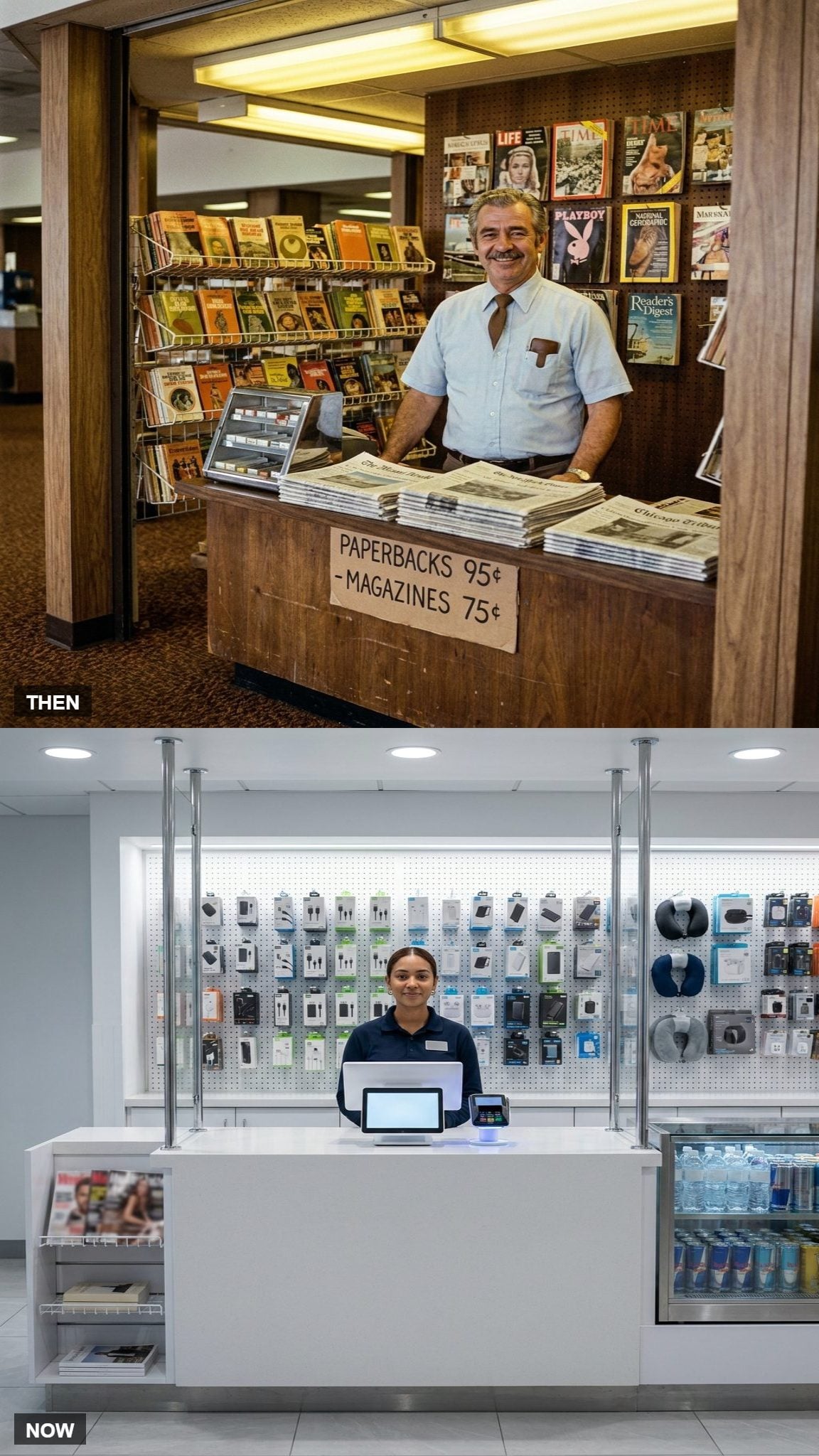
Folded newspapers, a wire rack of paperbacks, a man behind the counter who knew which flights were delayed and which magazines got read on the way to Miami. You bought something to hold in your hands for four hours.
The convenience shop now sells you a cable to charge the thing that will hold you for four hours instead.
11. The First-Class Cabin
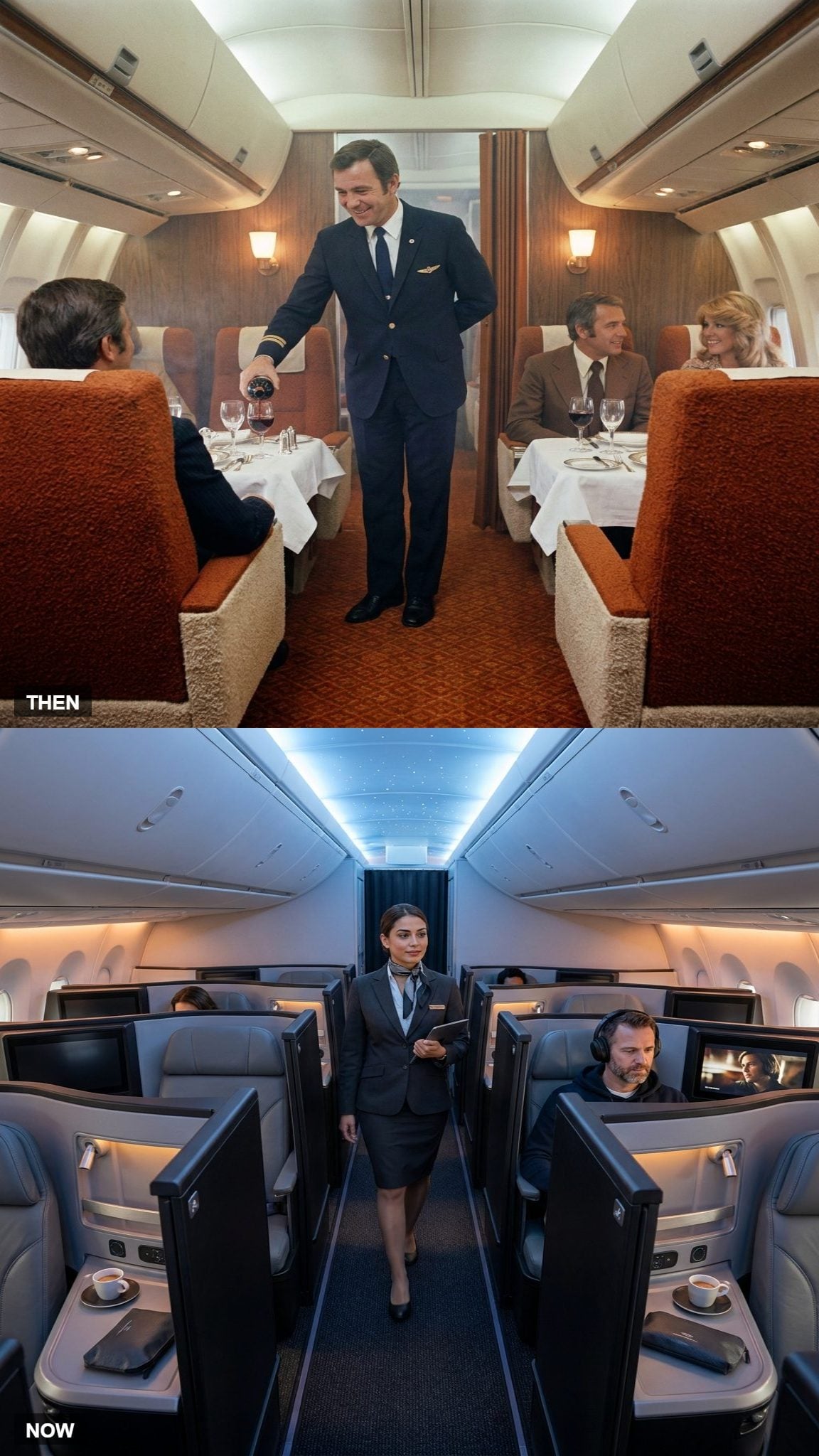
The 1975 first-class cabin was a small dining room in the sky. Linen. China. A steward who poured wine from a labeled bottle and remembered your name from the boarding call. You talked to the person across the aisle because he was a person and you were both up here together.
Modern business class is a series of private cells. The seat is better, the bed is a real bed, but the pod is designed so you never have to see another human until landing.
Both are luxurious. One was social. The other keeps you sealed off.
10. The Airport Hotel
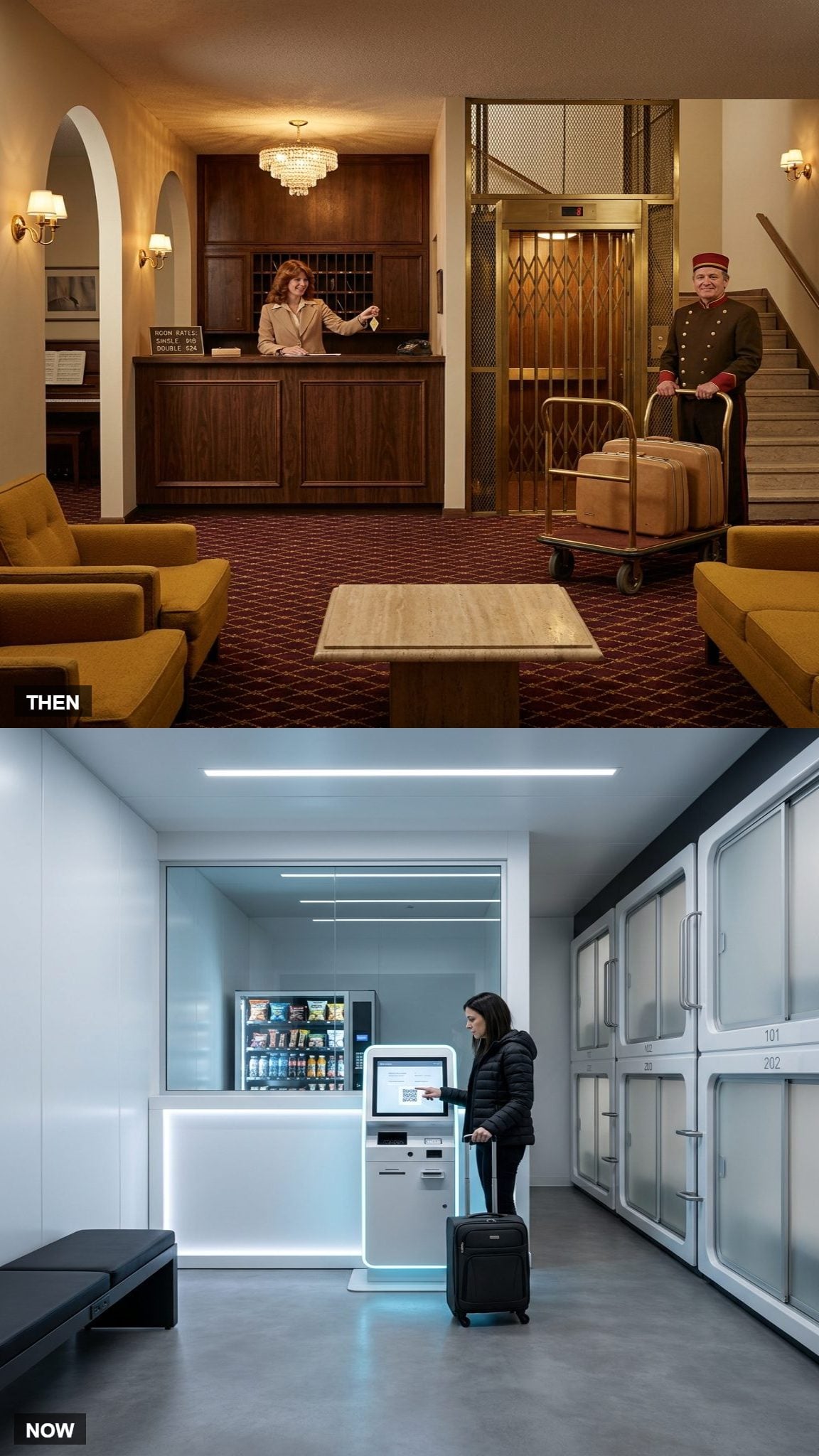
You landed late and a bellhop took your bags, carried them up in an elevator with a brass cage door, opened a room with actual furniture in it. There was a bar downstairs. You slept in a real bed and had eggs in the morning before your connection.
The transit pod is the size of the bed and nothing else. You check yourself in on a screen and leave four hours later having spoken to no one. It works. That’s the whole review.
9. The Departure Board
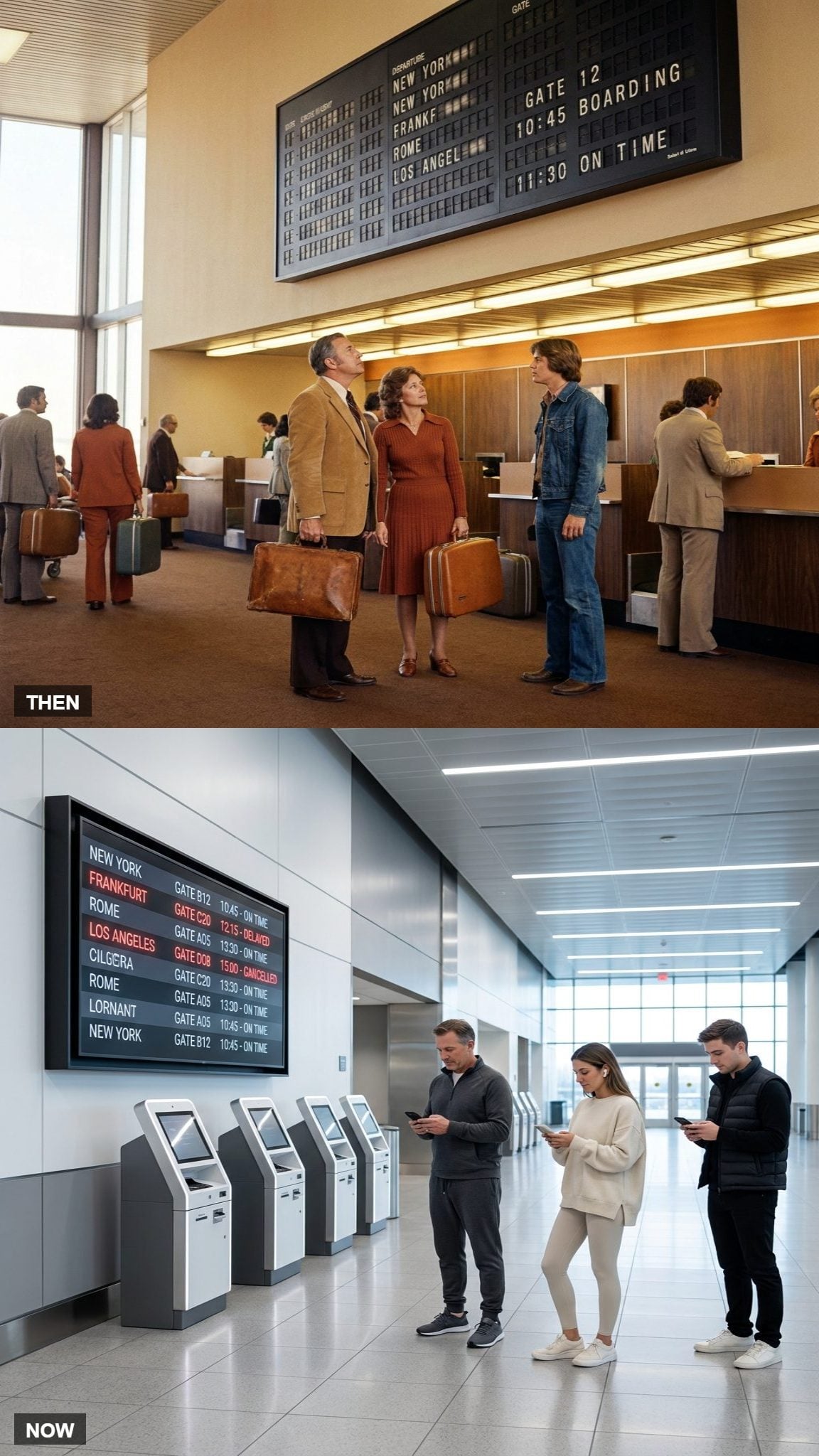
The sound is what people remember — that soft mechanical clatter as the flaps rotated through letters and numbers, a whole board updating at once, dozens of destinations turning over in sequence. You looked up when you heard it because something might have changed.
The digital board is silent. It flashes DELAYED in red and nobody looks up, because the same word already appeared on their phone twenty minutes ago.
The old board sounded like a train station in a movie. The new one sounds like nothing.
8. The Ashtray Built Into Your Armrest
🔥 Would you like to save this?
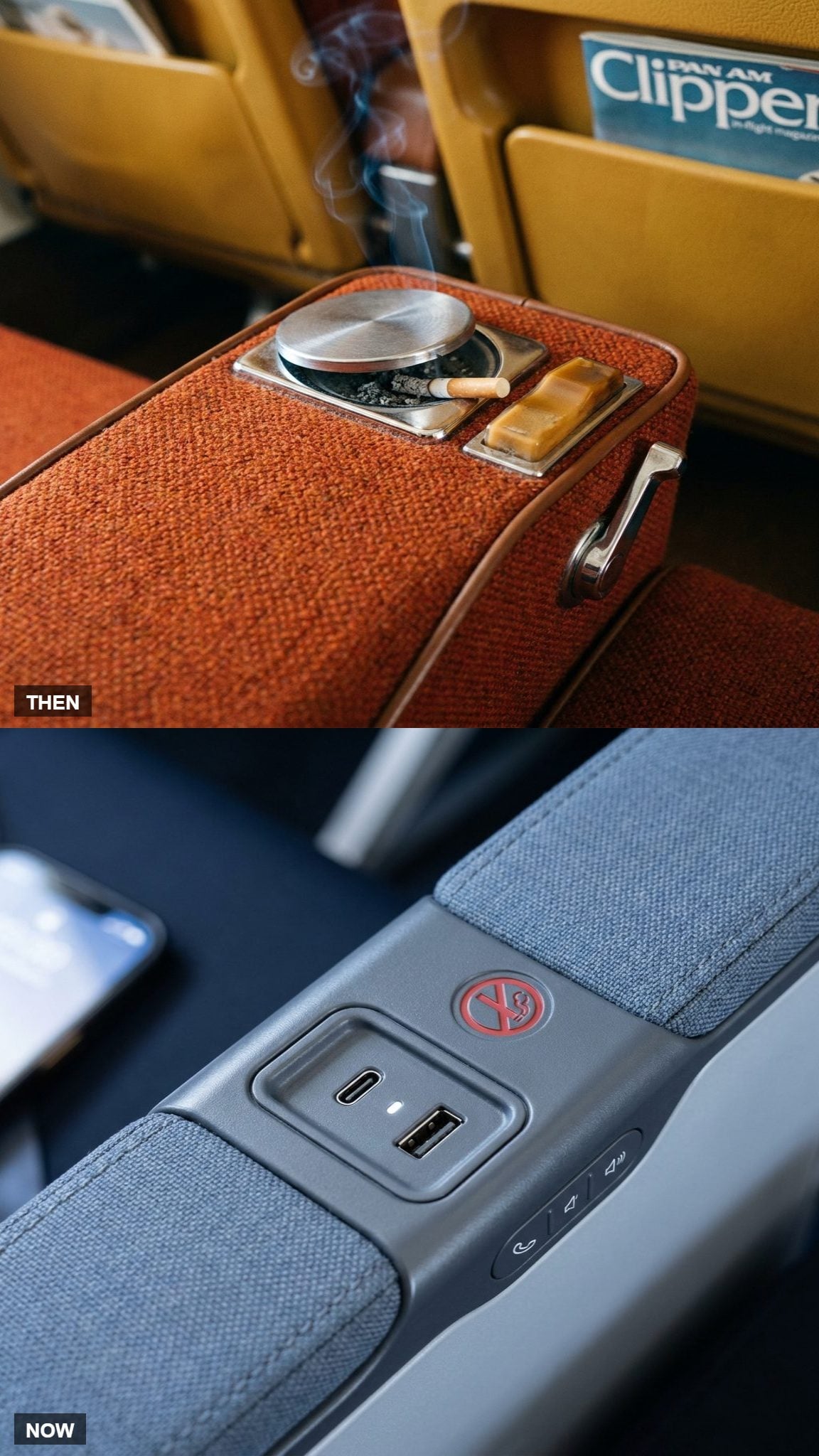
Look down at your armrest on a TWA 707 in 1975 and there was a little flip-top ashtray built right in — standard equipment, every seat, plus the lavatory door, the galley wall, and the space between the pilots.
The armrest now has a USB-C port where the ashtray used to be. That molded no-smoking icon warns against a crime nobody remembers committing. By law, planes still carry ashtrays in the lavatories. Just in case somebody breaks the rule. Nobody talks about this.
7. The Airline Meal Served on Real China
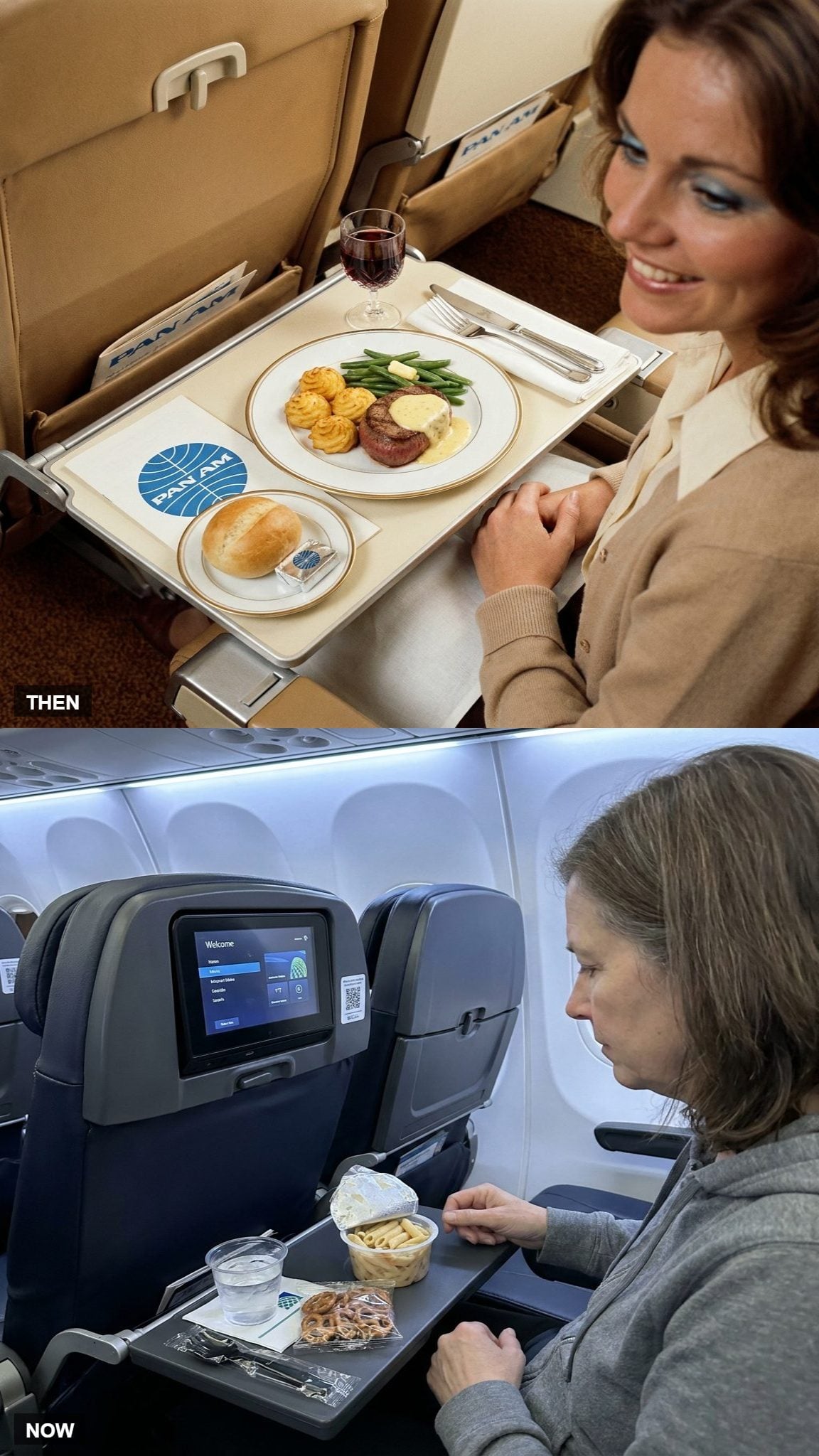
On longer flights in the 1970s, even economy passengers could be served a full hot meal on sturdy plates with metal cutlery and a proper glass. The menu varied by airline and route, but the message was consistent: several hours in the air still counted as an occasion worth feeding.
Today the meal, when there is one, arrives in foil and plastic, built to be lighter, cheaper, and easier to clear. The old service was not universal, and it was not always elegant, but it made the cabin feel less like a holding tube and more like a place someone had prepared for you.
Why It Changed: Airline deregulation, rising fuel costs, tighter margins, and decades of fare competition gradually pushed elaborate meal service out of economy cabins. The china did not disappear overnight. It was chipped away one cost-cutting decision at a time.
6. The Cocktail Cart That Rolled Like a Little Bar
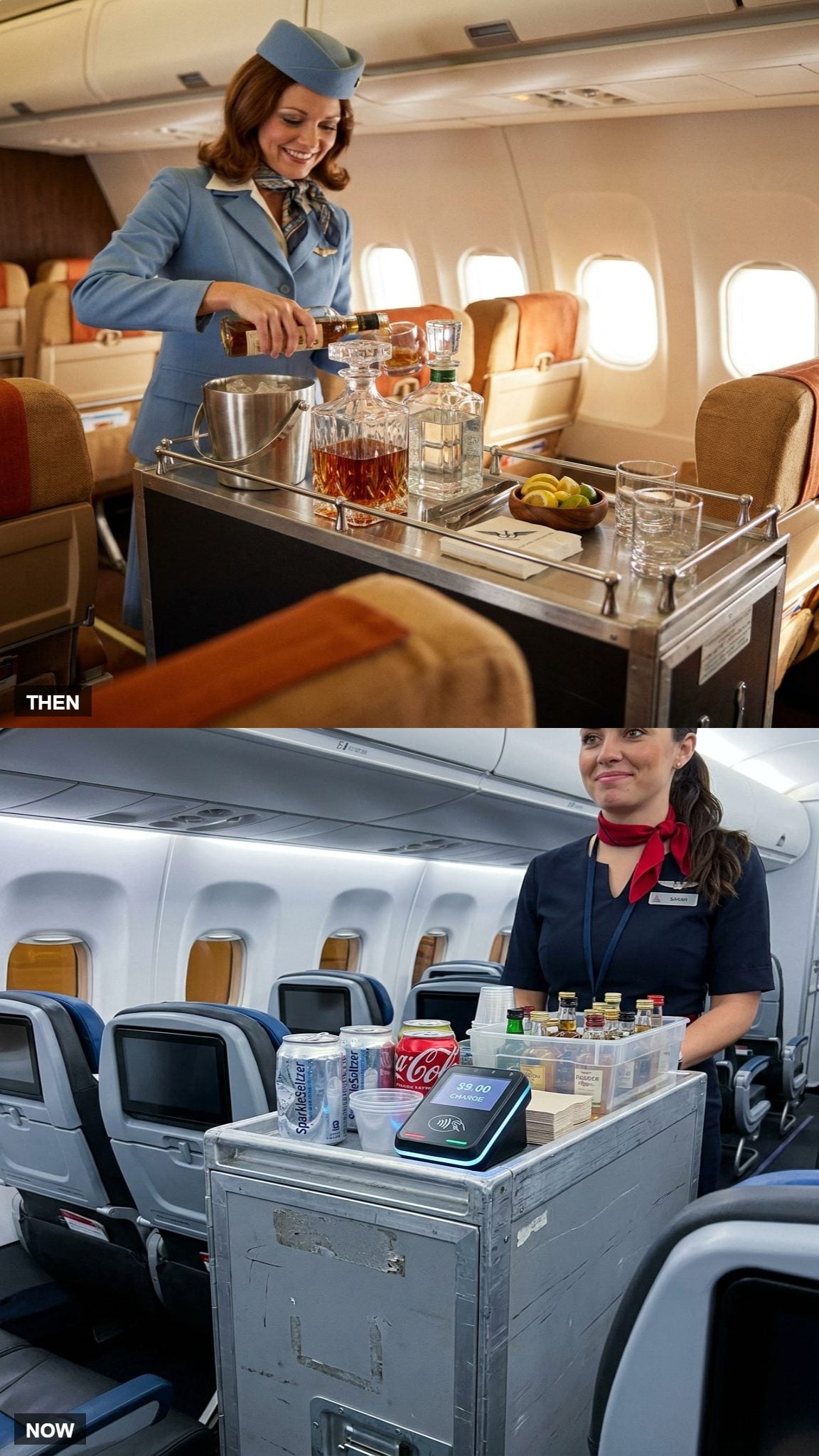
The 1975 beverage cart was a small rolling bar — cut-crystal decanters, a silver ice bucket, real citrus. Somewhere over Nebraska the stewardess would make you a proper old-fashioned and charge you a dollar for it.
The cart now is a card reader on wheels. Nine dollars for a can of something. The lime is plastic if it exists at all, and you get a napkin the size of a coaster and a look that says please hurry.
5. Meeting Your People at the Gate
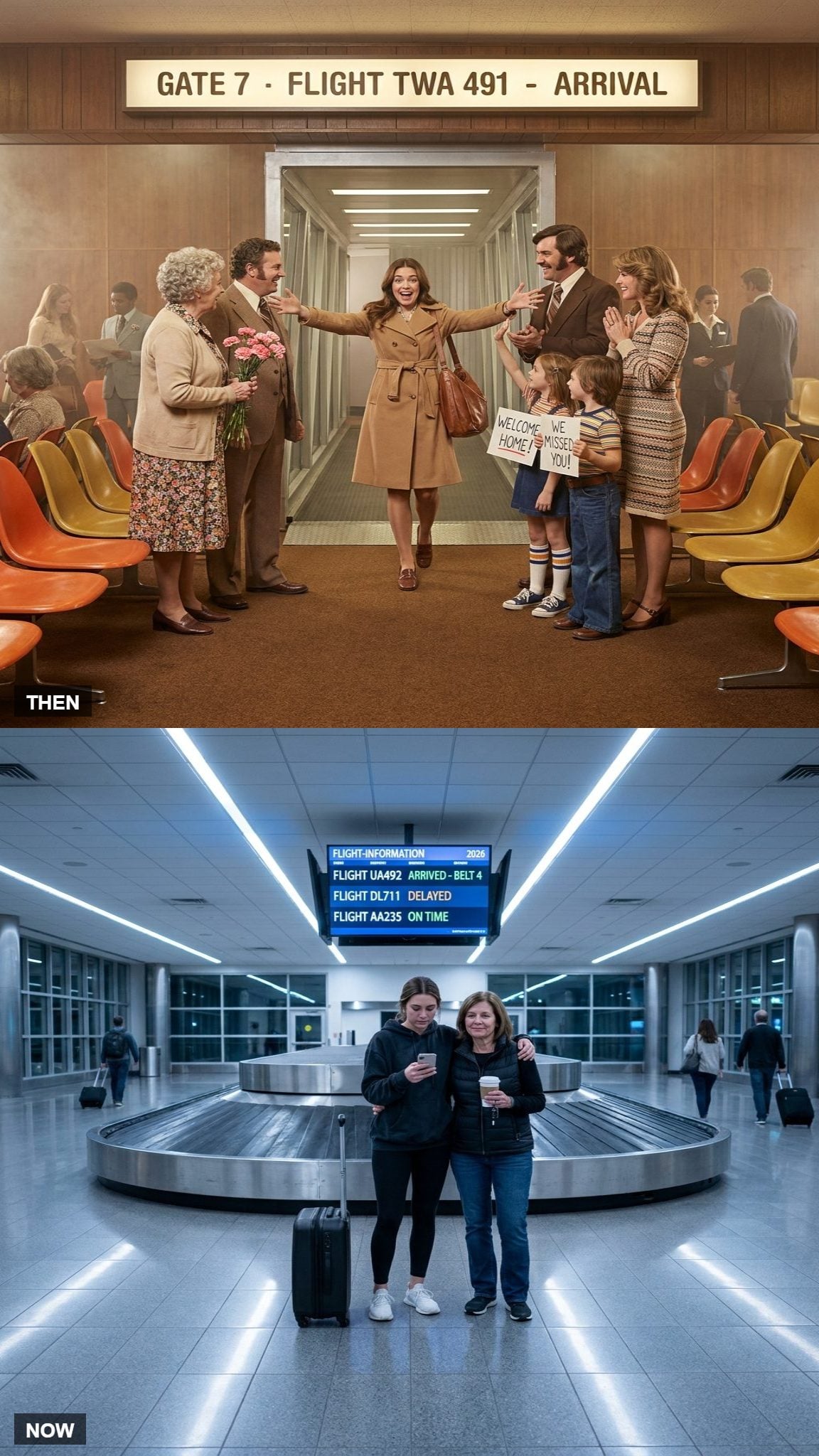
You could walk right up to the gate in 1975. No ticket. No ID. Your grandmother could stand at the jet-bridge door holding a bouquet and hug you the second you stepped off the plane. The whole family came, and it was an event.
Now the family drops you at the curb and drives off before the airport cop makes them circle again. Nobody meets you at the gate — nobody is allowed. The reunion happens at baggage claim under fluorescent lights, both of you exhausted, one of you missing a bag.
4. The Cockpit Visit Mid-Flight
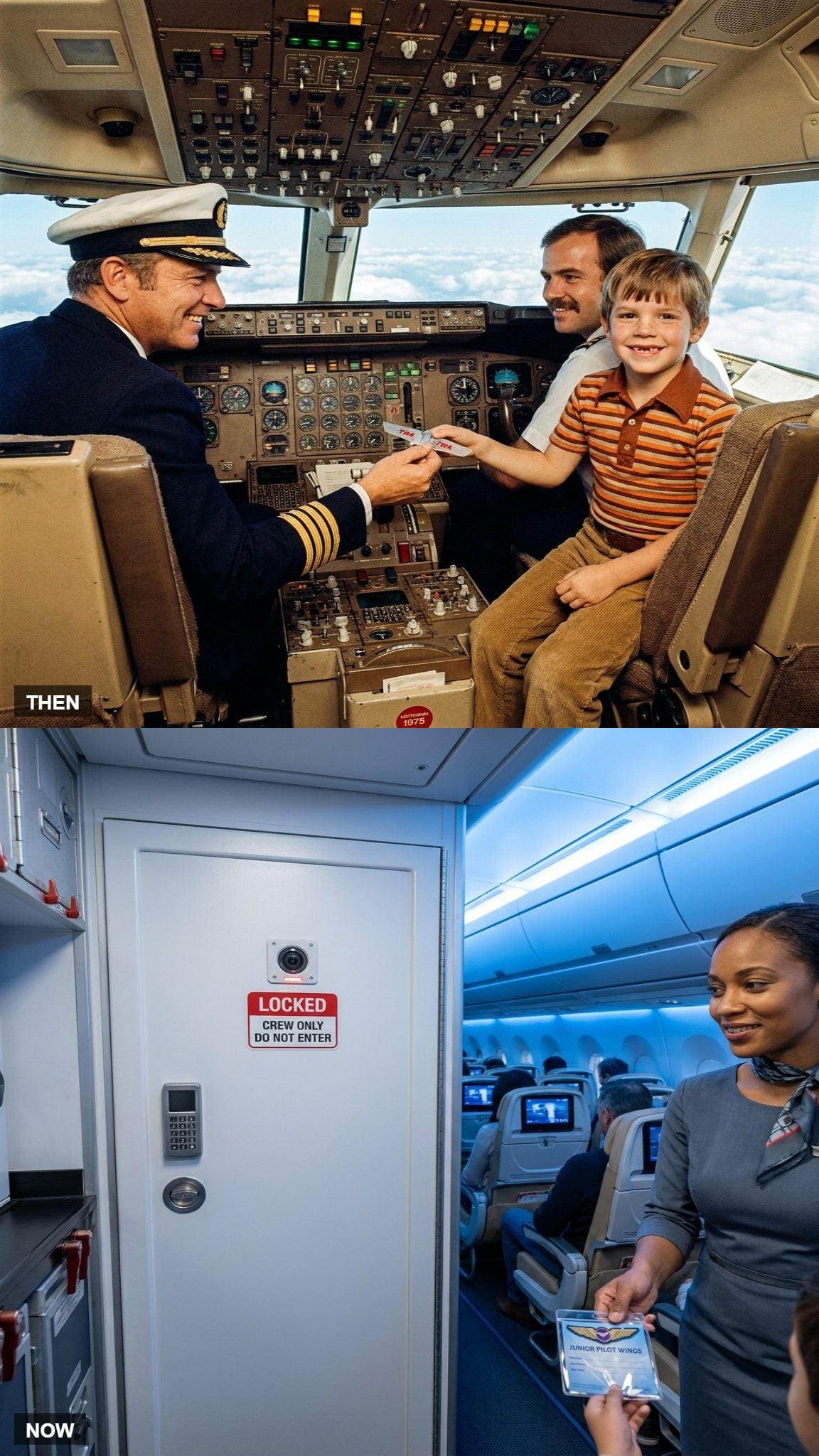
Kids visited the cockpit mid-flight in 1975. The captain would spin around in his chair, hand out a set of plastic wings, and let the kid touch a switch that did not do anything. In a shoebox in your parents’ house there is a photograph of you doing exactly this.
The cockpit door now weighs ninety pounds and locks from the inside. The plastic wings still exist, technically — the flight attendant hands them over near row 14 like an apology.
3. The Sit-Down Restaurant Above the Gates
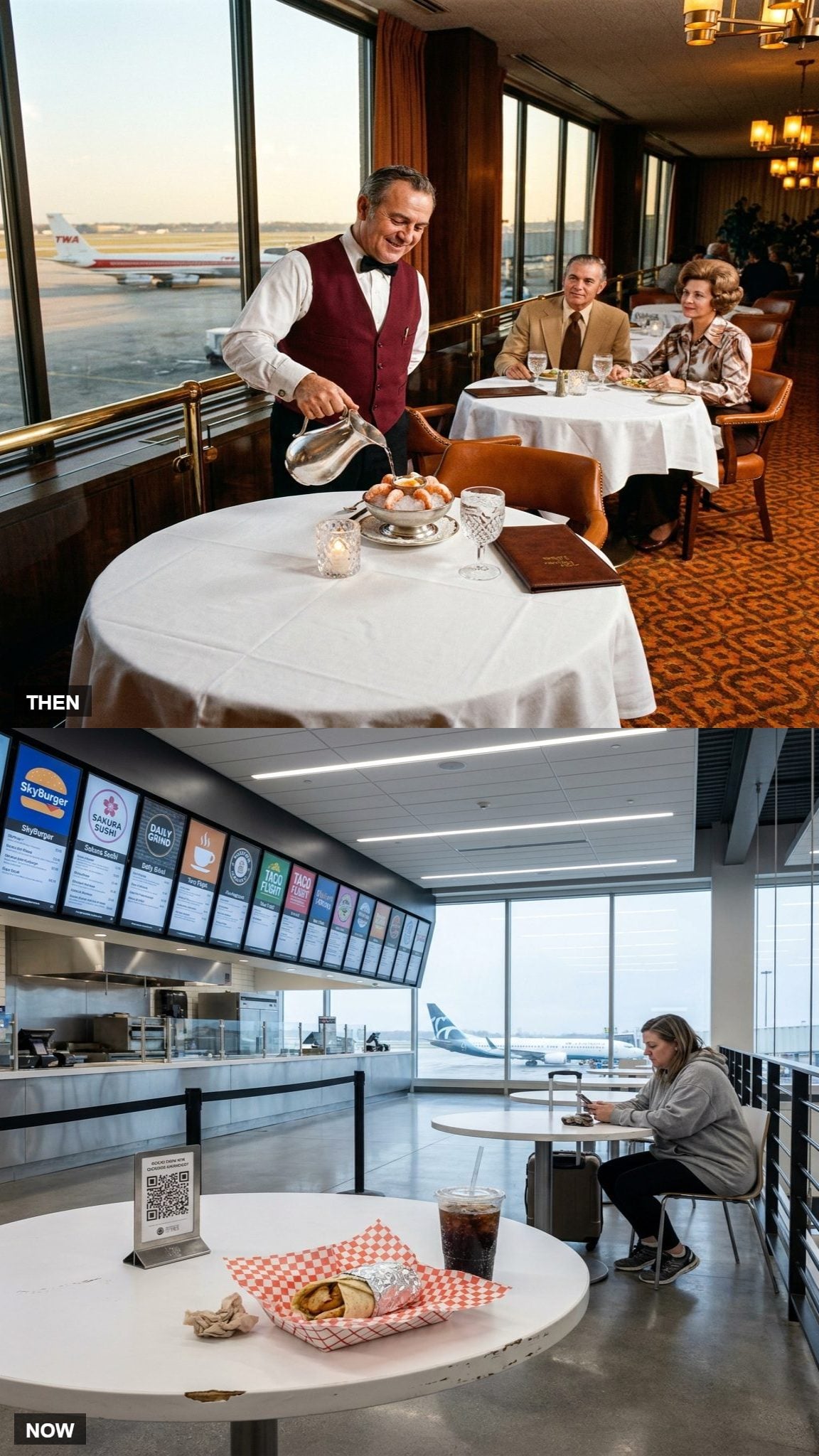
O’Hare had a proper restaurant above the concourse in 1975. White tablecloth, votive candle, a waiter who called you sir and brought you a real menu. You could watch the 707s taxi past the window while you ordered the shrimp cocktail. People planned to arrive early just to eat there.
The mezzanine now is a food court with fourteen menu screens and one sad wrap in a paper basket. The candle is a QR code. Nobody arrives early on purpose.
2. The Sound of the Airport Itself
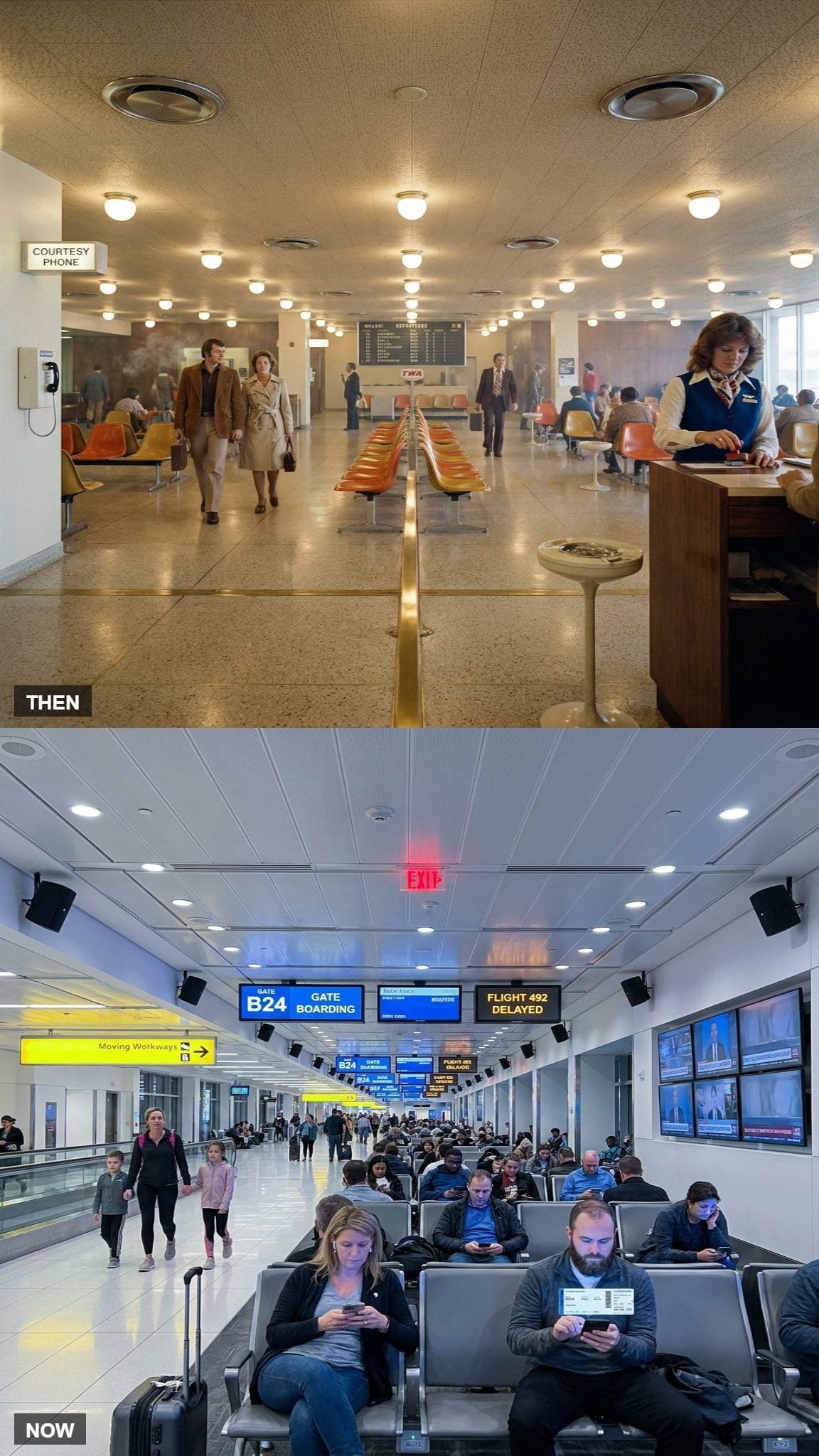
The airport had a hum in 1975 — muzak from ceiling speakers, a page for Mr. Anderson to pick up the white courtesy phone, the distant thump of a stamp at the ticket counter. It felt like a hotel lobby that happened to have airplanes.
Now it sounds like a slot machine floor. Fourteen gate announcements. Twelve TV screens on mute. A robotic voice reminding you the moving walkway is ending, and a hundred phones pinging at once. Nobody gets paged by name anymore. Nobody would hear it if they did.
1. The Way People Said Goodbye to the Airplane
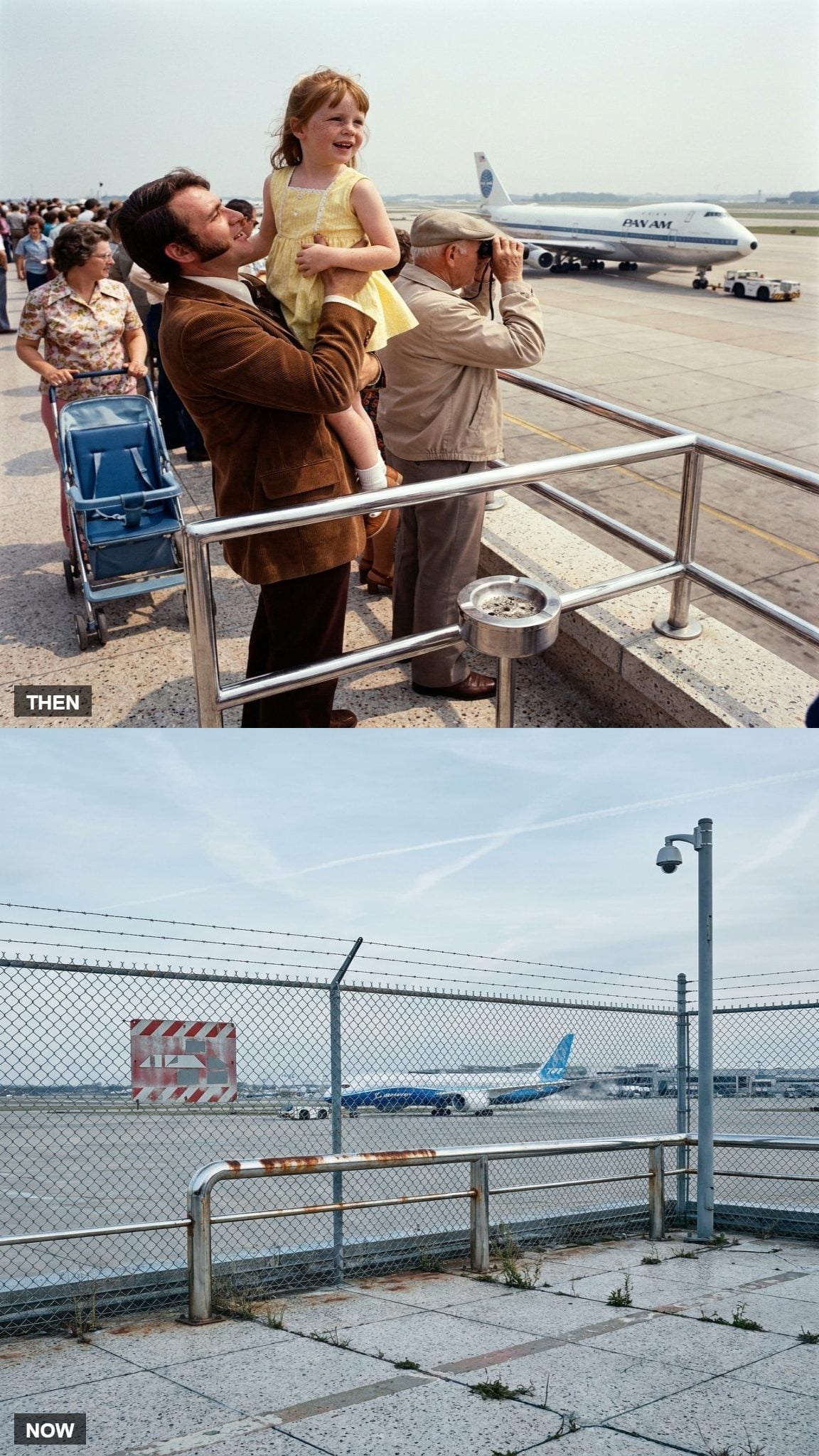
Every major airport used to have an observation deck. Rooftop. Chrome railing. Families came out for the afternoon to watch the planes push back, no ticket required — kids in strollers, old men with binoculars, a father lifting his daughter up so she could see the 747 taxi. It was free entertainment. It was Sunday.
The observation decks closed one by one after 2001, and most were never rebuilt. On a few, the chrome railings are still there, rusting behind chain-link, waiting for a public that was told to go home and never invited back.
🔥 Would you like to save this?
Please note that some of the imagery in this article were created with the aid of AI image generators.