The firewood was three dollars a bundle, the bathhouse smelled like mildew and Off!, and nobody thought twice about letting eight-year-olds disappear into the woods until the dinner bell. That was a 1980s campground. No reservation apps, no glamping pods, no outlet strips running to your tent. Just a numbered post in the dirt, a camp store with questionable beef jerky, and the particular freedom of a place that hadn’t been optimized yet. Some of it was genuinely great. Some of it was appalling. All of it was real.
Classic Rock at Full Volume, And Nobody Called Anyone About It
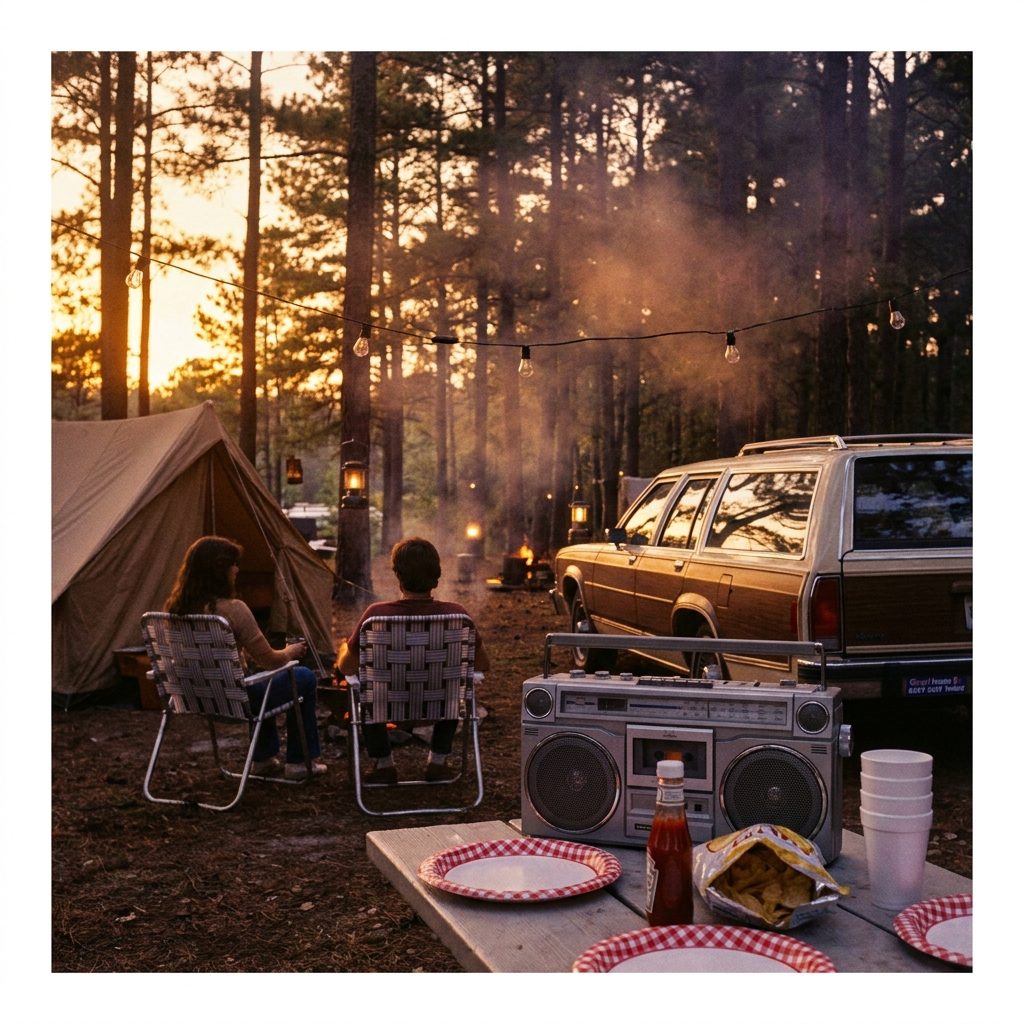
Nobody asked permission. Nobody negotiated a volume compromise. Someone in loop C had a boom box the size of a small refrigerator, and by 9 p.m. every campsite within a quarter mile was involuntarily hosting a Foreigner concert. “Feels Like the First Time” crackling through those grille-cloth speakers, tinny and relentless and somehow perfect against the smell of woodsmoke.
Would you like to save this?
The thing is, nobody was that mad about it. The unwritten social contract of 1980s camping included tolerating your neighbors’ musical taste the way you tolerated their charcoal smoke drifting into your tent. You’d been doing it all day. You’d keep doing it until someone’s dad finally walked over around eleven with a beer in his hand and a look on his face that communicated volumes without a single word being said.
The Fishing Knife Just Sitting There on the Picnic Table All Weekend
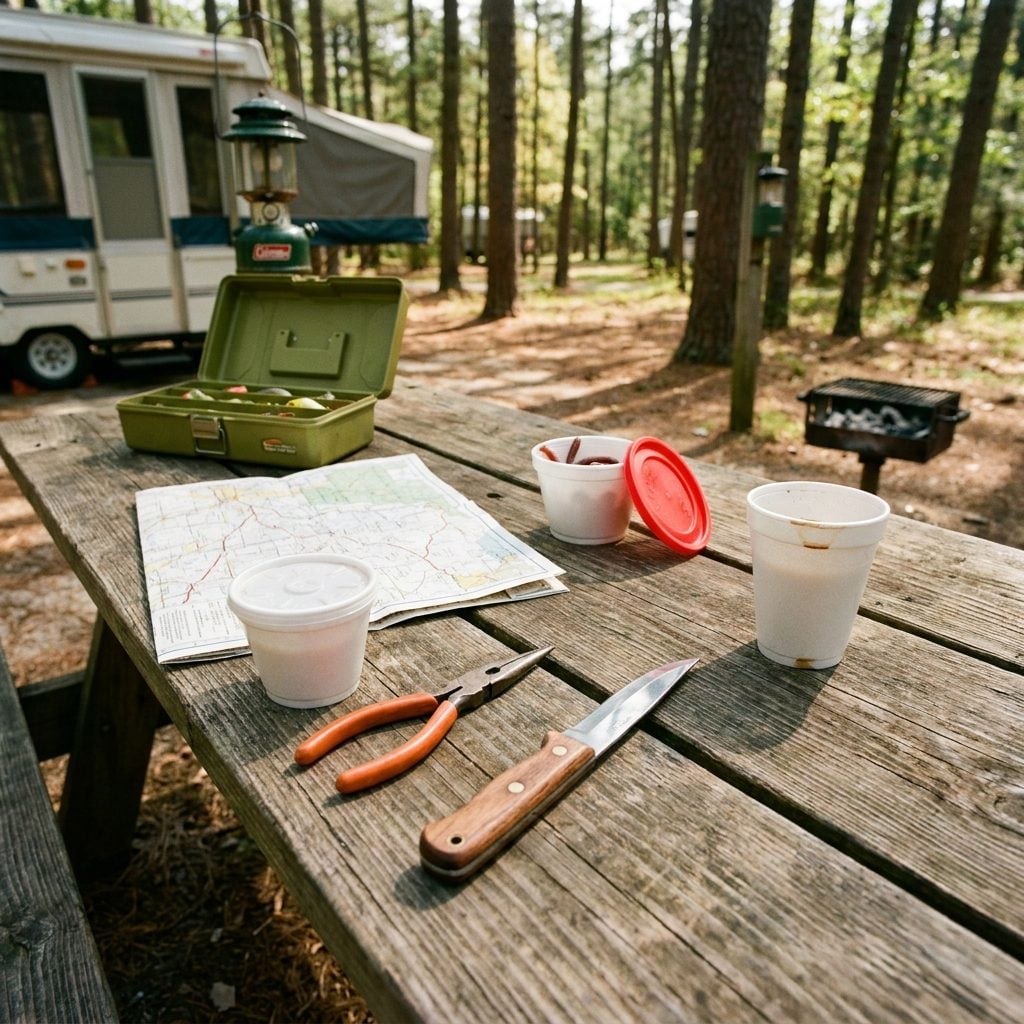
A Buck knife, blade open, just out there in the open air next to the mustard. Nobody put it away. Nobody thought to put it away. It was a fishing knife, not a threat assessment scenario, it lived on the picnic table from Friday afternoon to Sunday checkout the way a pepper shaker lives on a diner counter.
Kids walked past it. Other campers’ kids walked past it. The kid from two sites down picked it up to look at the blade and someone’s dad just said “careful” without even glancing up from the tackle box. That was the full safety protocol.
Kids in the Lake, No Life Jackets, No Lifeguard, Zero Adults Standing Watch
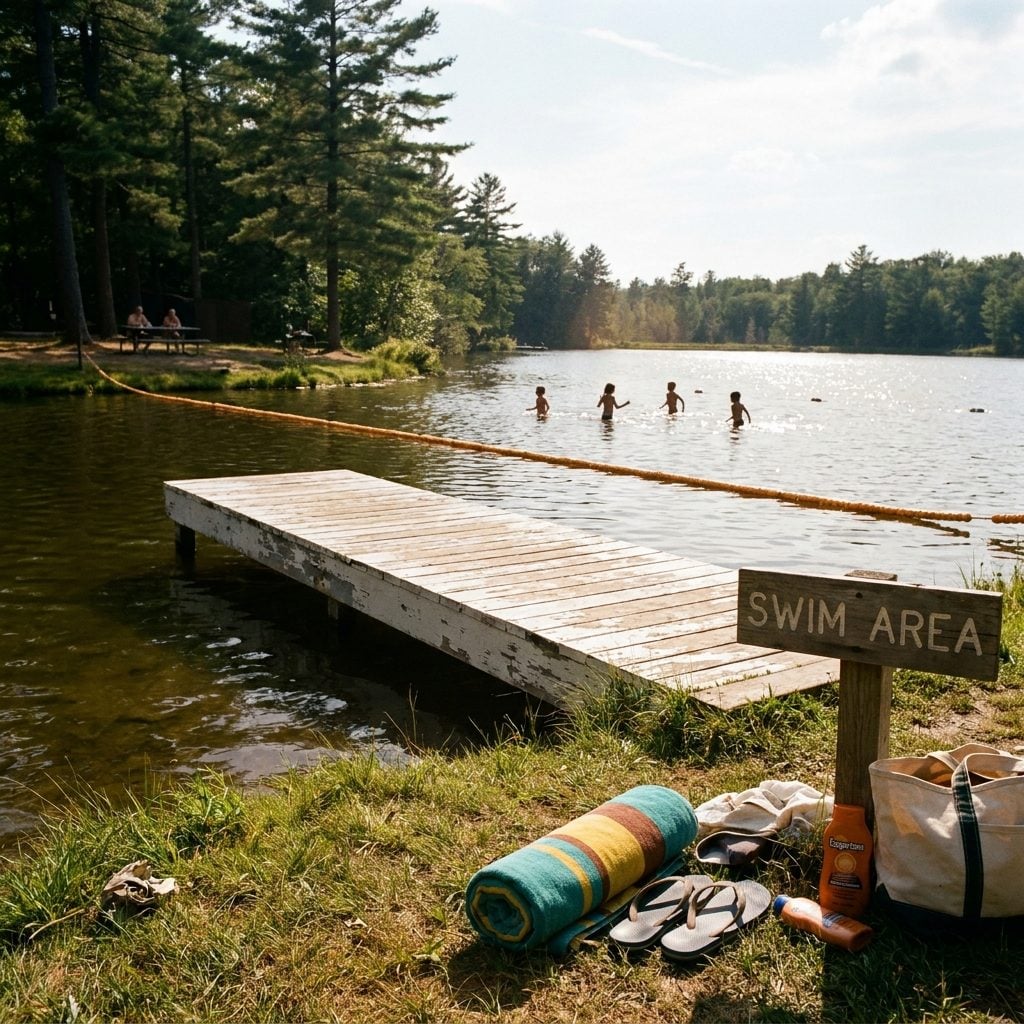
Nobody drowned. That is the sentence every person who grew up camping in this era says first, defensively, before describing what we now understand was genuinely chaotic supervision. Six kids in a roped-off lake area, water visibility about eighteen inches down, the nearest adult approximately 200 feet away reading a paperback.
The bravest kid always swam to the rope and hung off it. The timid one stayed in the shallows and got sand in his sneakers because he never took them off. There may have been a small wooden sign that said SWIM AT OWN RISK. That was the lifeguard system. It covered everything.
Eight People, One Pop-Up Camper, and the Concept of Air Conditioning Had Not Yet Arrived
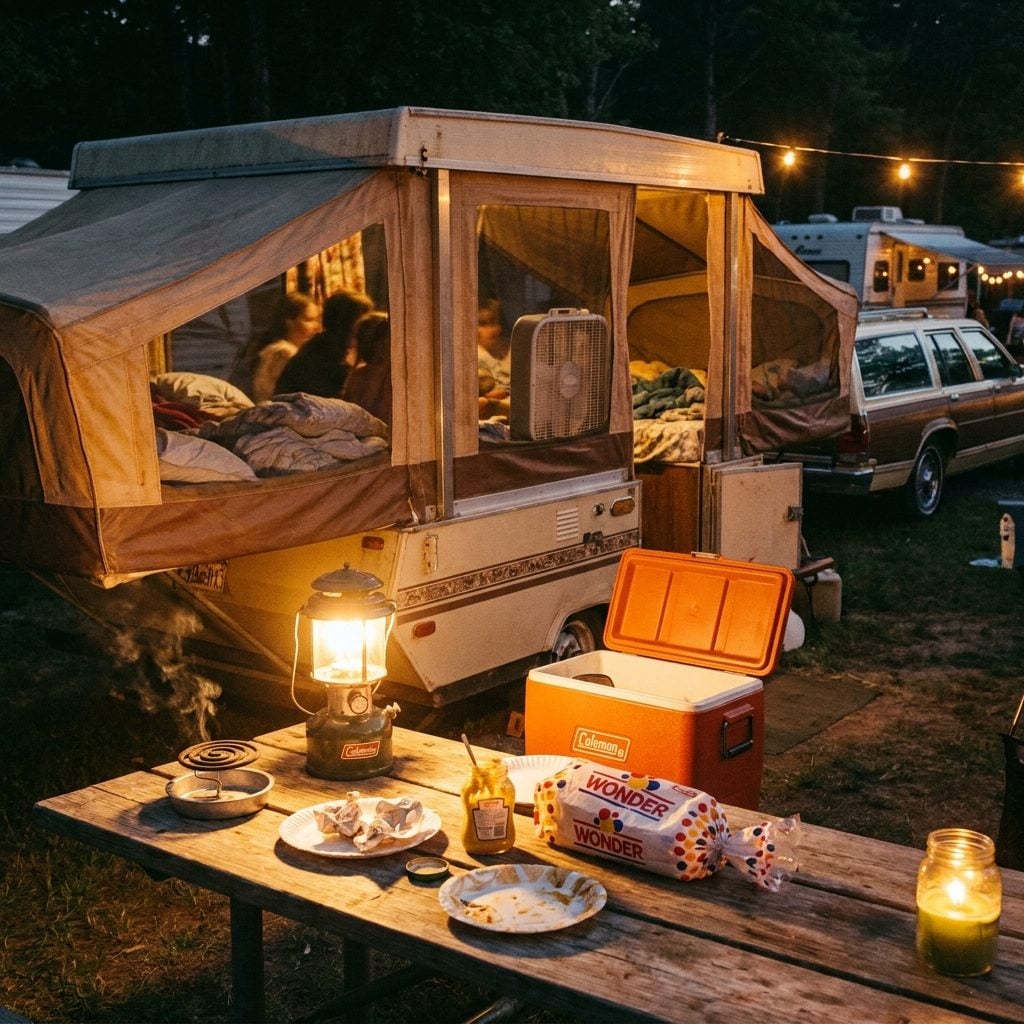
Six people was actually on the modest end. The deluxe configuration was two parents on the main bed, two kids on the dinette conversion, one kid on the floor in a sleeping bag, and whoever had annoyed everyone most that day on the tailgate of the wagon with a flashlight and a bag of Doritos.
You sweated. That was just part of it. The canvas sides breathed, sort of, if you opened all four windows and a breeze happened to find you. Someone always brought a box fan and ran it off a camp power hookup that was definitely not rated for what it was doing.
“The canvas sides breathed, sort of, if you opened all the windows and a breeze happened to find you.”
Dad Backing the Trailer Into the Site While Everyone Yelled Contradictory Instructions
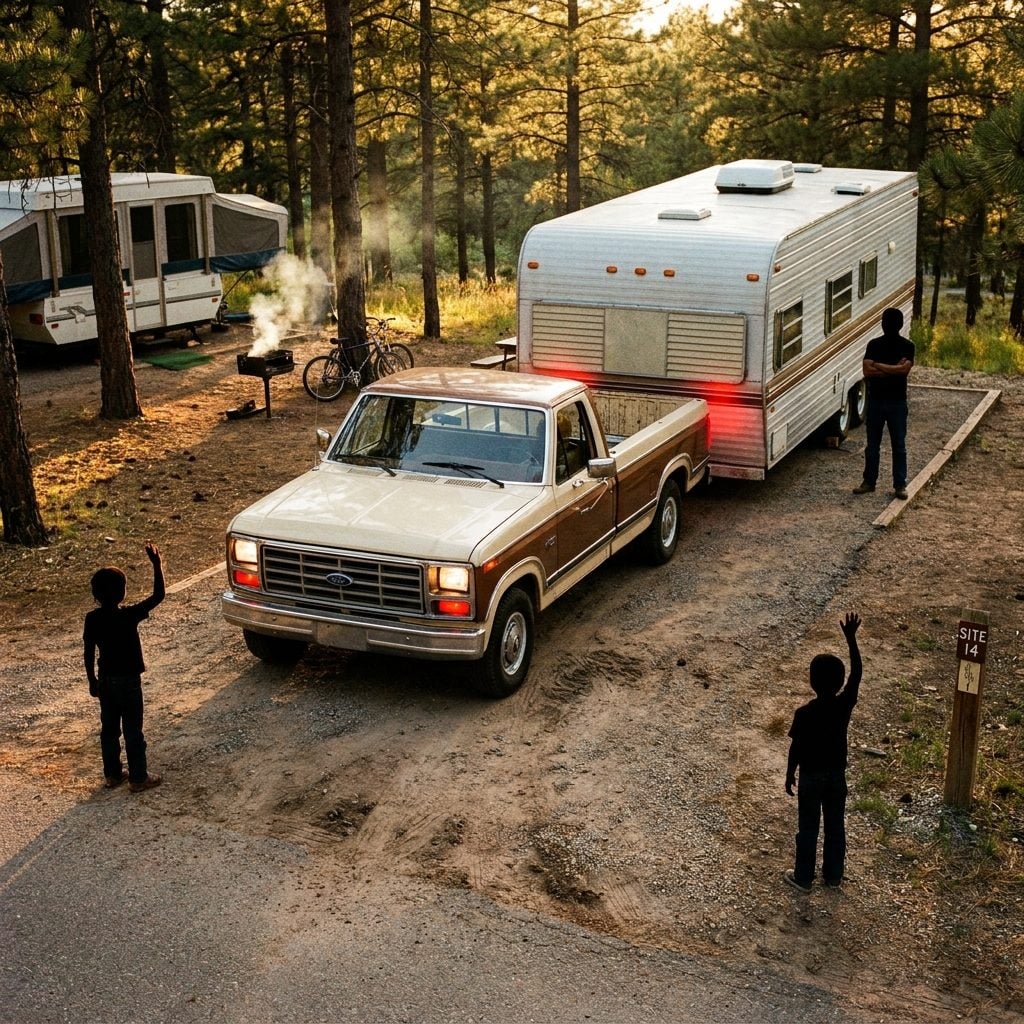
Everyone had a theory about which way the wheel needed to go. Nobody’s theory agreed with anyone else’s. At some point the trailer would jackknife at an angle geometrically impossible to recover from, the dad would get out and walk to the back of it and stare at it for thirty seconds, and then everyone would go very quiet.
Three or four correction attempts was a good run. Seven meant you were going to be having dinner at the campsite next door by mistake. The moment the trailer finally slid into the gravel pad and somebody got the tongue onto the block? Pure collective relief, the kind usually reserved for safe airplane landings.
The No-Reservation System: You Just Drove Until You Spotted an Empty Post
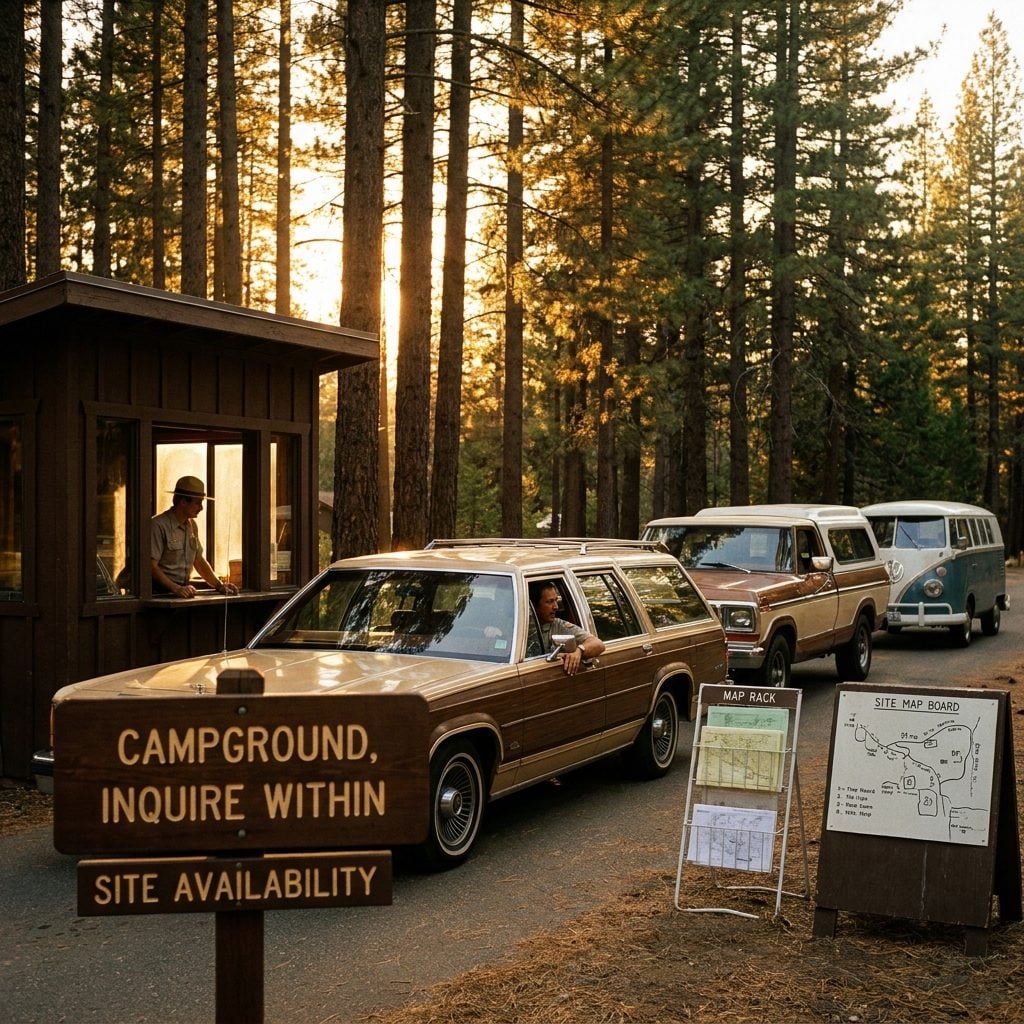
The system was: you drove to the campground, you asked a ranger at a booth if anything was open, the ranger checked a physical piece of paper, and then one of two things happened. Either they circled a site number on a mimeographed map with a stubby pencil, or they said “sorry, full up” and you were back on the highway figuring out what to do next.
There was no website. There was no app. There was no confirmation number to screenshot. The AAA TripTik might list the campground, but it could not tell you whether site 14 was taken. Planning, in the modern sense, had basically no role. You either got lucky or you spent the night in a Stuckey’s parking lot eating gas-station boiled peanuts and calling it an adventure.
Campground Bathrooms: Concrete Floors, Fluorescent Lights, and the Smell of Ancient Everything
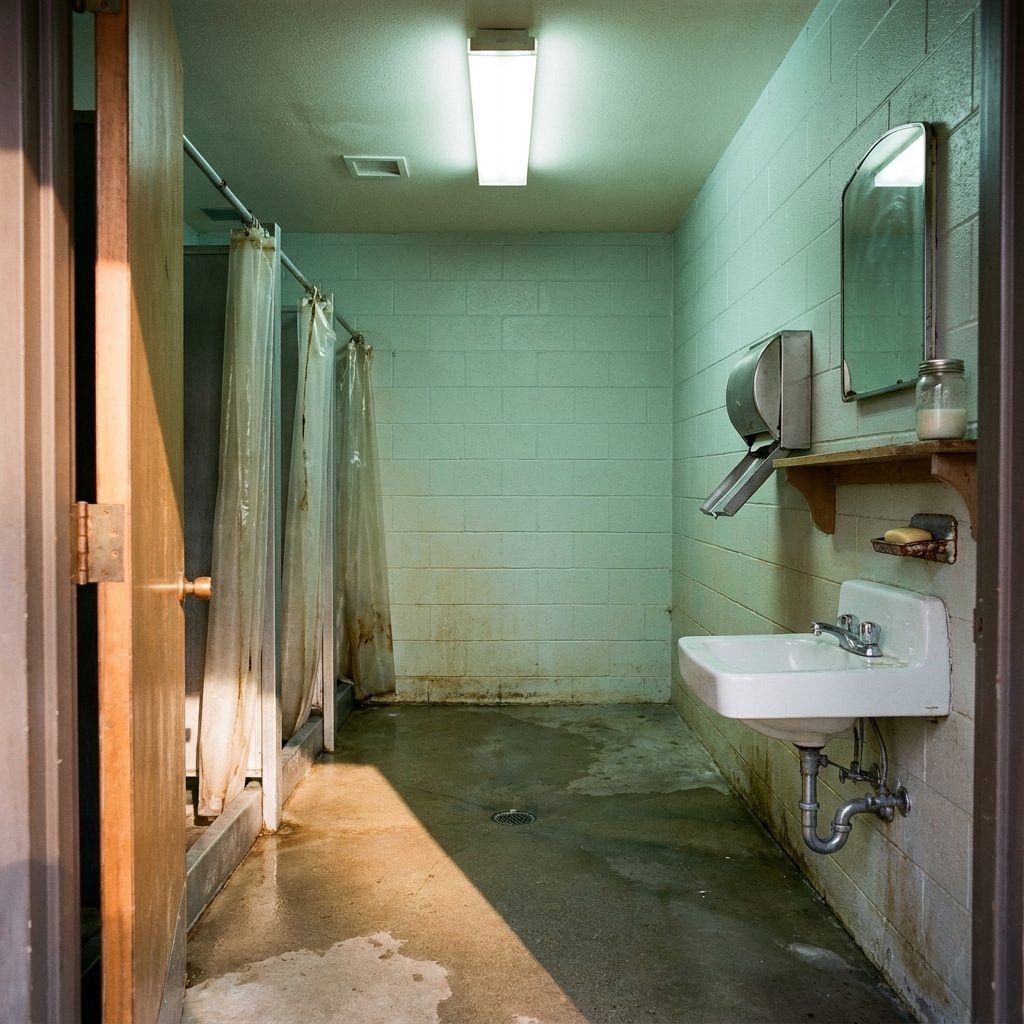
The trick was rubber flip-flops. You did not touch that concrete floor with bare feet. You did not touch anything with bare hands if you could help it. The whole room had a smell that was part mildew, part industrial cleaner, part something older and wetter that preceded both of those things by a decade at least.
The fluorescent fixture would flicker. It always flickered, usually right when you were in one of the stalls with a flashlight balanced on your knee because the overhead light had given up entirely. The mirror was always warped enough to make your face look mildly wrong. And yet, you used that bathroom every morning for four days and came out fine, every time, and didn’t think that much about it.
The Orange Coleman Cooler and the Green Coleman Lantern: Standard Issue, Every Single Site
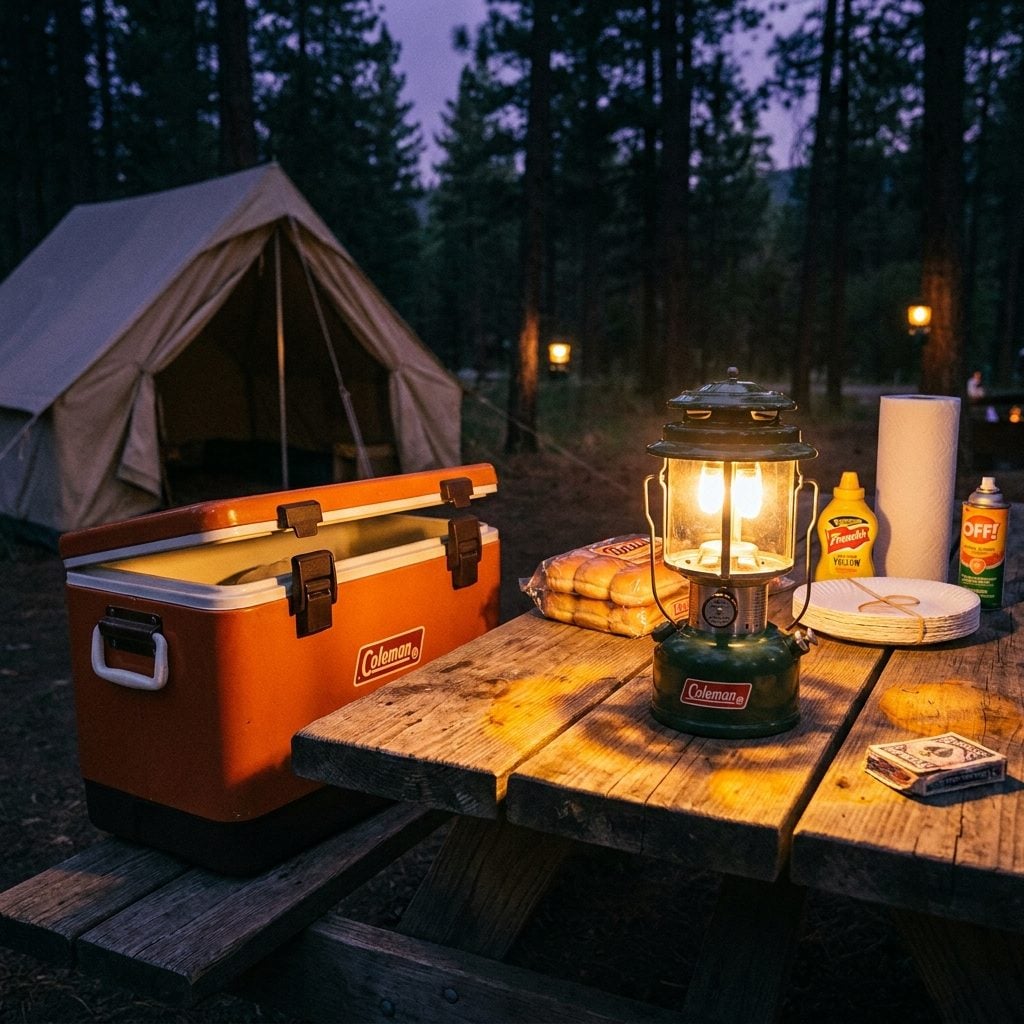
Walk into any campground in America in 1985 and look left and right. Orange cooler. Green lantern. Orange cooler. Green lantern. These two objects were as universal to the American campsite as the picnic table itself. Coleman had simply won, completely, and there was no second place.
The lantern ran on a small propane canister or white gas, and lighting it was its own ritual, the match, the valve turn, the soft pop and then the slow brightening of that white mantle glow that turned the campsite into the warmest possible version of itself. The orange cooler, meanwhile, held everything critical to the trip: the hot dogs, the Jell-O salad someone’s mom had made in a Tupperware container, exactly one six-pack of Coors, and three bags of ice that were already halfway to water by Saturday morning.
The Full Breakfast Circus Performed on a Two-Burner Propane Stove
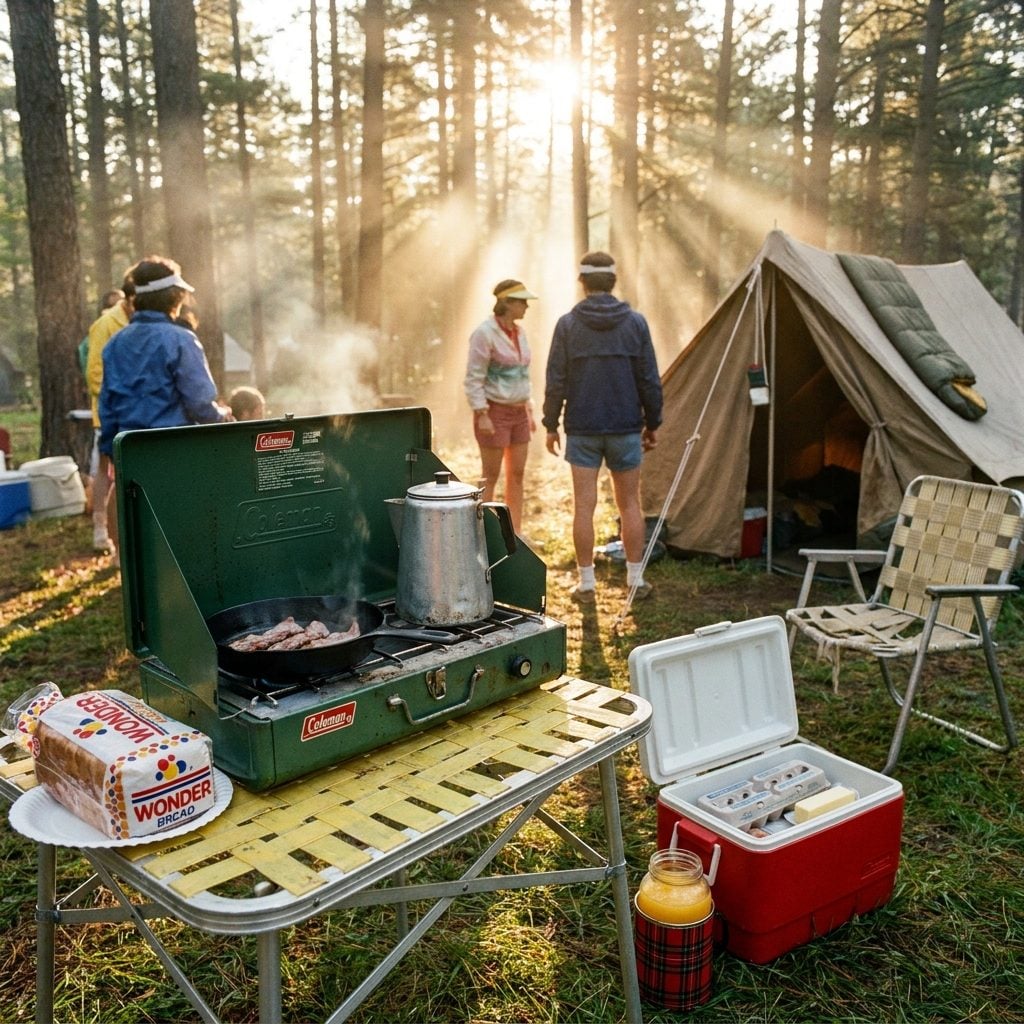
Bacon in a cast iron skillet, eggs cracked straight from a foam carton, toast balanced on the edge of a cooler lid. The whole production on a surface roughly the size of a TV tray, one leg shorter than the others. Nobody questioned this. Nobody thought twice about cooking a four-person breakfast on a stove designed for heating soup, on a table that wobbled if you sneezed on it.
The propane tank made that hollow metallic clunk every time someone moved it, which was every thirty seconds. You ate in shifts because there wasn’t a plate for everyone at once. It was somehow the best breakfast of the year.
Dish-Washing at the Communal Spigot Was Its Own Social Event
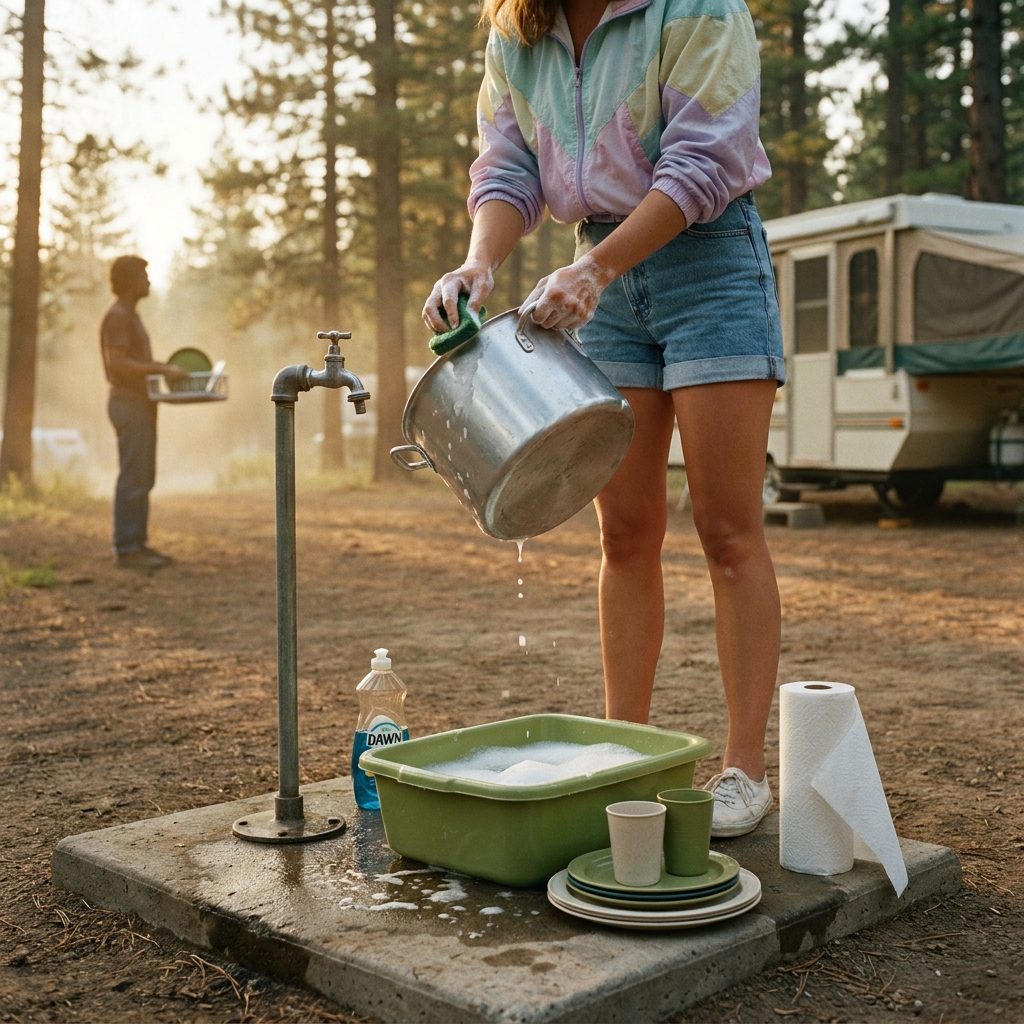
You dragged your dish tub to the spigot and you made small talk whether you wanted to or not. There was something almost neighborly about it, everyone in their cutoffs and windbreakers, trading hot water tips and opinions about the campground bathrooms. The suds went straight into the gravel and nobody considered this a problem.
The hierarchy was unspoken but firm: you didn’t hog the spigot, you kept your pot-scrubbing short if a line formed, and if your kids left food crusted on the aluminum plates, that was your fault and your problem.
The Mosquito Fogger Truck That Rolled Through at Dusk Like Something Out of a Horror Movie
Would you like to save this?
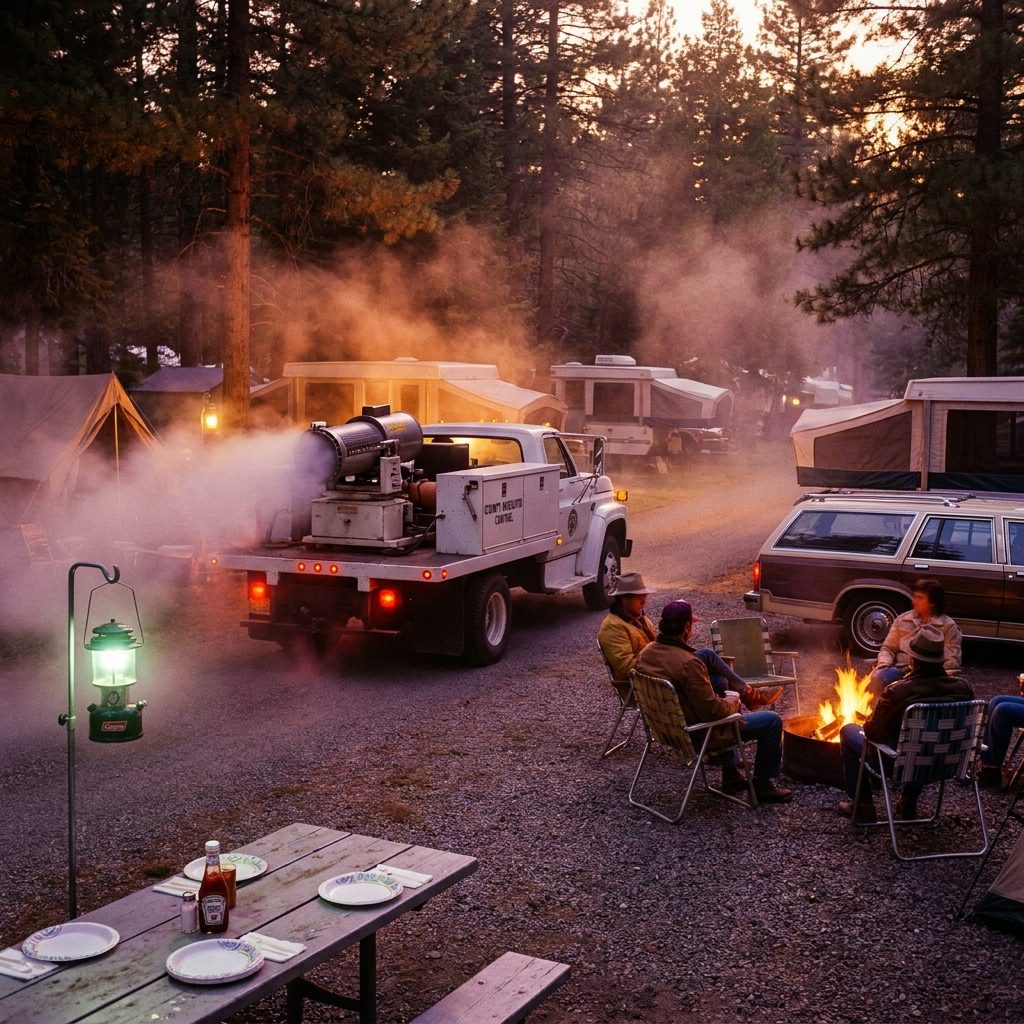
If you were a kid camping in the 1980s, the fogger truck was equal parts terrifying and electrifying. It came at dusk, slow and rumbling, trailing a wall of white chemical mist that swallowed entire campsites. Adults told you to stay back. You absolutely did not stay back.
The fog smelled medicinal and slightly sweet and coated everything in a fine haze that took an hour to lift. Everyone just… accepted this. The truck came, the fog rolled through, the mosquitoes were mildly inconvenienced. Then you ate your s’mores.
The Campground Store That Sold Nightcrawlers, Lucky Strikes, and Richie Rich Comics in Equal Measure
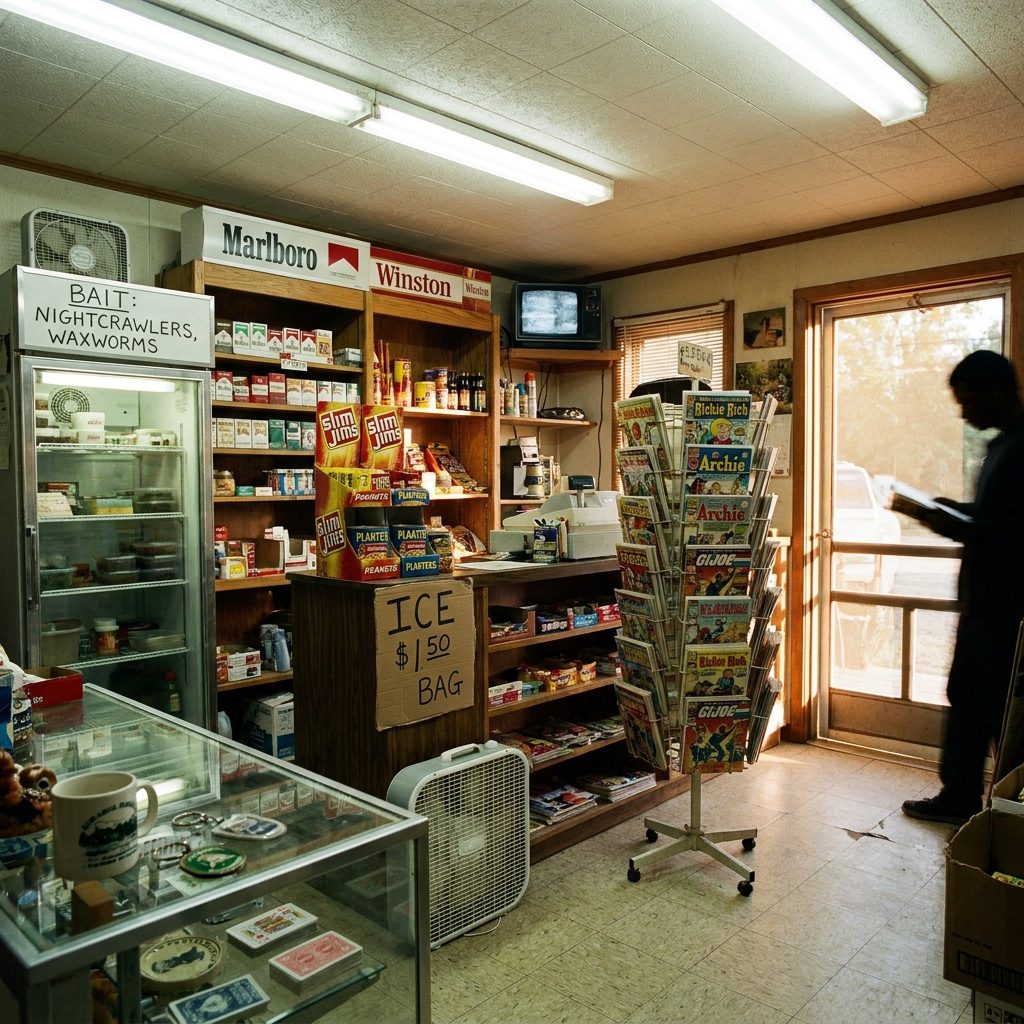
Frozen bait in the same cooler as the Creamsicles. Cigarette cartons stacked behind the counter next to a display of waterproof matches and a ceramic ashtray with the campground’s name on it. A spinning wire rack of comics positioned right at kid eye-level. No irony intended. No theme to any of it.
The campground store operated on the principle that campers needed exactly three things: something to fish with, something to read while bored, and something to smoke after the kids went to bed. Everything else on the shelves was decorative.
Kids Wandering Into Strangers’ Campsites Like It Was Completely Normal (Because It Was)
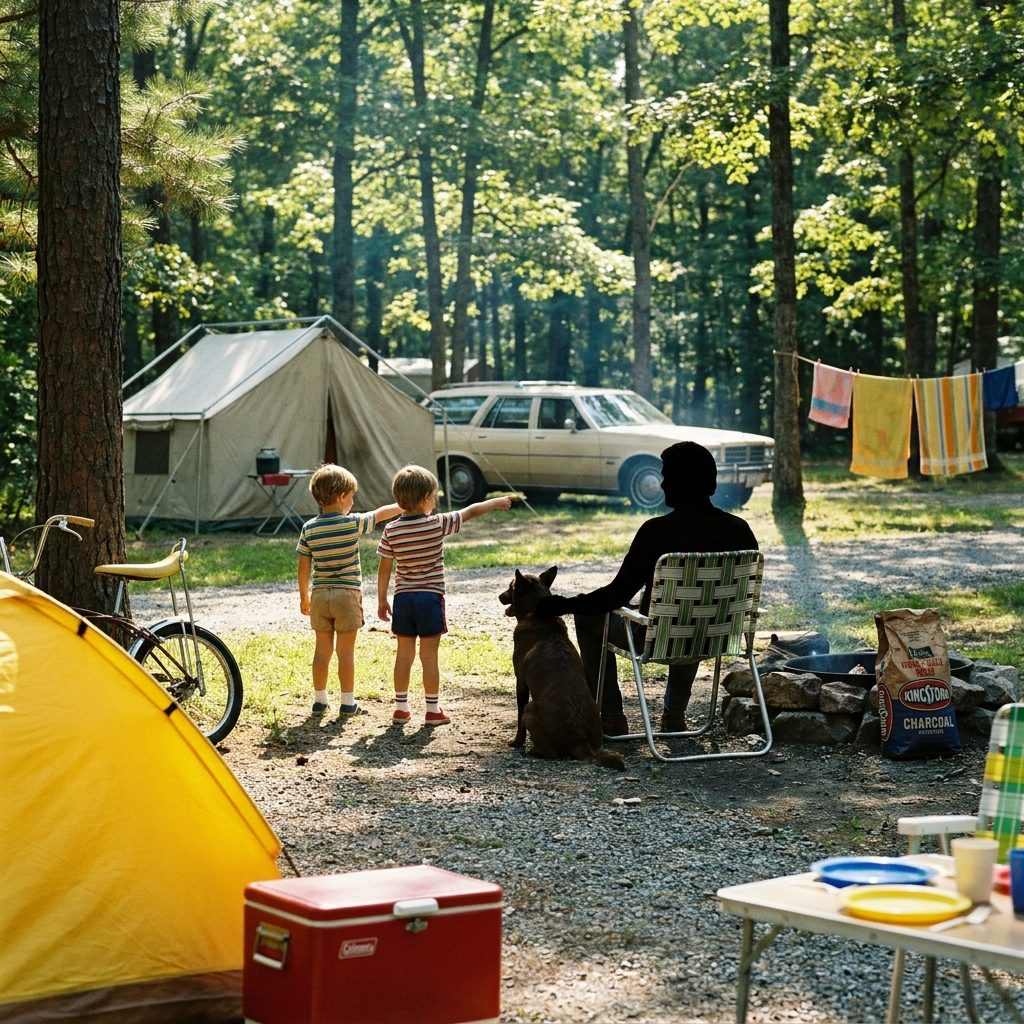
Nobody sent them. Nobody gave permission. One minute they were at your picnic table; five minutes later they were two campsites over asking a complete stranger if they could pet the dog. The answer was always yes.
This was not considered unusual or alarming. It was just camping. The radius of supervision in a 1980s campground was approximately ‘as far as you can still hear them if they yell.’ Kids operated freely within that range, borrowing marshmallows, collecting firewood sticks, comparing findings. The campground was the neighborhood. Everyone in it was, temporarily, family.
The Wood-Paneled Station Wagon Towing a Pop-Up Camper at 55 MPH on Pure Optimism
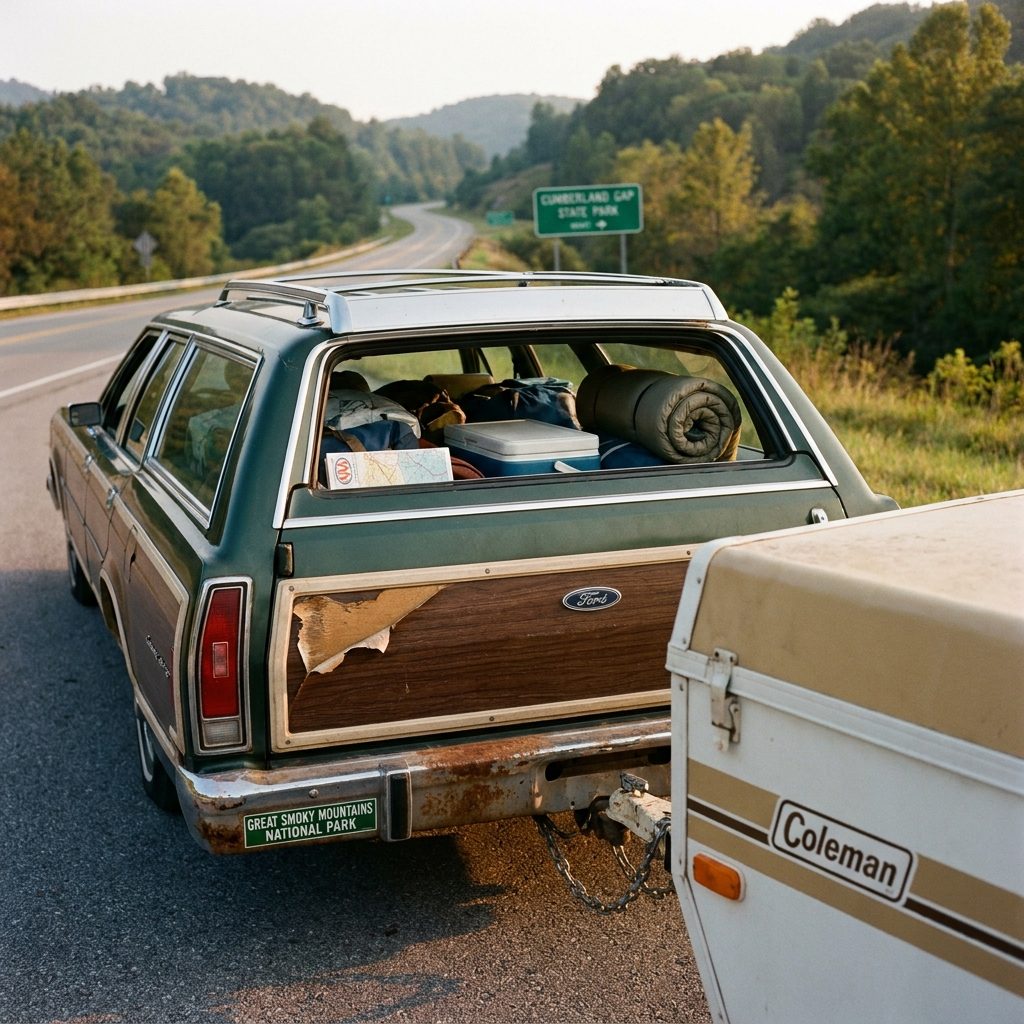
The wagon squatted under the weight every time you loaded the roof rack, and then you attached a pop-up camper that weighed as much as a small boat, and your father drove it at highway speeds with complete confidence. The trailer lights worked about 60 percent of the time. This was not considered a safety concern.
Those pop-ups were the original minimalist camping solution: a box on wheels that expanded, slowly and with some profanity, into something resembling a tent with canvas sides and a mattress that was exactly one inch thick. The setup took forty-five minutes the first night and twenty-five minutes every night after that. You got to watch your dad get better at it in real time over two weeks.
‘The trailer lights worked about 60 percent of the time. This was not considered a safety concern.’
Sleeping Directly on the Ground With a Sleeping Bag and a Prayer for Your Lower Back
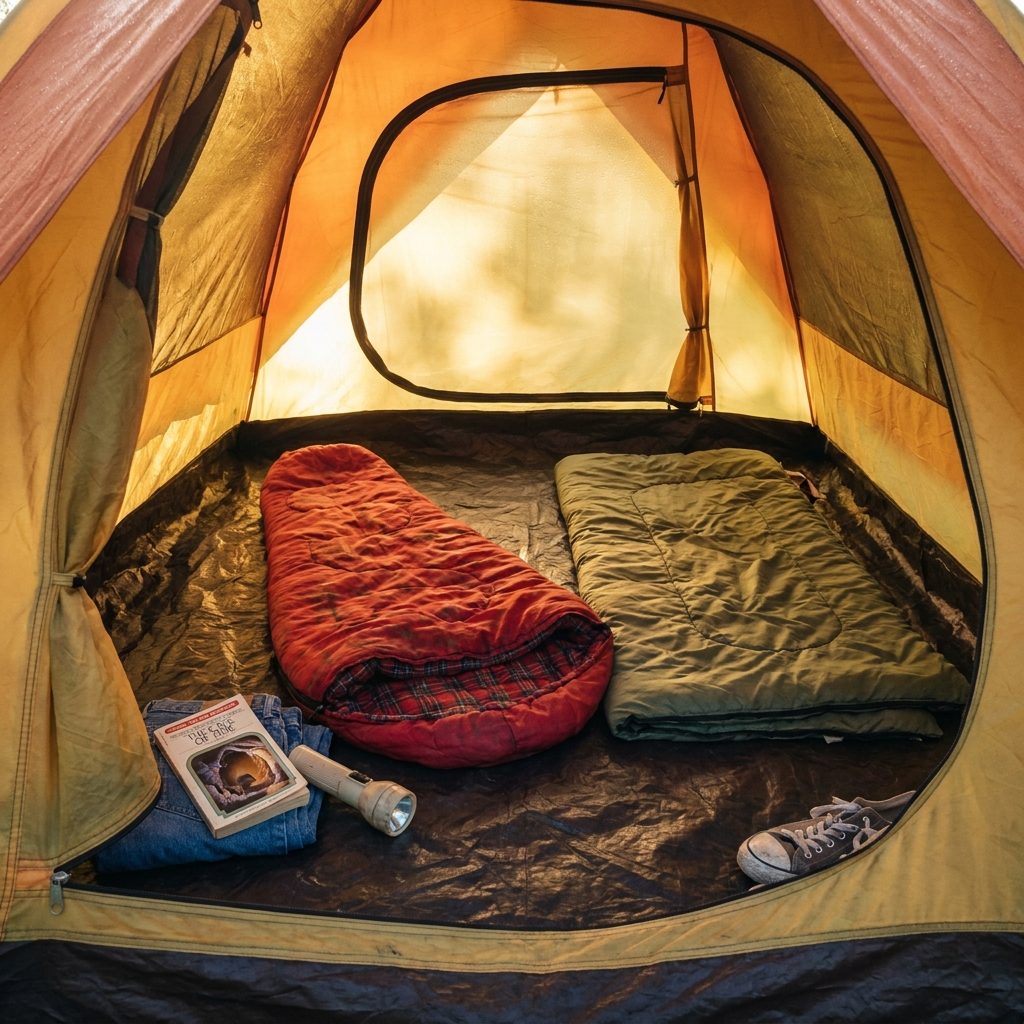
Foam sleeping pads existed. Plenty of people owned them. They were still in the garage.
The 1980s camping move was to unroll your sleeping bag directly onto the tent floor, feel every root and pebble through approximately three millimeters of nylon, and sleep like a stone anyway because you were eight and had been outside all day. The parents were less fortunate. By day three of every camping trip, every adult in the campground walked with the exact same slight hunch.
Adults With Cocktails Around the Fire While Kids Played Flashlight Tag Until Someone Cried
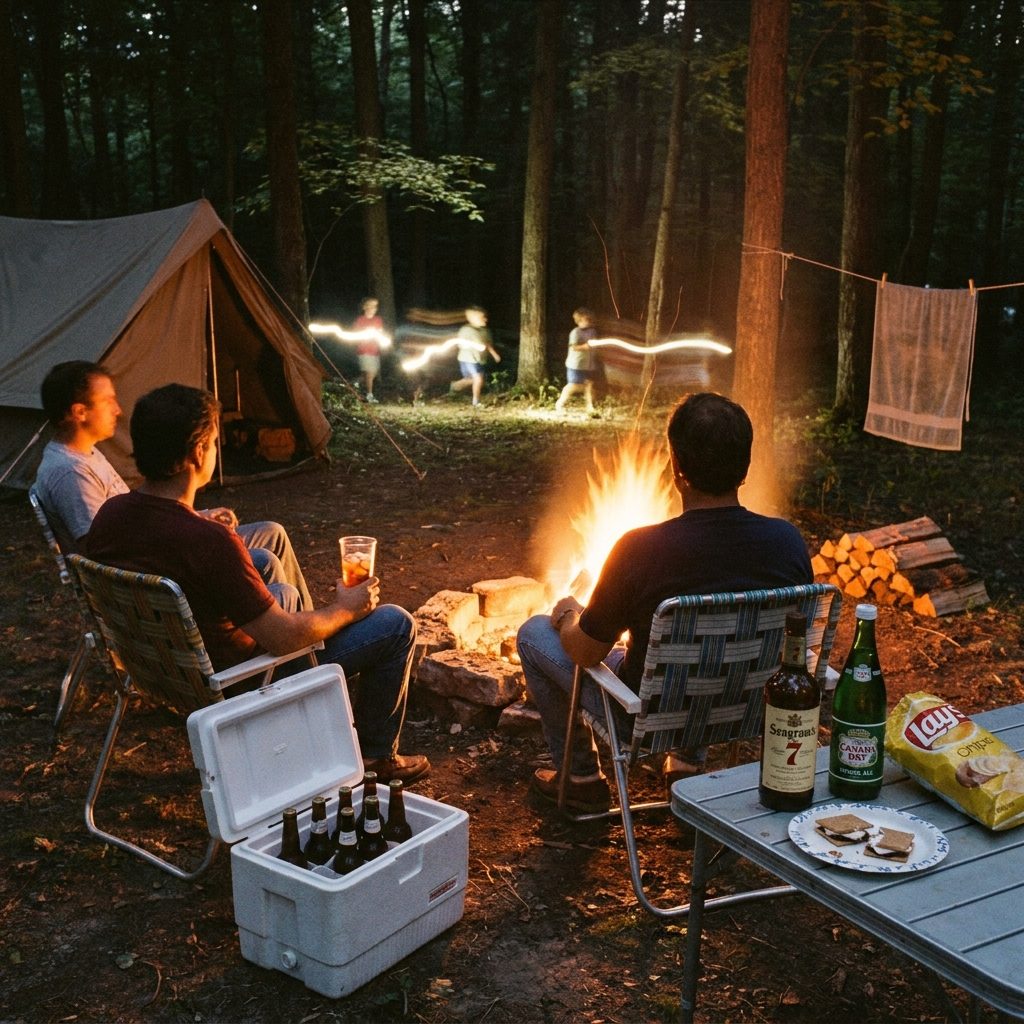
The rule was: be back when the fire gets low. That was the whole rule. No location sharing, no check-ins, no headlamps with safety flashers. You had a flashlight with D batteries that lasted about forty-five minutes if you didn’t leave it on, and you had the run of the campground until someone’s dad whistled from three sites over.
Meanwhile, the adults sat in their lawn chairs and did not worry. The Seagram’s was out. The Styrofoam cooler was open. The whole arrangement was completely relaxed and slightly magnificent and represents a specific freedom in American family life that simply does not exist in the same form anymore.
Every Kid Within Earshot Was Swinging a Hatchet and Nobody Blinked
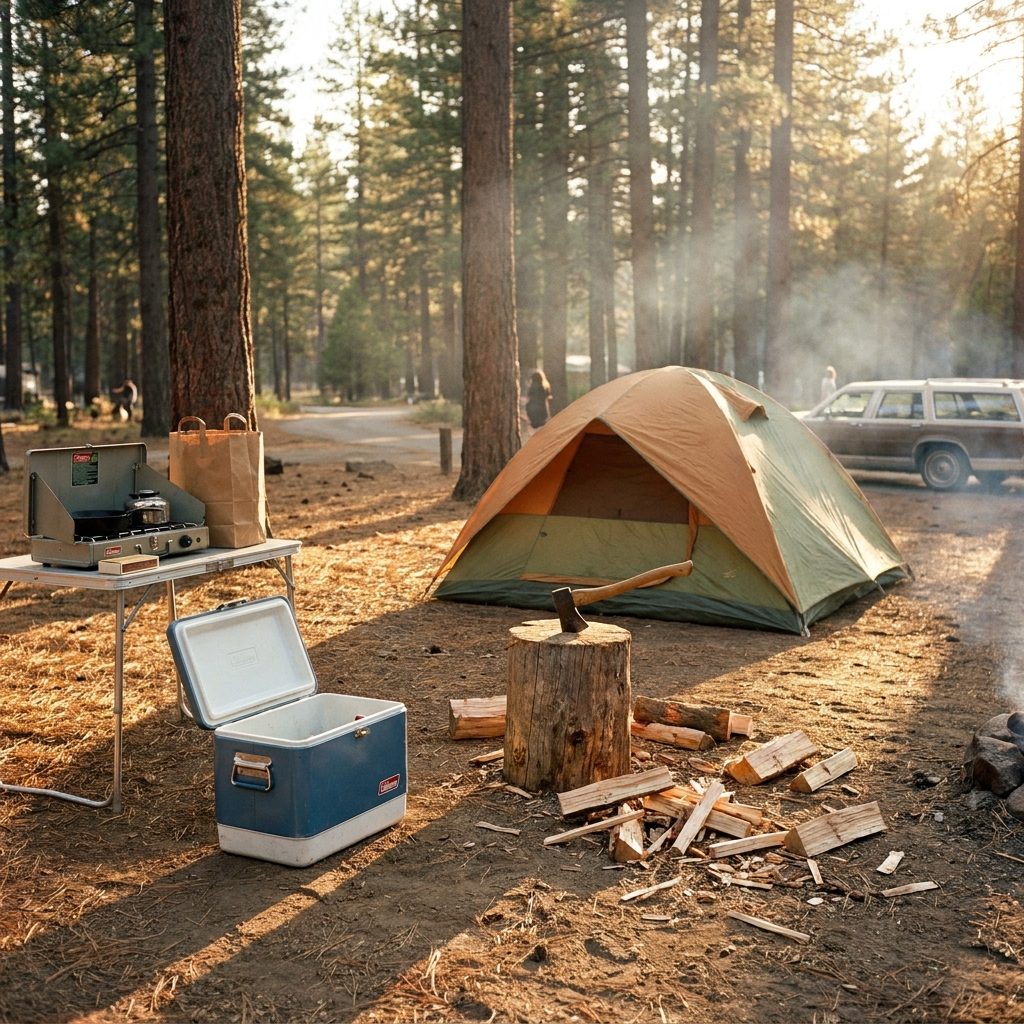
The hatchet just lived at the campsite. Not locked up, not tucked away, not explained. It sat wedged in the stump next to the fire ring, and any kid who wanted to split kindling could walk up and start swinging. Nobody’s dad hovered. Nobody’s mom said a word. The worst injury anyone ever seemed to get was a blister, which became a badge of honor by Sunday morning.
There was a whole technique to it, passed down from older siblings and neighboring campers in the unsupervised way kids in 1980s campgrounds absorbed most practical skills: watch once, try it yourself, bleed a little if you have to, figure it out. Hardware stores in campground towns sold hatchets next to the s’more supplies. This was simply how fire got started.
The RV Sewer Hookup Situation, Which We Collectively Agreed to Never Discuss
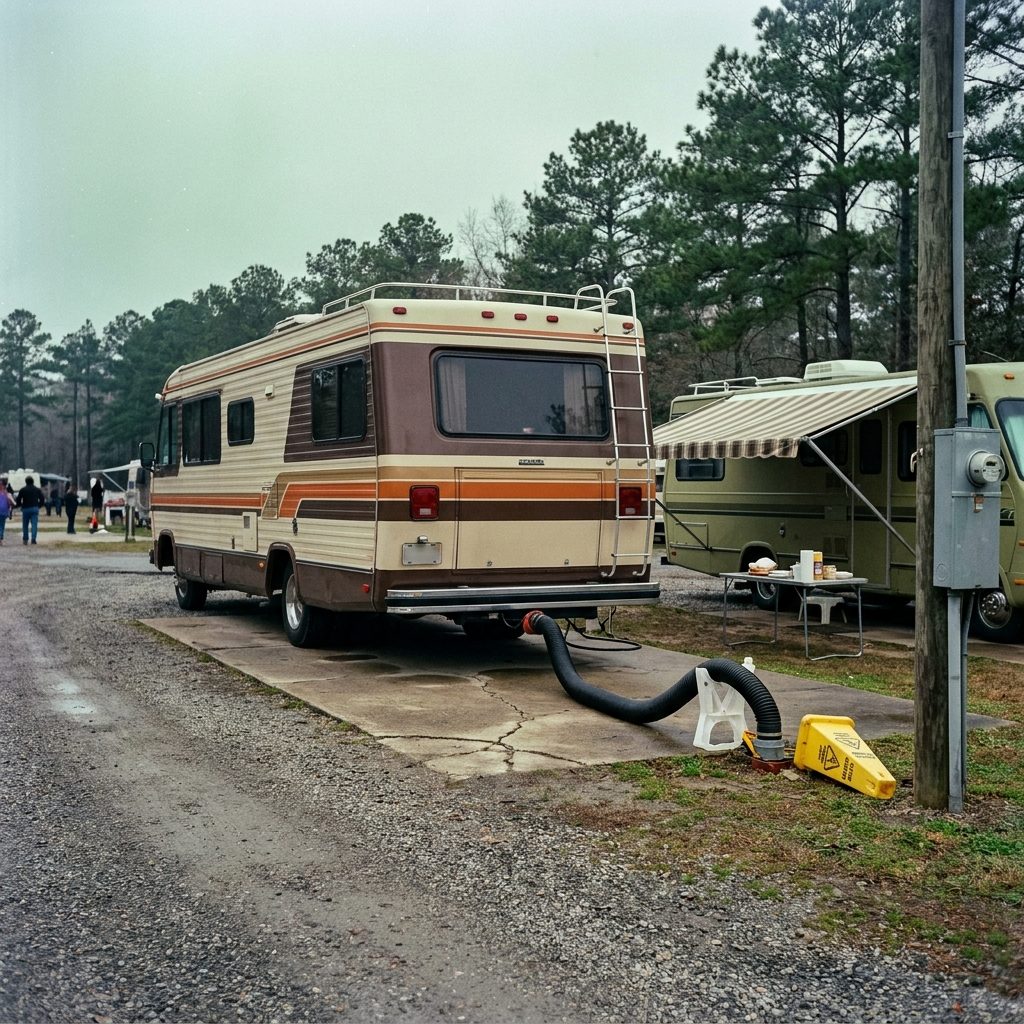
There was always one site in every RV loop where something had gone slightly, categorically wrong. You knew before you saw it. The campground would be fine, the fire pits nice, the bathhouse serviceable, and then the wind would shift and an entire section of families would stop mid-sentence and look at each other.
The sewer connection on older rigs was not, it must be said, an engineering triumph. A flexible black hose, a collar, a prayer. When the connection held, everything was fine. When it didn’t, or when someone had overfilled their holding tank with optimistic confidence, the results were the kind of thing that bonded neighboring campers together in a way no campfire sing-along ever could.
Not a Single Helmet in the Entire Campground, and We Were All Fine (Mostly)
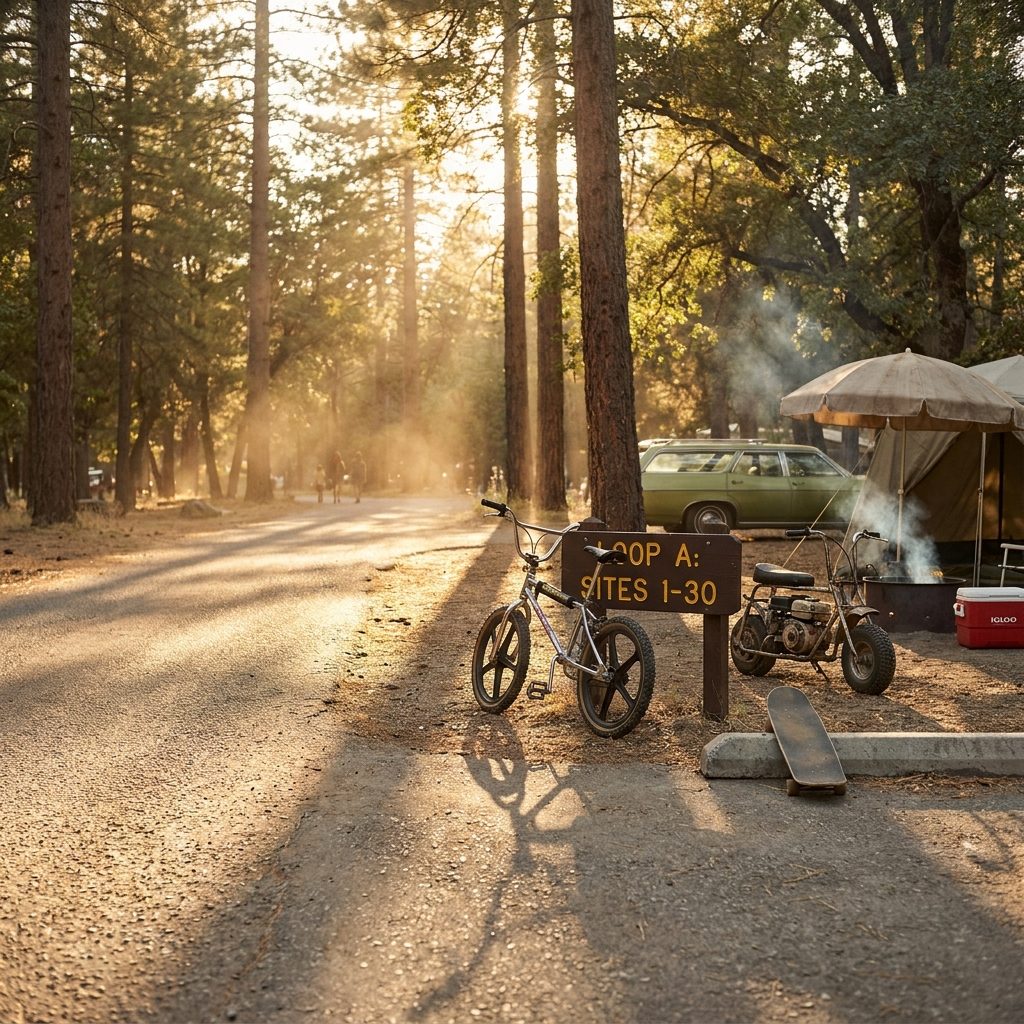
Helmets existed. They were worn by professional cyclists and, occasionally, construction workers. At campgrounds in the 1980s, they were simply not part of the ecosystem. Kids rode BMX bikes over dirt jumps they’d built themselves, launched skateboards down hills with genuine velocity, and occasionally rode mini-bikes around the loop at speeds that should have required some kind of paperwork. Bare heads, bare feet half the time, total confidence.
The thing is, we all knew the asphalt was unforgiving. We’d seen the evidence, usually on someone’s elbow by day two of the trip. But a scrape was just a scrape, and campground gravel had a way of teaching you exactly how fast was too fast through the immediate and memorable method of showing you.
The Brown and Mustard Plaid Lawn Chair: Official Seating of the American Campsite
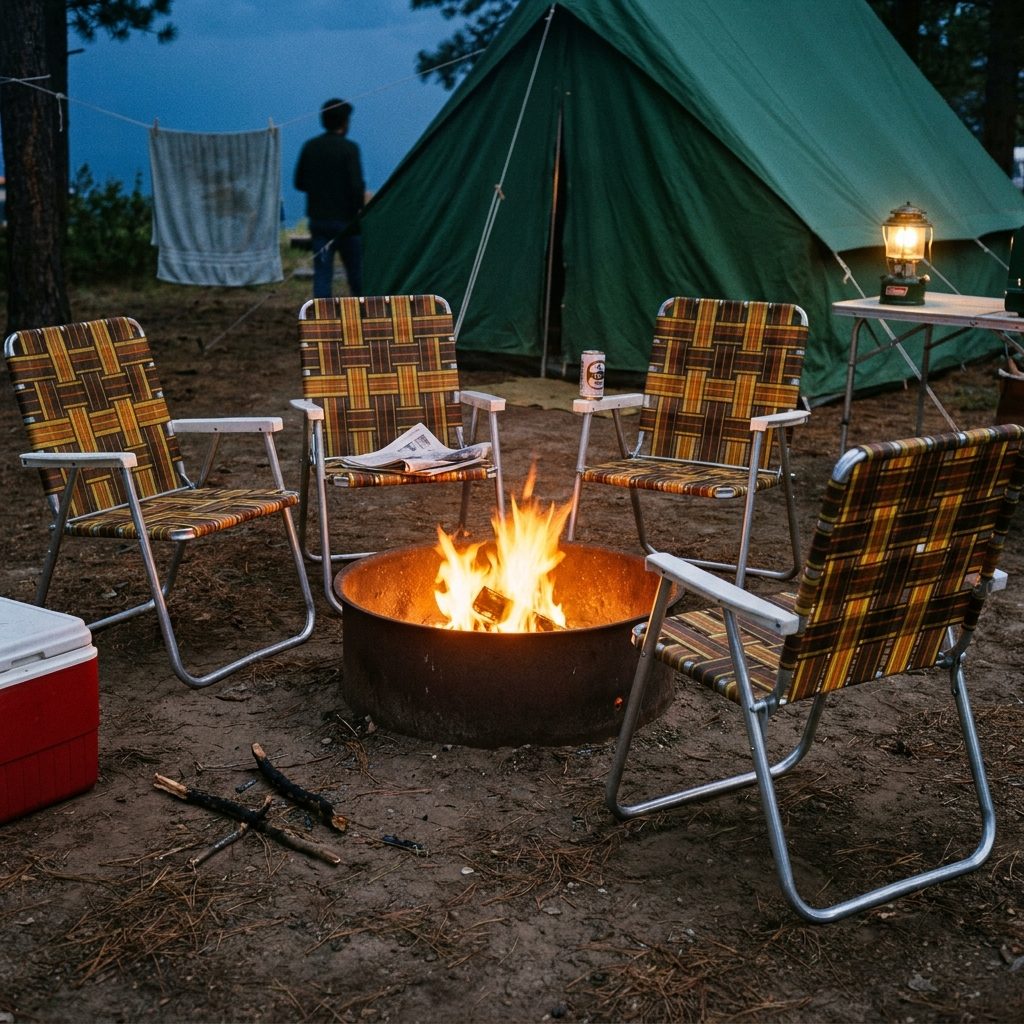
You could identify a 1980s campsite from across the loop by the chairs alone. That specific combination of brown, mustard, and burnt orange plaid, woven in wide flat straps across an aluminum frame, was so universal it might as well have been issued at the campground entrance alongside your site number and a bag of ice. Every family had them. Some families had eight of them, because you never knew who was dropping by.
The strap webbing always had one piece that had stretched slightly more than the others, creating a gentle sag in exactly the wrong spot for your lower back. You adjusted. You sat slightly sideways. After two hours by the fire, it felt like the most comfortable chair you’d ever owned, and you meant to throw it away every single spring, and you never did.
The Teenagers Were Out There at 11 PM, Circling the Loops on BMX Bikes Like Satellites
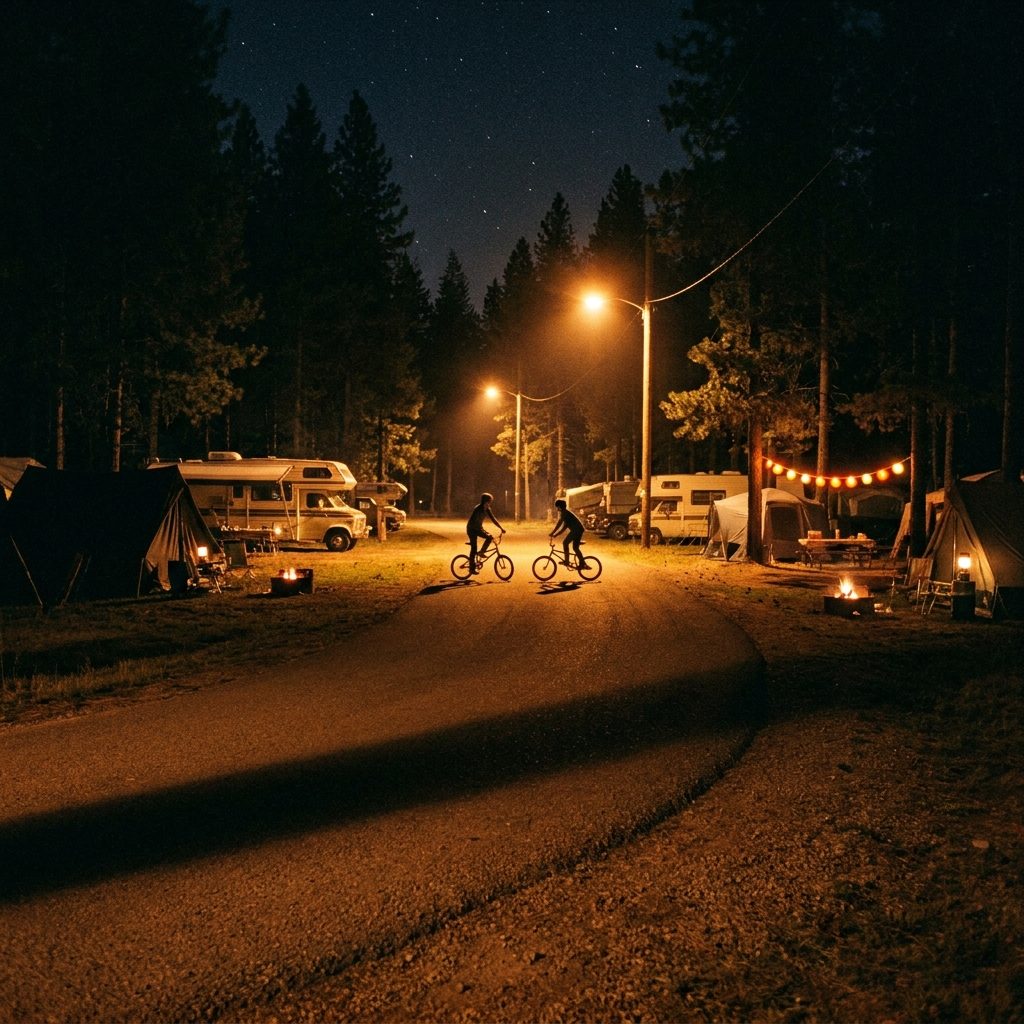
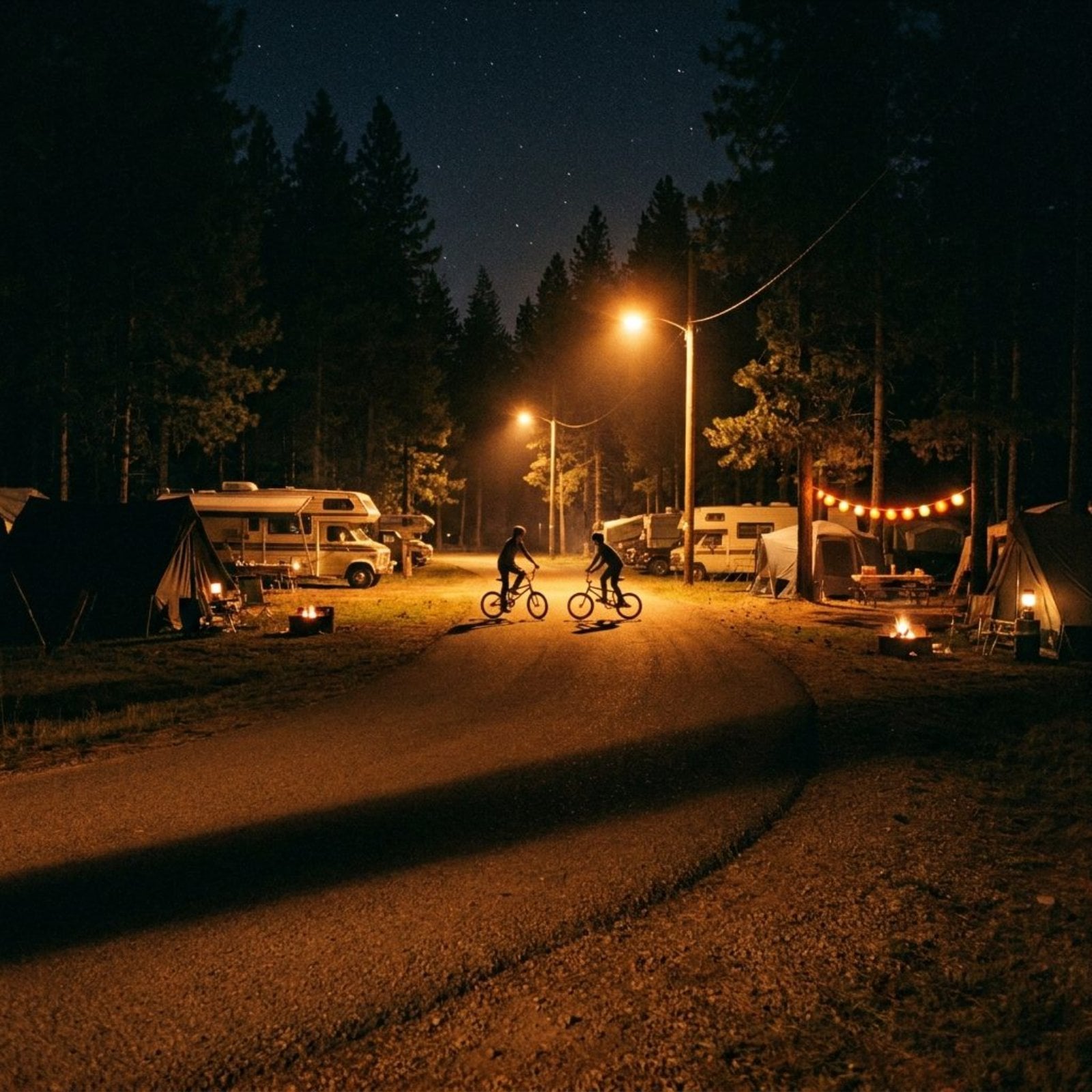
Campground nights had their own social order, and teenagers understood it completely. Once the parents moved from the fire to the folding chairs to the camper, that was the signal. The loop belonged to whoever was still awake, which was always the teenagers, always on bikes, always moving just fast enough to feel like they were getting away with something without actually going anywhere.
There was no destination. That was entirely the point. The loop was a quarter mile of gravel, same sites, same trees, same sequence of other people’s campfires going dark. But at eleven o’clock in August, with no supervision and nothing to do and nowhere to be until morning, it felt like the entire world had been handed over specifically to you. Nobody who rode those loops in the 1980s has fully forgotten what that felt like.
The Pay Phone at the Camp Office Was Your Only Link to Civilization, and You Were Fine With That
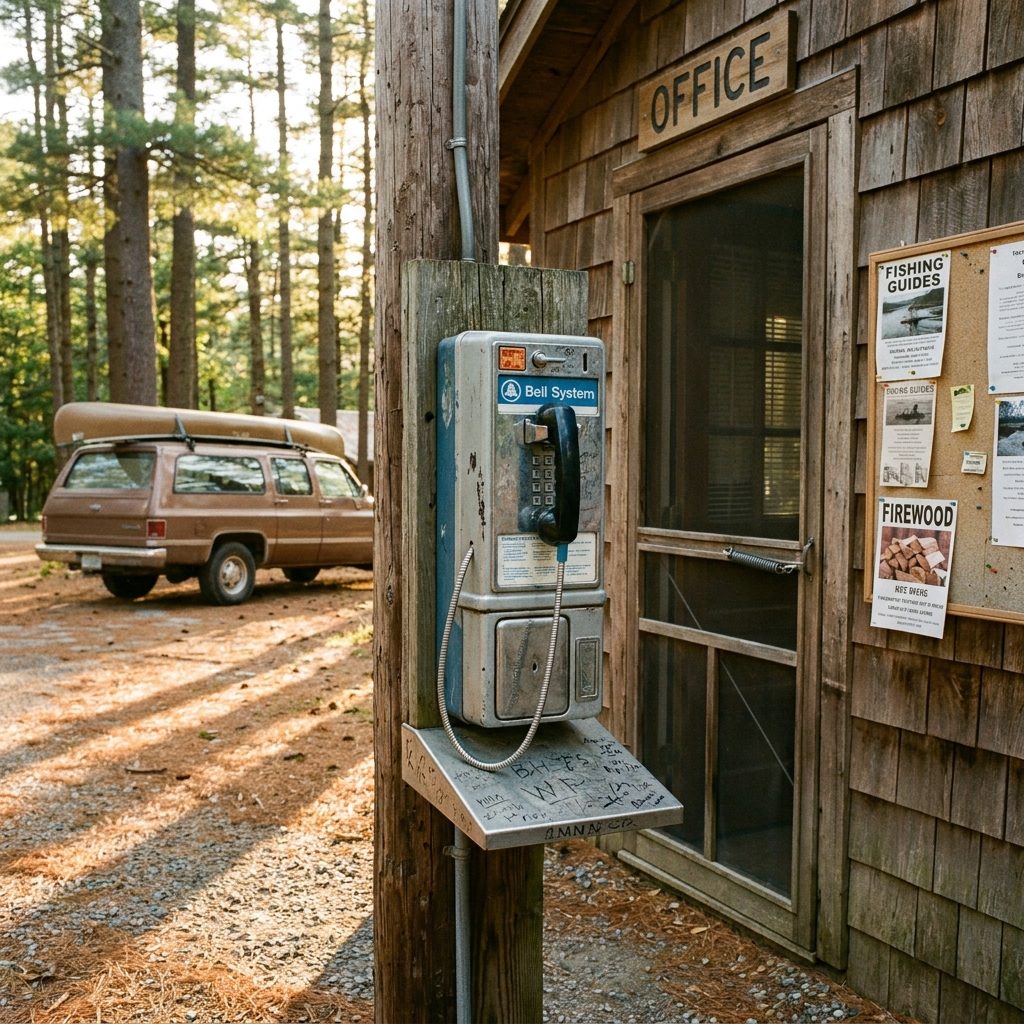
Quarter in the slot, three minutes to tell someone you arrived safe, and then you hung up and vanished for a week. No check-ins. No photo updates. No group text debating what to bring for dinner. You were just gone — reachable only if someone called the camp office and the ranger felt generous enough to walk over to your site, which, honestly, he usually didn’t.
The phone itself was always sunbaked and slightly sticky, half the time swallowing your quarter with no connection to show for it. The cord had kinked into a permanent spiral that barely reached your ear, and conversations stayed brief because long distance cost real money and every person waiting behind you was holding a dime and boring holes into the back of your skull.
Nobody Wore Sunscreen. Like, Genuinely Nobody.
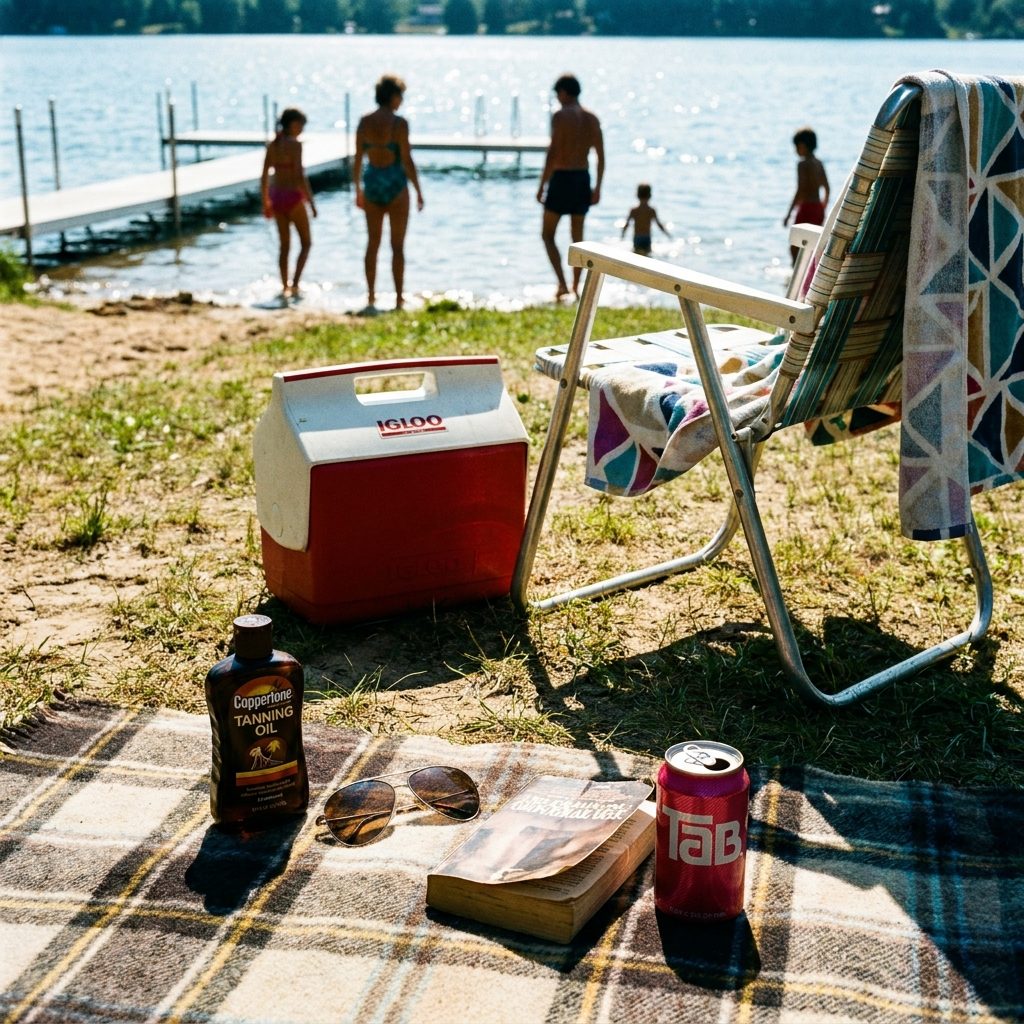
Coppertone was for tanning. Baby oil was for serious tanning. SPF? A number on the bottle nobody bothered to read. The whole objective of a camping trip was to come home looking like a leather handbag, and sunburn was the entry fee — you peeled for three days afterward and called it a vacation souvenir.
I say this as someone whose parents once applied cooking oil to my shoulders at a KOA in 1986. Actual cooking oil. From the camp stove kit. And nobody batted an eye — it was considered efficient, even clever. Dermatologists would weep, but we didn’t know any dermatologists. We knew the lake and the sun and the baby oil, and that was enough.
The Campfire Smoke Followed You Home in Every Fiber You Owned, and You Liked It
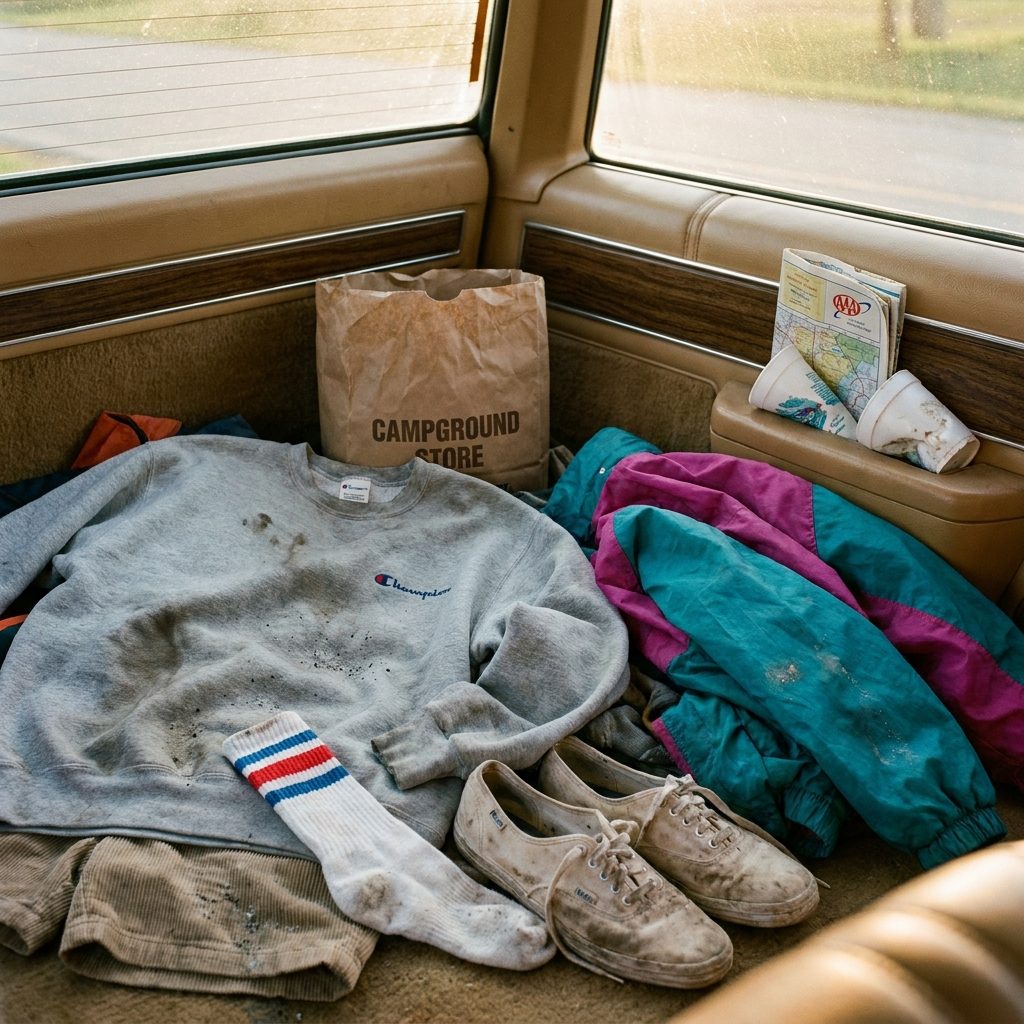
Clothing, sleeping bags, hair — the smoke infiltrated everything and refused to leave. You’d pull a sweatshirt out of your duffel on Tuesday and catch a ghost of wood smoke and pine resin, and for half a second you were sitting cross-legged at the fire ring watching sparks pop toward the stars.
People now buy candles trying to bottle that exact scent. We just wore it home. Your mom would strip-mine the laundry bag the minute you crossed the threshold, but that first night back in your own bed, the pillow still held a faint trace of it. Worth more than any candle.
The Map. Folded Wrong. Fought Over. Never Once Refolded Correctly.
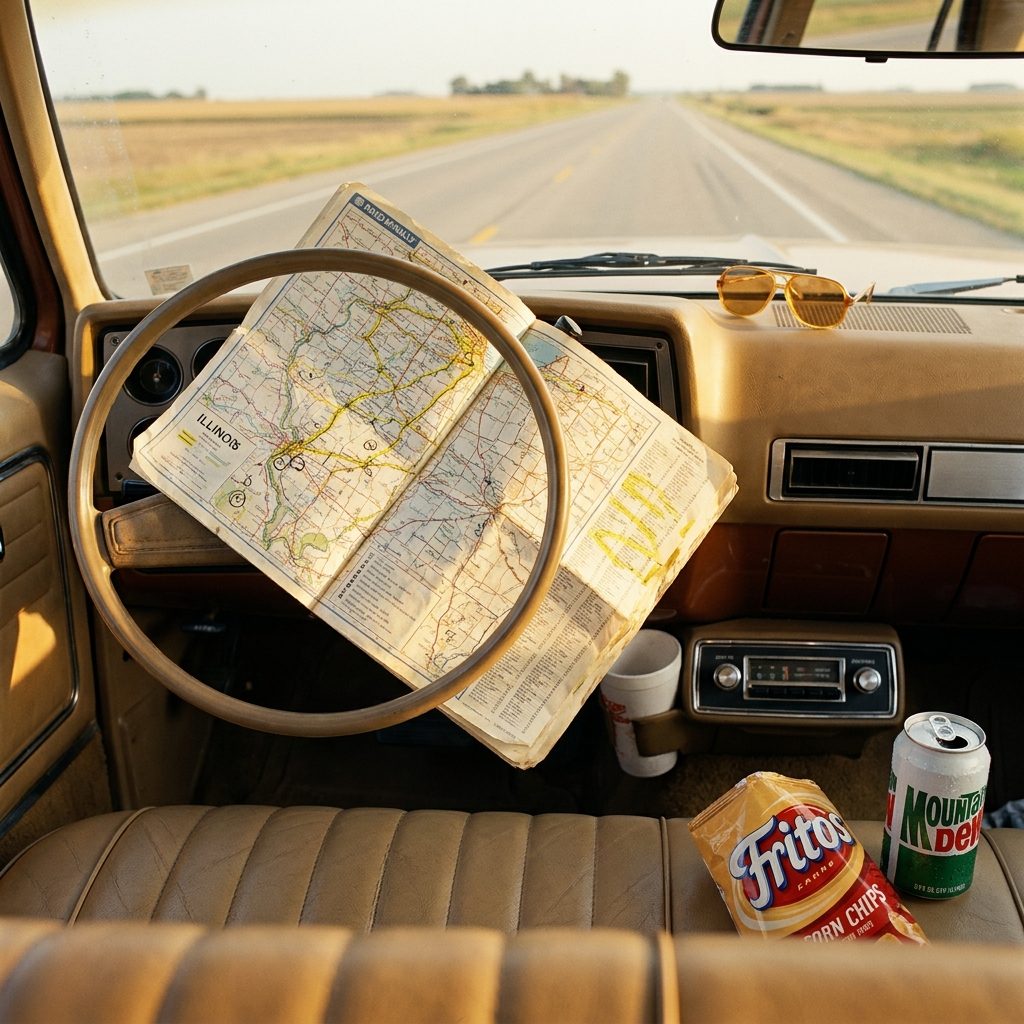
You could gauge how long a family had been driving by the state of the atlas. Day one: crisp folds, route highlighted in neat yellow. Day three: a crumpled wreck wedged between the seats, torn along the spine, annotated in three different pens by three people who all disagreed about whether you’d missed the exit forty miles back.
Rand McNally ran everything. That atlas was your GPS, your satellite view, and your turn-by-turn — except it couldn’t talk and it absolutely couldn’t reroute. Wrong turn? You pulled into a gas station and asked a human being, who gave you landmarks instead of street names. “Past the grain elevator, hang a left at the feed store, and if you hit the river you went too far.” Somehow it worked. Or it didn’t and you ended up somewhere better, which was half the fun of driving in an era before algorithms decided your route for you.
The Entire Family Sharing One Bar of Irish Spring Soap in a Ziploc Bag
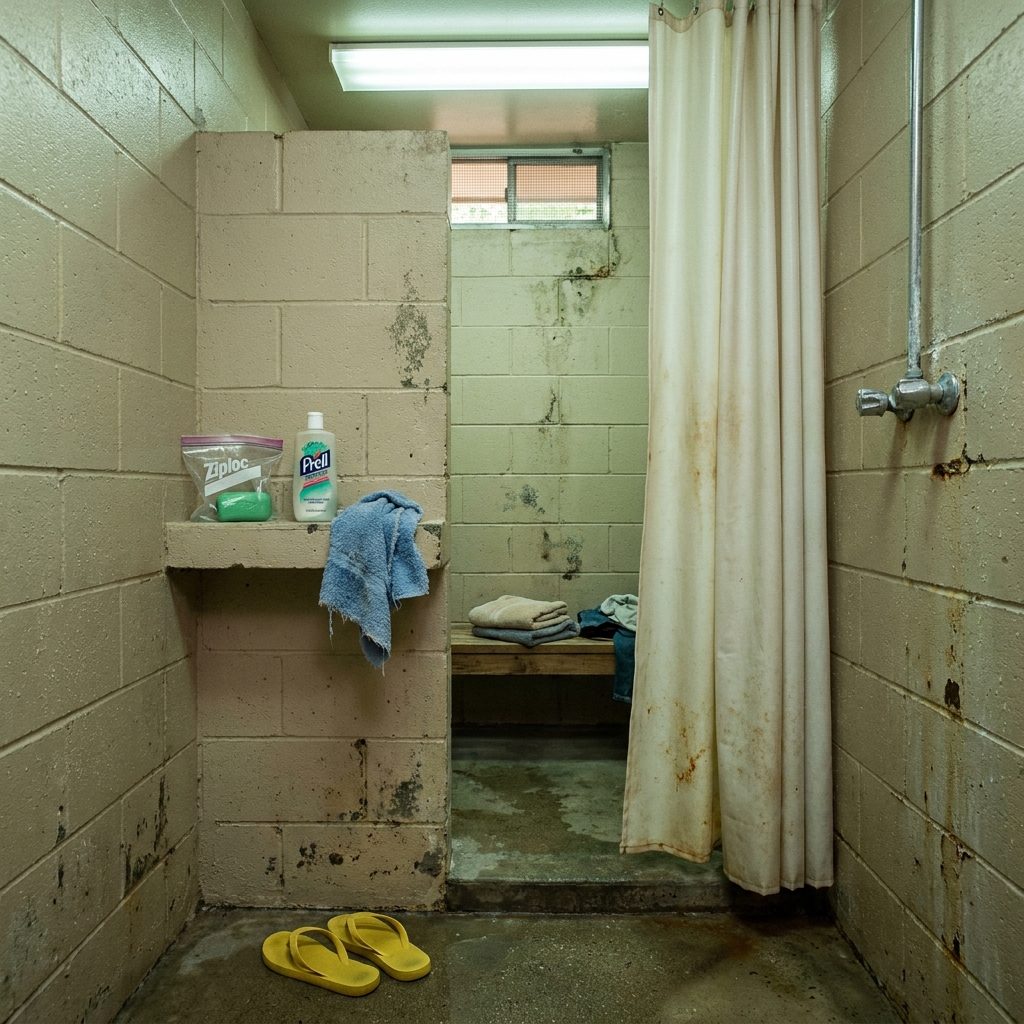
Nobody had their own soap. Shower caddy? Loofah? Anything made of bamboo? Forget it. There was one bar of Irish Spring soap, and it lived in a sandwich bag, and it passed from hand to hand like a baton in a very damp relay race.
The bar shrank daily. By Wednesday it was translucent, and by Friday someone had dropped it in the dirt, rinsed it off under the spigot, and kept going without a word. The whole family smelled identical — either Irish Spring or campfire smoke, depending on the hour.
Somebody’s Dad Was Absolutely Going to Fix That Generator at Midnight
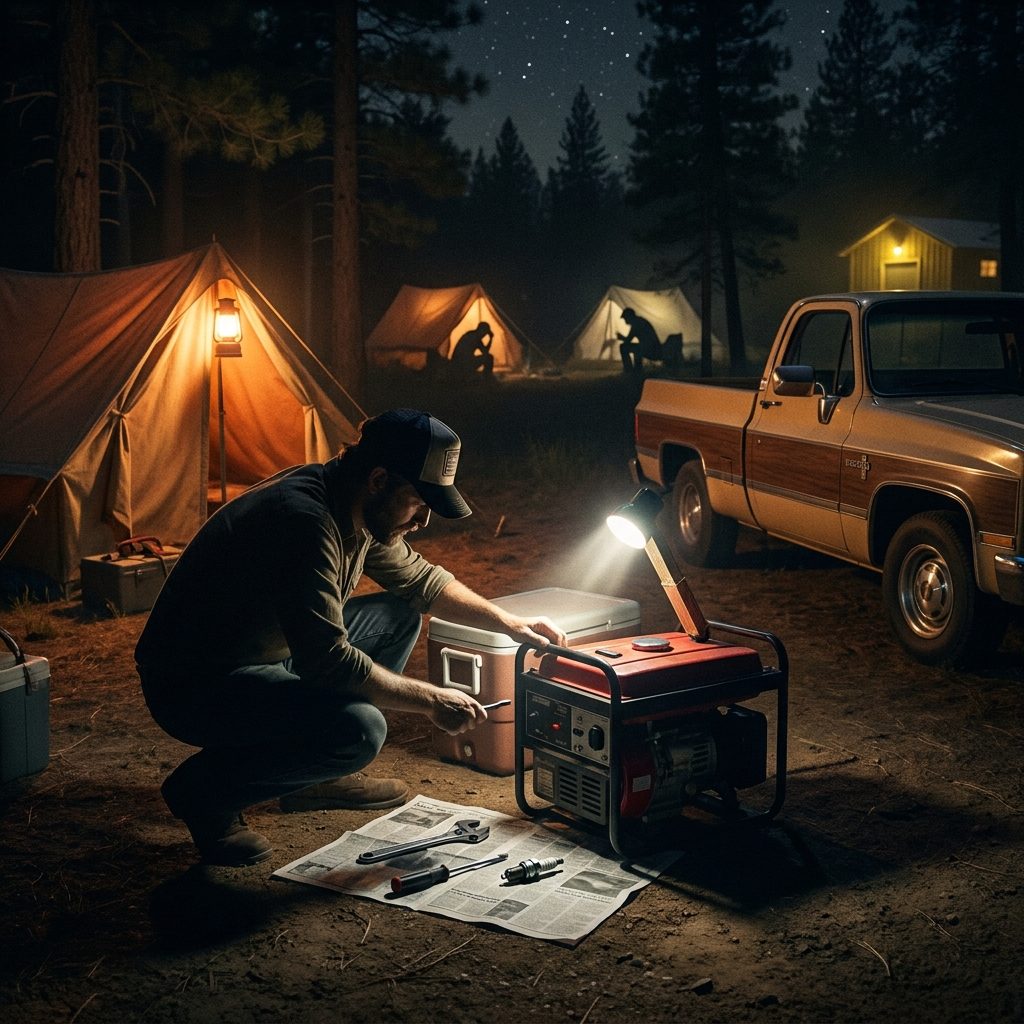
It always started with one confident yank on the pull cord. Then another. Then a third with real shoulder behind it. Then out came the flashlight.
Eleven PM. Every campsite within earshot fully awake. Somebody’s father had decided that NOW was when the generator needed to cooperate, and when it wouldn’t, surrender was unthinkable. Spark plug removal. Muttered profanity. A wife’s voice from inside the tent — “just leave it” — in a tone that meant she’d said it four times already and was done pretending to be patient about it.
Two outcomes. Either the thing roared to life at 11:45 and ran for nine pointless minutes, or it never started at all, and the man announced at breakfast that “the altitude” was to blame. Said it with absolute authority, too, like he’d consulted an engineering manual.
Trash Bags Hung From a Tree Branch Because Bears Were a Rumor, Not a Policy
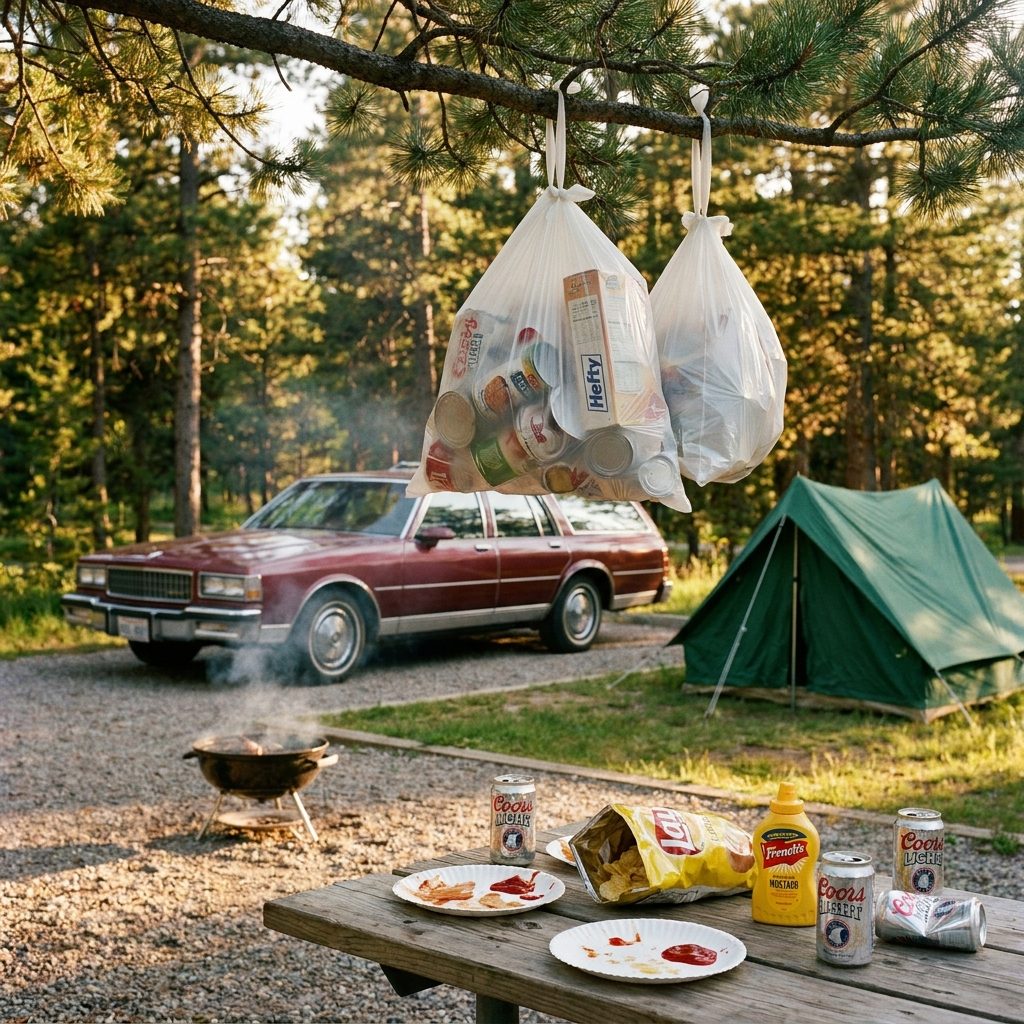
Bear-proof containers did not exist in our vocabulary. Bear poles, bear boxes, bear canisters — none of it. The food waste strategy at your average 1980s campground was a Hefty bag knotted to whatever branch a dad could grab while standing on a cooler.
And the actual food? The chips, the hot dog buns, the marshmallows, the entire cooler stuffed with lunch meat — all of it sat on the picnic table overnight. Open air, under the stars, practically garnished. Raccoons treated this arrangement as a prix fixe dinner, and we treated raccoons as a minor inconvenience. Mosquitoes with thumbs.
The Kid Who Showed Up With a BB Gun and Nobody Confiscated It
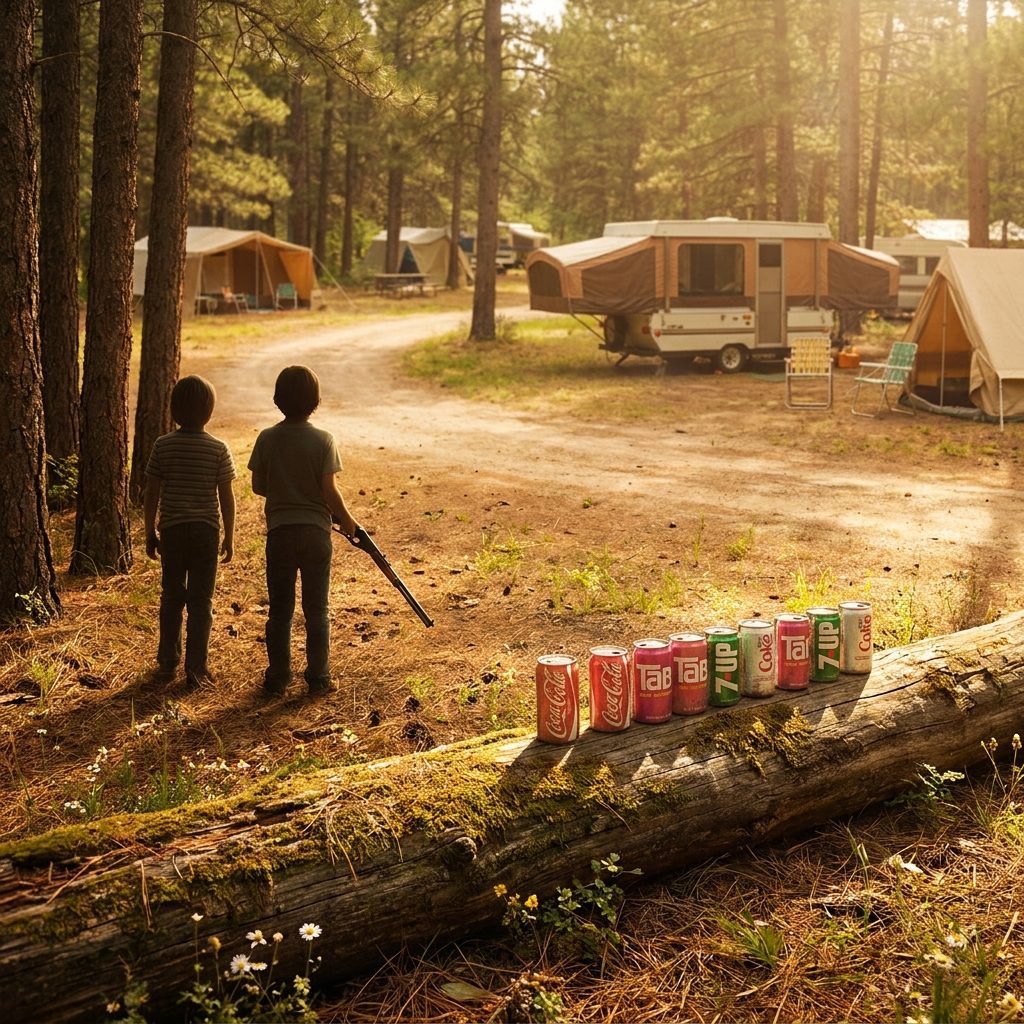
Some kid always had one. A Daisy Red Ryder, usually, though sometimes a Crossman pellet gun that felt genuinely dangerous. He’d show up at the neighboring campsite with it slung over his shoulder like a frontier scout, and every other kid within three campsites would materialize instantly, moths to a very irresponsible flame.
Tin cans on a log. That was the range. No supervision, no eye protection, and the concept of a “safe firing direction” was theoretical at best. Somebody’s little brother stood too close. Somebody always almost shot somebody. And by nightfall it was a campfire story told with laughter rather than horror, which — looking back — is genuinely wild.
Picture a kid walking through a modern campground loop carrying a BB gun slung over his shoulder. A ranger would materialize before he got past two sites. In 1984, the ranger drove by and waved.
The Clothesline Strung Between Two Trees Displaying the Family’s Swimsuits for the Entire Campground
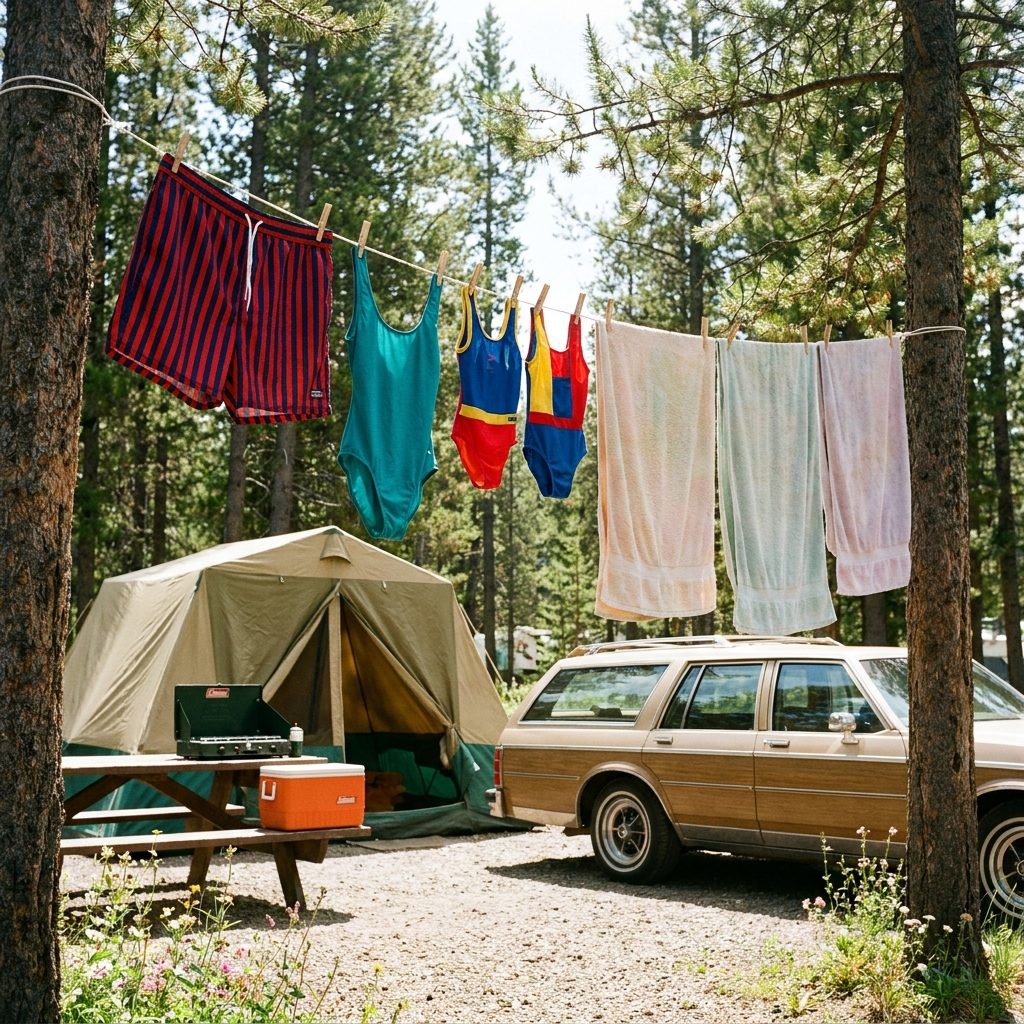
By noon, every family’s laundry situation was on full public display. Wet towels, damp swimsuits, occasionally a pair of athletic socks that had no business being aired in front of strangers. The wooden clothespins came from a bag that also lived in the camping box year-round, slowly turning grey between July trips.
Zero self-consciousness about any of it. Your neighbors could see your kids’ Underoos and your own trunks with the broken drawstring, and that was fine, because their line looked exactly the same. A campground operated under different expectations than a cul-de-sac — or honestly, under almost no expectations at all. You hung your wet things where you could and moved on with your day.
Would you like to save this?
Please note that some of the imagery in this article were created with the aid of AI image generators.