

🔥 Would you like to save this?
Stand near any boarding gate for ten minutes and you’ll read more about strangers than they’d ever tell you at a dinner party. The woman in head-to-toe athleisure. The man in a full suit at 6am. The person buried under three layers they will never all wear at once. None of it is random. Every airport outfit is a small confession about how a brain handles stress, control, comfort, and the strange in-between hours of transit.
Here’s the part nobody says out loud: the clothes aren’t just clothes. They’re a stress-management system you got dressed inside of without noticing. We looked at some of the most common airport looks and what each one quietly signals about your travel habits, your comfort priorities, and the version of you that only exists between two cities. Some of these will feel uncomfortably accurate.
The Head-to-Toe Athleisure Traveler and What Choosing Comfort First Actually Signals About How Your Brain Handles Stress
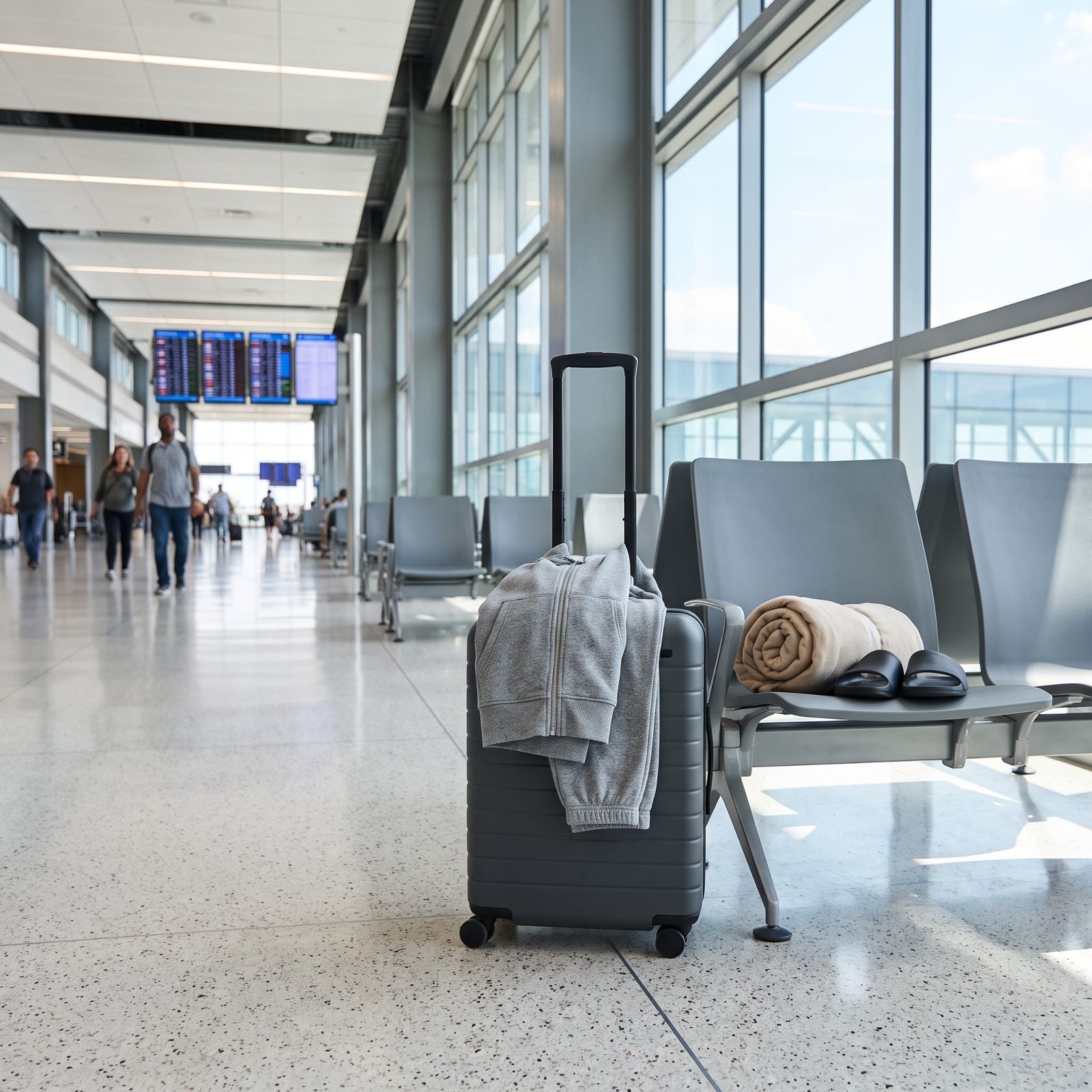
Matching heather-gray joggers. A zip hoodie broken in to the softness of a favorite towel. Slide sandals over cushioned socks. You’ve clocked this look at every gate in America, and it reads as pure laziness only if you’ve never studied what soft fabric does to a nervous system under load.
Airports are stress machines. Lines, gate changes, the low hum of not being in control of anything. The athleisure traveler is answering that with material. Comfort psychologists note that soft, breathable clothing sends calming feedback to a nervous system that’s constantly scanning for threat, while tight seams and stiff waistbands quietly trigger the opposite. Familiar clothing also lowers cognitive load, which is why people reach for the same trusted pieces when the day gets hard.
So the person in full loungewear at the gate isn’t checking out. She’s regulating. She read the environment as high-stress and pre-loaded her own defense in fleece.
Why the Person in Full Business Attire at 6am Is Telling You Something About Identity They’d Never Say Out Loud
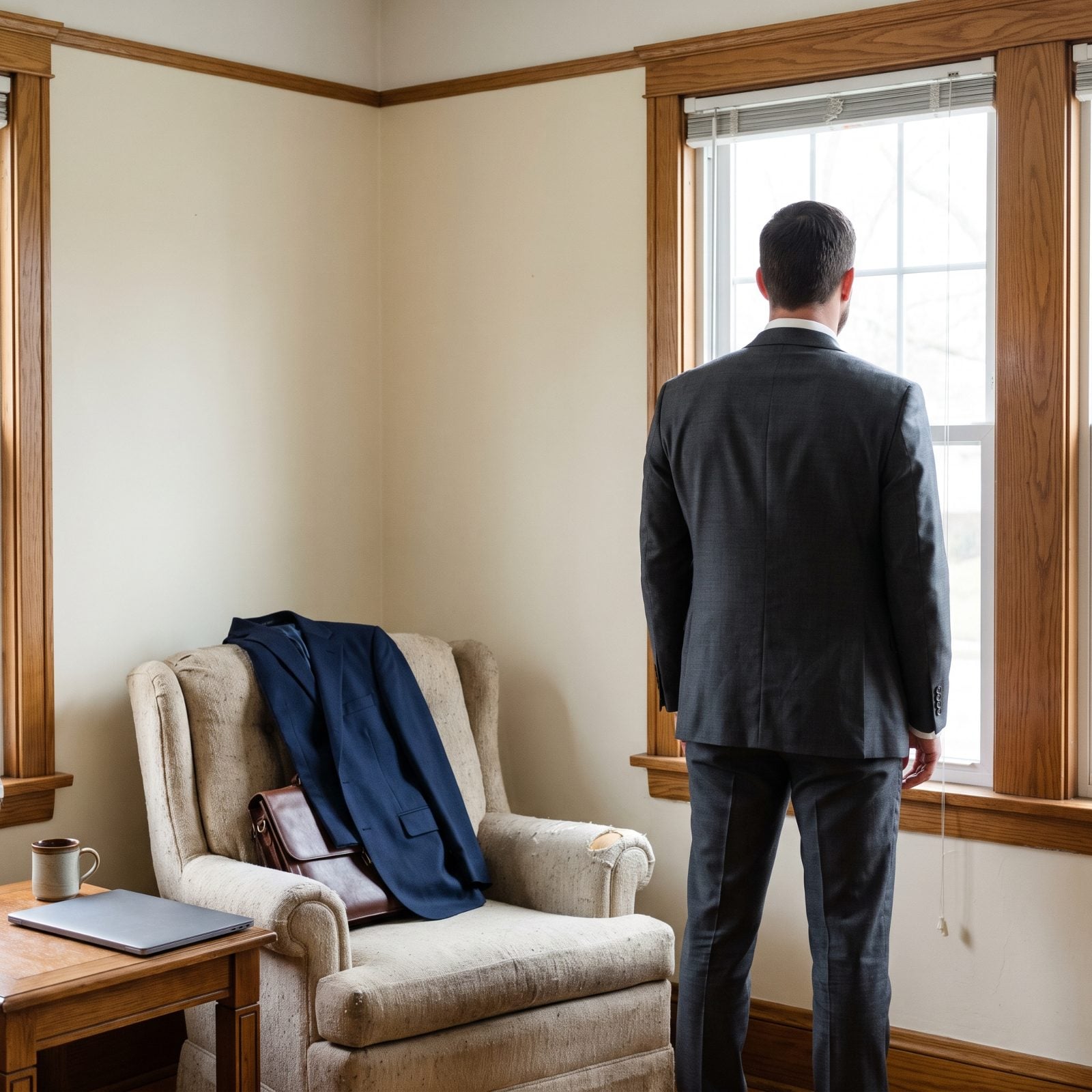
Crisp blazer. Leather loafers with a real shine. A structured bag that stands up on its own. It’s ten past six in the morning, the coffee kiosk just rolled up its grate, and this traveler is dressed like the meeting starts at the jet bridge.
There’s real psychology under that lapel. The research on enclothed cognition, published in Social Psychological and Personality Science in 2015 (Source), found that wearing formal clothing pushes people toward abstract, big-picture thinking, and that the effect ran through an increased feeling of power. Formal clothes don’t just signal status to others. They change how the wearer’s own mind operates.
Which reframes the 6am suit entirely. This person is dressing to become a version of themselves that the day requires. The blazer is a costume in the honest sense, the one that helps you play the part you actually have to play.
The suit isn’t for the strangers at the gate. It’s for the wearer, who needs to feel like the person the day is asking them to be.
The Matching Luggage Set That Reveals a Specific Relationship With Control (And It’s Not What You Think)
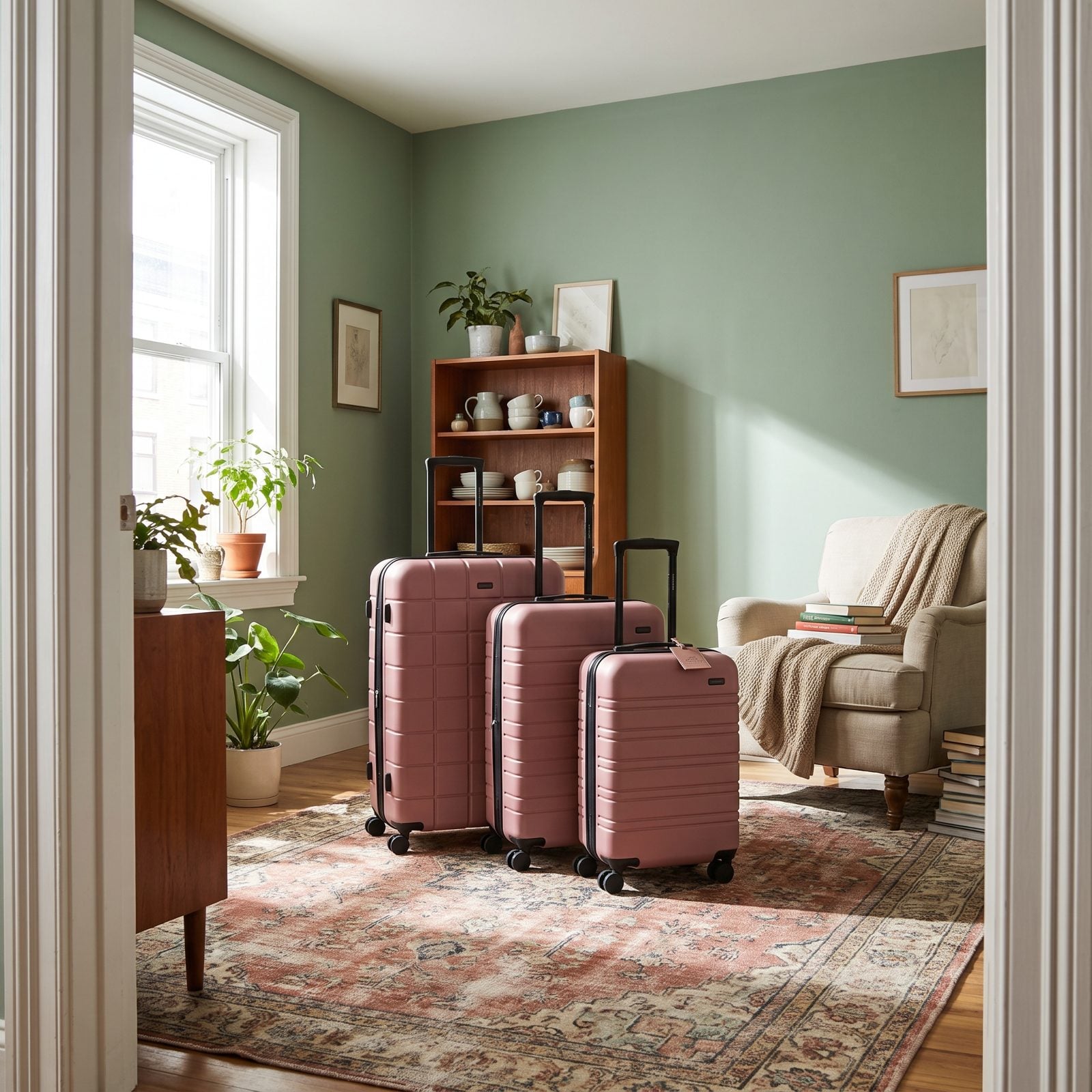
Two hardshell cases and a coordinating carry-on, all the same shade of dusty rose, wheeling down the concourse in formation like they were issued as a unit. You assume this is about vanity. It almost never is.
The matching set is a control ritual, and control rituals do real work. Under the pressure of travel, the brain seeks predictability, and a coordinated set of objects offers a small pocket of order and familiarity (Source) in an environment where almost nothing else is yours to decide. You can’t control the delay. You can control that your bags match, zip the same way, and stack in an order you already know.
Here’s the part that surprises people. This isn’t rigidity. It’s the opposite. Someone who has automated the boring layer of travel down to a system has freed up their attention for everything else. The matching set is the person who decided the small stuff once, so they’d never have to decide it again.
The Oversized Scarf-as-Blanket Move and the Quiet Psychology of Packing Your Own Safety
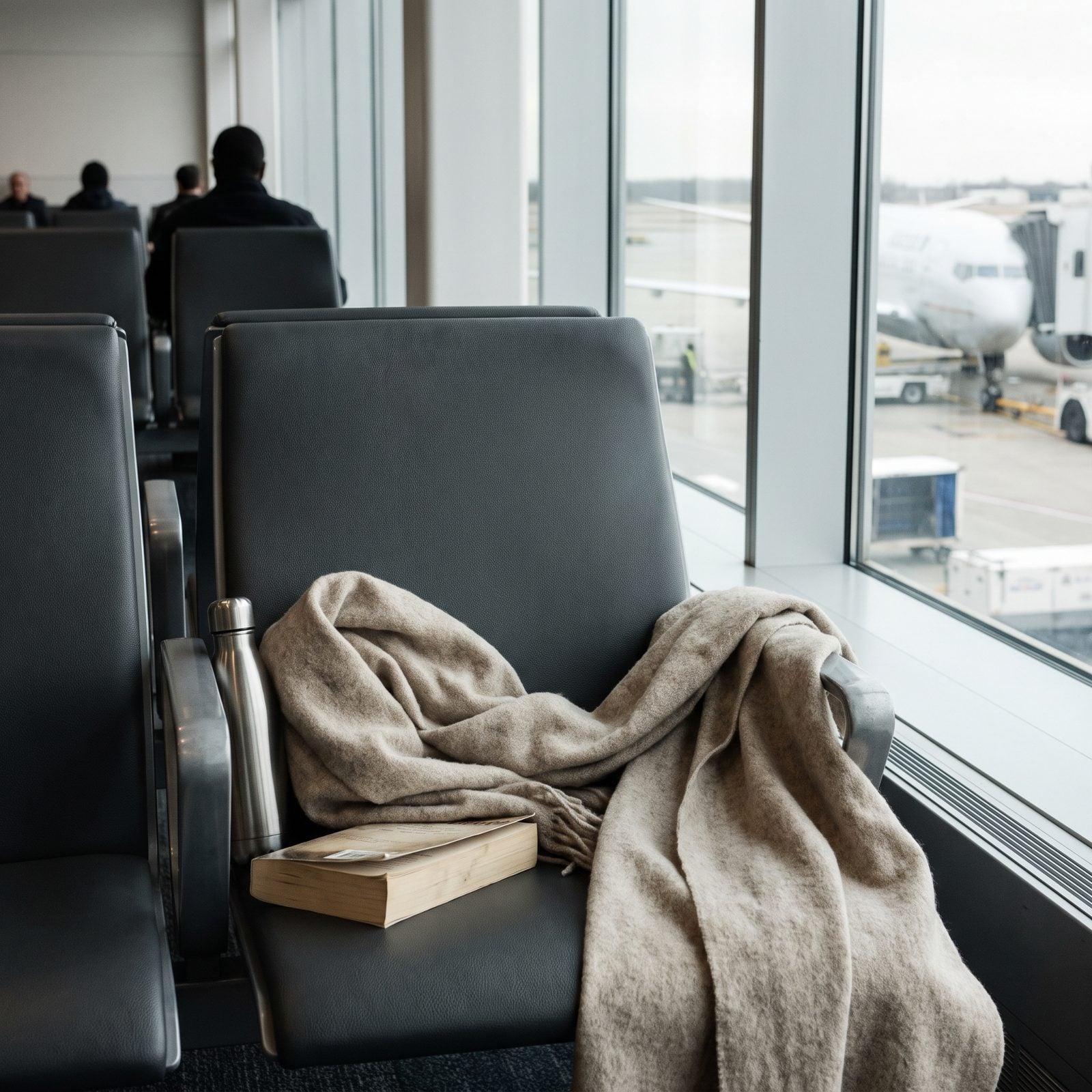
A scarf the size of a small tablecloth, wool or soft-brushed cotton, wrapped three times at the gate and then unfurled into a full blanket the second the seatbelt sign dings. It’s a scarf. It’s a pillow. It’s a hood. It’s, if we’re honest about it, a security blanket for grown-ups, and there is nothing childish about that.
Psychoanalyst Donald Winnicott named the transitional object in the 1950s, the blanket a child clings to while learning to be apart from a caregiver. The idea didn’t expire at age six. Psychology Today notes that many adults keep transitional objects (Source), including clothing, that carry psychological strength by representing emotional attachments. And there’s a physical layer too. Handling a familiar object has been shown to reduce cortisol and quiet the brain’s stress arousal (Source).
The oversized scarf, then, is portable safety. A person who knows that comfort is not going to be provided at 35,000 feet, so they packed their own.
What the All-Black Minimalist Outfit Says About Decision Fatigue and the Person Trying to Outsmart It
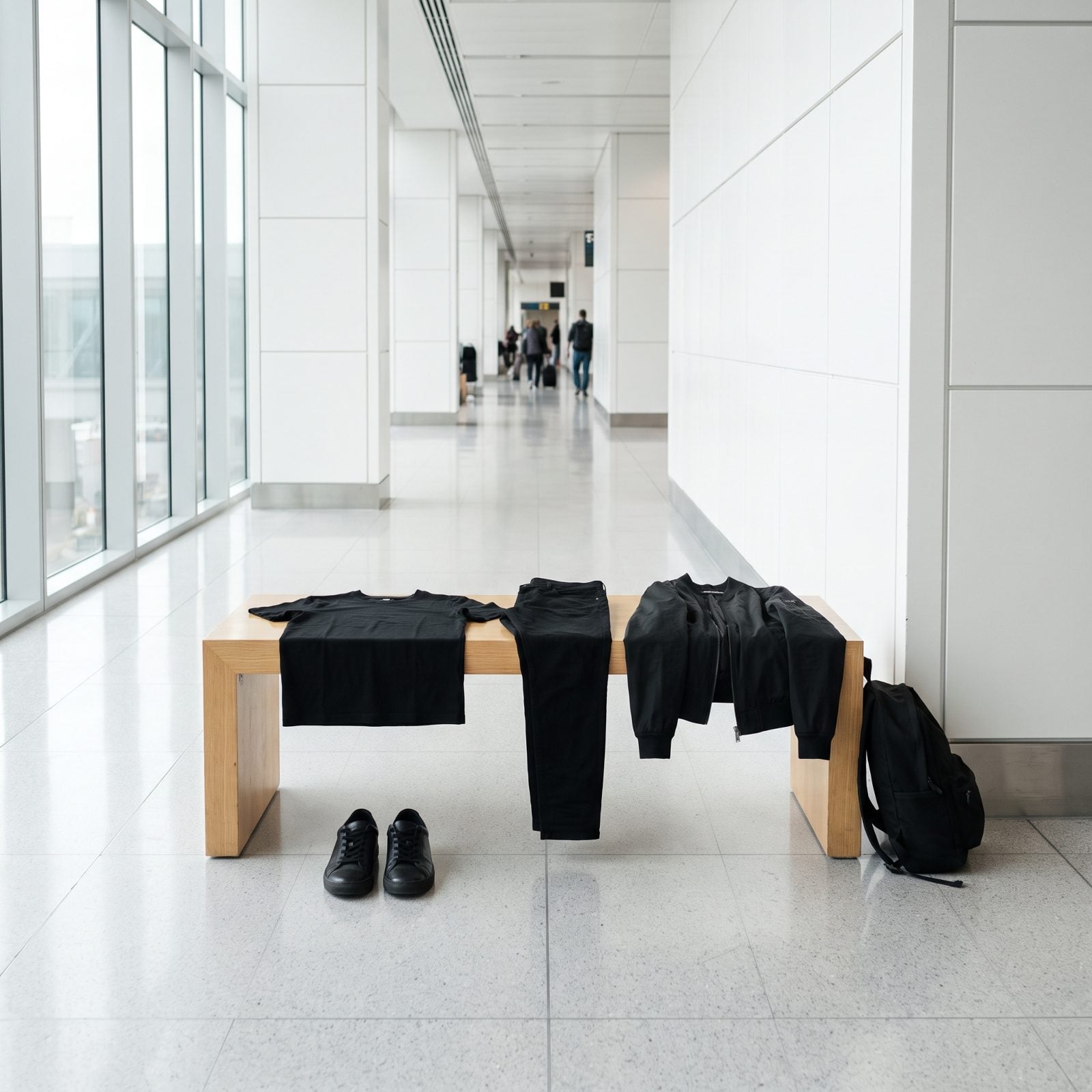
Black tee, black trousers, black jacket, black sneakers. No pattern, no accent color, nothing that had to be coordinated against anything else. The all-black traveler looks effortless, and that’s the whole trick, because effort is exactly what they were trying not to spend.
This is decision fatigue engineering, worn on the body. Steve Jobs ran his black-turtleneck uniform for the same reason Obama told Vanity Fair in 2012 he only wore gray or blue suits (Source): “I’m trying to pare down decisions. I don’t want to make decisions about what I’m eating or wearing. Because I have too many other decisions to make.”
Travel is a firehose of micro-decisions. Which line, which gate, which app, aisle or window. The all-black outfit removes one entire category of choice before the wearer even leaves the house. It’s not that they lack style. It’s that they’ve decided style shouldn’t cost them a single unit of morning brainpower on a travel day.
The Traveler in Pajama-Adjacent Everything and the Surprising Confidence It Actually Takes
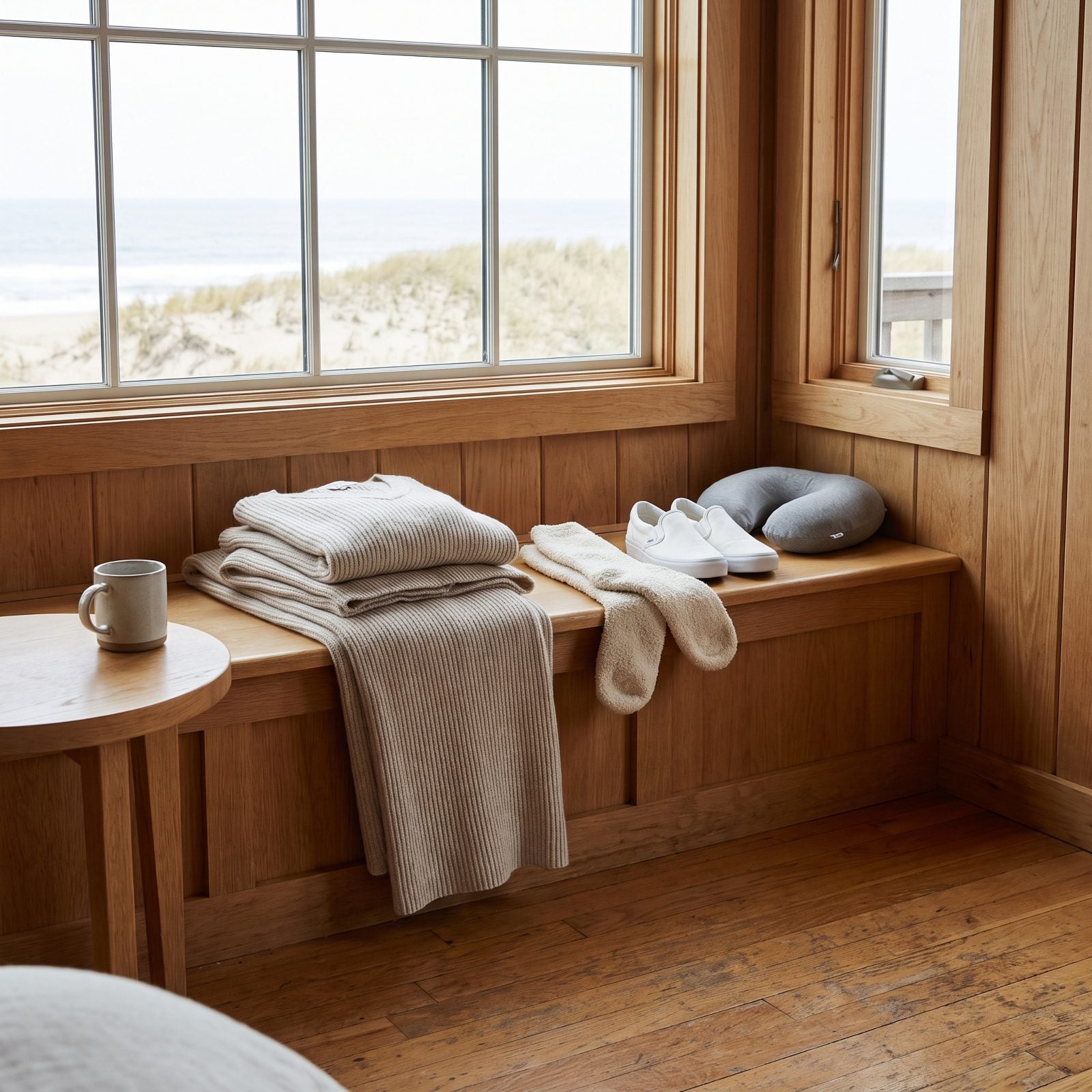
Ribbed knit set. Something that could pass for a matching pajama in a soft focus. Fuzzy socks visible above clean white slip-ons. This traveler looks like they teleported to the gate straight from the couch, and the reflexive read is that they gave up.
They didn’t. It takes a specific kind of nerve to walk through a public space essentially dressed for bed and feel fine about it. Soft, enveloping clothing works on the wearer chemically, triggering a relaxation response and creating a sense of safety while cutting down the decision-making load (Source). That’s the payoff they’re chasing, and they’re willing to trade the approval of strangers to get it.
Confidence isn’t always a sharp blazer. Sometimes confidence is not caring what the gate thinks while you wrap yourself in the one outfit that keeps your nervous system calm across four time zones. That’s not surrender. That’s a person who has clearly done the math on comfort versus optics and picked comfort on purpose.
Why the Person Overdressed for a Beach Destination Is Performing an Arrival That Hasn’t Happened Yet
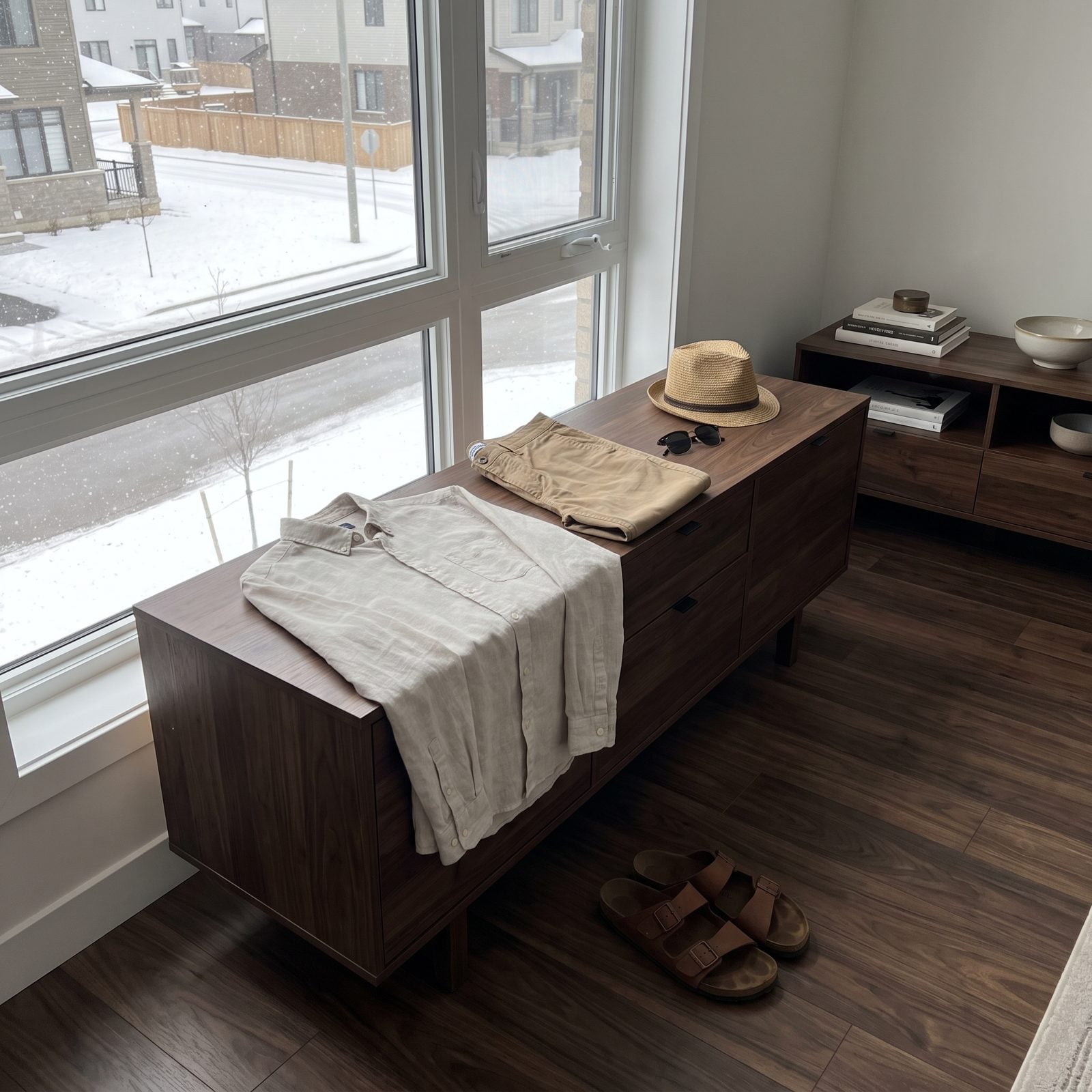
Linen resort shirt already unbuttoned one too far. A woven fedora. Sunglasses indoors, at the gate, in February, in a terminal where it’s snowing outside the window. This traveler has dressed not for the flight but for the destination they’re still four hours from reaching.
It looks premature. It’s actually a mind trick, and a decent one. Clothing shifts the wearer’s internal state, not just the observer’s. The enclothed cognition framework holds that clothing shapes how we think and feel through both its symbolic meaning and the physical experience of wearing it (Source). Put on the vacation, and part of your brain starts the vacation early.
So the beach outfit at a snowy gate is a person pre-loading the version of themselves who is already off the clock. The tan hasn’t started. The vacation, in their head, already has. There’s something a little enviable about a person who refuses to wait for permission to feel good.
The Compression Socks and Neck Pillow Combo That Marks a Very Specific Kind of Frequent Flyer
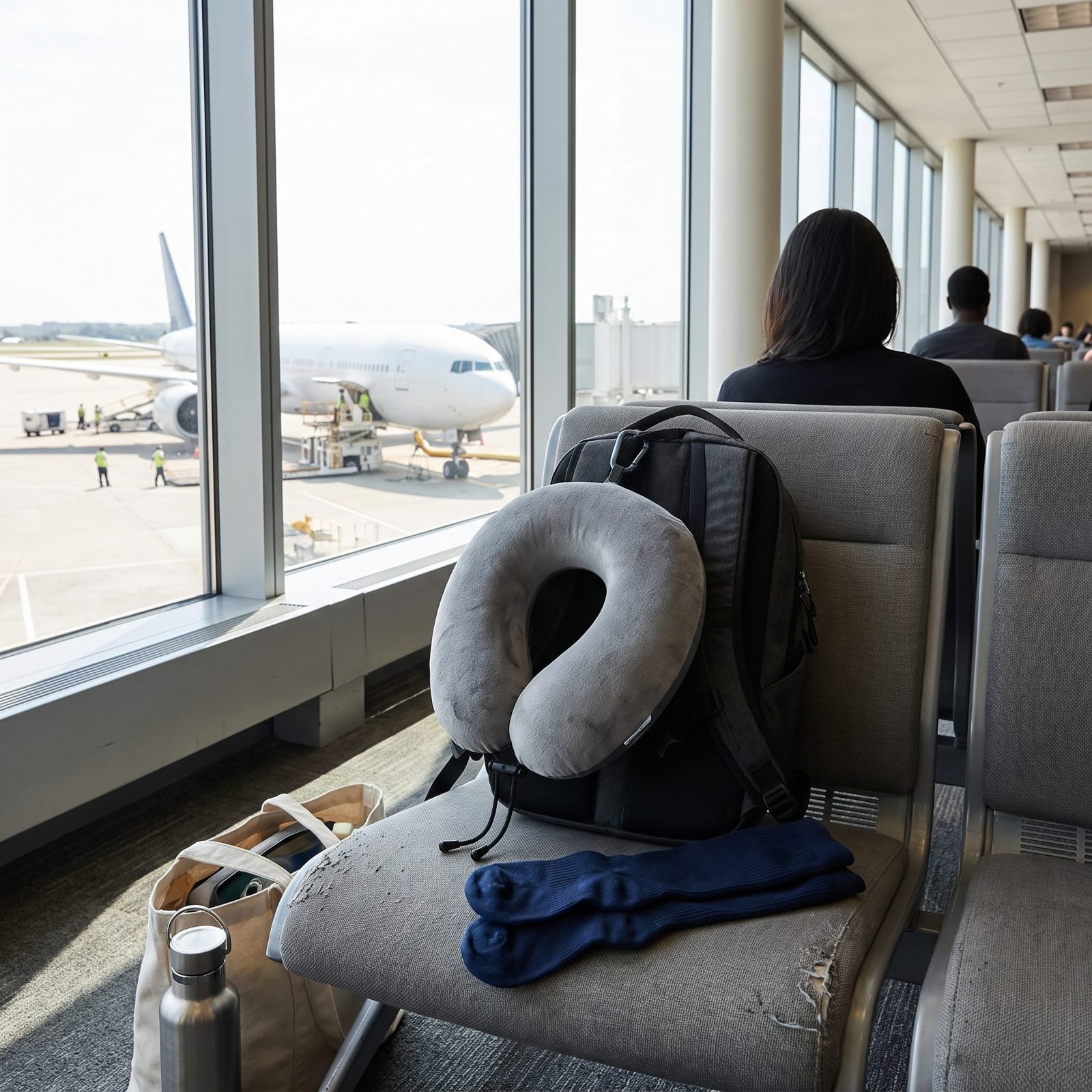
Graduated compression socks pulled to the calf. A memory-foam neck pillow already clipped to the bag strap, not stowed for later, ready. This is the uniform of someone who has flown enough to stop treating long-haul travel as an event and start treating it as a body-management problem.
This is experience, not fussiness
The socks aren’t a fashion statement, they’re a considered choice. A 2021 Cochrane review found high-certainty evidence that graduated compression stockings reduce the risk of symptomless DVT on flights over four hours (Source), cutting the odds by roughly 90 percent. The American Heart Association points out that a long-haul flight makes clots 1.5 to four times more likely (Source), though it also stresses that getting up to walk every couple of hours matters just as much.
Psychologically, this traveler has moved past the anxiety stage. They’re not white-knuckling the flight. They’ve studied it, packed for it, and reduced it to a checklist. The neck pillow and the socks together say the same thing: I’ve done this before, and I know exactly what my body will need at hour six.
The Souvenir Hoodie From the Last Trip and the Memory-Anchoring Instinct Behind Wearing It Home
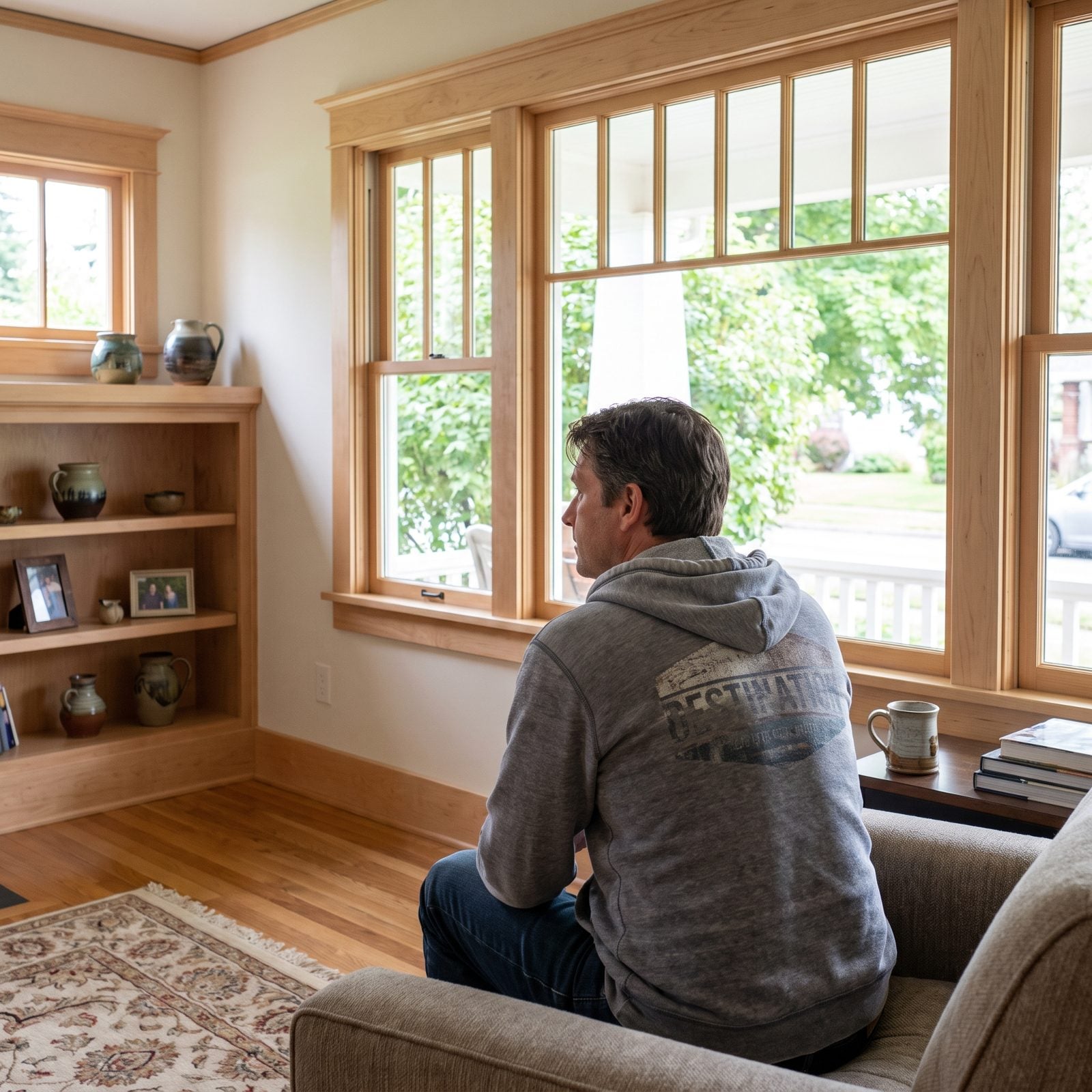
You’ve spotted it at gate B12. Someone in a faded hoodie that says Maui or Rocky Mountain National Park or a marathon they ran three years ago, standing in the boarding line like a walking postcard. It’s not laundry-day desperation. It’s an instinct older than the gift shop that sold it.
Clothing works as a storage device for feeling. According to cognitive psychologist Dr Carolyn Mair, who wrote The Psychology of Fashion (Source), garments hold memory through the senses, and a familiar piece can pull us straight back to a specific time and place. That soft cotton isn’t just warm. It’s a tether.
Researchers call this self-continuity. Wearing the last trip home is a quiet refusal to let it end at baggage claim. The wearer is buying two more days of the vacation, encoded in fleece.
What the Sundress-in-January Traveler Believes About Where Their Life Is Headed in Four Hours
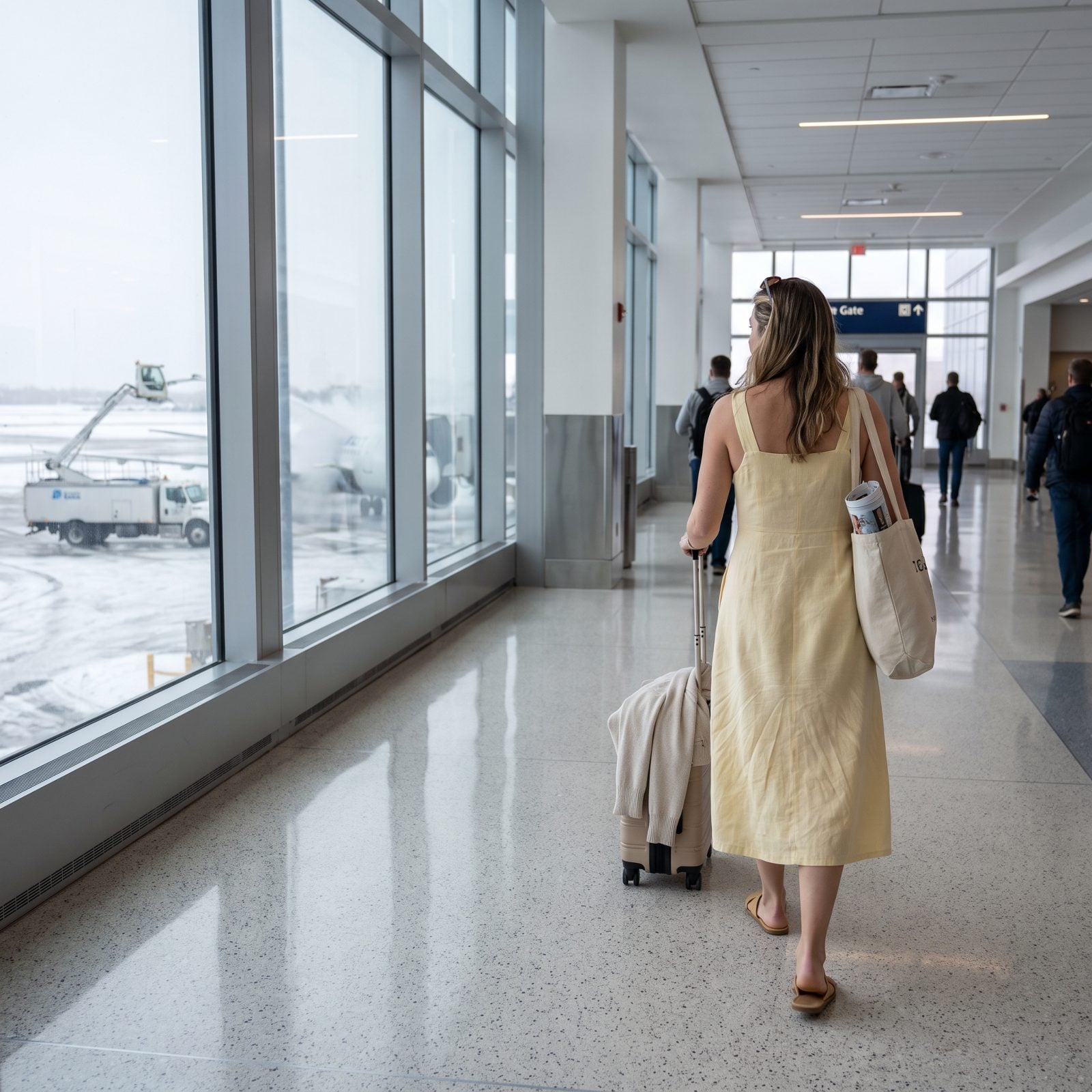
Snow on the runway. And there she goes through security in a linen sundress and sandals, cardigan stuffed in the tote, sunglasses already pushed up on her head. She has skipped January entirely. In her mind she is already four hours ahead, on a beach that has not seen her yet.
This is optimism bias wearing espadrilles. The brain reliably tilts toward rosy futures, and a 2011 Current Biology paper by Tali Sharot calls it one of the most consistent and robust biases in all of psychology (Source). We overestimate the good, underestimate the delays, and dress for the destination we’re sure is coming.
There’s enclothed cognition in it too. The dress isn’t only anticipation, it’s a mood she’s putting on early. Put on the vacation and you start to feel the vacation. She’s not cold. She’s committed.
The Person in Layers They’ll Never All Wear and the Anxiety Logic That Built That Outfit
🔥 Would you like to save this?
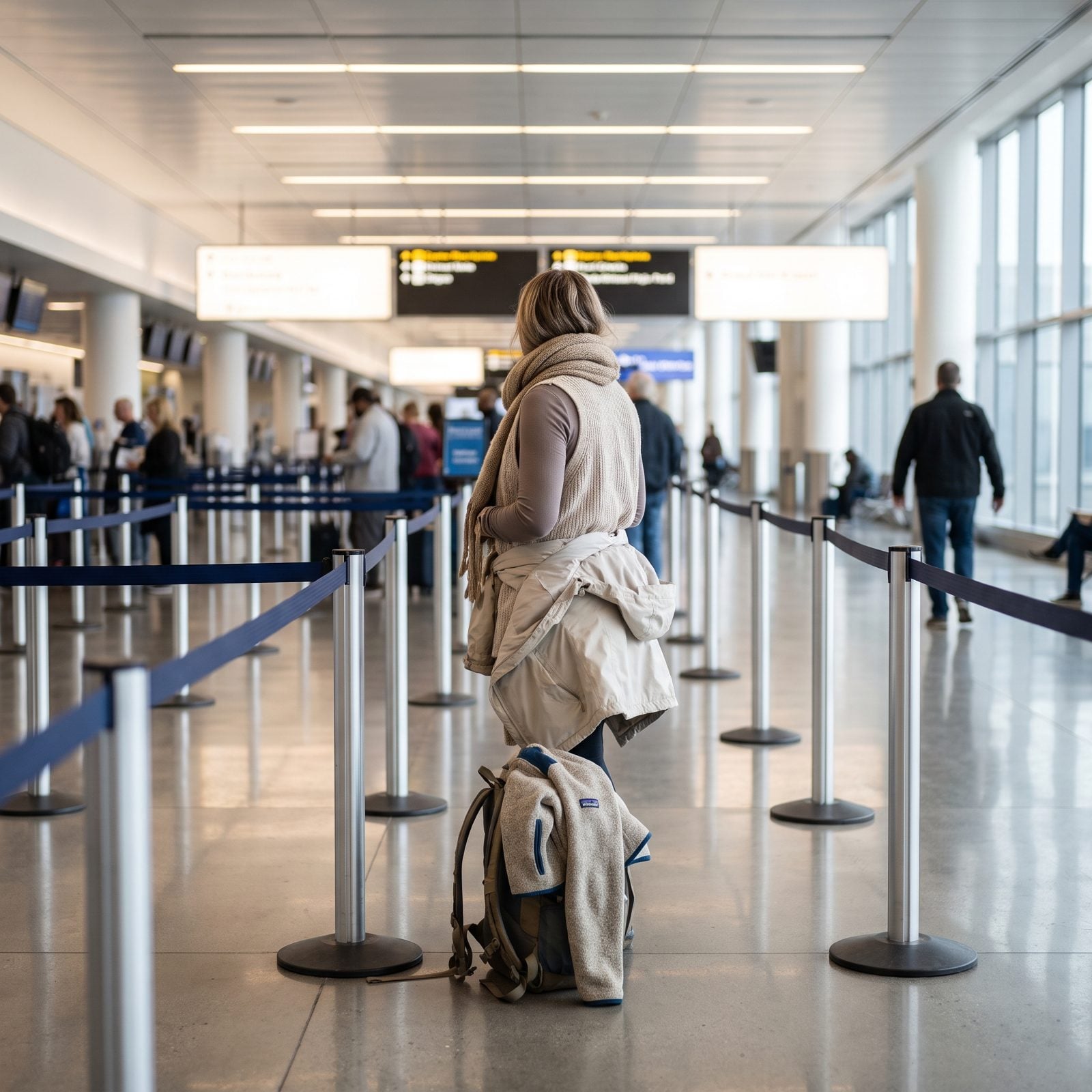
Tank top. Long sleeve over it. A cardigan on top of that. A scarf that’s really a blanket. A jacket tied around the waist as backup. This traveler has dressed for a plane that might be an icebox, a terminal that might be a sauna, and a layover city whose weather they refuse to trust. All of it, at once, on their body.
Look closely and it’s not indecision. It’s a plan. Every layer is a contingency for a discomfort they’ve already lived through. The over-packed body is anxiety made wearable, each garment answering a specific “but what if.”
There’s real comfort baked into the fabric, not just the coverage. Soft, smooth textures against the skin activate the parasympathetic nervous system and lower anxious arousal, which is why a familiar knit near the neck settles a body faster than a pep talk. Therapists note that familiar soft textures can ease anxiety and help us feel grounded during stressful stretches (Source). This person isn’t overdressed. They’re self-soothing in real time.
Why the Effortlessly Chic Airport Look Takes More Planning Than Anyone Wearing It Will Admit
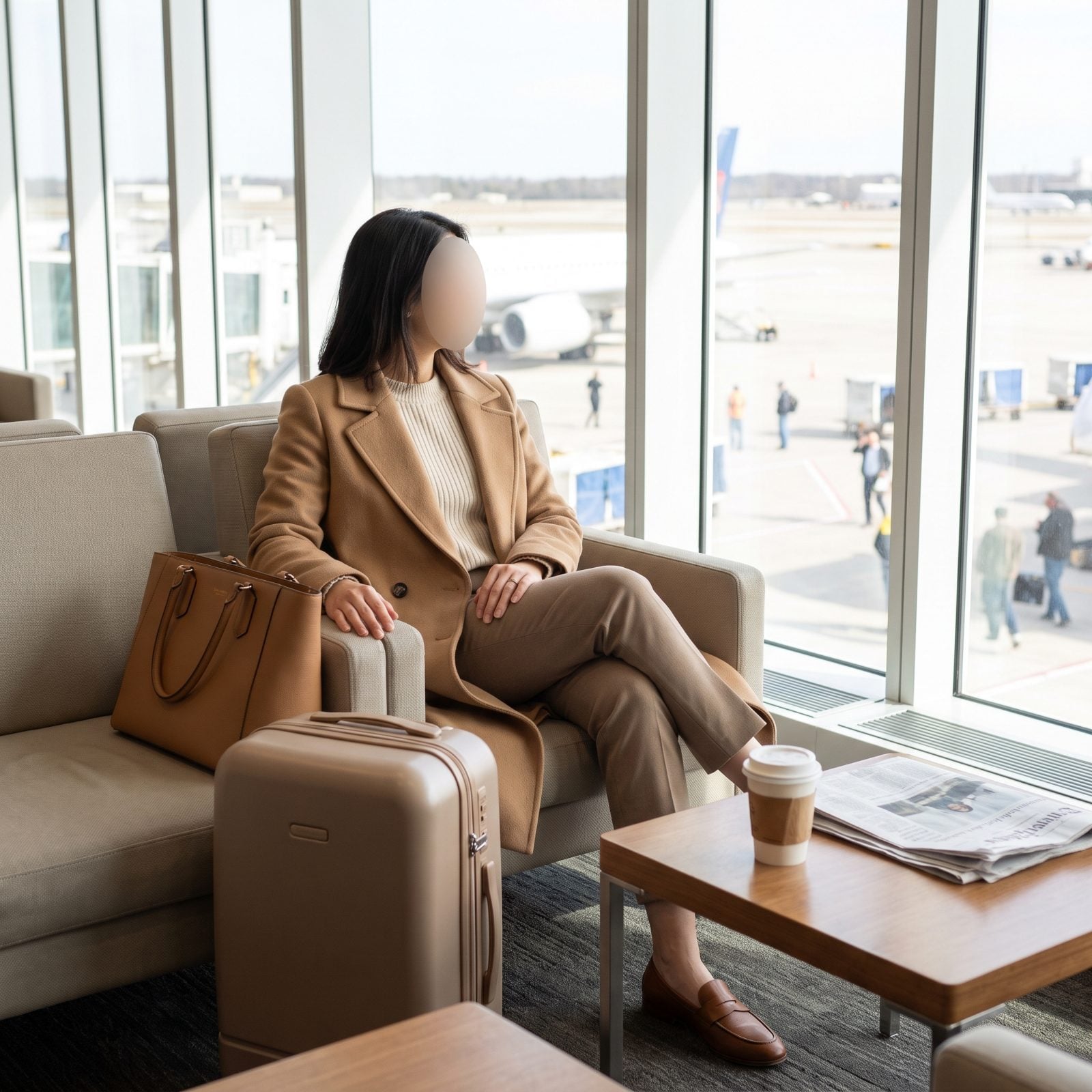
Camel coat. A ribbed knit that fits like it was measured. Trousers with an actual crease. Leather loafers, a structured bag, sunglasses that cost more than the flight. Nothing about this look is an accident, and that is exactly the point.
The “I just threw this on” airport uniform is a production. The wrinkle-resistant fabric was chosen on purpose. The shoes slide off at security without a fight. The neutral palette photographs well and hides a coffee spill. Every casual choice was a decision made three days ago.
Enclothed cognition explains why anyone bothers. The 2012 studies by Adam and Galinsky that coined the term found clothing has systematic psychological and behavioral effects on the wearer (Source). Put on the pulled-together outfit and you become the calm, competent person it implies. This traveler isn’t dressing for the crowd. They’re dressing to feel in control of a day designed to strip control away.
The Statement Sneaker Crowd and the Micro-Rebellion Hidden Inside Practical Footwear
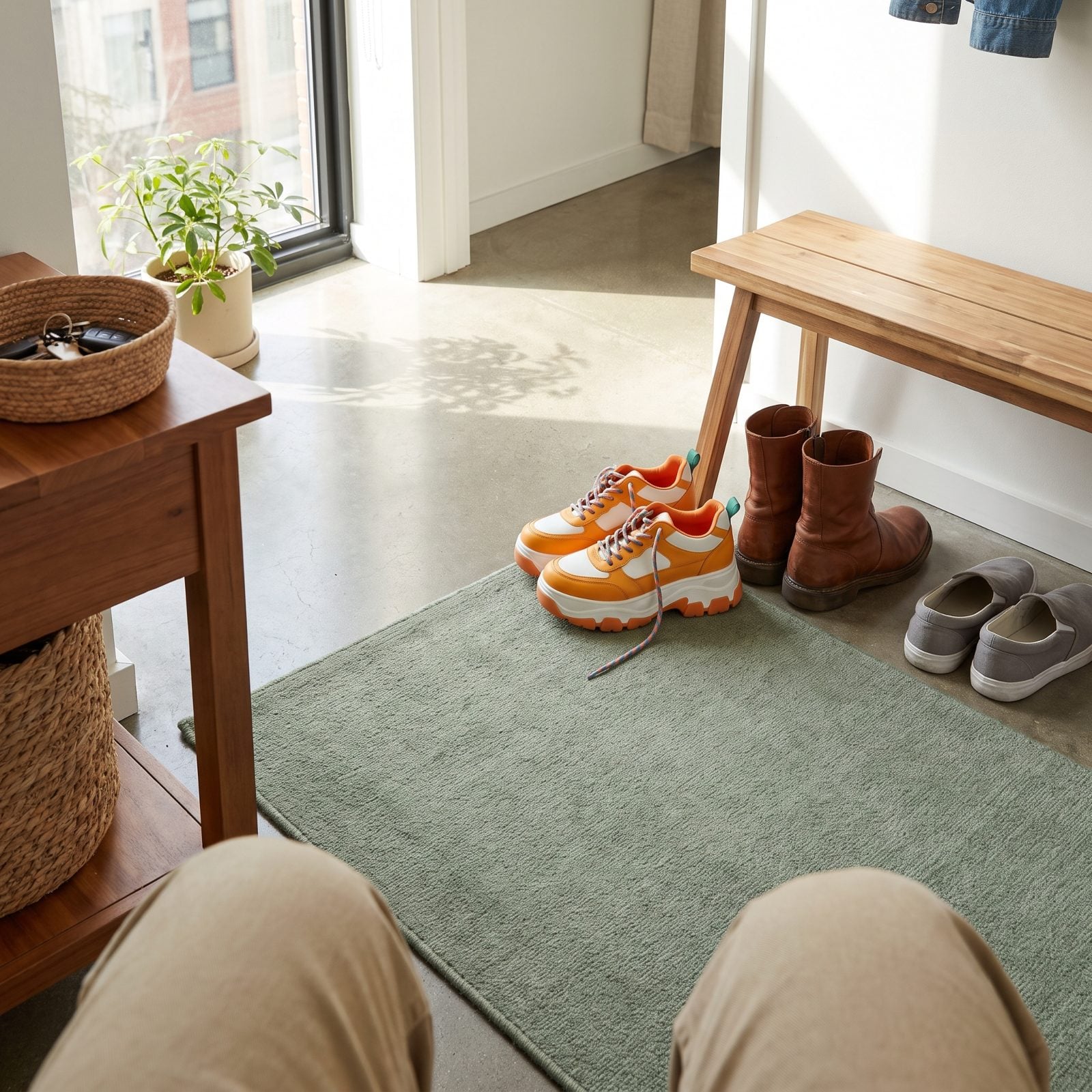
Comfort was never the whole story. Yes, the sneakers are practical. You can sprint a concourse in them, stand in a customs line for an hour, walk a foreign city all afternoon. But these aren’t quiet white walkers. They’re a loud color, a bold silhouette, a limited-edition something the wearer is fully aware you noticed.
This is the compromise nobody talks about. Adult travel demands sensible shoes, and a whole crowd decided sensible didn’t have to mean invisible. The statement sneaker smuggles personality past the practicality checkpoint. It says: I’ll be comfortable, but I refuse to disappear while I do it.
There’s a small identity signal in every pair. Clothing carries symbolic meaning that shapes how the wearer feels and acts, and footwear is where a lot of travelers plant their flag. The person in the electric-orange trainers picked function and self-expression, and refused to choose between them. Honestly, it’s the smartest outfit at the gate.
What Carrying a Structured Tote Instead of a Backpack Quietly Broadcasts About Your Self-Image
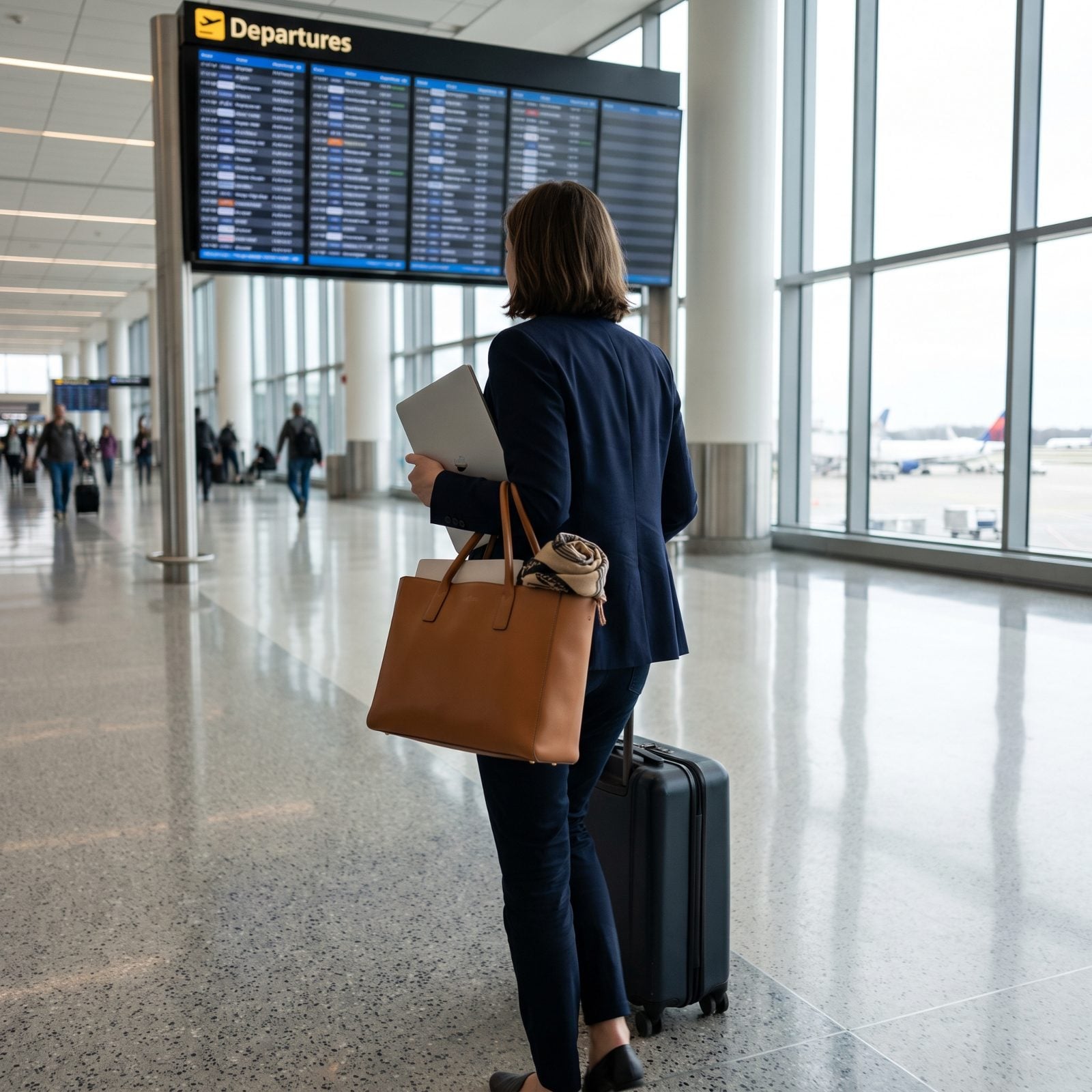
The bag holds the same things. Laptop, charger, snacks, a paperback, the passport. But this traveler chose a structured leather tote over a backpack, and that choice does a surprising amount of talking.
The backpack says function, hands-free, ready for anything. The tote says something else. It holds its shape on purpose. It sits in the crook of the arm like a decision. It broadcasts that the wearer sees this trip, and themselves, as a bit more curated than the hiking-pack crowd, even when the destination is a work conference in Cleveland.
Clothing and accessories operate as an extension of the self, a wearable claim about who you are. According to research on enclothed cognition, garments and accessories carry symbolic meaning that shapes the wearer’s own psychological state (Source). The tote-carrier isn’t just hauling stuff. They’re maintaining a self-image, one that would rather ache a little in the shoulder than compromise the picture.
The Cozy Cardigan Traveler and the Real Reason Soft Textures Calm a Body in Transit
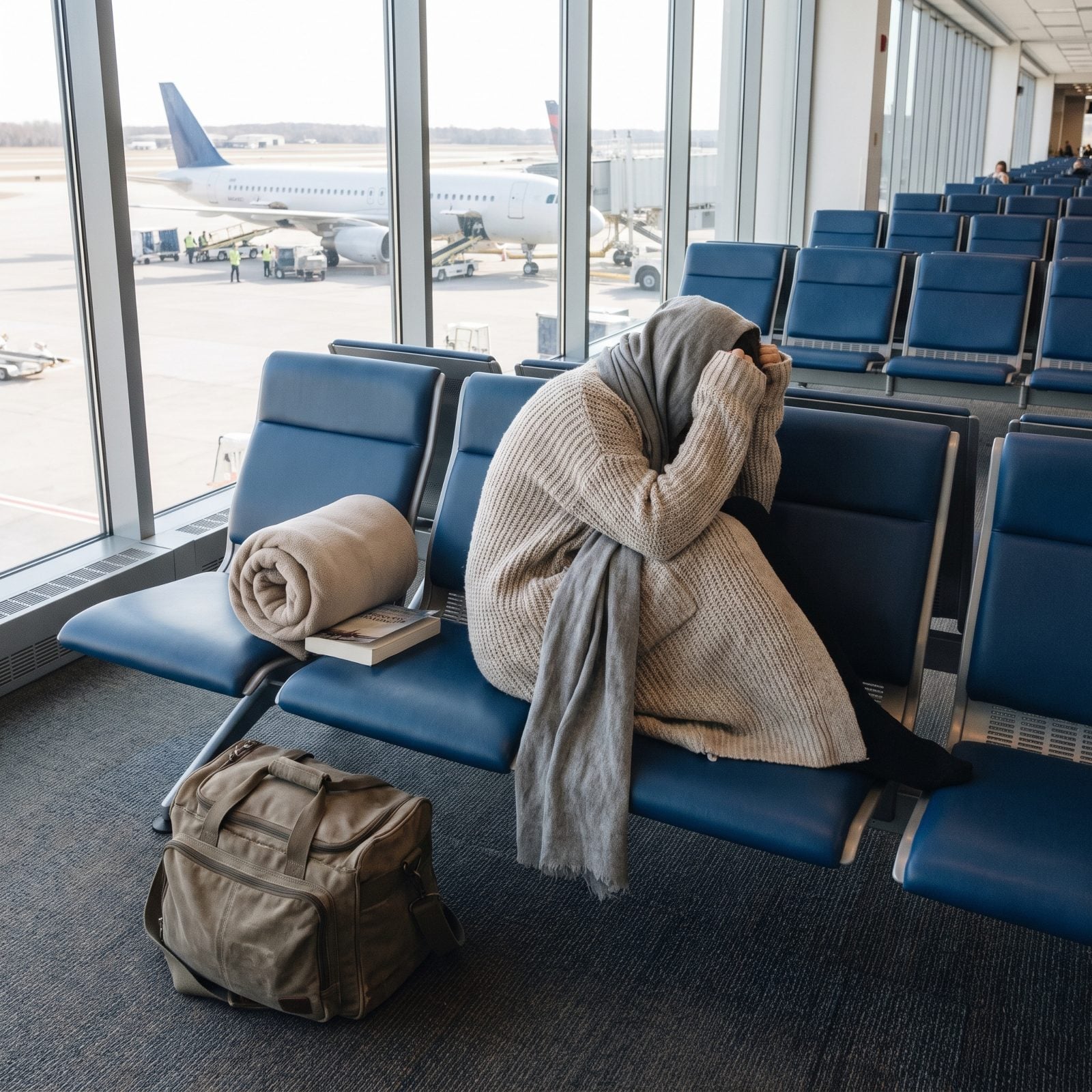
Oversized cardigan the color of oatmeal. Sleeves long enough to pull over cold hands. It goes on the second they sit down at the gate and it does not come off until they’re home. This traveler figured out something the airline blankets never quite deliver.
Soft fabric is not a fashion decision. It’s a nervous-system tool. Soft, breathable materials cue the brain to switch out of a vigilant, anxious state into a calmer mode, sending an almost immediate “you’re safe” signal (Source). Travel keeps a body on low alert for hours. Gentle texture against the skin is a steady counter-message.
The mechanism is specific and old. Slow, soft touch fires a class of nerve fibers, C-tactile afferents, that evolved to signal social safety, and when they fire your arousal drops. A cardigan pulled close mimics the oldest comfort we have. The cozy traveler isn’t underdressed or lazy. They’re the most regulated person at the gate.
Why the Person Dressed for the Destination Instead of the Flight Is Running a Different Mental Clock Than You
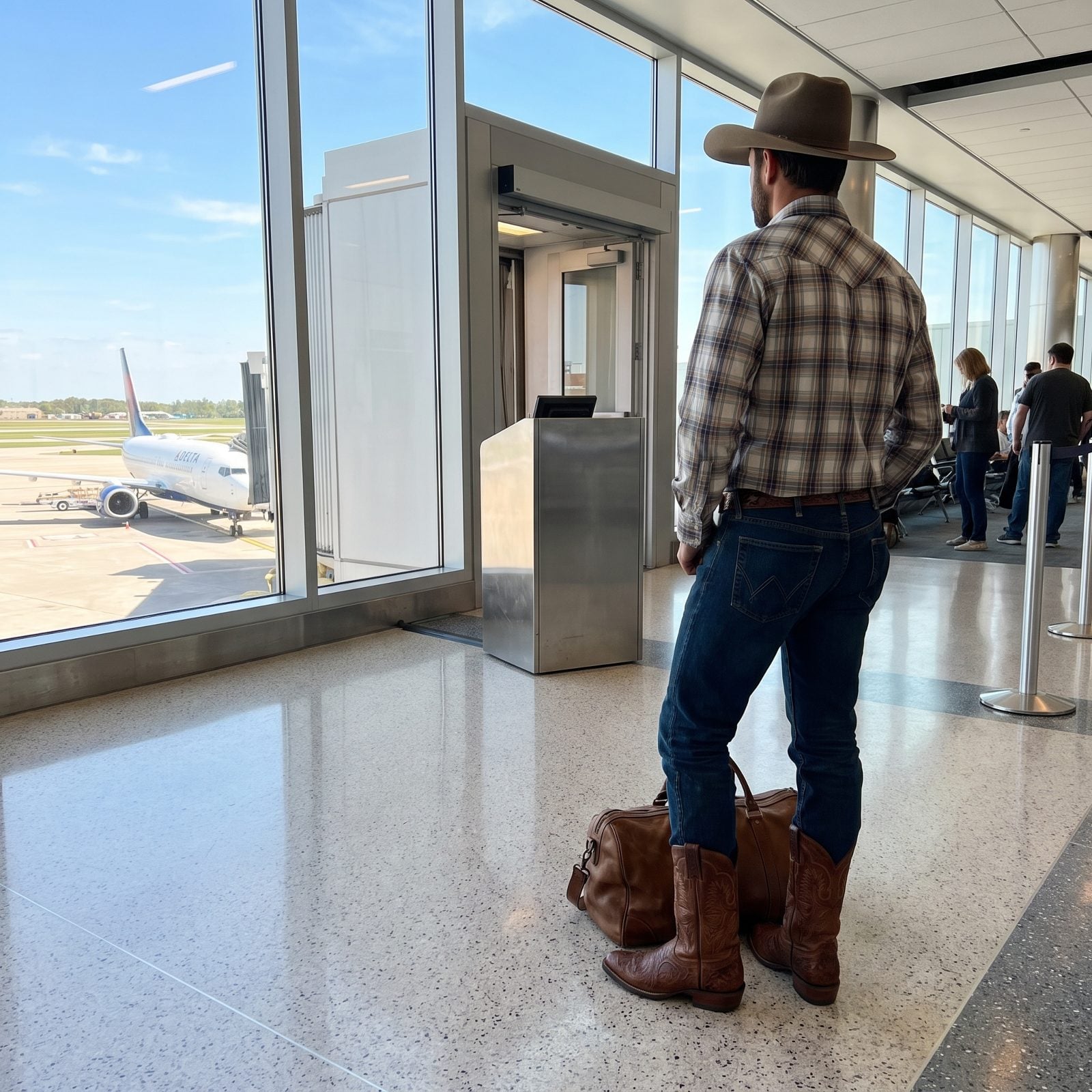
Cowboy boots and a bolo tie on the flight to Dallas. A silk shirt already unbuttoned one past comfort on the way to Miami. A wool cap and hiking pants boarding for Denver in June. This traveler skipped the airport dress code entirely and dressed for the place, not the plane.
Their mental clock is already set to local time. While everyone else optimizes for six hours in a metal tube, this person is living in the destination that hasn’t arrived yet. It’s a quiet form of time travel, and clothes are the machine.
There’s optimism bias steering this, the same rosy forward-lean that makes us dress for the vacation we’re certain is coming. And there’s enclothed cognition doing the rest. Adam and Galinsky’s work shows clothing shifts the wearer’s psychology through its symbolic meaning (Source), so putting on the destination pulls the mood forward to meet it. This traveler isn’t uncomfortable. They’re already there. Everyone else is just catching up.
The Bottom Line
Here’s the answer underneath all these looks: your airport outfit is never about the airport. It’s about who you’re bracing to become on the other end of the flight, the comfort-seeker managing a nervous system, the overdresser rehearsing an arrival, the destination-dresser already living four hours ahead. Next time you pack, notice what you’re really dressing for, because the version of you that gets on the plane is quietly negotiating with the version you’re hoping to land as.
🔥 Would you like to save this?
Please note that some of the imagery in this article were created with the aid of AI image generators.