
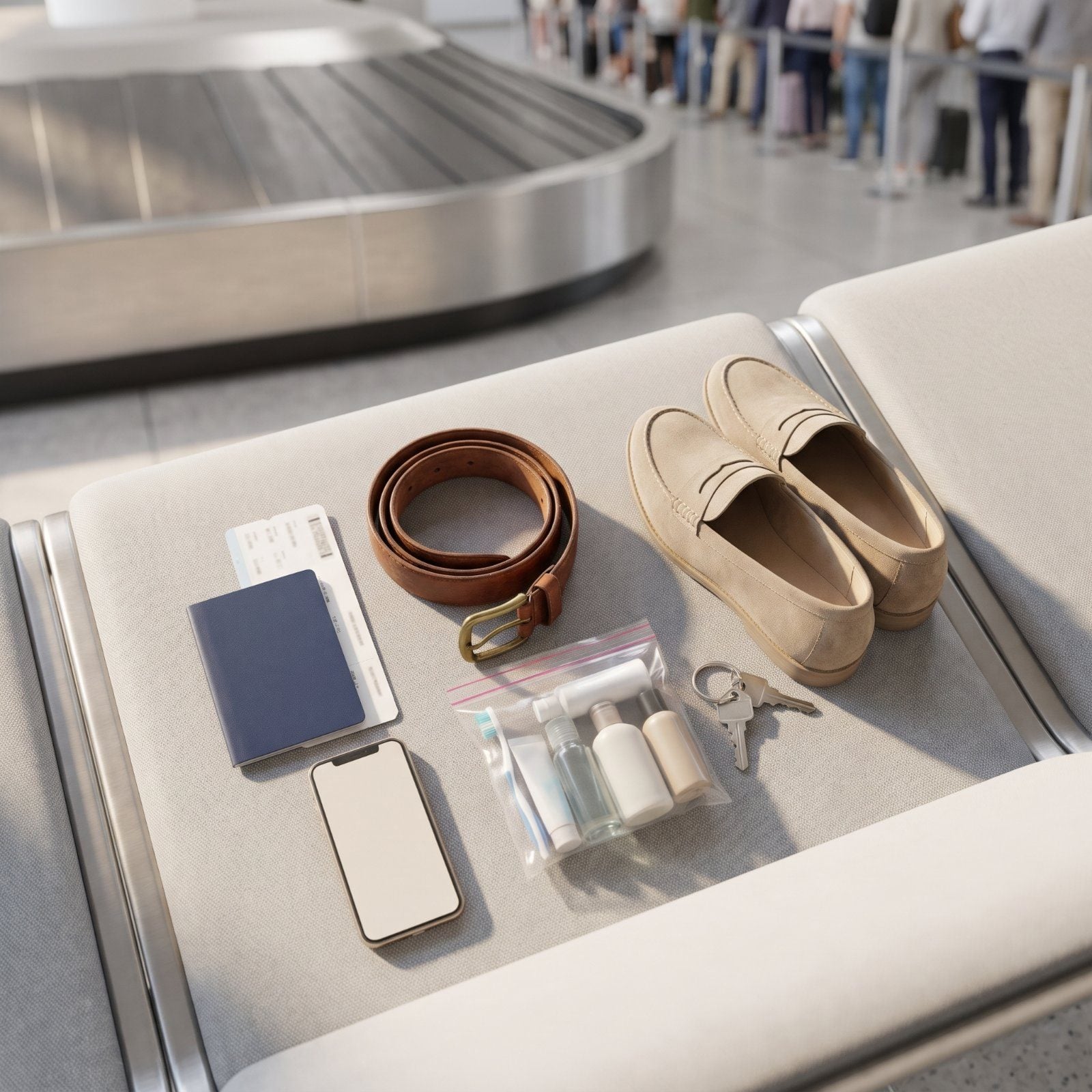
The line hasn’t moved in four minutes. Somewhere up front a bin is going back through the scanner for the third time, a phone has died at the exact wrong moment, and a belt buckle keeps setting off the arch. None of it is dramatic. All of it is avoidable. The slowdowns at security almost never come from the machines — they come from small habits nobody ever thought to fix. Here are the ones that cost everybody time, and the easy swaps that get you through.
41. Sending a Full Water Bottle Through the Scanner
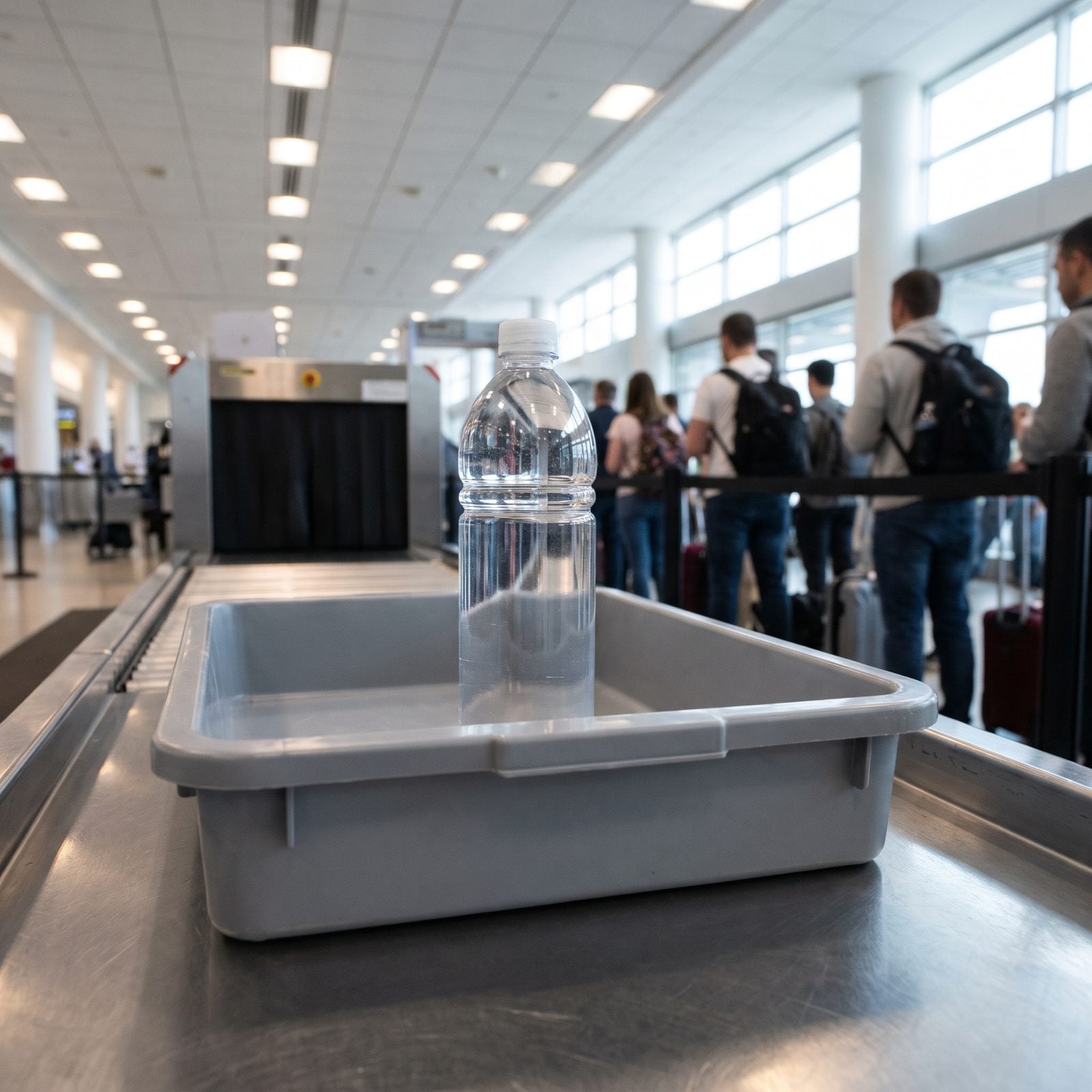
You know the moment. Here it is: a gray bin on the scanner conveyor, the X-ray tunnel just ahead and a line of travelers waiting behind, and inside it a water bottle still holding water. At the checkpoint, that means a bag check, a swab, and a couple of lost minutes for everyone behind you.
Liquids over 3.4 ounces don’t fly past the scanner, and a full bottle reads as exactly that. The fix is almost embarrassingly easy. Empty it before you get in line, dump it at a trash can or drinking fountain, run it through dry, then refill at a filling station past security. Most terminals have them now.
40. Digging for ID at the Document Check
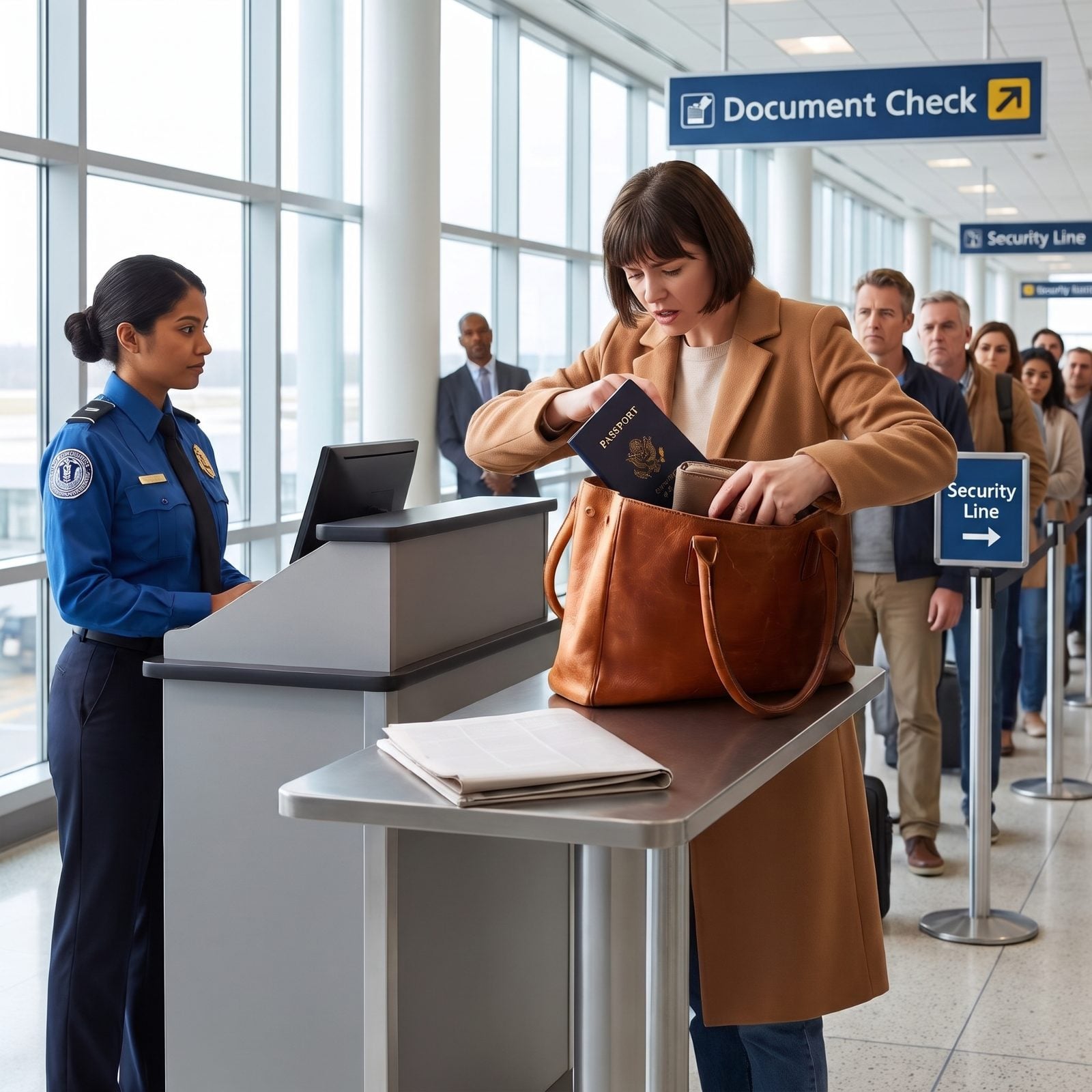
The agent waves you forward and the search begins. Jacket pocket, no. Side pocket, no. Bottom of the tote, maybe. Thirty seconds vanish while a dozen people wait and watch.
Document check is a conveyor of its own, and every pause stacks up behind you. Have your ID and boarding pass in your hand before you reach the podium — not buried somewhere in your bag. Pick one pocket, keep them there from curbside to gate, and never go hunting again.
39. Presenting an Expired or Unacceptable ID
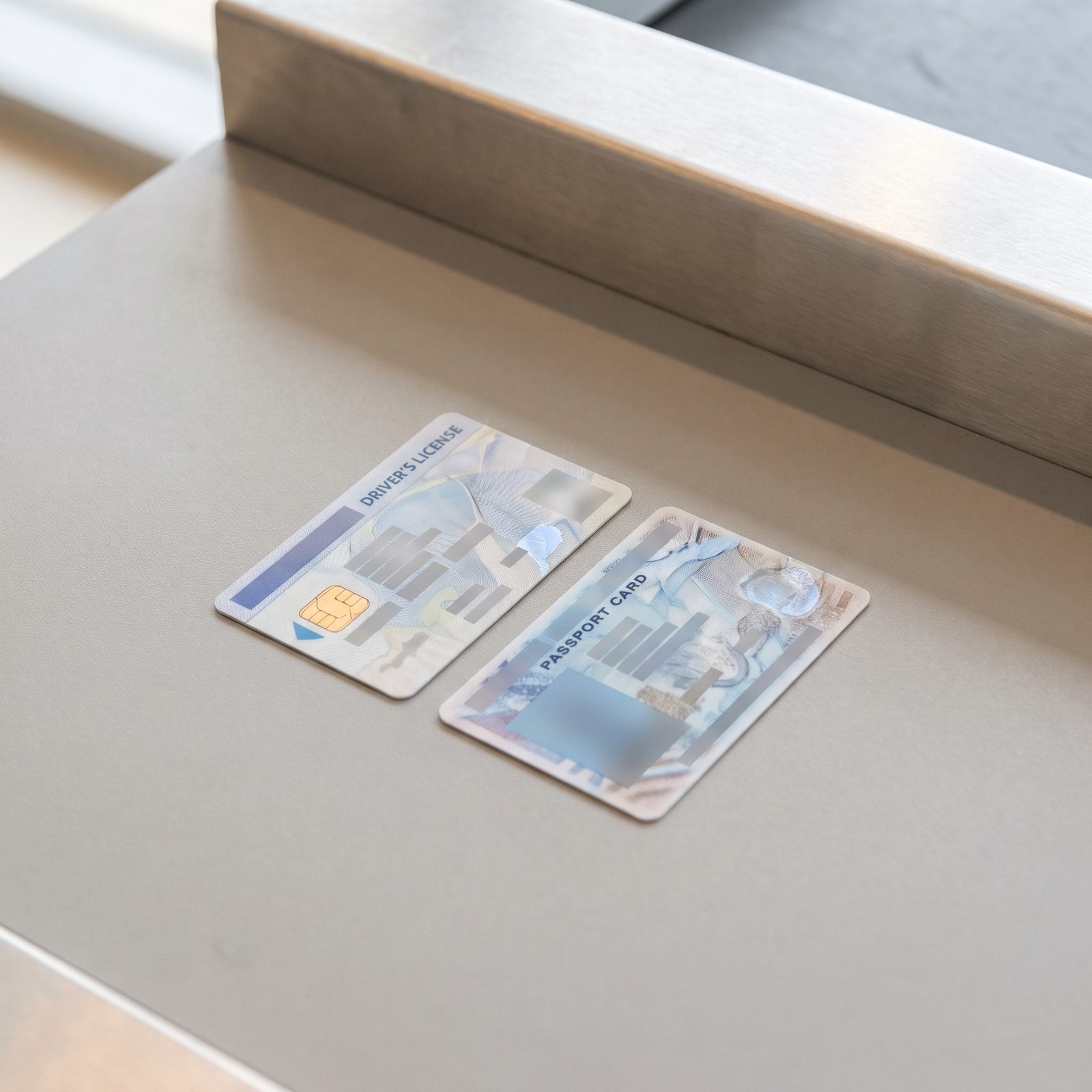
This is the quiet one that catches people cold. You hand over a license that expired two months ago, or a form of ID that simply isn’t accepted, and suddenly you’re pulled aside for extra verification you never budgeted time for.
Check your ID’s expiration date before you leave home. And if you fly domestically, the REAL ID requirement is now in effect — a standard license without the star may not get you through. A valid passport works as a backup every time, so tuck one in your bag if you’re unsure.
38. Letting the Reservation Name Mismatch the ID

You booked as “Liz” but your ID says “Elizabeth.” Or a middle name got dropped, or a hyphen went missing in the booking field. Small on paper, big at the podium — where the name on your pass has to match the name on your ID, full stop.
A mismatch can mean a hold, a phone call, or a last-minute scramble at the counter. Book with your full legal name exactly as it appears on your ID, and if you catch a mismatch after booking, call the airline to fix it days ahead rather than at the airport.
37. Waiting Until the Podium to Load a Mobile Pass, or Find a Dead Phone
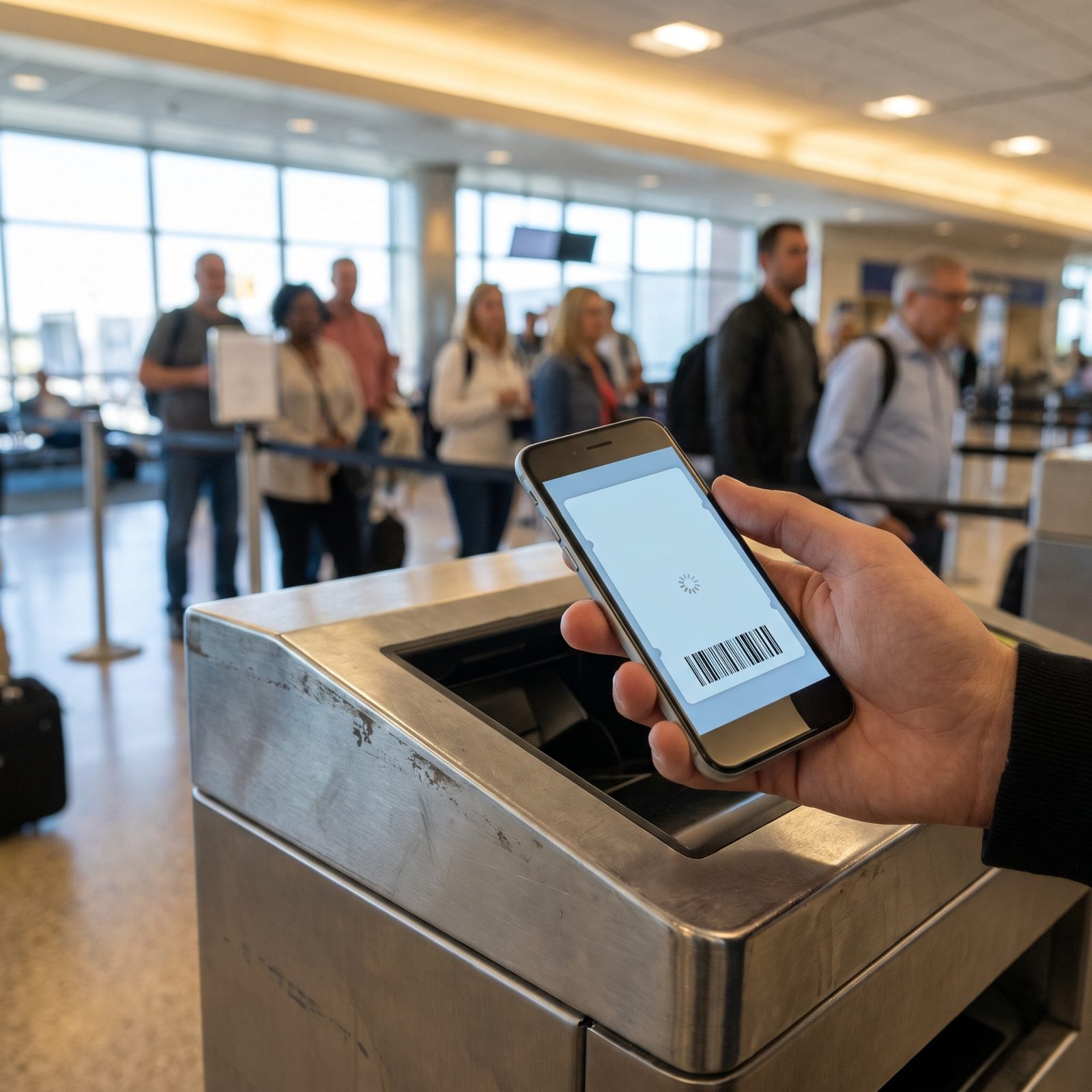
The agent holds out the little scanner and you start tapping. Open the app. Log in. Find the flight. Brightness up. Meanwhile the screen dims to black because the battery quit somewhere around the food court.
Pull your mobile pass up and screenshot it before you ever join the line, so it loads instantly even on a weak signal. Crank your brightness all the way for the scanner. Charge your phone the night before. And if battery anxiety is a known thing for you, print a paper pass as backup — paper never dies at the worst possible second.
A screenshot of your boarding pass loads faster than any app, and it doesn’t care how bad the terminal wifi is.
36. Entering the PreCheck Lane Without the Indicator on Your Pass
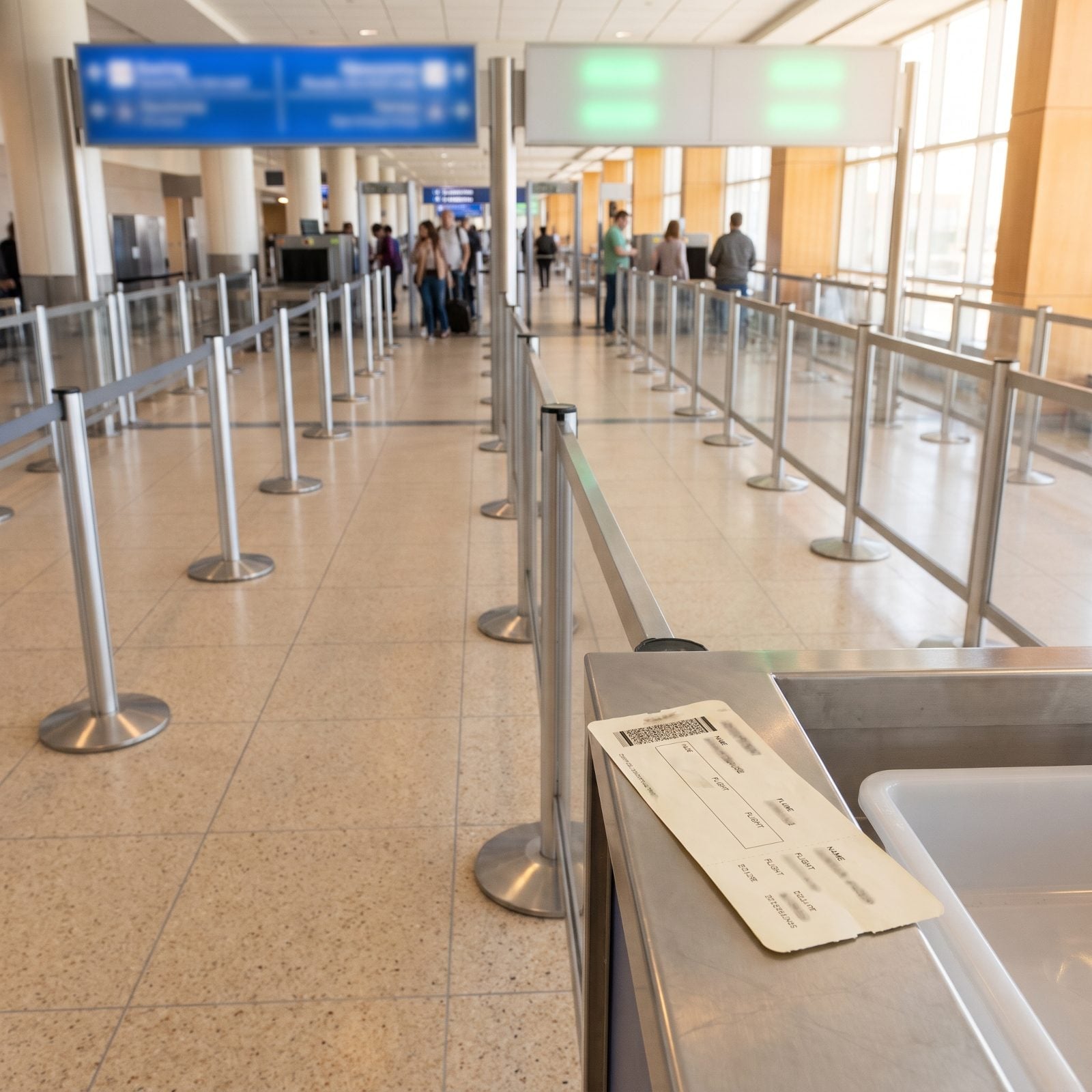
PreCheck is a gift — when you’re actually cleared for it. People stroll into the fast lane assuming membership alone gets them in, then get turned back because the pass doesn’t say so.
Membership only counts if the indicator prints on your pass, and that depends on entering your Known Traveler Number when you book. Add your KTN to your frequent flyer profile so it attaches to every reservation automatically, then check your boarding pass for the PreCheck mark before you line up.
35. Blocking the Checkpoint Entrance While the Group Regroups
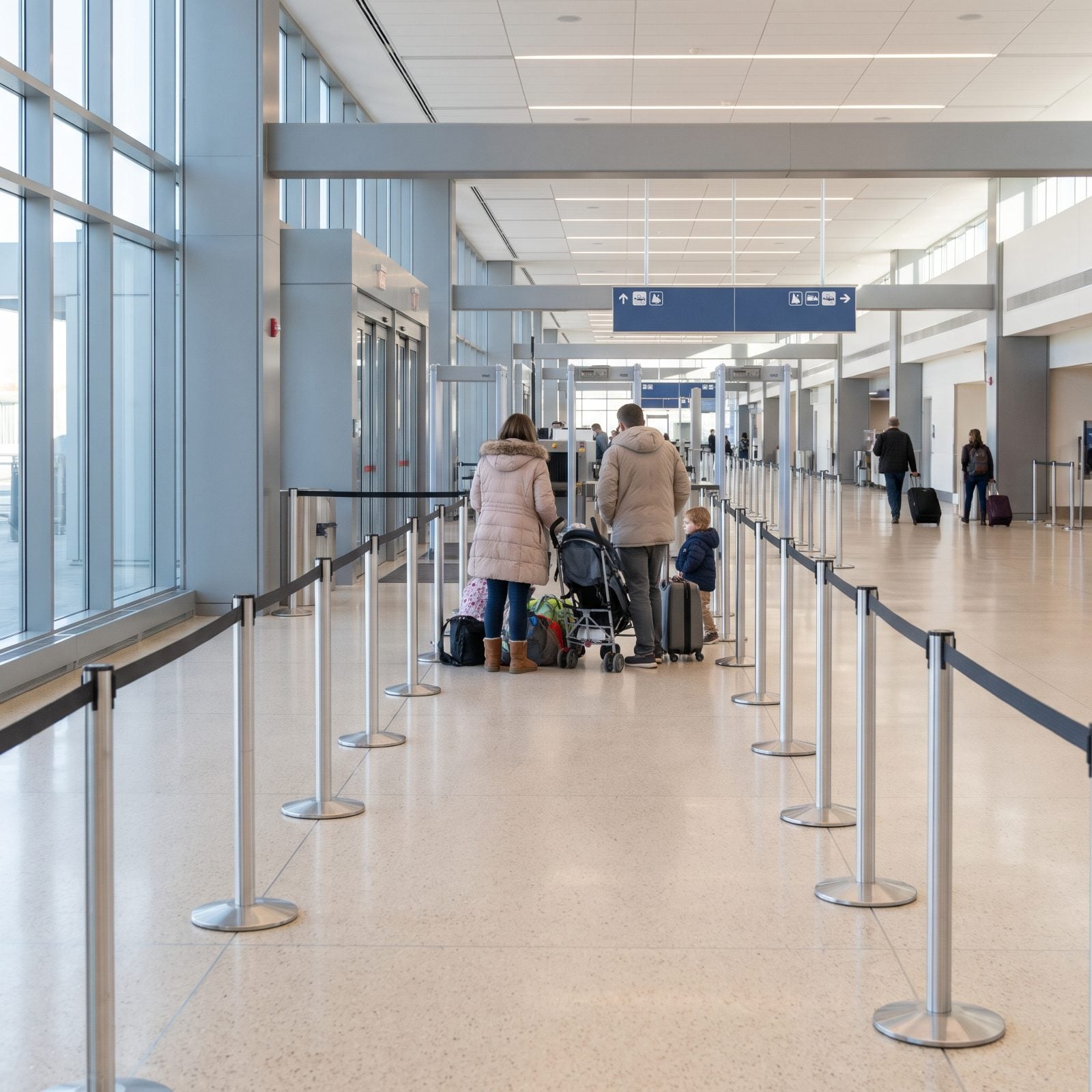
The whole group arrives at the mouth of the line and stops dead, clustering together to sort out who has what, who’s got the passports, who needs the bathroom. Behind you, the entrance jams.
Do the regrouping off to the side, before the entrance, where you’re not a bottleneck. Assign roles early: one person carries documents, someone keeps an eye on the kids, bags get checked for liquids and laptops in advance. Then enter the line already sorted and keep moving.
34. Waiting Until the Conveyor to Start Preparing
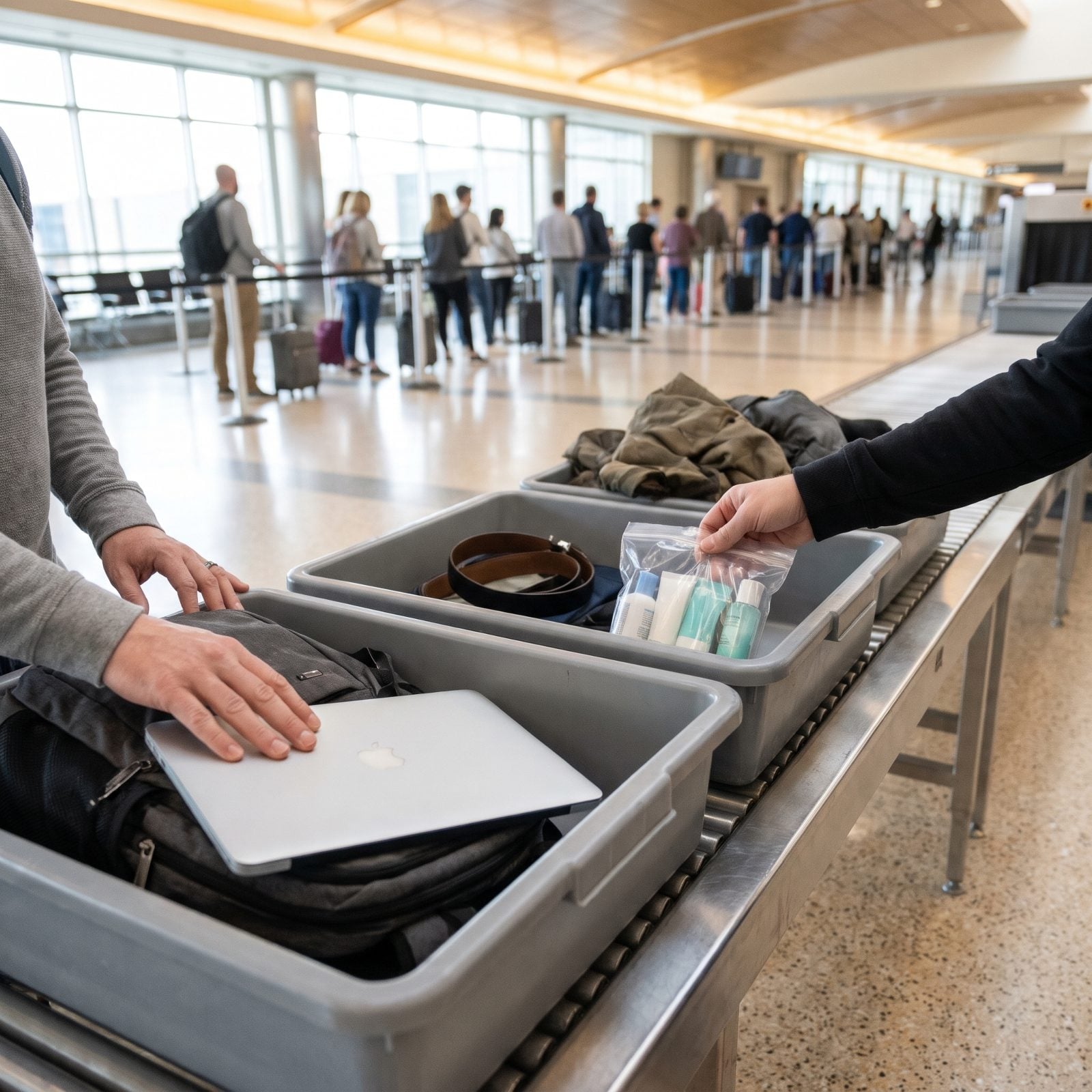
You’ve all seen it. Someone reaches the belt and only then starts the whole production — unzip the bag, hunt for the laptop, peel off the jacket, fish out the liquids bag, kneel to untie shoes. The conveyor is not a dressing room.
Start prepping while you wait. Keep your laptop near the top of your bag, liquids bag in hand, jacket already off, pockets emptied into a side pocket. When you hit the belt, you’re loading bins in seconds instead of minutes.
33. Leaving Coins, Keys, and Tissues in Every Pocket

The body scanner is thorough. It flags the forgotten dime in your back pocket, the crumpled tissue, the stray key — and back through you go, or off for a pat-down. Each tiny thing a fresh delay.
Empty every pocket completely before you reach the scanner, not just the obvious ones. The trick seasoned travelers swear by: start at home, emptying your pockets onto the bench by the door before you leave and stowing what you need in your bag, so when you step up you’re genuinely empty. Coins, keys, receipts, lip balm, all of it stowed and none of it on your body.
32. Forgetting to Remove a Metal-Heavy Belt

A heavy buckle trips the arch nearly every time, and then there you are, holding up your pants, stepping back through, sorting yourself out while the line stacks up behind you.
Got a chunky metal buckle? Take the belt off in line and drop it in the bin with your pockets’ worth of odds and ends. Better yet, on travel days, wear a belt with a plastic or low-metal buckle, or skip the belt entirely with pants that stay up on their own. Fewer alarms, faster walk-through.
31. Keeping a Coat or Bulky Jacket On
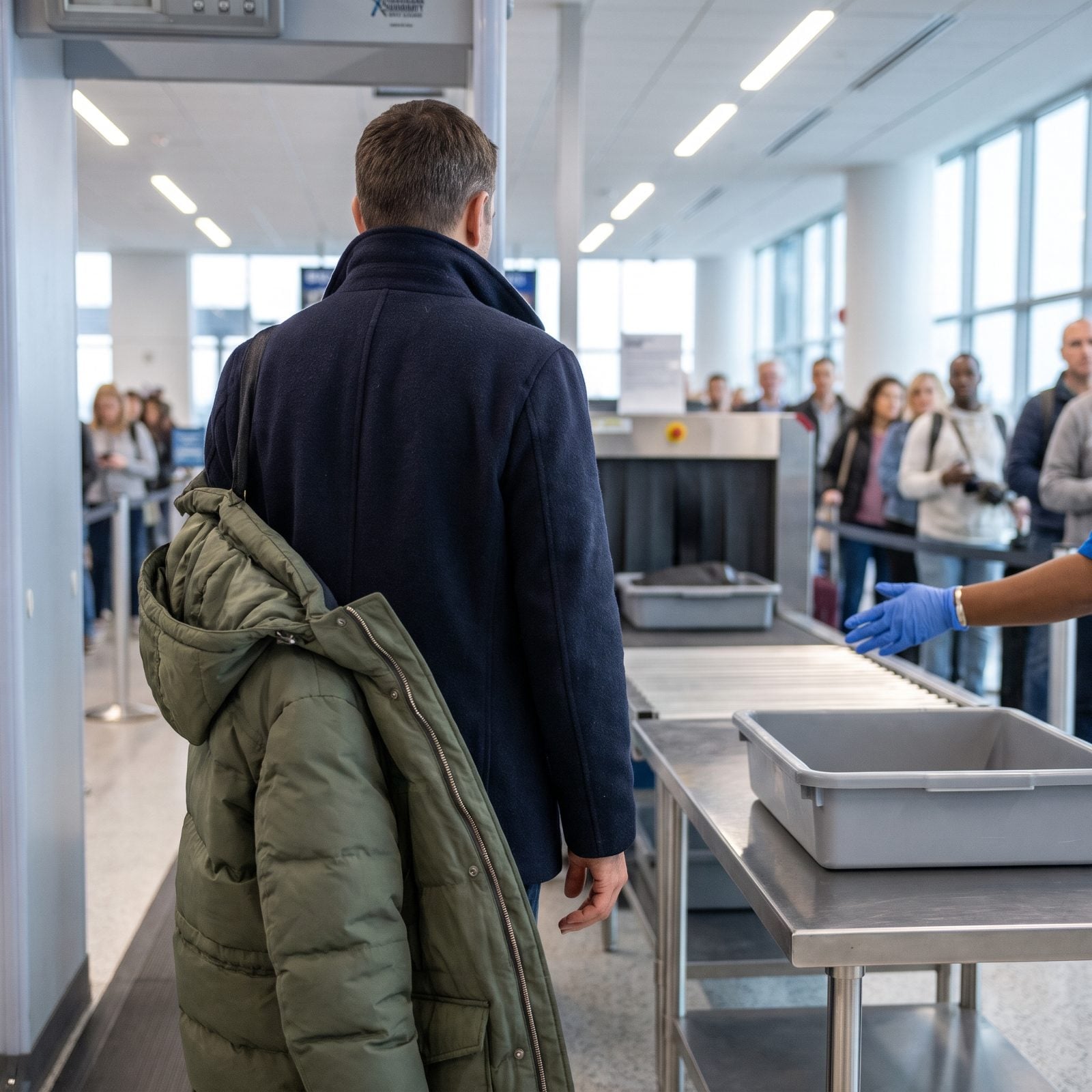
That coat has to come off, and waiting until you’re under the archway is the slowest way to learn it. A heavy wool topcoat or a down parka reads as a dense layer on the scanner, and officers will pull you aside to re-screen it nearly every time.
The fix is boring and fast. Treat your coat like your boarding pass, something you handle before you reach the belt, and as you approach the bins, slide it off and lay it flat in a tray on its own. Scarves, pashminas, and fleece vests go with it. A thin cardigan or blazer usually stays, but anything you’d wear outside in January comes off.
30. Leaving Shoes On When the Lane Requires Removal
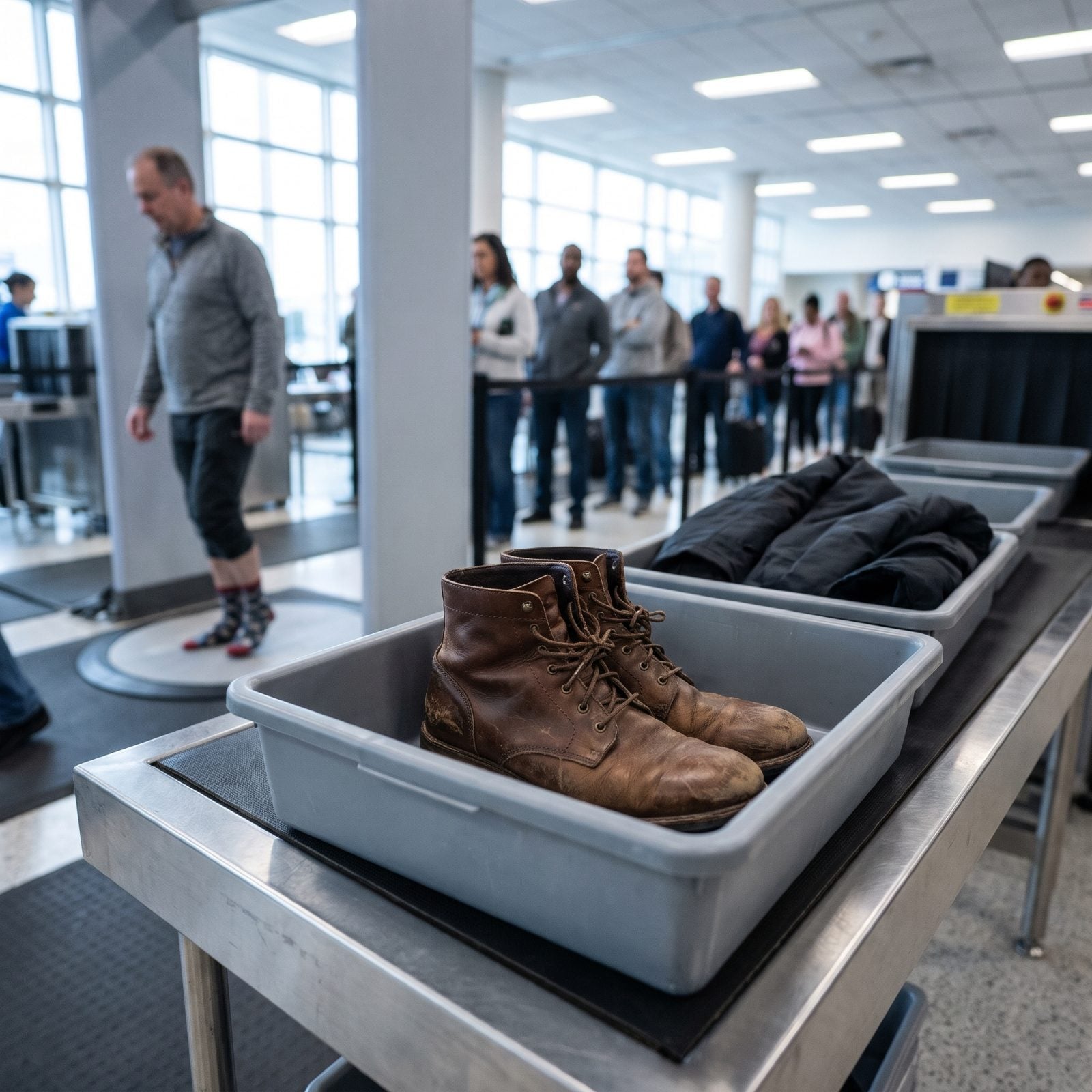
Not every lane asks for shoes off anymore, and that inconsistency is exactly what trips people up. You breeze through barefoot in one city, keep your shoes on the next trip, and get sent back at a third.
Here’s the simple read: thick-soled boots, chunky sneakers, and anything with a steel shank or a heavy heel almost always come off, while thin flats and sandals often stay on. When the officer or the sign says remove them, do it before you load the belt, not while you’re balancing on one foot holding up the line. Wear socks you don’t mind standing in. And slip-ons beat lace-ups by a mile at the checkpoint.
29. Removing Tiny Jewelry That Could Have Stayed On
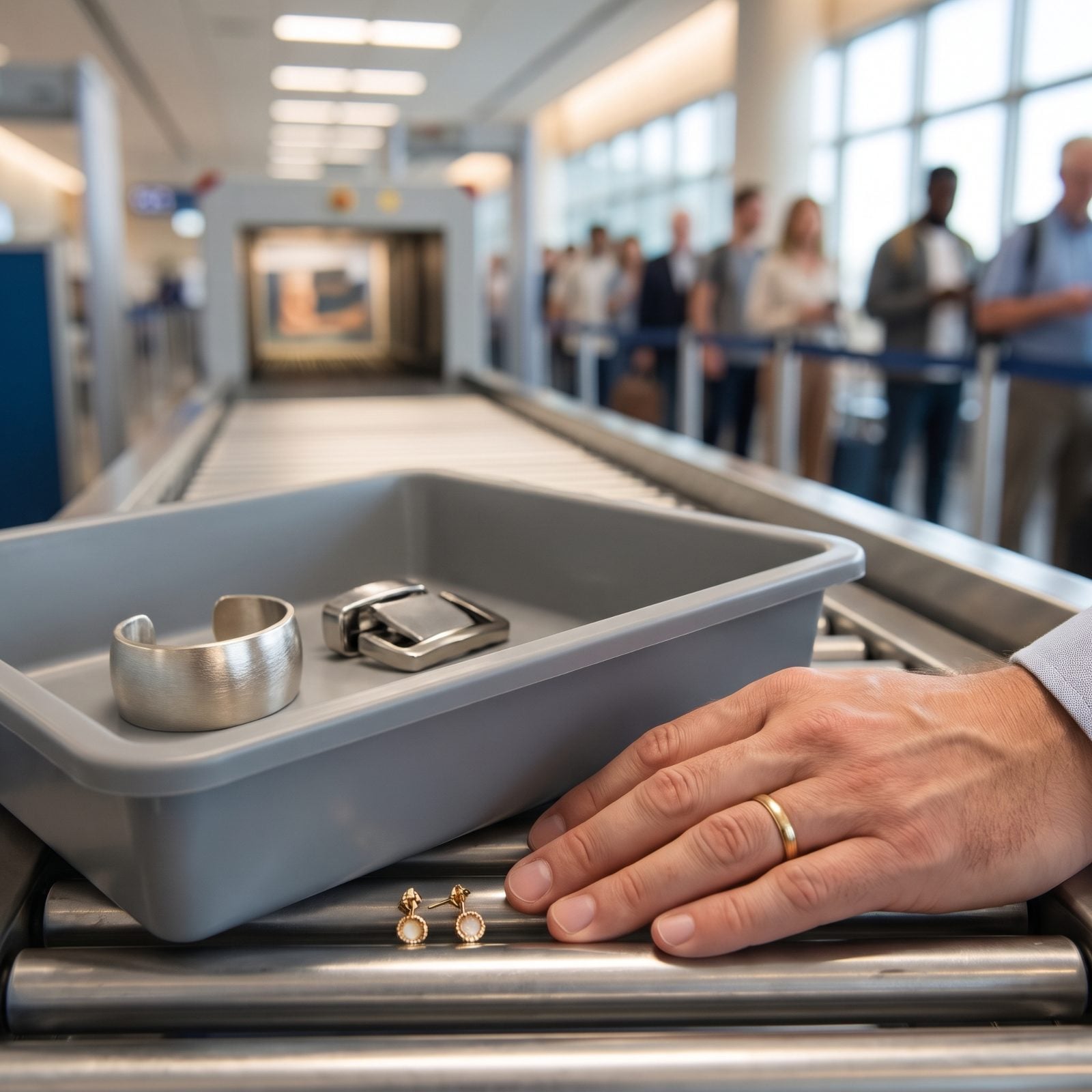
You don’t have to strip down to your fingernails. People peel off wedding bands, tiny studs, and a thin chain, then fumble to put them all back on while the line stacks up behind them.
Small, fine jewelry almost never sets off the walk-through scanner, so rings, delicate necklaces, and little earrings can stay right where they are. The heavy stuff is what causes trouble: a thick metal cuff, oversized belt buckles, a chunky watch, big dangly statement pieces. Those go in the bin. Keep the small things on, drop the big metal in a tray, and you’ll glide through without a repeat trip.
28. Leaving a Laptop Buried When Removal Is Required
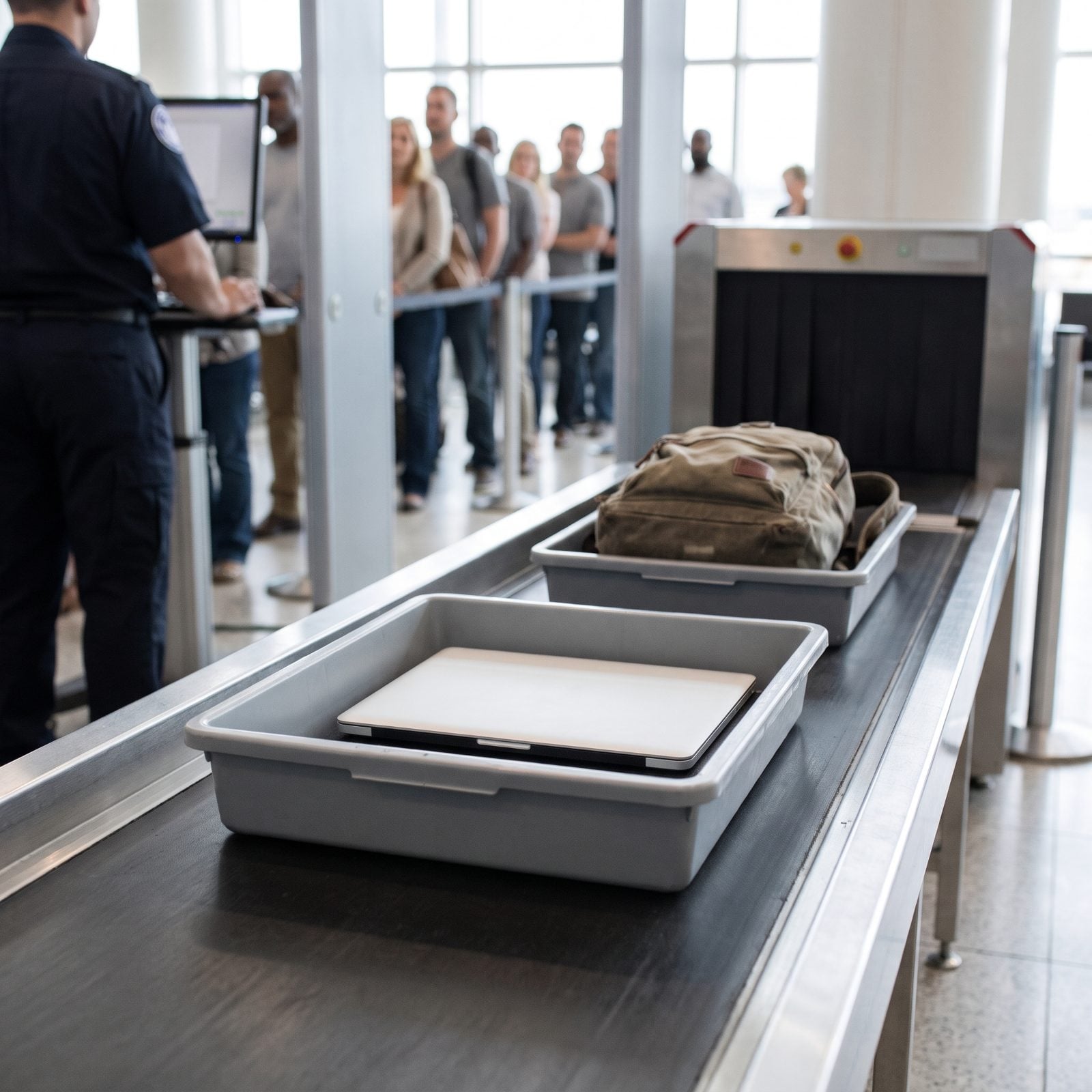
The laptop at the bottom of the bag is the single most common jam in the whole line. You hit the belt, the X-ray flags a dense rectangle hidden under cables and a sweater, and suddenly your bag gets pulled for a hand search while everyone behind you waits and sighs.
Unless you’ve got a TSA PreCheck lane or a checkpoint-friendly bag that lays flat, your laptop comes out and goes in its own bin, nothing on top of it. Pack it in the outermost sleeve so you can grab it in one motion. Same goes for a full-size tablet.
27. Stacking Large Electronics on Top of One Another
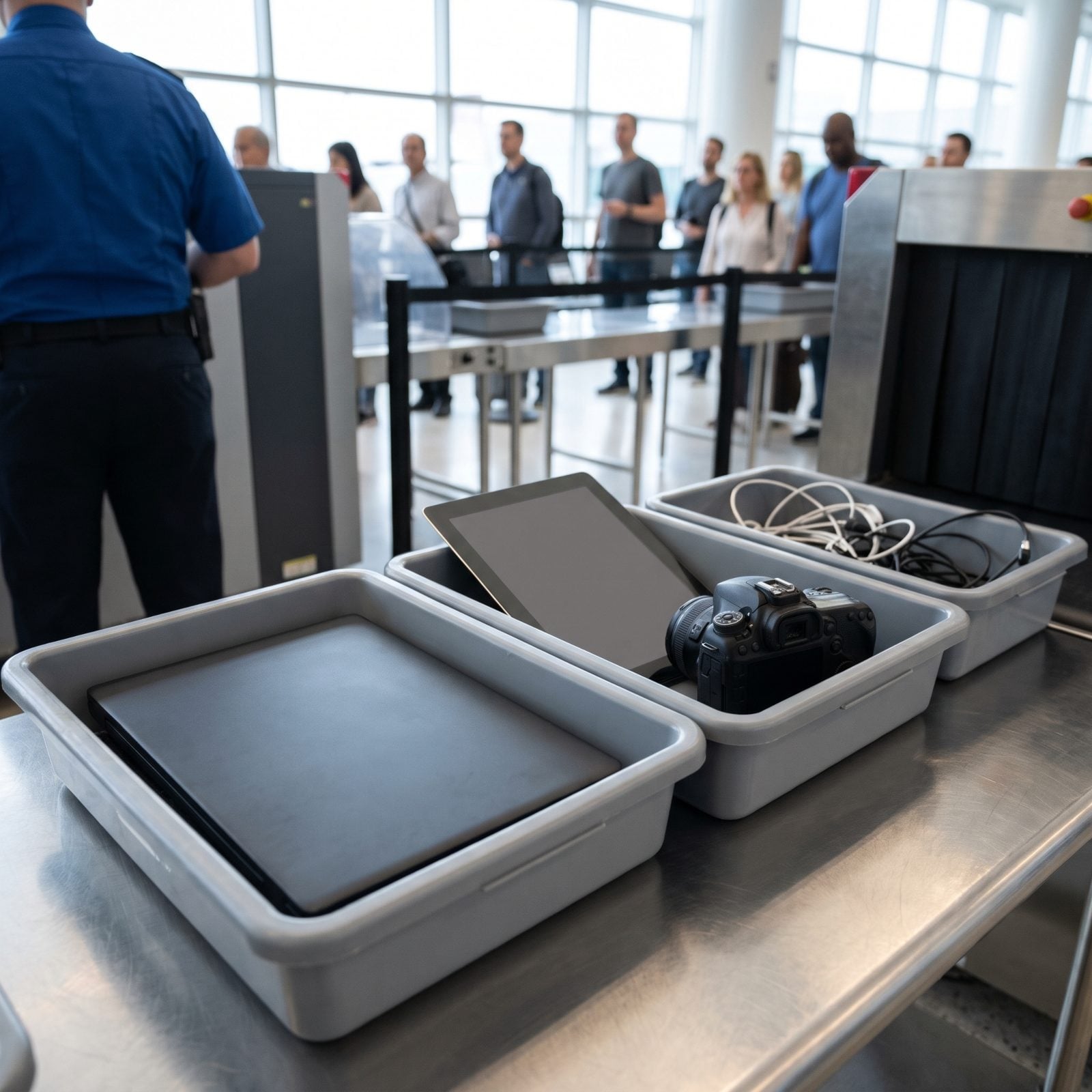
One laptop lying flat in a bin with nothing on top, a tablet propped upright in a separate bin, maybe a camera tucked alongside. It looks like overkill. It’s exactly right.
Stacked electronics overlap on the X-ray image, and the officer can’t see through one dense slab sitting on another. That’s an automatic re-run or a hand check, and your single clever bin just became three trips through the machine.
Give every large device its own flat layer. Laptop in one bin, tablet in another, camera body in a third if it comes to that. Loose cables can bundle together in their own tray. Spread out, nobody has to guess what they’re looking at.
26. Burying the Liquids Bag Under Everything Else
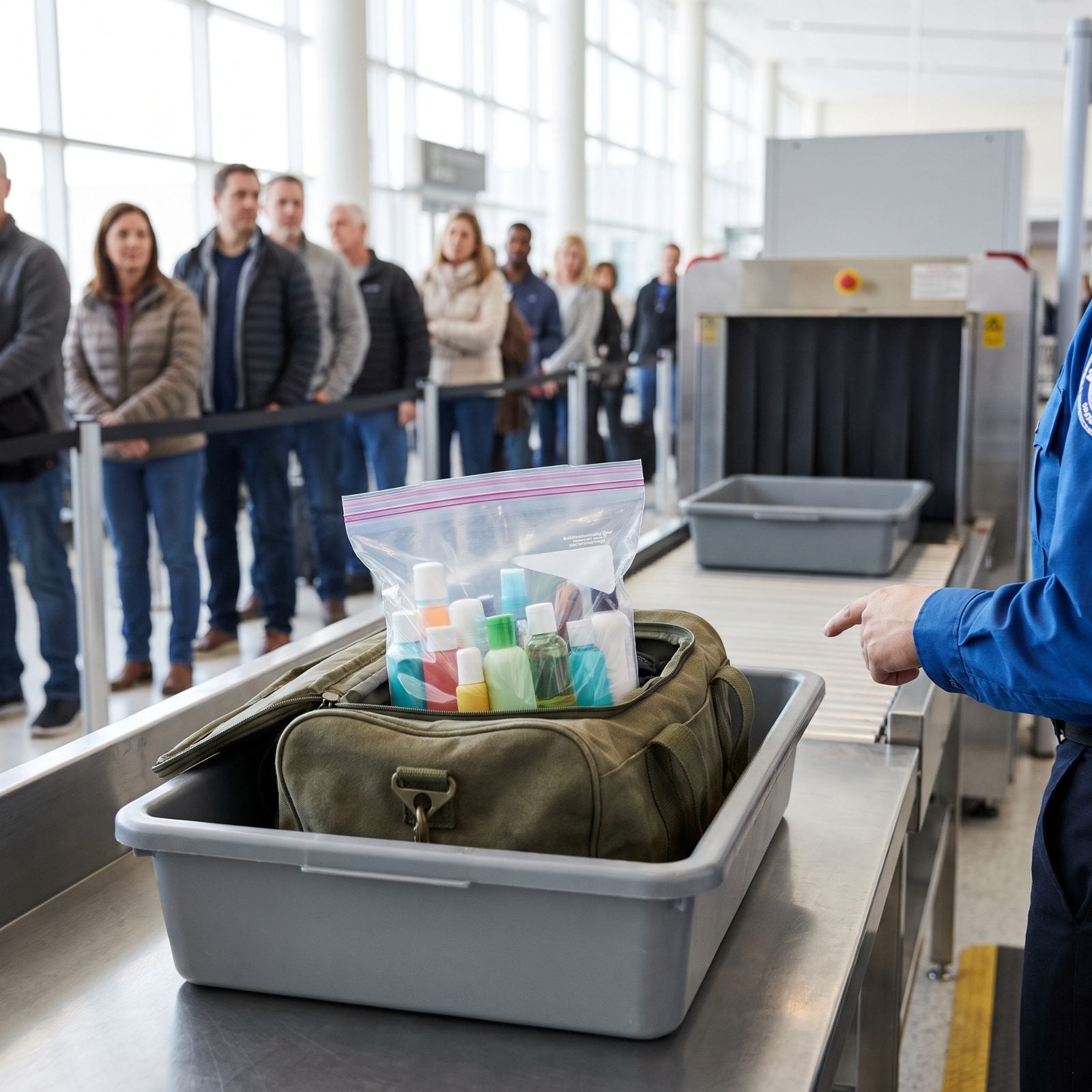
Your liquids bag is the first thing the X-ray wants to see, so don’t make it the last thing you can reach. People pack the quart bag deep in the middle, then have to unpack half their suitcase on the belt to fish it out.
Wherever a checkpoint still asks for liquids to come out separately, keep that clear zip-top bag in a side pocket or right at the top of your carry-on. One grab, one bin, done. A clear bag only saves you time if you can produce it instantly.
25. Packing Oversized Toiletry Bottles
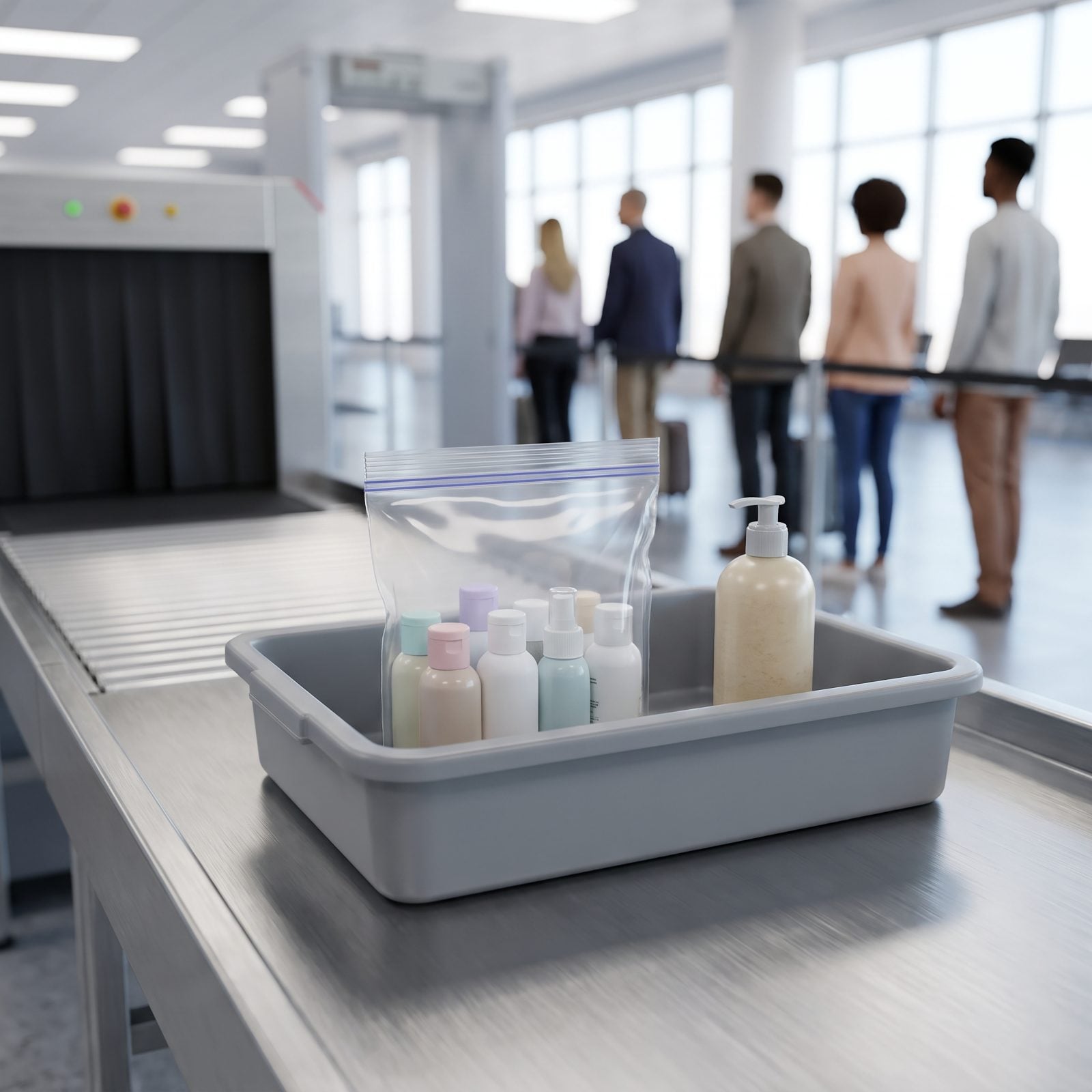
The full-size shampoo always loses. You know the rule, and still the big bottle of sunscreen or the family-size toothpaste finds its way into the carry-on, gets flagged, and ends up in the bin by the scanner.
Carry-on liquids max out at 3.4 ounces (100 milliliters) per container, all of them fitting inside one quart-size zip bag. The container size is what matters, not how much is left inside. A half-empty 8-ounce bottle still gets tossed.
Buy travel-size, or decant into small reusable bottles at home. Anything bigger goes in your checked bag.
24. Forgetting That Spreads and Sauces Count as Liquids
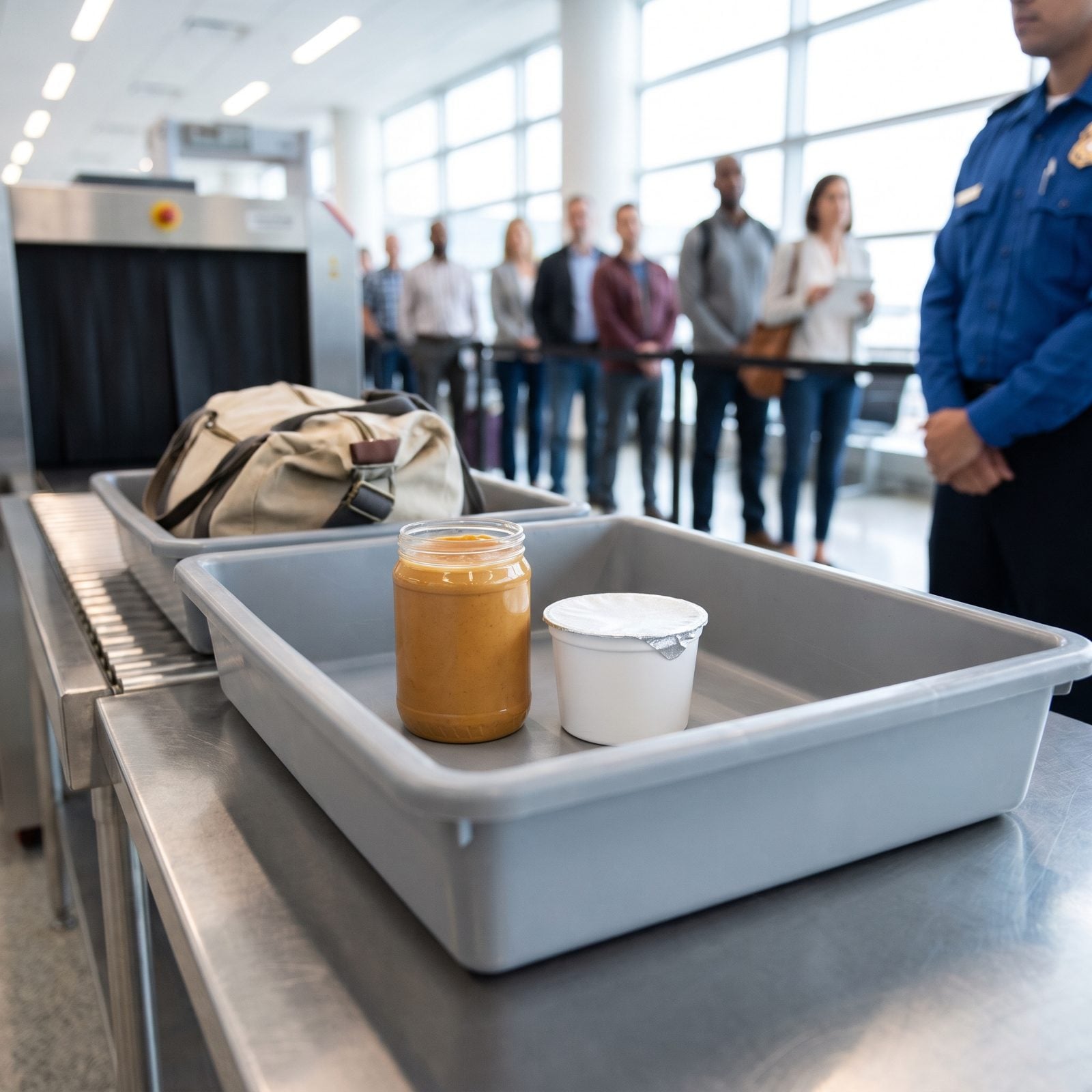
This is the one that catches careful travelers. Peanut butter, yogurt, hummus, salsa, soft cheese, cranberry sauce at the holidays, all of it counts as a liquid or gel. If it spreads, pours, or spoons, it falls under the 3.4-ounce rule.
People pack a jar of almond butter as a snack and are genuinely stunned when it gets pulled. No malice in it. Just a gap in the definition.
If a food item isn’t firmly solid, it belongs in checked luggage or in a container under 3.4 ounces inside your quart bag. A granola bar is fine. A tub of dip is not.
23. Failing to Declare Medically Necessary Liquids
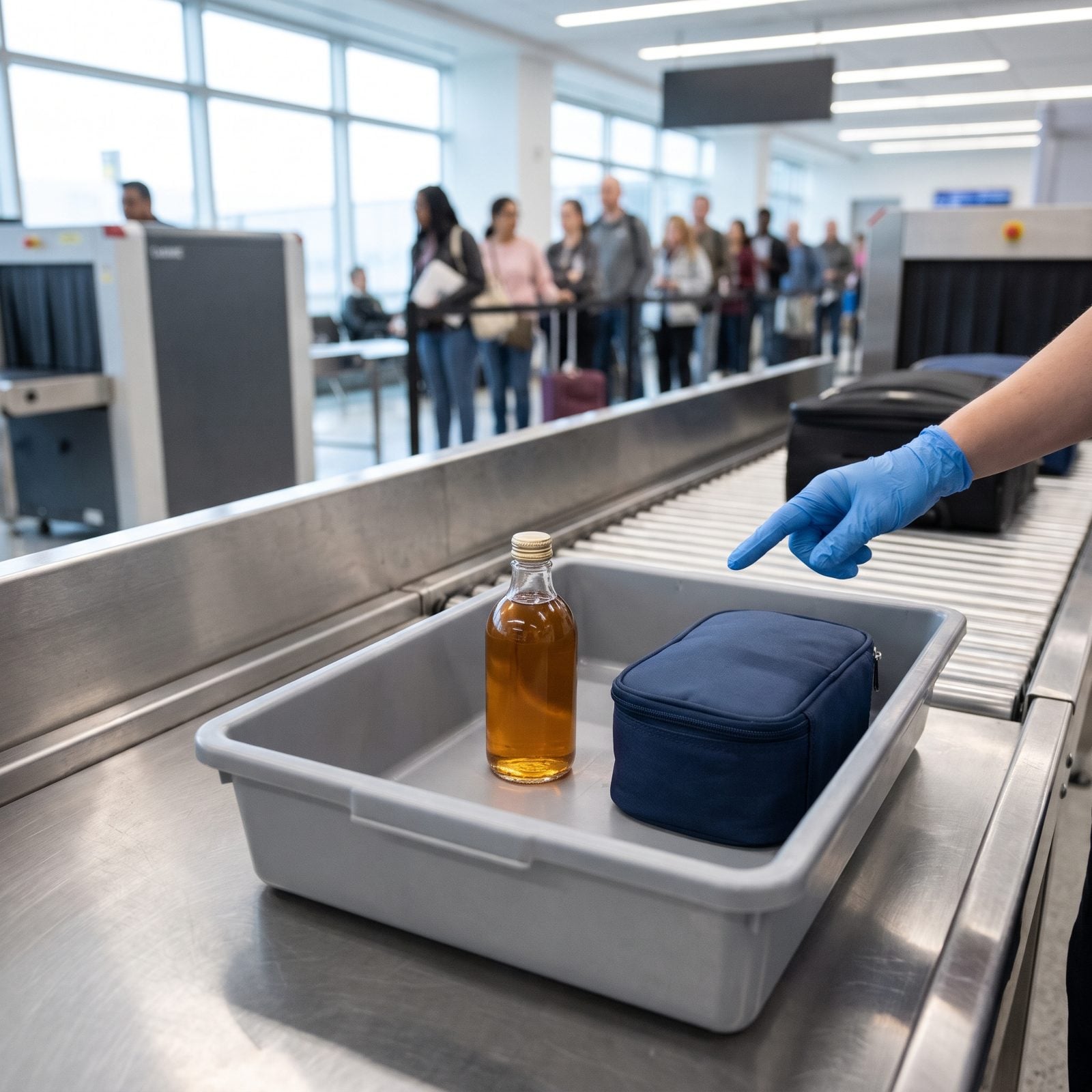
Medically necessary liquids are allowed over 3.4 ounces, but only if you speak up. Prescription liquids, insulin, baby formula, breast milk, and liquid-filled cold packs all get an exemption, and they don’t have to fit in your quart bag.
The mistake is staying quiet and letting them ride through hidden with everything else. When the officer finds an oversized liquid unannounced, it slows to a full inspection.
Tell the officer before you load the belt. Say you have medically necessary liquids and set them in a separate bin. They may test them, which takes a minute, but a declared medication clears smoothly. A surprise one does not.
22. Packing Dense Food Where Officers Cannot Identify It
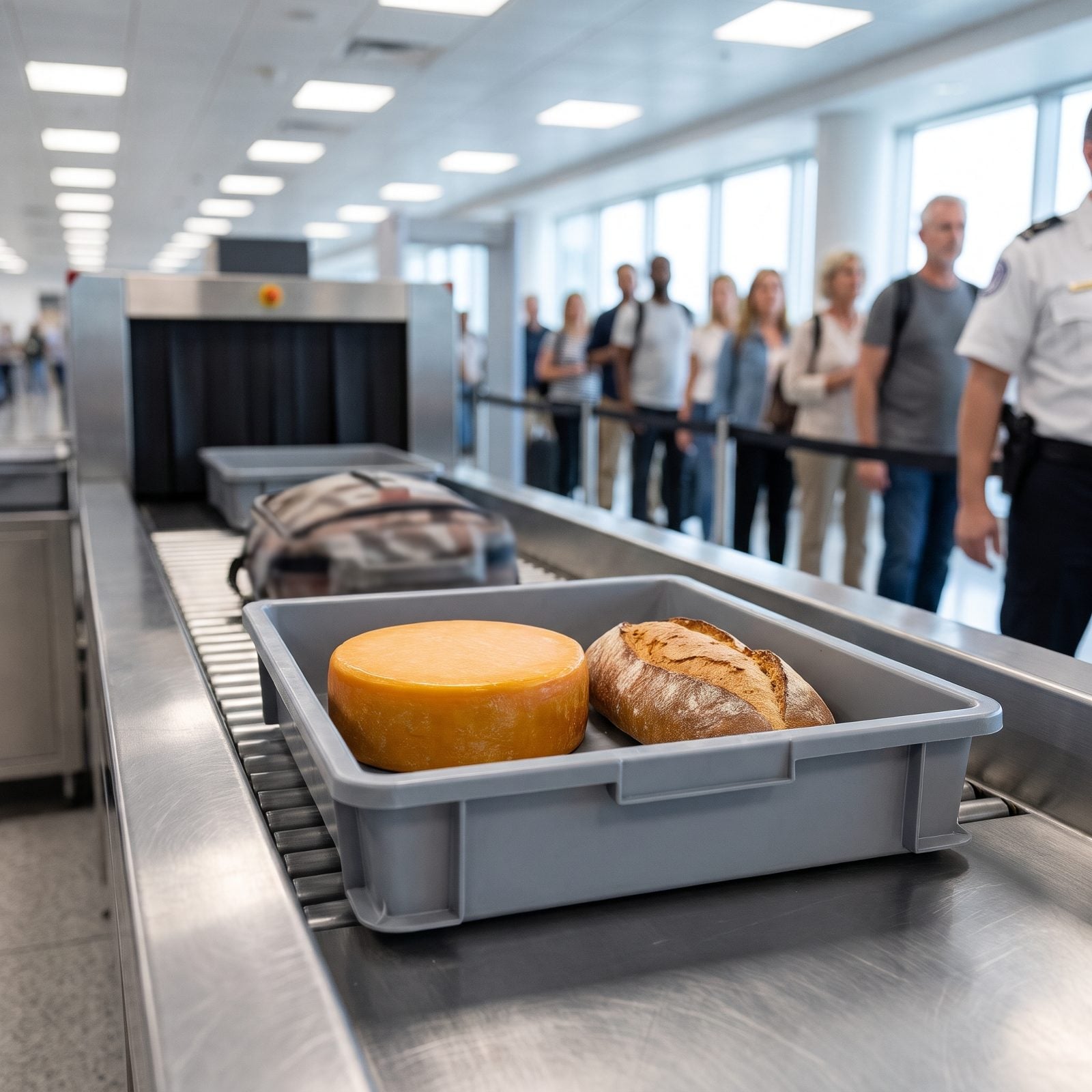
Bring home a wheel of good cheese or a dense fruitcake and the X-ray may read it as one solid, unreadable mass. Officers can’t tell what they’re staring at through a thick, uniform block, so they pull it for a hand check nearly every time.
Dense foods, large chocolate bars, meat, thick bread, big blocks of cheese, all scan as suspicious shapes. They aren’t banned. They just look like a question mark.
If you’re carrying something dense and solid, put it in its own bin so the officer gets a clean, flat view. Better yet, keep it near the top of your bag so you can pull it out the moment they ask. A little cooperation here saves the whole line a delay.
21. Burying a Big Powder Container at the Bottom of the Bag
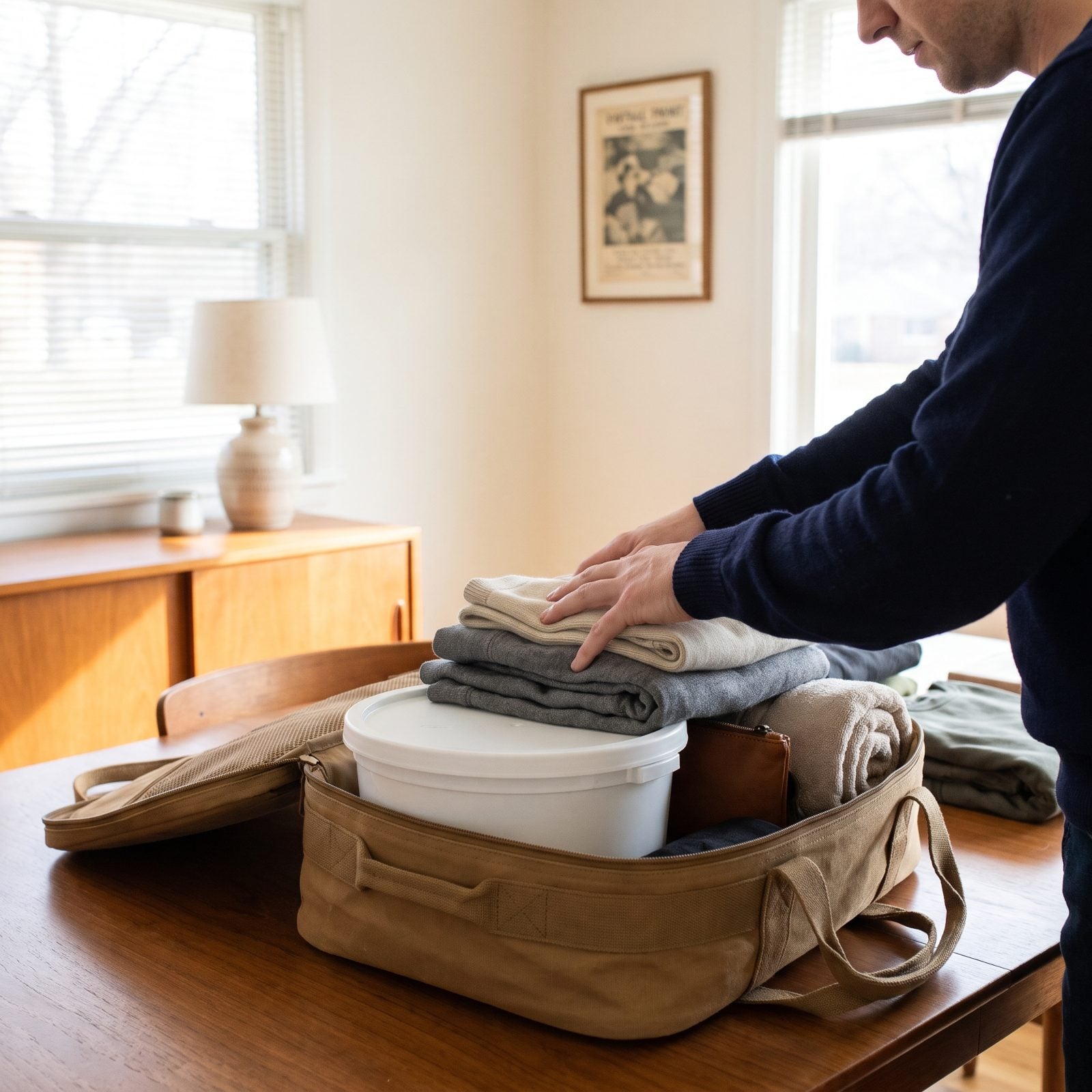
Anything powdery over 12 ounces gets a second look. Protein powder, loose tea, bulk spices, baby formula, even cremated remains in some cases. It reads oddly on the scanner, and when it’s wedged under three days of laundry, the officer has to unpack your whole bag to reach it.
That’s the slowdown. Not the powder itself, but the little archaeology dig required to find it.
Put large powders near the top, in a clear zip bag, where a hand can grab them in one motion. Under 12 ounces usually sails through. Over that? Consider checking it instead.
20. Wrapping the Gifts Before You Get to the Airport
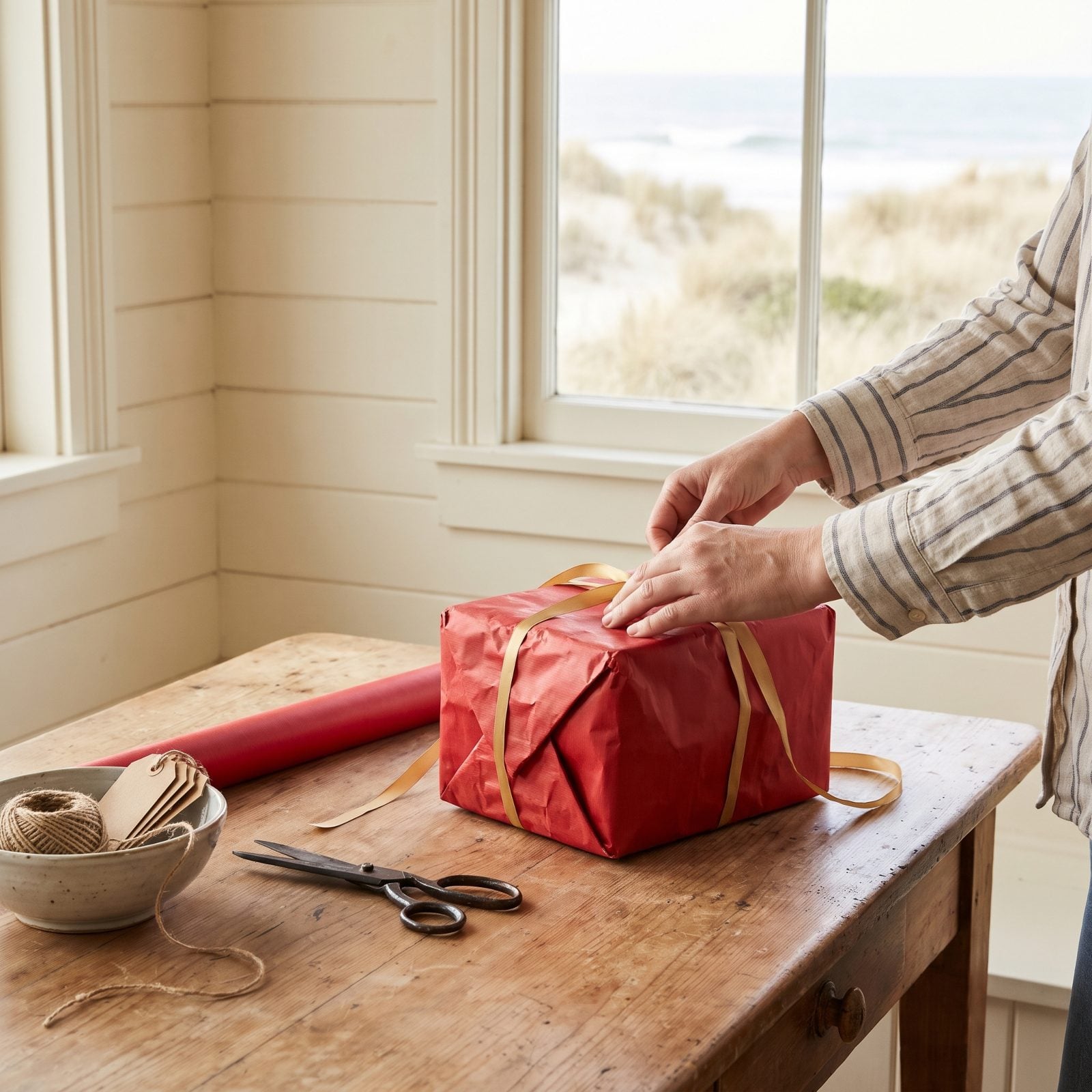
You spent twenty minutes getting the corners crisp and the ribbon just so, and the scanner can’t see through any of it cleanly, so the officer unwraps the whole thing right there on the table in front of the line.
All that paper, undone in four seconds. Now you’re repacking torn wrapping while thirty people wait on you.
Carry gifts loose and wrap them once you land. Toss a flat roll of paper and a few pieces of tape in your bag, or just mail the thing ahead. The present survives, and so does your dignity.
19. Packing the Carry-On So Tight Nobody Can See Inside It
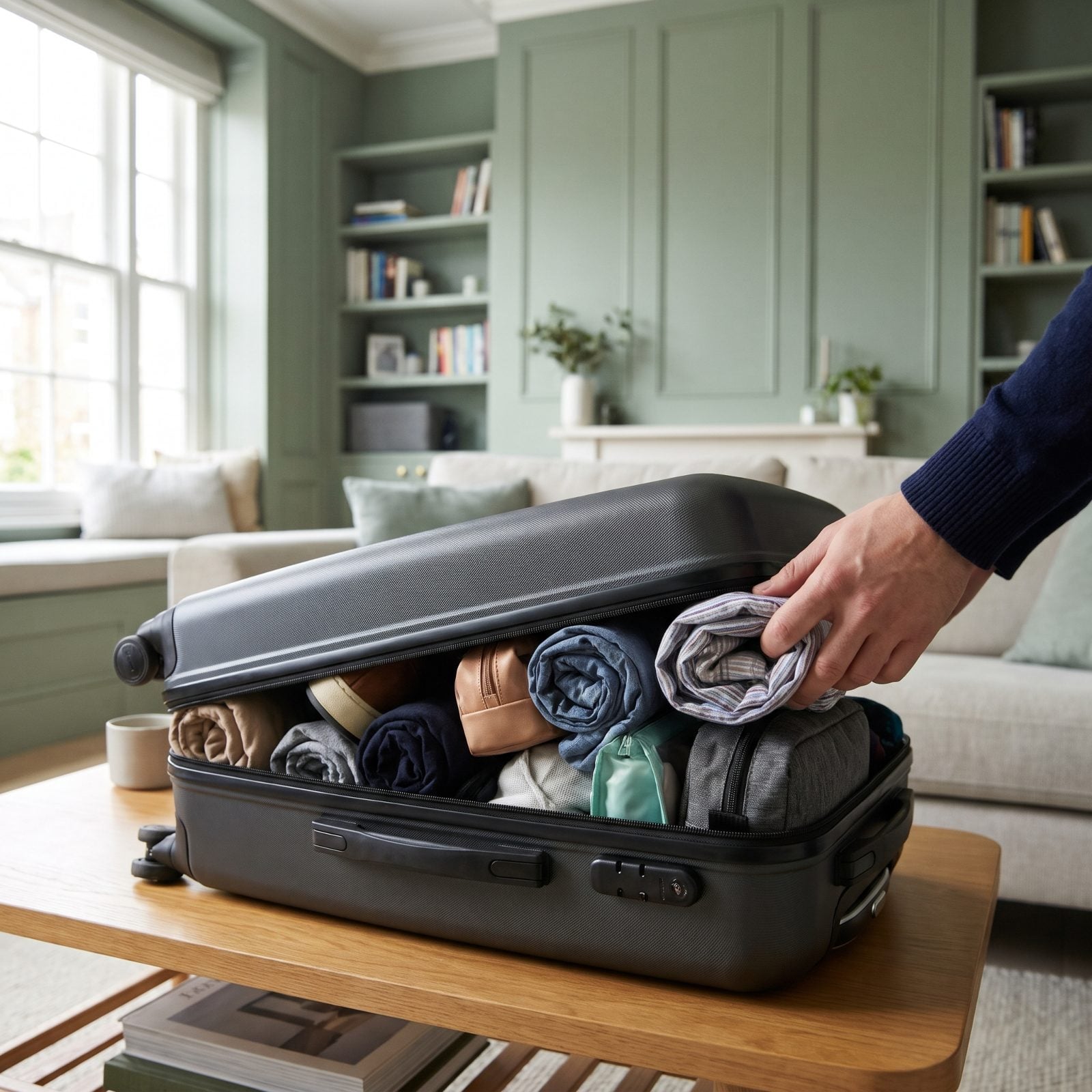
A bag stuffed to the zipper teeth is a bag that gets opened. When the X-ray image comes up as one solid dark block, the officer can’t tell cables from clutter, so out comes everything, piece by piece, onto the table.
Overpacking doesn’t just risk a torn seam. It guarantees a hand search the moment the image turns unreadable.
Leave a little breathing room and layer things flat so the scanner reads clean lines. Electronics, chargers, and dense toiletry kits should each sit in their own identifiable spot instead of being knotted into the middle of your sweaters. A bag the machine can read is a bag that stays closed.
18. Forgetting the Pocketknife You Always Keep in the Bag
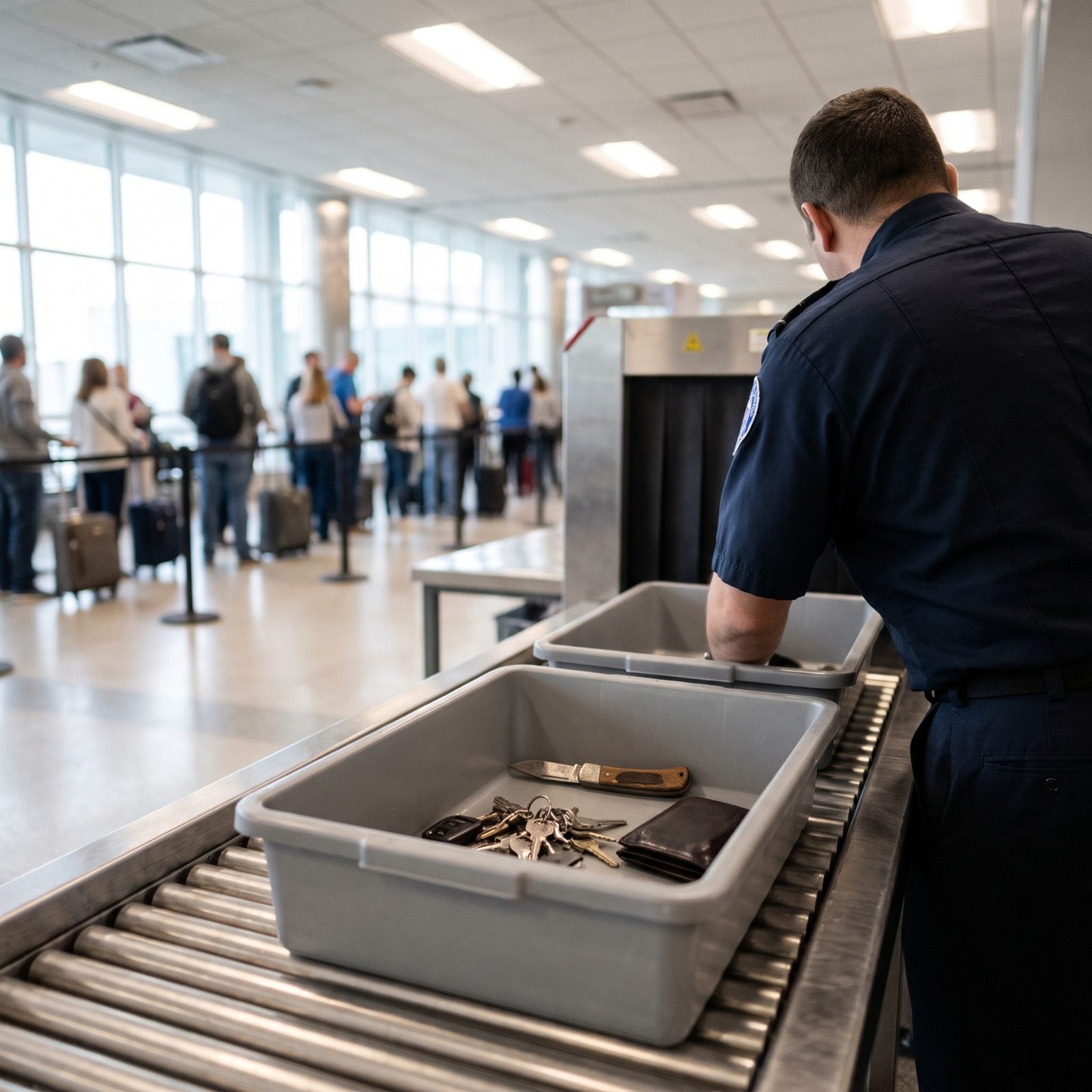
It lives in the bottom of the daypack. You use it to open boxes, cut an apple, fix a loose thread, and you plain forgot it was in there. The scanner did not.
Now the bag gets pulled, the knife gets confiscated, and you’re filling out a form while the belt stops dead behind you. Even a two-inch blade counts.
Before any trip, do a thirty-second sweep of every pocket in your carry-on. Knives, multitools, corkscrews with blades — they all ride in checked luggage or not at all. Plenty of perfectly good knives have been lost to this exact lapse. Check the bag you grab out of habit, because habit is the whole problem.
17. Tucking Pepper Spray in With Your Everyday Carry
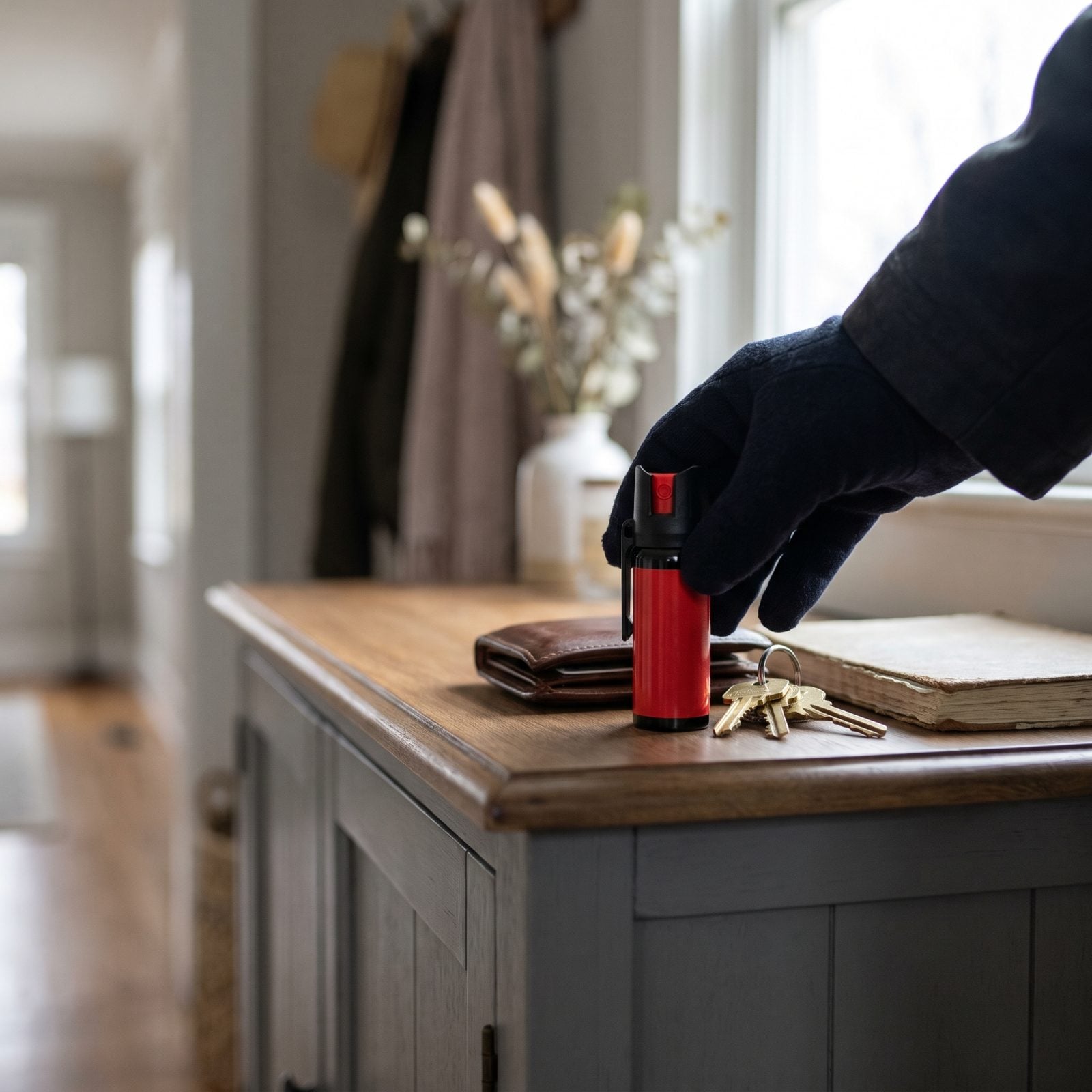
Pepper spray feels like plain common sense in a purse or a jacket pocket. At the checkpoint it’s a hard stop. Self-defense sprays are banned from the cabin outright, and the canister gets pulled, flagged, and surrendered on the spot.
There goes your travel morning, and there goes your spray into the bin.
Small personal-defense sprays, generally under 4 ounces with a safety cap, can usually go in checked baggage if the airline allows it. Bear spray and the larger canisters are a stricter story altogether. Want it waiting at your destination? Check it, or just buy one when you land.
16. Showing Up With a Firearm That Isn’t Declared or Packed Right
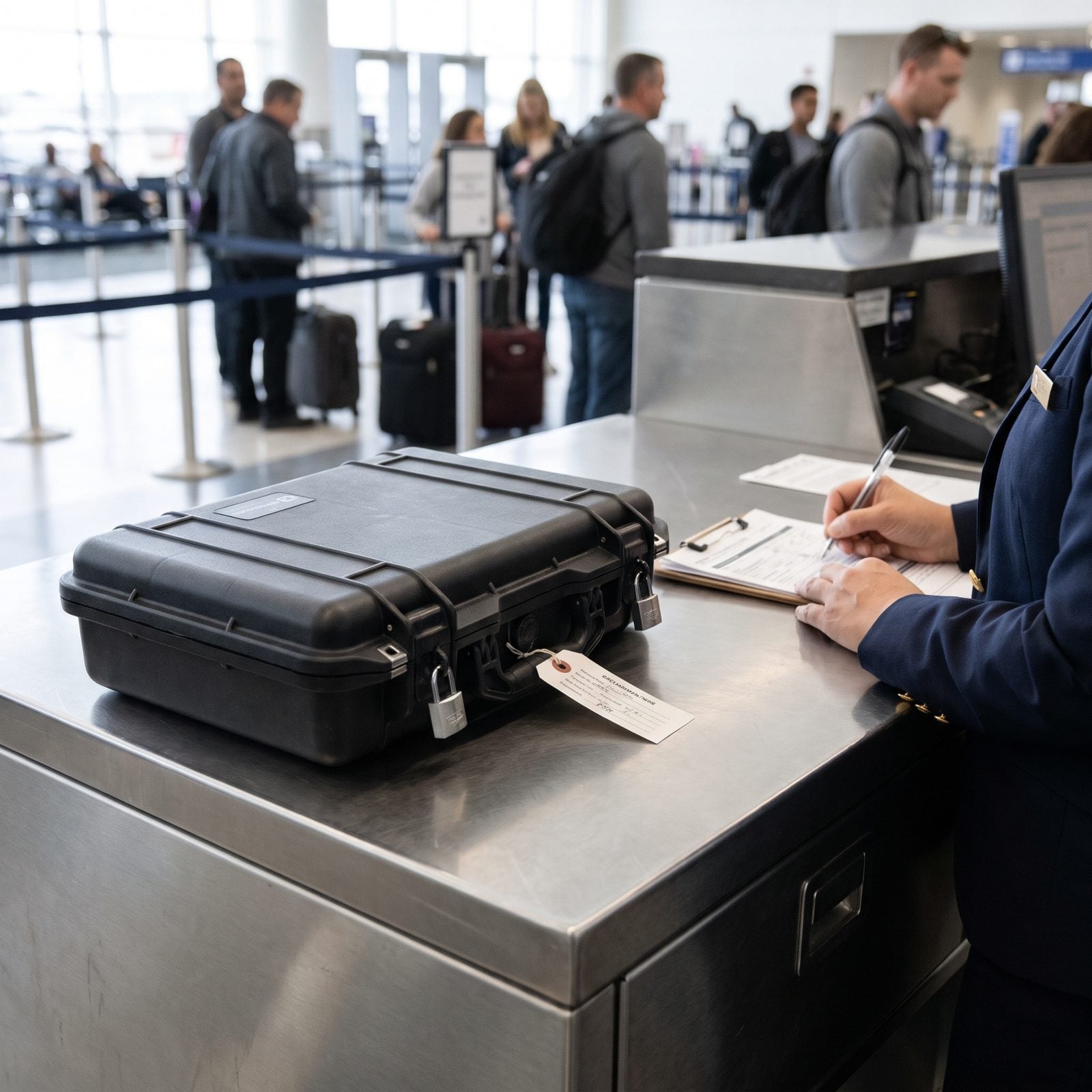
This is the one that turns a slow morning into a genuinely bad day. A firearm in a carry-on — forgotten, unloaded, doesn’t matter — triggers law enforcement, long delays, fines running into the thousands, and a missed flight. Nobody is waving this one through.
Firearms never fly in the cabin. Period.
They go in checked baggage only: unloaded, in a locked hard-sided case, declared at the ticket counter, with ammunition packed to the airline’s rules. Handle the declaration first thing, before the line, before the coffee. Build fifteen minutes into your plan and the whole thing turns into routine paperwork instead of a scene.
15. Packing a Replica or Realistic Toy Gun in the Cabin
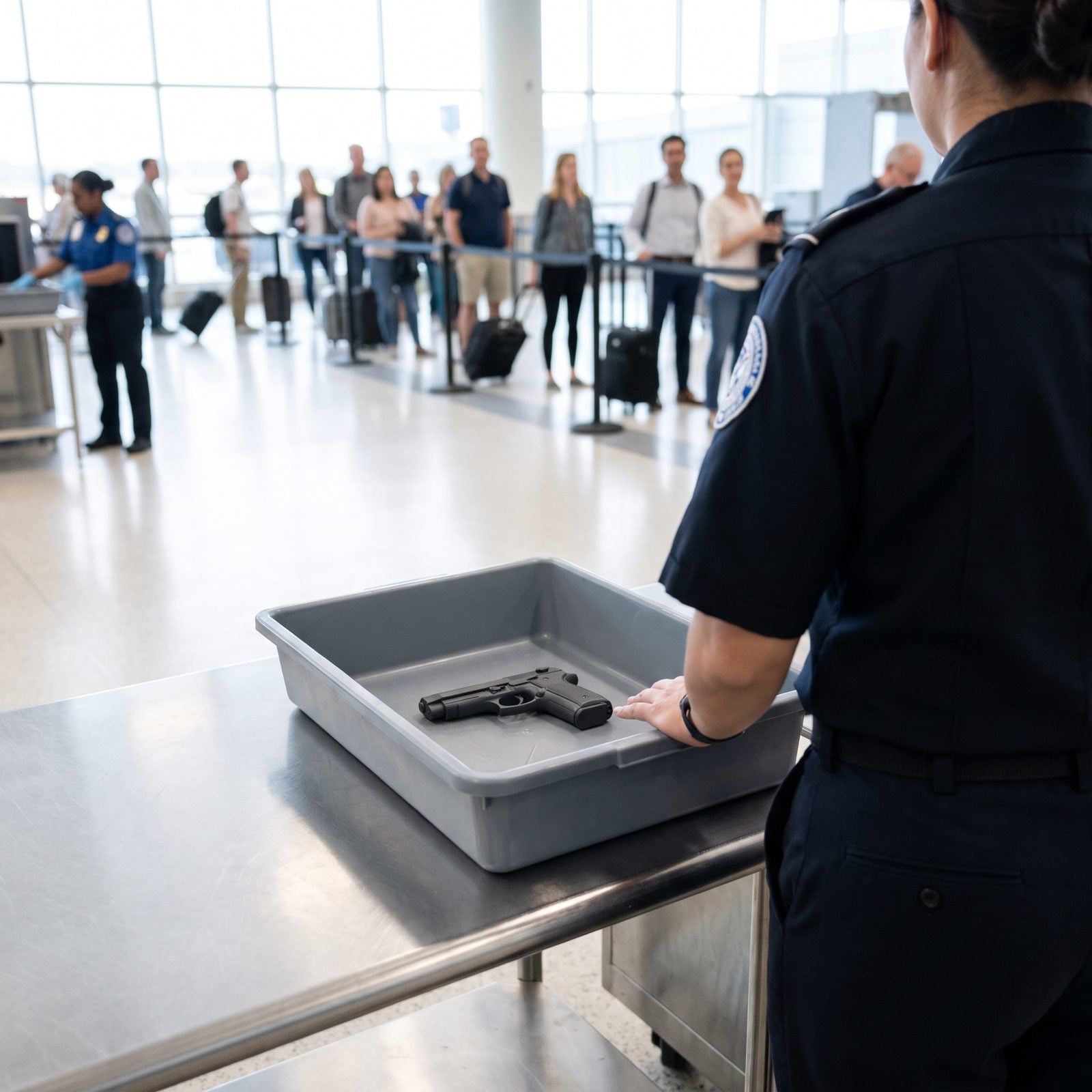
A grandkid’s cap gun. A cosplay prop. A startlingly convincing airsoft replica. On the scanner each one looks exactly like what it’s imitating, and the officer has to treat it that way until proven otherwise.
That means a stop, a closer look, and sometimes a conversation you didn’t budget for. Realistic replicas stay out of the cabin even though they can’t fire a thing.
Replica and toy weapons belong in checked luggage. Traveling with a prop or a gift that looks the part? Check it and skip the whole misunderstanding at the belt.
14. Carrying Oversized Tools You Meant to Bring Along
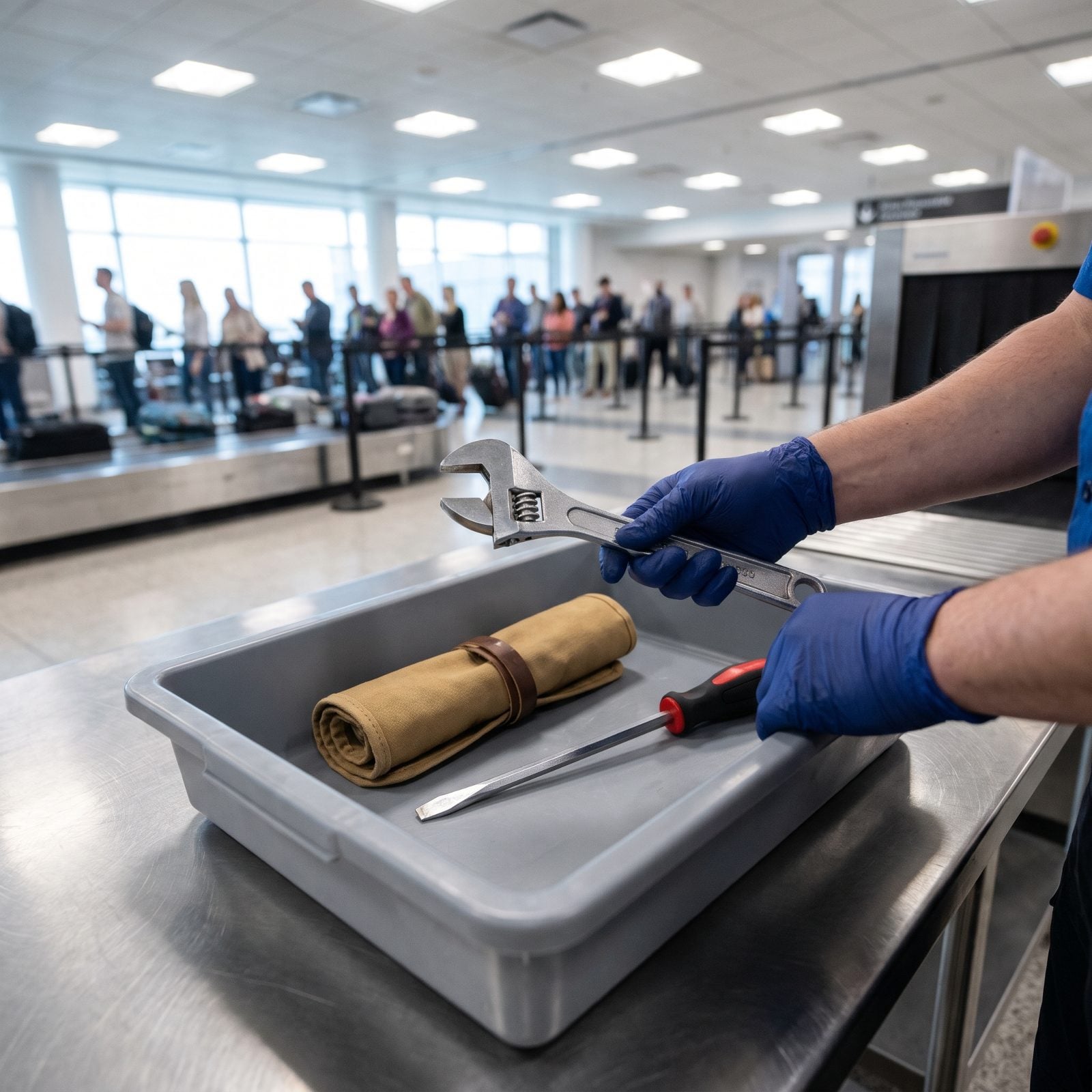
Tools longer than seven inches are the usual trip-up — wrenches, big screwdrivers, pry bars, hammers. Down in a checked bag they travel without a word of fuss. Up front in the cabin, they get flagged, measured, and pulled.
So the handyman flying to a job site, or the hobbyist with a repair kit, ends up unrolling a tool wrap on the inspection table while everyone watches.
Measure before you pack. Anything past that seven-inch line rides below the plane. Small stuff like a short screwdriver or a little wrench is generally fine up top, but when you’re not sure, check it.
13. Bringing Bats, Clubs, and Sports Gear That Can’t Ride Up Front
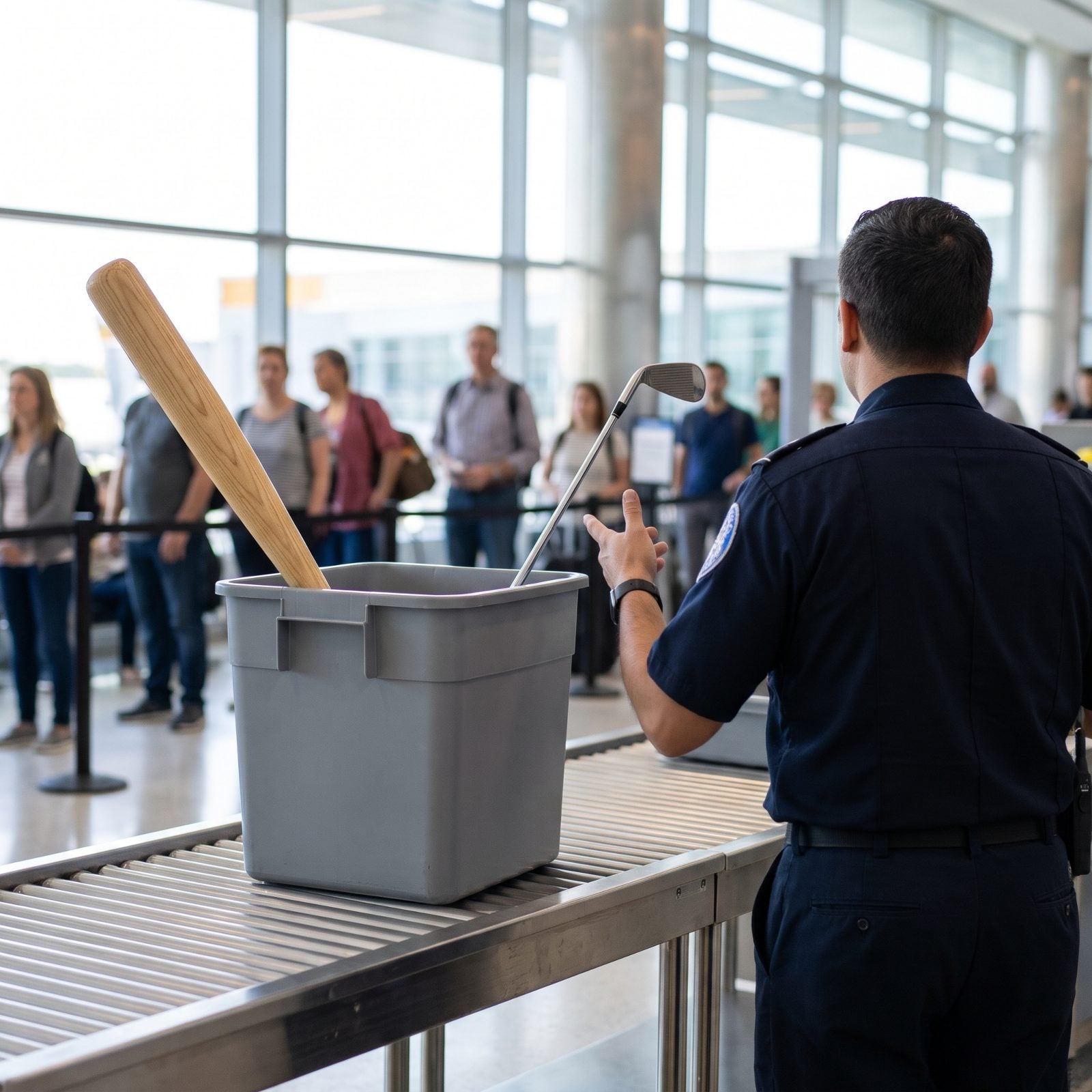
Baseball bats, golf clubs, hockey sticks, ski poles, even some martial arts gear. Anything that doubles as a blunt instrument stays out of the cabin. Obvious enough with a bat. Less obvious with a pair of trekking poles — which is exactly where people get caught.
The officer can’t let it through, so it gets held, and you’re sorting out a gate-check while the line waits on you.
Check the sporting goods, or ship them ahead to the course or the cabin you’re headed for. Call the airline first. Oversized gear often needs special handling and a fee you’d much rather know about in advance.
12. Packing Camping Gear That Still Smells Like Fuel
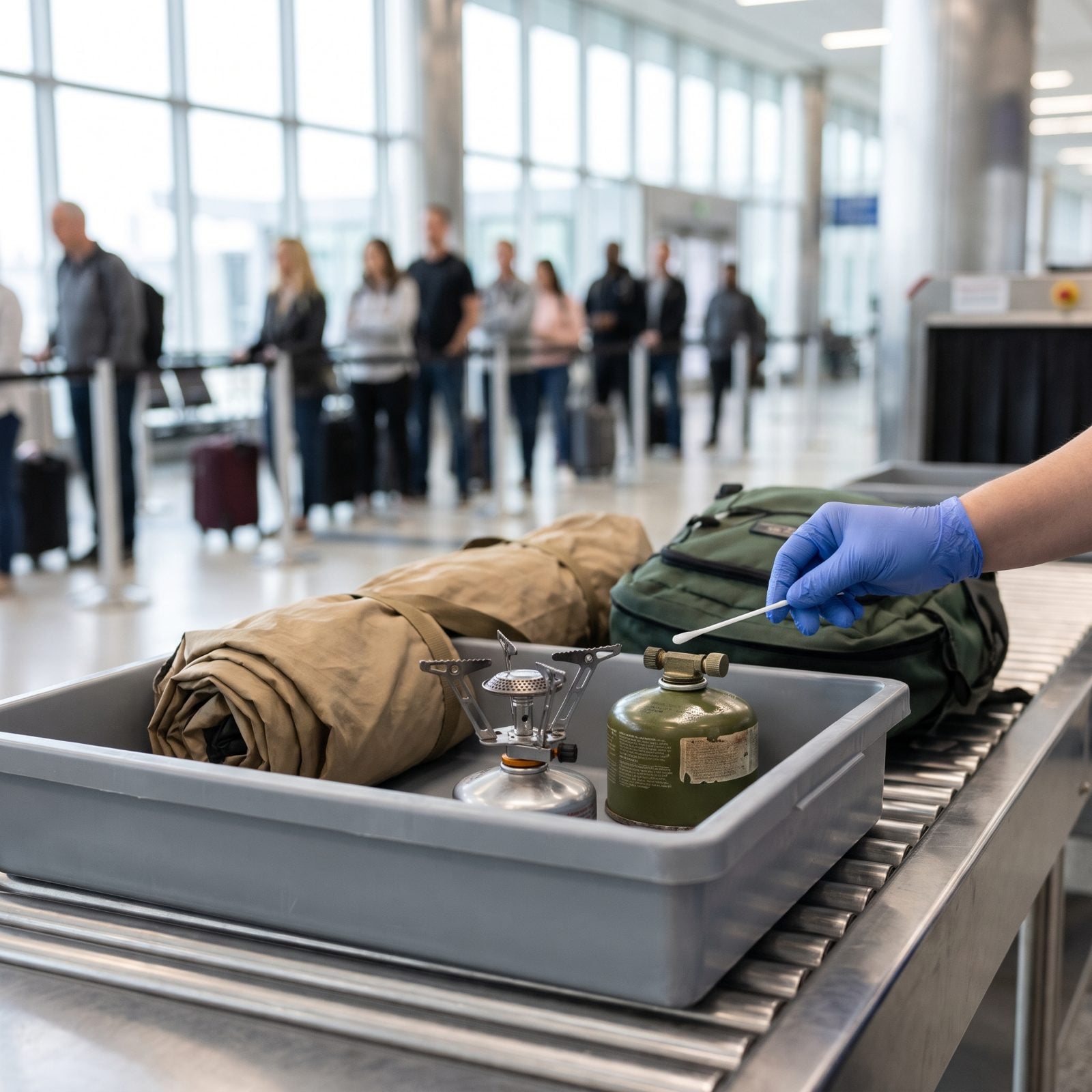
You emptied the fuel canister and figured that settled it. The residue and the smell set off the swab, and suddenly your backpacking stove is the most interesting object at the checkpoint.
Camp stoves and fuel bottles can’t fly with any fuel or fuel vapor present, down to trace amounts. A residue hit means a full bag search and, often enough, a surrendered canister.
Air it out thoroughly first. Leave canisters open to off-gas for a day or two. Honestly, the easiest move is to buy fuel at your destination and fly nothing flammable at all — empty, clean, and odor-free is the only version that gets through.
11. Packing Fireworks or Novelty Explosives in a Carry-On

You’d be surprised how often someone tucks a sparkler or a pack of poppers into a side pocket, meaning no harm at all. Then the problem starts. Anything that burns, flashes, or bangs reads as a hazard the second it hits the X-ray belt, so the line stops, an officer pulls the bag and calls a supervisor, and everyone behind you inherits the delay.
Leave all fireworks, novelty explosives, and flares at home. Period. They’re banned in carry-on and checked luggage both. Bought some on vacation? Mail them to yourself or hand them off before you ever reach the terminal.
10. Running a Pet Through the X-Ray Inside Its Carrier
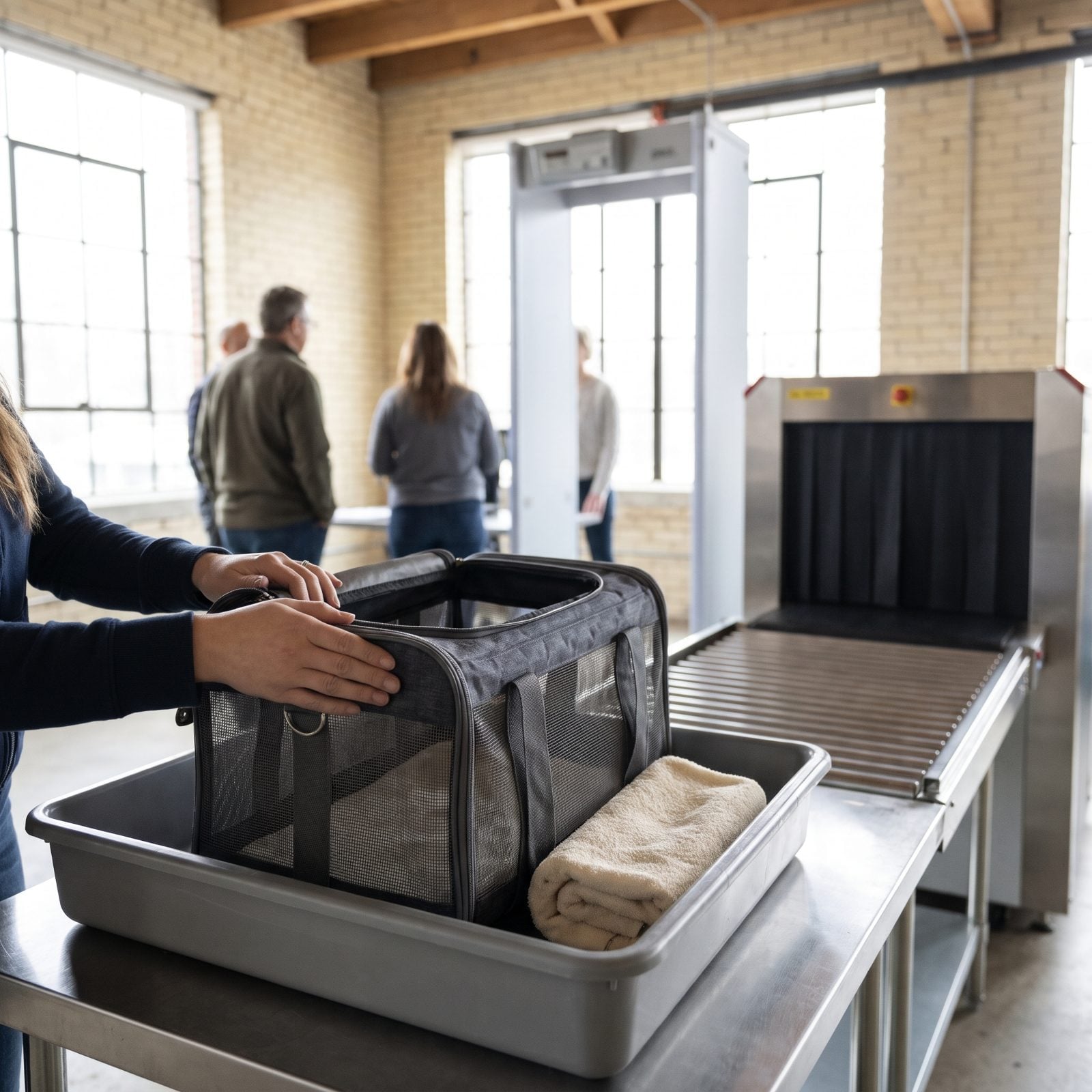
The carrier goes on the belt. The pet does not. First-time traveling pet owners trip on this constantly, usually at the worst possible moment with a line building behind them.
The fix is simple. Pull your pet out of the carrier before you reach the officer, then send the empty carrier through the X-ray like any other bag. Carry your pet through the walk-through detector in your arms, or ask for a hand inspection if your pet won’t tolerate the walk. Get the harness and leash on before you reach the front. Fumbling with a clasp while a cat decides it wants no part of this is how a thirty-second task becomes five minutes.
9. Wrestling the Stroller Open at the Conveyor Belt
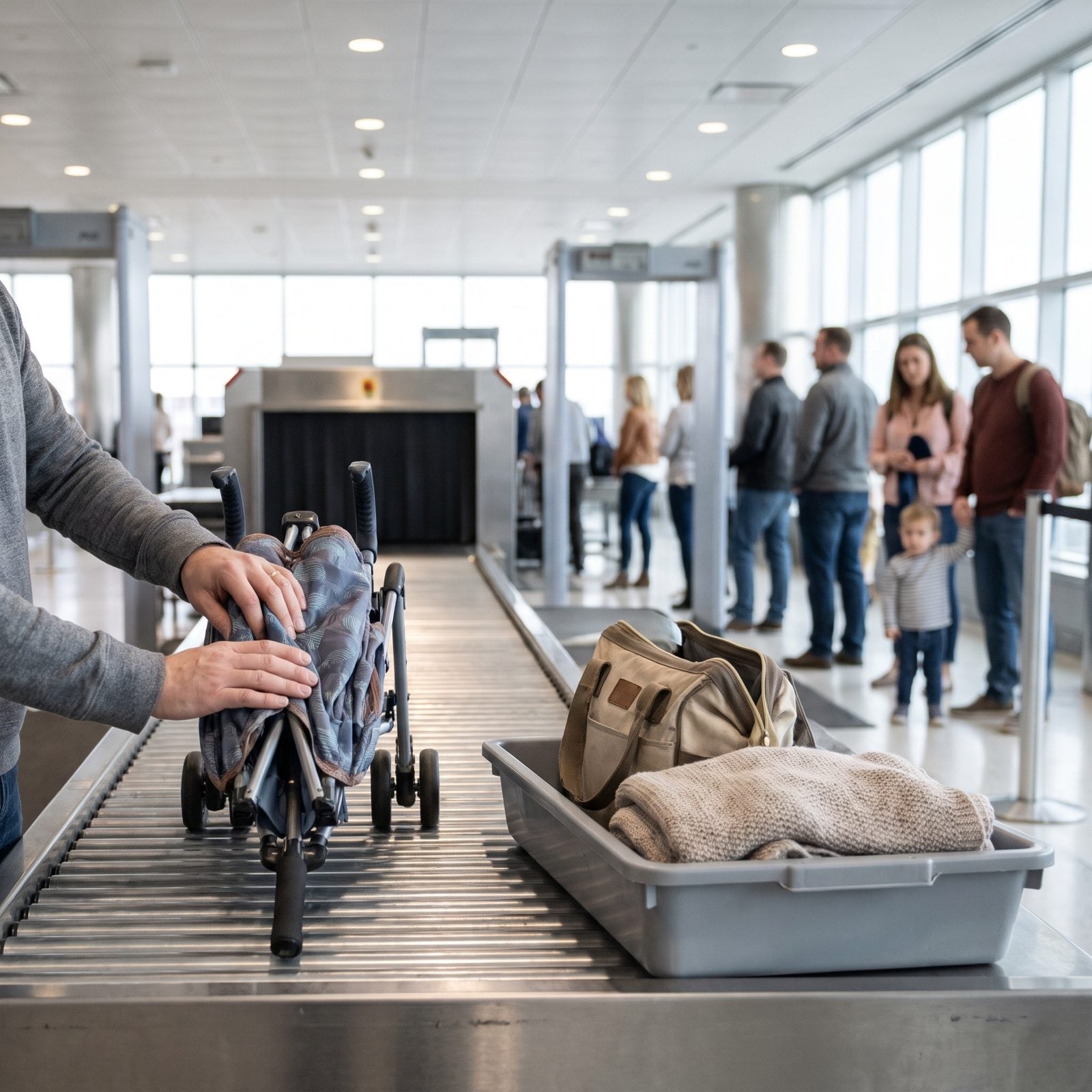
You’ve watched this one happen. A family reaches the belt and only then starts figuring out the fold mechanism, bags stacking up, an officer waiting, a line curling back toward the ID podium.
Collapsed strollers go through the X-ray. Folding one in the gap between other travelers is slow and awkward, especially the models that need two hands and a knee.
Fold it before you enter the queue. Practice at home if the stroller is new to you, and empty the undercarriage basket first since all that goes in a bin too. Wear the baby in a carrier so your hands stay free the whole time.
8. Forgetting to Empty a Child’s Pockets
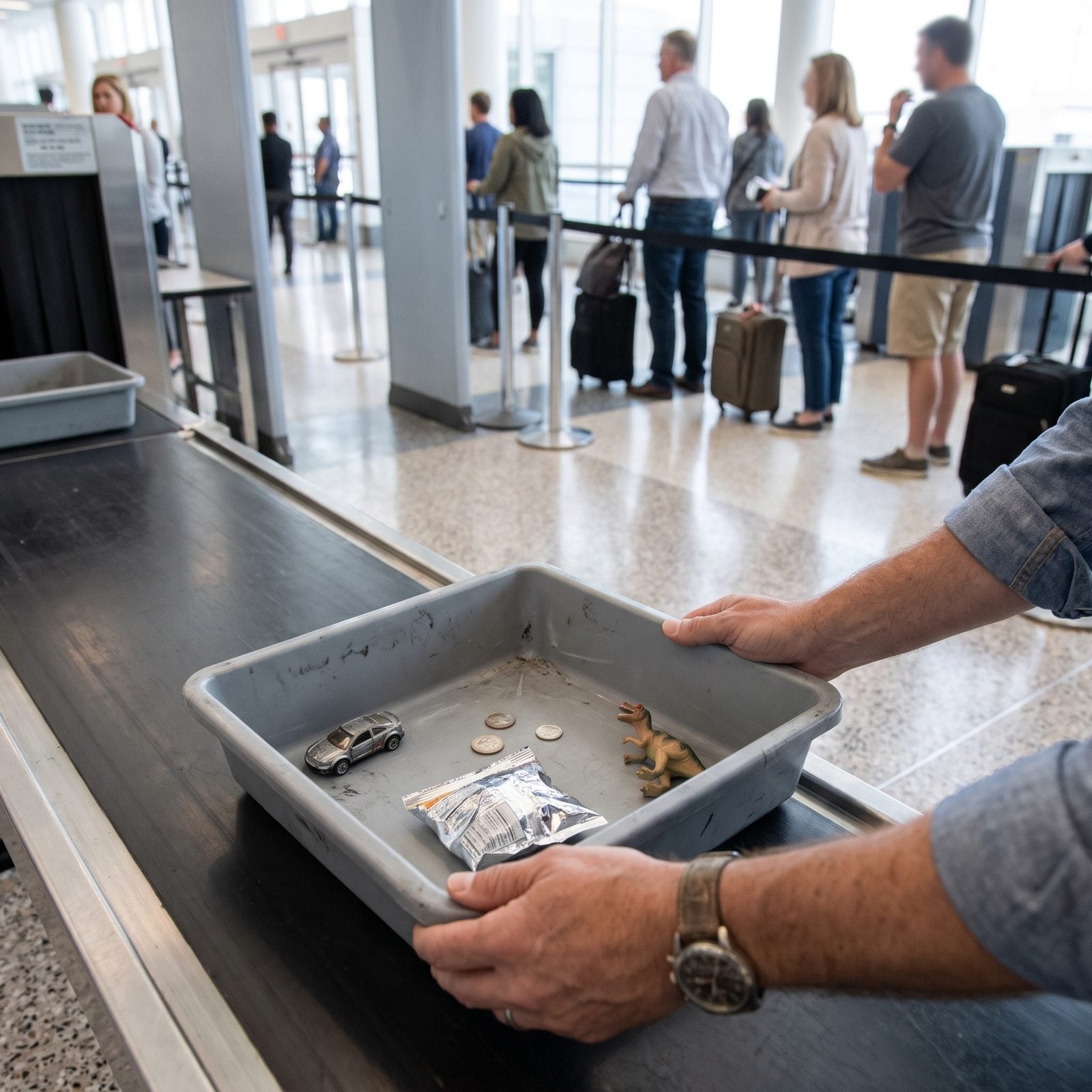
Kids are magpies. That pocket you swear was empty at the curb somehow holds a toy car, a handful of coins, three rocks from the parking lot, and a juice-stained wrapper by the time you reach the scanner. Any one of those sets off the body scanner, which means a secondary pat-down for a child and a confused few minutes for everyone.
Here’s what saves you. Before you reach the front, have your child dump every pocket into a tray — make it a game, see who finds the weirdest thing. Metal toys, coins, and chunky plastic are the usual culprits. One check at the back of the line beats the awkward dance at the front.
7. Not Mentioning Mobility-Aid Needs Before Screening Begins
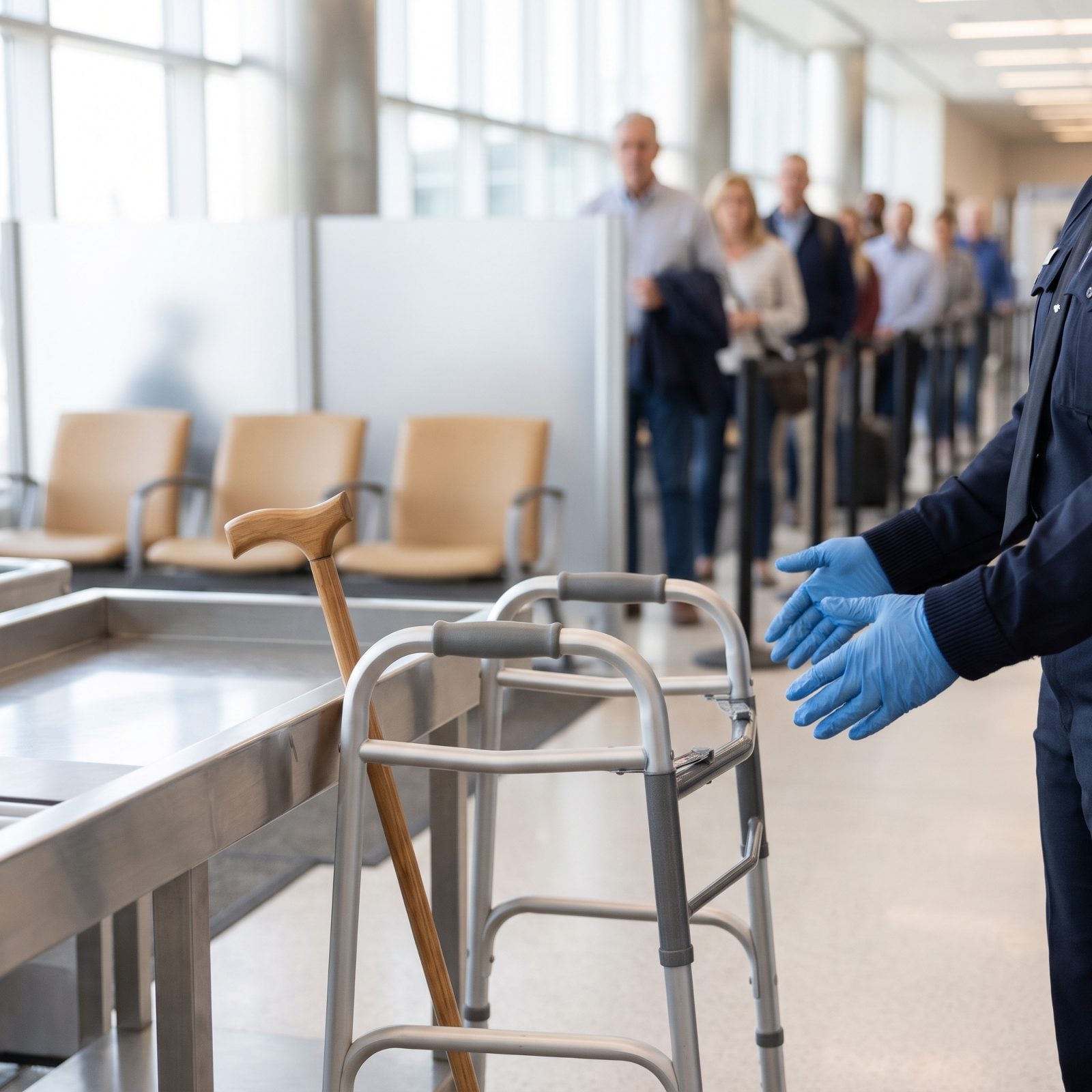
Wheelchairs, walkers, canes, prosthetics, and braces are all allowed through screening, though a walker or cane may be set aside for an officer to inspect while you’re screened. You don’t have to struggle through a standard lane. But officers can only help if they know what they’re working with.
So speak up early. As you approach, tell the officer plainly what you use and what you can and can’t do — stand for a scan, walk through the detector, raise your arms. Ask, and they’ll arrange a seated pat-down, a wheelchair screening, or a private area.
6. Burying Your CPAP Machine Where You Can’t Reach It
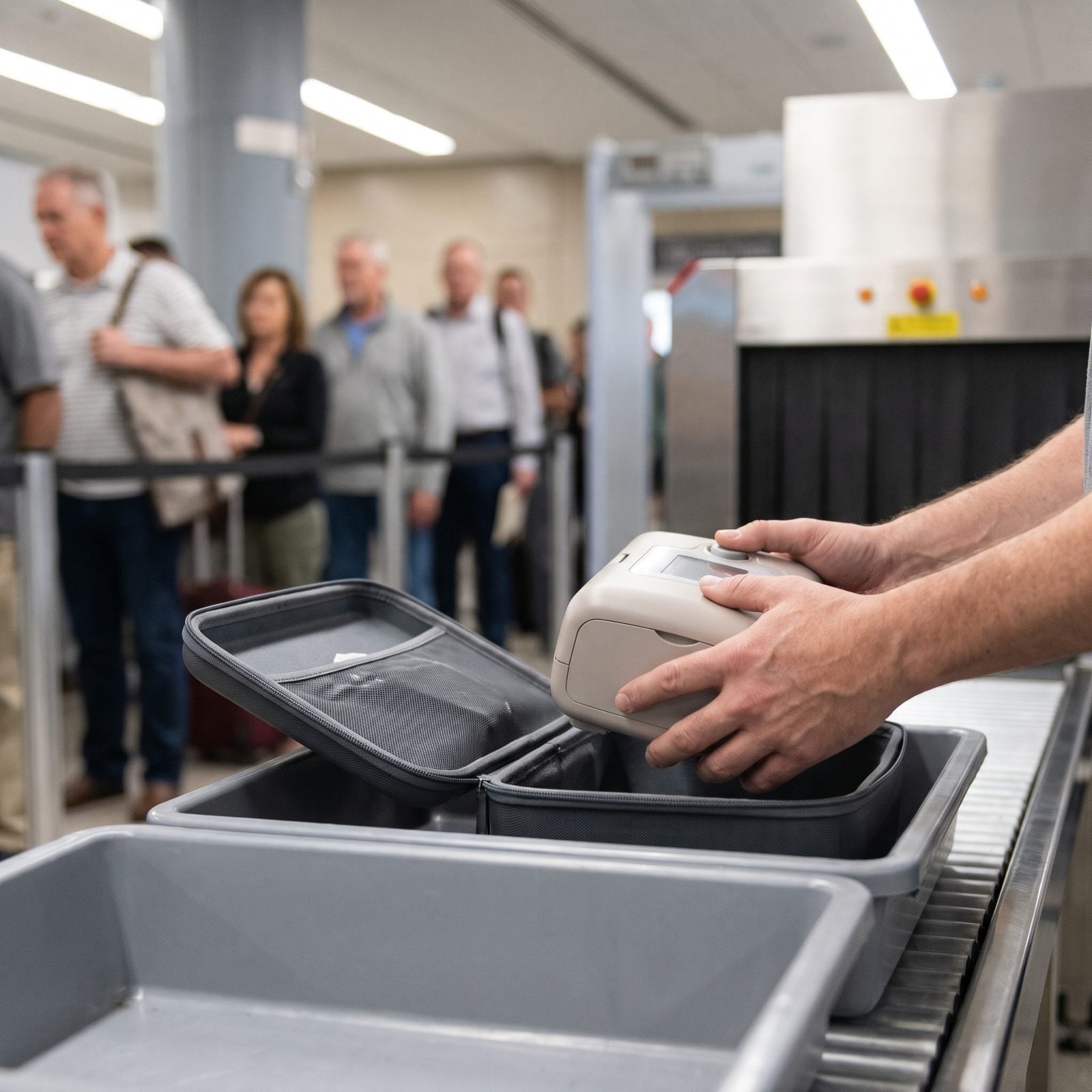
A CPAP machine has to come out of its case and ride through the X-ray in its own tray, same as a laptop. Packed at the bottom of a hard-shell suitcase under three days of clothes? You’re about to hold up the belt while you excavate it.
Pack it near the top. Better yet, carry it in a separate bag you can open fast, then pull it out and set it in its own bin before your luggage hits the belt. Officers may need to test it for residue — quick if the machine is right there, slow if it’s still buried.
5. Fidgeting or Standing Wrong in the Body Scanner
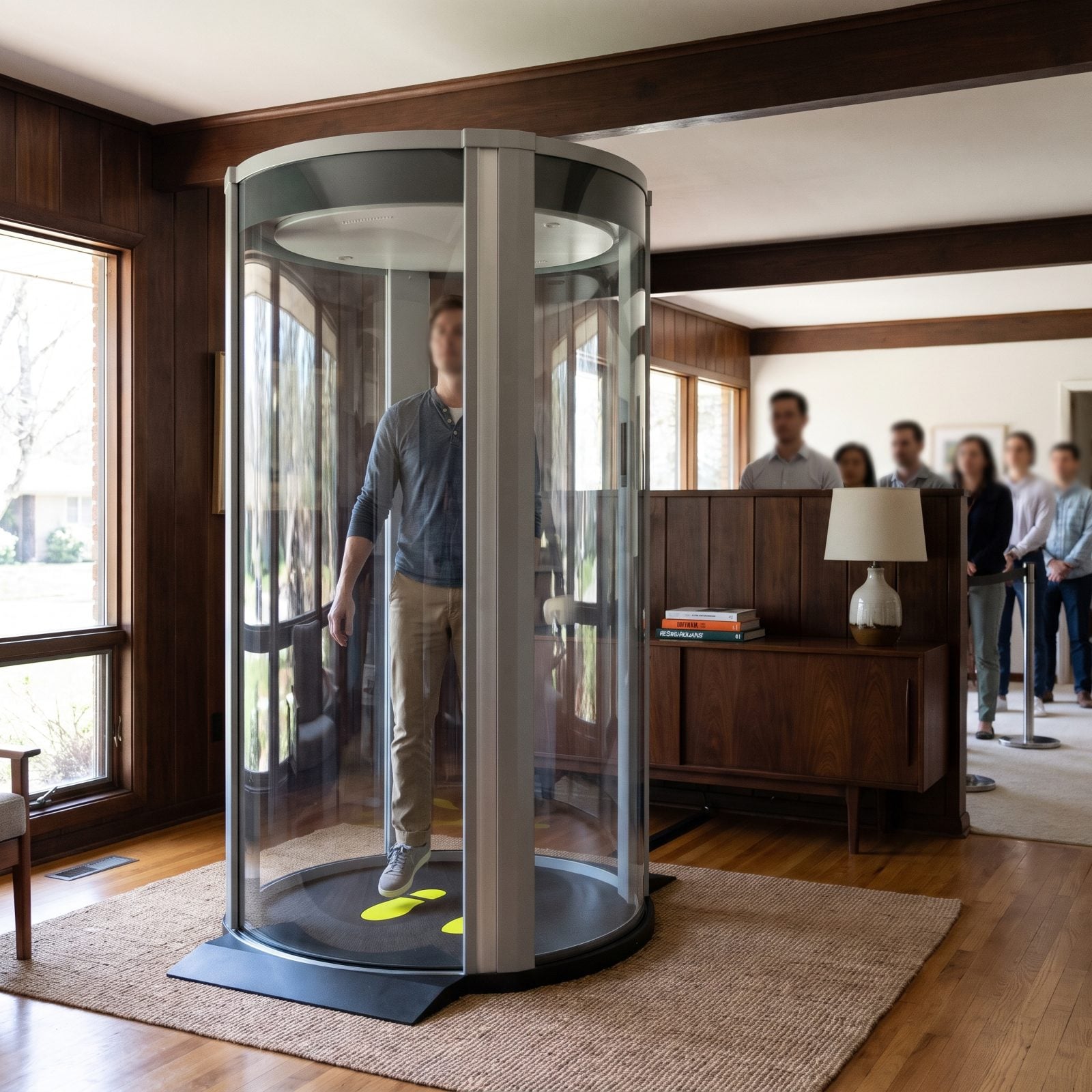
The body scanner takes a few seconds and asks almost nothing of you. Stand on the marked footprints, raise your arms over your head, hold still. The common slip is moving too soon — dropping your arms or stepping off the markers before the scan finishes.
Any movement smears the image and forces a re-scan, or worse, a pat-down of whatever flagged. So be patient. Watch the officer, step on the yellow feet, lift your arms into the shape they show you, and don’t move until they wave you forward. Empty every pocket first, because a forgotten tissue or chapstick will flag and restart the whole thing.
4. Arguing With an Officer Instead of Clearing the Routine Bag Check
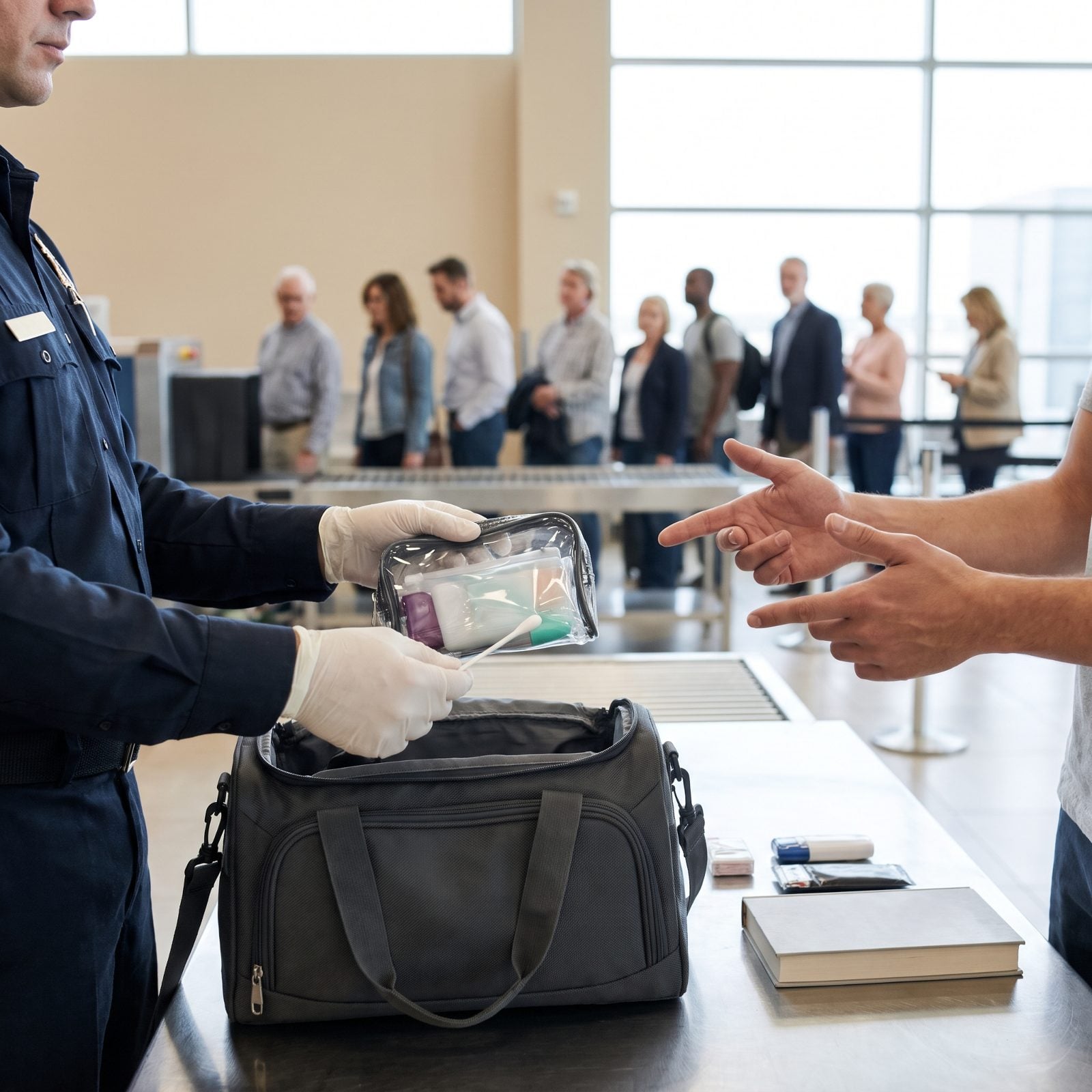
A random bag check is not an accusation. It’s routine — the machine flagged a shape, or your number came up. I understand the instinct to feel singled out. But standing there explaining that you’ve flown a hundred times and never once been stopped doesn’t speed anything up. It does the opposite.
Cooperation is the fastest way through. Let the officer open the bag, swab what they want, ask them what they’re looking for if you’re curious, and you’re done in a couple of minutes. A calm bag check is quick. An argument turns a short stop into a supervisor, a holding area, and a missed boarding call.
The person checking your bag did not pick you out of a crowd. The scanner did. Treat them like a colleague and you’ll be reunited with your gate in no time.
3. Stacking Bags and Trays on Top of Each Other on the Belt
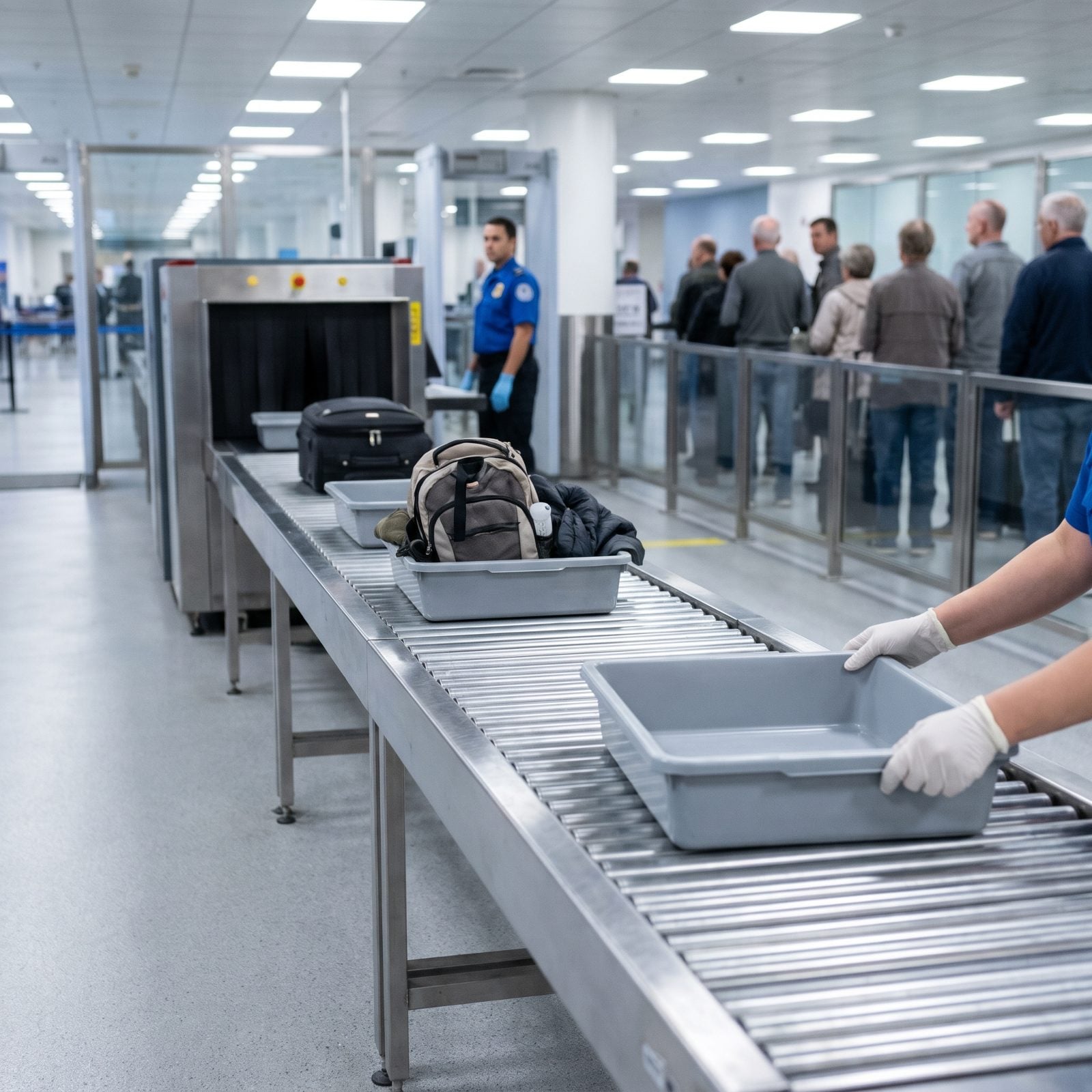
Items on the belt need to feed into the X-ray one at a time, flat, with daylight between them. Stack a backpack on a tray, or set two bins nose to tail touching, and the scanner reads them as one confusing mass — now the operator stops the belt and separates them by hand.
Lay everything flat in a single line, one item per footprint on the belt, with a gap so each piece enters the tunnel clean. Spreading out feels slower. It’s much faster than watching an officer pull your tangled pile apart while the line waits.
2. Ignoring the Lane-Specific Rules About What Actually Goes in a Bin
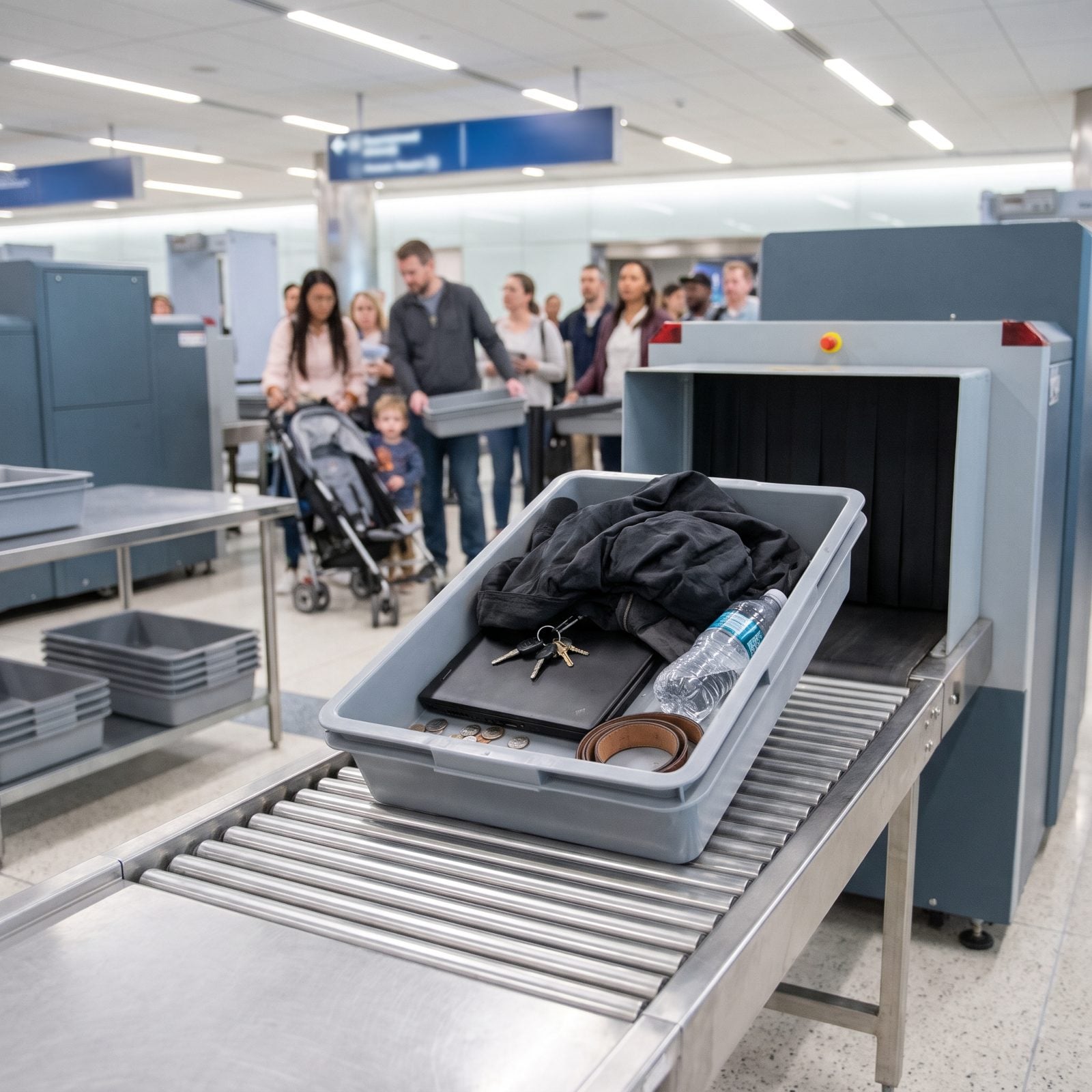
We’ve all stood behind the traveler who memorized the rules of their home airport a decade ago and never updated once. Laptop stays in, laptop comes out. Liquids out, liquids in, shoes on, shoes off. The trouble is that it all shifts — by lane, by airport, by whether that particular checkpoint has the newer CT scanners. Guess wrong and a bin gets pulled, rescanned, and the whole line holds its breath while an officer waves a wand over somebody’s forgotten water bottle.
Read the signs at the mouth of your specific lane before you load anything. Big tube-style CT unit? Laptops and liquids usually stay in the bag. Older flat machine, and you pull them out. When you can’t tell, just ask the officer standing a foot away. Honestly, they’d rather answer than rescan.
1. Repacking Your Entire Life While Still Standing at the Conveyor
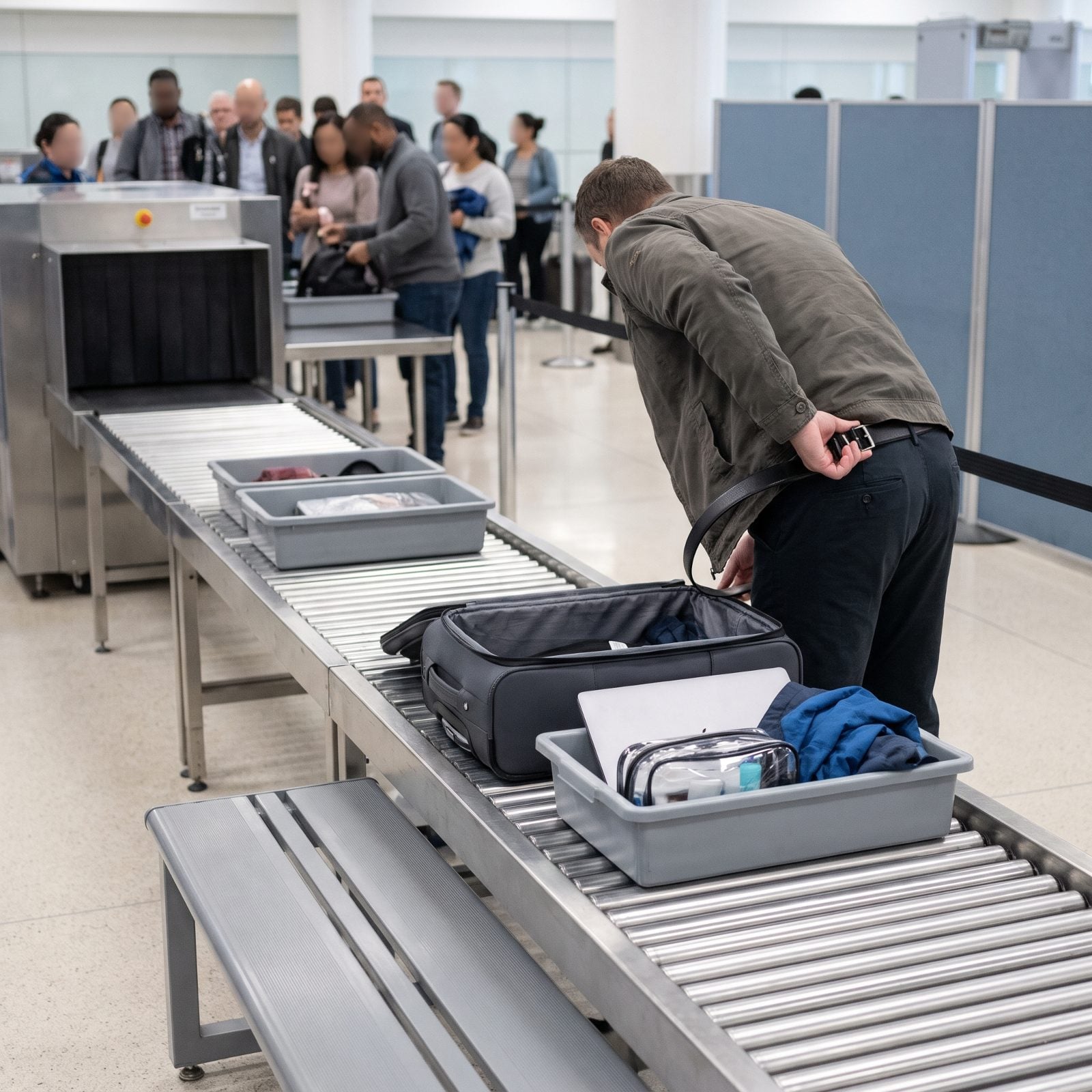
The belt can wait. The line cannot.
Here’s the bottleneck. You clear the scanner, grab your bin, and plant yourself right there at the rollers to rebuild your entire setup — belt threaded, shoes tied, laptop tucked, liquids zipped, coat on. Behind you, four bins pile up, because the one spot where everybody collects their things has just become a workbench with a human standing at it.
Scoop everything into one armful, bin and all, and carry it to the benches set back from the belt. That dead zone past the conveyor exists for precisely this reason. Reassemble over there. You’ll move faster without an audience watching, and nobody behind you has to watch their laptop drift toward the edge of a stalled machine.
Please note that some of the imagery in this article were created with the aid of AI image generators.