
The glühwein steams, the lights flicker on, and somewhere across town a traveler is standing at a padlocked gate because the market shut two days ago. First Christmas market trips go sideways in small, avoidable ways — dates missed by a weekend, hotels booked a mile too far, trains that simply don’t run on the 25th. None of it is hard to dodge once someone points it out. Read the mistakes below before you buy a single ticket.
44. Booking Flights Before Checking Market Opening Dates
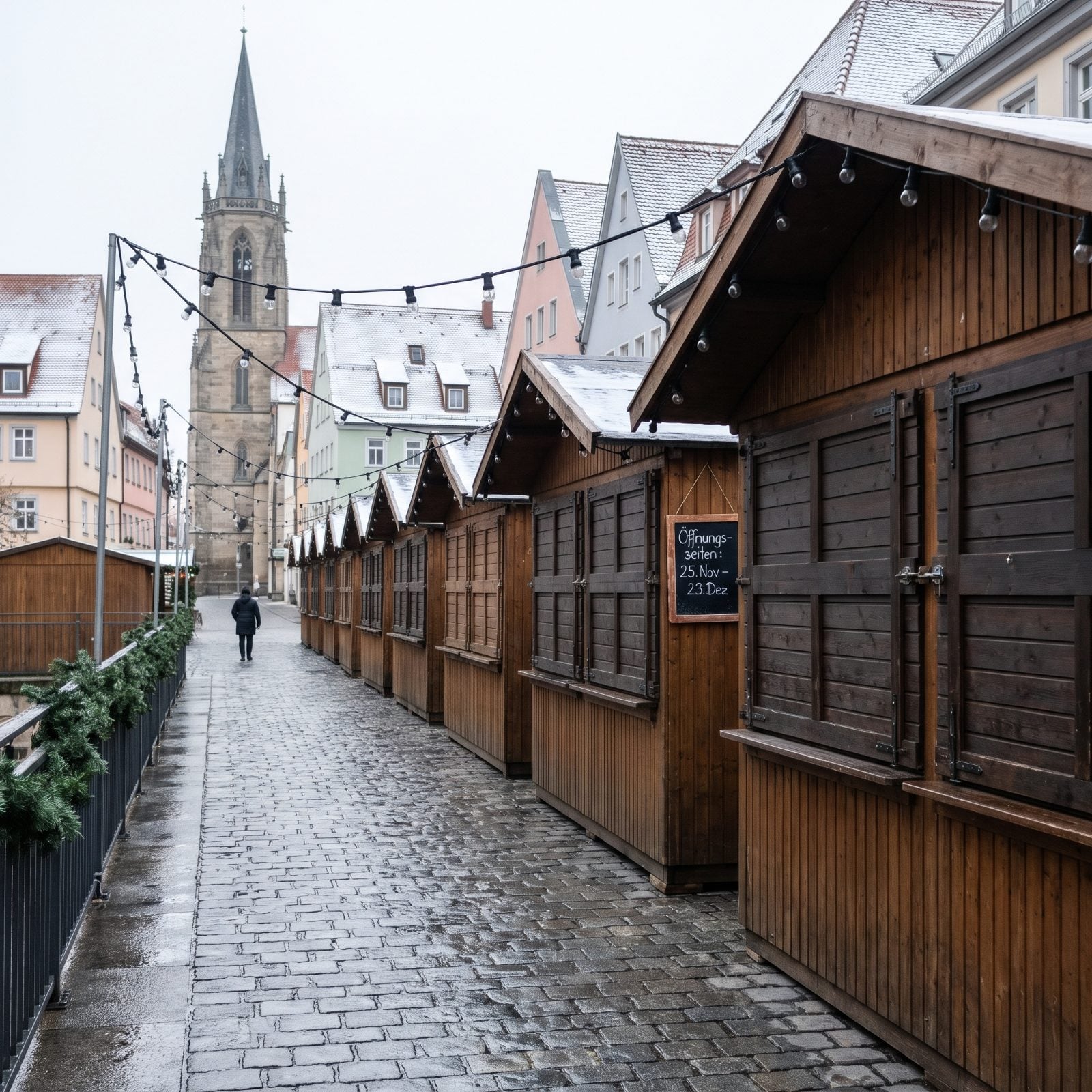
You spot a cheap fare for the second week of December and grab it before checking anything else. Then you land and find the market you flew in for doesn’t open until the 18th — or wrapped up on the 23rd while you assumed everything ran straight through New Year.
Market dates are all over the map. Some German markets close on the 24th, a handful shut by the 23rd, and others stretch into early January. Vienna, Strasbourg, Prague, Nuremberg — each runs its own calendar, and none of them care about your plans.
Pull up the official dates first, then build your flights around them. Screenshot the opening and closing days. Your plane ticket is the last thing to book, not the first.
43. Trying to Cover Too Many Cities in One Trip
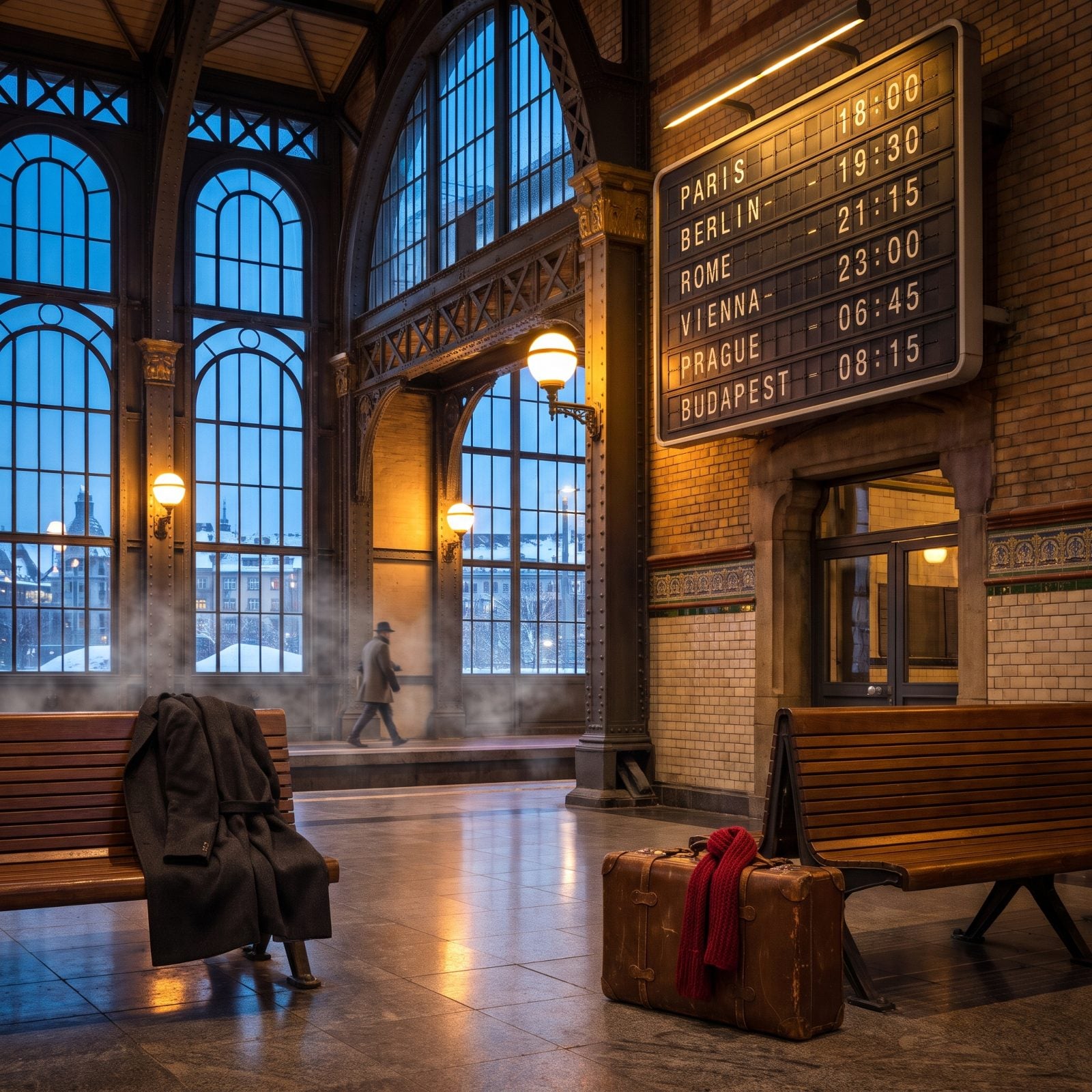
Five cities in six days sounds ambitious. What you actually get is a blur of train platforms, a suitcase bouncing over cobblestones, and arriving everywhere too wrecked to enjoy the glühwein.
Every city you add eats half a day in transit and hotel changes, so you spend the trip packing and unpacking instead of standing under the lights with a warm mug.
Pick two cities. Maybe three if they huddle close together. Base yourself in one and take day trips — Strasbourg to Colmar is a short hop, and Munich reaches a dozen Bavarian towns without much fuss. Depth beats the checklist every time, and you’ll come home remembering places instead of departure boards.
42. Visiting Only the Most Famous Market in Town
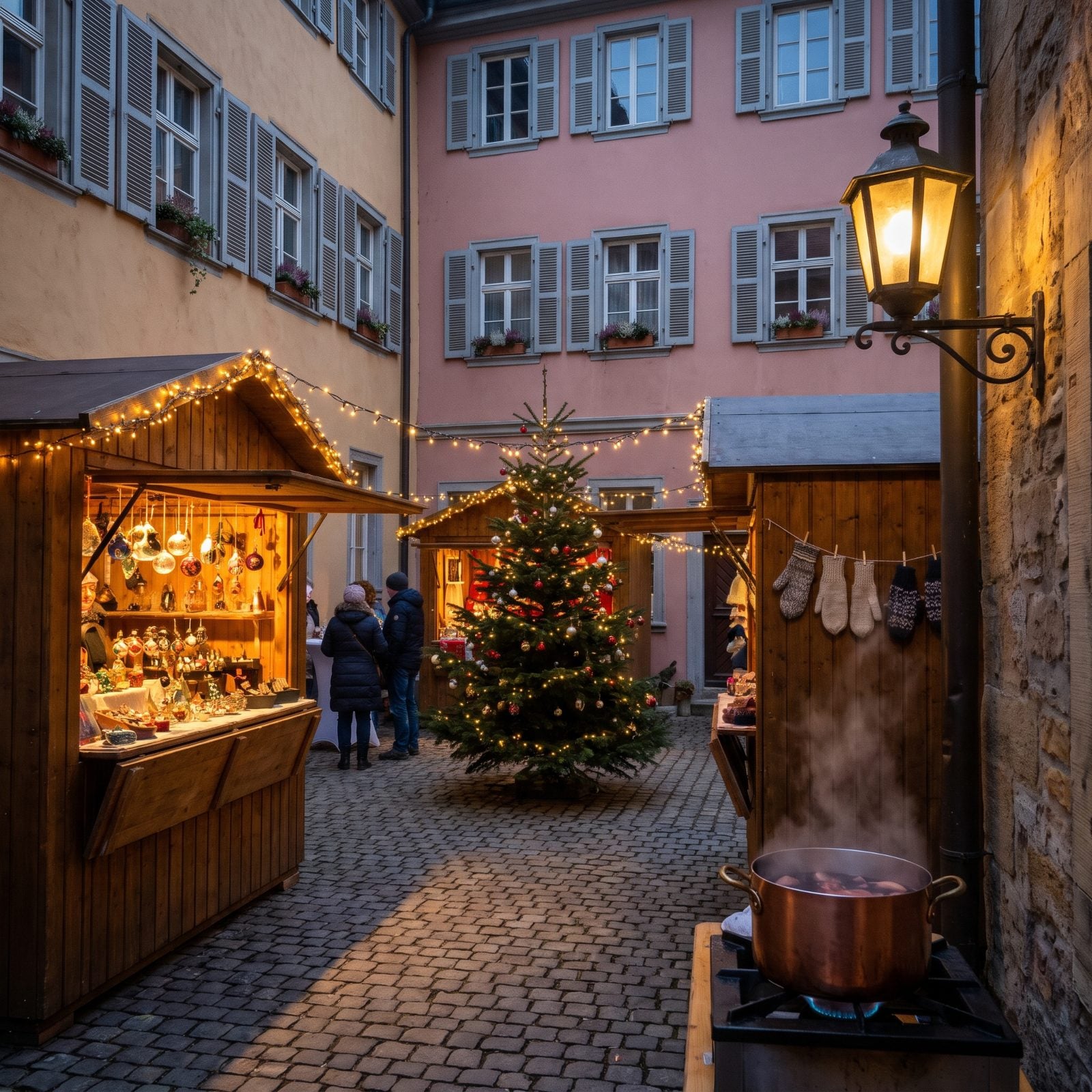
The guidebook names one market, so you go to it, photograph it, and leave convinced you’ve seen the city’s Christmas. You haven’t.
The headline market is usually the most crowded and the most commercial. The real finds sit in smaller squares a few streets over, where locals actually shop and the handmade goods outnumber the mass-produced stuff.
Ask your hotel desk which market the staff hit after work. In Vienna, slip past the Rathausplatz crowds to the Spittelberg lanes. In Berlin, the little courtyard markets leave the big tourist ones in the dust. The quiet squares are where the warmth lives.
41. Planning Every Market Visit for the Weekend
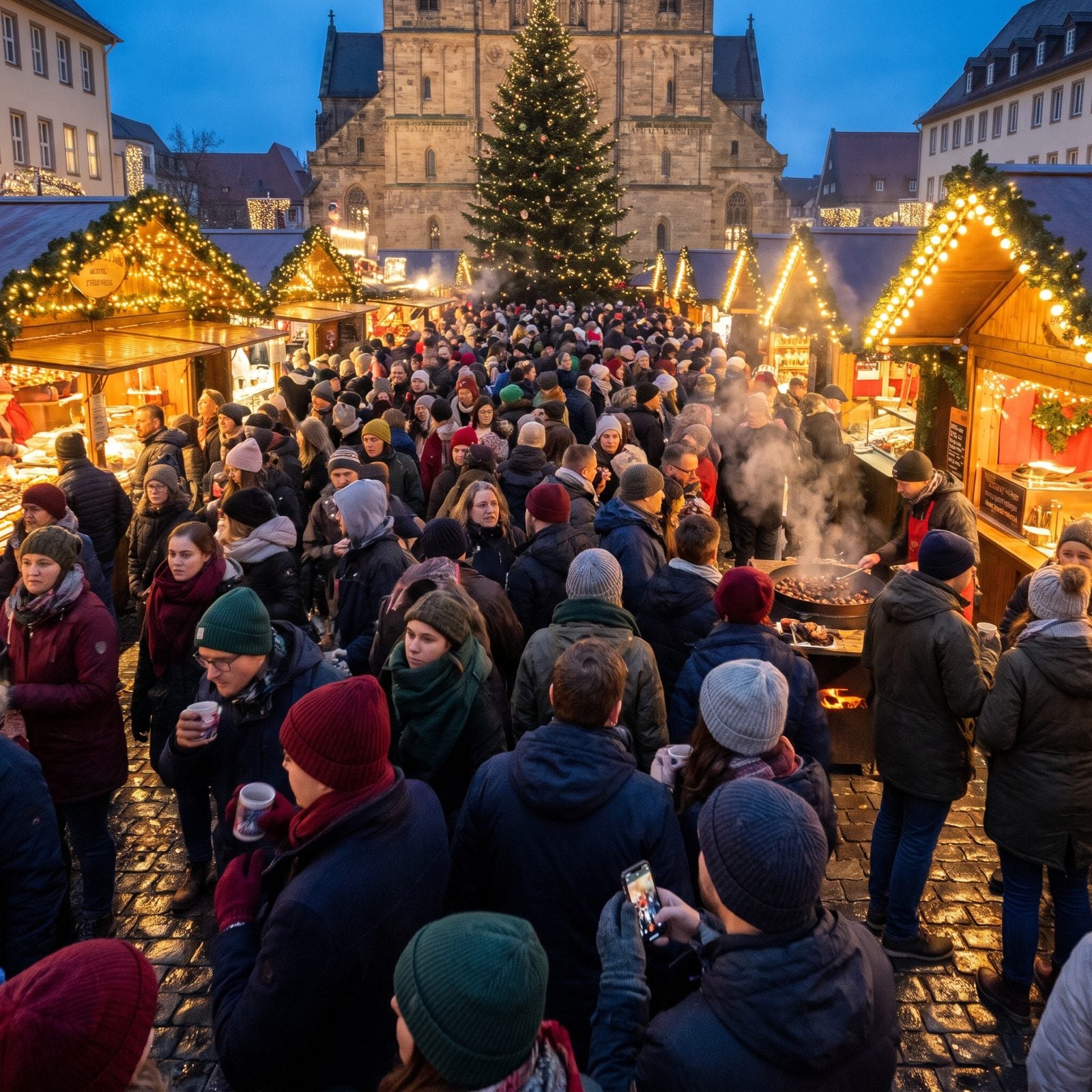
Saturday night at a major market is a shoulder-to-shoulder shuffle. You wait an age for a mug, can’t get near a stall, and give up before tasting a thing.
Weekends pull in locals, day-trippers, and tourists all at once, and the charm drowns somewhere under all those elbows.
Save the big-name markets for a weekday evening if you can swing it, and keep your weekend for travel days, smaller towns, or the quieter neighborhood squares. A Tuesday at Nuremberg feels like a different planet than a Saturday.
40. Expecting Weekday Mornings to Feel Fully Festive
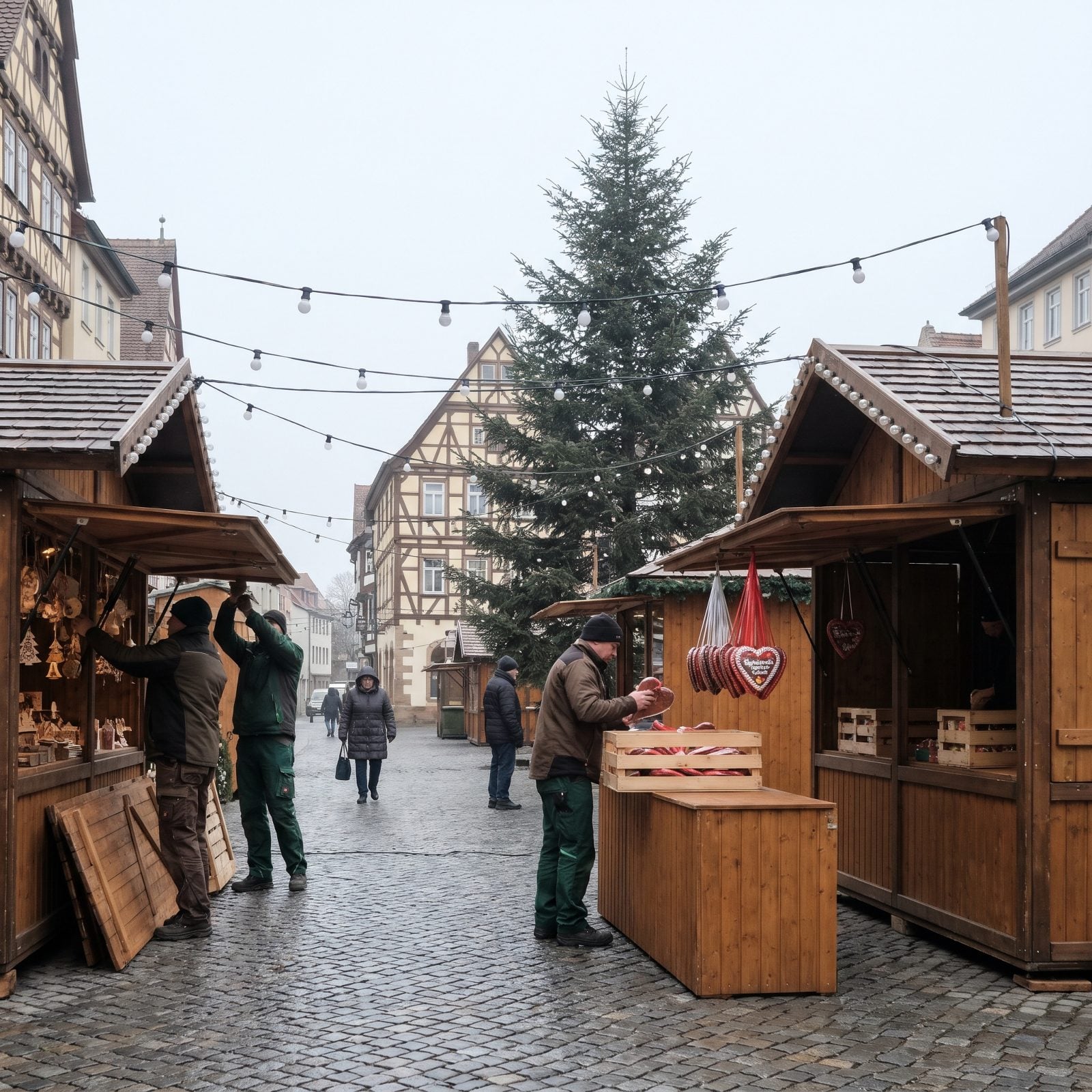
You show up at ten in the morning expecting the postcard scene and find half the stalls still shuttered, lights off, vendors nursing their coffee.
Most markets don’t hit their stride until late afternoon. Daytime is for setup and slow browsing, not the glow you came for.
So use your mornings on the things that need daylight — the architecture, the cathedral, a lazy café breakfast — then circle back as the sun drops. The market earns its reputation after dark, not before lunch.
39. Arriving Too Late to See the Market in Daylight
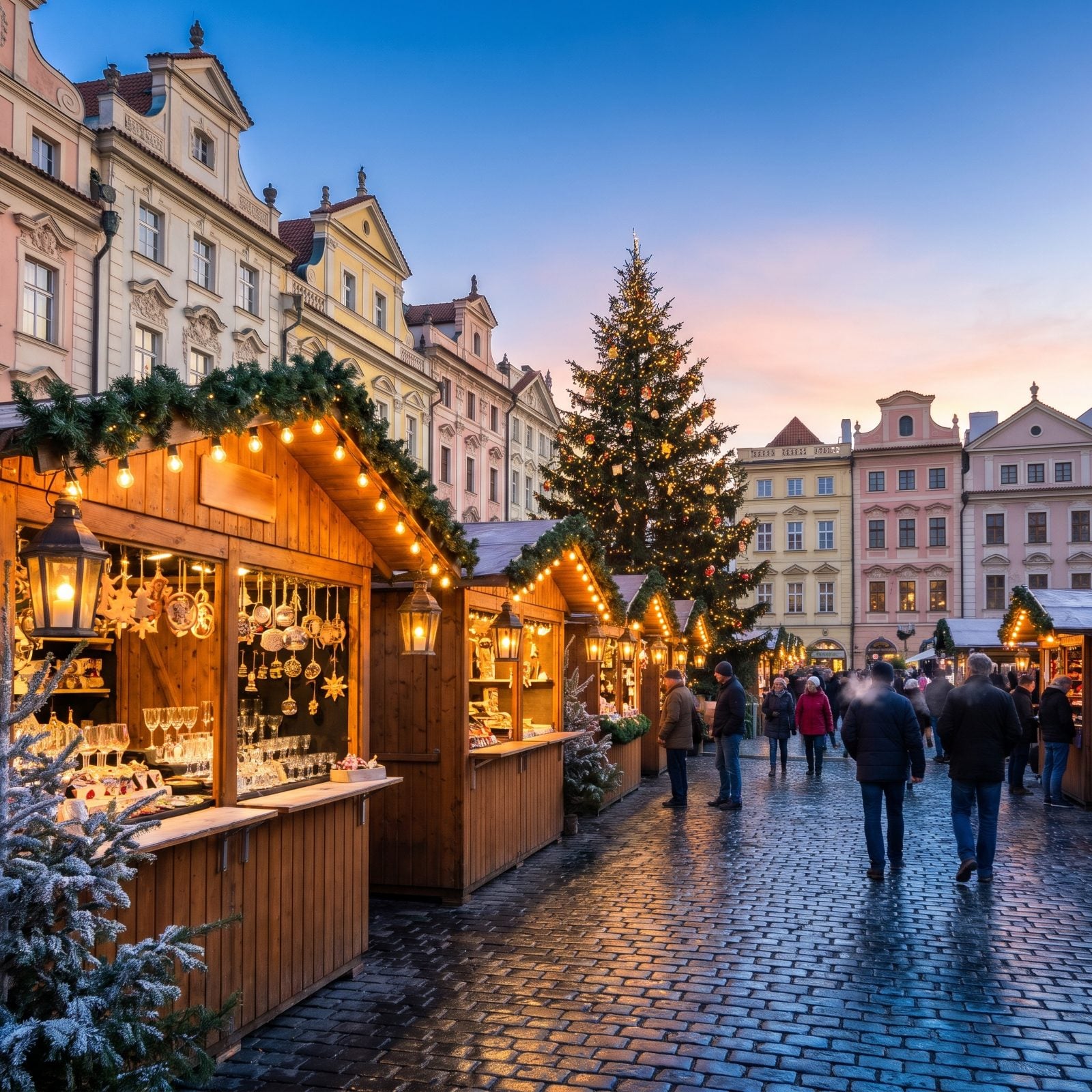
Winter dark comes early up north. By four in the afternoon the sun is long gone, and if you only turn up at seven, you never see the market — or the city — in daylight at all.
You miss the architecture, the carving on the stalls, the colors of the goods before the lights take over. Everything melts into one glowing smear.
Aim to arrive around three or three-thirty. You catch the last of the light, watch the lamps blink on one by one, and get both versions of the market in a single visit. That golden-blue window is the best twenty minutes of the whole evening.
38. Leaving Before the Lights Come On
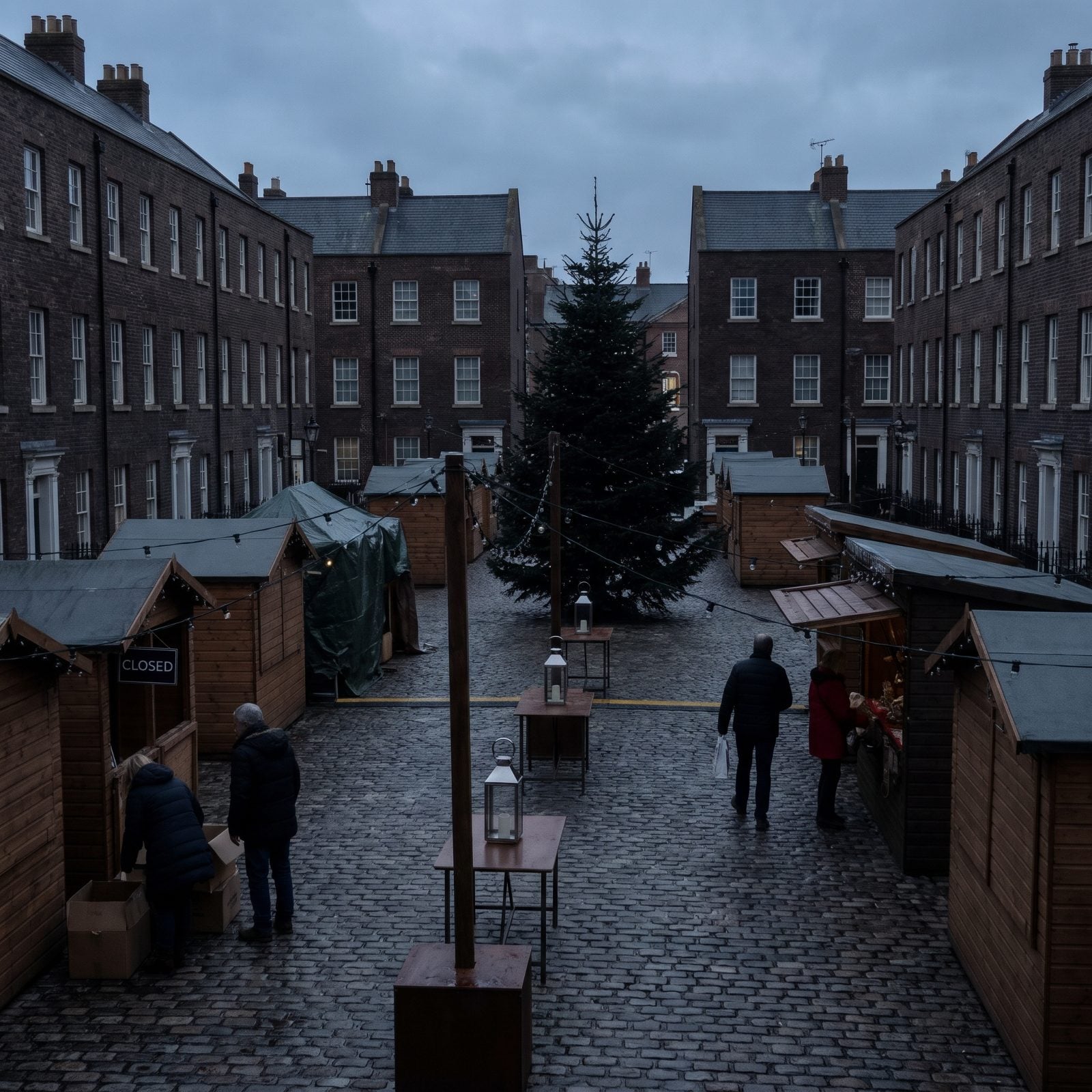
You wander all afternoon, get cold around four-thirty, and shuffle back to the hotel just as the sky goes dark — which is the exact moment the whole place comes alive.
Sunny afternoons are lovely, but so much of what you came for happens at night: the lights, the lanterns, the glow off the mugs, the choir on the square. Leaving at dusk is like walking out of a concert while the orchestra is still tuning.
Build a warm-up break into your plan. Duck into a café around four, thaw out over a hot chocolate, then head back out at five when the bulbs are blazing. Pack spare socks and thermal layers so the cold never chases you home early.
37. Choosing a Hotel Far From the Historic Center
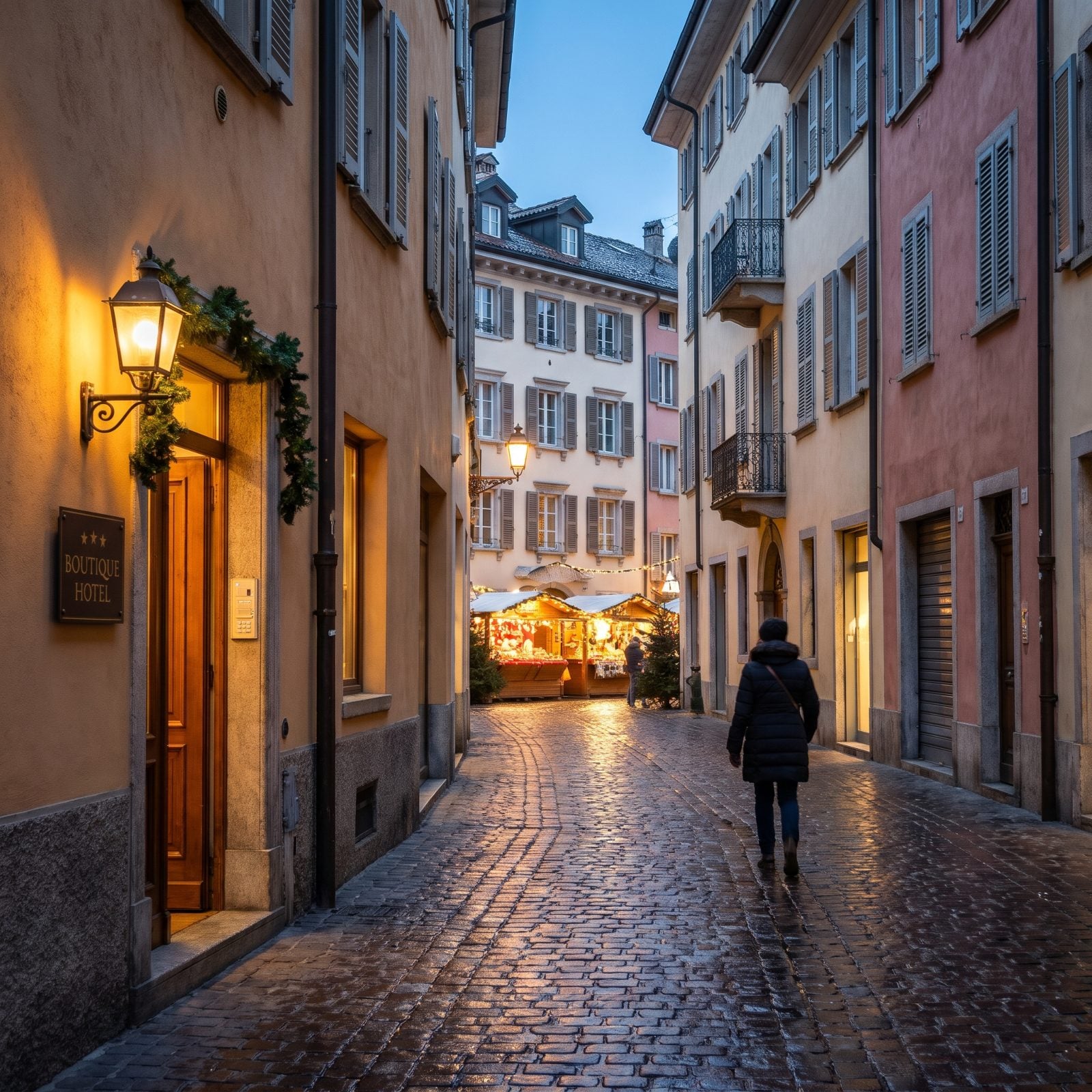
The hotel on the edge of town costs a bit less a night. It also means a cab or a long tram ride every time you want to pop back for dry gloves or a nap.
Market trips run on short loops — in and out, warm up, head back out. Distance kills that rhythm, and the savings evaporate into transit time and fares.
Spend a little more and stay within a ten-minute walk of the main square. You’ll duck back for a rest, swap layers, drop off purchases, and return without a second thought. In a market city, where you sleep matters more than how big the room is.
36. Booking a Room Above a Noisy Market Square
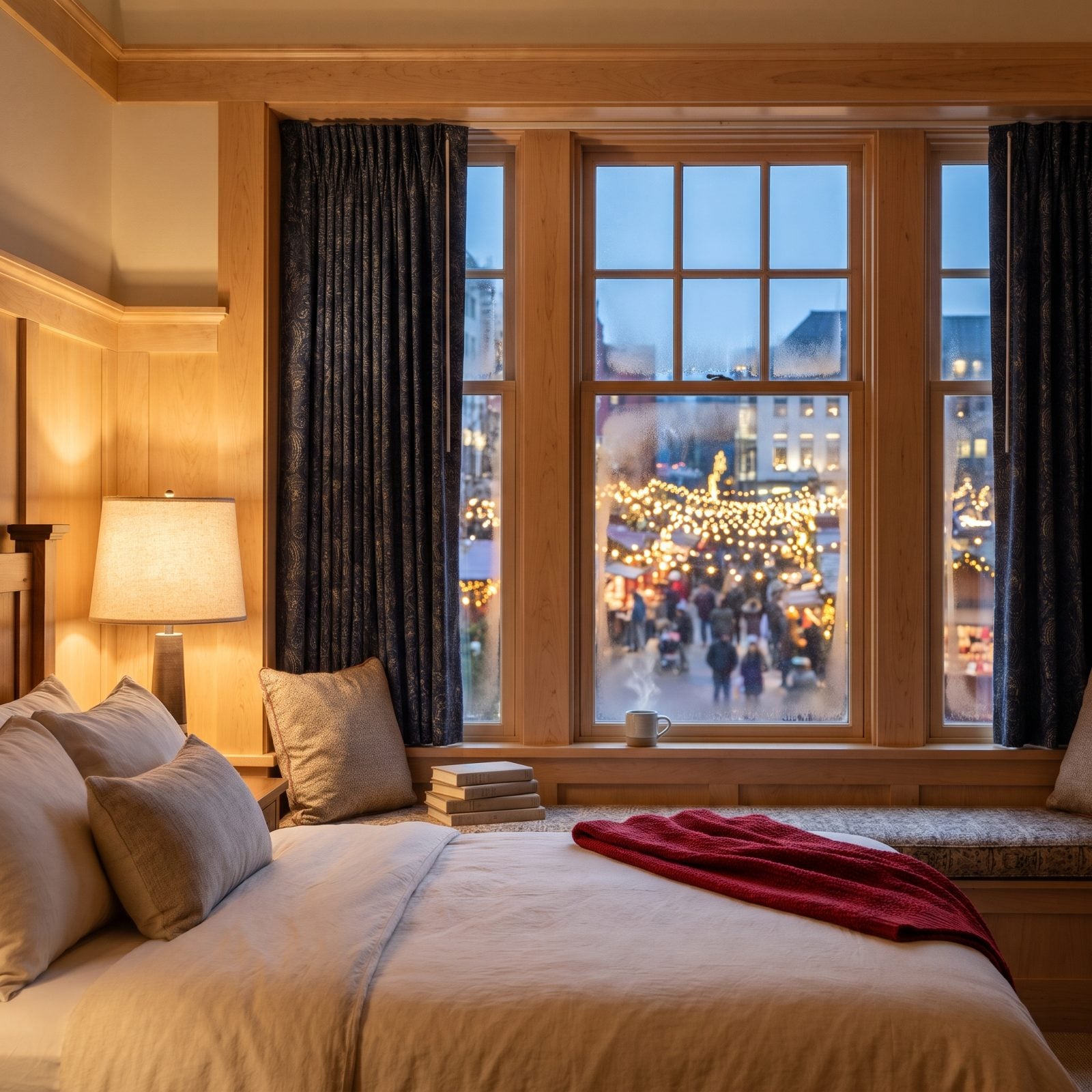
A window right over the square sounds dreamy until midnight. The stalls pack up loud, the delivery trucks rumble in at dawn, and the crowd below carries on well past when you wanted to sleep.
That picture-window view costs you your rest, and a tired traveler enjoys nothing. Markets often drag their noise and setup into the small hours.
Book somewhere central but facing a courtyard or a side street. You stay a two-minute walk from the action and still get quiet once the mugs stop clinking. When you reserve, just ask for a back-facing room. Simple fix.
35. Assuming Public Transportation Runs Normally on Holidays
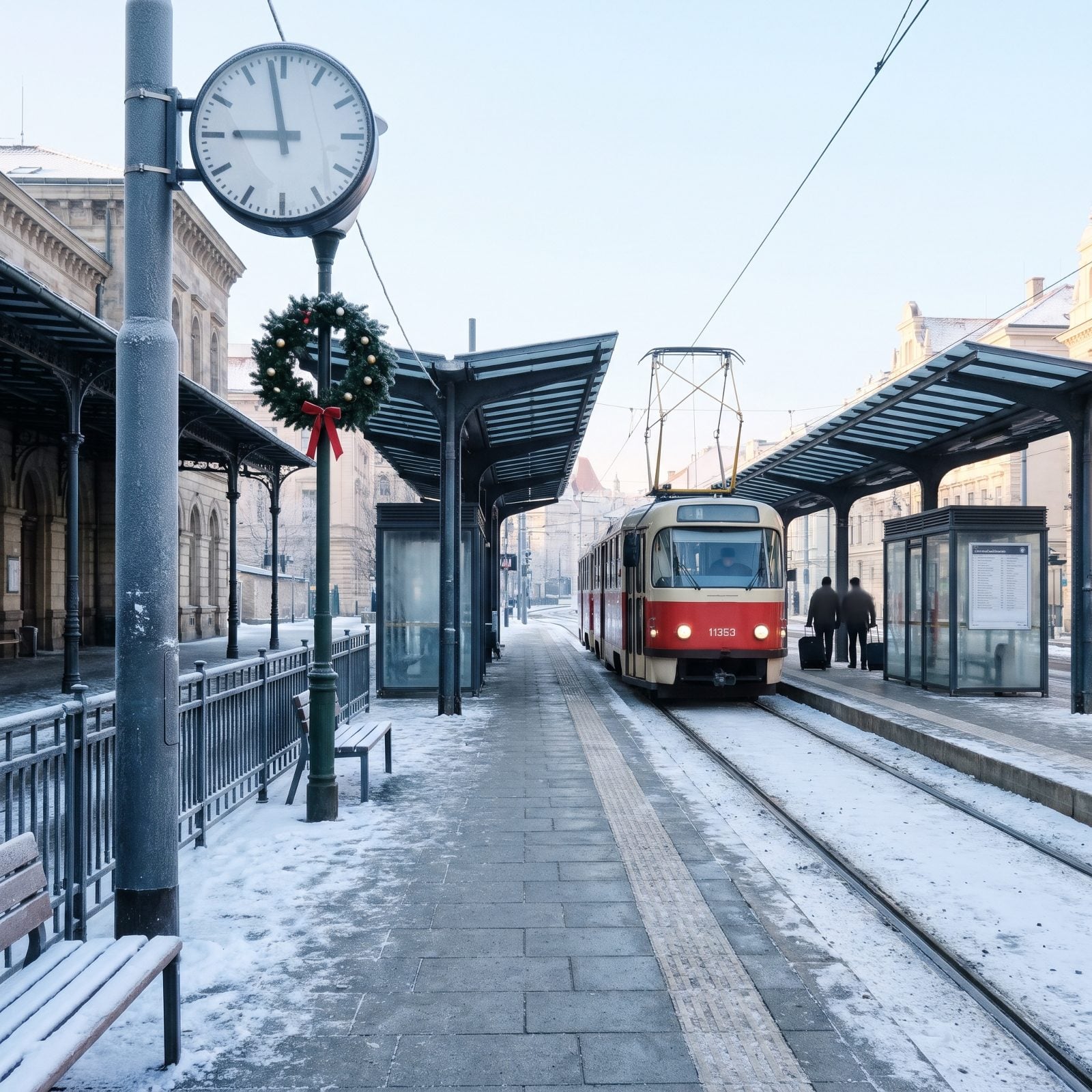
You map out your days around frequent trams and open shops, then December 24 arrives and the city just… stops. Reduced schedules. Shuttered supermarkets. Markets closing early.
Across much of Europe, Christmas Eve afternoon, Christmas Day, and sometimes the 26th run on skeleton timetables or nothing at all. Stranded tourists are a holiday tradition nobody signs up for.
Check the holiday schedule before you lock in travel days. Buy groceries and snacks the day before, confirm which markets close on the 24th, and if you need a train on a holiday, book it ahead — the few that run fill up fast.
34. Forgetting to Reserve Long-Distance Trains Early
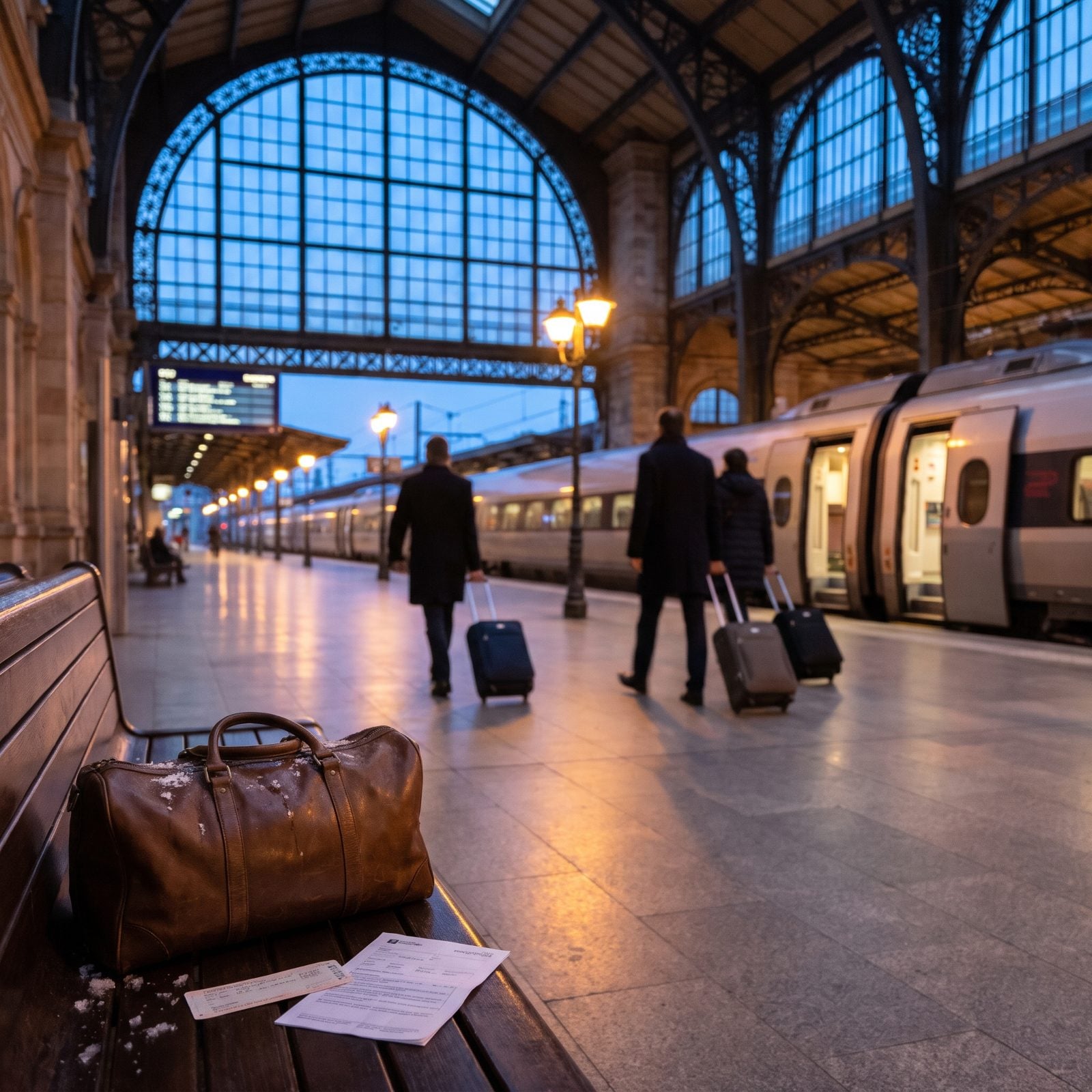
You picture rolling up to the station, buying a ticket, and hopping aboard. That works for a regional commuter line. It does not work for a Thalys, a TGV, or an ICE in the week before Christmas, when every seat is spoken for and the cheap fares vanished a month ago.
Here’s the sting. Show up with no reservation and you’re either paying triple the advance fare or standing in a vestibule for four hours with your bag between your knees.
Book the moment your dates are firm. High-speed routes tend to open bookings a couple of months out, and the earliest fare tier is the one that makes the whole trip affordable.
33. Relying on the Last Train Back to Your Base
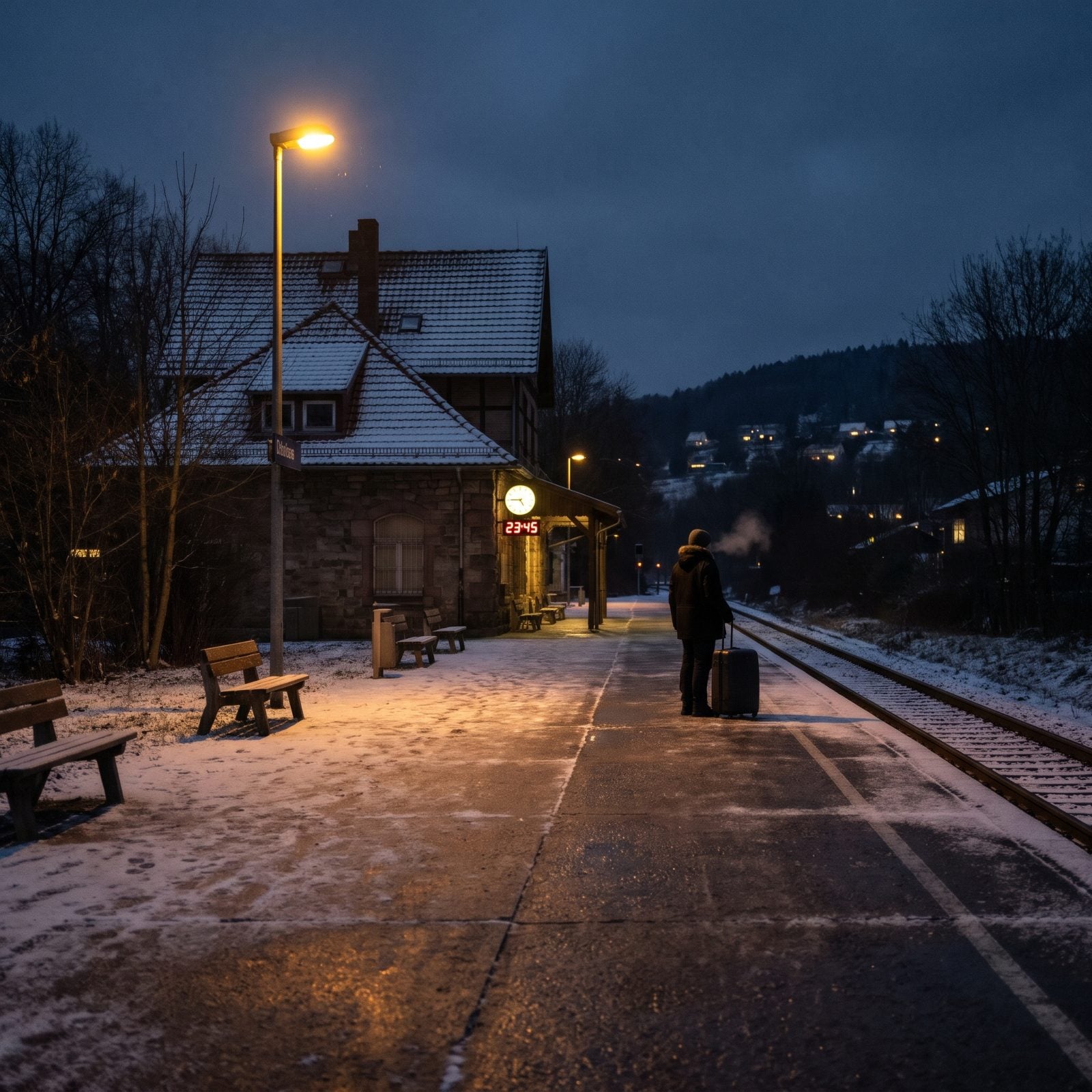
The plan looks tidy on paper. Stay in a cheaper town, day-trip into the bigger towns, catch the 10:48 home. Then the long winter evening stretches on, your feet hurt, a warm café holds you just a little longer, and you glance up to find the last train left eleven minutes ago.
Rural timetables thin out early, and a line that runs every twenty minutes on a weekday can stop dead at nine on a winter Sunday. Holiday schedules cut even deeper.
Never pin your night to the final departure. Treat the second-to-last train as your actual deadline, check the holiday timetable rather than the standard one, and keep the number of a local taxi firm saved in case you lose track of time.
32. Driving Without Researching Winter Tire Rules
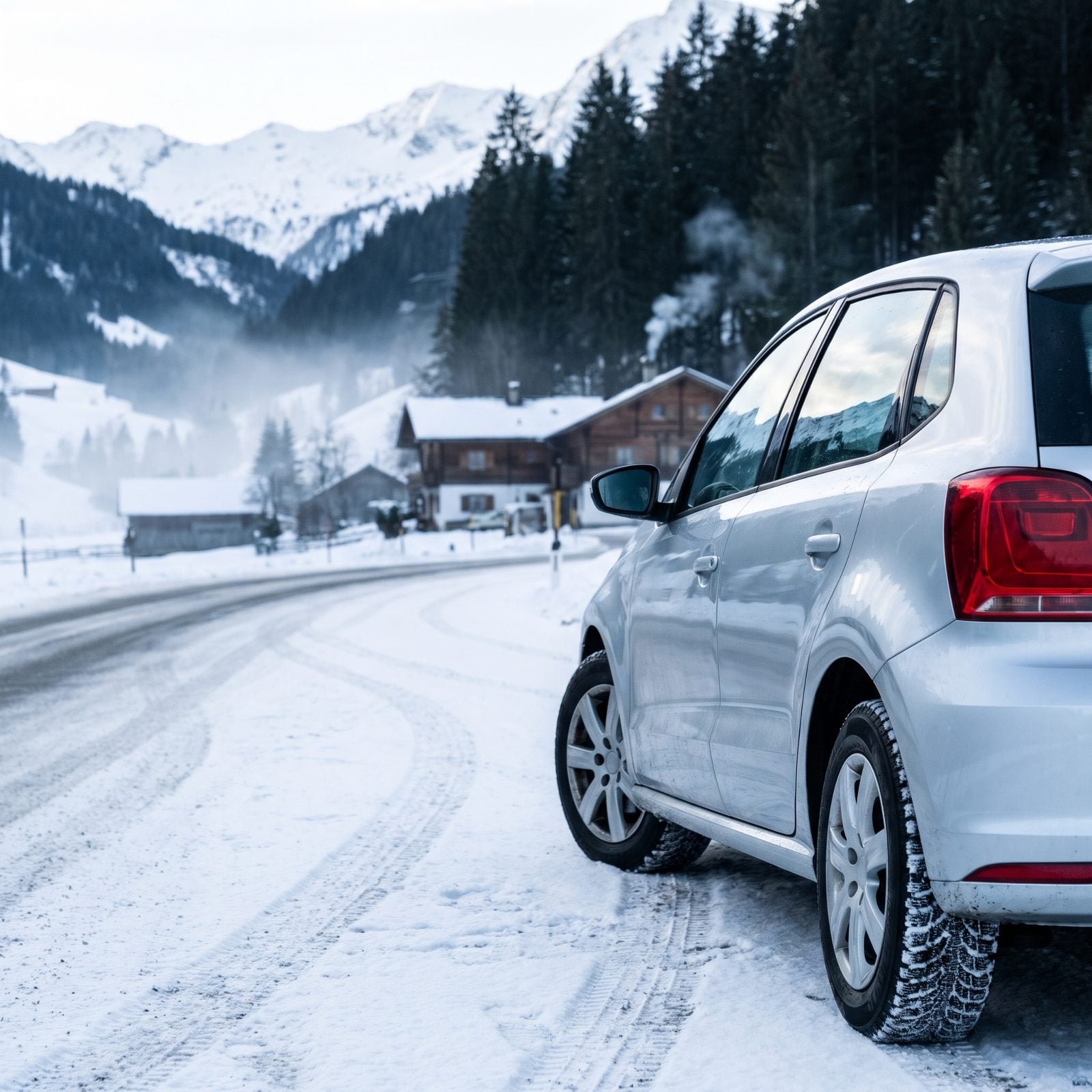
Renting a car to chain together smaller markets sounds romantic until a gendarme pulls you over on a snowy pass and asks about your tires.
Here’s what catches people out: several countries make winter tires or carried chains a legal requirement in cold months, enforced with real fines, and some alpine stretches simply won’t let you through without them. Beyond the paperwork, a summer-tire rental on an icy grade is genuinely dangerous.
Before you book, confirm the rules for every country on your route. Germany and Austria, for instance, require winter tires in wintry conditions. Request a winter-equipped vehicle in writing and get the confirmation emailed to you.
31. Building an Itinerary With No Weather Buffer
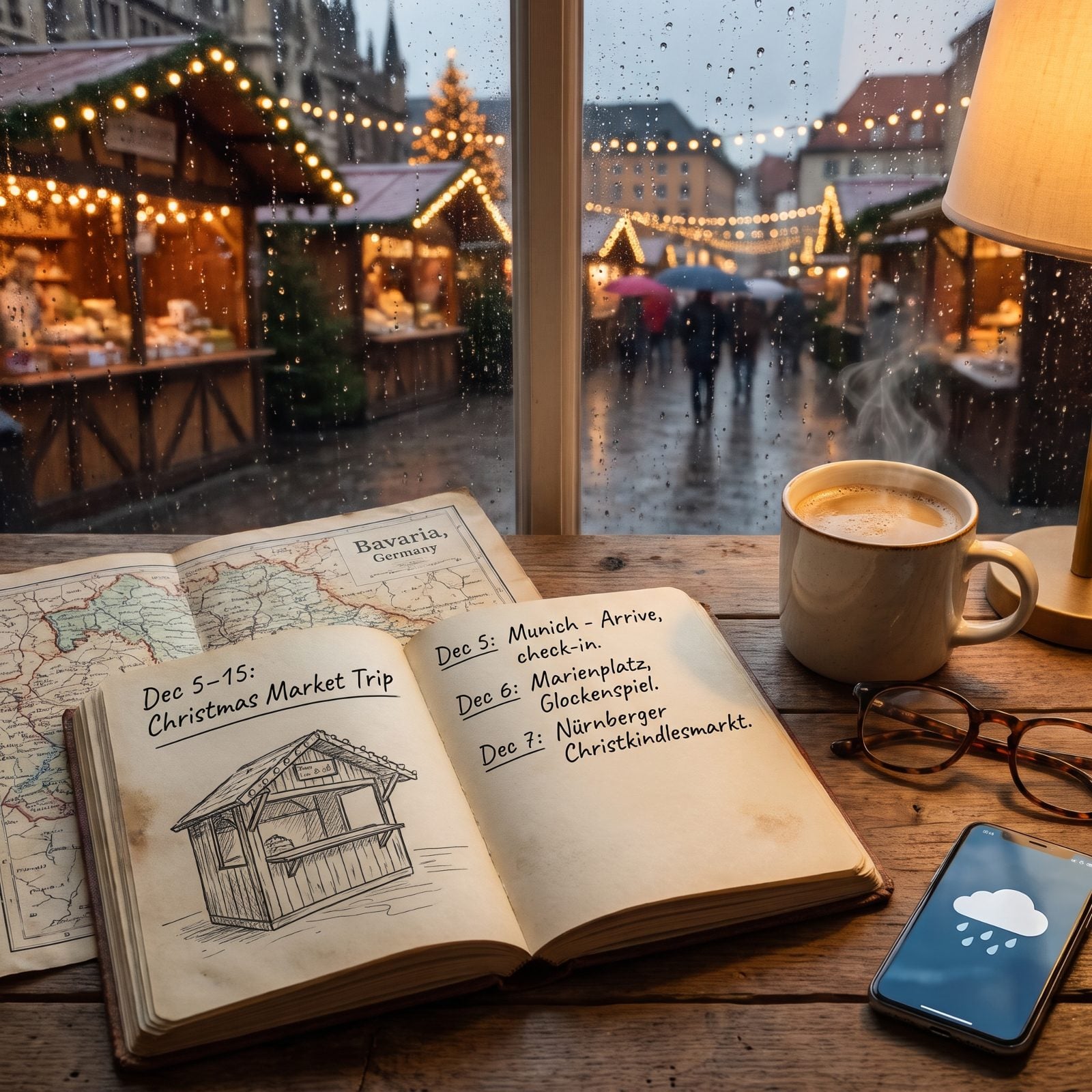
The over-packed itinerary is the classic first-timer error. Four cities in five days, a market every evening, a cathedral every morning, no gaps. It looks ambitious, and it collapses the first time fog grounds a flight or snow slows a train.
December weather across the continent is moody and completely unbothered by your spreadsheet. A single delay cascades through a rigid plan and you spend the trip chasing connections instead of enjoying anything.
So leave slack. Build at least one open half-day per city with nothing booked, and never schedule a market night that depends on arriving that same afternoon by air. A delayed morning should cost you a lie-in, not your whole evening.
30. Packing a Heavy Coat That Is Not Waterproof
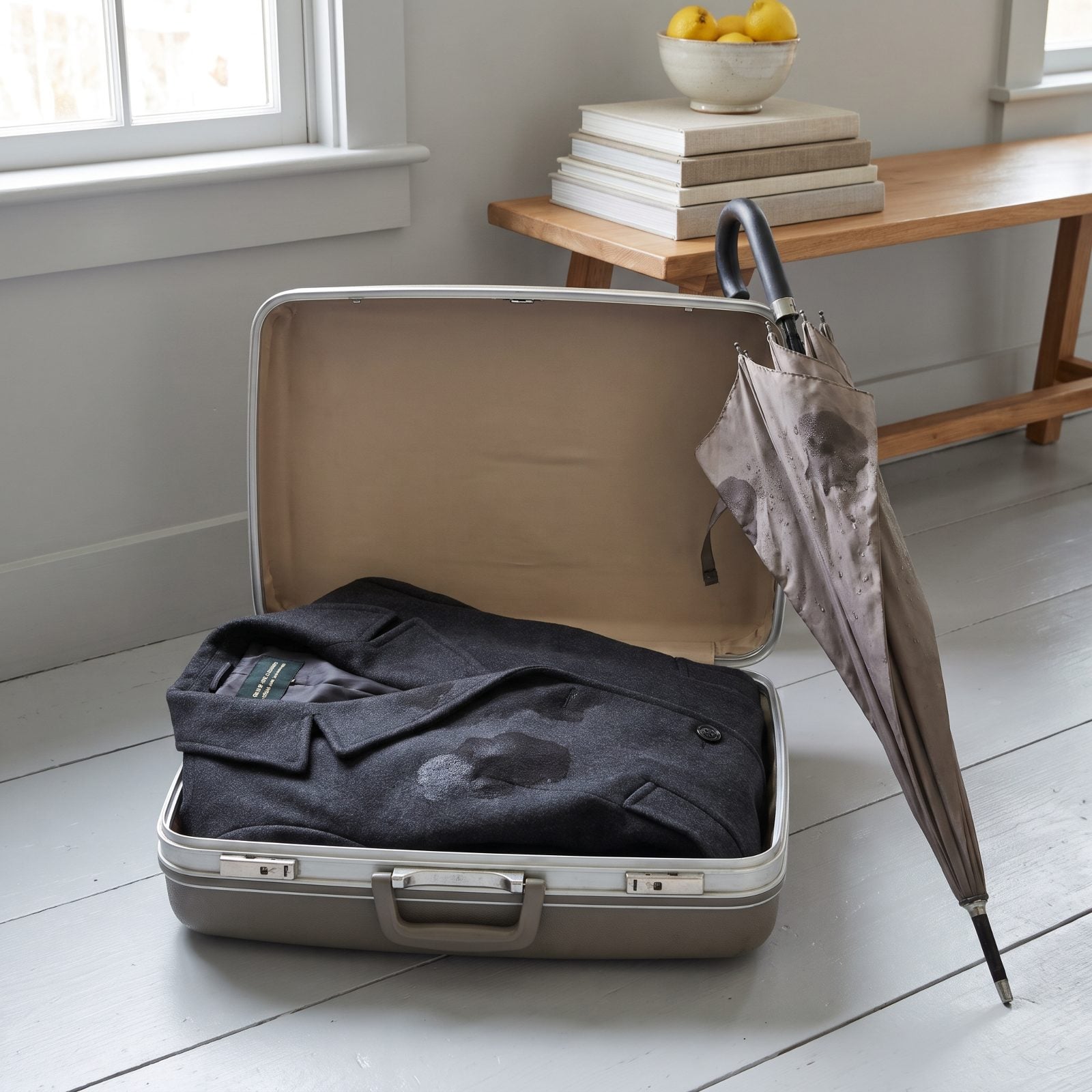
That gorgeous wool overcoat feels like exactly the right thing to pack. Warm, elegant, the picture of European winter. Then it rains for three hours, the wool drinks it in, and you’re carrying a cold, sodden blanket on your shoulders with no way to dry it by morning.
Markets live outdoors, where sleet and drizzle are the house specialty and untreated wool holds water like a sponge.
You don’t have to abandon the wool. Layer a packable rain shell over it, or choose a coat with a treated, water-resistant outer. A proper waterproof parka with a hood earns its place faster than anything else in the bag.
29. Wearing Fashion Boots With Slippery Soles
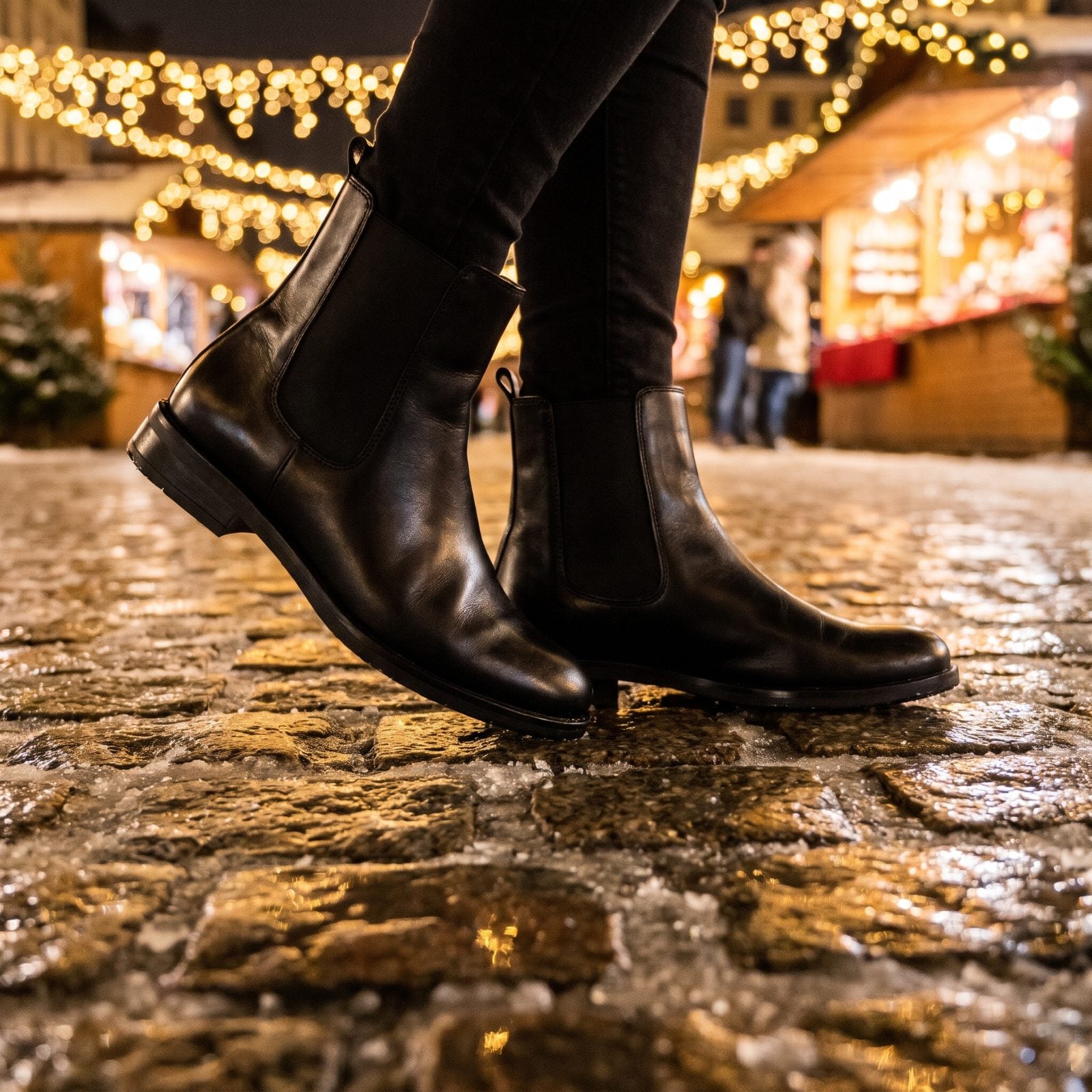
The sleek leather boot with the smooth sole photographs beautifully and betrays you completely. Old-town streets are cobbled, uneven, and wet by six every night, so a flat-bottomed sole turns into an ice skate the moment slush shows up.
A fall on cobblestones isn’t a cute travel story. It’s a sprained wrist two days in.
Pick boots with a chunky, grippy lug sole. A lug sole leather boot gives you traction without surrendering the look, and a waterproof chelsea boot handles wet stone far better than anything with a hard flat heel.
28. Breaking In New Shoes During the Trip
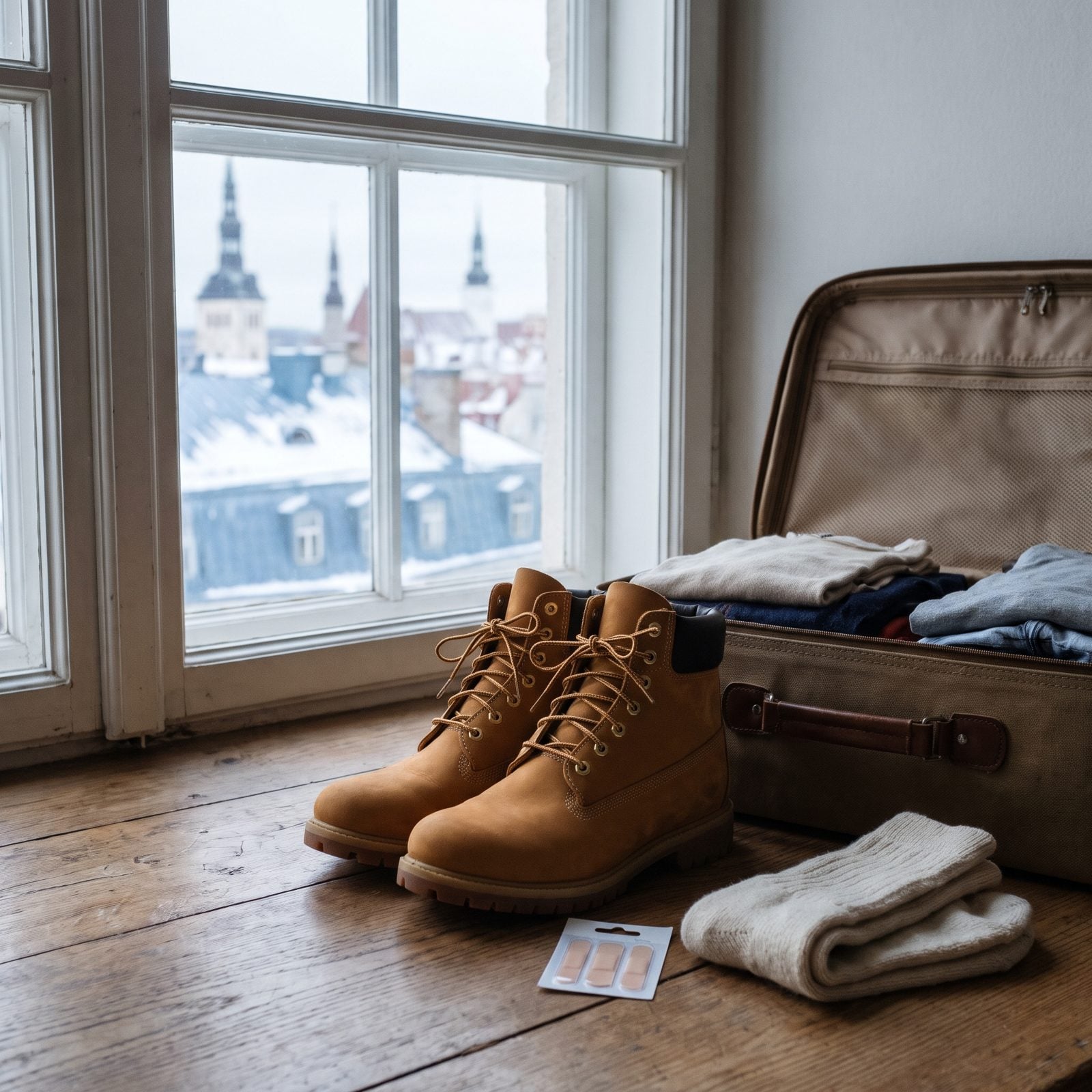
You buy a fresh pair of boots for the trip, still stiff in the box, figuring you’ll wear them in as you go. By the second afternoon your heels are raw and every cathedral step is a negotiation.
Markets are a walking holiday whether you planned it that way or not. Cobbles punish, and new leather needs real mileage before it stops fighting your feet.
Break shoes in at home over a few weeks of normal walking before you fly, and pack the pair you already trust. Toss in blister plasters and a spare pair of thick socks too, because even old favorites can turn on you after eight miles of stone.
27. Wearing One Thick Layer Instead of Several Thin Ones
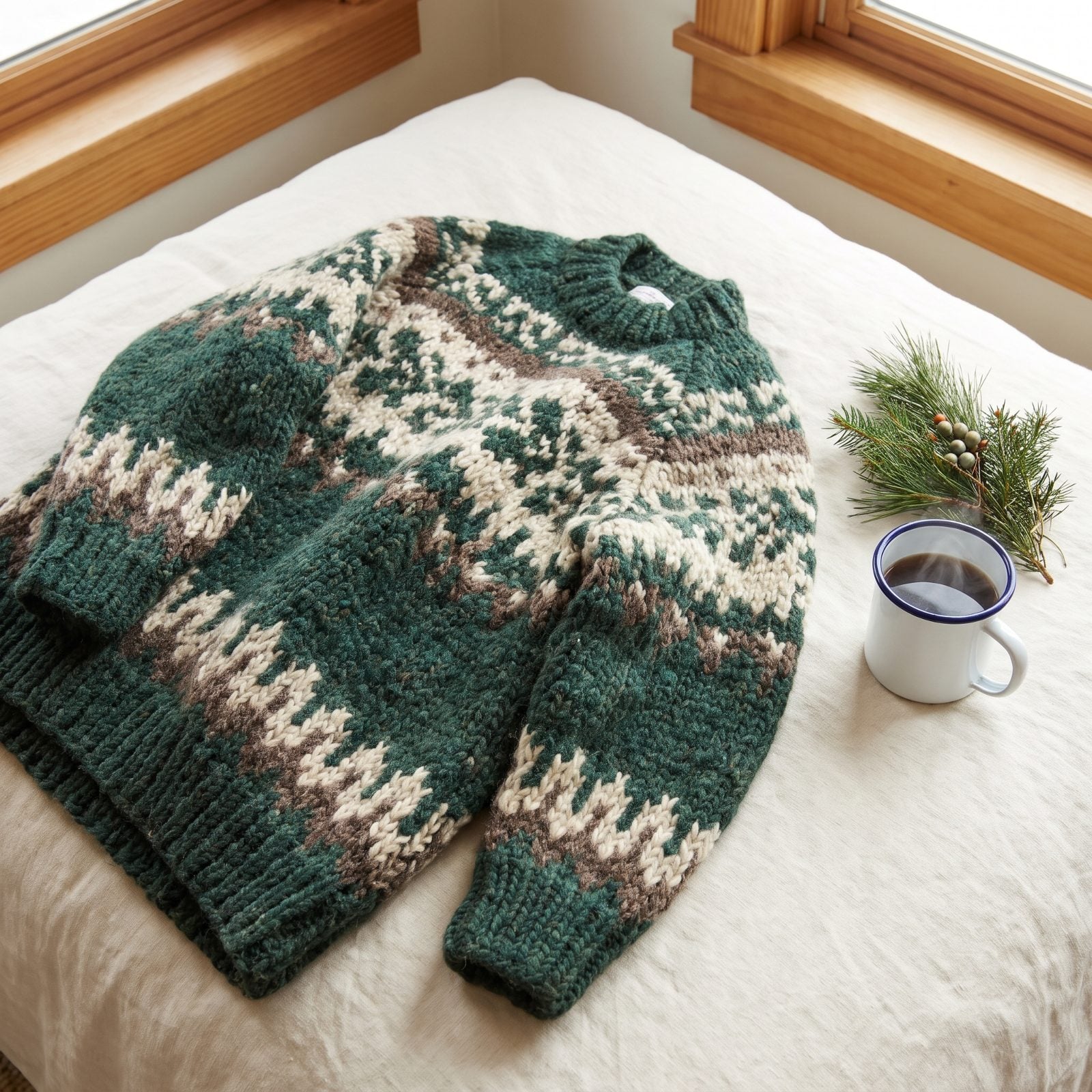
One giant puffer feels like the obvious move. Big, warm, done. Then you step from a freezing square into a heated tram or a crowded glühwein stall, and you’re either suffocating or stripped down to a t-shirt with nowhere to put the mountain of coat.
Markets bounce you between bitter cold and tropical indoor heat all evening, and a single thick layer gives you exactly two settings: oven or icebox.
Layer thin and stackable instead. A merino base, a light knit, a vest, and a shell let you add and shed warmth minute by minute, so you stay comfortable walking, waiting, and shopping instead of permanently wrong.
26. Skipping a Hat Because the Forecast Looks Mild
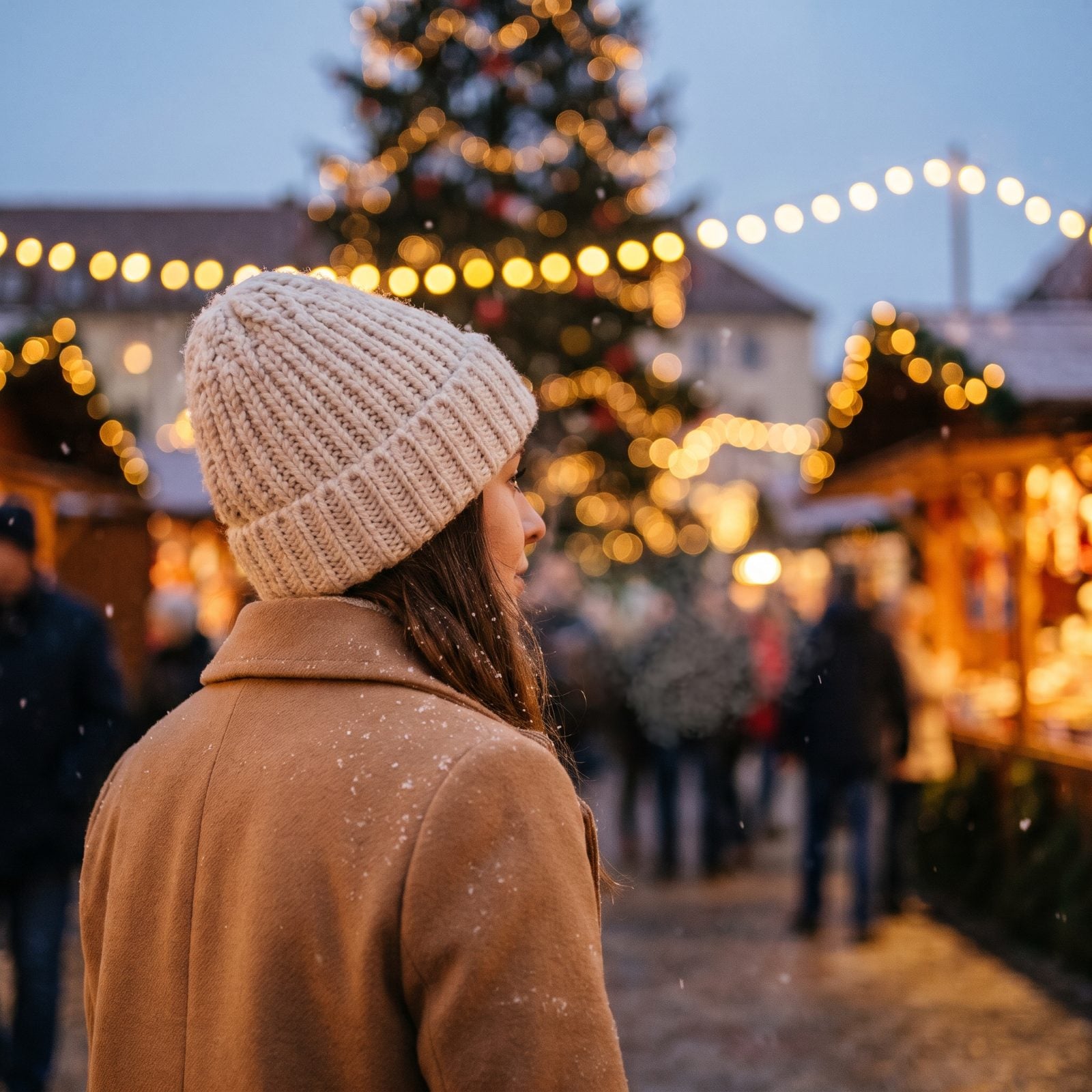
The forecast says mild, so you leave the hat at the hotel. Then the sun drops at four, the temperature follows it down, and you spend the evening with cold slicing across your ears while everyone around you looks snug.
Forecasts describe the afternoon. Market season happens after dark, when a still, damp cold settles in and your uncovered head leaks warmth fast.
Always carry a hat, even on a gentle-looking day. A chunky knit beanie folds into a coat pocket and weighs nothing. Add a thin merino wool scarf and you’ve covered the two spots that separate pleasant from miserable.
25. Packing Gloves That Prevent Phone Use

Thick wool mittens feel toasty right up until you need to pay, pull up a map, or snap a photo. Then comes the awkward ritual: yanking a glove off with your teeth, fumbling the phone over wet cobbles, stuffing cold fingers back in.
You’ll be on your phone constantly. Mobile tickets, QR-code menus, navigation, photos. Gloves that block the screen mean bare, freezing hands a hundred times a day.
Get touchscreen-compatible gloves. A pair of touchscreen knit gloves keeps your hands warm and your phone working, and a thin liner pair under warmer mittens gives you a quick-access option for the coldest nights.
24. Forgetting a Compact Umbrella or Waterproof Hood
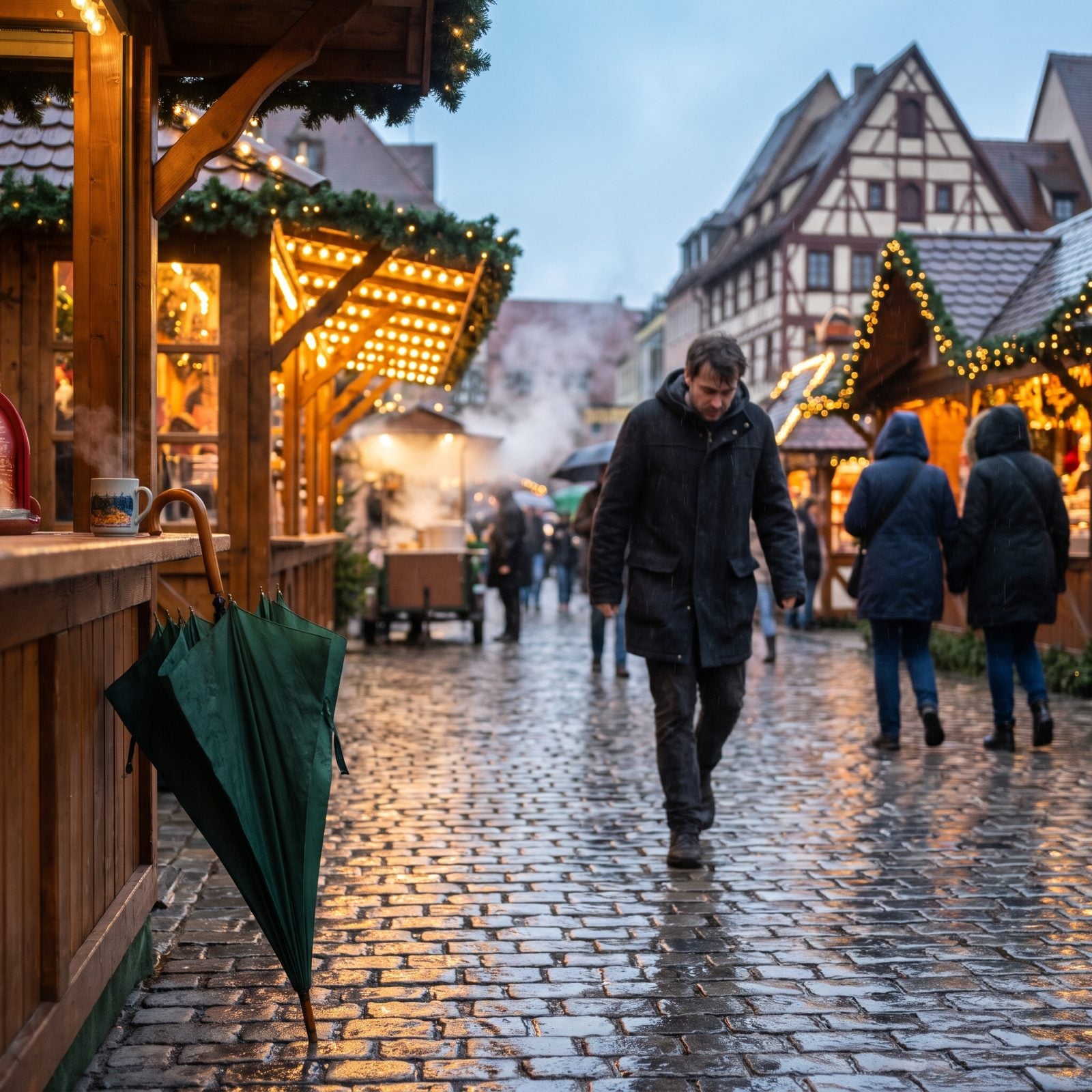
You saw the forecast say light rain and shrugged it off. European market towns in December don’t do dramatic storms. They do a steady, patient drizzle that soaks you by the inch, the kind that turns a wool coat into a wet sponge by hour two.
The problem isn’t getting wet. It’s that soggy cold ruins the whole evening and you wind up ducking into the first overpriced cafe just to dry out. A compact umbrella weighs almost nothing and folds into a coat pocket, and a coat with a real waterproof hood keeps both hands free for mugs and bratwurst.
Pack one before you leave. Rain in Cologne, Strasbourg, or Vienna is a near-weekly event in December, not some freak occurrence.
23. Bringing a Bulky Backpack Into Packed Market Lanes
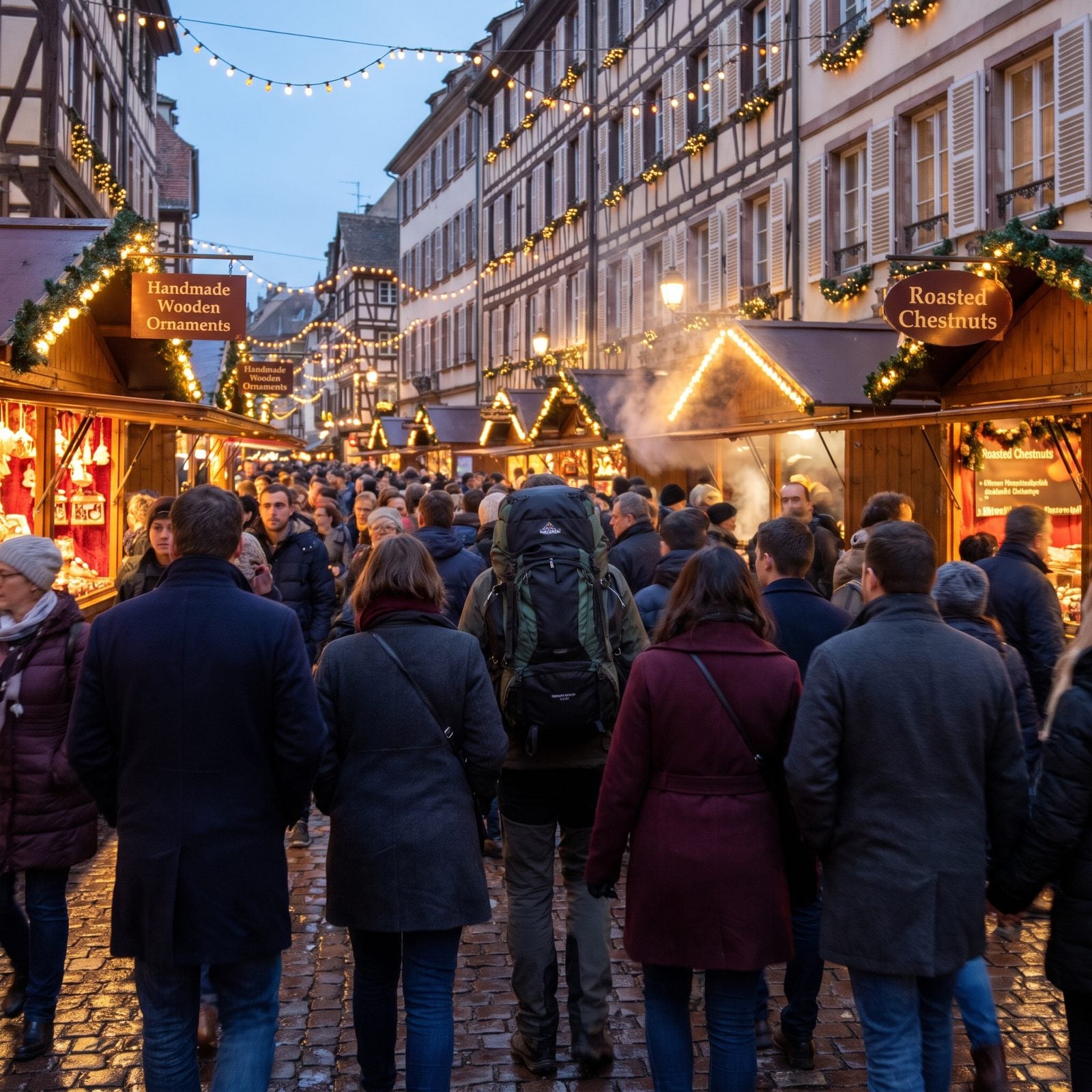
A big backpack feels sensible. Room for layers, water, the day’s shopping. Then you hit a market lane at six in the evening and discover you’re a turtle trying to turn around in a crowd with no intention of making space for you.
Bulky packs catch on stall awnings, knock into mugs, and park your zippers behind you where you can’t see them. Pickpockets adore a back pocket you’ve turned your back on.
Switch to a slim crossbody bag worn across your front, or a flat sling that sits against your chest. You’ll move easier, keep your valuables in sight, and stop apologizing every single time you pivot toward a gingerbread stall.
22. Failing to Protect a Phone From Cold-Drained Batteries
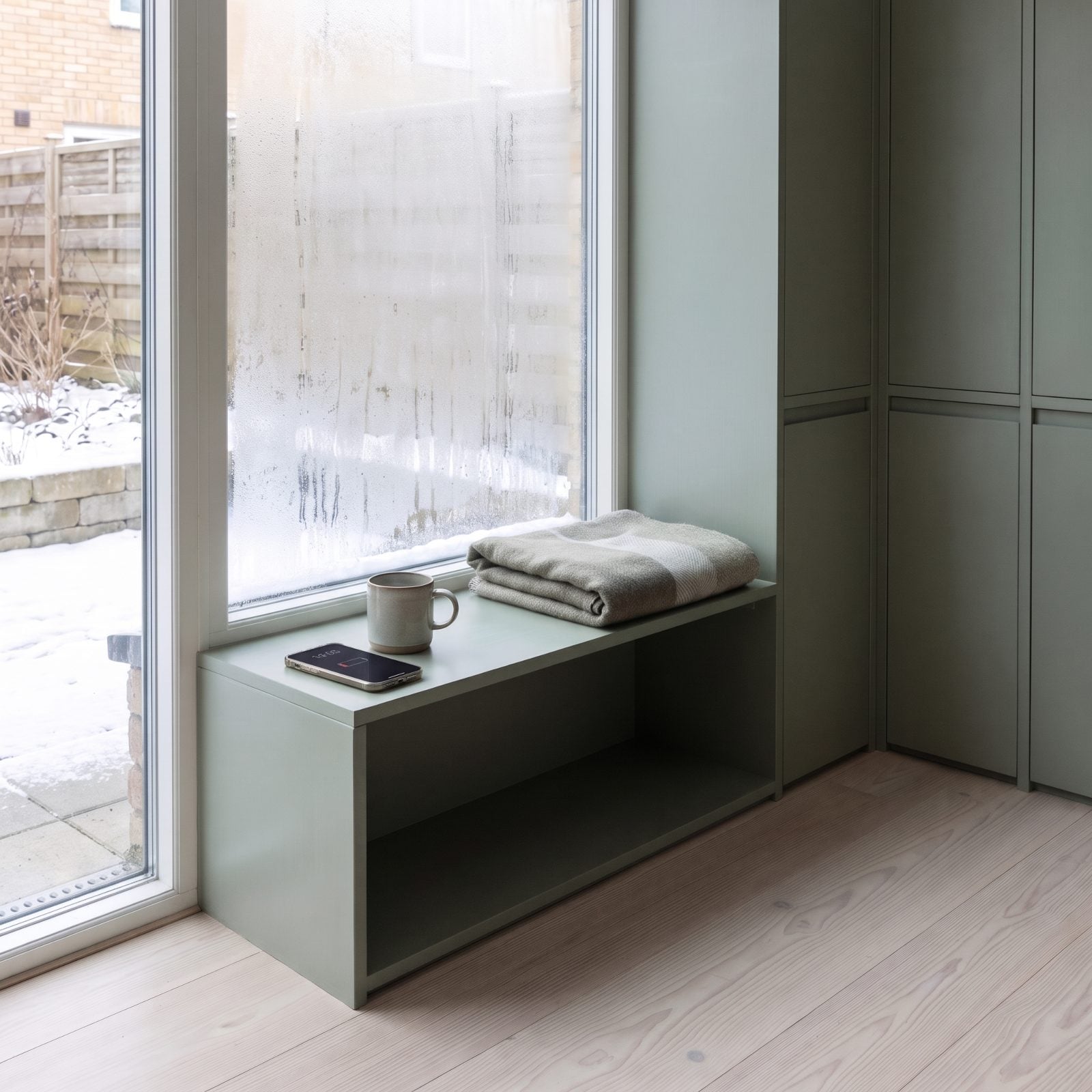
Your phone hits 40 percent and you figure that’s plenty. Then the temperature drops below freezing, the battery reading falls off a cliff, and your screen goes black mid-map. Lithium batteries hate the cold almost as much as your fingers do.
No phone means no map, no train times, no way to find the people you got separated from near the glühwein stand. That’s a genuine problem at night in a city you don’t know.
Carry a small power bank. Keep the phone tucked in an inside pocket near your body heat, not an outer one. Warm phone, happy battery.
21. Assuming Every Stall Accepts Credit Cards
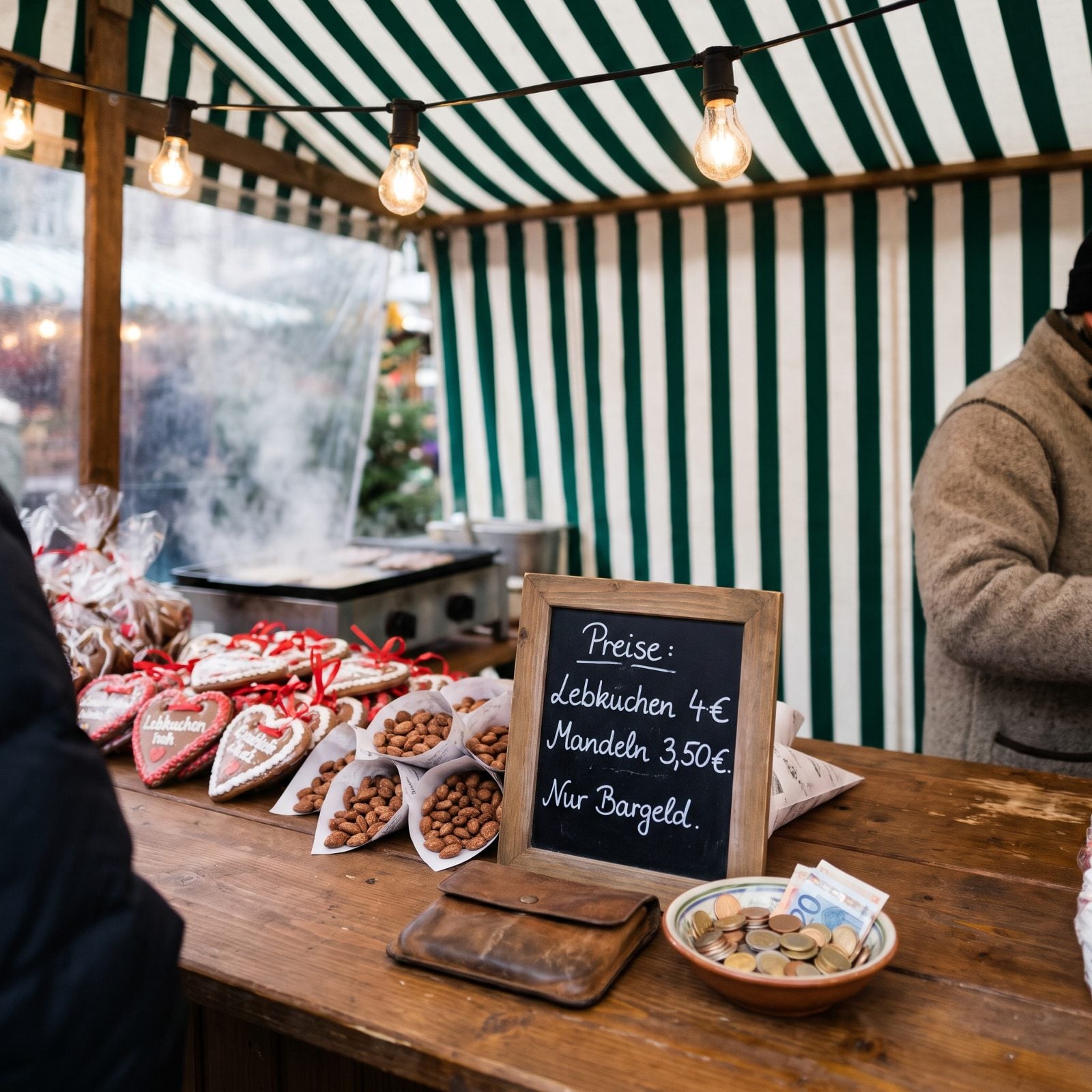
Tap-to-pay has spoiled all of us. You wander up to a sausage stall, order with confidence, then meet a cheerful vendor pointing at a handwritten sign that means cash only.
Plenty of smaller stalls still run on coins and small notes, especially the family-run food and craft ones. Hold up the line fumbling for a card that won’t work and you learn fast how patient the people behind you aren’t.
Carry enough euros for a full evening and keep it in a front pocket. ATMs near markets charge ugly fees, so pull your cash before you arrive.
20. Paying in Home Currency at the Card Terminal
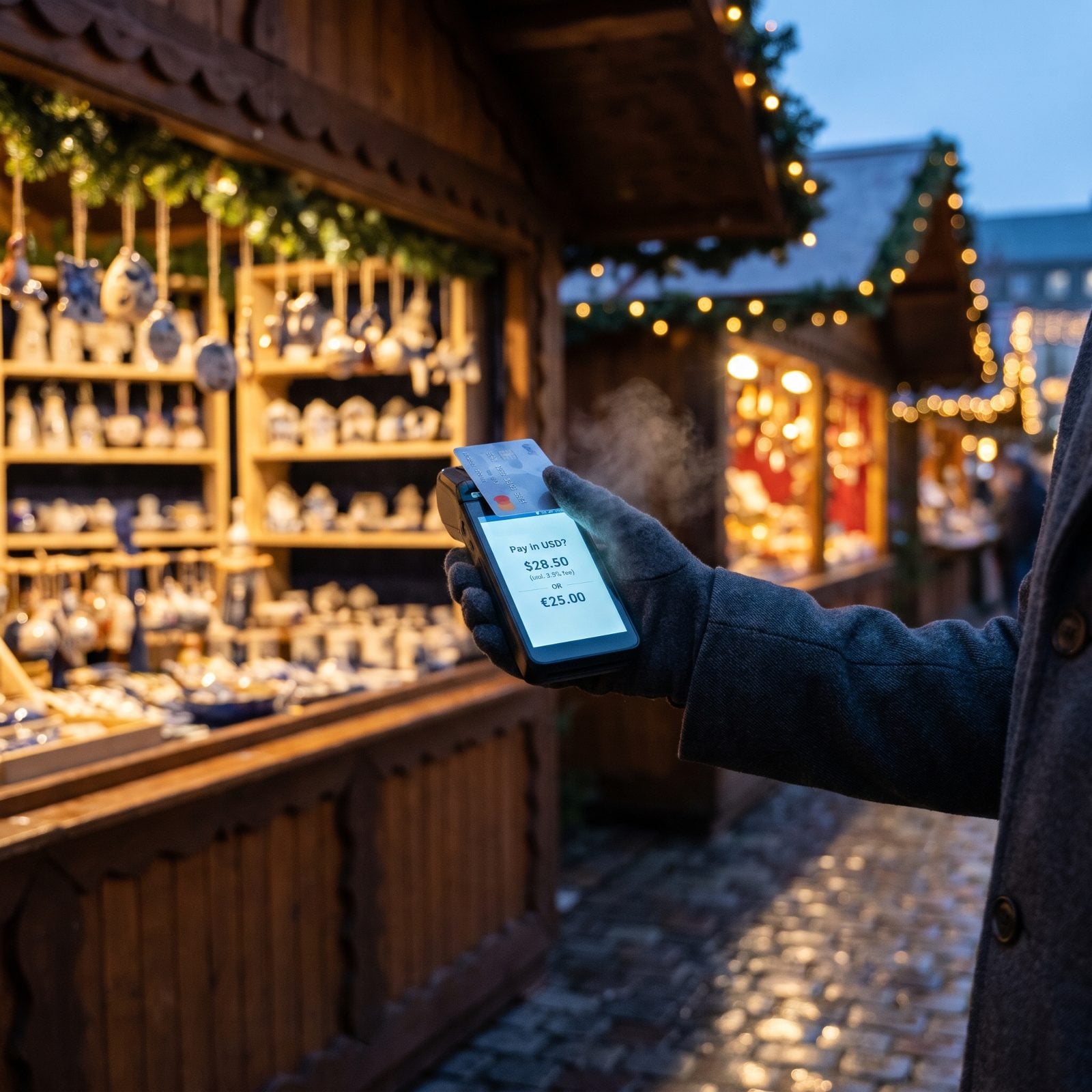
The terminal asks a friendly-looking question: pay in euros, or pay in your home currency? It feels helpful. It is not. Choosing your home currency hands the conversion over to the terminal, which quietly bakes in a markup that can run several percent above the real rate.
This trick goes by dynamic currency conversion, and it earns the terminal operator money every time a traveler picks the “easy” option out of politeness or confusion.
So pay in the local currency, euros. Your own bank handles the conversion at a far better rate. Across a trip full of small purchases, those skimmed percentages add up to a dinner you didn’t need to skip.
19. Failing to Budget for Mug Deposits
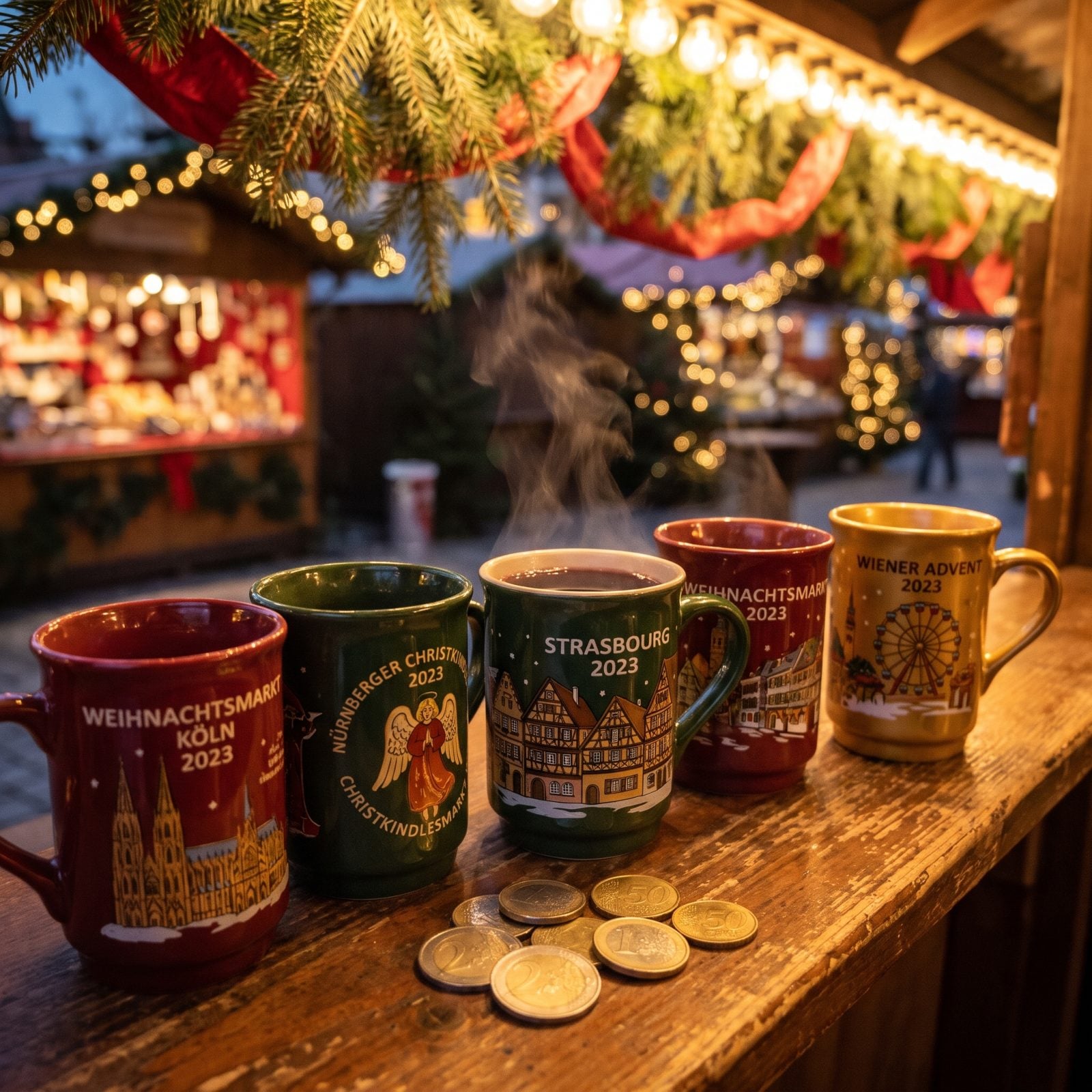
Your first mulled wine costs more than the menu says, and you stand there briefly confused. The extra few euros is a mug deposit, a pfand, and you get it back when you return the cup.
Nobody warns you about the next part. The mugs are genuinely lovely, painted and dated to the market, and half of visitors decide to keep them. That’s a souvenir you never budgeted for, multiplied across every market on your route.
Decide early. Keeping the mug is a fine choice, just count the deposit as the souvenir price rather than a surprise. Returning it means remembering to actually walk back before the stall closes.
18. Underestimating the Strength of Feuerzangenbowle
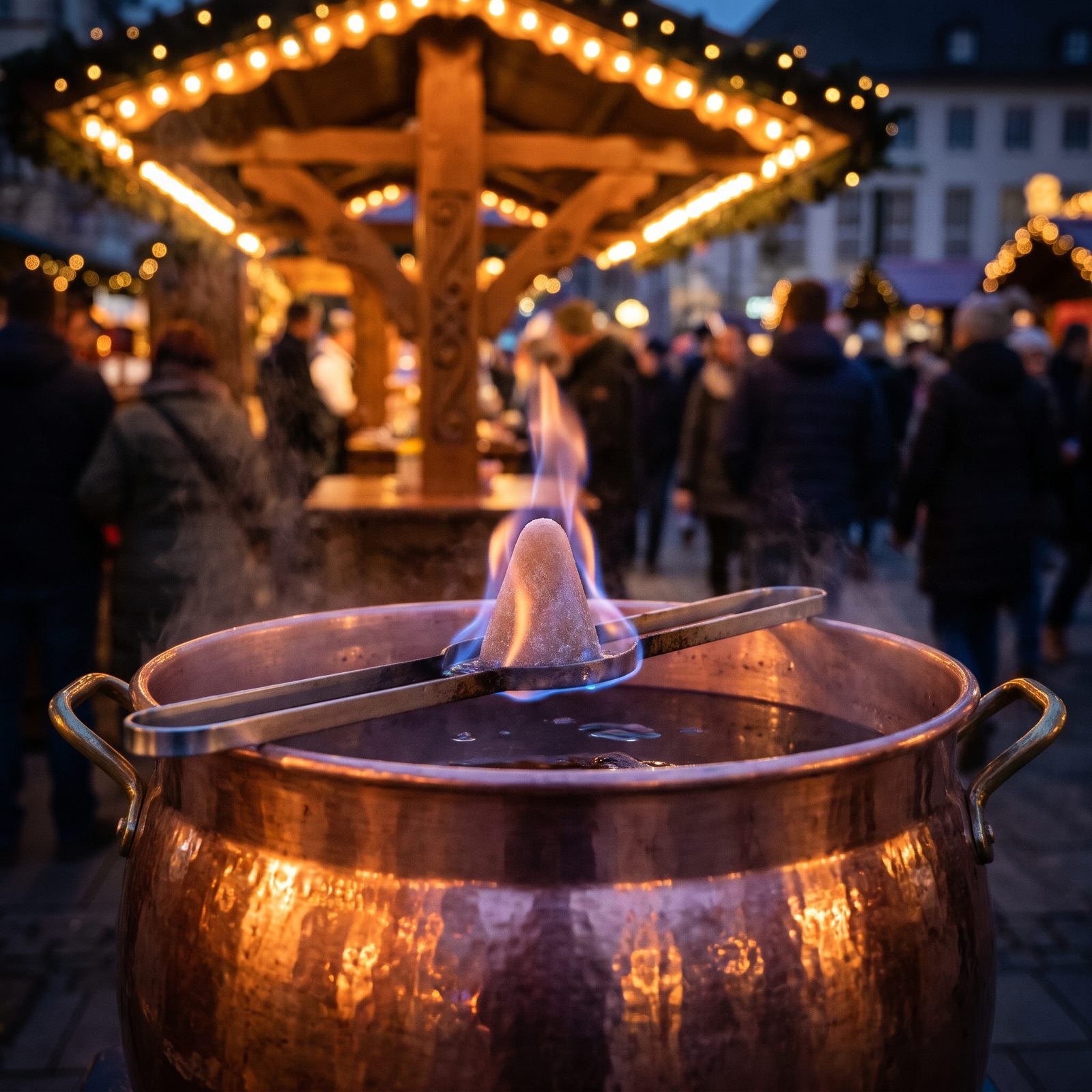
The spectacle is the trap. A flaming sugarloaf dripping caramelized rum into a pot of hot wine is a show, and it tastes like dessert. Smooth, sweet, warm all the way down.
That’s exactly why Feuerzangenbowle gets people. It’s mulled wine with a serious slug of rum poured over it, so it hits noticeably harder than regular glühwein, and the sweetness hides the strength completely. You feel fine, then suddenly the cobblestones are putting up a fight.
Treat it like the strong drink it is. One is a treat. Two back to back, on top of a glühwein or two, and the rest of your evening becomes a blur you paid good money to forget.
17. Drinking Mulled Wine on an Empty Stomach
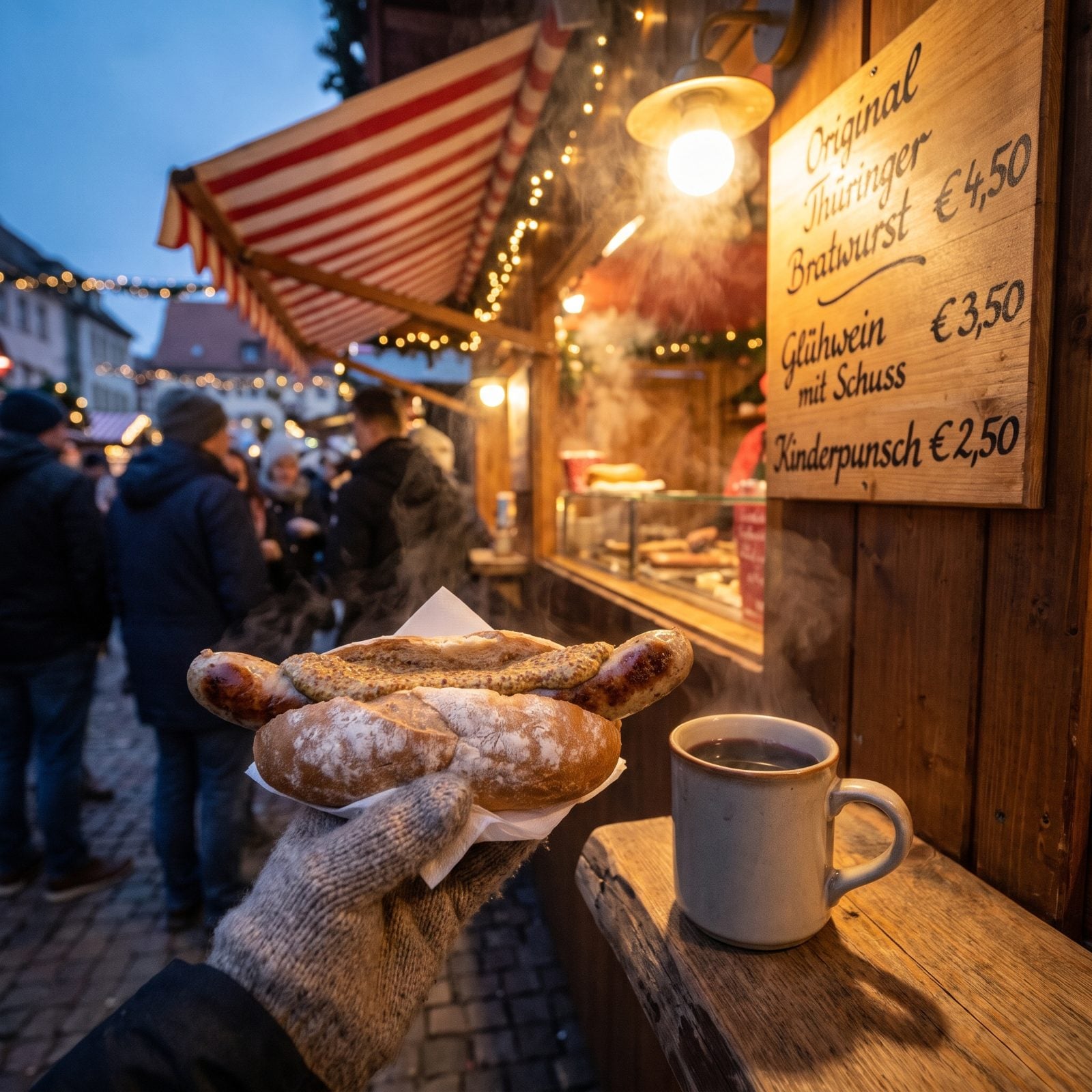
You arrive hungry, excited, and the glühwein stand is right there. Food can wait, you think. It cannot.
Hot mulled wine goes down like fruit punch and absorbs fast when there’s nothing in your stomach to slow it down. Add the cold, which masks how much you’re drinking, and you’re one mug past sensible before dinner even crosses your mind.
Eat first, or at least eat alongside. A bratwurst, a plate of raclette, a warm pretzel. The food at these markets is half the reason to come anyway, so there’s no hardship in starting there. Line the stomach, then sip the wine at a pace you’ll still remember in the morning.
16. Forgetting to Drink Water Between Hot Cocktails
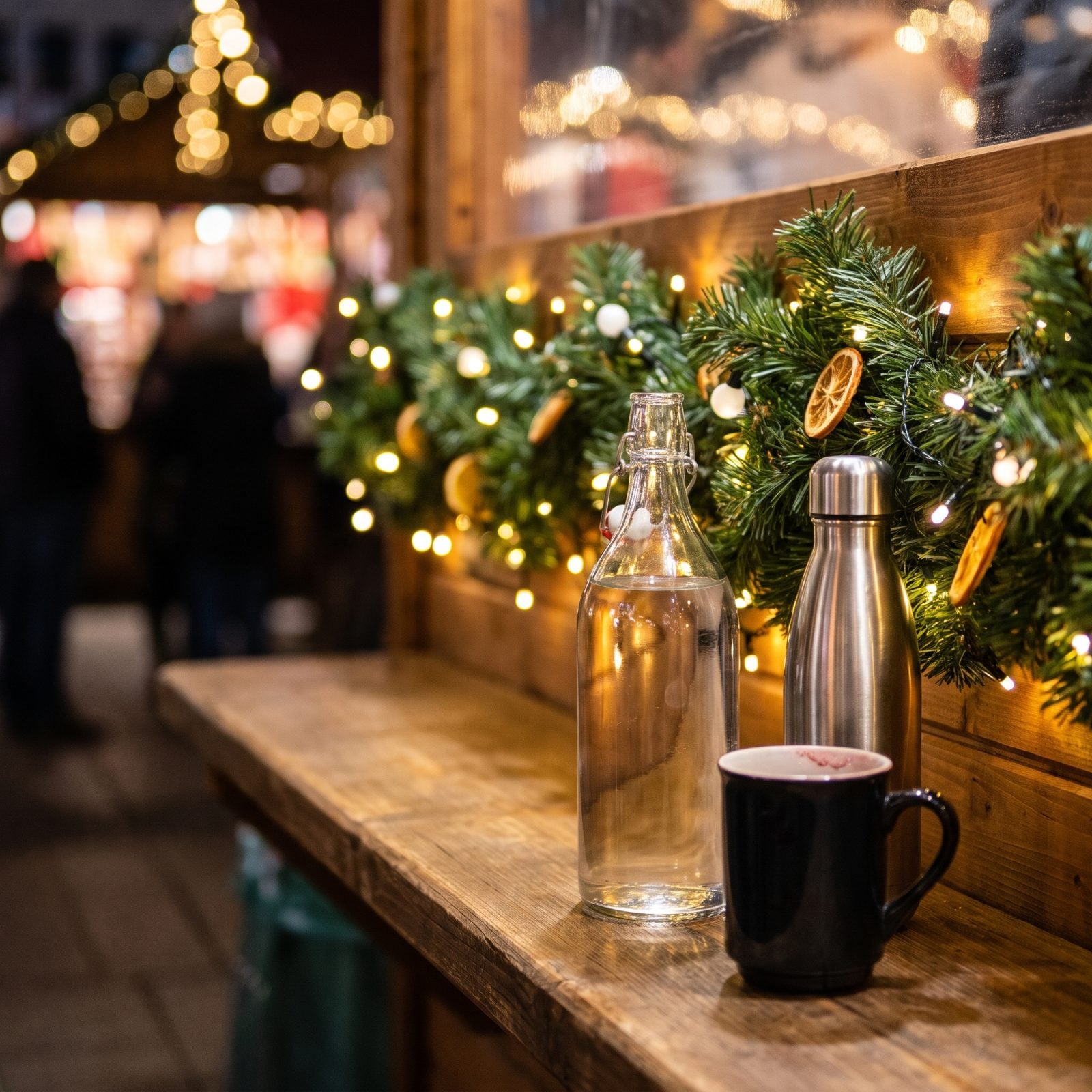
Mulled wine is hot, sweet, and served in small portions, which makes it feel gentle. It isn’t. The warmth and sugar mask the alcohol, and the cold air dries you out faster than you’ll notice.
Skip water entirely and you’ll feel the whole evening tomorrow, in the form of a headache that has nothing to do with how good the market was.
Alternate. One mug, then some water before the next. Carry a small bottle, or step into a cafe for a glass. It sounds obvious, and yet first-timers forget it more than anything else, because you’re having too much fun to think about it.
The cold hides the dehydration, the sugar hides the alcohol, and tomorrow hides nothing.
15. Buying Food From the First Stall You See
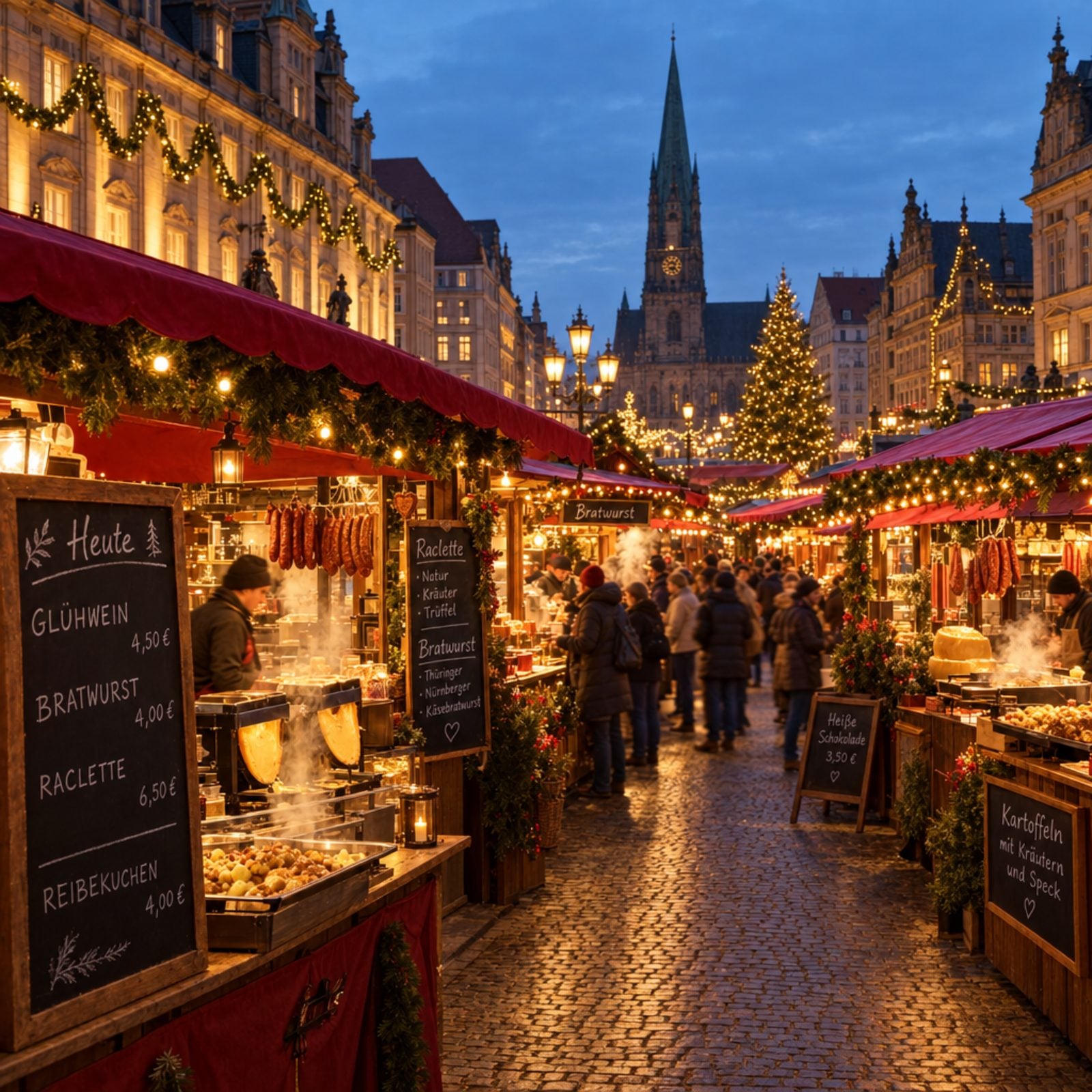
Hunger plus cold plus the first glowing food stall equals a decision you make too fast. You grab the nearest bratwurst, then walk thirty seconds further and spot a stall with a longer line, a better smell, and half the price.
Stalls near the entrances and main squares charge the most and often serve the least interesting food. They’re banking on tired, hungry arrivals who won’t bother walking the extra lane.
Do a quick loop first. Not a long one, just enough to see what’s around and where the locals are lining up. A line of locals, not tourists, is the most reliable sign on the whole square.
14. Eating Only Market Snacks for Every Meal
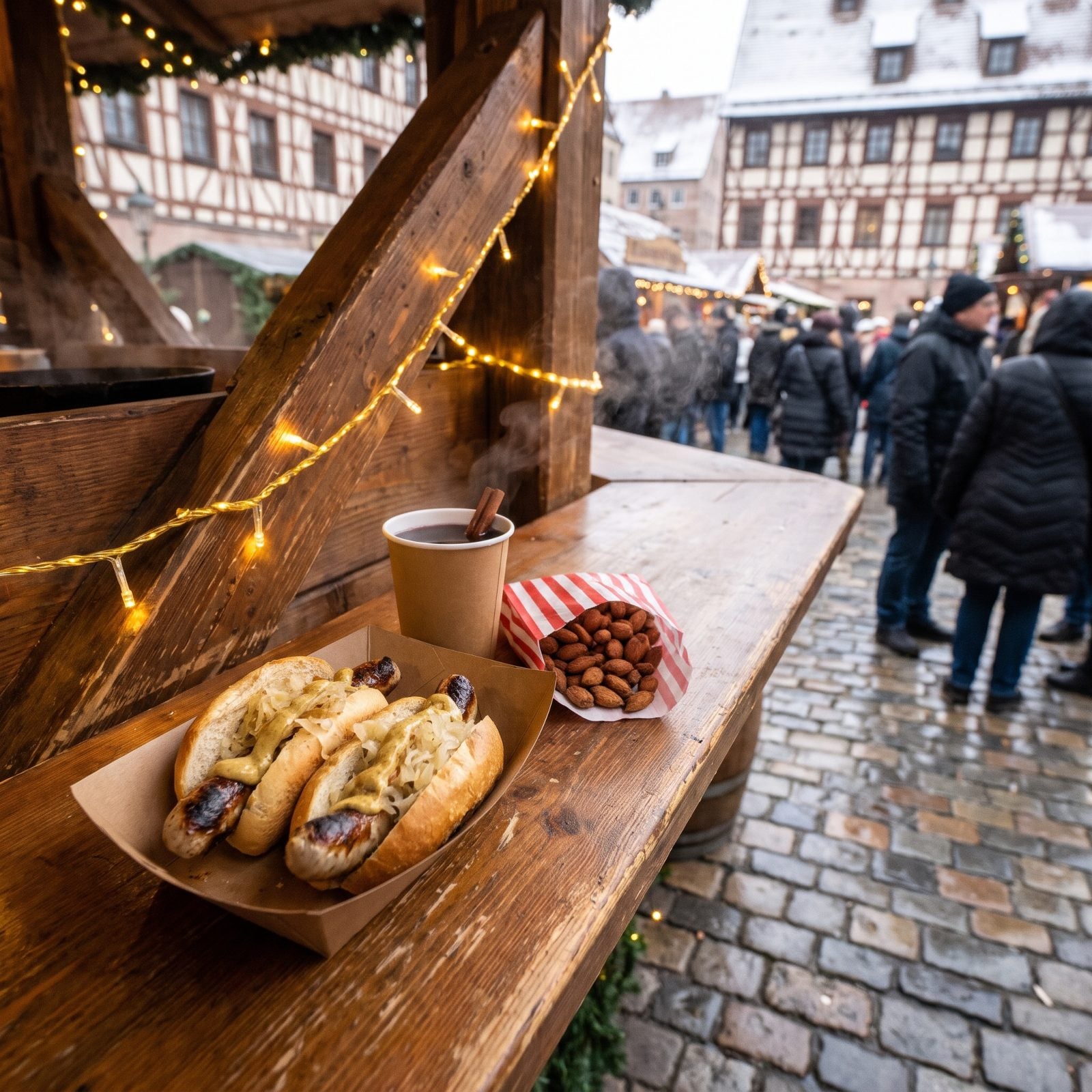
The first night, bratwurst and gluhwein feel like a full meal. By night three your stomach stages a quiet revolt, and it dawns on you that nothing green has crossed your lips since you left home.
Market food is built for grazing, not for living on. Salty, sweet, heavy — a steady diet of it leaves you sluggish, dehydrated, and oddly ravenous, running the whole trip on sugar and sausage.
So treat the stalls as dessert. Book one proper sit-down meal a day at a local restaurant, ideally lunch when kitchens are calmer. Your energy holds, your mood holds, and you actually taste the treats instead of wolfing them down to fill a hole.
13. Skipping Regional Specialties for Familiar Foods
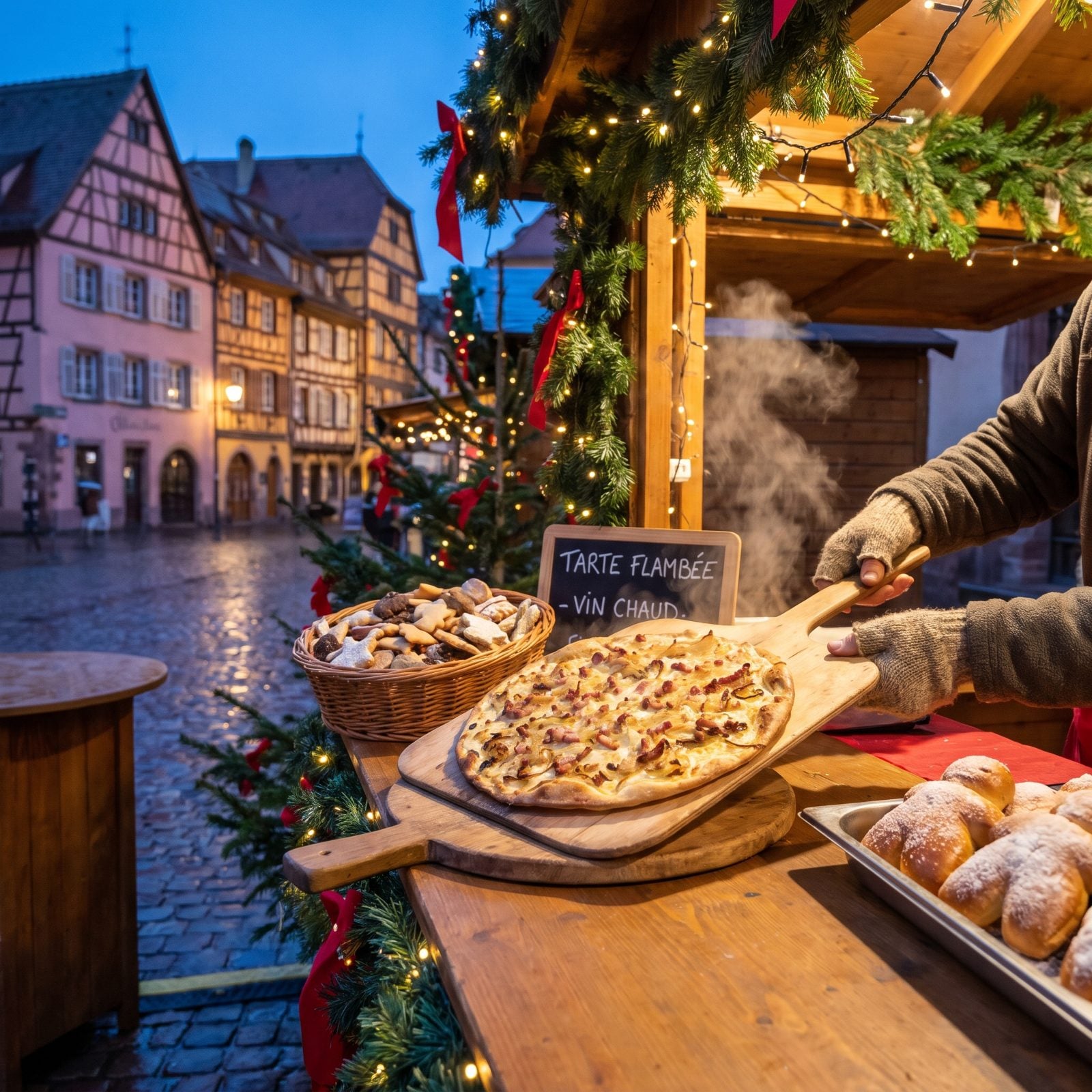
Every market runs the same universal lineup: sausages, pretzels, roasted chestnuts. Safe, familiar, fine — and completely interchangeable from Vienna to Cologne.
The magic lives in the regional stuff you’ll never find back home. Alsace has tarte flambee and bredele cookies, Nuremberg has its tiny finger-sized bratwurst, and Vienna hands you kaiserschmarrn, torn-up caramelized pancake dusted in sugar. Order the pretzel everywhere and you taste nothing that belongs to the place you flew across an ocean to reach.
Before you go, look up two or three specialties tied specifically to the city you’re visiting, then hunt them down. The language barrier is real. But pointing at whatever the local next to you is eating works in any country.
12. Failing to Ask About Nuts and Other Allergens
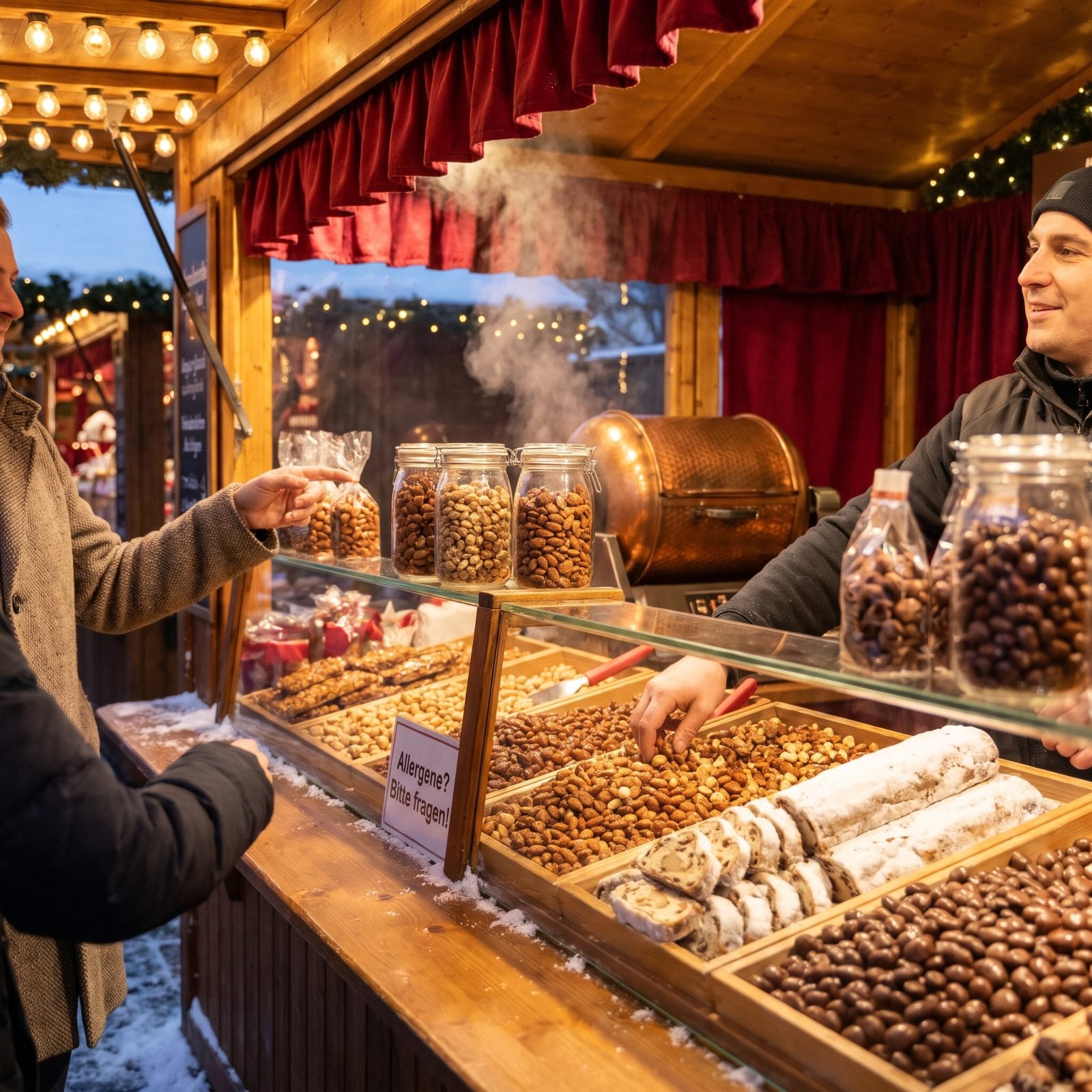
Nuts hide everywhere at a Christmas market stall. The trays of candied almonds are obvious, but the stollen may be baked with marzipan or ground almonds, the chocolate-covered treats could hide hazelnuts, and that jar of sugared snacks beside you might come out of the same roaster as the nuts.
If you or someone you travel with reacts to nuts, dairy, or gluten, a cheerful point-and-eat habit turns dangerous fast. Vendors are busy. Ingredient lists rarely appear on open trays, and an “Allergene? Bitte fragen!” (“Allergens? Please ask!”) sign on the counter only helps if you actually ask.
Ask the vendor before you point at a tray, and if you’re abroad, learn the allergen word in the local language before you arrive. Write it on a card, or save it in your phone in large type you can flash across a busy counter. Nuss means nut in Germany; in France it’s noix and noisette. A card reading “I cannot eat nuts” clears up confusion no amount of smiling and pointing ever will.
11. Expecting Market Seating at Peak Hours
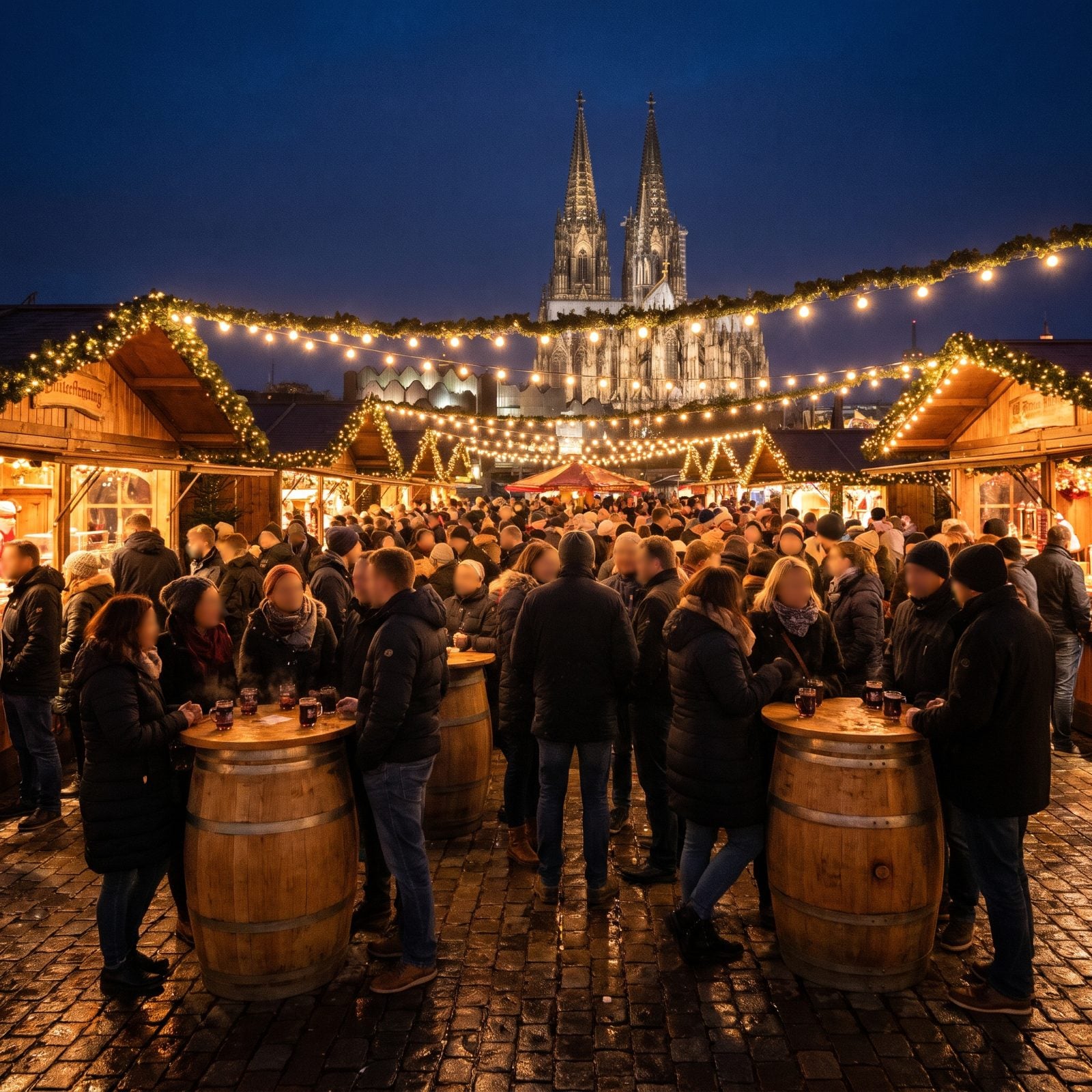
You picture a cozy wooden bench, a mug warming your hands, the crowd drifting by. At 6pm on a December Saturday, that bench does not exist. Neither does the one next to it.
Markets in Cologne, Vienna, or Prague can pull thousands on a weekend evening, and seating is sparse by design — what little exists fills up by late afternoon. Stand around waiting and you’ll spend the whole evening cold, cranky, and hovering like a vulture.
Go early. Weekday afternoons around 3 to 4pm are the sweet spot, stalls open and the office crowd still at their desks. Most markets expect you to stand at barrel tables anyway, so plan to drink your gluhwein upright and treat any actual seat as a small miracle.
10. Skipping Restaurant Reservations in Popular Market Cities
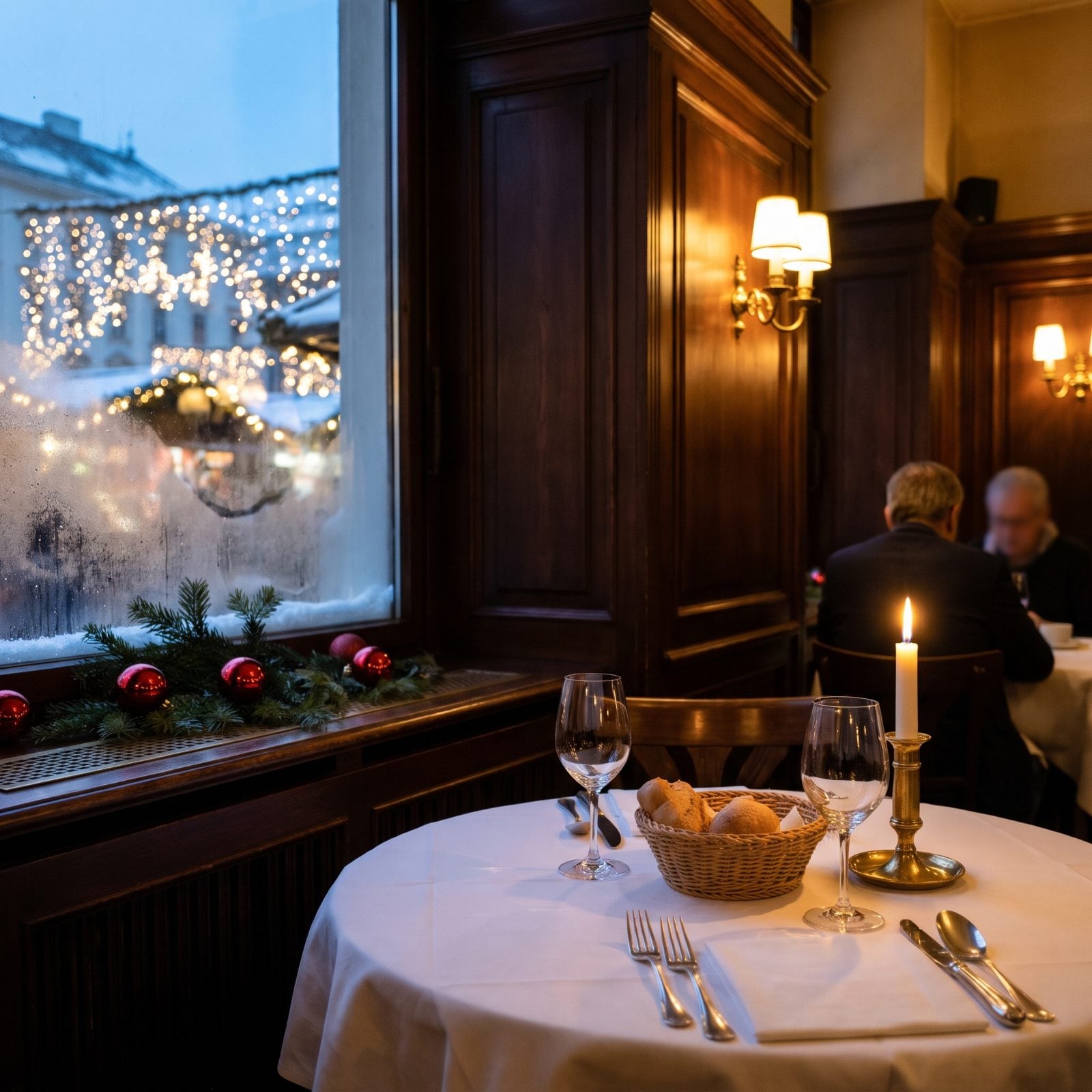
Here’s the scene you want to avoid. It’s 7:30, you’re frozen through, and every restaurant within three blocks of the market is turning people away at the door.
December is peak season in these cities, and the good kitchens near the square book out days ahead. Walk in cold and you’re gambling on a long wait or a tourist trap with a laminated menu in six languages.
Reserve your sit-down dinners before you fly — even just two or three anchor meals for the trip. Email the restaurant directly, or use whatever booking platform they list. For the nights you want to improvise, eat a little off the main square, where a five-minute walk opens up tables the crowd never finds.
9. Assuming Sunday Shopping Rules Do Not Apply
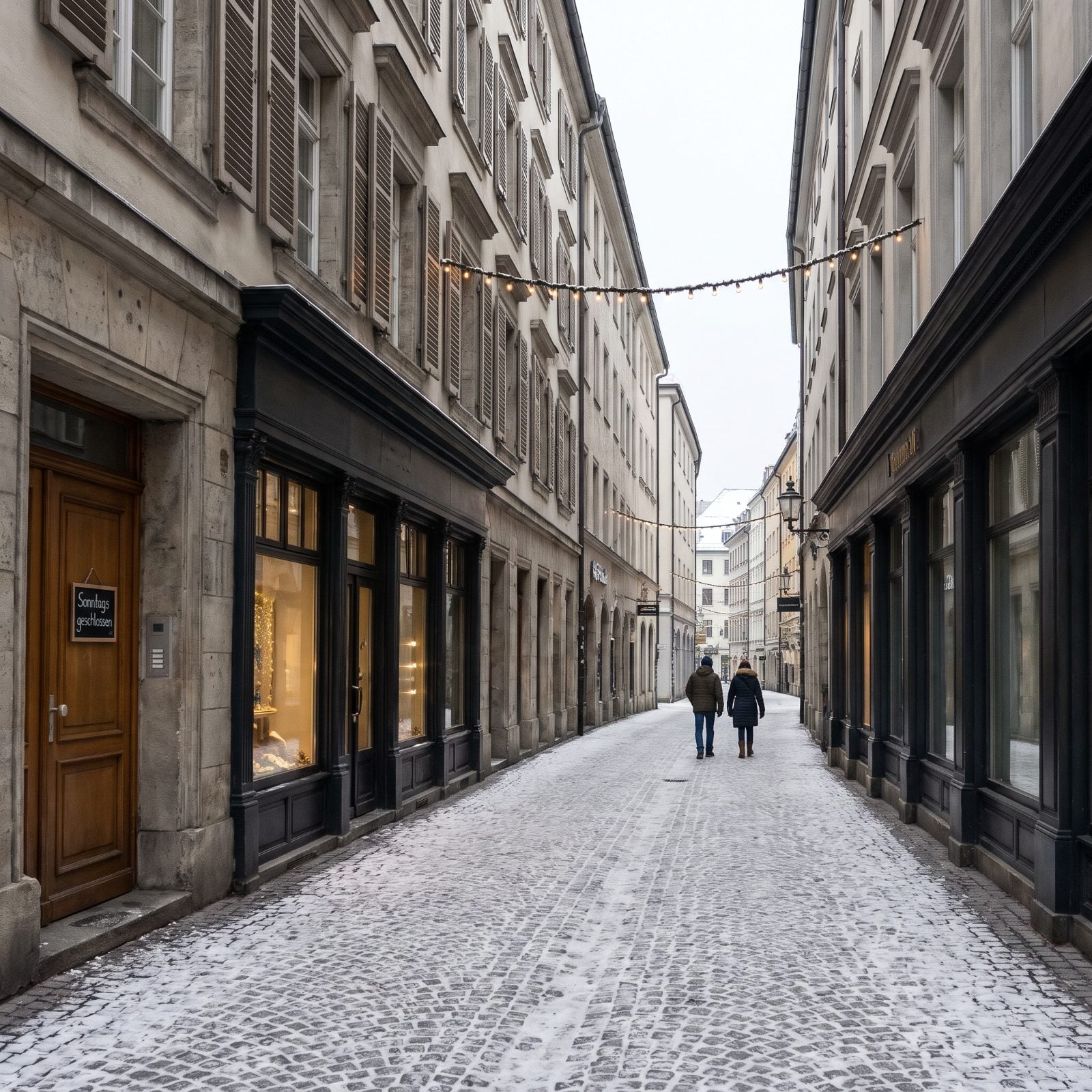
In much of Germany and Austria, Sunday still means closed. Not a few shops — nearly all of them. The pharmacies, the department stores, that boutique you spotted yesterday, all dark.
Save your real shopping for Sunday because the weekend seemed logical, and you lose a full day of it. The market itself usually opens, but the regular retail city around it shuts up tight.
Build your trip around that quirk. Do your proper shopping Saturday or on weekday evenings, and treat Sunday as market-and-wander day. Groceries matter too, so stock snacks and water on Saturday. Train station shops and some bakeries stay open, and they’re often your only lifeline for forgotten essentials.
8. Saving Must-Buy Gifts for the Final Evening
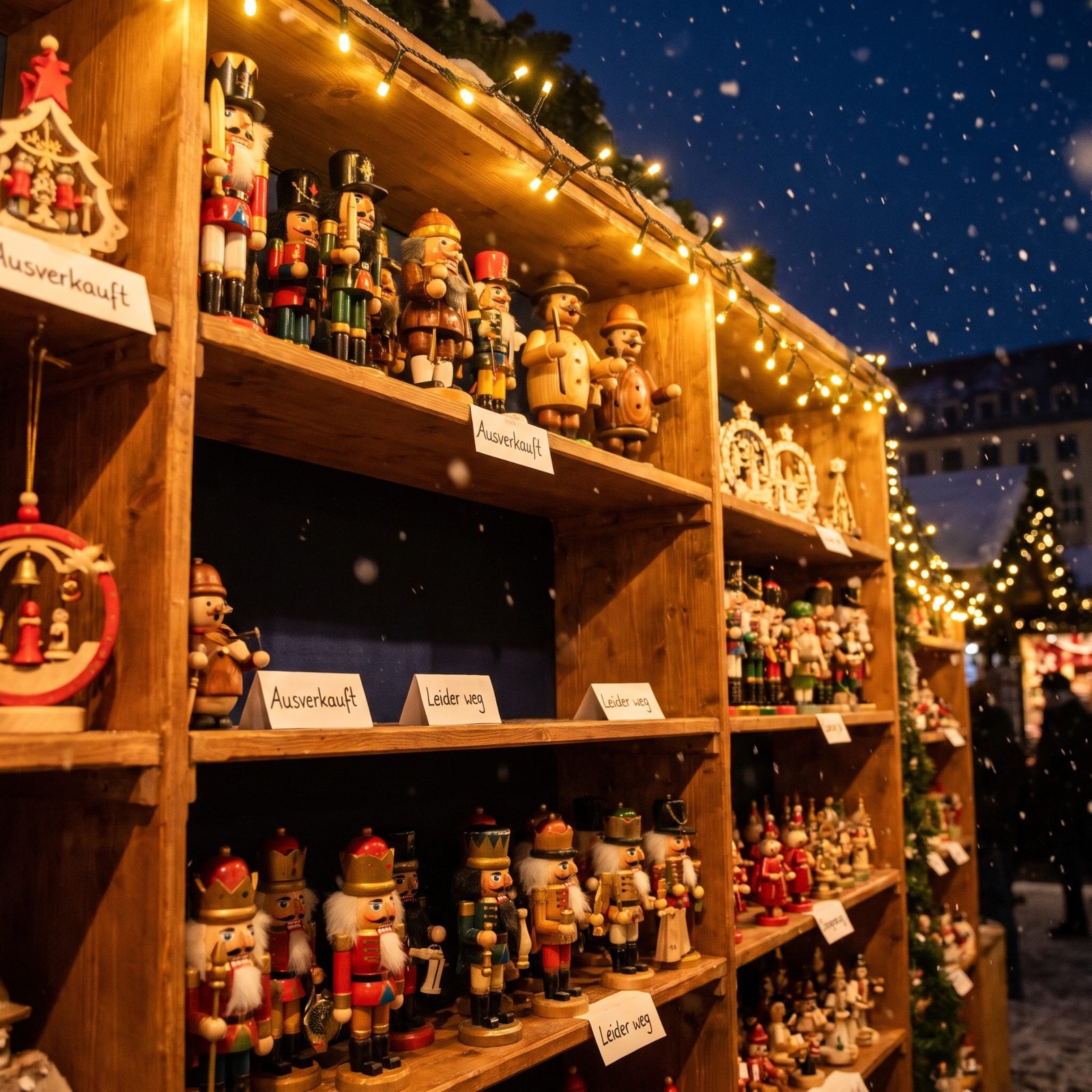
You spotted the hand-carved nutcracker on your first night and thought, I’ll grab it before I leave. On the last evening you go back, and the stall has sold out — or packed up early, or the vendor only came for the weekend.
Market stock is unpredictable. Handmade goods come in small batches, popular items vanish, and plenty of vendors rotate out before the season ends.
If you love it and the price is fair, buy it when you see it. The genuinely special pieces won’t wait for your schedule. Carry a small cross-body bag with room for finds, and keep enough cash on hand so a dead card reader never costs you the one thing you really wanted.
7. Buying Mass-Produced Souvenirs as Handmade Crafts
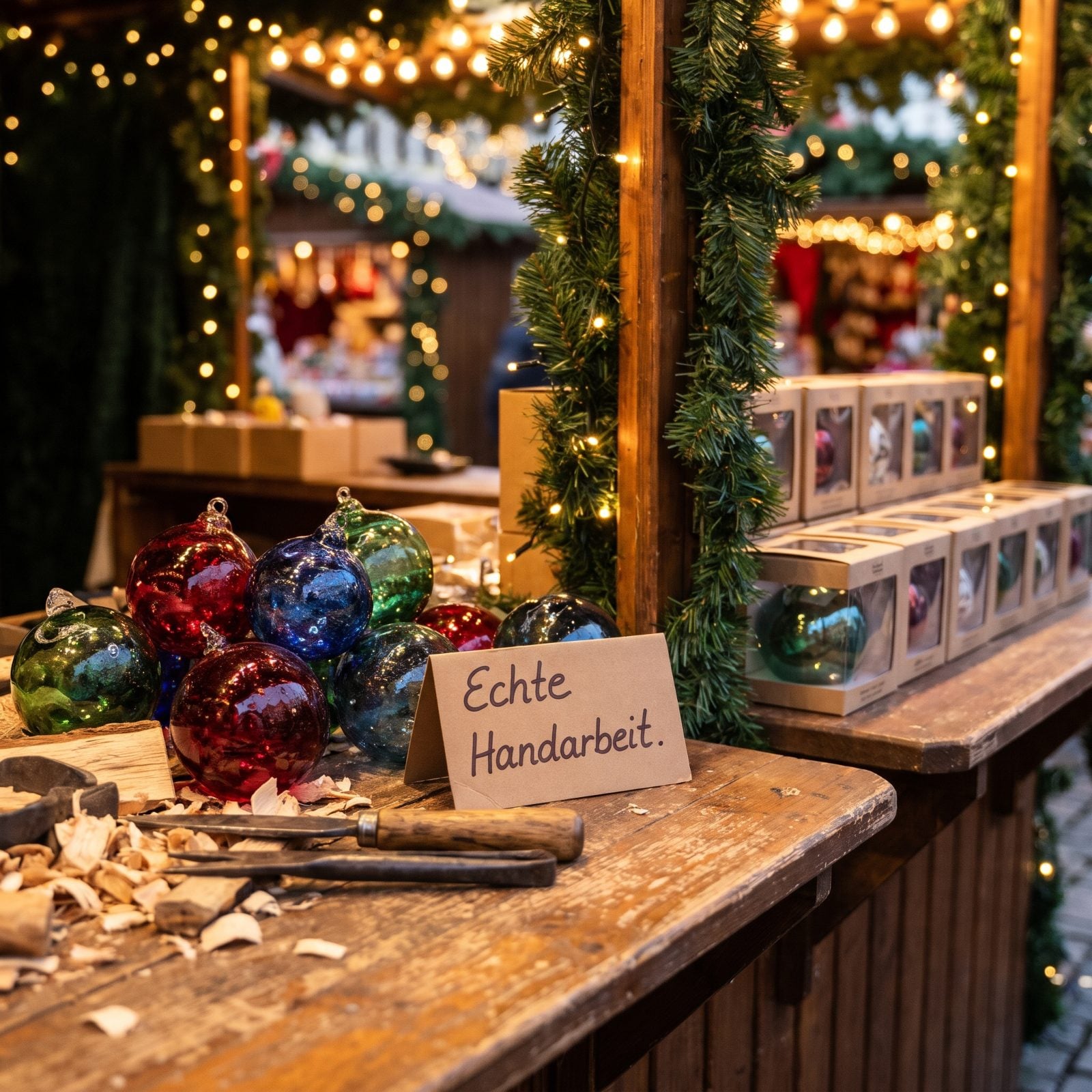
Not everything at a Christmas market is made by hand, no matter the wooden stall and the fairy lights strung around it. Plenty of vendors sell the same factory trinkets you could order online for a third of the price.
Pay artisan money for machine-made goods and you’ve bought a fridge magnet, not a memory. These markets exist for the real craftsmanship still alive in places like the Erzgebirge mountains or the glassblowing towns of Bohemia.
Watch for the tells of real handwork: slight irregularities between pieces, visible tool marks, a maker actually working or happy to chat about technique. Ask where it’s made. A genuine artisan lights up at the question while the reseller gets vague, and prices that feel suspiciously low usually mean imported stock dressed up as local craft.
6. Purchasing Delicate Ornaments Without a Hard-Sided Box

Hand-blown glass ornaments are among the most tempting buys in any European market, and among the easiest to destroy. Thin glass meets a jostled suitcase, and you unpack a bag of colored splinters.
A flimsy paper bag and a hopeful squeeze of socks around them is not protection. Checked luggage gets thrown. Overhead bins get crammed.
Bring or pack a small hard-sided box before you leave home, the kind with a rigid lid. Wrap each ornament in tissue or bubble wrap, box them snugly so nothing shifts, then cushion the box in the center of your clothes. Many vendors will wrap fragile pieces carefully if you ask. And whenever you can, carry the box onto the plane rather than checking it.
5. Forgetting Airline Baggage Limits When Buying Gifts
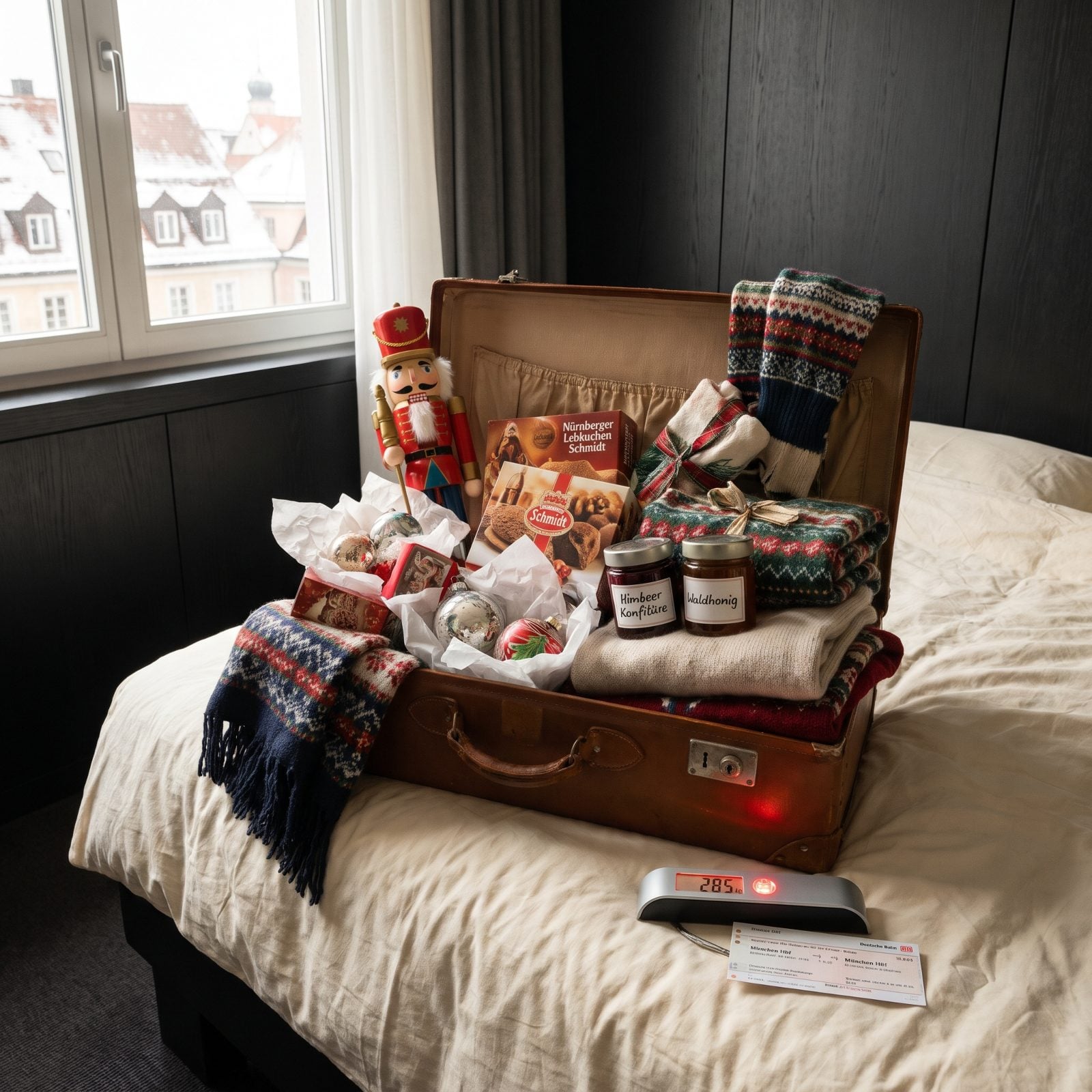
Markets have a sneaky way of multiplying your luggage. A stollen here, a box of lebkuchen there, a nutcracker, three scarves, two jars of preserves — and by the last day your carry-on weighs like a bowling bag while the gate agent reaches for the scale.
Overweight and oversized bag fees at the airport are brutal, sometimes more than the gifts cost. And liquids like preserves or bottled gluhwein syrup can’t ride in your carry-on at all past security.
So learn your airline’s weight and liquid limits before you shop, not at check-in. Leave real space in your case on the way over, or pack a lightweight foldable duffel to check on the return. Weigh your bag at the hotel by hanging it from a handheld digital luggage scale with a clear red readout; a display showing 28.5 kg means you’re already over a typical 23 kg limit. Better yet, ship the heavy, cheap-to-replace stuff home instead of paying airline rates to fly it.
4. Trying to Carry Snow Globes Through Airport Security
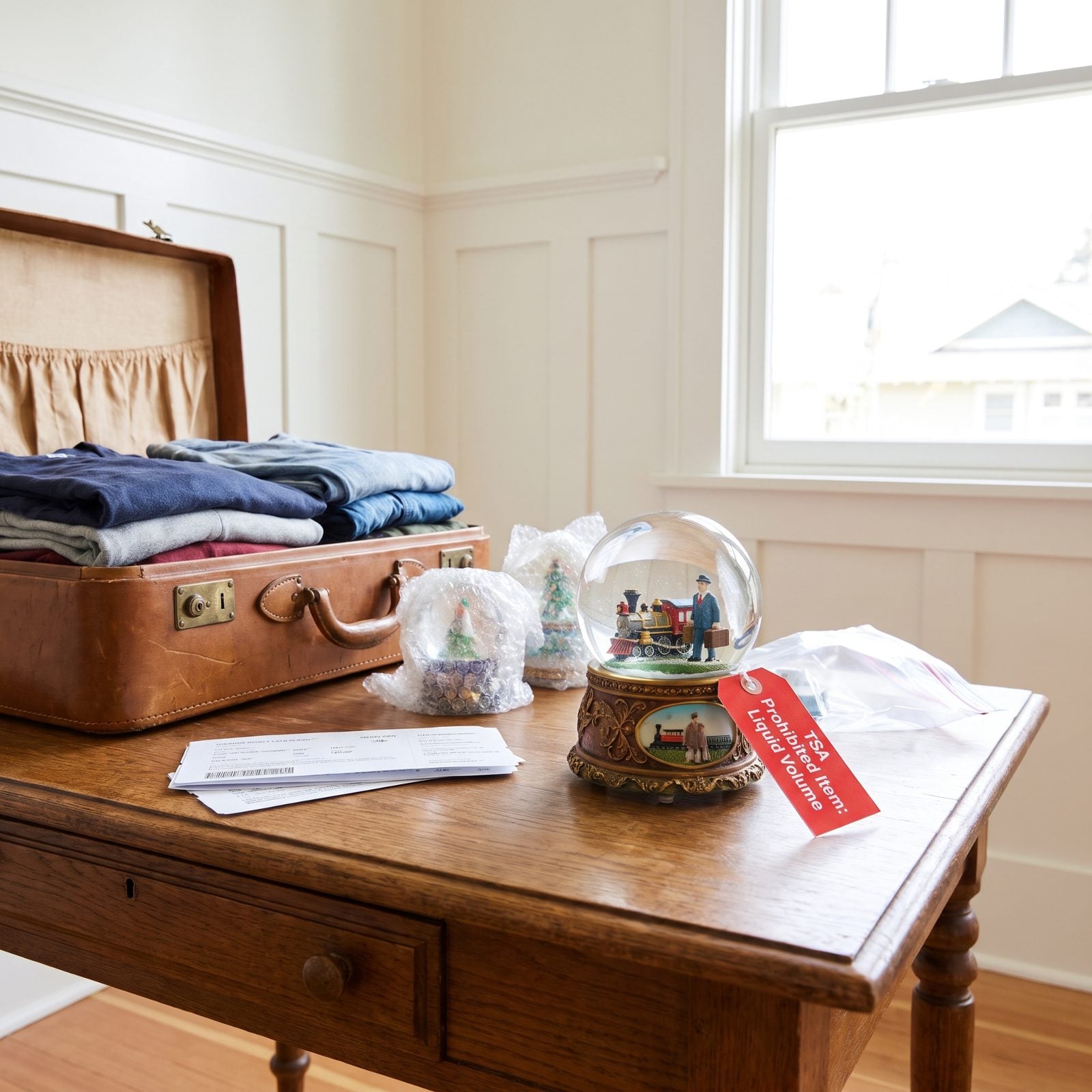
You find it at a Vienna stall. A snow globe the size of a grapefruit, a little gilded cathedral trapped inside, and the vendor wraps it in newspaper like it’s a newborn. You tuck it into your carry-on and forget about it until a security agent holds it up under the light.
Here’s the snag. The liquid inside counts as liquid, and anything over 100ml gets pulled. Most decent snow globes hold far more than that, so you’re left to either surrender your treasure at the checkpoint or stand there arguing with someone who has heard it all before.
Pack it in your checked bag instead, swaddled in socks or a sweater, tucked in the center away from the edges. Or ask the vendor to ship it. A lot of the bigger markets handle this now, and it arrives home with a stamp that beats any gift tag.
3. Ignoring Customs Limits on Food and Alcohol
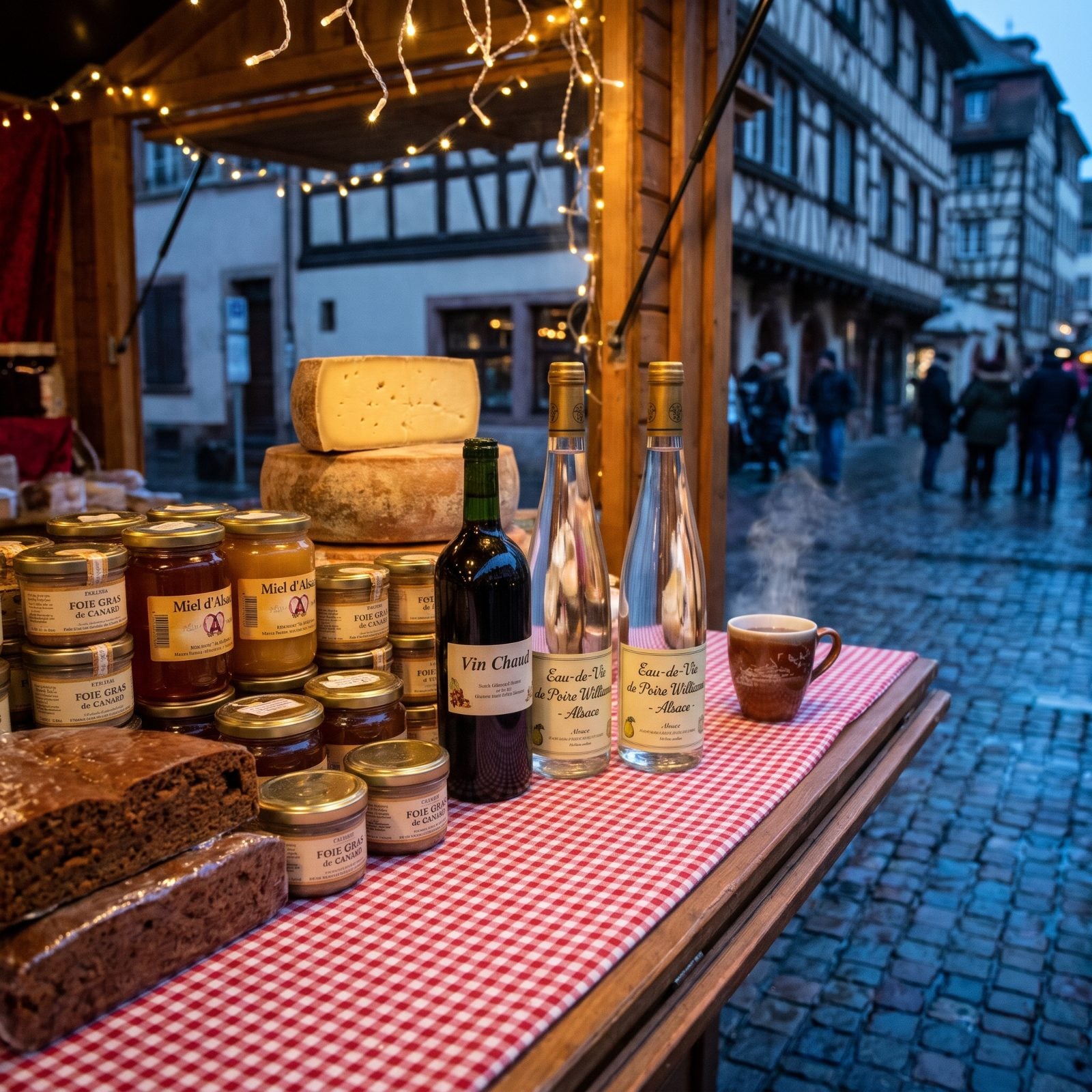
The cheese smells like a decision you want to make. The eau-de-vie is bottled by a family three valleys over. So you load up — when will you be here again? — and you don’t give customs a second thought until the declaration card is in your hand on the plane.
Soft cheeses, cured meats, and fresh produce get confiscated at a lot of borders, the US especially. And every bottle over your duty-free allowance can cost you in tax or get poured out entirely. We once watched good honey hit the bin because it technically counted as agricultural. Still annoyed about it, if we’re being honest.
Know your home country’s limits before you shop. Buy the vacuum-sealed, shelf-stable versions where you can. Hard cheeses and cooked, sealed meats travel far better than the fresh stuff. For alcohol, do the math at the stall, not at the airport counter.
2. Not Learning Basic Ordering and Courtesy Phrases
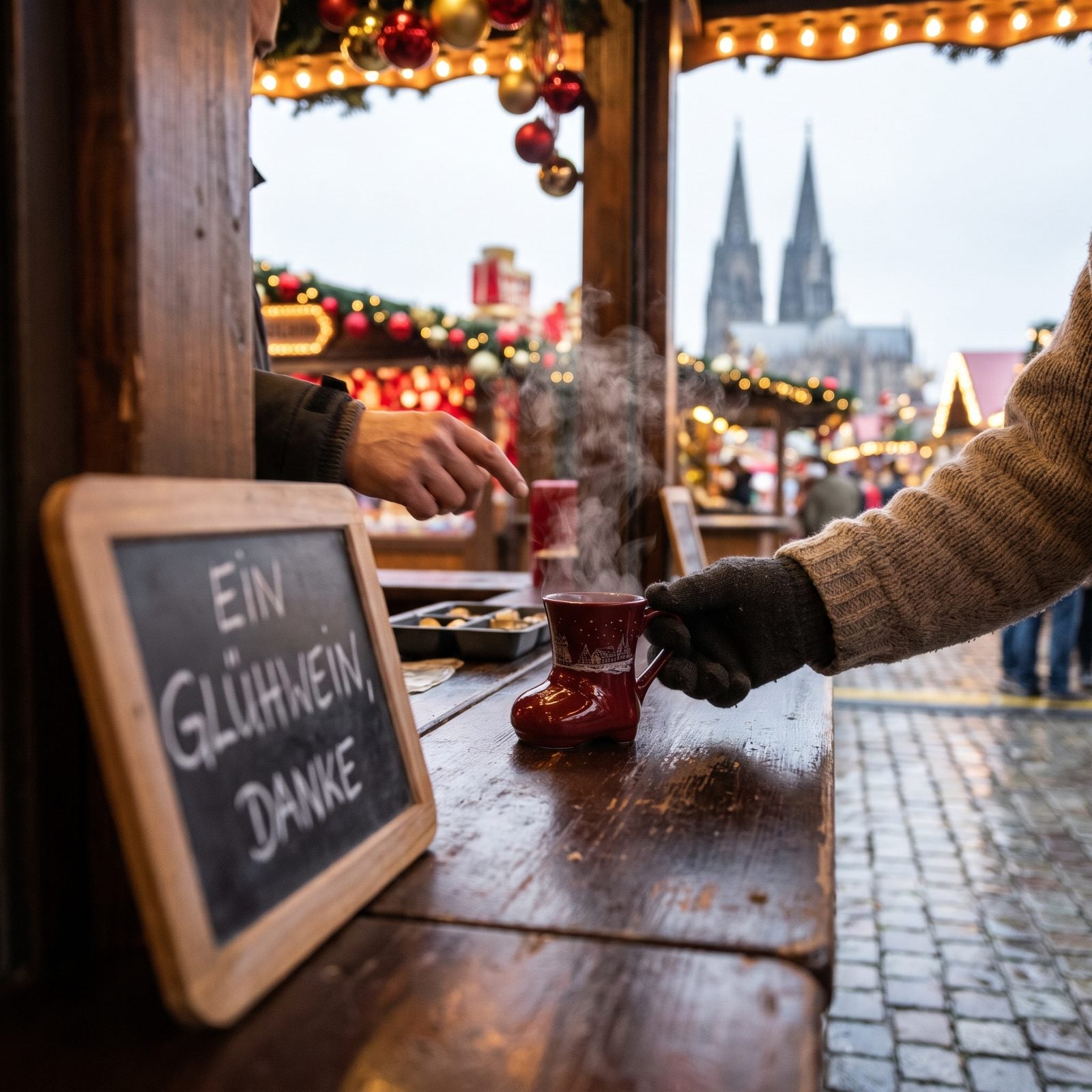
You can order a mulled wine with a pointed finger and a smile. But you’ll feel the difference the second you don’t.
Powering through in English works, mostly. It also marks you instantly, slows the line, and quietly puts the vendor on the back foot at the busiest stall of their year. A little effort changes the whole exchange. People warm up, and you get the local tip about which stall does the better bratwurst.
Learn the handful that matter: hello, please, thank you, and how to ask for one of something. In German, “ein Gluhwein, bitte” and “danke” will carry you through most of a market. Add “excuse me” and the numbers one through three. That’s an afternoon of practice, not a semester.
1. Ignoring Pickpocket Risks in Bottlenecked Crowds
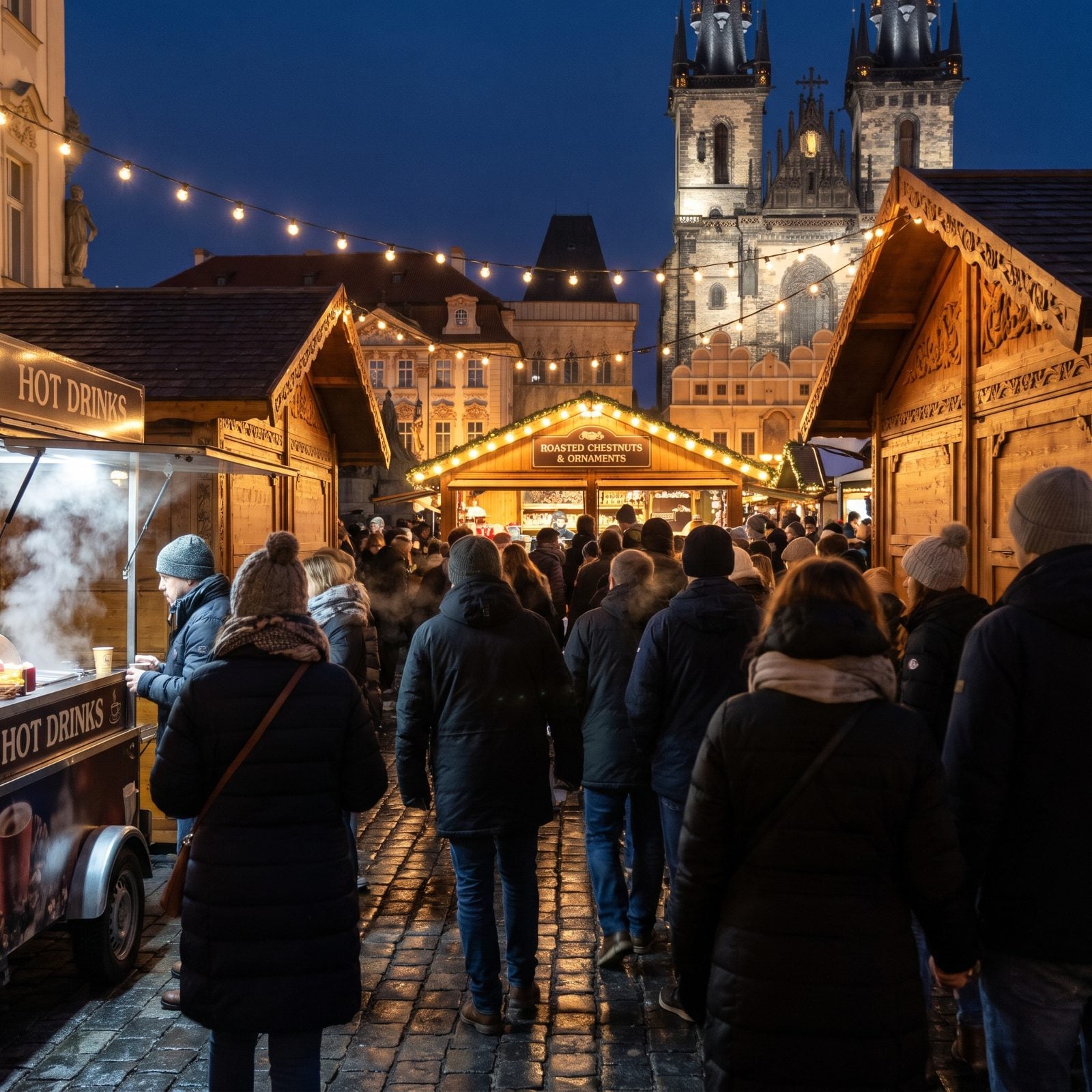
Picture the gap between two stalls where everyone has to squeeze through at once. The crowd slows, bodies press, hands are everywhere because that’s just the shape of the space. That chokepoint is exactly where a wallet goes missing, and you won’t feel a thing while it happens.
Markets at night are built for it. Thick coats, distraction, the shuffle, the glow. You’re looking up at the lights and down at your gluhwein, never at the pocket someone just opened.
Carry your essentials in a zipped front pocket or a crossbody bag worn across your chest with the flap against your body. Leave the real wallet at the hotel and carry a day’s cash plus one card. And keep your phone off the back pocket entirely.
Please note that some of the imagery in this article were created with the aid of AI image generators.