

🔥 Would you like to save this?
You’ve probably heard the claim that airplane tray tables are crawling with more germs than a public toilet. It’s unsettling, and honestly, it’s enough to make you want to douse everything in sanitizer before even thinking about that tiny cup of coffee. Research has shown that airplane tray tables, and a few other surfaces, can collect more bacteria than toilet seats, mostly because they’re not cleaned as often between flights. But is it really as gross as it sounds? There’s a bit more to the story than the headlines let on.
Airline hygiene isn’t just black or white. Some airlines are stricter about cleaning than others, and not all surfaces are equal when it comes to germs. That public toilet you dread might actually be cleaner than your seat’s tray table. If you know which airplane spots are the real germ magnets, you can focus your cleaning efforts where they matter most—and maybe ignore a few myths along the way.
The airline industry has definitely noticed people’s concerns about cleanliness, especially lately. There are ways to protect yourself, but the scariest germ stats don’t always mean you’re guaranteed to get sick. Sometimes, the numbers don’t tell the whole story.
Are Tray Tables Actually Dirtier Than Public Toilets?
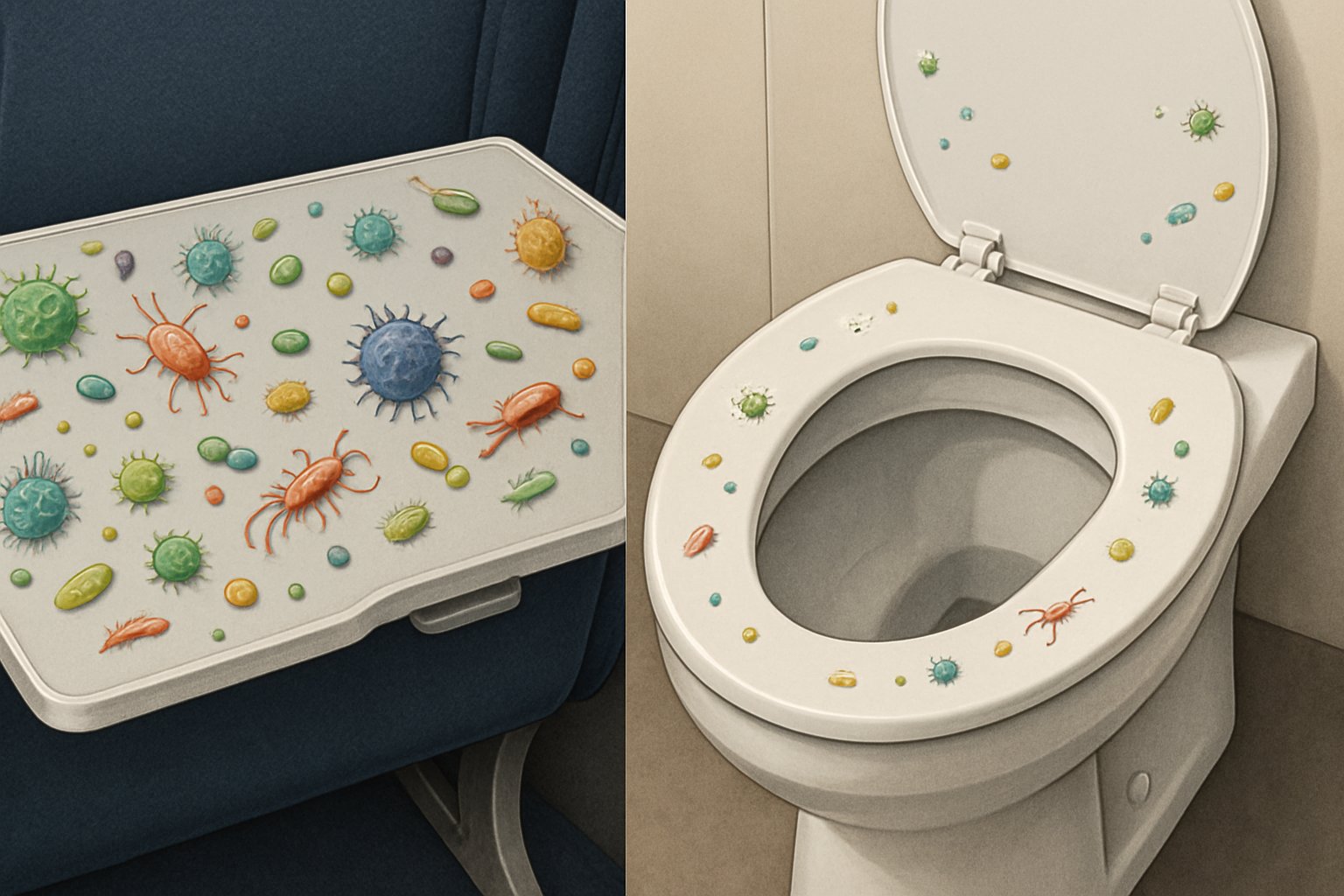
Multiple studies have found that airplane tray tables collect more germs than toilets, picking up everything from bacteria to food crumbs and, yes, even bodily fluids. Toilets get cleaned often, but tray tables? Not so much.
Recent Studies Comparing Surface Contamination
Travelmath’s study found tray tables were the dirtiest thing on planes, beating out toilets and seatbelt buckles. They swabbed surfaces on several flights and airports, and the results were…well, not great for anyone who likes to eat off those little tables.
Turns out, airports and planes are dirtier than your kitchen at home, with tray tables topping the list. It’s not what most travelers expect. Oddly enough, pet bowls and countertops at home sometimes have higher germ counts than some plane surfaces, but tray tables still win the “dirtiest in the sky” prize.
Types of Bacteria and Viruses Detected
Lab tests on tray tables have turned up all kinds of nasty stuff. Bacteria, food bits, and even bodily fluids aren’t uncommon.
Researchers have found E. coli, Staph, and different types of strep. Viruses can stick around too, especially the ones that cause colds and other respiratory problems. If you eat straight off the tray table, you’re rolling the dice with whatever’s living there.
Factors Contributing to Germ Accumulation
Tray tables get filthy mostly because they’re not cleaned often. Toilets are on a cleaning schedule, but tray tables? Not really.
Planes turn over quickly, so new passengers keep touching and eating off the same surfaces. Not everyone wipes things down, and most people don’t even think about it.
Why tray tables stay gross:
- Rarely cleaned between flights
- Lots of passengers, lots of hands
- Food and drinks go right on the surface
- Most people don’t realize how dirty they are
Planes are tight spaces, and people stay seated for hours. That gives germs plenty of time to move around and settle wherever they want, especially on the tray table where you eat.
How Airplane Tray Tables Become So Dirty

Tray tables get grimy thanks to what passengers do, rushed cleaning, and the way planes work. You eat off these things, but they’re barely wiped down between flights—and they see everything from spilled drinks to dirty laptops.
Passenger Habits and Eating Behaviors
Let’s be honest: passengers use tray tables for everything. Phones, laptops, snacks, makeup, even changing diapers. Yep, some parents use them as emergency changing stations, which is a nightmare for anyone who thinks about germs.
Food spills and crumbs get left behind, and not everyone cleans up after themselves. It’s a buffet for bacteria.
How tray tables get contaminated:
- People don’t always wash their hands after the bathroom
- Food and drinks spill, and crumbs stick around
- Phones, tablets, and other gadgets go right on the table
- Makeup, lotions, and other personal stuff end up there too
- Kids’ toys and snacks are everywhere
All that touching means germs move around constantly.
Limited Cleaning Between Flights
Airlines are in a hurry to get planes back in the air. That means cleaning crews don’t have time to scrub every tray table.
Tray tables usually just get a quick wipe, if that. Crews focus on picking up trash and restocking things, not really disinfecting.
A typical cleaning looks like this:
- Grab obvious trash
- Restock magazines or safety cards
- Quick vacuum
- Maybe wipe armrests
Deep cleaning? Depends on the airline:
- Some do it weekly
- Some only at night
- Big messes get cleaned if someone complains
Most cleaners use products that don’t stay on long enough to actually kill all the germs. A speedy wipe isn’t enough to really sanitize.
Environmental Conditions in the Cabin
The cabin itself doesn’t help. Recirculated air spreads particles everywhere.
Temperature changes cause condensation, which lets bacteria multiply on those already dirty surfaces.
Germs move easily in tight quarters. If someone sneezes or coughs, those particles can land right on your tray table.
What helps germs grow:
- Humid air
- Warm temps
- Not much airflow around seats
- Everyone packed in close together
Tray tables are made of plastic or composite, and tiny scratches trap bacteria. They’re not naturally germ-resistant.
Public Toilets: Notorious, Yet Surprisingly Clean?
Public toilets have a bad reputation, but they’re often cleaned with strict protocols and use antimicrobial surfaces that actually help fight bacteria. Most get cleaned way more often than your bathroom at home.
Modern Cleaning Practices and Schedules
A lot of public restrooms get cleaned every couple of hours, especially in busy places. Professional cleaners use hospital-grade disinfectants that kill almost everything on contact.
Some places even use electronic monitoring to track cleaning. Sensors can alert staff when it’s time for another round.
Airports and malls tend to clean restrooms every hour or so, which is more than most of us clean at home. Still, not everyone is satisfied, but that’s usually about maintenance, not cleaning.
Materials and Design Features that Reduce Germs
Modern restrooms use materials that stop bacteria in their tracks. Copper surfaces can kill germs within hours.
Touchless tech is everywhere:
- Auto-flush toilets
- Motion-sensor faucets
- Hands-free soap and towel dispensers
Toilet seats now come with antimicrobial coatings that last for years. Non-porous materials like steel and ceramic don’t let bacteria settle in.
Nearly half of Americans avoid sitting on public toilet seats, but those seats are cleaner than you’d think—definitely cleaner than a lot of things you touch every day.
Hidden Hygiene Hazards on Planes
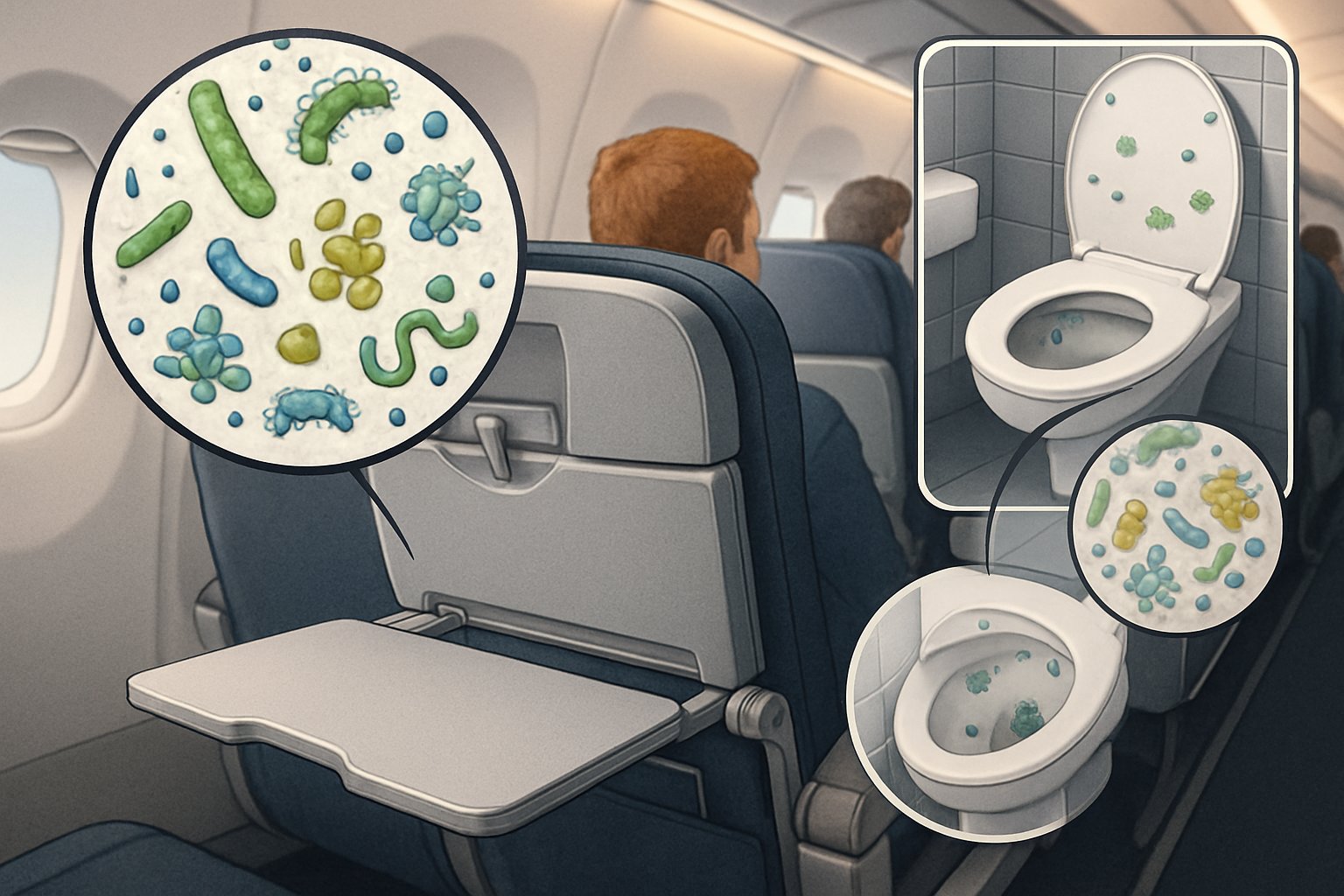
Tray tables might get all the attention, but they’re not the only germy spots on a plane. The cabin is full of hidden hotspots that most people never think to wipe down.
Other Germ Hotspots in the Cabin
Headrests look harmless, but they’re loaded with germs. Fabrics don’t get cleaned often, and they pick up everything from hair oil to sneezes.
Armrests are another problem. Everyone grabs them, and hands aren’t always clean.
Seat pockets are a black hole for trash—tissues, wrappers, you name it. They almost never get sanitized.
Seatbelt buckles? Flight attendants say they’re among the dirtiest things on board, but most of us just click them without a second thought.
Overhead air vents get touched by lots of people, yet they’re rarely cleaned.
High-Touch Surfaces You Might Overlook
Overhead bin handles are touched by every passenger but hardly ever wiped. It’s a germ-sharing free-for-all.
Window shades get handled all the time, but who thinks to clean them?
Those seat adjustment buttons? Everyone presses them, often right after eating or using the bathroom.
Screens and magazine pockets are also trouble. Screens get smudged by dozens of fingers, and magazines get passed around.
Even the carpet under your feet is suspect. Shoes pick up who-knows-what before tracking it onto the plane.
Honestly, just bring disinfecting wipes and use them on anything you plan to touch. It’s not paranoia—it’s just being smart.
Real-World Consequences of Dirty Tray Tables

The bacteria hanging out on your tray table aren’t just numbers from some distant lab—they can actually make people sick. It’s wild how that innocent-looking surface right in front of you can be a hotspot for germs.
Potential Health Risks for Passengers
Your airplane tray table is basically hosting a microscopic rave you never asked for. Aircraft interior surfaces harbor various potentially hazardous microorganisms that can mess with your health.
Common bacteria found on tray tables:
- E. coli
- Staphylococcus aureus
- Streptococcus species
- Salmonella variants
These germs can cause stomach bugs, colds, and even skin infections. The risk jumps if you eat right off the tray or touch your face after fiddling with it.
Some passengers are especially vulnerable:
- Older folks with weaker immune systems
- Pregnant travelers
- Kids
- People with chronic illnesses like diabetes or heart disease
The closed aircraft environment just makes it easier for germs to hop from person to person. It’s even worse on older planes with less efficient ventilation.
Documented Outbreaks and Case Studies
Airlines don’t exactly advertise tray table horror stories, but health officials have flagged some concerning incidents. Flight attendants have reported finding fecal matter on tray tables during cleaning.
Some notable cases:
- A norovirus outbreak in 2018 on a trans-Atlantic flight traced back to contaminated surfaces
- Food poisoning episodes from passengers eating off dirty tray tables
- Respiratory bugs spreading through cabins via shared surfaces
The CDC regularly investigates illness clusters on planes, and their reports keep pointing at tray tables as a main route for germs to travel between passengers.
Airlines have responded in different ways. Some boosted their cleaning routines after outbreaks, while others barely changed a thing.
What Airlines Are Doing to Combat Germs

Airlines have stepped up their cleaning game, adding both old-school disinfectants and new tech like UV lights to tackle germs on tray tables and other surfaces. The frequency and intensity of these cleaning procedures have shot up, but how much they do really depends on the airline.
Enhanced Cleaning Procedures
Your flight experience now usually comes with a more thorough cleaning between flights, but honestly, it depends on the airline and even the route. Most airlines do a basic clean between flights, but deep cleans are much less frequent, so don’t assume your tray table is spotless.
Major airlines use multi-tier cleaning schedules now:
- Transit cleaning: Fast 10-15 minute tidy-ups between flights
- Overnight cleaning: More serious 2-3 hour sessions
- Deep cleaning: Full-on sanitizing every 30-100 flight hours
Cleaning crews now spend extra time on high-touch spots like tray tables, armrests, and seatbelt buckles. Some airlines even share their cleaning schedules, but you’ll want to double-check what “enhanced” really means for your flight.
Many carriers have hired more cleaning staff and stretched out turnaround times to allow for better cleaning.
Use of Disinfectants and UV Technology
Airlines have added EPA-approved disinfectants and electrostatic sprayers that coat surfaces more evenly than just wiping. These charged particles wrap around tiny spaces, so germs have fewer places to hide.
UV-C light technology is another tool in the arsenal. This ultraviolet light zaps bacteria and viruses at the molecular level—no chemicals needed—and it’s especially good for hard surfaces like tray tables.
Some airlines now use:
- Electrostatic sprayers for a more even disinfectant layer
- UV-C sanitizing wands for seats and galley areas
- Antimicrobial coatings that keep working between cleanings
- Hospital-grade disinfectants with longer-lasting effects
But here’s the rub: tight schedules and busy travel days can still mean rushed cleaning jobs. Sometimes, the best intentions get squeezed by the clock.
Tips for Travelers: Keeping Your Seat Area Clean
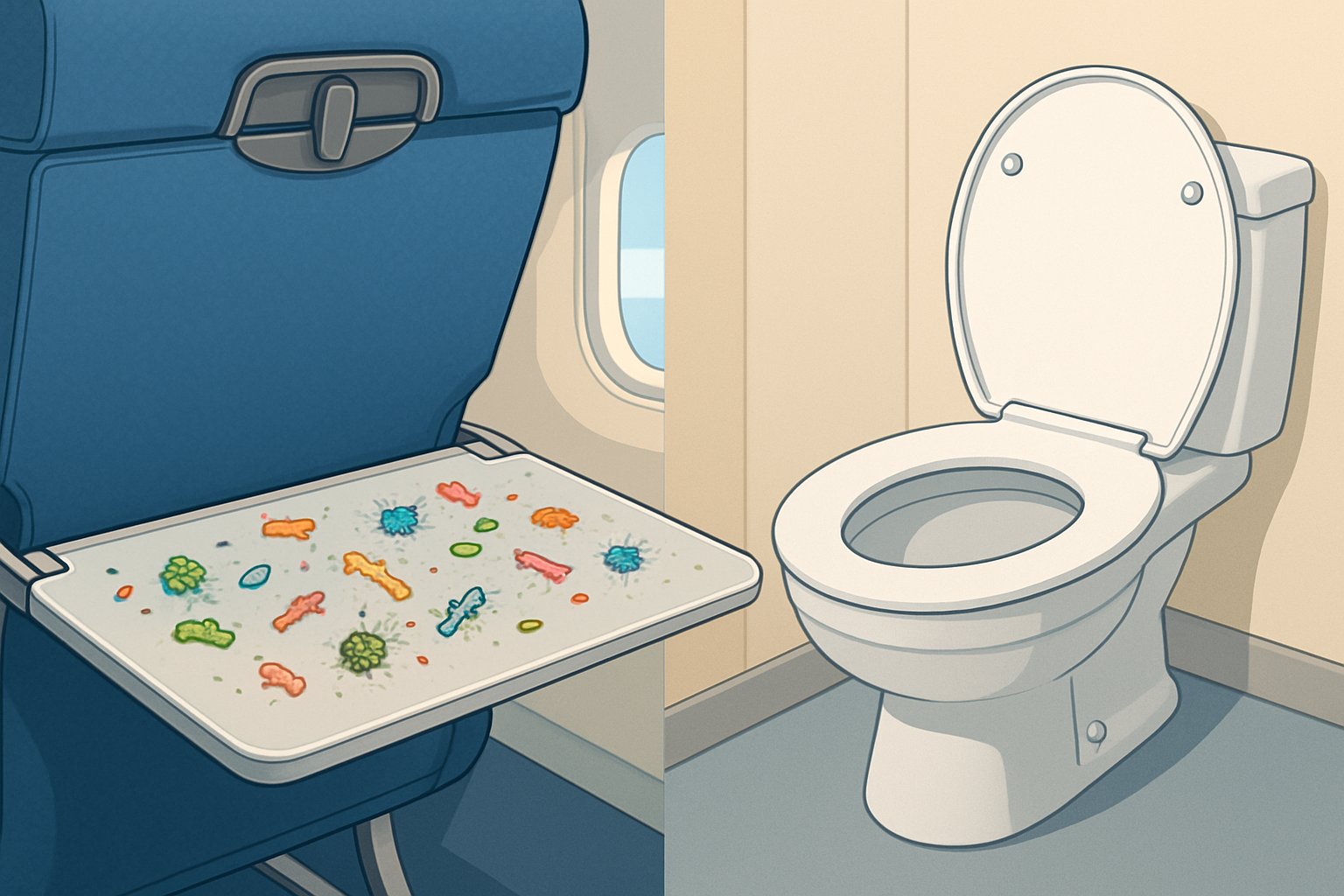
Seasoned travelers know a few simple supplies and habits can seriously cut down your germ exposure on flights. It’s all about having the right stuff handy and knowing where to focus your efforts.
Best Practices for Disinfecting Your Tray Table
Start with your tray table—studies show they’re dirtier than airplane toilets or seatbelt buckles. Grab disinfectant wipes with at least 70% alcohol for best results.
Wipe the whole tray, including the edges and hinges where gunk builds up. The latch is another germ magnet.
Do your cleaning right after you sit down, not just before eating. This gives the disinfectant time to do its thing.
Focus on these spots:
- Tray table (top, edges, hinges)
- Both armrests
- Seat belt buckle
- Entertainment screen
- Overhead air vent and light controls
If you board early, you get a little breathing room to clean before the crowd jams in. Sometimes, paying for priority boarding is worth it just for that.
Smart Packing: What to Bring on Board
Pack individual disinfectant wipes to keep TSA happy. Alcohol-based wipes are best for killing germs.
Bring hand sanitizer (60% alcohol or higher) as experts recommend. Use it before eating and after touching anything lots of people touch.
Essentials to pack:
- Disinfectant wipes (single-use packets)
- Hand sanitizer (3.4 oz or less)
- Tissues for bathroom buttons
- Paper towels for backup cleaning
Don’t use disinfectant wipes on leather seats—some airlines say it can ruin the material. Check your airline’s advice before you wipe.
Keep these items somewhere easy to grab, like an outside pocket or the top of your bag. You’ll want to get cleaning as soon as you sit down.
Mythbusting: The Truth Behind Headlines

Those headlines about airplane germs can sound like something out of a horror flick, but the truth is messier (and sometimes less scary) than the clickbait suggests. The studies behind those numbers deserve a closer look, and a bit of skepticism goes a long way.
Are the Numbers as Alarming as They Sound?
When you see headlines shouting about bacteria counts, take a breath. Not all bacteria are bad. A study might find 2,158 colony-forming units per square inch on a tray table and only 172 on a toilet seat—but those numbers don’t tell the full story.
Most of the bacteria hanging out on airplane surfaces are harmless. Your kitchen sponge probably has way nastier stuff than your seat pocket. The real question isn’t “how many germs?” but “which ones?”
Typical bacteria counts on planes:
- Tray tables: 2,000-3,000 CFU/sq inch
- Armrests: 1,500-2,500 CFU/sq inch
- Overhead bins: 500-1,200 CFU/sq inch
- Lavatory door handles: 200-400 CFU/sq inch
These numbers seem scary until you realize your phone screen can have 17,000 CFU per square inch. Context really is everything—headlines can be pretty misleading.
How to Interpret Hygiene Study Results
Hygiene research uses specific swabbing and culturing methods that can really skew results. Researchers swab surfaces with sterile cotton swabs, moisten them, and then grow whatever’s there on agar plates.
But here’s the catch: different surfaces hold moisture differently. Smooth plastic tray tables tend to keep bacteria-friendly moisture longer than something like a paper towel dispenser. So sometimes, high bacteria counts just mean the surface is better at holding onto moisture, not that it’s actually more dangerous.
What affects study results?
- When samples are taken—before or after a cleaning
- Surface material—plastic, metal, or fabric
- Humidity and temperature in the cabin
- Lab methods—not all labs use the same standards
And let’s be honest, mythbusting can backfire if the studies aren’t set up right. A lot of airplane hygiene studies don’t even separate harmless environmental bacteria from the stuff that actually makes people sick.

Turns out, your airplane tray table really is dirtier than a public toilet seat. Studies have found that airplane tray tables harbor more germs than toilet seats, along with spots like water fountain buttons and those little air vents overhead.
But honestly, maybe don’t freak out just yet. Public restrooms aren’t quite the germ apocalypse you might picture.
The big issue? How often things get cleaned.
At home, you probably scrub your toilet pretty regularly. On a plane, though, that tray table might only get a quick swipe—if that—between flights.
Here’s what’s actually worth keeping an eye on during your flight:
- Tray tables – hundreds of hands touch them every day
- Seat belt buckles – rarely see a deep clean
- Armrests – everyone’s elbows, all the time
- Air vents – you and everyone else twist them
You don’t have to avoid these spots entirely. Just toss some disinfectant wipes in your bag and give your area a quick clean before you settle in.
Honestly, your phone probably has more bacteria than that toilet seat, so it’s all about keeping things in perspective.
Airlines have stepped up their cleaning game a lot, but with so many people coming and going, some surfaces just stay germy. A little prep can help you stay healthy while you’re flying.
🔥 Would you like to save this?
Please note that some of the imagery in this article were created with the aid of AI image generators.