
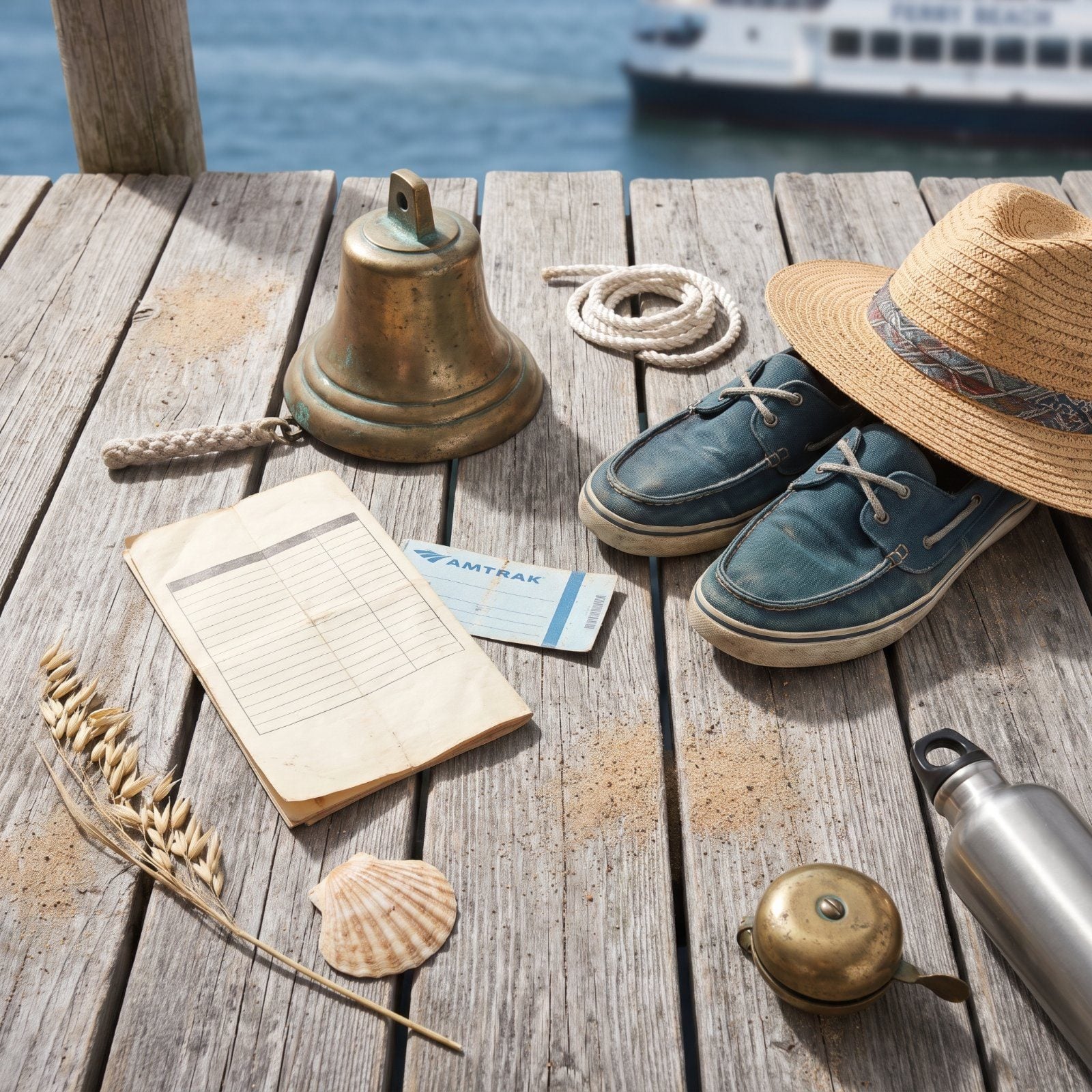
Leave the keys at home. Not as a punishment, but because half the fun of these places is that cars can’t follow you there. A ferry cuts the engine and the beach goes quiet. A train pulls into a 1908 depot and downtown is already at your feet. North Carolina built a surprising number of its best days around boats and rails, and once you arrive you get around on foot, by bike, or by golf cart. We rounded up the ones worth a full day, with the practical details that actually matter: who runs the boat, what it costs, and whether the lighthouse is even open.
17. Bald Head Island: Climb Old Baldy, Then Trade the Car for a Golf Cart
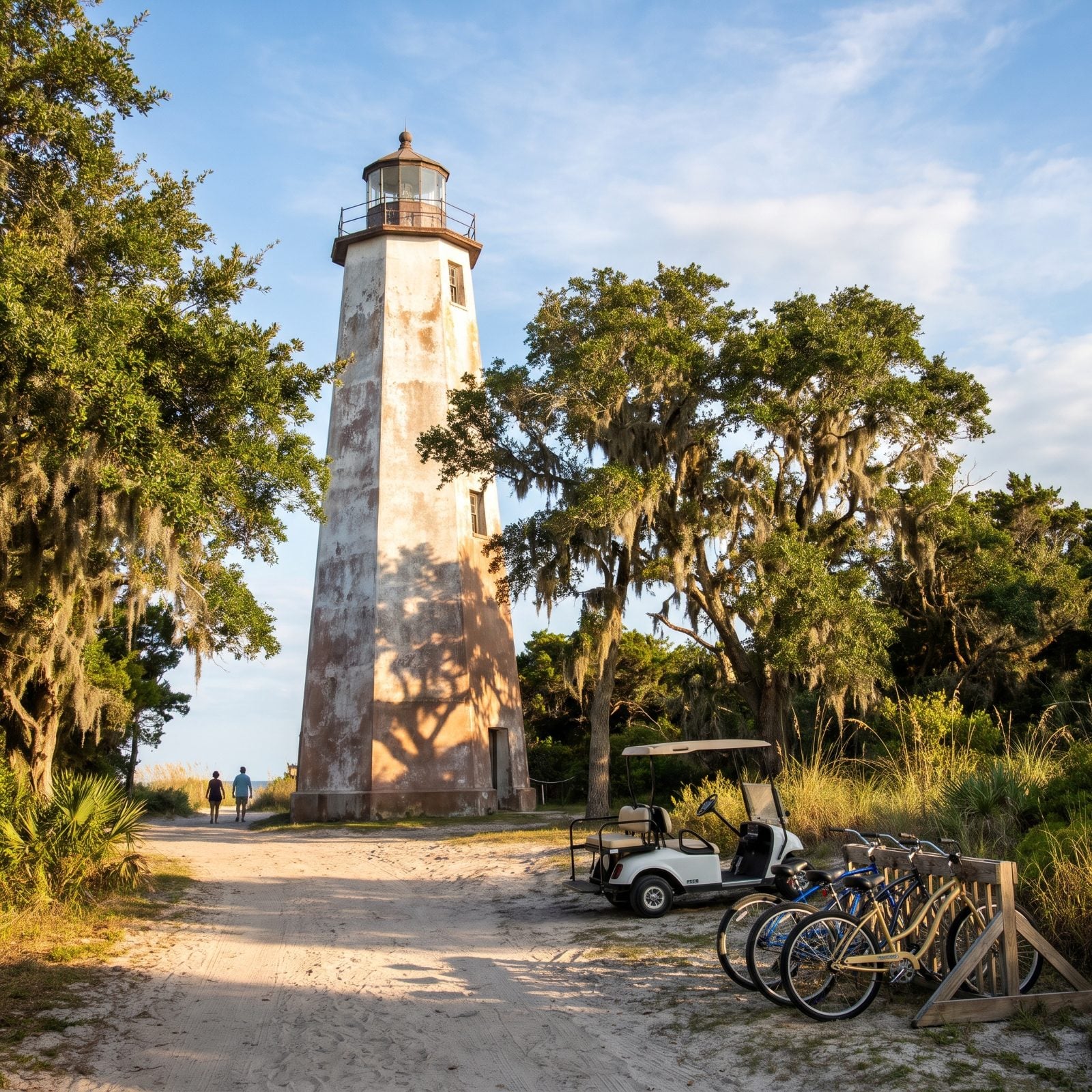
The passenger ferry leaves Deep Point Marina at 1301 Ferry Rd in Southport and crosses two nautical miles in about 20 minutes. Boats leave the mainland on the hour, the island on the half hour. Round trip runs around $23 for adults and $12 for kids 3 to 12, but check the ferry site before you go because fares move.
Here’s the part people underestimate: no cars allowed, period. You get around on a rented golf cart or a bike, and most of the island’s acreage is protected land. Climb the 108 steps of Old Baldy, the state’s oldest standing lighthouse, duck into the Smith Island Museum of History, then go find a stretch of that long undeveloped beach.
16. Ocracoke Village: Take the Express, Skip the Vehicle Ferry
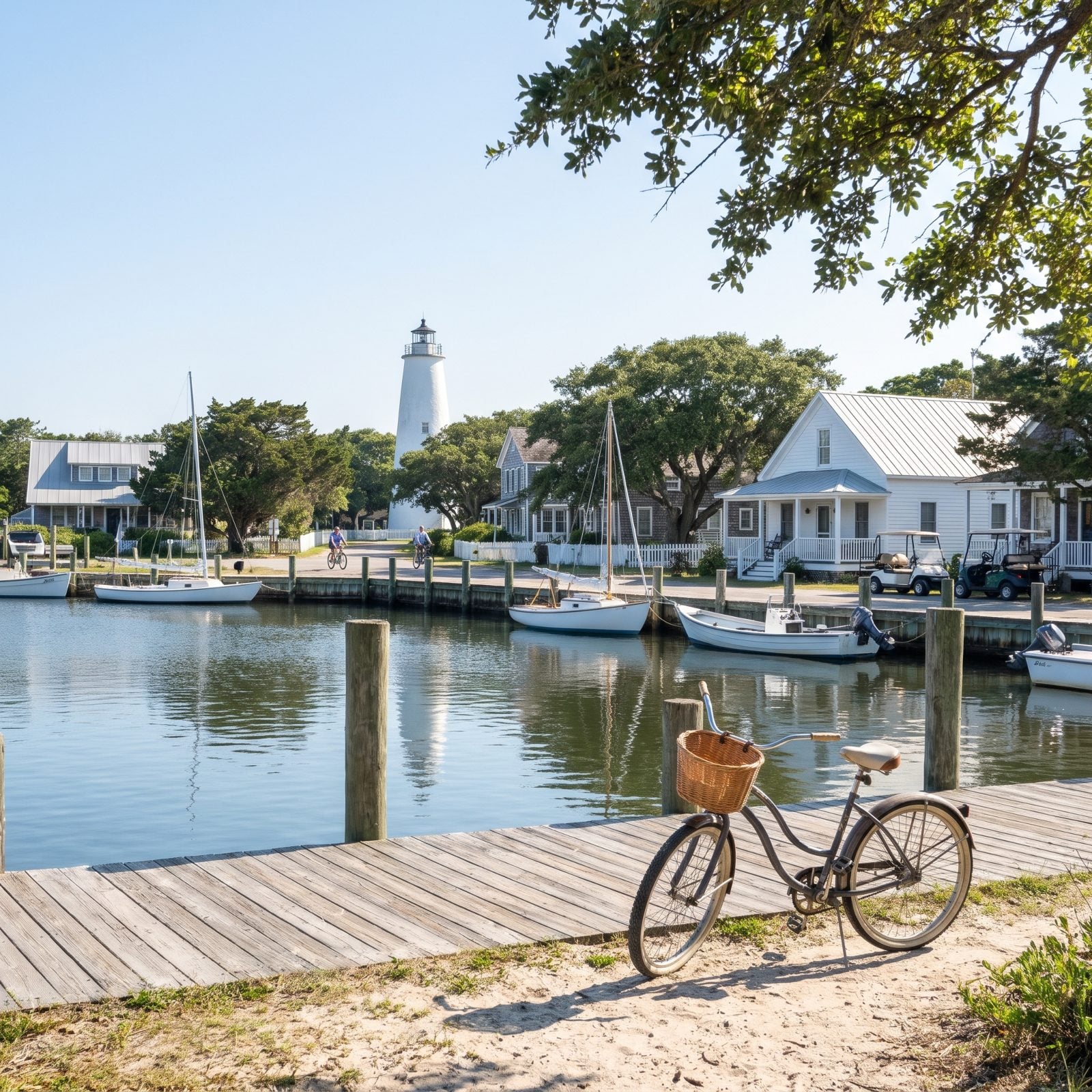
The free vehicle ferry from Hatteras is a trap for walk-on travelers. It lands you miles north of the village, which does you no good without a car. Take the NCDOT Ocracoke Express instead, a seasonal passenger boat that runs from Hatteras straight to Silver Lake Harbor in the heart of the village in a little over an hour.
Round trip is $15, little ones under 3 ride free, and a bike costs a dollar more. Reservations open months out and you want one. Confirm this year’s dates before you count on it, because the season is short and ends in mid-September.
Once you’re in, the village is walkable. Rent a bike or a golf cart, or hop Hyde County’s free Ocracoke Village Tram. See the lighthouse, the second oldest in the country, wander past the historic homes that cluster the back lanes, and walk out to Springer’s Point nature preserve.
15. Portsmouth Village: A Ghost Town You Can Only Reach by Calling Ahead
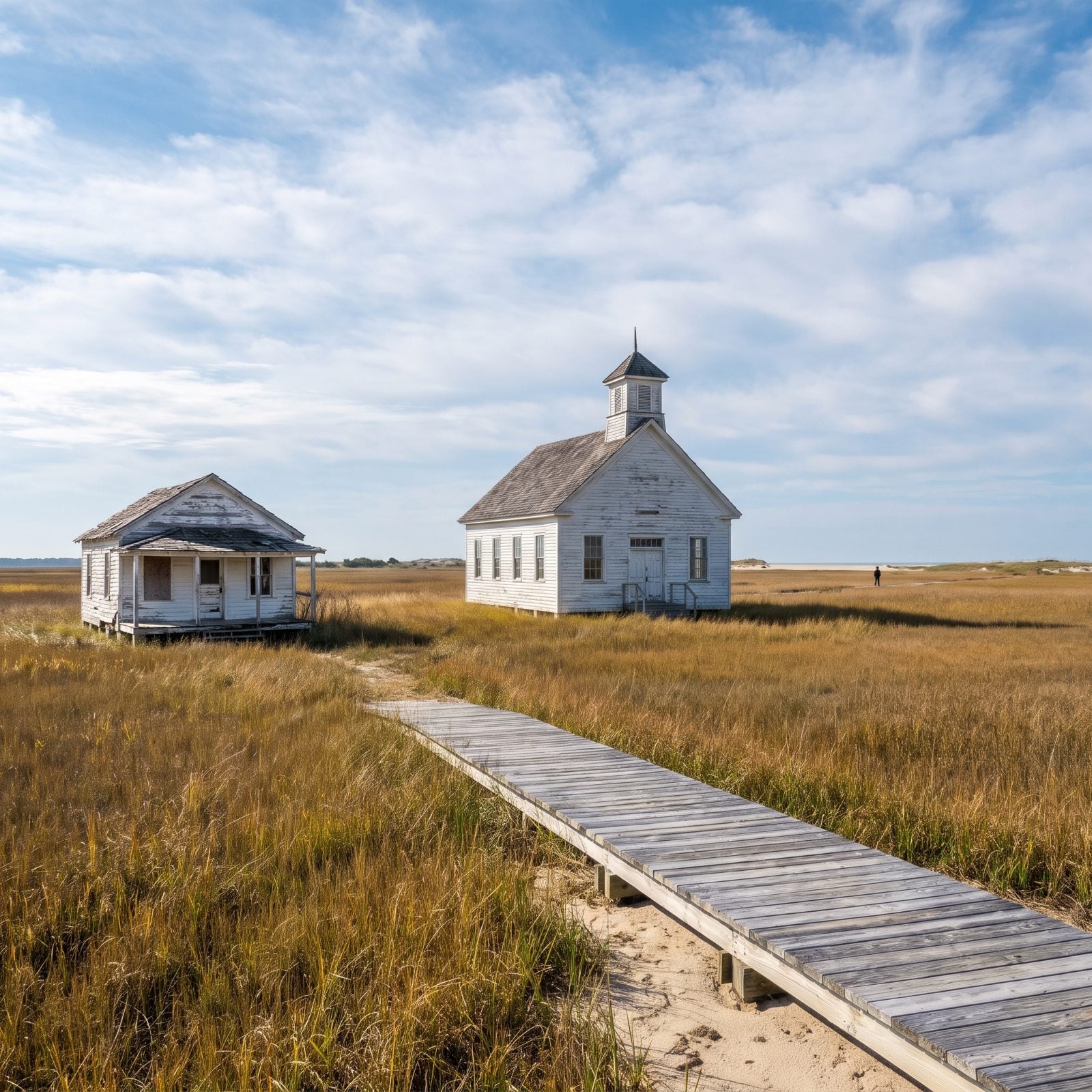
You can’t drive here. You can’t even show up and hop a public boat. Portsmouth Village, part of Cape Lookout National Seashore, is reached by Portsmouth Island Boat Tours out of Ocracoke, and you have to call ahead to book. The ride takes about 20 minutes.
Founded in 1753, it grew into the largest settlement on the Outer Banks by 1860, and now it’s an NPS ghost town. The general store is stocked with 1930s goods, and the Methodist church still has a guest book you can sign. The operator’s state filing lists service March through November, weather depending, so this is a warm-months plan, not a winter one.
What Our Readers Say
- When our readers loved a travel photo and told us why, the top reason was that it felt nostalgic, followed by having been there themselves.
From Journey Junket reader polls and votes.
14. Shackleford Banks: Wild Horses and No Bridges
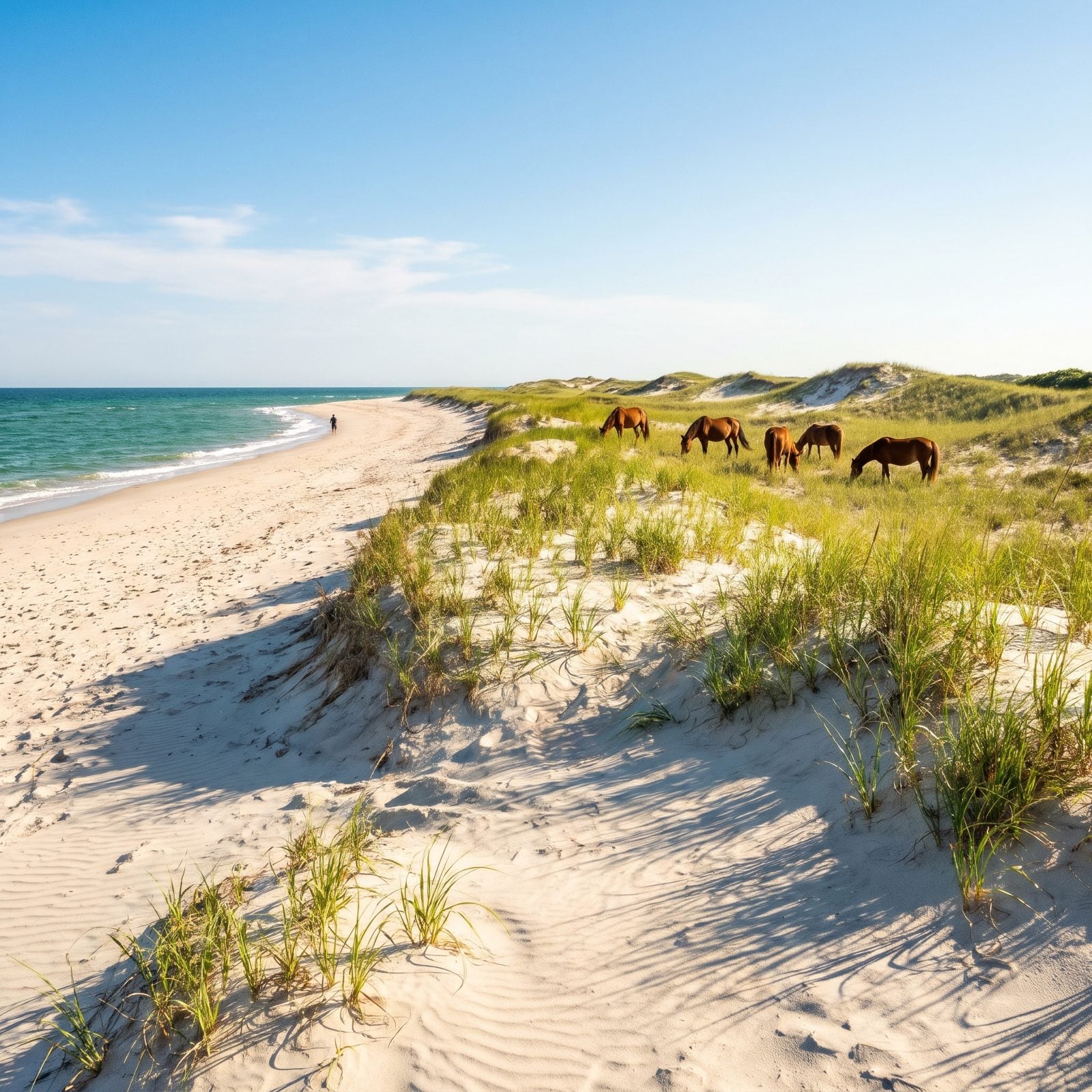
Island Express Ferry Service is the authorized boat for Cape Lookout National Seashore. From Beaufort it runs to the west end of Shackleford Banks; from Harkers Island it reaches the east end. No bridges touch this island, which is exactly why it still looks the way it does.
The draw is the wild horses, thought to descend from animals that swam ashore off 1500s Spanish shipwrecks. They live here with only light-touch management. No feeding, no herding. Keep your distance. These aren’t pony rides. They’re wild animals on the southernmost barrier island in the seashore, and they’ll let you know fast if you crowd them.
Explaining why the island still feels untouched, a biologist studying the herd says “As it became more wild, Shackleford matched the feral nature of the horses. When the people left, the horses then reclaimed their natural abilities”
13. Cape Lookout Lighthouse: The Diamond-Painted Tower (Check Before You Climb)
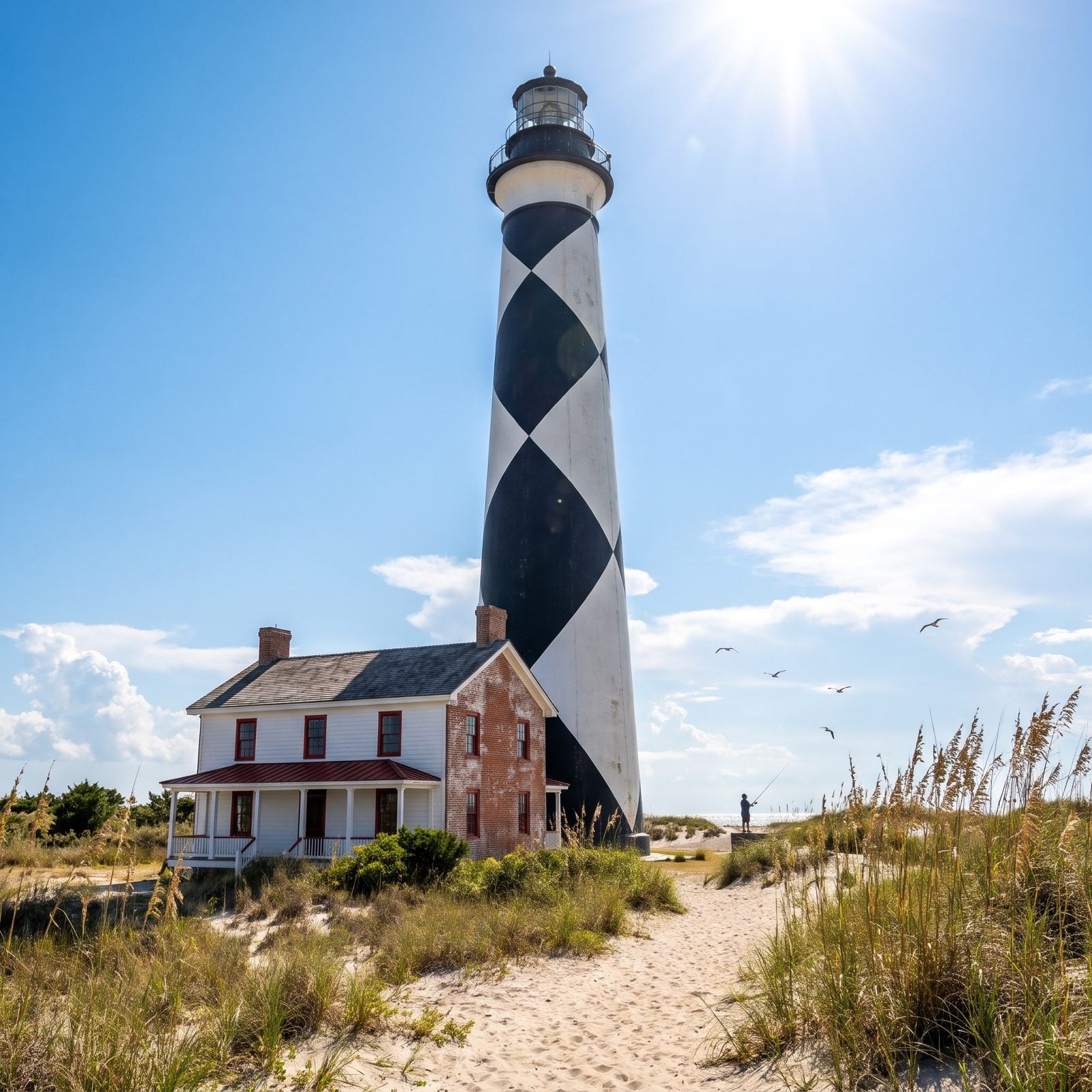
That black-and-white diamond paint job isn’t decoration. The pattern tells sailors which lighthouse they’re looking at by day, and here it’s painted on a single tall tower standing over the dunes. Island Express Ferry Service runs passenger boats here from both Harkers Island and Beaufort, and again, no bridges reach these barrier islands.
You can view the tower from nearby, tour the Keeper’s Quarters Museum, surf fish, and tick off a long list of bird species if you’re the patient type. One honest heads-up: a full restoration of the lighthouse began in August 2025 and is expected to take two to three years, and the area right around the tower is closed to visitors while work is underway (the Keeper’s Quarters stays open). Don’t plan on climbing it. Check with the NPS for current status before you go.
At Cape Lookout, a supervisory park ranger says sailors arriving by day can also use the diamonds as a rough gauge of distance, since more of them become visible the closer you get.
12. Rachel Carson Reserve: A Short Boat Hop From the Beaufort Waterfront
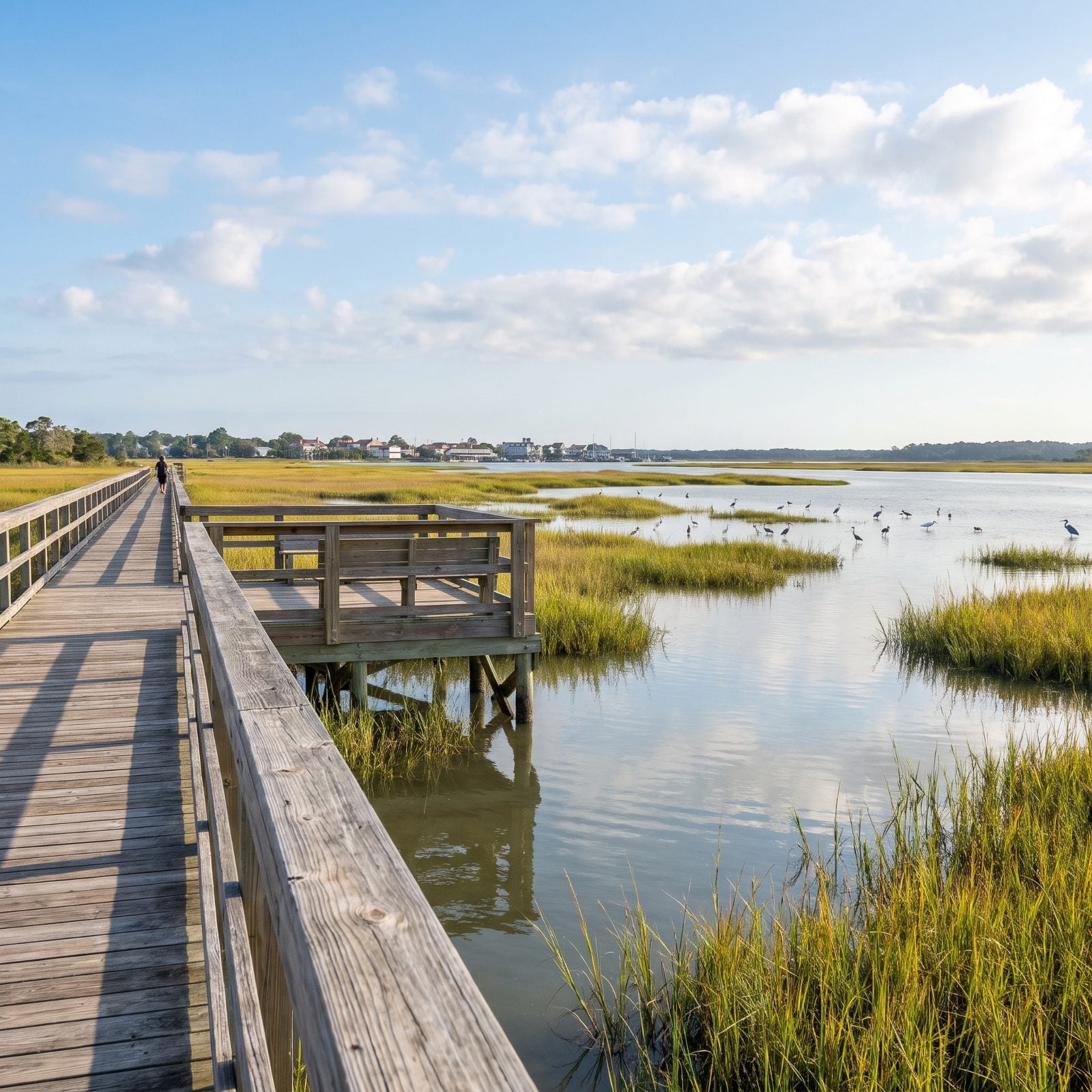
This one sits directly across Taylor’s Creek from historic Beaufort, so close you’ll wonder why it feels so remote the second you land. The reserve is a cluster of islands: Carrot Island, Town Marsh, Bird Shoal, and Horse Island. You get there only by boat, and small ferries leave from the Beaufort waterfront.
Rachel Carson did research here in the 1940s, years before Silent Spring. Walk the Carrot Island boardwalk to the viewing platform, read the interpretive signs, and bring binoculars. The birding is the point.
11. Bear Island at Hammocks Beach State Park: The Ferry Came Back in 2025
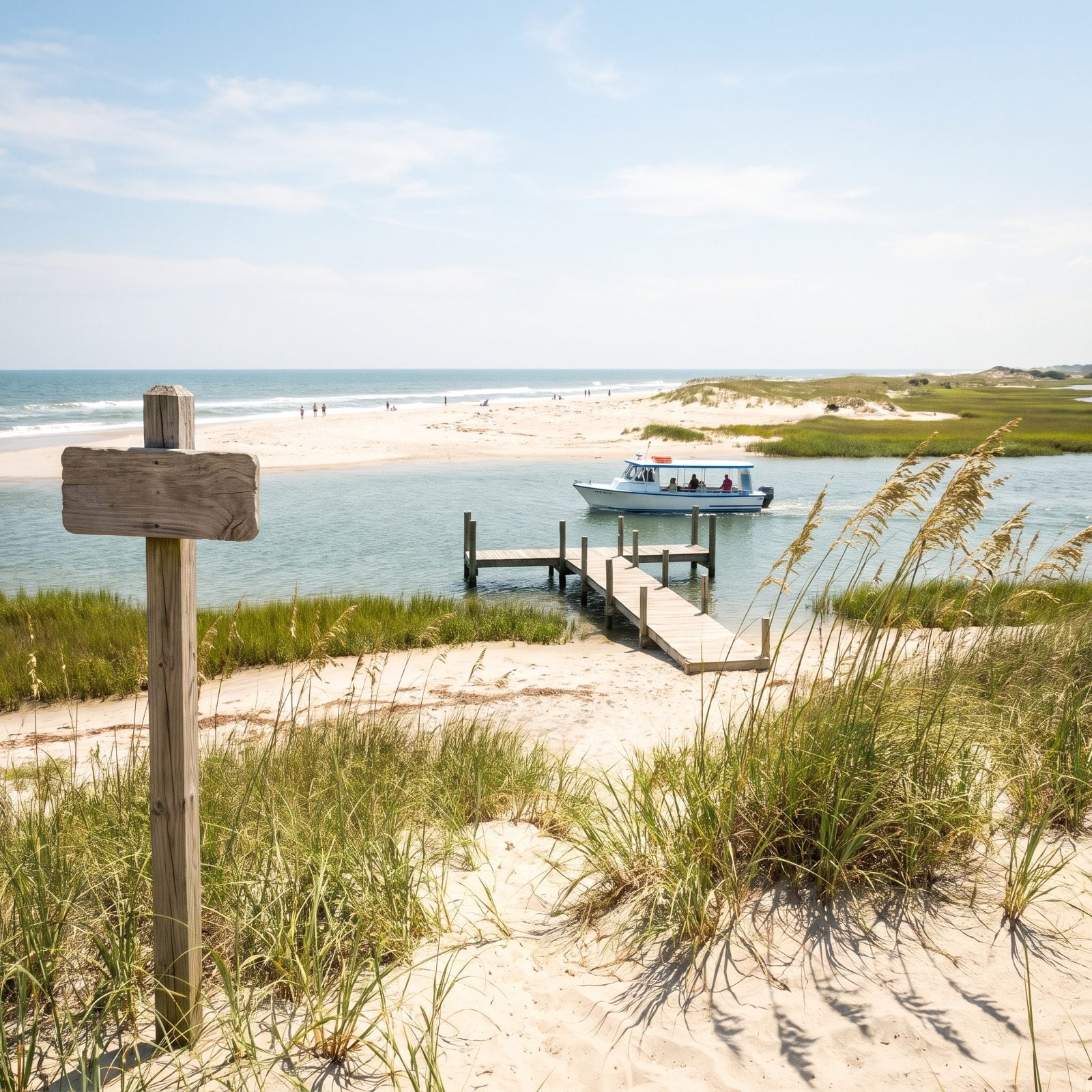
Good news worth repeating: the seasonal state park ferry to Bear Island returned May 14, 2025, after being shut since April 2024 for construction. It runs from the park’s mainland access in Swansboro.
In 2025, a round trip cost $10 for adults 13 to 61 and $5 for kids 3 to 12 and seniors 62 and up. Two and under ride free. In summer, ferries start at 9:30 a.m., run hourly early in the week, then every 30 minutes Thursday through Sunday until Labor Day. And if you want the beach to yourself after the last boat leaves, you can reserve a primitive campsite on the island.
10. Masonboro Island Reserve: The Longest Wild Island in Southern NC
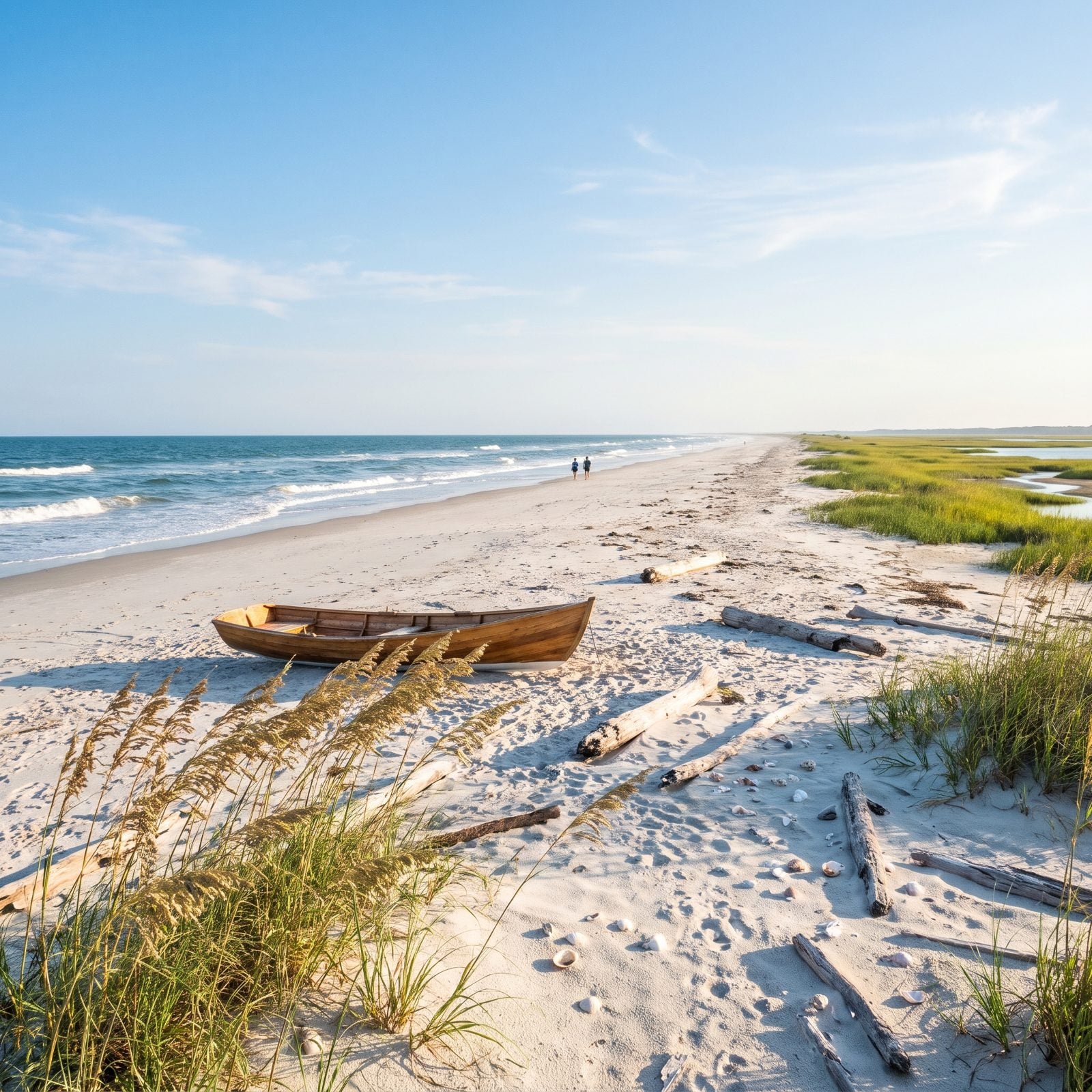
No restrooms, no snack bar, no shade shelters. That’s the deal, and it’s why Masonboro stays wild. Wrightsville Beach Scenic Tours runs a ferry shuttle out to the island. Listed prices vary, so check the current fare before you go. Pack your own water and everything else, because there is nothing out there.
At 8.4 miles, it’s the longest undisturbed island ecosystem in southern North Carolina, all marsh and tidal flats. People come to beachcomb, swim, surf, and fish. Primitive camping is allowed if you want to push your luck with the mosquitoes, which we’d warn you about.
Ahead of a busy holiday weekend, a state coastal management director told Masonboro visitors “we urge you to respect this unique natural habitat by practicing responsible recreation and leaving no trace”
9. Fort Fisher: A Dollar Across the Cape Fear River
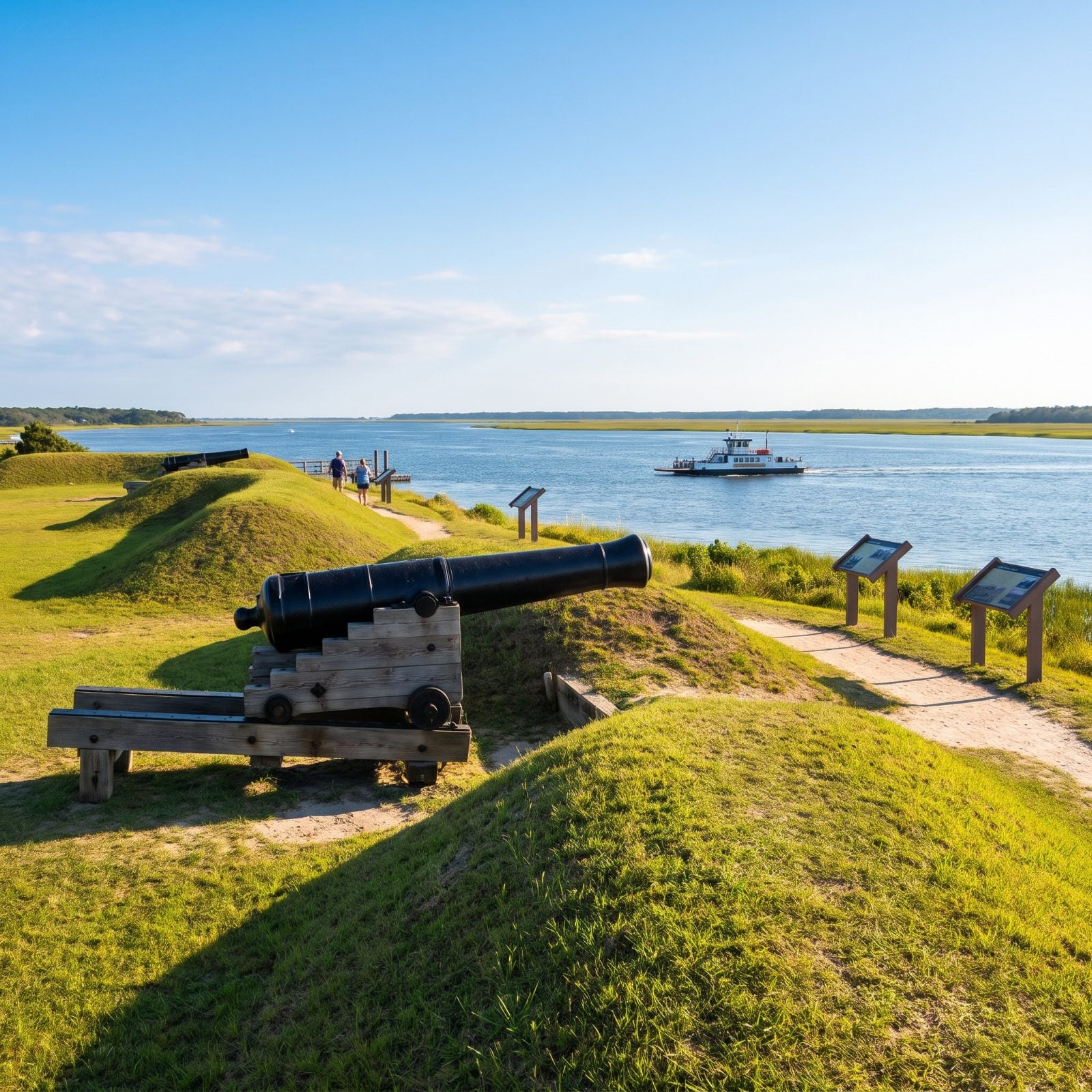
The Southport, Fort Fisher ferry crosses the Cape Fear River in about 35 minutes, and walk-on passengers pay a single dollar each way. Free under 5. Bring a bike and it’s two bucks. One of the better travel deals in the state, honestly.
On the Fort Fisher side you’ll find the state historic site, with surviving earthworks and restored cannons, plus the recreation area for beachcombing and birding. One caution: the N.C. Aquarium at Fort Fisher has been listed as temporarily closed for construction. Don’t build your day around it or you’ll disappoint the kids. Confirm it’s open before you promise anything.
8. Knotts Island: A Free Year-Round Ferry to NC’s Odd Corner
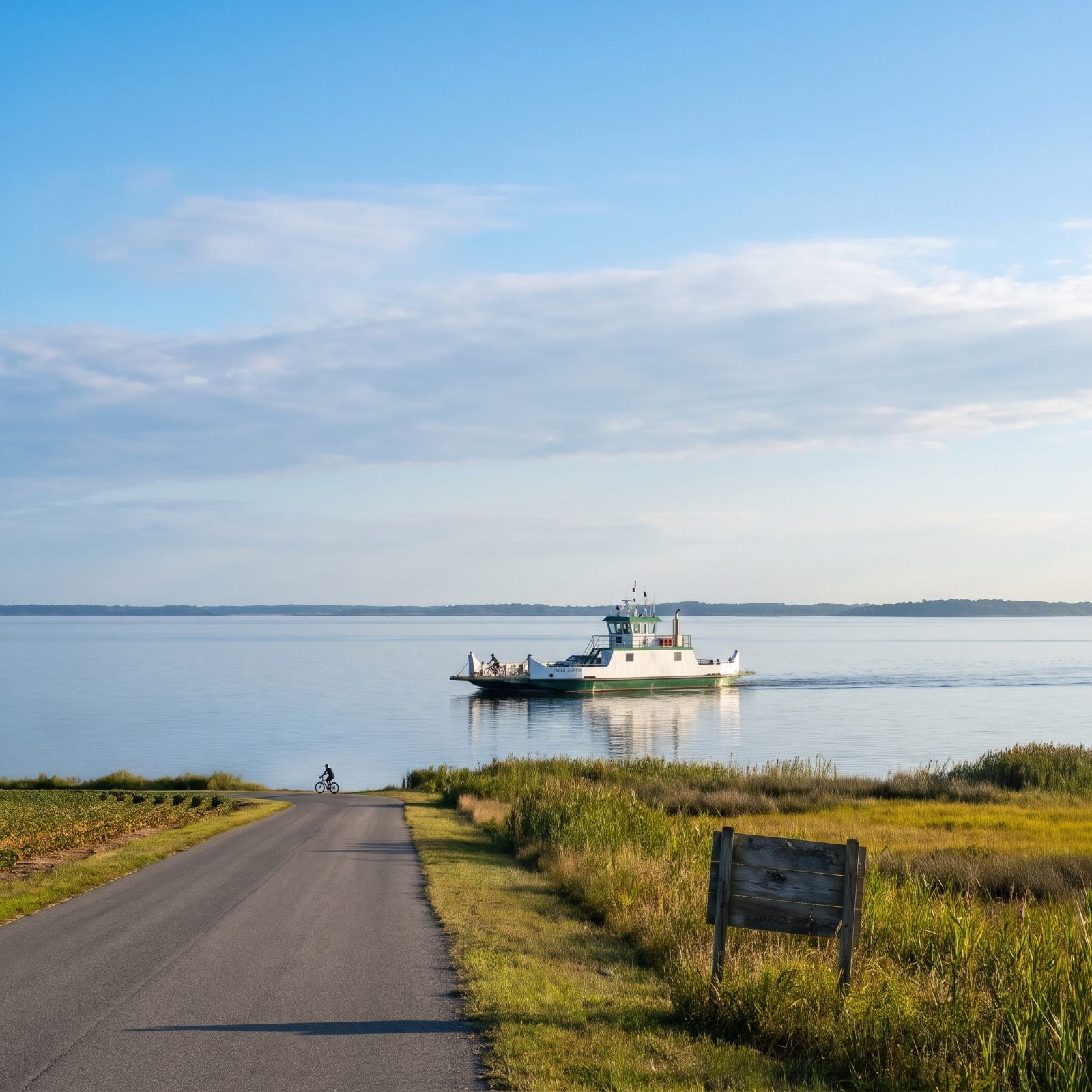
Here’s a geographic oddity: Knotts Island has no road to the rest of North Carolina. By land, it only connects to Virginia. To reach it from the NC side you take the free NCDOT Currituck, Knotts Island ferry, which runs year-round across Currituck Sound and makes about six round trips a day. The crossing is roughly 30 to 45 minutes.
It takes walk-on passengers and cyclists first-come, first-served. Currituck’s tourism folks suggest a 10-mile bike loop paired with the ferry ride, and birders head for the sprawling Mackay Island National Wildlife Refuge.
As an island-raised county commissioner put it, “we don’t have a road leading to anywhere in North Carolina. Our road leads to Virginia if you live on Knotts Island.”
7. Minnesott Beach: The Free Neuse River Crossing Nobody Puts on a Postcard
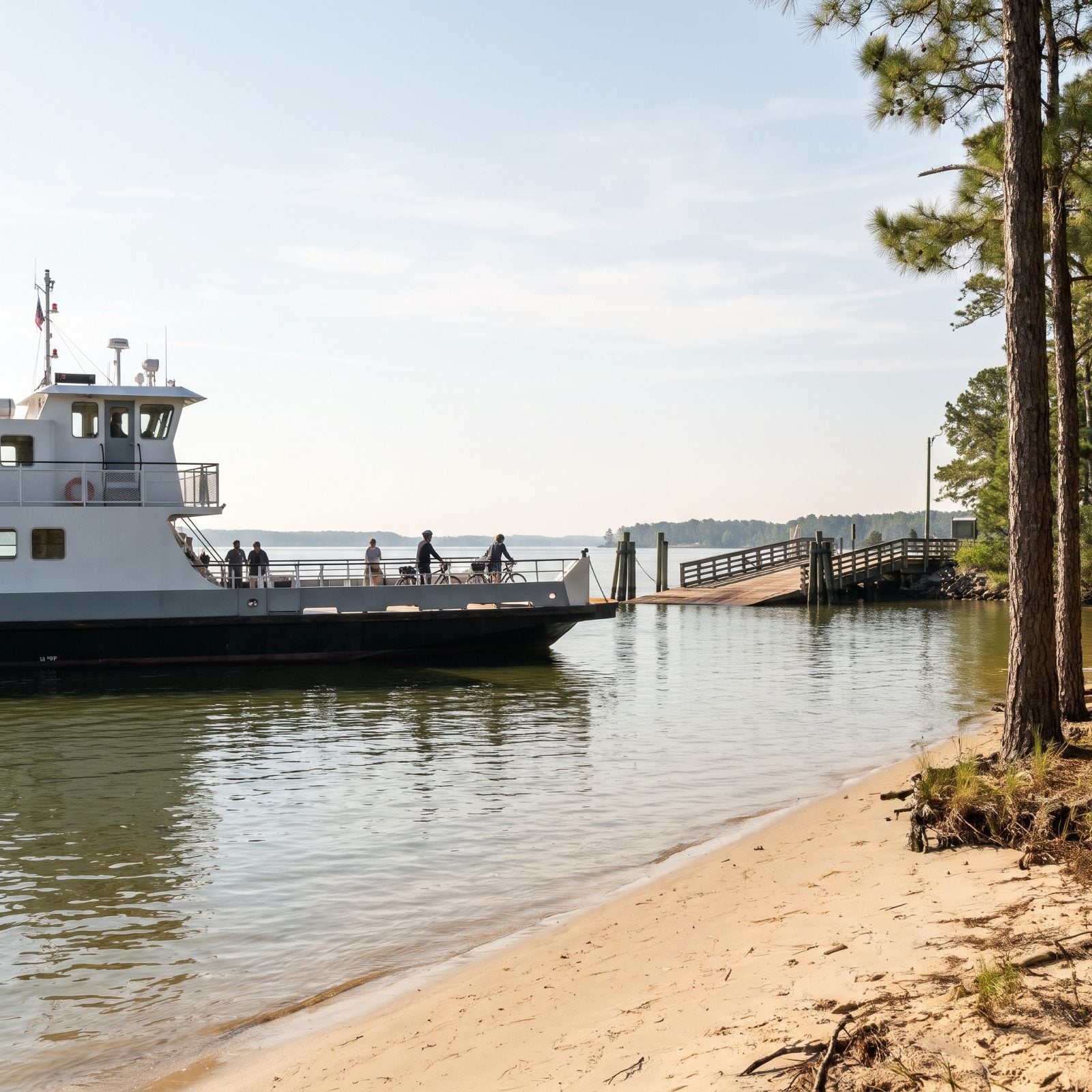
The best thing about the Cherry Branch, Minnesott Beach ferry is how easy it is. Twenty minutes across the Neuse River, year-round, and most people driving through have no idea it exists. It’s free through 2026, but state law requires tolls on this route starting Jan. 1, 2027, so check NCDOT’s current fares.
Step off on the Minnesott Beach side and you’re in a small town with a sandy beach right by the landing. That’s the whole walkable radius, and honestly it’s enough for a slow afternoon. Oriental, which calls itself the sailing capital of North Carolina, sits about ten miles north — a bike ride, not a stroll, so bring the bike or don’t plan on it.
6. Downtown Raleigh: Step Off at Union Station Into Four Museums on Foot
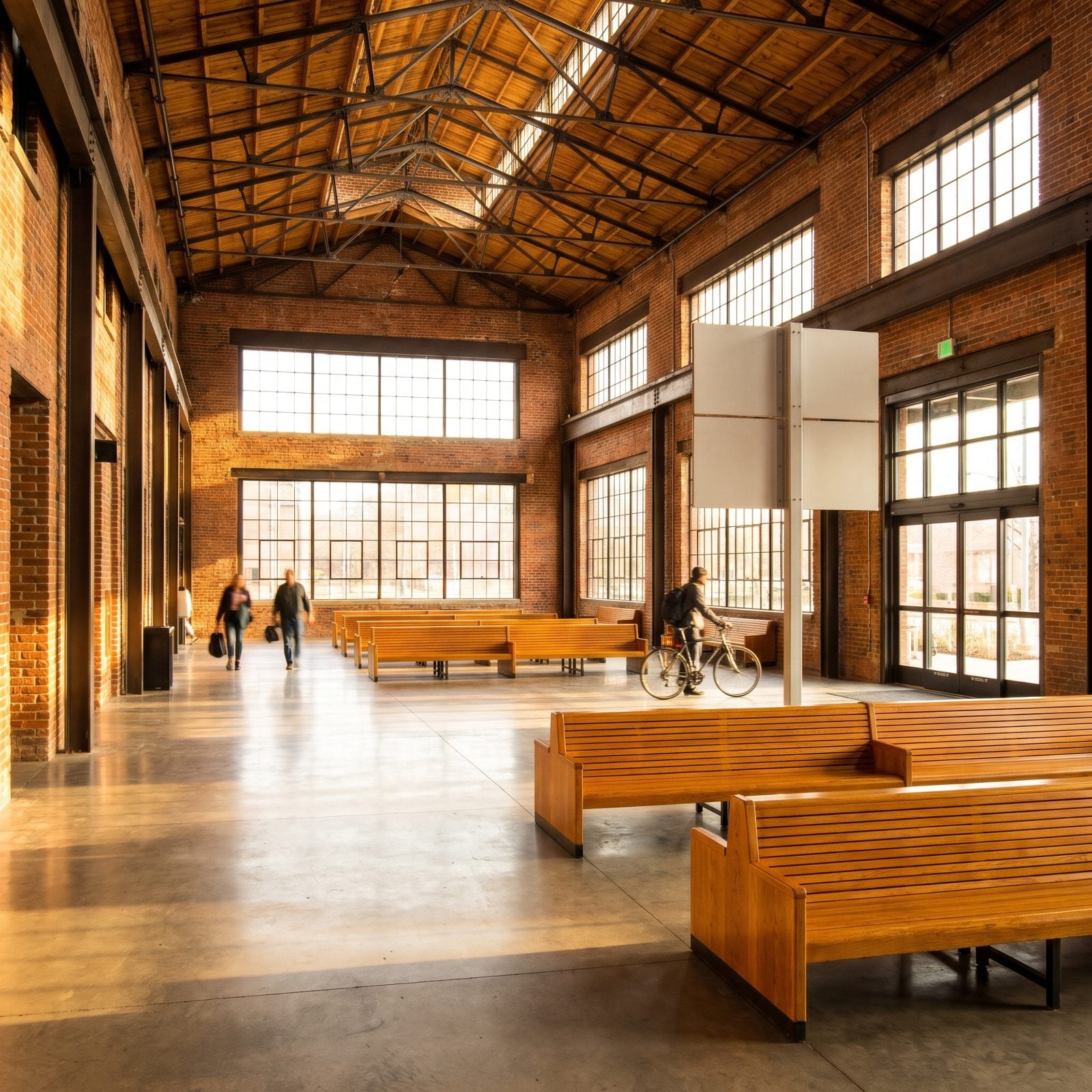
Raleigh makes the car-free day almost too easy. Union Station sits in the Warehouse District, and CAM Raleigh, the contemporary art museum, is directly across the street. You barely finish stretching your legs before you’re looking at art.
Walk through Nash Square and Marbles Kids Museum is right there for anyone traveling with children. Keep going and the N.C. Museum of History faces the N.C. Museum of Natural Sciences across from the State Capitol. Both free. Both within walking distance of where your train let you off. You could fill an entire day and never cross a parking lot.
5. Downtown Durham: A Half-Mile Walk From the Platform to the Bulls
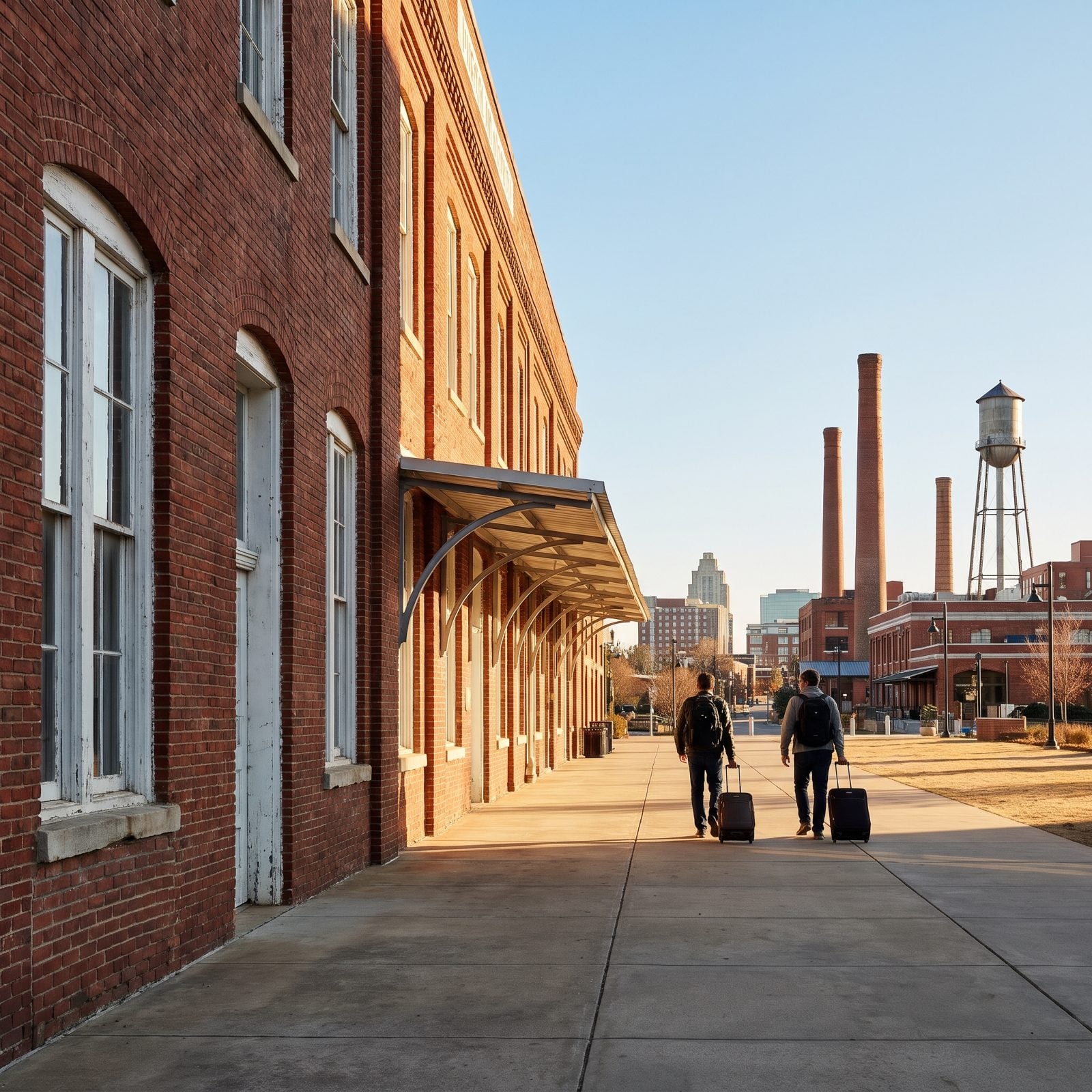
Durham’s station is a destination before you even leave it. The Amtrak stop at 601 W. Main St. lives inside the historic Walker Warehouse, red brick in the heart of the Warehouse District. You arrive and you’re already somewhere worth standing.
From there it’s about a fifteen-minute walk, half a mile, to Durham Bulls Athletic Park and DPAC. Brightleaf Square, the man-made river at American Tobacco Campus, and the Carolina Theatre all sit within walking distance. Catch a ball game, a show, dinner, all without touching a steering wheel. And for a city built on tobacco money, it has turned those old warehouses into one of the easiest car-free afternoons anywhere in the state.
4. Vollis Simpson Whirligig Park: Wilson’s Spinning Metal Giants, Five Minutes From the Train
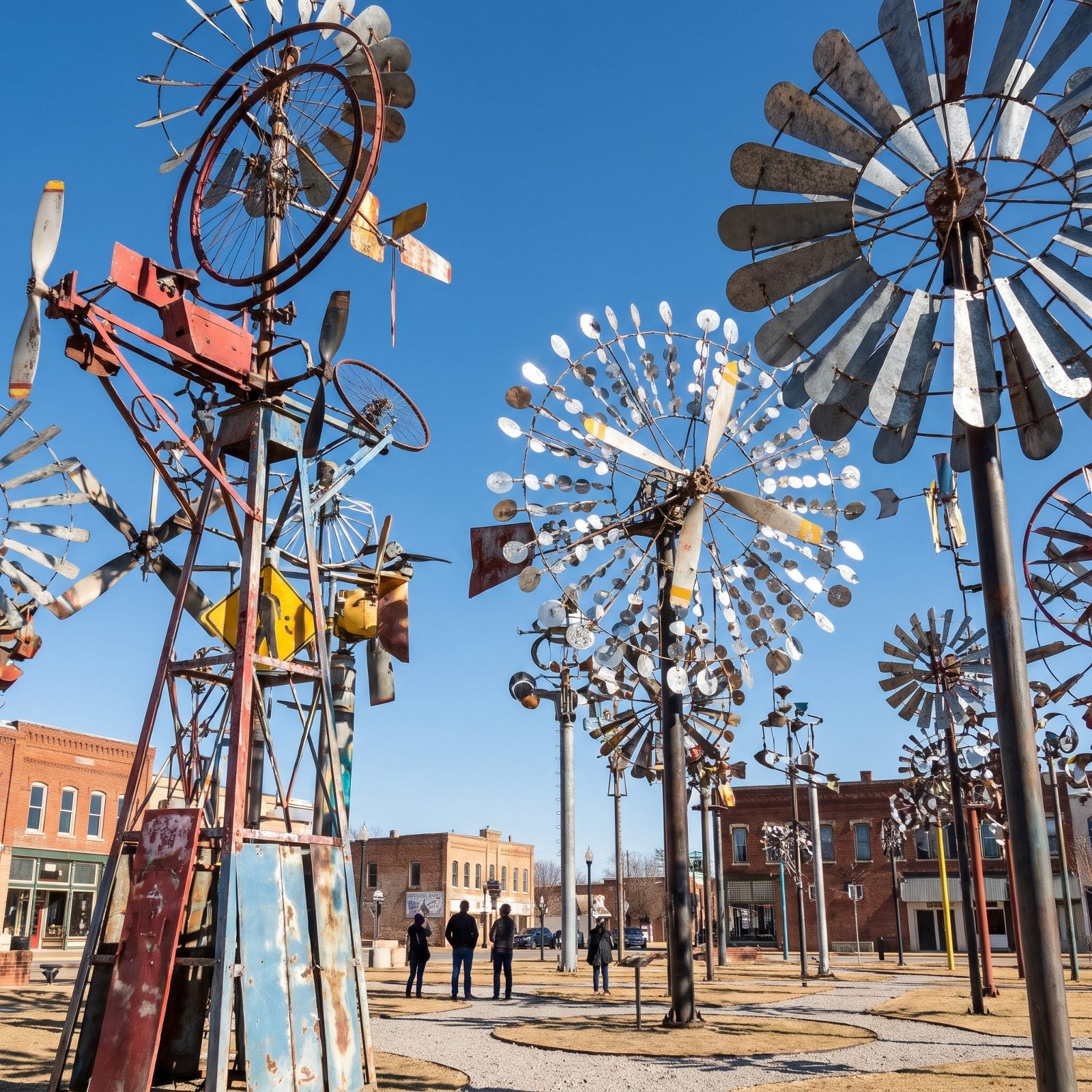
Picture walking roughly a third of a mile from a train platform and arriving at a field of spinning steel giants. That’s Wilson. The Amtrak station sits about five minutes on foot from Vollis Simpson Whirligig Park, where one man’s hand-built kinetic sculptures tower and turn against the sky.
The park at 301 Goldsboro St. S is free. The Whirligig Park Museum sits in the nearby Whirligig Station building, and most of the sculptures stand inside Wilson’s Downtown Social District, so you can wander with a drink in hand. Casita Brewing across the street will point you back to the depot.
3. Downtown Salisbury: A 1908 Depot and an Arts Walk That Starts at the Door
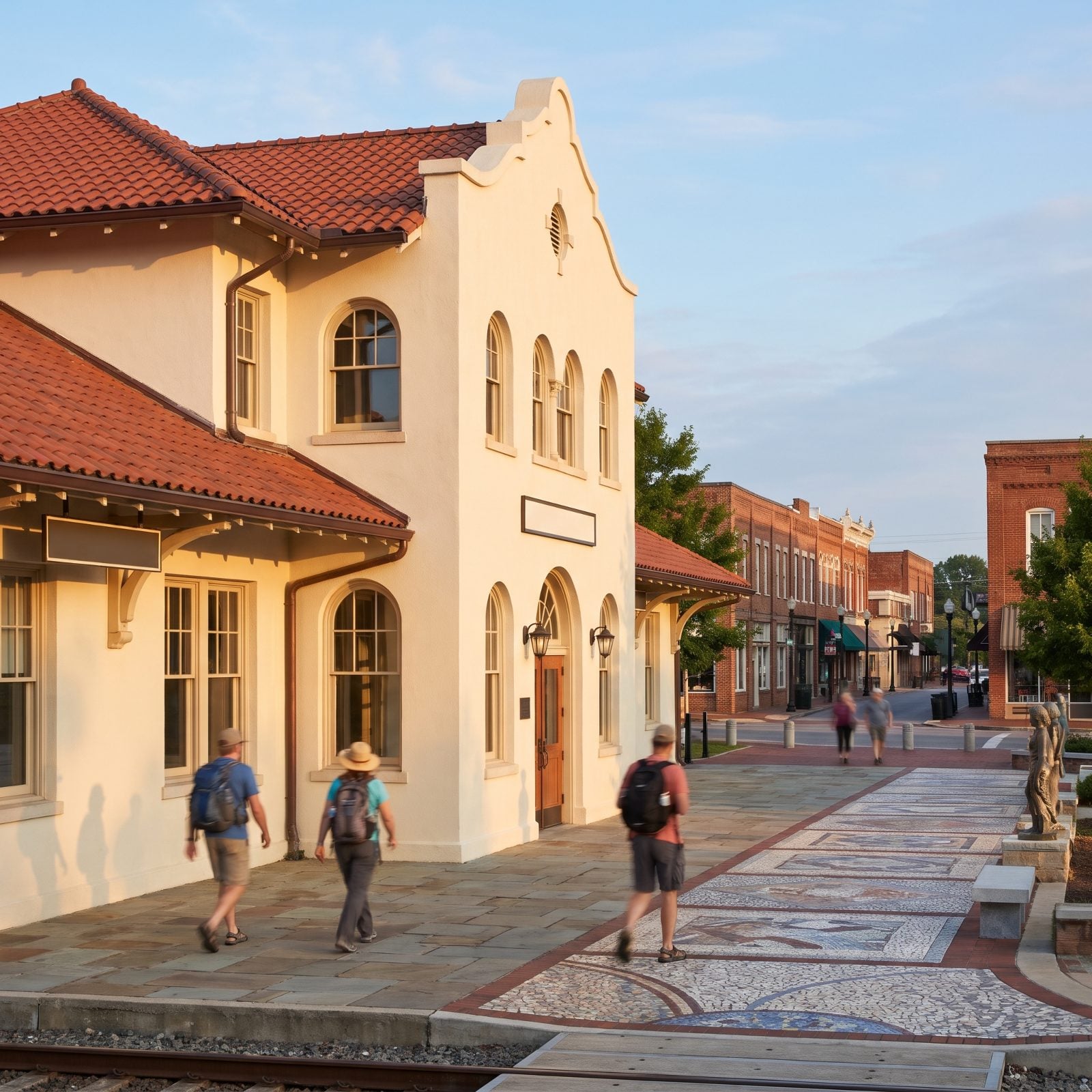
Salisbury kept its depot instead of knocking it down, and that choice shapes the whole visit. The 1908 station at 215 Depot St. was restored in the 1990s by the Historic Salisbury Foundation with help from NCDOT. You arrive in a building that someone fought to save.
The Arts Walk links the depot straight to downtown and the Waterworks Visual Arts Center, so the path from platform to town doubles as the attraction. A separate Rail Walk ties other downtown buildings together. Three Amtrak lines stop here — the Piedmont, Carolinian, and Crescent — which gives you real flexibility picking a train. It’s easy to drive right past towns like this. Don’t.
Photos of landmarks and towns tend to win over Journey Junket readers, earning hearts 81% of the time versus 76% for the other images in the same articles.
2. N.C. Transportation Museum in Spencer: Ride a Vintage Train Where Steam Engines Were Rebuilt
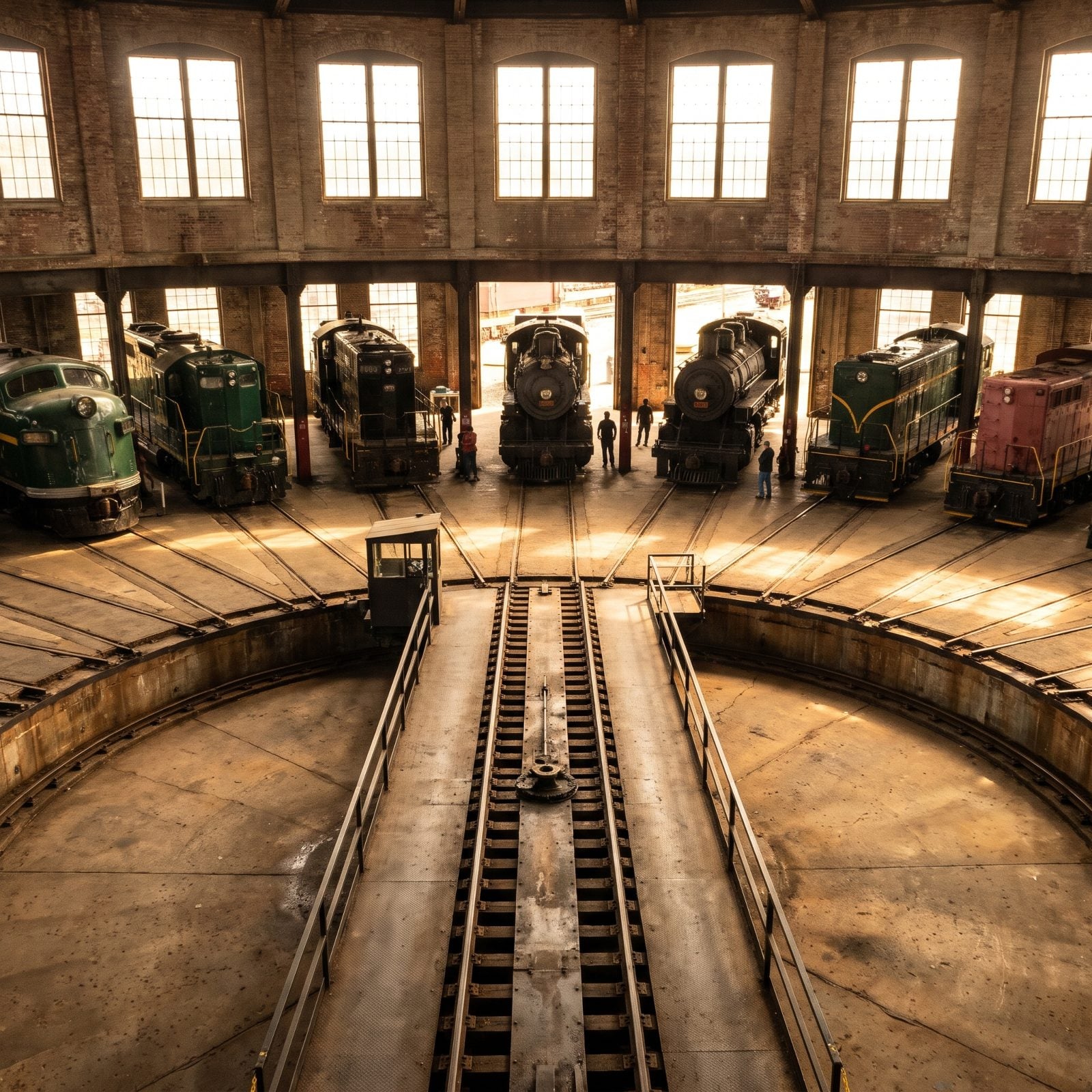
Here’s the catch most visitors miss: there’s no Amtrak stop in Spencer. Ride the train to Salisbury instead, then take the Salisbury bus or trolley the short hop over. The museum itself tells you to do exactly that.
And what waits is worth the connection. The N.C. Transportation Museum occupies Spencer Shops, once Southern Railway’s main repair and overhaul shop for steam locomotives, including the enormous Bob Julian Roundhouse. On select days year-round, vintage diesels pull train rides around the sixty-acre site, leaving from the 1898 Barber Junction Depot. Check their calendar before you go, because the train-ride days aren’t every day.
1. Downtown Kannapolis: Eight Trains a Day and a Ballpark Across the Street

Kannapolis rebuilt its downtown around the idea that you’d actually want to walk it. The Amtrak station at 201 South Main Street puts you steps from Atrium Health Ballpark, home of the Cannon Ballers, and the N.C. Research Campus.
Several Piedmont and Carolinian trains stop here every day, which is plenty of flexibility for a town this size. The city went all in on the walkable pitch — new shops, duckpin bowling, slot-car racing, movies at the GEM Theatre, concerts on the street. A ball game, a few frames of duckpin, dinner, then the train home. No parking, no driving, no fuss. And it holds up.
Please note that some of the imagery in this article were created with the aid of AI image generators.