
🔥 Would you like to save this?
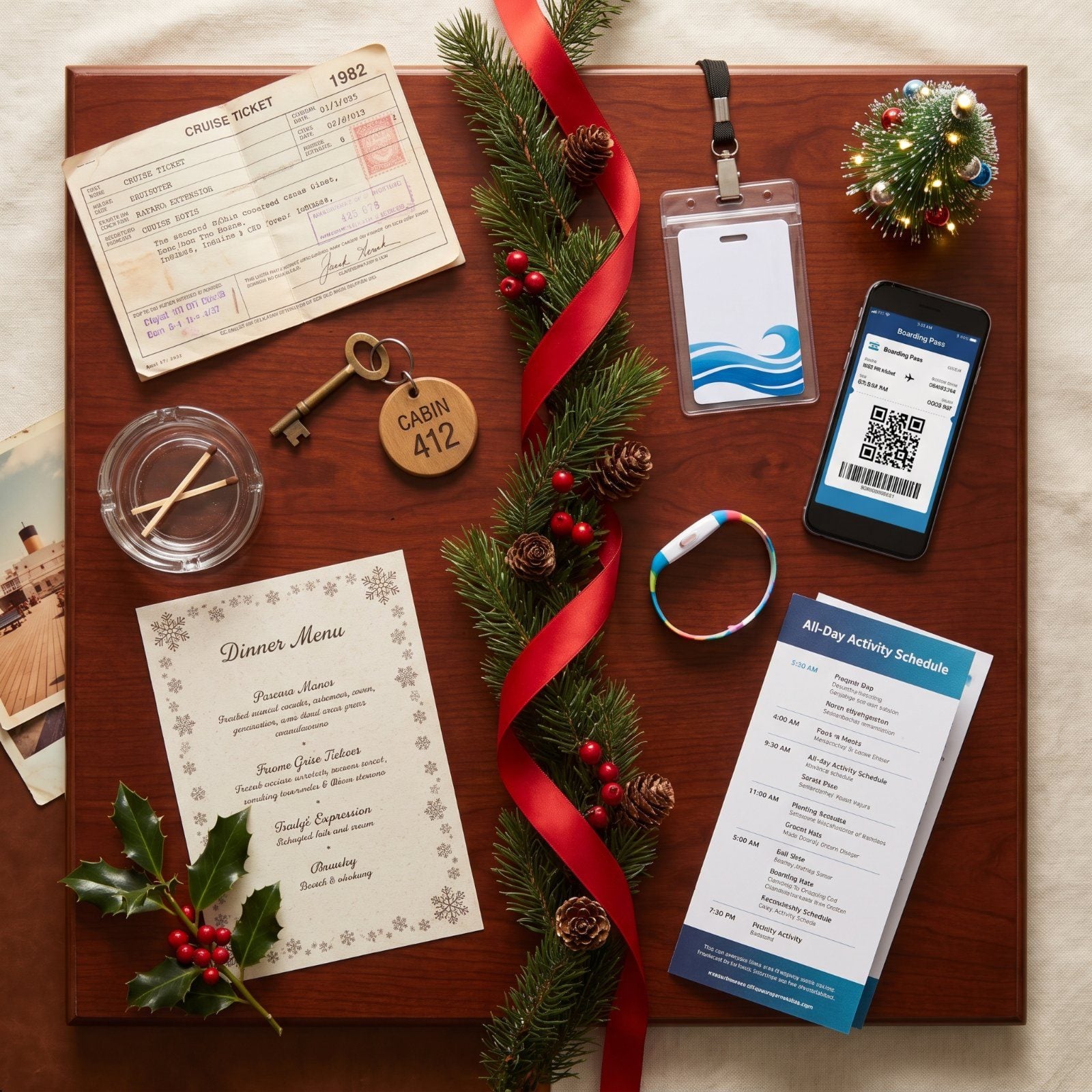
The tinsel was real foil, taped over a porthole the size of a dinner plate, and the whole cabin smelled faintly of teak oil and someone’s Aqua Velva drifting down the corridor. A brass ship’s bell rang for dinner and you dressed for it. Christmas cruising in 1982 was smaller, warmer, and far more formal than the floating cities that haul six thousand people around today. We lined up the two eras side by side, ritual for ritual, to see what changed and what flat-out refused to.
28. From a Wood-Paneled Porthole Cabin to a Balcony Stateroom
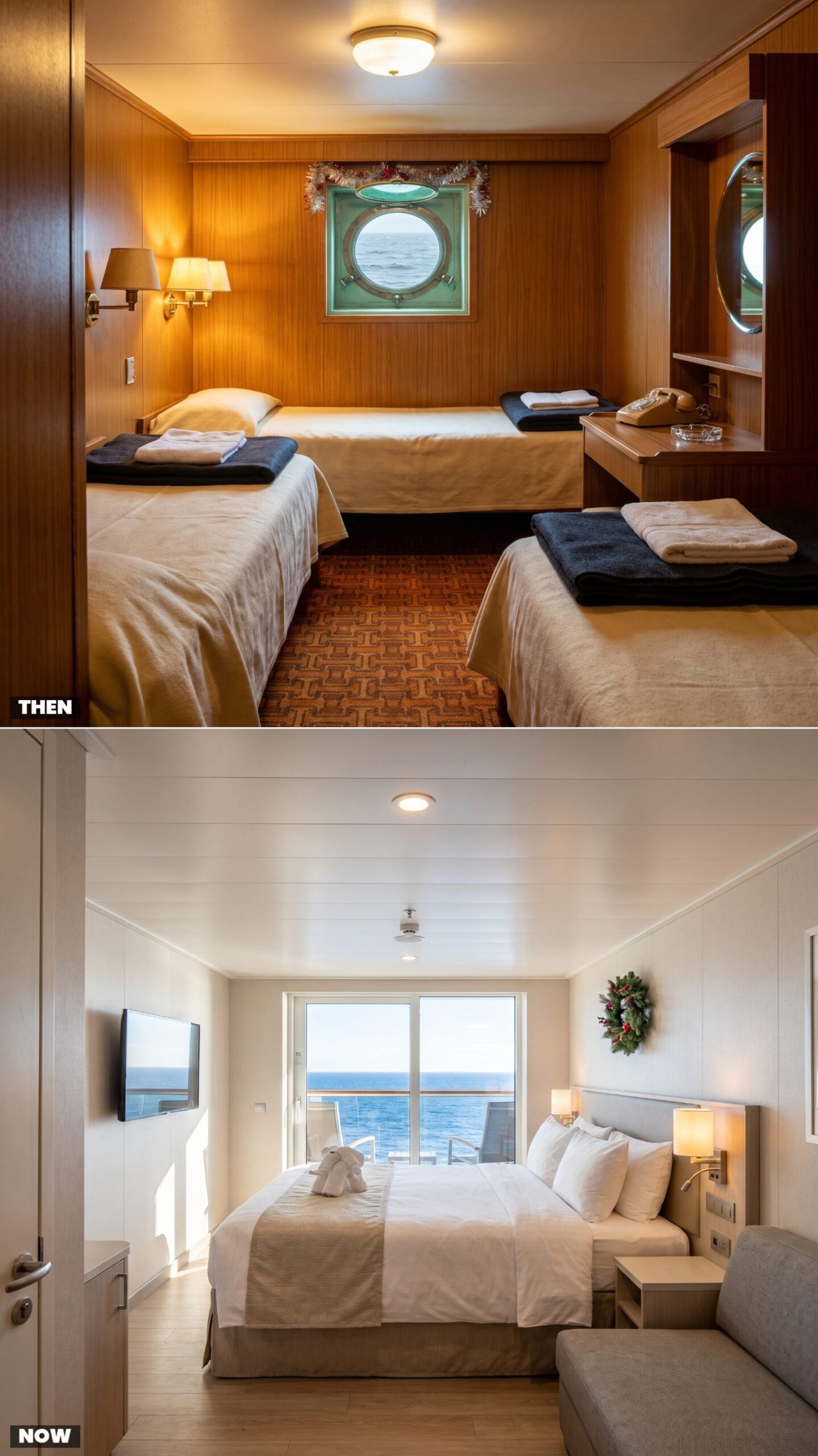
In 1982 your cabin was a cozy wooden box — twin beds you couldn’t push together, a porthole you cranked open with a wingnut, a bathroom about the size of a phone booth. Space was rationed. Nobody complained, though, because everybody’s cabin looked the same and you weren’t planning to spend time in it anyway.
Now the balcony runs the show. A sliding glass wall, a queen bed, your own slice of ocean where you sip coffee in a robe on Christmas morning. The porthole shrank the world down to a dinner plate. The balcony hands the whole thing back.
27. Seeing the Christmas Ship From the Pier
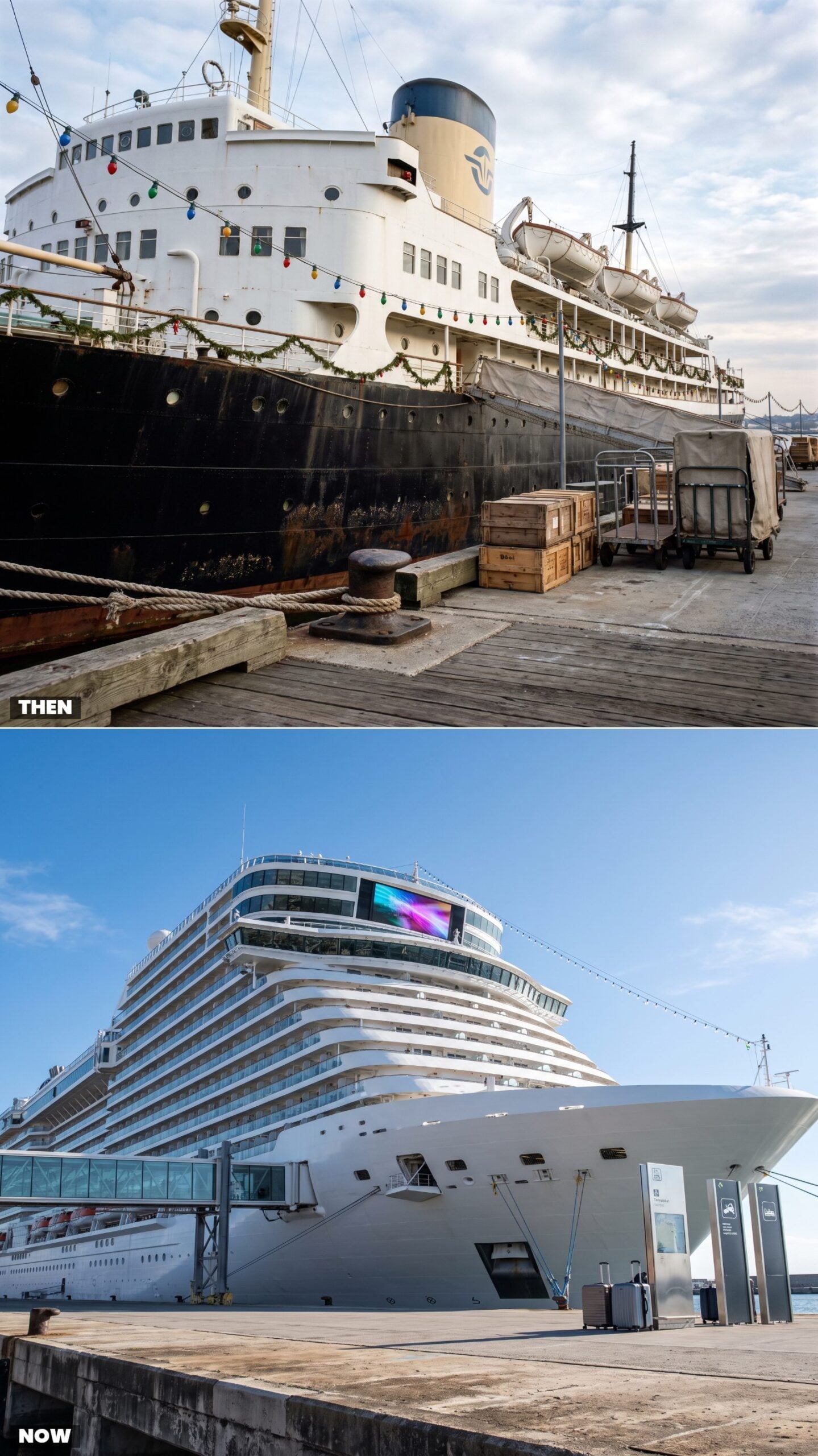
Walk up to the pier in 1982 and you could see the whole ship — bow to stern, funnel to waterline, the whole thing framed against a winter sky with a modest string of colored lights along the rail. It looked like a ship. A big one, sure, but recognizably a boat that floated on water.
Now? You can’t fit the thing in your eye. It’s a wall of glass and steel taller than most buildings you’ve lived near, lit up like a small airport. Impressive, absolutely. Also a little like being greeted by a shopping mall that learned to swim.
26. Checking In With Paper Cruise Documents
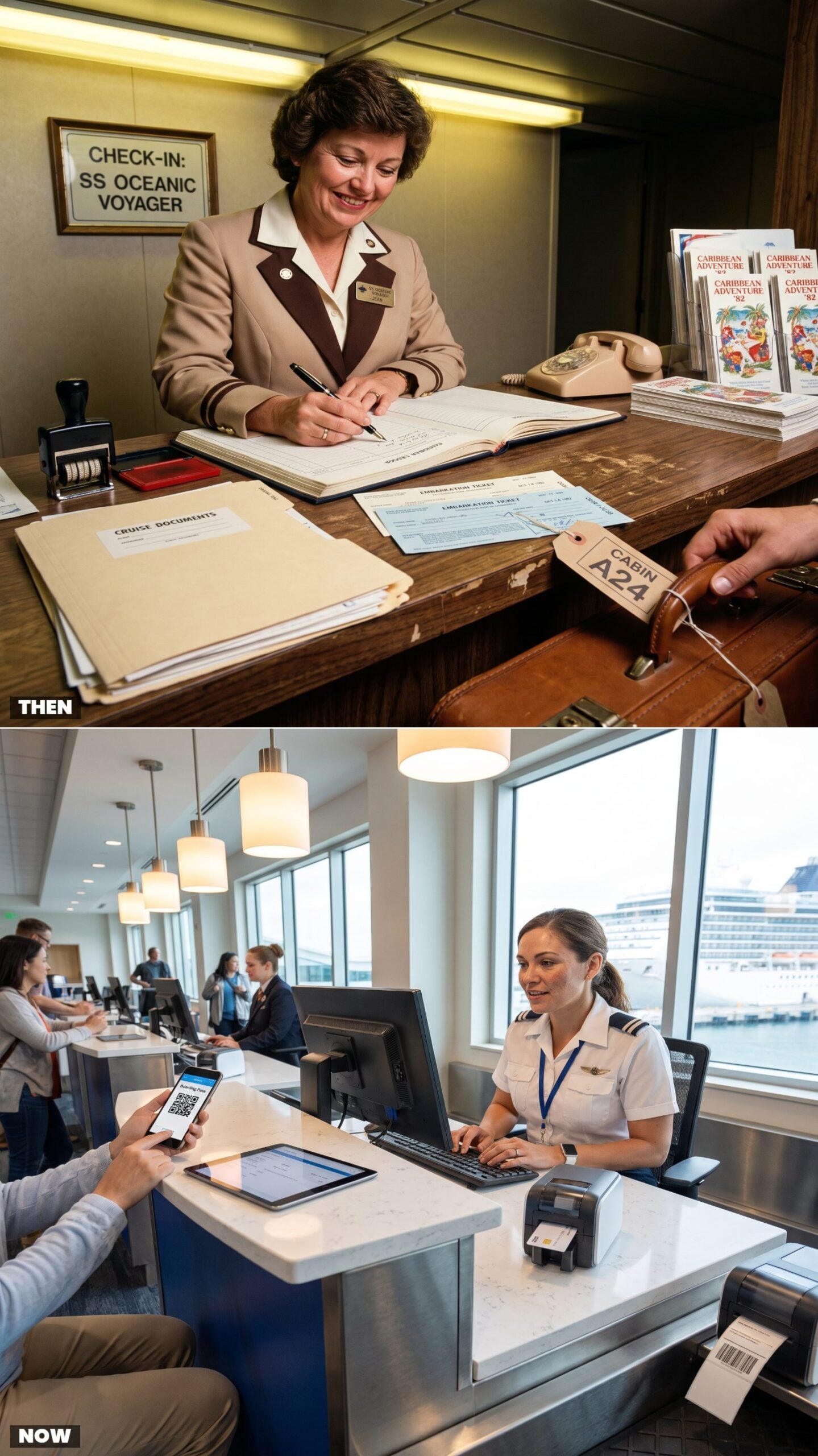
The documents showed up in a fat envelope weeks before sailing. Real paper. A ticket with carbon copies, luggage tags you knotted on with string, and a booklet you read three times on the drive to the port. Lose that envelope and you had a genuine emergency on your hands.
Now it’s a QR code on your phone, a form you filled out in your pajamas, and a selfie you uploaded so they’d recognize your face at the gate. Faster, cleaner, and nothing to keep in a drawer for forty years.
25. Saying Goodbye From the Passenger Terminal
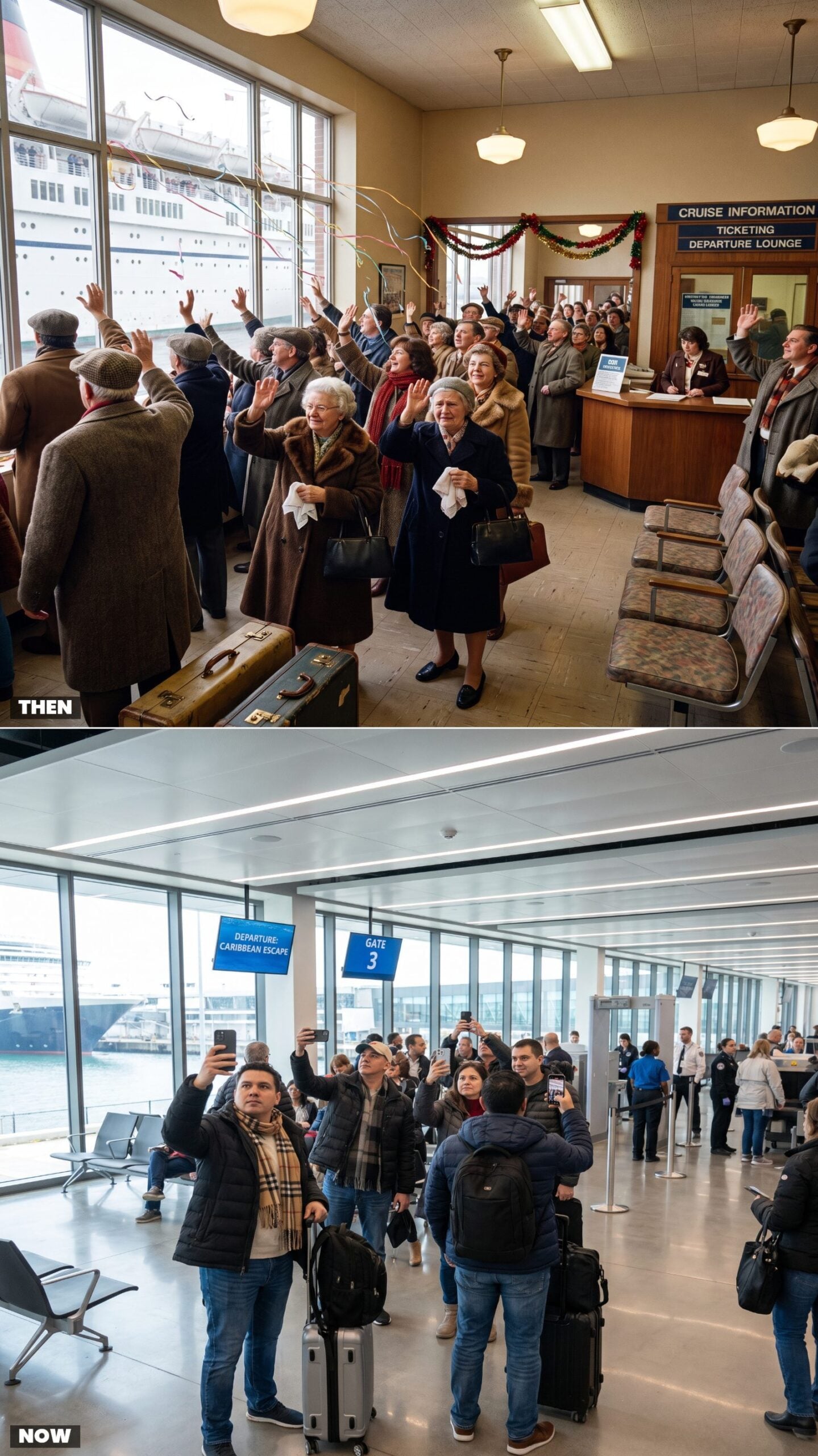
Sailing day in 1982 was a public event. Families crowded the terminal to see you off, streamers flew from the deck, and somebody always teared up, even for a ten-day trip. When the ship’s horn blasted, the whole pier felt it in the chest.
Departures now run quieter and more efficient — security lines, a wave to nobody in particular, everyone filming a moment their phone will forget by January. The horn still blows. There are just fewer people outside to hear it.
The streamers are gone. The lump in your throat when the gap of water opens between the hull and the pier is exactly the same.
24. Entering the Ship’s Main Lobby
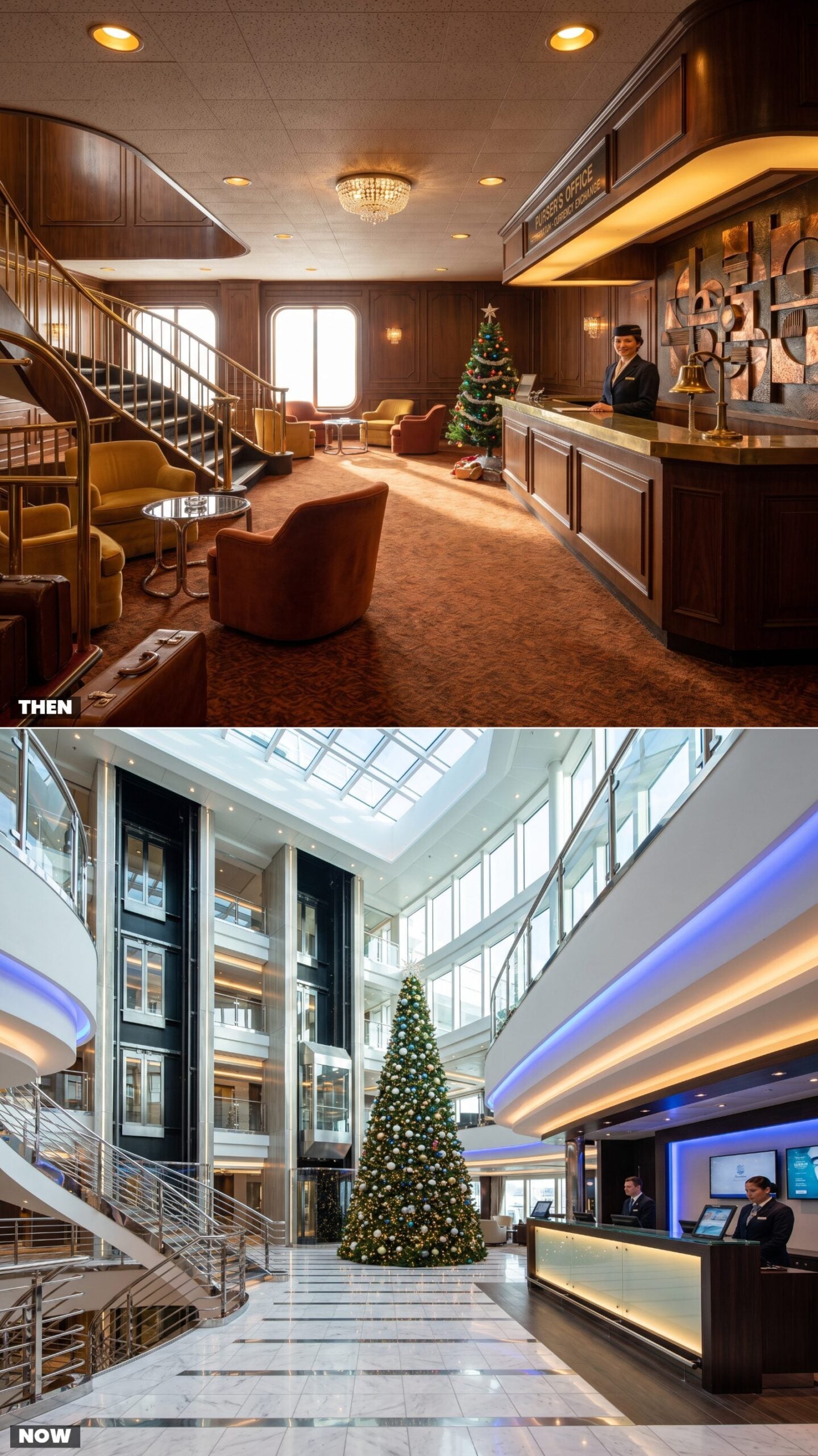
You stepped aboard in 1982 into a lobby you could take in with one glance. Wood paneling, a brass-railed staircase, a purser’s desk with an actual bell, and a modest tree winking colored bulbs near reception. It felt like a good hotel that happened to float.
Board a modern ship and the atrium climbs. Way up. Glass elevators scaling multiple decks, a Christmas tree three stories tall, marble underfoot, light bouncing off everything. Grand, and a little disorienting too — you do sometimes miss knowing where you are the second you walk in.
23. Using a Metal Cabin Key Instead of a Cruise Card
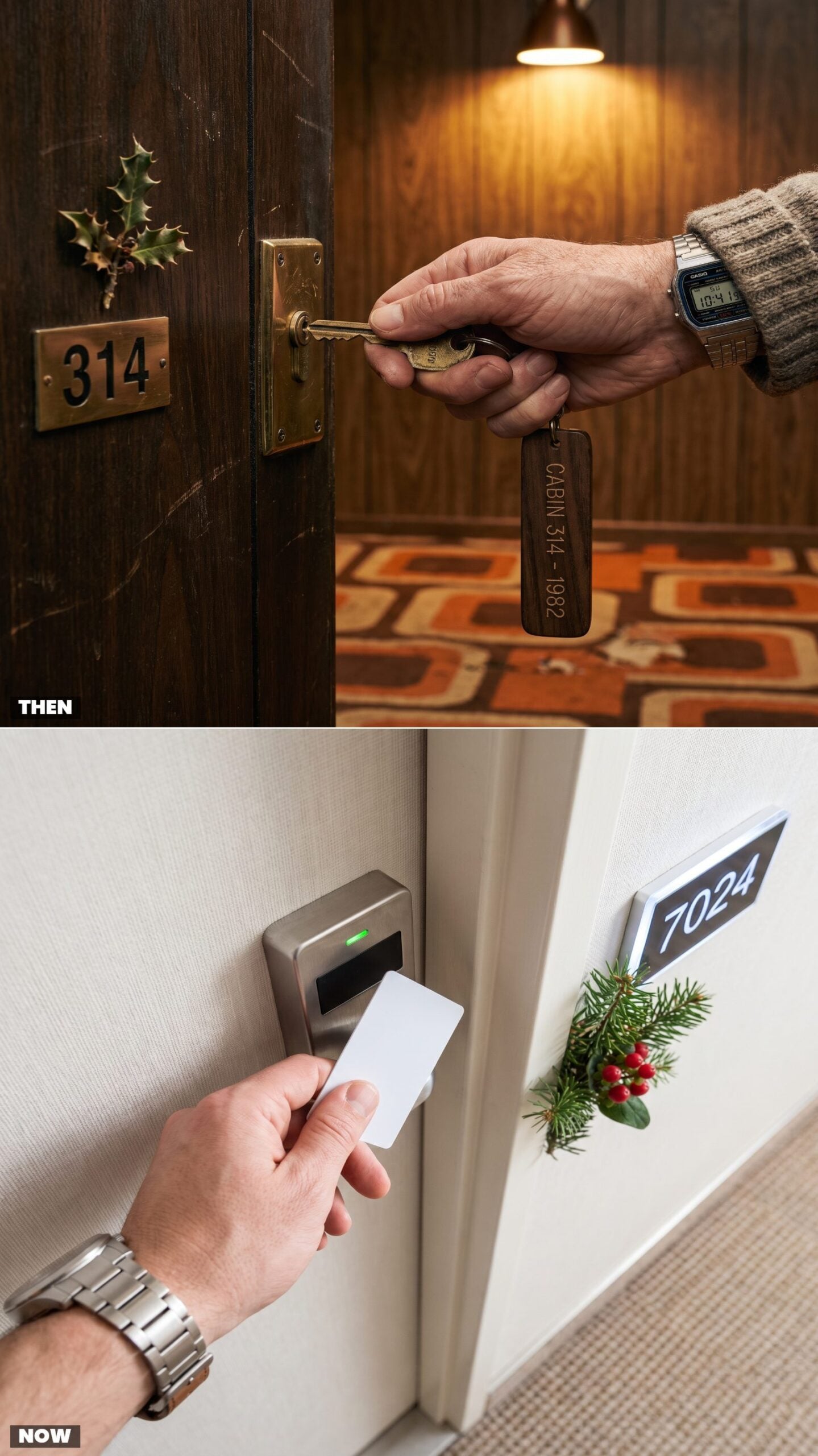
The key was brass, heavy, and hung from a wooden fob too big to fit in a pocket — which was exactly the point. You left it at the desk when you went ashore. Lose it and you had a sheepish conversation with the purser and possibly a locksmith.
The card taps a reader, blinks green, and does double duty as your wallet, bar tab, dinner reservation, and ID at the gangway. Handy. But nobody’s grandchild is ever going to find a demagnetized plastic rectangle in a shoebox and feel a single thing about it.
22. Gathering Around the Ship’s Christmas Tree
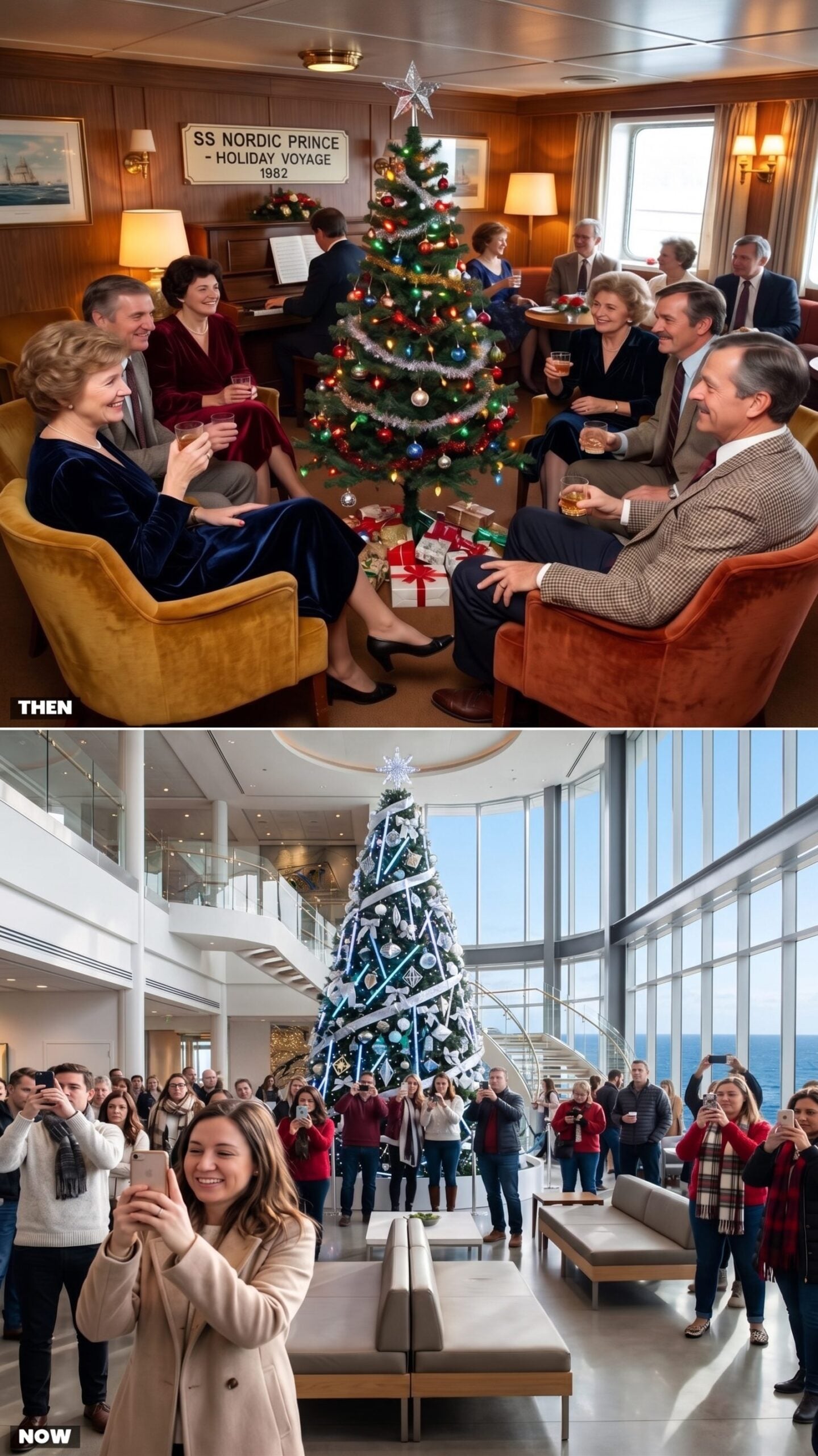
The tree in 1982 was about six feet of artificial branches, colored bulbs, and tinsel set up in the middle of the lounge. People gathered around it with cocktails while a pianist worked through the carols. It was small. It also felt like every soul on the ship knew it was theirs.
Today’s tree is an event. Two or three stories of coordinated ornaments in a glass atrium, professionally lit, and mostly experienced through a phone held at arm’s length. Bigger tree, same carols, a little less gathering and a little more photographing.
21. Seeing Holiday Lights Across the Open Decks
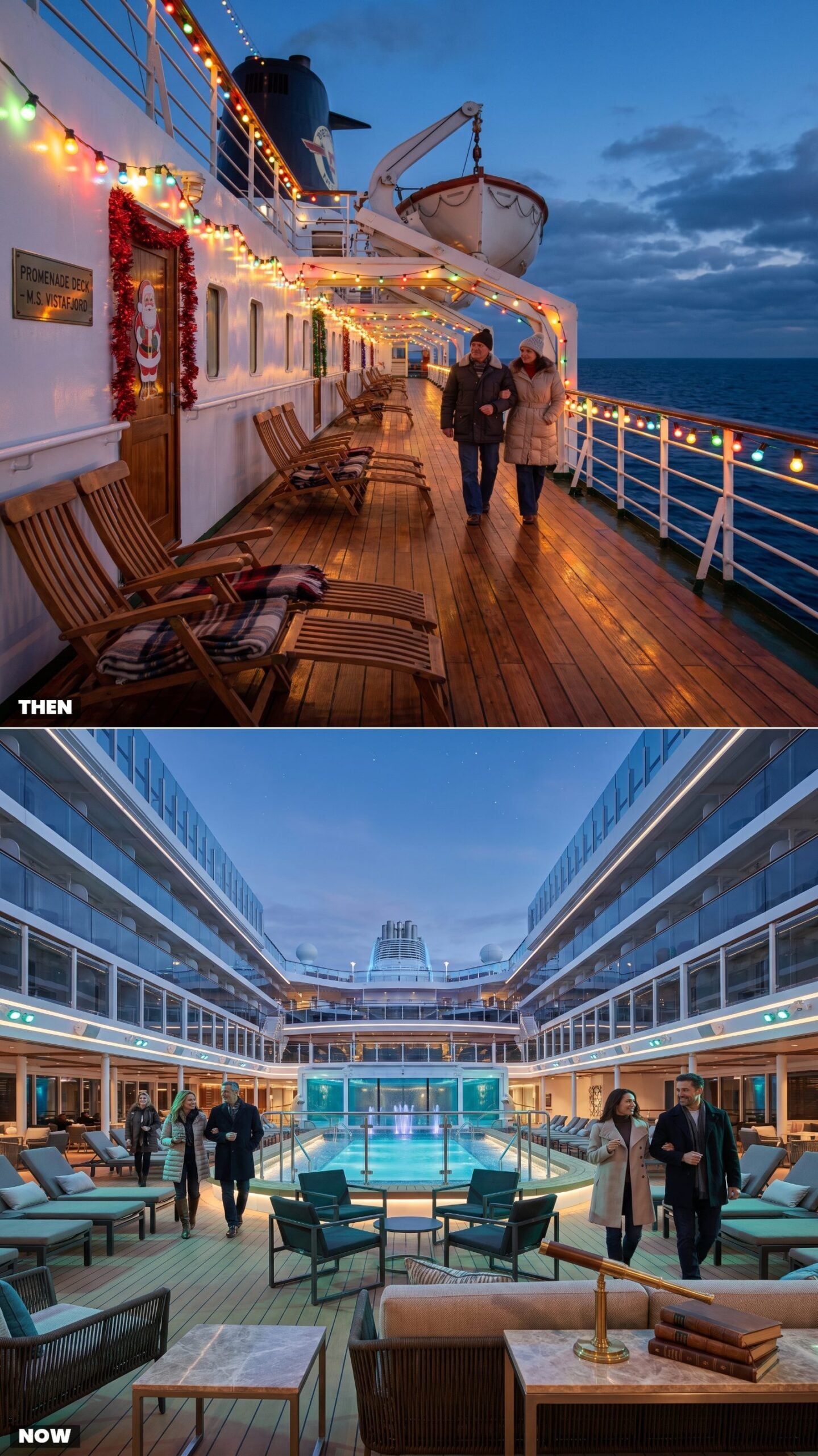
The lights in 1982 were the same colored bulbs your neighbor stapled to his gutters. Draped along the white railings of a varnished teak deck, they glowed warm and slightly uneven against black water. You walked the promenade in a coat and it felt like a small town at the holidays.
The modern deck runs on programmable LEDs that cycle color on a schedule — pools lit from beneath, coordinated displays, the whole show choreographed. It’s brighter and it never has a bulb burn out. It also never has that one string that flickers, which, weirdly, was half the charm.
20. Christmas Dinner in the Assigned-Seating Dining Room
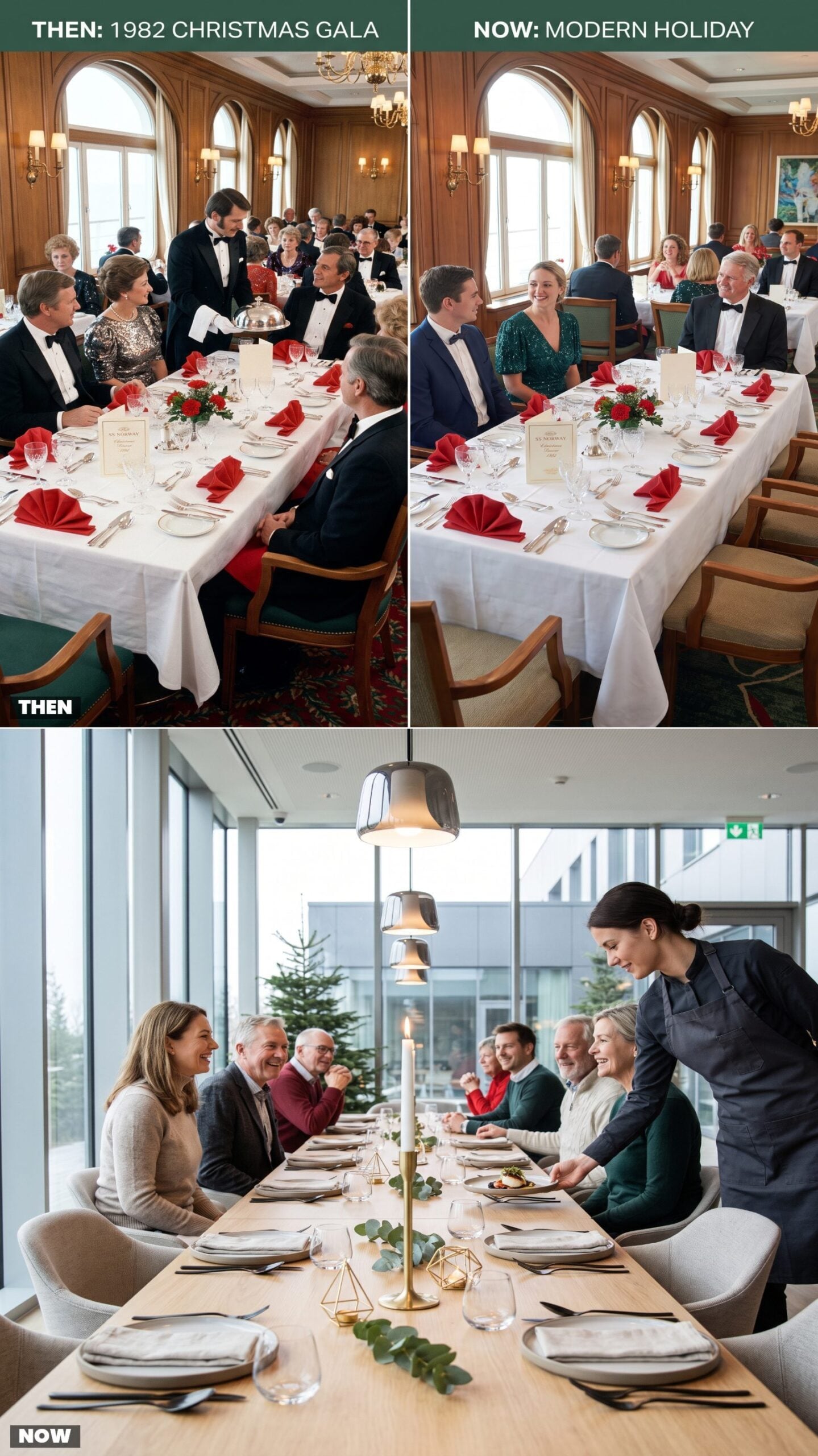
Dinner in 1982 came at your table, at your time, with your people. You got an assigned seating, a waiter who learned your name by the second night, and a tablemate or two you might sit beside all week. Christmas dinner meant black tie, a printed menu card, and a silver dome lifted with a little flourish.
Now you eat when you want, where you want, in one of a dozen venues, in whatever you feel like wearing. Freedom, absolutely. But there was something to a waiter knowing your name and somebody noticing when you didn’t show up.
19. Lining Up for the Midnight Buffet
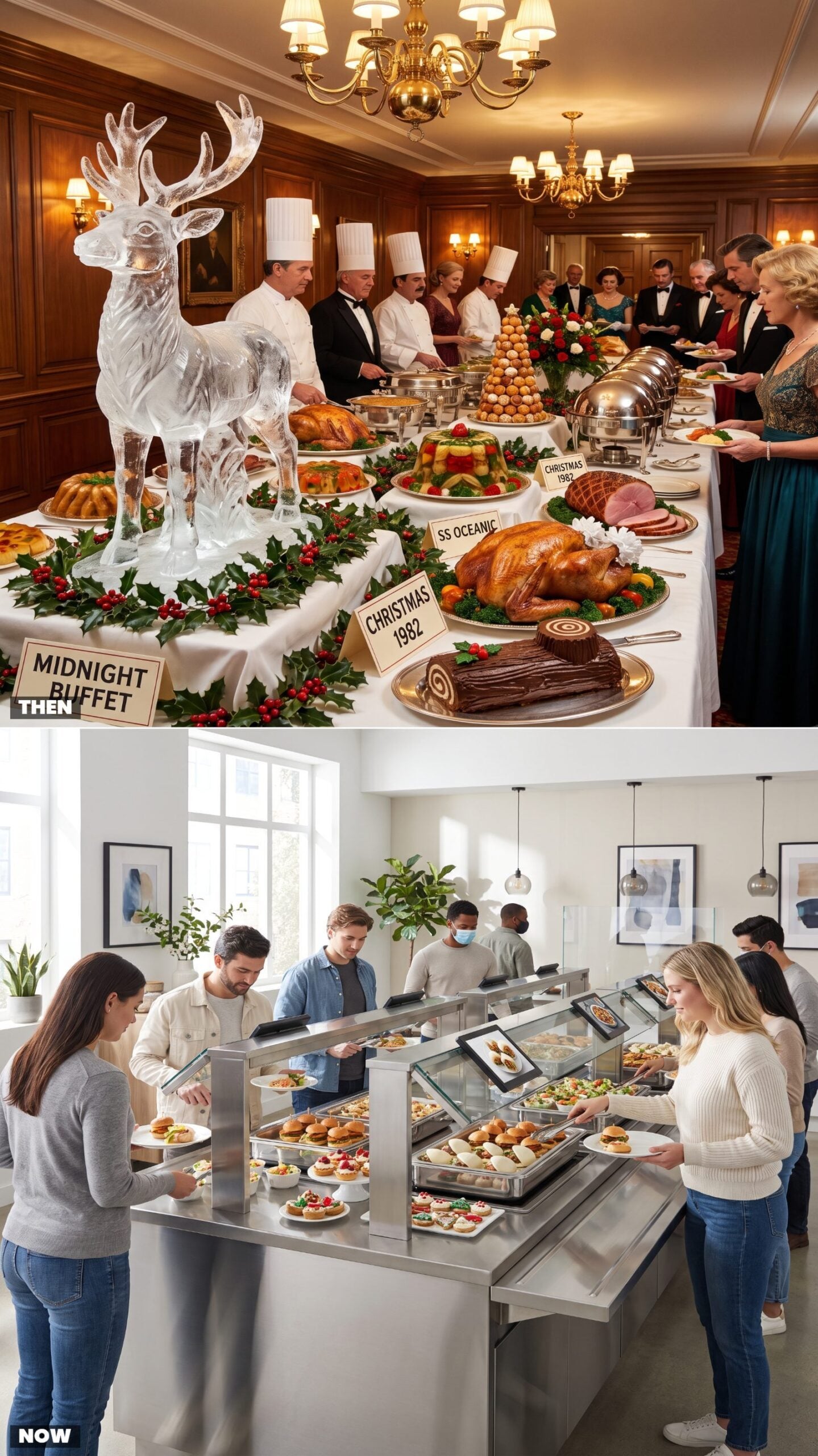
The midnight buffet was pure theater. They rolled out ice sculptures, whole hams, a chocolate yule log, and a croquembouche the size of a small child, all at an hour when no sane person should be eating anything. Passengers came down in eveningwear just to look at it before they touched a fork.
The modern version is a late-night food station — portioned, practical, tucked behind glass, and cleared away before an ice sculpture would even start to sweat. The food is probably safer and definitely more sensible. Sensible was never the point of the midnight buffet.
18. Dressing Up for the Captain’s Formal-Night Portrait
🔥 Would you like to save this?
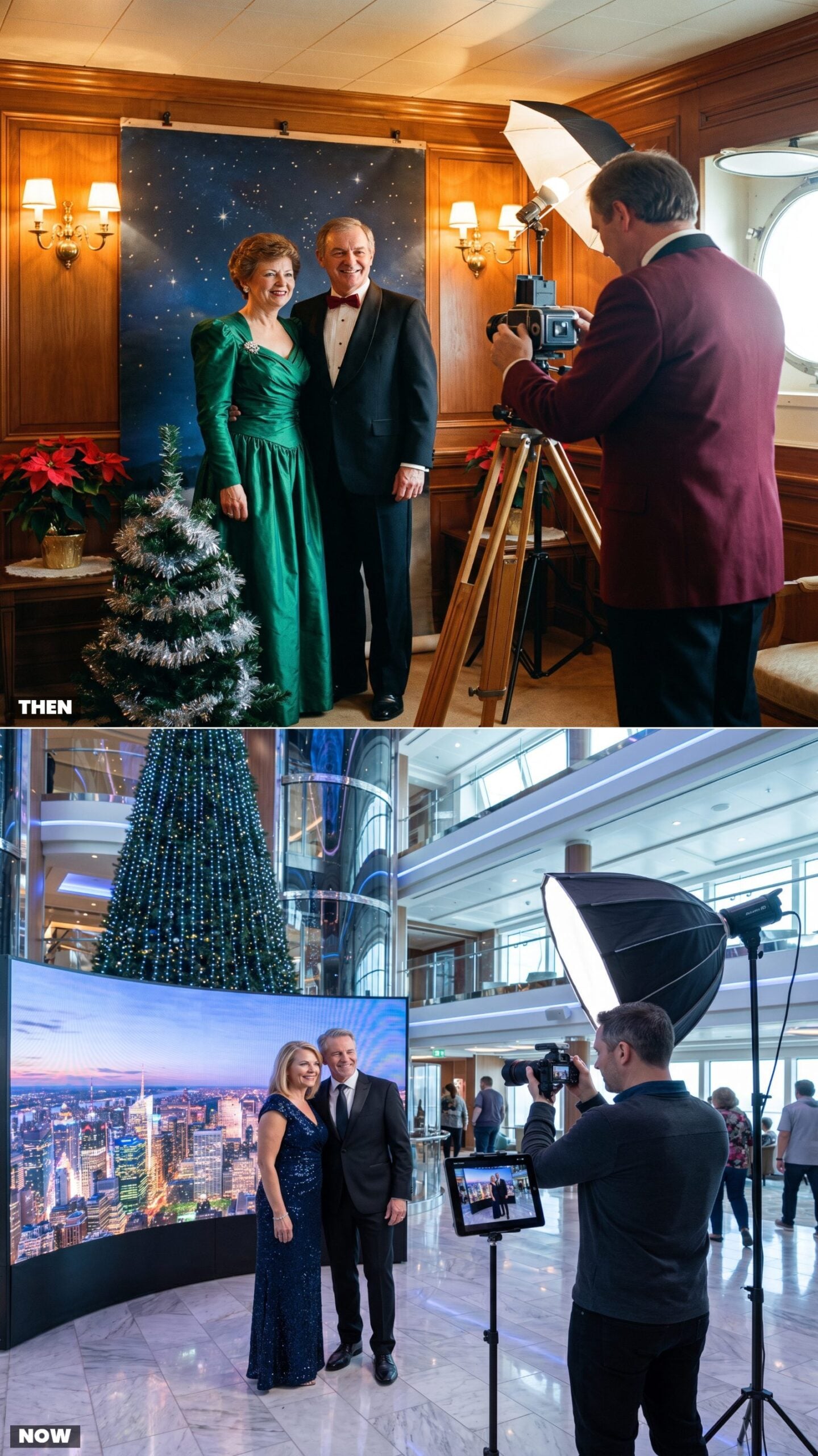
In 1982 formal night was an event you prepared for from the moment you unpacked. The gown came out of the garment bag hours early. The photographer worked a bulky medium-format camera with a single umbrella flash, and you got one shot, maybe two, then waited two days to see the print pinned up outside the dining room with a little price tag on it.
Now the photographer shoots tethered, the image lands on an iPad in seconds, and you flick through forty frames before dinner. The gowns changed too — taffeta and shoulder pads gave way to a slim navy sequin gown. The ritual survives. The waiting does not.
17. Watching Santa Arrive on the Ship
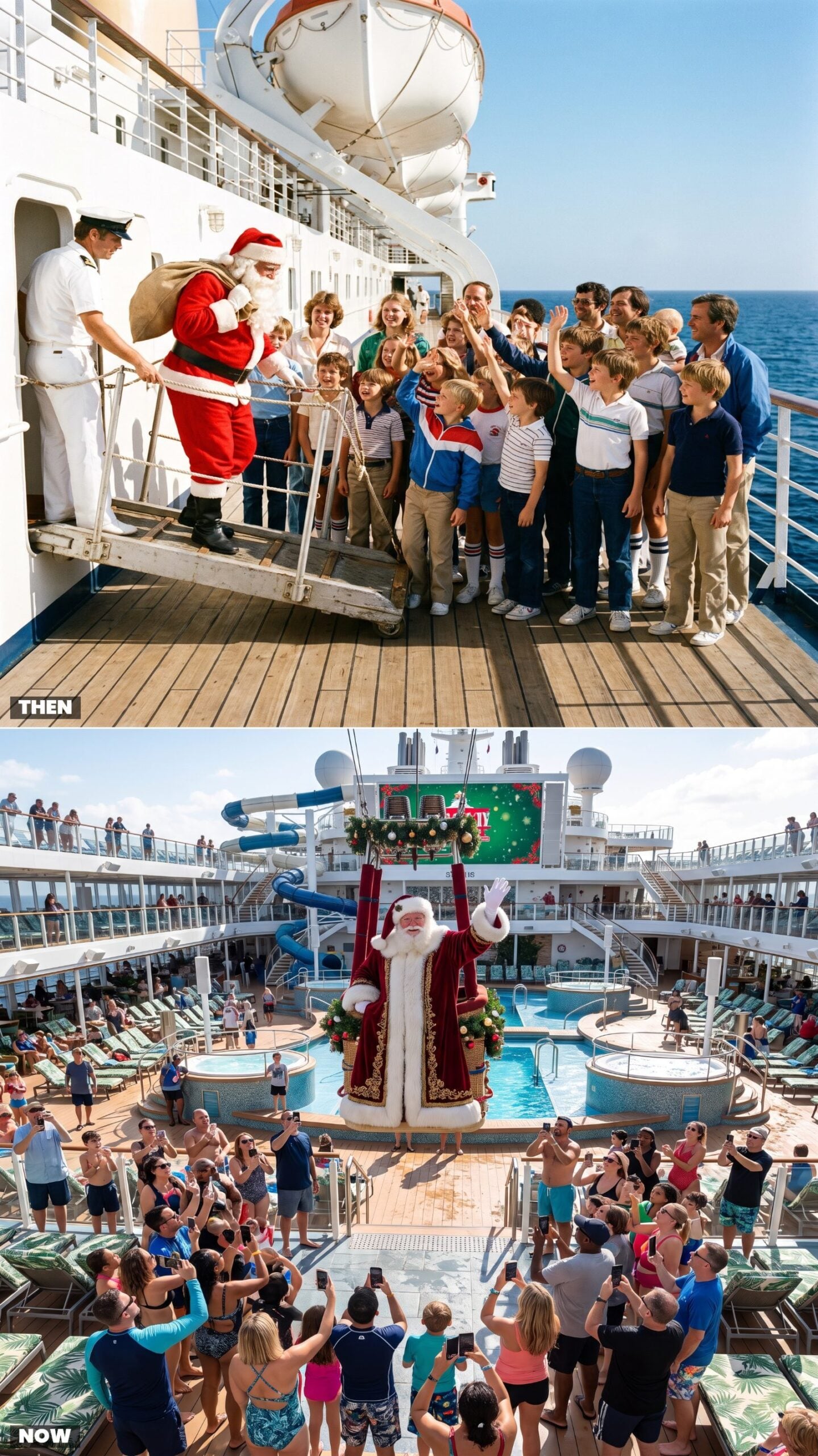
Santa used to walk on. He’d come down a gangway or step out near the lifeboat station, canvas sack over his shoulder, cotton beard already going limp in the Caribbean sun. Twenty kids on a teak deck, and that was the whole show.
Today he might rappel from a rock wall, ride a lift onto a stage, or turn up on a giant screen before he turns up in person. The crowd is bigger and every phone is out. Same red suit, wildly different production budget.
16. Spending Christmas Morning in the Children’s Program
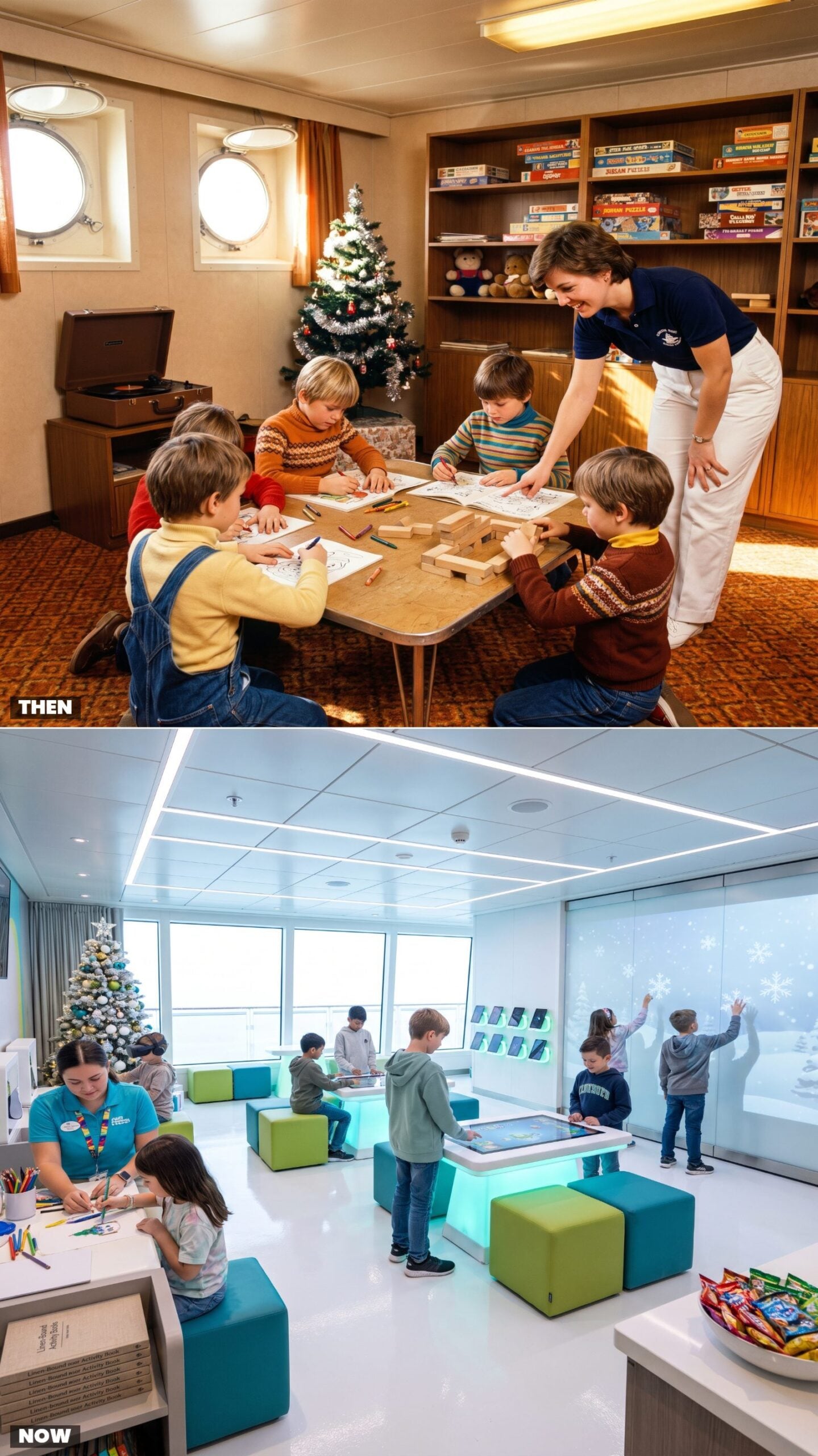
The children’s room in 1982 was crayons, wooden blocks, and a counselor who knew every kid’s name by day two. There was a portable record player, a small tinsel tree, and a jigsaw puzzle missing three pieces. Simple, and it worked.
Now the kids’ club has touchscreen tables, a VR corner, and a projection wall that turns the whole room into a snow globe, and parents scan a wristband to drop off and pick up. The children still make paper ornaments. They just do it next to a robotics bin.
15. Joining a Passenger Carol Singalong
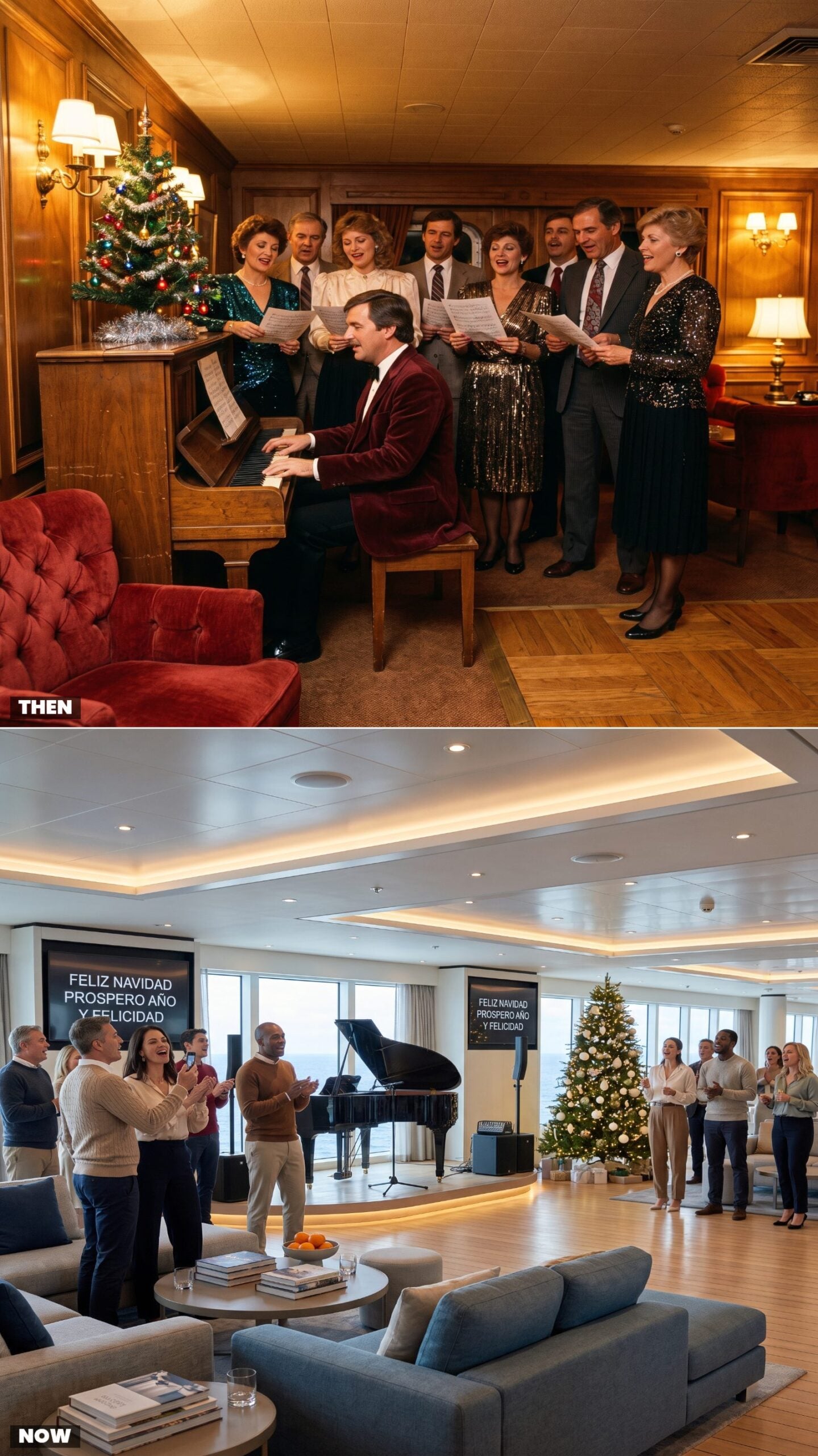
Somebody handed you a paper song sheet, slightly damp from the sea air, and a man in a maroon dinner jacket played an upright piano while forty strangers found the harmony to “Silent Night.” You didn’t need a screen. You needed the person next to you to carry the high notes.
The carols still happen, but the lyrics scroll on LED panels now, the piano is a grand, and a few people sing to their phone cameras instead of the room. We’ll admit we miss the paper — there was something about everyone looking down at the same crumpled sheet.
14. Attending Christmas Worship at Sea
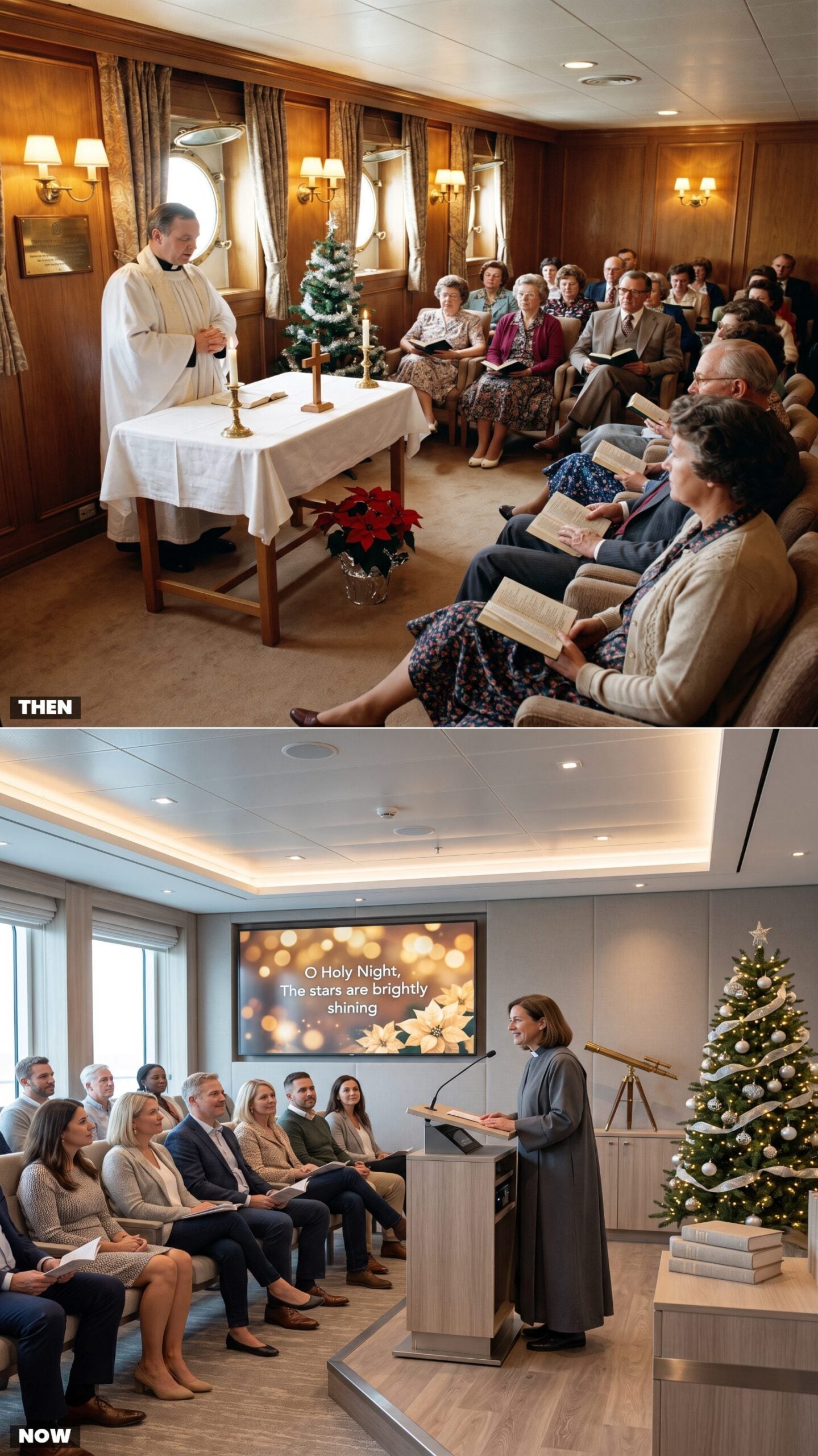
Worship at sea in 1982 was often a borrowed room — a lounge with the bar shuttered, chairs turned to face a draped table, a cross, two candles, and hymnals passed hand to hand. Whoever aboard could lead a service usually did.
Ships still hold Christmas worship. The room is more of a proper multipurpose space now, the hymn words appear on a screen, and larger ships may carry a clergy member for the holiday sailing. The setting is tidier. The reason people show up hasn’t changed a bit.
13. Watching the Christmas Production Show
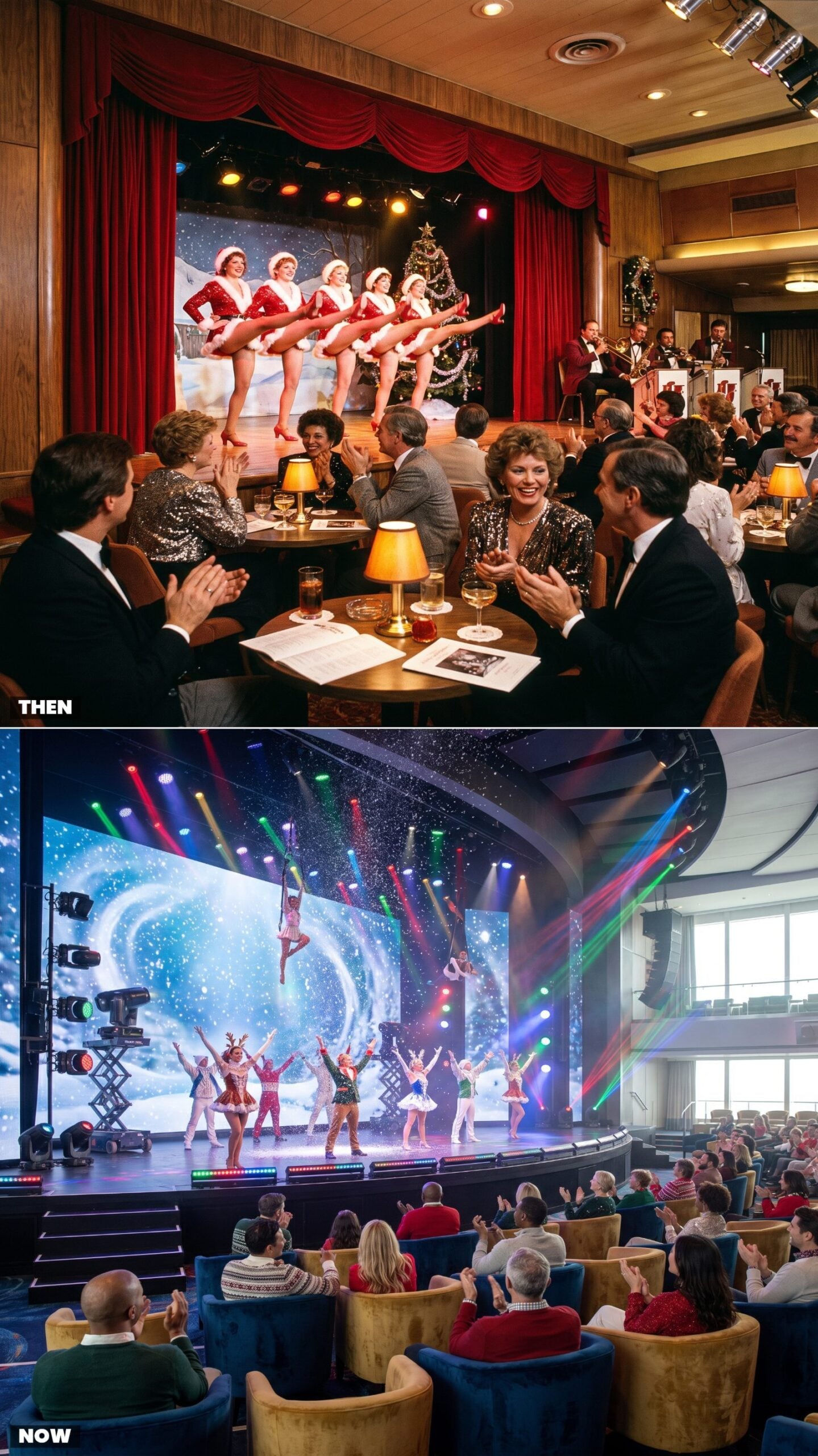
The Christmas show in 1982 was a chorus line, a brass band tucked stage-left, and a painted snow backdrop that wobbled if a dancer got too close. You sat at a little cocktail table with a lamp on it and a drink in front of you. The whole thing had the charm of a good community theater that happened to be floating.
Today’s holiday production is a spectacle — LED walls, aerial rigging, snow machines, projection mapping, a cast that trained for months. Genuinely impressive. Though we’d trade one laser cannon for a cocktail table and a table lamp any day.
12. Seeing a Holiday Movie in the Ship’s Cinema
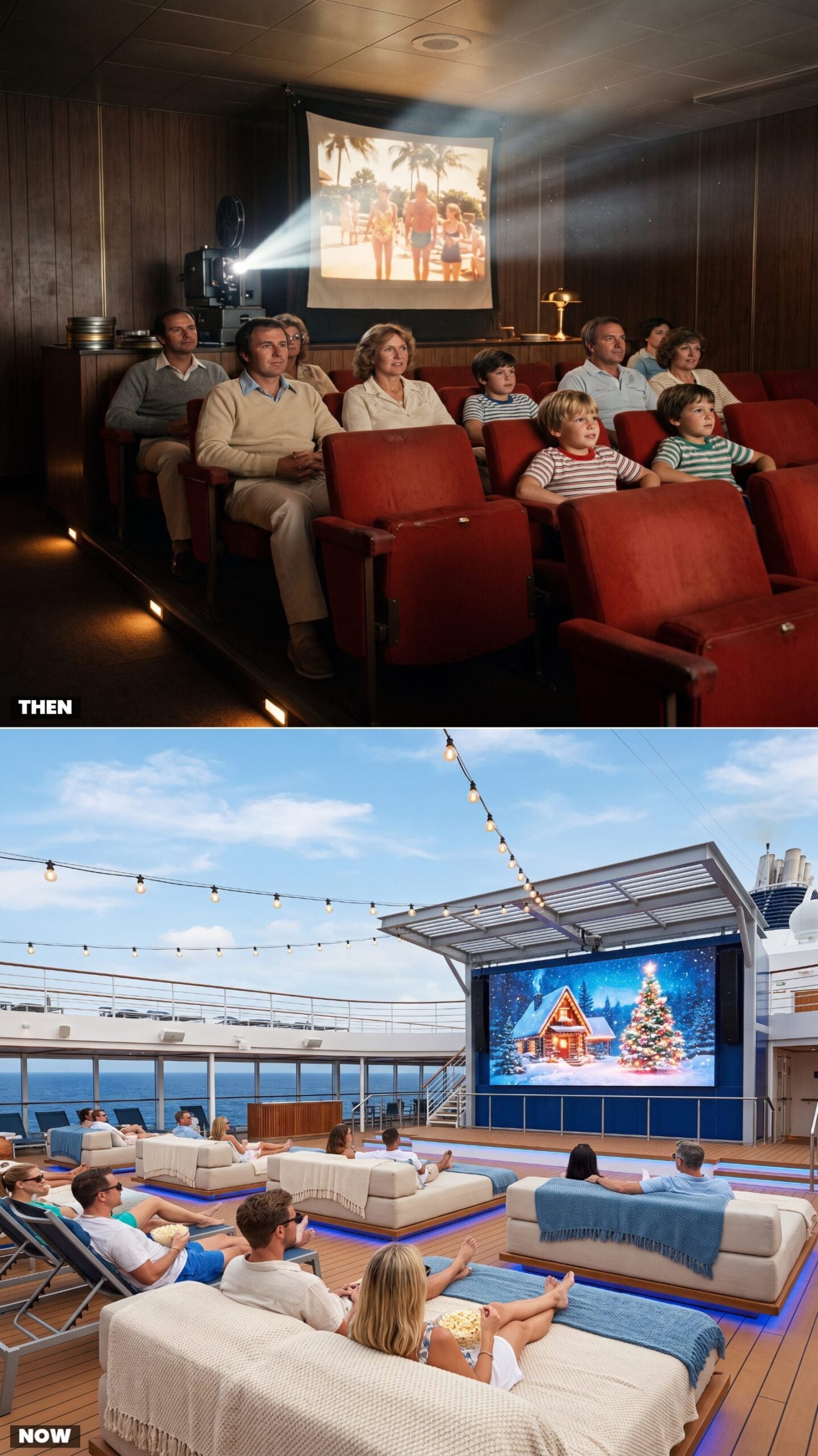
A ship’s cinema in 1982 meant a small dark room, fold-down seats, and a reel of film clattering through a projector at the back. You could see the beam in the air, and if the print jumped, everybody groaned together. The movie was whatever the cruise line had licensed that season, and you watched it because it was there.
Now you might catch a holiday film on a giant screen above the pool, wrapped in a blanket under string lights, popcorn in hand — or in a proper theater with reclining seats. Digital, crisp, no reel to break. Better in every measurable way. The room full of strangers groaning at once, though, that was its own kind of fun.
11. Playing Shuffleboard and Deck Games
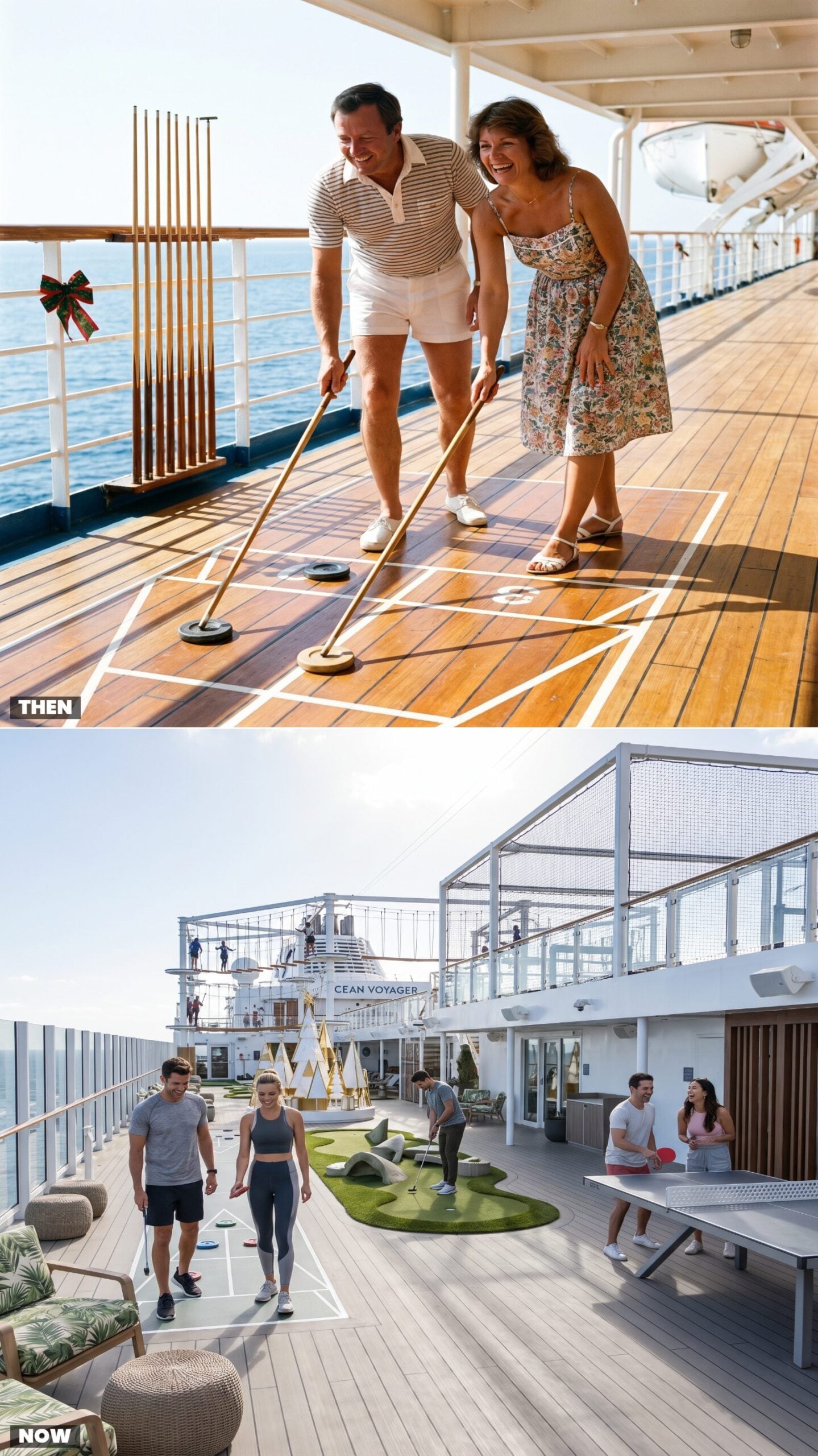
Shuffleboard was the deck sport, and it was serious business. You lined up your shot, pushed the weighted disc with a long wooden cue, and prayed the ship didn’t roll at the wrong moment. Ties got settled at the railing. Winners bragged at dinner.
The court still exists on most ships, but it’s surrounded now by mini-golf, ropes courses, ping-pong, and full sports decks. Fewer people play, and the ones who do tend to be the ones who remember it.
10. Using the Outdoor Pool on Christmas Day
🔥 Would you like to save this?
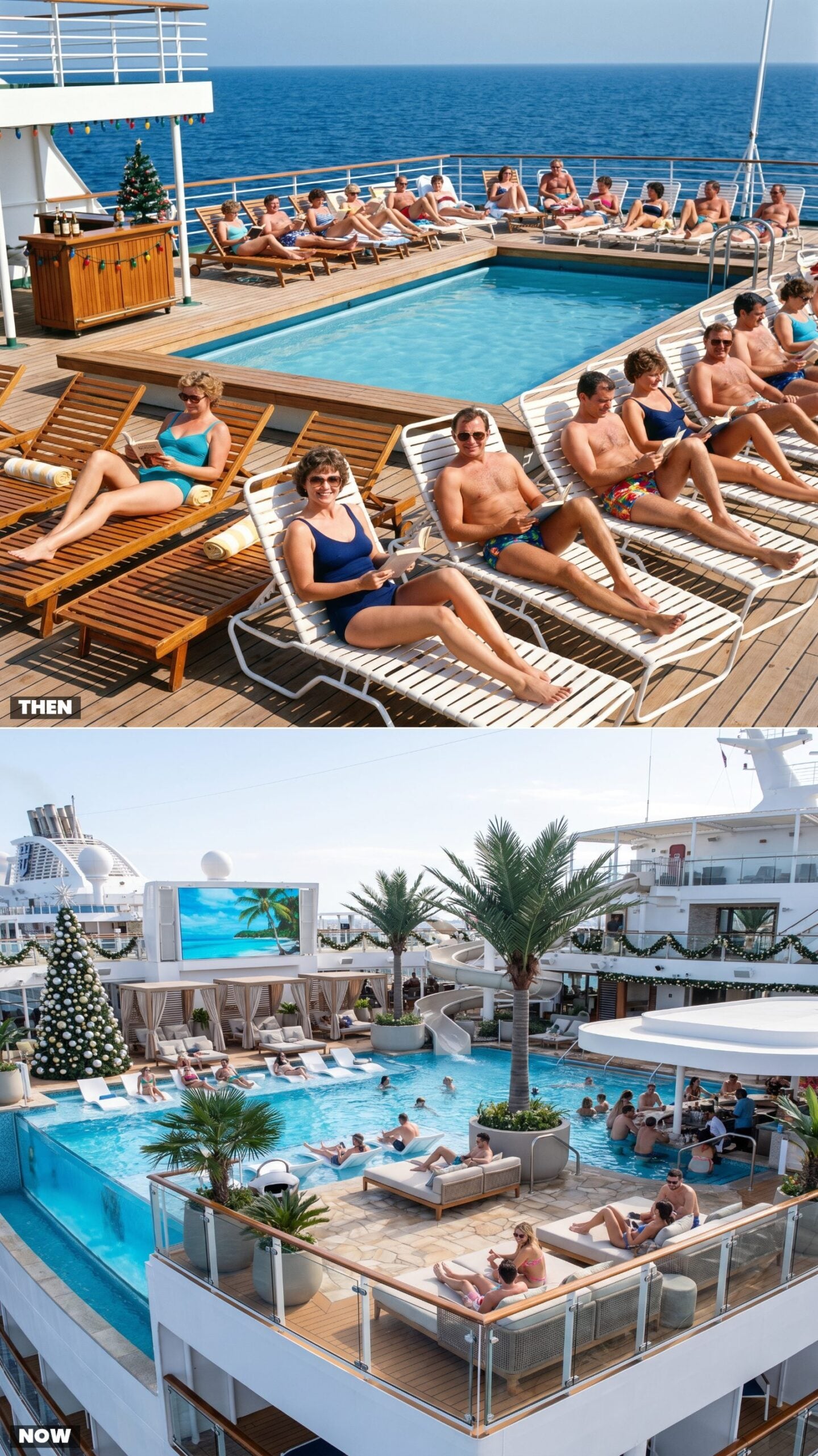
Christmas Day by the pool in 1982 meant a rectangular basin of saltwater, wooden-slat loungers, and a paperback going soft in the humidity. There was one pool, maybe a small deck bar. The tree by the bar was plastic and the lights were the big colored bulbs. You claimed a chair with a towel and you kept it.
Now the pool is a whole complex — infinity edges, in-water loungers, cabanas, a swim-up bar, a screen the size of a house, and slides that need their own crew. Warm places for a cold holiday, then and now. The towel-on-the-chair standoff, however, is eternal.
9. Exercising in the Ship’s Fitness Room
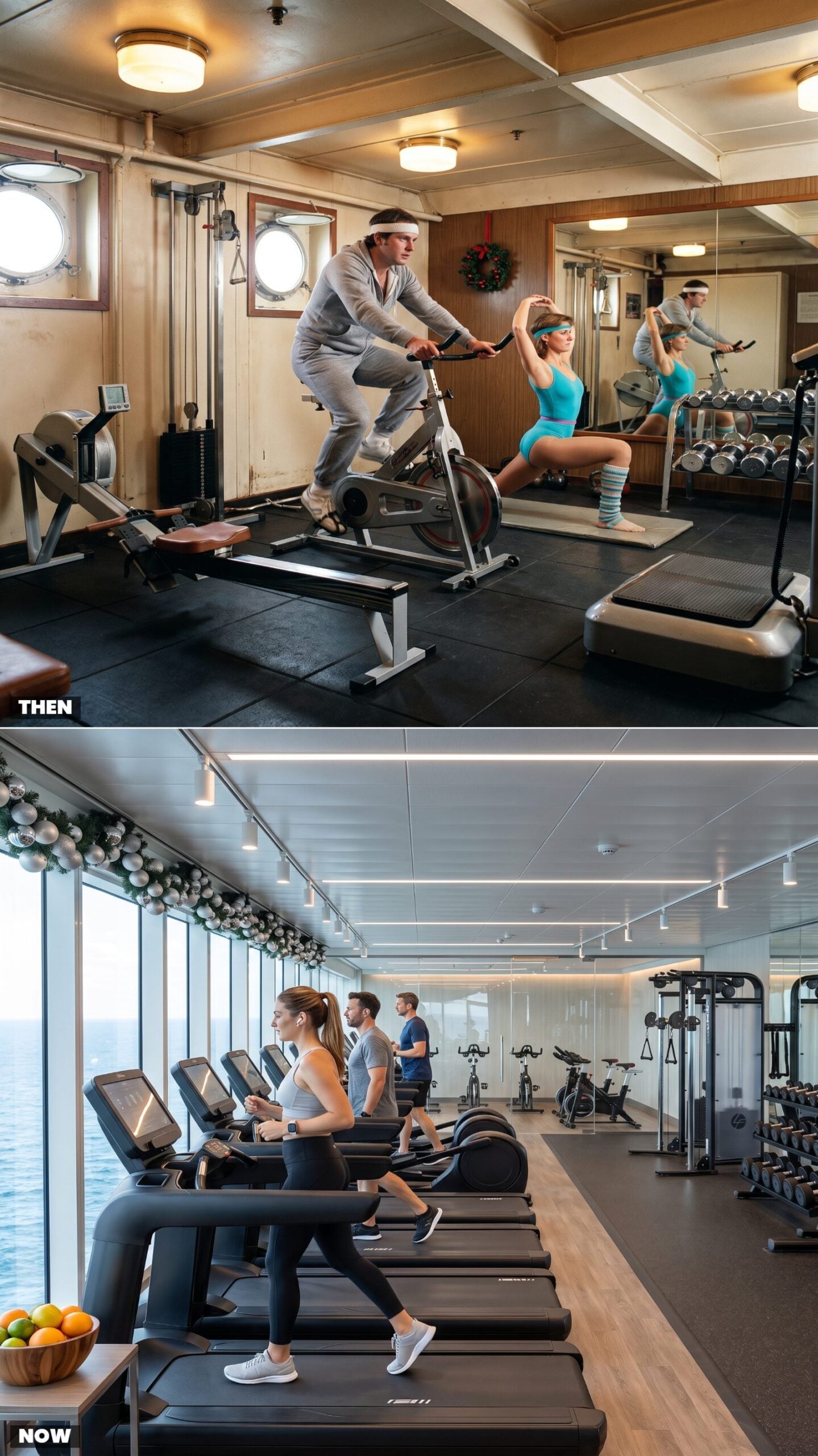
The gym in 1982 was an afterthought, and it looked it. A chrome rowing machine, a bike with a front wheel the size of a hubcap, a rack of dumbbells, and, if the ship was fancy, one of those vibrating-belt machines that jiggled you and did precisely nothing. Leotards and legwarmers optional. Mostly not optional.
Today’s fitness center has ocean-view windows, treadmills with screens, a spin studio behind glass, and a schedule of holiday-themed classes. People train on Christmas morning now. In 1982 the room was usually empty — which, honestly, sounds about right for a holiday.
8. Booking a Treatment in the Shipboard Spa
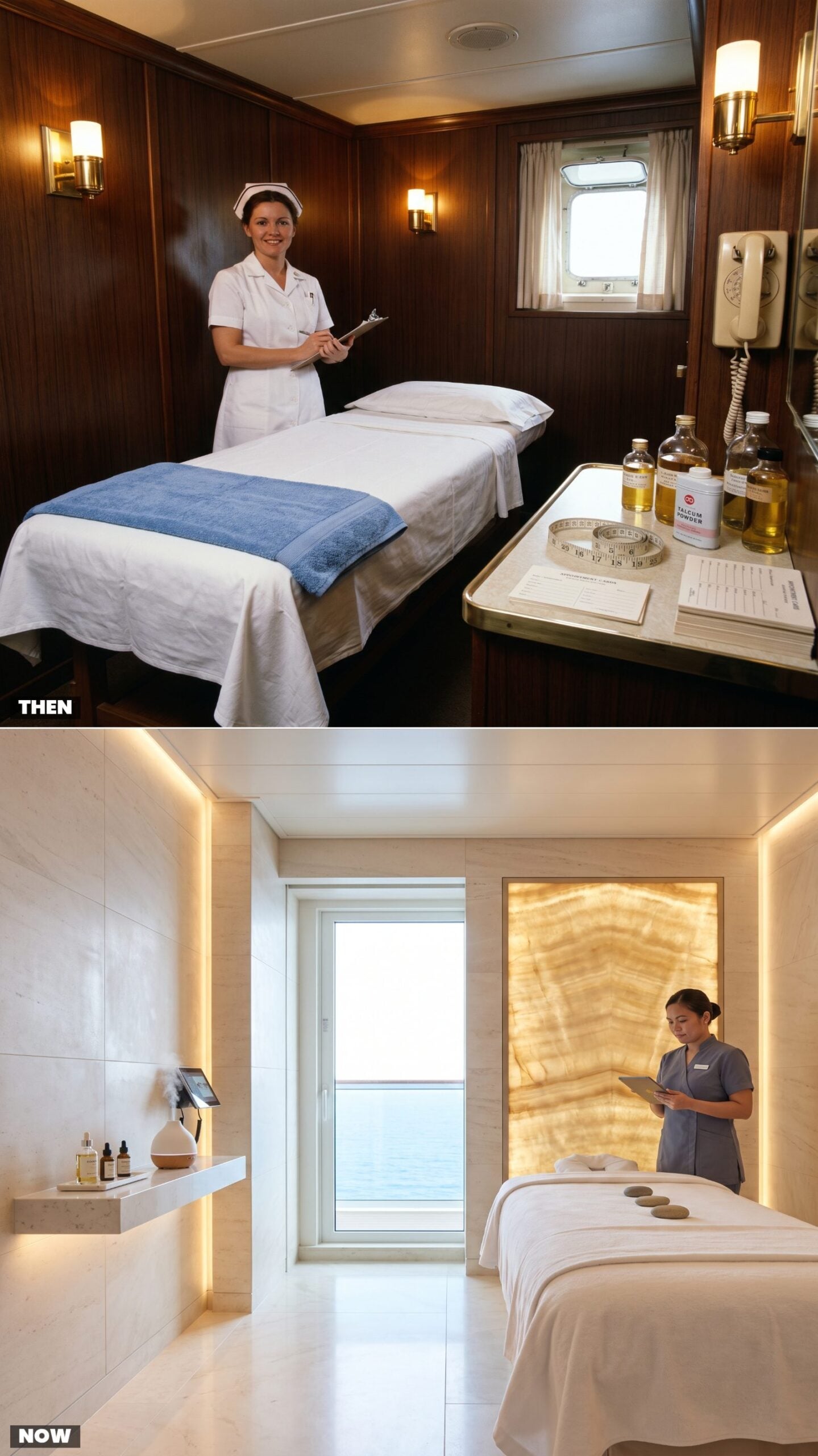
In 1982 the ship’s spa was really a beauty salon with a massage table shoved in the back. You booked by walking down, catching the attendant between clients, and scrawling your name on a paper card she tucked into a wooden slot. One masseuse, maybe two, working with a bottle of oil, a stack of towels, and a porthole for a view.
Now you reserve your hot-stone session weeks out from an app, before you’ve even packed the suitcase. The modern ship spa runs like a resort — thermal suites, salt rooms, heated loungers strung out over the water. The upsell never lets up, and the products cost more than your excursion did. But that treatment room with the sea filling the window? Worth every dollar.
7. Reading the Printed Daily Program
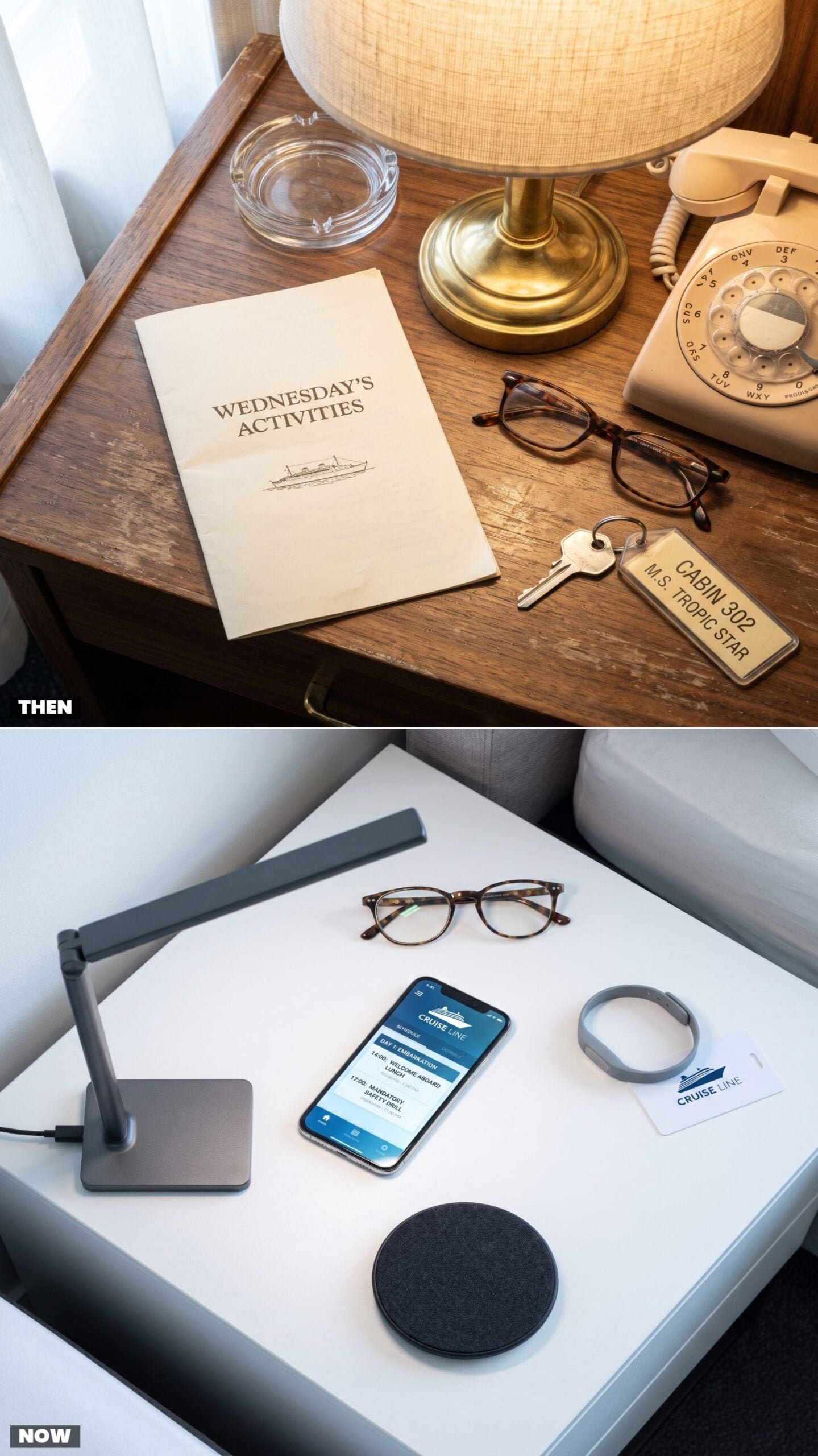
The printed daily program was gospel. It landed on your bed each evening while you were at dinner, folded crisp and listing everything: shuffleboard at ten, the midnight buffet, the hour the ship would slip into a new port. You circled what mattered with the stubby little golf pencil and left it on the nightstand like a signed treaty.
Now it lives in an app. A push notification nudges you that trivia starts in fifteen minutes, and you can filter by kids’ events or adults-only, star your favorites, get a buzz the second your dinner table’s ready. Efficient. But nobody circles a push notification, and nobody’s tucking one into a scrapbook forty years later either.
6. Following the Voyage on a Paper Chart
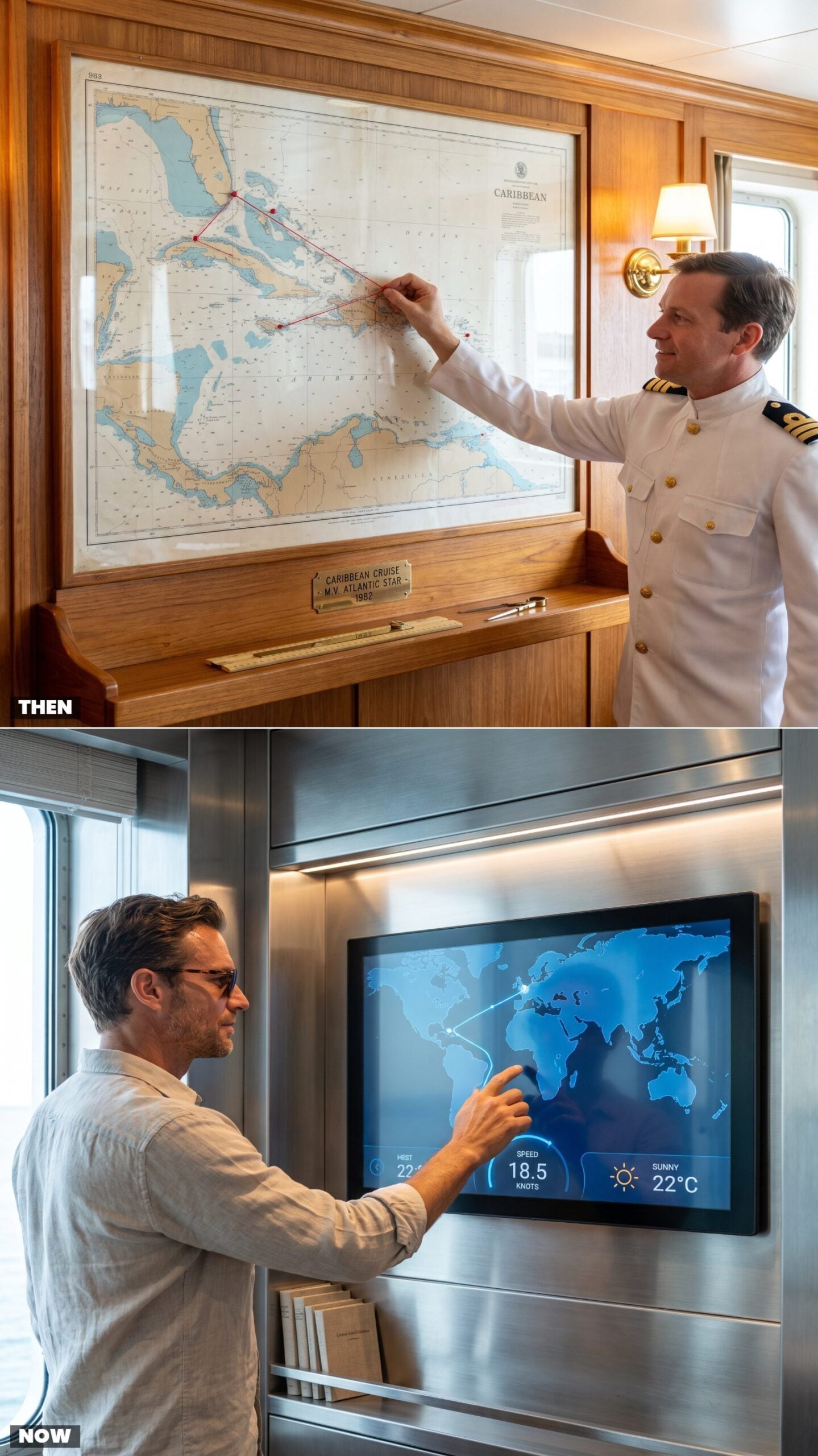
Near the purser’s desk hung a framed chart of the whole voyage, and every morning an officer moved a little pin and re-strung the red thread to mark where you’d sailed overnight. Passengers clustered around it with coffee, working out how far you’d come, squinting at soundings and reef markers nobody actually understood.
Today it’s a touchscreen. Live GPS, your exact position blinking over the ocean, wind speed, water temperature, an arrival countdown ticking down to the decimal. You can pull the same map up in your cabin. Vastly more accurate. But the pin and the thread handed you something to stand around and argue over, and a glowing panel never once asks you to lean in.
5. Attending the Passenger Safety Drill
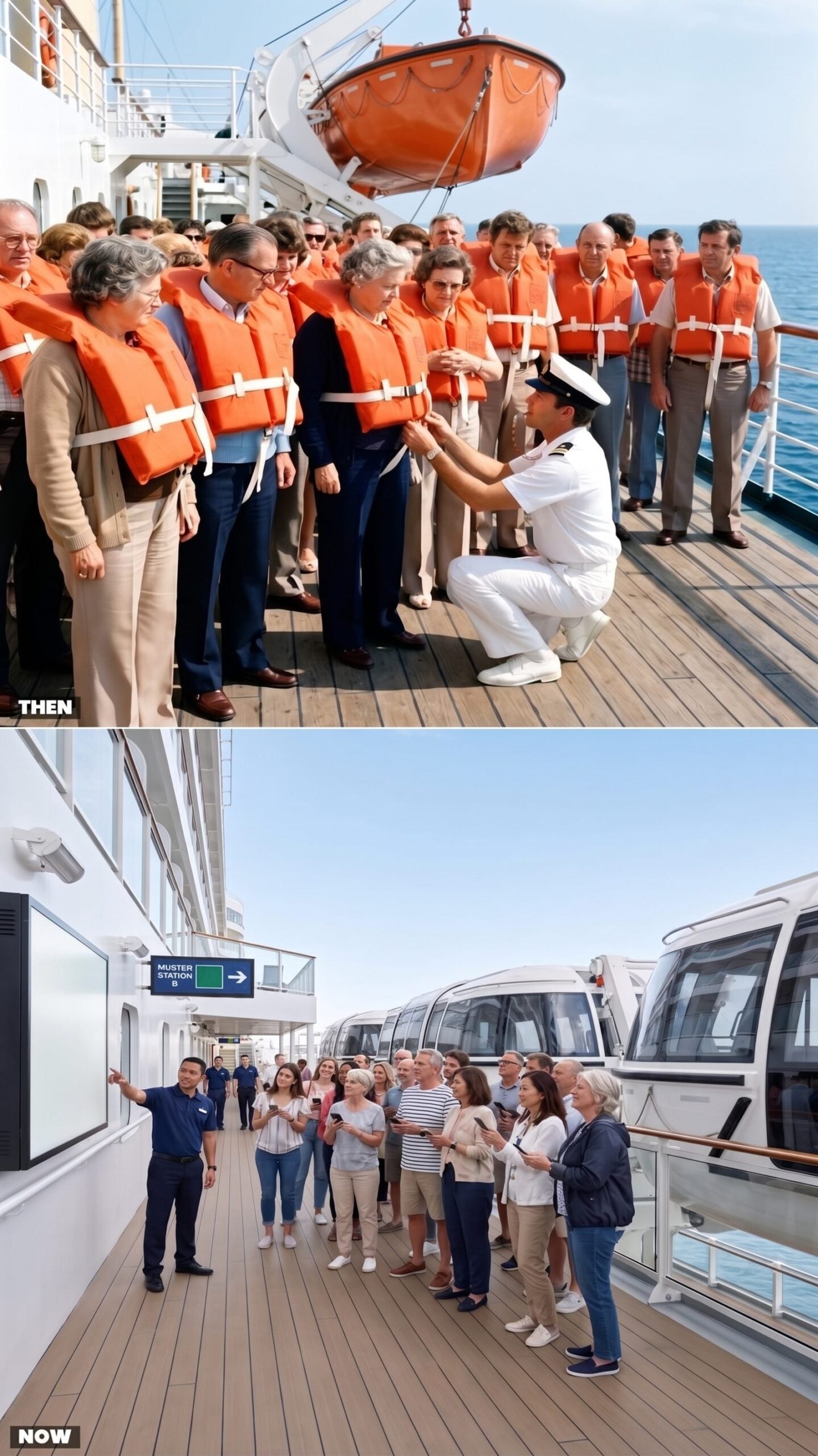
The old boat drill was a spectacle. A horn blast, and hundreds of passengers filed onto the promenade deck strapped into those enormous orange kapok vests that made everyone look like they’d swallowed a beach ball. You stood in rows while a crew member knelt to check and tighten your straps, and you sweated through the whole business under the Caribbean sun.
Now it’s the e-muster. You watch a safety video in your cabin, tap into your muster station on the app, and a quick check-in confirms you know where to go. No life jacket parade. No baking in the heat. Faster, and honestly safer. All the same — the orange chaos was funnier.
4. Visiting a Cruise Line’s Private Island
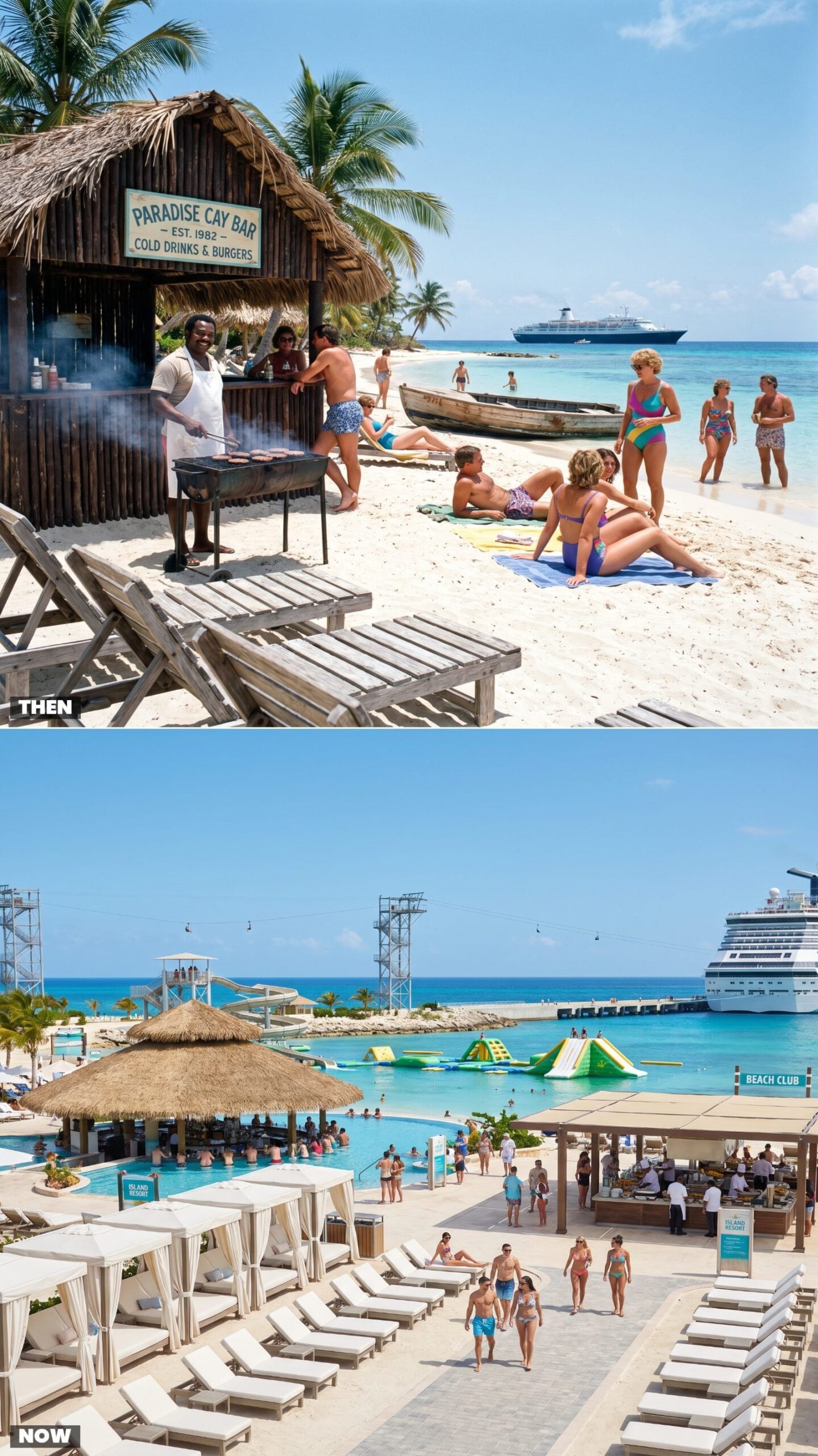
A private island in 1982 meant a stretch of undeveloped Bahamian sand, a thatched bar, and a grill somebody hauled ashore for the day. You rode a wooden tender in from the anchored ship, staked out a spot on the beach, and that was the entire operation: beer, burgers, and a swim. No reservations required, because there was nothing to reserve.
The version you get today is a theme park with a coastline. Water parks, zip lines, private cabanas you book months out, a pier so the ship rolls right up. Loungers lined up in matching rows. It’s genuinely fun and completely engineered, and the tradeoff is honest — more to do, less to stumble across on your own.
3. Cruising With Modern Accessibility Features
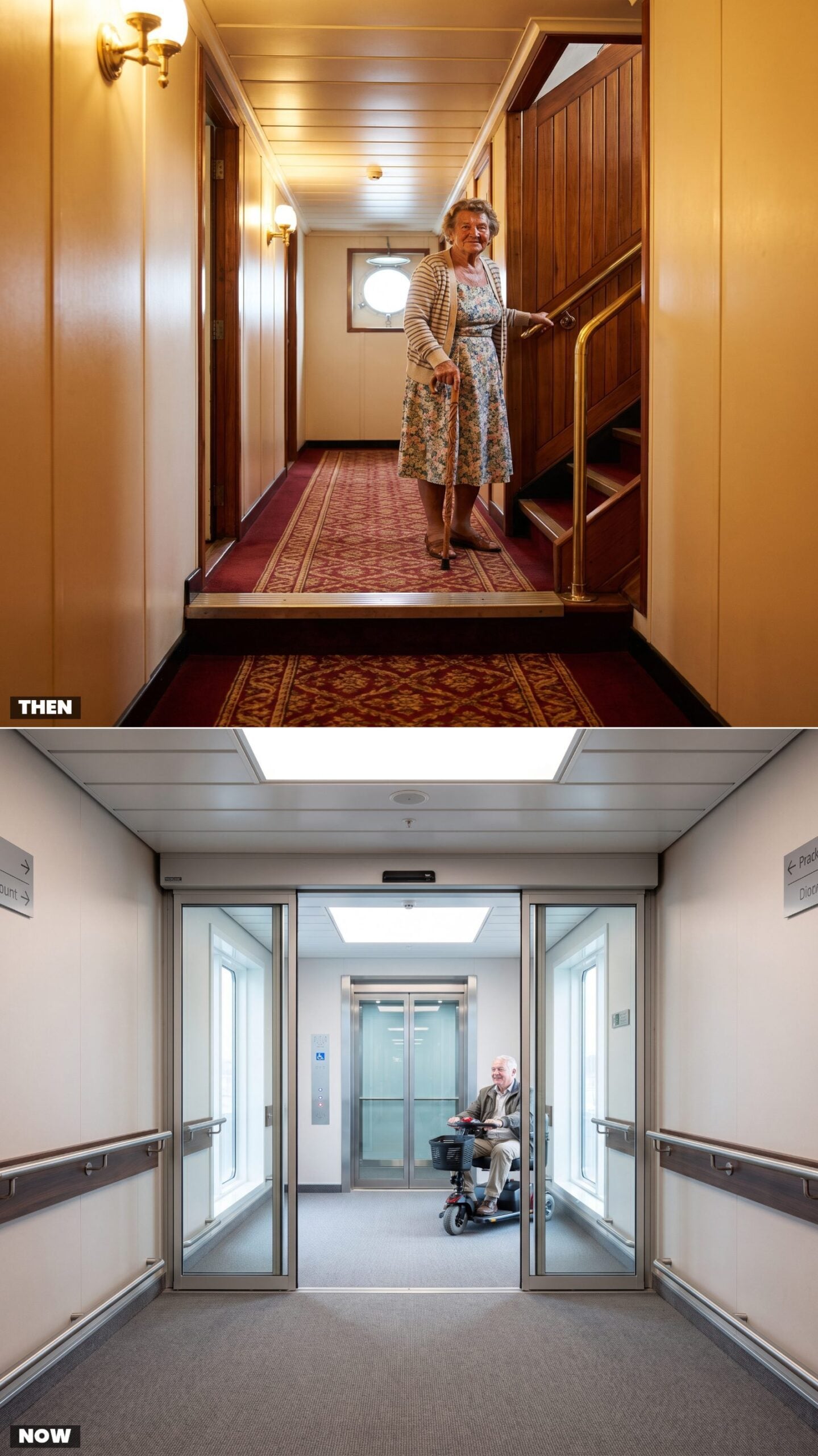
This is the honest one. In 1982, a cruise ship was a maze of high door sills, steep interior stairs, and corridors so narrow a wheelchair simply couldn’t get through. If you used a mobility aid, half the ship was closed to you and nobody gave it much thought. That’s just how ships got built.
Modern ships are a different world entirely. Step-free corridors, accessible cabins with roll-in showers and wide doors, elevators with braille, ramps, hearing loops, staterooms laid out for scooters. It’s the one change we feel no nostalgia about, because it means the people who got left ashore for decades now get the same rail, the same sunset, the same Christmas at sea as everybody else.
2. Tipping the Crew at the End of the Voyage
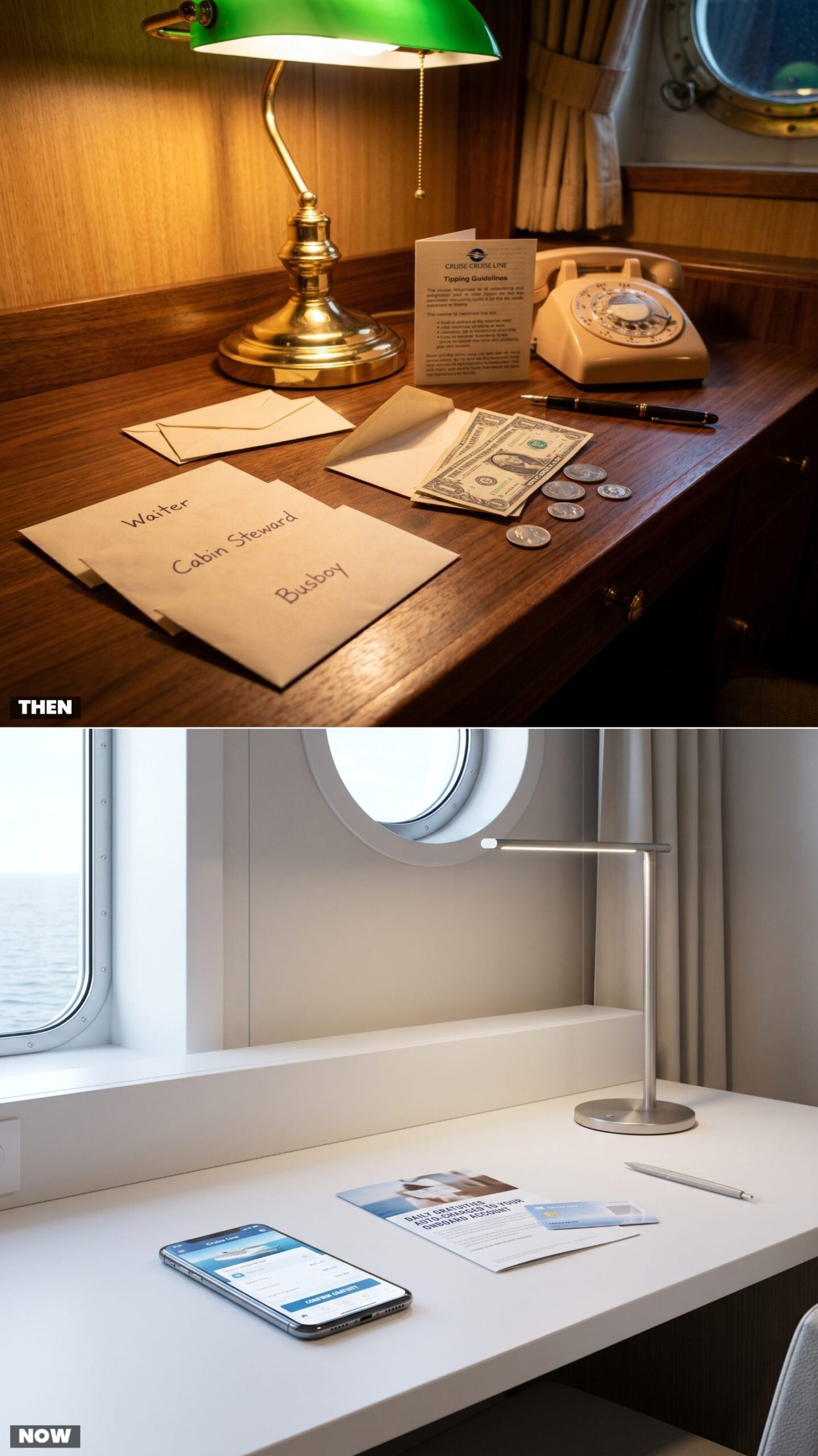
On the last night you sat at the cabin desk with a stack of little white envelopes and did the math out loud. The line handed you a card suggesting amounts — so much for your waiter, so much for the busboy, so much for the cabin steward who’d folded your towels into swans all week. You stuffed the cash in, licked the flaps, and passed them across the dinner table with a handshake and a thank-you that actually landed.
Gratuities now hit your onboard account automatically, a daily rate you can prepay or adjust at guest services. The accounting is cleaner and the money spreads more fairly to the crew you never lay eyes on. But that envelope handed across the table, the eye contact, the moment of it? Quietly automated out of existence.
1. From Christmas Postcards and Ship-to-Shore Calls to Wi-Fi at Sea
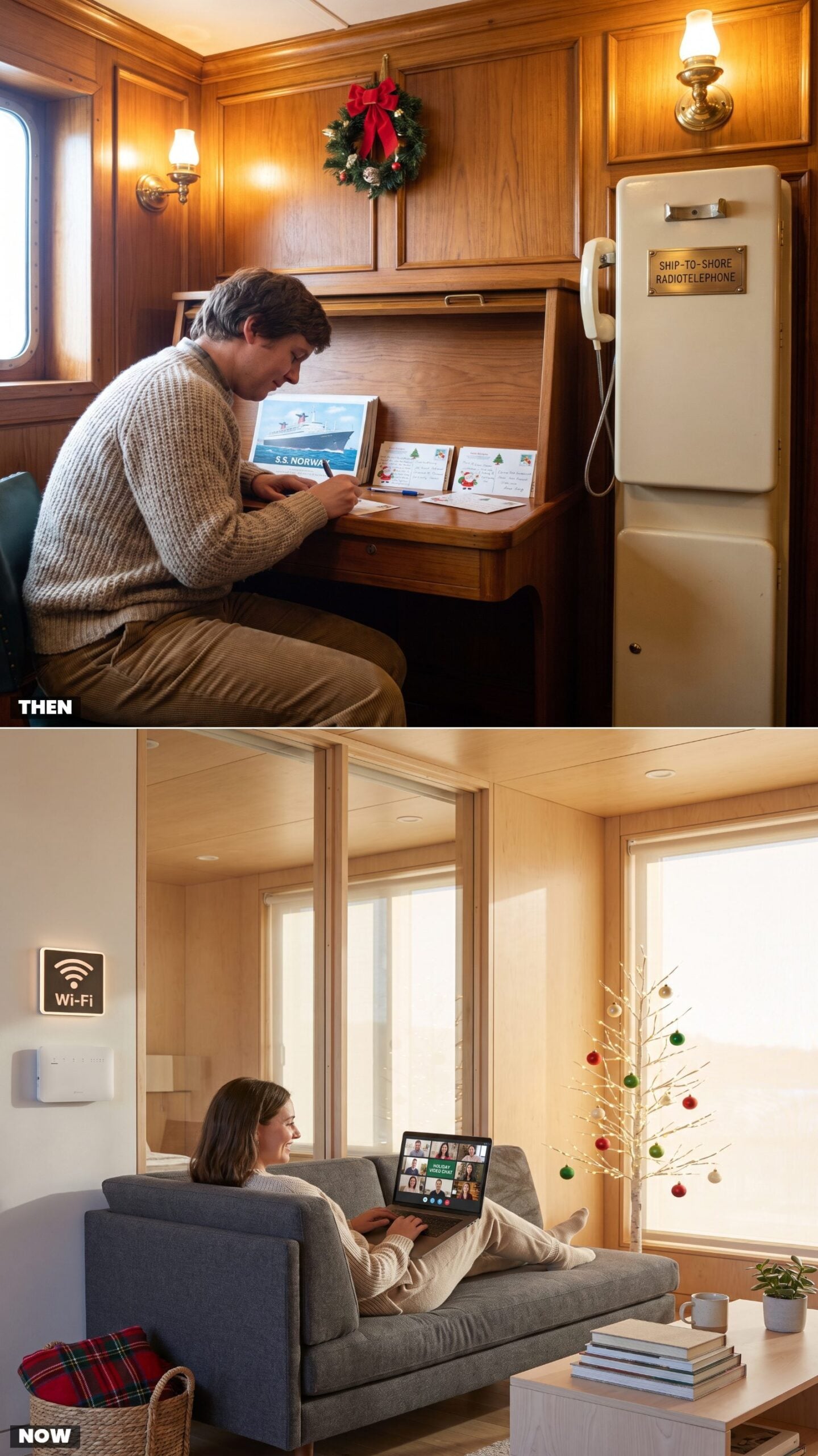
Christmas at sea in 1982 meant staying in touch the slow way. You bought postcards of the ship at the little shop, wrote them out at the writing desk, and dropped them in the onboard mail to reach home weeks later — long after you’d already docked and unpacked. A phone call home meant the ship-to-shore radiotelephone: crackly, wildly expensive, timed to the minute, everybody shouting can you hear me over a wall of static.
Now you video-call your grandkids opening presents in real time, mid-Atlantic, from a lounge chair. Satellite Wi-Fi, streaming, group texts of the buffet spread. It runs on a package fee instead of a fortune a minute, and the picture doesn’t hiss.
The postcard took three weeks to arrive and said almost nothing. The video call is instant and says everything. Ask anyone which one they framed.
Same holiday, same ache for home. The gap between the ship and the living room just shrank from a shout across static to a face on a screen. Merry Christmas from mid-ocean, then and now.
🔥 Would you like to save this?
Please note that some of the imagery in this article were created with the aid of AI image generators.