
🔥 Would you like to save this?
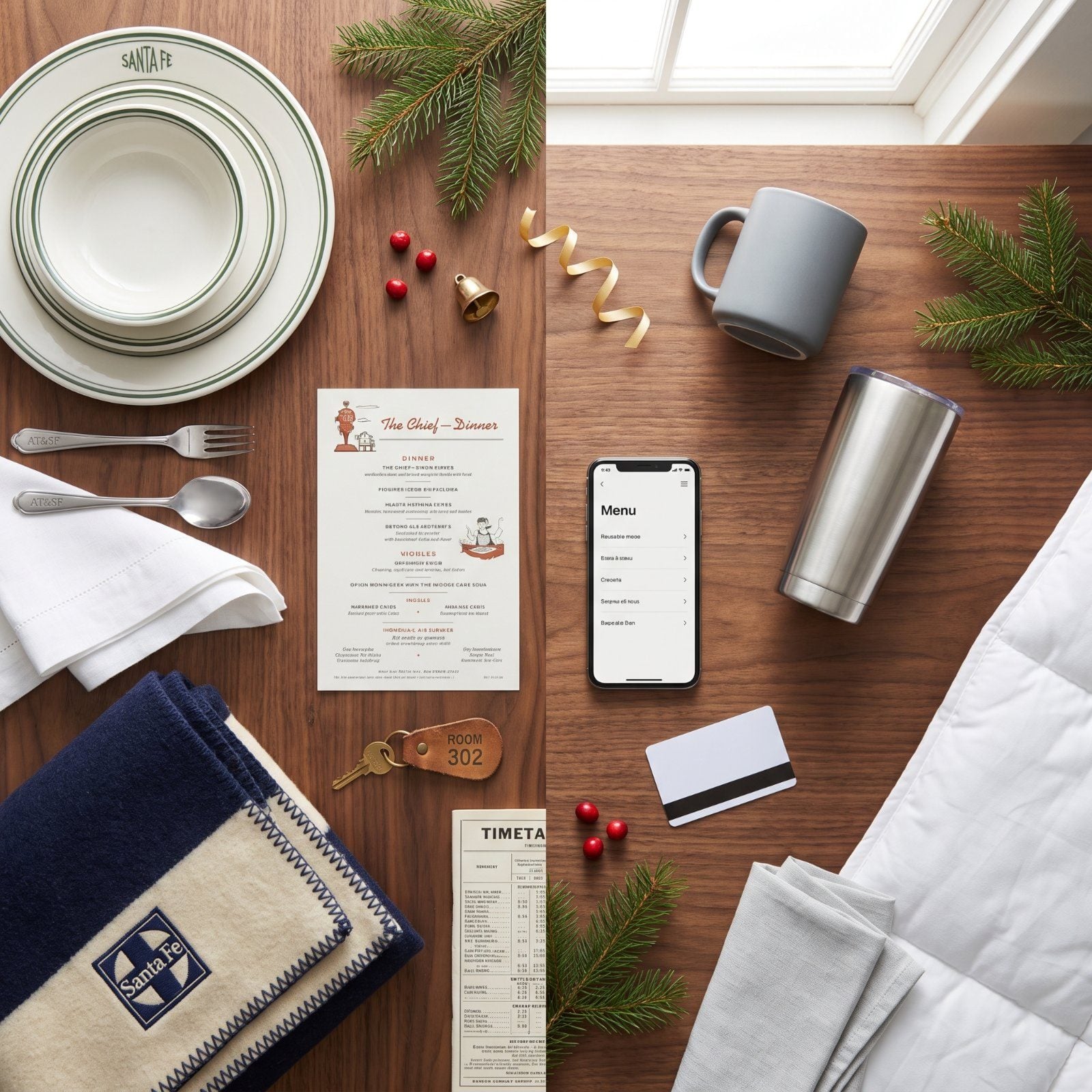
The smell hit you first. Roast turkey, coffee, and cigarette smoke rolling down a swaying corridor while snow streaked the window glass. Somewhere ahead a steward in a white coat was setting real silver on real linen, and a porter had already turned down a berth for some kid who’d fight sleep the whole way to grandma’s. That was Christmas on the rails in 1958. We lined up the old rituals against how the same ride feels today, and here’s what we found: some of it survived, but most of it didn’t.
50. White-Tablecloth Dining Cars vs. Contemporary Café Cars
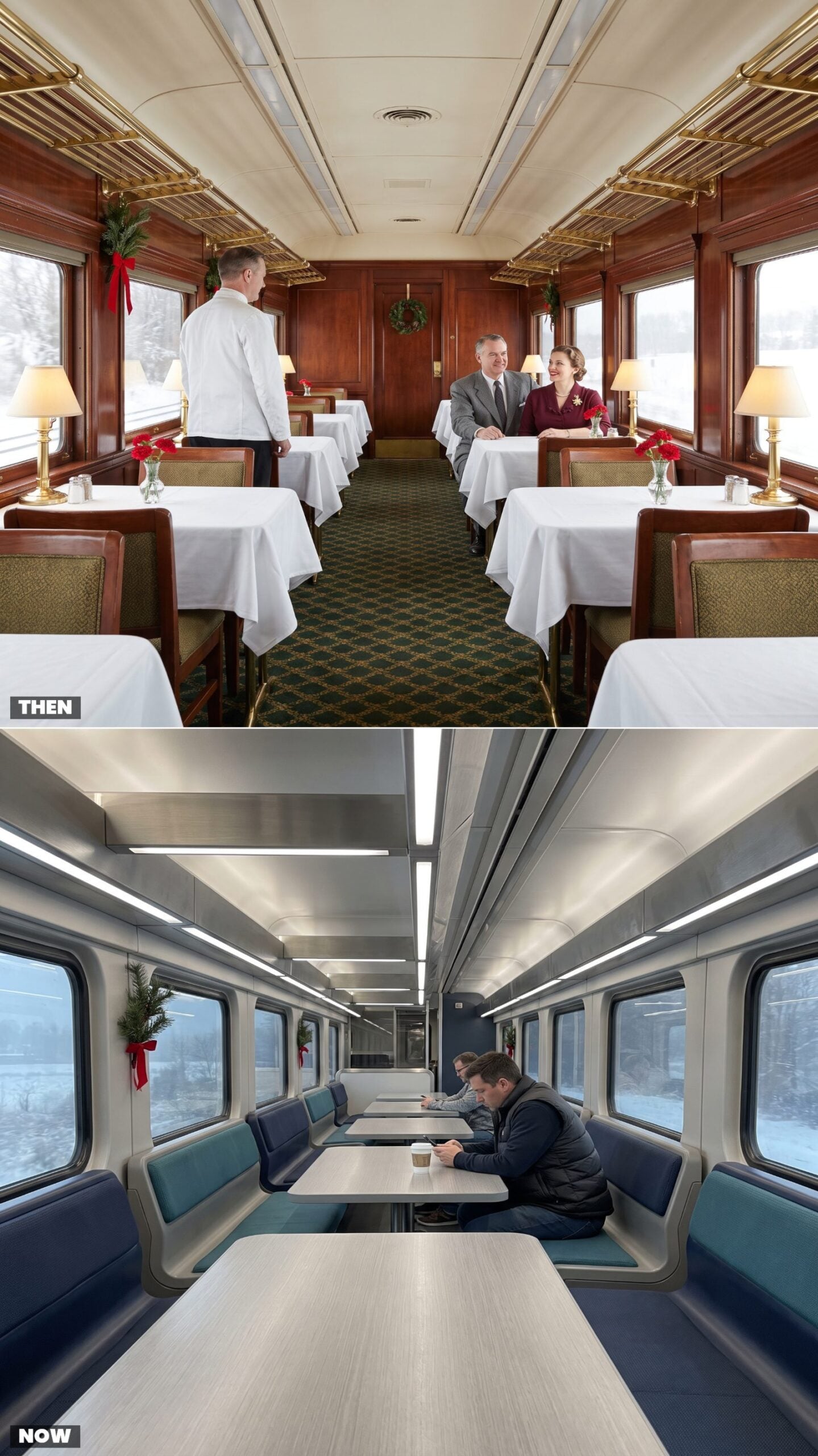
In 1958 the dining car was the whole reason some families splurged on the train. White linen you could see your reflection in, a carnation on every table, and a steward who understood that Christmas Eve called for the good silver. You dressed for dinner because dinner was an event, not a refuel.
Now you get the café car. Laminate tables, molded benches, a paper cup sweating onto the surface. It’s faster, it’s cheaper, and nobody’s judging your sweatpants. But the ceremony? Gone. And that pine sprig taped to the window is trying awfully hard to stand in for it.
49. Roast Turkey Christmas Dinner vs. Seasonal Small Plates
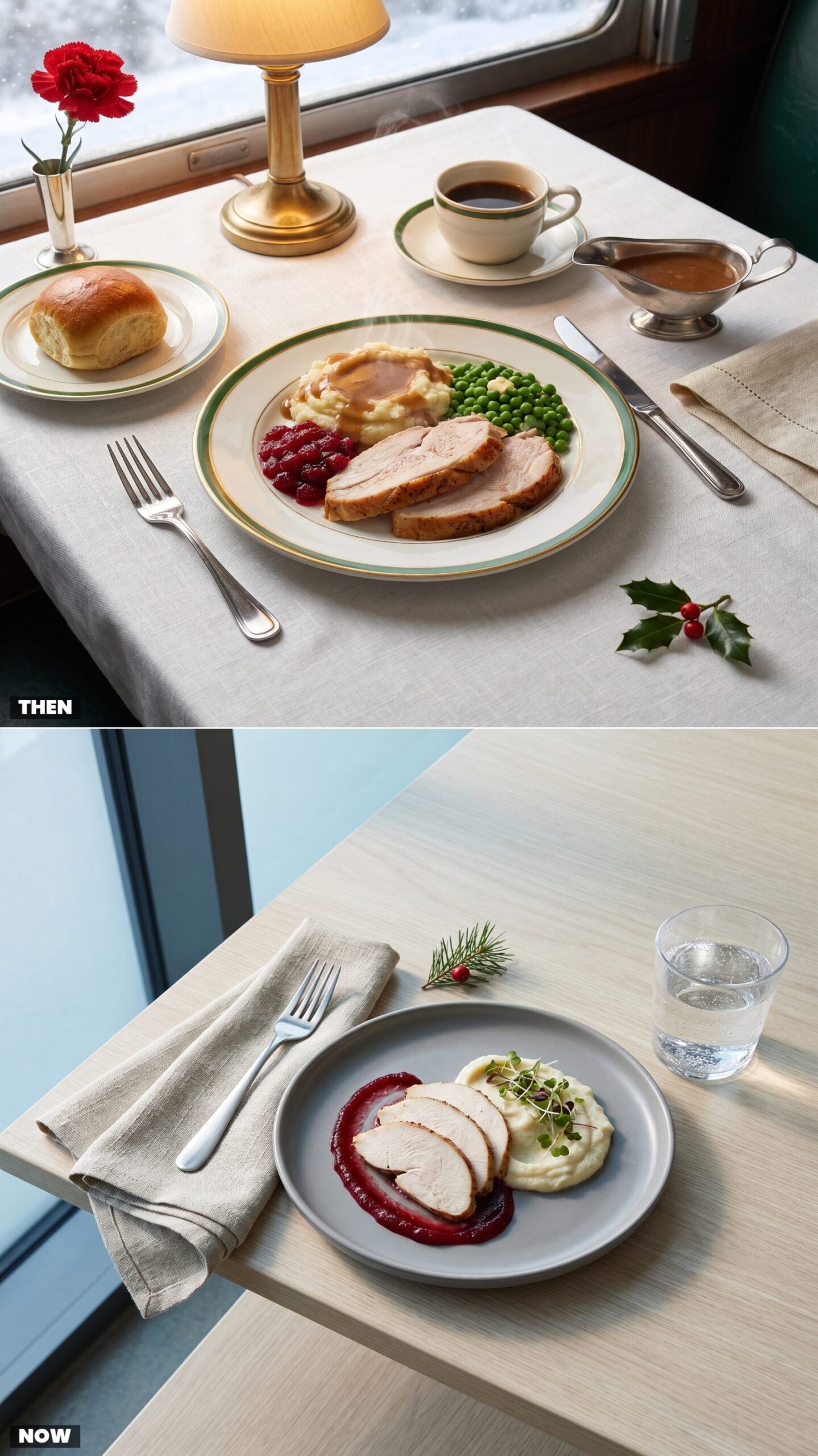
The 1958 Christmas plate did not believe in restraint. Roast turkey, real gravy, cranberry, peas, and a roll still warm from the galley oven — it arrived heavy and it meant it. You ate like the holiday required proof.
Today’s version is a small plate. One neat slice, a swipe of cranberry gel, three sprigs of something green you didn’t order. It photographs beautifully and leaves a grown adult wondering where the rest of dinner went. Portion control has no business on a Christmas train.
48. Waiters Serving Full Courses vs. Counter and Cart Service
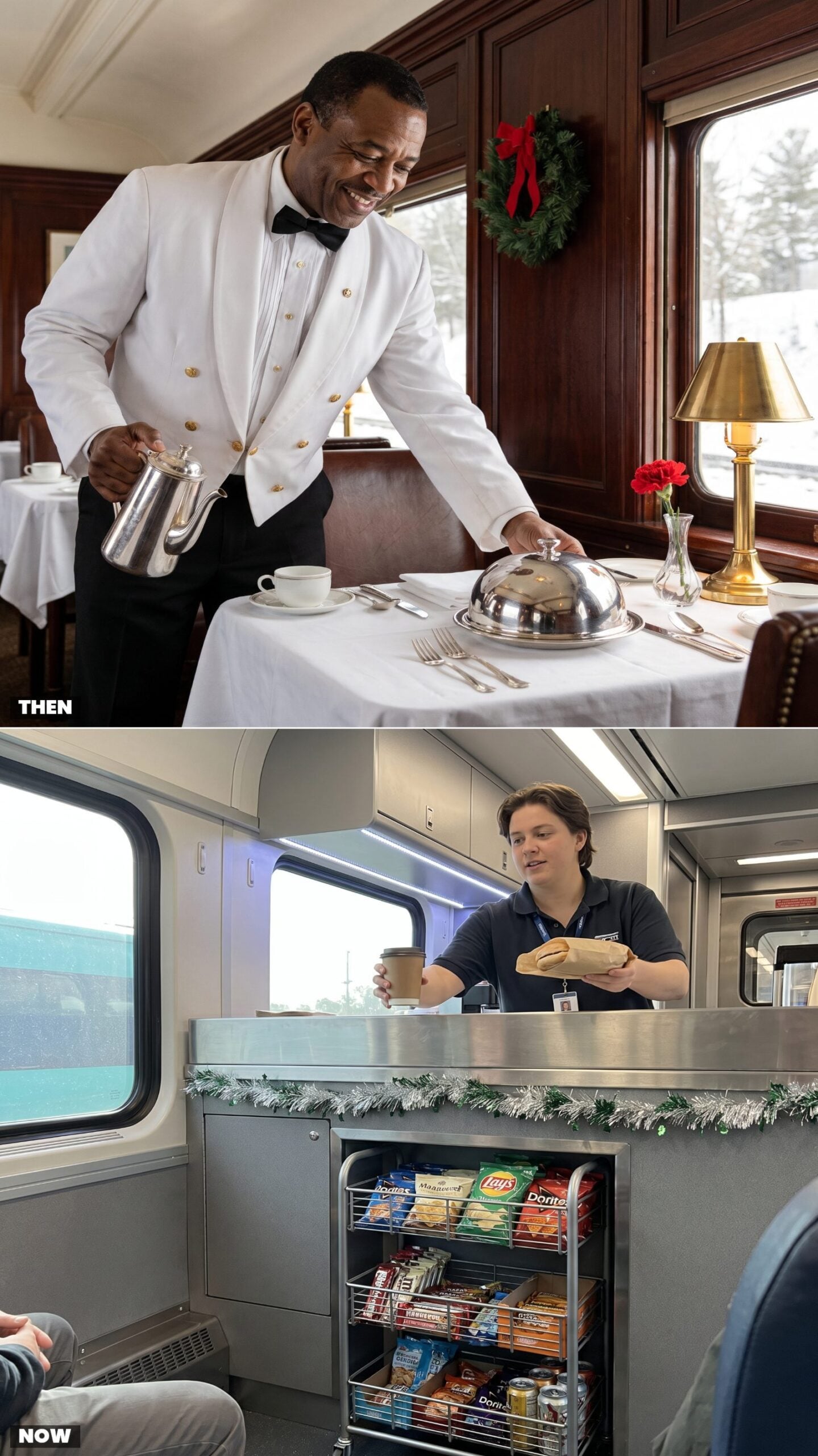
Somebody used to bring the meal to you. A steward with a pressed jacket, balancing a covered silver dish and a coffee pot, appearing beside your table like the whole car ran on his timing. He remembered you took cream. He topped you off before you asked.
Now you stand in line at a counter, or flag the cart rolling down the aisle and hope it hasn’t run out of the good sandwich. Self-service is efficient. It is not the same as being served.
47. Railroad China and Silverware vs. Reusable Modern Tableware
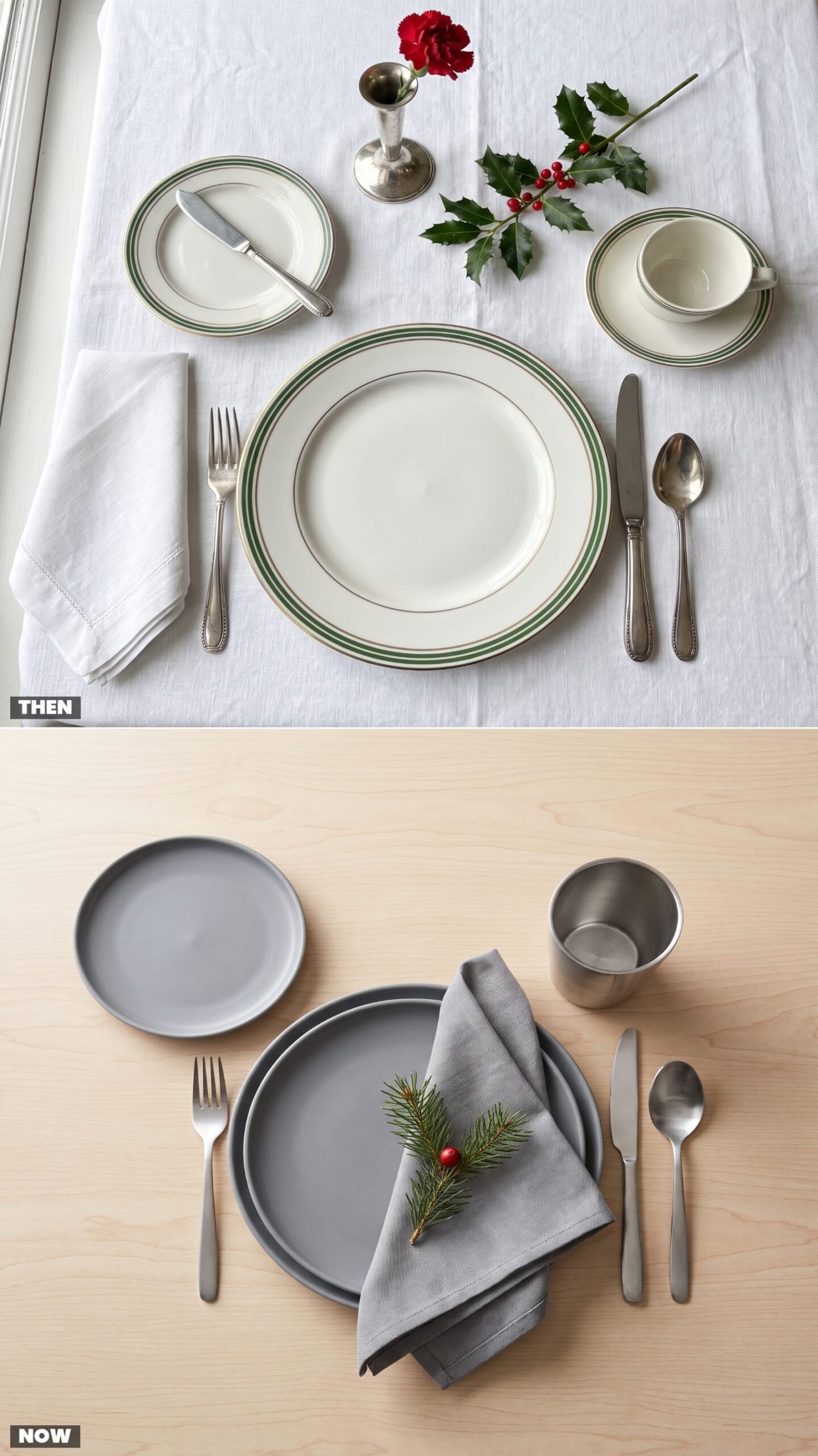
Pick up a piece of 1958 railroad china and you feel the weight of it. Thick white porcelain with a green pinstripe, built to survive a lifetime of sway and slam. The silver had heft, and both carried the railroad’s name — quietly, like a signature. Collectors chase this stuff now, and for good reason.
Modern tableware is reusable, sustainable, and completely forgettable. Matte stoneware. Brushed stainless you could grab at any big-box store. It does the job. It will never end up in a display cabinet forty years from now, and everyone involved knows it.
46. Printed Dining-Car Menus vs. QR-Code Menus
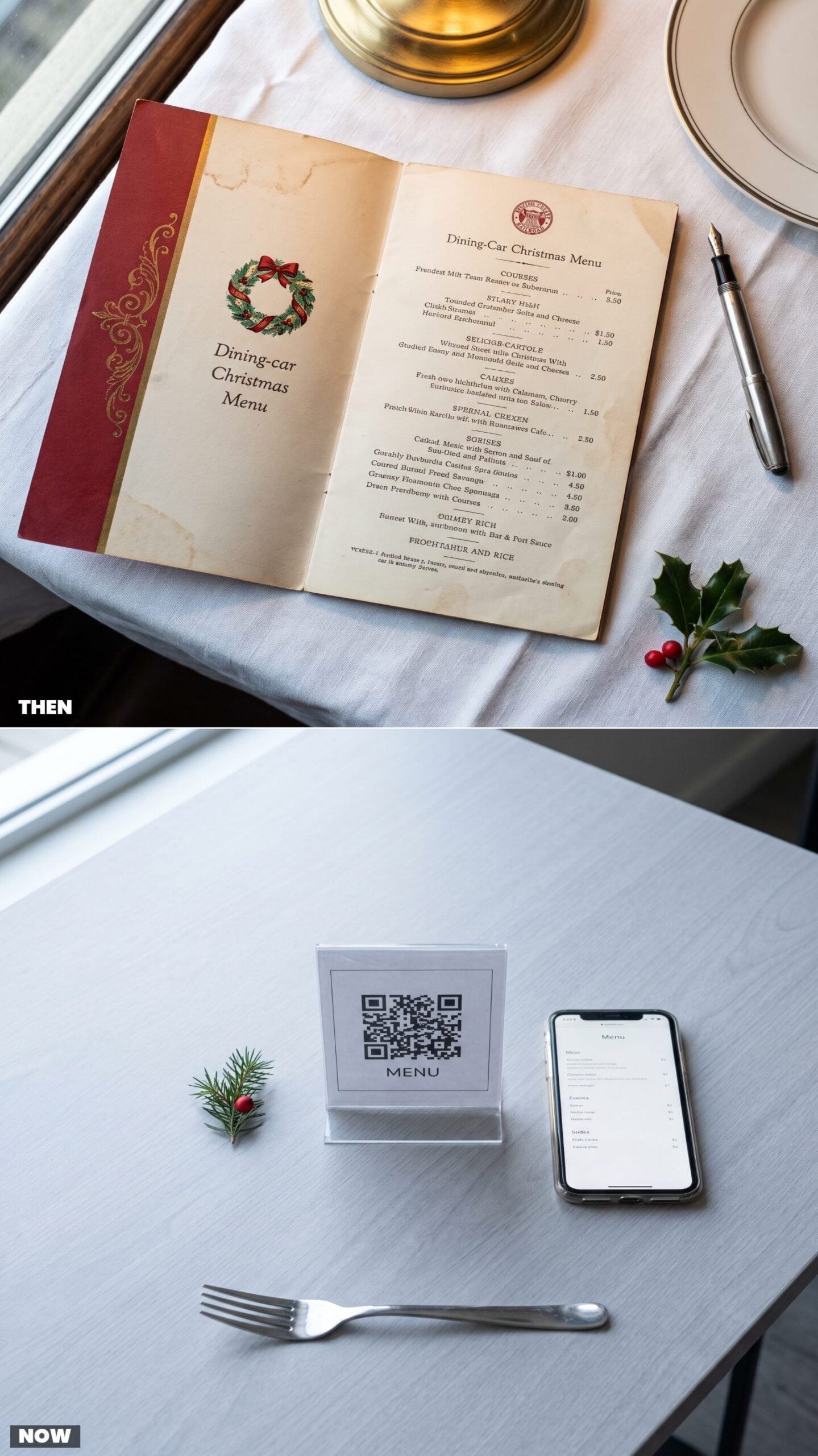
The Christmas dining-car menu was a keepsake before it was a menu. Heavy cardstock, a printed wreath, the railroad’s crest embossed at the top, courses laid out in elegant serif type. People folded them into coat pockets and kept them for decades. Some still turn up in attics.
Now you tilt your phone at a QR code and squint at a screen that dims every thirty seconds. Nobody’s saving that. Nobody ever will.
45. Compact Roomettes vs. Modern Private Pods
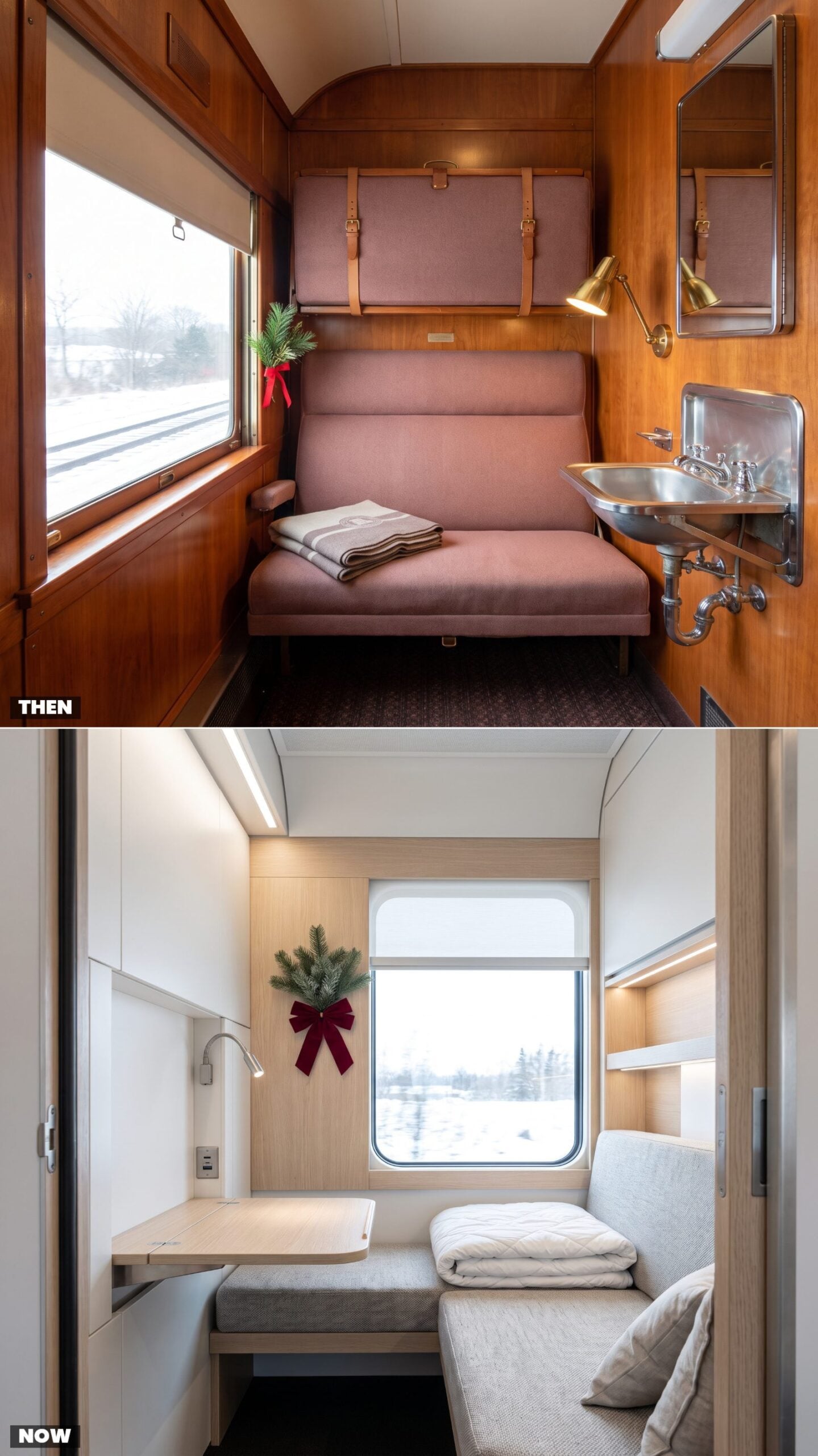
The roomette was a marvel of efficiency, a whole private world folded into the space of a phone booth. Fold-down bed, a rose-colored seat, a chrome washbasin that swung out of the wall, and a window that made the whole snowy country feel like it was yours alone. Cramped, sure. But entirely yours.
The modern pod is cleaner and better lit and comes with USB ports. It’s also a little sterile — like a nice hotel bathroom that learned to move. The efficiency survived. The romance had to be reinstalled with a red bow at the window.
44. Drawing Rooms vs. Premium En-Suite Cabins
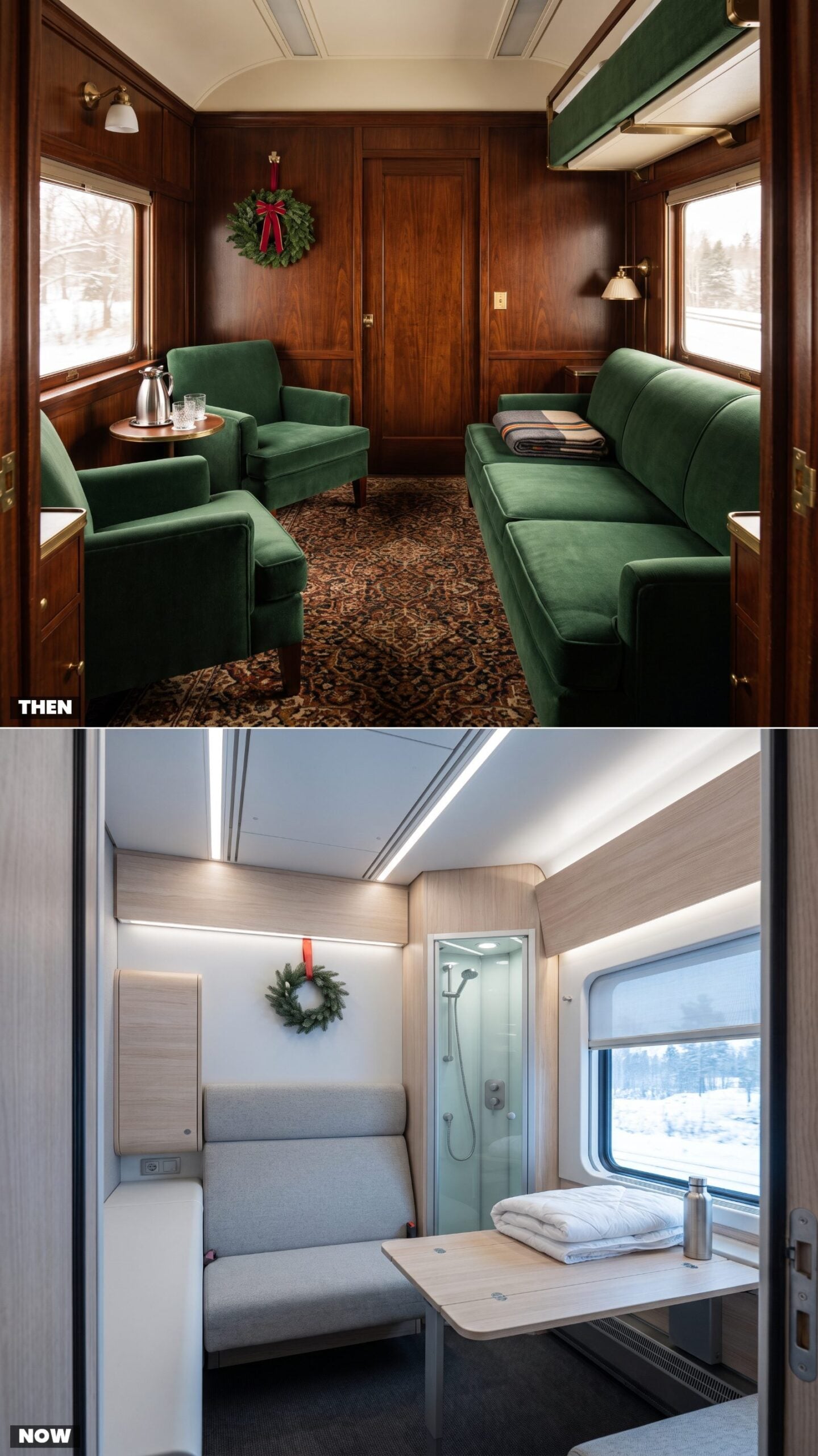
Traveling well in 1958 meant booking the drawing room. Green mohair sofa, two armchairs, your own enclosed toilet, windows wide enough to watch a whole state go by. It was the closest thing to a moving parlor, and families used it for exactly that on Christmas Eve — all crowded in, cards on the side table, somebody hogging the good seat.
The premium en-suite cabin today gives you a proper shower behind a glass door, which the 1958 traveler would have found scandalous and wonderful. More comfortable, yes. But it’s built for one or two, not a whole clan spilling across the sofa.
43. Fold-Down Upper Berths vs. Convertible Modern Beds
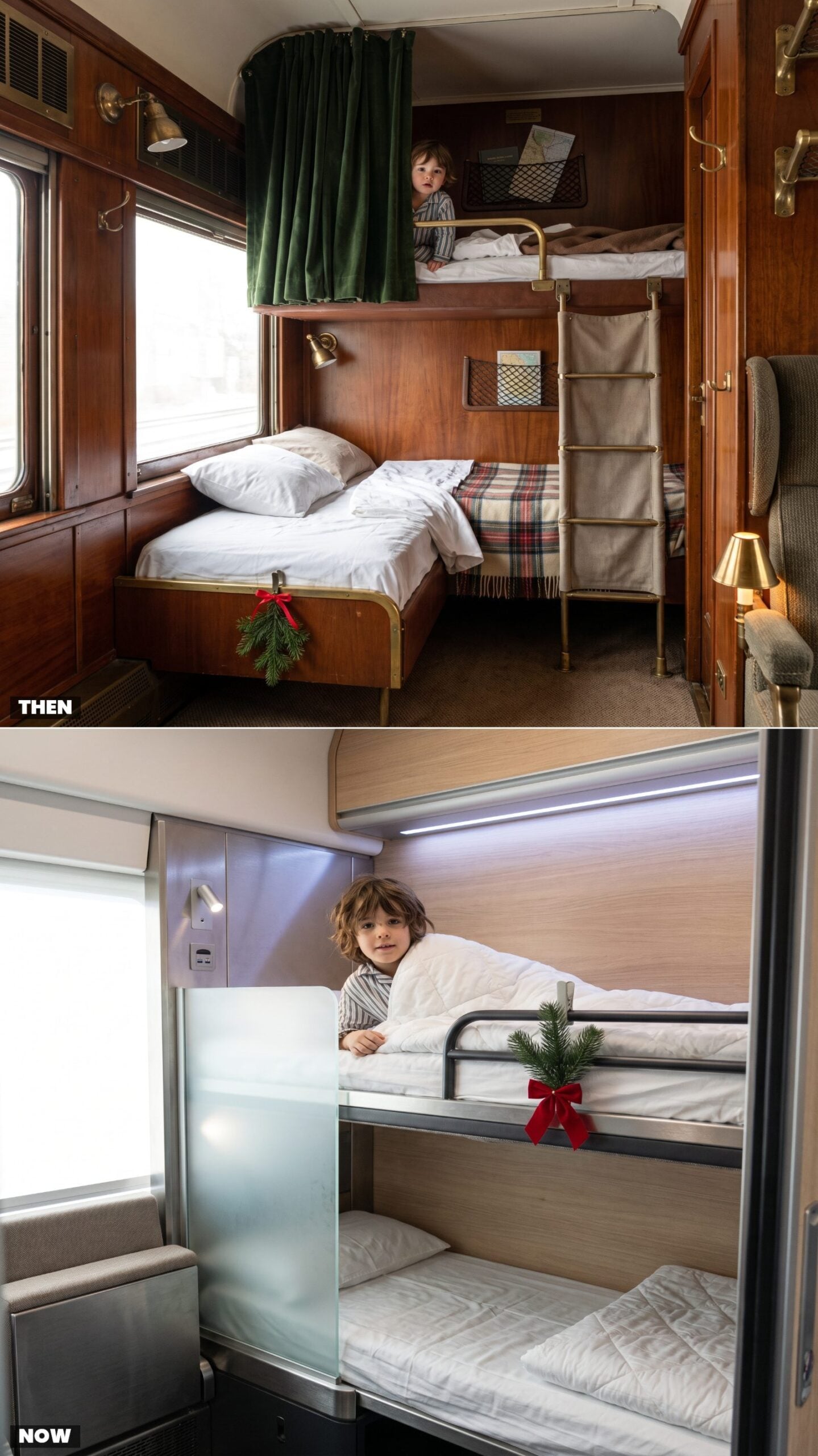
Every kid who rode a sleeper in 1958 wanted the upper berth. It folded down from the wall like a secret, closed off behind a heavy green curtain, with a little net to stash your comic books and a ladder to climb. A foot from the ceiling, completely convinced you’d gotten the better deal.
Today’s convertible beds fold and click the same way — just with USB ports, a safety rail, and a privacy screen where the curtain used to be. The magic mostly held. Kids still fight over the top bunk, which tells you the part that mattered never changed.
42. Railroad Blankets vs. Hotel-Style Duvets
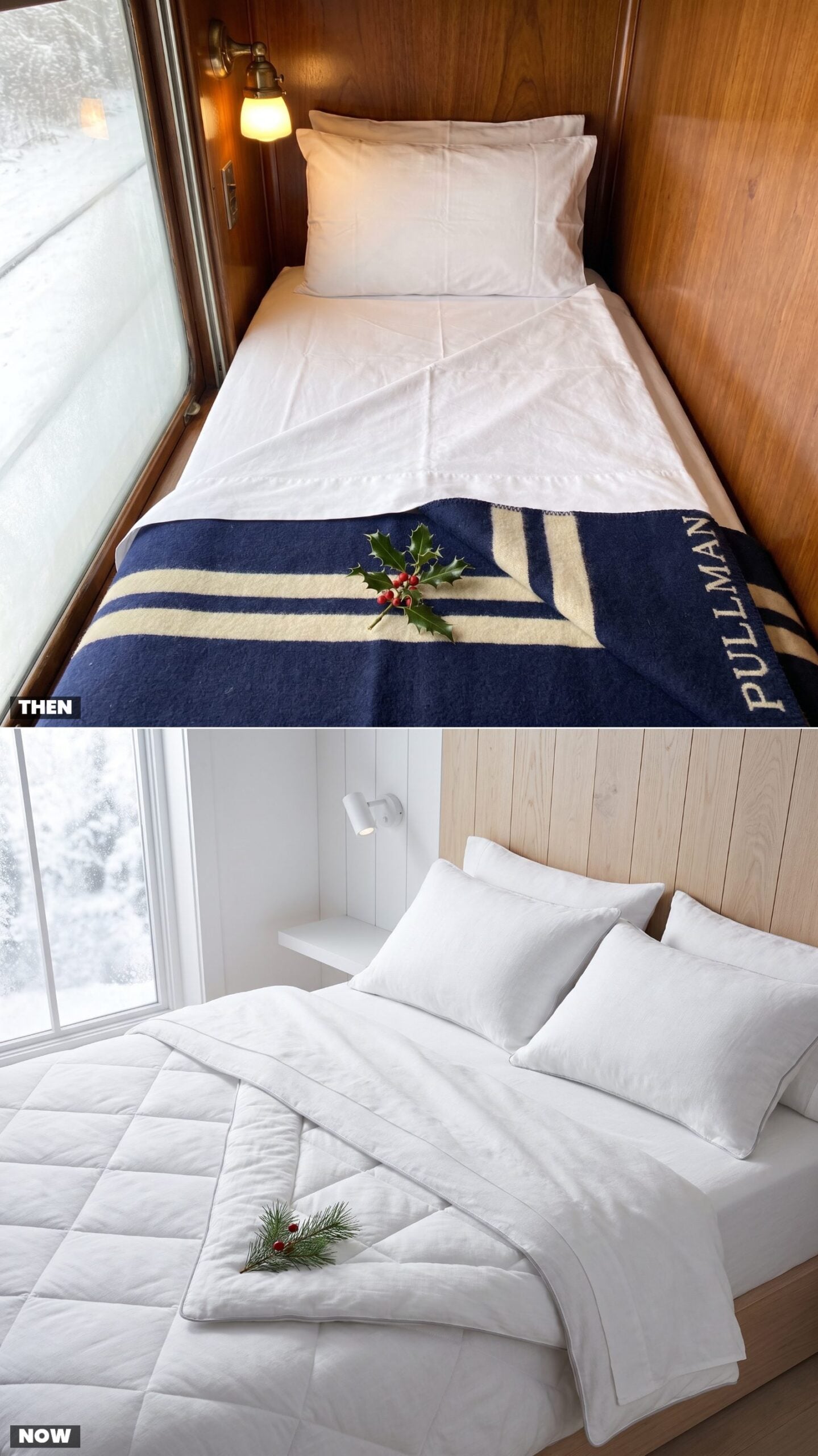
The railroad blanket was a serious object. Thick navy wool, cream stripes at the foot, the line’s name woven right in. It scratched a little, weighed a ton, and held heat like a stove. People stole them constantly. Honestly, I understand the impulse.
Now it’s a plush white duvet, hotel-style, soft as anything and machine-washable and completely anonymous. Warmer, cleaner, lighter. But a duvet has never once been mistaken for an heirloom, and that wool blanket absolutely was.
41. In-Cabin Washbasins vs. En-Suite Vanities
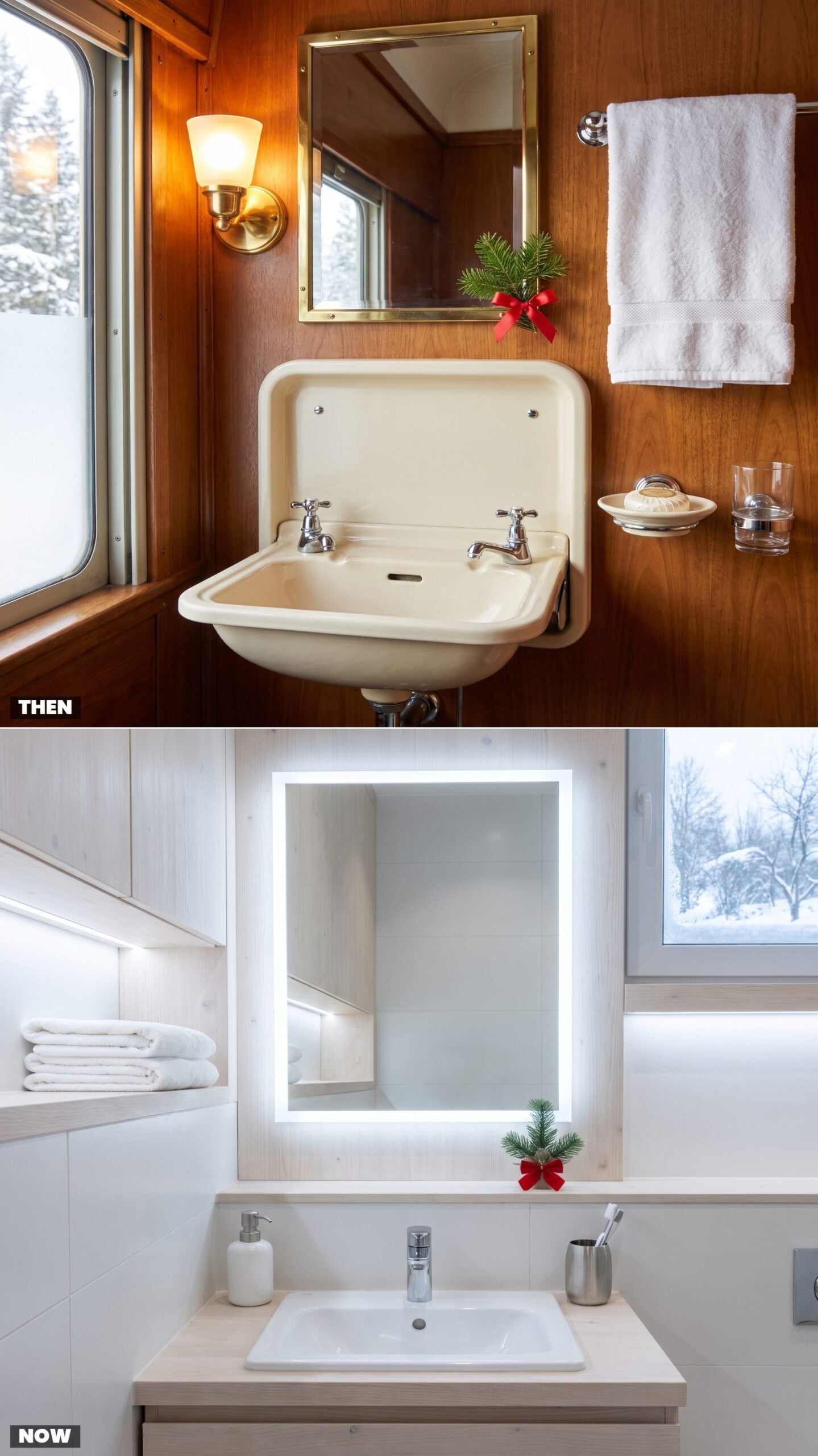
Pure 1958 ingenuity, the fold-out washbasin. A little enameled sink that swung down from the wall, chrome taps that ran hot and cold, a brass-framed mirror, a linen hand towel folded just so. You washed up in your own compartment while the country slid past the window, and it felt like the height of civilization.
The modern en-suite gives you a real sink, a backlit mirror, sometimes a shower right in the cabin. More function, less charm. The old basin asked you to make do cleverly; the new one just works. That quiet cleverness is what people miss most.
40. Shared Train Toilets vs. Accessible Modern Restrooms
🔥 Would you like to save this?
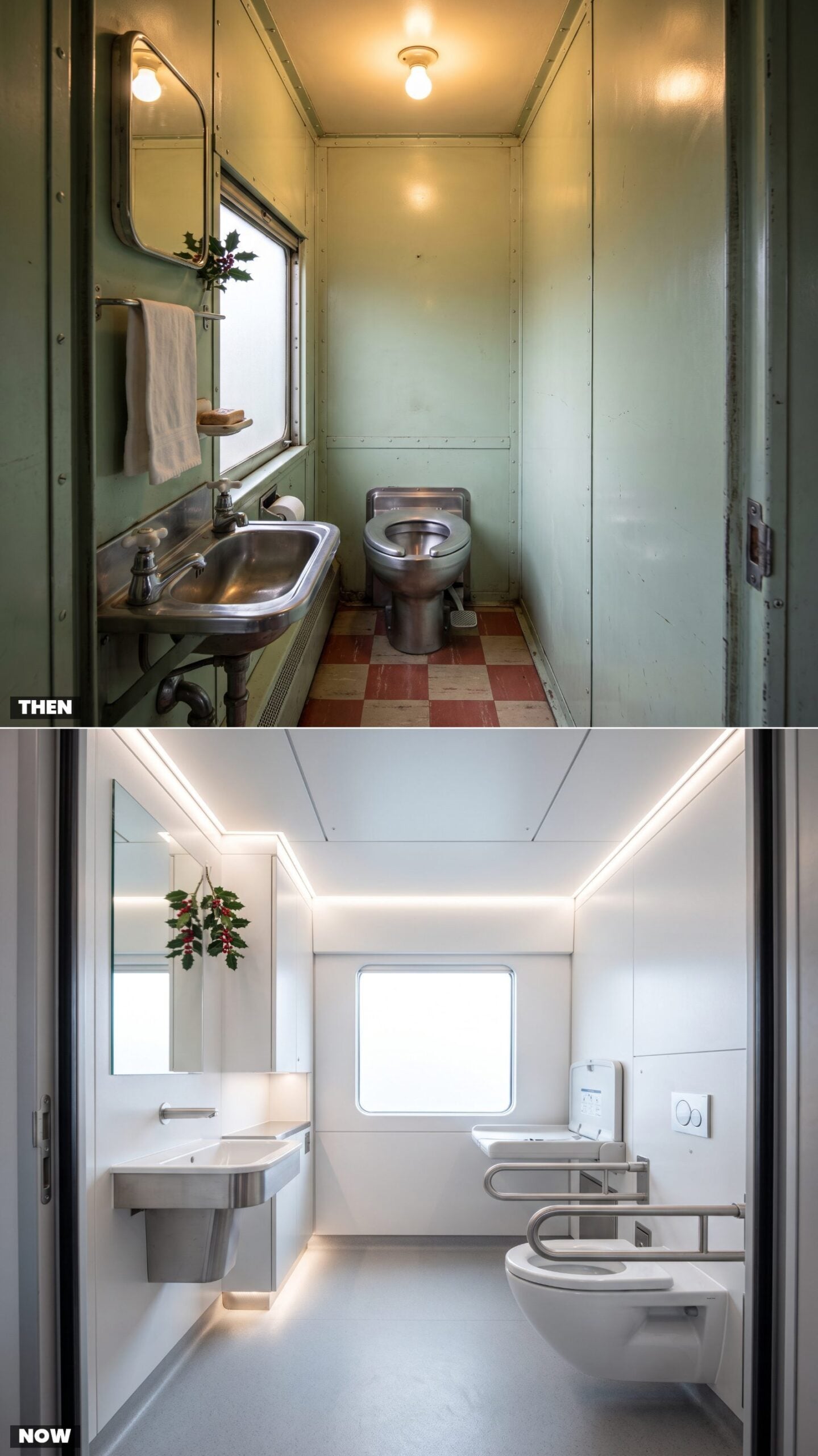
In 1958 the train lavatory was a metal cubicle barely wider than your shoulders, with chrome taps you turned by hand and a foot pedal that flushed straight onto the tracks below. You learned to brace against the wall when the car swayed, and everybody shared it. There was one rule everyone knew: don’t flush in the station.
Now it’s a sealed pod. Sensor taps, a push-button door that seems to take a full minute to close, grab bars, room for a wheelchair, and a table that folds down for the baby. Cleaner, kinder, and no longer emptying onto the rails. You can appreciate the progress and still, somehow, miss that honest little chrome sink.
39. No Shower on Board vs. Full Sleeper Showers
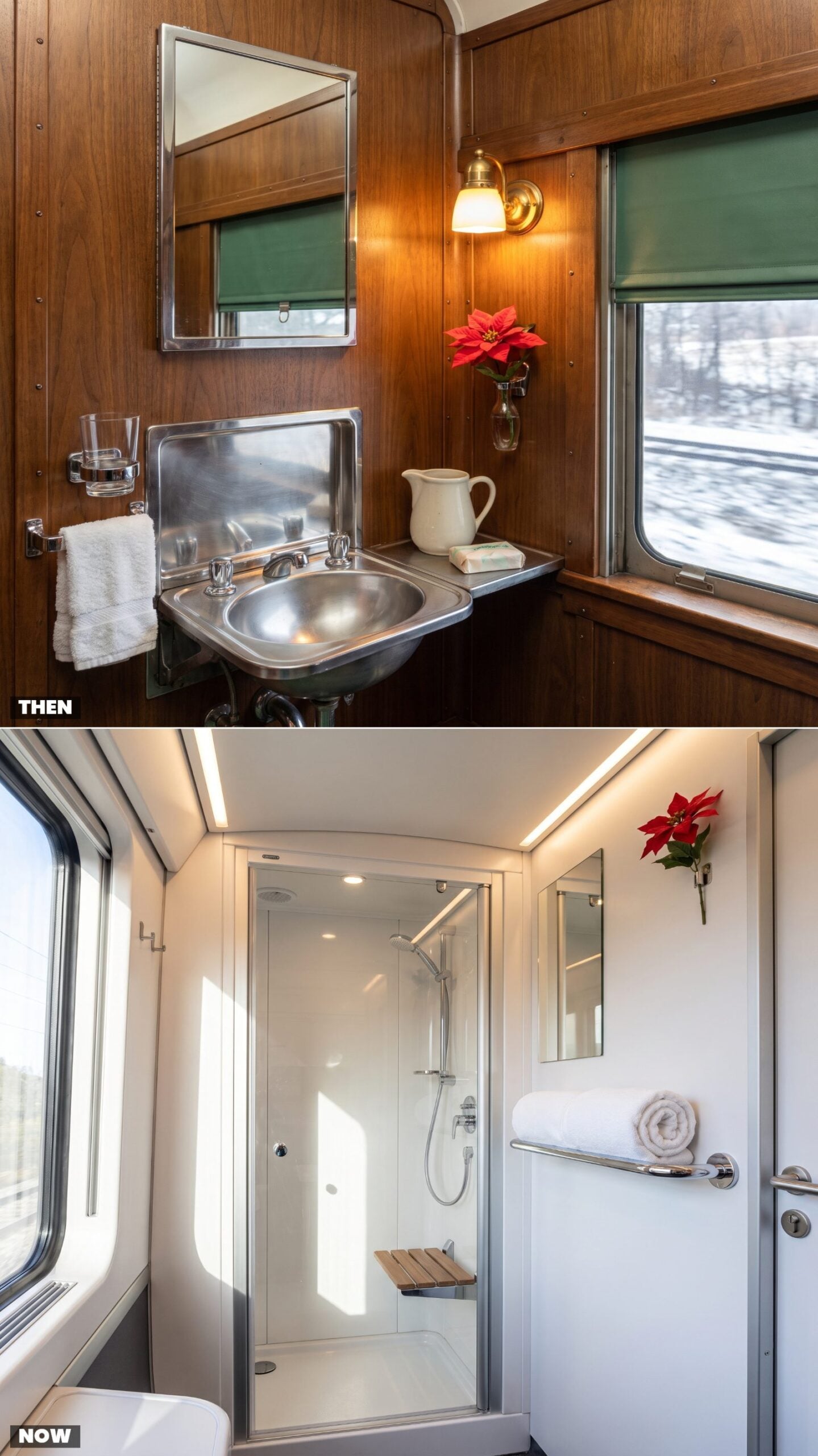
Boarding overnight in 1958 meant making peace with a sponge bath. Your cabin gave you a fold-down basin, a pitcher, a bar of soap, and a washcloth, and that was the whole toolkit. You arrived at Grandma’s on Christmas morning smelling faintly of railcar and coal smoke, and nobody thought twice about it because everybody did.
Today’s premium sleepers hand you an actual shower behind a glass door. Hot water, a fold-out seat, a towel that isn’t the size of a napkin. You step off the train in the same clothes but a whole different person. Turns out the romance of the sponge bath doesn’t survive contact with real plumbing.
38. Evening Turndown Service vs. Self-Converted Berths
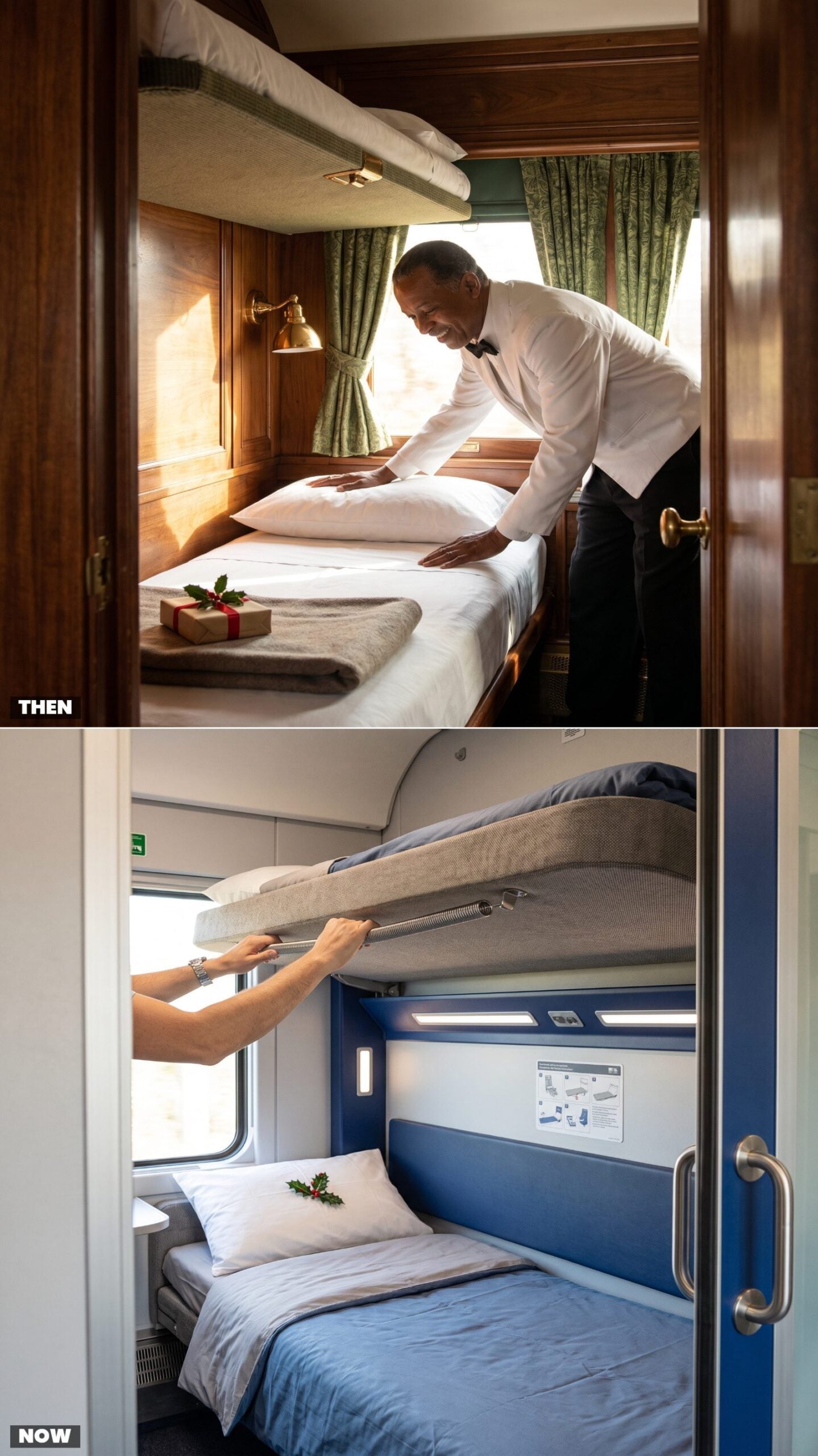
The Pullman porter turned your bed down while you were at dinner, so you came back to crisp linens, a plumped pillow, and the upper berth folded neatly into place. At Christmas he might leave a wrapped chocolate or a sprig of holly on the blanket. It felt like magic, though it was really a man who had been on his feet since dawn.
These days you convert your own berth. Pull the lever, drop the bunk, wrestle the bedding, squint at the laminated card taped to the wall. It works. It’s just you doing it, in the dark, at midnight, muttering.
37. Porter Wake-Up Calls vs. Smartphone Alarms
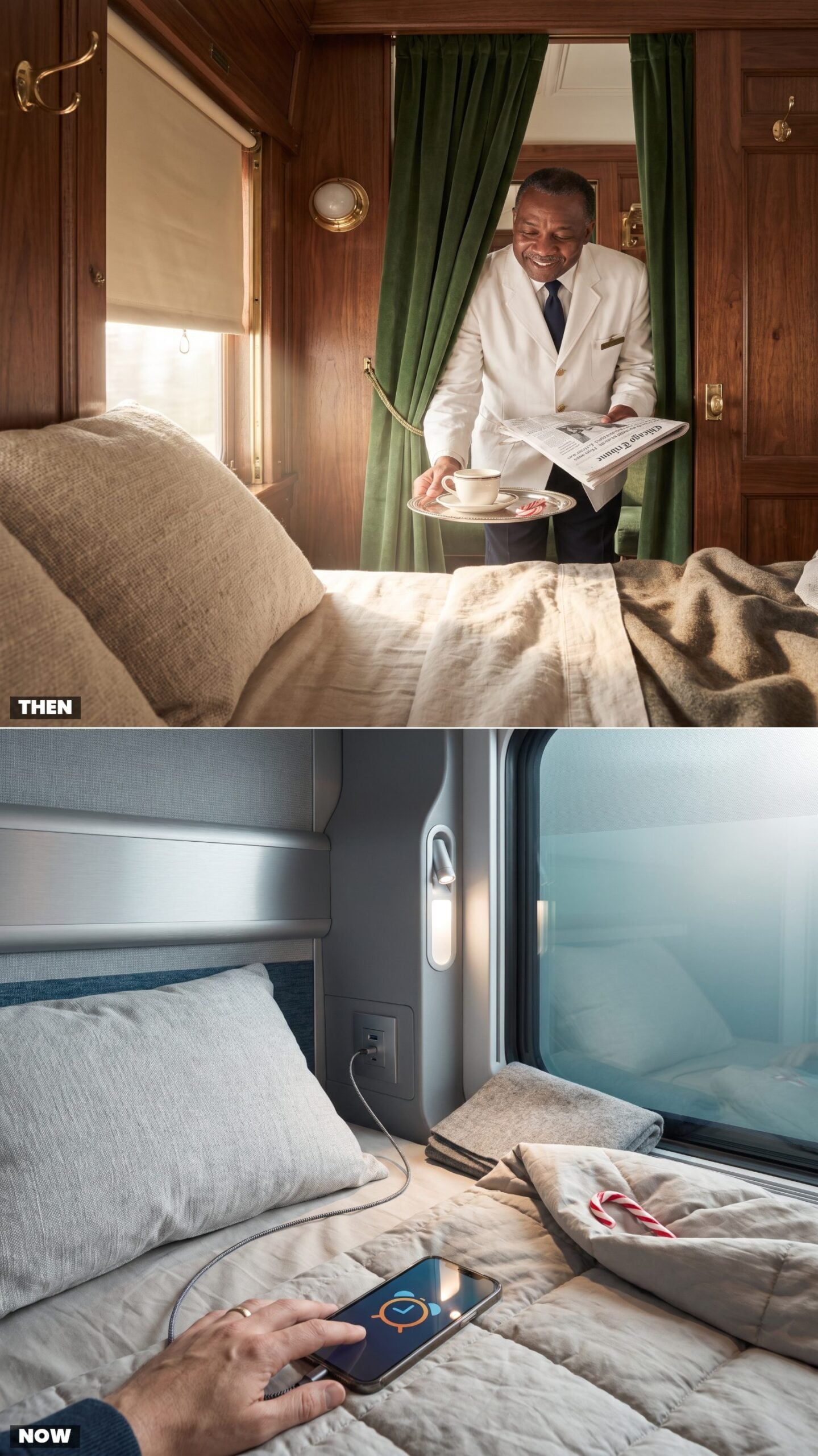
You told the porter the night before what time you wanted to rise. At that hour he’d part the curtain, murmur your name, and sometimes hand in a cup of coffee. A human being woke you up on Christmas morning, and there was a warmth in that no gadget has managed to copy.
Now your phone buzzes on the mattress at some ungodly hour, screen glaring, charging cable half-unplugged. You hit snooze twice and wake yourself. Reliable, sure. But nobody says good morning, and nobody remembers you like coffee.
36. Grand Railway Station Entrances vs. Modern Transit Hubs
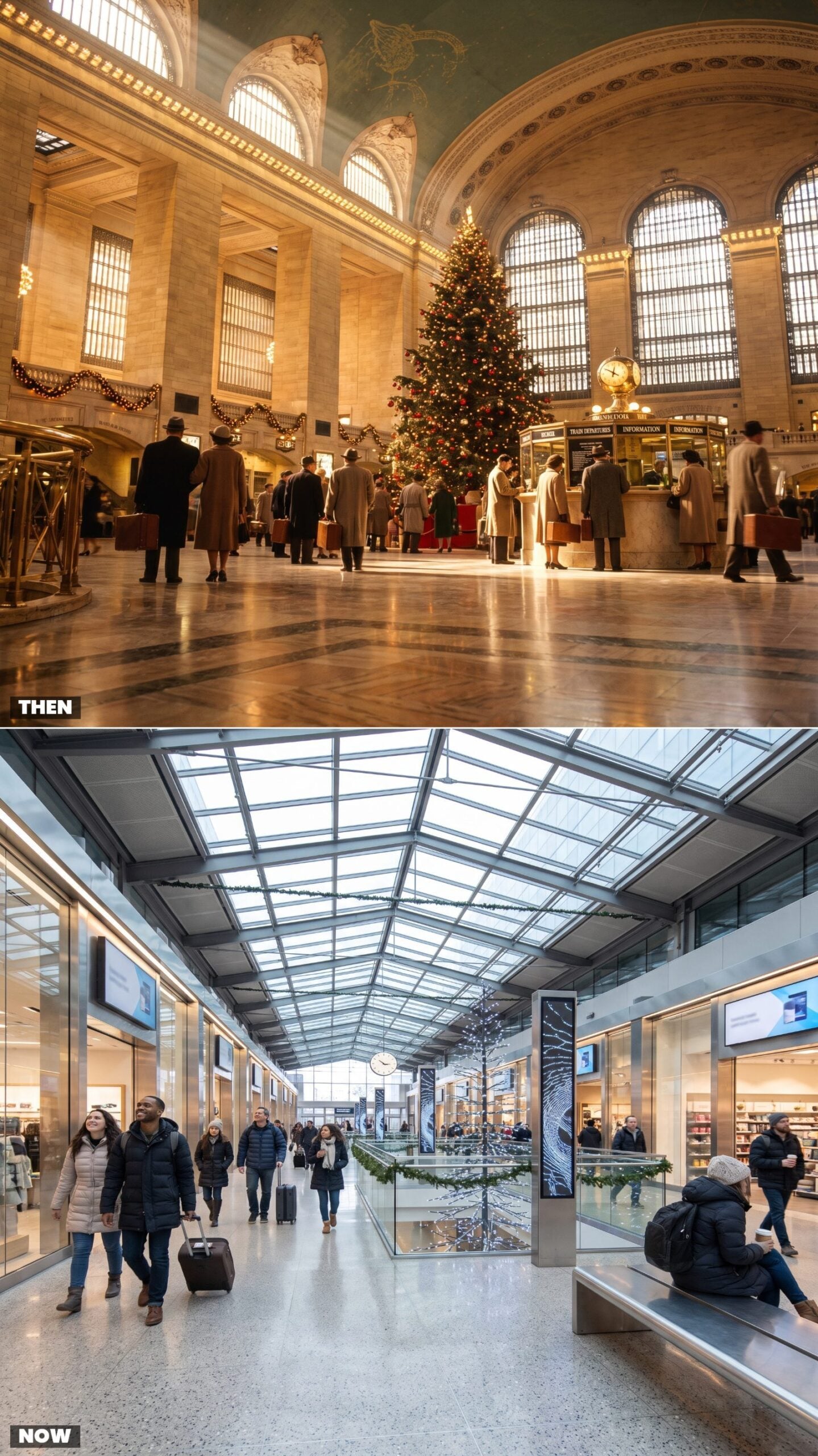
Walking into a station in 1958 felt like walking into a cathedral. Marble columns, a ceiling three stories up, daylight falling in golden shafts across the floor, and at Christmas an evergreen so tall it needed a ladder to top. The building announced that going somewhere mattered.
Modern transit hubs are glass, steel, and good sightlines. Efficient. Bright. Easy to clean. The tree is slim and lit in cool white, tasteful and forgettable. You move through faster now, but you don’t look up anymore.
The old stations were built to make you feel small in the best possible way. The new ones are built to move you along.
35. Garland-Draped Concourse Clocks vs. Digital Holiday Displays
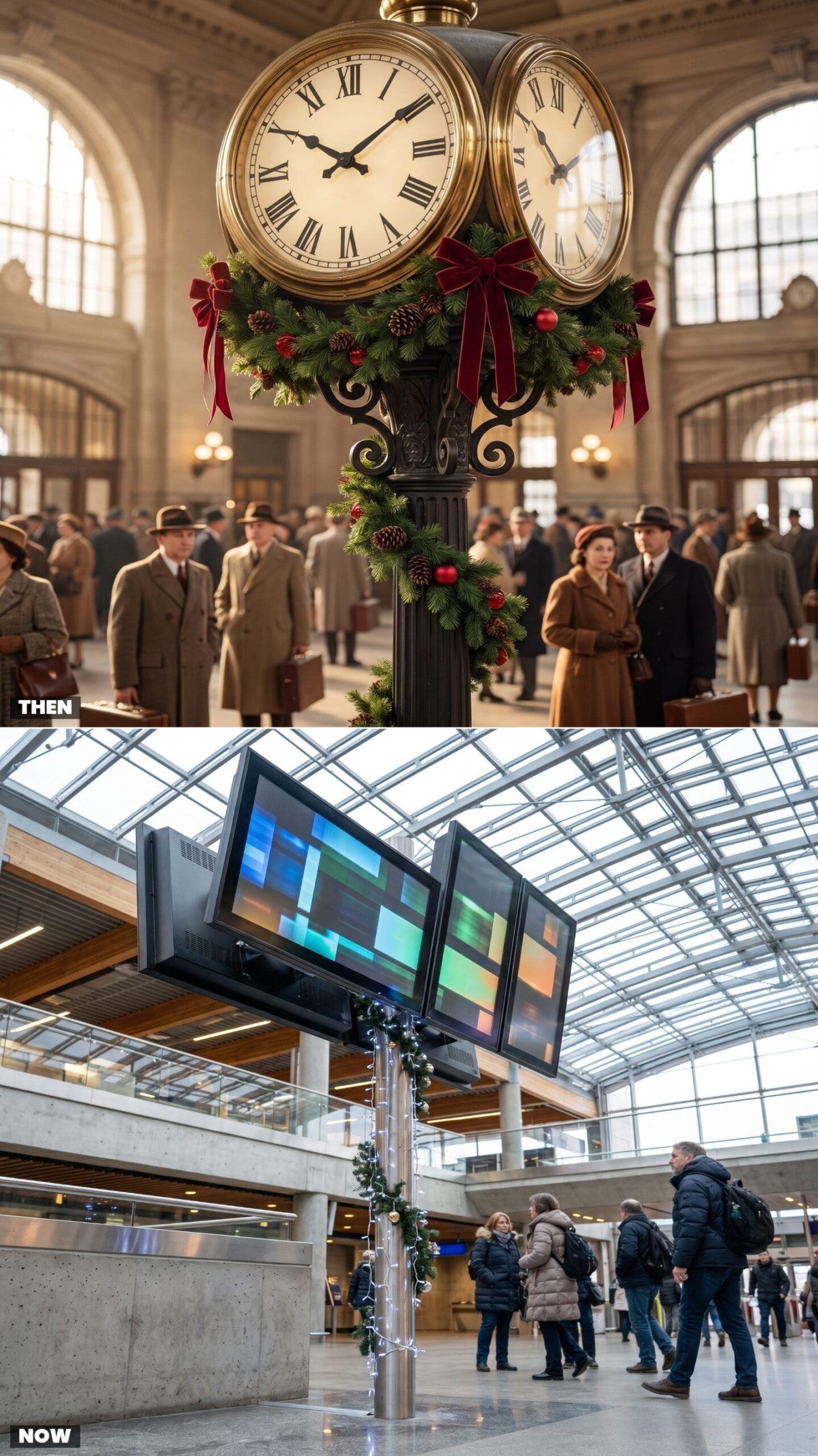
The four-faced brass clock was the beating heart of the station. You met people under it, and you checked it from clear across the hall. At Christmas someone climbed a ladder to wrap it in real evergreen, red ribbon, and pinecones, and the whole thing smelled faintly of pine when you stood beneath it.
That clock is gone now, replaced by a bank of LED screens telling you the time, the platform, the delay, and probably the weather. There’s a strand of fairy lights taped along the pole because someone in facilities felt bad about it. More information, sure. A lot less to meet under.
34. Cardboard Train Tickets vs. Mobile Boarding Passes
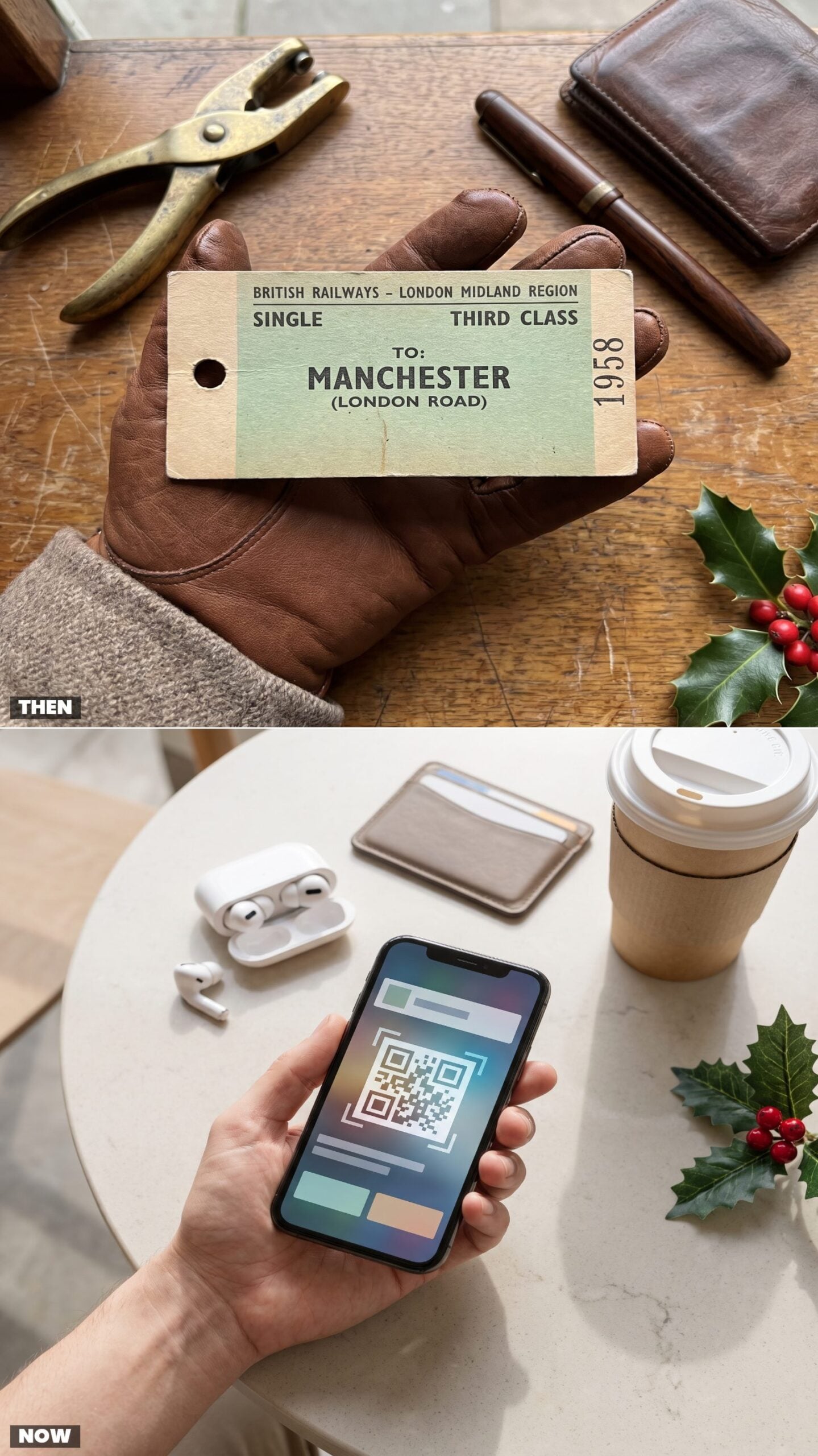
The ticket was a stiff little slab of cardboard, buff and green, printed in serif type and punched with a satisfying click by a brass tool. You kept it in your coat pocket and you could feel it there. Some folks still have theirs, tucked in a scrapbook, ink faded but legible after decades.
Now your ticket is a QR code glowing on a phone you’re praying doesn’t die before the conductor scans it. Works until it doesn’t. And nobody’s putting a screenshot in a scrapbook.
33. Flip-Board Timetables vs. Live Departure Screens
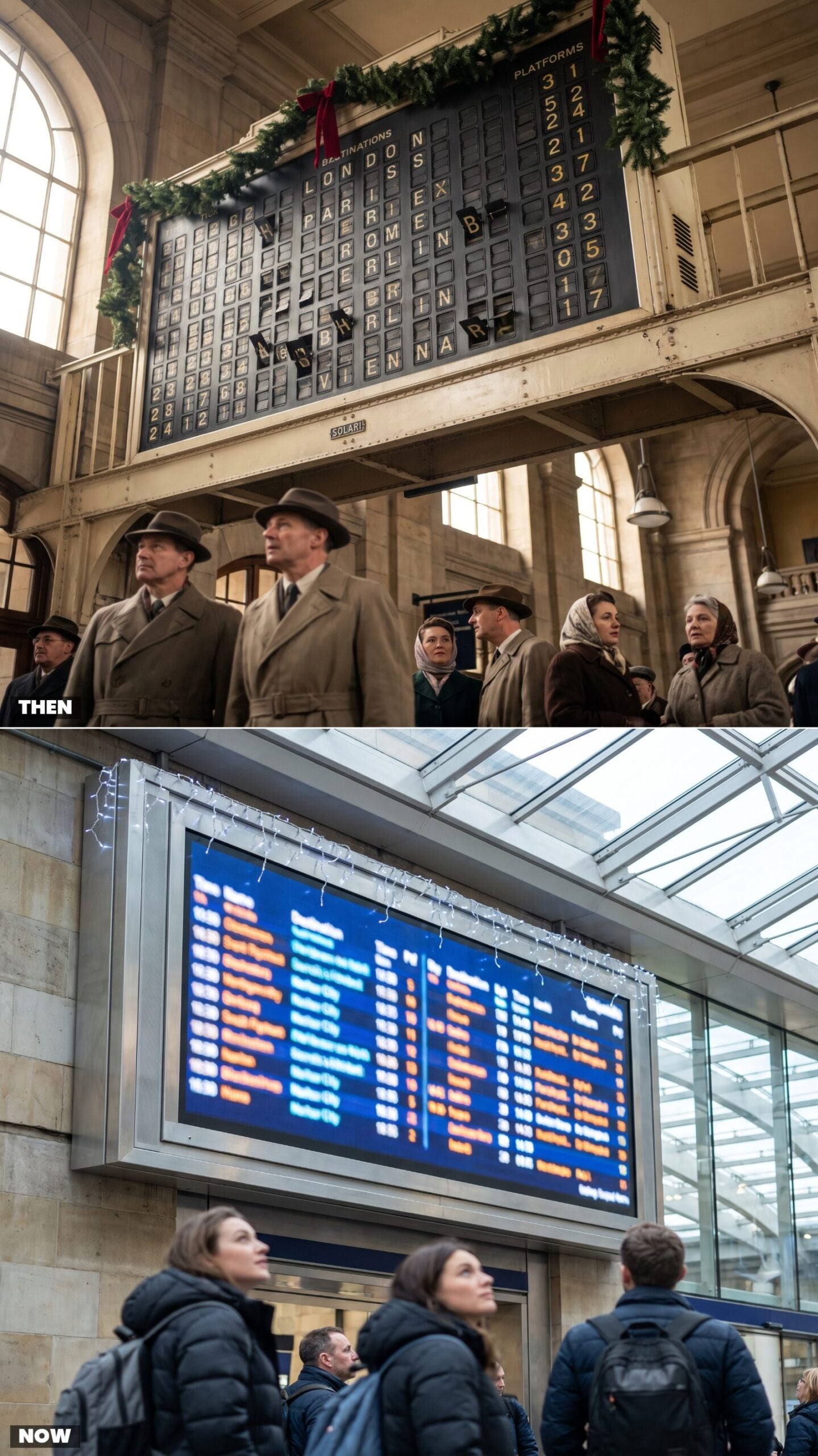
You didn’t so much read the departure board as listen to it. The split-flap tiles clattered through their alphabet in a wave, a soft mechanical shuffle that meant something had changed, and the whole concourse would glance up at once. That was the sound of a station thinking out loud.
The LED screen updates in total silence. No warning, no clatter, just a platform number that quietly changes while you’re off getting coffee. Faster and clearer, and dead quiet. Something left the room when that sound did.
32. Redcap Porters vs. Self-Service Luggage
🔥 Would you like to save this?
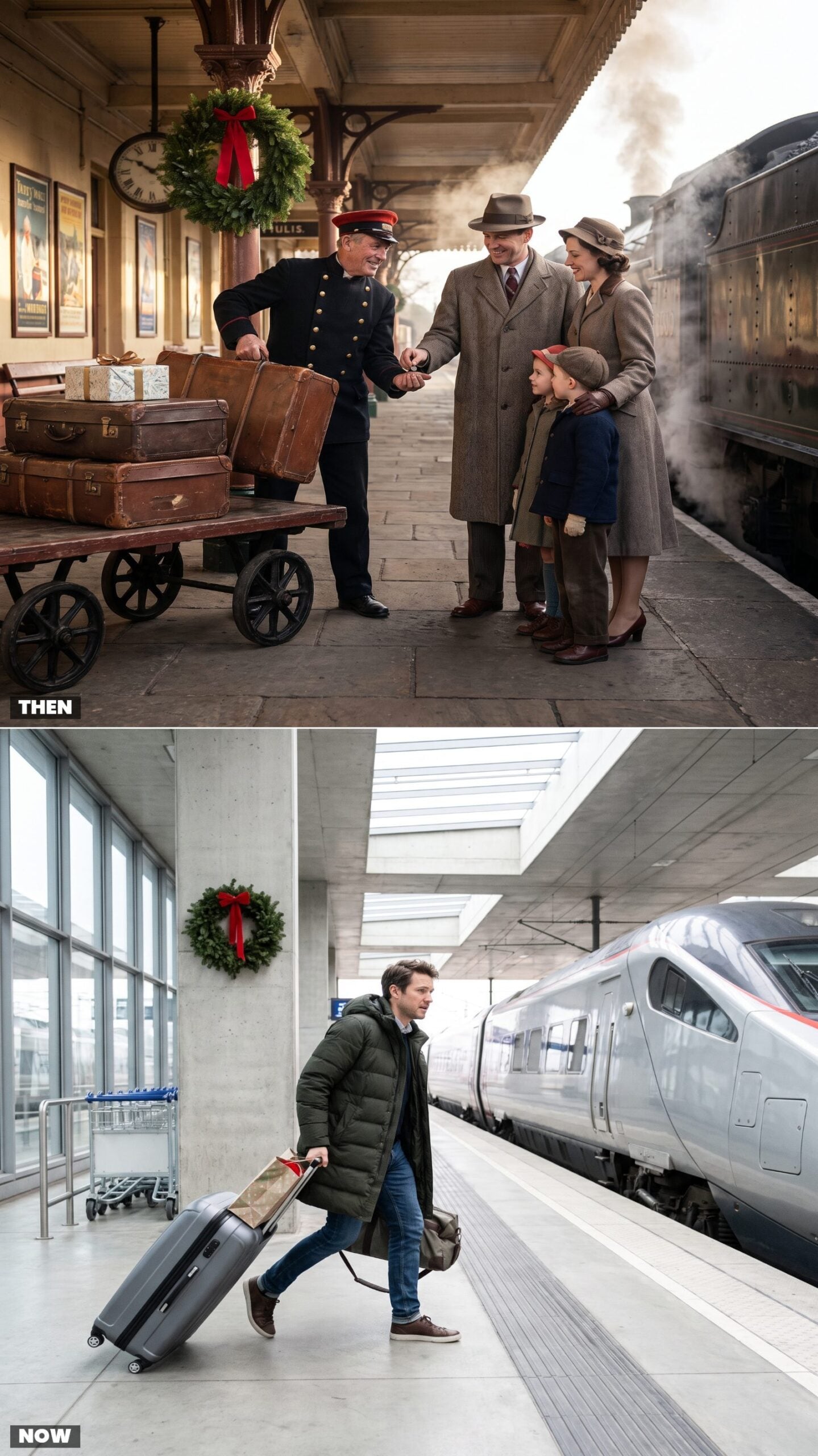
The Redcap met you the moment you stepped off the curb. He hoisted your trunks onto a wooden cart, walked you to your car, stowed everything, and expected a tip and a Merry Christmas for it. He knew the platforms better than the timetable did. For a family hauling gifts to Grandma’s, he was the difference between chaos and a smooth boarding.
Now you’re your own Redcap. You wheel one bag, drag another, wedge a gift bag under your arm, and pray the elevator’s working. Nobody carries anything for you. You’ve just gotten very good at doing three things with two hands.
31. Checked Trunks vs. Carry-On Roller Bags
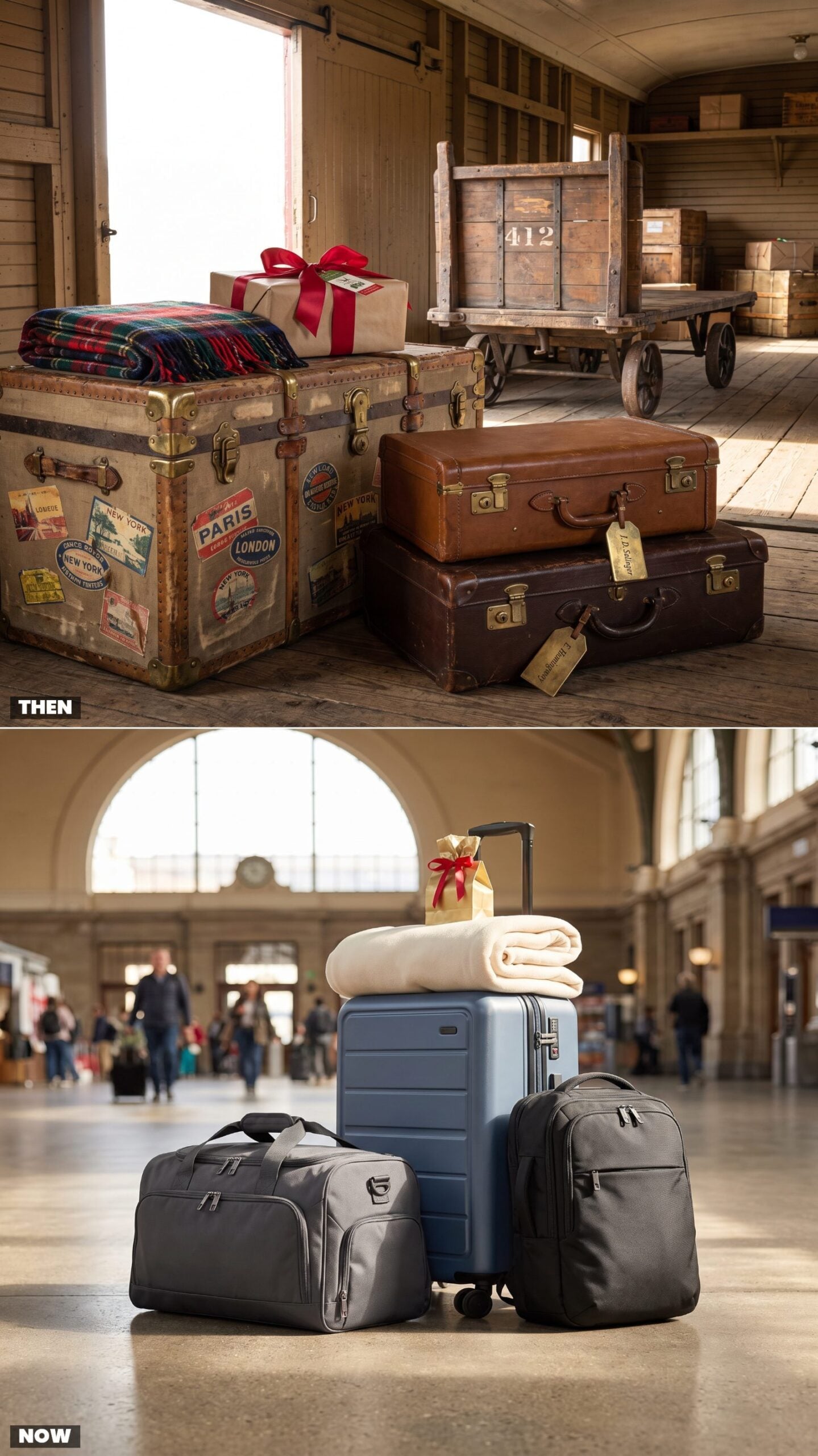
People traveled with steamer trunks in 1958 because they traveled with intention. Brass corners, leather straps, a little drawer inside for your gloves, and a stack of labels from wherever it had already been. You didn’t lift it, and you didn’t need to. You handed it over and picked it up at the other end.
Everything now fits in a hard-shell spinner you drag behind you down the platform, wheels rattling, handle set at exactly the wrong height. Lighter, faster, yours to manage entirely. The trunk was a piece of furniture that happened to travel. The roller bag is just a chore with wheels.
30. Open Platforms vs. Climate-Controlled Boarding Lounges
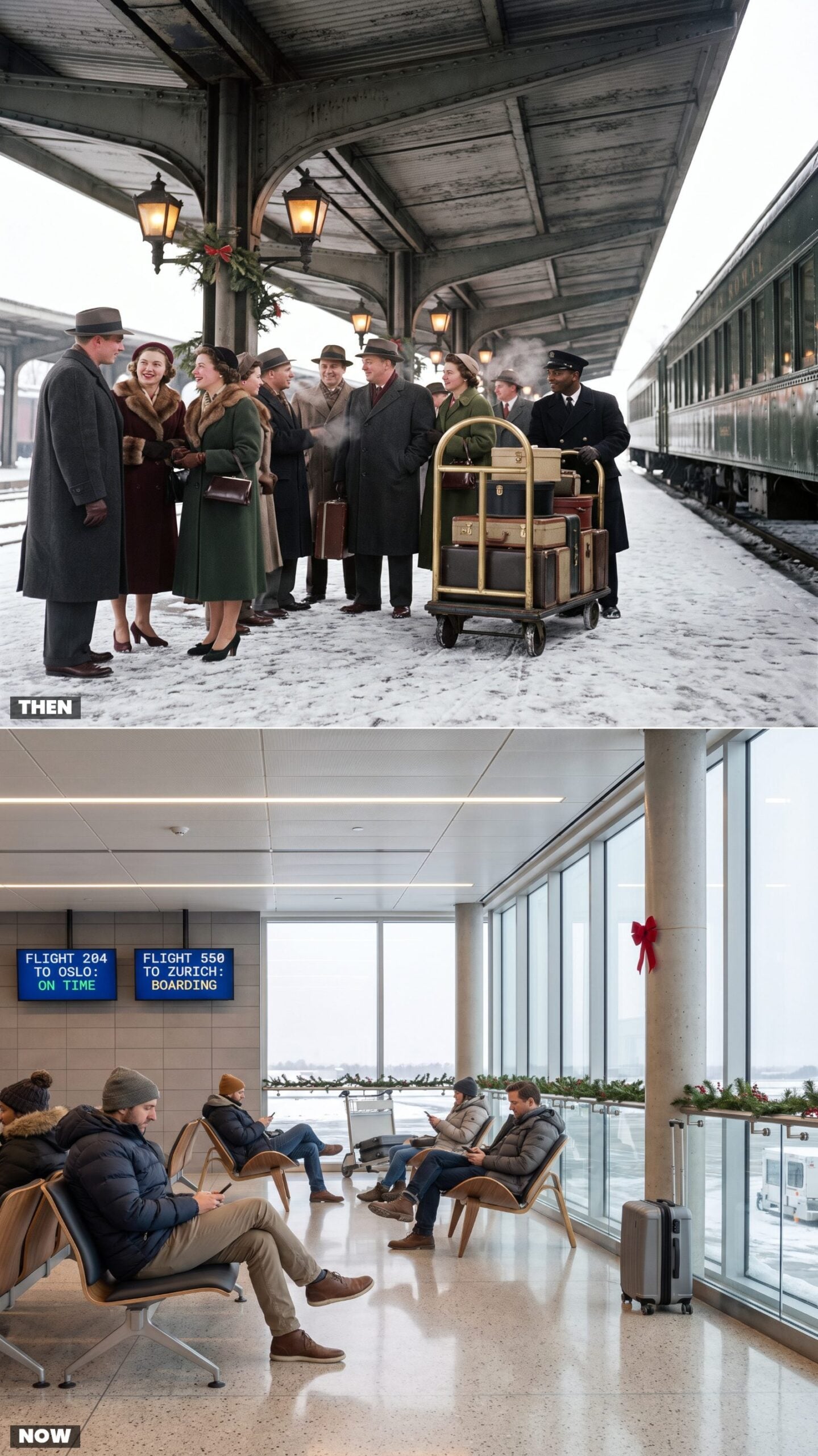
You waited in the weather in 1958. Platforms were open to the sky, and December did not care about your travel plans. You stamped your feet, tucked your chin into a wool collar, and watched your breath hang in the lamplight while the porter wrestled trunks onto a brass cart. Cold was part of the deal, and so was the drama of the train pulling in through the steam and snow.
Now you wait behind glass. Heated lounges, cushioned seats, a departure board that updates itself, a coffee kiosk two steps away. Warmer, quieter, honestly a little less cinematic. Something got lost when the shivering left.
29. Diesel Streamliners vs. Electric High-Speed Trains
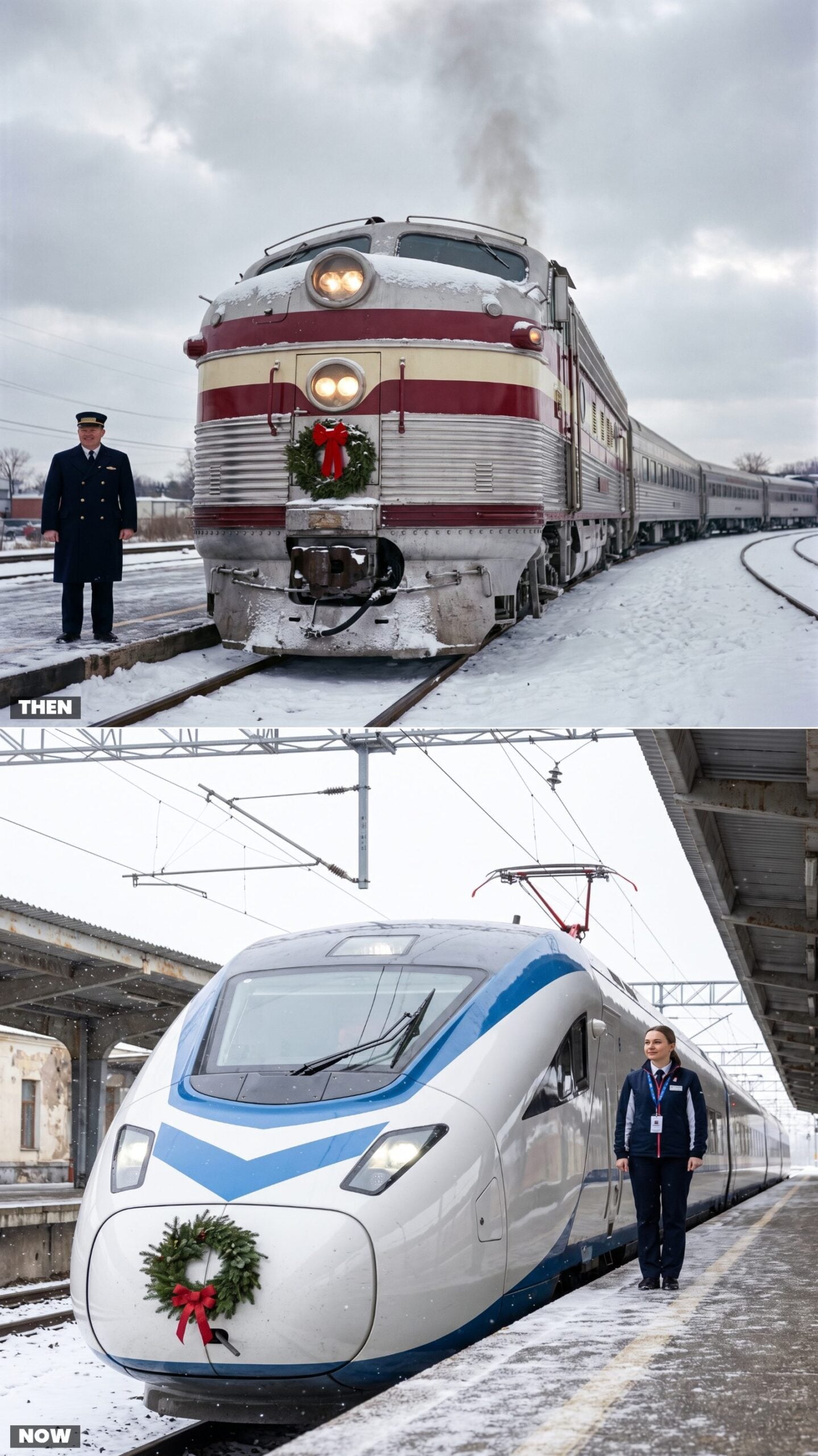
The 1958 streamliner announced itself. Fluted stainless steel, a nose built for speed it rarely reached, twin headlamps burning through the snow, diesel exhaust curling off the roof like the thing was breathing. You heard it before you saw it — a low growl, then that great chrome face rounding the bend.
Today’s high-speed electric glides in almost silent, a pantograph humming against the wire, all smooth composite and flush lights. Faster by a mile. It just doesn’t clear its throat first. The old ones had a pulse you could feel through the platform.
28. Portable Boarding Stools vs. Level Boarding Platforms
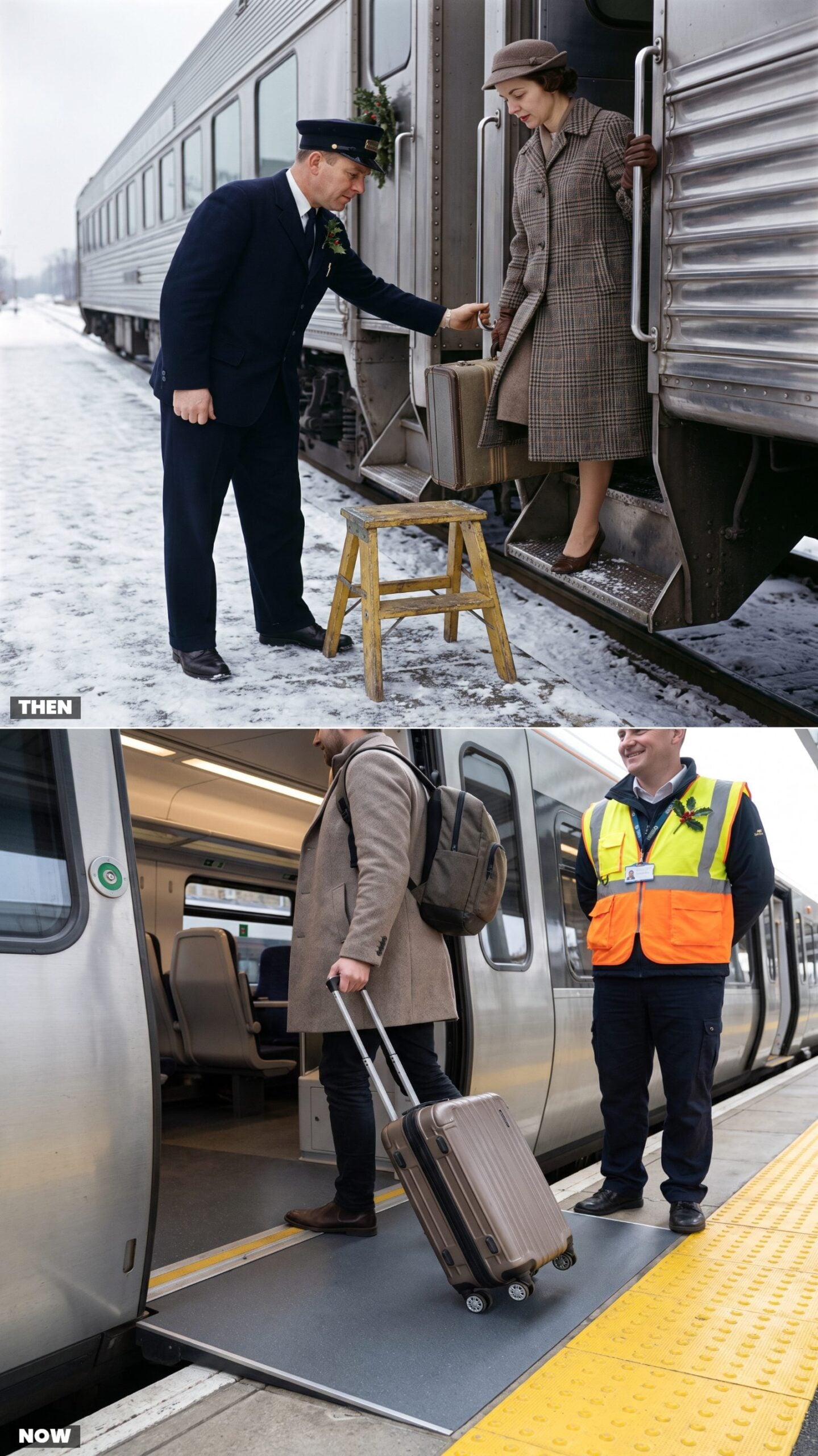
There was a little yellow wooden stool. The conductor carried it, dropped it in the snow at the base of those tall car steps, and offered a gloved hand, and you stepped down like you were exiting a stagecoach. Every boarding had a small ceremony to it, a moment of contact between passenger and crew.
Level platforms killed the stool. Now the train floor meets the platform flat, you roll your bag straight on, and nobody offers a hand because nobody needs to. Cleaner. A touch lonelier.
27. Drafty Vestibules vs. Sealed Automatic Doors
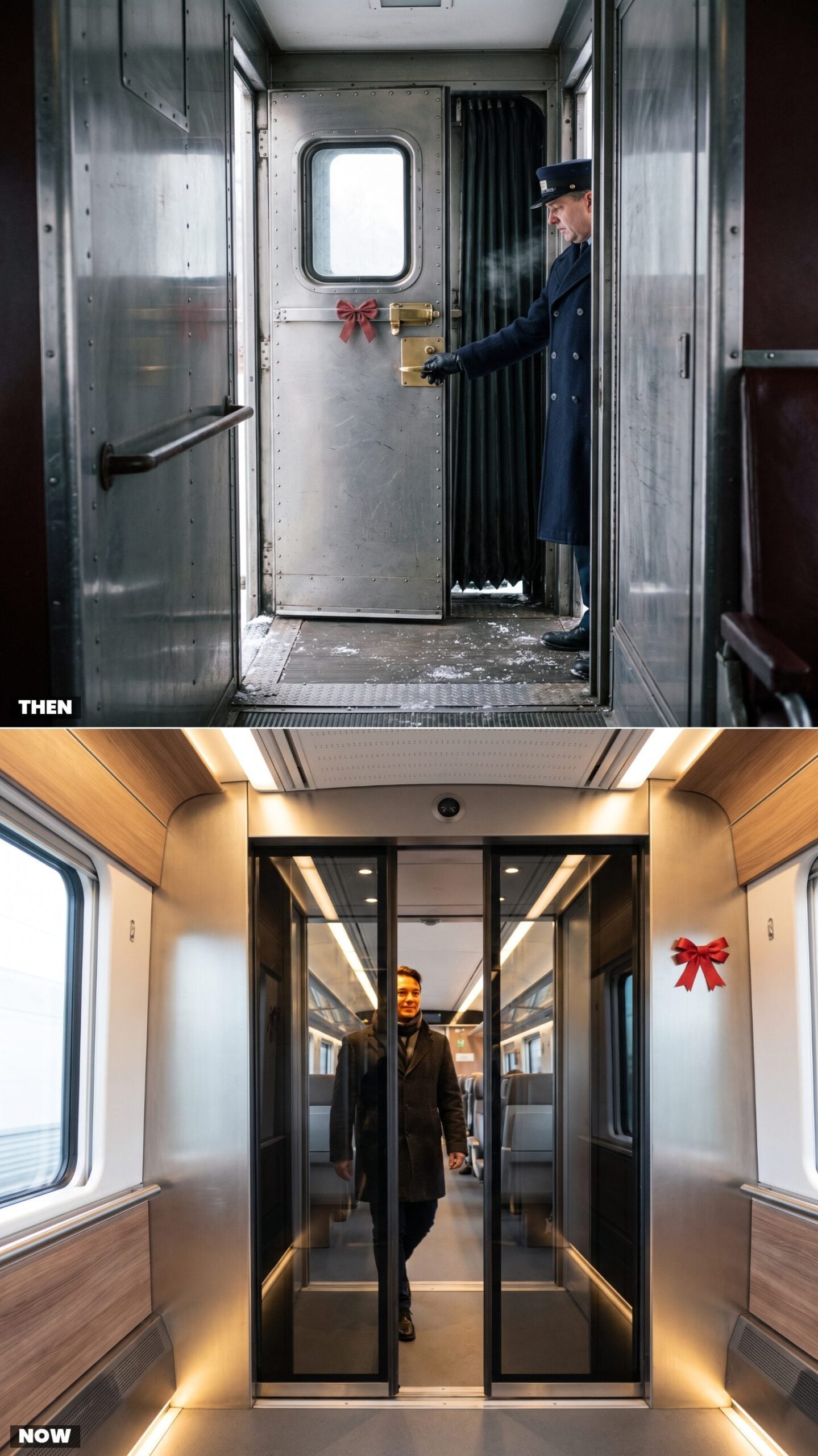
The vestibule was the coldest spot on the train. You’d cross between cars over rattling steel plates, wind whistling up through the diaphragm, snow finding the gaps, a heavy hinged door you shouldered open with both hands. Kids loved it. Parents hurried them through. It felt like a border crossing between two warm worlds.
Modern gangways seal tight. Glass doors slide apart when they sense you, the floor is level and warm, no draft, no rattle, and you barely notice you’ve changed cars. Which is the point, and also a little sad.
26. Reclining Coach Chairs vs. Ergonomic Modern Seats
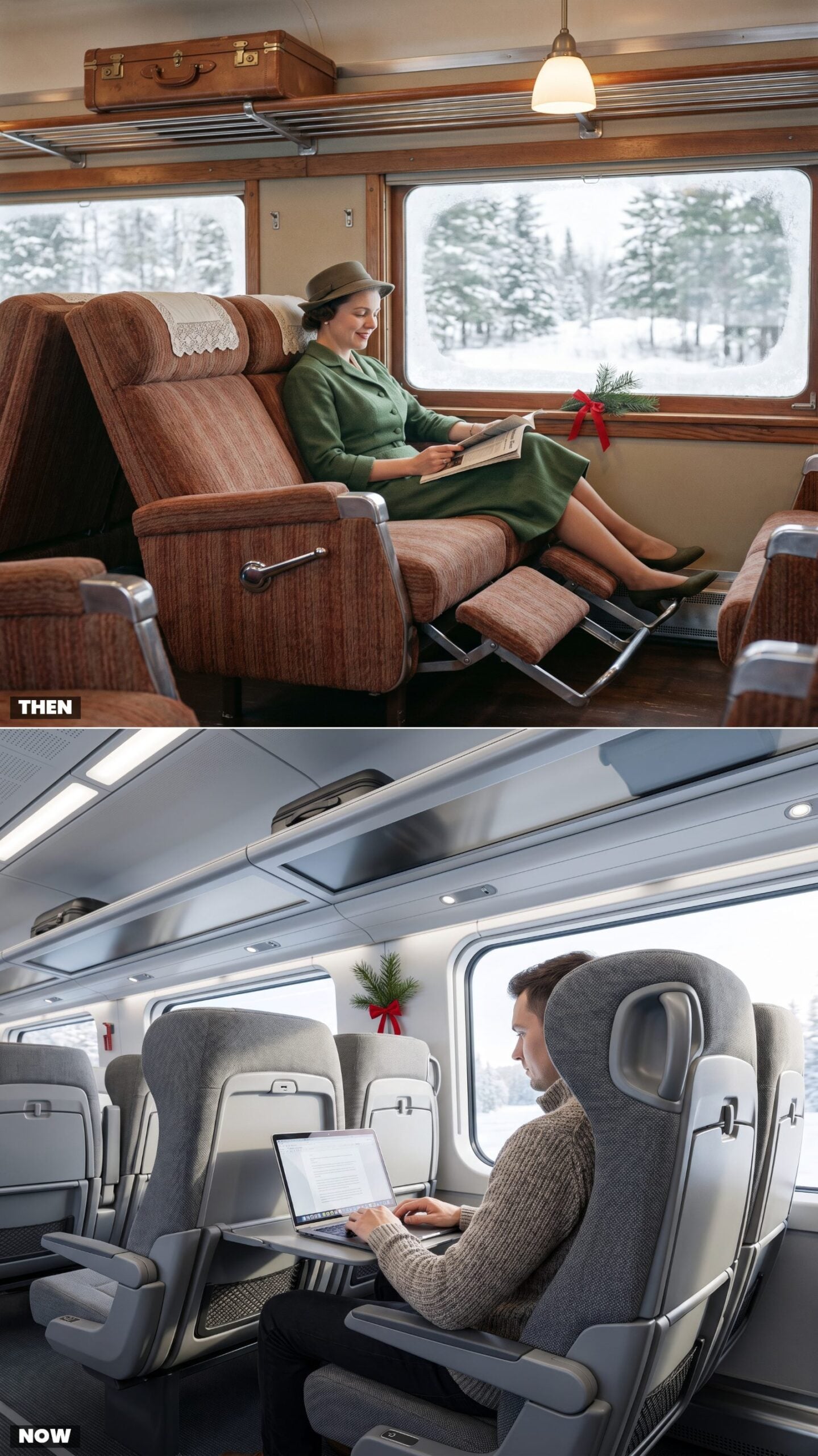
Those old coach chairs were built like club furniture. Deep mohair cushions, a chrome lever that tipped you back with a satisfying clunk, a footrest that swung up, a little lace doily pinned to the headrest so the next person didn’t inherit your hair oil. You sank in and stayed sunk for six hours without thinking twice about it.
The modern seat is engineered instead of upholstered — firm foam, USB port, reading light, a tray for your laptop. Better for your spine, apparently. It never quite hugs you back.
25. Face-to-Face Seating Bays vs. Airline-Style Rows
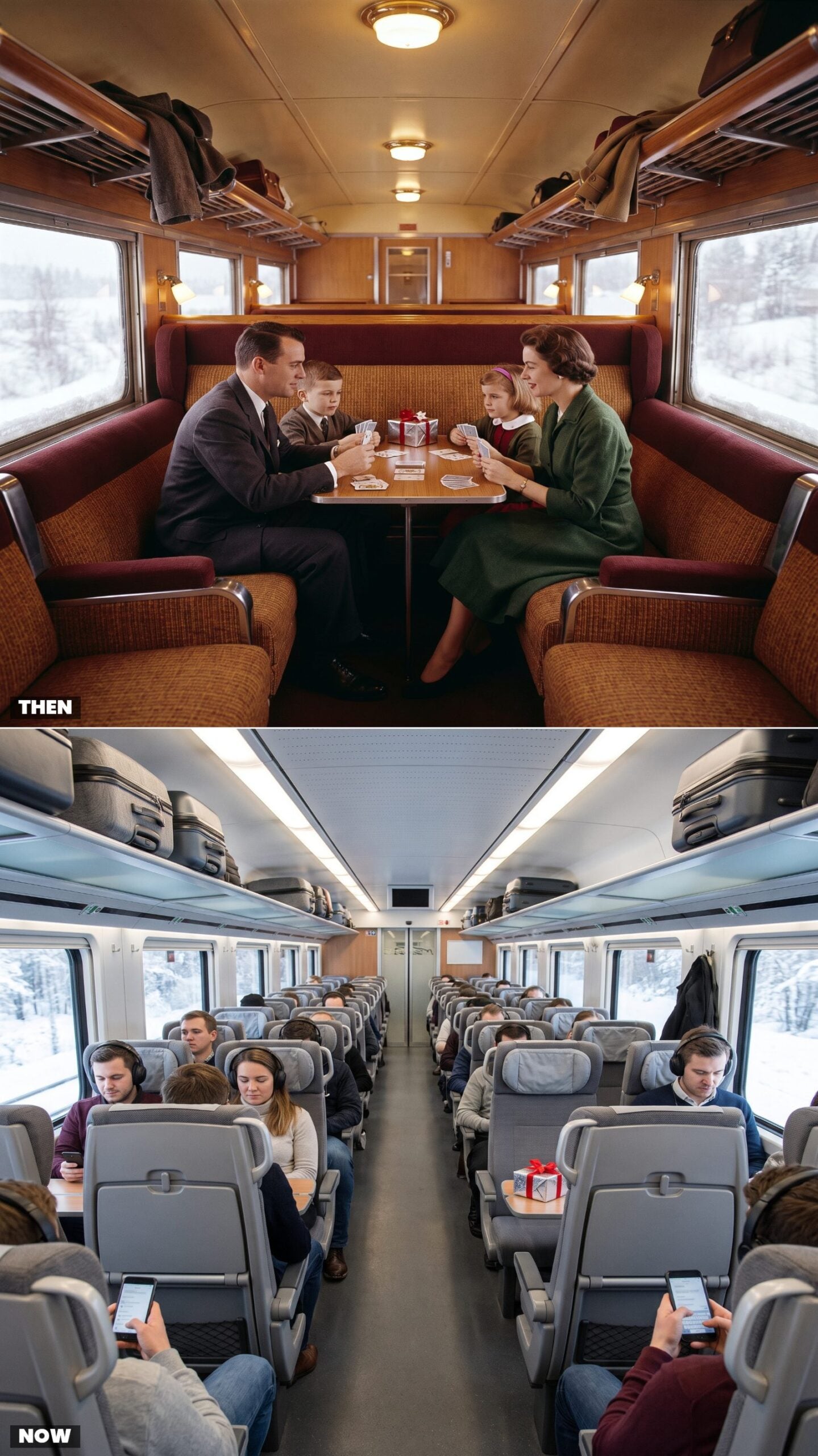
You traveled facing your people in 1958. Four seats around a shared table, knees nearly touching, a deck of cards or a thermos between you, the whole car humming with conversation because the layout forced you to look at each other. That was where the trip actually happened — not out the window, across the table.
Airline-style rows changed the math. Everyone faces the same way now, headphones in, staring at seatbacks. Efficient, and you can pack in more paying passengers. You just can’t play gin rummy with the back of a stranger’s head.
The old bays sold you a conversation. The new rows sell you a headcount.
24. Generous Coach Legroom vs. Space-Efficient Cabins
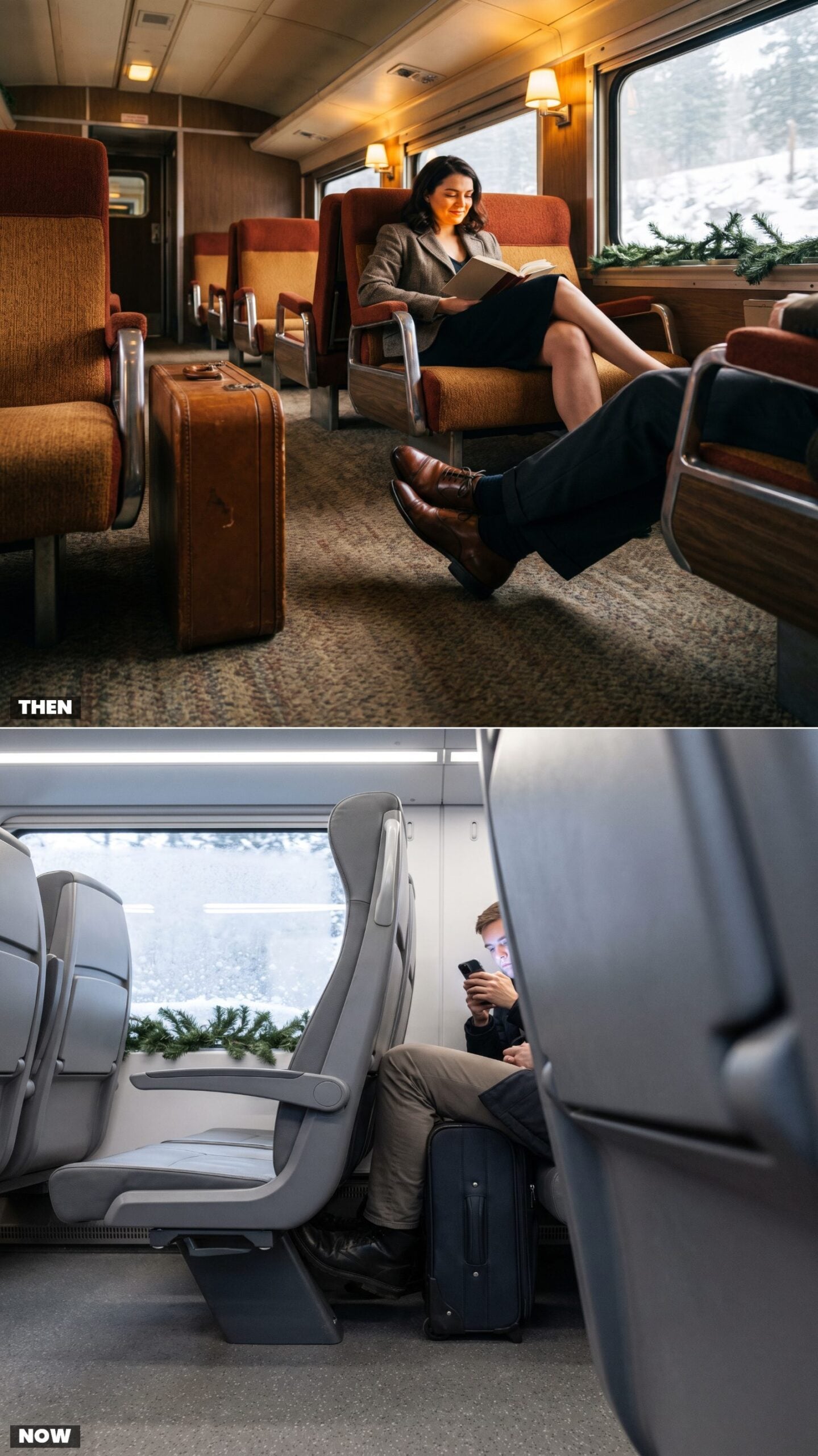
Legroom used to be an afterthought because there was so much of it. You stretched your legs out full length between the rows, crossed your ankles, parked a suitcase upright beside you, and still had room to spare. Trains weren’t optimized. They were roomy because roomy was the standard and nobody had learned to count seats yet.
Then the accountants got involved. Rows crept closer, seatbacks got thinner, and your knees learned the geography of the seat in front. More passengers per car, fewer inches per passenger.
23. Picture Windows vs. Panoramic Treated Glass
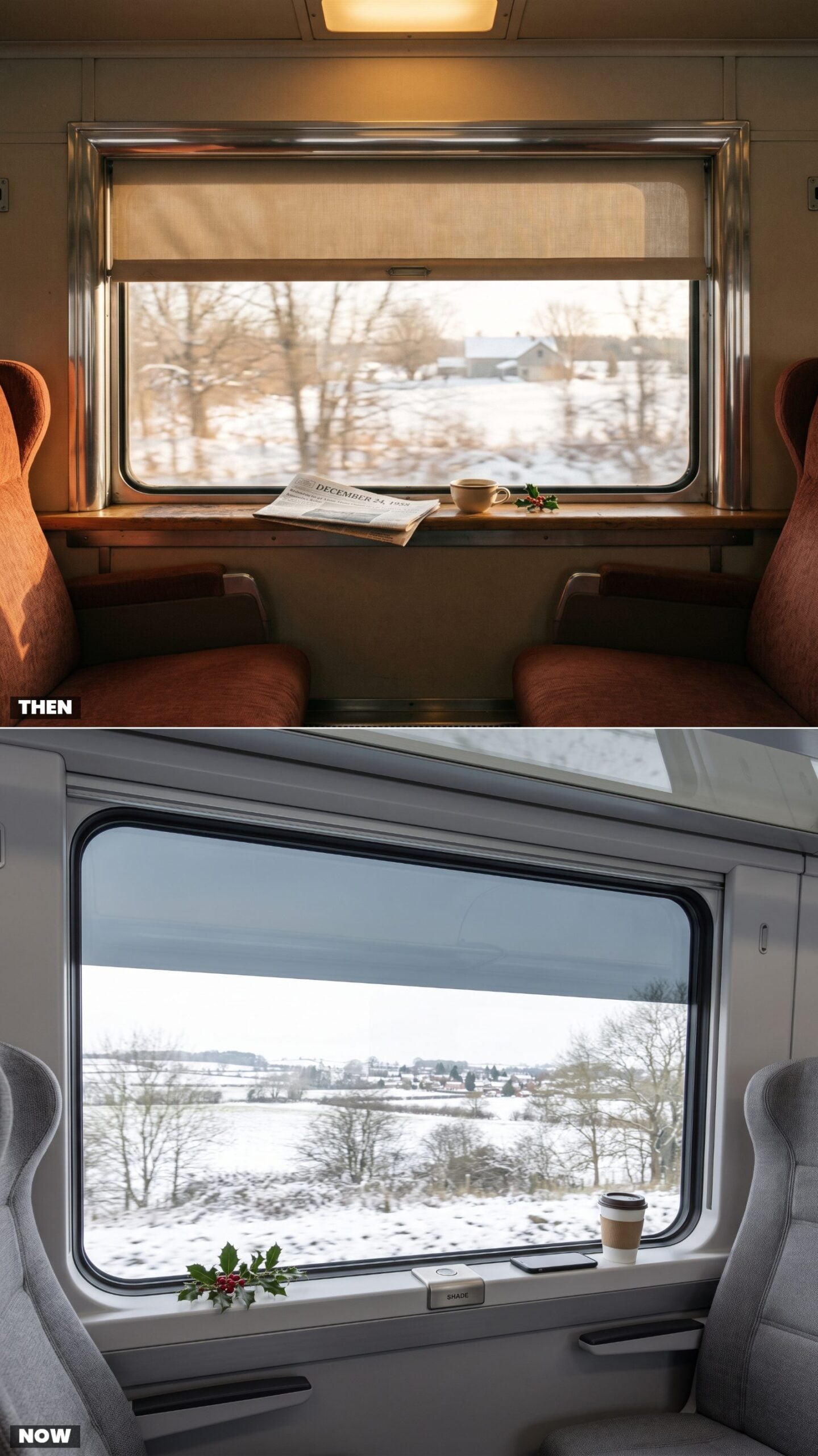
The picture window earned its name. Big rectangle of clear single-pane glass, a chrome frame, a fabric shade you tugged down against the low winter sun, a sill wide enough for your coffee and the newspaper both. The world outside came in raw — a little glare, a little draft near the seal, and a countryside that felt close enough to touch.
Modern panes are taller, tinted, double-glazed, and quiet, with a button that dims the shade for you. Technically clearer. It also feels one degree removed, like watching winter on a screen instead of through glass.
22. Steam Heat vs. Digital Climate Control
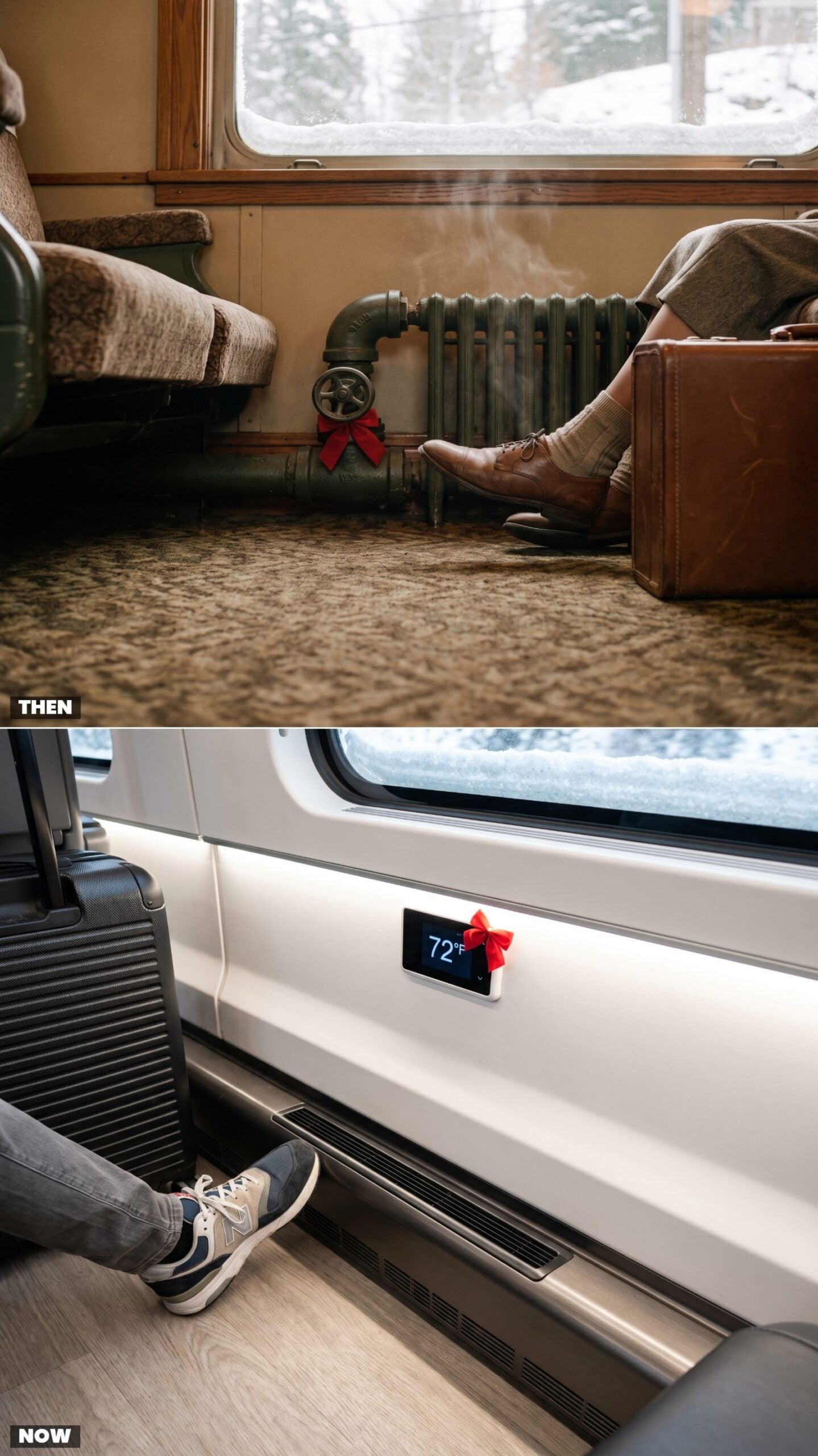
Steam heat had personality, and the personality was inconsistent. A cast-iron pipe ran the length of the car, hissing and ticking as it warmed, and you learned which seat sat closest to it. That spot was gold on a December run. Two rows down, you kept your coat on. Nobody controlled it — you just found the warm spot and defended it.
Now a digital panel holds the whole car at a steady number and a vent breathes it out evenly. Fair to everyone. Also, no more warm pipe to press your cold feet against while the snow slid past.
21. Frosted Glass Light Fixtures vs. LED Illumination
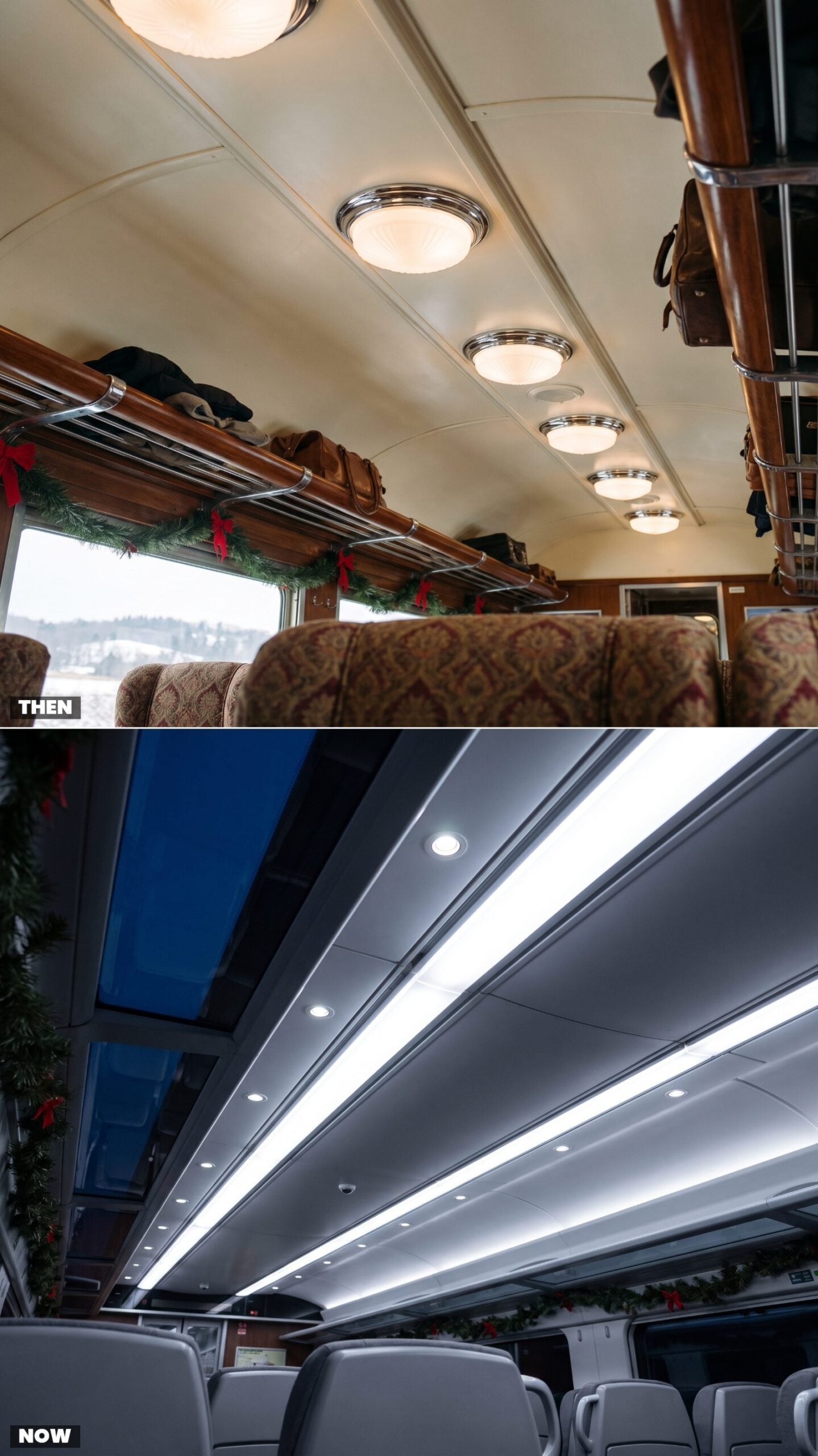
Look up in a 1958 coach and you’d see rows of frosted milk-glass shades in chrome mounts, each one throwing a soft amber pool of light down the aisle. They buzzed a little. They flickered when the current dipped between stations. The whole car glowed the color of a lamp-lit living room, which made a night run feel like sitting up late somewhere safe.
LED strips took over — bright, even, cool white, no flicker, no buzz, and no shadows to soften the mood. You can read the fine print now. The car just doesn’t feel like evening anymore.
20. Open Overhead Racks vs. Enclosed Luggage Storage
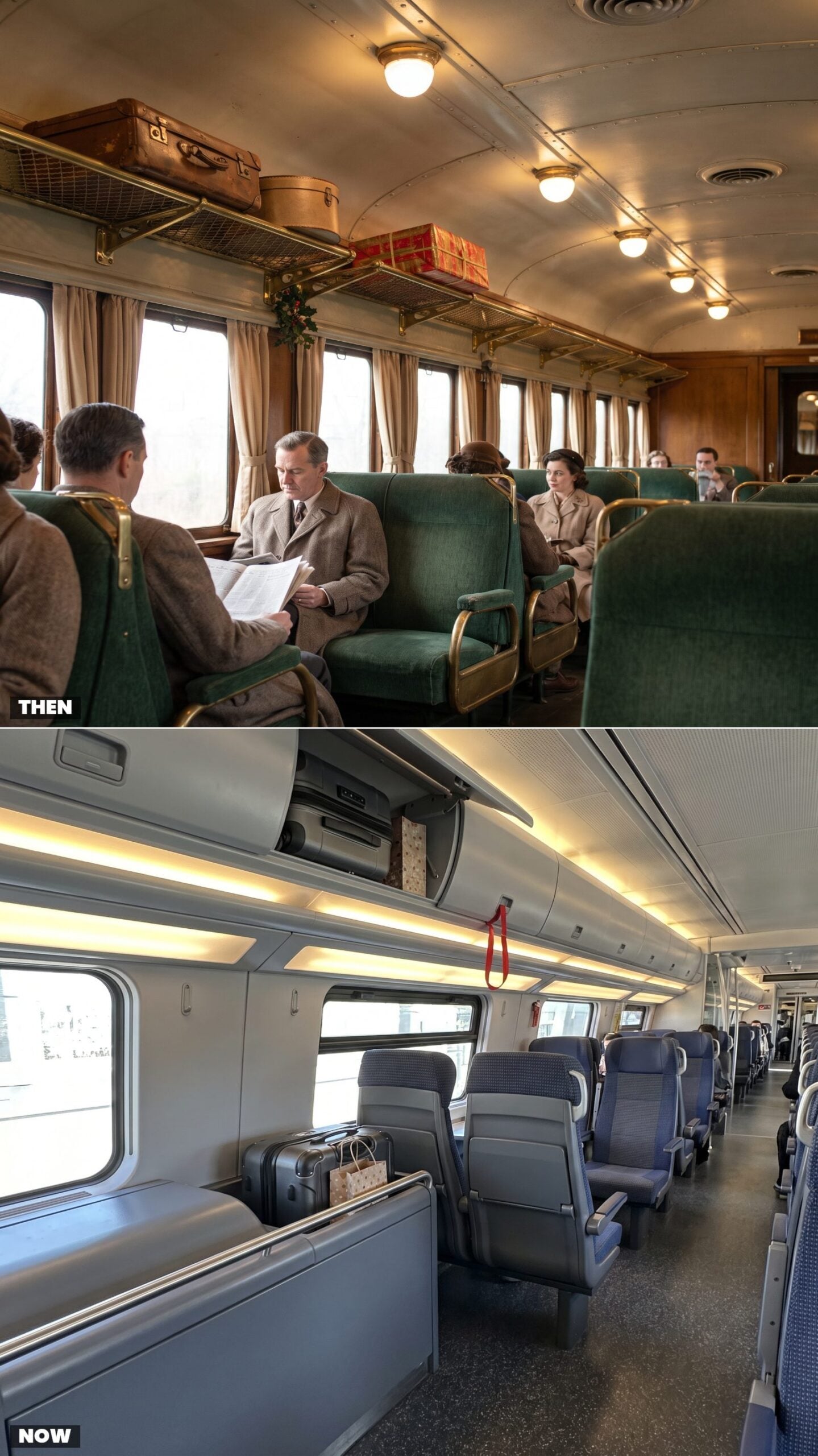
In 1958, your suitcase rode in plain sight, up on open brass-and-mesh racks where a wrapped present balanced next to a hatbox, held there by string and good manners. You could glance up mid-trip and see your things.
Now the bins have doors. Molded gray plastic, hinged, lit from beneath with a cool LED line, and your gifts vanish behind a latch the second you board. Safer, tidier, quieter. But nobody leans back and admires a closed bin the way they once eyed a ribbon-tied parcel riding above the seats.
19. Families Sharing a Coach Bay vs. Reserved Family Zones
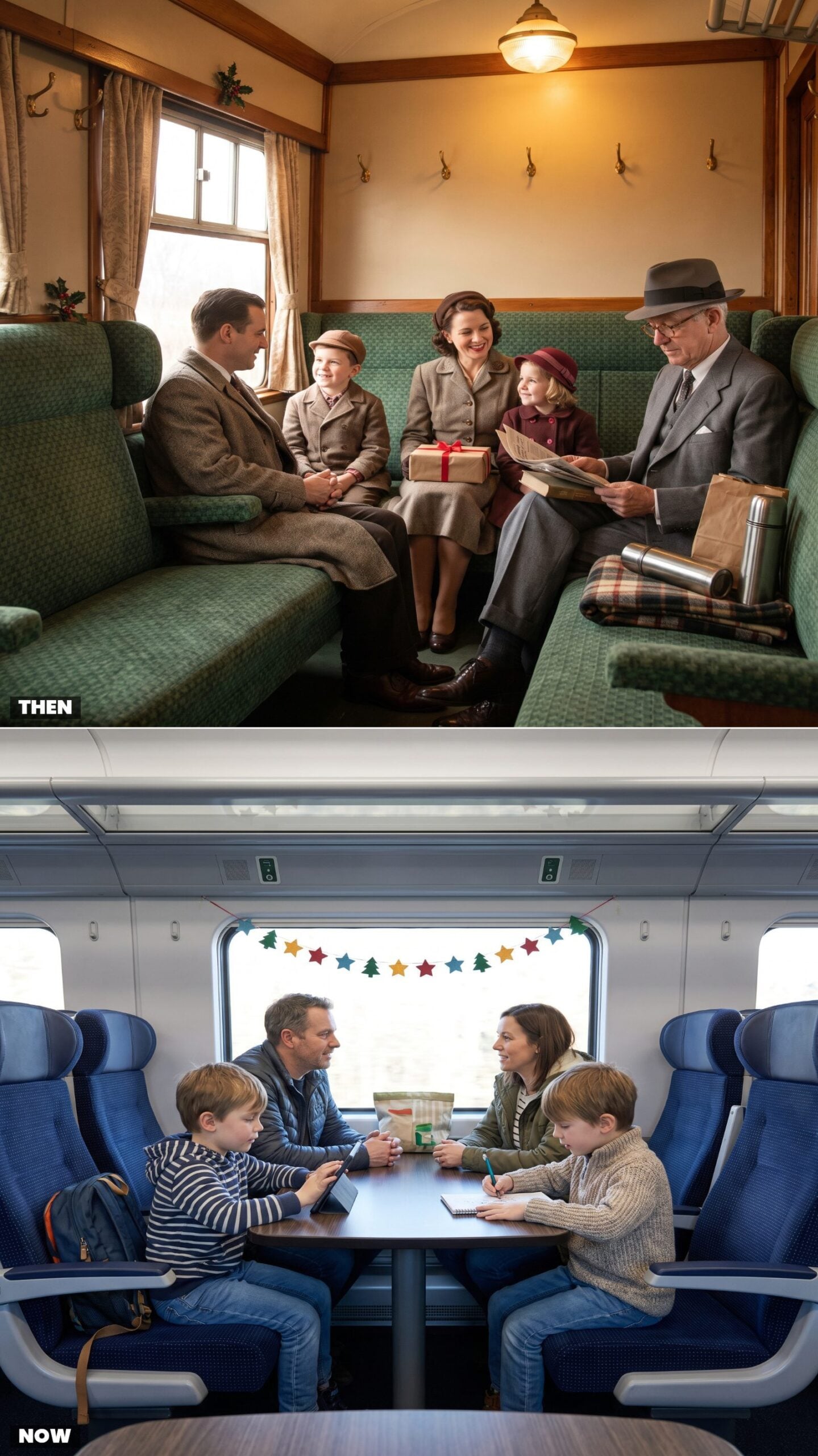
A coach bay in 1958 belonged to whoever sat in it, together. Your family took two facing benches, and if a fourth seat stayed empty, a stranger in a fedora filled it and shared your thermos-warmed silence for two hundred miles. Nobody found this strange.
Today the bay is yours alone. Reserved family zones, a table between the seats, a quiet understanding that this pocket of the car isn’t for outsiders. Kids get their tablets, parents get their coffee, and the man in the fedora is gone. More privacy, less accidental company. And I’ll admit I miss the accidental company a little.
18. Club Lounges vs. Multipurpose Social Cars
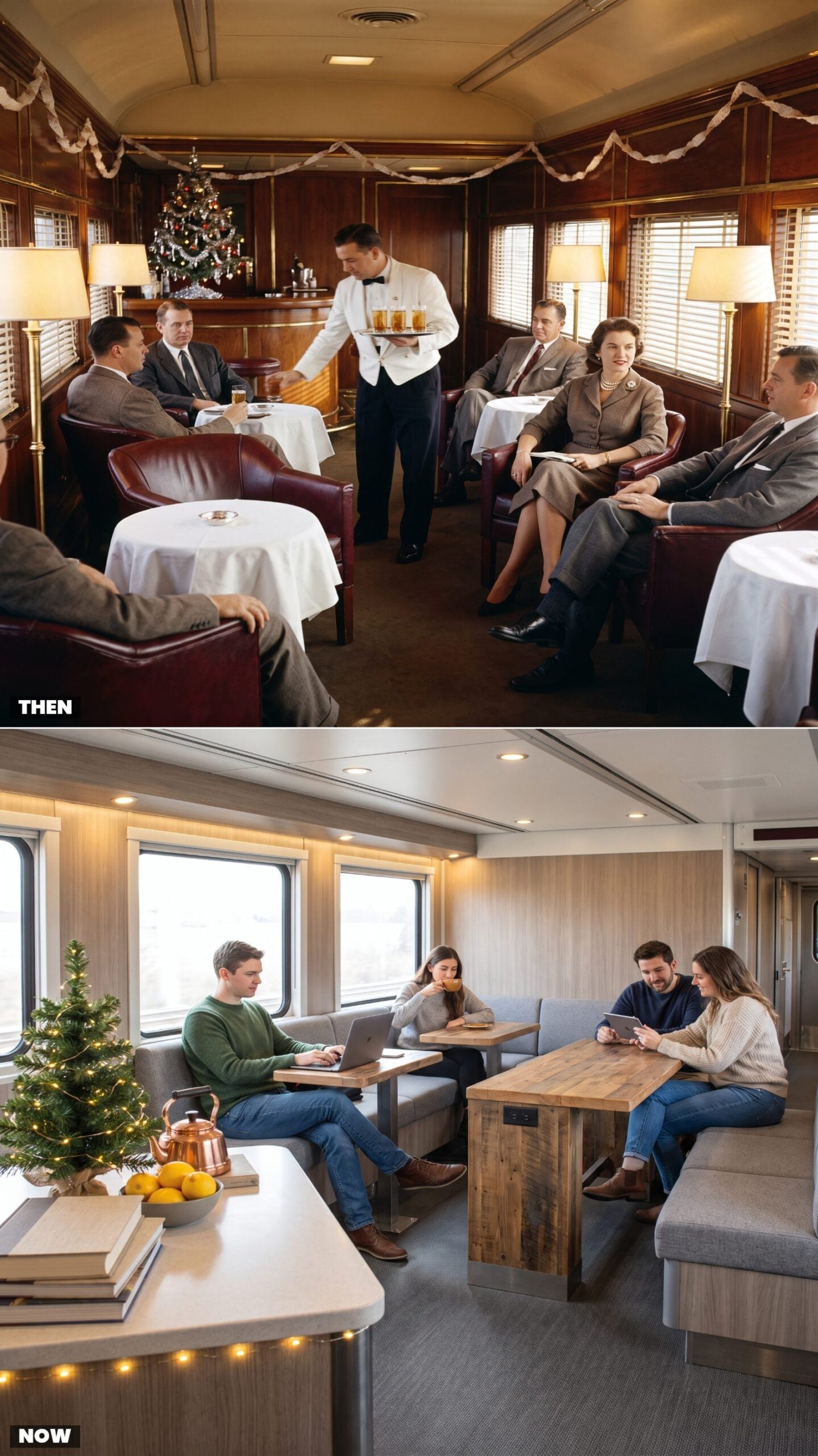
The club lounge of 1958 was a room that dressed for the occasion. Oxblood leather chairs, brass lamps throwing warm light onto white linen, a steward in a white jacket circling with highballs. You went there to be seen having a drink, and the car knew it.
The modern social car does five jobs at once. Modular banquettes, laptop outlets, a self-serve snack counter, communal tables where a business call sits three feet from a family sharing pretzels. It works hard. It just doesn’t glow.
17. Rounded Observation Cars vs. Panoramic Viewing Lounges
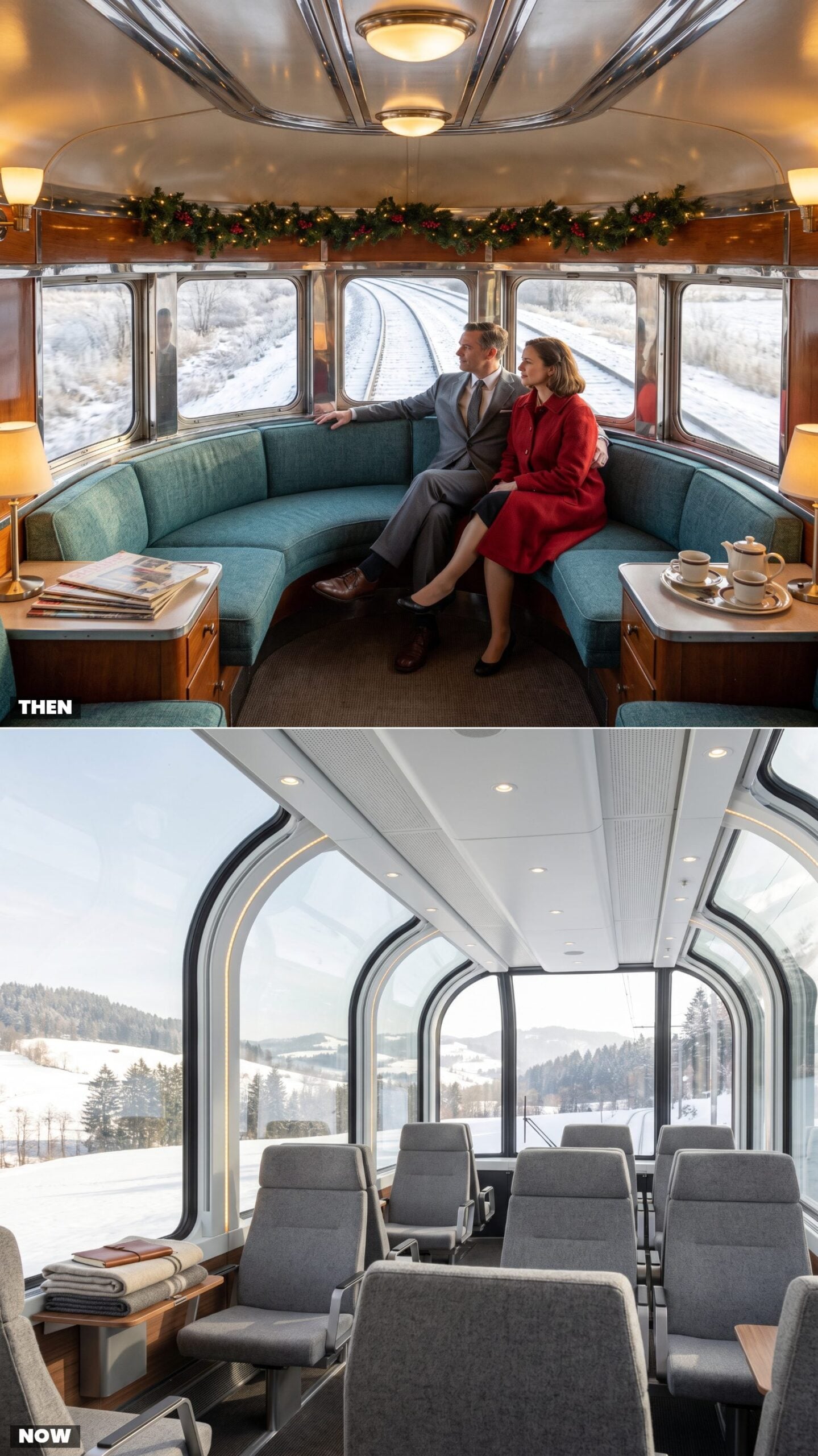
The rounded observation car put the whole countryside behind glass. Curved chrome-framed windows wrapped the tail of the train, and you sat on teal benches watching snowy fields slide away, the tracks pulling apart in the distance like a zipper coming undone.
Panoramic lounges go bigger. Floor-to-ceiling glass, curved ceiling panels, more sky than any 1958 designer dared to imagine, and swivel seats that let you catch every angle. The view has never been wider. But there’s something about that rounded rear the flat glass wall can’t quite give back, the feeling that you were riding in the last, best seat on the train.
16. Cocktail Service vs. Craft Beverage Menus
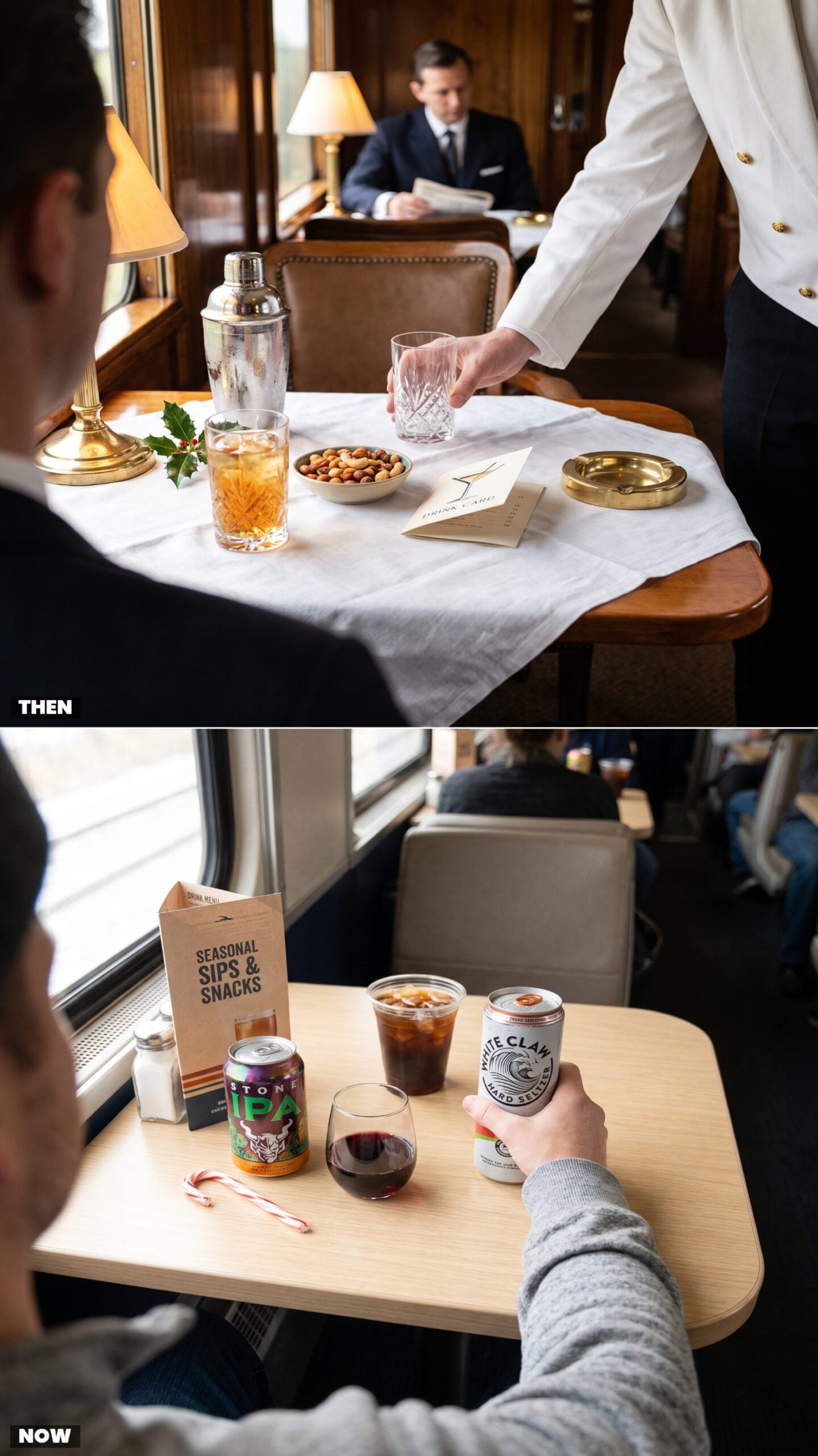
Cocktail service on the 1958 rails came in cut crystal. A steward set down a whiskey highball on white linen, a dish of salted nuts beside it, a paper drink card listing manhattans and old fashioneds. The glass caught the lamplight. You dressed for the occasion, and so did the drink.
Now the menu reads like a taproom. Canned craft IPAs, cold brew, hard seltzer, a stemless wine pour you handle yourself. Faster, cheaper, more choice. The crystal is gone, replaced by aluminum you crack open on your own.
15. Smoking Lounges vs. Smoke-Free Trains
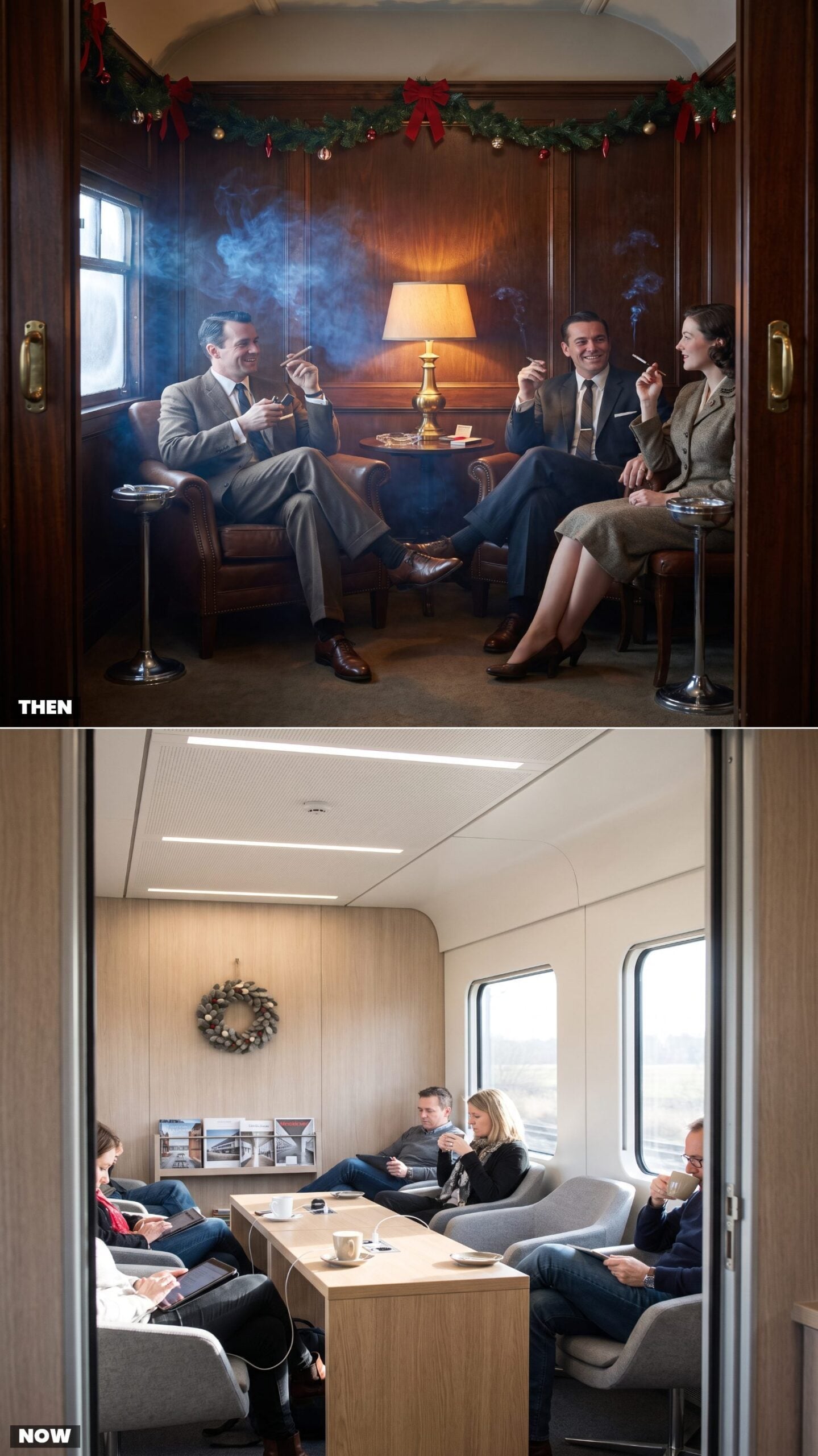
The smoking lounge was practically a members’ club. Leather chairs, chrome standing ashtrays at every elbow, a warm haze of cigarette and cigar smoke drifting through the lamplight. Matchbooks on the table. A woman with a cigarette holder, a man clicking his lighter. This was where the train did its quiet business.
That air is gone. The whole train runs smoke-free now, the same room turned into a clear-aired quiet car with charging ports and coffee. Your lungs are grateful. The romance of the smoke-filled lounge survives only in old photos, and honestly, it can stay there.
14. Conductors’ Formal Uniforms vs. Contemporary Crew Attire
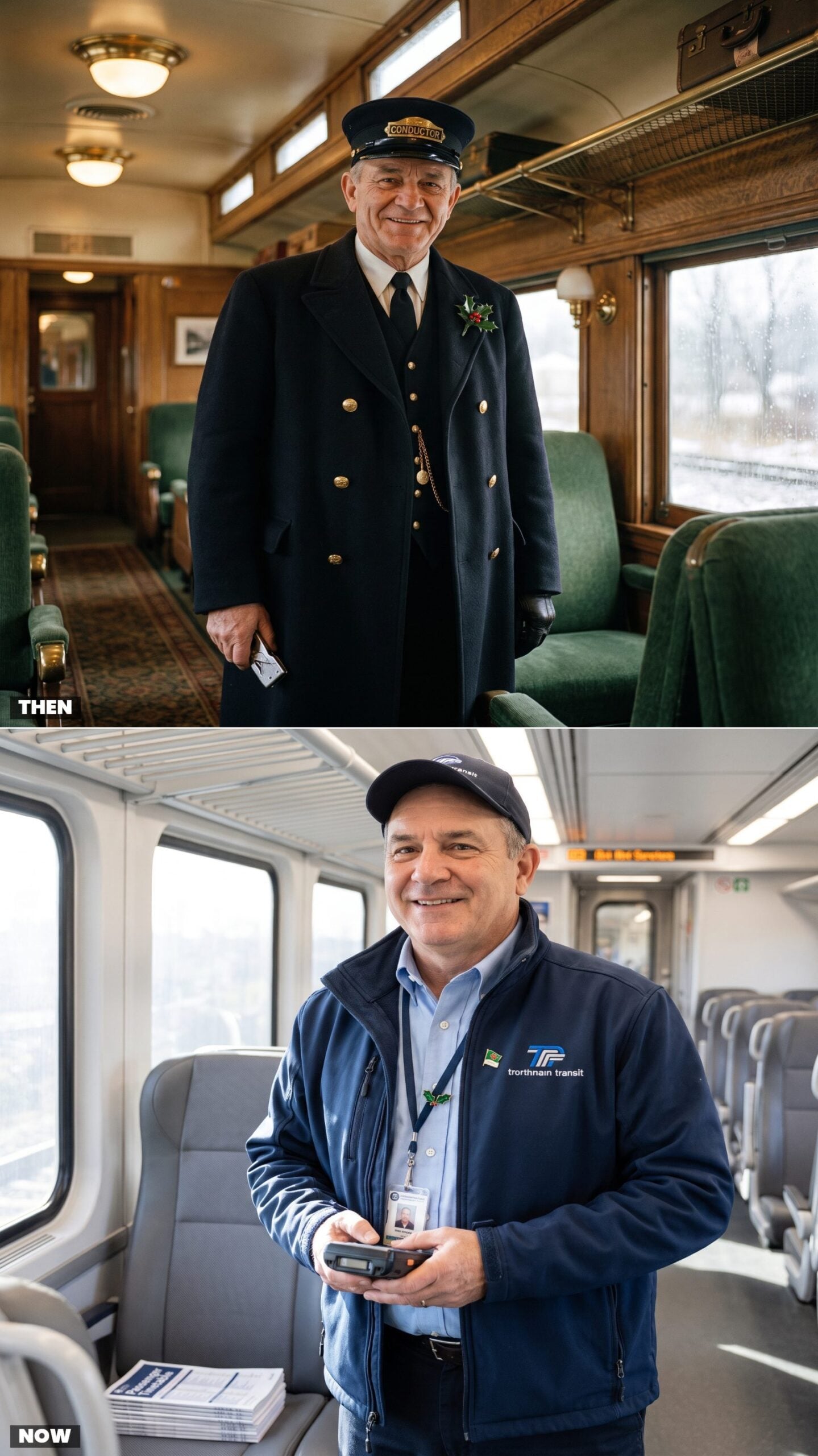
A conductor in 1958 looked like authority you could trust with your ticket and your life. Double-breasted wool, brass buttons, a peaked cap with a metal badge, a gold watch chain looped across the vest. He punched your ticket by hand and wore the railroad like a rank.
The modern conductor dresses to work, not to impress. Navy softshell, a polo, a lanyard ID, a handheld scanner where the punch used to be. Comfortable, practical, approachable. The uniform stopped being a costume and became clothing.
13. Passengers in Suits and Dresses vs. Casual Travel Clothes
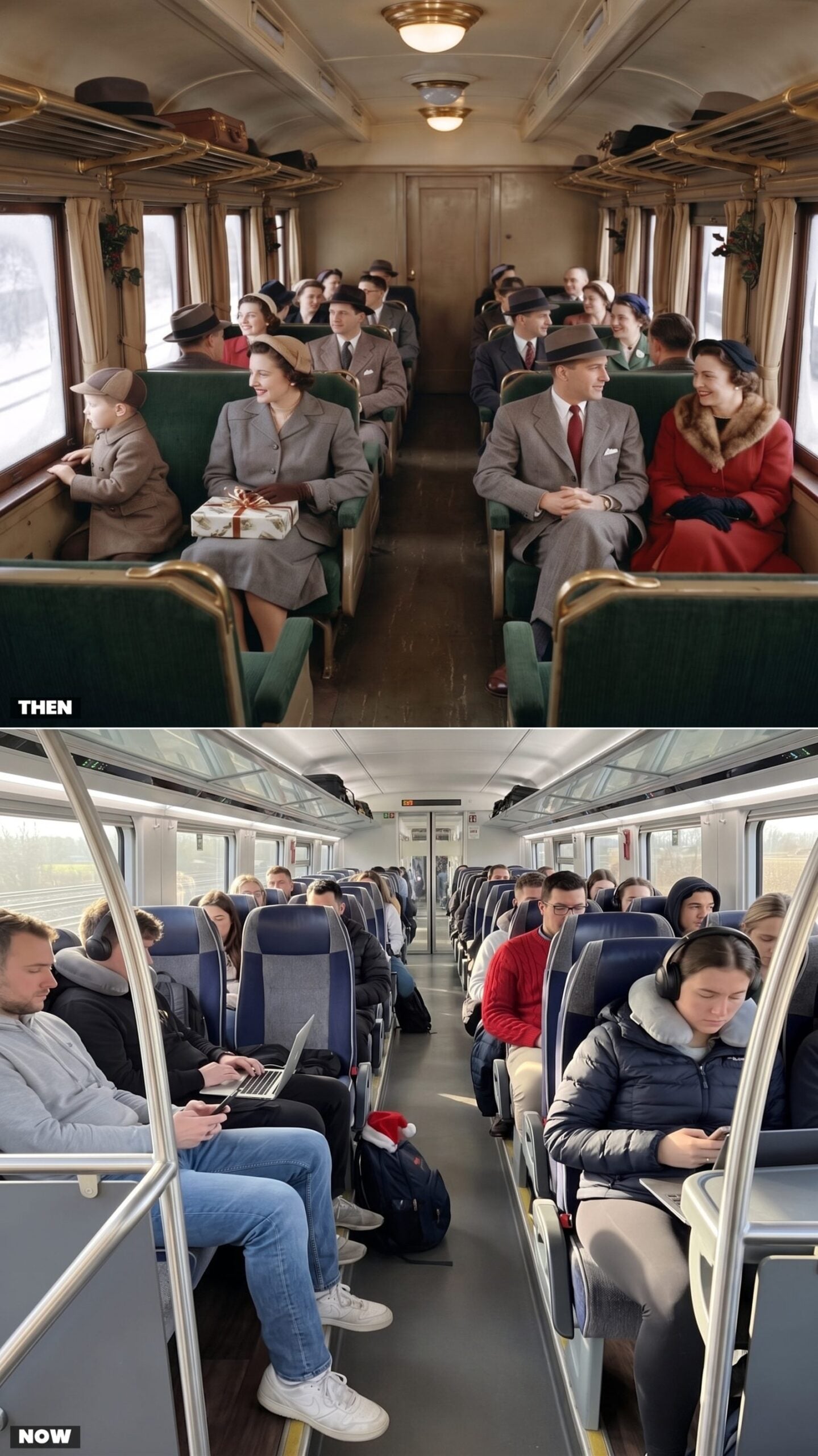
People dressed for the train in 1958. Men wore wool suits with fedoras up on the rack, women wore tailored dresses and gloves, and even a child got buttoned into a small coat. Travel was an occasion, so you wore your occasion clothes to meet it, and everyone sat a little straighter for it.
Now comfort wins outright. Jeans, hoodies, puffer jackets, sneakers, a neck pillow already deployed before departure. Nobody dresses up to sit for six hours, and nobody should have to. The suits are gone, and with them a certain ceremony of going somewhere.
12. Wrapped Gifts on Overhead Racks vs. Gifts Shipped Ahead
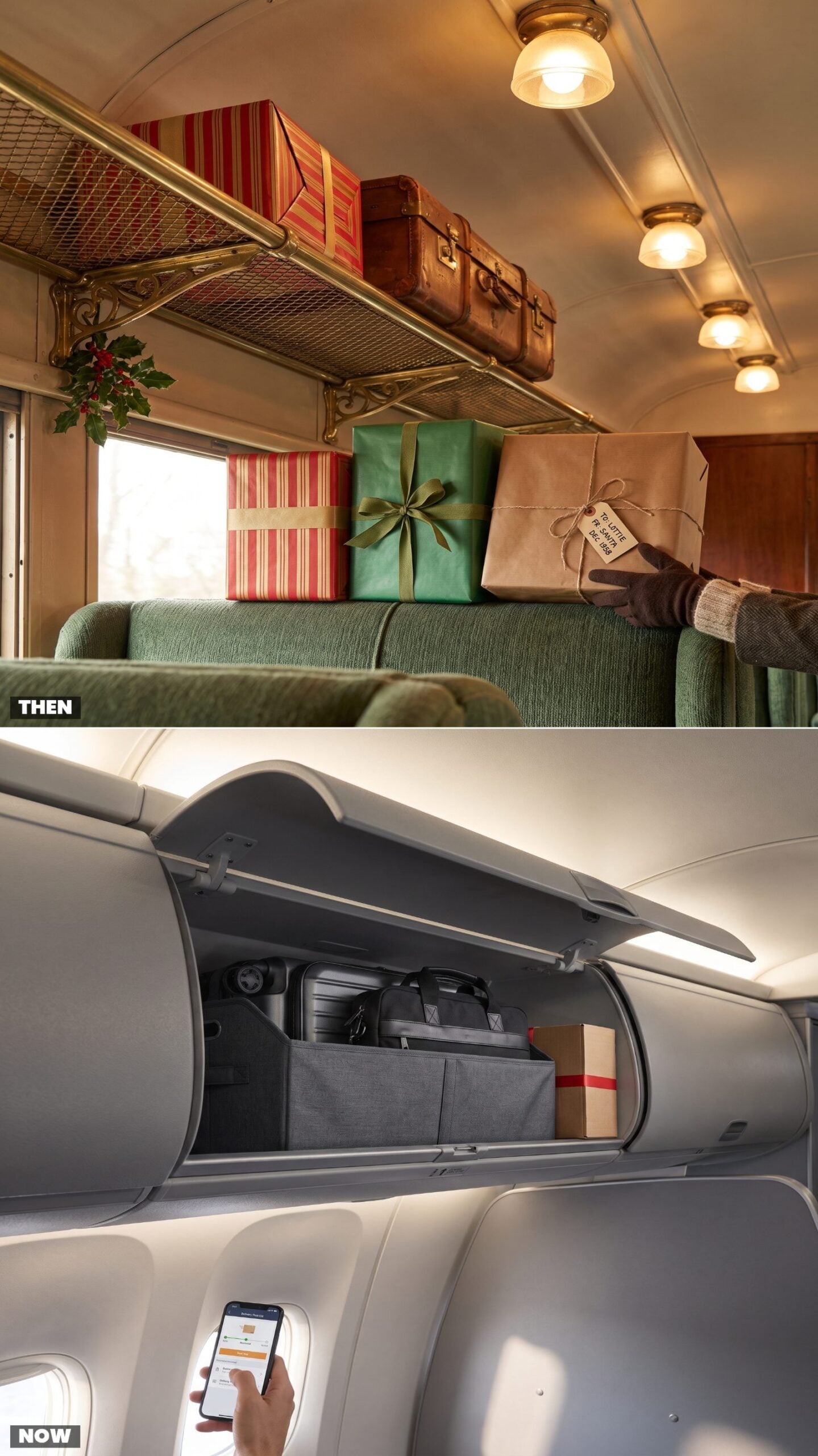
Half the charm of a 1958 Christmas train ride sat on the rack above your head. Wrapped presents in striped paper and hand-tied bows, brown parcels with twine and a gift tag, all of it riding to Grandma’s balanced on open brass where everyone could see you were bringing Christmas along.
Those gifts travel separately now. You order online, ship ahead, and they beat you to the door while you ride empty-handed with a phone tracking the delivery. Efficient, sure. But a rack full of ribbons had a magic no shipping confirmation can match.
11. Tabletop Christmas Trees and Paper Garlands vs. Minimal Programmable Holiday Décor
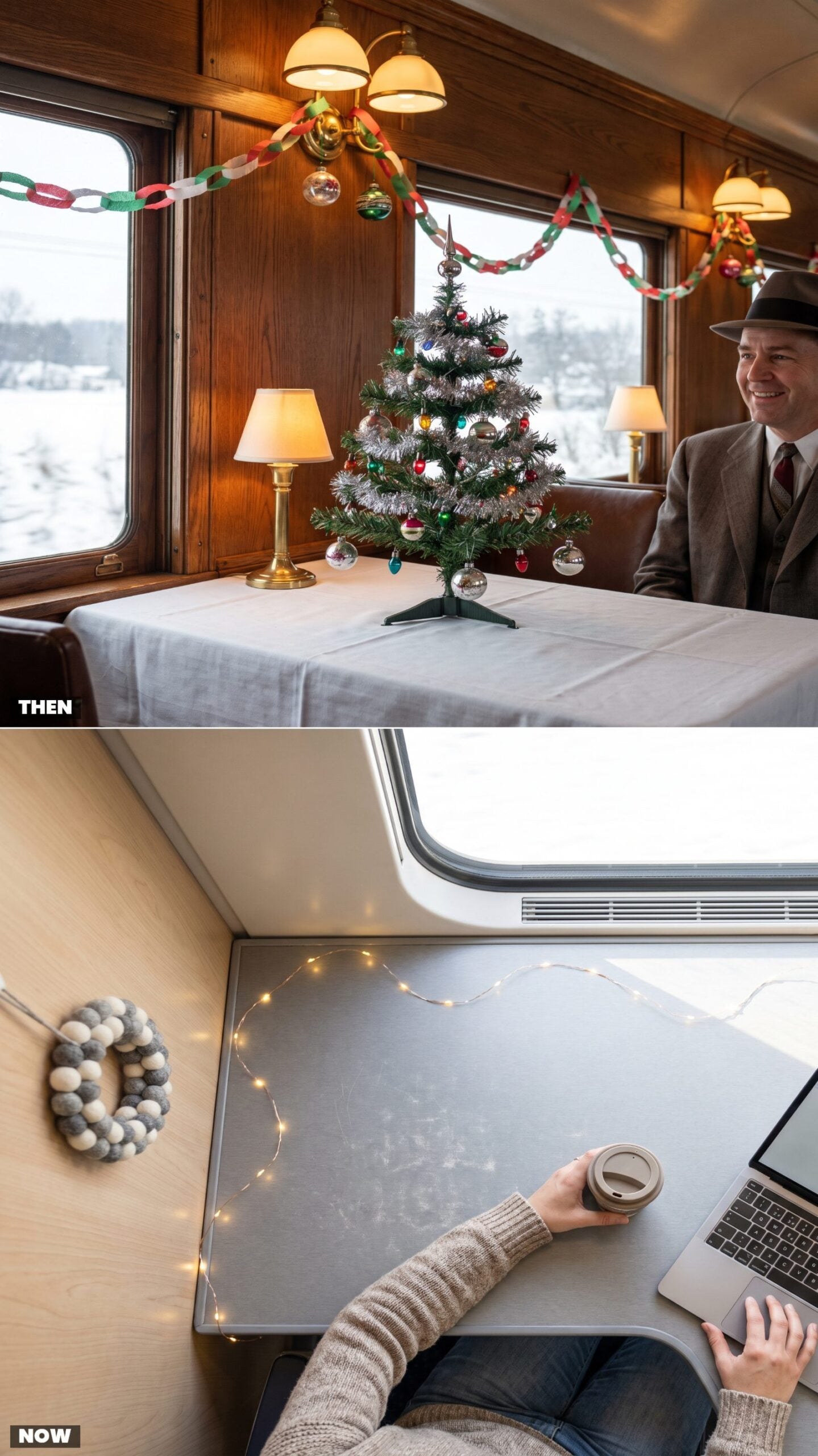
The dining car went all out in 1958. A little tinsel tree on the linen, glass baubles catching the lamplight, paper garland chains and crepe streamers looped along every wood panel and window frame. Somebody spent an afternoon stringing all of it by hand, and it showed. The whole car felt like a party in motion.
Modern holiday decor whispers instead. A single strand of programmable warm LEDs along the window, one felt wreath, tasteful restraint. Cleaner, and it flickers on with a switch. But hand-strung paper garland carried a warmth no app-controlled bulb ever quite captures.
10. Homemade Journey Snacks vs. Branded Grab-and-Go Food
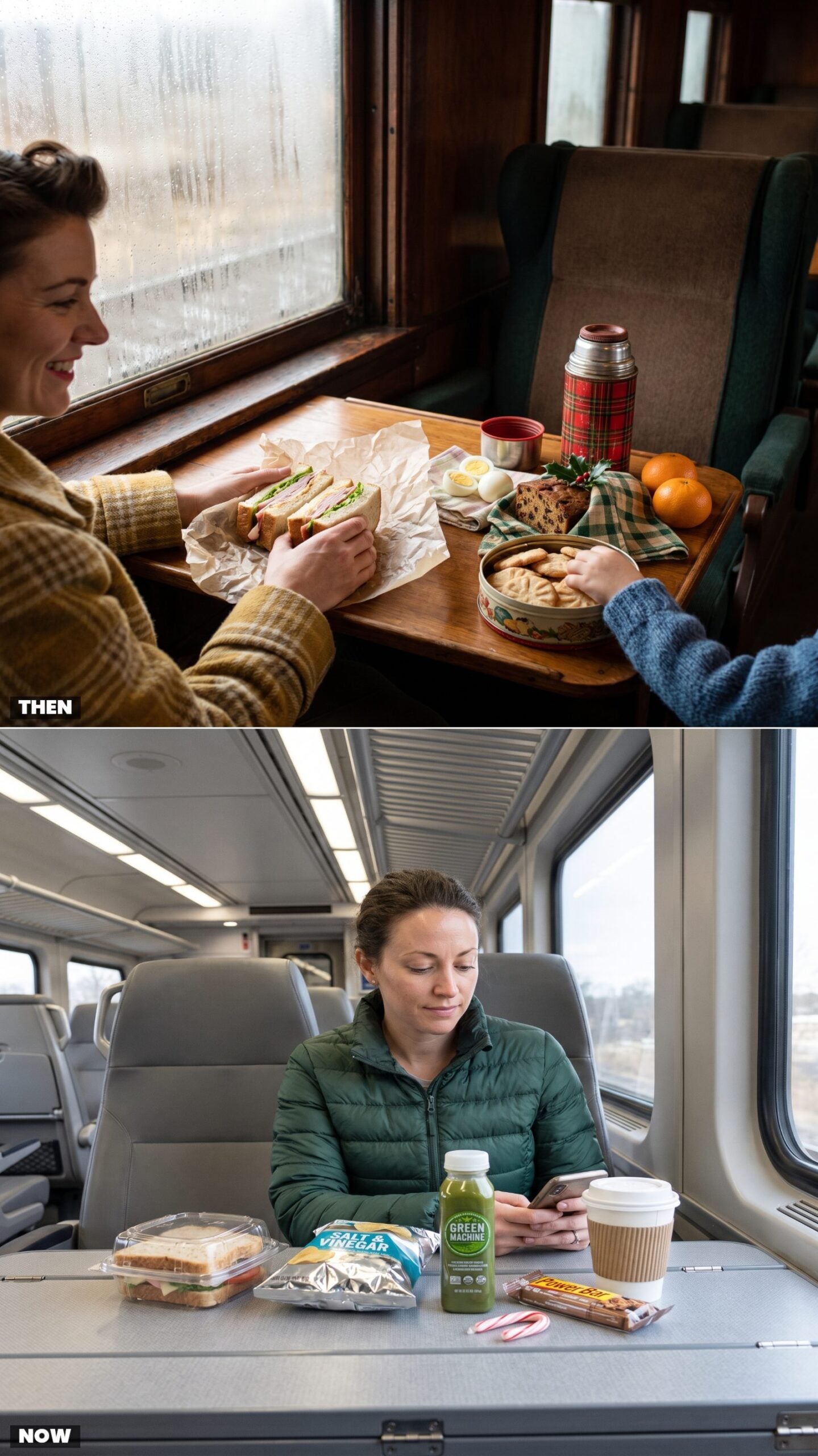
In 1958 the snack bag came from your own kitchen. Wax paper folded into neat packets, a plaid thermos of cocoa that scalded the back of your throat, and fruitcake nobody admitted to liking but everybody ate. By hour two the whole car smelled faintly of hard-boiled eggs, and somehow that was part of Christmas.
Now it’s a shrink-wrapped sandwich and a bottled smoothie you grabbed off a refrigerated shelf without breaking stride. Faster, cleaner, predictable to the gram. But nobody’s grandmother ever wrapped a candy cane in a checked napkin and tucked in a sprig of holly for you.
9. Tin Wind-Up Toys vs. Tablets and Handheld Games
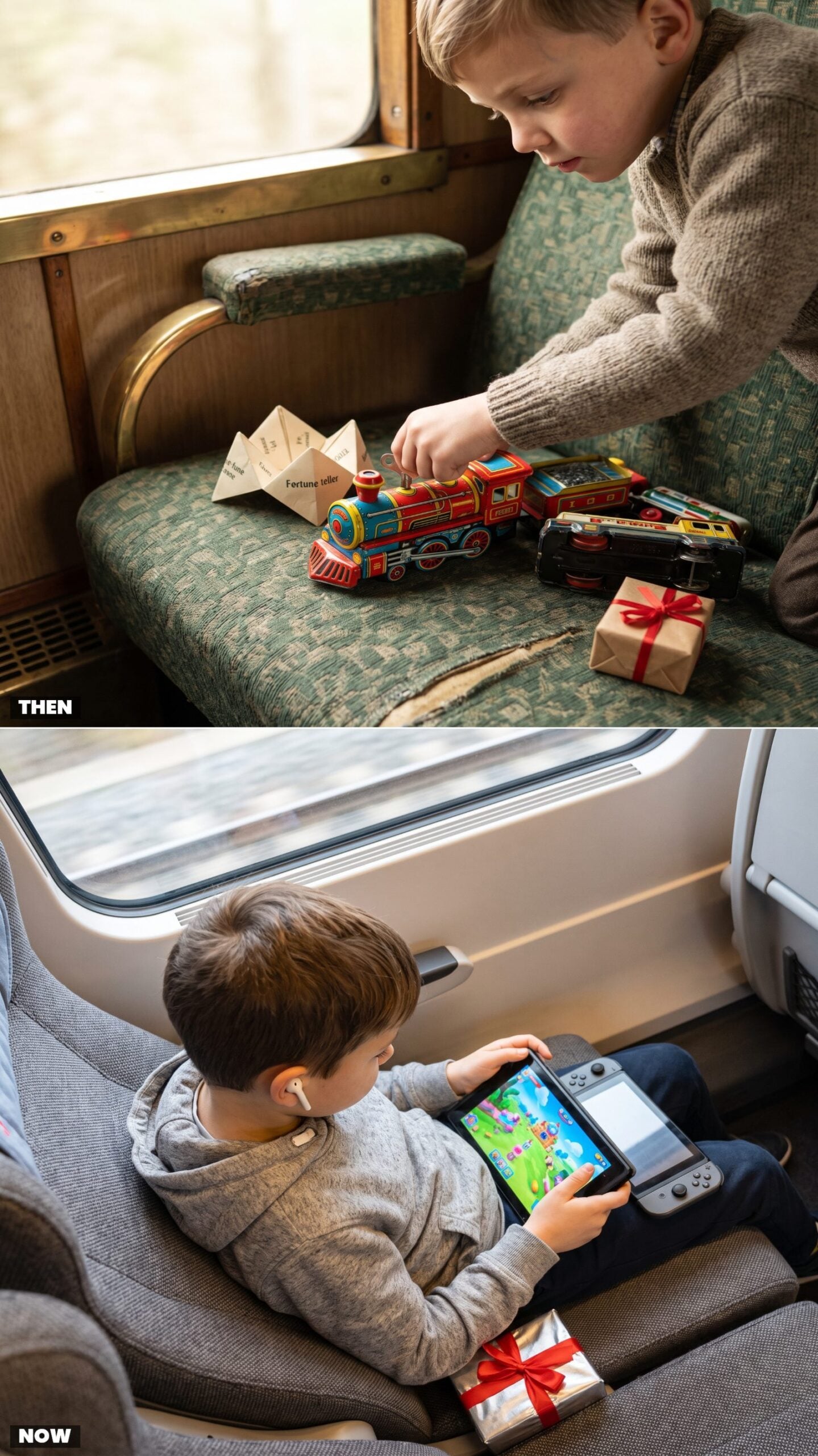
A tin wind-up toy gave you maybe forty seconds of motion per crank. Then it stalled, tipped over, and you wound it again. Kids did this for hours. The clockwork whir under the seat, the paint chipping at the edges, the key you were always about to lose down the heating grate.
The tablet doesn’t stall, and it doesn’t run down. A child can vanish into it from Chicago to St. Louis and never look up at a single passing town. Quieter for the parents, sure. But say what you want, there was something honest about a toy that made you do half the work.
8. Portable Transistor Radios vs. Noise-Canceling Headphones
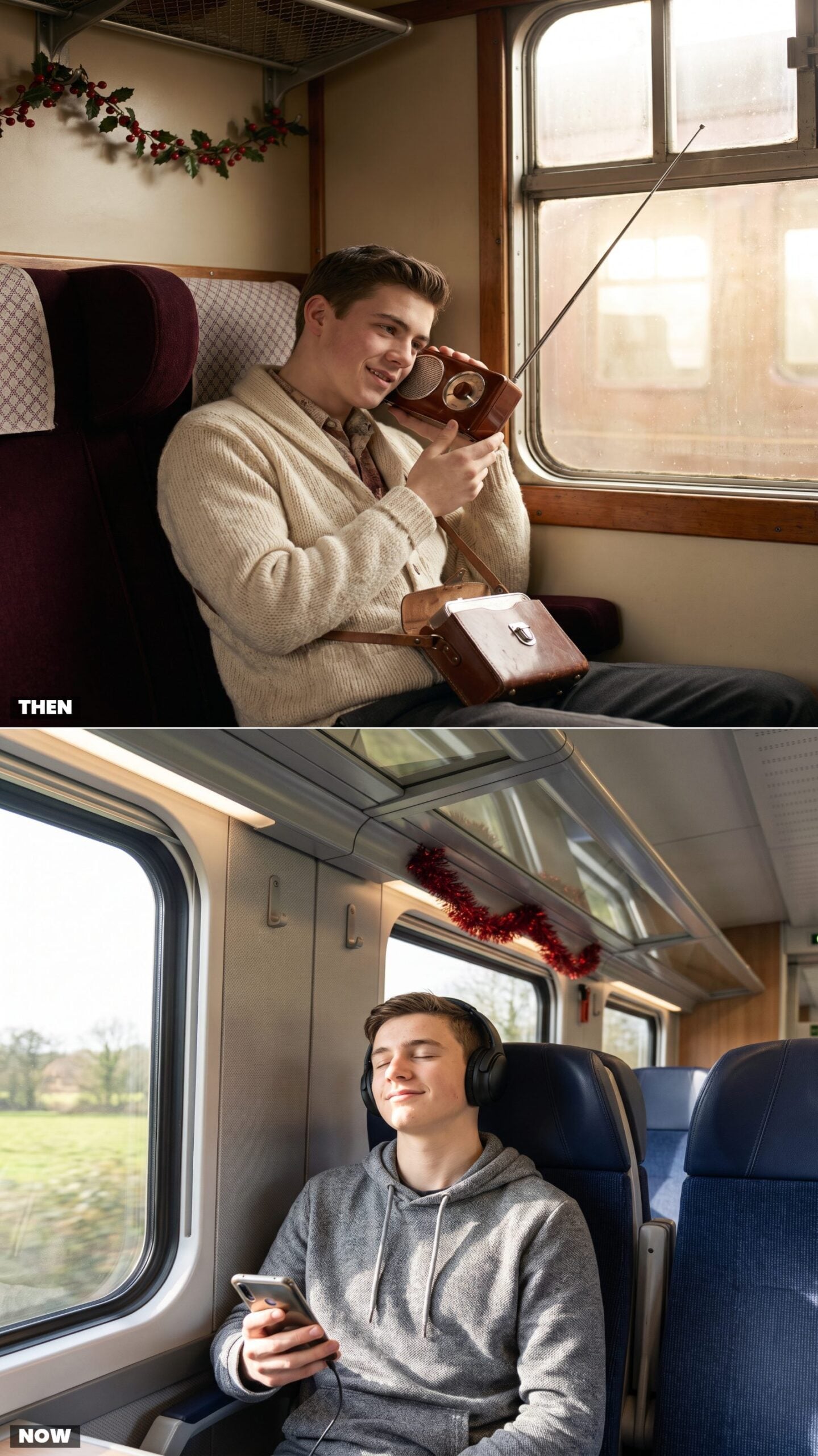
One radio, one earpiece, and half a car straining to hear the ballgame. The transistor was a marvel in 1958, small enough for a coat pocket, loud enough to share whether you wanted to or not. Tinny AM signals faded in and out as the train passed through cuttings and tunnels. Everyone heard everyone’s music.
Now the headphones seal the world out entirely. Full orchestra, zero leakage, the clatter of the rails erased by a chip crunching numbers faster than you can blink. You can sit next to a stranger for four hours and never once know what’s in their ears. Private. A little lonely, too.
7. No Connectivity vs. Onboard Wi-Fi
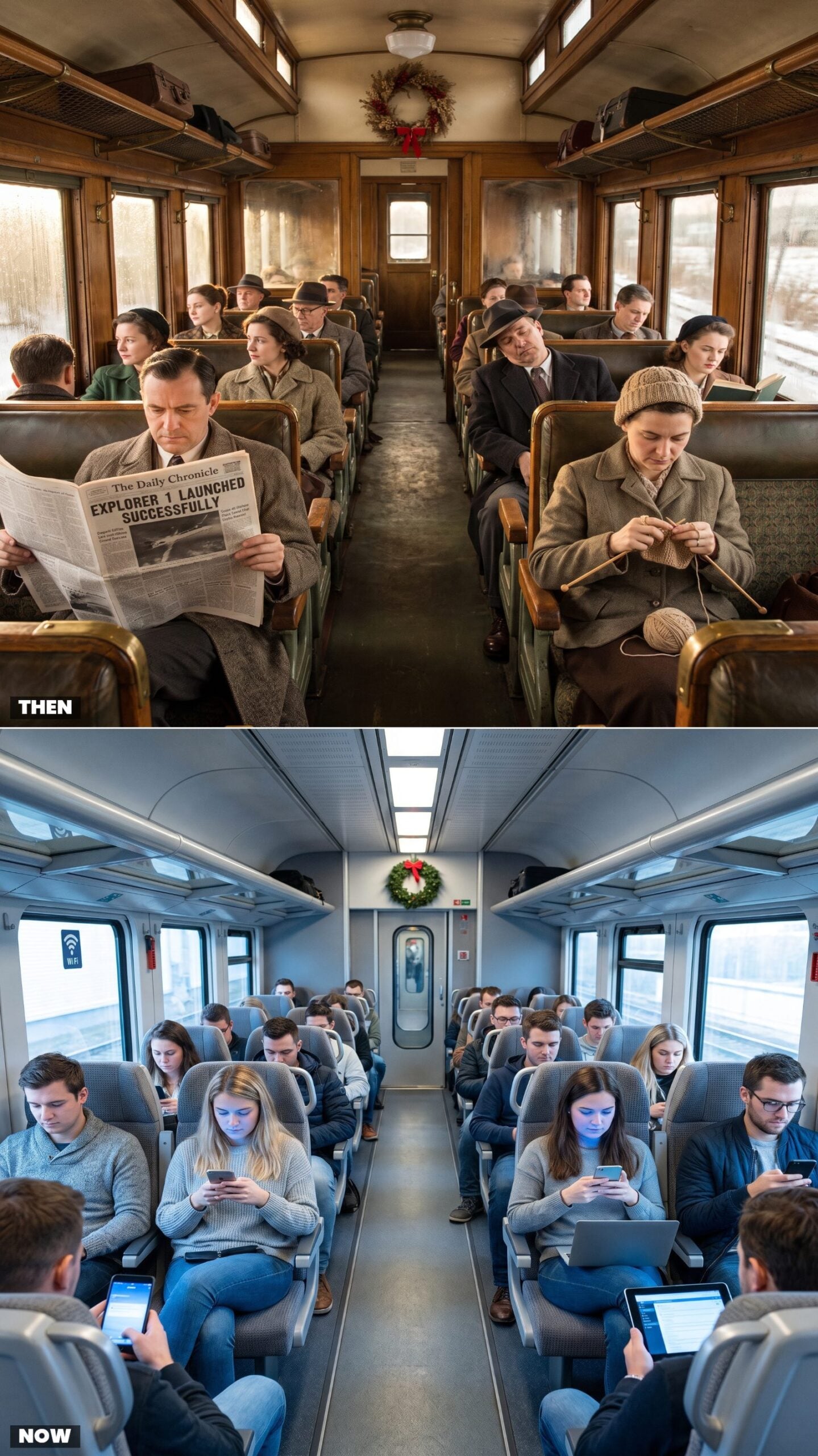
The train had one gift nobody appreciated at the time: nowhere to be reached. The moment you boarded in 1958, the world lost track of you for four hours. You read the paper cover to cover, watched the snow-dusted fields slide past, and struck up a conversation with a stranger because there was nothing else to do.
Onboard Wi-Fi solved the boredom and killed the vacancy in one stroke. Now the office follows you into the quiet car. The group chat pings through the tunnel. We gained the whole world and quietly handed back the only four hours nobody could touch us.
6. Conductor Calls Through the Car vs. Automated Announcements
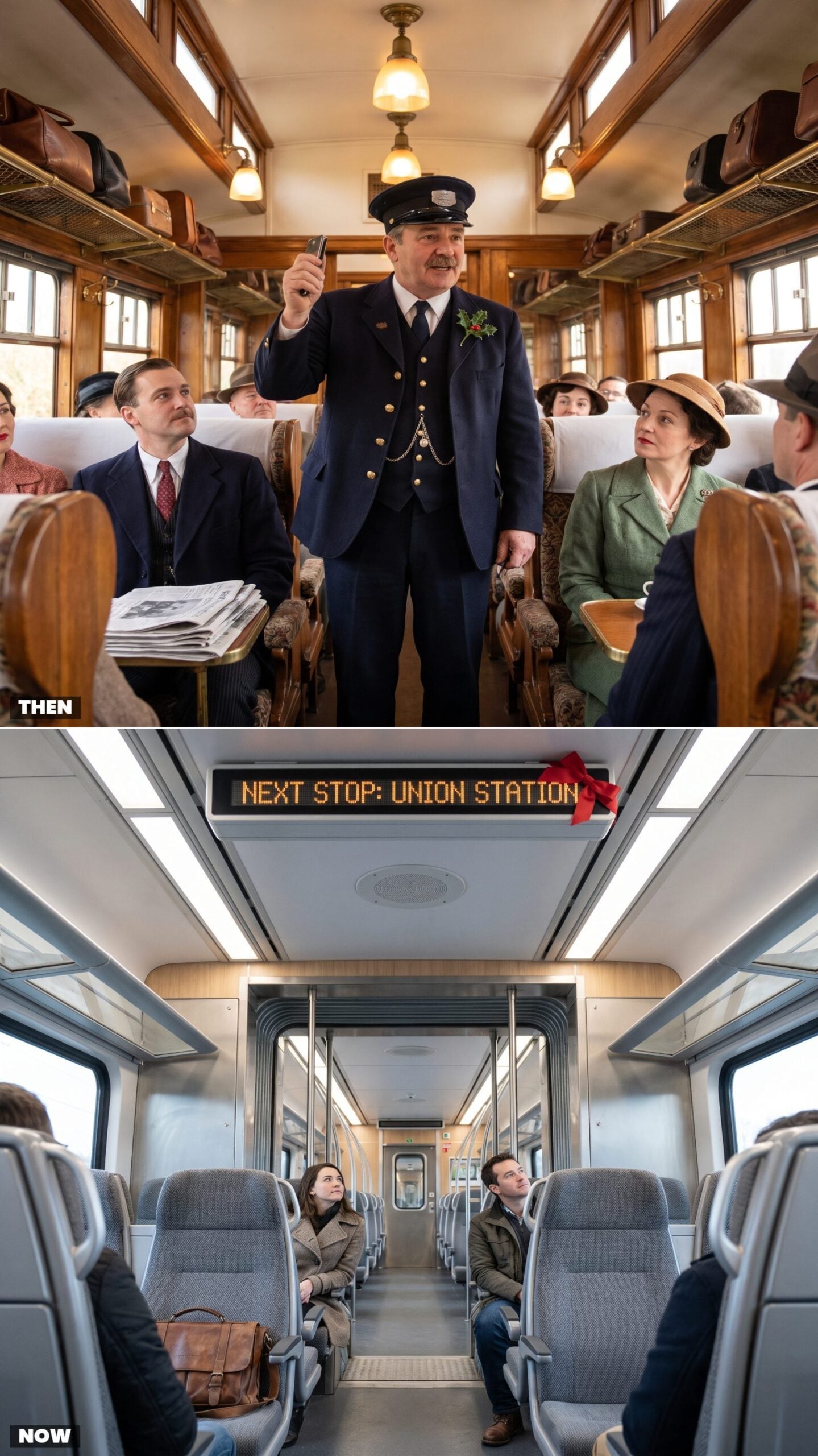
He knew your stop before you did. The conductor came down the car calling out town names like a man reciting a poem he’d said ten thousand times, brass buttons catching the light, ticket punch clicking. He’d tell a nervous kid traveling alone exactly when to gather their things. Human, unhurried, a little theatrical.
Today a recorded voice handles it, same words every trip, timed to the second, backed by a scrolling LED sign. Efficient and never wrong. It also never leans down to reassure a first-time traveler that yes, this is the right train, and yes, they’ll get you home for Christmas.
5. Foldout Railroad Route Maps vs. Live GPS Tracking
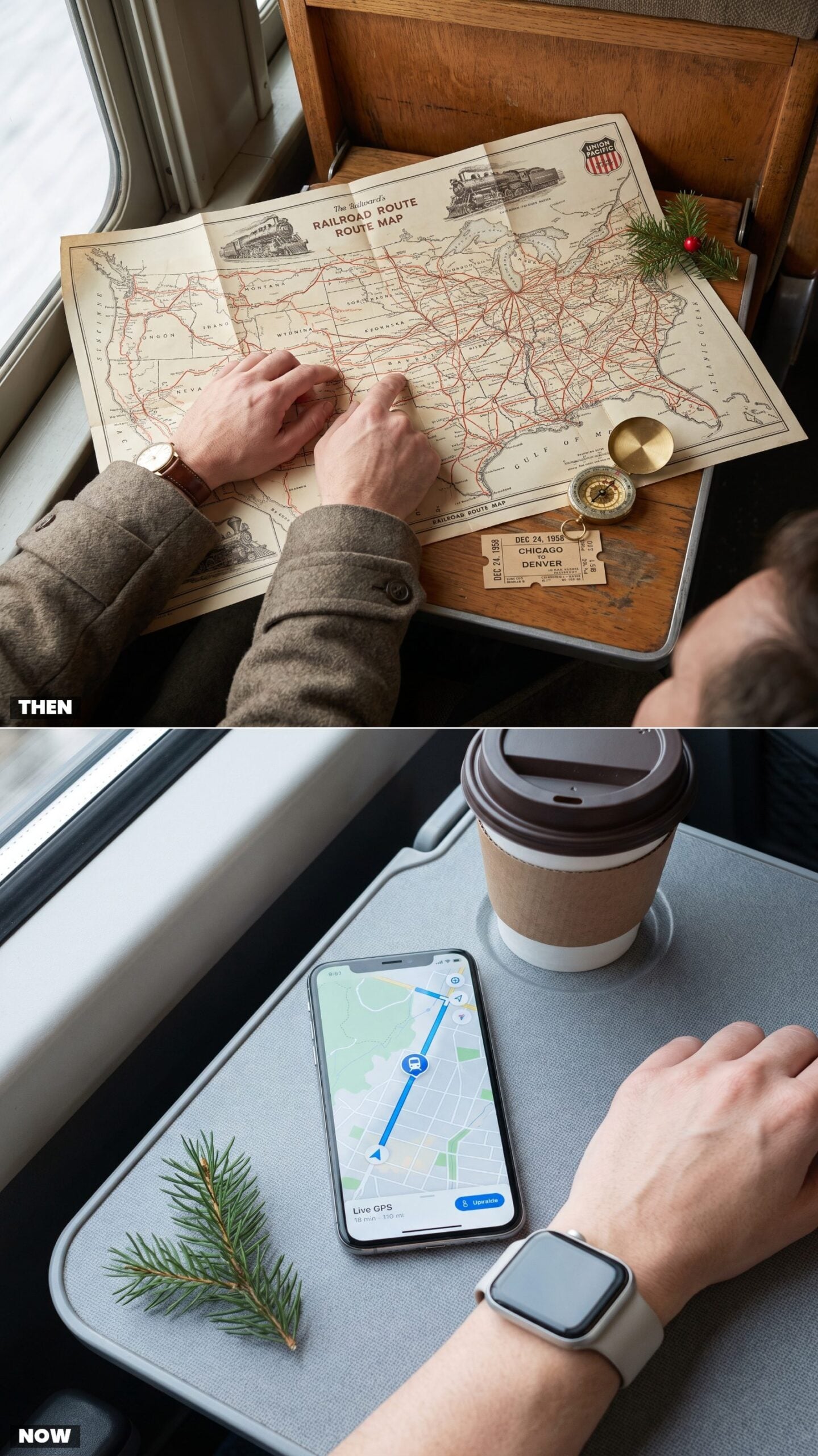
The route map was a document you unfolded like a treaty, panel after panel of it, creased soft at the seams from being opened and refolded wrong. You traced the line with a finger, counted the towns still ahead, and got a genuine thrill watching the real countryside match the printed one.
The phone does it live, a blue dot crawling a blue line, ETA to the minute. Nobody argues about which station comes next anymore. Nobody has to. And nobody learns the shape of the country by hand, either.
4. Box Cameras and Film vs. Smartphone Photography
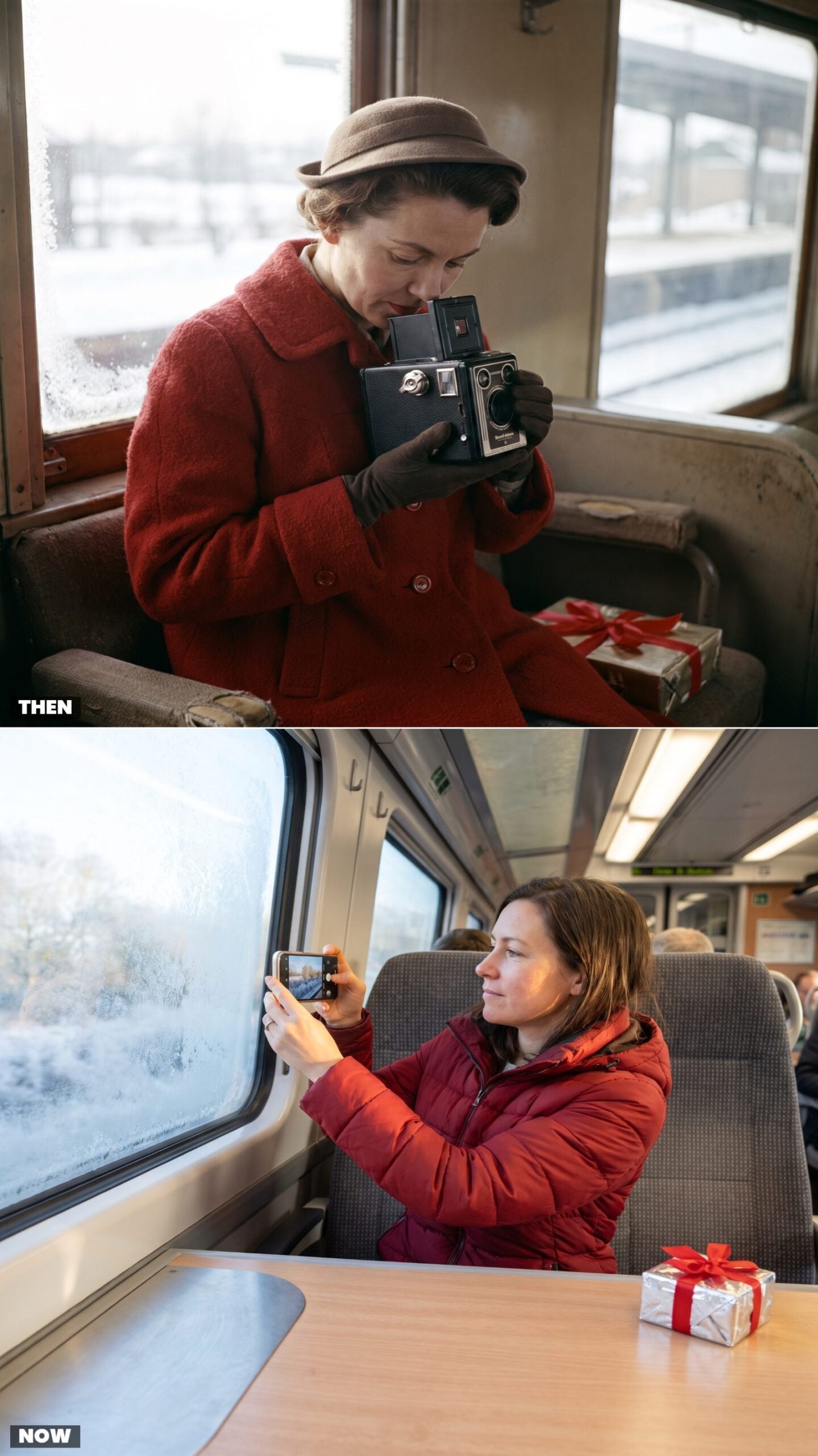
You got twelve shots. Maybe twenty-four if you splurged on the bigger roll. Every frame cost money to buy and money to develop, so you thought before you pressed the shutter on that Brownie, held at your waist, squinting down into the little viewfinder. The snowy window, the kids on the platform, and none of it visible to you for two weeks.
Now you fire off forty pictures of the same frosty window in ninety seconds and delete thirty-eight. Instant, free, effortless. Also mostly forgotten, because a photo you never had to wait for is a photo you rarely go back to look at.
3. No Passenger Outlets vs. USB and Power at Every Seat
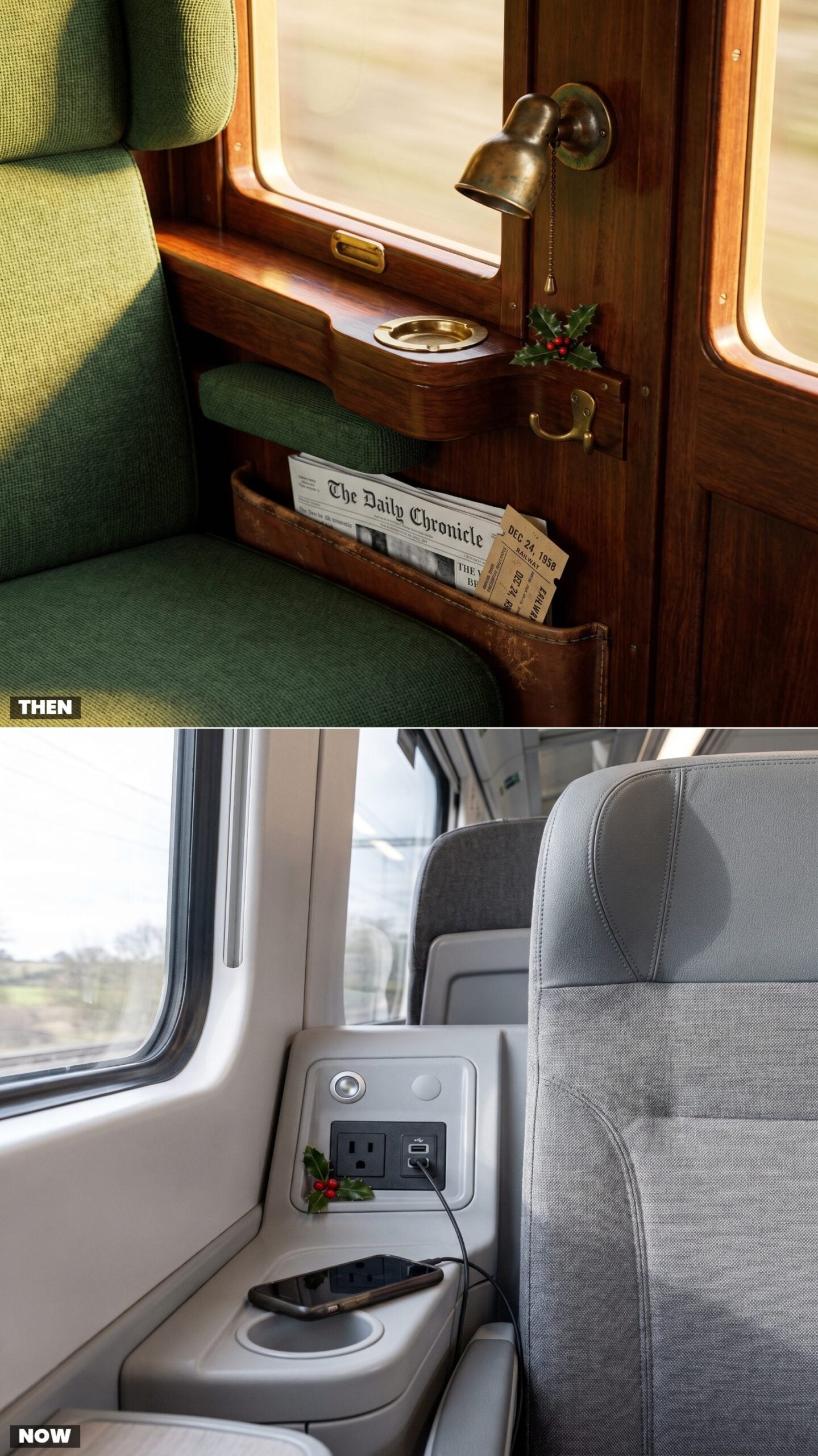
There was nothing to plug in, so the seat gave you nothing to plug into. An ashtray, a coat hook, a little pull-switch reading lamp, and that was the whole console. A device that ran on power was a device you left at home or fed batteries you rationed like water in a desert.
Every seat now has a socket and a pair of USB ports, and half the car reaches for it before they’ve even settled in. We used to bring a book. Now we bring a charger, because the panic isn’t running out of things to read anymore. It’s running out of battery.
2. Mailed Christmas Cards vs. Video Greetings From the Train
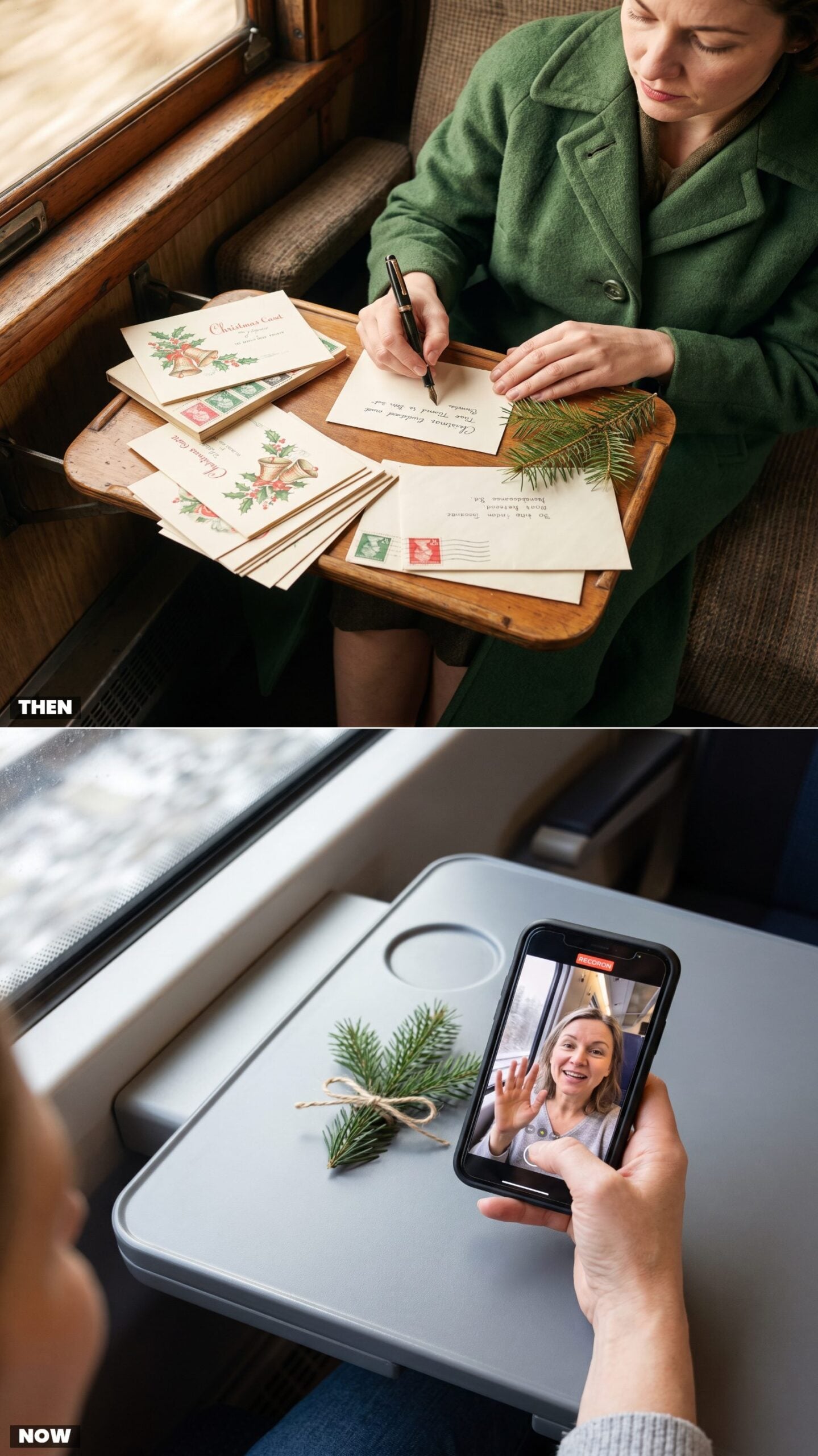
You wrote them on the way. A stack of holly-and-bells cards, a fountain pen, a book of stamps, and hours of quiet track to fill. The message was short because the effort was long, and that was the point. Somebody held your handwriting in their hands a week later and knew you’d thought of them on a moving train.
Now you lift the phone, wave, wish everyone a merry Christmas in fifteen seconds, and send it before the next station. Warmer in some ways, your actual face, your actual voice. But nobody tapes a video greeting to the mantel and looks at it every December for the next thirty years.
1. Platform Reunions Under a Station Clock vs. Rideshare Pickup Reunions
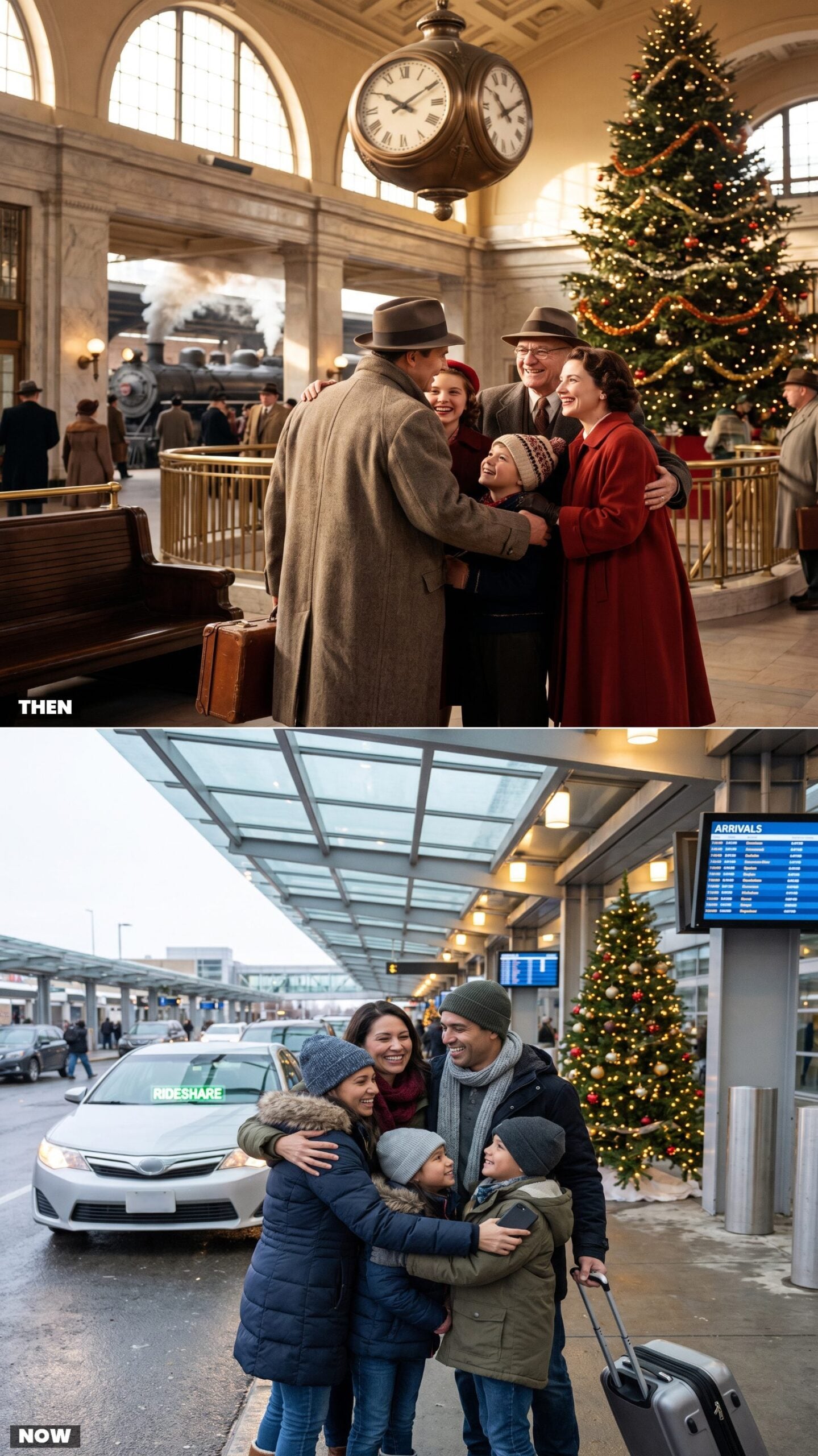
The whole family came to the station. They stood under the big clock because that was the agreed-upon spot, the one everyone in town knew, and when the train hissed to a stop and the doors opened they scanned the crowd of overcoats until they found the one face they’d been waiting weeks to see. Then the run. Then the hug. Steam everywhere.
These days you text “landed” and watch a little car icon crawl toward you on a map. The reunion happens at the curb, phone still in hand, engine idling. Just as much love in it, a fraction of the ceremony. The clock has been replaced by an ETA, and the crowd of overcoats is gone.
Under the clock was the whole town’s meeting point. Now the meeting point is a blue dot on your screen, and it moves.
🔥 Would you like to save this?
Please note that some of the imagery in this article were created with the aid of AI image generators.