
🔥 Would you like to save this?
Three decks down, under your feet, a corridor runs the entire length of the ship and nobody on the lido deck knows it exists. Meanwhile the nachos keep coming, the towels get folded, the band plays. The whole floating machine stays upright because a thousand people you never see are doing jobs you never think about. None of this is sinister. It’s just a cruise ship running the way a cruise ship runs: one world for the guests, another for the crew, a thin steel floor between them. Here’s what’s on the other side of the door marked crew only.
27. Yes, Big Ships Carry a Morgue
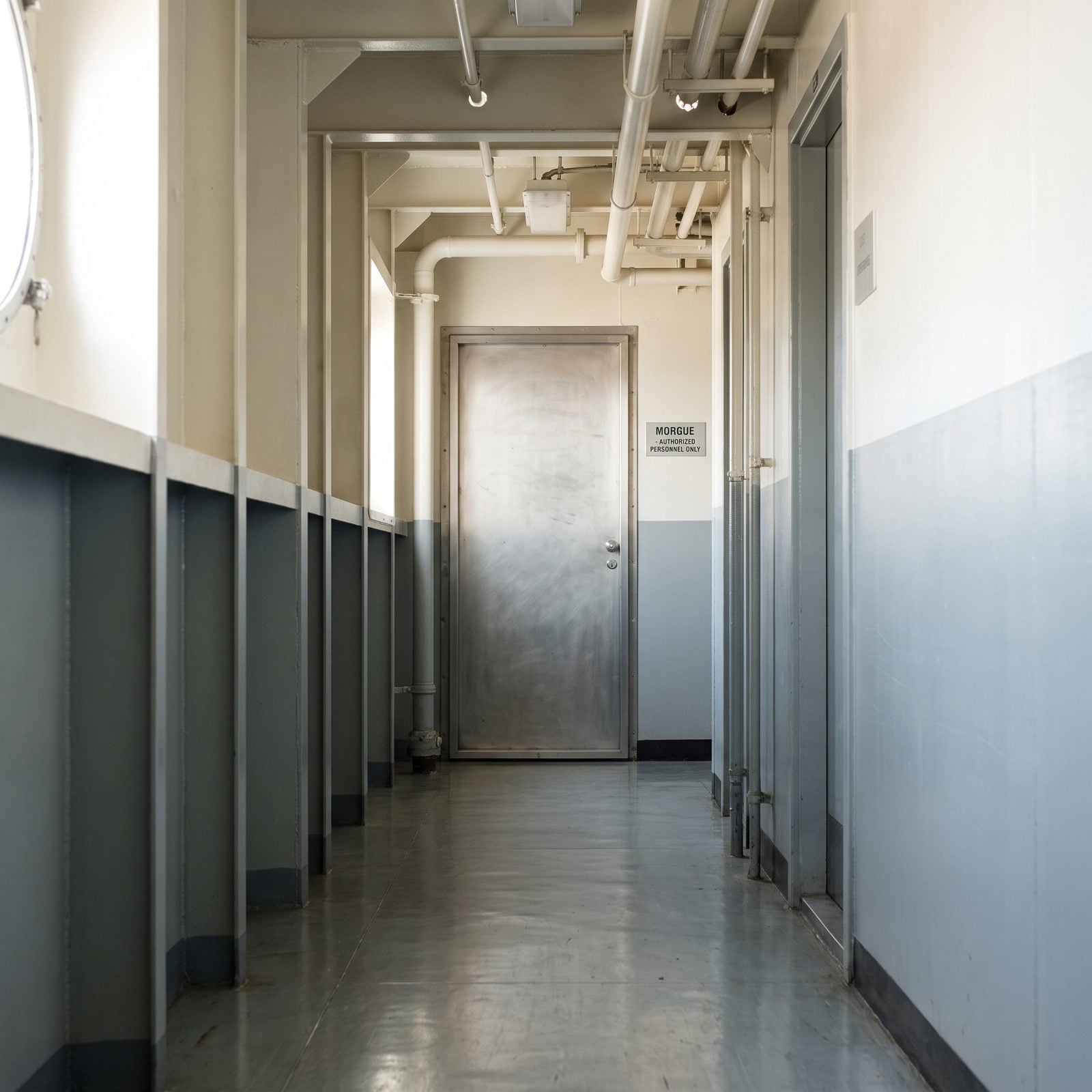
A ship carrying thousands of people for a week at sea is, statistically, a small town. Small towns have deaths. So most large cruise ships keep a small refrigerated holding facility, usually with room for a handful of bodies, tucked near the medical center.
Morbid until you think it through. A ship can be days from the nearest port, and you can’t exactly ask a grieving family to wait in the cabin next door. Nobody’s ashamed of the morgue. It’s just good planning, same as the lifeboats the ship hopes never to use.
26. Security Keeps a Room for the Nights That Go Wrong
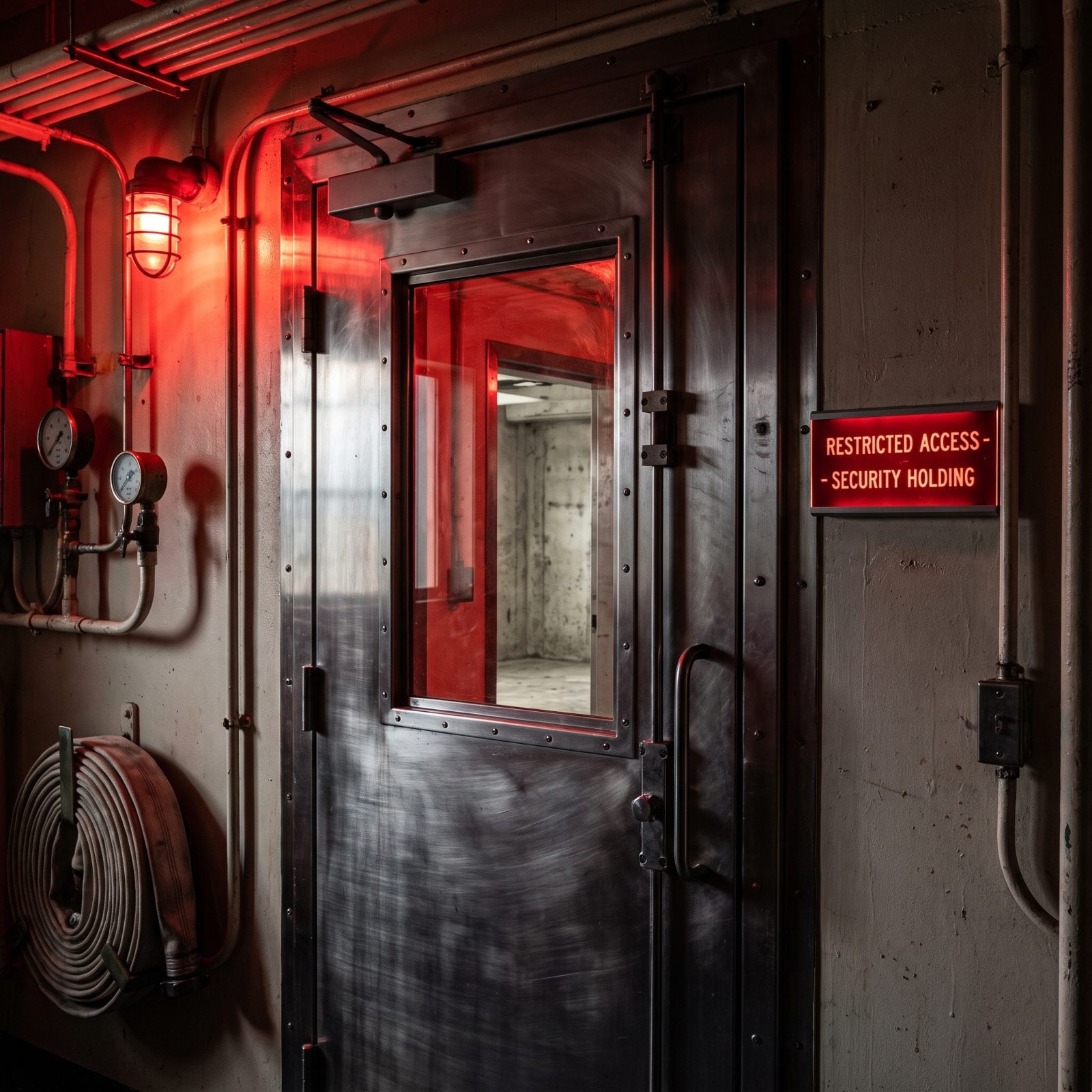
Alcohol, international waters, and a few thousand strangers who all think they’re on vacation. Things happen.
Ship security teams keep a secure holding room — sometimes casually called the brig — for the rare passenger who becomes a danger to themselves or others. No movie jail cell. Just a plain, monitored room that contains a situation until the ship reaches port and local authorities take over. Most crews go whole contracts without ever using it. But every serious line plans for the night when a guest crosses a line, because the ship is its own jurisdiction until the gangway goes down.
25. The Coded Words That Fly Over Your Head Every Day
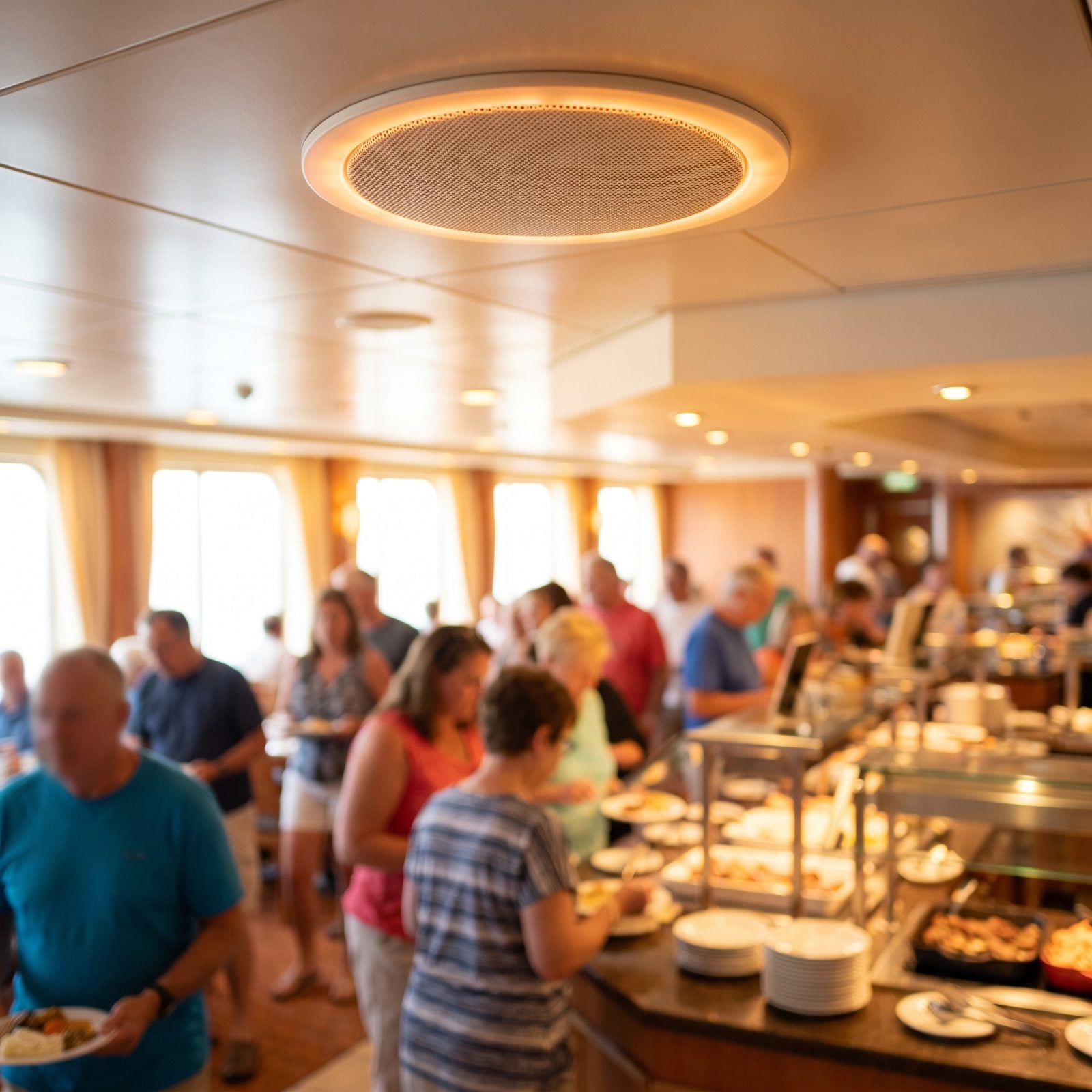
You’ve stood at the buffet while the overhead speaker calmly asked for an officer to report to a deck number, and you thought nothing of it. Good. That was the point.
Cruise ships use coded announcements so staff can respond fast without sending thousands of guests into a panic. The specific codes vary by line and change over time, but the principle holds everywhere: a word or phrase that means something precise to the crew and nothing at all to you. A medical call, a fire check, a man overboard — each gets its own quiet shorthand.
It’s not about hiding danger from you. It’s about not starting a stampede over what’s usually a false alarm.
Half the skill of running a ship is handling a crisis without the guests ever knowing there was one.
24. You’re on Camera More Than You Think
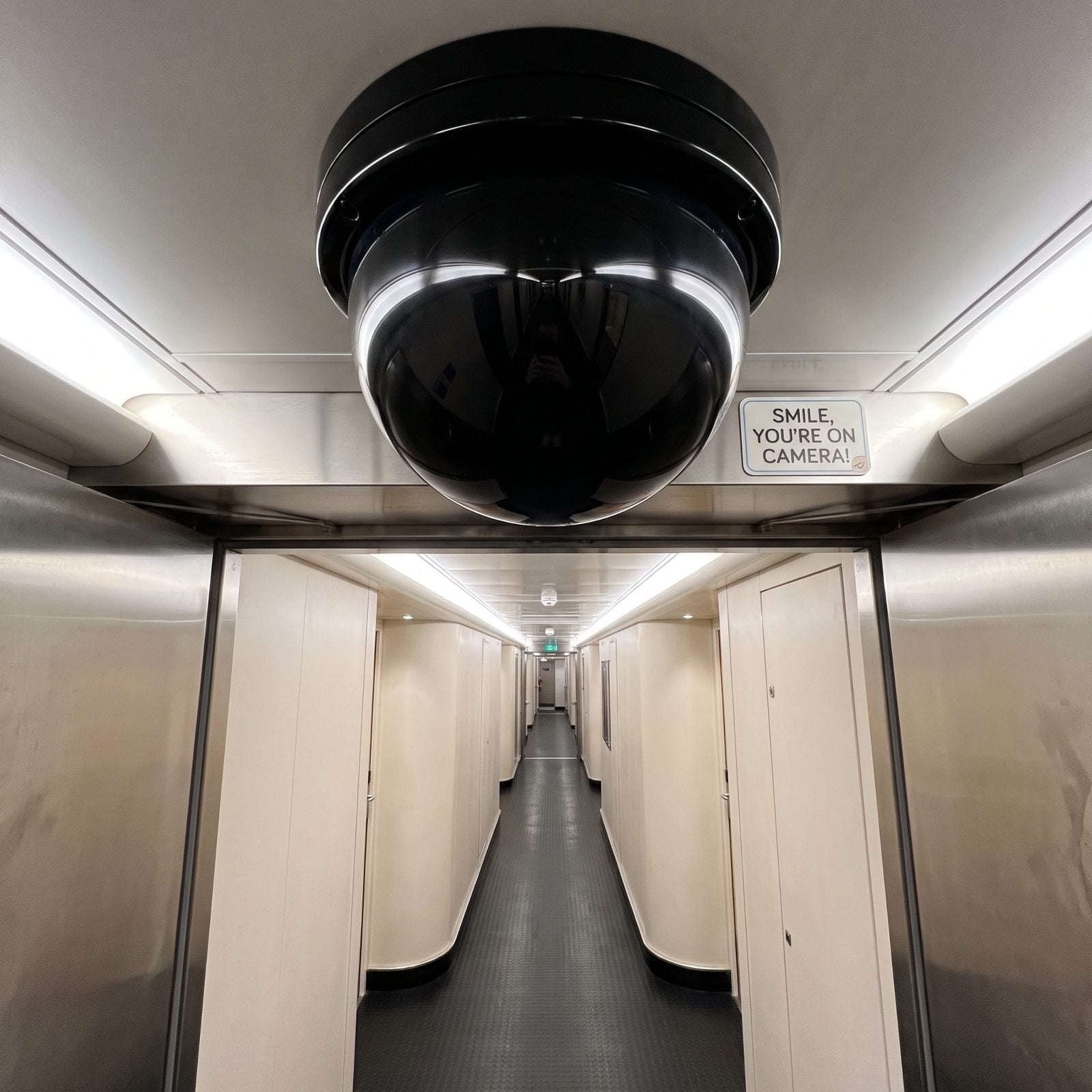
Cameras cover a great deal of a modern cruise ship — atriums, corridors, stairwells, deck areas, retail spaces. Not your cabin, not the bathrooms. Everywhere else, assume the lens is there.
Learning this, guests tend to react one of two ways: mild unease, or genuine relief. Relief usually wins. The footage is why lost wallets turn up, why disputes get settled, and why the rare bad actor gets caught. A ship is a closed system, and the cameras are part of what keeps a floating town honest.
23. A Full Medical Center Runs Behind a Crew-Only Door
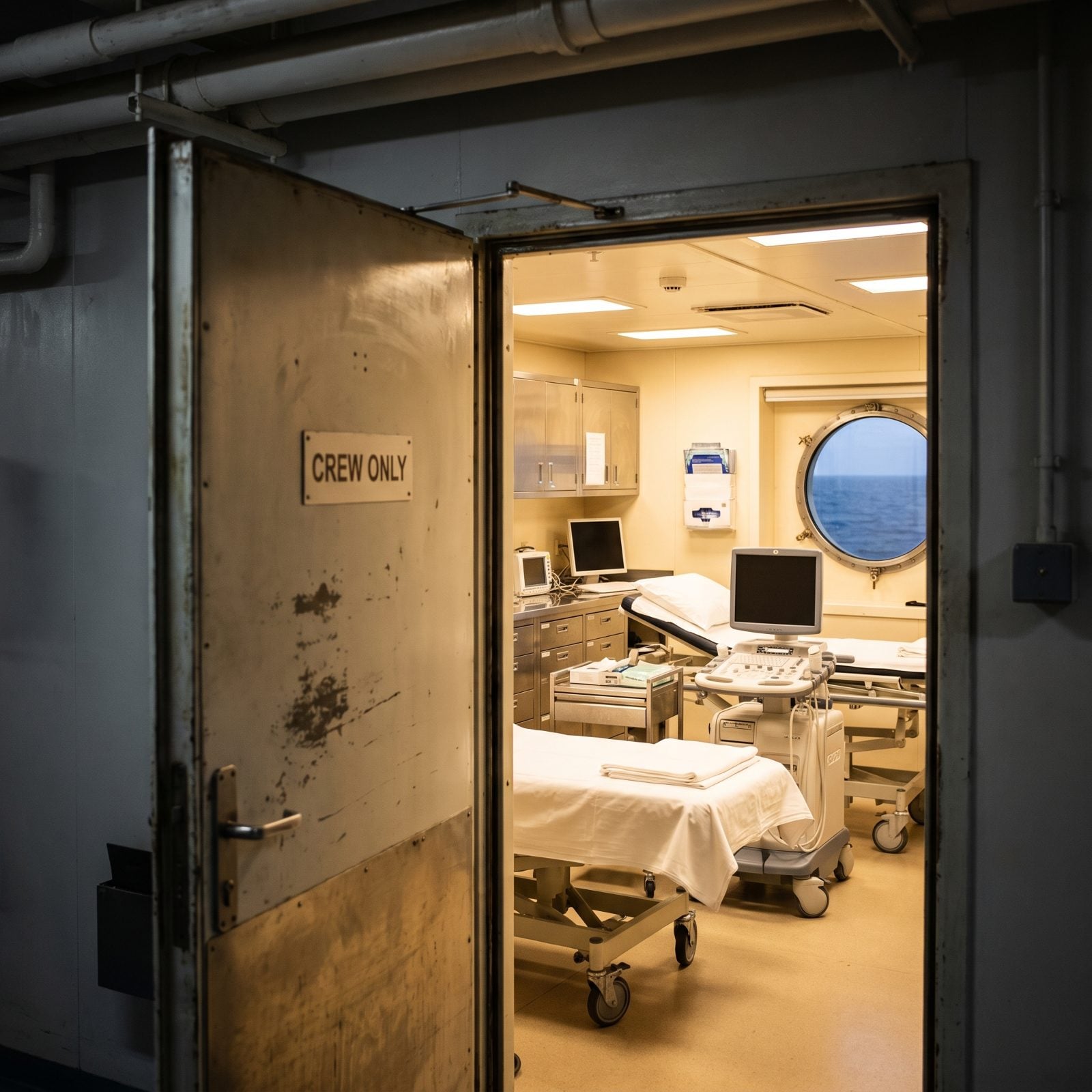
This is the part most people underestimate. The onboard medical center isn’t a first-aid closet with a box of plasters. On a large ship it’s a small clinic: exam rooms, a few hospital beds, an X-ray machine, a lab, cardiac monitoring, a ventilator or two, and doctors and nurses who live aboard.
It has to be. The nearest hospital might be a day’s sail away, or an expensive helicopter evacuation that only works in decent weather. The shipboard team stabilizes heart attacks, sets bones, keeps people alive long enough to reach real shore care. And a word of warning, because nobody mentions it until the bill arrives: your regular insurance rarely covers it, and it is not cheap. Get the travel medical policy.
22. Crew Cabins Smaller Than Your Bathroom, Shared With a Stranger
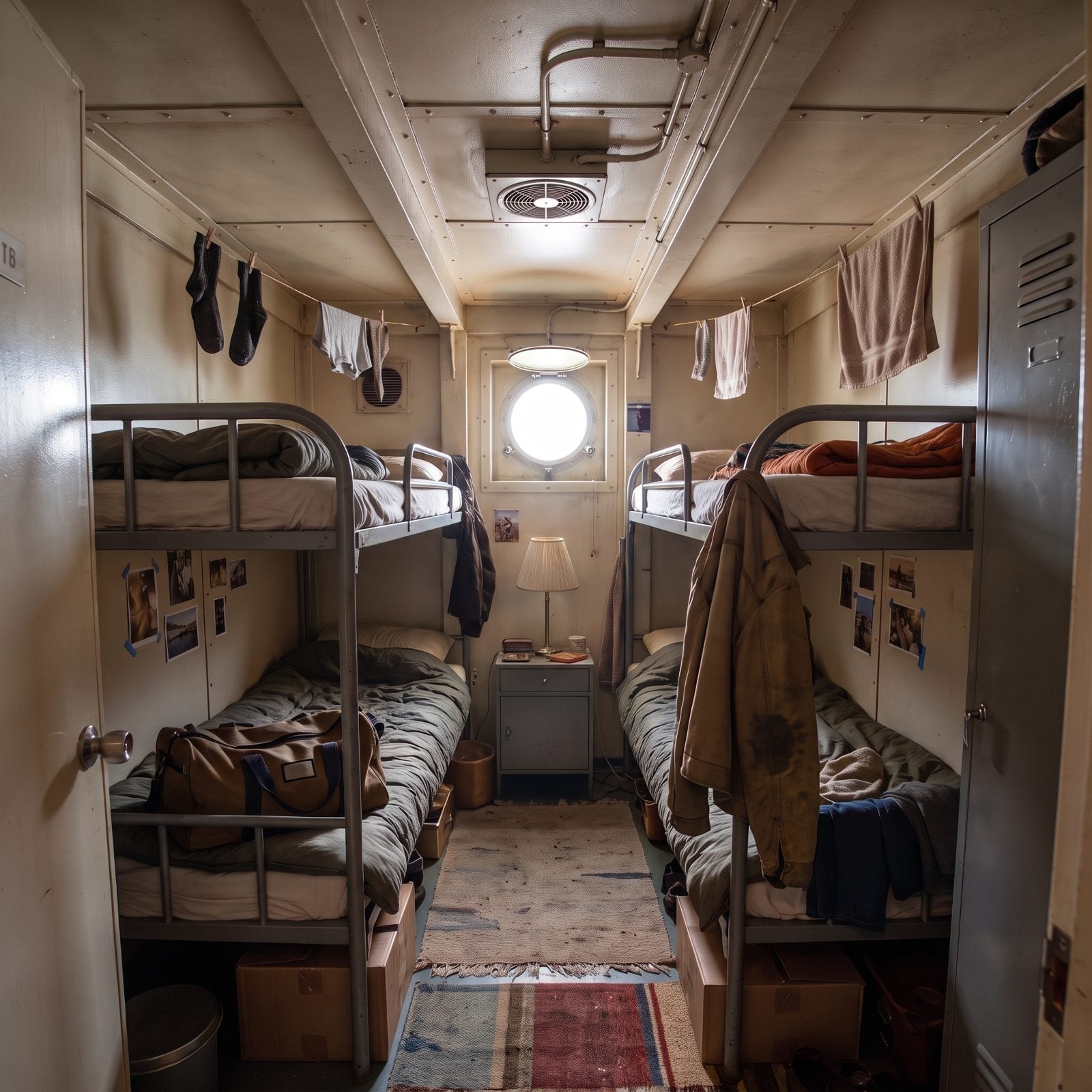
Picture a room narrower than many passenger bathrooms. Two sets of bunk beds, one small nightstand, a sliver of locker, and often no window at all. Now share it with coworkers you may have met the day you signed on.
That’s where a lot of the crew sleeps. Entry-level staff frequently double up with a bunkmate, sometimes on opposite shift schedules so the cabin only ever holds one of them at a time. Senior officers get more space and privacy. Everyone else trades square footage for a paycheck, a free flight home, and a view of the ocean they rarely get to stand still and actually look at.
21. I-95: The Highway Hidden Inside the Hull
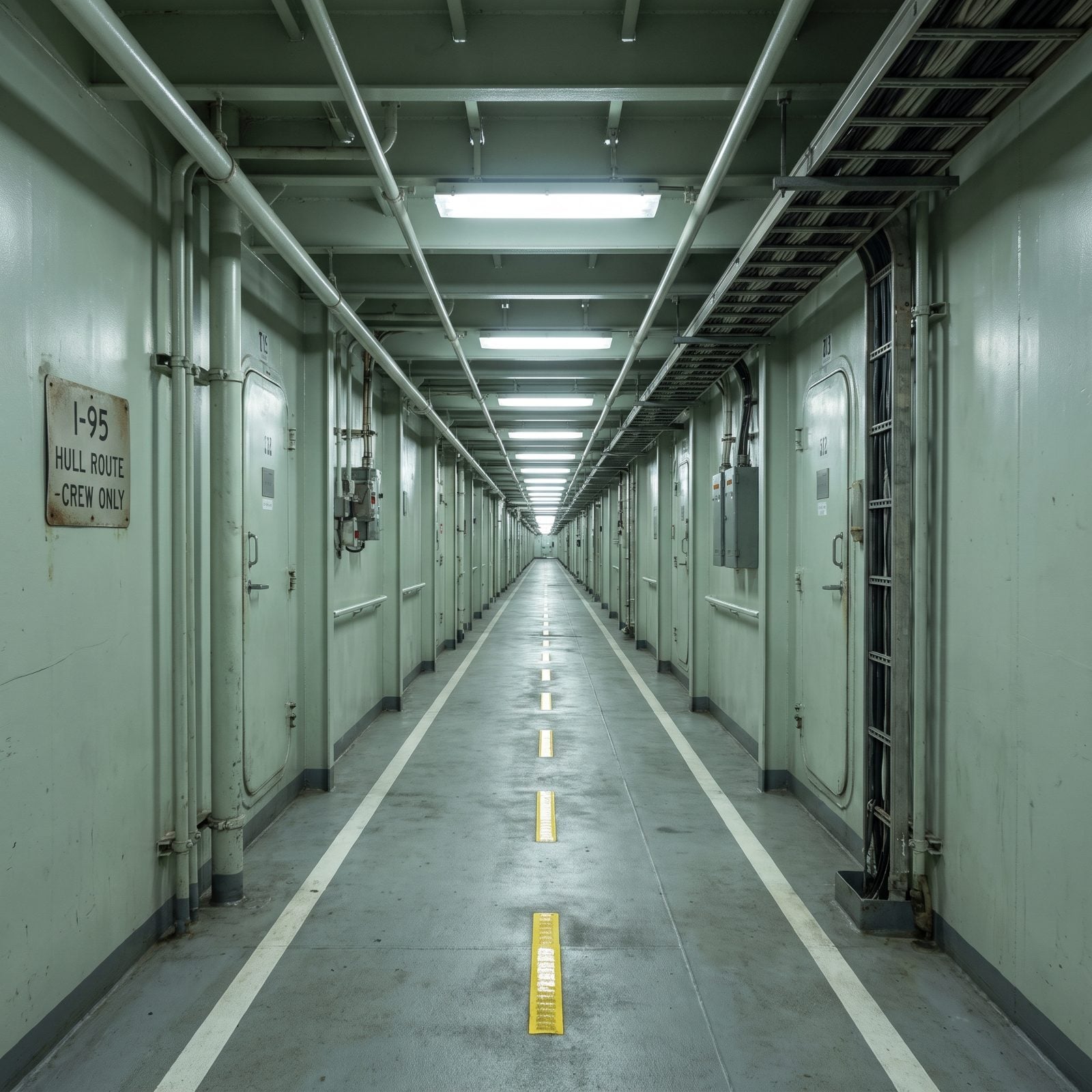
On many ships, the main crew corridor runs nearly the full length of the vessel — deck after deck of numbered doors, pipes, and foot traffic. Crews nicknamed it I-95, after the interstate that runs up and down the East Coast.
And the name fits. This is the ship’s arterial road, where chefs, engineers, dancers, cabin stewards, waiters, and officers all move through at every hour. Where crew gossip travels. Where the carts clatter past and someone is always late for a shift. Guests walk the promenade deck above with no idea there’s a working highway humming directly beneath them.
20. The Service Elevators Doing the Ship’s Heavy Lifting
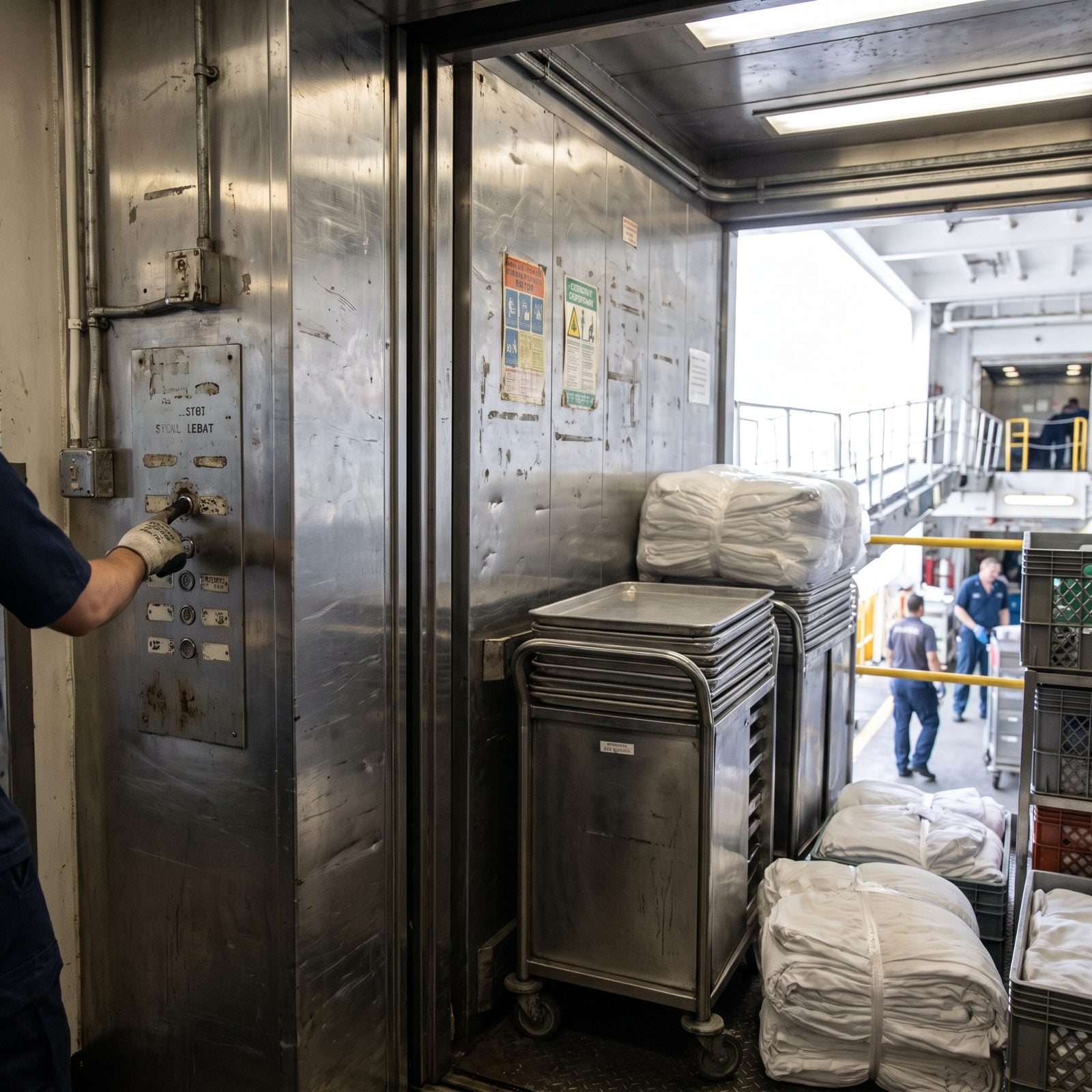
Every plate of food, every clean sheet, every suitcase, every keg, every bag of trash — it all moves on service elevators and crew stairs running parallel to the pretty glass ones you ride in the atrium.
Guests never see this part. Guest elevators carry people; service elevators carry the ship. Bigger, uglier, dented from a thousand carts, running almost constantly. A cruise ship makes an enormous amount of labor look like it happens by magic — and this is where the magic turns out to be freight, grinding up and down a steel shaft all day and most of the night.
19. Which Mess Hall You Eat In Depends on Your Stripes
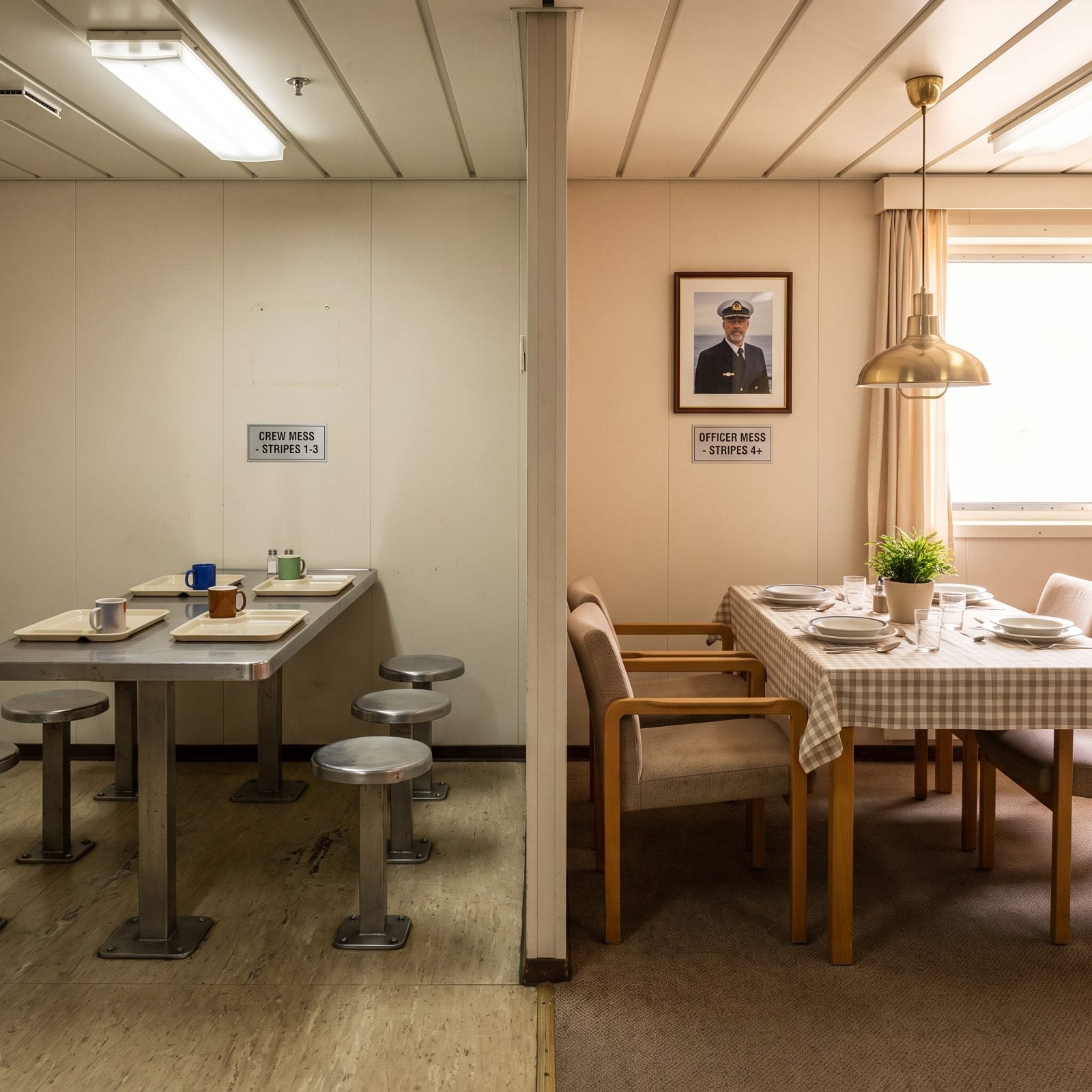
There’s usually more than one crew canteen, and where you eat can come down to rank. General crew have their mess. Officers and senior staff often get a separate dining room with table service and a different menu.
Sounds like a floating class system, and honestly, it is one. Ships run on hierarchy the way a navy does, and the mess halls make that hierarchy visible three times a day. Nobody pretends otherwise. The food in the main crew mess is also more international than you’d guess — built to feed a workforce from dozens of countries, all a very long way from home and craving something that tastes like it.
18. The Crew Bar Is Where the Ship Actually Unwinds
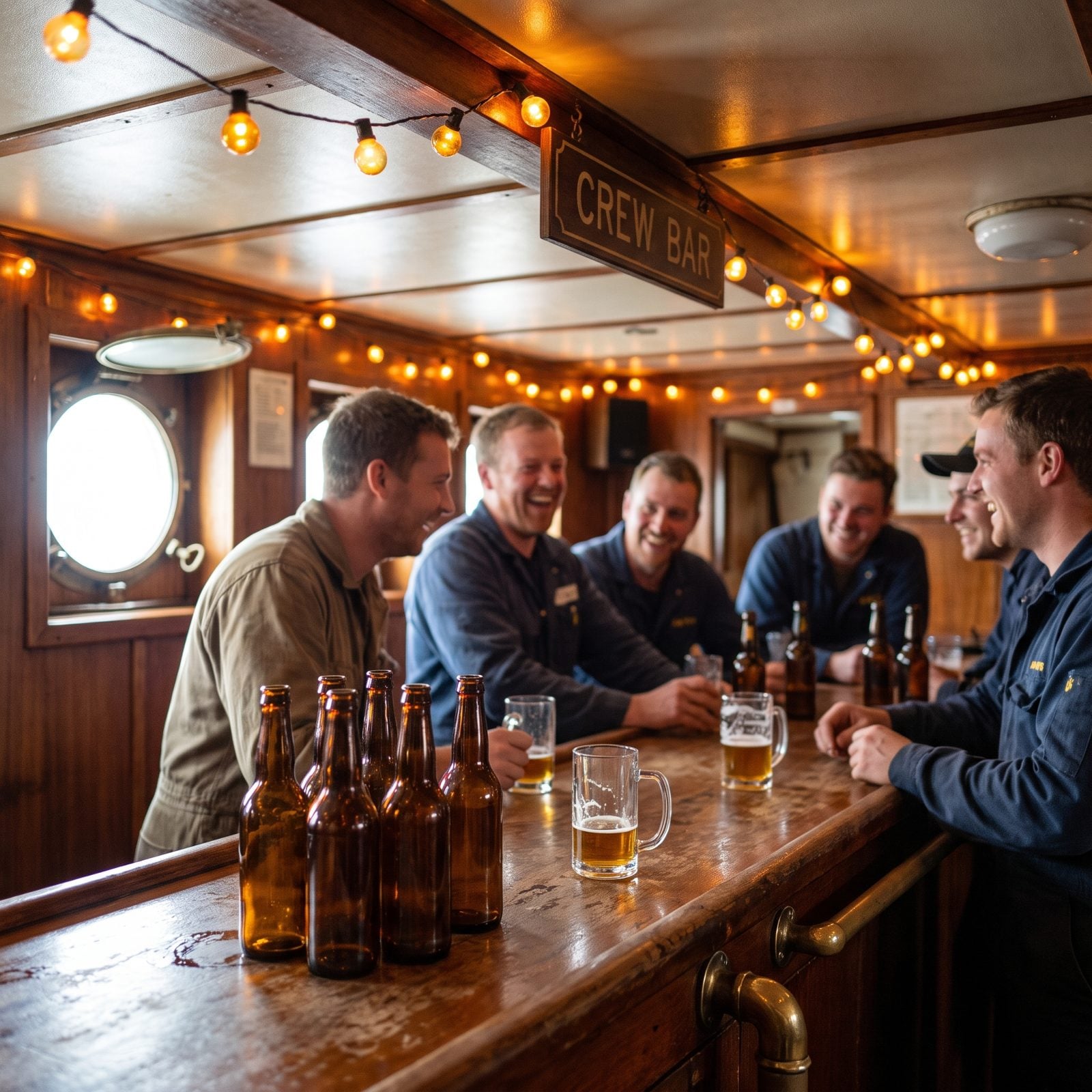
Down below, away from guests, there’s a bar run by the crew, for the crew, with cheap drinks and no customer-service smile required.
This is where the ship exhales. After a long day of being endlessly pleasant to strangers, crew from every department land here: the Filipino cabin stewards, the Italian officers, the Indonesian galley staff, the dancers, the gift-shop clerks. Flags from a dozen countries hang over the bar. There’s usually a dartboard, often karaoke, and romances that bloom and burn over a single contract. It’s the social center. It’s the pressure valve. And for a lot of crew it’s the closest thing to a living room they’ll have for the next six months.
17. Why Crew Wi-Fi Can Quietly Eat a Chunk of the Paycheck
🔥 Would you like to save this?
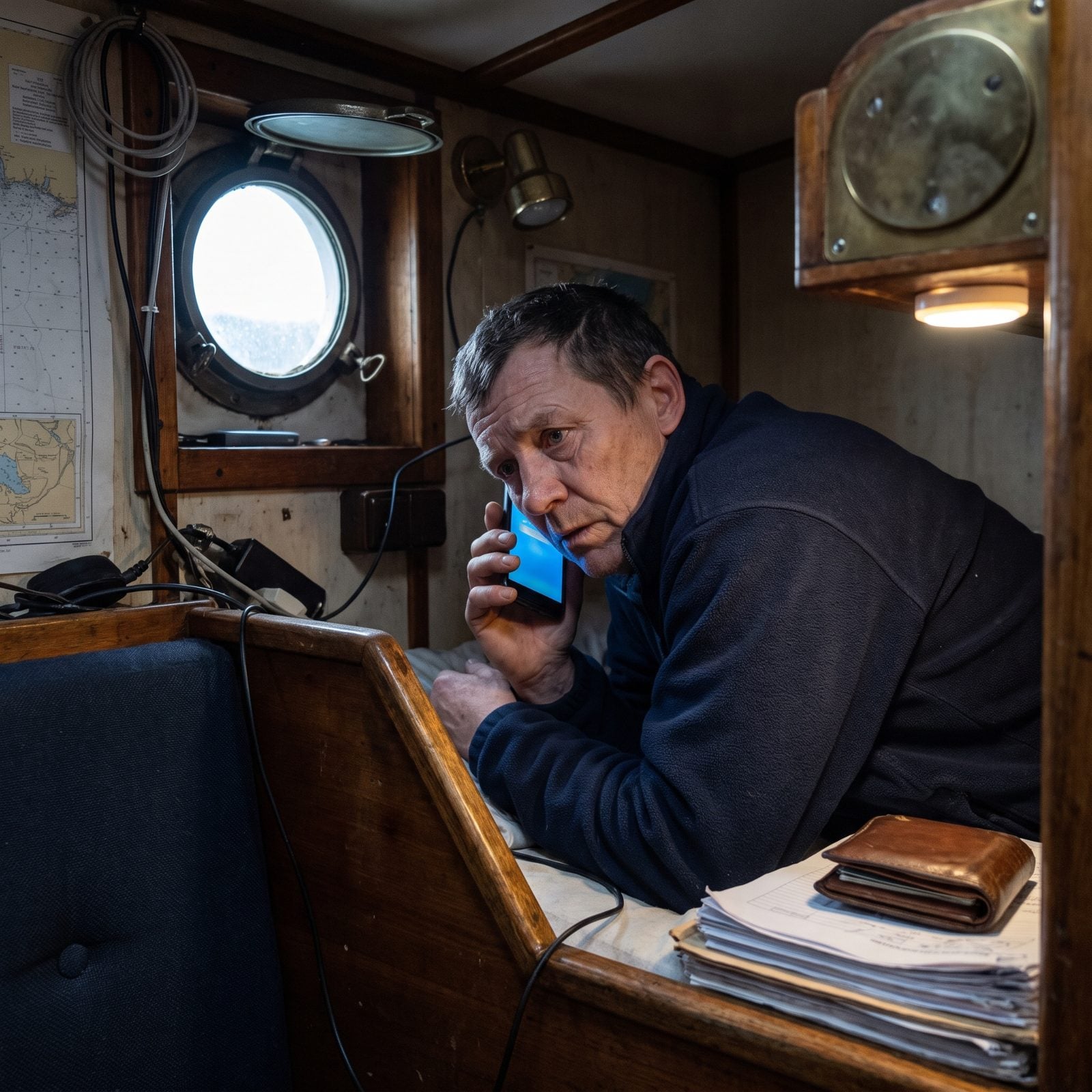
Connecting to home from the middle of the ocean is not free, and it is rarely cheap. Satellite bandwidth onboard is a limited resource, split between navigation, guest service, and whatever the crew can scrape together to buy for themselves. A lot of them pay for data packages out of their own wages just to video-call the kids back home.
That nightly call to say goodnight? It’s a line item. Six months of contract, and it adds up fast.
16. The Laundry That Never Really Sleeps
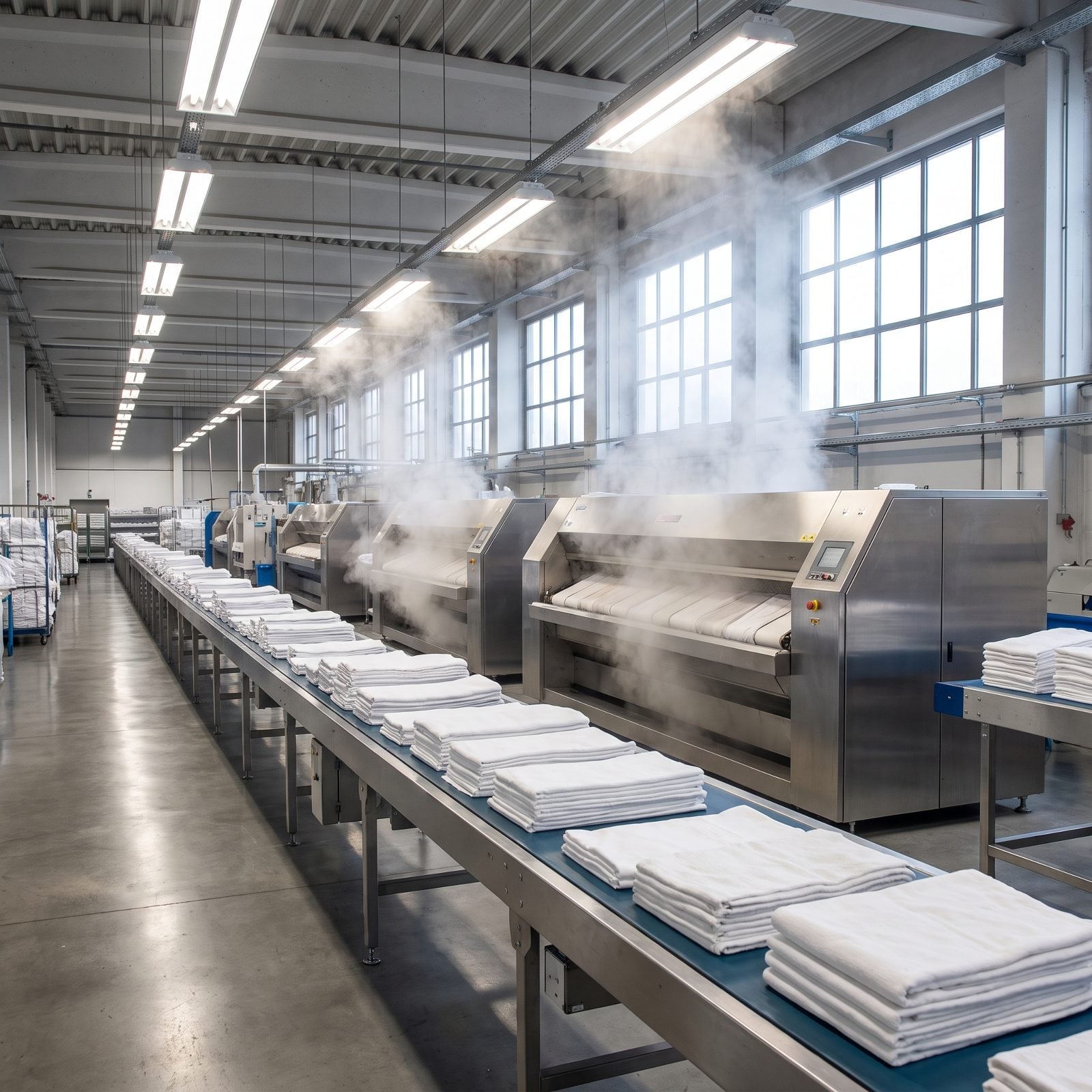
Thousands of towels. Thousands of sheets. Then the napkins, tablecloths, crew uniforms, chef whites stained with the day’s dinner — a ship generates mountains of laundry, and there is never a spare day to catch up.
The machines run in shifts almost around the clock, folding and pressing and sorting so the stack on your bed is warm again by afternoon. It is a hot, loud, humid room most guests will never see. The crew calls it a different kind of engine, and honestly they’re not wrong.
15. Name Tag Straight, Shoes Shined, No Exceptions
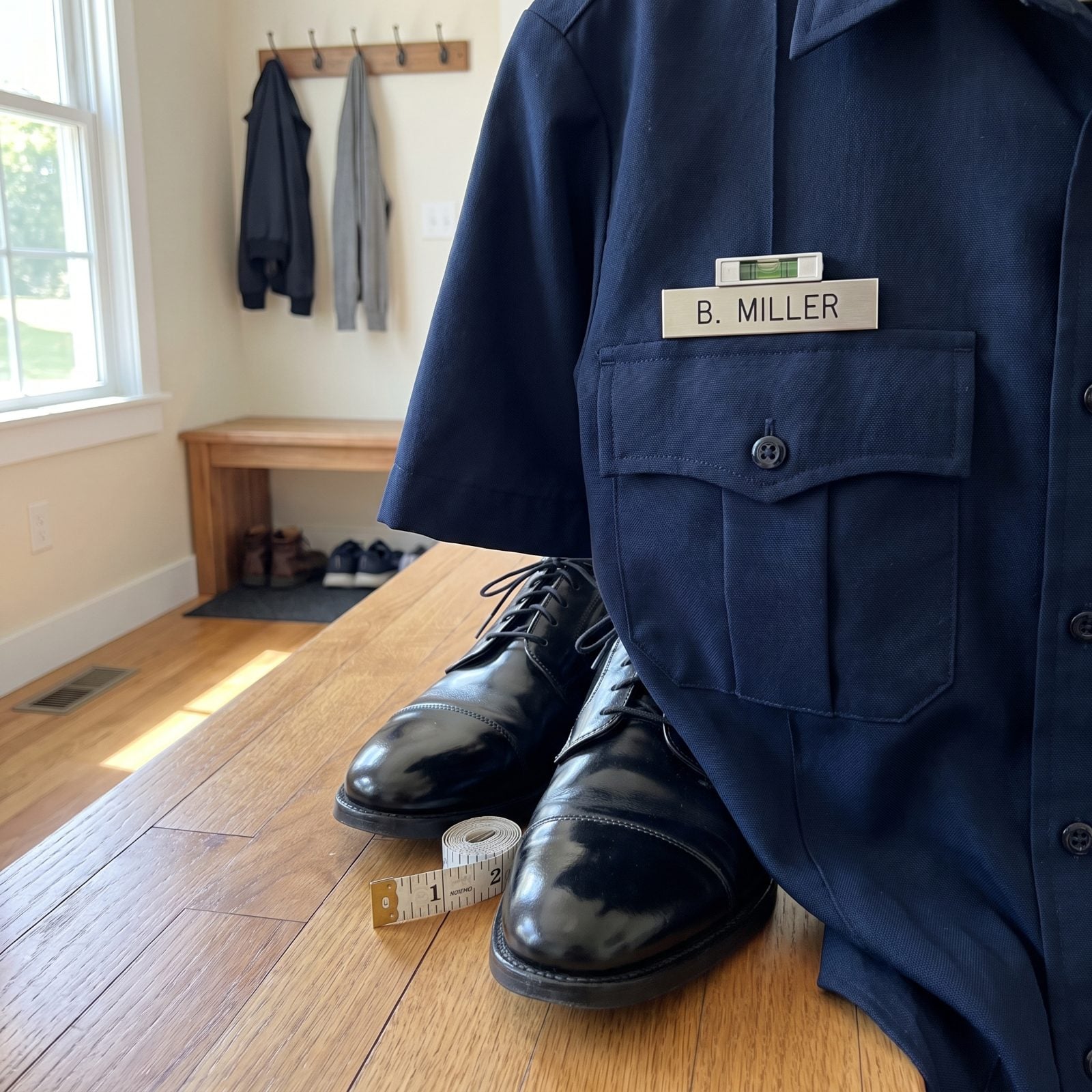
You notice the polish. You never notice the inspection that produced it.
Uniforms, name tags, haircuts, nails, shoes. Before a shift, crew line up and get checked — sometimes by a supervisor with a genuinely sharp eye for a crooked tag or an untucked hem. The standards are written down, and they are enforced. A sloppy look reflects on the whole department, and on a ship running at full occupancy there is simply no room for a department that looks tired.
14. Split Shifts That Bite a Hole Out of the Day
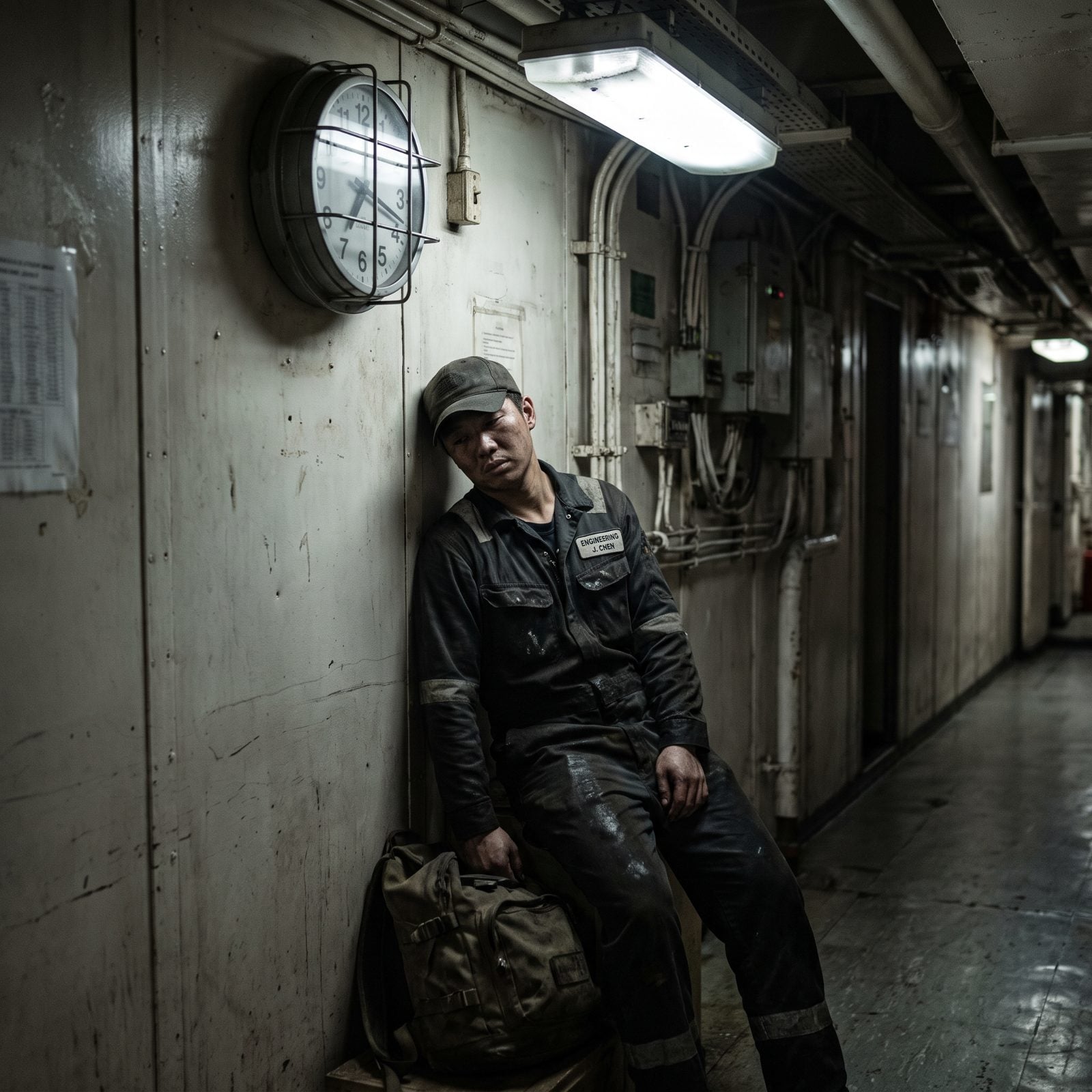
A shift might start at six in the morning, break at ten, pick up again at five, and run past midnight. The hours are legal and scheduled. But they’re scattered across the whole day like loose change.
That mid-afternoon gap is not vacation — it’s when you sleep, eat, do your own laundry, and maybe call home before the data package runs out. The result is a workday that technically fits the rules and still swallows most of your waking hours.
13. How Your Cabin Steward Reads You Before Lunch on Day One
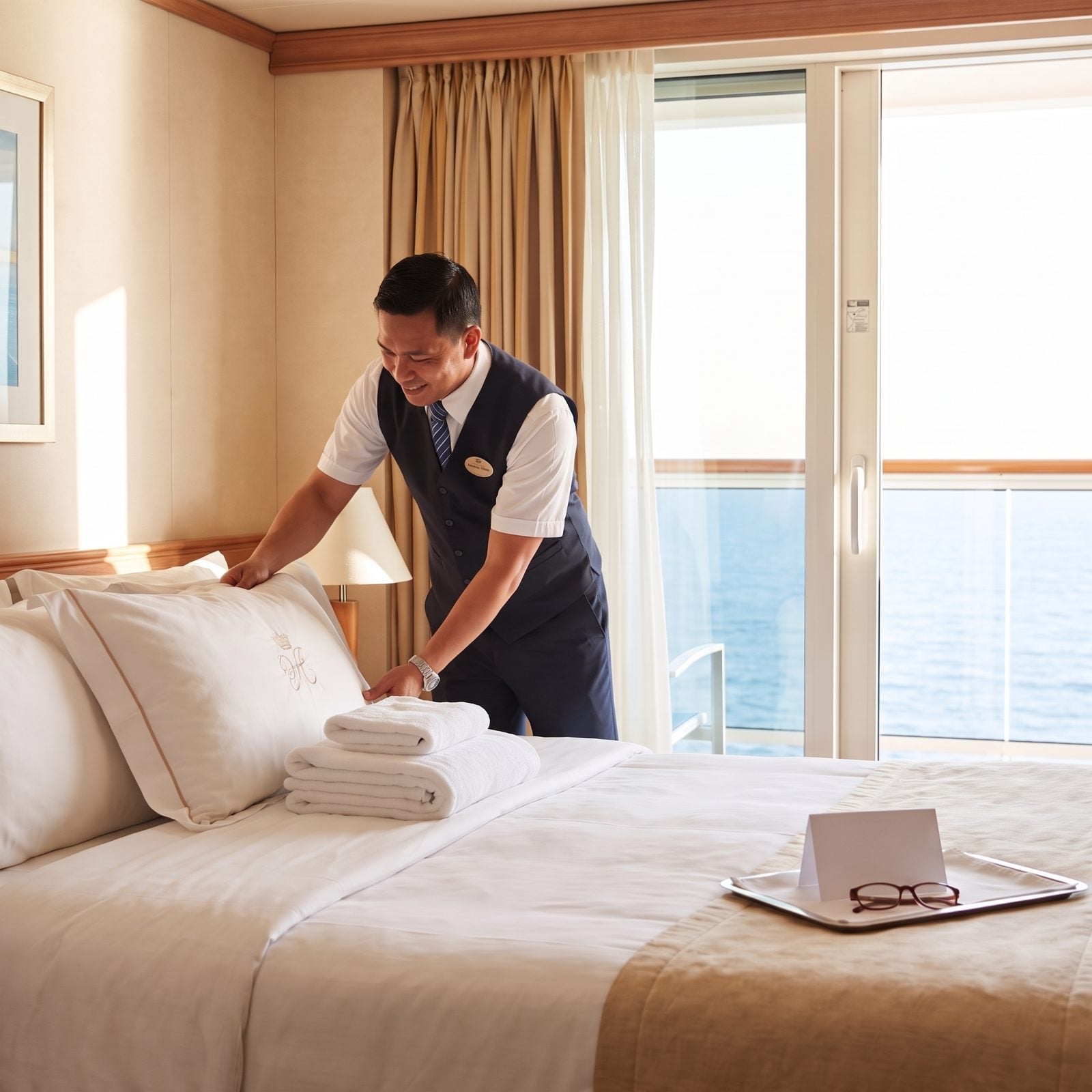
You like two extra pillows. You take ice at night, not morning, and you leave the balcony door open with the thermostat cranked low. Within a few hours, a good steward has clocked all of it.
It feels like mind reading. Really it’s attention, memory, and a quiet mental file on every cabin on the hall. The best ones adjust before you ask — which is exactly the trick that earns the end-of-cruise tip.
12. Dining Teams Run Full Rehearsals Before You Ever Board
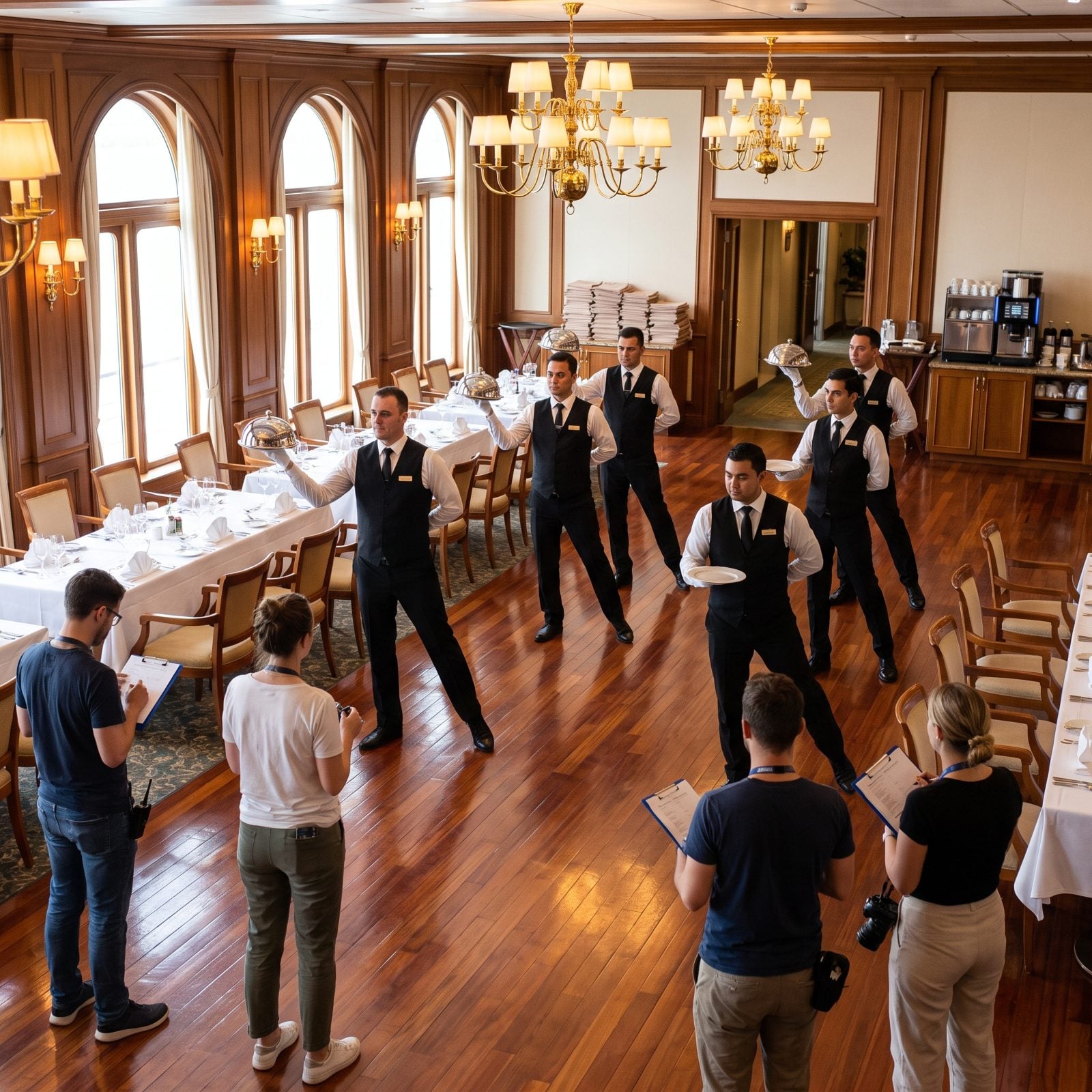
Before the first guest ever finds the dining room, the crew has already run it — table assignments, timing, who carries what, where the new hires stand, how the whole floor moves as one.
It looks effortless on night one because somebody drilled it that afternoon. Picture a pit crew practicing a stop nobody will watch. The polish you credit to natural grace is mostly rehearsal, repeated until the choreography disappears.
11. Your Complaint Travels Further Than You Think
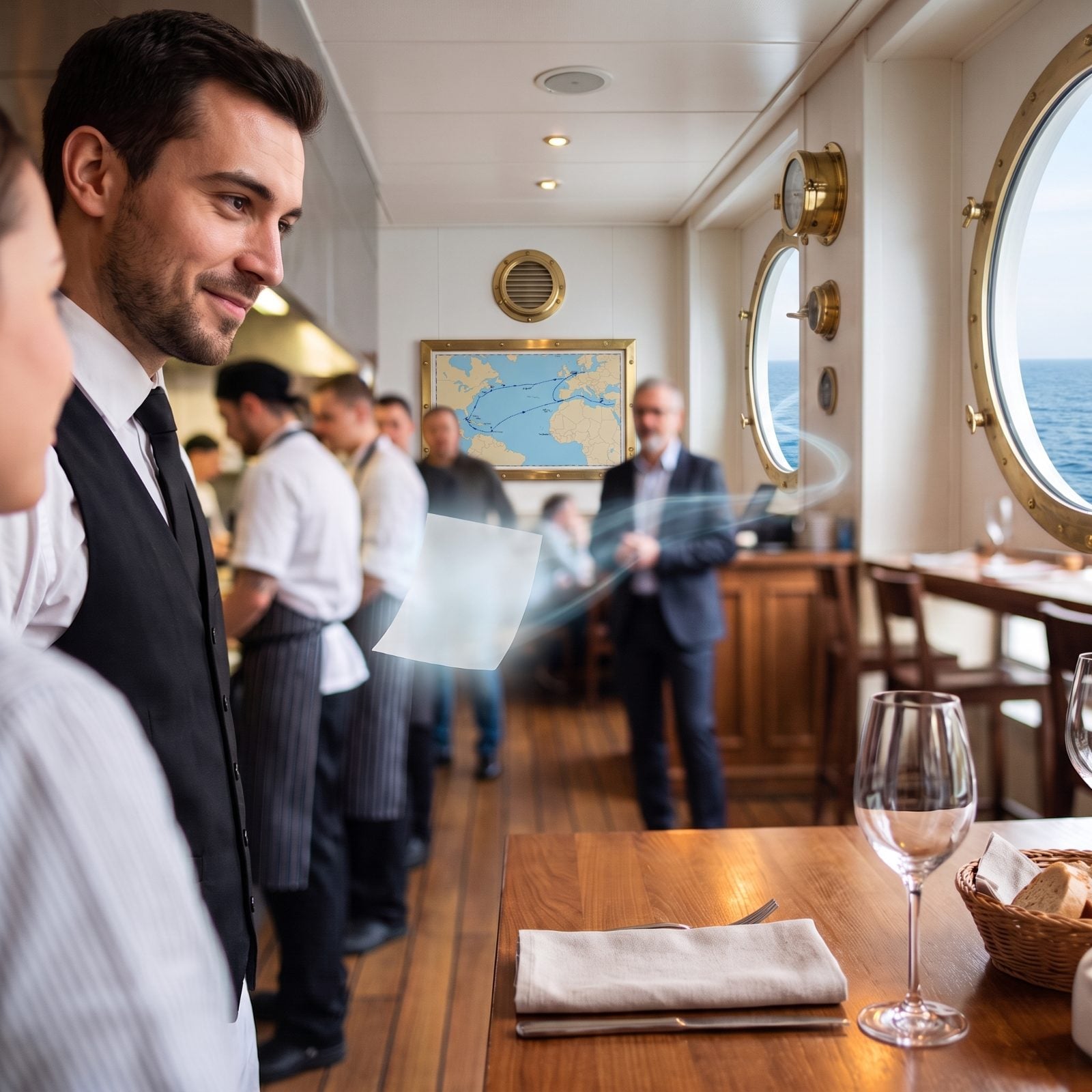
That grumble about a cold entrée does not vanish when the waiter nods. It gets logged. Guest feedback moves between departments through notes, radio calls, and daily meetings, so the person fixing your problem at dinner may already know about your morning.
Honestly, this works in your favor more often than not. A flagged issue follows you around until someone closes it out.
10. The Off-Limits Room Where the Ship Sorts Its Own Trash
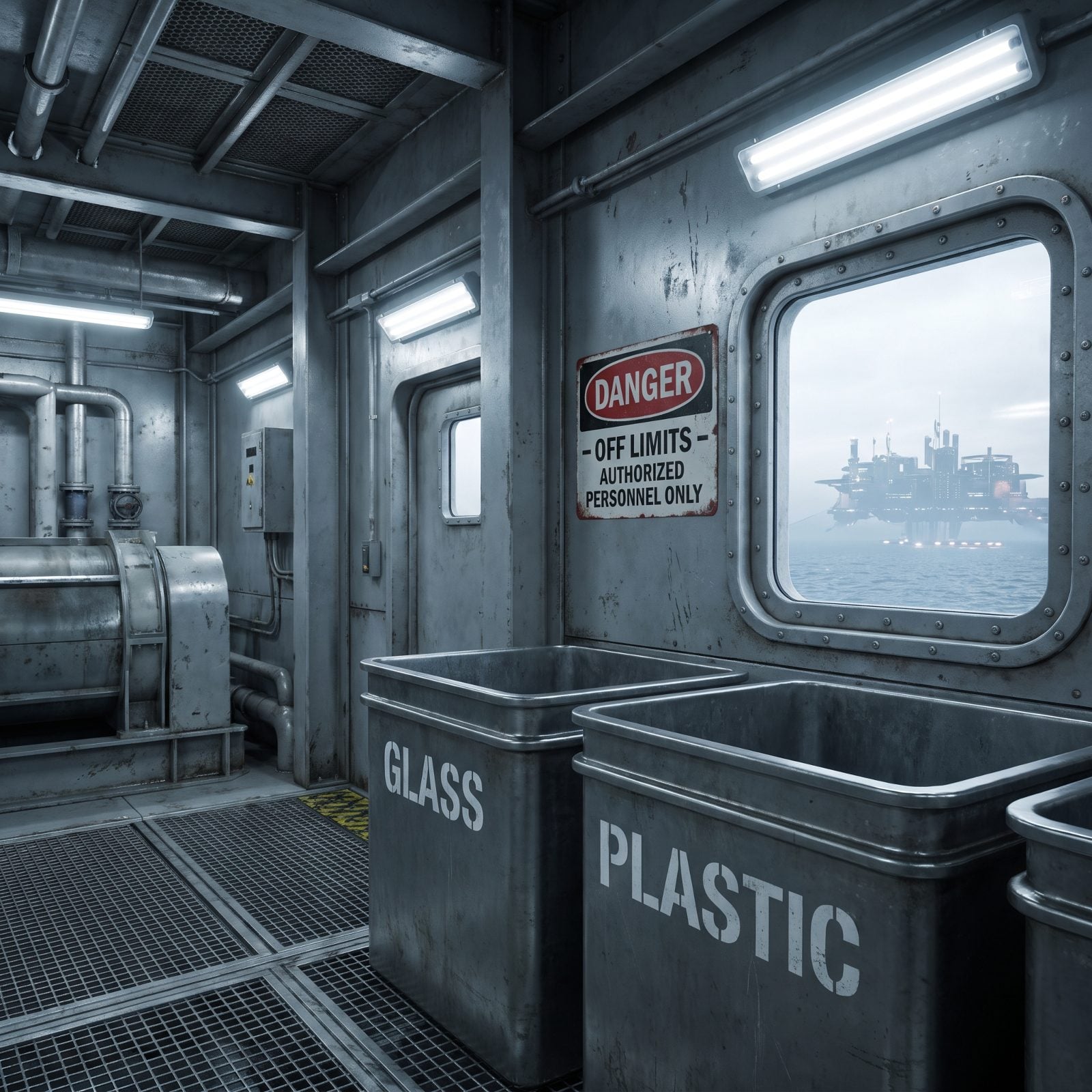
Everything a floating city of people throws away has to go somewhere, and out here there is no curb. Glass, plastic, metal, cardboard, food scraps, cooking oil — all of it gets sorted, crushed, stored, and offloaded under strict rules.
It’s a big, orderly operation tucked well out of sight. Not sinister. Just unglamorous, the kind of work that keeps the ocean out of the headlines.
9. The Water in Your Shower Was Seawater This Morning
🔥 Would you like to save this?
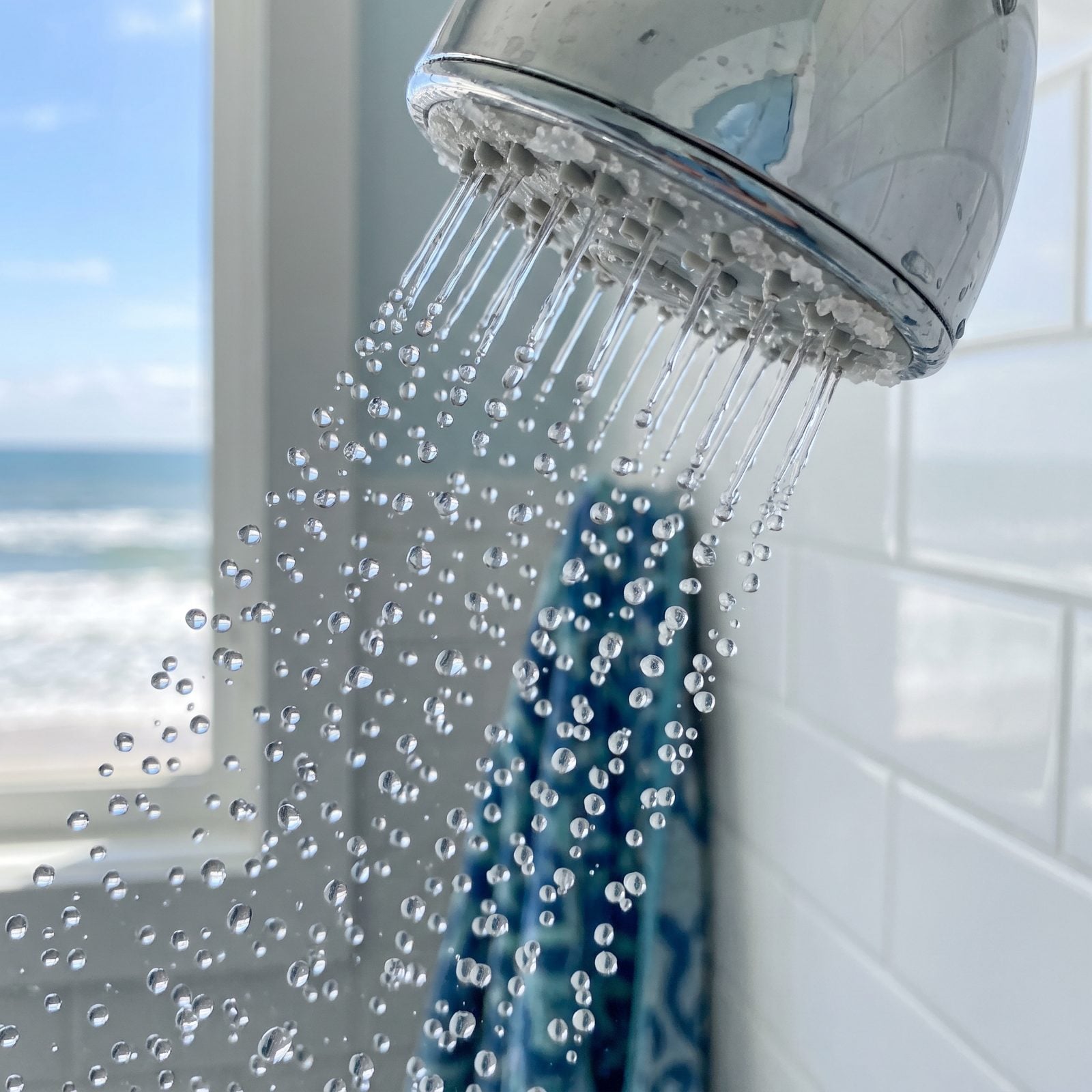
Most ships can’t carry enough fresh water for a full sailing, so they make their own. Seawater goes in, gets pushed through desalination and filtration, and comes out as the water you drink, cook with, and shower in.
Nobody thinks about any of this while rinsing off sunscreen. But the ocean you cruised through at breakfast is the same tap you used at night.
8. The Control Room That Never Turns Off the Lights
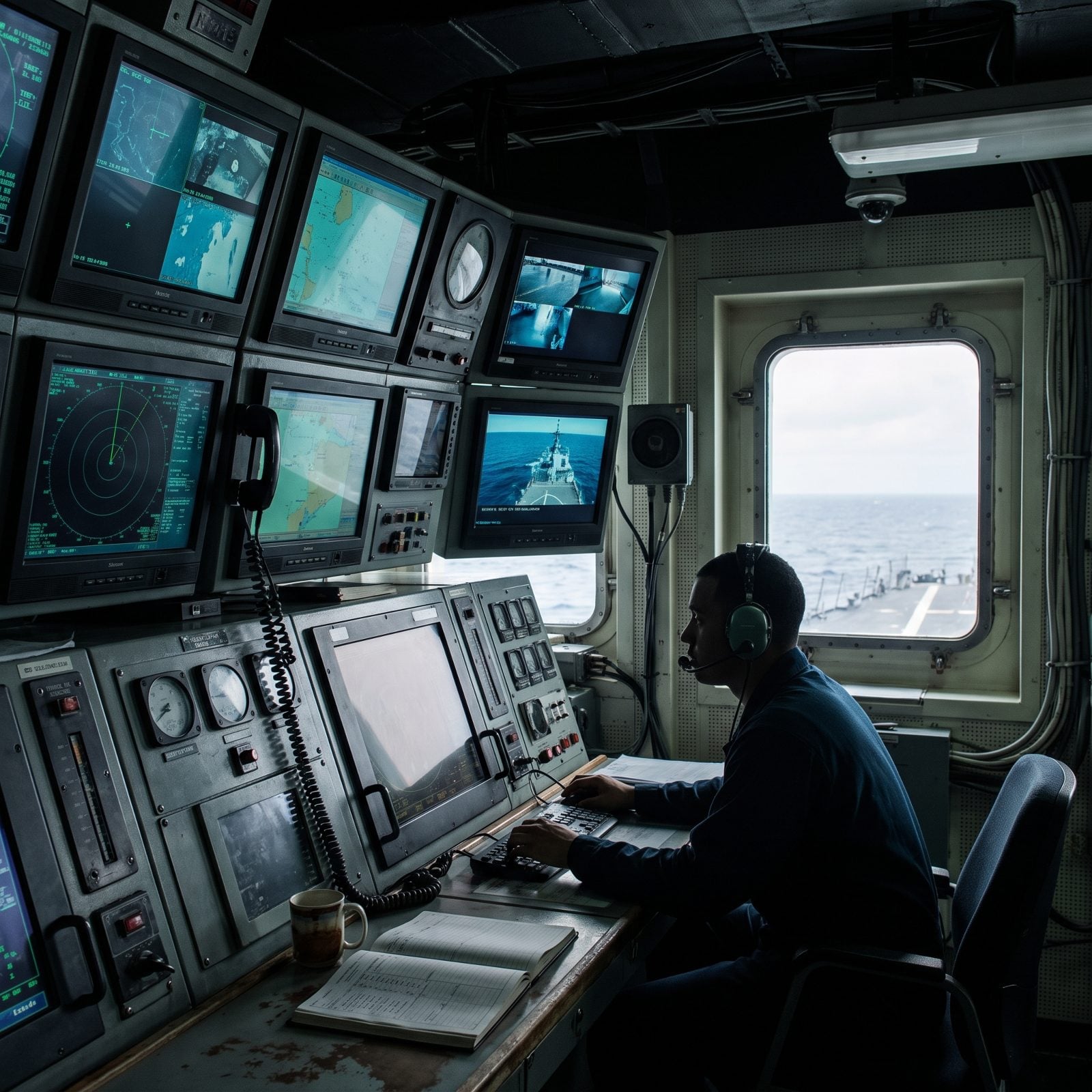
Somewhere far below the buffet, a room full of screens watches everything — engine load, fuel, power generation, temperatures, pressures, every system that keeps the ship moving and livable.
It’s staffed every hour of every day. Port or sea, calm or rough. The vacation up top only works because this room never stops, and while you sleep off the dinner you complained about, someone down here is reading a gauge and keeping the whole thing afloat.
7. The Bridge Sees More of the Ship Than Guests Ever Realize
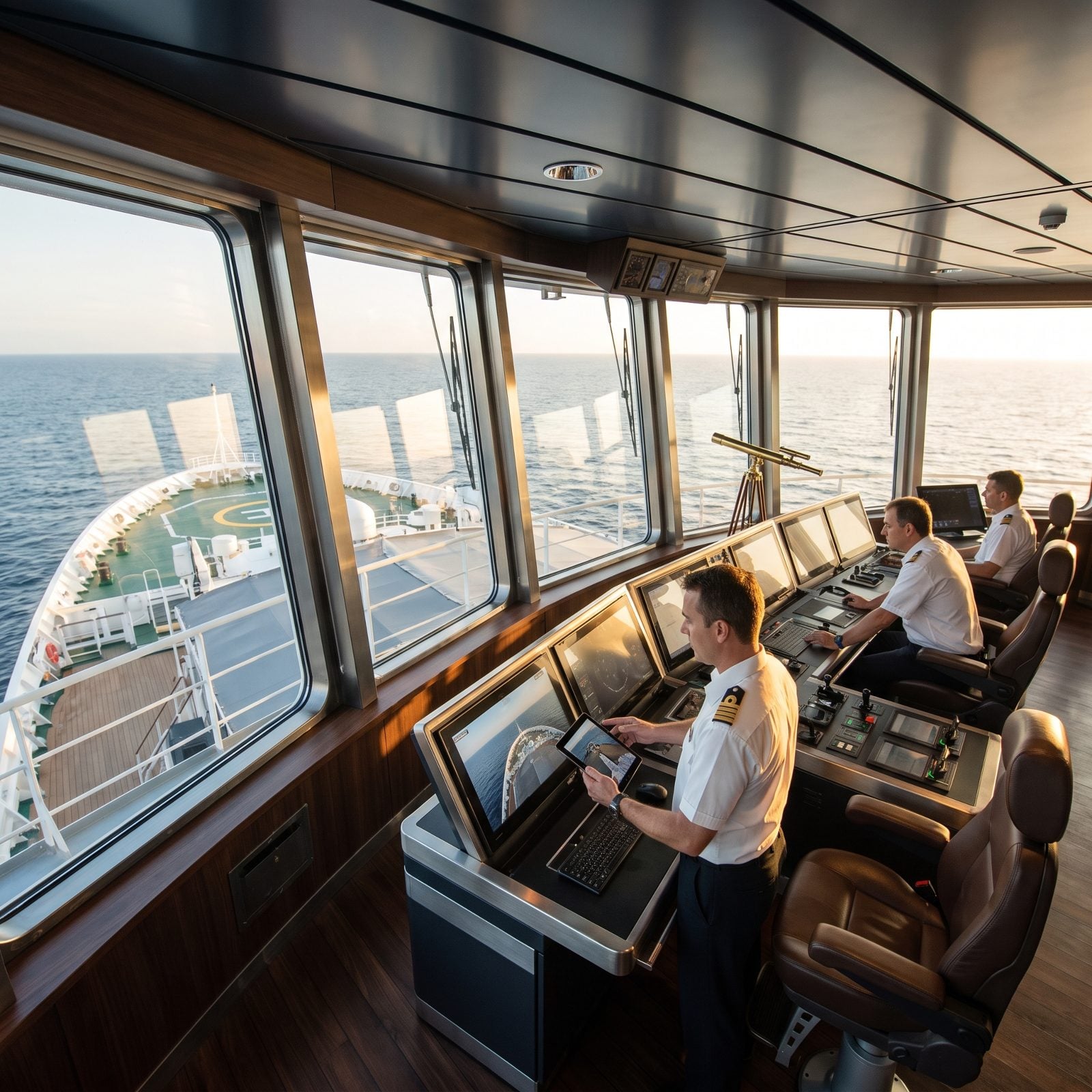
The bridge is less a cockpit and more a nerve center. From that one room, officers can watch camera feeds of the mooring decks, the engine spaces, the gangways, and long stretches of crew corridor, while reading fuel loads, trim, water depth, weather sixty miles out, and exactly how fast the ship is burning through its day.
Most guests picture a captain staring romantically at the horizon. The reality is screens. Dozens of them, turning a floating town of five thousand people into data points and camera tiles, all watched by a handful of officers on rotating shifts.
6. Stabilizers Soften the Roll, but the Sea Still Wins Sometimes
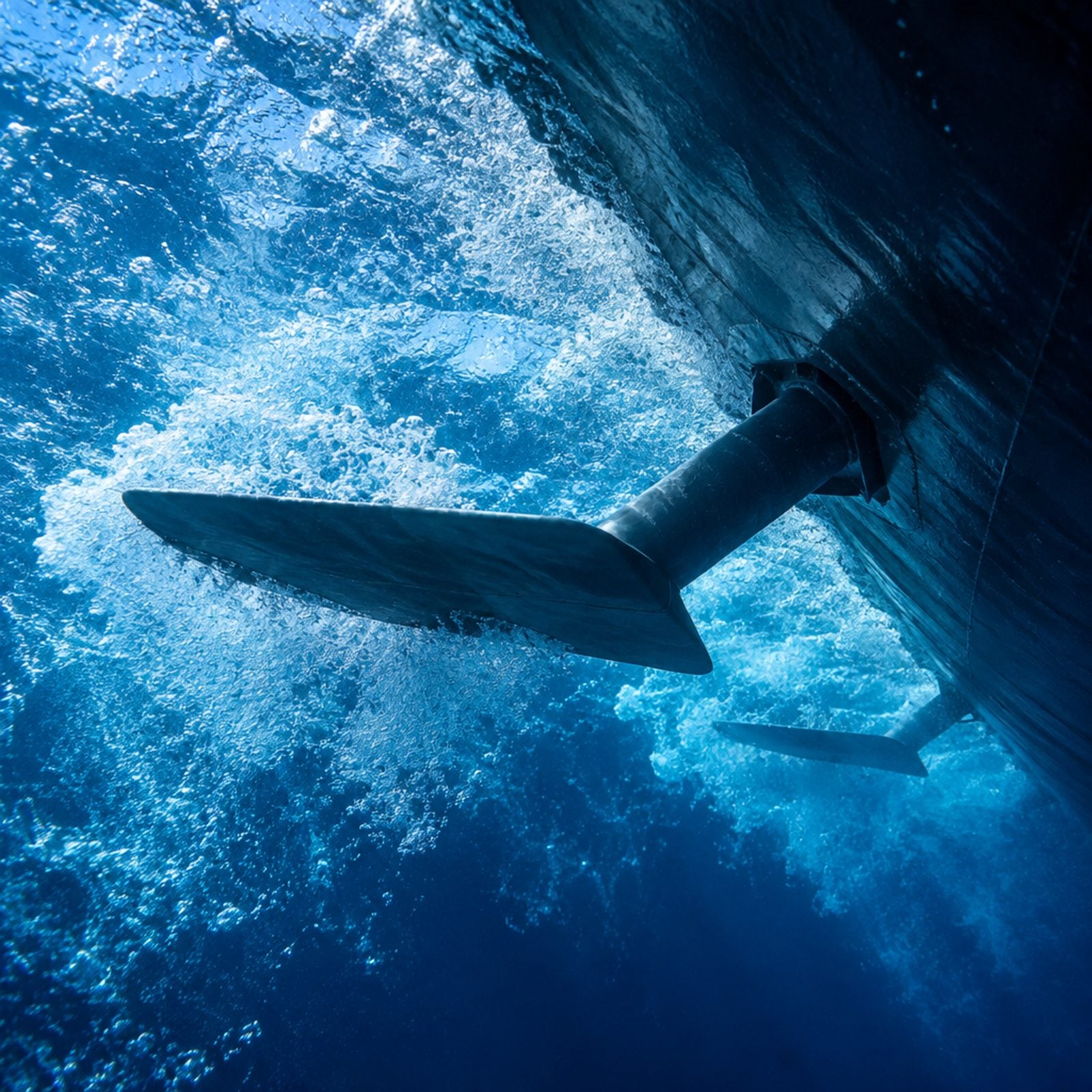
Stabilizers are retractable fins, roughly the shape of airplane wings, that fold out from the hull below the waterline and tilt constantly to counteract roll. On a long swell they work beautifully, and you forget you’re on water at all.
What they can’t do is stop the ship from moving. In heavy beam seas, or the kind of chop that comes out of nowhere off a cape, you’ll feel it in your knees and your coffee cup. Anyone who promises a perfectly flat ride is selling something.
5. Crew Drills Keep Running, Even When the Ship Is Tied Up in Port
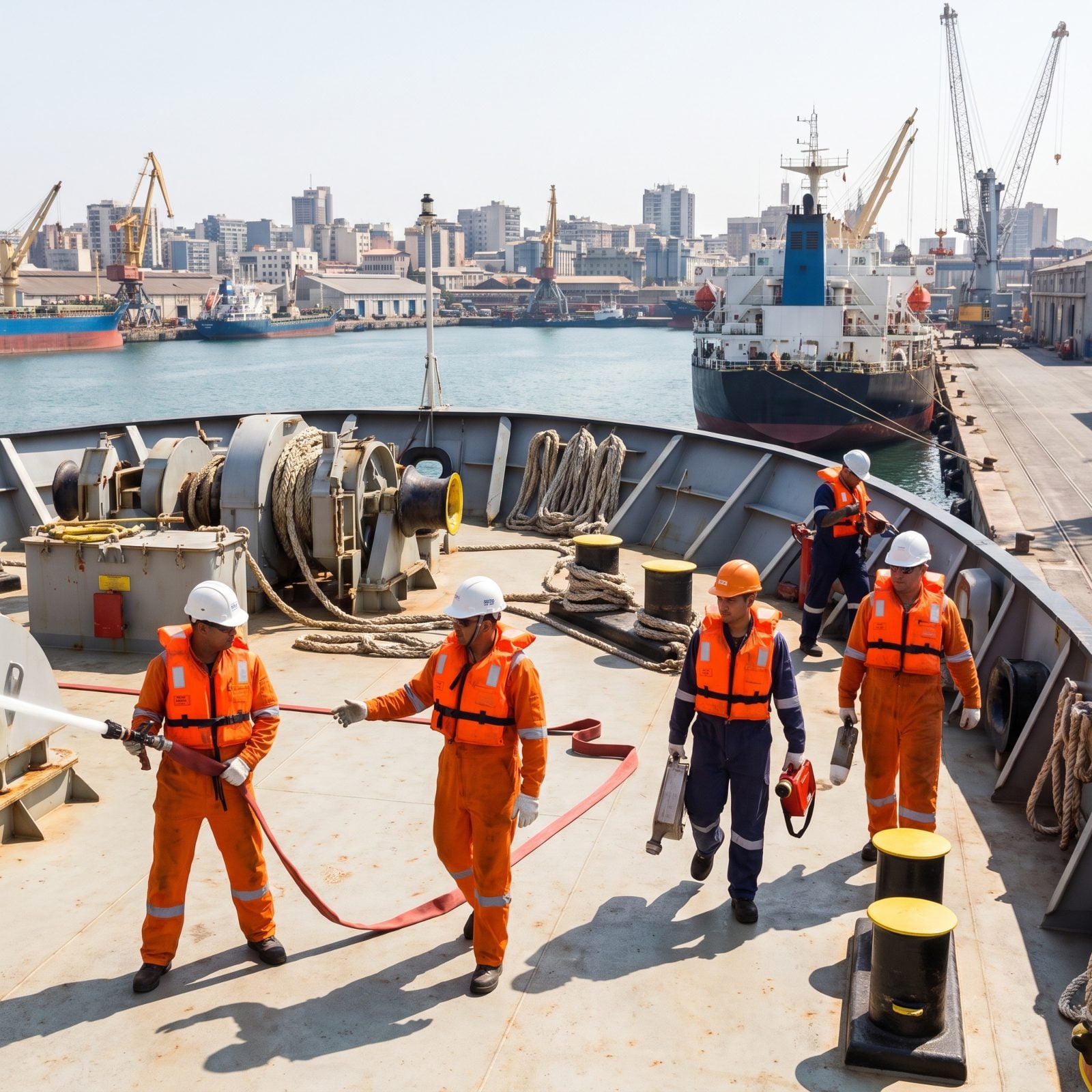
You might think a port day means a quiet ship. For the crew it’s often the opposite, because port is exactly when a lot of the required safety training happens, with fewer guests aboard to work around.
Fire teams run their routes. Lifeboat crews check release gear. Muster assignments get rehearsed until they’re muscle memory. The regulations don’t pause because the ship stopped moving.
So while you’re wandering a market ashore, there’s a decent chance a group of crew is standing in formation on an upper deck, counting heads and checking buckles for the dozenth time that month.
4. Some Emergency Training Happens in Smoke-Filled Practice Rooms
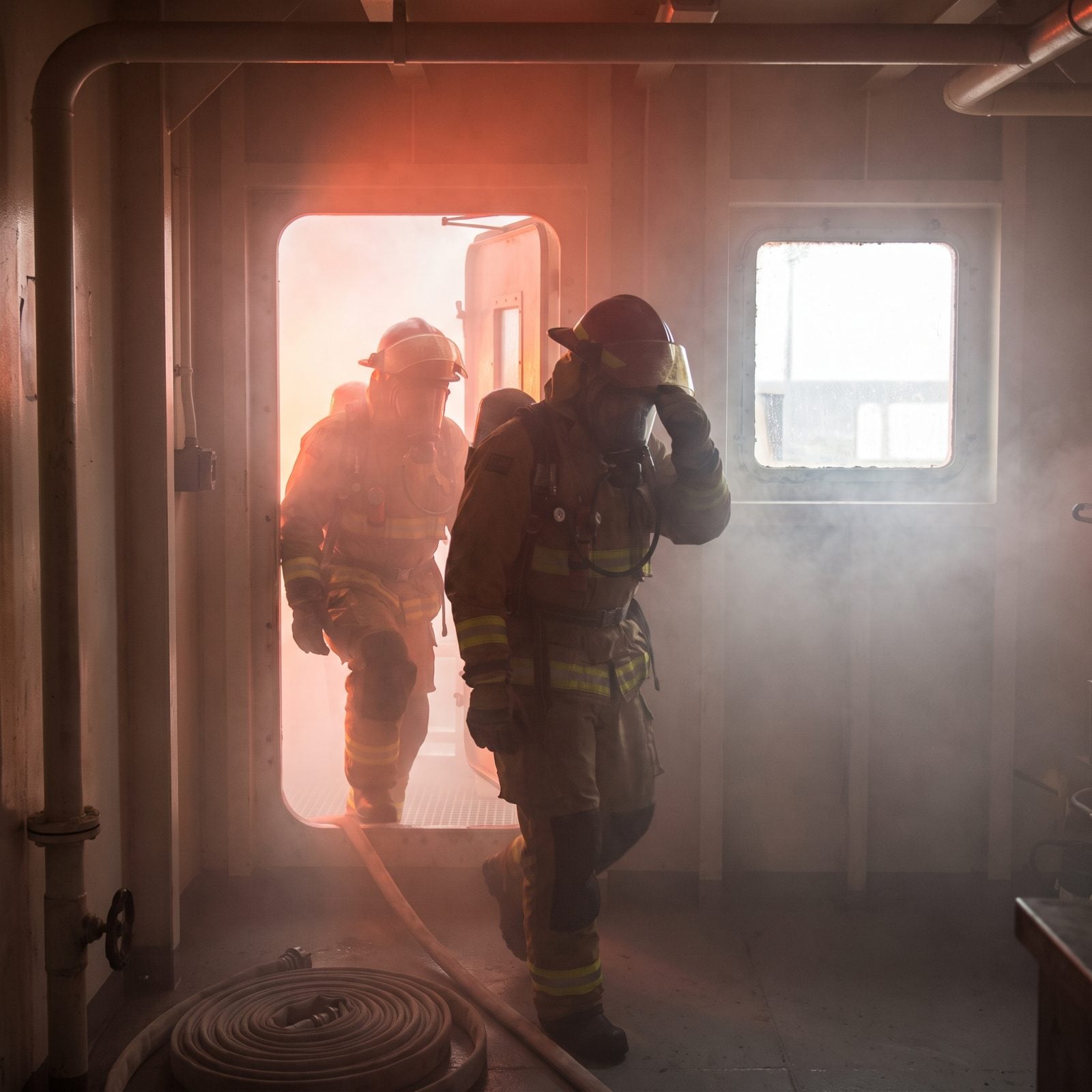
To train fire teams for real conditions, some ships use purpose-built rooms that can be flooded with harmless theatrical smoke. Crews suit up in breathing apparatus and work the space by touch and guide rope, learning what it’s like to see nothing and keep moving anyway.
It sounds dramatic because it is. There’s nothing secretive about it, though. A ship at sea has no fire department to call, so the crew is the fire department.
At sea, there’s no one to call. The people who serve your dinner may also be the people trained to fight a fire three decks down.
3. Every Crew Member Has a Specific Lifeboat Job, Not a General One
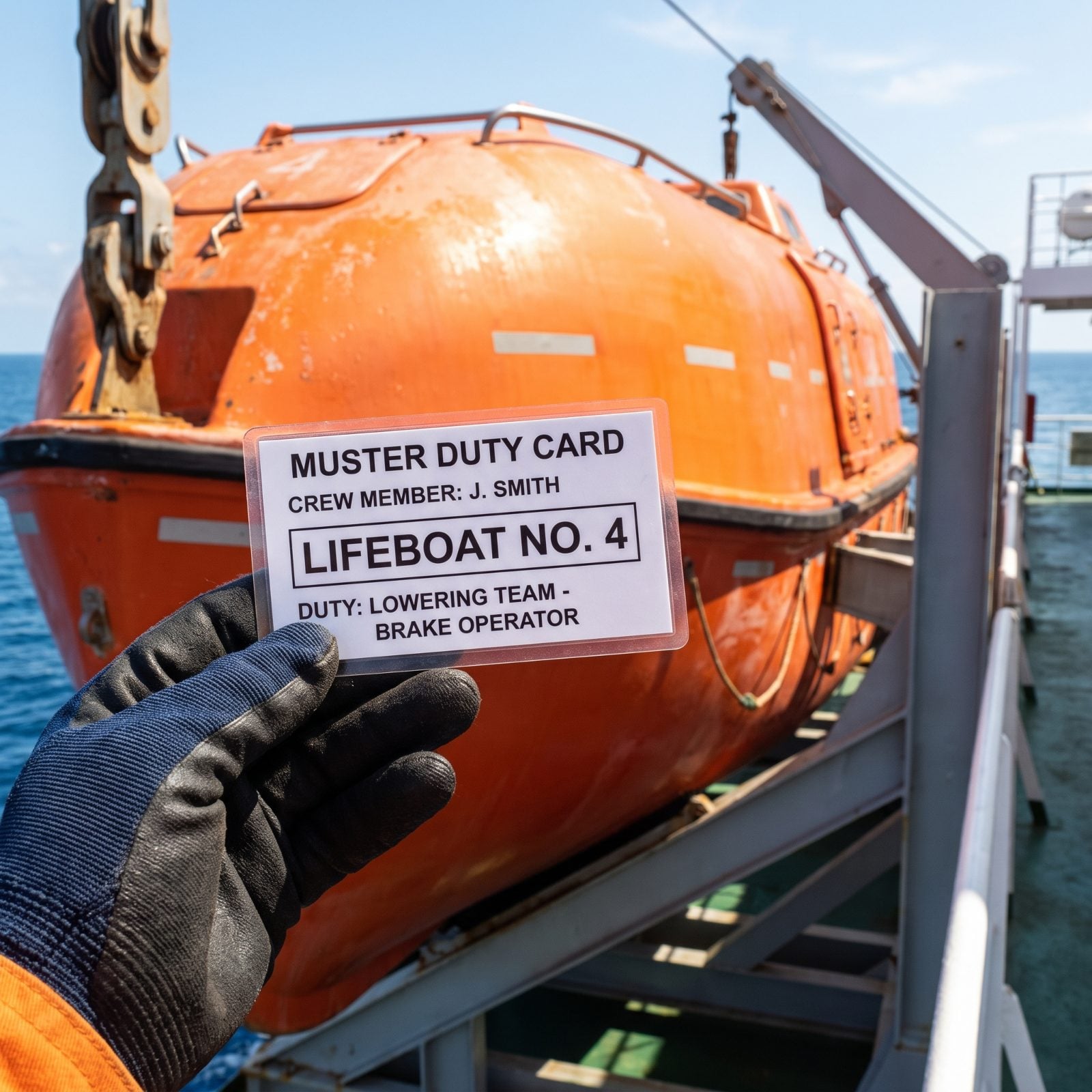
In an emergency, nobody improvises. Every crew member carries a card listing their exact duty: this lifeboat, that door, this muster station, that stretcher. Last night’s dinner waiter might be the person counting guests at Boat 6.
Those assignments get drilled relentlessly so that under pressure, people move on reflex rather than thought. Panic is the enemy. Repetition is the cure.
2. Contract End Dates Are a Target, Not a Promise
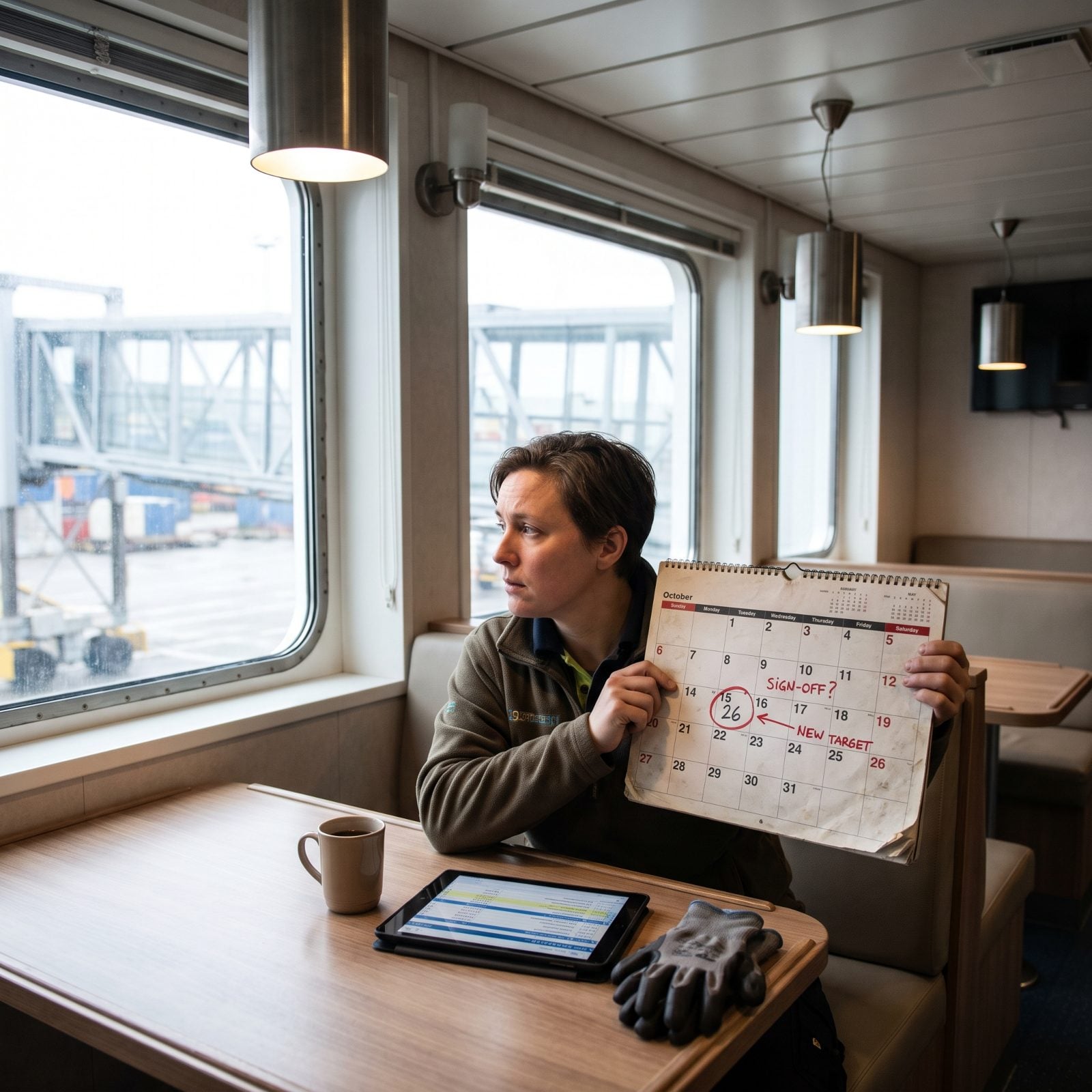
A crew contract comes with an expected sign-off date. That date is real, but it breathes. Dry dock schedules, late reliefs, visa delays, itinerary changes, any of them can push it by days, sometimes by weeks.
For someone counting down to seeing family after six or seven months away, a shifted date lands hard. It isn’t cruelty. It’s logistics, plain and simple, because a relief has to physically arrive and get trained before anyone can leave.
Worth knowing if you ever wonder why a crew member you befriended seemed vague about exactly when they’d be home. Often they genuinely don’t know yet.
1. Many Crew Work Every Single Day of the Contract, No Days Off
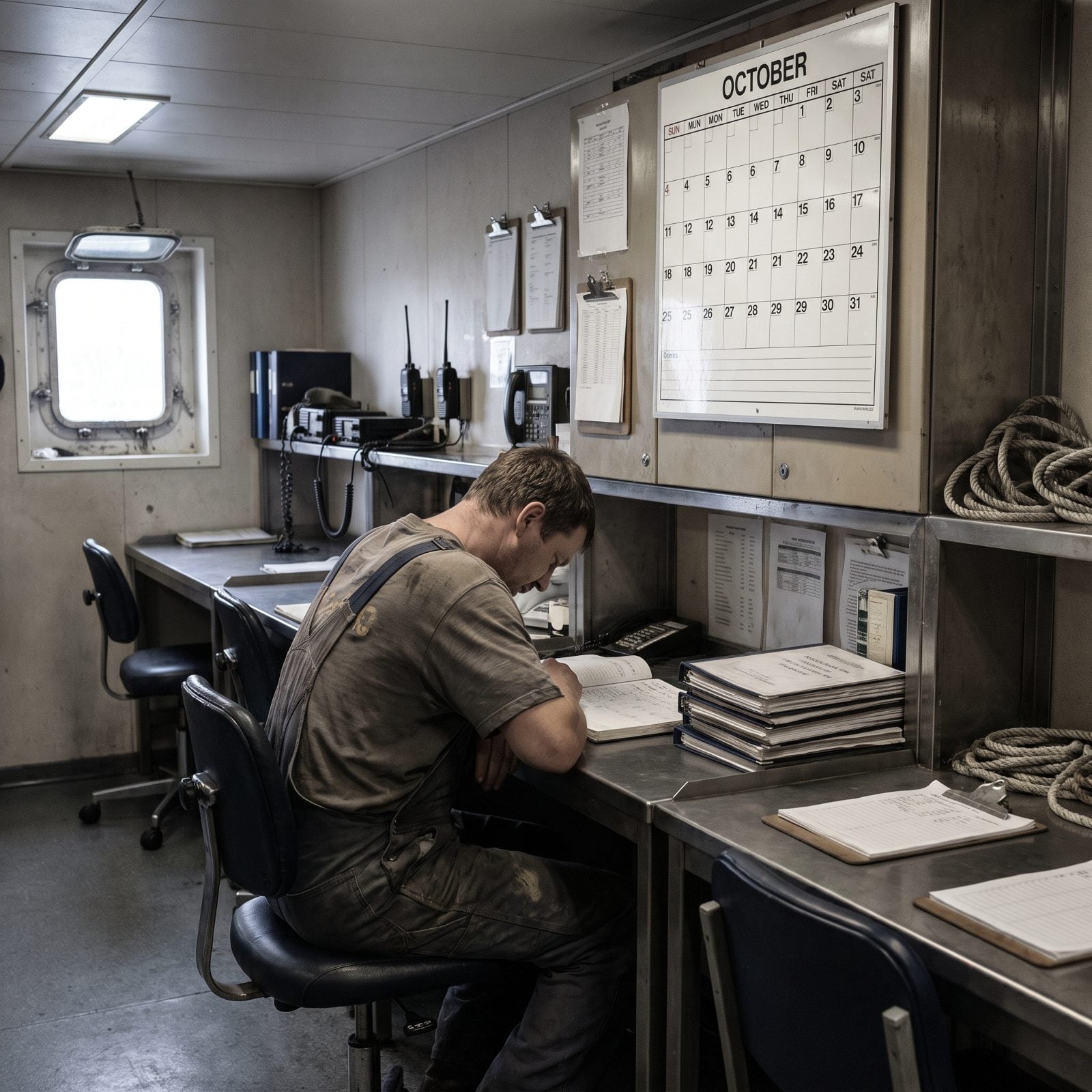
Here’s the part guests rarely grasp. A ship doesn’t close, so most crew work every day of a contract that can run six, eight, even ten months. No weekend. No sleeping in. The concept of a day off, as you know it, mostly doesn’t exist at sea.
Hours are regulated and shifts rotate, so it isn’t relentless labor from dawn to midnight. But the calendar has no gaps in it. You work, you sleep, you eat in the mess, and then you work again.
Think about that the next time someone refills your water glass on night four of your vacation. They’re on month five of theirs, and theirs doesn’t stop.
🔥 Would you like to save this?
Please note that some of the imagery in this article were created with the aid of AI image generators.