
🔥 Would you like to save this?
The saltwater smell hit you first. Then a live trio playing something breezy near a pool barely bigger than a backyard hot tub. In 1980, a cruise ship was often a floating hotel with shuffleboard, a midnight buffet, and assigned dinner times that made the evening feel like an occasion. Now the ship is a small city that happens to float. The gap between those two worlds runs wider than the Atlantic. These 26 comparisons show what changed.
26. Modest Pool Decks vs. Multi-Deck Water Parks
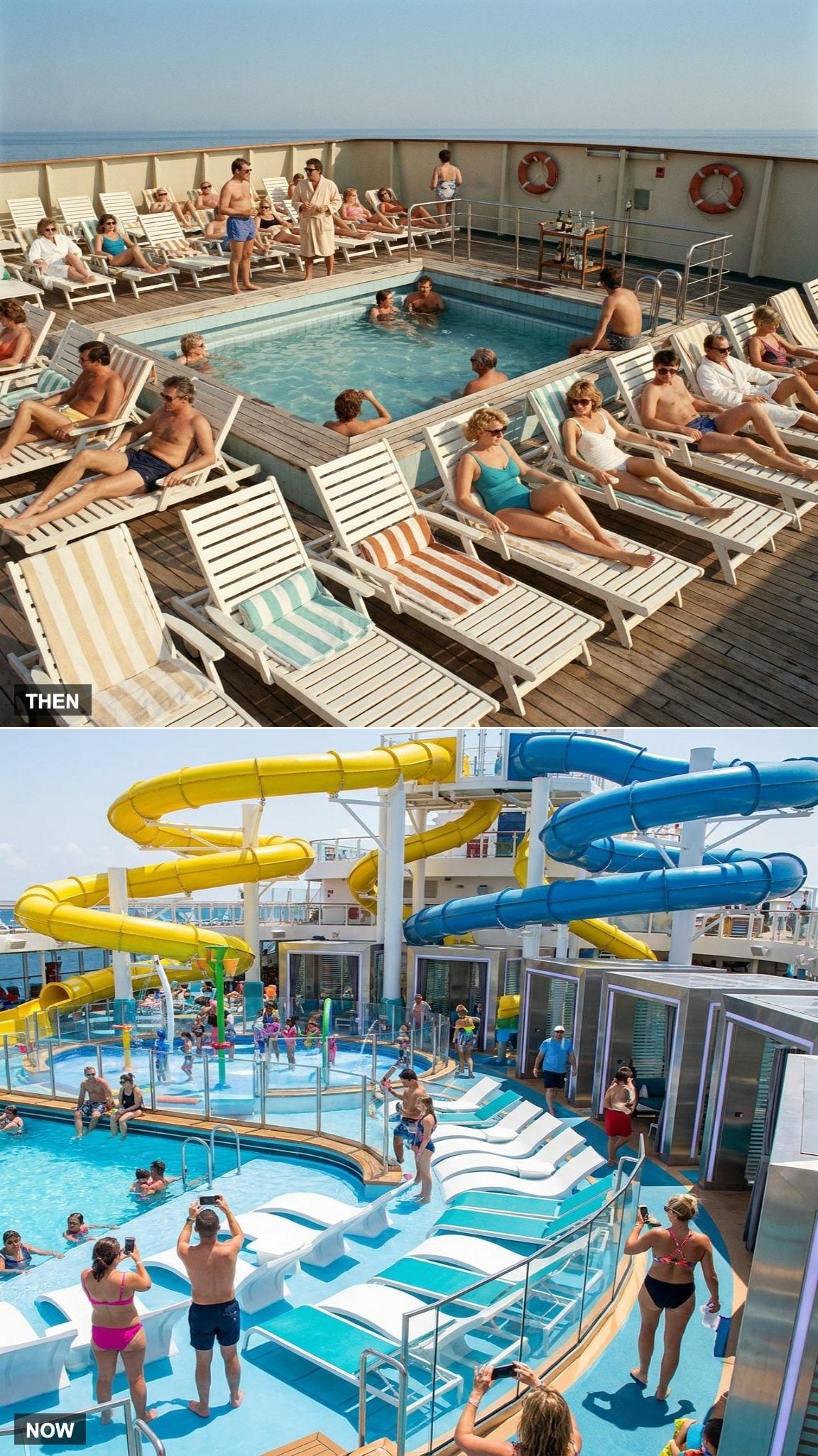
In 1980 the pool was an afterthought, one rectangle of chlorinated blue ringed by wooden deck chairs and a cart stocked with real glass bottles. Maybe waist-deep. You went in to cool off, not to be entertained, because the sea was the main attraction and the pool knew its place.
On some of today’s largest resort ships, the top deck resembles a water park. Multideck slides, splash zones, surf attractions, and reservable cabanas compete for space with the pools. The ocean has become the thing you glance at between rides.
25. Simple Buffets vs. Gourmet Dining Halls
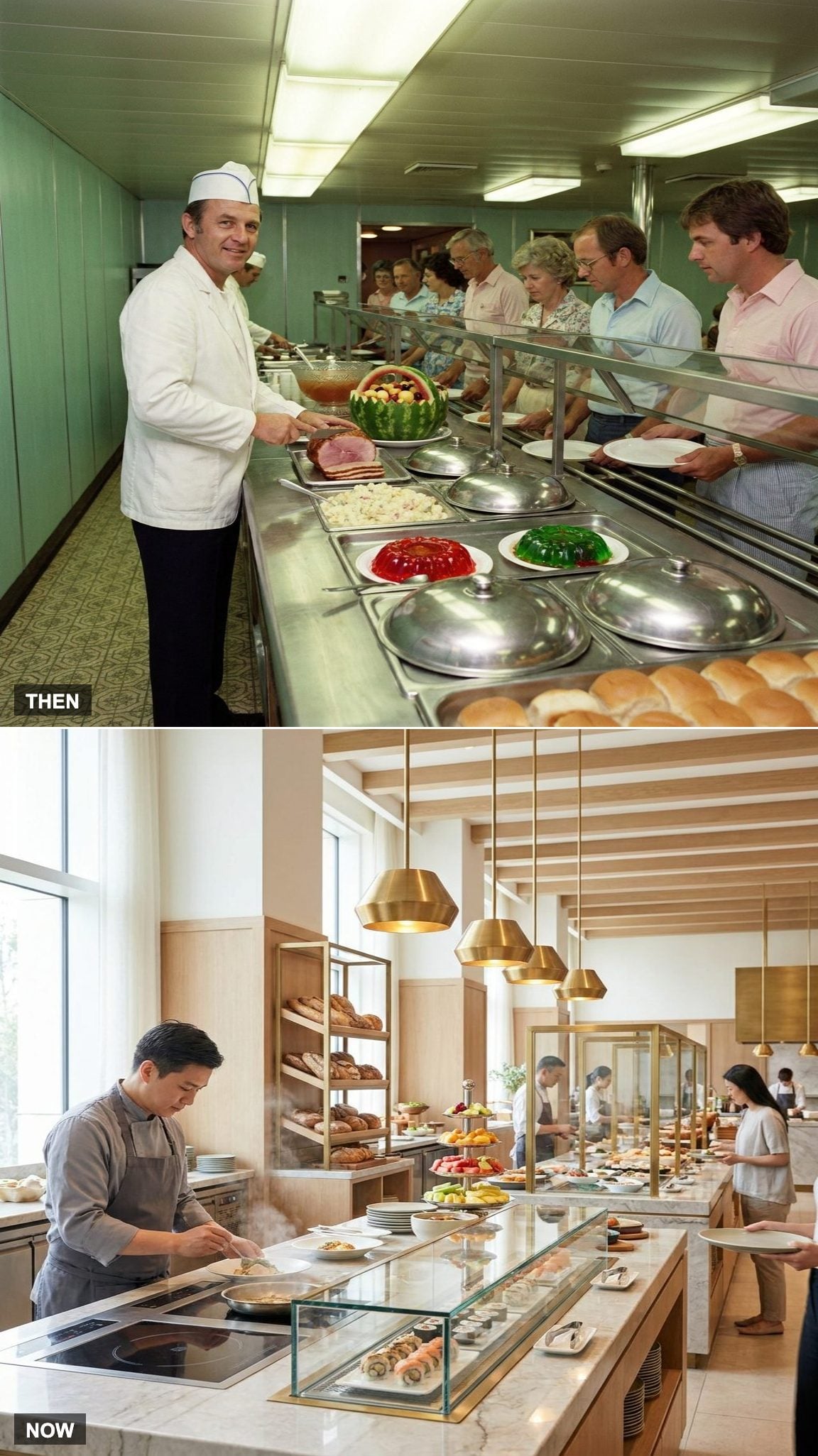
The 1980 buffet was honest about what it was. Steam trays. Domed lids. Ham that had been sitting a while, and a gelatin salad nobody trusted but everybody took anyway. You ate it because the sea air made everything taste better, and somehow it did.
On many modern ships, the buffet has become an international food hall. Live carving stations, made-to-order pasta, a sushi counter, bread a chef actually baked that morning. The molded gelatin retired quietly, and nobody sent flowers.
24. Assigned Tables and One Main Dining Room vs. Anytime Dining Across the Ship
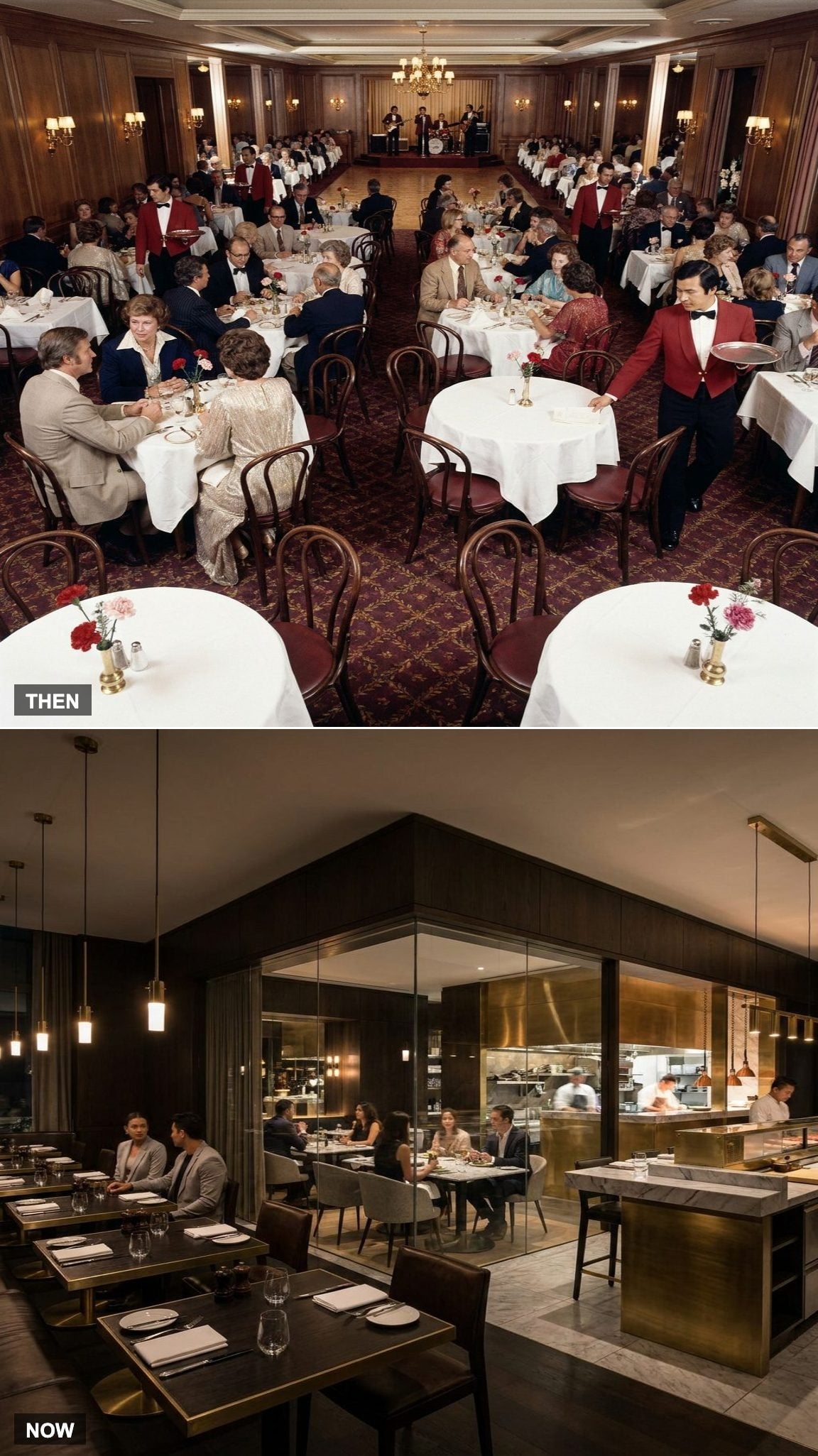
On many 1980 cruises, dinner revolved around the main dining room. You were assigned an early or late seating, returned to the same table each evening, and were served by the same waiter. By Friday, the strangers beside you had become people whose grandchildren, hometowns, and preferred desserts you knew by heart.
Modern ships may combine a main dining room with flexible seating, specialty restaurants, casual counters, and reservation-only venues. The trade-off is obvious: far more choice, but less of the accidental familiarity created by sitting with the same people every night.
The fixed table was a forced friendship, and surprisingly often it worked.
23. Compact Standard Cabins vs. Modern Suites That Feel Like Apartments
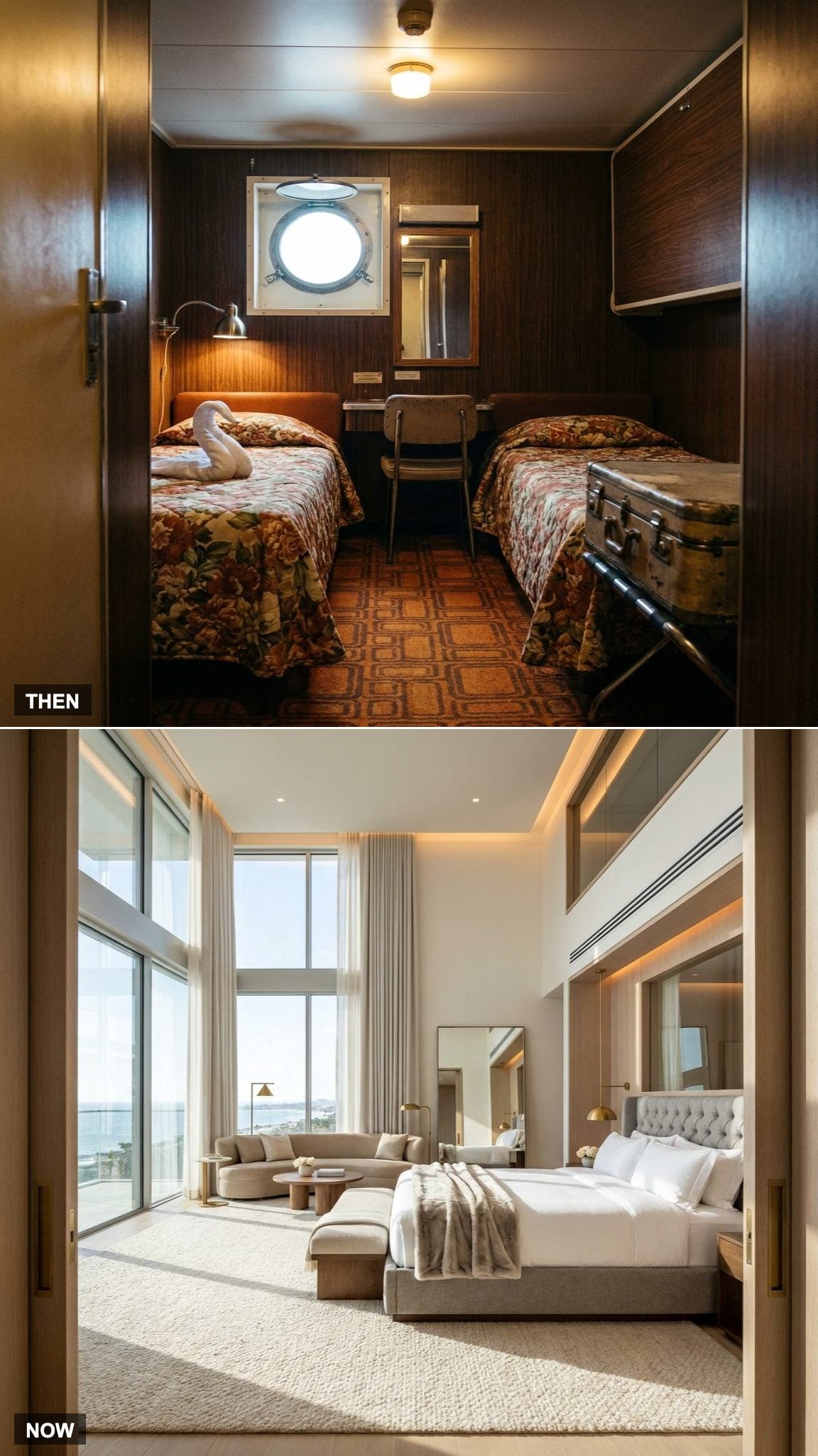
The 1980 cabin was a triumph of packing. Two twin beds, a porthole the size of a dinner plate, a bolted vanity, and just enough floor to stand up and change your mind. You slept there. You didn’t live there. The ship was for living.
At the other end of today’s market, premium suites can resemble small apartments, with king beds, sitting rooms, floor-to-ceiling glass, larger bathrooms, and, in selected categories, concierge or butler service. The porthole grew into a wall of ocean.
22. Inside Cabins and Small Portholes vs. Long Rows of Private Balconies
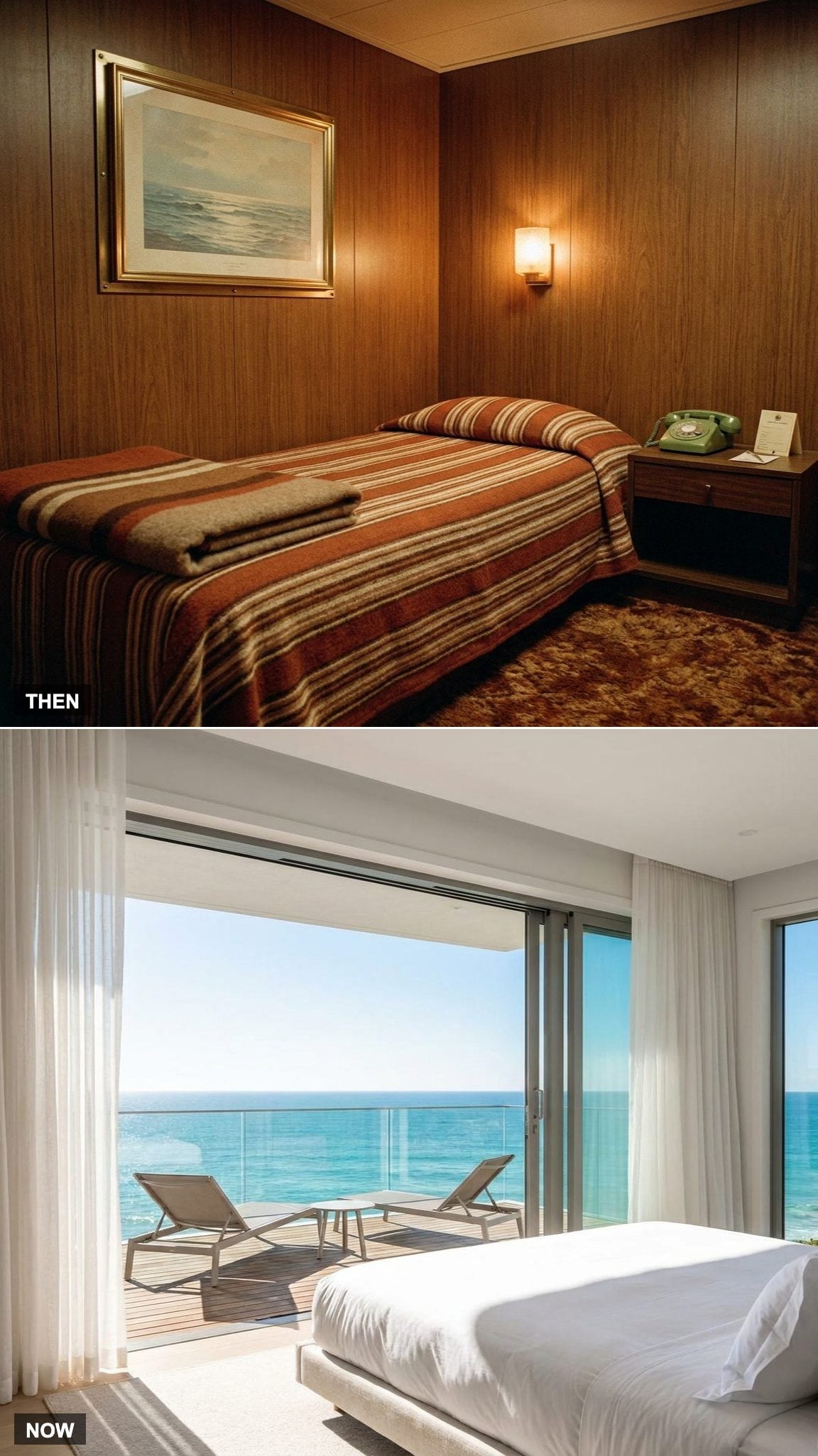
Many passengers in 1980 still traveled in compact inside cabins, while outside rooms often relied on fixed portholes or smaller windows. You got a framed painting of the sea bolted to the wall, which always felt like a small joke someone forgot to explain. You woke in total dark with no idea if it was dawn or midnight until you cracked the door.
The private balcony changed the whole equation. Now you take your coffee outside, watch the wake trail behind, and never guess the time again. Private balconies became one of the defining features of later cruise-ship design, although they still command a higher fare.
21. Shuffleboard Decks vs. Surf Simulators and Zip Lines
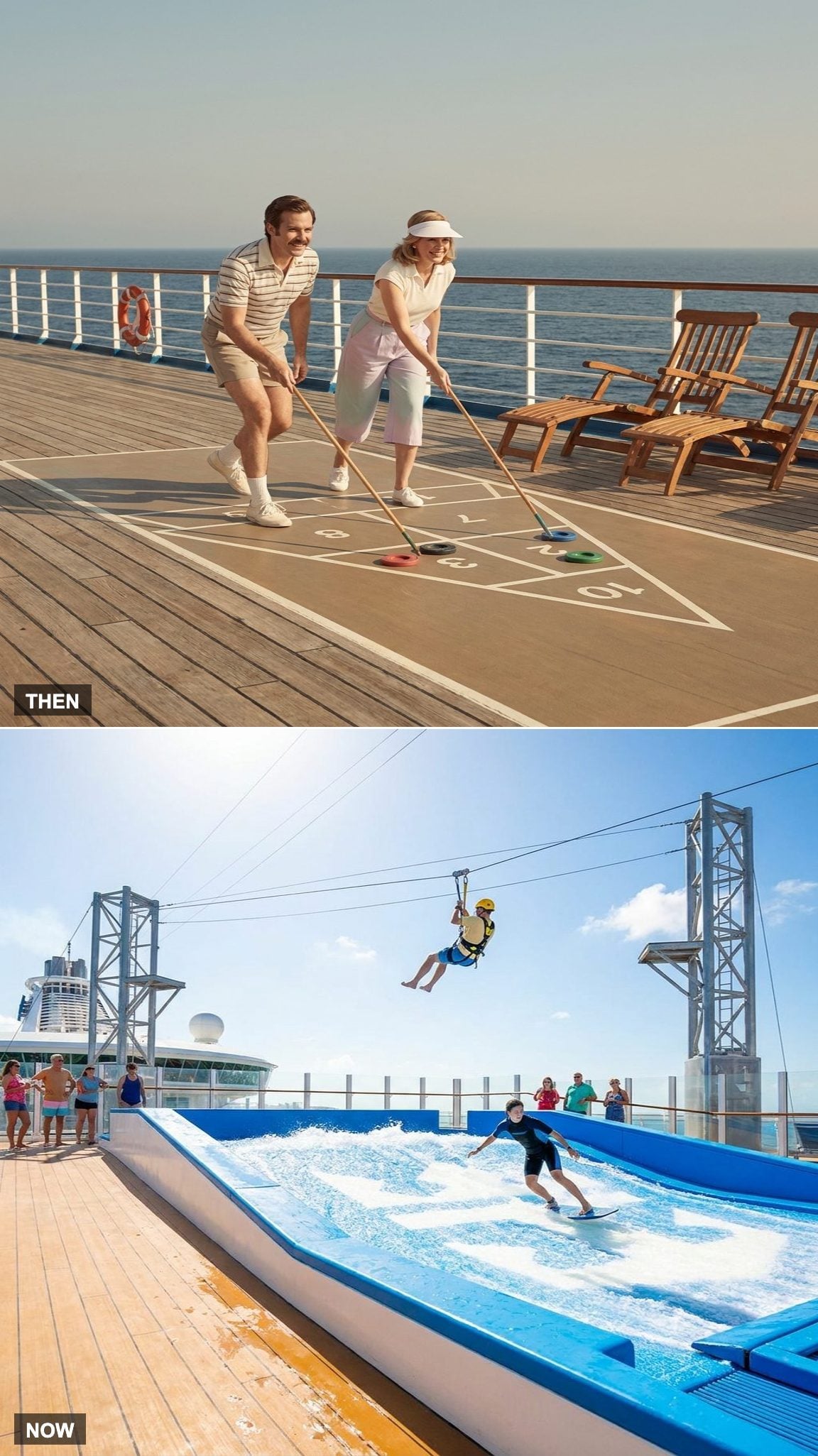
Shuffleboard was the extreme sport of 1980. You pushed a puck down a painted court, kept score on a chalkboard, and argued good-naturedly about the rules. Slow. Social. Exactly as fast as the ship needed you to be.
Selected modern megaships now devote that deck space to surf simulators, climbing walls, and zip lines, so you can ride a wave in the middle of the Caribbean. Somewhere a shuffleboard cue is leaning against a wall, waiting for someone to remember it exists.
20. Live Lounge Bands vs. Broadway-Style Productions
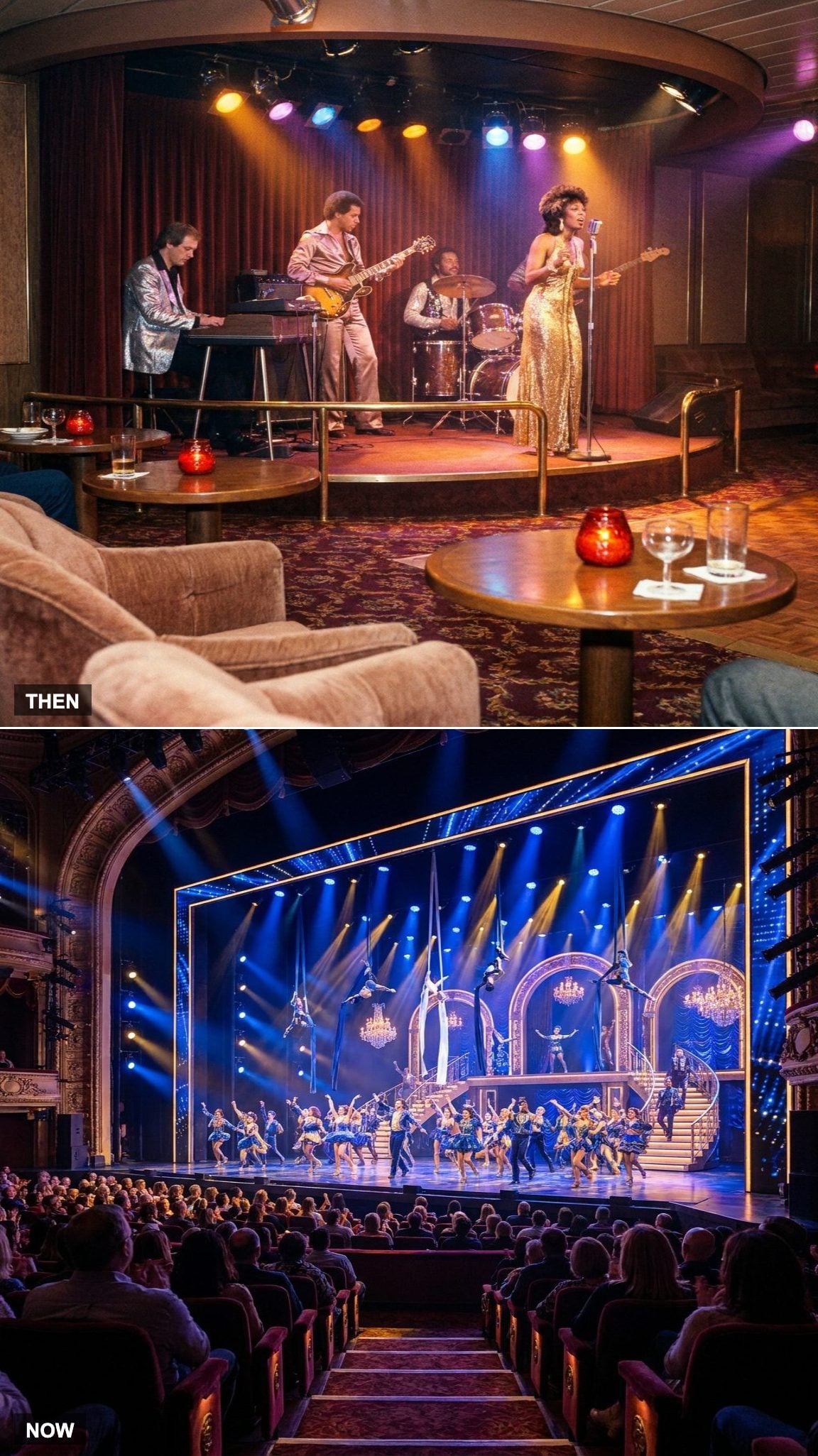
Evening entertainment in 1980 meant a four-piece band in a smoky lounge, a singer in sequins, and a dance floor about the size of a rug. You ordered a drink in a red glass holder and swayed. By the second night, the performer knew half the room.
Some large modern ships stage licensed Broadway productions or original shows with aerial rigs, LED walls, and large professional casts. It’s genuinely impressive. But nobody up on that giant stage will ever spot you in the third row and remember your name.
19. Printed Daily Schedules vs. Cruise Line Mobile Apps
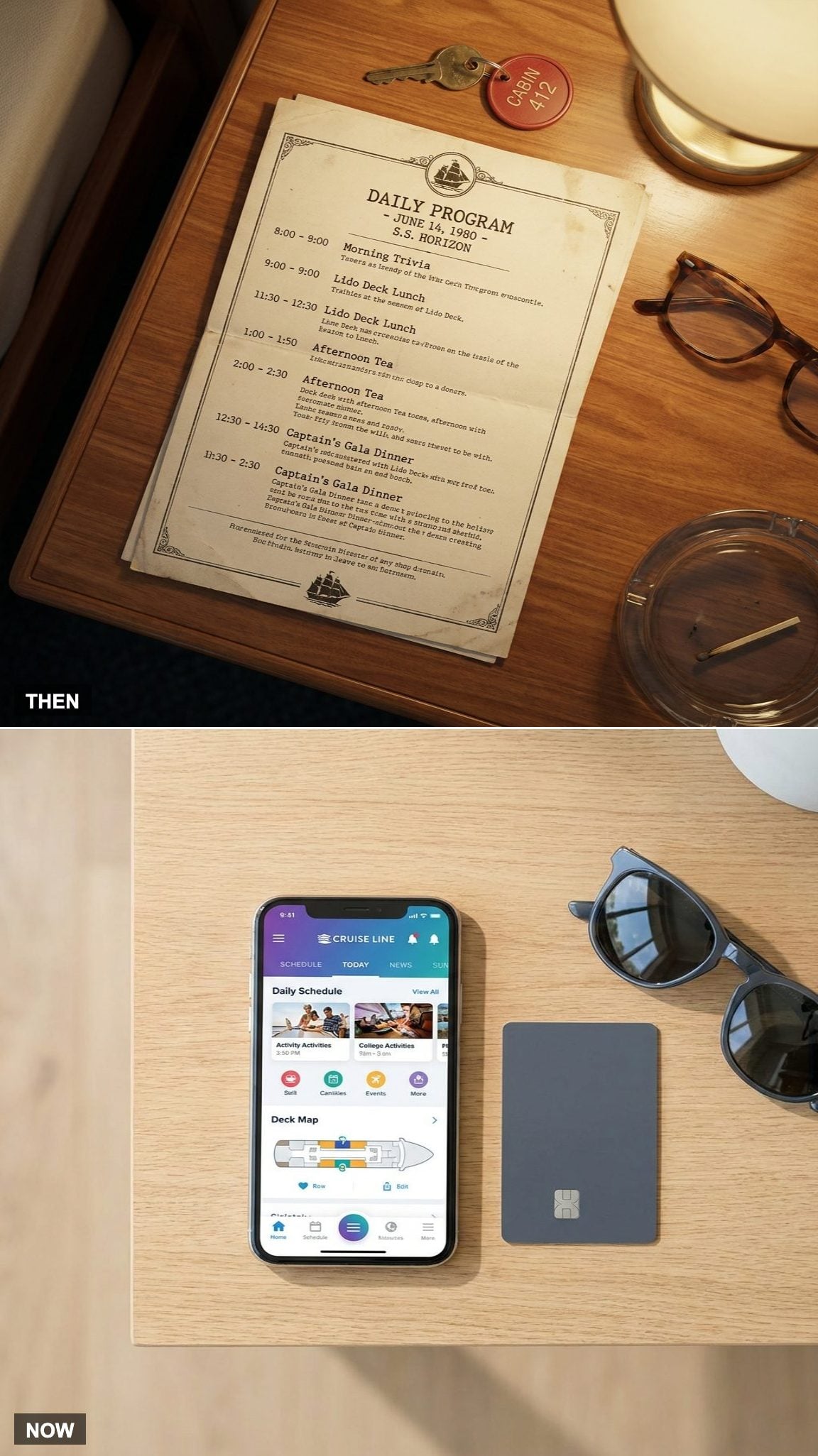
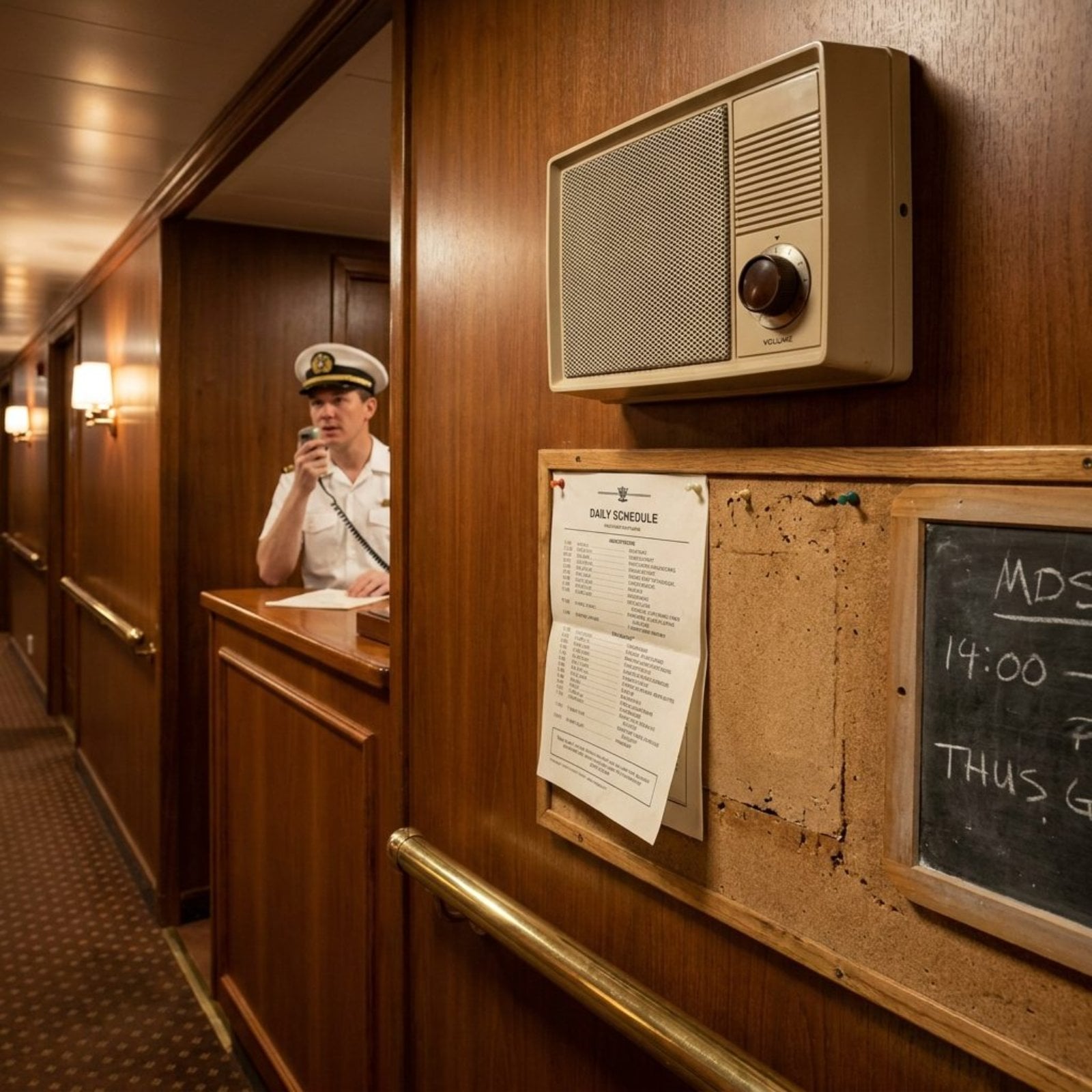
Every morning a single folded sheet slid under your cabin door. Typeset in a font that looked like a typewriter having a good day, it told you everything: bingo at two, the captain’s cocktail at six, dinner seatings, sunset time. You circled things in pen and stuffed it in your pocket.
Now it all lives in an app, with real-time schedules, deck maps, dinner bookings, and, on some ships, a way to message companions or locate linked family wearables. Handy, no argument. But there’s no paper to fold, no keepsake you’ll find in a drawer years later, faded and soft at the creases.
18. Film Photography vs. Digital Photo Studios
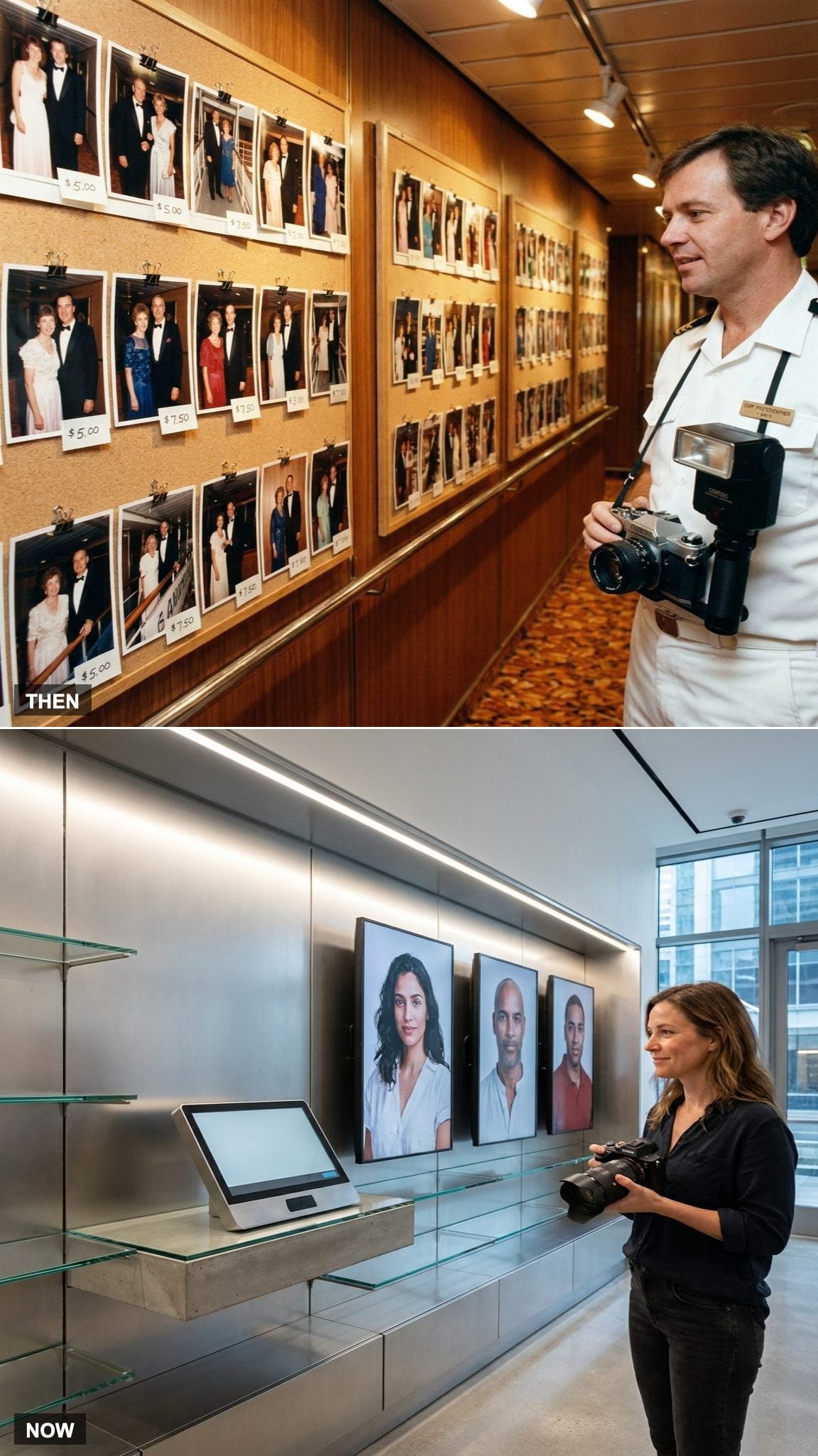
The ship photographer stalked you all week with a 35mm SLR and a flash bright enough to blind a passing gull. Formal night, gangway, dinner. By the next morning your prints were clipped to a corkboard wall, and you hunted for your own face among hundreds, price sticker attached.
Today, many ships use digital galleries or touchscreen kiosks. A key card or facial-recognition system may pull up the images, which can then be ordered as prints or downloads. Faster, sure. But there was something to that wall of glossy strangers, all caught mid-blink, waiting to be claimed.
17. Cash, Signed Chits, and Cabin Accounts vs. Tap-and-Go Wristbands
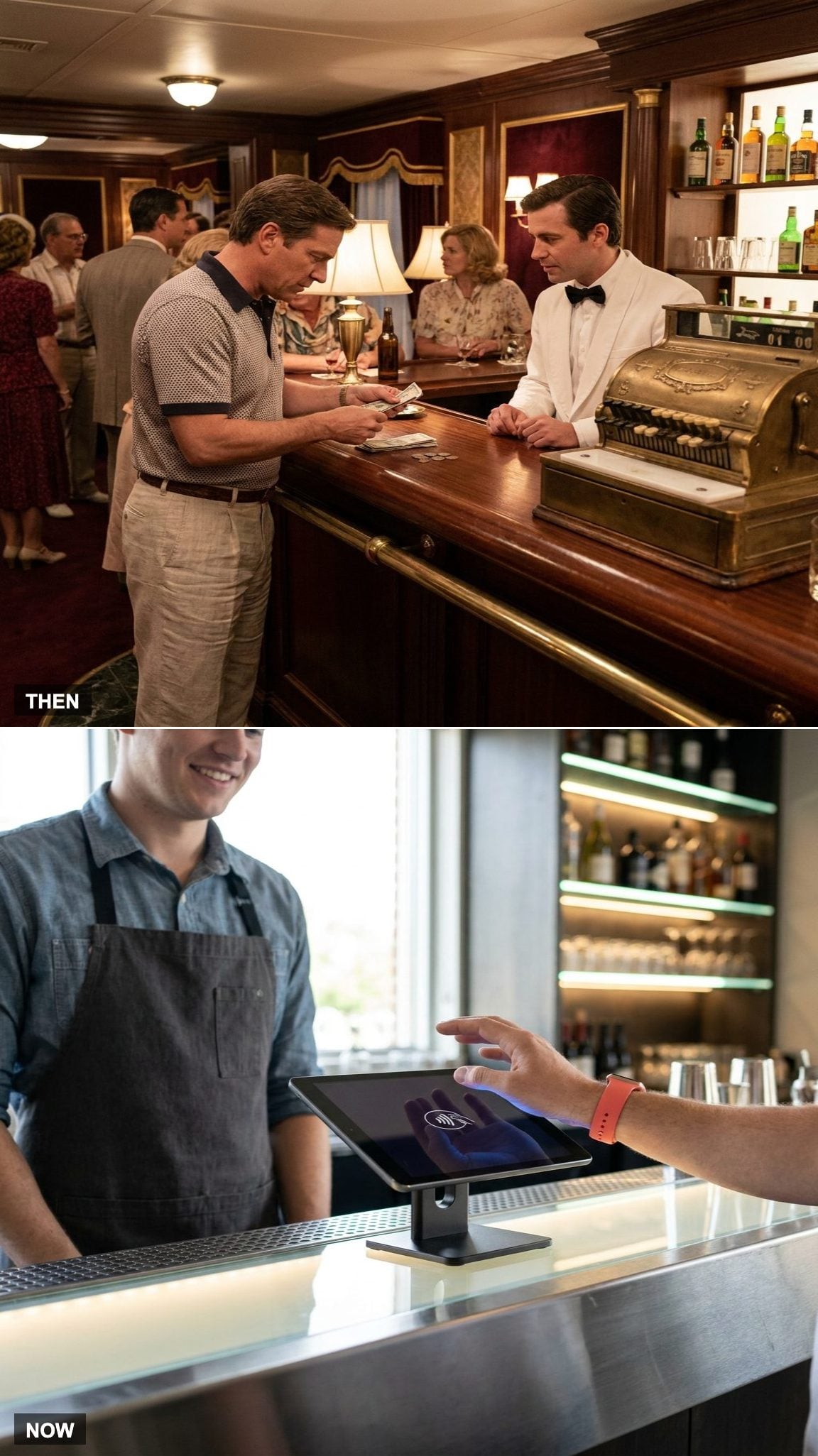
Onboard spending in 1980 felt more tangible. Depending on the line, passengers used cash, signed chits, or charges recorded against the cabin account. You kept a little folded stash in your pocket and watched it thin out over the week. The spending was visible, and you felt every round.
With a wristband or key card, the number now floats into an account you settle at the end. Frictionless, they call it. It’s also how a seven-day cruise bill quietly triples while you’re looking the other way.
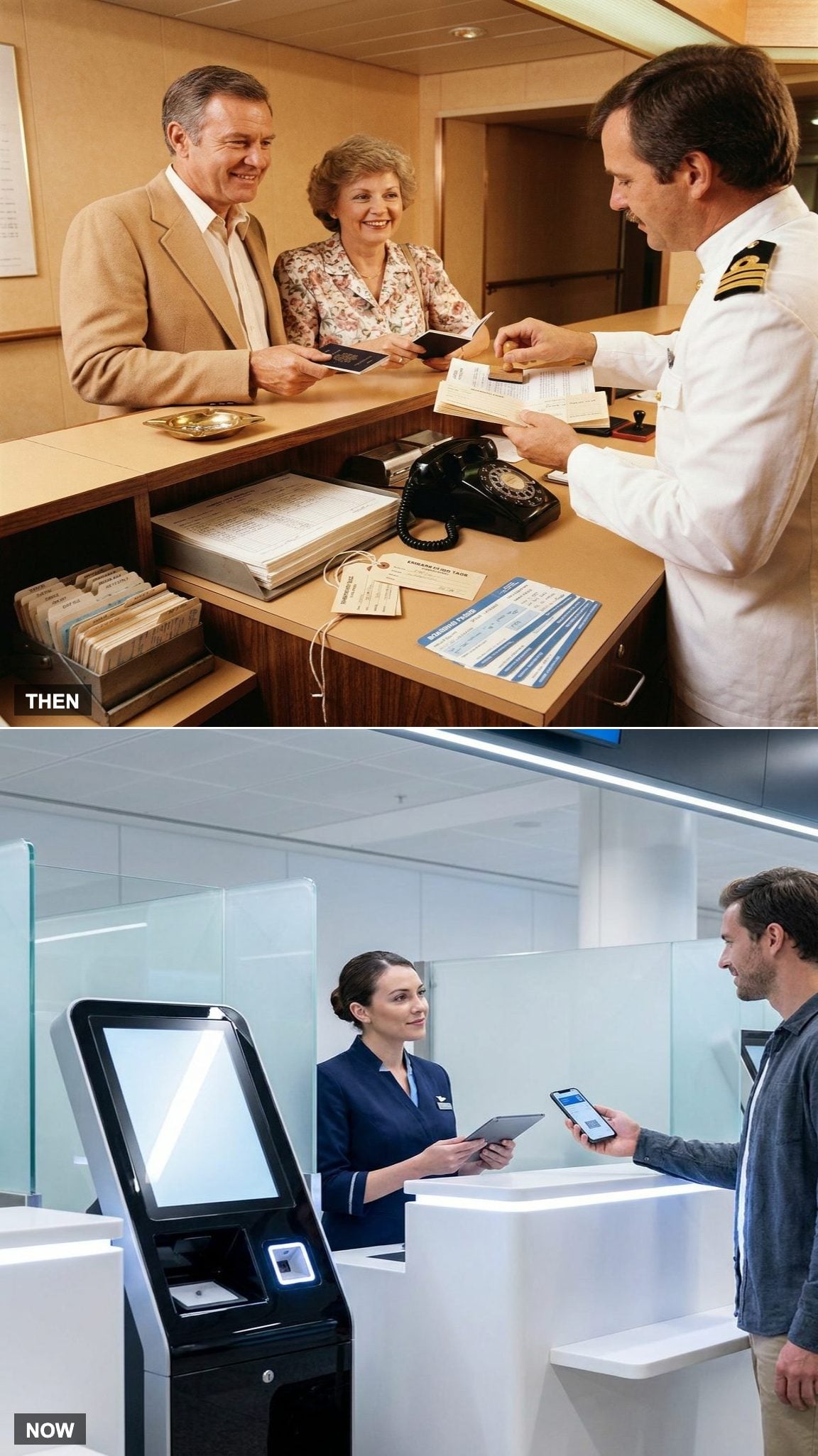
16. Paper Cruise Documents vs. Digital Check-In
🔥 Would you like to save this?
In 1980, embarkation often began with a thick booklet of paper tickets, forms, and printed instructions that had to remain together through check-in. You stood in a line that crawled along at the speed of drying ink. Lose that booklet and you’d bought yourself a genuinely miserable afternoon.
Now you may tap a phone or cruise card at the gangway and watch the light blink green. On ships that use wearables, a wristband may also function as a room key and onboard payment method; other lines rely mainly on cards or apps. The line has not vanished. It simply moves like it has somewhere to be.
15. Basic Children’s Playrooms vs. Massive Kids’ Adventure Clubs
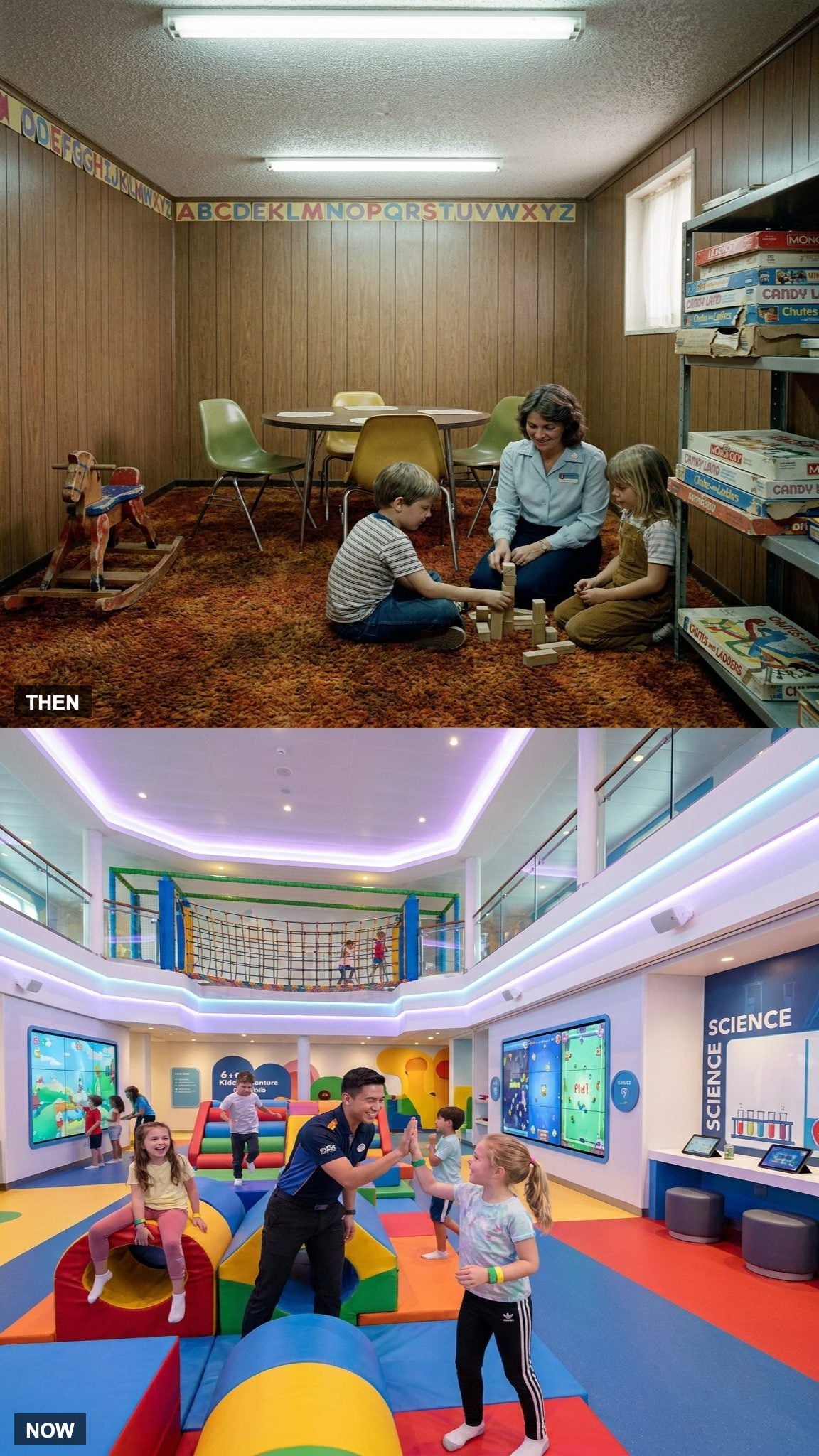
On many older ships, the children’s room was little more than one carpeted box: a rocking horse and a shelf of board games missing half their pieces, presided over by a patient staff member keeping the peace. Parents dropped the kids for an hour and felt a little guilty about it.
Now the ships run adventure clubs bigger than the schools some of these kids attend. Foam obstacle courses, science labs, age-sorted zones with color-coded wristbands so nobody wanders off. The scale has changed completely, and many children do not want to leave.
14. Simple Fitness Rooms vs. Full-Service Wellness Centers
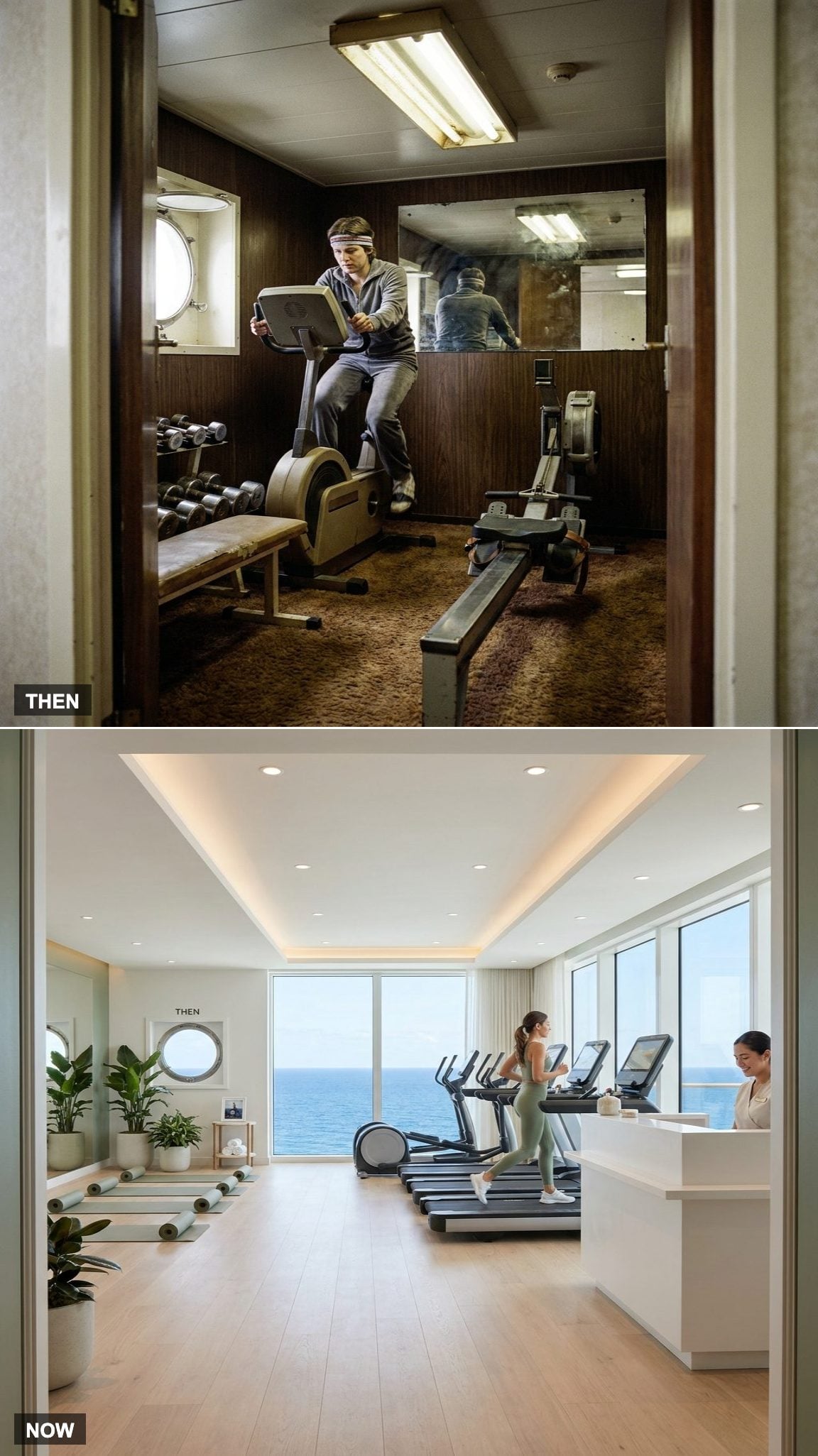
Calling it a gym in 1980 was generous. A stationary bike with an analog dial, a rowing machine, a rack of chrome dumbbells, and one small porthole in the wall. Brown carpet, fluorescent hum, and the guilt of last night’s midnight buffet driving you onto the bike.
On some large ships, that modest gym has expanded into a wellness complex with a spa wing, a yoga studio, and treadmills lined up against floor-to-ceiling glass so you run straight at the horizon. Seaweed wraps. Acupuncture appointments. And the buffet, in fairness, is also bigger.
13. Traditional Casinos vs. High-Tech Gaming Floors
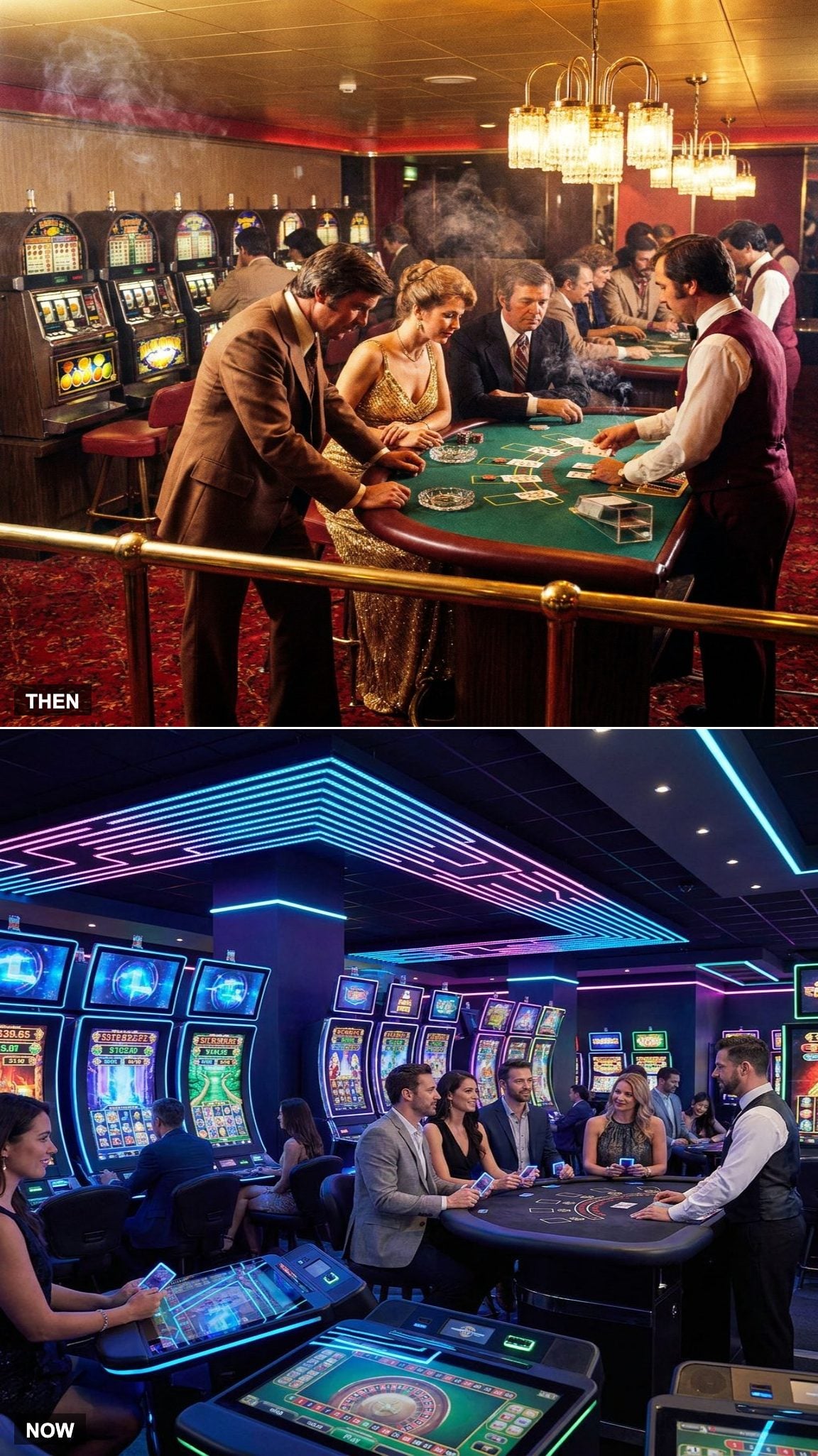
The 1980 casino ran on levers and luck. Mechanical slots with fruit reels you actually pulled, a blackjack table under a warm chandelier, a dealer in a burgundy vest, and a haze of cigarette smoke you could practically slice. Glass ashtrays sat on every rail. The soundtrack was coins clattering into a metal tray, and that was the whole thing.
The modern gaming floor glows. Digital slots with animated screens, cashless play cards, an LED ceiling that pulses in patterns overhead. Coin trays and mechanical levers have largely disappeared, while smoking rules vary by cruise line and may still permit it in designated casino areas. Quieter and brighter, sure. Also a lot easier to lose track of what you’ve spent.
12. Limited Shopping Boutiques vs. Luxury Retail Promenades
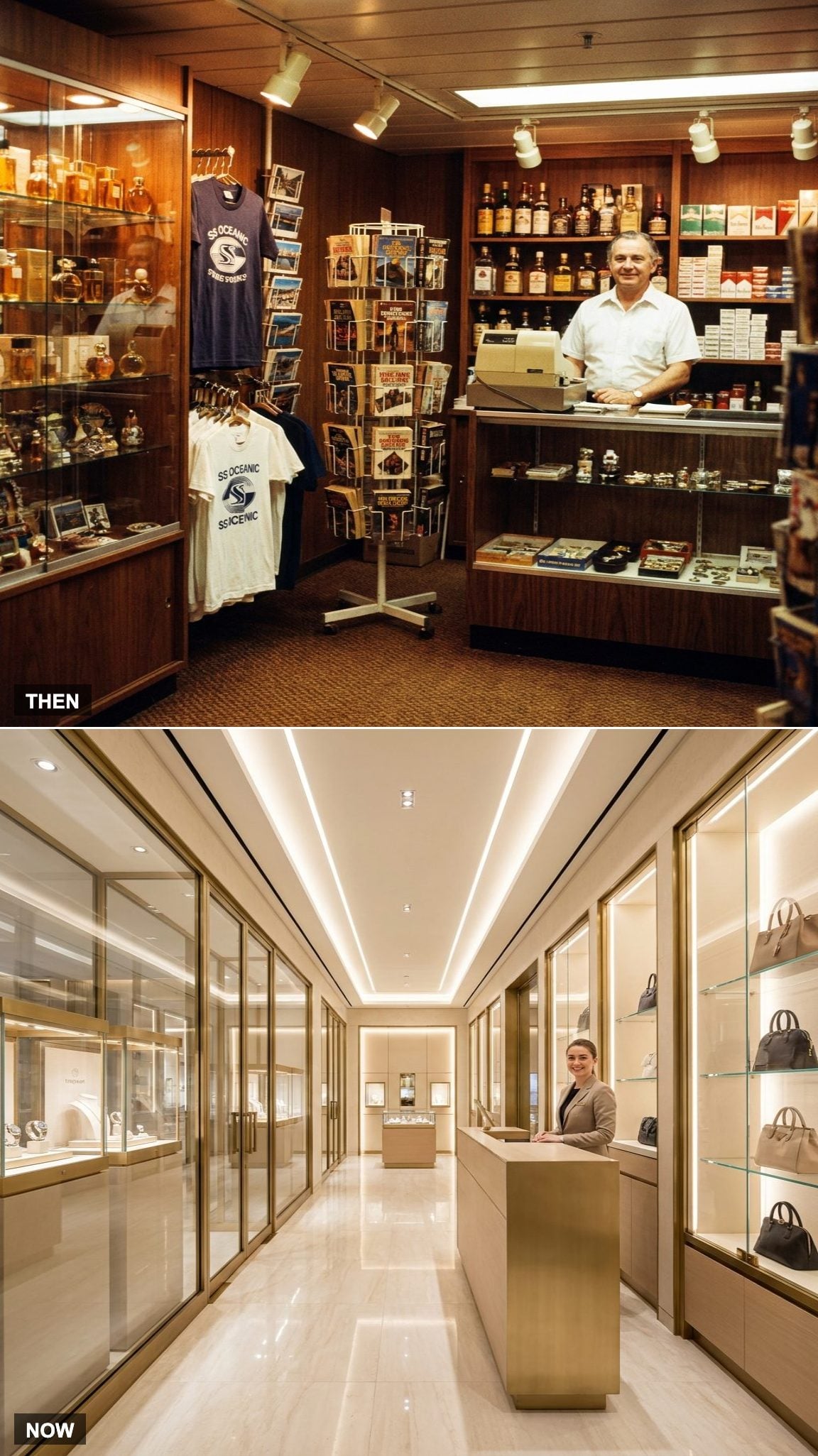
The 1980 ship shop was one room. Duty-free perfume behind glass, ship-logo tees, a spinning rack of paperbacks, and shelves of liquor and cigarettes for the folks stocking up before port. One mechanical register, with a satisfying ka-chunk every time it opened.
On selected megaships, there is an entire interior promenade. Watches in lit vitrines, designer handbags perched on their own little pedestals, a marble-floored arcade of storefronts you’d expect in a downtown—floating out here in the middle of the ocean. You can drop more before dinner than the entire 1980 shop kept in stock.
11. Small Atriums vs. Multistory Grand Plazas

You walked aboard in 1980 into a room, not a spectacle. Single ceiling height, wood-veneer purser’s desk, burgundy carpet, a potted palm, and a brass-railed staircase that climbed exactly one deck before quitting. Cozy, low, a little dim. Felt like the lobby of a decent regional hotel.
Step aboard today and the ceiling is simply gone. On the largest modern ships, atriums and interior plazas rise through multiple decks, glass elevators sliding up through the middle, a sculpture the size of a house planted at the center, balconies stacked all the way to a skylight. The ship wants you to look up and gasp—and most people oblige.
The 1980 lobby said welcome aboard. The modern atrium says look what we built out here in the middle of nowhere.
10. Quiet Observation Decks vs. Glass Walkways and Viewing Platforms
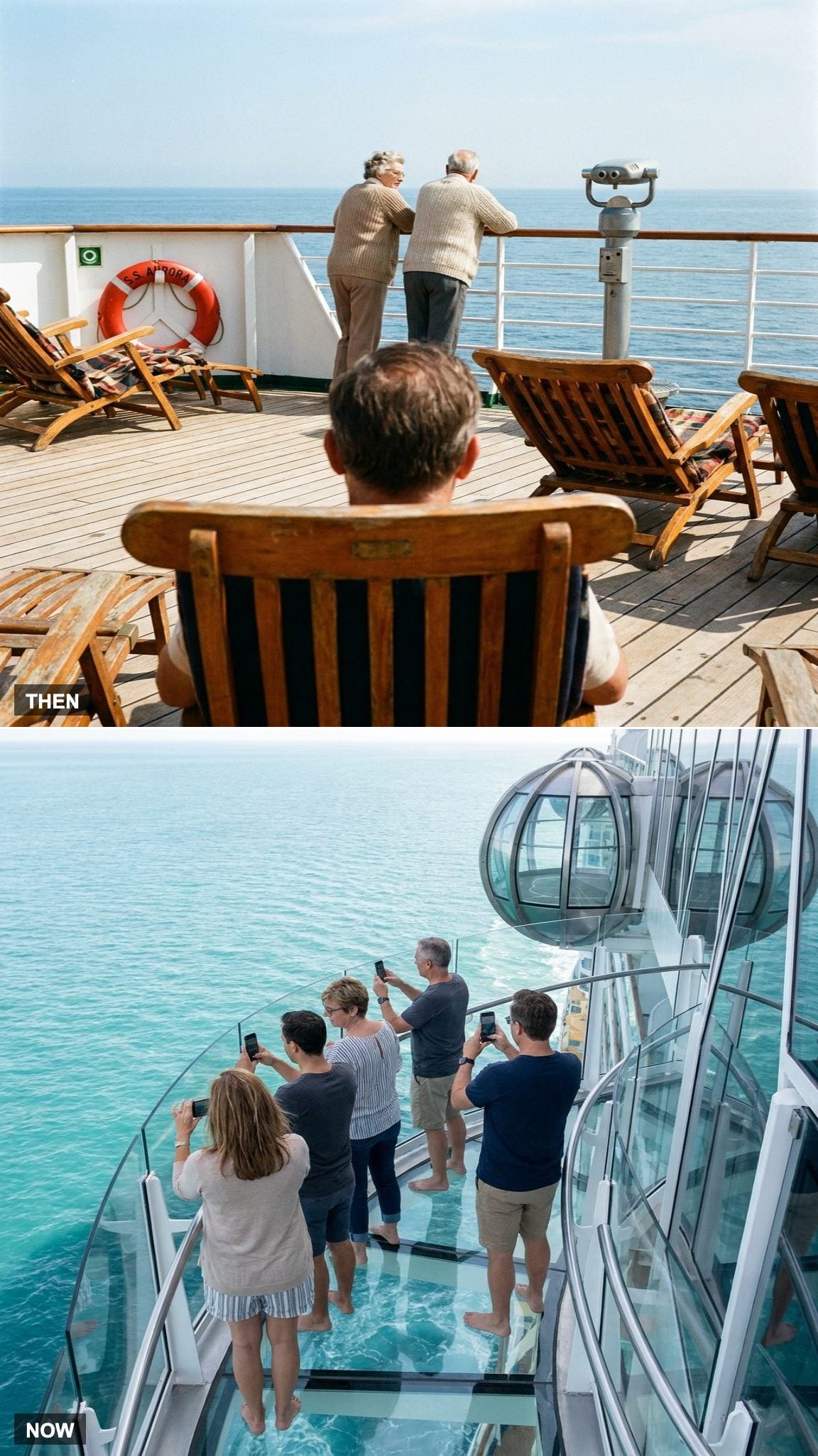
The 1980 observation deck asked nothing of you. Teak planks, a white railing, a few deck chairs with folded wool blankets, and a coin-operated binocular on a post for a closer squint at some distant island. People stood quietly and watched the sea slide by. That was the whole activity, and nobody complained.
Now they cantilever glass walkways out past the hull so you can stand on a transparent floor with the ocean far below your sneakers. Some ships add separate thrill attractions nearby, but the glass walkway alone is enough to change the experience. Same sea as always. The stomach-drop is the new part.
9. Coin-Operated Arcades vs. Game Rooms Expanded With Virtual Reality
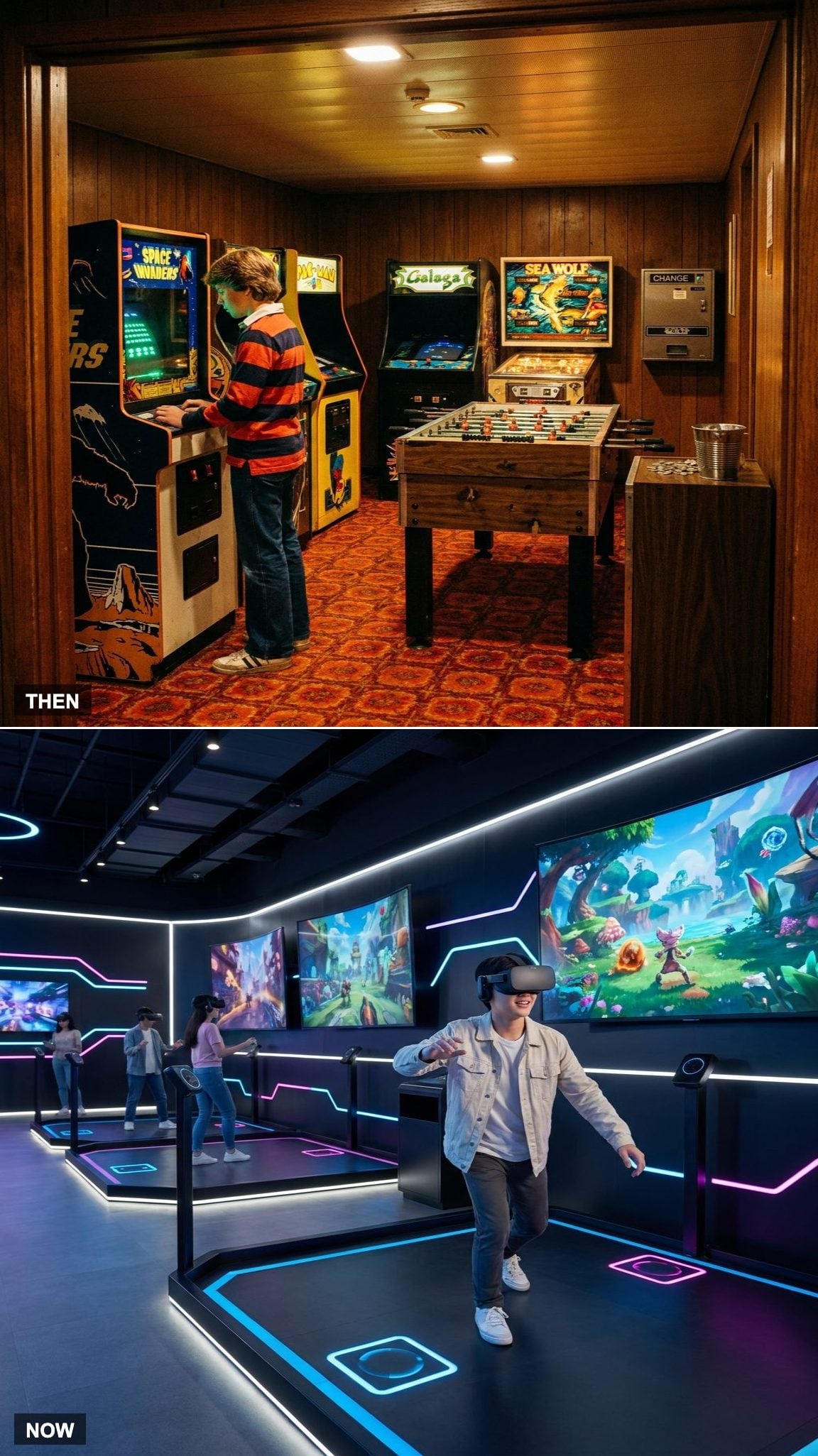
Bring quarters. That was the rule of the 1980 game room—upright cabinets glowing with blocky pixels, a pinball machine flashing away in the corner, a foosball table, and a change machine that jammed the instant you fed it a crumpled bill. Kids burned through their vacation allowance one coin at a time.
Now they strap a headset over your eyes and drop you into another world entirely. VR pods, motion sensors, immersive rooms with no coins and no metal cup rattling on the cabinet. I miss the rattle. Losing at pinball, less so.
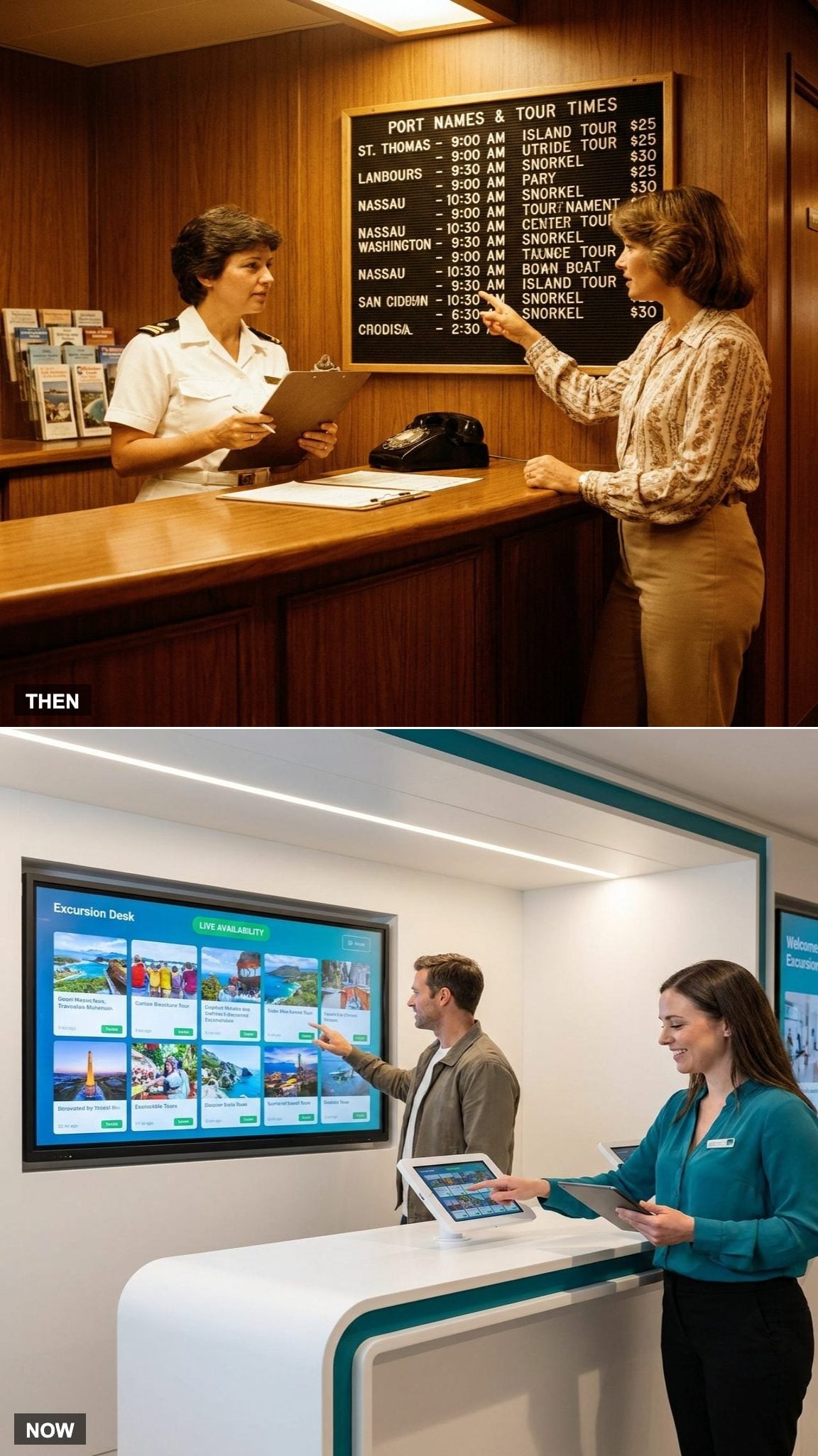
8. Handwritten Shore Excursion Boards vs. Interactive Excursion Booking Systems
🔥 Would you like to save this?
On many ships, planning a day ashore in 1980 meant reading a board or visiting the excursion desk. Port names and tour times spelled out in chalk or pushed-in plastic letters, prices scrawled beside them, and a staff member working a clipboard and paper sign-up sheets. Popular tours filled by hand. When a tour filled, staff crossed it off and moved to the next option.
Today, you can browse a touchscreen wall with photos and live availability or book the whole day from your cabin before you sail. The chalk is gone, and so is the small pleasure of watching someone wipe out a sold-out tour with the side of a hand and start the line fresh.
7. Oceanview Lounges vs. Top-Deck Beach Clubs
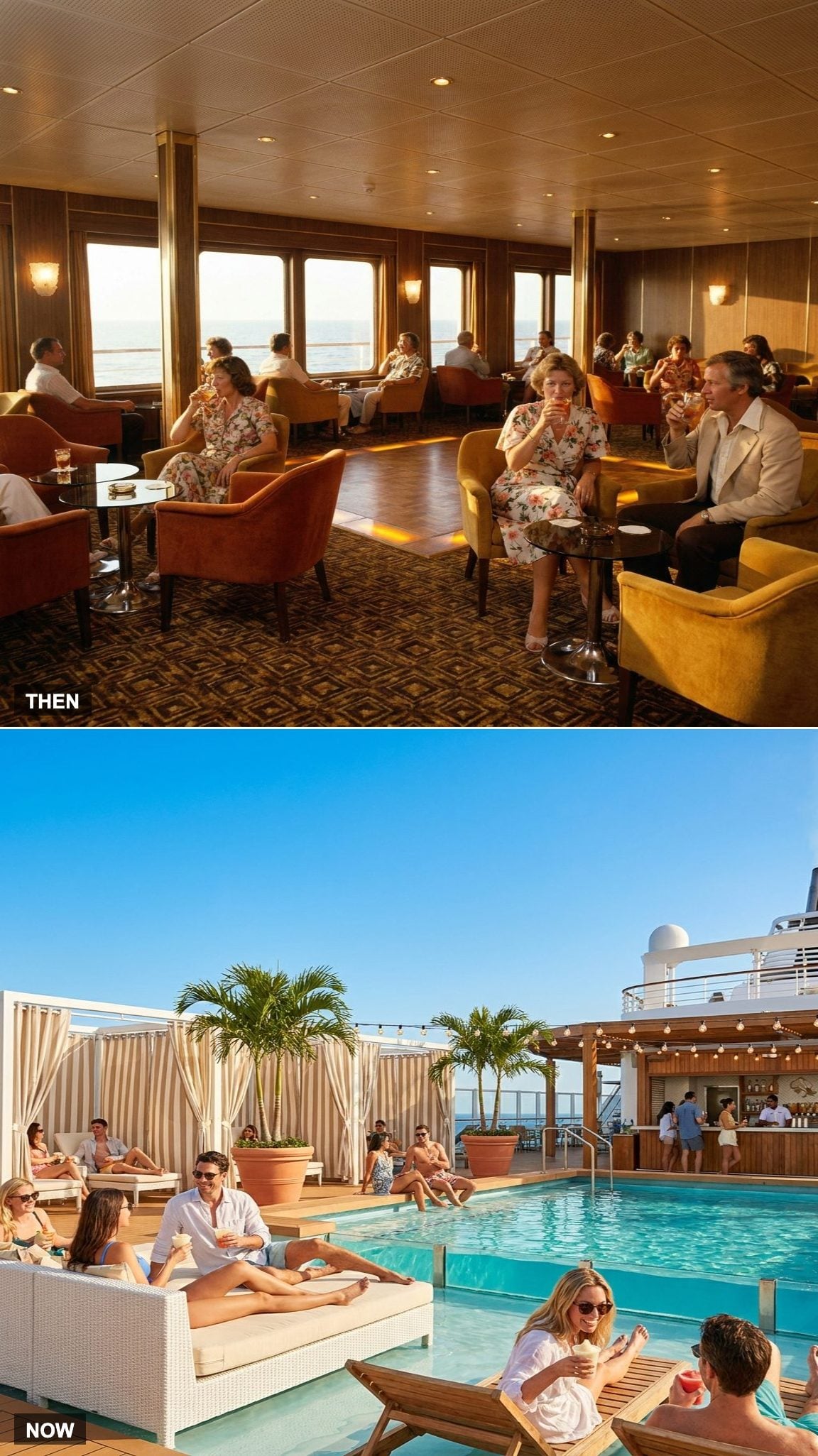
In 1980, the ocean view meant a wall of sealed windows and a velour armchair where you nursed a cocktail while the horizon slid past. You watched the sea; you did not touch it. The carpet was brown and gold and probably still is, in somebody’s memory.
Now the top deck can function like an open-air resort lounge, with rattan daybeds, shaded seating, bars, and, on some ships, adults-only or premium-access zones. The ocean is still the view, but the experience is organized around lingering, socializing, and spending the afternoon outdoors.
6. Basic Coffee Stations vs. Specialty Cafés and Espresso Bars
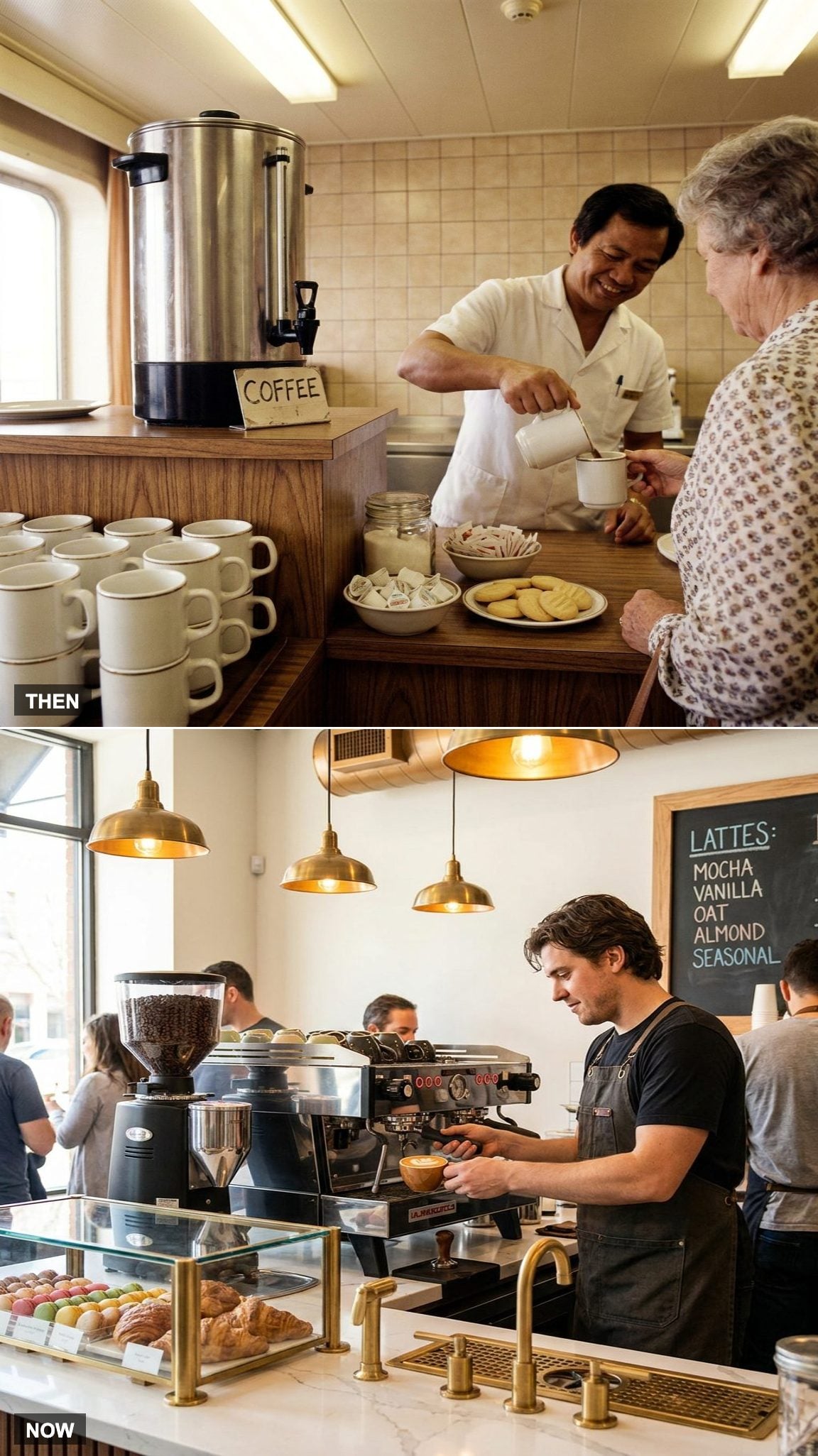
Coffee in 1980 came from a percolator the size of a fire extinguisher. One flavor: coffee. It sat in the urn until it tasted like the urn, and you drank it black from a heavy gold-rimmed mug and were grateful, because the alternative was instant.
Today many ships have dedicated cafés where a barista works an espresso machine, and there’s a glass case of macarons. Same ship. Different century of caffeine.
5. Structured Evening Dress vs. Flexible Modern Dress Codes
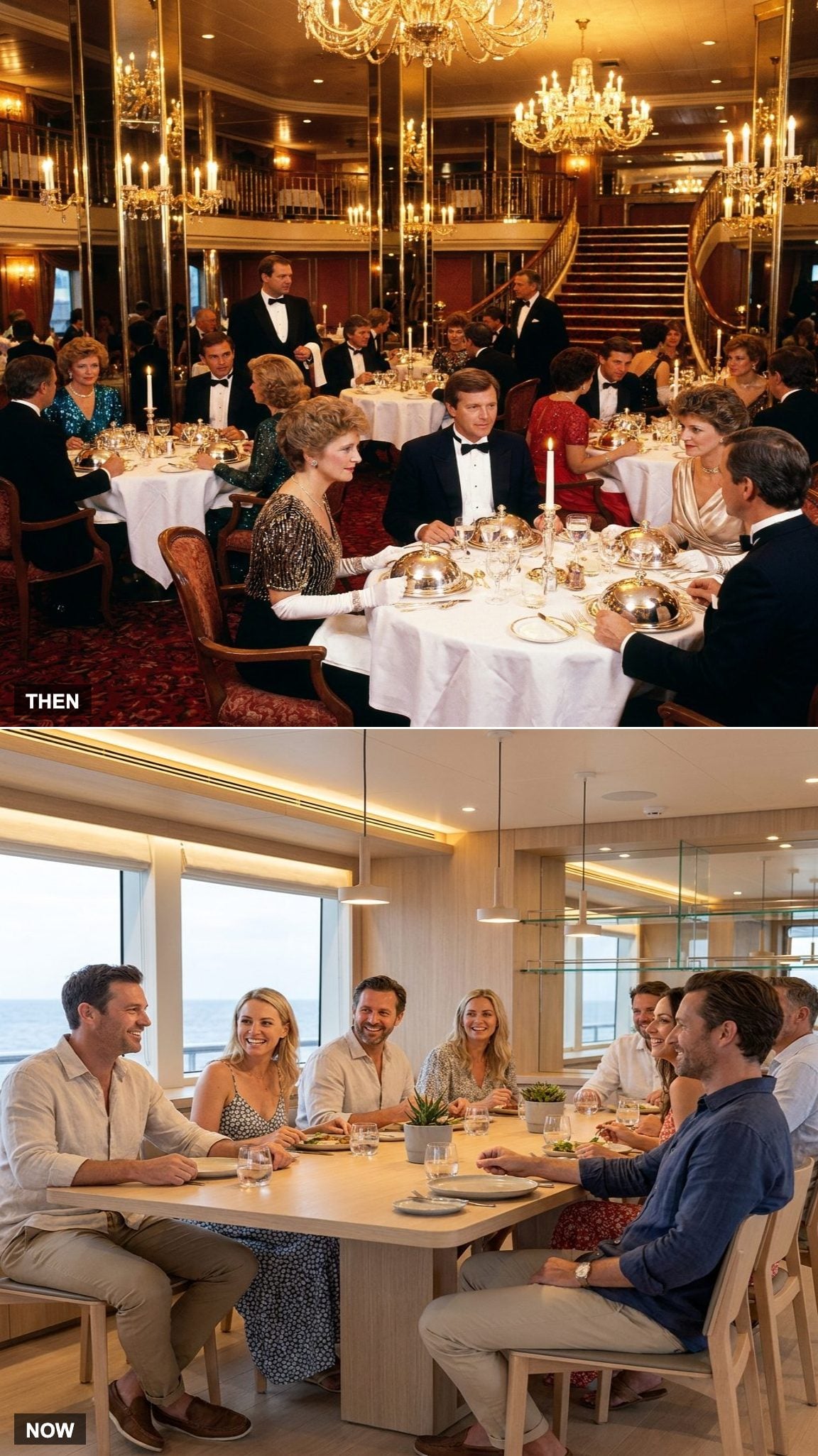
Evening dress was generally more structured in 1980, and formal nights carried greater weight on many ships. Tuxedos, dark suits, cocktail dresses, and gowns appeared more often than they do on many mainstream cruises today. You did not show up to the dining room in whatever you’d worn to lunch.
Now the dress code says “smart casual” and means it loosely. One formal night, maybe two, and even those come with an escape hatch to the buffet. The gowns still exist. They’re just optional.
4. Smoking Throughout the Ship vs. Designated Smoking Areas
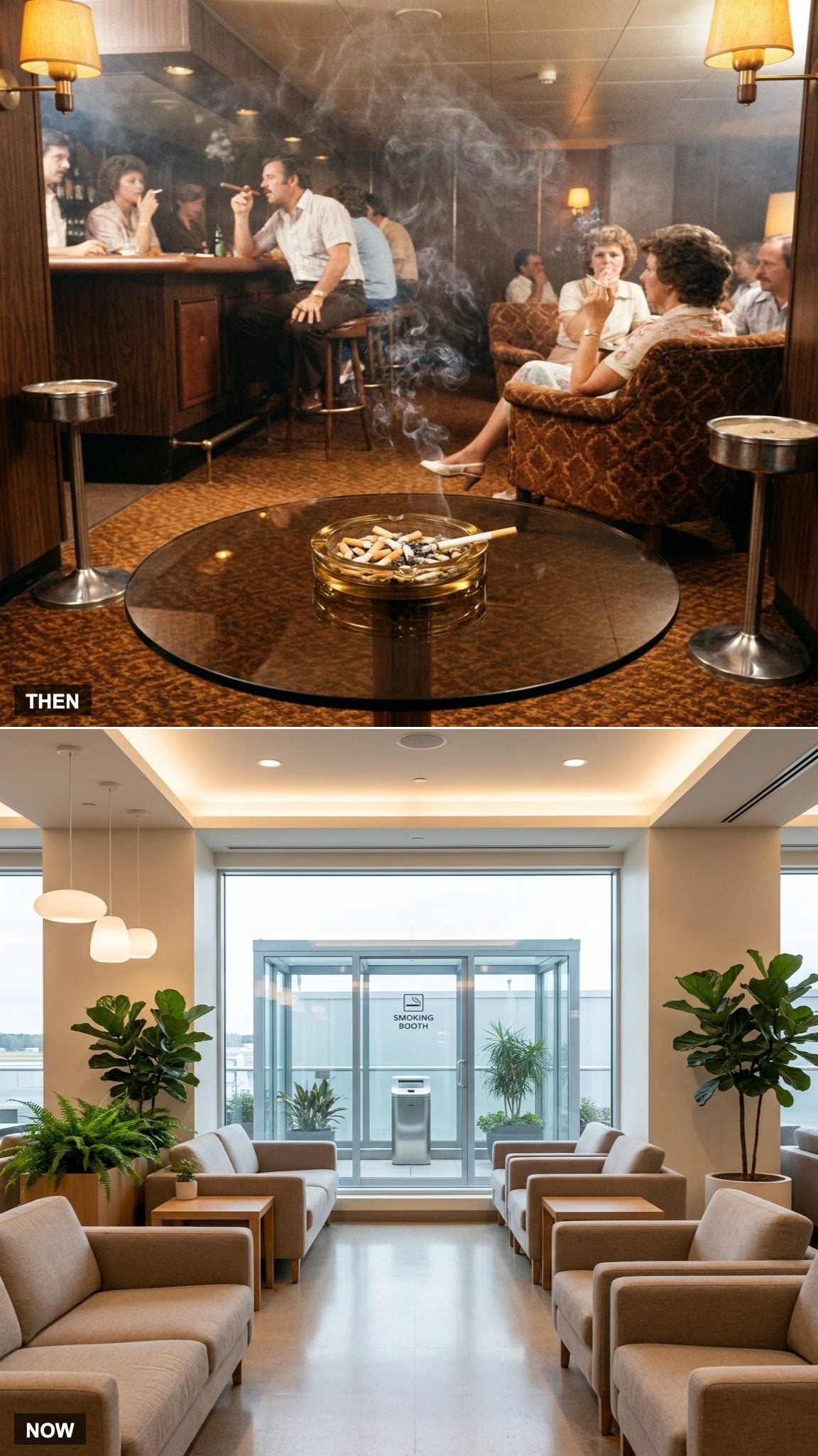
The whole ship could feel like an ashtray in 1980, with smoking permitted in far more lounges, bars, cabins, and dining areas than it is today. The air held a permanent haze while the curtains kept the smell long after the ship was scrapped. Nobody blinked. It was just the texture of the room.
Today, smoking is generally restricted to designated areas, although the number and location vary by cruise line and some casinos still permit it in specified sections. The air is clear, the curtains smell like nothing, and your lungs will thank the twenty-first century.
3. Small Medical Clinics vs. Modern Health Centers
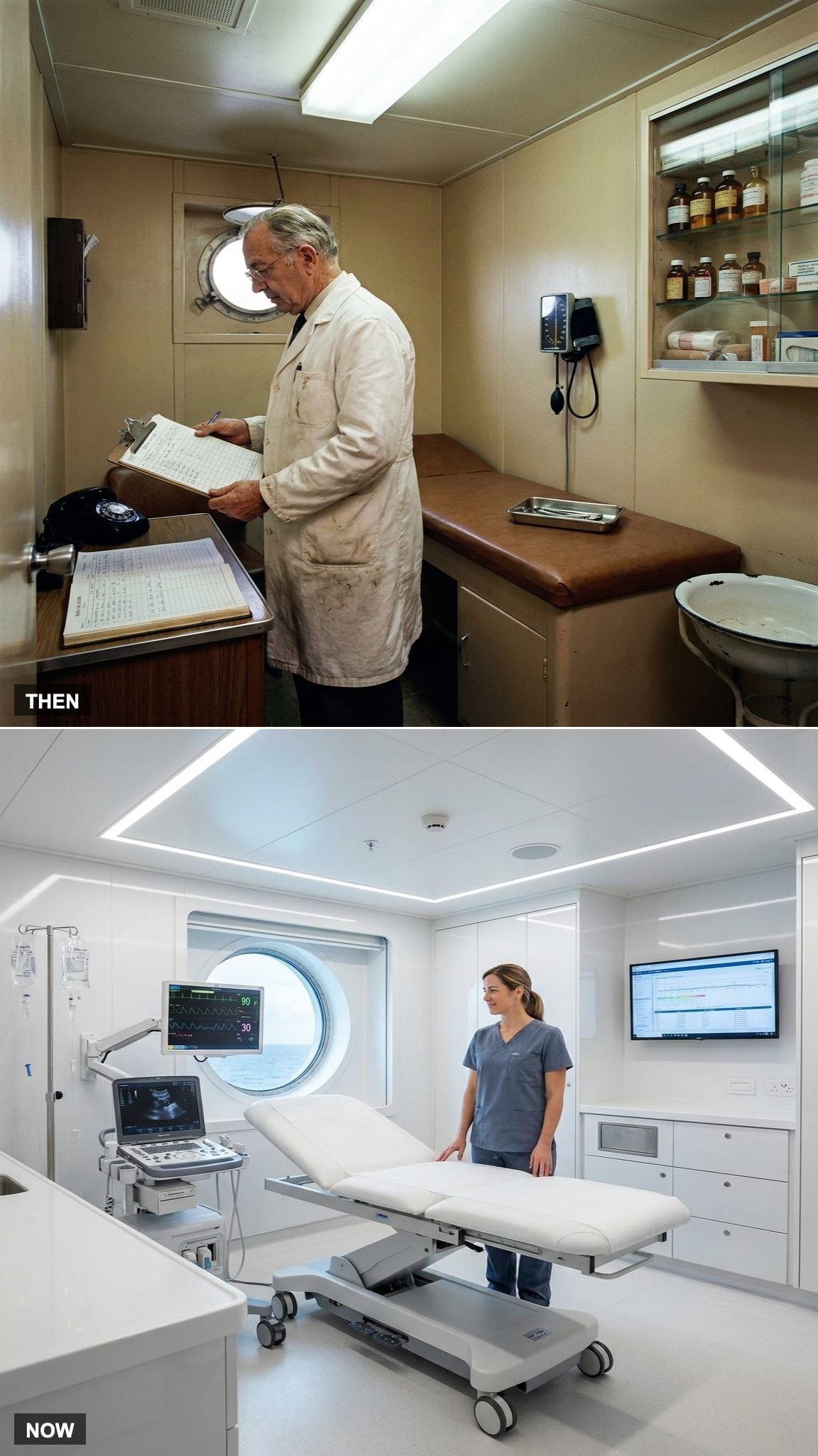
Older ship infirmaries could handle seasickness, minor injuries, and routine illness, but they had fewer diagnostic tools and slower communication with doctors ashore. Serious cases still required coordination with the nearest suitable port.
Modern shipboard medical centers may include digital monitoring, laboratory capability, IV equipment, medication stocks, and staff trained to assess and stabilize patients while arranging transfer to shoreside care when necessary. Capabilities still vary by ship.
2. Low-Slung Cruise Ships vs. Towering Floating Resorts
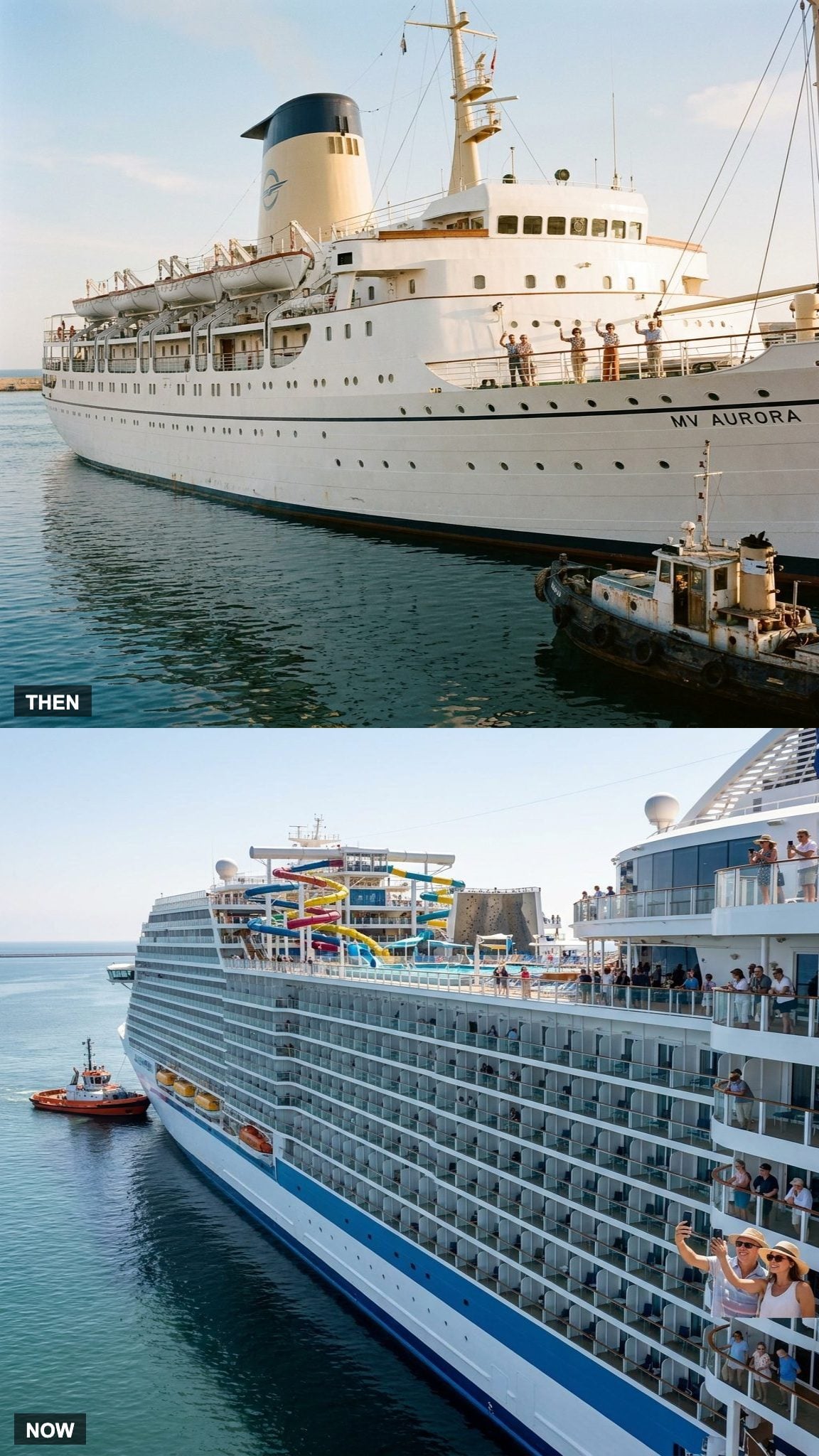
Many 1980 cruise ships had a lower, more visibly nautical profile. A slim white hull, one grand funnel, rows of portholes, a teak promenade you could walk bow to stern. It had a profile. It looked like it was going somewhere.
Now the mega-ship is a floating apartment block with a water park on the roof. Twenty decks, glass balconies stacked like a spreadsheet, a hull so tall it blocks the sun in the harbor. Some carry the population of a small town.
1. Postcards from Port vs. Instant Social Media Updates
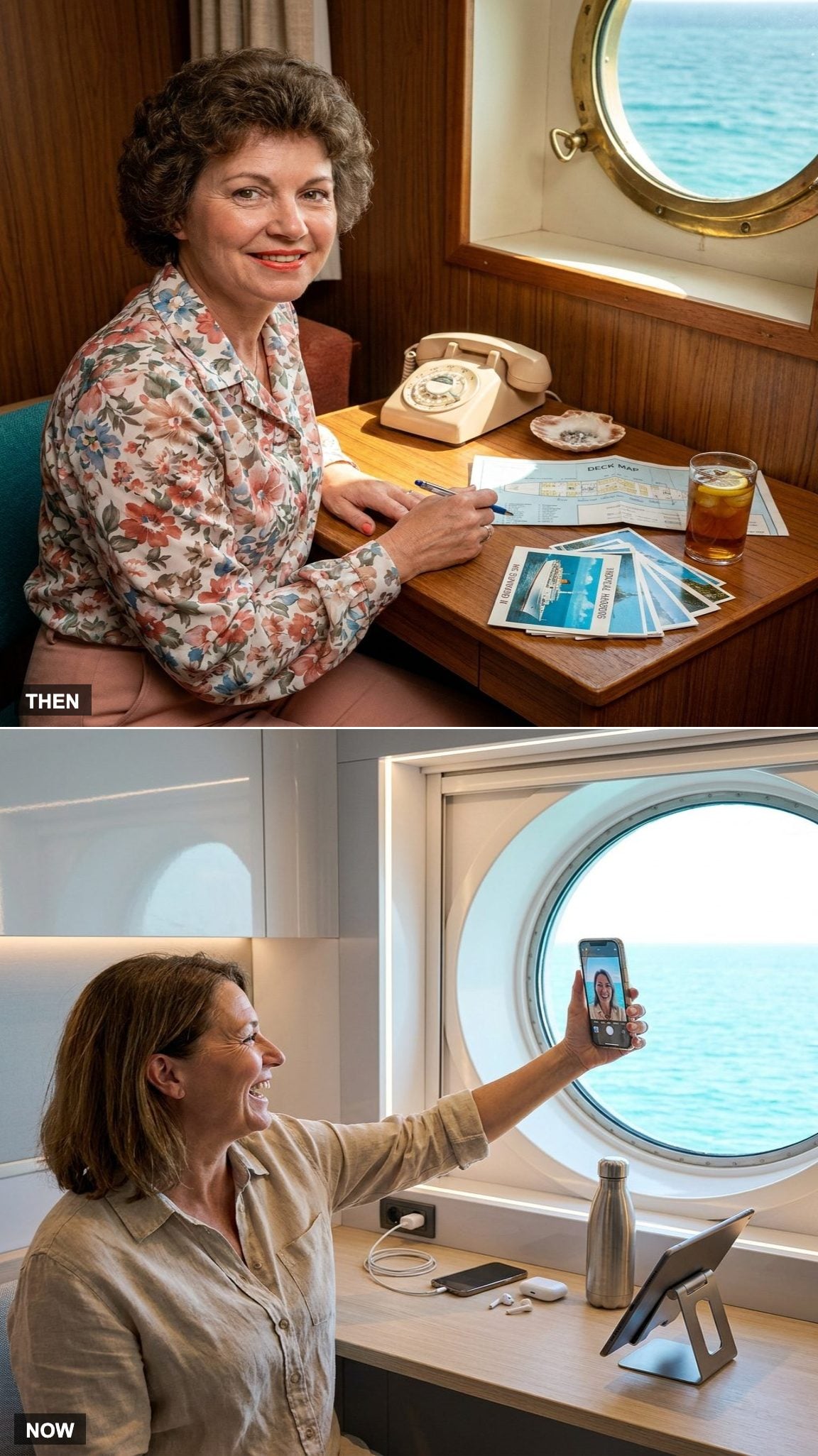
In 1980, the ship’s postcard rack was a whole event. You’d buy six at the gift shop, scrawl them in the cabin by the porthole light, then drop them at the purser’s desk to be mailed from the next port. Your sister got the news three weeks after you were already home. And the photo was of the ship, not you—better that way, honestly.
Today, word travels before your feet touch the gangway. The buffet, the sunset, that questionable poolside cocktail, all of it live, all of it gone by tomorrow. Nobody keeps a feed in a shoebox for forty years.
What Changed Most Was the Pace
The largest change is not any one waterslide, dining room, or digital screen. Older cruises asked passengers to surrender to the pace of the sea: a deck chair, a paperback, shuffleboard at eleven, and a horizon that did nothing all afternoon and did it beautifully.
Modern ships promise that almost no minute will go unfilled. The attractions are bigger, the choices are broader, and the ship itself can become the destination. Neither version is automatically better, but they produce entirely different vacations. In 1980, the ocean was the entertainment. Now it is often the backdrop.
🔥 Would you like to save this?
Please note that some of the imagery in this article were created with the aid of AI image generators.