
The coat you only wore twice a year. The one with the scratchy wool collar your mother buttoned all the way up before she’d let you out the door. That was the coat for going downtown to see Santa, and downtown meant a real department store with eight floors and a bank of elevators run by a woman in white gloves.
We saved up all year, parked the station wagon in a garage that cost actual money, and stood in lines that wrapped around toy departments and spilled out onto the sidewalk. The ones below were worth every minute.
39. Macy’s Herald Square Santaland, New York City
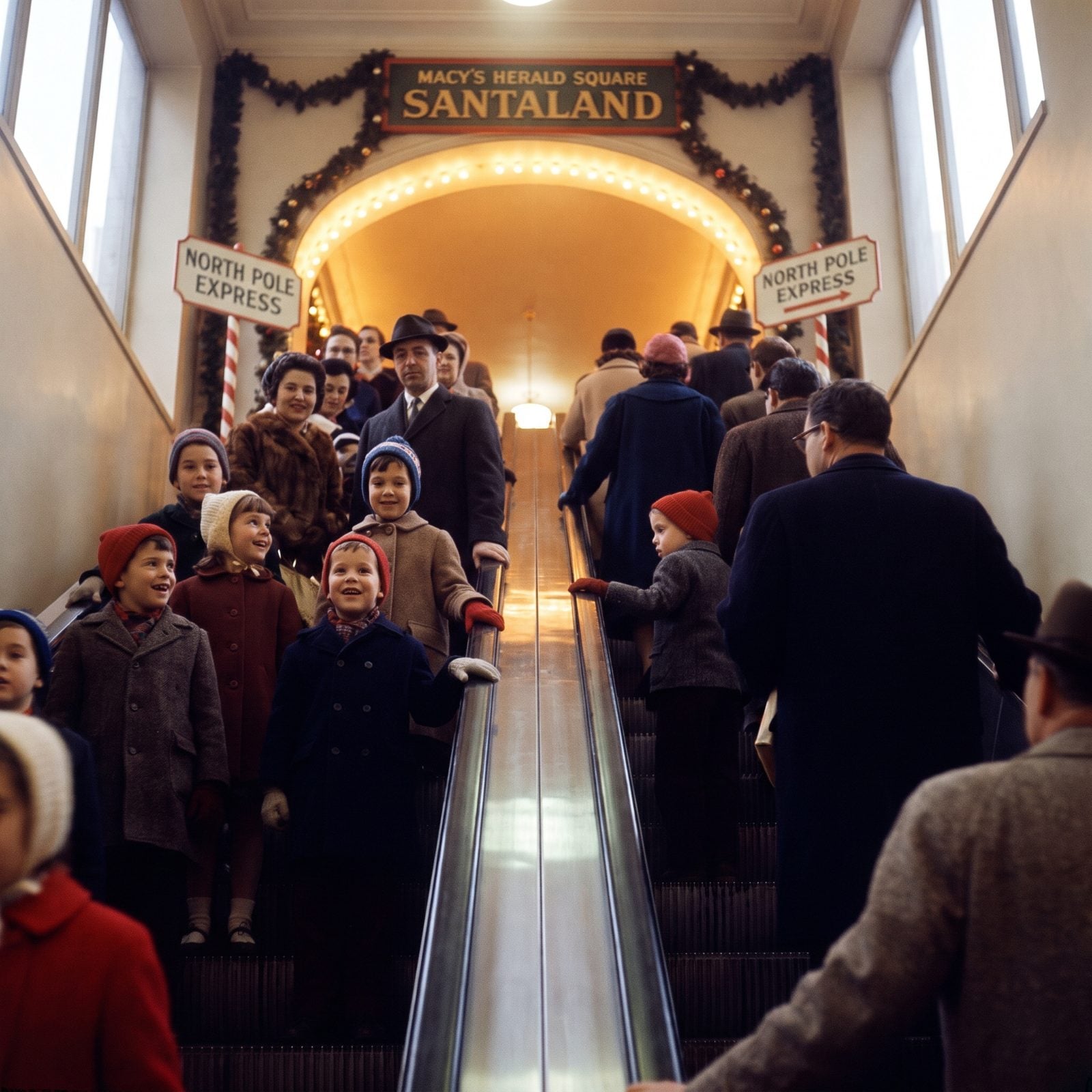
You started lining up at the bottom of the escalator, and by the time you reached the top floor you’d already seen every toy you were going to ask for. That was the genius of it. Macy’s walked you through an entire workshop before you ever got to the man himself.
The elves hammered away at little benches. A train looped overhead. Cotton snow sat on every ledge, and nobody cared that it was really just stuffing. The line felt endless and that was part of the pleasure of the thing — by the time you climbed into Santa’s lap you’d been building toward that moment for an hour.
38. Wanamaker’s Grand Court Light Show and Toy-Department Monorail, Philadelphia
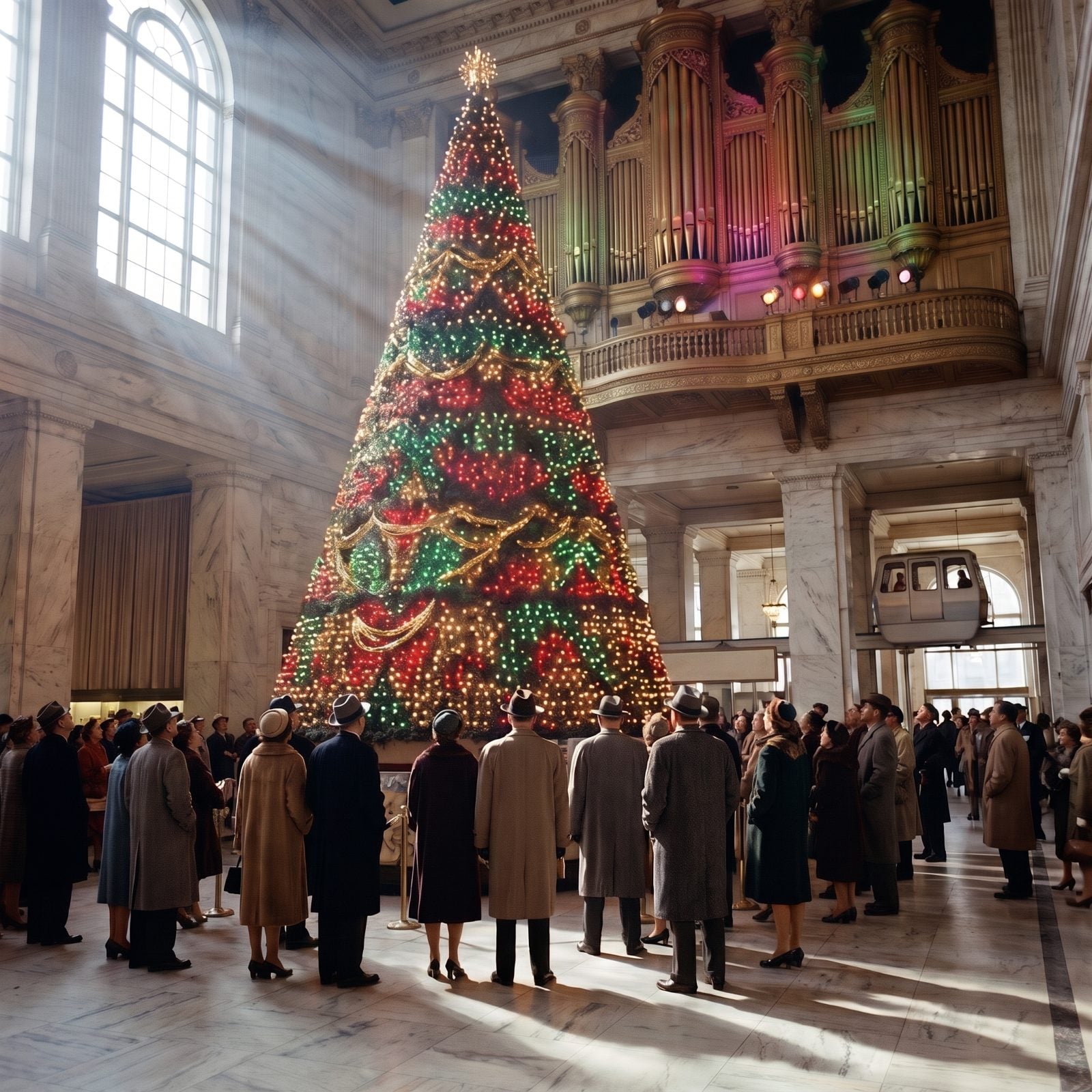
The organ started up and the whole marble court went quiet. Then the lights began — colored beams sweeping the balconies and a towering cone of a tree built entirely of colored bulbs rising from the middle of that enormous stone room. People craned their necks until it hurt.
Off to one side of the court, a monorail car glided along a track overhead, between the marble columns and above the crowd. Its little cabin looked like something out of the future, and from inside you could look down over the whole toy floor like you owned it.
That Grand Court could swallow a thousand people and still feel hushed. The light show ran a few times a day through December, and families planned their entire visit around the schedule.
37. Marshall Field’s State Street Windows and Walnut Room Tree, Chicago
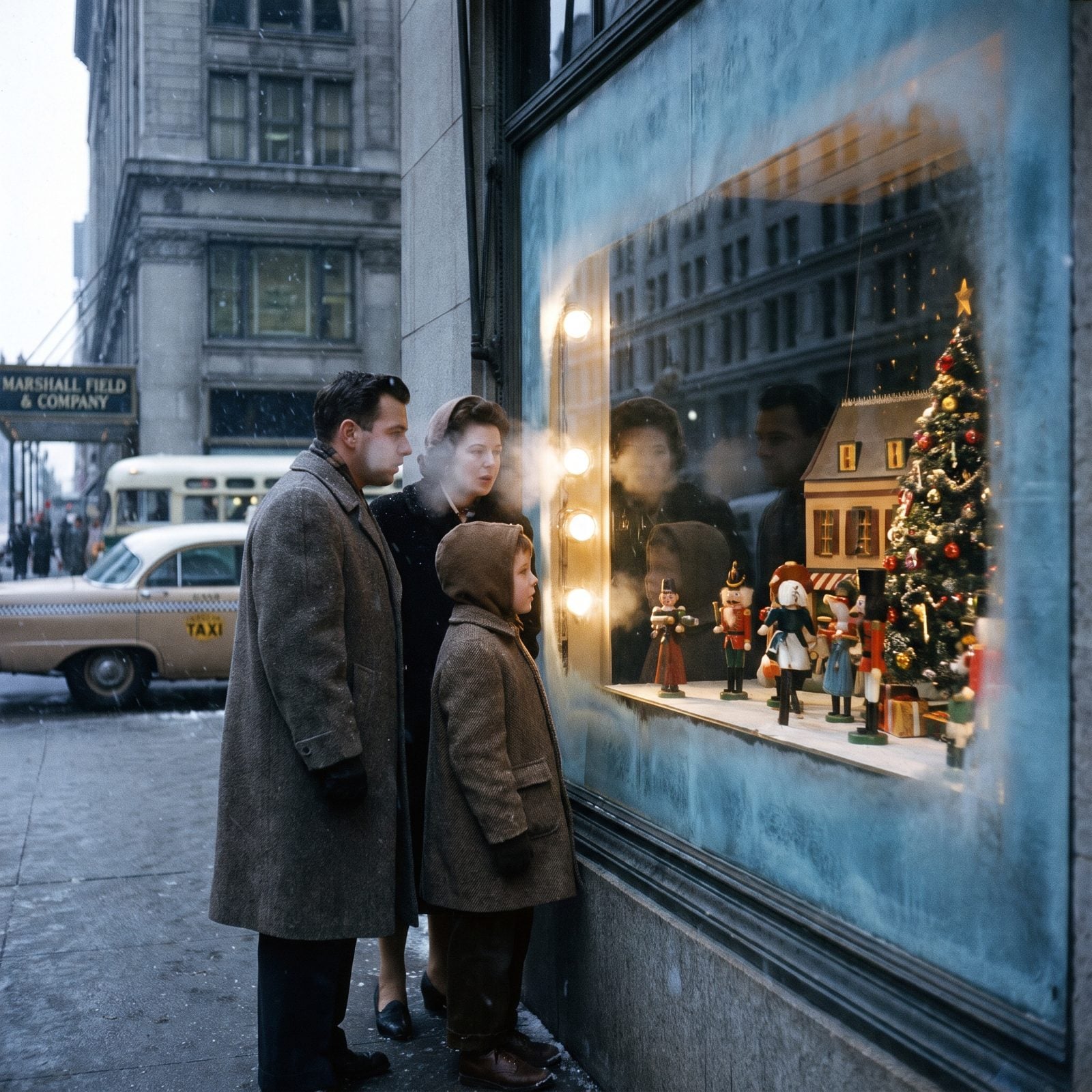
You walked the whole row of windows before you ever went inside, and that was a ritual all its own. Each pane held a different animated scene — mechanical figures turning and nodding and sledding in tiny villages lit from behind. Nobody rushed. People stood three deep in the cold just to watch a little mouse rock in a chair.
Then you went up to the Walnut Room, where the tree ran clear to the ceiling and you ate lunch under it. That tree is why people booked tables weeks ahead.
36. Jordan Marsh’s Enchanted Village, Boston
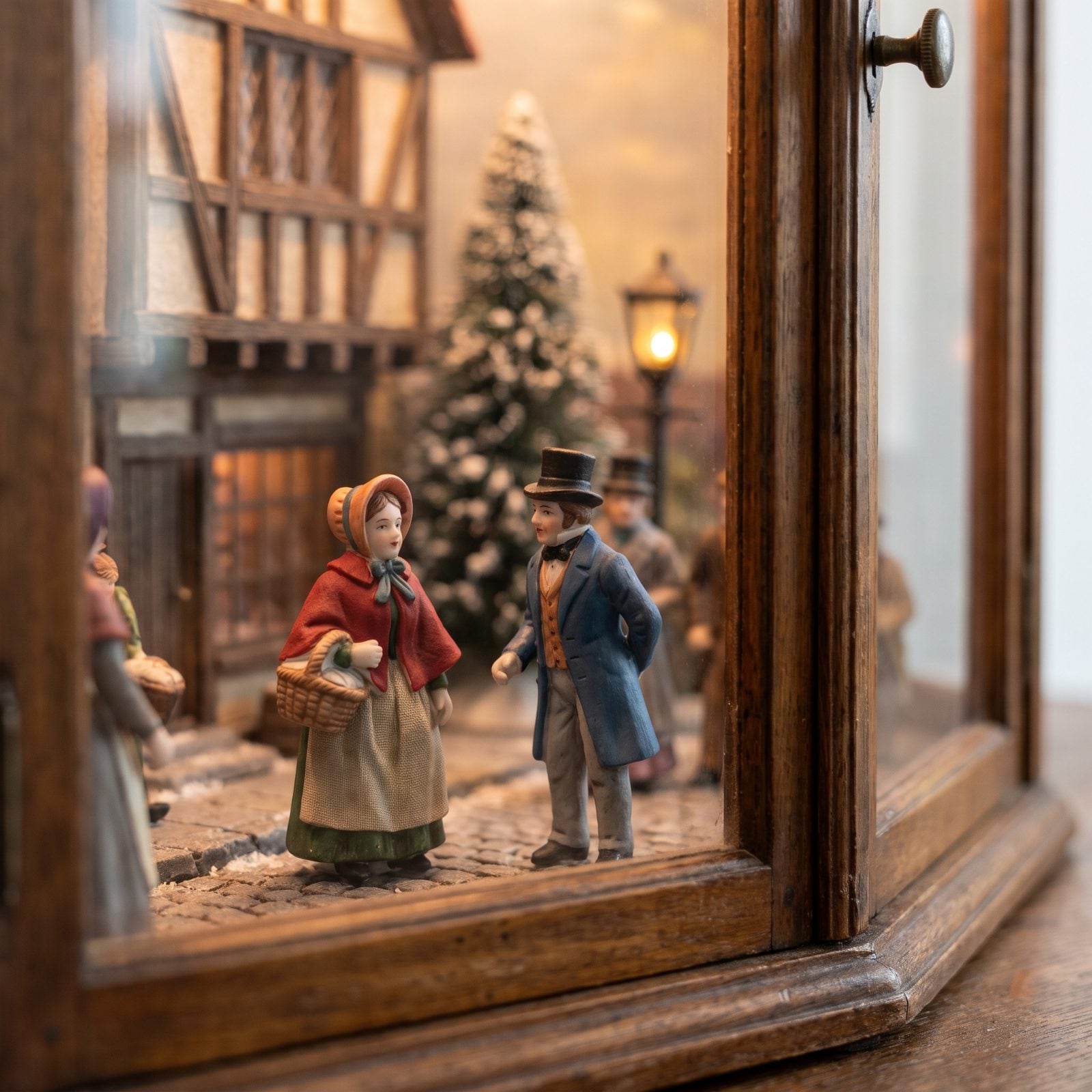
The faces got you. Jordan Marsh imported those figures from Europe — real porcelain faces, real little clothes — and when the baker turned to pull bread from his oven you half believed he’d wink at you.
You moved through the whole Victorian village at a crawl, past the cobbler and the carolers and the candy shop, every scene behind its own pane of glass. Cotton snow everywhere. A painted sky with stars overhead.
It opened in 1958 and ran for decades. Grown Bostonians still get a little misty talking about it, and I don’t blame them one bit.
35. Dayton’s Eighth-Floor Christmas Show, Minneapolis
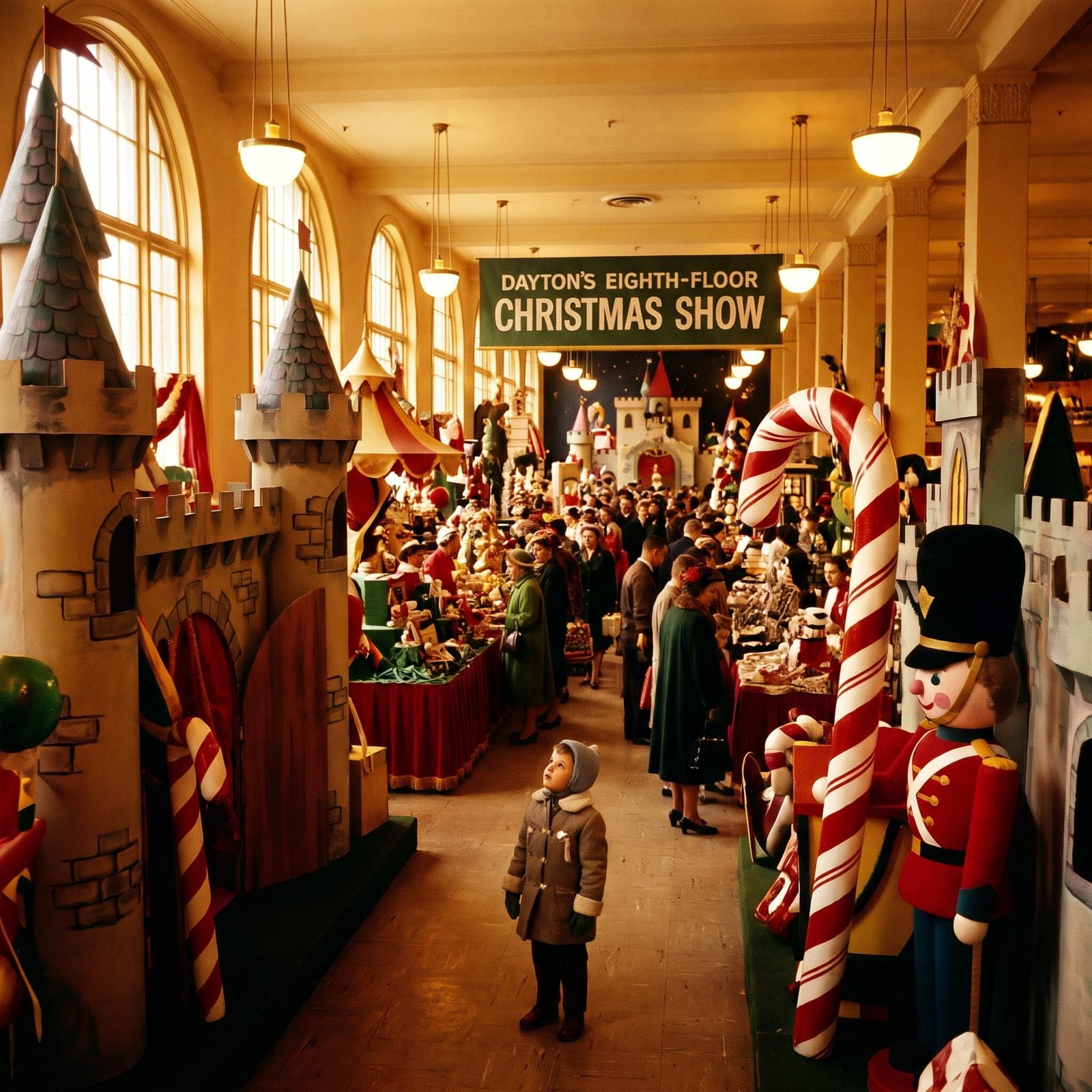
Dayton’s didn’t do a corner. They did the whole eighth floor. Every Thanksgiving they’d unveil a new theme and the entire top level became a walk-through theatrical production — sculpted trees, mechanical animals, painted sets that reached the ceiling.
You rode the elevator all the way up and stepped out into another world. For a kid in Minneapolis, that was reason enough to survive a cold week. A warm, glowing, enormous reason to put your mittens back on.
34. Miller & Rhoads’ Real Santa and Snow Queen, Richmond
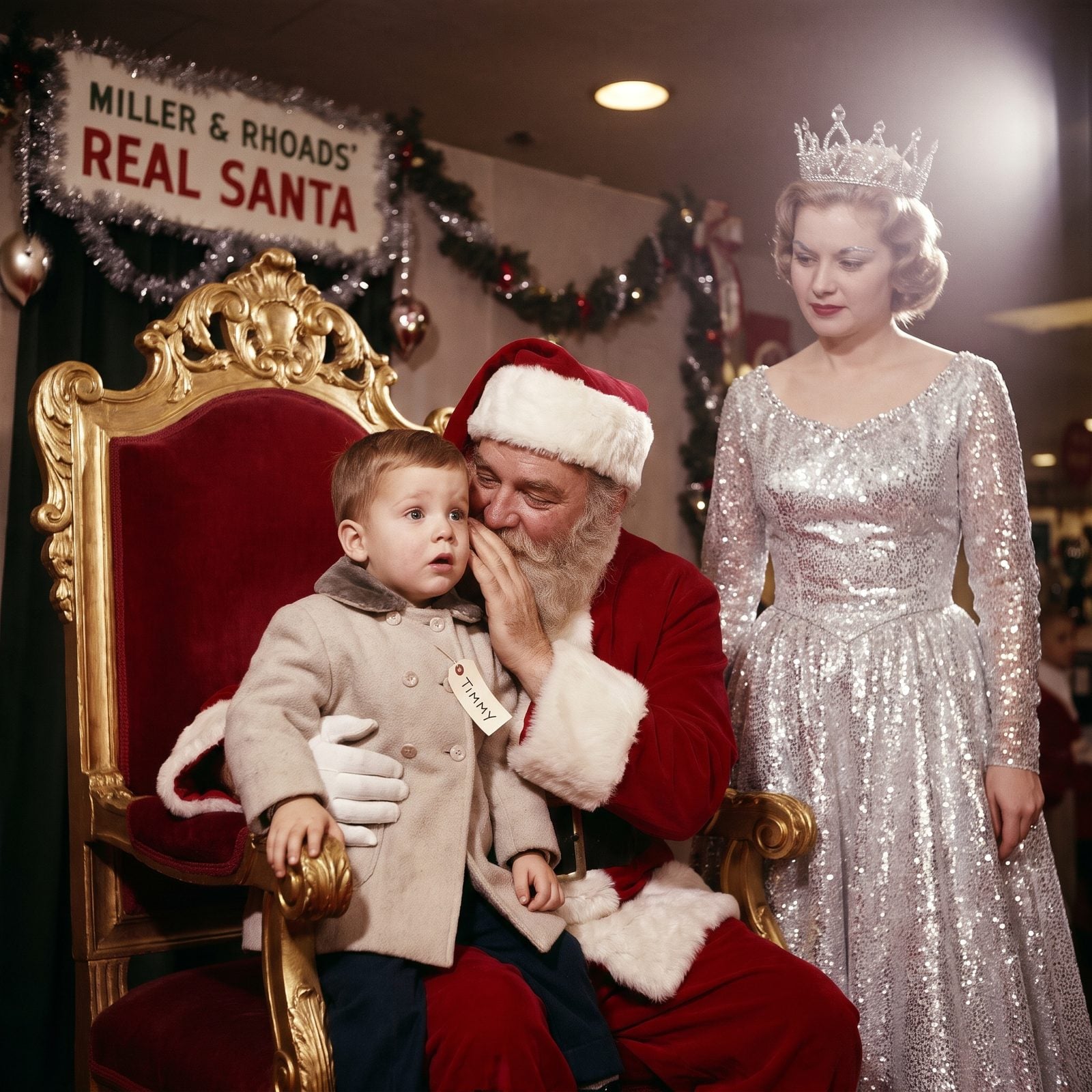
This Santa knew your name. Before you climbed up, a paper tag on your coat spelled it out, and when he greeted you by name the whole thing tipped from nice into unforgettable. Parents still laugh that their kids never thought to look down at the tag.
The Snow Queen stood beside the throne in her silver sequined gown and sparkling crown, her own kind of magic entirely. Downstairs in the Tea Room, Santa would come down a chimney and have lunch with the children. Richmond families marked the whole season by that one visit.
33. Lord & Taylor’s Animated Fifth Avenue Windows, New York City
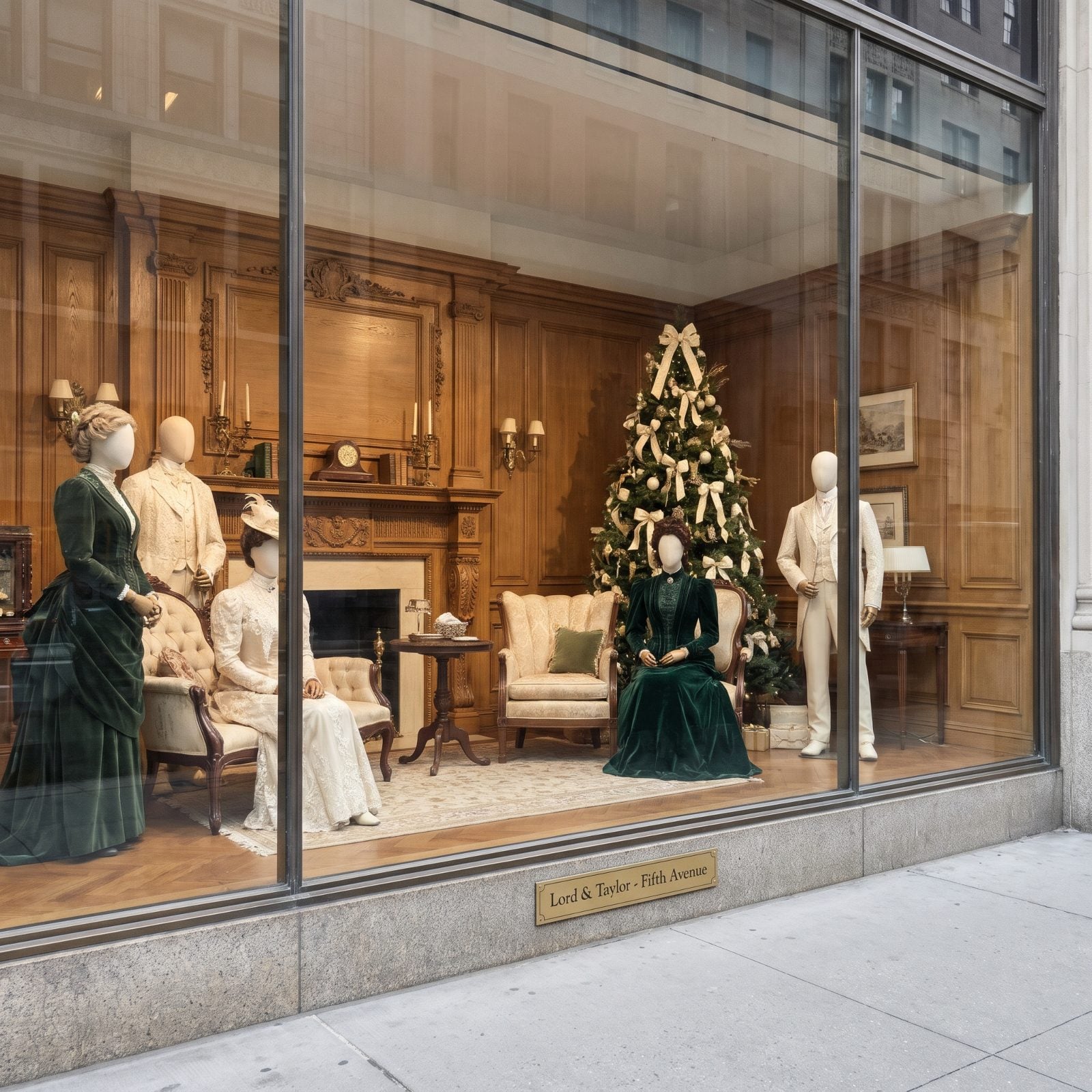
Lord & Taylor went a different way. No cartoon elves, no neon — just quiet, tasteful tableaux. A Victorian parlor at Christmas. Skaters on a frozen pond, every figure moving with a restraint that felt almost elegant.
People walked up Fifth Avenue specifically to see them, and the line moved slow because nobody wanted to leave. The windows were a gift the store gave the whole city, free, from the sidewalk, in the cold.
32. Lit Brothers’ Enchanted Colonial Village, Philadelphia
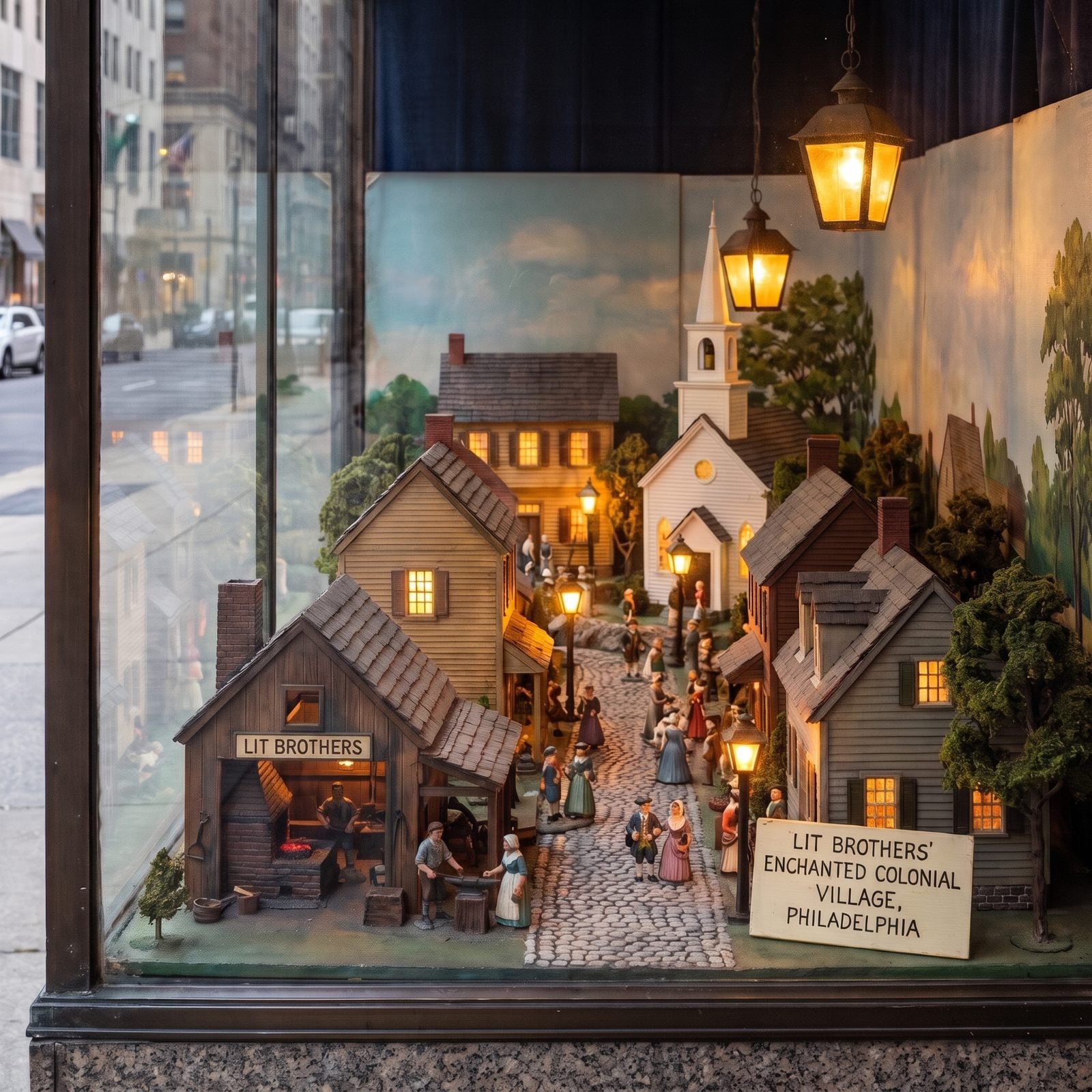
Lit Brothers built an entire colonial town in their windows — a blacksmith, lamplit clapboard houses, a little white church, every figure in tricorn hats and petticoats, every scene ticking along. Christmas and American history lesson rolled together, which somehow worked.
You went to Wanamaker’s for the grand spectacle and you went to Lit Brothers for this: the detailed little world you could lean right up against the cold glass to see. Philadelphia kids did both in one afternoon.
31. J.L. Hudson’s Woodward Avenue Christmas Spectacle, Detroit
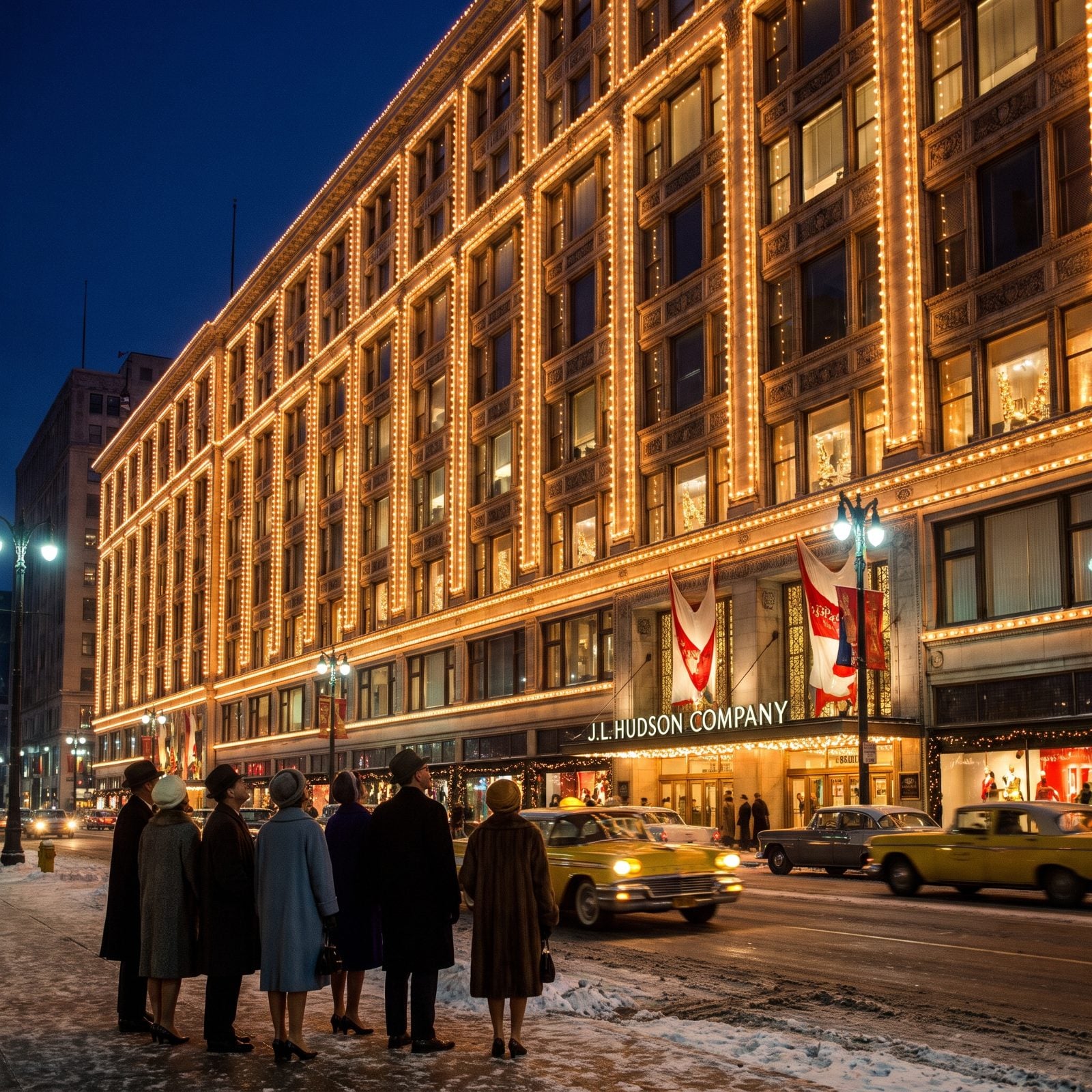
Hudson’s was simply huge, and at Christmas the whole building turned into a landmark — floor after floor of merchandise, exterior decorations you could see for blocks, display windows that pulled crowds off the sidewalk.
Detroit put on its biggest Christmas parade of the year and it ended at Hudson’s, where Santa climbed up to his throne to open the season. You bundled the kids into the wagon, drove down Woodward, and spent the whole day inside. By the time you left, your feet were done and your arms were full.
30. Halle’s Mr. Jingeling and Santa Displays, Cleveland
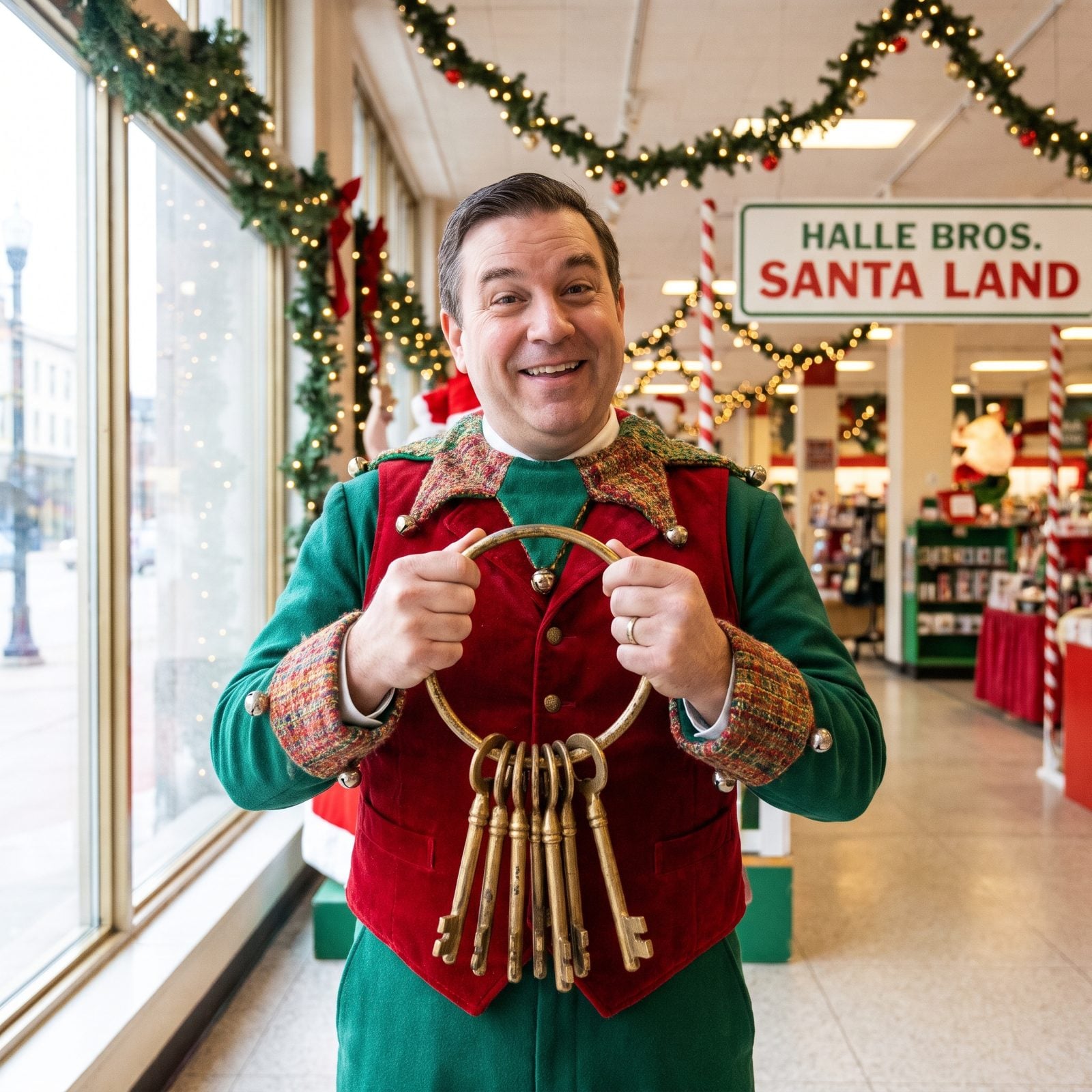
Cleveland had its own character, and his name was Mr. Jingeling. The Keeper of the Keys — Santa’s man who found the lost key to the toy castle — and every kid in town knew his song by heart. You went to Halle’s as much for him as for Santa.
He handed out paper keys to the children and he was yours, nobody else’s. No other city had him. That local, homemade quality is exactly what made him stick, and grown Clevelanders still hum the tune without being asked.
29. Higbee’s Twigbee Shop and the Cleveland Christmas Windows
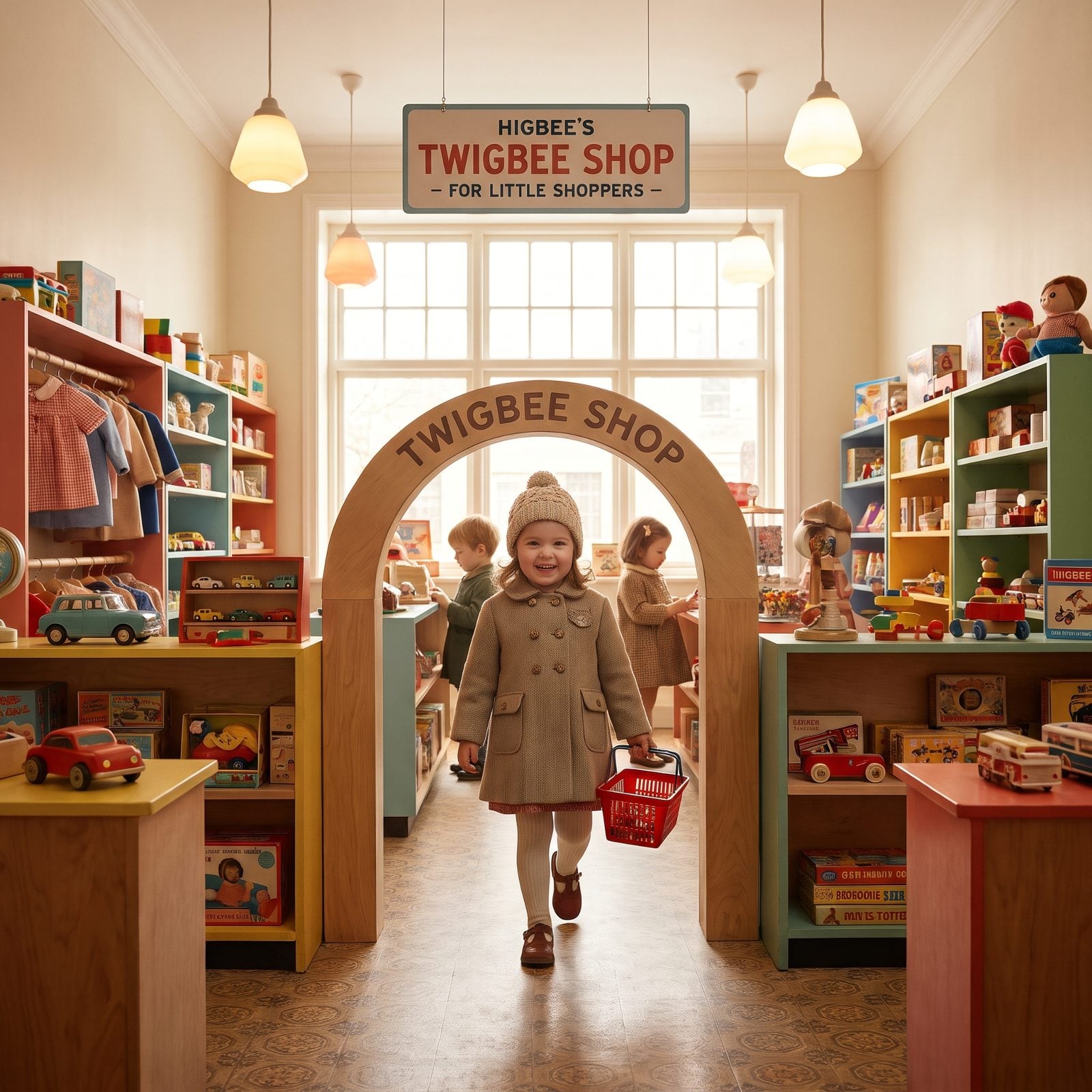
The Twigbee Shop was the part the kids actually remembered. A little store scaled down for small shoppers, where a child could walk through the wooden arch with a little red basket and browse on their own: shelves of toy cars, dolls and boxed games, racks of tiny coats and dresses, all at kid height. Your first real taste of the grown-up ritual of shopping, and you got to do it with your own dime.
Out front, Higbee’s animated windows on Public Square pulled the crowds. You walked the whole row in the cold, breath fogging the glass, watching tiny figures move in their lit-up worlds.
28. Shillito’s Mechanical Elves in Cincinnati
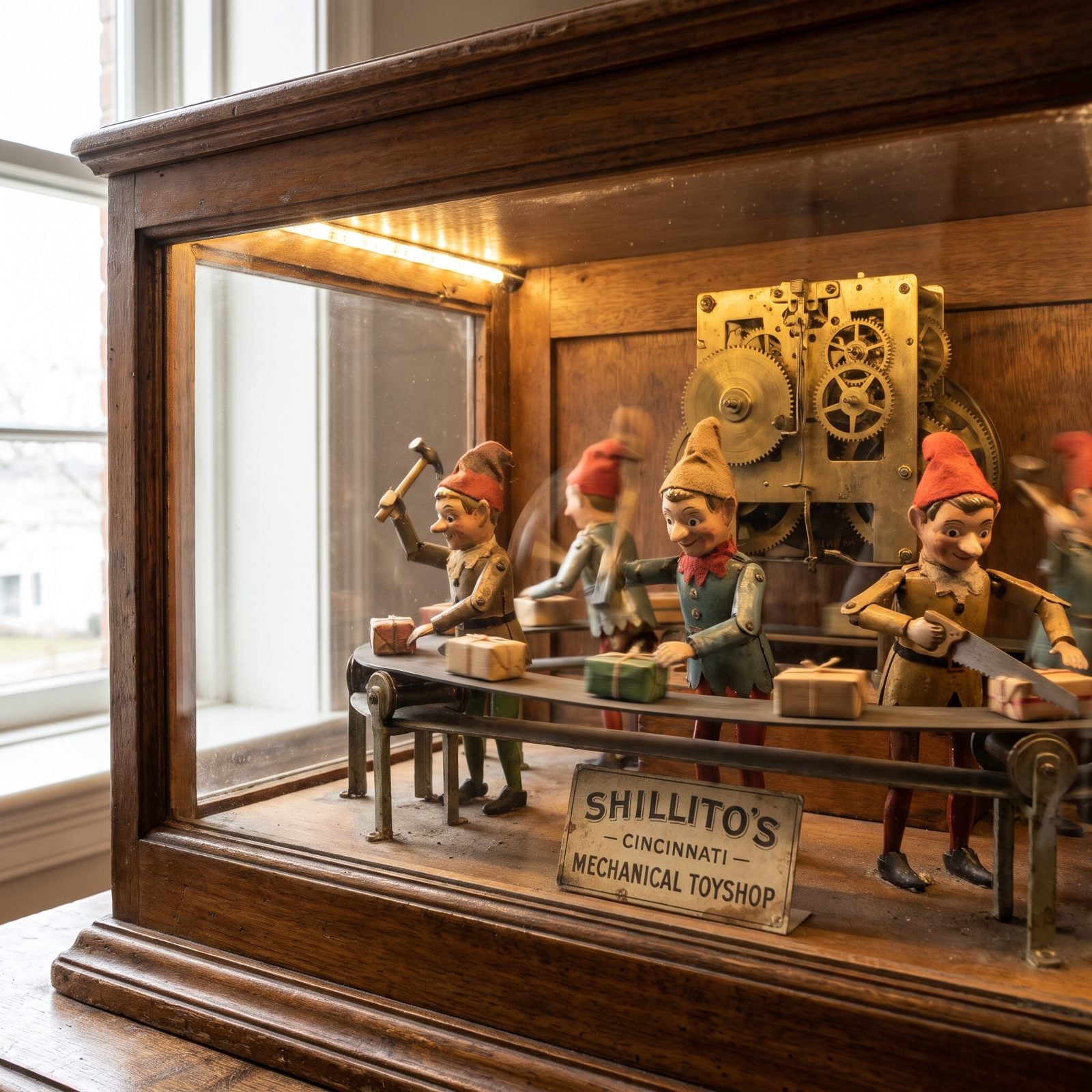
You could stand there for twenty minutes and your mother would let you. The Shillito’s elves worked in a loop, one tapping a hammer, one painting the same wooden horse over and over, a whole little union of mechanical toymakers who never clocked out.
The magic was in the detail you noticed on the third viewing. The way an elf’s head tilted. The tiny bellows that puffed. Downtown Cincinnati had lights everywhere, but these were the ones kids dragged their parents back to, because a machine that pretended to be alive was the closest thing to a miracle a seven-year-old had ever seen.
27. L.S. Ayres’ Cherub, the Windows, and the Santa House in Indianapolis
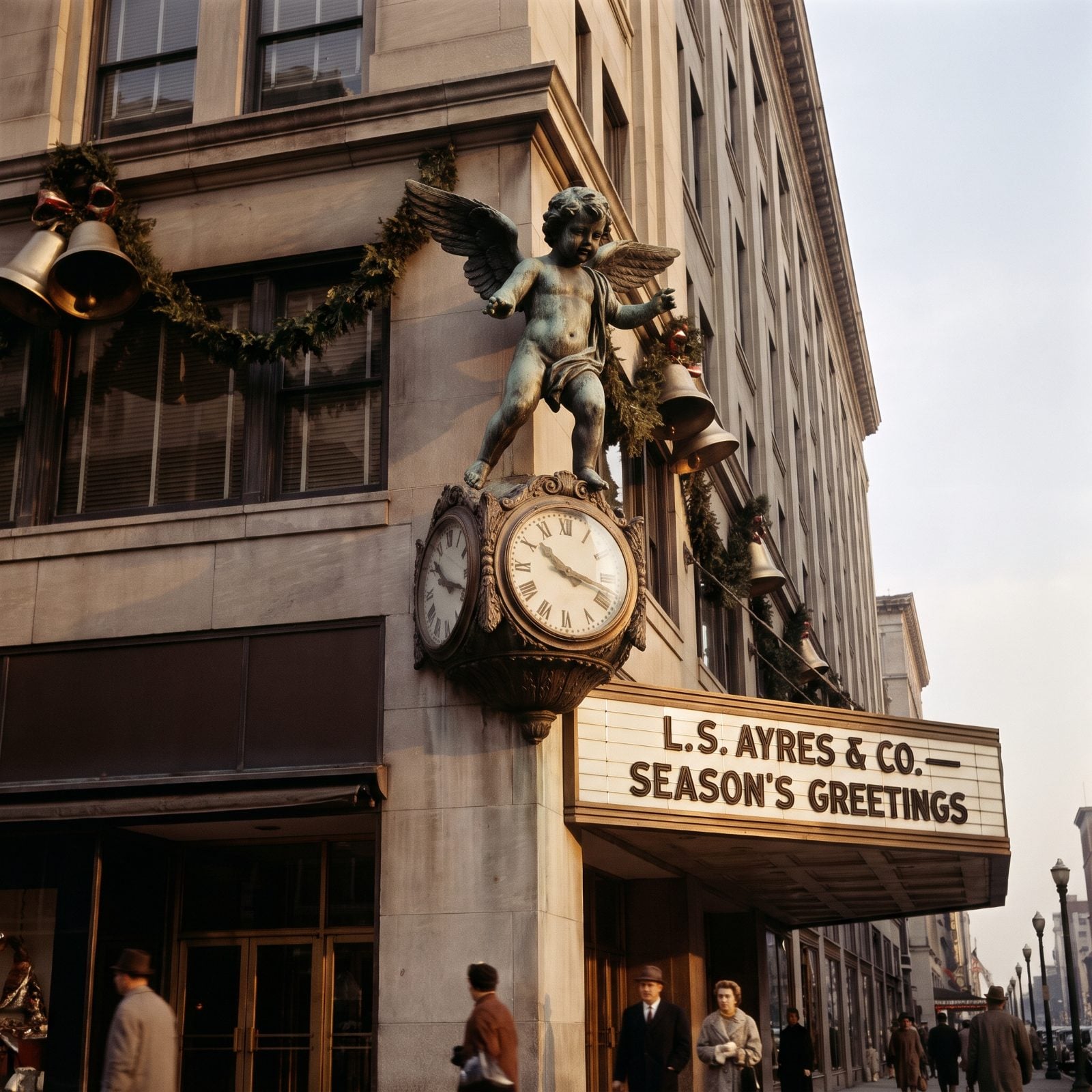
The cherub was the signal that Christmas had officially started. Every year it took its seat on the corner of the building, and if you were an Indianapolis kid, you watched for it the way you watched for the first snow.
Inside, the Santa house gave the whole visit a destination, a cozy little structure built right into the sales floor, where the line wound toward a Santa who actually took his time. The windows outside did their animated work, but the cherub is the one people still talk about. Some traditions attach themselves to a single object, and that little figure carried a city’s holiday on its shoulders.
26. Horne’s Giant Outdoor Christmas Tree in Pittsburgh
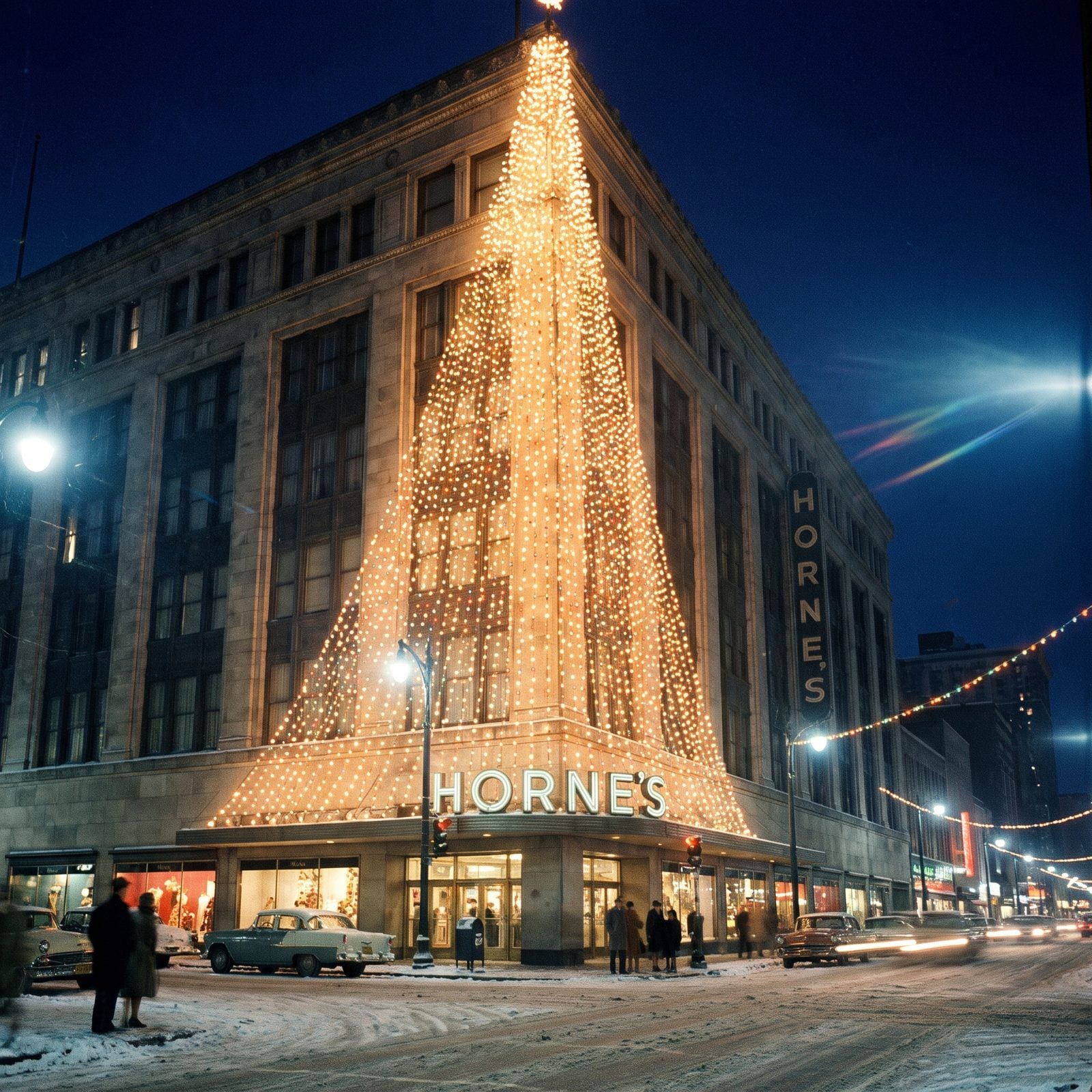
You saw it before you got anywhere near it. Horne’s turned the whole corner of its building into a tree of lights, a glowing cone climbing up the stone, and for a lot of Pittsburgh families, seeing it lit meant the holiday had arrived whether the calendar agreed or not.
It was the kind of thing you drove in for on purpose. Park somewhere, walk to the right spot, look up, let the kids go quiet. I’ve always had a soft spot for a display that costs a city nothing to enjoy. You didn’t have to buy a single thing to stand on that sidewalk and feel like December meant something.
25. Wieboldt’s Neighborhood Santa Lands Around Chicago
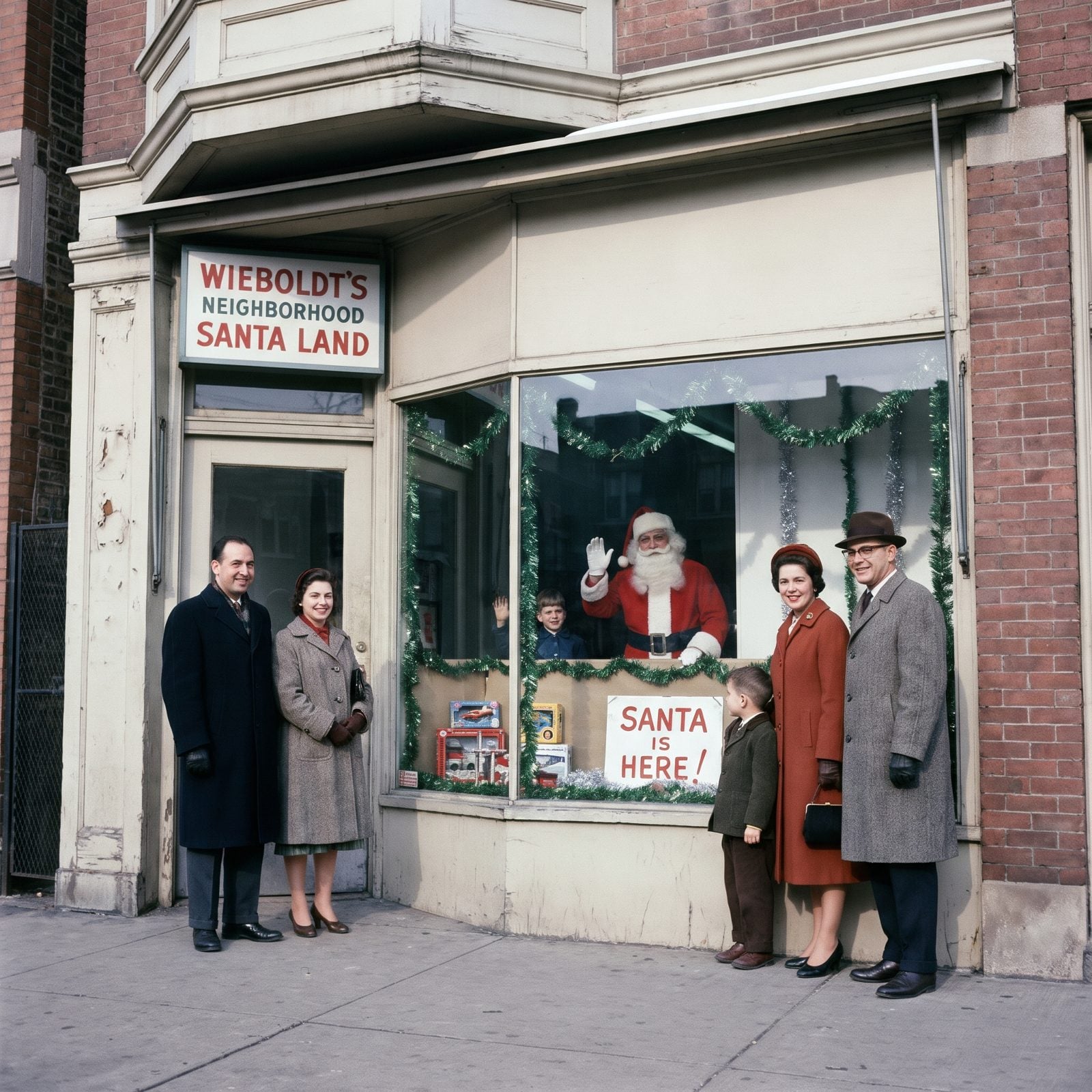
Not everybody could get downtown, and Wieboldt’s understood that. Their stores dotted the Chicago neighborhoods, which meant Santa came to you, close enough that a mom could walk a couple of kids over on a Saturday without mounting a whole expedition.
The Santa lands were scaled for real families. A good throne, a real line, a toy floor stocked with the stuff that ended up on every list that year. Less grand than the big State Street names, and that was exactly why people loved them. This was the Santa your cousins also visited, the one that belonged to the block.
24. Schuster’s Christmas Parade and Santa Displays in Milwaukee
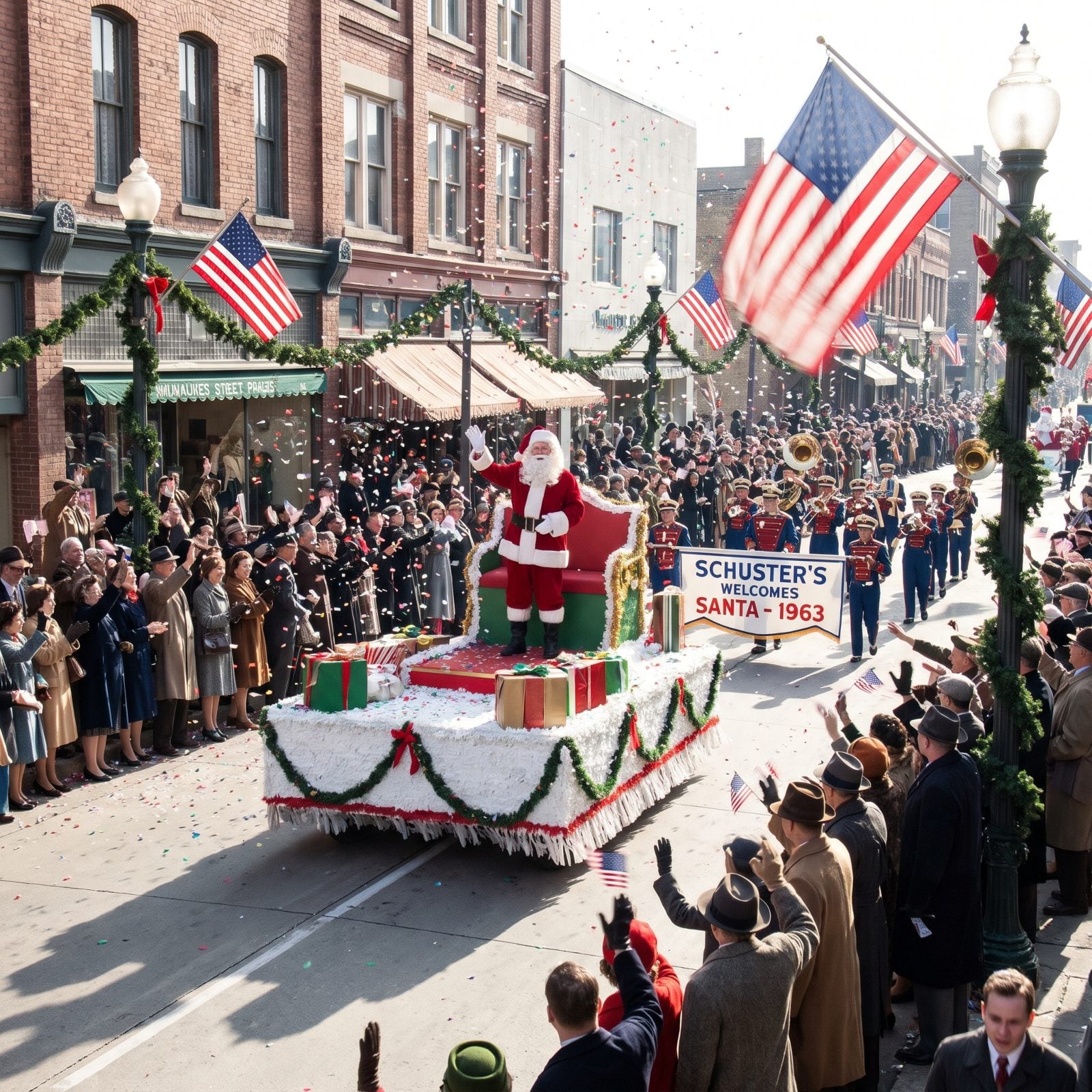
Schuster’s didn’t just decorate. It threw a parade, and for generations of Milwaukee kids that parade was the opening ceremony of the entire season. You bundled up, found a curb spot, and waited in the cold for the floats and the man himself.
Inside, the Santa displays carried the day forward. Clever sequence, when you think about it: the parade got the whole city excited at once, then the store caught every one of those kids the following weekend when their parents came to shop.
23. Hutzler’s Downtown Christmas Fairyland in Baltimore
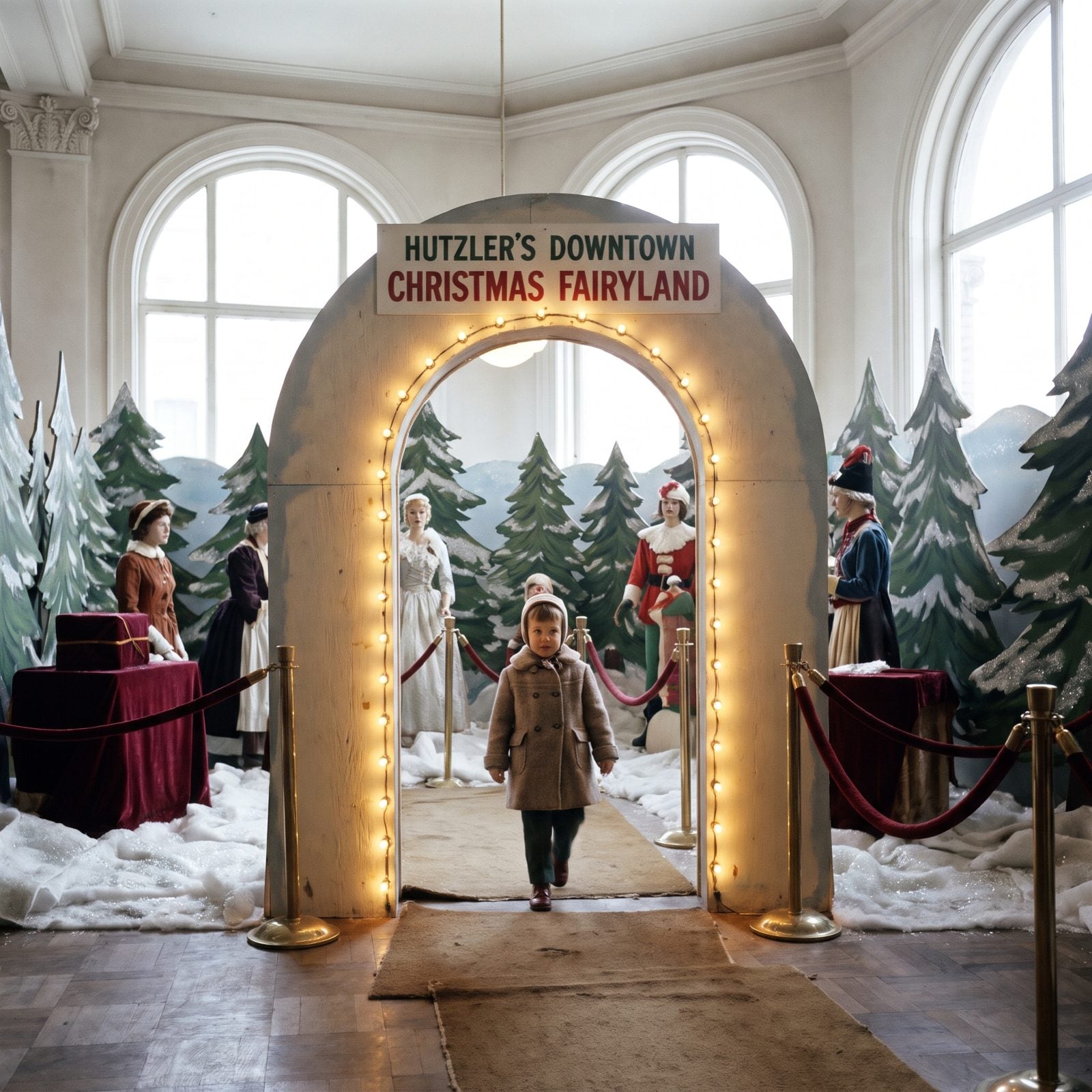
Hutzler’s built a whole world on the upper floor. Fairyland wasn’t a corner with a chair. It was a theatrical set you walked through, little cottages and painted castles and a snowy path that led you, eventually, to Santa.
What got me about places like this was the sheer commitment. Somebody designed that set. Somebody built the cottages, wired the lights, laid down the fake snow so a kid could walk it and believe. A Baltimore child who made that trip downtown carried the memory for life, and plenty of them still do.
22. Woodward & Lothrop’s Downtown Christmas Windows in Washington, D.C.
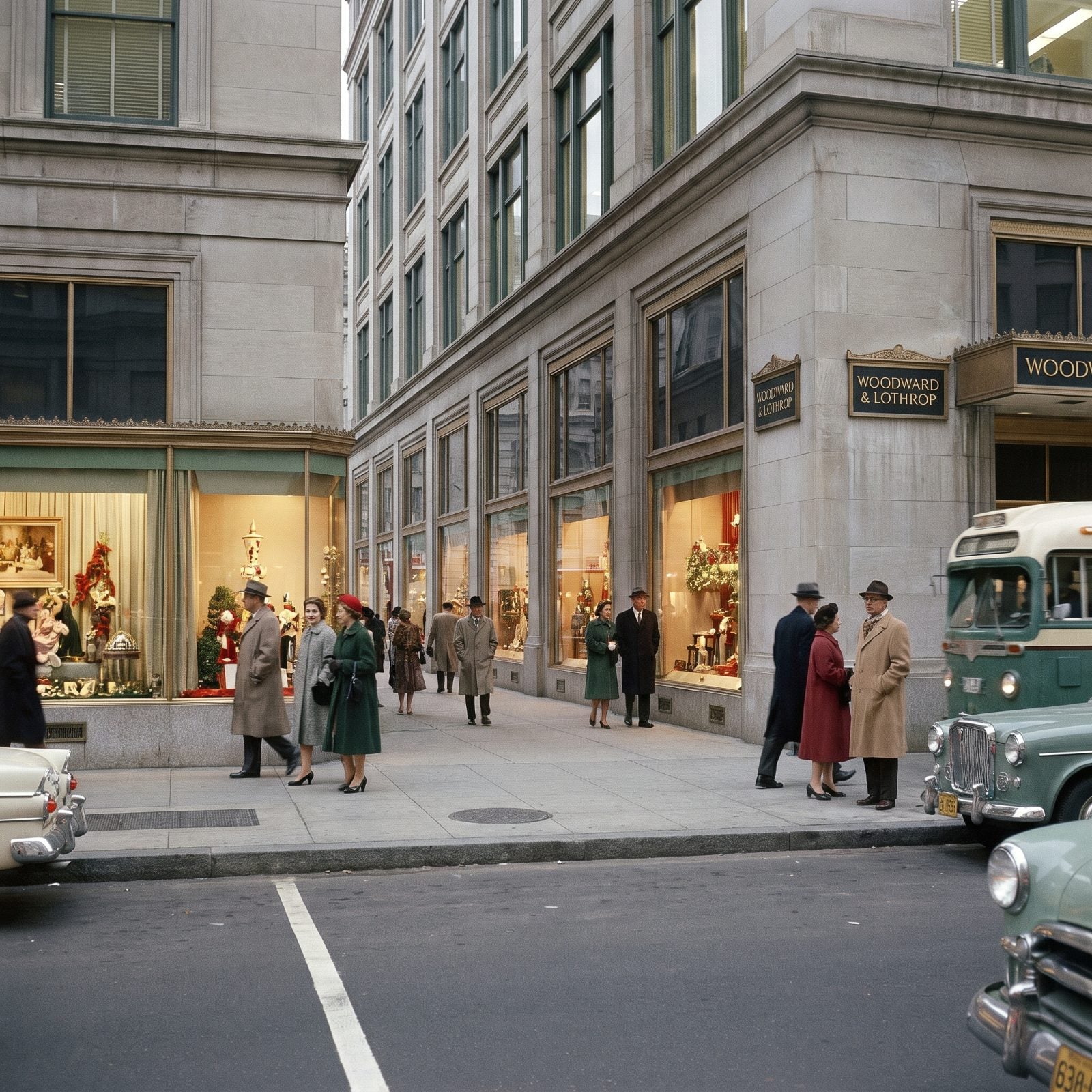
Woodies did the windows the way a capital city expects them done. A long run of glass along the sidewalk, each one its own little lit stage, and the whole block turned into a slow walking tour you took with your chin tucked into your scarf.
Best part was the price: nothing. No ticket, no dollar. You walked the row, the kids picked a favorite, you argued about which was best on the way to the car. For a lot of D.C. families, that walk mattered as much as the tree at home.
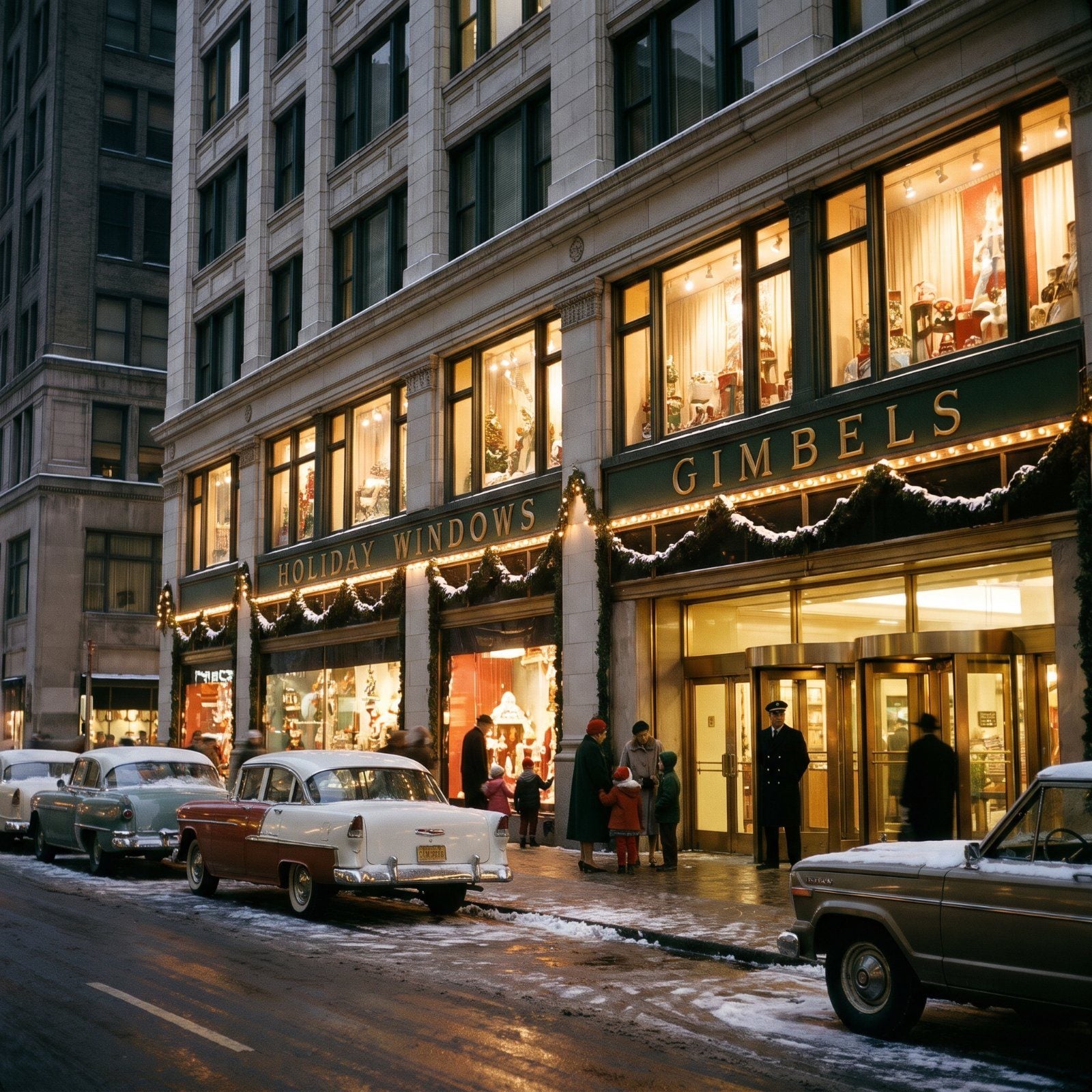
21. Gimbels’ Herald Square Santa and Toy Floor in New York City
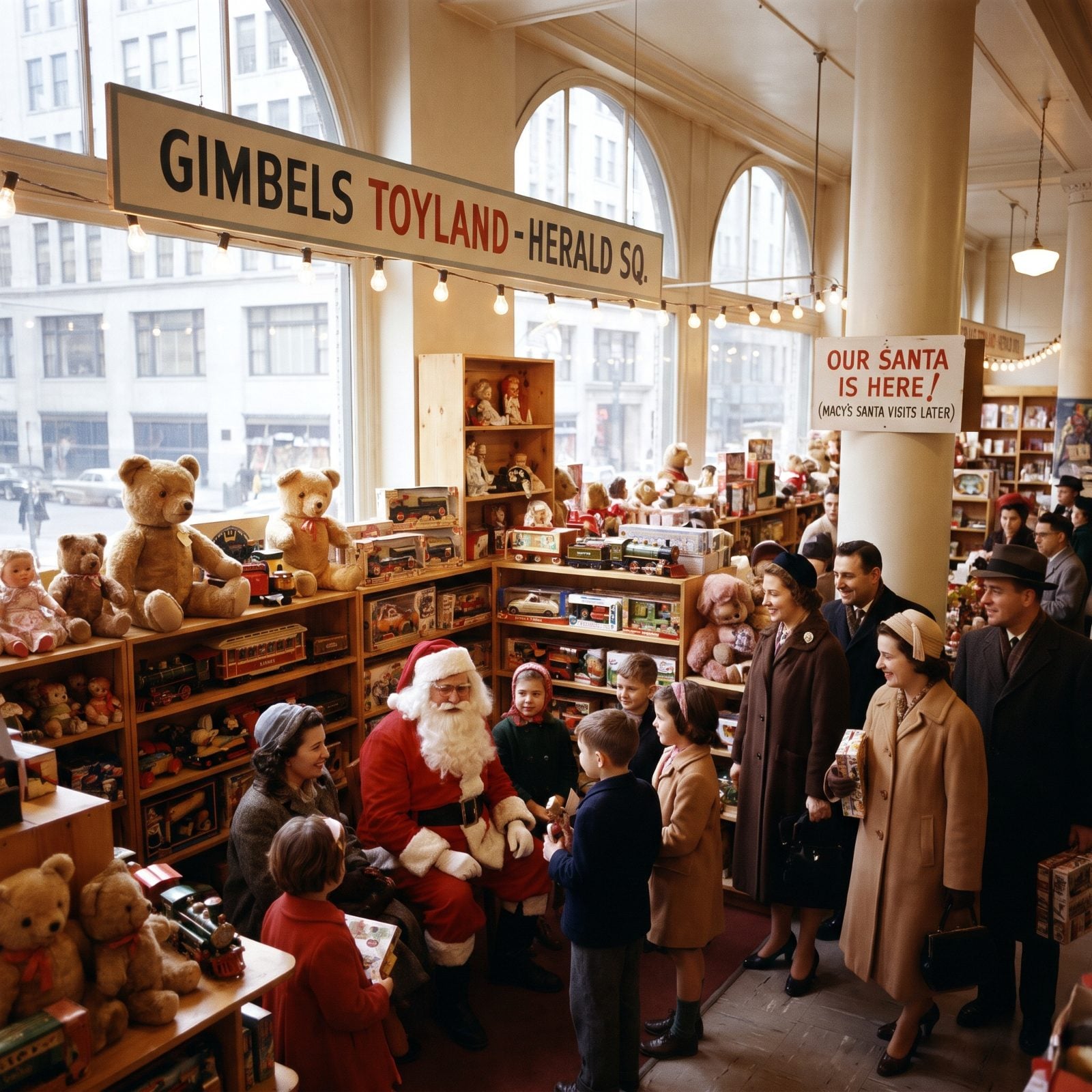
Everybody knows the famous rivalry, the one that made it into the movies. But on the ground, Gimbels at Herald Square was a Christmas destination all its own. The toy floor was enormous, the kind of place where a kid’s eyes genuinely could not land on everything.
The Santa line snaked through all of it, which was its own strategy. You waited surrounded by every toy you’d ever wanted, which made the eventual conversation with Santa a lot easier to script.
20. Abraham & Straus’ Downtown Brooklyn Christmas Windows
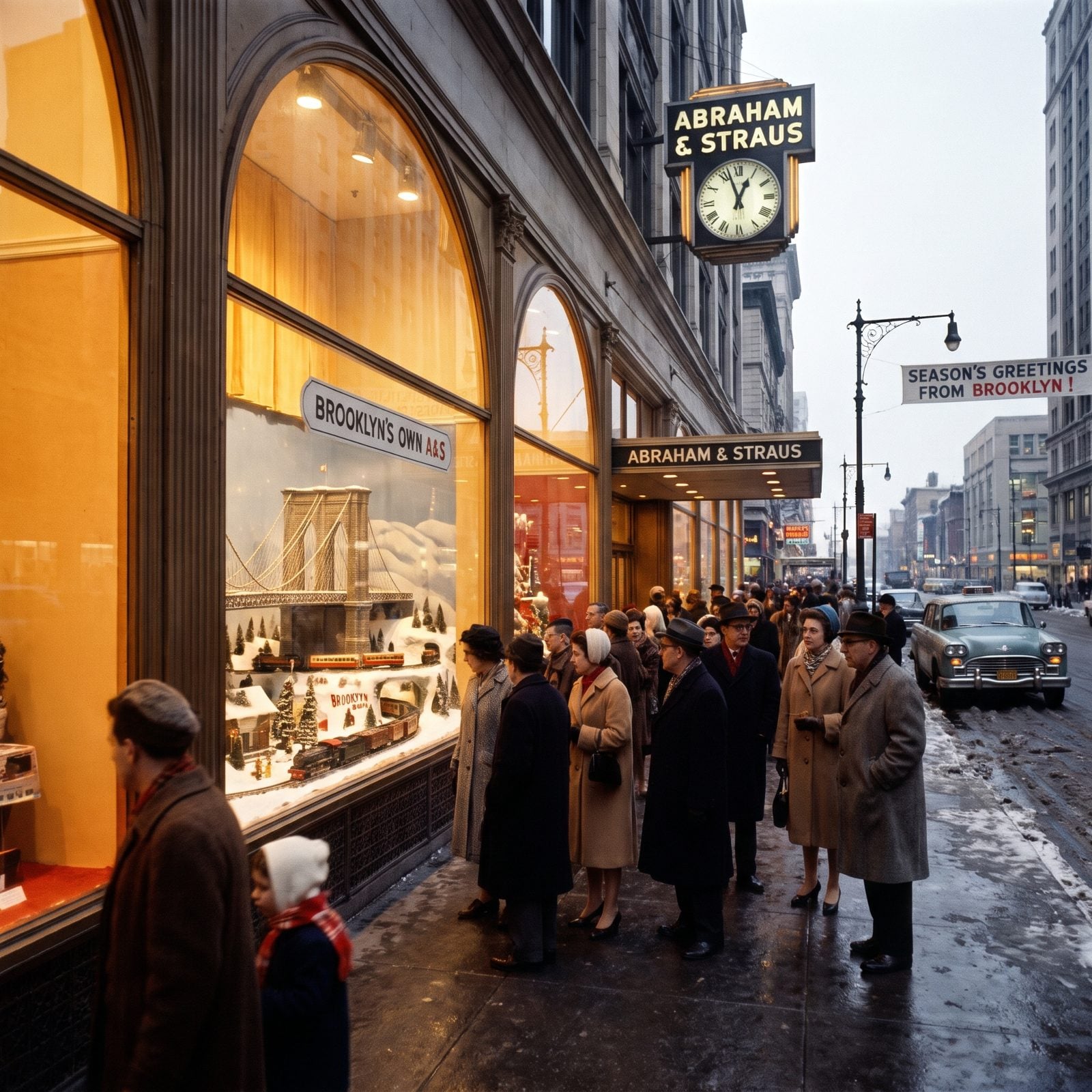
Manhattan gets all the postcards. Brooklyn had its own and didn’t need to borrow anyone’s. A&S on Fulton Street put up windows that drew the whole borough, and for families who weren’t about to schlep the kids across the river, this was the show.
You walked the row, the crowd thick and bundled, everybody breathing steam, the windows doing their quiet animated work behind the glass while the sidewalk buzzed in front of them.
And here’s what stays with me about these stores. They’re mostly gone now, the buildings turned into something else or torn down entirely. But a December night, a cold sidewalk, a lit window with something moving inside it, and a kid who refuses to leave until the whole loop plays one more time? That part never really left. We just have to remember it ourselves now.
19. Bonwit Teller’s Fantastical Fifth Avenue Windows, New York City
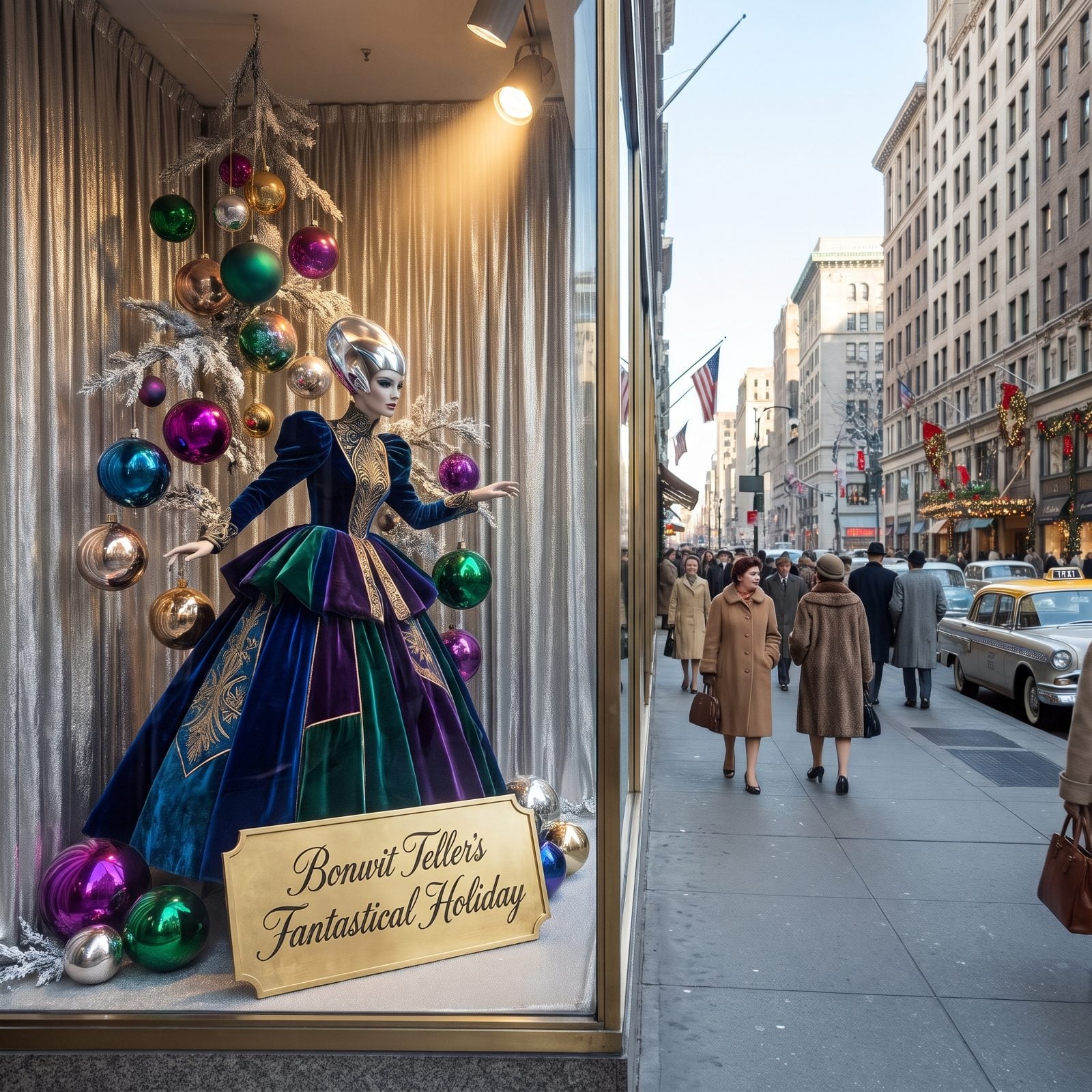
Before the crowds even reached the window, you could feel the hush. Bonwit Teller didn’t do cute — it did glamour, the kind that treated Christmas like couture, with mechanical mannequins in gowns that cost more than the family car idling at the curb.
These were windows meant for grown-ups, and the kids adored them anyway. Gilded branches, velvet backdrops in plum and gold, ornaments the size of basketballs. You pressed your mittens to the cold glass and watched a gloved hand slowly turn, a head tilt, a fan open. A small miracle, right there on a freezing sidewalk.
18. B. Altman & Company’s Elegant Christmas Tableaux, New York City
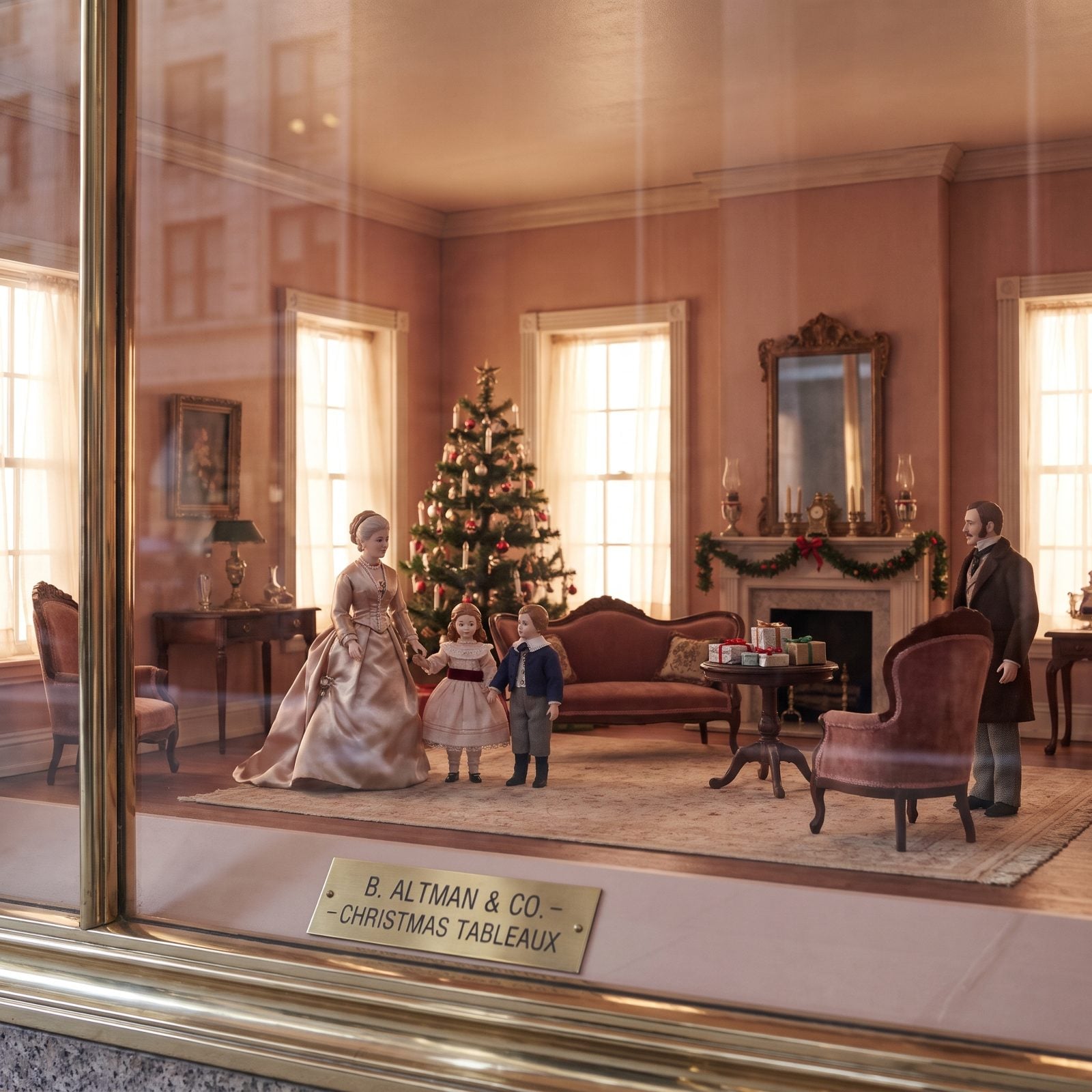
B. Altman played it classy. While other stores chased spectacle, Altman’s gave you refinement — miniature Victorian parlors, tiny animated figures — a mother and her children by the candlelit tree, a father standing off by the fireplace — and a dark wooden pedestal table piled with wrapped presents so small and delicate they looked like they’d blow away if you breathed wrong.
These windows rewarded the patient kid. You had to really look, and when you did, you caught the lady in the crinoline gown turn her head ever so slightly, the whole scene running on hidden clockwork beneath tall windows hung with sheer white curtains. Quieter than the big Santa lands downtown. Which somehow made it feel more like a secret you’d been let in on.
17. Saks Fifth Avenue’s Storybook Christmas Windows, New York City
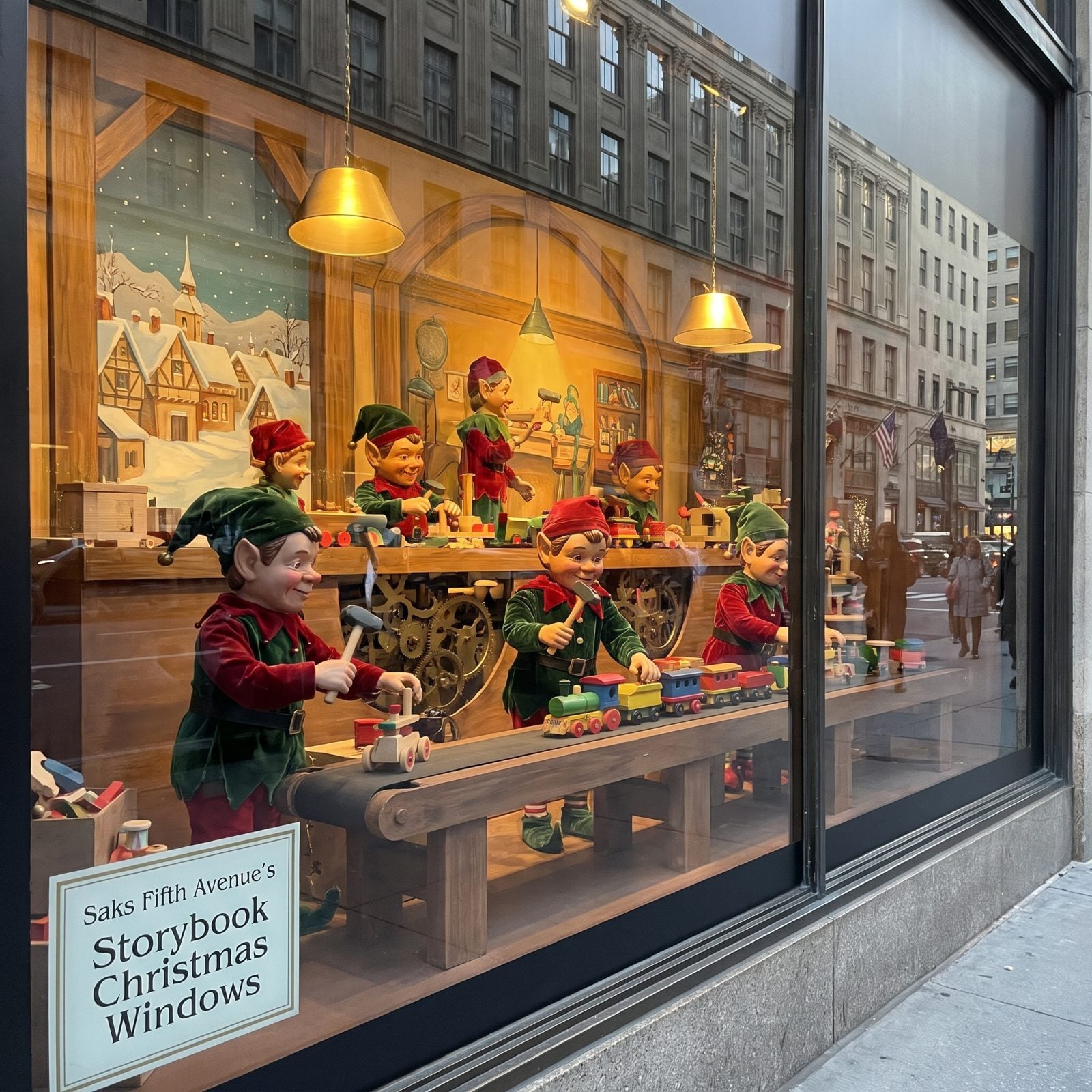
Saks turned the sidewalk into a waiting line, and nobody minded. The windows told actual stories — elves hammering toys, a fairytale cottage half-buried in fake snow, mechanical reindeer mid-leap in front of a sleigh. Each pane was a page.
You shuffled along in galoshes, your breath fogging the glass, your dad’s hand on your shoulder steering you to the next one so the crowd could keep moving. And behind you across the street, Rockefeller Center’s tree threw off its own glow. Two spectacles for the price of one cold walk.
16. Filene’s Downtown Crossing Christmas Windows, Boston
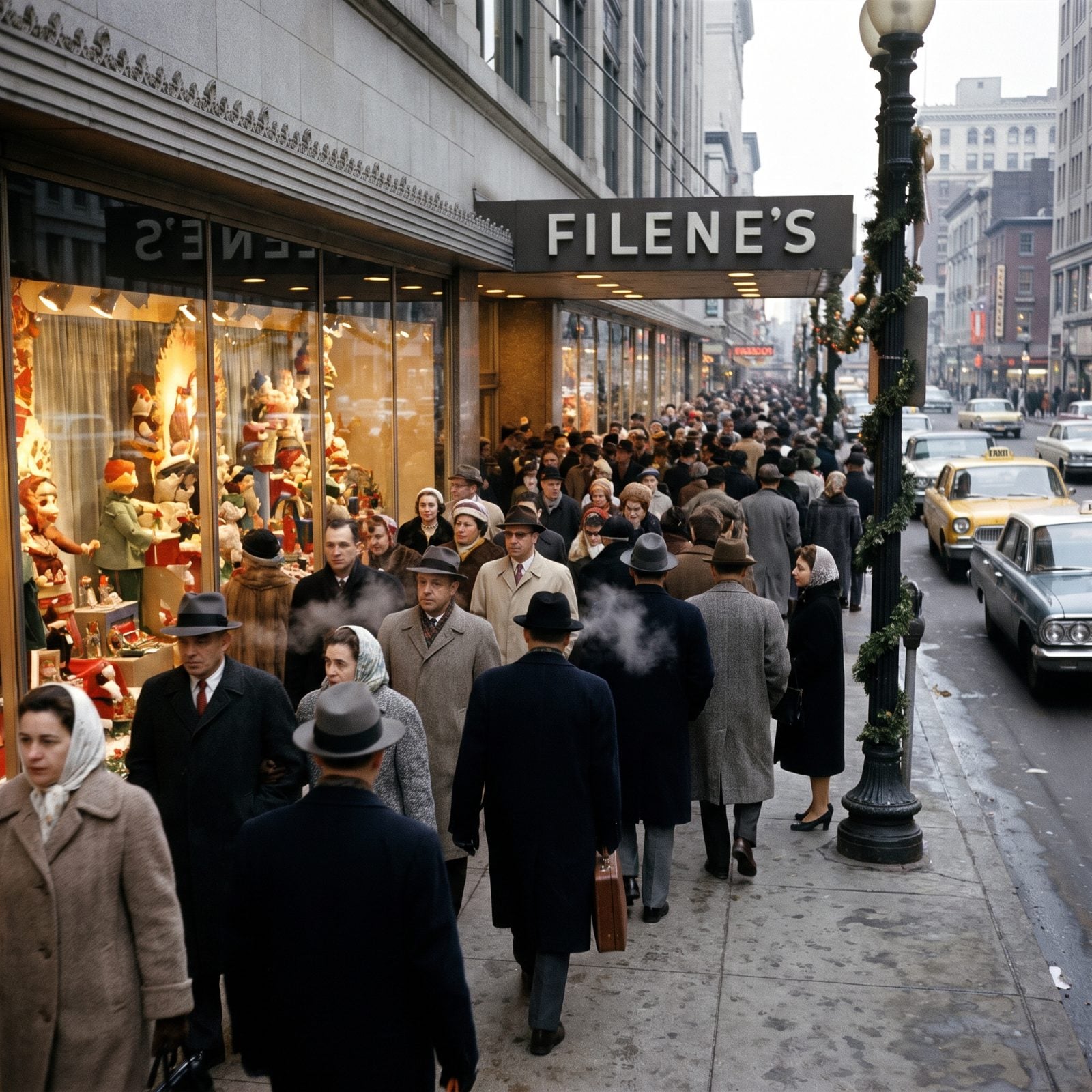
Downtown Crossing in December meant one thing in Boston: you were going to see Filene’s windows, and you were going to freeze doing it. Worth it every time.
The windows ran on pure New England charm. A toy workshop with elves in felt caps, a tiny train looping a snowy village, carolers whose little heads bobbed in time. You’d stand on the cold concrete sidewalk with half the city, everyone’s breath hanging in the air, nobody in a hurry for once. This was the trip into town — the one that made the whole season feel official.
15. Famous-Barr’s Downtown Christmas Windows, St. Louis
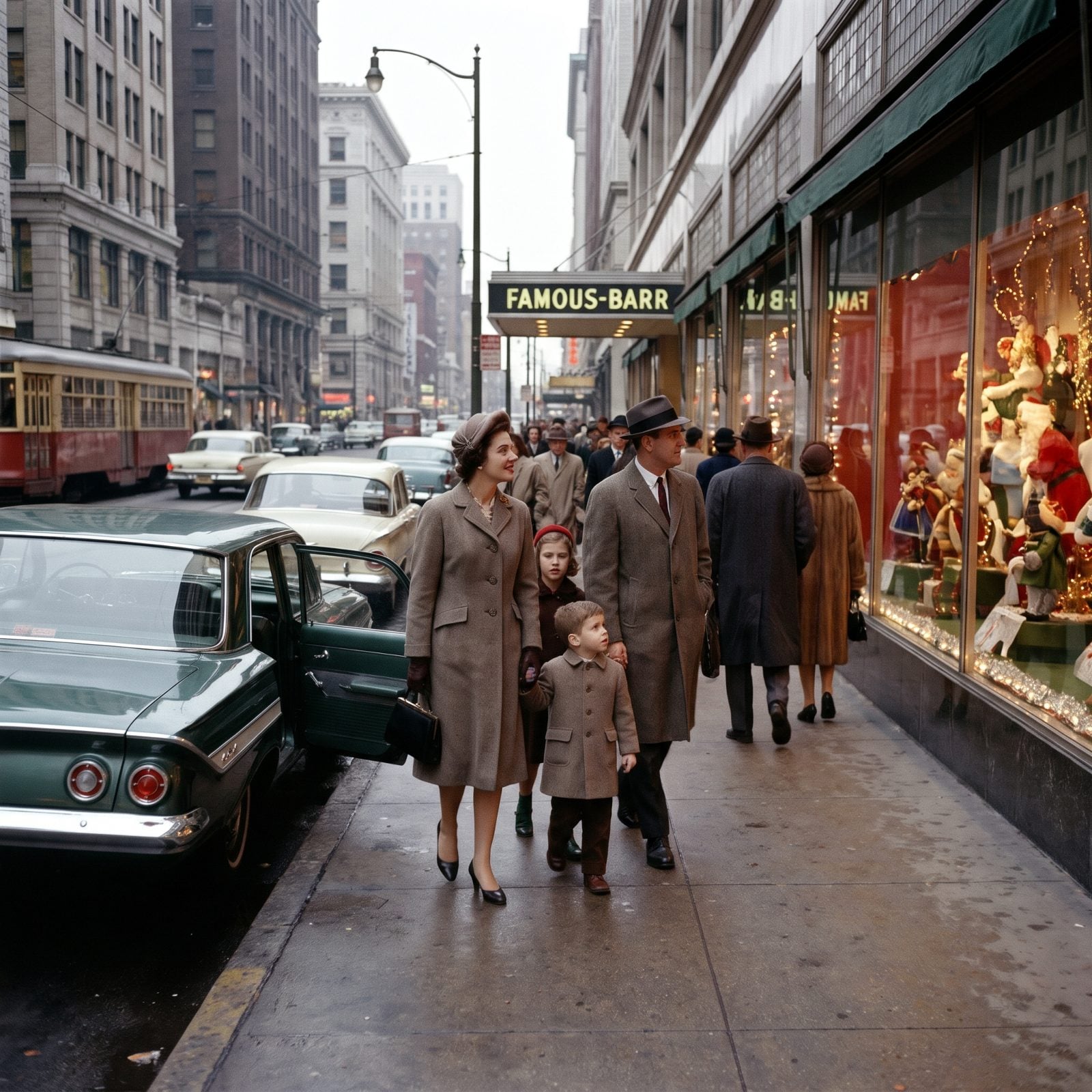
St. Louis families planned around it. You dressed up, you drove downtown, you parked somewhere that cost too much, and you walked straight to Famous-Barr’s windows.
The displays leaned into pure confection. A sugarplum fairyland with spinning candy, satin-dressed dolls that turned on hidden motors, a tin band of toy soldiers mid-march. The backdrops were painted in those soft pinks and mint greens that only ever existed in Christmas windows and your grandmother’s bathroom. Then you went inside, warmed up, and your mother let you pick one thing. That was the deal.
14. Lazarus’ Downtown Christmas Windows, Columbus
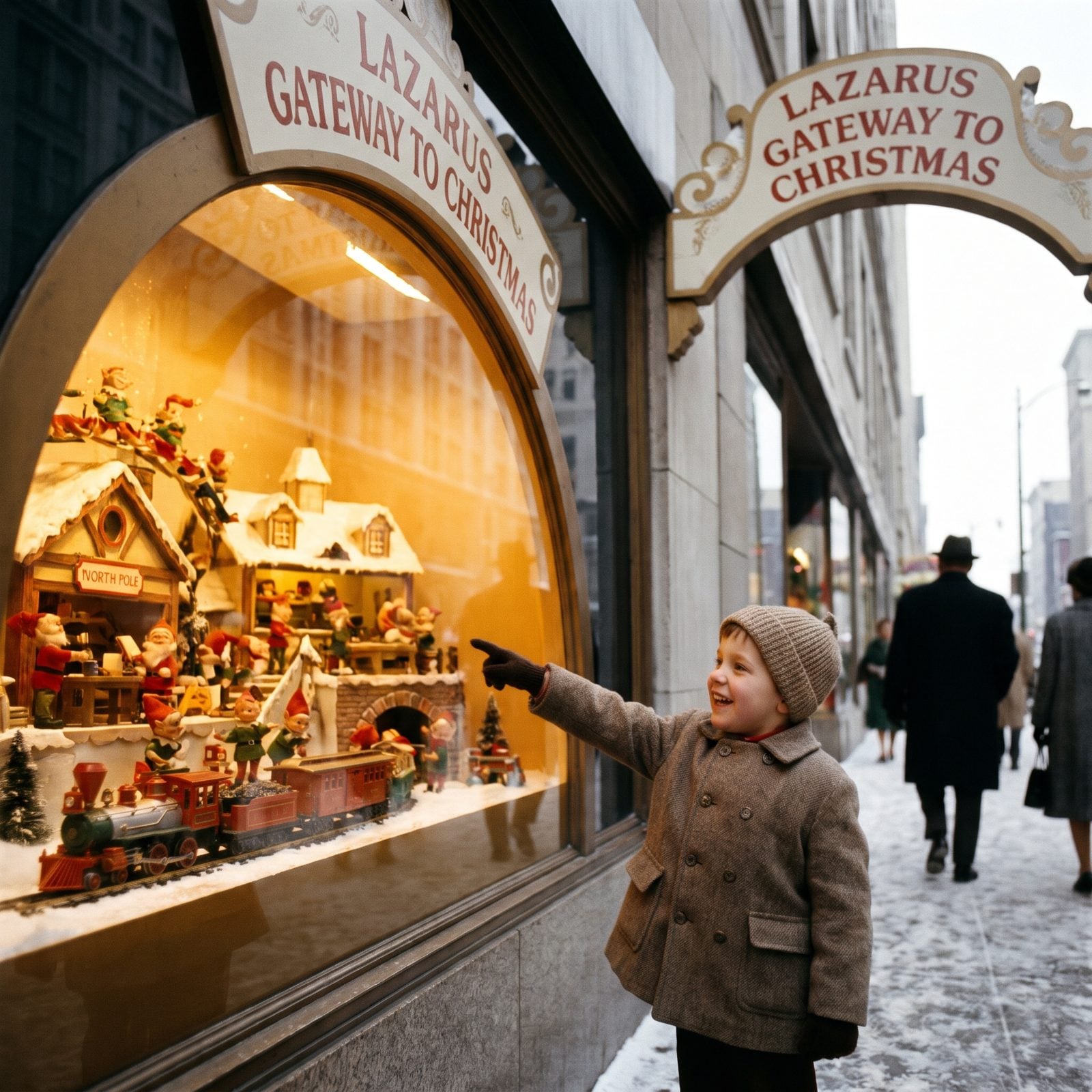
For a Columbus kid, downtown at Christmas was Lazarus, full stop. The windows were the gateway — a whole animated North Pole stretched across the glass: elves at their benches, Santa squinting at his list, reindeer stamping in harness against a painted snow sky.
What sticks with you is the clock tower. Or maybe it’s the one scene your family always lingered at longest, the one you made everyone wait for. Snow coming down for real outside, fake snow glowing inside, and you not entirely sure which was the bigger miracle. For one evening, Lazarus made the whole downtown feel like it belonged to you.
13. Maison Blanche’s Mr. Bingle Displays, New Orleans
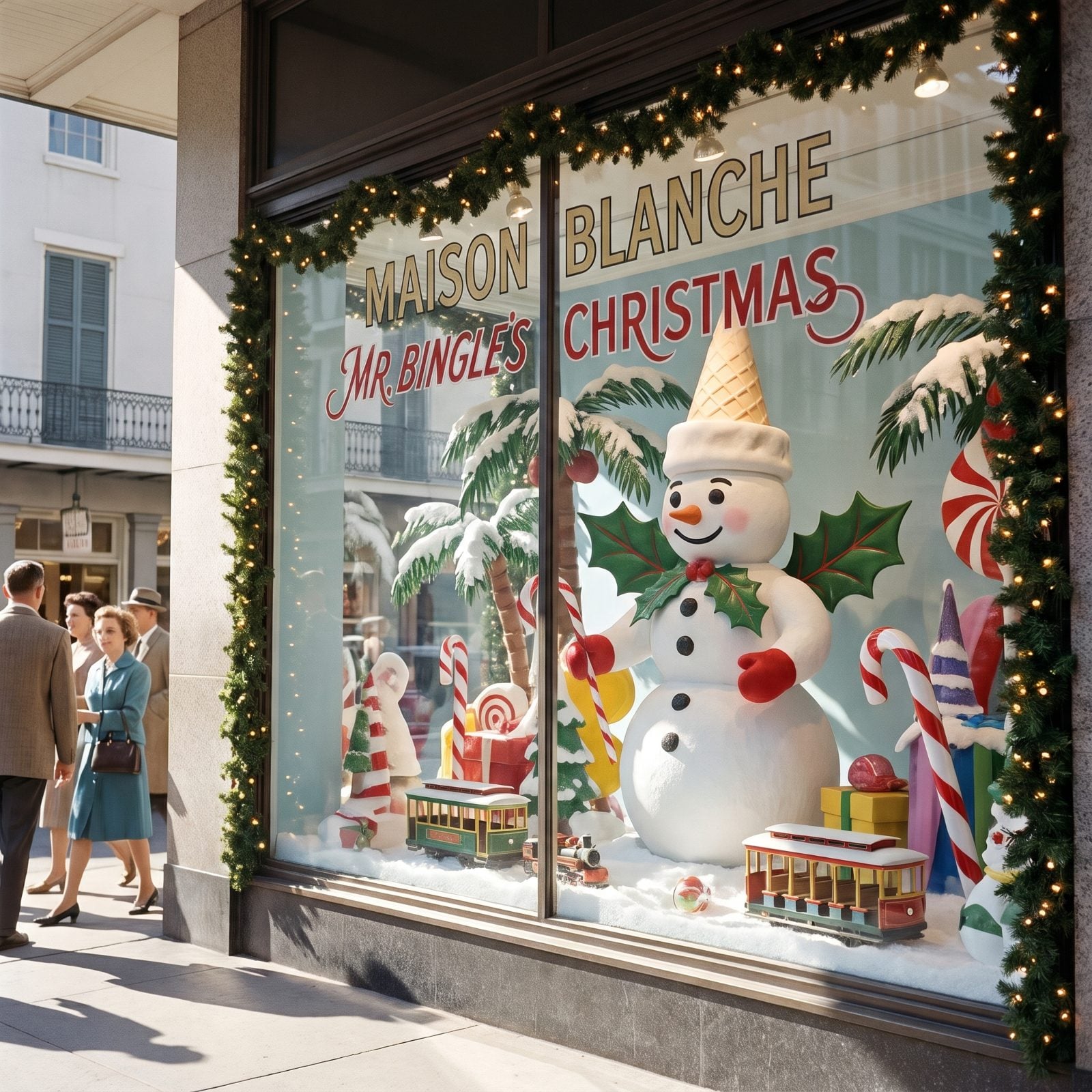
New Orleans didn’t need snow. It had Mr. Bingle. The little snowman with the ice-cream-cone hat, holly-leaf wings, and red mittens was Maison Blanche’s Christmas — and for a few generations of Gulf Coast kids, he just was Christmas.
You came down Canal Street in a light cardigan because it was sixty degrees out, and there he was in the windows and hanging above the entrance, waving his little arms. His jingle lived rent-free in every local head. He wasn’t borrowed from New York or the North Pole. He was ours, proof that a store could invent its own holiday legend from scratch.
12. Joske’s Fantasyland, San Antonio
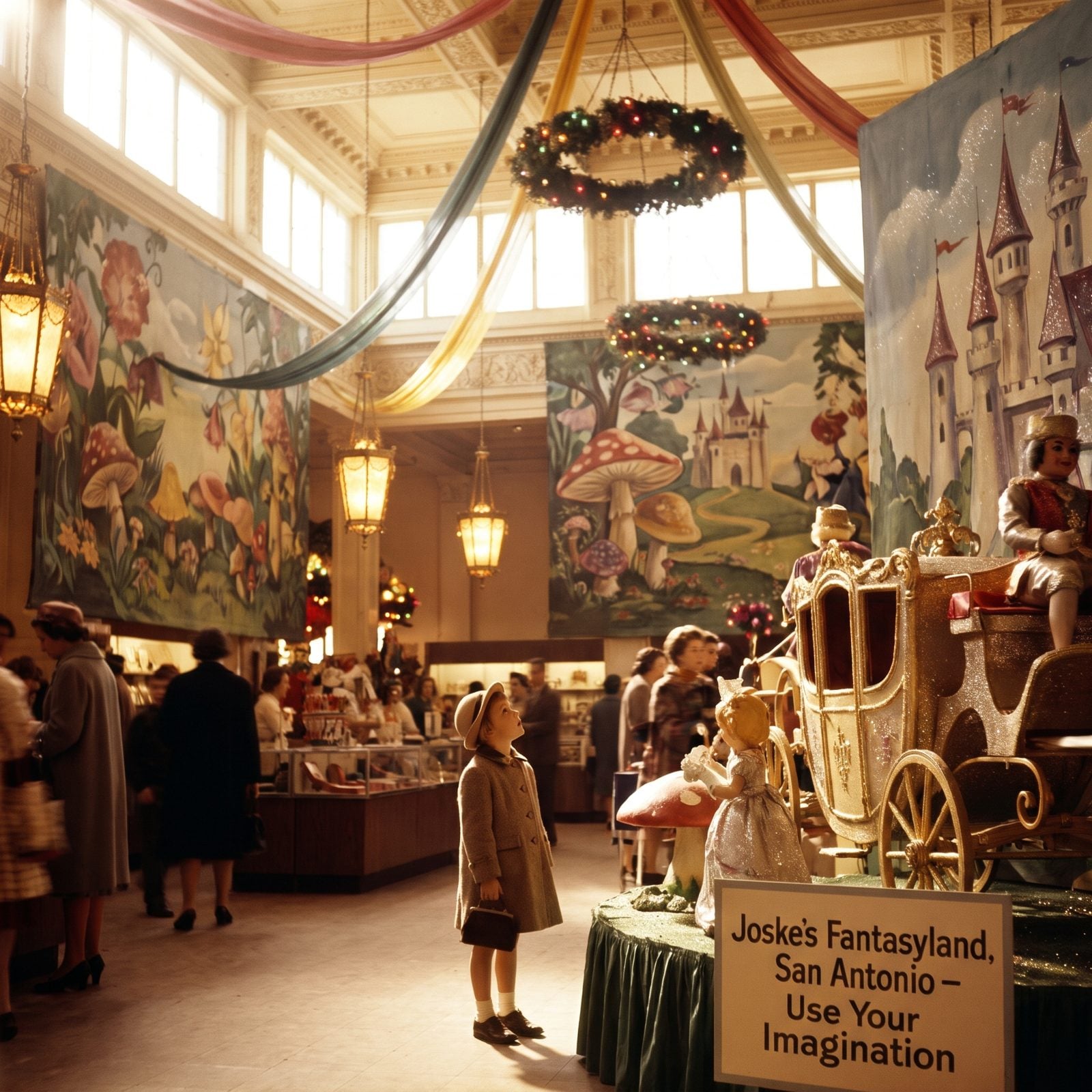
Joske’s didn’t just dress windows. Joske’s built a world inside the store, and San Antonio families drove in from all over Texas to walk through it.
Fantasyland was the real event — a full indoor village of candy-cane arches and animated scenes, a little train winding past mechanical elves, a towering tree, and the throne where you finally got your audience with Santa. You wore your good clothes. You waited in a line that felt endless and worth it. And when you walked out through the toy department into the warm Texas evening, you were already begging to come back next year.
11. Foley’s Downtown Santaland, Houston
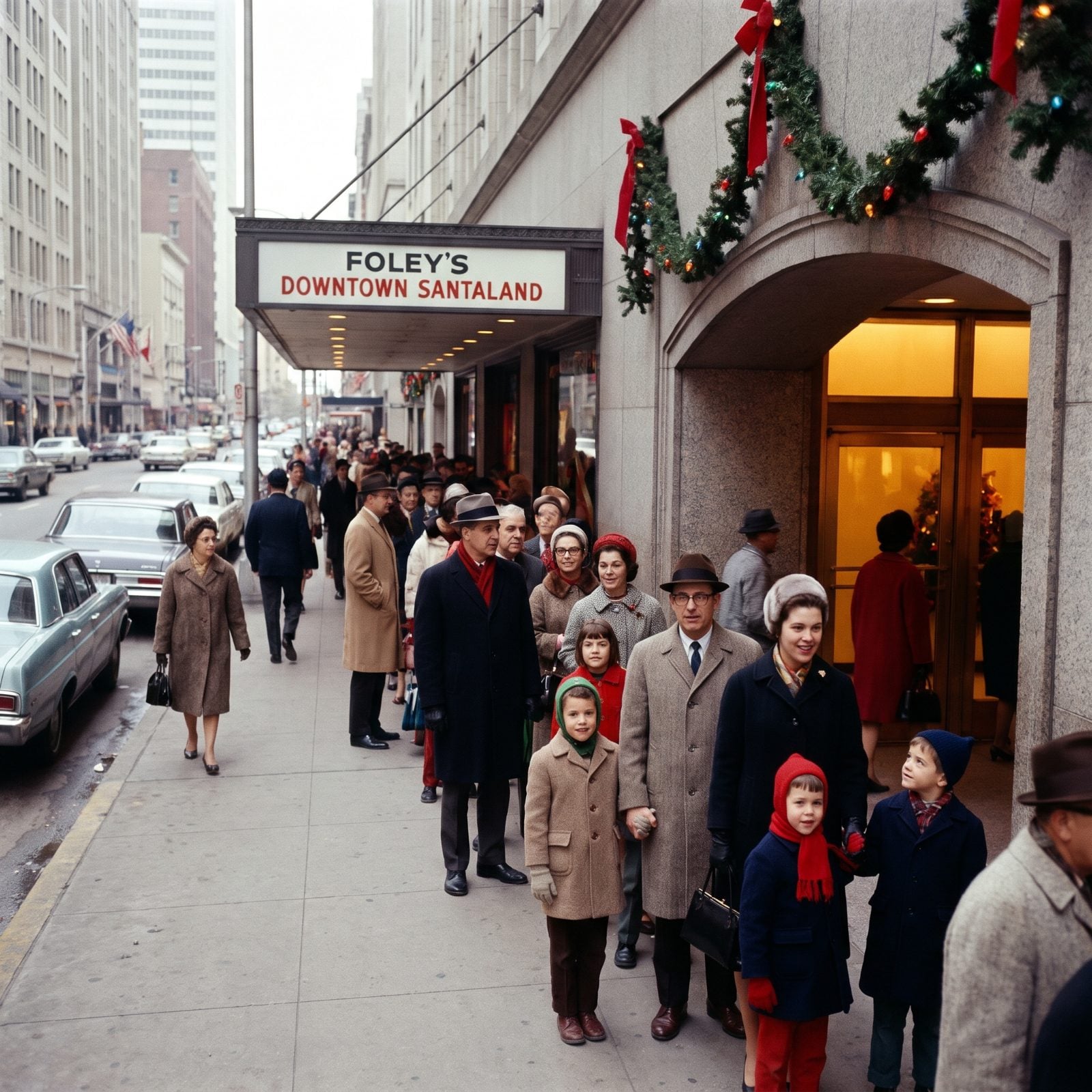
Foley’s Santaland was the Houston Christmas pilgrimage, the trip downtown that got circled on the calendar.
The scale is what you remember. An indoor wonderland of animated toyland figures, giant ornaments, candy-colored arches, and a Santa throne tucked into something that looked suspiciously like a glittering castle. Some years there was a ride that carried you up over the whole village, which for a six-year-old was roughly equivalent to flying.
And the line. Oh, the line. You stood in it in your good shoes, inching toward Santa, your parents trading tired looks over your head. Then you were up there on his knee and none of the waiting mattered at all.
The line was half the ritual. You weren’t just seeing Santa. You were earning him.
10. Neiman Marcus’ Downtown Christmas Spectacle, Dallas
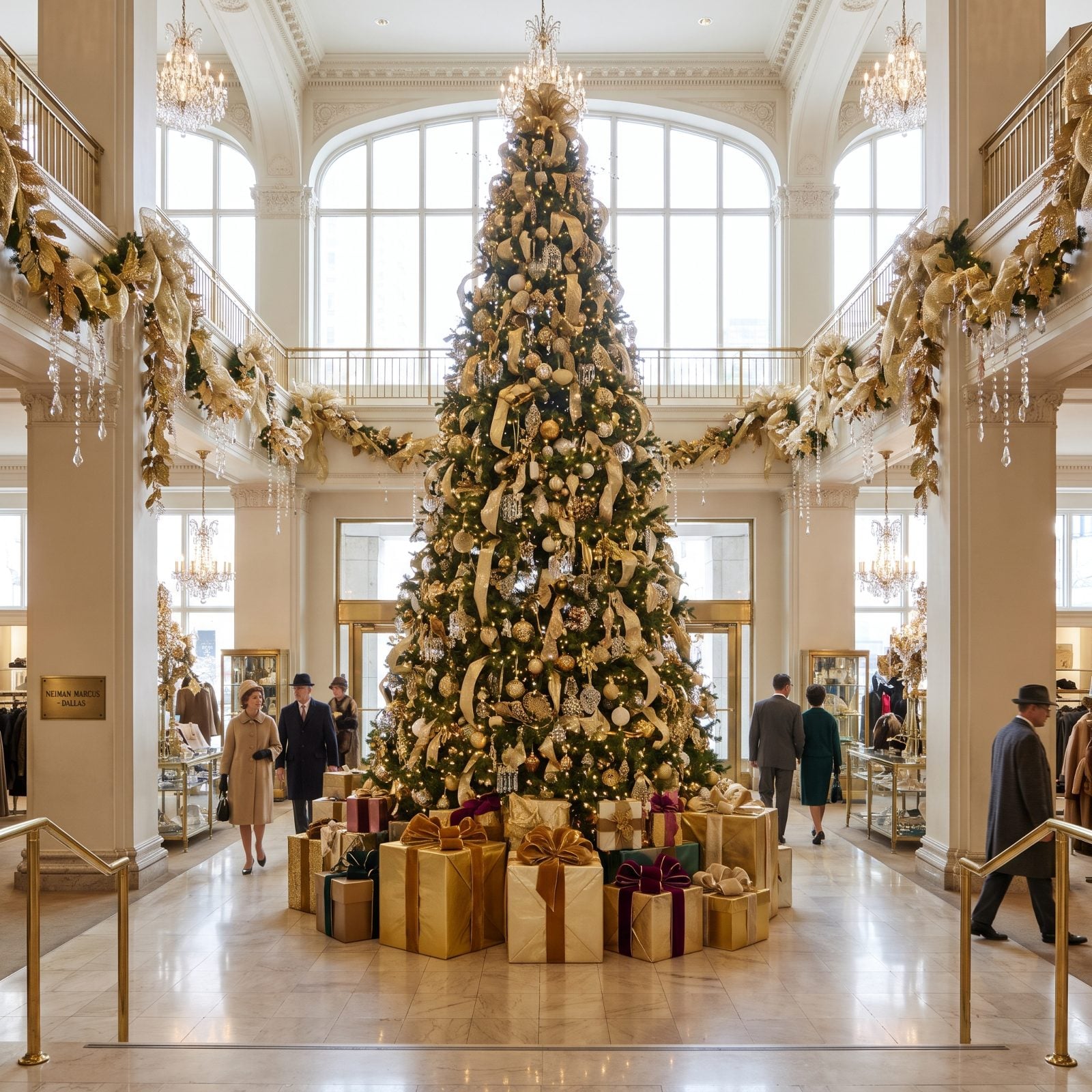
Neiman Marcus did Christmas the way Dallas did everything: a little grander than it needed to be, and all the better for it.
The rotunda traded elves for glamour. A towering tree dripping with gold ribbon and ornaments, gilded reindeer, crystal candelabras on marble pedestals, gold-wrapped packages piled at its feet, the whole thing lit like a jewelry box. This was the store that put fantasy gifts in its catalog, the ones that made national news, and the tree carried that same wink. You stood at the gold ropes in your gloves, light pouring through those tall arched windows, and even as a kid you understood you were looking at a different kind of wonder.
9. Bullock’s Downtown Christmas Windows, Los Angeles
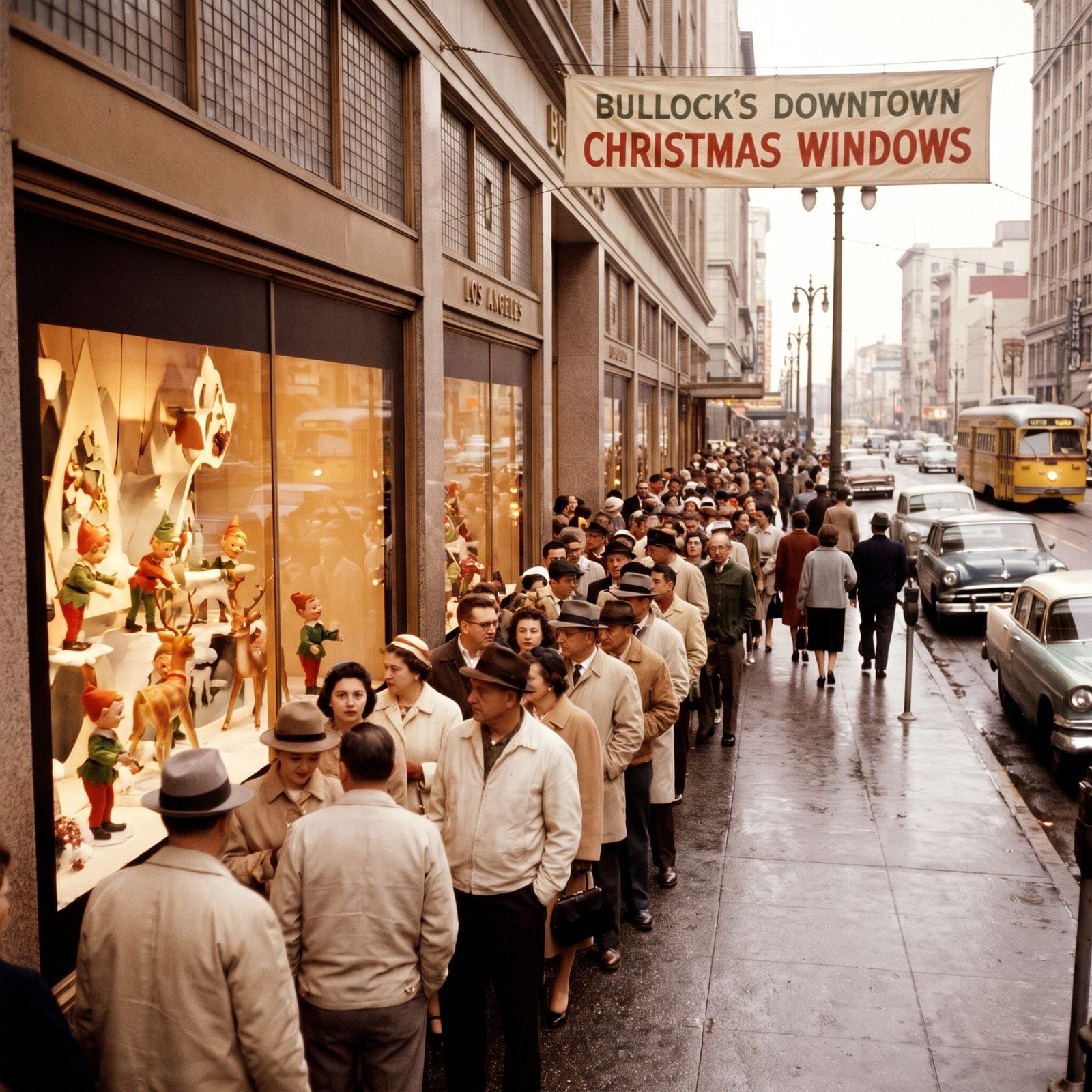
Nobody just glanced at the Bullock’s windows. You got in line to look at them, a slow shuffle past the glass where elf dolls and reindeer stood in a white woodland that never thawed. Downtown Los Angeles didn’t do snow, so the store made its own out of cotton batting and ran it on little motors you could hear faintly through the plate glass.
The closeness was the whole trick. The elves and reindeer were posed right up against the glass, which meant you had to lean in — and leaning in put your breath on the cold window and your whole face in the scene. Streetcars and wet pavement behind you, a snowy elf forest in front of you. Nobody found that strange.
8. The Emporium’s Rooftop Holiday Carnival, San Francisco
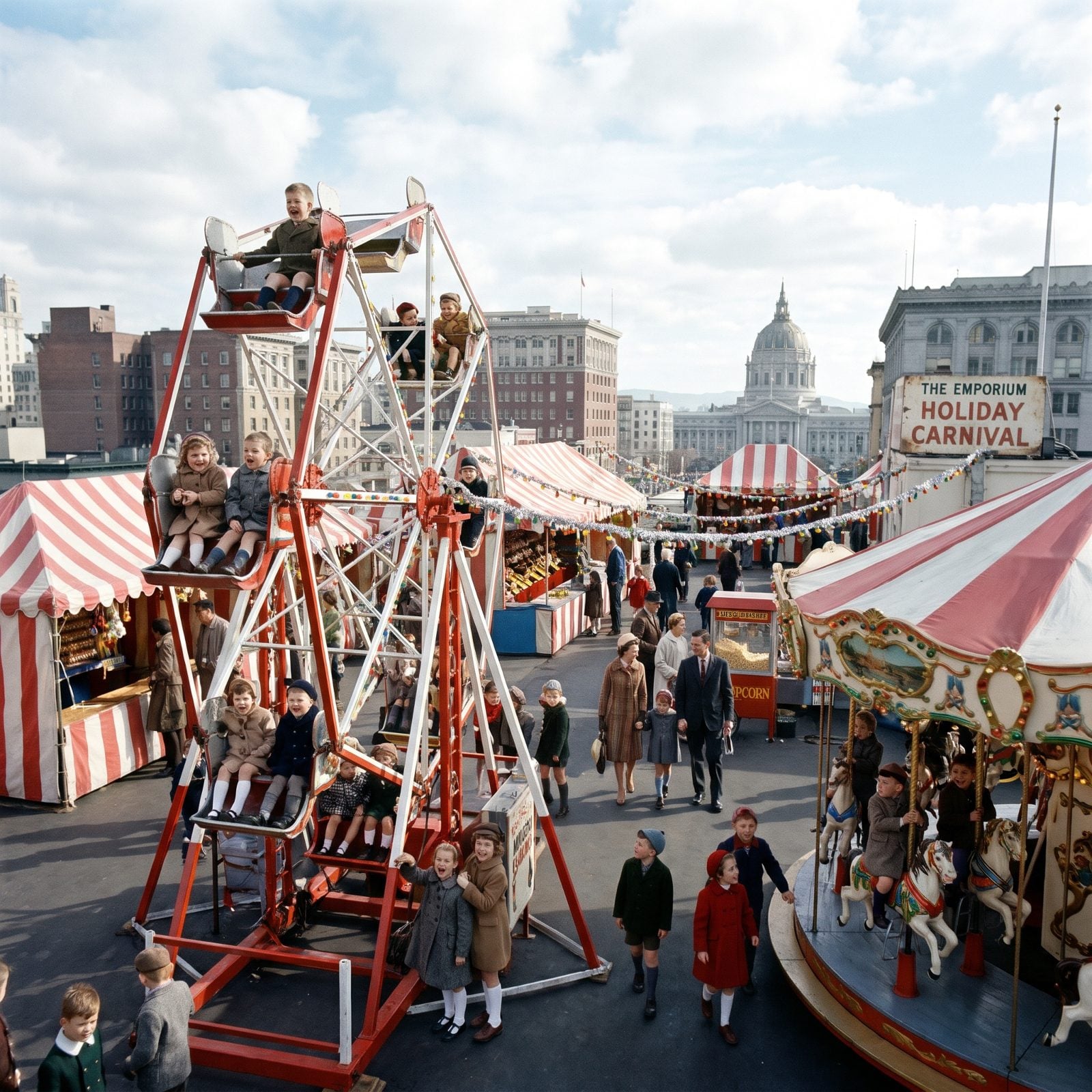
A carnival on a roof. That was the pitch, and in San Francisco it worked because where else would you put one? The Emporium stuck a Ferris wheel, a carousel, and a row of striped game booths up on top of its Market Street building, and you rode the elevator up with your heart already going.
The fog would roll in while you rode, so you’d be spinning in a lit carousel suspended over a city that kept vanishing and coming back. There’s no polite way to say how much better that was than a parking-lot mall ride. Weather, height, and Christmas, all stacked into one trip.
7. City of Paris’ Rotunda Christmas Tree, San Francisco
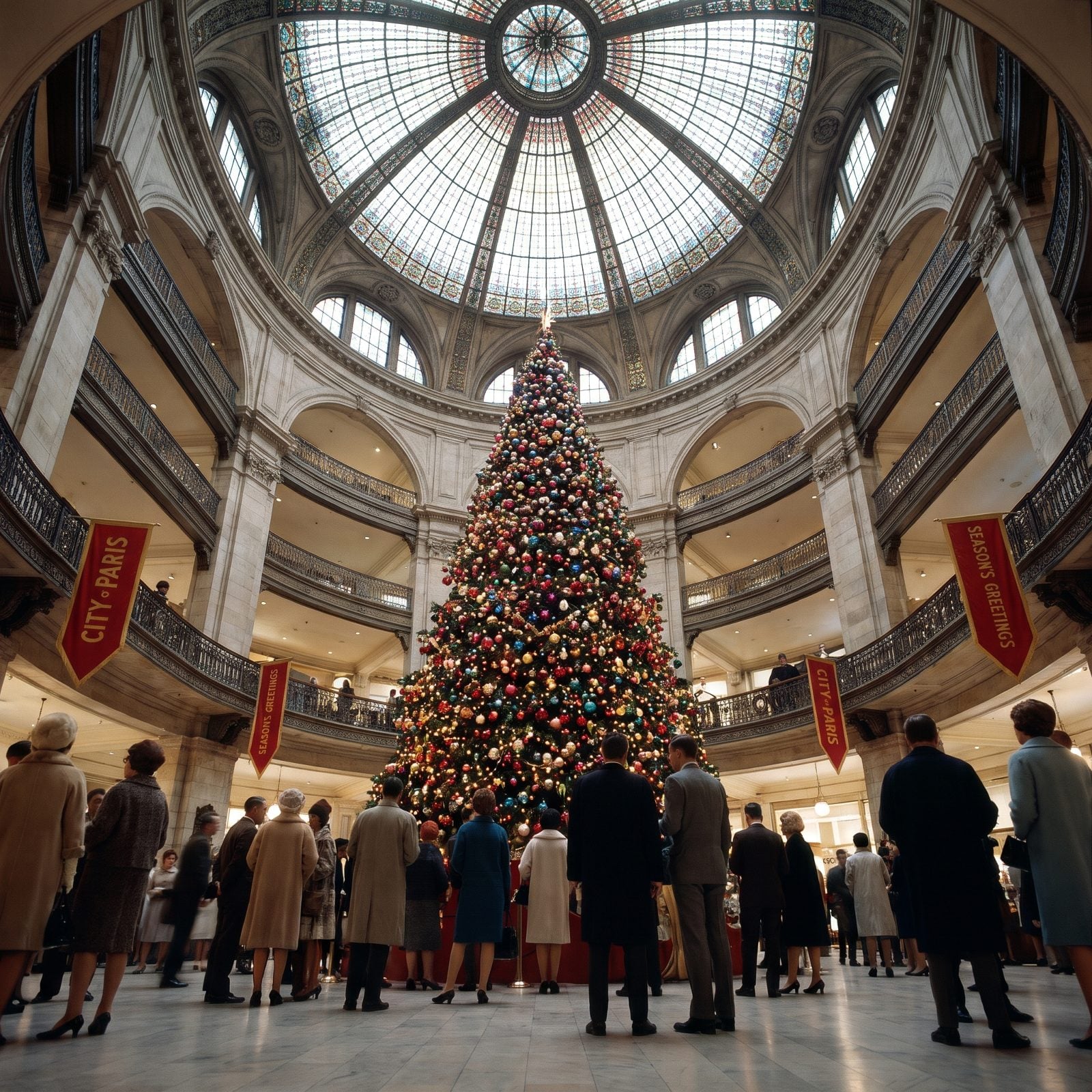
Some stores hid the tree in a window. City of Paris built the whole store around one.
You walked in and the rotunda pulled your head straight back. A curved balcony ringed a live tree reaching toward a stained-glass dome worked in geometric and floral patterns, and the tree was the size of a small building, dressed in glass ornaments as big as grapefruits. Kids hung over the iron railing of the balcony to look down at it. Less a store decoration than a cathedral you happened to be able to buy gloves in.
6. Meier & Frank’s Santaland Monorail, Portland
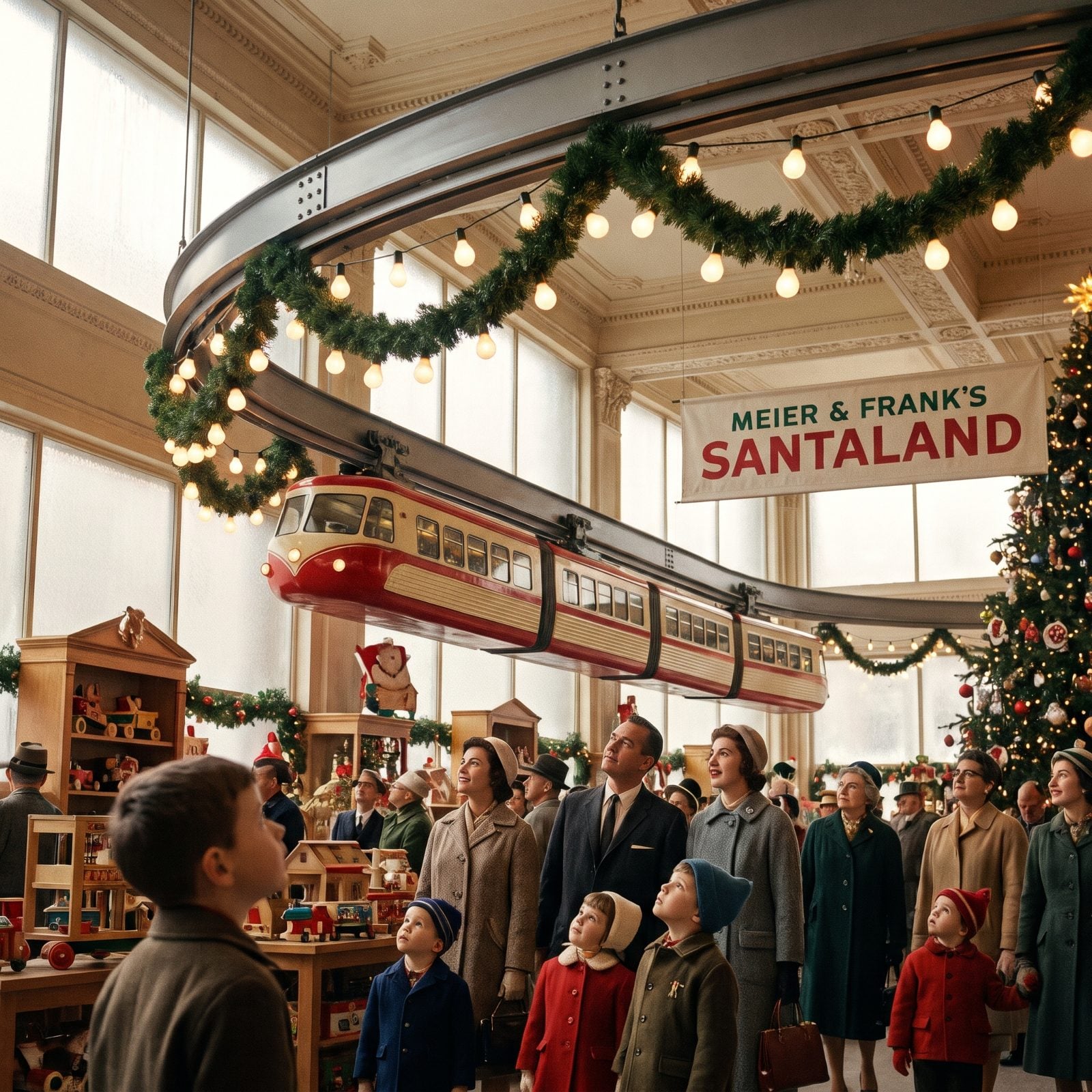
Up on the top floor of Meier & Frank, a little monorail ran a loop over your head, and riding it was the whole reason you behaved in the car on the way downtown. Santaland, they called it, and the car hauled you slowly above garlands, giant ornaments and a store floor packed with holiday shoppers.
The track wasn’t long — a lazy figure-eight, maybe. But from up in that red-and-yellow car you could see the entire floor at once, all the trees and tinsel and the line snaking toward Santa, and for a minute and a half you were above the whole operation looking down. Portland kids measured Christmas by whether they’d ridden it yet.
5. Frederick & Nelson’s Downtown Christmas Windows, Seattle
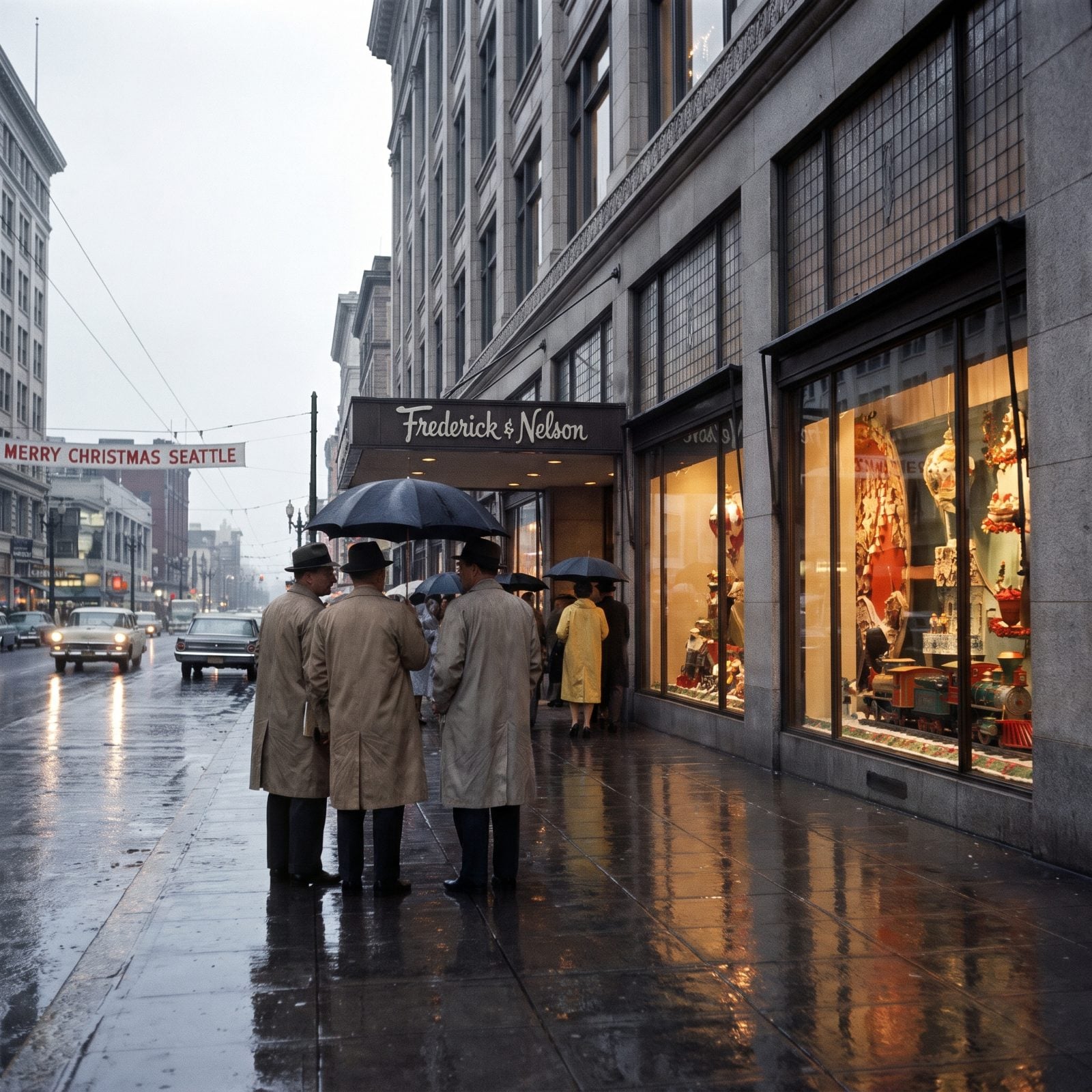
It was almost always drizzling, which only made the Frederick & Nelson windows better. You stood on the wet sidewalk under somebody’s umbrella and watched a mechanical toymaker saw the same tiny plank forever, his little arm going up and down while rain streaked the glass between you and him.
The store ran on its own holiday currency, the Frango mint, and the smell of chocolate drifted out the doors while you looked. Warm glass, cold rain on your neck, chocolate in the air. I’d put that combination against any Christmas memory you’ve got.
4. Goldwater’s Desert-City Christmas Windows, Phoenix
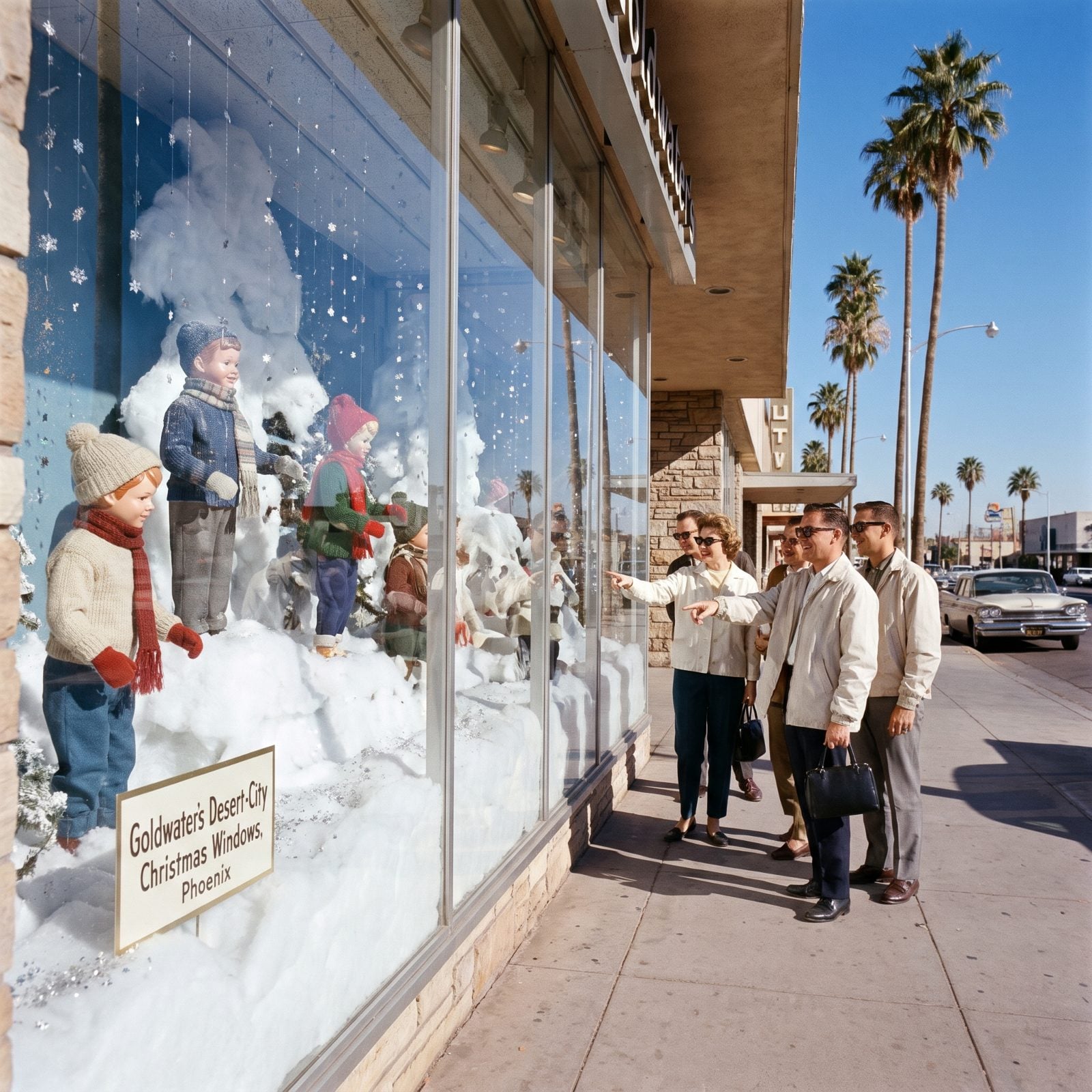
There was no snow in Phoenix. So Goldwater’s made some.
You walked up in a light jacket, maybe shirtsleeves, past palm trees and a bright blue desert sky, and there in the window was a full-blown blizzard. Cotton snowbanks. Mechanical figures in wool scarves nobody in Arizona owned. Glitter flakes drifting on fishing line.
That gap between the desert at your back and the winter in the glass was the whole trick. Goldwater’s wasn’t copying a Chicago window — it was selling the one thing the climate couldn’t give you, and the kids who grew up pressing their hands to that cool glass in the warm sunshine remember it exactly.
3. Eaton’s College Street Christmas Windows, Toronto
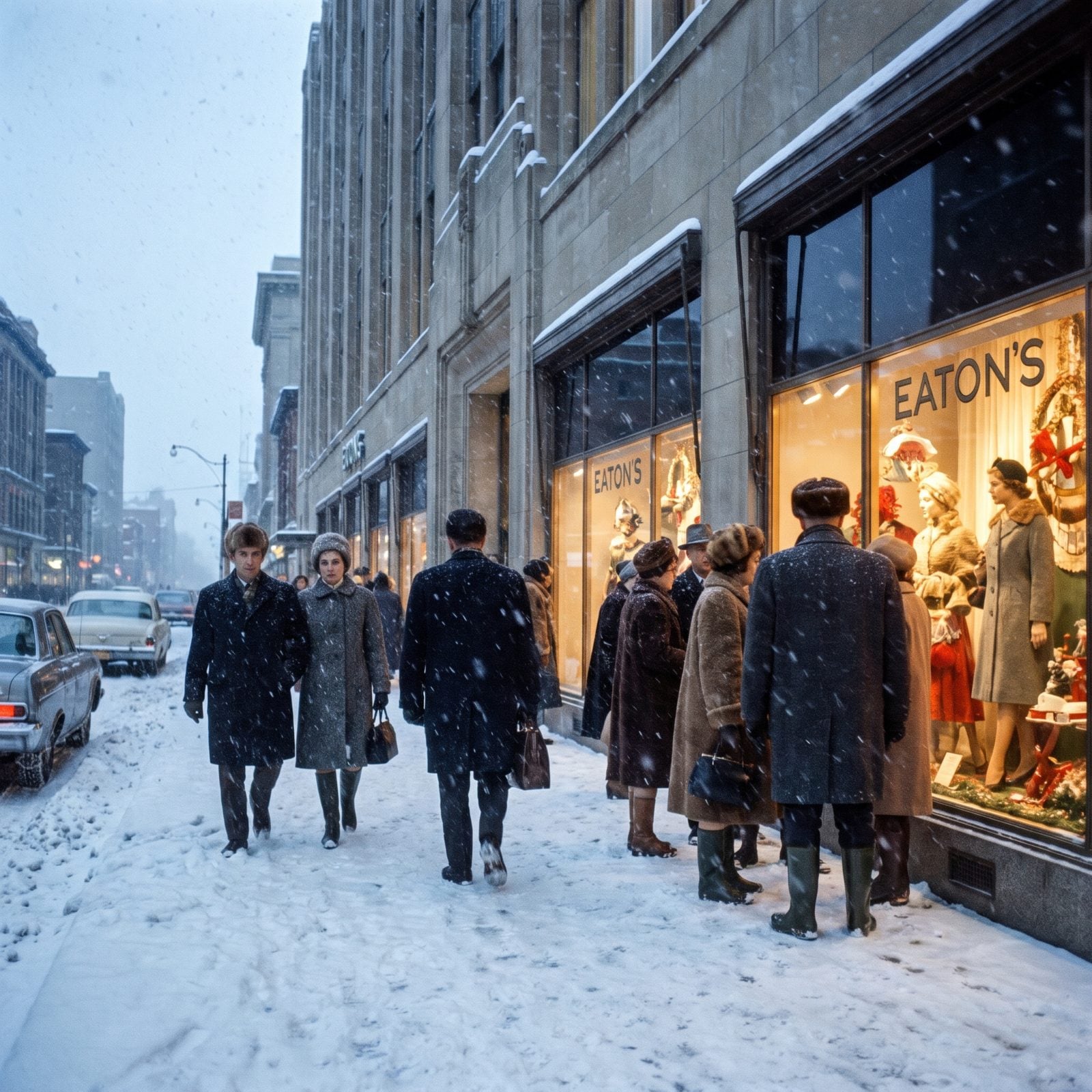
Eaton’s did the windows the way a country with actual winter does. Real snow fell on the sidewalk while you walked the long row of glass along College Street, your breath hanging in the air, toque pulled down, mittens on a string through your coat sleeves.
Each window was its own little stage — mannequins in smart wool coats and hats, a red dress, wreaths tied with red bows. You went window to window in order, and nobody skipped one. Behind you a streetcar rattled past and the snow kept coming down, and the whole evening felt enormous.
A country with real winter still frosts the windows with icicles and snowy rooftops. The sky just adds the rest.
2. Ogilvy’s Mechanical Christmas Windows, Montreal
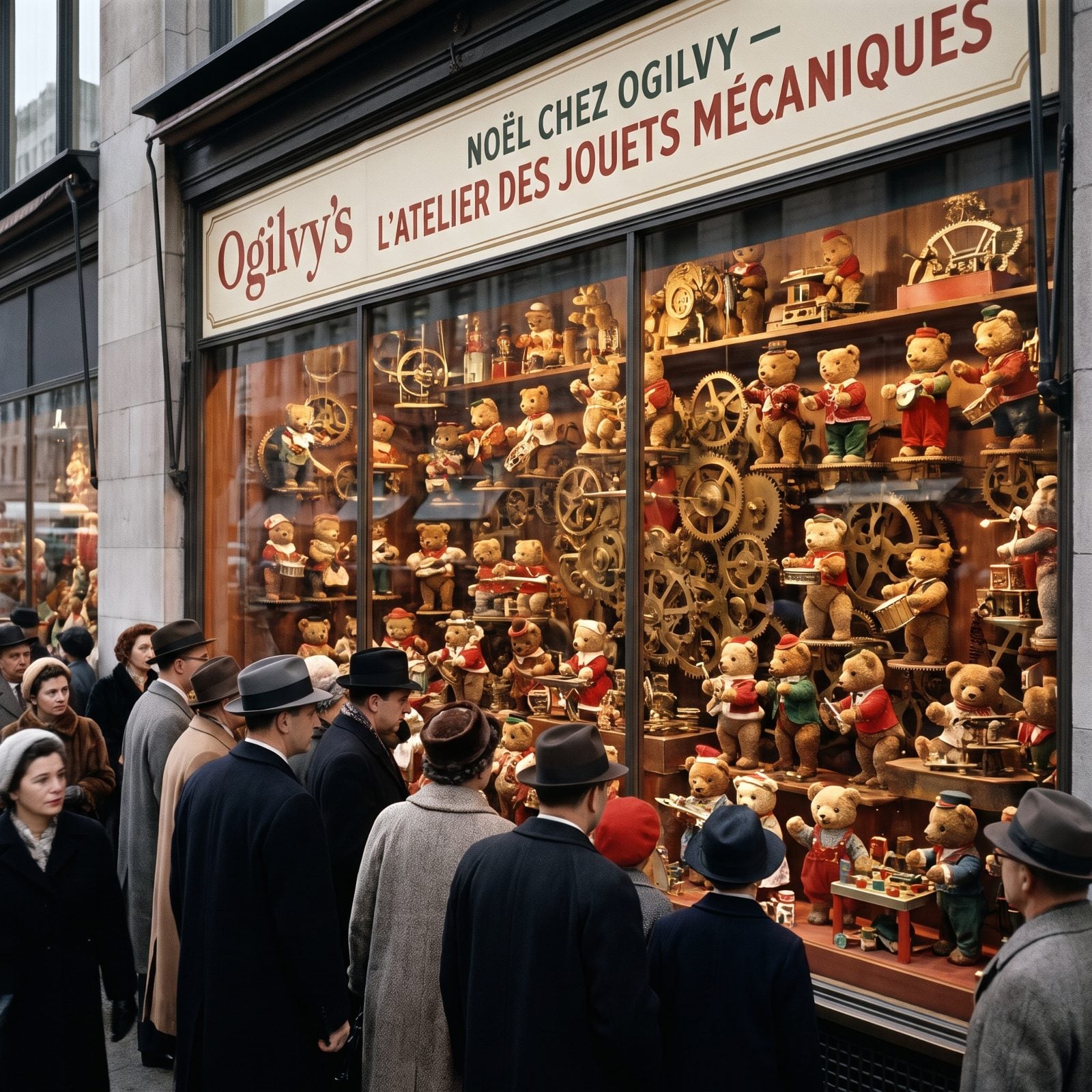
Ogilvy’s went all in on clockwork. The window on Sainte-Catherine was a dense little toyland of mechanical bears and dolls, every one of them turning a crank or rocking or raising a tiny paw, the whole thing ticking away behind the glass among great brass gears.
Montreal crowds packed three deep to watch it. You’d hear French and English trading off around you, somebody’s kid up on a father’s shoulders, everybody leaning to track one particular bear through its loop. The automatons were the draw. Not a scene you looked at — a machine you studied.
1. Rich’s Great Tree and Pink Pig Monorail, Atlanta
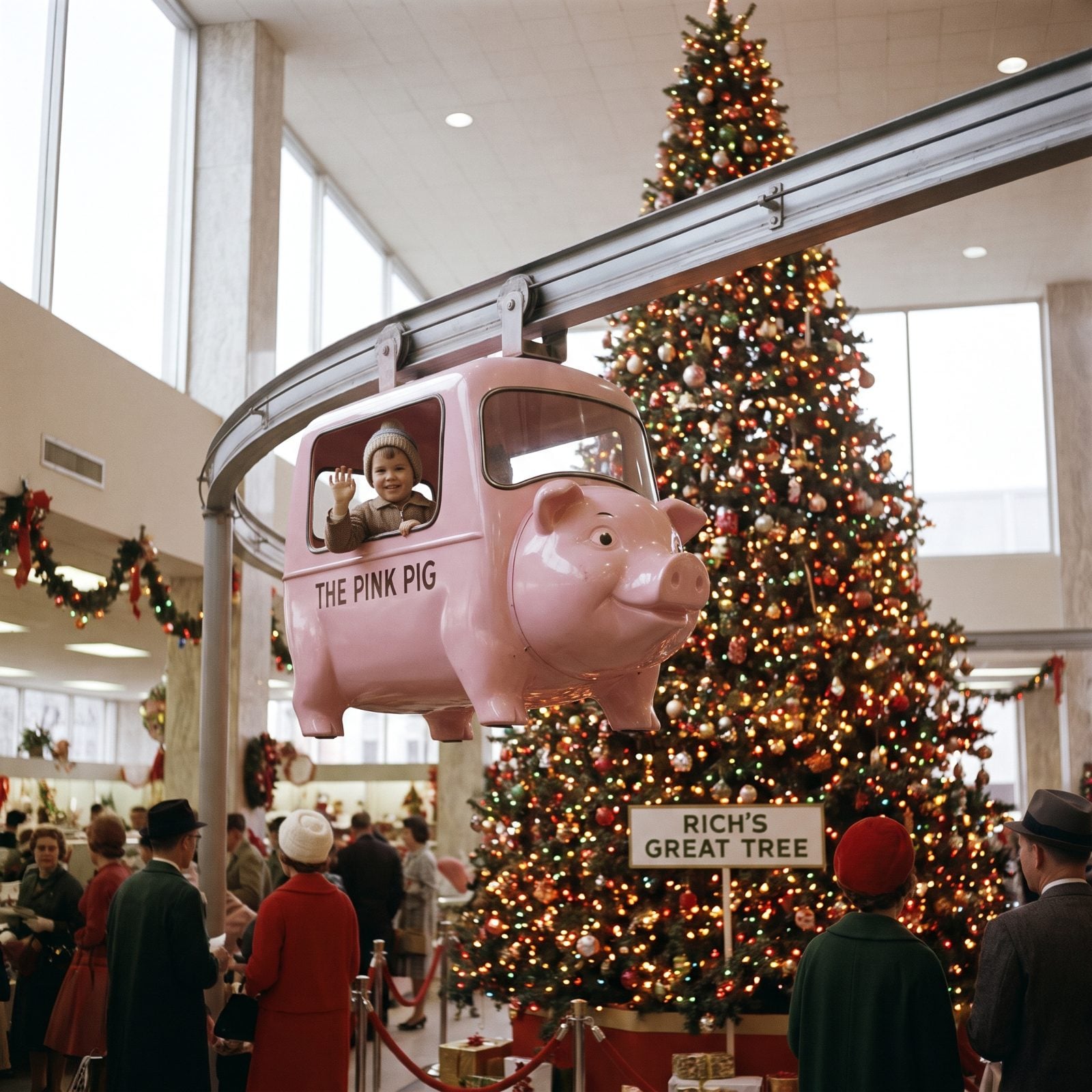
Two attractions, one store, and in Atlanta they practically marked the start of Christmas. The Great Tree went up atop the store’s Crystal Bridge, towering over the street, and its lighting drew crowds that filled the sidewalks below, everybody craning to take in the whole thing blazing gold with lights and ornaments against the night sky.
Then, right there beside it, you rode the Pink Pig. An actual pink monorail car, shaped like a pig, looping over the sales floor on a suspended rail. If you were an Atlanta kid, you did not have Christmas until you’d done both. The tree and the pig, side by side under one roof.
The stores changed. The downtowns thinned out, and the suburban mall swallowed most of this. But a generation still steers the car toward a certain building every December out of pure muscle memory, half expecting the windows to be moving again.
Please note that some of the imagery in this article were created with the aid of AI image generators.