
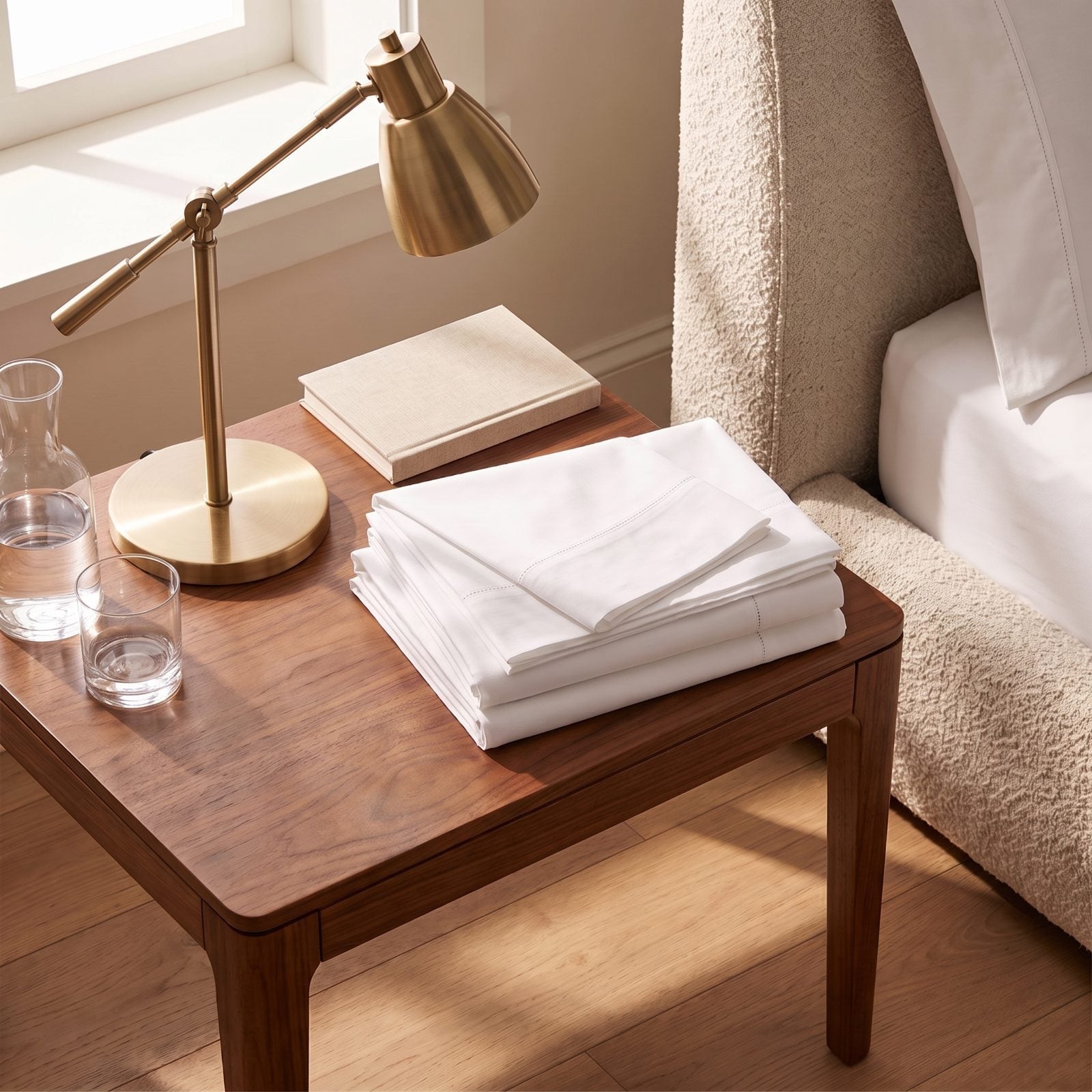
🔥 Would you like to save this?
A flimsy door tells you everything before you’ve set down your bag. So does a window dressing that quits six inches short of the floor, or two nightstands that don’t match because housekeeping grabbed whatever was in the storeroom that morning. Genuine luxury in a hotel room has nothing to do with marble or gold leaf. It’s a stack of small, deliberate decisions that most properties skip to save a buck. Here are the details the good rooms get right and the cheap ones give away every single time. Fair warning: once you start noticing, you’ll never stop.
39. A Solid-Core Door Sets the Tone Before You Unpack
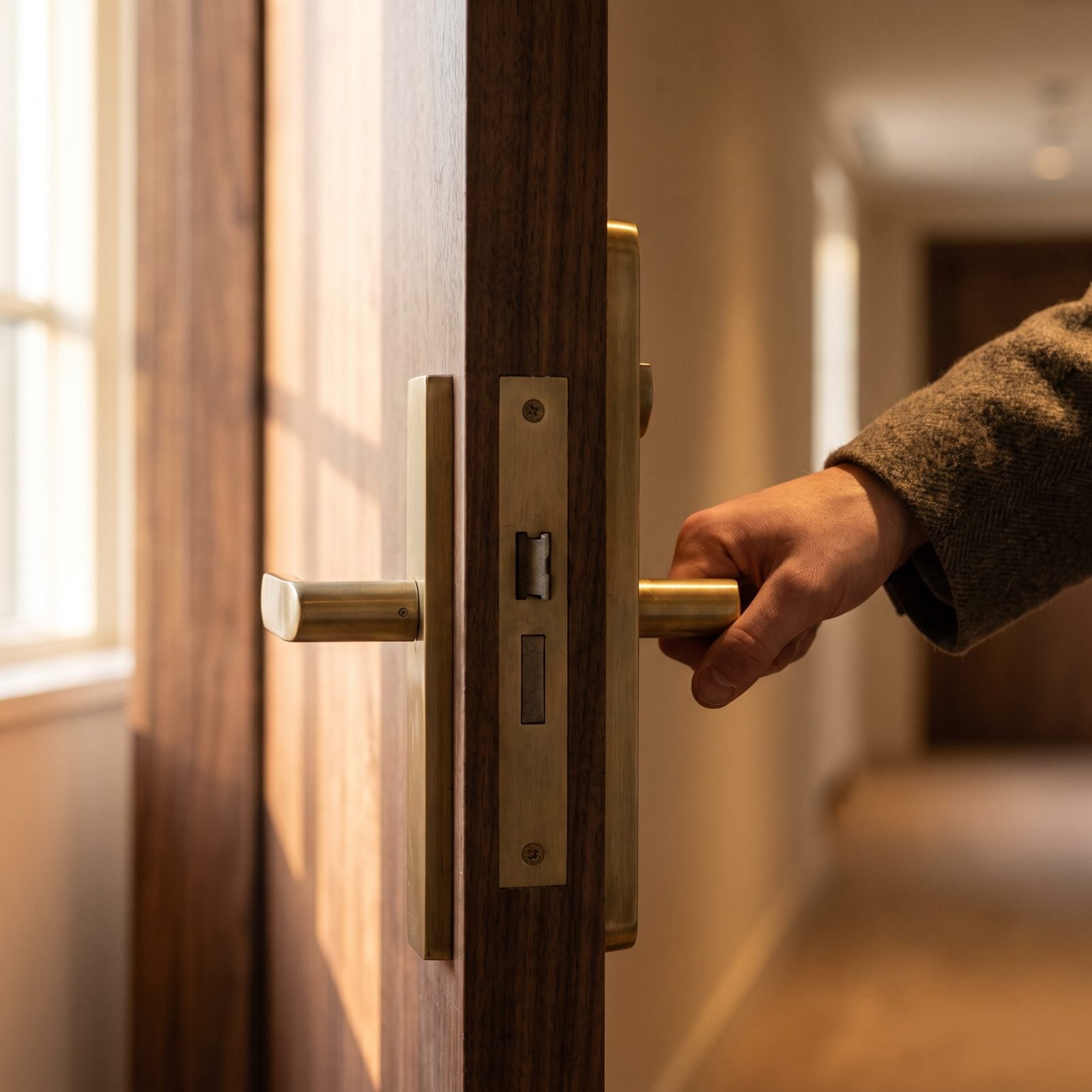
You can hear the difference. A solid-core door closes with a low, satisfying thud, while a hollow one sounds like knocking on a cereal box — and once you’ve heard that, the whole room feels thinner.
Weight equals privacy. It swallows hallway noise, the rolling suitcase at 2 a.m., the housekeeping cart rattling past. Pair it with hardware that has some heft — a real lever, not a wobbly knob — and the room has already told you this place spent money where it counts.
38. An Actual Entryway, Not Just a Door That Opens Onto the Bed
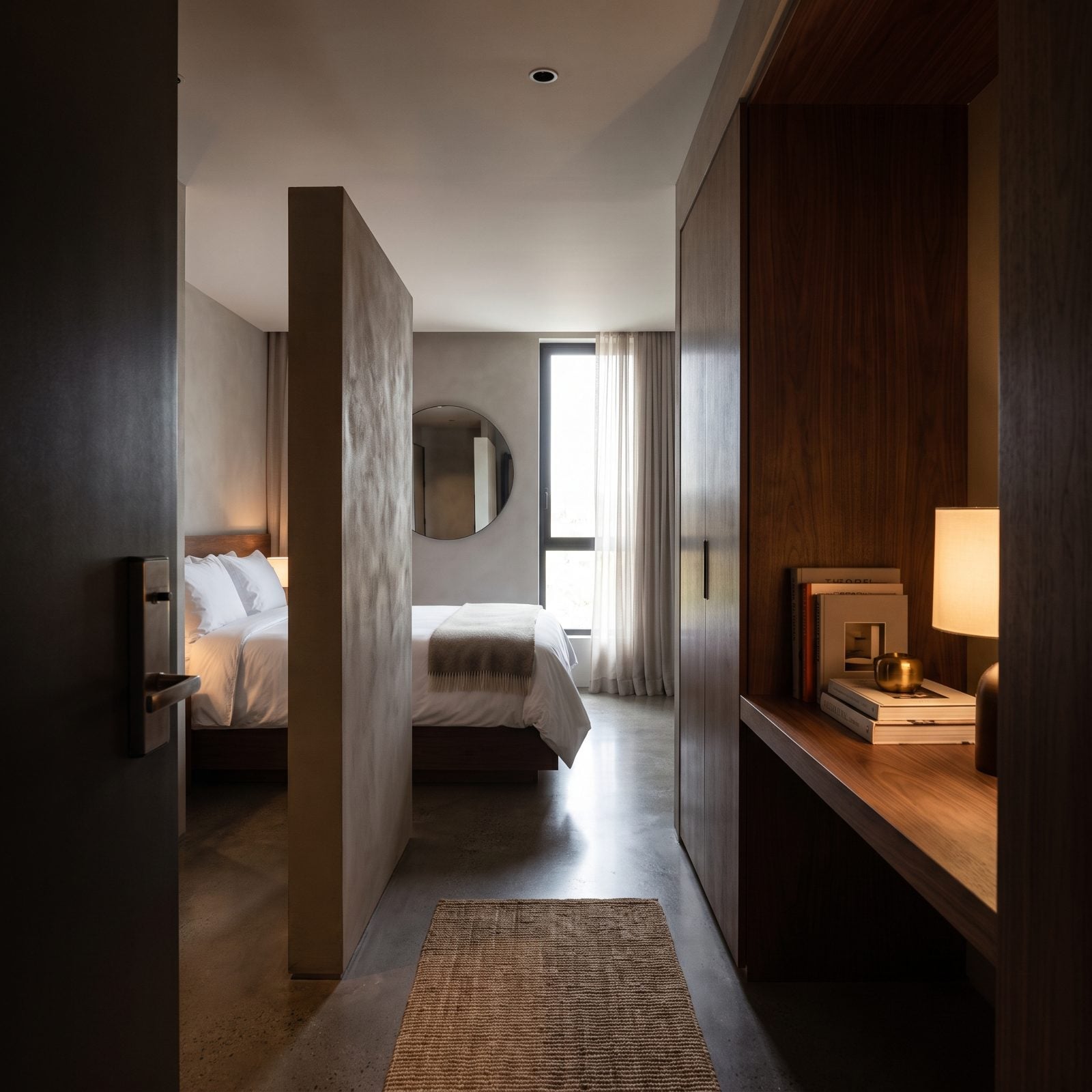
The cheap room shows its whole hand the second the door swings. You step in and you’re already at the foot of the bed — no transition, no breathing room.
Luxury buys you a moment. A short foyer, a luggage bench, a mirror, somewhere to drop your keys before the room reveals itself. That tiny pause does real psychological work. It separates the hallway from the sanctuary and makes the main space feel earned rather than stumbled into.
37. Full-Height Blackout Curtains That Reach the Floor and Mean It
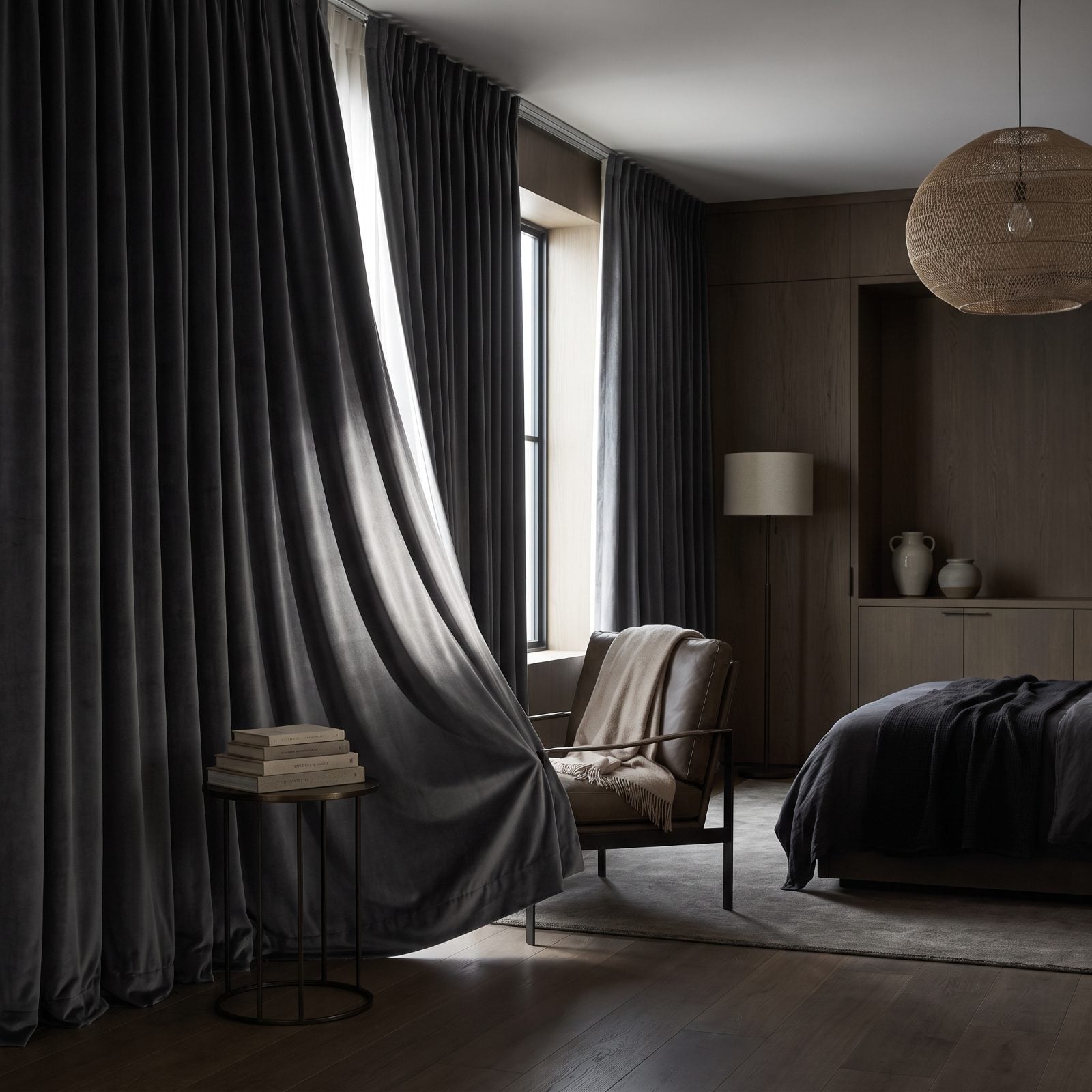
Curtains that start at the window and stop at the sill are a dead giveaway. They look like a shower curtain hung by someone in a hurry.
Mount the rod near the ceiling, run the fabric all the way down, and suddenly the window reads taller and the whole room grander. The real work, though, happens at night. A proper blackout liner, curtains that overlap in the middle so no streetlight knifes across your pillow at 5 a.m. A gap the width of a finger can wreck a night’s sleep. One finger. That’s the whole game, right there in the overlap.
36. A View That’s Framed Like a Painting, Not Just Available
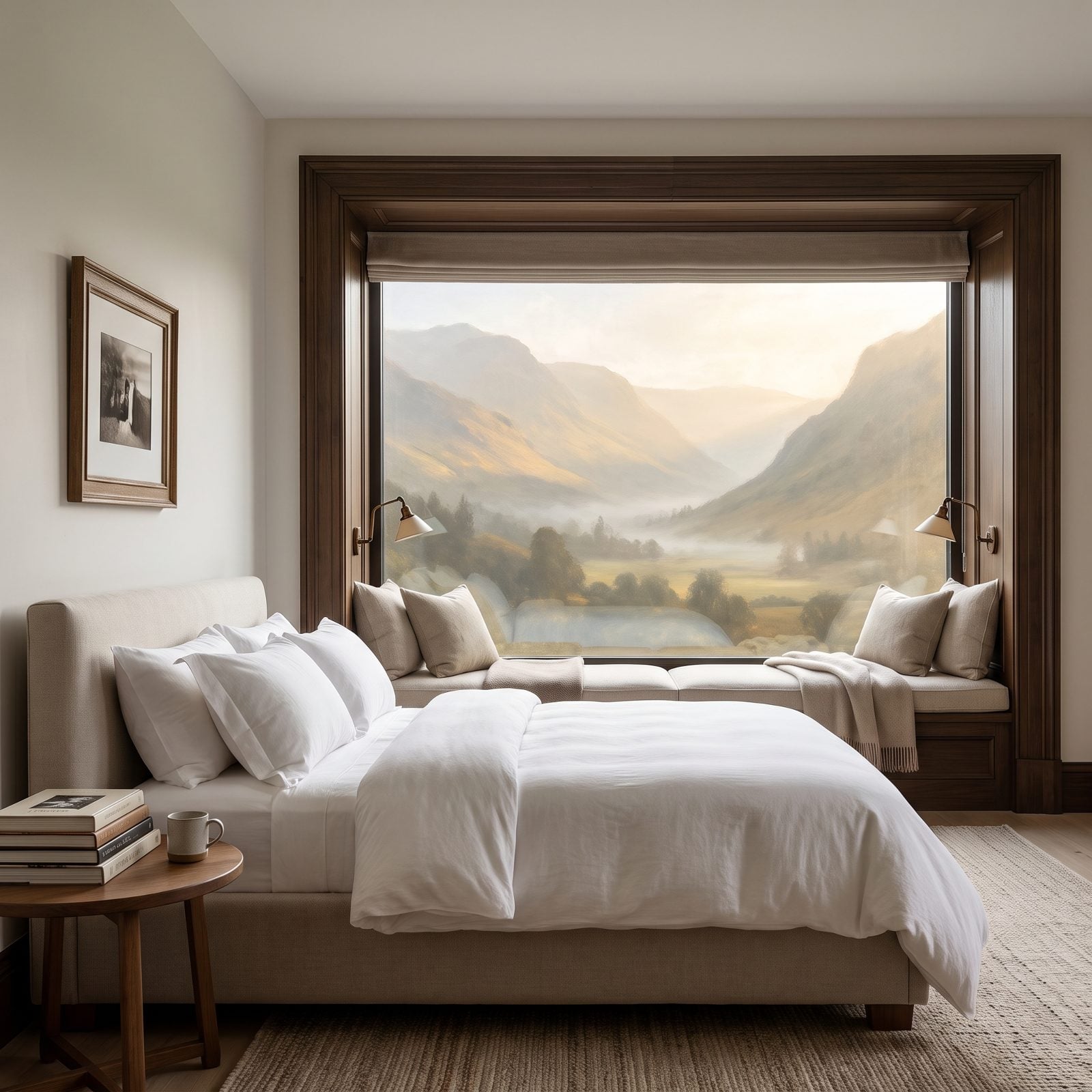
A wasted view is almost worse than no view at all. You know the rooms — bed facing a blank wall, the ocean parked behind you, visible only if you crane your neck at the bathroom mirror.
The luxury move is orientation. Chair angled toward the glass, desk placed so you work facing the light, window left uncluttered so the outside becomes part of the decor. Frame it with simple drapery and let the scenery carry the weight. Nature costs nothing. Squandering it is the expensive mistake.
35. A Bed Centered on the Main Wall So the Room Has a Spine
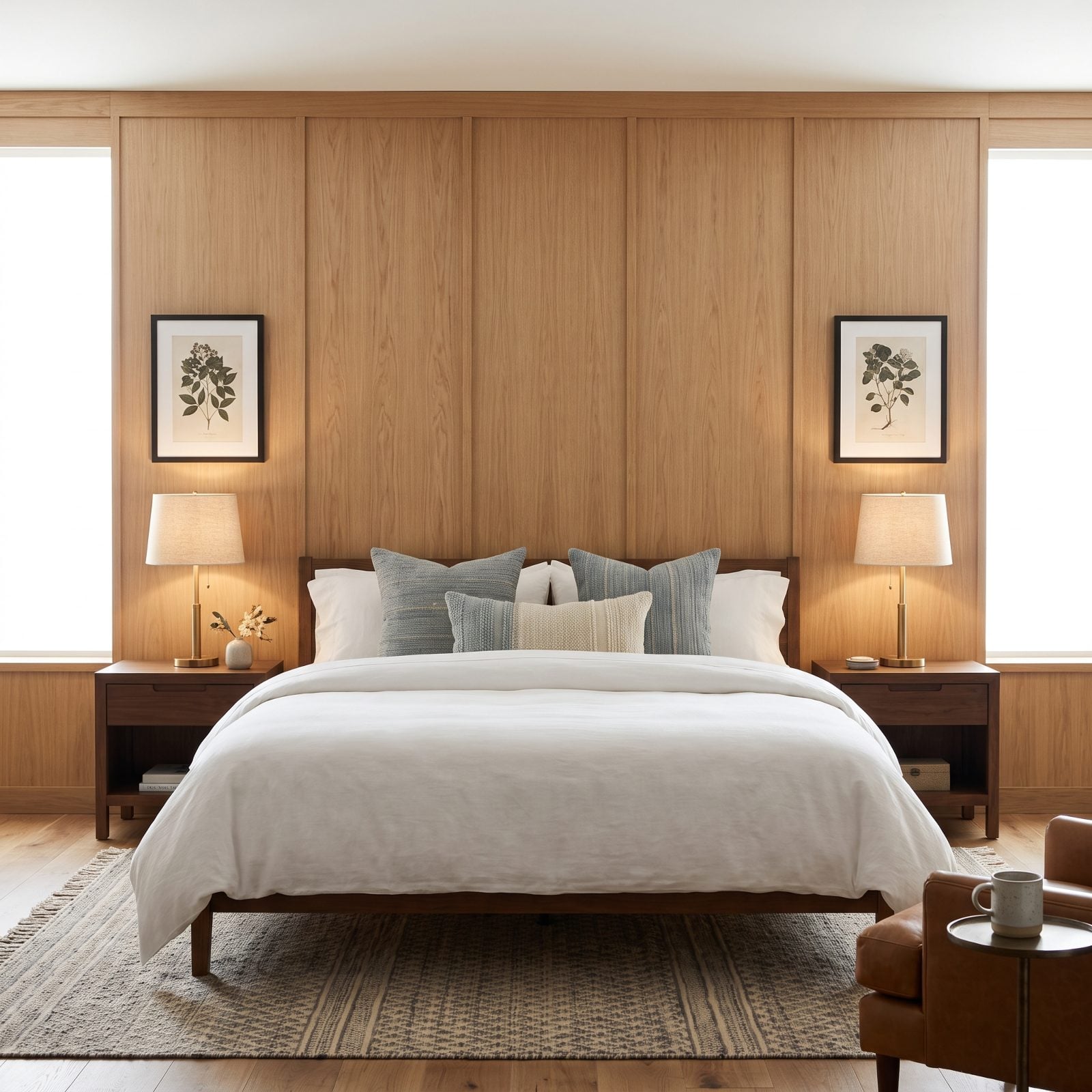
Shove a bed into a corner to make room for a desk and the whole space goes lopsided. Your eye never settles.
Put the bed dead center on the largest unbroken wall and the room gets a spine. Everything else arranges itself around that anchor, and the symmetry reads as intentional before you can articulate why. Cheap rooms cram furniture wherever it lands. Expensive ones treat the bed like the altar it is and build outward from there.
34. An Oversized Upholstered Headboard That Fills the Wall
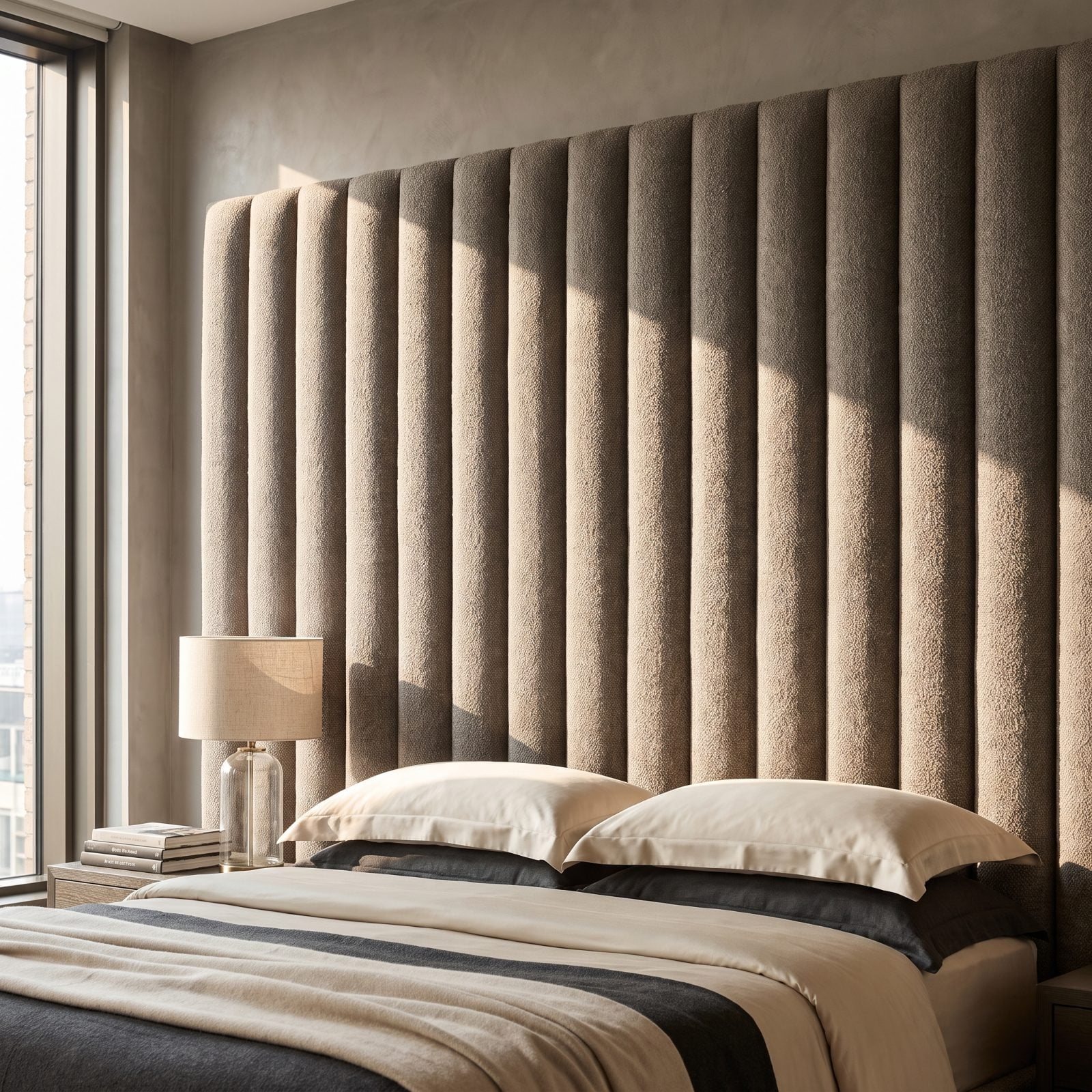
The headboard is the room’s biggest chance to show off, and budget properties blow it with a thin padded rectangle sized to match the mattress and nothing more.
Go tall and go wide. A headboard that climbs toward the ceiling and spreads past the bed’s edges makes the bed feel like somewhere you’ve arrived rather than just somewhere you sleep. Velvet, boucle, a channel-tufted teal velvet headboard in a deep color reads boutique the instant you walk in. No surprise it’s the most photographed thing in the whole room.
33. Crisp White Bedding That Announces Nothing’s Been Hidden
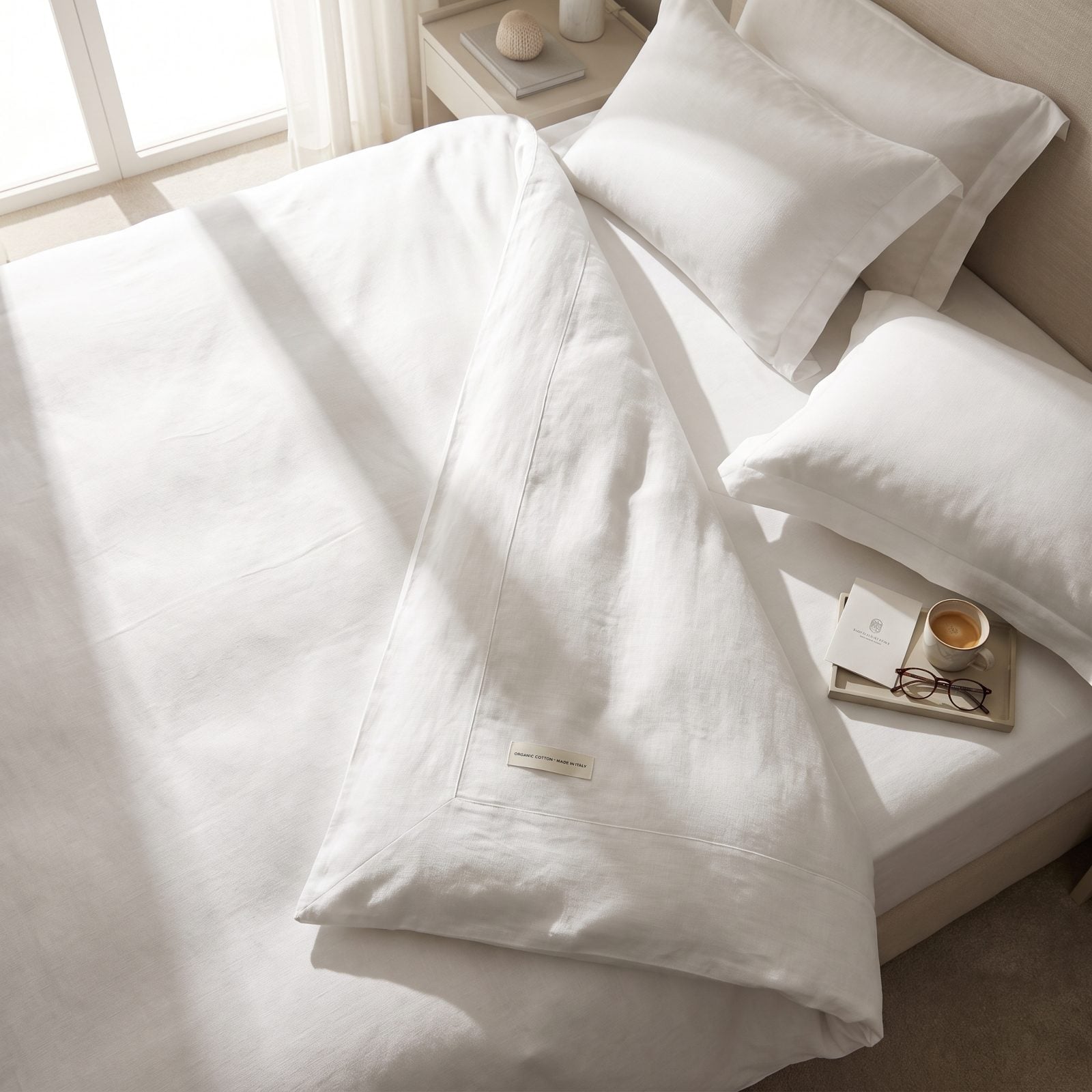
White bedding is a dare. It says we have nothing to hide — no stains to disguise, no corners cut on laundry. A patterned polyester comforter says the opposite, and we all know exactly why it’s patterned.
The best white bedding comes in layers: a fitted sheet, a flat sheet, a duvet in a white cover, every piece laundered to that particular hotel crispness. The sharp fold-back of the top sheet. The hemstitch catching the light just so. It costs more to keep that way, and that’s the entire point.
32. A Thick Duvet and Pillows With Actual Loft

Flat pillows are a betrayal. You lift one in a tired room and it folds in half like a disappointed envelope.
Loft is the tell. A duvet with real fill that mounds up when you fold it back, pillows so plump you have to squash them before you can lie down, the whole bed sitting high and cloudlike. Thin bedding goes limp inside a year. Properly filled down, or a good down-alternative, holds its shape and gives you that sinking-in moment no amount of thread count can fake on its own. The bed should look like it wants you in it.
31. Matching Nightstands Big Enough to Hold Your Life
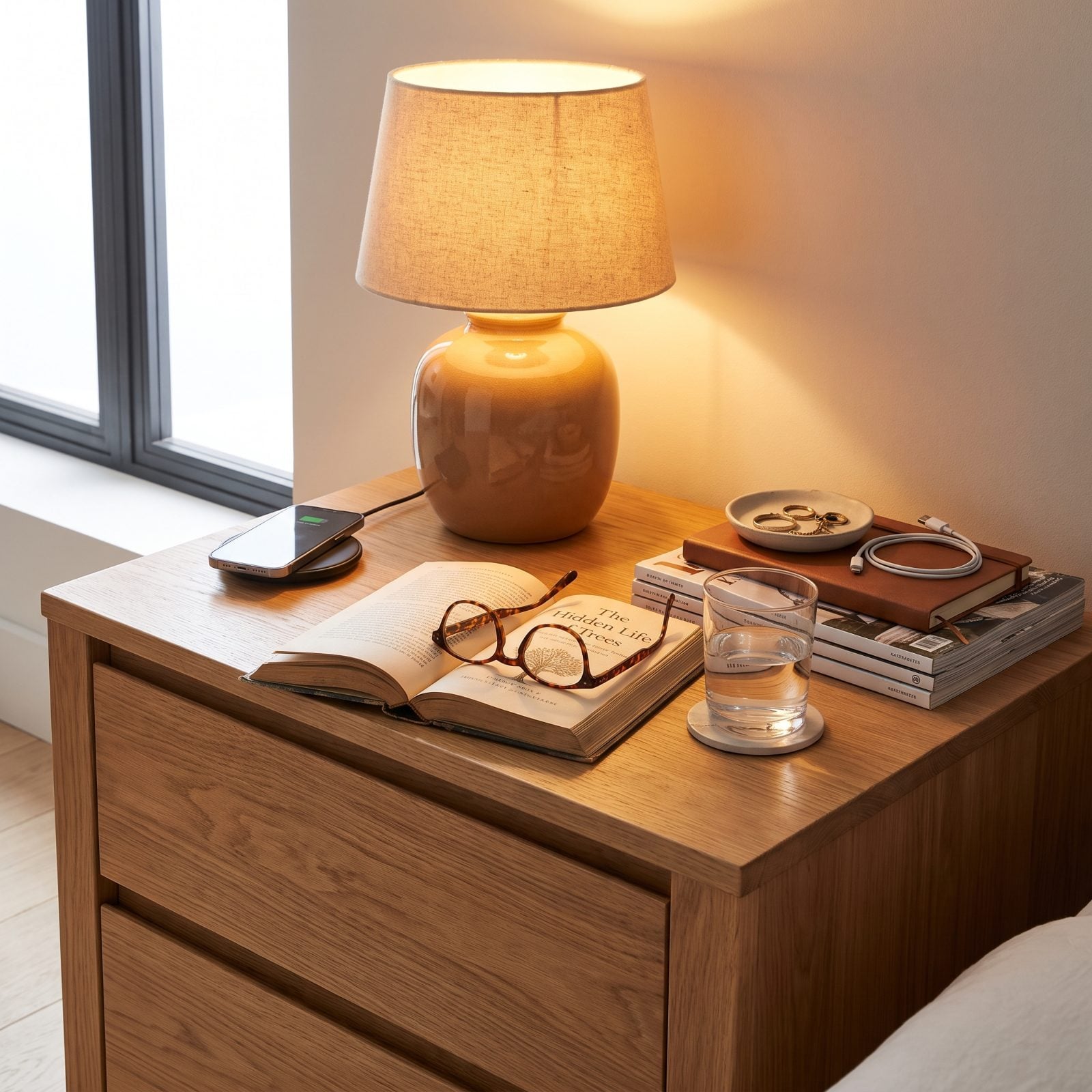
You know the tiny perch barely wide enough for a phone and a water glass, the one that forces you to choose between your reading glasses and your charger.
Generous matching walnut nightstands on both sides pull double duty. They frame the bed with symmetry the eye reads as luxury, and they give you room to actually live — a book, a drink, your things laid out without a Jenga problem. Mismatched or undersized tables scream clearance rack. A proper pair says someone sat down and planned this.
30. Dedicated Reading Lights That Free Up the Nightstand
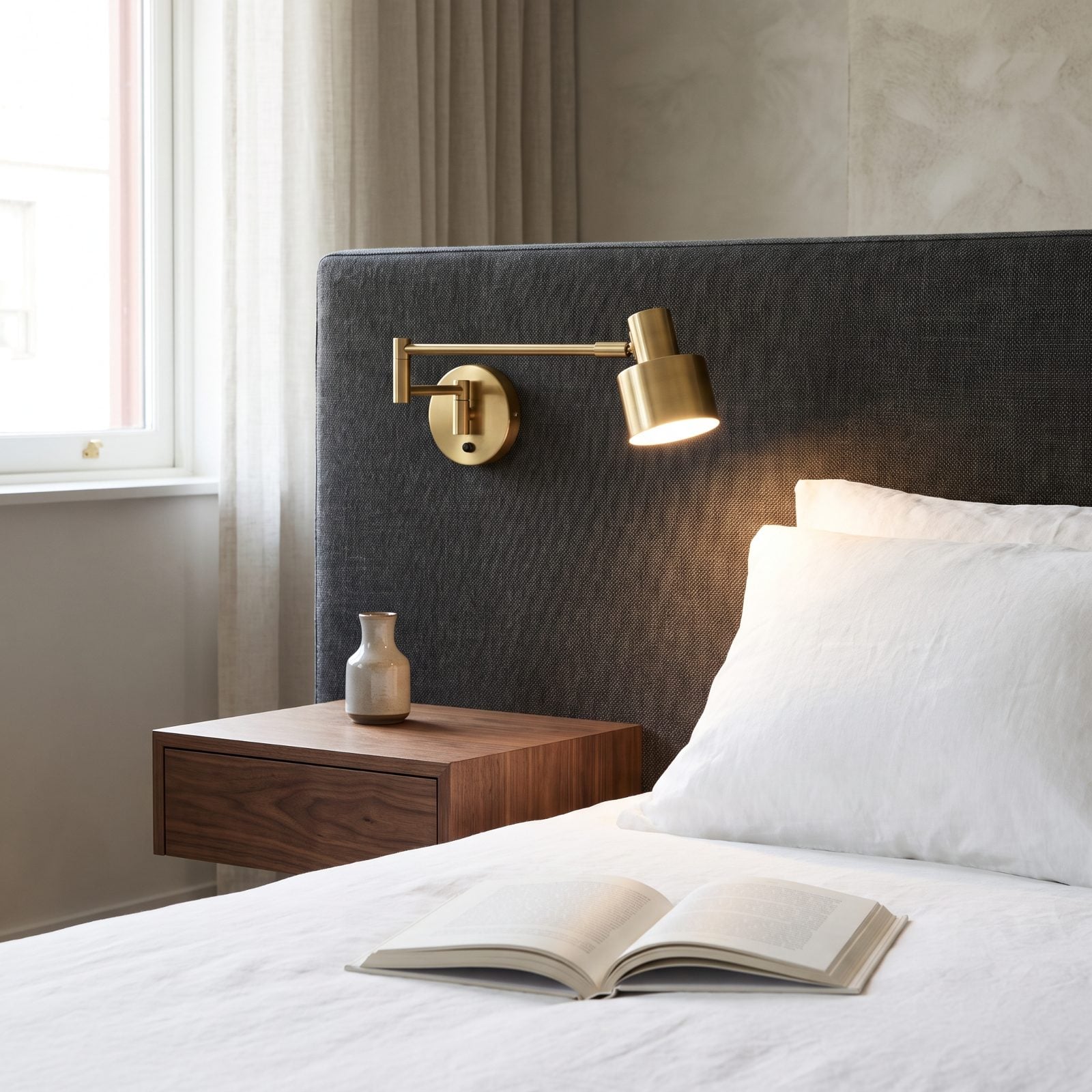
A giant lamp hogging the nightstand is a design failure dressed up as a convenience. It eats the surface you came for and floods the whole room with light when your partner’s already out cold.
The fix? A wall-mounted or swing-arm brass reading lamp that pivots to the page and nowhere else. It clears the surface, aims the beam precisely where you need it, and lets one person read while the other sleeps. A detail built purely around the guest’s comfort — which is exactly why cheap rooms never bother with it.
The truest sign of a luxury room is how many problems were solved before you ever walked in.
29. Multiple Lighting Circuits Let You Set the Mood
🔥 Would you like to save this?
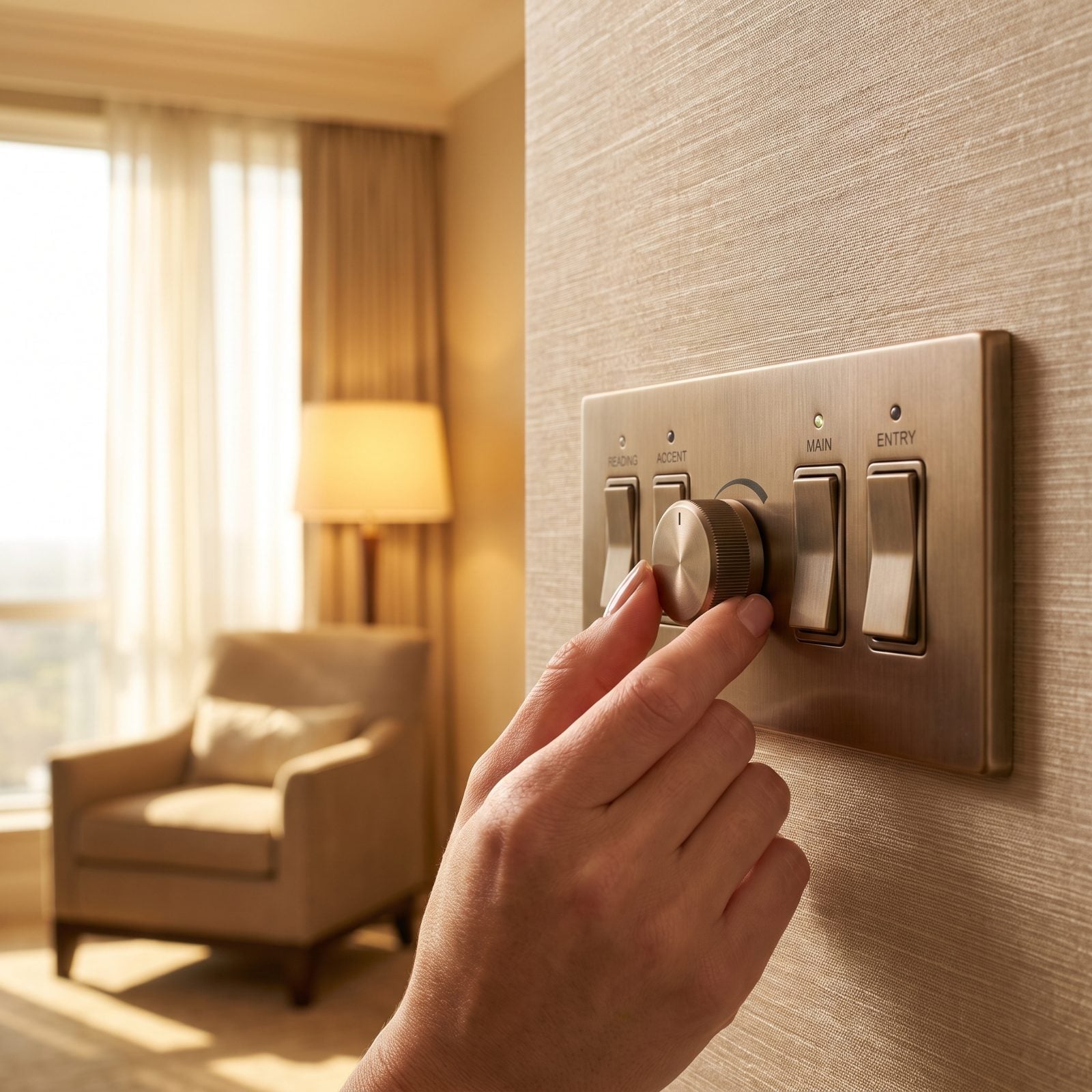
One switch by the door that controls everything is the clearest tell of a cheap build. Real rooms give you circuits. Reading light on one side of the bed, ambient glow on the other, something low for the walk back from the bathroom at 3am — you adjust the room to the hour instead of surrendering to whatever the electrician wired in 2003.
The luxury isn’t more light. It’s control. A dimmer costs almost nothing and does more for how expensive a space feels than a new carpet ever would.
28. Indirect Ceiling Lighting That Kills the Glare
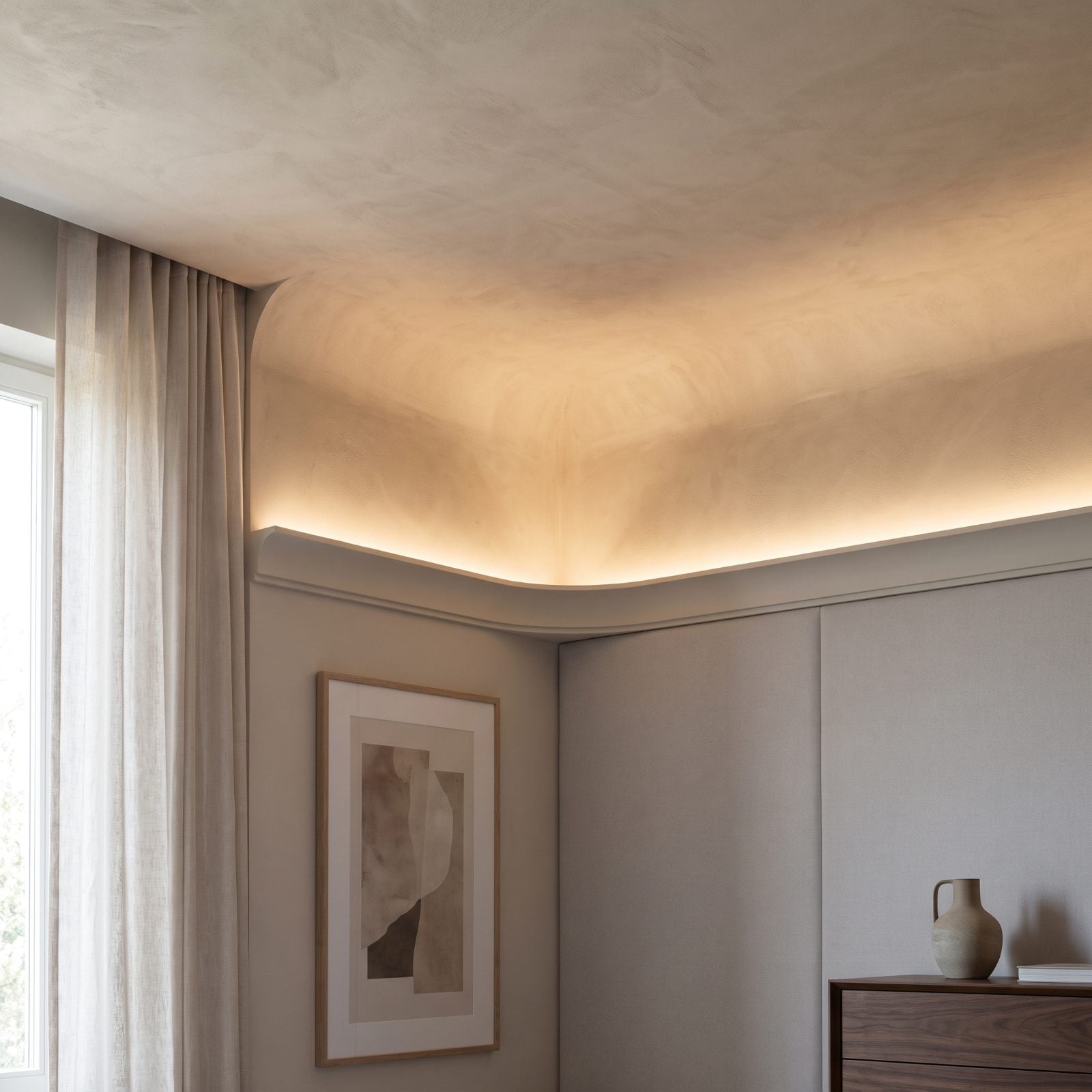
Look up in a budget room and you’ll find a bare ceiling fixture staring back, the kind that throws a hard shadow off your own nose. Look up in a good one and you often can’t find the source at all. The light washes the ceiling from a hidden cove and comes back down soft and flattering.
Indirect lighting hides the machinery and shows you only the effect. That’s the whole gap between a room that feels designed and a room that feels wired.
27. Matching Bulb Temperatures, No Patchwork of Color
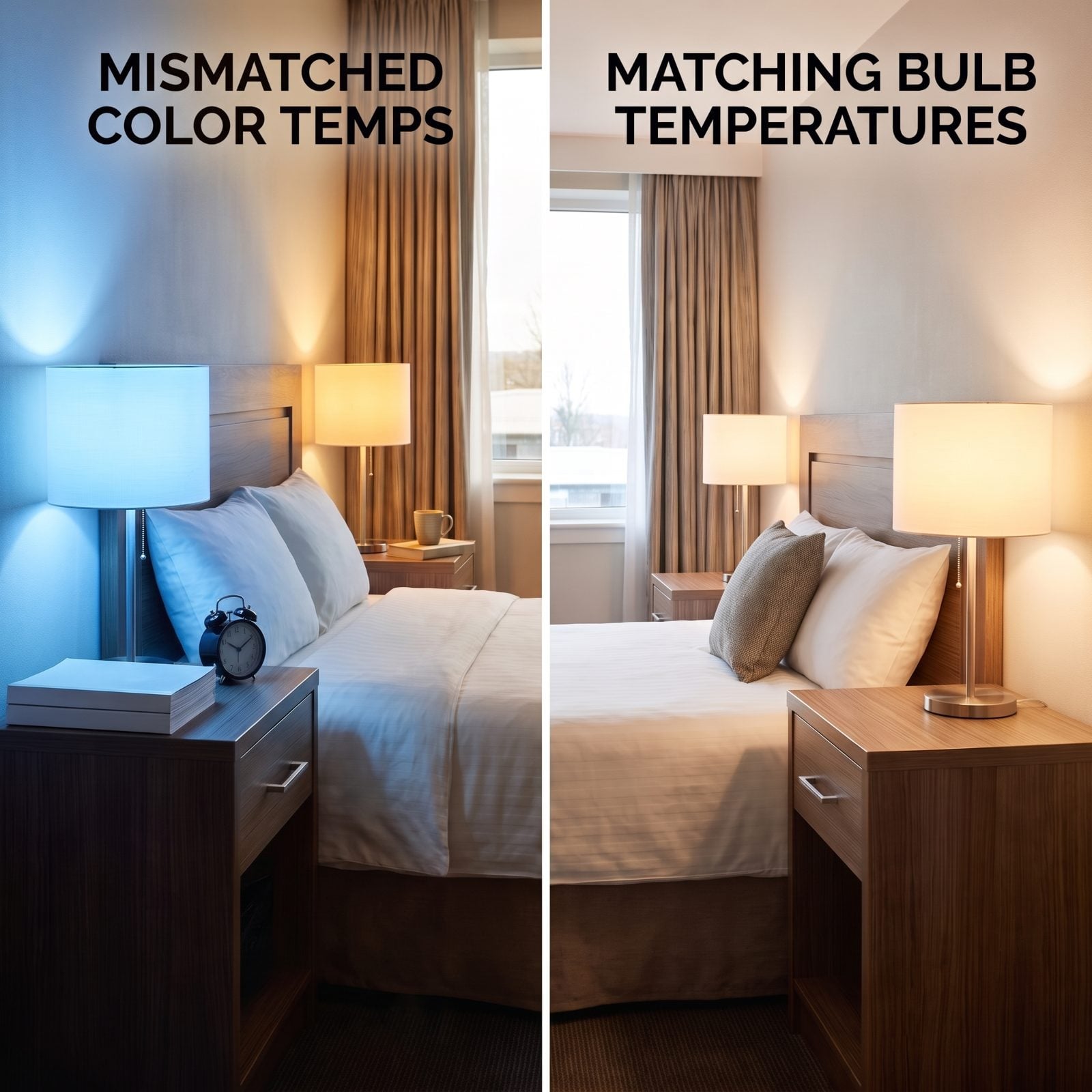
Nothing cheapens a room faster than one lamp burning cold blue next to another glowing warm yellow. It reads as a patchwork, like someone grabbed whatever bulbs were in the supply closet. Which is usually exactly what happened.
Luxury rooms match every bulb to the same warm temperature, typically a soft 2700 Kelvin. Everything agrees. The room feels like one thought instead of five arguments — the least glamorous detail on this list, and one of the most telling.
26. A Rug Large Enough to Push the Bed Onto
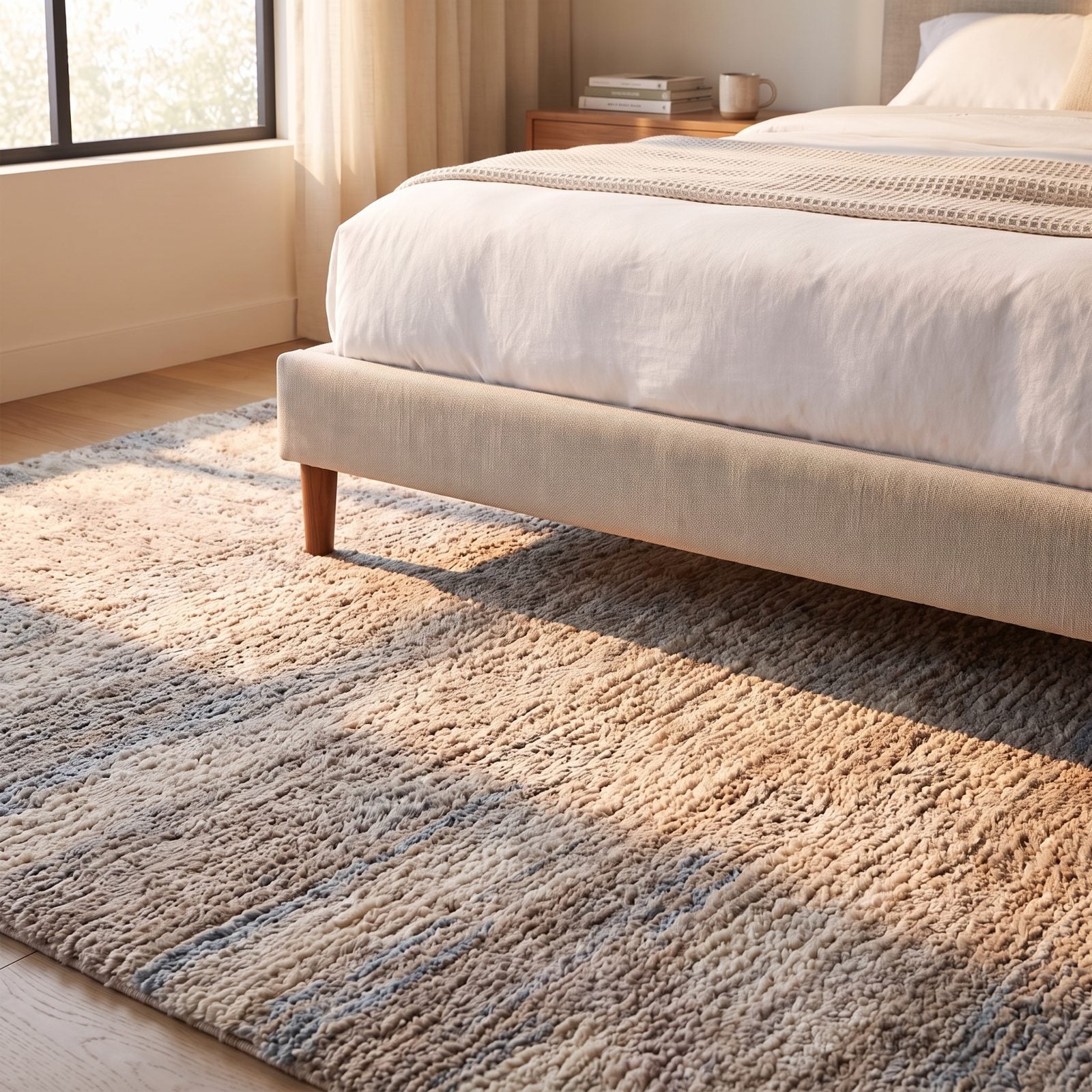
The giveaway is the postage-stamp rug. A little mat floating in the middle of the floor, bed parked beside it on bare carpet like an island nobody can reach.
A proper rug is big. The bed sits on it — or at least the front third does — and it runs out past the nightstands on either side. Suddenly the sleeping area has a boundary, a zone, a sense of generosity. Rooms that get this right feel larger, not smaller, because the eye reads one continuous expensive surface instead of a floor interrupted.
25. Stone-Topped Furniture With Real Weight
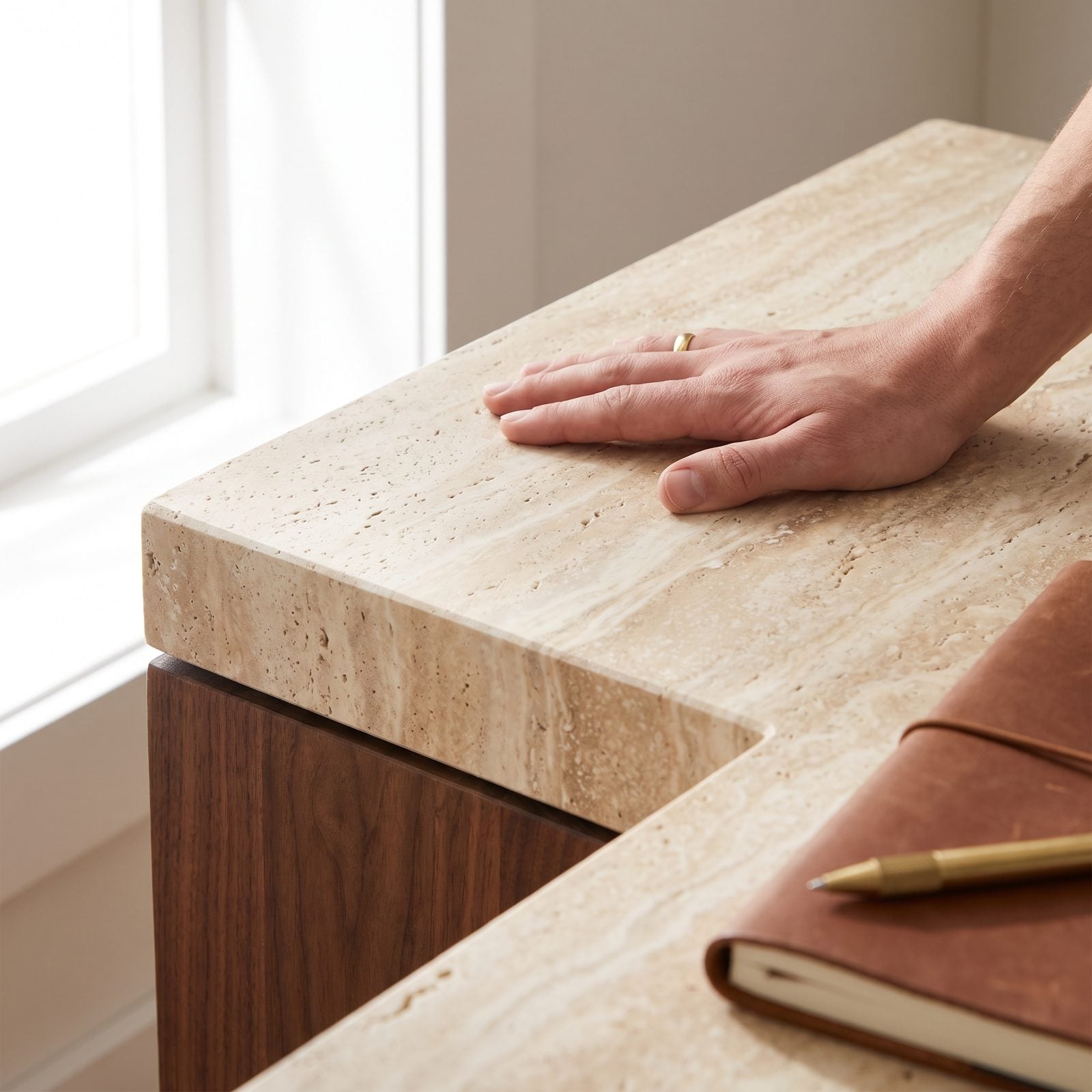
Knock on the desk. If it sounds hollow, you know. Laminate pretending to be marble has a tinny, apologetic sound, and the printed veining never quite lines up with reality.
Real stone announces itself before you touch it — the cool of it under your palm, the weight of the slab, the way light catches actual mineral veining instead of a photograph of veining. A stone-topped console or bathroom counter costs real money, which is precisely why its presence tells you the rest of the budget was serious too.
24. Built-In Millwork That Makes the Minibar Vanish
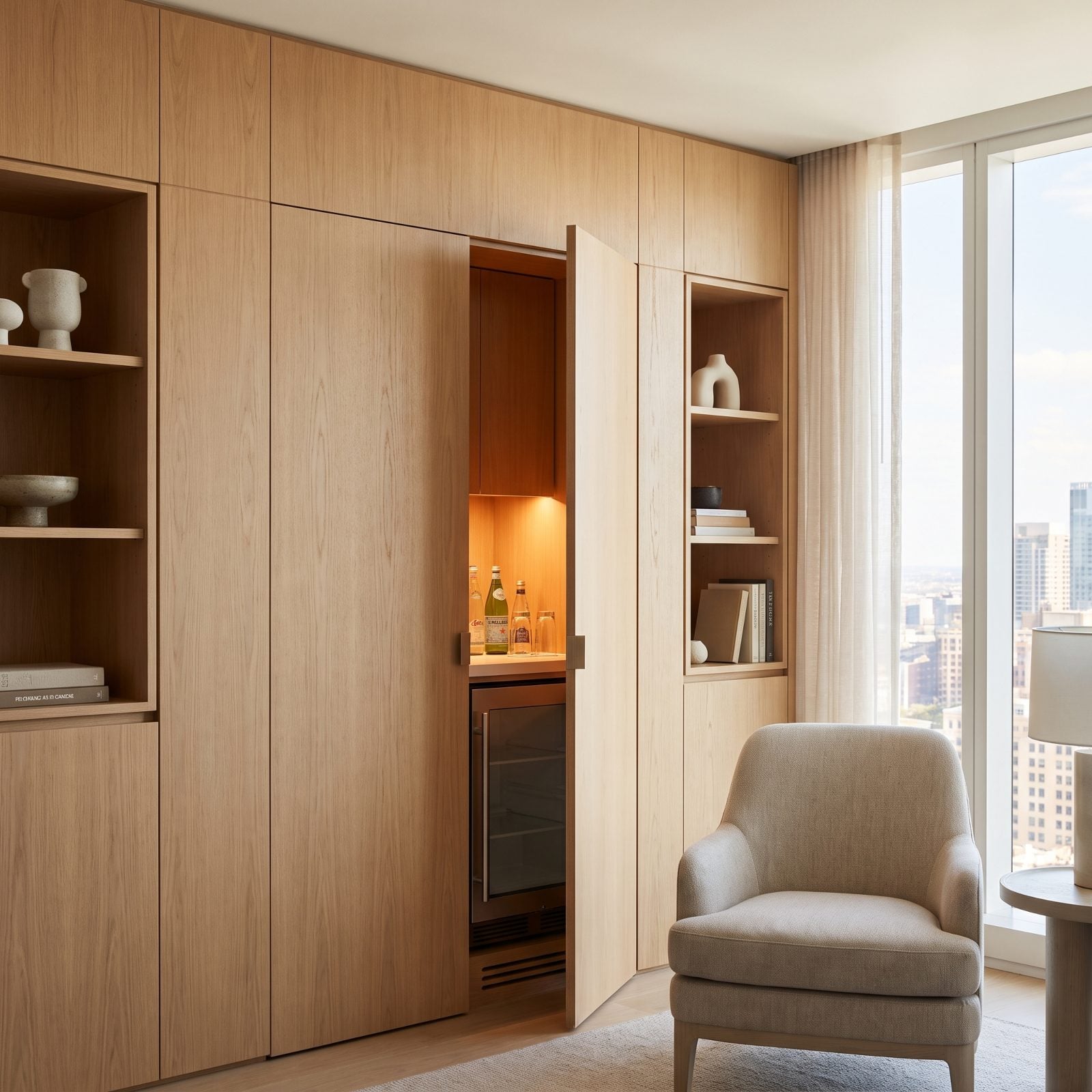
You’ve seen the cheap version a hundred times. A black under-counter fridge humming in the corner, a wobbly wire basket of overpriced peanuts, a laminate cabinet with a handle that doesn’t quite close.
The luxury version hides all of it behind flush millwork, push-to-open doors, seams so tight you have to hunt for them. The minibar, the safe, the extra blankets — all tucked behind clean panels that read as wall, not storage. Furniture built for the room instead of bought for the room. That distinction is most of what you’re paying for.
23. A Coffee Station That Looks Planned, Not Plopped
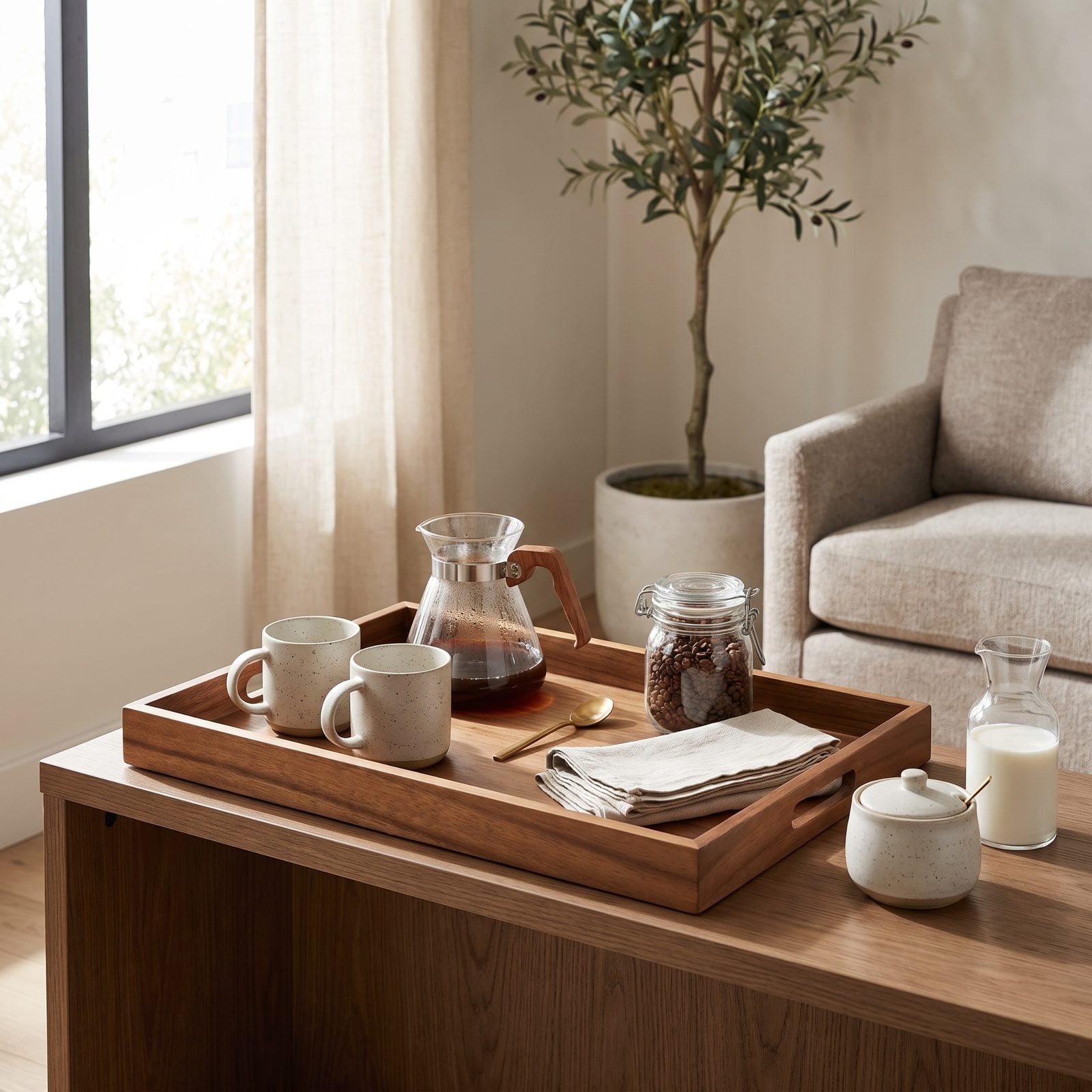
The sad coffee corner is a universal language. A plastic drip machine on a bare dresser, two paper cups in cellophane, a basket of individually wrapped pods that taste like warm cardboard.
A real coffee station has been thought about. A tray that contains it, decent ceramic cups instead of foam, a grinder or a good machine, the sugar and milk arranged like someone cared whether your morning started well. It costs the hotel almost nothing extra to do this right. So few bother, which is exactly why it registers when one does.
22. Outlets and Charging Ports Exactly Where You Need Them
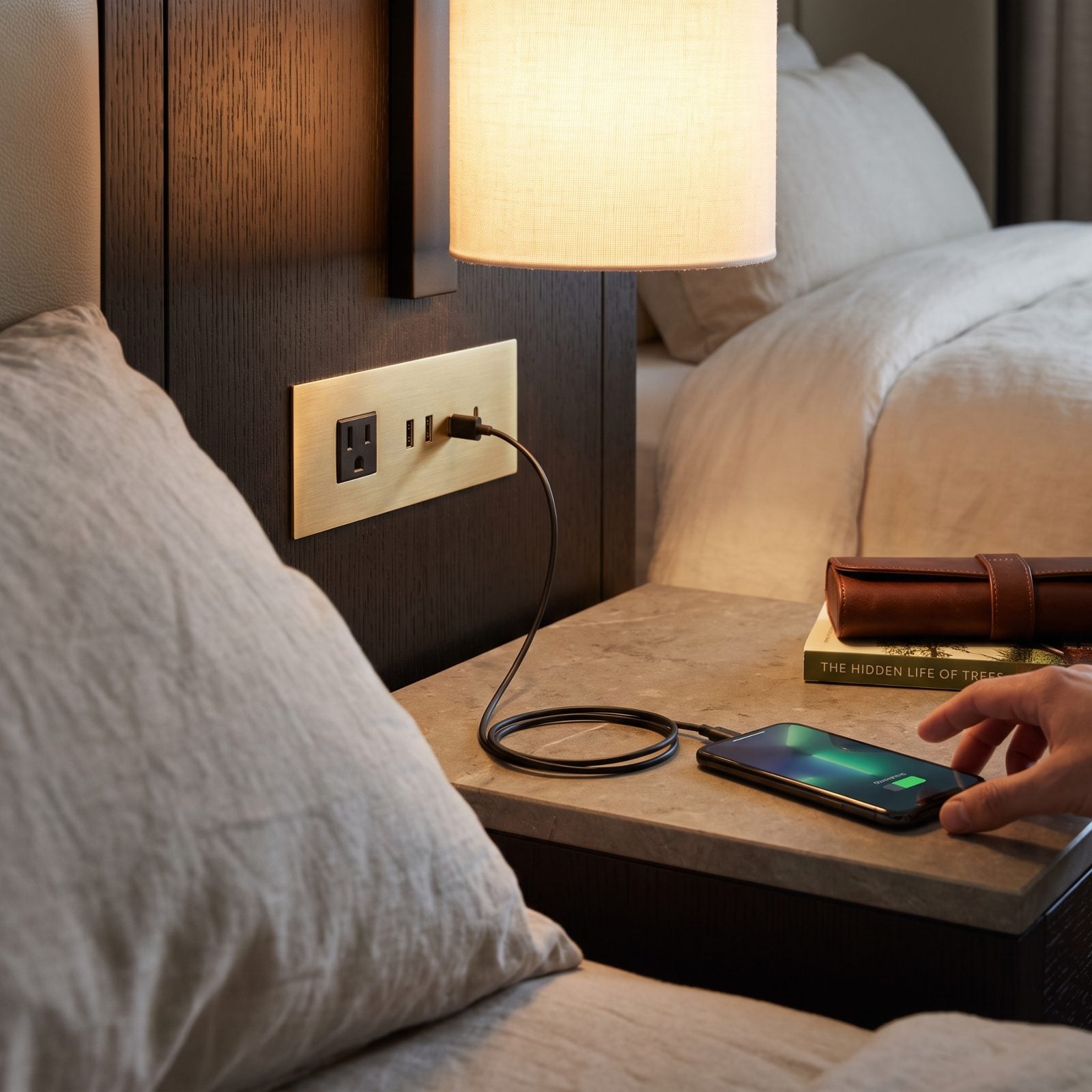
Here’s the test. Lie in bed, reach for your phone charger, and see how far you have to stretch. In a cheap room the only outlet is behind the dresser, requiring a yoga pose and a flashlight. Crawling under a desk at midnight in a nice-looking hotel just to find a free socket tells you everything about who designed that room.
Good rooms put power where hands actually go. Beside the bed at pillow height, on the desk, by the reading chair, with USB ports built in so you don’t need the adapter you left at home.
21. A Television Framed Like Art, Every Cable Gone
🔥 Would you like to save this?
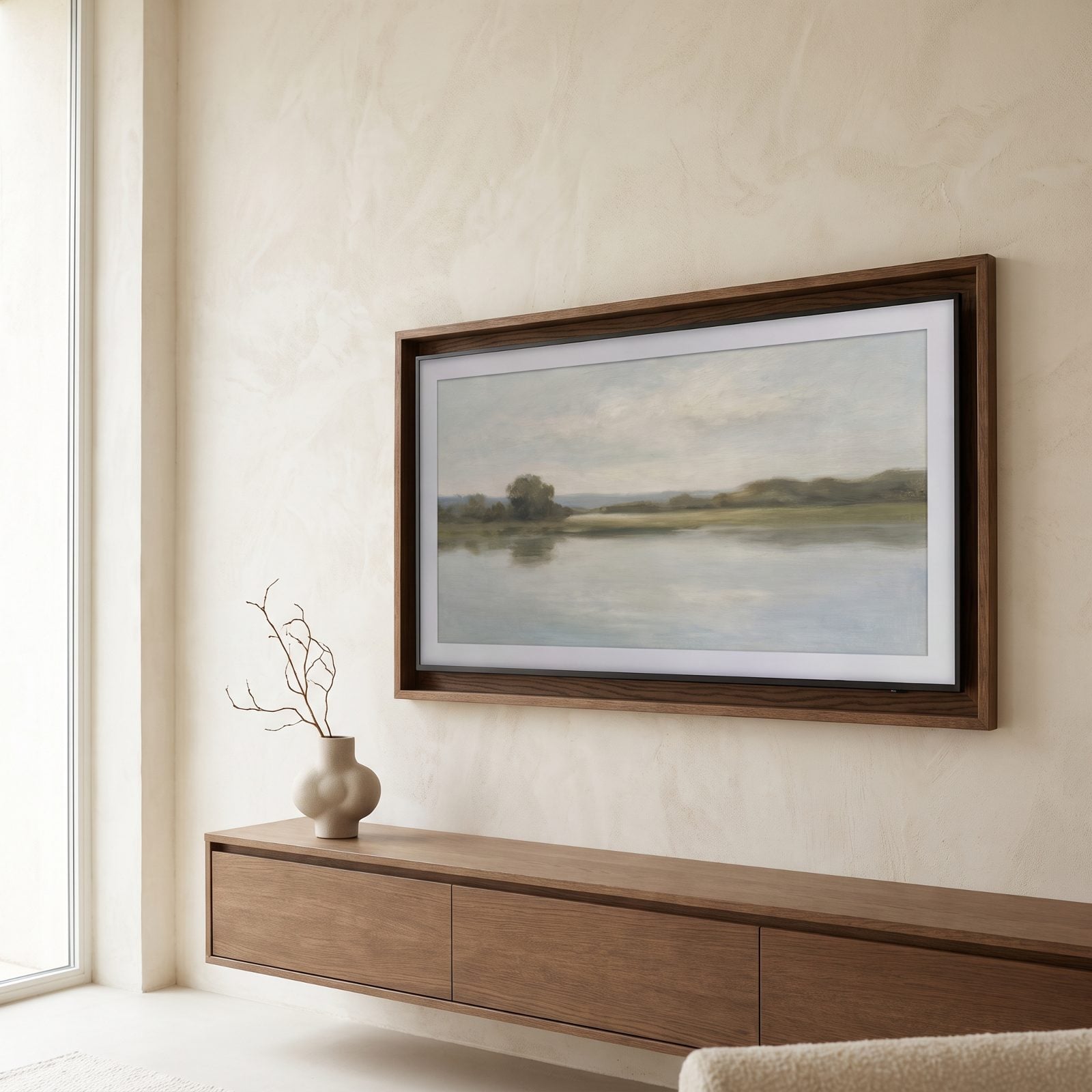
A giant black rectangle bolted to the wall, a tangle of cables snaking down to a surge protector on the floor. That’s the default, and it dominates a room the way a parked truck dominates a driveway.
The better move is a slim set with the cables chased invisibly into the wall, often framed so it reads as a painting when it’s off. The screen stops being the loudest object in the room. When nobody’s watching, there’s nothing to look at — exactly right.
20. One Large Artwork That Tells You Where You Are
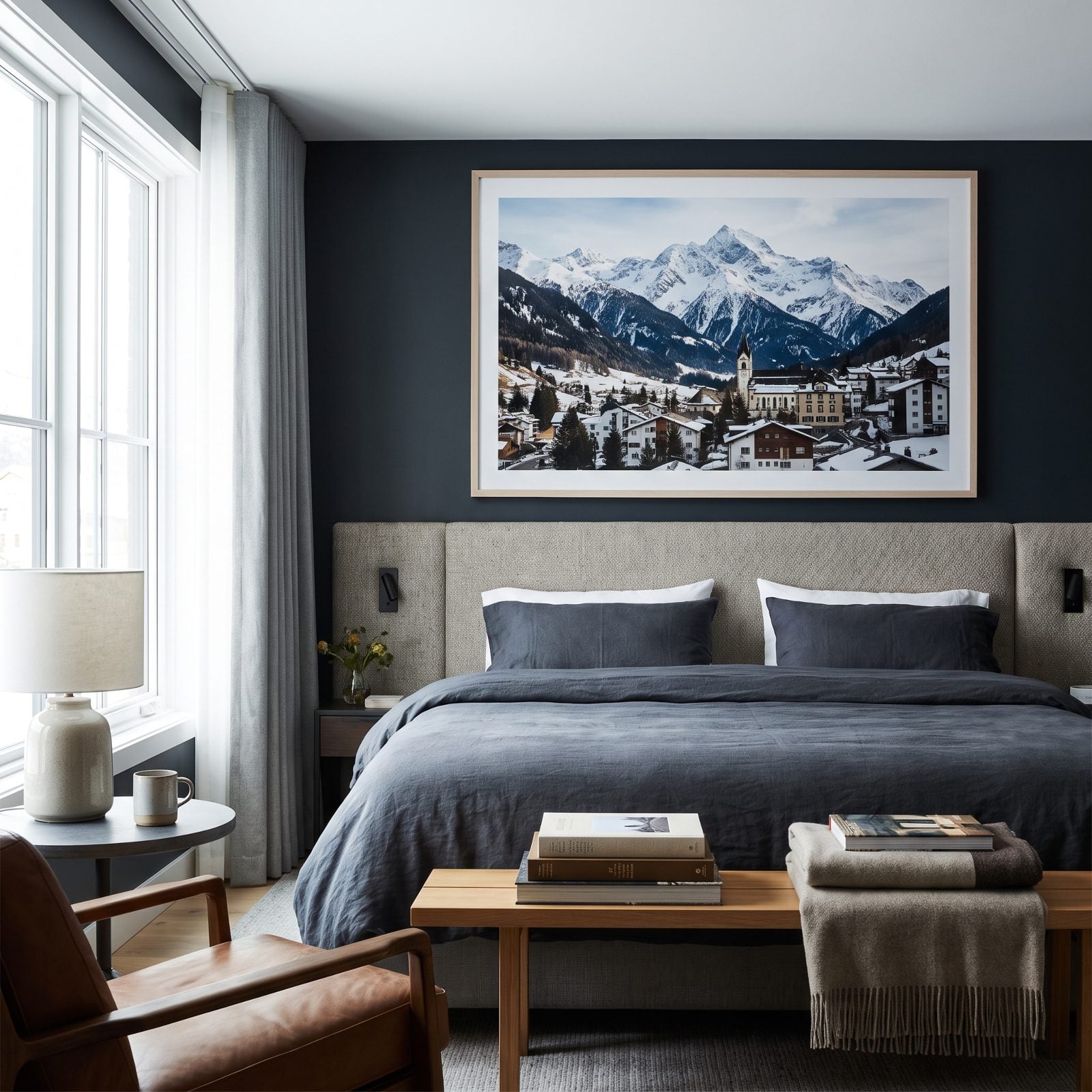
The dead giveaway of a generic room is the generic art. A hazy beige print of nothing in particular, the kind mass-ordered by the thousand, hung in the same spot in every room on the floor. Could be Dallas. Could be Dubai. You have no idea, and neither does the art.
One large piece that speaks to where you actually are changes the whole register. A commissioned painting of the local harbor, a photograph of the mountains outside, a textile from the region. It gives the room a point of view and gives you a sense of place, which is half the reason you traveled at all.
19. A Restrained Palette With One Rich Accent Color Feels Cohesive
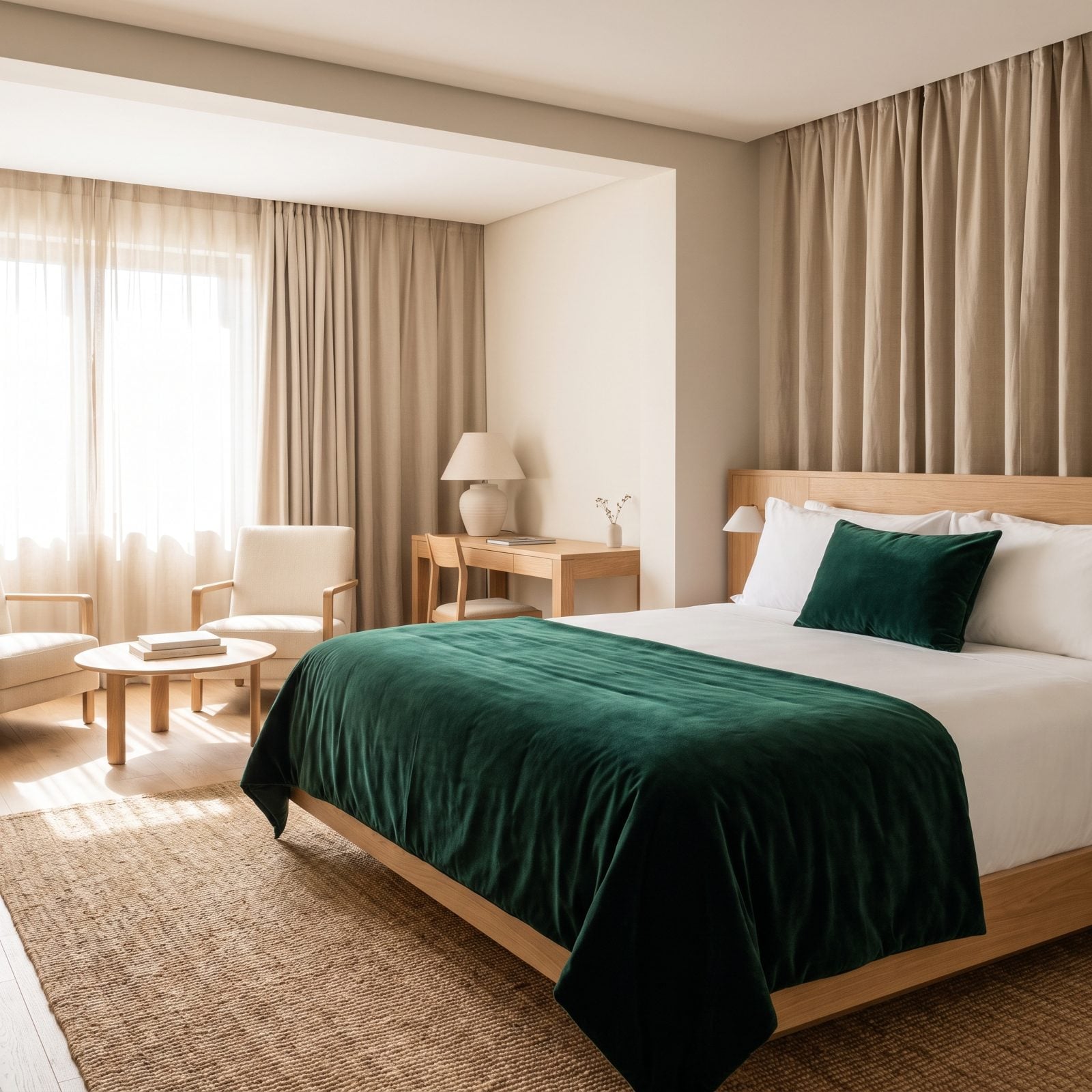
Cheap rooms panic. They throw six colors at you and pray one lands. A room that knows itself picks three quiet neutrals, then commits to a single saturated note and repeats it exactly twice — the emerald velvet chair in the corner, the folded throw on the bed, done.
Restraint is the luxury here. Your eye reads cohesion as care, and care as money, even when the budget was modest, and the brass wall sconce ties the warm metals together without making a fuss about it.
18. Matte Finishes Hide Wear Better Than Shiny Laminates
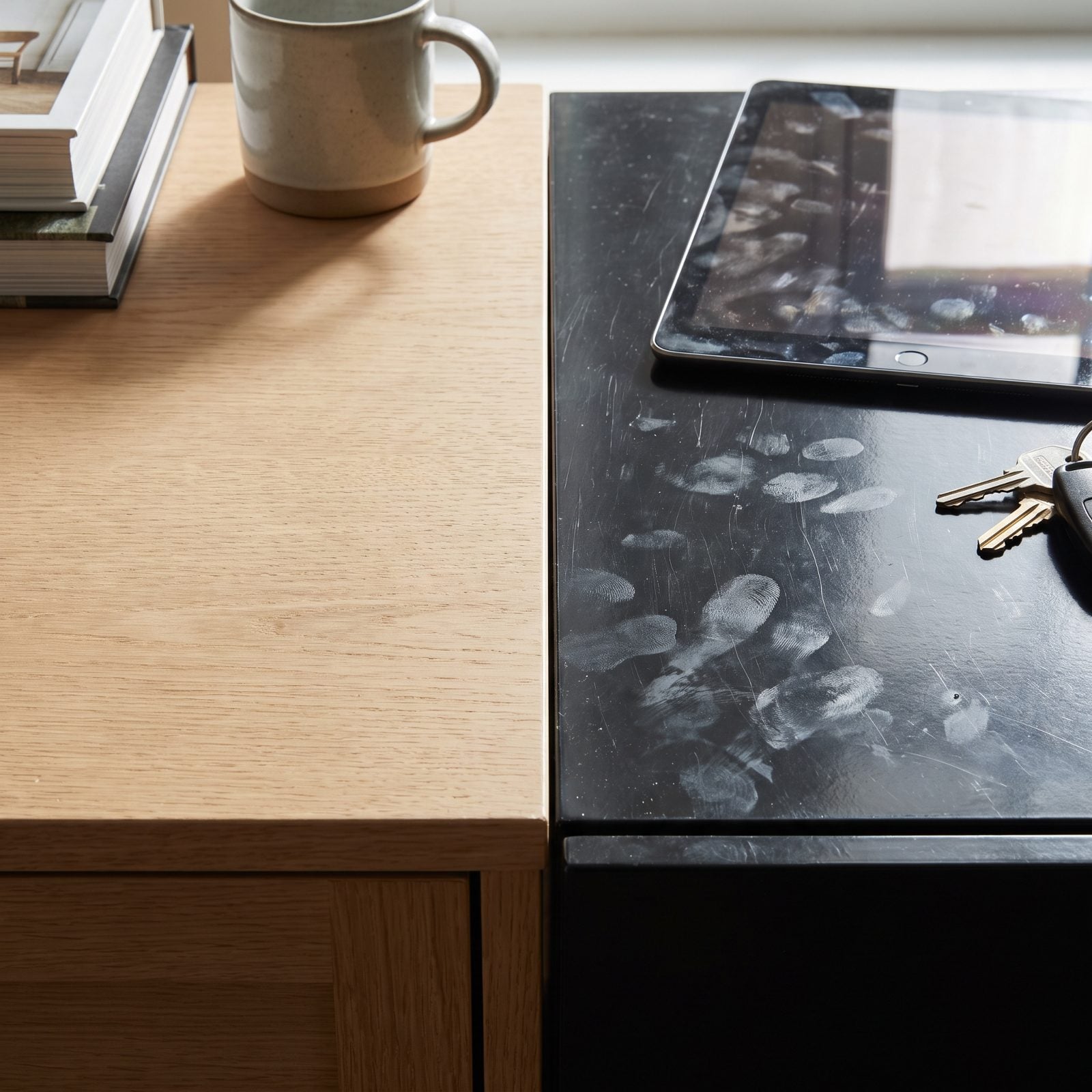
Glossy laminate photographs well and ages badly. Every fingerprint, every water ring, every scuff shows up like a confession, while matte surfaces swallow all of it. A matte walnut nightstand can take a year of abuse and still look like someone chose it on purpose.
High-shine is the drive-thru window of finishes — cheap to produce, impressive for about a week, embarrassing by month three. The rooms that still feel expensive six years later? They skipped the gloss and bought low-sheen wood and hand-glazed ceramic instead.
17. Weighty Handles in a Consistent Finish Feel Deliberate
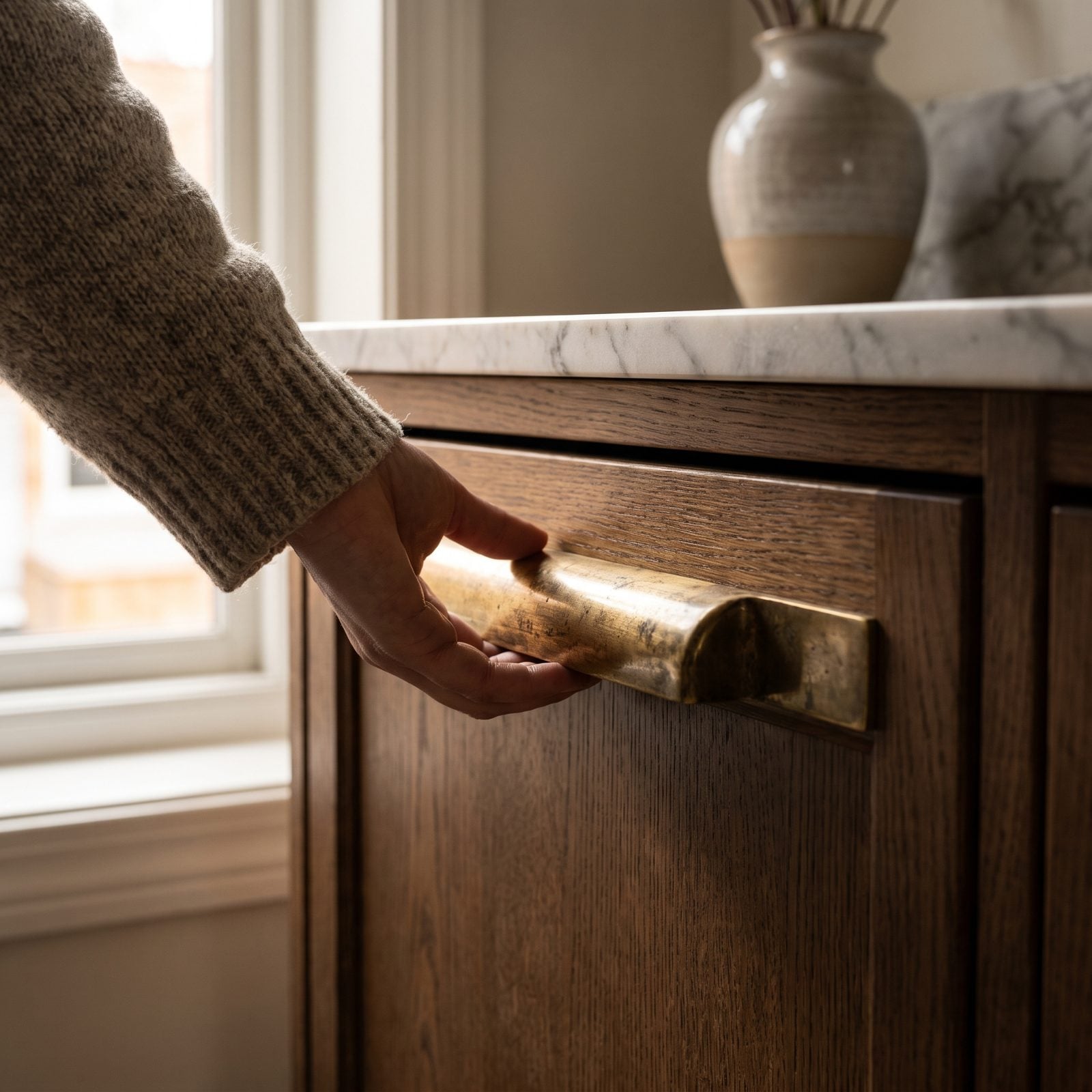
Pick up a drawer pull. That’s the whole test. A hollow handle rattles and gives, while a solid one has heft your hand clocks before your brain catches up — luxury lives in that split second.
Consistency matters more than the metal itself. When every pull, hinge and tap is the same brushed brass, the room feels like it came from one head. A chrome here, a nickel there, and you can smell the clearance bin: bought piecemeal, by whoever happened to be free that week.
16. Thick Walls and Acoustic Panels Create True Quiet
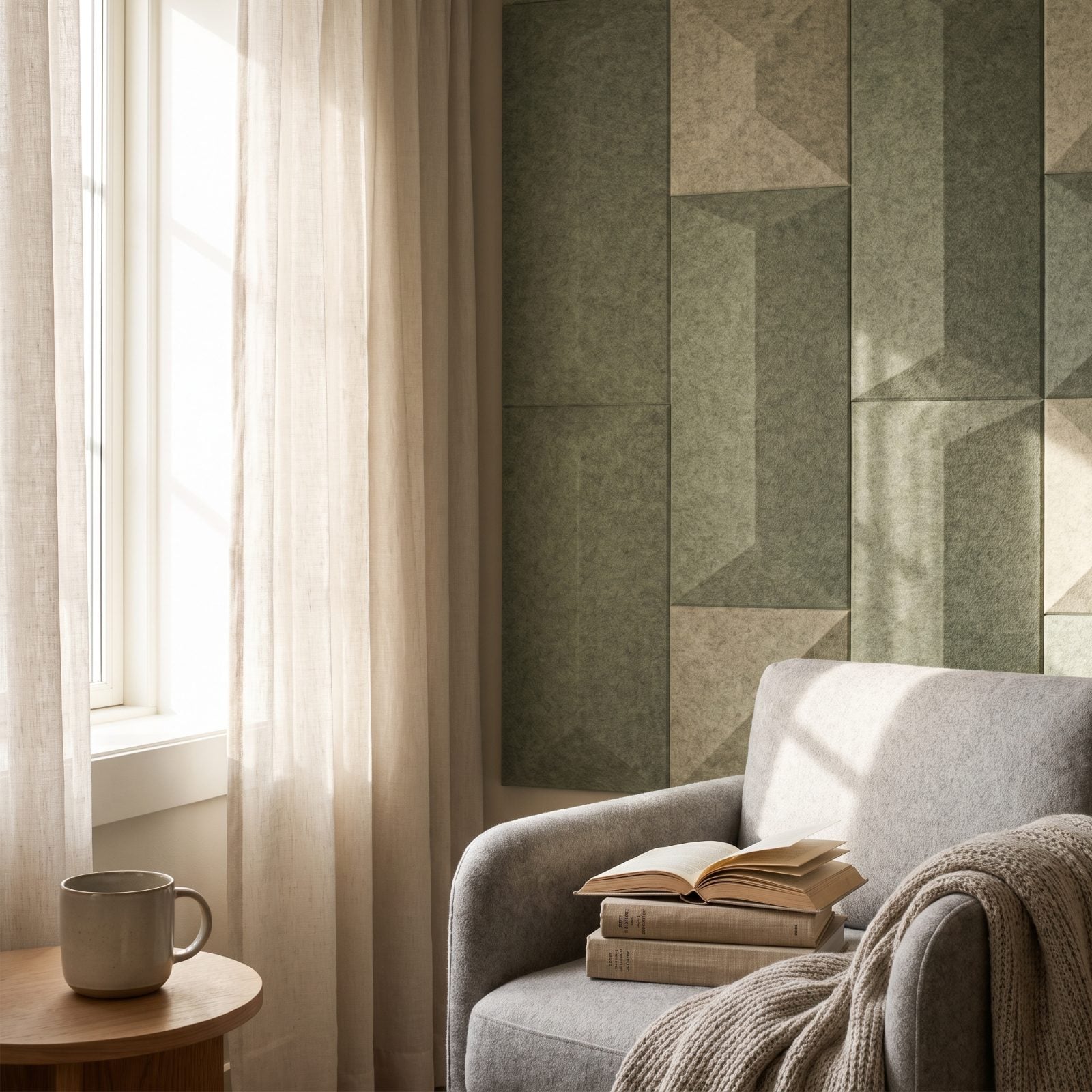
You can’t photograph silence. Which is exactly why cheap hotels skip it — thin walls, hard floors, a gap under the door, and suddenly you’re lying awake to the ice machine and somebody’s late-night TV through the wall.
Half of luxury is just the absence of noise. An upholstered headboard, a dense wool rug, heavy drapes — all of it soaks sound up instead of flinging it back, so the room feels padded and held, separate from the whole building around it. Your nervous system reads that as safety long before you’d ever put a word to it.
15. An Armchair With a Real Side Table Creates a Genuine Seating Area
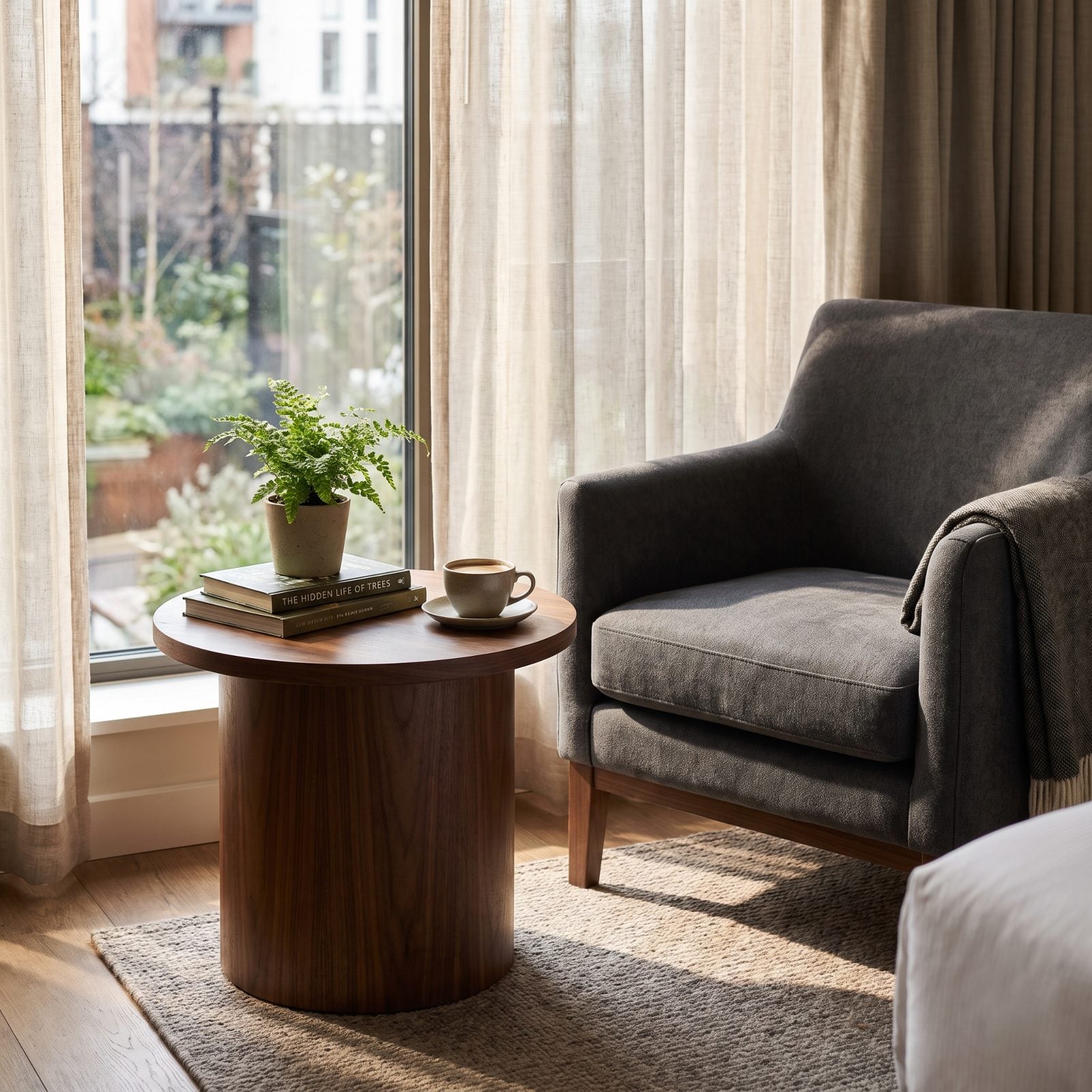
A lonely chair shoved against a wall with nowhere to set your coffee is just decor. Nobody actually sits in it. You end up eating in bed and answering emails from the mattress because the room never handed you anywhere else to be.
Pair an armchair with a real side table and an arc floor lamp, though, and the room suddenly has a second place to exist. That little corner says stay a while. Costs almost nothing, and it changes how long the room feels.
14. A Full-Length Mirror Positioned to Catch Daylight Brightens the Room
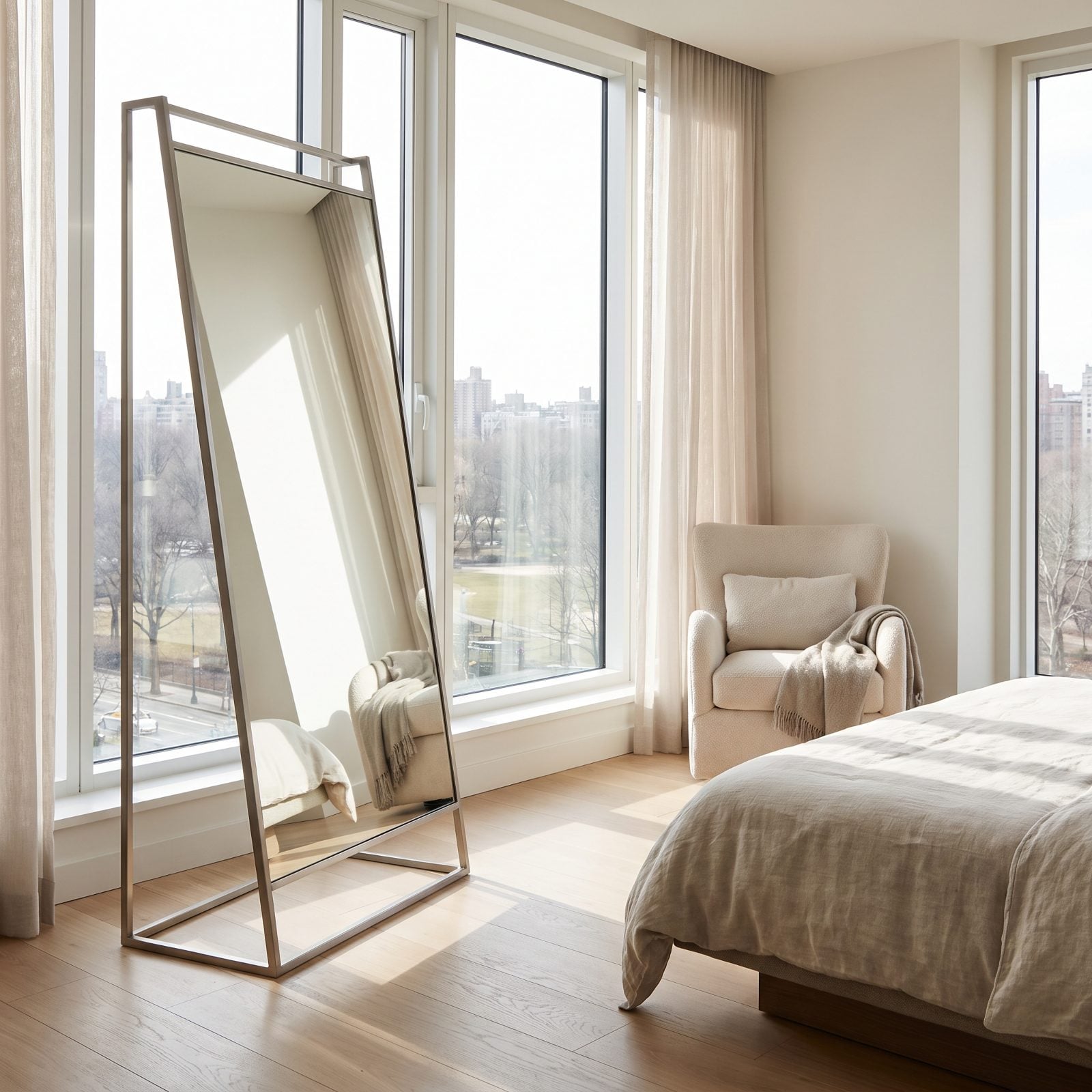
A full-length mirror does double duty, and most hotels miss the second job entirely. Sure, you need to see your whole outfit. But set a full-length mirror opposite a window and it grabs daylight and flings it back across the floor, doubling the glass without touching the budget.
Stick it in a dark corner and it does nothing. Angle it at the window and a dim room suddenly reads bright. Oldest trick in the designer’s pocket, and it still works, because light is the one thing nobody can fake.
13. A Dedicated Luggage Bench Keeps Suitcases Off the Floor
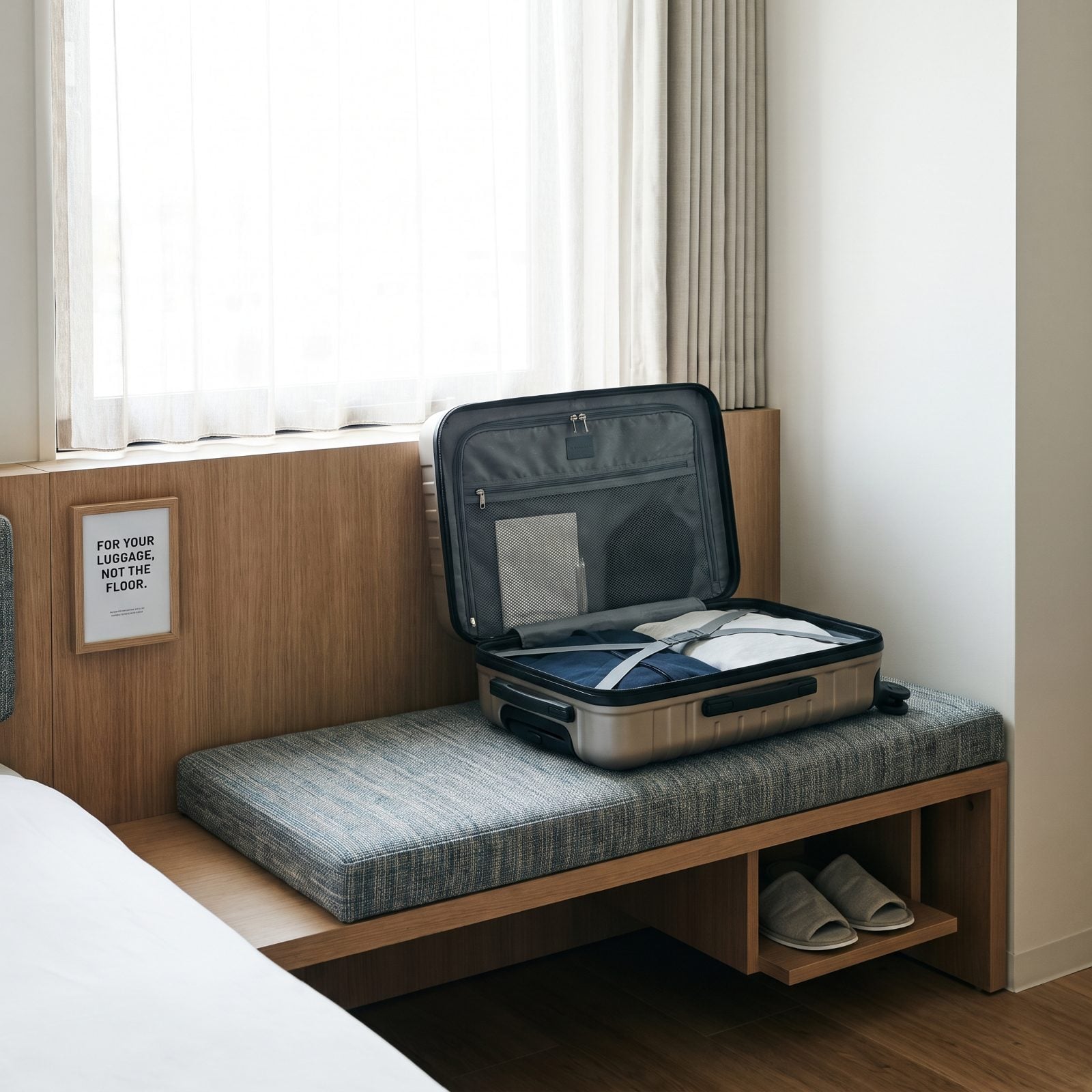
Watch where your suitcase lands in a budget room. The floor, every time. So you’re bending, stepping over it, dragging it when you need the one thing at the bottom, and the whole stay has a crouch built right into it.
A leather luggage bench at the foot of the bed quietly fixes a problem you never knew was taxing you. Your bag sits at waist height — open, reachable, off the clean floor. A small gesture that tells you somebody actually pictured what you’d be doing in here.
12. A Closed Wardrobe Conceals the Practical Mess
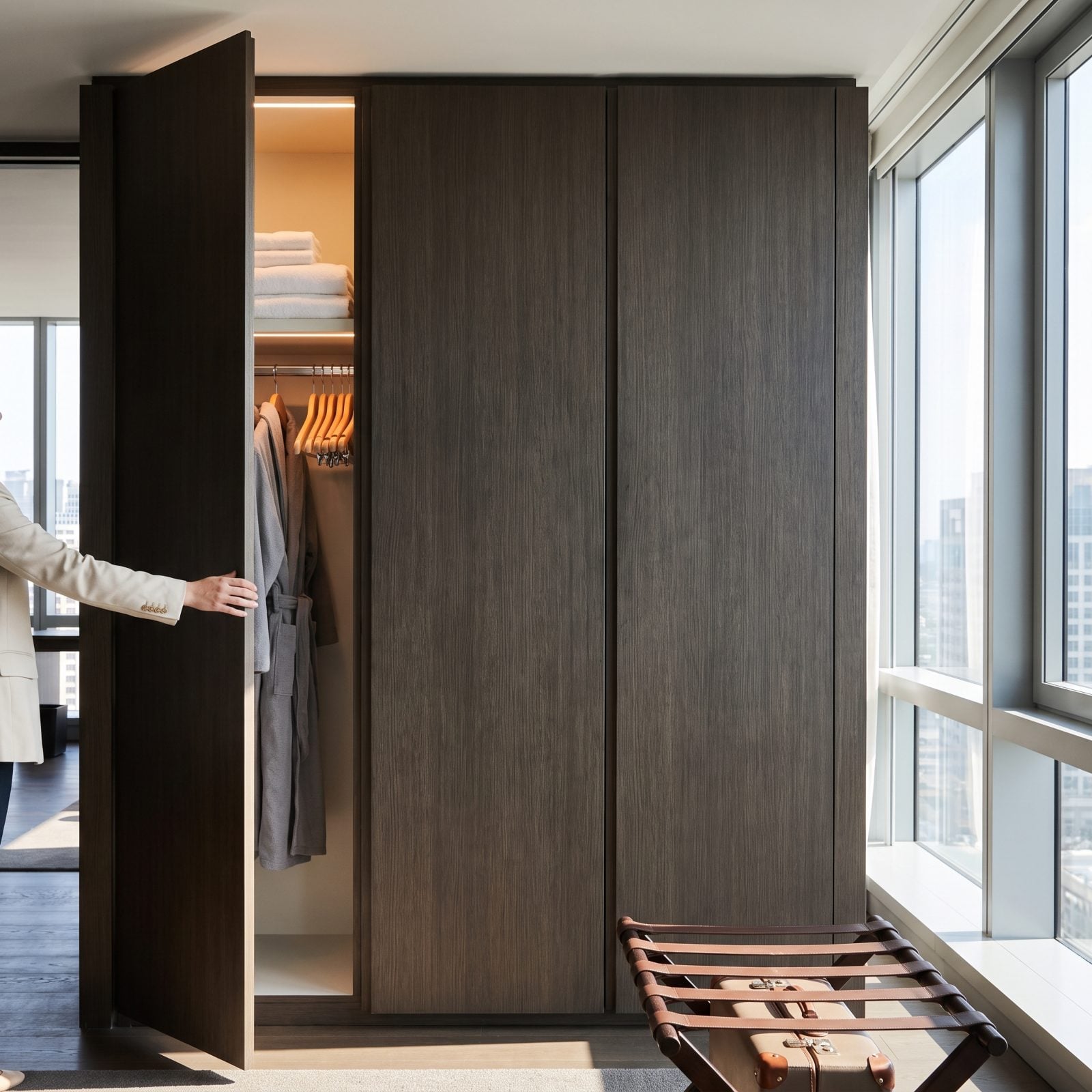
Open shelving looks fine in a catalog shot with three folded sweaters on it. In real life it holds your damp towel, a tangle of chargers, the shirt you meant to hang days ago — chaos, on full display, all week long.
A proper closed wardrobe hides the practical disorder of actually living somewhere, so the room stays calm no matter how feral your packing habits run. And that calm is what you’re paying for. Luxury isn’t having nothing to put away. It’s having somewhere to shove it.
11. Matching Wooden Hangers Signal Attention to Detail

Flimsy wire hangers. Or worse — those theft-proof knobbed ones that fit no closet on earth. Nothing confesses corner-cutting faster.
Now picture a row of identical wooden hangers, all facing the same direction. Costs the hotel almost nothing and still tells you everything: somebody noticed, somebody cared about the part of the room no guest ever photographs. Real attention gives itself away in exactly the spots where skipping would’ve been easiest.
10. An Illuminated Closet Feels Unexpectedly Premium
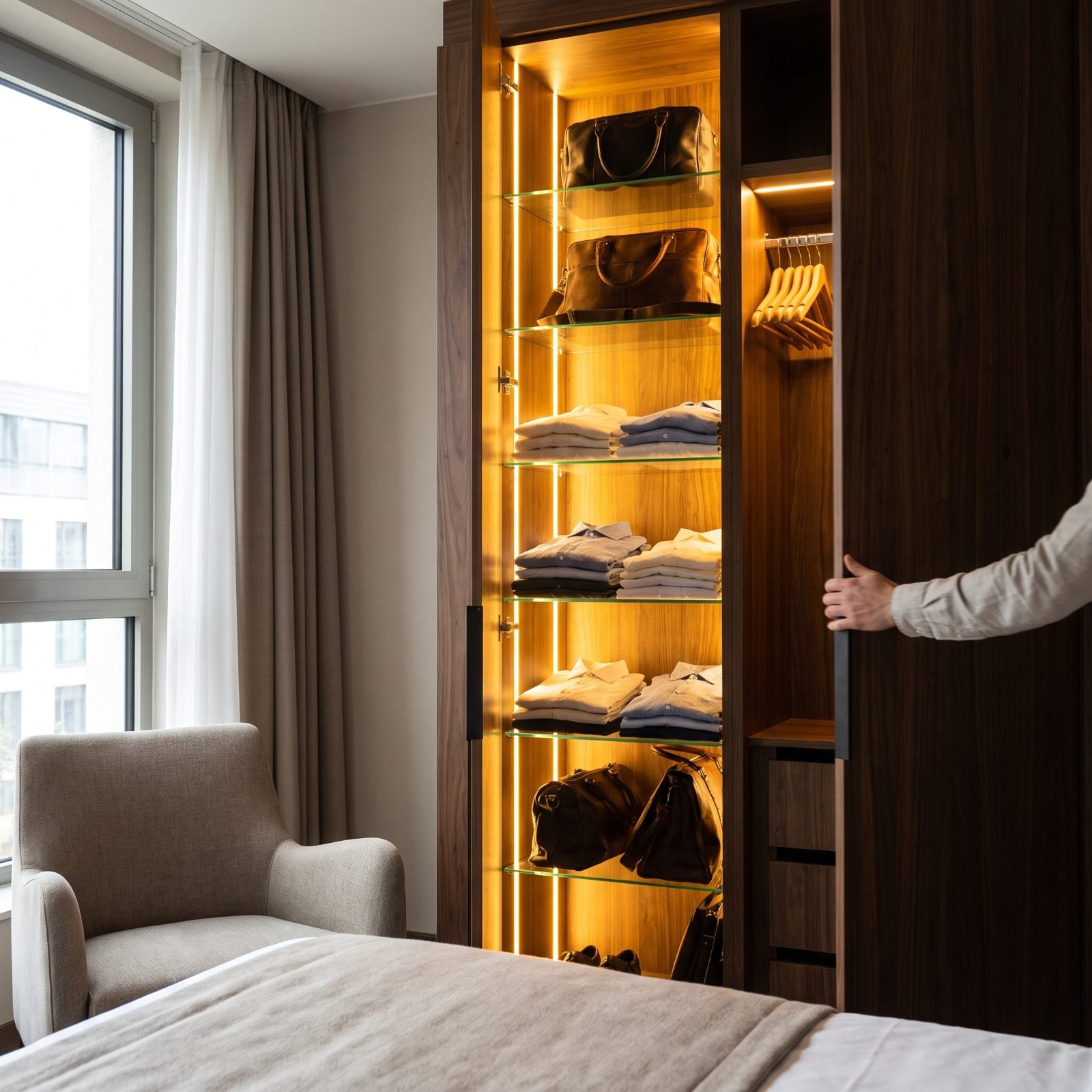
You open the closet at night bracing for a black hole, and instead a warm light blooms on. Nobody expects it. That’s precisely why it lands.
An LED strip wired to a door sensor turns the dullest corner of the room into a little moment of theater, makes finding your shoes at 6am painless, and flags the whole place as one that spent money where it absolutely didn’t have to. Funny how the unnecessary touch is always the one that wins you over.
9. A Glass Carafe, Real Tumblers, and Ceramic Cups Instead of Plastic Everything
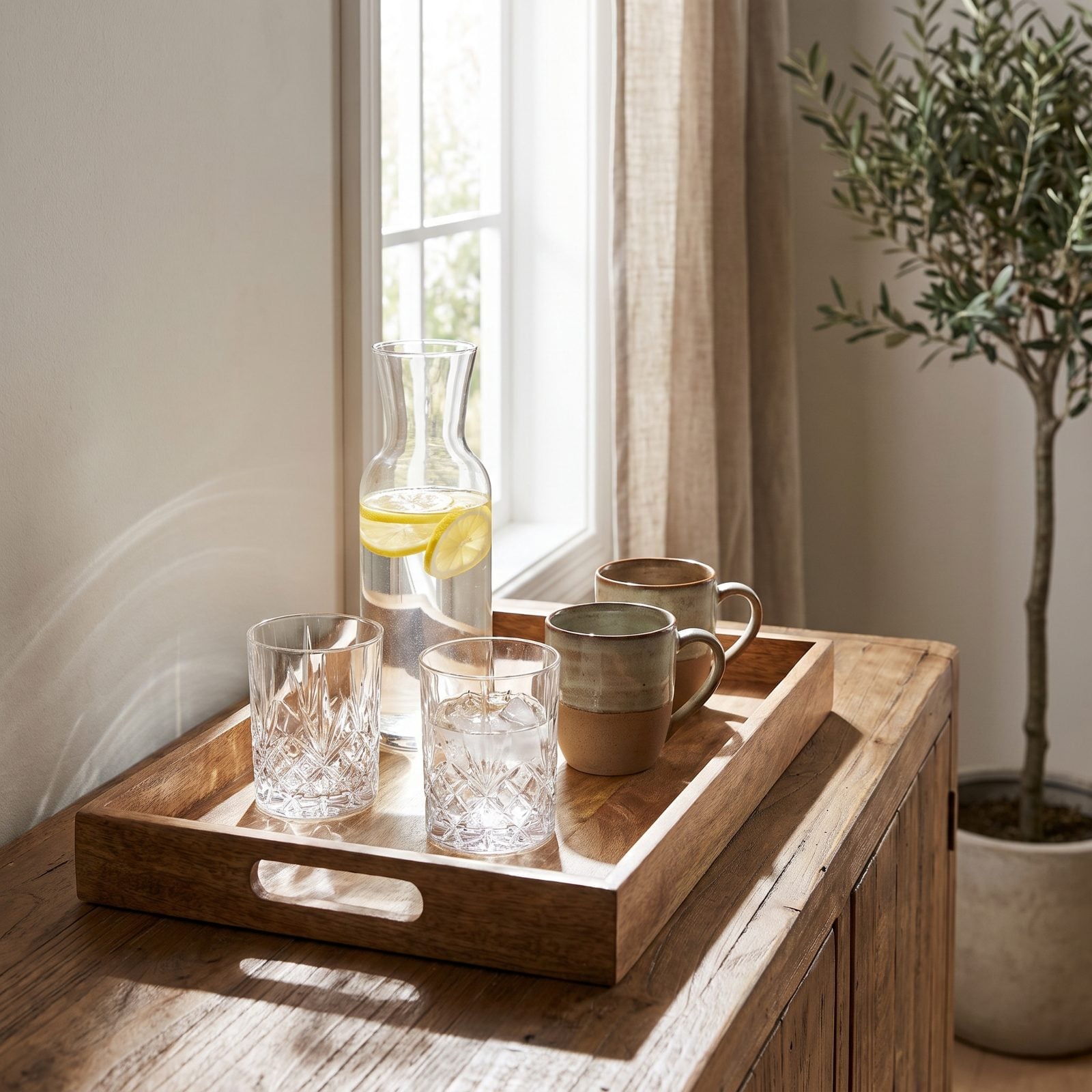
Plastic cups in little shrink-wrapped bags tell you everything: the room is counting pennies and hoping you won’t notice. You notice.
Swap in a glass carafe, weighty tumblers, and a couple of ceramic cups, and suddenly tap water tastes like a decision someone made on purpose. Same water. Different message entirely. There’s a weight to real glass in your hand that plastic can never manage, and it quietly says the place respects that small moment of pouring a drink before bed.
8. The Small Welcome Amenity That Proves Someone Thought About You
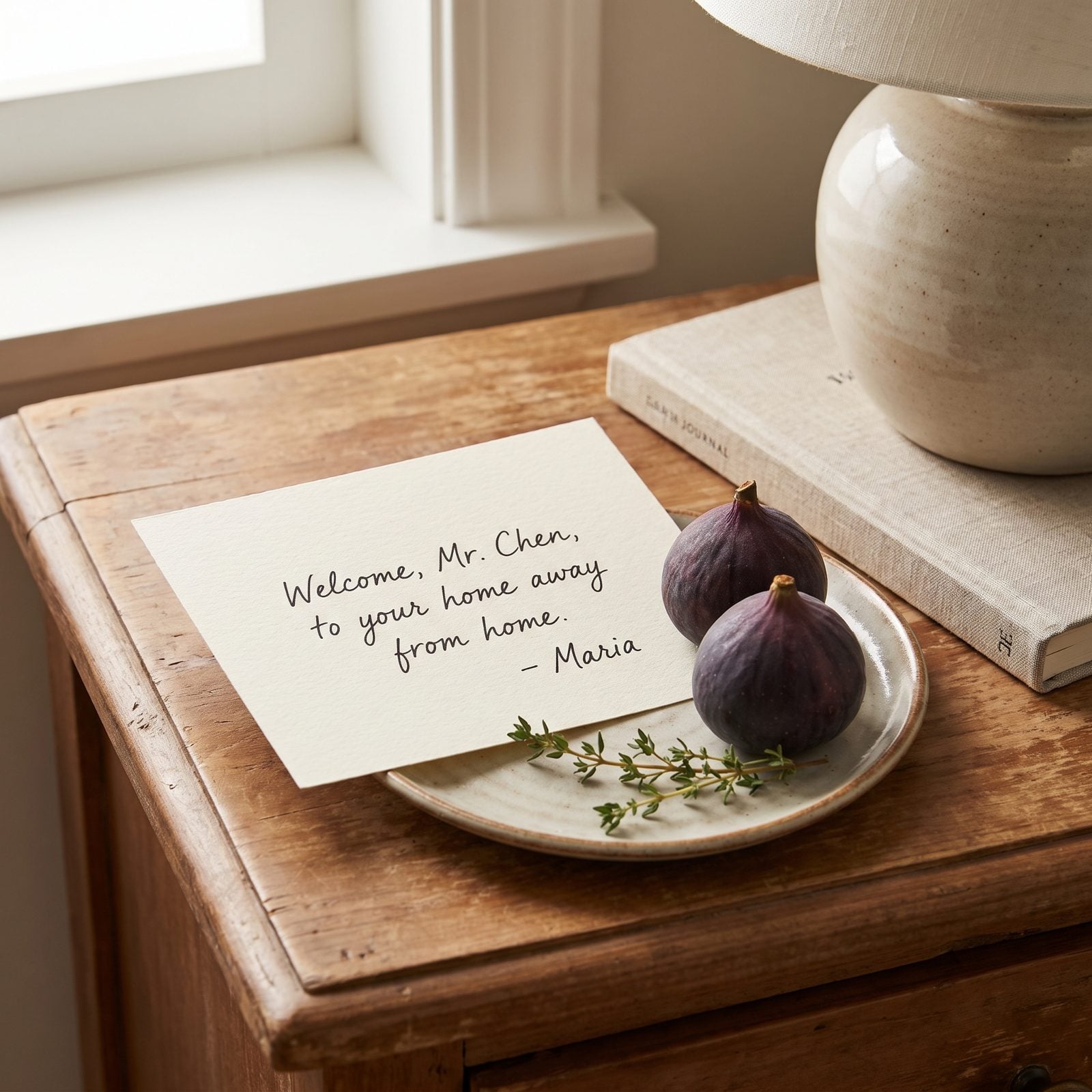
A fruit bowl left for every guest is inventory. A handwritten note and two figs because the season just turned? That’s attention.
It doesn’t need to be expensive. It needs to be specific. A local chocolate, a card that mentions the weather, a small pour of something regional. Cheap buys a generic gift basket in bulk and calls it a day. The good version spends thirty seconds thinking about the actual person walking through the door.
7. Fresh Greenery That Breathes Instead of Fake Flowers Gathering Dust
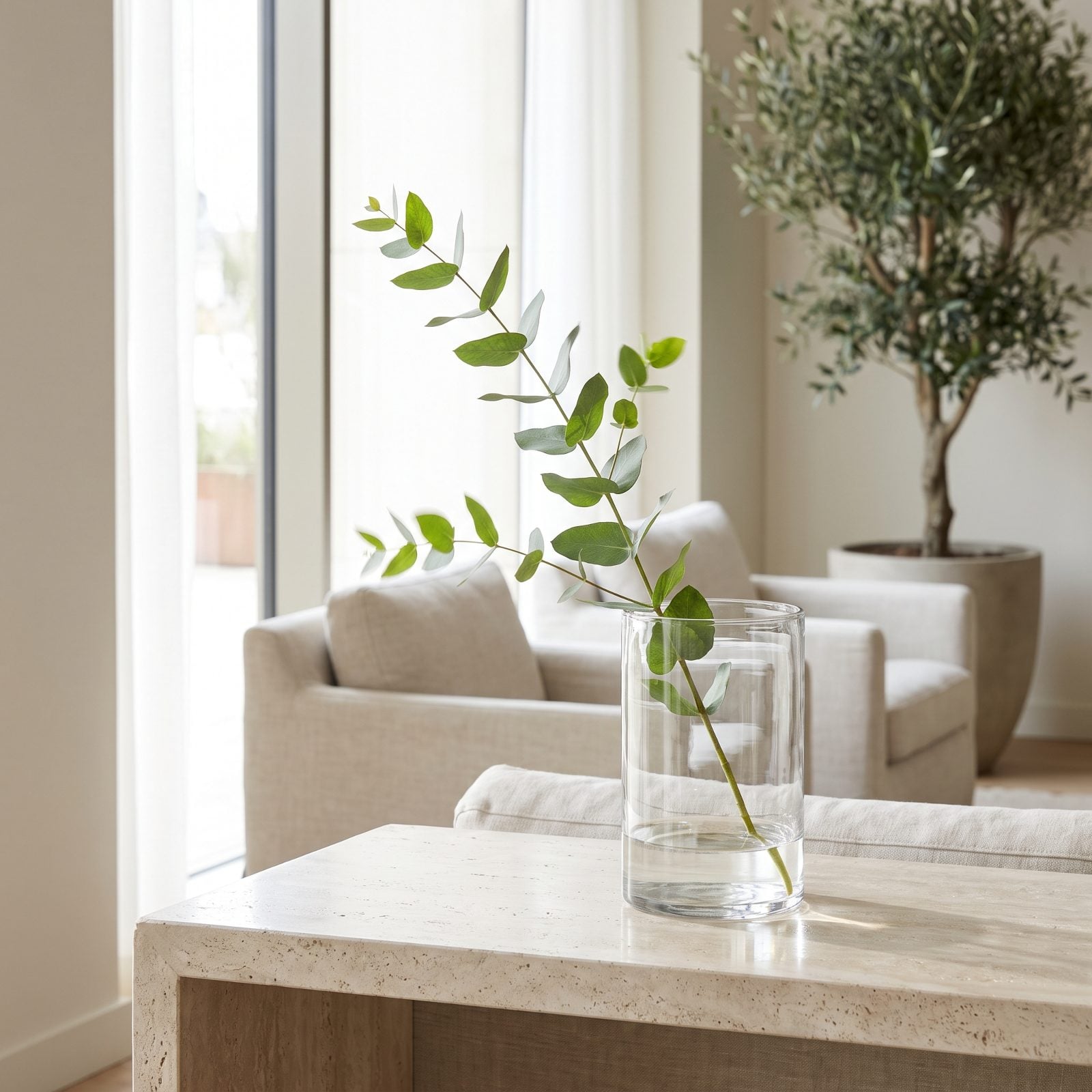
A single living stem does more than a lavish silk arrangement ever could. Real greenery shifts a little in the air-conditioning, carries a scent, and tells you the room was visited this morning rather than vacuumed last Tuesday.
Where cheap rooms go wrong is quantity. A plastic fern the size of a toddler in the corner, dust packed into its leaves, broadcasting that nobody has touched this space in weeks. One eucalyptus sprig in a bud vase wins. Fresh things can’t be faked. They either are, or they aren’t.
6. Air-Conditioning You Can’t Hear, With Controls You Can Actually Read
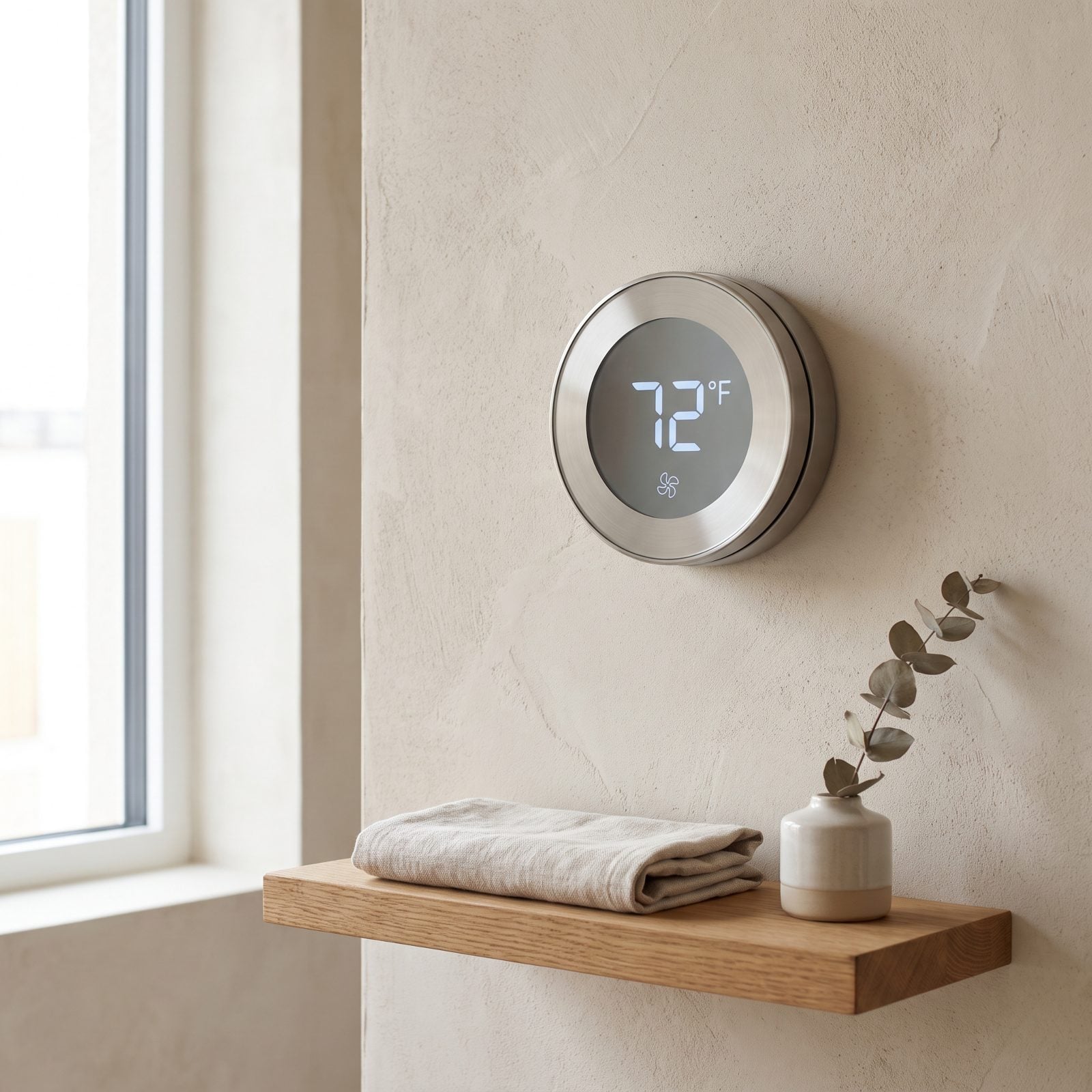
You know the window unit that rattles to life at 2am like a truck downshifting. Cheap climate control announces itself constantly, cycling loud, blasting cold then going dead, and the thermostat is a riddle written in icons nobody understands.
A room that feels costly holds one steady temperature and does it silently. You never think about it. The control reads in plain numbers, you set it once, and then you forget it exists. Half of luxury is just the absence of annoyance, humming along in the background and asking nothing of you.
5. Grout Lines So Straight They Make Mid-Range Tile Look Expensive
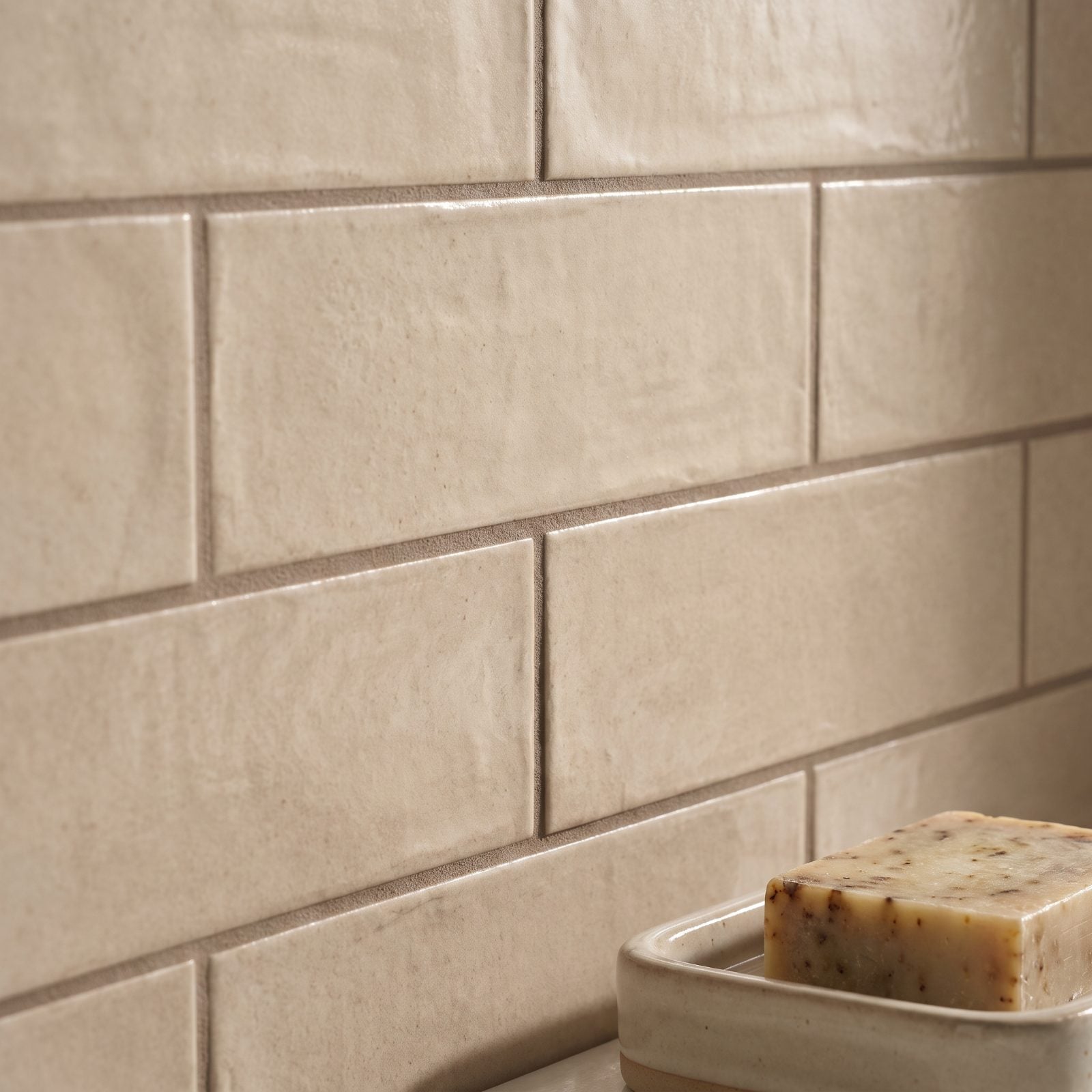
Nobody walks into a bathroom thinking about grout. But the eye catches wobbly, uneven, discolored lines before the brain can name what’s wrong, and the room just feels off.
Straight, uniform grout in a thin consistent width makes a modest tile read as custom stonework. Crooked lines and fat sloppy joints make genuine marble look like a weekend flip. The tile matters far less than the hands that set it.
4. Where the Marble Meets the Wood, and You Can’t Feel the Seam
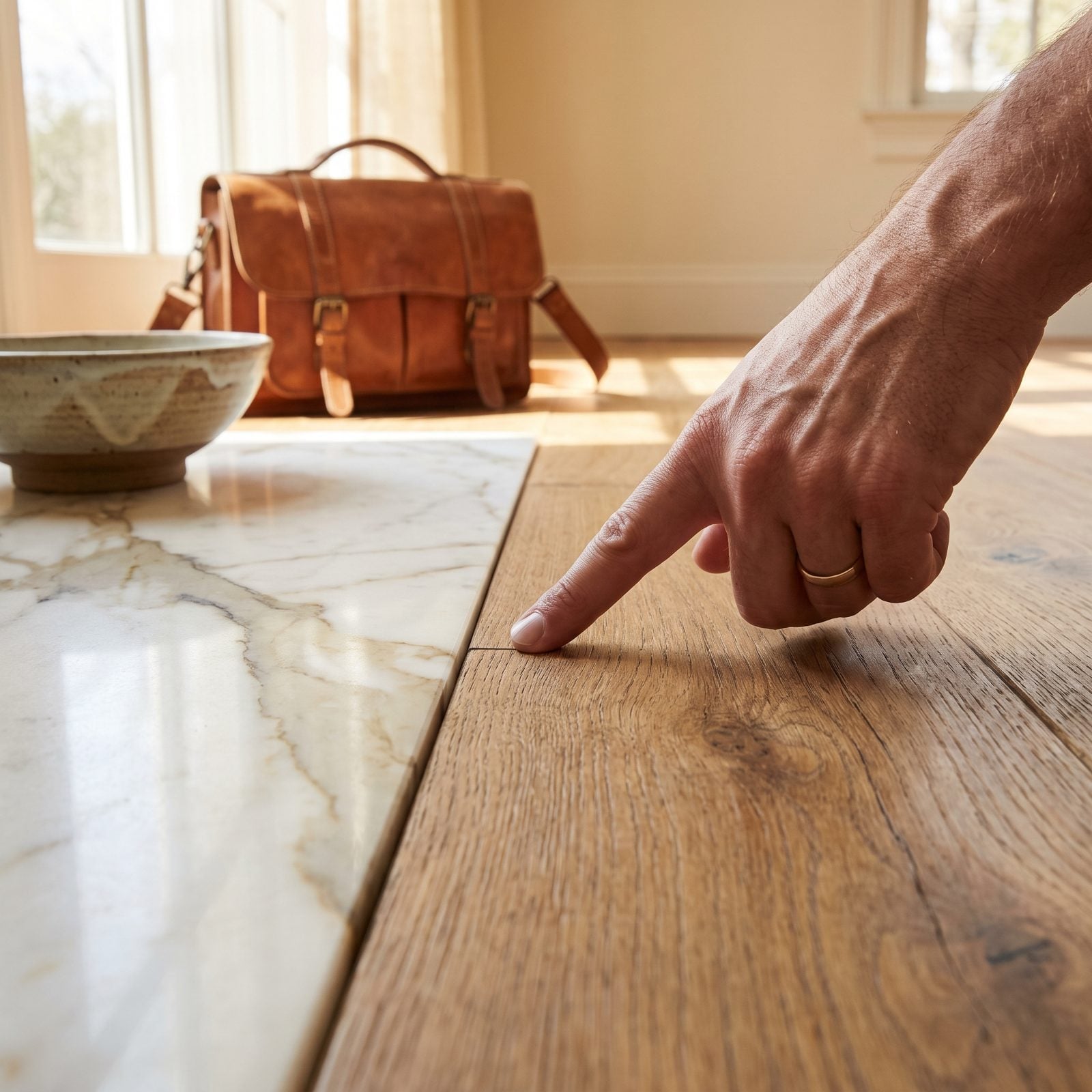
Stub your toe on a flooring threshold and you’ve learned exactly how much the builder cared. The cheap move is to slap down a plastic transition strip, a visible speed bump between the carpet and the tile that starts peeling at the edges within a year.
A room that cost real money has floors that meet flush. Marble flows into oak with a hairline brass line or nothing at all, and your bare foot crosses it registering nothing. That invisibility is costly. It takes a skilled hand and refuses to brag about itself.
3. Empty Space That Makes the Few Objects in the Room Look Priceless
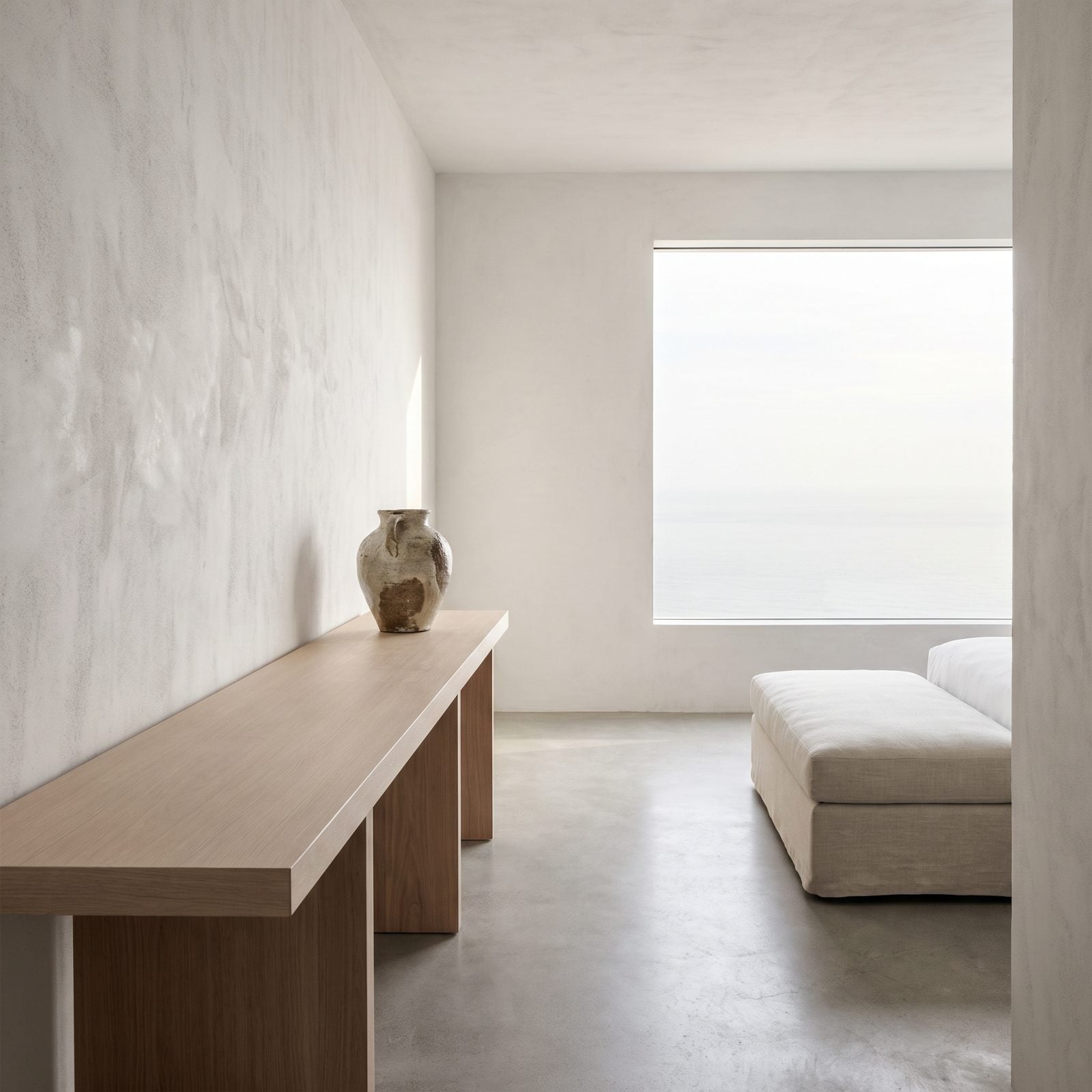
Cheap rooms fill every surface. Faux-leather coasters, a laminated room-service flyer, a tissue box in a fake-wood holder, three throw pillows you have to move before bed. Clutter is what you reach for when nothing in the room can stand on its own.
Give one good object room to breathe and it starts to look valuable. A single lamp on a bare table. Two books, not twelve. Empty space is a flex. It says the room doesn’t need to prove anything by piling things up.
Clutter hides cheapness by burying it. Space reveals quality by daring you to look closely.
2. Turn-Down Lighting That Gives the Room a Completely Different Mood After Dark
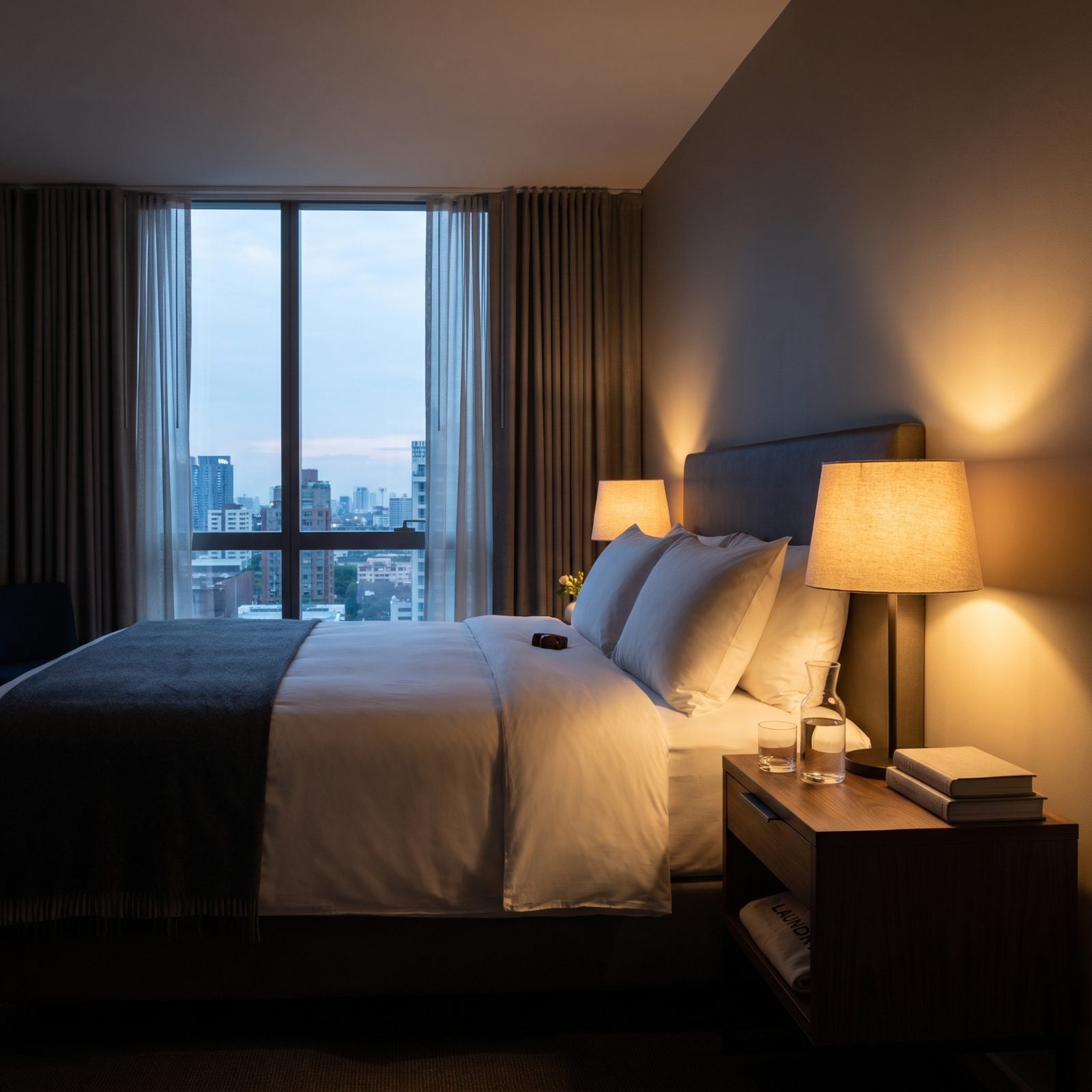
The same room should not look the same at nine at night as it did at noon. Cheap rooms have one setting: a single overhead fixture that floods everything in flat, interrogation-room brightness no matter the hour.
A room that understands luxury keeps a second identity for the evening. The overhead goes dark. Bedside lamps throw warm low pools, a reading light here, a floor lamp there, all glowing at hip height and below. Suddenly the place feels like somewhere you’d want to linger instead of somewhere you’re passing through.
1. Baseboards Without a Speck of Dust, Because That’s Where Standards Hide
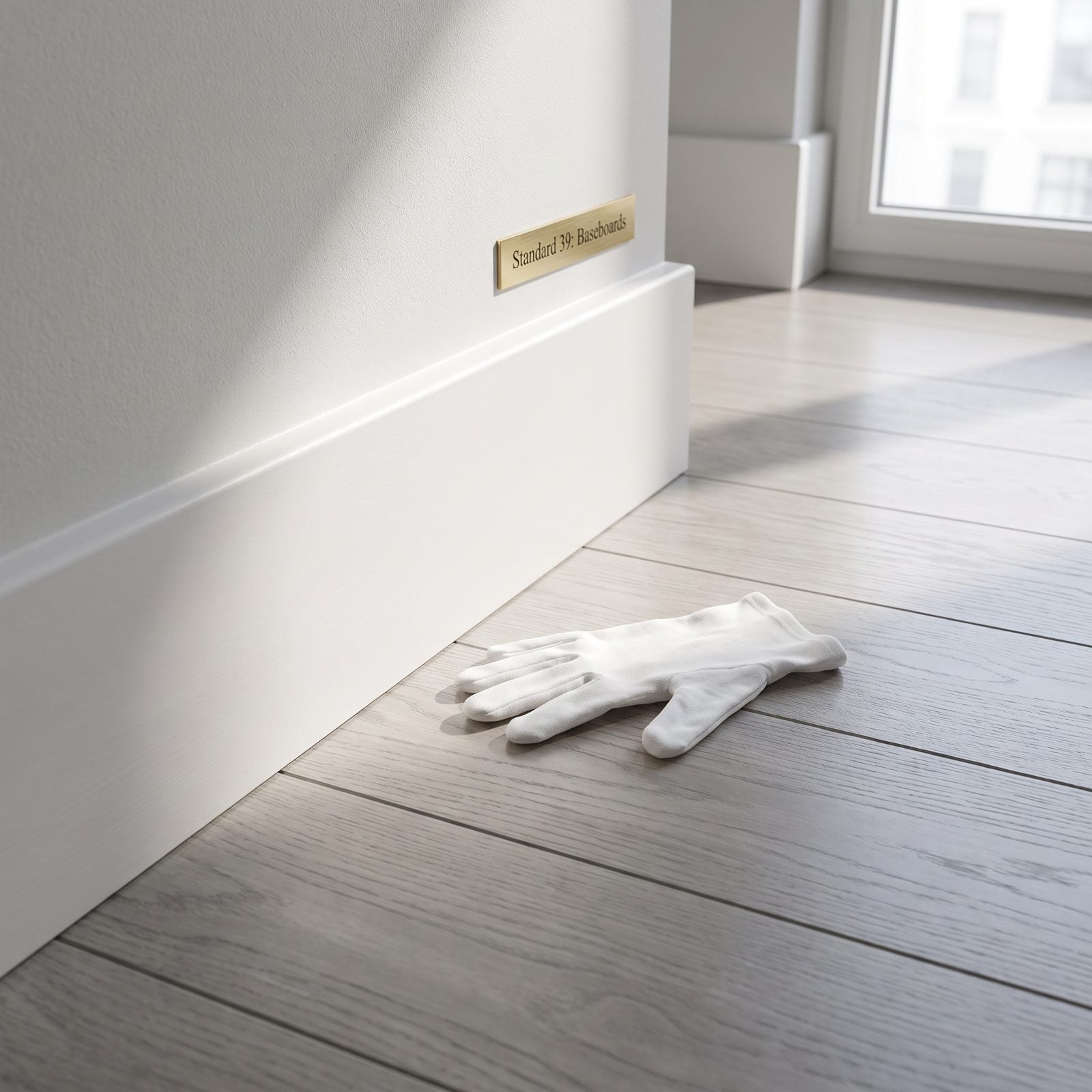
Anyone can make a bed look good for a photo. Baseboards, though — that’s where a hotel can’t hide. Nobody cleans them unless cleaning is genuinely the standard, which is precisely why they tell the truth.
Run your eye along the bottom of the wall. Dust in the corners, scuffs, a film of grime at the floor line? All of it means the deep clean is theater and the daily effort is minimal. A spotless, freshly touched-up baseboard says the same care goes everywhere, even the places you were never supposed to look.
🔥 Would you like to save this?
Please note that some of the imagery in this article were created with the aid of AI image generators.