
🔥 Would you like to save this?
The best resorts start working on you before you’ve set down a bag. You feel it in the shoulders first, that slow unclench somewhere between the gate and the front desk. It isn’t magic, and it isn’t the welcome drink either. It’s a stack of deliberate decisions about sightlines, roadways, rooflines, and where the laundry carts go. We walked through them, the quiet architectural and operational choices that make a place feel calm the second you arrive. Most guests never notice a single one. That’s the whole point.
39. The Framed Horizon That Hits You the Moment You Walk In
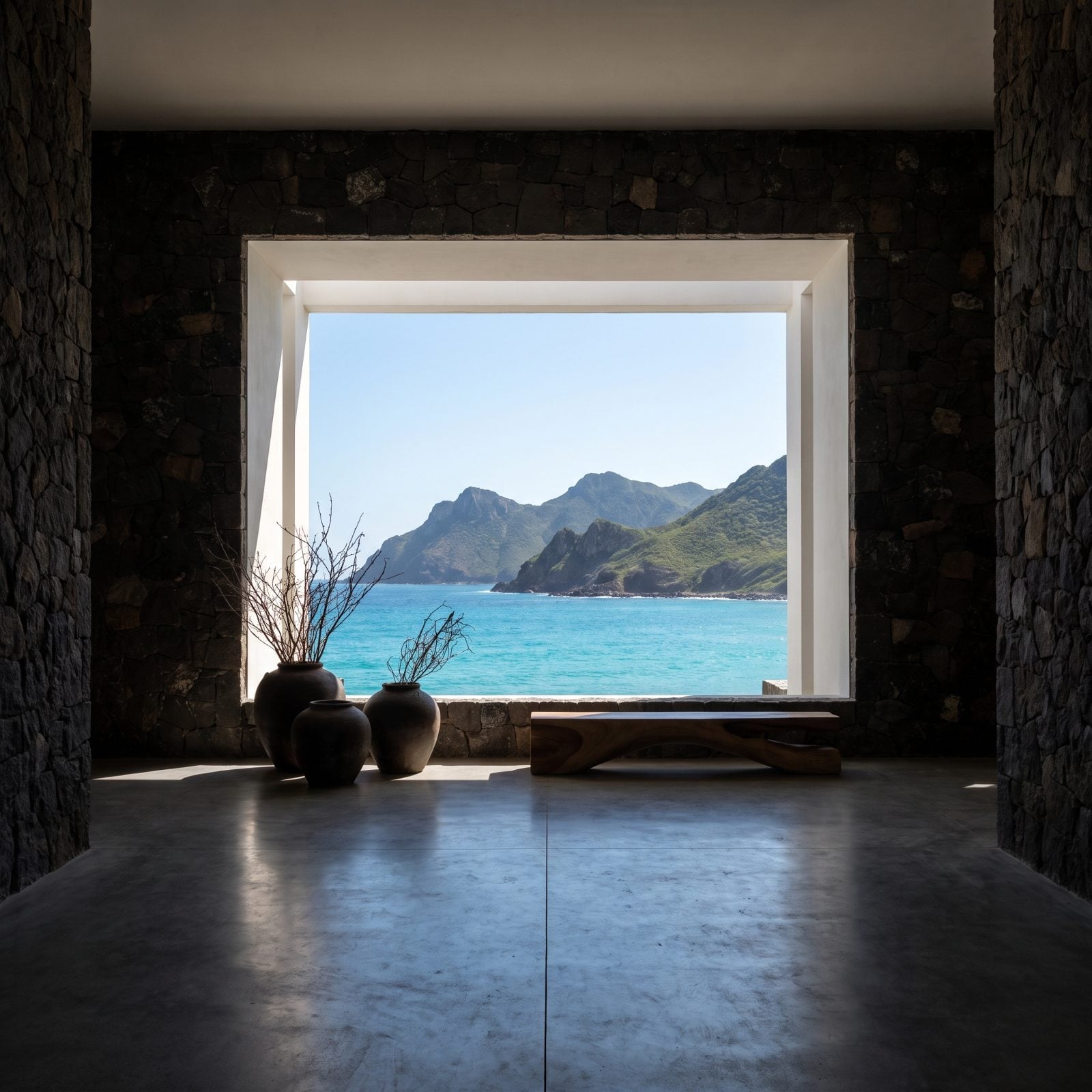
Walk into a well-planned resort and your eye gets grabbed instantly, not by the desk but by a slot of water or mountain cut dead-center into the far wall. Designers call it the money shot, and they’ll move entire buildings to protect it. The brain reads a distant open view as safety. We’re wired that way, savanna leftovers, the old reward of being able to see far.
Cheap resorts bury the view behind a gift shop. Good ones give it to you free, three seconds in, before you’ve paid a cent.
38. The Long Curving Driveway That Peels the City Off You
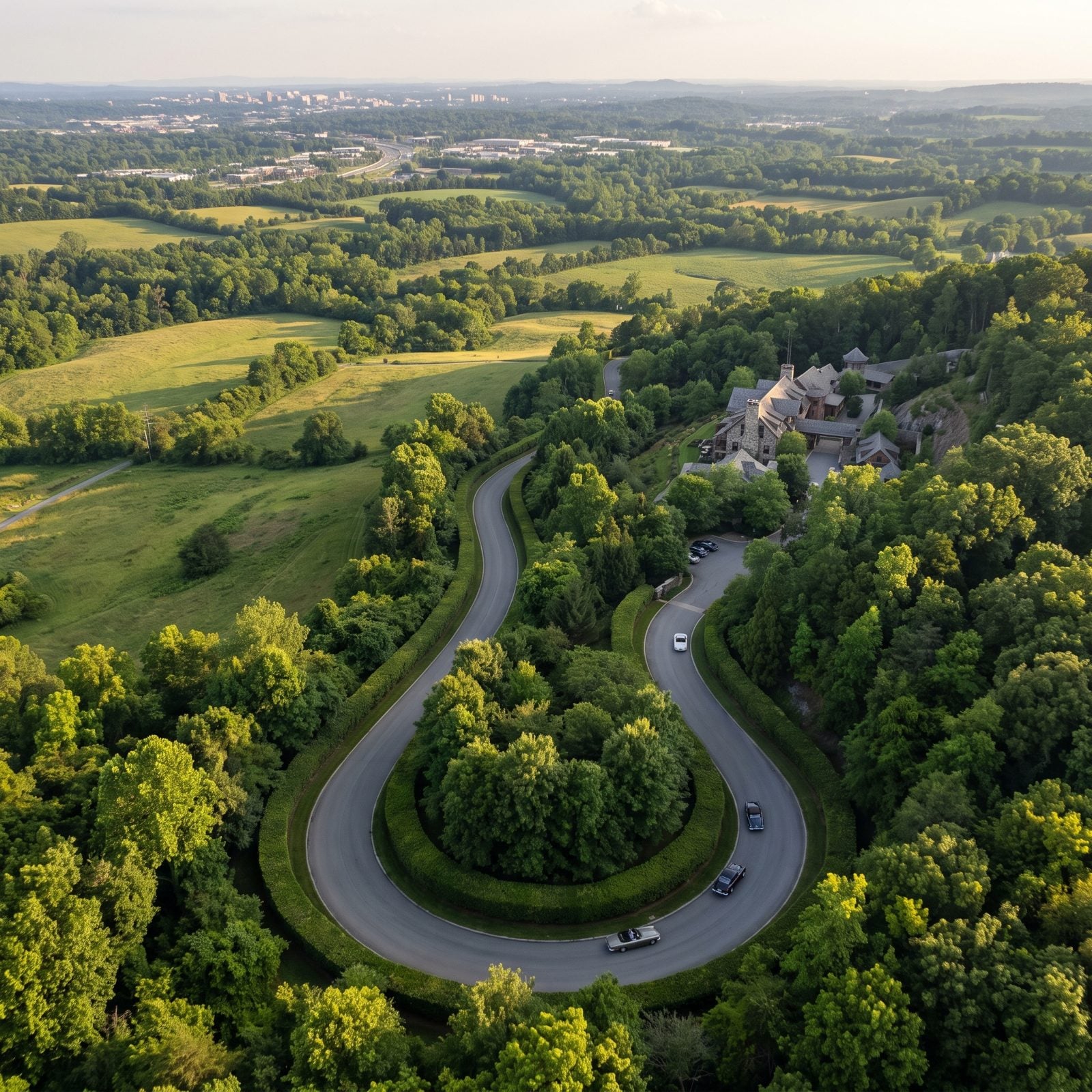
The driveway is doing therapy on you, and you have no idea.
A straight shot to the door tells your nervous system you’re still in transit, still stuck in highway mode. A road that curves, dips behind a berm, and reveals the resort in pieces forces a mental gear change. Each bend hides what’s next. By the time the building appears you’ve let go of the airport, the rental counter, the guy who cut you off on the ring road.
Disney perfected this decades ago with its bermed entry roads, and resorts have borrowed it ever since. The journey in is a decompression chamber disguised as landscaping.
37. The Car-Free Arrival Court That Just Deleted the Traffic
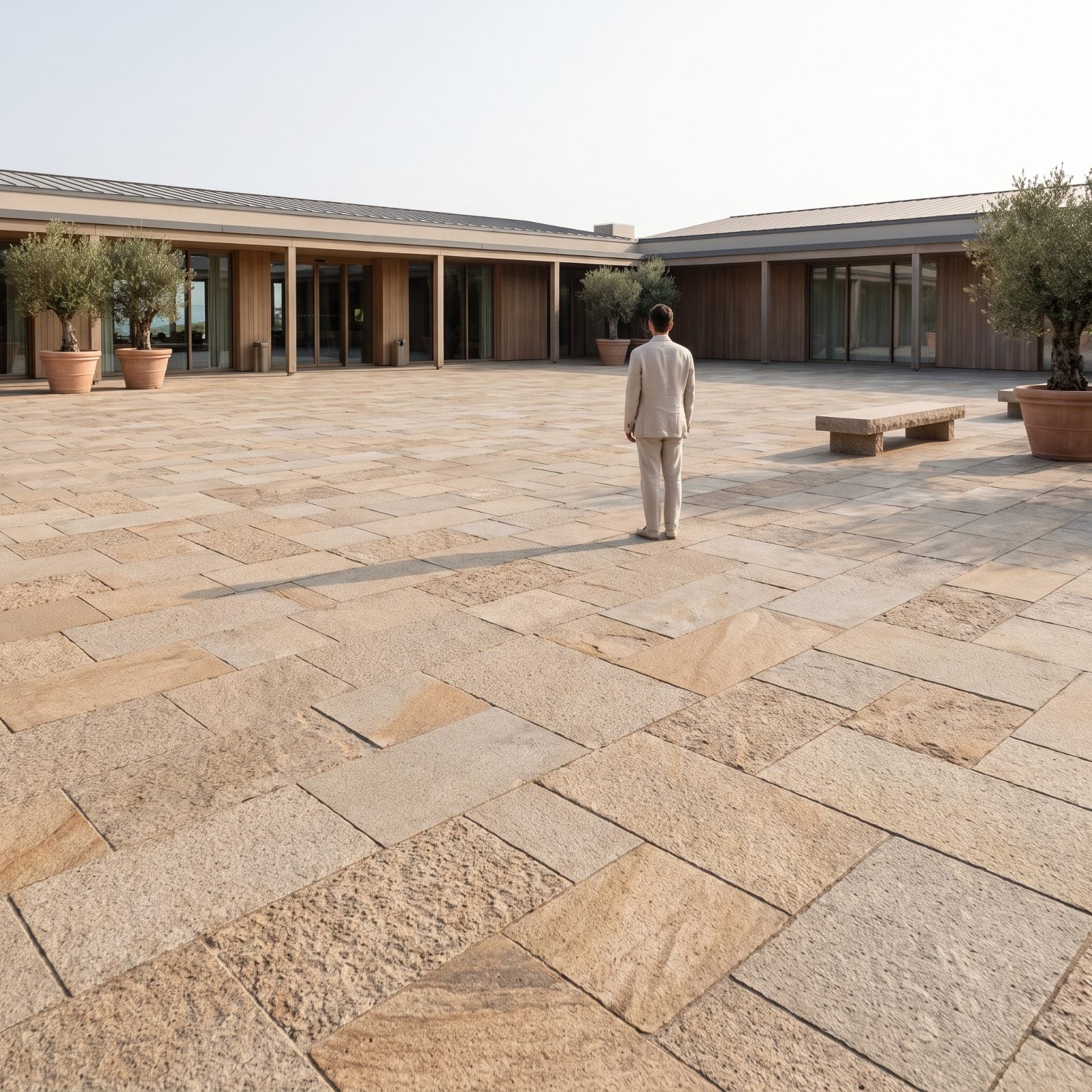
Pull into most hotels and you’re dodging taxis, bellhops waving, three cars idling for a valet who’s somewhere else. Noise, exhaust, the low hum of everyone’s hurry. The resorts that feel calm the second you step out have quietly moved all of that offstage.
Cars stop at an outer drop point. From there you walk, or ride an electric cart, into a plaza with no engines running. No horns. No reverse beepers. Just a water feature and your own footsteps on stone.
36. The Porte-Cochère That Catches You in the Rain and the Heat
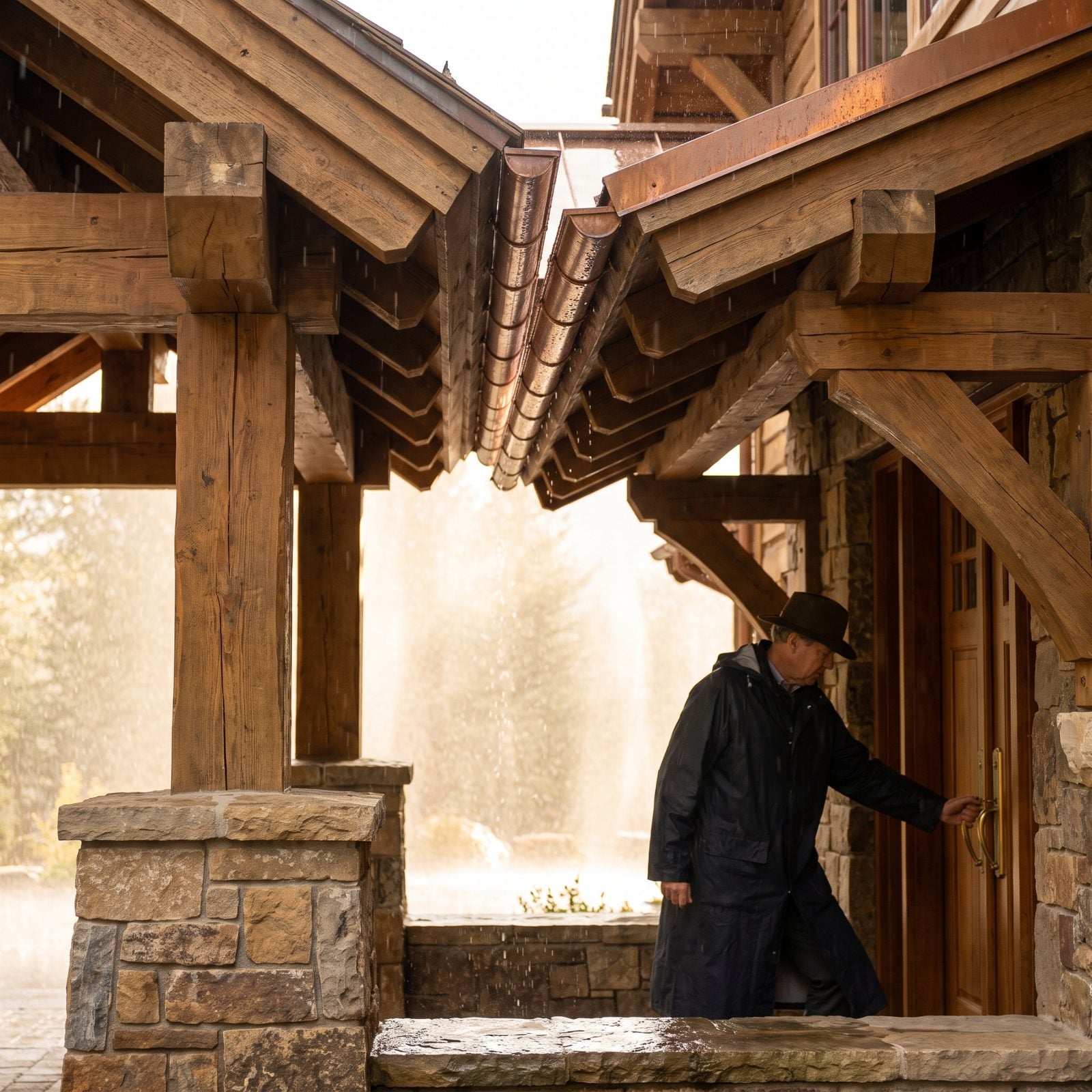
There’s a reason the first thing good architecture gives you is a roof over your head. Not a decorative one. A functional one, deep enough that you step from car to shelter without a single drop of rain or a blast of noon sun touching you.
The porte-cochère is an old idea. Carriages used them, and it still works because it answers a question your body is asking before your brain forms it: am I protected here? Deep shade, a temperature drop, muffled sound. You arrive sheltered, and everything after feels like a continuation of that first moment of cover.
35. The Open-Air Lobby That Tells You to Slow Down
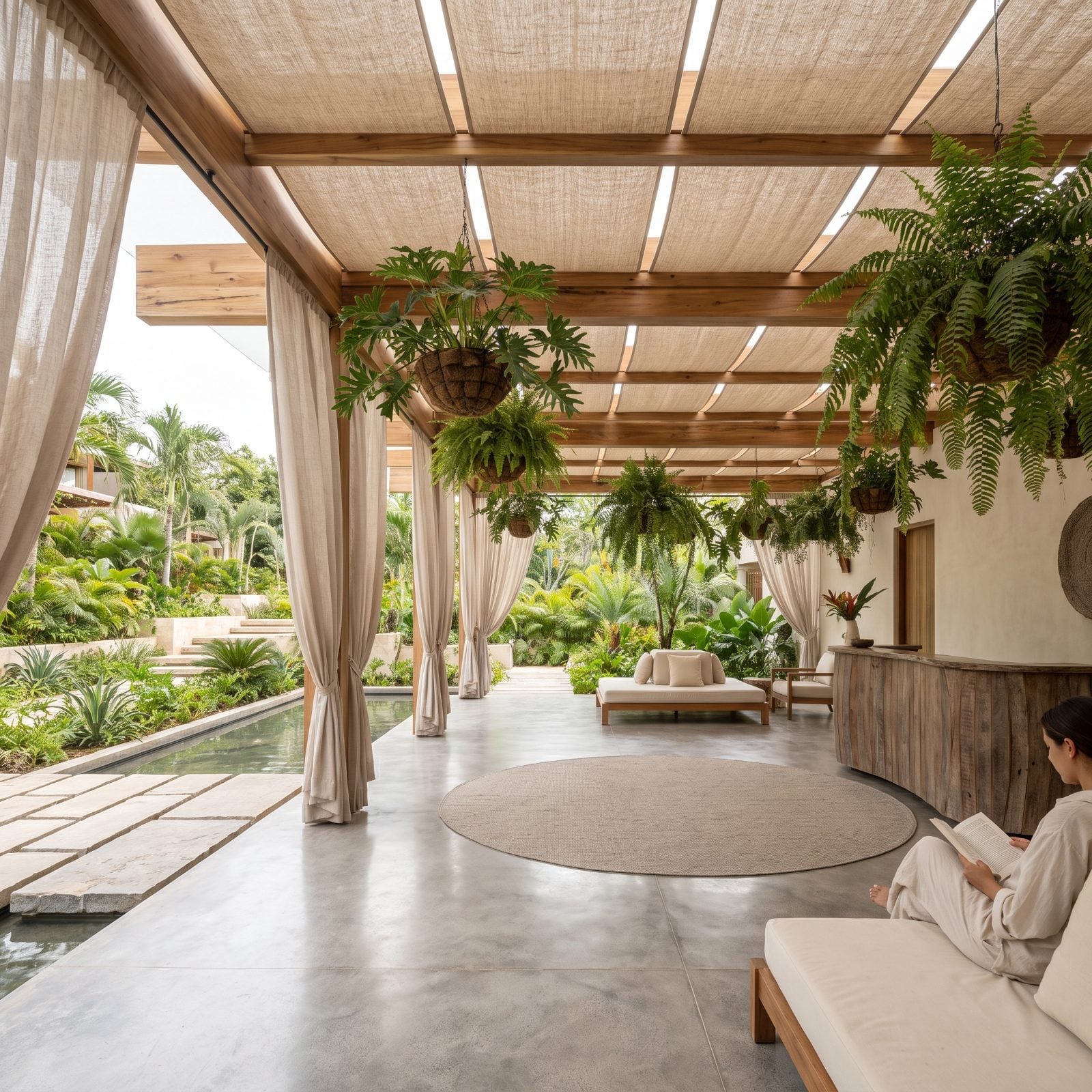
A lobby with no walls is a message, and it lands before you’ve decoded it. No glass doors sealing in the AC. No pressurized hush. Just a roof, some columns, and air moving through.
Your body gets the memo immediately: this is a place where the outside is welcome, where you don’t need to be shut away from weather, where the pace matches the breeze. A slow ceiling fan does more psychological work than any sign reading “relax.” One is an instruction. The other is proof.
It’s tempting to think open lobbies are just a way to save on air conditioning. Then you stand in one and feel your shoulders drop.
34. The Seated Check-In That Kills the Front-Desk Transaction
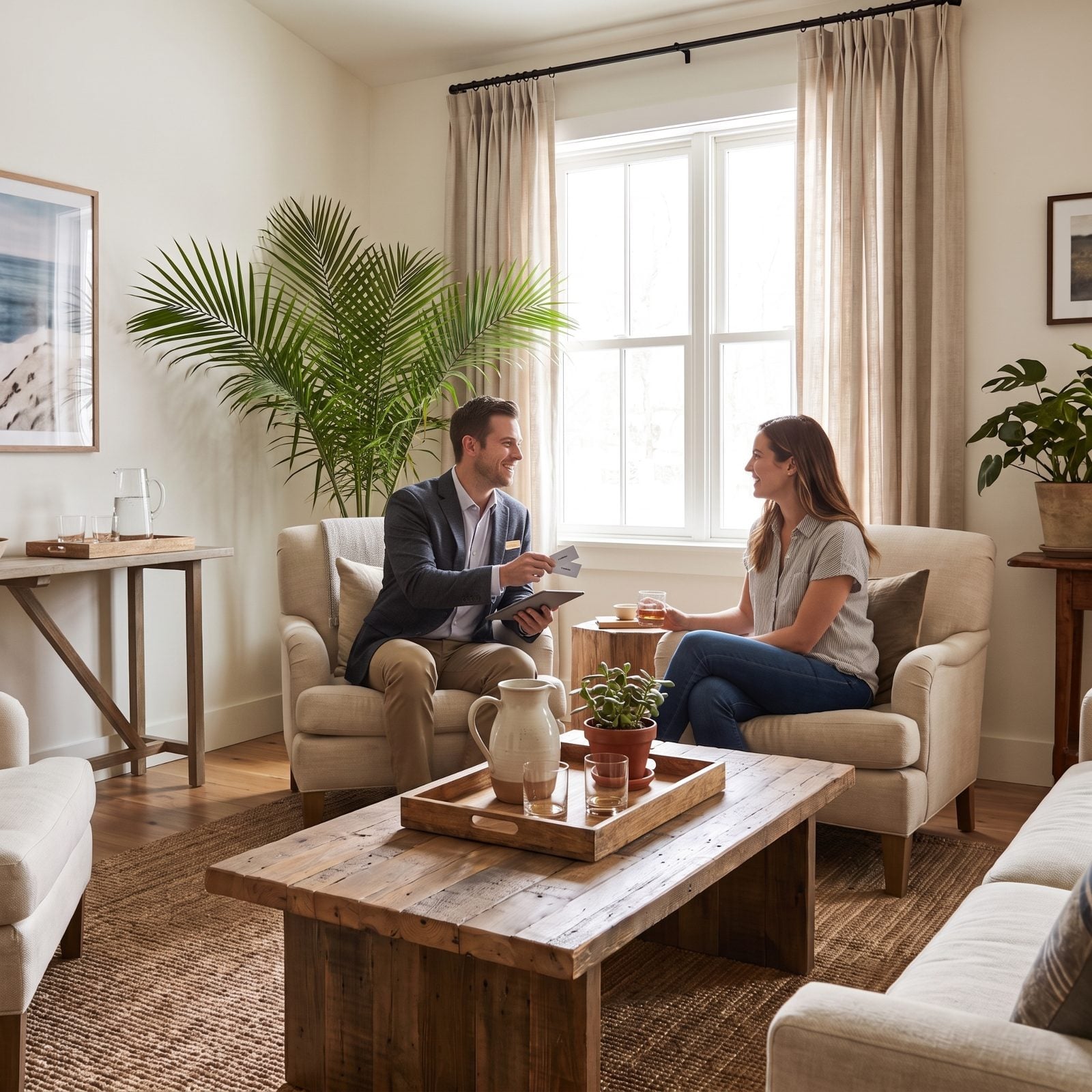
A counter is a barrier. Always has been. It puts staff on one side and you on the other, framing the whole exchange as a transaction, you the customer, them the clerk.
The resorts that feel different take the counter out entirely. You’re walked to a chair. Someone sits across from you with a drink and a tablet. The paperwork happens sideways while you talk. No standing in line, no leaning over granite, no watching a screen you can’t read.
33. The First Clear Sightline That Spares You the Where-Do-I-Go Panic
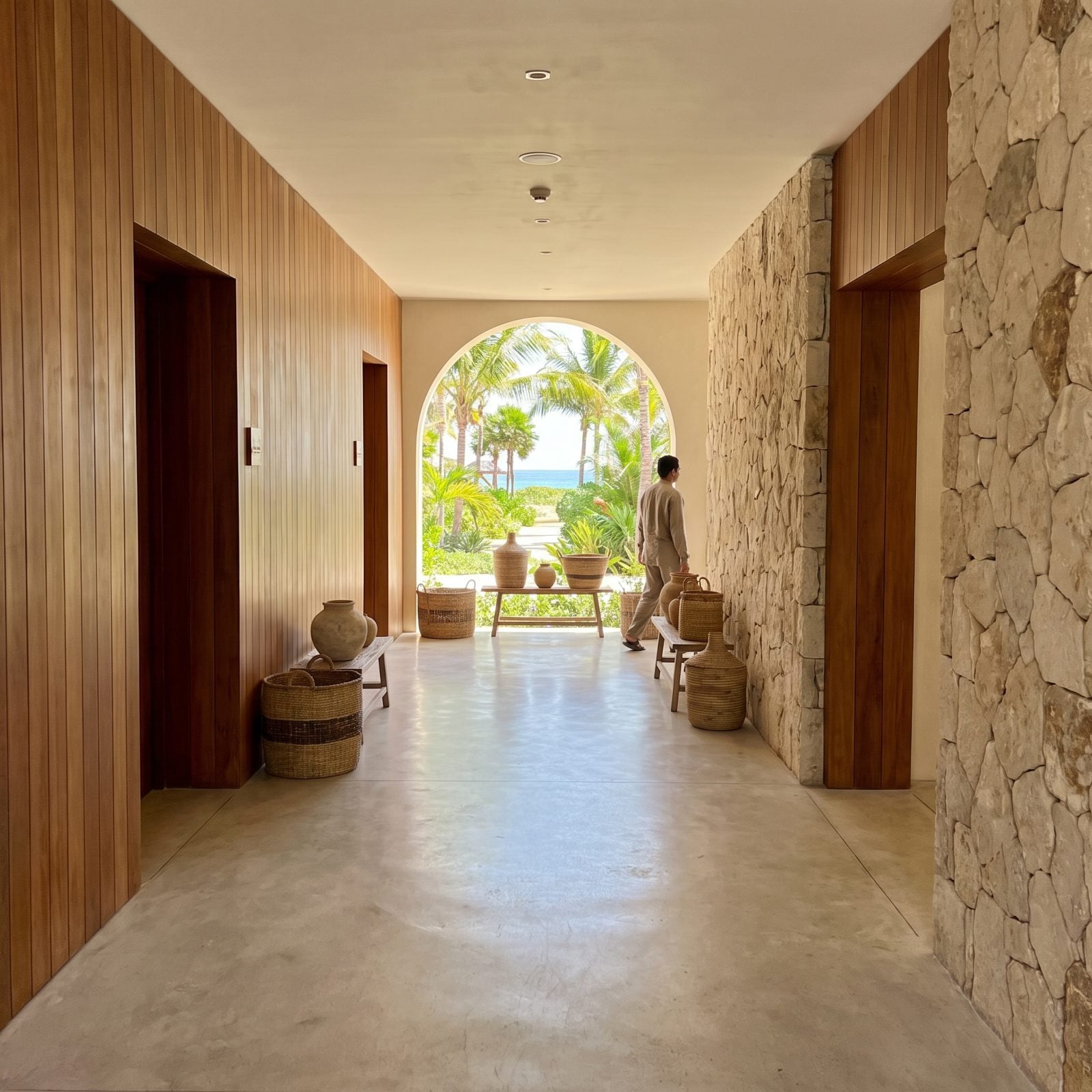
You’ve felt the opposite of this in a bad hotel. You step off the shuttle into a maze of identical corridors, no idea which way the room is, scanning for a sign, that low hum of being slightly lost in a place you’re paying to enjoy.
A calm resort hands you orientation for free. From the moment you walk in you can see the thing that matters most, usually the pool or the water, dead ahead. One glance and you know where the heart of the place is. Everything else arranges itself around that anchor.
32. The Covered Walkways That Shelter You Without Boxing You In
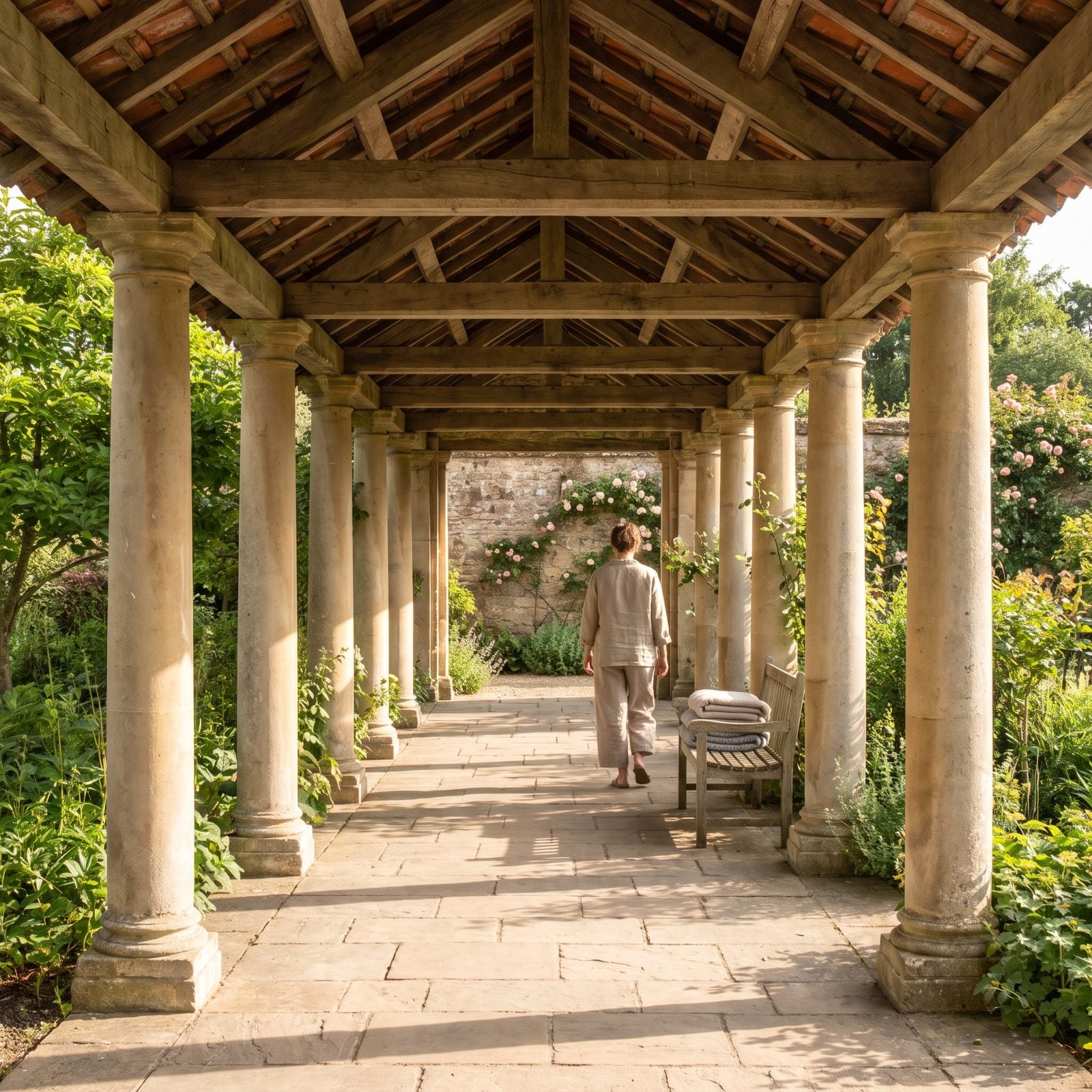
A fully enclosed corridor keeps the sun off, but it also seals you away from everything that made you come. The clever answer is a roof with no walls, or slatted walls, or a pergola dripping vines. You stay shaded and dry while the garden stays right beside you.
The slatted roof is my favorite detail. Strips of light and shadow slide across the path as you walk, and the eye never quite settles. You’re protected and connected at once. Harder to pull off than it looks, which is why most budget builds just pour a solid concrete tunnel and call it done.
31. The Hidden Service Routes That Keep the Backstage Invisible
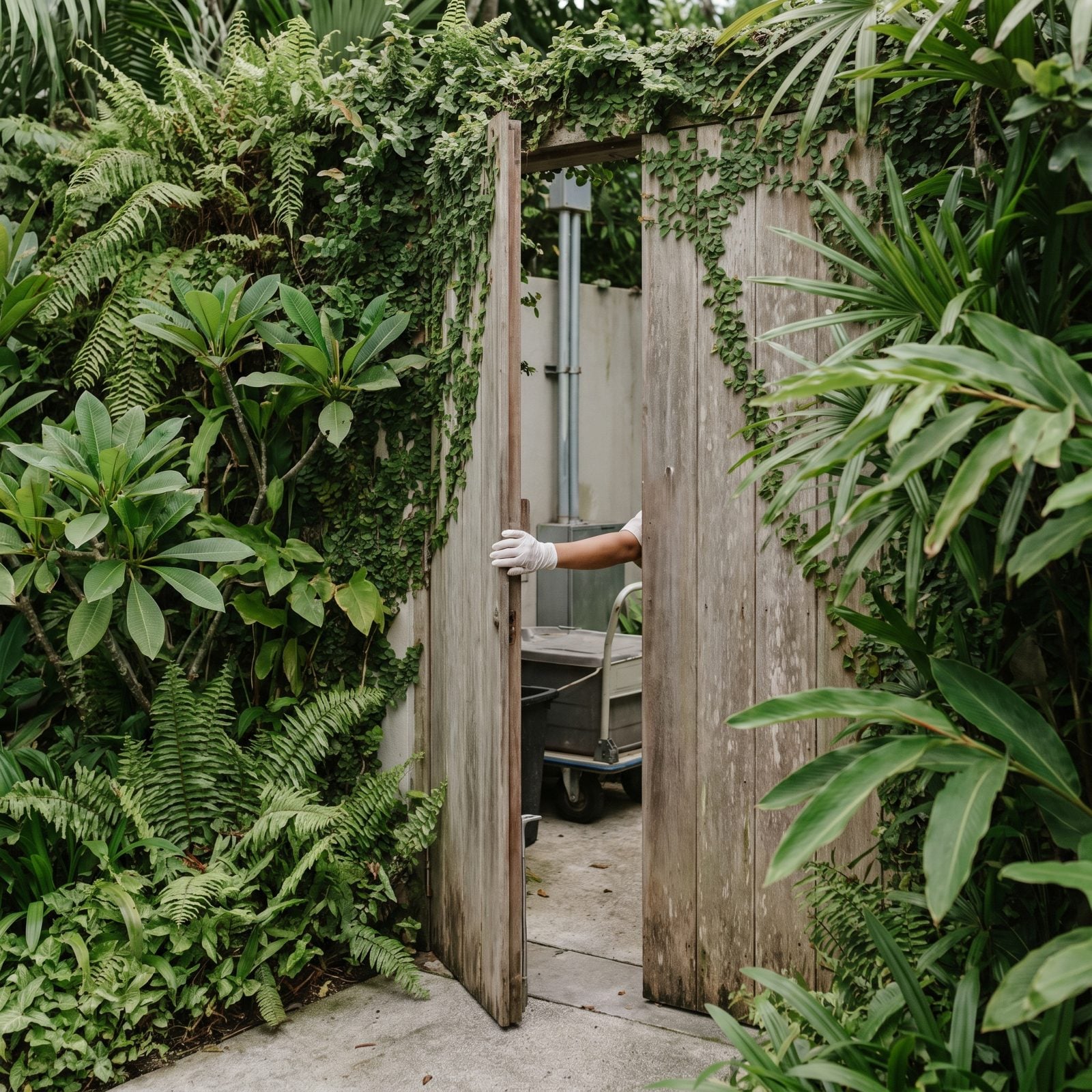
Here’s the trick nobody’s supposed to notice: the entire machine of a resort runs on a second, invisible network of roads, tunnels, and corridors you never once lay eyes on.
Laundry carts, food deliveries, trash, maintenance trucks, housekeeping stock. All of it moves on its own hidden circuit so that the version of the resort you see is the staged one. No service entrance clutter, no beeping delivery van parked by the pool, no pile of linen bins in a hallway.
When it’s done right you feel the result without ever spotting the cause. The place just feels effortless. Catch one glimpse of the loading dock chaos and the spell cracks. Which is exactly why they build it so you won’t.
30. The Buildings Kept Below the Tree Line So the Place Never Looms
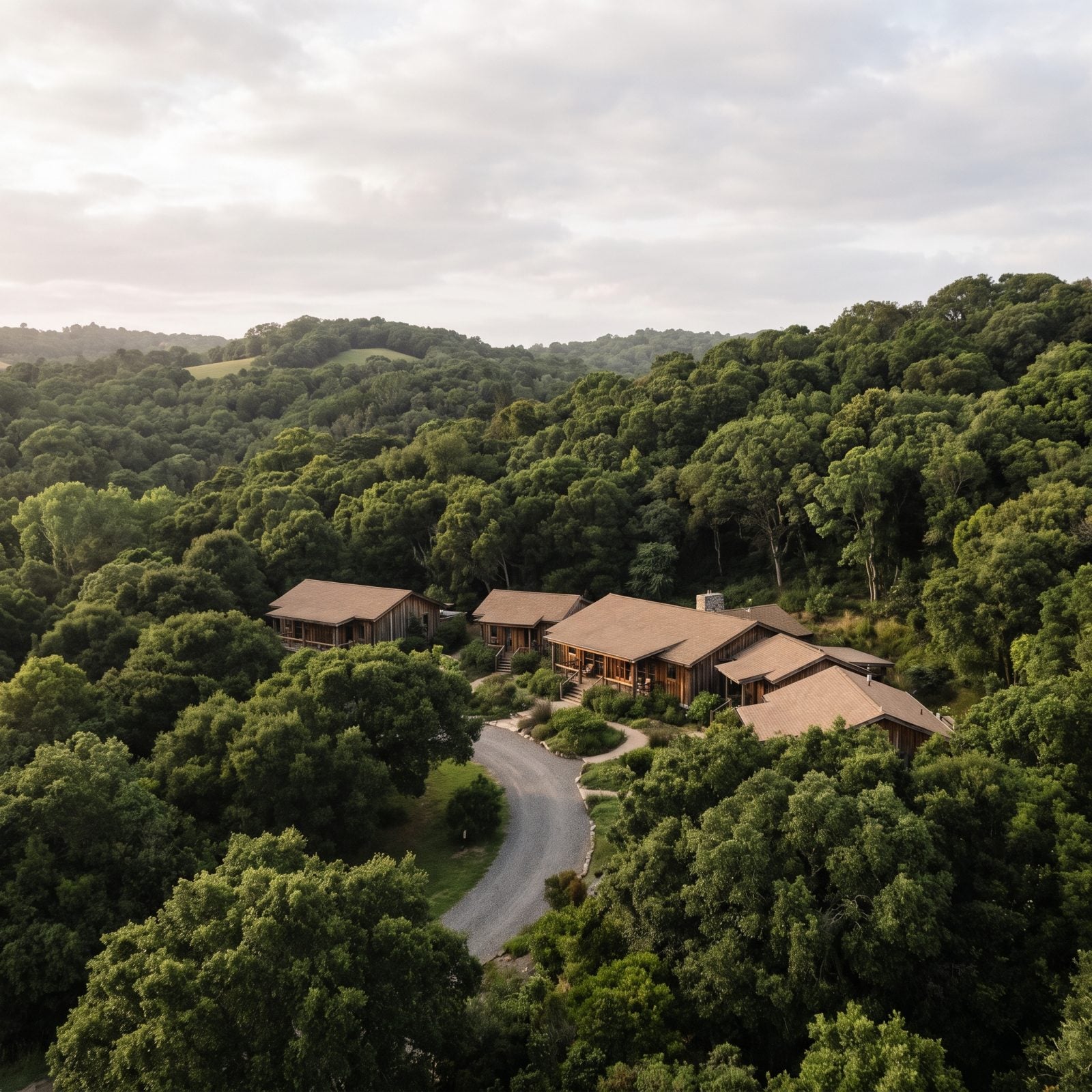
A tower announces itself from miles away and keeps announcing itself the whole time you’re there. It looms. It casts shadows. It makes you small.
The calm ones make a quiet rule: nothing taller than the trees. Buildings spread sideways instead of up, tuck into hillsides, hide under the canopy. From a distance you barely see the place at all, just rooflines poking through green.
So you never feel dwarfed on arrival. The nature stays dominant and the architecture plays supporting cast. You came for the landscape, not for a building, and the building has the good manners to agree with you.
29. Small Guest Pavilions Beat One Massive Block Every Time
🔥 Would you like to save this?
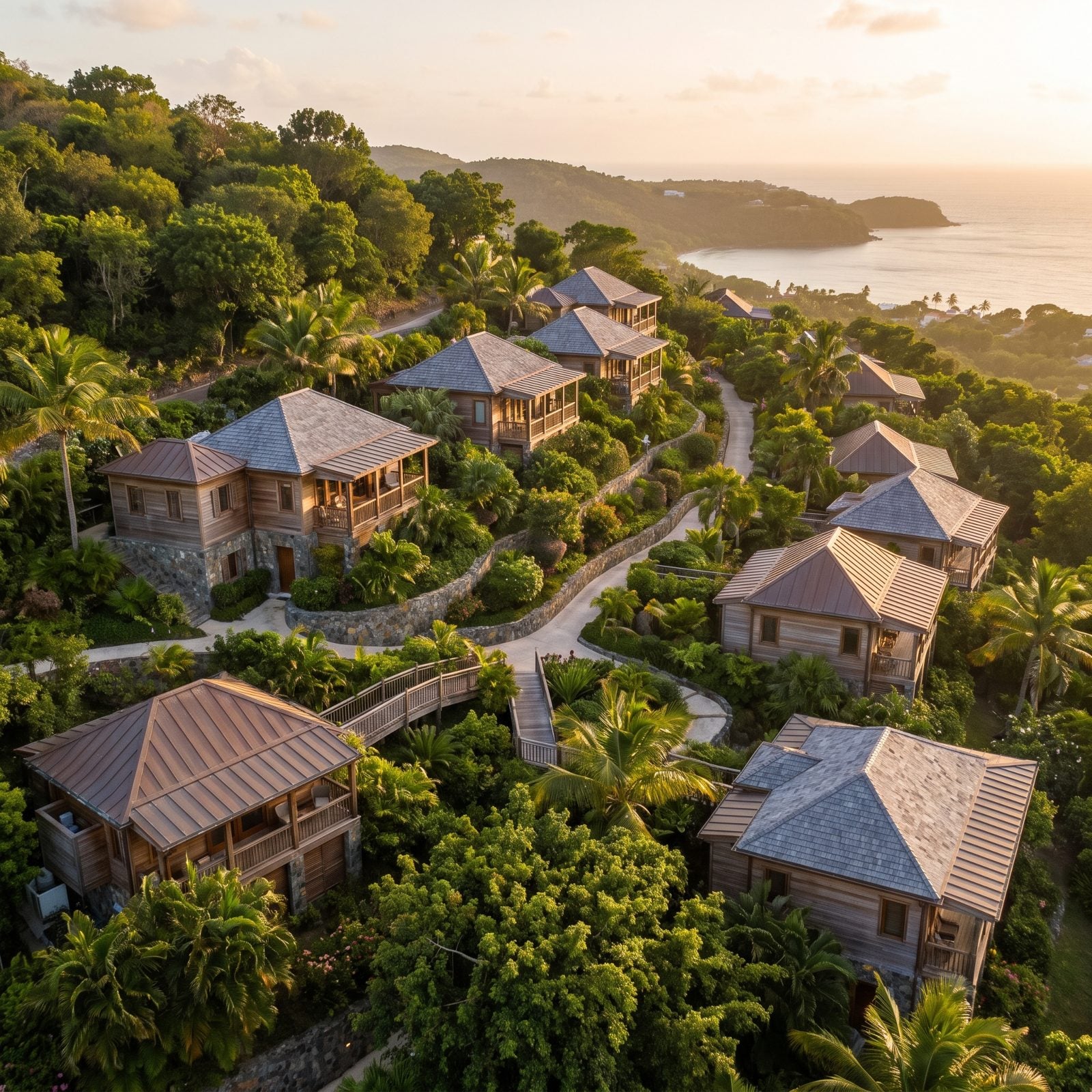
The giant hotel block announces how many other people booked the same week you did. Six hundred doors down one corridor, and you feel it the second you walk in, before the elevator even arrives.
Small pavilions pull the other way. Break the rooms into a handful of low buildings scattered through the grounds and your brain reads a village instead of an institution. Fewer doors in your sightline. More greenery between you and the next stranger. Suddenly the scale isn’t bullying you around anymore.
28. Courtyards Carve a Big Property Into Quiet Little Rooms
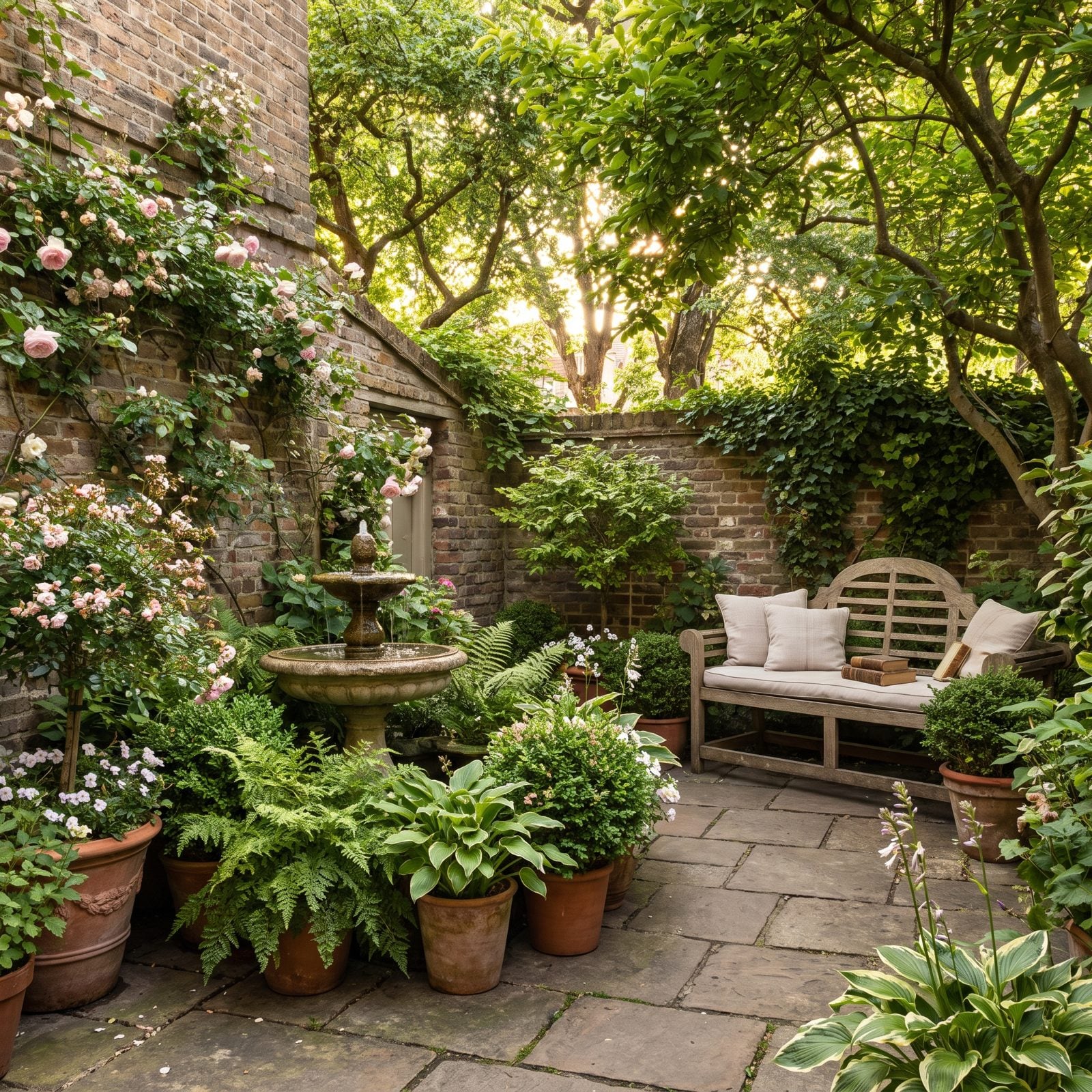
A good courtyard works by subtraction. Walls go up, the world shrinks, and a 200-room property somehow turns back into a house with a garden.
Scatter a few of these through the grounds and you get a string of small, quiet rooms that happen to have no ceilings. Cross from one to the next, and the crowd dissolves somewhere between the archways. The sound drops too, which nobody ever mentions. Enclosed stone catches a fountain’s trickle and swallows the rest, so you hear water instead of the pool deck and the whole afternoon slows down a notch.
27. Deep Verandas Erase the Line Between Indoors and Out
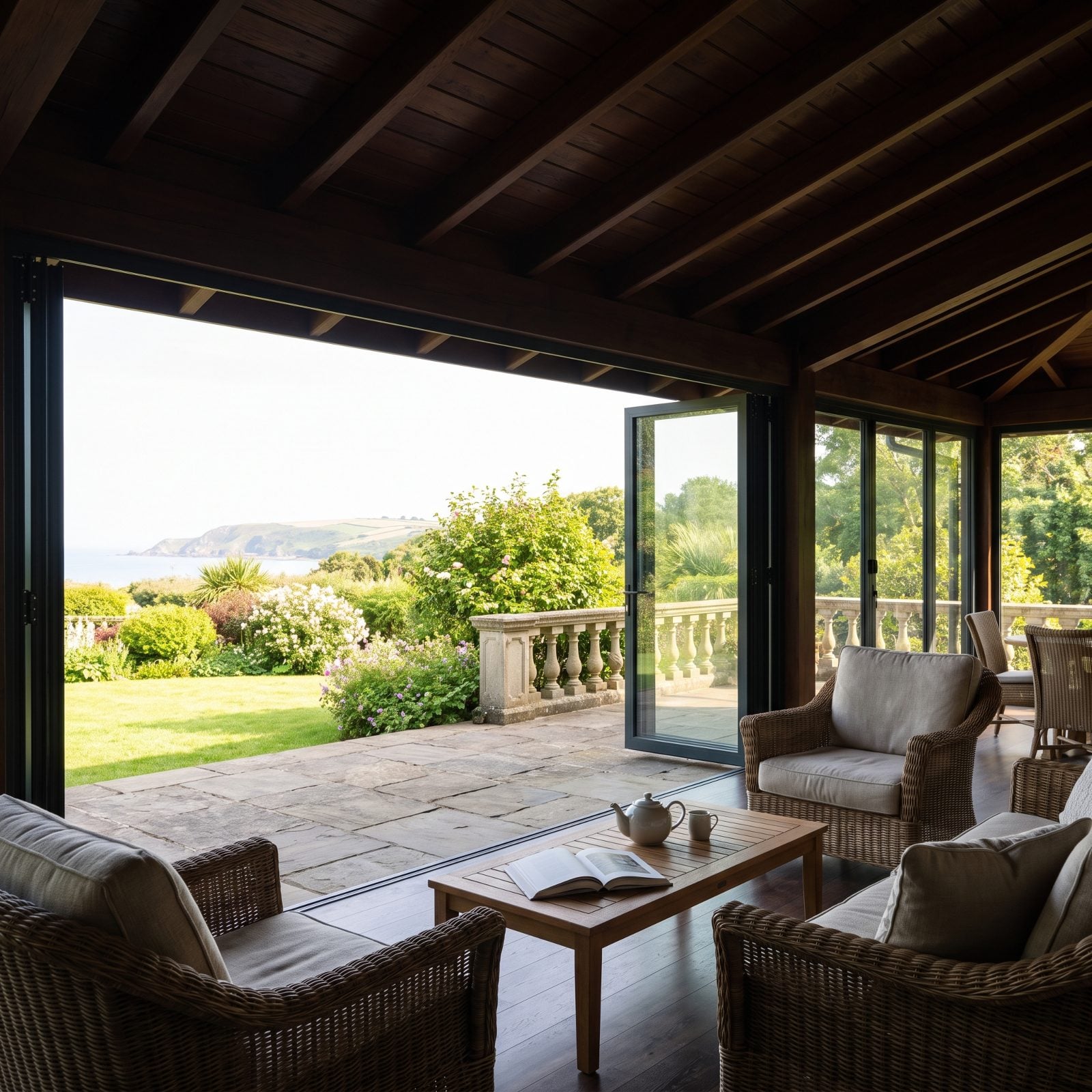
Deep shade does something a window never manages. Run a veranda eight or ten feet out from the room and you create a zone that’s neither inside nor out — sheltered, yet open to the breeze and the view.
And that transition matters more than the view it frames. Walking straight from the air-conditioning into glare is a small shock every time. A deep veranda softens the handoff so your eyes adjust, the temperature steps down a few degrees at a stroll, and the outdoors shows up as an invitation rather than a wall of heat.
26. Local Stone and Timber Make a Resort Belong to Its Place
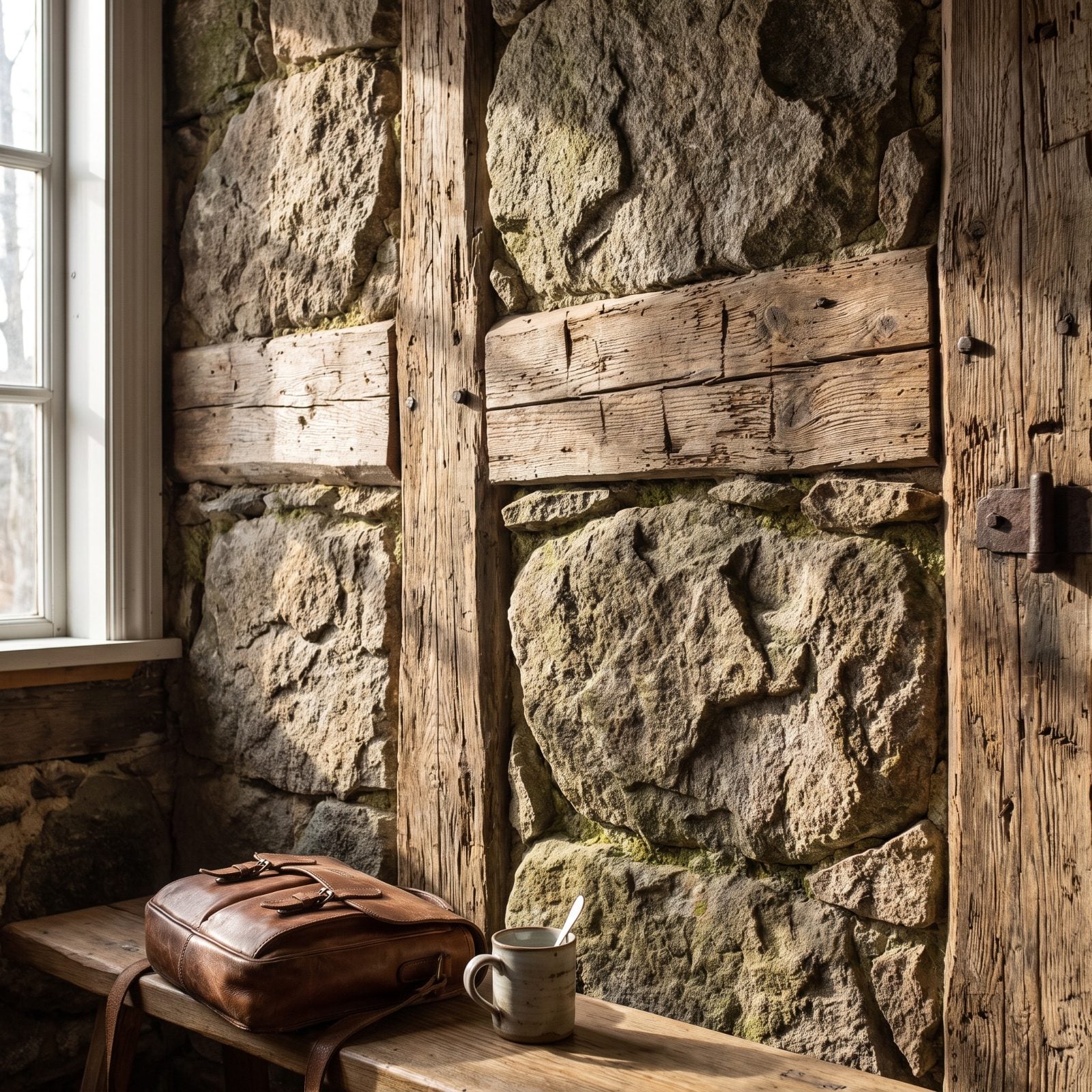
You can feel an imported building. Polished marble shipped in from three countries away reads as a showroom, full stop.
Build from what the ground already offers and the difference lands the moment your hand touches a wall. Desert sandstone the exact color of the surrounding rock. Timber from the local forest, weathering the way everything near it weathers. Your brain clocks the match before you can name it, and the place reads as inevitable instead of something dropped in by helicopter.
25. A Muted Exterior Palette Hands the Spotlight to Nature
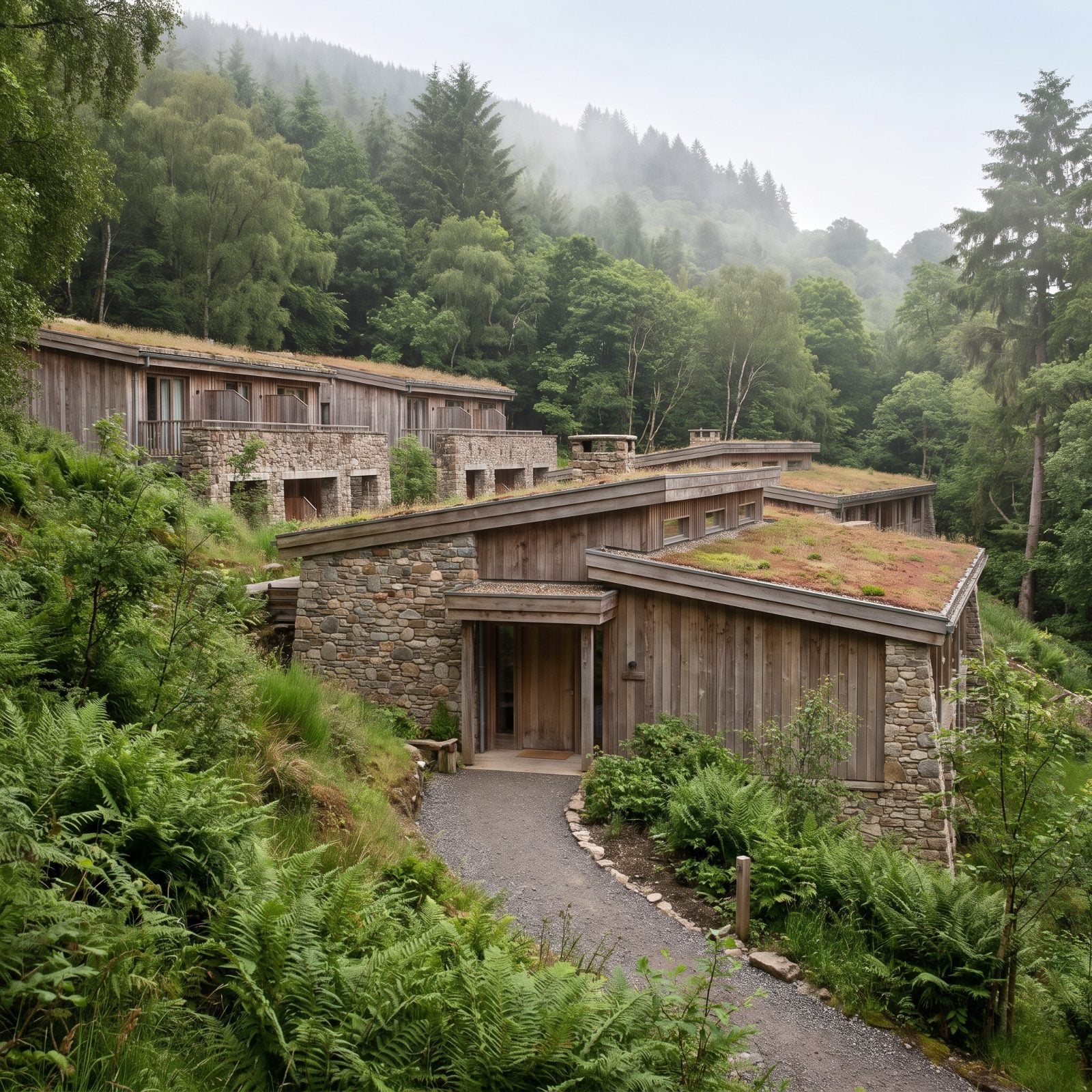
Bright paint picks a fight with the landscape. Set a white resort against a green hillside and your eye snaps to the building, then stays stuck there.
Muted exteriors step back on purpose. Charcoal-green, soft greige, timber gone silver with age — colors that let the forest or the sea carry the show while the architecture just holds things together in the background.
24. Restrained Signage Means Fewer Instructions Shouting at You
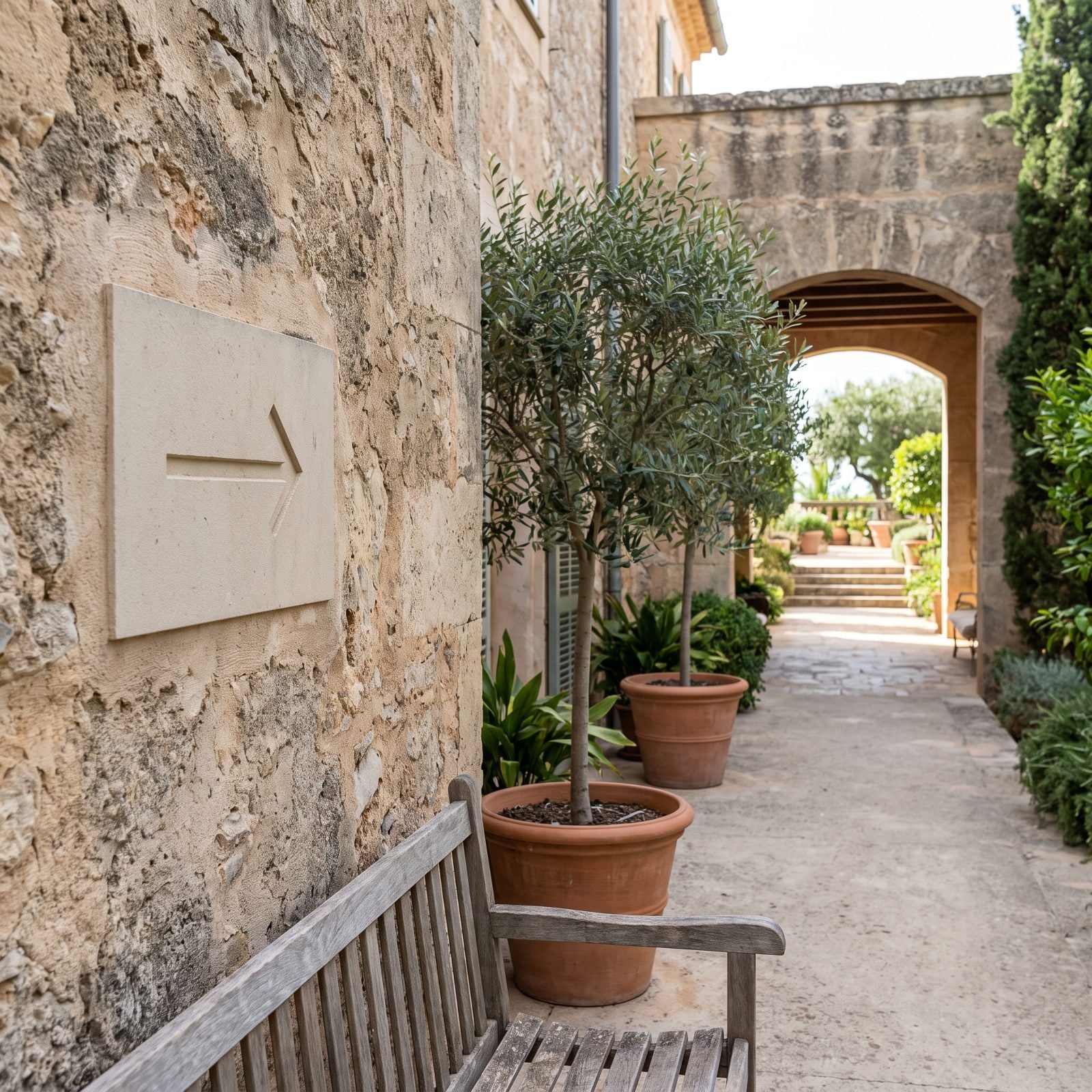
Try counting the signs in a budget airport. Now try counting them at a resort that understands this. You can’t, because they’ve dissolved into the planting.
Every sign is an instruction, and instructions keep your mind clocked in. A property that guides you by path shape, by lighting, by a single carved marker lets you move on pure instinct instead. No laminated rules taped by the pool. No arrows every ten feet barking directions. The quiet isn’t only something you hear — it’s visual too, and most people never clock the absence that’s doing all the work.
23. Hidden Utility Equipment Protects the Whole Illusion
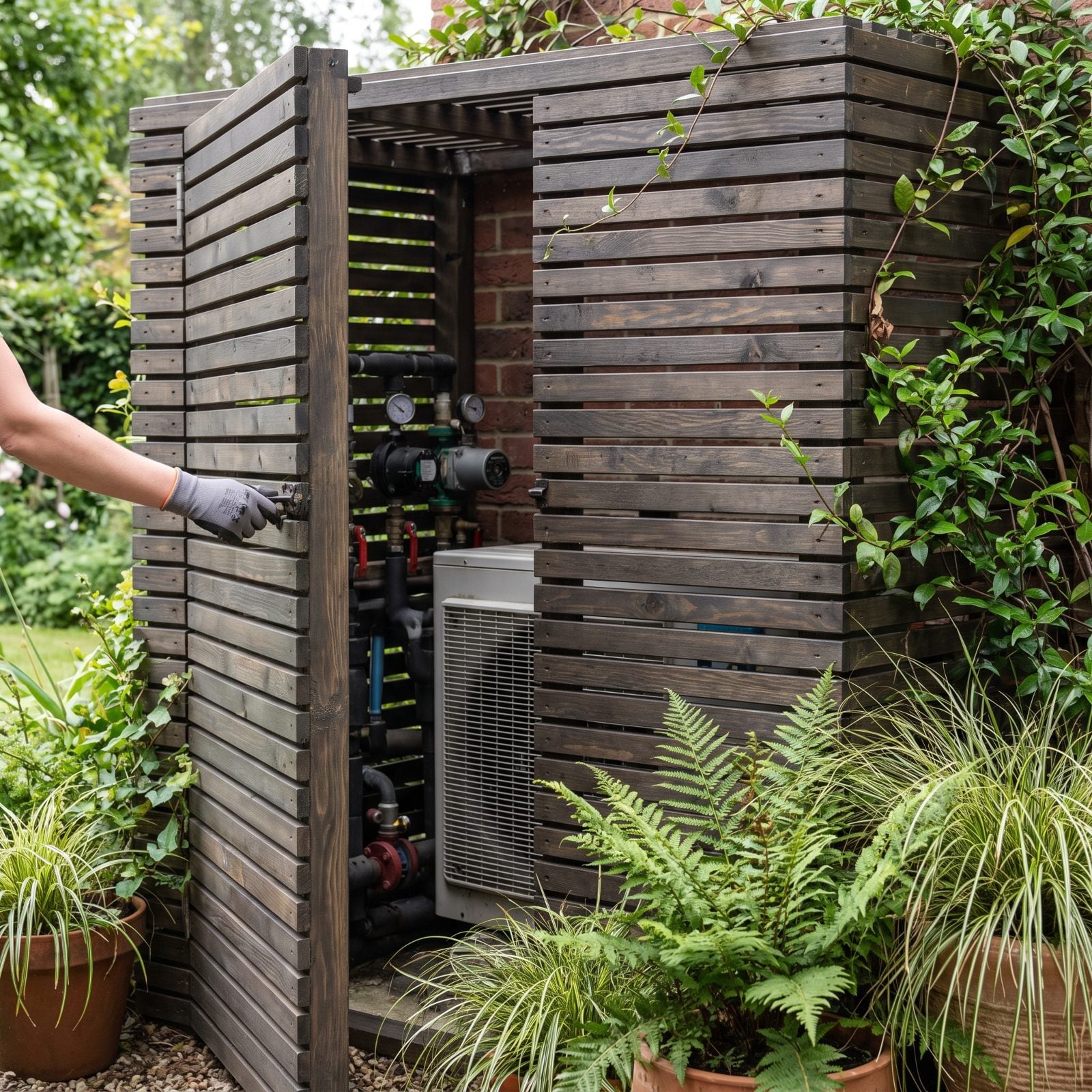
A visible air-conditioning unit, or a bank of pool pumps, does more damage than its size suggests. One grey box humming beside a garden path and the whole spell cracks. You remember the place is a machine with good lighting.
So the best resorts bury the plumbing. Louvered timber screens, dense hedges, equipment sunk below grade or shoved to the back of house where nobody wanders. You never lay eyes on the engine. You just feel that nothing is working and everything is working, both at once.
22. Layered Planting Quietly Deletes the View You Don’t Want
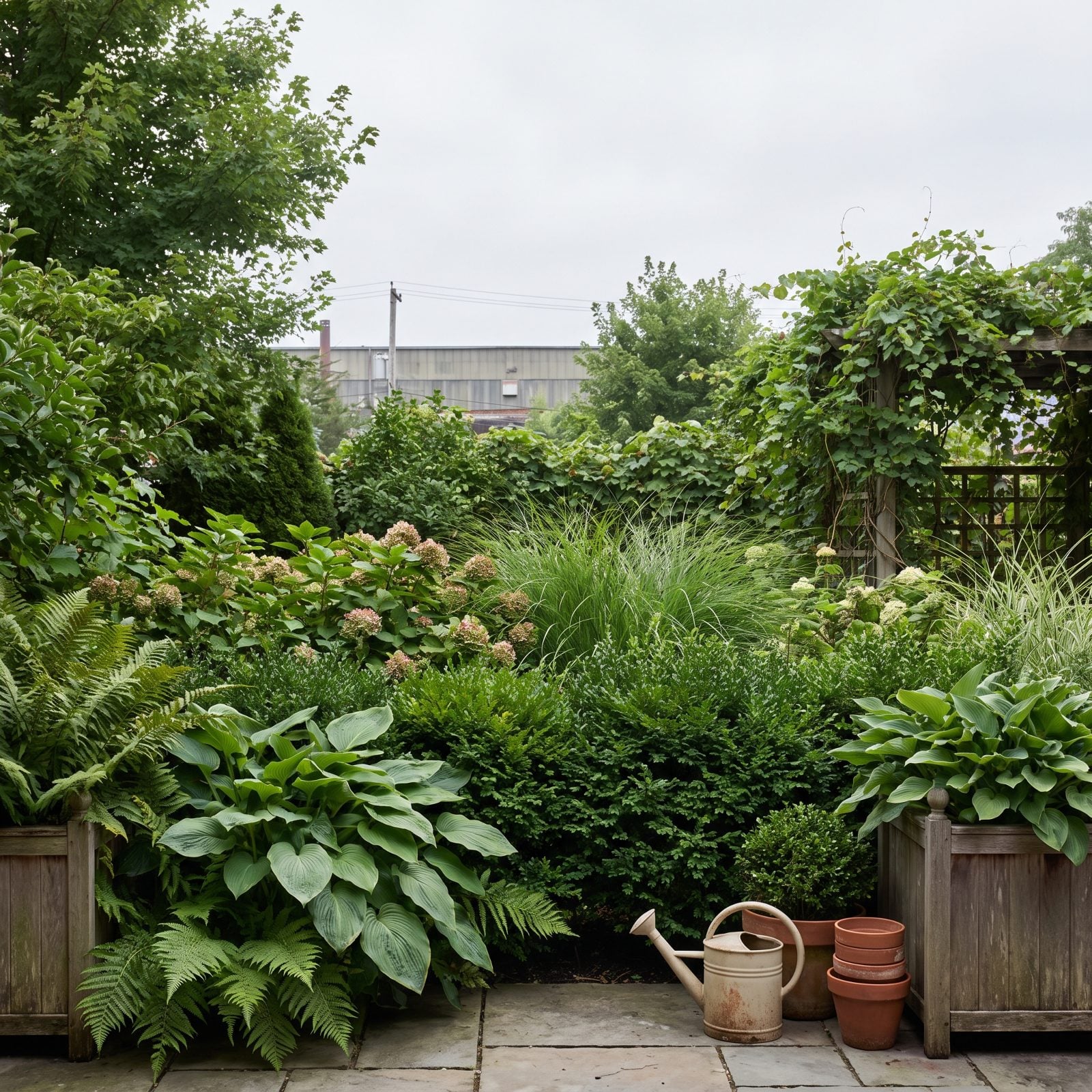
Not every view earns a window. The parking lot. The service road. The neighbor’s generator. Something has to stand between you and all that.
Layered planting handles the hiding without ever feeling like a fence. Tall grasses in back, shrubs through the middle, groundcover at your feet — three or four depths of green, so your eye reads a garden rather than a barrier. One straight hedge announces that something’s being concealed. Stack the layers and it just looks like the place was always meant to grow this lush right here.
21. Mature Trees Make a Brand-New Resort Feel Decades Old
🔥 Would you like to save this?
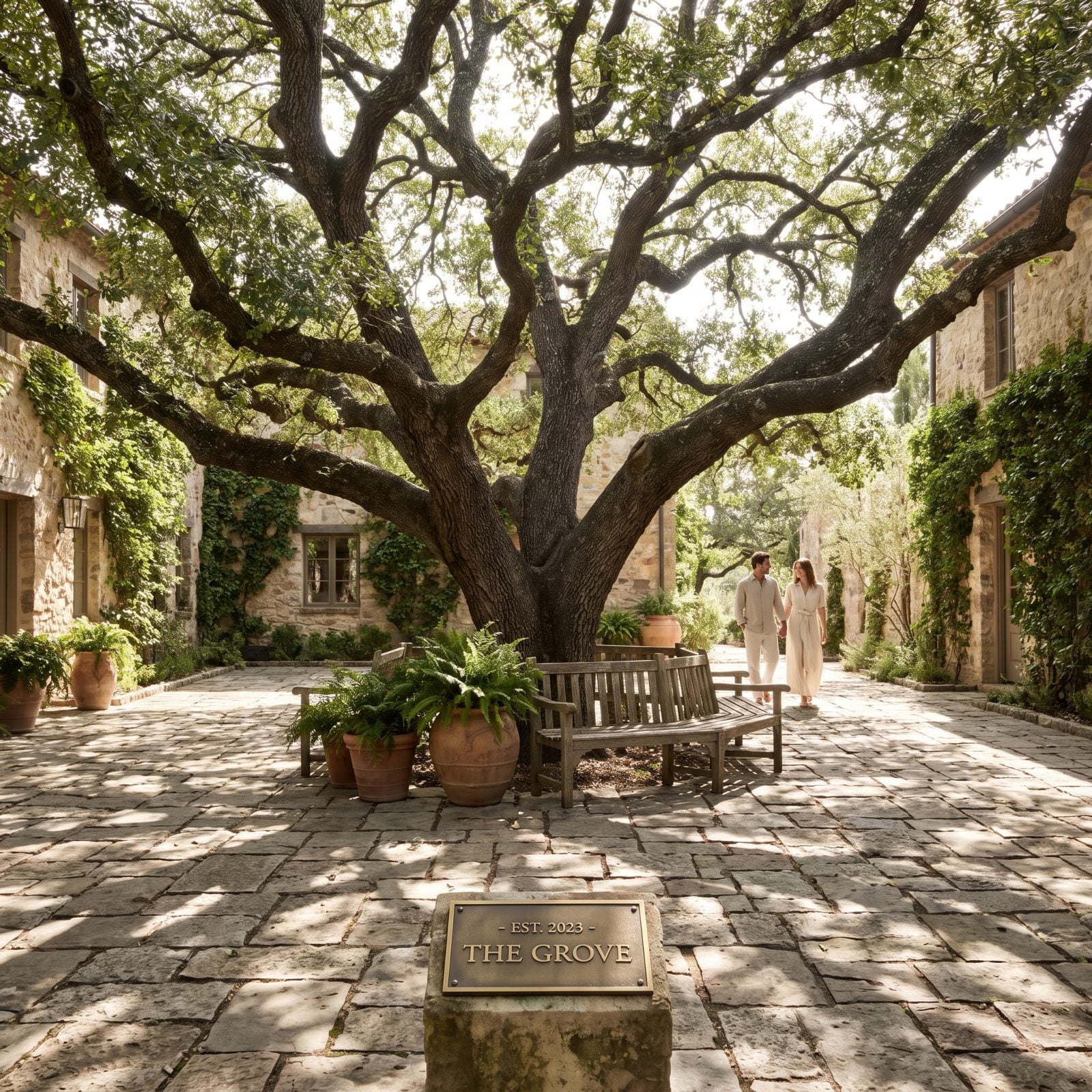
A new resort has a tell, and it’s the planting. Spindly saplings staked against the wind, grass that hasn’t knit together yet, everything looking like it showed up last Tuesday. Because it did.
One mature tree wipes all of that away. A single broad canopy throwing genuine shade across the arrival court, and the place suddenly reads as rooted — here long before you, staying long after. That’s the reason resorts pay serious money to truck in grown trees. A forty-year-old canopy is the one thing you cannot fake, so they just buy it outright and plant the illusion in a morning.
20. Fragrant Planting Guides You Down a Path Without a Single Sign
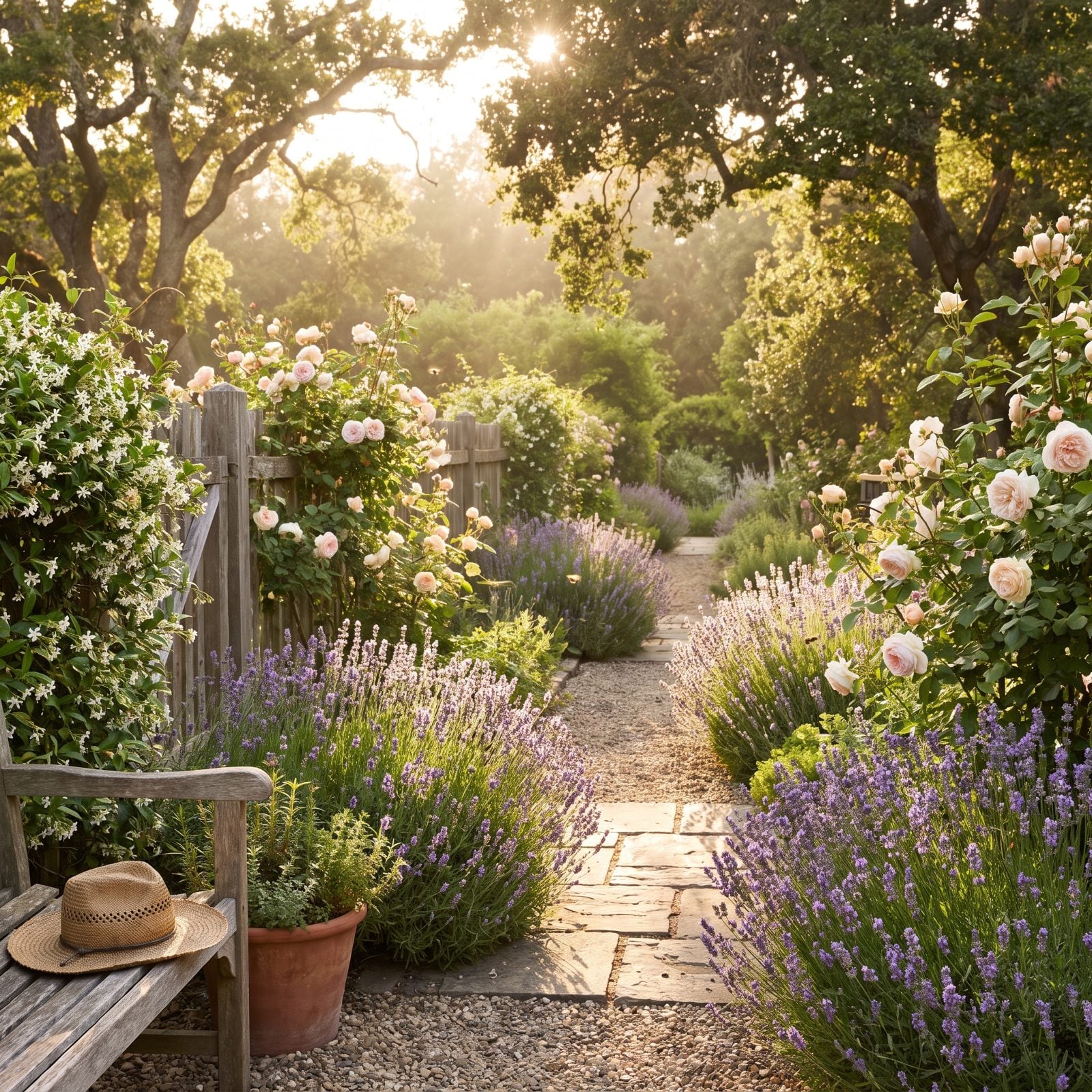
Scent is the one sense you can’t talk yourself out of. It lands before thought does. A path lined with night jasmine tells you where to walk in a language that skips the brain entirely.
Resorts that plant for fragrance are running their wayfinding through your nose. Jasmine marking the way to dinner, citrus near the entrance, frangipani piled thick around the spa. You follow the smell without ever deciding to, and the memory of the place gets stitched to a scent you’ll catch years later off a stranger’s garden and go briefly, helplessly nostalgic for.
19. Meandering Garden Paths That Make You Walk Slower
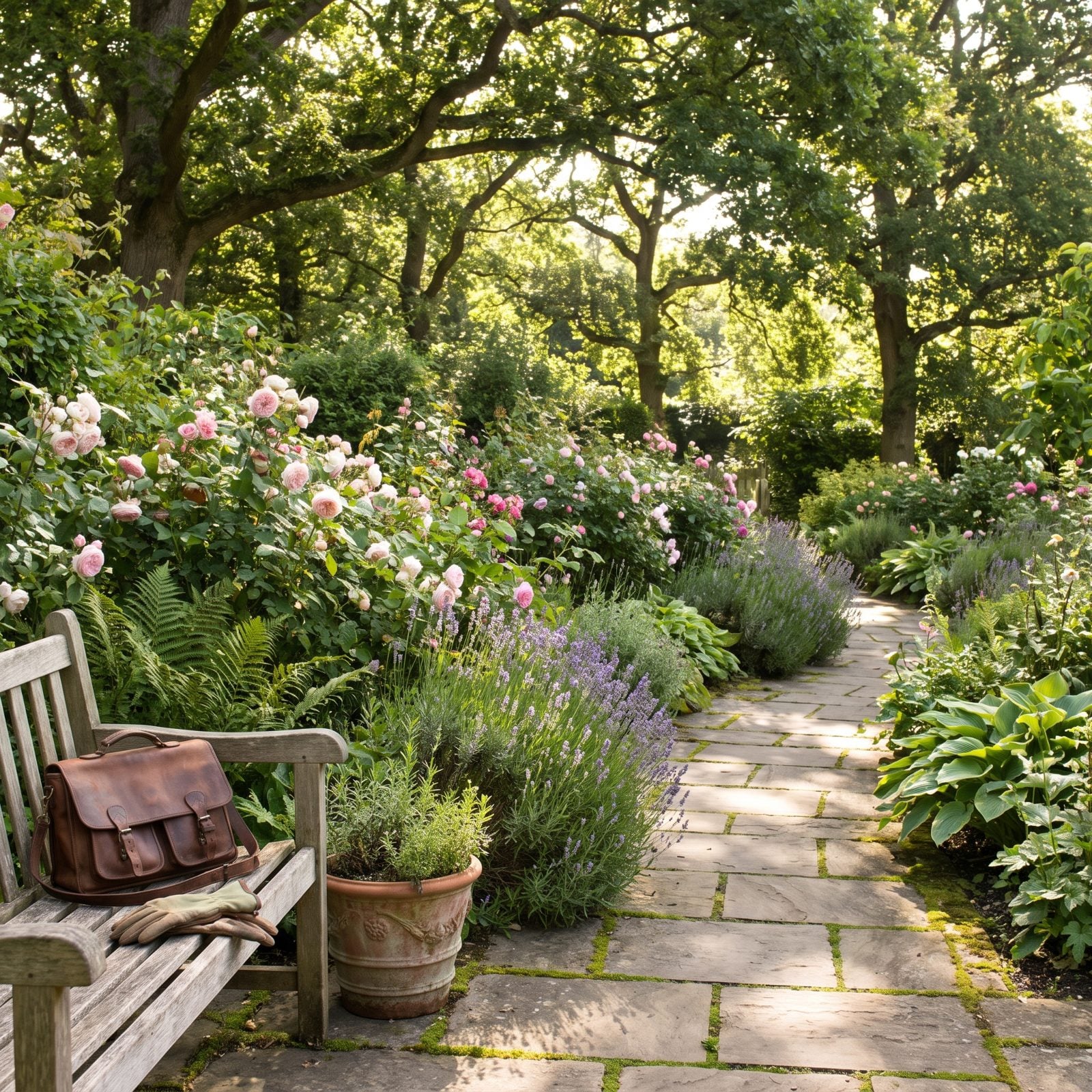
Straight paths tell your legs to hurry. A path that bends does the opposite, because you can’t see the end, so you stop scanning for it and your pace drops before you’ve even decided to slow down.
Good resorts know this and refuse to run a direct line from the gate to the front desk. Instead they curl the walk around a planter, behind a wall of ginger, past a bench nobody told you to sit on. By the time you reach reception, your shoulders have already come down an inch.
18. A Reflecting Pool That Hands You Stillness Before You Check In
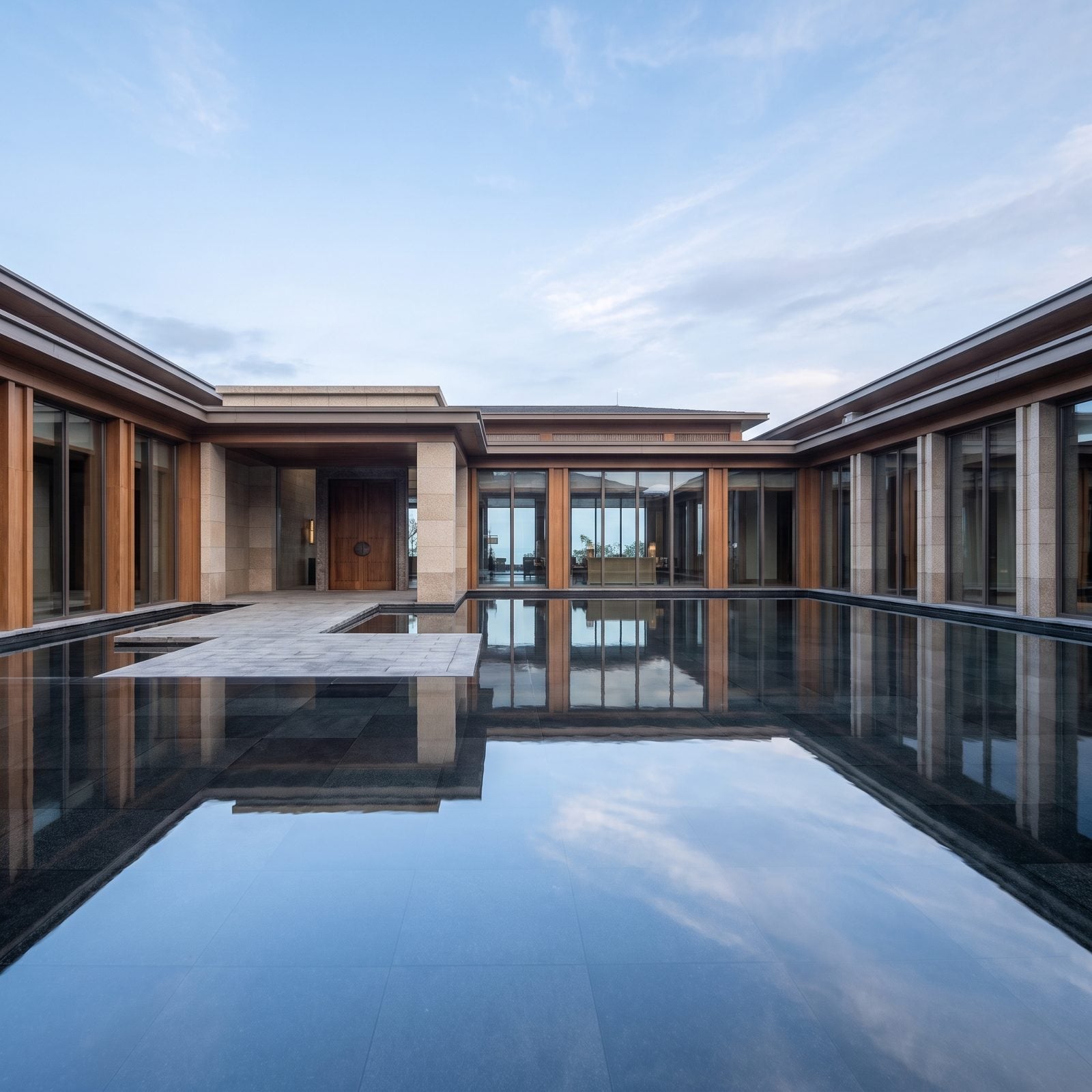
Still water is one of the oldest calming tricks in architecture, and resorts lean on it hard right at the entrance. A reflecting pool hands the eye a flat, quiet surface to land on before the chaos of luggage and keys and small talk kicks in.
Here’s the part people miss: it isn’t about looking pretty. Still water mirrors the sky and doubles the space, so the courtyard reads as bigger and more open. You breathe differently in a room that feels wide. The pool pulls that off before you’ve said a word to anyone.
17. The Fountain That Quietly Eats the Traffic Noise
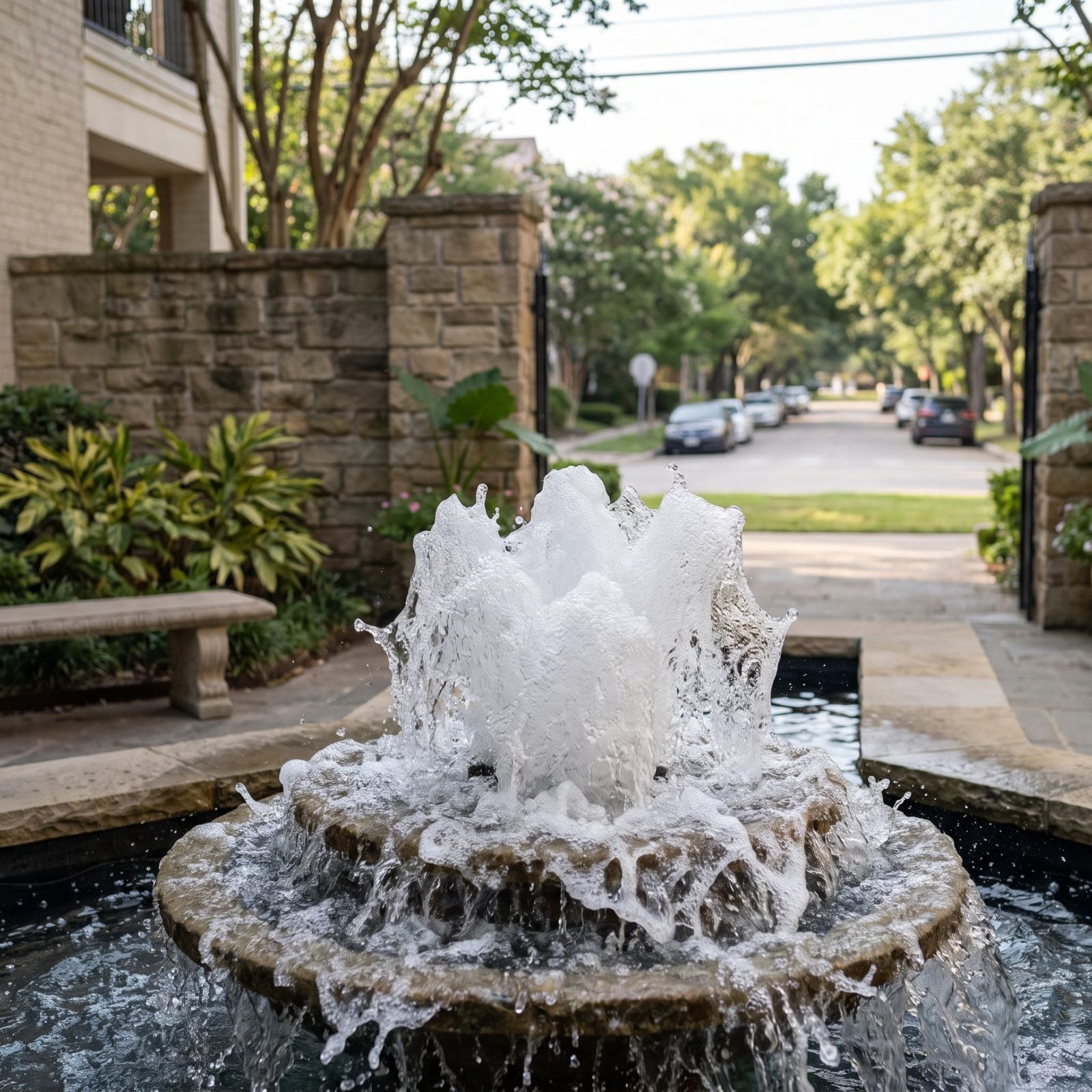
That fountain in the entry courtyard isn’t decoration. It’s doing a job, and the job is hiding things.
A steady sheet of falling water throws off broad-spectrum sound that smothers the sharper, uglier noises underneath — a service door slamming, a car idling at the gate, a phone ringing at reception. Your brain stops flagging those small stresses because the water blankets them. Designers call it sound masking. You just call it peaceful, and you never figure out why.
16. Warm Indirect Light Instead of a Grid of Ceiling Cans
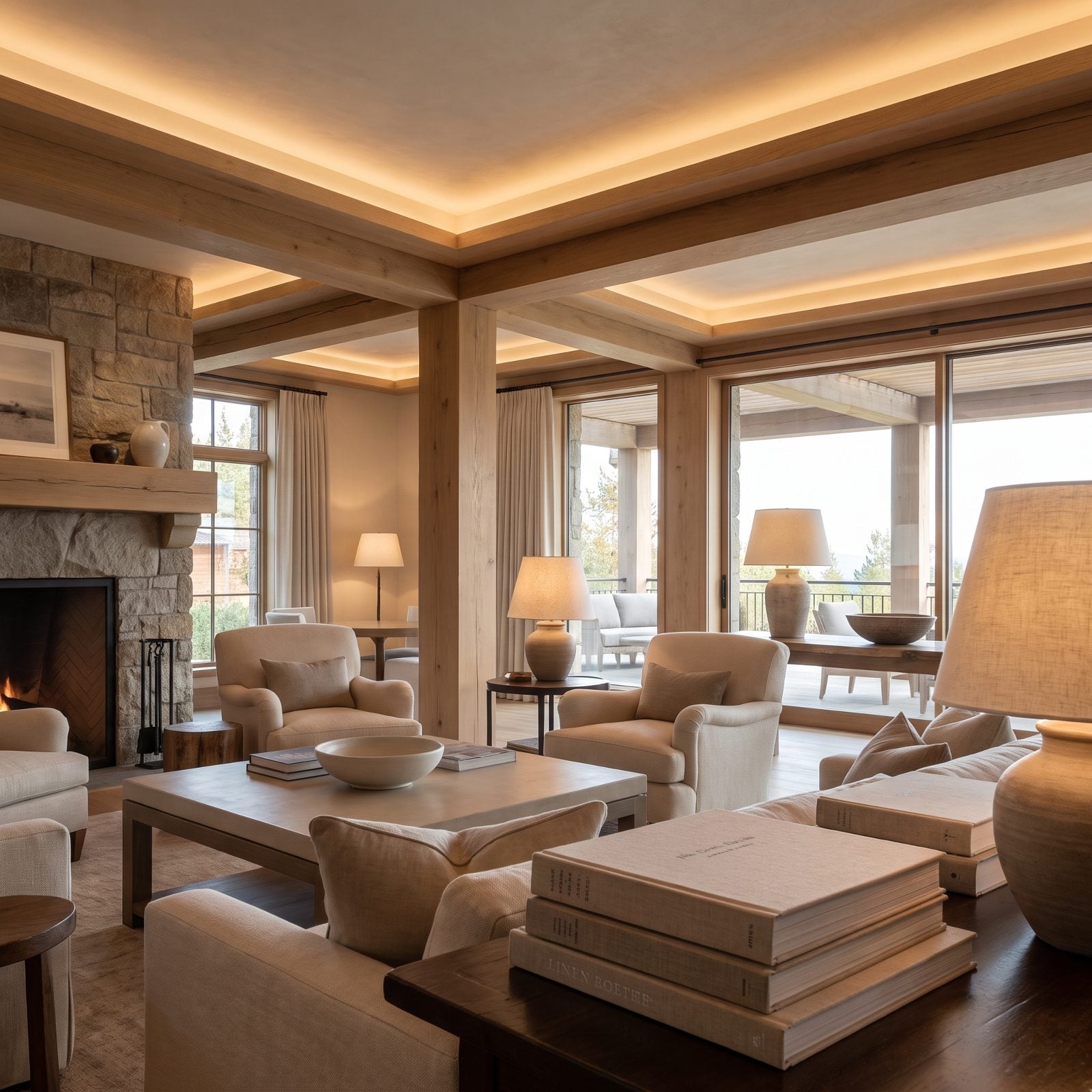
Overhead cans flatten a room and make everyone look exhausted. Resorts worked this out and went the other way. Light comes from the sides and from below — lamps, sconces, a glow bouncing off a plaster wall — and nothing glares down at you from the ceiling.
The effect hits right away. Warm, low-angle light reads as evening, as home, as safe. Your nervous system has tied that kind of light to winding down for about as long as fire has existed, so a lobby full of soft lamp-glow is quietly telling your body it’s time to rest. And your body listens.
15. Low Landscape Lighting That Leaves the Stars Alone
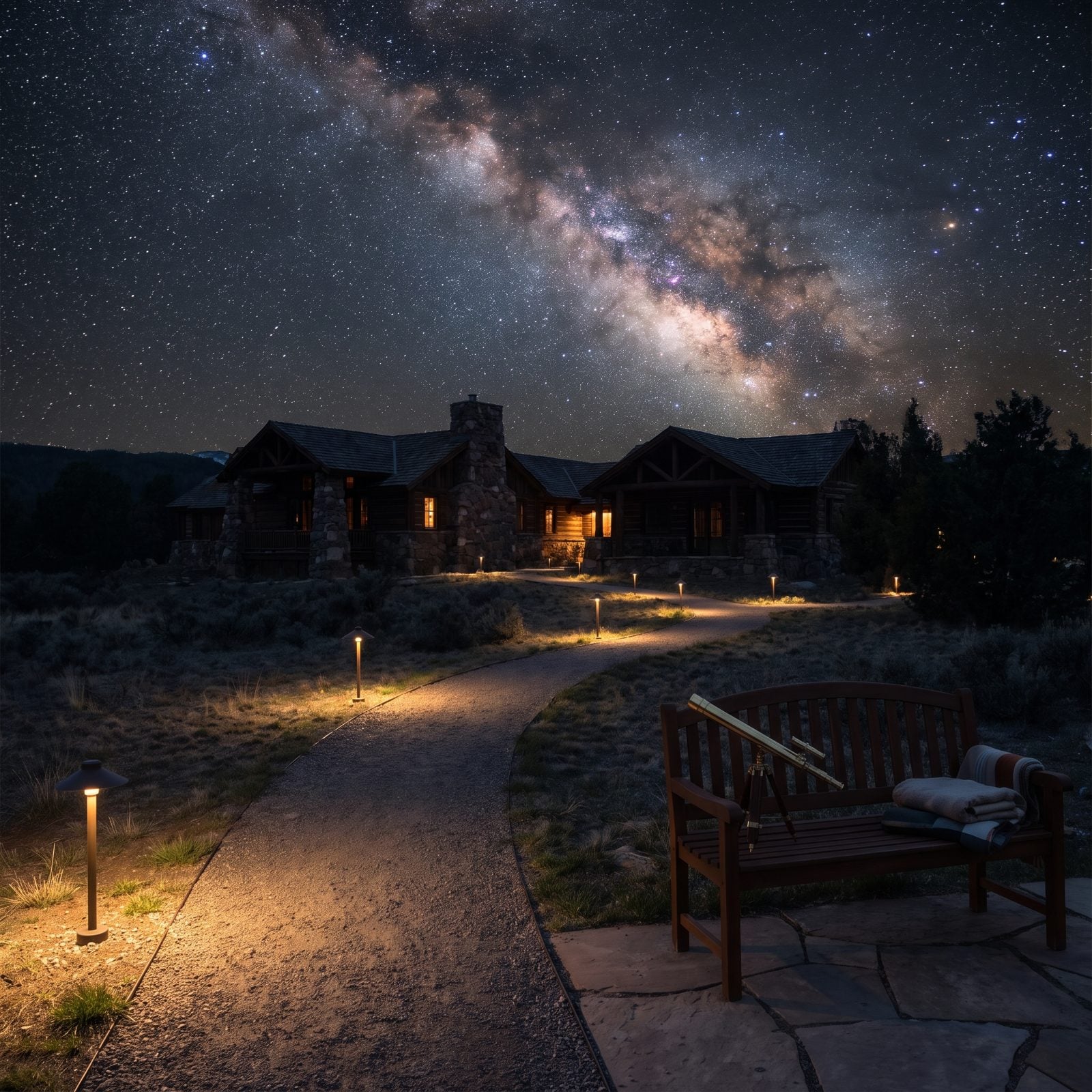
Walk into a resort at night and look up. If you can see stars, someone made that happen on purpose.
The move is to light the ground, never the sky. Fixtures sit low, point down, and stay warm in color — just enough to show you the path and not one lumen more. No floodlights blasting the facade. No blue-white glare bleaching the dark. Our eyes relax in dim, warm conditions and tense up under bright cool light, because the body reads that as daytime. A property that respects the dark is respecting your ability to actually feel like it’s nighttime, which turns out to be half of what you drove all this way for.
14. Daylight-Filled Corridors That Refuse to Feel Like a Hospital
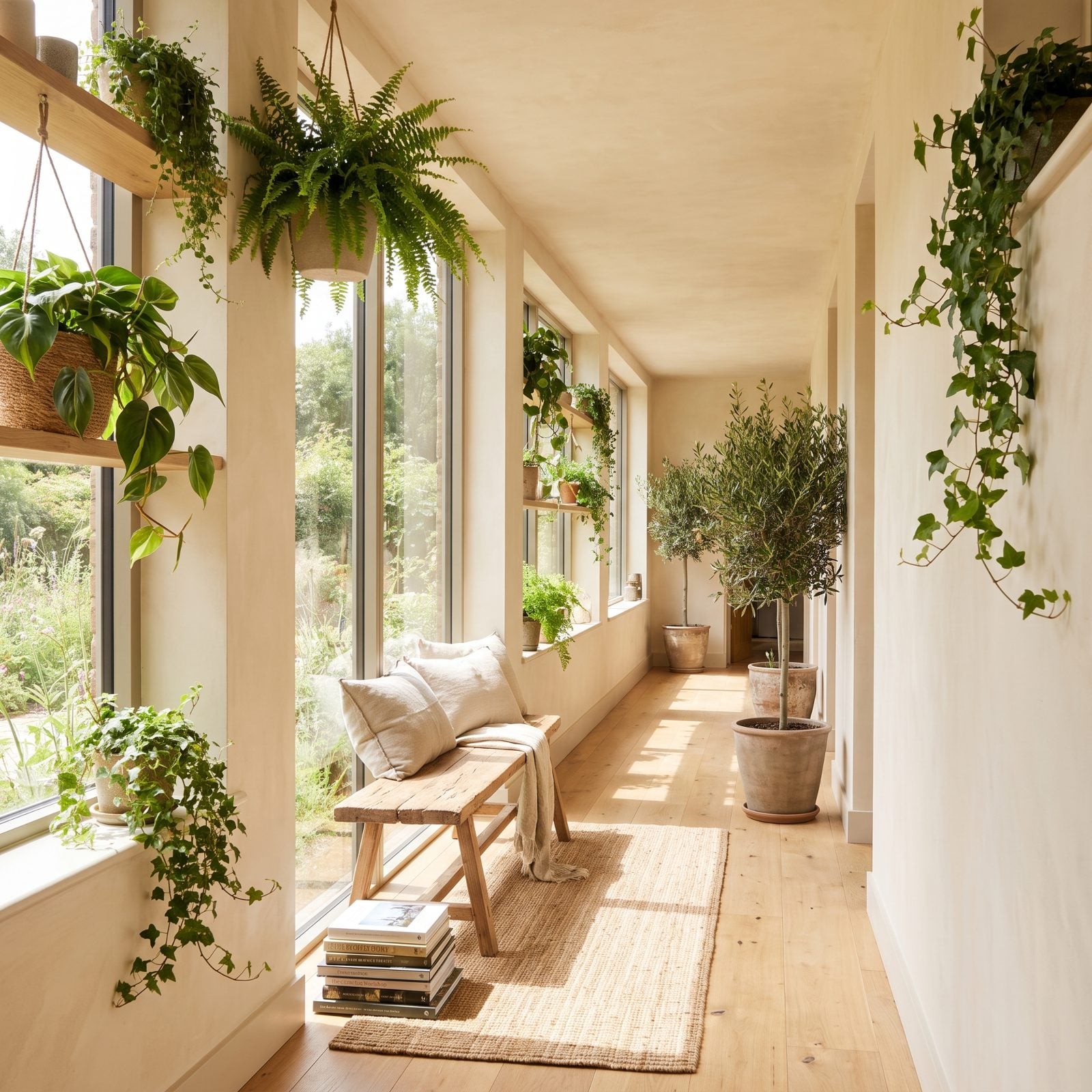
You know the hallway that feels like a hospital. Low ceiling, buzzing strip lights, carpet the color of a decision nobody wanted to make. It makes you walk faster and want out.
Resorts that care build the opposite, opening one wall of the corridor to a garden or courtyard and letting real daylight do the lighting. A hallway with sun on the floor and a view of leaves stops reading as a transit tube. It starts reading as part of why you booked the place.
13. Cross-Ventilation That Makes Shared Rooms Feel Alive
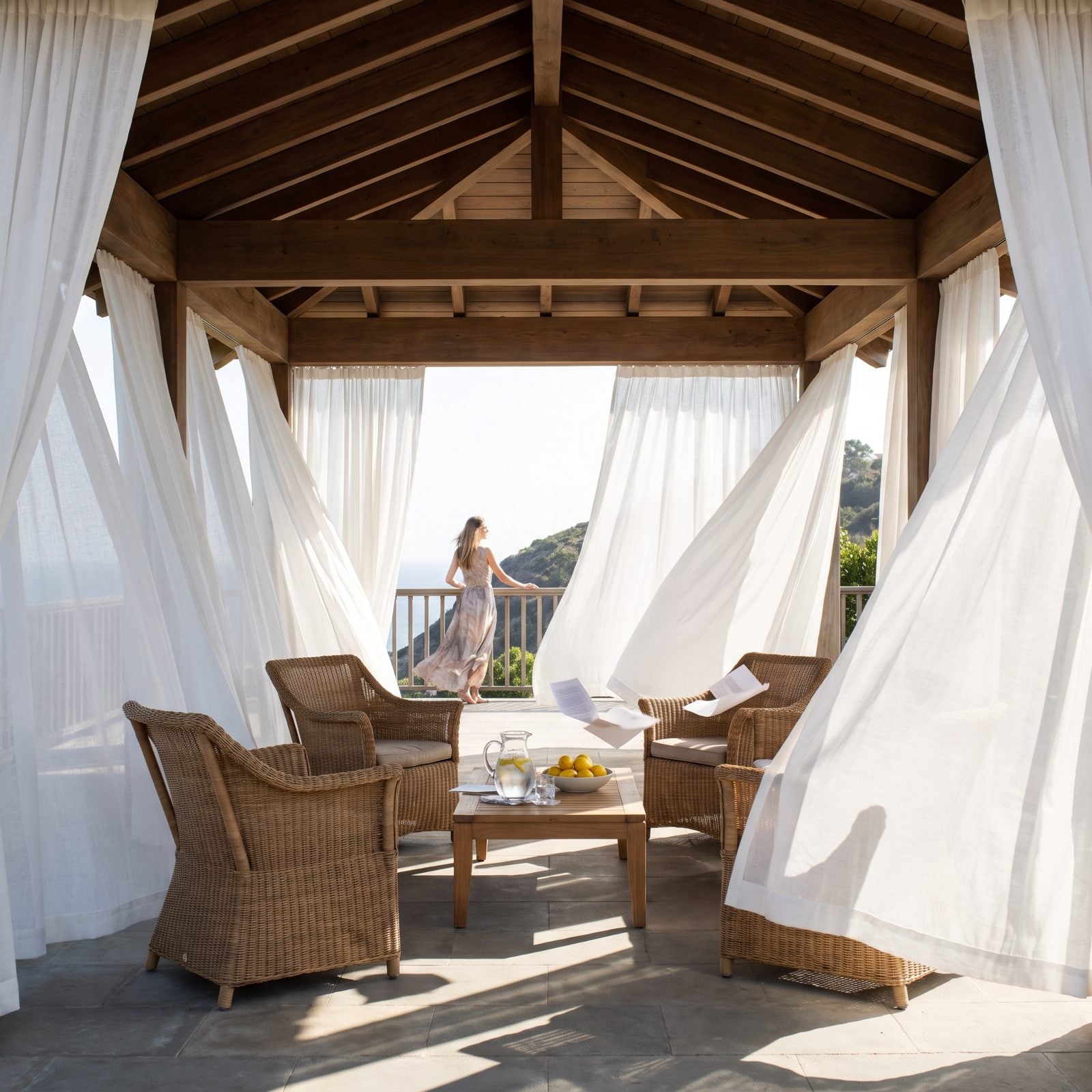
Air that moves feels fresh. Air that sits feels stale even when it’s perfectly clean. That gap is why open-air pavilions with openings on two sides beat a sealed, air-conditioned box holding the exact same temperature.
Cross-ventilation drags a breeze straight through the room and carries off the heavy, flat quality of dead air. You feel it on your skin. You watch the curtains move. The space reads as connected to the outside rather than hermetically shut off from it, and some stubborn part of you relaxes knowing you’re not boxed in.
12. Ceiling Fans That Set the Room to a Slow Rhythm
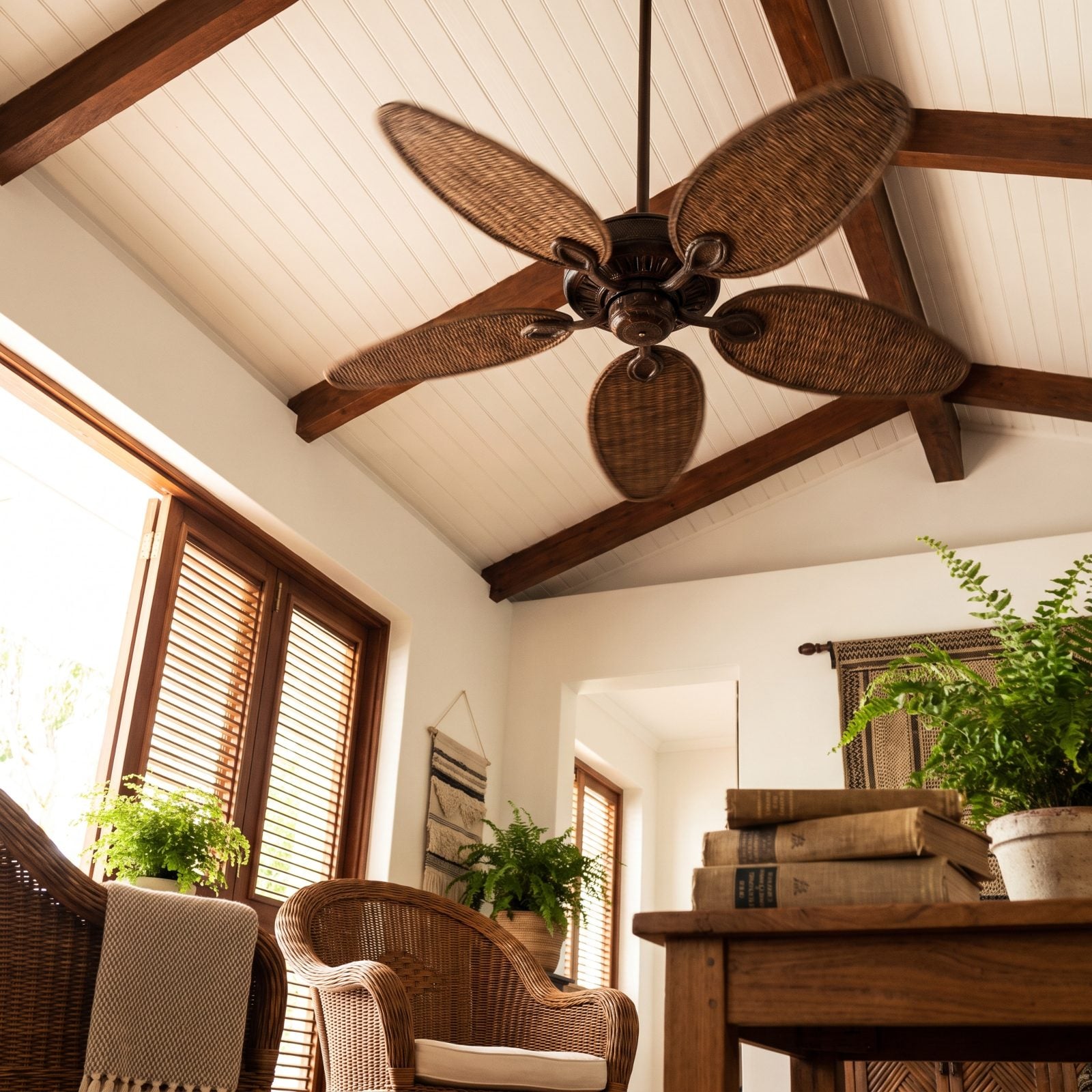
A ceiling fan turning overhead does something a wall of ductwork never could. It hands you a slow, steady visual rhythm to watch, the same way you’d watch waves roll in or a fire burn down.
That gentle, predictable motion soothes in a way fast movement never does. There’s no urgency in a fan. It just turns, over and over, and your eyes drift up and your thoughts slow to match its pace. Add the soft air it pushes down and the faint whir, and the thing is calming three of your senses at once. It’s about the quietest piece of design in the whole building, and it works on everybody.
11. Acoustic Surfaces That Keep the Lobby From Clattering
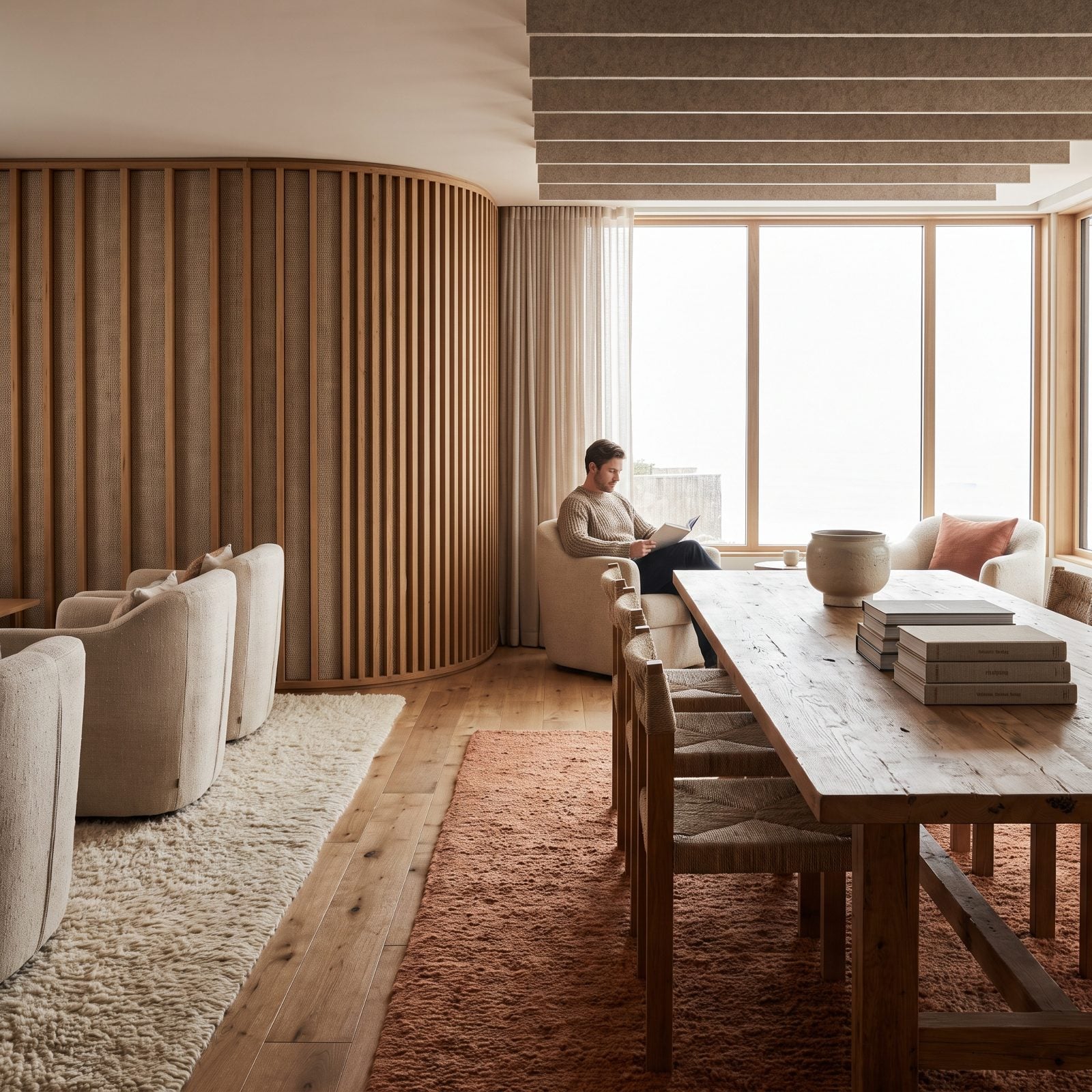
Ever walk into a hotel lobby and feel assaulted before anyone’s even spoken to you? That’s an echo problem. Hard floors, glass walls, a high ceiling — and suddenly every rolling suitcase and loud phone call ricochets around the room and lands square on your nerves.
The fix is soft stuff, tucked everywhere. Wool rugs, upholstered seating, linen drapes, slatted timber ceilings, rough plaster. All of it drinks up sound instead of flinging it back at you. A lobby that handles its acoustics feels hushed and private even when it’s packed.
10. Furniture Pointed at the View, Not at the TV
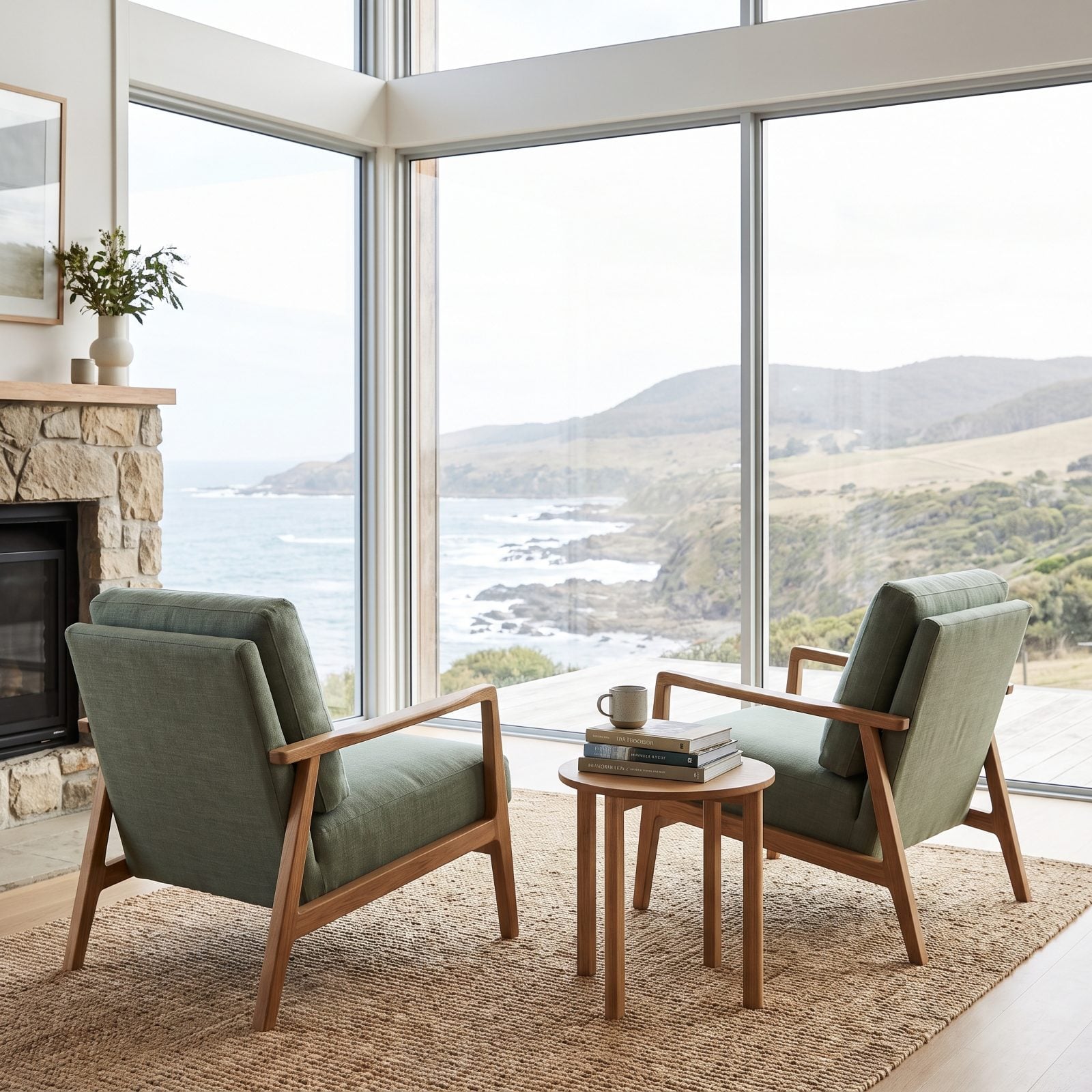
Watch where the chairs point. In a good resort the seating faces the view; in a lazy one it faces a television.
That single choice tells you where the designers want your attention to land. Furniture aimed at the water, the mountains, the garden pulls your focus outward — away from your phone, your inbox, the churn in your own head. You came here to look at something other than a screen, and seating that commits to the view makes that effortless. You sit down and you’re already staring at the thing you drove all this way to see.
9. Generous Space Between Seats Preserves Privacy
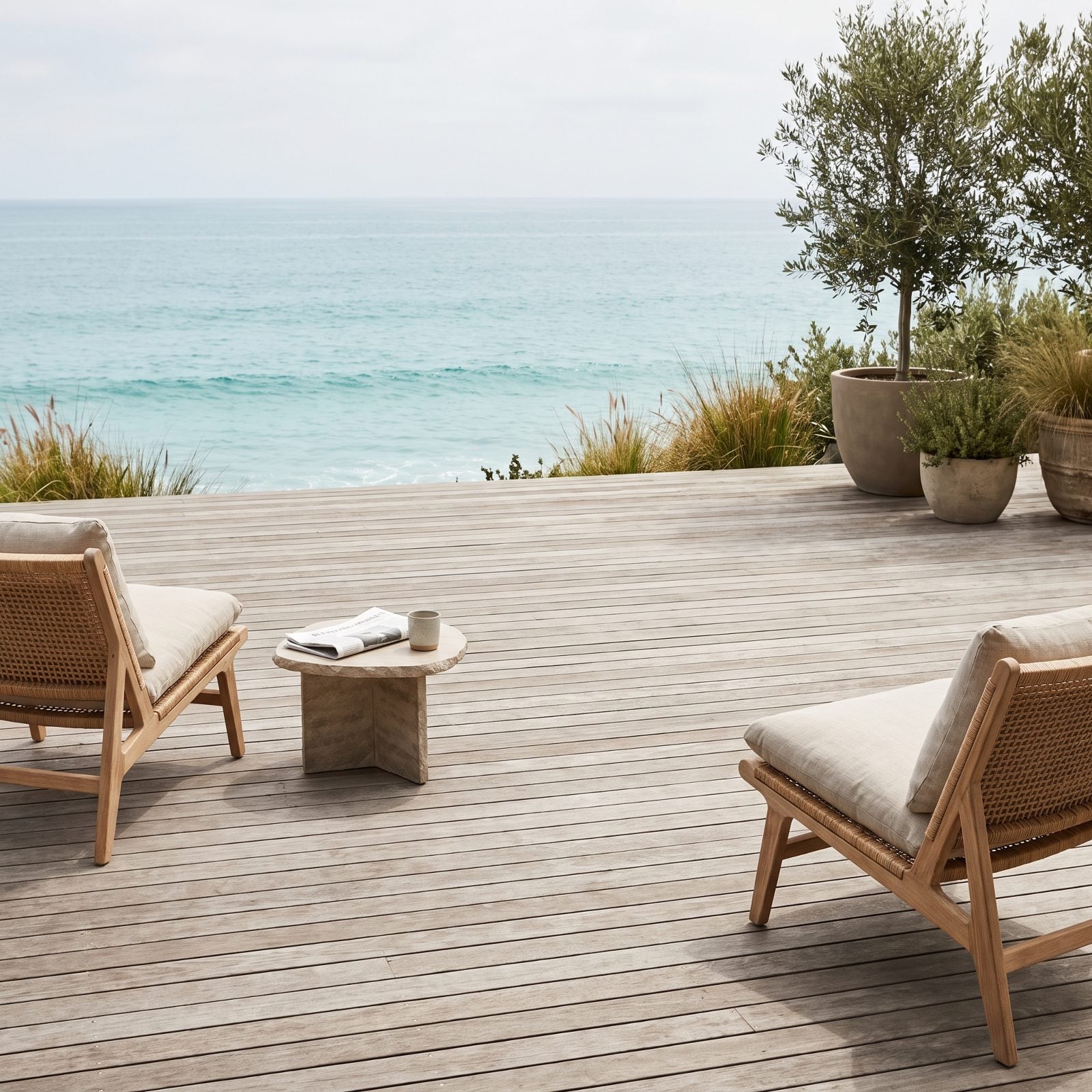
The first thing your body registers at a resort isn’t the view. It’s whether a stranger’s elbow is about to land in your margarita. Cram loungers hip to hip and no amount of ocean fixes the tension.
Good resorts leave ten feet between seating groups and plant something leafy in the gap, so you stop bracing and your shoulders drop before you’ve even sat down. The space says you were expected, and nobody’s going to crowd the moment.
8. Hammocks Signal That Doing Nothing Is Expected

A hammock can’t be rushed, won’t hold your laptop, and performs exactly one function. Lying there.
Place a few in the common areas and you’ve quietly rewritten the rules of the stay. Guests who’d otherwise feel guilty for skipping the walking tour spot the hammock and give themselves permission. Nobody does nothing in a chair that looks like work — but a hammock? Nothing is the entire assignment, and you’d be rude to decline.
7. A Lobby Bar Built Like a Living Room Encourages Settling In
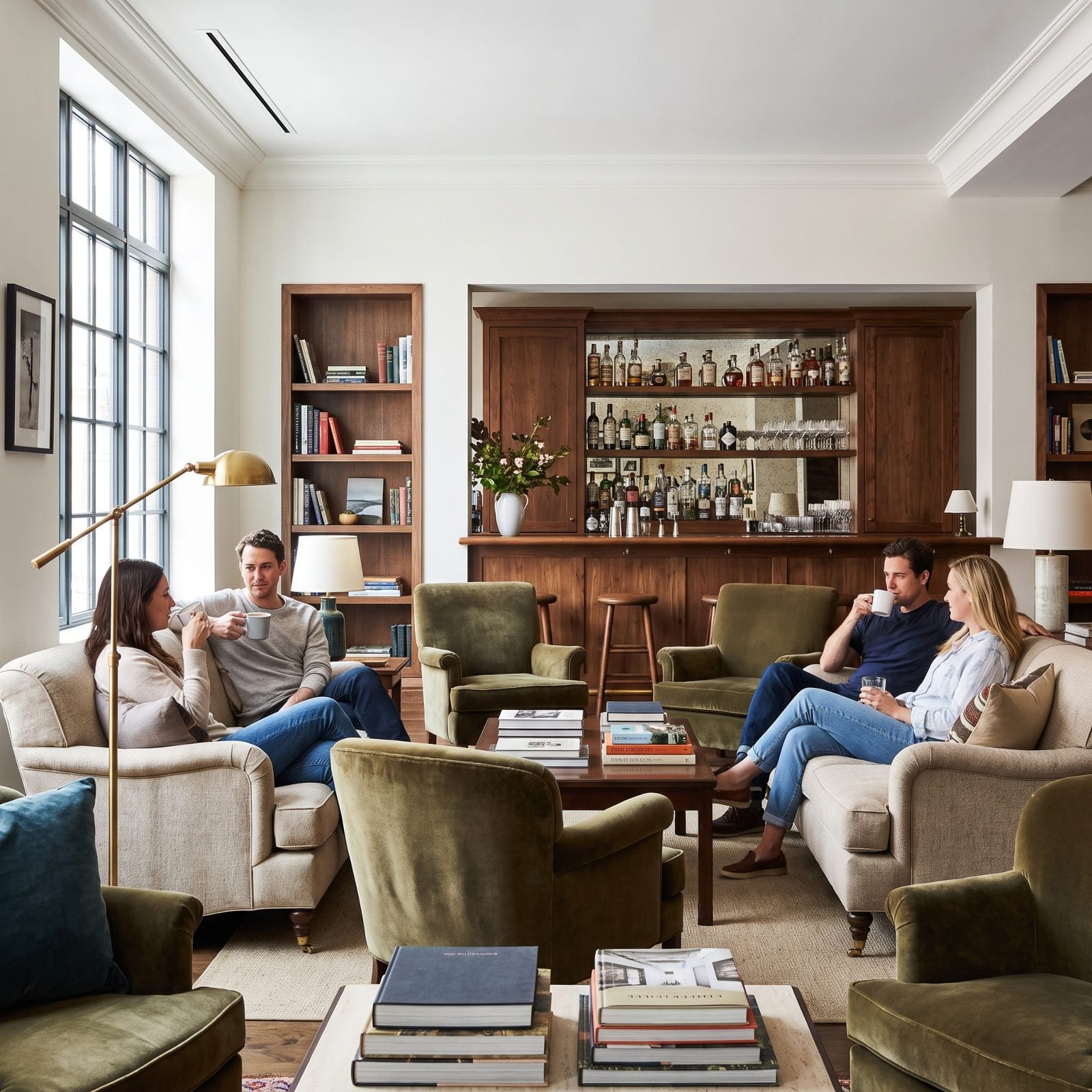
You’ve walked into the lobby bar that treats you like a transaction. Chrome stools, a slab of polished counter, a check-in line forming at your shoulder. Nobody lingers because nothing invites it.
The calming version looks like somebody’s living room that happens to serve drinks — low sofas, a coffee table with actual books, a rug underfoot. You sink in before you’ve decided to, and suddenly the check-in rush doesn’t exist. The tan leather sofa and a woven jute rug do more for your arrival than any welcome speech ever could.
6. Local Art Replaces Generic Resort Décor
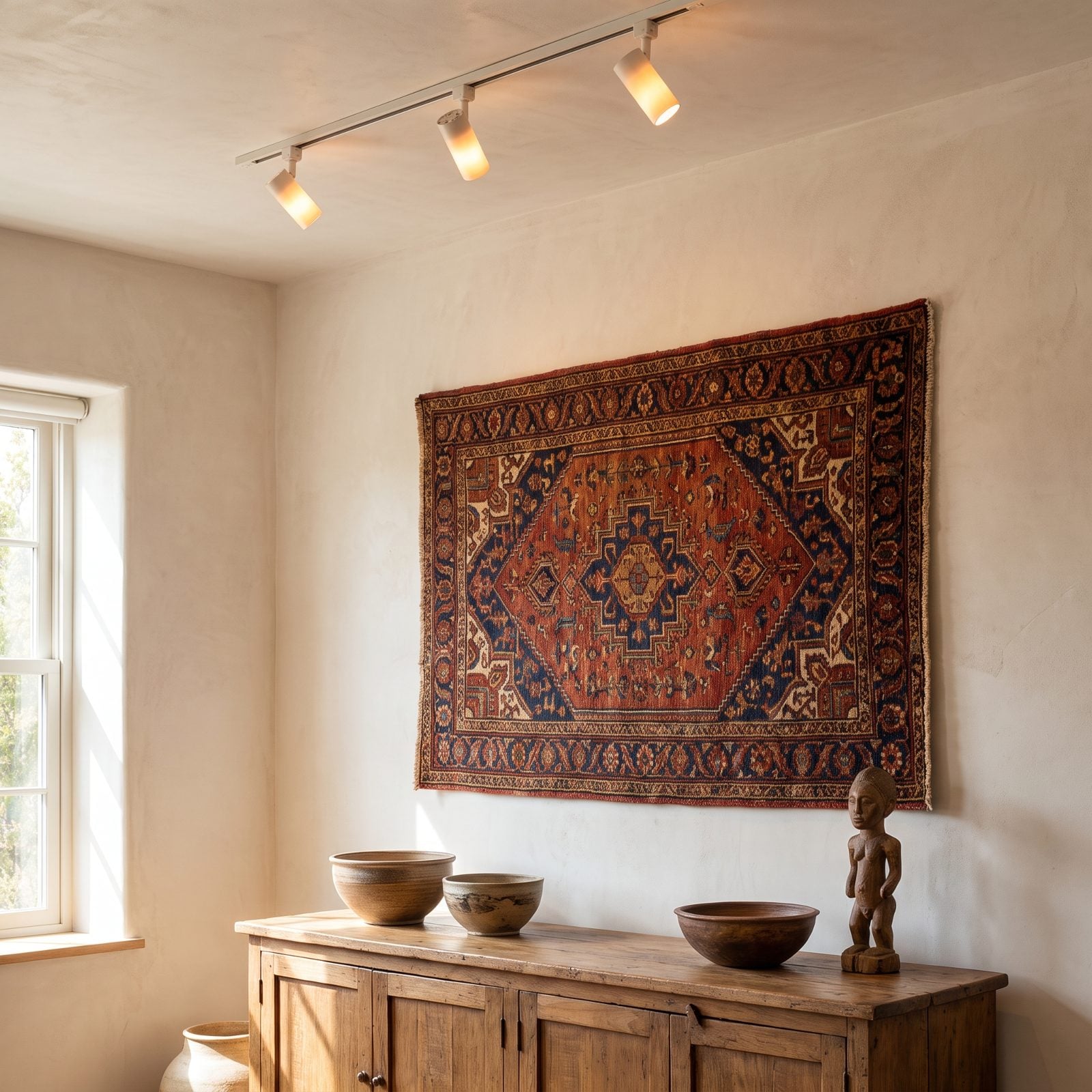
Mass-ordered canvases of beige orchids hang in a thousand resorts, and they communicate exactly one thing. We bought what the supplier had.
Swap in work by someone who lives down the road and the room gains a pulse. A local potter’s bowls. A painting that answers back to the hills outside the window. You feel placed. The décor stops being wallpaper and starts telling you where you are, which turns out to be a surprisingly settling thing to know when you’ve woken up disoriented in a strange bed.
5. A Central Fire Pit Creates an Easy Evening Gathering Point
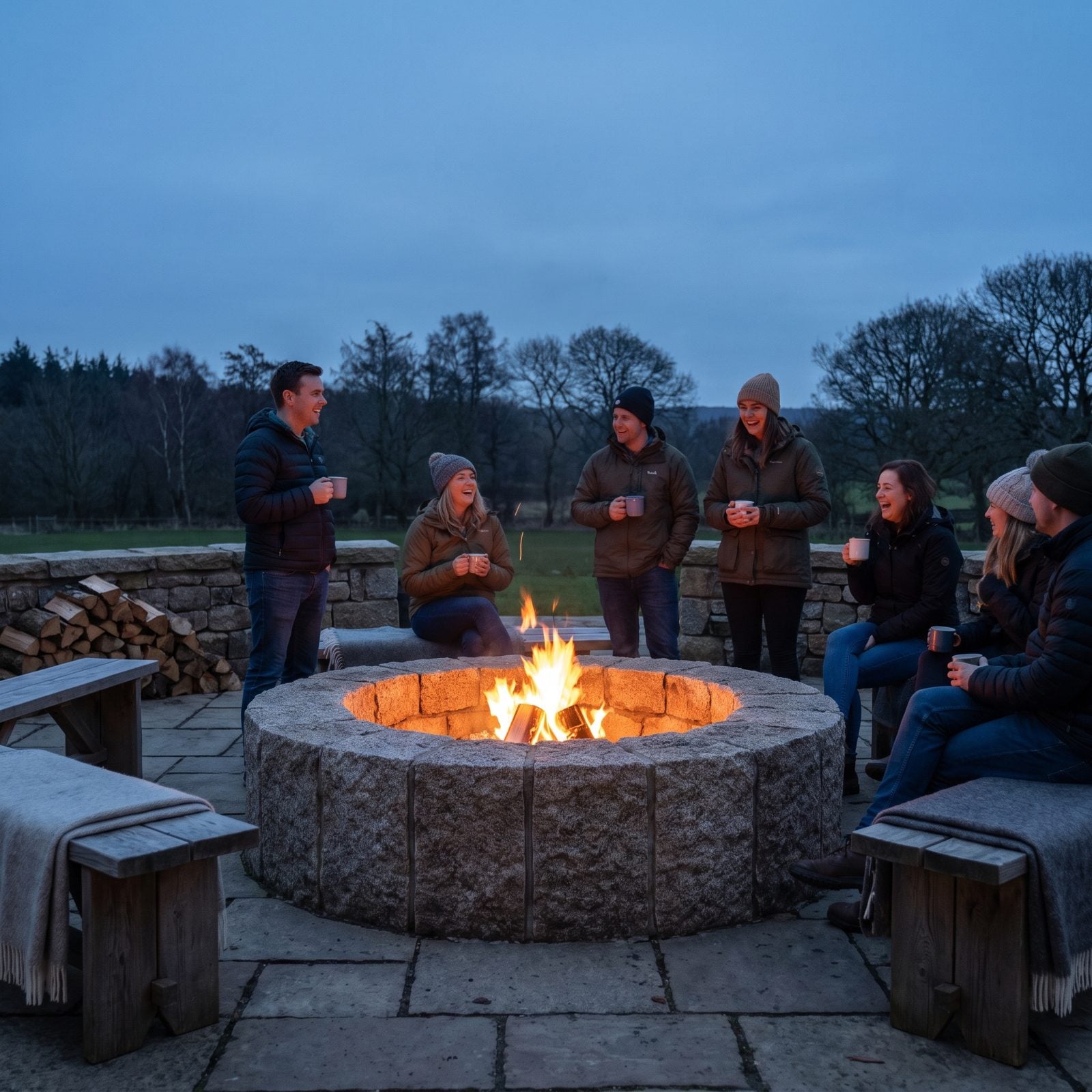
Fire solves the awkward resort evening with zero signage. Nobody announces a social hour — the flames just appear at dusk and people drift toward them the way they’ve drifted toward fire for hundreds of thousands of years.
A well-placed pit gives the night a center of gravity. You pull up a charcoal outdoor cushion, you stare at the coals, conversation comes or it doesn’t. Either way you’ve stopped checking your phone. And it costs a fraction of a chandelier.
4. Family Activity Zones Set Away From Quiet Areas Prevent Conflict
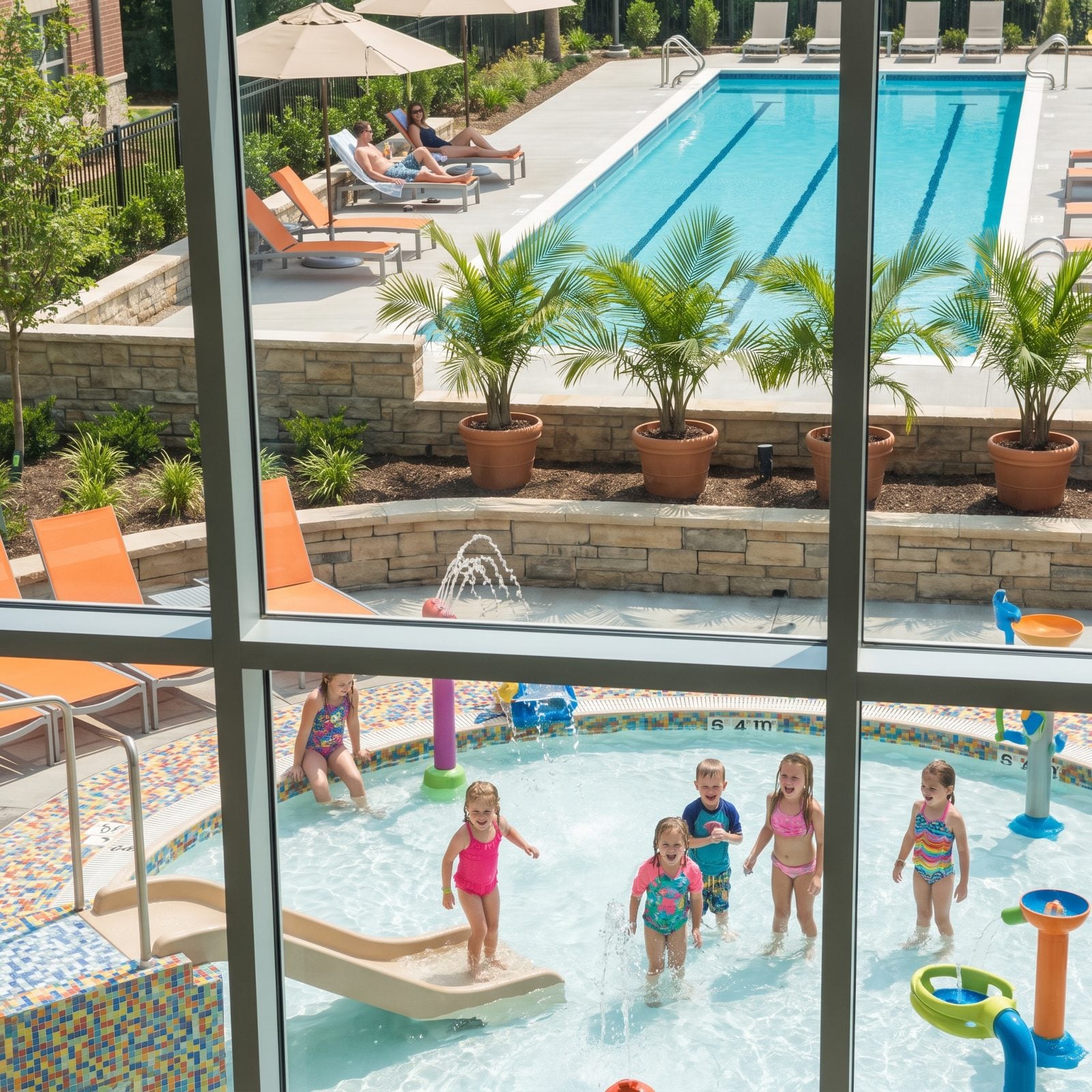
The quiet-pool argument ruins more vacations than bad weather. A toddler cannonballs, a honeymooner seethes, both paid the same rate and both are right.
Smart resorts fix it with geography, not rules. The splash zone and the silent pool sit far apart, usually with a thick wall of planting between them so the noise dies in the leaves. Families run loud with a clear conscience, the quiet crowd never hears a thing, and nobody has to play the bad guy at the front desk.
3. A Departure Route Separated From Arrivals Protects the Welcome Mood
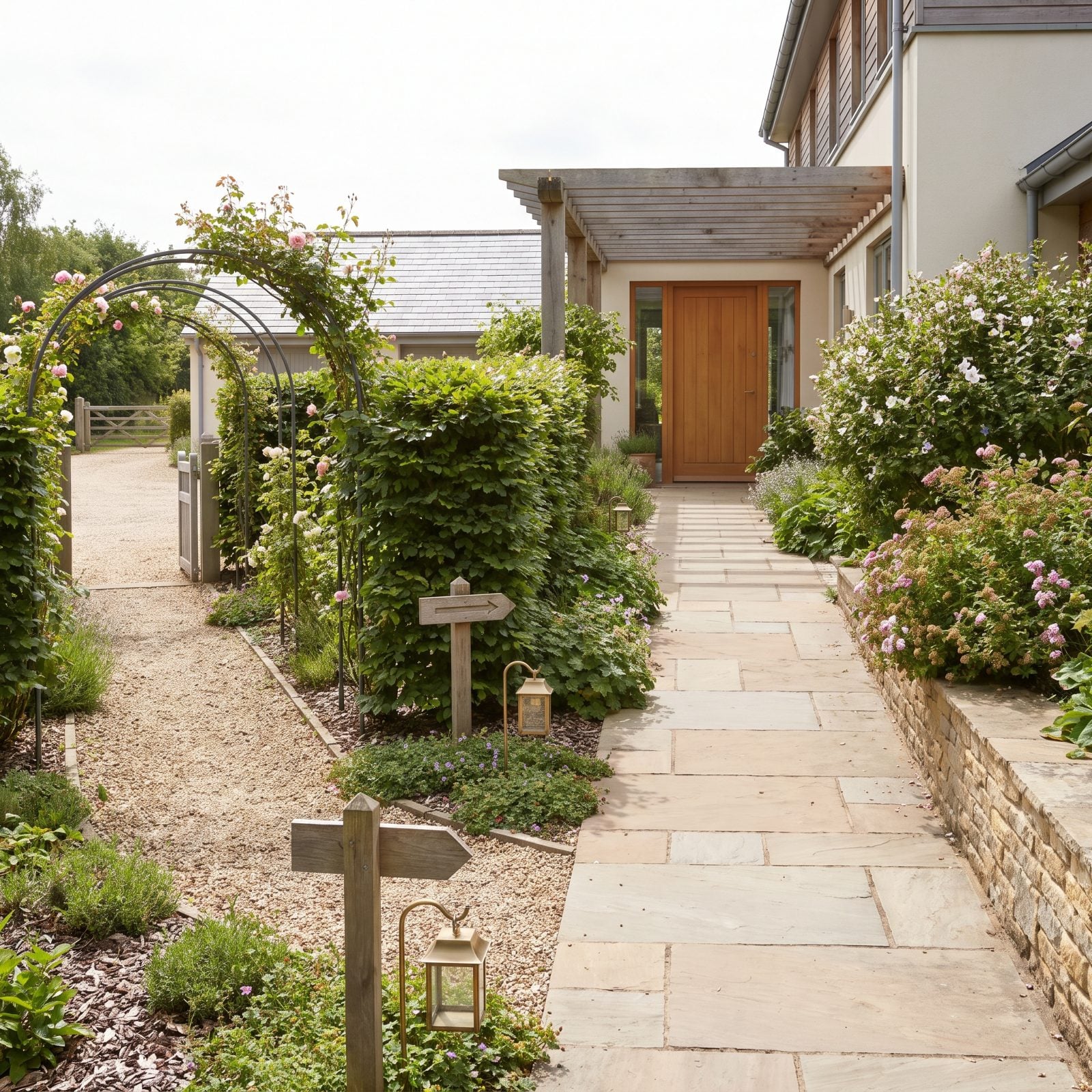
Here’s a design choice almost nobody notices, which is exactly why it works.
When arriving guests and checking-out guests share one driveway, the first thing you see is strangers wrestling luggage into cars and the slightly deflated faces of people whose holiday just ended. Not the note a resort wants to open on. Separate the routes and your arrival stays pristine — olive trees, a water feature, a shaded portico, and no funeral procession of departing suitcases. The welcome gets to be the only story you’re told.
2. A Private Terrace Extends the First Moment of Calm
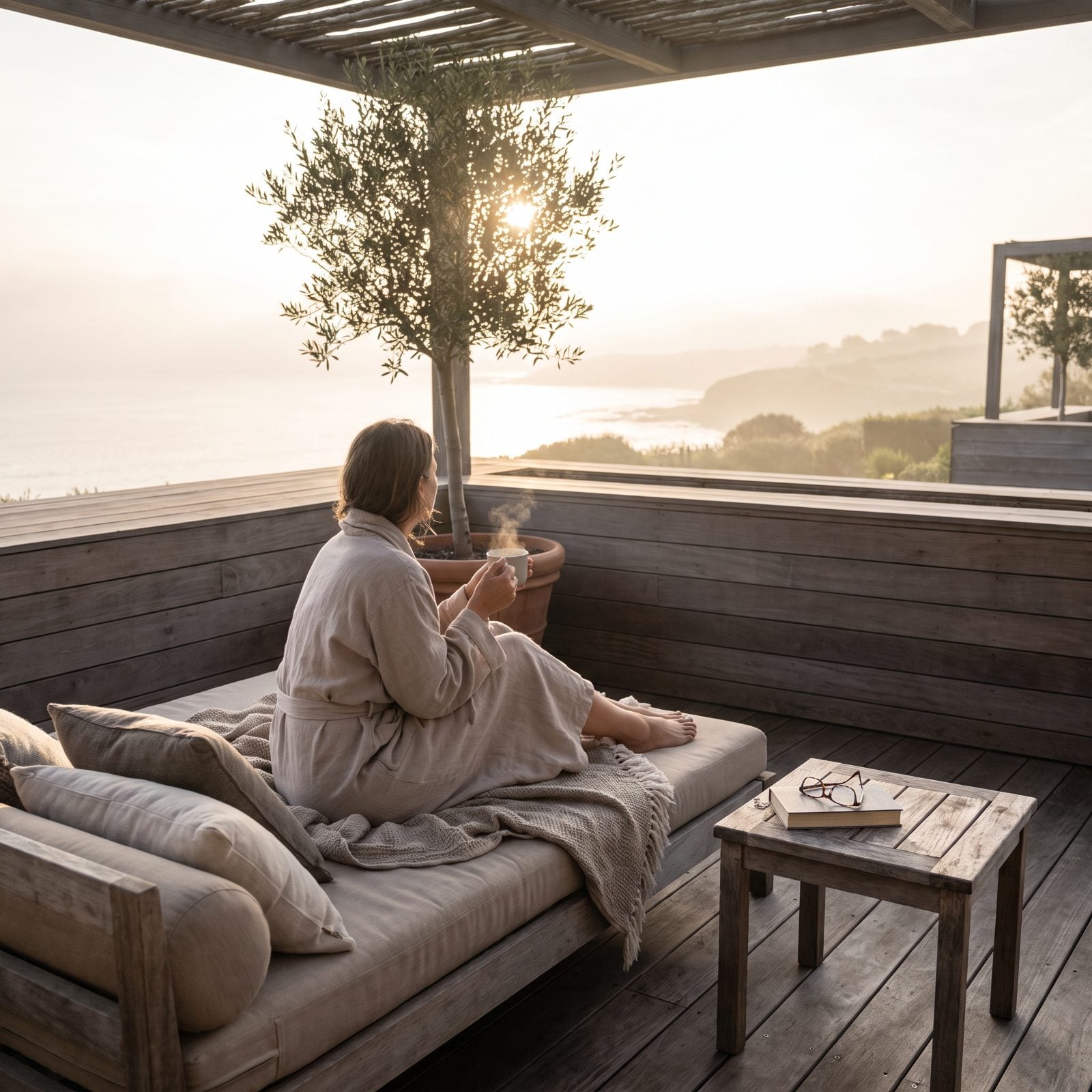
A balcony is just a railing with a view. A private terrace is a mood that follows you back inside.
The difference is screening — slatted timber, a strategic planter, a solid wall where the neighbor would otherwise be. You step out in a robe at seven in the morning and nobody can see you, so you actually stay out there. A teak lounge chair and a chunky knit throw turn that first calm minute of arrival into something you’ll keep coming back to all week.
1. Sunset Orientation Builds a Daily Resort Ritual
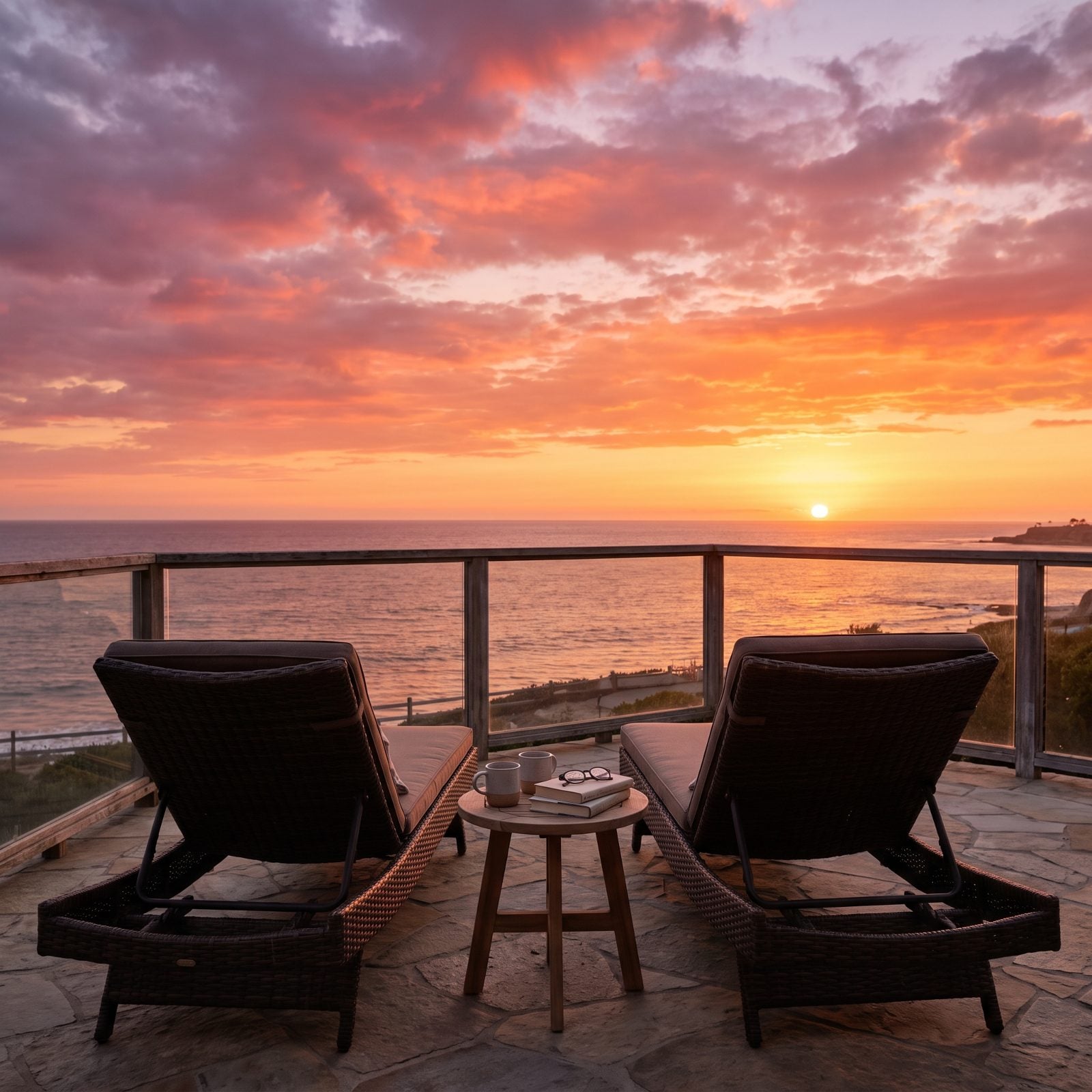
Point the best terrace at the sunset and you’ve handed every guest a daily appointment they’ll actually keep.
It sounds obvious until you notice how many resorts face their bar at the parking lot. The ones that get it right orient the whole evening west. People gather without a prompt, drinks in hand, the same faces showing up night after night. By day three it’s a ritual — and a ritual is what you remember long after you’ve forgotten the thread count.
The view sells the room once. The sunset sells the whole week, every single evening, for free.
🔥 Would you like to save this?
Please note that some of the imagery in this article were created with the aid of AI image generators.