
🔥 Would you like to save this?
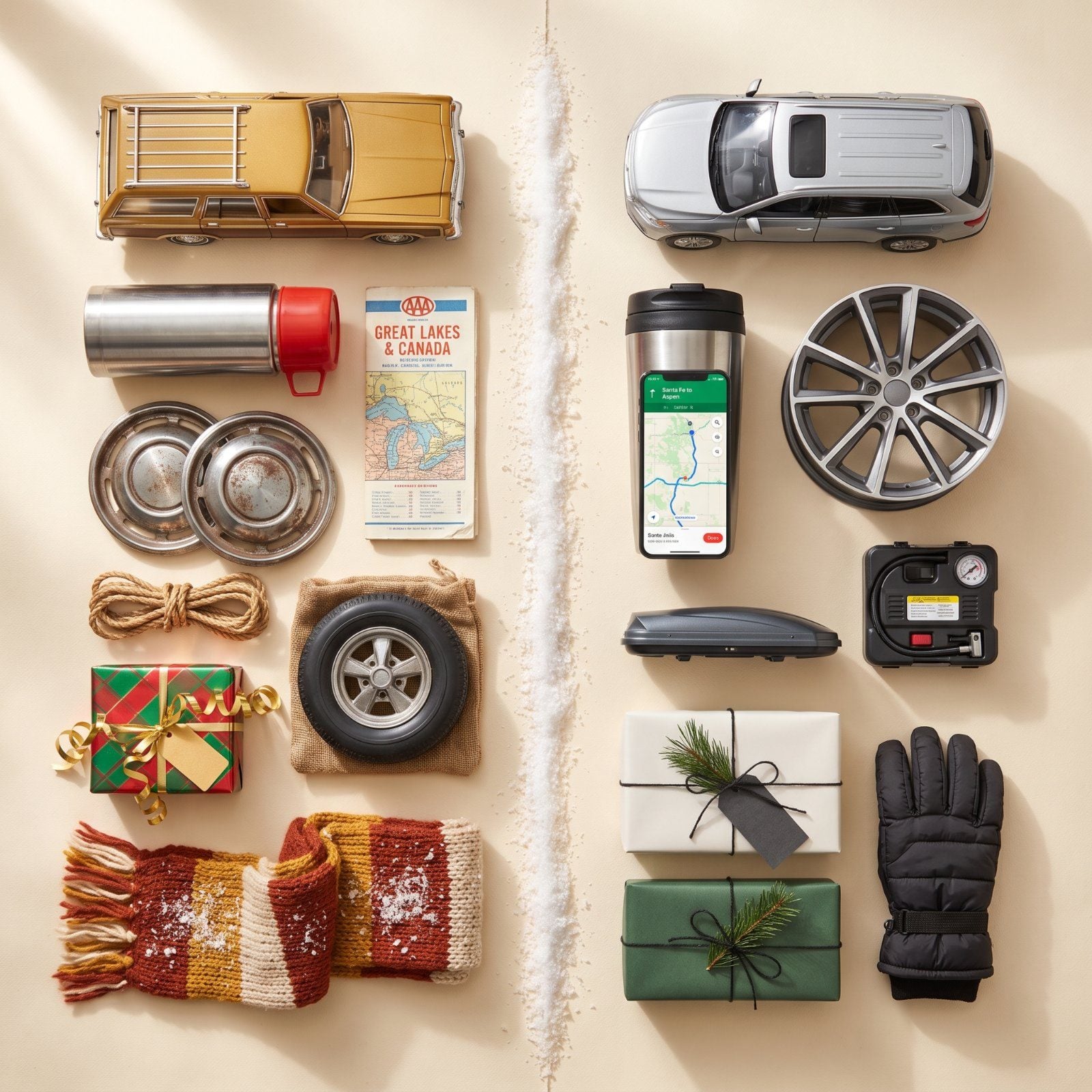
The tailgate dropped with a heavy metal clunk, and out spilled the smell of vinyl seats, cold engine oil, and somebody’s thermos of cocoa. Snow ticked against the windshield. Wrapped presents rode loose in the way-back, sliding into the spare tire on every turn. That was Christmas travel in the 1970s, and it looked nothing like the family SUV idling in your driveway tonight. We lined up the features side by side — same angles, same winter run to Grandma’s. The gap is wider than you remember.
50. Wood-Paneled Station Wagons vs. Three-Row SUVs
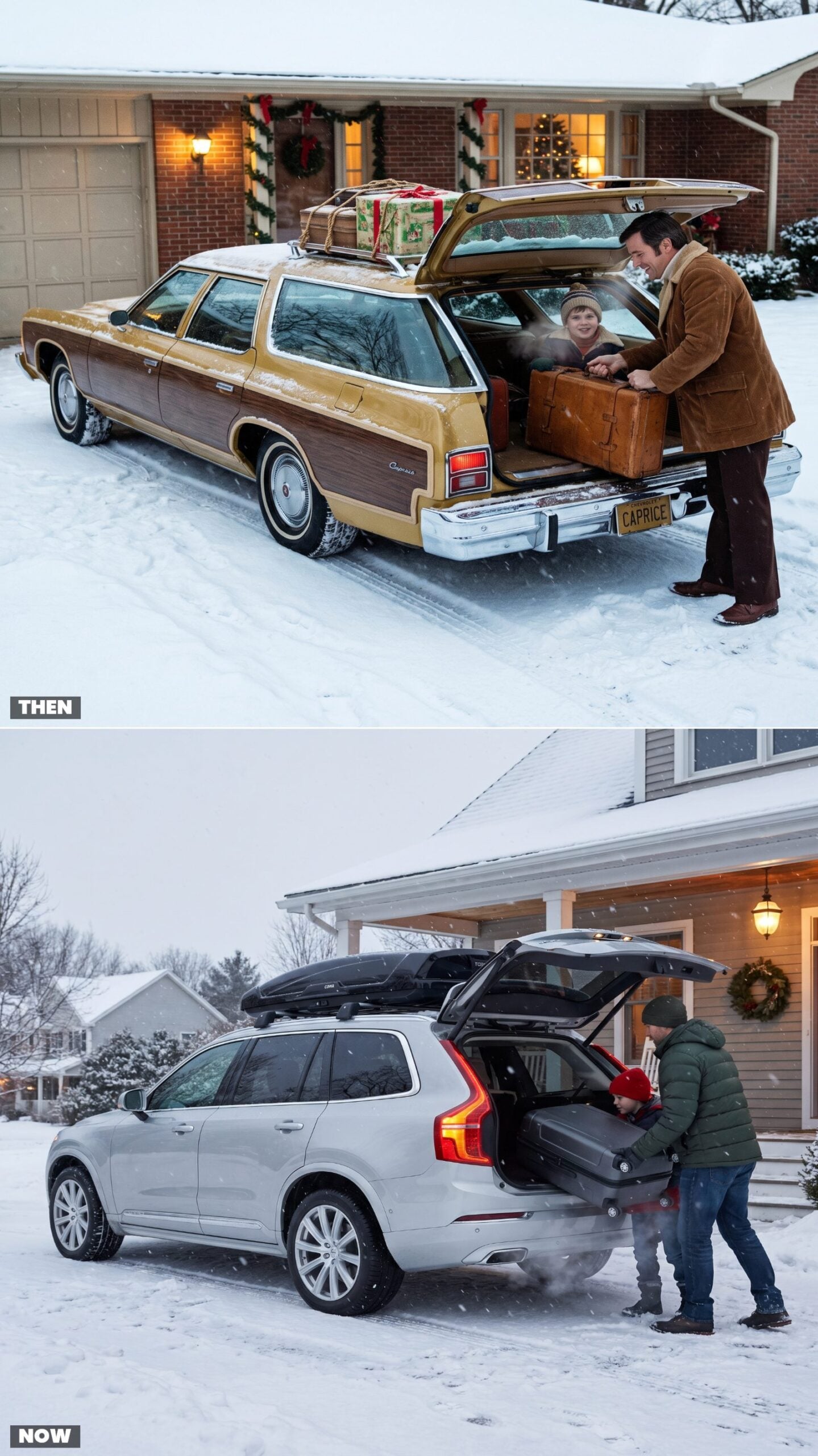
The 1970s wagon was a living room on wheels — nine feet of interior, three rows if you counted the rear-facing jump seats where the kids rode backward waving at strangers. That fake wood paneling wasn’t wood at all. It was vinyl adhesive film, and by year three it peeled at the corners like a bad sunburn.
Today’s three-row SUV does the same job standing taller, riding higher, and hiding the third row under a power-folding floor. Same mission, Grandma’s house by dark. Completely different animal.
49. Chrome Bumpers vs. Color-Matched Impact Bumpers
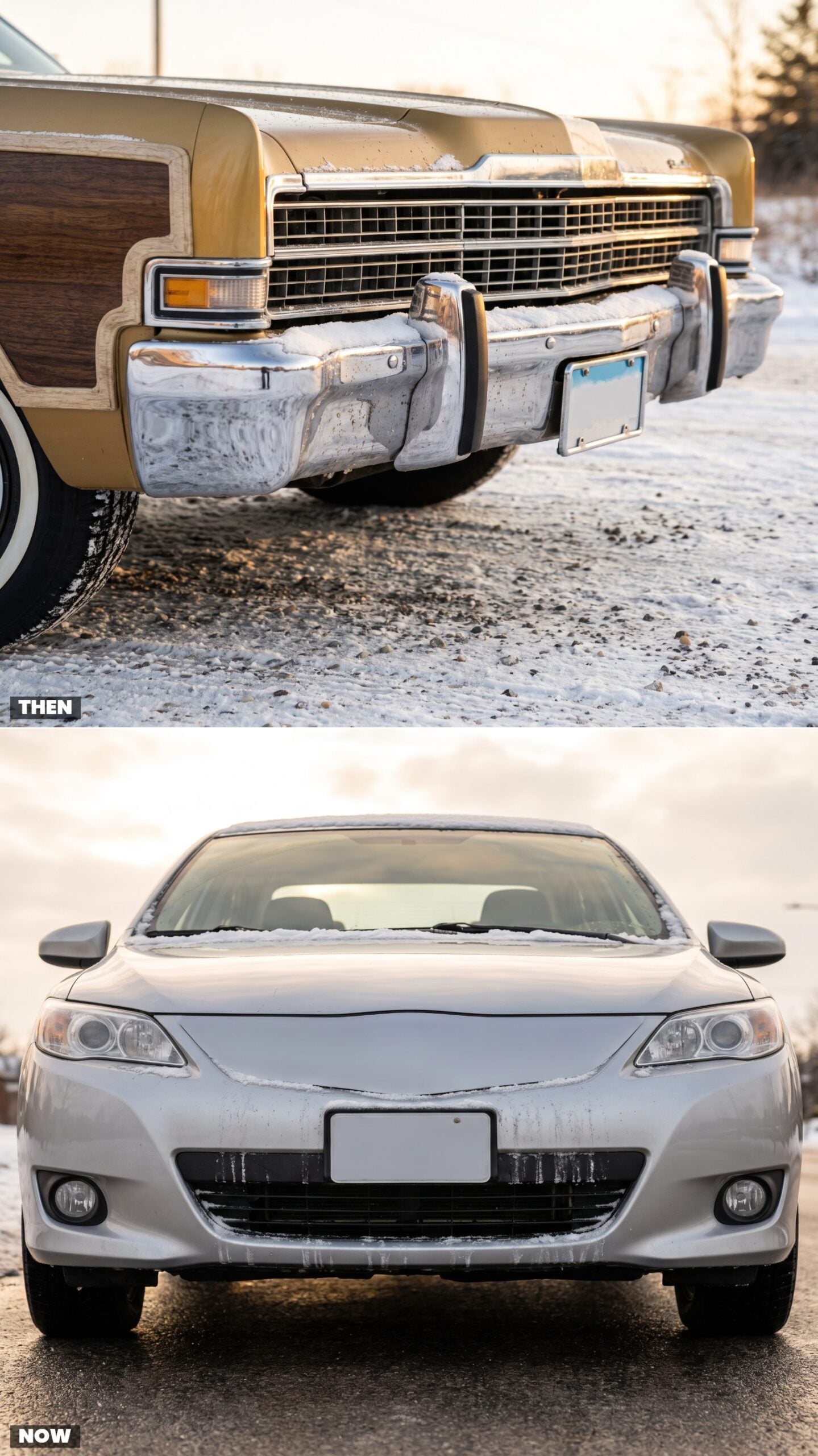
You could see your face in a 1970s bumper. Blocks of polished chrome, heavy enough to double as a bench, and after the 1973 federal impact standards they stuck out even further to survive a five-mph tap. People sat on them at tailgate lunches, and when the seams rusted you just buffed them down with a rag.
The modern version vanished into the body. It’s painted plastic fascia, color-matched, built to crumple on purpose and soak up the hit — cheaper to make, impossible to sit on. And when a shopping cart finds it in the lot, the whole panel needs a paint booth.
48. Earth-Tone Paint vs. Monochrome Finishes
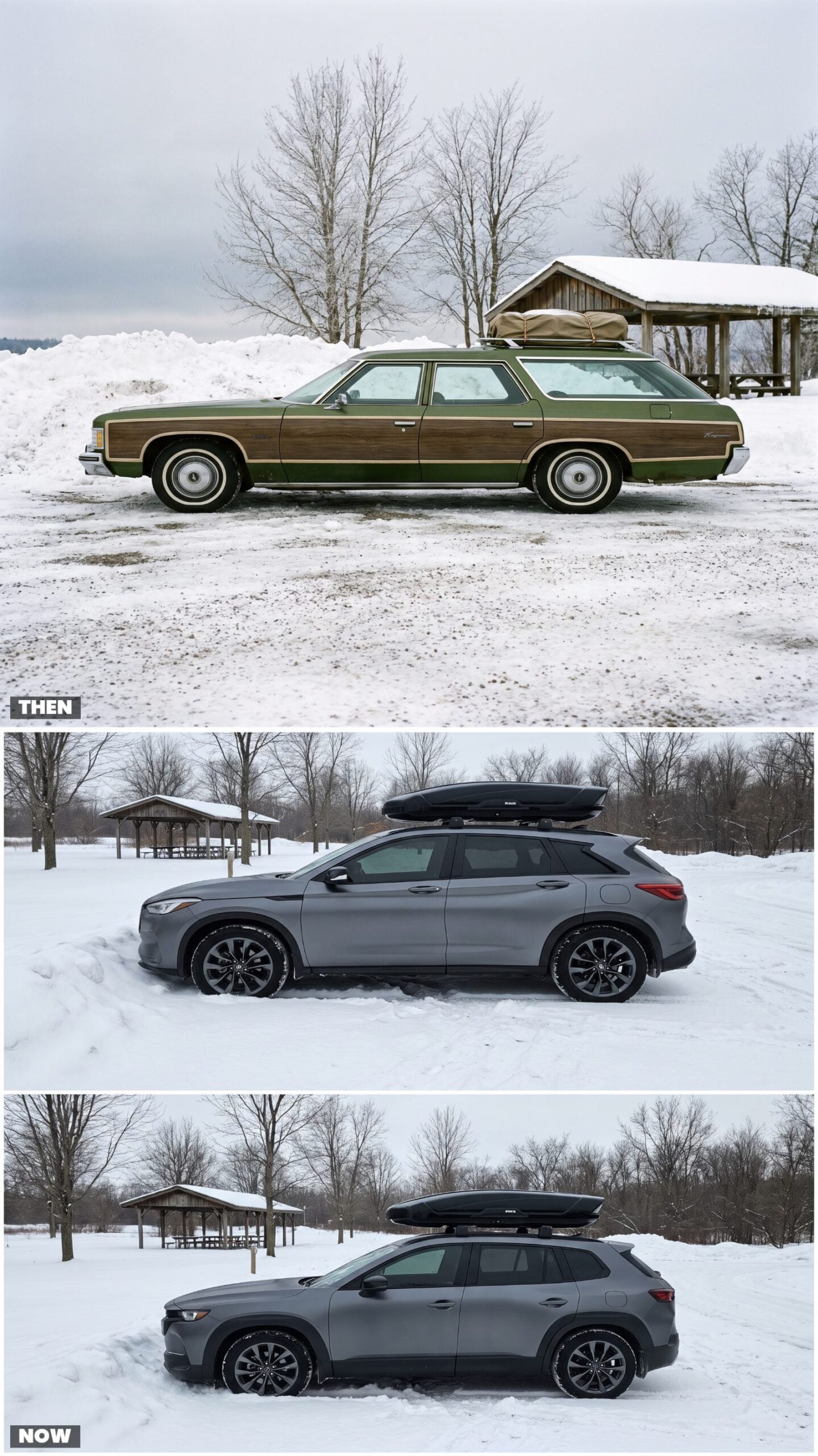
Avocado. Harvest gold. Burnt sienna. Copper. The decade dressed its cars like its kitchens, in colors that made sense next to shag carpet and a fondue pot. A green wagon felt normal, and a brown one felt classy.
Now the lot is a fog bank — white, silver, black, and forty shades of grey, with the occasional brave soul in navy. Blame resale value, and blame the algorithms too. Neutral colors move off the lot faster, so that’s what gets built.
47. Sealed-Beam Headlights vs. Adaptive LED Lamps
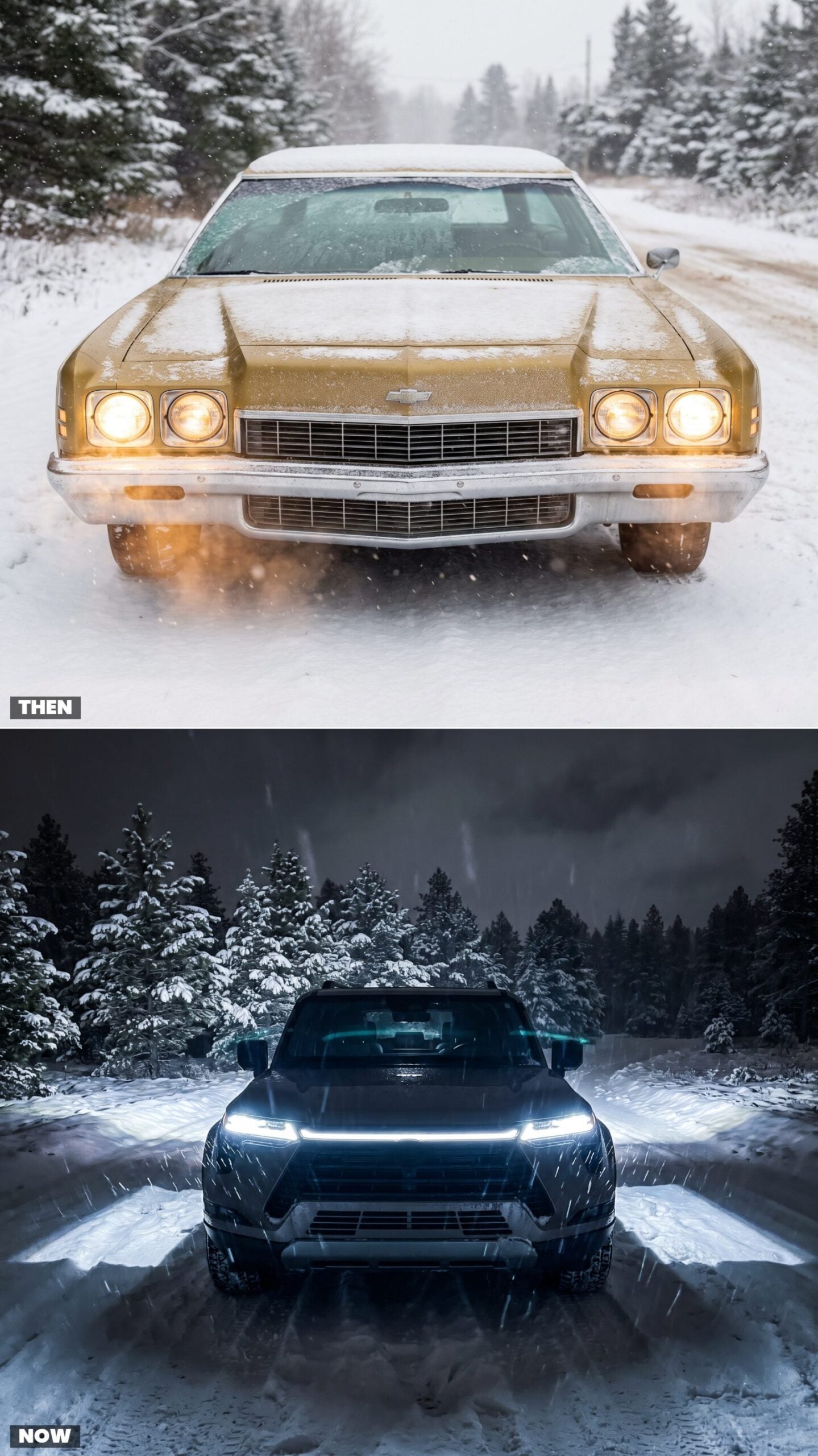
Round, sealed, standardized. Every car in America ran the same interchangeable glass headlight units, warm yellow and dim by any modern measure. When one burned out you popped the trim ring, twisted in a new sealed beam at the parts store, and drove off. Ten minutes, a few bucks.
The adaptive LED lamps on a new SUV steer their beam around corners, dip automatically for oncoming traffic, and light up the shoulder like daylight — but they cost a small fortune to replace and require a dealer to do it. Progress cuts both ways on a dark December highway.
46. Stamped-Steel Hubcaps vs. Alloy Wheels
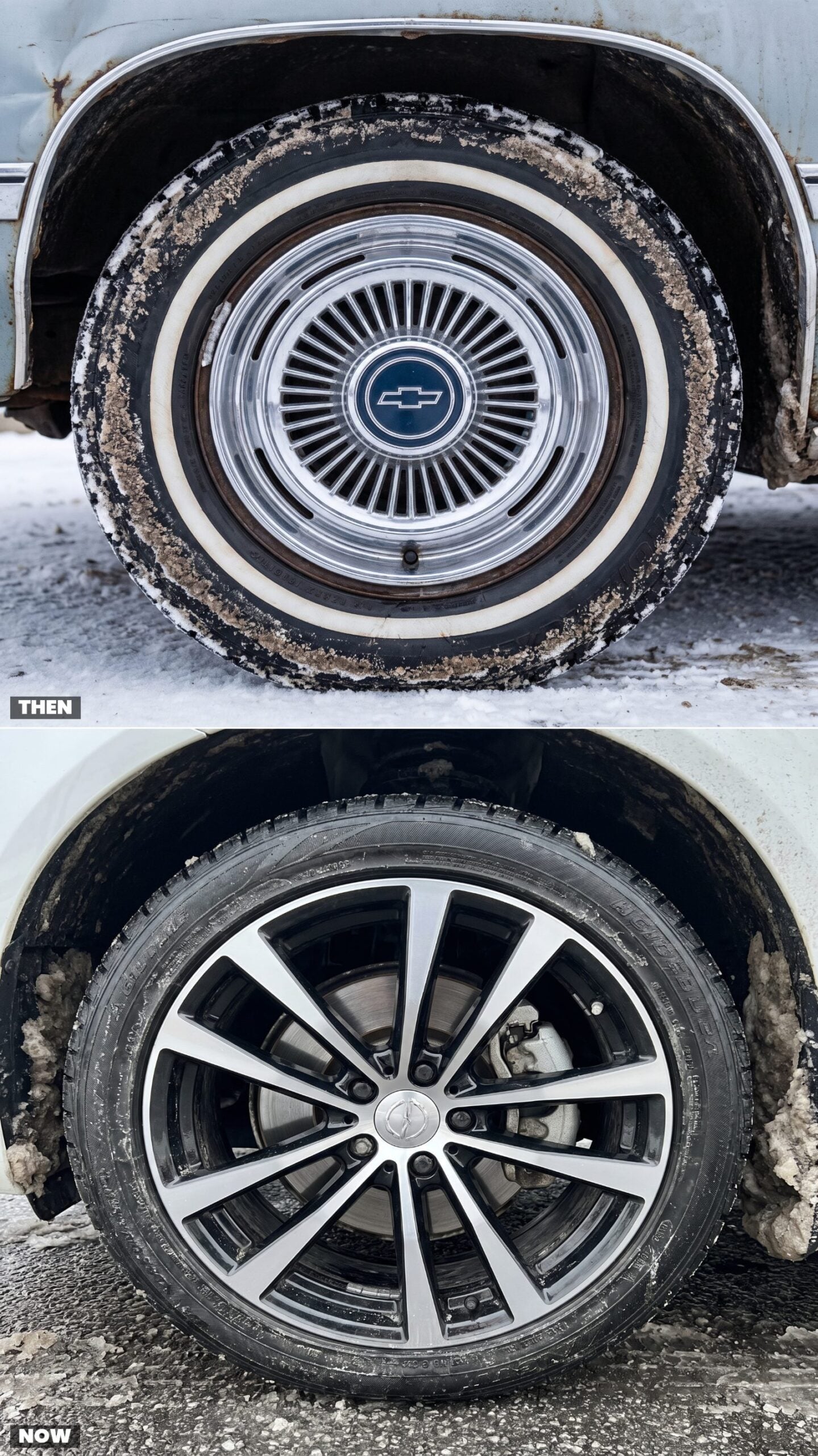
Hubcaps popped off — that was the whole story. You’d hit a pothole on the way to Grandma’s and watch a chrome disc spin down the shoulder into a ditch, gone forever. Half the wagons on the road ran three matching caps and one that didn’t, and nobody ever replaced the fourth.
Alloy wheels bolt on and stay on. Lighter, cast in one piece, no cap to lose. They also bend on a hard curb hit and cost real money to fix. Different problem. Fewer roadside ditches involved.
45. Rope-Tied Roof Luggage vs. Locking Cargo Boxes
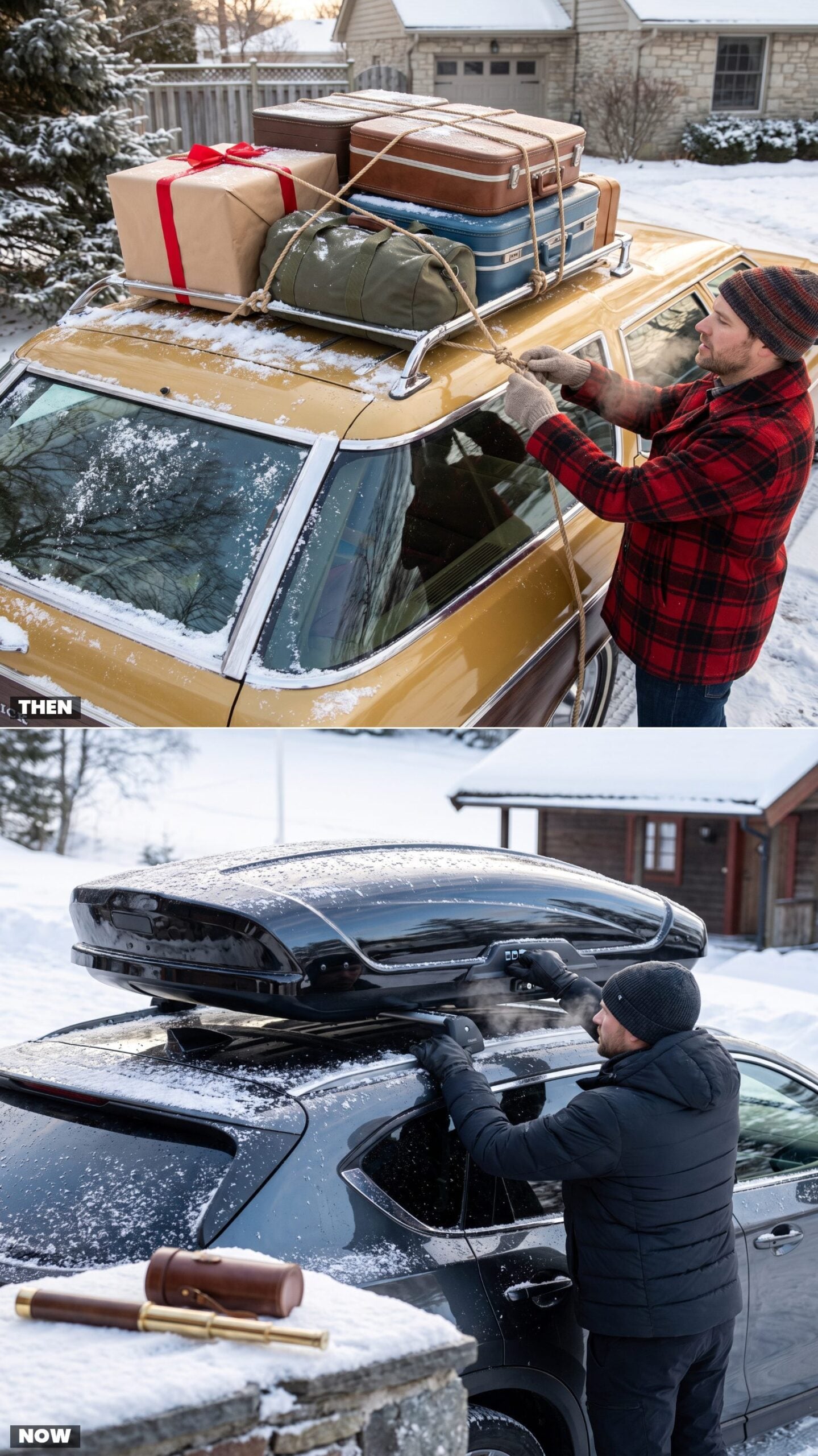
Every dad became a sailor for one afternoon in December. Suitcases stacked on the roof rack, a wrapped gift wedged in the middle, and yards of rope crisscrossed and cinched with whatever knot he half-remembered. Then you drove the first mile at ten miles an hour, listening for the flap of something coming loose.
The locking cargo box killed the ritual. Lift the lid, drop the bags, click it shut, done. Aerodynamic, weatherproof, and nobody stands in the driveway swearing at a tarp anymore.
44. Overstuffed Trunks vs. Organized Cargo Systems
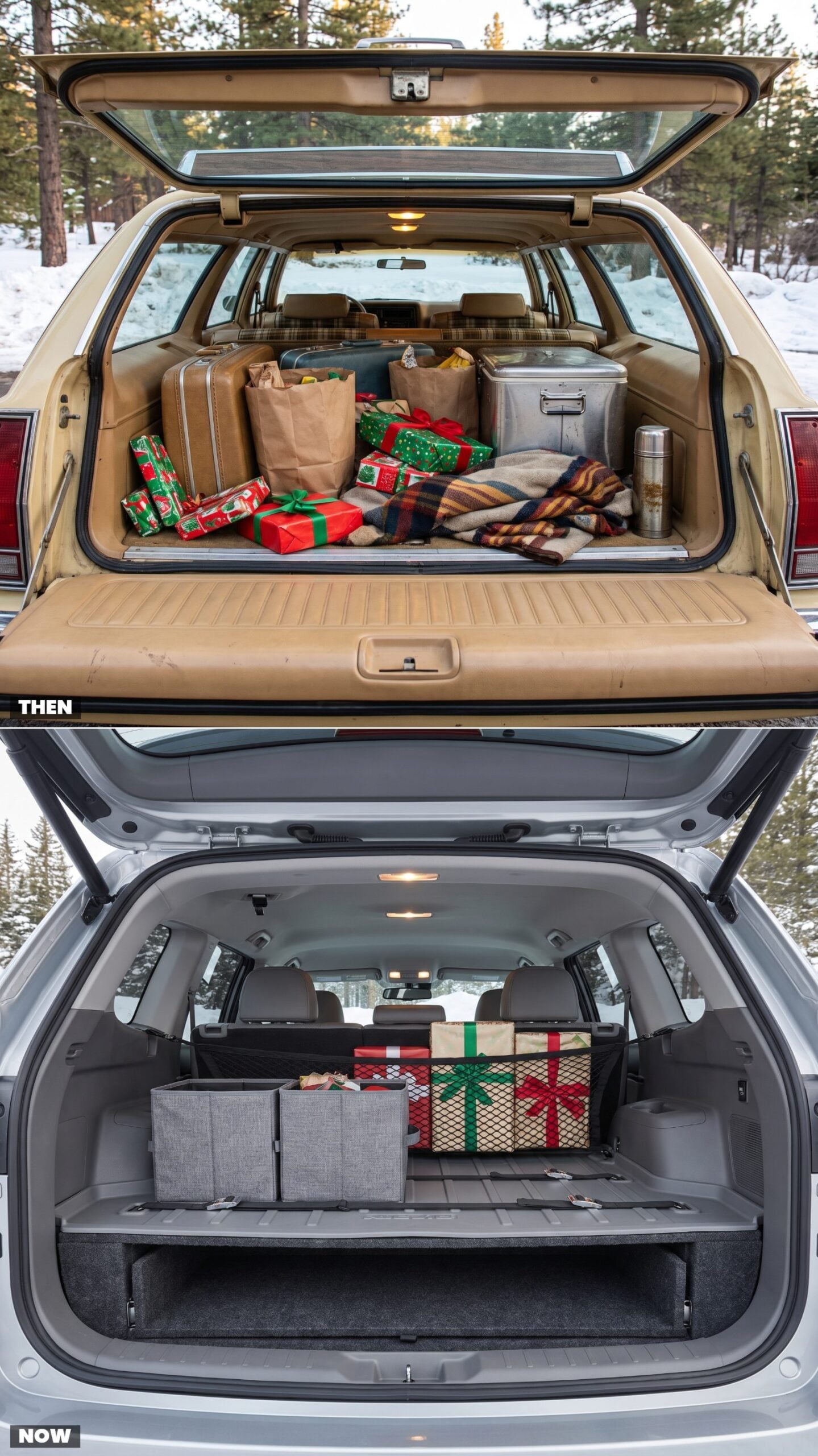
The 1970s trunk followed one rule: if the tailgate closes, you’re done. Everything went in loose. Presents shifted, the cooler tipped, a grocery bag split somewhere near the state line and you found a rolling orange under the seat in March.
Modern cargo areas come with a whole industry bolted on — molded trays, collapsible bins, cargo nets, tie-down anchors. The gifts arrive at Grandma’s exactly as wrapped. Something was lost, honestly. Half the fun was the archaeological dig at the other end.
43. Drop-Down Tailgates vs. Hands-Free Power Hatches
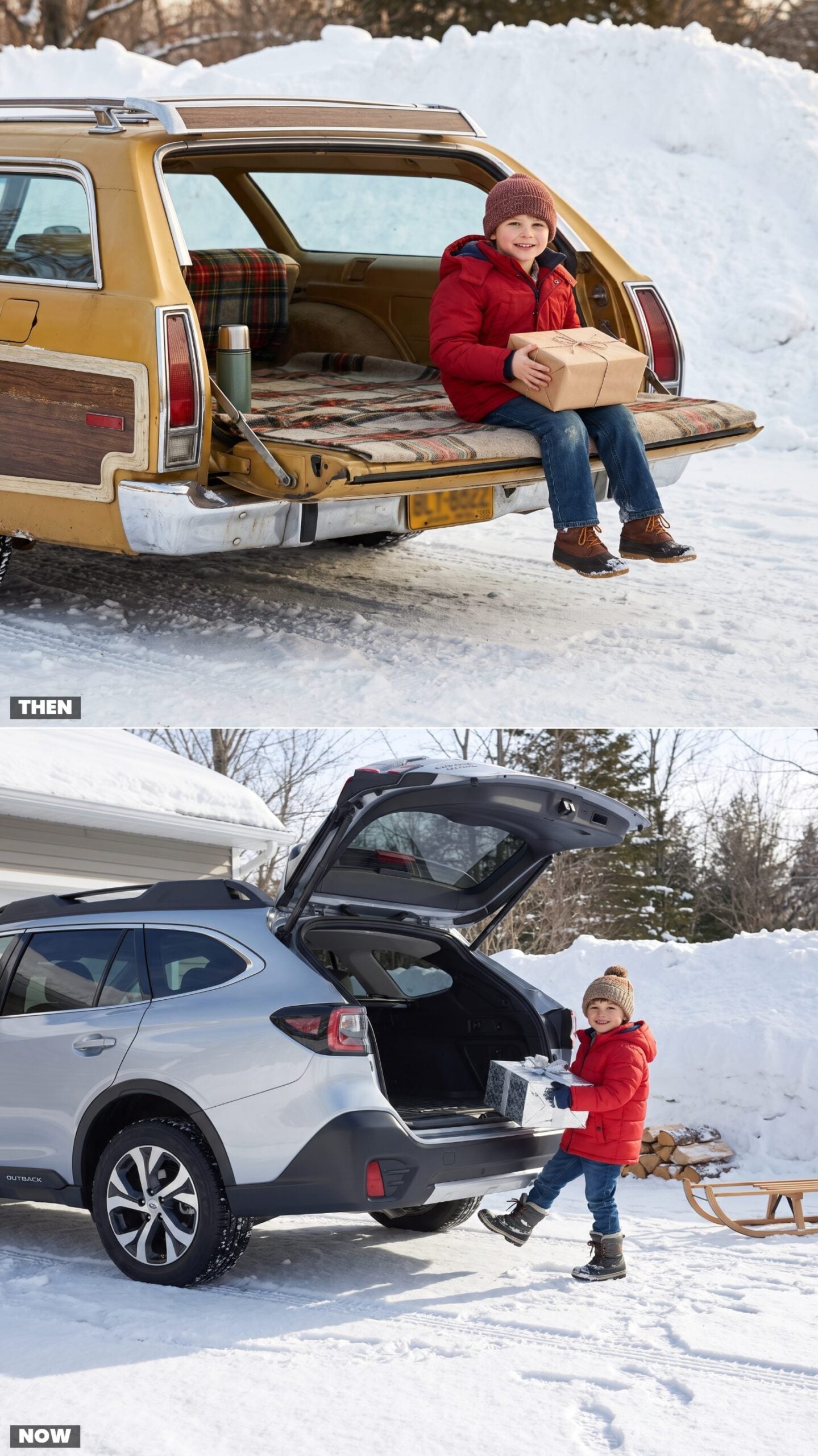
The drop-down tailgate was a piece of furniture. Flip it flat and you had a bench, a picnic table, a stage for the kids to sit and swing their legs at a snowy rest stop. Some wagons even offered a clever three-way gate that swung sideways too — heavy as a barn door and twice as satisfying to slam.
Now you wave a foot under the bumper and the whole hatch rises on its own with a polite beep. Hands full of gifts, no problem. But nobody’s ever sat on a power liftgate. It just isn’t built for lingering.
42. Full-Size Spare Tires vs. Inflator Kits
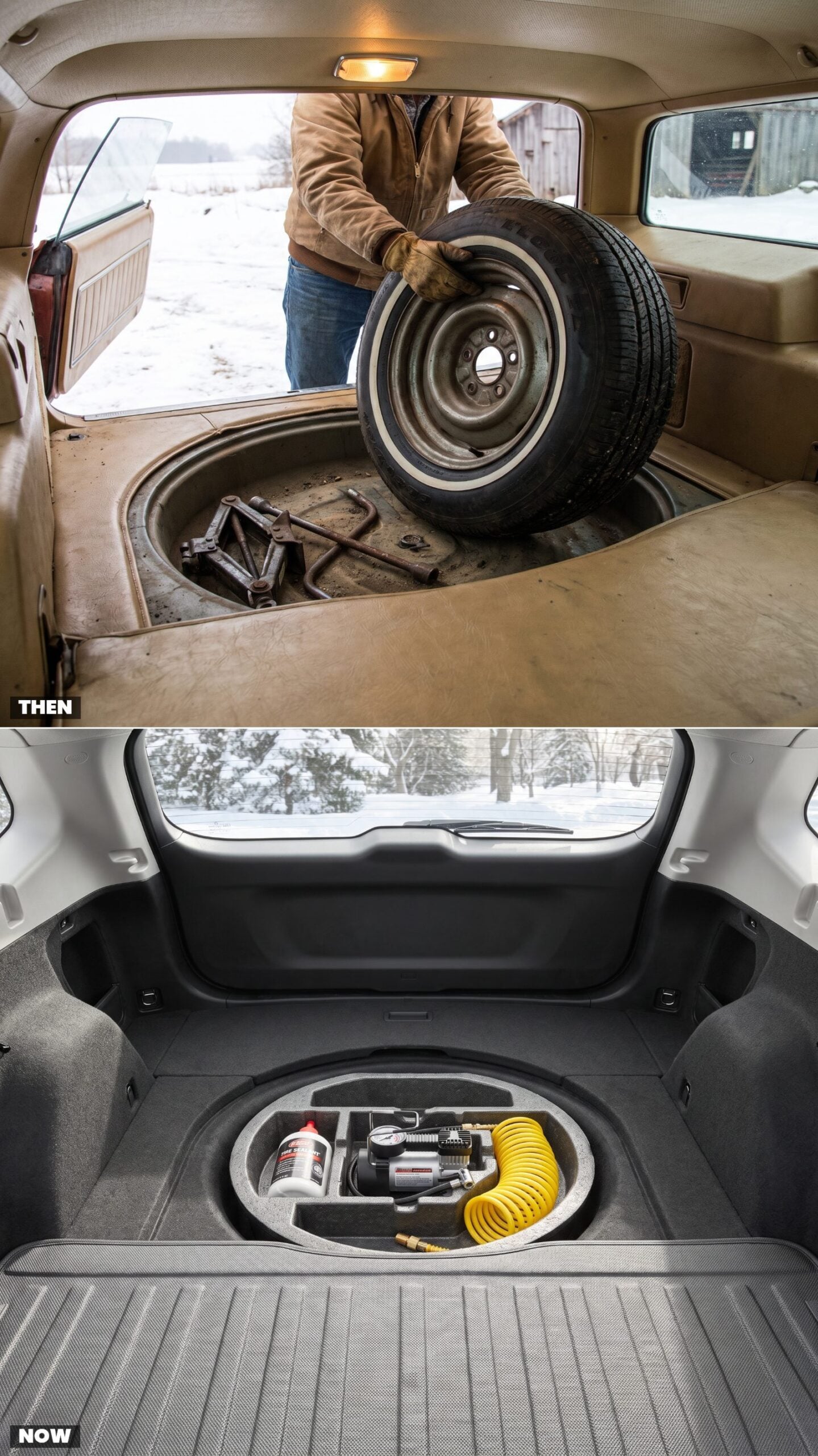
Under the cargo floor sat a full second wheel, whitewall and all, plus a scissor jack and a lug wrench that had rusted itself shut. A flat on the way to Christmas dinner meant twenty cold minutes and a dad on his knees in the slush — but you rolled away on a real tire and finished the trip.
Most new SUVs skip the spare entirely. In its place, a can of sealant and a little electric pump. Lighter, more room, better fuel economy. And useless if you catch a real sidewall gash on a rural road at nine at night. Then you’re waiting on a tow.
41. Telescoping Radio Antennas vs. Shark-Fin Antennas
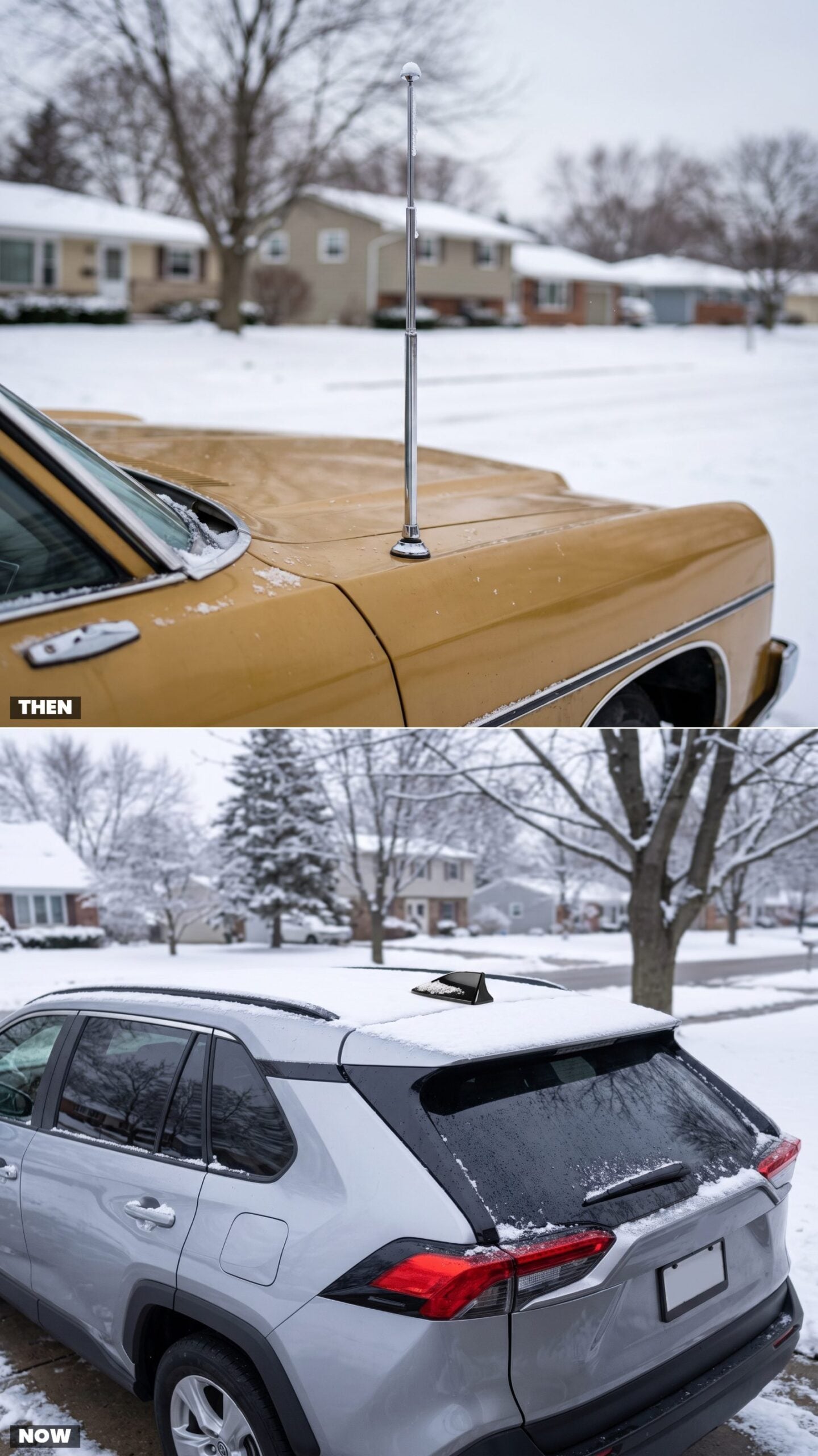
A thin chrome mast on the fender, cranked up by hand or with a little motor, and it caught every AM station between towns. It also snapped off in the car wash, iced over in December, and made a perfect target for a bored kid to bend into a corkscrew.
The shark fin does all of that and more, folding GPS, satellite radio, and cell reception into one squat black lump on the roof. Aerodynamic, unbreakable, completely charmless. You can’t tune it, twist it, or knock it sideways. It just sits there and works.
40. Two-Speed Wipers vs. Rain-Sensing Wipers
🔥 Would you like to save this?
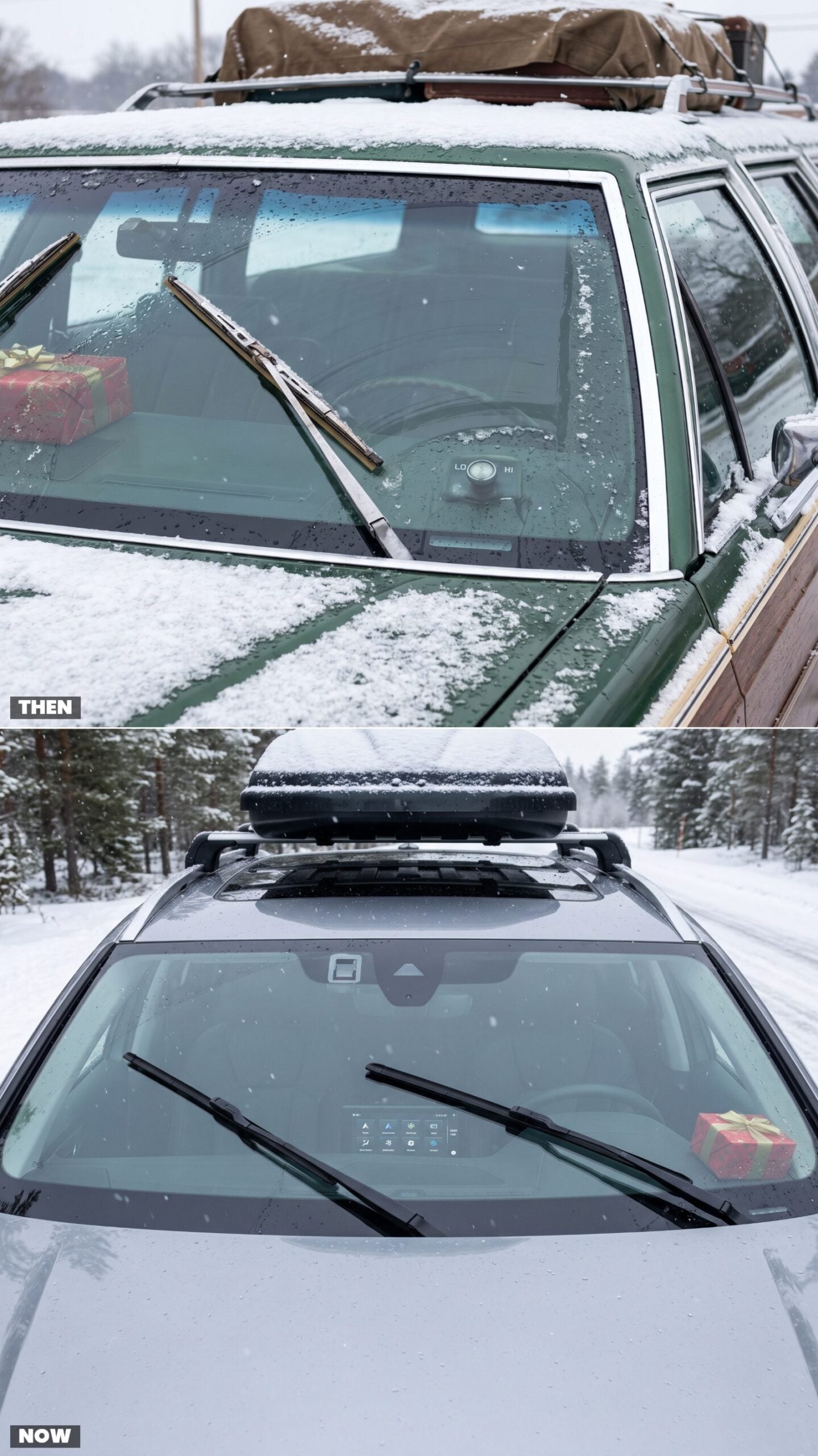
Two speeds. That was the whole menu in 1975 — slow smear or fast smear, and you picked by feel while the snow came down harder than either setting could handle. Somewhere between Amarillo and grandma’s house, you learned to find that metal knob without looking.
Now the car decides. A little sensor tucked behind the glass reads the raindrops and adjusts on its own, dawdling through a light flurry and speeding up when the sky opens. You never touch it. It works so well you forget it’s there — which, for a wiper, is about the finest thing you can say.
39. One Small Side Mirror vs. Heated Camera-Enabled Mirrors
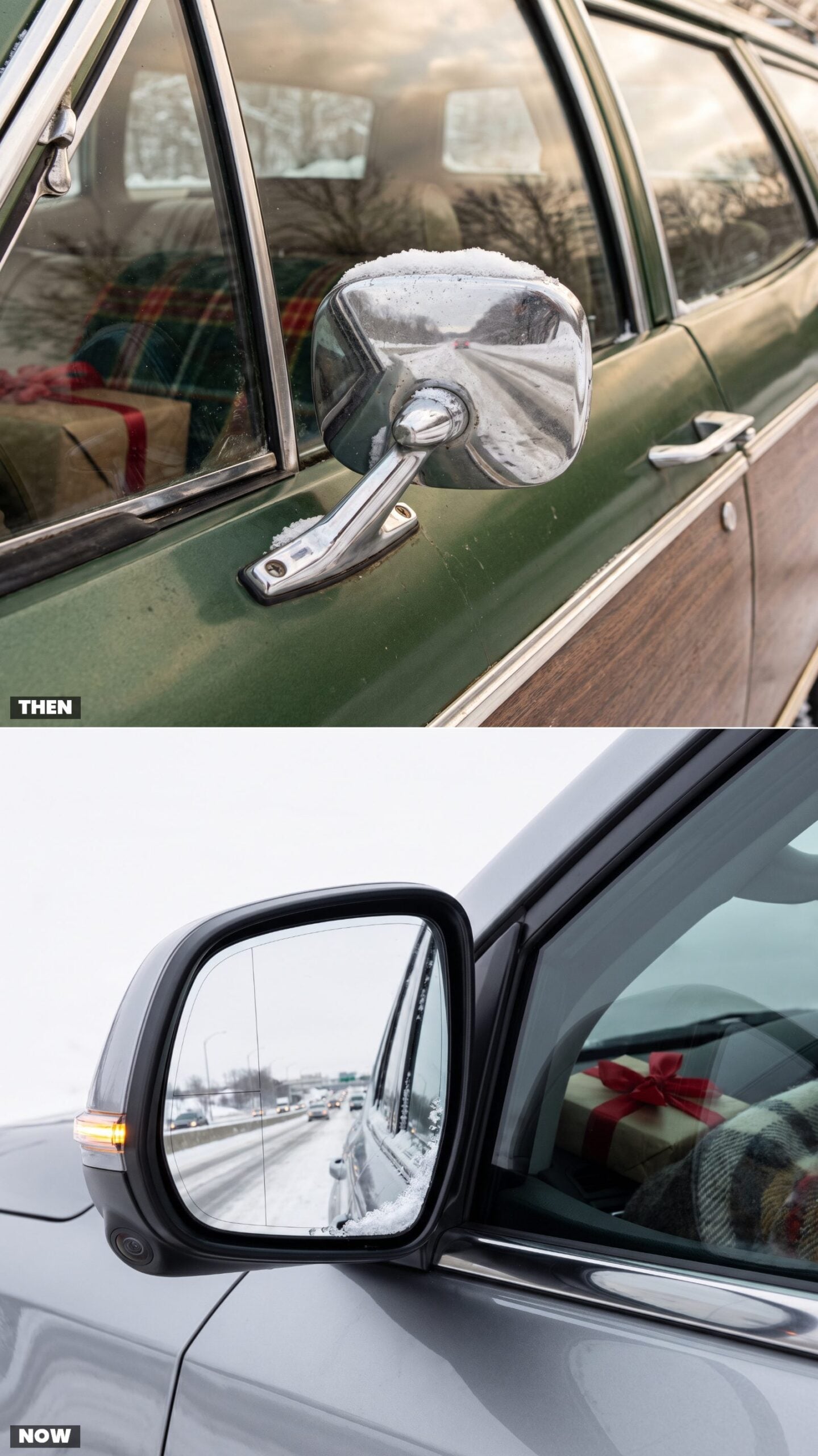
You rolled down the window to knock the snow off the mirror. That was the system. One little chrome cup on the driver’s side, and if you needed a look down the passenger side, somebody had to lean way over and eyeball it while you shouted directions from behind the wheel.
The modern one heats itself clear, folds in at a button-press, tucks a camera underneath for parking, and blinks amber when you signal. It does more before breakfast than the old one managed all trip. Still — I miss reaching out and swiping the glass with a mitten. There was something honest about that.
38. Metal Ignition Keys vs. Push-Button Starting
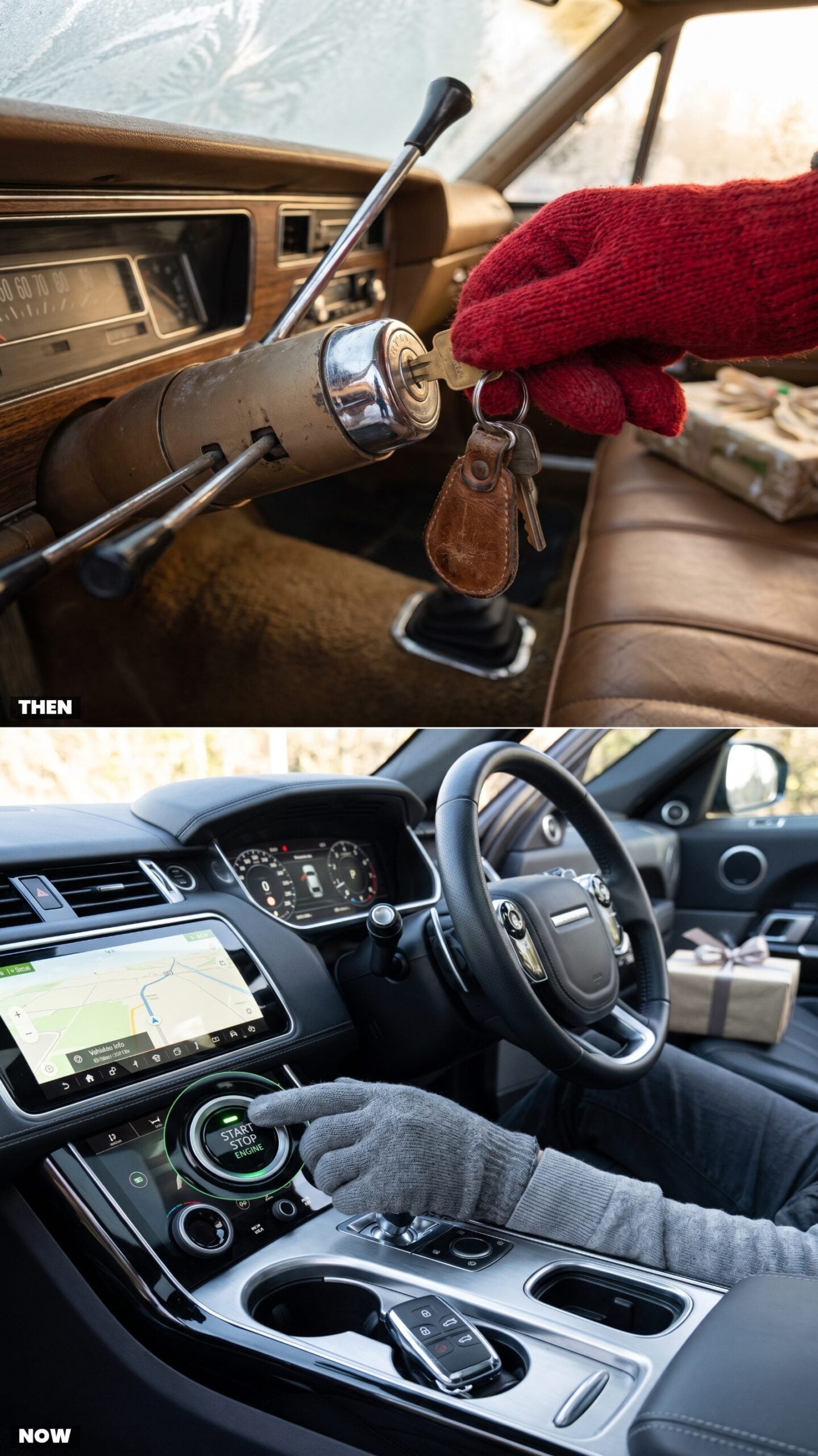
The key had heft. You dug it out of a coat pocket with cold fingers, found the slot, and the whole car woke up with a shudder and a cough on a December morning. Miss on the first try and you’d pump the gas and go again.
Push-button starting killed all that ritual. Keep the fob in your pocket, press the button, done — cleaner, faster, and you never drop the key into the snow at a gas station. But the old brass key felt like it meant something. You held it. Now you just walk up and the car already knows you’re there.
37. Full-Width Bench Seats vs. Sculpted Bucket Seats
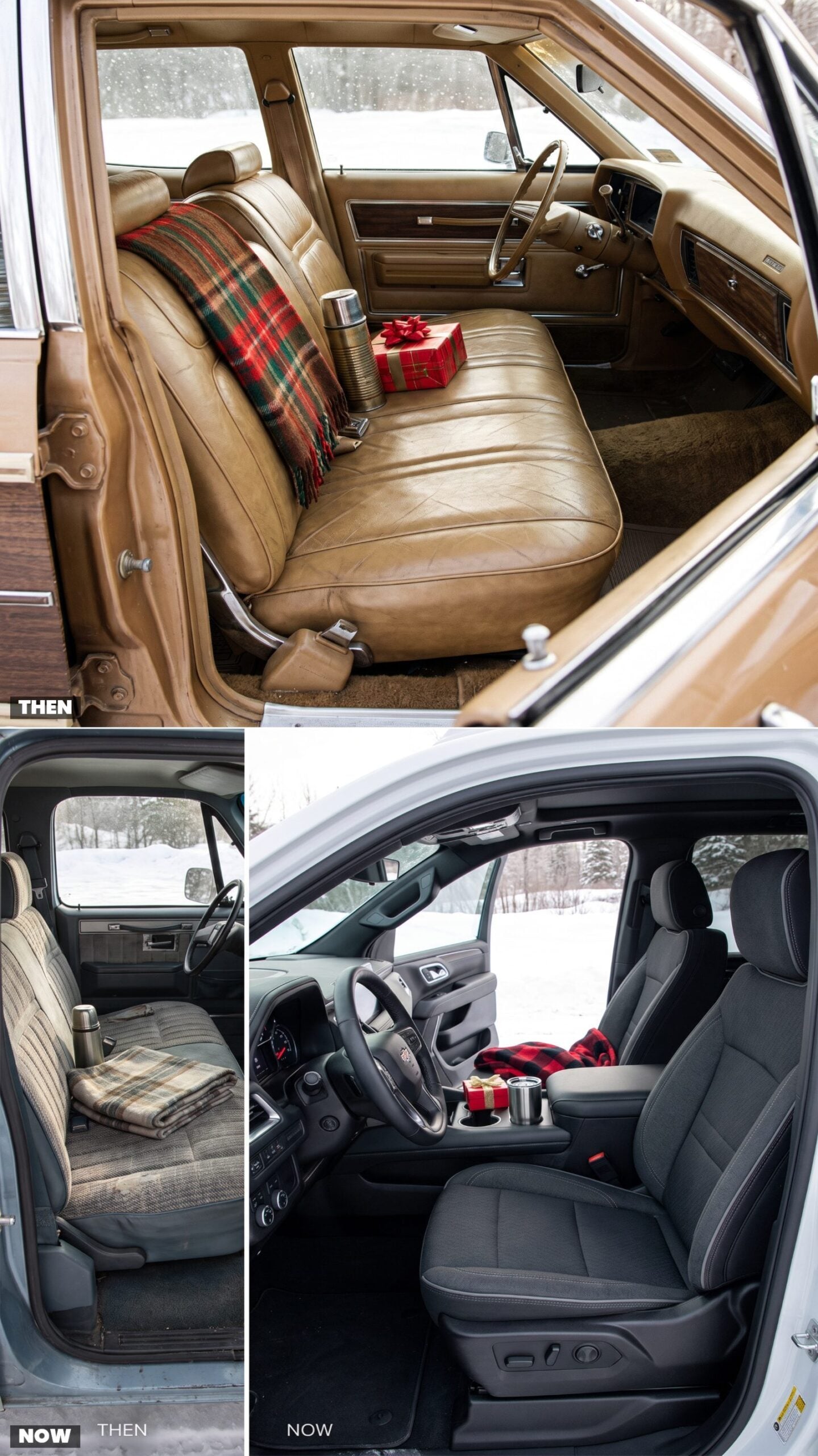
One long slab of vinyl, door to door. Three across the front if you had to, and on a Christmas trip you usually did — somebody wedged in the middle straddling the transmission hump with the thermos rolling around at their feet.
Today it’s two charcoal bucket seats with a fortress of a console between them, cupholders and armrests and a bin for the phone. More comfortable, sure. But you lost the ability to scoot over close to somebody on a cold night drive. The bench had its own kind of warmth.
36. Vinyl Upholstery vs. Heated Fabric Seats
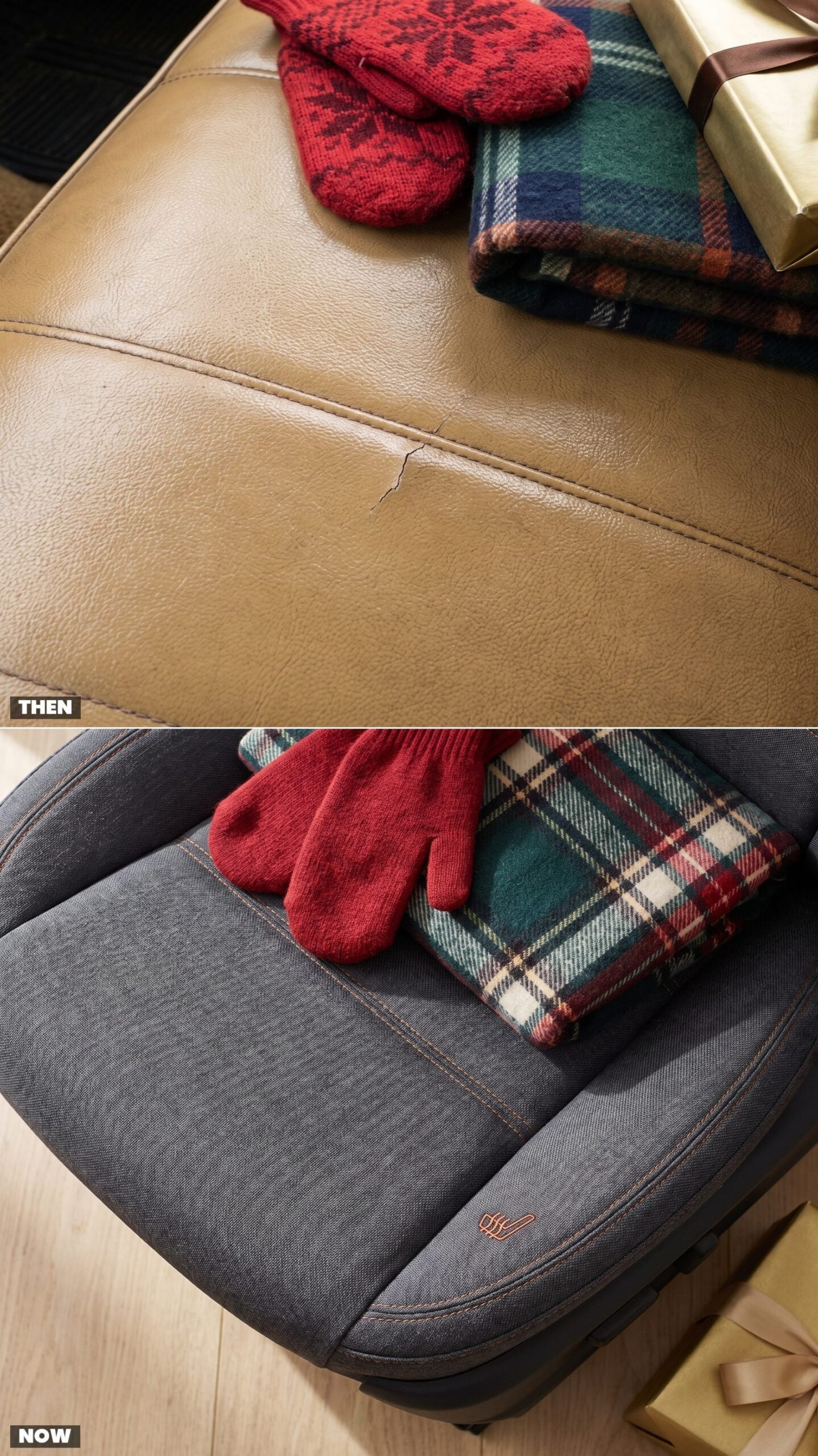
Vinyl in December was a punishment. It went cold and stiff overnight, and sliding onto it in your church slacks felt like sitting on a frozen pond. July did the opposite — it stuck to the backs of your legs. In no season, ever, did vinyl feel like a good idea.
Heated cloth fixed both problems at once. Push a button, wait a minute and a half, and warmth spreads up through the weave on a snowy morning. Load up a wagon in 1974 and tell someone their seat would one day heat itself — they’d have laughed you out of the driveway. Now it’s on economy cars.
35. Lap Belts vs. Three-Point Restraints
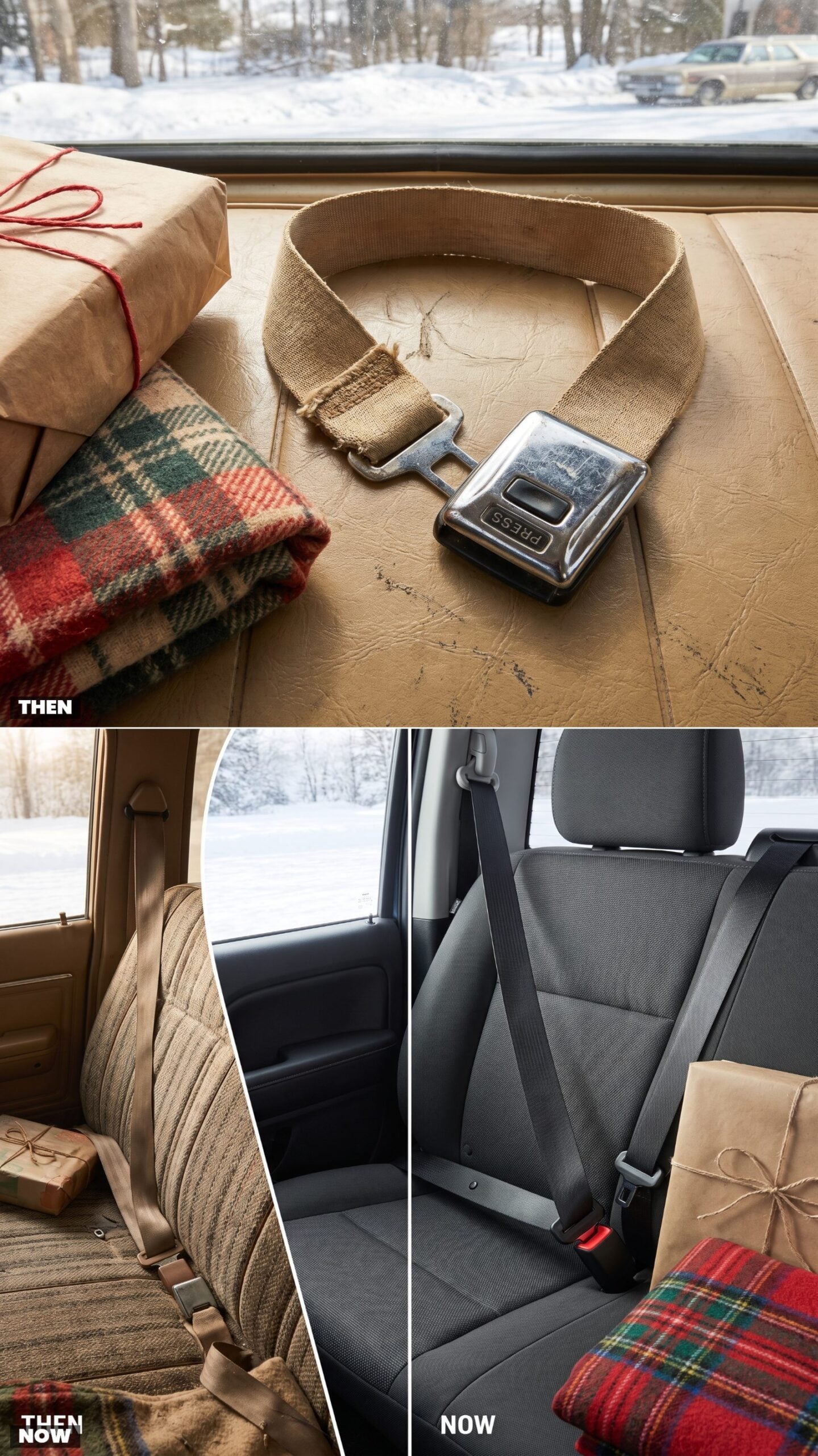
A single strap across the hips. That was seat safety in the early seventies, if anyone bothered to click it at all. Plenty of trips happened with the lap belt shoved down into the crack of the bench, forgotten by mile two.
The three-point catches your shoulder and your lap, locks under hard braking, and reels itself in when you unbuckle. One of the great quiet lifesavers of the modern car, and nobody thinks about it. You should. The distance between a lap belt and a three-point is measured in real outcomes, not comfort.
34. Loose Children in the Back vs. Advanced Child Seats
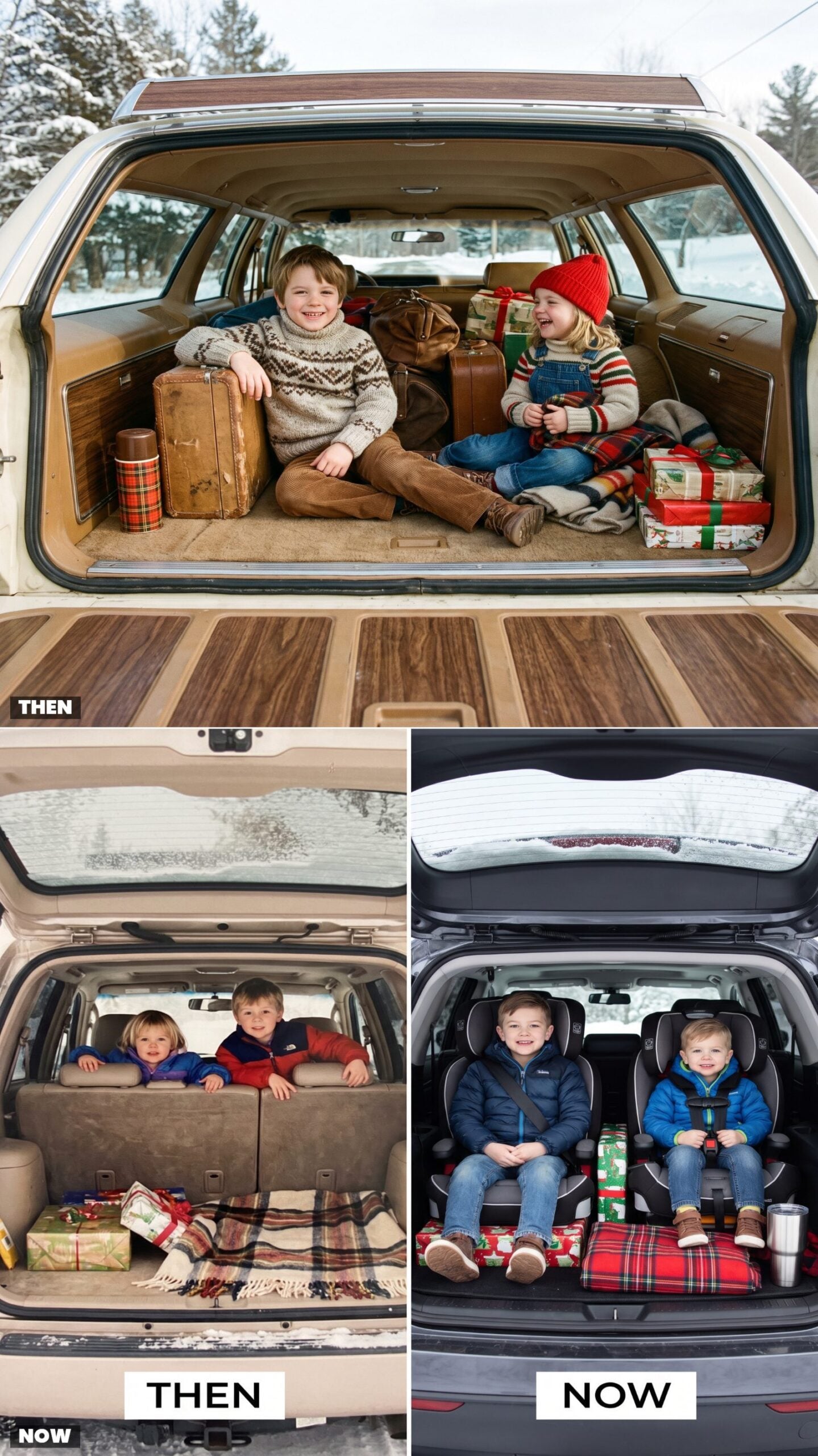
The back of the wagon was a rec room. Kids sprawled on the cargo floor between the suitcases, playing cards on a cookie tin, mashing their faces to the glass to wave at truckers — no belts, no seats, just a flat carpeted expanse and a warning to knock it off back there.
Now every child rides locked into an engineered seat rated for their exact weight and height, rear-facing until they’re older than we’d ever have believed. Less fun, no question. Also the reason a lot more of those kids grew up. I’ll take the trade.
33. Rear-Facing Third Rows vs. Forward-Facing SUV Seating
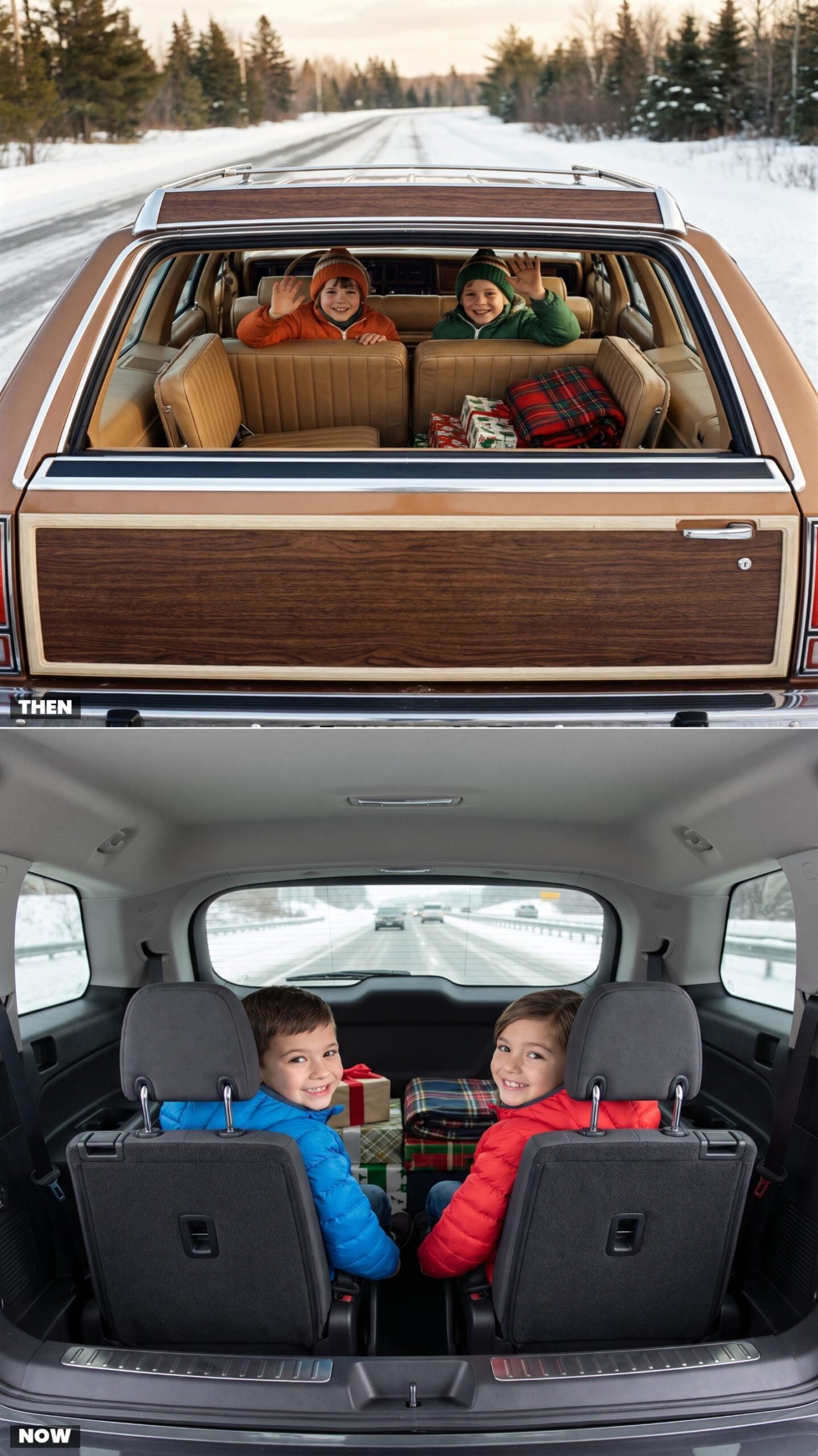
The best seat in the whole car faced the wrong way. That rear-facing third row put the kids nose to nose with the traffic behind — waving at strangers, making faces at the poor soul stuck on your bumper. Eight hours of live theater.
Modern third rows face forward, headrests up, everybody pointed the same direction. Safer geometry, real cupholders, climate vents back there now. Comfortable and sensible. But you lost the view. Nobody waves at trucks anymore.
The wagon turned the back of the car into the front row of a moving parade. The SUV turned it into another set of forward-facing seats.
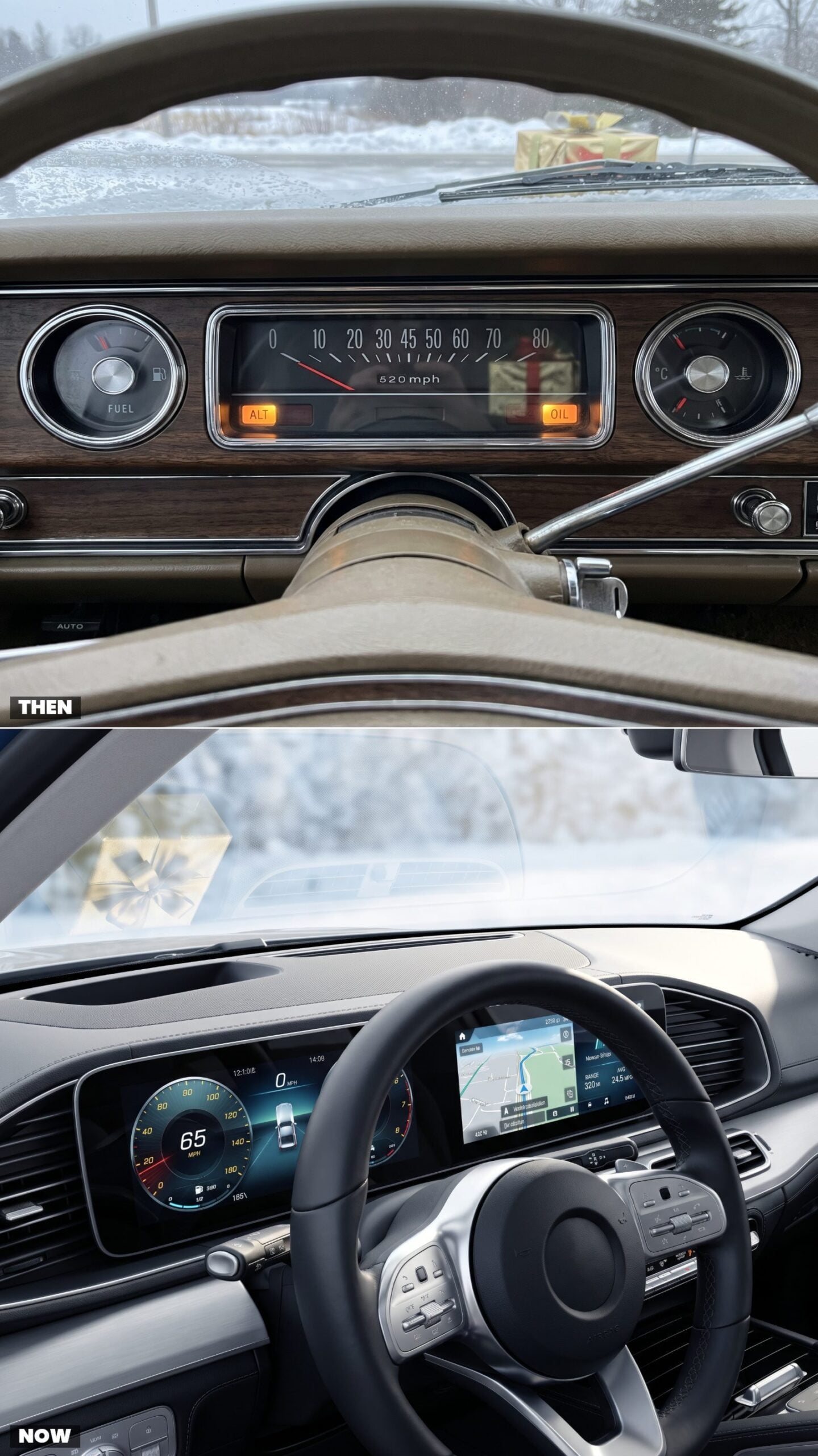
32. Analog Dashboards vs. Configurable Digital Displays
🔥 Would you like to save this?
Three gauges and a red needle told you everything you were allowed to know — speed, gas, temperature, maybe an idiot light that lit up once it was already too late. At night the dash glowed a warm amber and you trusted the needle the way you trusted a wristwatch.
The screen now hands you a live map, tire pressure, miles-to-empty down to the last mile, and a hundred things you can rearrange to taste. More information than a 747 cockpit had in 1975. Genuinely useful. Also one more glowing rectangle fighting for your eyes on a dark highway.
31. Thin Steering Wheels vs. Heated Multifunction Wheels
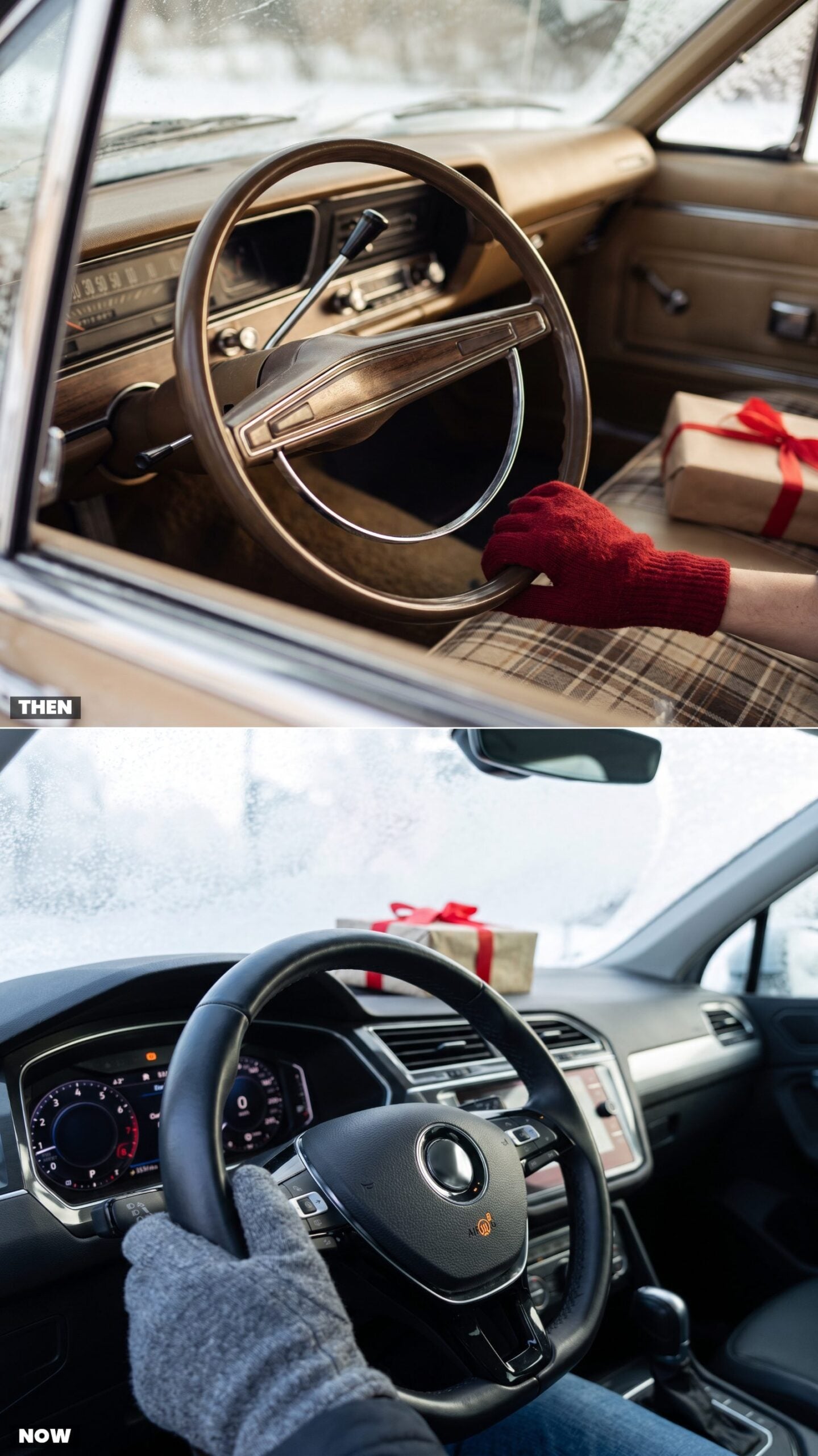
The old wheel was a thin ring of hard plastic and not much else. Ice-cold on a winter morning, it sent your gloved hands sliding around the skinny rim while you steered a ship of a wagon down a snowy interstate. The only button was the horn — if you count leaning on the whole center.
The wheel in your hands now is thick, padded, wrapped in leather, warm to the touch when you flip the heater on. Your thumbs run the stereo, the cruise, the phone, all without letting go. It does everything but drive itself — and honestly, some of them are getting close to that too.
30. Column Shifters vs. Electronic Gear Selectors
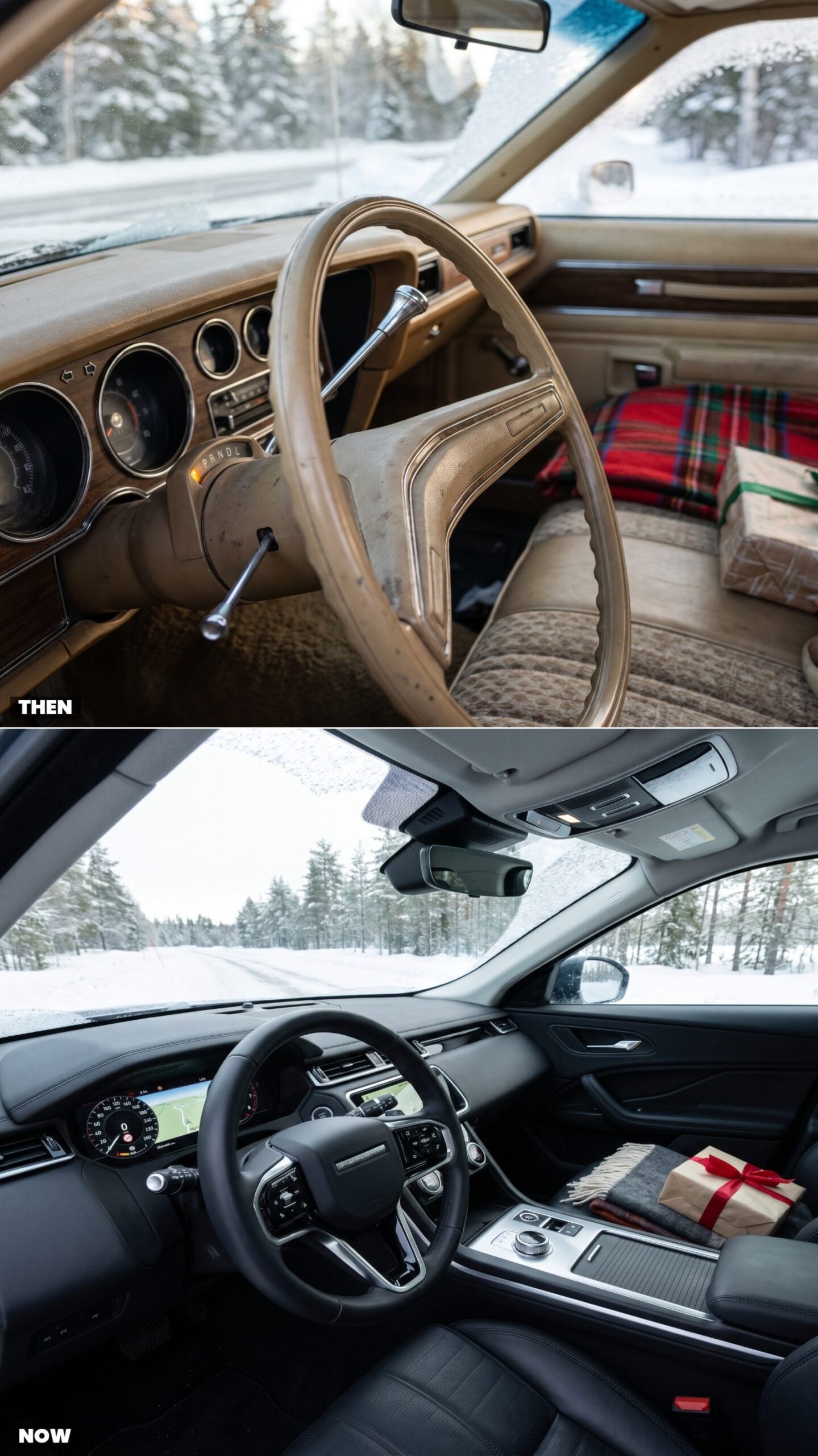
The column shifter. That was the whole vocabulary of moving a car forward — you grabbed the chrome stalk off the column, hauled it down through a notchy arc, and watched the little orange needle swing past P-R-N-D-L. It clunked, and you felt it in your wrist. On a frosty Christmas morning it fought you a little, which was just how mornings went.
Now you twist a dial the size of a hockey puck, or press a button, and the SUV decides what that means. No clunk. No arc. Just a soft electronic thunk somewhere under the floor, and honestly I’ve never once been sure the thing registered my request.
29. AM/FM Radios vs. Touchscreen Infotainment
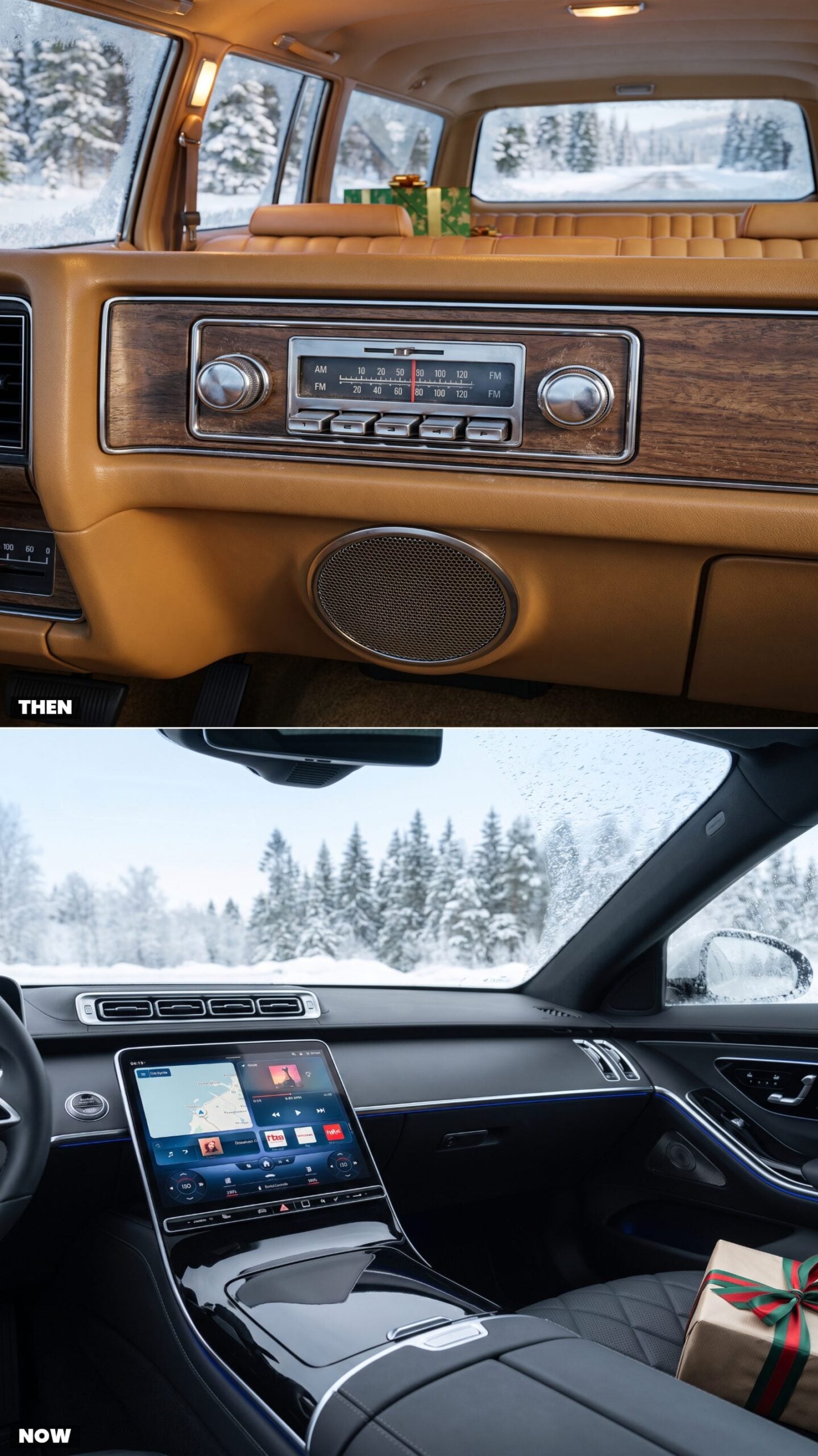
You had a red needle and a prayer. Somewhere around the county line the station you liked dissolved into static, and Dad worked the tuning knob with two fingers while keeping one eye on the icy road. Lucky, and you caught carols. Unlucky, and you got a farm report and the sound of your own breathing all the way to Grandma’s.
The modern screen holds every song ever recorded, a live map, the cabin temperature, and a reversing camera, all under a smear of fingerprints. It never fades into static. It also never once surprises you.
28. Folded Road Maps vs. Turn-by-Turn Navigation
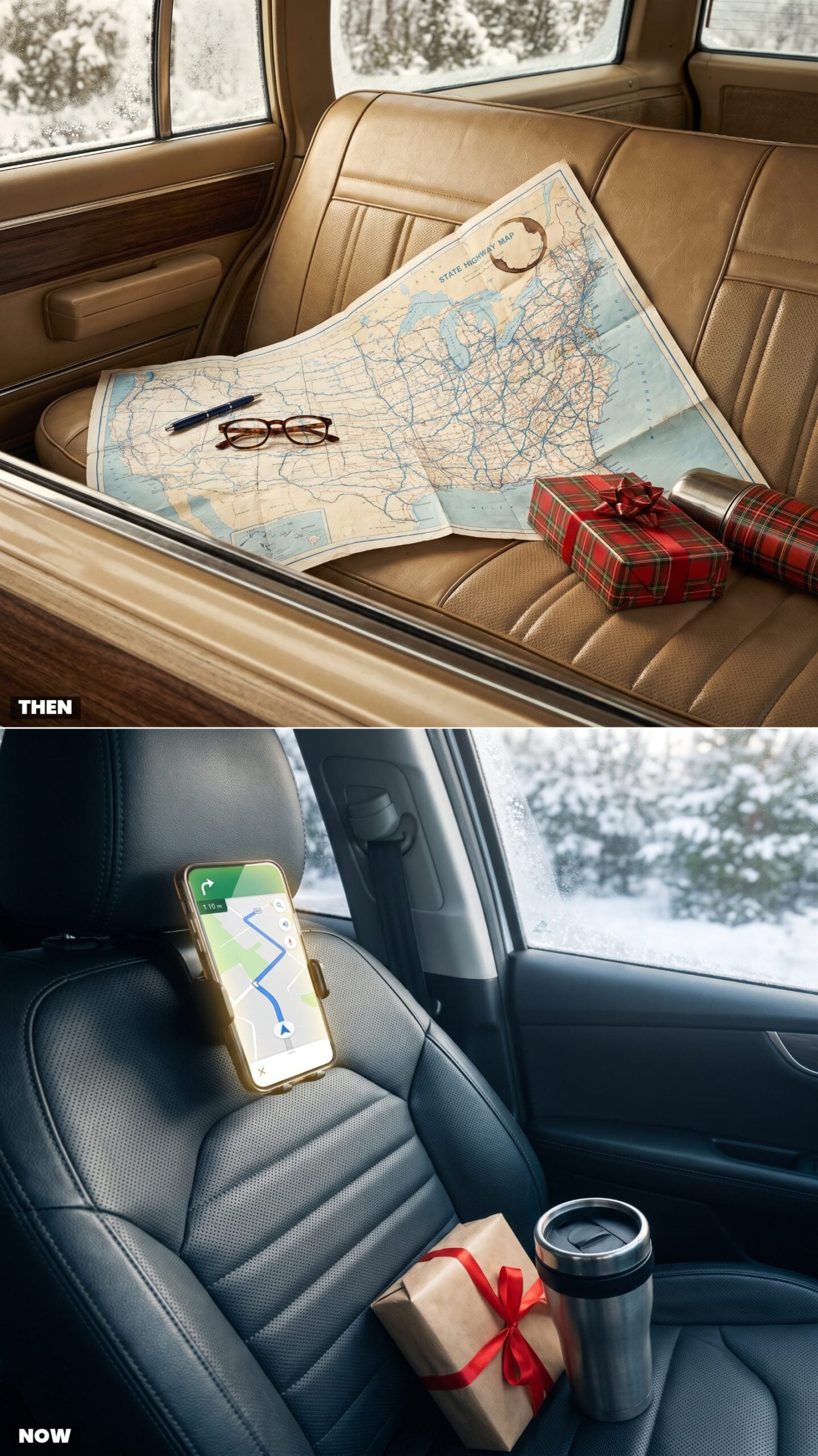
Refolding a road map was a skill nobody ever fully learned. You wrestled with the creases, gave up, and stuffed the thing into the glovebox as a lumpy paper accordion. Before that, though, it was the family oracle — somebody in the passenger seat held the whole trip in their lap and called out exits like a navigator in a rally car.
Now a calm voice tells you to turn right in a quarter mile, reroutes around the closed pass, and quietly predicts you’ll arrive at 4:52. Nobody argues about which way is north anymore. And something got lost with the arguing.
27. Roadside Payphones vs. Connected Smartphones
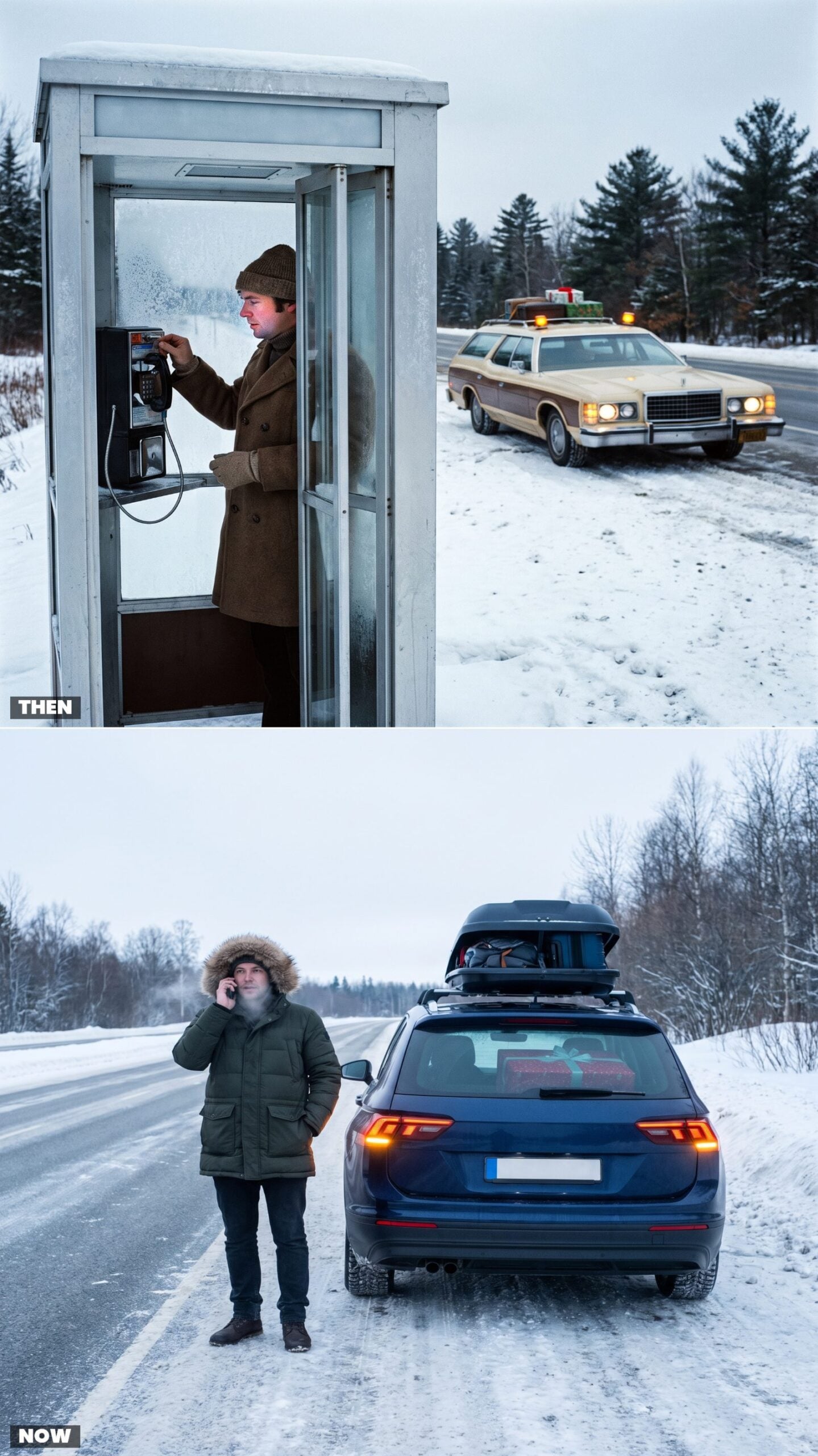
Break down on Christmas Eve in 1974 and your options came down to a pocketful of dimes and a working payphone somewhere down the road. You memorized the number for home, kept quarters in the ashtray for exactly this, and hoped the booth on the shoulder hadn’t had its handset torn off by the last stranded traveler.
These days the phone lives in your coat, calls a tow truck by name, and shows the driver your exact spot on a map. Safer, no question. But there’s no story in it. The dead payphone in the snow was terrifying, and it was also a memory you’d retell for forty years.
26. Manual Heater Sliders vs. Multi-Zone Climate Control
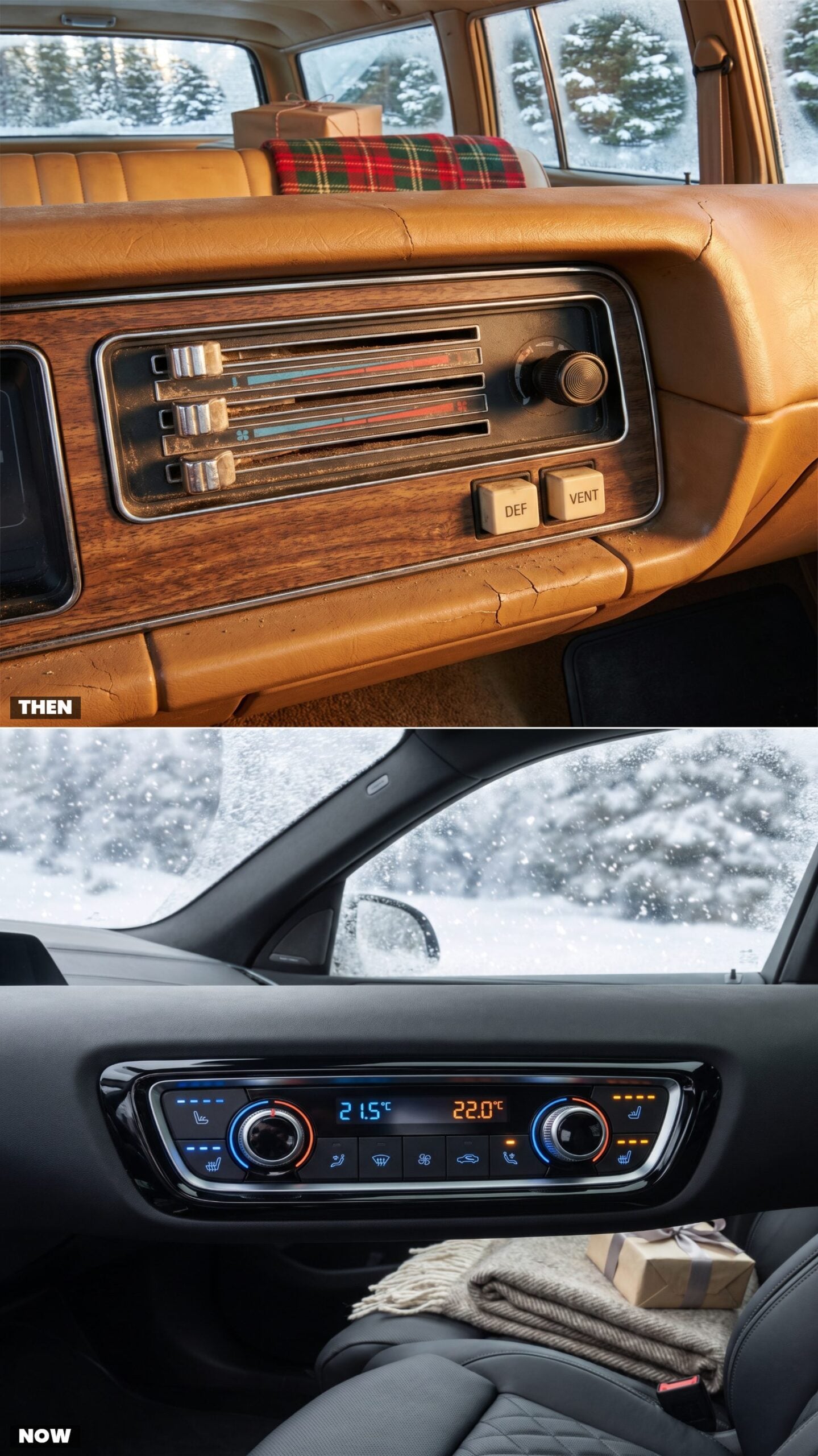
Heat came in two settings: nothing, then a wall of dry roar aimed at your shins. You shoved a chrome slider from blue to red, cranked the fan knob, and waited. The kids in the way-back froze until somewhere past the state line, and everyone negotiated — somebody was always too hot, somebody was always too cold, and the sliders had no opinion whatsoever.
Today the driver runs 70, the passenger runs 74, and the second row runs whatever the second row wants. The cold war over the vents is finally over. Won by engineering, of all things.
25. Fogged Rear Windows vs. Automatic Defrost Systems
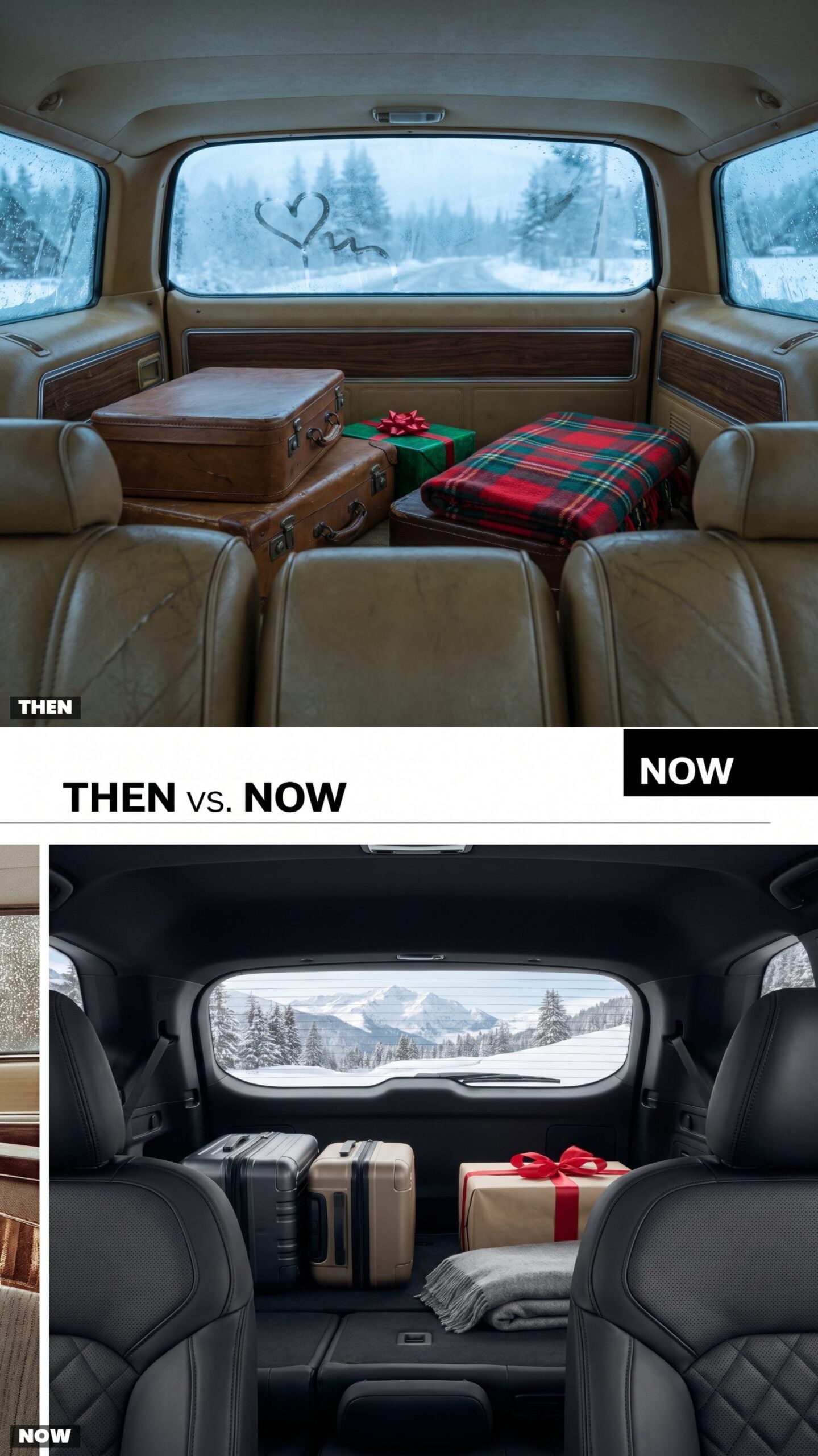
The rear window fogged up the second the family piled in, and it stayed that way. You wiped it with a mitten. You drew hearts in the condensation. Reversing out of the diner lot was a leap of faith and a lot of neck-craning, because that big glass hatch stayed a permanent gray blur all winter long.
Now thin heating wires laced into the glass clear it in about a minute and a half, on their own, and the camera fills the screen anyway. You can actually see the kids waving at the car behind you.
24. Hand-Cranked Windows vs. One-Touch Power Glass
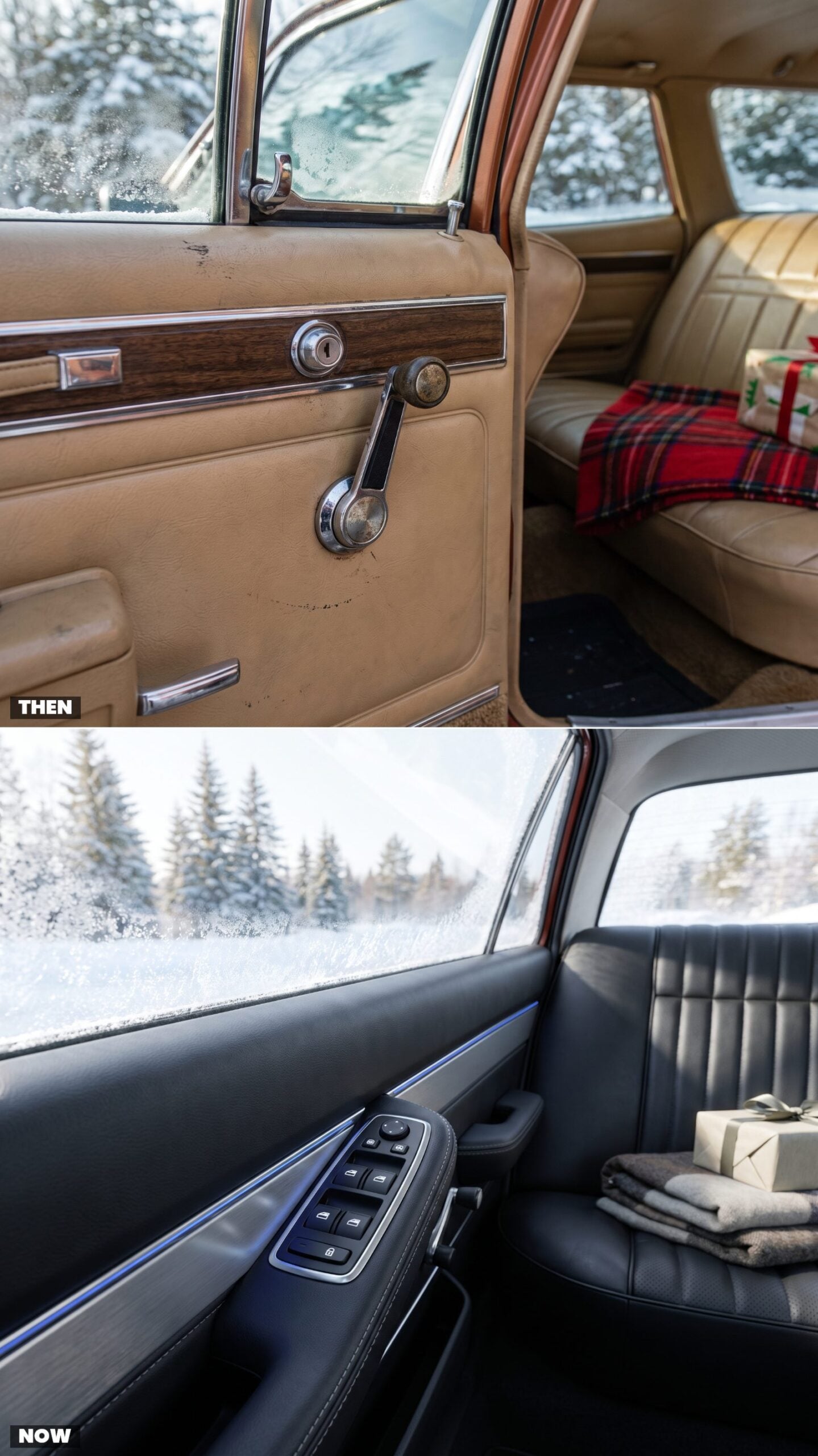
Rolling down the window was an actual workout. You spun the crank around and around, and the glass dropped in jerky little increments. Cracking the rear windows for the kids meant leaning back over the seat and doing it by hand, one door at a time, usually while driving — and if a handle popped off in your grip, you were doomed until spring.
Press a button now and the glass glides down in one silent motion. Whole thing, one touch, hand never leaving the wheel. Nobody misses the crank. But the crank never had a fuse blow, either.
23. Built-In Ashtrays vs. Device Storage Trays
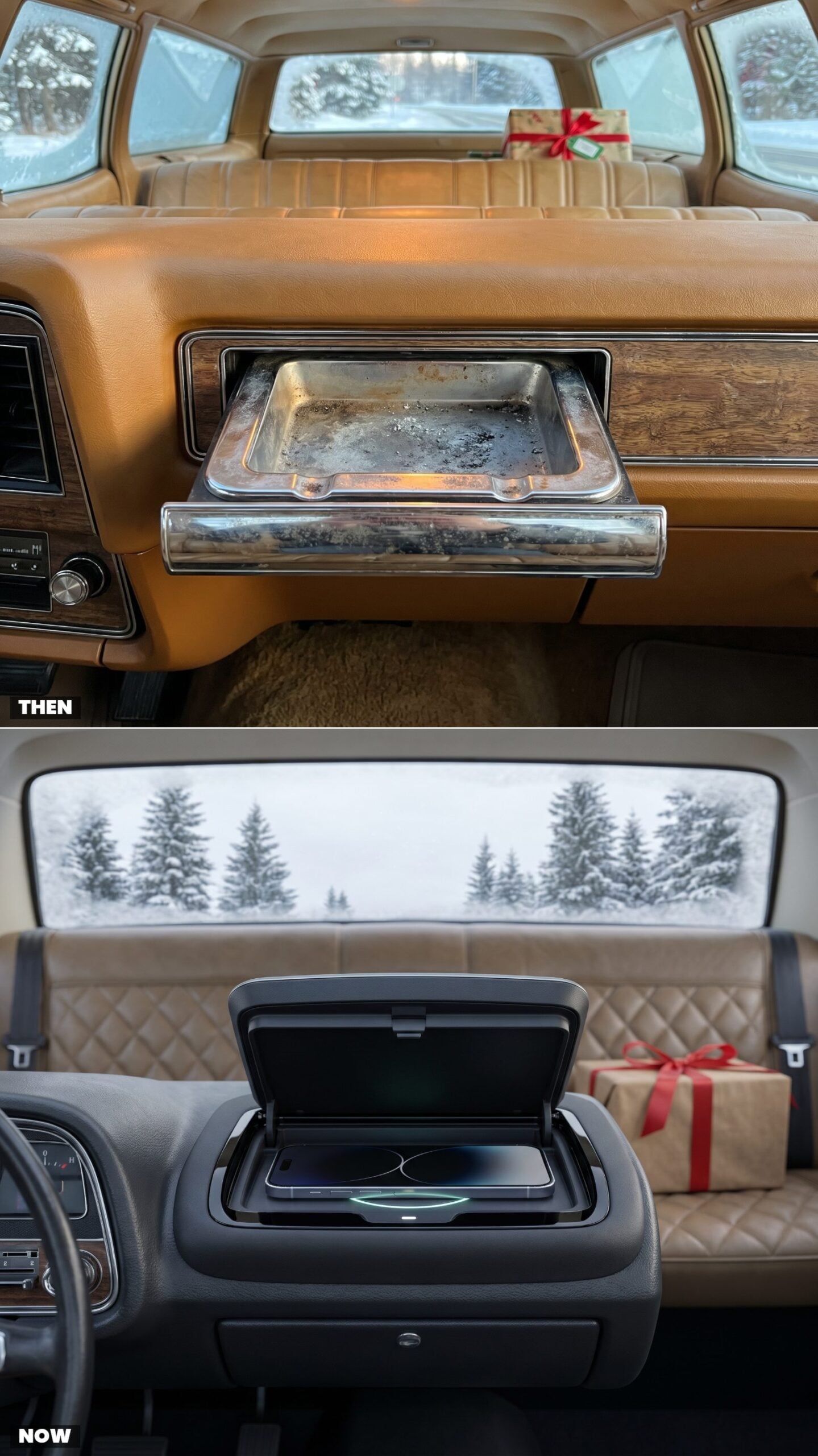
Every car came with an ashtray, right there in the middle of the dash, chrome and always slightly grimy. Nobody thought twice about it — it was as standard as the steering wheel. On a long Christmas drive it filled up fast, and someone drew the grim job of emptying it at the next rest stop into a coffee can.
That same slot now cradles a phone on a wireless charging pad. Same real estate on the dash. Wildly different cargo.
22. Cigarette Lighters vs. USB-C Charging Ports
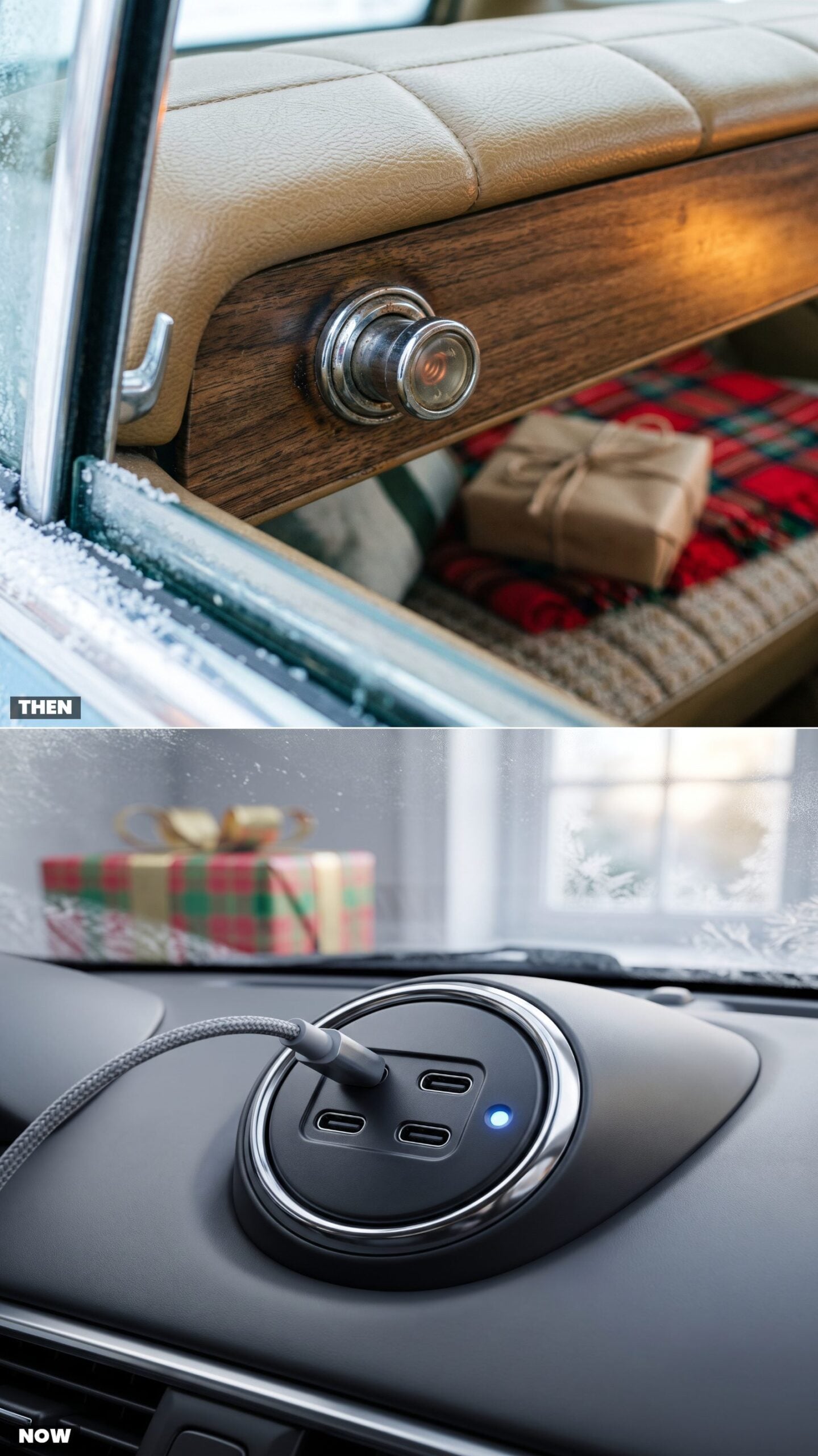
That glowing orange coil was the car’s only power outlet, and its actual job was lighting cigarettes. You pushed the knob in, waited for the click, and pulled out a red-hot spiral. Kids were warned never, ever to touch it. Later it powered a spotlight or an early car vacuum, but its birth name was the cigarette lighter and everyone called it that for decades.
The same little hole now feeds three dead phones and a tablet full of cartoons keeping the way-back quiet. The coil went cold. The socket found a second life.
21. No Cup Holders vs. Oversized Beverage Consoles
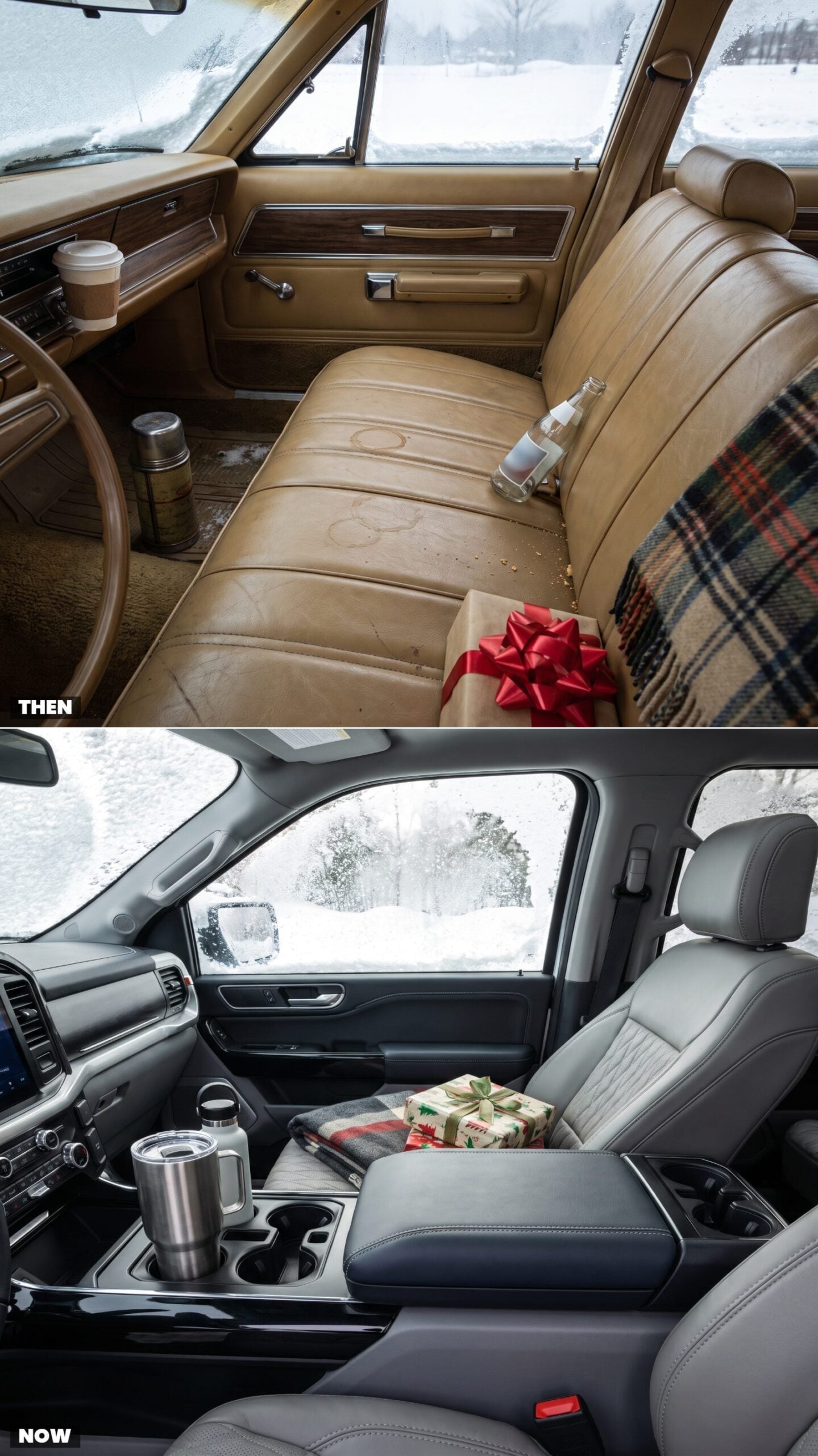
Here’s the wild part: the family car had nowhere to put a drink. None. You held your soda between your knees, wedged the coffee against the dash and prayed, or set the thermos on the floor where it tipped over on the first hard turn. A spilled Coke on that vinyl bench was a Christmas Eve tragedy the whole car endured for the rest of the trip.
Modern consoles went the other way entirely. Cup holders deep enough to swallow a 40-ounce tumbler, two per row, some heated, some cooled. We went from zero to absurd — and I’ll take absurd.
20. Metal Coolers vs. Powered Travel Refrigerators
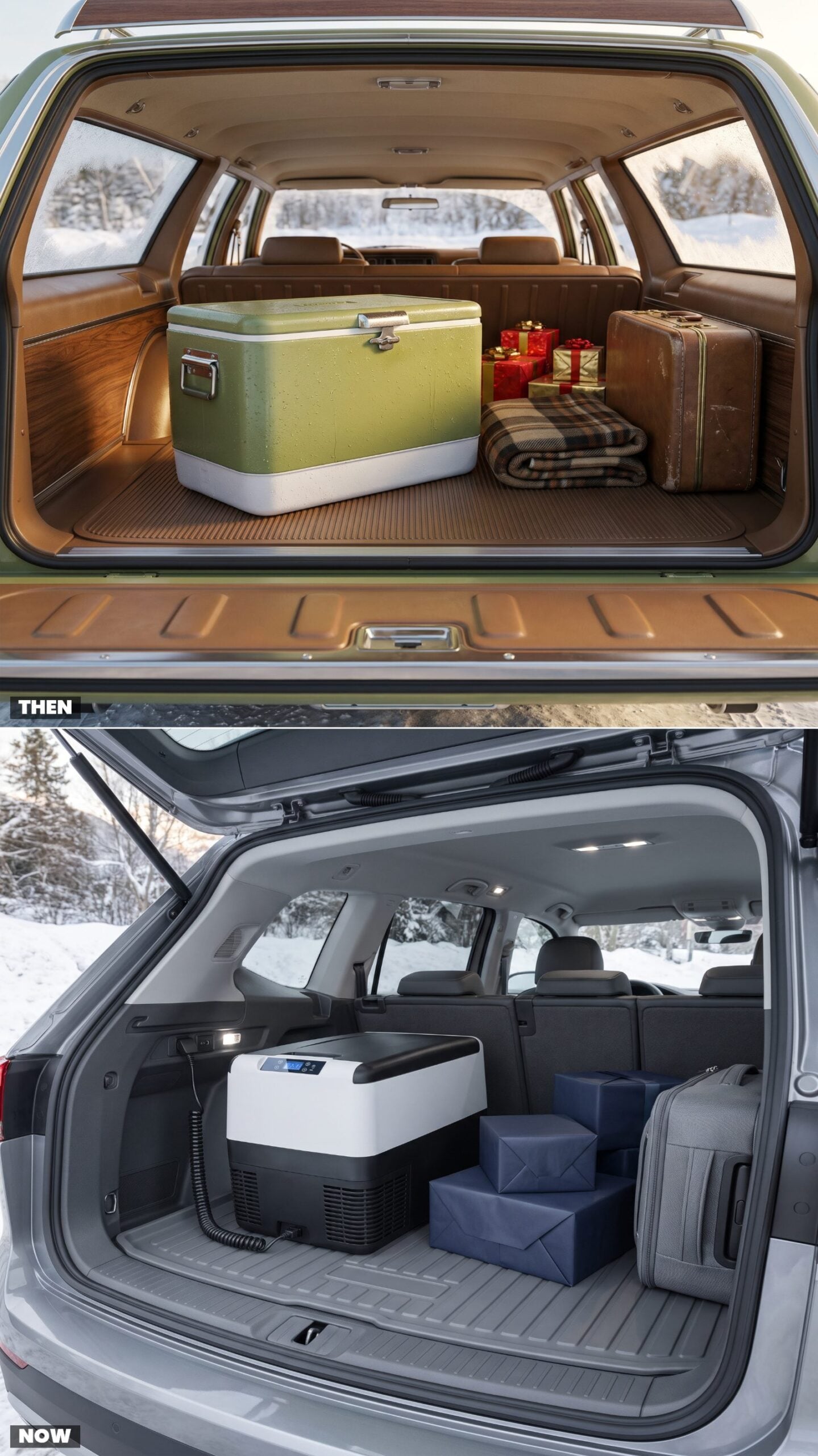
The metal cooler was a workhorse and a gamble. You packed it with ice the night before, prayed the block held, and by hour four you were fishing a bologna sandwich out of pink meltwater. Empty it weighed a ton, full it weighed more, and that steel latch pinched every kid who ever tried to open it.
The powered fridge just holds 38 degrees and doesn’t care how long you drive. Plug it into the cargo outlet and forget it — no ice run, no drained meltwater, no soggy anything. Progress, sure. But nobody ever felt triumph opening a fridge.
19. Plaid Thermoses vs. Insulated Drink Tumblers
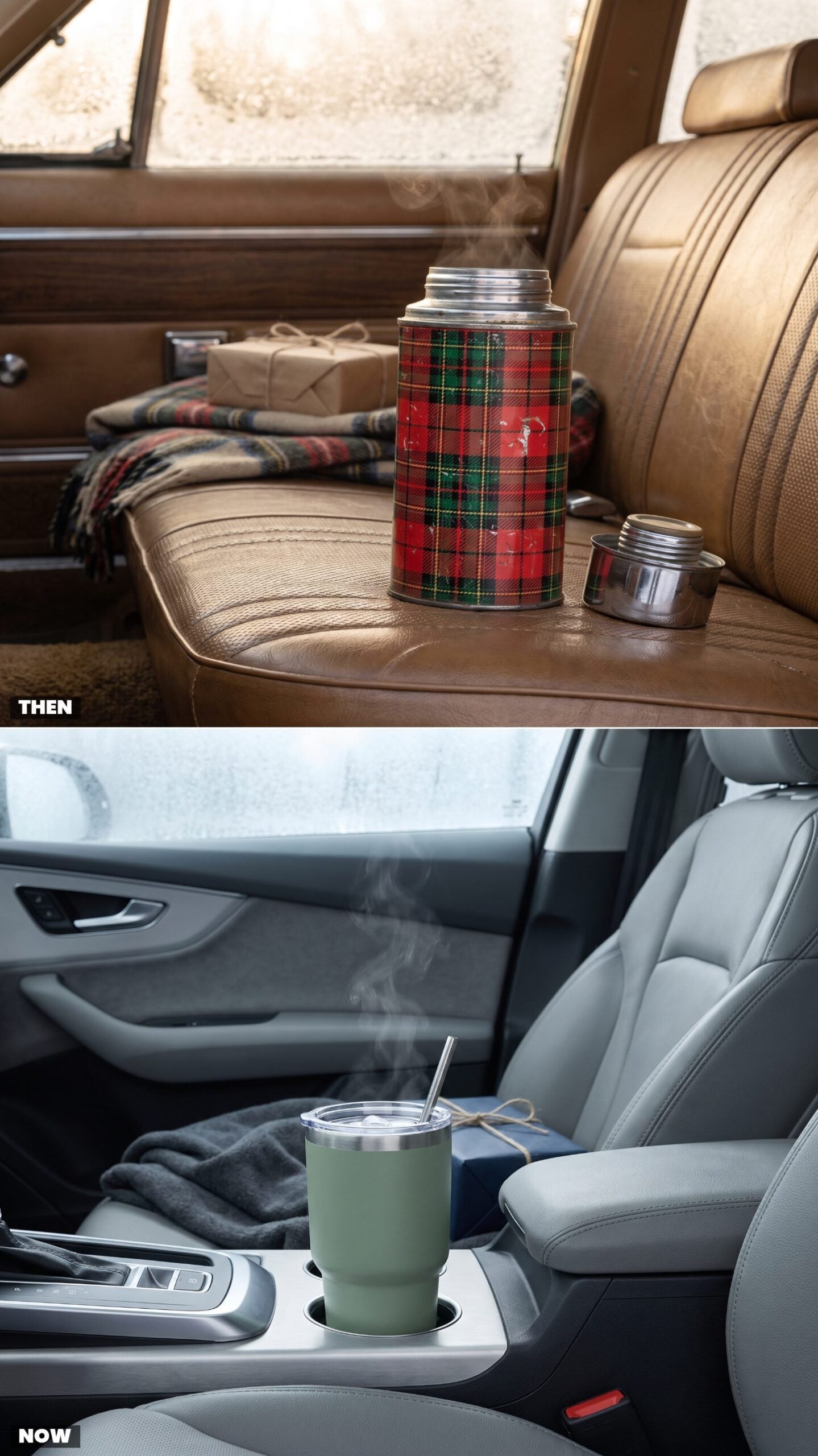
That plaid thermos went everywhere, kept cocoa warm through three states, and tasted faintly of coffee no matter what you poured in. The screw-cap doubled as the only cup, so everyone in the back shared germs by design. Drop it once? The glass liner inside shattered into a hundred tinkling pieces.
Today’s sage green insulated tumbler holds ice for a full day, fits the cup holder, and survives a fall from the tailgate. It won’t shatter and it won’t taste like yesterday’s coffee. It also won’t remind you of anything, which is the trade.
18. Wax-Paper Sandwiches vs. Compartment Snack Boxes
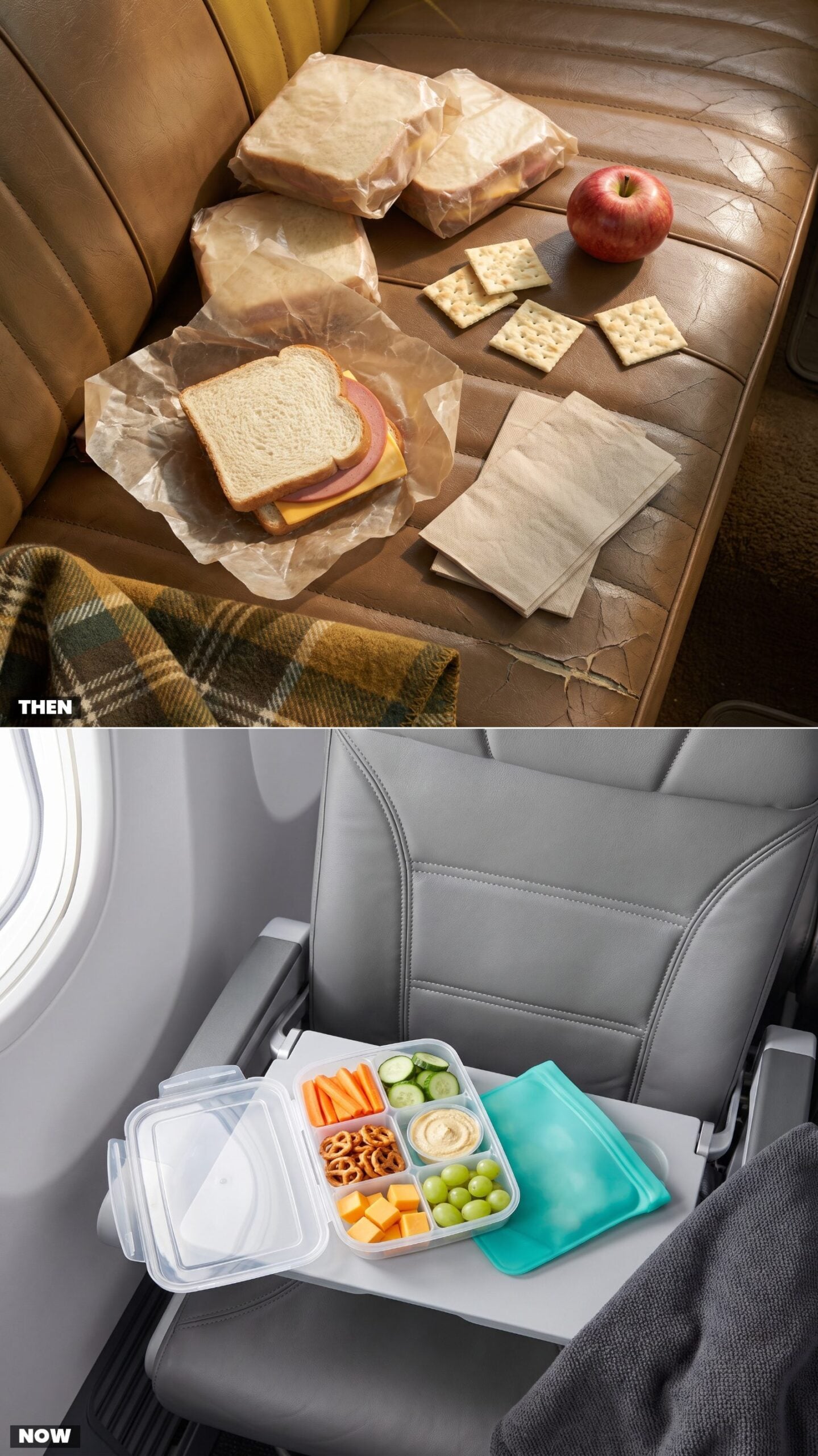
Lunch came out of wax paper folded with the tuck your mother learned from hers. The bread went stale slow, and the paper always smelled faintly of the last thing wrapped in it. You ate what you got — no compartments, no options, no negotiating.
Now the divided bento snack box keeps the crackers from touching the hummus and the grapes from bruising the cheese. Everything gets its own little room. Tidier, healthier, honestly better. But a wax-paper sandwich unwrapped on your knee at 60 miles an hour had a ceremony to it that a plastic box never earned.
17. Loose Wrapped Presents vs. Secured Holiday Cargo
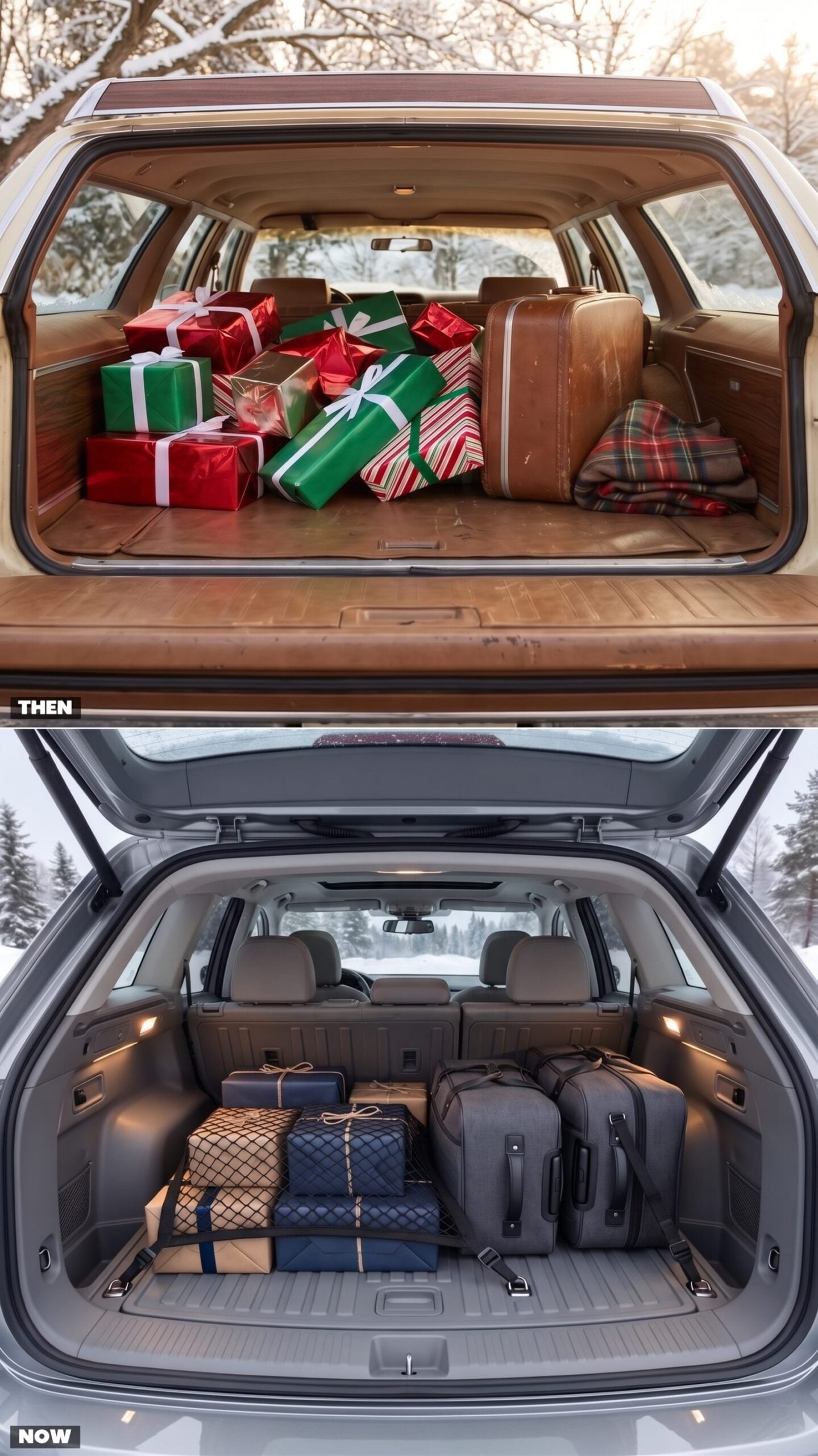
Say you loaded the presents last, right on top, no straps because straps weren’t a thing your car came with. First hard brake and the whole pile slid forward into the back seat. A wrapped gift catching your kid in the shoulder at a red light was just part of the trip.
Modern cargo nets and anchor points hold everything flat and still, so the gifts arrive with corners intact and twine ties still neat. Safer, smarter, the paper stays sharp. We’ll admit the old way had more drama and worse outcomes.
16. Stacked Hard-Shell Suitcases vs. Modular Soft Luggage
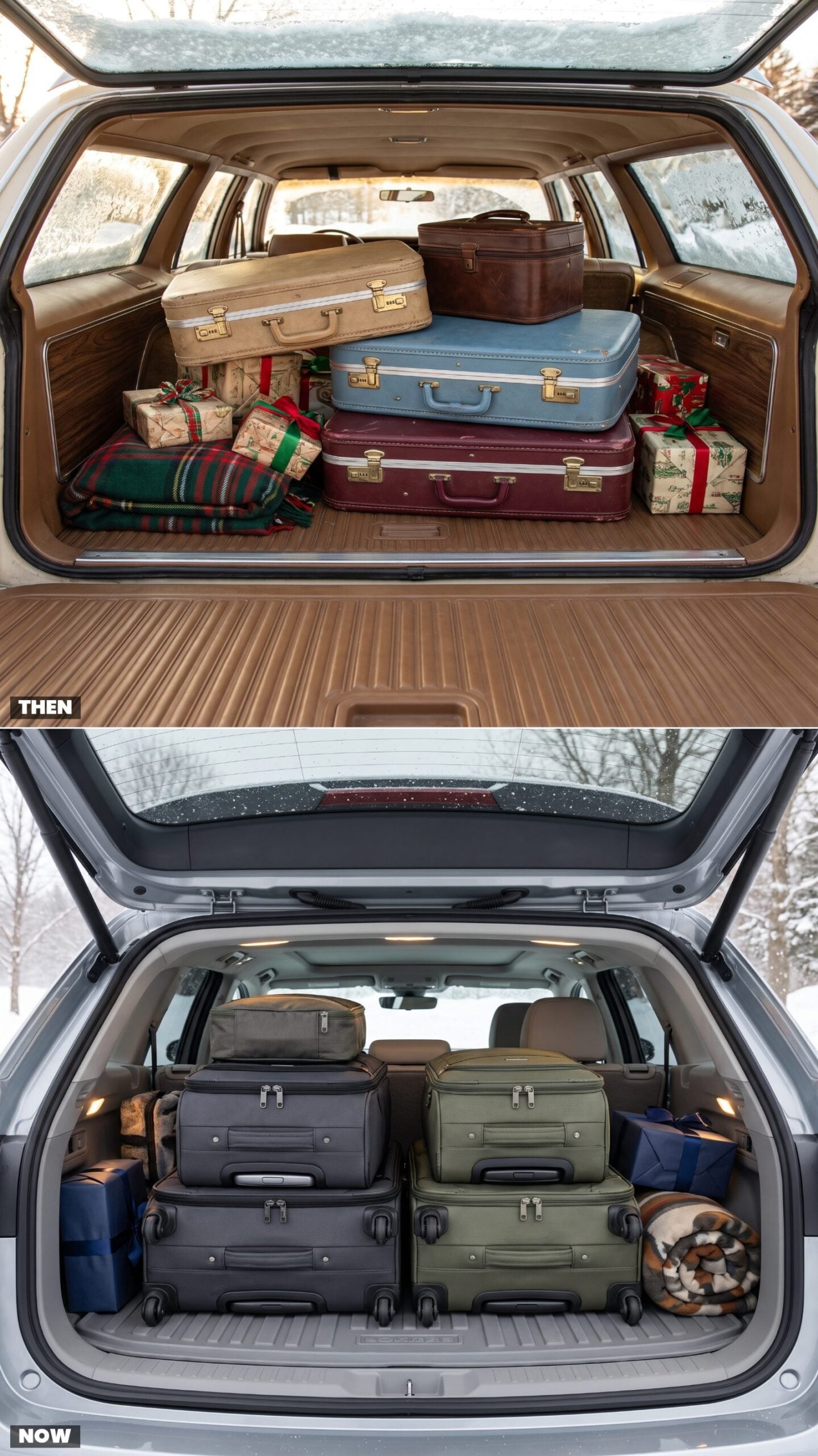
Hard-shell suitcases were built like small vaults and packed like Tetris — rigid corners, brass latches that snapped shut with authority, no give anywhere. You didn’t fit them to the space. You fit the space to them, and something always got left behind.
Soft modular luggage squishes, expands, zips into itself, and rolls on wheels that actually spin. It molds to whatever cargo gap is left after the presents go in. More forgiving in every way. Though nothing today closes with that satisfying vault-door thunk of a Samsonite latch.
15. Bed Pillows Across the Back Seat vs. Ergonomic Travel Pillows
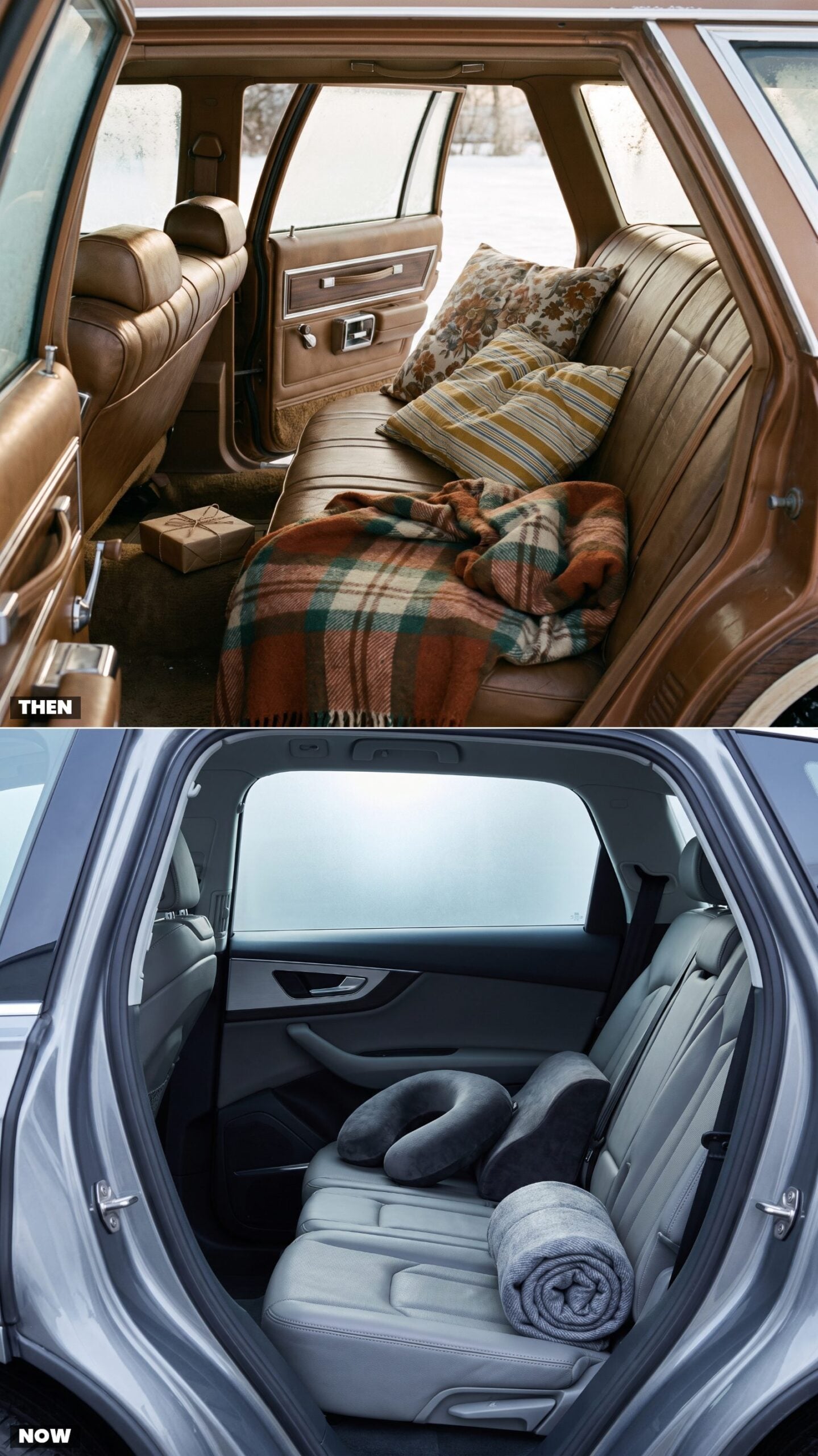
Somebody grabbed the pillows off the beds on the way out the door. Full-size, floral cases, the exact ones from home. They took up half the back seat and slid onto the floor at every turn, but a kid could stretch out flat across them and be gone for a hundred miles.
The ergonomic memory foam neck pillow keeps your head from lolling and packs down to nothing, supporting the neck the way a bed pillow never did. But it can’t be flopped across an entire bench for a proper dead-to-the-world nap, and that’s a real loss.
14. Toys Across the Floor vs. Seat-Back Organizers
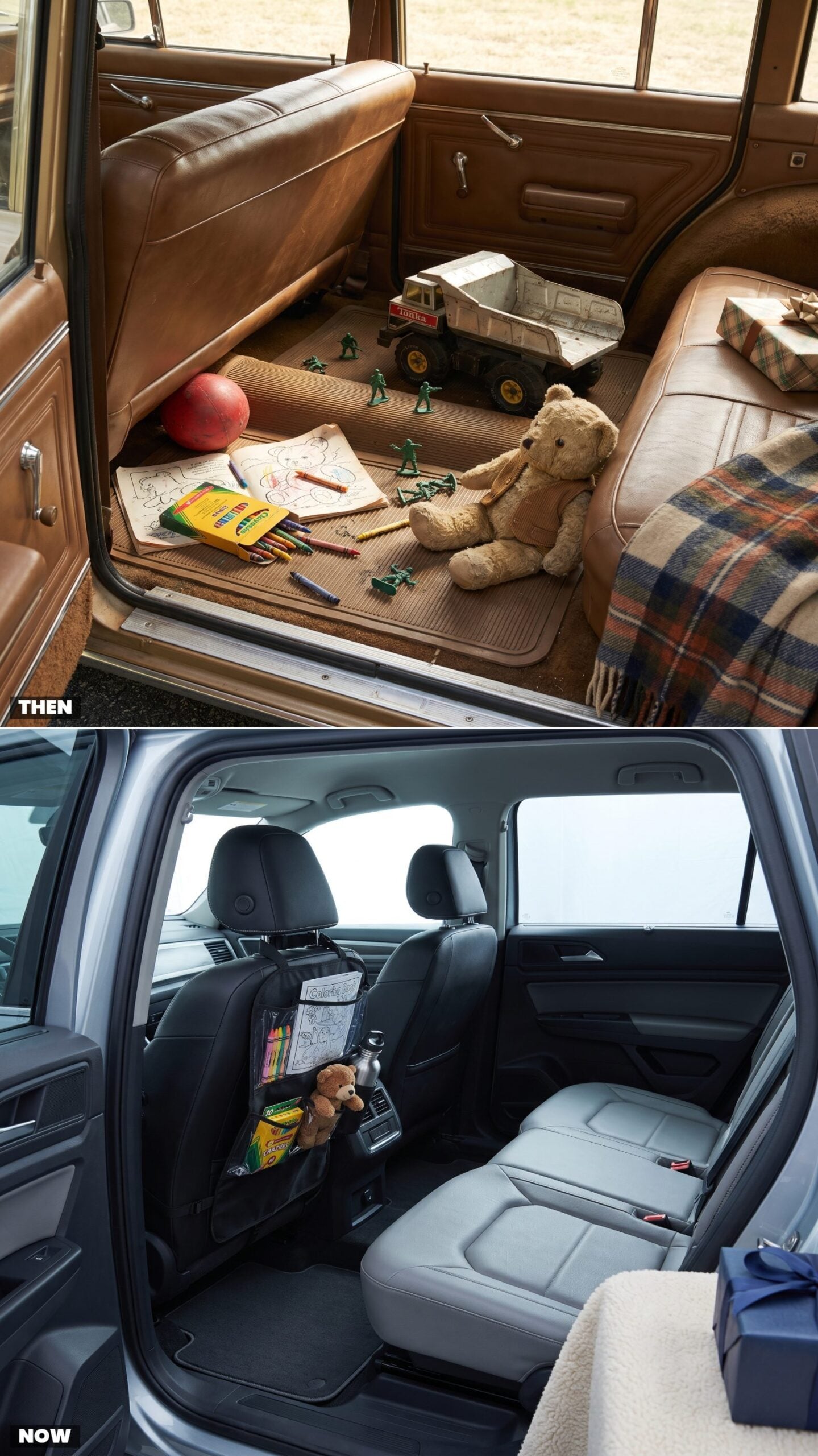
The floor was the toy box. Everything a kid brought ended up down there within twenty minutes, rolling forward under the seat every time the wagon slowed, and the one toy you actually wanted was always the one that had migrated furthest out of reach.
Then came the seat-back organizer. Clear pockets, a slot for the coloring book, a spot for the water bottle, everything visible and within arm’s reach. Small thing. It quietly ended a hundred backseat meltdowns.
13. Magnetic Travel Games vs. Tablets
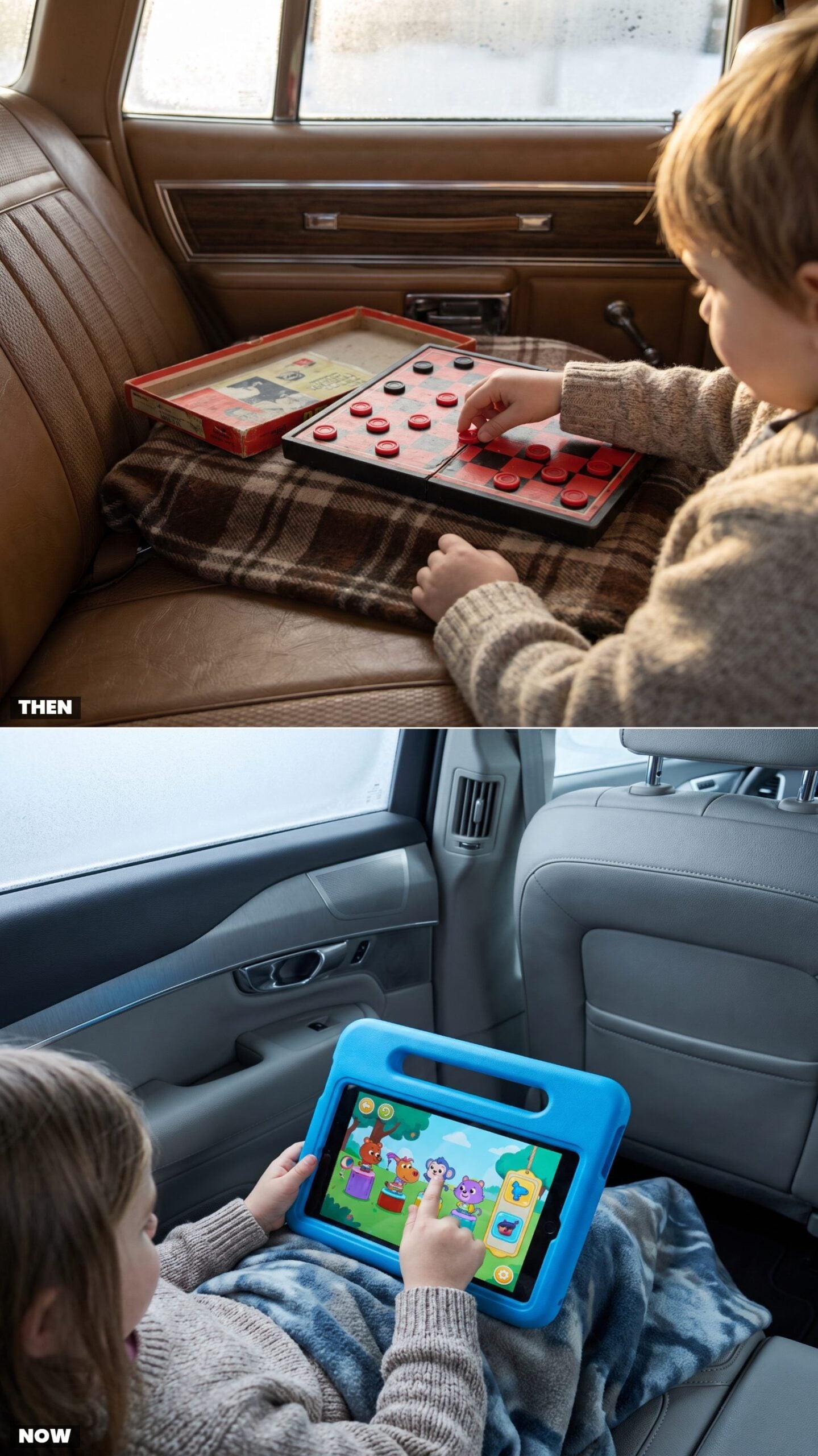
Magnetic checkers held the pieces in place over every pothole, which was the entire genius of it. You could play a full game between rest stops, the little red discs staying put through the roughest stretch of interstate. Lose a piece under the seat? That was the end of that game forever.
The tablet does everything now — games, movies, whatever keeps the peace. It never loses a piece and never runs out of options. It also never taught anyone to sit still and think three moves ahead the way a tiny magnetic chessboard did on a long gray highway.
12. Comic Books vs. Downloaded Audiobooks
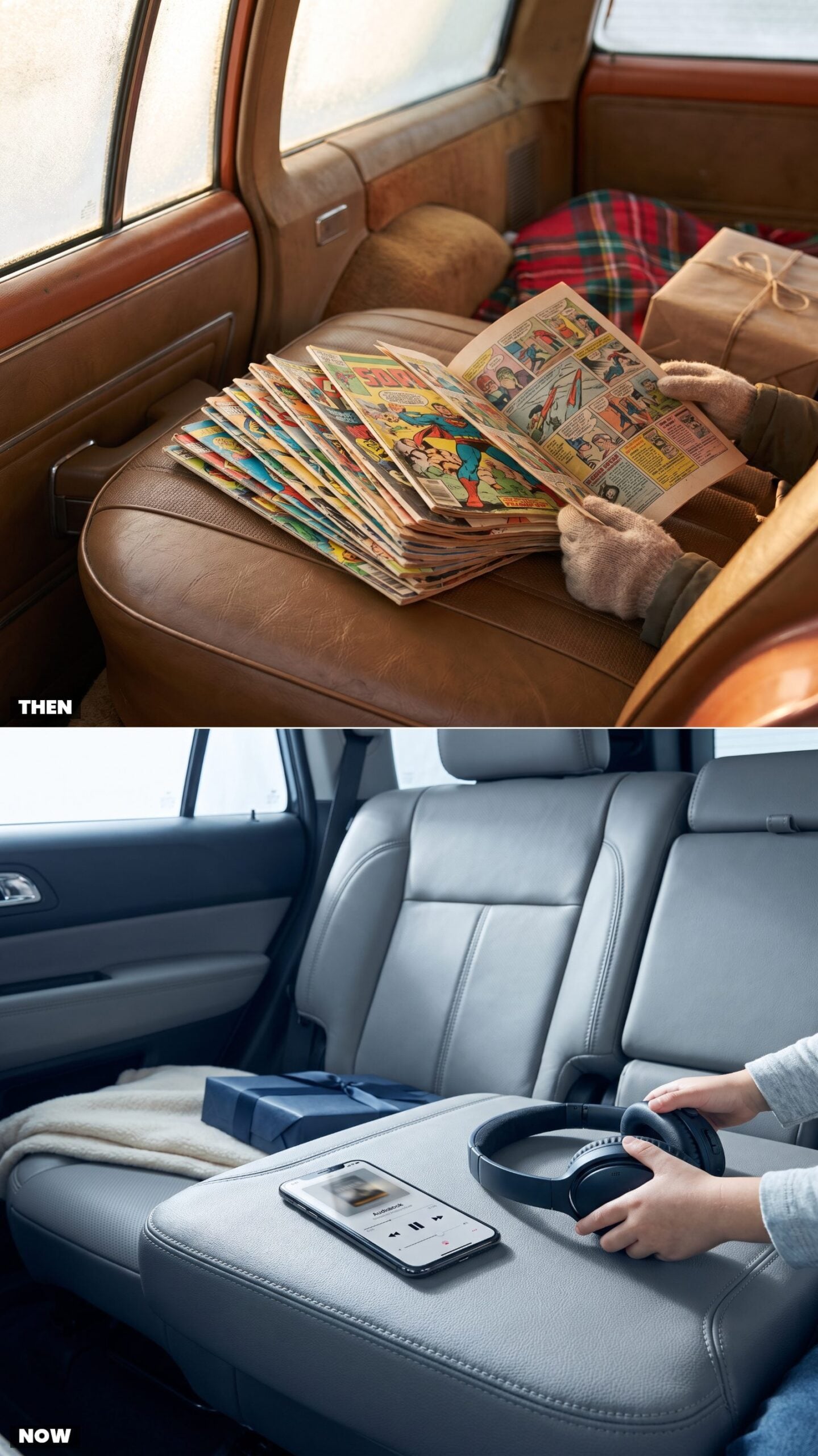
You bought the comic at the last gas station, read it front to back in forty minutes, then read it again. The paper smelled like newsprint and your fingers went gray at the tips. Get carsick reading in the back? Everyone did. You read anyway.
Downloaded audiobooks skip the motion sickness entirely — headphones on, eyes on the window, a story pouring straight into your ears for six hours if you want. No gray fingers, no nausea, no spine to crease. Better technology, no argument there. But the comic was the better artifact, the kind of thing you kept in a shoebox for thirty years.
11. Eight-Track Tapes vs. Streaming Playlists
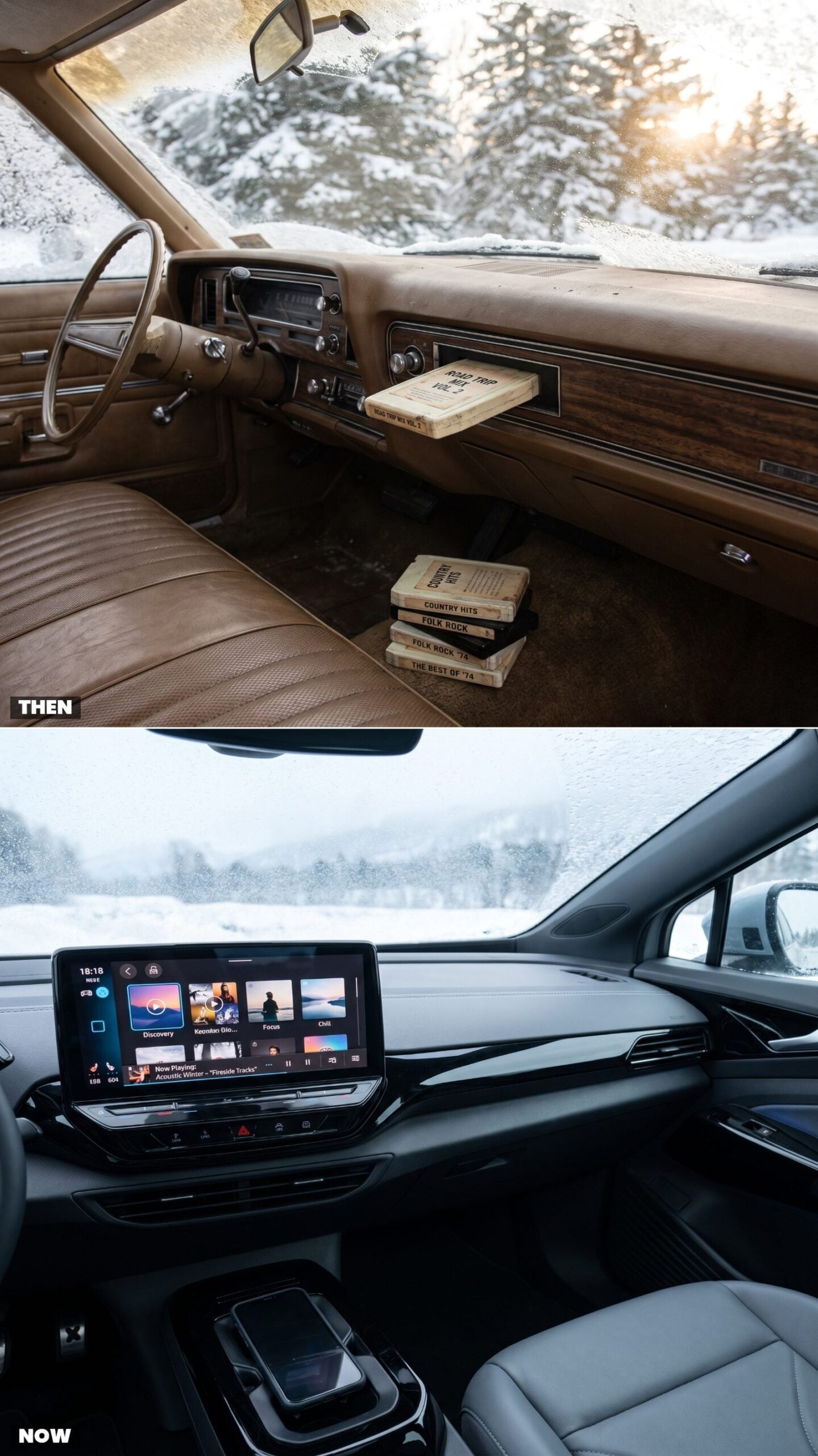
The eight-track had one flaw everybody just lived with. It split songs across program changes, so your favorite track would fade out mid-chorus with a loud CH-CHUNK, wait a beat, then pick up on the other side. No skipping, no easy rewind — you listened in the order the tape decided.
Streaming hands you every song ever recorded, shuffled or sorted, skippable, with no CH-CHUNK to interrupt the chorus. Endless choice, flawless sound. And somehow a playlist that plays whatever you want never quite matches the feeling of the one tape that happened to be jammed in the deck for the whole trip.
The eight-track decided the order. You just went along for the ride, and the ride was better for it.
10. Pets Roaming the Cabin vs. Crash-Tested Pet Restraints
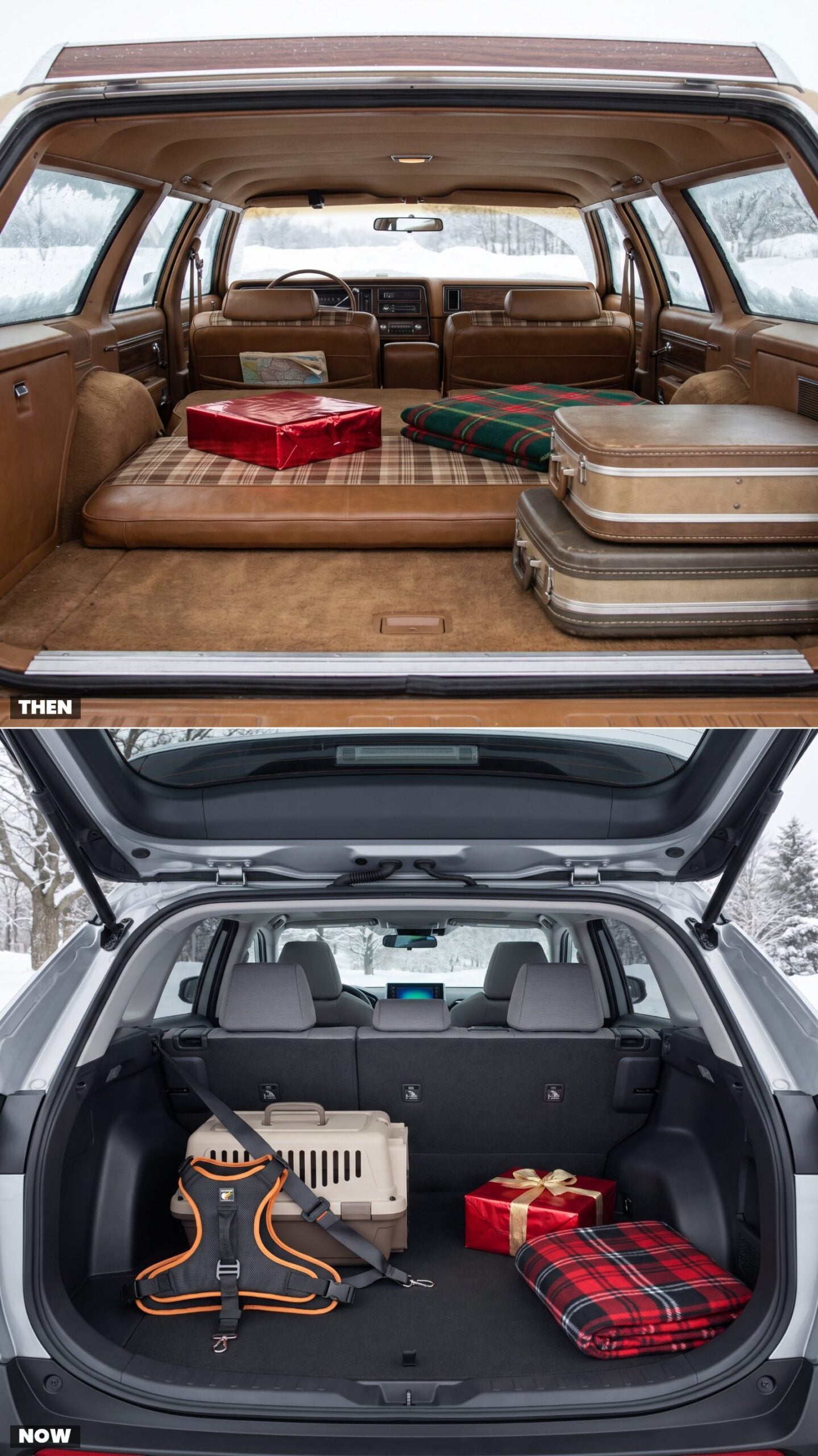
In 1974, the family dog rode wherever it pleased — front seat, back window ledge, sprawled across your lap during the good songs — and nobody thought twice about it. A hard brake sent everyone lurching forward, dog included, and the dog usually landed somewhere padded.
Now he’s buckled into a crash-tested harness, or riding a rated crate strapped down in the cargo bay. Less romantic, sure. It’s also the whole difference between a scare and a funeral. The old way felt free; the new way means the dog actually arrives.
9. Bulky Folding Baby Gear vs. Compact Travel Systems
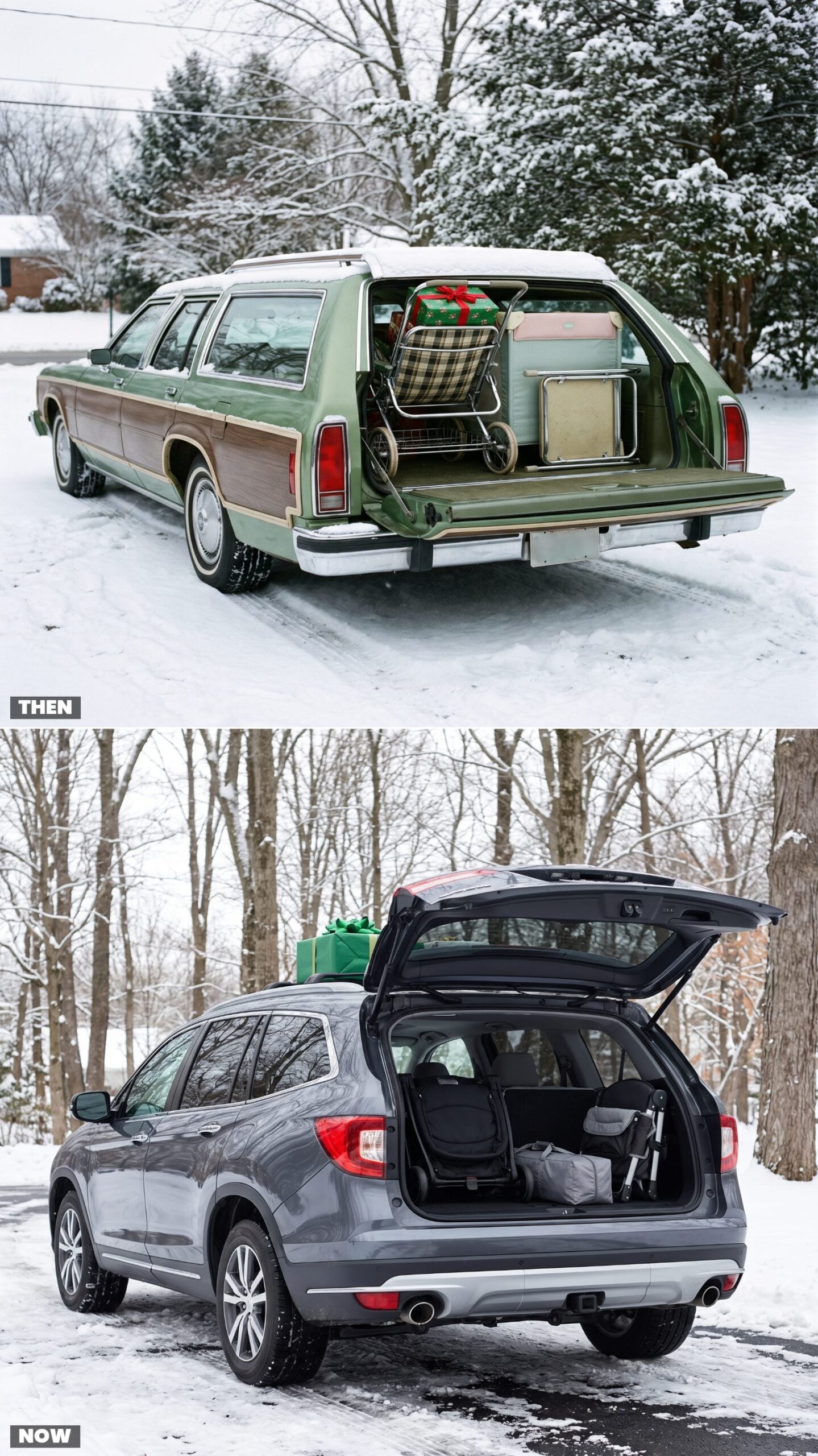
Loading a baby for Christmas travel in 1976 was a Tetris game with no winning move. The stroller alone was chrome and canvas and weighed about as much as the baby, the travel crib was basically a suitcase, and the high chair had corners that drew blood.
These days the whole kit collapses into a duffel and rides on top of the luggage. One-hand fold, nylon, aluminum. You’ll still forget the wipes — everyone does — but at least the trunk shuts.
8. Puffy Coats Under Seat Belts vs. Safer Layered Clothing
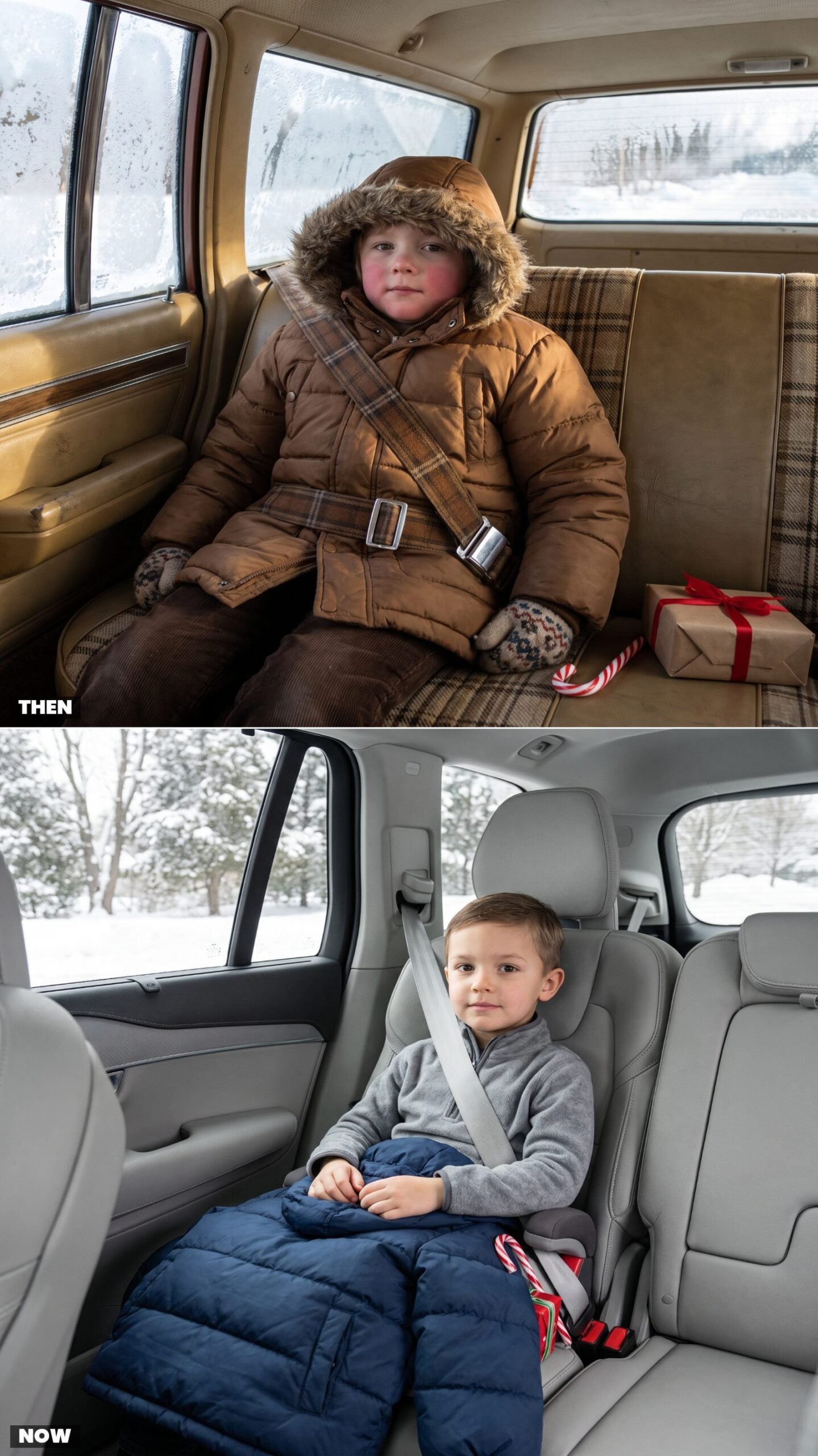
The winter uniform of the 1970s road trip was a coat so puffy the seatbelt rode a good two inches off the kid’s chest, and nobody knew any better. The coat felt safe. It was the exact opposite.
Now the coat comes off before the belt goes on. Thin layers underneath, belt flat against the chest, puffy coat spread over the lap like a blanket. Same warmth — but the belt actually does what it’s for.
7. Loose Tire Chains vs. Traction-Control Technology
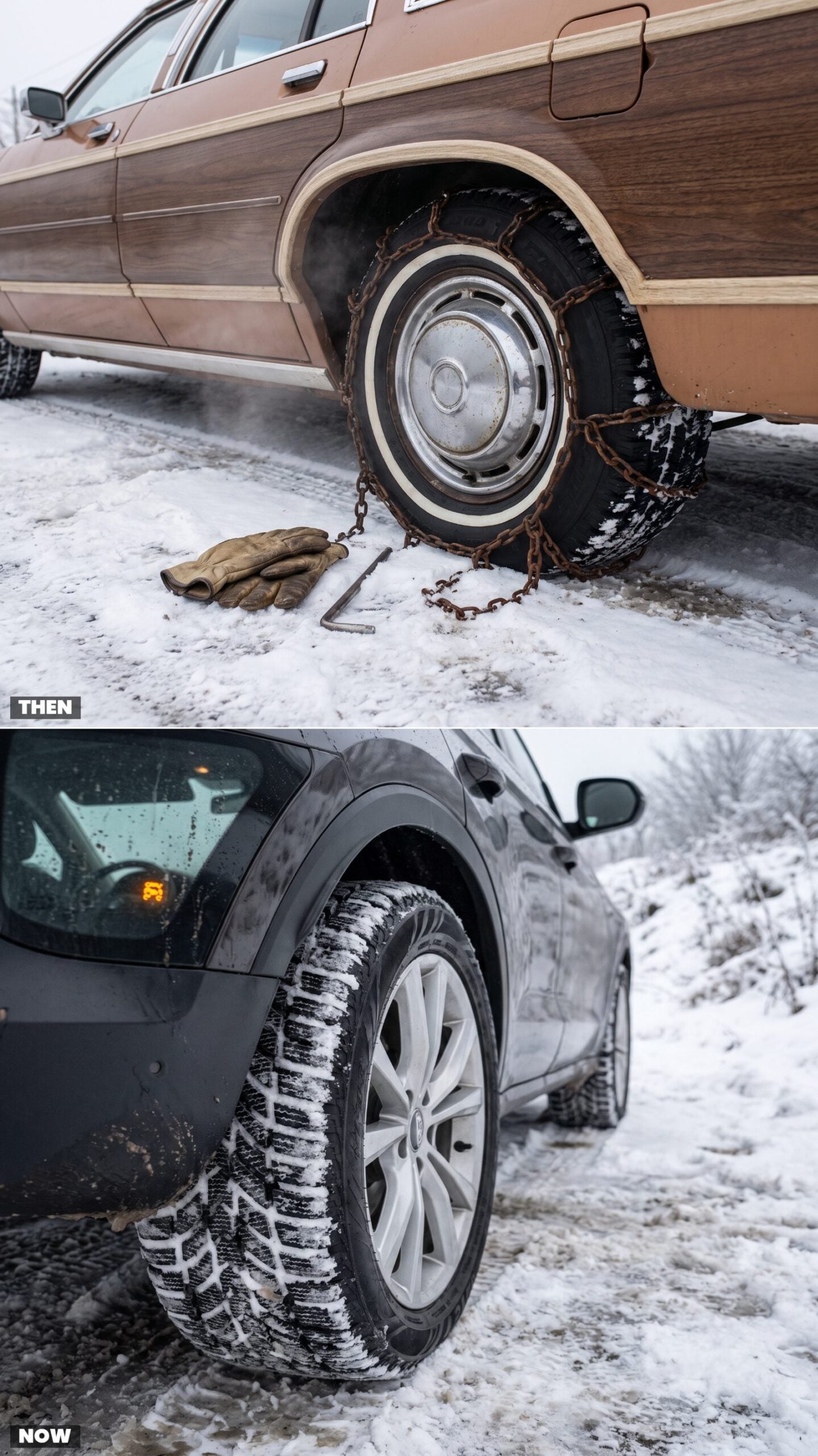
Putting on chains meant kneeling in the slush with numb hands, wrestling steel links that never lined up, and praying they didn’t shake loose at 40 and beat the fender half to death. Half the family remembers that particular flavor of misery.
Traction control handles the same job from inside a warm cabin now. Sensors catch the slip and pull power before you even feel the wheel go. No kneeling, no frozen knuckles — you just keep driving and the car quietly keeps you pointed straight.
6. Road Flares vs. LED Emergency Beacons
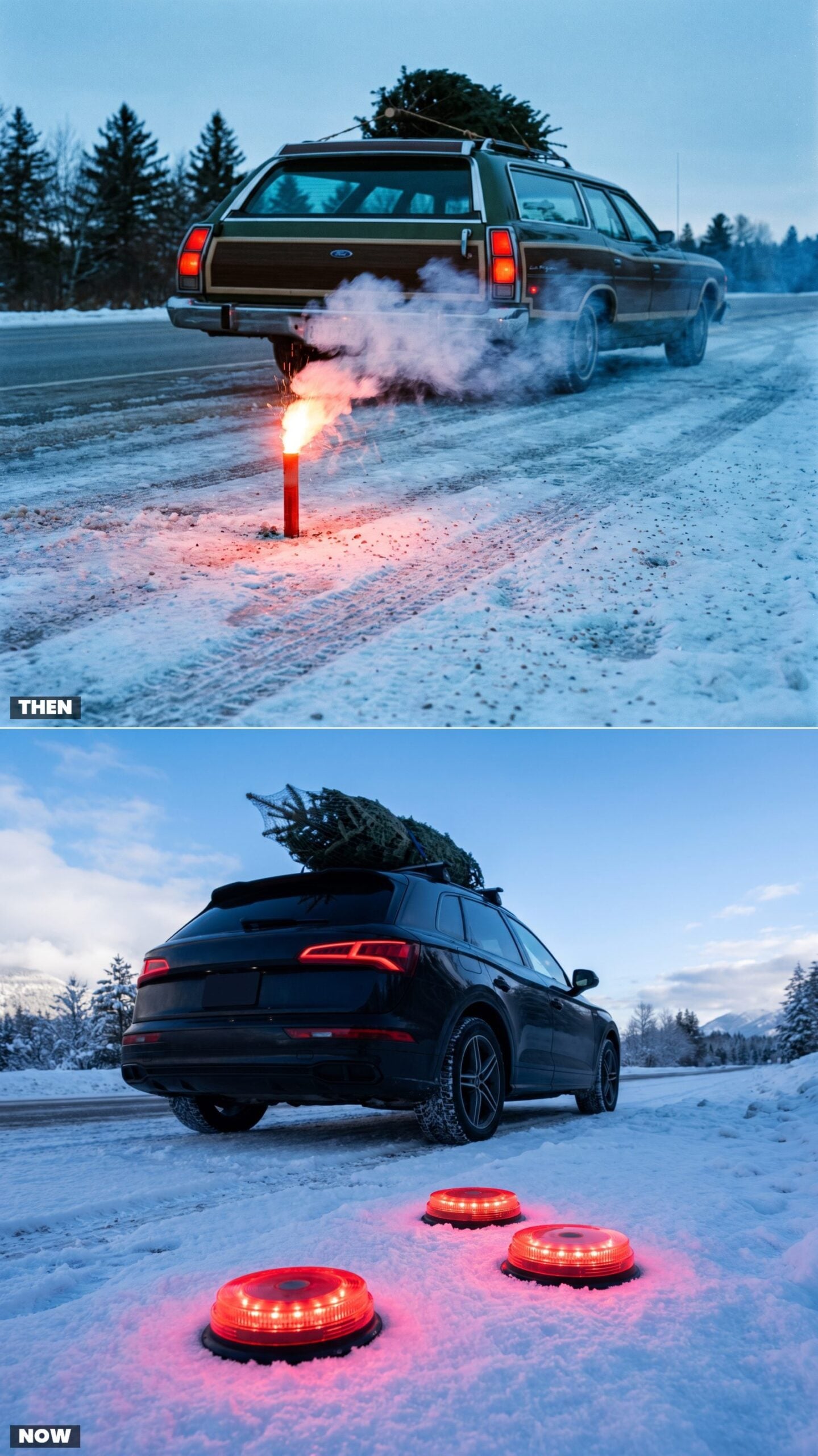
The road flare was pure theater. You struck it like a giant match, it hissed to life trailing red smoke, and it burned maybe twenty minutes before it was a soggy stub. It also flung sparks near a car full of gasoline, which somehow bothered no one back then.
LED beacons just click on. Magnetic base, blinking red, hours of runtime on batteries, not a lick of flame near your fuel tank. Less dramatic, a whole lot smarter.
5. Heavy Jumper Cables vs. Portable Jump Packs
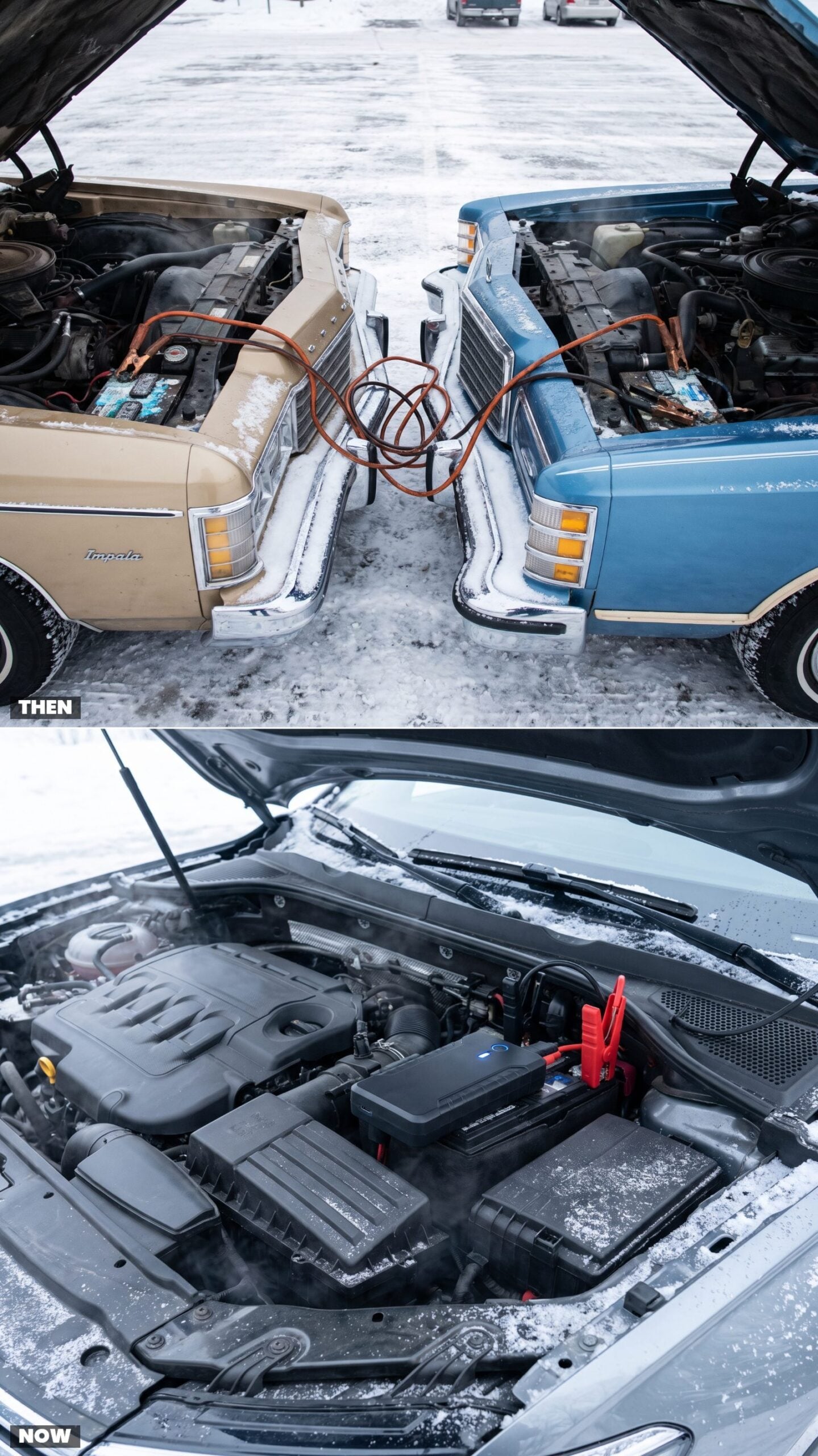
A dead battery on Christmas Eve meant flagging down a stranger, popping two hoods, and untangling cables gone stiff from the cold while somebody hollered which clamp went where. Red to positive. Or was it? Plenty of American arguments started under a raised hood.
Now a jump pack the size of a paperback lives in the glovebox. Clip it on, thumb the button, engine turns over. No second car, no stranger, no shouting.
4. Long-Handled Ice Scrapers vs. Heated Windshields
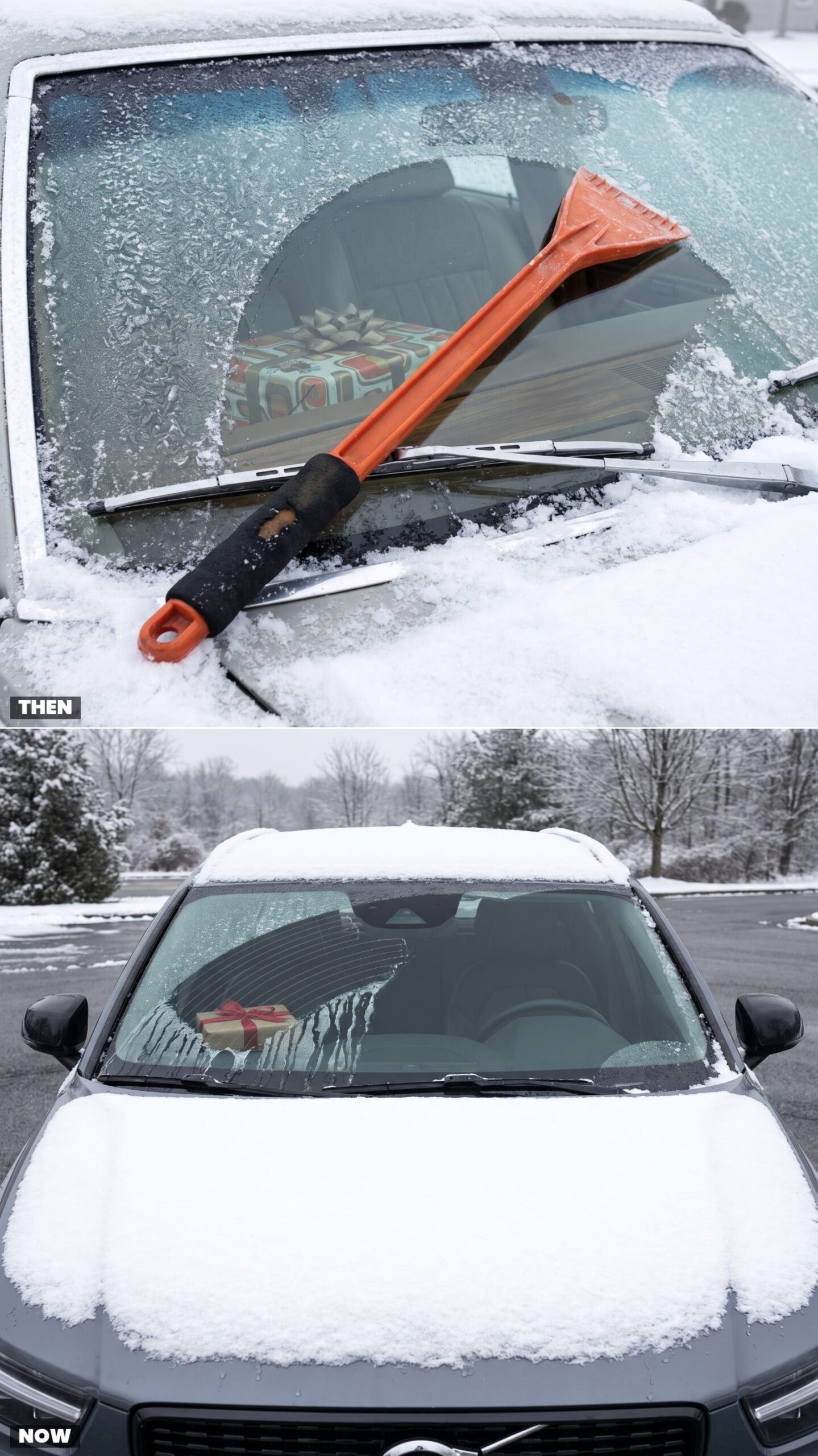
Before you went anywhere, you scraped. Long orange scraper, both hands, the entire windshield, fingers going numb while your breath refogged the patch you’d just cleared. Then the mirrors. Then the back glass. A good ten minutes gone before the engine had even warmed.
Heated windshields do all that while you buckle up. Filaments baked into the glass melt frost from the inside out, and you watch it clear from the driver’s seat with the heat already blowing on your hands.
3. Tinsel on the Dashboard vs. Minimal Safe Decorations
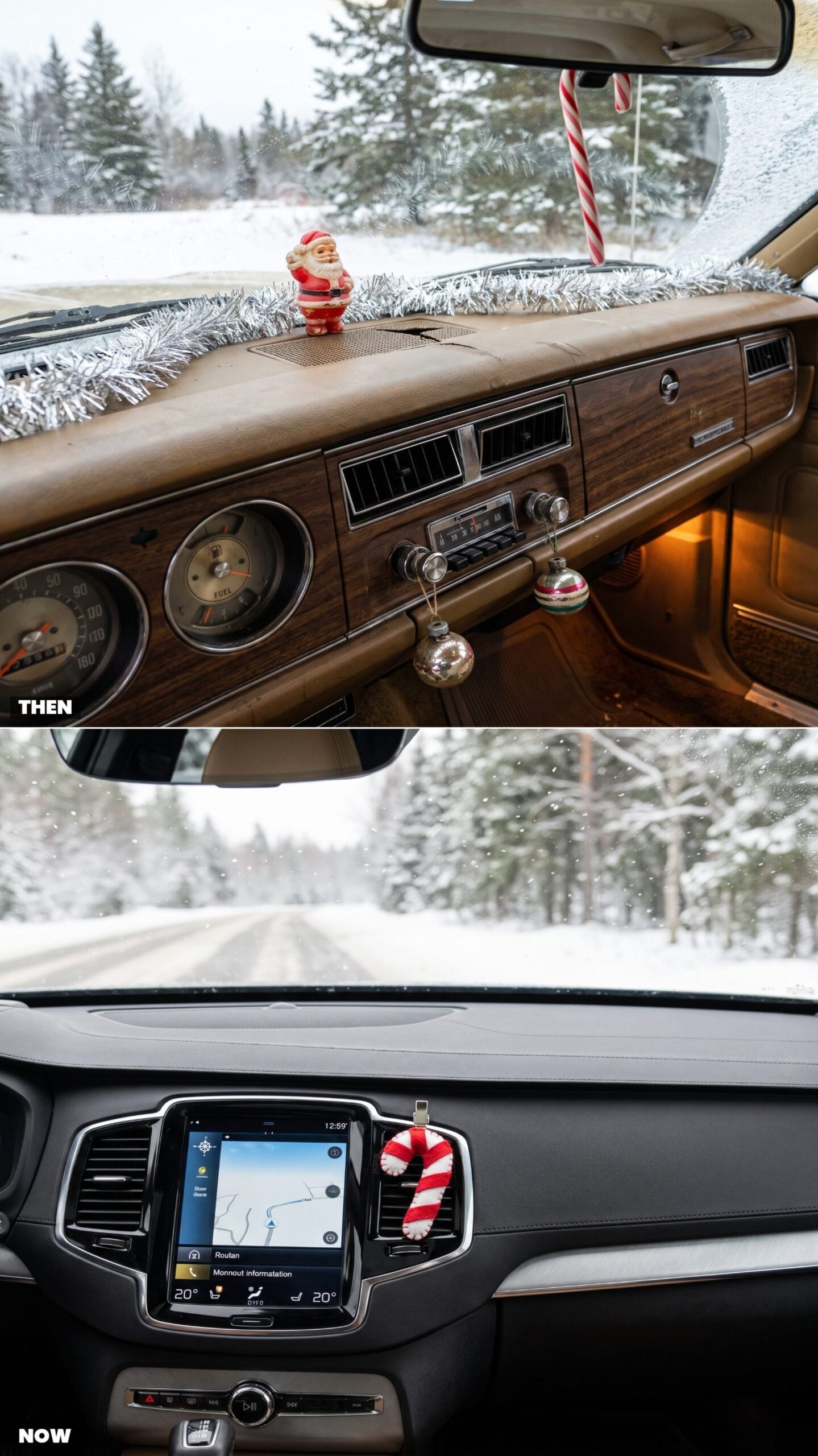
The 1970s dashboard doubled as a mantelpiece — tinsel taped along the vents, a bobblehead Santa, glass ornaments swinging off the radio dial, the whole spread shedding glitter into the defroster for months on end.
Now the dash stays mostly bare. Maybe one soft ornament clipped to a vent. Airbags hide behind that panel, and a hard plastic Santa turns into a flying rock the second one deploys. Festive is fine. Festive glued to the airbag cover is asking for trouble.
2. Posed Family Photos Beside the Wagon vs. Road-Trip Selfies
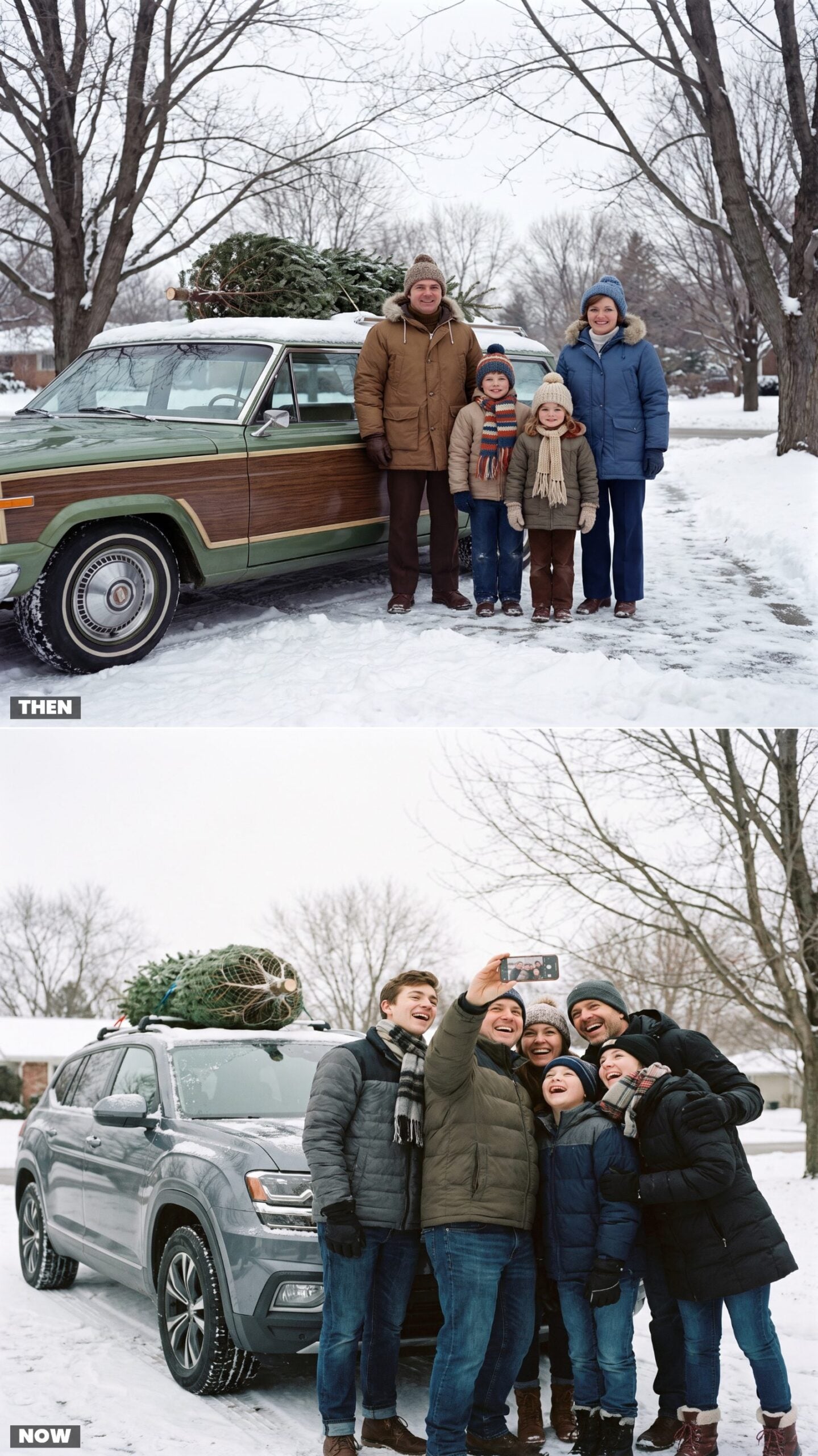
The 1970s Christmas travel photo was a whole production. Everyone lined up, coats zipped, somebody told for the third time to quit squinting, and you got exactly one shot — because film cost money and you wouldn’t lay eyes on the print for three weeks anyway.
Now that same moment gets snapped forty times in ten seconds, everyone leaning in, half of them cracking up, the lot of it uploaded before the car even backs out of the driveway. Less ceremony. Way more evidence.
1. A Christmas Tree Roped to the Roof vs. a Net-Wrapped Tree on a Rated Carrier
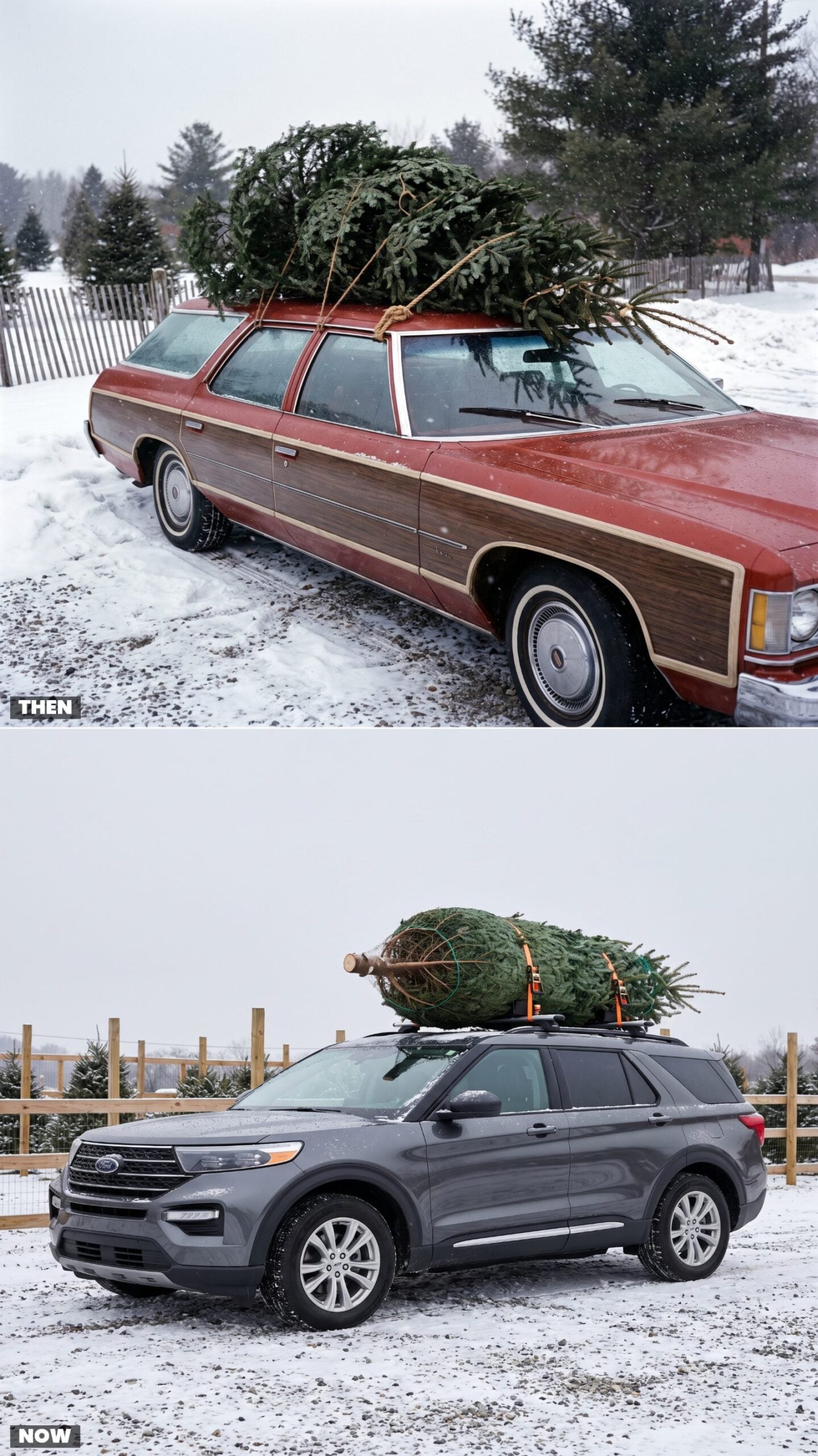
You bought the tree, the lot guy lashed it to the bare roof with whatever twine was in reach, and you crawled home at 30 with one arm out the window clamped on a branch, praying at every red light. It shed needles down the windshield the whole way. Sometimes it just up and left mid-highway and became the next driver’s problem.
Now the tree gets net-wrapped, laid trunk-forward on a rated roof rack, and ratcheted down tight. It doesn’t budge. It doesn’t rain needles on the glass. You can actually do the speed limit with both hands on the wheel.
🔥 Would you like to save this?
Please note that some of the imagery in this article were created with the aid of AI image generators.