
🔥 Would you like to save this?
The smell of vinyl seats warmed by the August sun. A Rand McNally atlas spread across your mother’s lap, folded wrong because nobody ever got those creases back where they belonged. Your father squinted at exit signs while your little brother kicked the back of his seat, and the AM radio drifted in and out somewhere past Amarillo. That was the American family road trip in 1985.
Forty years later, the car is safer, the route is clearer, and nearly every inconvenience has an app waiting to remove it. The trip is easier. It is also quieter, more private, and harder to remember mile by mile. Here are 26 before-and-afters that show exactly what changed.
26. The Station Wagon vs. The Family SUV
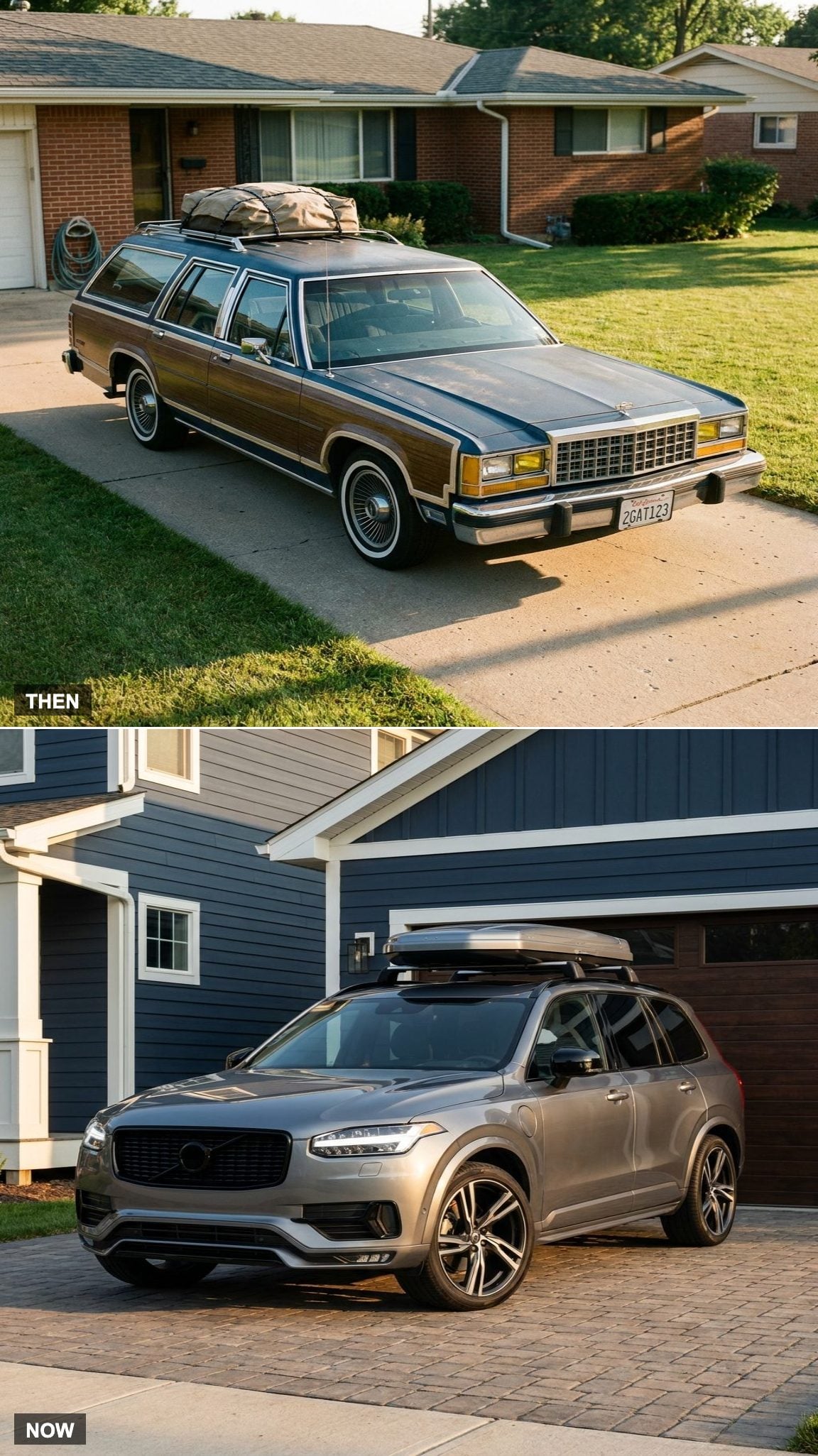
The Country Squire could carry a crowd, especially with the rear-facing way-back seat, where the kids who lost the coin toss watched the world receding behind them. Wood-grain siding that was not wood and barely grain. A tailgate that folded down like a picnic bench.
Modern SUVs are safer, quieter, and offer three-zone climate control. They also look exactly like every other SUV in the school pickup line. Something about a Country Squire told you a family was going somewhere. A crossover just tells you a family exists.
25. The Family Cooler vs. The Drive-Thru App
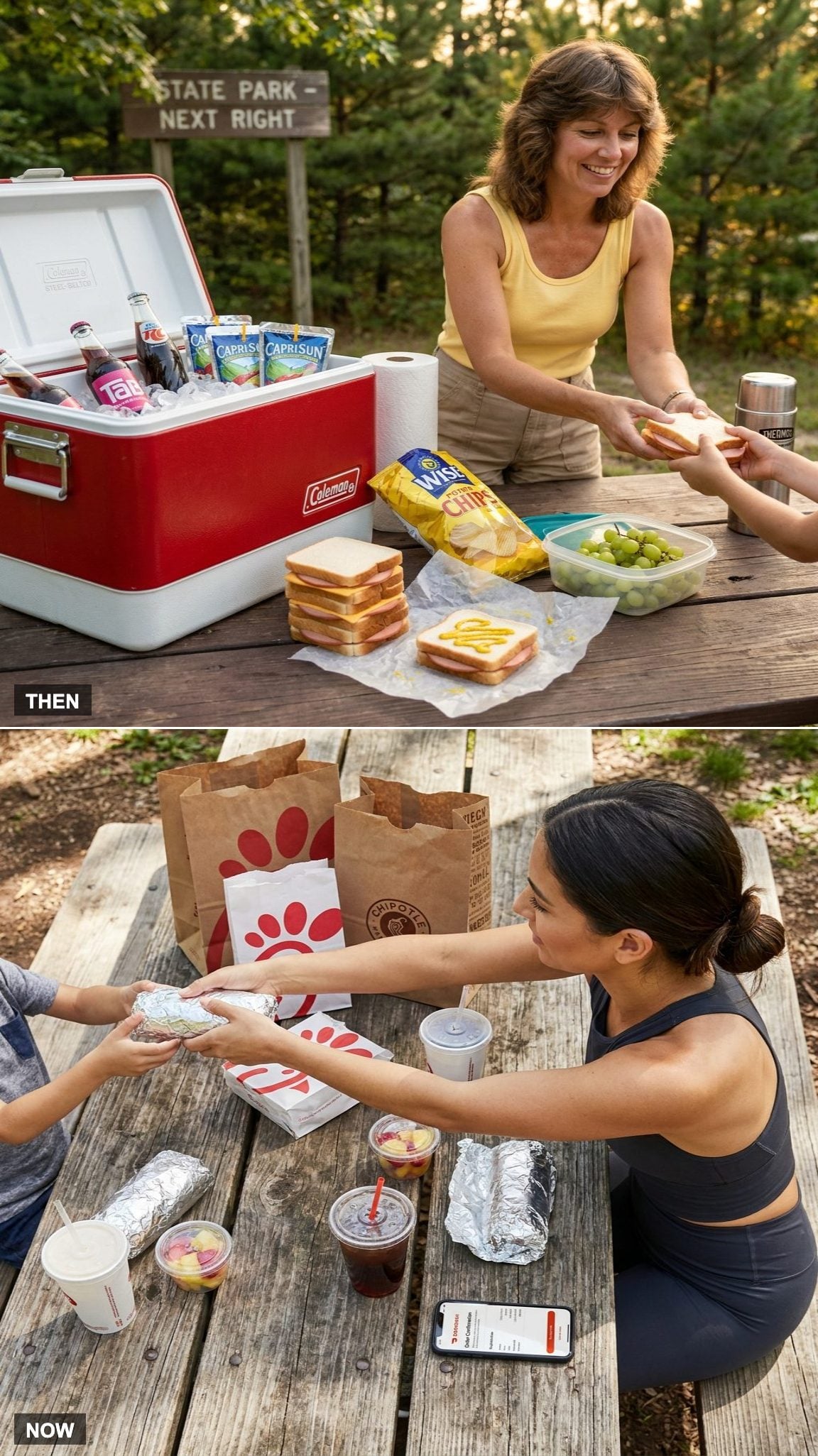
Mom packed a cooler that weighed forty pounds and contained enough food for a small infantry. Bologna sandwiches with the crusts still on, because you weren’t a baby anymore. A jug of red Kool-Aid that stained the ice pink by day two.
Now you pull up an app, order ahead, and grab it at the next exit without ever unclipping the kids. Faster. Easier. Also somehow lonelier—the cooler at the picnic table was the meal AND the event.
24. Cassette Tapes vs. Endless Streaming
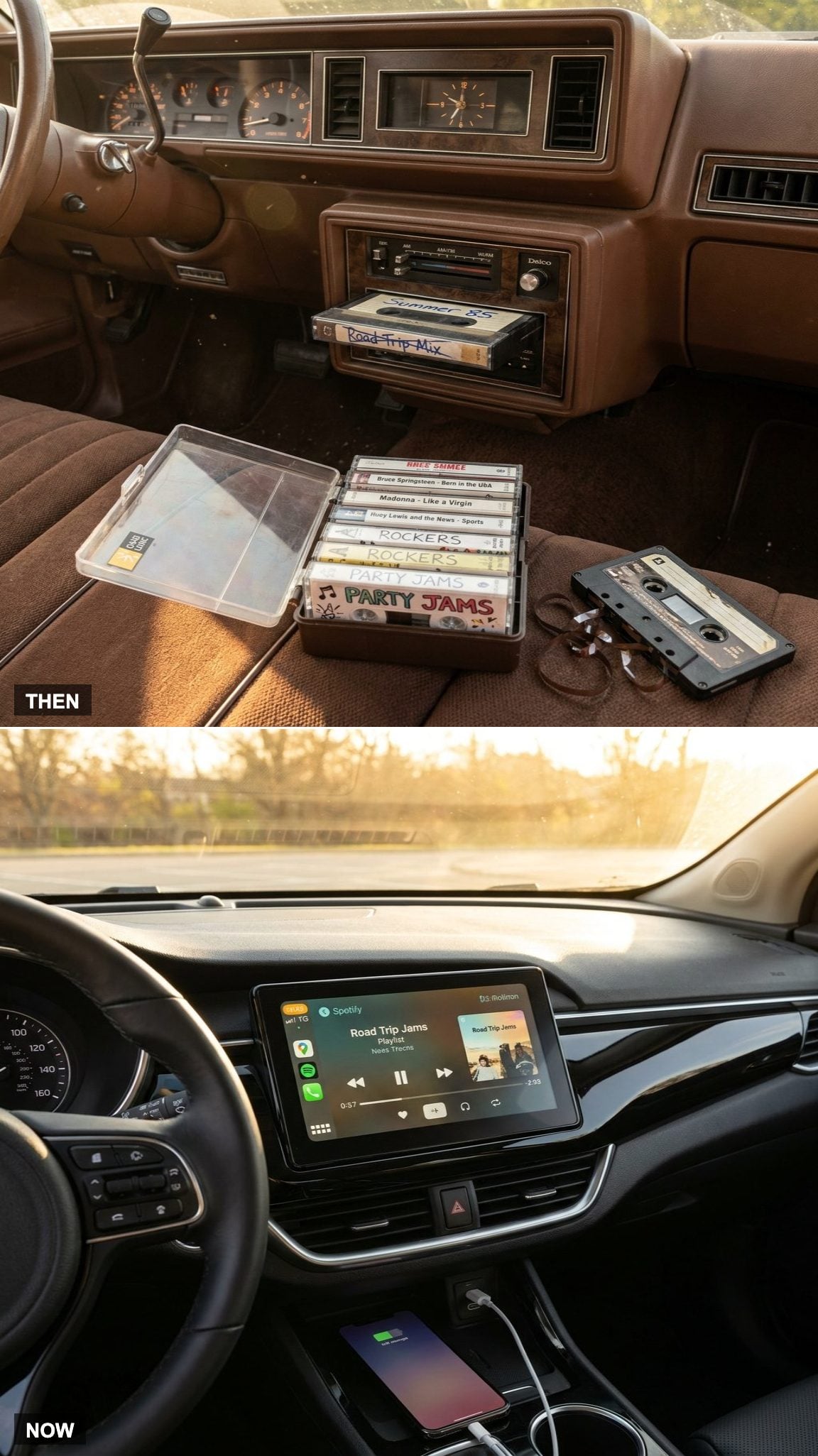
You made the mixtape the night before departure—a tape full of songs, timed to end exactly at the tape flip, curated with the emotional stakes of a diplomatic treaty. If a song you loved came on the radio, you scrambled to hit record and prayed the DJ would shut up over the intro.
Now you say the name of any song ever recorded and it plays in three seconds. The song shows up. The ritual does not. A mixtape took a full evening to make. That was the point.
23. Asking a Gas Station Attendant vs. Consulting Your Phone
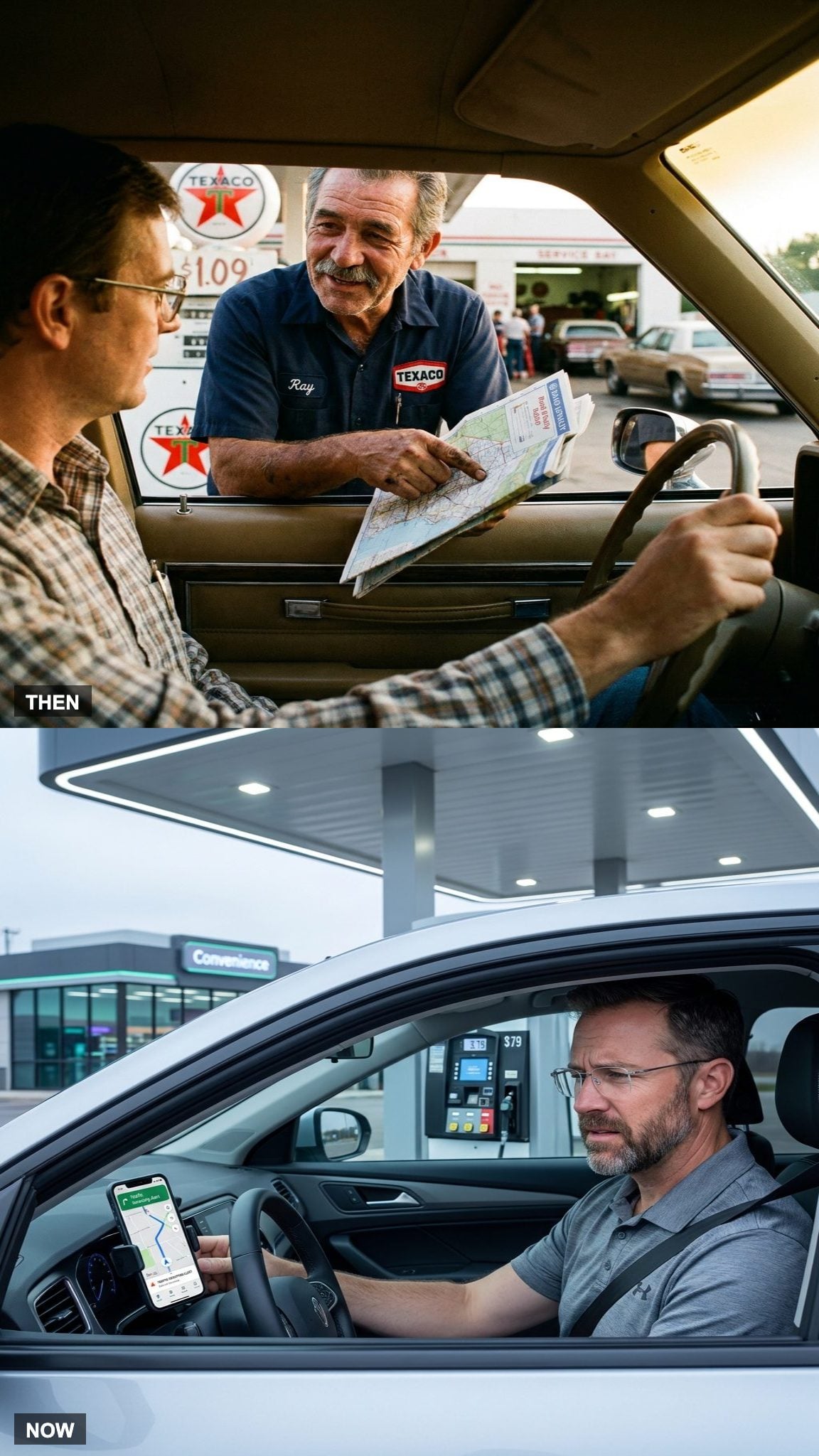
Ray at the Texaco knew that if you took the second left past the Dairy Queen you’d shave twenty minutes off your drive because they were doing bridge work on the county road. Ray also checked your oil and tire pressure while he explained it, and none of it cost you anything beyond the price of gas.
The phone knows about the bridge work too. It doesn’t know Ray. Nobody knows Ray anymore.
22. The Kodak Disc Camera vs. 4,000 Photos on One Phone
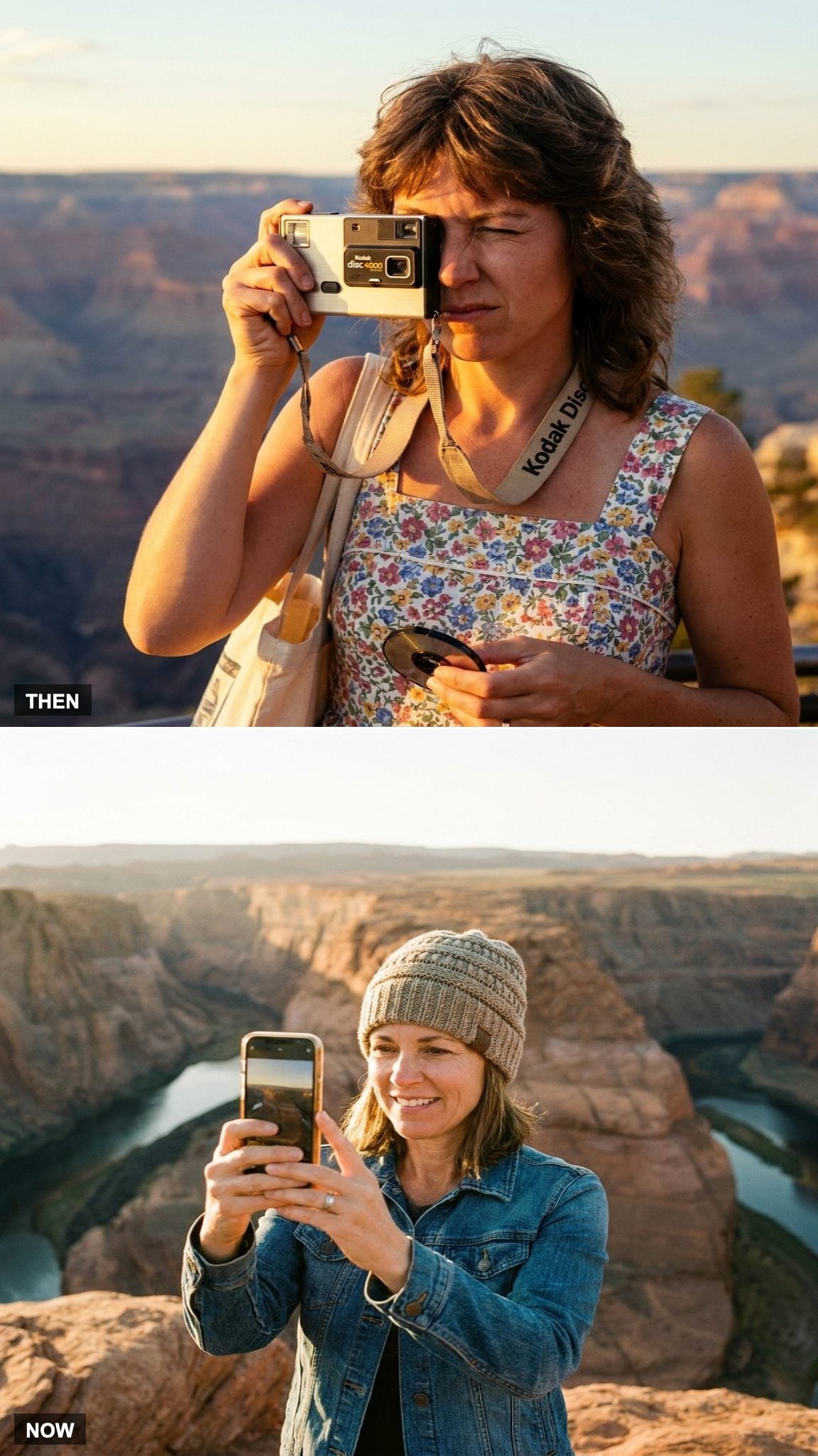
You had a limited number of exposures on a disc, and you knew every single one counted. You composed the shot. You made the kids stop fighting and stand together. You didn’t know for two weeks whether anyone had blinked, because the film sat in the glove box until you got home and dropped it at the drugstore.
Now you take dozens of pictures of the same mountain and delete most of them. The good ones live on a phone you might drop into the Colorado River next Tuesday. Waiting made the pictures feel more important when they finally came back.
21. Kids Sprawled Across the Back Seat vs. Buckled Into Booster Seats
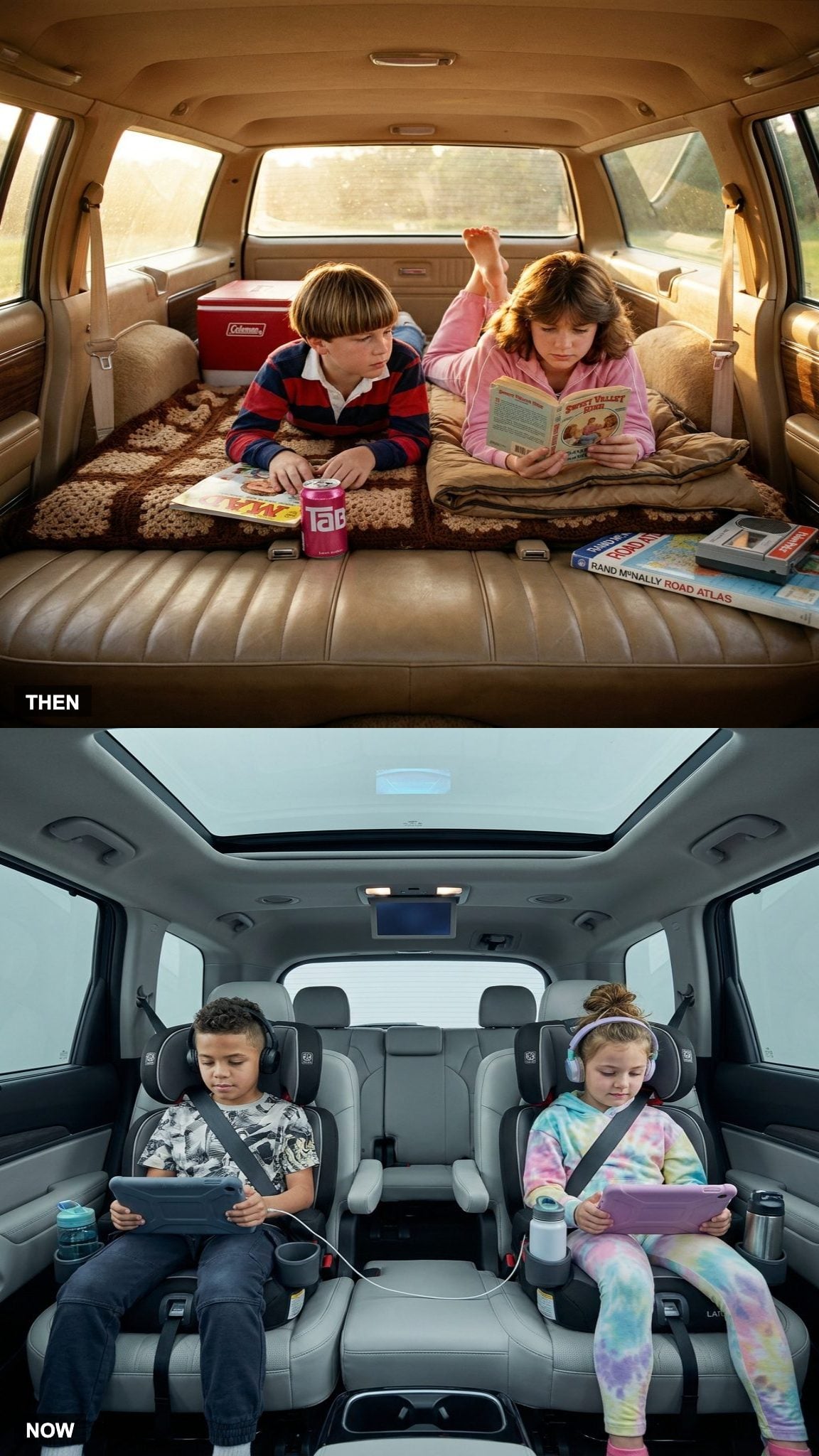
You made a bed back there. Actual pillows, a folded blanket, the way-back of the wagon converted into a rolling nap zone. Your sister slept with her feet on your face for six hundred miles and neither of you thought anything of it. The seat belts were there. Nobody used them.
State seat-belt-use laws began spreading after New York enacted the first in 1984, while child-restraint laws and later booster-seat requirements grew stronger over the following decades. Young passengers became substantially safer as the rules, vehicles, and restraints improved. The trade-off was real, and worth it. The nap was also real, and something about it is worth remembering too.
20. The Rest Stop vs. The Travel Plaza
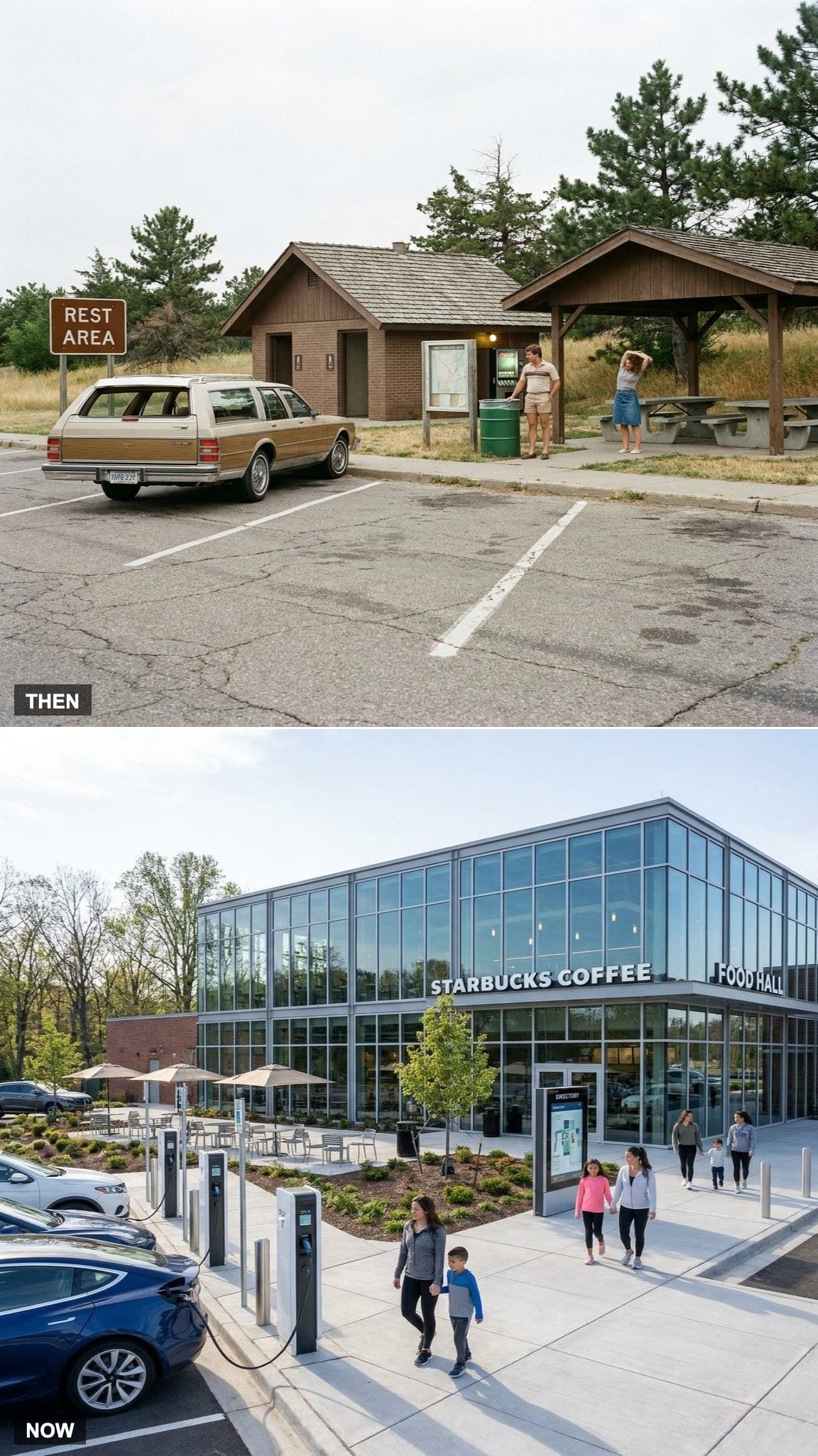
A 1985 rest stop was a brown brick bathroom, a vending machine that ate your quarters, and one picnic table someone had already carved their initials into by 1978. You went. You stretched. You got back in the car in under twelve minutes.
Today’s commercial travel plaza is basically a small airport with a bathroom attached—Chick-fil-A, Starbucks, a Tesla supercharger, phone-charging lockers, artisan jerky in six flavors nobody asked for, and a family bathroom with mood lighting. You can drop forty dollars before you remember why you pulled off the interstate in the first place.
19. The Pay Phone Check-In vs. FaceTime From the Back Seat
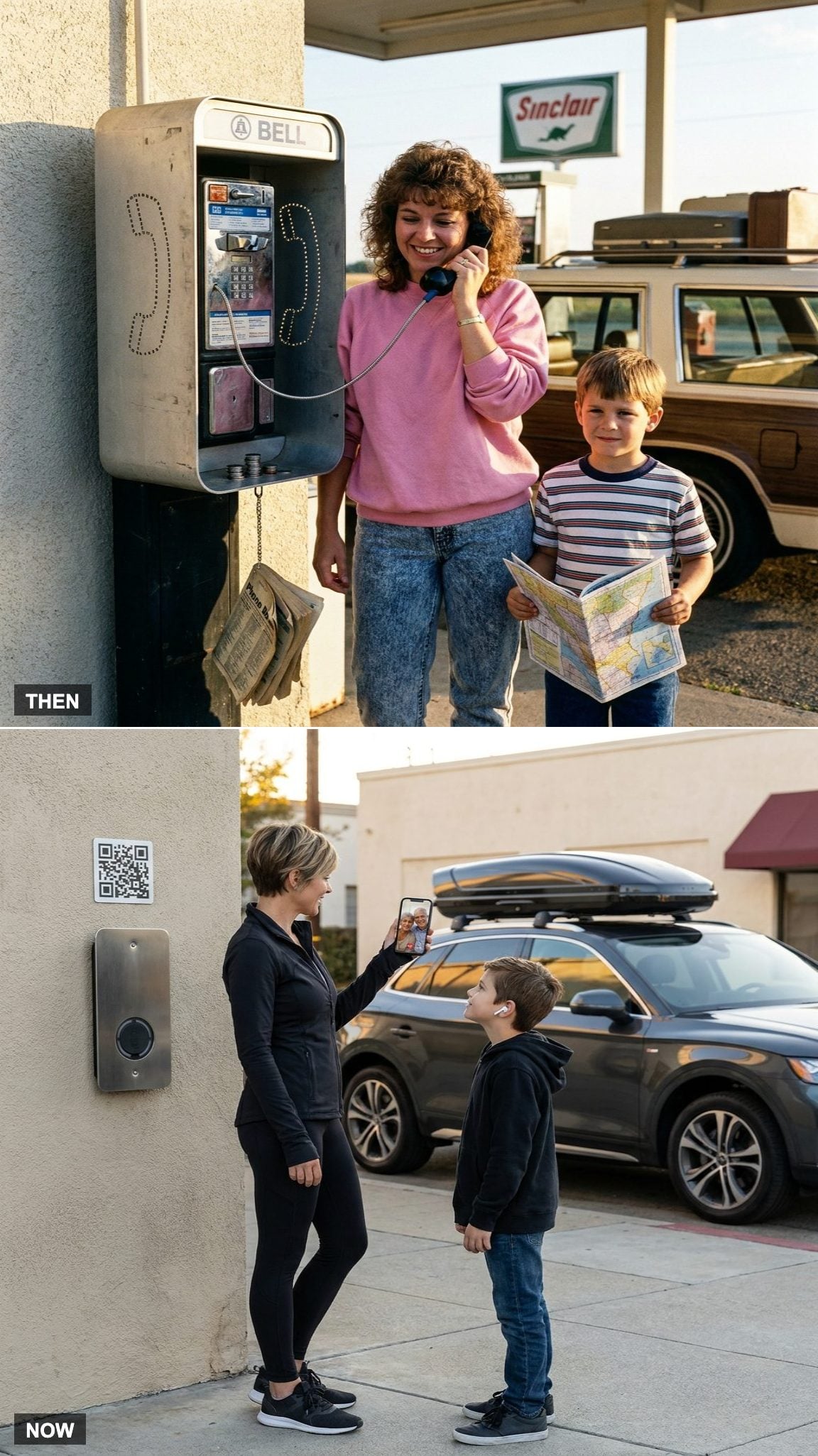
Calling home from the road in 1985 was a whole event. You pulled off at a Stuckey’s, fed the phone a fistful of quarters, and shouted over semi noise while your kid pulled at your sleeve begging for a pecan log.
The check-in now happens from the second row of the SUV at 70 miles an hour, and Grandma watches the cornfields blur past in real time. Nobody has held a quarter in years. Nobody misses the semi noise, either.
18. One Rand McNally vs. Four Screens Doing the Same Job
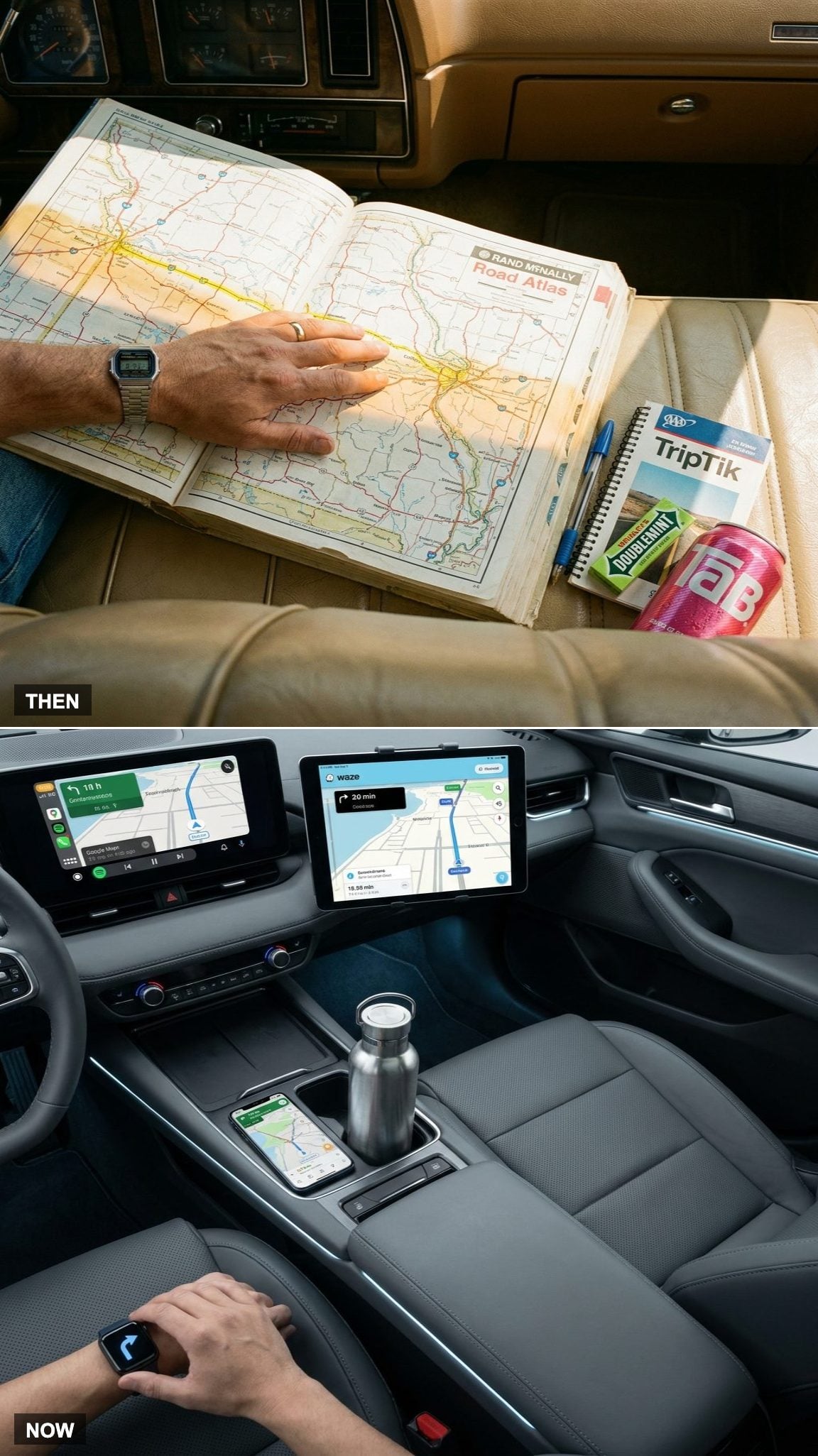
The atlas was a shared object. Dad drove, Mom navigated, and if you were the kid in the back who could actually read a map, you got promoted to co-pilot for the afternoon—which felt like being knighted. Fights broke out over which exit. U-turns happened. You learned where Kansas ended and Nebraska started because you had to.
Now everyone has a screen with an opinion. Waze says left. Apple Maps says right. The car’s built-in system pitches a third road nobody asked about. Nobody argues anymore. Nobody learns the geography either.
17. The Vacation-Cash Envelope vs. Tap-to-Pay Everywhere
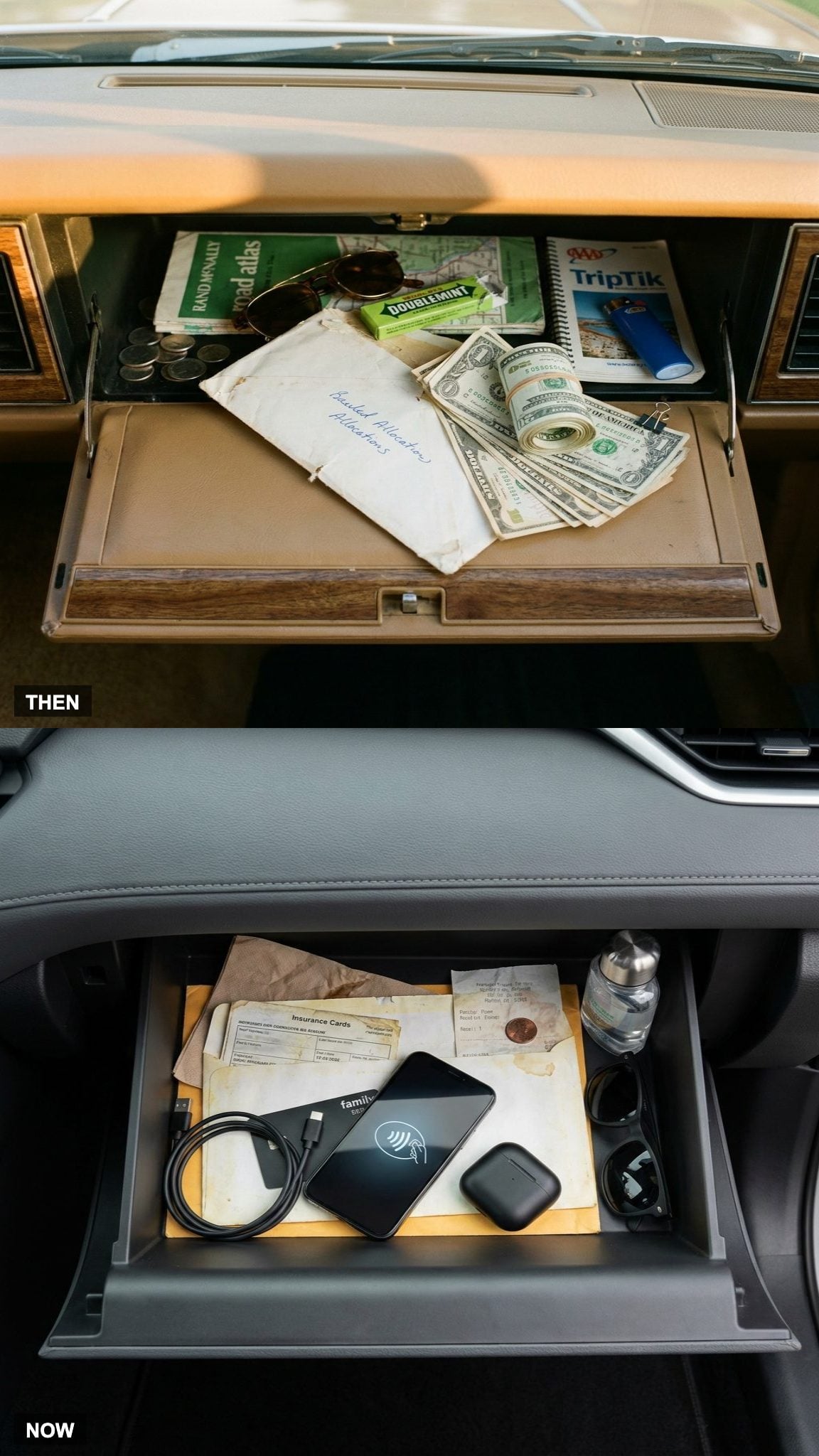
Vacation cash lived in an envelope in the glove box, and Dad had it broken down like a payroll clerk. Two hundred for gas, one-fifty for food, a hundred for emergencies, forty in ones for tips and tolls. He counted it every morning at the motel before the coffee kicked in.
The whole trip runs off a phone tap now. Kids expense their own snacks straight to the family card. Nobody carries small bills. That old envelope in the glove box is a stack of expired insurance cards and a fossilized Hardee’s napkin.
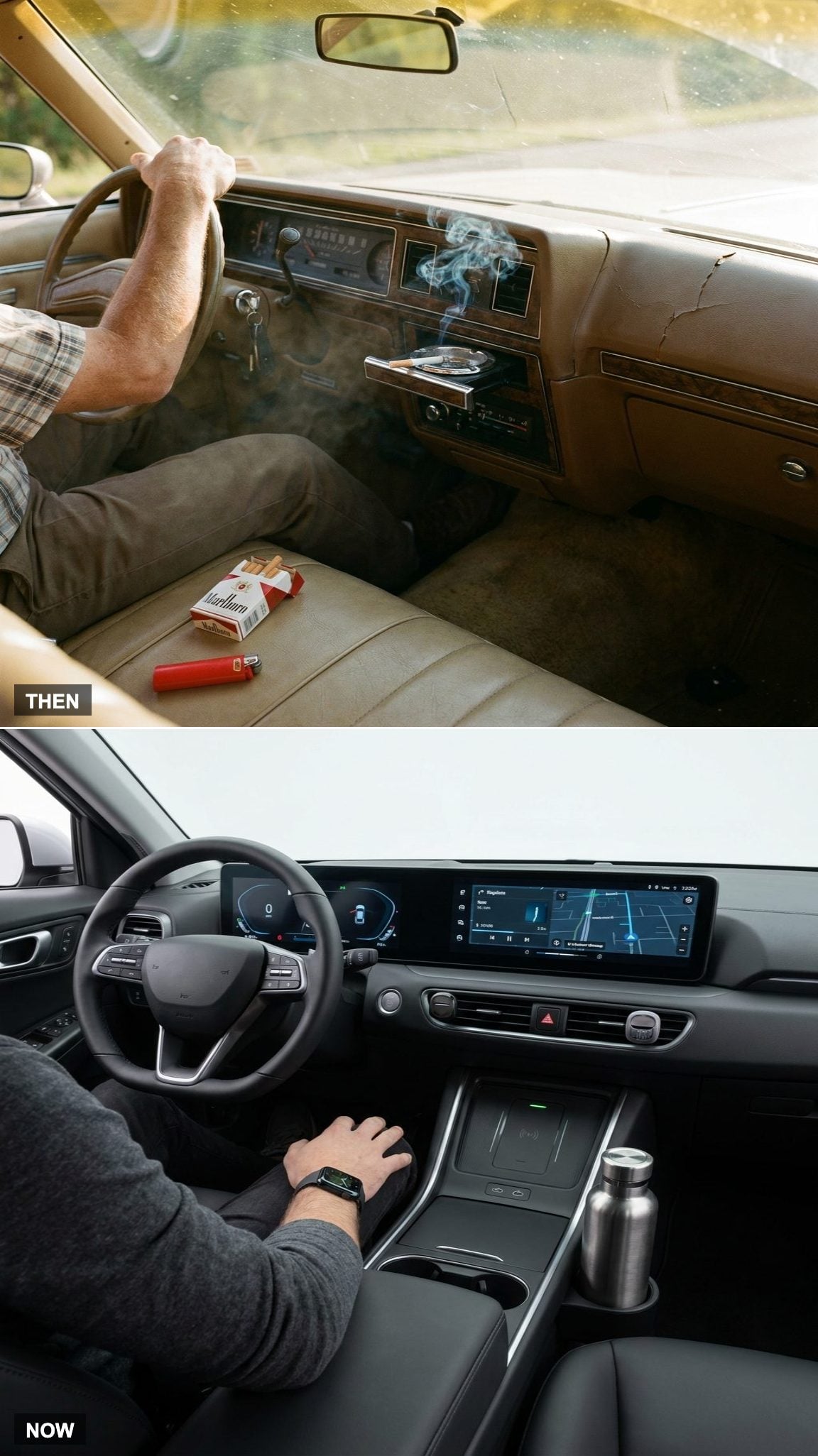
16. The Dashboard Ashtray vs. The Smoke-Free Cabin
🔥 Would you like to save this?
The pull-out ashtray was standard equipment, and so was the smell. Dad cracked the window two inches, squinted through the haze for eight straight hours, and nobody in the car thought twice about it. That yellow tint on the inside of the windshield? Just how cars looked.
The 2026 family SUV has a wireless charging pad where the ashtray used to be. Light a cigarette in there and three warning lights come on, the resale value drops through the floor, and your teenager posts it to a group chat before you’re through the next exit.
15. Watching the Fuel Gauge vs. GasBuddy Doing the Math for You
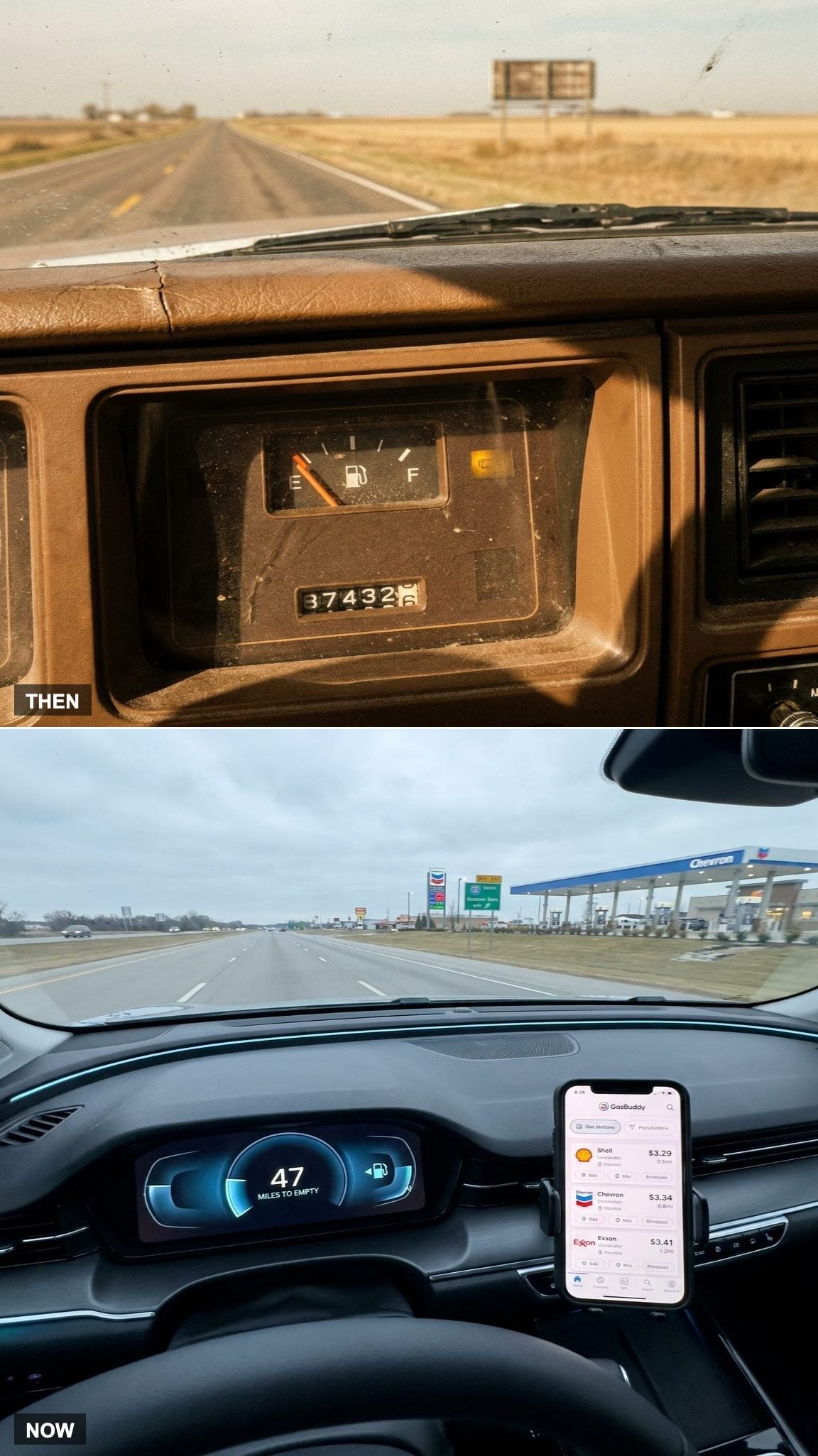
The needle sat on E and you did math in your head. Miles since the last fill-up, distance to the next town, whether that town had a station open past 8 p.m., and could you coast in on fumes. Sometimes you couldn’t. Sometimes Dad walked the shoulder with a red plastic can while everyone else sweated in the car.
GasBuddy hands you the answer before the question forms. Cheapest fuel in ten miles, sorted, filtered by brand, ranked by rewards points. Gone is the gamble of the empty tank. Gone is the roadside walk with a red plastic can, too, and nobody misses that part.
14. The Trunk Full of Souvenirs vs. The Camera Roll Full of Photos
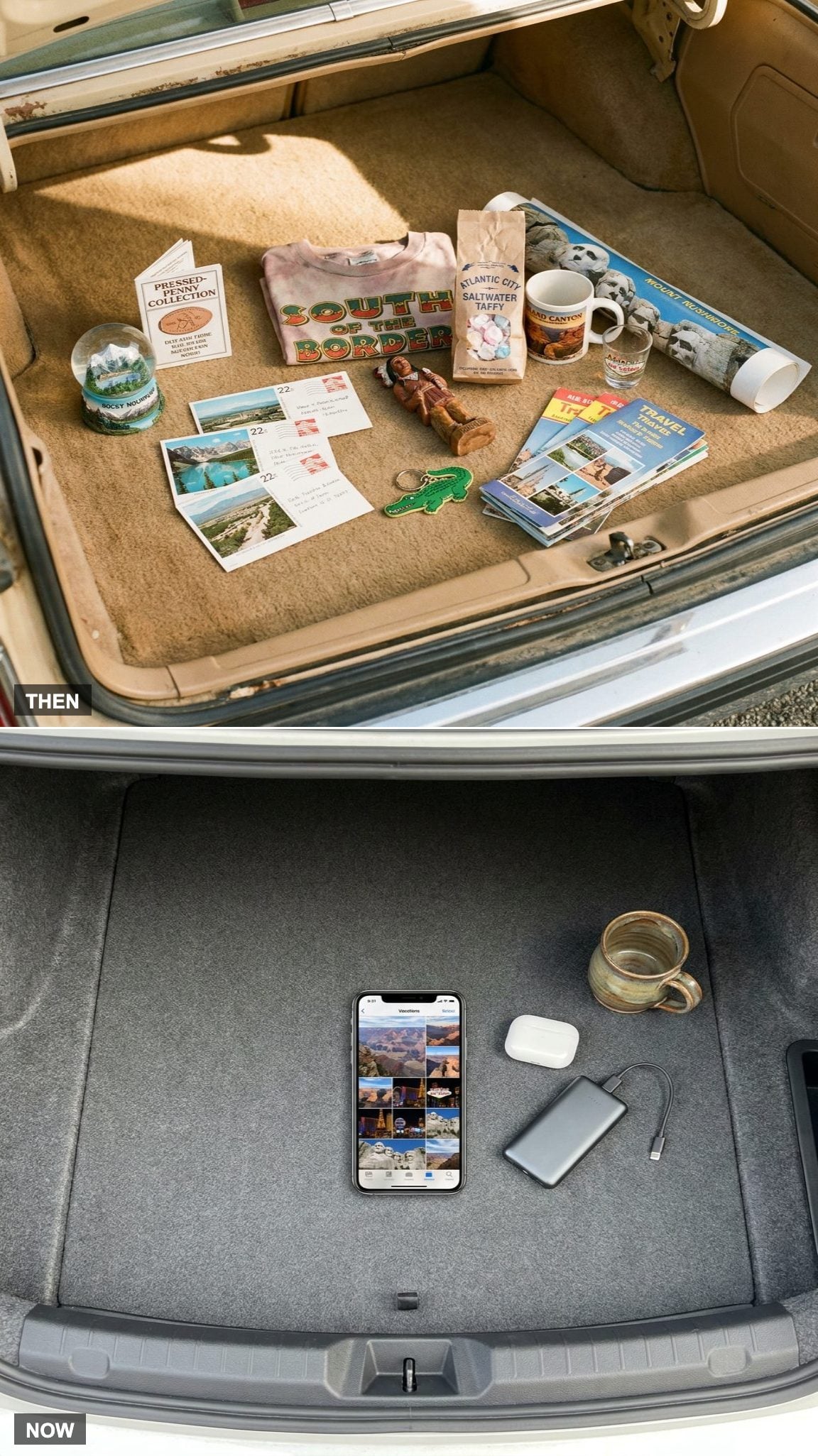
You came home with proof. A shot glass from every state. A snow globe that leaked by Thanksgiving. A T-shirt that fit for exactly one summer. Postcards you mailed to yourself so they’d be waiting on the kitchen counter when you got back. The trunk was heavier on the drive home than the drive out, and that was the whole idea.
The trip lives on a phone now. Twelve hundred photos, four videos, one shared album the grandparents mostly ignore. No dust. No shelf to fill. Nothing to toss out in ten years when you move. Clean. Also a little hollow.
13. CB Radios Crackled with Highway Chatter, Now Smartphones Do Everything Silently
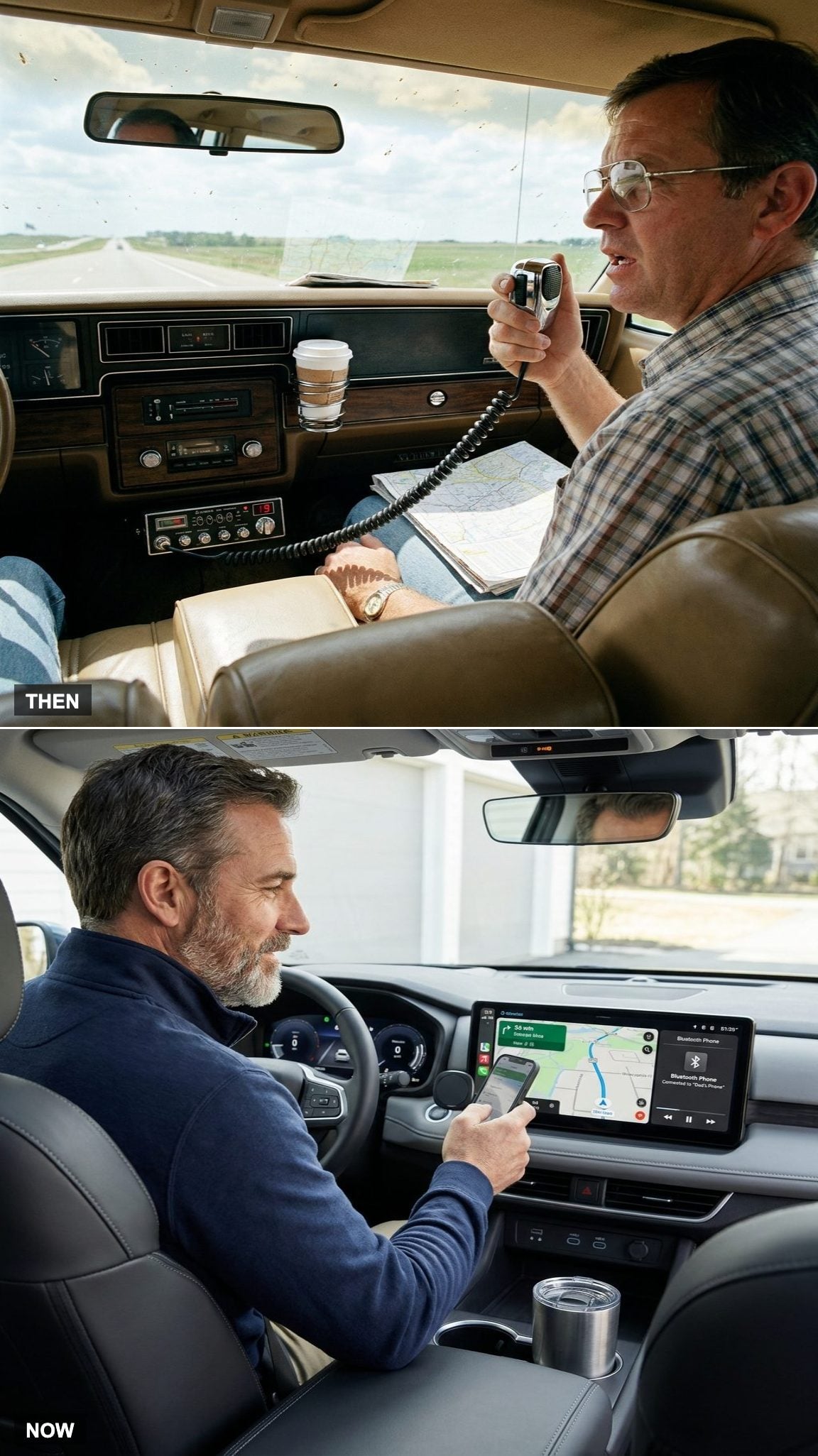
The CB was the family’s tether to the outside world. Truckers warned you about smokeys thirty miles ahead, someone in a Winnebago told you which rest stop had the working bathroom, and you learned handles, ten-codes, and how to say breaker one-nine without laughing.
Now the phone does it all and nobody talks to anyone. Google Maps flags the speed trap, Waze reroutes around the wreck, the information is better—and the camaraderie is gone.
12. The AAA TripTik Was a Sacred Object, Now Traffic Updates Reroute You Mid-Sentence
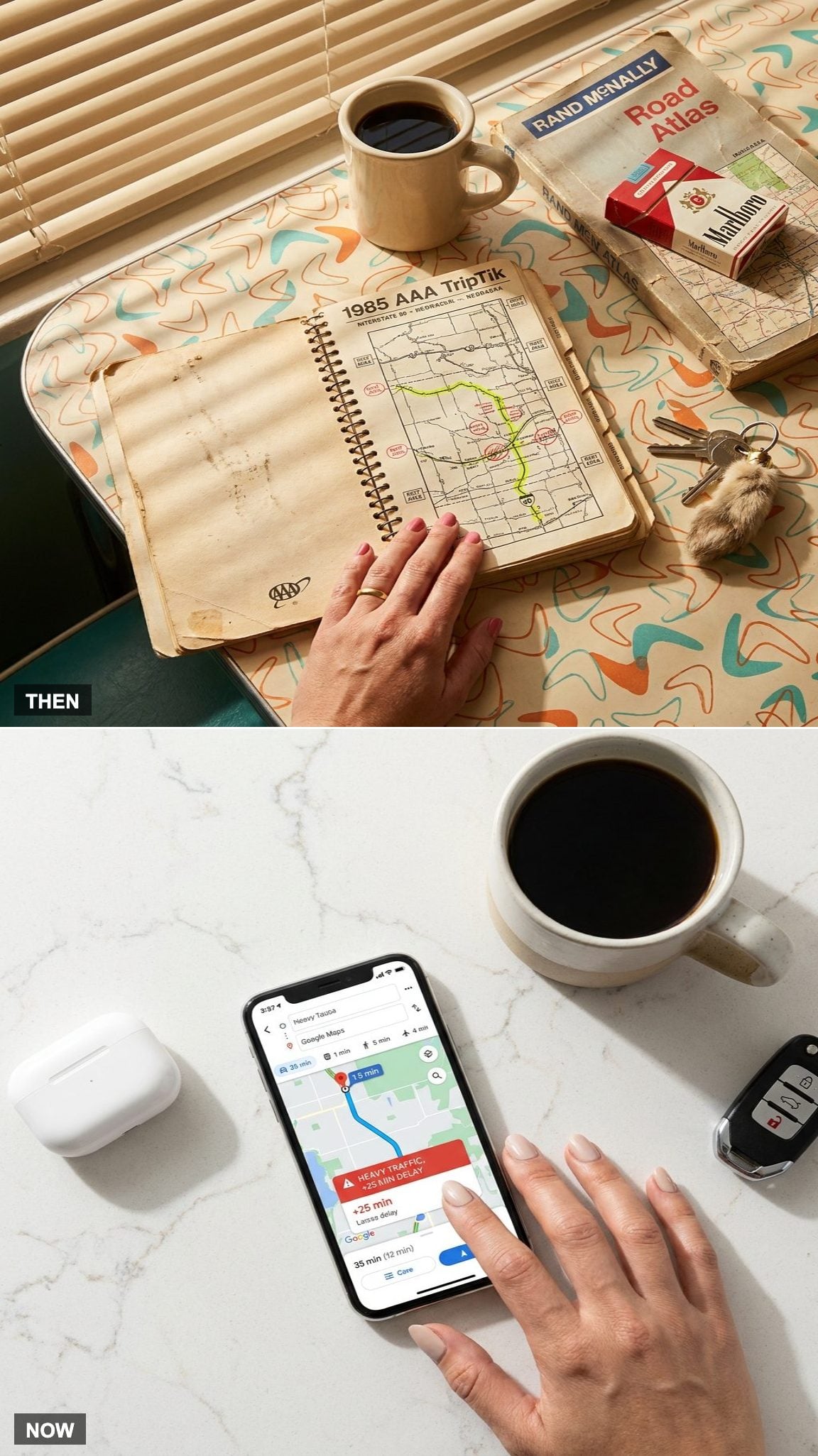
Walking into a AAA office and requesting a TripTik felt official. A staffer took your start and end points, plotted the whole route, highlighted it in yellow, spiral-bound the thing, and handed you a personalized road bible. You flipped one page at a time as you drove, and the next page was the next hundred miles of your life.
Now the route recalculates every eight seconds. A wreck in Ohio adds twelve minutes before you’ve finished your sandwich. Better? Sure. But nobody ever put a Google Maps rerouting in a scrapbook.
11. The Emergency Kit Lived in the Trunk, Now Help Is One Tap Away
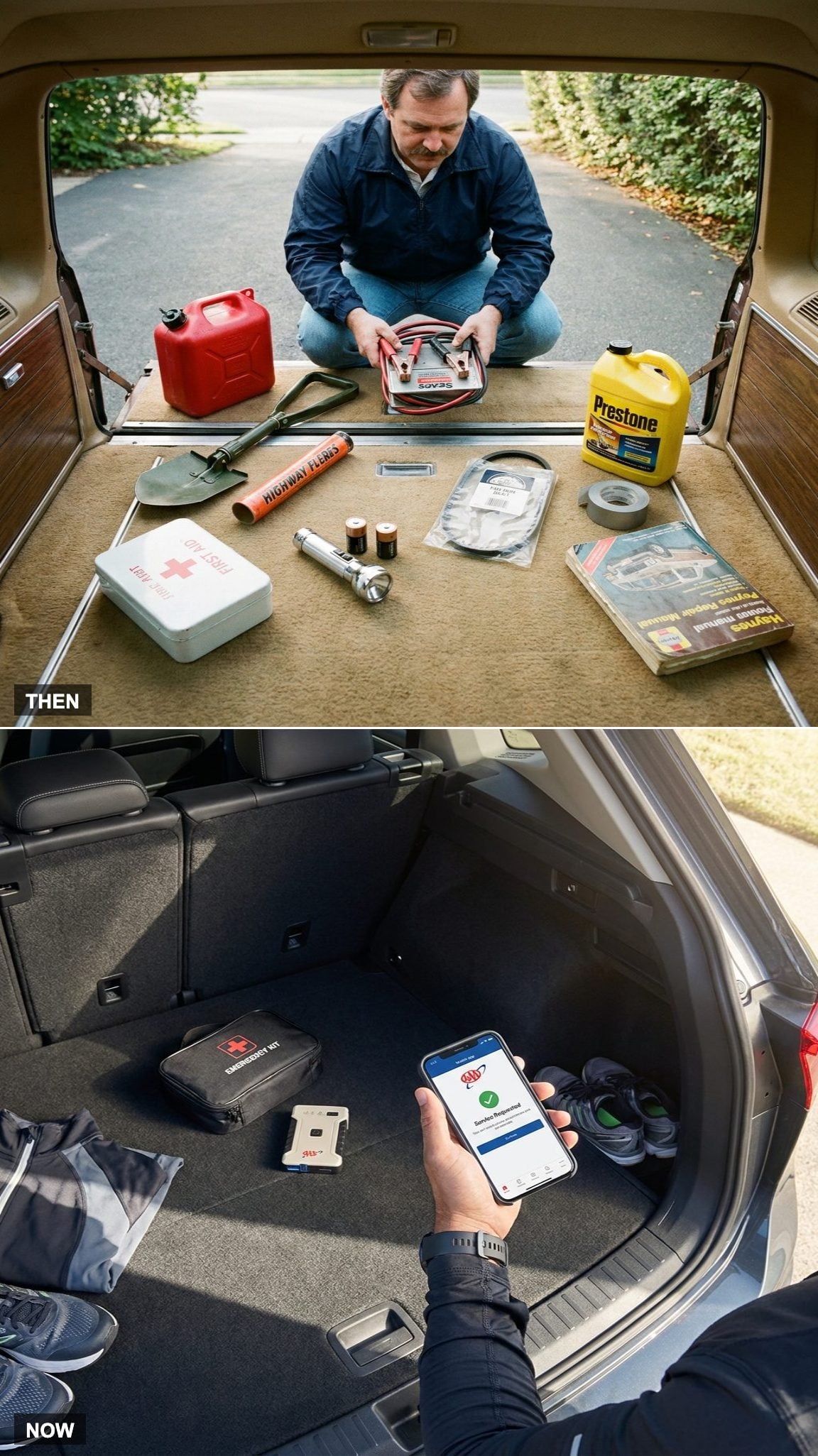
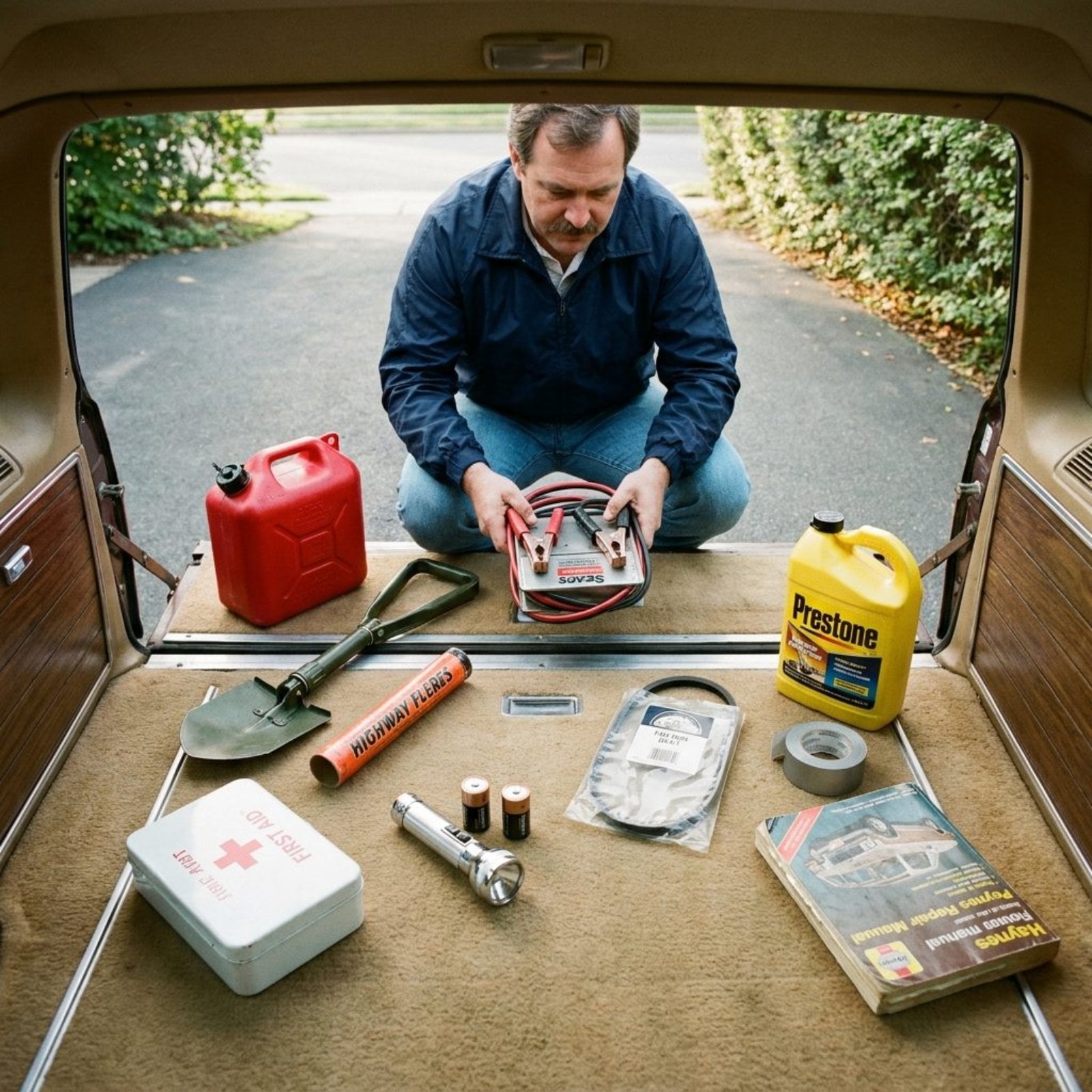
Every dad packed like he expected the apocalypse between Toledo and Cleveland. Jumper cables, flares, a spare fan belt he’d never actually installed but carried anyway. The trunk was a hardware store on wheels.
Now you tap an app and someone shows up in a truck. Some of the roadside repair knowledge families once carried has faded along with the spare belts and tool rolls.
10. Manual Window Cranks vs. Three-Zone Climate Control
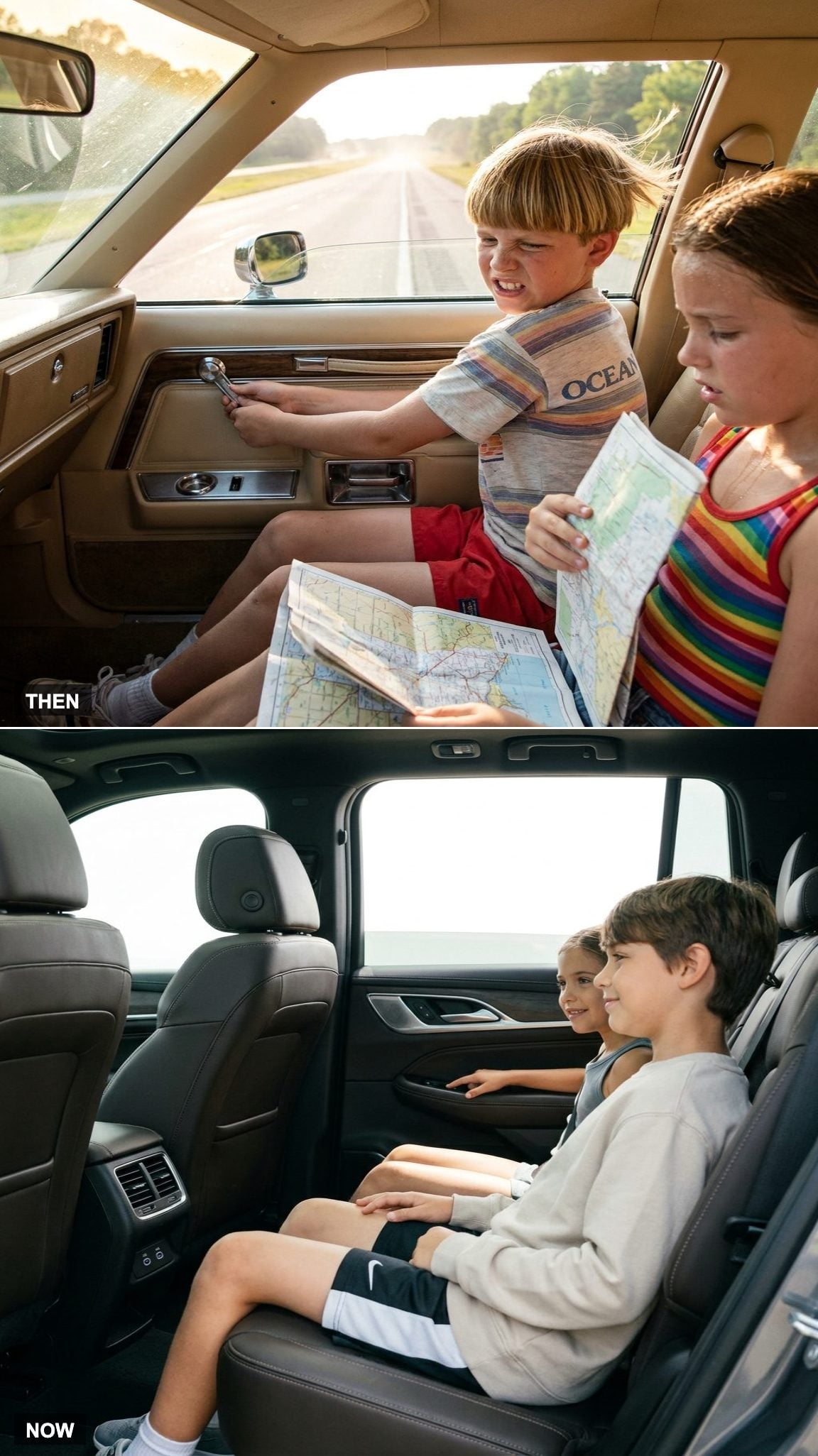
Rolling down a stuck window in August required real effort. Two hands. Torque. A prayer.
The car had two temperature settings—whatever it was outside, and slightly worse. Kids in the back sweated through their shirts, feet stuck to vinyl seats, and the only relief was 55 mph of hot Nebraska air blasting through a gap barely wider than a paperback.
Now every seat gets its own climate zone, and someone in row three can be at 68 degrees while the driver runs 72. The kids will never know the specific misery of a rear window that only rolled down two inches because the crank was broken.
9. Finding a Motel After Dark Was Pure Roulette
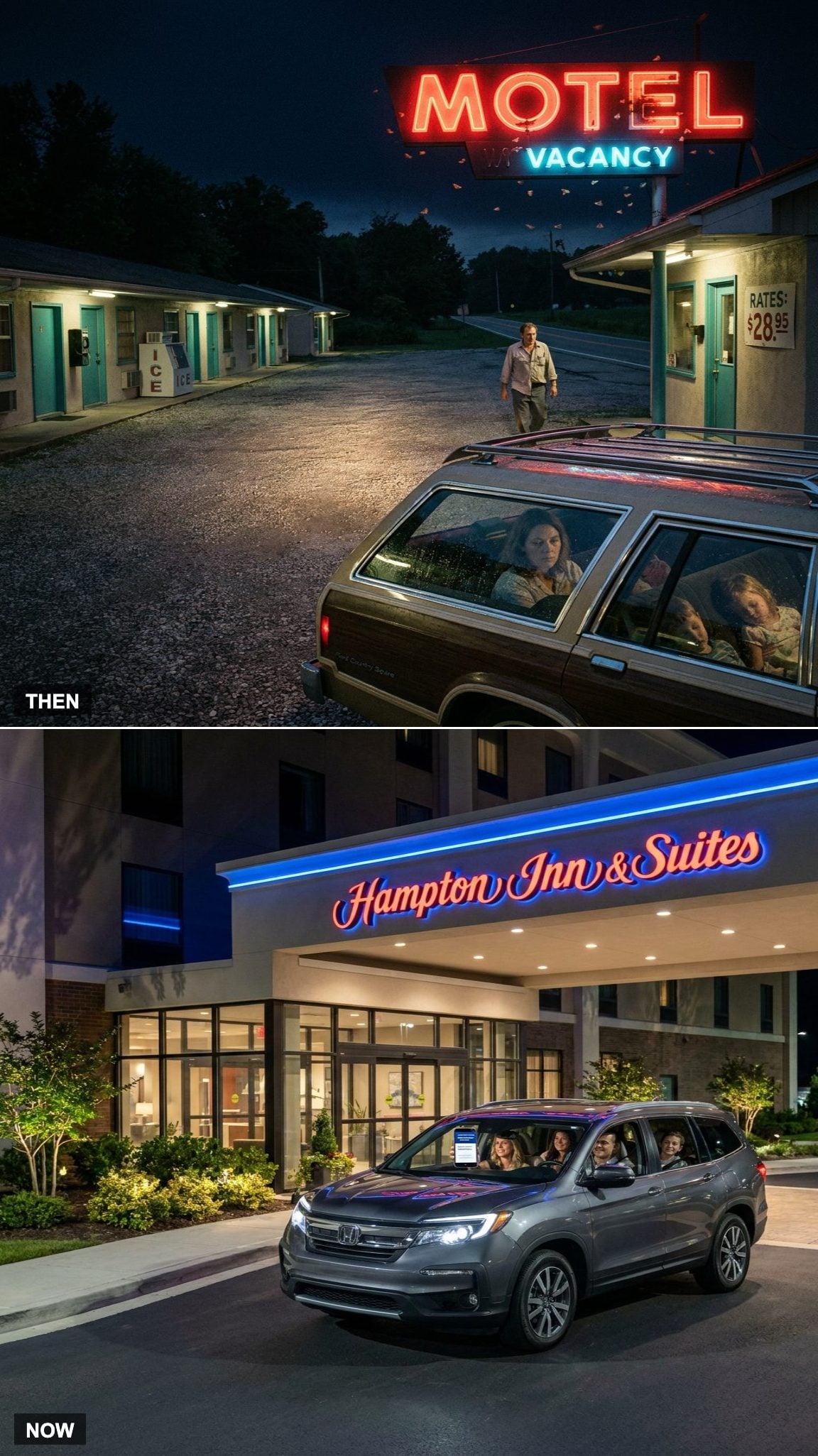
You drove until Dad’s eyes started to close, then started reading the roadside for a vacancy sign that wasn’t lit as NO. Some nights you got lucky. Some nights you got a room where the bedspread had a story and the door didn’t quite lock.
Now you book from the passenger seat three states away. The reward points, the verified reviews, the certainty that the sheets have been washed—you know exactly what you’re walking into, and the mystery has been engineered out of the drive.
8. The One Wrong Turn Nobody in the Family Ever Let Anyone Forget
🔥 Would you like to save this?
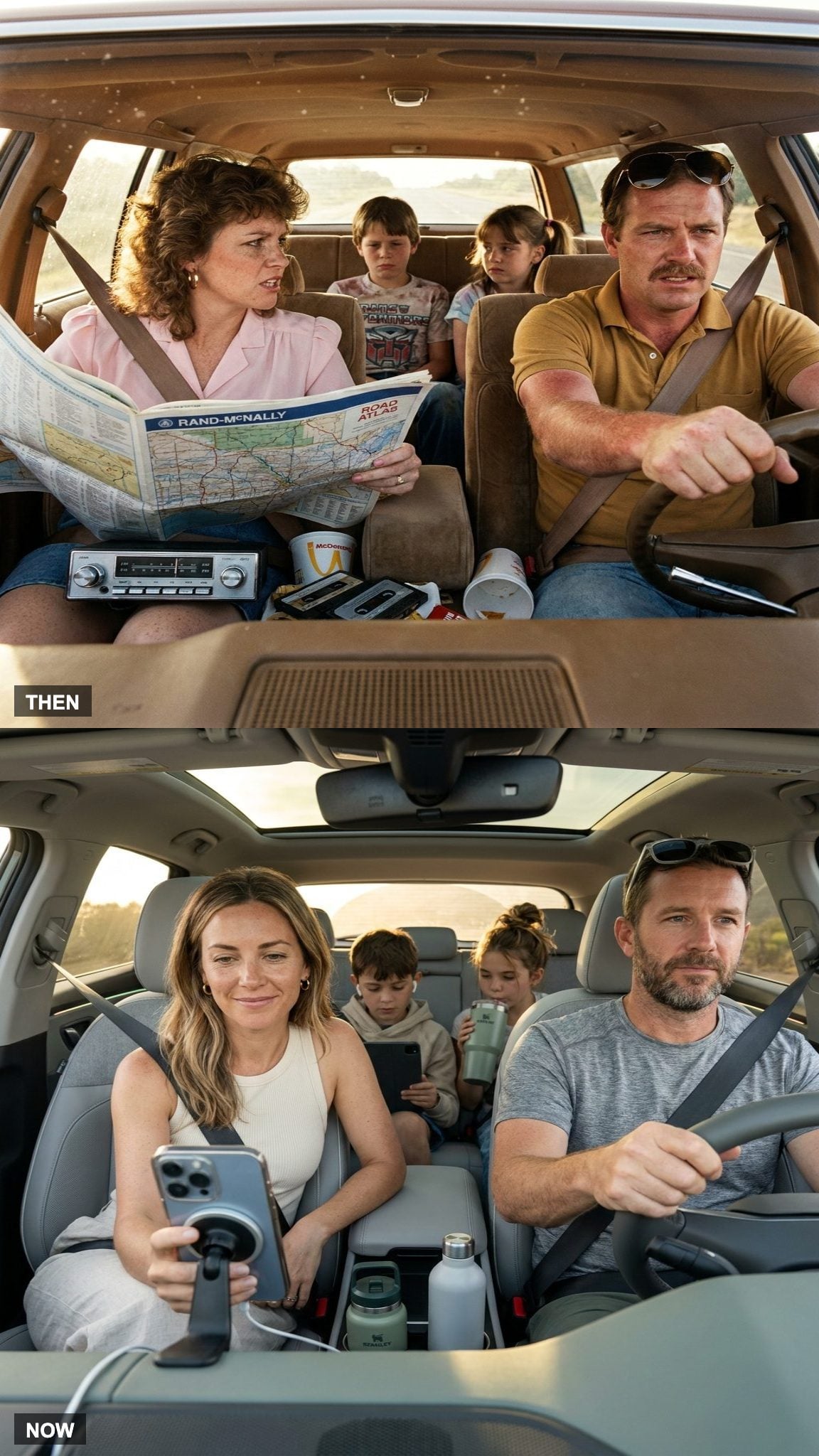
Every family had one. Not just any wrong turn—the wrong turn, the one that got its own name and got retold at every Thanksgiving for the next twenty years. Dad missing the split for I-40 outside Amarillo and driving forty-five extra minutes before anyone spoke up. The time Mom swore the map showed a bridge that had washed out a decade earlier.
Nobody photographed it. Nobody screenshotted it. It just became a story, embellished a little more with each retelling, until nobody was entirely sure how long the detour actually lasted—only that it had lasted long enough to become permanent family folklore.
Now the phone reroutes so quietly and so quickly that this year’s road trip will not produce a single story like that. The dashboard voice says recalculating and the whole incident is over before anyone can turn it into a bit.
7. Reading Signs Was a Team Sport, Now the Car Just Tells You
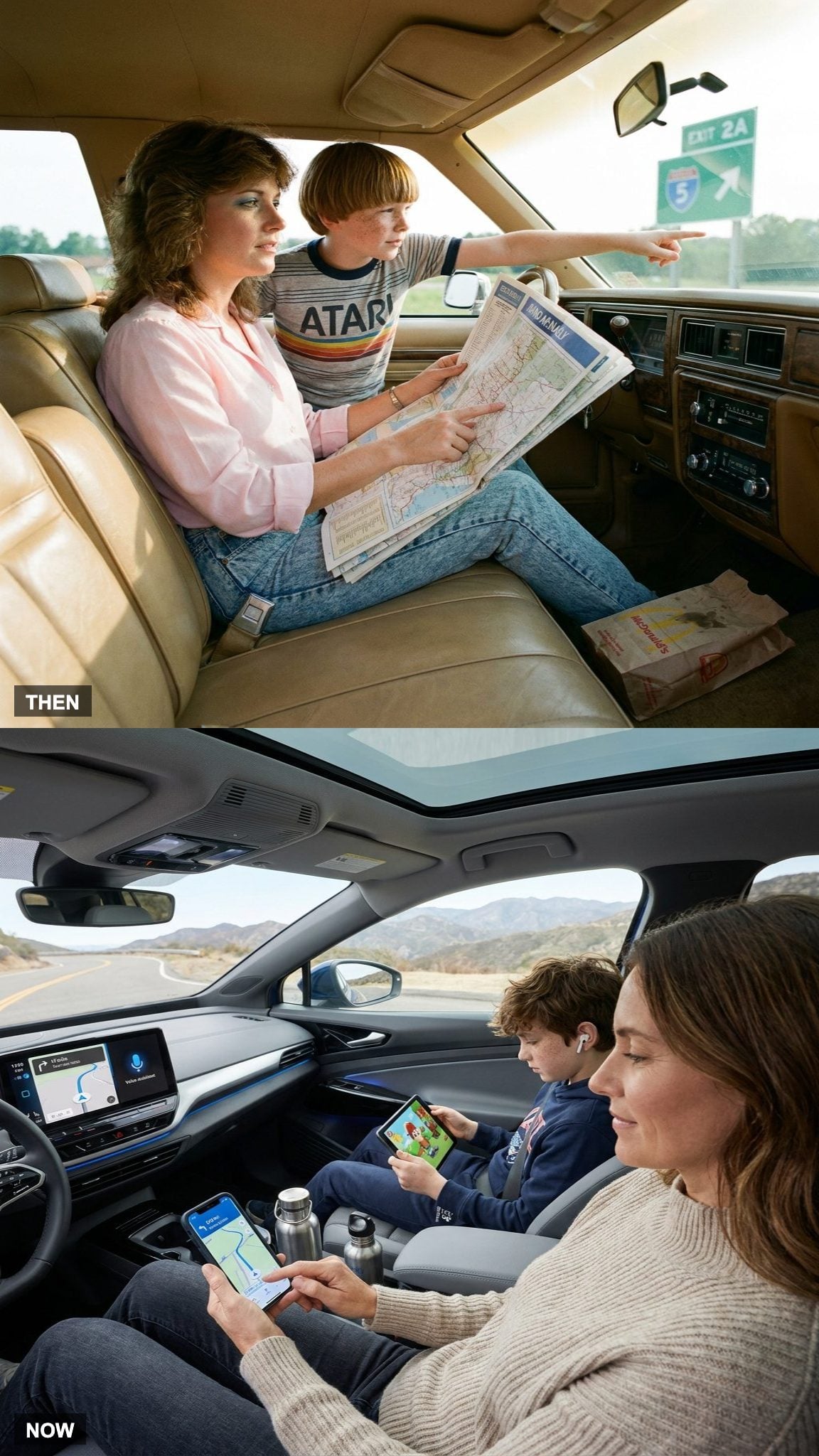
Reading road signs used to be an assigned job. Someone in the family had the map, someone else called out exit numbers, and kids learned to read route markers before they finished third grade because their parents needed the help.
Now the car reads for you. Turn right in half a mile. In three hundred feet, take the exit. It’s efficient—and it’s the reason a 22-year-old will happily drive from Denver to Kansas City without ever knowing what road they were on.
6. Vacation Planning Happened at the Kitchen Table with Brochures Everywhere
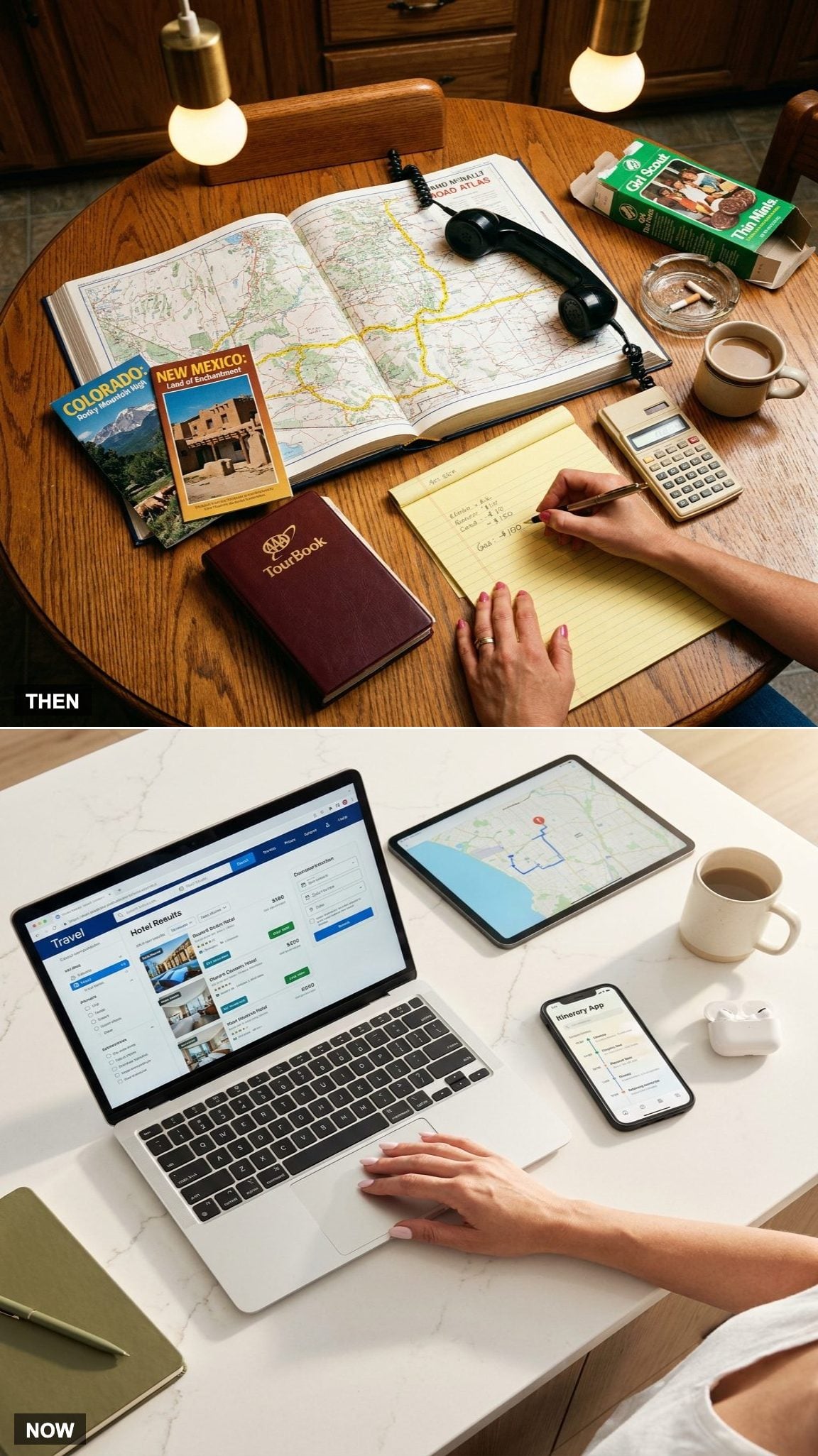
Planning a trip took weeks. You called the state tourism board and they mailed you a packet. You called motels one at a time from a rotary phone, asking about rates, pool availability, and whether they took Diners Club. Everything went on a legal pad in pencil, because things changed.
Now the entire trip books itself in forty minutes on a Tuesday night. The magic of a mailbox stuffed with glossy brochures from places you’d never been is gone. Planning became faster, while the long buildup of brochures and phone calls faded.
5. Road Trip Games Kept the Family Sane, Now Everyone Retreats to Their Own Screen
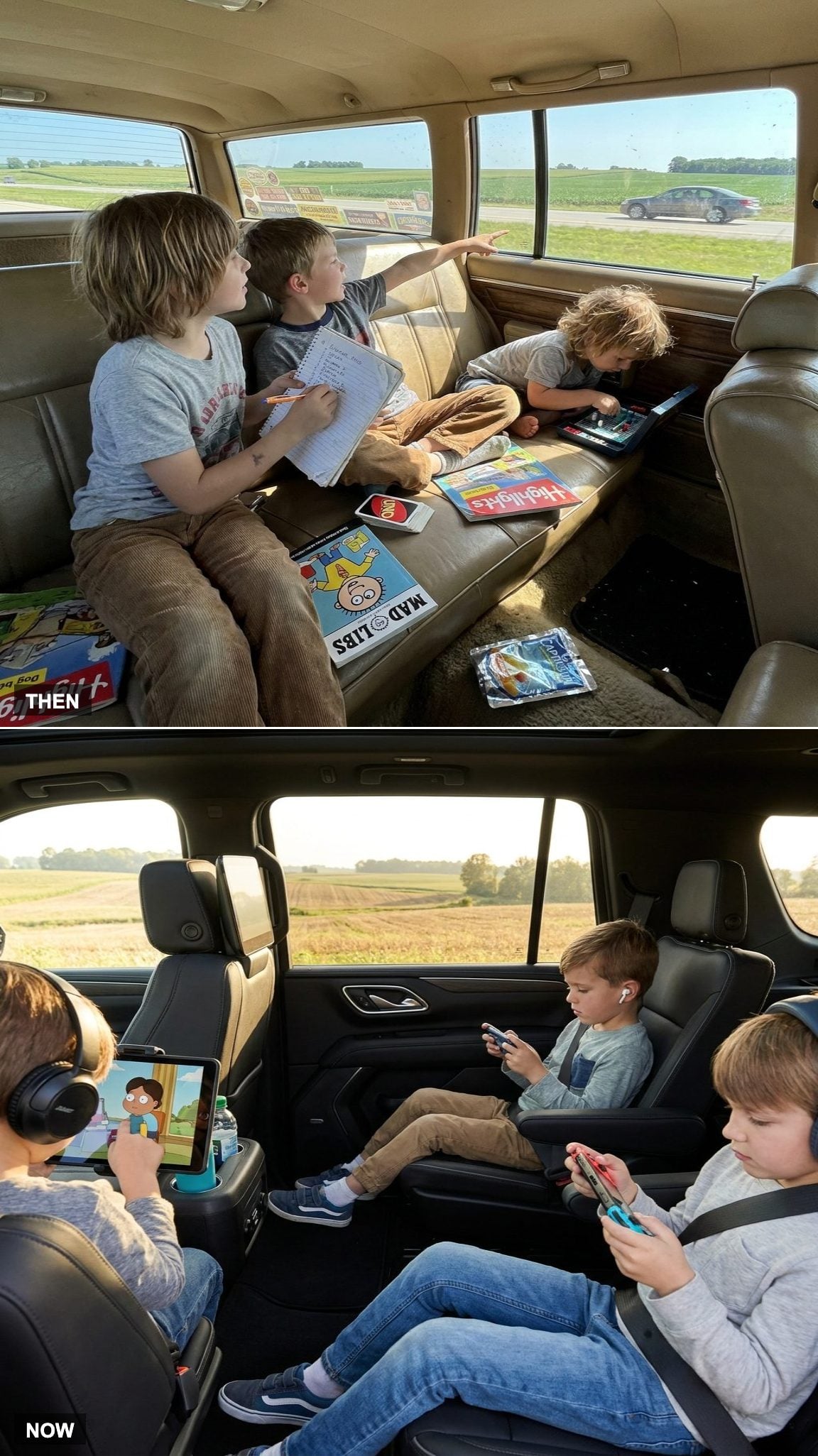
The license plate game. Twenty questions. Punch buggy. Counting cows on your side of the road and losing them all if you passed a cemetery.
These games existed because parents had no other option. Boredom was the enemy, and the enemy had to be defeated with the tools available—your siblings, your imagination, and the passing scenery. You made up rules. You cheated. You argued about the cheating.
Now every kid has a private screen and a set of headphones. The back seat is quiet. Nobody fights. Nobody bonds either. A family can drive from Chicago to Orlando and the three kids in the back will not have spoken to each other for eighteen hours.
4. Cars Packed to the Roof vs. Roof Pods and Smarter Packing
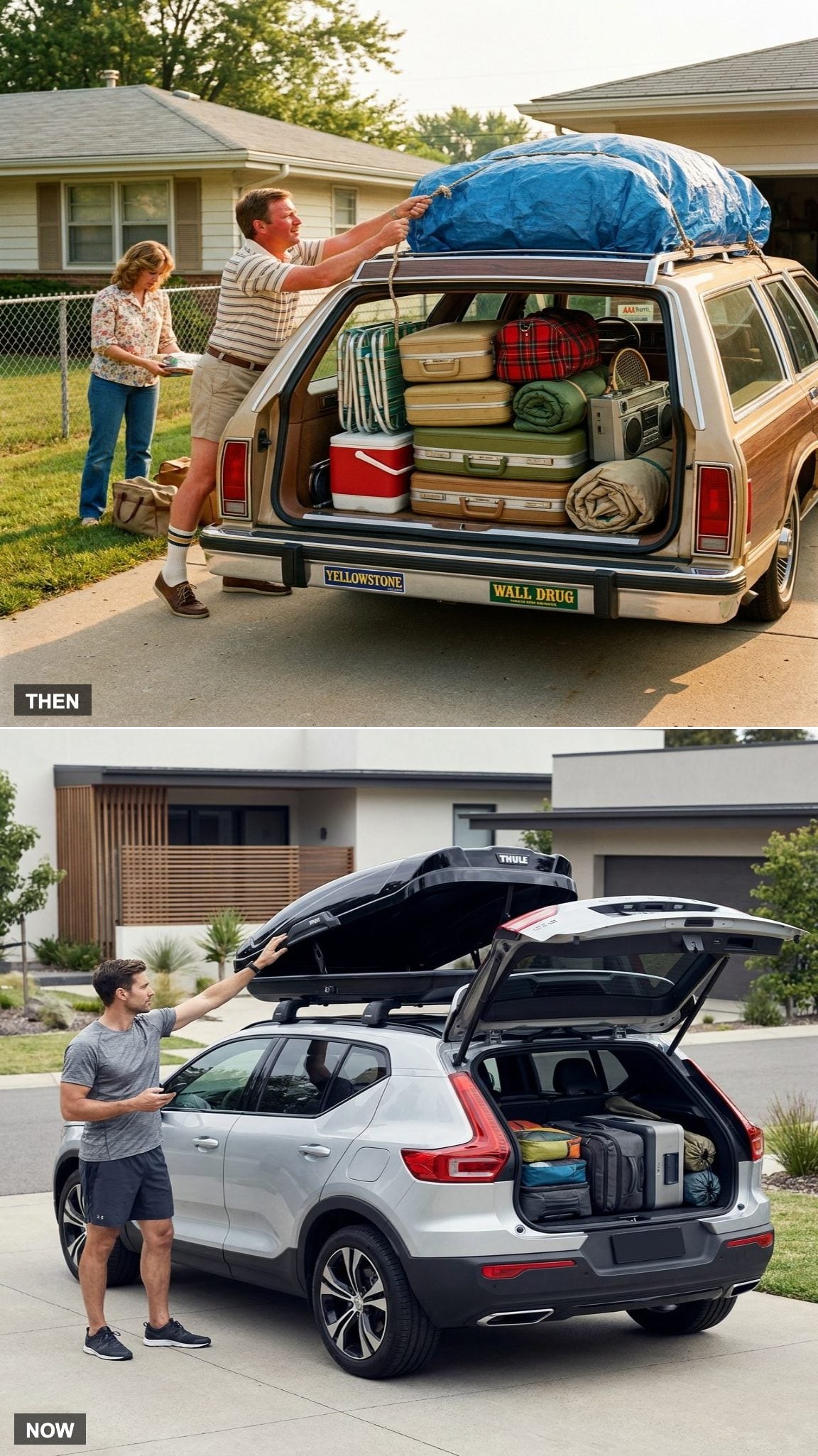
In 1985, the family car looked like it was fleeing a burning building. Suitcases stacked to the headliner, a cooler wedged between the kids, Dad up on the bumper wrestling a knotted rope over a tarp and muttering things kids weren’t supposed to repeat. The rear window was a Tetris board of vinyl luggage, sleeping bags, and someone’s clarinet case that absolutely did not need to come along for two weeks in the Poconos.
Now the roof pod does the heavy lifting—aerodynamic, lockable, quiet at highway speed, packing cubes downstairs, everyone can still see out the back. But something was lost when the rope went away. That rope was a rite of passage.
3. Simple Fuel Stops vs. Mini Shopping Centers With Pumps Out Front
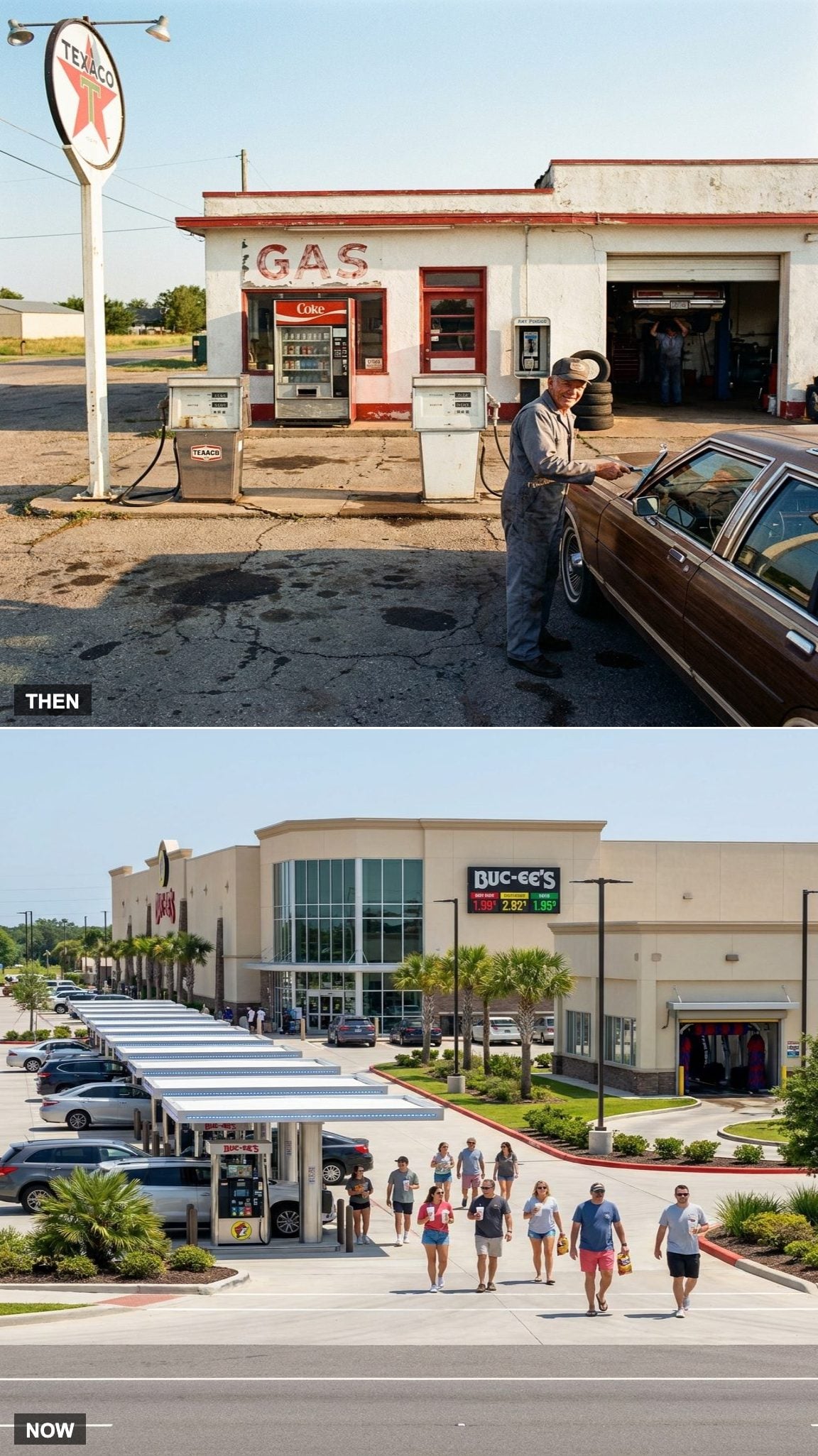
The 1985 gas station still put fuel and basic service first. Maybe check the oil, and if the attendant liked you he’d get the bugs off the windshield too. The building itself was a shack with a bathroom key attached to a hubcap, a Coke machine humming in the corner, and a wire rack of folded maps yellowing in the window.
Today’s travel plaza is a small city—eighty-five pumps, brisket sandwiches, a whole wall of jerky, bathrooms that get their own online reviews, sunglasses by the hundred. Kids beg to stop at Buc-ee’s the way they used to beg to stop at Stuckey’s. The pecan log roll survived. Everything else got a lot bigger.
You used to stop at a gas station. Now you visit one.
2. Getting Lost as Part of the Story vs. Wrong Turns That Barely Register
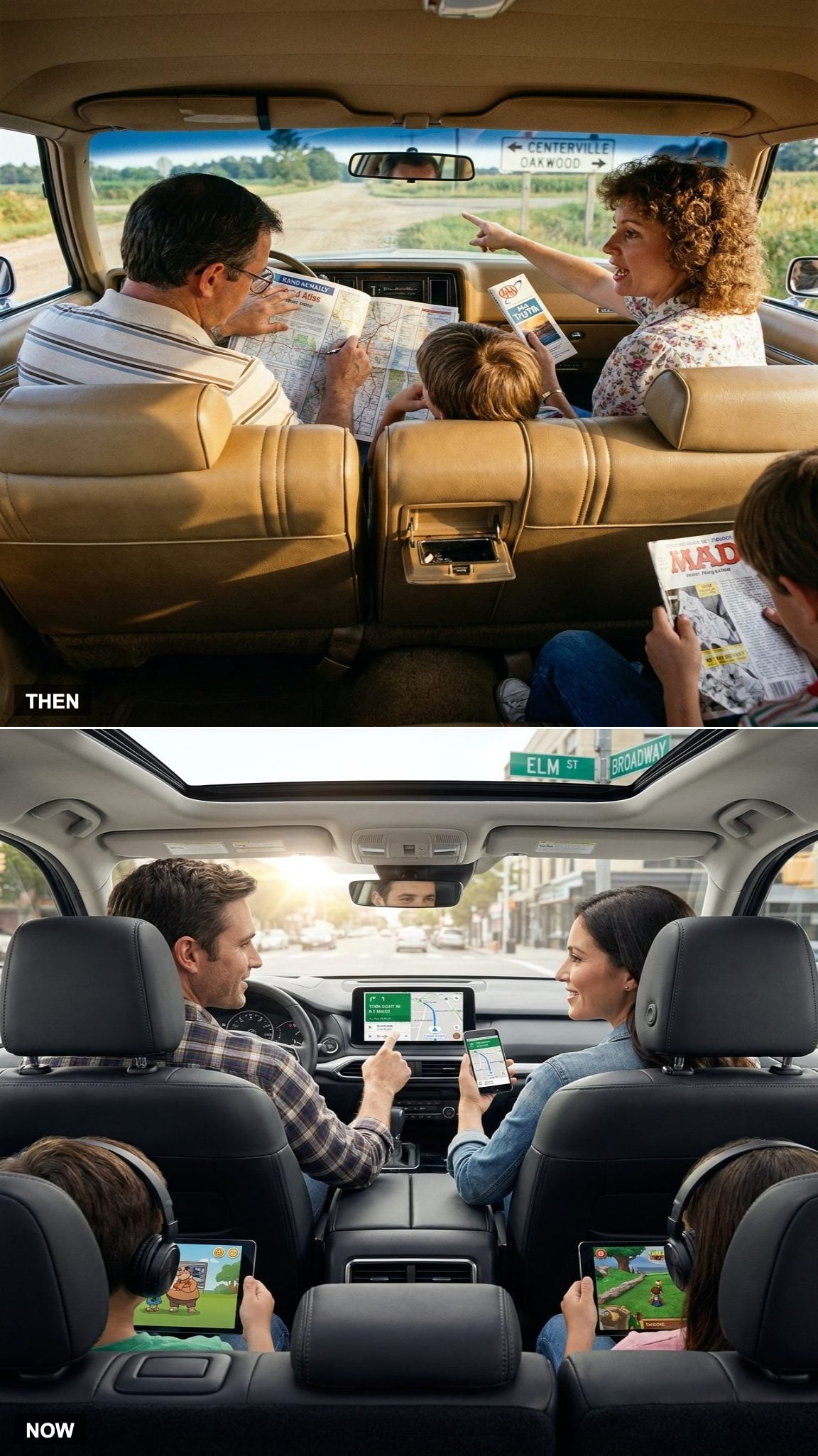
Getting lost in 1985 was a full family production. Dad pulls over, the atlas comes out across the steering wheel, Mom reads the TripTik upside down and somebody in the back seat announces a bathroom emergency. Fifteen tense minutes later you’re back on the road, and nobody is entirely sure it’s the right road—but the car is moving and that’s what counts.
Now the phone knows. It knew before you left, and it recalculated when you missed the turn without sighing about it. The problem became easier, but the family drama around it mostly disappeared.
1. The Journey as Half the Vacation vs. The Destination as the Whole Point
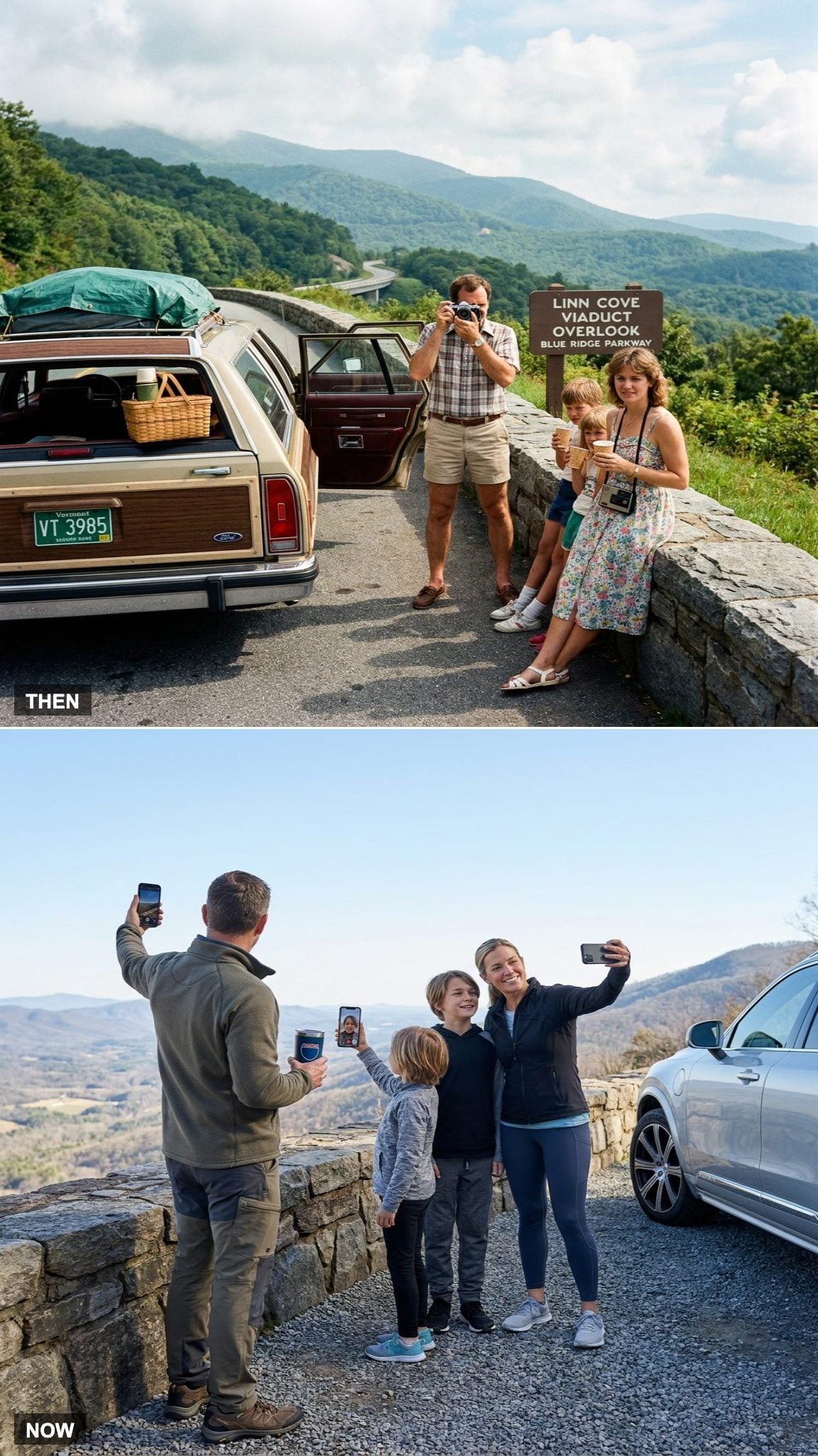
In 1985, you drove to the vacation and the drive was the vacation—roadside attractions, historical markers, that giant fiberglass dinosaur off Route 40, the overlook Mom insisted on, a picnic eaten off the hood because the rest stop table was already taken by another family with the same idea. Twelve hundred miles turned into a hundred small stories, most of them worth telling twice.
Now the middle gets skipped. The flight is a screen and a nap, the rental car is a straight shot from airport to resort, and the destination gets the whole show. It’s a very good show. But the fiberglass dinosaur is gone, nobody stops for the historical marker anymore, and the trip lost its middle chapter somewhere between the jet bridge and the shuttle bus.
🔥 Would you like to save this?
Please note that some of the imagery in this article were created with the aid of AI image generators.