

There was a version of these places that no longer exists. Not in a sad way, necessarily — more in a they-paved-paradise way. You could stand at a clifftop and hear your own breathing, or walk into the great museum of the world and get close enough to see the brushstrokes. Then everyone else figured it out. Cheap flights, cruise terminals, and a phone in every pocket turned the planet’s most beautiful corners into its most photographed queues. Here are the spots that were once the trip of a lifetime, and what that lifetime trip looks like today.
28. Venice, Italy: When the Cruise Ships Outnumber the Gondolas
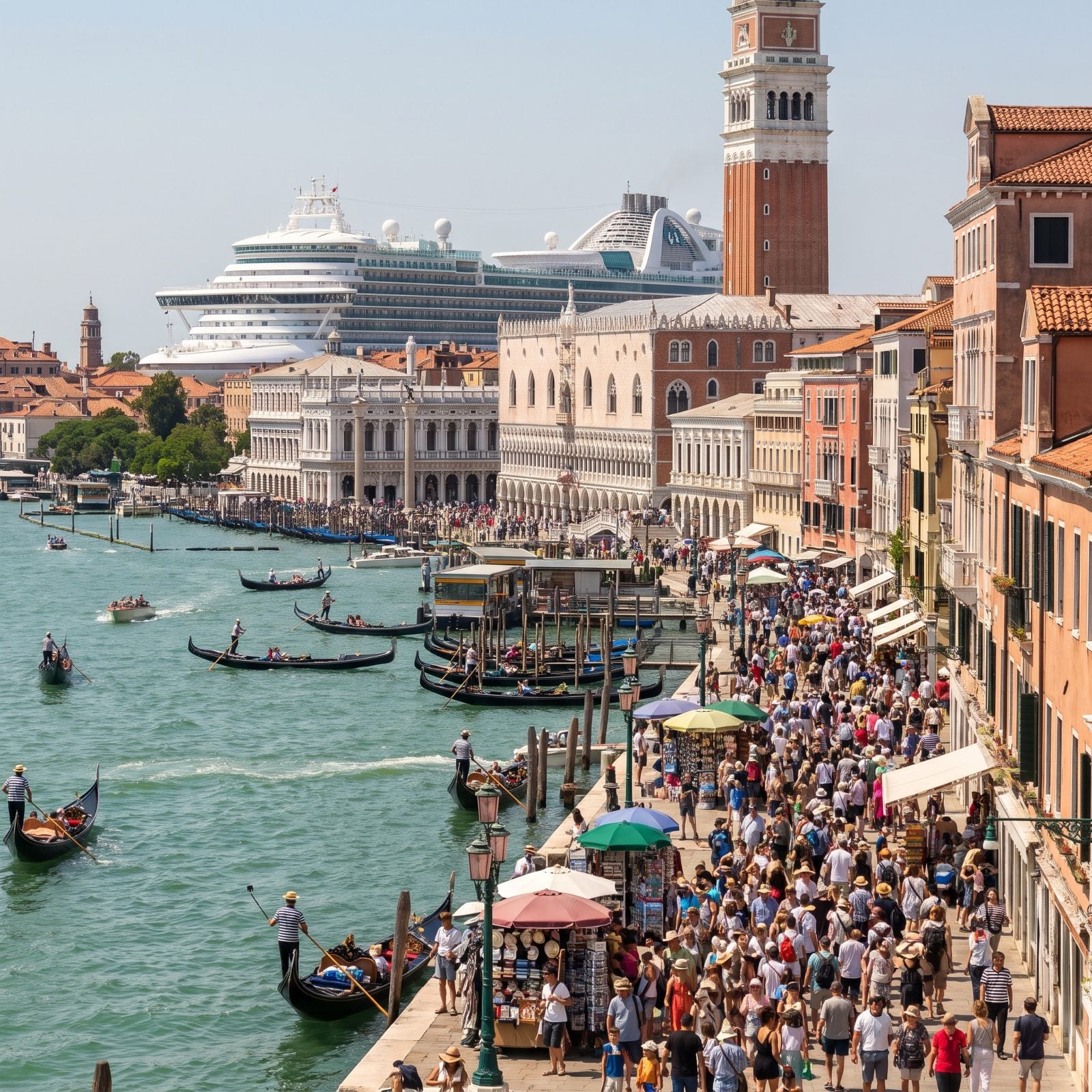
Venice was always sinking. We just didn’t expect it to sink under the weight of day-trippers. Millions pour into a historic center where only a few tens of thousands of residents actually live, and most of those visitors stay for an afternoon, buy a magnet, and leave before dinner.
The cruise ships are the real gut-punch. For years they slid up the Giudecca Canal taller than the bell towers, and the city finally banned the largest ones from the lagoon in 2021. Progress, sort of. They dock outside now and bus everyone in anyway.
27. Santorini, Greece: The Sunset Everyone Came To See At The Same Time
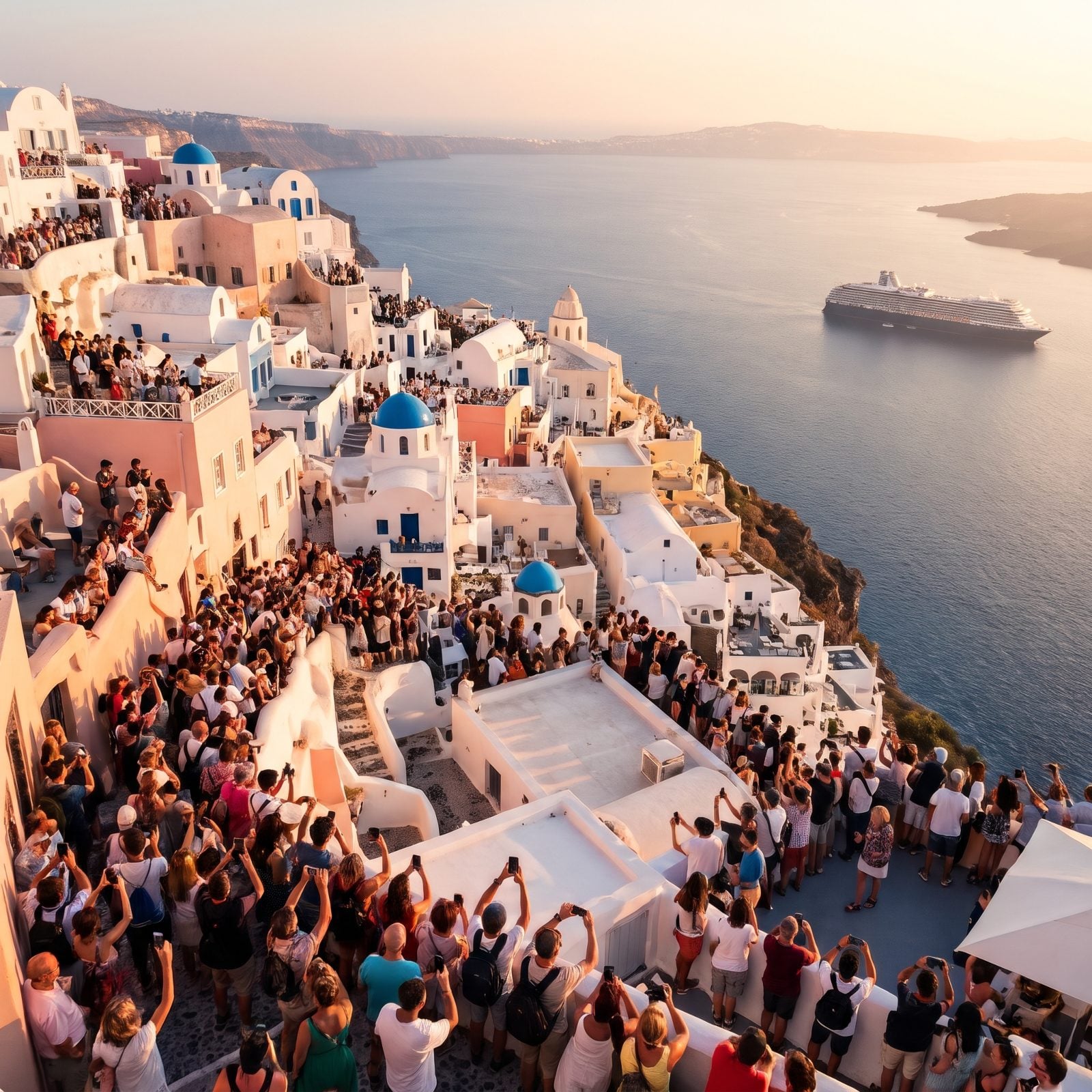
Picture the sunset. Now picture thousands of people watching it with you, every single one holding a phone at arm’s length, every one standing between you and the view. That’s Oia at 7pm from roughly May through October.
Those blue domes you’ve seen a thousand times? They’re real churches, and these days you’ll queue just to photograph them. A small island absorbs millions of visitors a year, and a huge chunk of them arrive by cruise ship to compete for the same cliff at the same hour. It’s a lot.
26. Machu Picchu, Peru: Timed Slots, Roped Paths, and a Clock Ticking
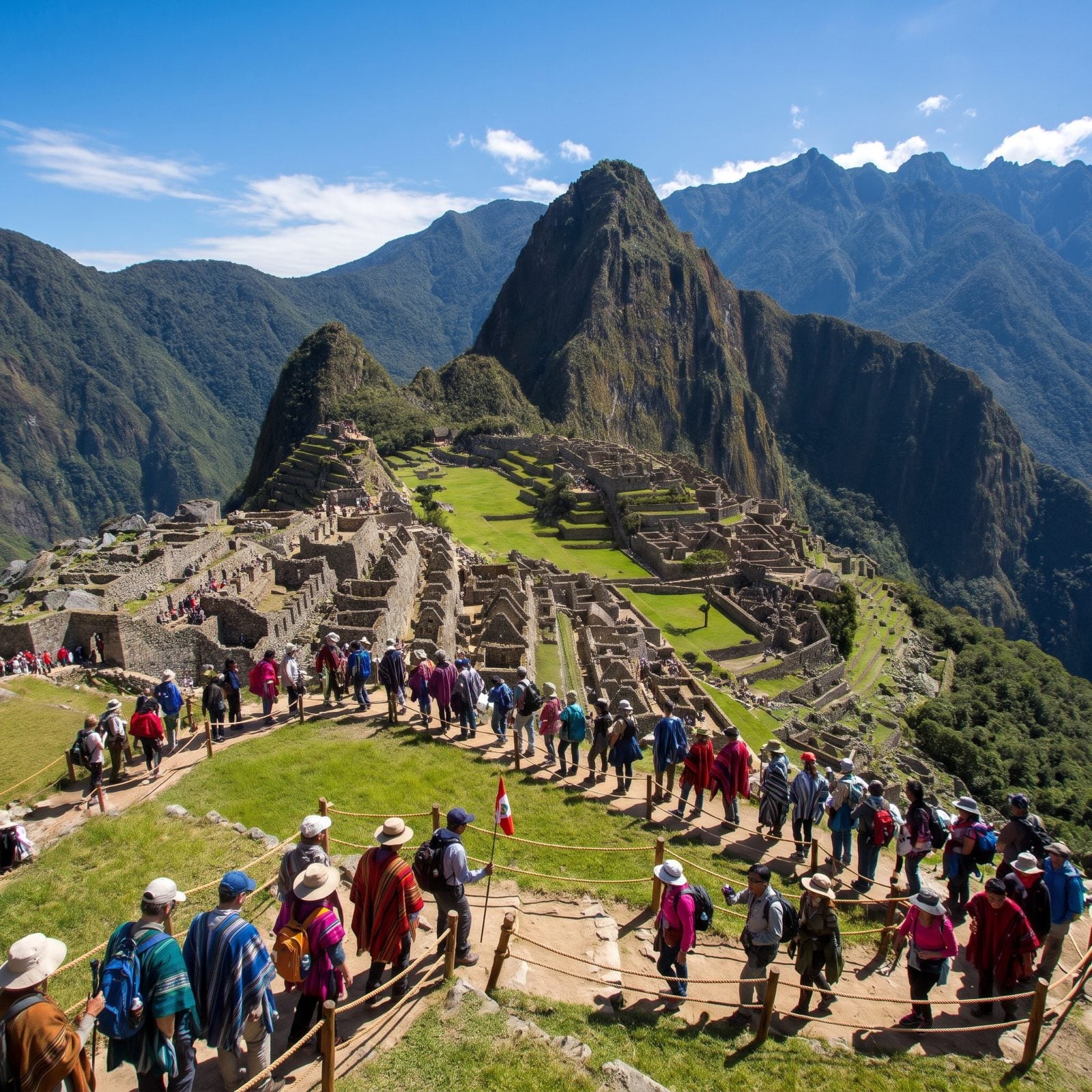
You used to wander Machu Picchu. Sit on a terrace, let the fog roll in, feel like you’d stumbled onto a secret. That Machu Picchu is gone, and honestly? The ropes exist for a reason.
The site now runs on timed-entry tickets, fixed circuits, and strict daily caps to protect stone that’s been standing since the 1400s. You follow a one-way loop, you keep moving, and your couple of hours are genuinely your couple of hours.
25. Bali, Indonesia: Paradise Stuck in a Two-Hour Traffic Jam
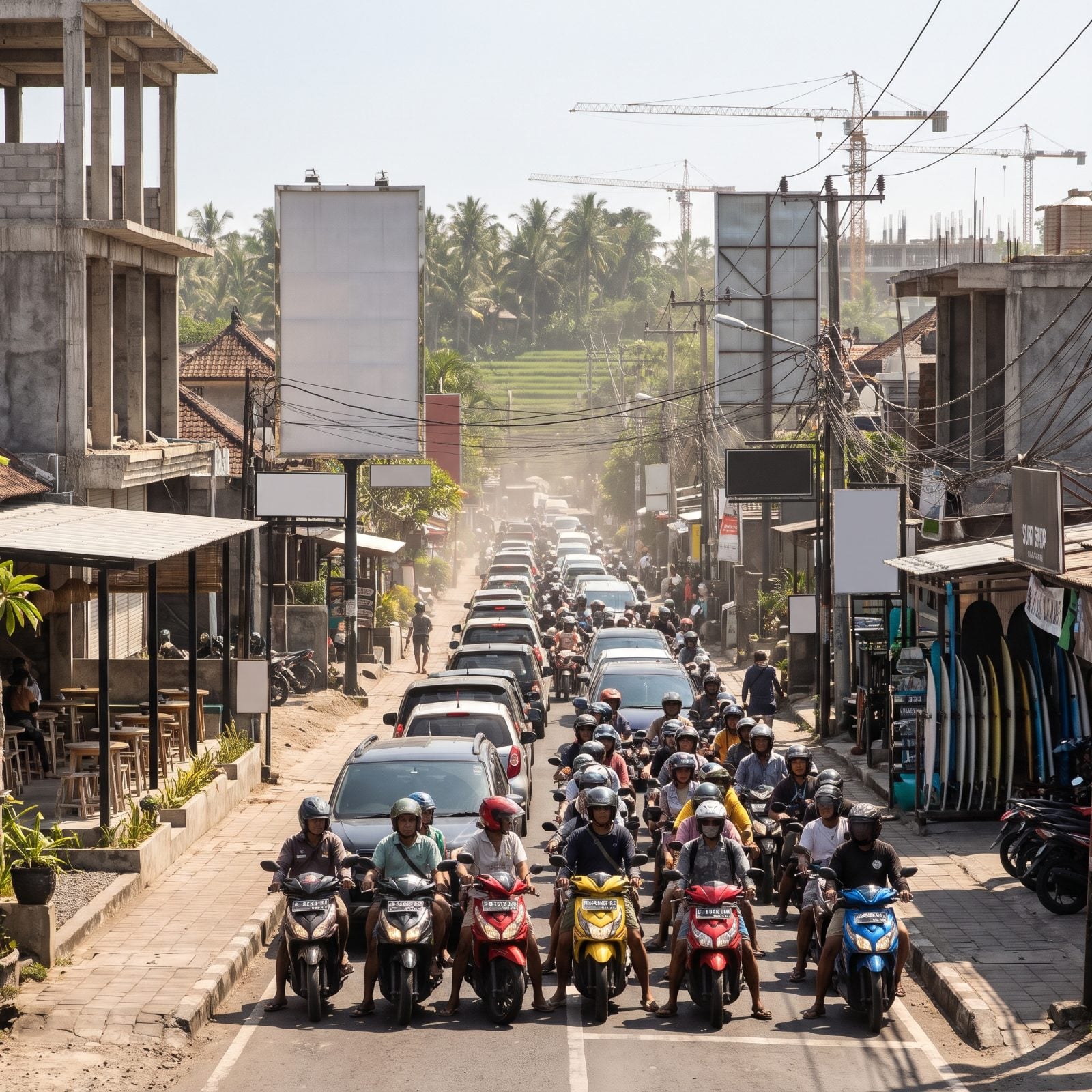
The Bali in the brochure is a terraced rice field at dawn with mist in the valley. The Bali you’ll actually meet is two hours stuck on a scooter behind a cement truck in Canggu, breathing exhaust next to a construction site that used to be a rice field.
Tourist numbers roared back into the millions, and the island’s infrastructure never caught up. The south in particular — Seminyak, Canggu, Kuta — has been built over so fast that the thing people flew across the world to find keeps retreating further north and east. You can still find it. You just have to drive past everyone who came for the same reason you did.
24. Dubrovnik, Croatia: King’s Landing Gets Crushed
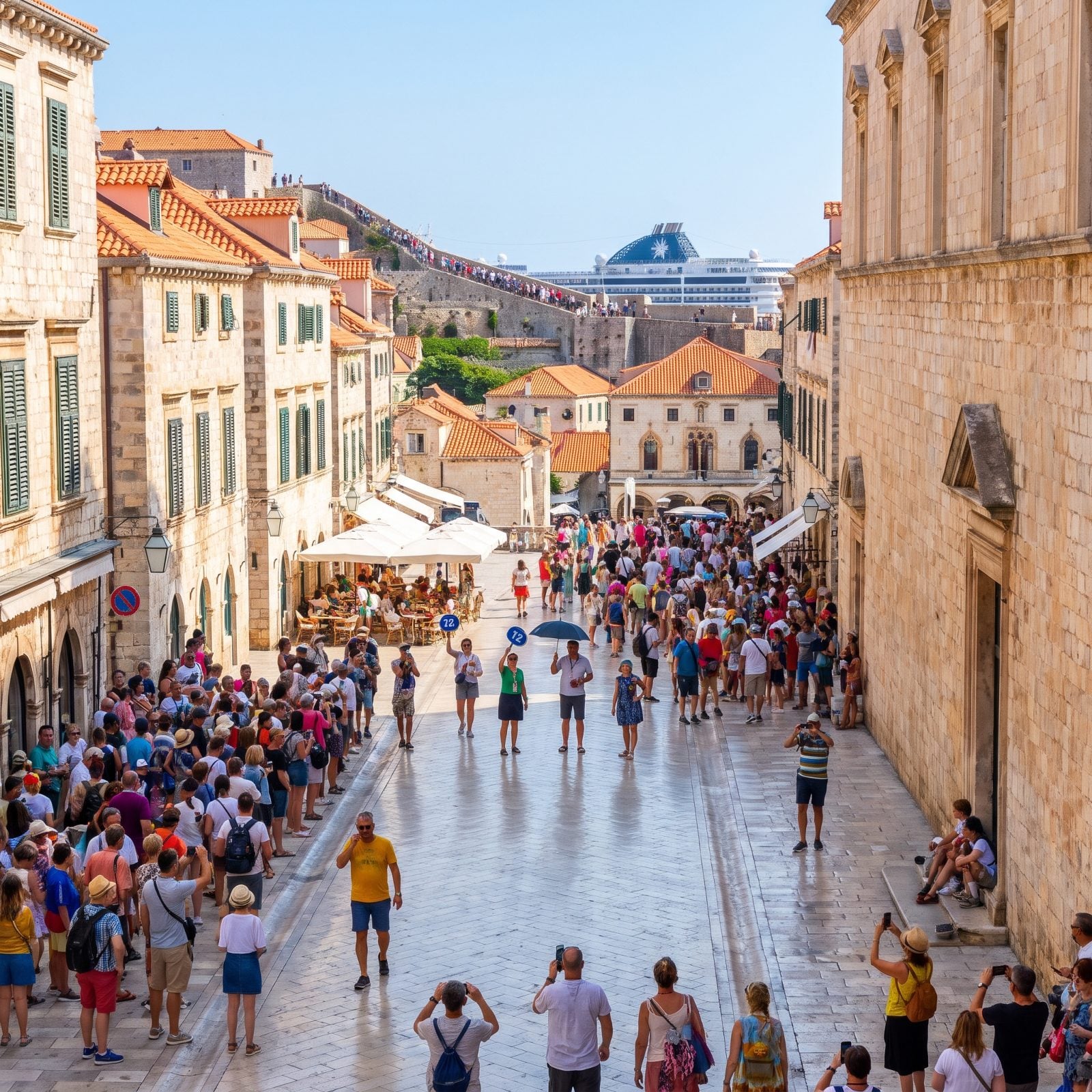
Game of Thrones put Dubrovnik on a map it had quietly occupied for 600 years. Suddenly the medieval walls were King’s Landing, the tour buses rolled in, and a walled city built for a few thousand people started absorbing cruise crowds measured in the tens of thousands a day.
The limestone Stradun has been walked smooth and shiny by centuries of feet. Now it’s walked by thousands at once, packed shoulder to shoulder in peak season, and the city started capping daily cruise arrivals and ship numbers just to ease the crush. Come in May or October, early in the morning, and the honey-colored stone still works its old spell before the gangways open.
23. Barcelona, Spain: Where the Locals Started Spraying the Tourists With Water Guns
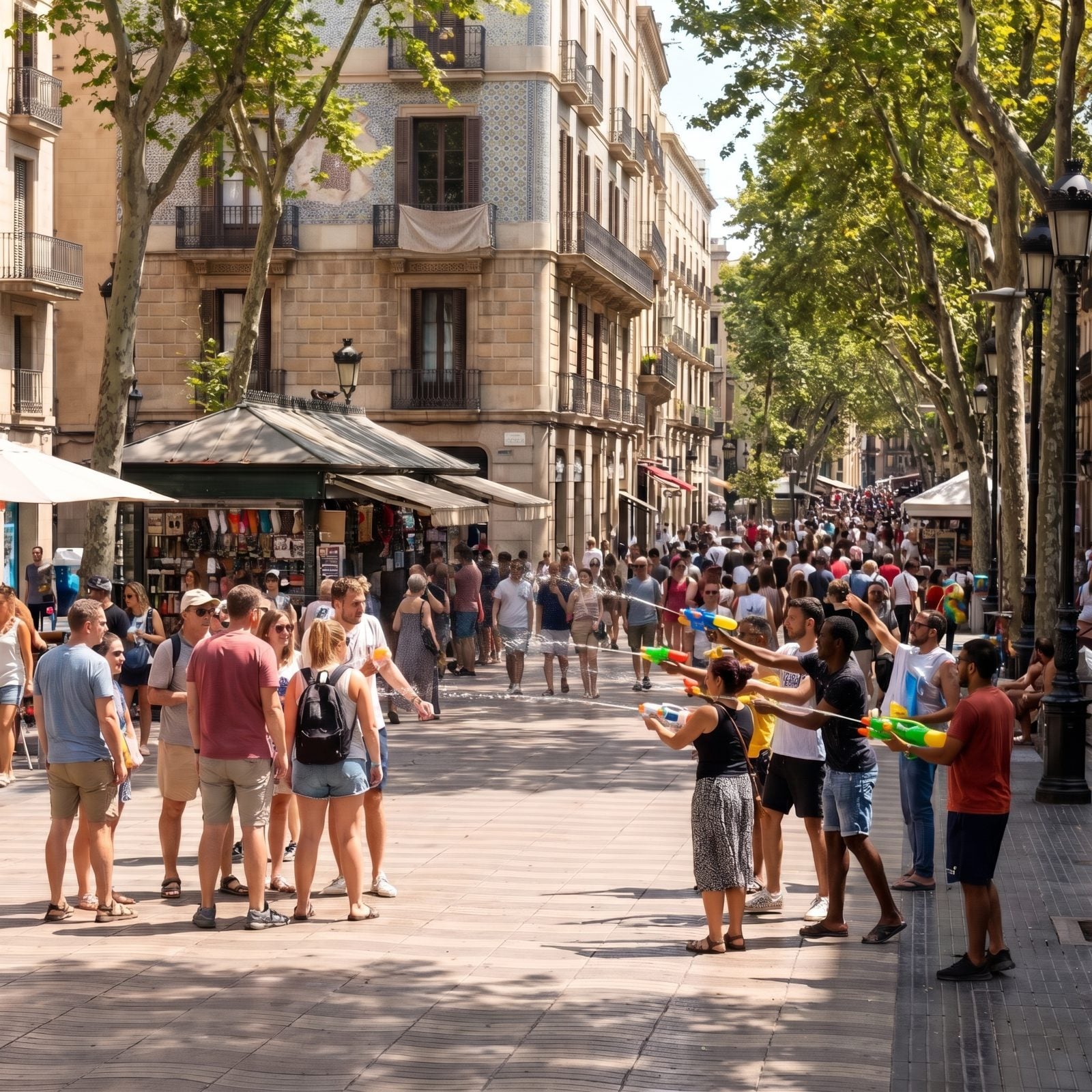
In the summer of 2024, Barcelona residents did something that made headlines around the world. Standing right on the promenade of Las Ramblas, they sprayed passing tourists with water pistols — and on a sweltering day, some of those being soaked looked like they didn’t mind one bit. It wasn’t a prank. It was a city that hit its limit.
A couple of million people live here and tens of millions visit, and the pressure on rents, apartments, and daily life finally boiled over. The city announced plans to phase out short-term tourist apartment licenses entirely by 2028.
22. Paris, France: Fighting Through Selfie Sticks to Glimpse the Mona Lisa
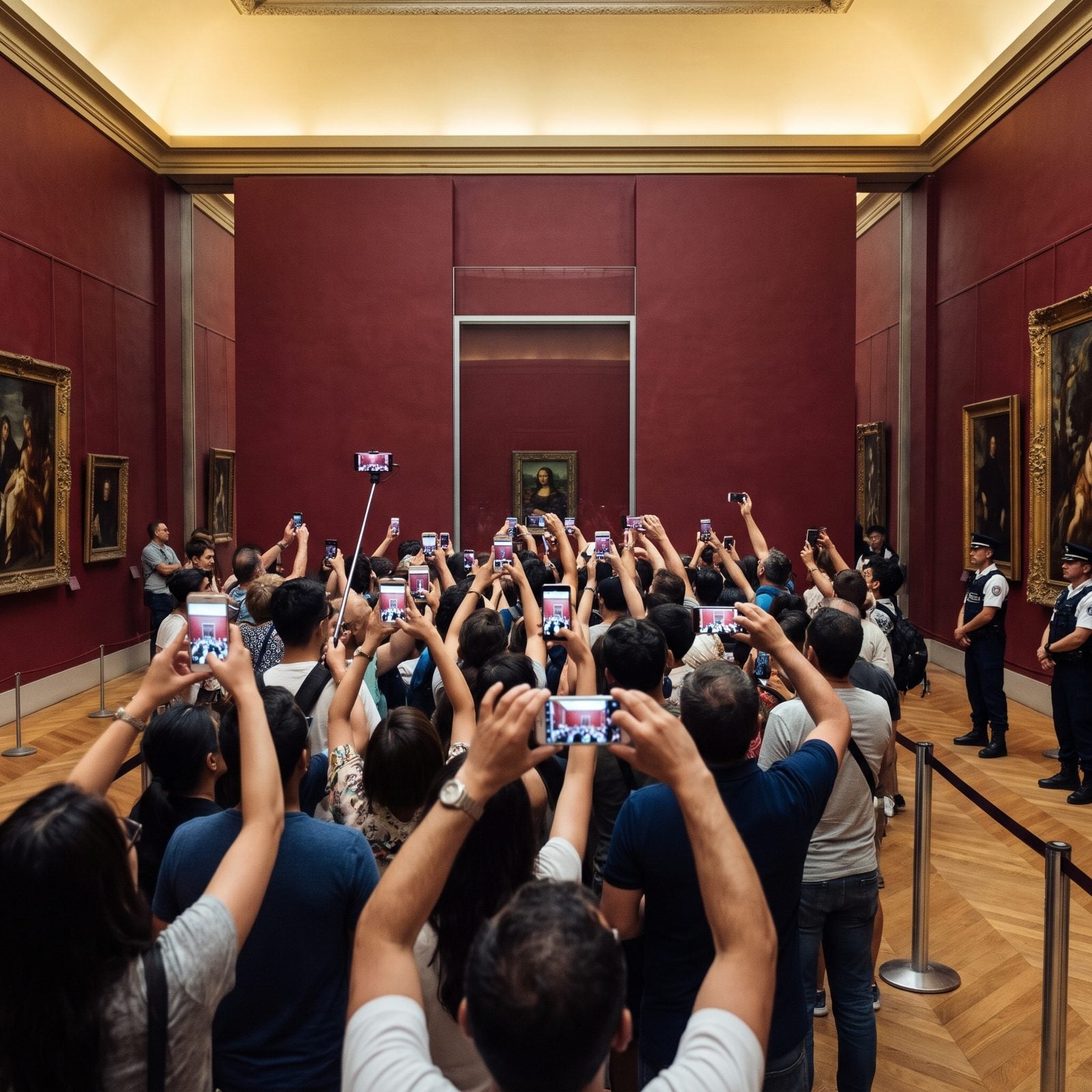
And here’s the cruel joke of the Louvre. You fly to Paris, you line up, you shuffle forward in a roped chute, and when you finally reach the most famous painting on earth, you can barely see it. Not because it’s small, though it is. Because you’re looking at it through a wall of other people’s phone screens.
The museum draws close to 9 million visitors a year, and a staggering share of them are there for one small panel behind bulletproof glass. The Louvre has floated moving the Mona Lisa to its own dedicated room just to manage the scrum. Meanwhile everything else in that building is practically empty. Go stand in front of a Vermeer. Nobody’s fighting you for it.
21. Times Square, New York: Neon, Costumed Hustlers, and Nowhere to Stand
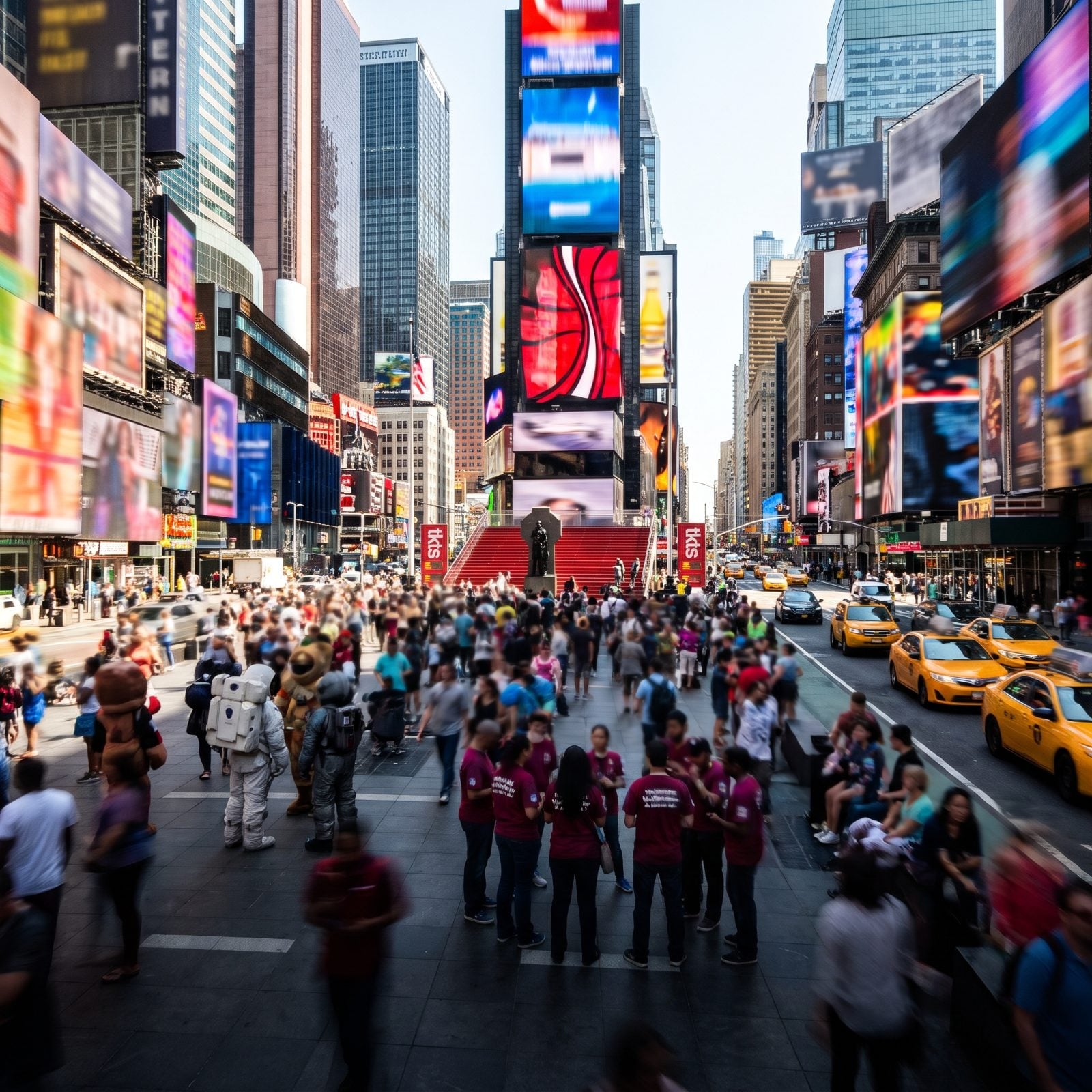
Ask any New Yorker where to find Times Square and they’ll tell you how to avoid it. That tells you something.
What was once the gritty crossroads of the world became a Disneyfied pedestrian plaza in the 2010s, and then it became something stranger — a gauntlet of costumed characters who want a tip for a photo, caricature artists, flyer-pushers, and desnudas. Tens of millions of people pass through a year. You can’t walk a straight line, you can’t hear yourself think. The ball still drops on New Year’s Eve, which is the one night it makes sense to be there, as long as you don’t mind standing in a pen for twelve hours with no bathroom.
20. Amsterdam, Netherlands: Bachelor Parties and Bumper-to-Bumper Canals
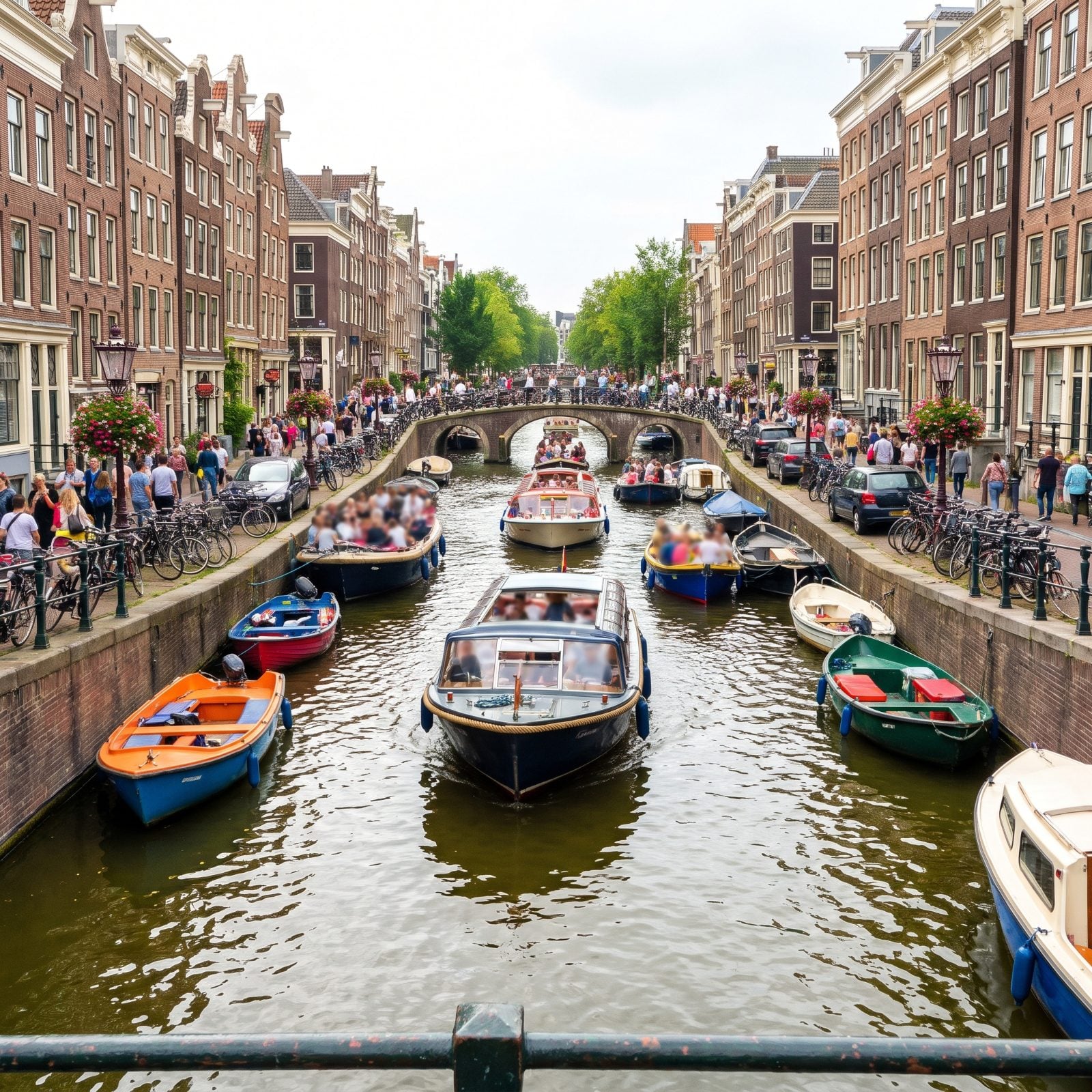
Amsterdam has spent years actively trying to repel a certain kind of tourist, and you can’t blame them. The city launched a blunt “Stay Away” ad campaign in 2023 aimed squarely at young British men coming for stag weekends, drugs, and the red-light district.
Those gorgeous 17th-century canal rings that make the whole place feel like a painting now double as a floating traffic jam of party boats blasting music. The city has banned new tourist shops in the center, moved to shut down the river cruise terminal, and capped overnight stays — a place fighting to feel like a city again instead of a theme park with dealers. The Rijksmuseum and the quiet side canals still deliver. The core, on a Saturday night, does not.
19. Hallstatt, Austria: The Fairytale Village Drowning in Day-Trippers
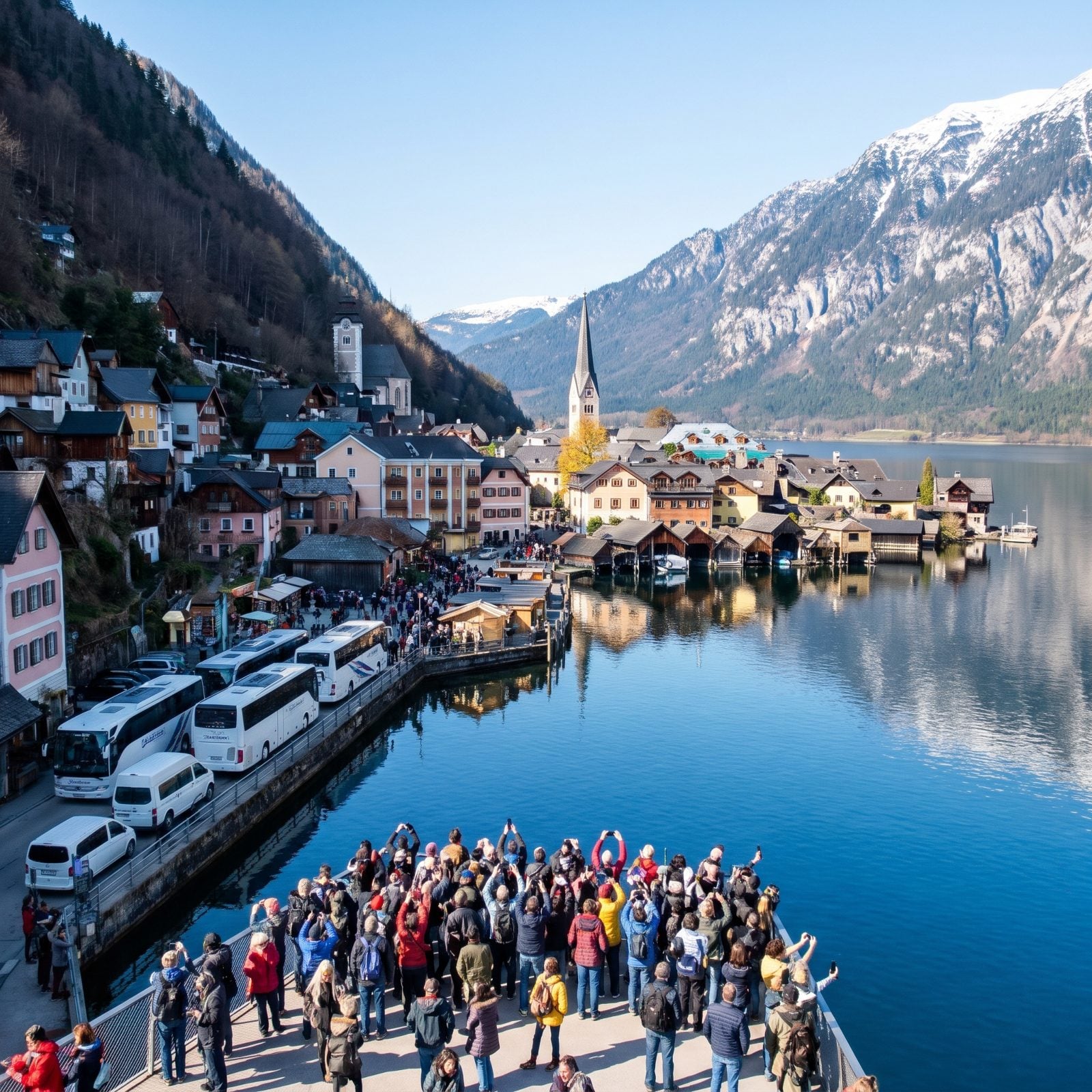
Fewer than 800 people live in Hallstatt. On a busy day, thousands of visitors show up. Do that math and you understand why this one aches a little.
The village became a global obsession partly because China built a full-scale replica of it, and partly because it’s rumored to have inspired the kingdom of Arendelle in a certain animated film. Now the buses idle, the selfie spot is a scrum, and residents have put up fences in places just to stop strangers from photographing into their kitchens.
18. Mount Everest Base Camp: The Traffic Jam at the Top of the World
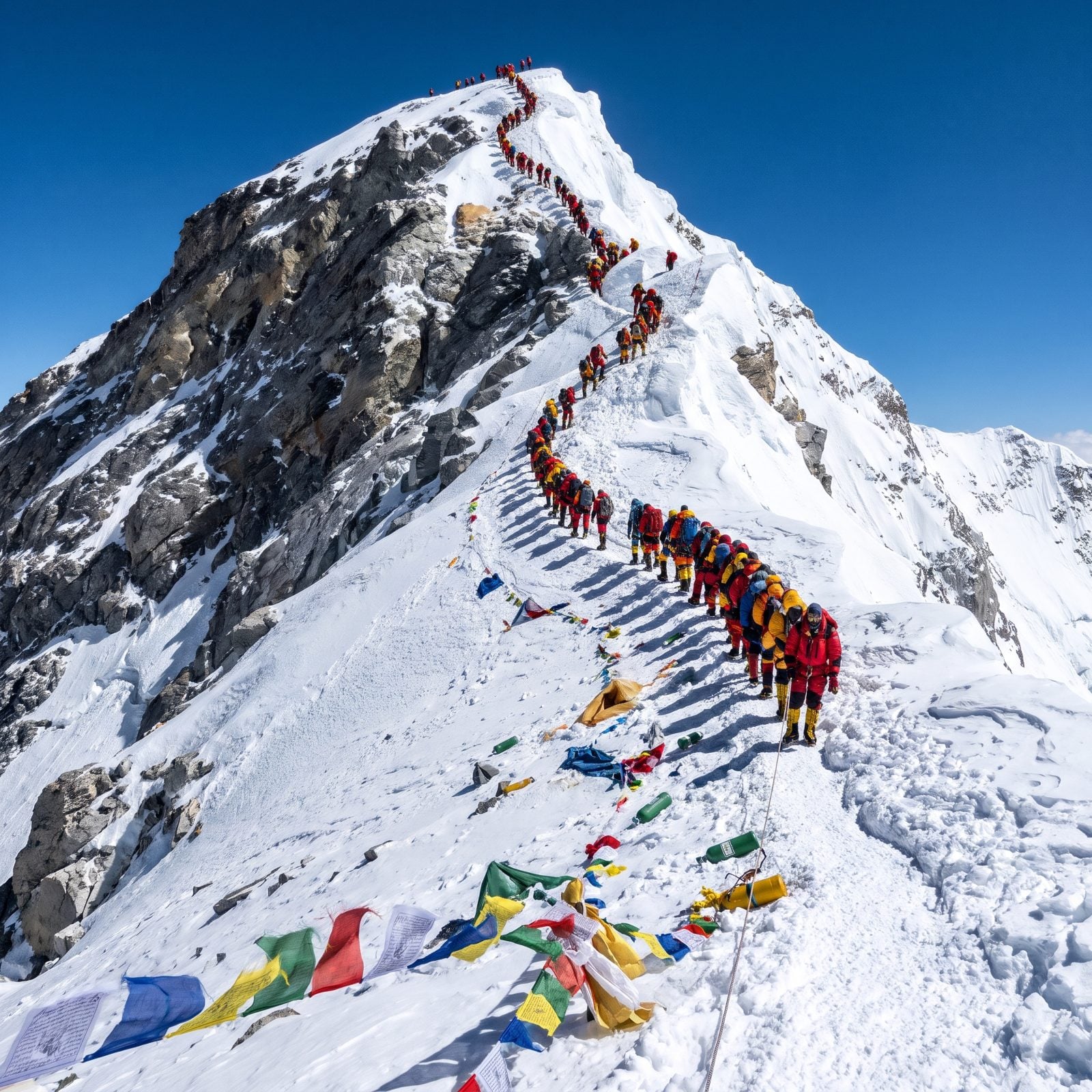
There is a photo from 2019 that broke the spell for a lot of people. Hundreds of climbers stacked nose to tail on the summit ridge, waiting in line above 28,000 feet, in what climbers call the death zone because your body is quite literally dying up there. People froze and ran out of oxygen standing in a queue.
Everest used to be the outer edge of what humans could do. Now, if you have the money and a guide service, you buy a spot. The mountain didn’t shrink — the reverence did.
17. Angkor Wat at Sunrise: Where You Fight 3,000 People for the Same Photo
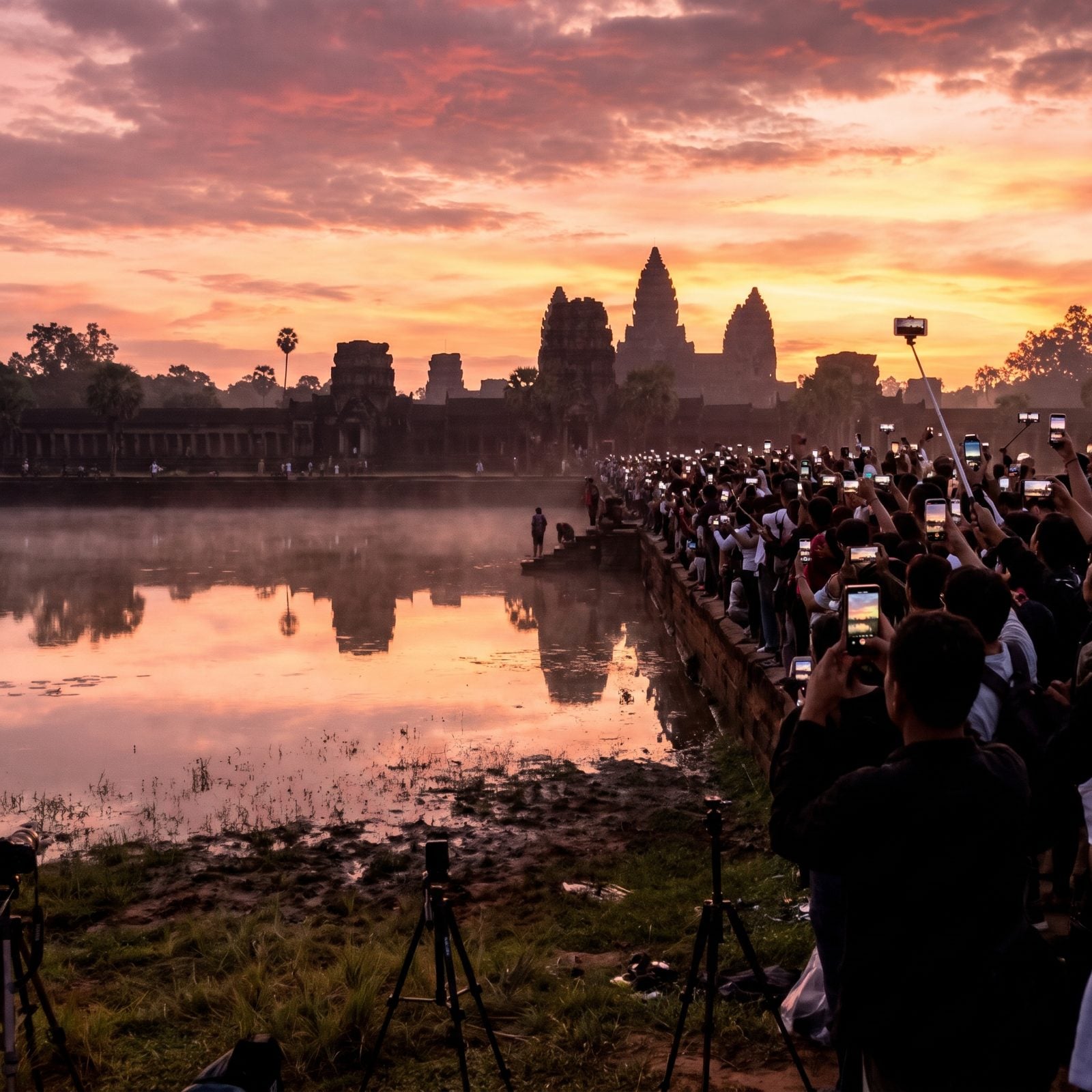
You’ve seen the sunrise shot. Temple towers glowing, mirrored in still water, not a soul in frame. What they crop out is the crowd standing three deep behind the photographer, elbows out, holding tablets over their heads, everyone chasing the exact same picture at the exact same minute.
The temple is 900 years old and humbling in person, but sunrise has become a scrum. Go at midday when the tour buses leave and the stone is hot and empty. The light is worse. The feeling is better.
16. The Maldives: Overwater Villas Where a Quiet Lagoon Used to Be
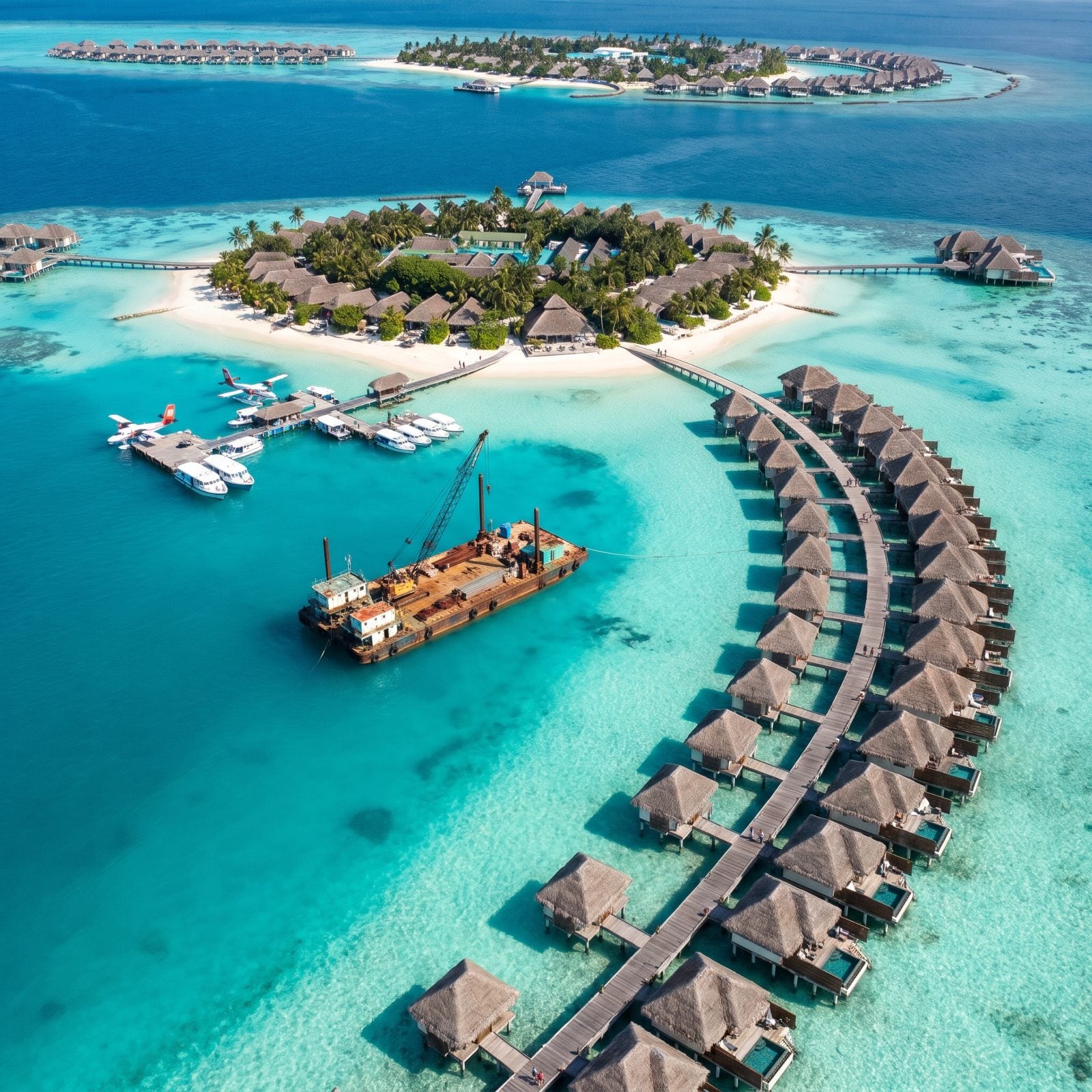
The brochure promises you a private paradise. What you get is a subdivision on stilts.
The Maldives sold itself as the last quiet place, a water bungalow where you fall asleep to waves and wake up to nothing but blue. Then every resort built two hundred of those bungalows, and the quiet lagoon became a cul-de-sac. Seaplanes buzz overhead. Construction never stops. And the reef you came to snorkel is bleaching under the warming water and the weight of all that development.
It’s still beautiful. It’s just not yours, and it never was.
15. Phuket, Thailand: A Party Strip Bolted Onto a Tranquil Shore
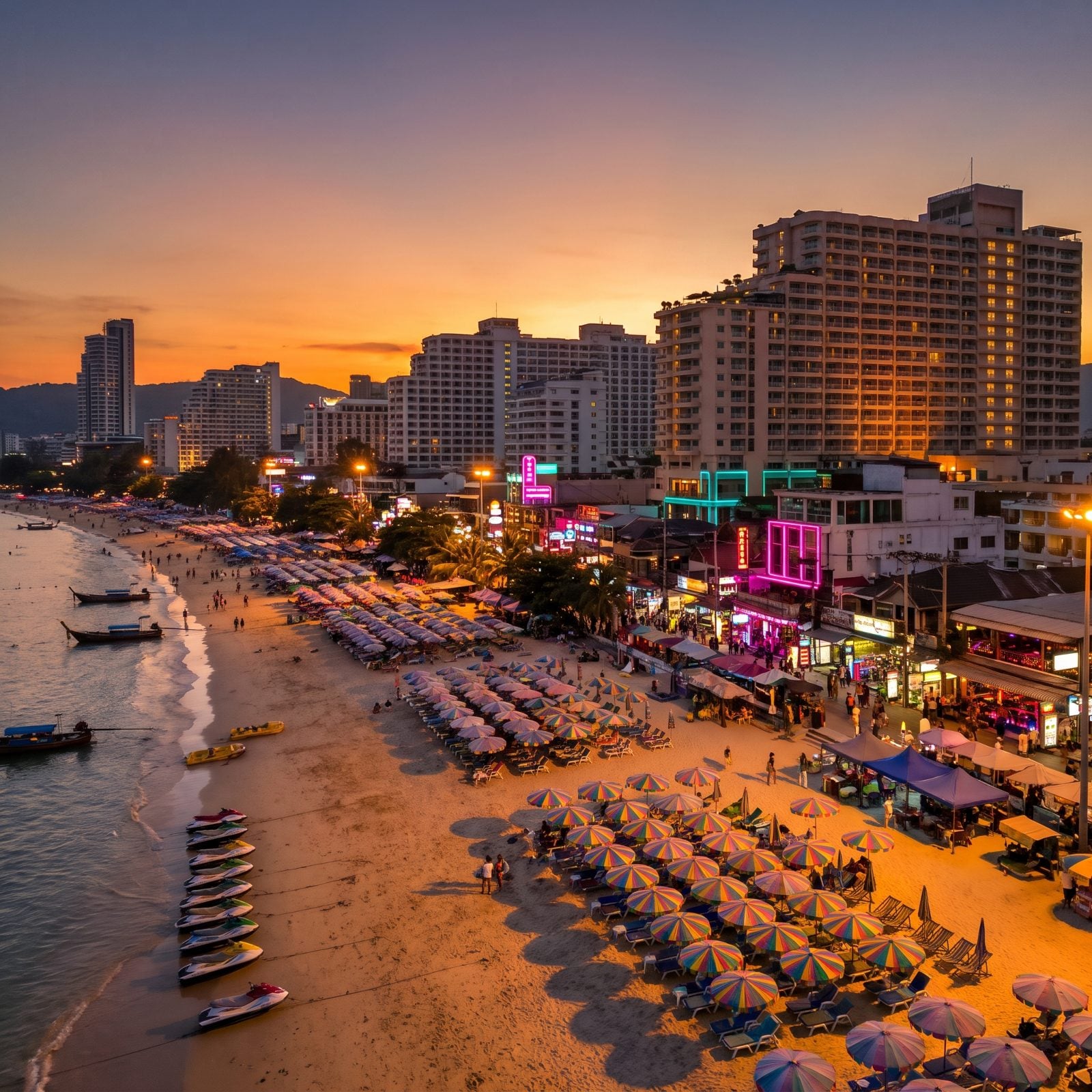
Say you landed in Phuket in 1985. You’d have found fishing villages, cheap bungalows, and beaches where the loudest sound was the surf. Come back now to Patong and the loudest sound is a bar’s sound system trying to drown out the bar next to it.
The island didn’t vanish. The peace did. The famous beaches got buried under loungers rented by the hour and a strip of neon that never sleeps.
14. Maya Bay, Thailand: The Beach That Got Loved to Death
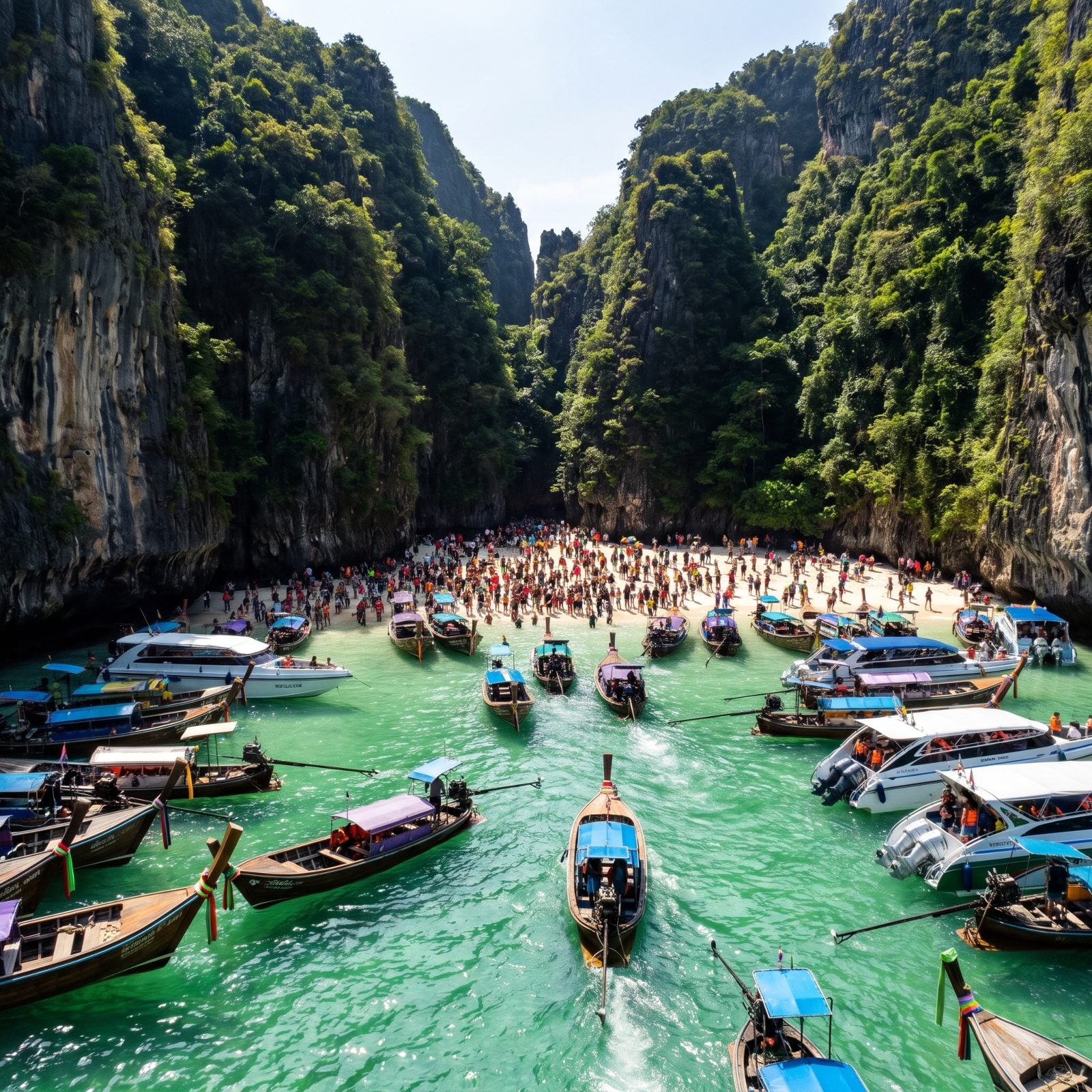
This is the beach from the movie, the one everyone saw and everyone had to visit. And visit they did — thousands of people a day packing a cove the size of a parking lot, their boats shredding the coral reef right offshore.
So Thailand did something rare. It closed the beach, shutting it to tourists in 2018 to let the reef and the ecosystem recover.
Let that sink in. A place became so beloved the only way to save it was to lock the gate.
13. Reykjavik, Iceland: The Instagram Gold Rush That Overran a Tiny Island
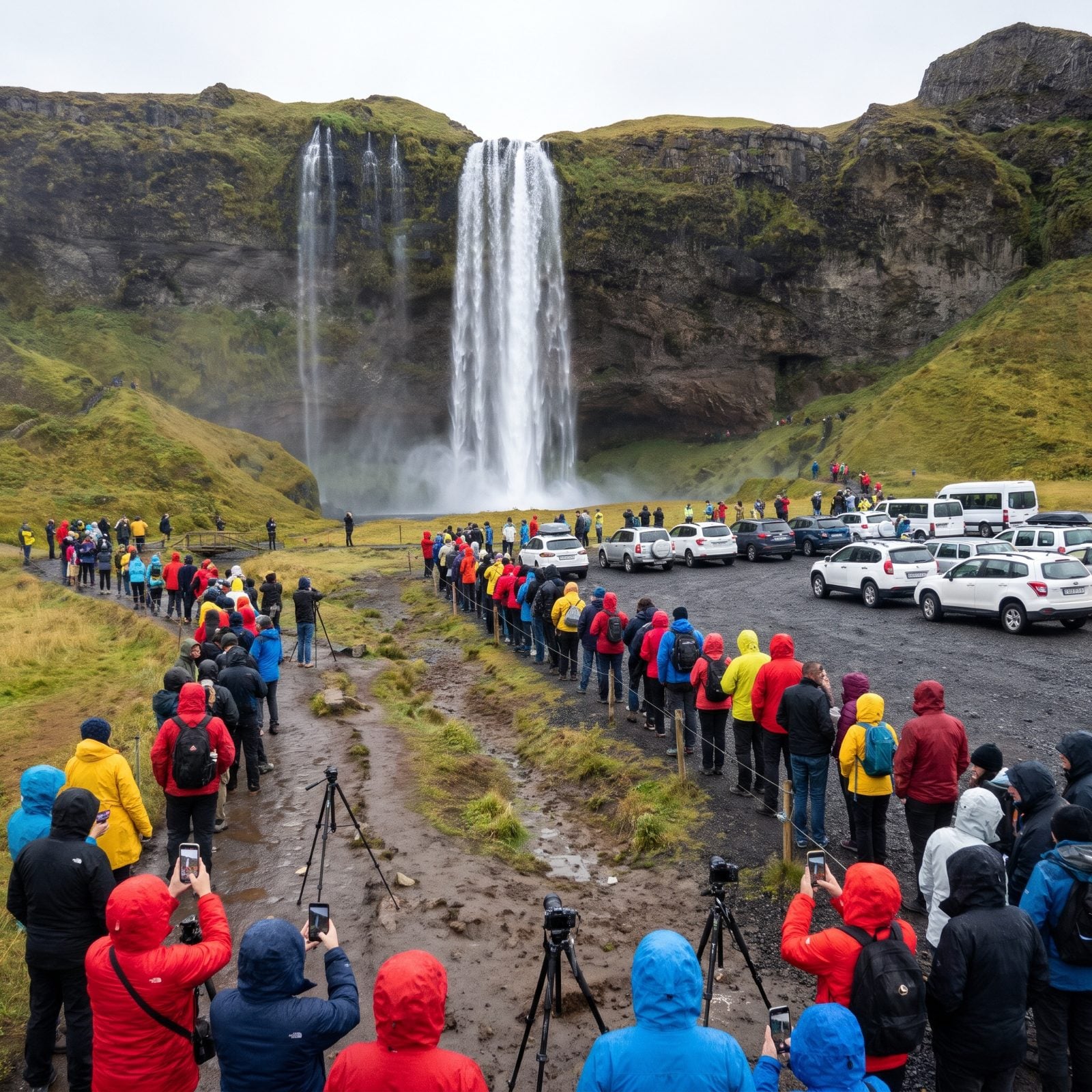
Iceland had a few hundred thousand people and almost no tourists not that long ago. Then a volcano grounded flights, a few airlines started selling cheap layovers, and every waterfall on the island ended up as somebody’s phone wallpaper.
Now a country smaller than most cities hosts millions of visitors a year. The waterfalls have queues. The mossy fields have DO NOT WALK HERE signs, because the moss takes decades to grow back and a weekend to flatten.
The magic was the emptiness. You can’t photograph emptiness into existence. You just fill it.
12. Prague, Czech Republic: Where the Old Town Became a Stag-Party Playground
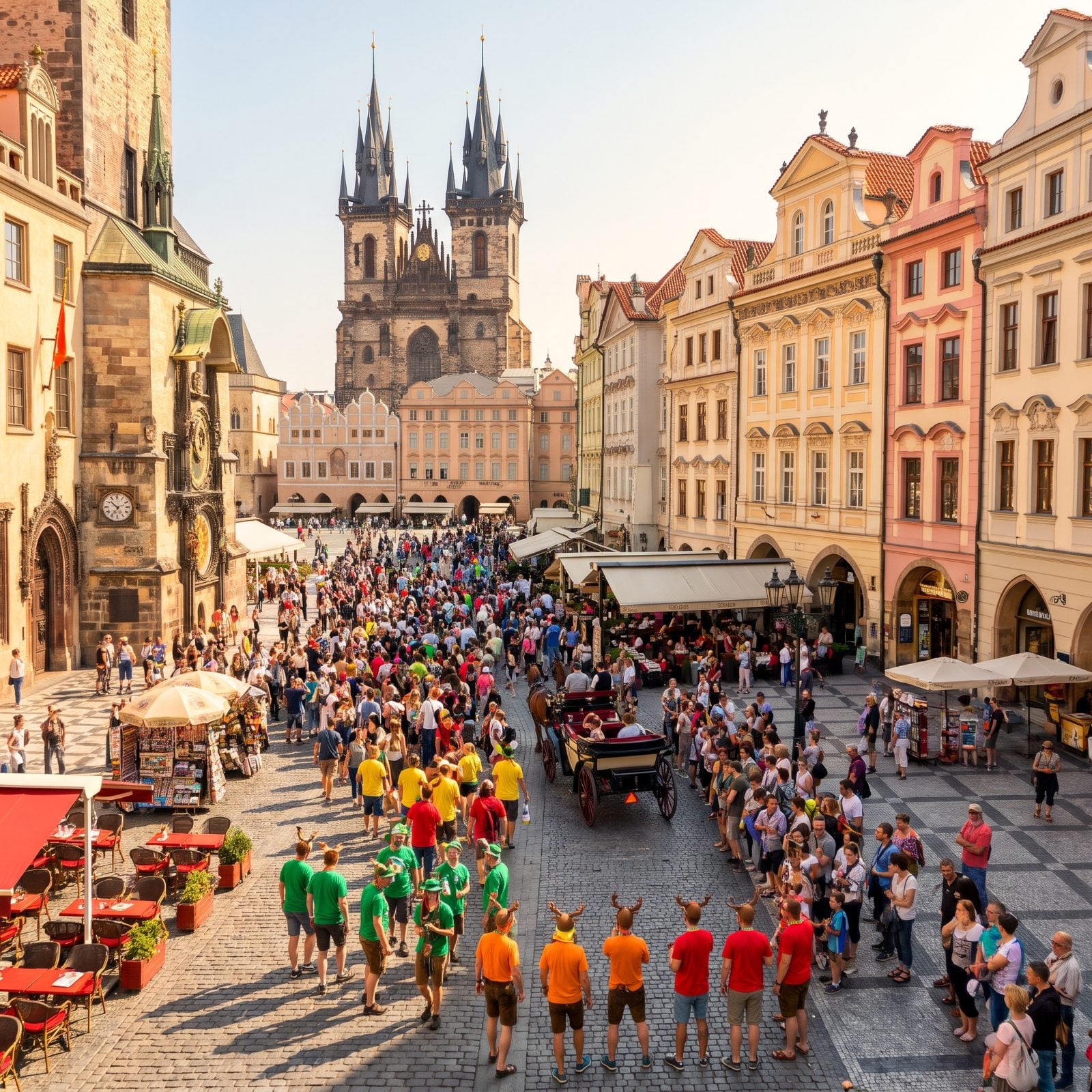
Prague survived the twentieth century with its spires and cobblestones nearly intact, a fairy-tale city that somehow dodged the bombs. It’s not dodging the bachelor parties.
Cheap flights and cheaper beer turned the Old Town into a weekend circuit for groups in matching T-shirts. The Charles Bridge is a slow river of selfie sticks. The Astronomical Clock chimes and a thousand phones go up like the wave at a stadium.
The city is magnificent. You just have to get up at six to have it to yourself for an hour, before the tour groups are dropped off and it belongs to them again.
11. Bruges, Belgium: Chocolate Shops, Canal Boats, and Nowhere to Stand
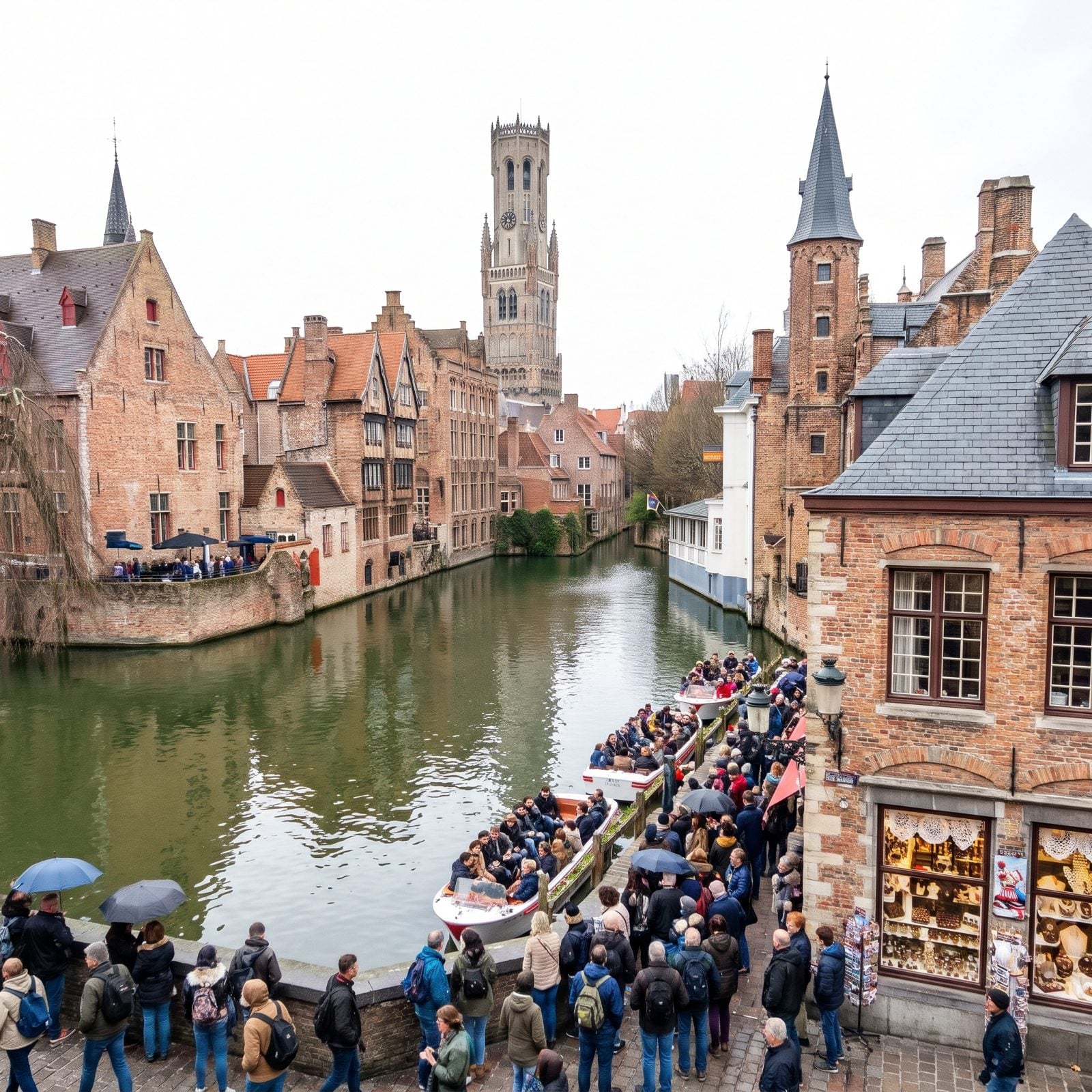
Bruges is small. That was always its charm, and now it’s its problem.
The whole medieval center is walkable in an afternoon, which means every day-tripper and cruise-ship group walks the exact same loop at the exact same time. The main square funnels into a canal queue that funnels into a bridge where nobody can move. And every third storefront sells fudge or lace or a fridge magnet.
A town built for a few thousand people now hosts millions a year passing through. Beautiful. Also, on a cruise day, basically unwalkable before noon.
10. The Grand Canyon’s South Rim: Shuttle Lines and Overlook Gridlock
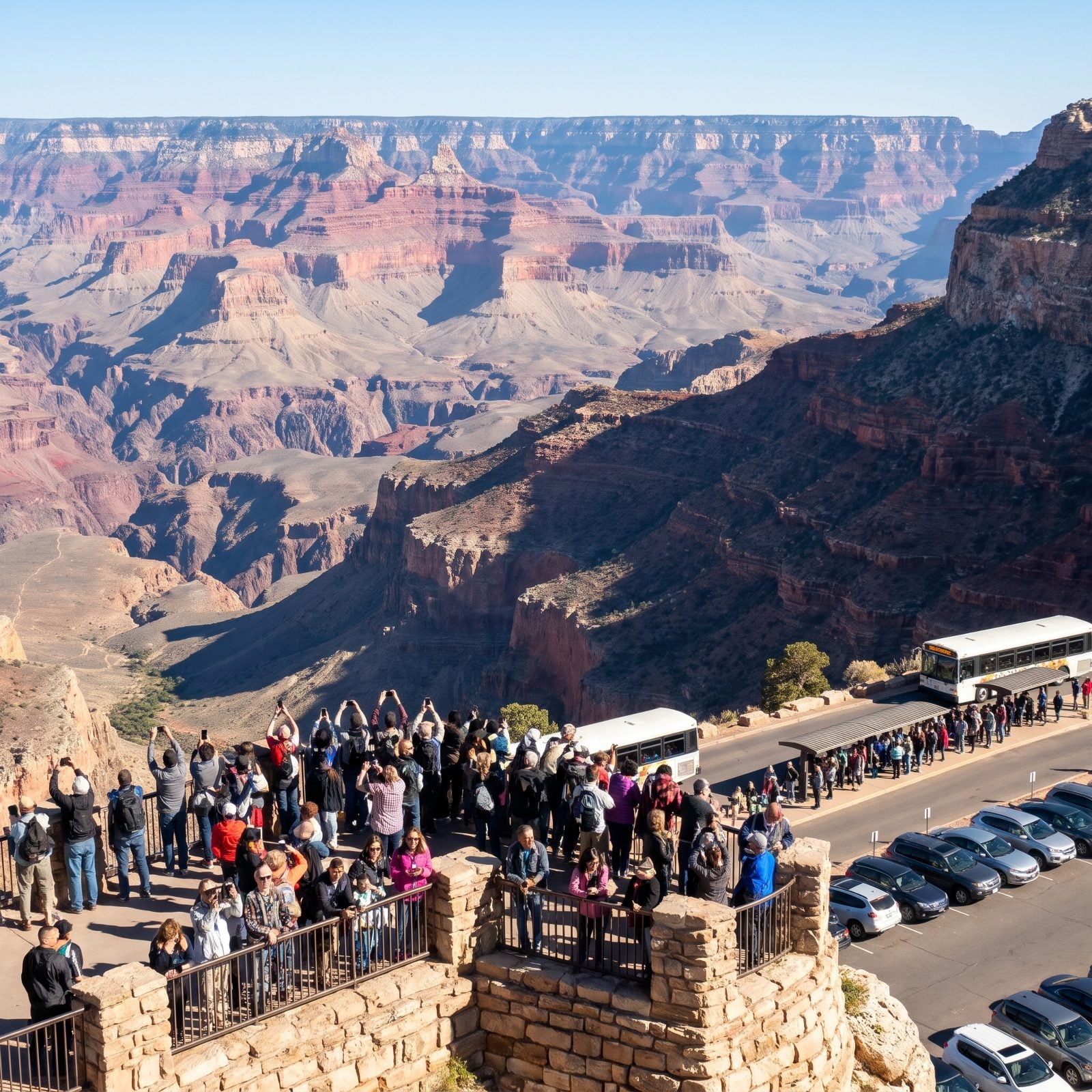
Picture the first time anybody saw the Grand Canyon. Riding up, no idea what was coming, and then the ground just ends and the earth opens two billion years deep in front of you. That silence is everything.
Now the South Rim sees millions of people a year, most of them crowded onto the same handful of paved overlooks near the entrance. You wait for the shuttle. You wait for a parking spot. You wait for a stranger to finish their photo so you can take the identical one.
9. Yellowstone: Bison Selfies and the Great Old Faithful Traffic Jam
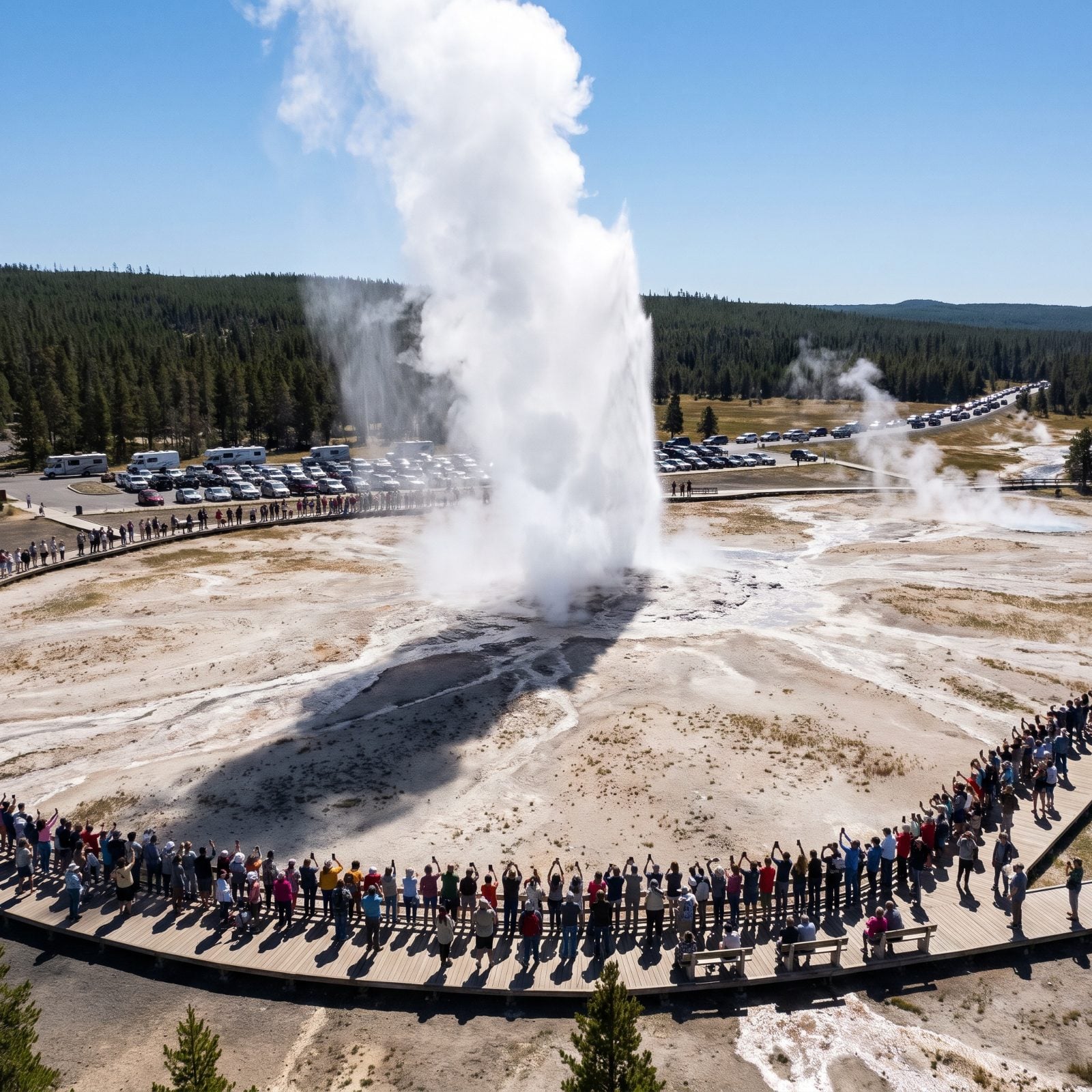
America’s first national park, set aside in 1872 so this wild, steaming, bison-roamed place would stay wild forever. The intention holds. The parking lot does not.
Old Faithful now erupts for a stadium-sized crowd on benches, phones up, filming a geyser they could simply watch. The roads jam for miles because somebody stopped dead in the lane to film a bison — which, every single season, gores someone who got too close chasing the shot.
The wildness is still there. You’re just experiencing it from the back of a slow-moving line of RVs.
8. Waikiki Beach, Hawaii: A Wall of High-Rises Over a Strip of Sand
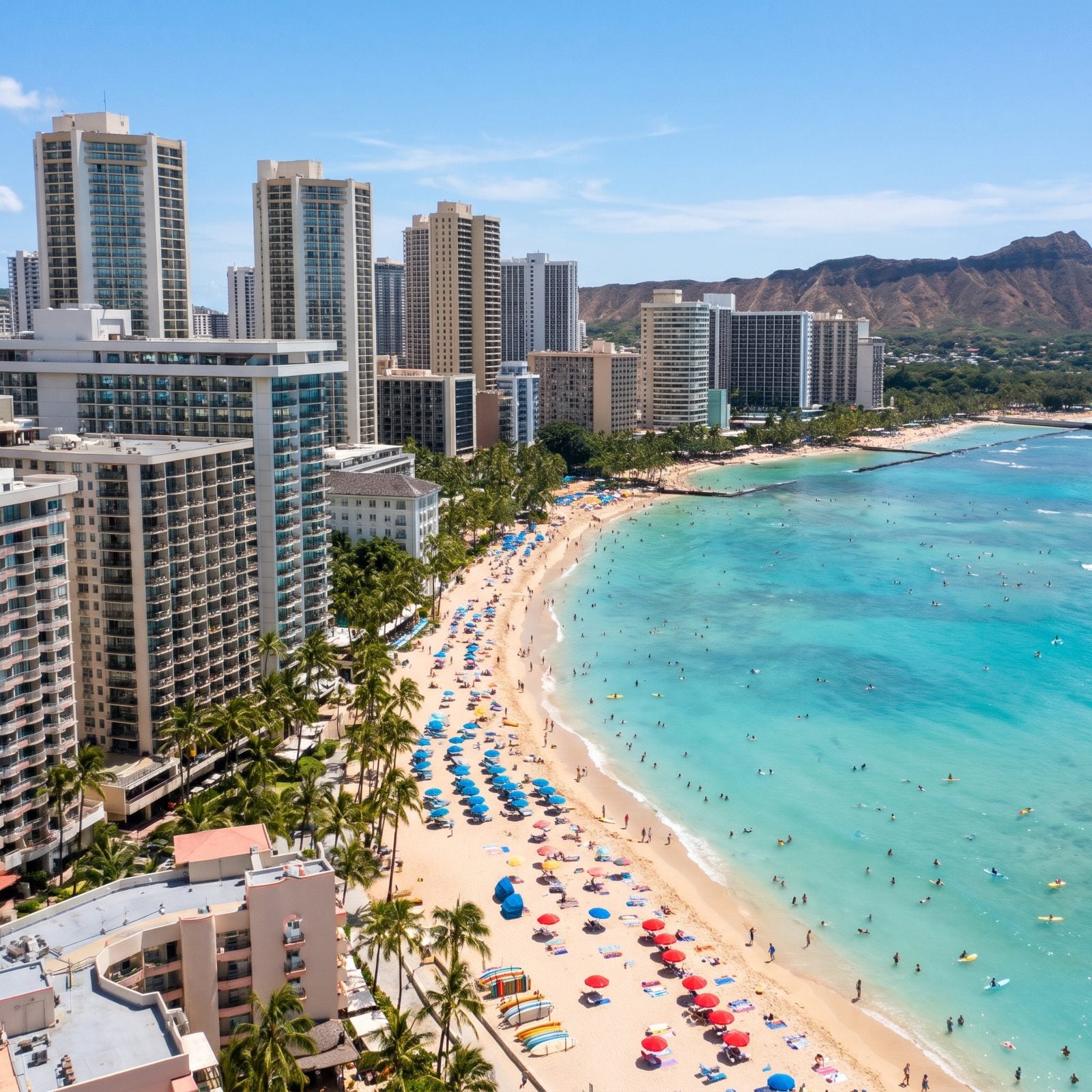
There are photos of Waikiki from the 1920s where the Moana Hotel stands alone against open sky and the beach runs wide and empty. Now the sand is a sliver, pinched between the water and a continuous wall of towers so tall they throw the whole beach into shadow by three in the afternoon.
The water is still warm and clear, and Diamond Head still does its thing. But you share the sand with a crowd the size of a county fair, and the beach itself has shrunk — partly natural erosion, partly all that concrete leaving nowhere for the sand to go.
7. Cinque Terre, Italy: Where the Cliff Trails Now Come With a Ticket and a Headcount
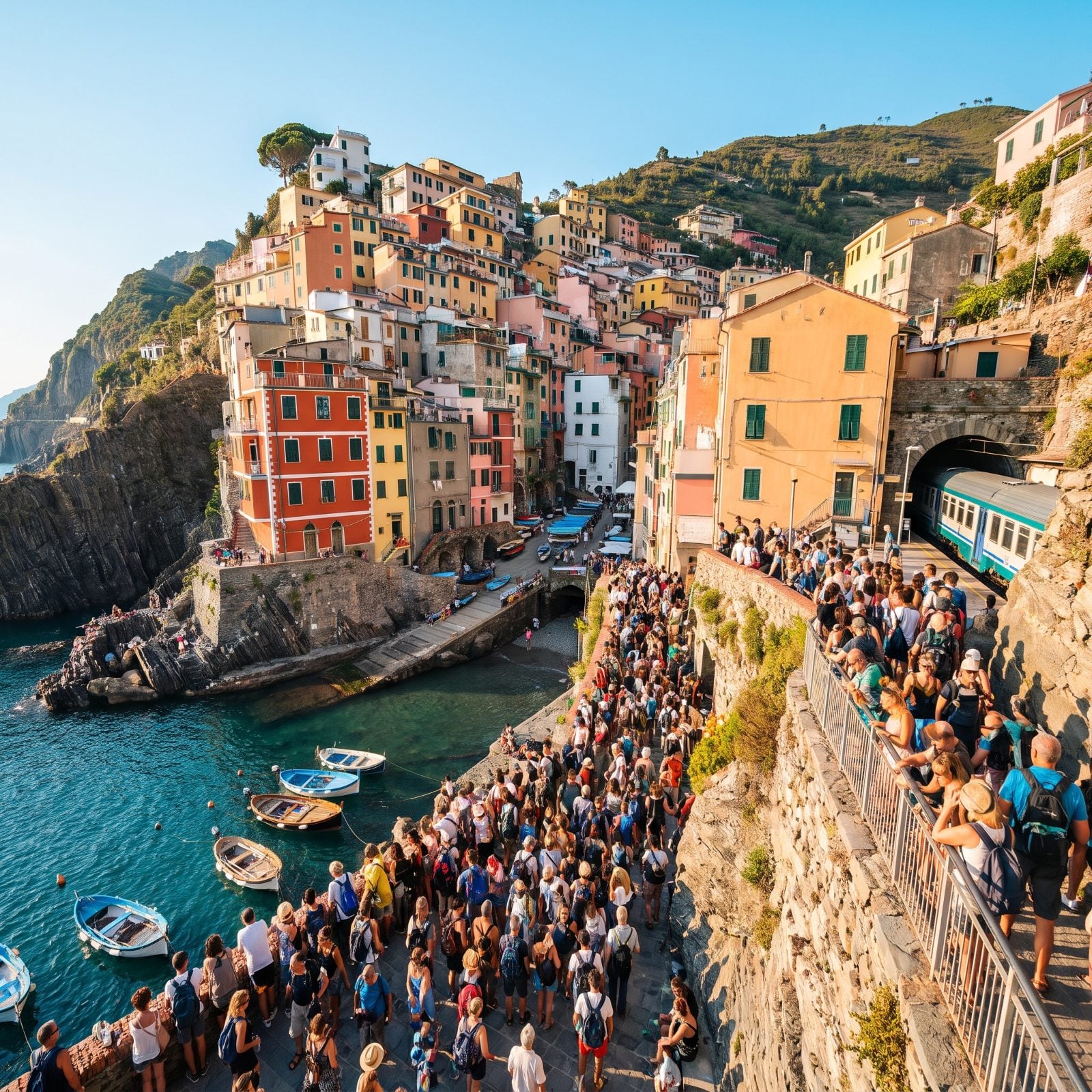
Five fishing villages glued to a cliff, connected by footpaths that once belonged to farmers and goats. That was the charm. Nobody built Cinque Terre for tourism, which is why it felt like a secret you’d stumbled into.
Then everyone stumbled in at once. On a July afternoon the famous Sentiero Azzurro trail turns into a single-file conga line, and the little harbors of Vernazza and Manarola overflow with day-trippers dumped off trains and cruise tenders. Authorities have floated visitor caps and now charge trail-access fees to thin the human river.
Come in November. The light goes soft, the trattorias have tables, and you can hear the sea again.
6. Kyoto, Japan: Geisha Districts Fenced Off From the Camera Mob
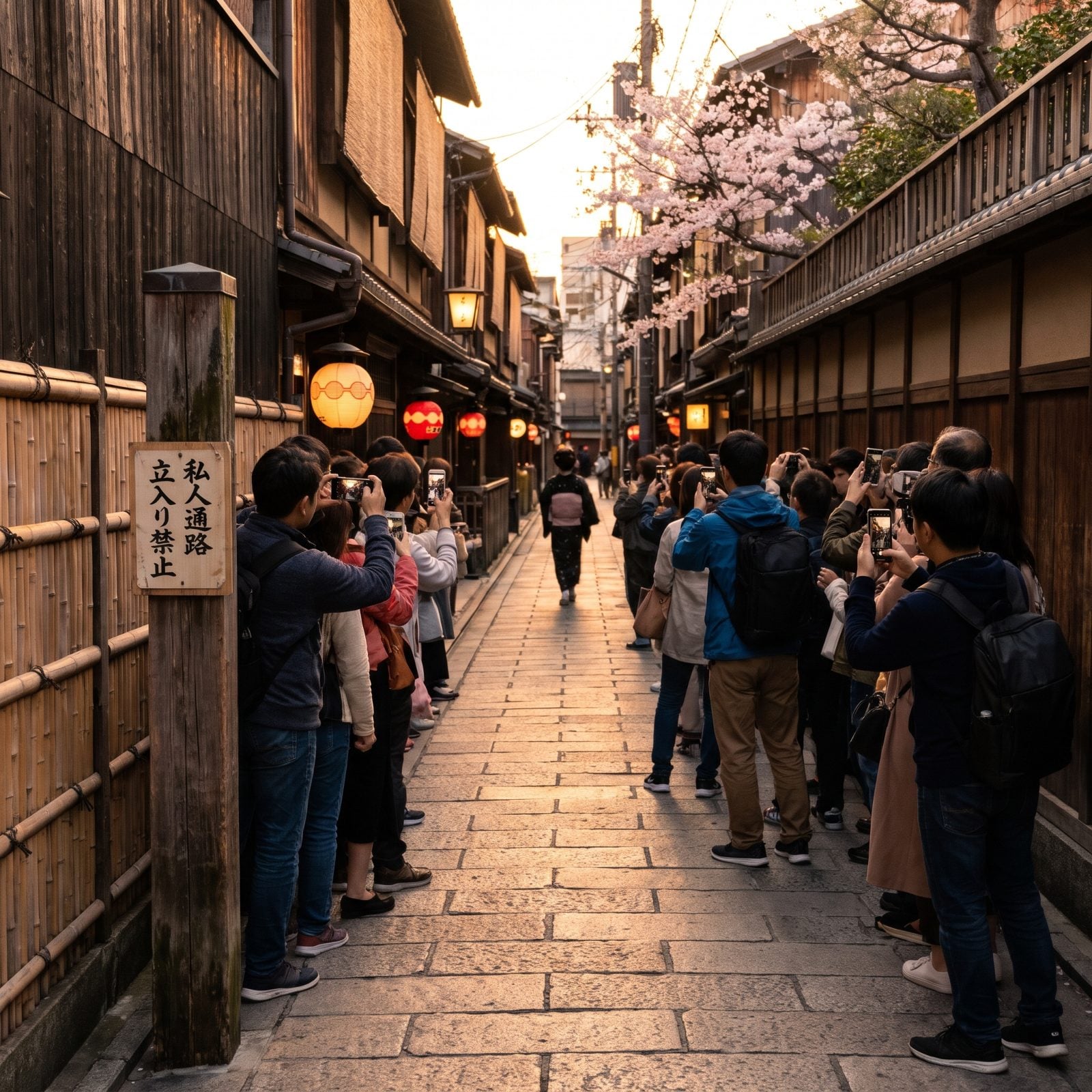
Kyoto didn’t stop being beautiful. It stopped being able to breathe.
The Gion district — those narrow lantern-lit lanes where geiko and maiko move between appointments — got so overrun with photographers chasing a shot that the neighborhood put up its own signs and eventually closed some private alleys to tourists entirely. There were reports of visitors grabbing kimono sleeves, blocking doorways, chasing women down the street.
You can still find the hush. The mossy temple gardens at dawn, before the tour buses. But the postcard Gion — geiko gliding past glowing paper lanterns while you stand alone in the lane — is mostly a memory now.
5. Rome’s Trevi Fountain: A Coin Toss You Have to Earn With Your Elbows
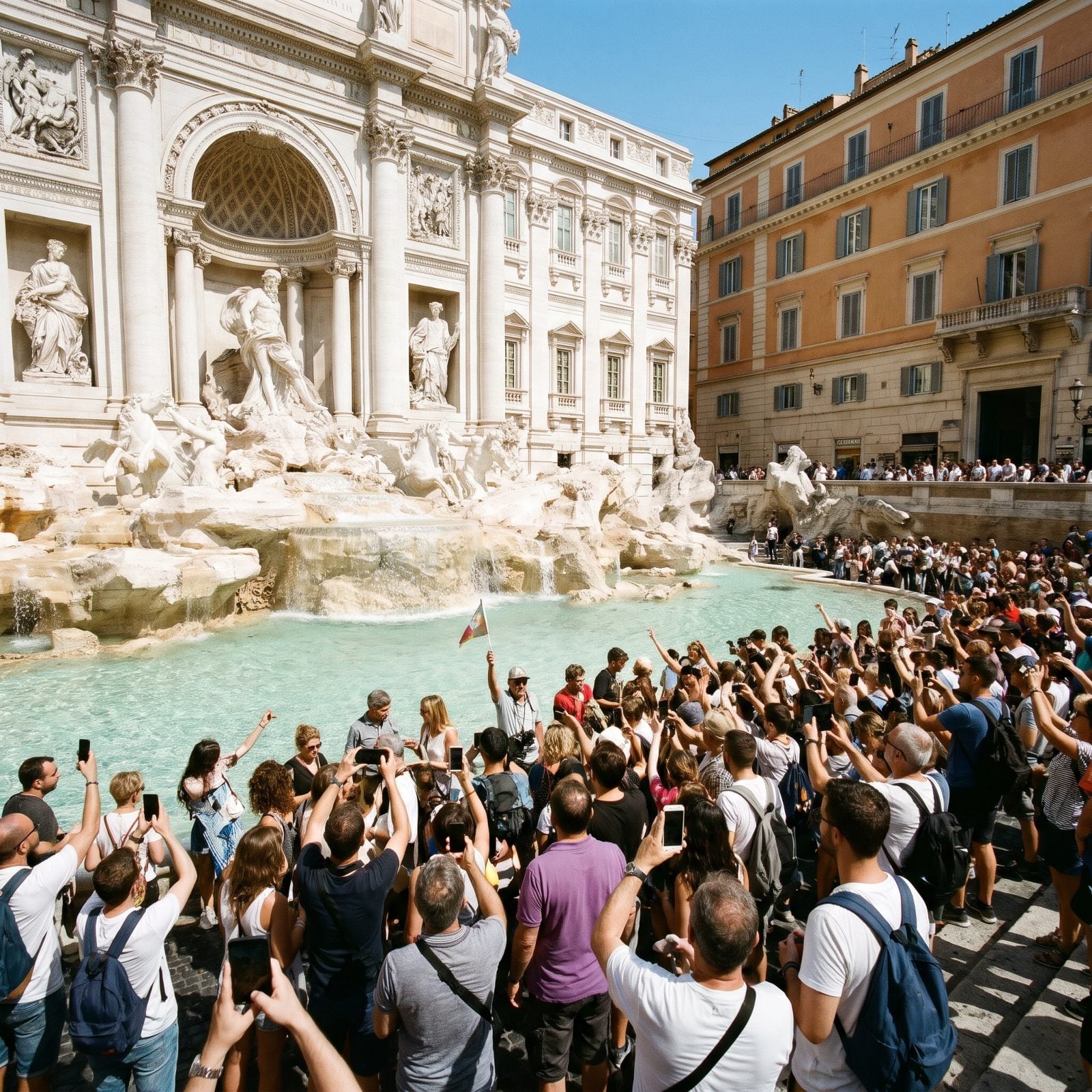
Three coins in the fountain, the old song goes. The catch is getting close enough to throw them.
The Trevi is still Nicola Salvi’s travertine fantasy of sea gods and rushing water — a knockout by any measure. But reaching the edge for your coin toss now means working through a crowd packed so tight the city has debated timed entry and even a small admission fee to control the crush. Pickpockets love it. The selfie sticks swing like hazards.
Go at six in the morning. The water glows, the square sits near empty, and the fountain finally looks the way it was carved to be seen.
4. Niagara Falls: One of Earth’s Great Wonders, Ringed by Casino Glare and Wax Museums
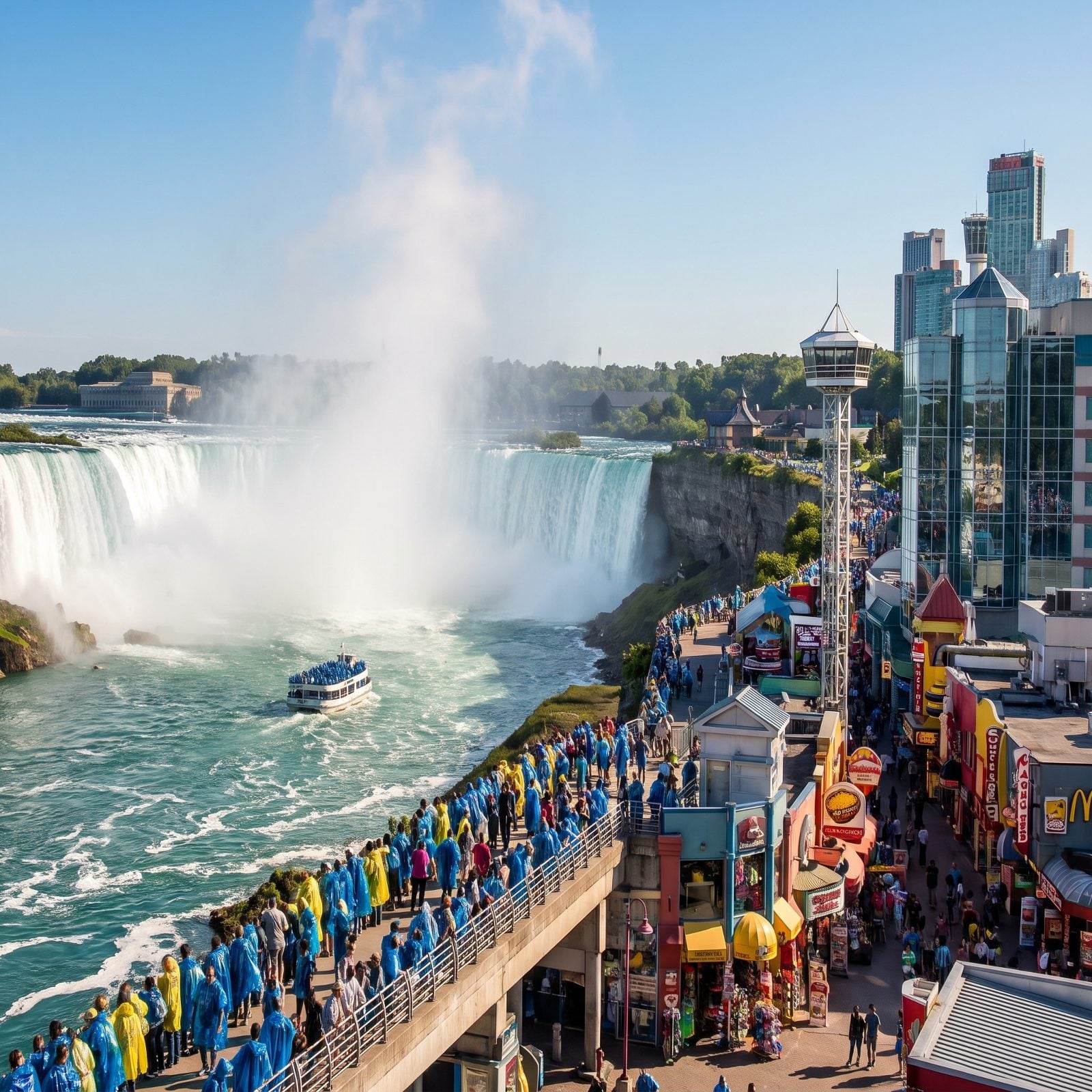
The falls themselves never cheapened. Millions of cubic feet of water a minute going over a cliff doesn’t care what you build next to it.
What they built next to it is the problem. Right beside the Horseshoe Falls, crammed onto the cliff edge, sits the tourist strip — a midway of souvenir stalls, a McDonald’s, and casino towers that glow all night. The sublime and the tacky, separated by nothing but a crowded railing.
The water still does something to you up close, in the mist, with the roar. You just have to aim your eyes in one direction to feel it.
3. Mykonos, Greece: When the Whitewashed Village Got Priced Out of Its Own Postcard
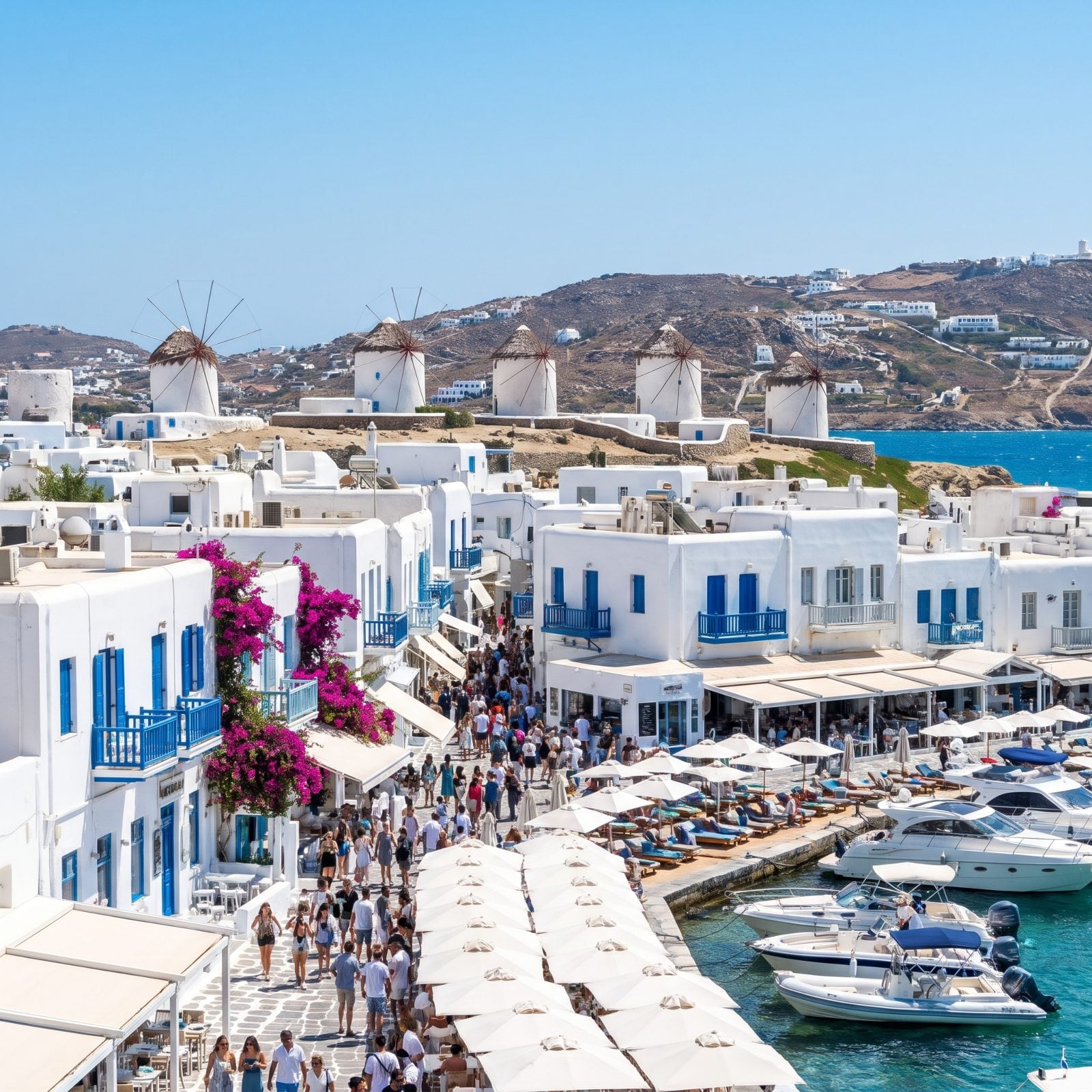
Mykonos used to be a windmill-dotted fishing island where you ate grilled fish at a plastic table for pocket change and watched the sun drop behind the Little Venice balconies.
The whitewashed village is still there — the blue doors, the bougainvillea, the famous windmills. But the money moved in hard. Beach clubs charge eye-watering prices for a sunbed, a plate of pasta at a trendy spot can run more than dinner for four back home, and the yachts in the harbor are the size of apartment buildings. The old tavernas got squeezed out by places with a dress code.
2. Petra, Jordan: The Treasury Reveal, Now Lined With Souvenir Stalls
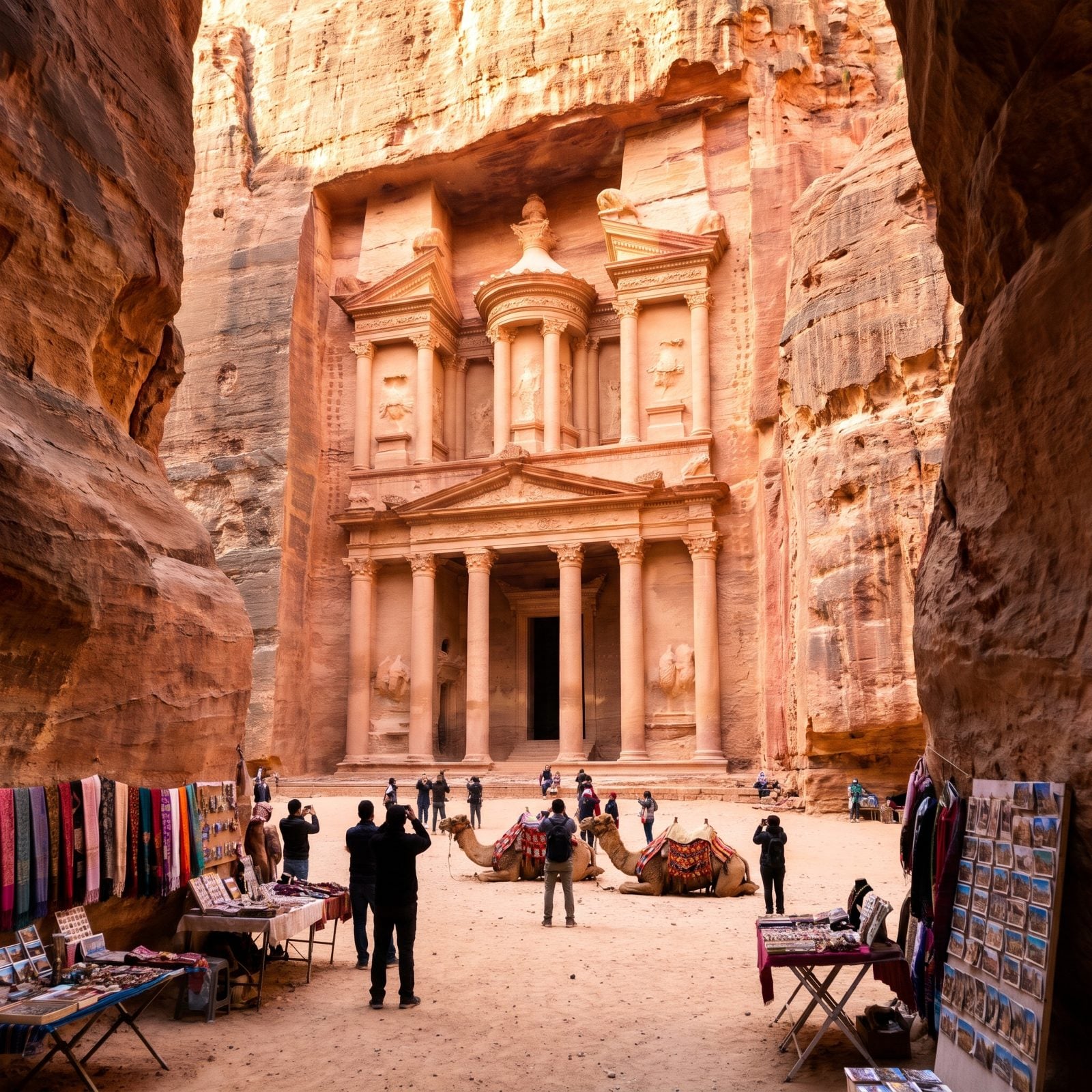
The walk through the Siq is still one of travel’s great reveals — a mile of narrow canyon, the rose-colored walls closing in, and then that first sliver of the Treasury glowing at the end of the dark.
Hold that feeling, because it breaks the second you step into the clearing. The plaza at the foot of Al-Khazneh is ringed with vendor tables, trinket blankets, pushy camel-ride offers, and a crowd jostling for the same photo you want. The 2,000-year-old Nabatean facade deserves silence. It gets a marketplace instead.
Walk deeper, past the Treasury, up the long stair climb to the Monastery. The crowds thin with every step, and most people never bother. That’s where Petra still feels like a discovery.
1. Antelope Canyon, Arizona: Timed Permits, Guided Lines, and a Queue for the Light Beam
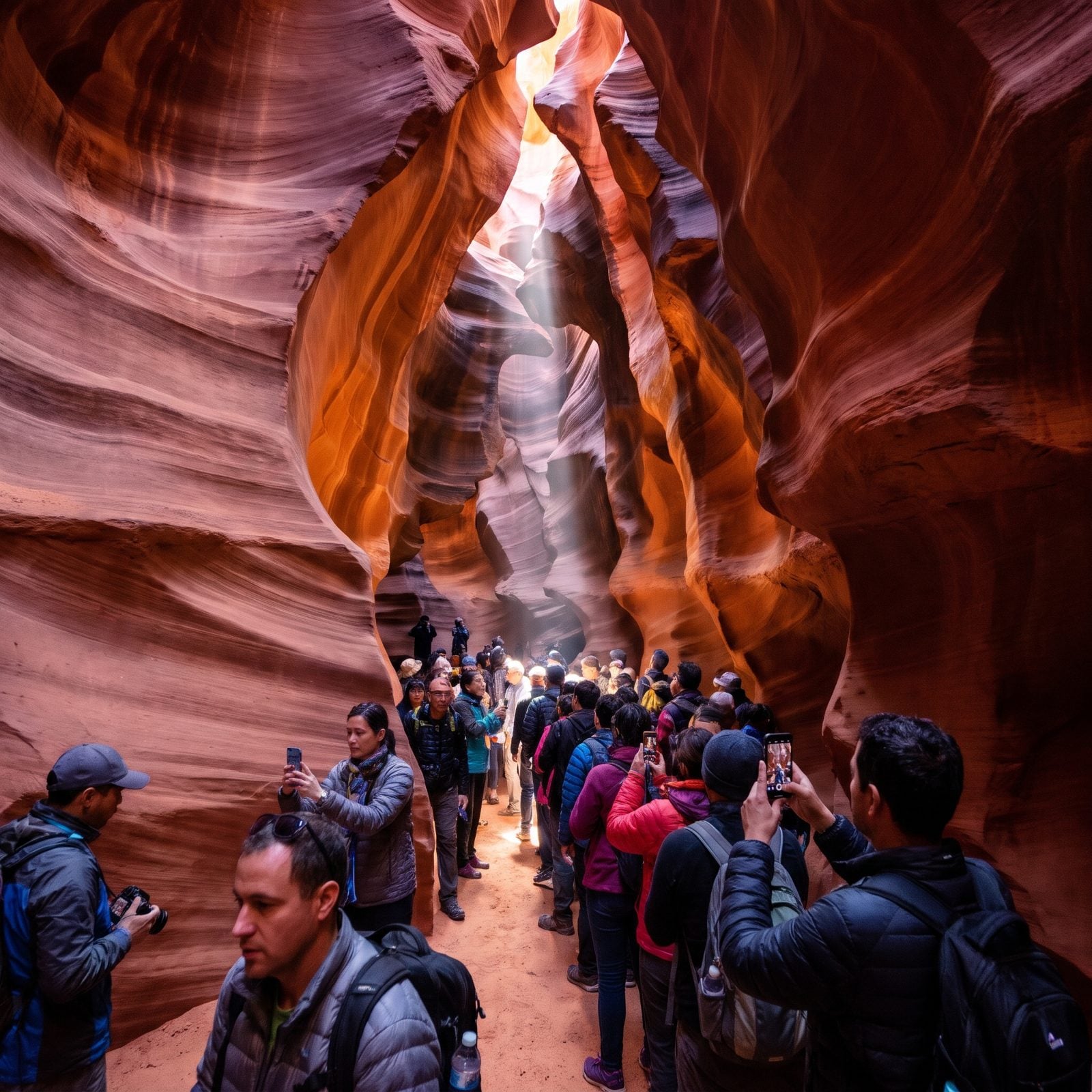
Antelope Canyon exploded on the internet. Those swirling sandstone walls and the single shaft of light became the most screensavered image in Arizona, and the real place has been trying to keep up ever since.
You can’t wander in anymore. It sits on Navajo land, requires a paid guided tour, and the famous light beams happen in a tight window when the operators march groups through in a near-constant procession. Upper Antelope in particular can feel like standing in a slow-moving line in a gorgeous hallway, waiting your turn to raise the phone.
The light is still otherworldly. You’ll just be sharing it on a schedule.
Please note that some of the imagery in this article were created with the aid of AI image generators.