
🔥 Would you like to save this?
The photo always wins. A tight crop, a lucky angle, the sun cooperating for once. Then you show up and the frame opens out to reveal a parking lot, a power plant, a chain-link fence, or a statue the size of a toddler. None of this makes the places less worth seeing. It just means the brochure left a few things out. So here’s a batch of landmarks the camera flatters within an inch of their lives, and what they actually feel like once you’re standing there with everybody else.
29. Juliet’s Balcony Is a Later Addition to a Tourist Courtyard
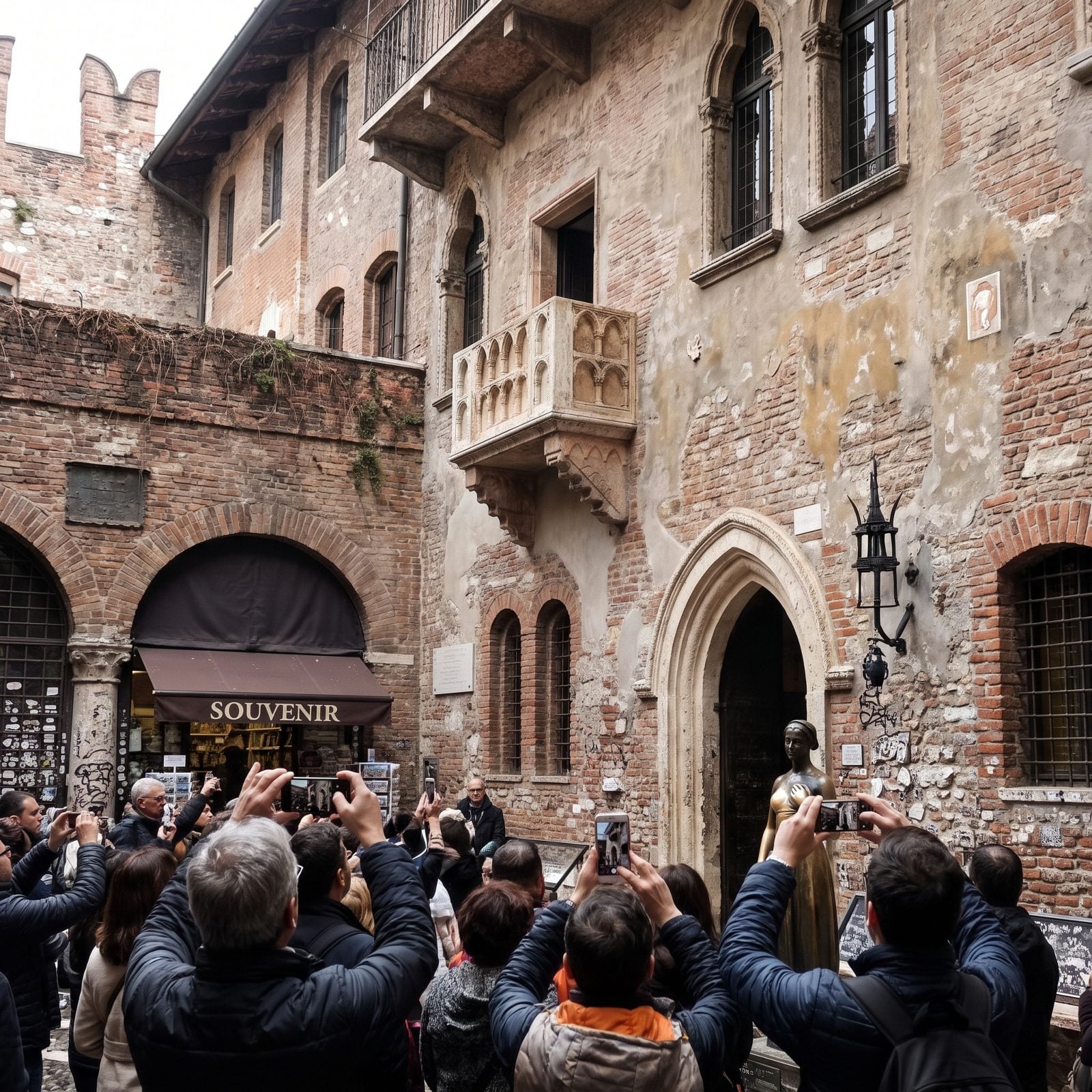
The thing nobody puts on the fridge magnet? The balcony was bolted on in the 1930s. The house is real and genuinely old, but the connection to any flesh-and-blood Juliet is zero, because Juliet is fictional. Verona took a medieval building, stuck a marble balcony on it salvaged from an old sarcophagus, and raised a shrine to a girl who never drew breath.
The courtyard is tiny and jammed. You wait your turn under a forest of raised phones to see a feature younger than your grandmother.
28. Iceland’s Blue Lagoon Sits Beside a Geothermal Power Plant
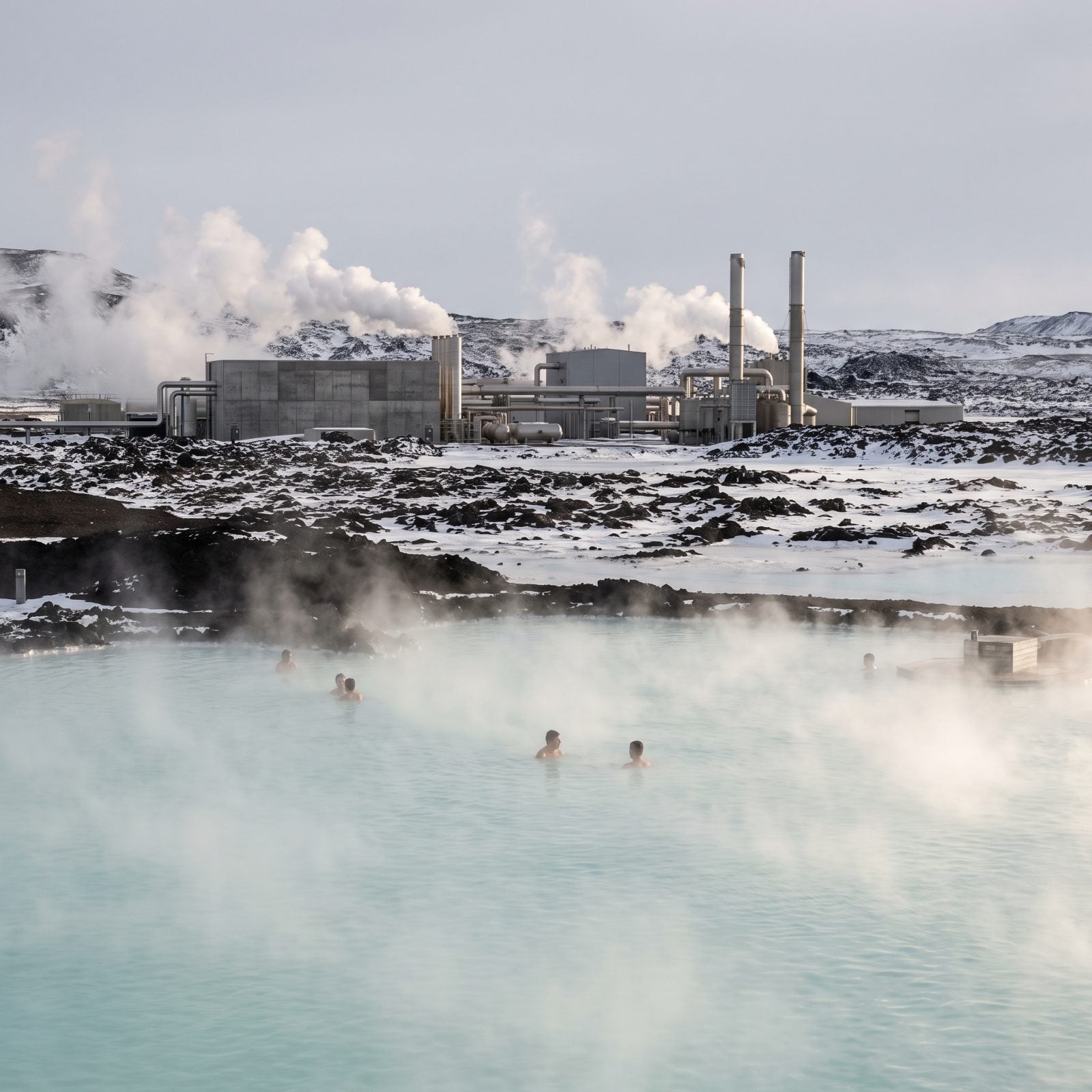
The water really is that otherworldly milk-blue, and the photos get that part dead right. What they crop out is the Svartsengi power plant hulking over the whole scene, pipes and stacks and all, because the lagoon’s famous water is the runoff from it.
The spa exists because the plant exists. That silica-rich water is a byproduct of generating electricity and heat. Somebody noticed it was good for the skin, and a resort grew up around the drainage.
Knowing this doesn’t ruin anything. Honestly it makes the place better. A luxury soak built on industrial leftovers.
27. Neuschwanstein’s Famous View Comes From a Separate Mountain Bridge
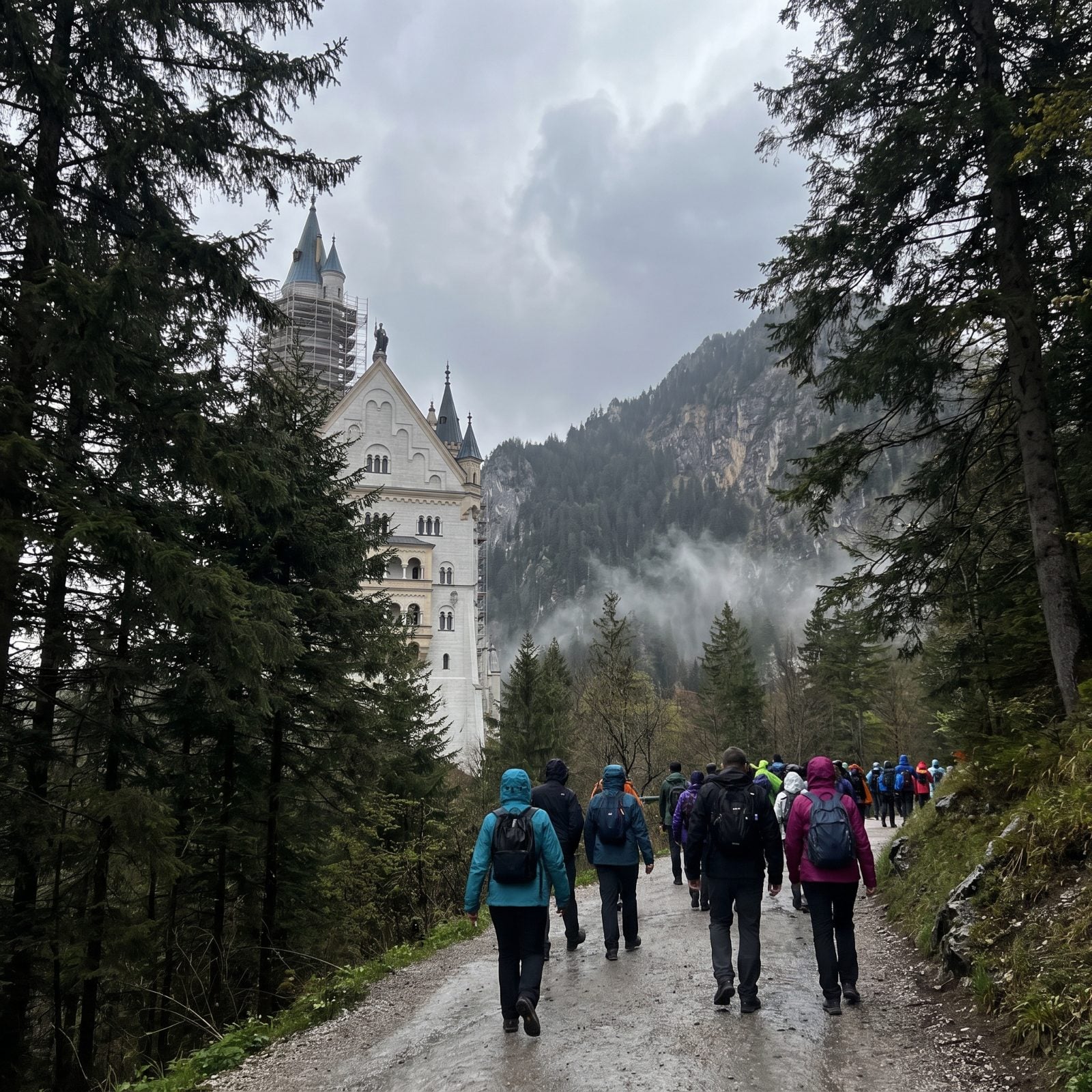
The money shot isn’t from the castle at all. That soaring view of turrets against the Alps comes from the Marienbrücke, a narrow footbridge spanning a gorge on an entirely different slope. From the castle itself, you can’t see the castle. Obviously.
So everyone funnels onto one small bridge that sways and gets packed solid in summer. There’s a visitor cap now, and it closes in bad weather, which is often.
26. Petra’s Treasury Has a Small, Unadorned Interior Chamber
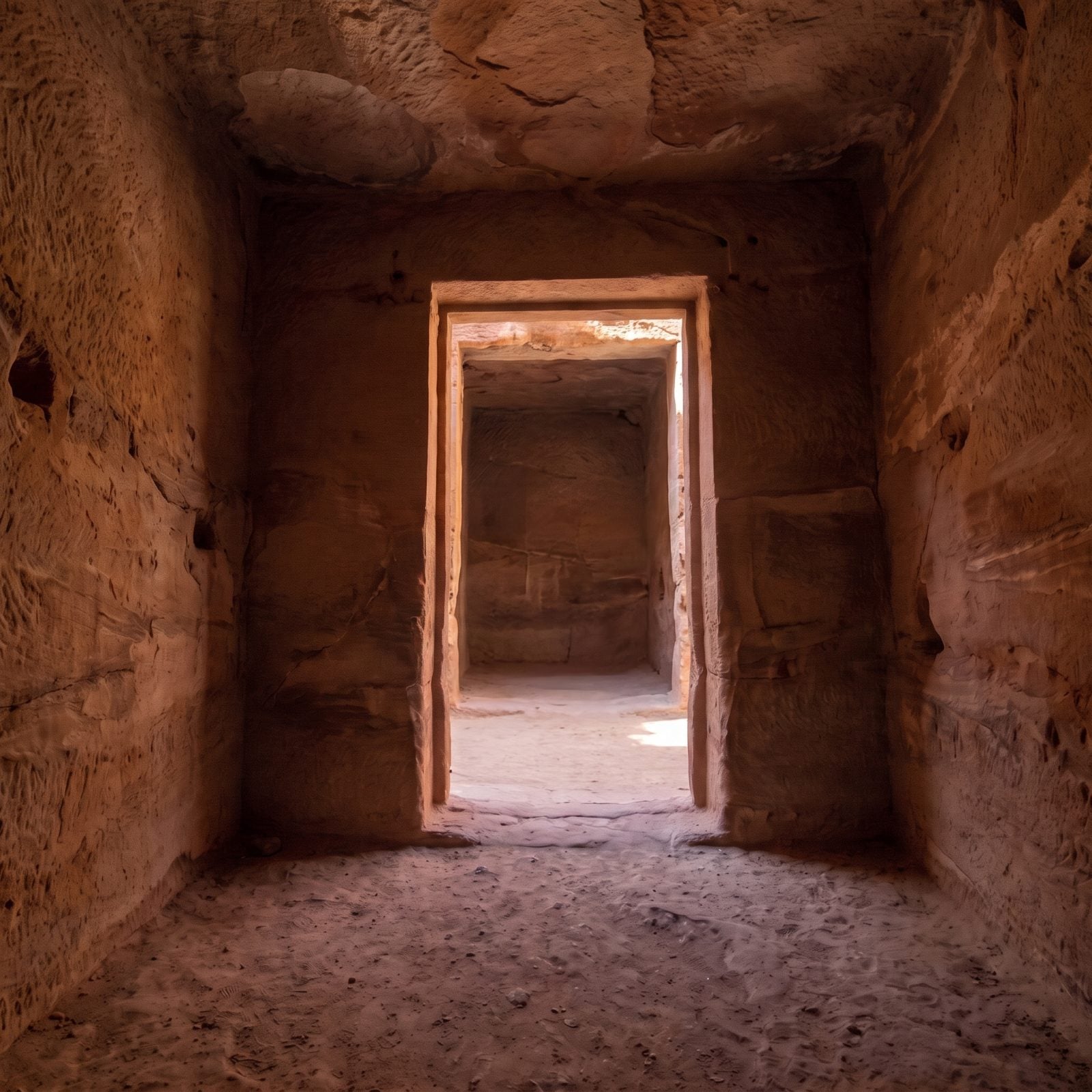
The facade earns every bit of its fame. Rose stone carved into columns and a tholos, glowing when the light hits right, that reveal at the end of the Siq that stops people cold. All true.
Then you step inside. It’s a bare cube, a plain empty chamber chipped out of the rock with nothing carved, nothing stored, no Indiana Jones chalice. The Treasury was almost certainly a tomb, and the name is a myth about hidden gold.
All that effort went into the front. The inside was never the point.
25. The Little Mermaid Sits Beside an Industrial Harbor
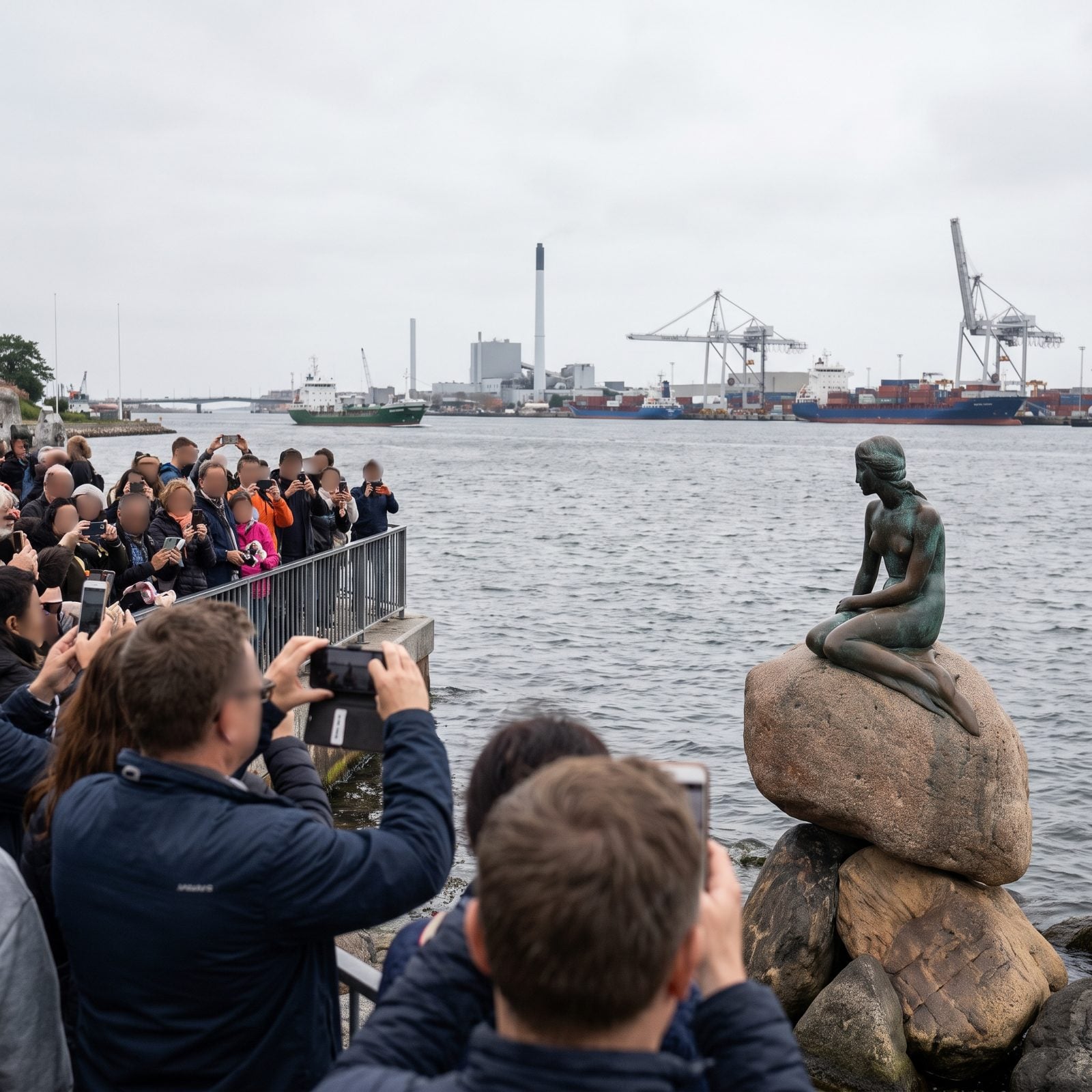
She’s small. That’s the universal first reaction. The bronze mermaid stands just over four feet, perched on a rock a few steps from the pavement, and visitors reliably hit the “wait, that’s it?” moment.
Then the backdrop seals it. Behind her isn’t a fairytale cove but Copenhagen’s working waterfront, cranes and cargo vessels and a tour boat chugging past every few minutes. You share the view with a tight crowd on a narrow strip of walkway.
She’s charming anyway. Just recalibrate the scale in your head before you go and you won’t feel cheated.
24. The Blarney Stone Is Built Into an Opening in a Castle Wall
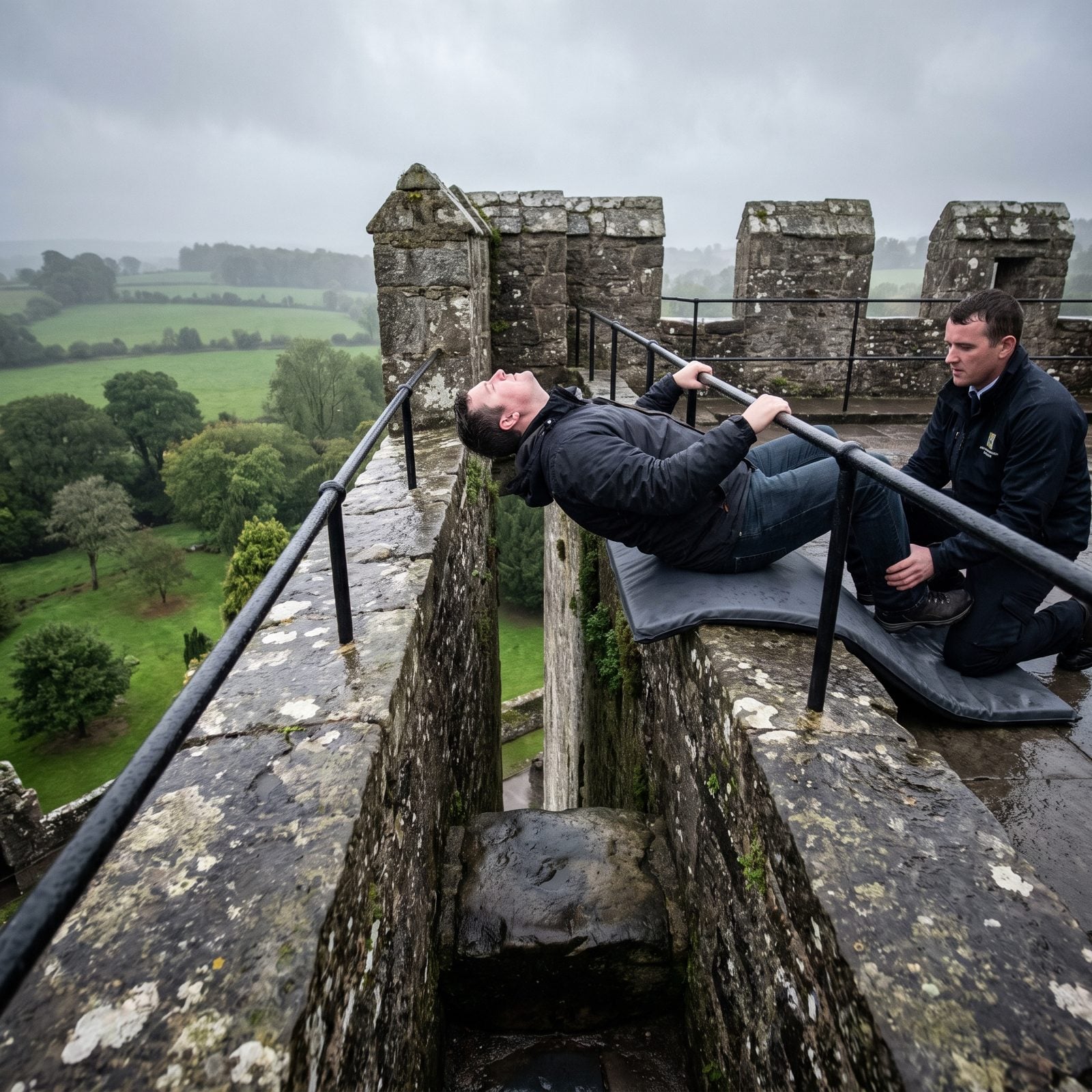
Postcards show the castle. What they don’t show is you contorting backward over a hole in a wall several storeys up, gripping a single iron rail with both hands while a staffer holds your leg.
Below you, a deep shaft drops between the parapet and the outer wall, with the stone set into the wall just beneath the parapet. You lie down, lean back over the gap, and let your head hang out over the drop. There are safety rails now, and a mat, neither of which existed for most of its history.
The gift of eloquence is the legend. The reality is a queue, a bit of a scramble, and a photo of yourself upside down.
23. The Sydney Opera House Roof Is Cream Tile Rather Than Bright White
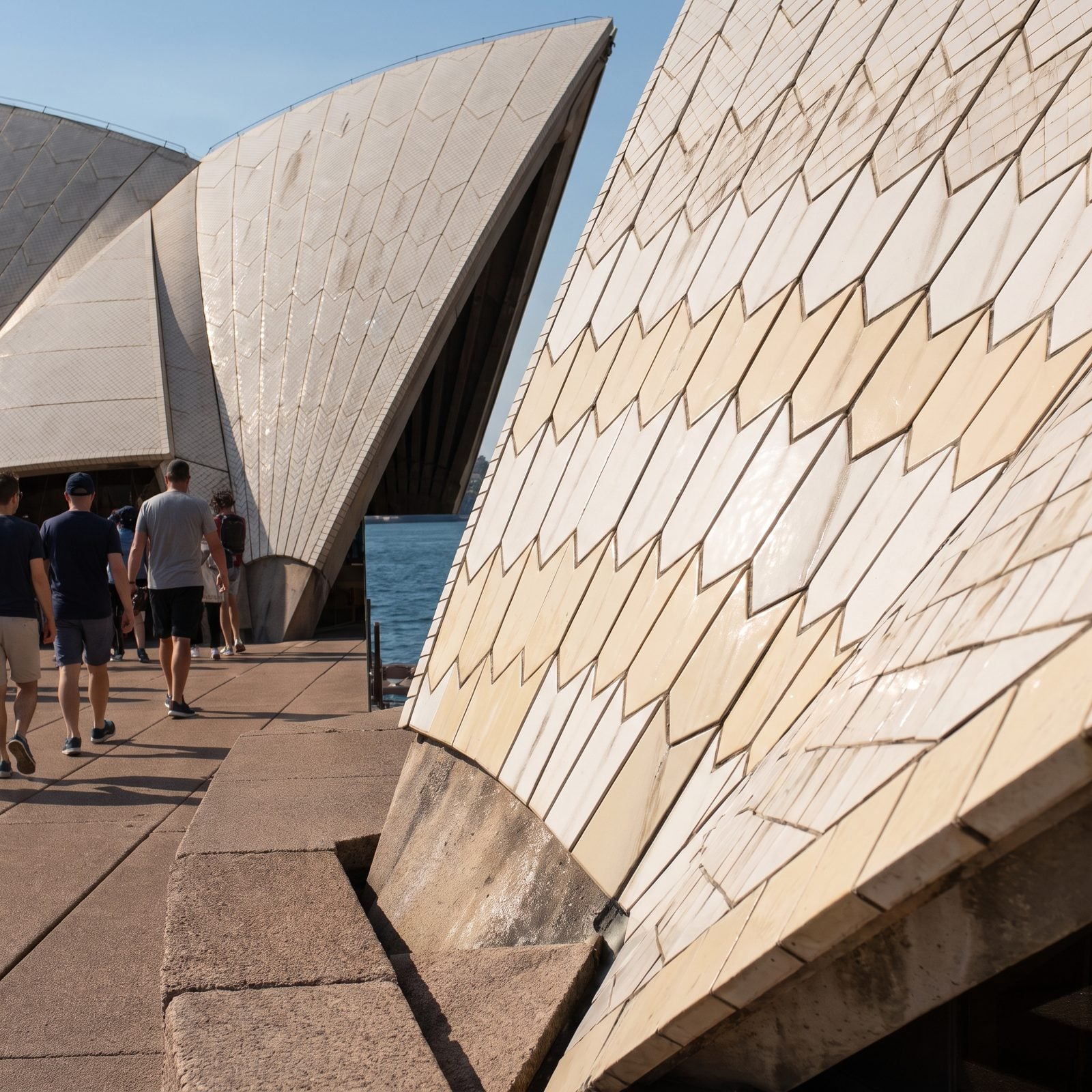
From across the harbour the sails read as crisp white. Up close? Not quite. The roof is clad in more than a million Swedish tiles in two finishes, glossy cream and a matte off-white, laid in a chevron pattern so the shells never glare back at you.
That was on purpose. A pure white roof under the Sydney sun would blind you. The cream tone keeps it easy on the eye at every hour of the day.
The building most people picture as white is, on purpose, the color of bone and buttermilk.
22. Santorini’s Blue Domes Occupy Only a Few Specific Viewpoints
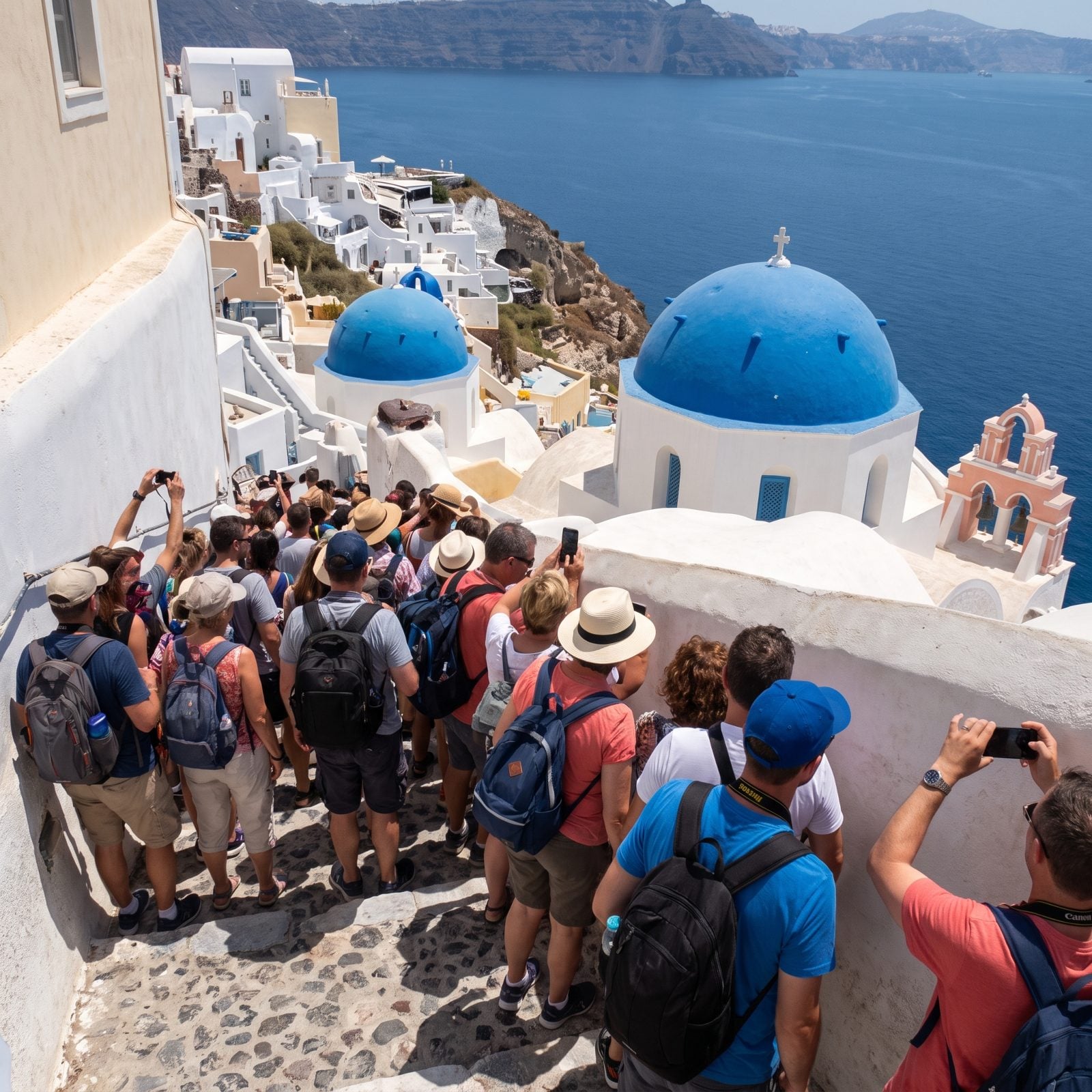
Those three blue domes stacked against the sea? They line up from essentially one spot in Oia, on a narrow path that goes shoulder-to-shoulder by mid-morning.
Most of Santorini’s domes are scattered, modest, and not especially blue. That famous composition is a lucky alignment captured from a single balcony-sized perch, and everyone with a camera is elbowing for the same square metre of it.
21. Easter Island’s Moai Are More Than the Isolated Heads Often Shown
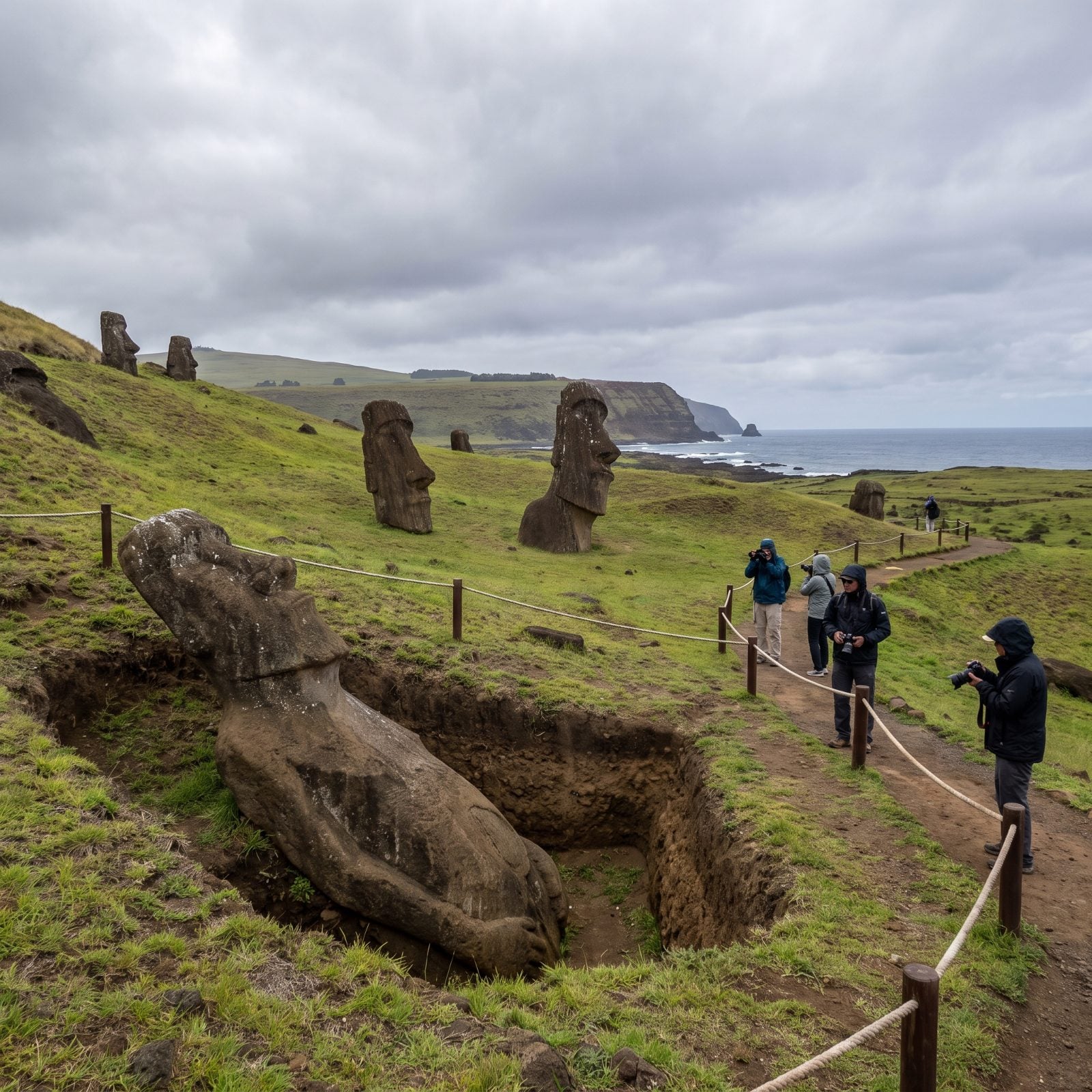
The famous “heads” have bodies. Excavations at the Rano Raraku quarry showed the buried moai extend into full torsos and arms underground, many carved with intricate markings that sediment hid for centuries.
And there’s more the postcard skips. Nearly a thousand moai dot the island, most toppled, many unfinished and still lying in the quarry where they were cut. These days you view most sites from behind ropes, on marked paths, because the ground and the statues are fragile.
The image of solitary heads on empty grass is real. It’s also a sliver of a much stranger, much bigger story.
20. Manneken Pis Is a Two-Foot Statue on a Street Corner
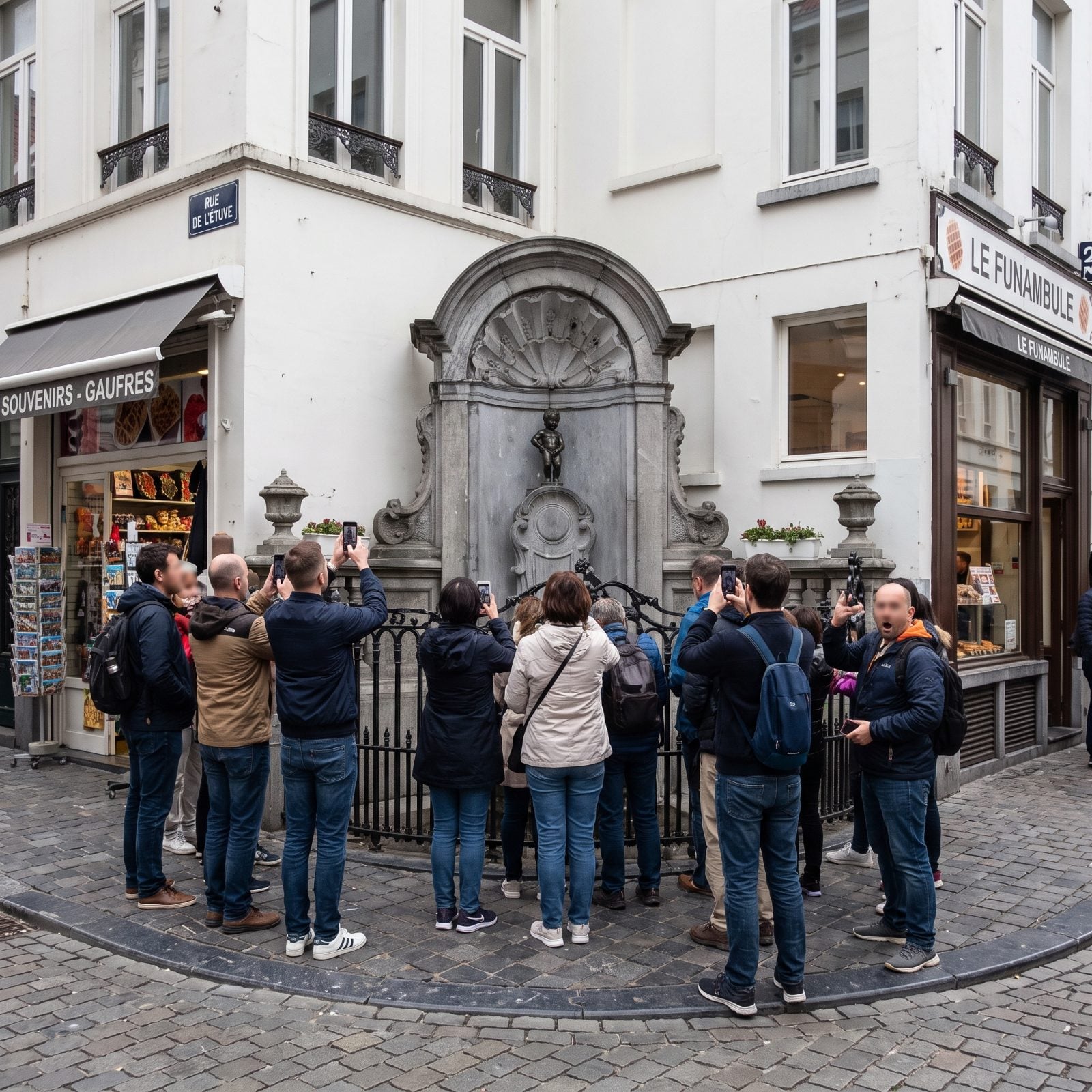
Two feet tall. That’s the whole thing. A bronze boy relieving himself into a basin, tucked in a niche on a corner where two narrow streets meet, a low iron rail keeping people back.
Visitors roll up expecting a monument and find a figurine behind a fence, ringed by waffle shops and a crowd three deep. Most people just laugh.
The charm is the silliness, and Brussels leans all the way in. The statue gets dressed in costumes hundreds of times a year from a wardrobe kept in a nearby museum. He’s small. The devotion to him is not.
19. Plymouth Rock Is a Small Boulder Beneath a Portico
🔥 Would you like to save this?
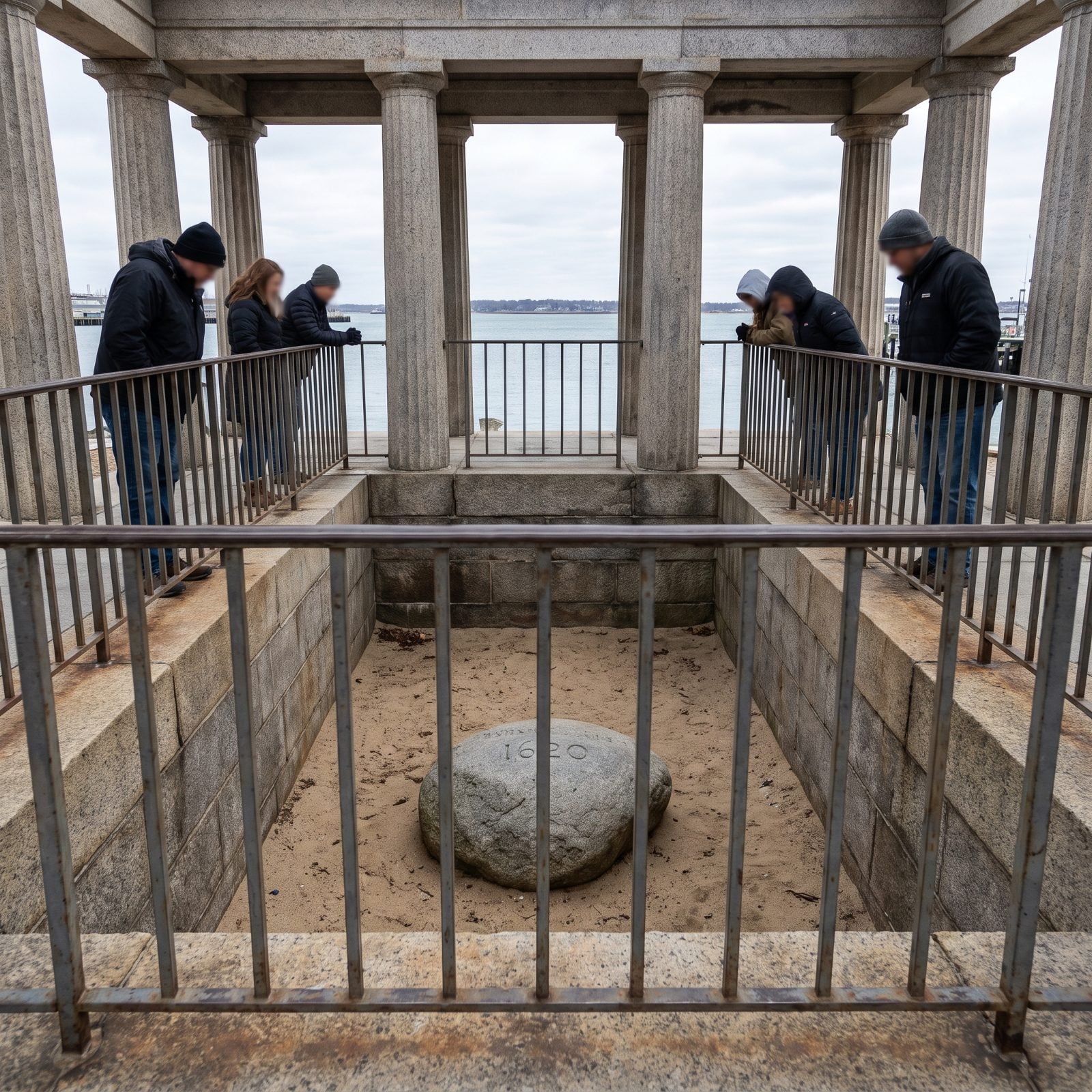
You picture a dramatic slab where a nation began. You get a boulder about the size of a loveseat, sunk in a sandy pit beneath a columned stone canopy and viewed from a railing a story above it. People genuinely say “that’s it?” out loud, and the rock has heard it all before.
Here’s the part nobody tells you: it’s been broken, moved, cracked and cemented back together more than once over the centuries. That 1620 carved into the surface was added long after the fact. The myth is enormous. The actual object you came to see fits in a pickup truck.
18. The Four Corners Monument Is a Paved Tribal Park Plaza
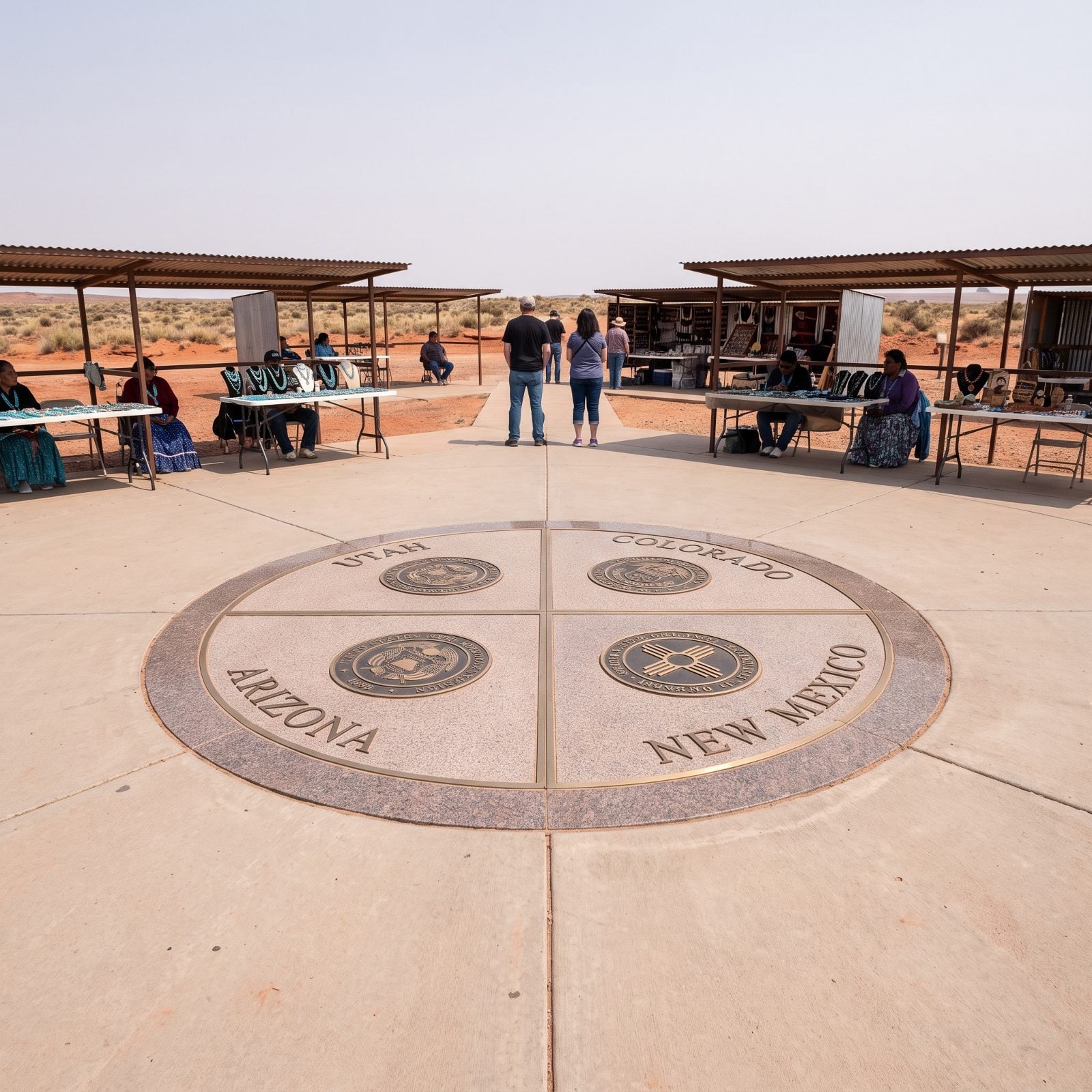
The image in your mind is probably just the granite-and-bronze disc, shot straight down, the four state names arranged like a prize. The reality is a working tribal park plaza — a flat concrete apron ringed by vendor booths selling turquoise and silver jewelry, a small admission fee, and a line of people waiting their turn to do the splayed-limbs-in-four-states pose.
It sits far out on the Navajo Nation, hours from almost anywhere, down a long stretch of high desert road. The surrounding land is gorgeous and empty. The monument itself? A parking lot with a dot in the middle. Both things are true at once.
17. The Welcome to Fabulous Las Vegas Sign Stands in a Traffic Median
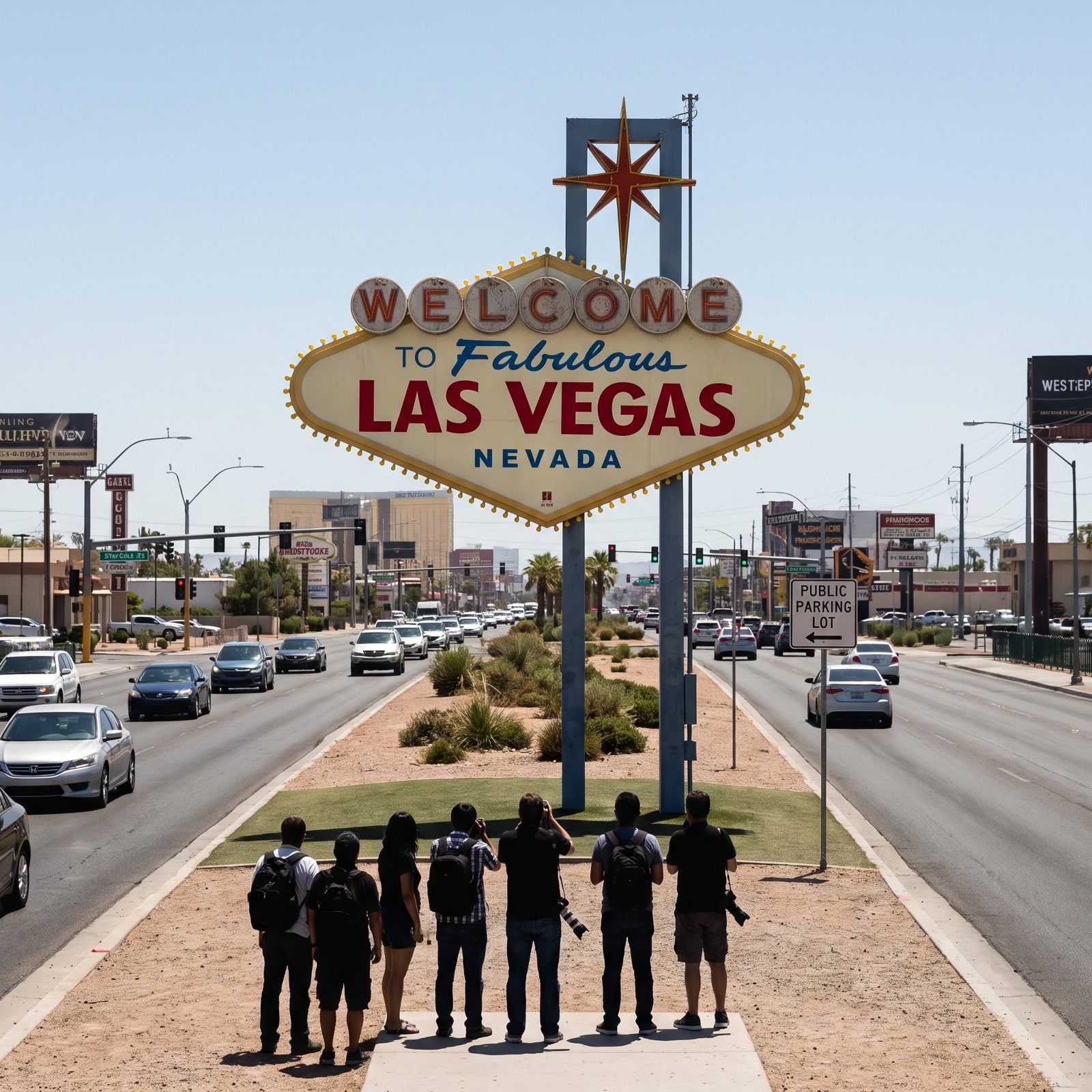
It’s smaller than the hat on your head in the photo. The famous sign stands in a median strip, marooned between lanes of boulevard traffic well south of the glitzy casinos. You reach it by a dedicated little parking lot, then wait in an actual line for your turn on the photo pad.
By day it looks like exactly what it is: a vintage roadside marker baking in the sun, no neon glow, cars whooshing past on both sides. The magic is almost entirely nocturnal and almost entirely cropped.
16. The Liberty Bell Is Displayed Inside a Modern Glass Pavilion
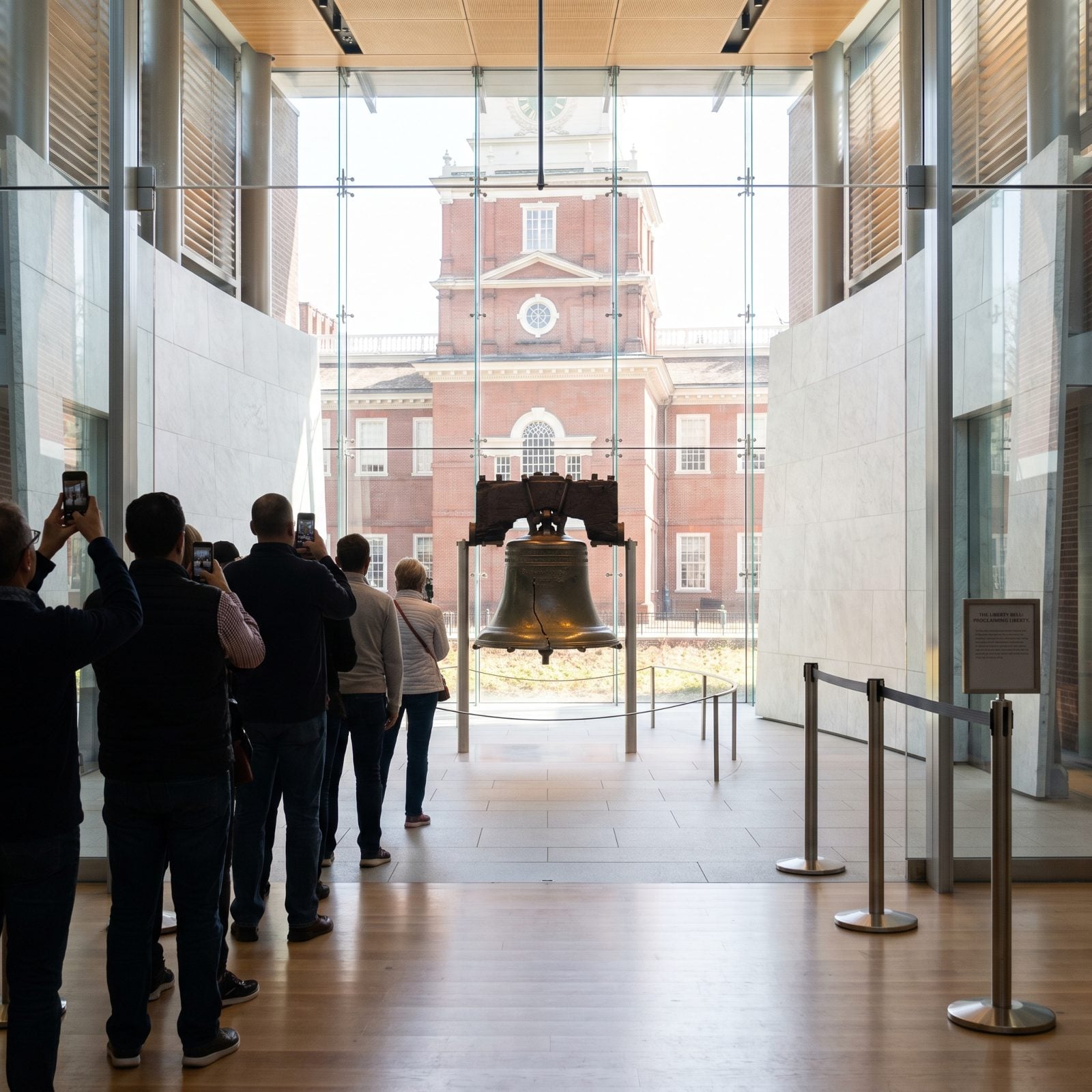
In postcards the bell hangs in warm, timeless light, cropped so tight it could be anywhere. In person it lives inside a bright modern glass pavilion in downtown Philadelphia, behind stanchions, with Independence Hall framed through the window behind it like a backdrop someone staged. Which, honestly, they did.
The crack is real and smaller than expected. The bell looks heavier and more ordinary-bronze than the romantic images suggest. Free to see, often a line out the door, and you move through on a current of visitors rather than contemplating it alone in reverent silence.
15. Checkpoint Charlie Is a Reconstruction Surrounded by Shops
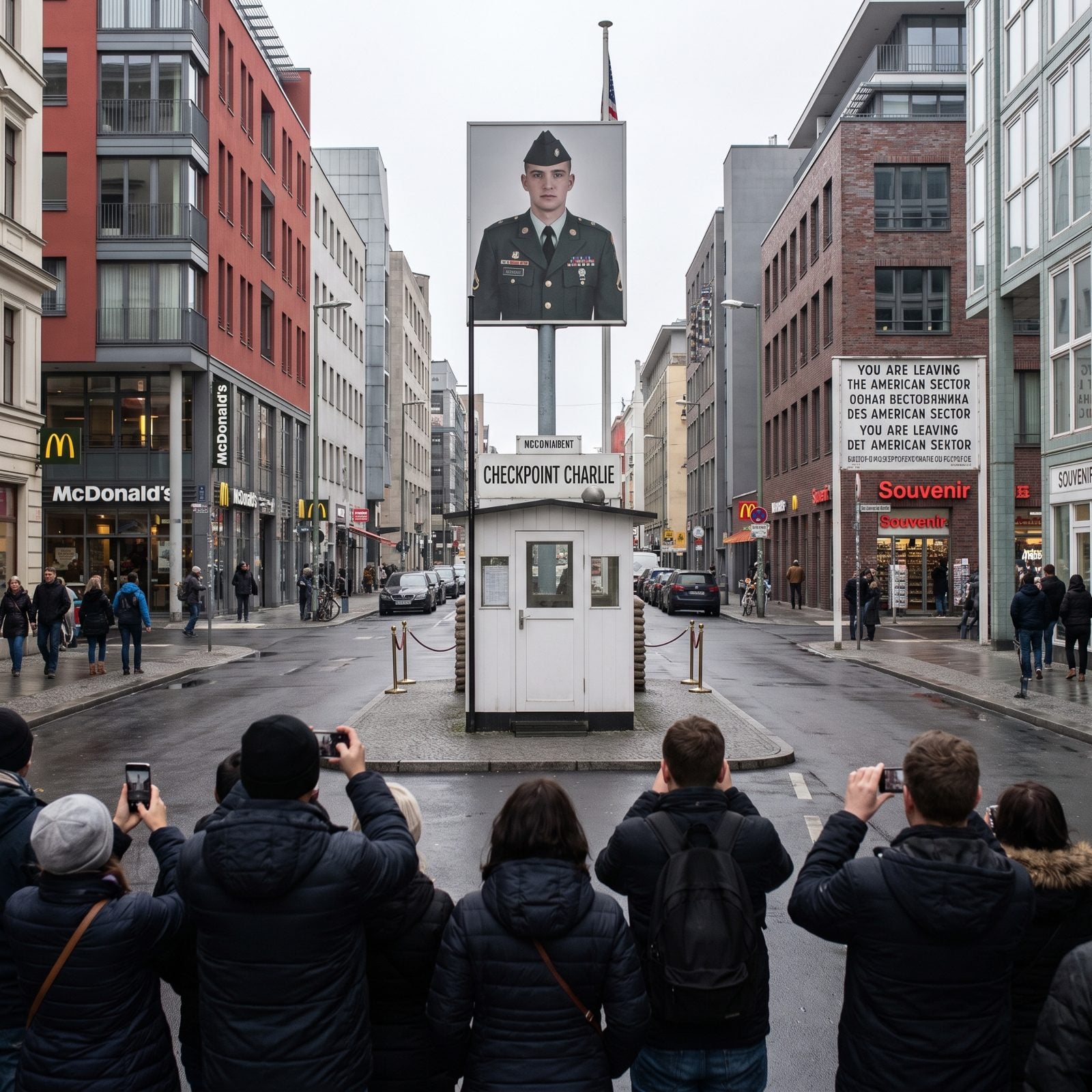
The Cold War photographs are grim and gray, tanks facing off across a line that could kill you. Today the spot is a cheerful traffic island ringed by fast food, souvenir stands, and shops. The guard hut is a reconstruction, the soldier’s portrait looms over the street on a giant sign, and the sandbags are props.
None of that makes it worthless. It makes it strange. You stand where one of the tensest standoffs of the twentieth century played out, and a crowd of tourists in rain jackets raises phones and cameras beside a McDonald’s and a souvenir shop. The weight of the place and the kitsch of it occupy the exact same square of pavement.
14. Abbey Road Crossing Remains Part of a Busy London Street
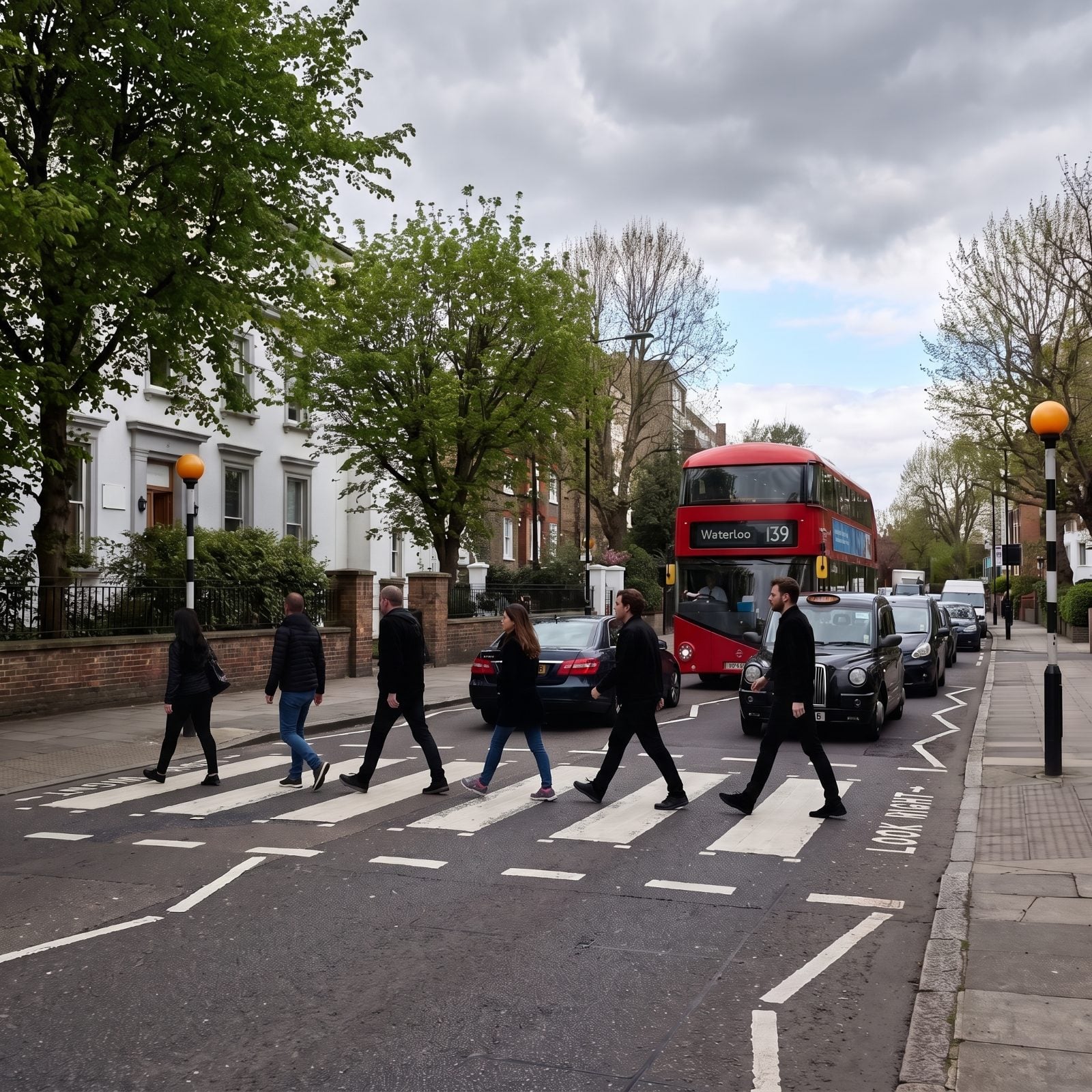
The album cover makes it look like a private moment on an empty lane. Go there and you find a live, working London street with cars that very much want to get through. Drivers idle and sigh while tourist after tourist shuffles across in single file trying to recreate the pose, usually badly, usually without matching strides.
There’s a webcam. People wave at it. And the patience of the local traffic is remarkable, because this happens all day, every day, and has for decades.
13. The Hollywood Sign Is Fenced Off and Best Seen From Miles Away
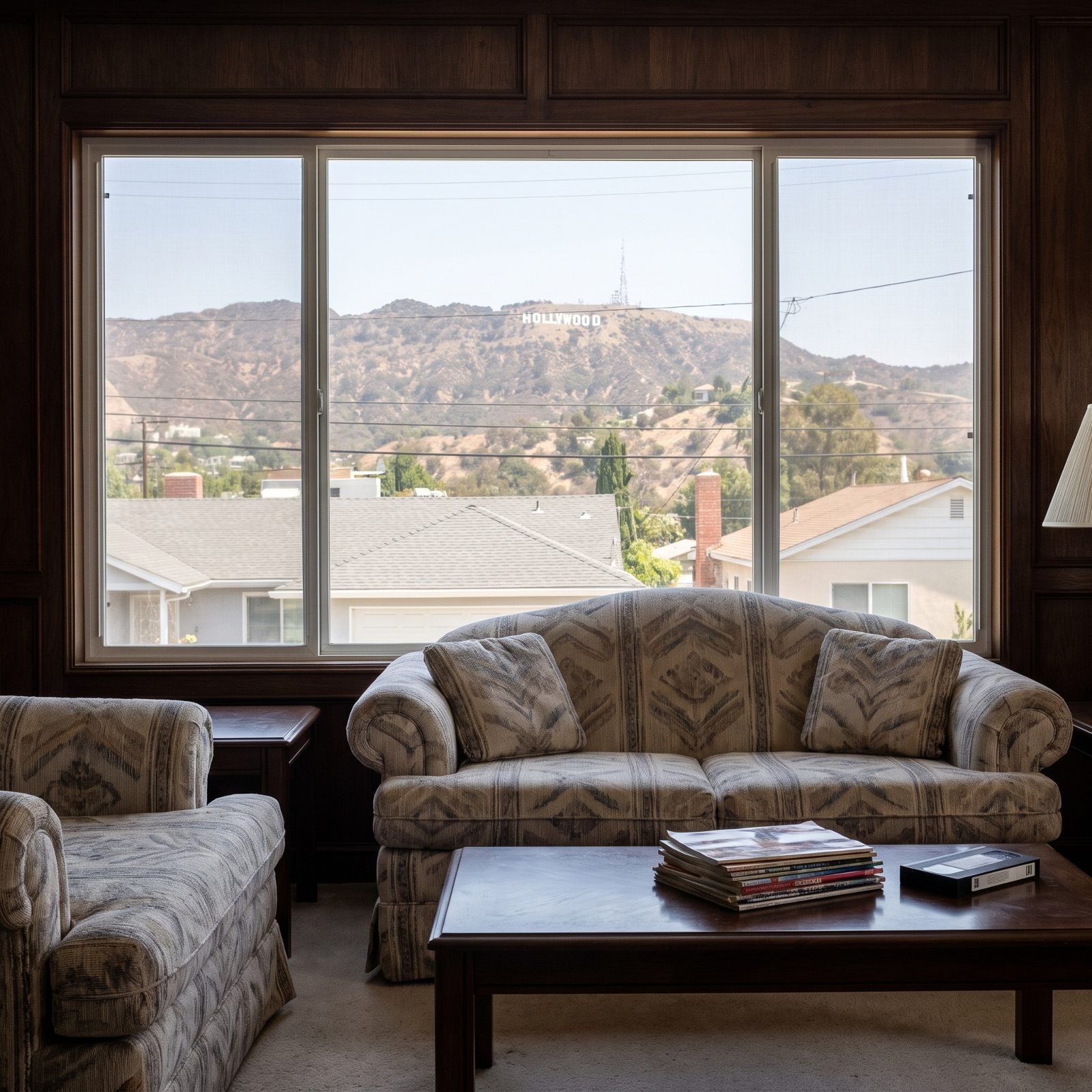
You cannot stand next to it. That’s the first surprise. The sign sits on protected parkland behind fencing, cameras, and a steep closed-off hillside, and getting close is both difficult and discouraged. Every great shot you’ve ever seen was taken from far away, which happens to be exactly how the sign is meant to be viewed.
From the popular overlooks it reads surprisingly small — a row of white letters perched on dry brown scrub, framed by power lines and tile roofs and the general sprawl of the hills. It’s a billboard that became a monument. And it still behaves like one: meant for the long view.
12. The Great Sphinx Sits at the Edge of Greater Cairo
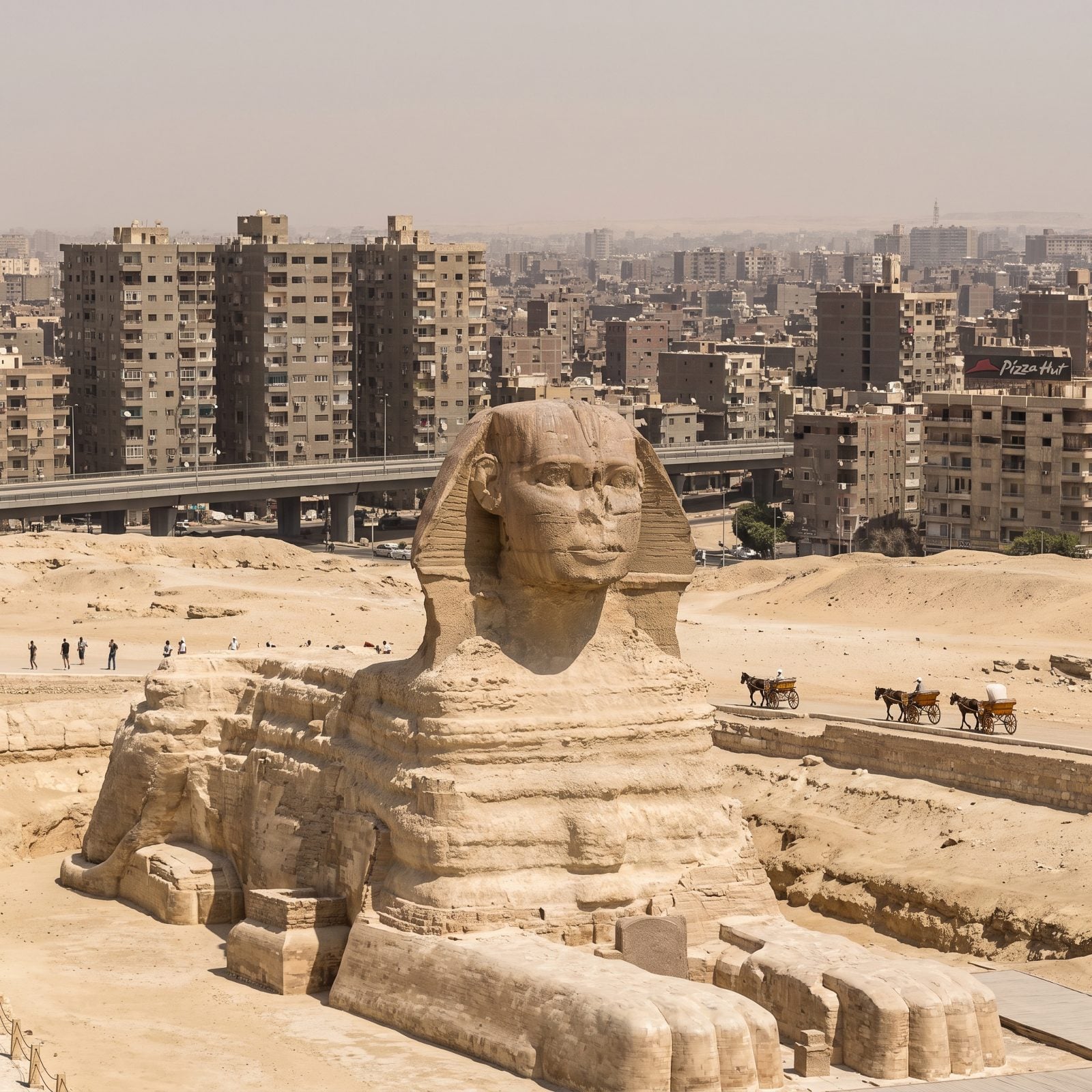
The postcard isolates the Sphinx and the pyramids in endless golden desert, as if civilization ends at their feet. Turn the camera the other way and Cairo is right there — apartment blocks and highways and all, pressing against the plateau. There’s a famous angle where the Sphinx appears to be staring straight at a fast-food restaurant.
The plateau is vast and the monuments are overwhelming up close. But you reach them through heavy traffic, past hawkers and camel touts, with the ancient and the modern nose to nose. That contrast is the real photograph. Most people just crop it out.
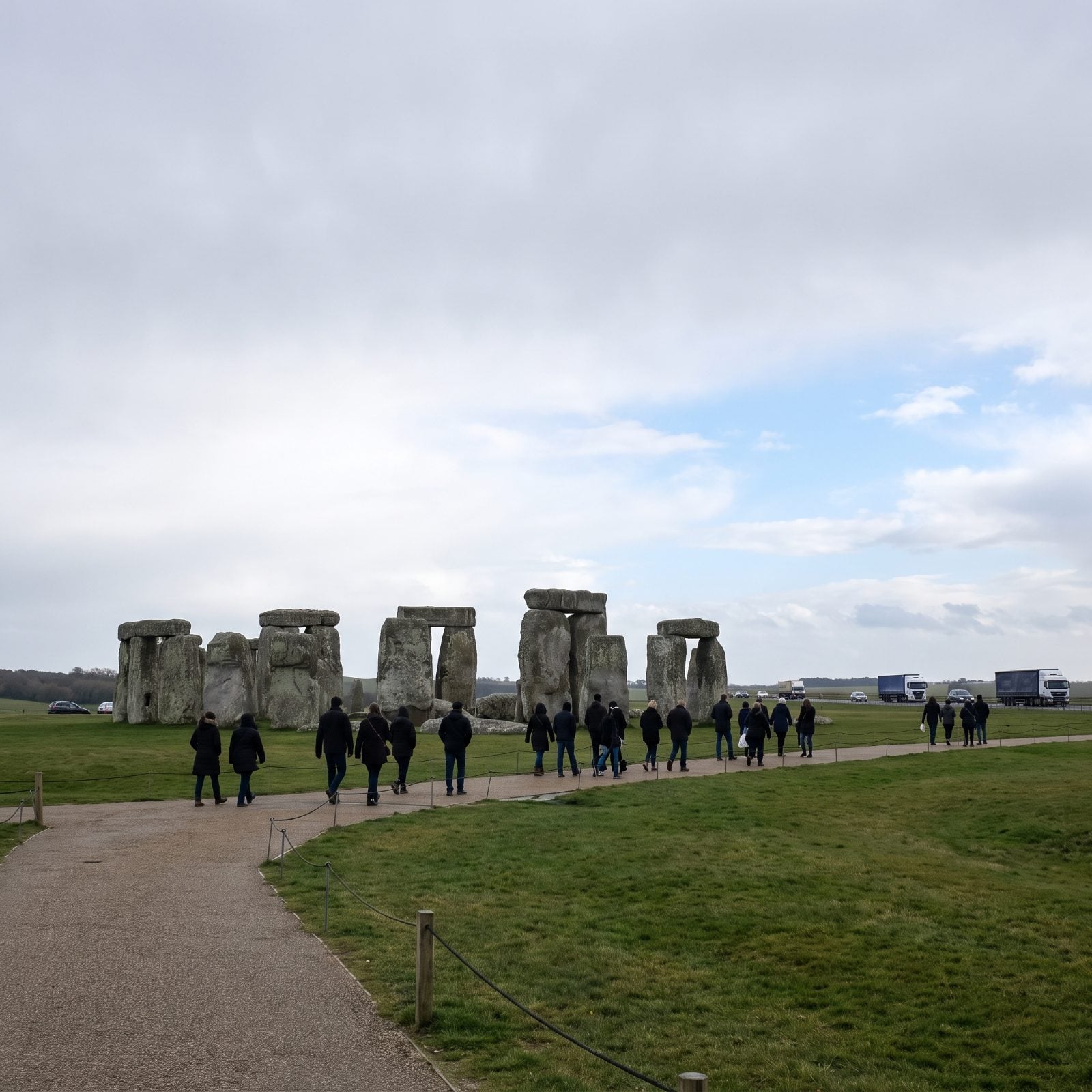
11. Stonehenge Has Roped-Off Paths and a Major Road Nearby
🔥 Would you like to save this?
People imagine wandering among the stones, laying a hand on the cold gray surface, feeling the ancient hum. Standard admission keeps you on a roped path that loops at a polite distance. You walk around it, not through it, unless you’ve booked a special dawn or dusk access slot well in advance.
And a busy A-road runs close enough that you hear the traffic the whole time. The stones are more weathered and lichen-patched than the dramatic sunset shots let on. Still moving, though. It’s just moving from behind a rope with cars humming past your shoulder.
10. Mount Fuji Is Often Framed by Towns, Roads and Power Lines
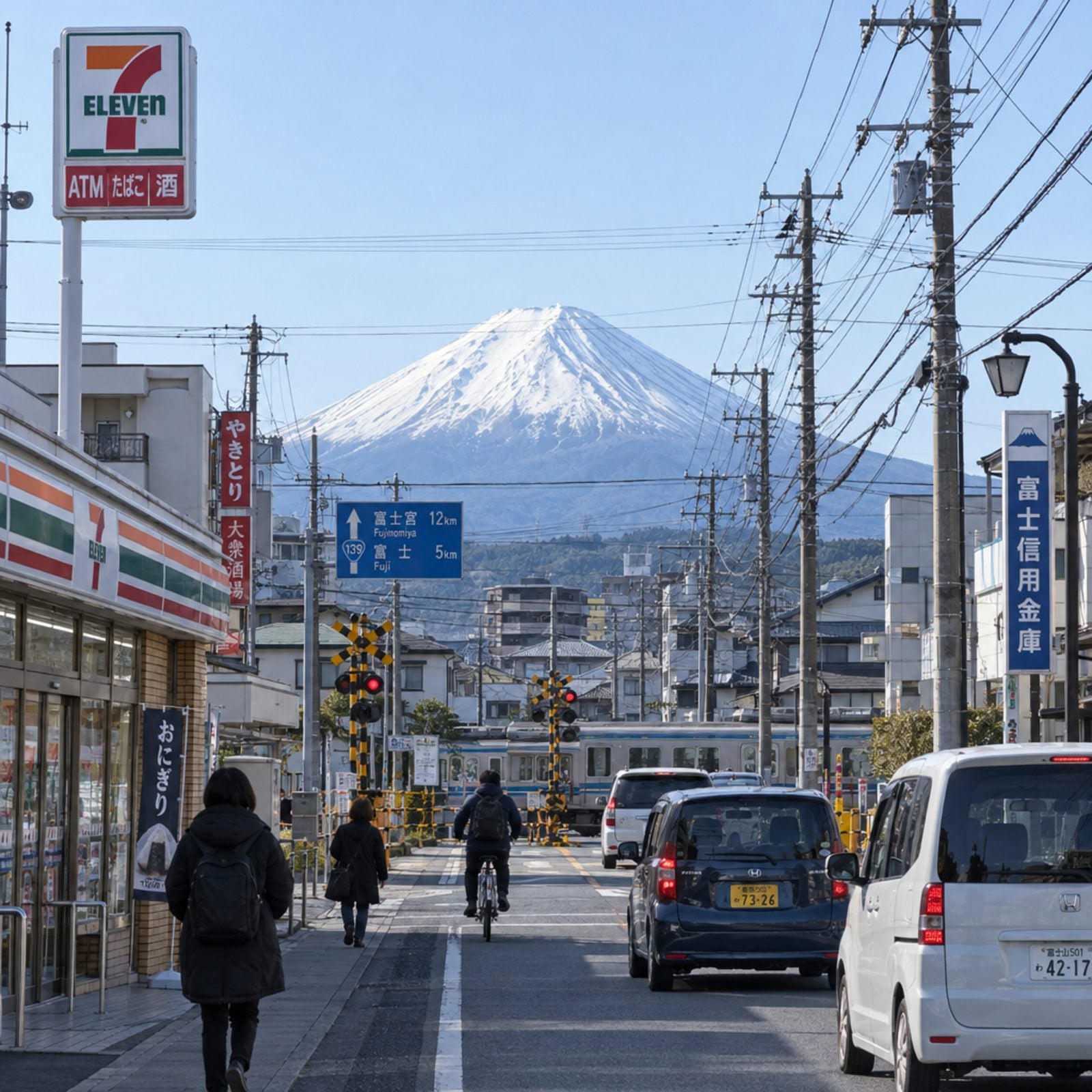
The famous view has Fuji rising pure and alone above still water or cherry blossoms. The everyday view, the one most visitors actually get, has the mountain peeking over a convenience store, a train crossing, and a cat’s cradle of overhead power lines. Photographers spend real effort angling around those wires. Local life doesn’t.
Fuji is also shy. It hides behind cloud and haze far more than the images suggest, and plenty of travelers never see it clearly at all. But when it reveals itself — usually in cold, clear winter air — it earns every bit of the reputation. You just have to catch it on a day it decides to show up.
9. Niagara Falls Shares Its Horizon With Hotels and Observation Towers
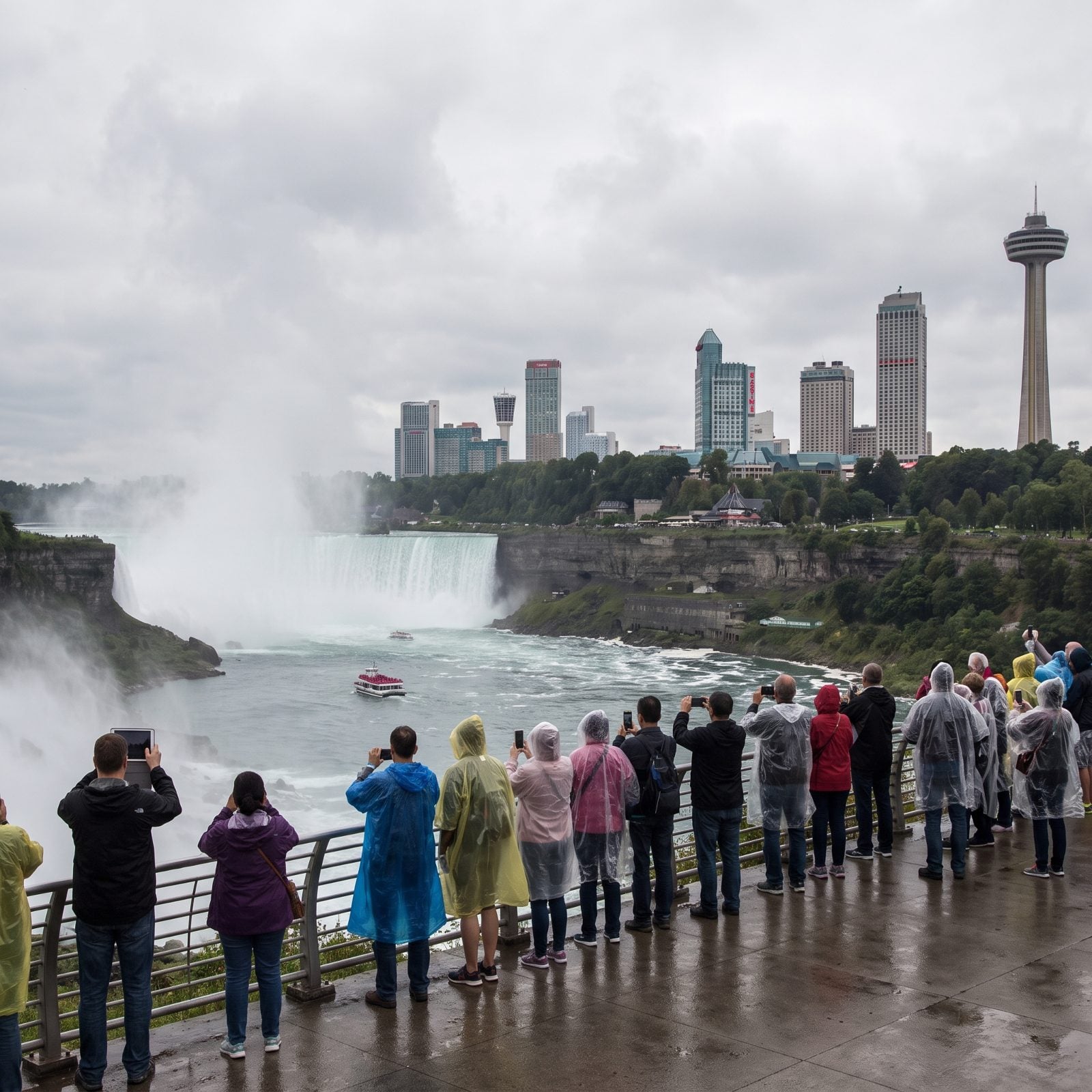
The postcard gives you water and sky. Reality gives you water, sky, a Hilton, a casino, a revolving restaurant tower, and a parking structure, all within shouting distance of the brink. The Canadian side especially reads like a theme park grew up around a natural wonder and never bothered to ask permission.
None of this ruins it. The falls are genuinely loud and genuinely enormous, and the mist soaks you from fifty feet away. But come knowing the setting is urban, not wilderness. The best unobstructed view is often from the boat down at water level, where the skyline vanishes and it’s just you and a staggering wall of water going over the edge.
8. Brussels’ Atomium Rises Beside Roads and Exhibition Buildings
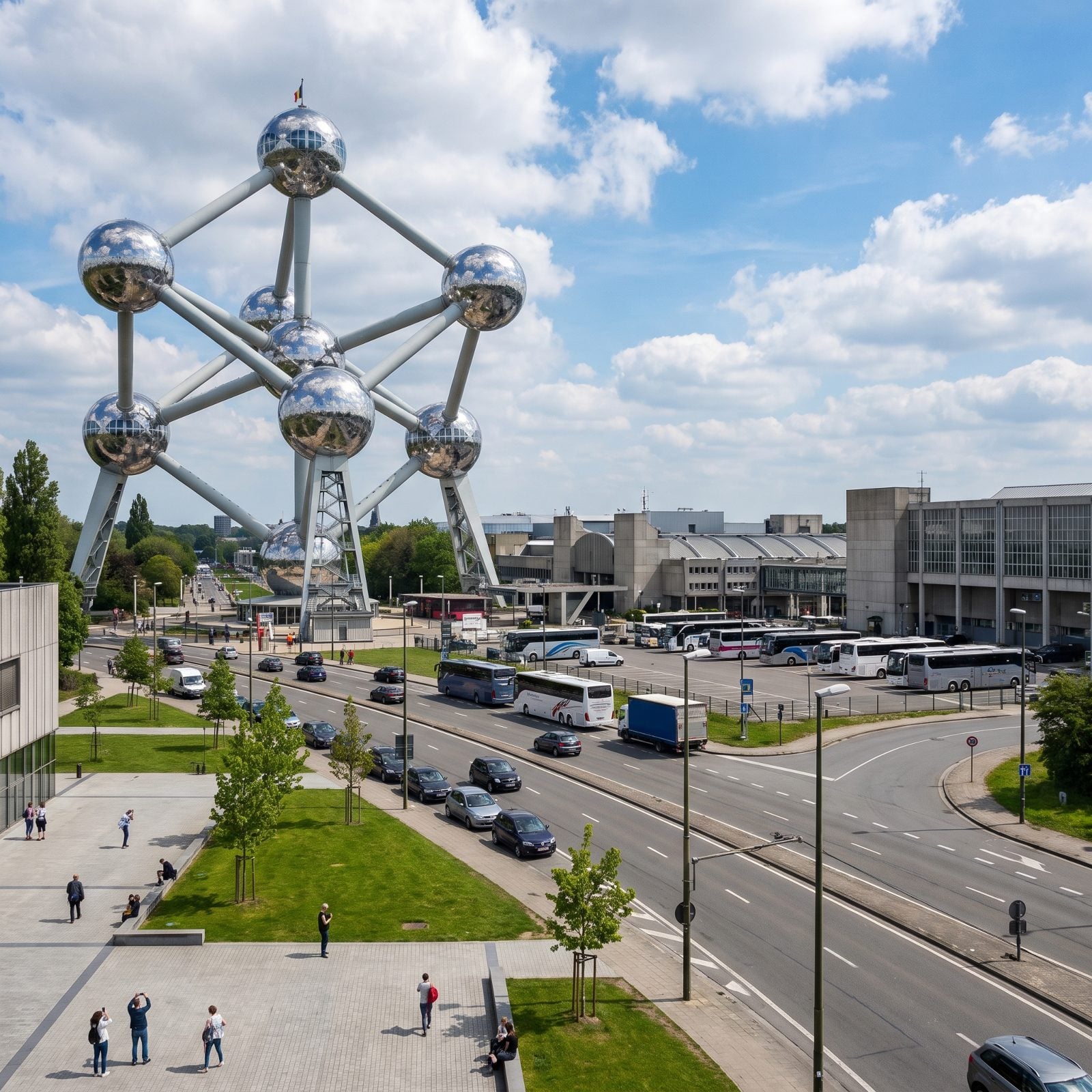
Built for the 1958 World’s Fair, the Atomium was never meant to last past six months. It’s a model of an iron crystal blown up to colossal size, nine steel spheres connected by tubes you can actually walk through. Striking from below.
Here’s what the glossy shots leave out. It sits in the Heysel expo district, ringed by conference halls, a tram line, and a genuinely busy road. There’s no mystical field of grass waiting for you. You arrive past parking lots and ticket booths, and the spheres themselves are impressive at that scale, but the surroundings are pure functional Brussels. Somehow that’s more charming once you stop fighting it.
7. The Trevi Fountain Is Enclosed by a Compact, Packed Piazza
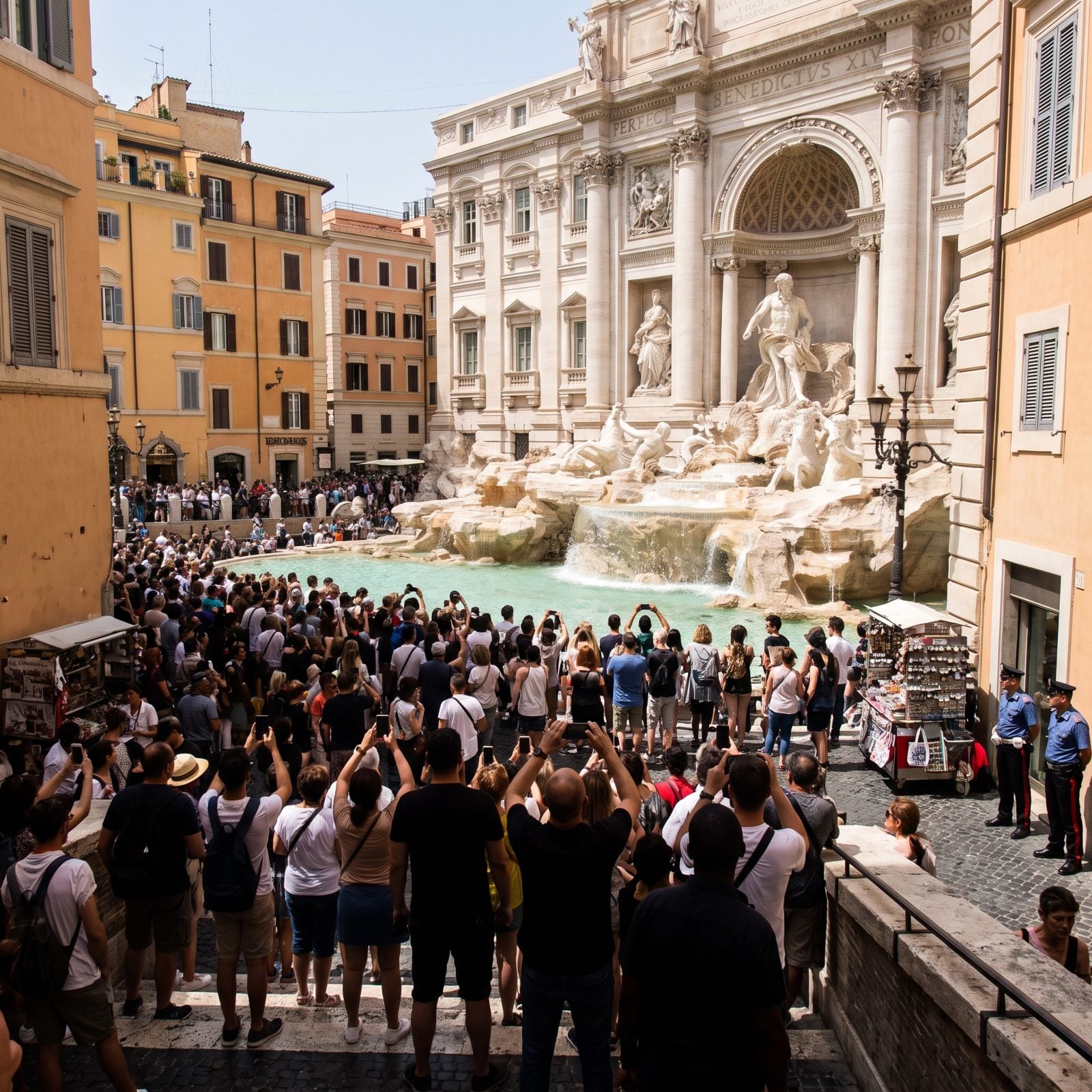
You picture a grand open plaza. You get a slot. The Trevi Fountain is spectacular, towering and baroque and dripping with marble horses, but it’s crammed into a piazza barely large enough to hold it, with apartment buildings pressing in on three sides and tourists filling every inch of whatever space is left.
That famous solo photo, just you and the fountain, requires either dawn or Photoshop. By ten in the morning the steps are a solid wall of people. The water is gorgeous, the carvings are theatrical, and the crowd is relentless.
The Trevi isn’t a quiet marvel you stumble upon. It’s a performance everyone attends at once.
Go before 7 a.m. if you want the postcard. Otherwise, make peace with the mob and enjoy the show, which includes the people as much as the stone.
6. Hallstatt Is a Tiny Village With Crowded Waterfront Lanes
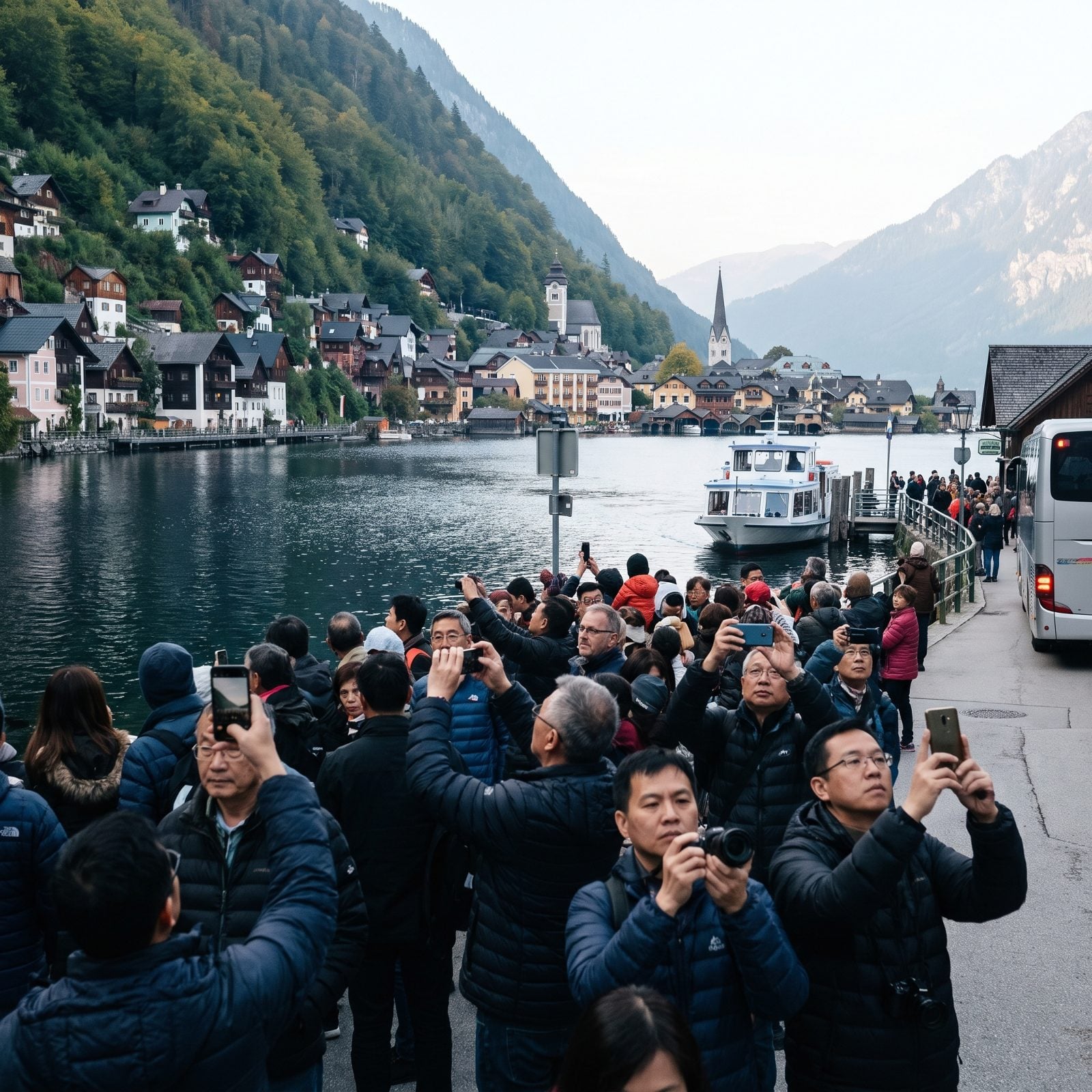
In photos, Hallstatt looks like a serene lakeside village untouched by time. In person it’s a serene lakeside village with about 800 residents and, on a peak summer day, a crushing wave of visitors squeezing down its one main waterfront lane.
It got so famous that somebody built a full-scale replica of it in China. That tells you everything about both its photogenic power and its overexposure. The classic viewpoint by the lake has a designated photo platform, usually with a queue attached.
Come at first light, or stay overnight after the day buses pull out. That’s when the postcard actually exists.
5. Pamukkale Has Restricted Pools and Seasonally Dry Terraces
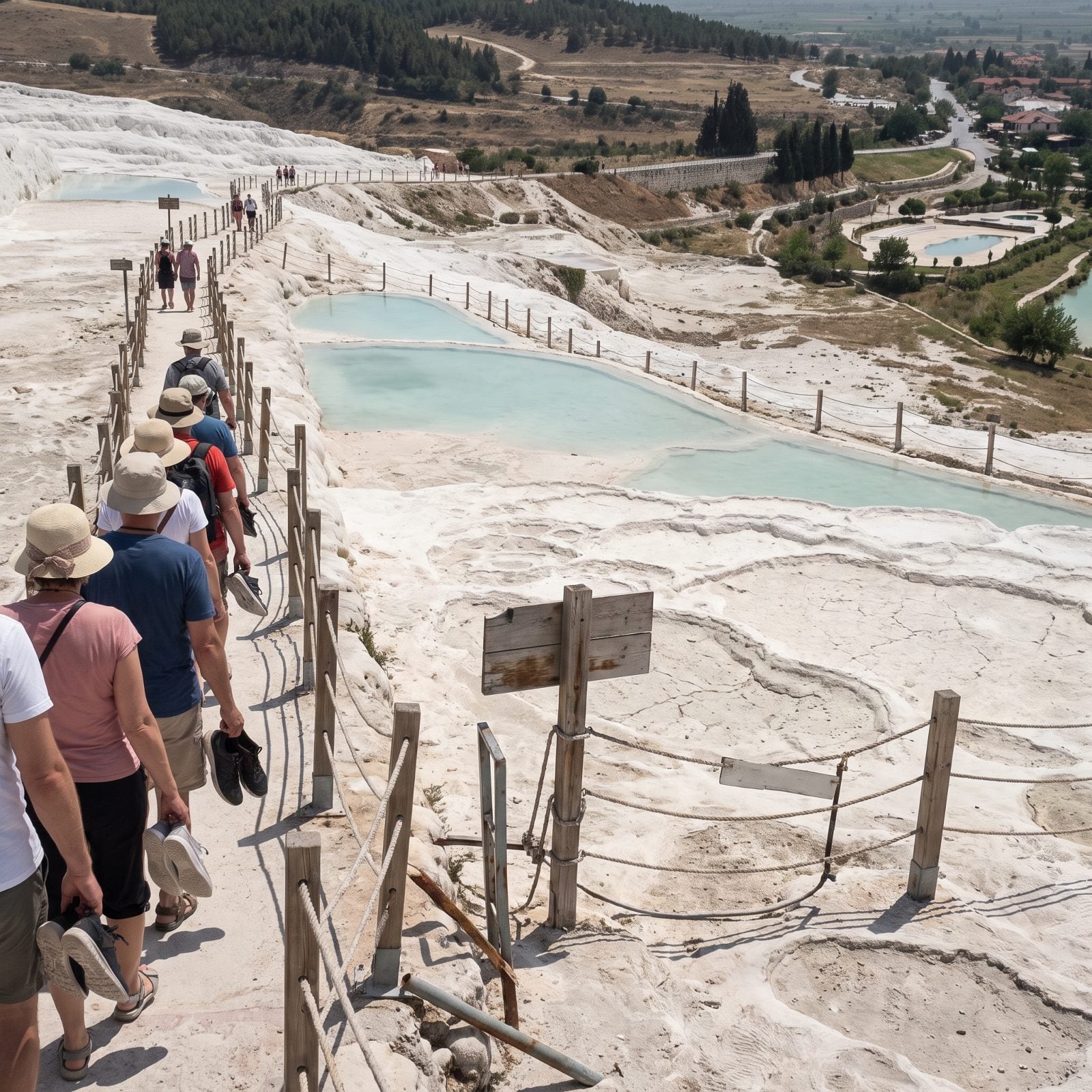
Those brilliant white terraces brimming with turquoise pools? Many of them are bone dry. To protect the fragile calcium carbonate, Turkish authorities rotate the water flow and rope off most of the pools entirely, so you walk a designated barefoot path while large sections of the hillside sit bare and chalky through the summer.
The water that does flow is warm and mineral-rich, the terraces are genuinely otherworldly, and the ancient Roman ruins of Hierapolis sit right at the top. But that image of endless turquoise infinity pools is largely a trick of long lenses, perfect timing, and heavy editing.
Go in spring, when water levels run higher. And brace yourself for the crowds on the one path everyone has to share.
4. Salar de Uyuni Becomes a Giant Mirror Only in the Wet Season
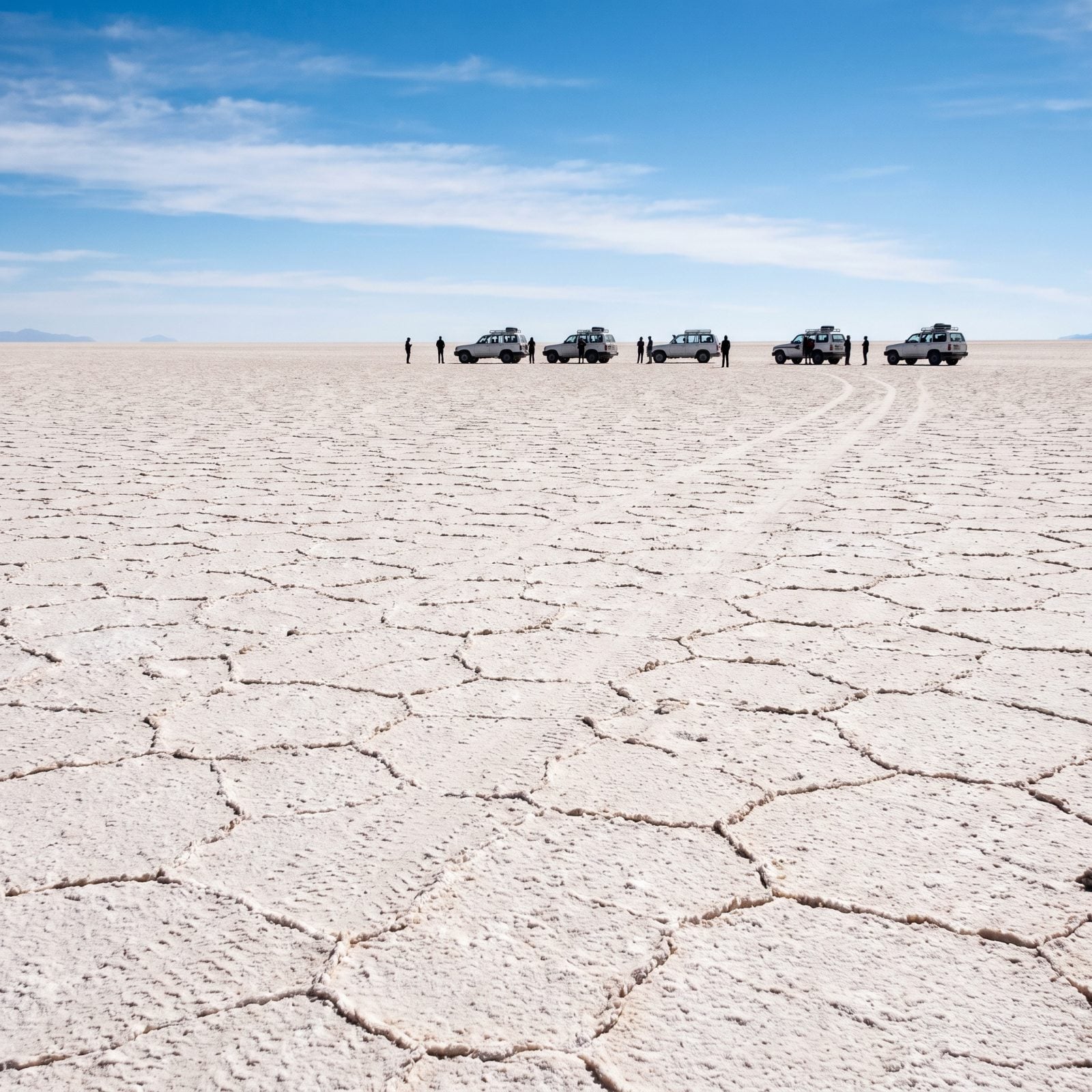
The mirror effect is seasonal, and most of the year it simply doesn’t exist. Those photos of people walking on sky, the perfect reflections doubling the clouds? They only happen when a thin film of water sits on the salt, roughly during the rainy months from December through April.
The rest of the year, Salar de Uyuni is a dry, cracked, blinding-white hexagonal crust that runs flat to the horizon. Stark and impressive in its own way. But dry.
If the mirror is what you came for, check the season before you book anything. Showing up in August expecting a sky-walk will disappoint you fast.
3. Antelope Canyon’s Famous Light Beams Require Exact Conditions
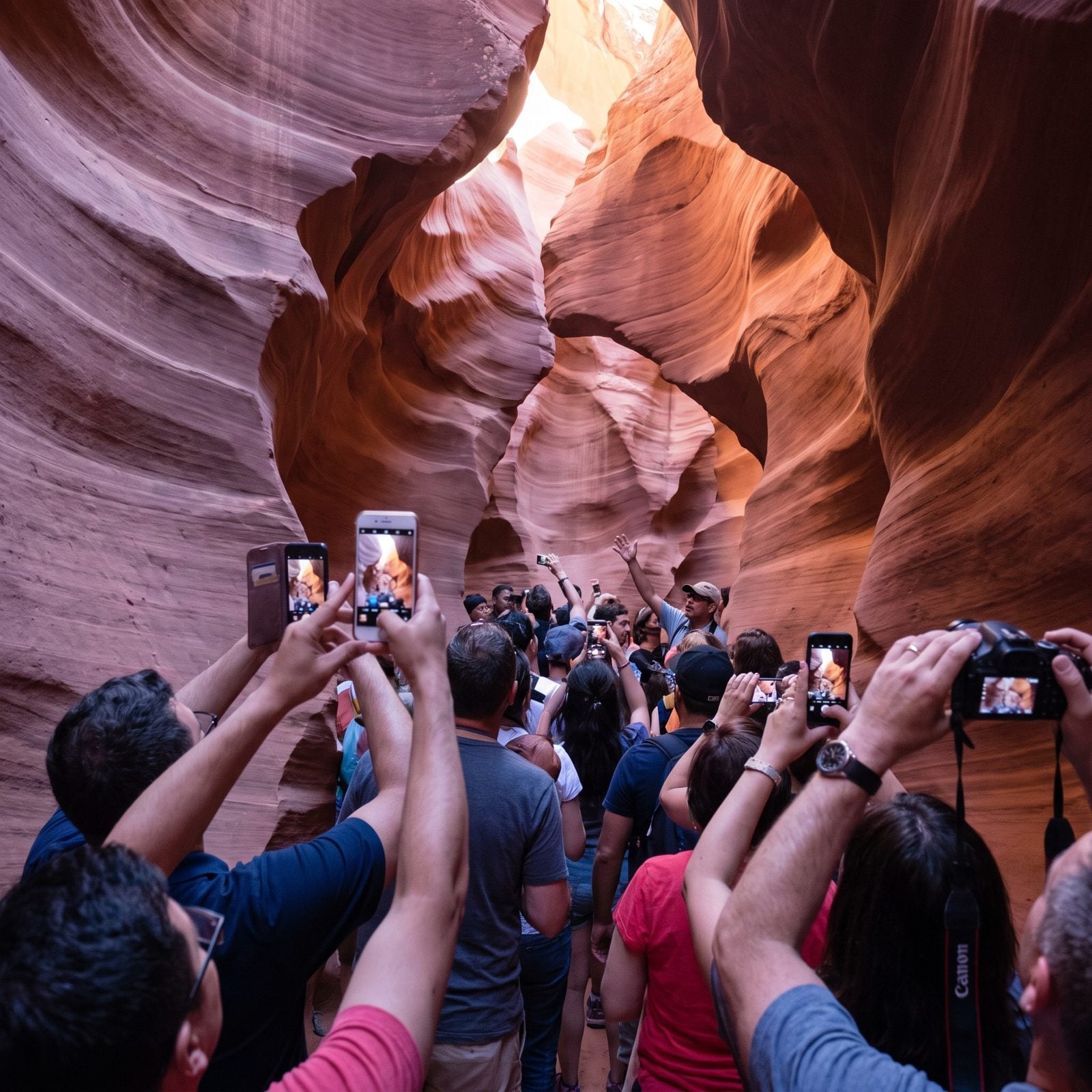
Those glorious shafts of light spearing down through orange sandstone are real. They’re also rare. The beams only show up in Upper Antelope Canyon around midday during the summer months, when the sun climbs high enough to reach the canyon floor.
Any other time, you get beautiful swirling walls and a soft glow, no dramatic beam, plus a lot of company. Access runs by guided Navajo tour only, and the narrow slot funnels everyone into one shuffling line. Your dreamy empty-canyon shot competes with dozens of other people angling for the exact same frame.
Book the midday summer slots for beams. Book anything else for atmosphere and a tour guide’s elbow in your photo.
2. Rainbow Mountain’s Colors Are Softer Than Many Edited Photos
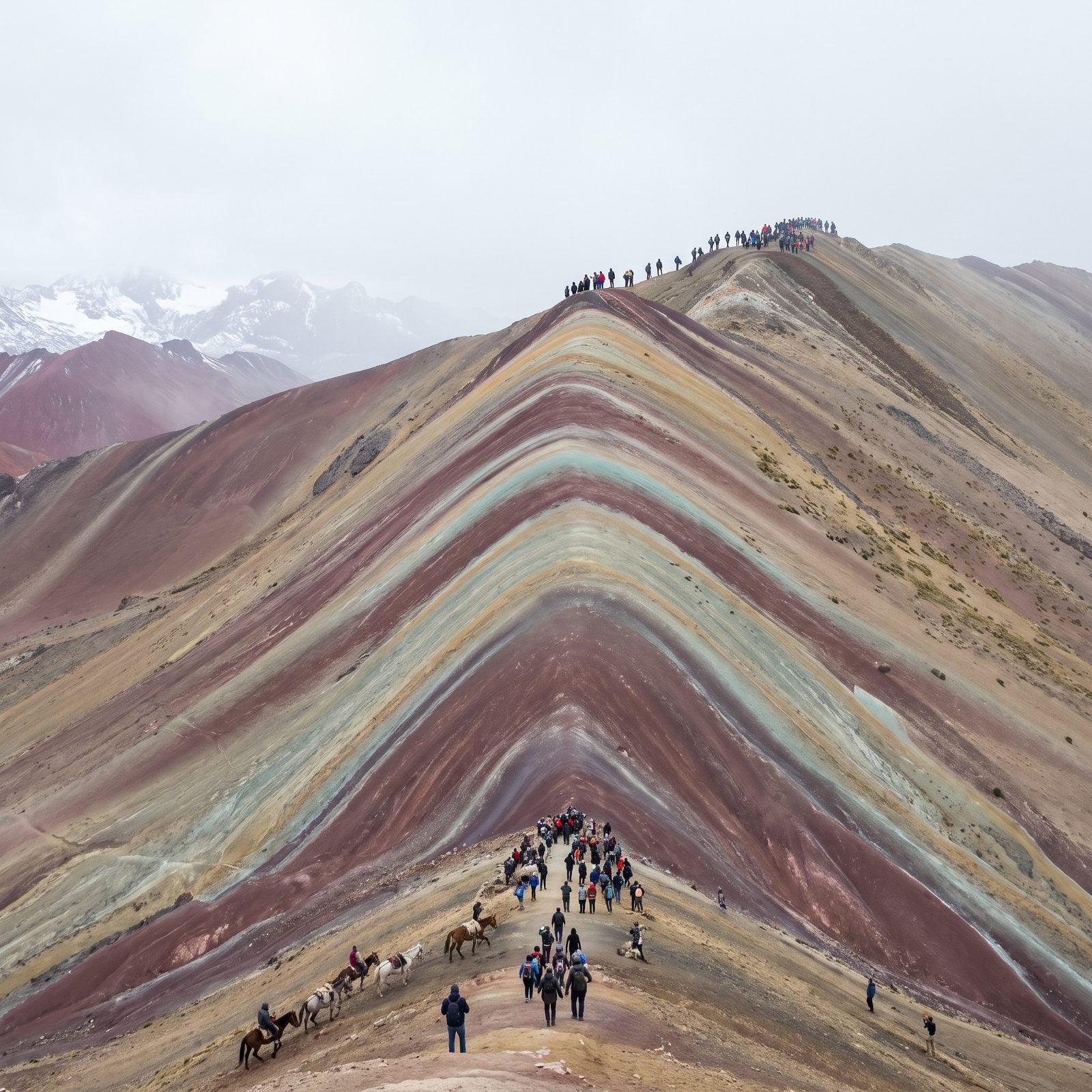
The viral photos show a mountain striped like a box of highlighter pens. Reality is gentler. The mineral bands at Vinicunca are genuinely colorful, soft maroons and mustards and dusty teals, but the saturation in most online images gets cranked well past anything your eyes will actually register.
Then there’s the altitude. The summit sits above 16,000 feet, and the trek leaves most visitors gasping. Cloud cover can mute the colors further, and bad weather hides them completely.
Worthwhile hike. Demanding one too, with real beauty at the top. Just adjust the expectation downward, because the internet oversold the palette, and anyone who promises you a confident “you’ll definitely see neon stripes” is guessing about the weather.
1. The Mona Lisa Is a Small Painting Behind Protective Glass and Crowds
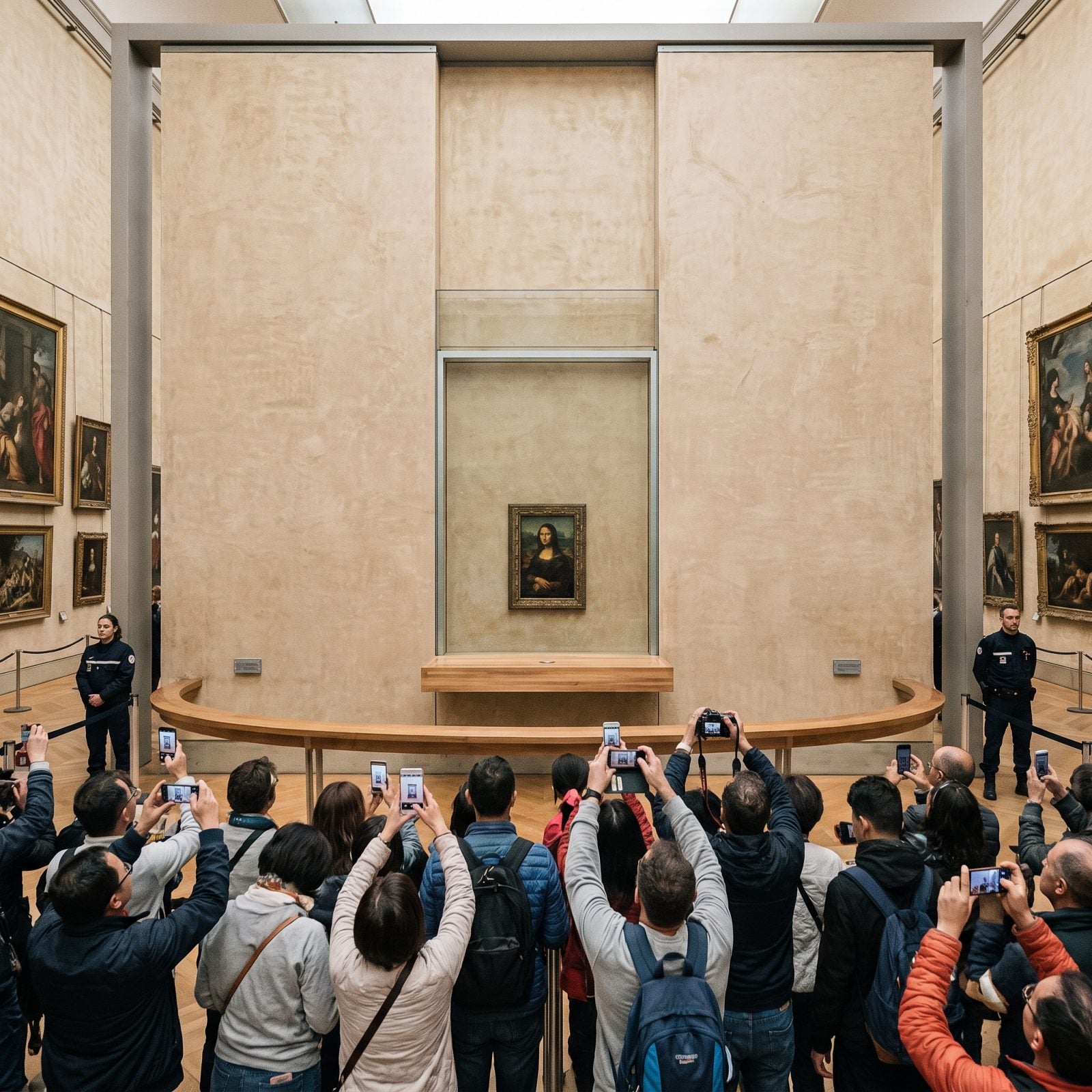
It’s small. That’s the thing everyone whispers when they finally reach it. The Mona Lisa is about the size of a decent bathroom mirror, and it hangs alone on a bare wall, set back behind barriers and a thick protective glass case, in a room absolutely heaving with people.
You shuffle forward in the crowd, get maybe thirty seconds at the front, photograph it over a sea of raised phones, and move on. The glass glares. The crowd never thins. Meanwhile genuinely magnificent paintings hang unbothered on the same gallery walls, ignored by nearly everyone.
See it, sure. Then turn around and actually look at everything else.
🔥 Would you like to save this?
Please note that some of the imagery in this article were created with the aid of AI image generators.