
🔥 Would you like to save this?
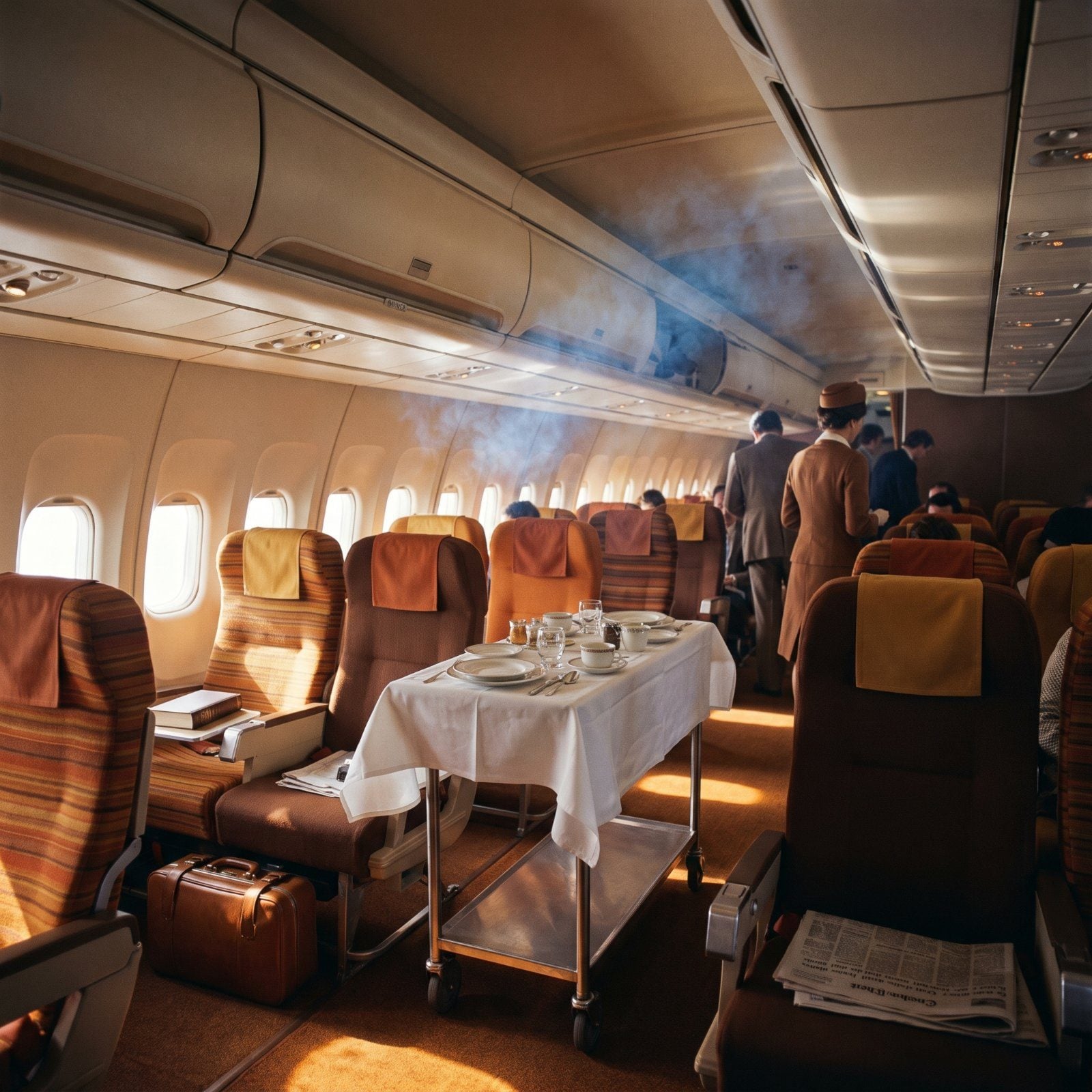
The seatbelt sign dinged off and half the plane reached for their Zippos. Nobody blinked. You could stroll up front to shake the captain’s hand at cruising altitude, and eat roast beef carved beside your seat off a china plate that didn’t fold down from anything. Air travel in 1978 ran on rituals nobody thought to photograph because they seemed permanent. Almost none of them survived. What follows is a walk back through a cabin that no longer exists.
27. Passengers Lighting Up the Moment the Seatbelt Sign Dinged Off
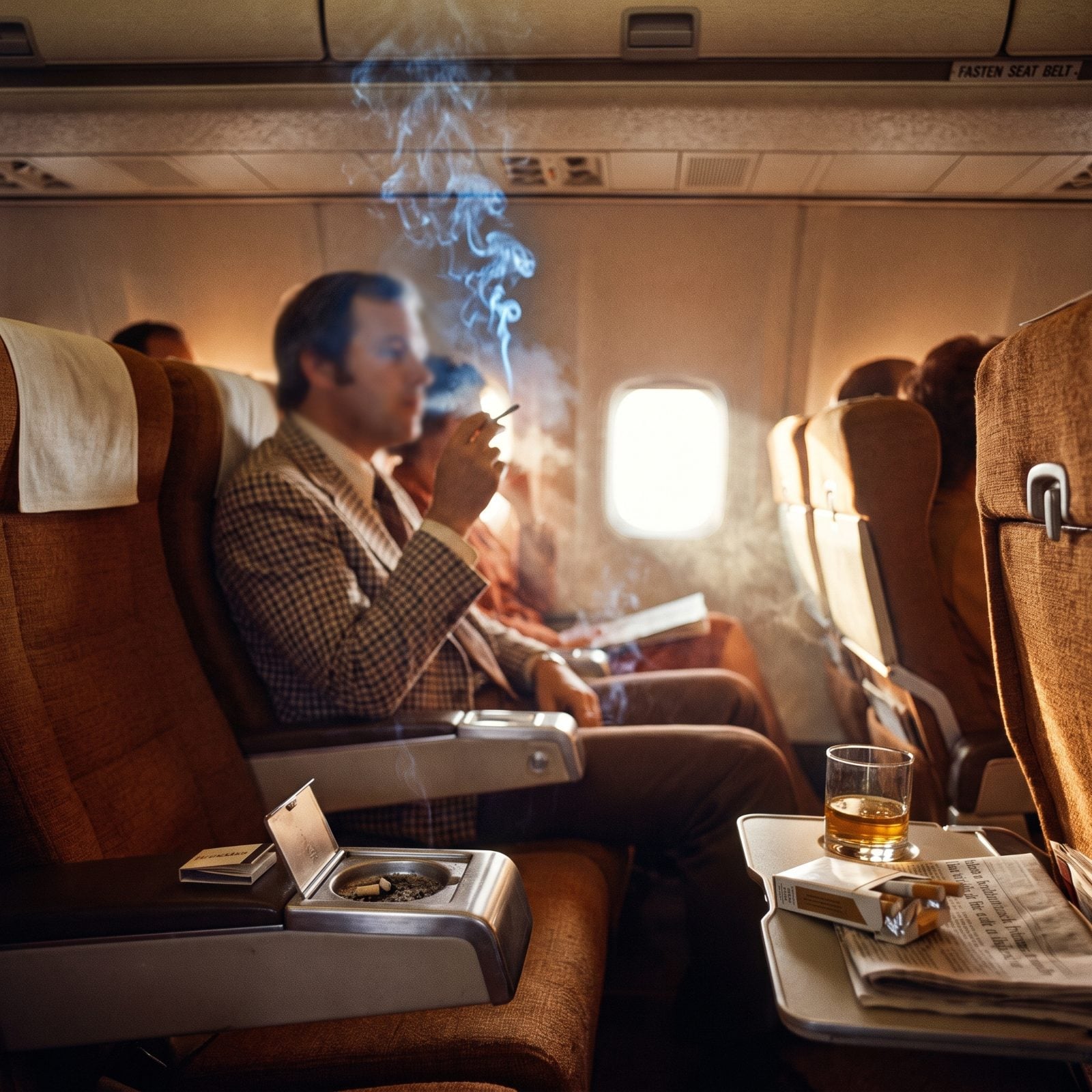
Every armrest had one. A little chrome ashtray with a flip-top lid, and when the no-smoking light went dark, the cabin filled with the flick of lighters and that first grey exhale. Smoking and non-smoking sections were split by a single row, which fooled exactly nobody, since smoke doesn’t read seat maps.
The whole plane smelled of it — fabric, curtains, your own coat by the time you landed. Nobody flinched. Oddly enough the ashtray outlived the habit, kept in lavatory doors for years after the ban, because federal rules still demanded a safe spot to stub out a cigarette some rebel might sneak.
26. An Open Cockpit Door and a Handshake With the Captain
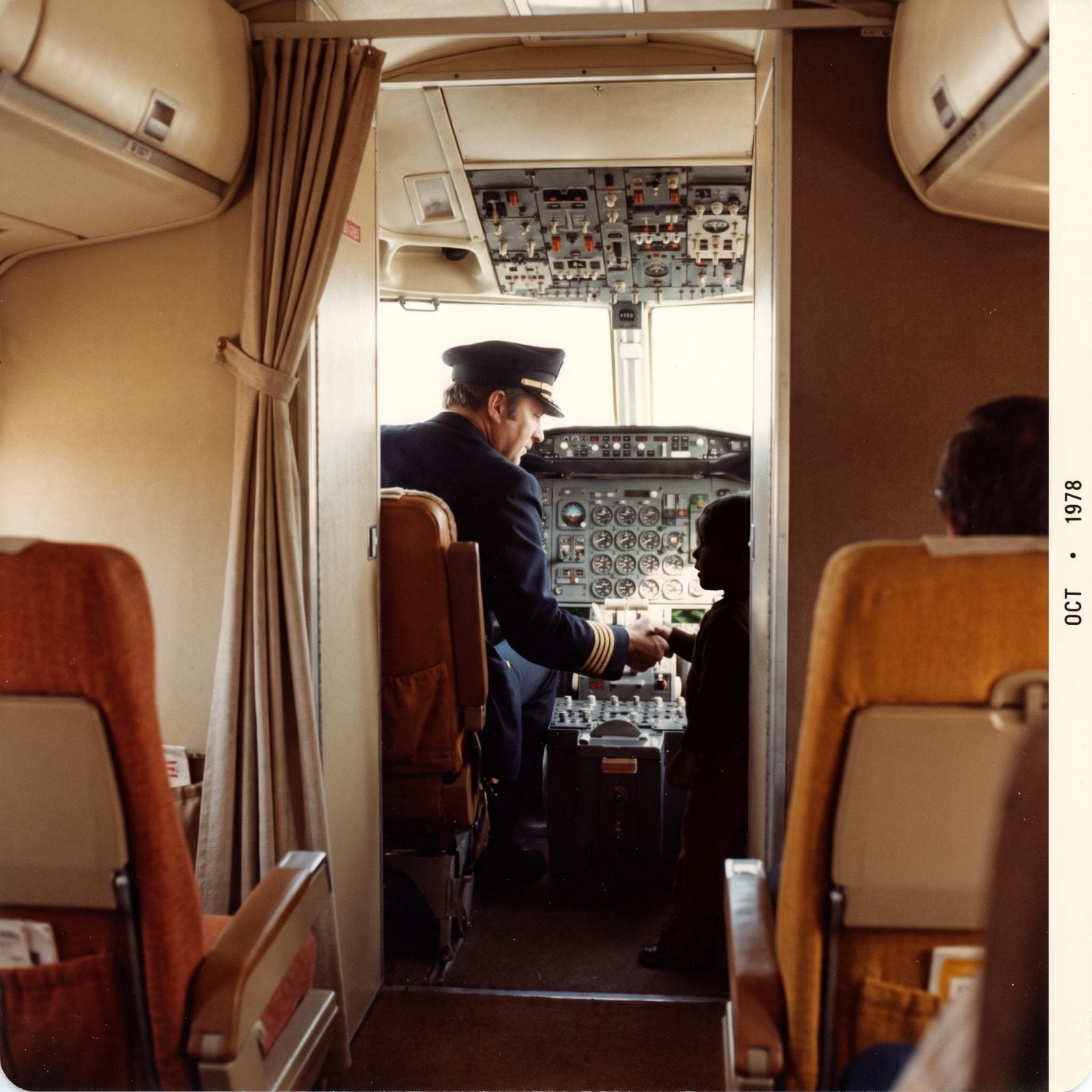
The cockpit door often stood open in cruise, and for a kid, the walk up front was a rite of passage. The captain would swivel around, hand you a set of plastic wings, maybe let you peer at the horizon over a wall of round dials and switches.
Parents thought nothing of sending children forward alone. It counted as good hospitality, part of what made flying feel like being someone’s guest. Then came 2001, and the door closed for good — reinforced, locked, the flight deck now the most sealed room on the aircraft. The plastic wings survive at gift shops. The invitation does not.
25. A Cocktail Lounge Up the Spiral Stairs of the 747
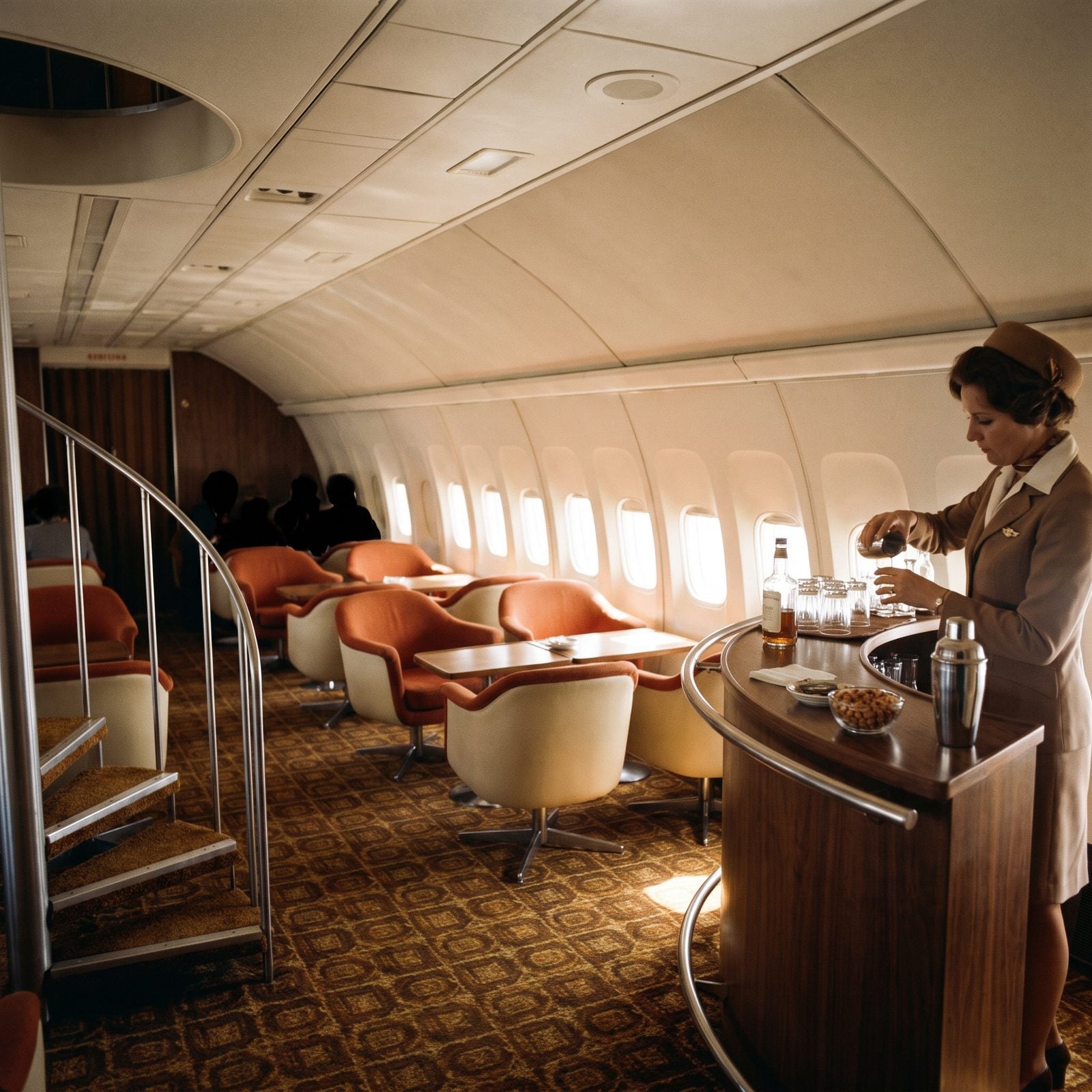
The hump on the 747 wasn’t storage. On many carriers it was a lounge, reached by a spiral staircase that felt like stepping up into a private club floating six miles over the Atlantic. Swivel chairs, a small bar, a piano on the wildest configurations.
You’d carry your drink up, sink into a low armchair, and watch the clouds through a curve of windows while a bartender in a fitted jacket mixed something with real ice. Then airlines ran the numbers. A lounge earns nothing; twelve business-class recliners earn plenty. The stairs stayed. What waited at the top changed completely.
24. A Roast Carved From a Trolley Right There in the Aisle
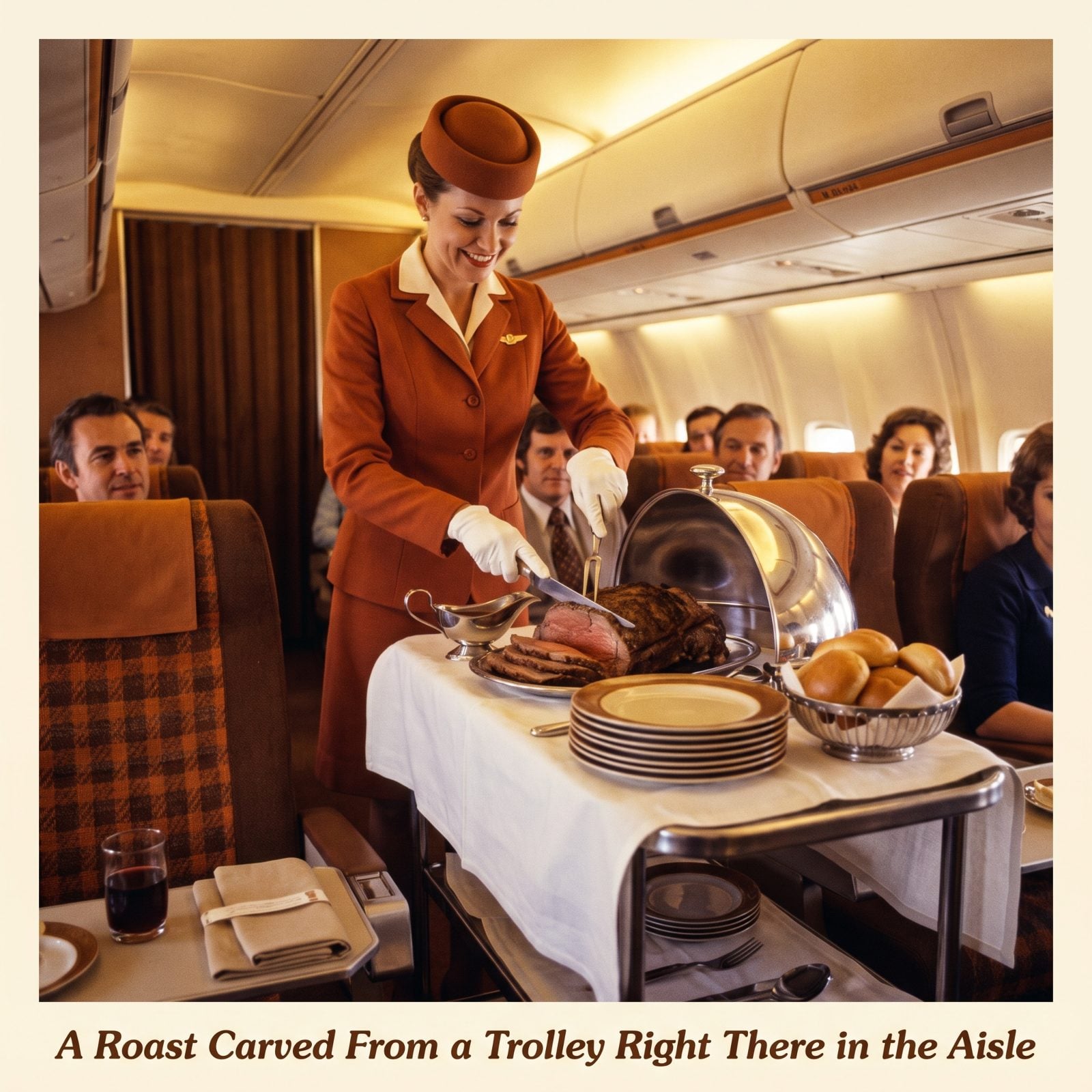
First class ate like a supper club at 35,000 feet. The trolley rolled up beside your seat with a whole roast under a dome, and someone carved it to order while you pointed at how thick you wanted the slice. Gravy from a boat. Rolls warm from a basket.
It was theater as much as dinner, and it worked — watching food arrive by knife instead of foil tray made the whole trip feel like an occasion. Fuel prices and deregulation squeezed it out. The carving trolley became a story people tell, usually with their hands showing the size of the roast.
23. Full Economy Dinners on Real China With Metal Cutlery
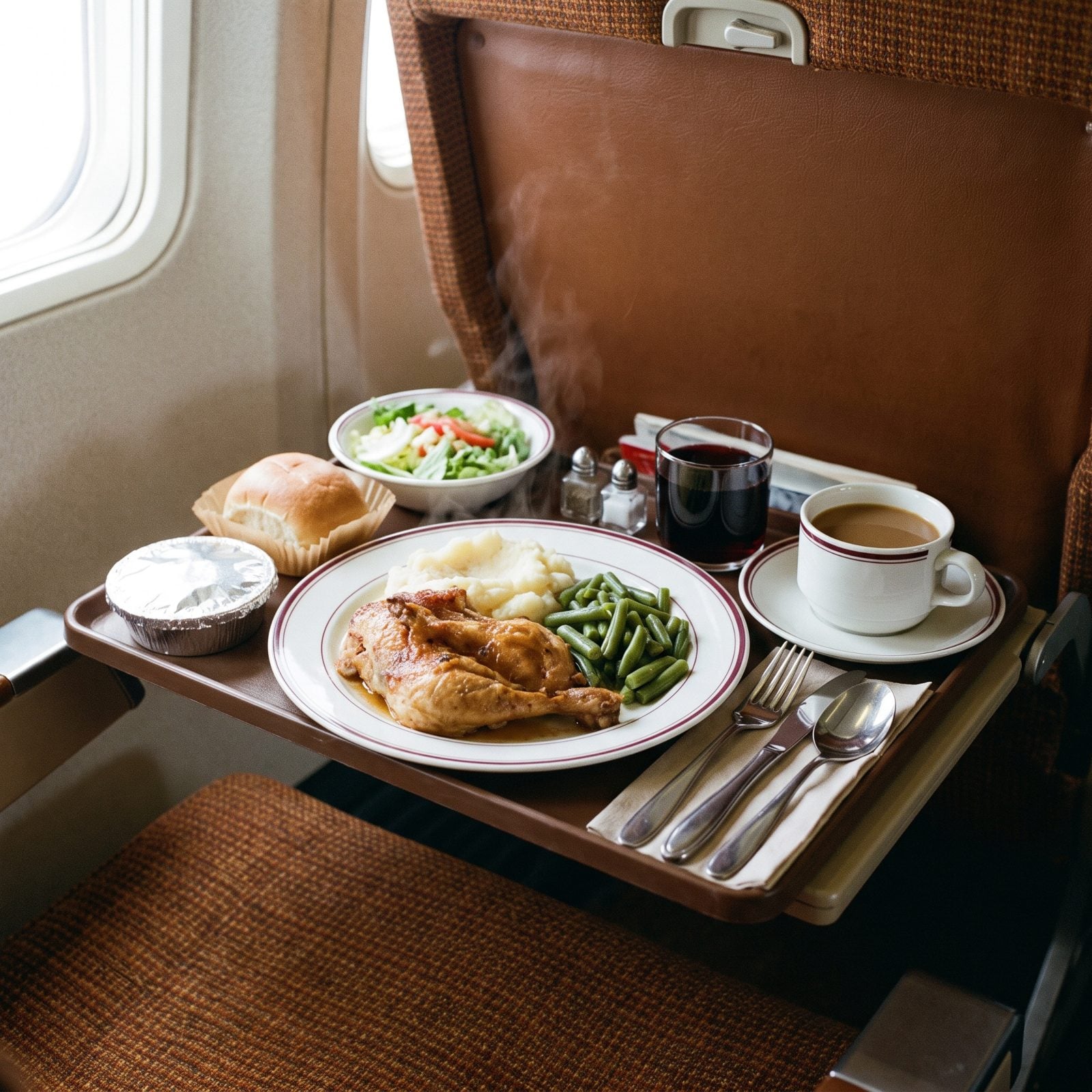
Back in coach — and this is the part that surprises people most — dinner still came on china. A real plate, a cup and saucer, a metal knife and fork wrapped in a cloth napkin, coffee poured from a pot into a proper cup.
Deregulation in 1978 lit the fuse. Once airlines competed on price instead of service, weight became the enemy, and china weighs a ton when you’re hauling three hundred sets. Out went the plates, in came the tray, then the tray got smaller, then it got a fee. A metal fork in economy now feels like a small miracle you’d mention to someone.
22. Fresh Flowers Arranged in the Cabin
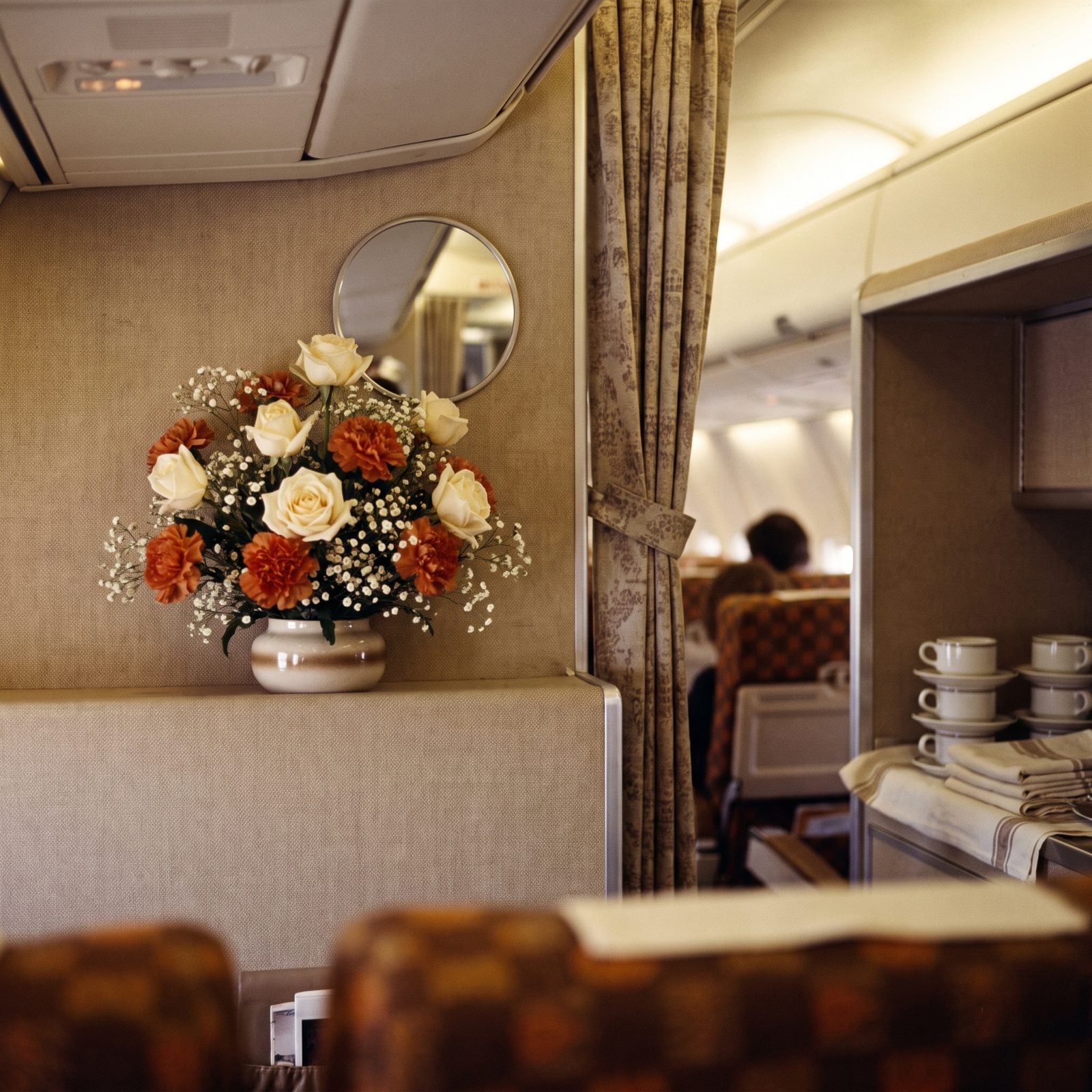
Some carriers put fresh flowers in the cabin. A vase by the galley, a small arrangement near the lavatory mirror, real stems that had to be watered and swapped between flights. It was a detail nobody needed and everybody noticed.
And that was rather the whole idea. A flower on a plane tells you someone thought about you before you boarded. It’s the kind of touch that vanishes first when budgets tighten, because it does nothing measurable and costs real money. We miss it more than the roast, honestly. A carnation by the sink meant the airline was still pretending you were a guest.
21. Designer Uniforms With Hats, Gloves, and Colors That Popped
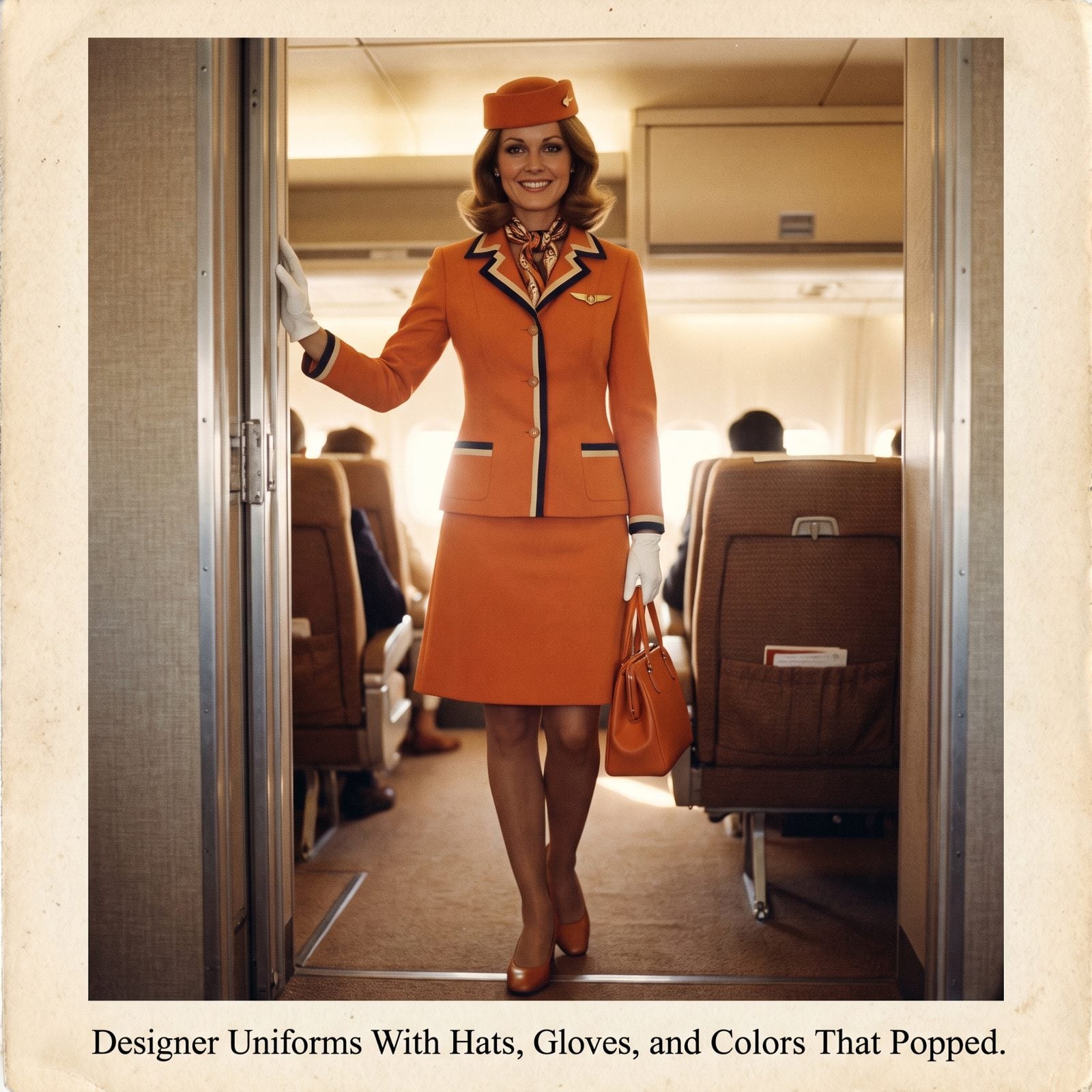
The uniform was doing serious work. A structured A-line dress in tangerine or teal, a matching pillbox hat, short white gloves, a silk scarf knotted at the throat, and a wings brooch pinned above the heart — the whole look read as competence dressed up as glamour.
Big-name designers were hired to build these collections, and airlines treated the cabin crew as a walking brand. Color led the way. A bold shade made a flight attendant instantly readable across a crowded cabin, which is both practical and a quiet signal of who’s in charge. The hats and gloves faded through the 1980s toward softer, sober separates. What replaced them is easier to wear and far easier to forget.
20. Passengers Who Boarded in Suits, Dresses, and Polished Shoes
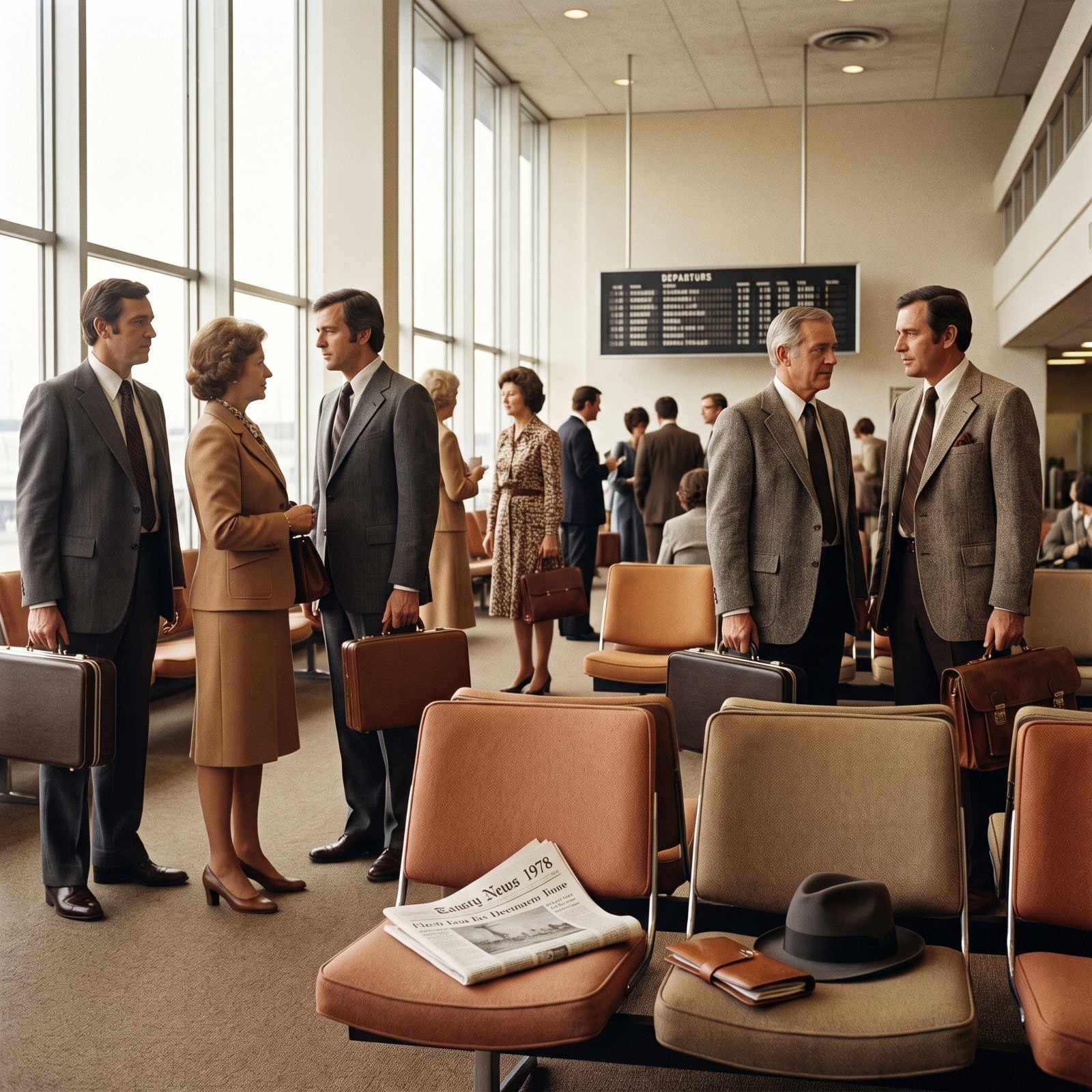
You dressed for the airport. Men in suits and ties, women in tailored dresses with coordinated bags, kids in their good clothes and stiff shoes. Flying was an event, and you showed up looking like you understood that.
Part of it was cost, since a ticket was a real expense and you honored the occasion. Part of it was culture — the same instinct that put people in their Sunday best for a train. Then deregulation made flying cheap and frequent, and once a plane became a bus, people dressed like they were catching a bus. The suit gave way to the tracksuit. We won’t pretend we miss the neckties, but there was a dignity to the whole scene that we quietly traded away.
19. The Hollow Rubber Headphones That Plugged Into the Armrest
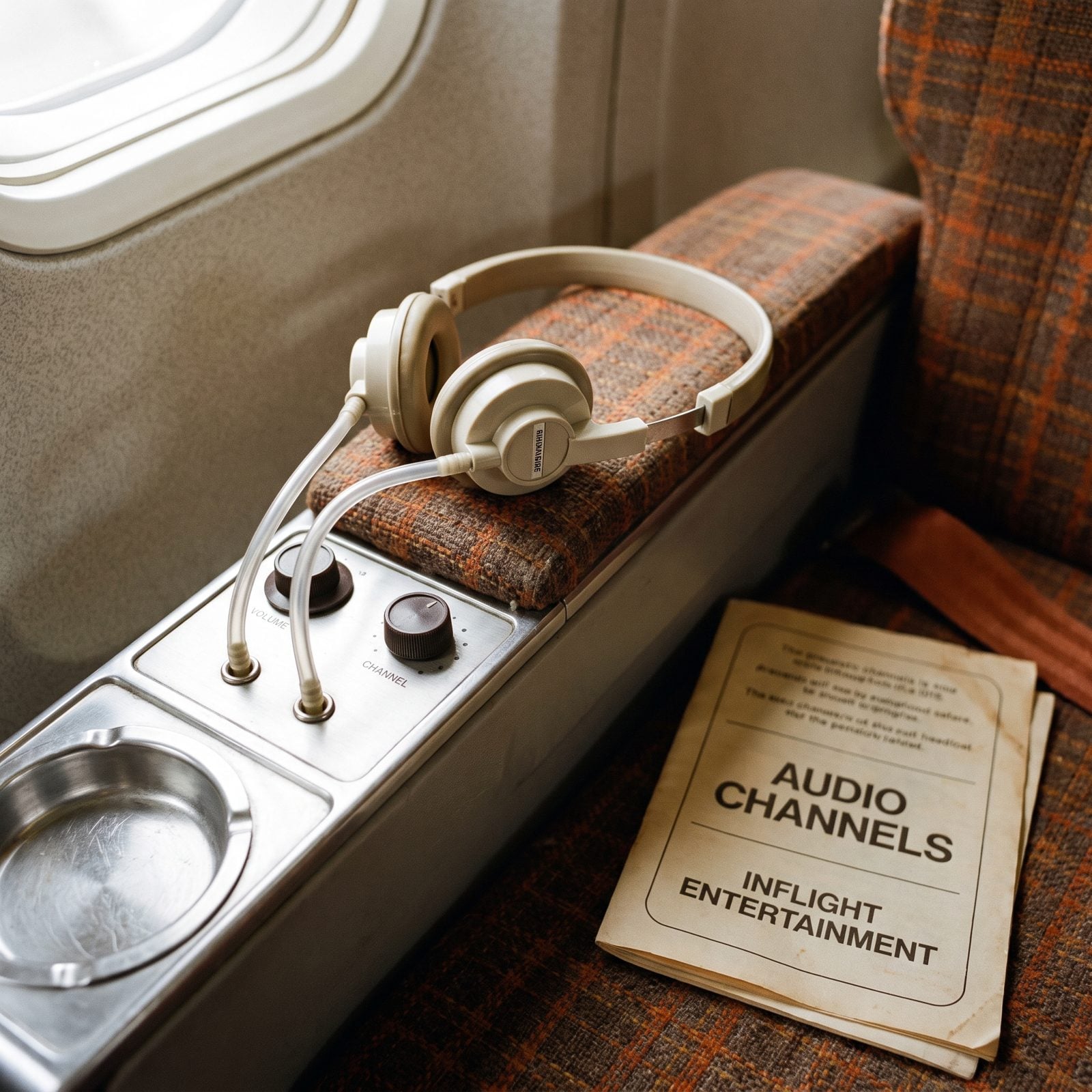
These weren’t headphones so much as a stethoscope for entertainment. Two hollow rubber tubes ran from a plastic headband to a pair of holes in your armrest, and the sound traveled up the air like something out of a submarine.
The audio was tinny and thin, the earpieces never quite sealed, and a kinked tube killed one side entirely. But you’d twist the little dial through the channels, hunt down the comedy channel or the easy-listening one, and settle in. They were cheap enough to give away, which is exactly why airlines loved them. Real electric headsets and screens made them obsolete. If you ever felt one plug into your ear canal, you remember the pressure.
18. One Movie Screen for the Whole Cabin to Watch Together
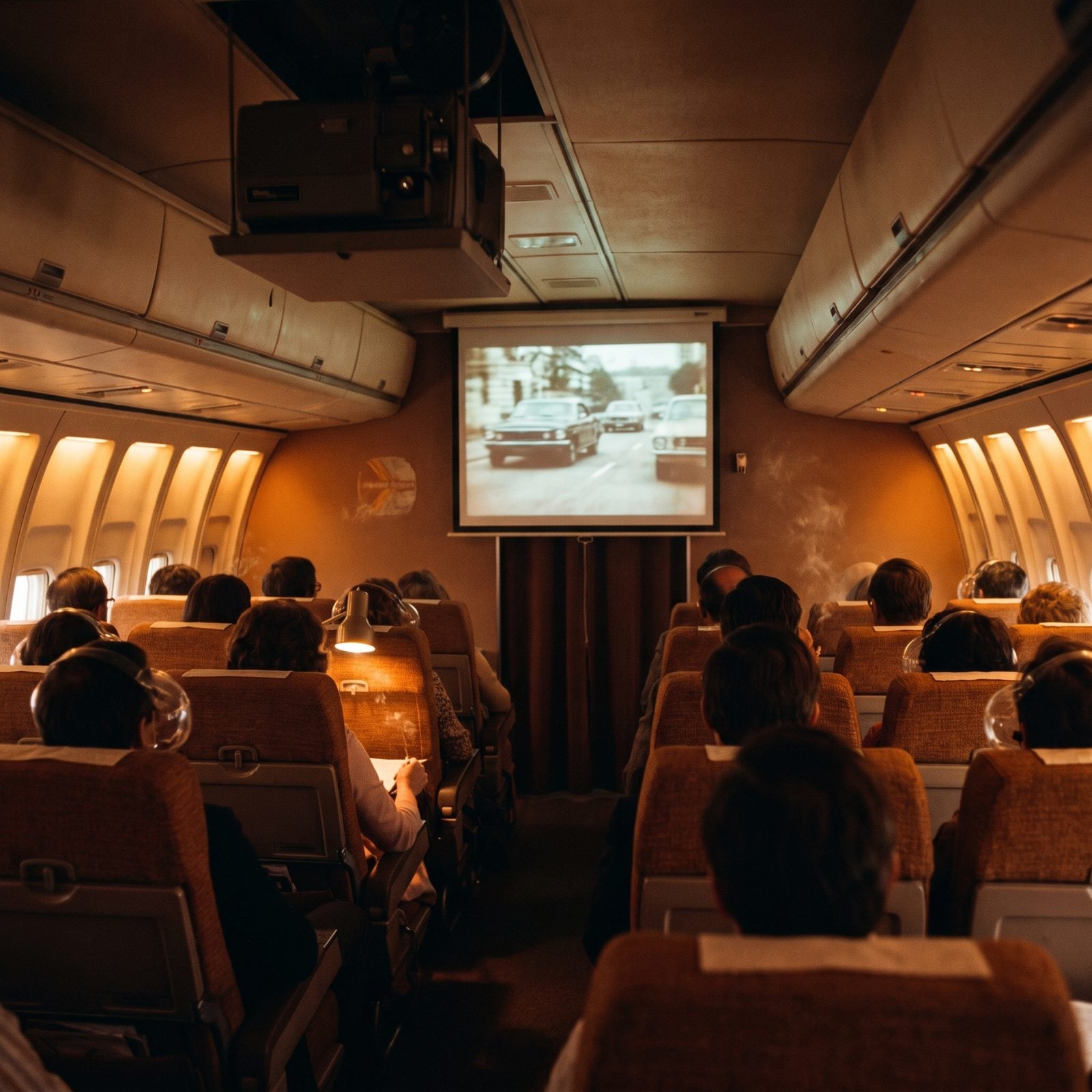
The shades came down, a screen dropped from the front bulkhead, a projector hummed to life near the ceiling, and the entire cabin watched the same film at the same time. No pausing. No choosing. You got what the airline picked, and you got it once.
Seat behind a pillar or too far back? Tough luck — you watched a sliver of the screen and pieced the plot together from whatever the neighbors laughed at. That one shared screen turned a plane into a tiny cinema, everyone catching the same joke a half-second apart. Seatback screens killed it, and then phones killed those. We each carry our own theater now, headphones in, worlds apart. Something communal left the cabin when that screen rolled up for the last time.
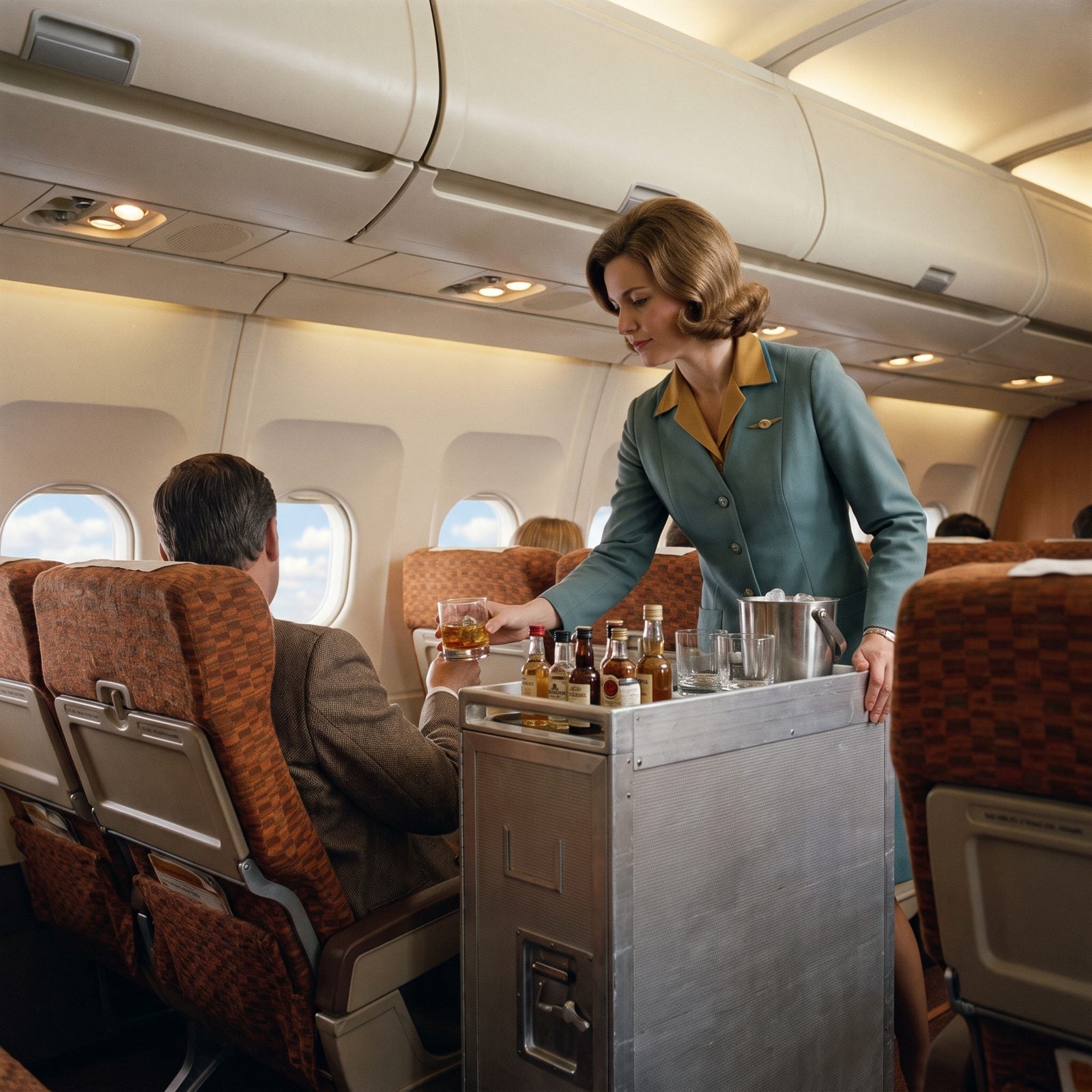
17. Complimentary Cocktails on a Routine Tuesday Flight
🔥 Would you like to save this?
You didn’t have to ask twice, and you certainly didn’t have to reach for your wallet. A gin and tonic on a nothing-special morning flight to Cleveland came with the seat. The cart rolled up, the little bottles clinked, and the drink arrived in an actual glass with actual ice.
Cocktail service on domestic coach was routine, not a splurge. Somewhere in the deregulation shakeout of the early 1980s, the free pour quietly became a card swipe. Now a canned soda counts as generosity.
16. Real Metal Cutlery on the Meal Tray
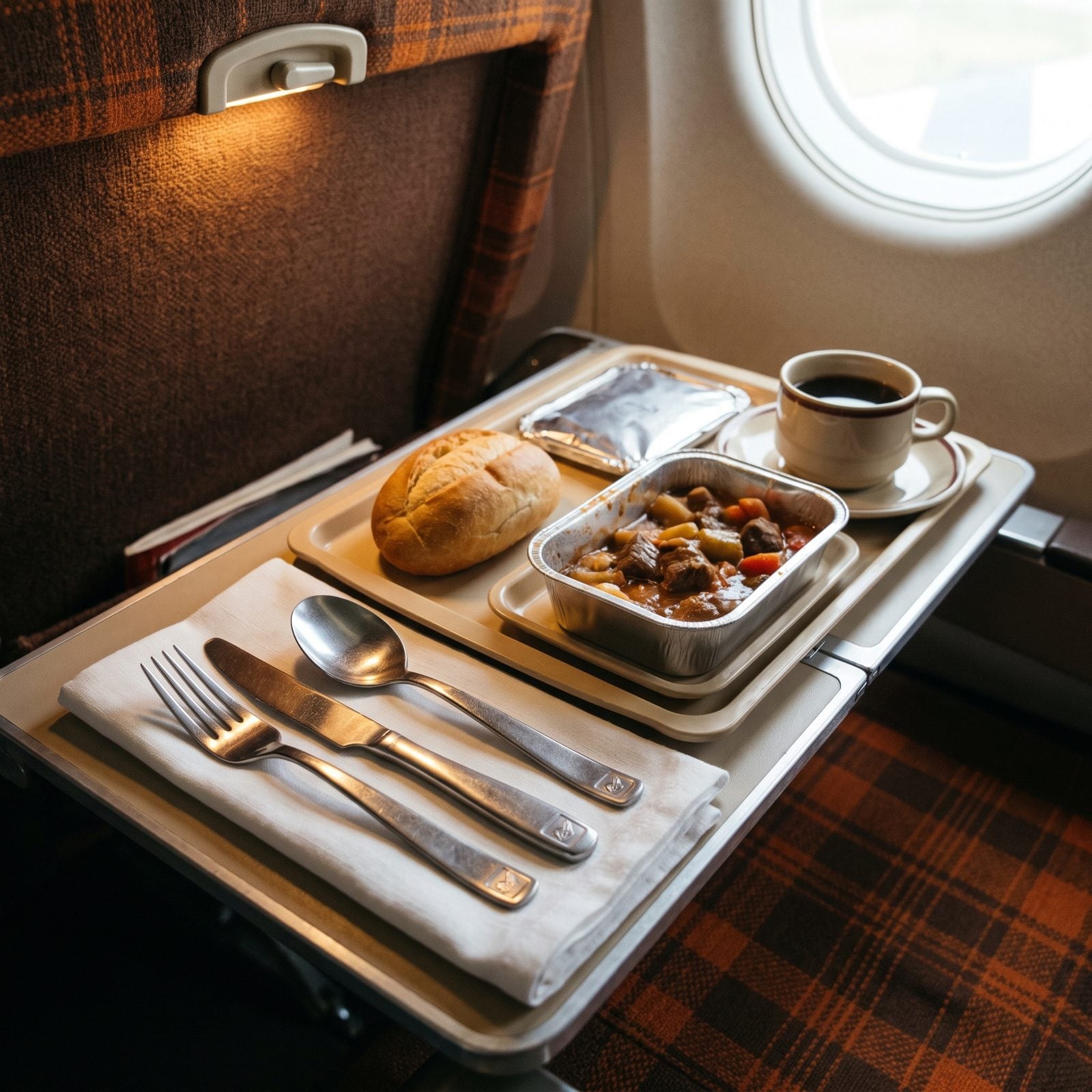
Stainless steel, cool in your hand, with a tiny airline crest pressed into the handle. You cut into a hot entree with a real knife on a full-service flight, and nobody blinked. The napkin was linen or heavy paper, folded, and the coffee came in china.
Metal cutlery vanished from most cabins after 2001, replaced by plastic that snaps if you look at it wrong. That little fork had heft, and the heft was the whole point — you were being fed, properly.
15. Newspapers and Magazines Wheeled Down the Aisle
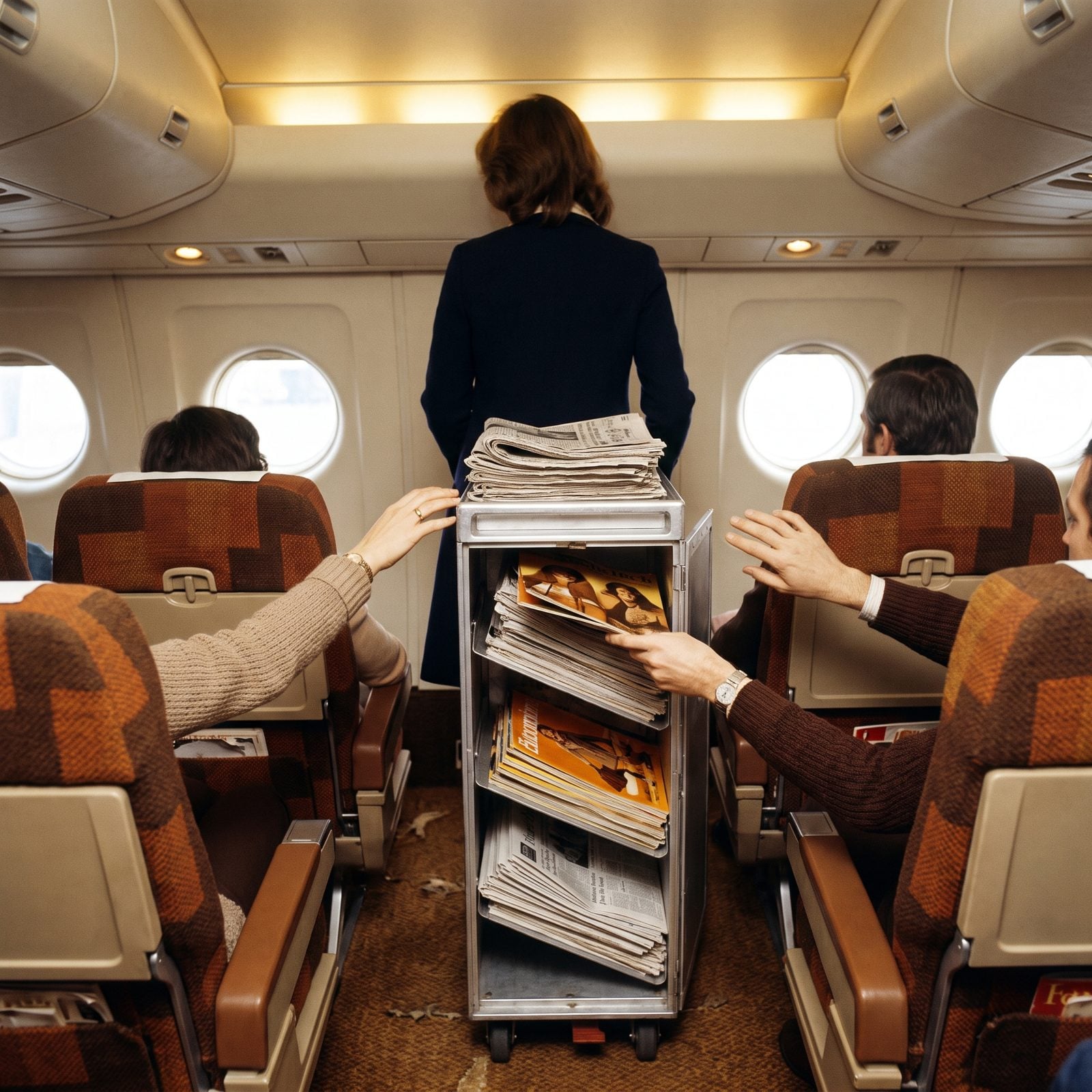
Before the seatback screen and the phone in every pocket, entertainment rolled to you on a cart. A stewardess offered a spread of newspapers and magazines, and you picked one like you were choosing dessert. Time, the local paper, maybe a fashion glossy.
Being handed reading material for free was a small dignity. You’d fold the paper in half against the tray table and settle in. Now you scroll a downloaded app and pay for the WiFi to do it.
14. Plastic Junior-Pilot Wings for the Kids
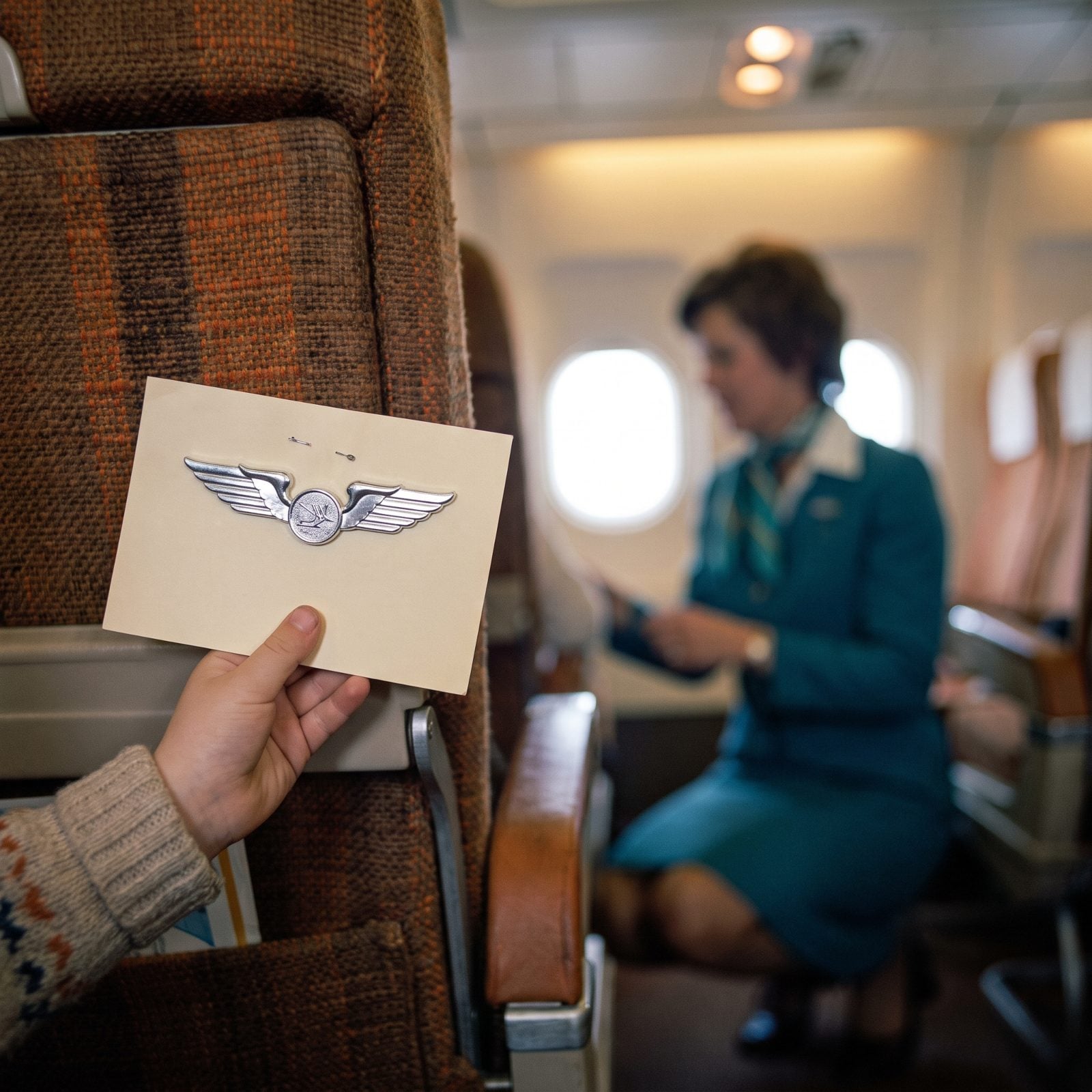
You wore them home. A pair of shiny plastic wings pinned crooked to your shirt, handed over by a smiling stewardess who’d noticed you were nervous or just small. Some kids got a peek at the cockpit too, back when that door stayed friendly and open.
Those wings turned a scary metal tube into an adventure. They mostly disappeared with the sealed, secured cockpit era. If you find a pair in a junk drawer now, they still feel like a promotion.
13. Airline-Branded Playing Cards Tucked in the Seat Pocket
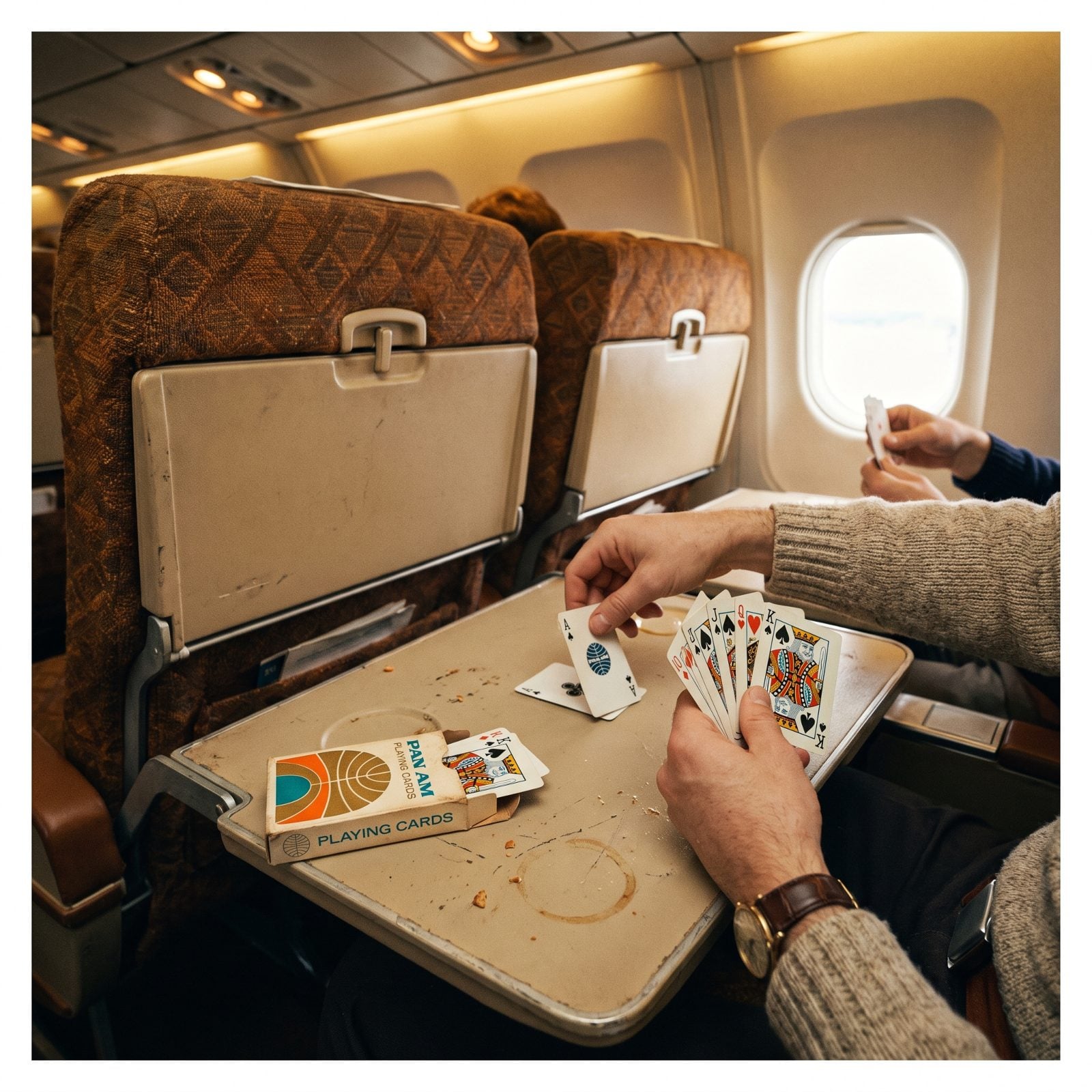
Cross-country meant hours to fill, and the airline handed you a way to do it: a fresh deck of playing cards with the carrier’s logo across the back. You played gin with the stranger next to you or built a house of cards on the tray table until turbulence knocked it flat.
Collectors chase these decks now. Back then they were just there, a small thoughtful thing tucked in beside the sick bag and the safety card.
12. Branded Matchbooks Passed Around the Cabin
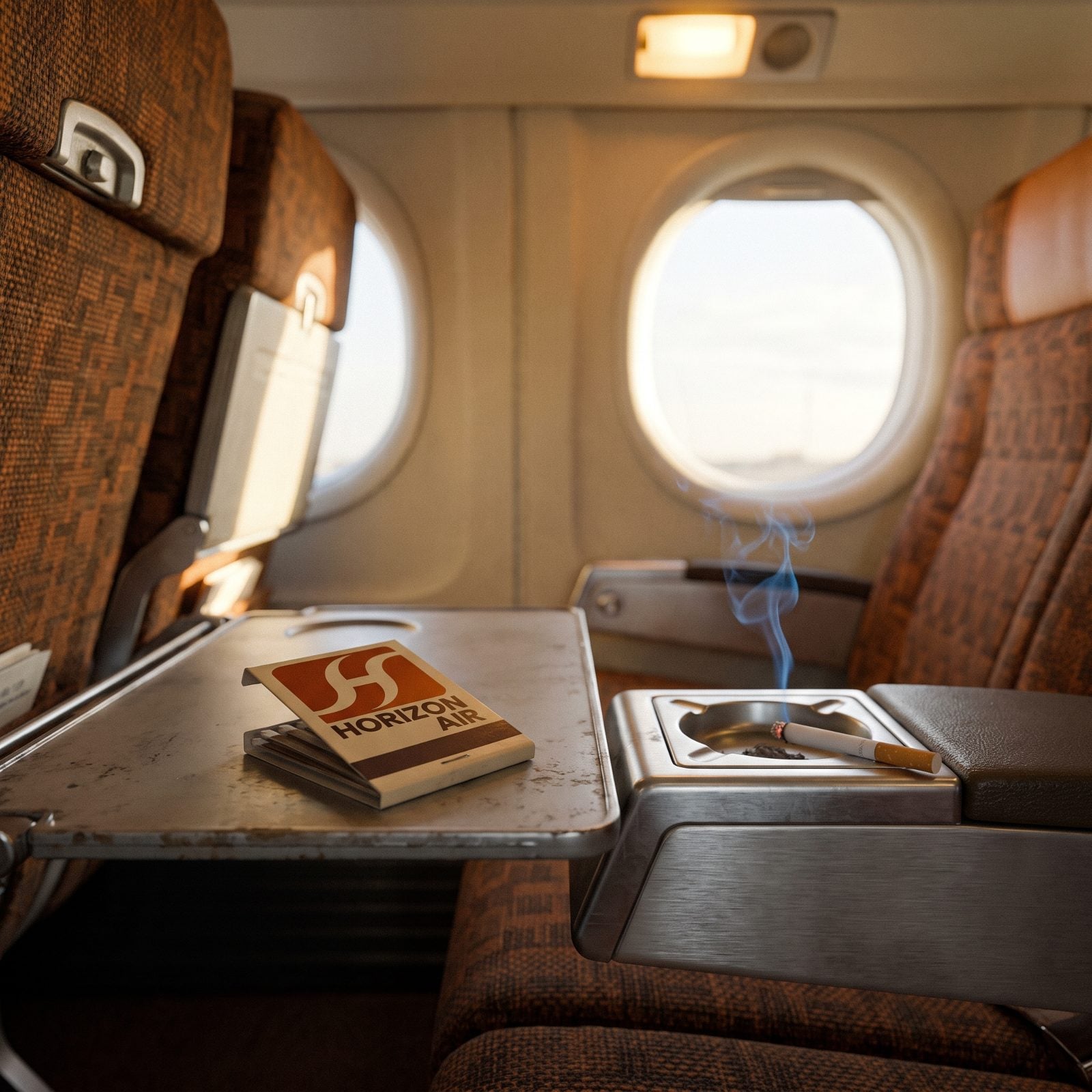
Every armrest had a little metal ashtray, and the airline made sure you had a light. Branded matchbooks came out with the cigarettes, the carrier’s logo printed on the cover, free for the taking. You’d pocket a few for the ashtray at home.
Smoking sections lasted into the late 1980s on domestic flights, and the matchbooks went with them. The ashtray hardware, oddly, stuck around in armrests for years after nobody was allowed to use it.
11. Legroom You Could Actually Cross Your Legs In
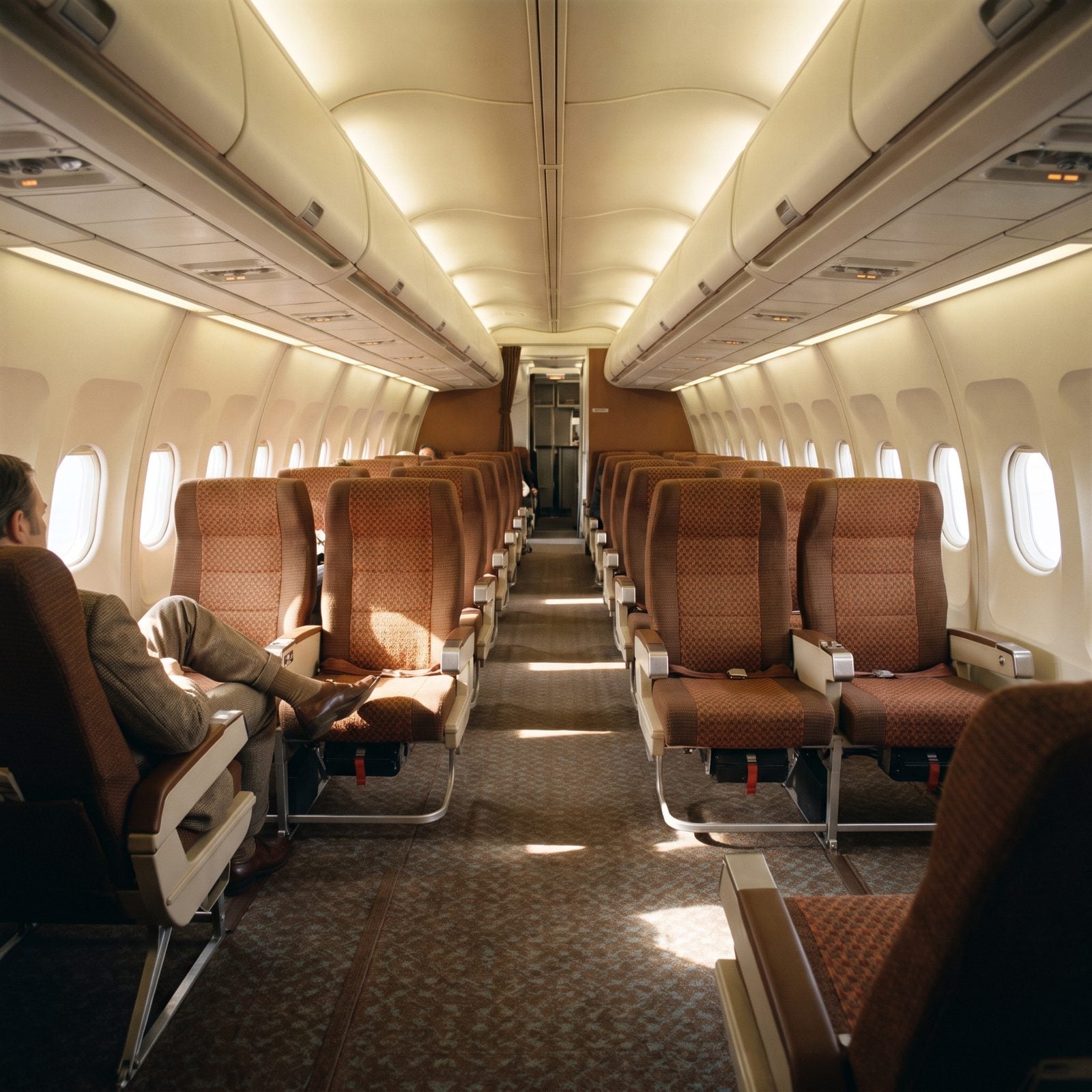
You could cross your legs. Drop something, bend to pick it up, and no full spinal negotiation was required. Coach seats in 1978 had breathing room, and the recline actually reclined without launching the drink of the person behind you.
Seat pitch has shrunk steadily since deregulation let airlines pack rows tighter to compete on fares. Comfort we once took for granted is now sold back to us as “premium economy.” Same idea, extra charge.
10. The Onboard Closet Where Your Suit Bag Hung
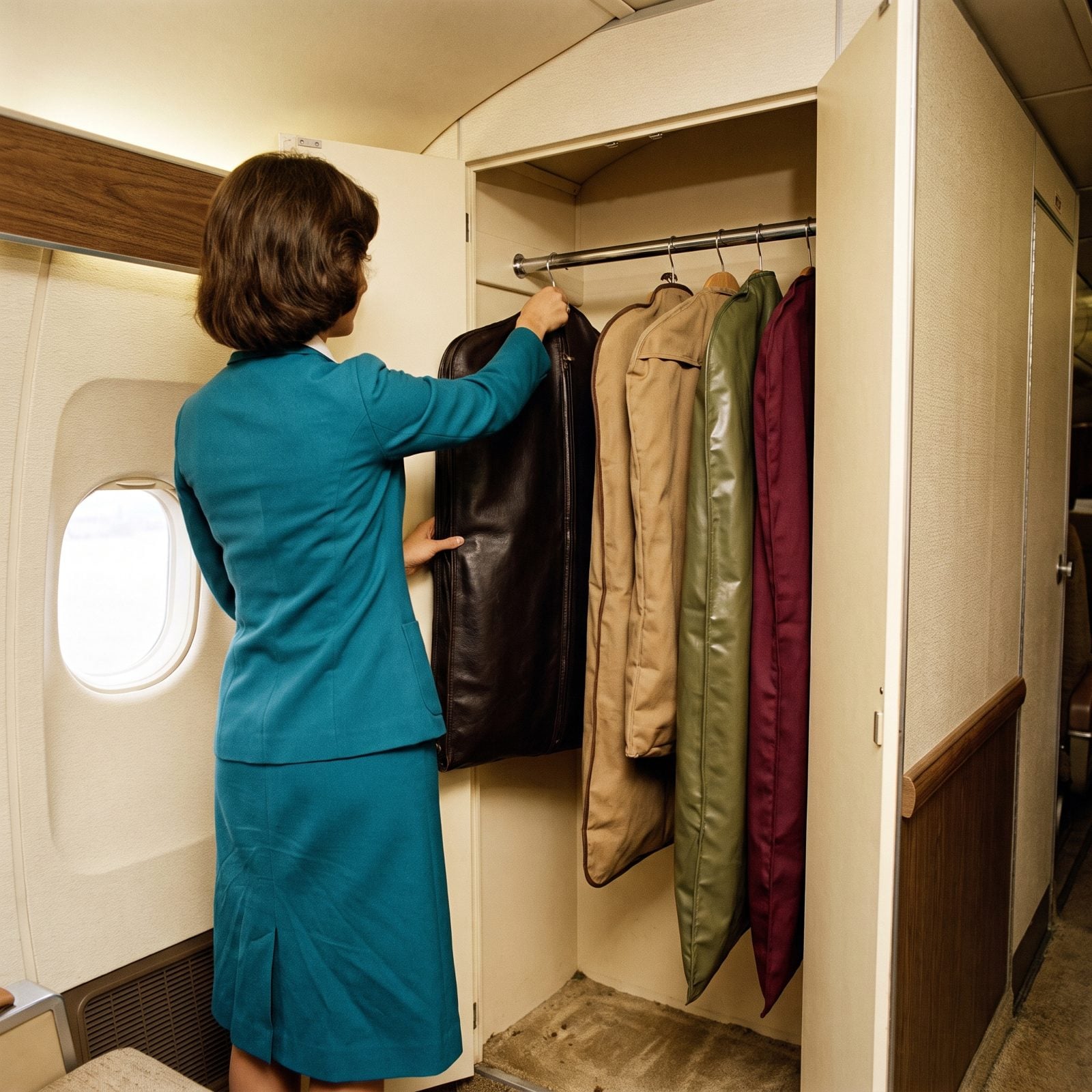
You handed your suit bag to a stewardess and she hung it in an actual closet, up front near the galley, so your jacket arrived unwrinkled for the meeting. People flew in real clothes then, and the cabin was built to respect that.
The onboard garment closet has all but vanished on domestic flights, another casualty of squeezing in more seats. Your suit now rides folded in an overhead bin, hoping for the best.
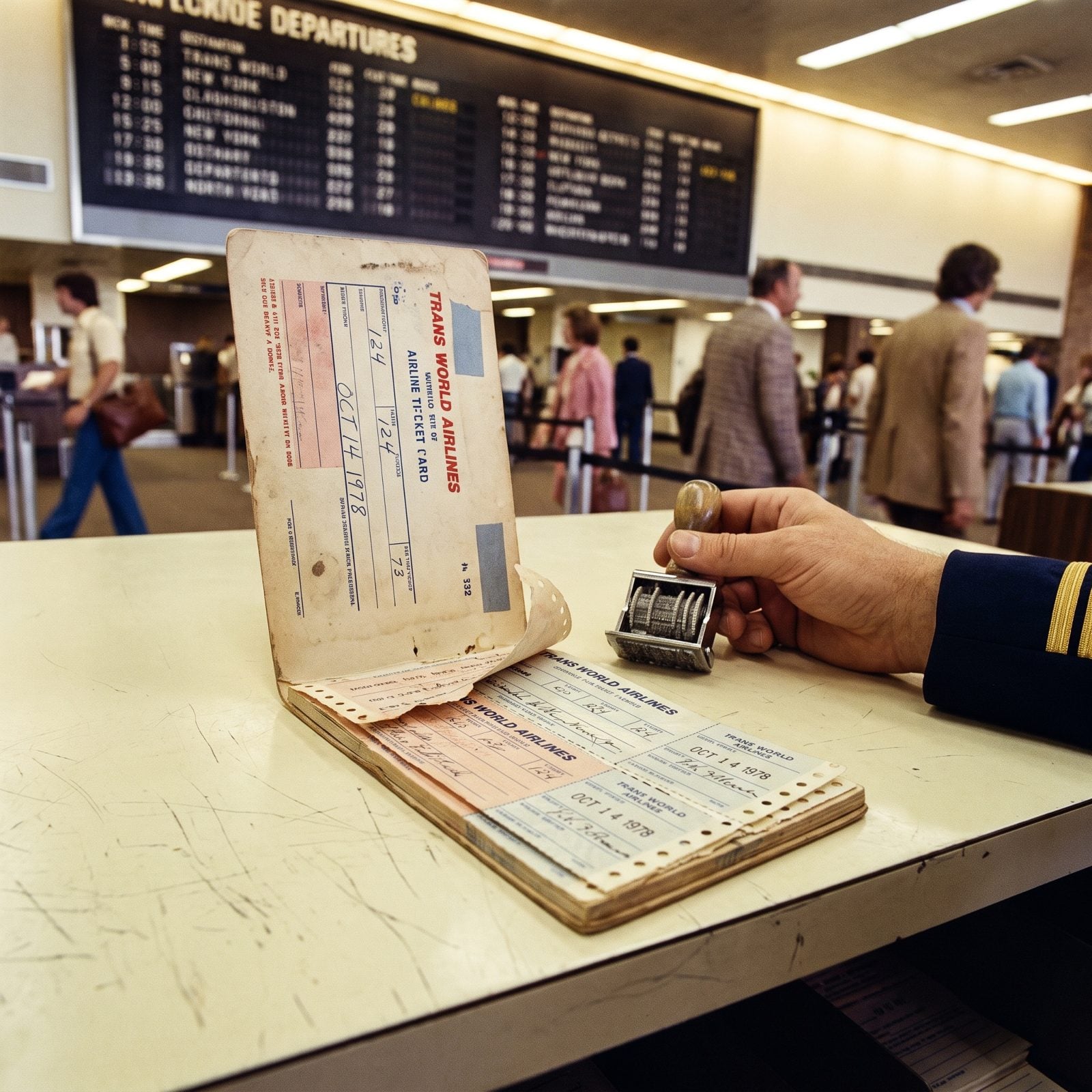
9. Paper Tickets With Carbon-Copy Flight Coupons
🔥 Would you like to save this?
A ticket was a real object. A little booklet of carbon-copy coupons, red and blue ink, one page torn out at each leg of the trip. You guarded it like a passport because losing it meant losing the flight.
The gate agent stamped it by hand and tore the coupon along a perforation with a practiced flick. E-tickets killed the whole ritual in the late 1990s. Efficient, sure. But you can’t tuck a QR code into a shoebox of souvenirs.
8. Seat Assignments Stuck On With a Little Sticker
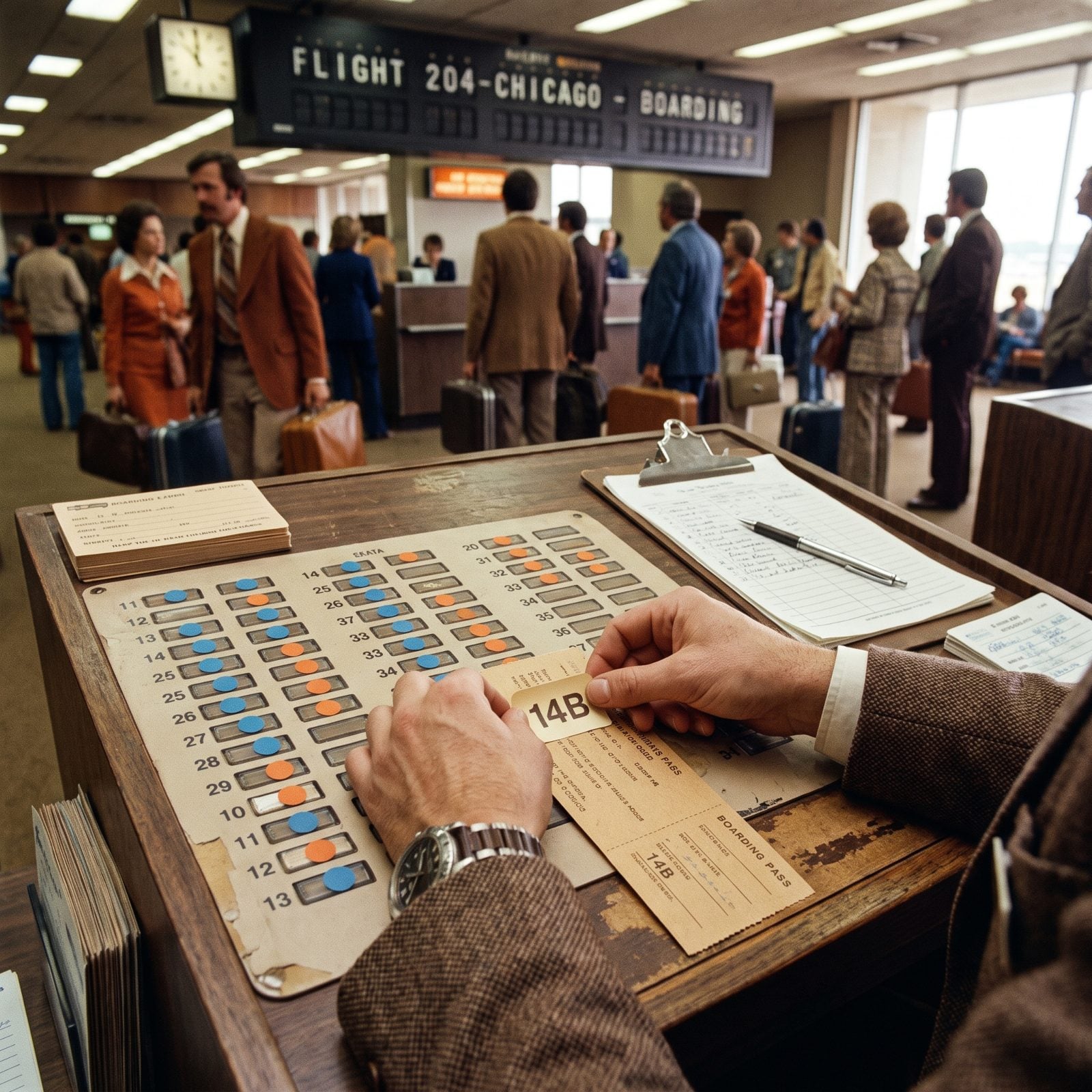
Behind the gate podium sat a big physical seat chart, a grid of little slots, and the agent tracked who sat where with removable stickers. Pick 14A and a sticker went on the board, another on your boarding card. Analog, tactile, and completely visible.
You could watch the plane fill up in real time on that board. Then computerized reservations swept it all away, and now the seat map lives on a screen you fight with from your couch, refreshing to see if the middle seat beside you ever fills. The sticker board never made you do that.
7. Boarding Without Ever Showing a Photo ID
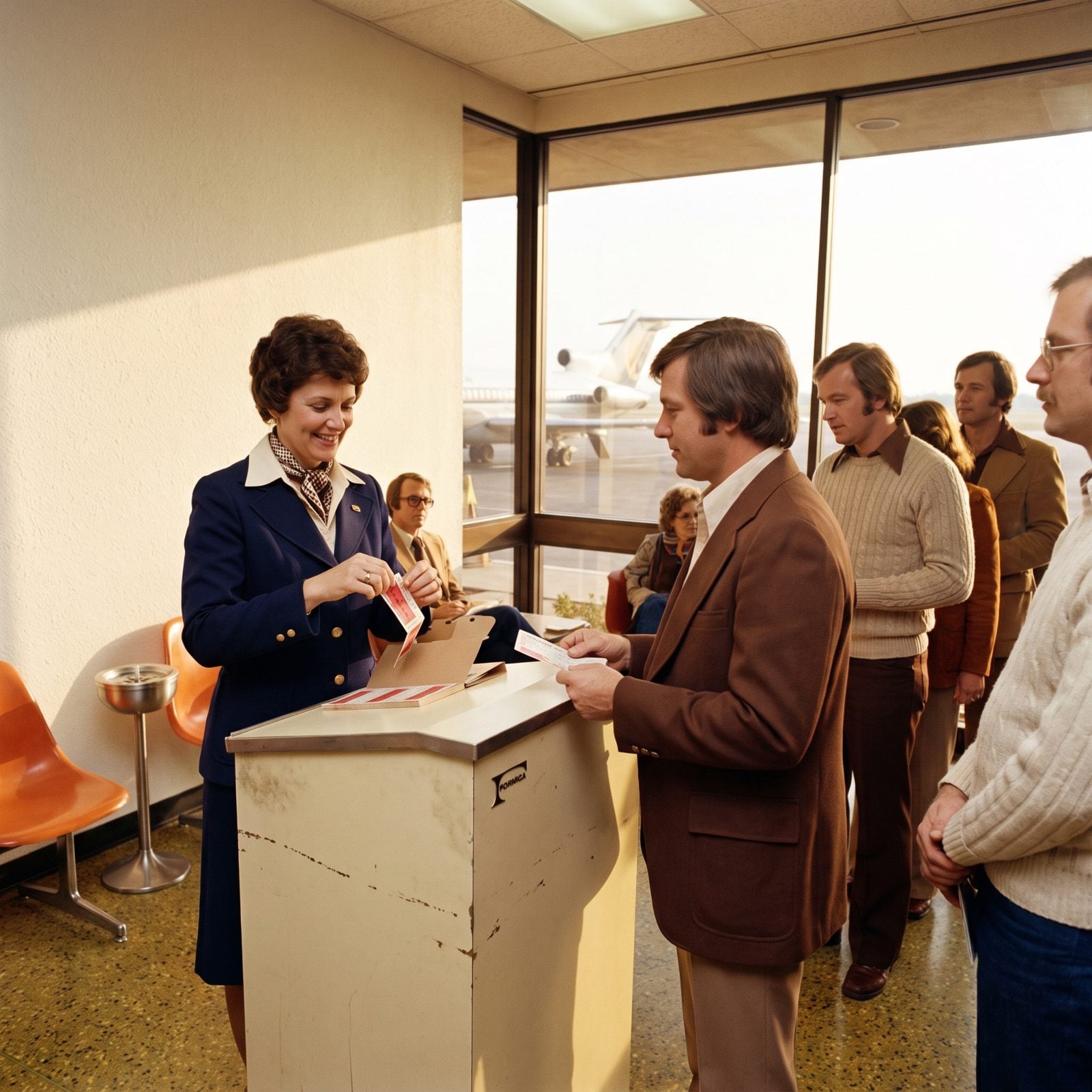
You could hand over a ticket bought under any name at all and walk straight onto the plane. Nobody asked for a driver’s license. Nobody matched your face to a card. The agent tore a coupon, smiled, and off you went.
The ticket was the only credential that mattered — a folder of carbon coupons you kept tucked in a jacket pocket. Business travelers bought them, handed them off to a colleague, and thought nothing of it. The whole transaction ran on trust and a torn stub, which is wild to think about now.
6. Bright Paper Destination Labels Pasted Onto Your Suitcase
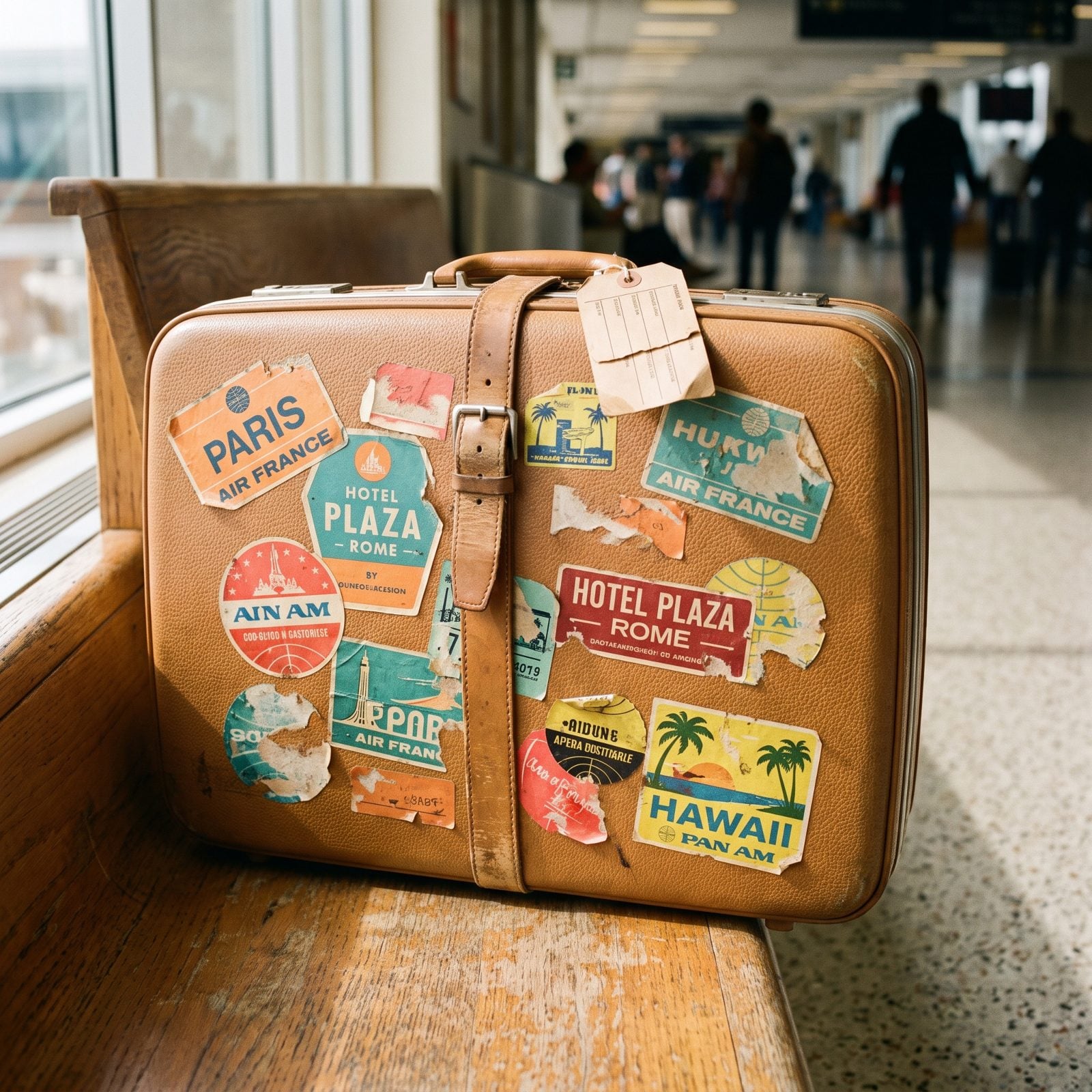
A well-traveled suitcase told its own history. Layers of paper labels crowded the sides, each one gummed on by a hotel bellhop or a counter clerk — bright rectangles printed with palm trees and city names and colors that never quite matched.
You didn’t remove them. That was the whole idea. A case plastered in labels from Honolulu, Rome and Miami was a quiet brag, a passport worn on the outside, and people peeled at the corners on long flights the way you’d worry a loose thread on a sweater sleeve, half-daydreaming out the window while the countryside slid past below.
Then hard shells stopped holding paste, the baggage handlers got rougher, and the little labels went the way of the porter who applied them.
5. The Flight-Insurance Vending Machine Right By the Gate
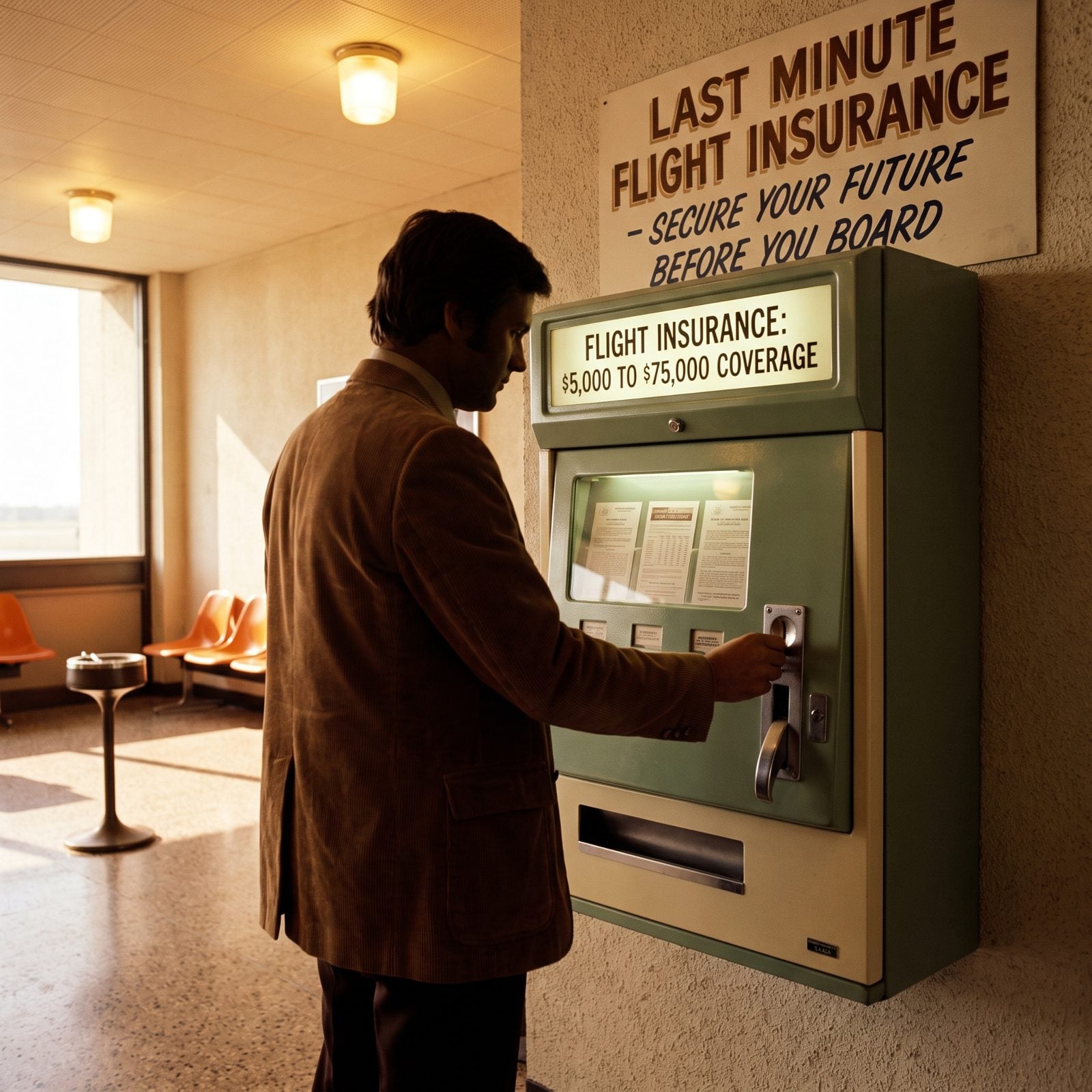
Right there in the concourse, between the newsstand and the gate, sat a coin-operated machine that would sell you life insurance for the flight you were about to take. You fed it a few coins, it spat out a printed policy, and you mailed the beneficiary copy home before you boarded.
Nervous flyers loved them. So did the terminally practical. The whole idea sounds a little grim now, but back then it read as ordinary common sense — no stranger than buying a pack of gum or a magazine for the trip.
4. The Mechanical Split-Flap Board and Its Papery Clatter
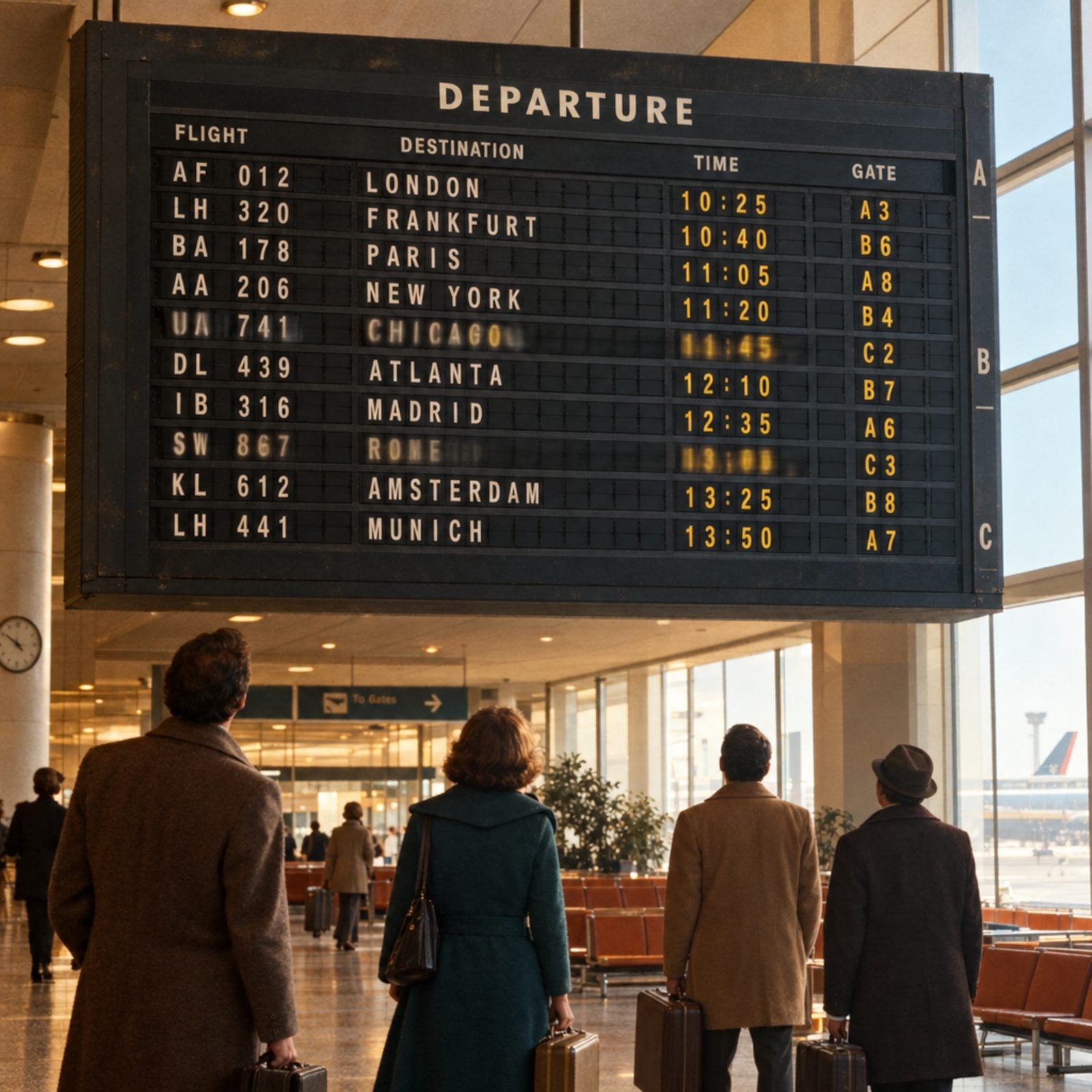
You heard it before you read it. A soft papery riffle would ripple across the whole board, hundreds of little flaps turning at once, and the entire terminal would glance up to see where the flights had shuffled to.
Those boards had a rhythm no glowing screen ever managed. The clatter told you something was changing — a gate had moved, a flight had gone final, your destination had climbed a row.
People used to stand under them just to watch the display cascade. When they finally got swapped for silent monitors, the terminals lost their pulse.
The sound of a departure board updating was the sound of a whole building deciding where everyone was going next.
3. The Open-Air Observation Deck for Watching the Planes
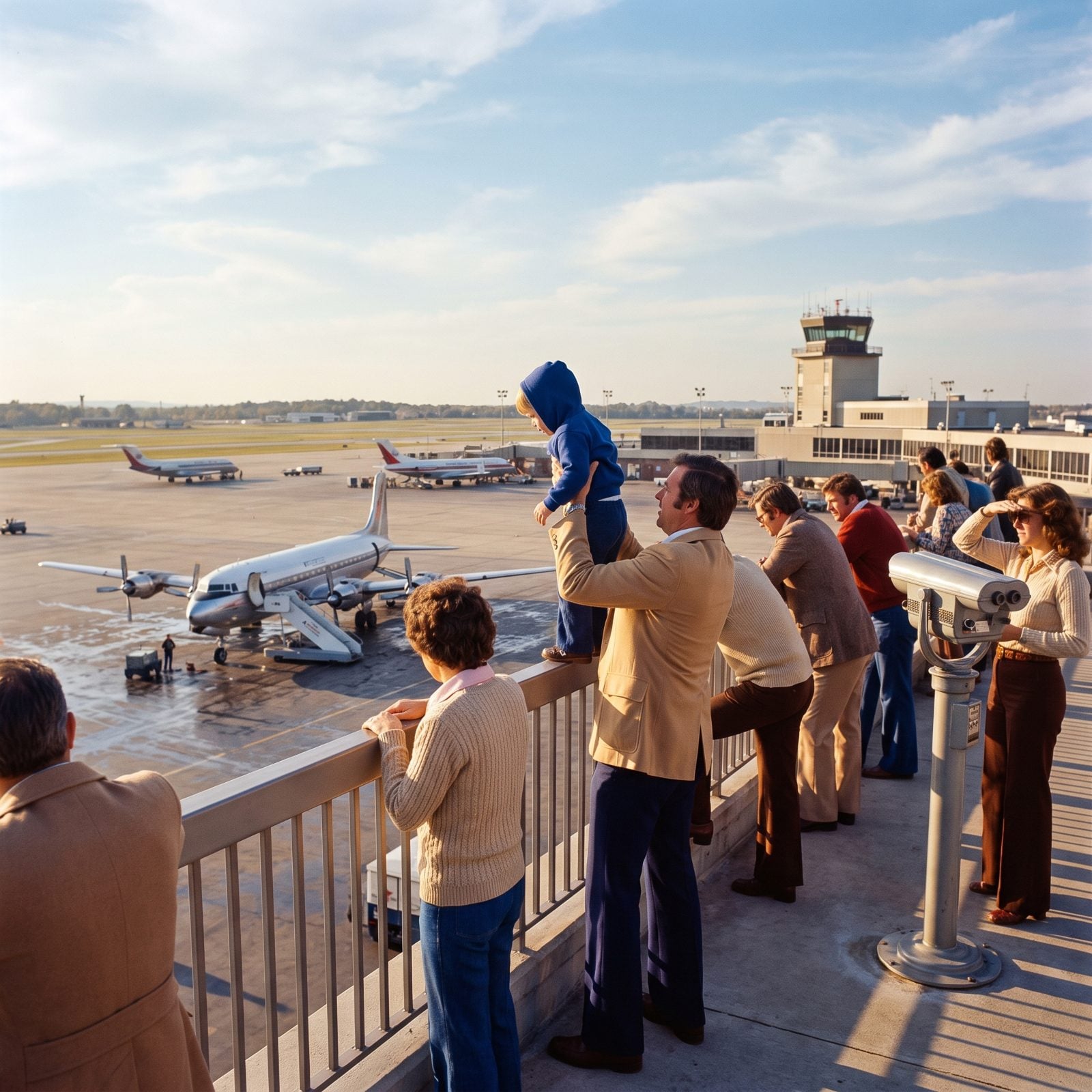
Families drove out to the airport on Sunday afternoons just to watch. Up on the deck, with the wind carrying jet fuel and the whine of engines spooling up, you’d lean on the rail and follow a departure until it was a speck.
There were coin binoculars, sometimes a snack bar, always a crowd of kids pressed against the railing. You didn’t need a ticket to feel the thrill of it. The airport was somewhere you actually went on a weekend.
2. The Long Bank of Payphones Where You Called Ahead
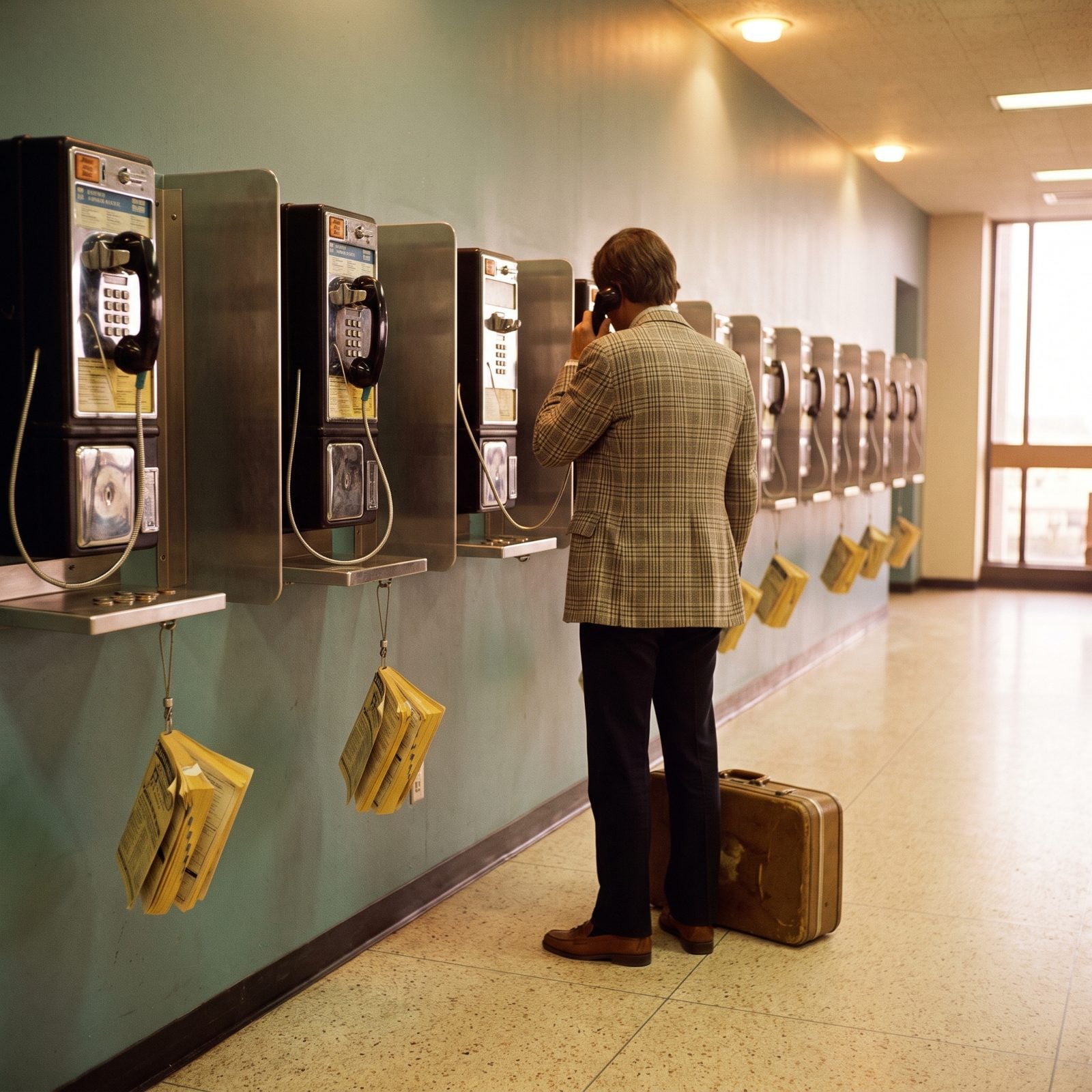
A whole wall of them, chrome receivers on braided metal cords, coin slots that swallowed dimes, and thick directories chained underneath. You’d stack your quarters on the little shelf and shout over the concourse noise to tell someone the flight was on time.
This was how you announced you’d landed, told a spouse to head over now, rebooked a delayed leg while feeding coins into the slot. Think of the whole bank as the terminal’s nervous system, always humming with somebody’s news.
Now they’re gone almost entirely. The wall behind them wears the ghost outlines of where they used to hang.
1. Family Waiting Right There at the Arrival Gate
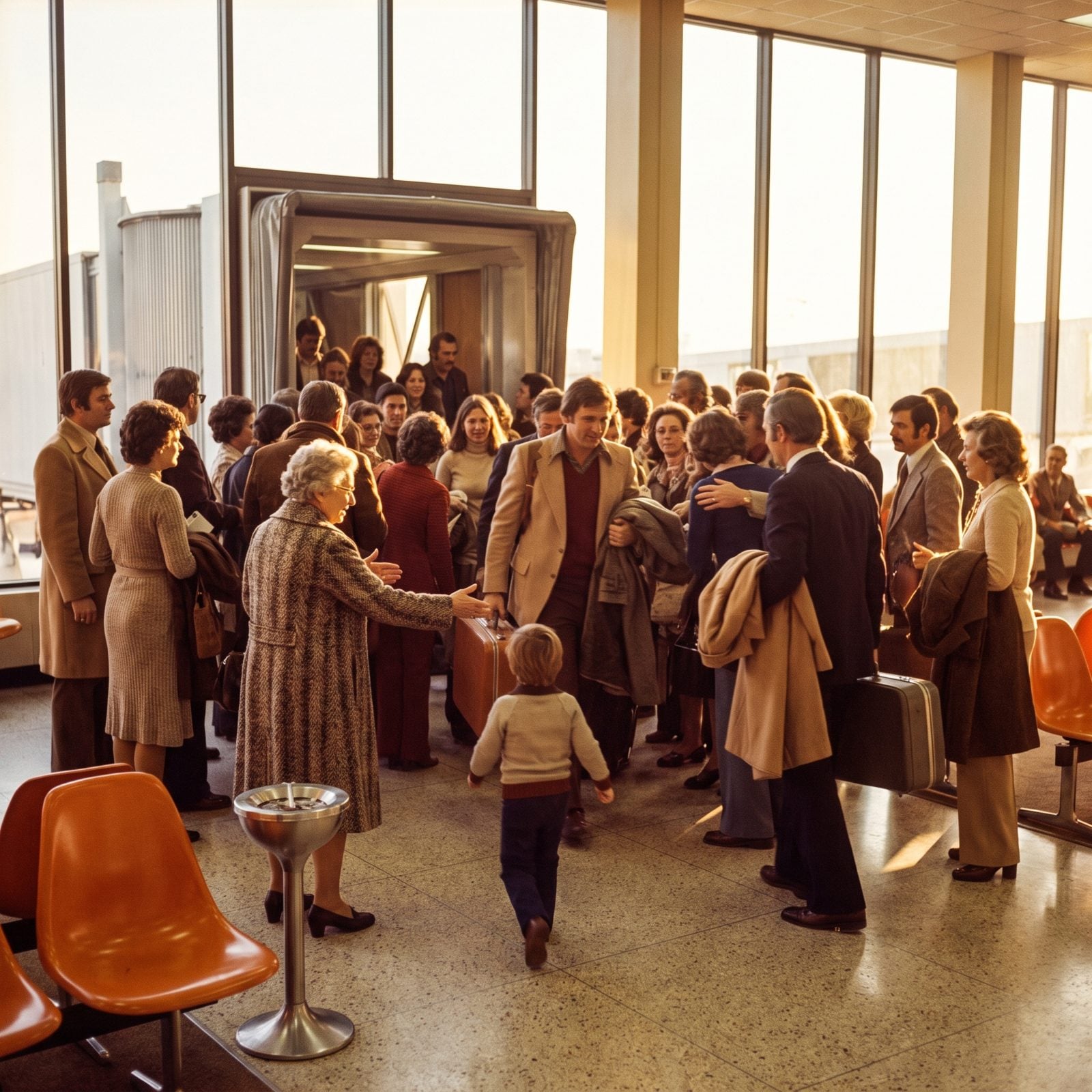
They were right there when you stepped off the jet bridge. No barrier, no security line, no meeting spot in some distant hall. Your mother, your kids, your best friend, standing at the mouth of the gate with their faces already searching the crowd for yours.
People came early. They watched the plane taxi in through the window. When the door opened and the first passengers spilled out, the whole gate area leaned forward at once.
That reunion at the gate — the running hug the second you cleared the door — is the thing we lost that actually mattered. Everything else here is fixtures and paper. This one was people.
🔥 Would you like to save this?
Please note that some of the imagery in this article were created with the aid of AI image generators.