

🔥 Would you like to save this?
The seatbelt sign dings off somewhere over Kansas and a woman two rows up lights a Virginia Slim without anyone flinching. A stewardess in a burgundy vest wheels a cart of actual food down an aisle you can walk down without turning sideways. The seat reclines a full four inches into the lap of a man who ordered the fish. This was Tuesday. Regular economy in 1985 — not first class, not some junket, not a dream sequence. Here’s what forty years did to it.
32. The Occasion Itself: Flying as Event vs. Flying as Bus Ride
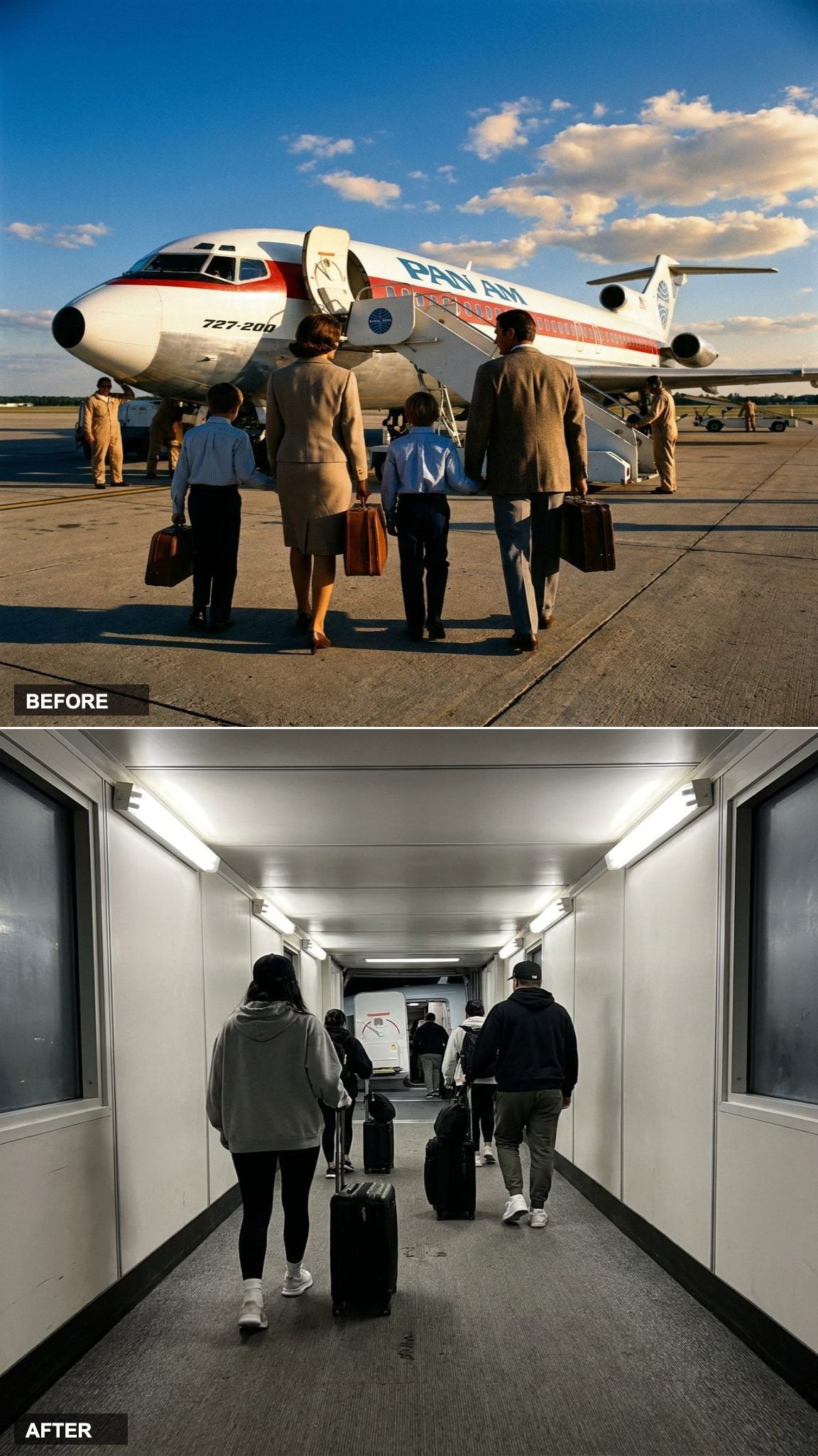
Flying in 1985 was something you dressed for. Not a tuxedo — a jacket, real shoes, a handbag that actually closed. You told relatives you were flying, and they came to the gate to see you off, because gates were places anyone could walk to. There was a small ceremony to the whole thing, from the walk across the tarmac to the stewardess greeting you at the door by name if you flew that route enough.
Now flying is the Greyhound of the sky, and everyone knows it.
Sweatpants at the gate. A neck pillow already deployed on the shoulders of a guy who hasn’t boarded yet. A roller bag that has been on two hundred flights and has the scars to prove it. Airlines have squeezed every square inch and every minute out of the operation, and the passenger has responded by treating the whole experience like a dental appointment: get in, endure it, get out.
31. Load Factors: Half-Empty Cabins vs. Every Seat Sold
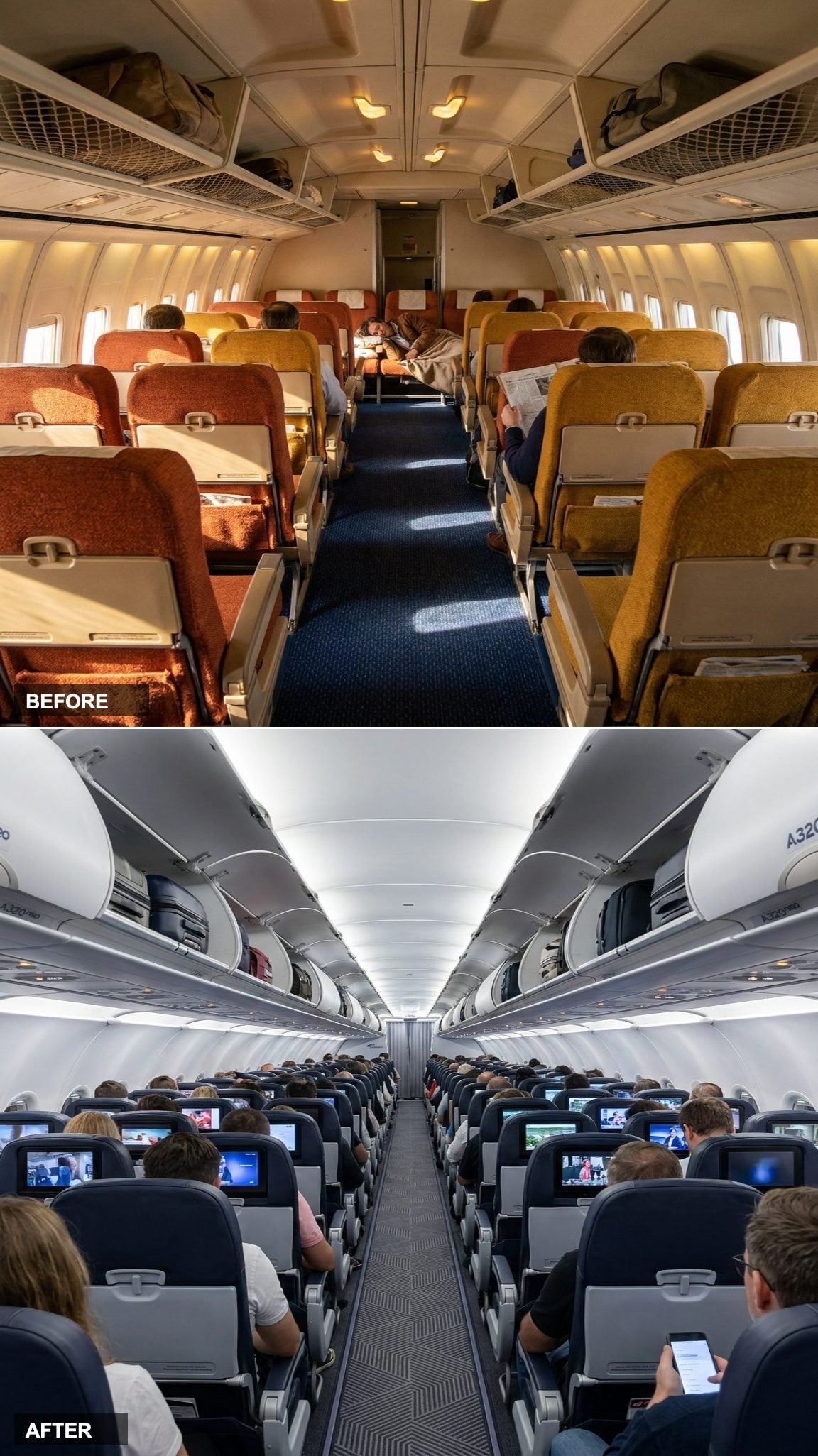
Load factor is the airline term for how full the plane is. In 1985 it sat somewhere around six in ten seats sold, which meant the average flight had rows to spare. You could stretch across a row. You could ask the person next to you to slide over to the empty aisle so you both had room. A red-eye meant lying flat under a thin blue blanket across three seats like a park bench.
Today the number lives well above eighty percent, often higher on popular routes. Airlines learned to sell every seat and then sell a few more, betting on no-shows. The empty middle seat is now a lottery prize people brag about online when they win it.
30. The Seatback Ashtray and the Smoking Section
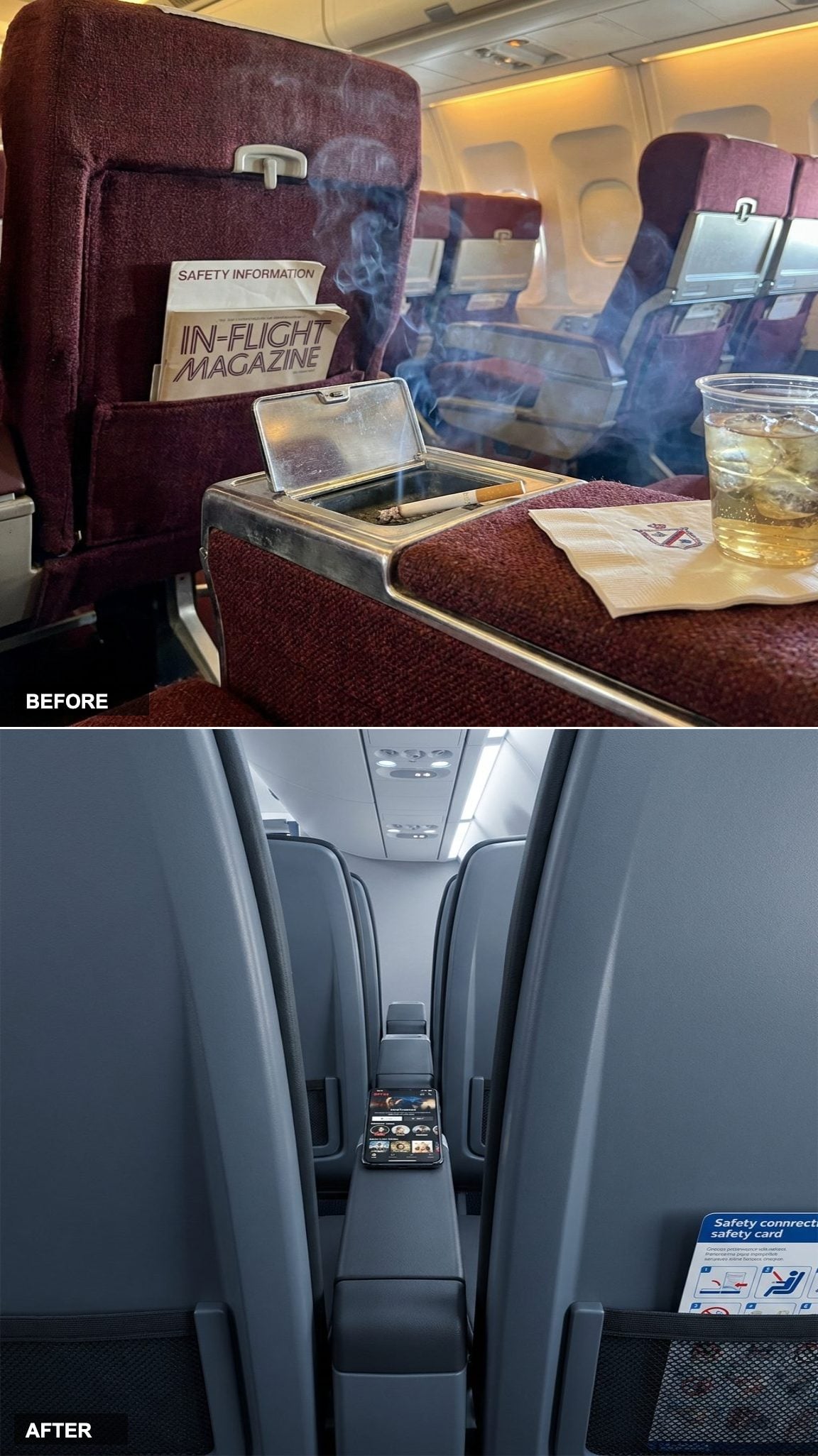
The ashtray sat right there in the armrest — chrome lid, spring hinge, roughly the size of a matchbook. Nobody thought it was strange because it wasn’t. Back rows of coach were the smoking section, front rows weren’t, and the recycled air did whatever it wanted with that arrangement.
Now the same armrest is smooth plastic. No lid. No hinge. No hole.
A twenty-year-old flight attendant has never seen an ashtray on a plane and couldn’t tell you which row used to be row 30.
29. The Wide Fabric Seat vs. the Slimline
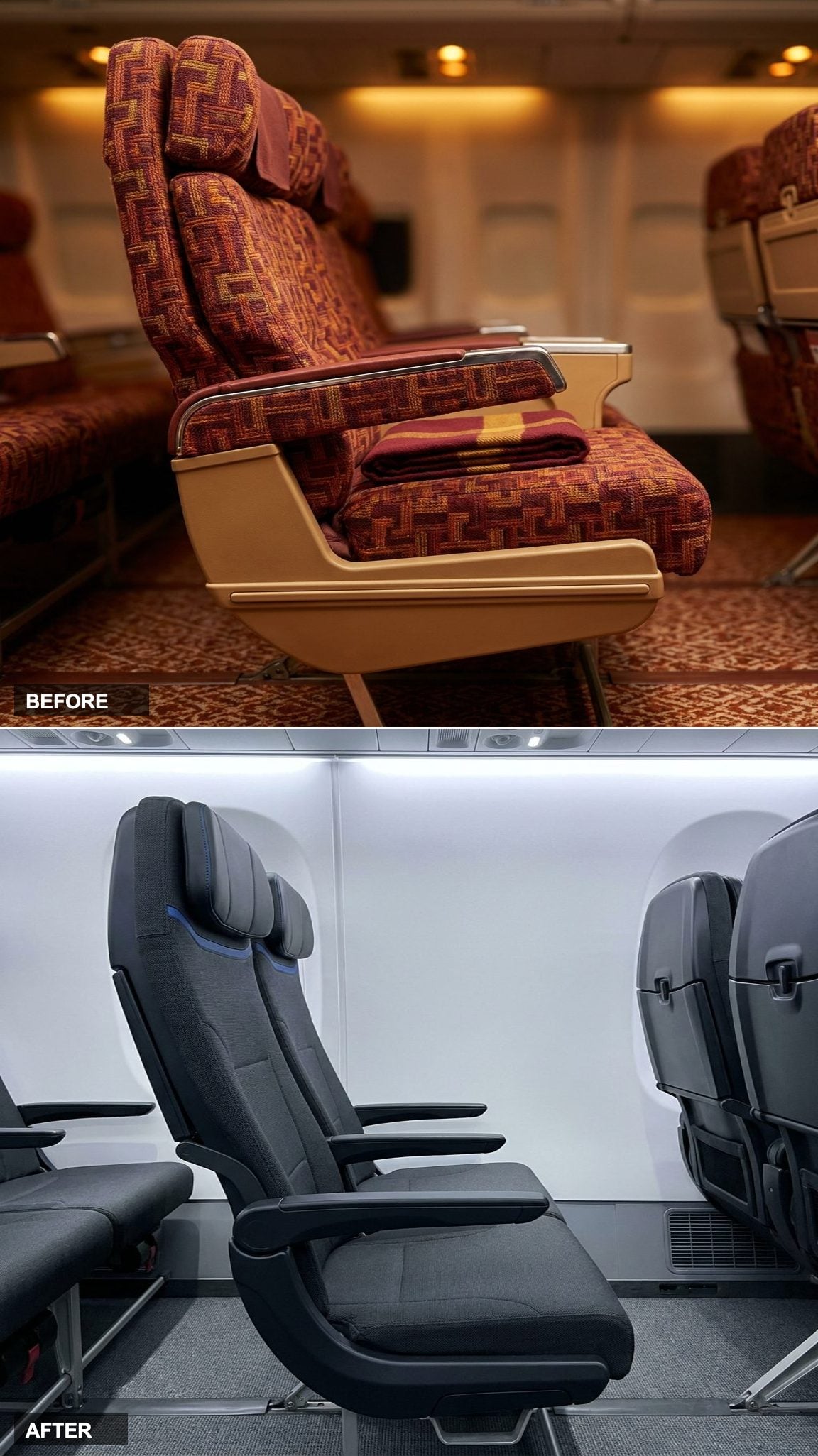
Old coach seats had furniture energy — real foam, real weave, cushions that gave when you sat down and remembered your shape when you got up. They weighed something, and the airline was fine paying to fly that weight.
Slimlines are built the way stadium bleachers are built. Thinner shell, less foam, more rows crammed into the same fuselage. When one major carrier swapped in slimlines it picked up an extra row of revenue on the same plane. Your back knows.
28. Legroom That Let You Cross Your Legs
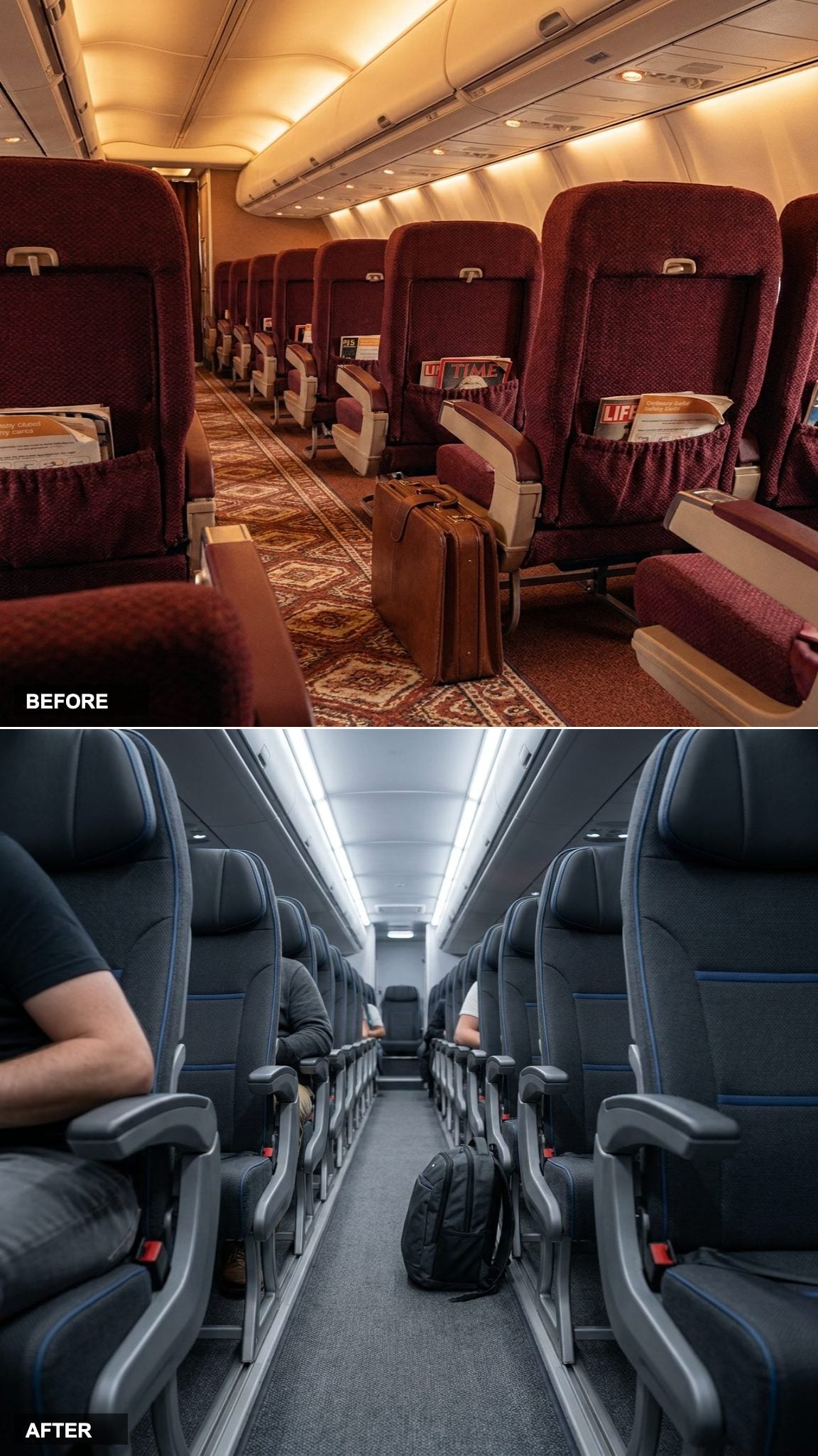
Thirty-four inches of pitch was the standard. That’s the distance from your seatback to the seatback in front, and thirty-four inches meant a six-footer could cross his legs without performing surgery on himself.
Spirit runs less. Frontier runs less. American cut its main cabin to something tighter on the 737 MAX and told everyone it was fine. It’s not fine. Your knees are in the tray table whether you want them there or not, and the tray table is smaller too — which we’ll get to.
27. Coach That Was Basically Today’s Premium Economy
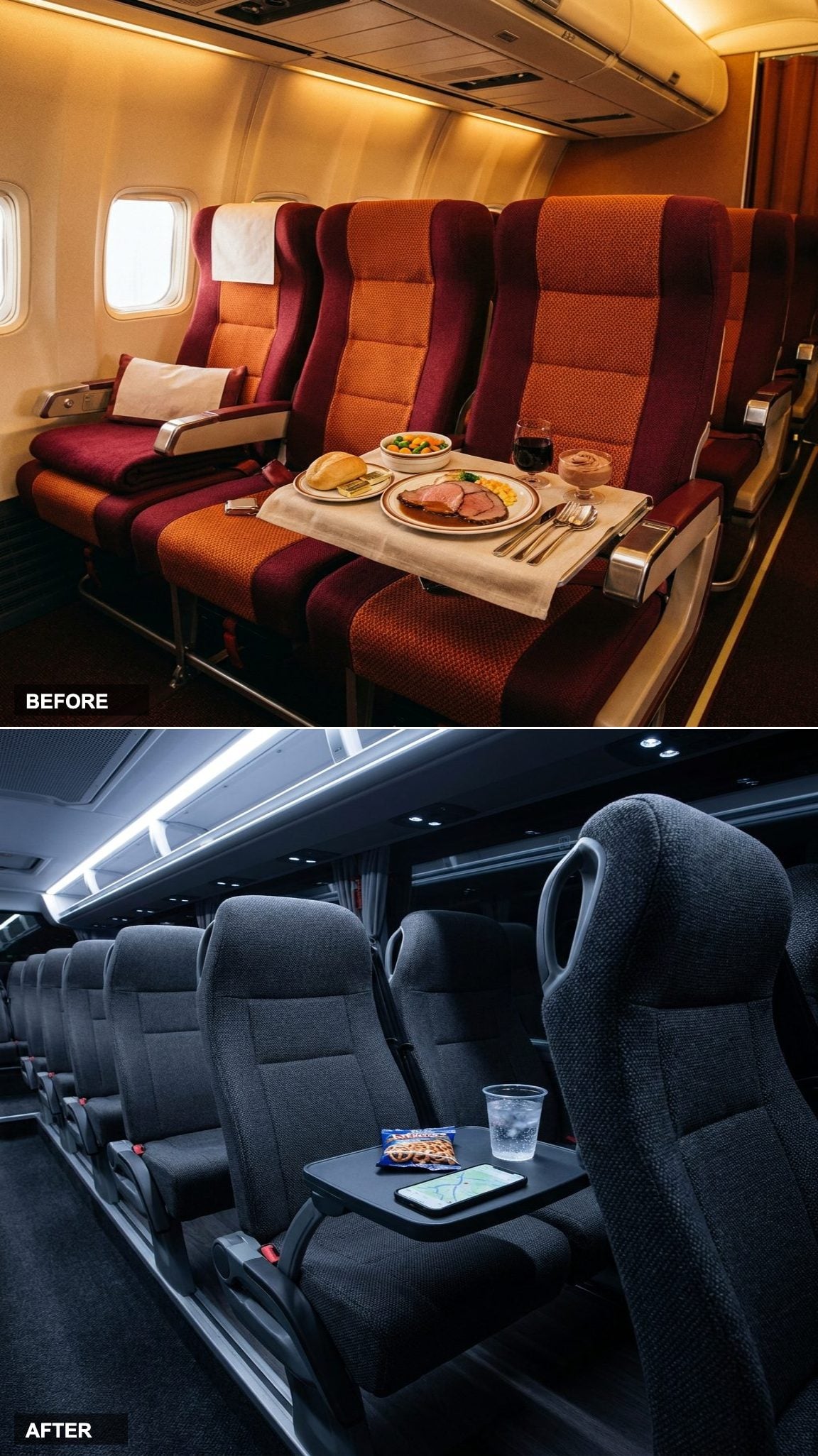
The meal came on a china plate. Wine came in a stemmed glass. Cutlery was metal. And this wasn’t first class — this was seat 27B on a Tuesday afternoon flight from Chicago to Denver.
What airlines now call Premium Economy, and charge a hefty upcharge for, is roughly what everyone got in 1985. Slightly wider seat, meal on a real plate, more legroom. Congratulations — you’ve paid a premium to fly the way your father flew coach.
Premium economy is 1985 coach with a modern price tag.
26. The Deep Recline vs. the Polite Nod
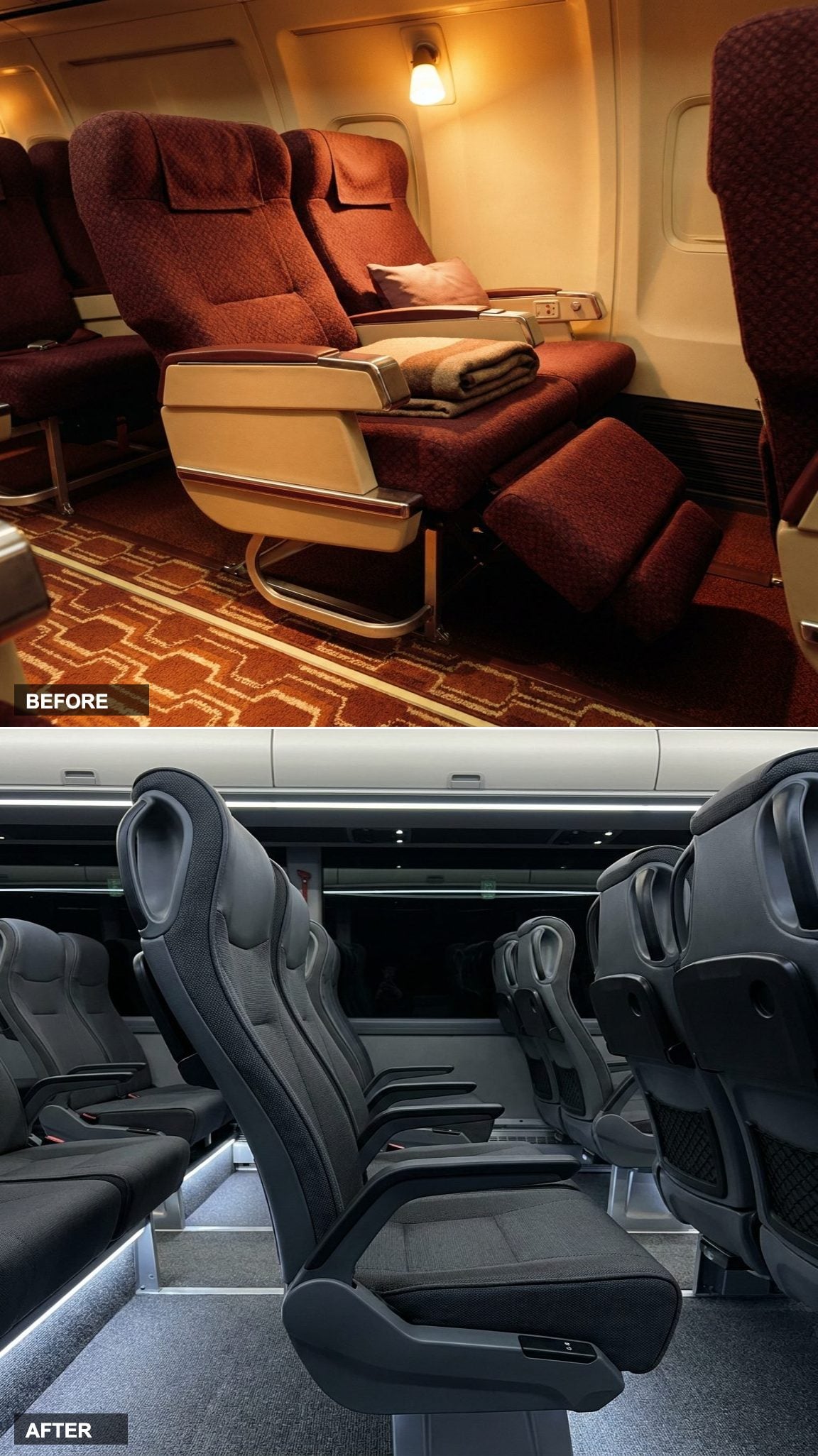
Coach seats in 1985 reclined about four inches. You pushed the button, the seat leaned back, you took a nap. Person behind you did the same. Nobody wrote a Medium post about it.
Slimlines lean back maybe two inches, and some airlines have gone to fixed-recline models that don’t move at all. The recline war on planes is a war invented by the seats getting worse. When there was room, nobody fought.
25. Foam You Could Sink Into vs. Foam That Fights Back
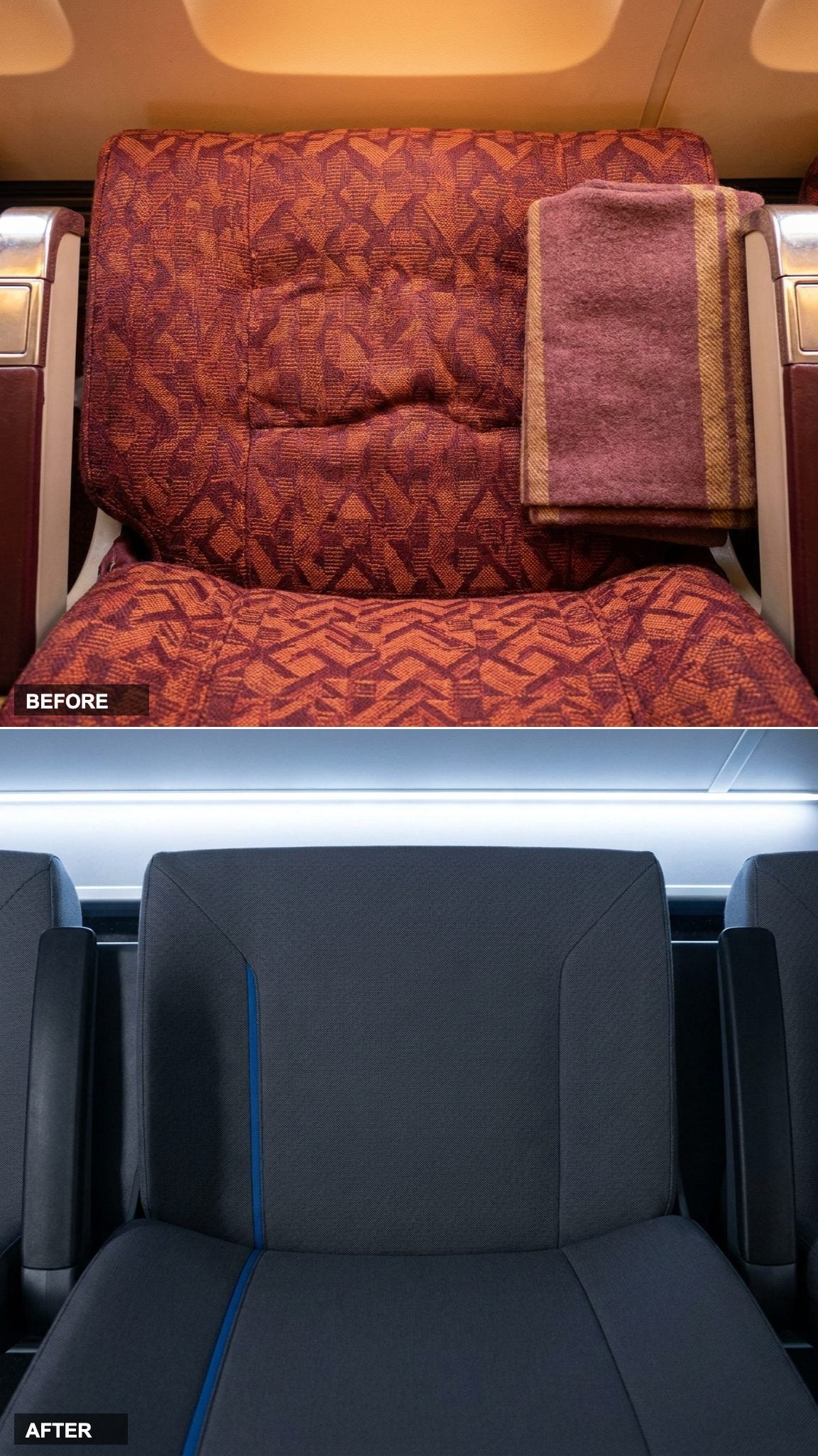
Airline engineers now talk about ergonomic firmness, and the phrase is a defense mechanism. Firm foam is cheaper foam. Lighter foam. Thinner foam. Cheaper-lighter-thinner is the whole game.
Old cushions were memory-foam thick before memory foam existed — you sank in, and six hours to L.A. felt like sitting in a chair, not a bench.
24. Armrests Wide Enough to Set a Drink On
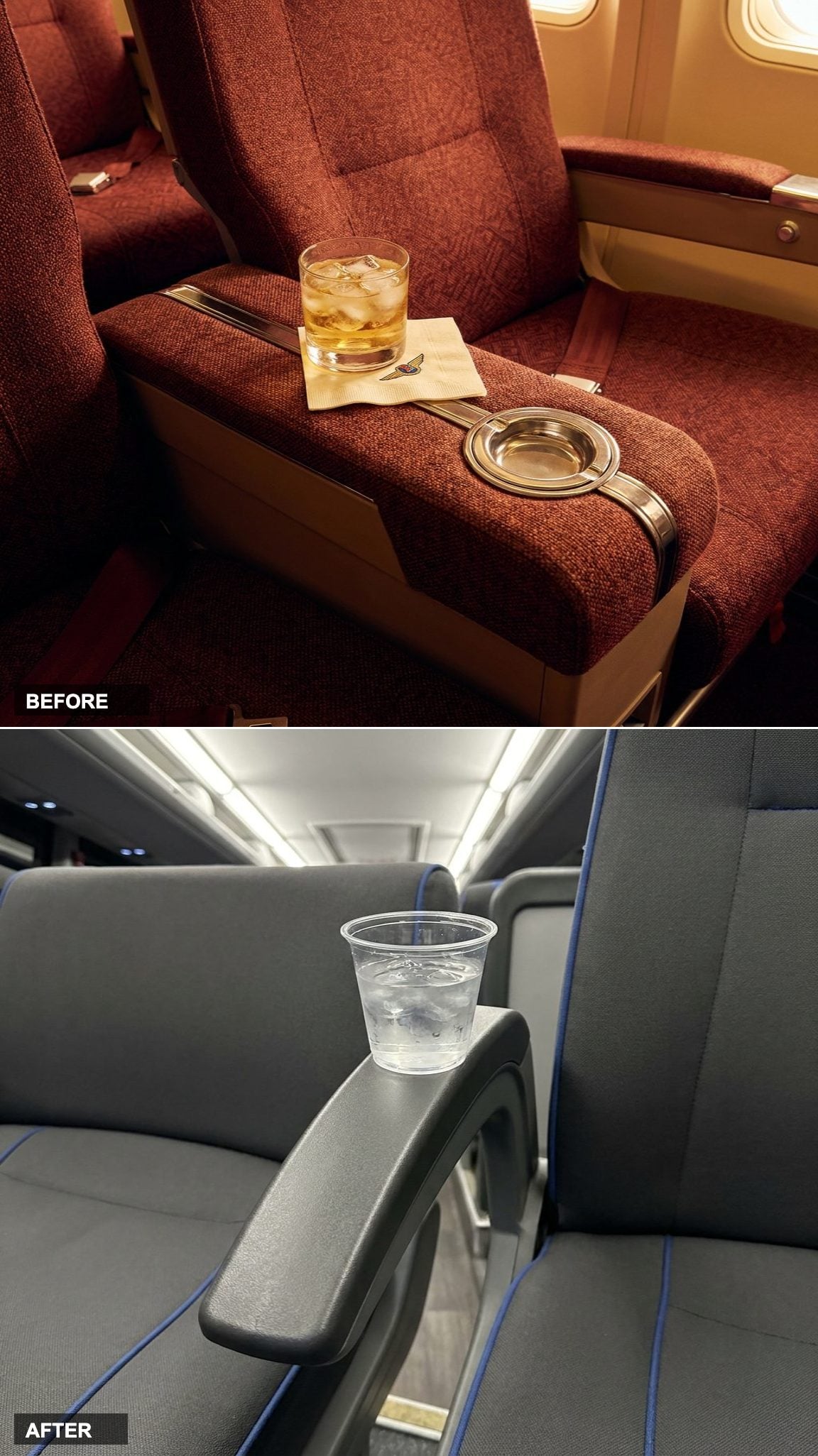
Wide armrests solved the middle-seat problem before the middle-seat problem existed. Two adults could each rest an elbow, and there was still room for a drink and a paperback.
Modern armrests are barely wider than a wrist, so the middle-seat passenger loses both elbows. Somebody wrote a whole etiquette guide about who gets which armrest because the armrests got small enough that ownership had to be negotiated.
23. Warm Earth Tones vs. Airport-Beige or Grey Everywhere
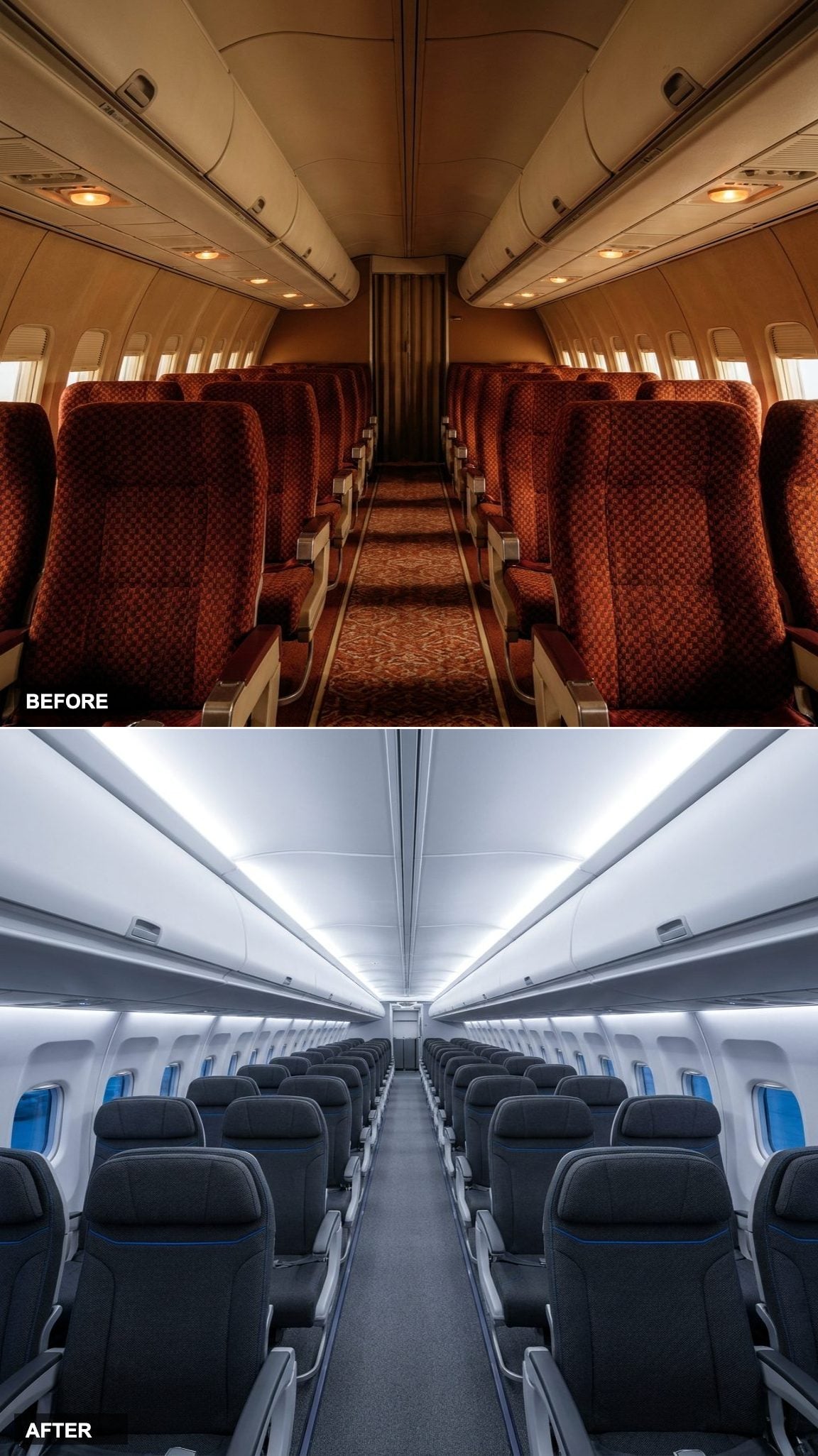
Cabins in 1985 were decorated. Somebody chose the burgundy. Somebody chose the orange stripe in the carpet, and somebody thought hard about whether the beige of the sidewall talked to the rust of the seat, and decided it did.
Cabins now are gray. Charcoal seats, gray carpet, white plastic bins, thin blue accent stripe that changes nothing. The palette reads as one thing: don’t feel anything in here, we have a schedule to keep.
22. Suits and Dresses vs. Hoodies and Leggings
🔥 Would you like to save this?
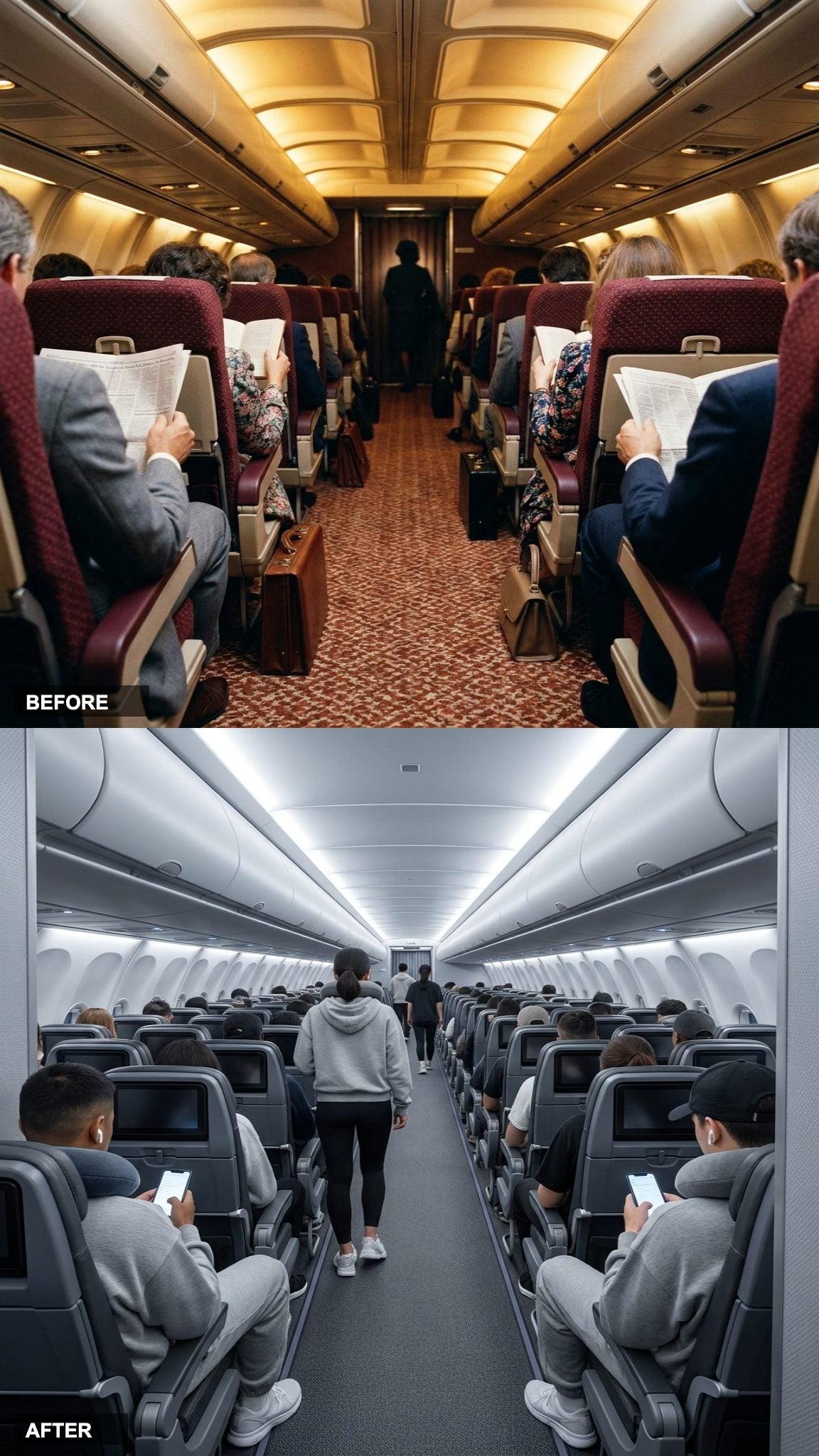
Old photos still circulate on Twitter every few months, and the comments are always the same — why did people dress like that to fly? The answer is that flying was expensive, uncommon, and mildly formal. You dressed for it the way you dressed for a nice dinner. It was an event.
Now flying is the bus.
Sweatpants, hoodie, neck pillow already deployed at the gate. The clothes tell you everything about how the experience got recategorized. Nobody dresses up for a Greyhound, and nobody dresses up for a 6 a.m. Southwest flight to Vegas either.
Whether the shift is a loss or a gain depends on which end you’re standing at. The person in the hoodie is more comfortable. The cabin is uglier. Both true.
21. The Flight Attendant Uniform: From Tailored Glamour to Practical Polish
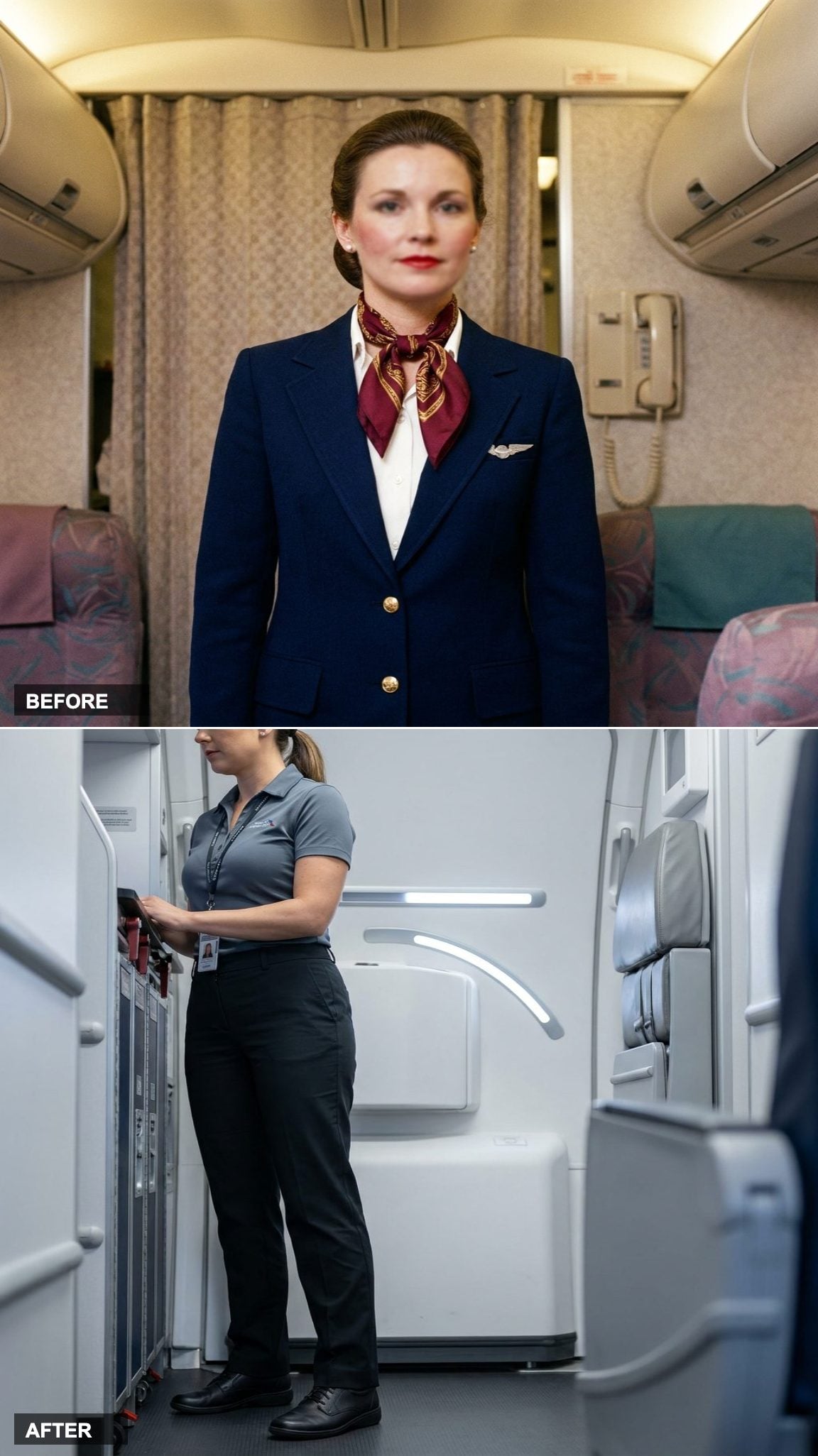
In 1985, the uniform was the show. Tailored wool, silk scarf tied like she meant it, brass wings on the lapel, and heels she’d stand in for an eight-hour shift because that was the job. Pan Am, TWA, Eastern, Delta — every airline had a designer or an in-house atelier and the uniforms looked like it. Halston did Braniff. Ralph Lauren dressed TWA. You boarded and the woman greeting you looked like she’d walked out of a magazine.
Now it’s a stretch-blend polo, flat shoes, and a lanyard. Which is, honestly, the right call for a person about to lift forty-pound bags into overhead bins and stand a fourteen-hour Tokyo turnaround on her feet. The job got harder. The uniform got smarter. Something was lost anyway.
20. The In-Flight Meal Included in Every Ticket
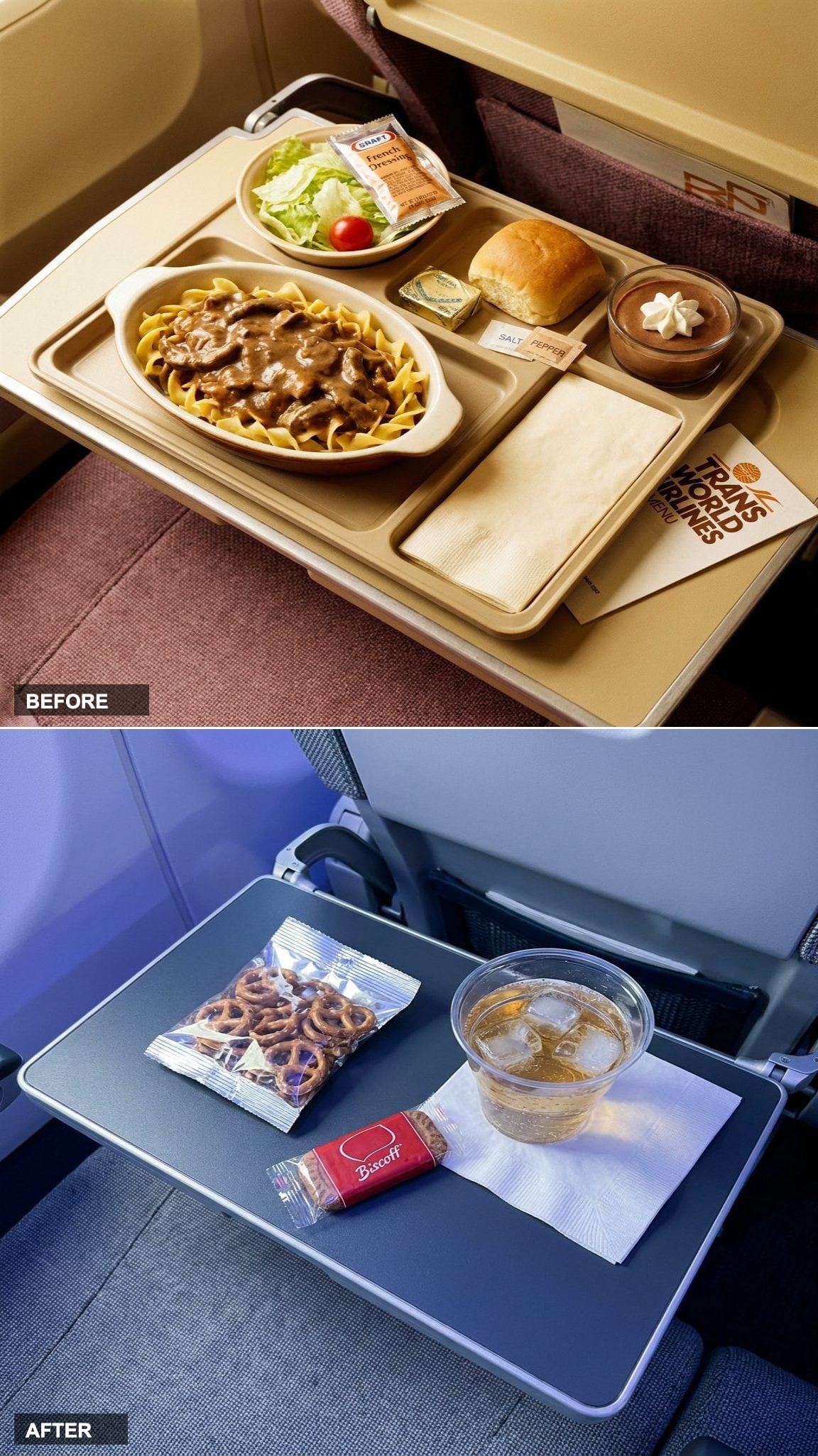
Beef stroganoff at cruising altitude. A salad with a real tomato in it. A warm roll. Chocolate mousse with a whipped cream rosette some galley worker had piped by hand before takeoff. All of it included in a round-trip coach ticket to Chicago that cost under two hundred dollars.
Today: a pretzel bag and a Biscoff. The ticket, in absolute dollars, is cheaper than it was in 1985 — which is the trade everyone forgets they made.
19. Restaurant-Style Meal Trays vs. the Snack Box
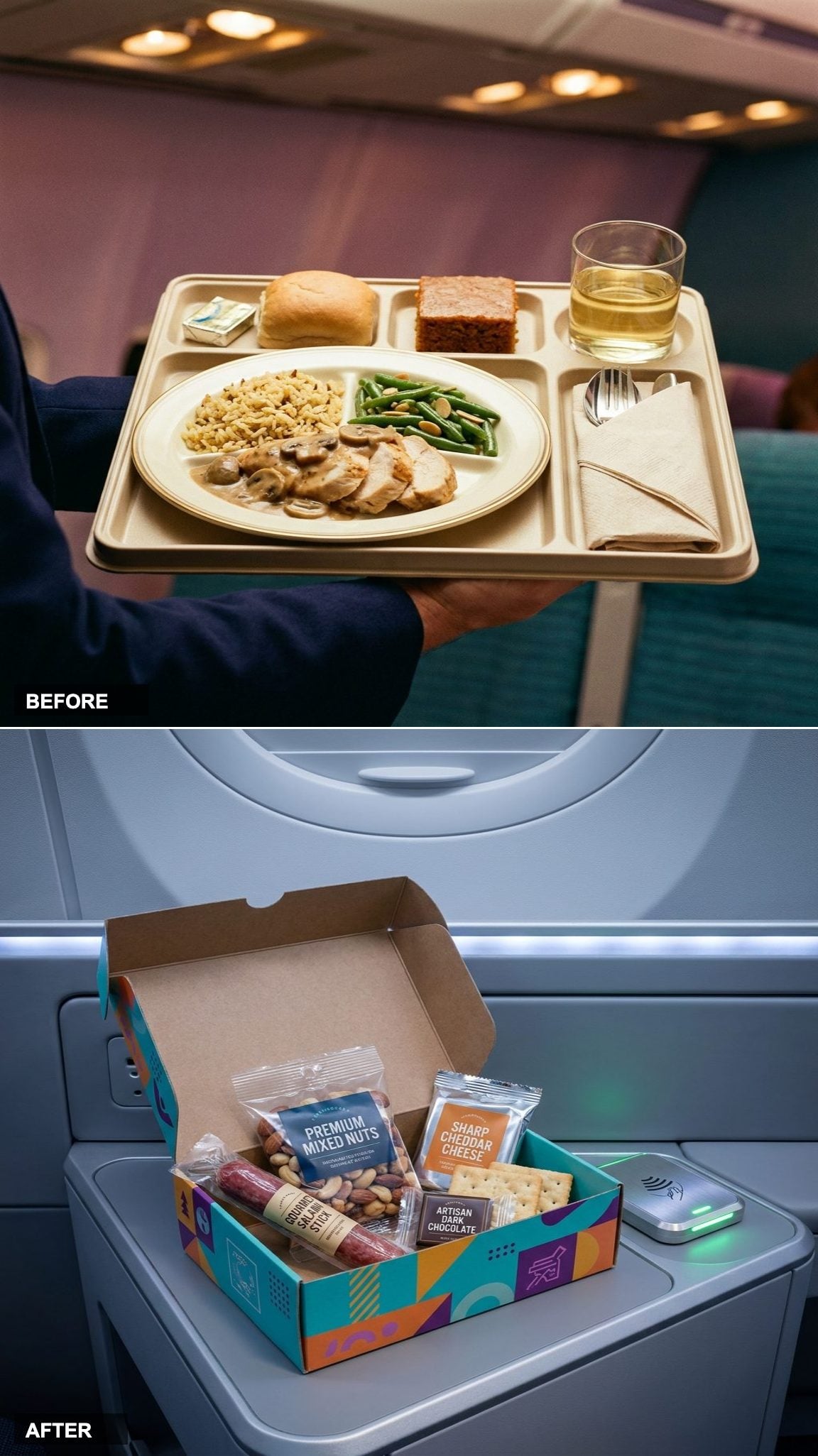
The 1985 tray was laid out like a restaurant plate. Compartments for the main, the starch, the vegetable, the bread, the dessert, the wine. Somebody in a test kitchen in Kansas City had figured out how to make chicken with mushroom sauce taste acceptable after being reheated in a convection oven at altitude, which is a real problem with real constraints, and they cracked it.
The modern equivalent is a cardboard box the size of a paperback with a salami stick in it. You pay twelve dollars. You eat it in eleven minutes. Nobody solved anything except the packaging.
18. Real China Plates in the Back of the Plane
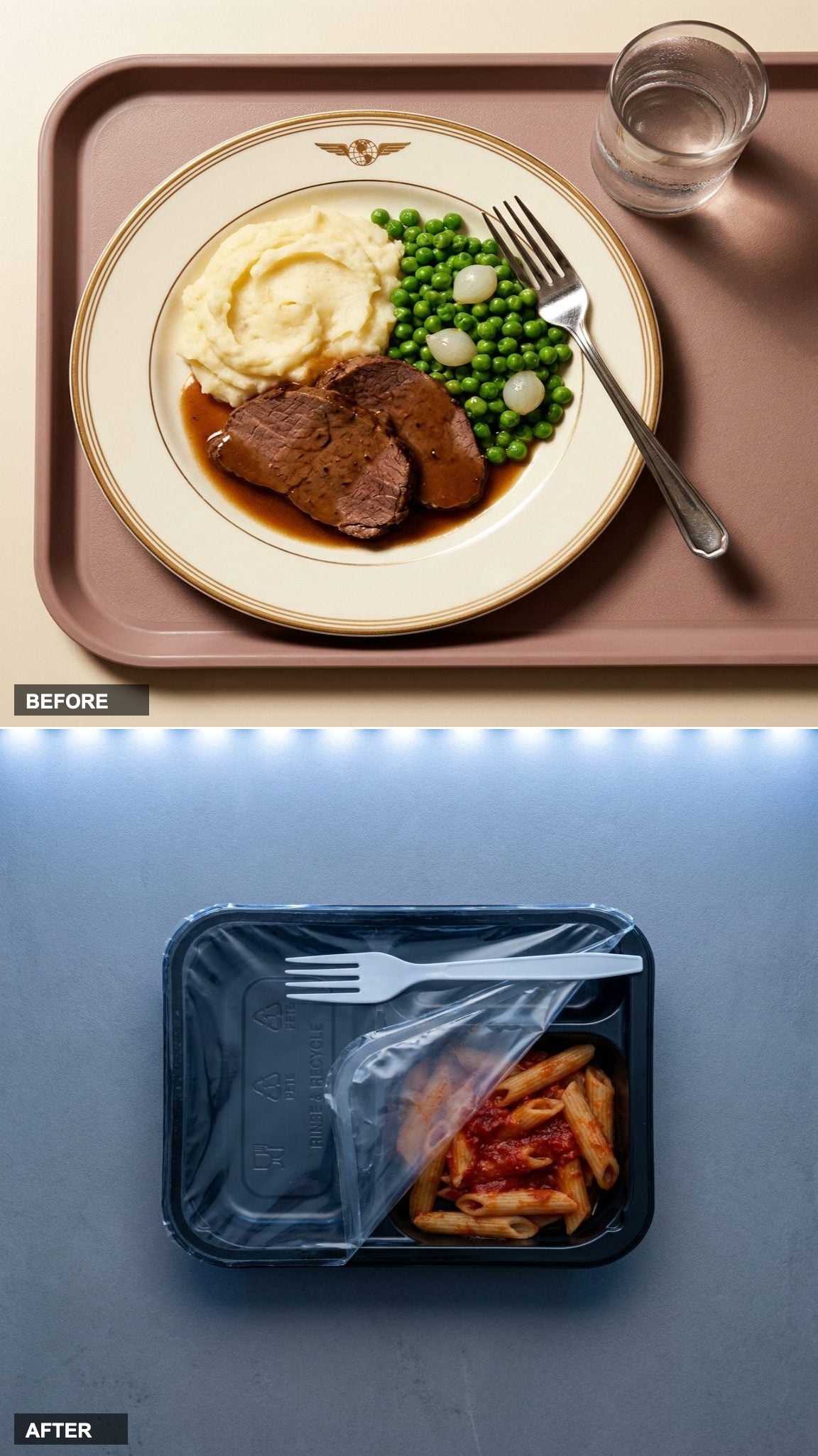
Cream porcelain. Thin double gold band. A tiny airline crest at the twelve o’clock position. The plate had weight in your hand and it made a small sound when the fork touched it, and you were sitting in coach.
Now you peel back a film lid on a black plastic tray. Forty minutes later the whole thing goes into the trash bag a flight attendant is walking down the aisle. Arguably more defensible environmentally. Undeniably sadder.
17. Metal Cutlery You Could Actually Cut With
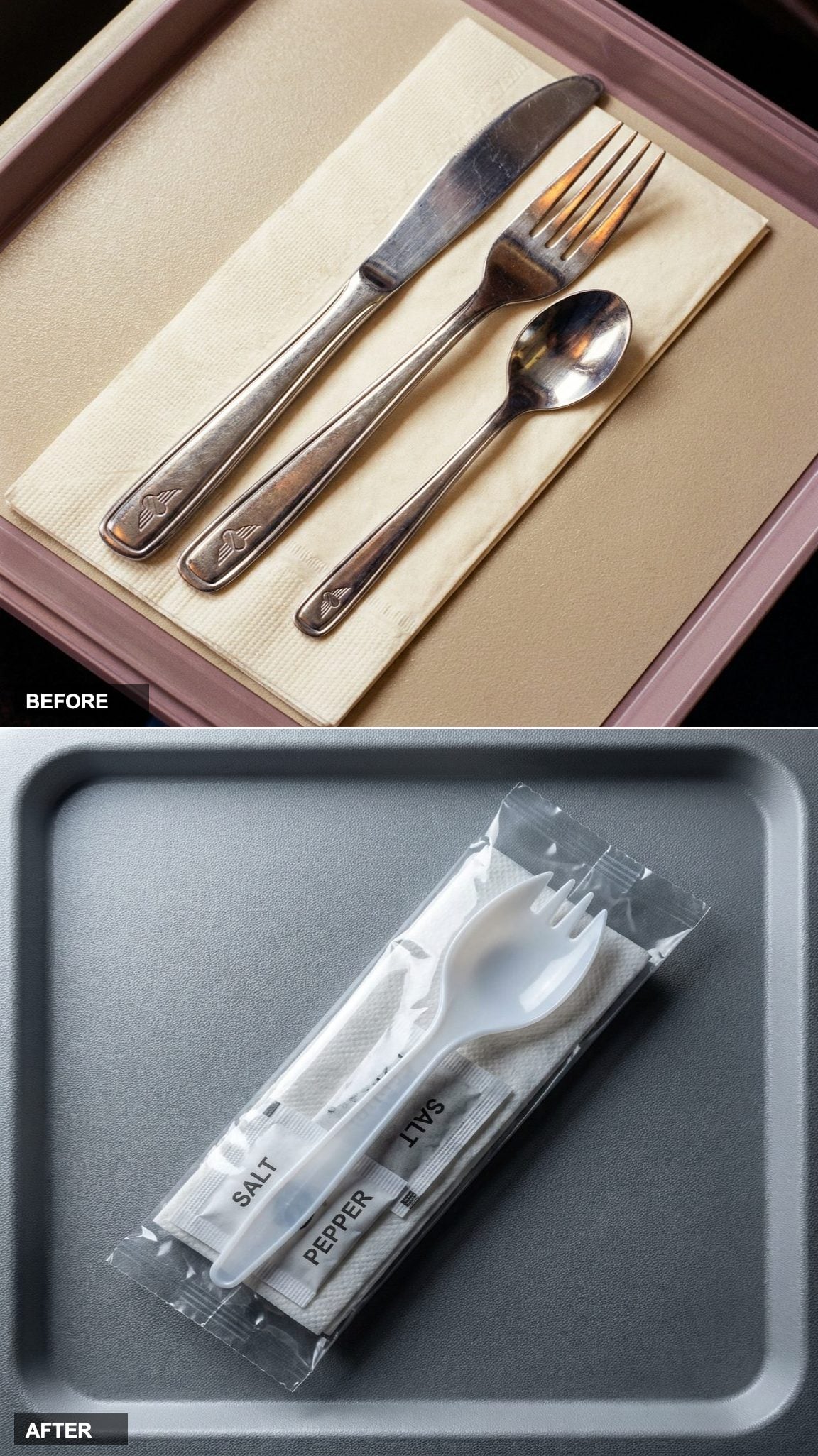
A real knife with weight in the handle. A fork whose tines wouldn’t fold on you when you pushed into a piece of chicken. A spoon that felt like a spoon. And on each one, a small airline logo embossed so quietly you’d miss it if you weren’t paying attention.
Then September 2001 happened and the knife left coach forever. What replaced it is a plastic spork sealed in a plastic sleeve with a plastic salt packet, and it bends if you try to cut a chicken breast with it. So you don’t get chicken breast anymore. Problem solved.
16. Glass Drinkware at Cruising Altitude
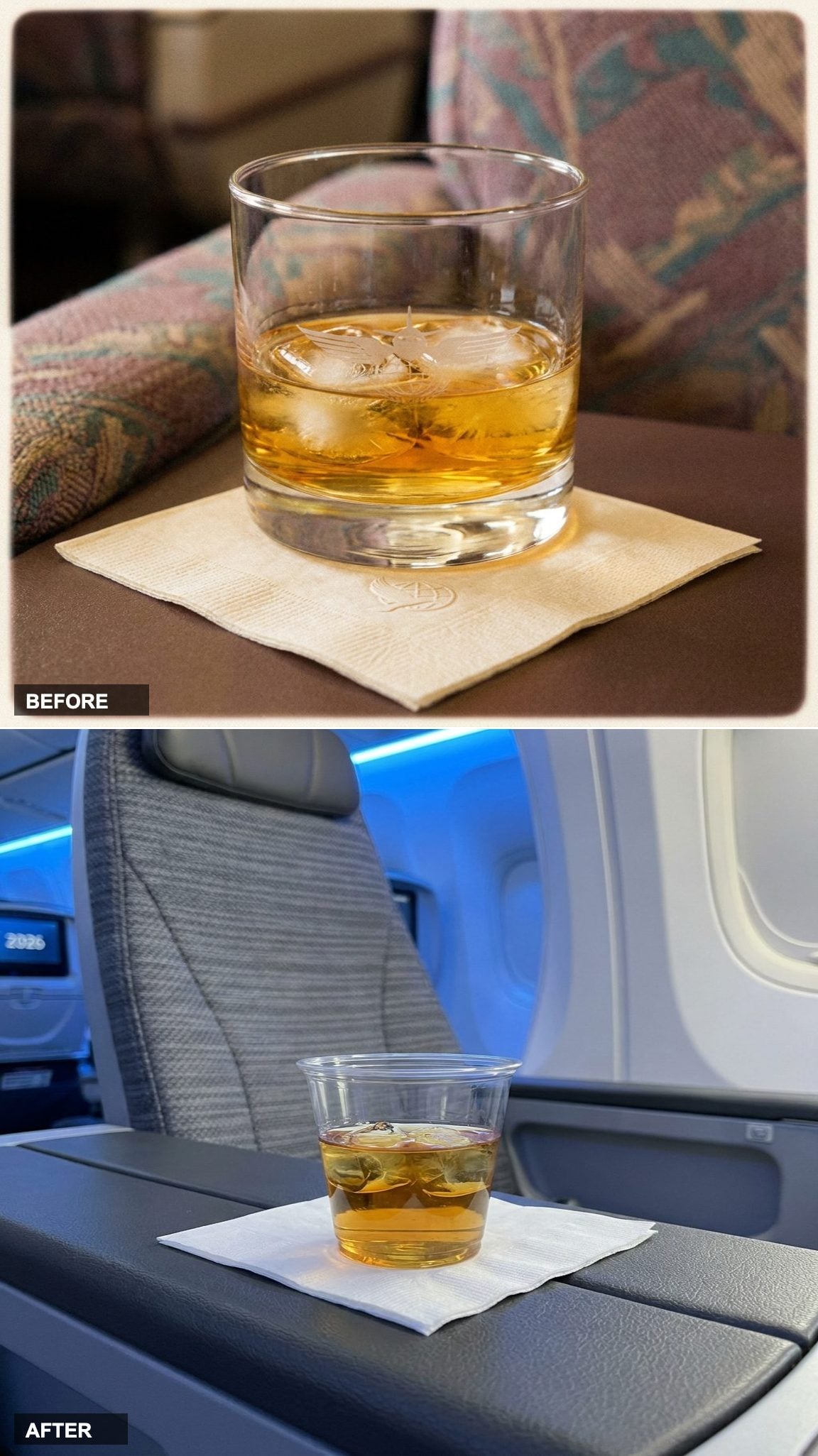
Short glass tumbler with an etched crest. Two ice cubes. An inch and a half of whiskey. A cocktail napkin with the airline’s logo in the corner. That was a drink in coach in 1985 — the glass had weight, caught the light, and made a small sound against the tray table when you set it down.
Now it’s a plastic cup that flexes when you hold it too tight.
15. The Complimentary Cocktail Cart
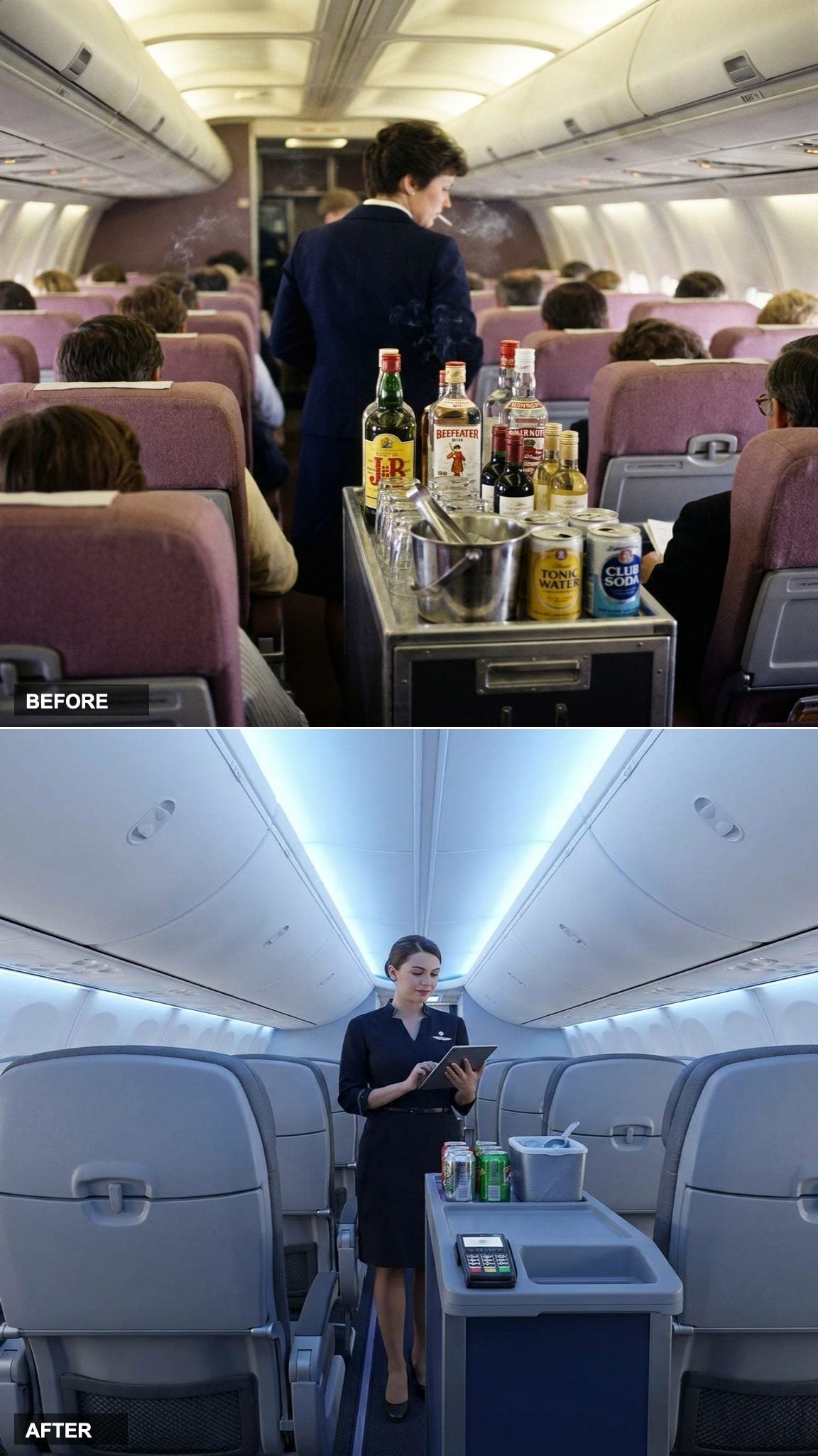
Two free drinks minimum on any flight over an hour. Cocktail napkin, glass tumbler, actual bottles on the cart, and if you asked nicely on a slow flight you might get a third pour that was closer to a double. Wine came in small bottles the size of a shot glass. If you were sitting near a window at sunset with a plastic-free glass of Chardonnay and a cigarette — yes, a cigarette — you understood why people liked flying.
Today: nine bucks for a mini bottle. Tap your card. No ice unless the cart still has some.
14. The Elaborate Meal Service Down the Aisle
🔥 Would you like to save this?
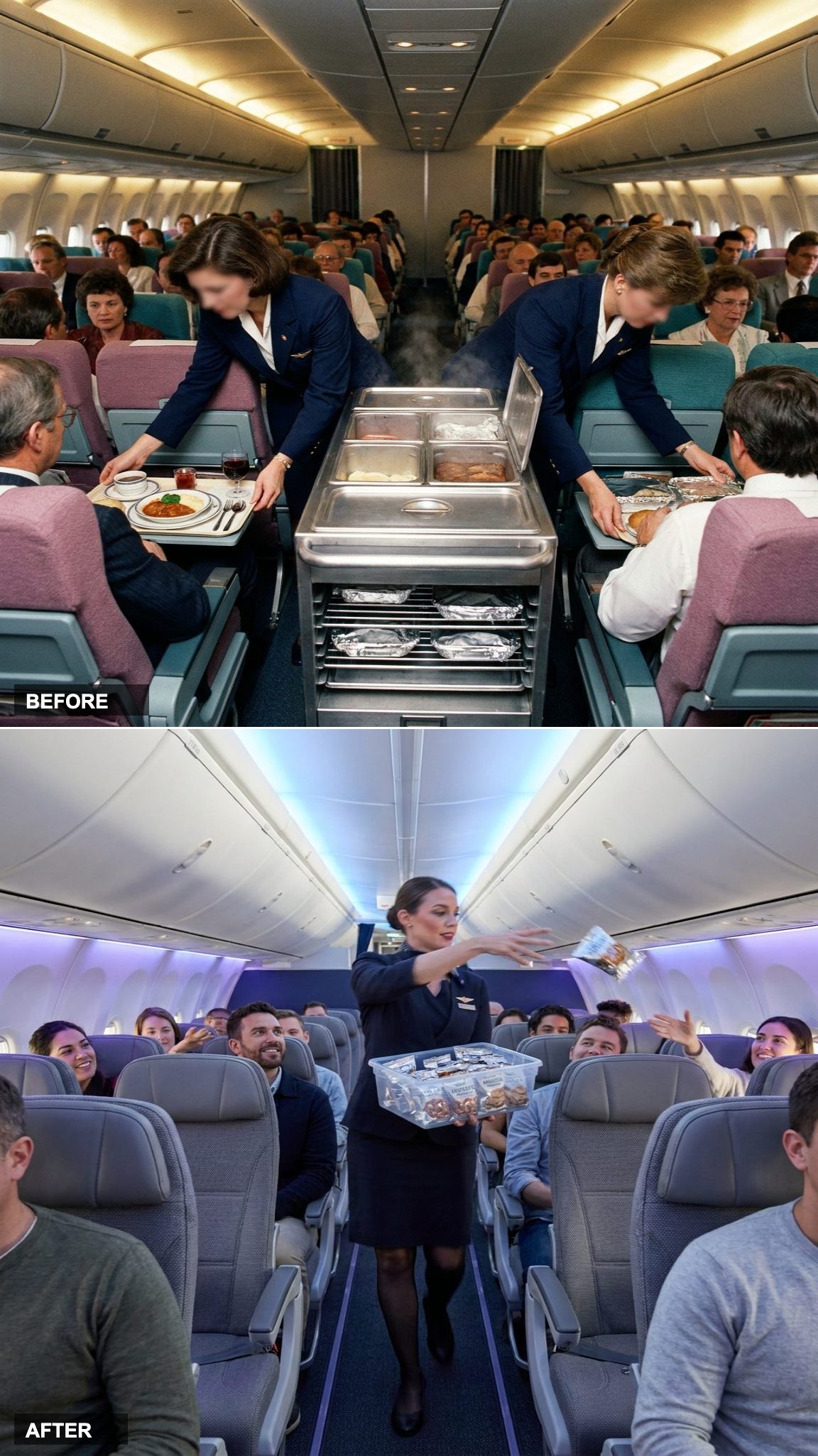
Meal service in 1985 was an event that ate most of an hour. Two flight attendants working a full cart, hot entrees, choice of chicken or beef, wine poured from a real bottle, coffee and tea afterward with a small dessert on the side. The cabin smelled like food. People put their books down. Something was happening.
Now the whole thing takes eleven minutes. One attendant walks the aisle with a bin, drops a pretzel bag on each tray, and is gone. Efficient. Undeniably. The event is over.
13. The Paper Boarding Pass and Ticket Jacket
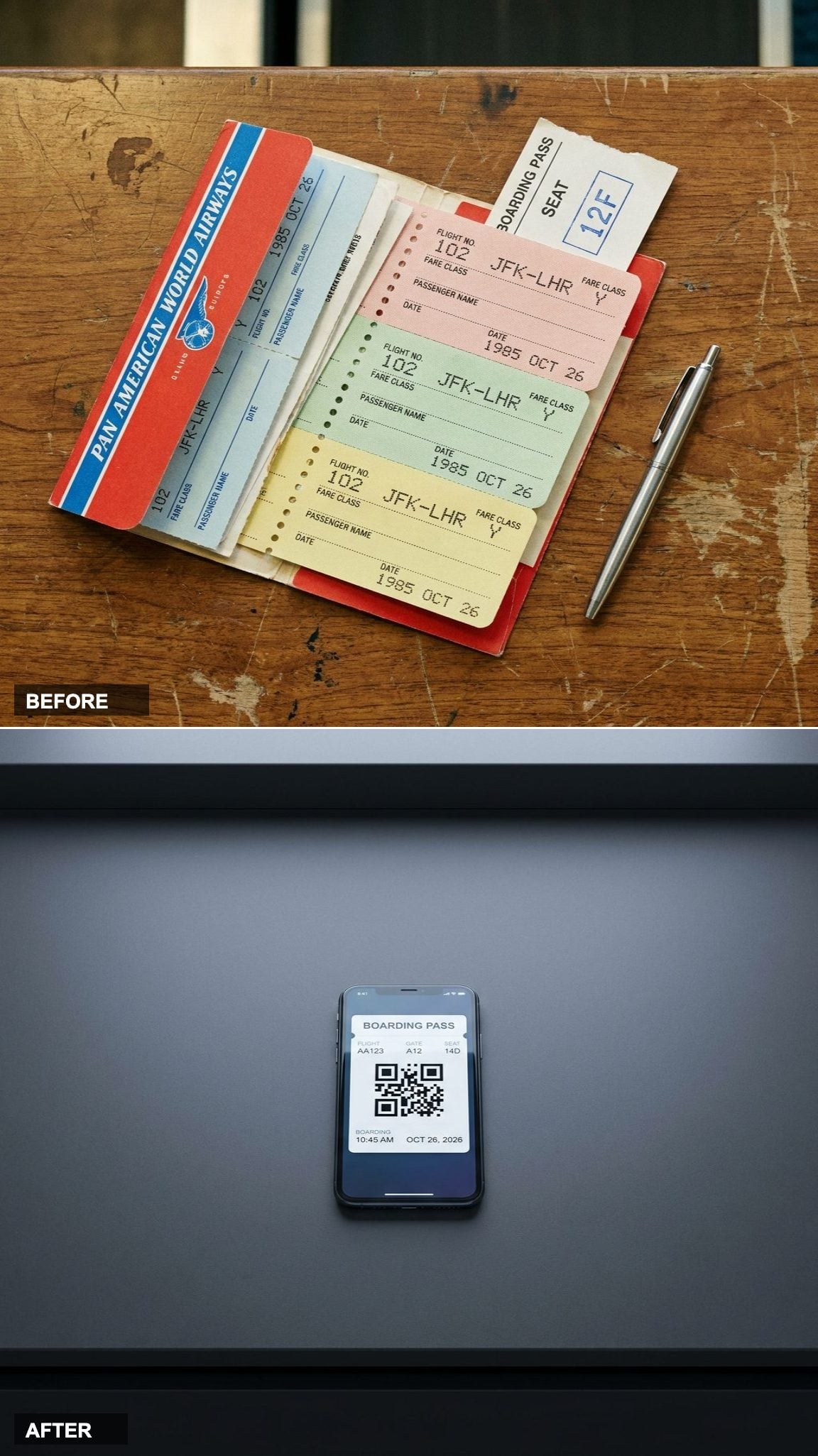
The ticket jacket was a small red-and-blue folder that held your entire trip. Multiple carbon coupons, one per leg, torn out by the gate agent and stamped as you went, and your seat written in blue ink by hand. Lose the jacket and you lost the trip. People carried them in inside jacket pockets like passports.
Now the whole thing is a QR code on a screen. Objectively better in every practical way. And yet nobody has ever kept a screenshot of a boarding pass in a shoebox for thirty years.
12. The Paper Airline Timetable in Your Coat Pocket
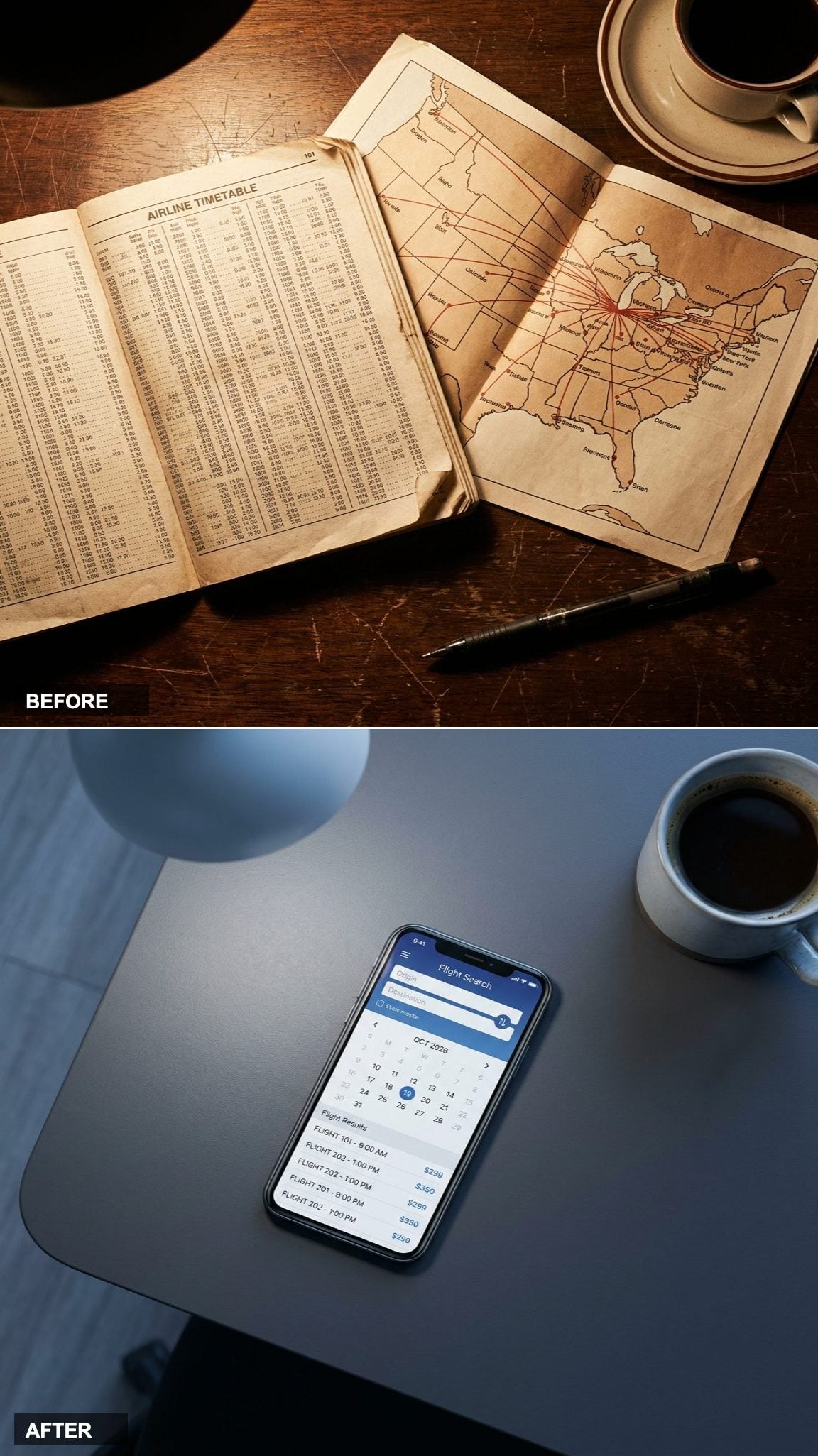
Every airline printed a timetable four times a year, free at the ticket counter, and you’d grab one, fold it into your coat pocket, and refer to it the way you’d refer to a bus schedule. The route maps were beautiful, honestly — stylized arcs across the country in the airline’s color, hub cities set in bold. People collected them.
The app on your phone does more, faster, with live pricing and seat maps and gate changes pushed to your lock screen. Nobody collects those. Nobody will ever open a drawer in 2055 and find a saved airline app and feel anything at all.
11. The Seatback Pocket: Magazines Then, Personal Screens Now
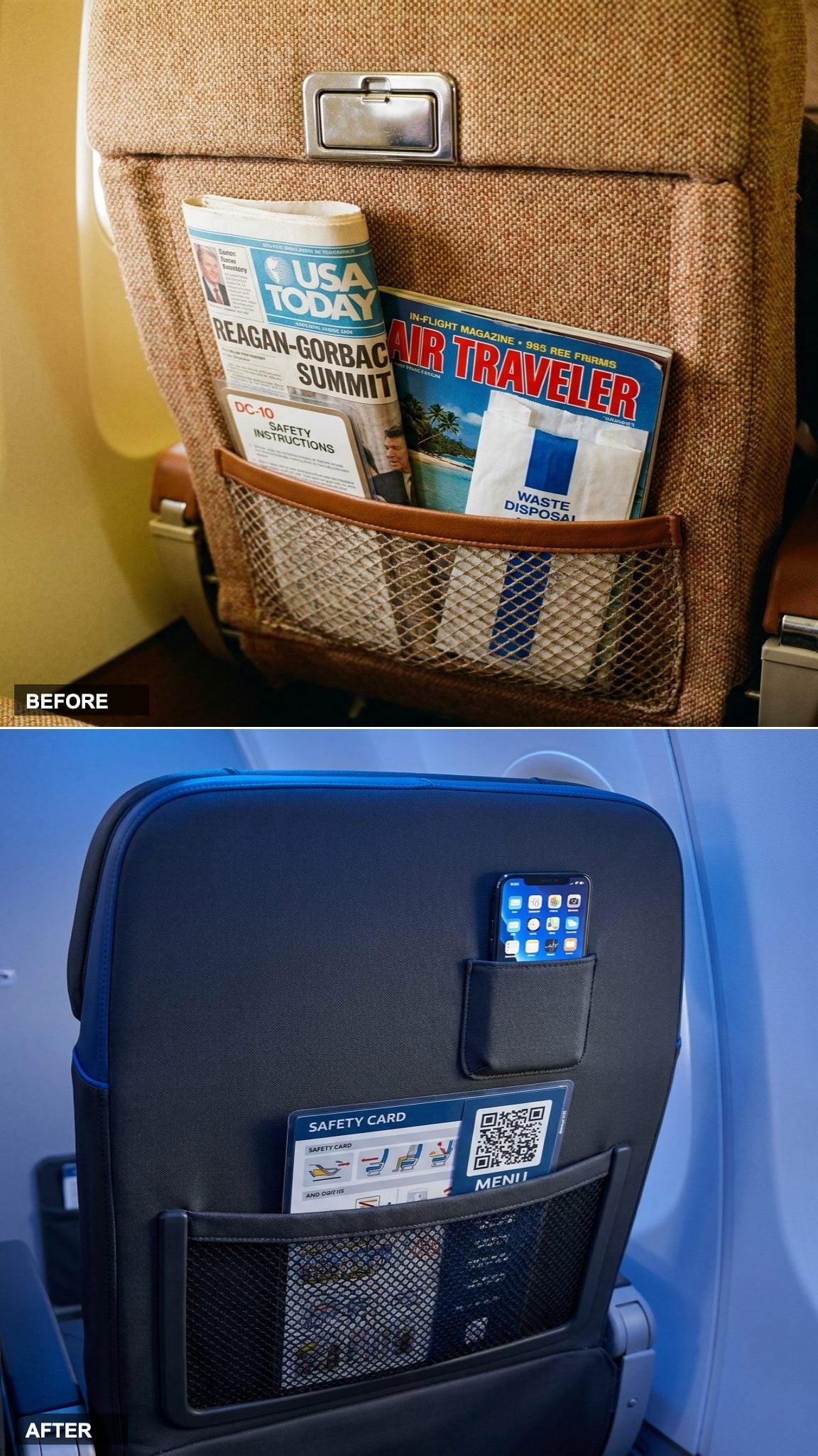
A 1985 seatback pocket was a tiny library crammed into mesh: Sky Magazine, a folded newspaper with somebody’s half-finished crossword, the laminated safety card everyone pretended to read, and the paper barf bag nobody wanted to think about. Clutter. But curated.
Now? A QR code and a plastic card telling you where the exits are. The magazine is a PDF you will never download, and the pocket exists mostly for your water bottle.
10. What Passengers Actually Did to Pass the Time
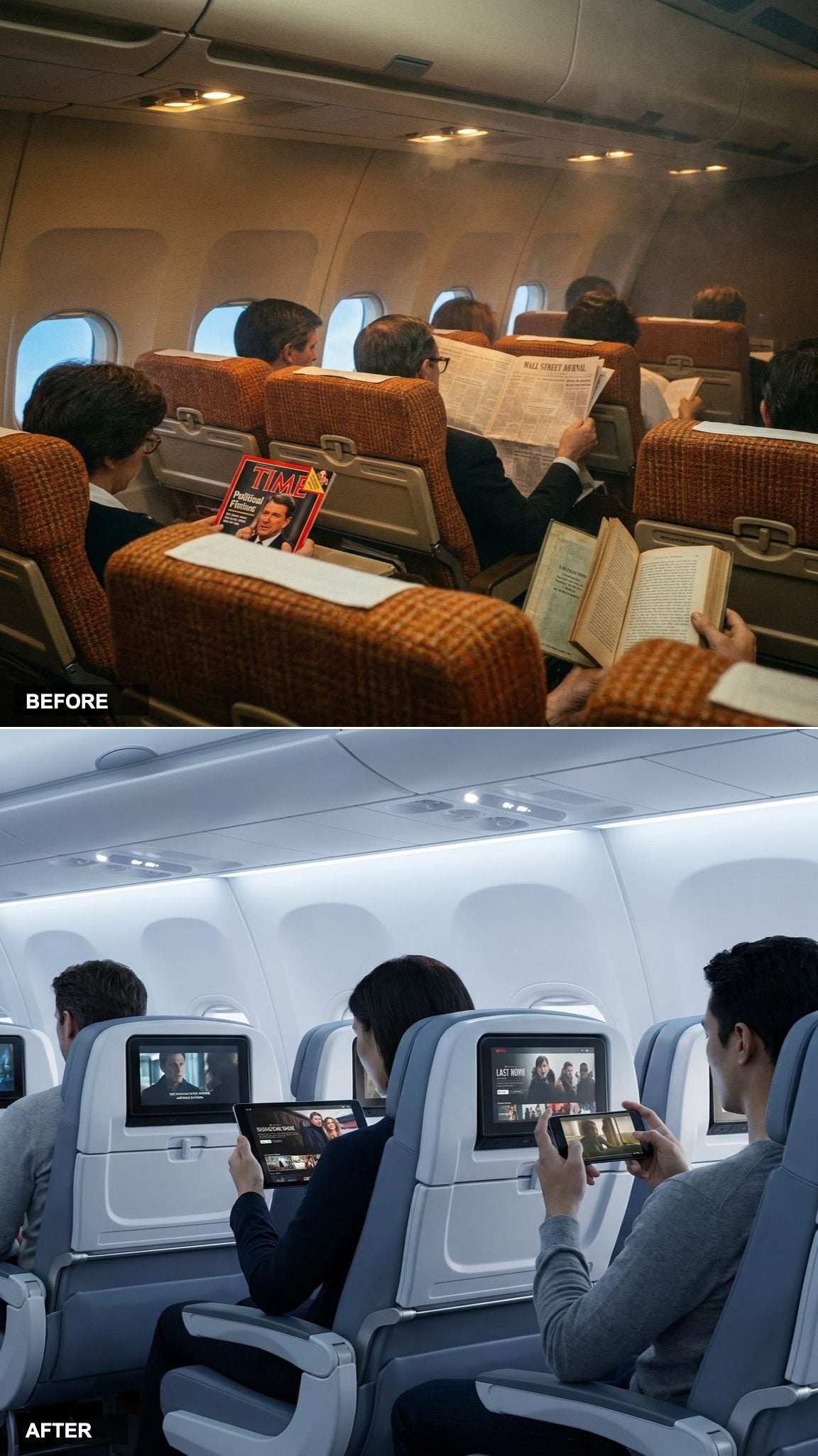
A 1985 cabin sounded like paper. Broadsheets wrestled into thirds so they’d fit above a tray table, paperback spines cracking, library hardcovers rustling in their plastic sleeves — all six hours of it, no guilt, because what else were you going to do?
Six hours today is streaming. Everyone watches something different. Nobody watches together.
9. How Kids Survived the Flight
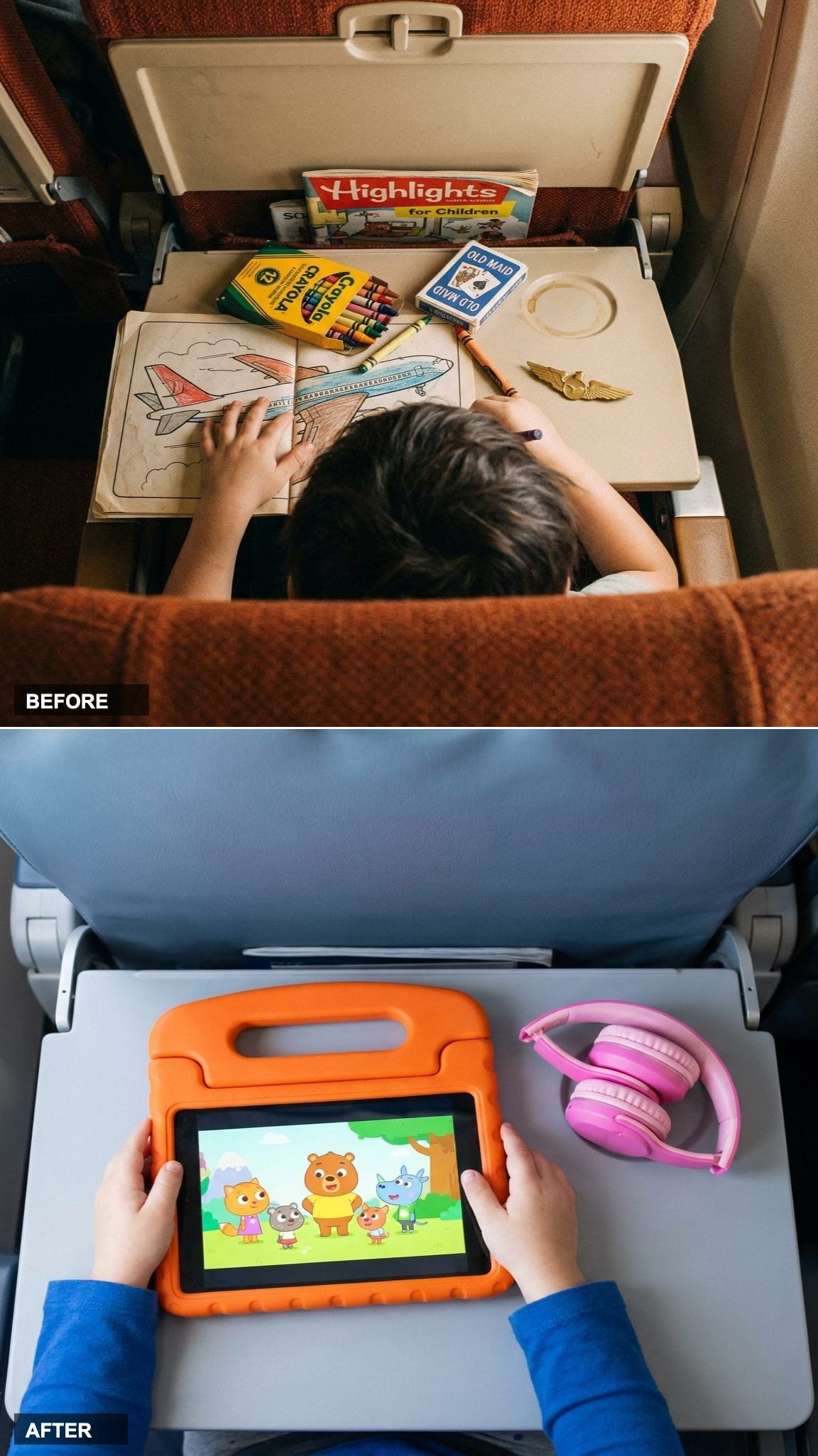
Kids on planes in 1985 arrived with a shoebox of stuff — crayons that rolled off the tray table and vanished under the seat forever, coloring books with airplanes on the cover, a pack of Old Maid, maybe a Rubik’s Cube if the kid was ambitious. Parents packed for six hours of active management and got it.
One tablet. One show on loop. One pair of headphones. Quieter. Cleaner. A little sadder.
8. Personal Electronics: Zero vs. Every Row
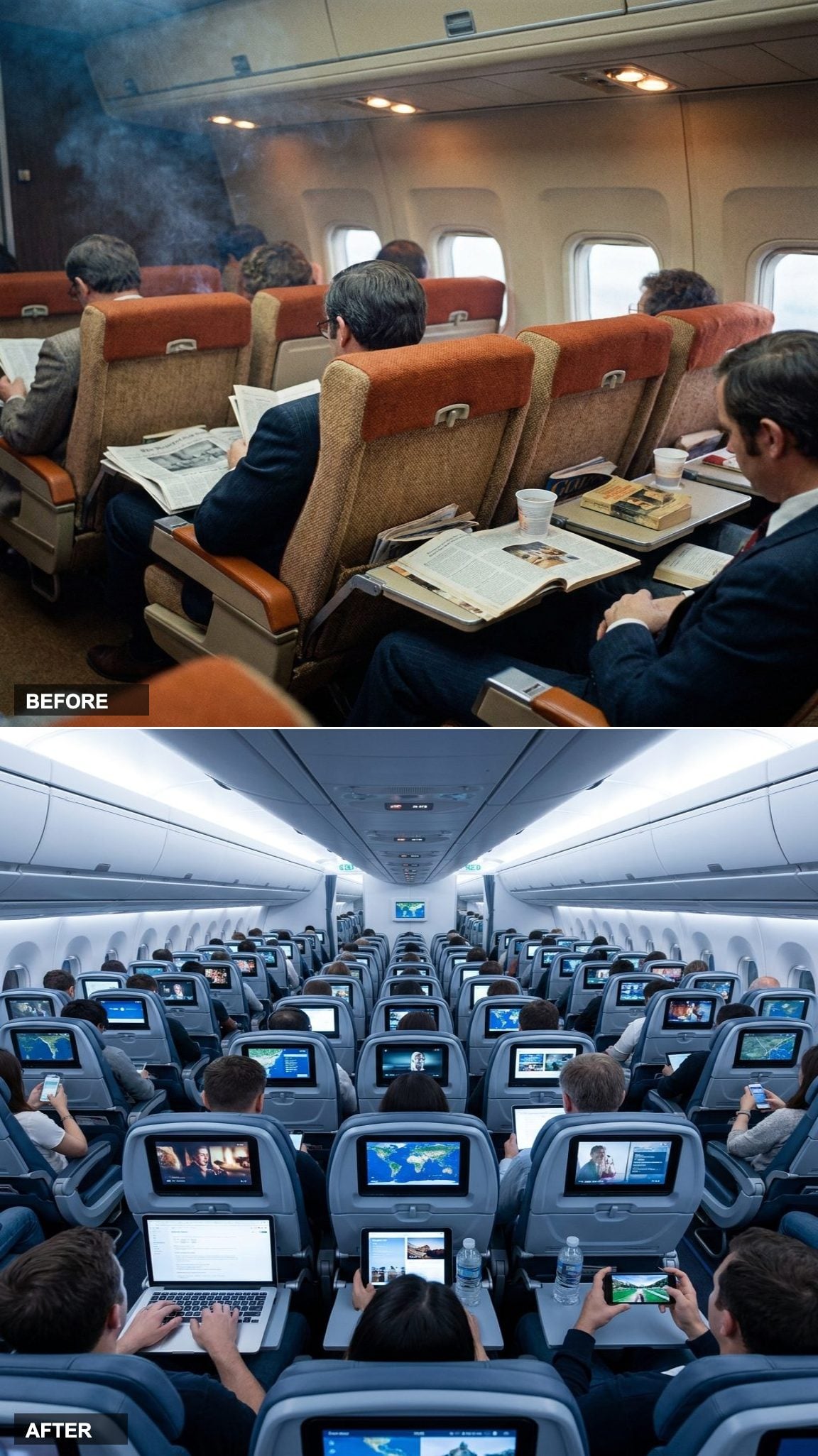
Nothing to plug in, because there was nothing to plug in. A Walkman was exotic in 1985. A calculator was a business tool. The cabin ran on paper, conversation, and the low drone of the engines.
The modern cabin glows blue. Forty screens, forty different shows. The engines are now quieter than the collective hum of everyone’s chargers.
7. The Overhead Bin, Then and Now
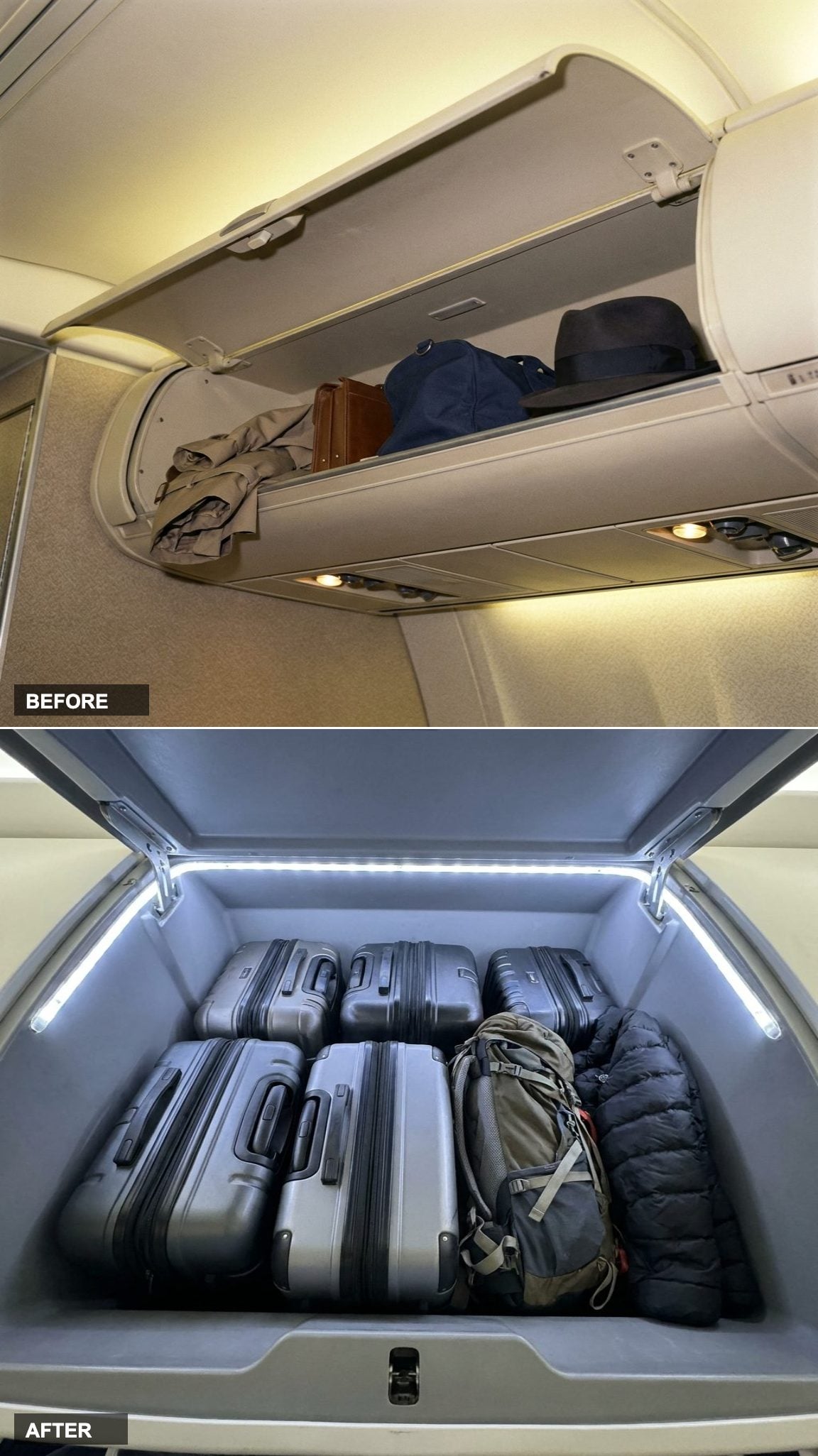
The old overhead was a shelf — coats, hats, a soft bag, designed for an era when your real luggage went below and you carried a book upstairs. Nobody fought over space because nobody needed much of it.
Modern bins are cargo holds. Deep, engineered, and somehow still not enough. Airlines charged for checked bags, passengers responded by never checking one again, and every flight became overhead Tetris.
6. Carry-On Bags: Soft Duffels vs. Hard-Shell Rollers
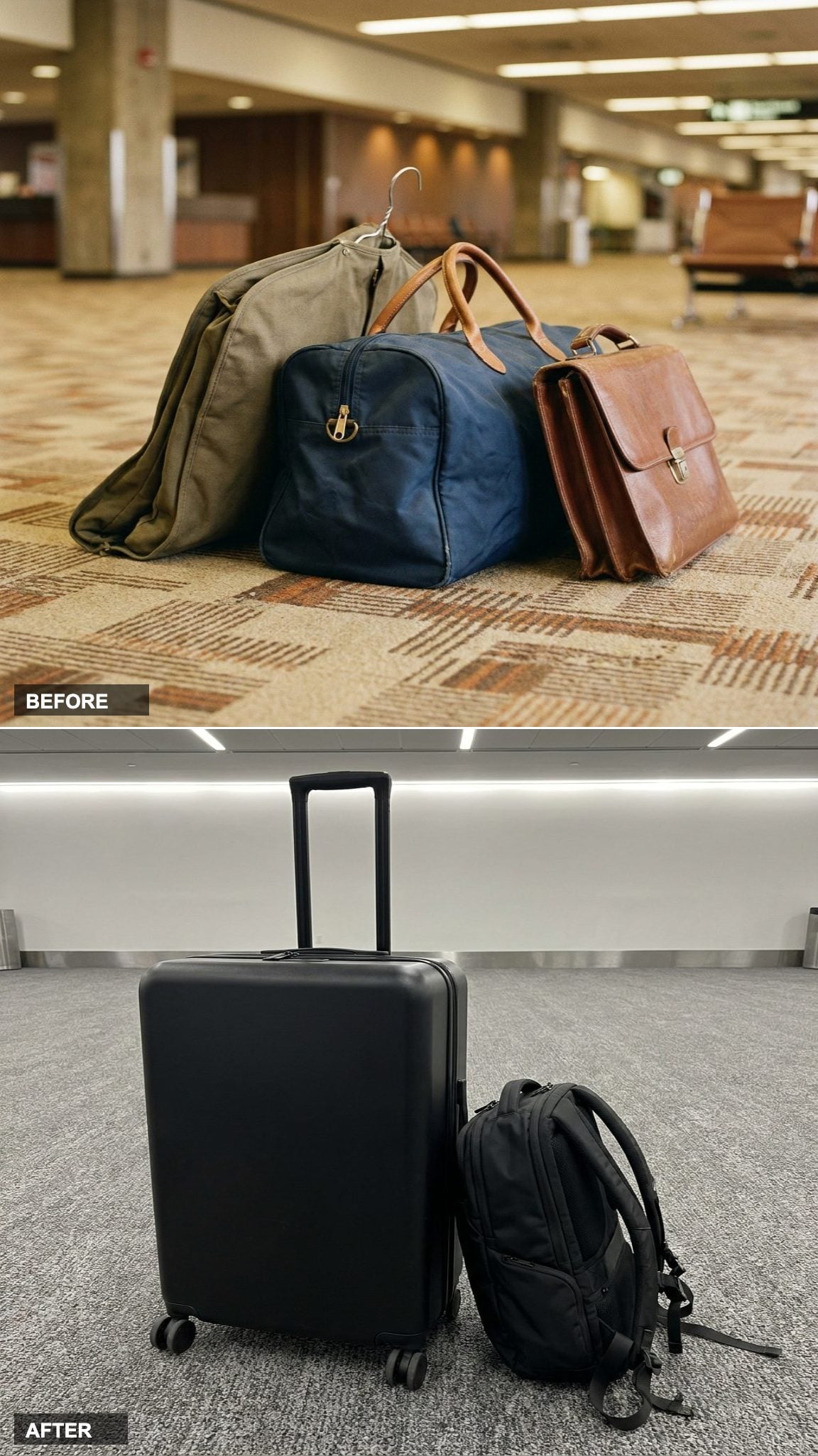
People used to carry their bags. Duffel over the shoulder, garment bag folded over the arm, briefcase in the free hand. You looked like you were going somewhere on purpose.
Everyone drags now. Wheels click across every terminal floor on earth at roughly the same frequency. More efficient. Slightly less human.
5. Boarding: Orderly Line vs. Aisle Gridlock
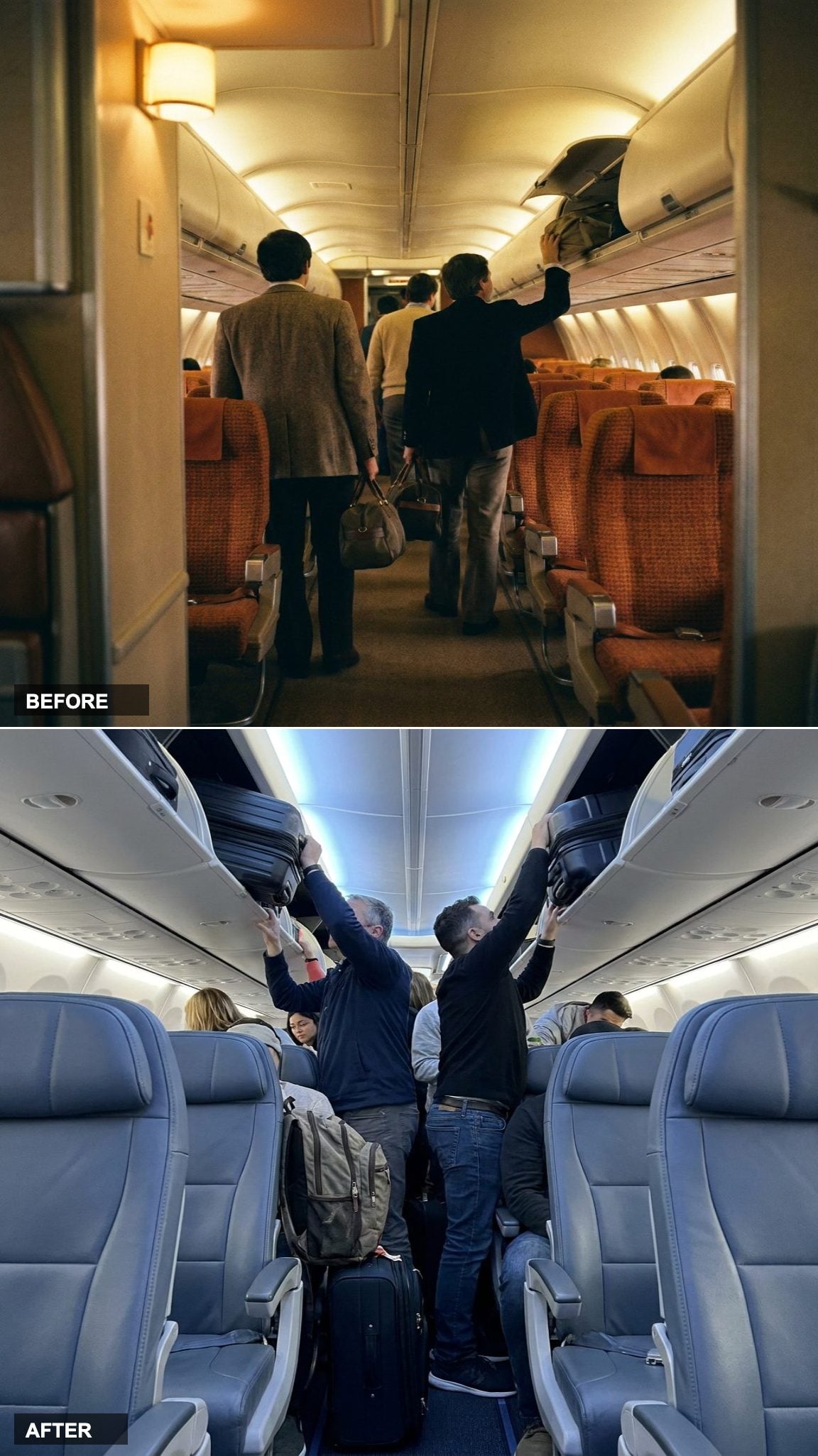
Boarding in 1985 took roughly twelve minutes because nobody had anything to stow. You walked to your seat, sat down, and read the paper until pushback.
Boarding today is a slow-motion traffic jam that eats forty minutes and everyone’s patience. Every row has one person standing in the aisle rotating a bag ninety degrees, testing angles, negotiating with physics. Behind them, everyone else, waiting.
4. Overhead Bin Space: Half Empty vs. Zero Vacancy
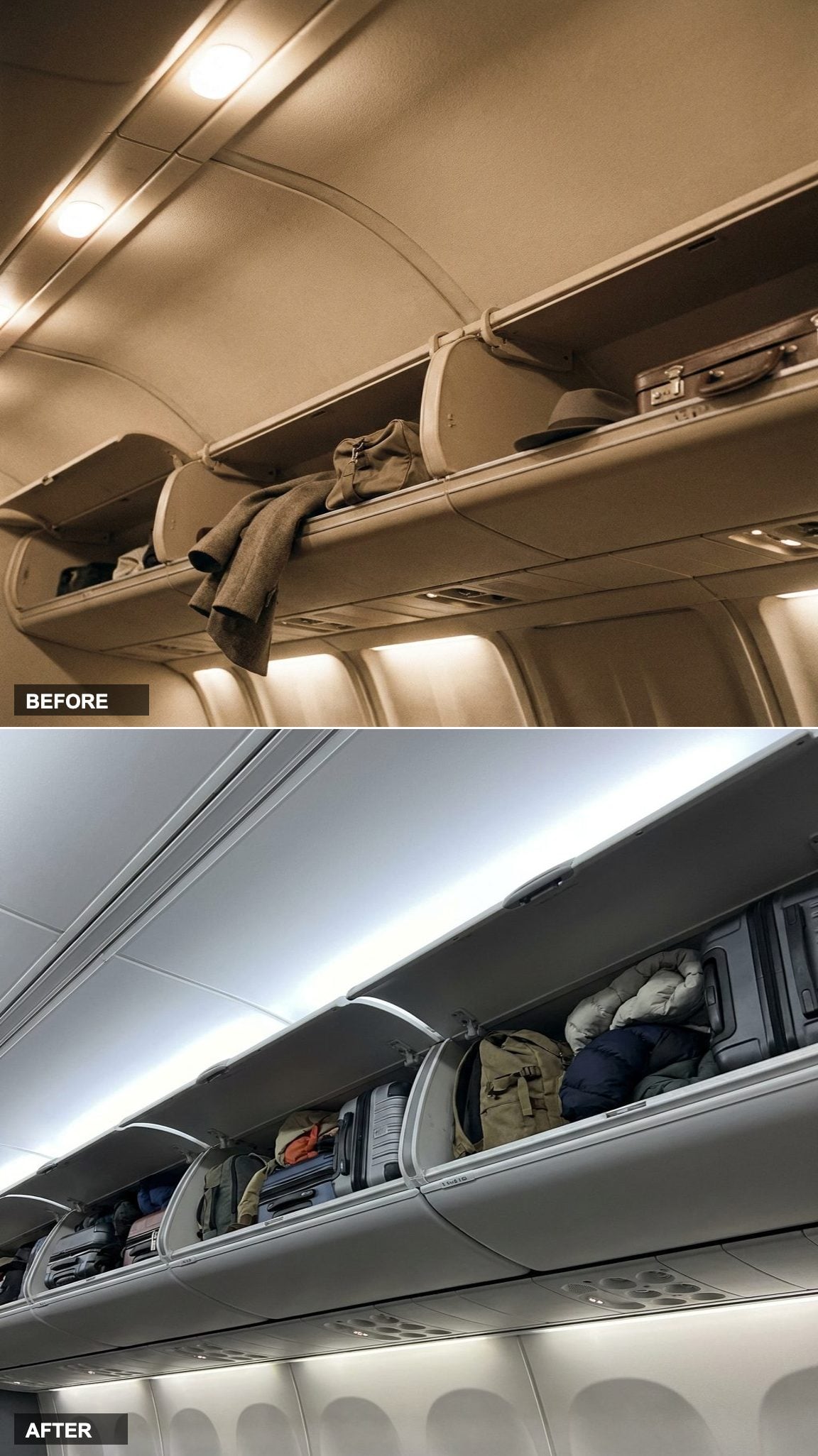
You could board a 1985 flight carrying nothing and still find room in the overhead ten minutes after boarding started. The bins held extras, not essentials.
Miss the first three boarding groups today and your bag is going under the plane whether you paid for that or not. The gate agent announces it in the tone of a doctor delivering bad news.
3. Window Shades: Open for the View vs. Closed for the Screen
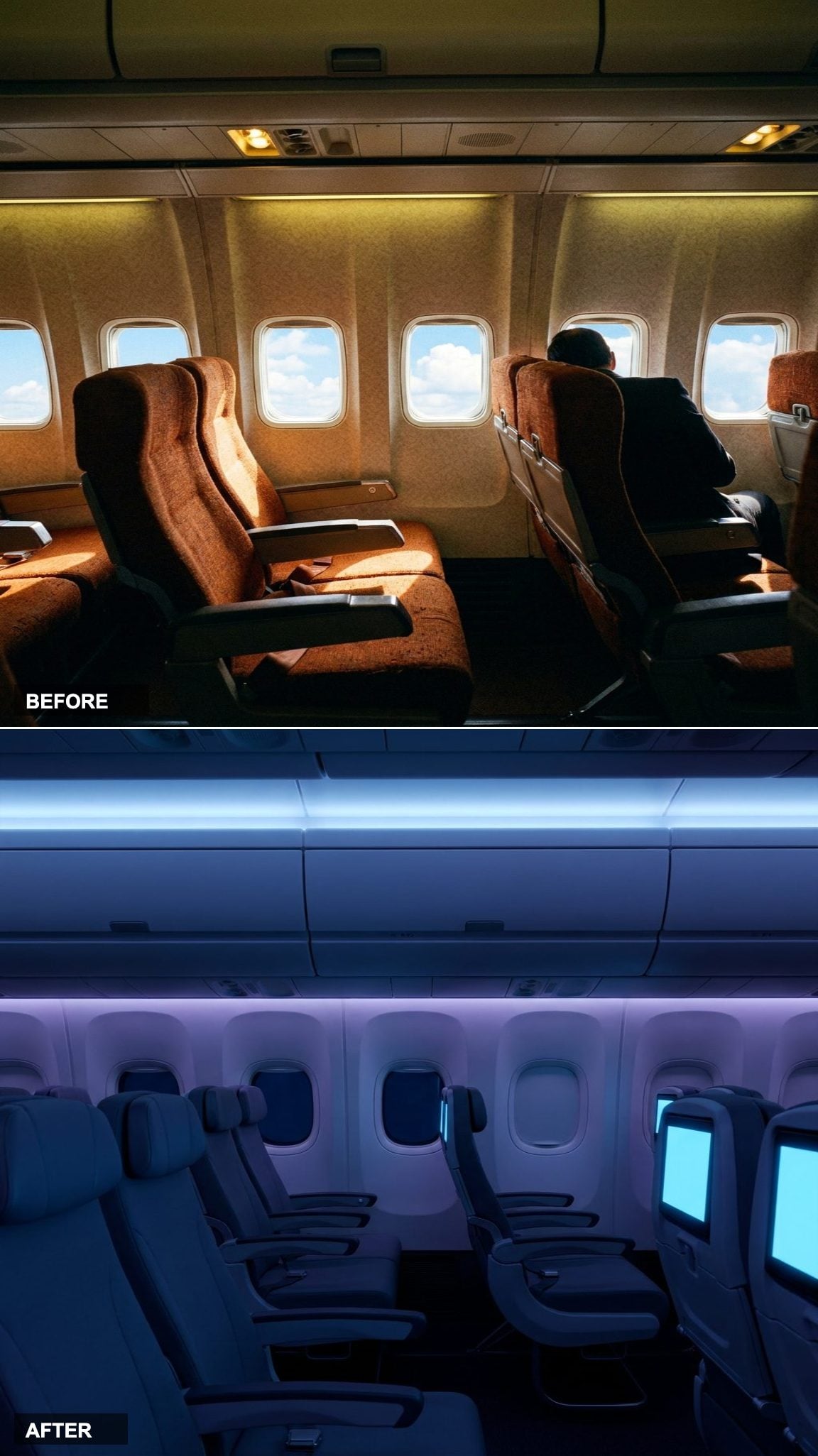
Flying used to be about the view. People requested window seats because they wanted to see something — the Rockies from 33,000 feet, the grid of Kansas at sunset, the coastline coming up on descent. Shades stayed up. That was the whole reason you were up there.
Shades come down at cruise now and stay down. Screen glare is the enemy. A whole cabin can cross the Grand Canyon in the middle of the afternoon and not one person looks out. The window seat is now just the seat with a wall.
2. The Overhead Signs: Glowing Amber Icons vs. Digital LED Panels
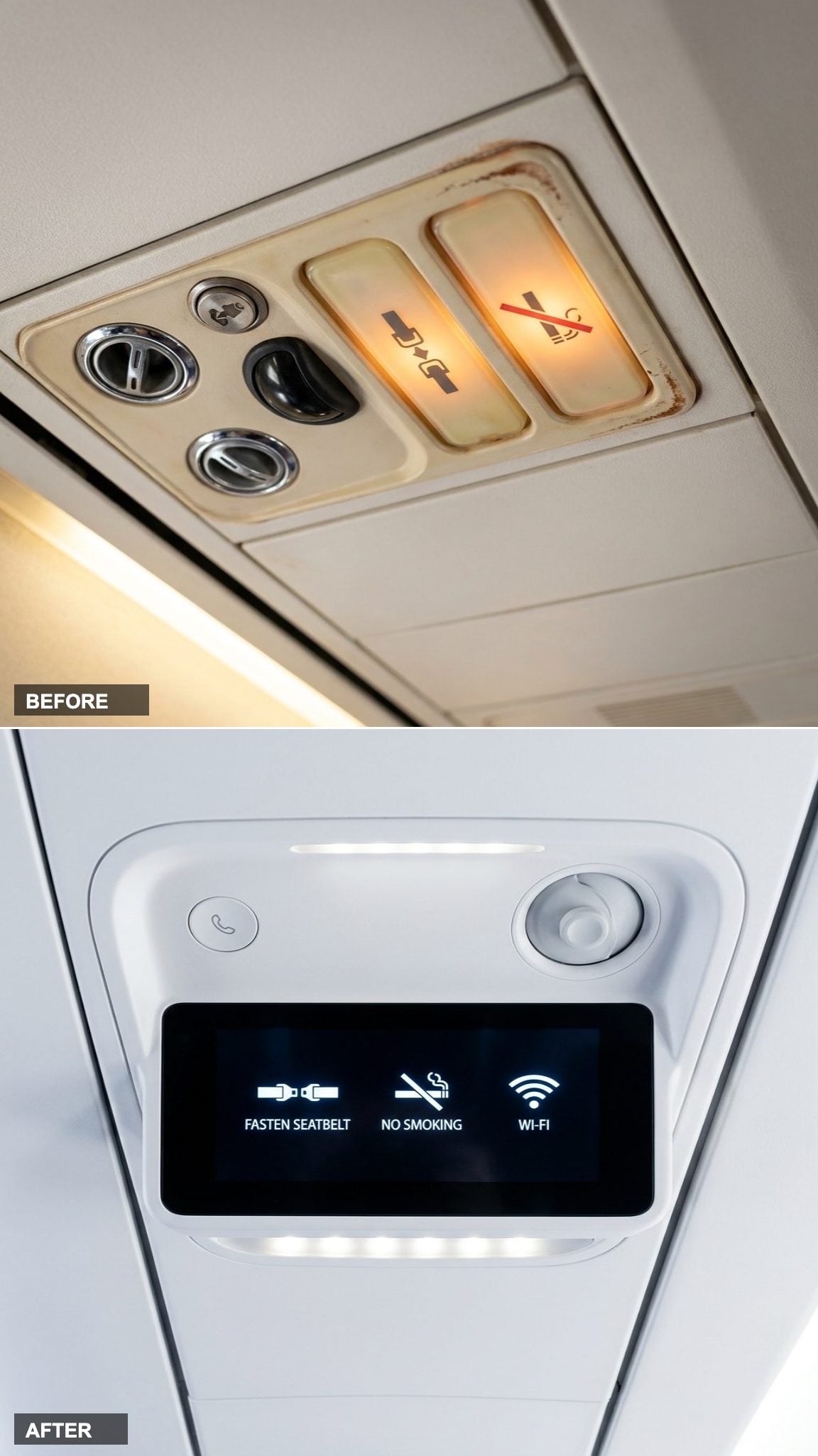
In 1985, overhead signs glowed the color of a nightlight — amber plastic, incandescent bulbs behind it, a little stick figure buckling himself in and a cigarette with a red slash through it. Those two symbols were the entire information system of your flight. The plastic yellowed from decades of cabin smoke, and nobody thought that was strange.
The 2026 version is a flat digital panel. Crisp white icons on black glass, animated when they change state, sometimes paired with a soft chime and a message on your seatback screen. Efficient. Legible from twelve rows back. Also completely soulless, in the way airport signage now looks like phone settings.
1. The Sound of the Cabin: Conversation vs. Silent Screens
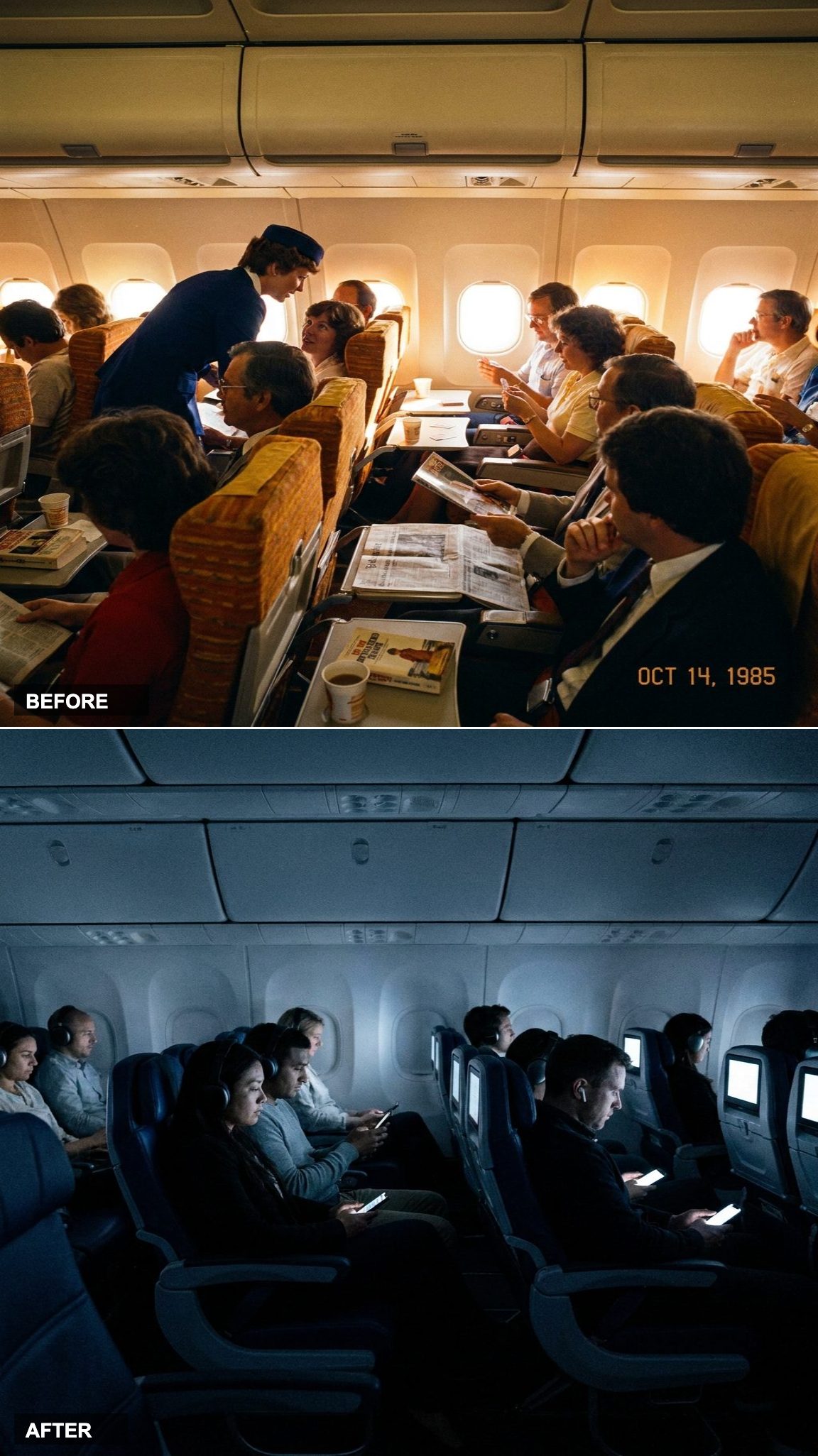
A 1985 cabin had a soundtrack. Conversation, rustling newspapers, the metallic click of a Zippo followed by a long exhale, playing cards being shuffled, a stewardess laughing at something a passenger said in 14B. Engine drone underneath all of it — present, but never dominant, because the humans in the tube were busy making their own noise.
Board a flight in 2026 and the cabin sounds like a library that gave up. Everyone is behind headphones. Everyone is staring at a screen, either the one on the seatback or the one in their hand. Two strangers can sit inches apart for six hours and never learn each other’s names. Something got optimized. Something else got lost.
The plane used to be a room full of people. Now it is a room full of screens with people attached.
🔥 Would you like to save this?
Please note that some of the imagery in this article were created with the aid of AI image generators.