
🔥 Would you like to save this?
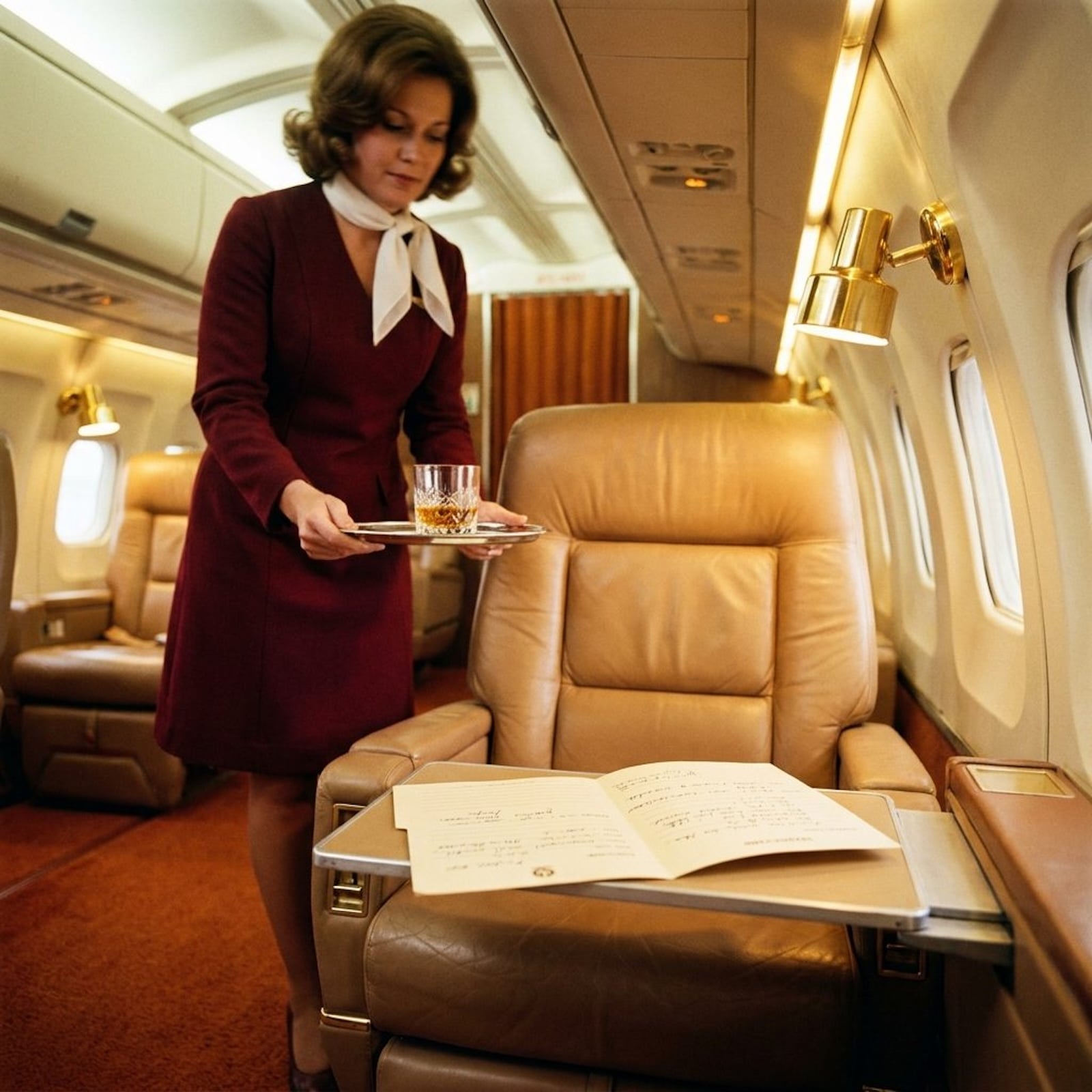
The seat was wide enough that you didn’t have to negotiate armrest rights with a stranger. The silverware had real weight. The flight attendant knew your name by the second drink. First class in the 1970s operated on a logic so different from today’s that describing it feels like explaining a foreign country, one that happened to be 35,000 feet in the air. Here’s what it looked like up there.
23. The Amenity Kit That Came in a Leather Pouch, Not a Ziploc Bag
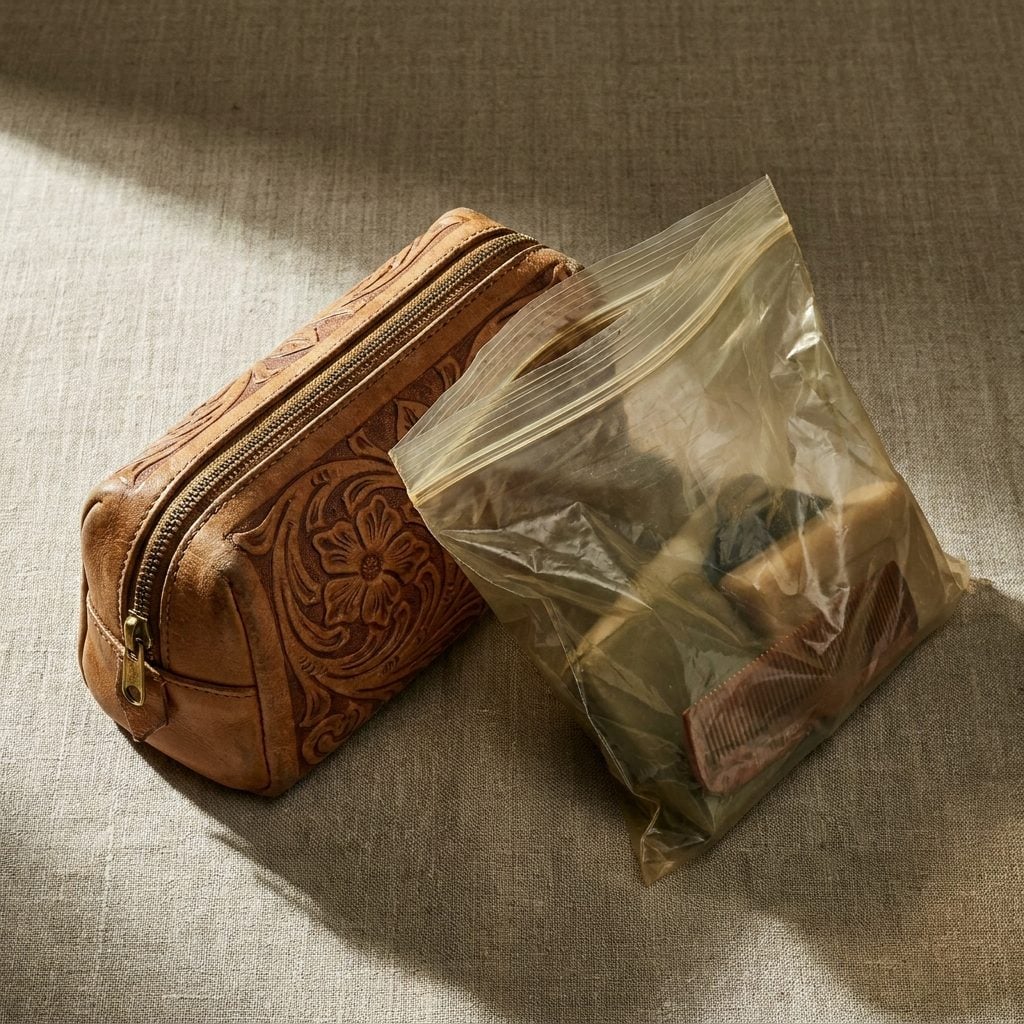
It was small enough to fit in a breast pocket and built like something you’d buy at a proper pharmacy or department store. The pouch had proper stitching and a brass clasp. Airlines sometimes sourced amenity kits from established leather-goods and cosmetics suppliers, giving the pouch more permanence than the contents strictly required.
You kept the pouch. It was made to last long after the toiletries were gone. The cologne lasted two weeks, the leather lasted twenty years. The whole thing cost the airline real money per passenger, and nobody seemed to think that was unusual.
22. The Full Bar Cart That Appeared Soon After Takeoff
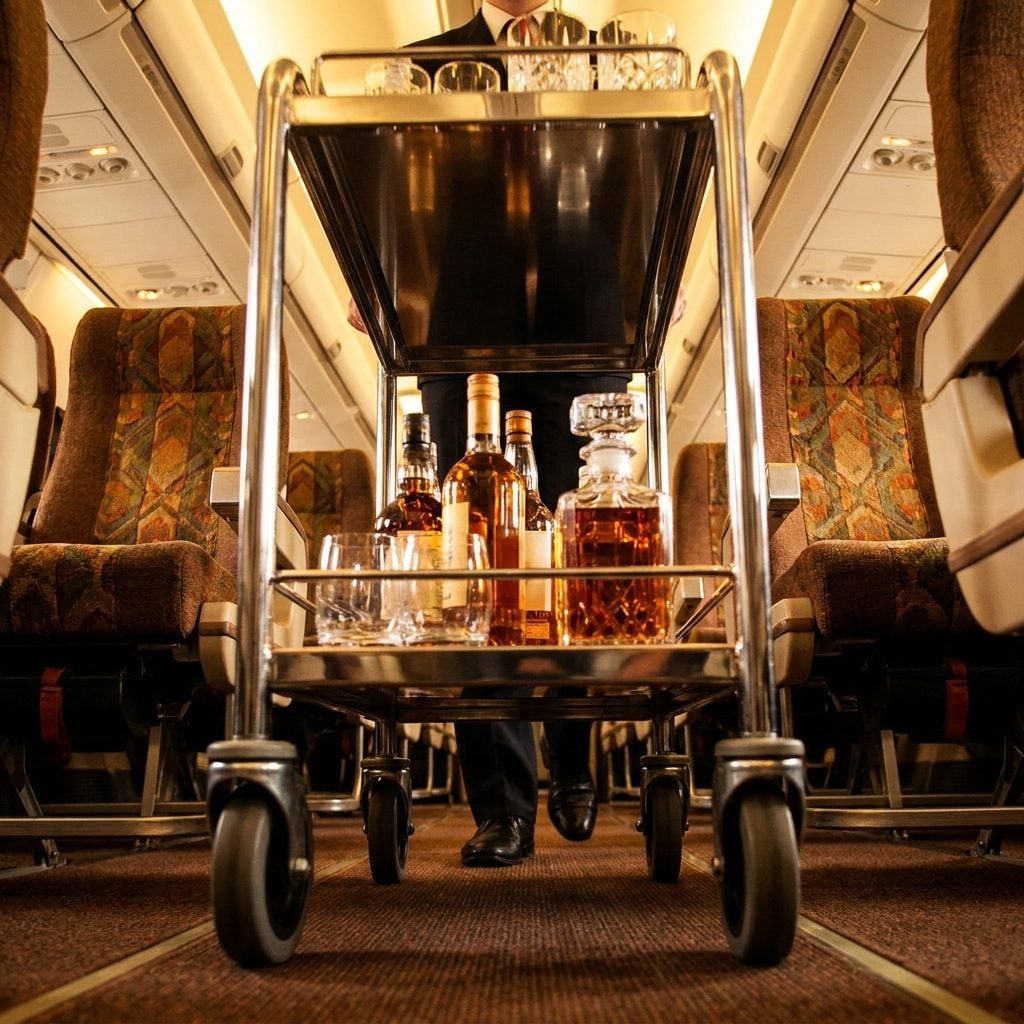
Once the cabin was released for service, out came full-sized bottles, an ice bucket with tongs, glassware, and the tools for a properly mixed drink. The cart itself was substantial, and the flight attendant measured, stirred, and garnished at your row.
The drinks culture in 1970s first class operated on the assumption that the passenger had a long flight ahead and expected a full bar rather than a quick handoff. That assumption, and the cart that came with it, is largely gone.
21. The Wool Blanket With the Airline’s Name Woven Right Into the Border
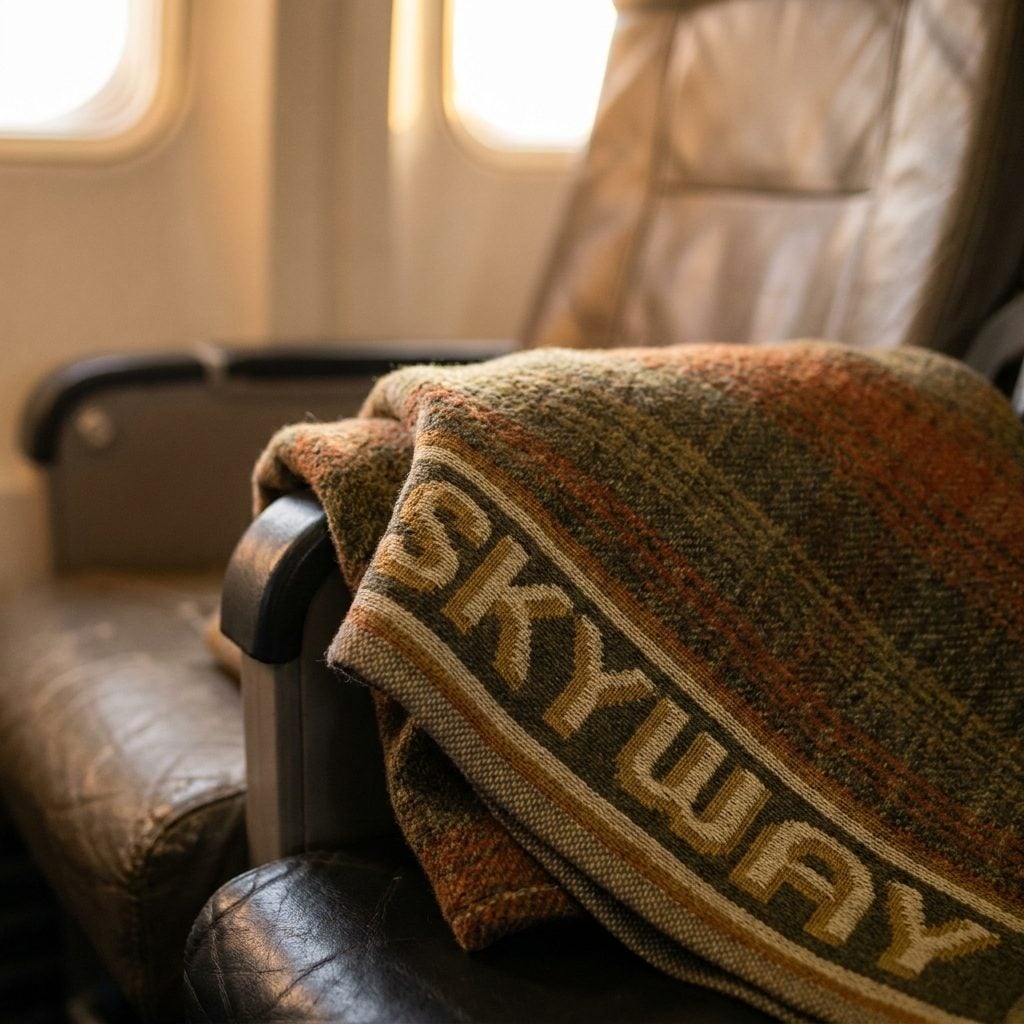
Heavy enough to keep you warm. The weave was tight, the wool was real, and the airline name ran along the border in a pattern that took a loom to produce. Patterns and colors varied by carrier, but these were substantial branded blankets rather than anonymous pieces of thin fleece.
Some passengers took them home, whether or not the airline approved. The fact that anyone wanted to keep one says something about the weight and quality of what had been handed out.
20. The Spiral Staircase to the 747 Upper-Deck Lounge
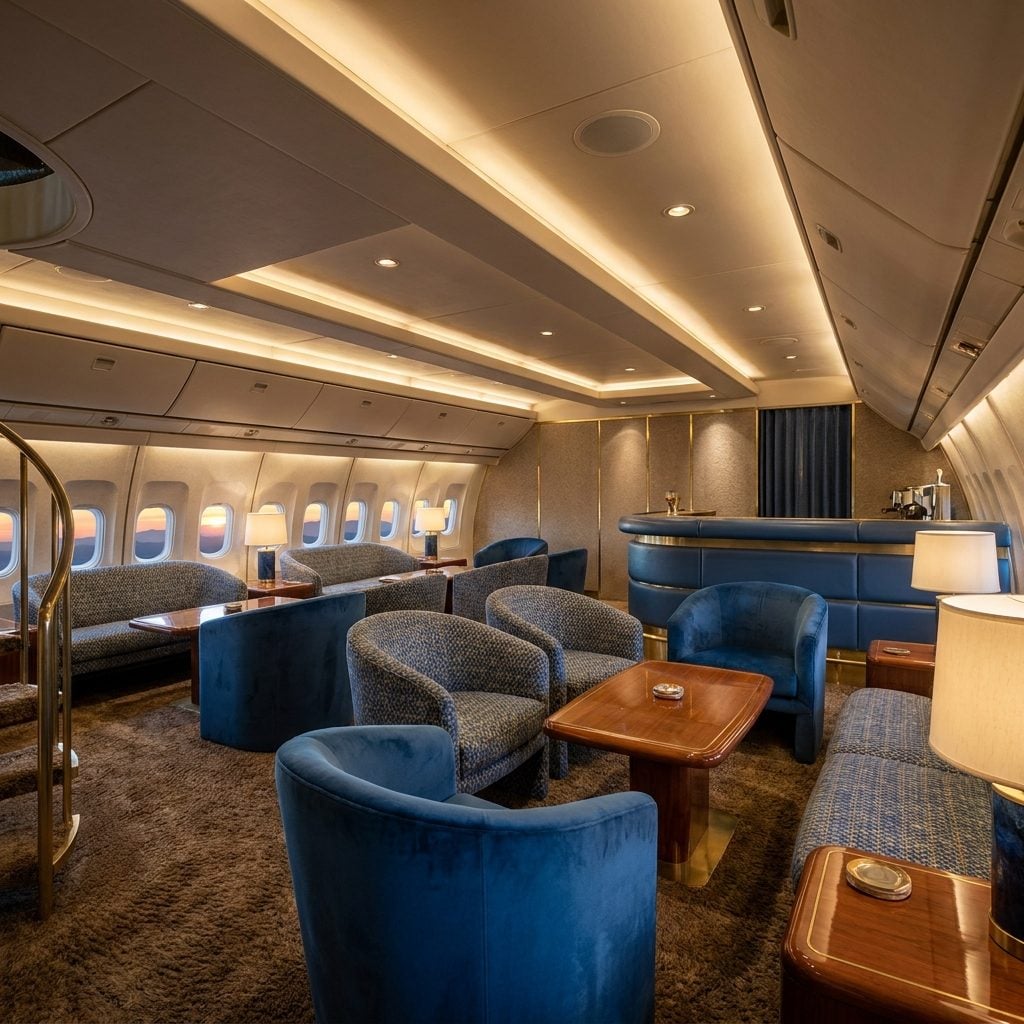
The 747’s raised cockpit created a small upper deck behind the flight crew, and early airlines turned that unusual space into lounges before later filling it with passenger seats. Pan Am’s carpeted spiral staircase became the most theatrical route upstairs.
At the top were low chairs, small tables, and room to stand with a drink and talk to another passenger. Some airlines also created social spaces elsewhere on the main deck, treating the widebody cabin as something more than a row of seats.
The lounges gradually disappeared as carriers realized the same floor area could hold more revenue seats. The math was real. So was the loss of standing at a bar high over the Atlantic with no particular reason to sit down yet.
19. The First-Class Cabin With Enough Crew to Make Service Feel Personal
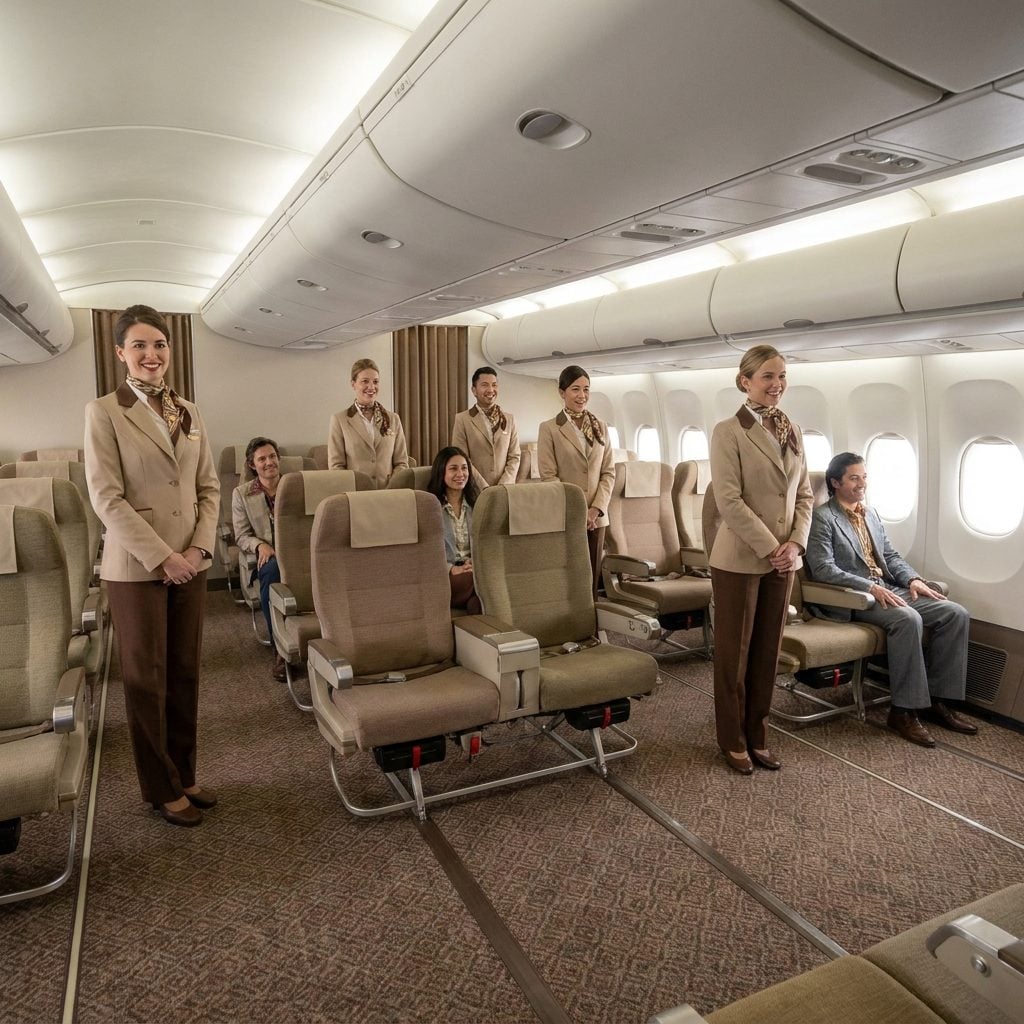
Widebody aircraft carried large cabin crews, and premium service involved enough hands to make the first-class cabin feel unusually personal. Attendants had time to mix drinks, serve several courses, reset tables, and remember preferences.
Not every crew member was assigned only to first class; the aircraft still had other cabins, doors, galleys, and safety positions to cover. Even so, the service pace could feel closer to a dining room than to today’s compressed domestic first-class routine.
18. The Freshly Pressed Linen Tablecloth Draped Over the Tray Table
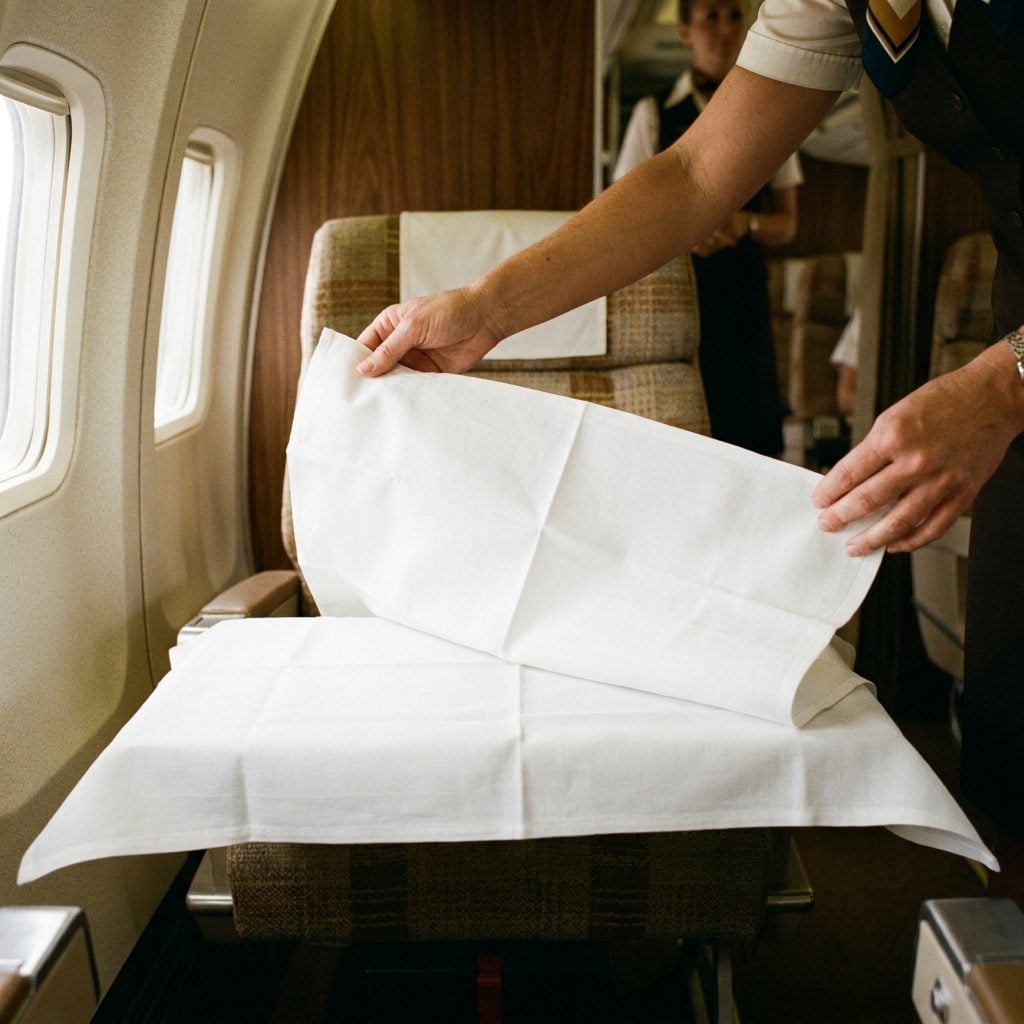
Freshly laundered and pressed linen was loaded for the flight, then draped over the tray table before the meal arrived. A small flower or other finishing detail sometimes joined the setting, turning a piece of aircraft hardware into something closer to a restaurant table.
17. Smoking and Nonsmoking First Class on the Same Aircraft
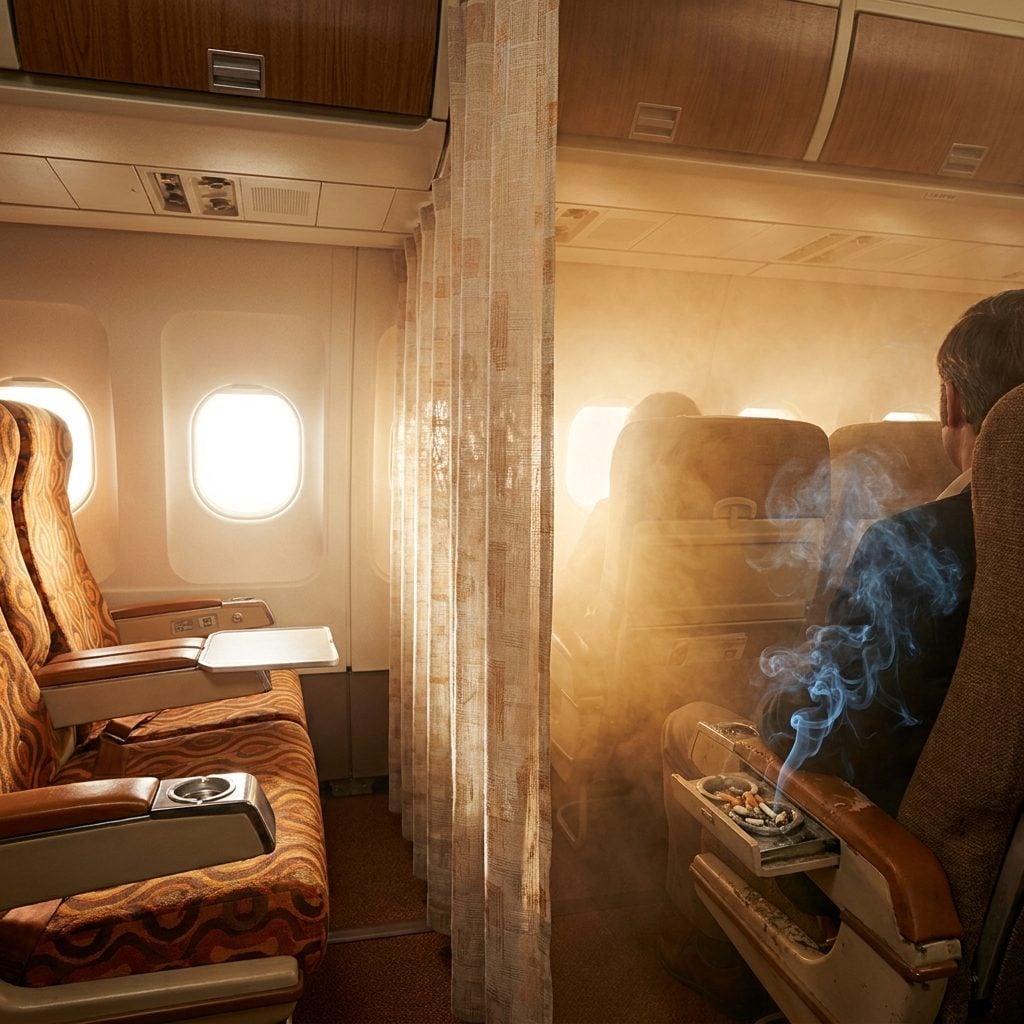
First class had a smoking section. Sometimes it had two sections, smoking and nonsmoking, separated by a curtain that stopped approximately nothing. You could book a seat away from the smokers, and the smoke would simply disagree with your choice and drift forward anyway.
The armrests had built-in ashtrays. Not tucked away, not an afterthought, machined right into the upholstery surround like a standard fixture, the same way cup holders are standard now. Flight attendants came by with a light if you needed one.
It sounds impossible from here. But for the better part of commercial aviation’s first four decades, this was the default, and nobody on either side of the curtain thought the arrangement was particularly strange.
16. The Carved-to-Order Roast Beef Rolled to Your Seat on a Silver Trolley
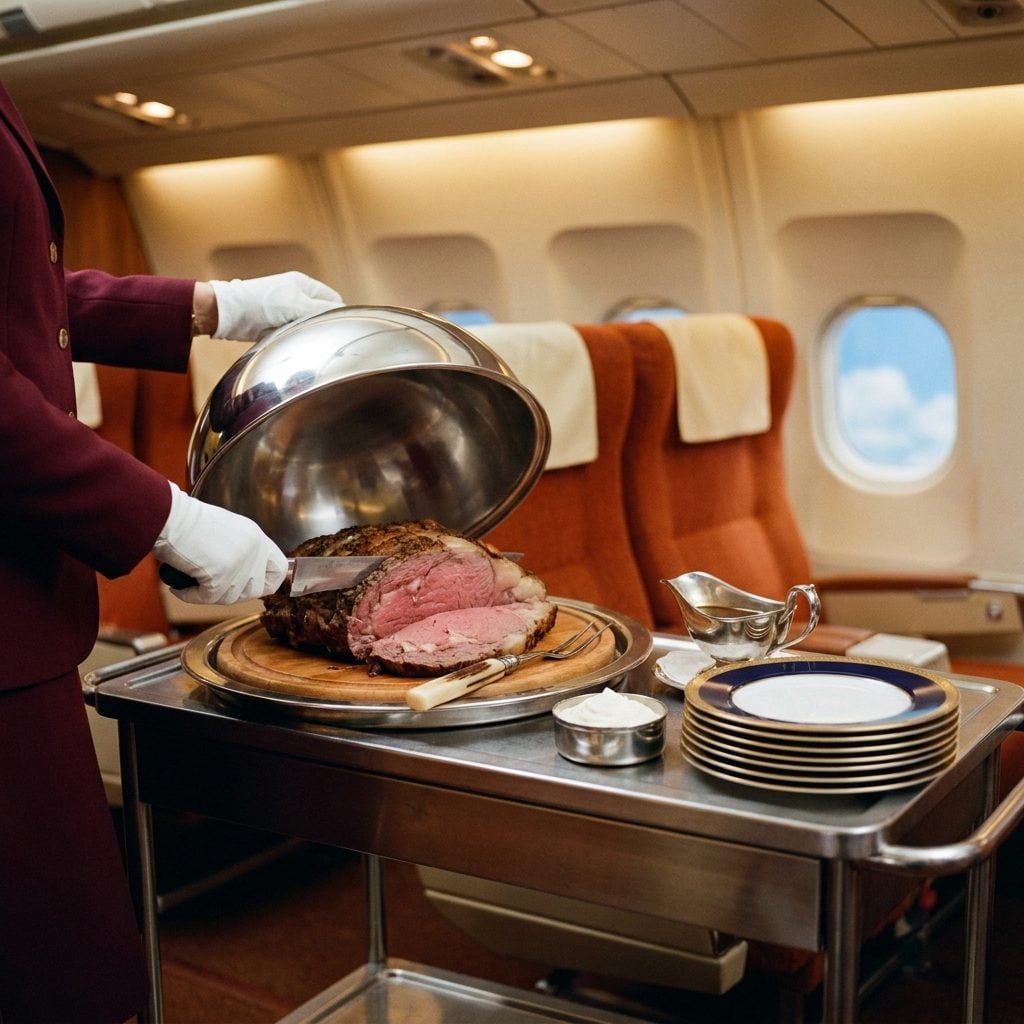
The trolley came down the aisle like a Sunday supper on wheels. A whole roast—sometimes prime rib, sometimes a leg of lamb—sitting under a silver dome that the purser lifted with a small flourish once he reached your row.
You told him how you wanted it. Rare, medium, end cut, a little more of the crust, whatever suited you, and he carved it right there off the bone onto warm china. The knife made that specific sound against the cutting board that you don’t hear at 35,000 feet anymore.
15. The Piano Bar at the Back of an American Airlines 747
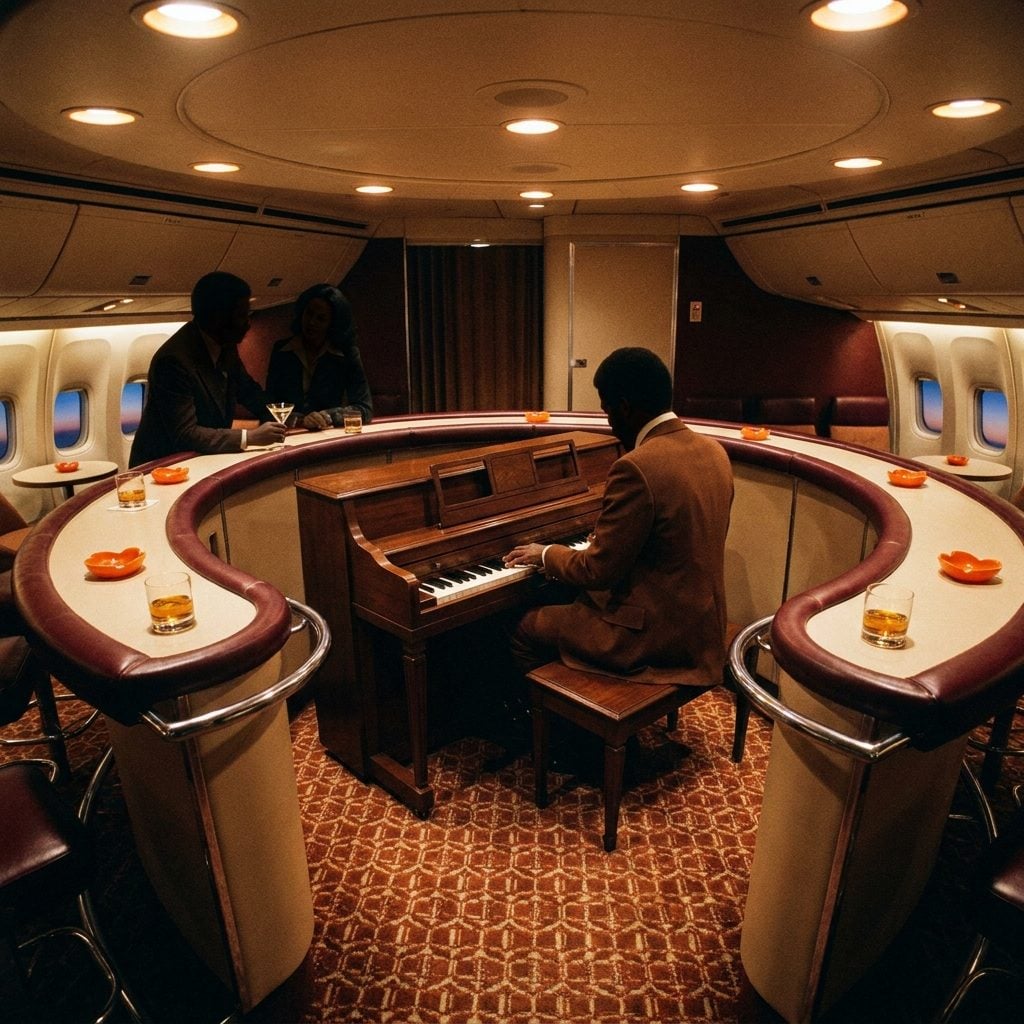
American installed a Wurlitzer electric piano in a main-deck coach lounge toward the rear of some early 747s. It was not in the upper deck, and it was not a conventional acoustic grand, but it was still a working piano bar on an airliner.
You could order a drink and hear someone playing Burt Bacharach at cruising altitude somewhere over Kansas. The carrier treated the rear coach lounge as social space rather than simply another block of seats.
14. The Cloth Cocktail Napkin Placed Under Your Drink
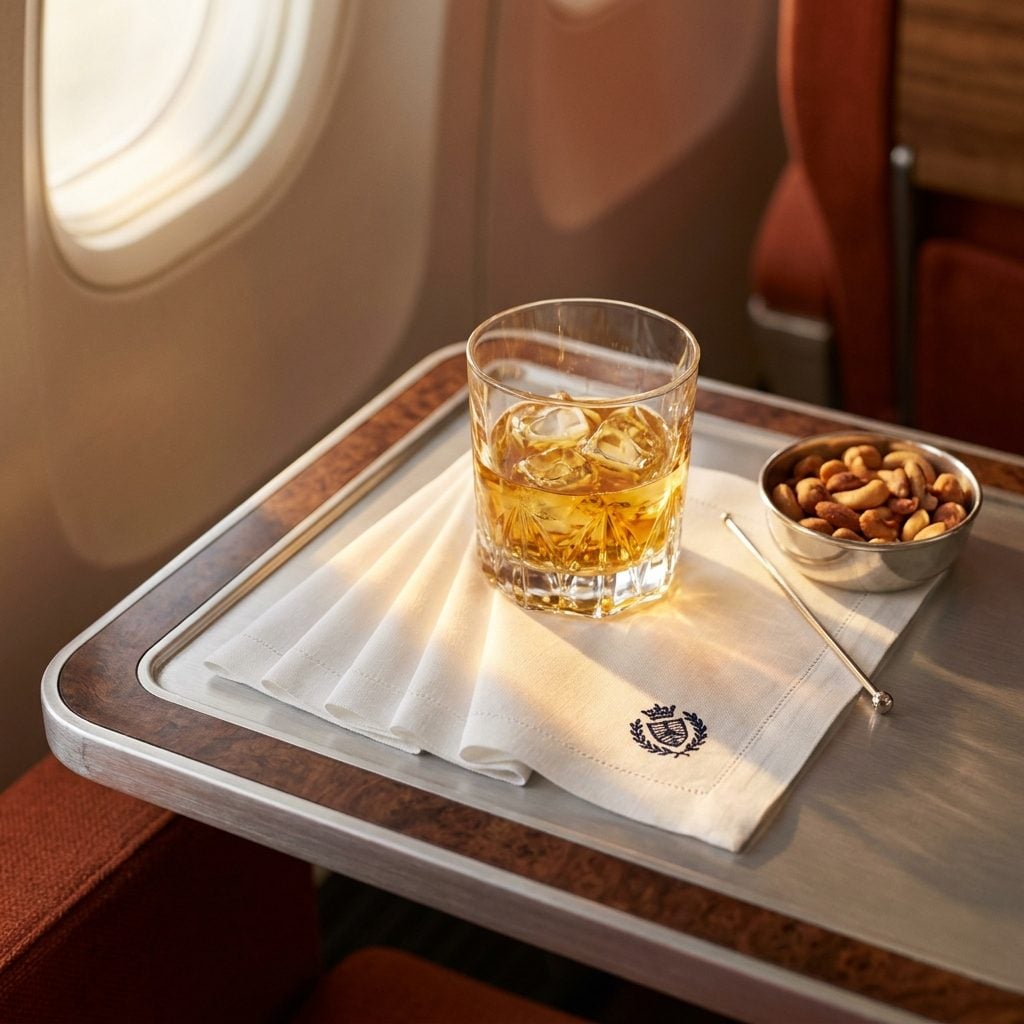
On some carriers, drinks arrived on a small cloth or linen cocktail napkin folded before it reached the tray. Someone in the galley did that by hand. Between takeoff and beverage service, a human being was folding napkins.
Warm nuts might arrive in a metal bowl, and the ice sounded different because the drink came in glass rather than plastic.
13. The Airline-Branded China Loaded for First-Class Meal Service
🔥 Would you like to save this?
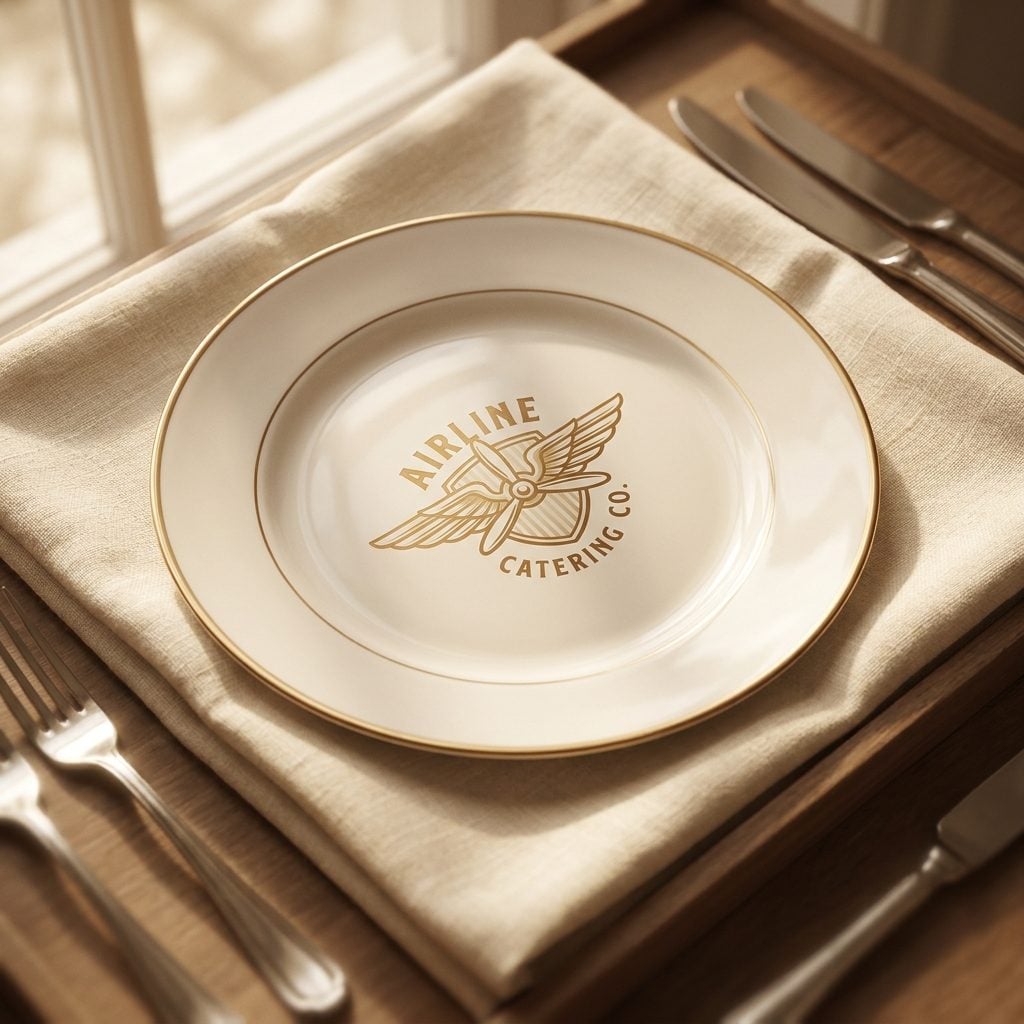
Premium cabins used substantial airline-branded china, often with a crest or pattern incorporated into the glaze. The pieces were washed, repacked, and loaded into padded catering carts for long-haul departures.
Many airlines gradually reduced the weight and complexity of onboard service, although premium cabins continued using china in various forms. For one long era, the plate beneath the entrée had more in common with hotel dinnerware than with disposable airline service.
12. The Full-Course Breakfast Served on China
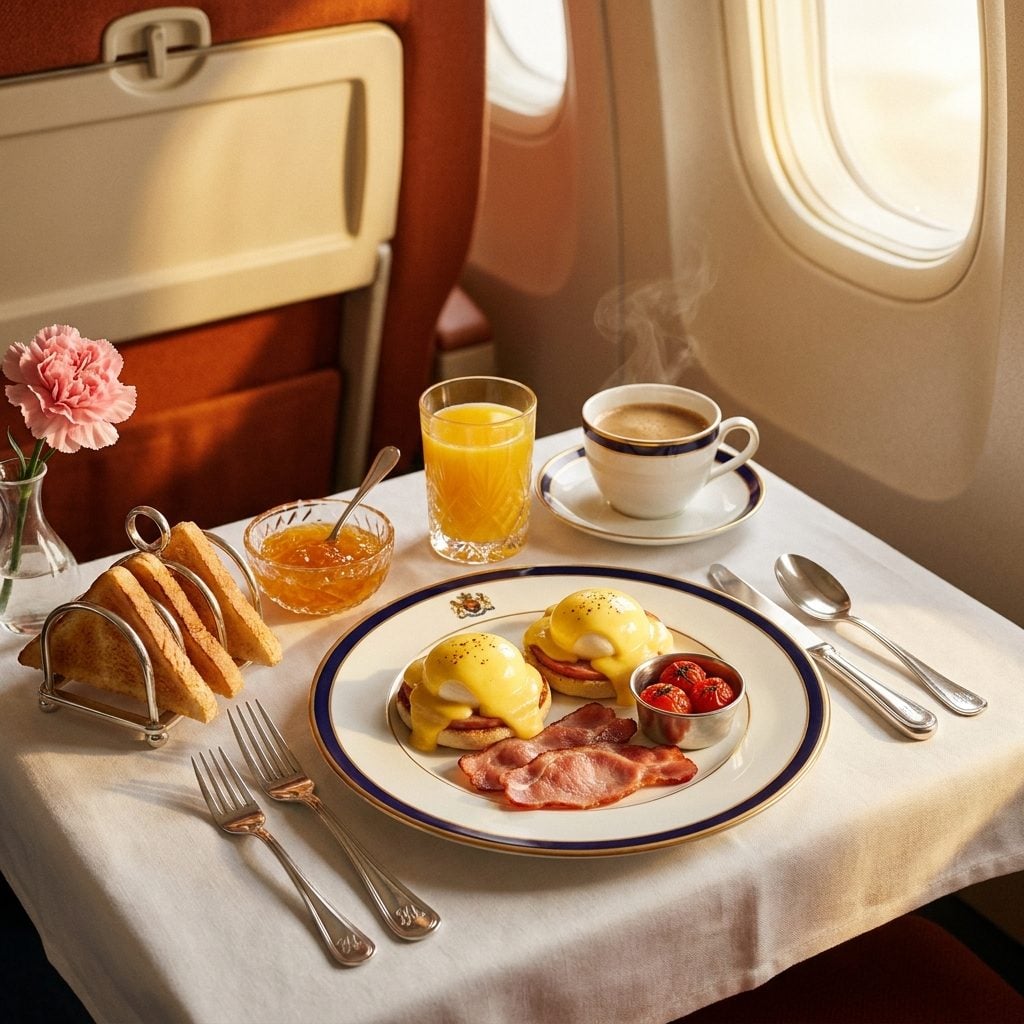
Breakfast came as a full meal rather than a wrapped sandwich. Depending on the airline and galley, eggs might be finished or reheated onboard and served with toast, fruit, and the rest of a formal breakfast setting.
Toast might arrive in a rack, juice in glassware, and coffee from a pot at the seat rather than in a disposable cup.
11. The Hot Towel Presented With Tongs Before the Main Meal
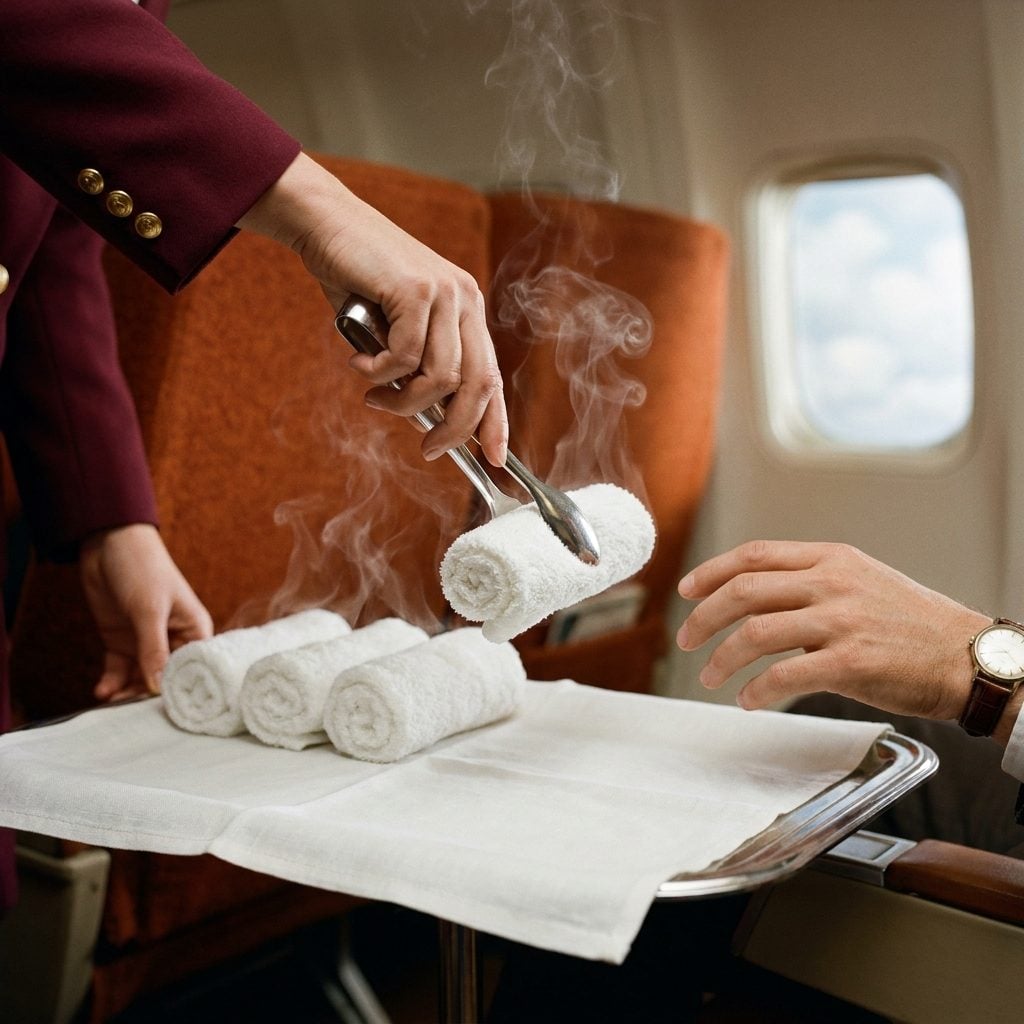
Before major meal services on many long-haul flights, the tongs came out—a silver tray, rolled white towels steaming under a linen cover, and the purser working down the aisle handing them out one by one.
They smelled faintly of lemon.
You wiped your hands and your face, handed the towel back, and the tray moved on. Ten minutes later the food arrived. That was the familiar sequence on flights that offered the service.
10. The Champagne Poured at Your Seat From a Full Bottle
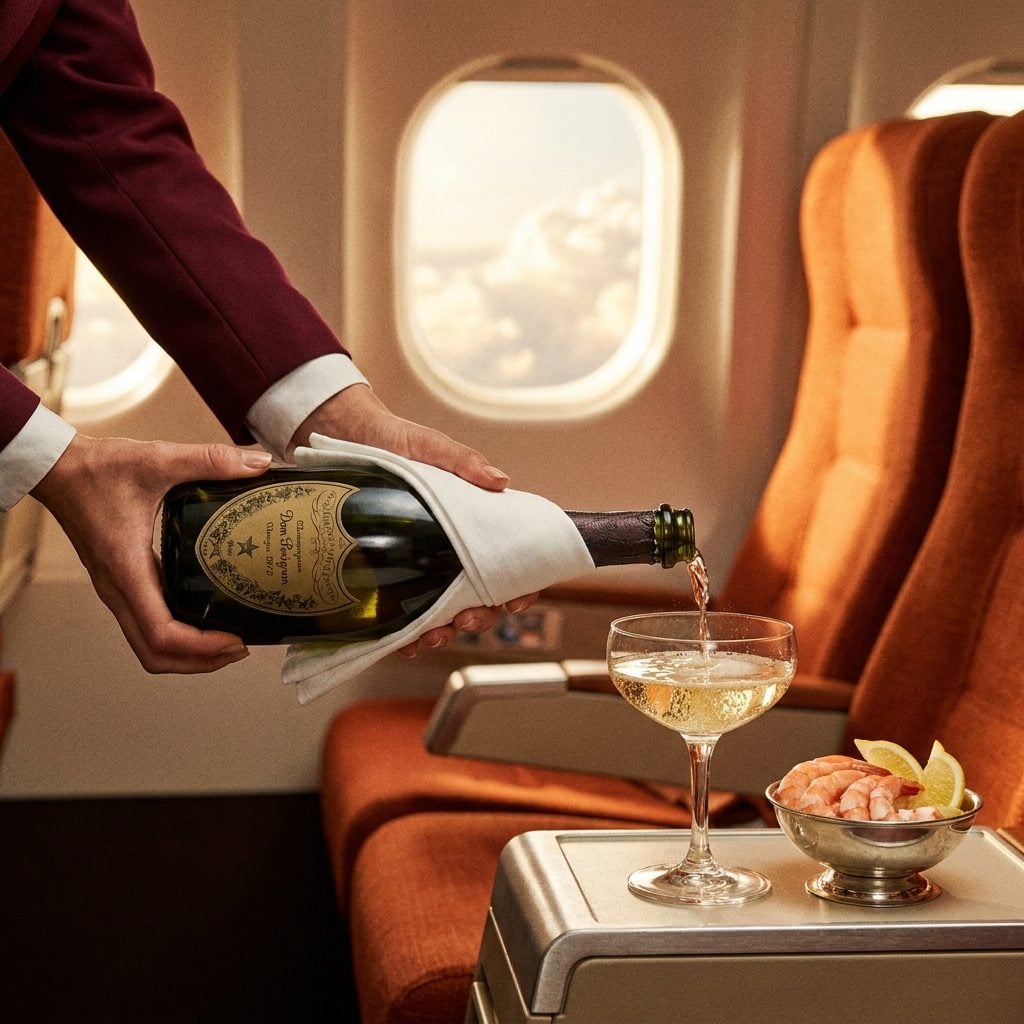
A full bottle came out of an ice bucket at your row, wrapped in a linen napkin to catch the drip. Champagne was poured into proper glassware, then returned to the ice for later refills. The crew came back before passengers had to ask.
9. The Postcards They Handed Out Mid-Flight So You Could Write From the Air
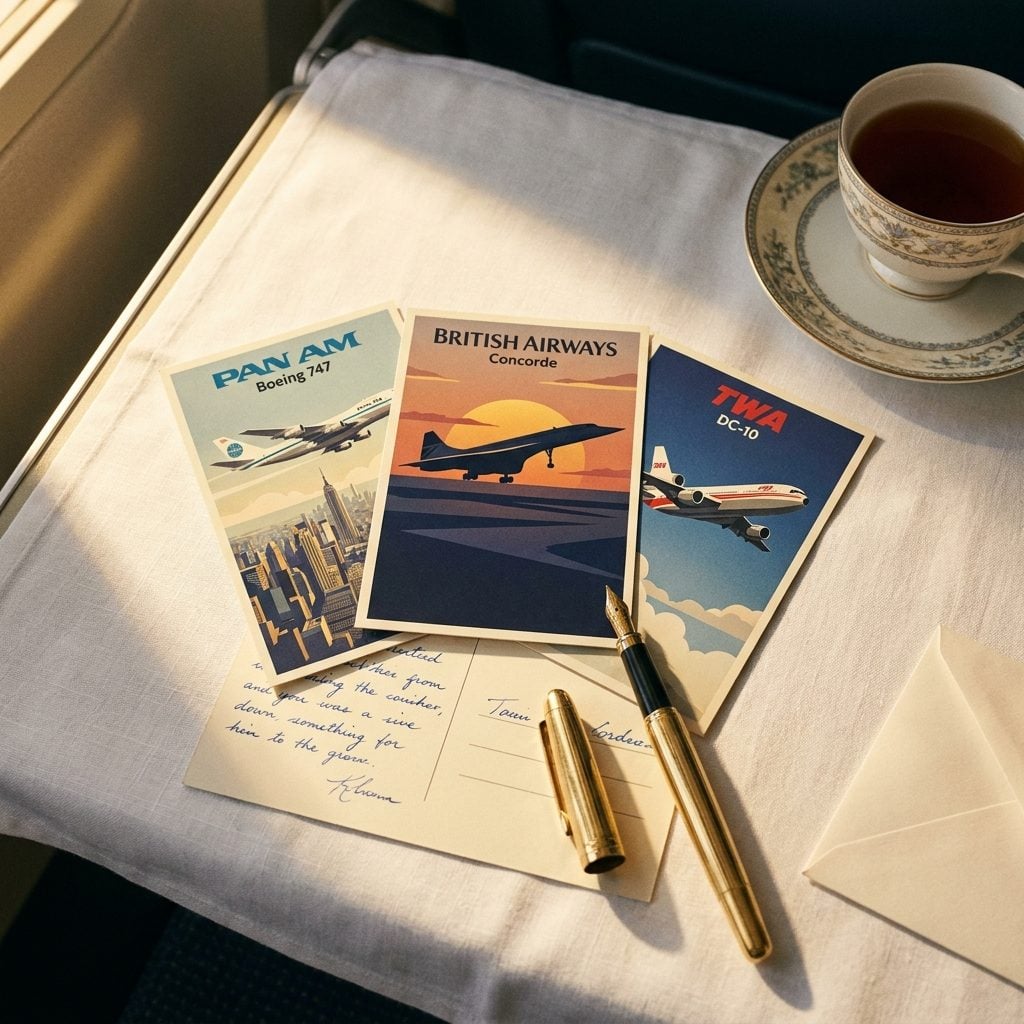
Somewhere over the Atlantic, the purser might come by with a small stack of airline-branded postcards for passengers to write during the flight.
On some services, the crew collected the cards for mailing after arrival. The exact postage and handling depended on the airline and route.
8. The Cheese Course Served From a Board or Trolley
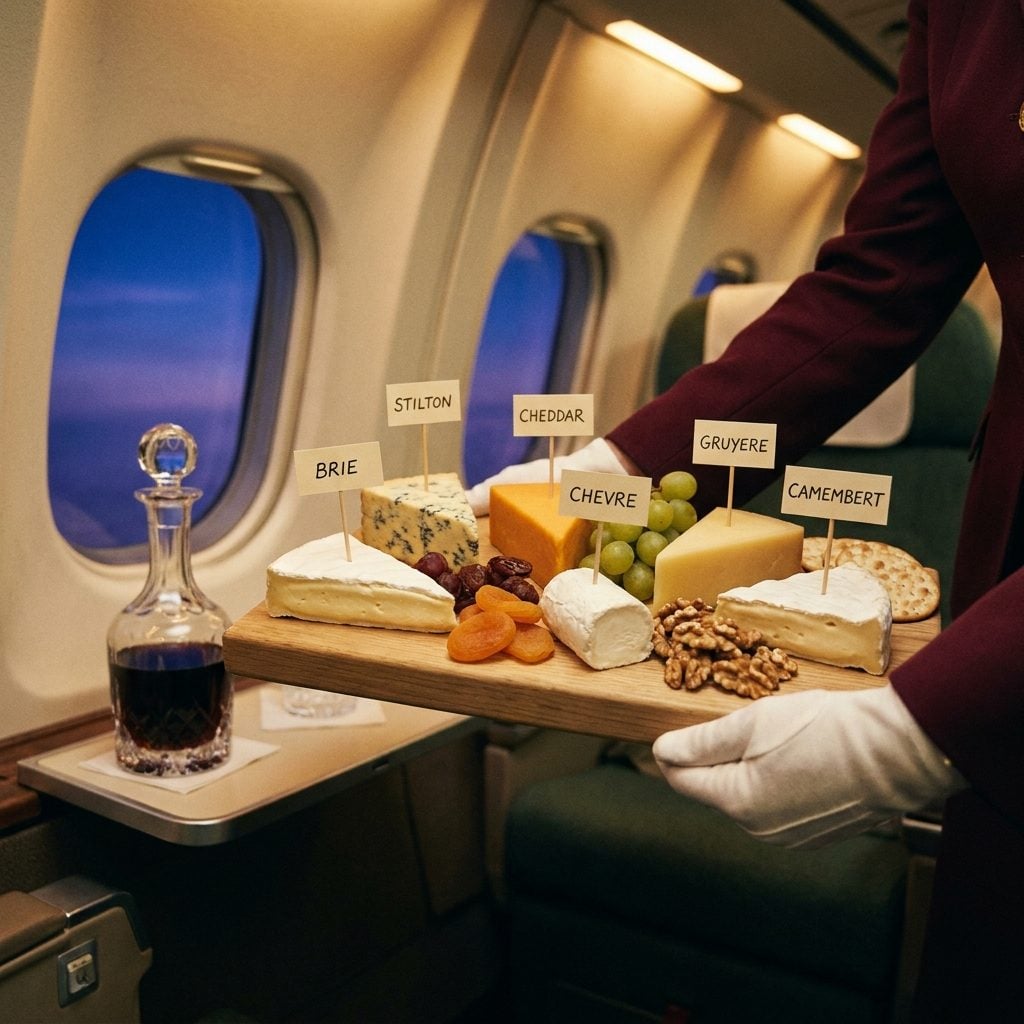
After the entrée, a selection of cheeses could arrive on a board or trolley. Brie, Stilton, cheddar, goat cheese, Gruyère, or Camembert might appear, depending on the airline and route. You pointed to what you wanted and the crew cut a piece.
Grapes, dried figs, walnuts, and water crackers often completed the course. Port might follow for passengers who wanted it.
7. The In-Flight Movie Projected From Film Onto a Cabin Screen
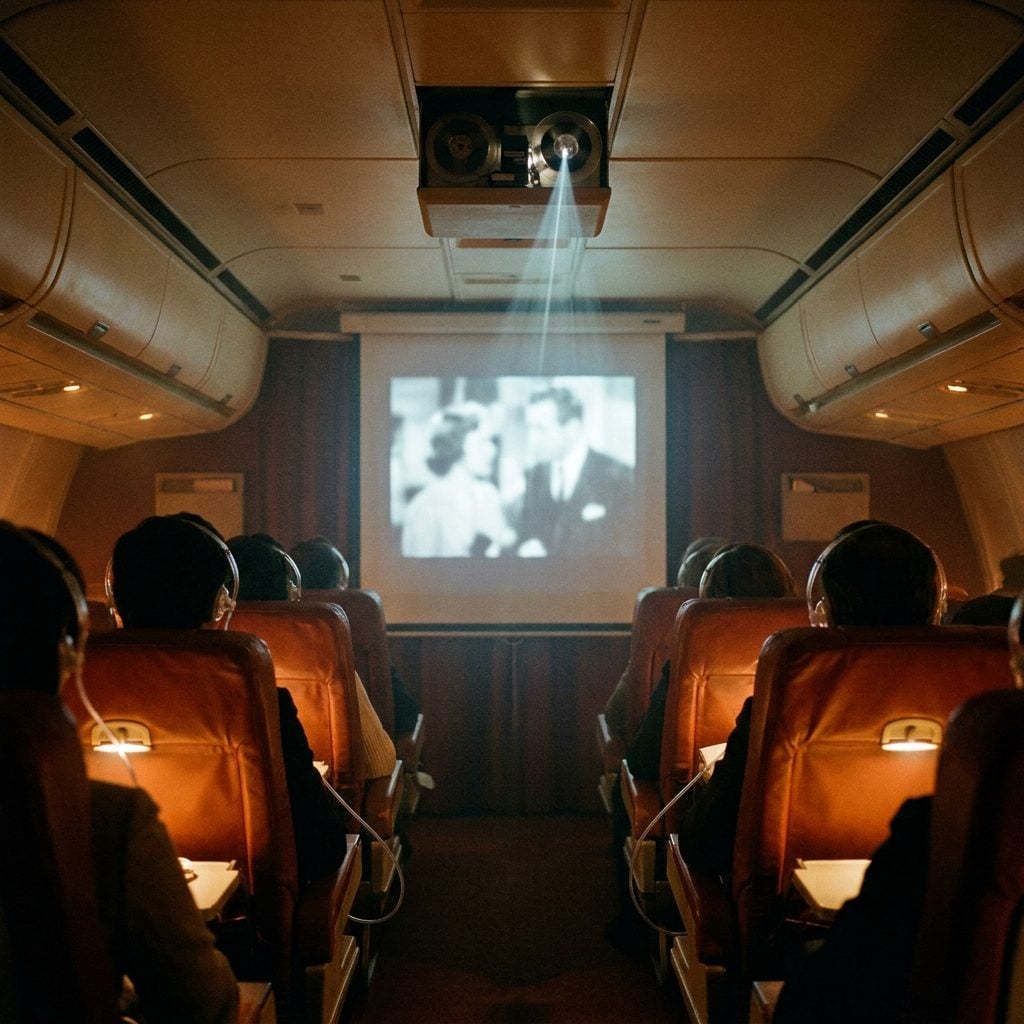
The screen unrolled from the ceiling like a window shade, a cabin-mounted projector clicked on, and the movie ran on film operated or monitored by the crew.
The sound came through pneumatic tubes. You plugged the stethoscope headset into your armrest and got hissing mono audio, but you were watching a movie at 35,000 feet, which in 1974 was closer to a miracle than an inconvenience.
6. The Handwritten Welcome or Thank-You Note Waiting at Your Seat
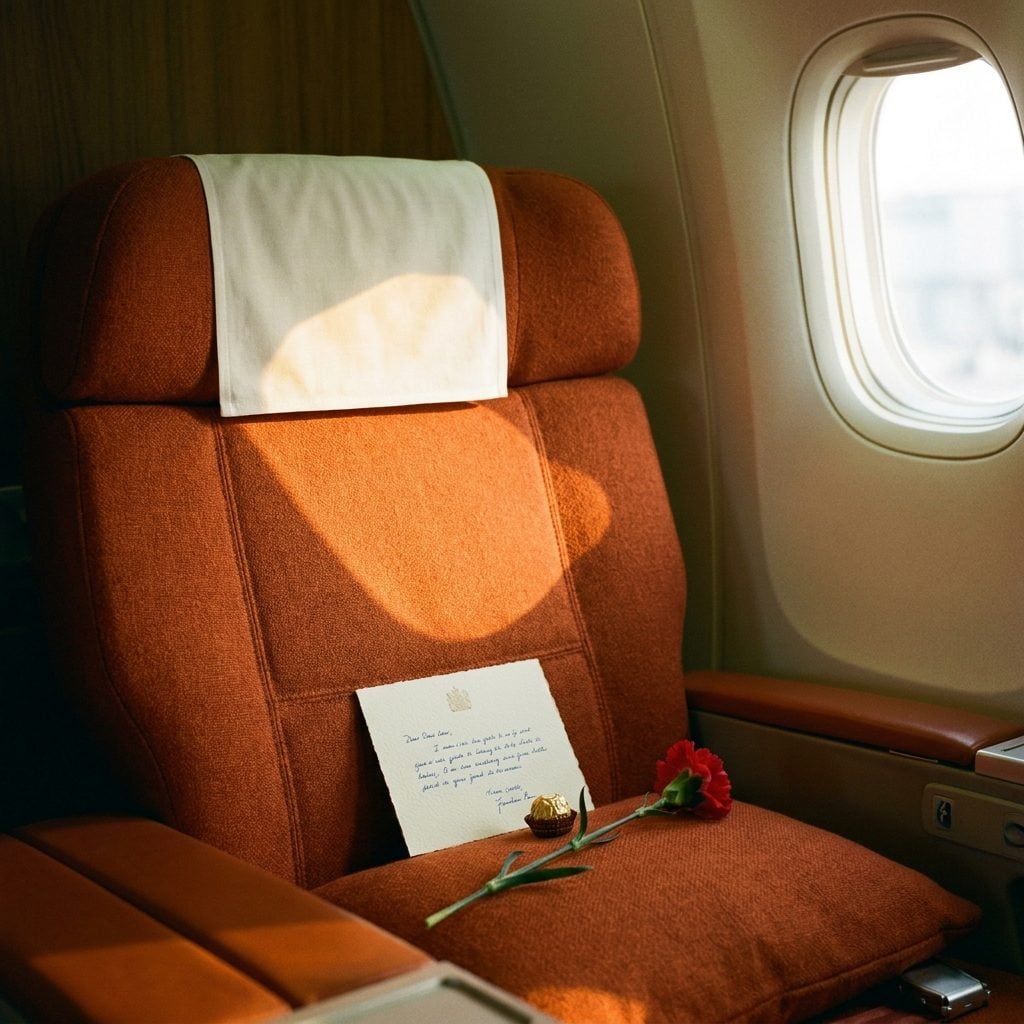
On especially attentive services, a frequent or notable passenger might find a small card at the seat: cream stock, an embossed crest, and a handwritten welcome or thank-you from the purser.
The gesture was not universal, but when it happened, it made the passenger feel recognized rather than processed.
5. The Substantial Metal Flatware With the Airline’s Mark
🔥 Would you like to save this?
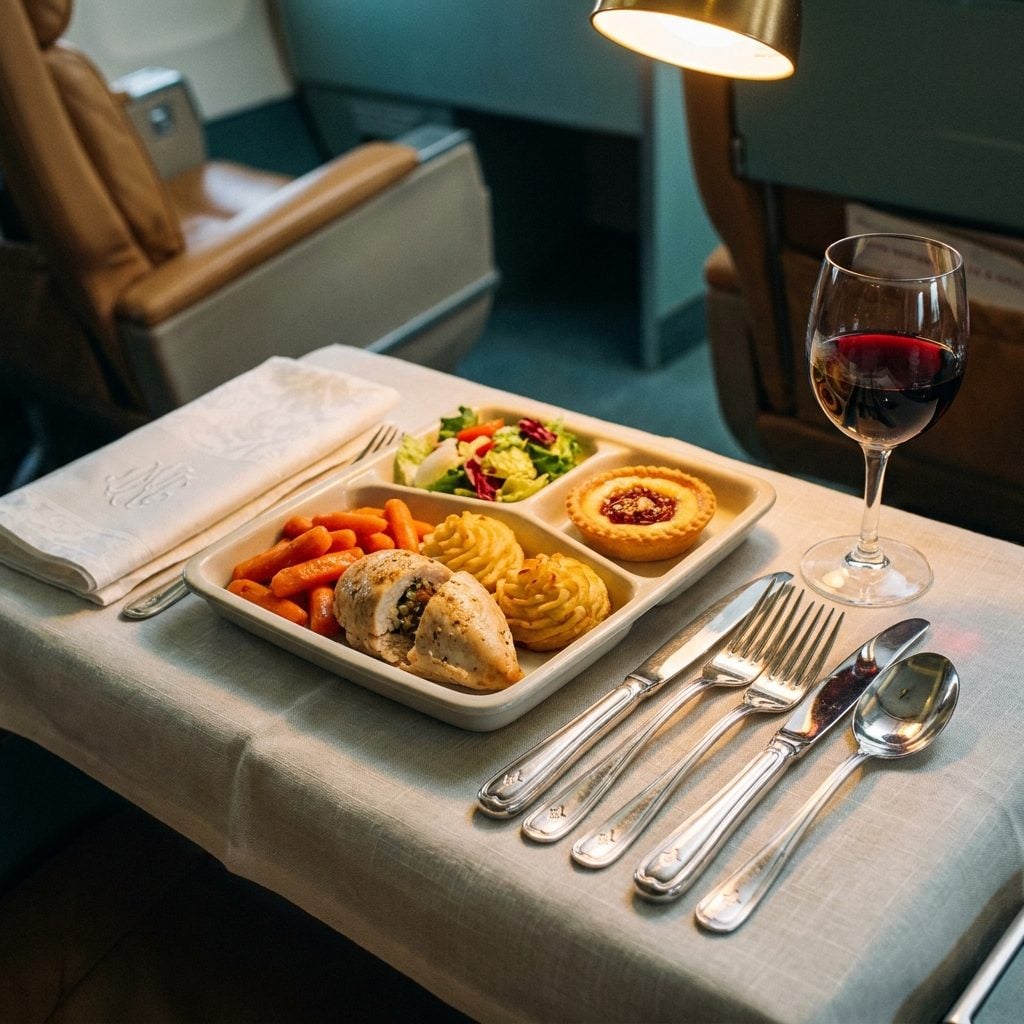
You noticed the weight the second you picked up the fork. Premium cabins used substantial stainless steel and, on some services, silver-plated pieces bearing the airline’s mark.
Airlines commissioned distinctive patterns and monograms. The knives cut properly, and the utensils felt closer to restaurant flatware than disposable travel service.
4. The Slippers Slid Into a Little Cloth Pouch and Placed Beside Your Seat
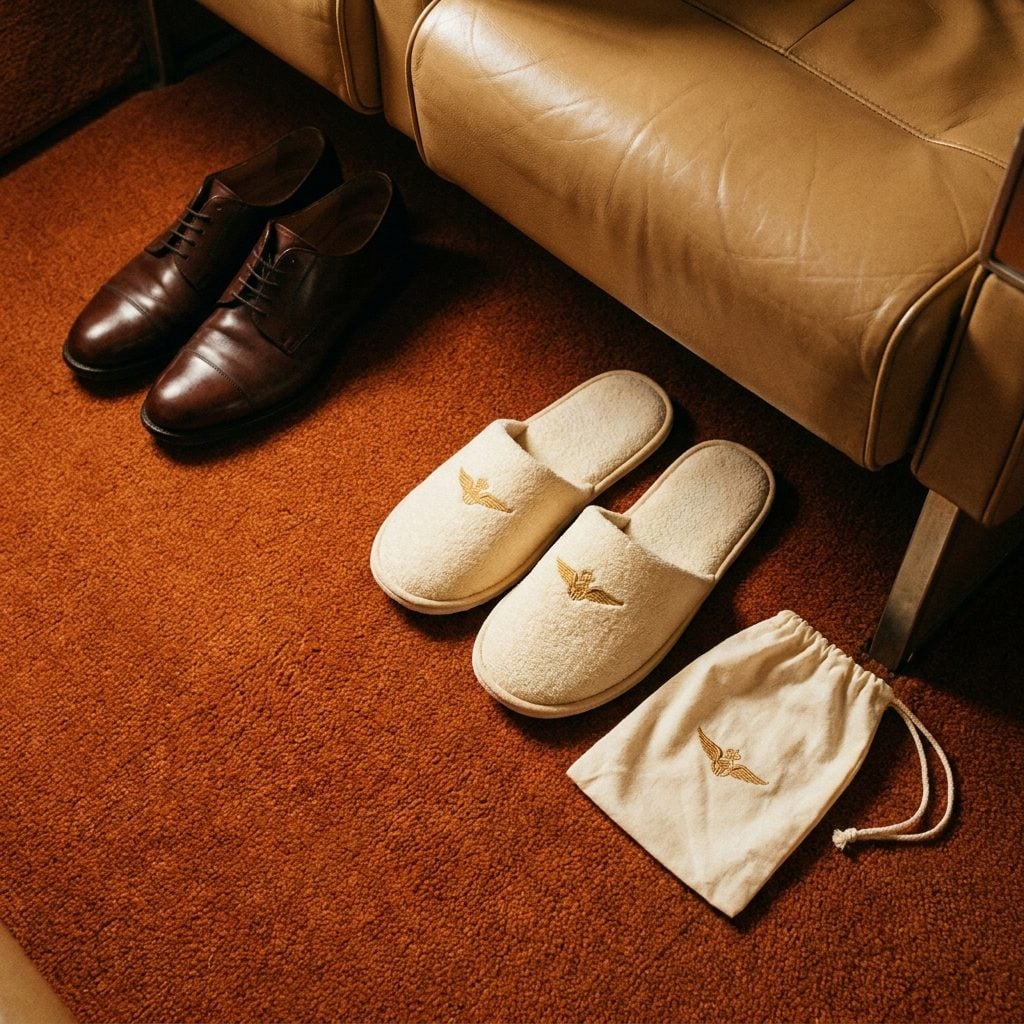
Somewhere between the champagne pour and the meal cart, a flight attendant would come down the aisle handing out little cloth pouches. Inside sat a pair of terry cloth slippers folded flat, the airline’s logo stitched onto one toe. You kicked off your loafers, slid them under the seat, and padded around the cabin like a guest wandering out of a hotel bathroom.
The pouch was the tell. Not plastic. Not disposable. A drawstring bag many passengers carried off with the slippers inside.
3. The Captain’s Unhurried Announcement About the Route Ahead
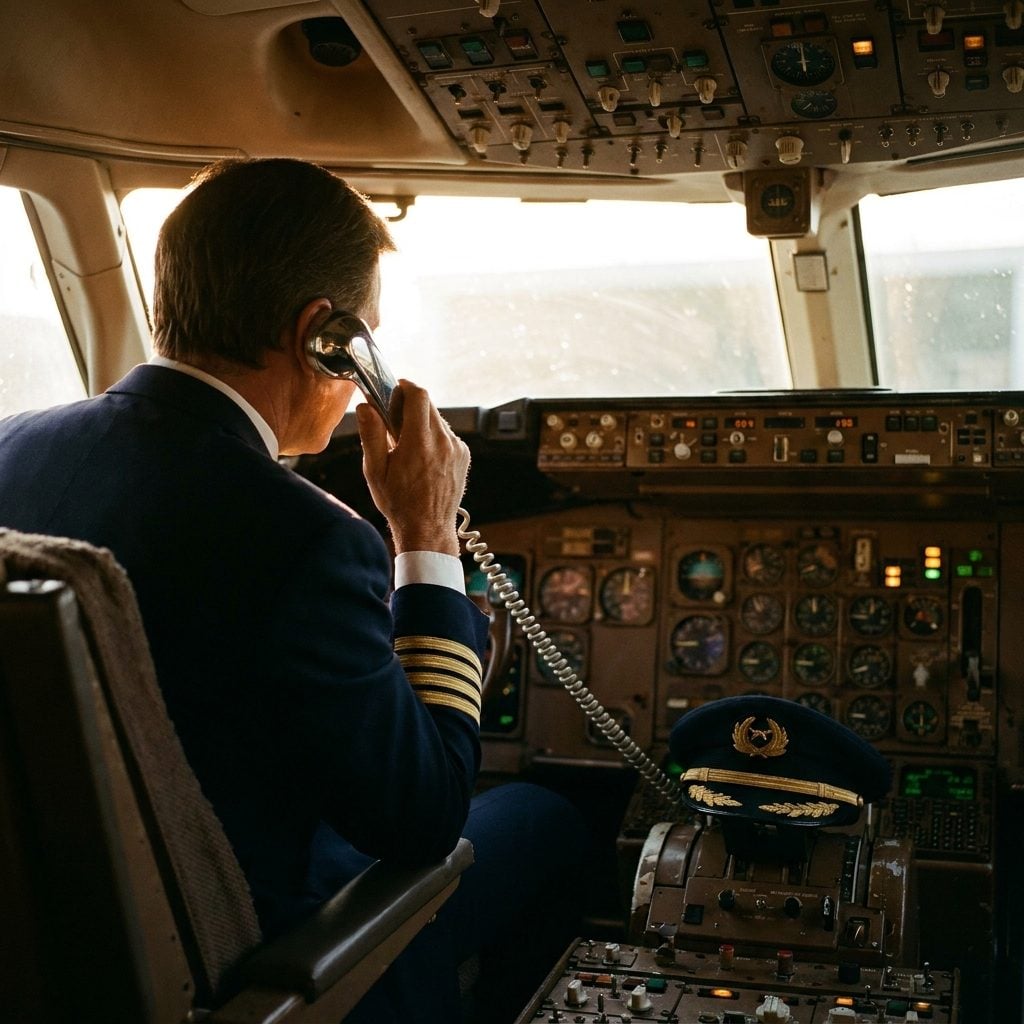
He came on the PA somewhere around ten thousand feet. Not merely a clipped altitude update buried under engine noise. A real voice, unhurried, telling you the route and the altitude and what you’d see out the left side over Newfoundland, and roughly when dinner would start.
On some flights, the captain might also make a brief appearance in the cabin. Hat off, tie straight, shaking a few hands on the way down the aisle like a mayor working a parade. The uniform meant something, and he wore it that way.
2. The Cabin Attendant Who Remembered Your Drink Order From the Previous Flight
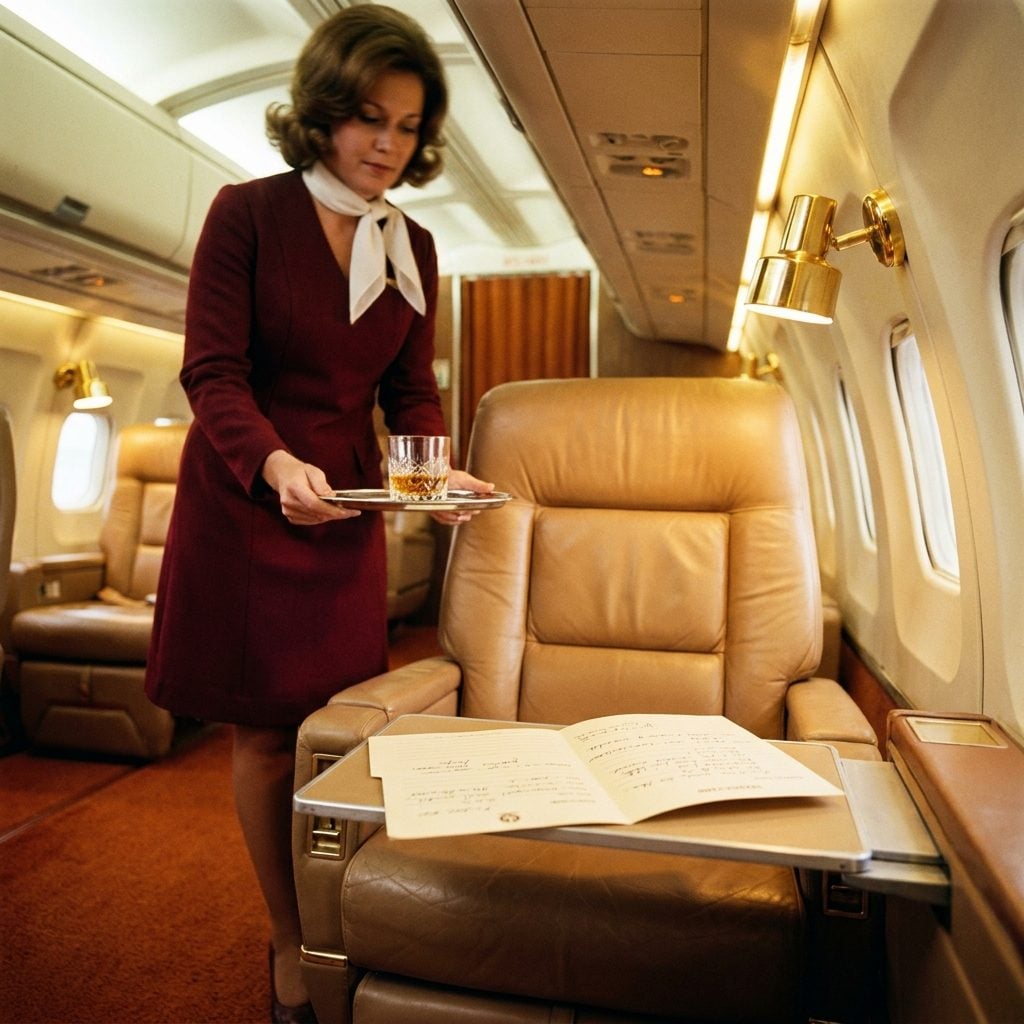
Regular passengers sometimes encountered the same senior crew members repeatedly on established routes. Preferences could be remembered through familiarity, crew notes, or simple professional attention.
You’d sit down and hear something like, “Scotch and soda, Mr. Halloran? No ice, if I remember right.” And he did remember right. That was the job.
That kind of recognition is harder to sustain when crews and schedules change constantly.
1. The Cigar Offered After Dinner From a Wooden Humidor Rolled to Your Seat
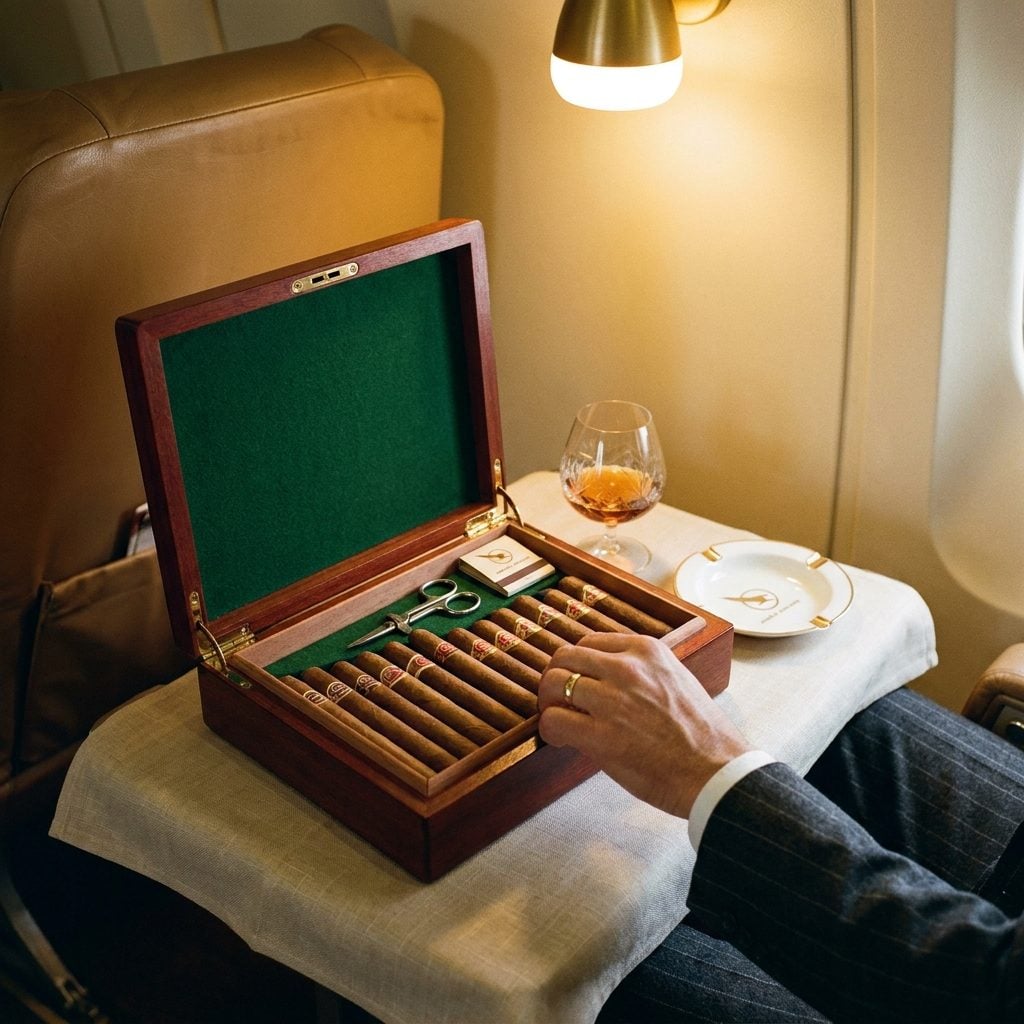
Cigar service came around after the cheese course, the way dessert might come around now. A steward wheeled a small polished humidor down the aisle, popped the lid, and let you pick. Cognac in one hand, robusto in the other, and somebody four rows up already had one lit—nobody minded, nobody said a word.
Cigars vanished when smoking vanished, which took longer than most people remember. U.S. restrictions expanded from shorter domestic flights in 1988 to broader bans over the following years, while some international services held on longer.
🔥 Would you like to save this?
Please note that some of the imagery in this article were created with the aid of AI image generators.