
🔥 Would you like to save this?
The cabin smelled like Chanel No. 5, cigarette smoke, and beef Wellington warming in a galley oven. A woman in a Halston blouse tipped her champagne flute toward the window as the 747 climbed out of JFK. Nobody was looking at a screen because nobody had one. First class in 1985 was a room, and the whole point was to be seen inside it.
Four decades later, the room is gone. Something else took its place. Here is exactly what changed.
29. Paper Tickets in Leather Holders vs. Mobile Boarding Passes
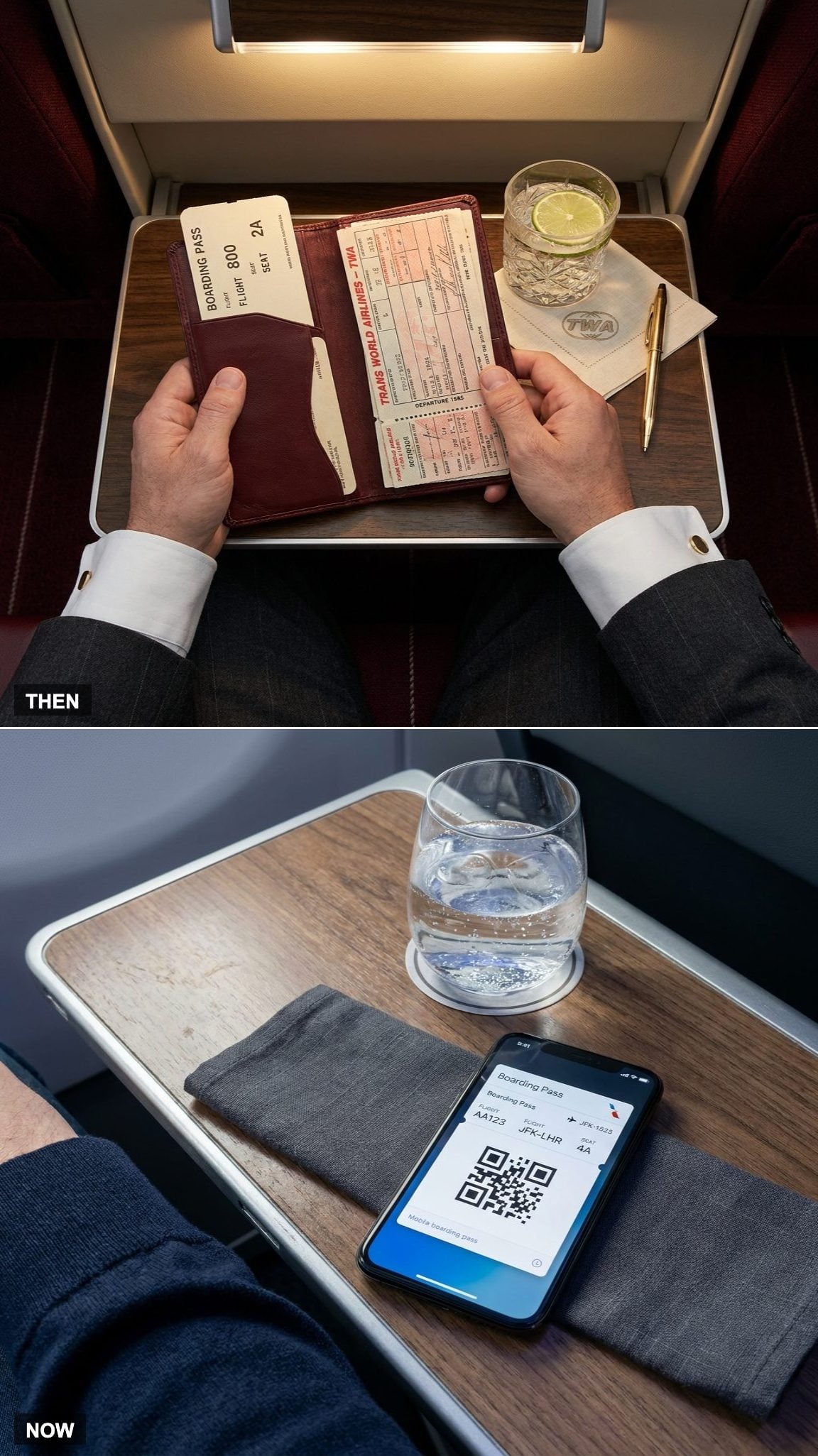
The 1985 ticket was a document — multi-page, carbon-backed, printed in that unmistakable red and black airline font, folded into a leather wallet the airline sometimes gave you for reaching a status tier. Lose it and your trip was in genuine trouble, because ticket counters had to reissue by hand.
Now the ticket lives on your phone. You have probably already forgotten which app it is in.
Faster and cleaner, sure. Also entirely unceremonious. The old ticket said you were going somewhere. The QR code says you have been processed.
28. Smoking Sections in First Class vs. Smoke-Free Cabins Worldwide
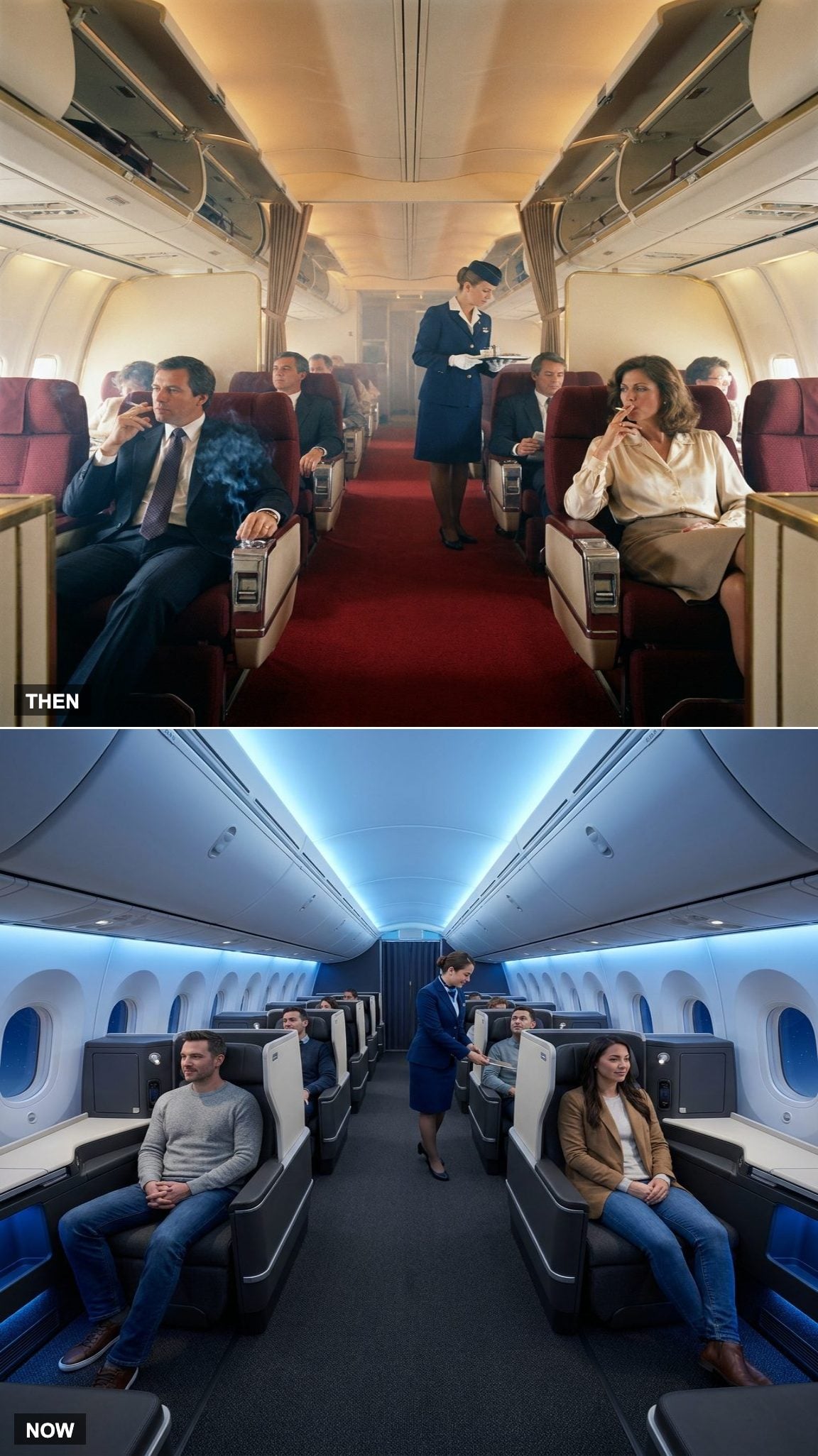
You could light up between LAX and JFK and nobody blinked. First class had its own smoking section, the ashtray was built into the armrest, and the cabin at cruising altitude took on a soft amber haze that Kodak film loved and human lungs did not.
The last U.S. smoking flight ended in 2000. Every commercial cabin on earth is now smoke-free. And yet — the ashtrays that remain, still bolted into lavatory doors on brand-new aircraft, are a regulatory ghost from another era.
27. Spacious Recliner Seats vs. Fully Enclosed Lie-Flat Suites
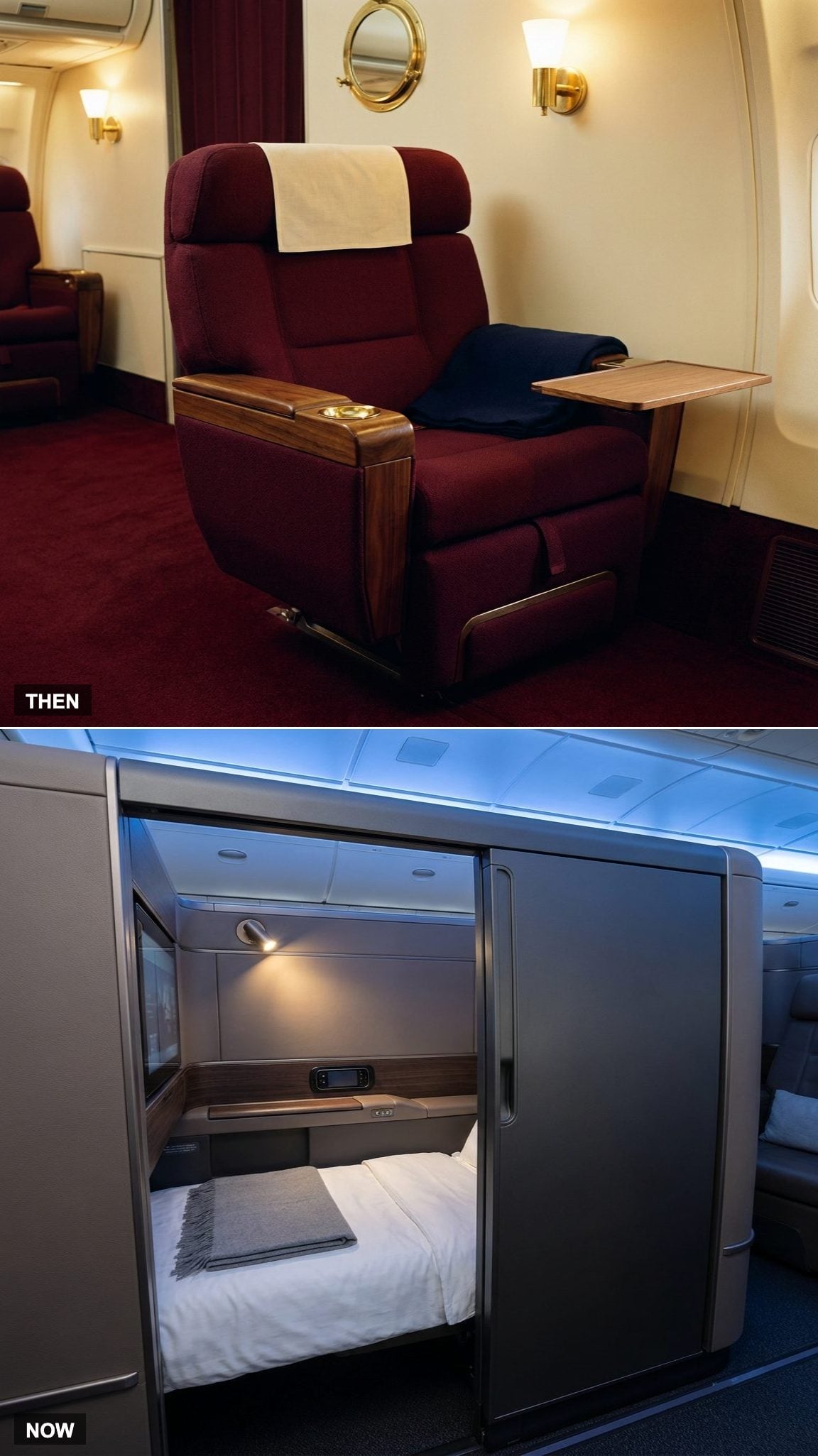
The 1985 seat was wide, plush, and completely public — you could see every other passenger in the cabin, and every other passenger could see you. That was part of the appeal.
Today’s flagship product is a room with a door. Emirates has showers. Singapore has double beds. Etihad has a three-room apartment called The Residence. Privacy became the luxury, and being seen became the coach experience.
26. Multi-Course Meals on Fine China vs. Restaurant-Style Dining on Demand
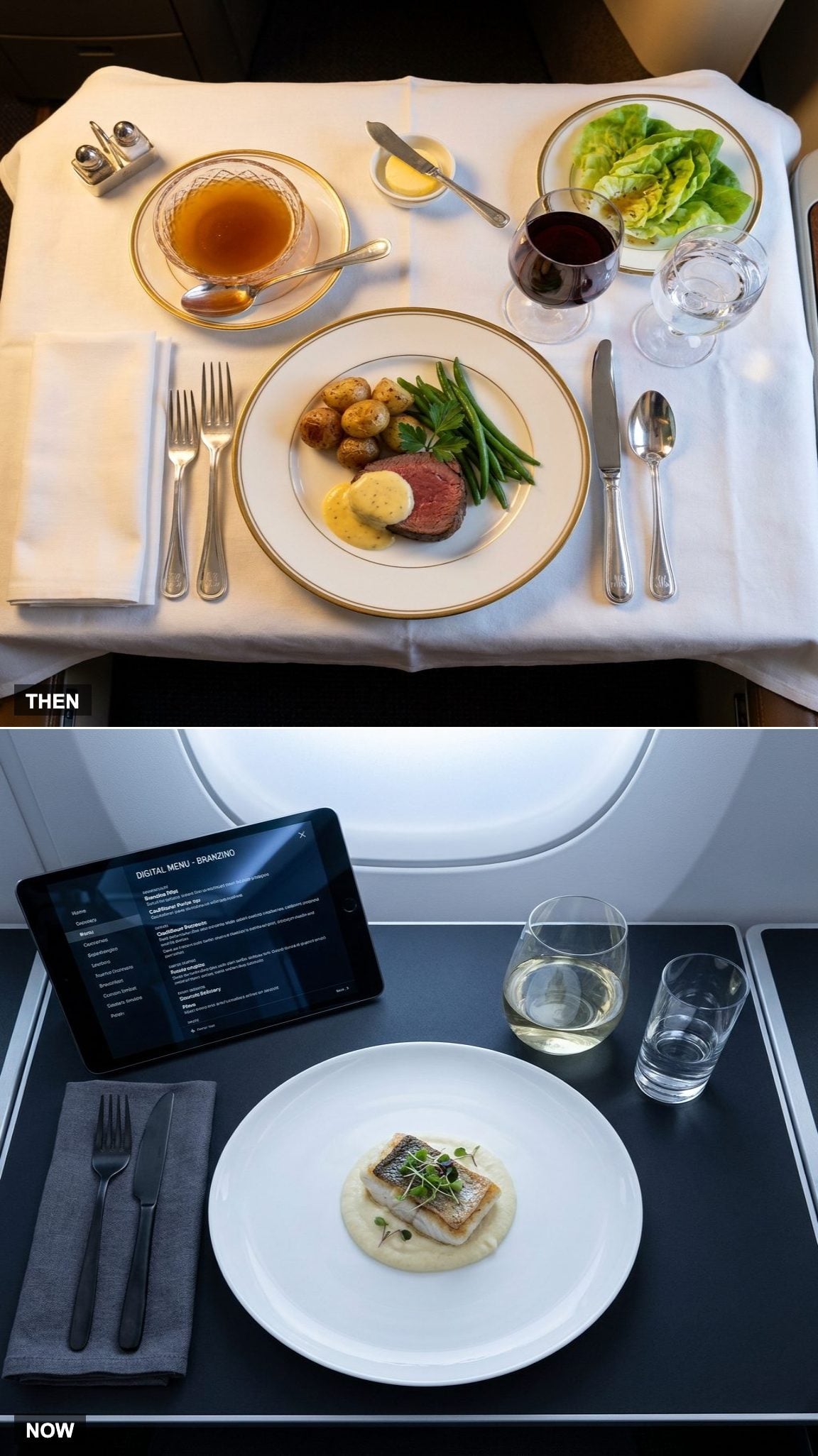
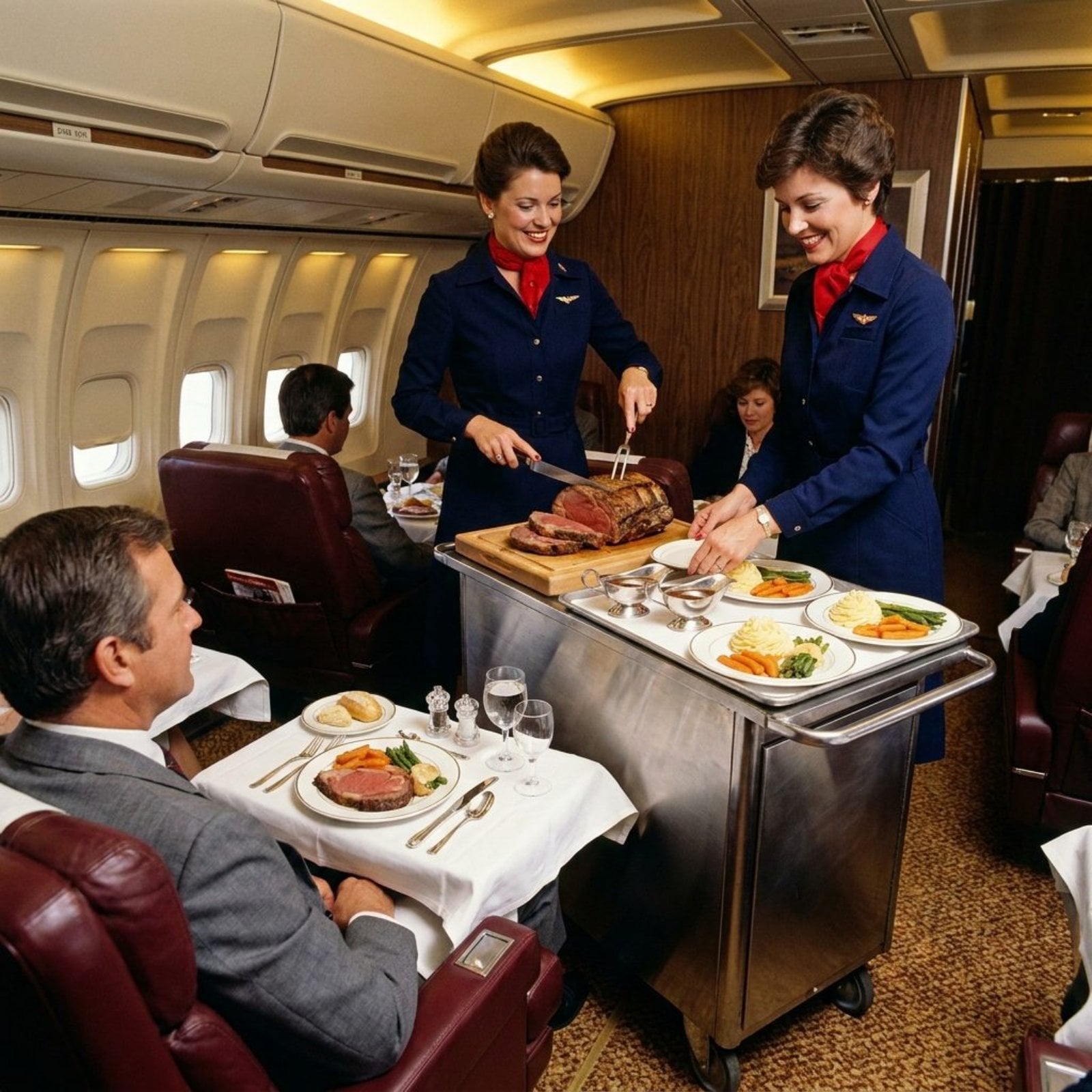
Dinner was an event. The cart came down the aisle, the flight attendant carved the roast tableside, and the salad was tossed in front of you from a wooden bowl. Six courses was normal, the china was real, and the silverware had weight.
Now you order when you feel like it, from a tablet, off a rotating menu curated by a name you recognize from a magazine. The food is often better. The choreography is gone.
25. Unlimited Champagne vs. Curated Wine Lists and Premium Spirits
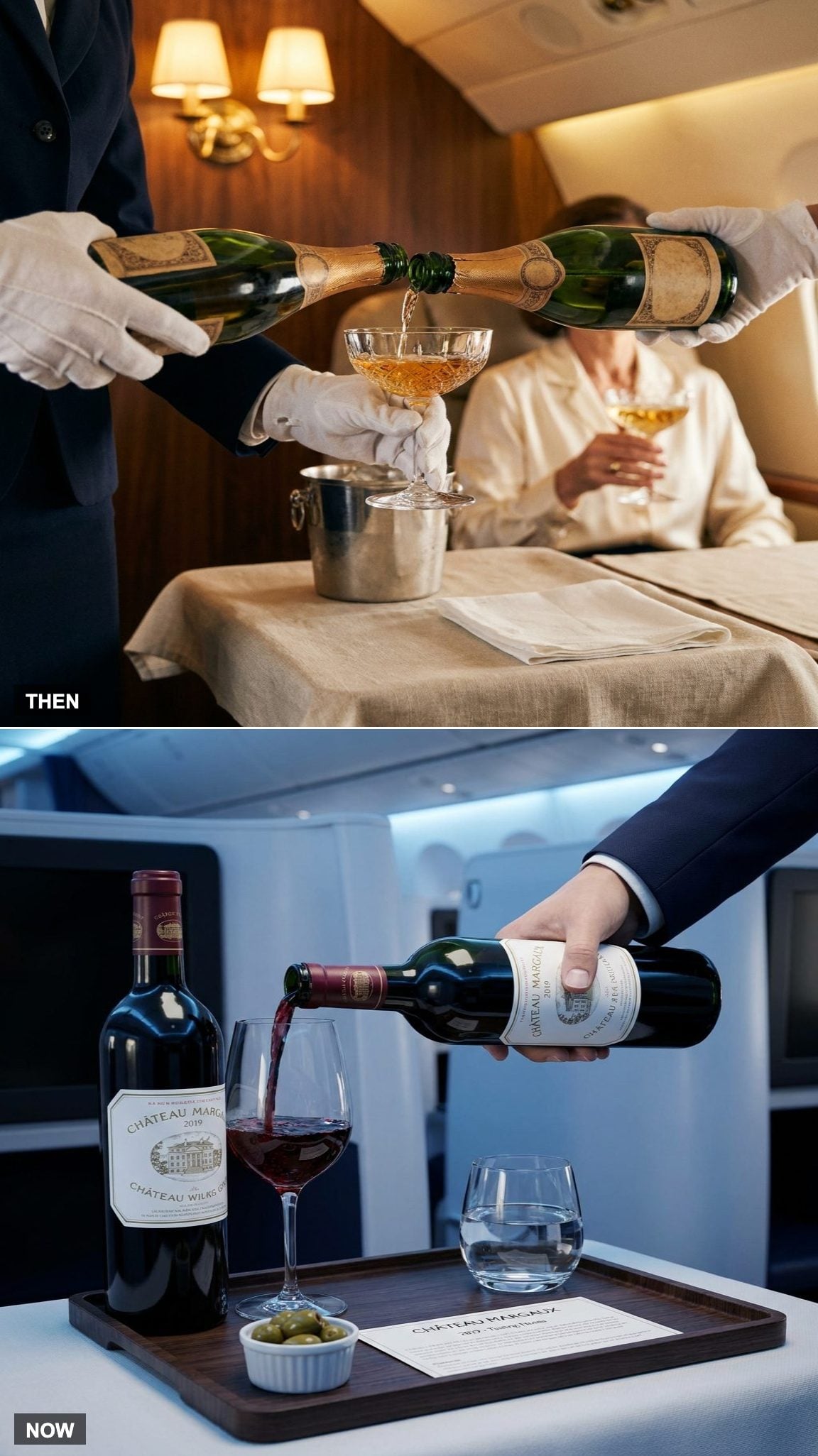
Champagne was the point.
The flight attendant met you at the door with a coupe glass already poured, and she topped it up before you asked. Pan Am poured Dom. TWA poured Moët. The bottle stayed open, and nobody was counting.
The bar still is, but the pitch has changed. Airlines now hire master sommeliers, publish wine lists, and market single-malt exclusives. More serious. More curated. Slightly less fun.
24. Flight Attendants Knew You by Name vs. Personalized Service Powered by Passenger Data
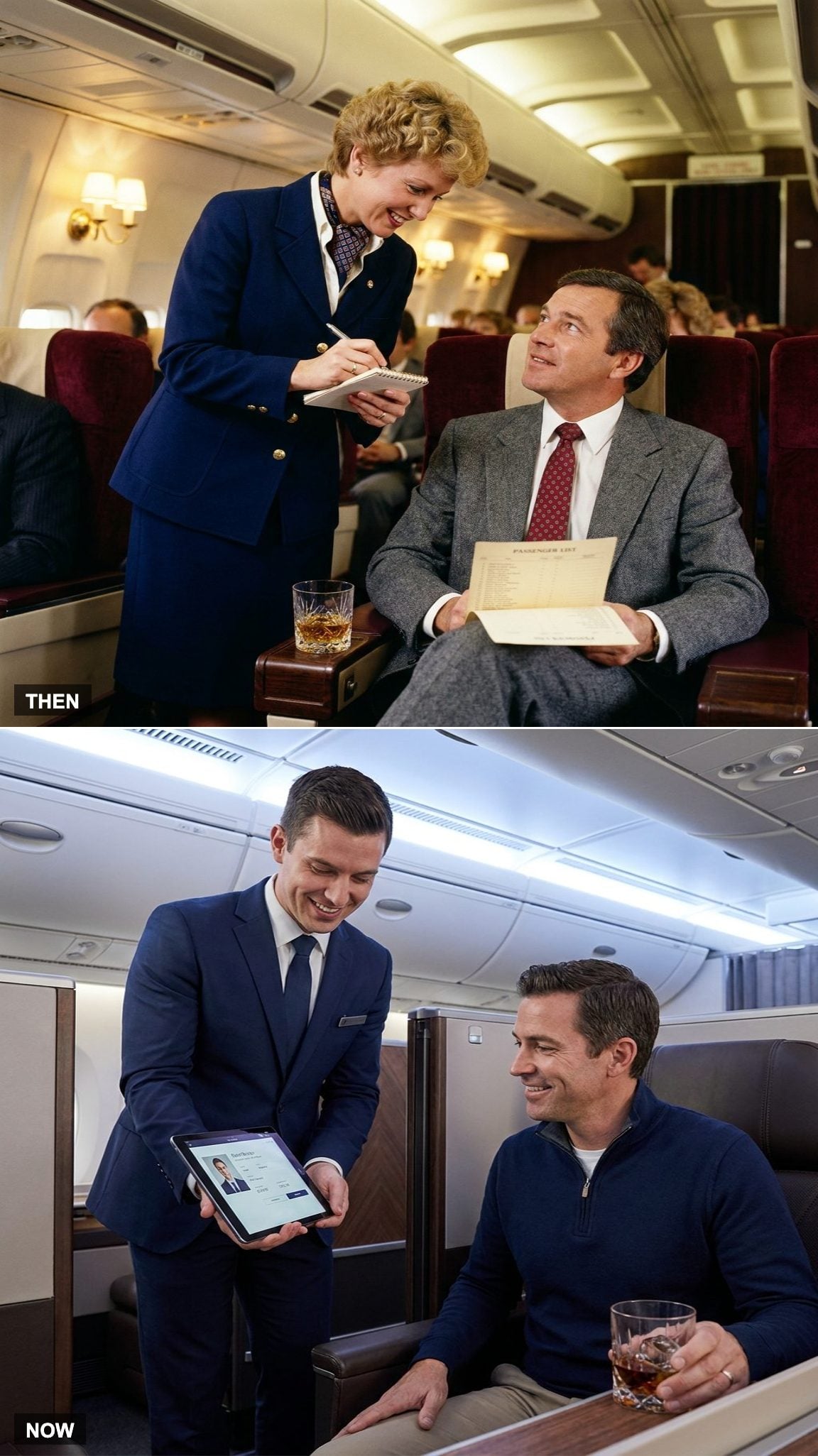
She remembered you drank Cutty Sark neat, remembered your wife’s name, and asked how the kids were doing. Frequent flyers were a small tribe, the crew was often the same crew, and the relationship was real.
The relationship is still there. It is just powered by a screen. The crew tablet shows your name, your status, your last three meals, your seat preference, your birthday. The service is warmer than critics say and colder than 1985. Both things are true.
23. Open Overhead Bins vs. Larger Compartments Designed for Roller Bags
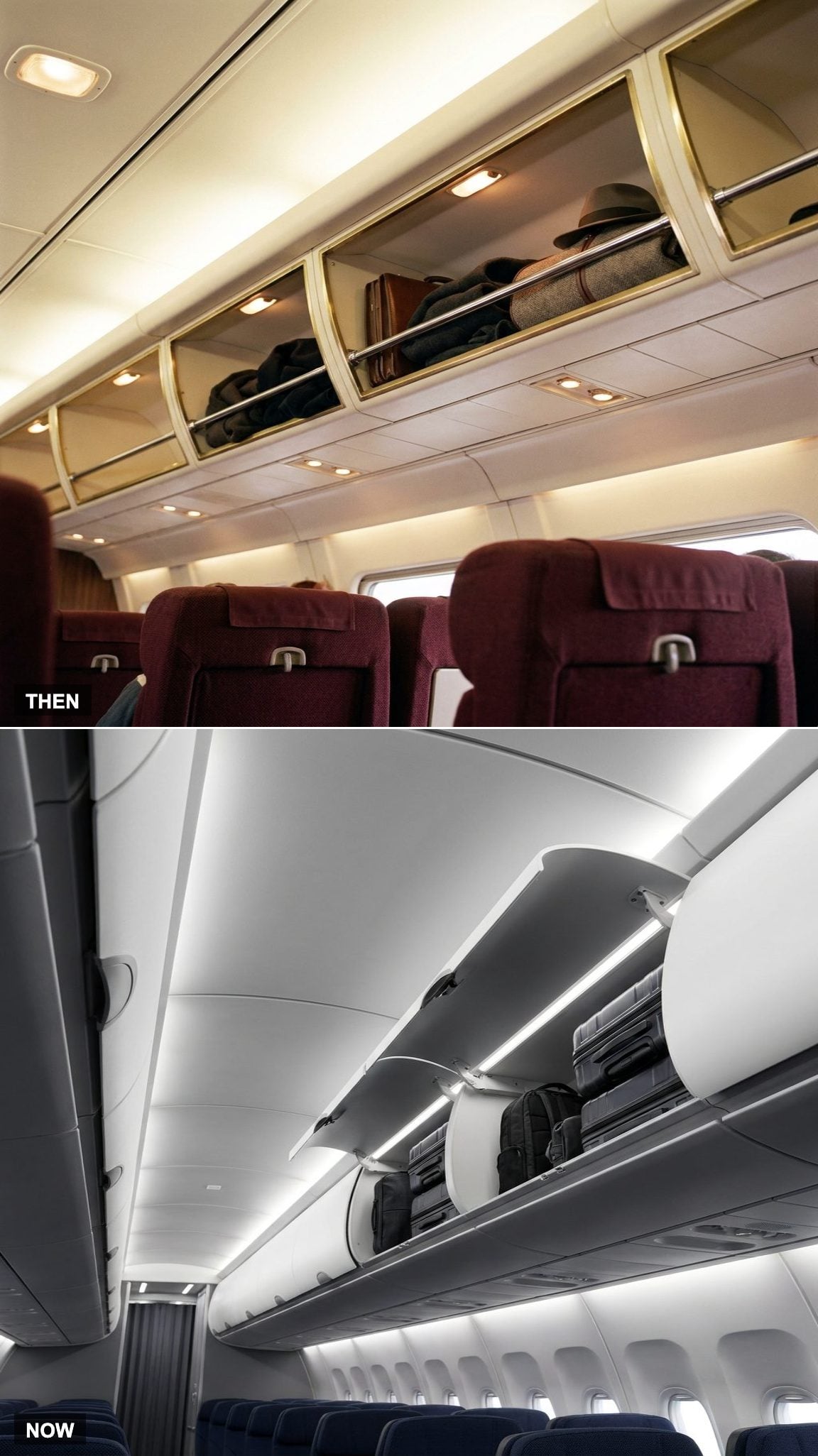
The 1985 overhead was a shelf. Literally a shelf, with a metal bar to keep things from sliding. It held coats and briefcases and the occasional hat, because nobody rolled a suitcase down the aisle — rolling suitcases barely existed yet.
Bernard Sadow patented the rolling suitcase in 1970, and Robert Plath added the retractable handle in 1987. The whole overhead bin arms race, the boarding-group panic, the gate-check anxiety — all of it traces back to a former Northwest pilot in a garage in Florida.
22. No Personal Screens vs. Massive HD Entertainment Displays
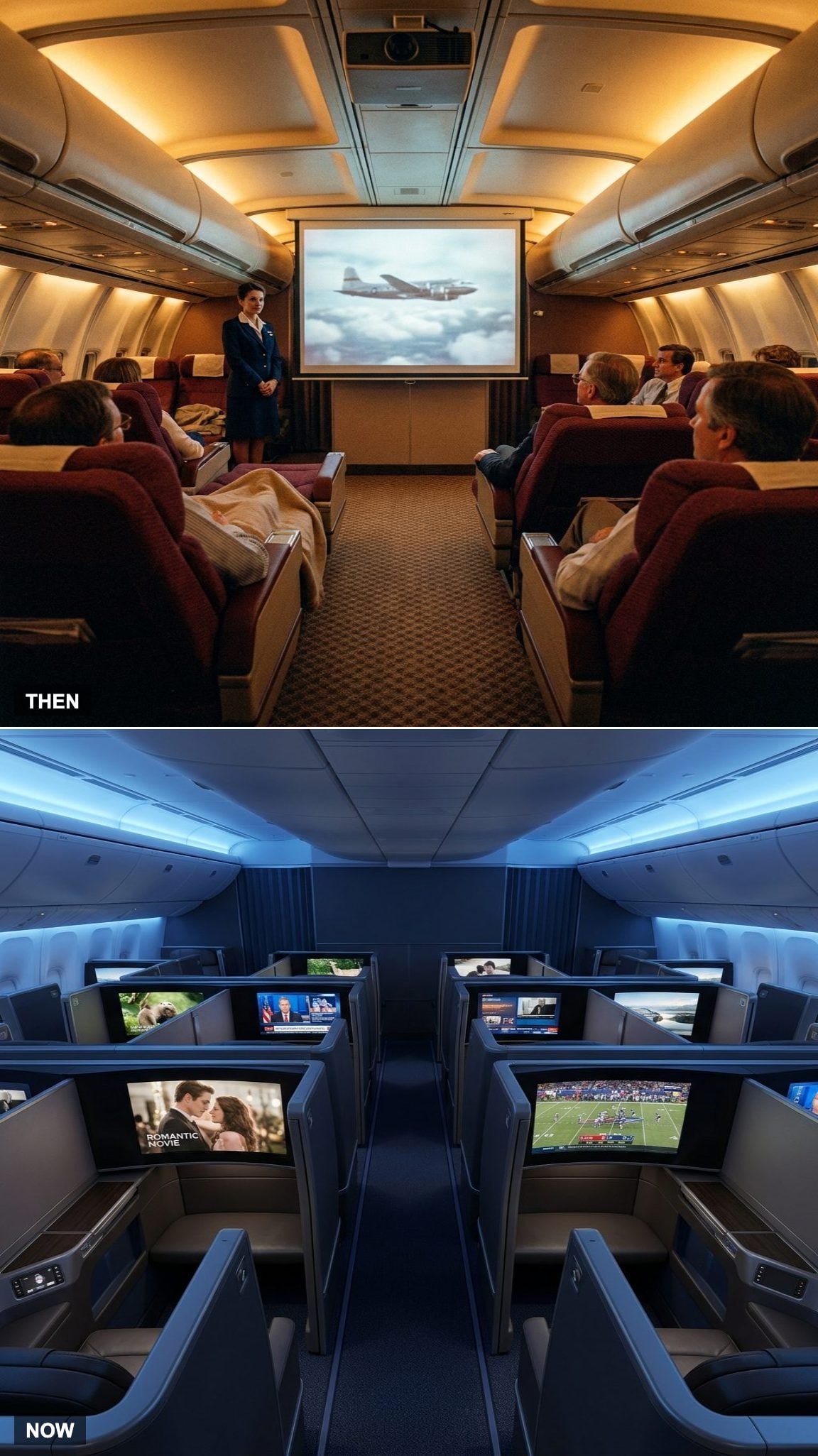
One film. One screen. Everyone watched the same thing at the same time, and if you missed the beginning because the meal service ran long, you missed the beginning. The audio came through a pneumatic tube plugged into your armrest that sounded like a tin can on a string.
Now every seat has a screen bigger than the TV you grew up with, thousands of hours of content, noise-canceling headphones included. The shared experience is gone. What replaced it is objectively better and somehow lonelier.
21. Shared Cabin Phones as a Luxury vs. Wi-Fi and Messaging at 35,000 Feet
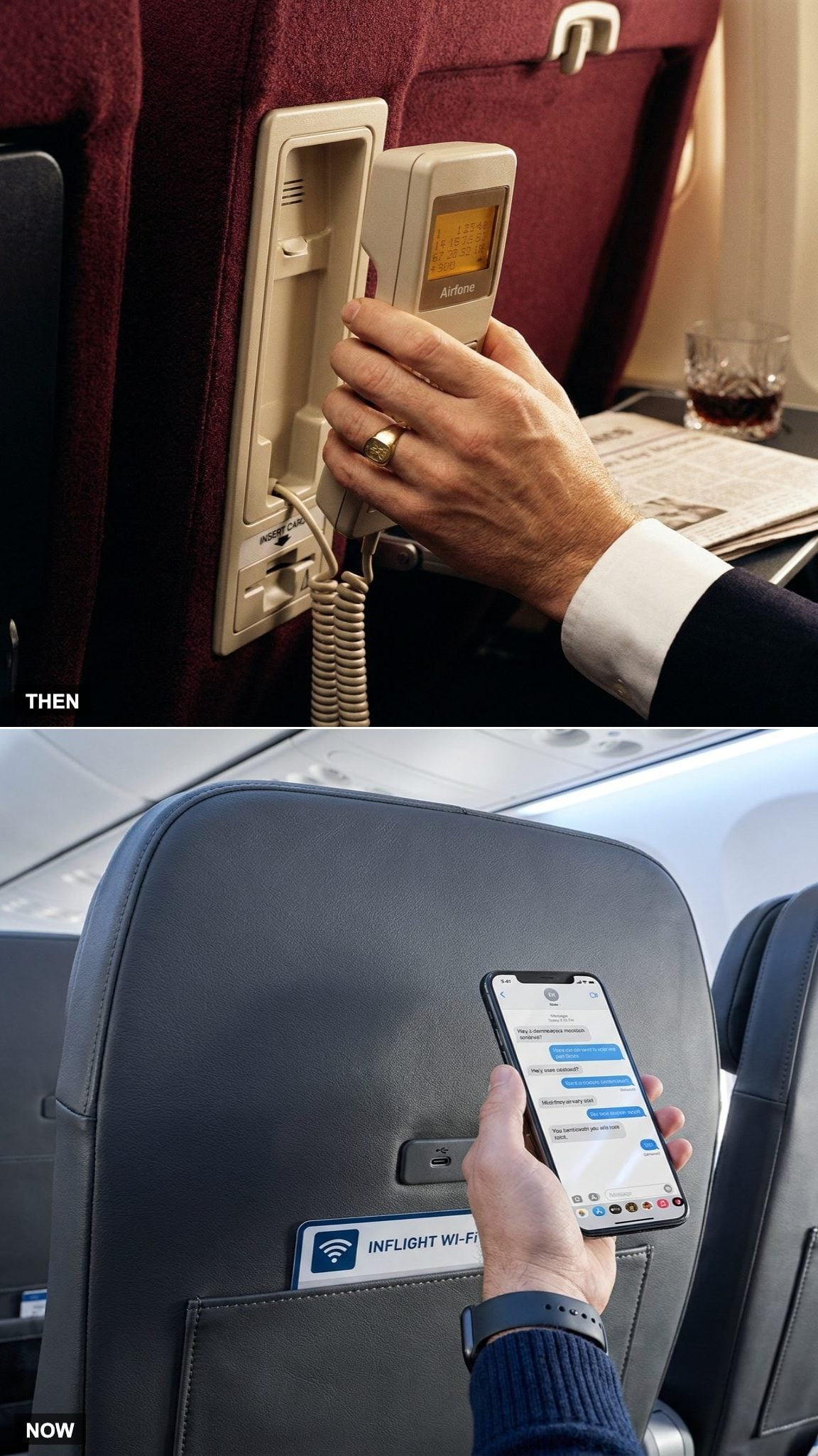
The Airfone was a wonder and a scam. Expensive per minute in 1985 money, more once you adjust for inflation. The connection crackled, and your voice arrived on the other end sounding like it had been shouted through a pillow. Executives used it anyway, because being reachable at 35,000 feet was a status marker worth paying for.
Now everyone is reachable, everywhere, and the novelty is gone. The luxury is no longer being connected. The luxury is finally having a reason not to be.
20. From Magazine Racks to Movies On Demand
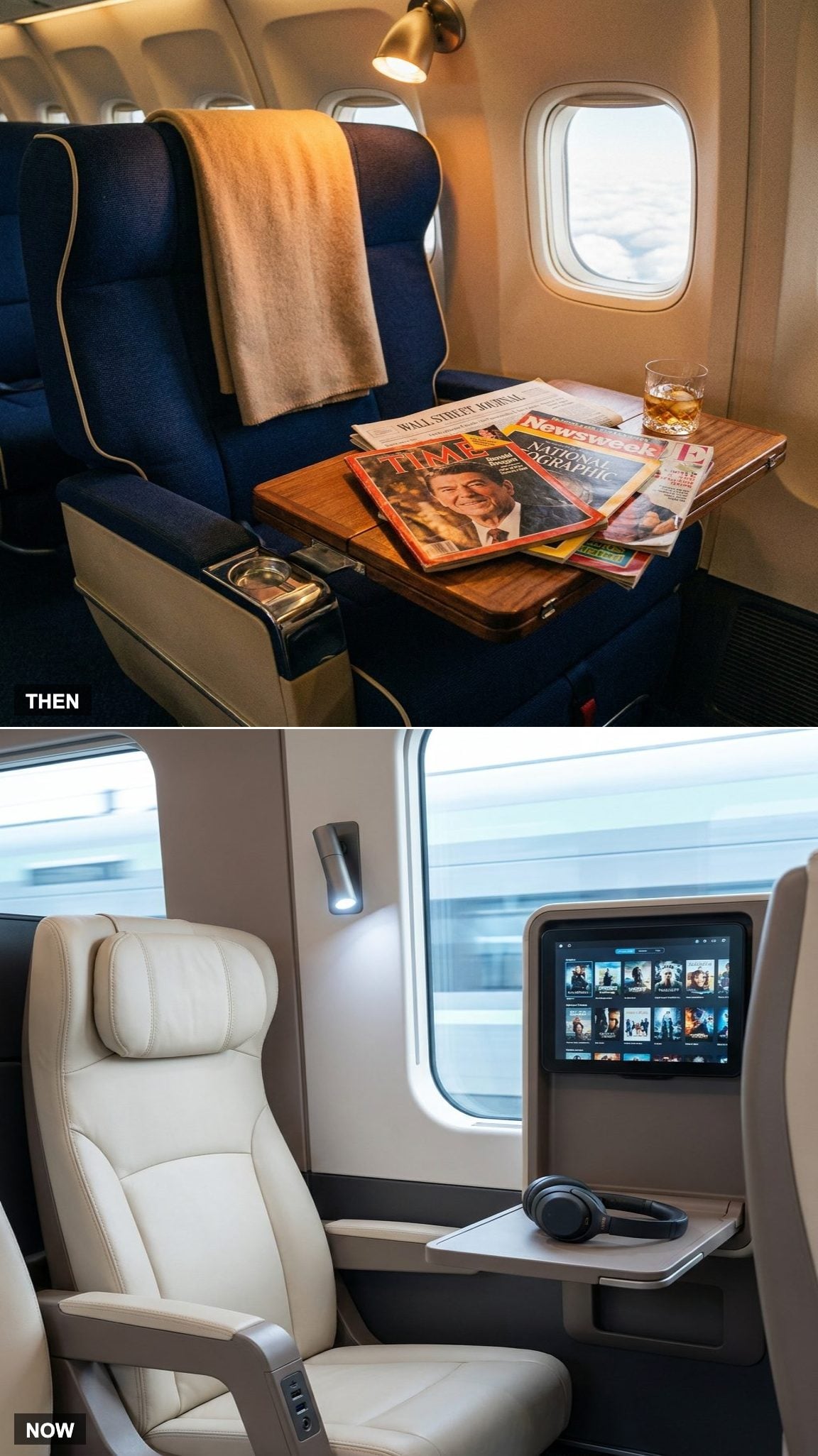
The 1985 first class passenger boarded with a personal library — flight attendants fanned out magazines and newspapers like a card dealer, and a smart traveler grabbed four or five for a transatlantic haul. You read whatever the airline stocked, in the order they handed it to you.
Now the seatback screen holds more content than a Blockbuster ever did. Hundreds of films. Entire series, live news, meditation tracks, language lessons, kids’ cartoons dubbed into six languages. The magazine rack still exists on some carriers, mostly untouched — a small nostalgic gesture beside a screen doing all the actual work.
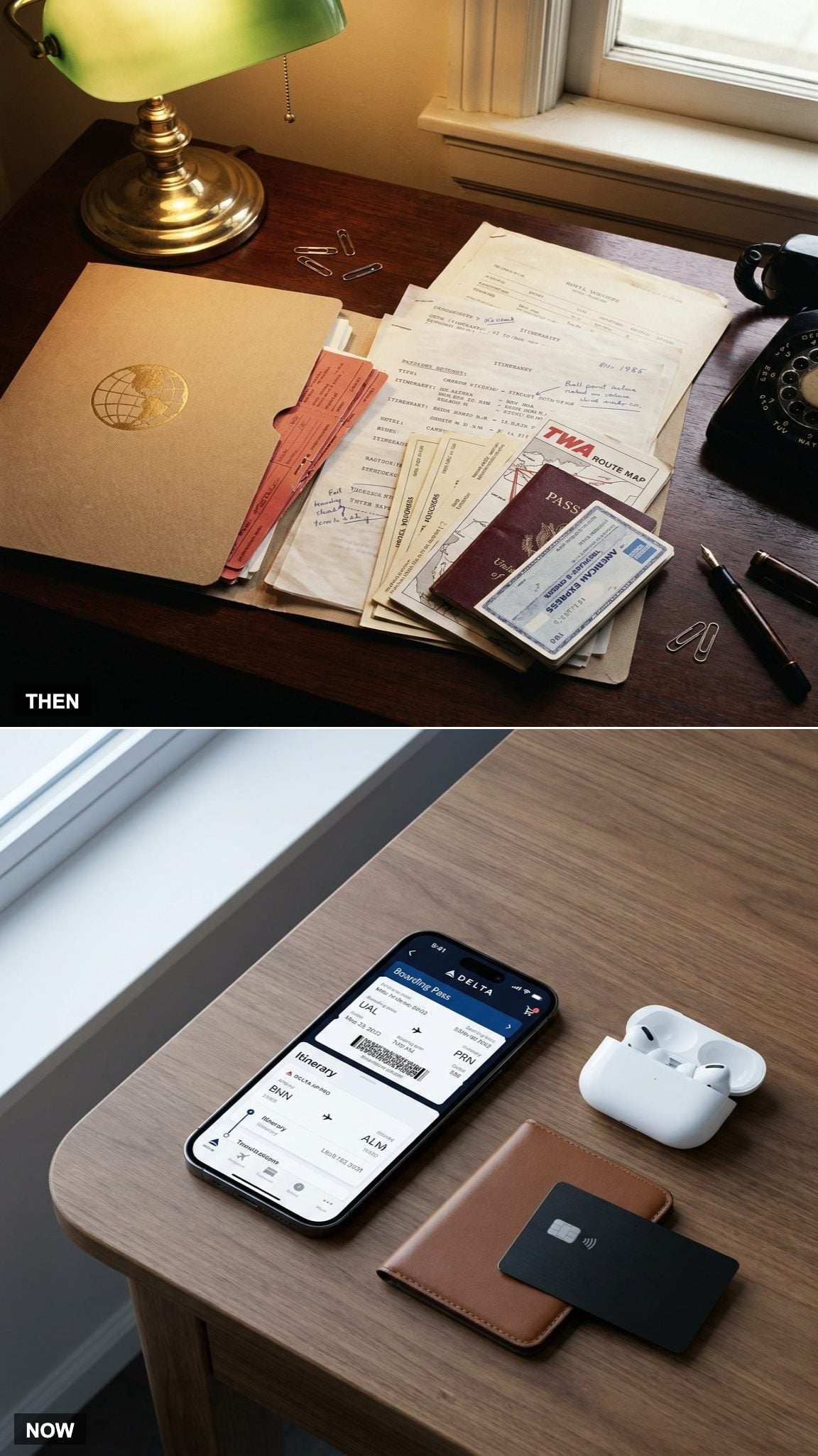
19. The Travel Agent’s Folder vs. The Phone in Your Pocket
🔥 Would you like to save this?
Booking first class in 1985 meant a relationship with a travel agent who knew your seat preference, your meal preference, and your wife’s name.
The folder they handed you was heavy. Ticket coupons in red carbon, hotel vouchers, a typed itinerary, sometimes a route map with your flight path drawn in pen by hand the morning of departure. You carried it in a coat pocket like a diplomatic passport.
Today the same trip lives inside a phone. Boarding pass, hotel confirmation, ride pickup, restaurant reservations, currency conversion — all stacked in a single app or scattered across five. The efficiency is undeniable. But the tactile pleasure of thumbing through a real itinerary the night before departure is gone, and it’s one of those small losses that only registers when you notice it missing.
18. Neckties at 35,000 Feet vs. Hoodies and Sneakers
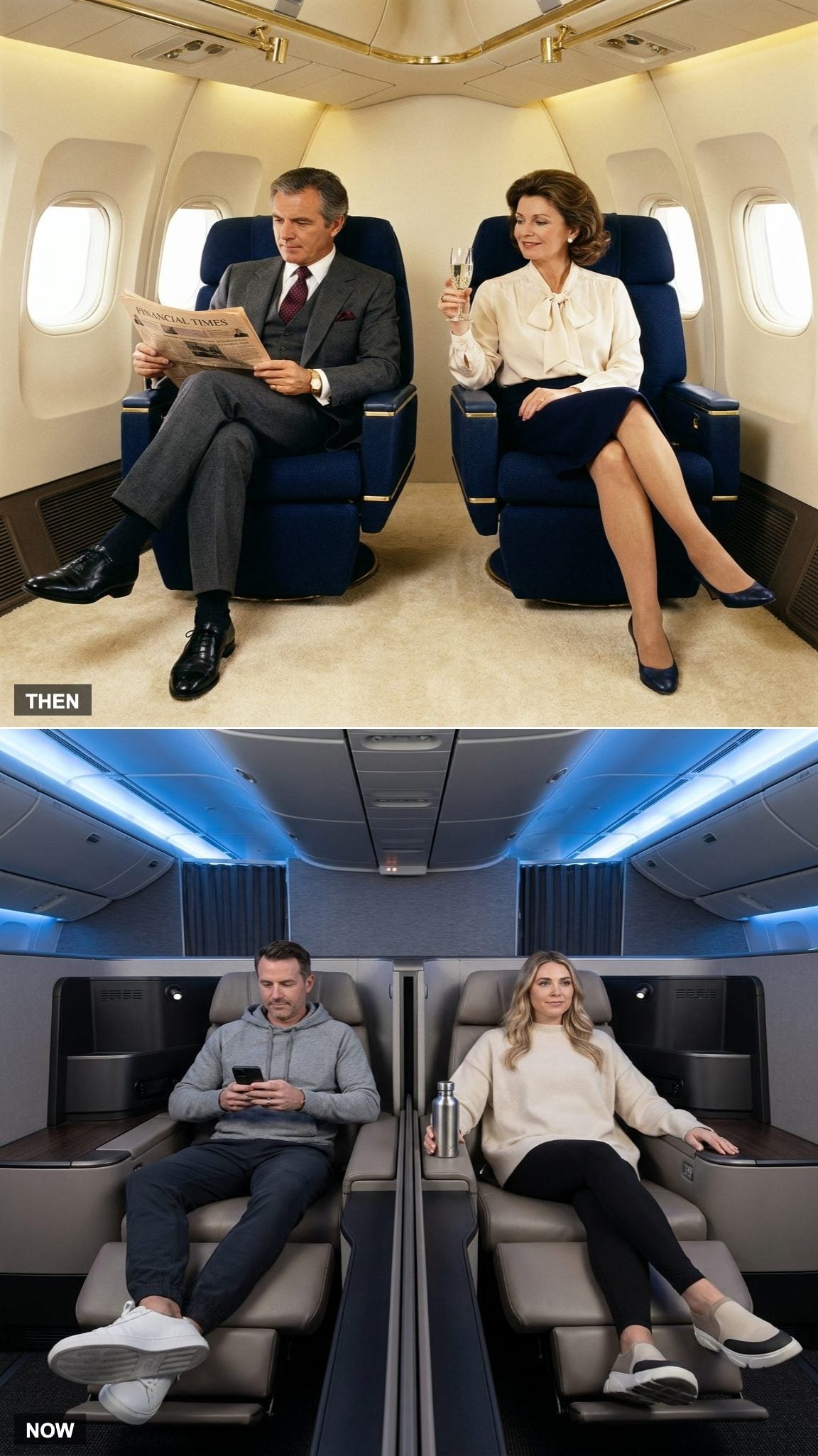
Dressing for first class in 1985 was not optional. Men wore suits, women wore skirts or tailored trousers with real shoes, and the cabin looked like a private club car with passengers dressed to match the leather and the crystal.
Now the same cabin is full of joggers, hoodies, and slide sandals. Long-haul comfort won the argument and the airlines stopped pretending otherwise. A cashmere sweatsuit is the new status uniform — you can spot it from three rows away.
17. The Rare Ambassador Club Card vs. Lounges on Every Continent
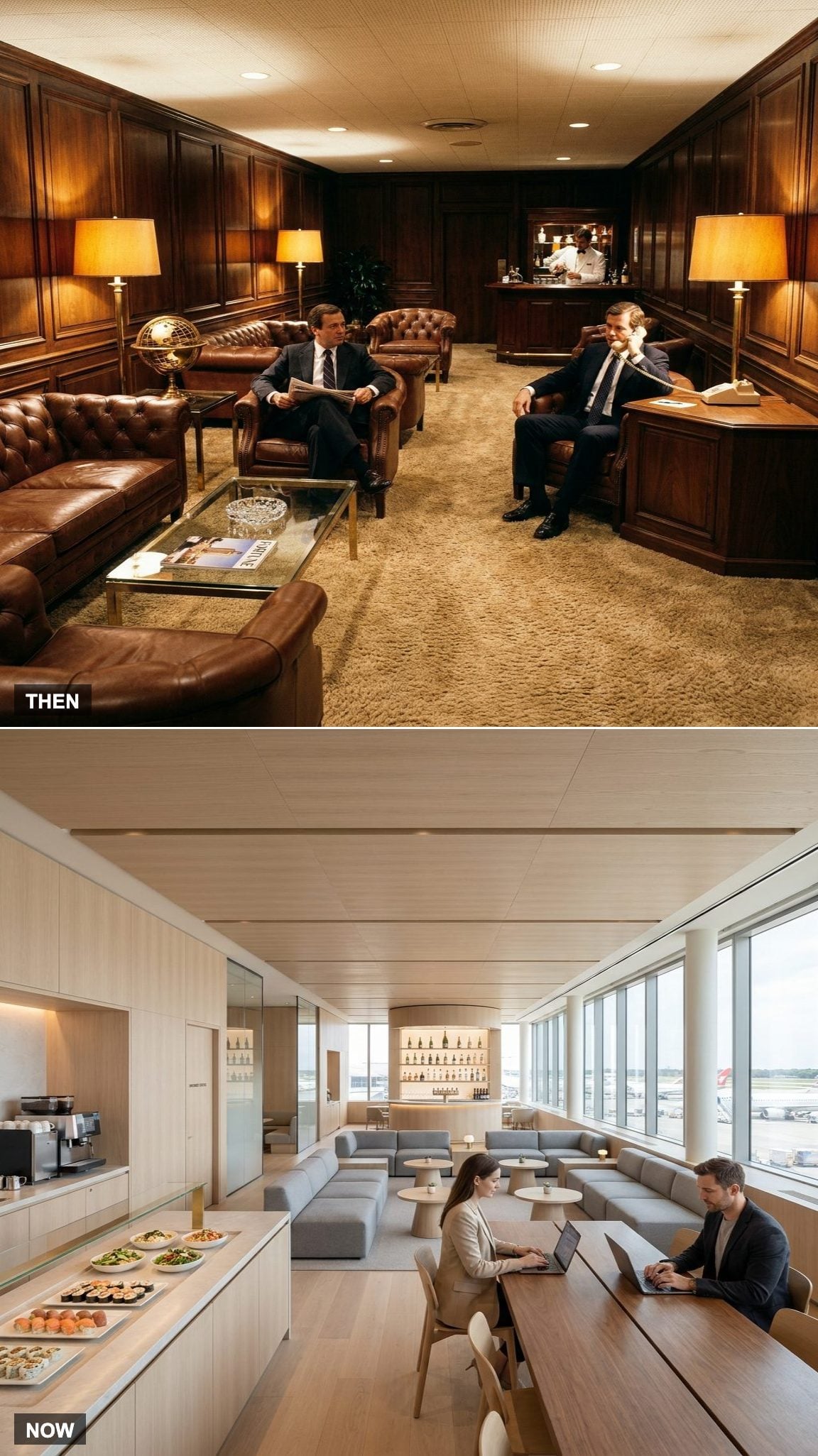
In 1985, lounge access was a quiet privilege. Pan Am’s Clipper Club, TWA’s Ambassador Club, membership cards you paid for annually, dark wood interiors, telephones for placing long-distance calls, a bartender who remembered your drink and your last connection.
Now premium lounges are practically their own industry. Showers, spa treatments, made-to-order dining, wine rooms, sleep pods, dedicated buffets for a la carte champagne. Access has spread through credit cards and status tiers to the point that some flagship lounges feel more crowded than the terminal outside.
16. Beluga on Ice vs. Miso-Glazed Salmon and Green Juice
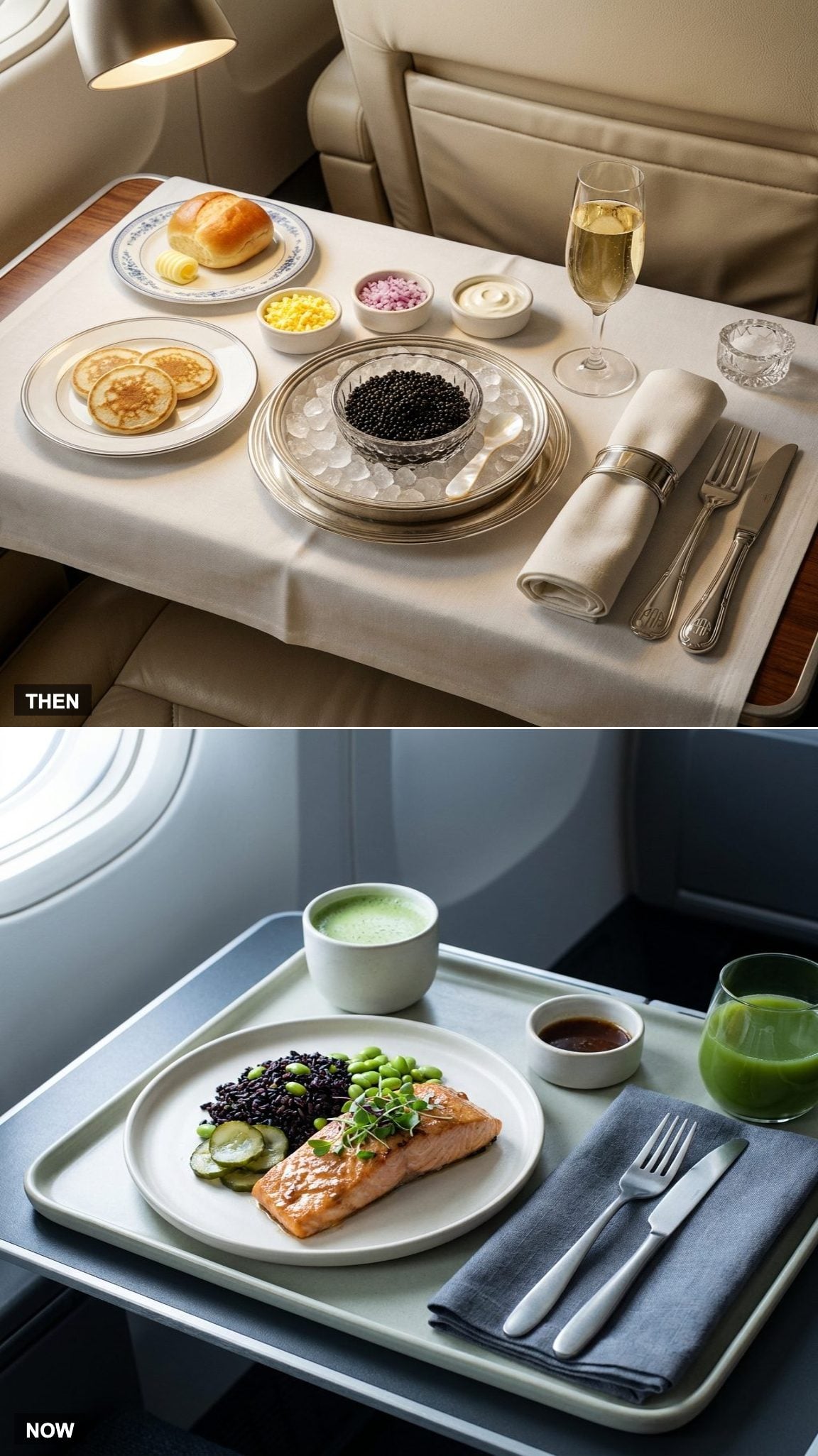
Caviar service was standard on Pan Am, Air France, and Lufthansa first class in the 1980s. The trolley came around with a silver bowl of beluga on crushed ice, chopped egg, minced shallot, blinis, and a bottle of chilled vodka or vintage champagne. It was excessive and everyone loved it.
Contemporary first class menus lean toward regional cuisine, dietary flexibility, and wellness. You order in advance from an app, the salmon is sustainable, the greens are cold-pressed, and the wine list is curated by a sommelier with a name printed on the menu. Better food, honestly. Markedly less theatrical, though.
15. A Thin Pillow and a Wool Blanket vs. Frette Sheets and a Real Duvet
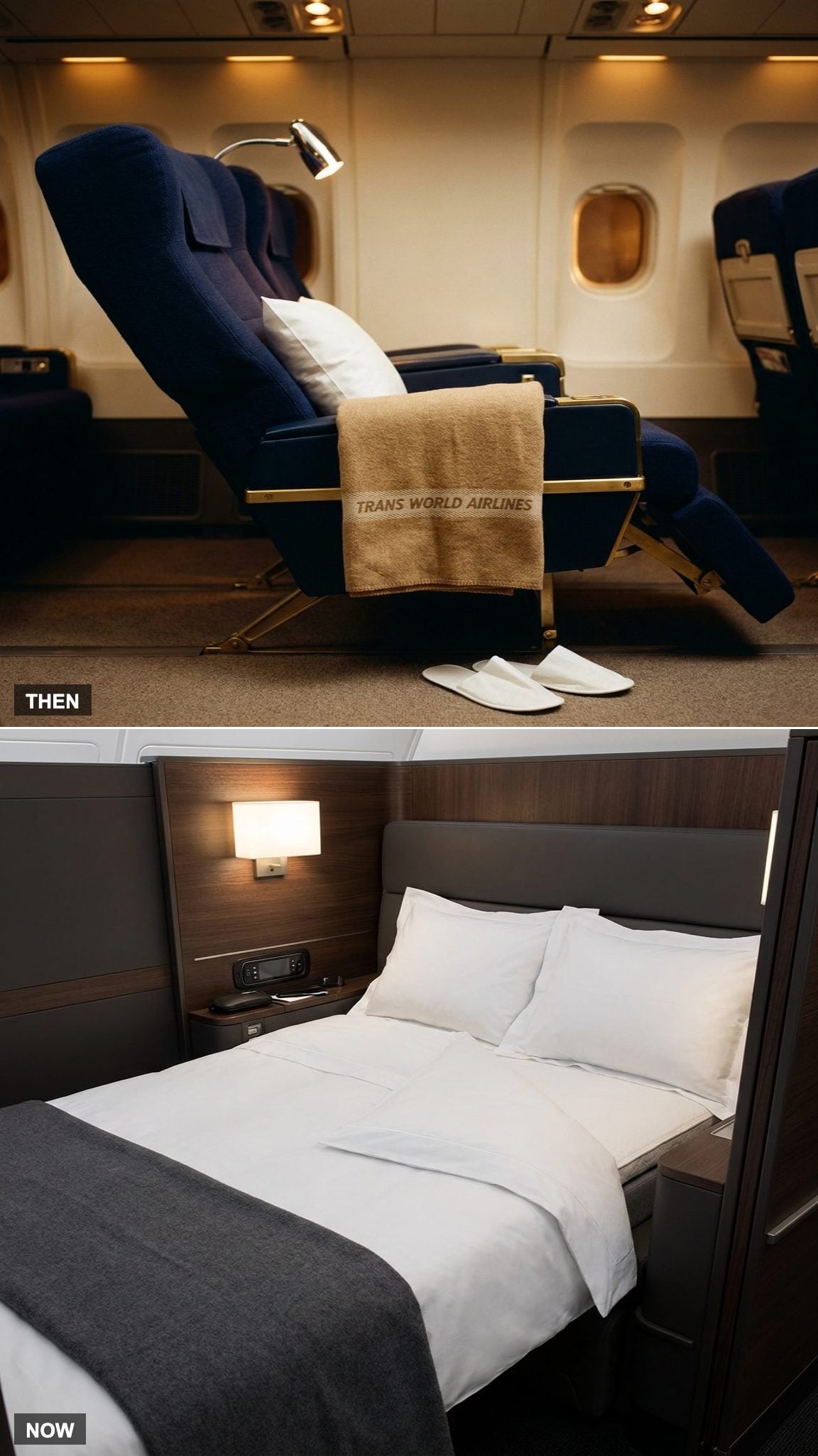
Sleeping in first class in 1985 meant reclining maybe forty degrees, tucking a thin pillow behind your neck, and pulling a scratchy wool blanket up to your chin. You woke up with a stiff neck and called it a good flight.
Now the crew turns down a full bed with Frette or Bamford linens, a real duvet, a proper pillow menu on some carriers, cashmere throws, and mattress toppers. Waking up rested on a plane used to be a fantasy. It’s the baseline expectation of the ticket now.
14. A Drawstring Toiletry Pouch vs. A Designer Amenity Kit
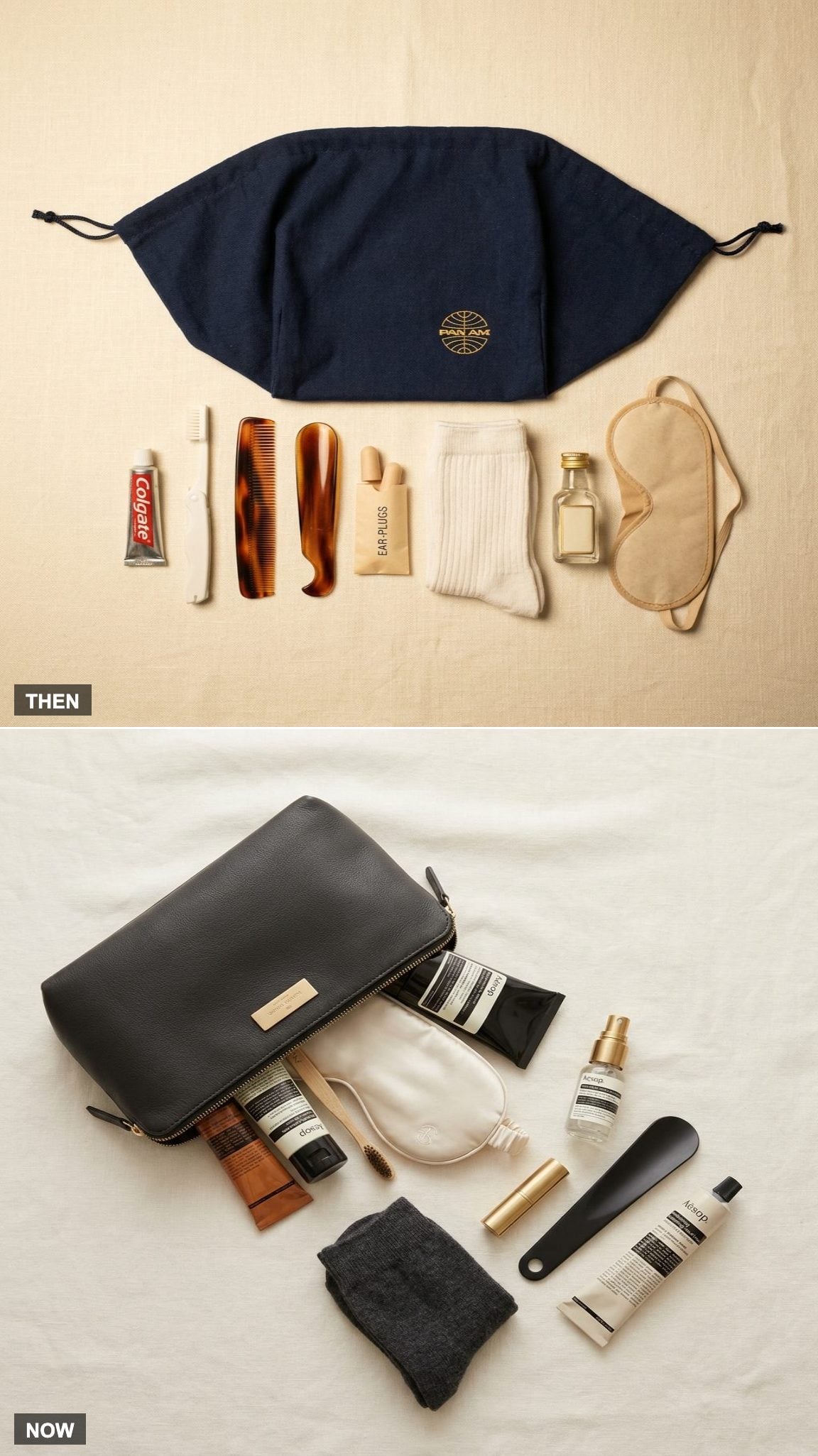
The 1985 amenity kit was functional and nothing more. A drawstring pouch, a folding toothbrush, a comb, socks that felt like paper, and a mystery cologne no one ever wore off the plane. You used two items and threw the rest in a drawer that eventually held forty of them, all identical.
Today’s kits are collaborations. Rimowa hard cases, Diptyque skincare, Bamford grooming, Loewe pouches, Aesop hand cream — passengers post unboxings on social media before the plane pushes back from the gate. The kit itself has become a status object, sometimes more valued than the flight it came with.
13. The Captain’s Announcement vs. The Live Map on Your Screen
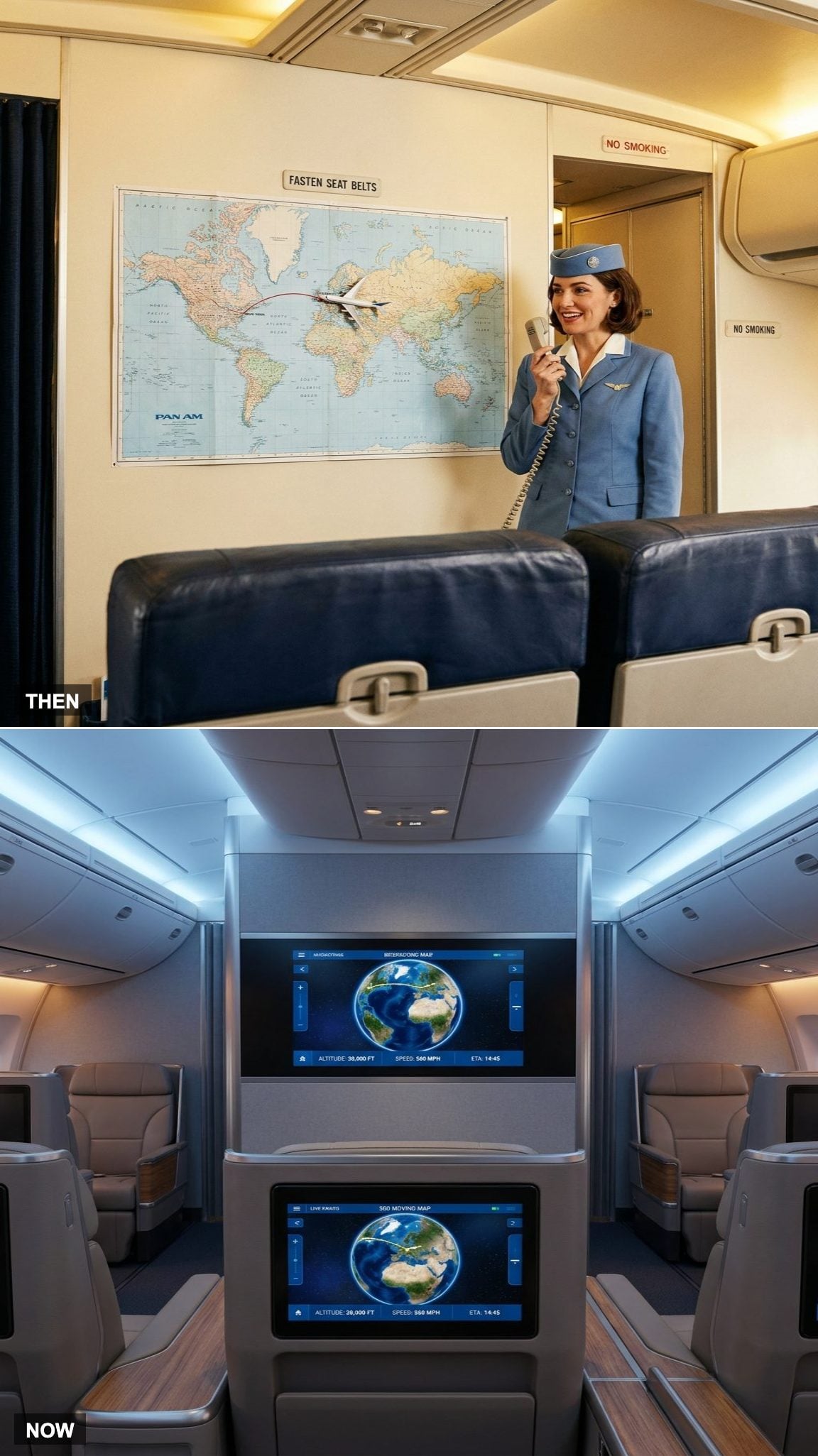
Flight progress in 1985 arrived by intercom. Around the halfway point the captain would come on with a gentle drawl about crossing over Greenland, current altitude, expected arrival, sometimes a small joke about the weather in London — and you’d look up from your book, nod, and go back to reading.
Now a live 3D globe spins on the seatback screen, tracking altitude, ground speed, outside temperature, wind direction, and the exact minute the wheels will touch down. You can zoom in and see the specific fjord you’re flying over. The captain still comes on the intercom occasionally, mostly out of tradition.
12. Kids in First Class vs. A Cabin Full of Business and Points Travelers
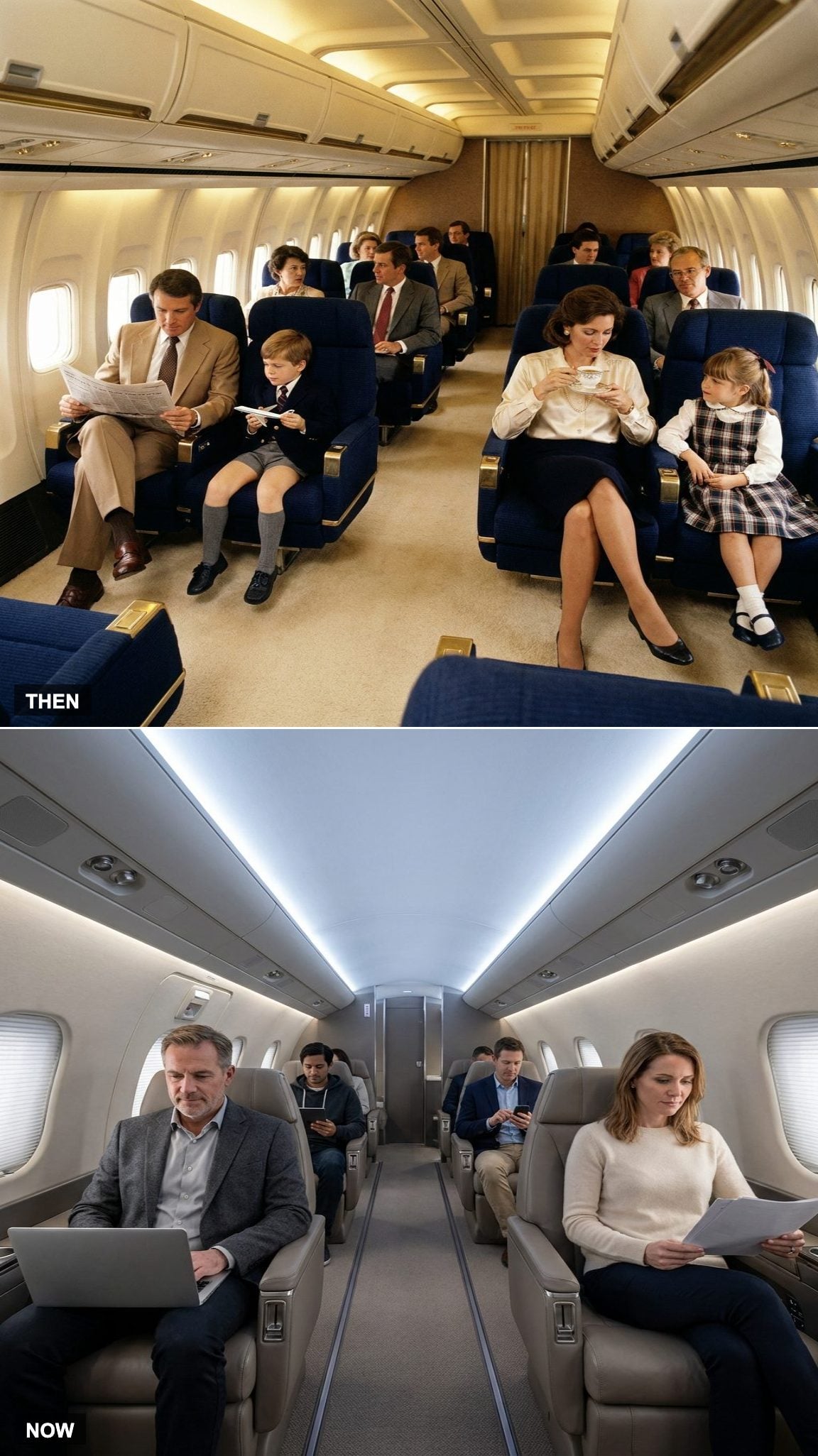
Families flew first class in 1985 because that’s where the family flew, together. Dad’s expense account or a saved-up honeymoon budget covered it, and children in blazers and pinafores were a common sight — sipping ginger ale, coloring on airline stationery, staring wide-eyed at the beverage cart.
The demographic has shifted. Business travelers on corporate accounts, points redeemers who spent years chasing status, and the occasional influencer documenting the meal service. Children still appear, just far less often. Quieter now. More transactional. More laptop-focused.
11. The Front Rows vs. Suites With Doors That Close
🔥 Would you like to save this?
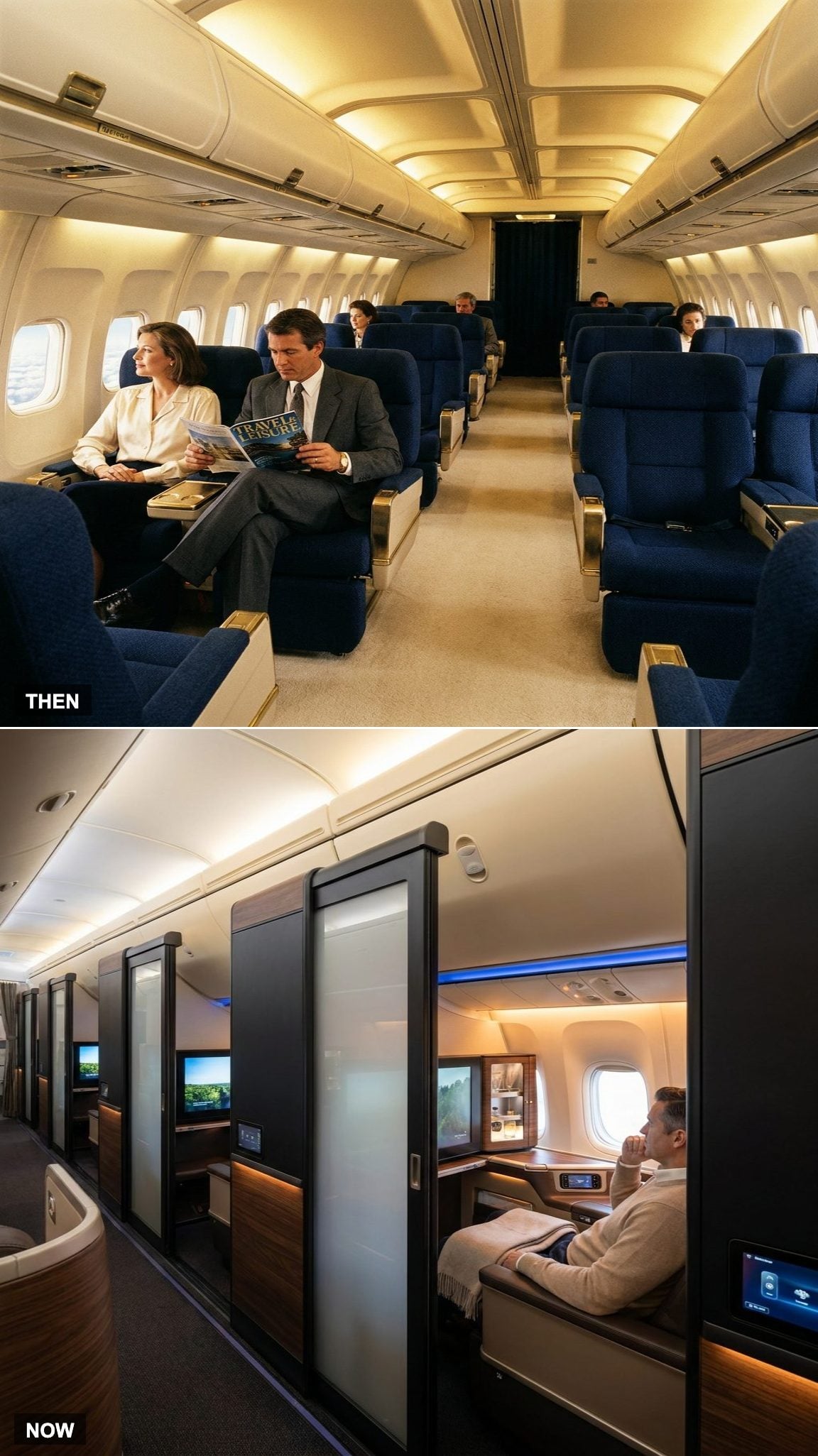
First class in 1985 meant the front of the plane — bigger seats, better food, a curtain between you and coach. You could see everyone in the cabin, and they could see you. Privacy was social, not architectural.
Contemporary first class is a room. Sliding doors, tall walls, a personal wardrobe closet, sometimes a companion seat and a separate bed. Emirates, Singapore, and Etihad have taken it further, with double beds, private showers, and butler service. The seat has become a hotel room that happens to be moving at 550 miles per hour.
The 1985 first class passenger wanted to be seen enjoying it. The 2026 passenger wants the door closed.
10. The Airline Lounge: From Peanuts to Full Spa Service
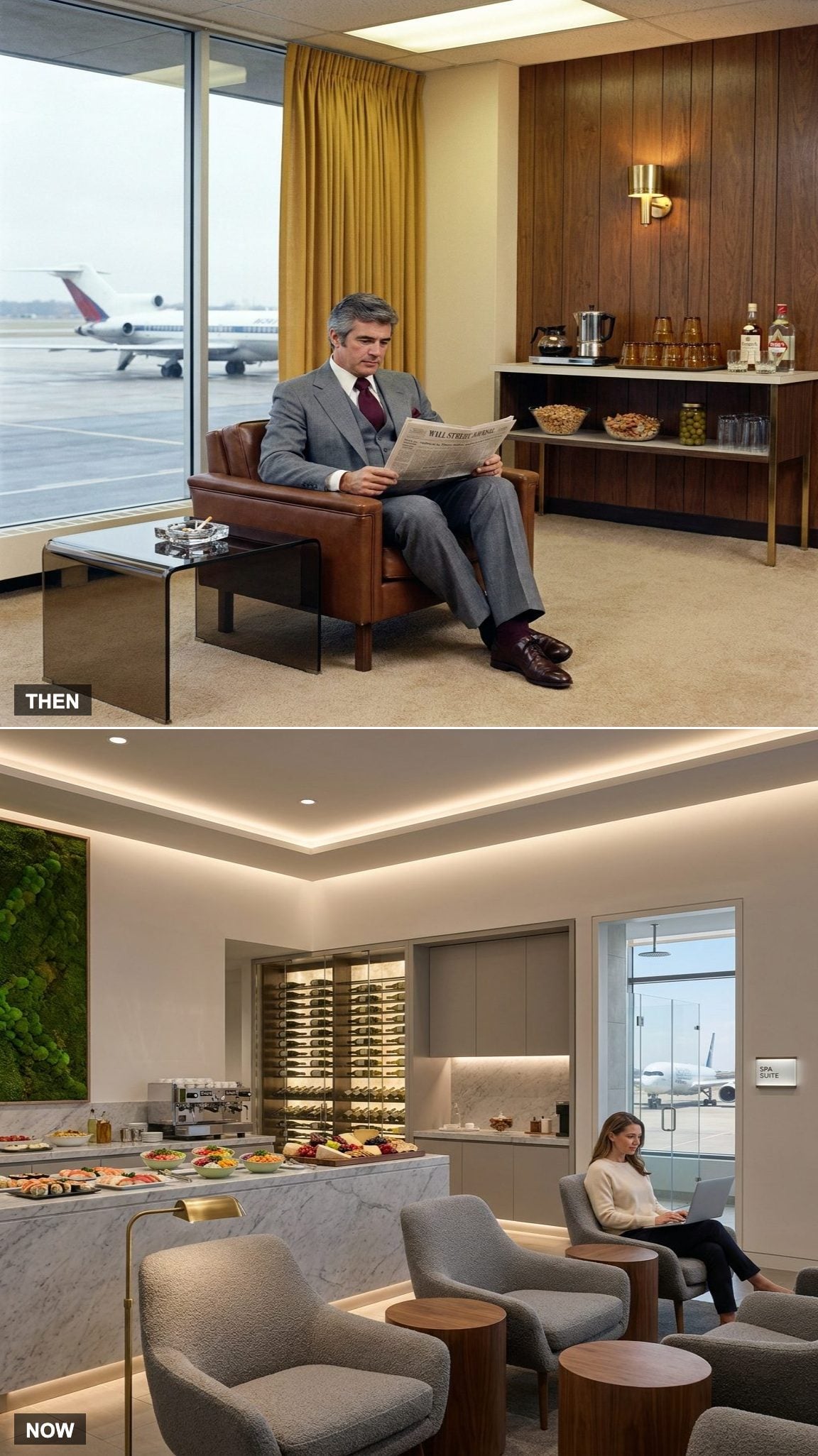
In 1985 the airline lounge was a quiet room with a bowl of peanuts going stale, a coffee pot going bitter, and a bottle of Dewar’s you could pour yourself. That was the whole amenity — a leather chair, a phone, a view of the tarmac, and if you were lucky, someone kept the ashtrays emptied.
Today’s flagship lounges look like boutique hotels. Sit-down dining rooms with actual chefs, shower suites with rain heads and Le Labo toiletries, nap pods, cocktail bars, sometimes a wine sommelier hanging around at 9am for reasons nobody quite explains. The old lounge was somewhere to wait. The new one is somewhere you’d almost rather stay than board.
9. The Upgrade List: From Clipboard to Algorithm
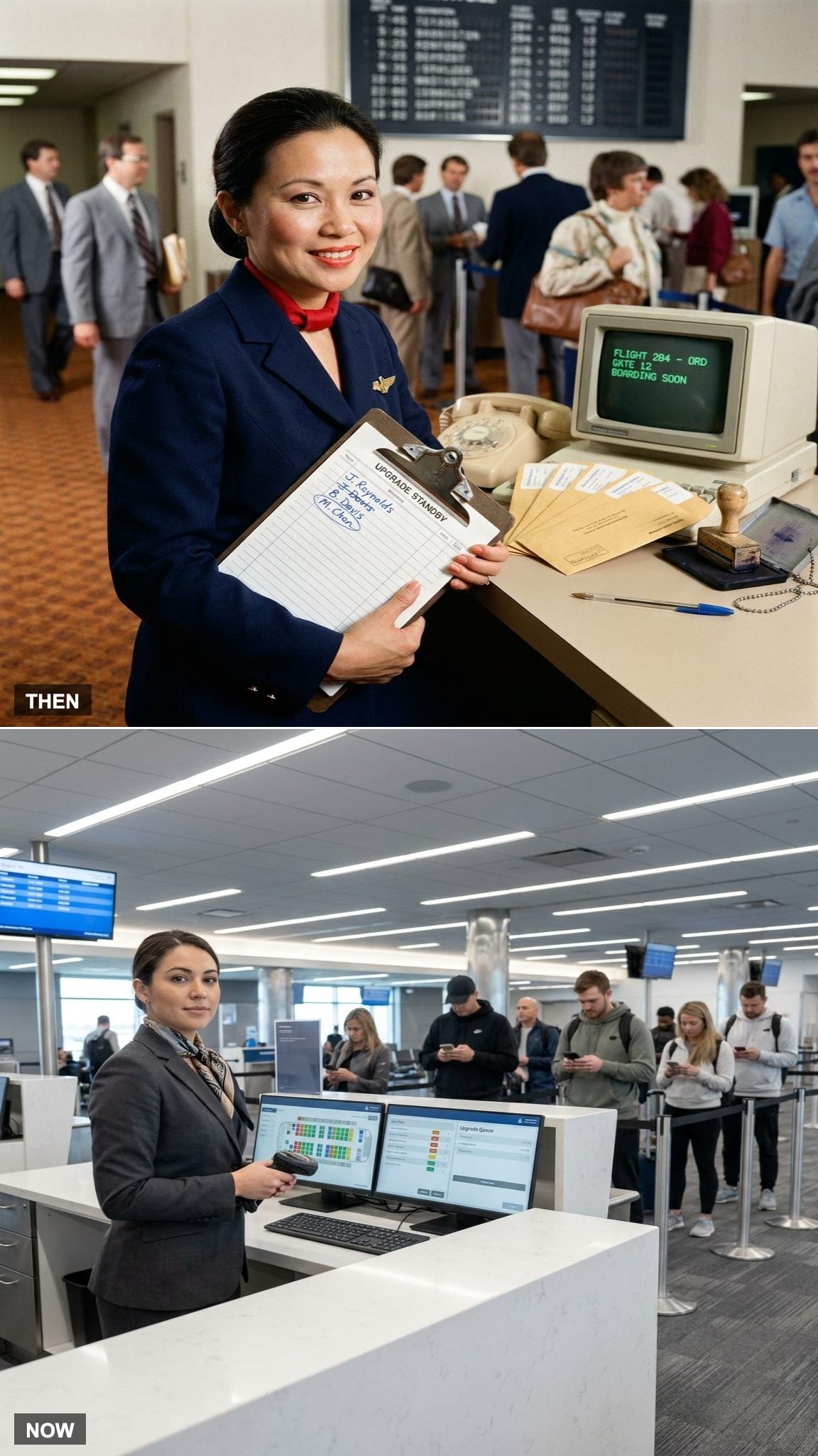
The upgrade list was a piece of paper on a metal clipboard, and the agent knew the frequent flyers by face. If she liked you, or you asked nicely, or you happened to be wearing a decent suit on a slow Tuesday, your name moved up. Room for judgment. Room for kindness. Room, too, for favoritism, and everyone knew it.
Now an algorithm decides before you reach the gate — status tier, fare class, corporate contract, elite qualifying miles year-to-date, the whole slurry crunched at T-minus-72 hours. The upgrade posts to your phone. Fairer, probably. Also colder. Nobody remembers your name because nobody needs to.
8. Pre-Flight Communication: Pay Phones vs. Slack Notifications
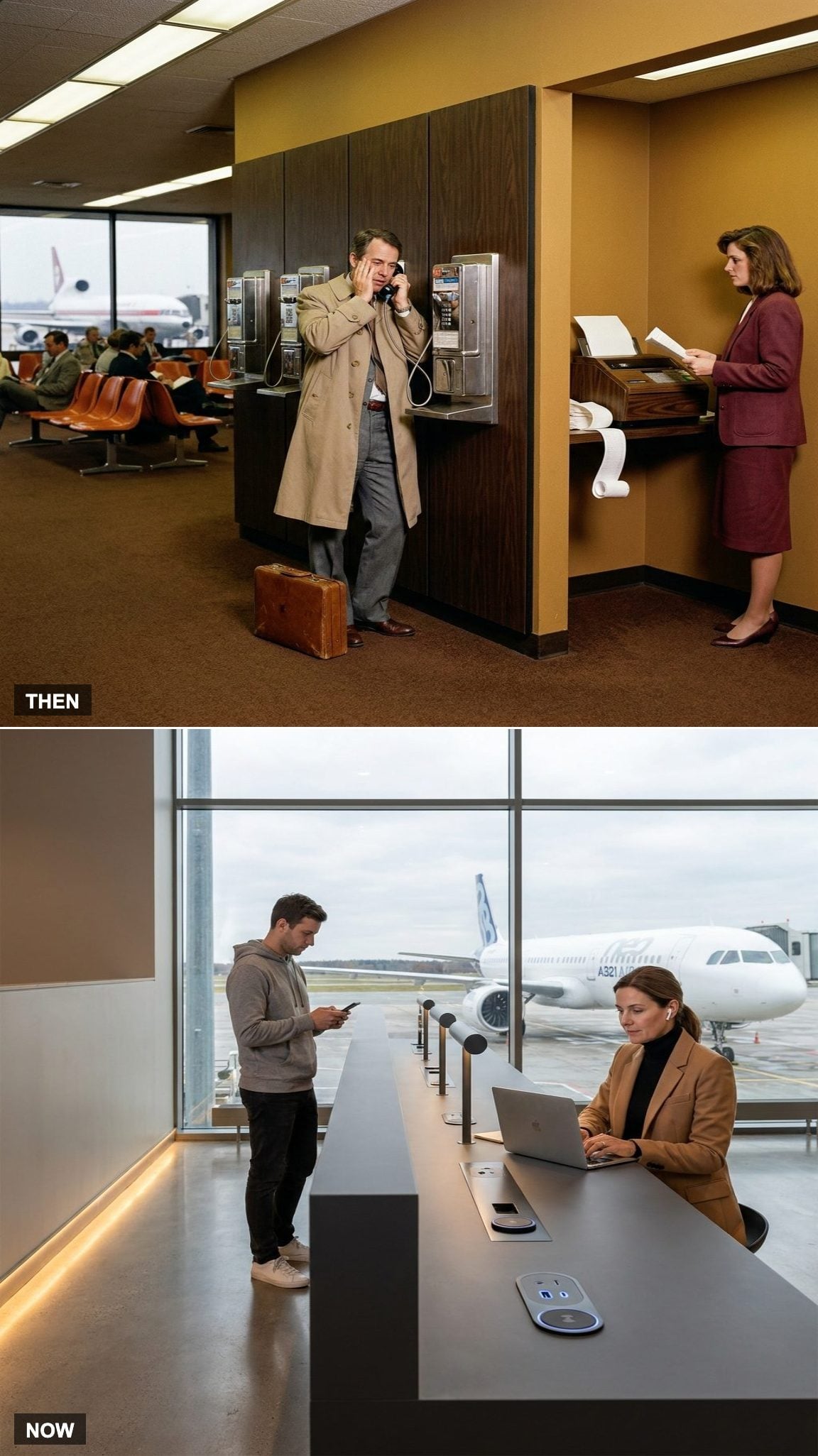
Before boarding in 1985, first class passengers made their last calls from pay phones with thirty-foot coiled cords, standing in a row of booths with a hand cupped over the receiver so the next guy couldn’t hear the deal. The truly serious ones queued for the fax alcove, feeding thermal paper into a machine that beeped, hummed, and sometimes just gave up halfway through page two.
Today the cabin door is basically the only thing that ends the workday. Emails send until wheels-up, Slack pings until the flight attendant asks twice, and some travelers get more done in the boarding lounge than at their actual desk.
7. The Newspaper: Broadsheet Then, Backlit Now
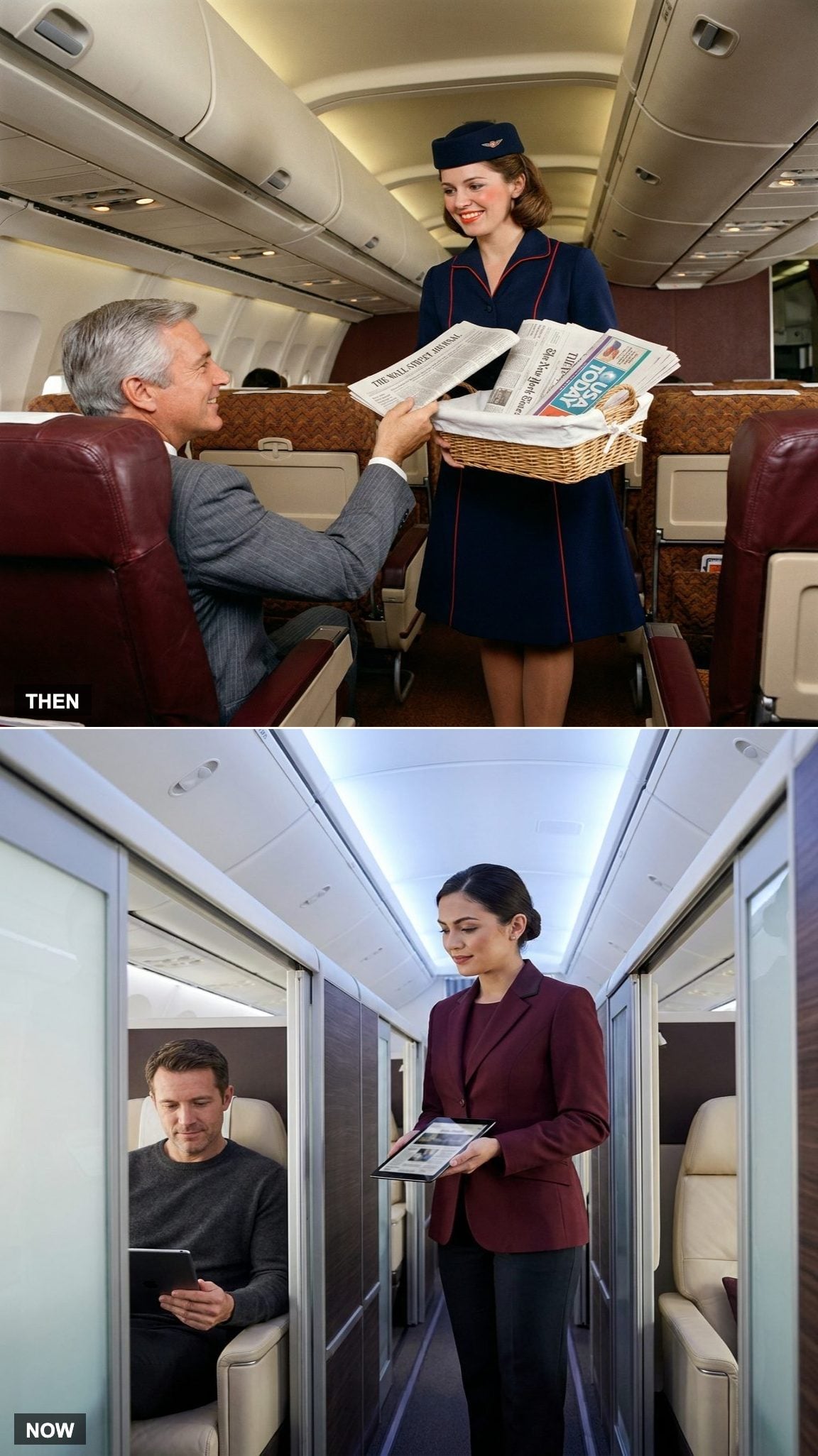
A flight attendant walked the aisle before pushback with a wicker basket of newspapers — the Journal on top, the Times underneath, USA Today for the reader who wanted color. You picked one, sometimes two, and folded it into thirds the way every commuter had learned to do on a crowded train.
Now she offers you a QR code. Six hundred publications, thirty languages, gone the moment you close the tab. The newsprint smell is gone. So are the ink smudges on your cuff.
6. Meal Service: The Rolling Cart vs. The Plated Course
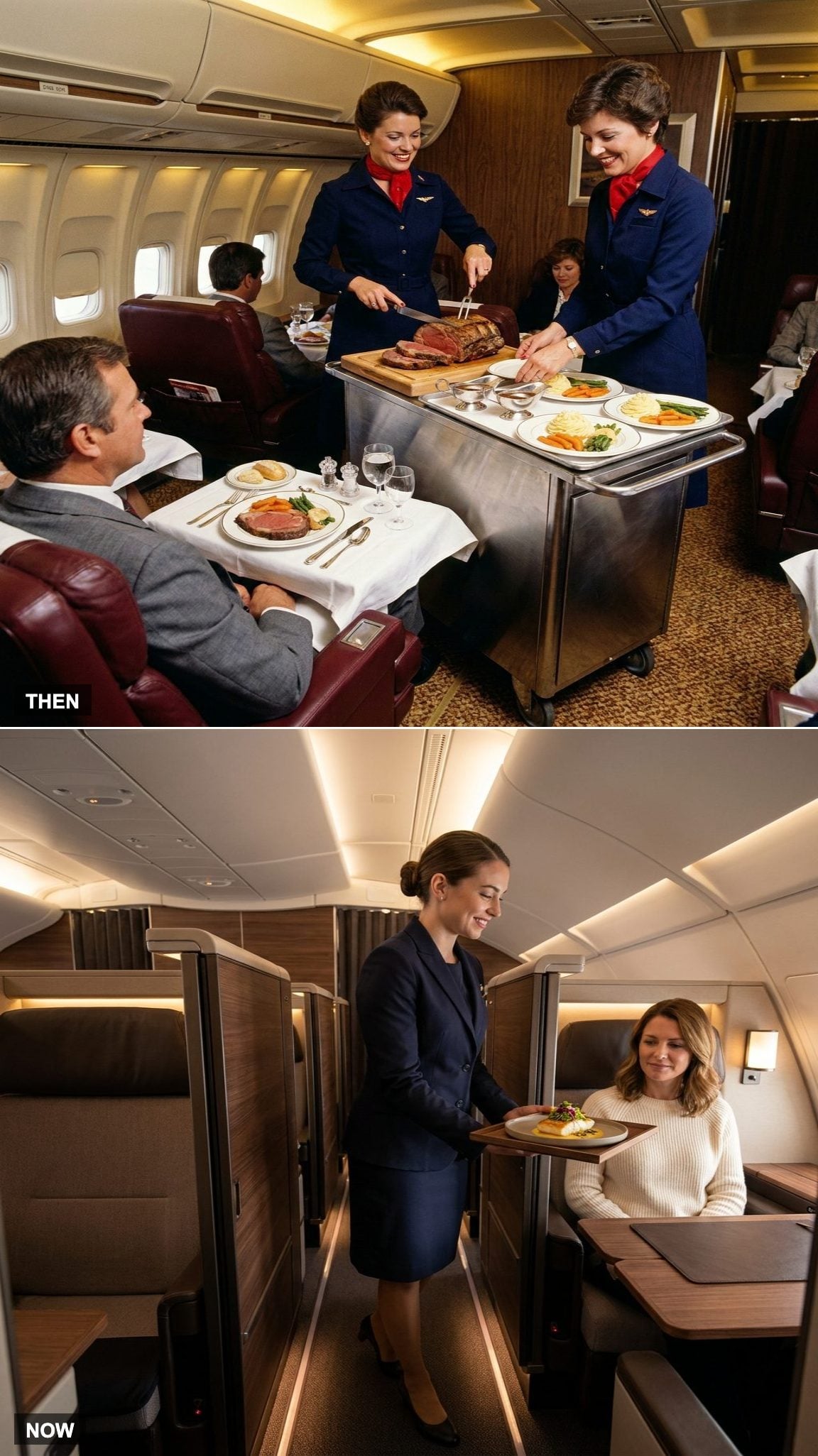
The meal cart in 1985 was theater. Two attendants worked it in tandem, carving prime rib to order in the aisle, plating whipped potatoes with a piped rosette, ladling gravy from a small silver boat while the passenger tried to pretend this wasn’t the highlight of his week. Everyone in first class ate at the same time. It was called service because it was performed.
Now it’s dine-on-demand. Order what you want, when you want, brought one course at a time on a walnut tray to your suite.
The cart is gone. So is the shared choreography of a cabin all eating at once. The food is better, the room is quieter, and something about the old way still felt more like an occasion.
5. Who Was Actually Up Front: Executives Then, Everyone Now
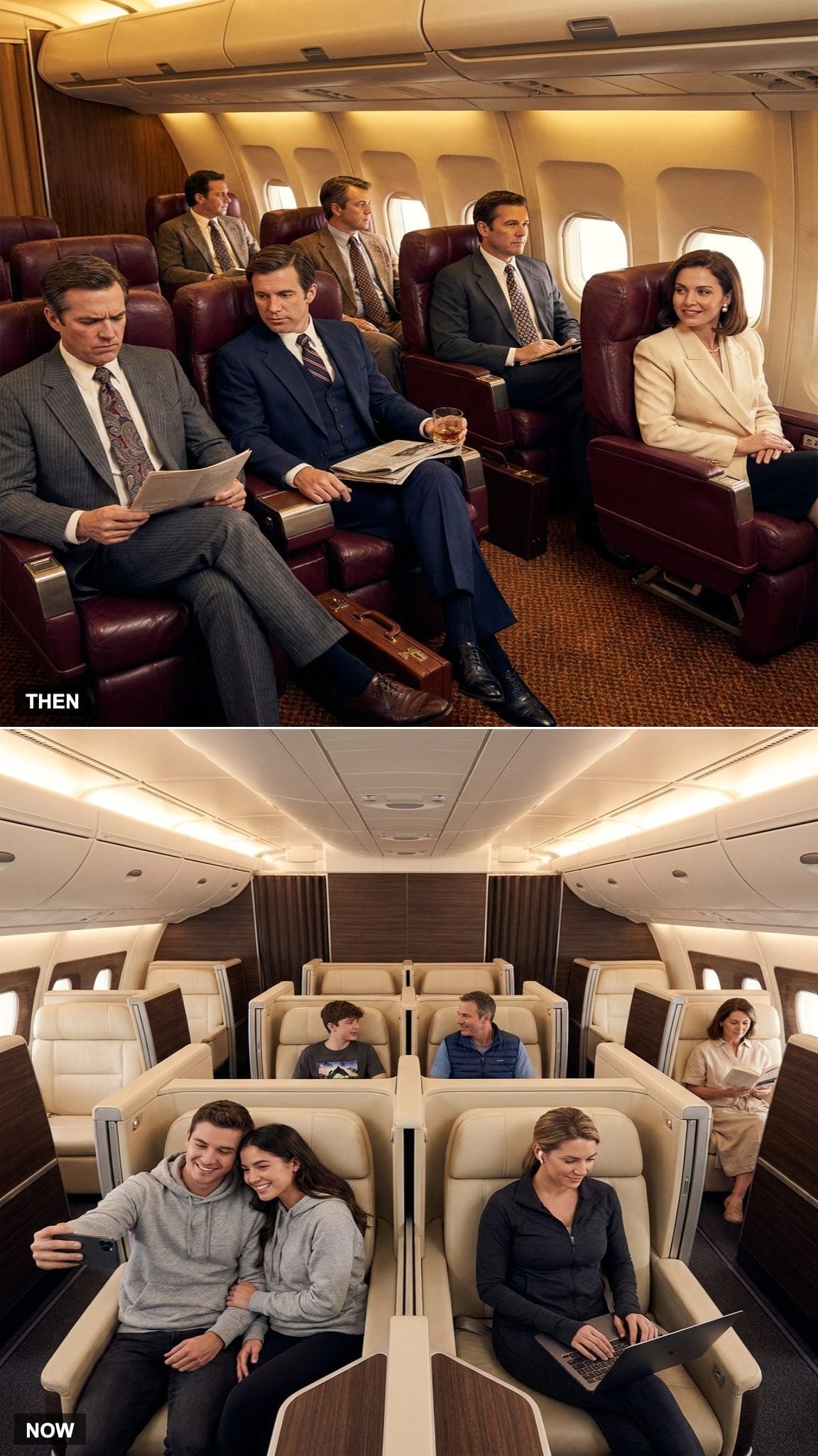
Look down the first class aisle in 1985 and you saw the same person over and over — male, 45 to 65, suit, briefcase, expense account. First class was a business tool that companies paid for, individuals almost never did, because the sticker price was staggering and airlines hadn’t figured out how to sell the aspiration to anyone but a corporate travel department.
Now the cabin is a mixed bag. Honeymooners who burned two years of Chase points on the flight to Tokyo, a software engineer with a companion certificate, a grandmother who upgraded with miles she’d hoarded since 2011, the occasional executive still traveling on the company dime but looking a little lonely about it. First class is no longer a species. It’s a redemption chart.
4. Carry-On Culture: The Garment Bag Era vs. The Wheeled Roller Era
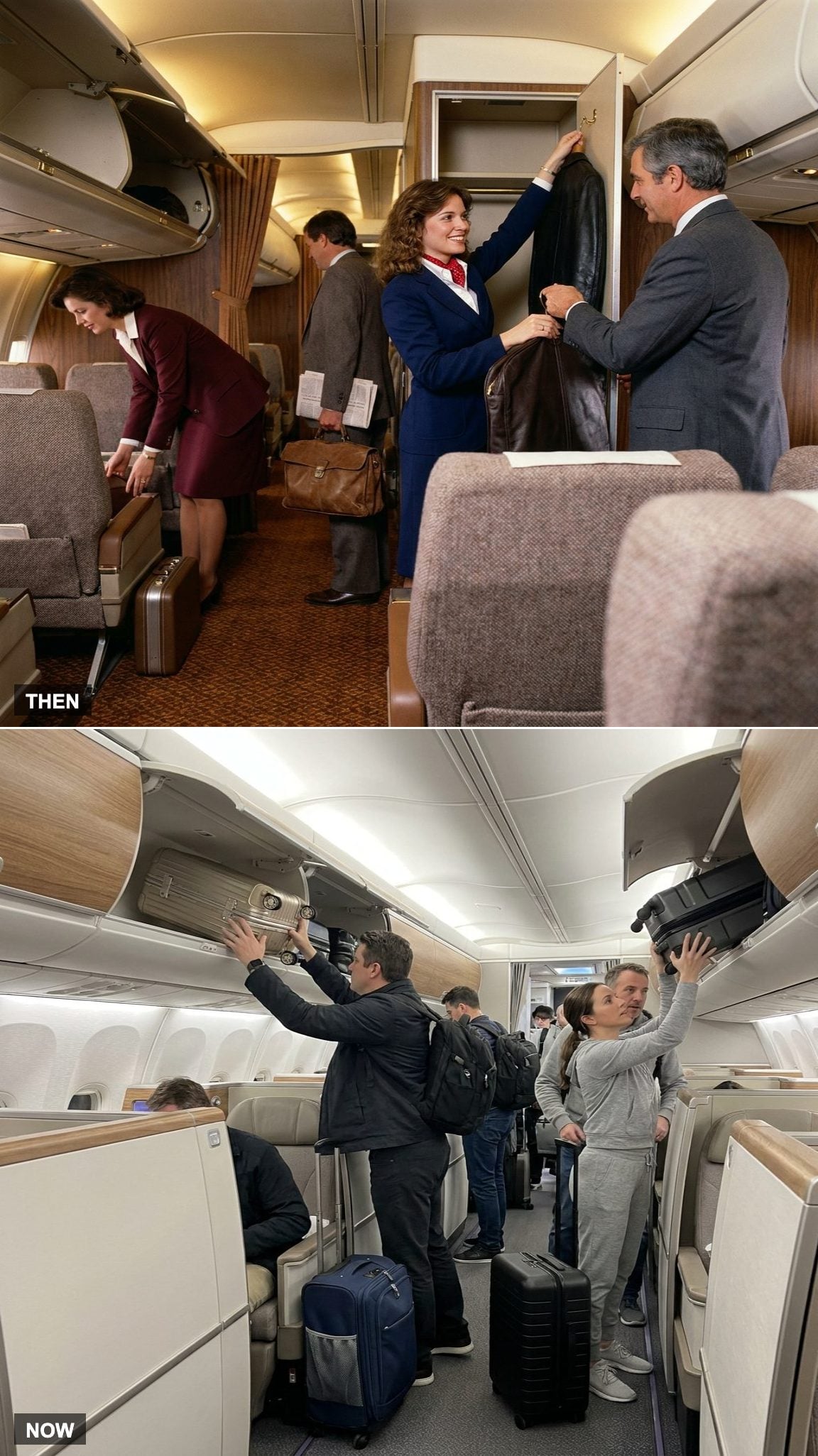
Passengers in 1985 boarded with a garment bag and a briefcase, maybe a small leather duffle if the trip ran long. The garment bag went on the coat hook in the closet, the suit inside pressed flat, and the flight attendant handled it like a coat rather than luggage. Overhead bins were shallow because nobody needed them to be deep.
The wheeled suitcase changed everything. Rollaboards weren’t in wide use until the early 90s, invented by a Northwest pilot named Robert Plath. Now everyone has one, and boarding is a scrum of hard-shell polycarbonate being wedged into bins that keep getting bigger and still aren’t big enough.
3. The Marketing Pitch: Glamour Then, Sleep Now
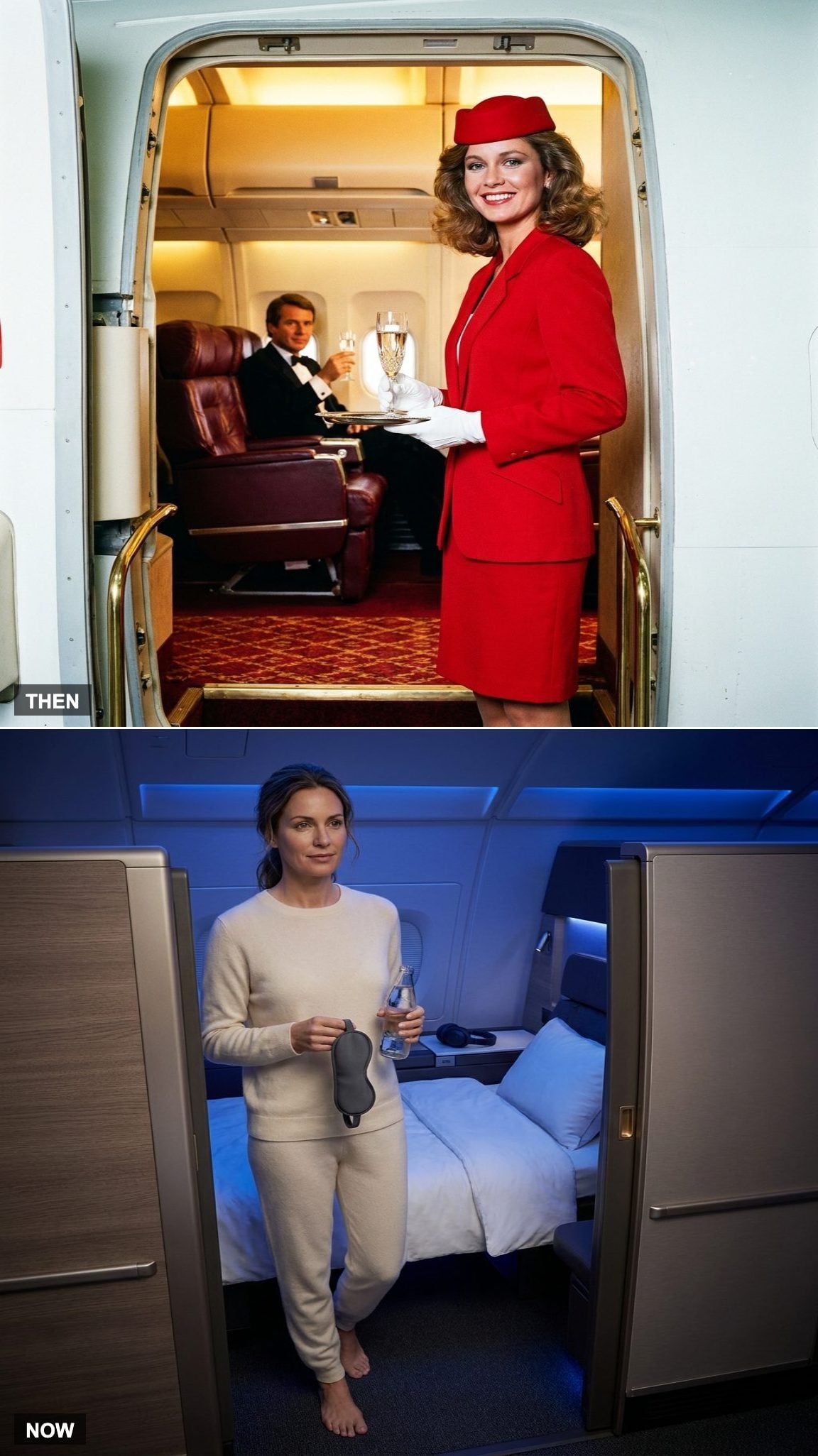
Airline ads in 1985 sold you a woman in a red pillbox hat, a crystal flute, and the fantasy that flying was inherently glamorous. The cabin was the product, the uniform was the product, and the suggestion was that stepping on the plane was already the destination.
Now the ads sell you sleep. Fully flat beds, turndown service, noise-canceling headphones, blackout suites, the whole vocabulary of a mattress commercial applied to a metal tube at 38,000 feet. The pitch has shifted from spectacle to recovery. The traveler doesn’t want to be seen having a good time — she wants to arrive rested.
2. Booking a Seat: The Travel Agent Call vs. The Two-Minute Tap
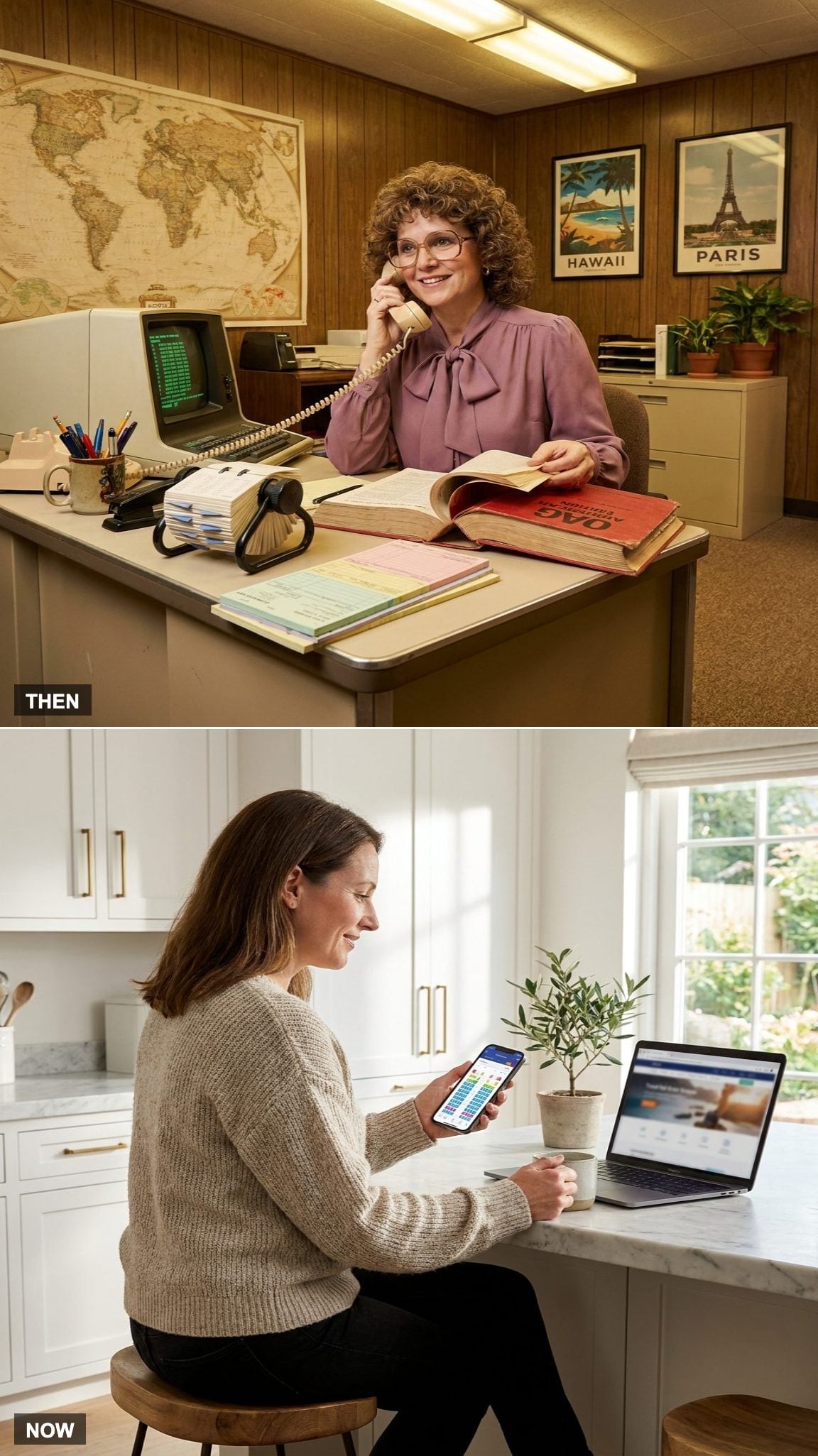
Booking first class used to require a phone call. You dialed your travel agent or the airline’s reservations desk, gave your dates, and waited while she flipped through the OAG guide, because fares weren’t posted anywhere — she’d read them to you off the page. If you didn’t like the answer, she’d try another routing, and the ticket took thirty minutes to build and arrived by mail three days later on carbon paper.
Now it’s a two-minute exchange with an app. Seat map, meal preference, credit card, done. The romance of the process is gone, along with the wait.
1. Why People Actually Buy It: Prestige Then, Recovery Now
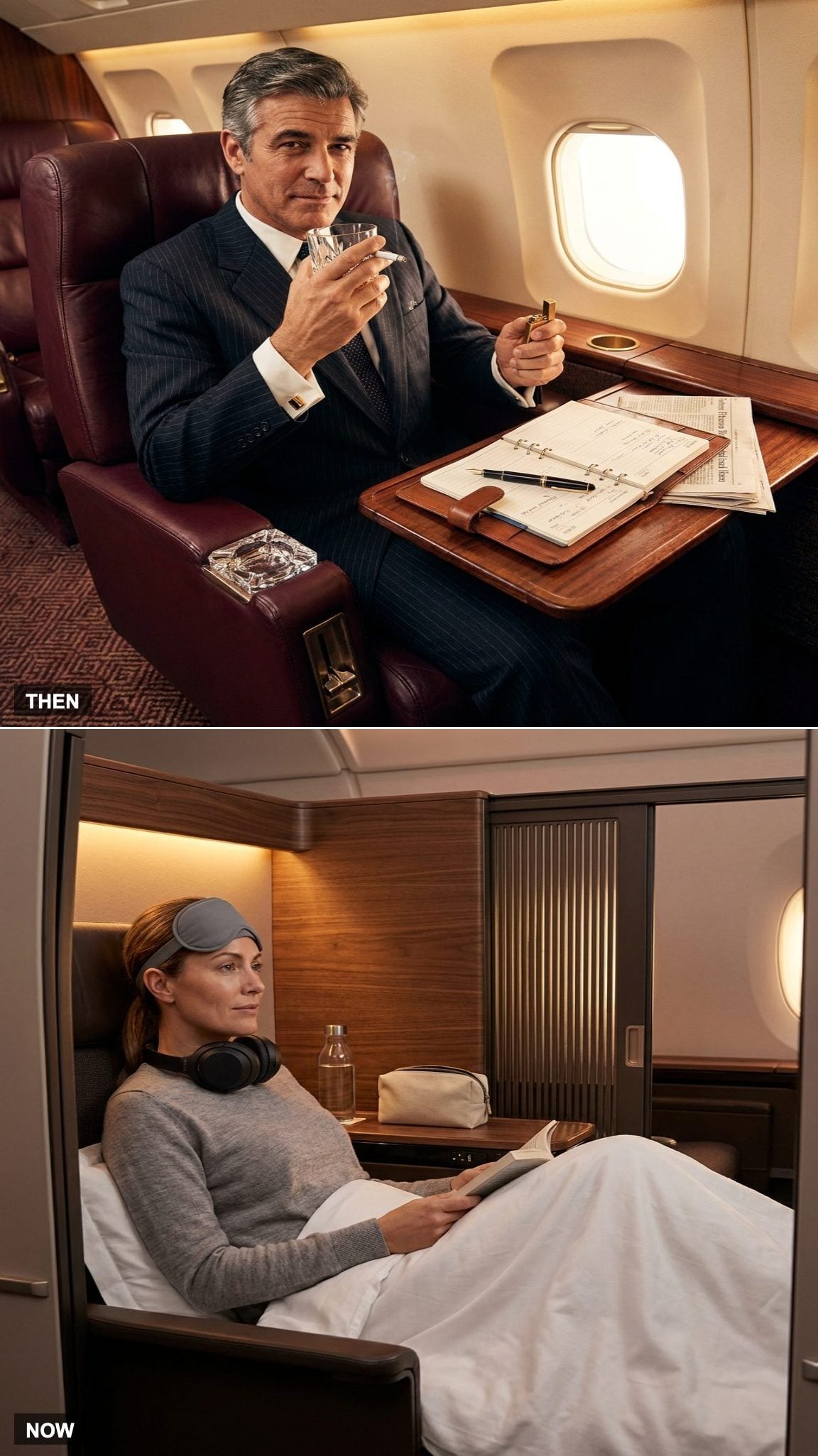
First class in 1985 was a status object. You bought the seat because being seen buying the seat was the point — the cigarette, the scotch, the pinstripe suit, the leather planner open to a packed week, all of it saying something about you before you said anything at all. A costume as much as a service.
The modern buyer is doing math. Fourteen hours to Singapore in an economy middle seat means two lost workdays on either end recovering; fourteen hours in a lie-flat suite means you land, shower in the lounge, and go straight to the meeting. The seat isn’t prestige anymore. It’s a productivity purchase dressed up as luxury.
The old first class sold you an identity. The new one sells you back your time.
🔥 Would you like to save this?
Please note that some of the imagery in this article were created with the aid of AI image generators.