
🔥 Would you like to save this?
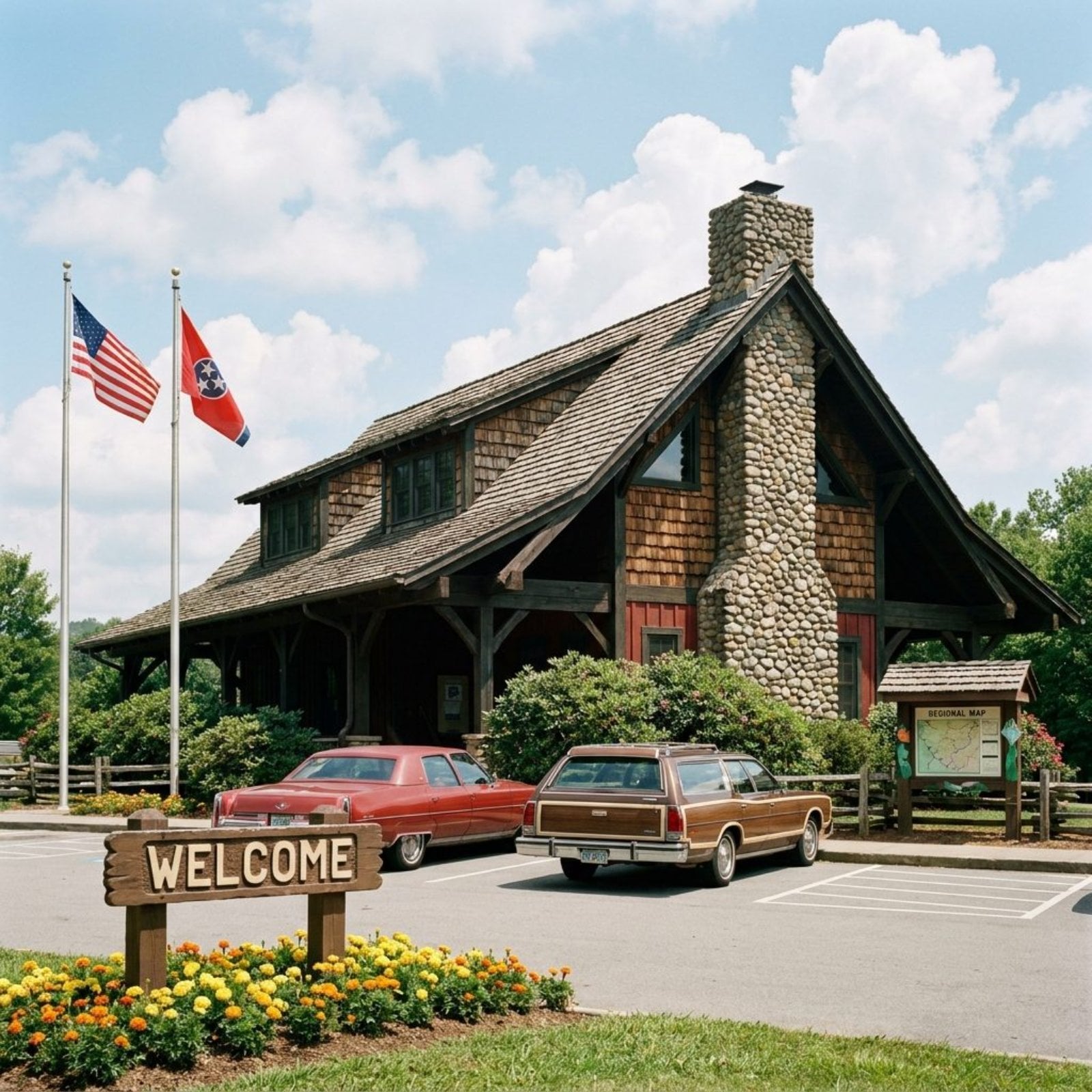
The smell hit you first. Cut grass, exhaust from an idling Buick, the sharp tang of a metal drinking fountain that had been baking since ten in the morning. A father in plaid shorts unfolded a paper map across the hood while a screen door slapped shut somewhere near the restroom building.
The American highway stop in 1975 was its own small ritual. Some were simple public rest areas with bathrooms and picnic tables. Others were staffed welcome centers or toll-road service plazas with fuel and food. They did not all evolve in the same way, but the family pulling in that summer afternoon would still find plenty to puzzle over now.
26. Free Road Maps by the Door vs. Directions Already on Your Phone
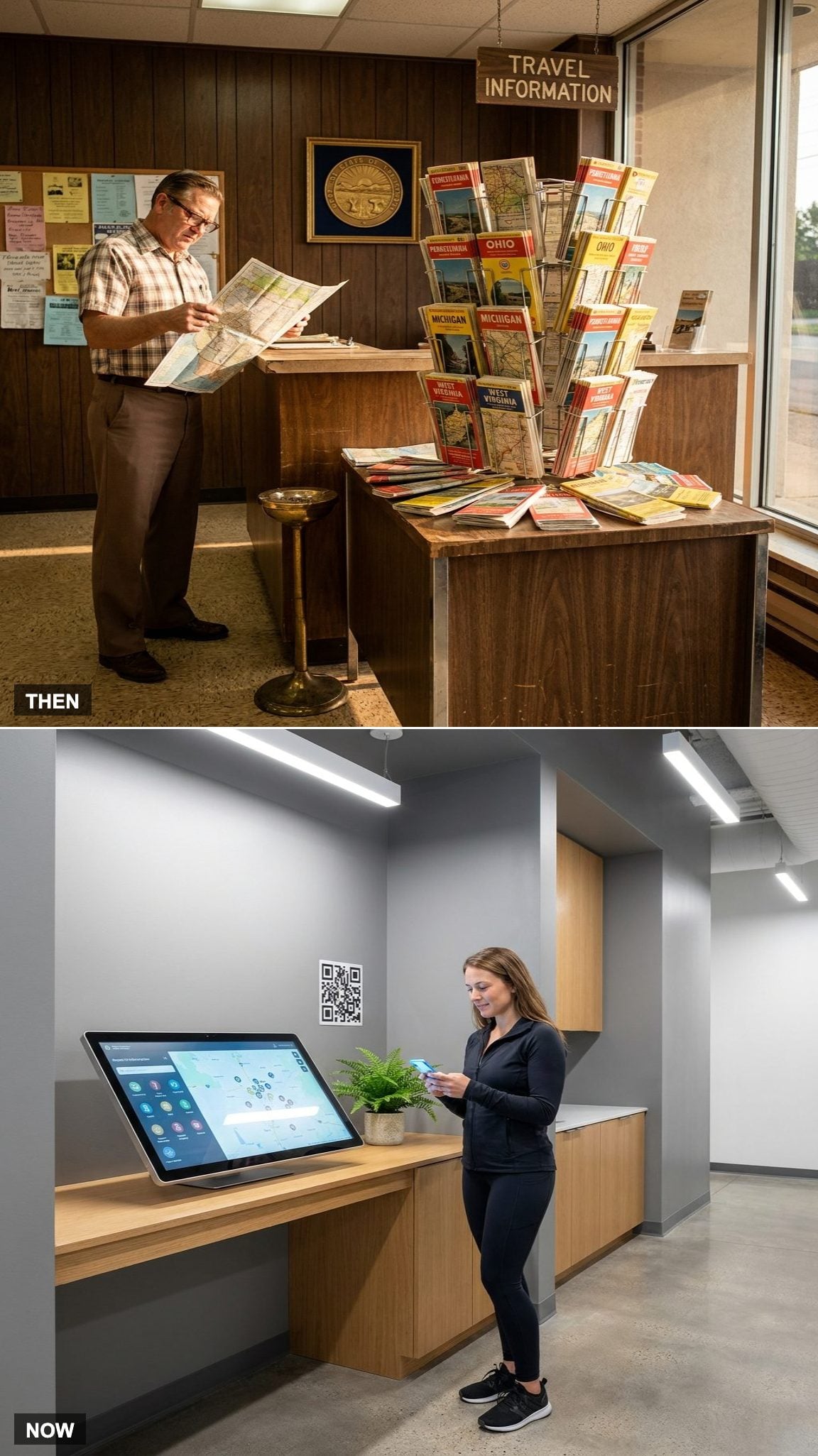
At staffed welcome centers and service stations, the map rack could feel like a monument. The maps were free, color-coded by state, and sometimes stamped with a governor’s smiling face or an oil-company logo. You took one for the trip and another in case the first disappeared beneath the luggage.
Unfolding it was a two-person job. Refolding it correctly was a minor domestic achievement, the sort of thing a parent demonstrated without speaking while everyone else watched from the car.
Printed maps still turn up at some welcome centers, but they no longer control the trip. A phone can identify the next three exits, compare gas prices, warn about traffic, and recalculate the route before anyone has found the state line on paper.
25. Pay Phones as an Emergency Lifeline vs. Personal Phones in Nearly Every Car
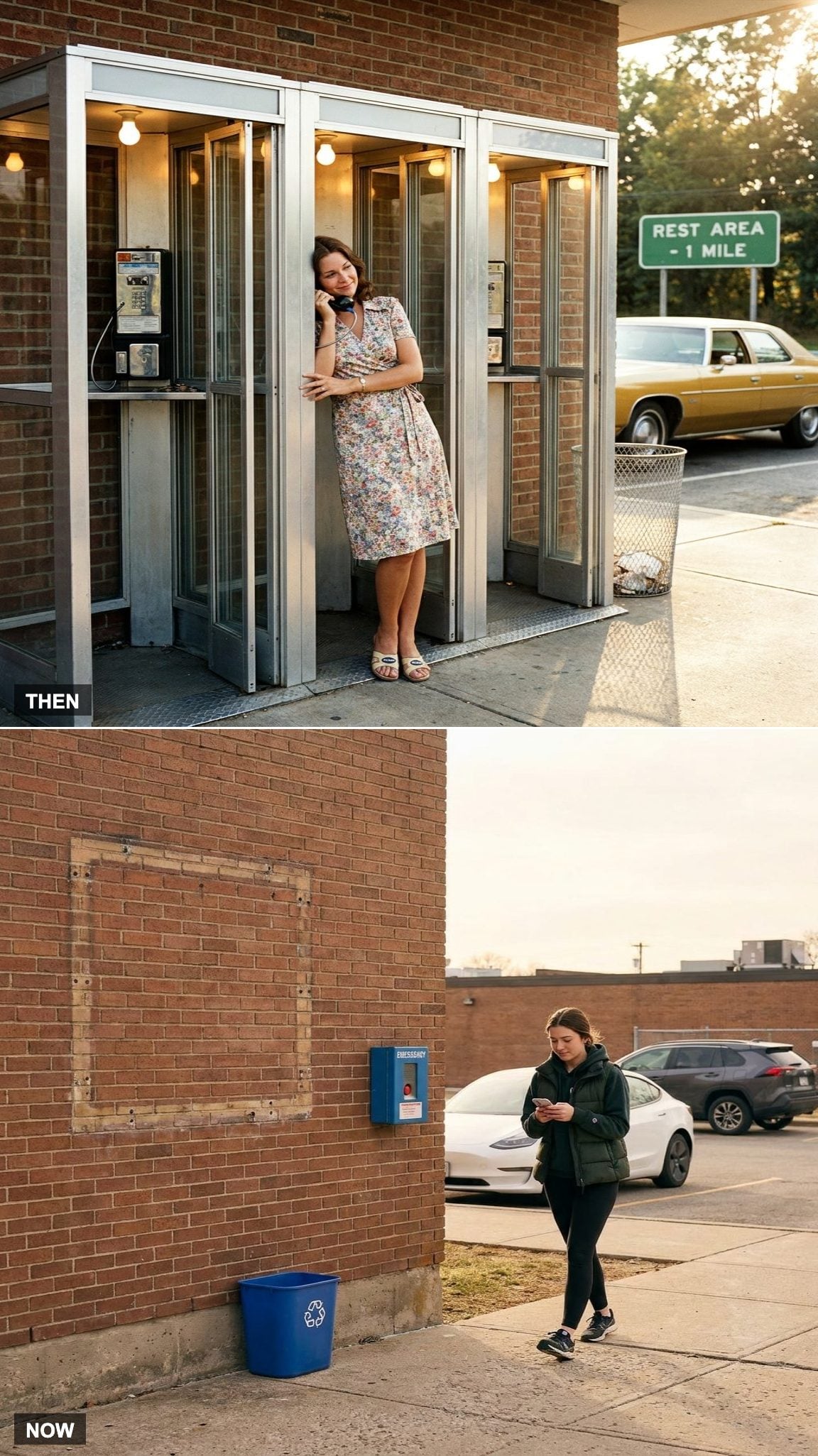
The pay phone handled the calls that could not wait. The transmission was making that sound again. The motel needed to hold the room. Somebody had to locate a tow truck before dark.
A booth with a folding door offered a little privacy, and the light sometimes came on when you stepped inside. For a few minutes, it was the smallest room on the highway.
Today, a lighter patch on the wall may be all that remains. Some facilities retain emergency call boxes, but most travelers carry a phone that can locate roadside assistance, send a precise location, and contact the motel without searching an ashtray for change.
24. Families Unpacking a Picnic vs. Buying Food and Getting Back on the Road
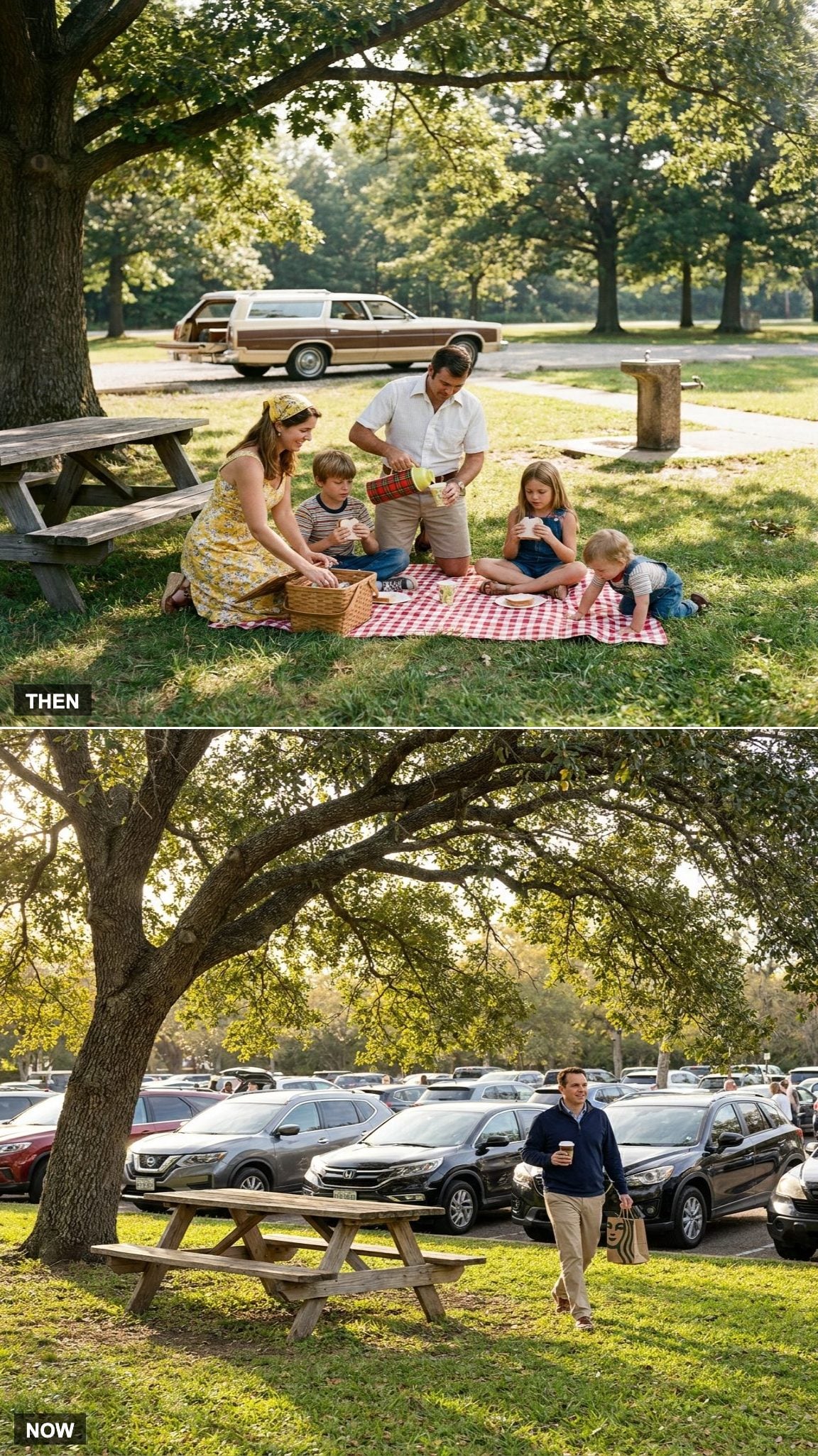
Lunch was a plan. Mom packed it the night before, and the deviled eggs traveled in a specific Tupperware container that every family somehow seemed to own. The Thermos of iced tea sweated onto the blanket while everyone negotiated the last piece of watermelon.
The picnic table still exists at many public rest areas, but the meal has become less predictable. Some families continue to bring a cooler. Others leave the highway for drive-through food, buy a sandwich at a service plaza, or make the shortest possible restroom stop before continuing.
23. Smoking Almost Everywhere vs. Smoke-Free Indoor Spaces
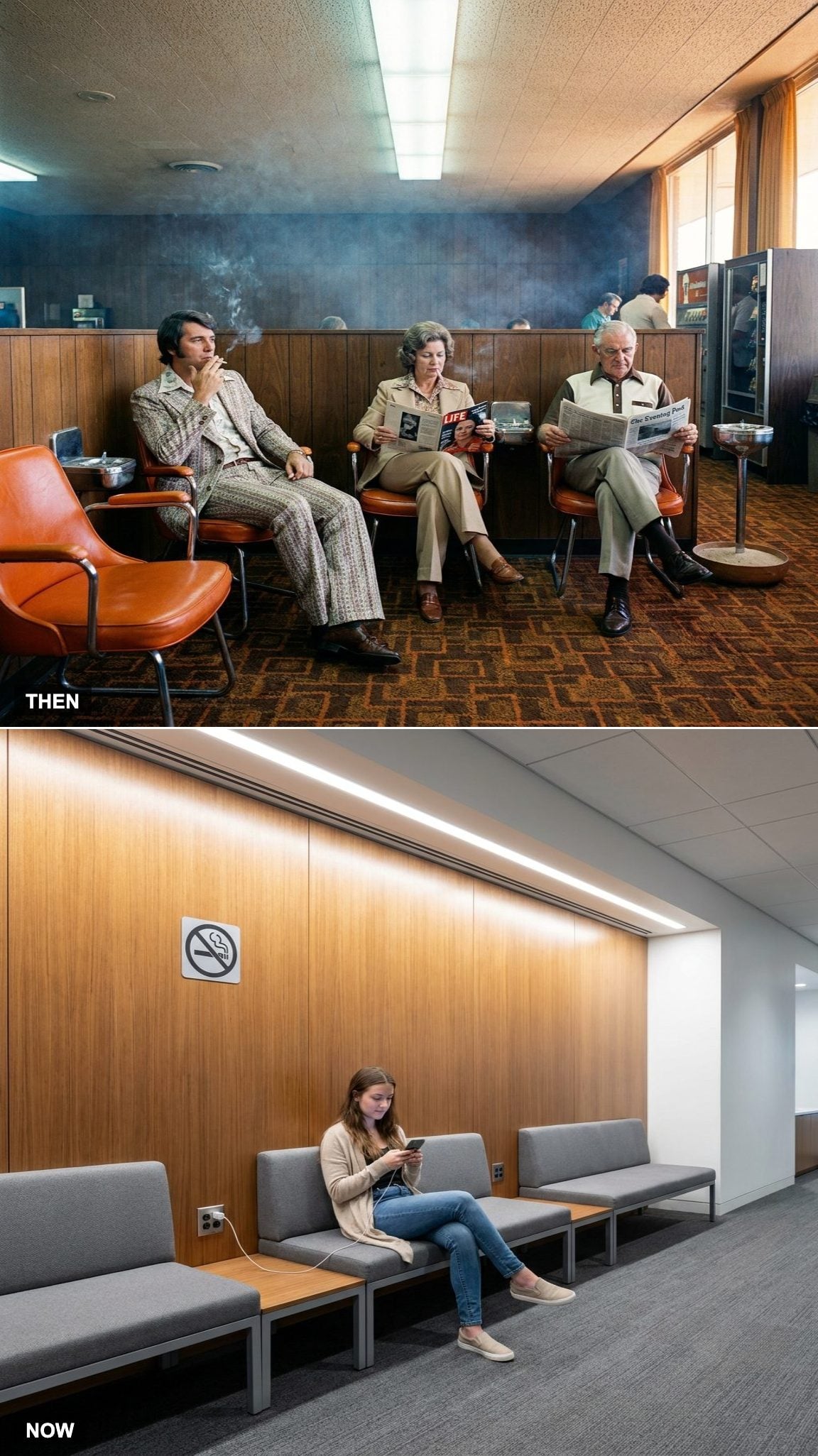
Ashtrays appeared wherever travelers were expected to pause: mounted near entrances, set on tables, or built into furnishings at larger lounges and service plazas. Cigarette smoke mixed with coffee, exhaust, and whatever was warming in the vending machine.
Modern indoor facilities are generally smoke-free, and many properties restrict smoking near their entrances as well. The old chrome ashtray has become a period detail, replaced at renovated stops by charging outlets, bottle-filling stations, and signs directing smokers farther from the door.
22. Coin-Operated Vending vs. Food Courts at Toll-Road Service Plazas
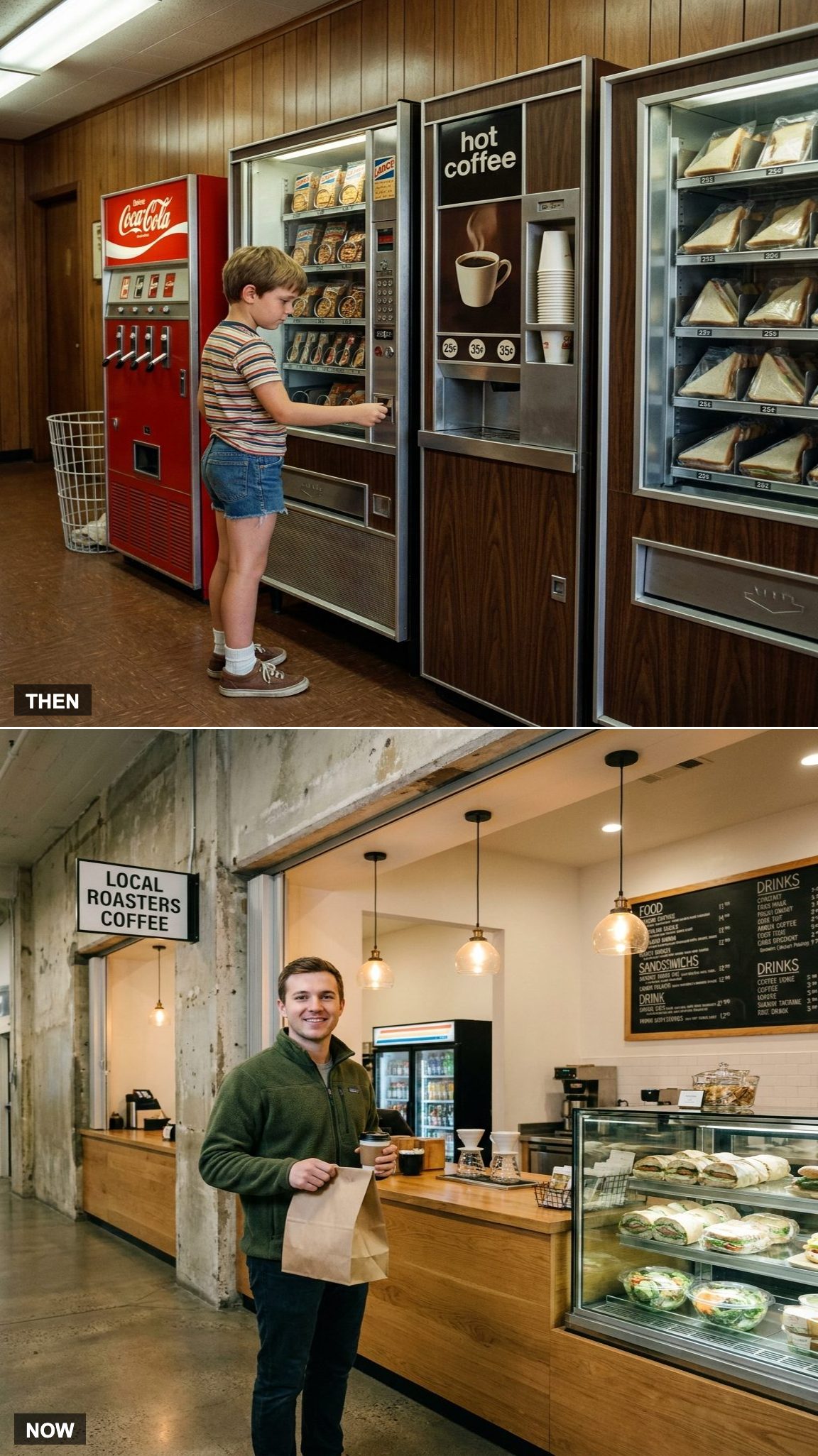
At a basic public rest area, food might have meant whatever came out of the vending machine.
A pack of Fritos. A candy bar. A sandwich sealed in plastic and displayed behind glass for a length of time nobody cared to investigate. Coffee arrived in a paper cup, and a machine that swallowed your quarter could ruin the entire transaction.
Commercial food remains restricted at many Interstate rest areas, but toll-road service plazas operate differently. Those larger facilities may contain coffee counters, national chains, regional vendors, fuel pumps, and enough seating to resemble a small food court.
21. Built for Stretching Your Legs vs. Equipped for Charging Your Car
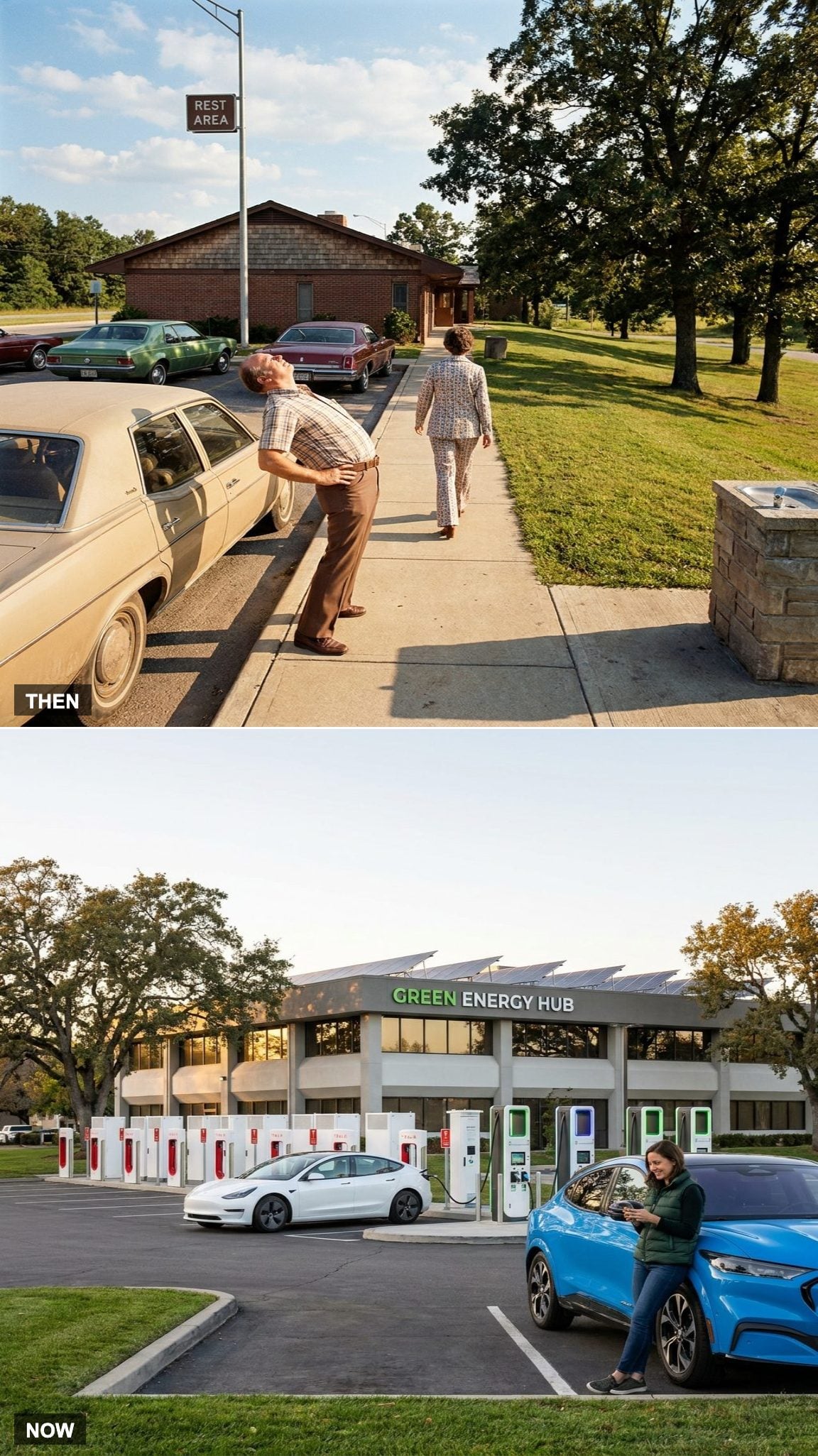
The whole point was to move. Get out of the car, walk to the fountain, visit the restroom, and make a slow loop around the lawn. Dad performed that back-arching stretch with both hands on his hips while Mom reminded everyone that she was not stopping again in twenty minutes.
Movement still matters, but some modern stops now serve another purpose. Where charging stations are available, an electric vehicle may remain parked anywhere from a short top-up to a much longer session, depending on the car, charger, weather, and battery level.
That waiting time has created a new kind of highway pause: part leg stretch, part coffee break, part search for the only bench within reach of the charging cable.
20. Playground Equipment for Children vs. Dedicated Pet-Relief Areas
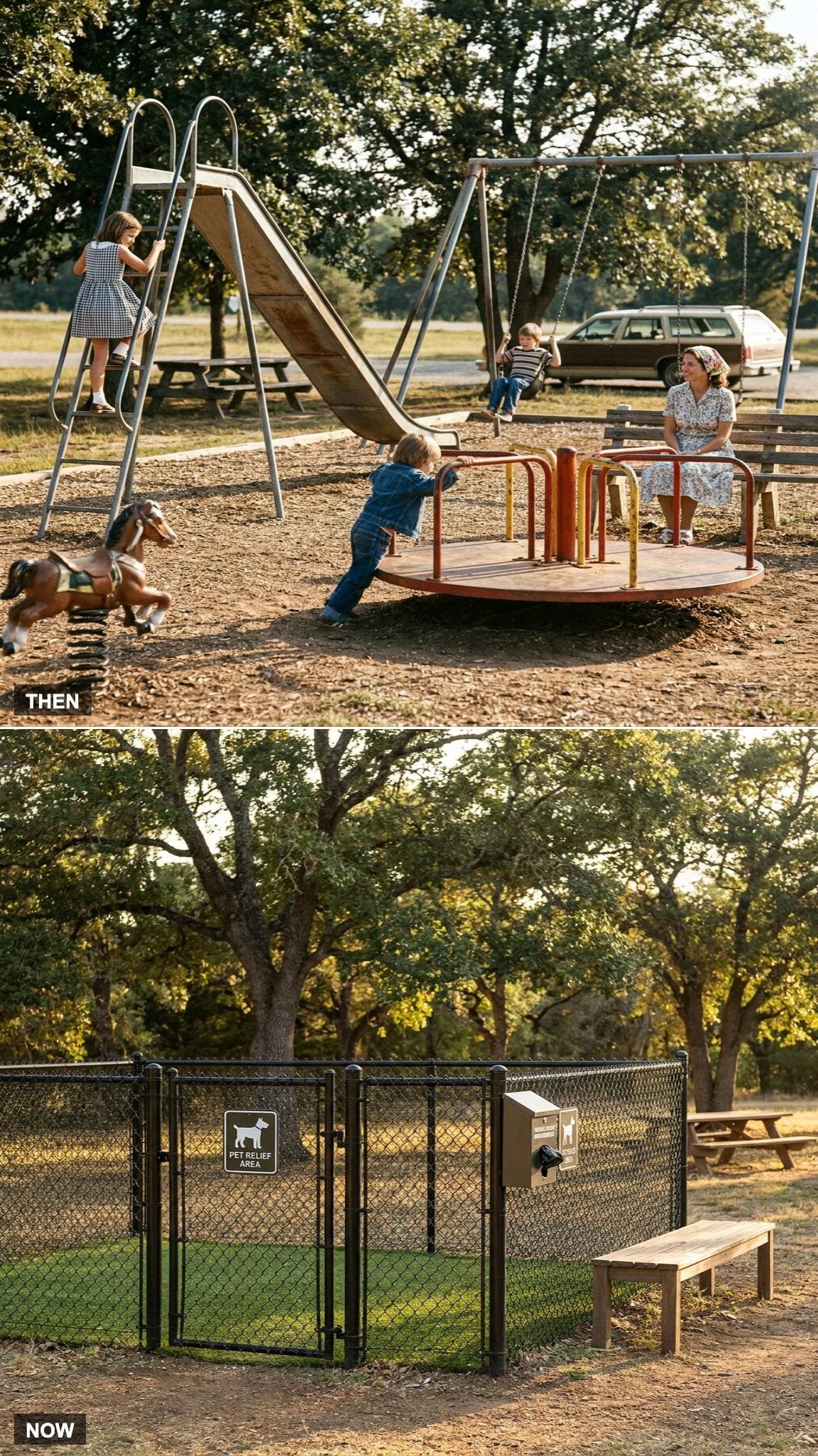
Where playgrounds were provided, children reached them before their parents had finished turning off the ignition. The slide grew hot enough in July to leave a stripe across the backs of bare legs, and the merry-go-round combined joy with a level of risk nobody bothered to diagram.
Some older play areas have disappeared during renovations, while others survive or have been replaced by newer equipment. Dedicated pet-relief areas have also become more common, with fencing, waste bags, and patches of grass or artificial turf.
The family dog may now have the more formally organized recreation area. The children, meanwhile, know the tablet password.
19. Travel Brochures on the Counter vs. Websites, Apps, and QR Codes
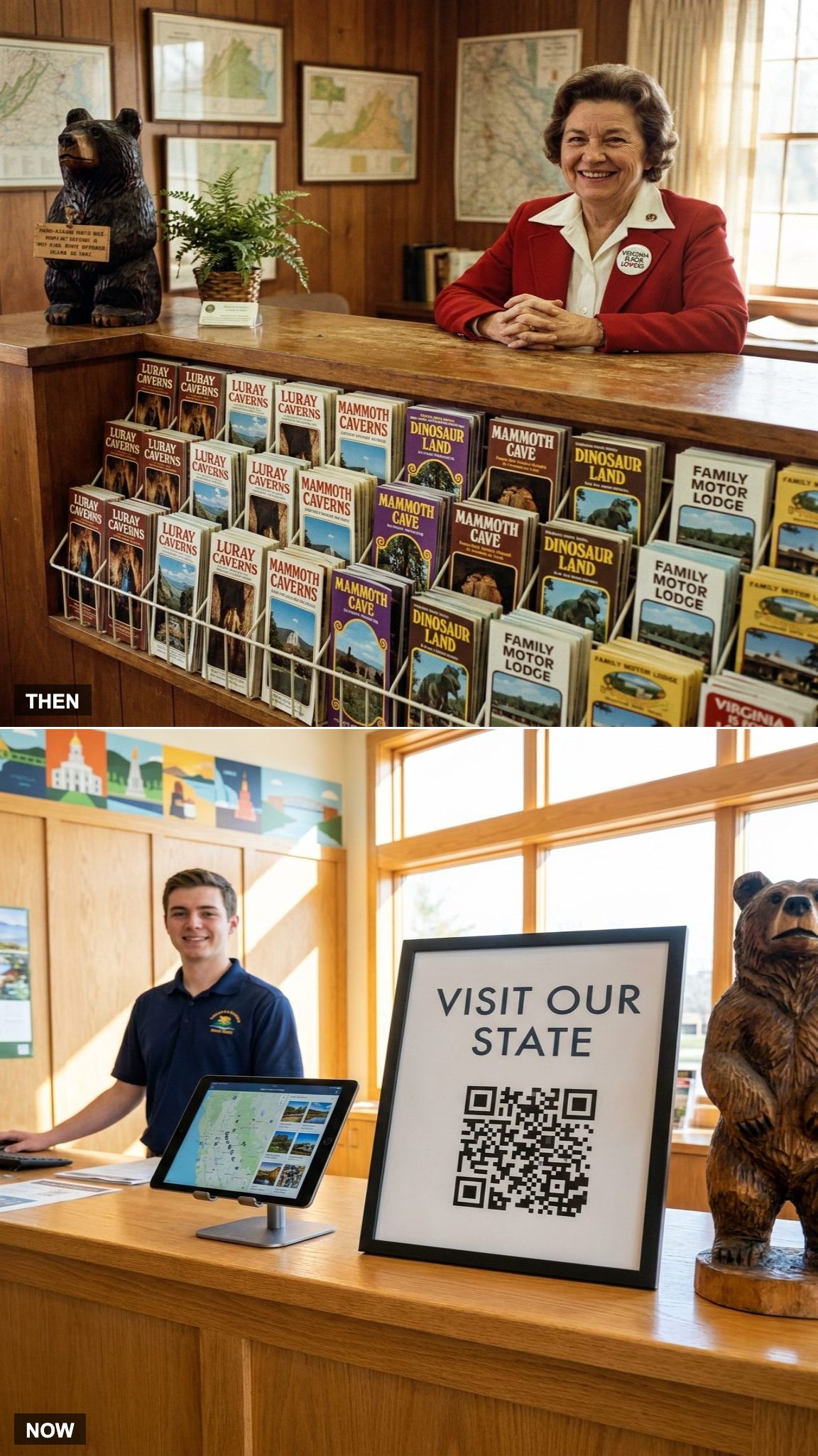
The brochure counter was overwhelming in the best way. Caves, waterfalls, battlefields, amusement parks, and some roadside attraction claiming to contain the world’s largest ball of something all competed for space.
Half the stack ended up in the glove box, where the brochures faded and curled into artifacts of a vacation taken when you were nine.
Many staffed welcome centers still offer printed material, but websites and QR codes now carry much of the practical information. A phone can sort attractions by distance, operating hours, admission price, and reviews. It cannot reproduce the pleasure of grabbing six glossy brochures for places you had no intention of visiting.
18. State Welcome Centers as an Introduction vs. Travelers Arriving With a Plan
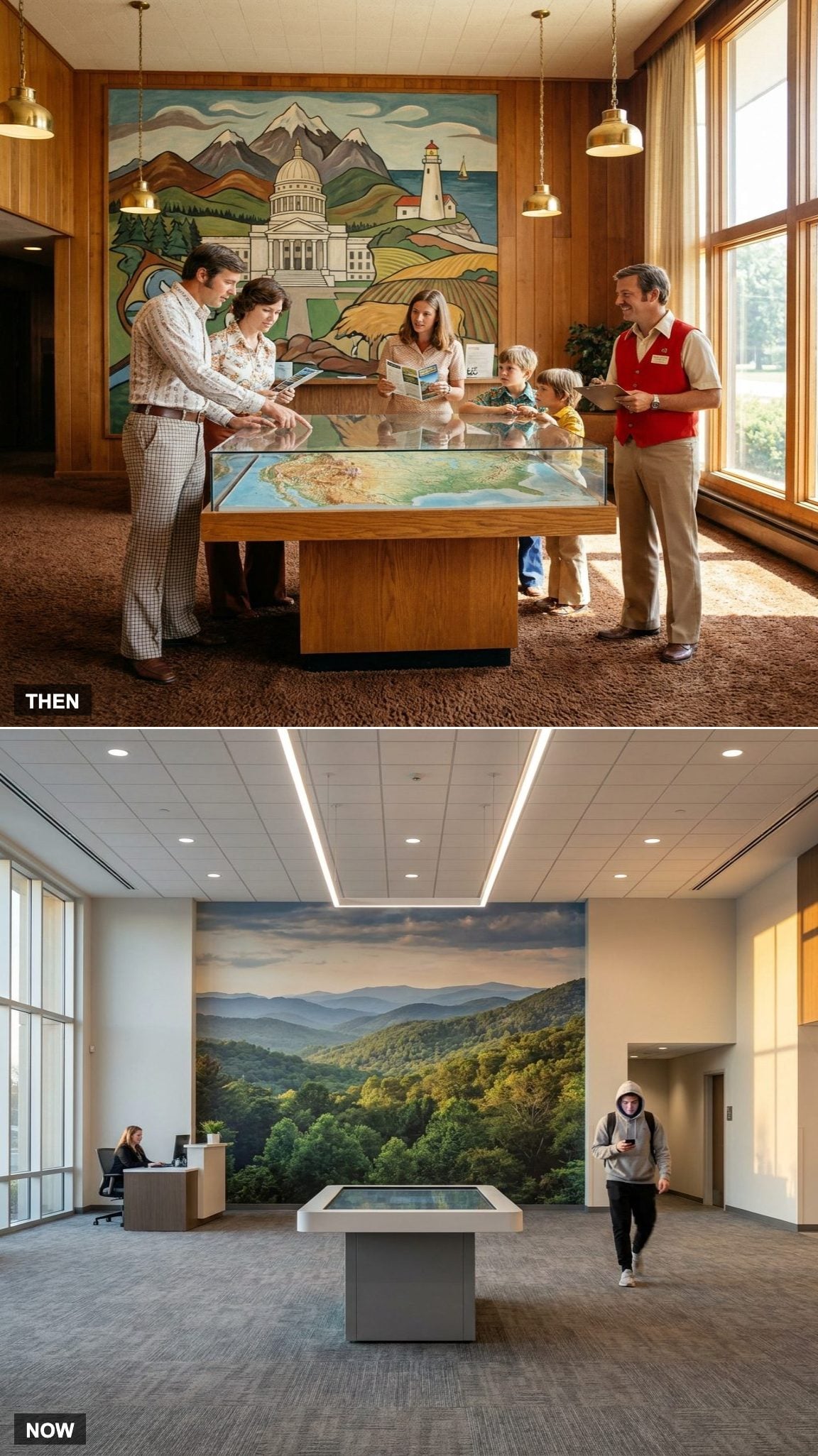
Crossing the state line could feel ceremonial.
At a staffed welcome center, an attendant might hand over a highway map, point out a motel coupon, or recommend the diner in the next town with the neon rooster. The advice was personal, local, and impossible to sort by star rating.
Many travelers now arrive with the hotel booked, the route saved, and the restaurant reviews already read. Welcome centers still provide useful information, but they are no longer the first introduction to a place for everyone who comes through the door.
17. Station Wagons Filling the Lot vs. SUVs, Crossovers, and EVs
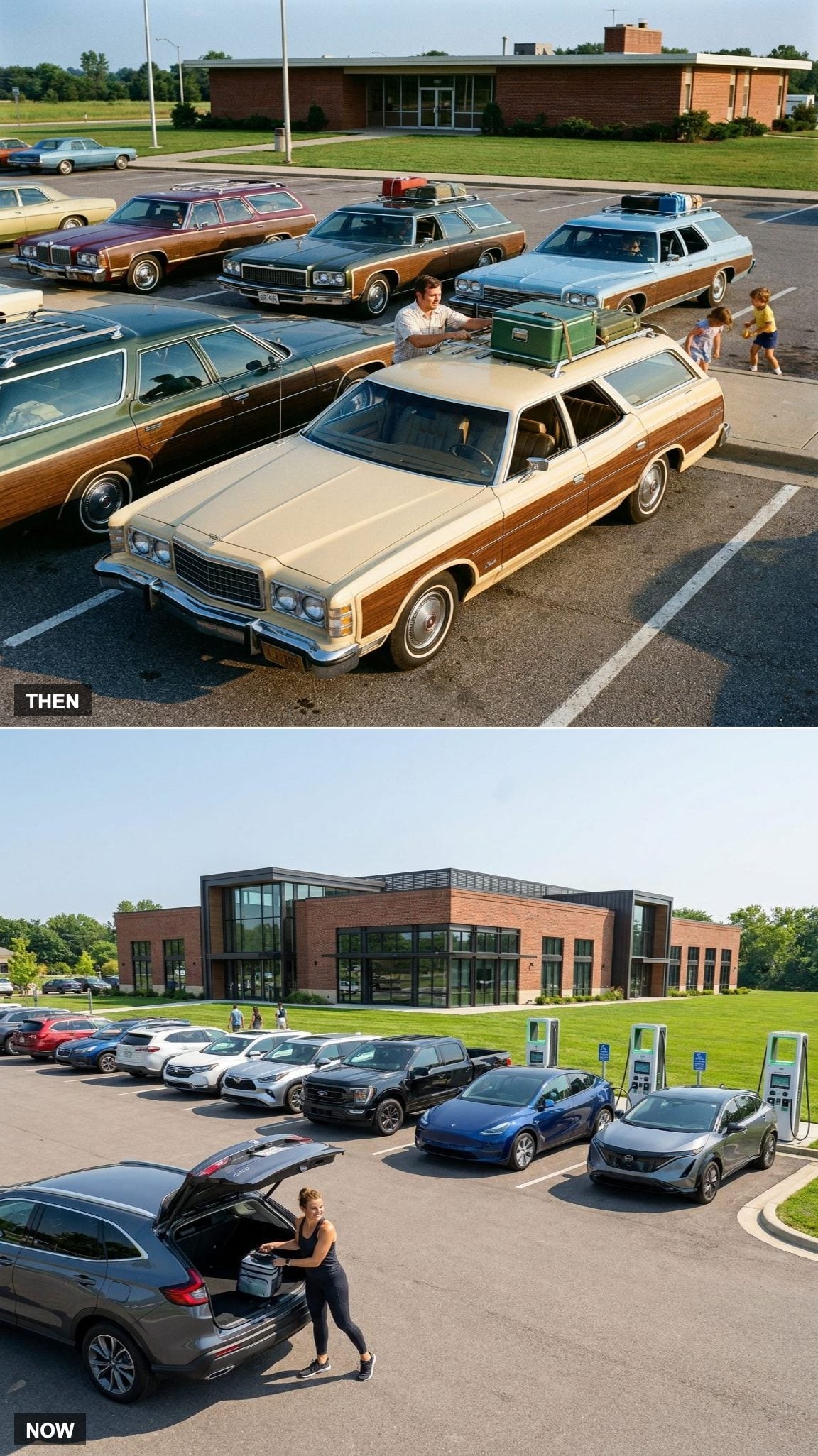
Station wagons were hard to miss. Wood-grain sides, a rear-facing third row, and a roof rack loaded like a covered wagon heading west turned the parking lot into a catalog of family logistics.
A canoe meant lake week. A metal carrier suggested a long haul. A cooler balanced near the tailgate meant lunch was close.
Modern lots are dominated by SUVs, pickups, minivans, and crossovers, with electric vehicles appearing near chargers where those have been installed. The families and luggage remain. The silhouette has changed, and the Country Squire has become a collector’s sighting.
16. Strictly Functional Restrooms vs. Touchless and Family-Friendly Facilities
🔥 Would you like to save this?
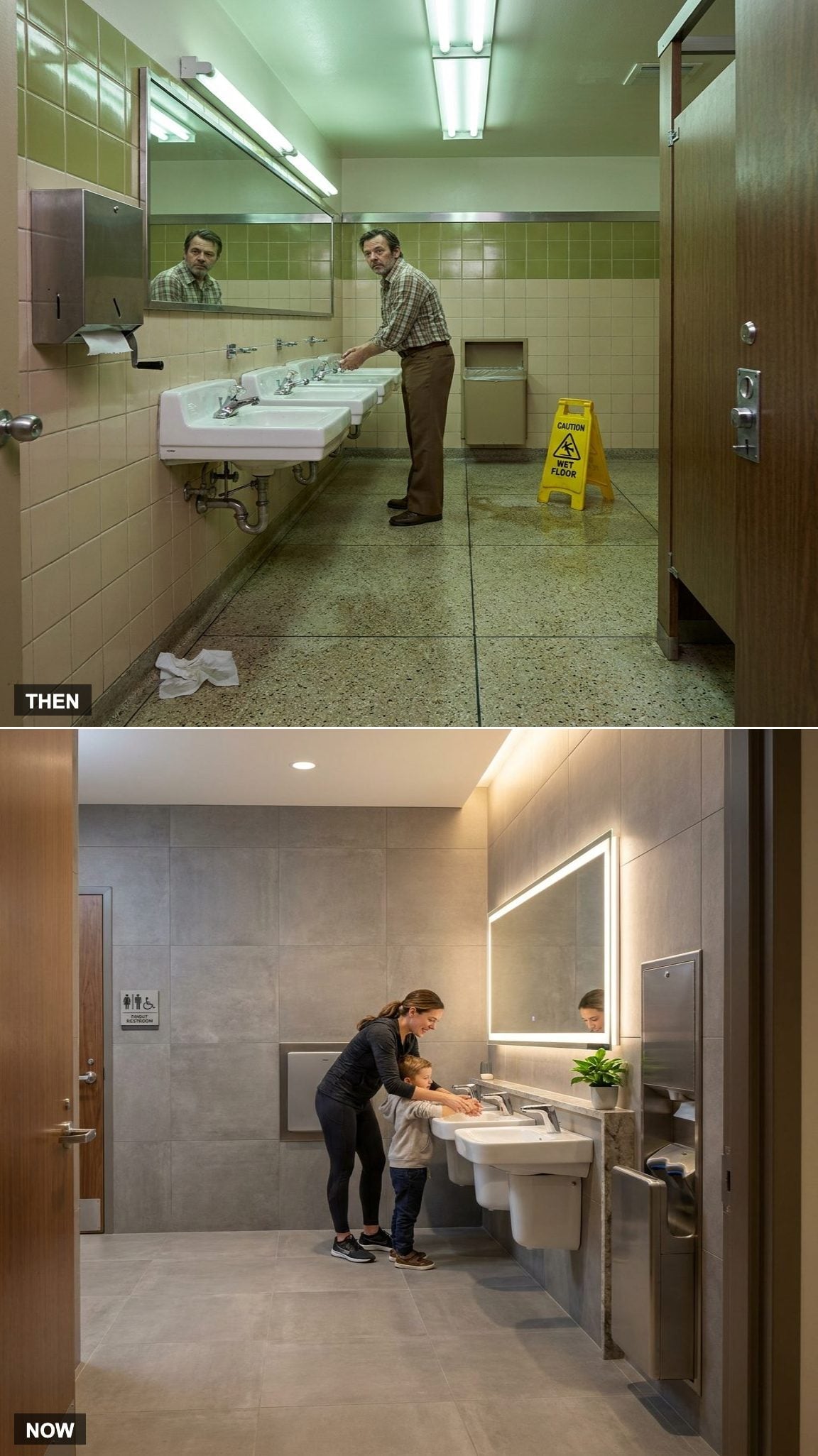
The 1975 rest-stop restroom asked one thing of you: get in and get out. Green tile, wet floors, a chrome faucet that needed a firm twist, and a cloth-roll towel or stubborn dispenser completed the experience. If a diaper needed changing, the station wagon sometimes became the changing room.
Renovated facilities may now include automatic faucets, touchless soap dispensers, brighter lighting, family restrooms, accessible stalls, and fold-down changing tables. The level of improvement varies by state and building, but the old concrete-block bathroom is no longer the only model.
15. Newspaper Boxes at the Curb vs. Headlines Already in Your Pocket
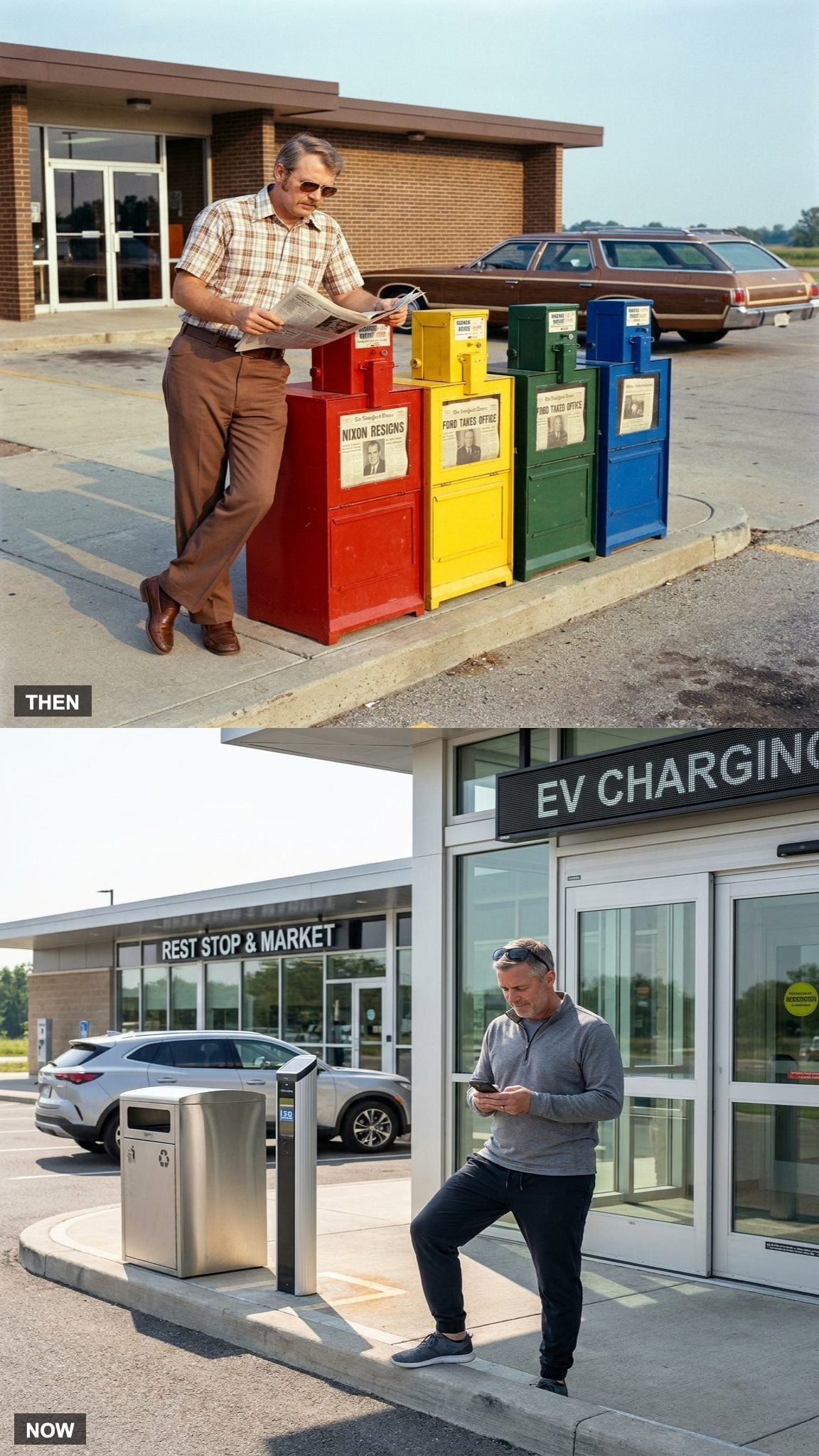
You knew a stop meant business when a row of newspaper boxes stood by the entrance. Four boxes, four colors, local headlines beside national ones, all waiting for the quarters rattling in the car’s ashtray.
You read the front page standing beside the box, elbow on the metal lid and one foot on the curb. The news was already old by broadcast standards, but it was the first time you had seen it printed.
The boxes have largely disappeared. Headlines now reach the parking lot long before the traveler does, which is more efficient but considerably less satisfying than pulling open a heavy metal door and taking possession of the morning.
14. Asking Someone for Directions vs. Following Turn-by-Turn Navigation
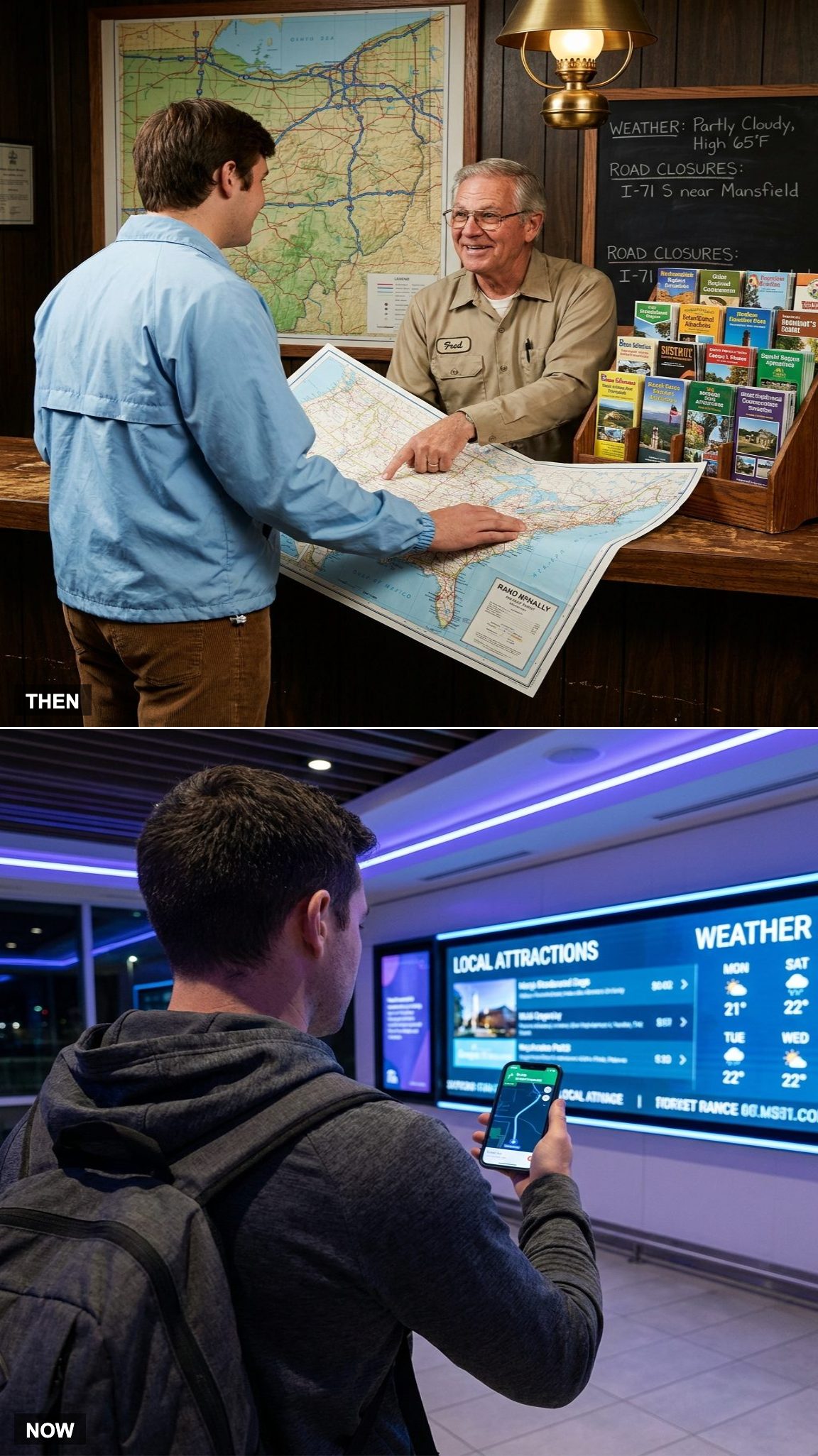
The unfolded map covered the counter, and somewhere near Toledo was a coffee ring left by a previous traveler. The attendant had given the same directions for fifteen years and could describe every turn without looking down.
Now a selected voice announces each instruction before the exit appears. It is usually faster and more accurate, although local knowledge can still matter when a road closes for a parade, market, flood, or construction project the navigation system has not fully understood.
13. The Family Ice Chest vs. the Powered Electric Cooler
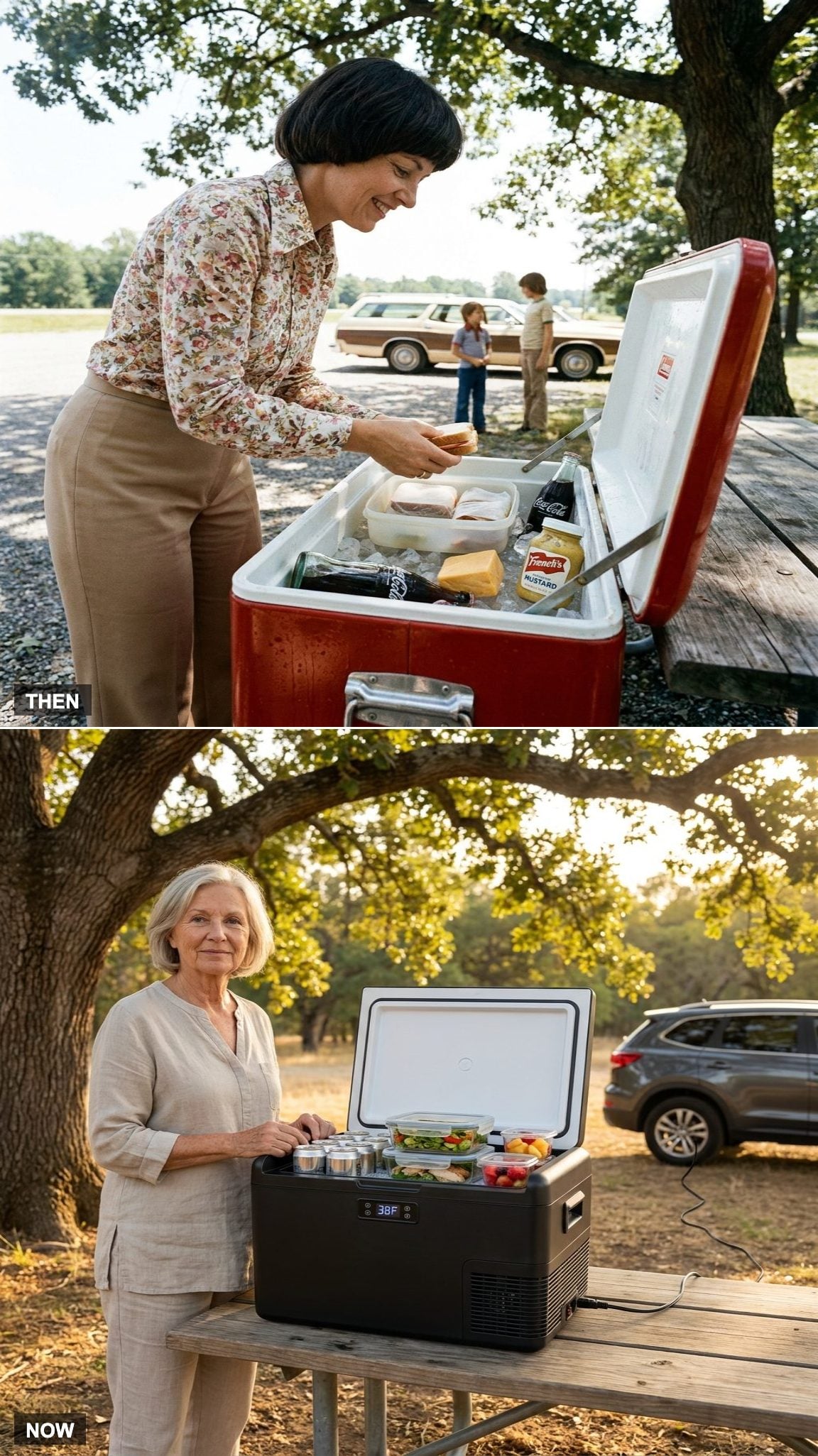
The ice was half water by lunch, the Coke bottles remained cold, and the bologna was probably fine. The mustard jar had floated for two hundred miles without causing concern.
A modern powered cooler can run from a vehicle, maintain a selected temperature, and sometimes connect to an app. Ordinary insulated coolers remain far more common, but technology has made it possible to travel without the familiar slosh from the back of the station wagon.
The new version is more precise. The old one supplied its own soundtrack every time Dad took a curve too quickly.
12. A Gas-Station Squeegee Stop vs. Better Wipers and Washer Systems
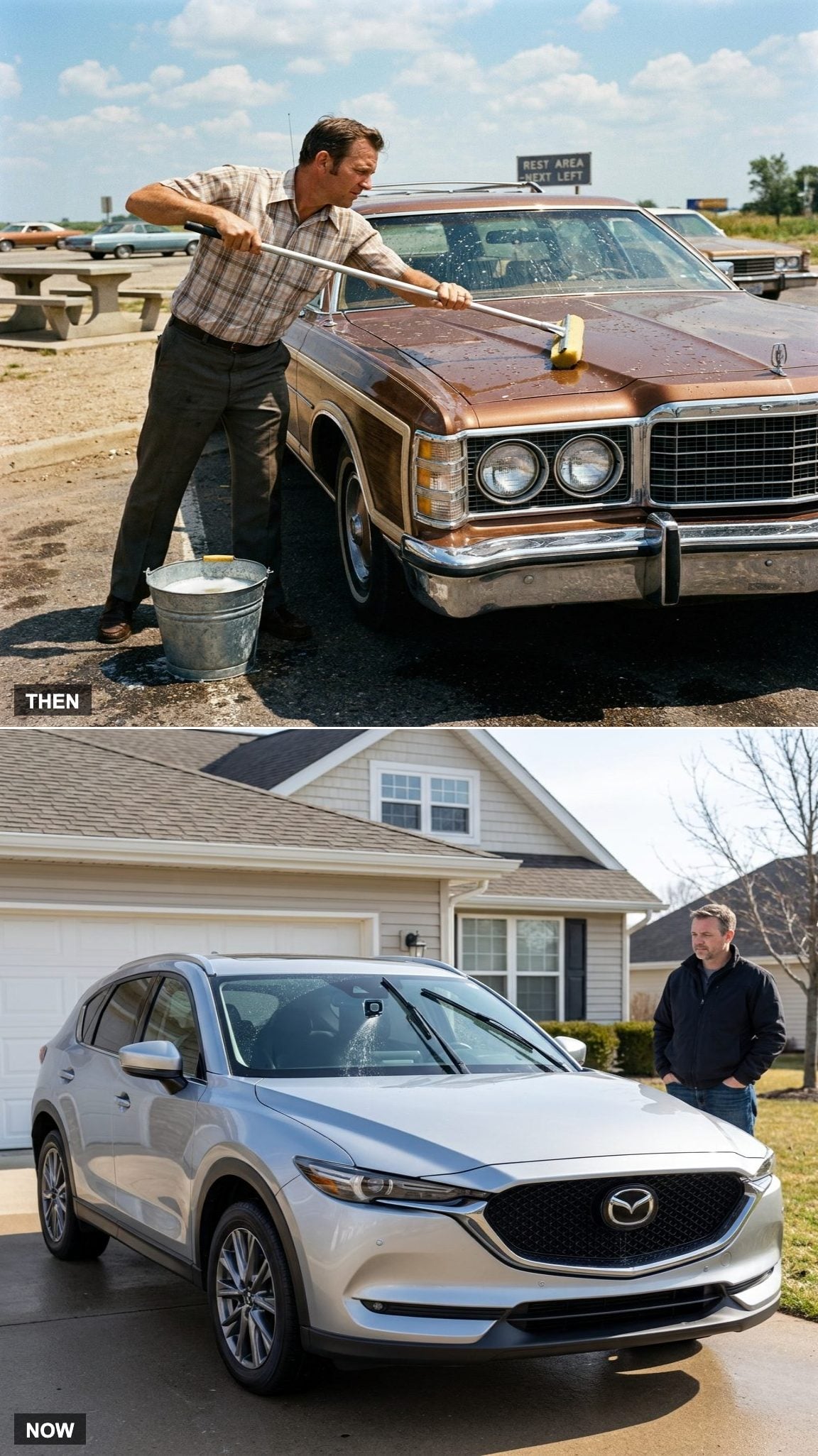
The bucket belonged mainly beside the fuel pumps rather than at every public rest area. Its water was gray, the rubber squeegee had seen better years, and the windshield carried a summer’s worth of insects into the sunset.
Cleaning the glass by hand was a chore, but dragging one clear path through the grime delivered an immediate reward.
Modern washer systems, improved wipers, rain sensors, and heated components can help keep the view clear, but dried insects and road film still defeat automation. The squeegee has not become obsolete; it has simply remained at the gas station instead of following every traveler into the digital age.
11. CB Radio Chatter vs. Group Messages and Navigation Alerts
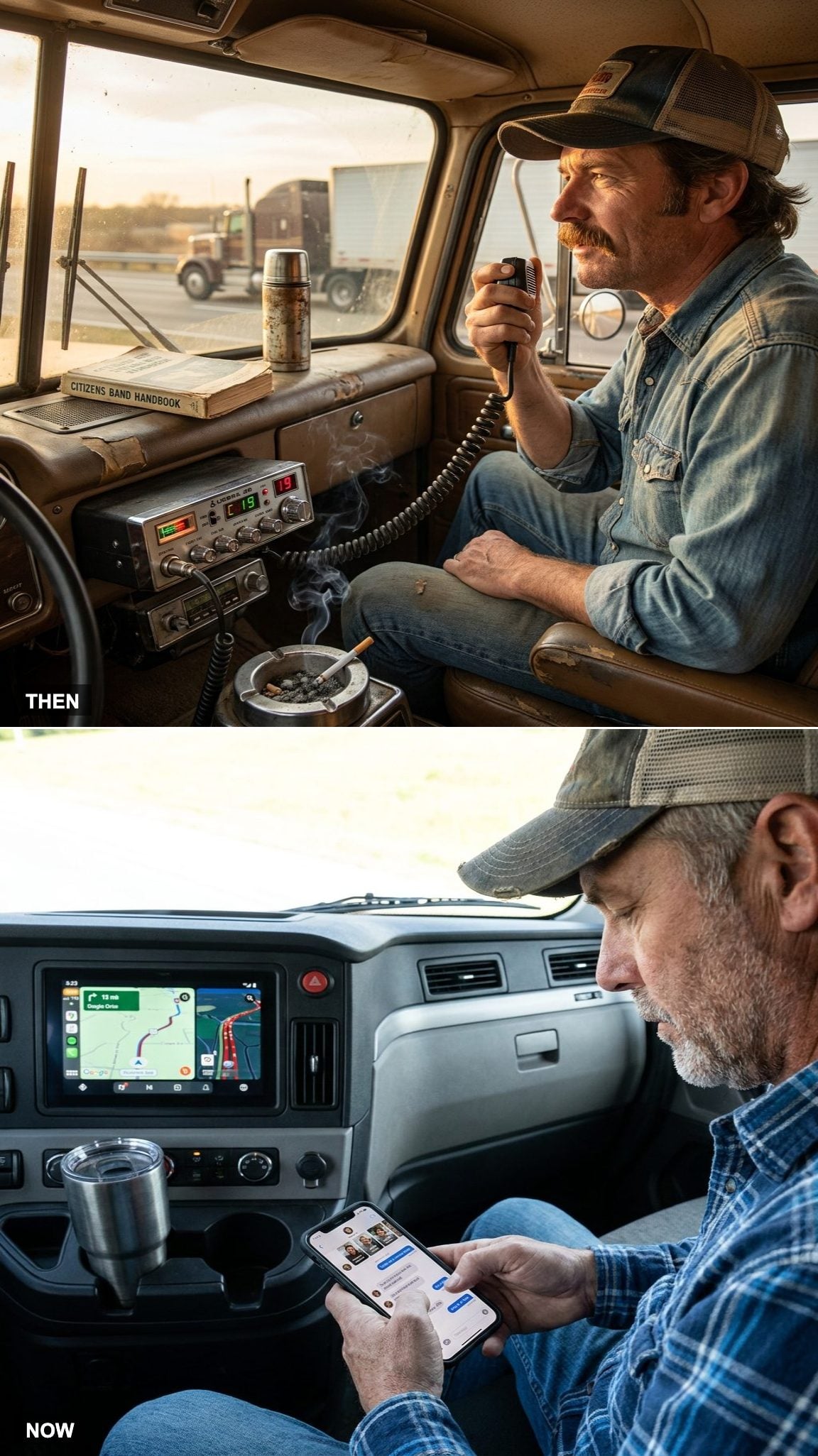
Breaker one-nine, anybody got a Smokey report on I-70?
Truckers, recreational-vehicle owners, and drivers with hobbyist rigs traded reports about police, weather, fuel, traffic, and the best place to get pie. The crackle made the highway sound like a party line moving at seventy miles an hour.
Useful information now arrives through navigation alerts, weather apps, family group messages, and traffic reports. The signal is cleaner and the information more targeted. What disappeared was the accidental voice from twenty miles ahead telling everybody about a pie special.
10. Older Cars Encouraging More Breaks vs. Modern Cars Covering Longer Stretches
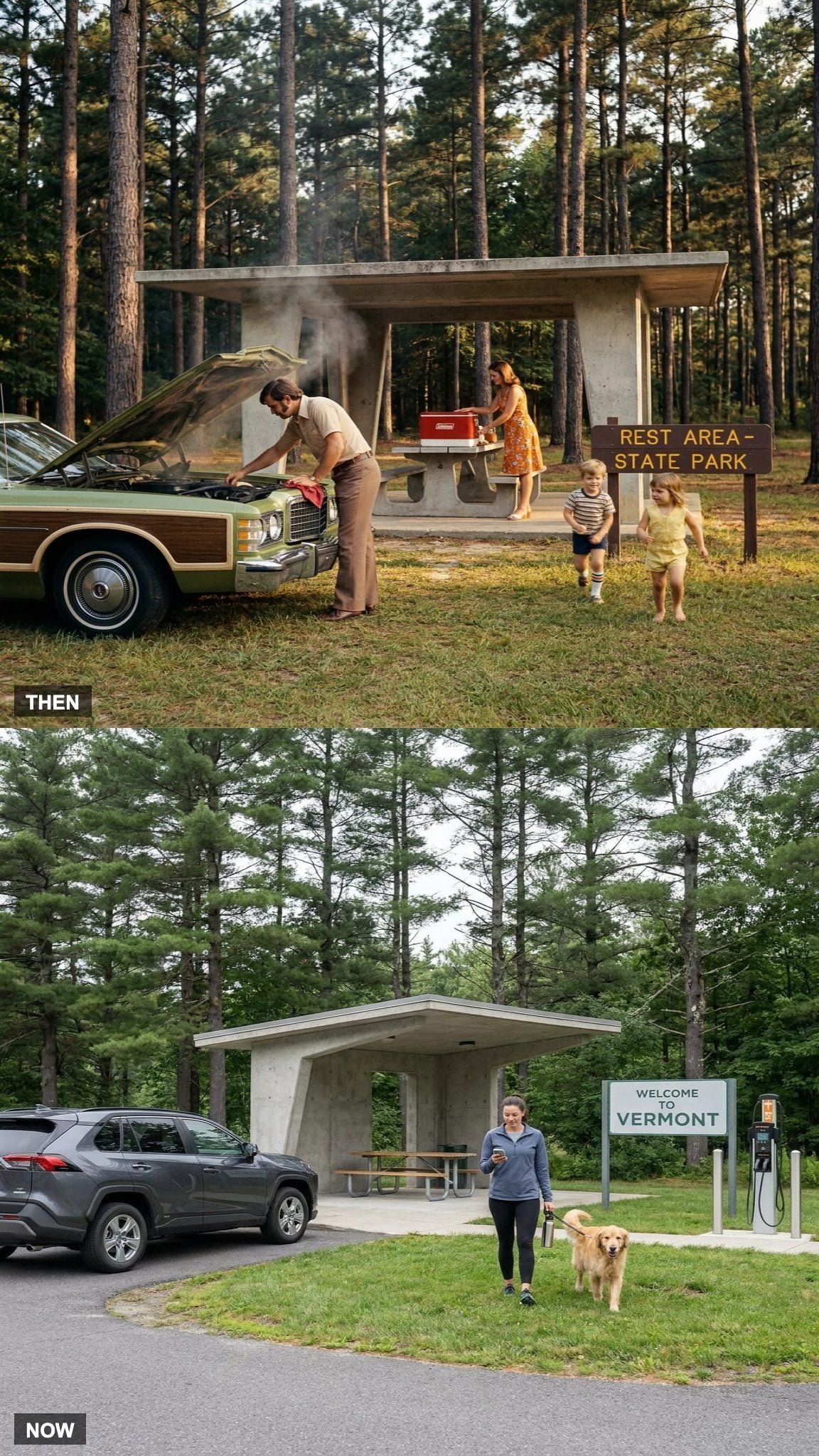
A well-maintained 1975 car could travel far more than a hundred miles without mechanical drama, but the trip was often louder, hotter, and less comfortable. Vinyl seats grew sticky, cabins carried more road noise, and children in the rear-facing way-back eventually needed grass beneath their feet.
Modern climate control, quieter cabins, improved seats, longer fuel range, and greater reliability can make several hours pass before anyone thinks about stopping. The car may be ready to continue even when the driver is not.
That makes rest areas no less important. It simply means the family’s need for a break may now arrive later than the vehicle’s.
9. Highway Signs Controlling the Route vs. Real-Time Rerouting
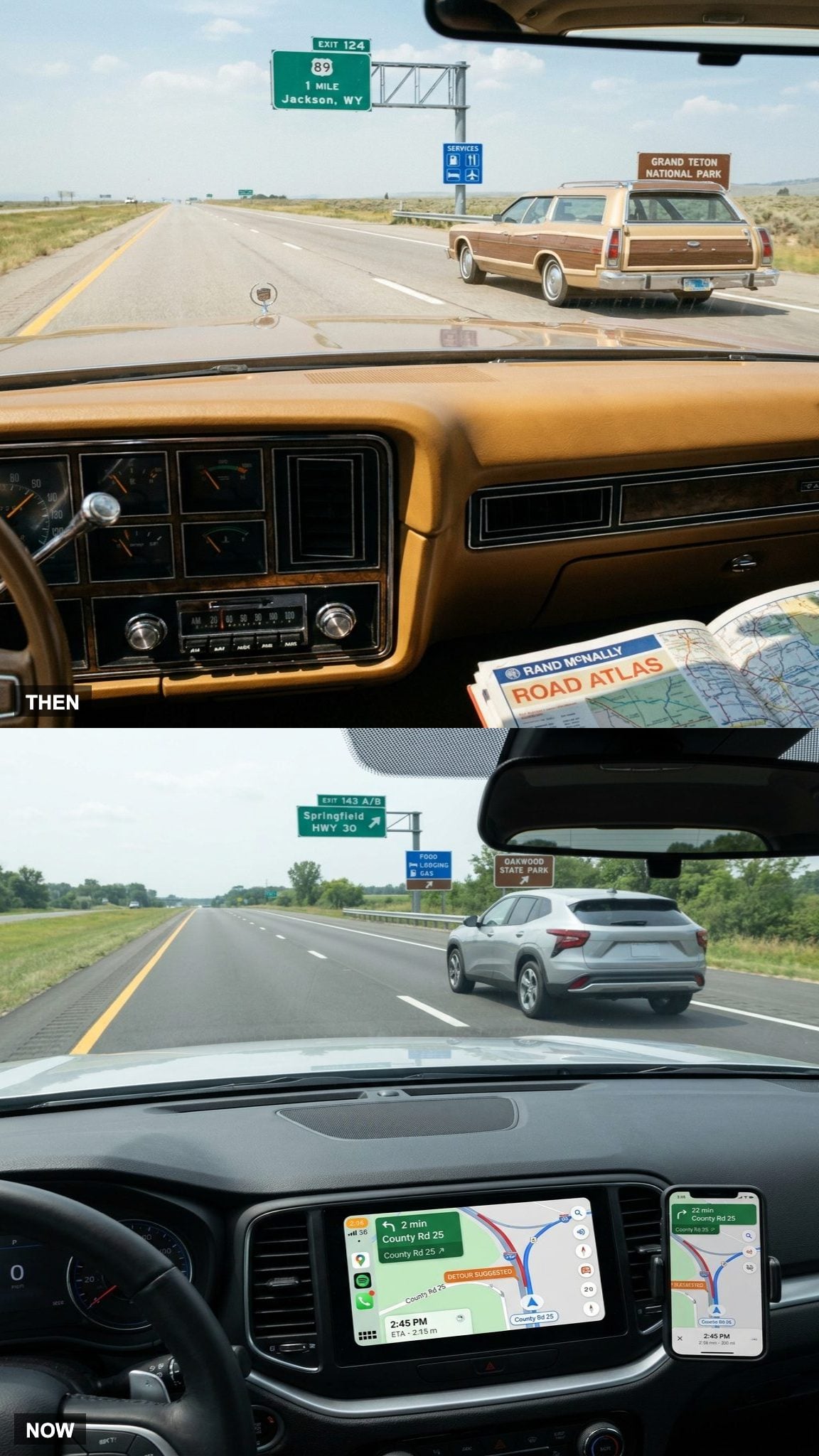
You planned around the signs. Green carried directions and exit information, blue pointed toward motorist services, and brown marked recreation or cultural destinations. If traffic stopped beyond the next hill, you learned about it when the brake lights appeared.
Now the phone often knows first. It can move you off the Interstate and onto a two-lane road you would never have chosen, past a diner you would never have seen.
The signs remain essential. They simply share authority with a screen that can change its mind every thirty seconds.
8. A Wallet Full of Cash vs. Cards and Tap-to-Pay
🔥 Would you like to save this?
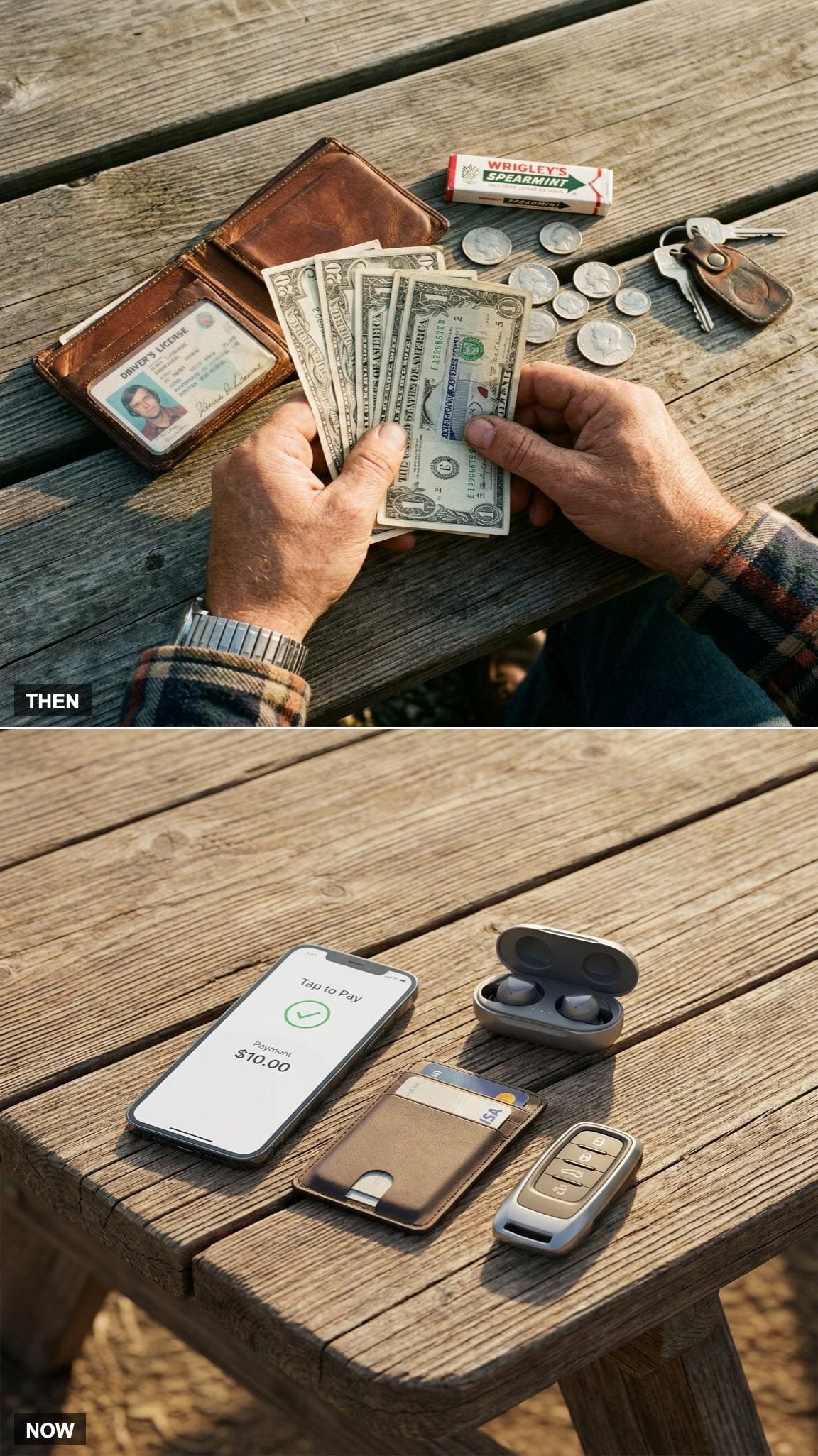
You left home with cash for gas, tolls, vending machines, and whatever emergency could not be predicted. Traveler’s checks waited in the glove box. Coins lived in an ashtray that had been reassigned as a change tray.
Every purchase involved counting. The quarters also rattled through every curve, producing a metallic rhythm nobody thought to call nostalgic at the time.
Cards and mobile payments now handle much of that work, although cash and older payment systems have not vanished everywhere. The transaction is faster and usually cleaner. The ashtray has fallen silent.
7. The Pay-Phone Check-In vs. a Video Call From the Parking Lot
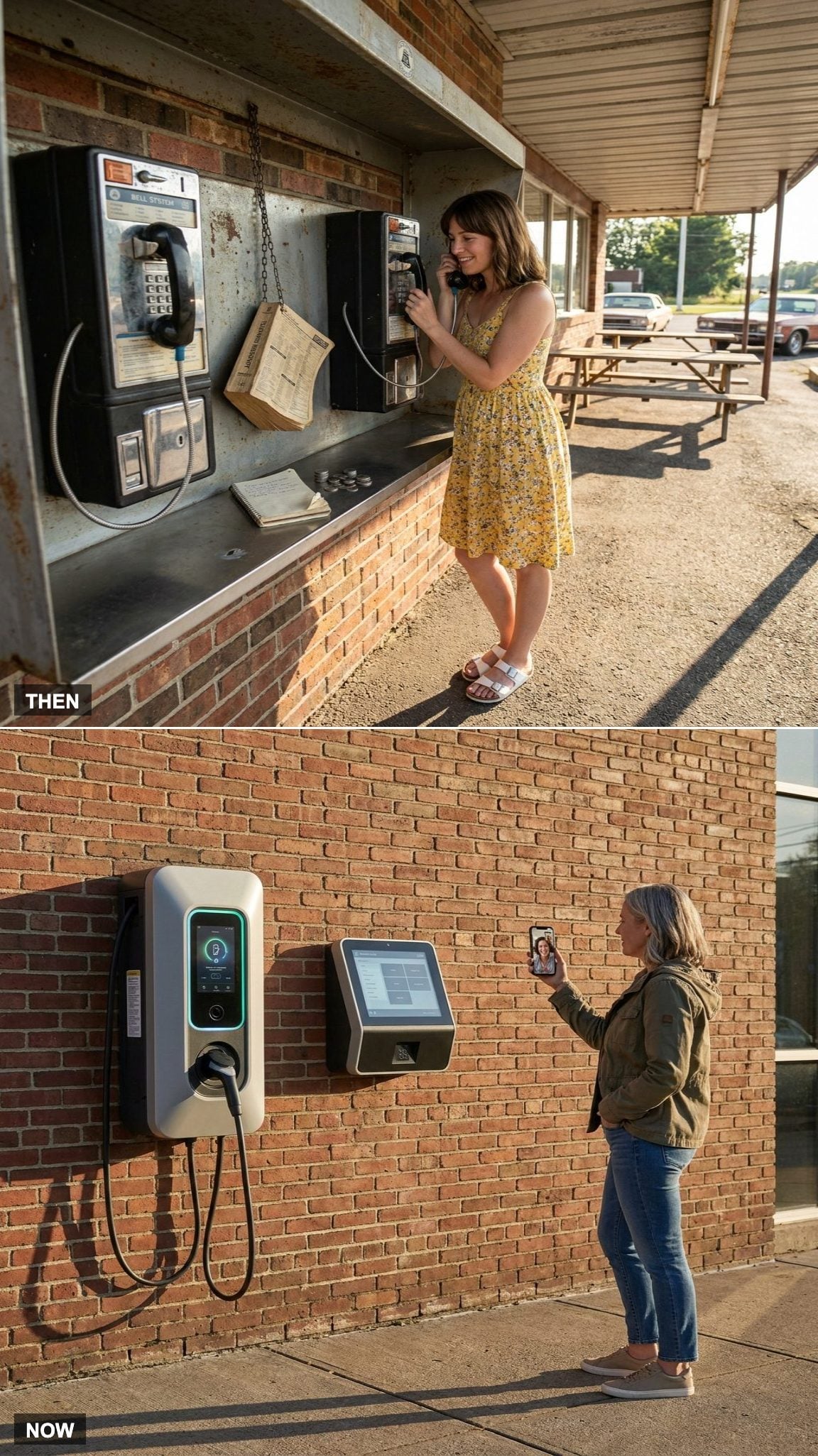
This was not the emergency call from the earlier pay phone. This was the family check-in.
You fed coins into the phone and kept the conversation short, especially if it was long distance. You had made it to Kentucky. The children were fine. The motel had a pool. You would call again after reaching the next destination.
A busy line meant waiting. Nobody home meant climbing back into the car with the problem unresolved.
Now Grandma’s face appears on a screen before the engine has cooled. She sees the children, the children see the dog, and nobody spends the next two hundred miles wondering whether the message got through.
6. Film Cameras With Limited Exposures vs. Instant Social-Media Posts
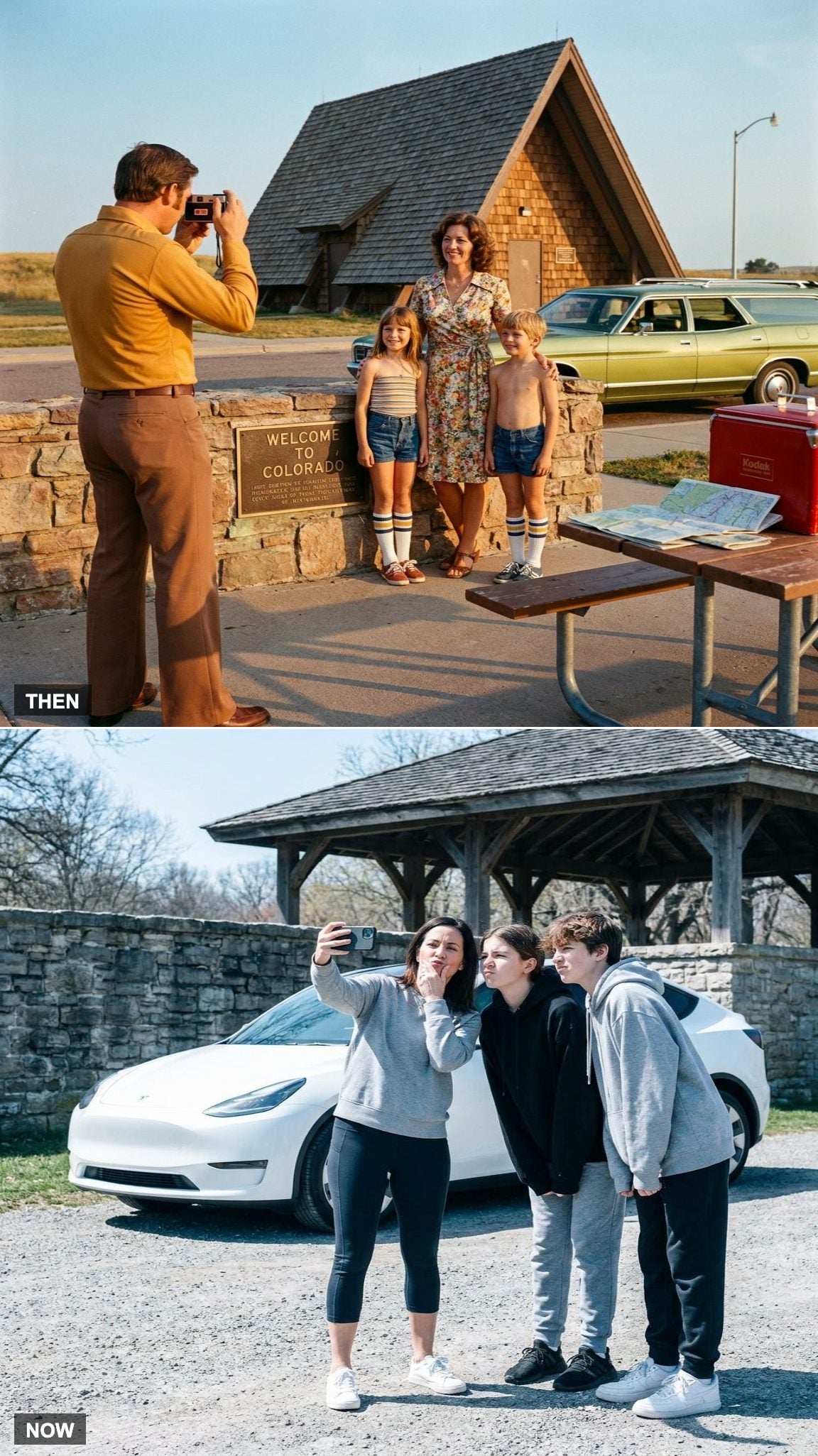
A family might stop at a rest area and take one photograph. Two if the person holding the camera felt generous with the film. Many popular cameras used cartridges or rolls with a limited number of exposures, and every click carried the additional cost of processing.
Everyone stood still. Someone centered the children in front of the state sign. Nobody knew until days or weeks later whether a thumb had entered the frame.
The same stop can now produce dozens of photographs, a short video, and a geofiltered story before anyone returns to the car. A photograph once waited to become a keepsake. Now it can become a transmission before the trip has moved another mile.
5. Regional Welcome-Center Architecture vs. More Standardized Renovations
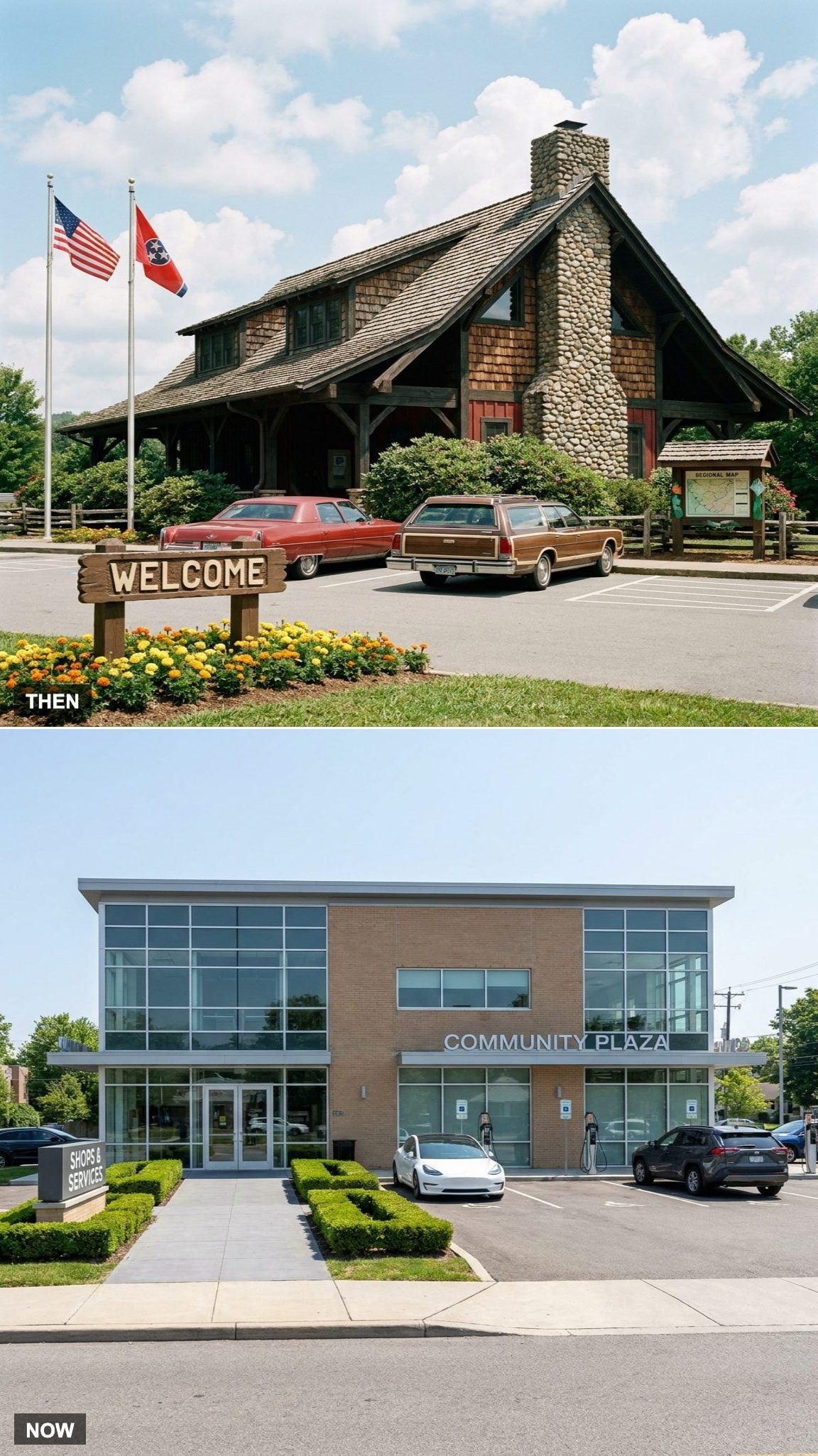
Many 1960s and 1970s welcome centers tried to announce their location through architecture. Some borrowed from covered bridges, ranch buildings, adobe construction, lodges, or other regional forms. Others were modest modern buildings repeated at several locations within the same state.
The strongest examples made arrival feel immediate. The building, materials, landscaping, and tourism displays began explaining the state before anyone reached the counter.
Renovated facilities still use regional cues, but standardized materials, security requirements, accessibility upgrades, maintenance contracts, and shared retail systems can make newer interiors feel more alike.
4. Shared Road-Trip Conversation vs. Everyone Bringing a Separate Screen
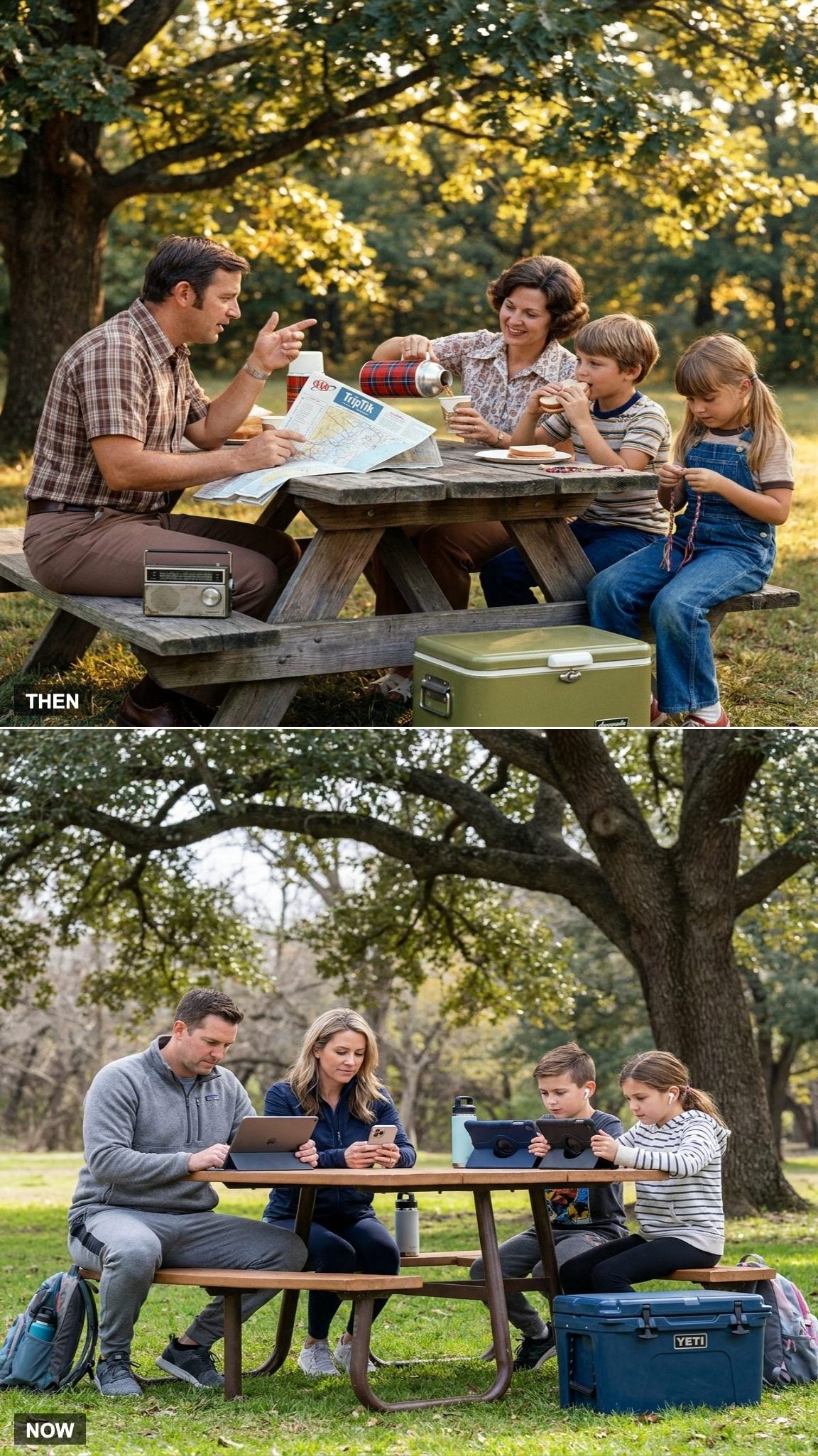
The car was one place where families sometimes talked simply because everyone was trapped together. They also argued about the radio, slept against the window, read comic books, played the license-plate game, and listened to the same family story for the fourth time that summer.
Personal screens have made the cabin easier to divide. Headphones go in, separate programs begin, and four people can travel toward the same place while occupying four different rooms.
At the rest stop, one person checks messages, another finishes a video, and somebody else searches for coffee. The shared pause has not vanished, but it now competes with a private feed carried in every pocket.
Four people can still take the same road trip while experiencing four entirely different journeys.
3. Simple Public Rest Areas vs. Full-Service Travel Plazas
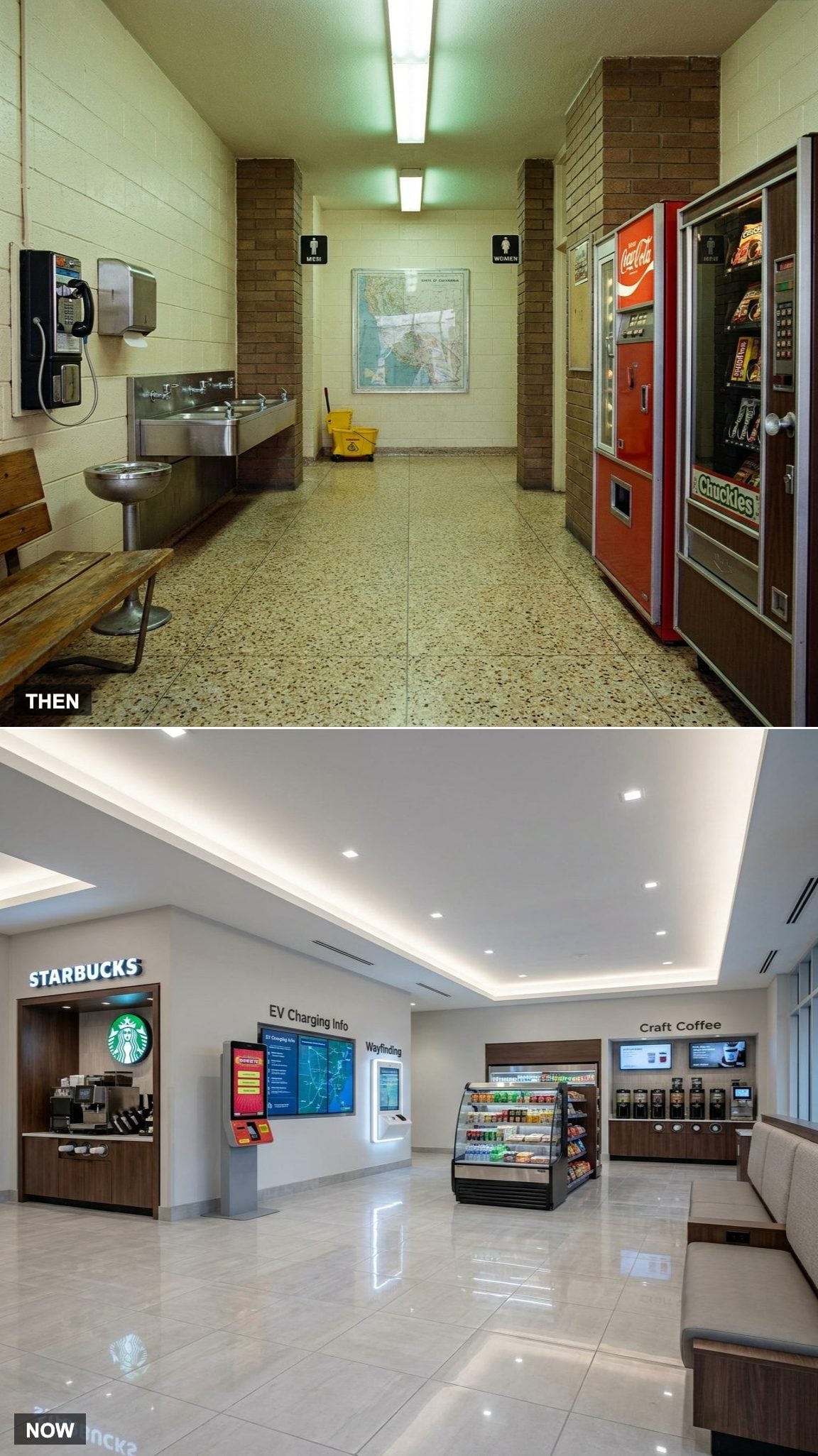
A basic 1975 rest area might offer a bathroom, a metallic-tasting water fountain, picnic tables, and vending machines. You stretched, used the facilities, and returned to the car.
Many public rest areas still follow that simple model. A commercial truck stop or toll-road service plaza is something else entirely: fuel, restaurants, retail, showers, charging stations, and enough coffee choices to delay a family that had intended to stop for five minutes.
The modern roadside experience therefore splits in two. One facility is designed for a brief public pause. Another is a business designed to keep travelers on the property long enough to buy dinner.
2. The Journey as Part of the Vacation vs. the Fastest Route to the Destination
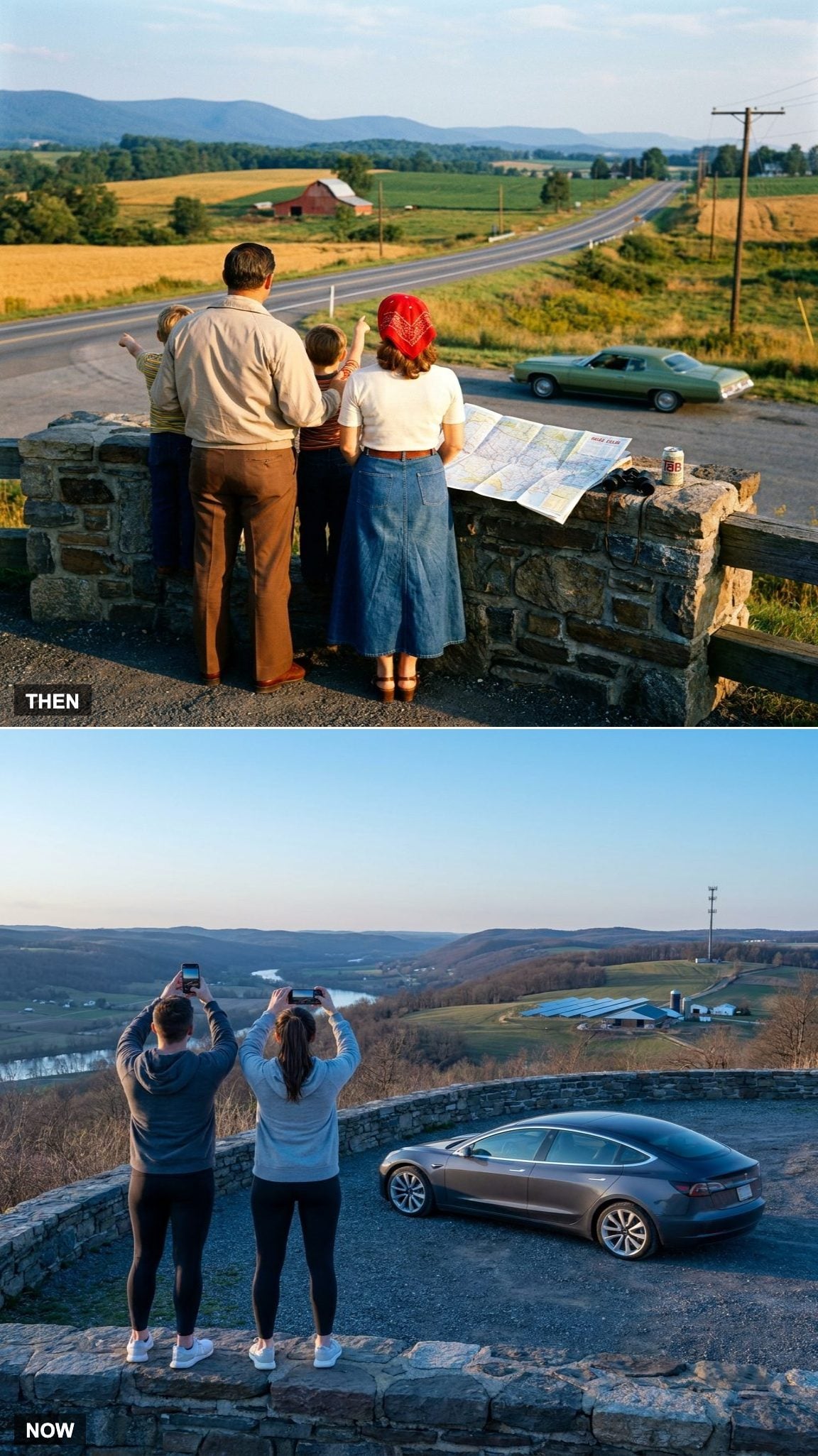
For many families, the vacation began when the car left the driveway. Dad rerouted the trip through Meramec Caverns because he had seen the barn advertisements for a hundred miles. Mom had marked a diner mentioned in a magazine. The children counted cows and waited for the odometer to form a palindrome.
Plenty of travelers still wander, but modern navigation makes optimization irresistible. The fastest route is calculated automatically, delays are measured to the minute, and every stop becomes a variable in the estimated arrival time.
That efficiency is useful when the destination matters most. It becomes less helpful when the unplanned diner, dinosaur park, and unnecessary scenic loop were supposed to be part of the vacation.
1. A Memorable Break in the Trip vs. an Efficient Stop Before the Next Exit
The rest stop could become an event.
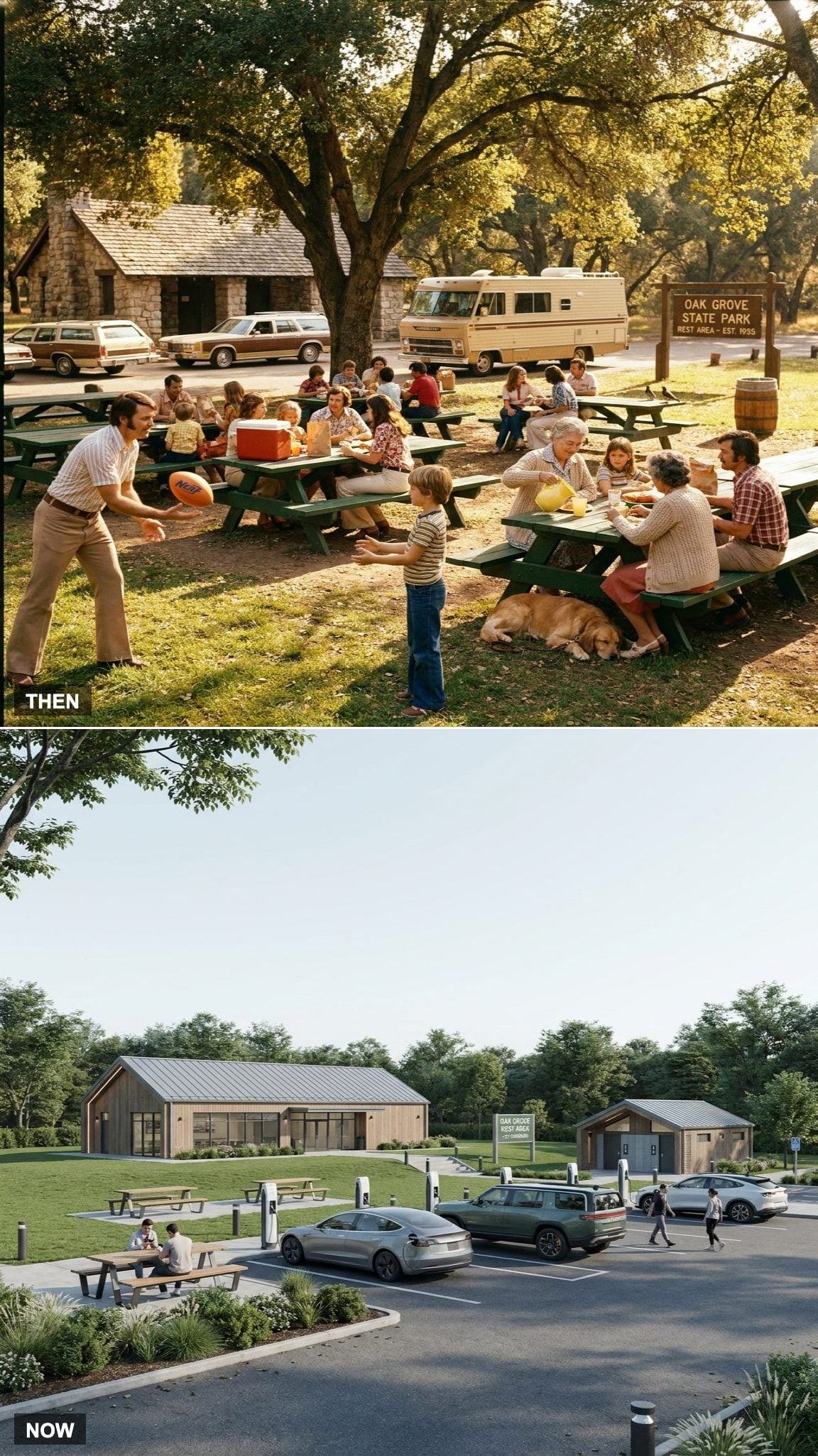
You unpacked the cooler, claimed a table, and watched somebody throw a football until lunch was ready. The dog got walked. The children ran a few loops around the lawn to burn off station-wagon energy. Half an hour later, everyone returned to the car having actually stopped somewhere.
A modern visit can be much quicker: restroom, water bottle, dog walk, highway. That is especially true at a simple rest area built for a safe pause rather than a long commercial visit. A full-service plaza may produce the opposite effect by encouraging travelers to eat, shop, charge, or linger.
The facilities are often cleaner and more accessible than their 1975 predecessors. The experience is also easier to forget when nobody remains long enough to notice which table had the best shade.
Something got faster. Something else got lost. Both are true at once.
🔥 Would you like to save this?
Please note that some of the imagery in this article were created with the aid of AI image generators.