
🔥 Would you like to save this?
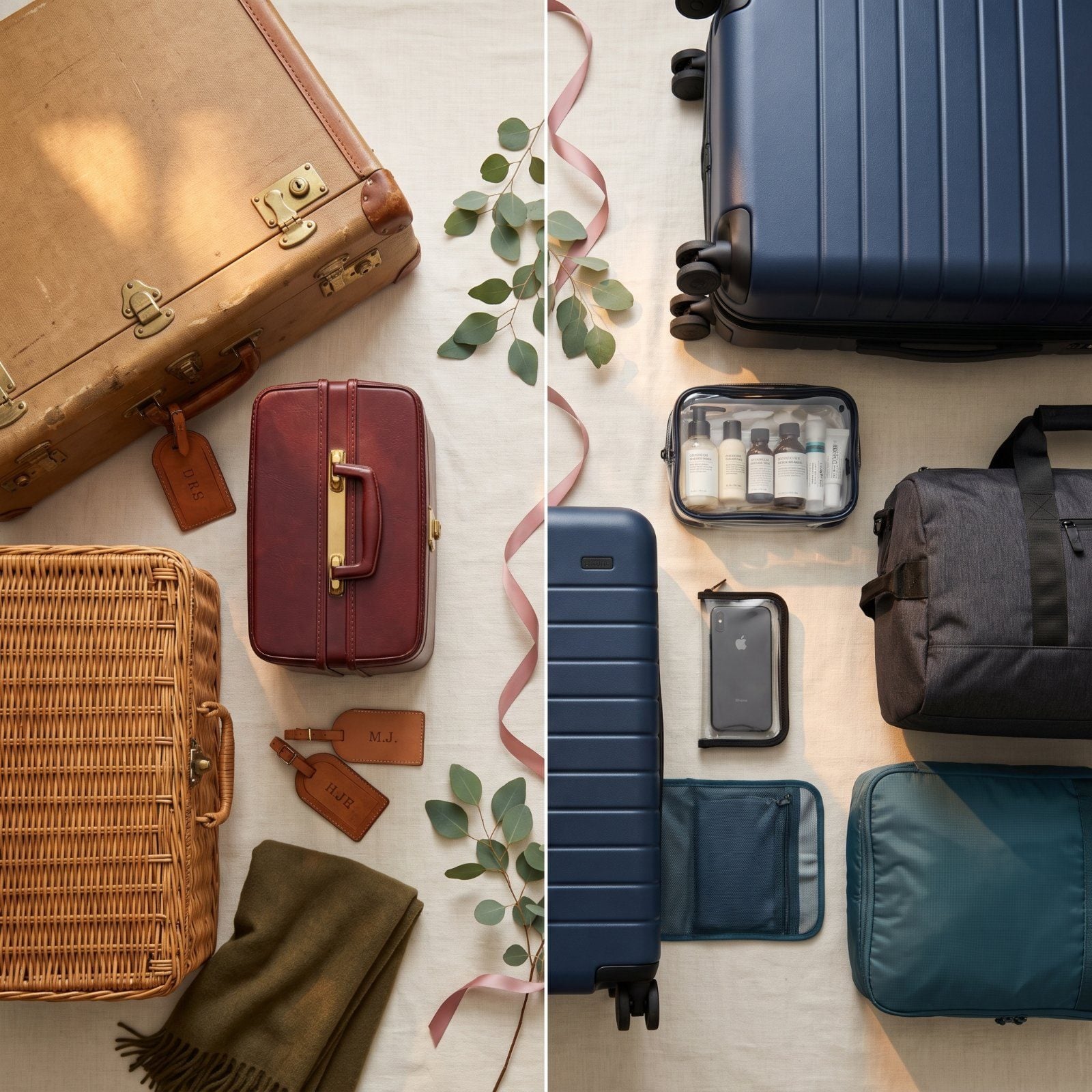
The sound tells you everything. A brass latch snapping shut on a hard-shell suitcase, loud enough to wake the dog, right before Dad hauled it down the stairs by hand because wheels weren’t a thing yet. Luggage used to be heavy and matching, carried through the terminal on your own two arms. We lined up the old holiday travel kit against today’s version to see what sixty years did to the humble suitcase.
50. The Metal-Latched Hard-Shell vs. the Featherweight Spinner
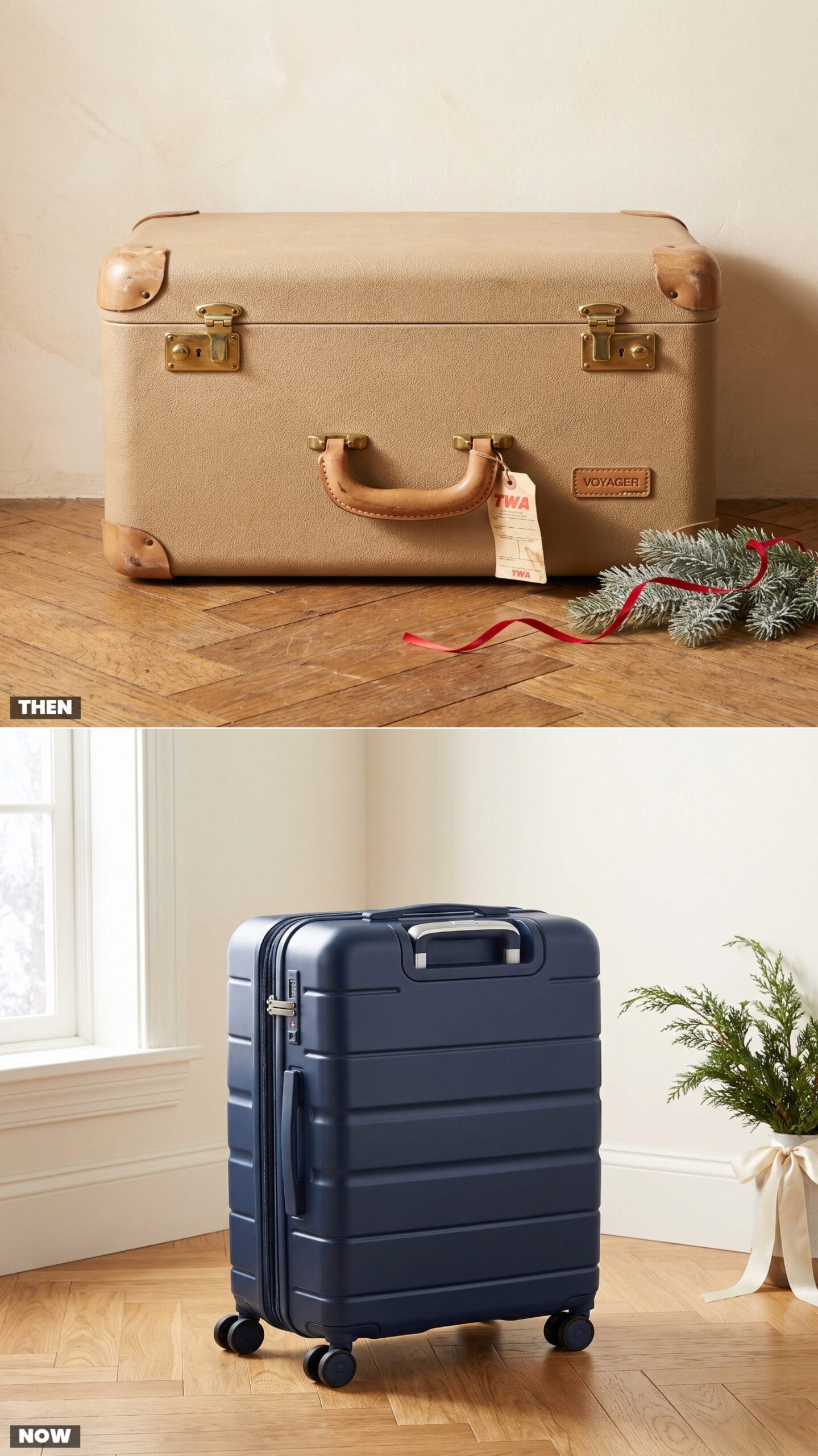
The 1965 version weighed almost as much empty as it did full. A molded shell, brass latches that bit your fingers if you weren’t careful, leather corners meant to survive a baggage cart drop — you felt it in your shoulder for days afterward.
The modern navy polycarbonate spinner weighs about as much as a winter coat. It rolls on four wheels, locks with a code instead of a key, and shrugs off the belt. Progress you can feel in your back.
49. The Matching Three-Piece Set vs. Mix-and-Match Modular Bags
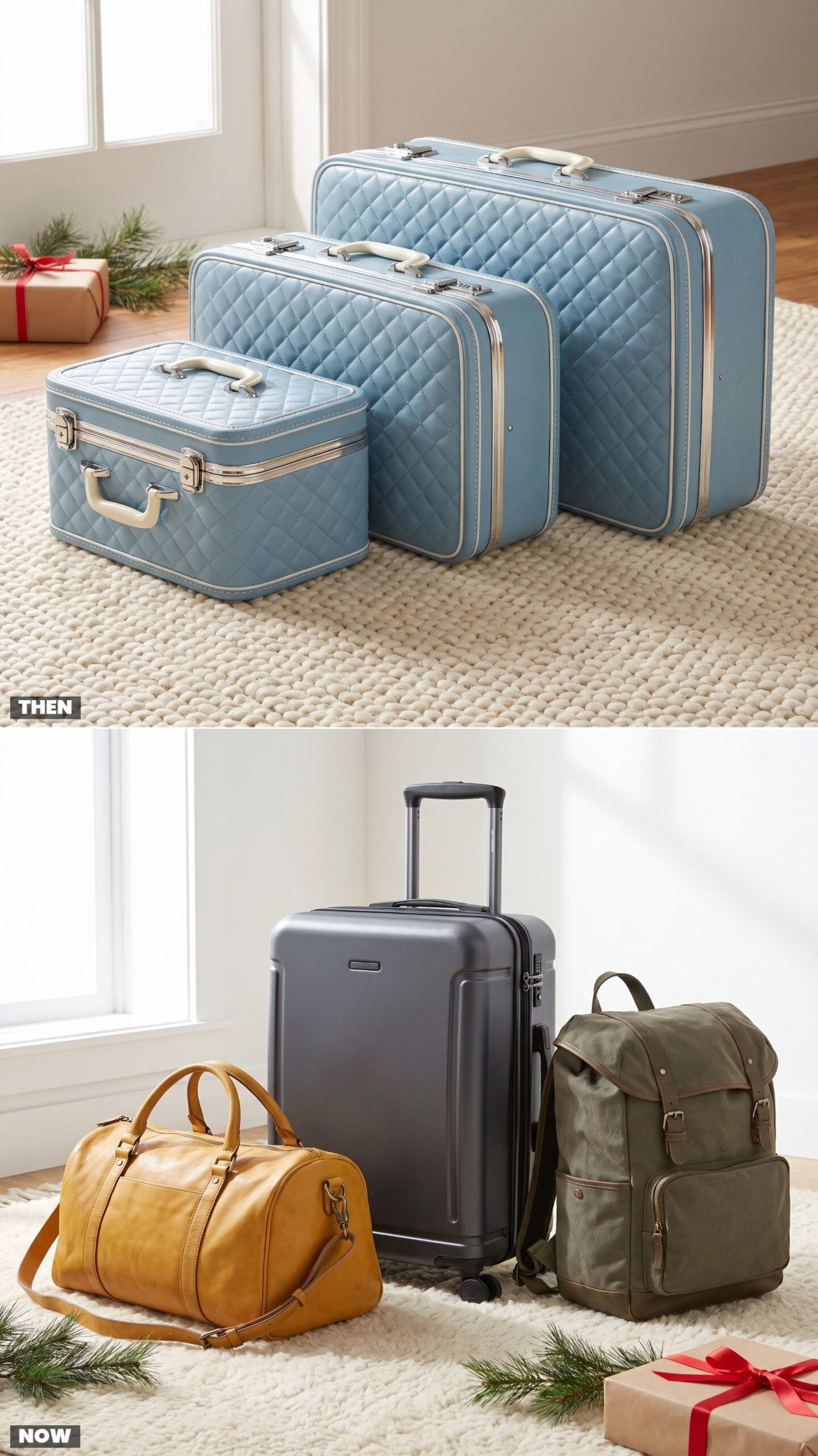
Owning a matched set in 1965 said something about you. Powder-blue vinyl, white piping, chrome latches that all clicked the same way. You bought it together and traveled with it for twenty years whether you liked all three pieces or not.
Now it’s the mix instead. A mustard duffel, a charcoal spinner, and whatever backpack already works. Nobody coordinates anymore, and honestly the mismatched row is easier to spot on the carousel.
48. Carried by Hand vs. The Four-Wheel Carry-On
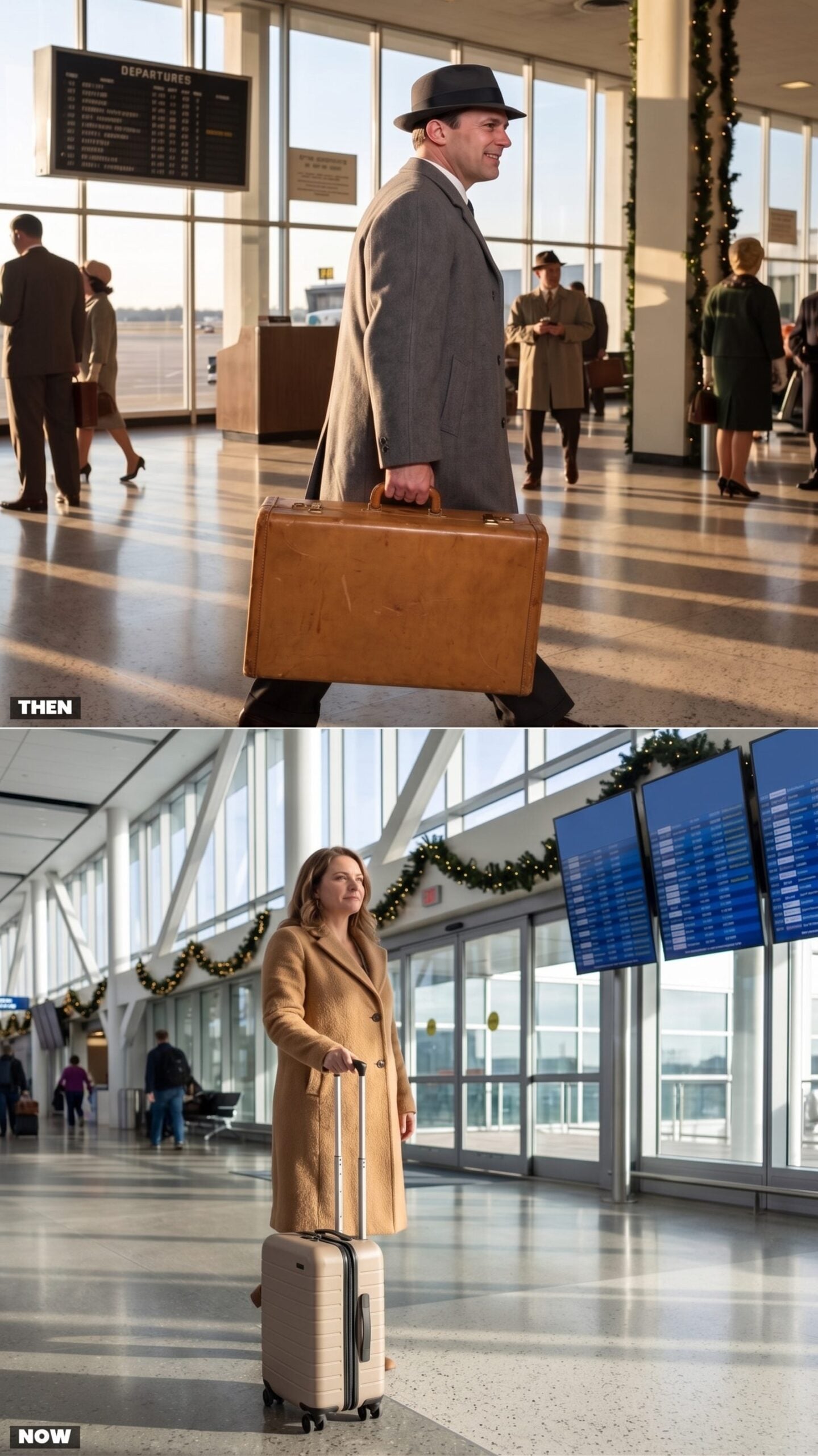
Watch the old footage and you can spot it instantly: everyone walked lopsided. One shoulder dropped, one arm dragging a wheel-less case across half a mile of terminal — that was just travel, and you arrived at the gate already tired.
Then the four-wheel carry-on rewrote the whole posture of flying. You glide it beside you with two fingers. The wheels pivot in any direction, which is why nobody under 35 understands why airports used to look like an arm-wrestling tournament.
47. The Cosmetics Train Case vs. the Clear Toiletry Pouch
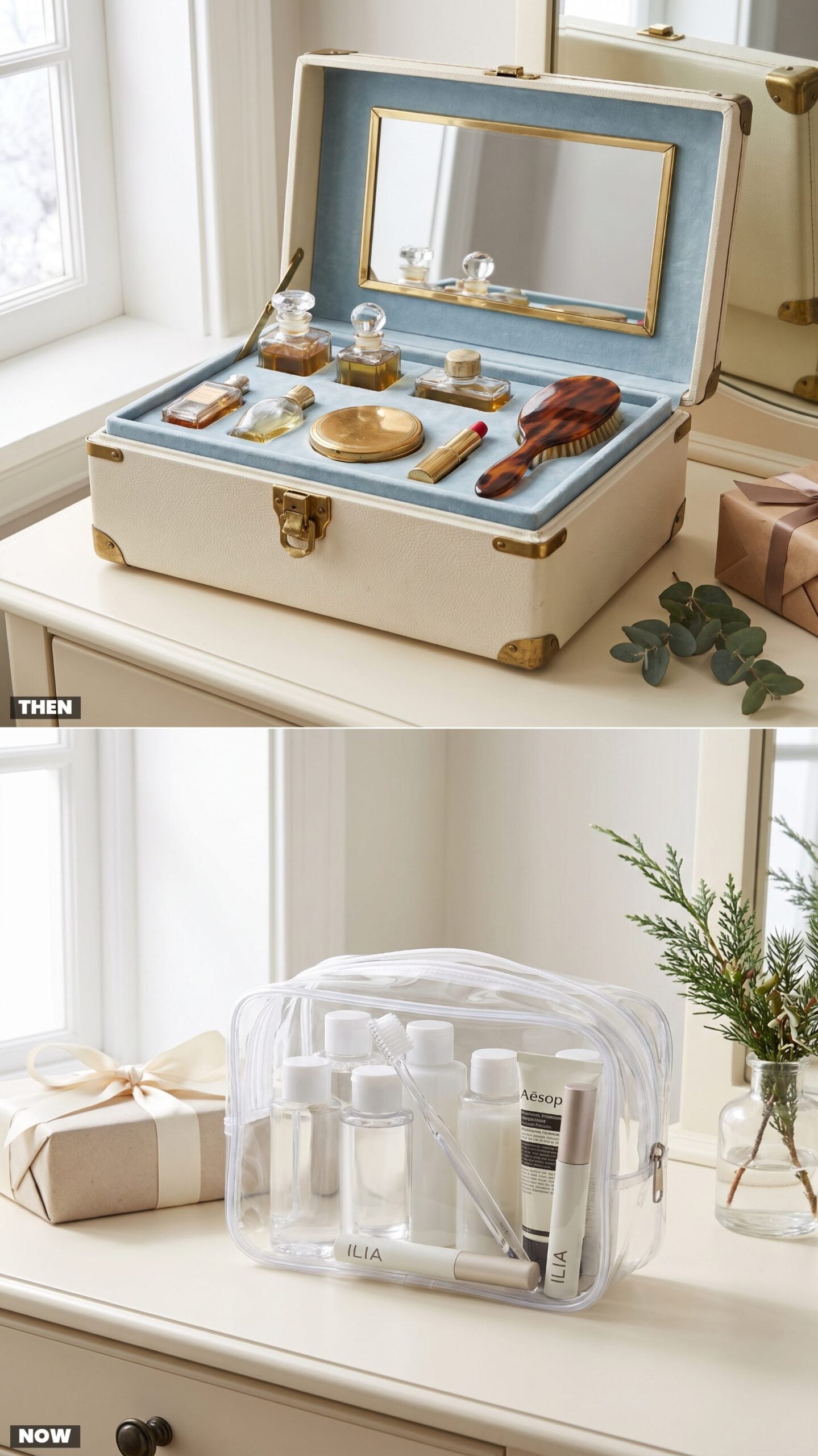
The train case was a tiny monument to vanity. Ivory vinyl, gold clasp, a mirror in the lid, padded trays holding glass perfume bottles upright like crown jewels. It weighed a ton and took up half the back seat, but opening it felt like an event.
Security rules flattened all that romance. Now it’s a transparent toiletry pouch, everything under 100ml, laid flat so the scanner reads it in a second. Practical. A little sad. We’ll admit we miss the clasp.
46. The Rigid Hatbox vs. the Crush-Resistant Hat Carrier
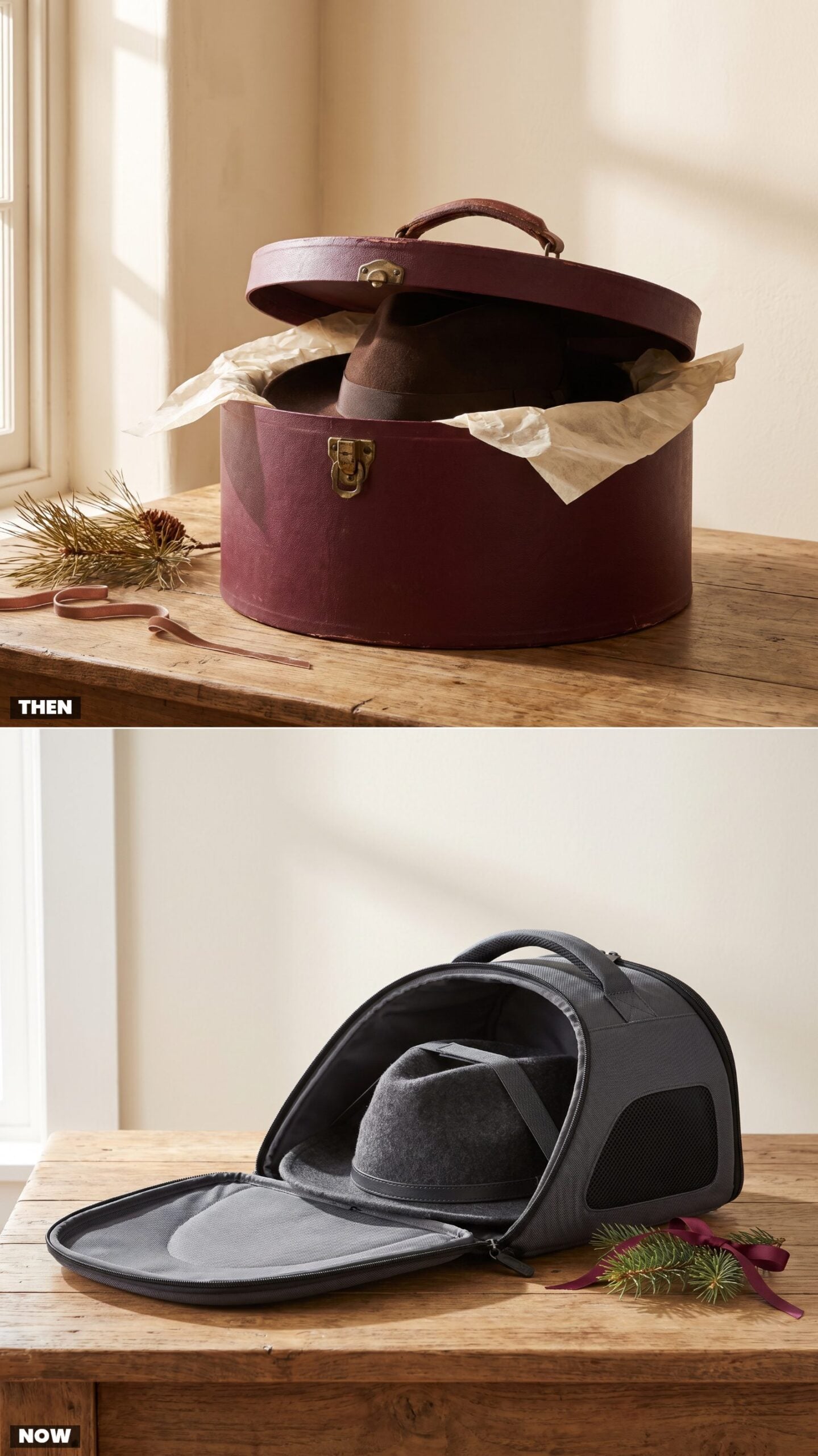
A hatbox meant you cared about a hat. Burgundy paper over a stiff round frame, a brass clasp, tissue tucked around the brim so nothing crushed on the train ride. Single-purpose and gloriously impractical.
The modern hat carrier does the same job in nylon, with a reinforced dome and a mesh vent so the felt breathes. It clips to a suitcase handle and survives the overhead bin. The hat still arrives perfect — it just doesn’t make an entrance anymore.
45. The Metal-Frame Garment Bag vs. the Carry-On Garment Duffel
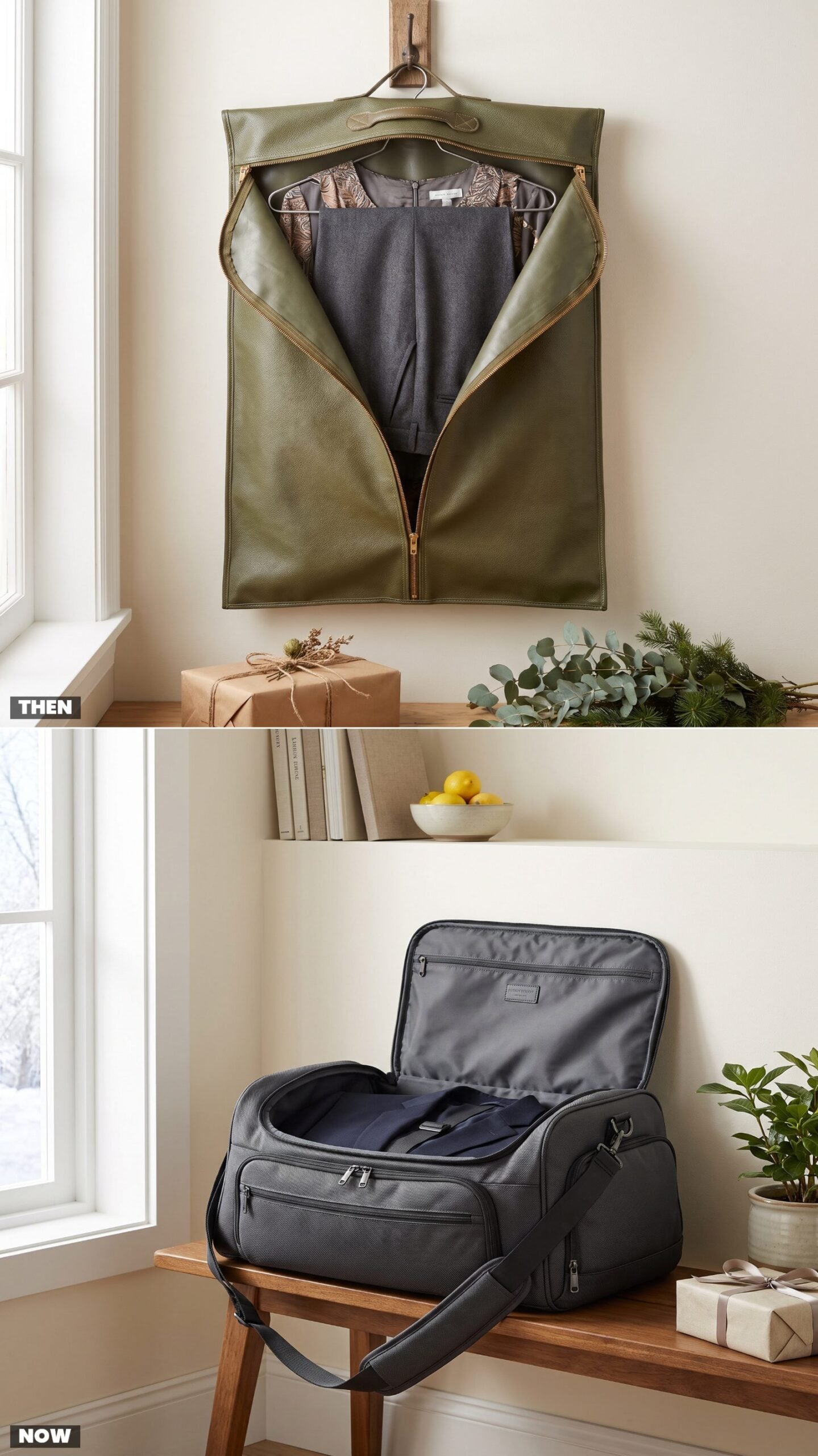
The old garment bag was built around a metal hanger frame that jingled when you lifted it. Olive vinyl, a brass zipper running the full length, a suit and a dress hanging flat so nothing wrinkled. You draped it over your arm and prayed the hook held at the hotel.
Today it folds into a carry-on garment duffel that doubles as a weekender. The suit section is sewn in, the whole thing flattens into the overhead bin, and the shoulder strap frees your arm. The blazer still arrives crease-free. Clever, that.
44. The Vinyl Overnight Case vs. the Personal-Item Backpack
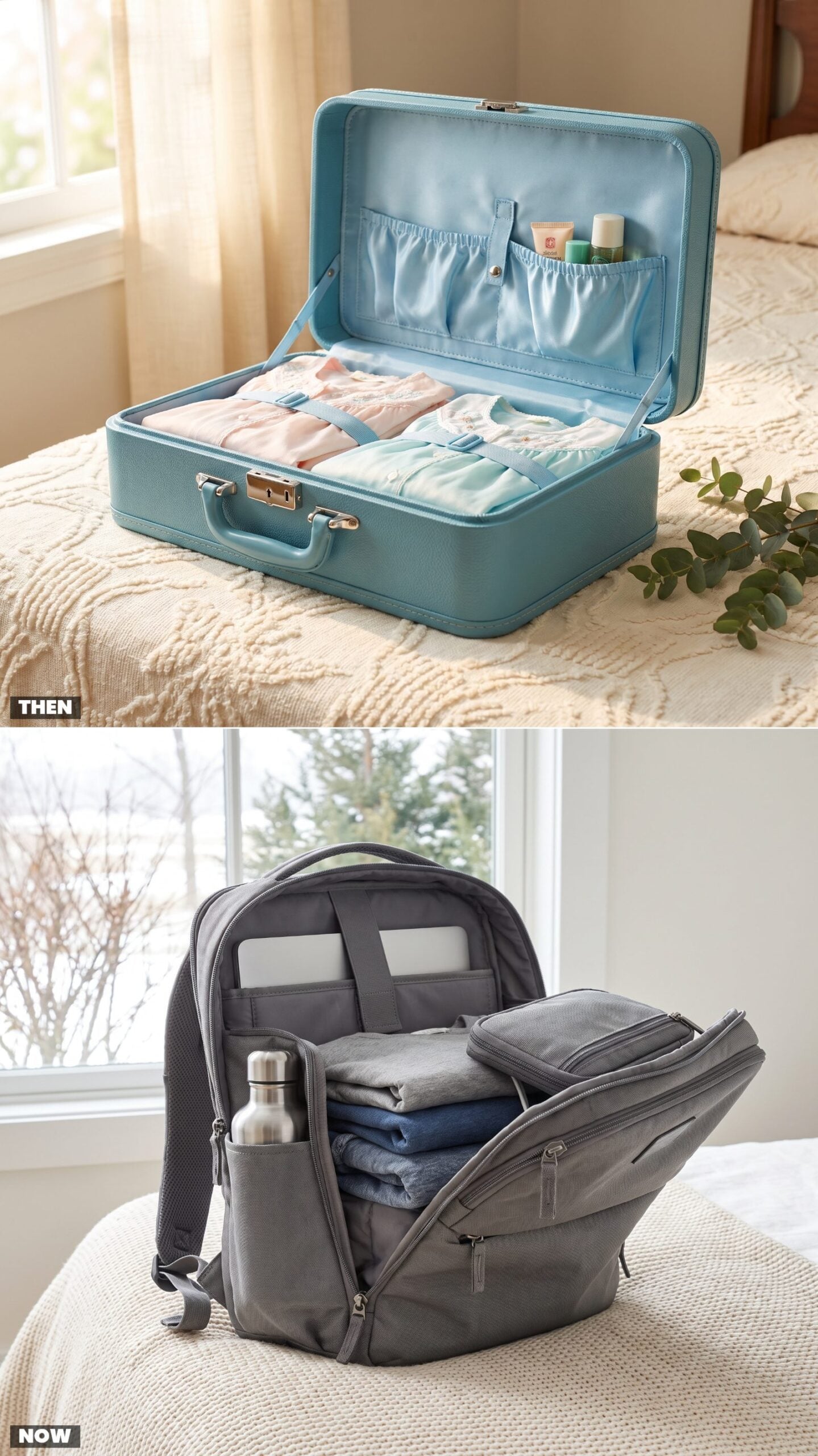
A robin’s-egg vinyl overnight case was the one-night solution: chrome clasp, satin lining, elastic straps to pin down your nightclothes. It held exactly enough for a single evening away and looked tidy doing it.
The personal-item backpack covers the same ground and hauls your whole digital life besides. Padded laptop sleeve, water-bottle pocket, a pass-through strap that slides over your suitcase handle. Less charming. Infinitely more useful.
43. The Child’s Mini Suitcase vs. Ride-On Kids’ Luggage
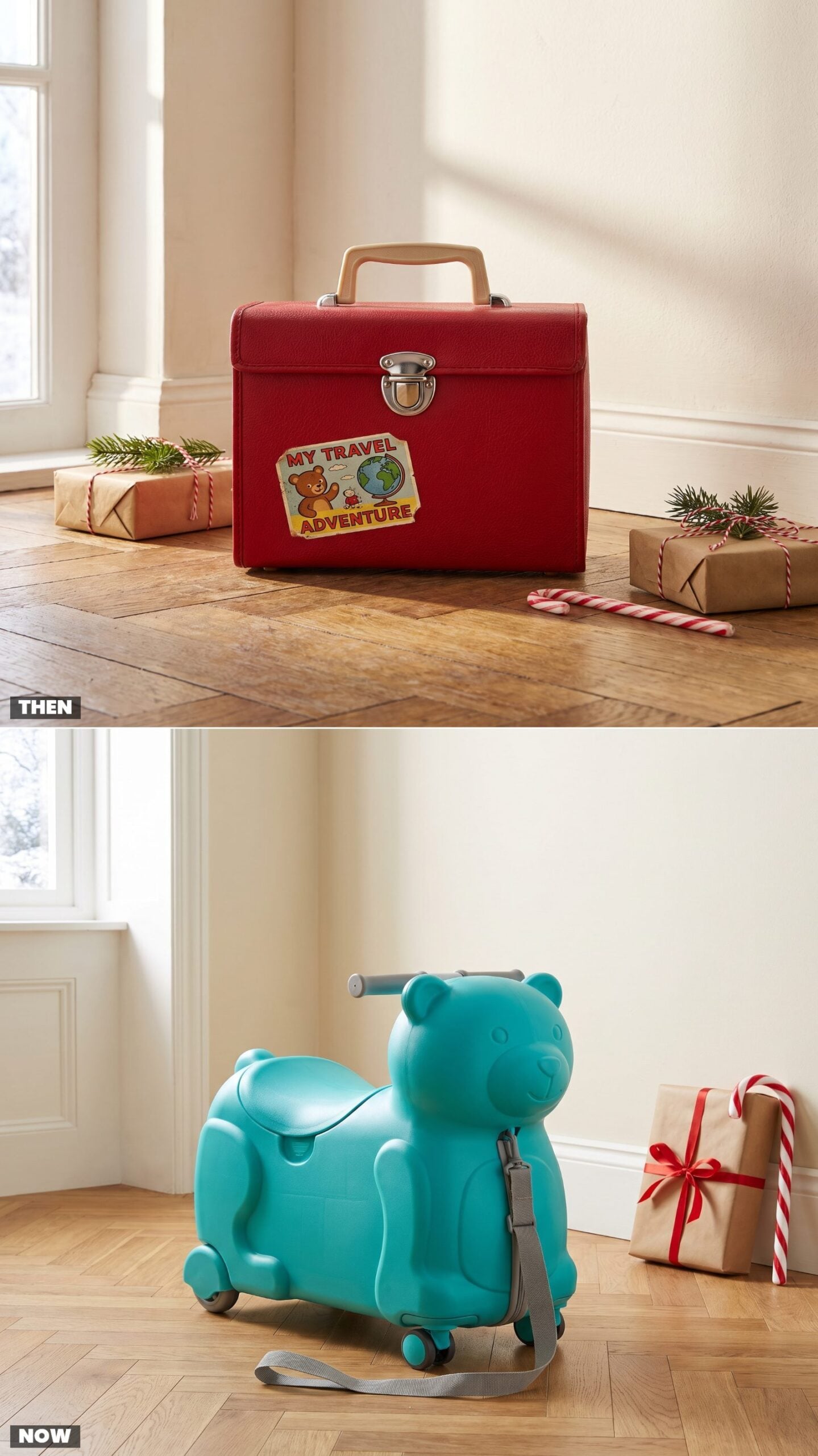
The 1965 kid’s suitcase was a shrunken copy of the grown-up one. Cherry-red vinyl, a chrome latch, a travel-sticker decal, and absolutely no wheels — because the parents didn’t have any either. The child carried it proudly for about ninety seconds, then handed it off.
Now kids get a ride-on suitcase they can sit on and scoot through the terminal. Whoever dreamed that up grasped one truth about airports: a child who can ride their own luggage will not ask to be carried.
42. The Canvas Rope-Handle Duffel vs. the Technical Travel Duffel
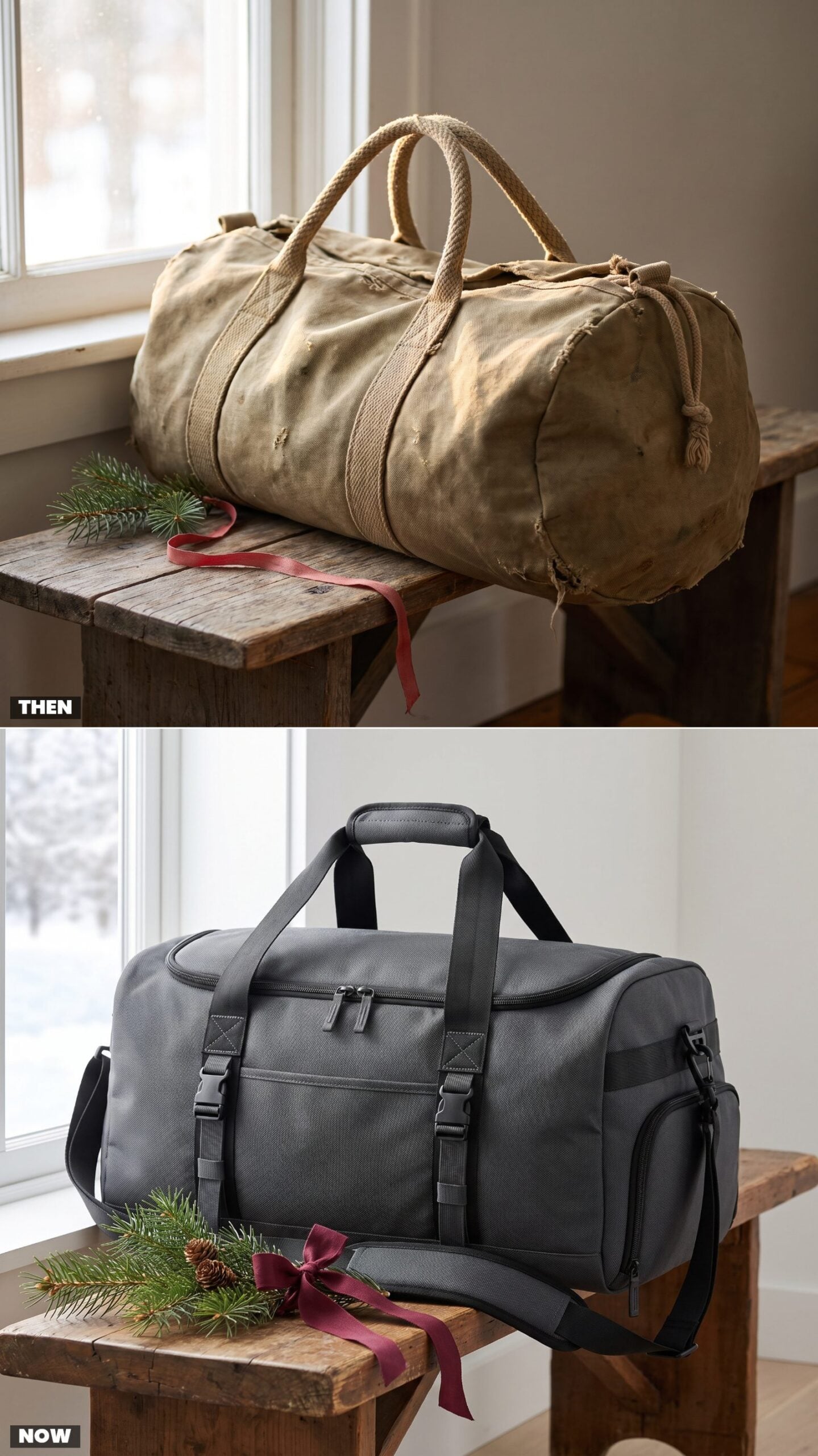
Faded khaki canvas, a drawstring top, braided rope handles that left a mark on your palm. The old duffel organized nothing. You threw everything in, cinched the top, and sorted it out when you arrived. It smelled like canvas and every trip you’d ever taken.
The technical travel duffel is a different animal entirely — ballistic nylon, a U-zip that lays the whole bag open flat, compression straps, a ventilated pocket for your shoes. Nothing vanishes into the bottom anymore. Though we’ll confess the rope handles had more character.
41. The Wicker Pet Carrier vs. the Airline-Compliant Soft Carrier
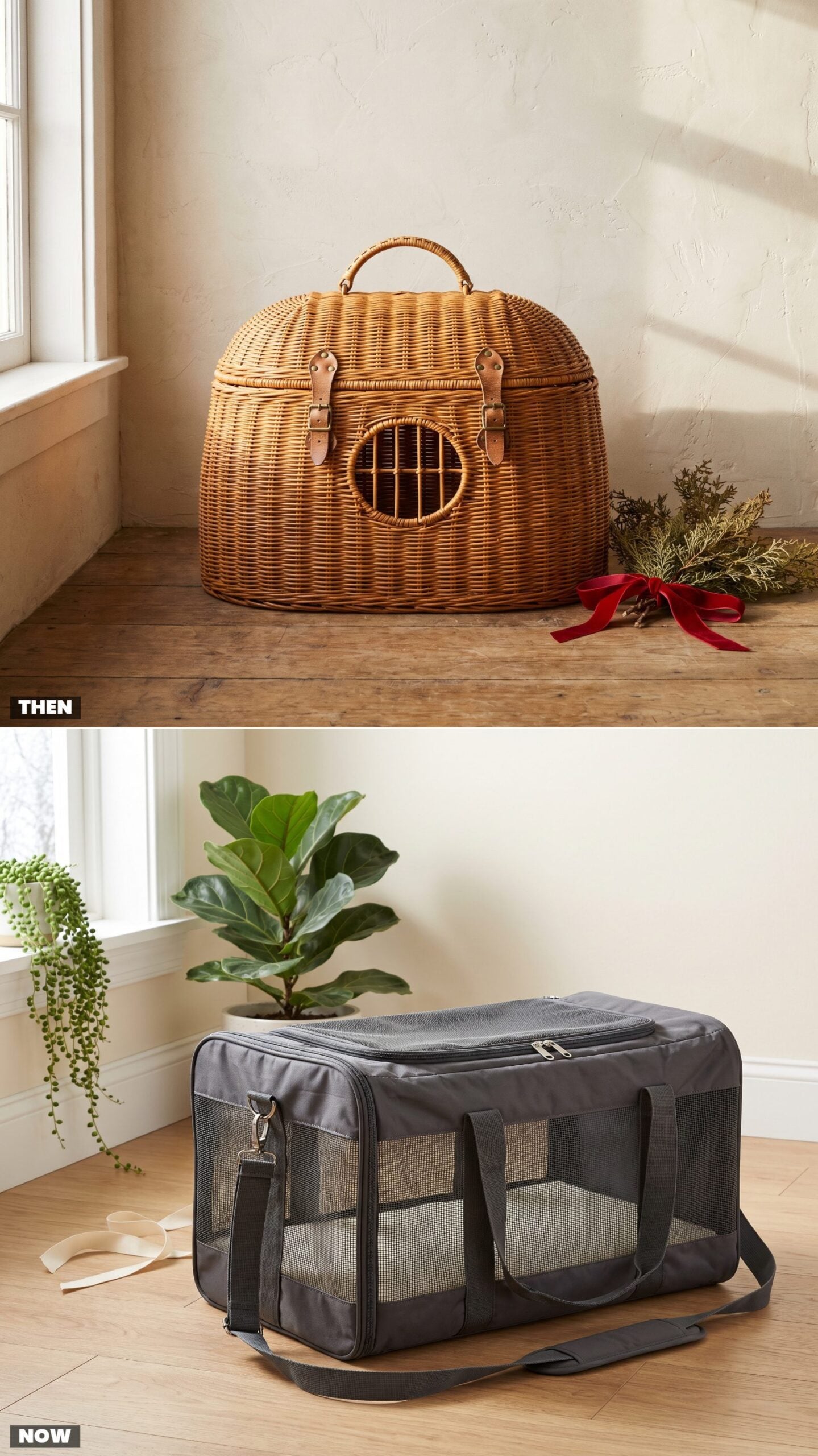
The wicker pet basket was equal parts charming and questionable. Woven honey-brown reeds, a hinged lid, a little barred window, leather straps with brass buckles. It looked like a picnic hamper that happened to hold a cat. Ventilation was whatever the weave allowed.
The airline-compliant soft carrier fits under the seat, breathes through mesh on all four sides, and has a fleece base so the trip isn’t miserable. It slides onto your suitcase handle. The wicker photographed better. The nylon is the one you actually want at 30,000 feet.
40. One Family Suitcase vs. A Cabin Bag Each
🔥 Would you like to save this?
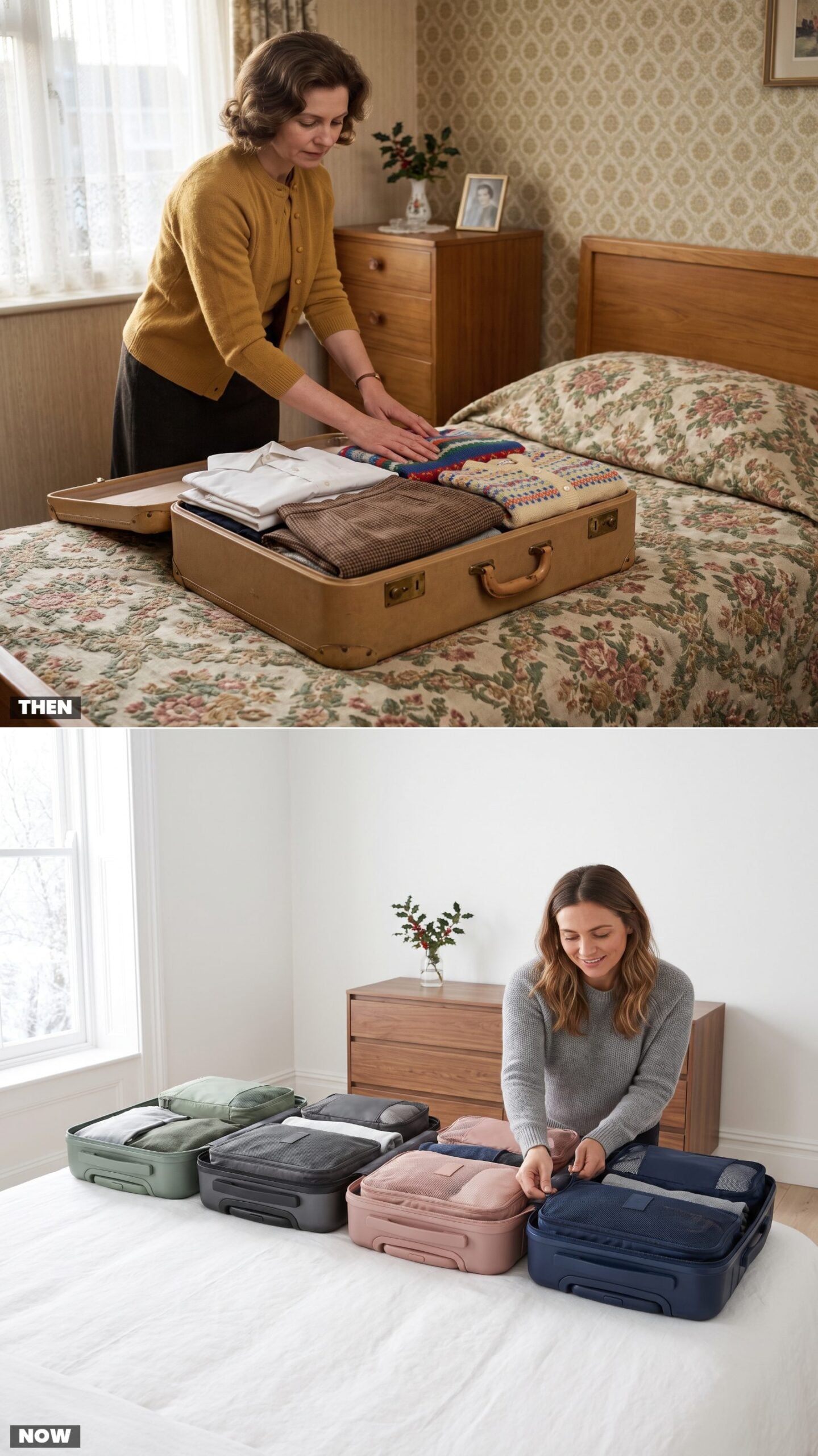
In 1965 the whole family fit into one suitcase, and nobody questioned it. Dad’s shirts, Mom’s good dress, two kids’ worth of Christmas outfits, all crammed into a single tan hardshell with brass latches that snapped shut like a verdict. Packing was a negotiation. Take up too much room with your socks and you heard about it.
Now everybody gets their own cabin bag. Separate zips, separate chaos, nobody fighting over the middle pocket. More civilized, sure — and also four bags to lose at the carousel instead of one.
39. The Strapped-On Blanket Roll vs. The Packable Travel Blanket
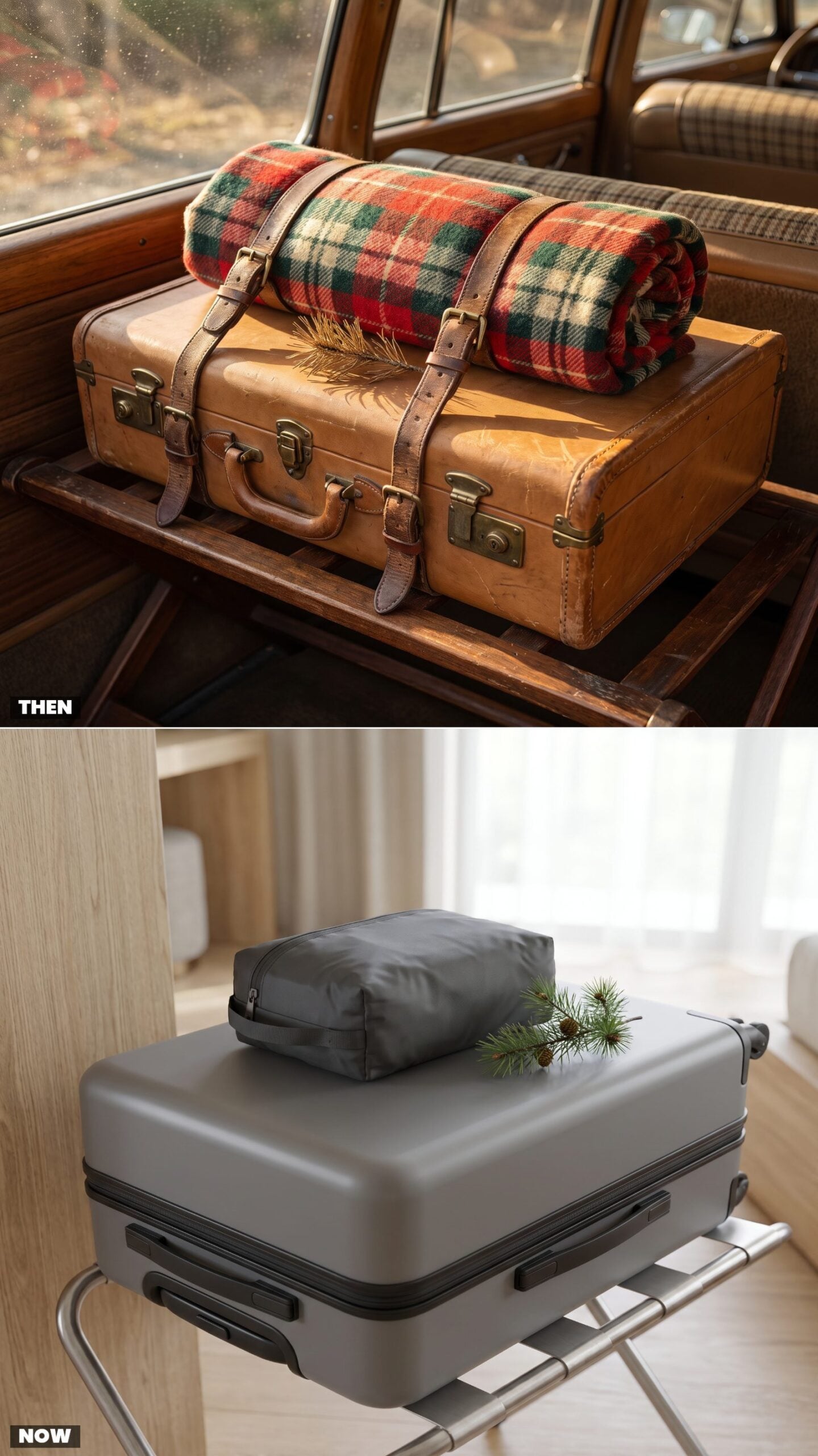
You strapped the blanket on the outside because it never fit inside. A fat tartan roll — wool, heavy, lashed to the top of the case with leather straps and brass buckles like you were provisioning an expedition. By the time you reached Grandma’s it smelled of car heater and had collected the family’s entire supply of loose crumbs.
Today the same warmth folds into a pouch the size of a sandwich. It vanishes into a side pocket and weighs nothing. Practical. But nothing ever smelled like home the way that old wool roll did.
38. Tissue-Paper Layering vs. Compression Packing Cubes
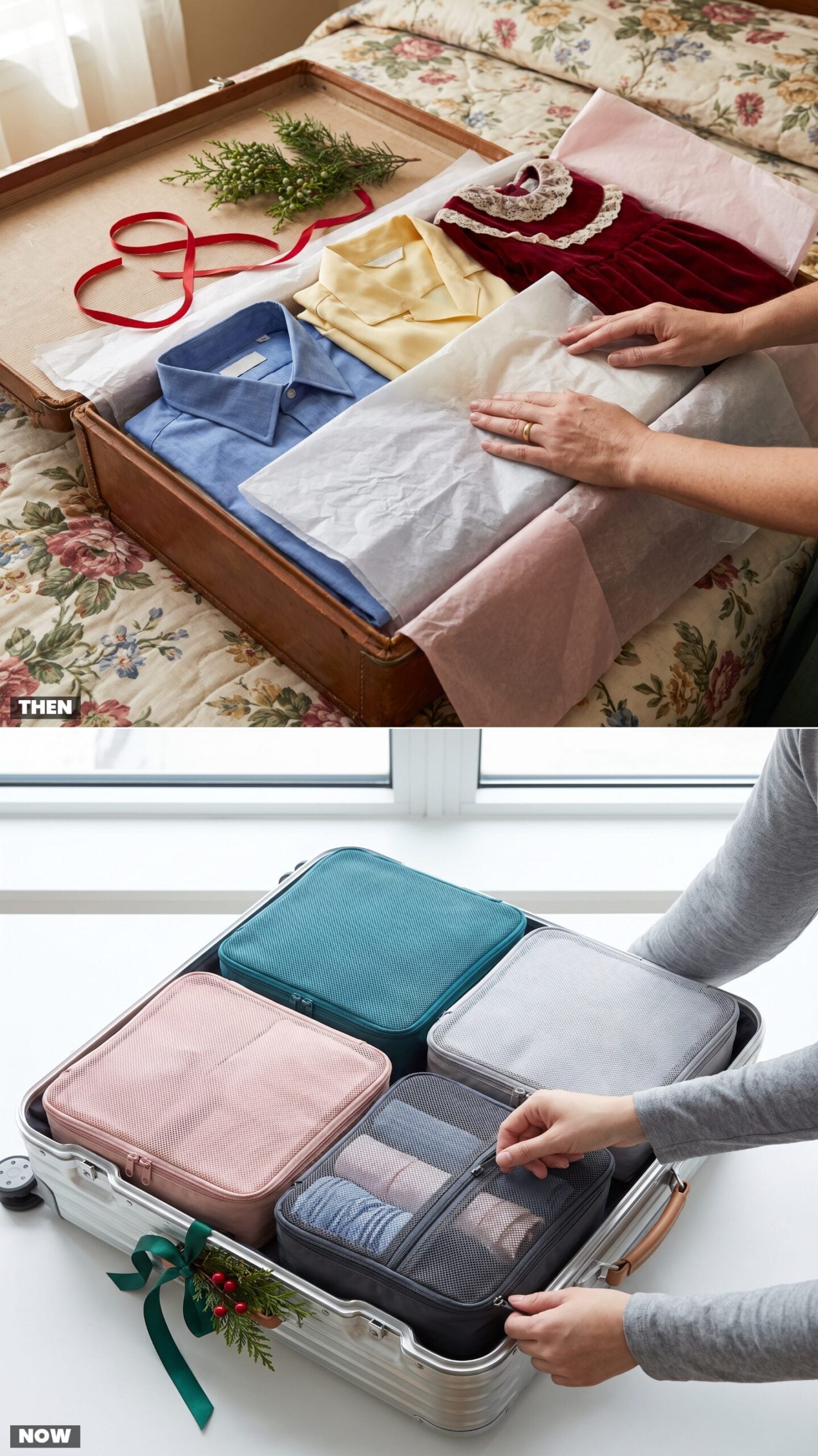
Tissue paper was the secret weapon of a woman who refused to arrive wrinkled. You layered it between every good garment, folded the sleeves over it, and the creases came out soft instead of sharp. Slow. It rustled. It worked.
Compression cubes handle the organizing now. Roll, zip, squeeze the air out, and four outfits shrink into the space one used to take. Faster and neater — and nobody’s unwrapping tissue like a Christmas present just to find a clean blouse.
37. Loose Shoes Around the Edges vs. Zippered Shoe Bags
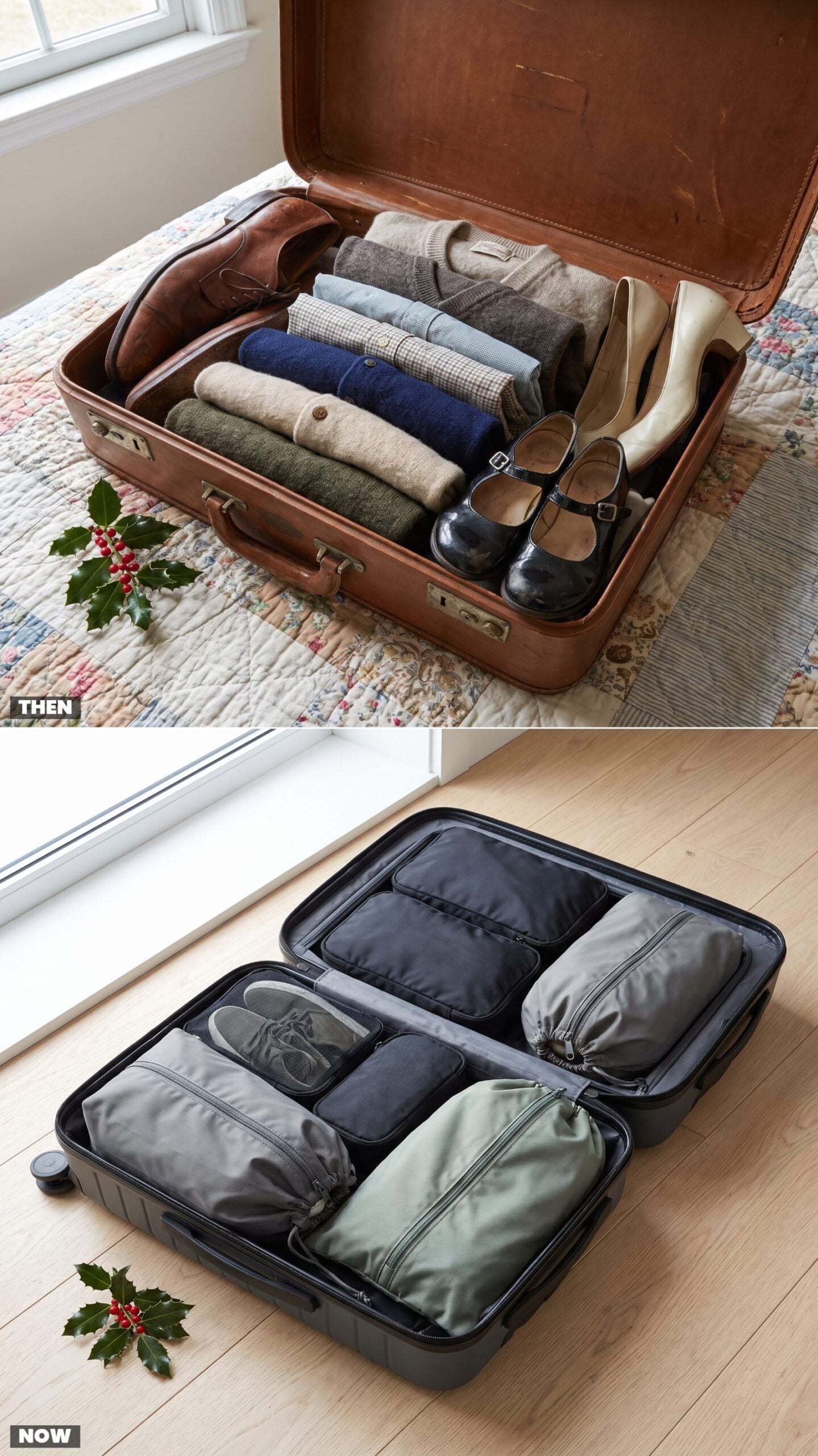
Shoes went wherever they’d fit — jammed into the corners, soles pressed against your clean clothes, the heel of a loafer leaving a mark on a white shirt you’d notice three days too late. Everybody did it. Everybody regretted it.
Zippered shoe bags ended that war. A thin drawstring pouch keeps the grime where it belongs and your sweater innocent. Small thing. Saves a lot of laundry.
36. Internal Cross Straps vs. The Zippered Compression Panel
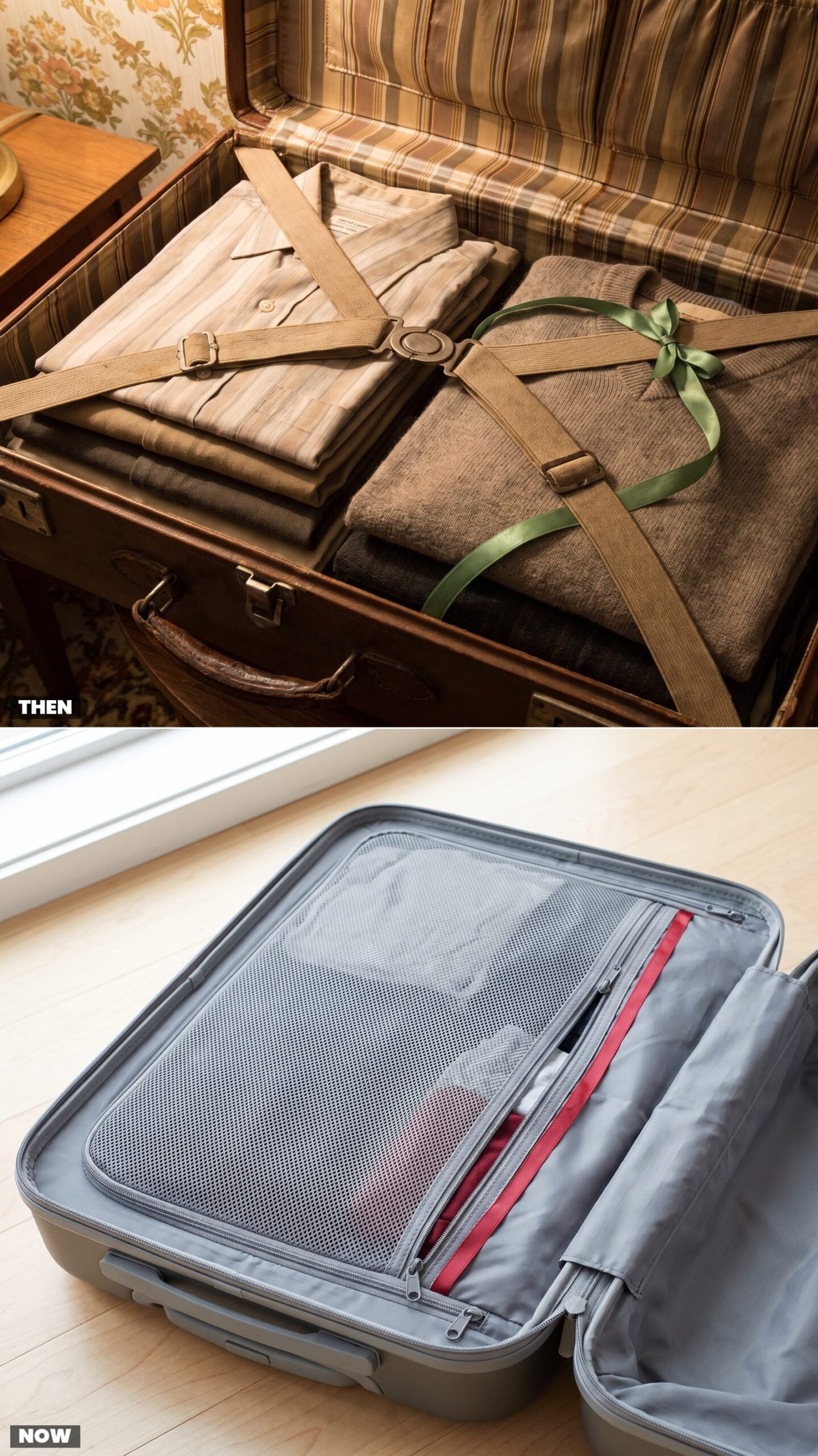
Every good case had the cross straps. Two elastic bands buckled over your folded clothes to stop the whole stack from sliding into a heap the moment the porter tipped the case sideways. You cinched them tight and felt organized — even when they left a crease right down the middle of everything.
The modern version is a zippered compression panel. Flatten the load, pull the zip, and the whole pile presses down an inch or two. More room, no diagonal crease lines across your trousers. We’ll admit we miss the satisfying buckle click, though.
35. Glass Bottles in Washcloths vs. Refillable Silicone Bottles
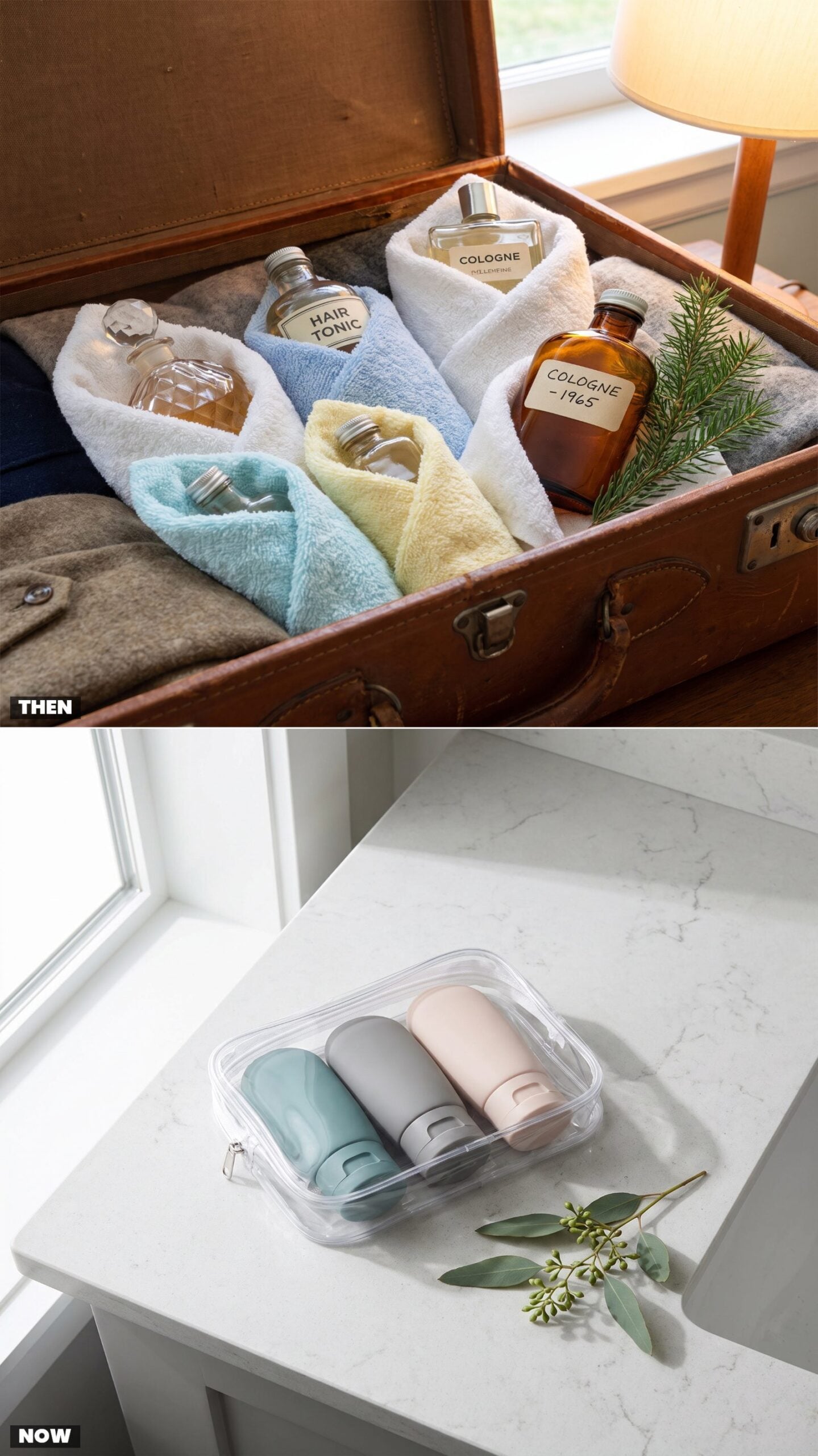
Perfume came in glass, and glass broke, so you swaddled every bottle in a washcloth like it was made of eggshell. Perfume, tonic, cologne — each one wrapped and wedged tight, and you still held your breath cracking the case open, praying you hadn’t packed a disaster that smelled wonderful and ruined three outfits.
Silicone bottles solved the whole anxiety. Squeeze what you need into a soft flip-cap, zip the pouch, and nothing shatters or leaks. The suitcase stops being a liability. A boring upgrade, but a genuinely great one.
34. The Full Cosmetics Collection vs. The Checkpoint Liquids Kit
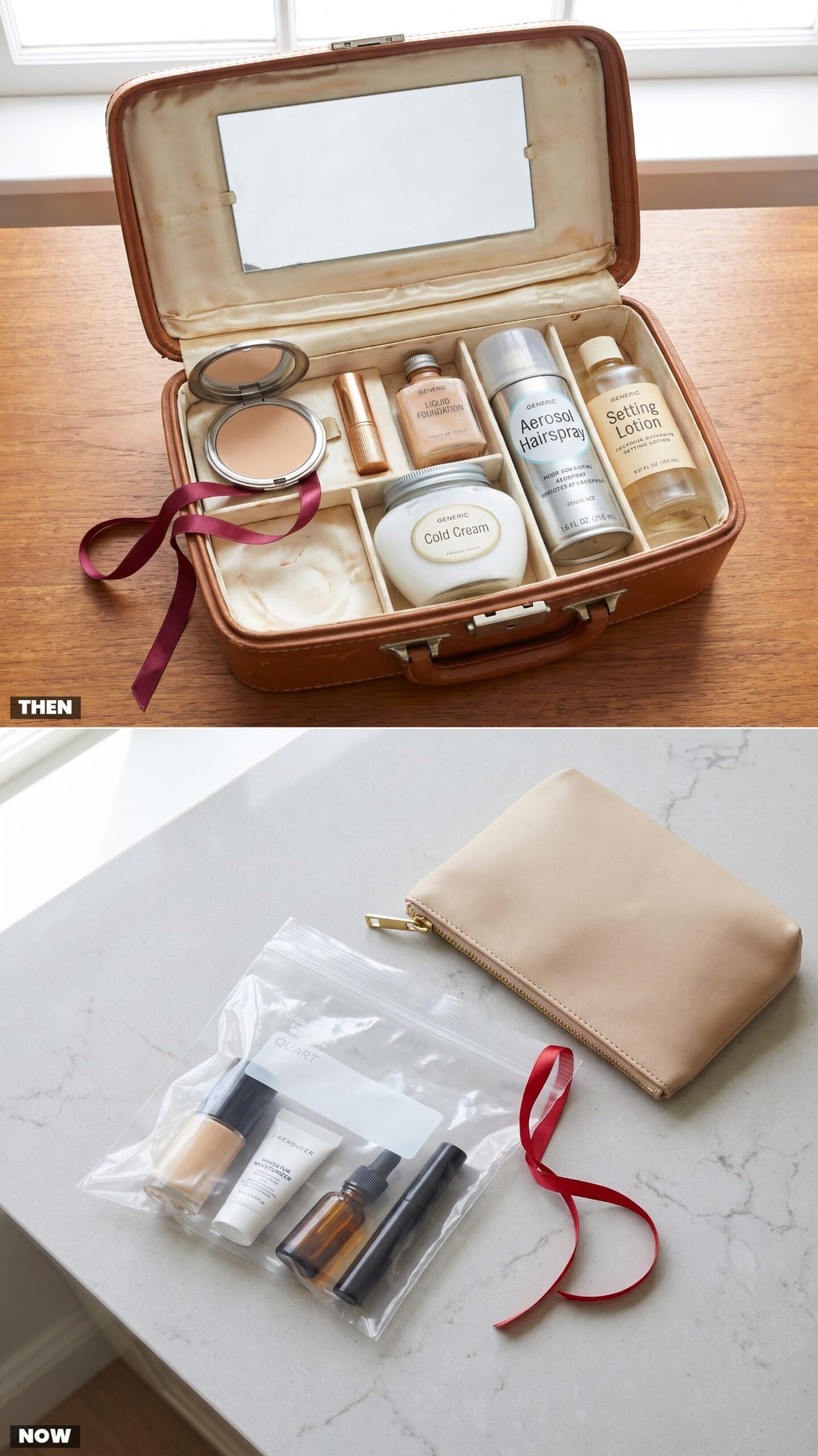
A woman packed her entire dressing table and no airline told her she couldn’t. Full-size foundation, a jar of cold cream, setting lotion, a pressed-powder compact in its fitted velvet slot. That train case was a small cathedral of glass and chrome, and every bottle came along at full strength.
Then the liquids rule arrived and demoted the whole collection to a quart-size zip bag. Everything under 100ml, laid flat, held up to the checkpoint light. You pack decants now. You learn to travel on a thimble of everything.
33. Bar Soap in a Metal Tin vs. Solid Travel Toiletries
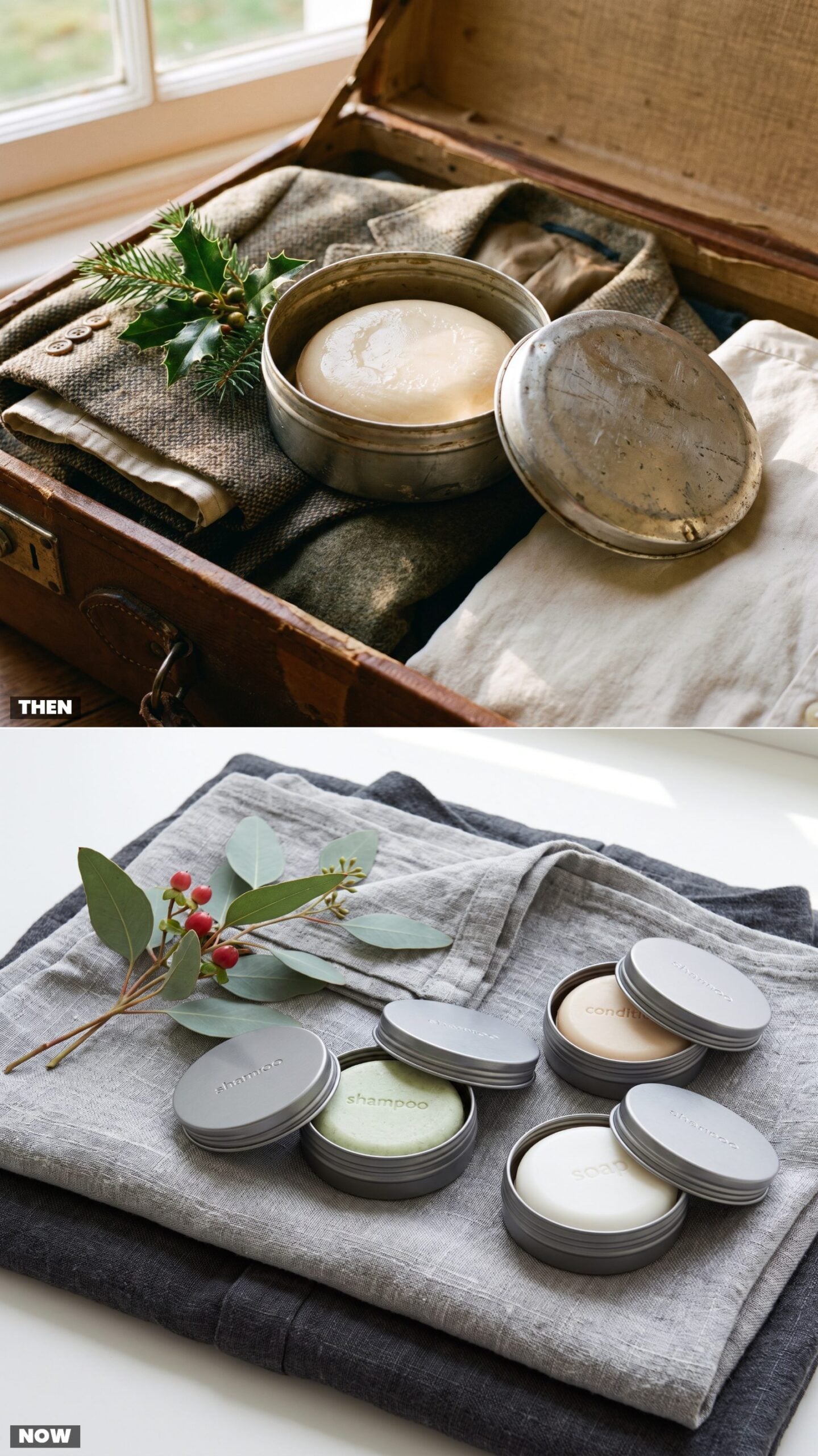
The bar of soap traveled in a metal tin — usually a little damp, usually a little tarnished, with that soft sucking sound when you pried the lid off. It leaked faintly and smelled of whatever bathroom it came from. Every family had one.
Solid toiletries made the whole idea respectable again. Shampoo bars, conditioner bars, soap bars. No liquids rule to worry about, no leaks, no checkpoint bag. The tin came back, just drier and smarter this time.
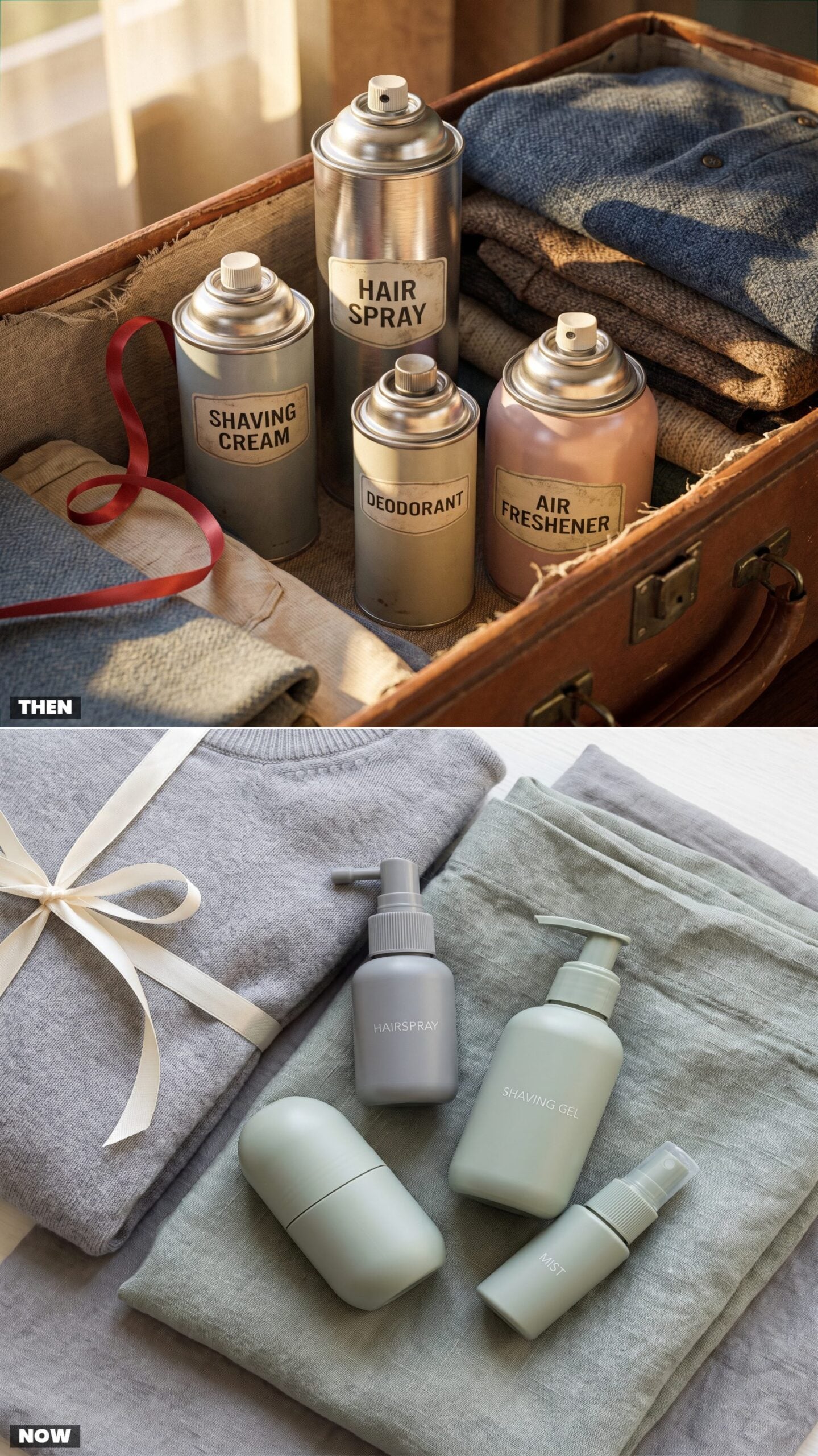
32. Aerosol Everything vs. Compact Pump Bottles
🔥 Would you like to save this?
The grooming shelf in 1965 was a battery of aerosol cans — hairspray, shaving cream, deodorant, all chrome and hiss and that cold metal rattle at the bottom. They were heavy and pressurized, and half of them wouldn’t survive an airport today without a stern conversation.
Compact pump bottles took over. Lighter, no propellant, allowed through security, and they don’t explode in a hot car trunk. Safer, obviously. Also a lot quieter. There was a drama to that aerosol hiss that a gentle pump just can’t match.
31. Metal Hair Rollers in a Train Case vs. One Cordless Styling Tool
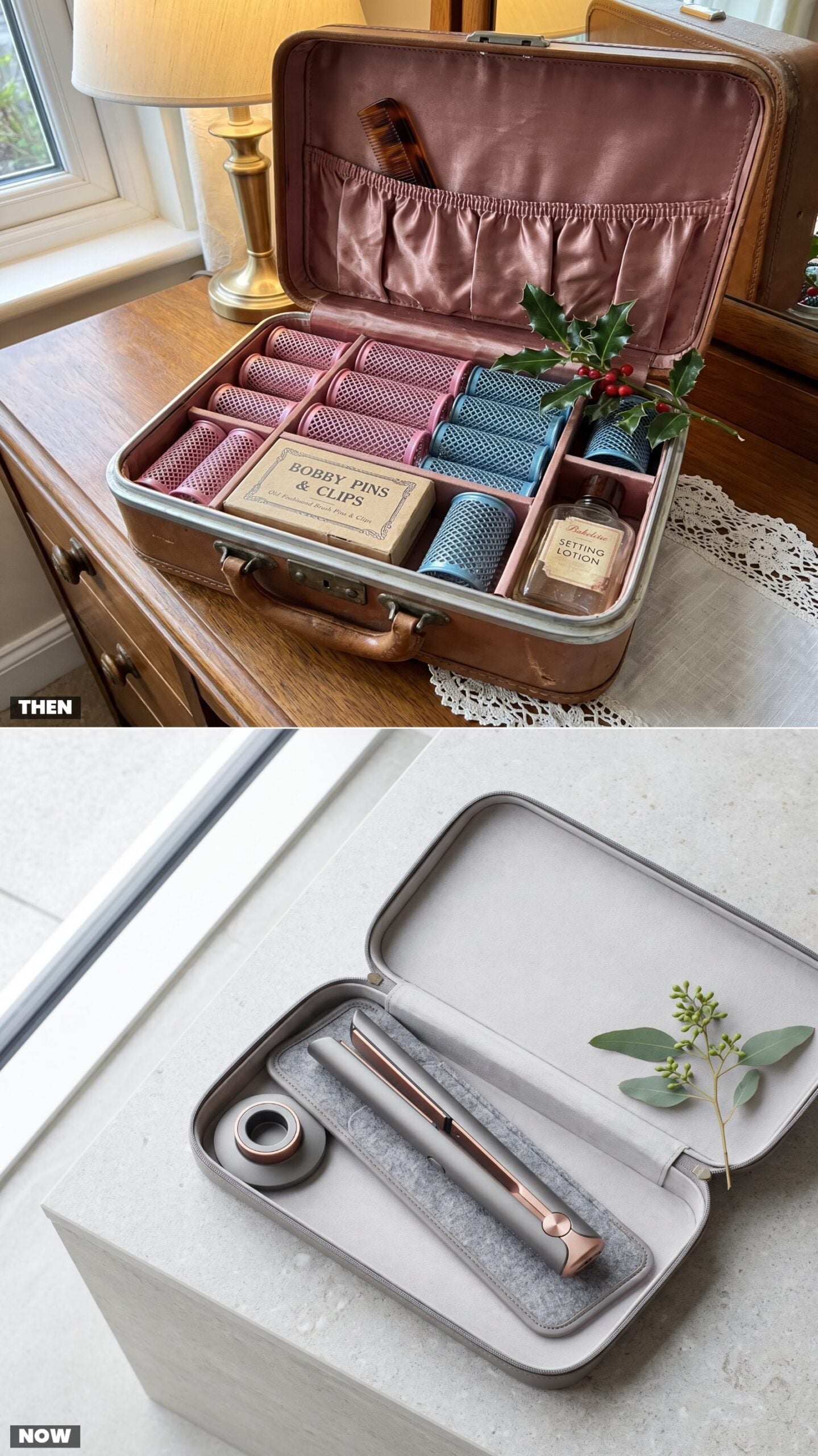
Setting your hair for the holidays once required luggage of its own. A train case packed wall to wall with metal mesh rollers in three sizes, a tin of bobby pins, a bottle of setting lotion, and the patience to sleep on all of it the night before. You arrived with a style that had taken real logistics.
Now one cordless wand does the lot. Charge it, wave it, done — and the whole train case collapses into a single tool that slips into a side pocket. The result is faster. The ritual is gone, and if we’re honest, we miss the clatter of rollers tipping out onto a hotel bathroom shelf.
30. The Full-Size Hair Dryer vs. the Dual-Voltage Folding Dryer
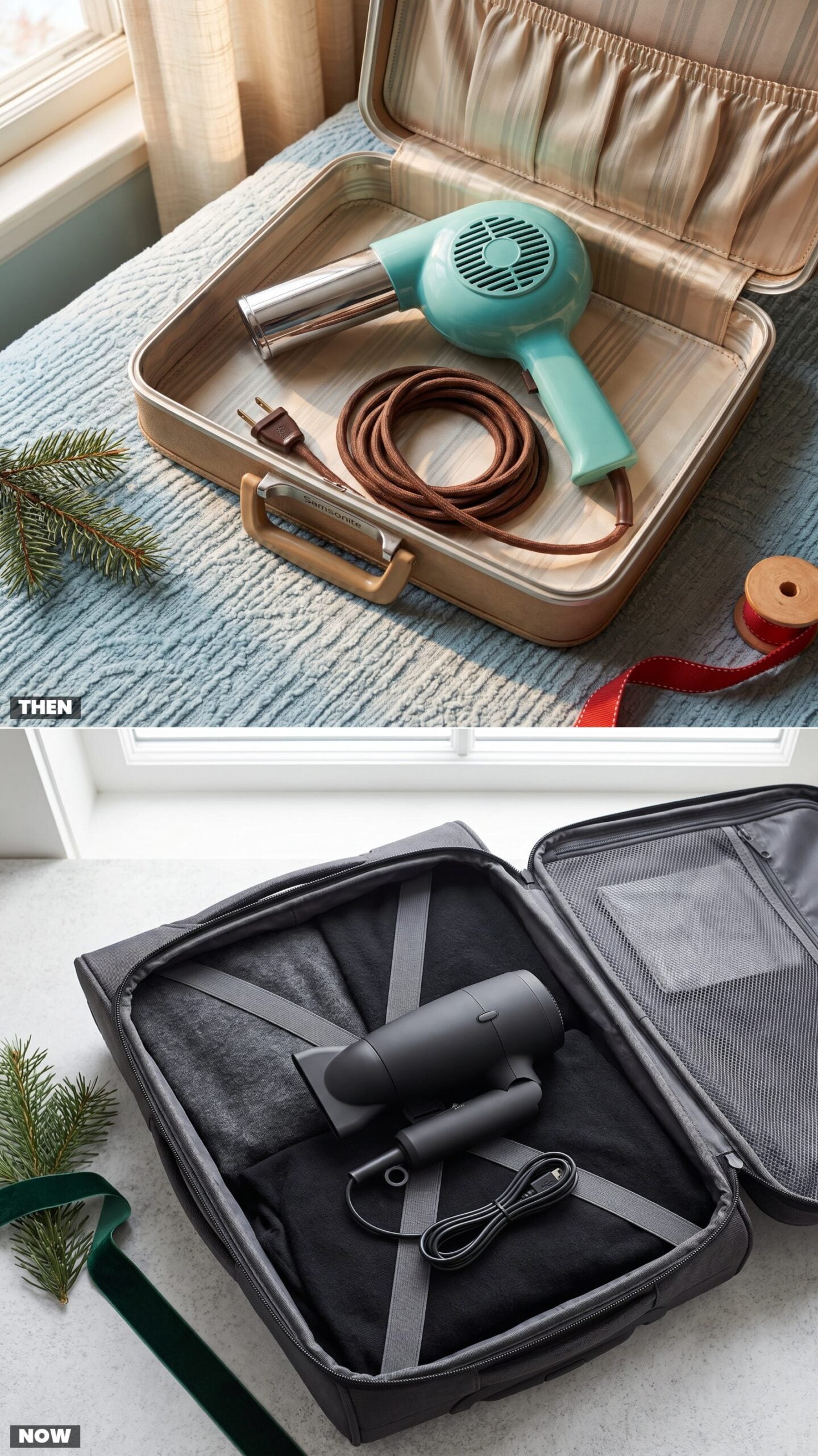
In 1965 the dryer that went on holiday was the same beast that lived on your bathroom shelf — a full pound of turquoise plastic and chrome, a cloth cord that never coiled right, and a plug that only ever matched American sockets. It ate half a suitcase and still only did one thing.
The modern version folds at the handle, weighs less than a paperback, and flips between voltages so Grandma’s house in London works the same as Grandma’s house in Ohio. Slot it down the side of a charcoal soft-shell carry-on and forget it’s there.
29. The Fixed-Plug Electric Shaver vs. the USB-Rechargeable One
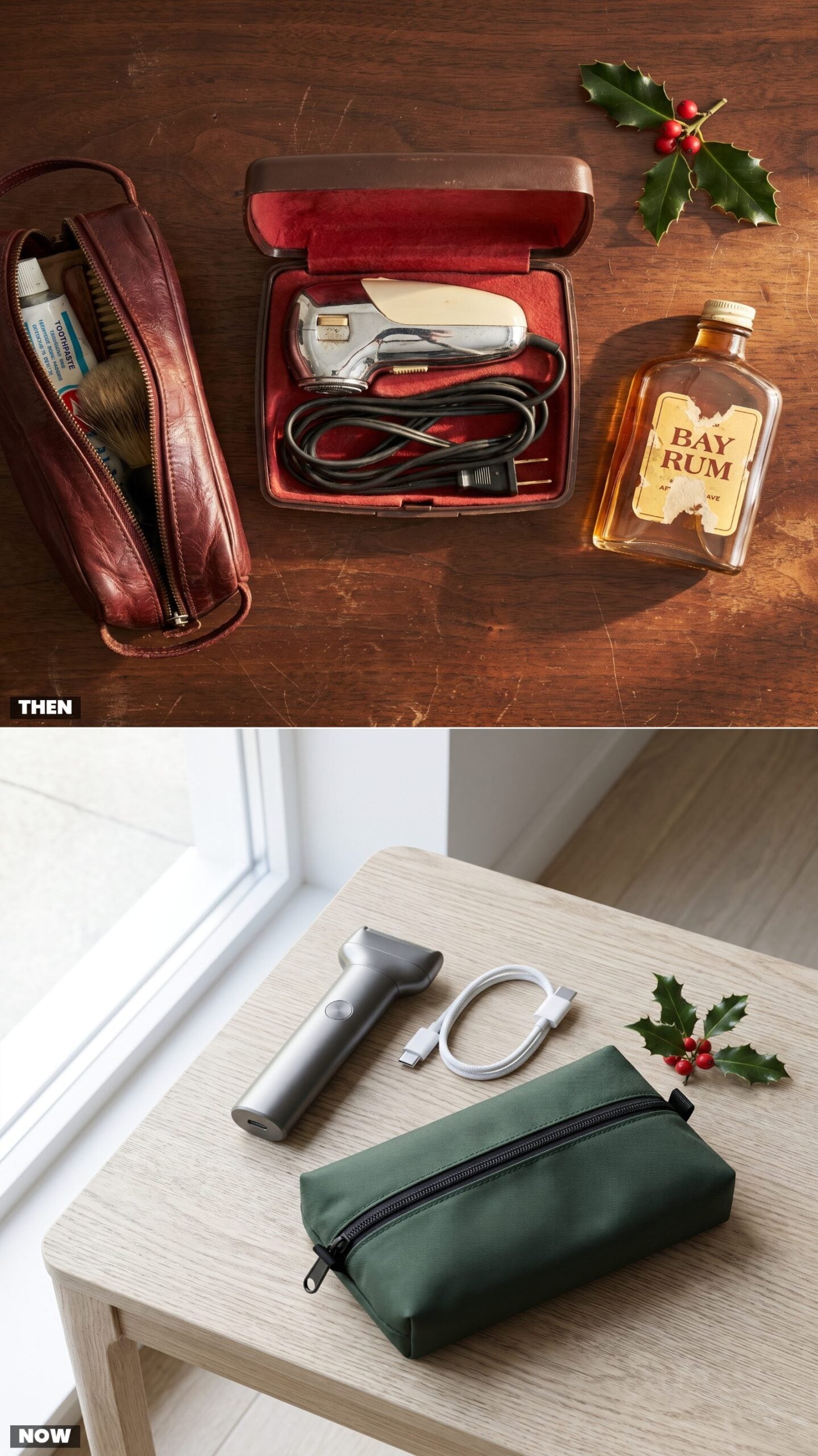
The 1965 traveling shaver was tethered for life. That stiff black cord meant you were hunting for an outlet near a mirror, and if the hotel ran a different current you simply went scruffy until you got home. The case weighed more than the thing it carried.
Today? You charge it off the same cable as your phone, get weeks of runtime, and run it under a tap without a second thought. One cable, one pouch, done.
28. The Bulky Wool Coat vs. the Packable Insulated Jacket
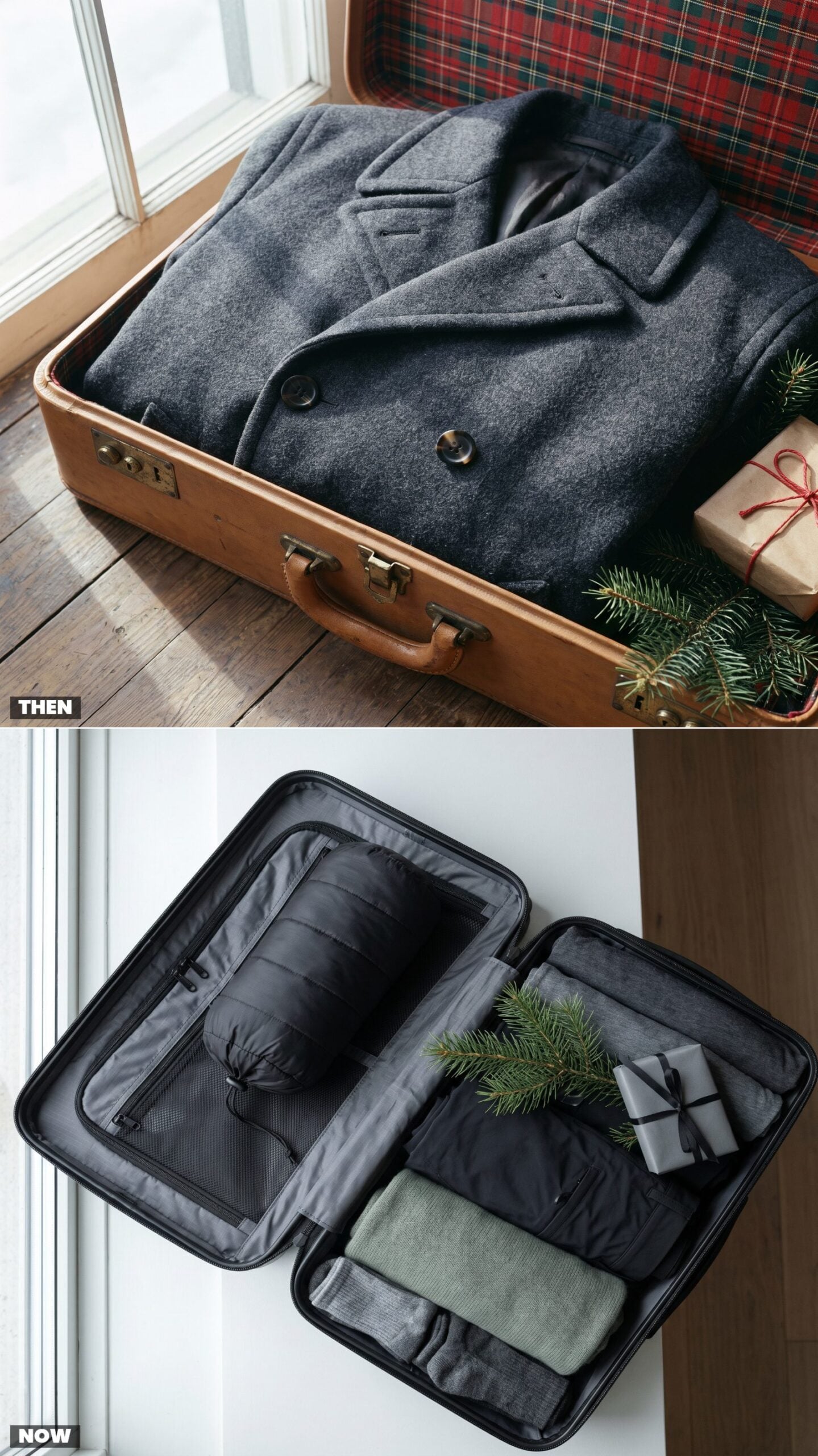
A wool overcoat didn’t pack so much as colonize. Spread it flat and it swallowed the whole suitcase, which is why so many 1965 travelers simply wore theirs onto the train and sweated it out in overheated carriages while the snow piled up outside.
The black packable insulated jacket stuffs into a sack the size of a loaf of bread, keeps you warmer, and gives back three-quarters of your case. Progress you can feel in your shoulders.
27. The Flat-Folded Suit vs. the Wrinkle-Resistant Capsule
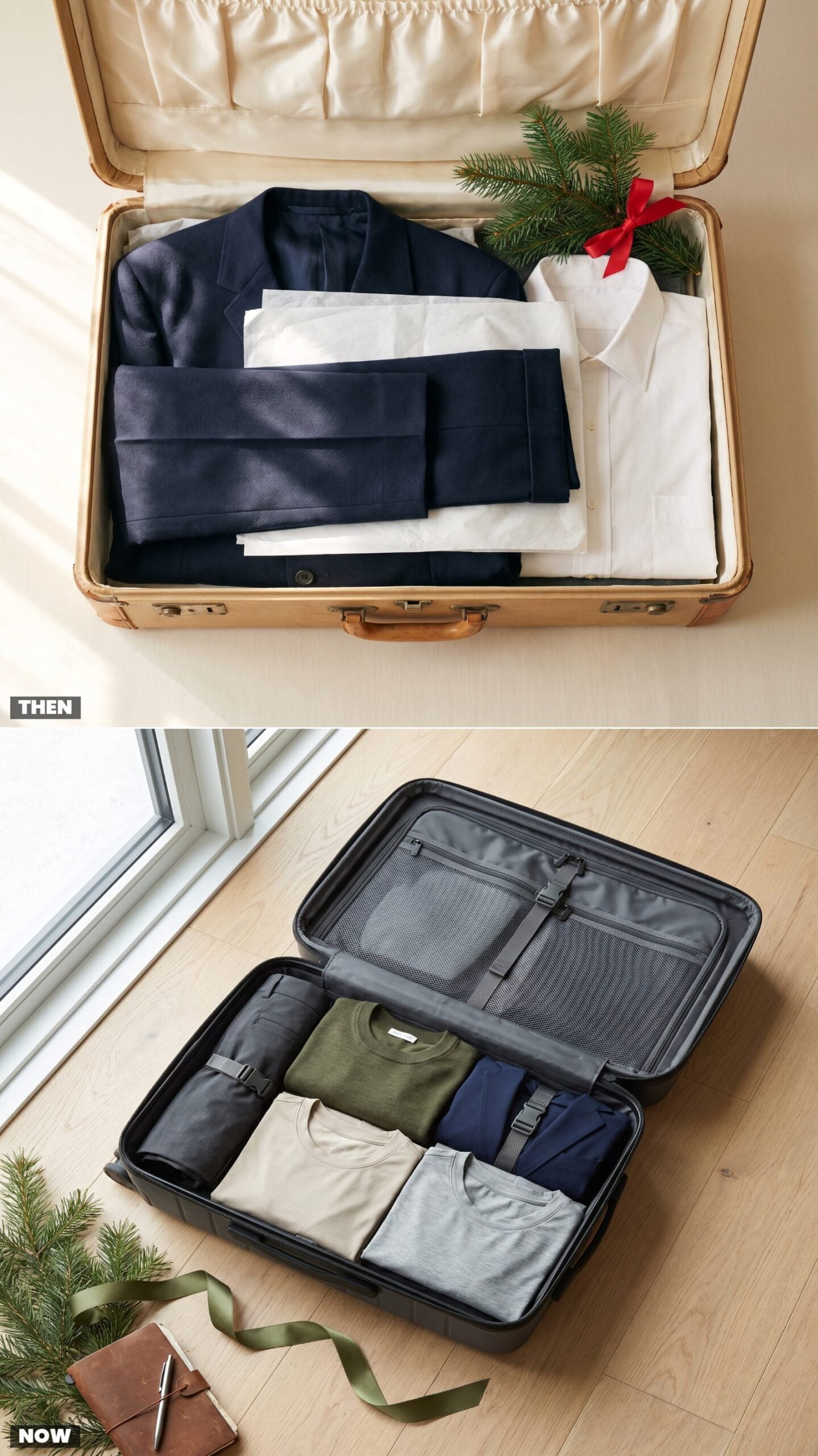
Folding a suit flat in 1965 was a small act of faith. You layered it with tissue, prayed over the knee crease, and arrived at the family dinner looking like you’d slept standing up. The only real fix was a hotel that pressed overnight.
The modern answer skips the single precious suit entirely. A capsule of a few interchangeable pieces does three outfits out of five items, bounces back from a tight bag, and never needs an iron you don’t have.
The best travel suit in 1965 was the one you didn’t pack. Today it’s the one that doesn’t wrinkle.
26. A Pair of Dress Shoes for Every Outfit vs. One Versatile Pair
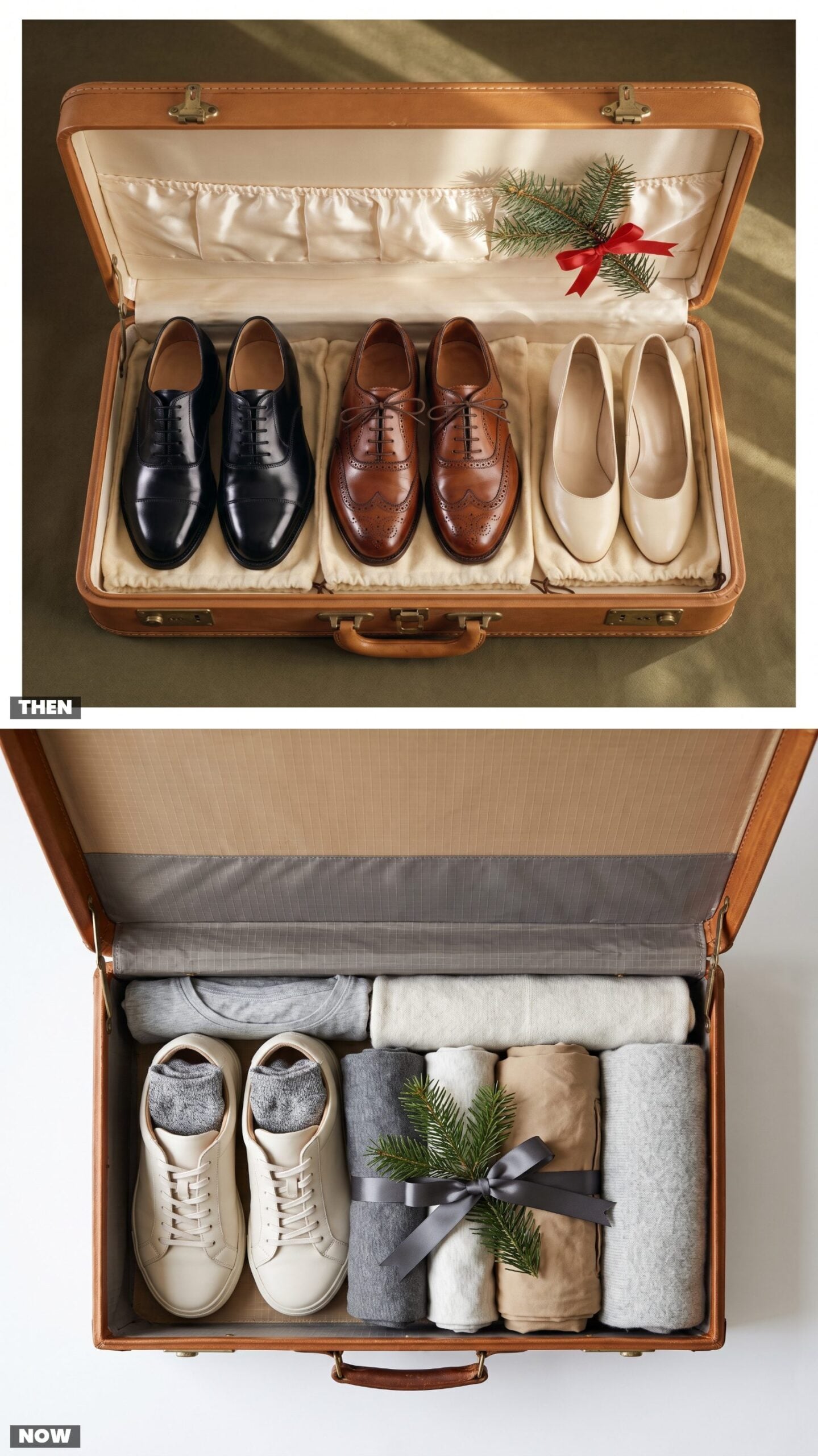
Shoes were the quiet luggage tyrant. In 1965 you packed a pair for dinner, a pair for walking, and a pair for church, each in its little cloth bag, and between them they claimed half your case before a single sweater went in.
Now one well-made pair of neutral leather travel sneakers reads smart enough for dinner and comfortable enough for a cathedral floor. Stuff your socks inside them and carry on.
25. Rubber Galoshes for Snow vs. Waterproof Boots Worn Aboard
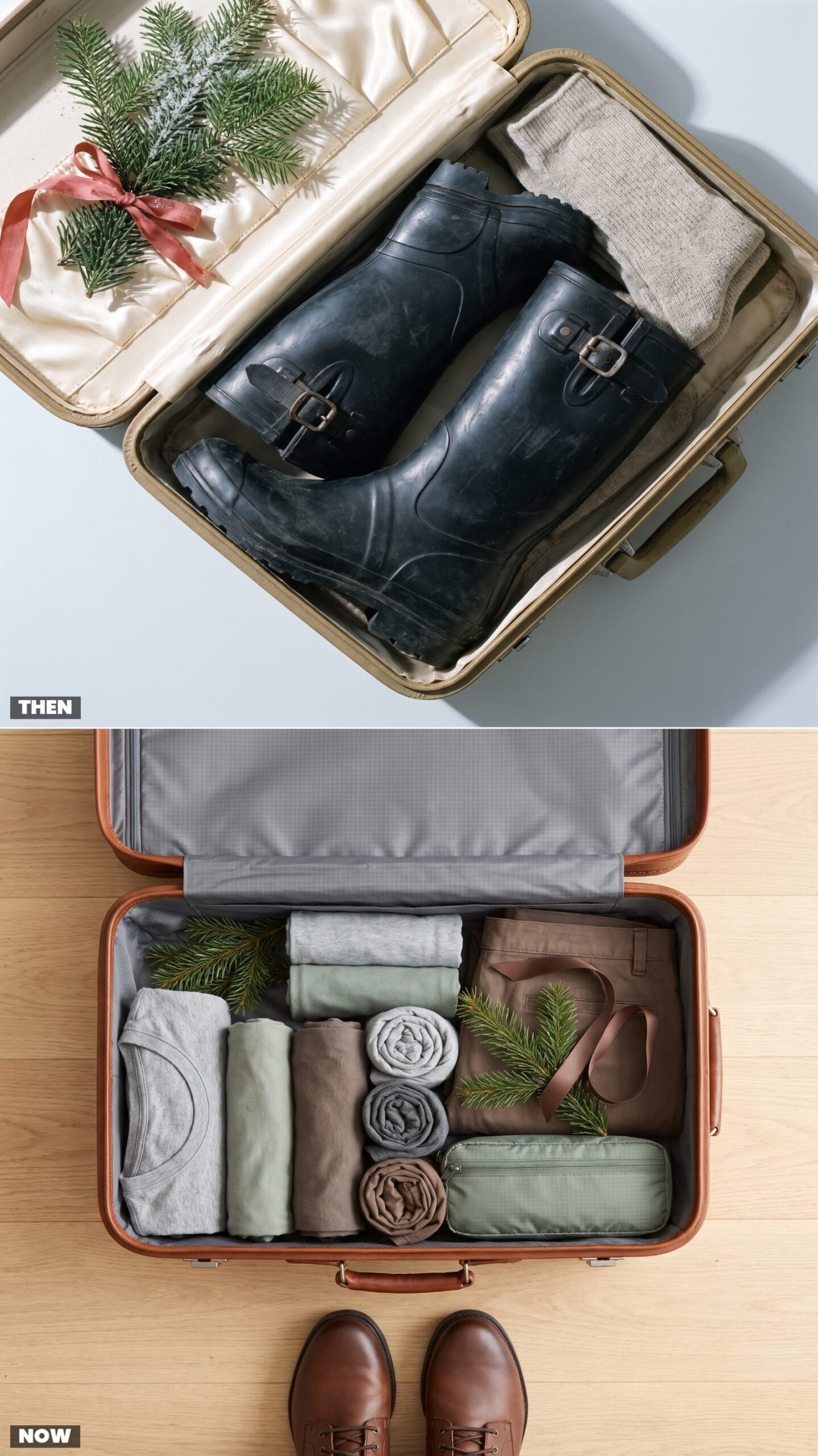
Galoshes were the heaviest thing in the house that nobody wanted to wear. You buckled these clammy rubber overshoes on at the door, then packed the dripping things in the suitcase for the trip home, where they left everything smelling faintly of a flooded basement.
These days you just wear your waterproof leather travel boots onto the plane. They handle slush, pass for presentable at dinner, and save the suitcase for things you’d actually want to unpack.
24. The Shared Family Toiletry Case vs. Individual Organizer Pouches
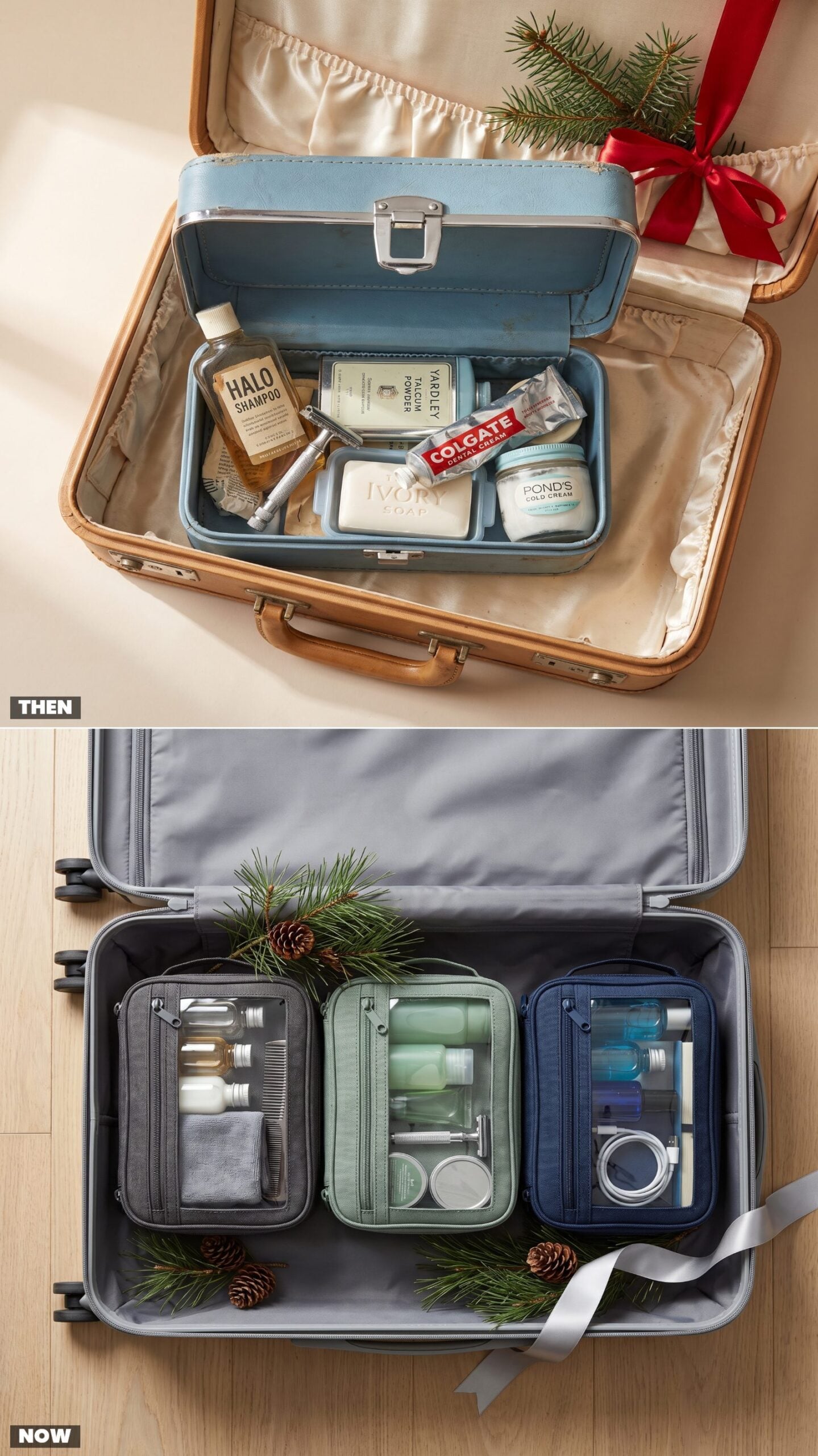
One case, one family, one simmering morning argument. The 1965 toiletry kit pooled everyone’s shampoo, razor, and talcum into a single powder-blue vinyl box, and whoever got to it first held the whole bathroom hostage.
The modern fix is quiet and civilized. Each traveler carries their own zip pouch, packs it the way they like, and nobody goes digging through a stranger’s cold cream to find their toothbrush. Small change. Enormous peace.
23. The Cardboard Gift Box Tied to the Suitcase vs. the Zippered Gift Tote
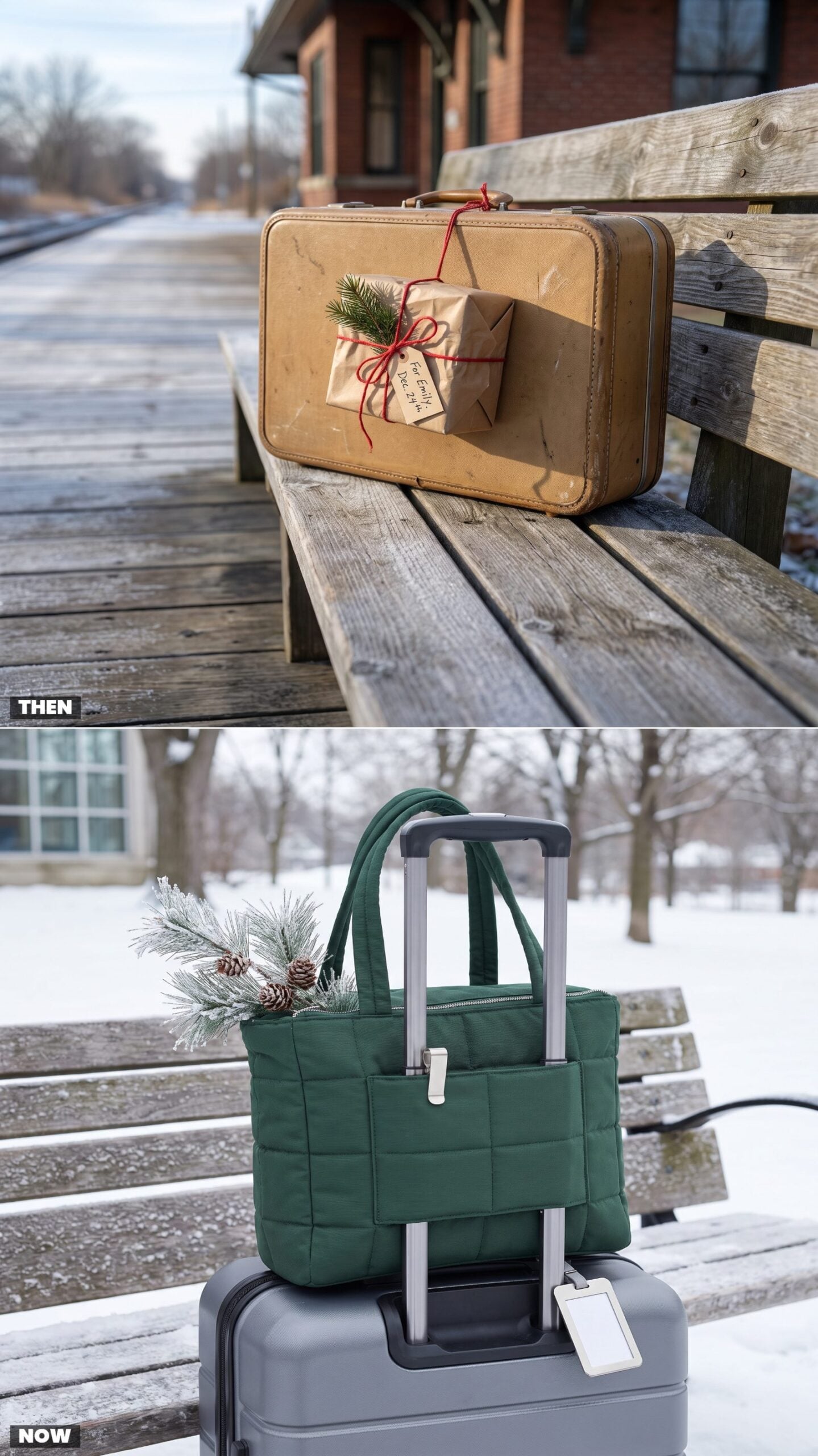
You’ve seen the old photos. A suitcase with a brown paper box lashed to the handle by string, a paper tag flapping in the cold. That was how 1965 carried presents, and that was why so many arrived with a crushed corner and a bow that had surrendered somewhere around the second train change.
The quilted green gift tote zips shut, clips to the handle, and keeps the ribbons intact. The gift still arrives wrapped. It just doesn’t arrive wounded.
22. Wrapped Presents Packed Among Clothes vs. Gifts Shipped Ahead
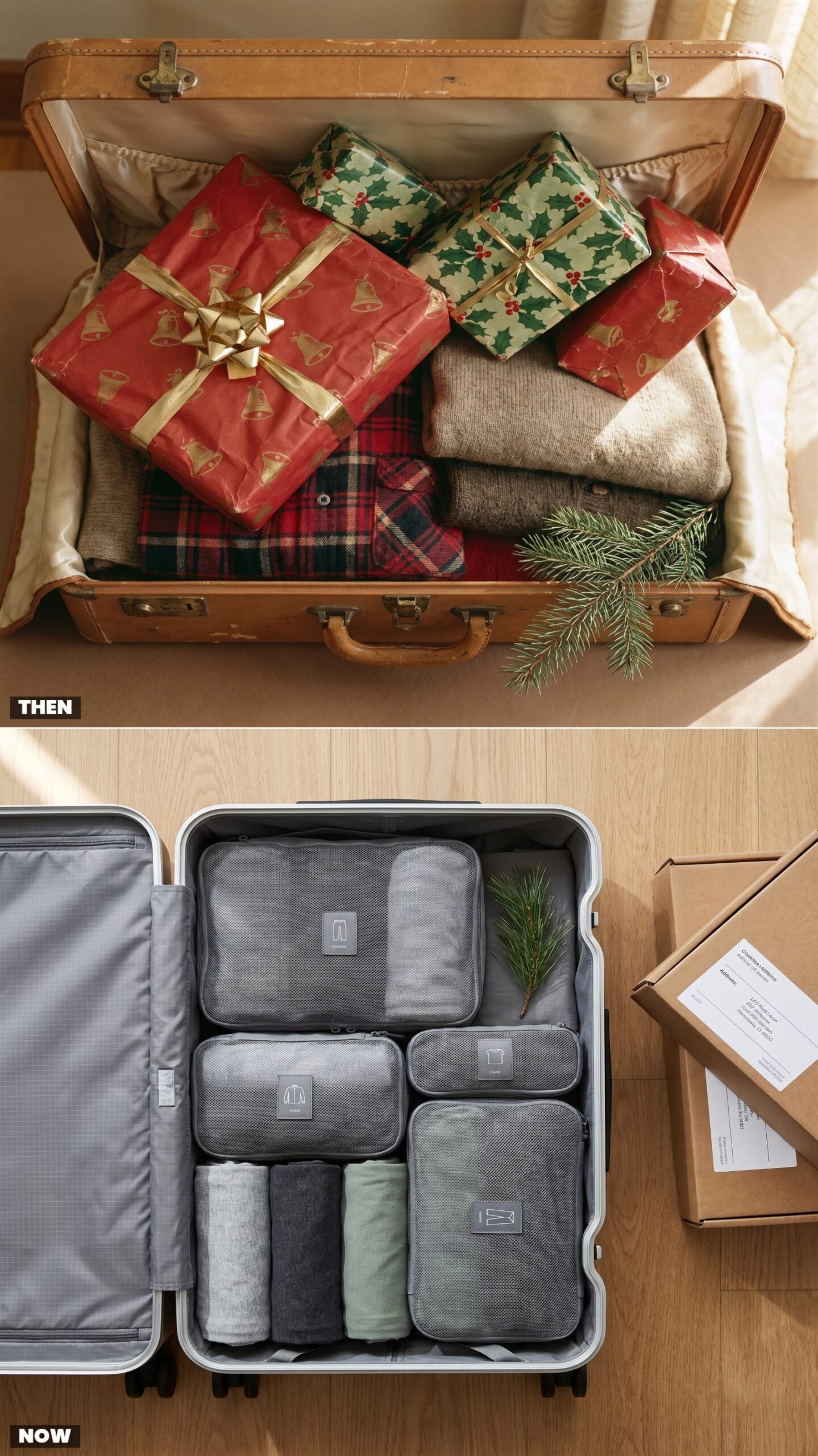
Packing wrapped gifts among the sweaters was a 1965 gamble nobody admitted was a gamble. The boxes dented, the bows flattened, and a curious conductor could undo a whole afternoon of wrapping with one unzip.
The smart move now is to not carry them at all. Ship the presents ahead, let the carrier worry about the dents, and arrive with a suitcase full of only your own clothes. You travel lighter, and the gifts show up looking better than anything that ever survived a luggage hold.
21. Glass Ornaments in Newspaper vs. the Molded Ornament Organizer
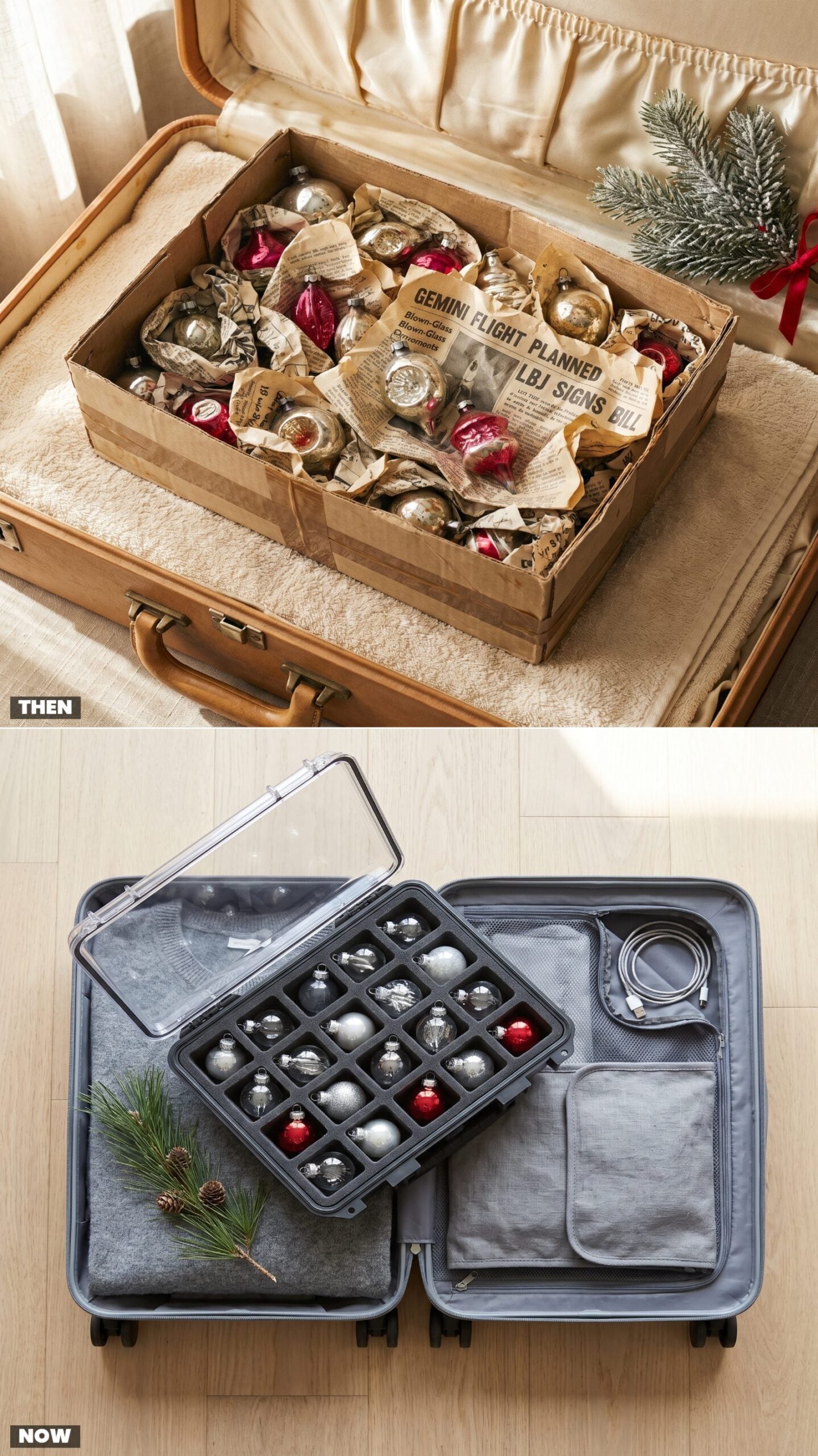
Every family had the ornament box, and every family had the one casualty. In 1965 you wrapped the blown-glass baubles in yesterday’s newspaper, packed them tight, and still opened the box at Grandma’s to find a silver one in pieces and a headline about the Gemini launch stuck to the shards.
The molded organizer solved it for good. Each ornament gets its own padded slot, the lid snaps down, and the whole heirloom collection rides out the trip in a grid of foam that doesn’t care how the bag gets handled.
20. Homemade Fruitcake in a Tin vs. the Vacuum-Sealed Food Gift
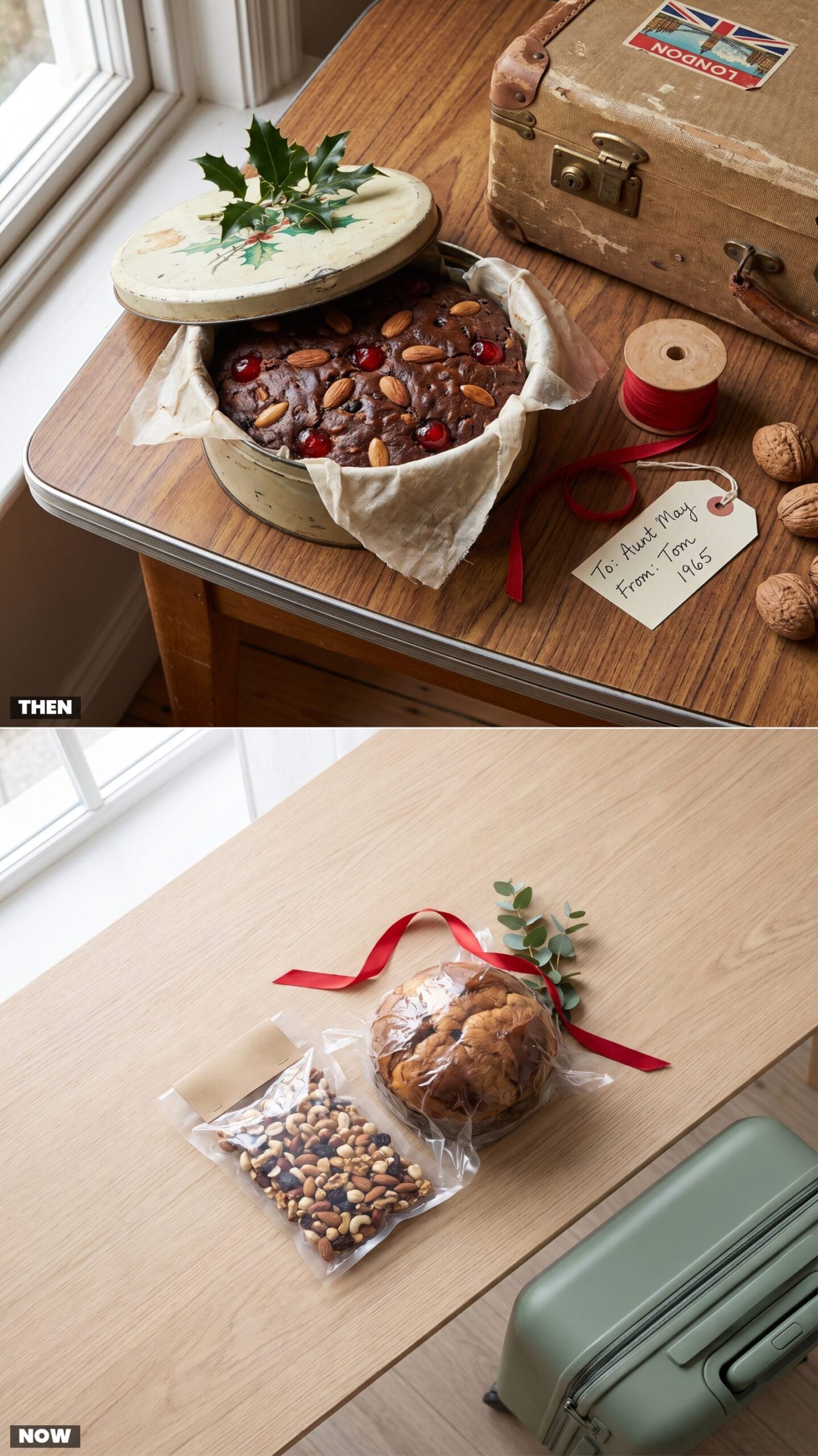
A 1965 fruitcake arrived in a tin that had already weathered a decade of Christmases. Somebody baked it in October, fed it brandy every week, then swaddled it in muslin and prayed the brass suitcase latches held through the whole trip. By the time it reached the relatives, the entire case smelled faintly of booze and almonds.
Now the edible gift travels naked and perfect — vacuum-sealed, oxygen-free, flattened into a glossy brick that survives the hold without a crumb out of place. Cleaner, sure. But a plastic pouch has never once made a suitcase smell like Christmas.
19. Holiday Spirits Nestled Between Sweaters vs. the Protective Bottle Sleeve
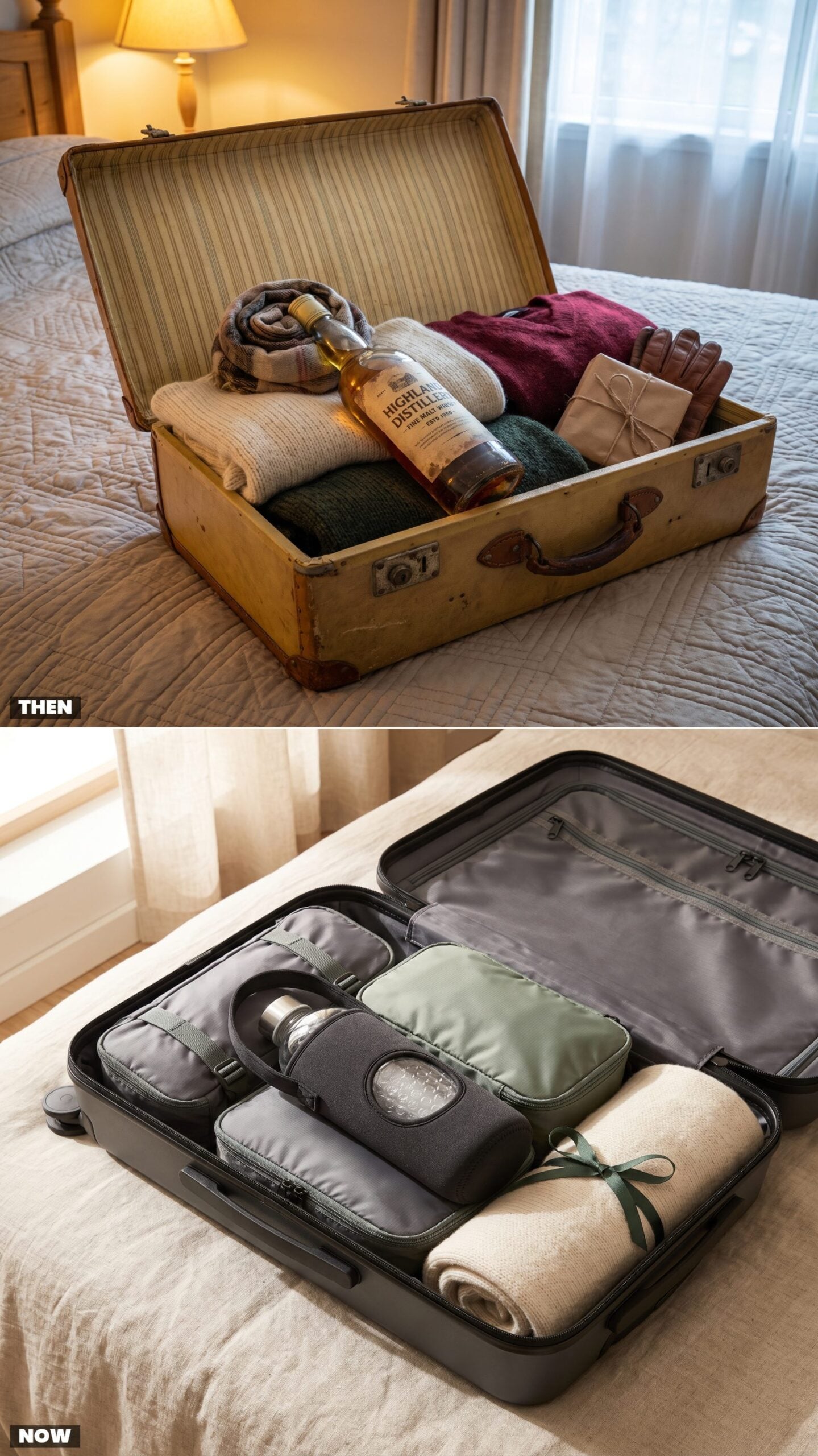
The trick in 1965 was geometry. You buried the bottle dead center, packed sweaters on all six sides, and hoped the baggage handlers were gentle men. Anyone who ever tried it knows the specific dread of opening a case to that damp wool smell — the one that tells you the sherry didn’t make it.
The modern fix is a padded neoprene sleeve, zipped, leak-sealed, often lined with something absorbent just in case. Weighs nothing, ends the gamble entirely. Smart. Also a little joyless. There was a strange thrill to packing a bottle like contraband.
18. Christmas China Wrapped in Towels vs. the Purpose-Built Padded Dish Case
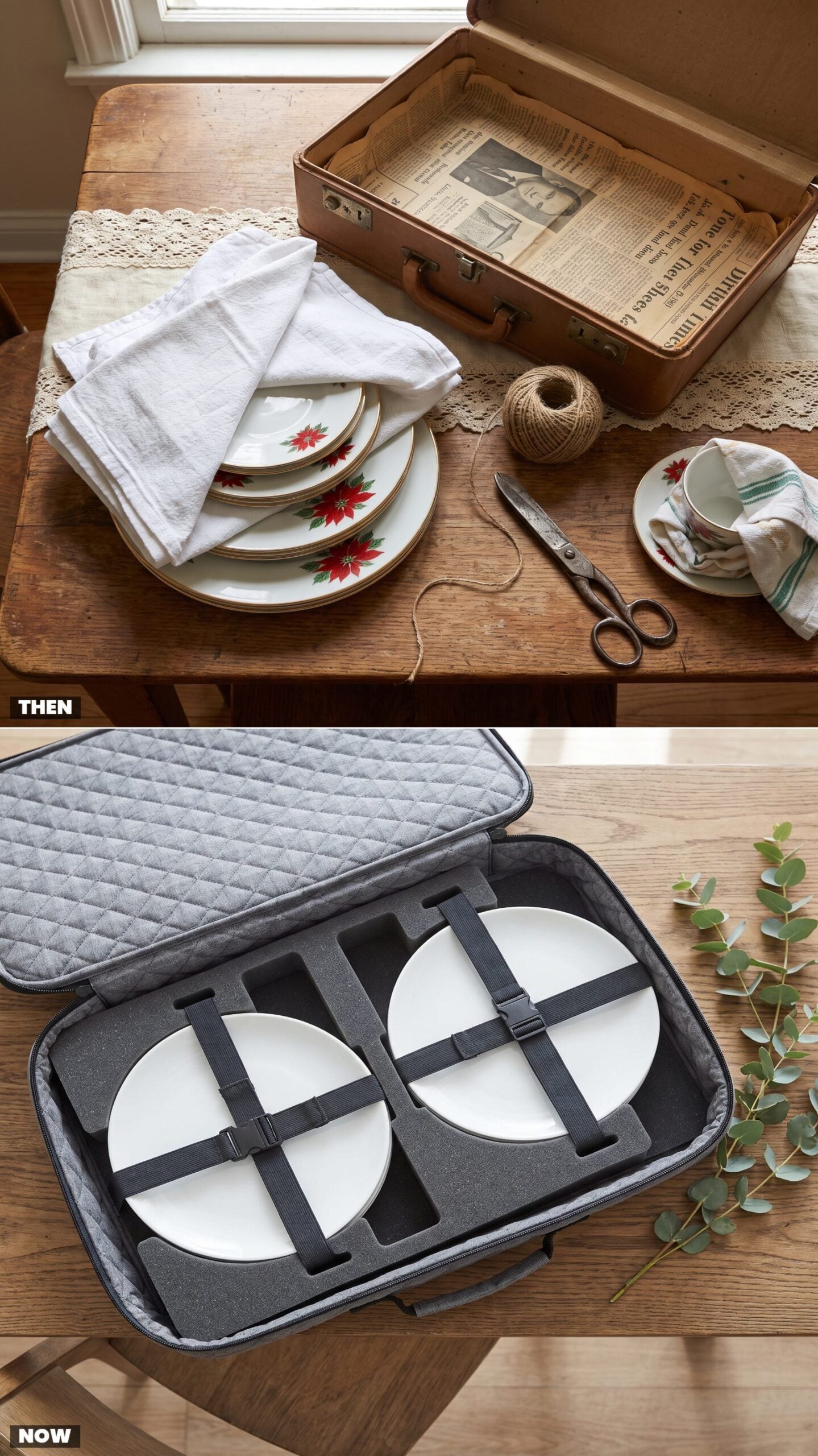
Hauling the good china to Grandma’s meant sacrificing every clean towel in the house. Plate, towel, plate, towel, all of it packed into a case lined with yesterday’s newspaper and carried to the car like a sleeping baby. You counted the pieces on arrival, and you always lost one by Boxing Day.
Today a quilted dish carrier with molded foam dividers holds each plate in its own padded slot. Zip it, carry it, done. Nothing shifts.
17. The Film Camera in Its Fitted Case vs. the Smartphone Camera Kit
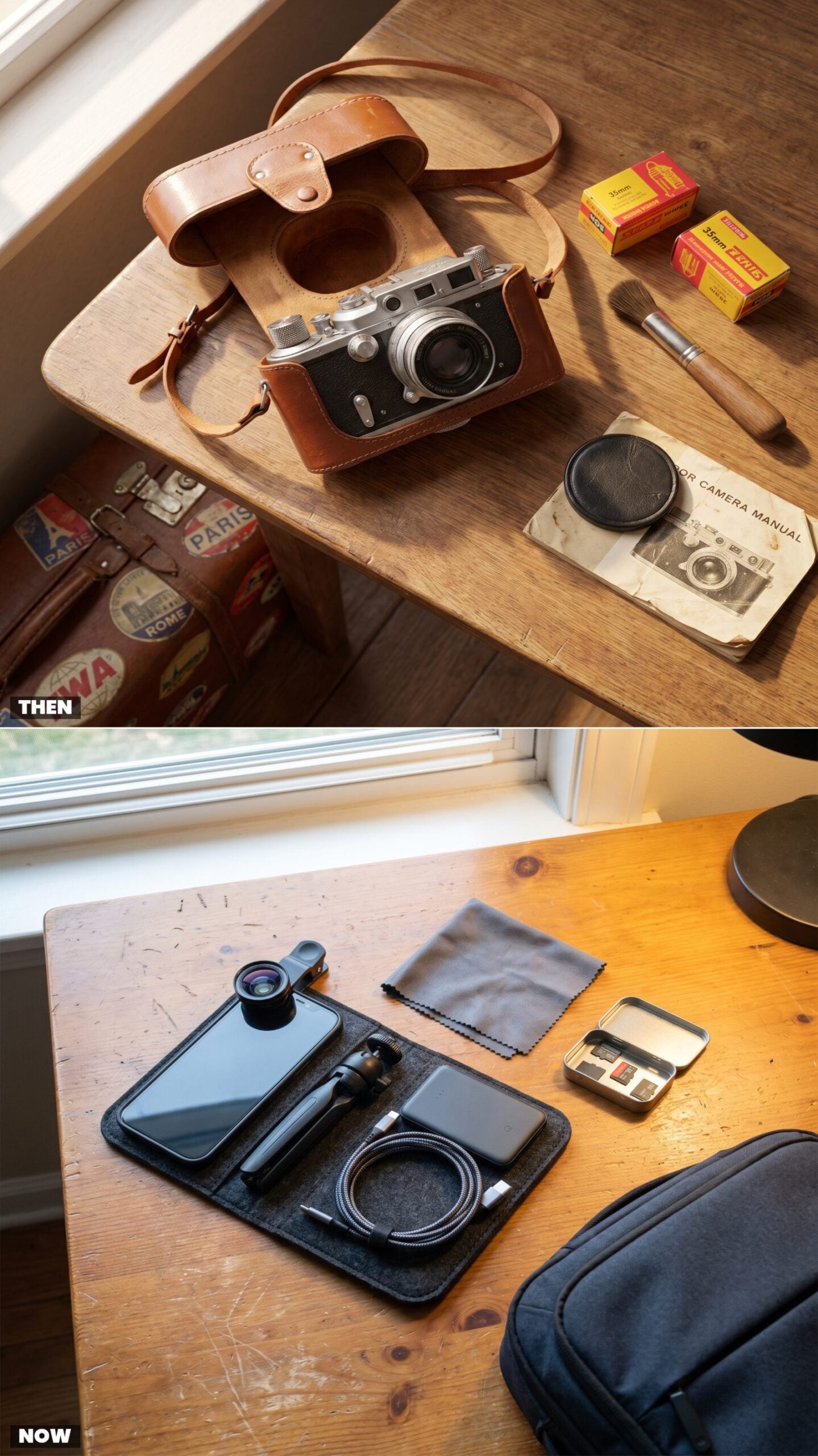
A good camera in 1965 was an investment you protected like jewelry. The fitted leather case buckled shut, the strap went over your shoulder, and you carried twenty-four exposures with the care of a man carrying eggs. No firing off frames here. You waited for the moment, then committed to it.
The whole kit now lives in your pocket — lens, flash, storage for ten thousand shots, all behind a sheet of glass. Lighter than the lens cap used to be.
16. The Super 8 Movie-Camera Case vs. the Compact Action-Camera Pouch
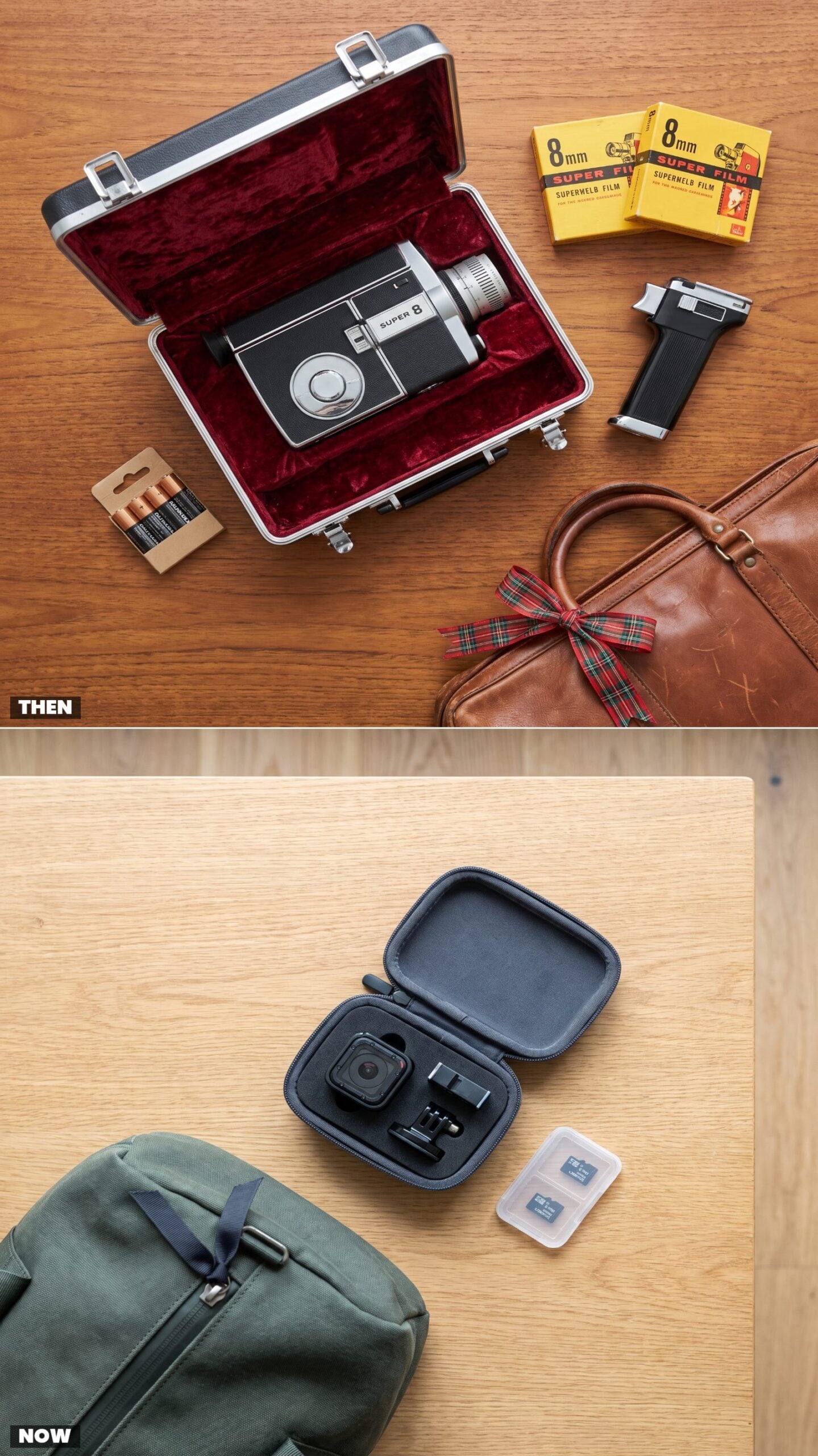
Filming the family Christmas in 1965 was a whole production. The Super 8 lived in a velvet-lined case the size of a lunchbox, hauled around with a pistol grip, spare film, and batteries that drained if you looked at them funny. Three minutes of film per cartridge. You rationed it like champagne.
The action camera that replaced it fits in a pouch smaller than a wallet, shoots for hours, and survives being dropped off a chairlift. Progress you can close one hand around.
15. The Portable Transistor Radio vs. Noise-Canceling Headphones
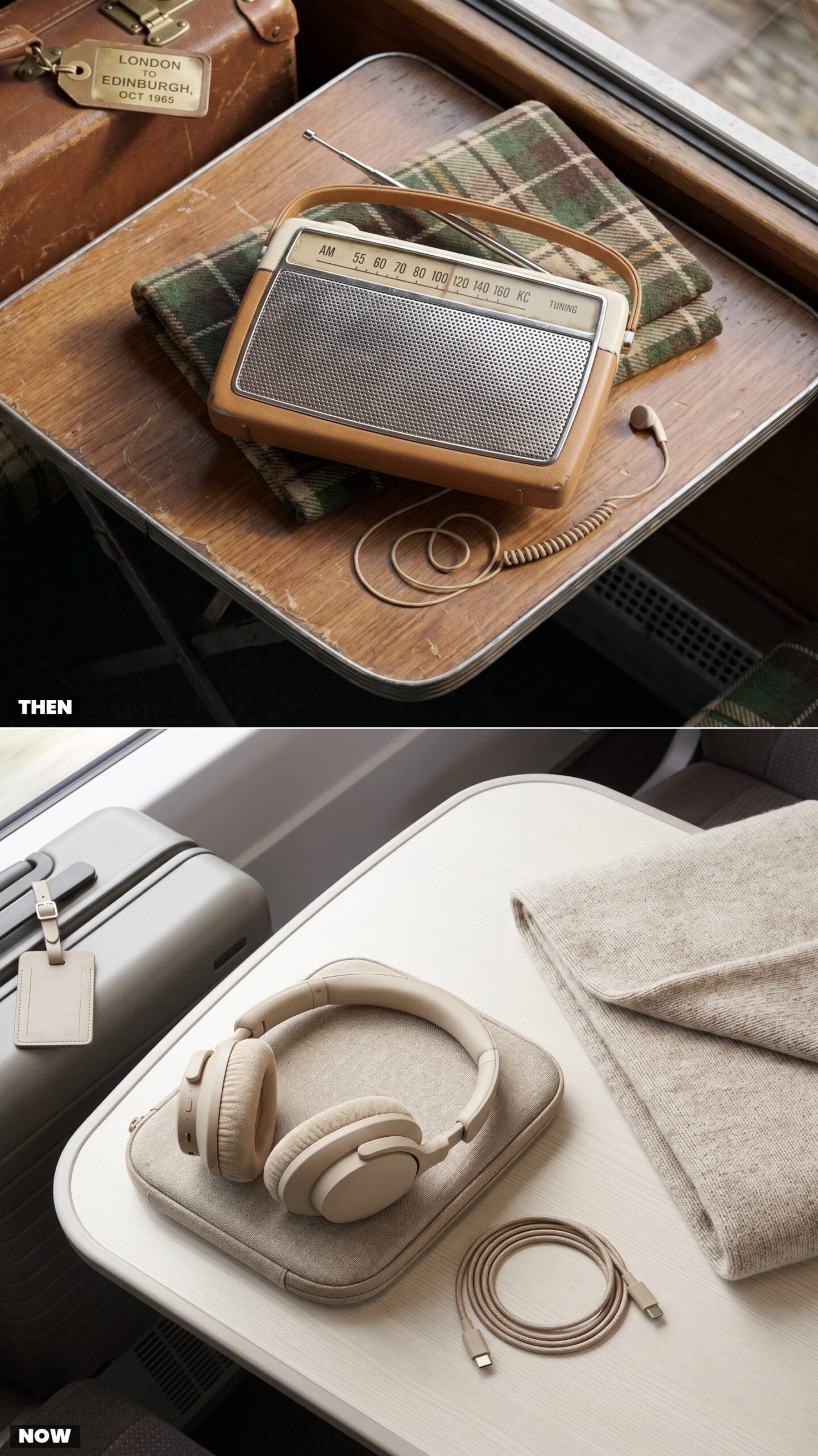
Anyone who traveled far back then remembers the sound — a long journey heard through one tinny transistor earpiece, carols crackling in and out as the train slipped under bridges. The radio shared your experience whether you liked it or not, and you took whatever the local station handed you.
Noise-canceling headphones erased all of that. Now you seal yourself inside silence and play exactly what you want: engine drone gone, crying toddler three rows back gone, peace bought in a padded case. We’ll admit we miss the crackle a little.
14. The Paperback Stack for the Journey vs. the E-Reader Sleeve
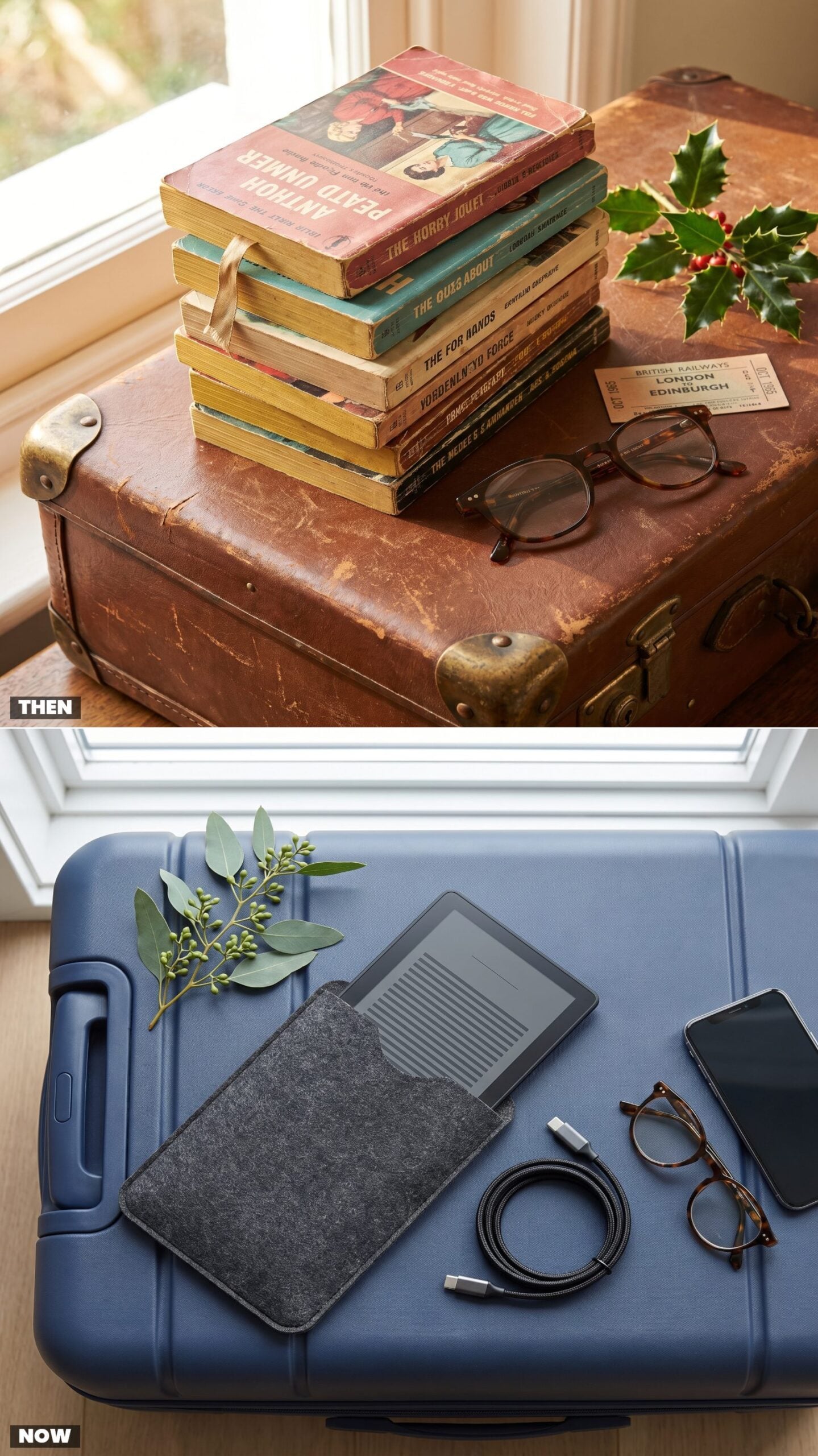
Packing for a long Christmas journey in 1965 meant hard decisions. Three books or four? Which one gets left behind? The stack ate up half a corner of the case and added real weight — but there was comfort in the pile, in the spines you’d chosen, in the one you were deliberately saving for the ride home.
An e-reader in a felt sleeve now holds a library in the space of one paperback. Lighter case. Fewer choices made in a panic by the front door.
13. The Paper Road Map Packed on Top vs. Offline Navigation
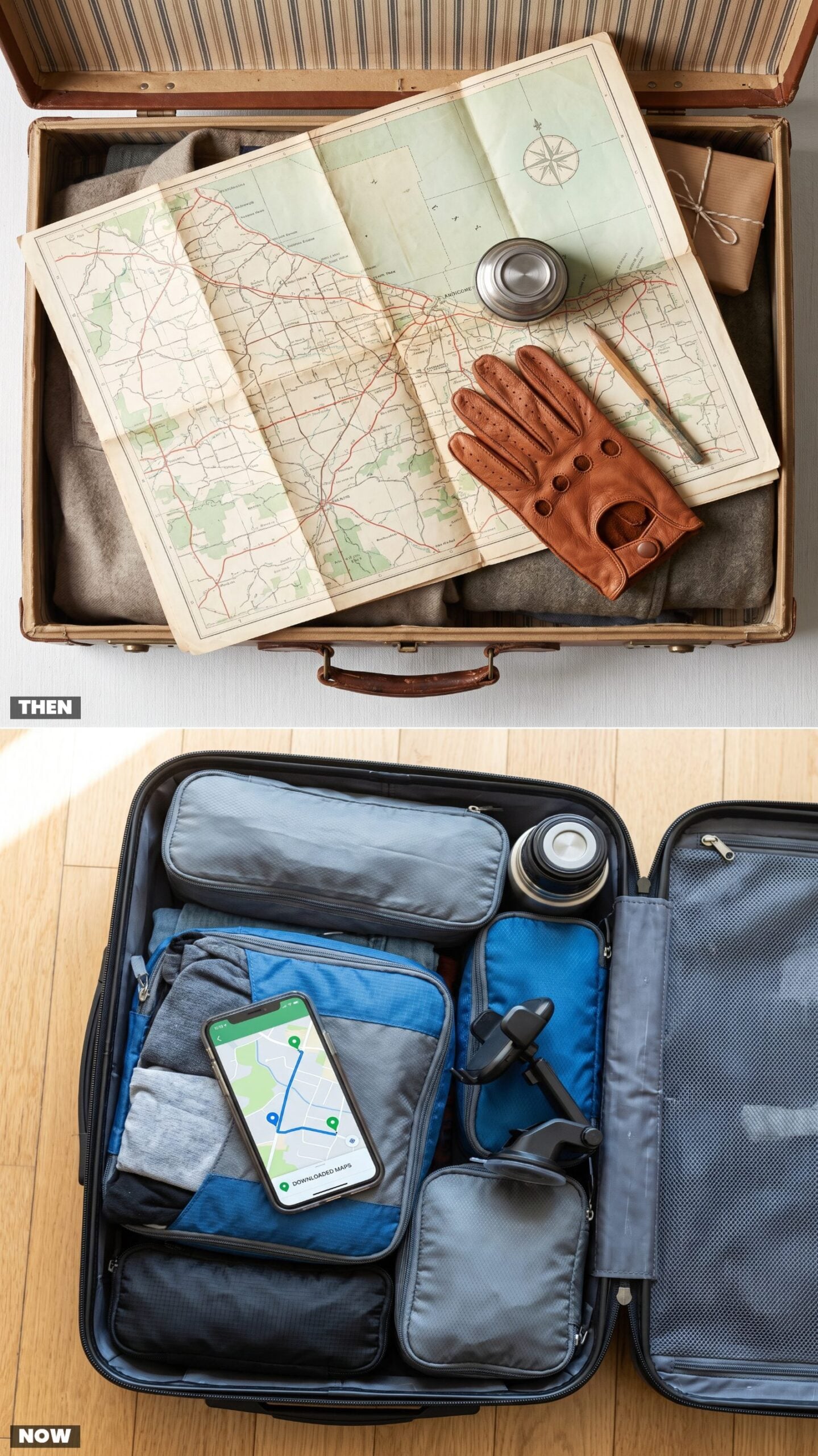
The map always went on top, because you’d need it before you needed anything else. Unfolding it was a two-person job — a whole ballet of refolding along the wrong creases, somebody navigating from the passenger seat, somebody missing the turn anyway. It never went back in the glovebox the same shape twice.
Offline navigation lives on the phone now, route downloaded before you lose signal in the hills. No creases. No arguments about which way is north. A phone, though, has never once been read aloud by a grandmother in the back seat.
12. The Phrasebook in the Side Pocket vs. the Phone Translation App
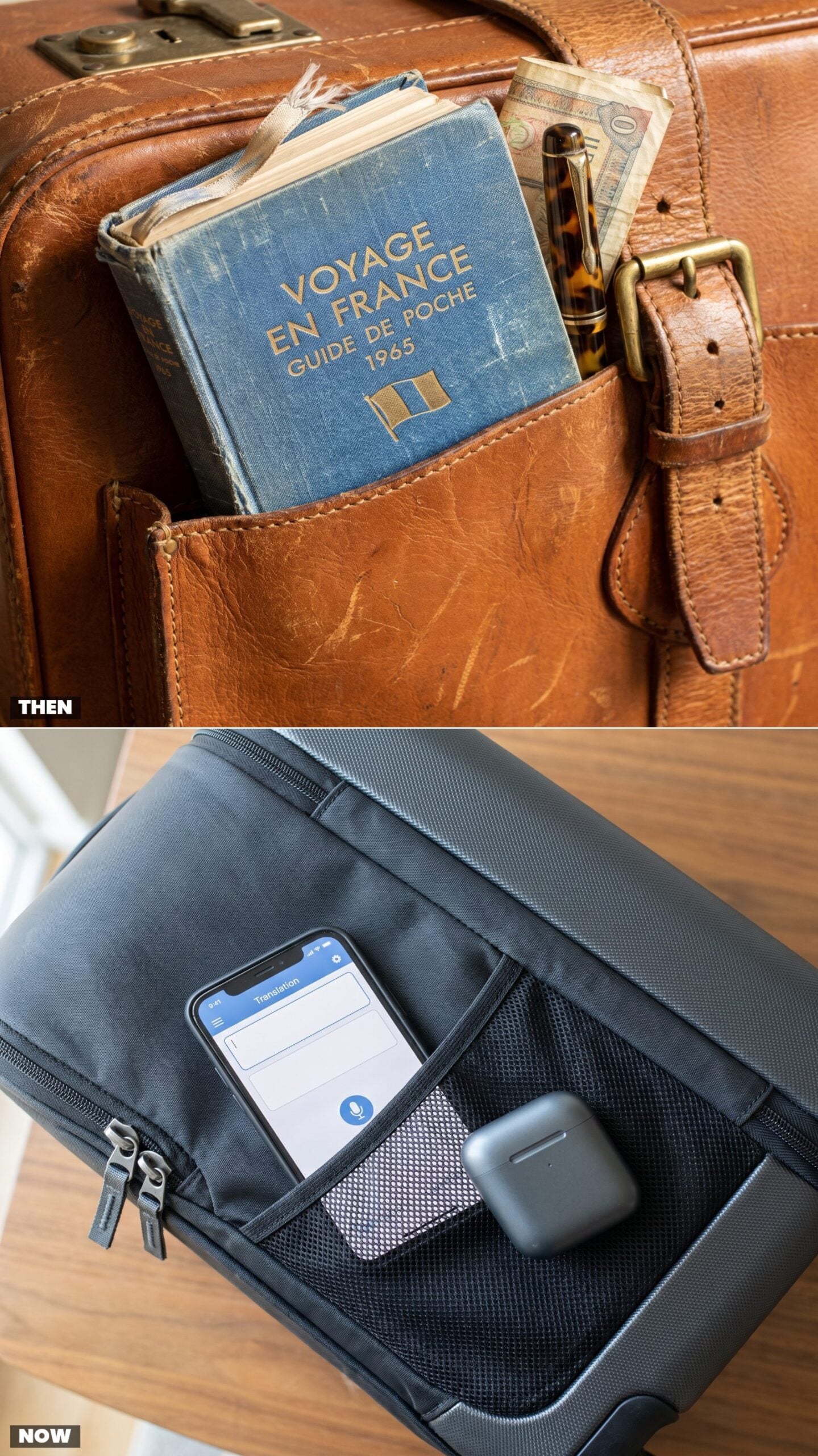
You flagged the useful pages ahead of time. Where is the station. How much. Two coffees, please. The phrasebook rode in the side pocket, thumbed to softness, and you’d point and mime and butcher the pronunciation while a patient waiter puzzled out what on earth you wanted. Half the fun was the fumbling.
The translation app does it instantly now — speaks it aloud, even reads a menu through the camera. Faster, smoother, and it has quietly killed the small comic humility of getting a word gloriously wrong in front of strangers.
11. The Printed Itinerary in the Outer Pocket vs. the Mobile Boarding Pass
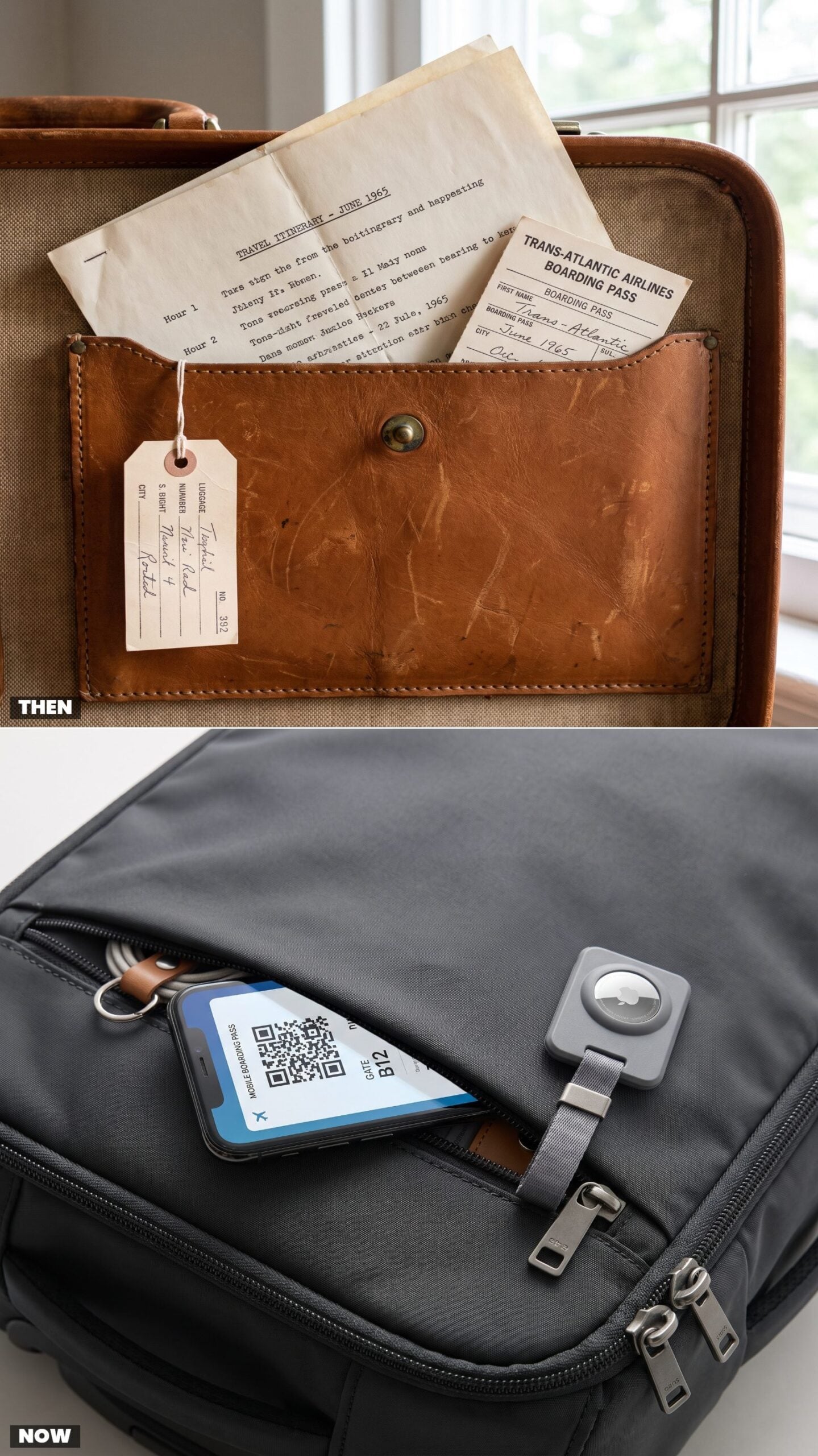
The itinerary was typed, folded into thirds, and slid into the outer pocket where you could reach it without opening the case. Flight times, hotel address, the cousin’s phone number, all on one page you guarded like a passport. Lose it and the trip went quietly sideways.
Now the boarding pass is a QR code on your phone, the itinerary synced across three apps and an email you can never find under pressure. Nothing to fold. Nothing to lose. Also nothing to tuck into a drawer forty years later and stumble on by accident.
10. Traveler’s Checks Tucked in the Lining vs. the Phone That Pays for Everything
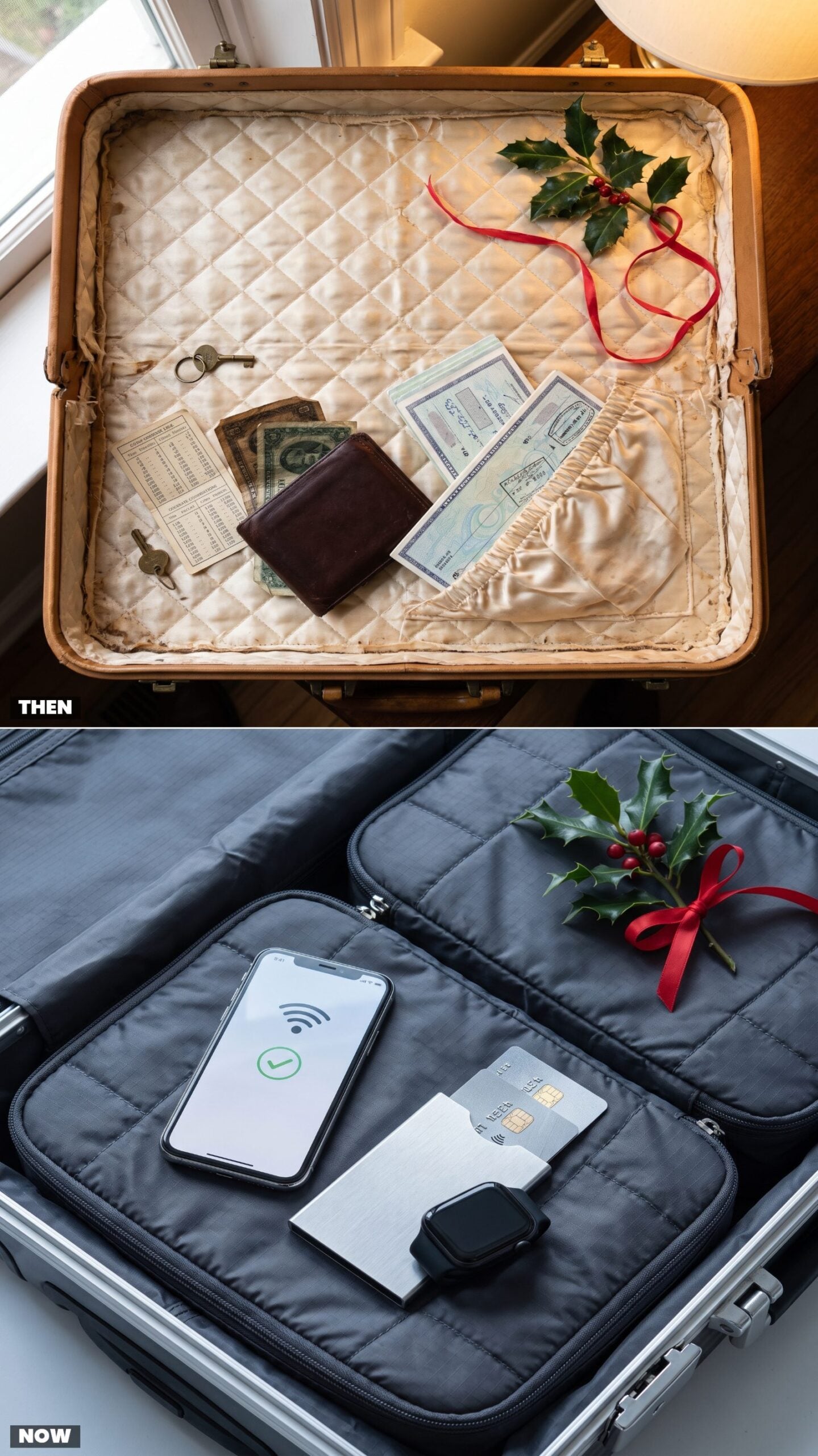
In 1965, your holiday money hid like contraband. Traveler’s checks folded into the suitcase lining, countersigned at a bank window, replaced with a phone call and a sworn statement if they vanished. And you carried a little paper card to do the francs-to-dollars arithmetic in your head at the hotel desk, lips moving, hoping the clerk wasn’t watching.
Now the whole thing lives in a slim metal cardholder or nowhere at all. Tap a watch at a Christmas market in Vienna and you never touch a note. The security that once came from hiding cash now comes from a screen you can freeze from your bed.
9. The Paper Address Label on a String vs. the Scannable QR Tag
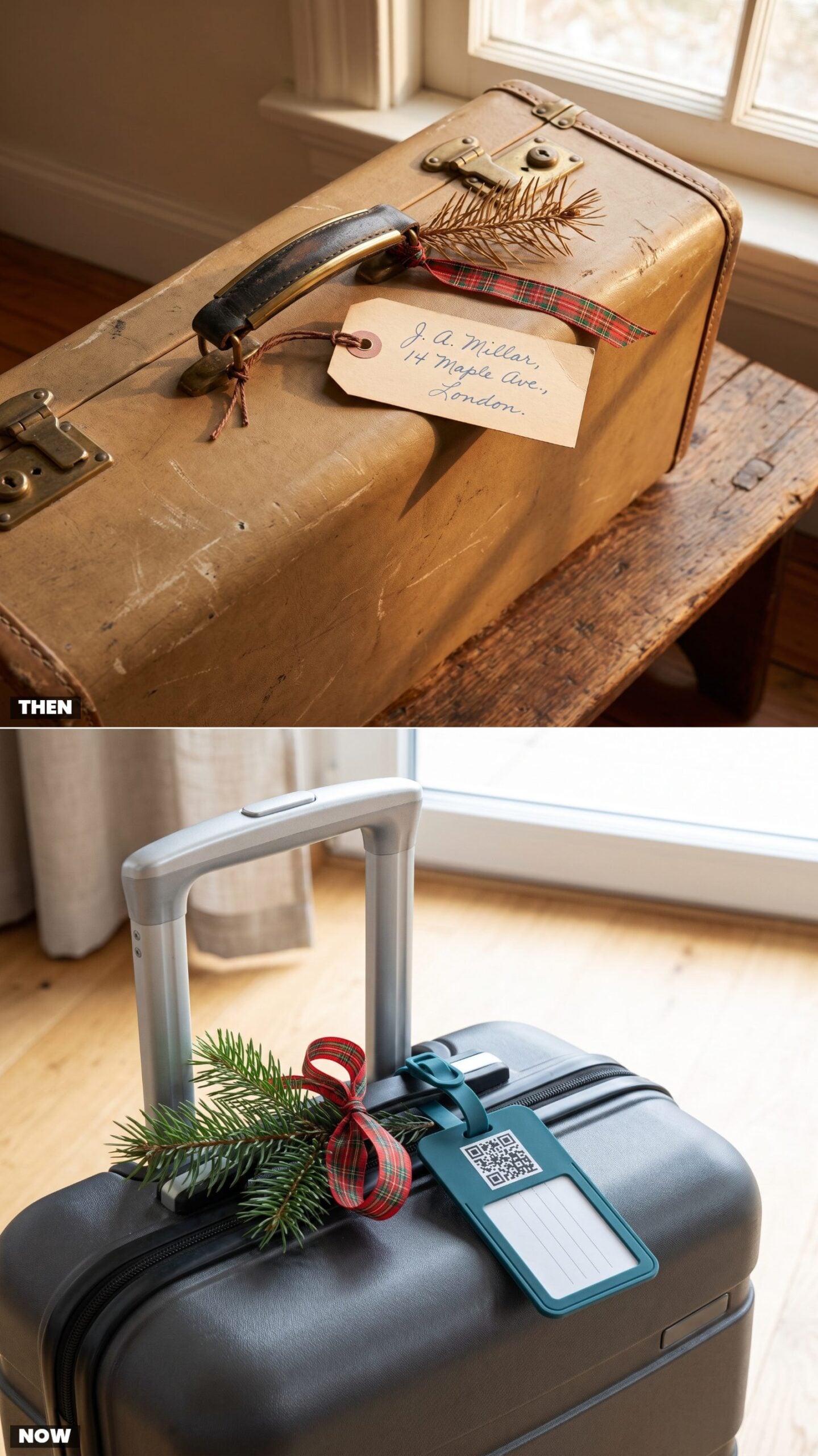
You wrote your home address by hand and tied it to the handle with string. If the string broke somewhere over the Atlantic, so did your chances. The ink ran in the rain, and anyone standing behind you in the queue could read exactly where you lived.
A modern teal silicone luggage tag hides your details behind a QR code. A finder scans it, a message reaches you, and your street address stays private. Smarter, yes. But there was something honest about blue ink feathering into cardboard.
8. The Torn Paper Destination Tag vs. the Barcoded Baggage Strip
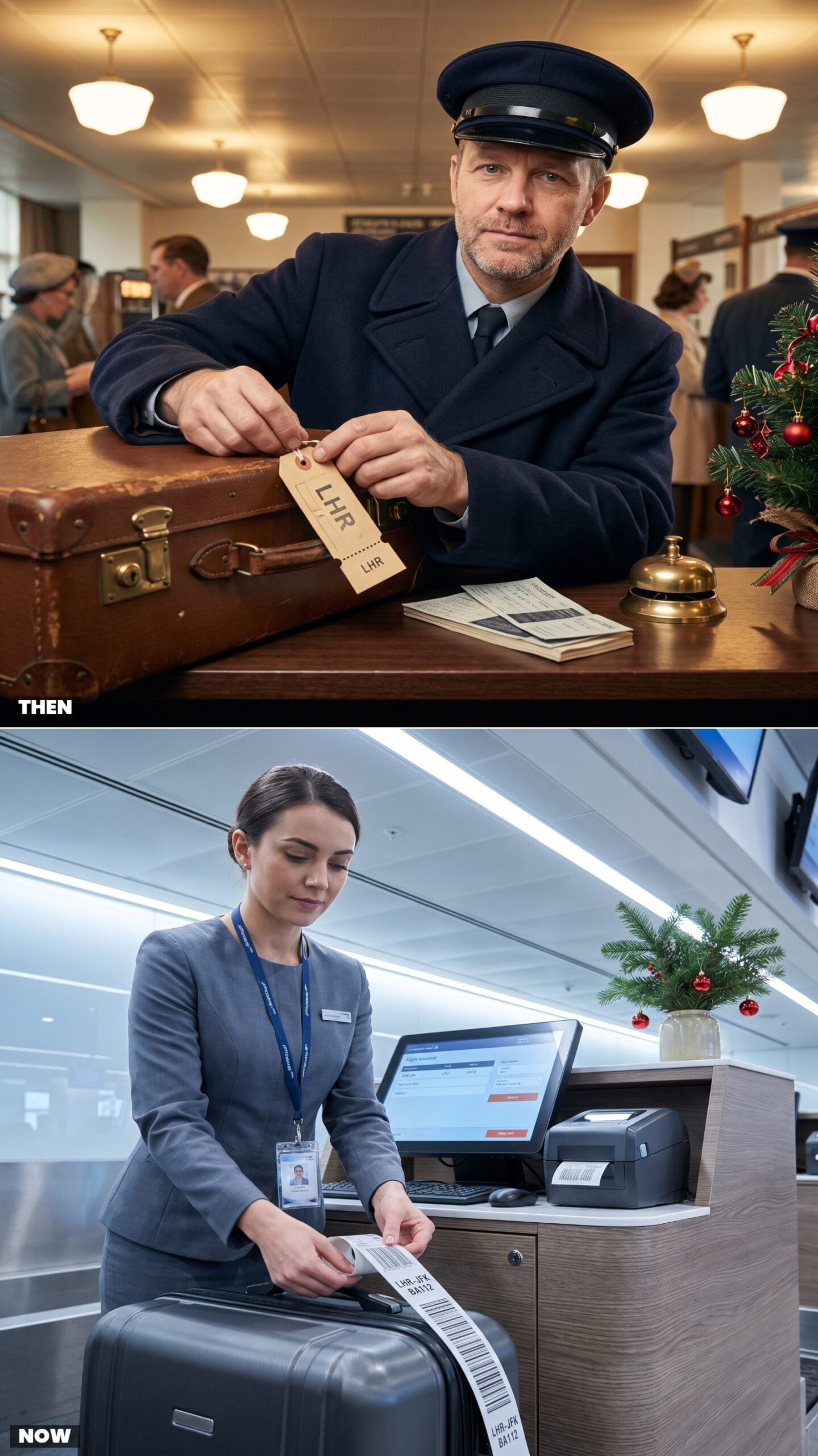
A ground agent tied a paper tag to your bag, tore off the stub, and handed it over with a nod. That stub was your entire claim to the suitcase. Lose it and you were arguing with a man behind a counter who had no way to look anything up.
The barcoded strip changed the odds. It wraps the handle, feeds into a conveyor that reads it at every turn, and tells a computer where your bag is sitting on the planet.
7. The Little Brass Key vs. the TSA Combination Lock
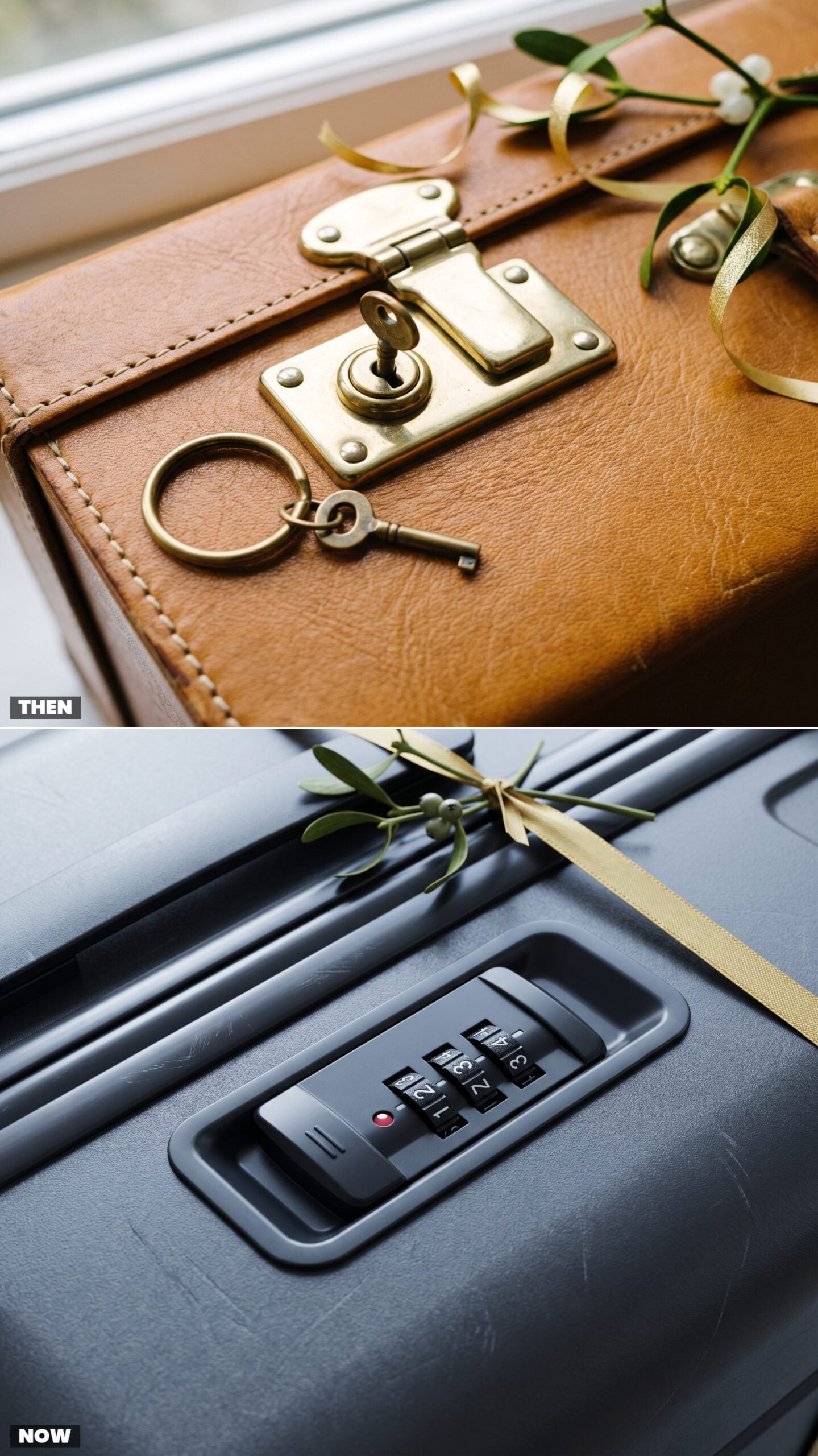
One key. That was the plan. It lived on a keyring that also held your front door, your car, and a locker you forgot about in 1958. Lose it and you were prying the clasp with a butter knife in a hotel room.
Today’s TSA combination lock solved two problems at once: no key to lose, and a master-keyed slot so security can open and reclose the bag without destroying the latch. You just have to remember three digits, which, honestly, is its own small battle.
6. The Floor Scale at the Depot vs. the Scale That Dangles From Your Hand
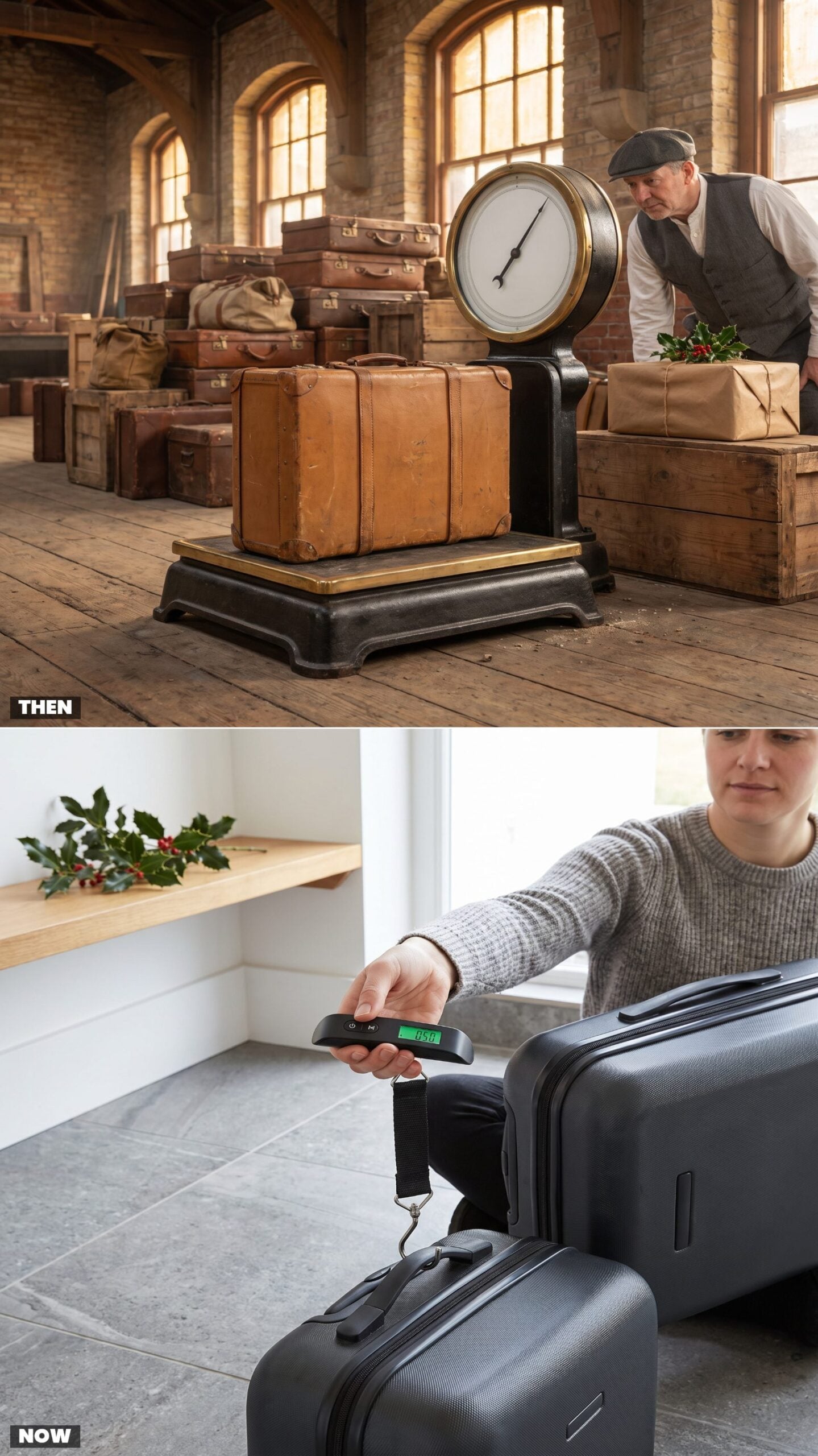
Weighing a bag used to be an event. You hauled the trunk onto a cast-iron platform scale at the station, a porter squinted at the big round dial, and the needle settled on a number that decided whether you repacked on the floor or got to keep your dignity.
Now the scale dangles from your fist. Hook a digital luggage scale under the handle, lift, and the number glows up at you before you’ve even left the bedroom. No more holiday-morning dread at the counter, surrounded by strangers watching you fish out a second sweater.
5. Dirty Laundry Jammed Back In vs. the Ventilated Wet Pocket
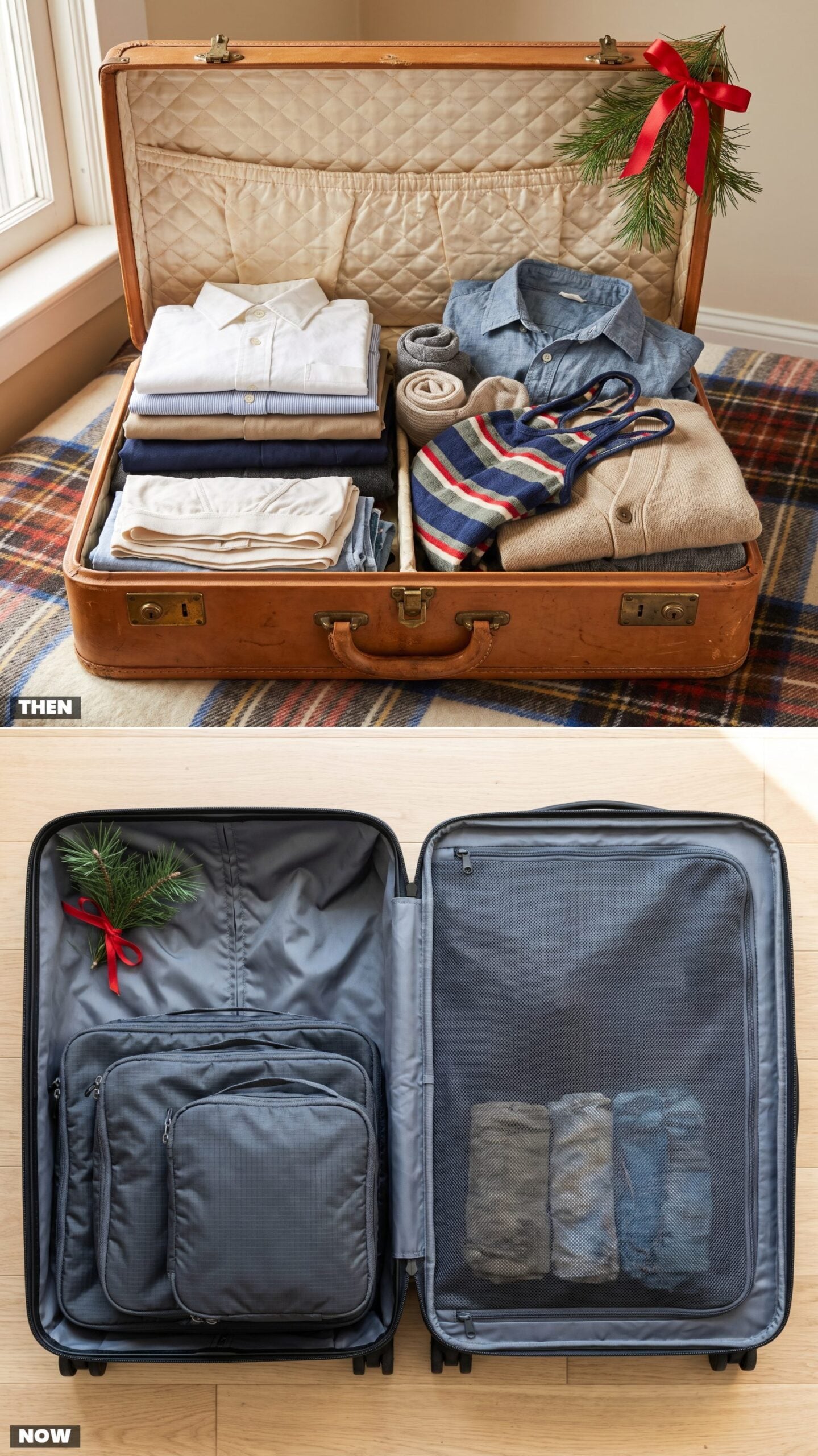
There was no system. Three days into a holiday, the dirty clothes went back in on top of the clean ones, and everything you owned came home smelling faintly of the same thing. You learned to unpack fast and apologize to the washing machine.
The ventilated laundry compartment is one of those quiet modern wins nobody talks about. Soiled clothes zip behind breathable mesh, packing cubes keep the clean side clean, and your fresh shirt arrives still fresh. We resisted these for years out of pure stubbornness. We were wrong.
4. Cases Roped to the Roof Rack vs. the Locking Cargo Pod
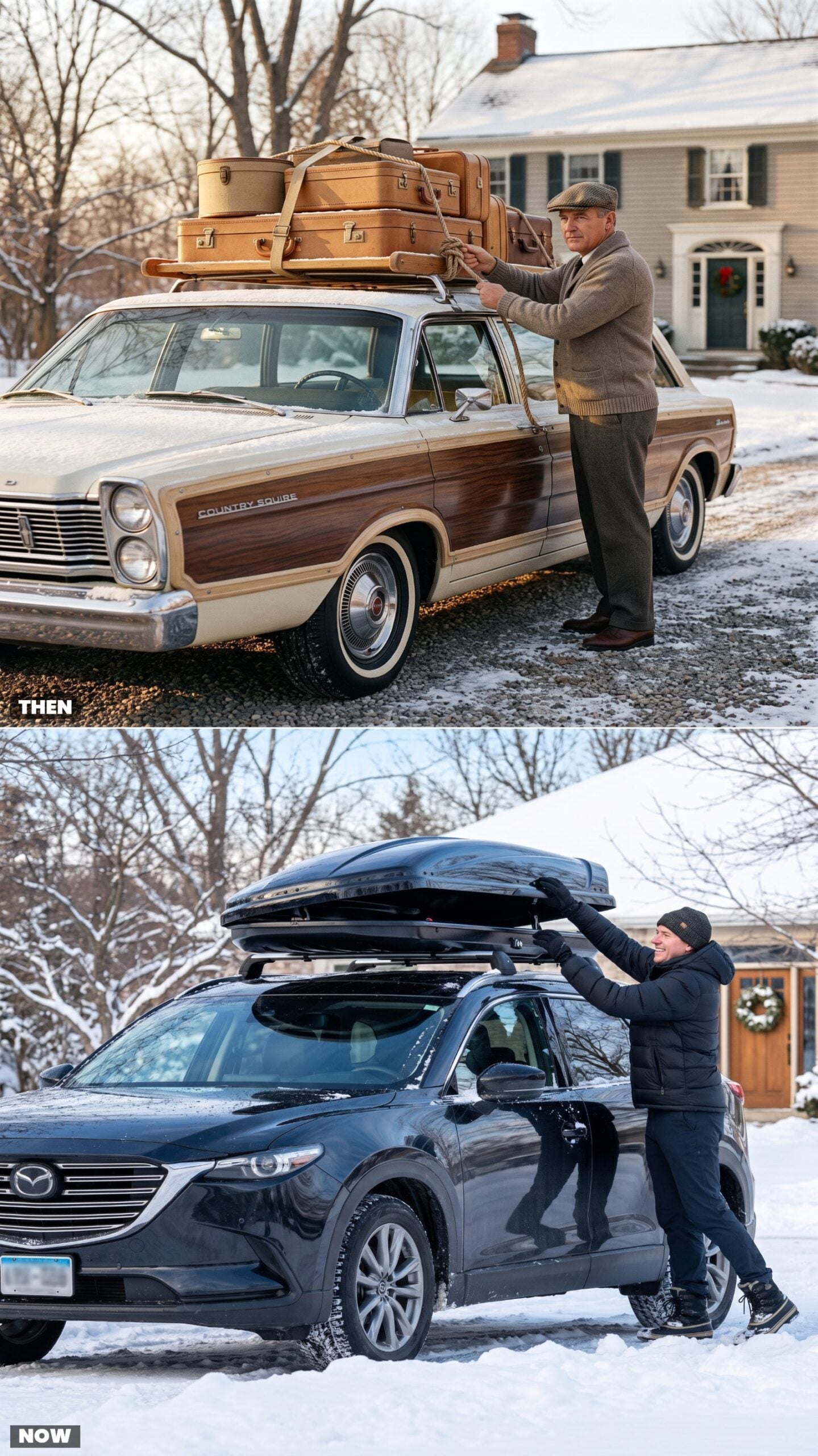
Picture the roof of a station wagon in 1965: suitcases stacked three high, a hat box wedged in the middle, the whole load cinched down with hemp rope your father retied at every gas station. One hard brake on the highway and you held your breath.
The modern cargo pod made all that white-knuckle knotting history. It locks, it keeps the snow out, and its shape means the car doesn’t fight the wind the whole way to grandma’s.
3. The Handwritten Lost-Bag Form vs. the Tracker in Your Pocket

A bag went missing and your whole afternoon became paperwork. A clerk filled out a carbon form in triplicate, described your suitcase from your shaky memory, and promised to telephone when something turned up. You went to bed not knowing if you’d ever see it again.
Drop a Bluetooth tracker tag in the case and you watch it travel across a map. You know it’s still in Chicago before the airline does. The panic didn’t disappear. But the not-knowing did.
2. Souvenirs Swaddled in Newspaper vs. the Inflatable Bottle Sleeve
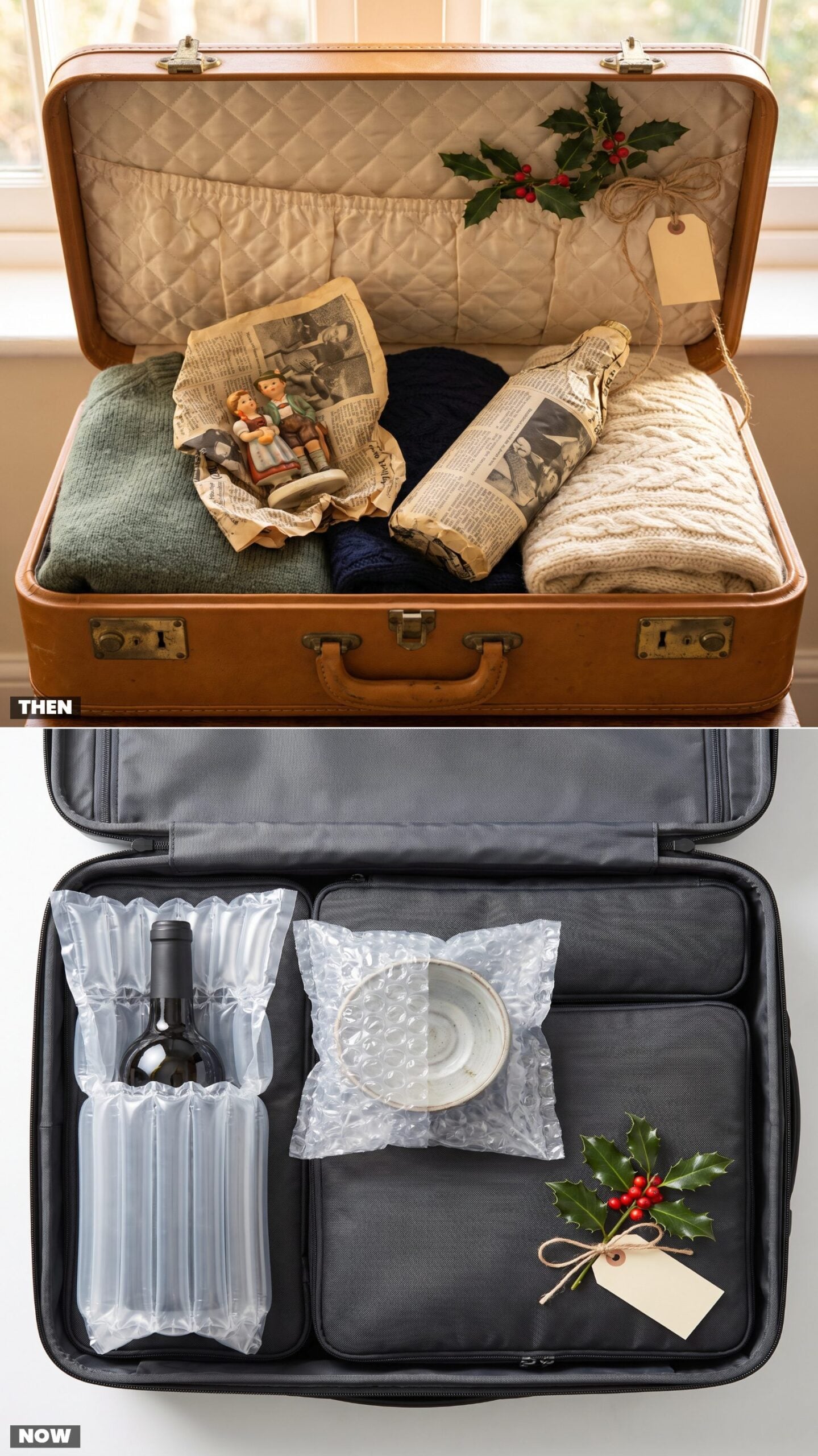
Every holiday souvenir came home mummified in newspaper. You bought a bottle of local wine or a ceramic something, rolled it in yesterday’s paper, and buried it in the middle of your jumpers, praying the baggage handlers were gentle. They usually weren’t.
The inflatable sleeve took the gamble out of it. A clear pouch puffs up around the bottle with its own air cushions, so a dropped bag no longer means a suitcase soaked in red wine and regret. Less charming than newsprint. Far fewer tears.
1. The Dedicated Gift Trunk vs. the Duffel That Folds to Nothing
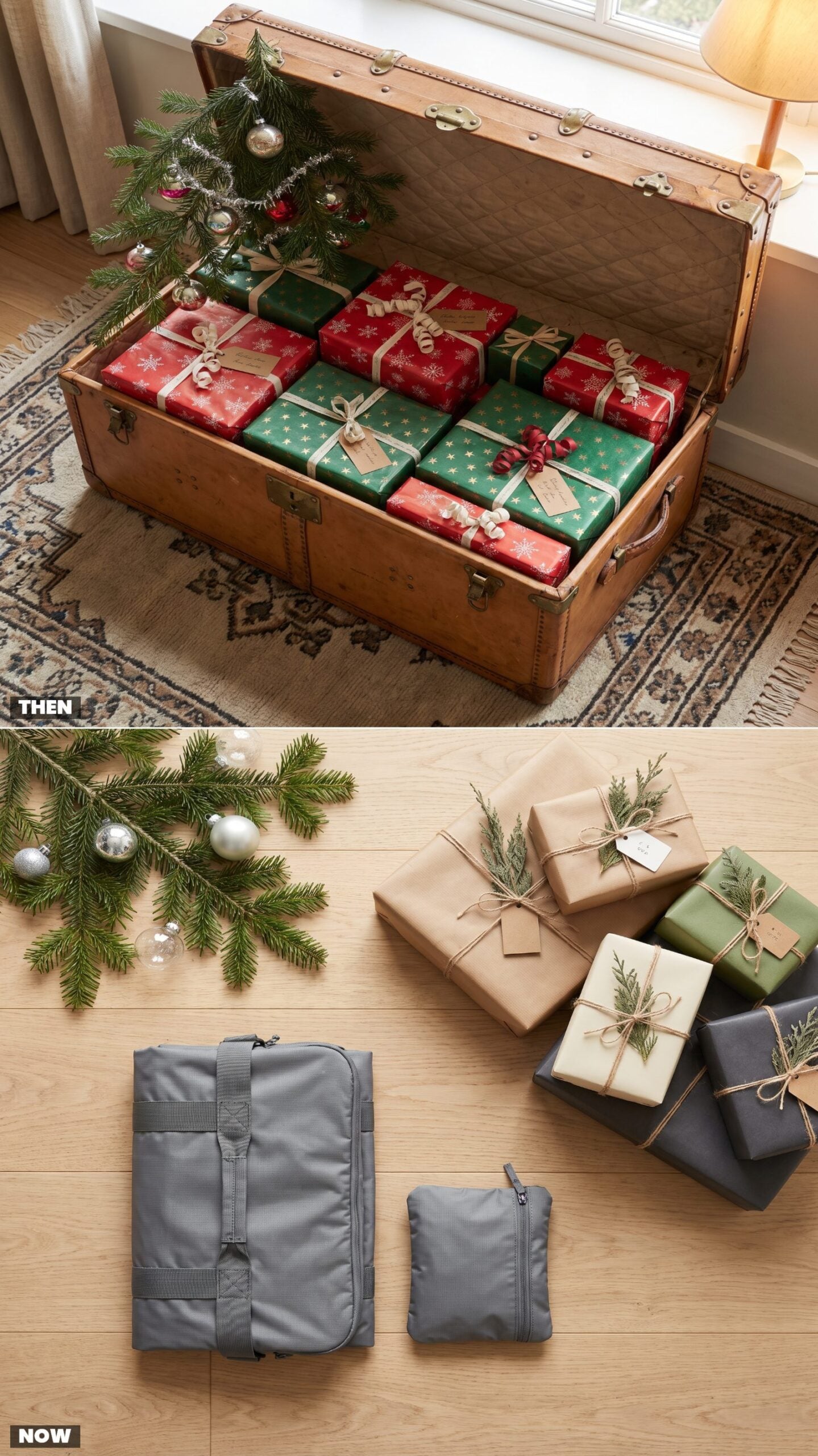
The presents got their own trunk. A whole separate steamer case, brass-cornered and heavier than a person, packed to the brim with boxes in snowflake paper and curling ribbon. It went out full of gifts and came back full of other gifts, because Christmas was a two-way haul.
A collapsible foldable duffel bag solved the return-trip math. It folds flat into your main case on the way out, then unfolds to swallow everything you were handed on the way home. No dead trunk hogging half the car on the drive there.
🔥 Would you like to save this?
Please note that some of the imagery in this article were created with the aid of AI image generators.