
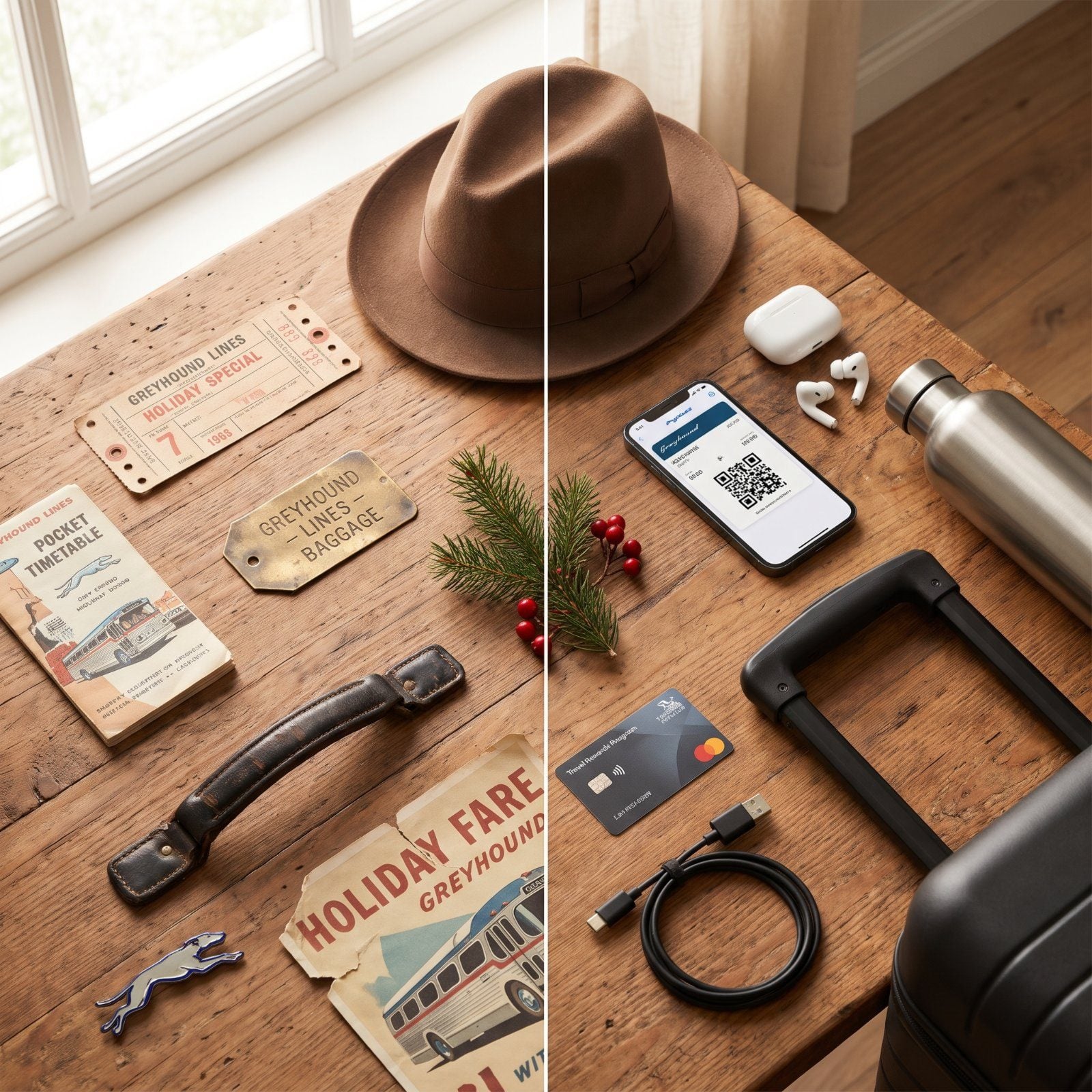
The smell hit you first. Diesel, cold vinyl, the wet-wool coats of a hundred people headed home for Christmas. A Greyhound terminal in 1966 was a cathedral of departure, all marble floors and flipping schedule boards and a man in a cap calling out towns you’d never visit. The bus itself looked like a silver ocean liner on wheels. We lined up both eras, same angle, same frames, and what changed is bigger than the paint.
37. The Silver Scenicruiser vs. Today’s Highway Coach
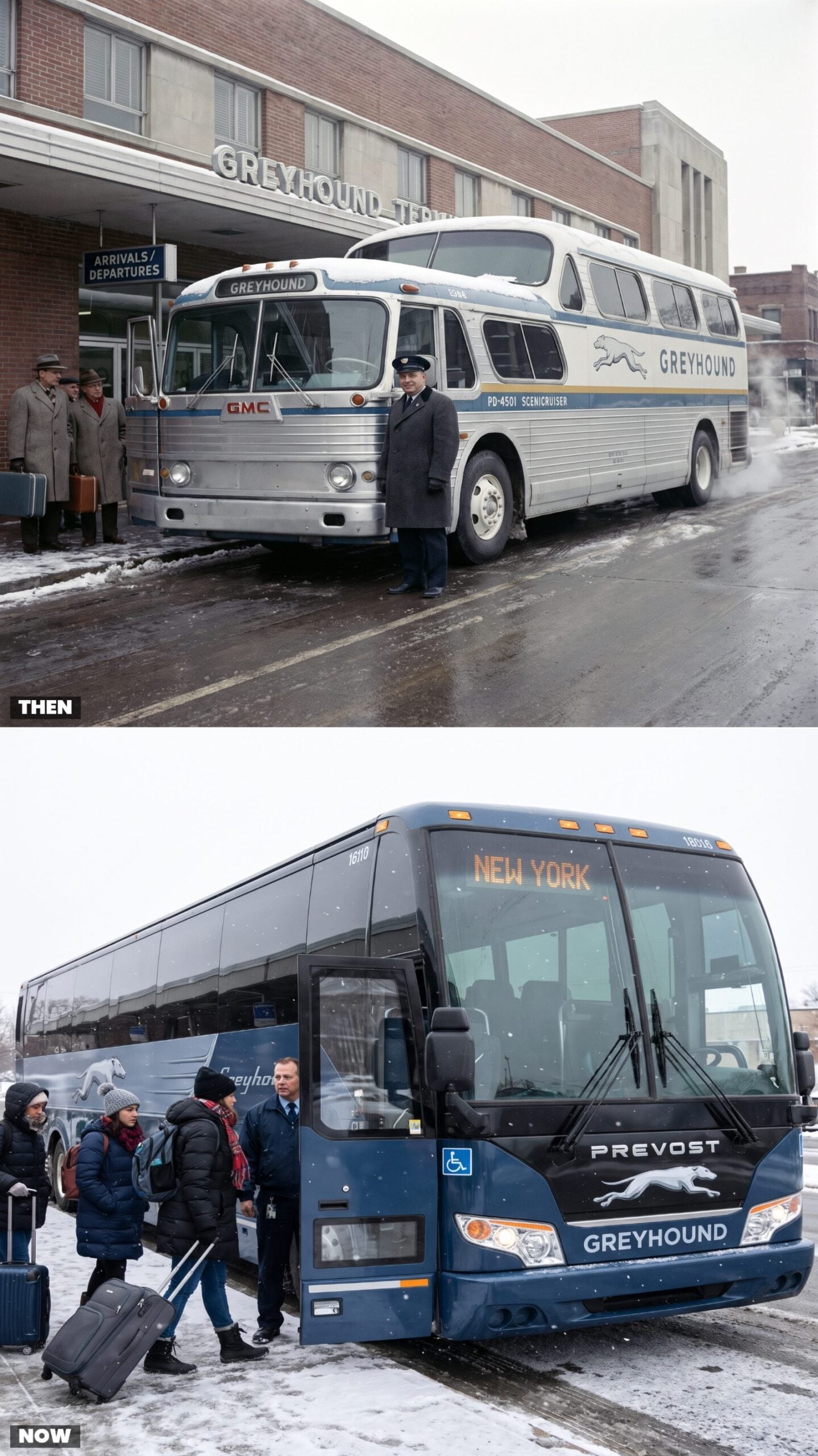
The Scenicruiser was the spaceship of its day. A split-level GMC with a raised rear deck, 40 feet of brushed aluminum, and that leaping dog painted big enough to read from across the lot. You didn’t just catch it — you beheld it.
Today’s coach sits lower, runs longer, and it’s honestly more comfortable. One level, tinted glass, Wi-Fi and outlets baked in, faster point to point. But nobody stops dead on the sidewalk to gawk at it the way they once gawked at all that chrome.
36. The Downtown Terminal vs. Today’s Shared Transit Hub
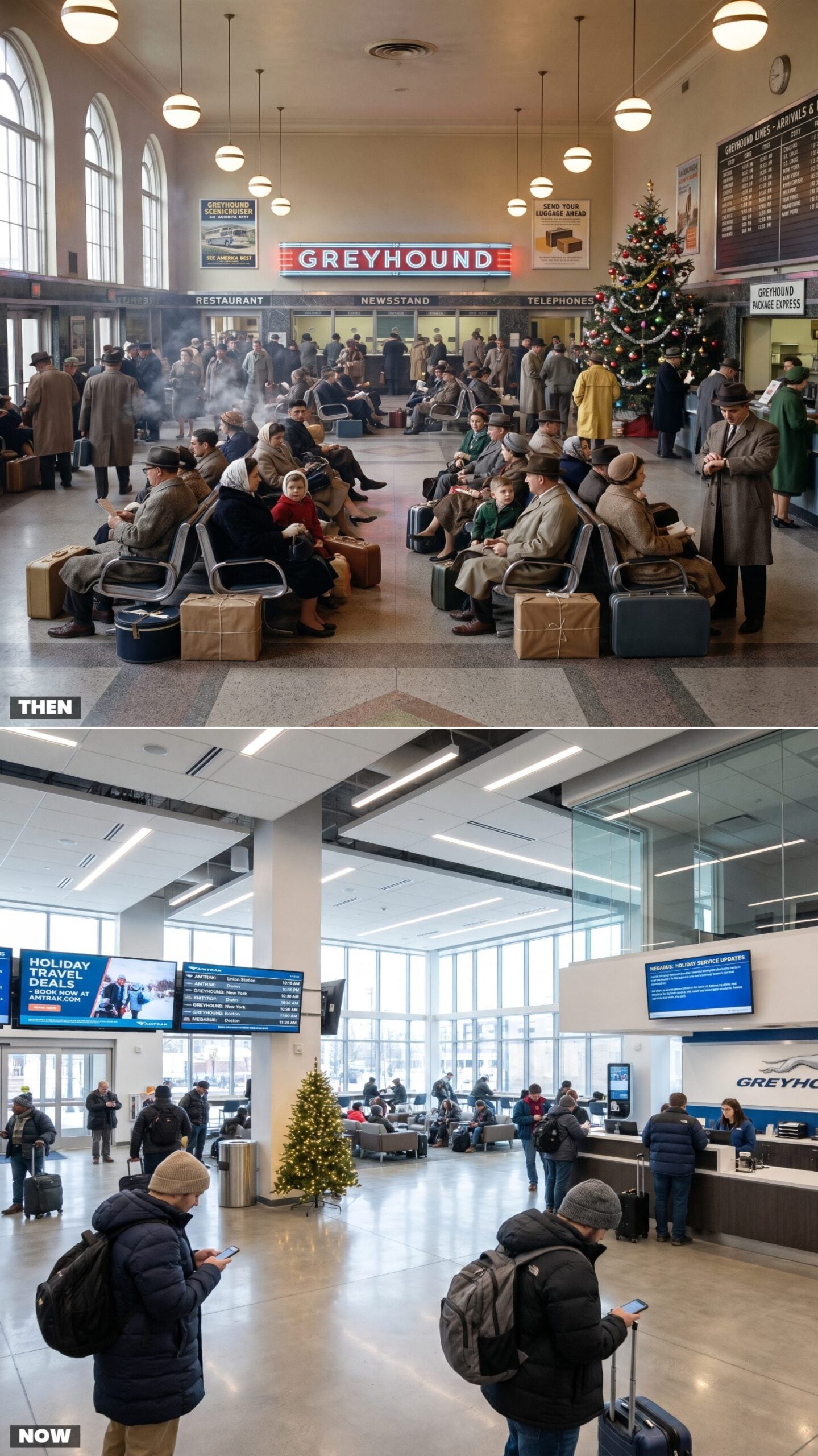
City terminals were built to impress. Terrazzo underfoot, a ceiling that echoed, and a Greyhound sign glowing over the counters like a lighthouse. Come Christmas the whole place hummed with wrapped packages and departures and that low roar of a thousand goodbyes.
Now Greyhound mostly rents a counter inside a shared hub, elbow to elbow with half a dozen other carriers. Cleaner, brighter, more efficient — and about as romantic as a food court. Less a destination, more a doorway you pass through.
35. The Holiday Drop-Off Lane vs. Today’s Rideshare Curb
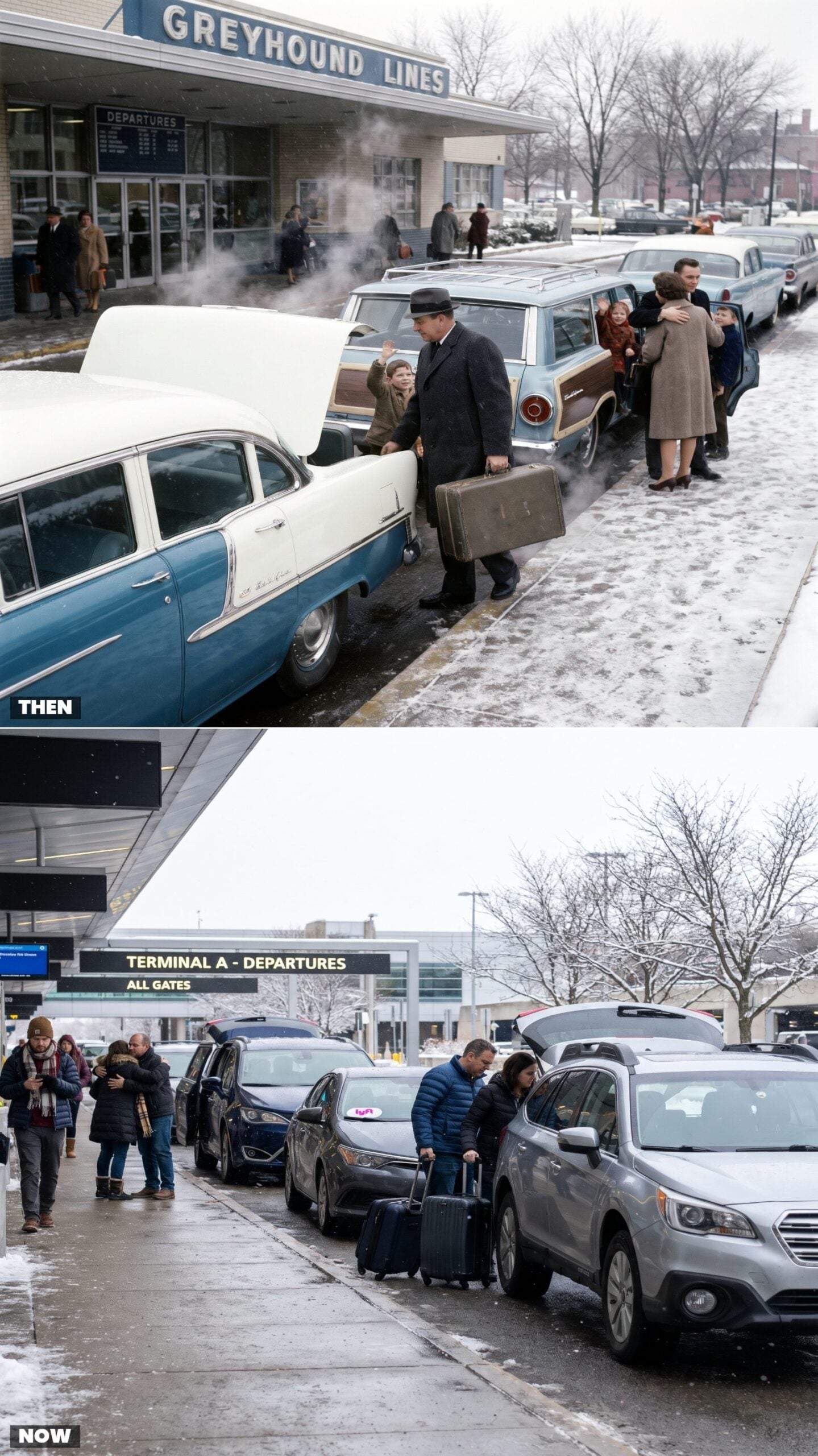
Dad idled the wagon at the curb while the whole family spilled out for one more hug. The drop-off lane at Christmas was pure emotion — tailgates up, suitcases swinging, somebody always crying a little.
The curb still does goodbyes. Only now half the cars have a glowing decal in the windshield and a driver who’s never met you, watching the meter while you say your last word.
34. The Marble Ticket Hall vs. Today’s Compact Service Counter
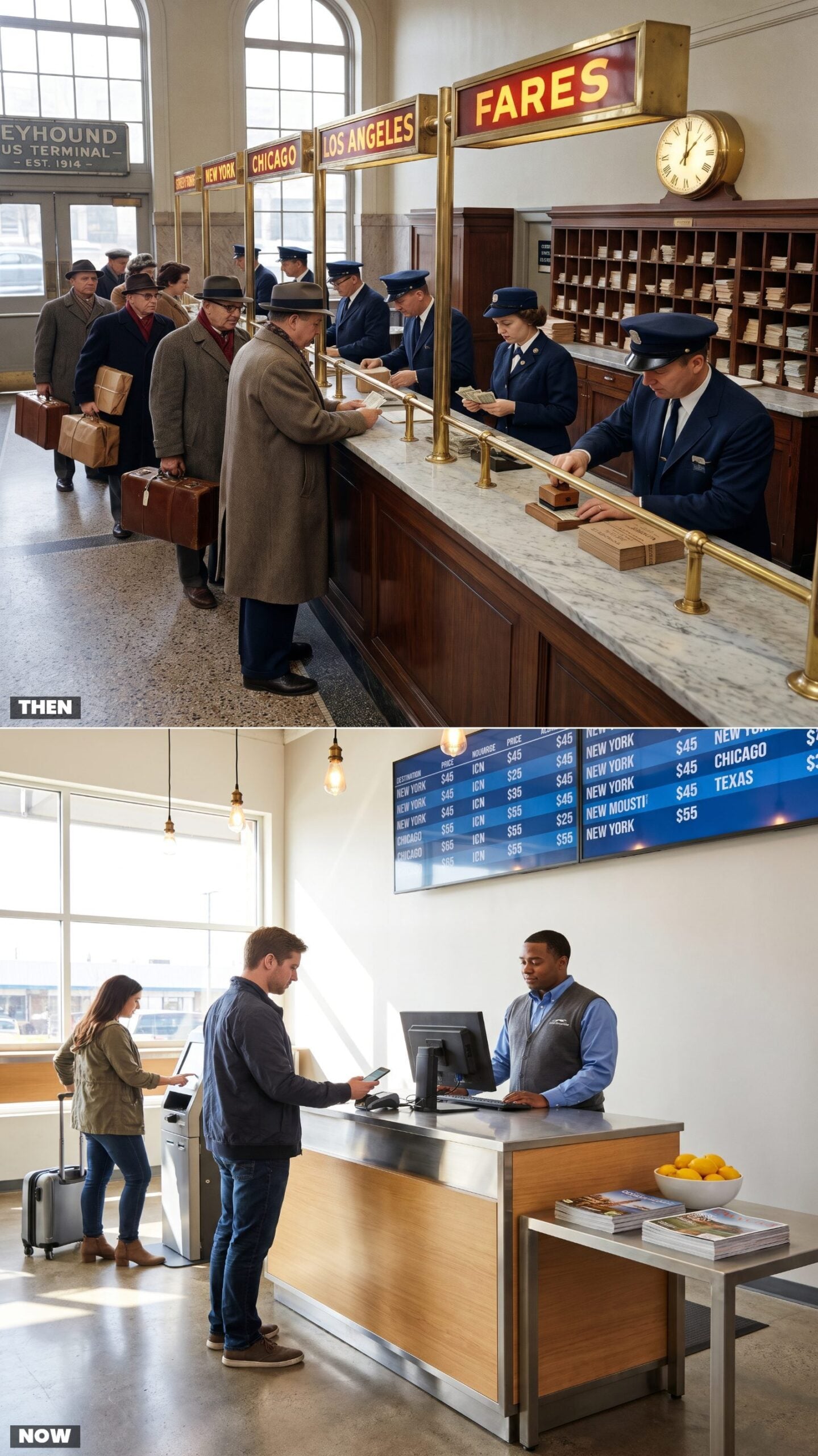
Buying a ticket once took a marble counter the length of a bowling lane. Agents in caps worked the pigeonholes, stamped your card by hand, and counted your change out loud. The whole transaction carried weight.
That counter shrank to a desk. One agent, a card reader, a kiosk off to the side doing most of the work. Or you buy it on your phone and skip the line — which, let’s be honest, is what most of us do.
What Our Readers Say
- In Journey Junket readers’ heart votes, practical, plain-looking scenes got hearts 37% of the time, compared with 53% for the other images in the same articles.
From Journey Junket reader polls and votes.
33. The Printed Holiday Fare Poster vs. Today’s Digital Promo
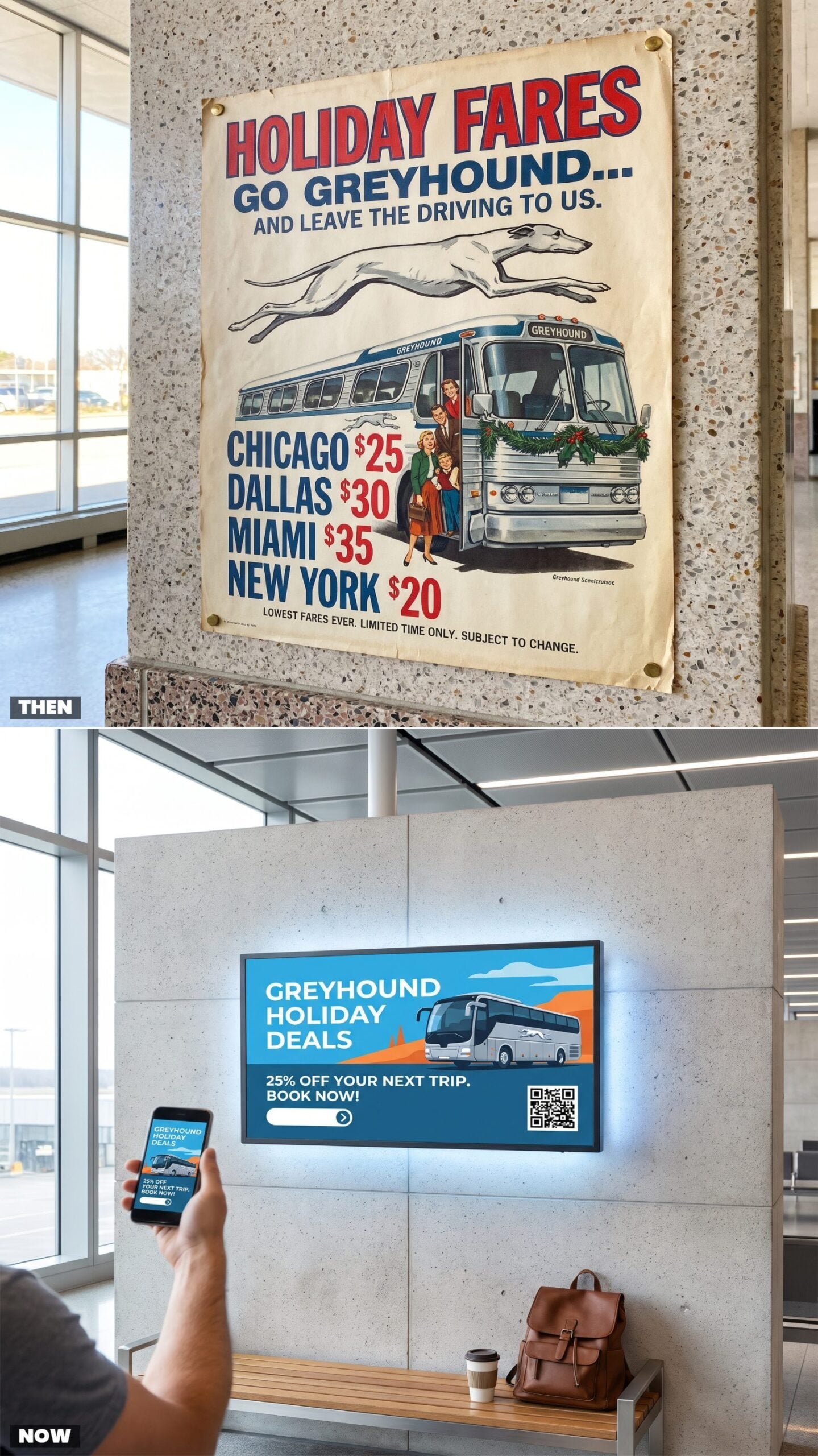
The holiday fare poster was practically folk art. Red and blue block letters, a cartoon family grinning up the steps, and fares to Chicago or Dallas printed big enough to tempt you on the spot. Somebody drew that by hand with a straightedge and a dream.
The pitch lives on a glowing screen now. Or it arrives as a push notification that finds you before you’d even thought about traveling — trackable, updatable, gone the second you scroll past.
32. The Card-Stock Ticket vs. Today’s Mobile QR Code
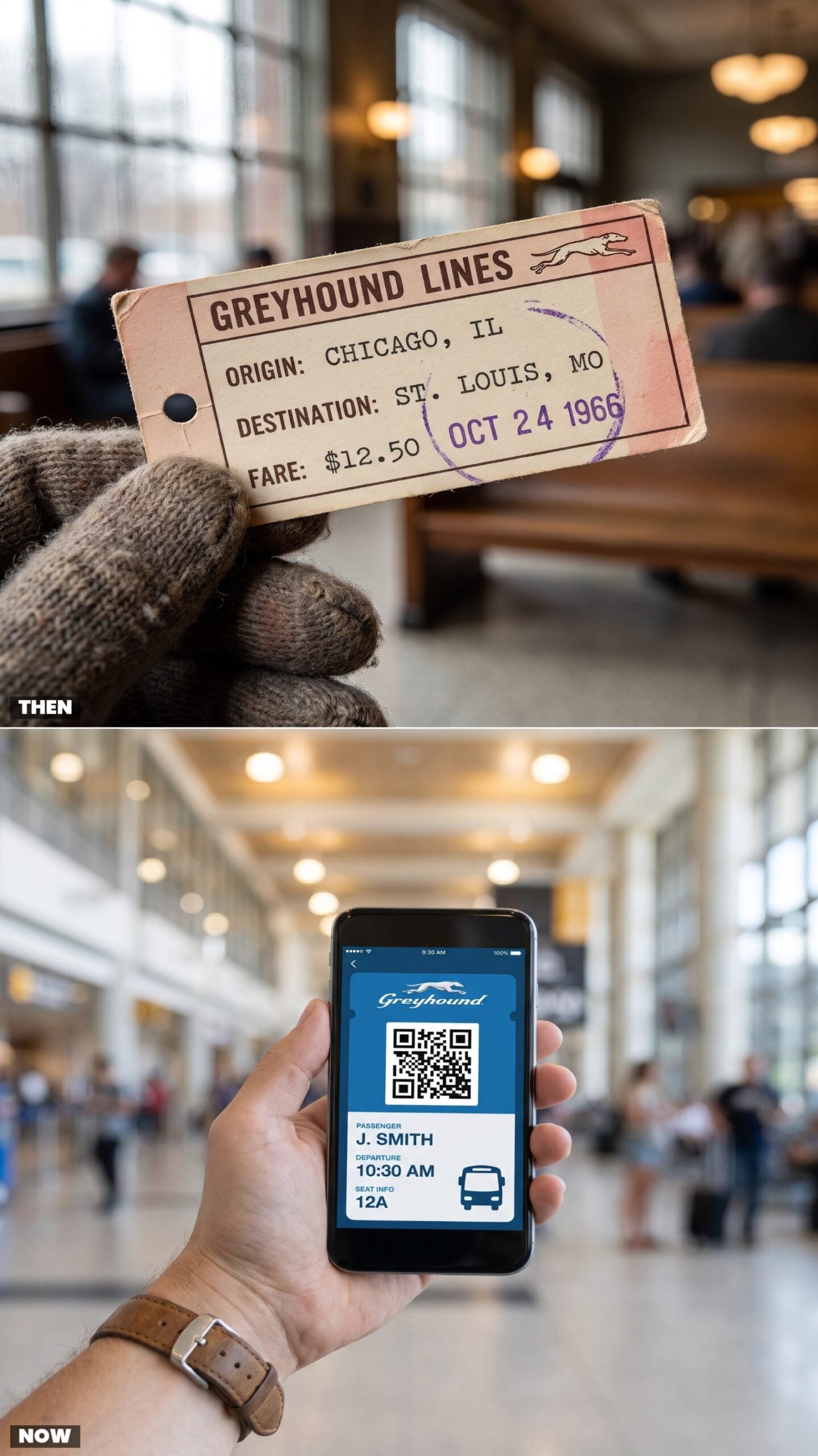
You could feel a 1966 ticket. Stiff card stock, perforated edge, a date stamped in purple ink and a conductor’s punch hole to prove you’d gone somewhere. People kept them in shoeboxes.
Now it’s a QR code glowing on glass — faster, impossible to lose as long as your battery holds, and completely without sentiment. Nobody’s framing a screenshot in forty years.
31. The Pocket Timetable vs. Today’s Live Schedule App
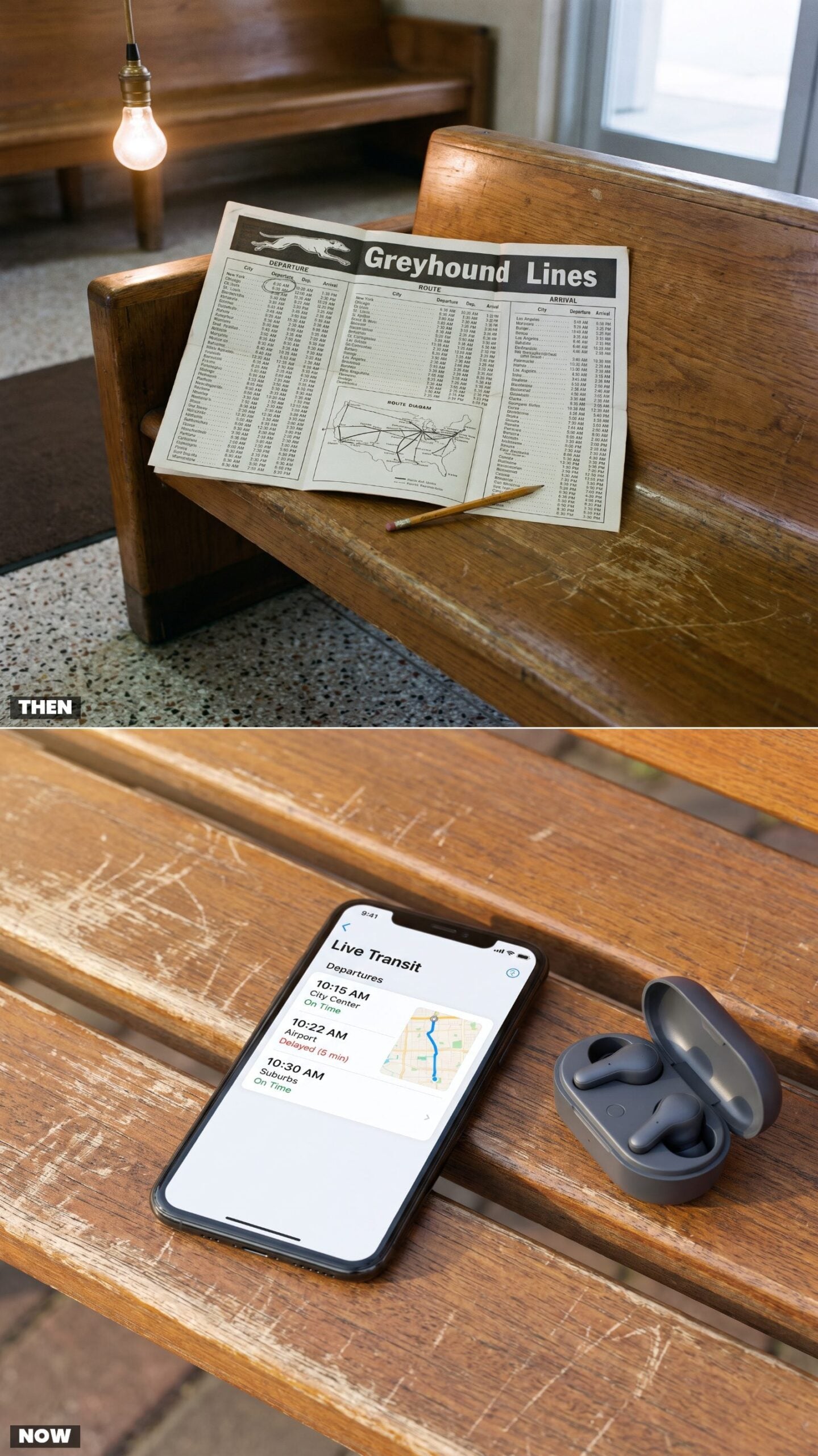
The pocket timetable was a marvel of tiny type — columns of departures crammed onto newsprint you folded into your coat, and a pencil to circle the 6:40 so you wouldn’t forget. If the bus ran late? Well. You found out when you found out.
The app tells you before you’ve left the house. Live status, delays, the bus crawling across a map in real time. We traded the folded paper and the surprise for certainty, and we don’t entirely miss the surprise.
30. The Wall-Sized Route Map vs. Today’s Interactive Planner
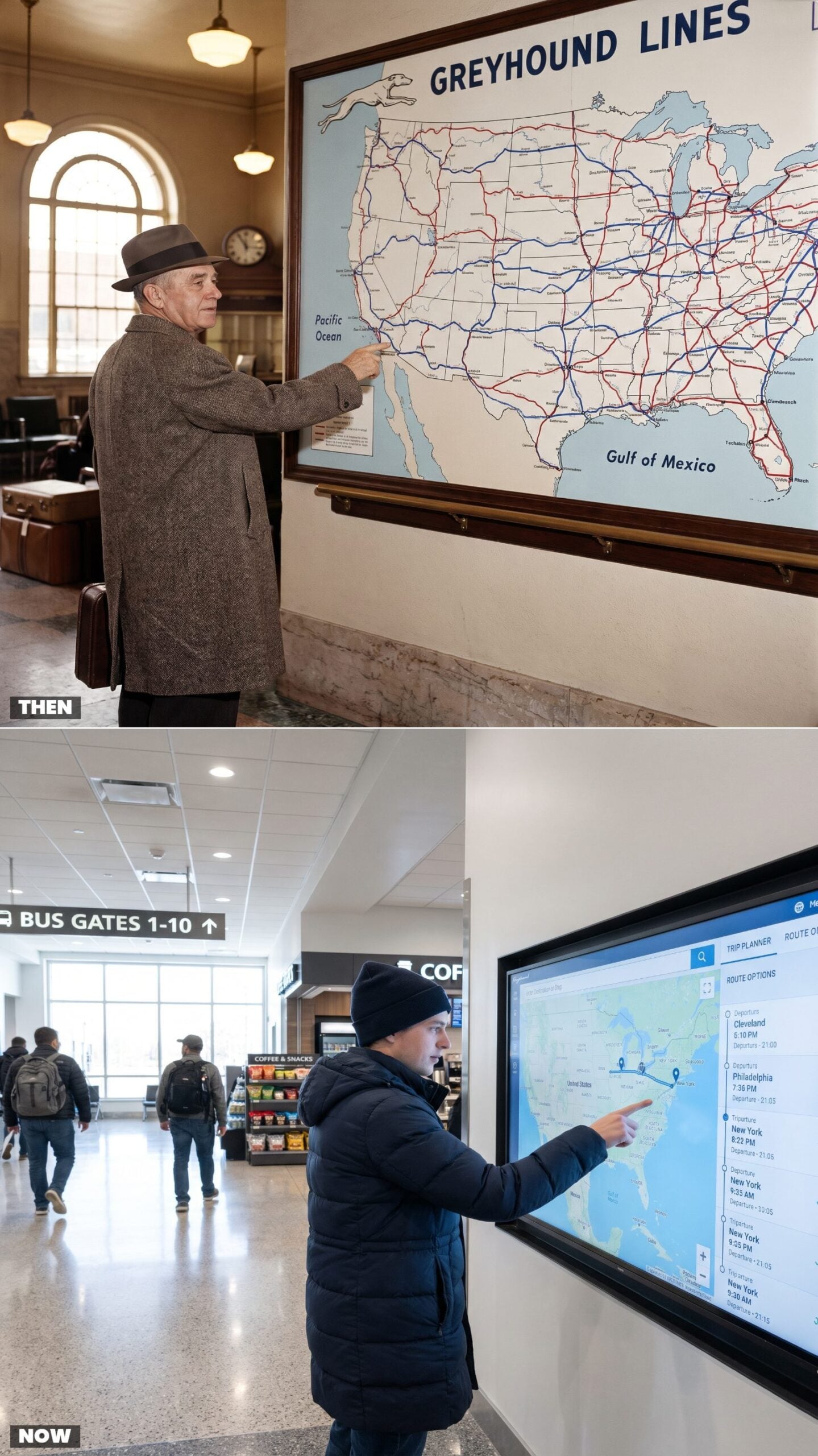
There was a kind of romance in the big wall map. The whole country webbed in red and blue, every small town its own dot, and you’d stand there tracing a finger from home out to wherever you were brave enough to go.
The planner does it faster. Type two cities, get the cheapest route, done. You lose the standing-and-dreaming part, though. Nobody dreams at a search box.
The map made the country feel reachable. The app makes it feel booked.
29. The Flip Departure Board vs. Today’s Electronic Status Screen
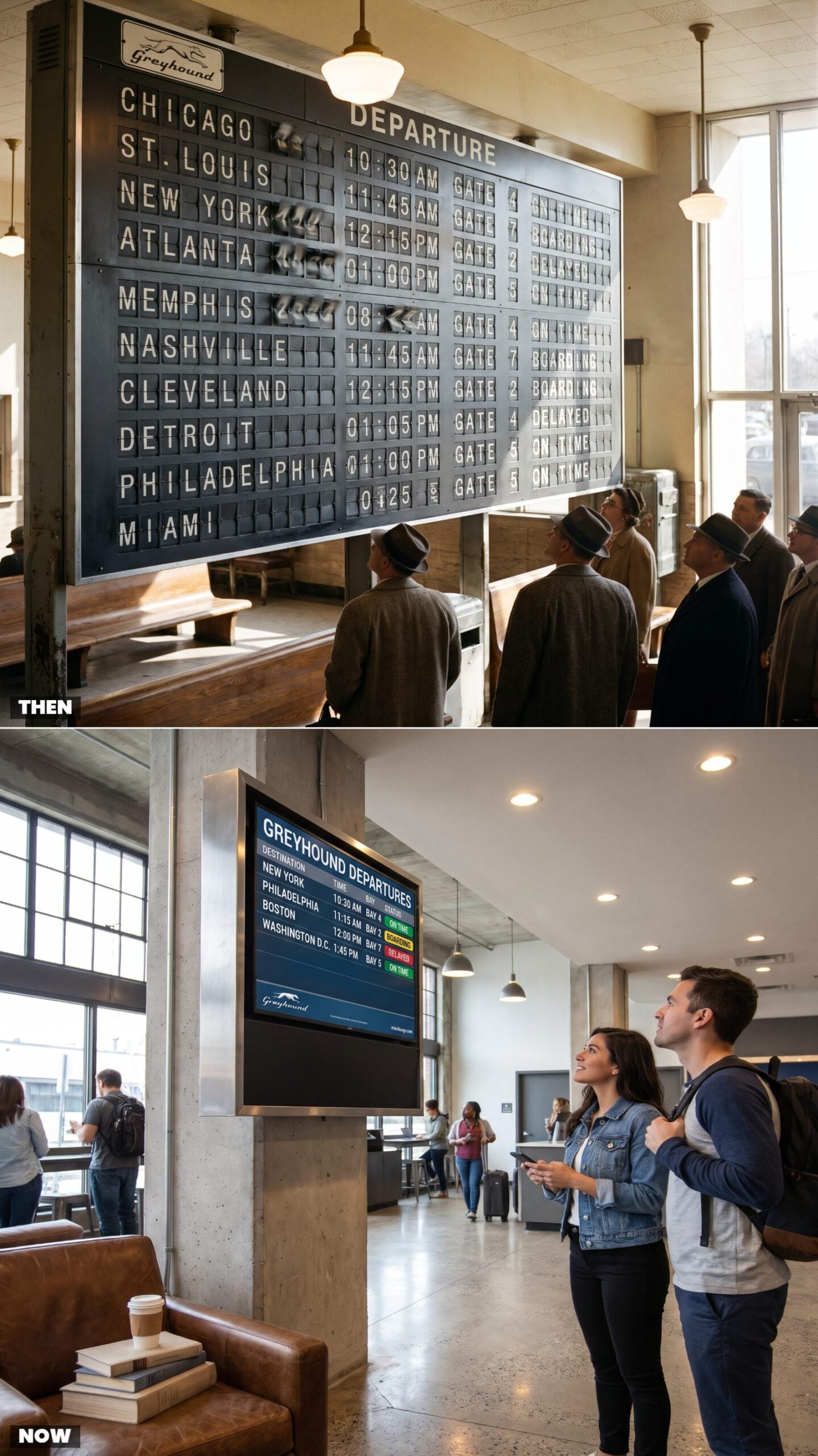
The split-flap board was pure theater. That clattering ripple of tiles as every destination updated at once, a sound that made the whole terminal look up. You knew a gate was about to board because you could hear it coming.
The LED screen just blinks and changes. Silent, instant, easier to read. But a room full of people no longer turns its head at the same moment — we gained accuracy and lost the sound of anticipation.
28. The Numbered Boarding Gate vs. Today’s Curbside Bay Marker
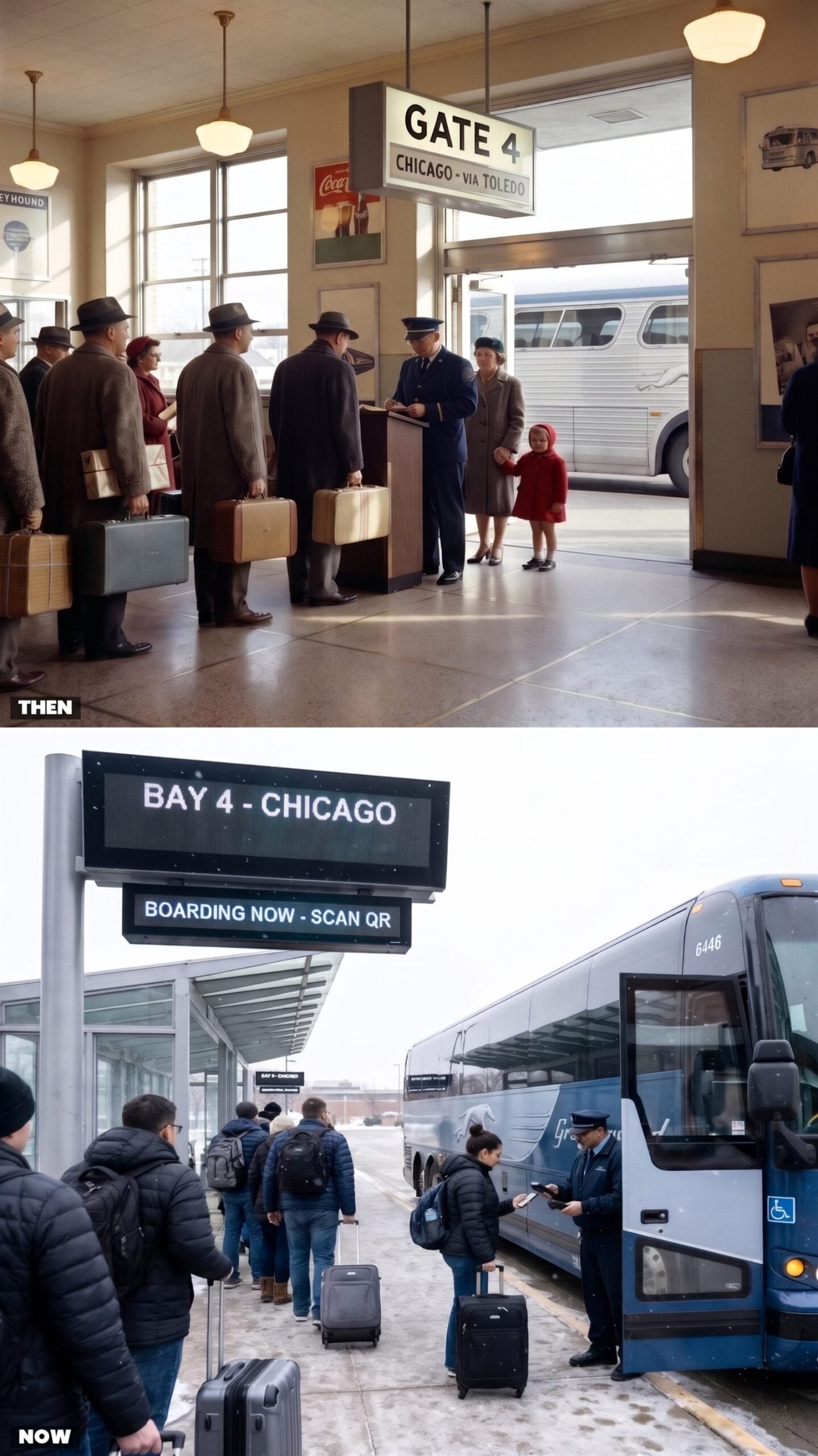
You lined up at a numbered gate inside, warm and out of the weather, while an agent in a cap checked each ticket and the silver flank of the bus waited just beyond the doorway. The whole thing had ceremony to it.
Now you line up outside at a numbered bay, coat zipped to the chin, watching the driver scan phones at the door. Simpler to run, cheaper to operate, and a lot colder in December. Bring gloves. That part they never improved.
27. Packed Vinyl Waiting-Room Benches vs. Today’s Mixed Terminal Seating
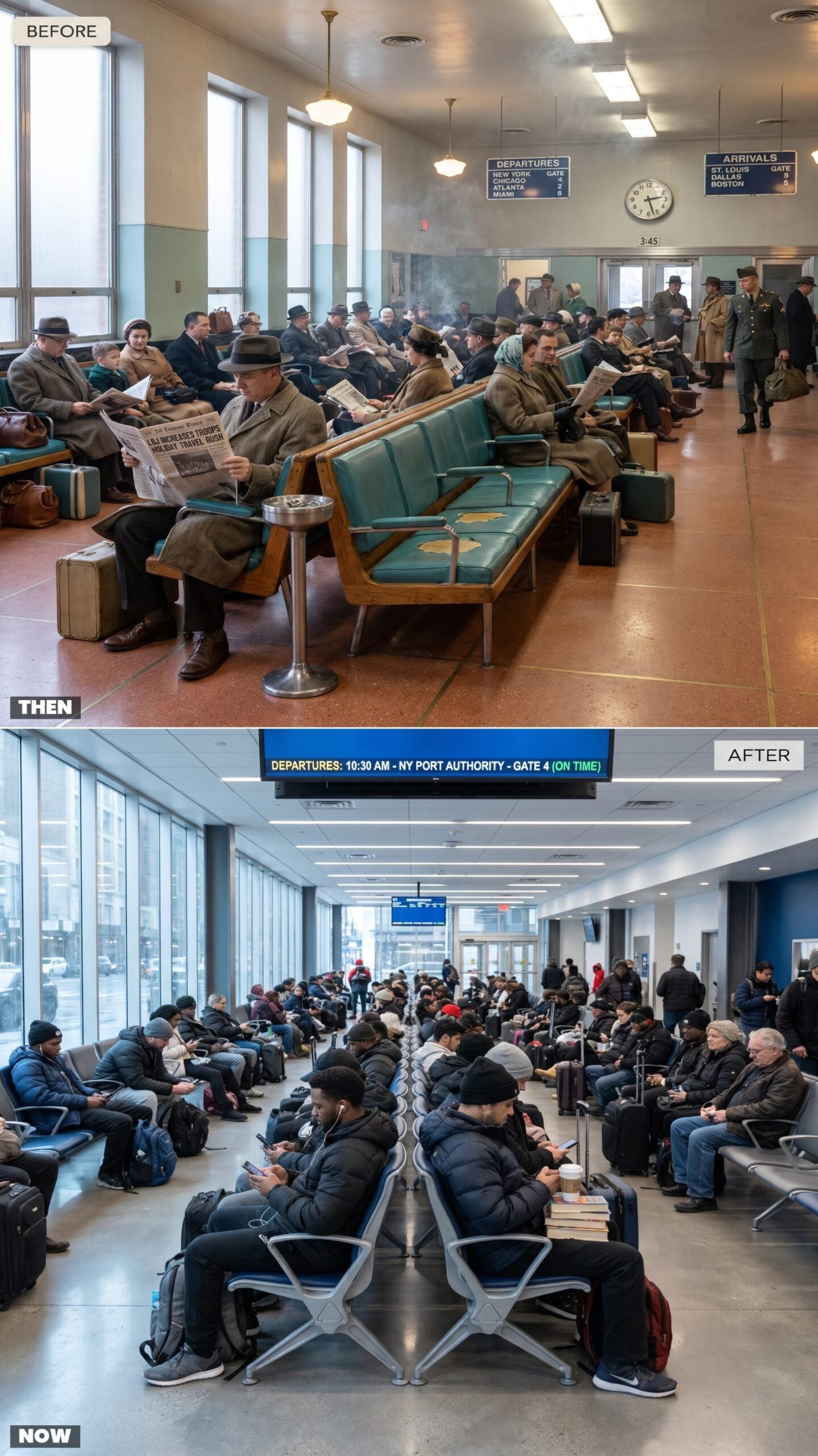
Those turquoise vinyl benches had a particular feel — cold when you sat down, then slowly warm, with a dip worn into the middle by every traveler who came before you. On a holiday they filled up by noon. Coats piled on laps, kids stretched out asleep, a haze of cigarette smoke drifting near the ceiling and a standing ashtray within arm’s reach of everyone.
Today you sit in molded plastic, bolted down in gray and blue. The armrests exist mostly to keep you from lying down. Nobody’s smoking, half the room is staring into a phone with earbuds in, and the benches hold no memory of anyone at all.
26. Rows of Payphones vs. Today’s Charging Stations
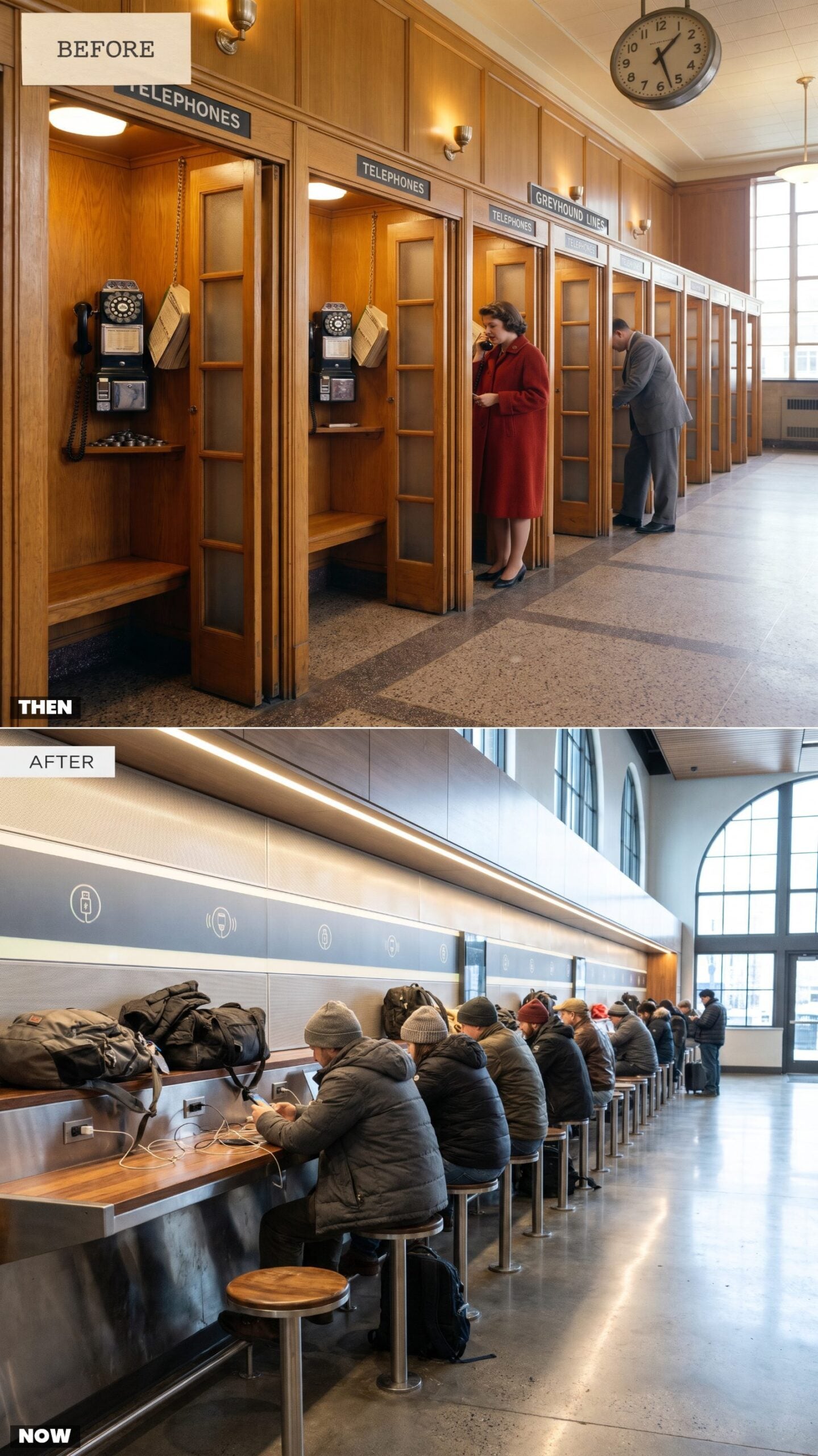
You kept a small pile of coins for the trip. A nickel, then dimes later, feeding the slot to tell someone on the other end you’d gotten in safe. The wooden booth had a door you could fold shut for a little privacy, a bench to sit on, and a phone book swinging on a chain that someone had always torn pages out of.
That whole wall is a charging bench now — outlets, USB ports, a counter with stools. Same spot, same purpose, really. You’re still telling someone you made it. You’re just doing it with a screen and a cable instead of a dime.
25. Full Lunch Counter vs. Today’s Packaged Food Market
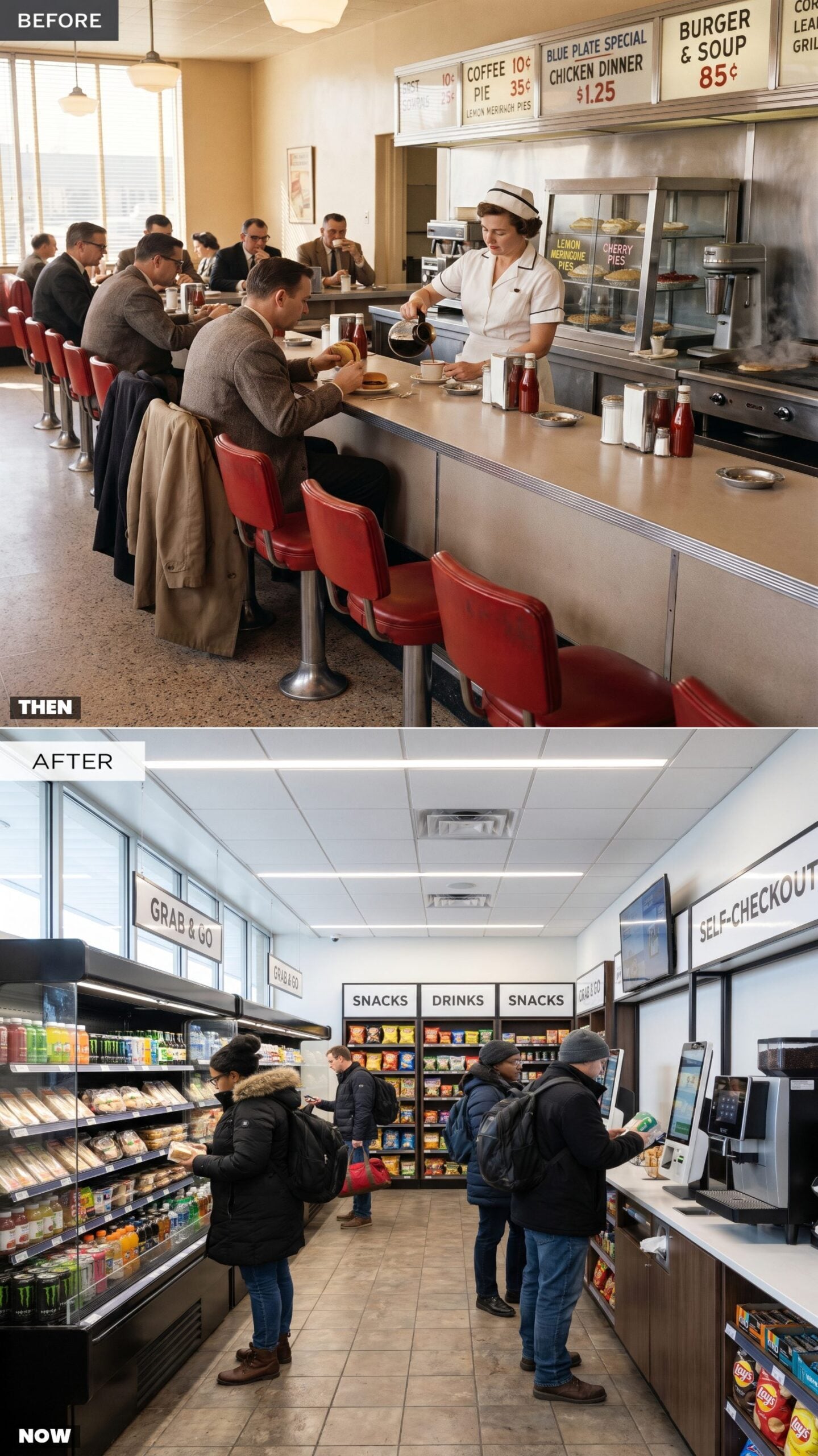
The lunch counter was its own little world. Red swivel stools, a waitress who called you honey whether she meant it or not, coffee that stayed hot because the pot never left the burner. You could get a real meal between buses — soup, a burger, a slice of lemon meringue out of the glass case while the milkshake machine rattled behind her.
Now you walk a cooler case. Grab a plastic-wrapped sandwich, a bottled drink, scan it yourself at a kiosk. It’s faster, it’s open at 4 a.m., and we’ll admit that’s worth something. But nobody’s pouring your coffee, and the pie case is gone for good.
A meal at the counter was part of the trip. Now the trip just has food in it.
24. Keyed Luggage Lockers vs. Today’s Limited Bag Storage
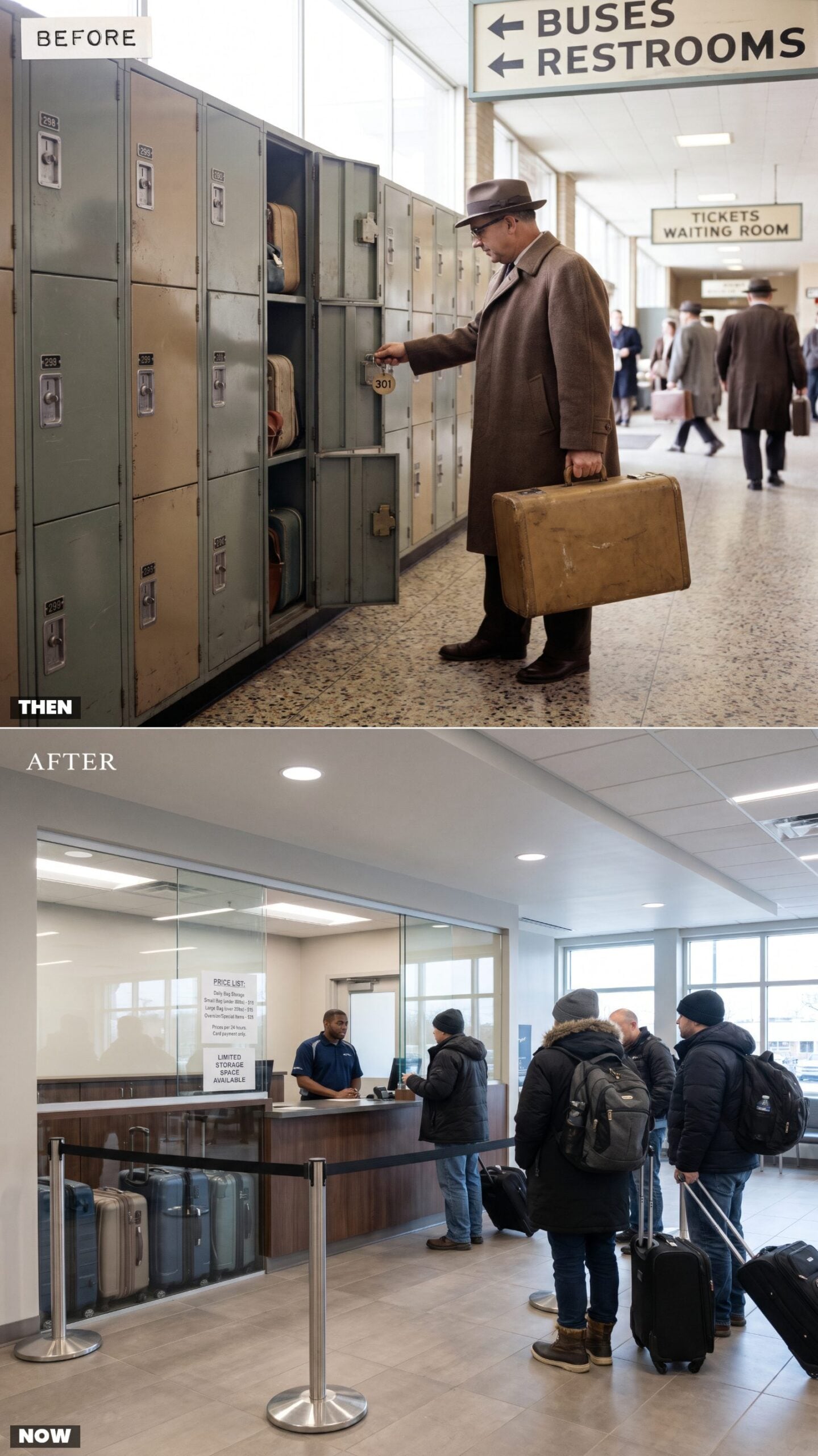
Drop a quarter, turn the key, pull it out, and the paddle tag went in your pocket. The lockers let you ditch your bags and walk around town for a few hours between connections. People stashed Christmas shopping in them, winter coats, a whole second suitcase. That row of little gray-green doors was a quiet piece of freedom.
Most of that freedom disappeared. Security worries shut down the self-serve banks at terminal after terminal. Where storage survives at all, it’s a staffed window, limited hours, a posted fee, and a line — convenience traded for caution.
23. Staffed Baggage Counter vs. Today’s Self-Managed Luggage
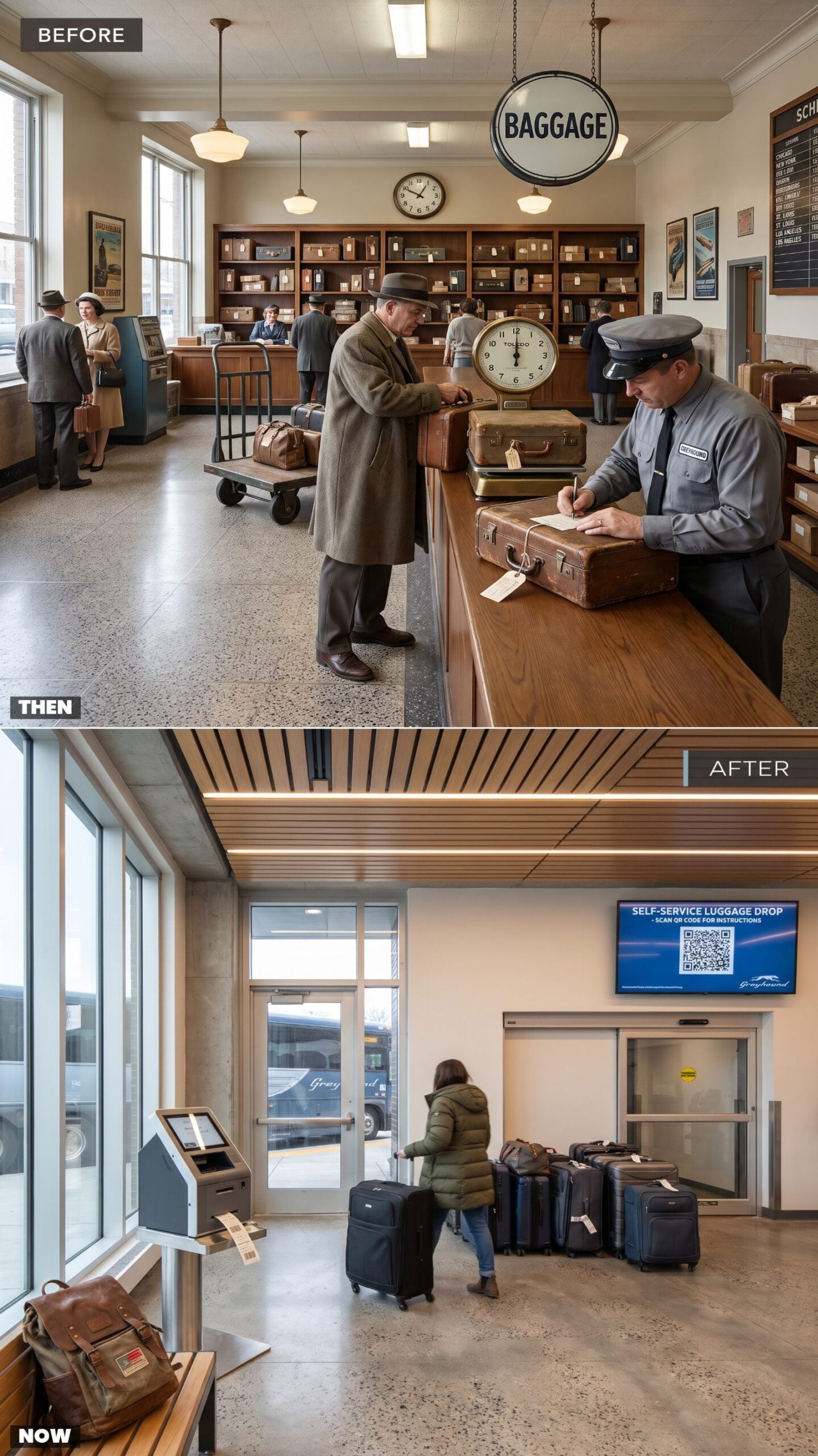
There was a man behind the counter whose whole job was your bags. He weighed them on a brass scale, wrote out a claim tag by hand, tied it on with string, and slid your copy back across the wood. You handed your suitcases over and walked away empty-handed while somebody else got them onto the right coach.
Now you’re the baggage handler. Print your own tag at a kiosk, wheel your bag to the bus yourself, watch it go in the hold and hope it comes back out at the other end. The old counter had a human accountable for your things. Self-service put that job on you.
22. Hard-Sided Samsonite Cases vs. Today’s Rolling Spinner Luggage
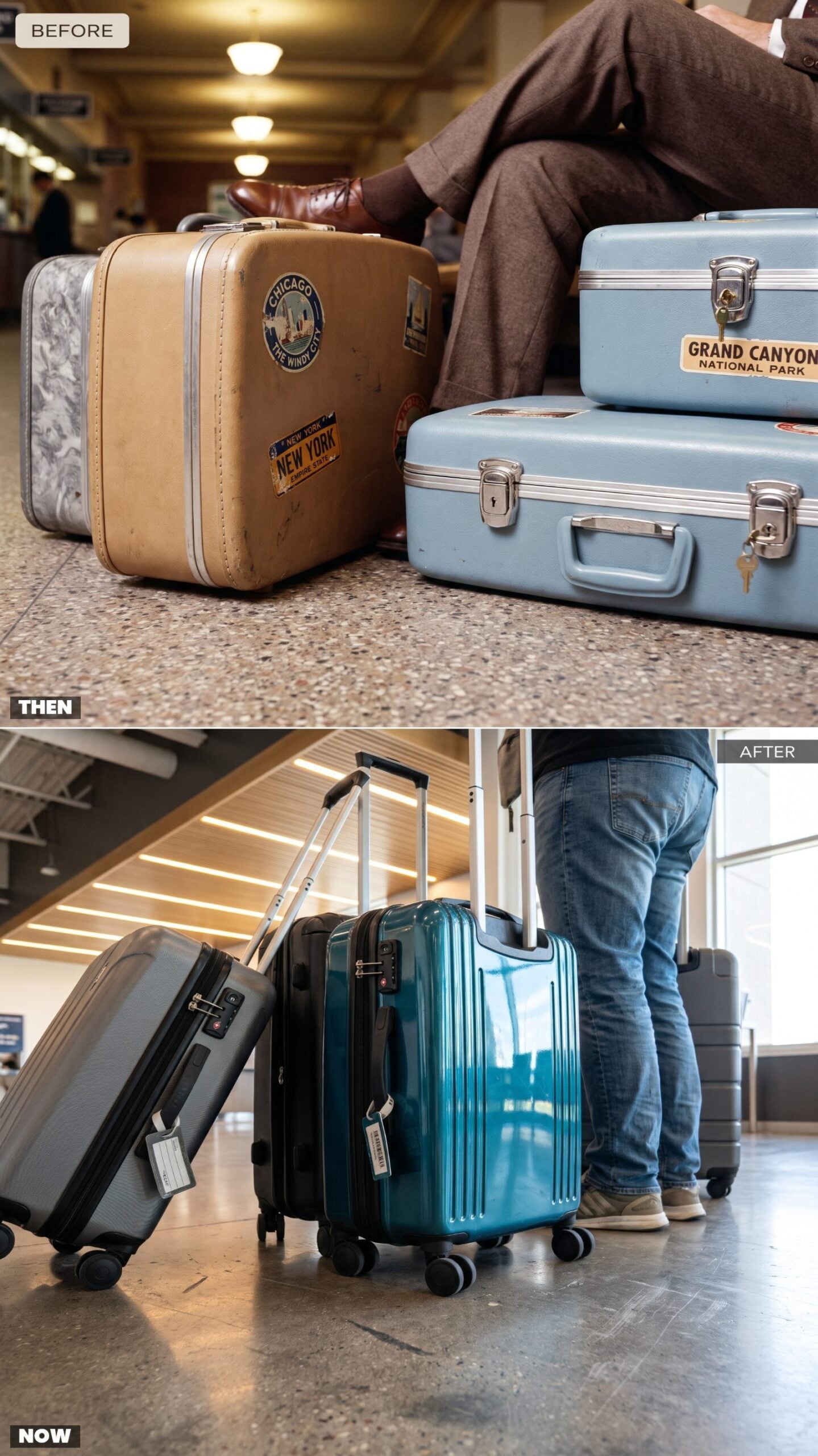
Samsonite built those cases like small safes. Hard shells, chrome latches that snapped shut with real authority, a tiny lock most people lost the key to within a year. They came in tan and that chalky pale blue, and you carried them — all of them, by the handle, switching hands every fifty feet, shoulder aching by the time you reached the gate.
Today’s bags roll. Four spinner wheels, a telescoping handle, a shell so light you forget it’s loaded. You glide it along beside you without breaking stride. The old cases looked better sitting still, sure. But the new ones are honestly a mercy on your arm, as anyone who ever hauled a full Samsonite set up two flights of stairs will tell you.
21. Ribbon-Wrapped Gift Parcels vs. Today’s Compact Carry-On Gifts
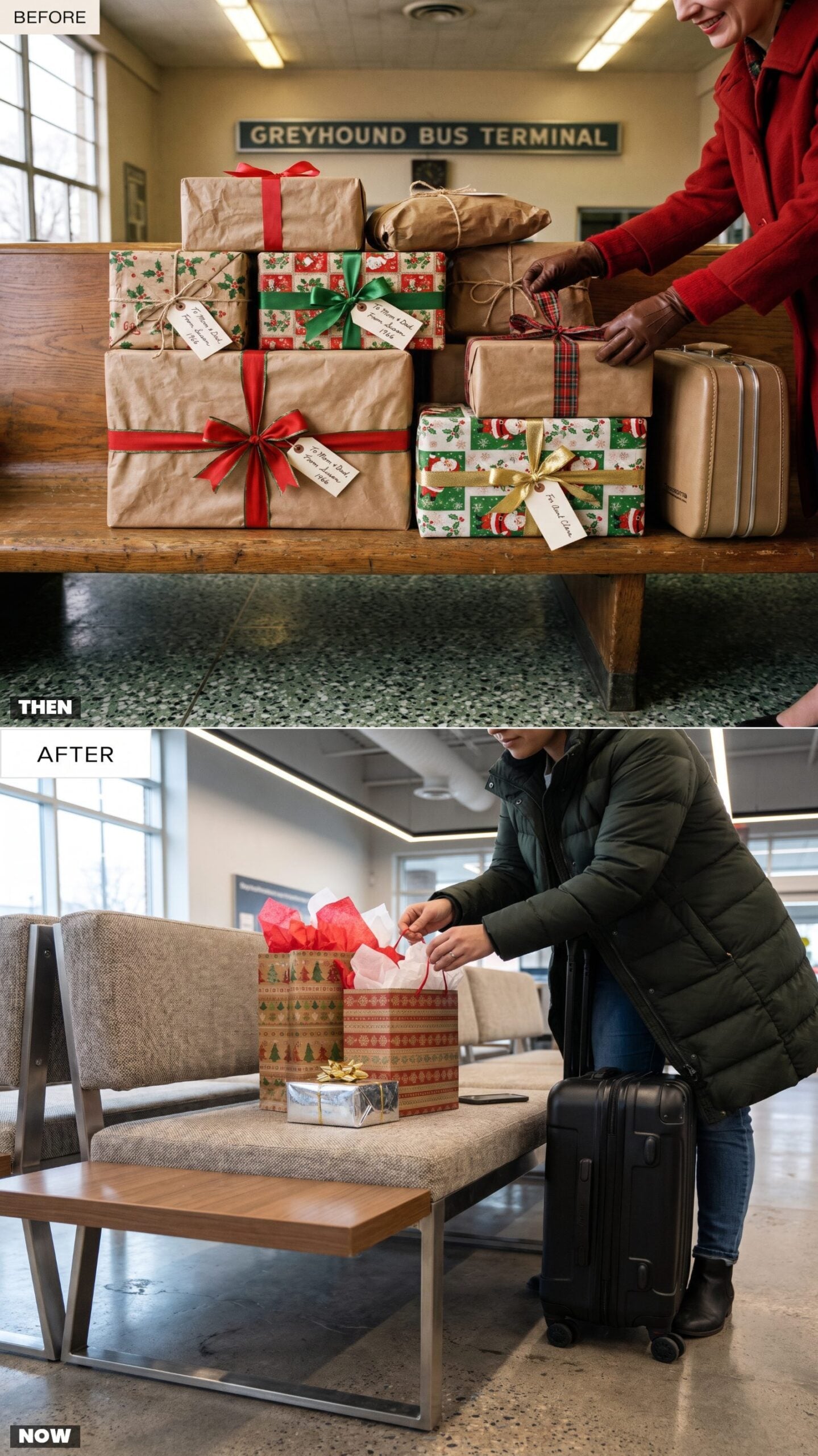
People traveled with the gifts back then. Actual boxes, wrapped at home in kraft and patterned paper, tied with cloth ribbon and real bows that got crushed the second you set the parcel down wrong. The tags were handwritten, the shapes were awkward, and you hauled them along with your suitcase because that’s how the presents got to Grandma’s.
Now the gifts go flat or they go online — a small wrapped box tucked in the carry-on, a gift bag that folds, or nothing at all because it already shipped straight to the door. The parcels shrank as the whole trip got leaner.
20. Canvas Destination Rollsign vs. Today’s LED Destination Display
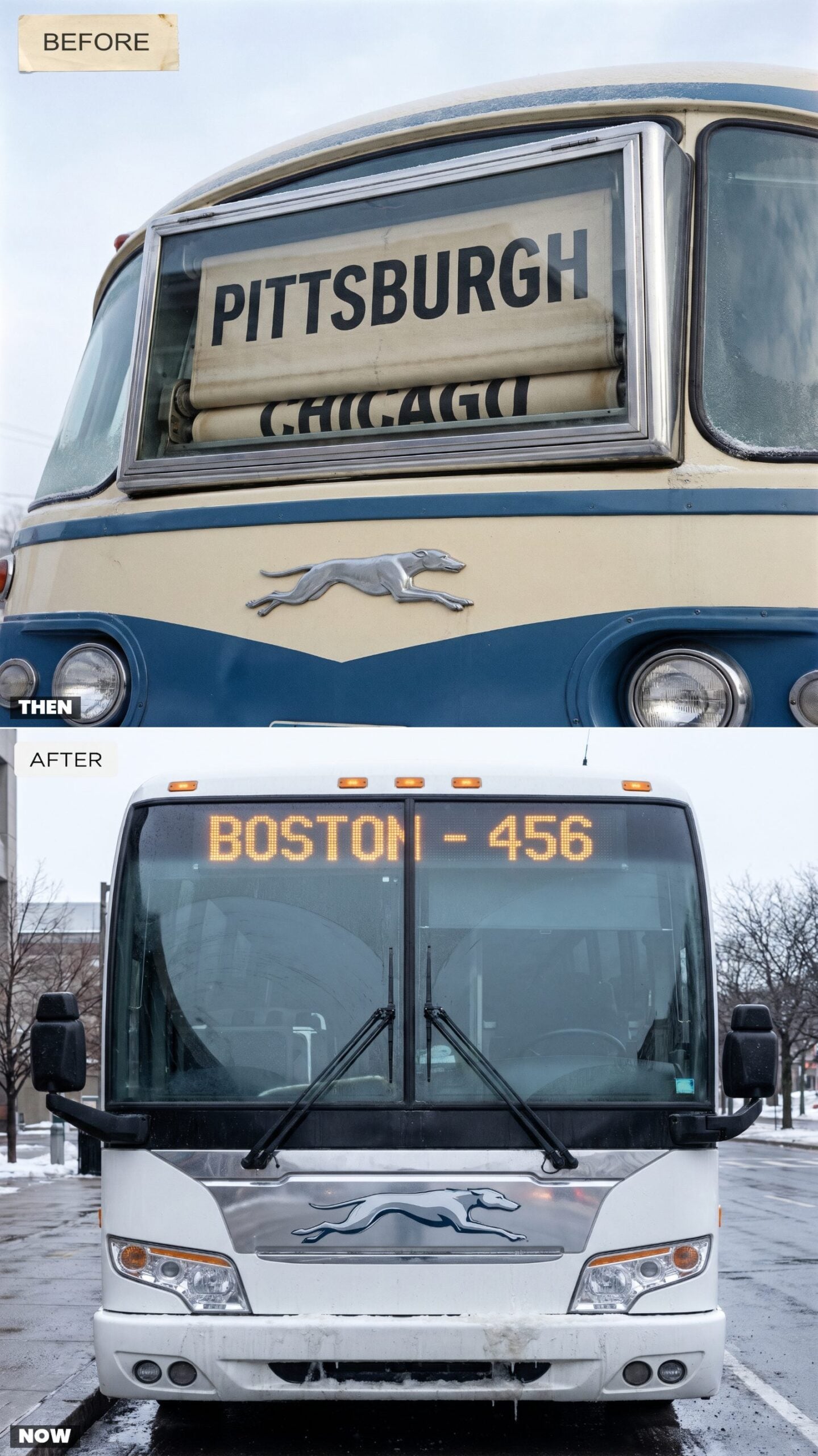
The destination showed on a canvas scroll — a long roll of cloth behind glass, hand-set by the driver to whatever city you were headed for, black letters on white. It had a slightly handmade look, a little off-center sometimes, the edges fraying after years of cranking. You read your city up there and knew you had the right bus.
Now it’s an amber LED matrix. Crisp, bright, readable from a block away, flipping between the city and the route number on a timer. It does the job better. It just doesn’t carry that worn cloth character — the feeling that a person reached up and rolled it to your town.
19. Uniformed Driver With Cap vs. Today’s Practical Driver Uniform
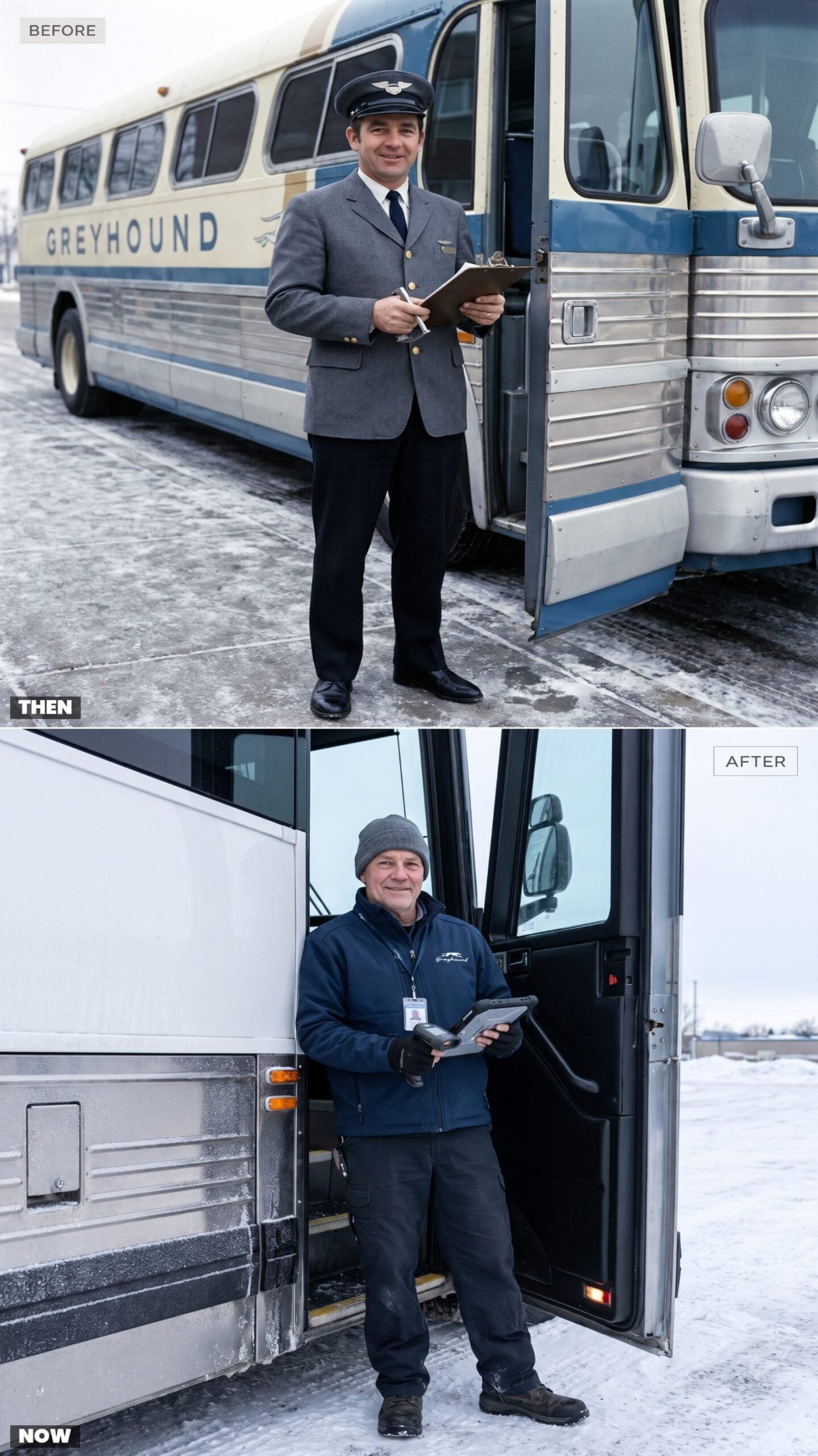
The driver looked like an officer. Gray wool jacket, brass buttons, a tie, and that peaked cap with the metal badge sitting just so. He punched your ticket with a little handheld clicker and stood by the door like the whole operation was his personal responsibility. You trusted him on sight — which was, more or less, the uniform’s entire job.
Today’s driver dresses to work. A polo or soft-shell with a small embroidered logo, an ID on a lanyard, a beanie when it’s cold, a scanner instead of a punch. More comfortable, more practical, easier on a twelve-hour shift. The authority’s still there. It just isn’t wearing a cap anymore.
18. Punched Ticket Inspection vs. Today’s Screen-Based Verification
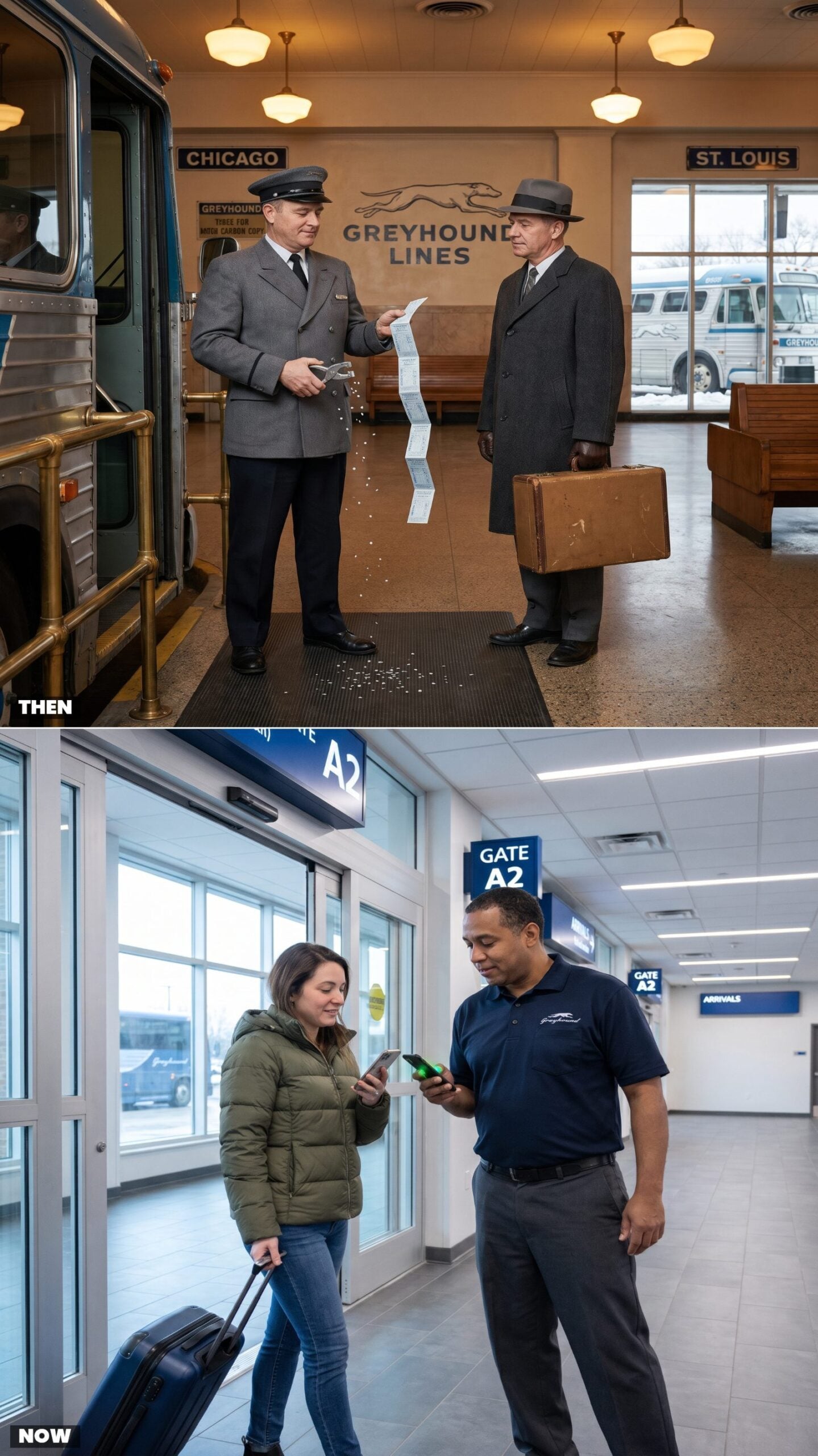
The sound used to be a soft chunk, metal biting paper, a little snow of punched dots drifting to the floor. The driver held your ticket up to the terminal light, squinted, punched it, handed it back. Proof you’d paid, proof you were going somewhere.
Now it’s a phone held to a phone, a green checkmark, no sound at all. The whole exchange takes a couple of seconds, and nobody has produced a scrap of paper in years.
The old punch had a dignity the beep can’t touch. But we’ve also stood in line behind someone digging for a lost paper ticket at the bottom of a purse. The checkmark has its mercies.
17. Narrow Coach Steps vs. Today’s Accessible Boarding Lift
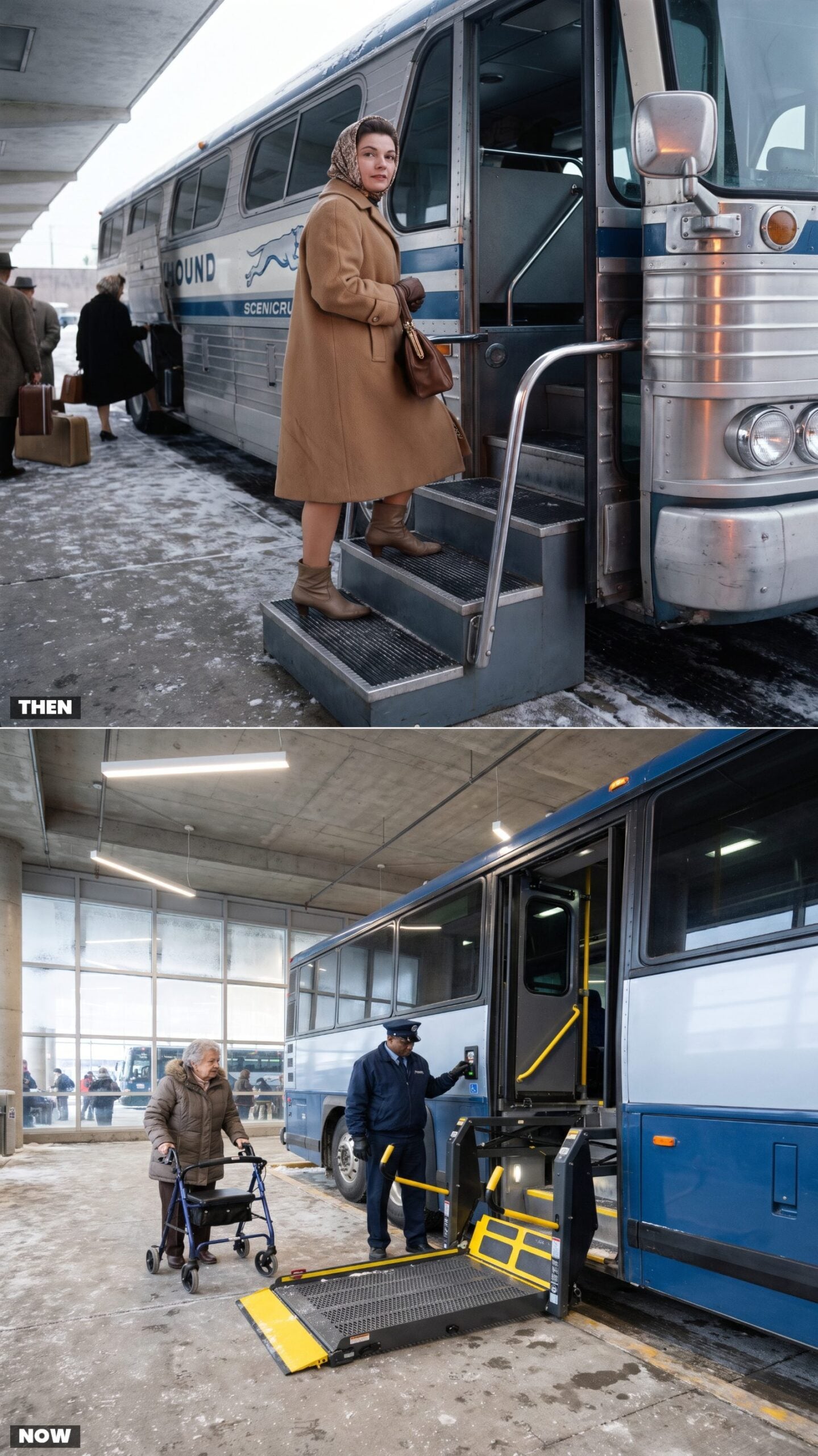
Climbing aboard a 1966 Scenicruiser meant three steep steps and a single cold chrome rail. If you had bad knees, a baby on your hip, or a suitcase in each hand, that was your problem to solve on the way up, and people solved it winter after winter because there was no other way.
The modern coach lowers a hydraulic lift with a flat platform and yellow safety edging. Nobody wrestles with stairs who can’t. It’s slower to deploy, sure. But watch a passenger with a walker roll straight on where they’d once have been stranded at the curb, and the extra minute and a half stops feeling like a cost.
16. Reclining Two-Tone Seat vs. Today’s High-Back Coach Seat
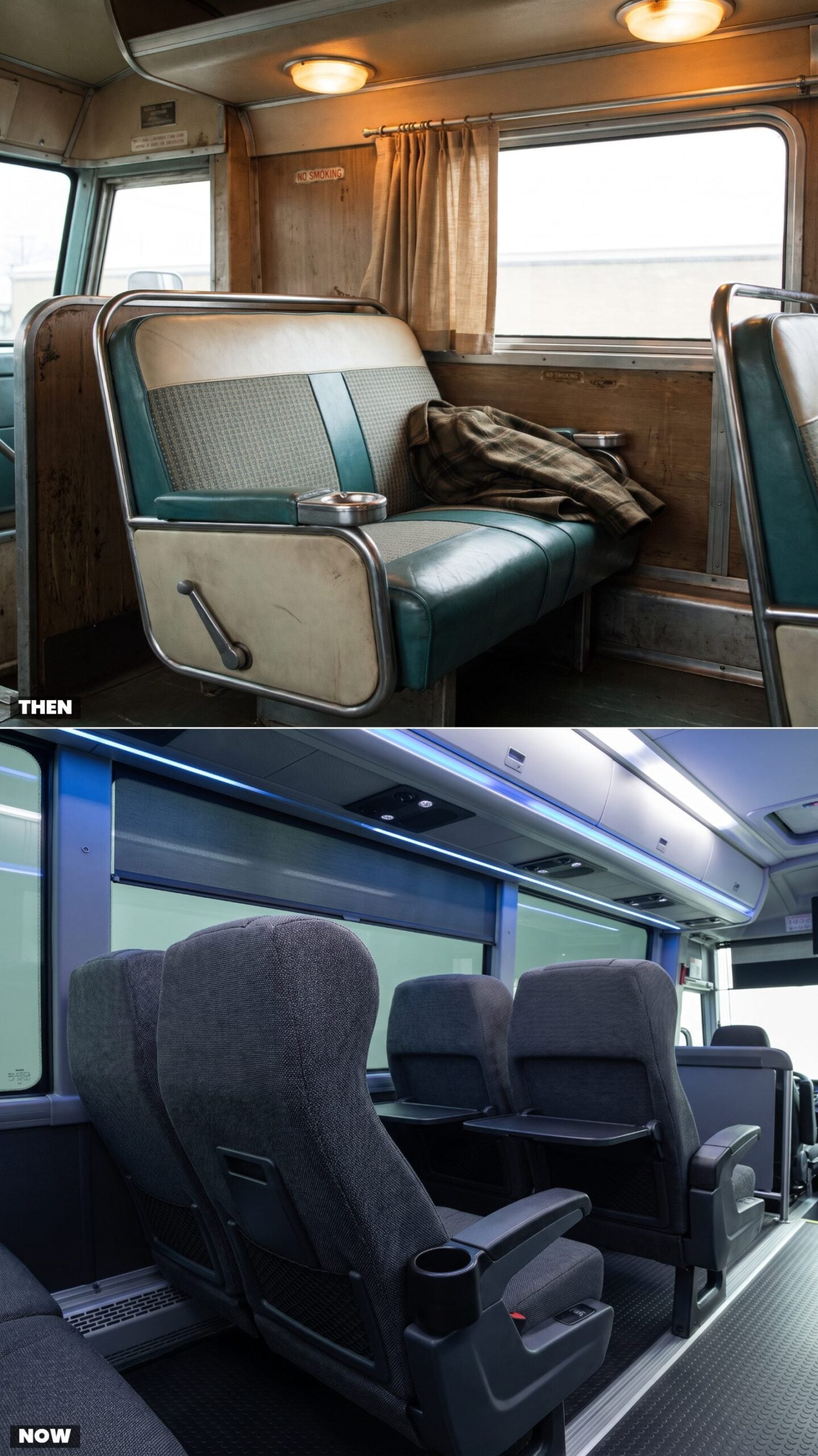
Teal-and-cream vinyl, a chrome grab bar you could feel through the thin padding, and a recline that gave you maybe four inches before it gave up. The 1966 coach seat wasn’t built for comfort so much as for cleaning. You could wipe it down with a rag, which tells you everything about what happened in those seats on a nine-hour haul.
Today’s high-back seat swallows you to the shoulders, holds your neck, hides a cup holder and a slot for your phone. It reclines further and feels like furniture rather than a bench with a lever.
15. Panoramic Picture Window vs. Today’s Tinted Coach Glass
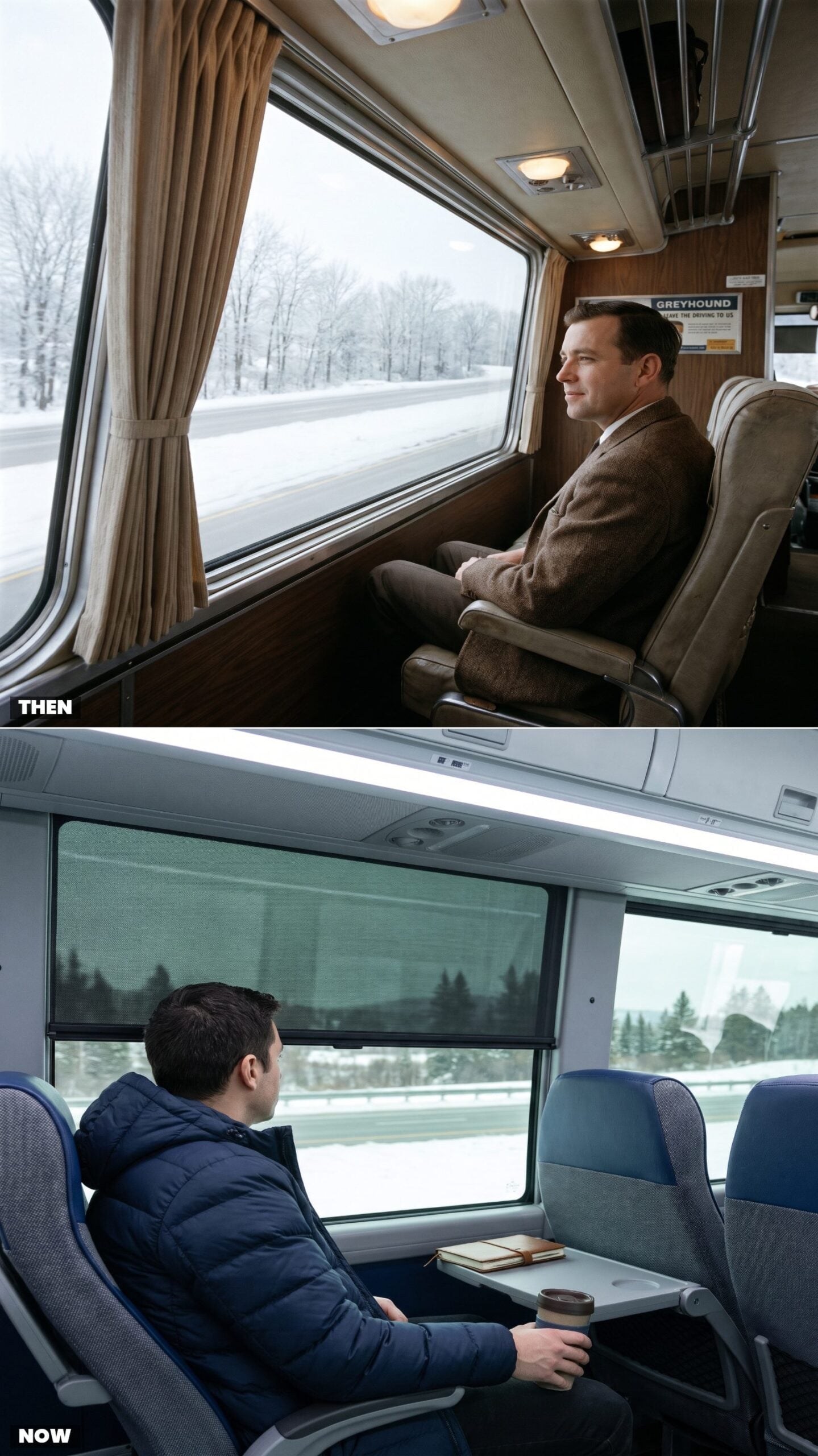
The Scenicruiser earned its name. Those big clear panes on the raised deck turned a long dull drive into a moving postcard, snowfields and barns and the backs of small towns sliding past in full color. People booked the upper level on purpose, just for the glass.
Modern coach windows are tinted dark against glare and heat, which is comfortable and sensible and quietly robs you of the show. The world outside goes a little gray, a little dimmed, like watching the landscape through sunglasses you can’t take off.
We miss the clear glass, and we’ll say it plainly. A tinted window keeps the sun off your neck, but it also keeps the country at arm’s length, and the country was half the reason to take the bus.
14. Warm Incandescent Cabin Lights vs. Today’s LED Reading Lights
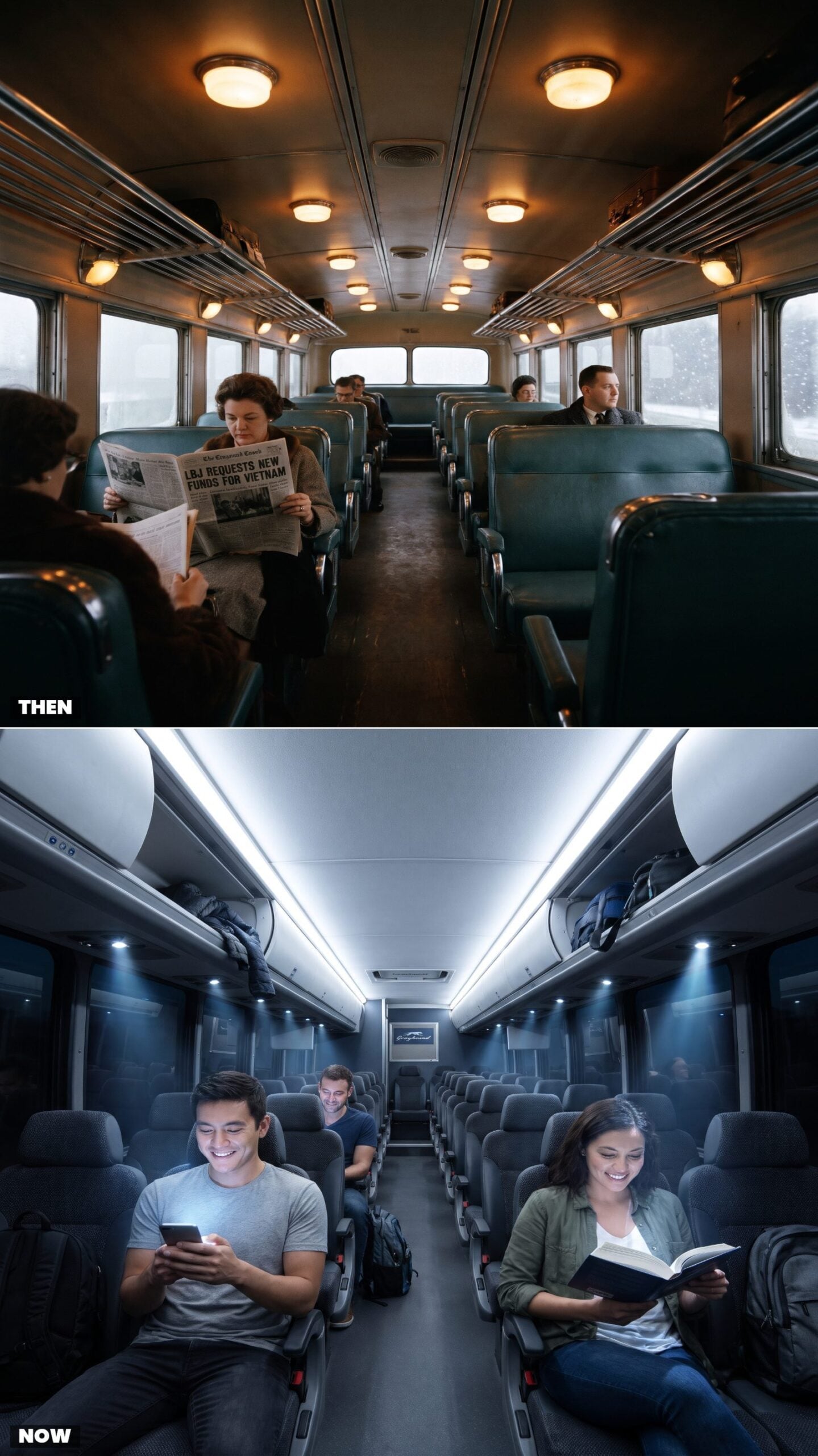
Night buses in 1966 ran on tungsten. Little round dome lights threw a warm amber glow over the whole cabin, soft enough to doze under, dim enough that the overhead reading bulb felt like a real privilege when you clicked it on over your newspaper.
LEDs changed the color of the whole experience. Brighter, cooler, bluer, a focused beam straight onto your page or your phone with hard edges and no spill. More efficient, more useful, less cozy.
13. Compact 1960s Restroom vs. Today’s Updated Onboard Lavatory
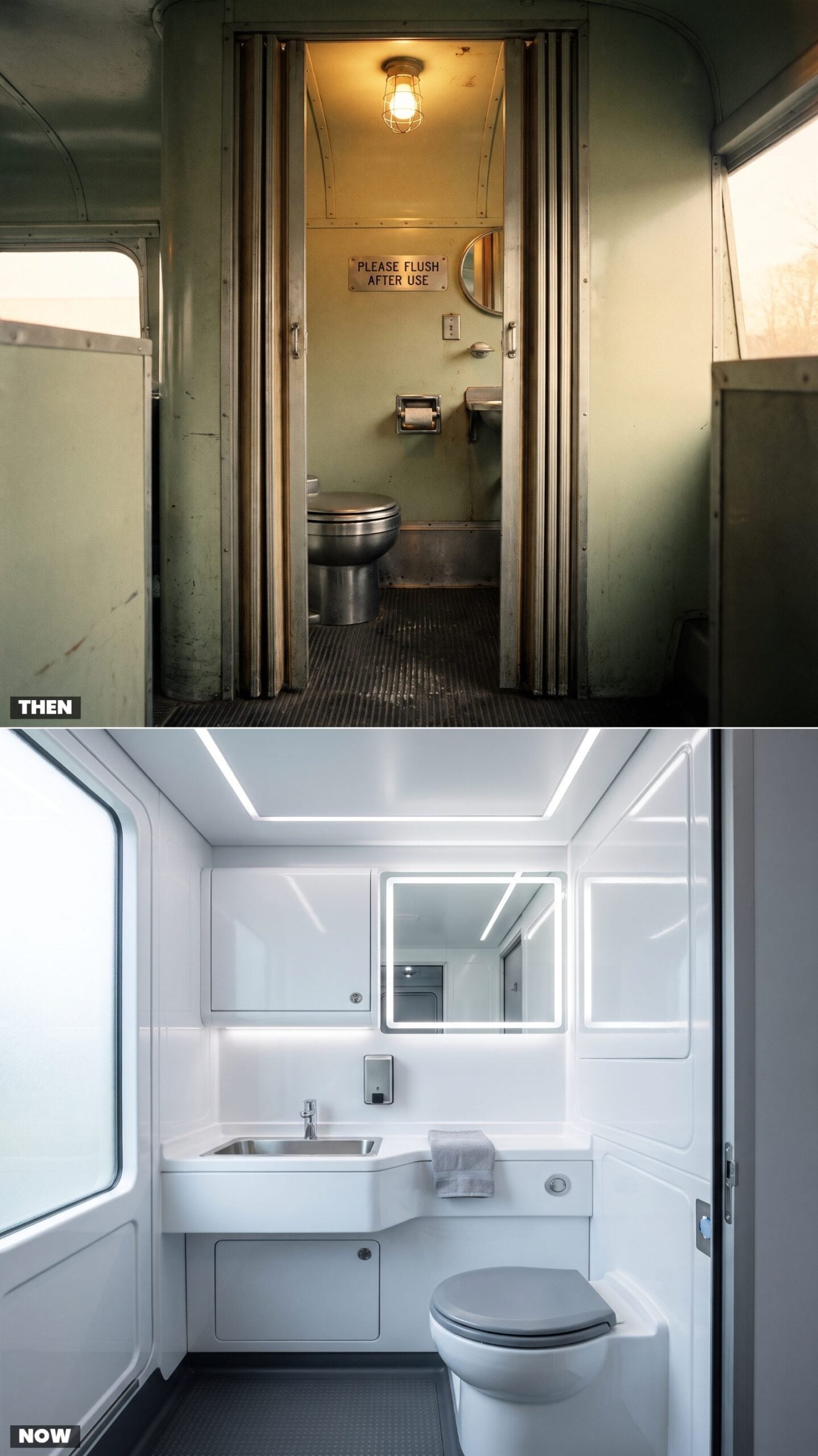
Let’s not romanticize this one. The 1966 onboard restroom was a pale-green metal closet barely wider than your shoulders, a chemical toilet, a round mirror the size of a coffee saucer, and one dim bulb doing its best. You braced against the wall as the coach swayed and got out as fast as you decently could.
The modern lavatory gives you molded white plastic, a real sink, a proper mirror, and LED light bright enough to actually see in. Still small. Still swaying. But a clear step up from the green metal box.
12. Smoke-Filled Rear Rows vs. Today’s Smoke-Free Coach
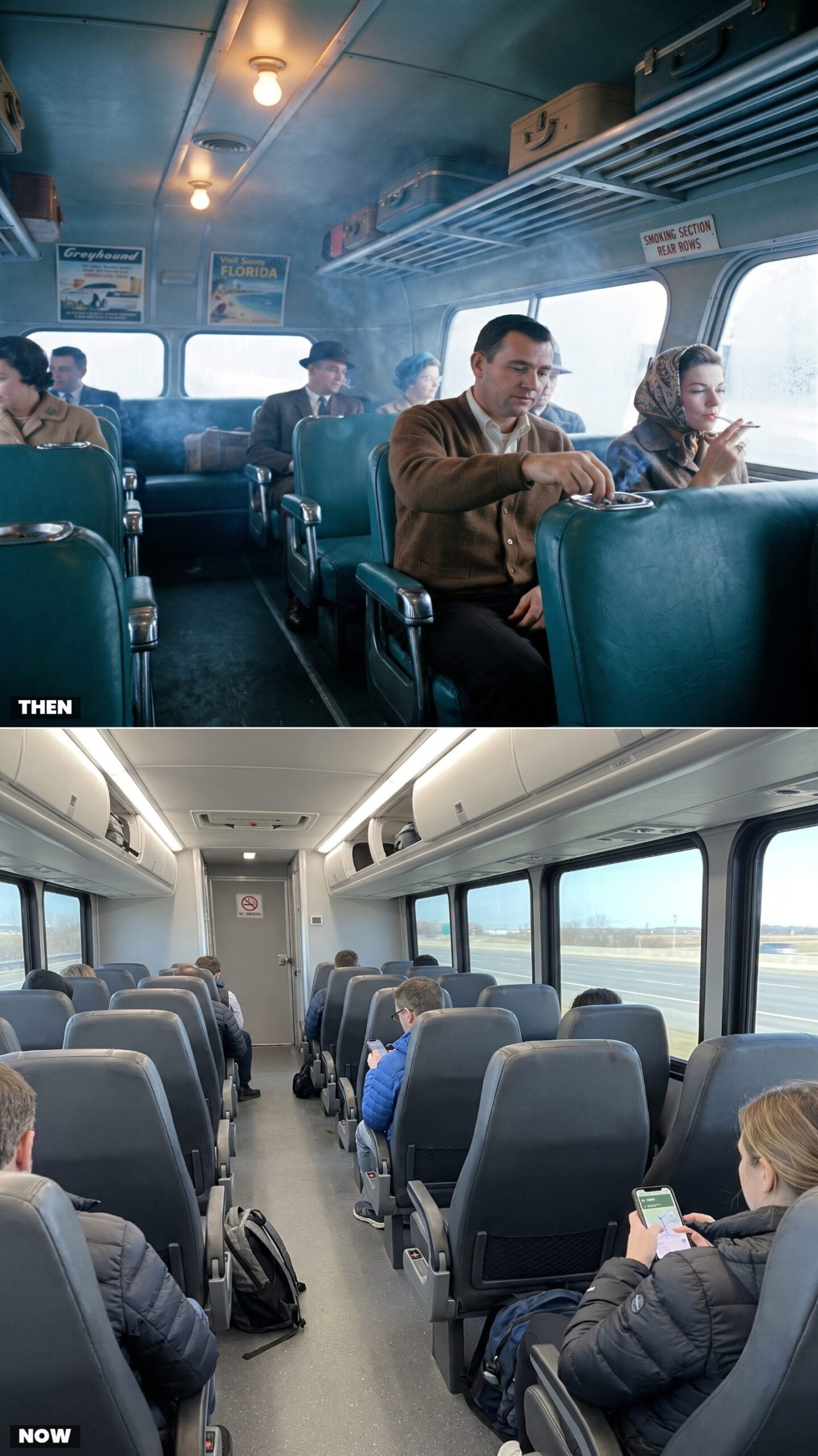
The back of a 1966 coach came with a blue haze near the ceiling and a chrome ashtray screwed to every armrest. Light up in the designated rows, tap the ash, settle in. Nine hours in that section meant you arrived smelling like the inside of a matchbook, whether you smoked or not.
Today the whole coach is smoke-free, the ashtrays long gone, replaced by a small red circle on the bulkhead. The air is just air now.
11. Brown-Bag Meal vs. Today’s Convenience-Store Travel Snacks
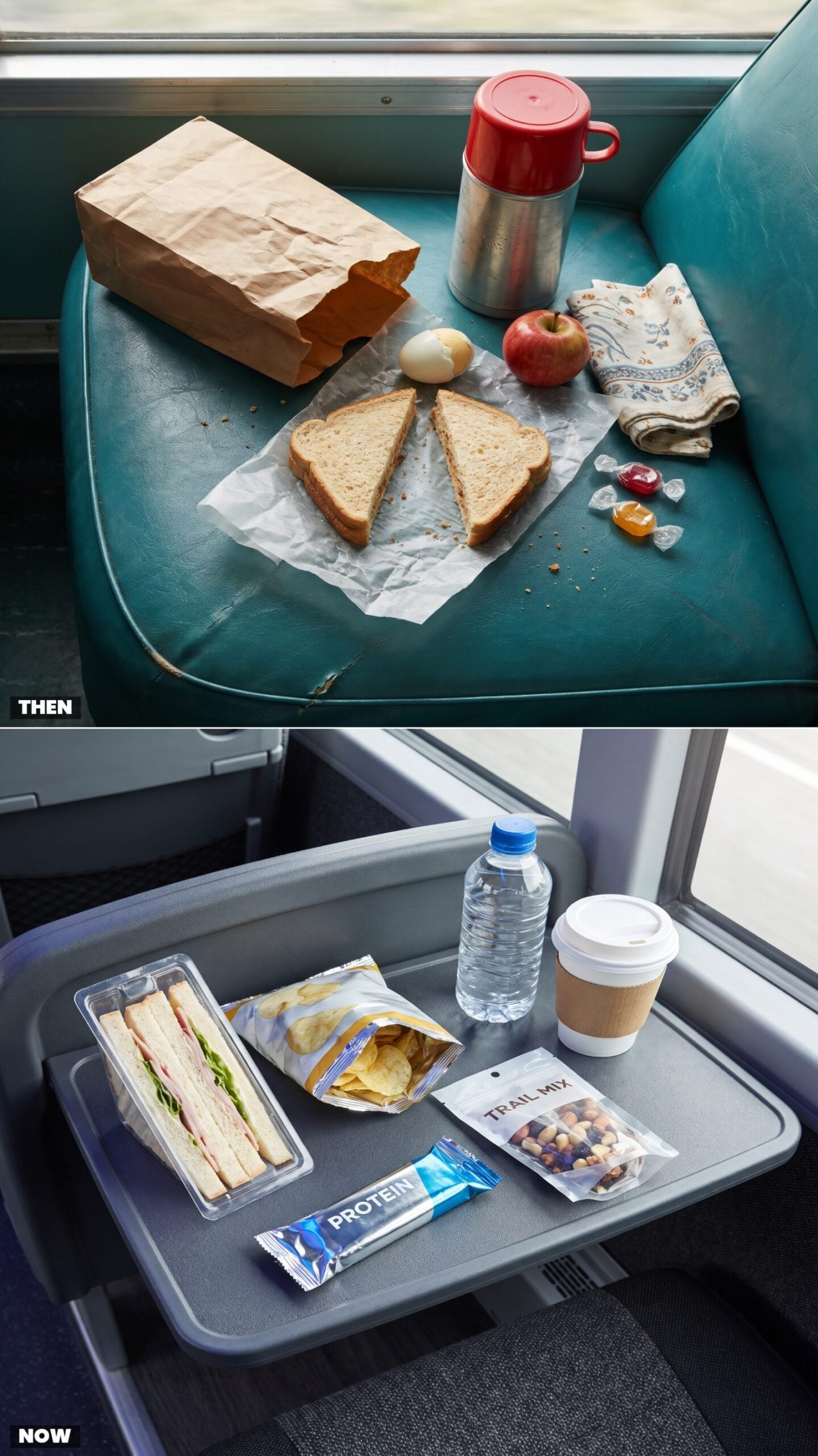
You ate what somebody packed at home. A brown sack, sandwiches in wax paper cut on the diagonal, a boiled egg, an apple, a thermos of something warm with a red screw cap. The food smelled like your own kitchen three hundred miles from home, and the thermos coffee was always better than it had any right to be.
Now you grab a triangle sandwich in a plastic sleeve and a foil protein bar from the terminal shop or a curbside gas station stop. Faster. Colder. A little lonelier. Nobody wrapped it for you.
We still think the wax-paper sandwich wins, and we’ll die on that hill. There’s a reason nobody feels sentimental about a plastic-wrapped triangle.
10. Transistor Radio With Earphone vs. Today’s Streaming Entertainment
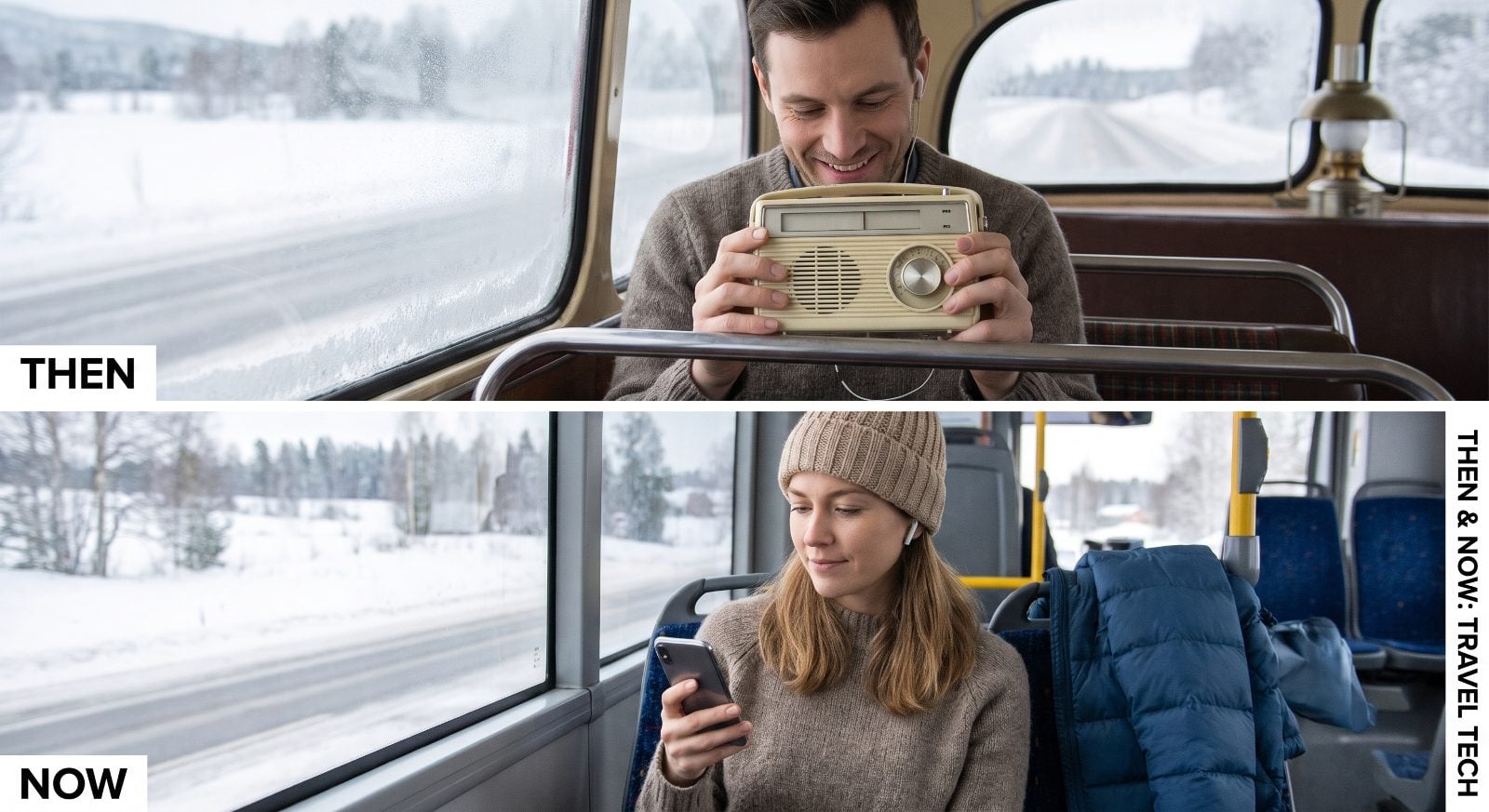
A portable transistor radio and a single beige earphone was private entertainment in 1966. You’d fish for a station as the signal faded between towns, catch half a ballgame or a swing tune, lose it to static, start hunting again. The tuning was half the fun. You took whatever the air gave you.
Now a phone holds every song and show ever recorded, no static, no hunting, wireless buds in both ears. You pick exactly what you want and never have to settle. Which is better, and somehow a little less of an adventure.
9. Coloring Book and Crayons vs. Today’s Child’s Tablet
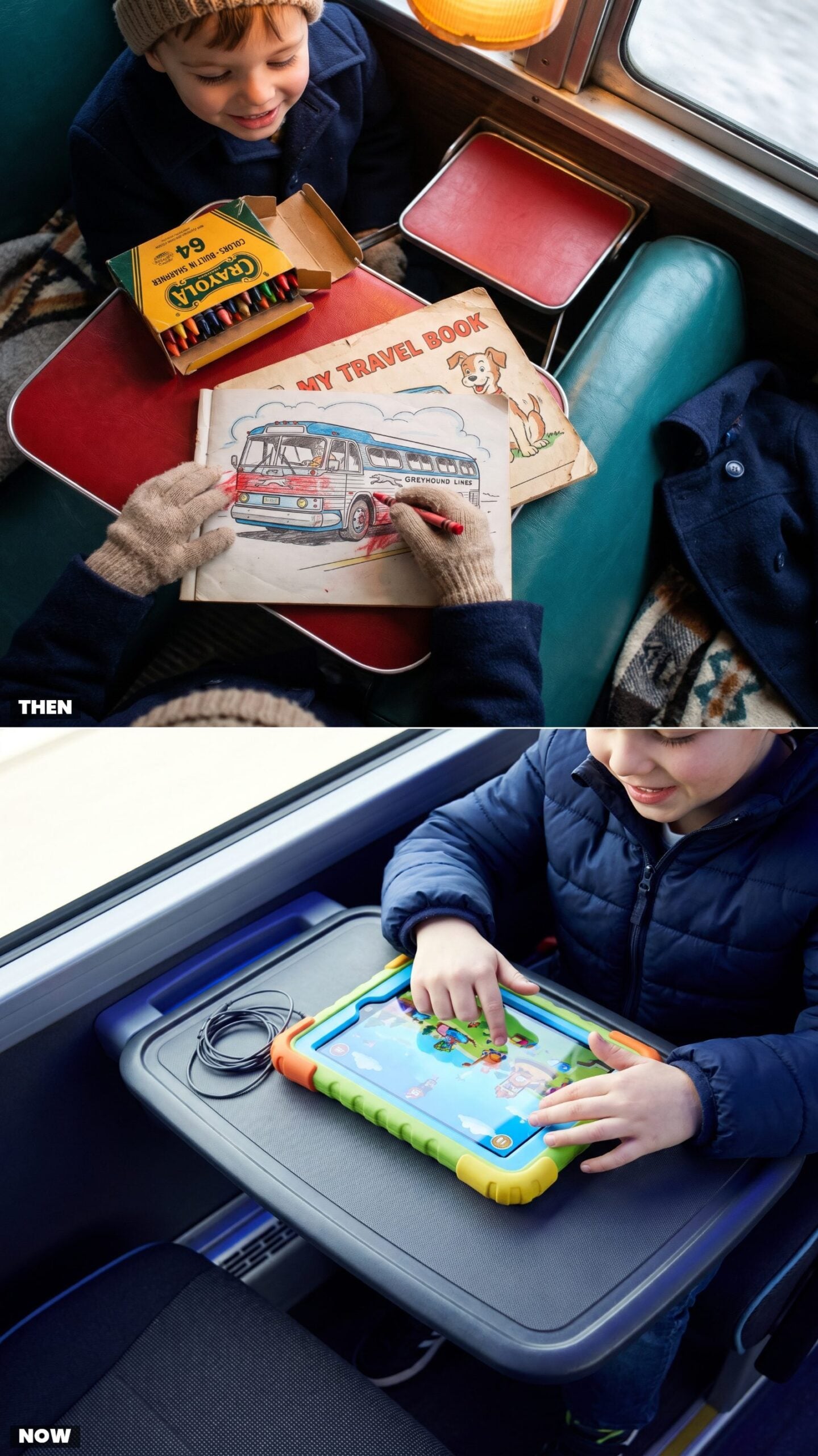
Keeping a kid still on a long haul used to mean a coloring book and a fresh box of crayons, the wax smell rising off the paper, a half-finished bus and dog colored outside every line. When the crayons ran out of ideas, there was the window, the counting game, the back of the seat in front.
Now it’s a tablet in a rubber bumper case, a cartoon game, headphones, a finger tapping glass. Quieter for everyone around, and far more effective at buying a parent two hours of peace. Whether that’s a win depends on how you feel about a kid who never once looks out the window.
8. Holiday Postcard Scrawled at the Depot vs. The Text You Send Before the Door Closes
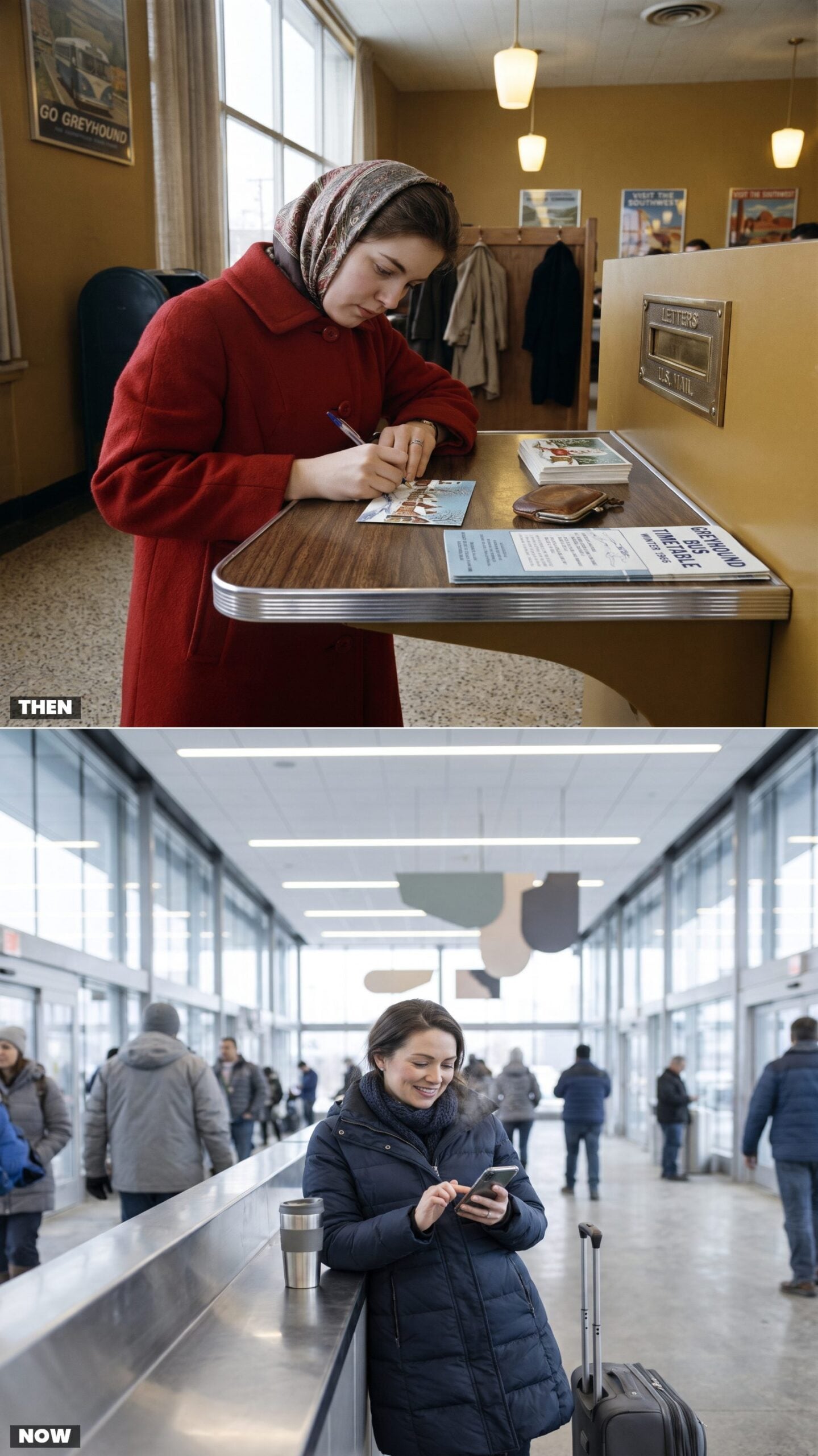
You licked the stamp and pressed hard enough with the ballpoint that the next three postcards in the stack carried the ghost of your handwriting. Then it went in the brass slot at the depot and vanished for four days — arriving, sometimes, after you’d already come home for Christmas yourself.
Now the message lands before the coach pulls out of the bay. “On the bus, see you at six.” Read receipt. Reply. Done. Nothing waits for anything anymore.
The postcard said you were thinking of someone from a specific bench in a specific town. The text just says you have a phone. Both true. Only one of them ended up in a shoebox twenty years later.
7. Four Hours of Window-Staring vs. Streaming at 65 MPH
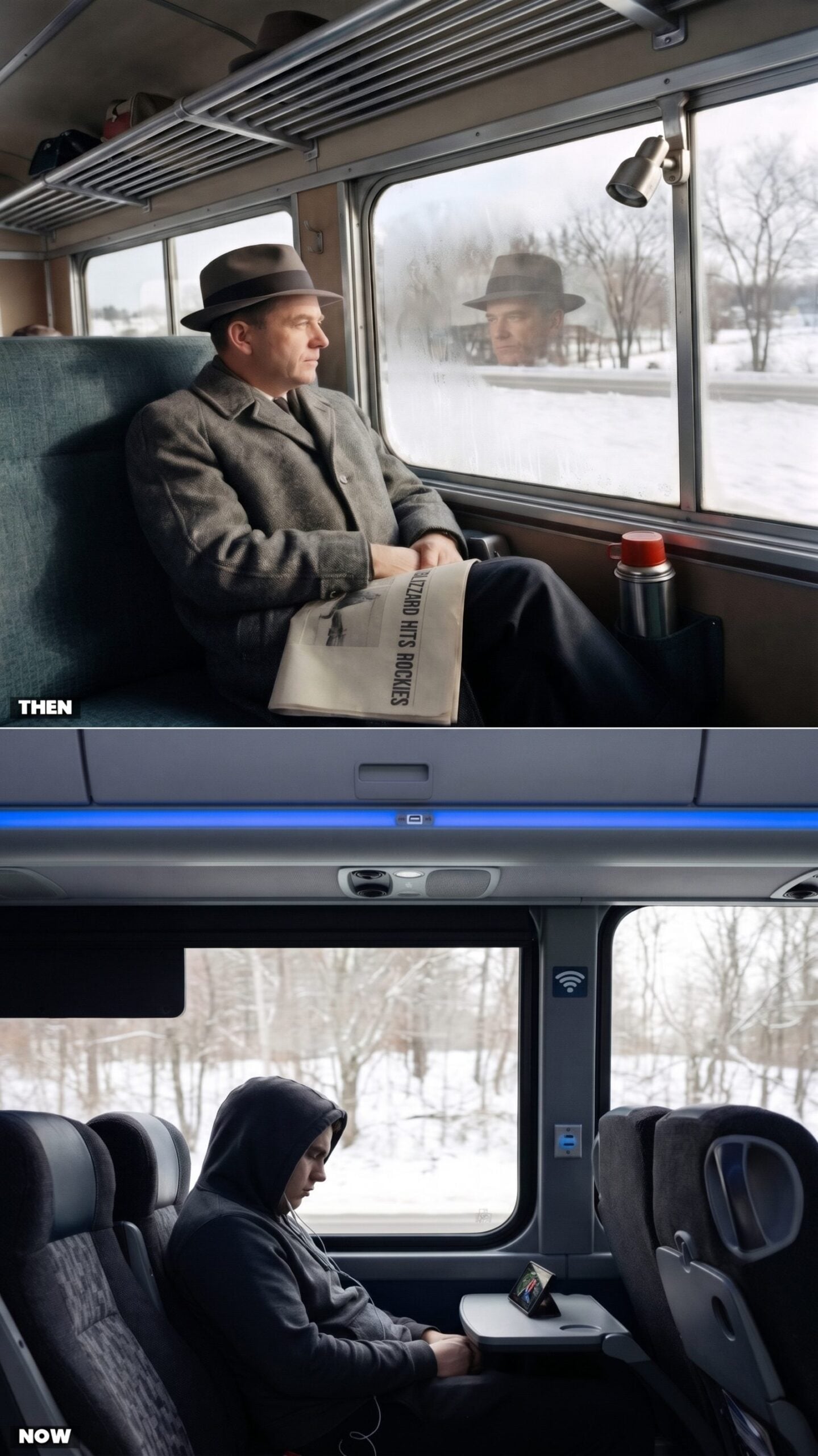
Boredom was the entertainment. You watched the snow fences roll by and counted grain silos and let your mind wander somewhere it never gets to go now. The thermos coffee went cold around hour two, somebody up front hummed a carol, and that was the show.
Today the same seat has a USB port and a signal strong enough to stream a holiday movie you’ve already seen four times. The window goes untouched. The landscape is just the thing between you and the next town with better bars.
We gained a thousand things to watch and lost the one view that only existed for those four hours.
6. The Sunday Suit You Traveled In vs. The Fleece You Live In
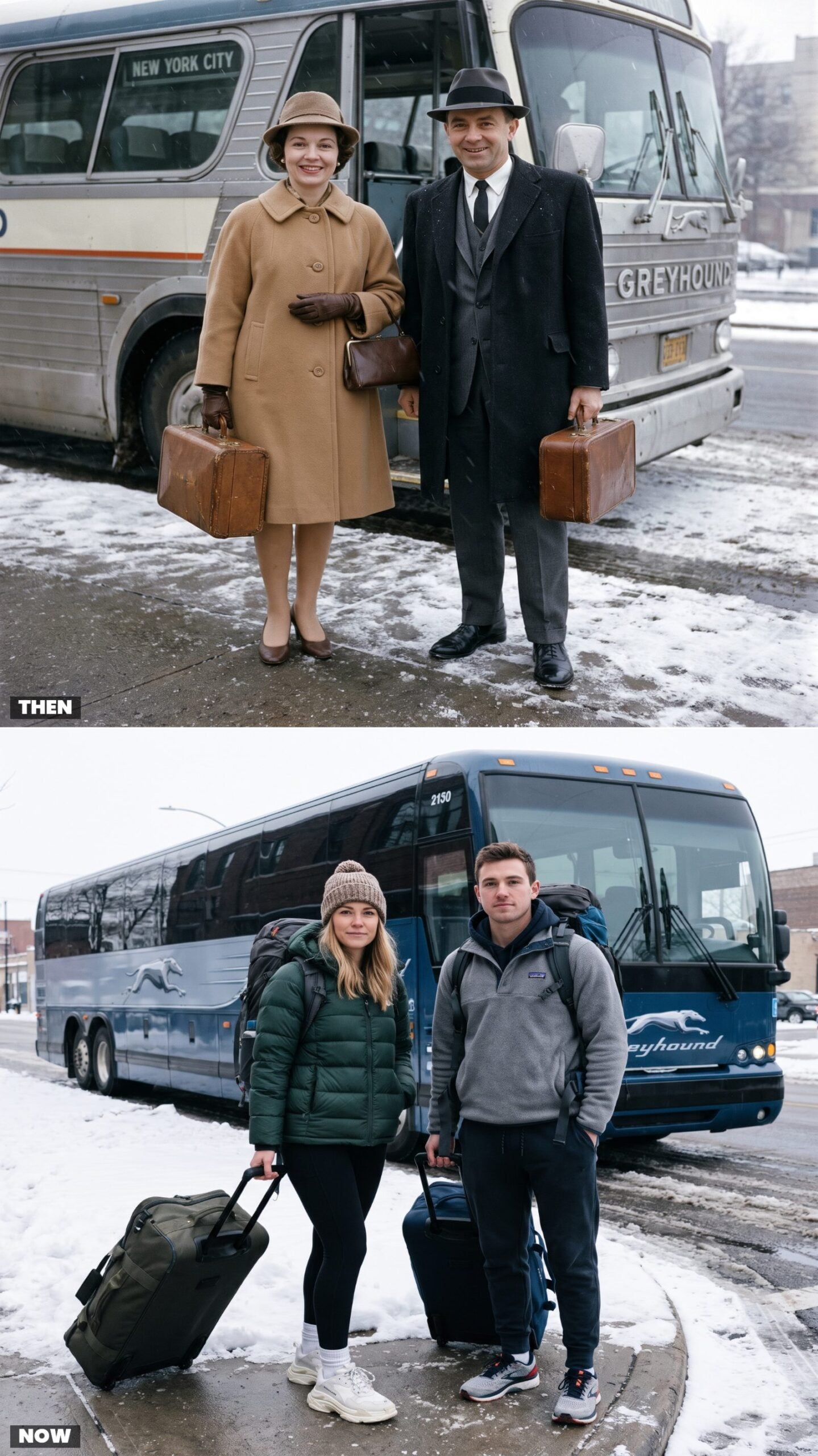
People dressed up to sit on a bus for seven hours. Camel wool coat, gloves that matched the bag, shoes that pinched by hour three but looked right getting off. Travel was an occasion, and you dressed for it whether anyone was watching or not.
Now the uniform is a fleece pullover and leggings you could sleep in, because you probably will. Comfort won. The quilted puffer and the beanie are honest about what a long-haul bus actually is.
Both make sense for their decade. One said I take this seriously. The other says I plan to survive this in peace.
5. The Creased Rand McNally vs. The Blue Dot That Knows Everything
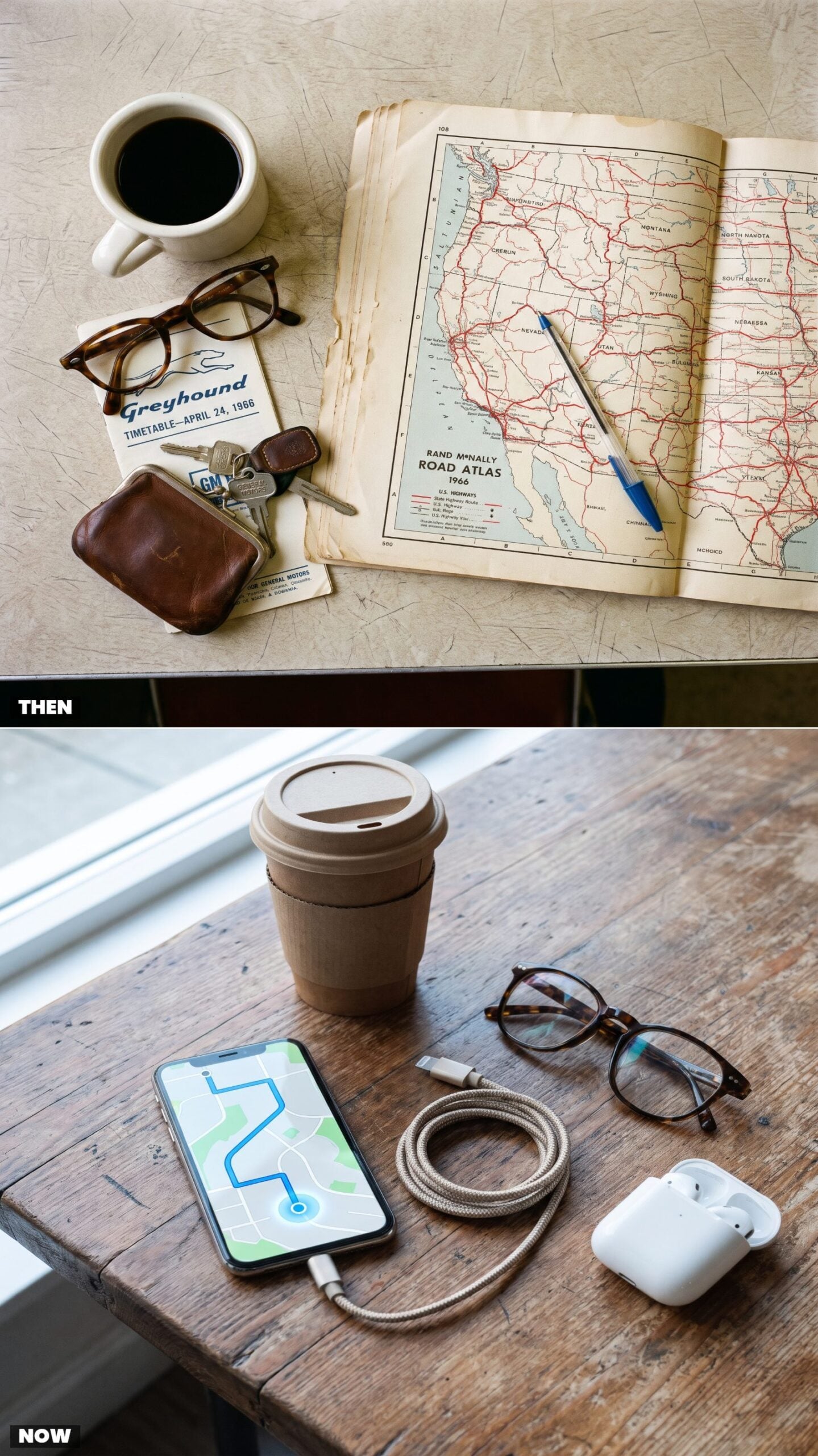
The atlas lived folded wrong in the door pocket, soft as cloth from handling, a coffee ring on Nebraska. You traced the route with a fingernail and you knew, roughly, where you were by the mile markers and the color of the dirt. Getting lost was a real possibility, and half the stories came from it.
Now a blue dot follows you with the patience of something that never doubts itself. Reroutes around weather. Knows the exit before you do. You will never again pull over to argue with a spouse over which way is north.
We miss the arguments a little. Not much. But a little.
4. The Driver Chaining Up in the Snow vs. The All-Weather Dispatch Call
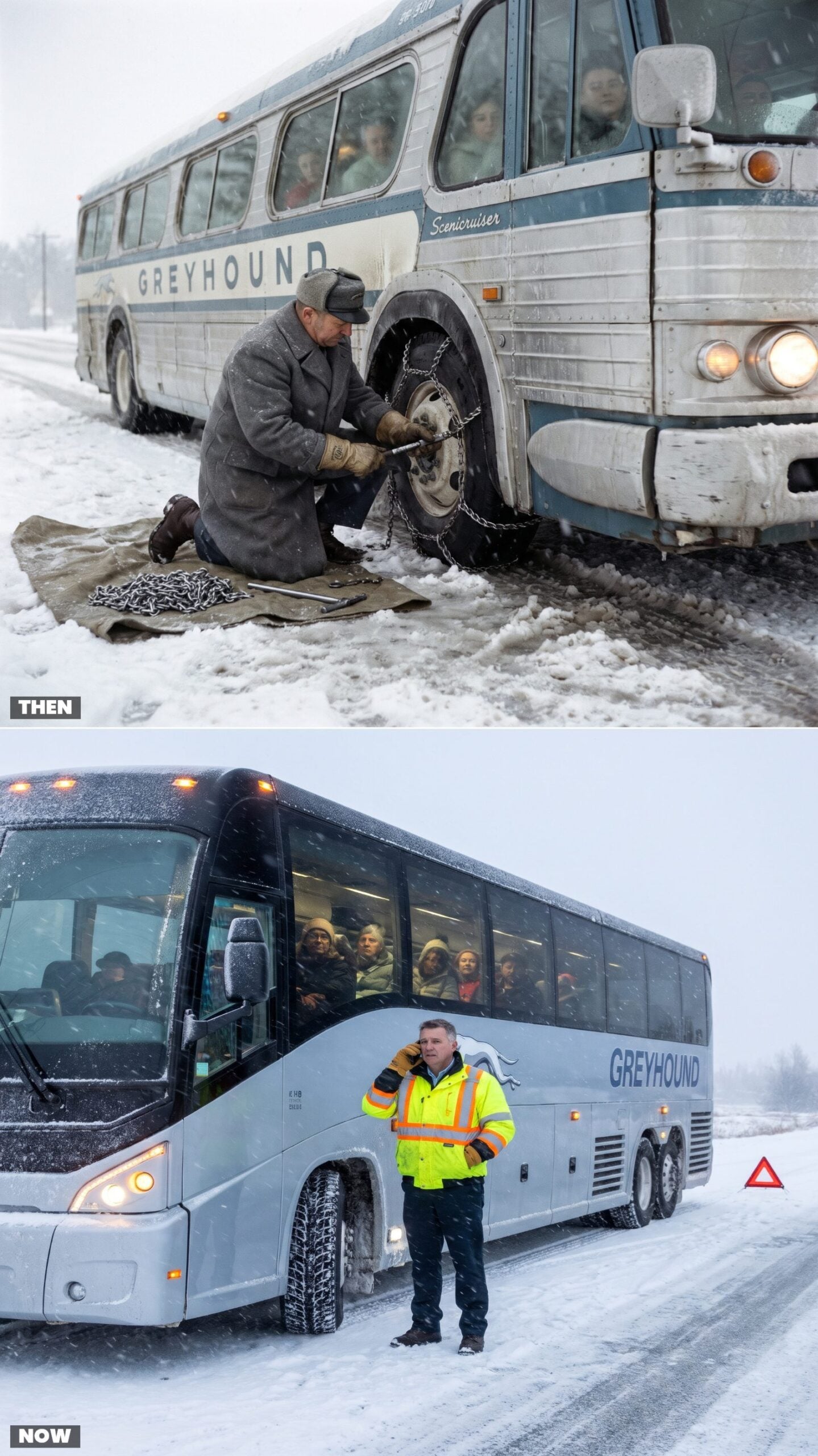
Snow meant the driver got out. Knelt in the slush at the rear axle with frozen fingers and a chain tool, wrestling steel links onto the tire while the whole coach watched through fogged glass and nobody complained — because everybody understood this was just winter.
Today the response is a phone call to dispatch, a weather app, deep-tread tires, and a decision made from a warm cab. The bus either waits out the storm or takes the cleared route. The driver’s gloves stay dry.
3. The Sit-Down Diner Stop vs. Twenty Minutes at the Drive-Thru
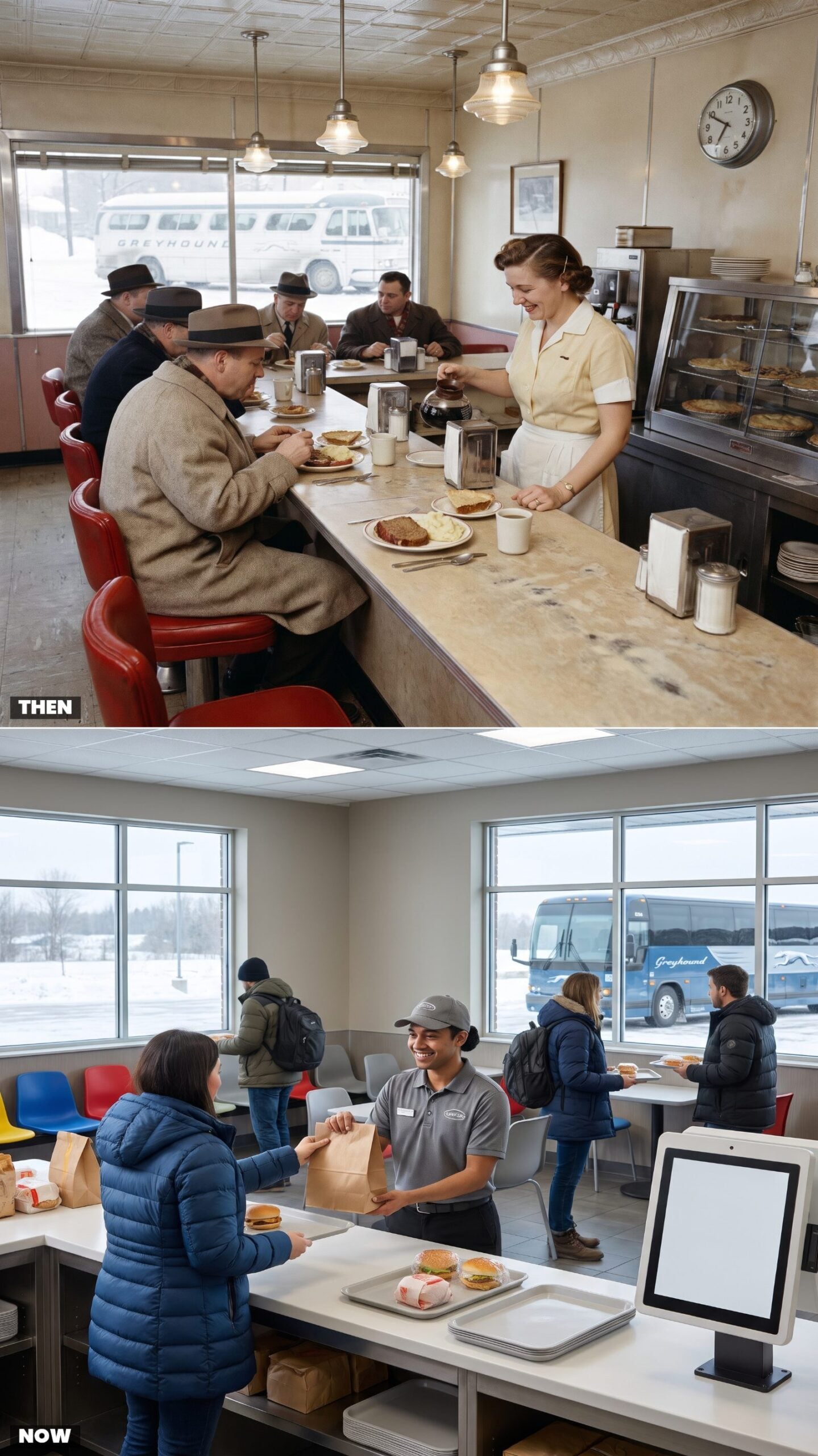
Forty minutes at a counter. Meatloaf, mashed potatoes, a slice of pie, coffee refilled twice by a waitress who’d seen a thousand bus crowds come through and still called you honey. You sat, you thawed out, and the stop was part of the trip rather than an interruption of it.
Now it’s a wrapped burger eaten standing up, twenty minutes against the clock, a paper bag you finish before the coach reloads. Faster. Cheaper. Forgotten by the next exit.
Nobody remembers a drive-thru. Everybody remembers the pie.
2. The Staffed Small-Town Depot vs. The Pole With a Sign On It
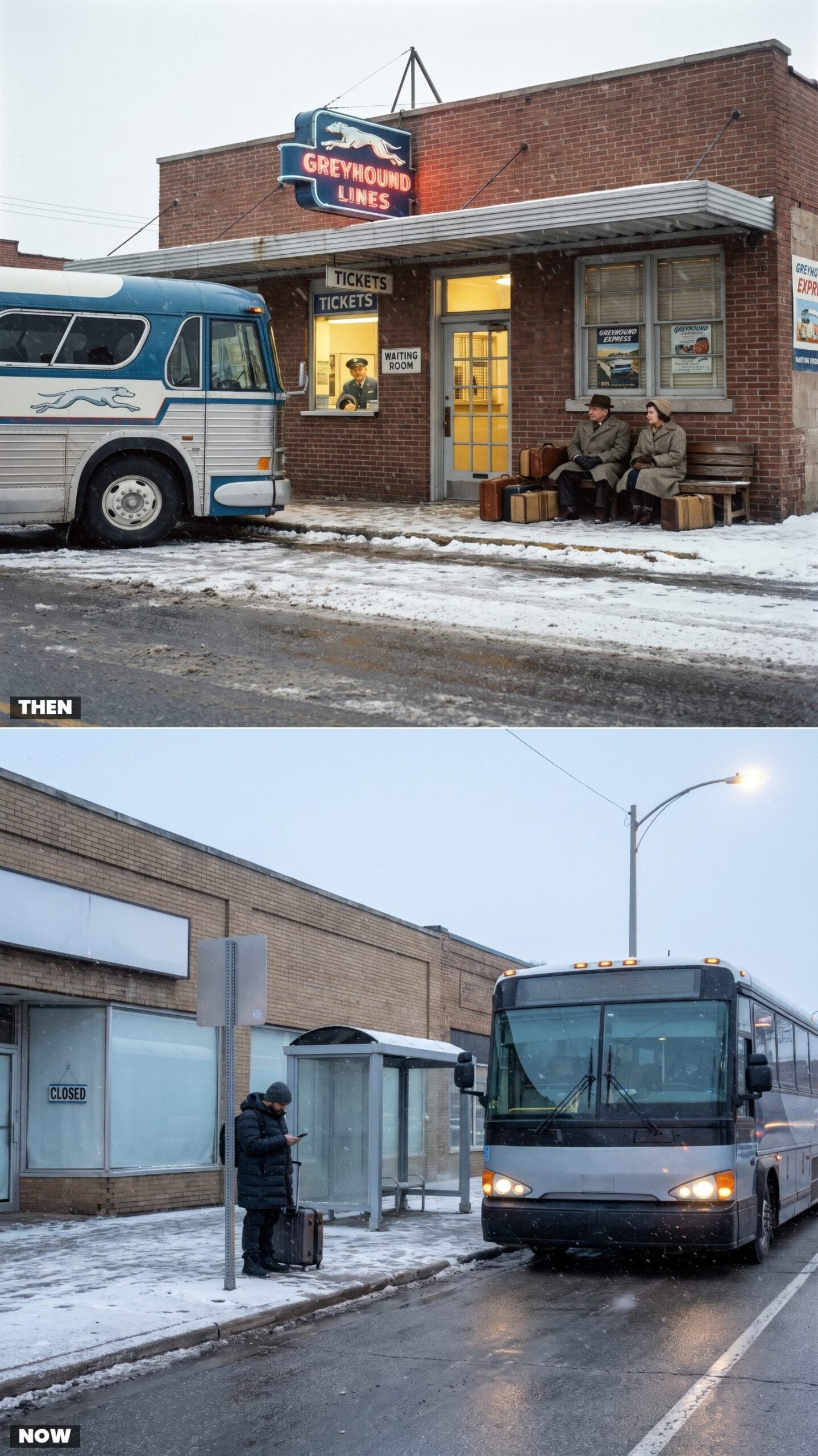
Every town had one. A brick building with a lit ticket window, a bench under an awning, a running-dog sign humming over the door, and an agent who knew the schedule by heart and whether your aunt’s connection was running late. Warm inside. Somewhere to wait that felt like somewhere.
A lot of those depots are gone. The stop is a metal pole and a sign bolted to it, maybe a shelter if the town was feeling generous. You buy the ticket on your phone and wait in the cold with the one other person who’s also going somewhere.
We understand the economics. We still think we traded a room for a pole and called it progress.
1. The Christmas Wreath Wired to the Grille vs. The Holiday Banner on a Screen
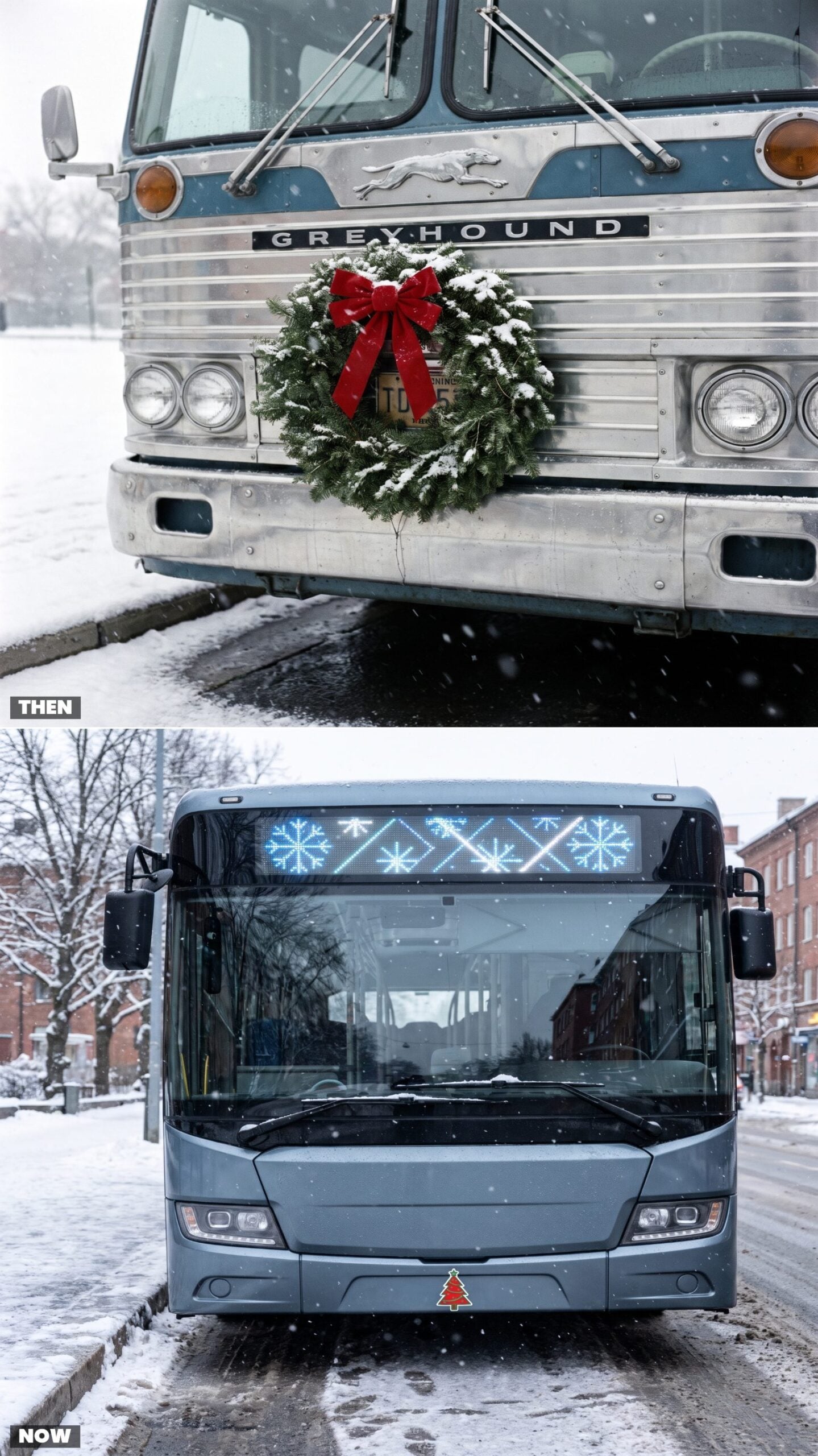
Somebody wired a real pine wreath to the chrome grille. Red bow, a little lopsided, snow collecting in the needles by the first stop. A small human gesture bolted to a steel machine, done by a driver or a depot hand who figured the bus ought to look like it knew what month it was.
Now the holiday greeting scrolls across the LED sign above the windshield. A snowflake graphic, a message that costs nothing and weighs nothing and gets swapped out on January second with a keystroke.
The screen is tidier. But nobody ever wired a wreath to a bus because a policy told them to. They did it because it was December and the thing looked bare.
Please note that some of the imagery in this article were created with the aid of AI image generators.