
🔥 Would you like to save this?
The suitcase sat open on the guest bed for a full week before departure. Sweaters were folded and refolded. A shoehorn disappeared into one corner. A rolled-up windbreaker went on top because you never knew. Packing in 1980 was a slow ceremony with rules nobody wrote down but everyone followed, and by Thursday night the whole living room smelled faintly of mothballs and anticipation.
The same trip can now fit into a carry-on, and half of what once seemed essential lives on a phone. The destination may be the same. Almost everything surrounding the act of getting ready has changed.
25. The Suitcase Itself: From Tank to Feather
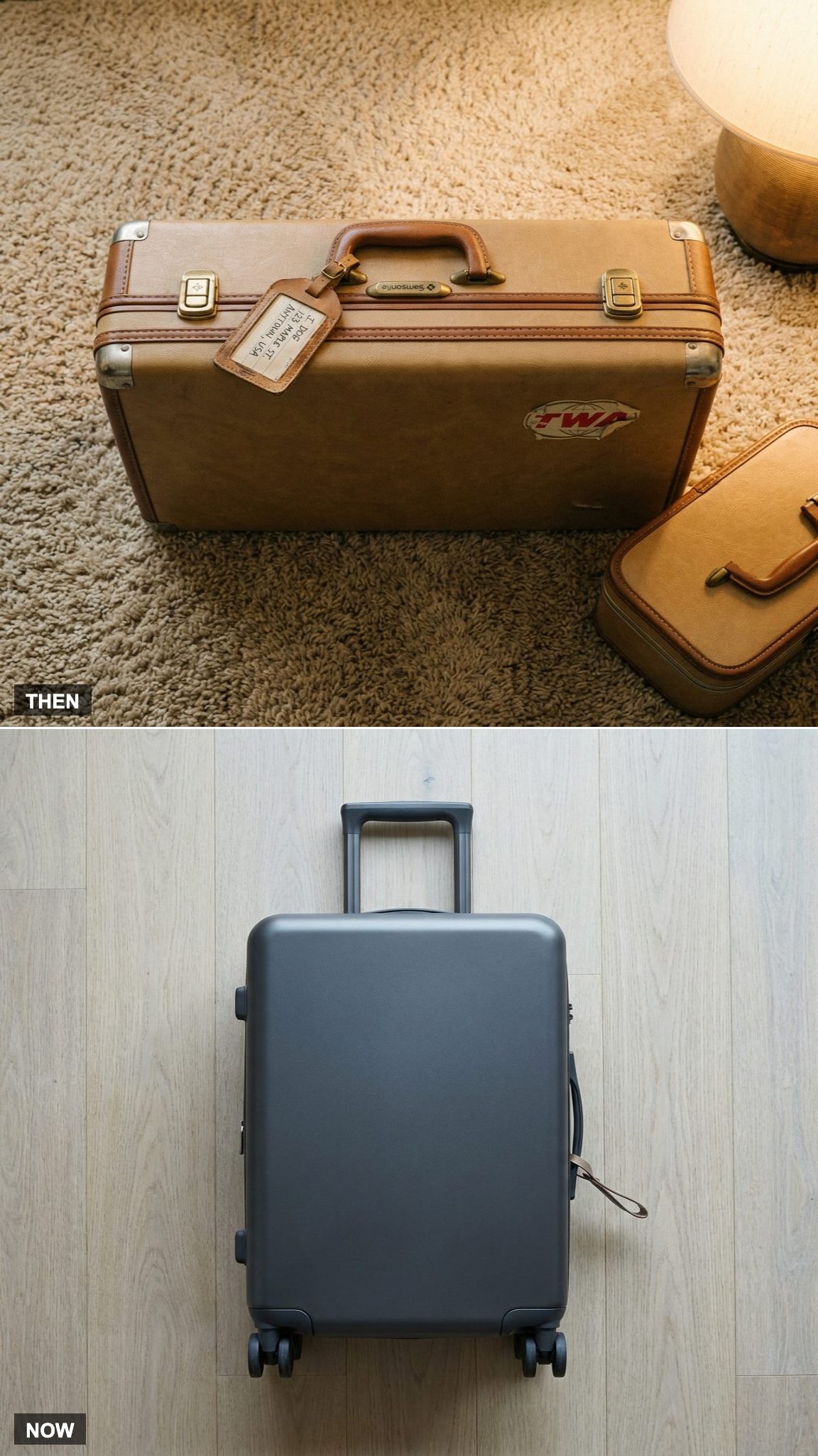
A large molded suitcase in 1980 could feel heavy before the first sock went inside. It had one handle on top, no wheels, and a shell sturdy enough to survive a fall from a baggage cart. You carried it across the parking lot, switched hands every few minutes, and pretended your shoulder was fine.
A modern case of similar capacity can weigh much less and roll beside you on four wheels that turn in any direction. The old suitcase may have looked indestructible, but very few travelers miss carrying one up a station staircase.
24. The Packing List: Fridge Paper vs. Pocket App
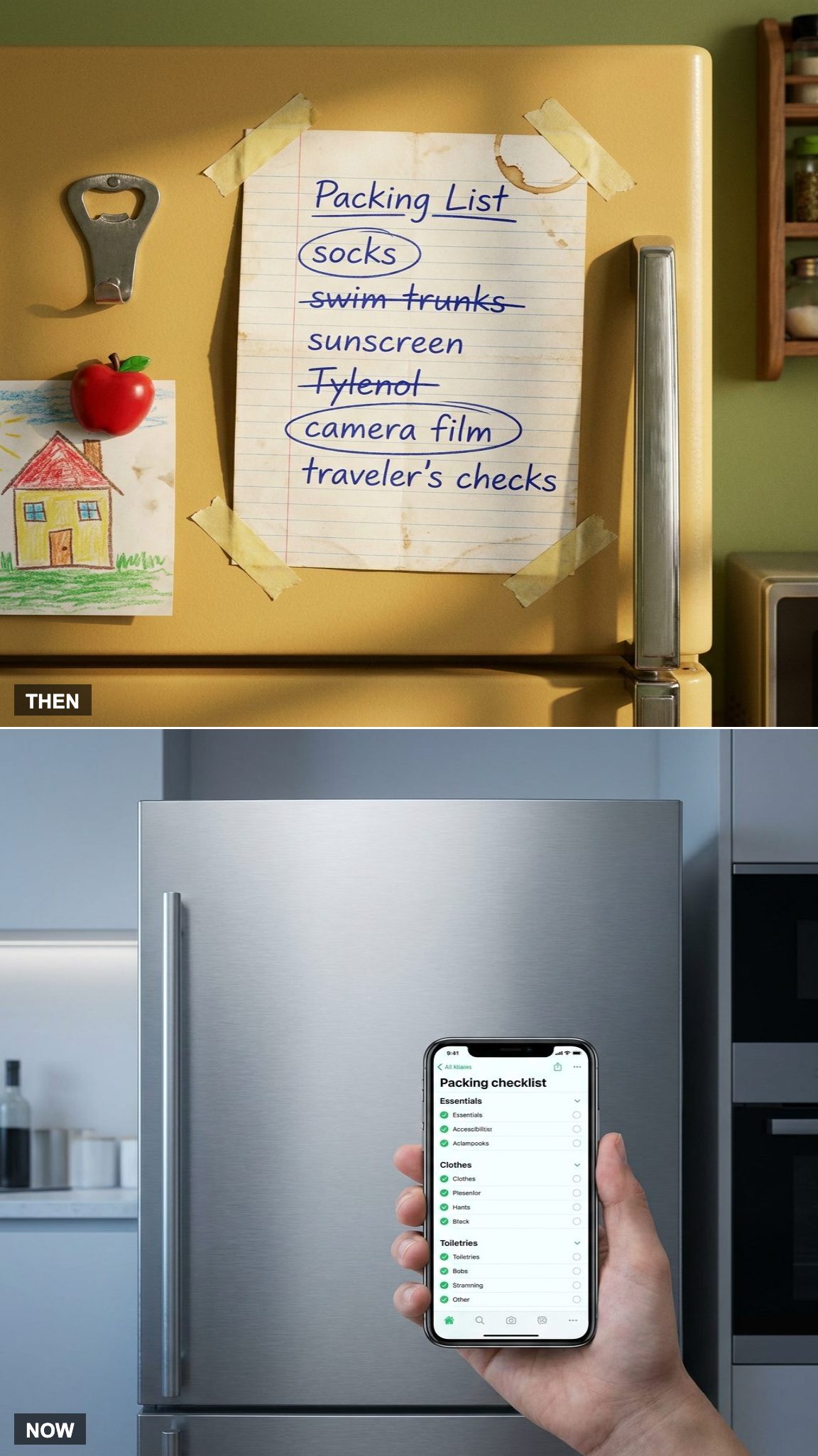
Mom wrote the list. Mom was the list. If an item was not on the sheet taped to the refrigerator by Wednesday, it probably was not coming. If you forgot your retainer, that was between you and the paper.
The digital version has categories, reminders, checkboxes, and a share button for everyone on the trip. It updates instantly, but it cannot be read from across the kitchen while somebody eats cereal and asks for the third time whether the bathing suits are packed.
23. Cameras: The Bag Within the Bag
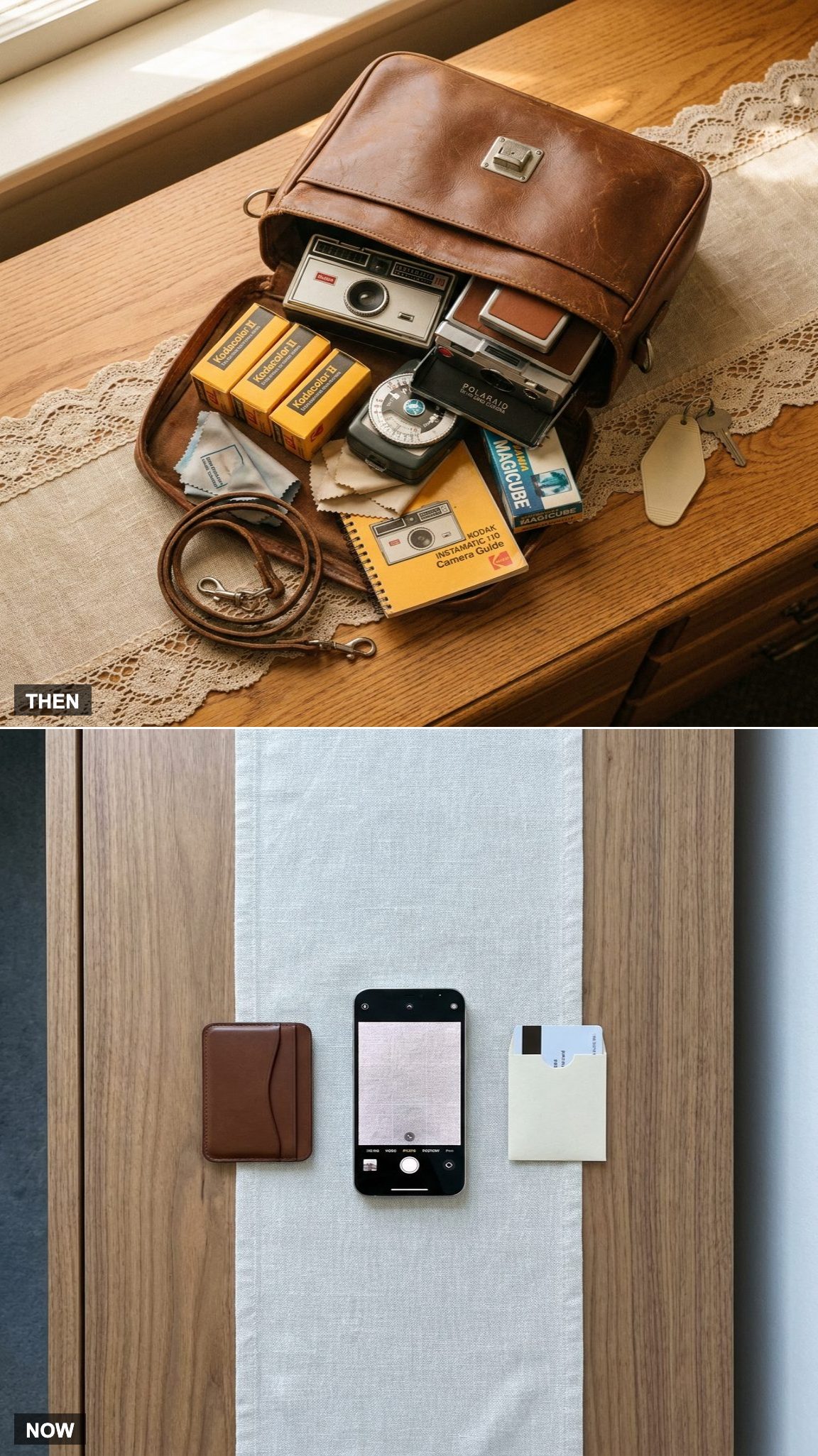
The camera needed its own bag. Inside went the camera, film, spare batteries, a flash, a lens cloth, and more film because nobody knew what a replacement roll would cost at the beach. Every exposure mattered when a roll might hold only 24 pictures.
A phone now takes thousands of photographs, edits them before dinner, and backs them up before the plane lands. The equipment is unquestionably easier. What changed is the limit: when every frame cost something, people often waited longer before pressing the shutter.
22. The Paper Map That Refused to Fold Properly
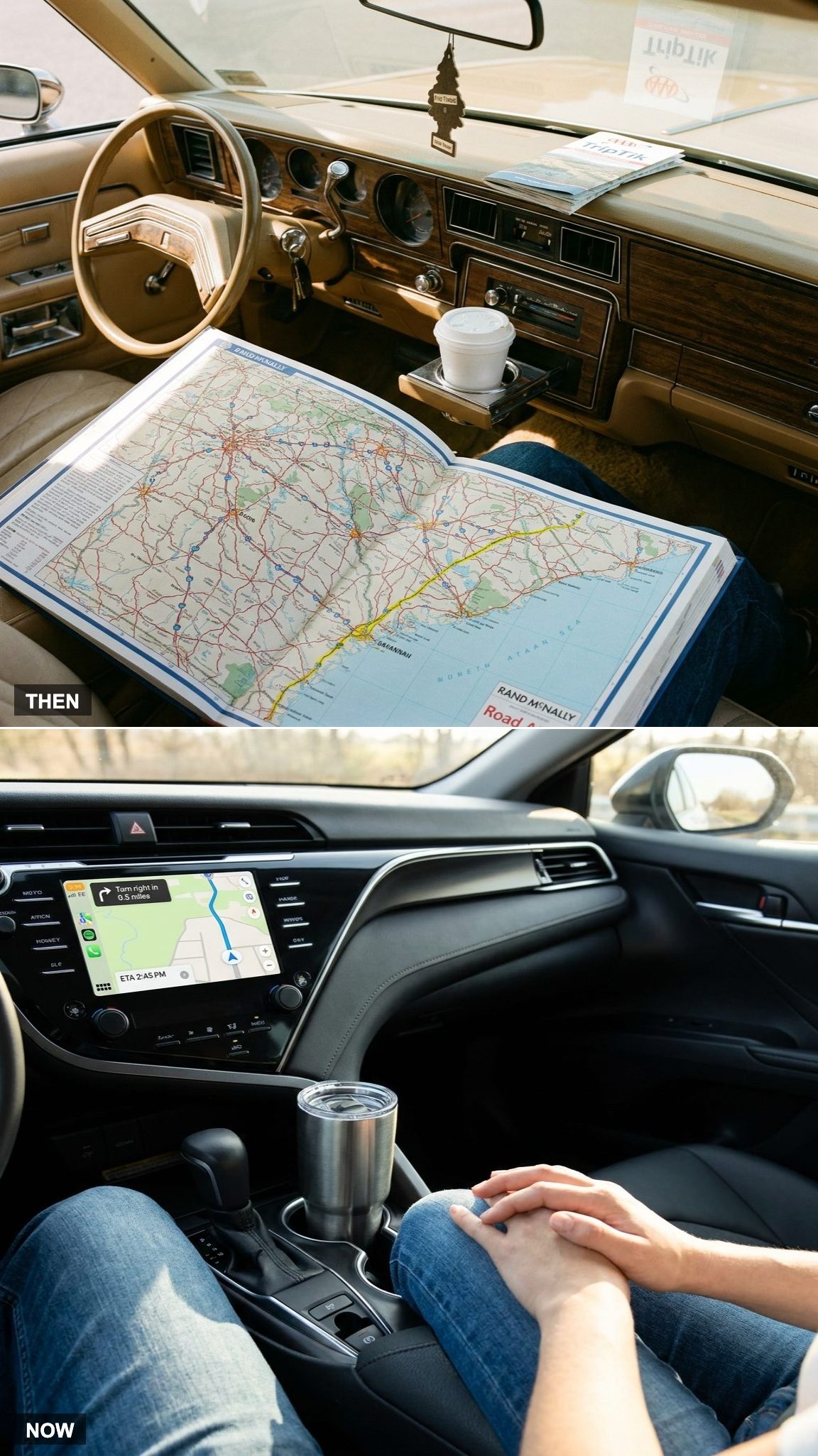
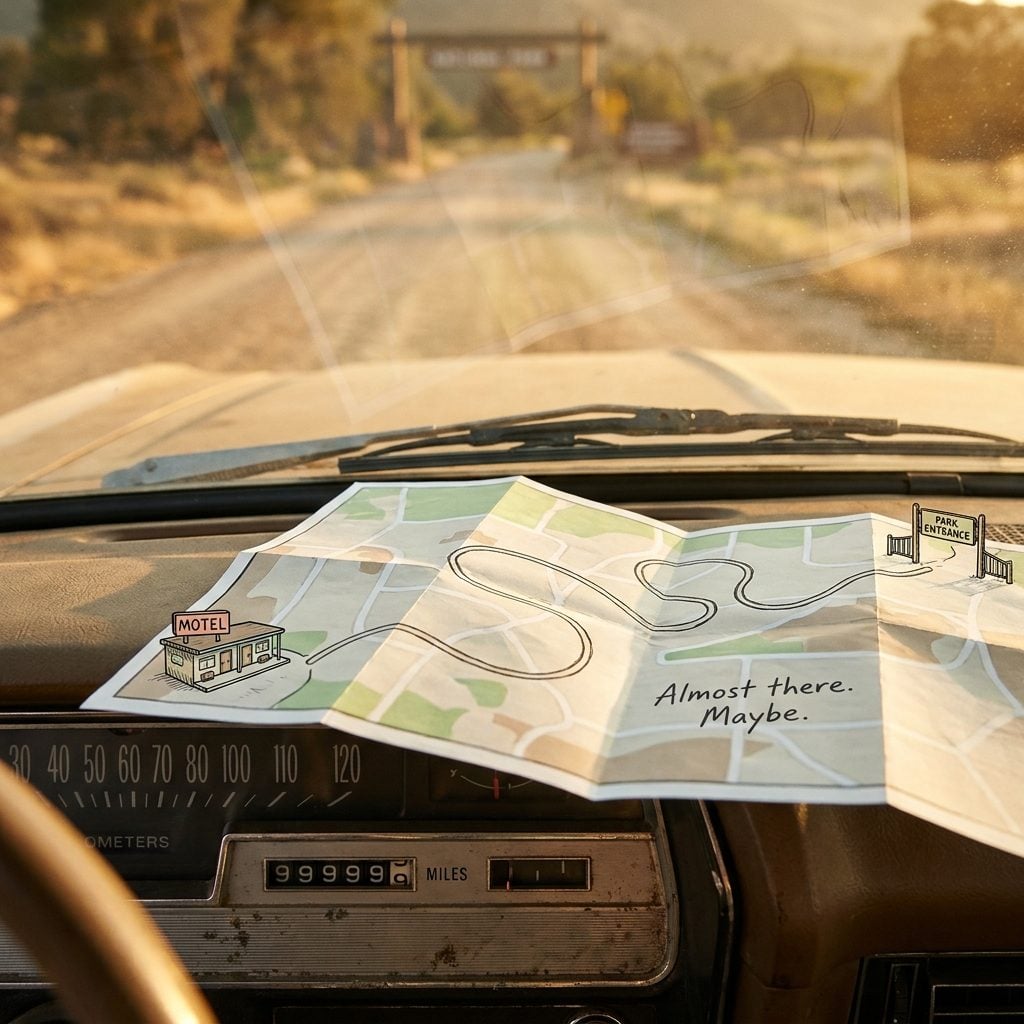
Dad drove. Mom navigated. The map opened to the size of a tablecloth and had to be refolded along creases established years earlier by somebody who apparently understood geometry better than the rest of the family.
A missed exit meant continuing until the next possible turn while everyone silently reconsidered the directions. Today, a calm voice announces the turn in advance and quietly recalculates when you ignore it. Nobody has to admit who was wrong.
21. Checking the Forecast Before Packing Half the Closet
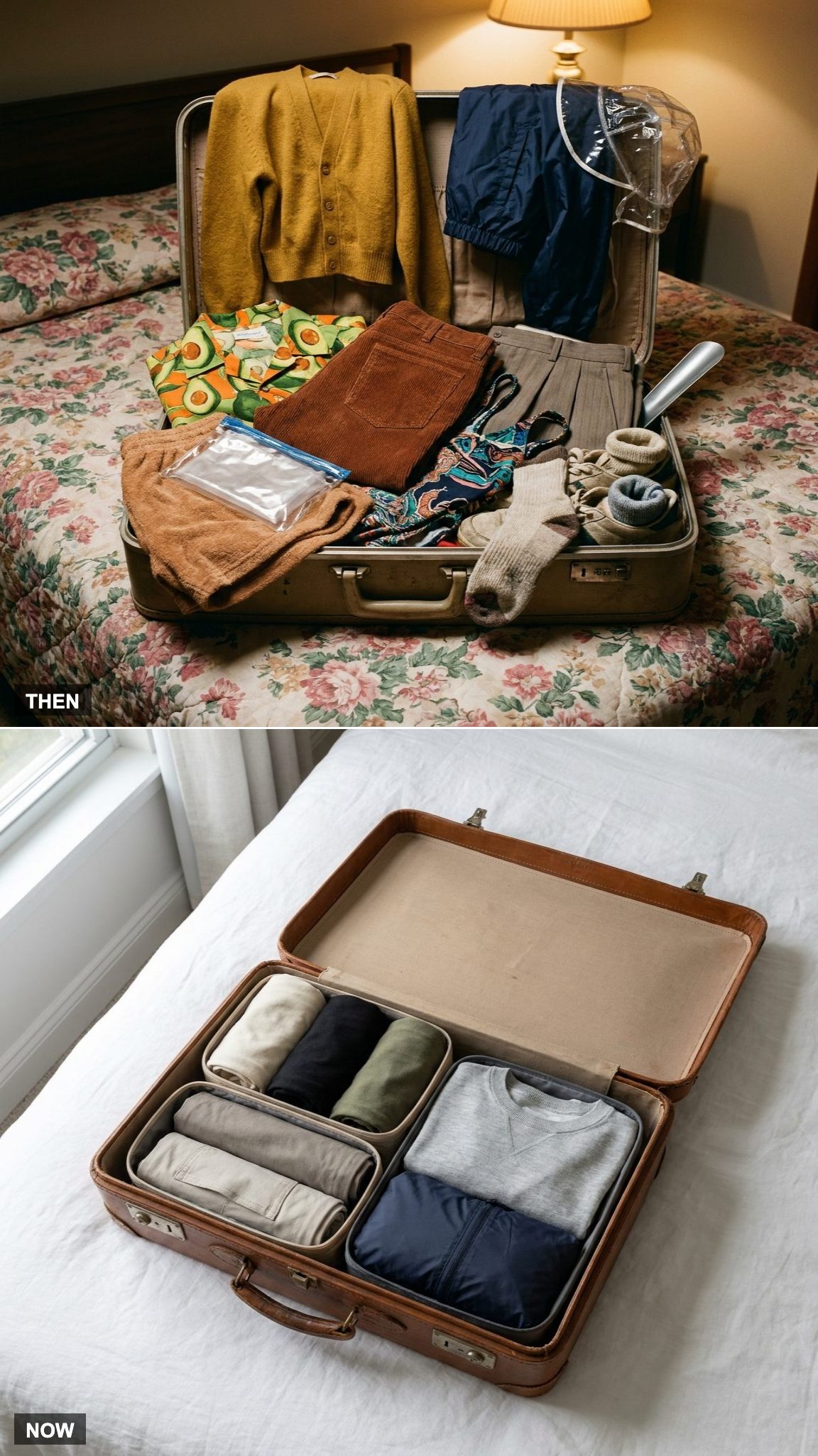
Weather planning once relied on the newspaper, a television forecast, an almanac, and whatever Aunt Carol remembered about Florida in July. The information was broad enough that a sweater, raincoat, windbreaker, and emergency pair of long pants all seemed sensible.
Now a forecast can show the expected temperature and chance of rain for nearly every hour of the trip. It will not always be right, but it gives the suitcase a better chance of containing clothes for the weather that may actually occur.
20. The Toiletries Situation
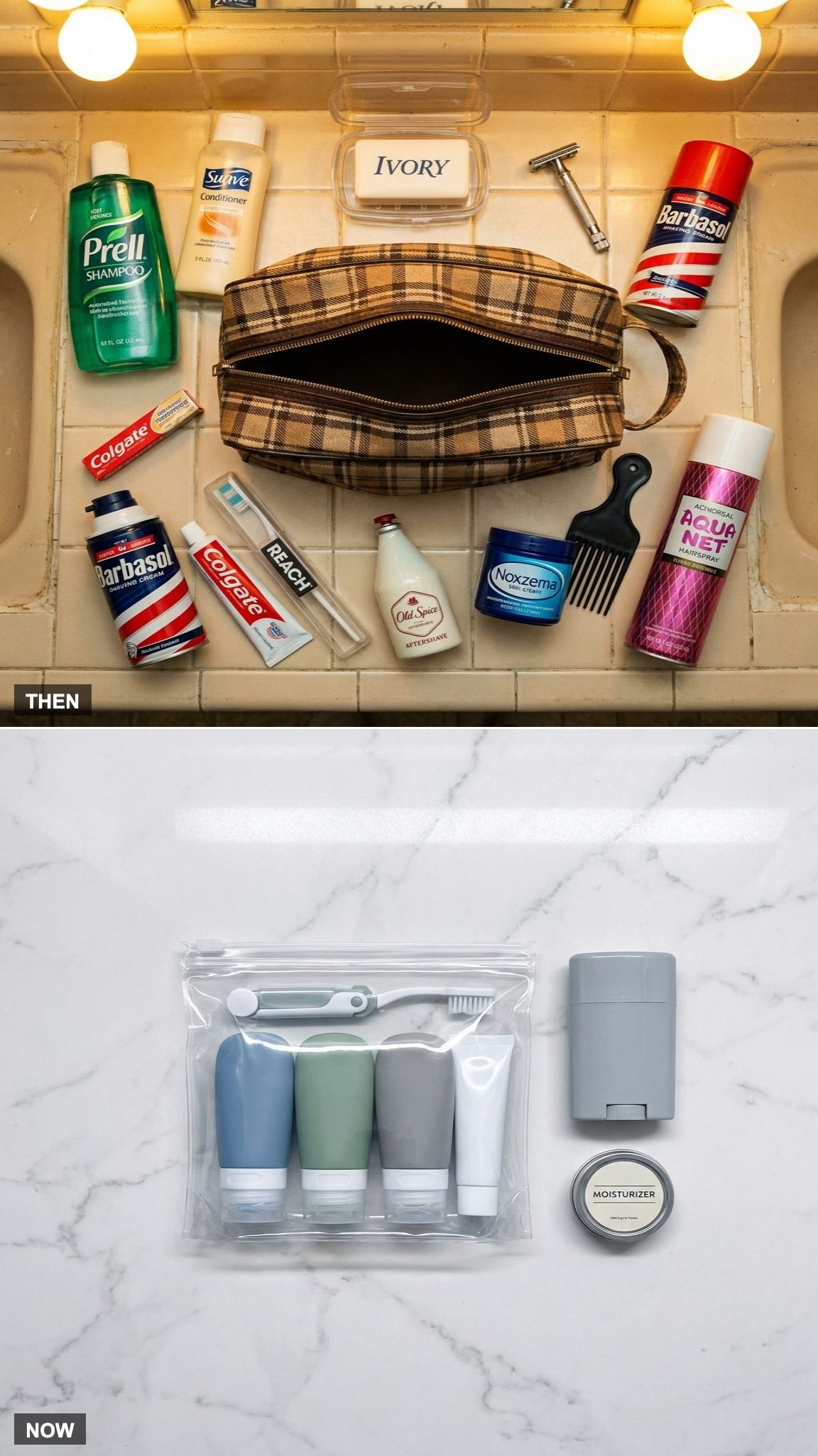
The toiletry bag could become a small piece of luggage by itself. Full-size shampoo, conditioner, shaving cream, cold cream, toothpaste, hair spray, and whatever came in the largest bottle from the drugstore all went in together. Travel-size products existed, but the selection was smaller and often cost more for much less product.
Airport security changed dramatically after September 11, 2001, but the familiar limits on carry-on liquids arrived in 2006 after authorities disrupted a liquid-explosives plot. Tiny containers became part of routine air travel, followed later by refillable bottles that could be used again instead of thrown away.
19. Money: Paper, Paper, and More Paper
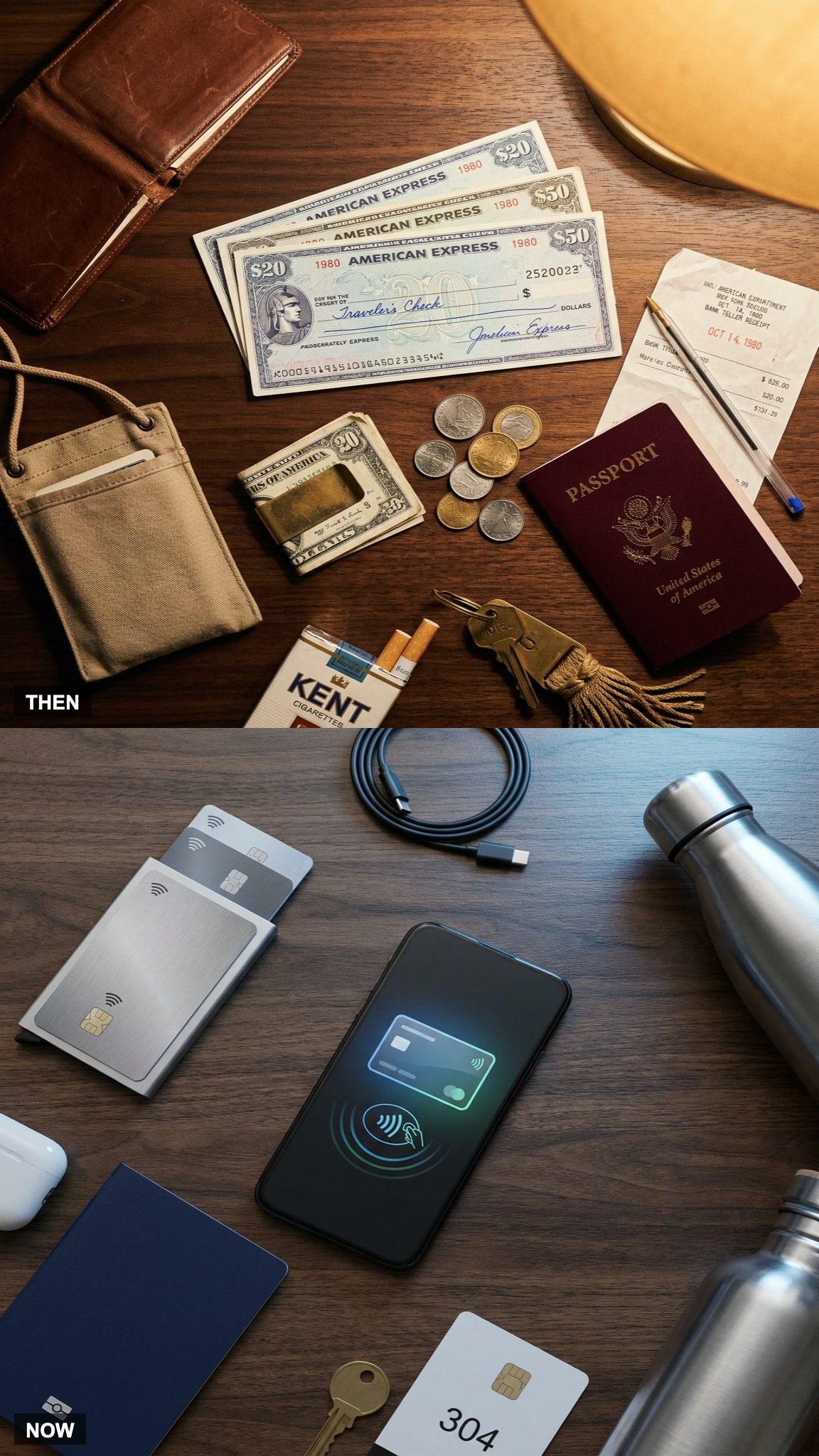
You bought traveler’s checks at the bank before the trip and signed each one at the counter. When you used one, you signed it again in front of the clerk, who compared the signatures before handing over cash and change.
Now a card tap or phone payment can complete the transaction in seconds. Cash still has its uses, particularly when a terminal fails or a small business does not accept cards, but the ritual of countersigned traveler’s checks and carefully divided emergency cash has largely disappeared.
18. The Soundtrack of the Trip
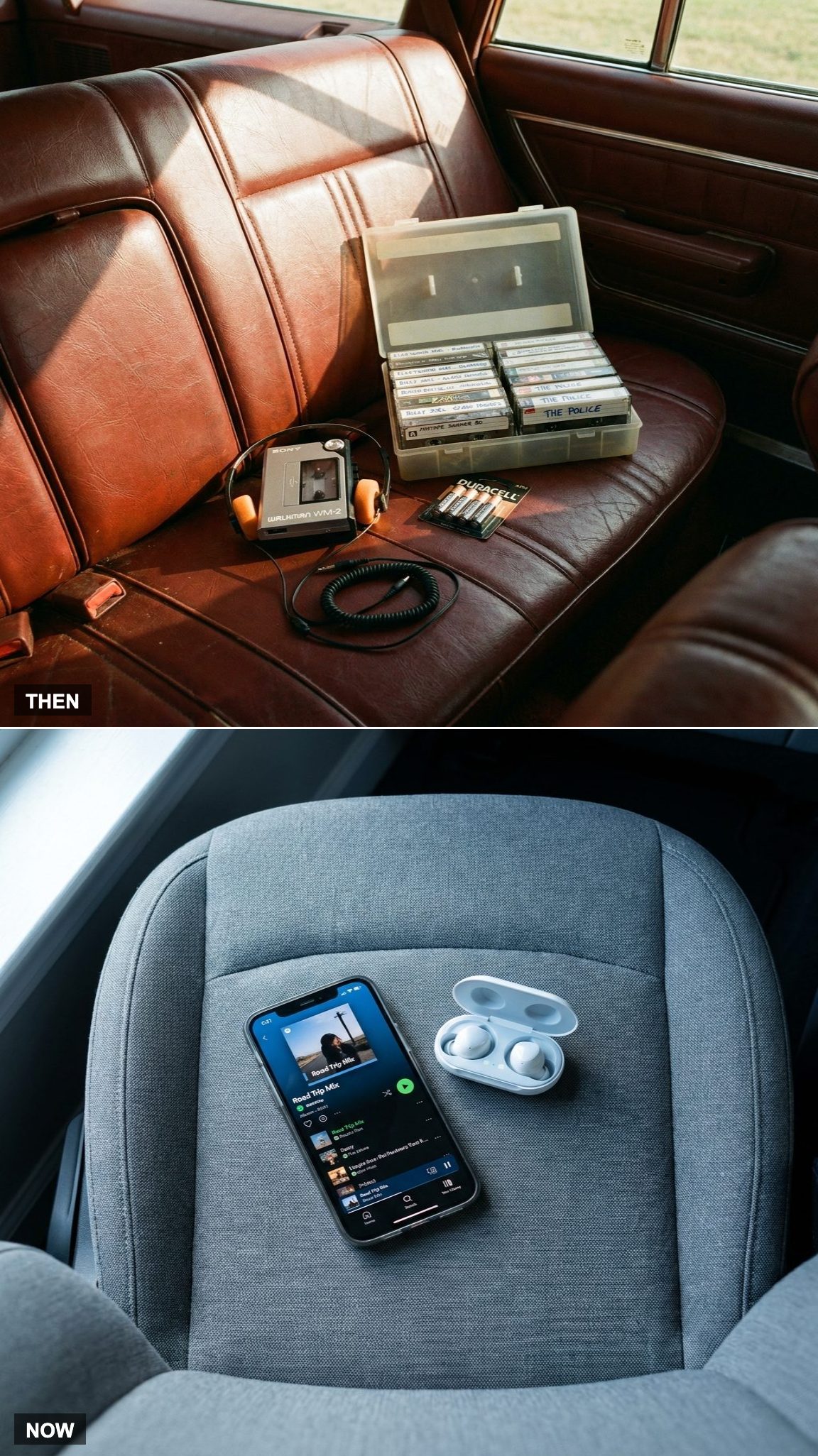
The mixtape was both a physical object and a Saturday-afternoon project. You waited beside the radio, pressed record at exactly the right second, and complained when the disc jockey talked over the opening notes. Then you labeled the cassette in ballpoint and slid it into a plastic case with the others.
A phone now carries more music than the entire household could have owned in 1980. The advantage is obvious. The difference is that a mixtape recorded the maker’s decisions as clearly as it recorded the songs.
17. The Guidebook Brick
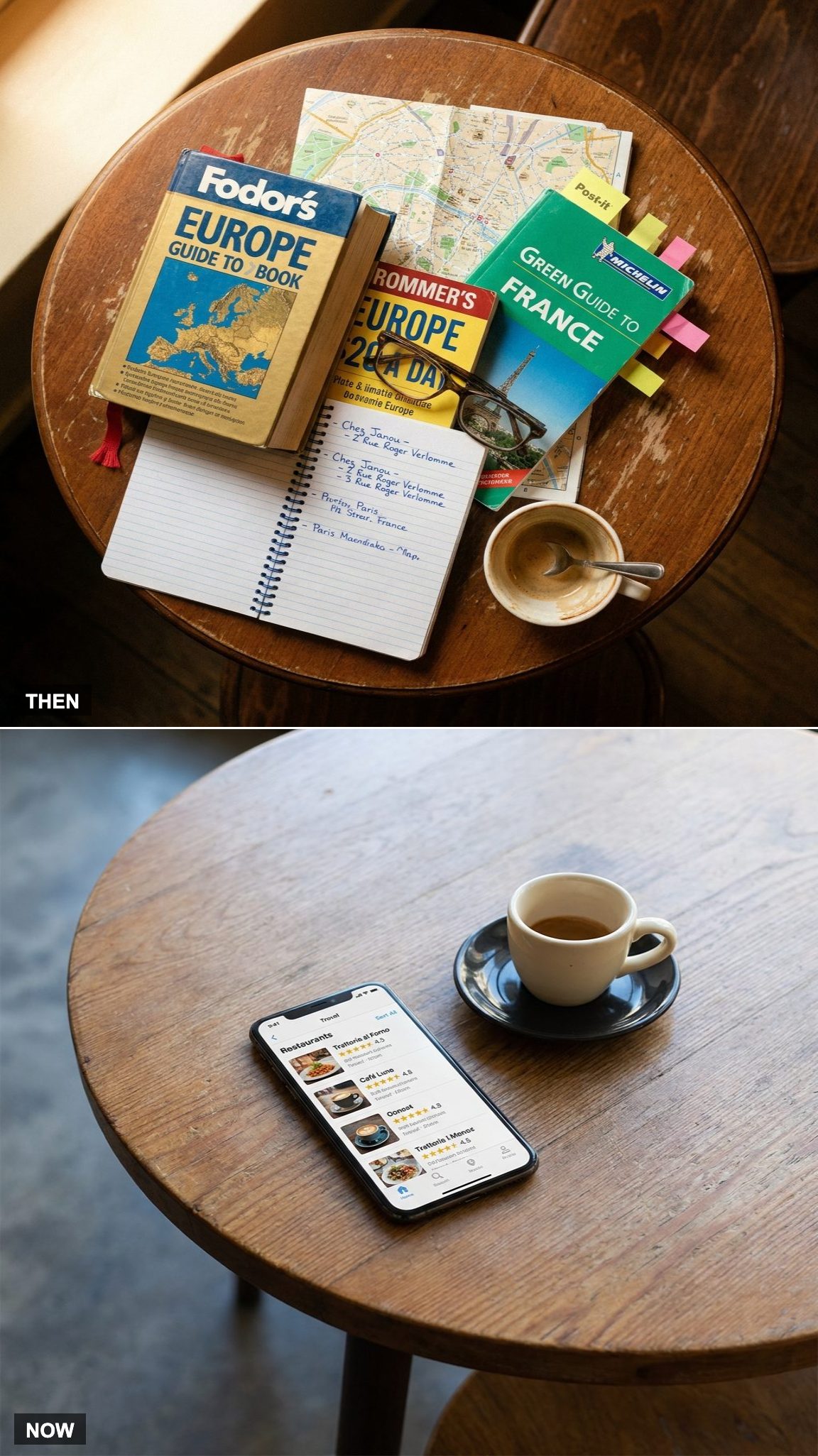
A destination guide could weigh a couple of pounds, and you carried it because there was no practical substitute. It was read on the plane, marked with folded corners, and consulted on the sidewalk while the rest of the group waited.
Some restaurant listings were outdated by the time the traveler arrived, but the maps, background, hotel information, and suggested routes still made the book useful. Reviews now update by the hour, although sorting current information from promotional noise has become its own kind of work.
16. The Family First-Aid Kit
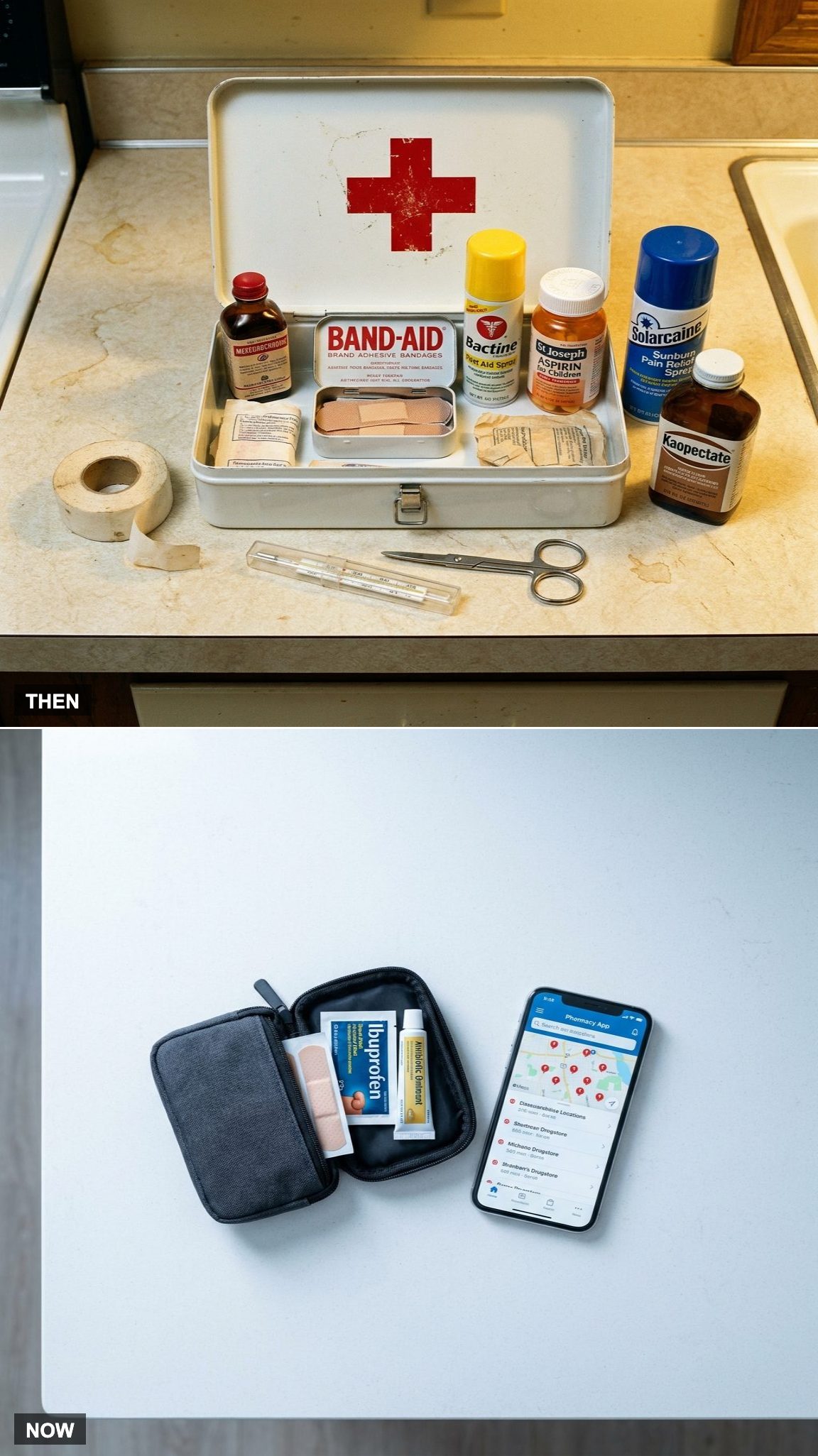
The first-aid kit was a small tin that seemed to have been in the family forever. Half the adhesive strips no longer stuck, the label on the antiseptic had faded, and the bottle of Mercurochrome looked ancient even then. Nobody threw it out.
A few bandages, regular medications, pain reliever, and basic supplies may be enough for many trips now because pharmacies and large stores are easier to locate in populated areas. Remote travel still calls for more preparation, but the family tin no longer needs to contain every remedy known to the household.
15. The Clothes Stack vs. The Packing Cube
🔥 Would you like to save this?
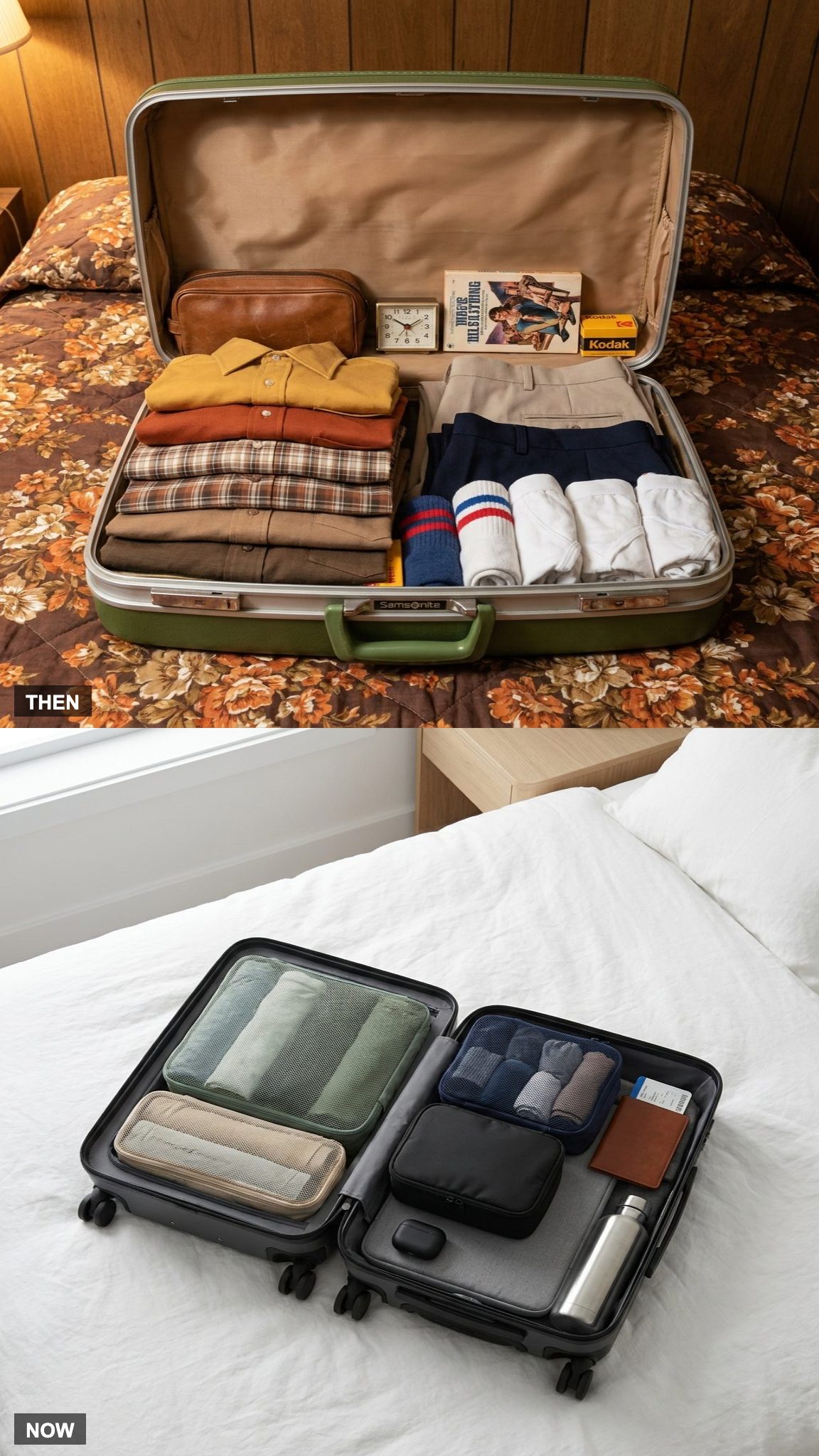
Packing in 1980 was a construction project. Shirts were stacked by weight, slacks arranged by color, and underwear fitted into corners like masonry. Then the lid closed, the case tilted sideways, and the careful structure shifted before the car reached the end of the street.
Packing cubes do not create more space by magic, but they keep categories separated and make it easier to find one shirt without excavating the entire case. They also give worn clothes somewhere to go without turning the clean side of the suitcase into a laundry pile.
14. The Document Folder vs. The Phone Screen
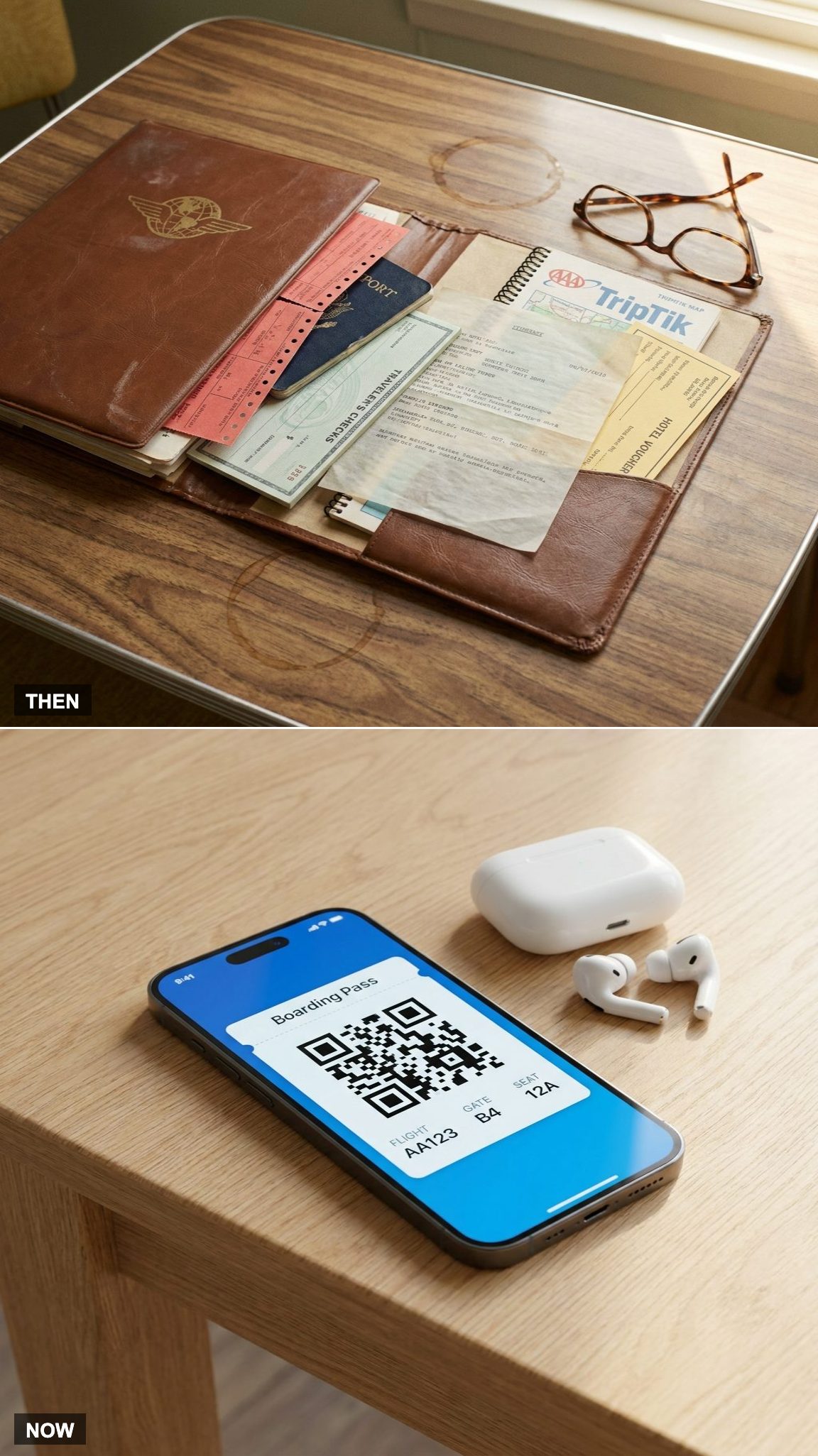
The document folder was sacred. Inside were tickets, passports, traveler’s checks, motel confirmations, the itinerary, maps, and anything else the family might have to produce at a desk or border. It was checked in the taxi, at the curb, at the gate, and once more while waiting to board.
Much of that information now lives in an email account, airline app, or phone wallet. The modern panic arrives when the battery reaches 4 percent just as somebody asks to see the reservation. Paper did not need charging, which is why a printed backup still earns a place on many trips.
13. The Shoe Situation
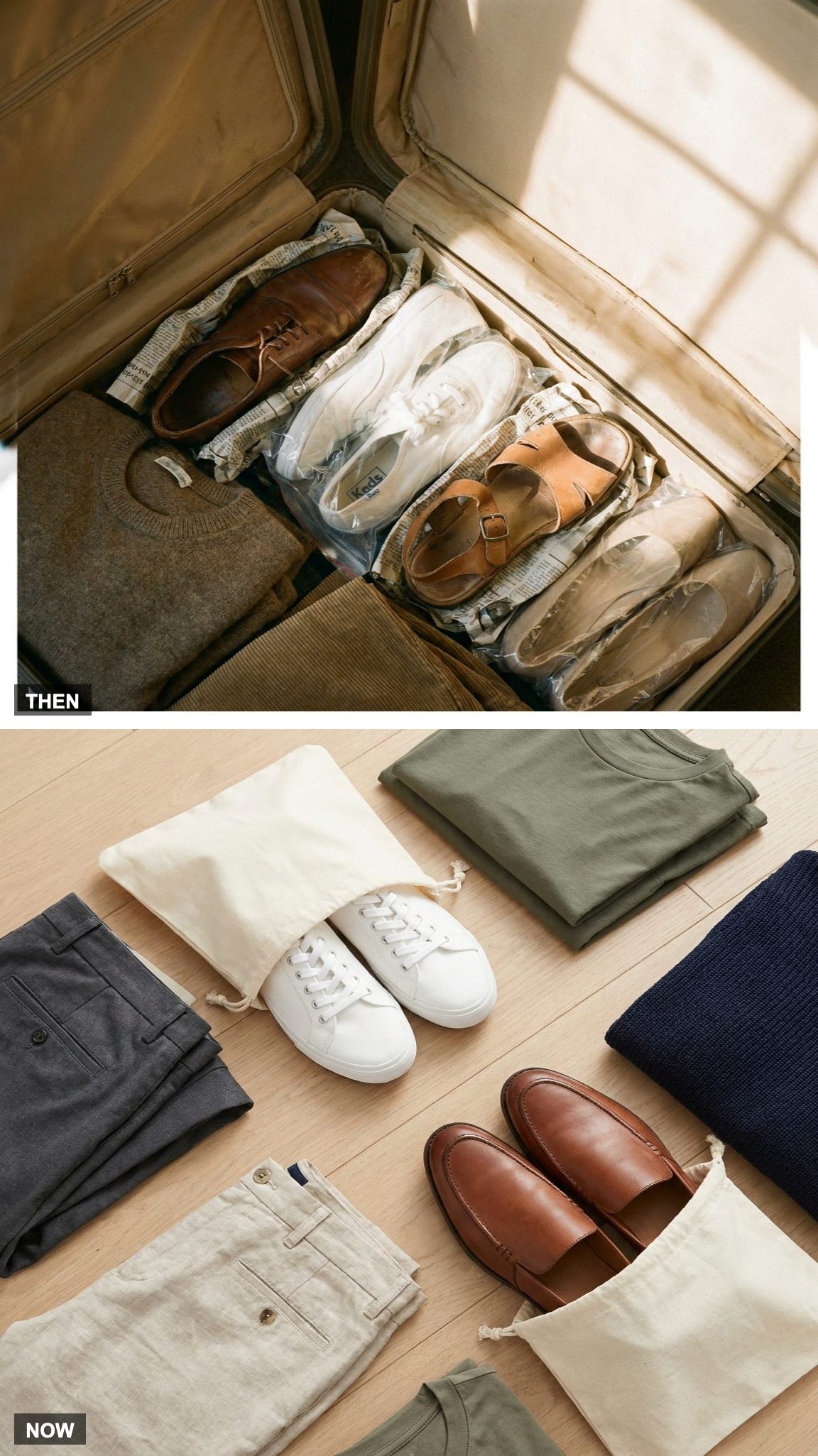
Shoes ate the suitcase. There was a walking pair, a dress pair, a beach pair, and a just-in-case pair that never left its plastic bag. Half the luggage became a shoe rack with clothing fitted around it to stop everything from shifting.
Modern travelers often try to choose footwear that works across more than one setting. The exact number depends on the trip, but every pair should have a clear purpose. Hiking boots, winter shoes, or formal footwear may still be necessary. The pair packed only because it might become useful usually stays in the bag.
12. Backseat Entertainment for Kids
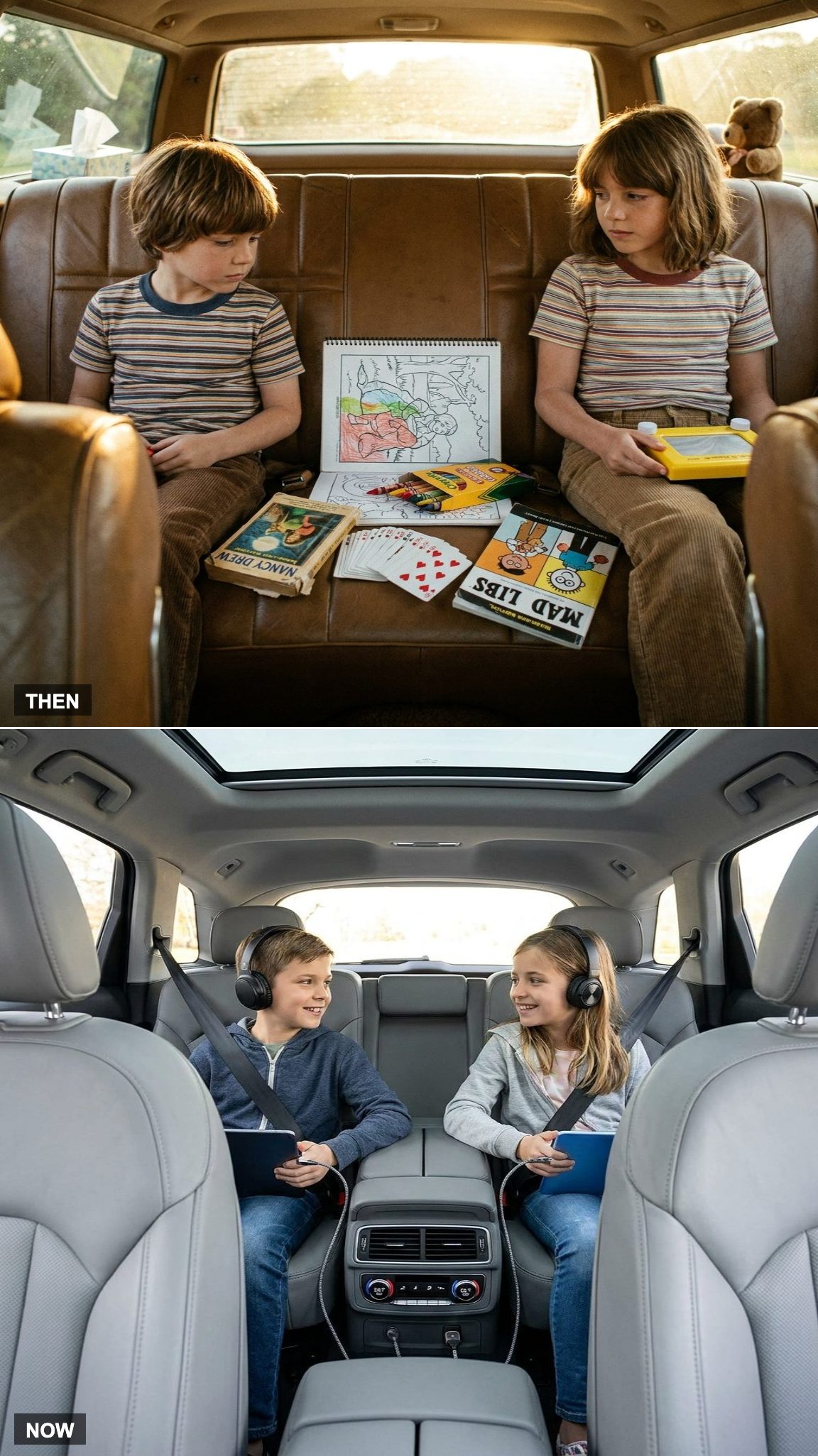
Coloring books. Card games. Mad Libs. License-plate contests. One older sibling drafted into inventing games somewhere around Chattanooga. The Etch A Sketch was the closest thing anyone had to a screen, and its scraping sound continued all the way to Florida.
Tablets can quiet a back seat for hours and make a long drive easier for everyone. They also remove some of the boredom that once forced children to watch the landscape, bother one another, and create increasingly complicated rules for counting cows.
11. Spare Batteries Then, Charging Cables Now
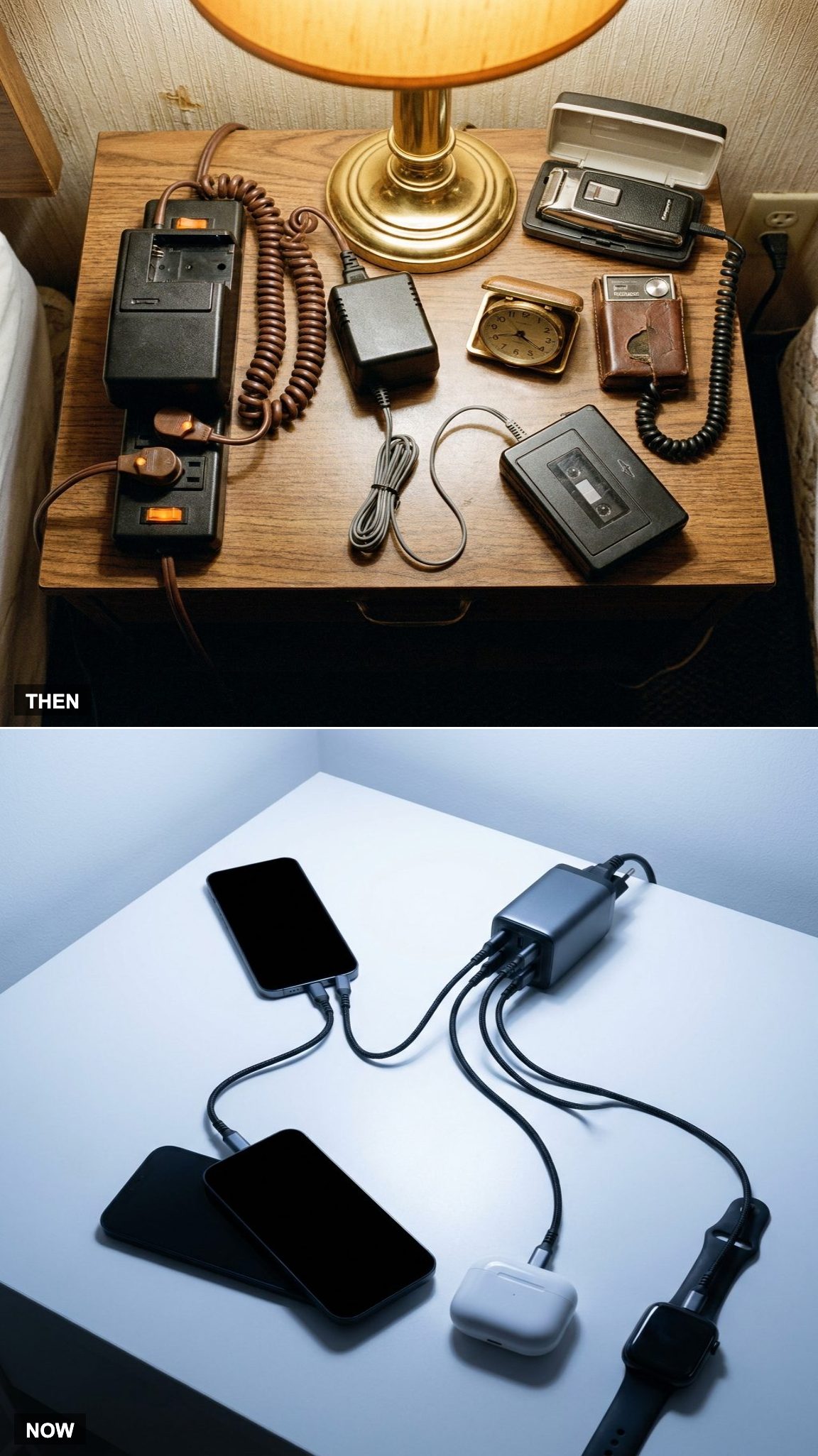
The 1980 electronics pouch held spare AA and AAA batteries, camera batteries, flash supplies, an electric-razor cord, plug adapters, and perhaps a voltage converter for international travel. The Walkman ran on replaceable batteries, and most family cameras did not need a nightly charging cable.
Modern travel brings more rechargeable devices but fewer loose batteries. USB-C can power many phones, headphones, tablets, and laptops, although watches and some accessories still require their own connectors. The collection is smaller than it was a decade ago, but one missing cable can still cause an unreasonable amount of trouble.
10. Hair Dryers, Travel Irons, and Other Suitcase Bricks
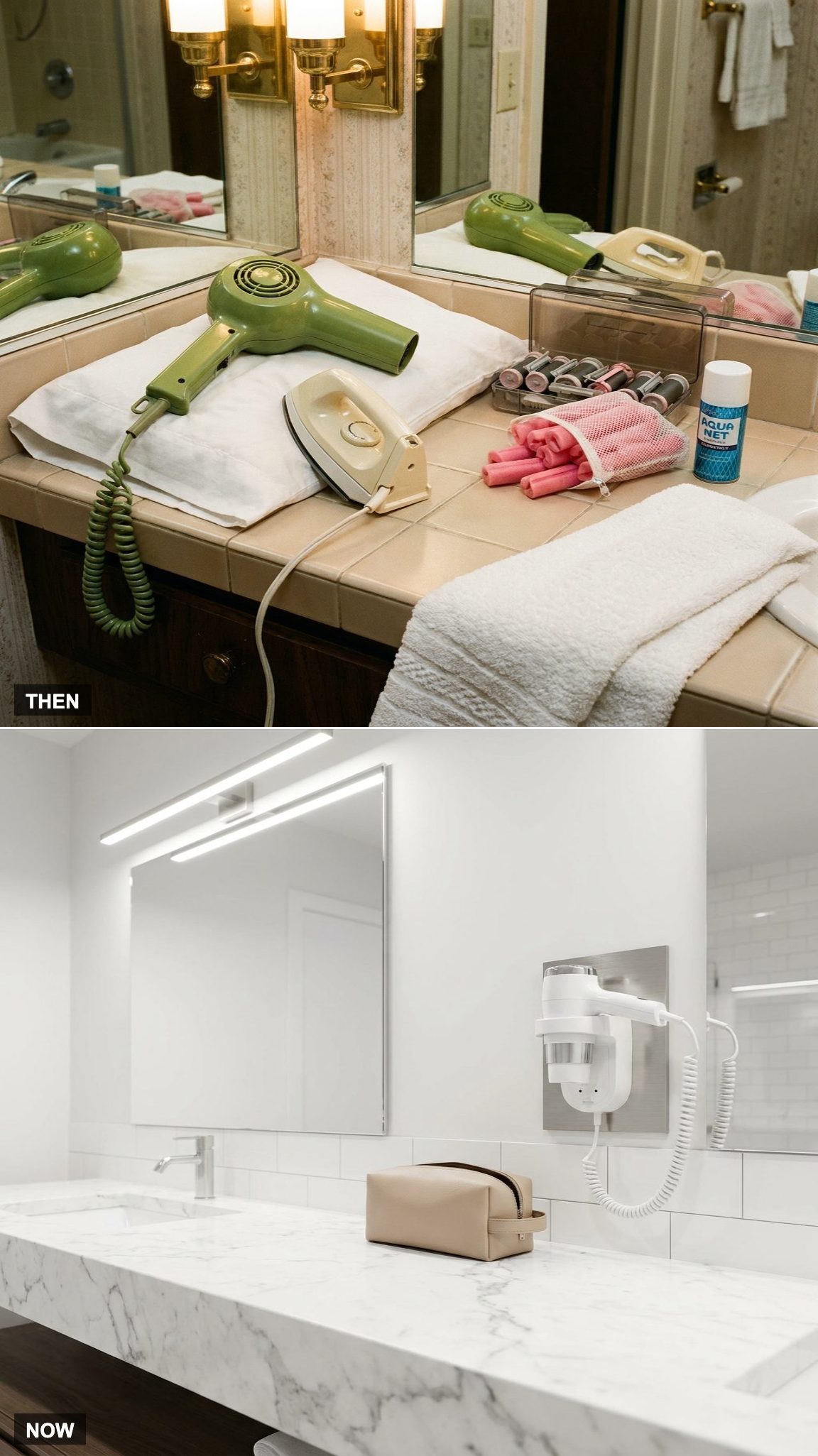
Many women packed an assortment of hair tools because hotel amenities varied widely. A travel dryer, curling iron, rollers, brushes, and styling products could occupy every remaining zippered pocket.
Hair dryers and clothes irons are common in modern hotels, though never guaranteed. Checking the room amenities before departure can eliminate several bulky items and prevent the discovery that the supposedly compact travel dryer weighs almost as much as a shoe.
9. Souvenir Hauls vs. Camera Rolls
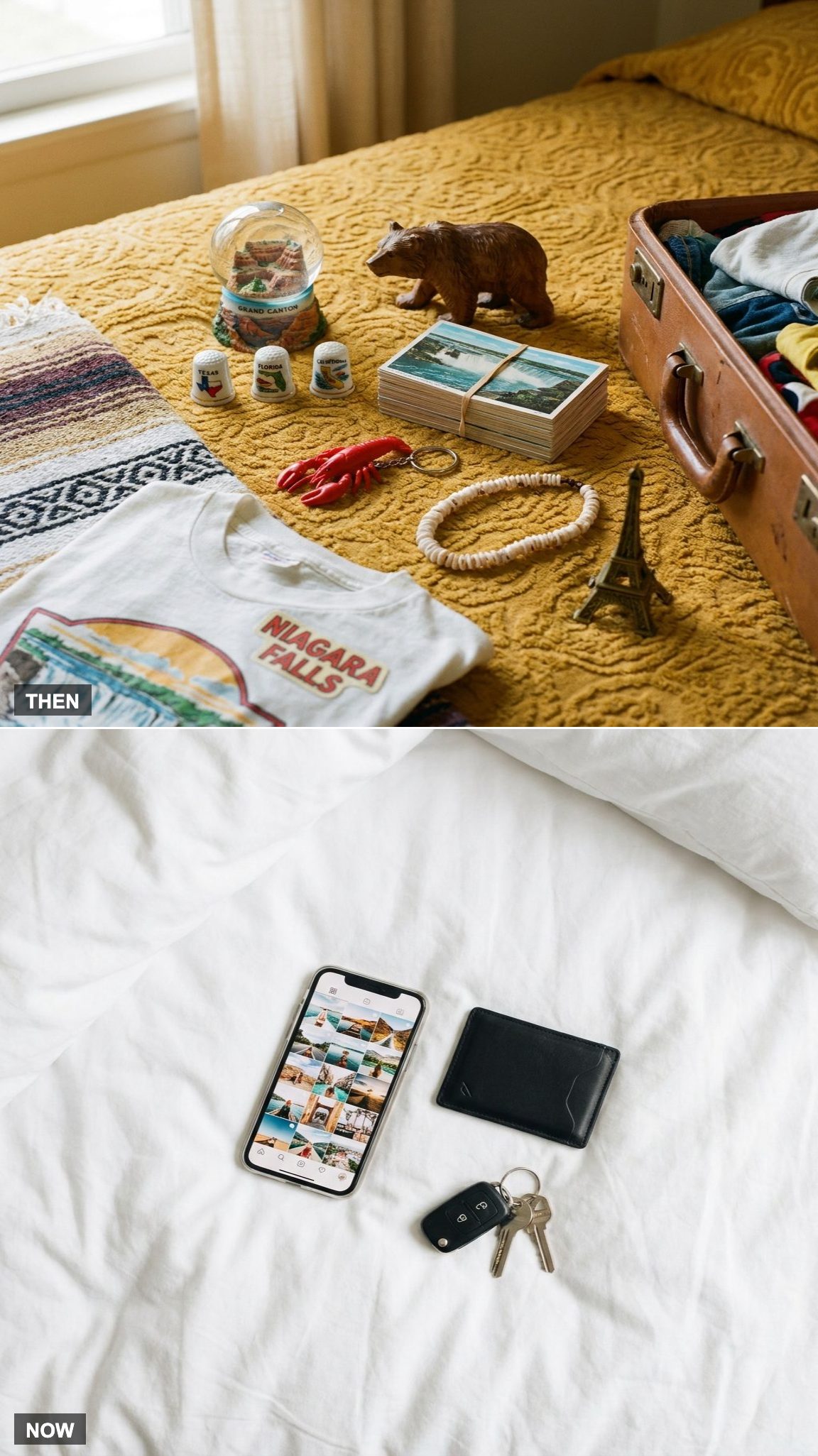
Many trips ended with a suitcase that no longer wanted to close. A snow globe, an iron-on T-shirt, postcards, a lobster keychain for the neighbor who watched the cat, and several objects nobody remembered buying were fitted into whatever space remained.
Digital photographs now bring home a detailed record without adding weight. A physical souvenir offers something different: shape, texture, and a permanent place on a shelf. The best choice may be one object worth keeping rather than a bag full of evidence that every gift shop was visited.
8. One Shared Family Suitcase vs. Everyone Rolling Their Own
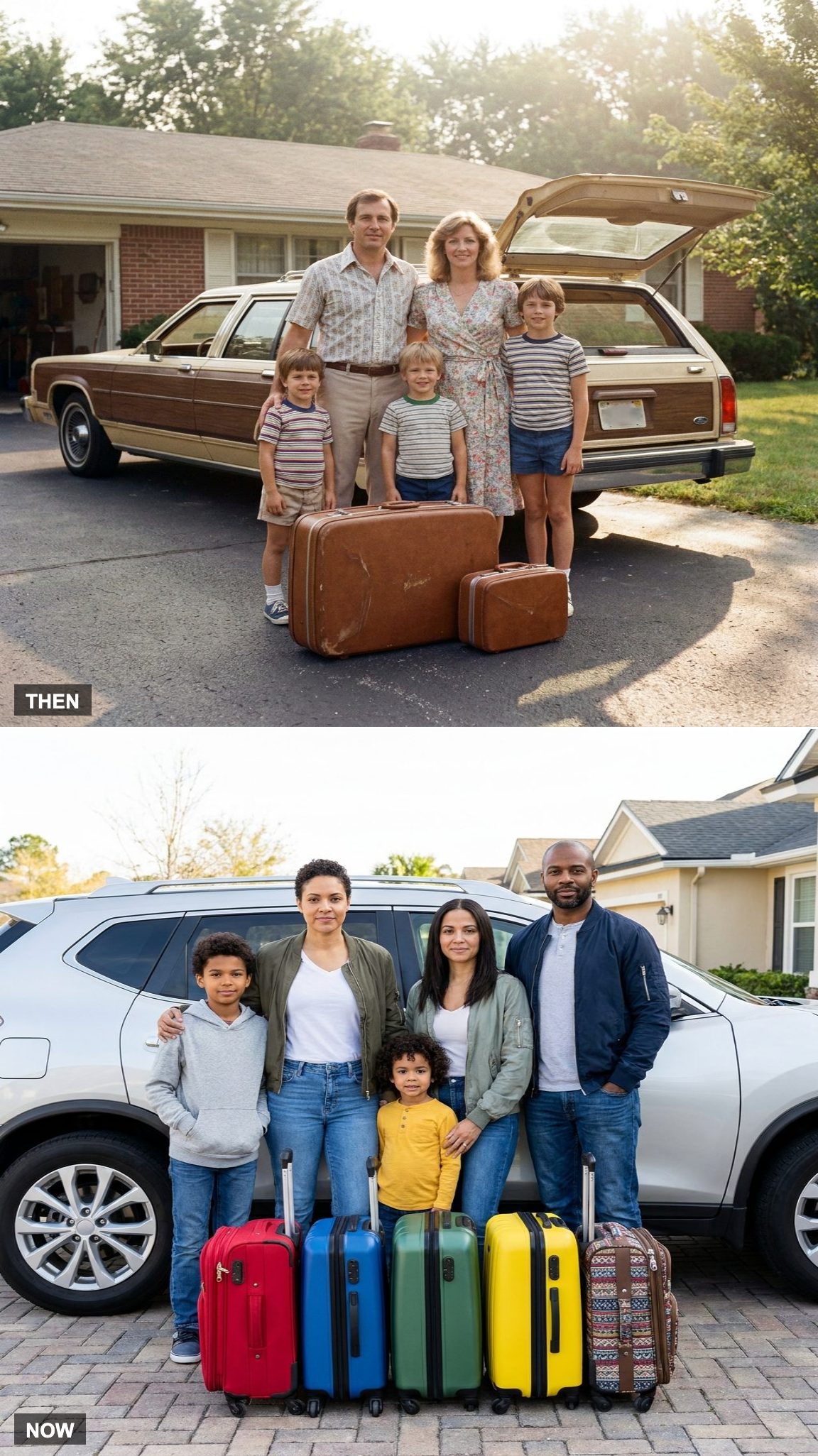
Some families packed children together or combined nearly everyone’s clothes into one enormous case. Dad’s slacks pressed against Mom’s dresses, while bathing suits, pajamas, and children’s clothes filled whatever gaps remained.
Individual rolling bags make it easier to divide the weight and assign responsibility. They also reduce the risk that one delayed suitcase will contain every piece of clothing the family brought. Shared luggage was economical, but it made finding one child’s socks a group project.
7. The Mailed Hotel Confirmation vs. The Buried Email
🔥 Would you like to save this?
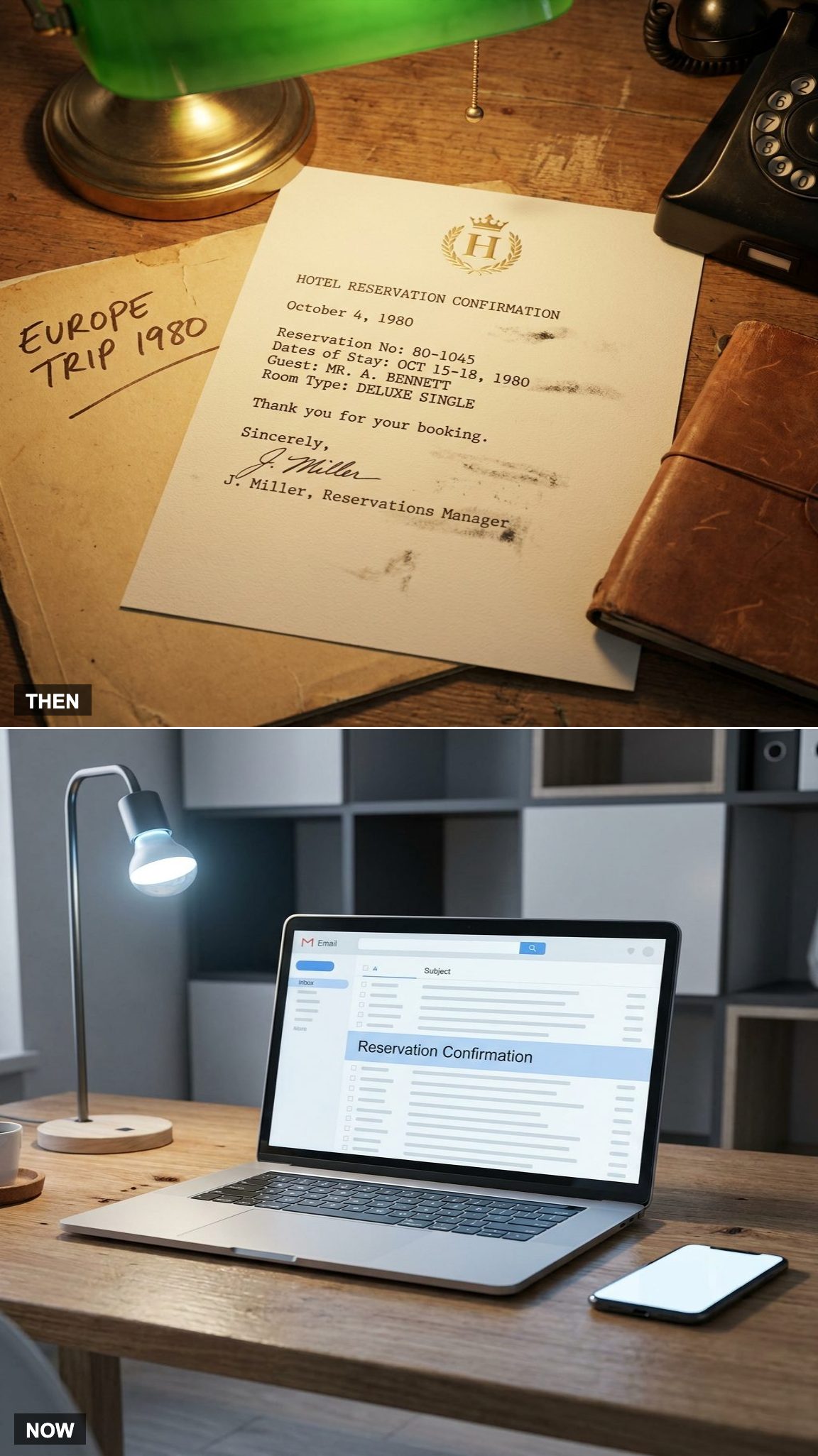
The hotel sent a letter, form, or postcard confirming the room. It went into the document folder and traveled with the family as proof that somebody at the destination expected them.
The modern confirmation may be easier to search, update, and resend, but first it must be found behind promotional messages, receipts, and password-reset notices. Paper could be lost. Email can be buried. Every generation creates its own version of the same panic.
6. The Emergency Numbers Card
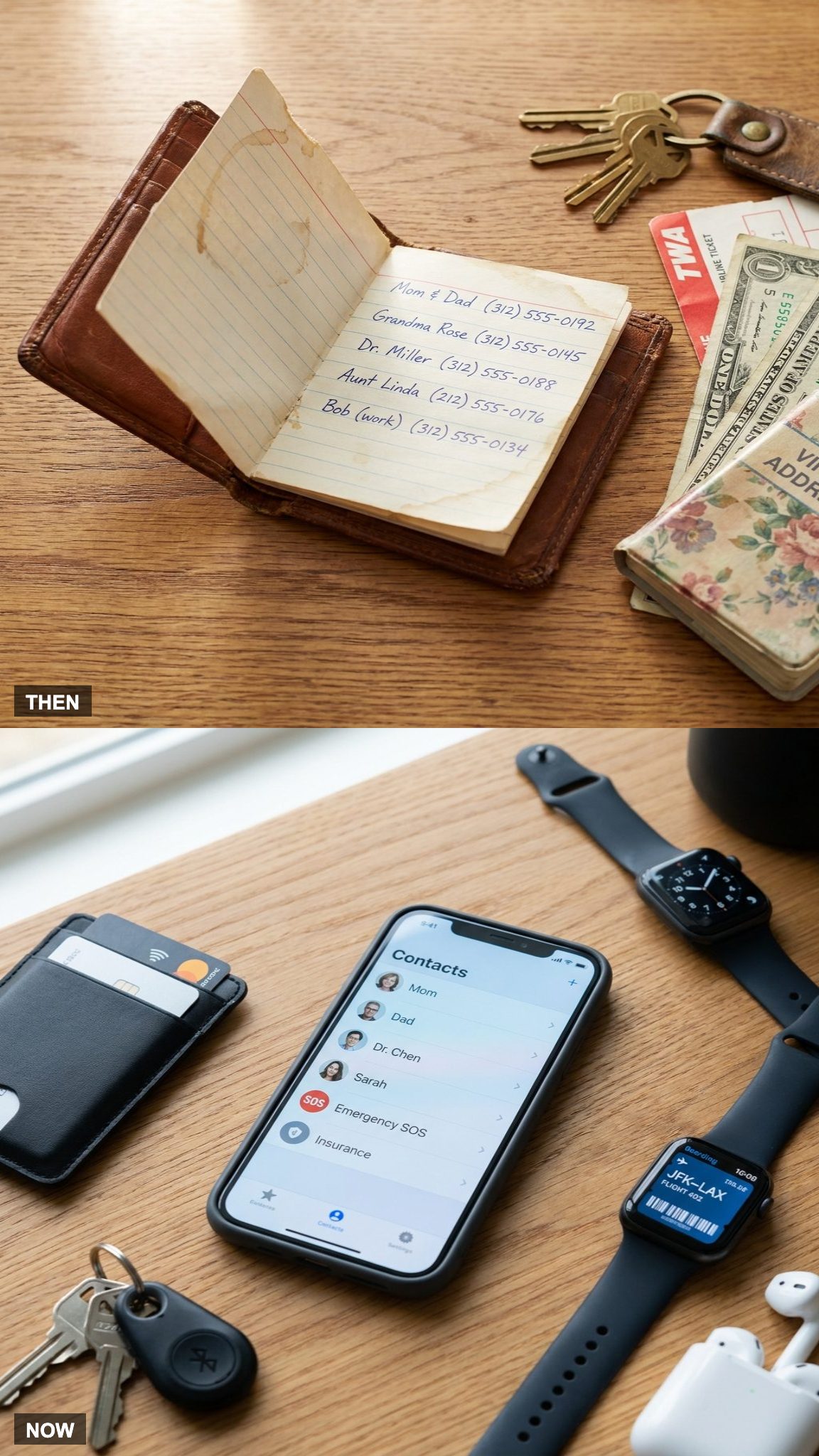
The emergency card lived in a wallet, folded twice, its edges softened by years of handling. Grandma’s number. The veterinarian. The family doctor. The neighbor with a spare key. Losing the wallet meant losing more than money.
Contacts now reappear when the correct account is restored on a replacement device. That is genuine progress, but it still depends on a charged phone, working internet connection, and remembered password.
5. The Snack Situation: Tote-Bag Buffet vs. Buying Along the Way
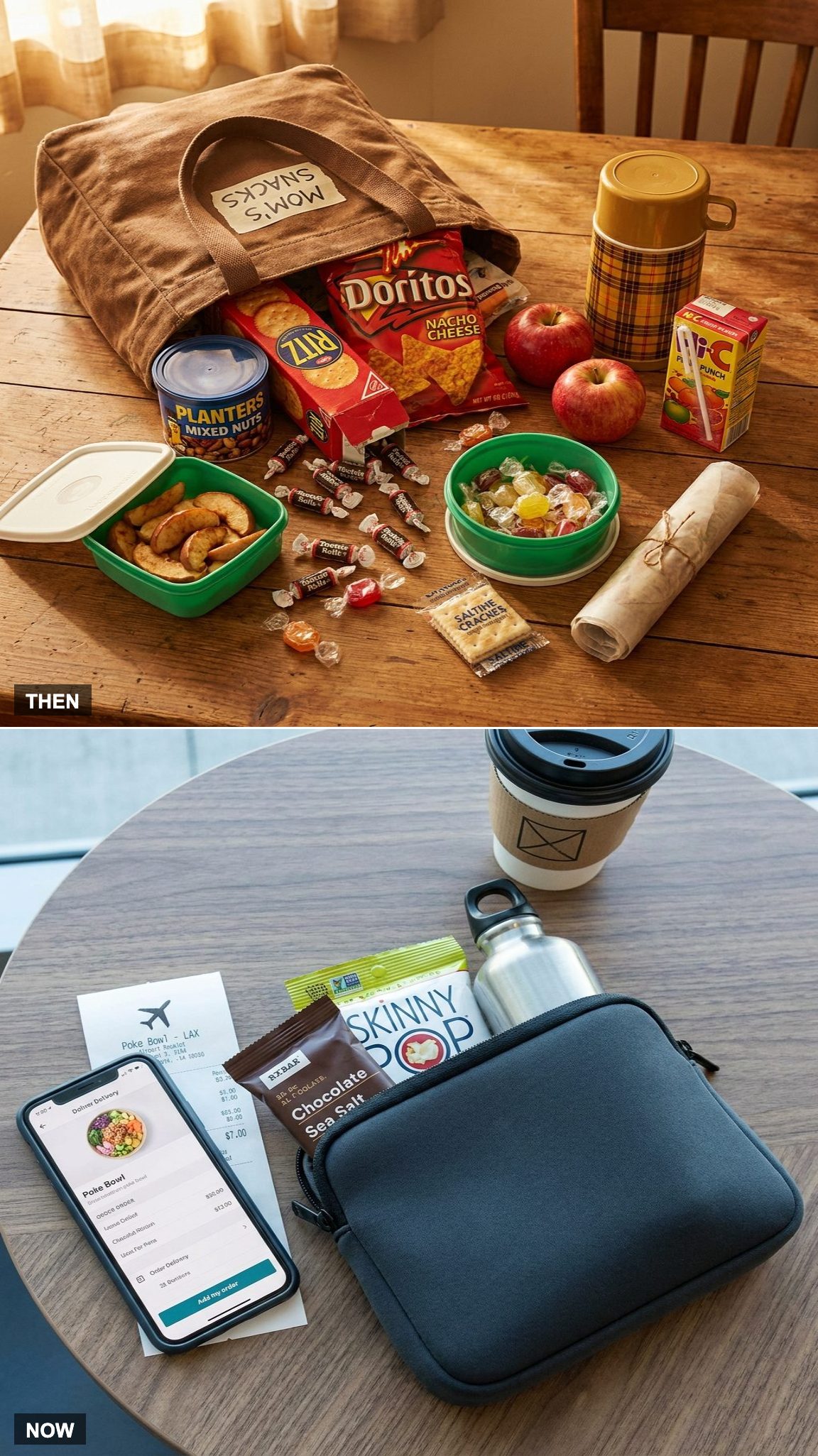
My mother packed for hunger like it was a Category 5 weather event. The tote came out three days before departure, and by launch morning it nearly outweighed the suitcase. Ritz crackers, Tootsie Rolls, a thermos of iced tea sweating through its plaid sleeve, apples destined to bruise, and wax-paper bundles she refused to identify all went inside.
Roadside stops and airport terminals now offer far more choice than most travelers encountered along the way in 1980. That makes packing easier, but convenience prices have preserved one old truth: the sandwich made at home is usually cheaper.
4. The Vacation Wardrobe: One Outfit Per Occasion vs. A Flexible Capsule
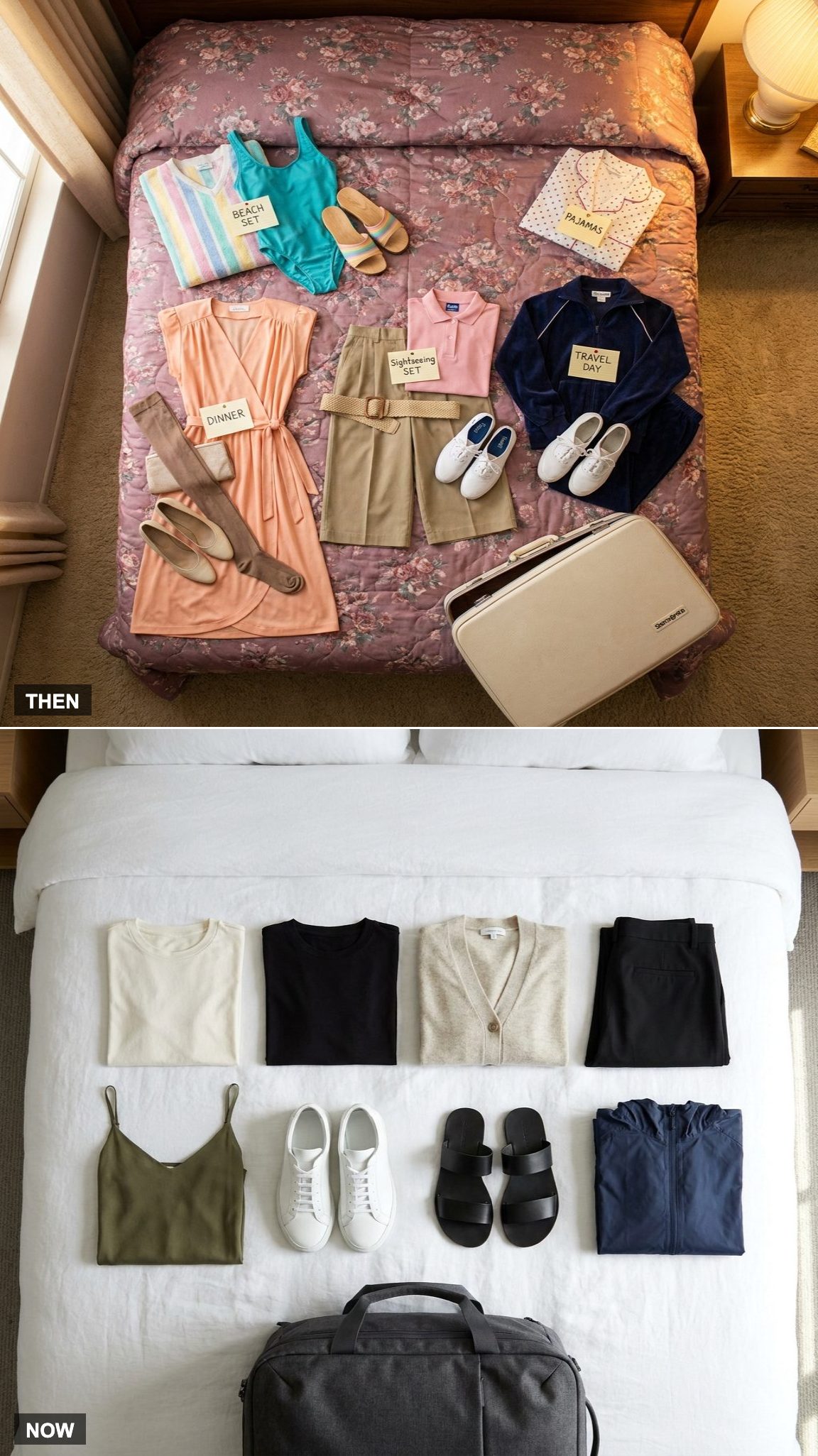
The 1980 approach ran on categories. One outfit for dinner, another for sightseeing, another for the pool, and backups for each possible weather event. The bed disappeared beneath a terry cover-up, polyester wrap dress, velour tracksuit, blouses, slacks, and enough accessories to suggest the family was leaving for a season.
A modern capsule uses pieces that share colors and work in several settings. An oatmeal merino cardigan, two tees, an olive slip dress, and white leather sneakers can cover more than their small number suggests.
The capsule-wardrobe idea is older than social media. Boutique owner Susie Faux promoted the concept during the 1970s, and Donna Karan’s Seven Easy Pieces helped popularize a related approach in the 1980s. Online travel culture later turned it into a packing strategy.
3. The Great Overpack: Two Full Suitcases vs. The Carry-On Challenge
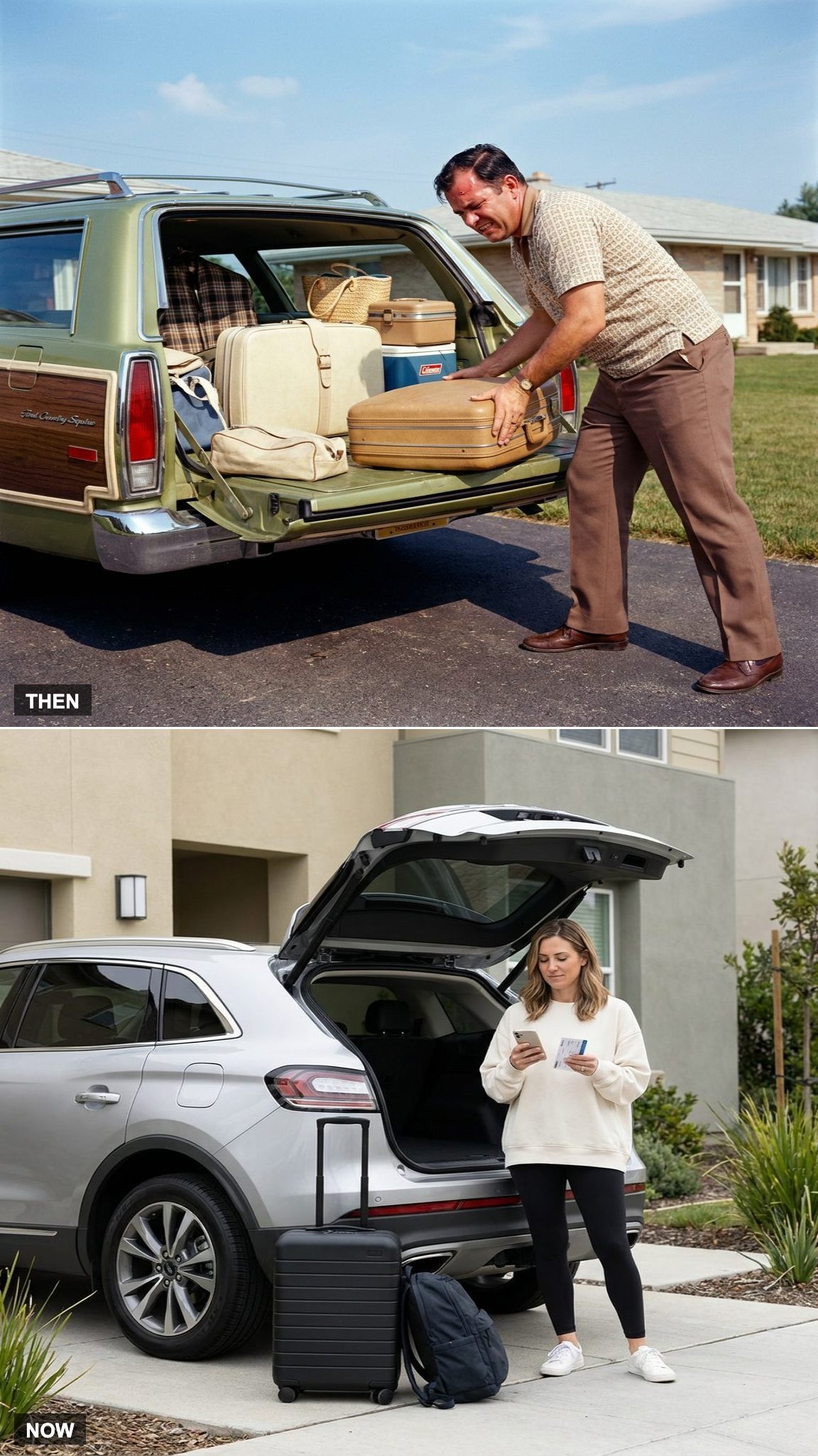
Nobody in 1980 apologized for overpacking. Preparation meant bringing enough to handle the expected trip and several imaginary versions of it. A belt cinched around a bulging suitcase looked like proof that the family had taken the task seriously.
Packing light later became a public challenge, encouraged by baggage fees, security lines, crowded overhead bins, and videos demonstrating how to fit weeks of clothing into a remarkably small bag. Carry-on-only travel is not right for every destination, but it changed excess luggage from a sign of readiness into a problem to solve.
The belt around the bulging suitcase was a badge of preparation, not a warning.
2. The Packing Ritual: An Evening’s Labor vs. A Faster System
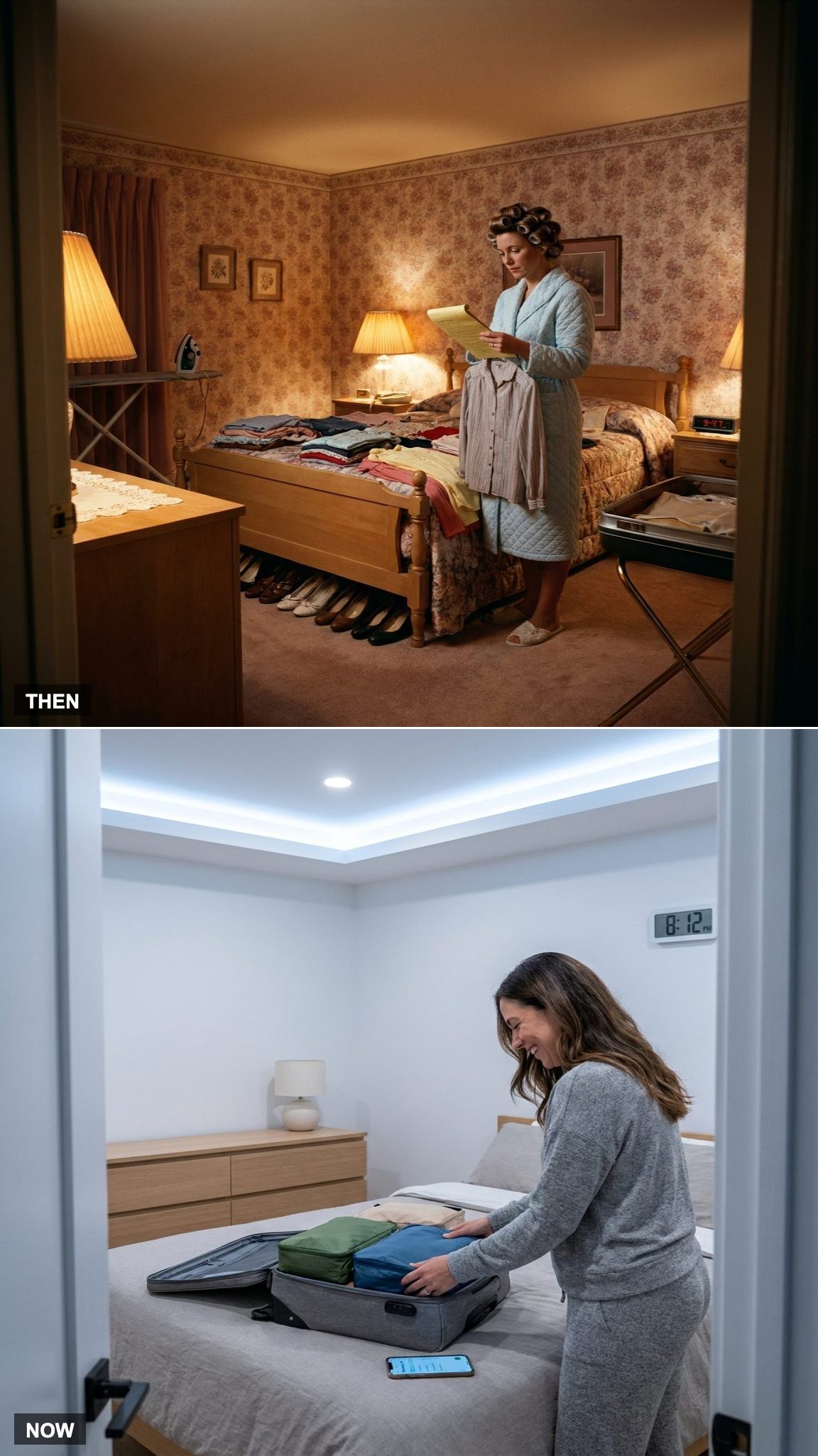
Packing could occupy an entire evening. Everything spread across the bed while the list was checked, clothes were ironed, shoes were reconsidered, and several items moved in and out of the suitcase before the lid finally closed.
A familiar wardrobe and an established system shorten that process. The cubes organize what has already been chosen; they do not make the choices themselves. Packing becomes faster when the traveler knows which clothing works, what the destination provides, and which past emergencies never actually happened.
1. Packing for Every Possibility vs. Packing for the Trip You’re Taking
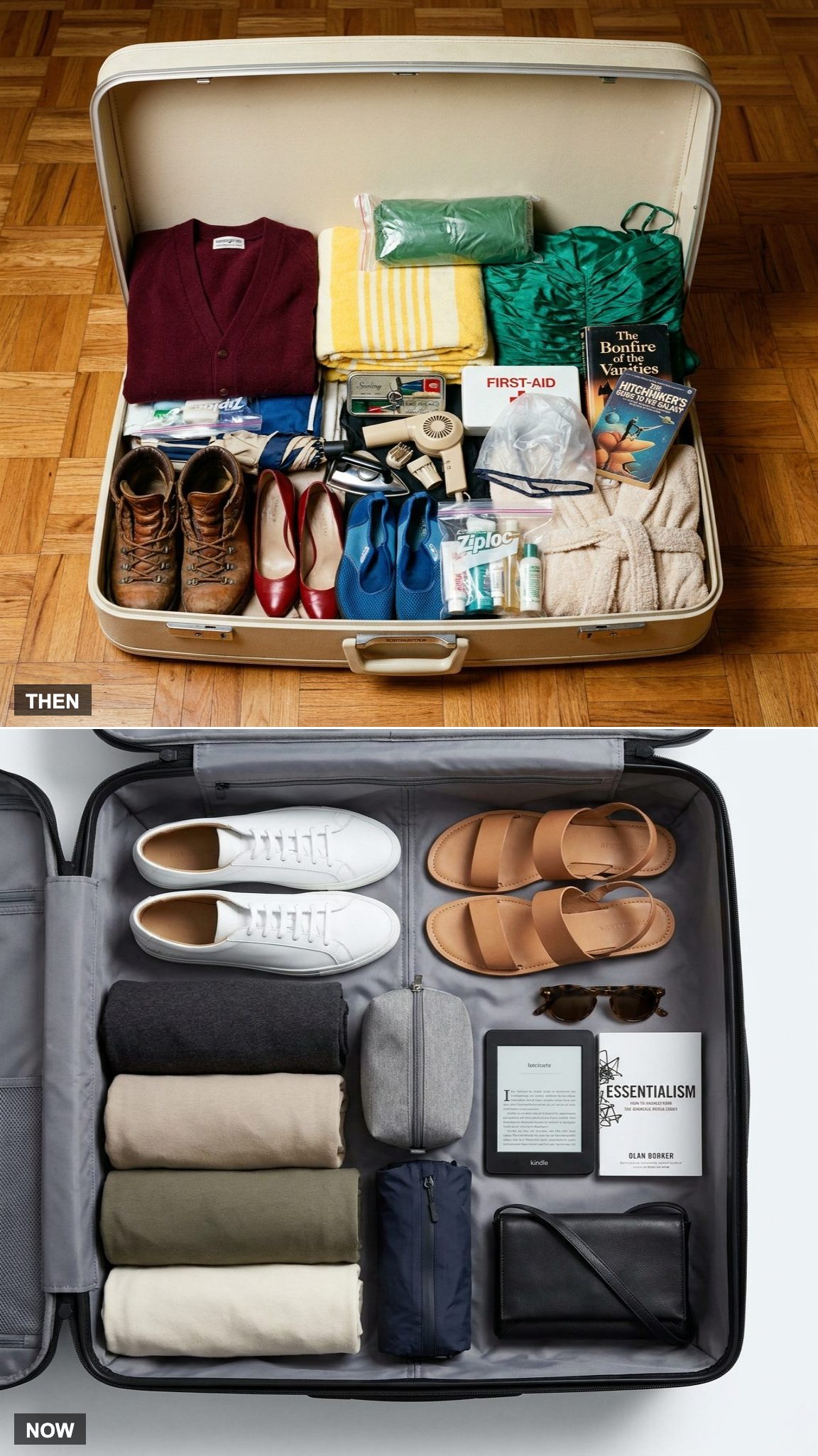
The 1980 suitcase was a museum of contingencies. A wool cardigan for a cold snap, a poncho for a surprise storm, a formal dress for a possible dinner, water shoes for a possible lake, a sewing kit for a possible hem, and a travel iron because nobody wanted to look wrinkled in photographs that would not return from processing for weeks.
The calculation is different now. Travelers can check the weather, contact the hotel, search for a nearby store, and replace many ordinary forgotten items. That safety net is strongest in cities and popular destinations and much weaker in remote places, but it means the suitcase no longer has to contain every possible future.
By departure morning, the 1980 suitcase was heavy, tightly latched, and packed with several things nobody would use. It was also proof that the family had spent days imagining the trip before it began. The modern bag is lighter and smarter. The anticipation still has to come from somewhere.
🔥 Would you like to save this?
Please note that some of the imagery in this article were created with the aid of AI image generators.