
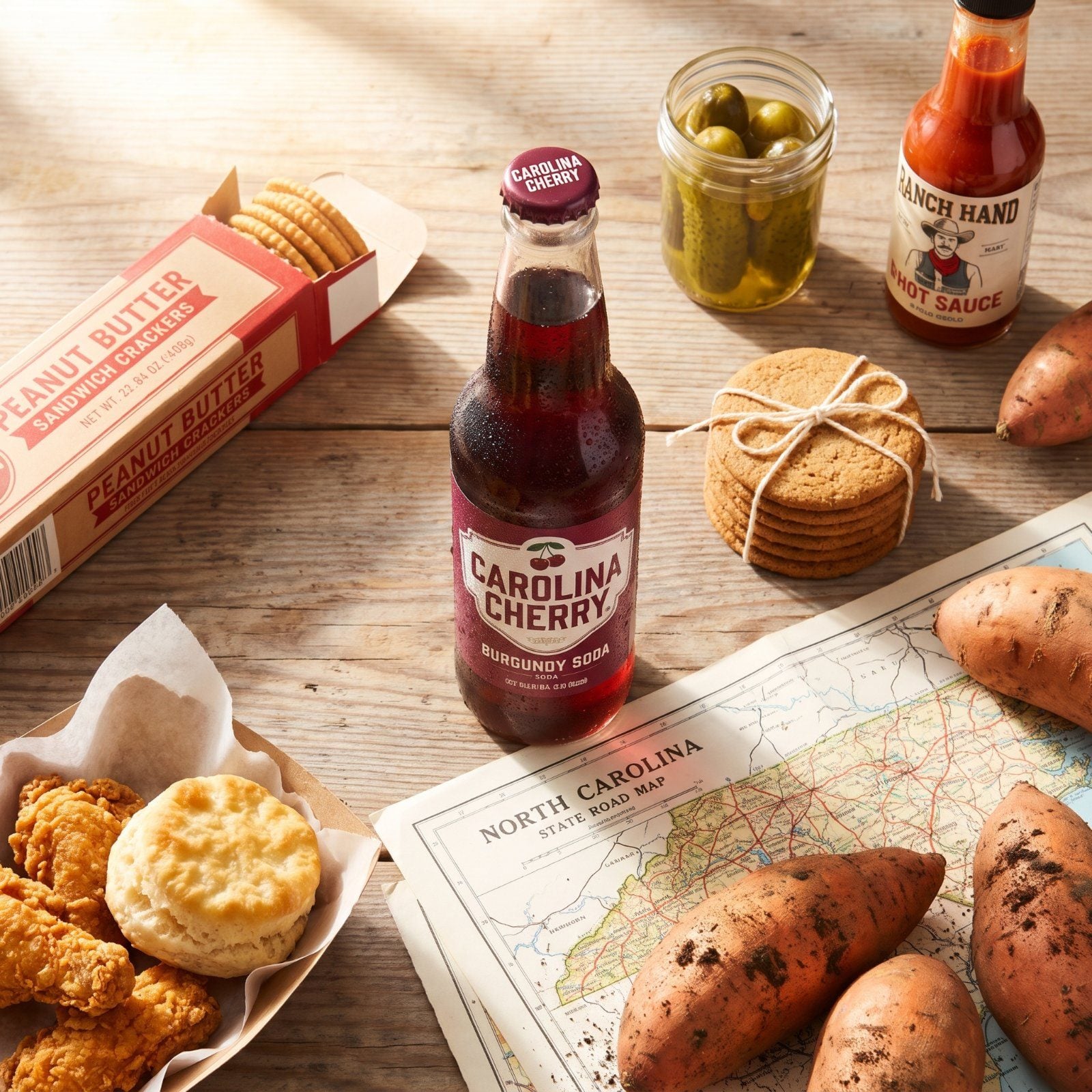
The hiss of a Cheerwine cap in July. A red doughnut sign pulls cars off the highway like a tractor beam. Grow up in North Carolina and these things live somewhere below memory, in the part of your brain that remembers the smell of a church fellowship hall and the exact weight of a paper boat full of hushpuppies. Some you can still buy, some you can still visit. All of them belong to us in a way no gift shop magnet will ever explain.
17. Cheerwine, the Salisbury Cherry Soda You Can’t Explain to Outsiders
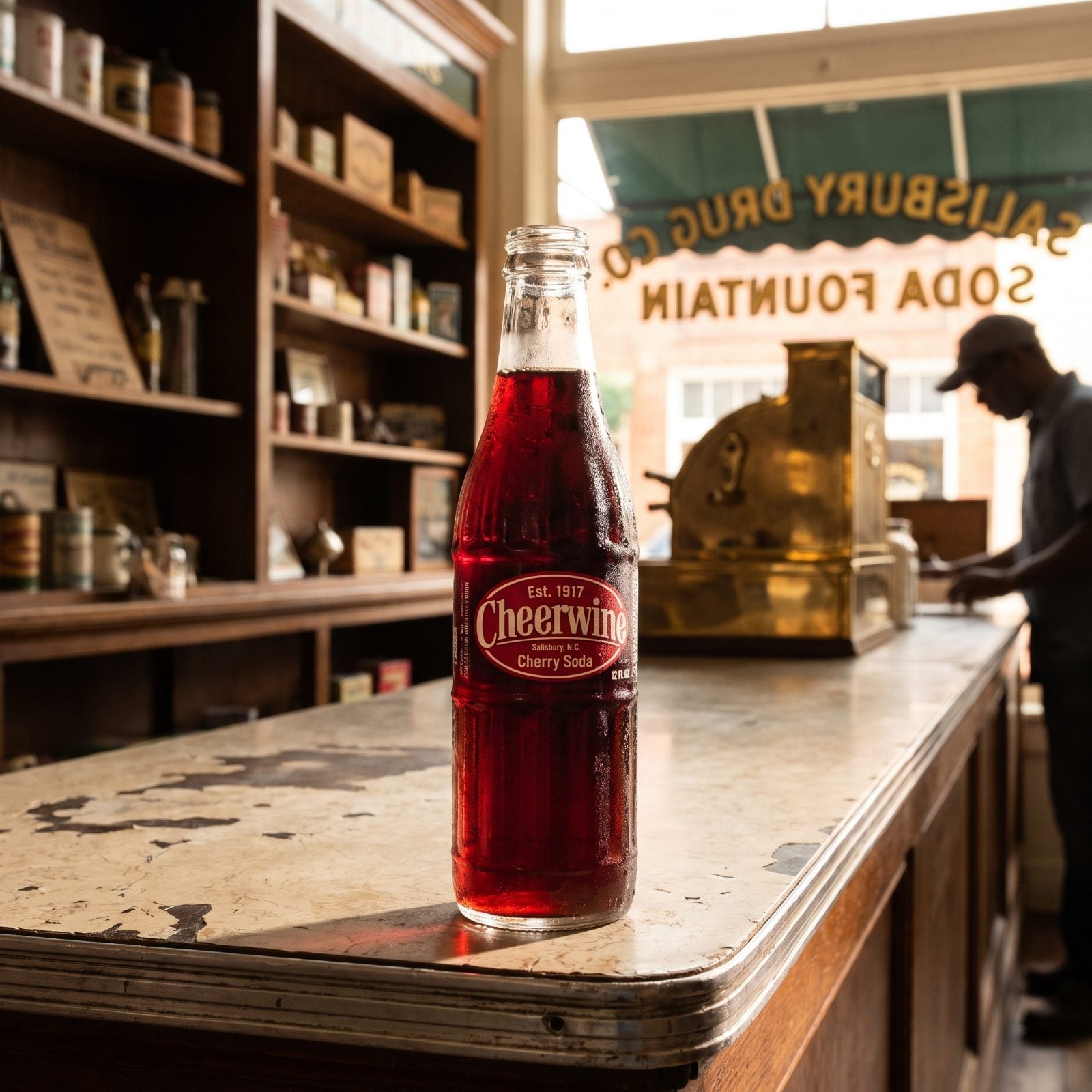
Try describing Cheerwine to somebody from out of state and watch their face do the math. “It’s cherry, but not like cherry Coke. Darker. Deeper. Kind of like a cherry that went to college.” You give up halfway through and just hand them a bottle.
L.D. Peeler mixed up the first batch in Salisbury in 1917, back when sugar ran scarce and a little cherry flavoring could stretch a short supply a long way. The color came out that unmistakable burgundy and the name stuck. Still made in the Piedmont, still run by the same family, which the company likes to point out makes it the oldest soft drink in the country under one family’s roof.
Spend a Saturday in downtown Salisbury and you’ll find Cheerwine on T-shirts, ball caps, bottle openers. Makes a good souvenir. Makes an even better float with vanilla ice cream, and we will not be taking questions on that.
16. The Krispy Kreme ‘Hot Now’ Light That Hijacked Your Steering Wheel
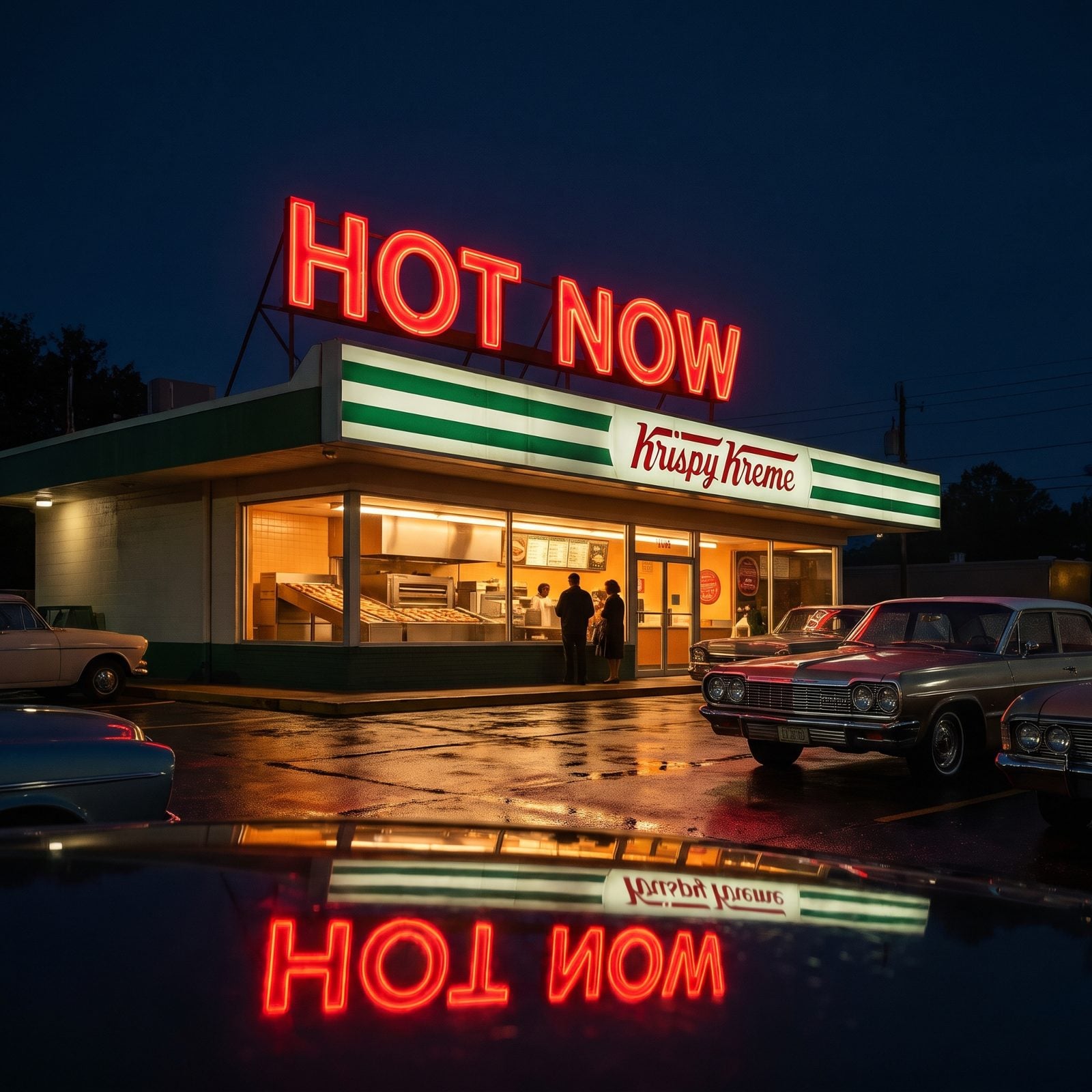
You know the exact feeling. Driving home, minding your business, and then the sign flips on. Red neon. “Hot Now.” Suddenly your car is turning into the parking lot without your permission.
The first Krispy Kreme opened in Winston-Salem on July 13, 1937, when Vernon Rudolph rented a building in what’s now Old Salem and started selling doughnuts to local grocers. The “Hot Now” light came along decades later, in 1992, and it changed the whole relationship. Before the light, you had to guess. After it, you knew the glaze was being poured that very second.
A hot original glazed, taken straight off the line, basically dissolves on contact. Barely a solid. You’ve eaten three before you remembered you were going to share.
15. The Birthplace of Pepsi in New Bern, Where a Pharmacist Started It All
Most people figure Pepsi came out of a boardroom somewhere. It came out of a drugstore in New Bern.
Pharmacist Caleb Bradham first mixed it up in 1893 at Bradham’s Drug Store, back when every pharmacy had a soda fountain and the pharmacist worked as part chemist, part bartender. It started out as ‘Brad’s Drink,’ and in 1898 he renamed it Pepsi-Cola. A historical marker in Craven County now stands at the site of his pharmacy.
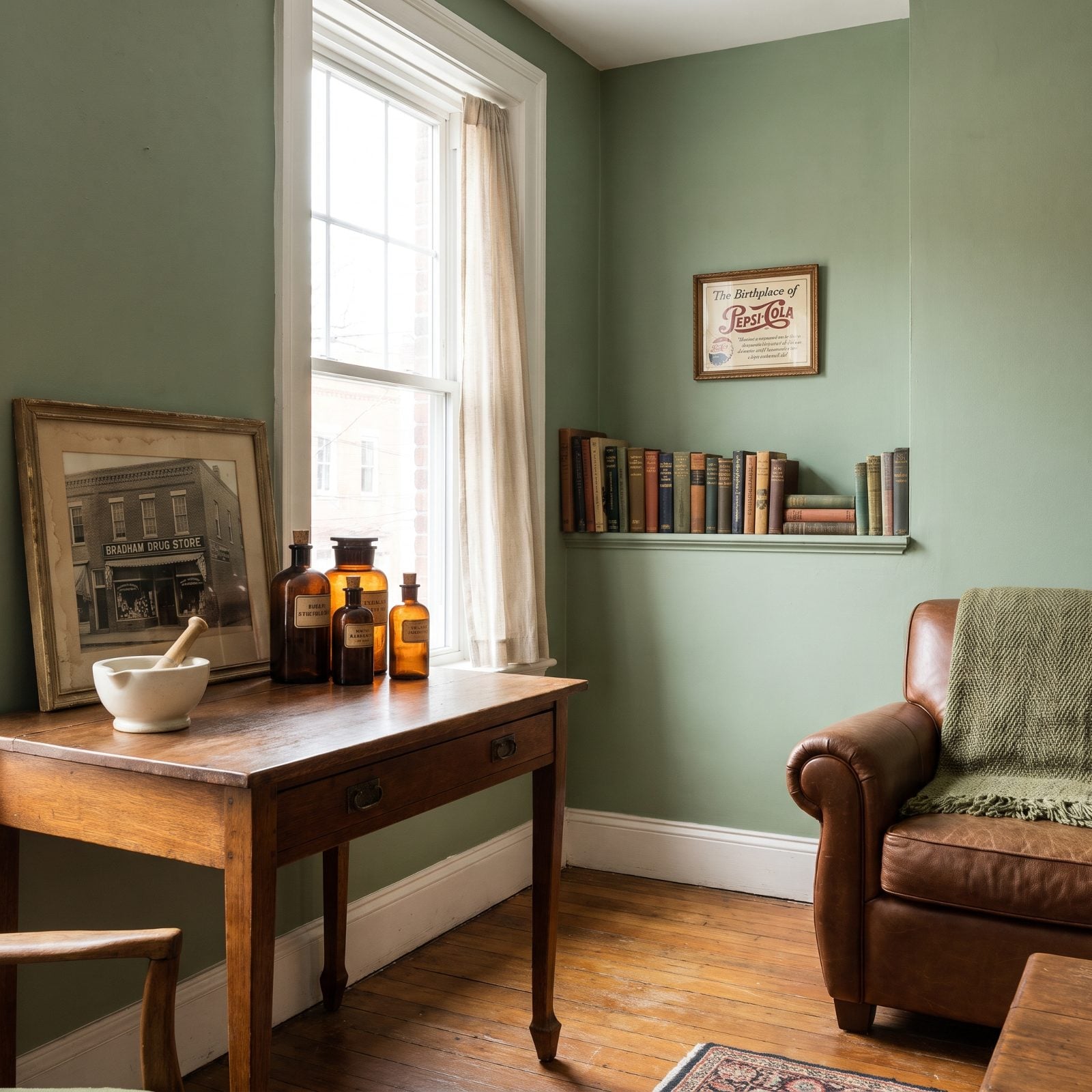
Today a quiet sage-green room pays tribute to the Birthplace of Pepsi: amber apothecary bottles and a mortar and pestle sit on an old wooden desk beside a framed photo of Bradham Drug Store, and a vintage “Birthplace of Pepsi-Cola” sign hangs above a shelf of old books. A ten-minute stop that somehow feels like a pilgrimage, especially if you grew up in a Pepsi household. And in eastern North Carolina, a lot of us did.
14. The Eastern vs. Lexington Barbecue Debate That Splits Families
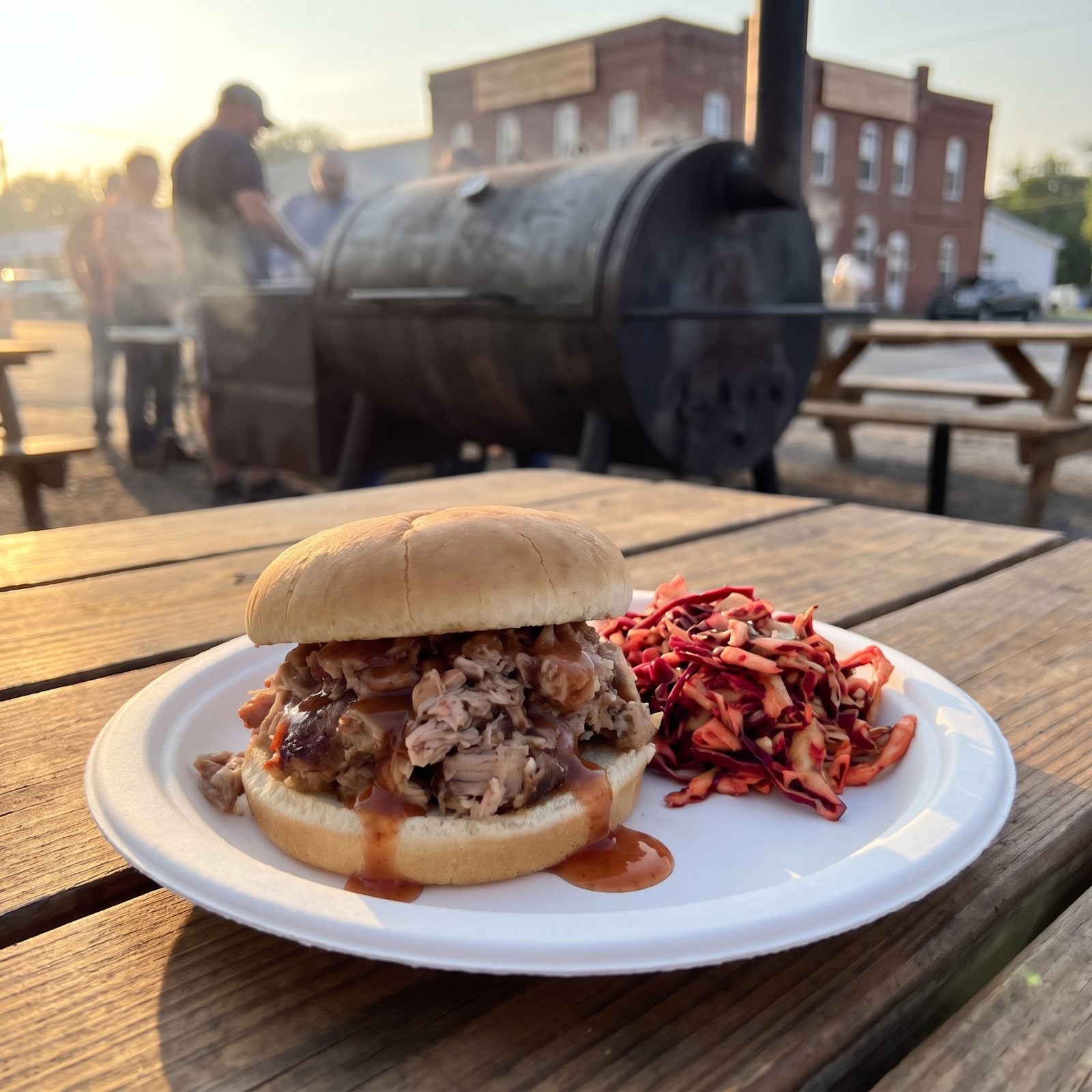
Pick a side carefully. This is the argument that can end a Thanksgiving.
North Carolina runs two barbecue traditions and we take them personally. Down east, it’s whole-hog, chopped, with a sauce that’s basically vinegar and pepper and a bad attitude. In the Piedmont, it’s Lexington style: pork shoulder, and a sauce that commits the controversial act of adding tomato.
Lexington-style sauce grew out of the eastern vinegar base in the late 1800s and early 1900s and took the name of the town. Lexington now calls itself the “Barbecue Capital of the World,” and it has the receipts. The Lexington Barbecue Festival has taken over Main Street on the fourth Saturday of October since the first one on October 27, 1984. It’s grown into one of the largest single-day festivals in the Southeast.
Here’s where we’ll get ourselves in trouble. The slaw is the tell. White and mayonnaise-based, you’re eastern. Red and vinegar-based, you’re Lexington, and you probably won’t budge an inch about it.
13. Bojangles’ Chicken and Biscuits, the Charlotte Original
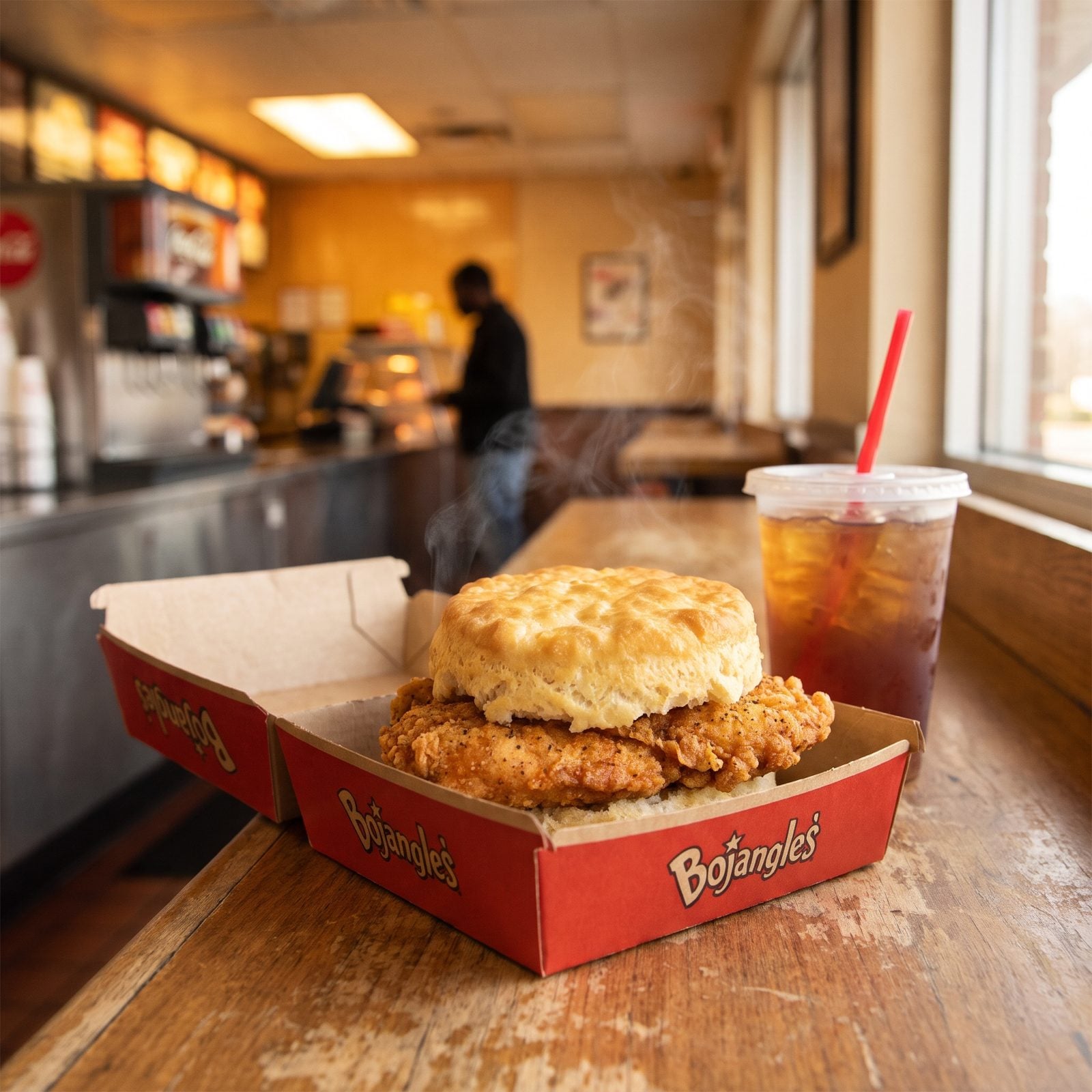
The biscuit is the whole argument. Light, tall, a little craggy on top, built to hold a piece of spicy chicken like it was made for exactly that.
The first Bojangles’ opened in Charlotte on July 6, 1977, started by Jack Fulk and Richard Thomas. That first location was walk-in only, no seating, which tells you people were willing to stand in a doorway for this. The chain started franchising in 1978 and still calls Charlotte home.
For a lot of us, Bojangles isn’t a restaurant so much as a Saturday-morning ritual. A box of biscuits on the counter at a family gathering, or a sausage biscuit and sweet tea before a long drive. The seasoning gets into your memory as much as your taste buds.
12. Late-Night Cook Out Runs and the Impossible Menu Decision
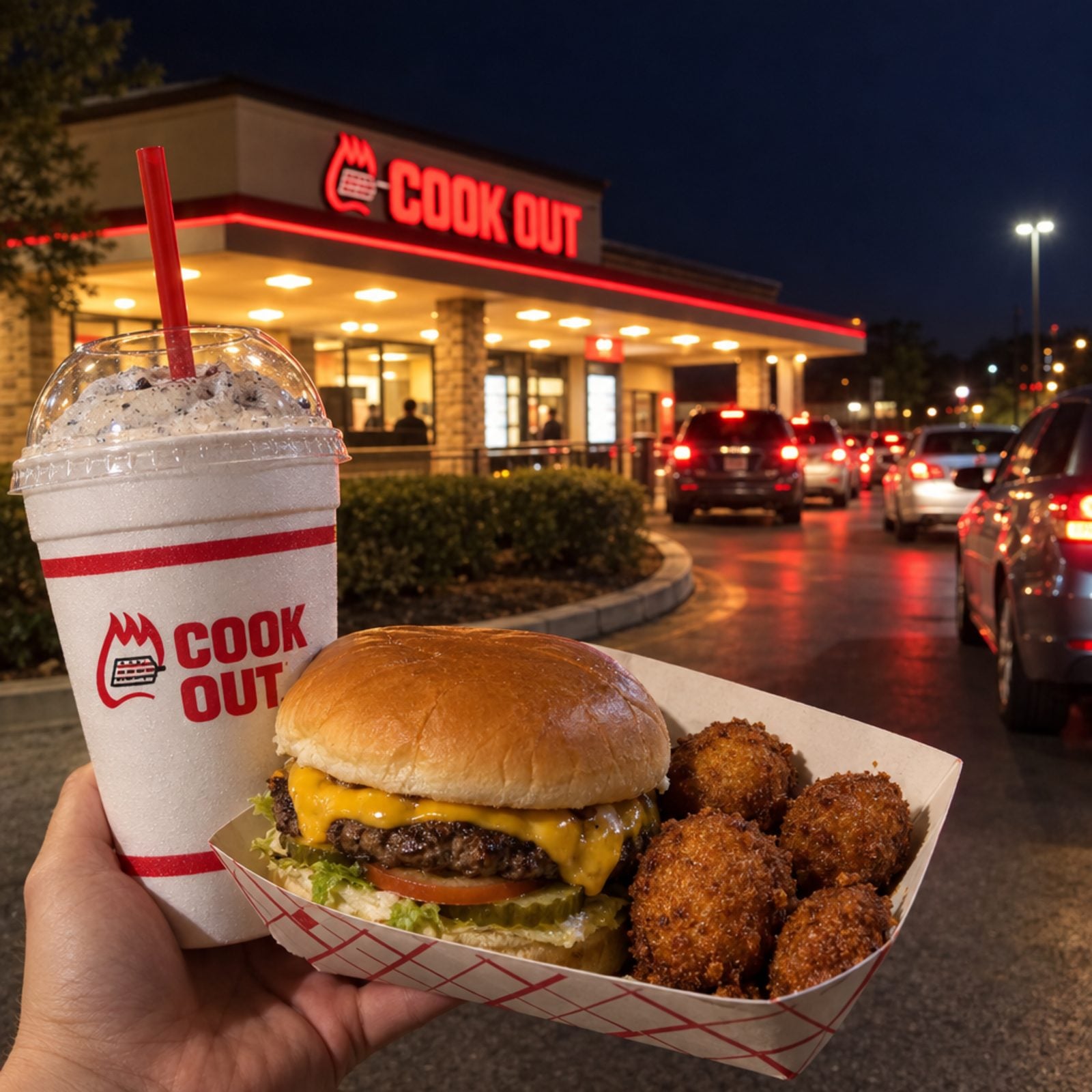
It’s 11 p.m. Everything else is closed. Somebody in the car says “Cook Out?” and the whole decision is already made.
Morris Reaves founded Cook Out in Greensboro in 1989, with the first location on Randleman Road. It grew quietly for years, then not so quietly, spreading across the Southeast while staying privately owned the whole way.
The trays are the stuff of legend. A burger, two sides, a drink, all for not much money, and the milkshake menu runs so long you’ll freeze up every single time. Dozens of flavors. You’ve stared at that menu board like it was a final exam you didn’t study for. You’ll order the Oreo anyway. You always do.
11. Texas Pete Hot Sauce, Made in Winston-Salem (Not Texas)
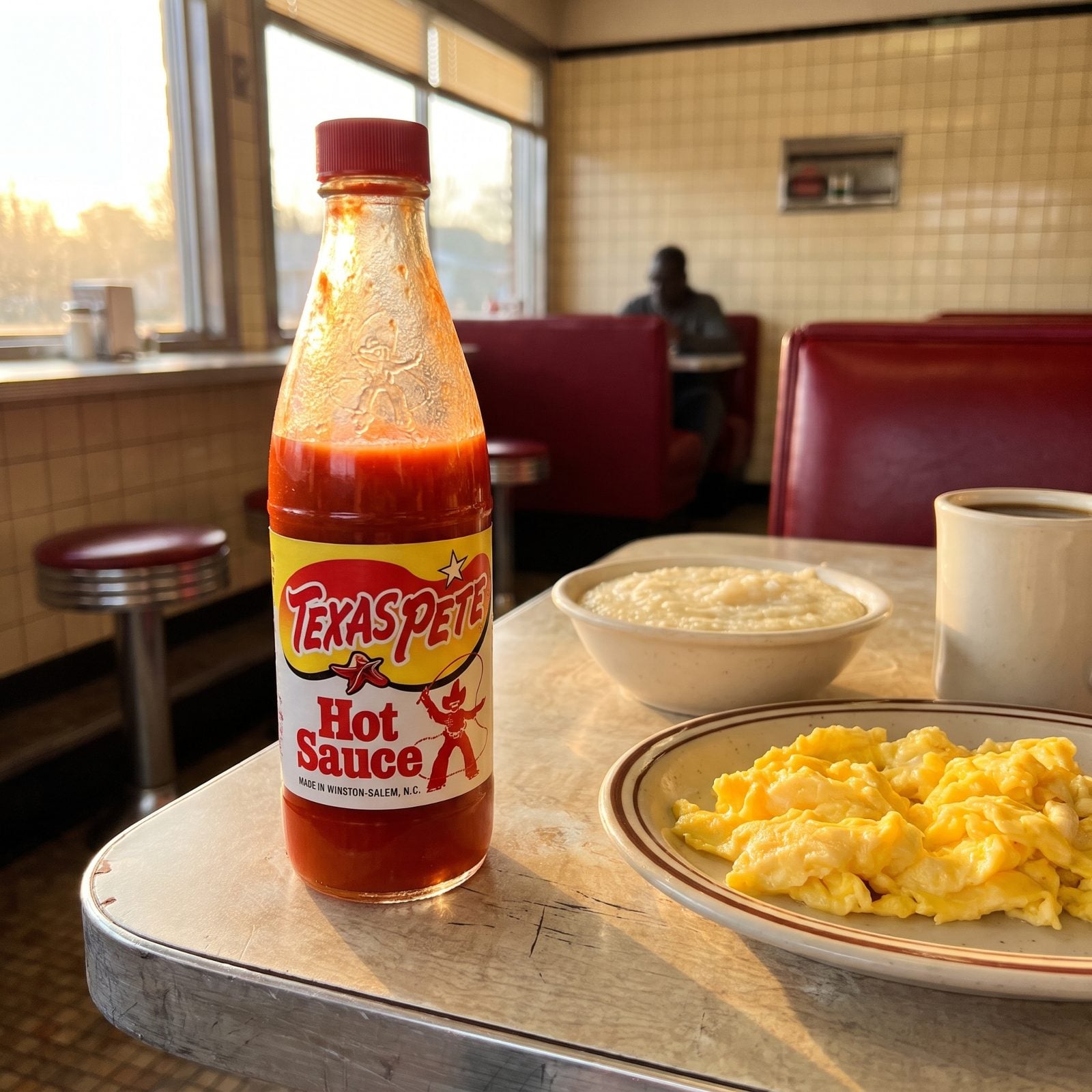
The name is a beautiful lie. Texas Pete has never once been from Texas.
It’s made by the TW Garner Food Company in Winston-Salem, home base since 1942. The sauce first went on sale in 1936 as a spicier version of the Garner family’s barbecue sauce, built on hot red peppers, vinegar, and salt. The family picked “Texas” to suggest bold, Western-style heat, and “Pete” came from Harold Garner’s nickname. So the whole thing is one part marketing, one part family in-joke.
Every Carolina kitchen has a bottle somewhere. On eggs, on collards, on fried chicken, in a pot of chili. The cap goes a little crusty around the rim because it gets used that much.
10. Mt. Olive Pickles and the New Year’s Eve Pickle Drop
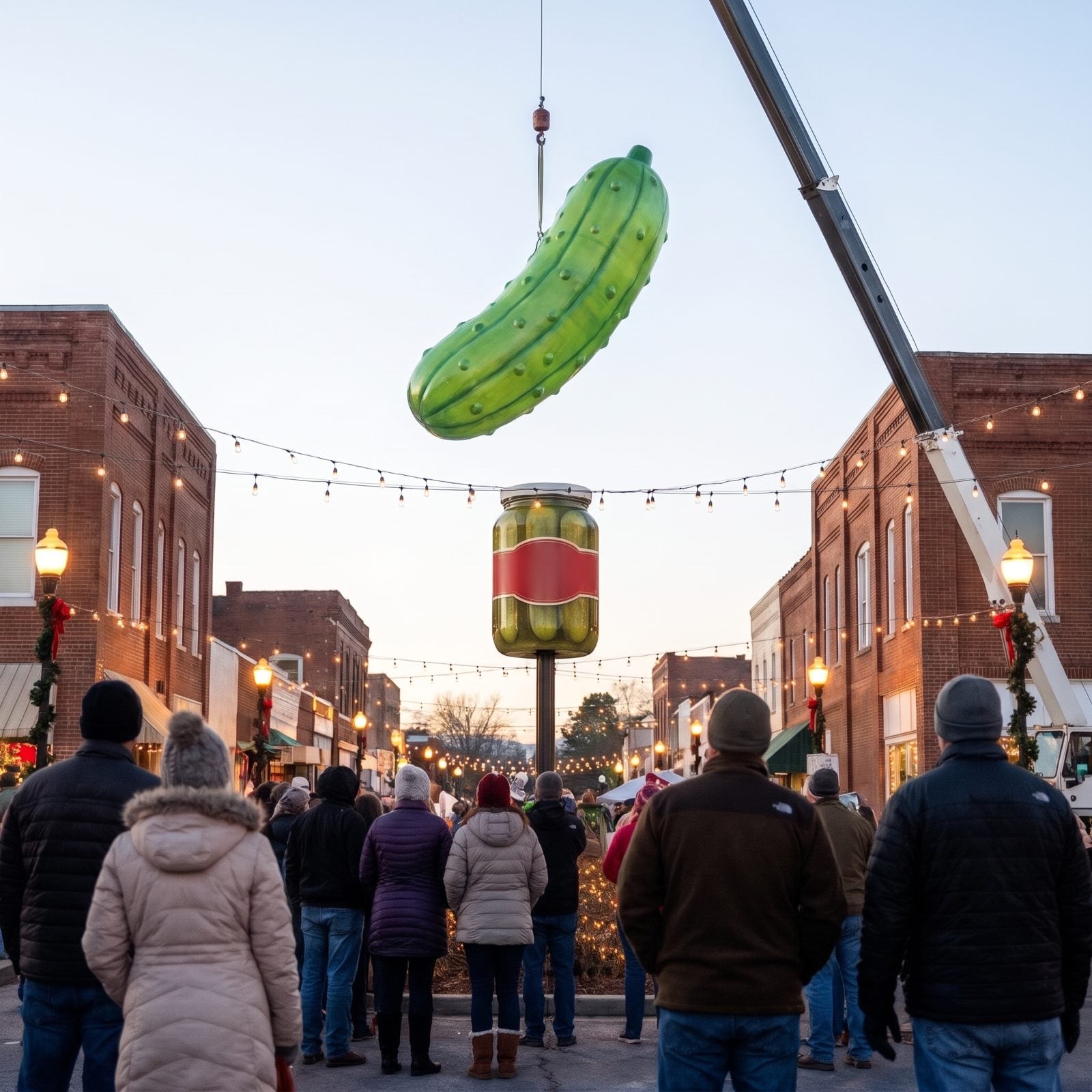
While the rest of the country watches a ball drop, eastern North Carolina watches a pickle.
The Mt. Olive Pickle Company has called Mount Olive home since 1926, and in 2026 it hits its 100th year. Every New Year’s Eve the town lowers a giant green plastic pickle into an oversized jar. It started in 1999 as a marketing stunt, which is honestly the most charming origin a tradition can have. It worked, and now it’s just what the town does.
Here’s the best part. The drop doubles as a canned food drive for the Food Bank of Central & Eastern North Carolina. A plastic pickle, a little civic pride, and a full pantry for a neighbor. About as North Carolina as it gets.
9. Lance Peanut Butter Crackers, Born From 500 Pounds of Peanuts
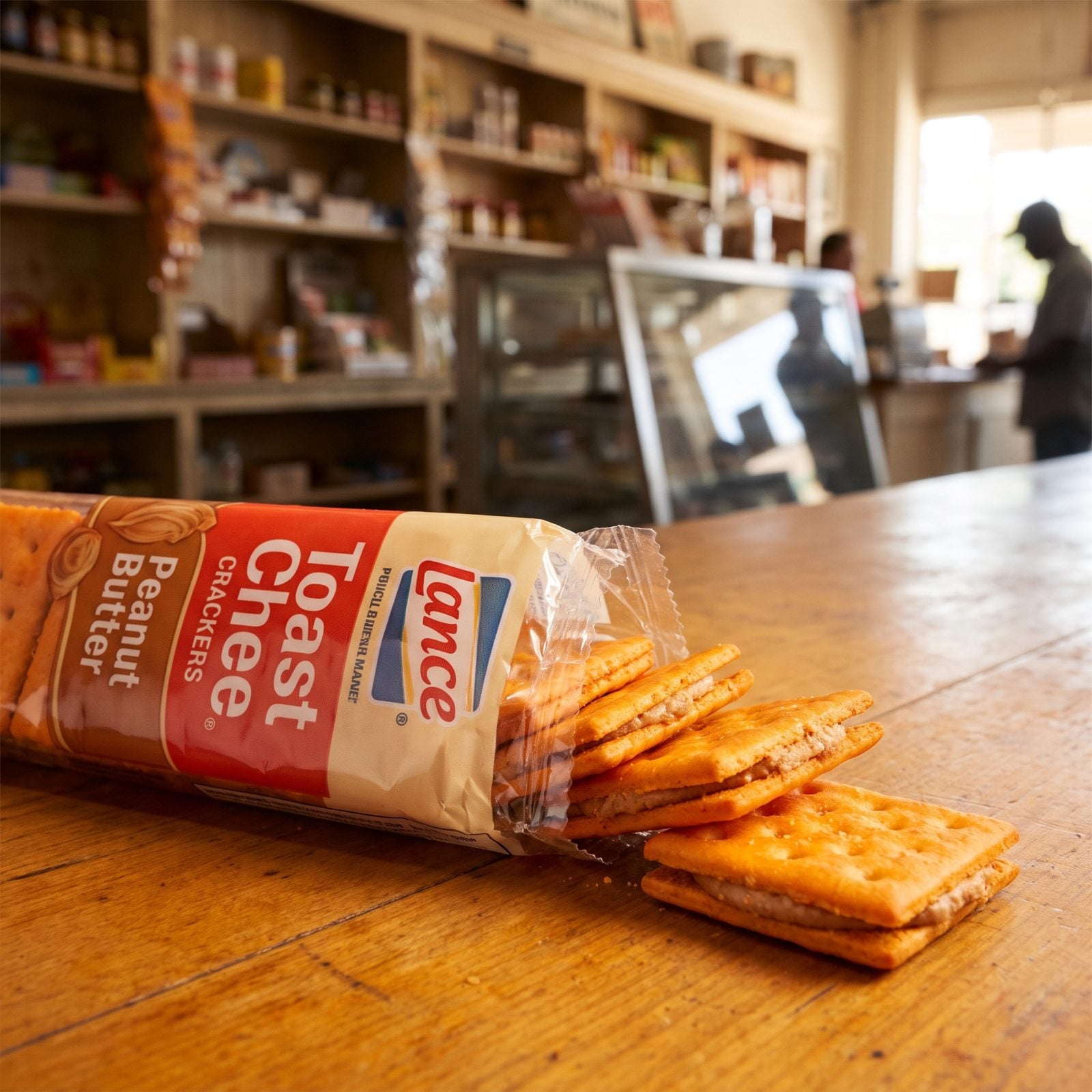
This whole thing started with a mistake. Back in 1913, Charlotte food broker Philip L. Lance got stuck with 500 pounds of raw peanuts he couldn’t offload, and instead of eating the loss he turned them into a business.
The peanut butter sandwich cracker became the signature, and the Charlotte Mecklenburg Library credits Lance with inventing it right there in Charlotte. The company says it still grinds its own peanut butter, which you can kind of taste in the way the filling glues itself to the roof of your mouth.
These lived in glove compartments, lunchboxes, and vending machines all over the state. A pack of Lance crackers and a Cheerwine was a legitimate meal for a lot of us, usually eaten in a parked car or on a school bus.
8. Paper-Thin Moravian Cookies, Rolled by Hand in Old Salem
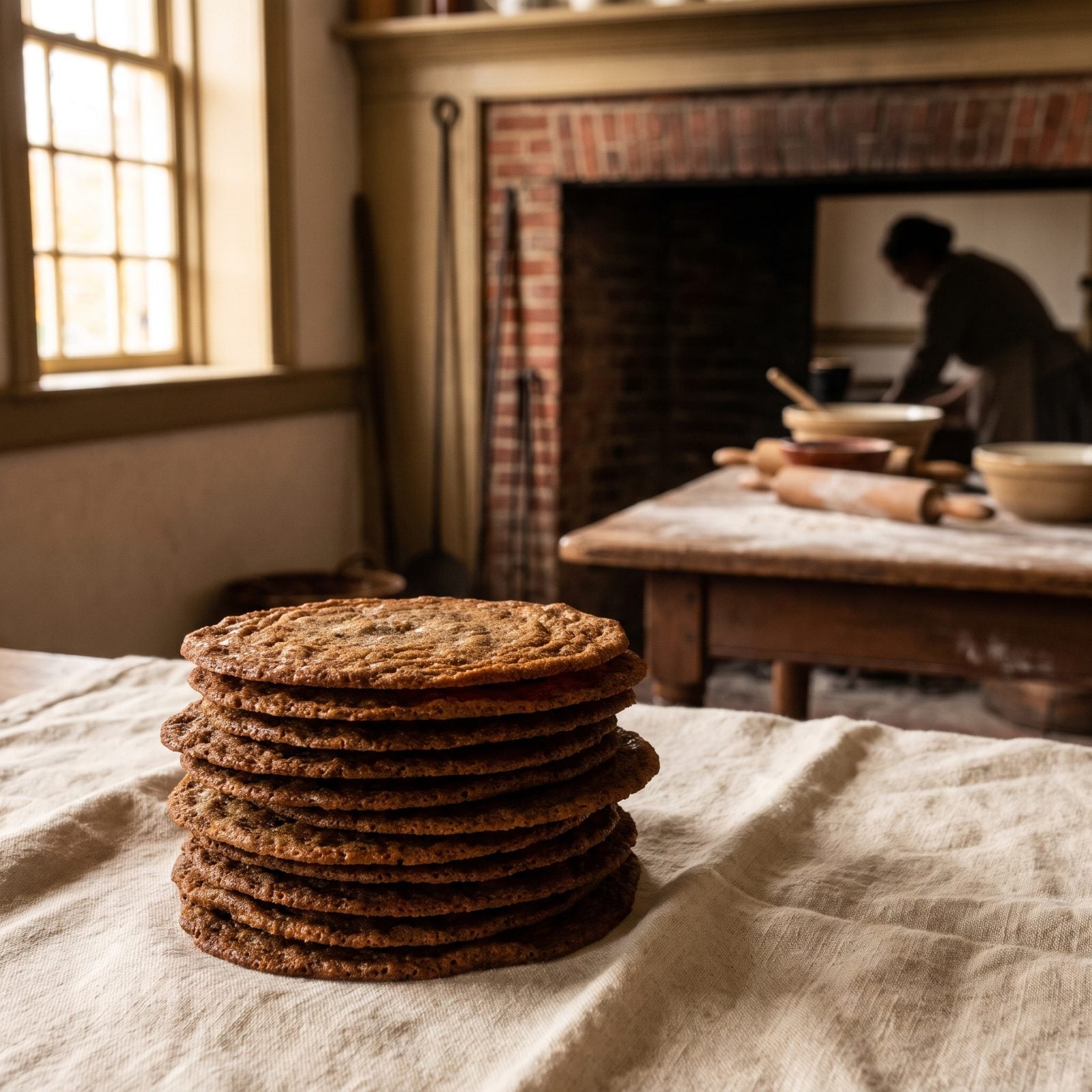
Hold one up to the light and you can almost see straight through it. That’s a Moravian cookie: rolled so thin it shatters when you bite it, packed with ginger and spice.
They came over with the Moravians, a religious group who settled near present-day Winston-Salem in 1753. Winkler Bakery in Old Salem has been turning out gingerbread and Moravian cookies for more than 200 years, and on Saturdays they’ll teach you how to roll the dough that thin yourself. Good luck. It takes a lifetime to get right. Commercial bakers like Mrs. Hanes’ and Salem Baking Company do it beautifully, which spares the rest of us the heartbreak.
They show up at Christmas in tins passed around like currency. Somehow a single cookie that’s mostly air can taste like a whole season.
7. The N.C. State Fair in Raleigh, Where Fall Officially Starts
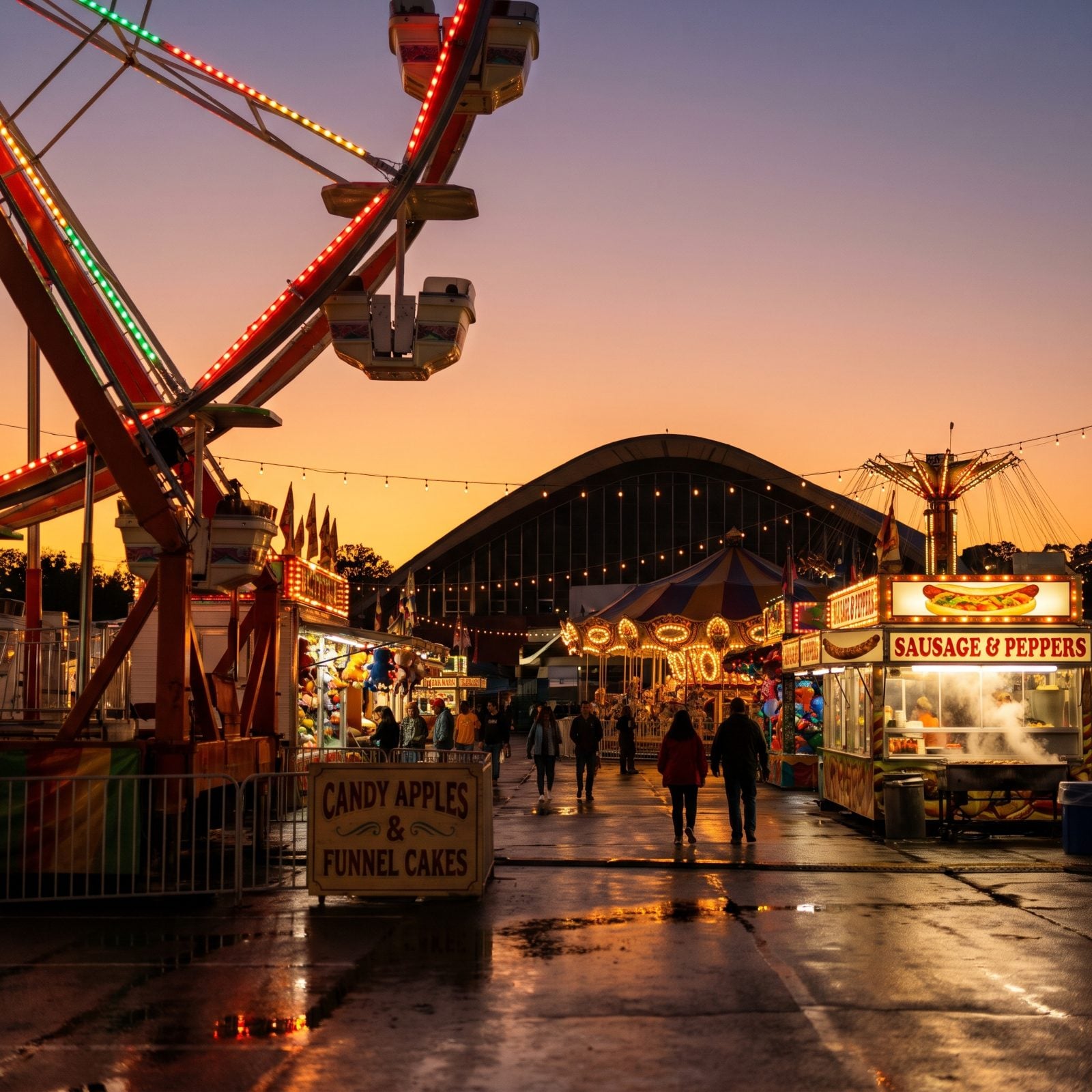
You smell it before you see it — fried dough, roasting corn, livestock barns, and that specific sweet exhaust of a thousand ride engines all rolled together. If you grew up anywhere in North Carolina, the State Fair wasn’t an event. It was the calendar flipping to fall.
Running since 1853, it’s landed at the Blue Ridge Road grounds in Raleigh since 1928, and Dorton Arena — that swooping saddle-shaped roof next to the Midway — is the building every kid pointed at from the car window. School let out early. Somebody always lost a shoe in the mud.
The 2026 fair runs October 15 through 25. Go hungry, bring cash, and accept that you will spend too much on a game you cannot win.
6. Tweetsie Railroad, the First Field Trip That Felt Like a Vacation
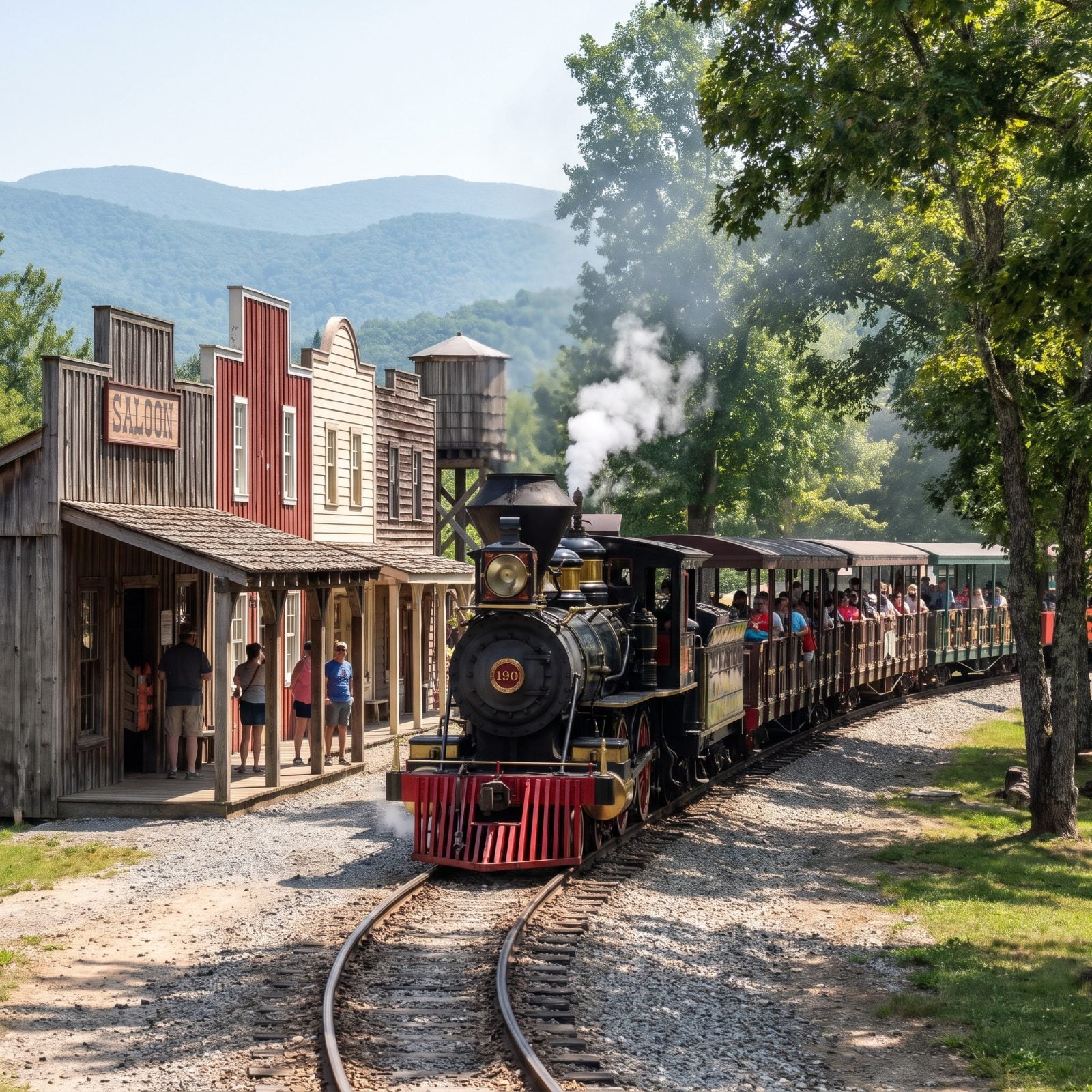
The permission slip came home and you lost your mind. Tweetsie meant a real steam train, a Wild West town, and a whole day not sitting at a desk.
It opened July 4, 1957, on US 321 between Boone and Blowing Rock, starting with a coal-fired steam engine on about a mile of track that was extended into a 3-mile loop around the mountain in 1958. Fake train robbers. A saloon show. A Ferris wheel tucked into a couple hundred acres of ridge. That whistle echoing off the mountain is a sound a lot of us can still hear decades later.
Before you load up the car, know that Tweetsie runs seasonally, so check the schedule before you drive all the way up. Showing up to a locked gate is a particular kind of heartbreak.
5. Mayberry and Mount Airy, Where the Show Still Walks the Streets
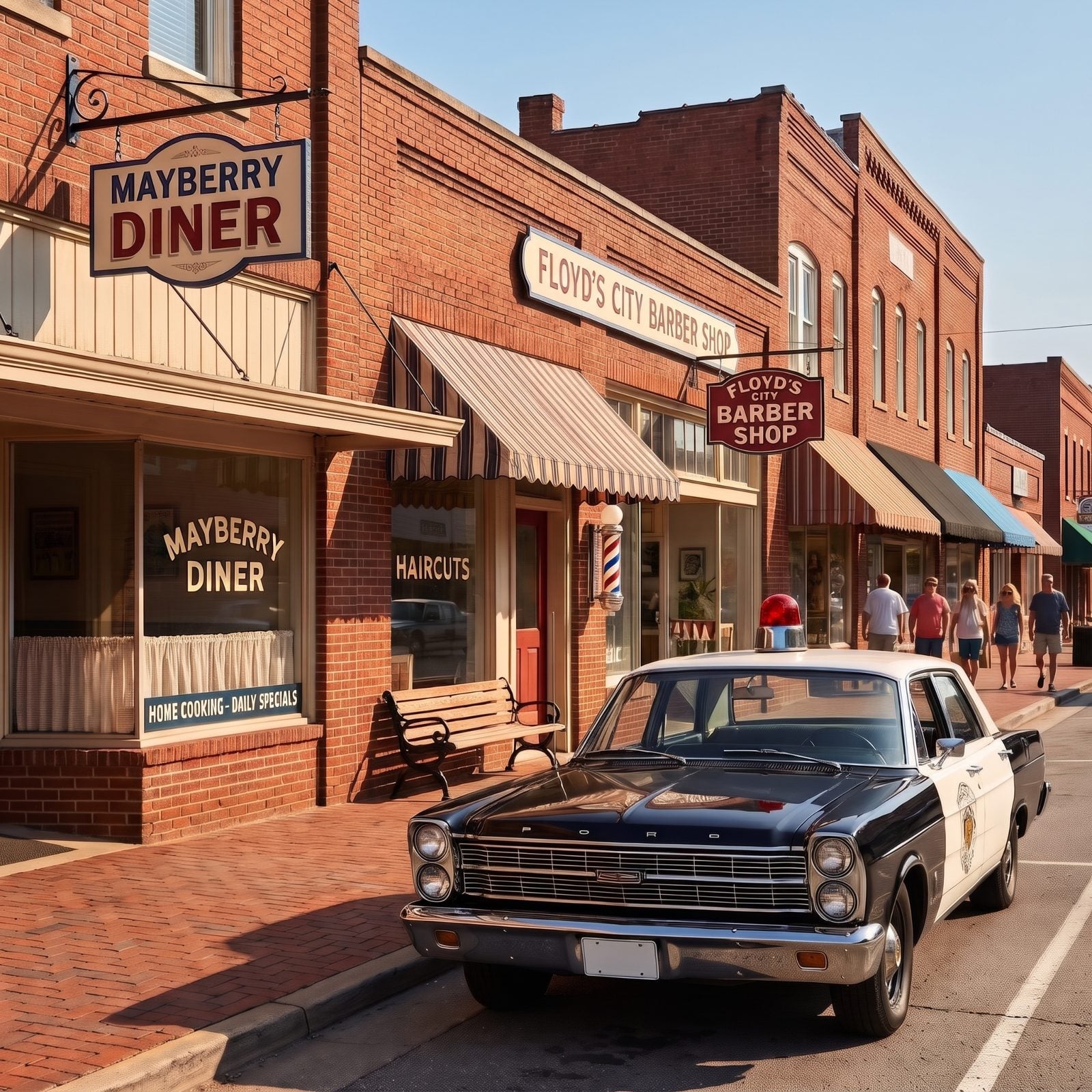
Squint down Main Street in Mount Airy and you half expect Barney to come squawking out of the courthouse. That’s the point. Andy Griffith grew up here, and the whole town has spent decades doing an affectionate impression of itself.
Mayberry Days started in 1990 for the show’s 30th anniversary, run by the Surry Arts Council. Parade, music, trivia, and a lot of people in deputy uniforms taking the whole thing dead seriously. If you can’t wait for the festival, the Andy Griffith Museum stays open seven days a week.
Some towns bury their history. Mount Airy parks a replica squad car on Main Street and invites you to climb in.
4. The Mile High Swinging Bridge at Grandfather Mountain
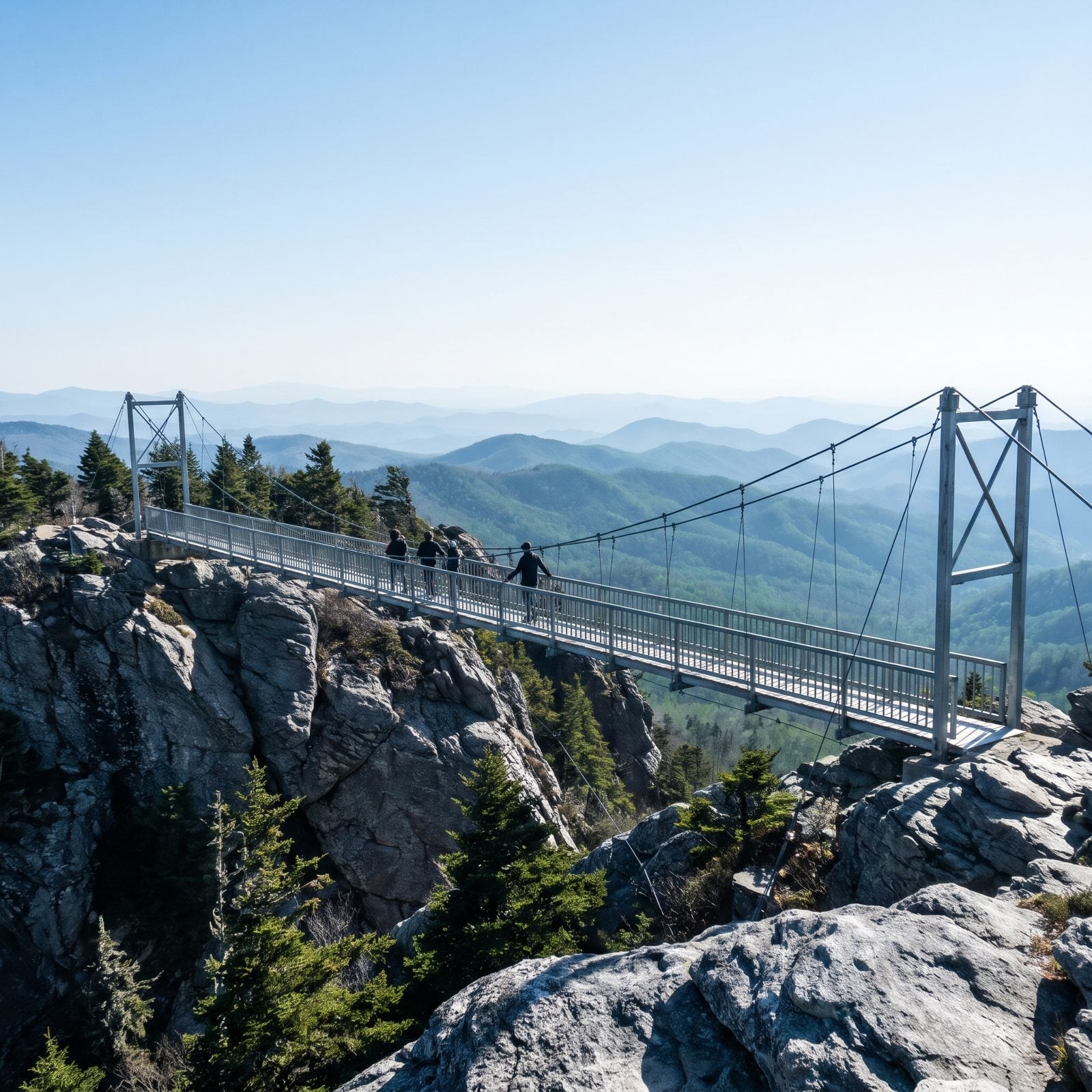
The first step onto it is a small act of courage. The bridge sways, the valley drops away a mile up, and your stomach does something it did not agree to do.
Dedicated September 2, 1952, the Mile High Swinging Bridge near Linville got its name from Charles J. Parker, the state tourism director who spoke that day. The original deck was mostly wood, later rebuilt in galvanized steel — which is why it looks tougher than your memory of it. Grandfather Mountain runs as a nonprofit nature park now.
Plenty of grown adults get three feet out and decide they’ve seen enough. No shame in it. The view from the first pylon is worth the drive on its own.
3. The Summer They Moved the Cape Hatteras Lighthouse
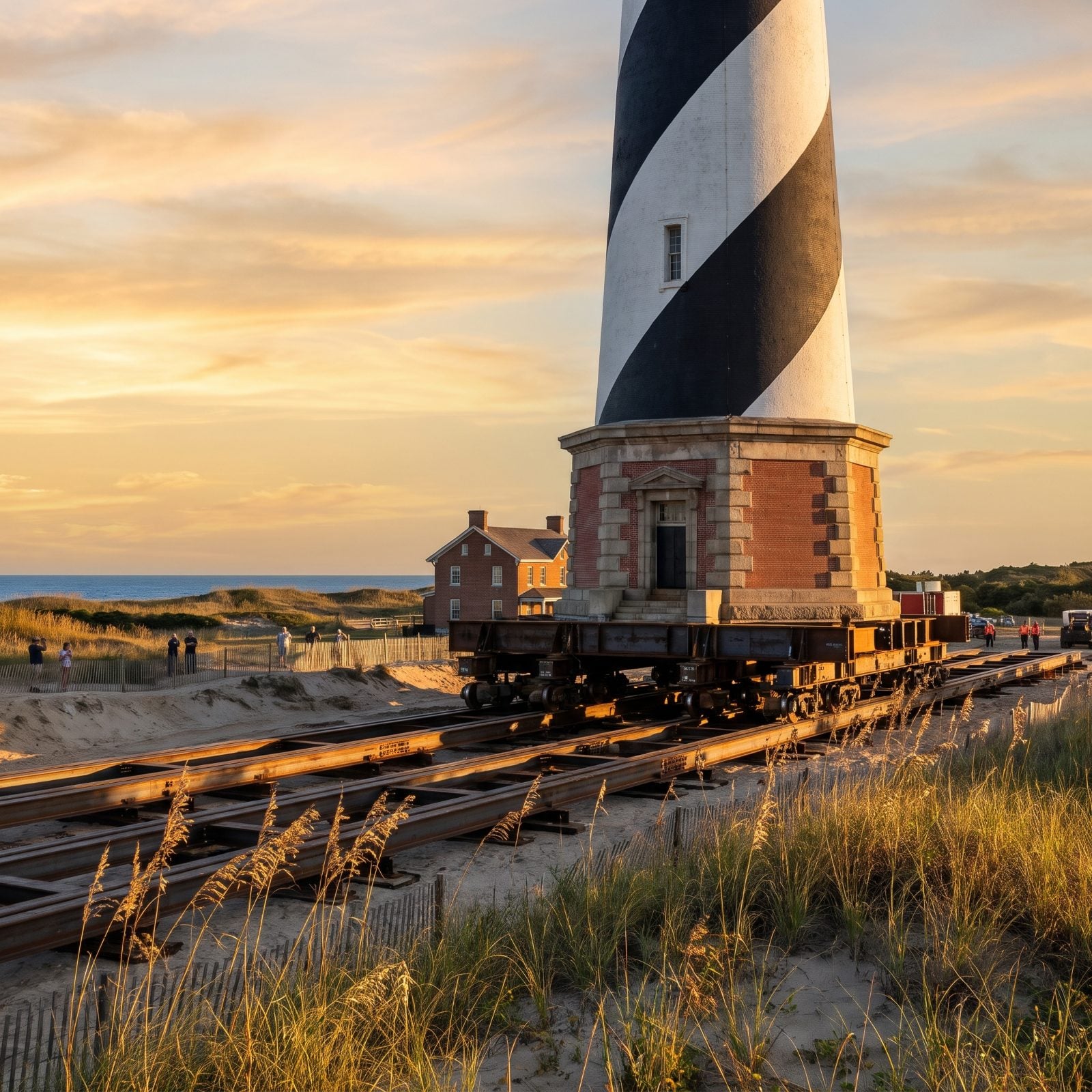
In 1999, North Carolina did something that sounded impossible. It picked up a 198-foot brick lighthouse and walked it inland, one slow foot at a time, away from an ocean that was eating the ground beneath it.
The National Park Service relocated the entire Cape Hatteras Light Station — all seven historic structures — because the shoreline was closing in. People drove from across the state just to watch it crawl. The black-and-white spiral tower near Buxton is still the one every Outer Banks postcard leads with.
Plan around this: the lighthouse is closed to climbing through at least the end of 2026 for a multimillion-dollar restoration. You can still see it from the grounds, and it still stops you cold.
2. “First in Flight” and the Wright Brothers Memorial at Kill Devil Hills
Every North Carolinian learns the license plate before they learn to drive. First in Flight. And it’s not some slogan the state cooked up — it happened right here.
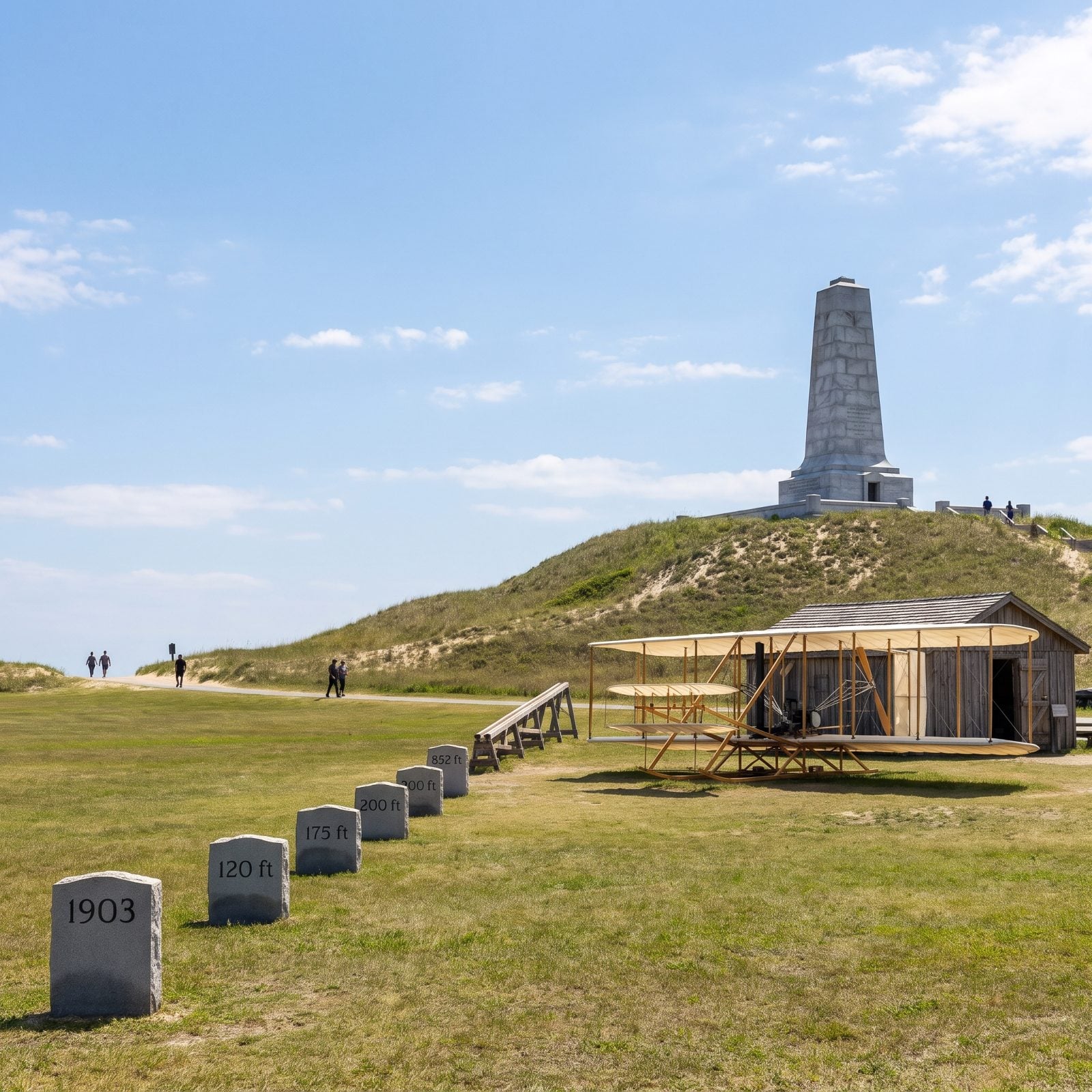
On December 17, 1903, at Kill Devil Hills near Kitty Hawk, Orville and Wilbur Wright made the first powered, controlled, heavier-than-air flight in human history. The spot is now the Wright Brothers National Memorial, with a granite monument on the dune, a row of stone markers labeled with the distances of those first flights, and reproductions of the plane itself.
Reading the markers from the first to the last is a gut-punch. That first flight covered 120 feet. You can cross it in a few seconds on foot. They changed the world in less distance than a backyard.
1. Sweet Potatoes on Every Holiday Table in the State
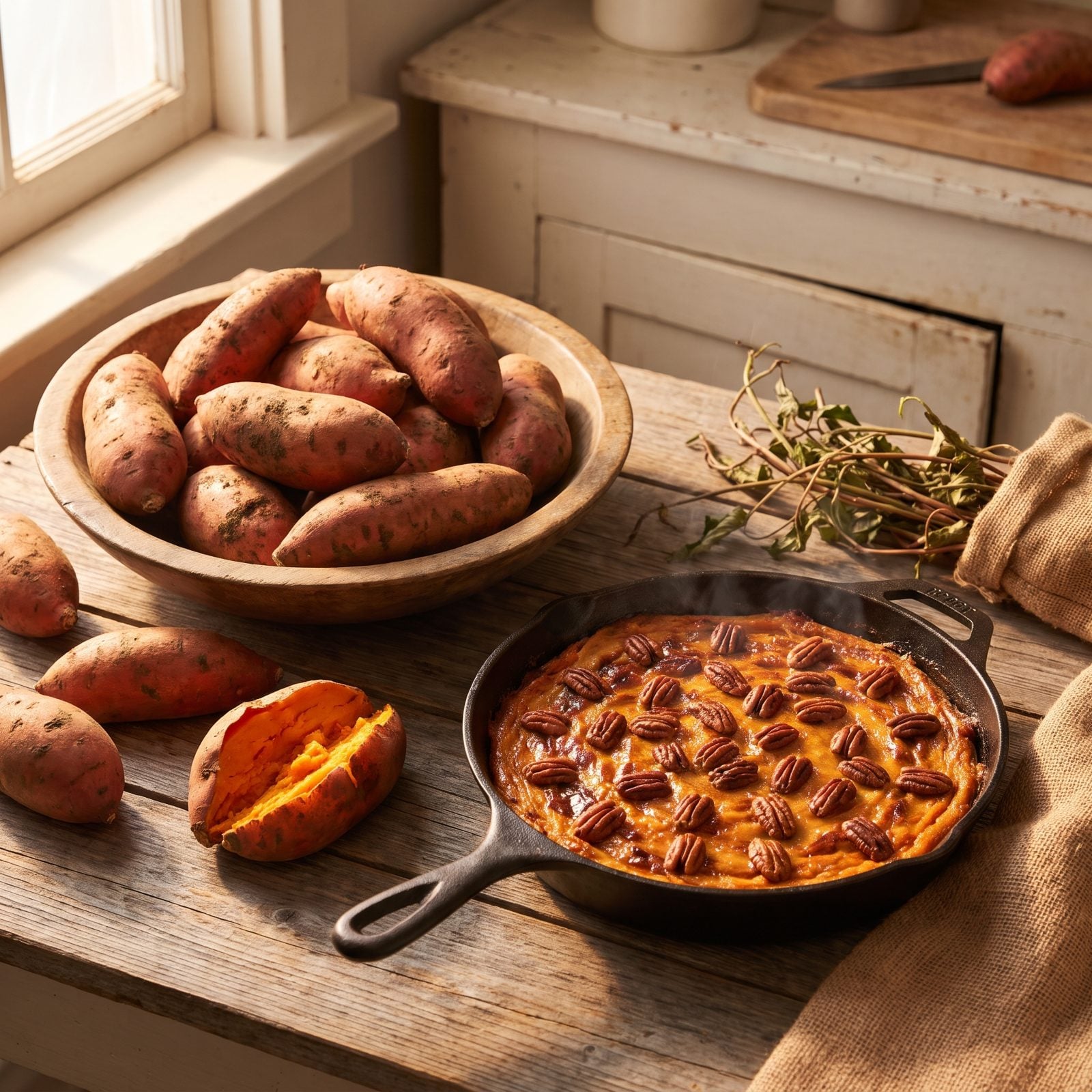
Ask anyone raised here to picture Thanksgiving and the sweet potatoes show up uninvited and expected. Casserole with pecans. Candied with marshmallow. Baked plain with butter melting into the split. Everybody’s grandmother did it the one correct way, and heaven help you if you suggested otherwise.
There’s a reason it runs so deep. North Carolina grows more sweet potatoes than any other state, and has for decades — the N.C. Farm Bureau puts it at close to 60 percent of the entire U.S. crop.
So when a North Carolinian defends a family recipe like it’s a point of state pride, they’re not wrong. The dish is practically a local crop report with marshmallows on top.
Please note that some of the imagery in this article were created with the aid of AI image generators.