
🔥 Would you like to save this?
The gravel crunched under the tires the same way at every single one of them. You’d barely rolled to a stop before the kids were out the door, and the smell hit you, woodsmoke and pine and something faintly like a swimming pool, and somehow it felt like arriving somewhere familiar even if you’d never been to this particular KOA in your life. That yellow-and-red sign had a way of doing that. What follows are the things that made it feel like home.
24. The Yellow KOA Sign at the Turnoff That Meant You Were Finally There
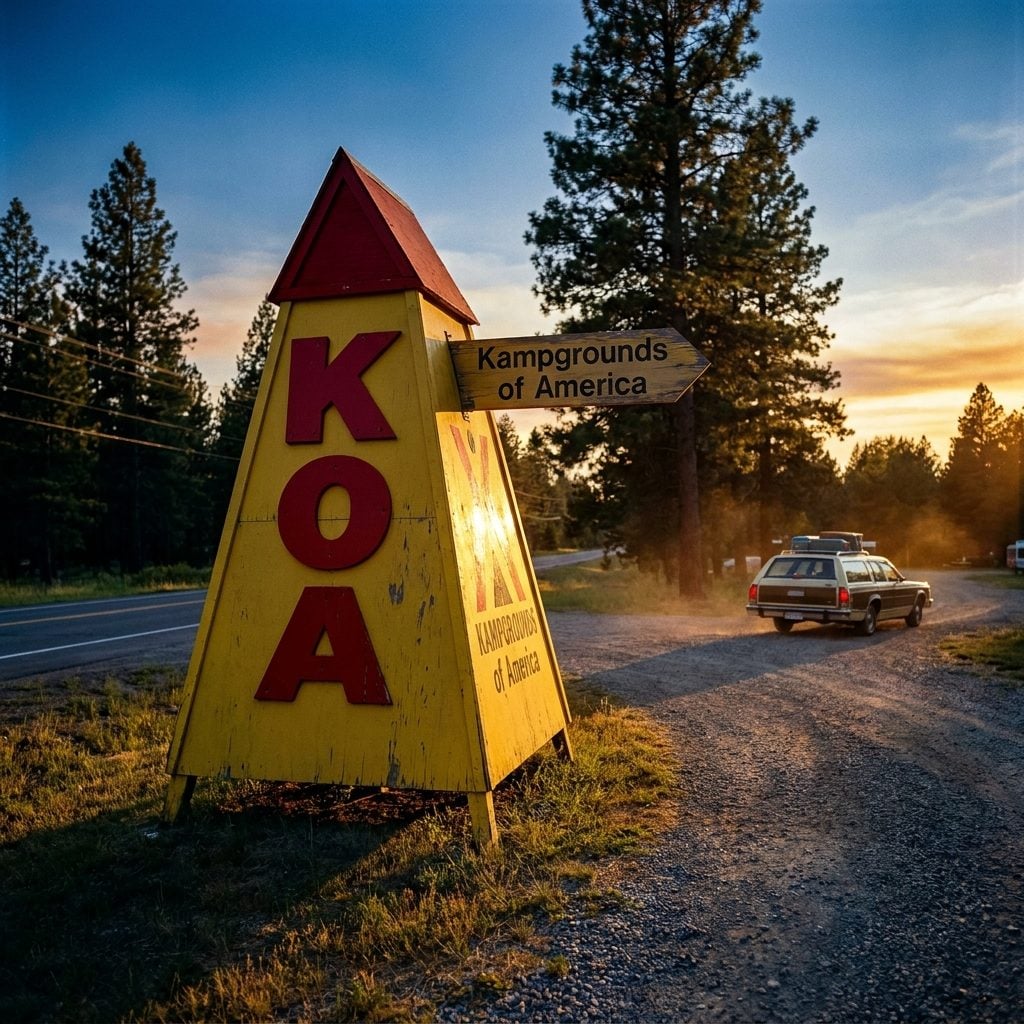
Six hours in the back of the wagon. Your legs were welded to the vinyl and your brother had crossed the invisible line down the middle of the seat forty-seven times, and everyone had stopped pretending it did not count.
Then the yellow triangle appeared on the shoulder.
Dad hit the blinker without a word and the whole car exhaled at once. That little yellow sign with the red KOA letters promised showers, a camp store, and a picnic table that was no longer moving at sixty-five miles an hour. Kids could spot the shape from half a mile back.
23. Checking In at the Front Office and Getting the Little Paper Map
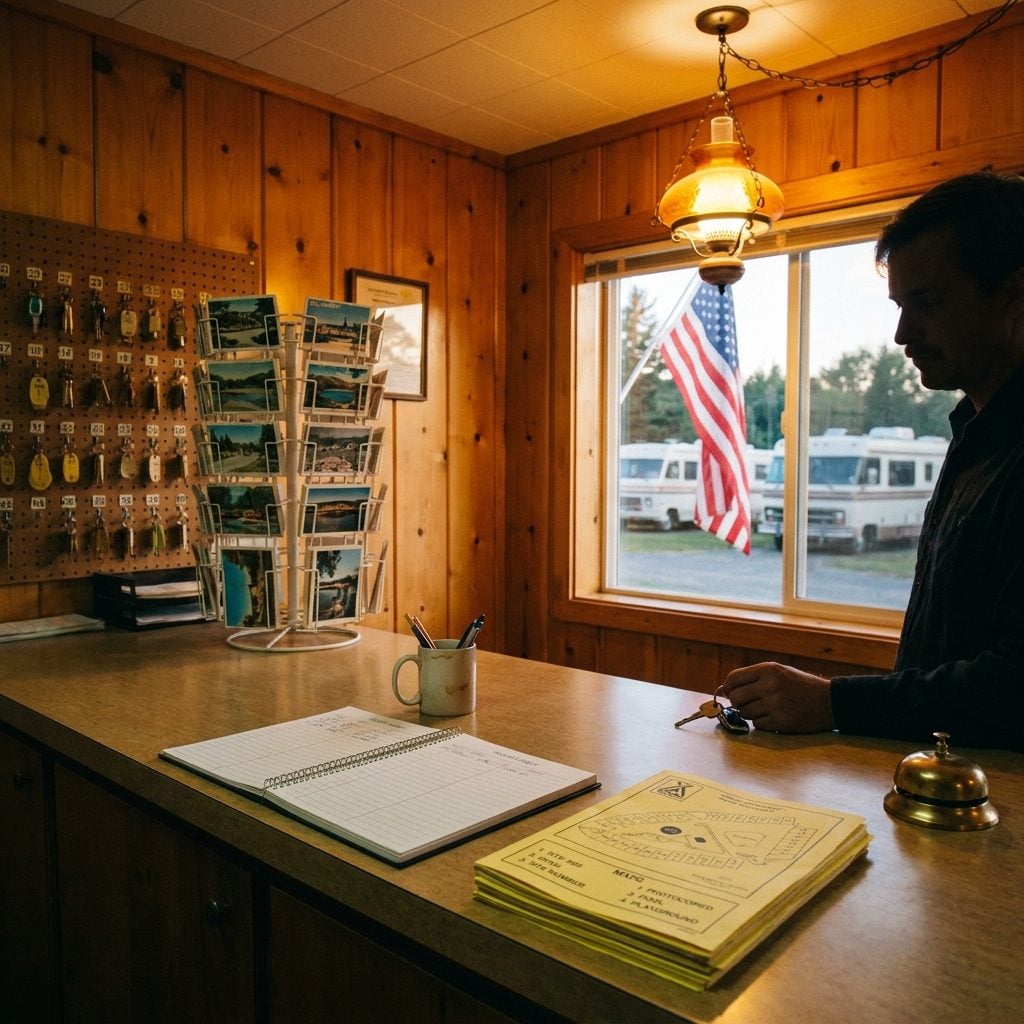
The office always smelled like coffee that had been on the burner too long, cut with the faint sweetness of firewood stacked by the door. Dad went in alone while you waited in the car with the windows down, watching moths bang against the porch light.
He came back holding a photocopied map on yellow paper with a site number circled in ballpoint pen, plus the rules: quiet hours at ten, pool closes at nine, store takes checks. You unfolded that map on your lap like a treasure chart. For the next three days, that’s exactly what it was.
22. The Kamping Kabin With the Bare Bulb and the Bunk Beds
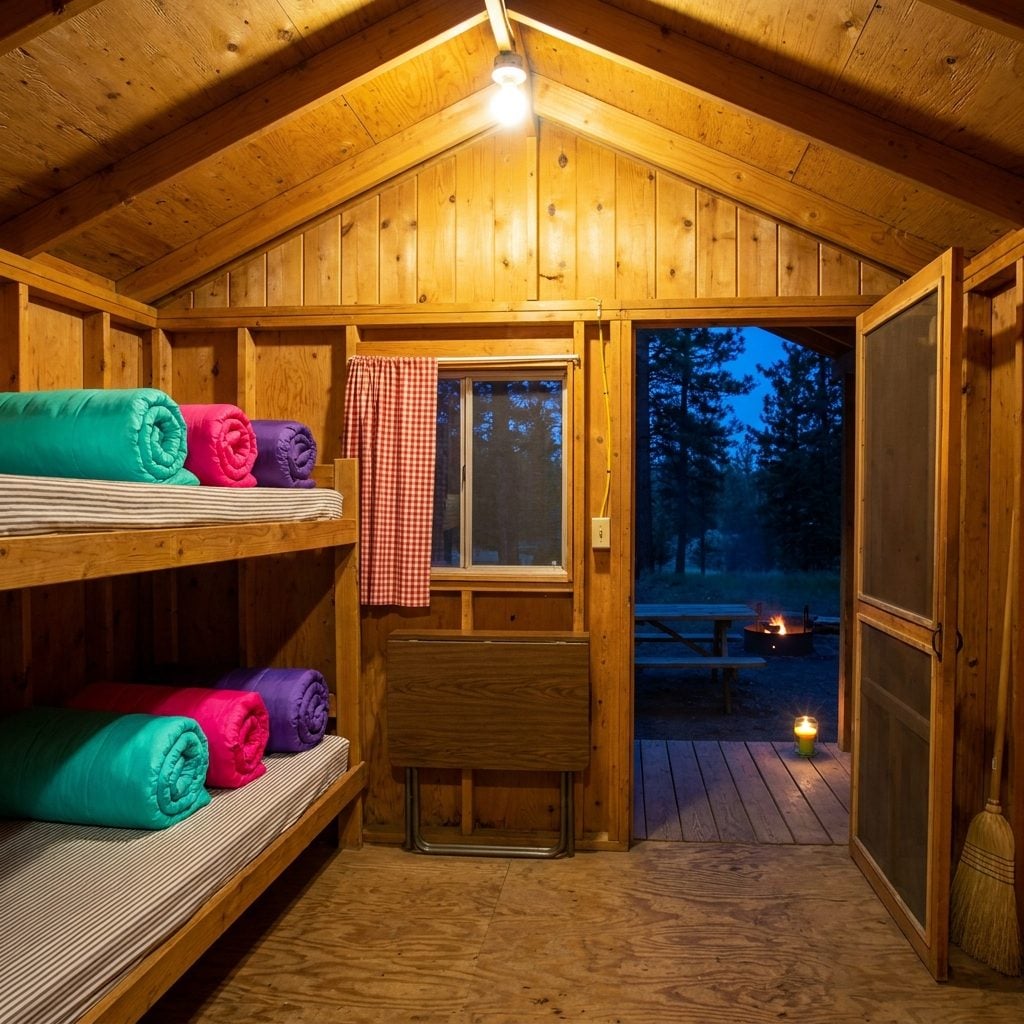
Kamping Kabins arrived at KOAs in the mid-1980s and changed the trip for families who had aged out of tents but were not ready to buy an RV. The basic version was one rustic room with bunk beds, another bed, a bare bulb, a screen door, and a small porch.
You brought your own sleeping bags. You brought your own everything, really. The bathroom was a walk across the gravel in flip-flops, and somehow it was the best hotel room you ever stayed in, because you were nine and sleeping in a log cabin.
21. The Kidney-Shaped Pool With the Faded Blue Bottom
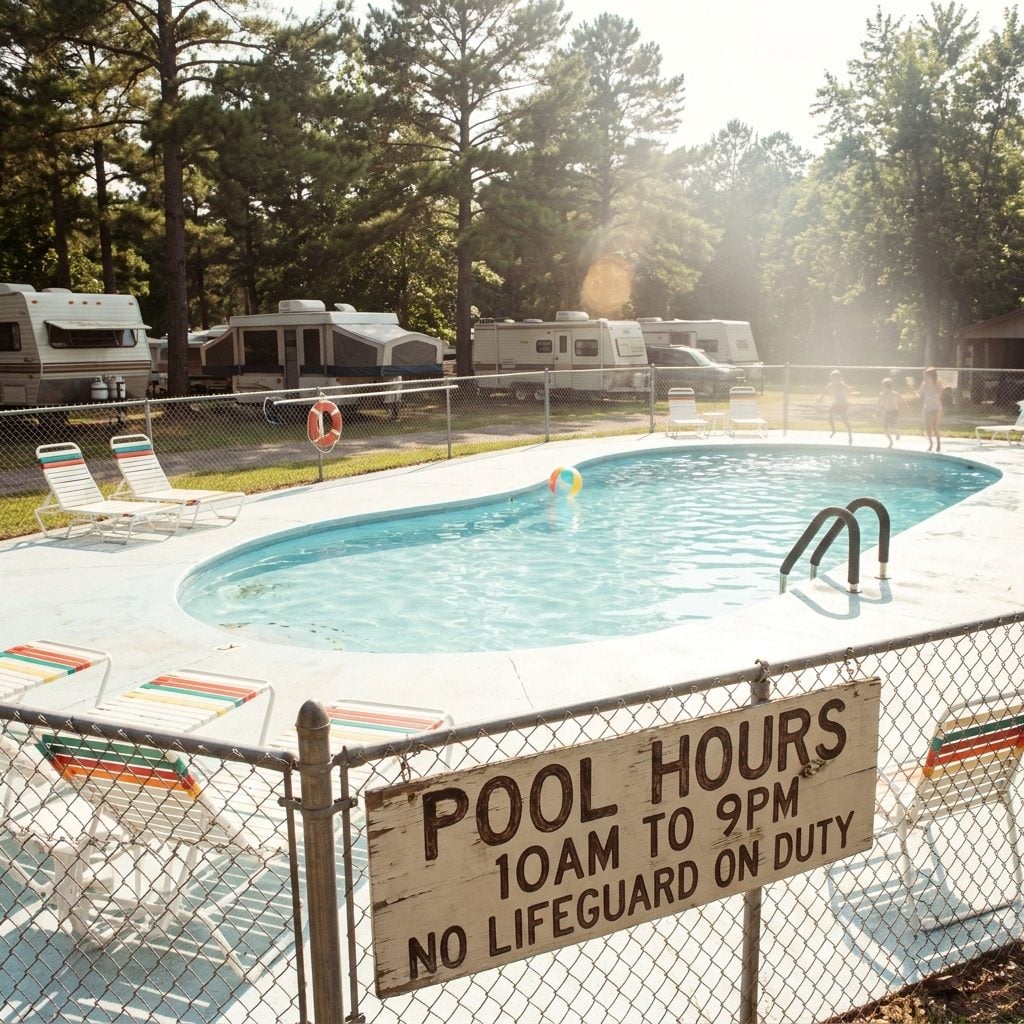
The pool did not need to be large. Even with faded paint at the waterline and a deep end that barely earned the name, it was still a pool within walking distance of the campsite.
A plywood sign warned that no lifeguard was on duty. Parents watched from lounge chairs with paperbacks and cans of Tab while the kids stayed in until their lips turned blue.
20. The Playground With the Metal Slide That Would Burn Your Legs Off
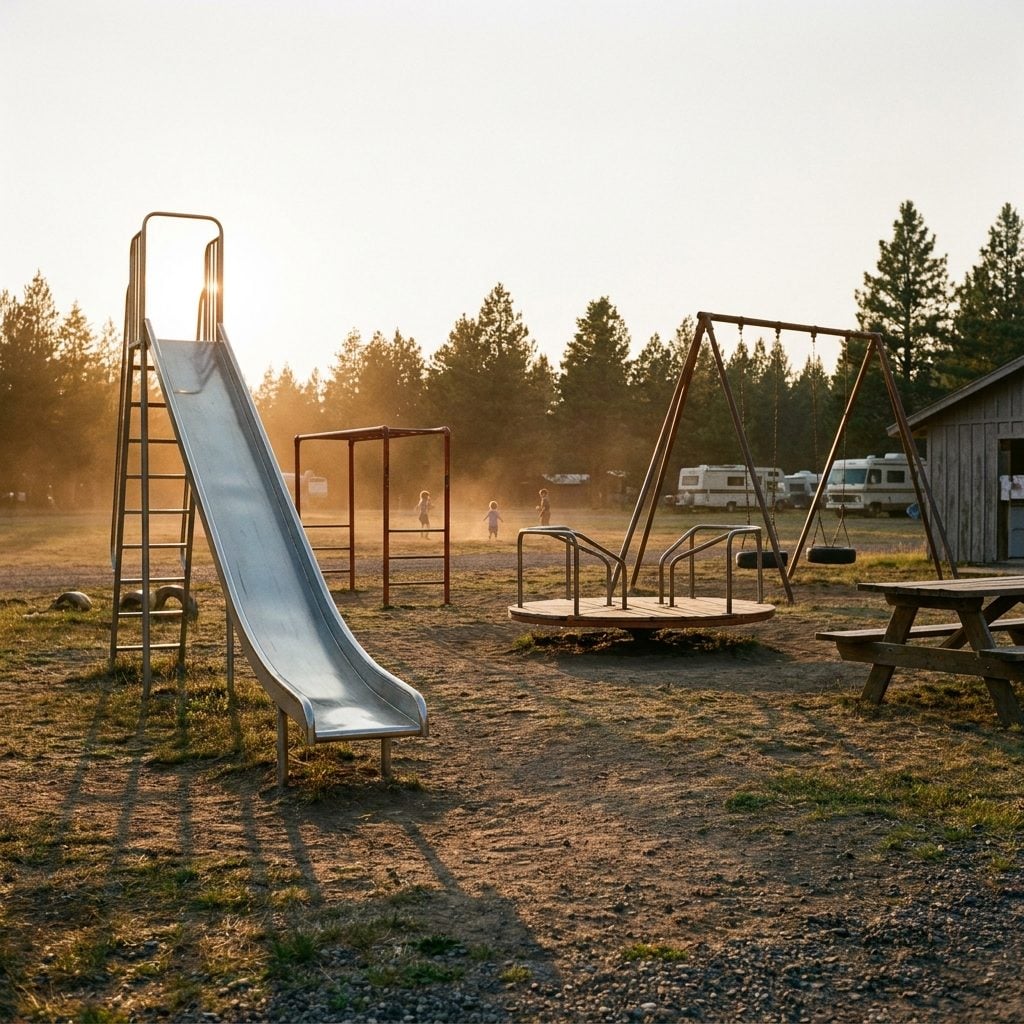
The slide was actual metal. Not molded plastic, actual metal, painted silver, sitting in the sun all day like a cast-iron pan storing heat.
You climbed the ladder. You sat down. You screamed. Your legs stuck to the surface for the first two feet and then you launched, and every kid there had a matching faint pink stripe on the backs of their thighs by day two, and nobody thought twice about it. The merry-go-round played by the same rules: you held on for dear life while some older kid spun it into the atmosphere.
19. The Camp Store’s Wire Rack of Souvenir Patches and Iron-Ons
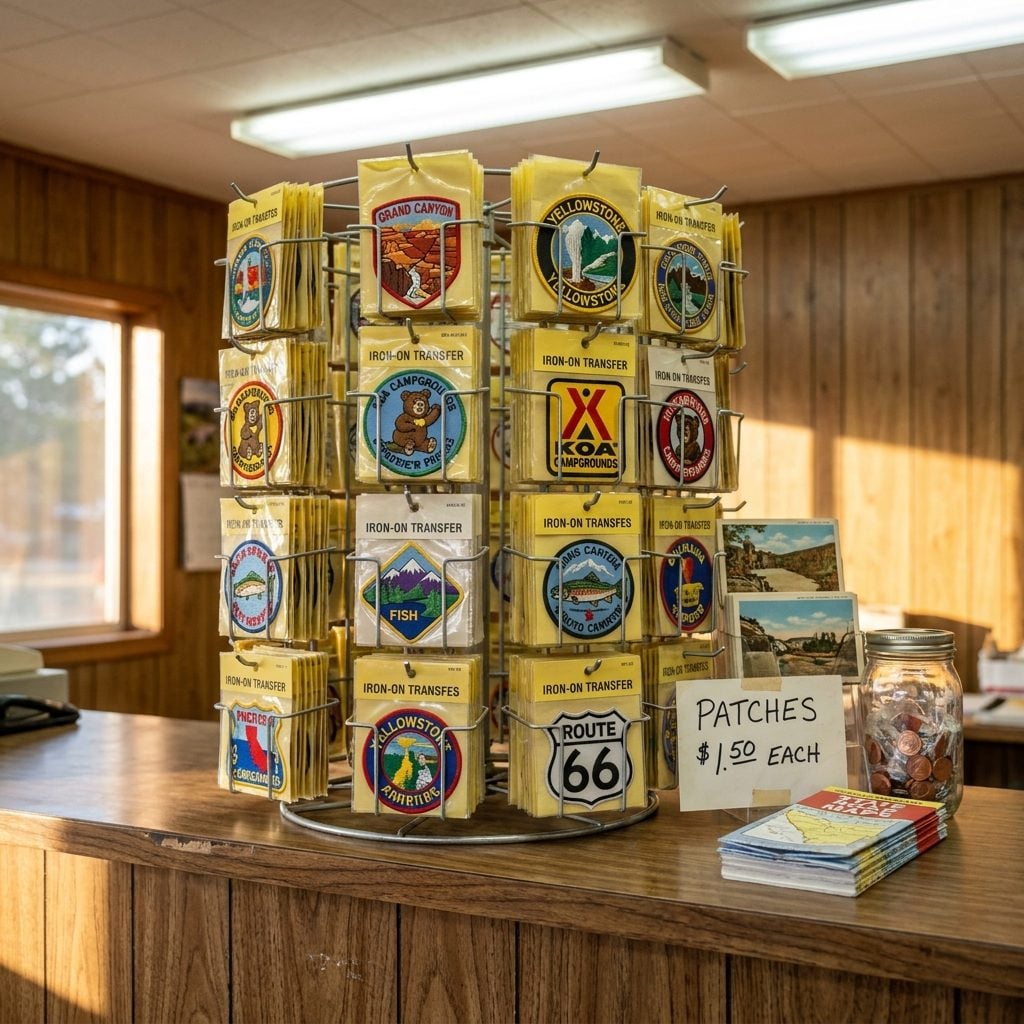
Plenty of campground stores had one: that wire spinner by the register, loaded with embroidered patches in little plastic sleeves. State outlines, national park logos, cartoon bears holding fishing rods, the KOA logo itself with the mountain and the sun.
You picked one every trip. Mom sewed them onto a denim jacket or a canvas duffel bag, and by the time you were twelve that bag told the whole story of your family’s summers in thread. Yellowstone. Wisconsin Dells. Cape Cod. The Ozarks.
18. Bike Rentals at the Front Office
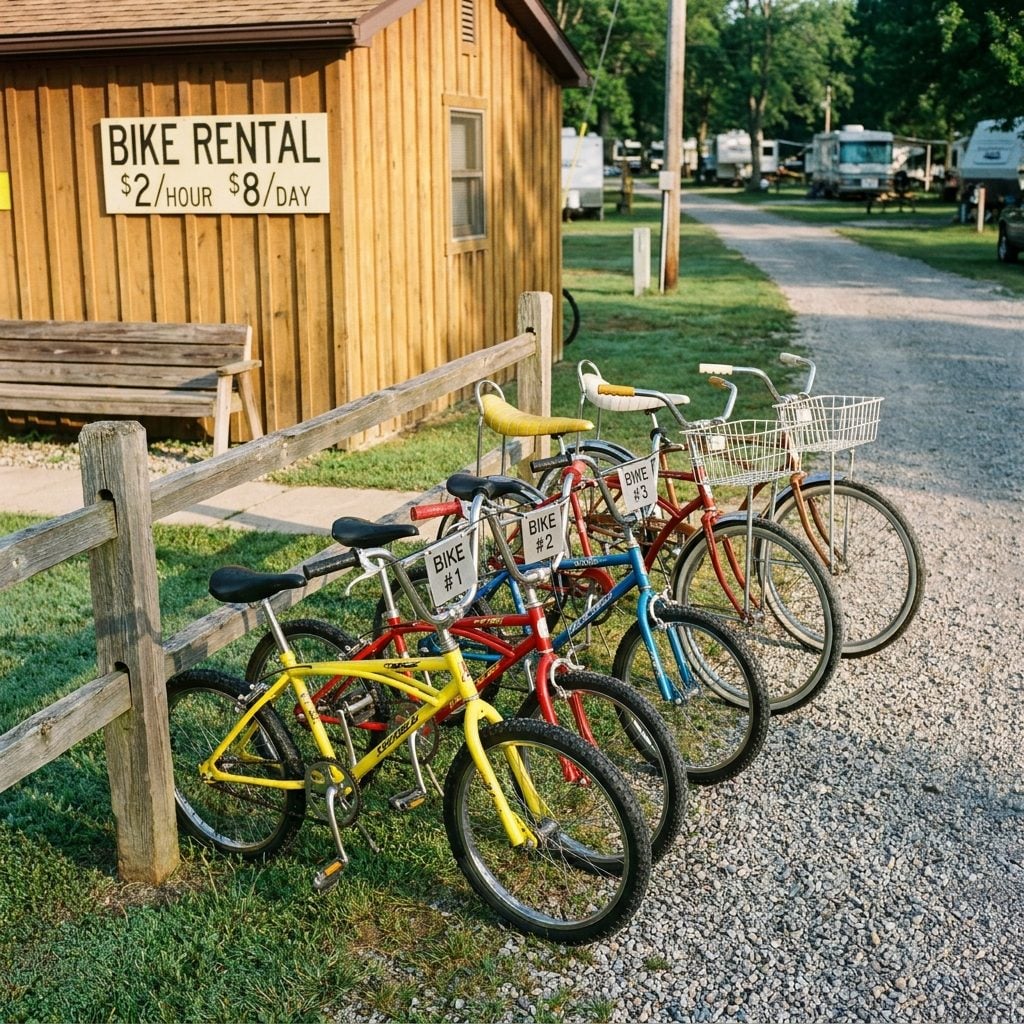
You rented a bike for an hour or sometimes longer, depending on the campground and how much money your parents were willing to hand over. Either way, the campground suddenly felt much larger.
The bikes had lived hard. A chain skipped, a seat sat too high or too low, and one brake lever usually felt decorative. You rode loops until the office, pool, and laundry room became landmarks on a private map in your head.
17. The Rec Hall With the Pool Table and the Pinball Machine
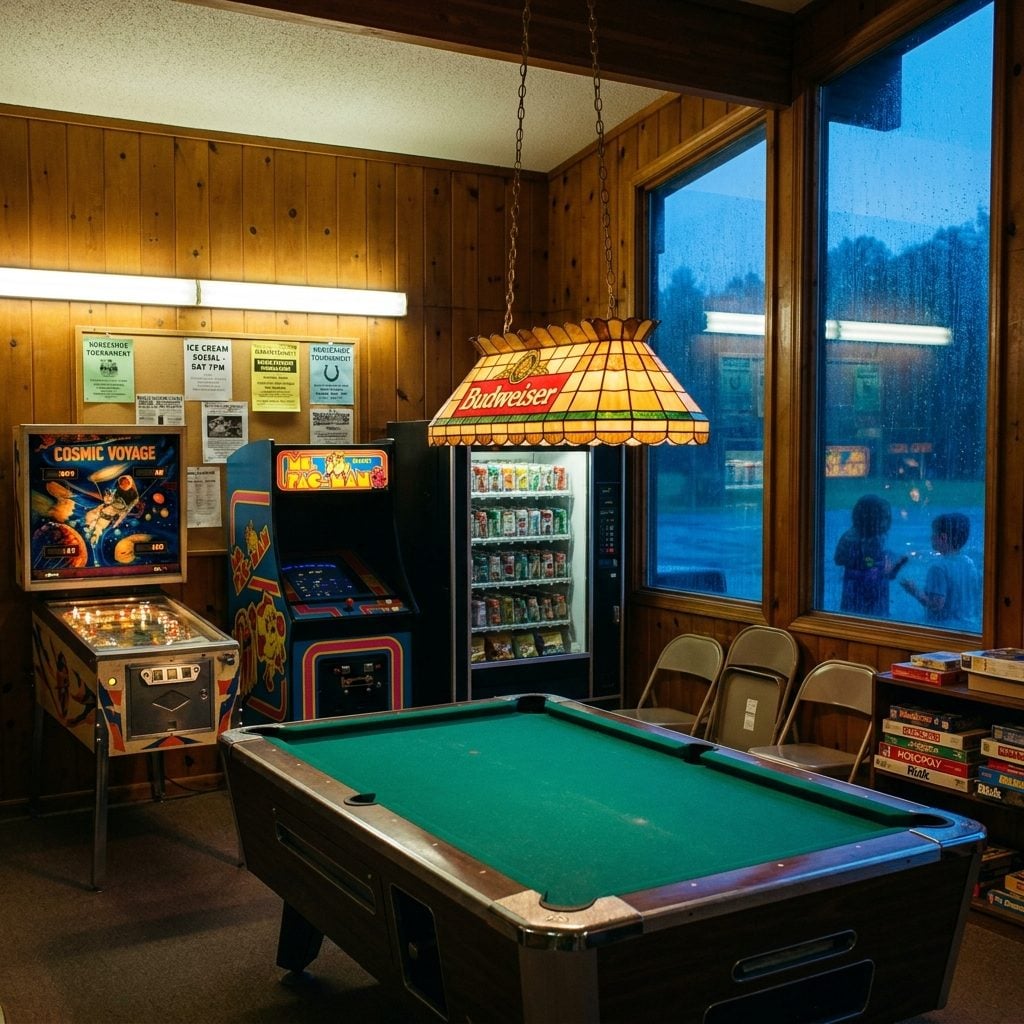
Rainy days at the campground were saved by the rec hall. Wood paneling, a pool table with a slightly warped slate, one or two arcade cabinets that ate quarters faster than you could feed them, and a bulletin board announcing the ice cream social at seven.
You’d sit on a folding chair and watch older kids play pool with a kind of reverent silence. Around six, somebody’s mom would come find you because it was time to eat. You came back to dinner sunburned on one shoulder and completely satisfied with the day.
16. The Sunday Morning Pancake Breakfast in the Pavilion
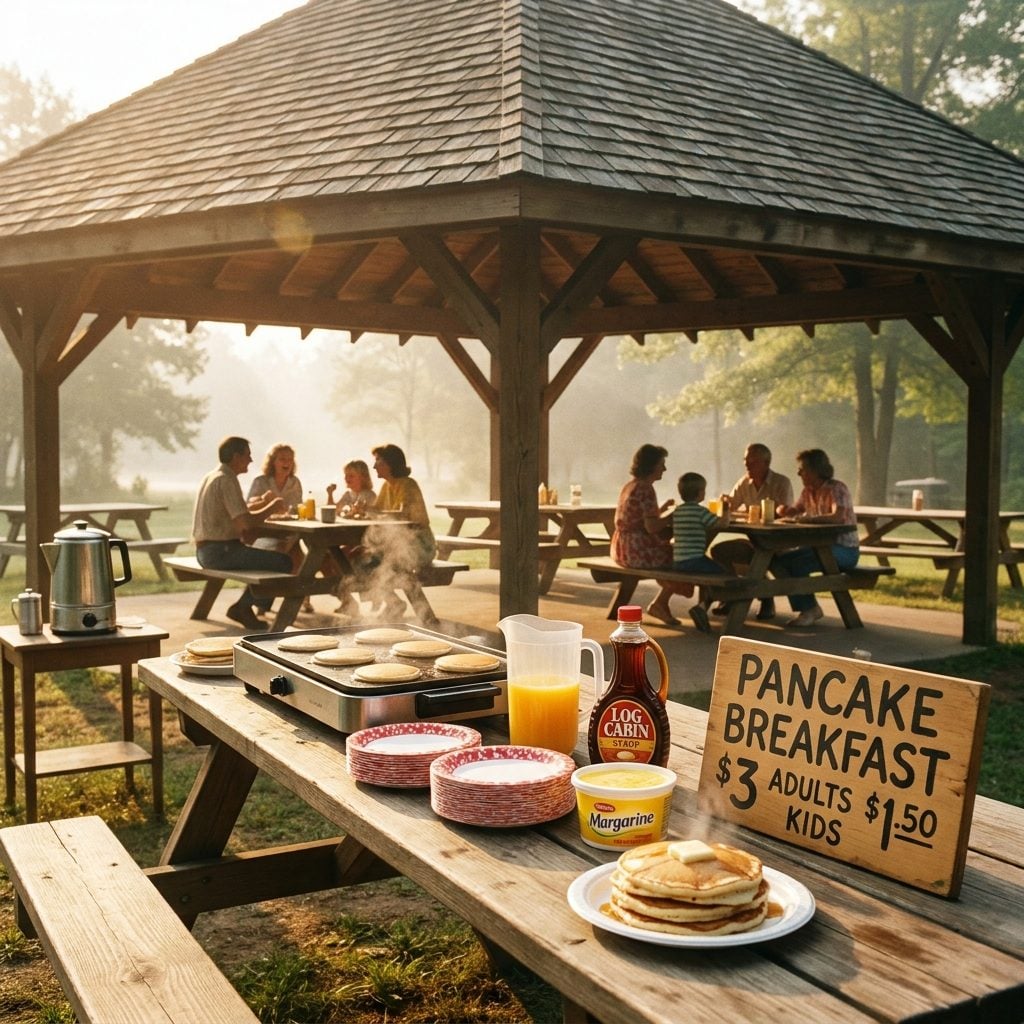
The smell got to you before you were fully awake: pancake batter on a griddle, coffee percolating, bacon somewhere in the mix. You stumbled out of the cabin in yesterday’s shorts and a sweatshirt with the hood up.
A few bucks got you all the pancakes you could eat plus a small paper cup of orange juice, and the camp host flipped them himself. He knew many of the returning families by name because they came back every summer. Finding the same host at the griddle three years in a row may be harder now, but that was part of what made the campground feel familiar.
15. The Mini-Golf Course With the AstroTurf That Had Seen Better Days
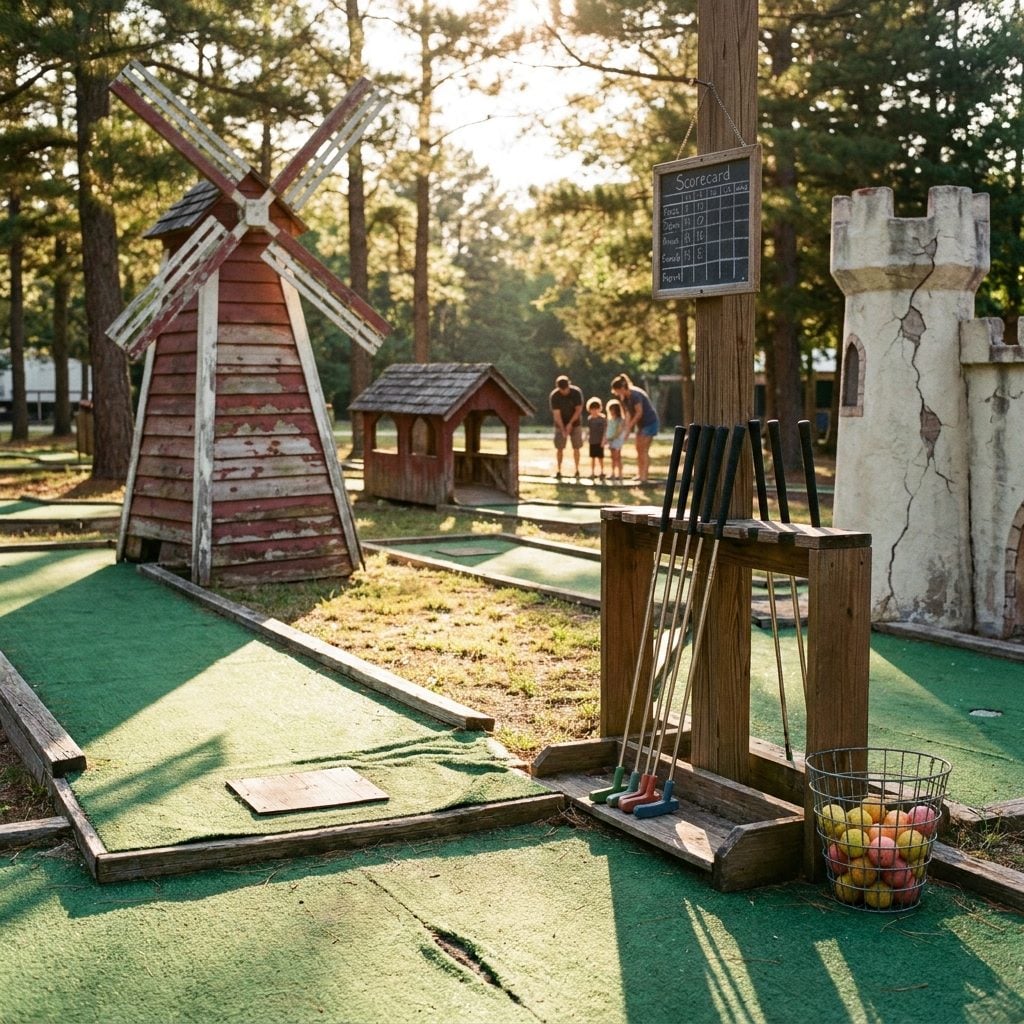
The turf was the color of a lawn that had given up, and you could see the seams where they’d patched it years ago. The windmill’s blades turned only if you shoved them. None of that mattered.
Dad kept score on a tiny pencil with no eraser, which meant every disputed stroke turned into a family debate. The kids invented rules on the fly. The teenager pretended not to be having fun, then birdied the castle hole and lost his cool over it. A round ran fifty cents, sometimes free if the office wasn’t watching.
14. The Coin-Op Laundry Room That Smelled Like Tide and Wet Concrete
🔥 Would you like to save this?
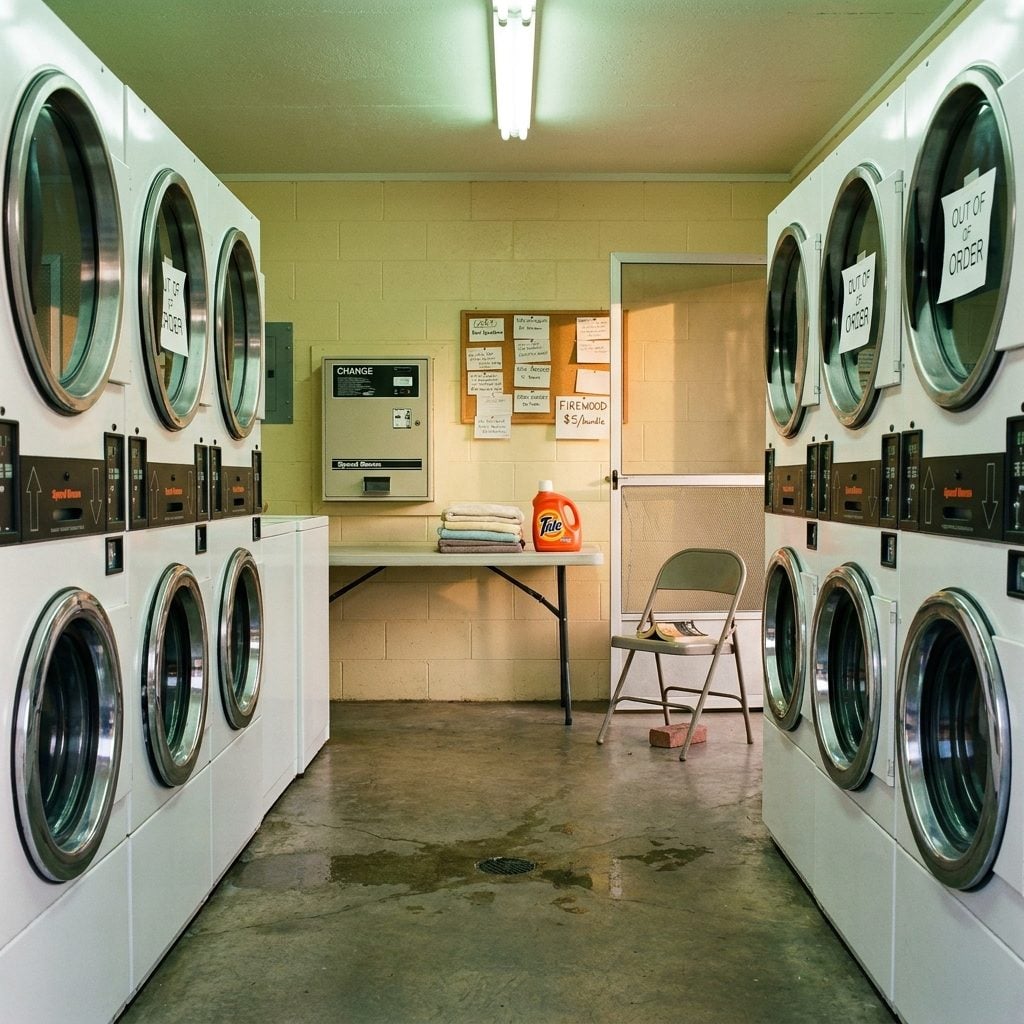
Mom disappeared here for two hours on the third day of every trip. She’d bring a paperback and quarters wrapped in a napkin, and come back with the whole family in clean shorts and a look on her face like she’d just pulled off something small and heroic.
The dryers cost more than the washers. Nobody could figure out why. That same firewood ad had been pinned to the bulletin board for three summers running.
13. The Tent Sites at the Far End of the Campground
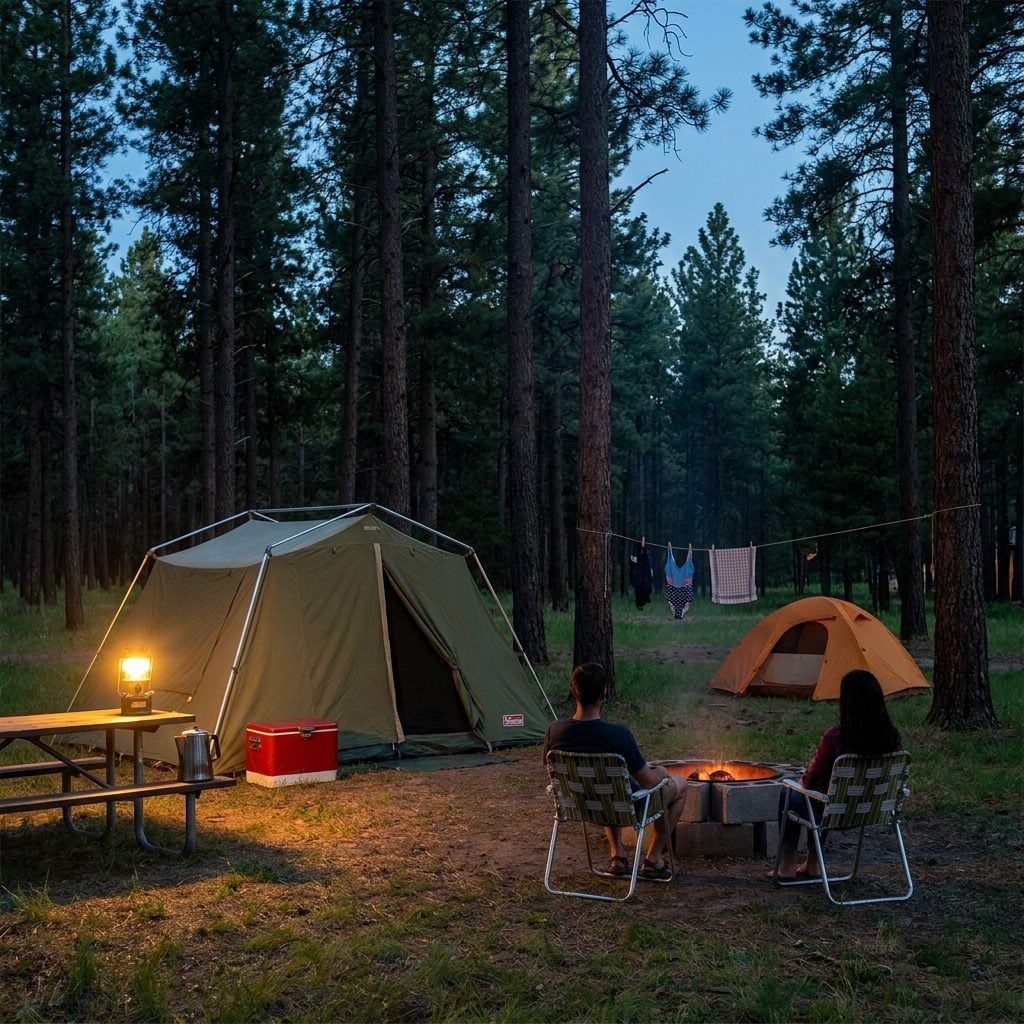
At many campgrounds, the tent sites sat beyond the RV rows, down a gravel spur where the trees closed in and the generator hum faded.
The sites cost less, offered fewer hookups, and traded convenience for quiet. At two in the morning, you heard crickets instead of a Winnebago air conditioner.
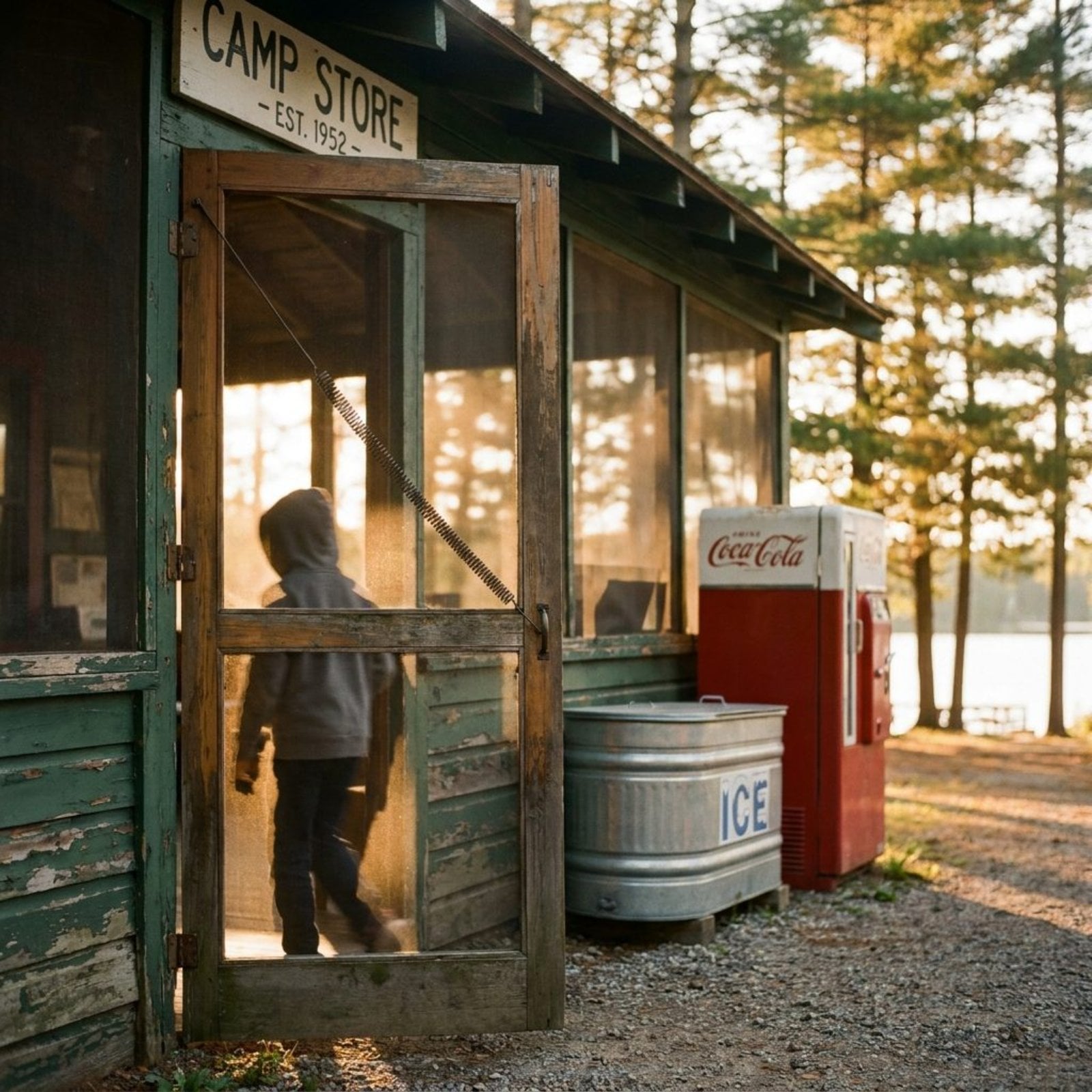
12. The Sound of the Camp Store Screen Door Slamming Shut Behind You
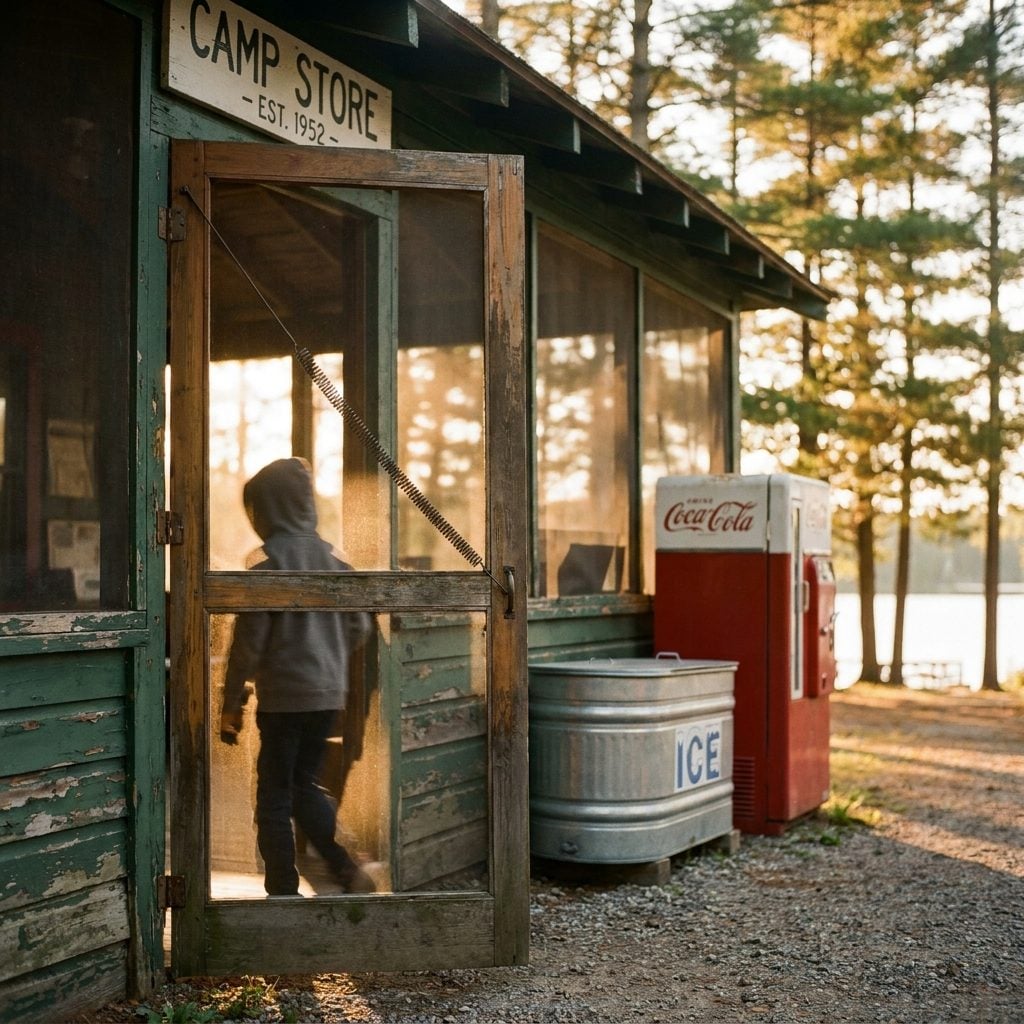
That screen door had a personality. The coiled spring gave it a half-second of drama before it snapped back against the frame with a crack that echoed across half the campground. Every kid who pushed through it at a run got the same result: a sound that announced your arrival whether you wanted it to or not.
Inside, the air was cool and smelled like charcoal bags, old wood, and the paper sleeves around souvenir patches. S’mores supplies, batteries, postcards, bug spray, and bundles of firewood crowded a room much smaller than the job it performed.
The store seemed to have whatever the campsite had forgotten, along with several things no child had forgotten at all.
11. The Pay Phone Bank Outside the Office With the Metal Cord
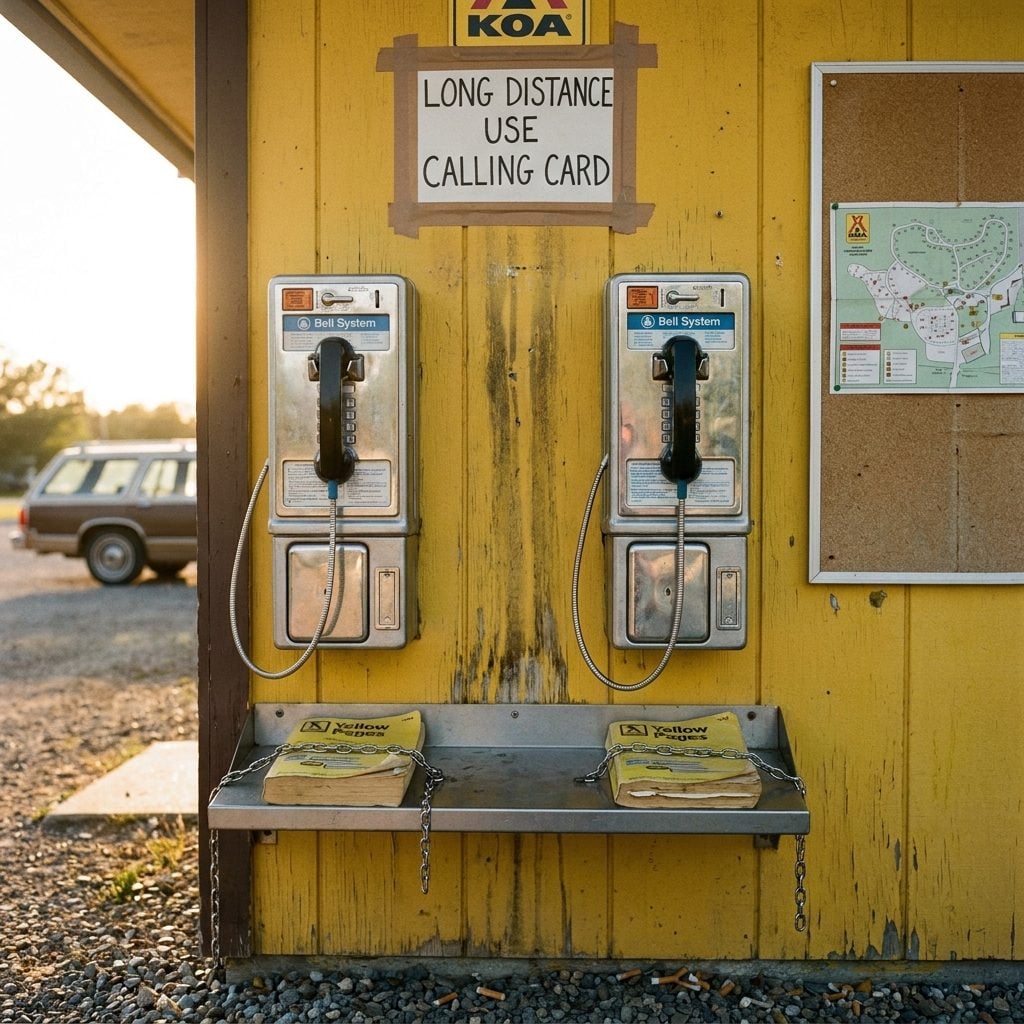
Long-distance to Grandma cost real money. Dad would feed quarters in a specific rhythm while Mom stood behind him with the number on a torn scrap of paper. That cord was the heavy metal-sheathed kind, cold to the touch and coiled so tight you had to lean into the phone to hear.
Kids waited their turn to say hi, got about ninety seconds, and then Dad tapped his watch.
10. The Volleyball Net Nobody Ever Fully Restrung
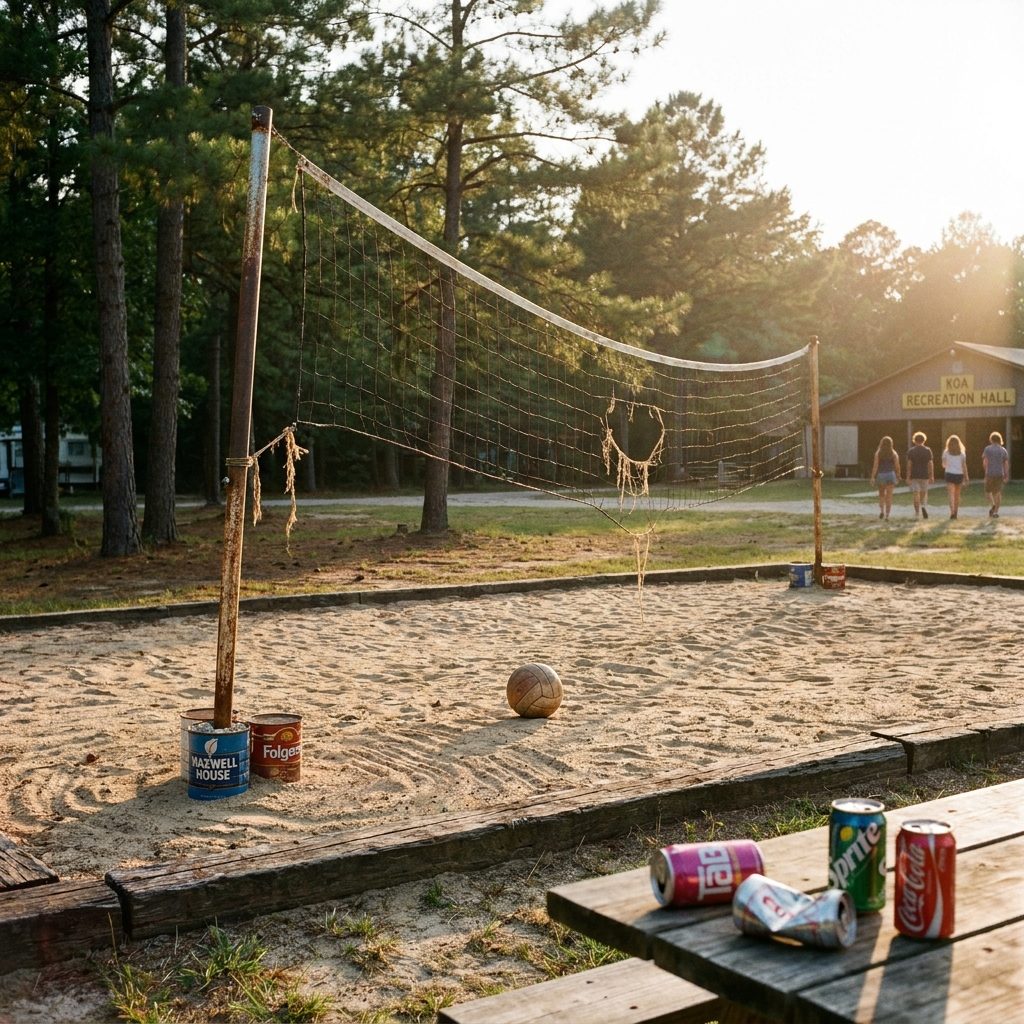
The net drooped in the middle like a hammock nobody was using, and one determined parent would always try to tighten it, get frustrated with the pole crank, and give up. The ball had one soft spot that made it hook left every time it left your hand.
Games were mostly cousins and kids who’d just met that morning. Score-keeping fell apart after the first few points. Eventually somebody spiked the ball into the picnic area, it rolled under a Winnebago, and the match was over.
9. The Horseshoe Pits Behind the Rec Hall
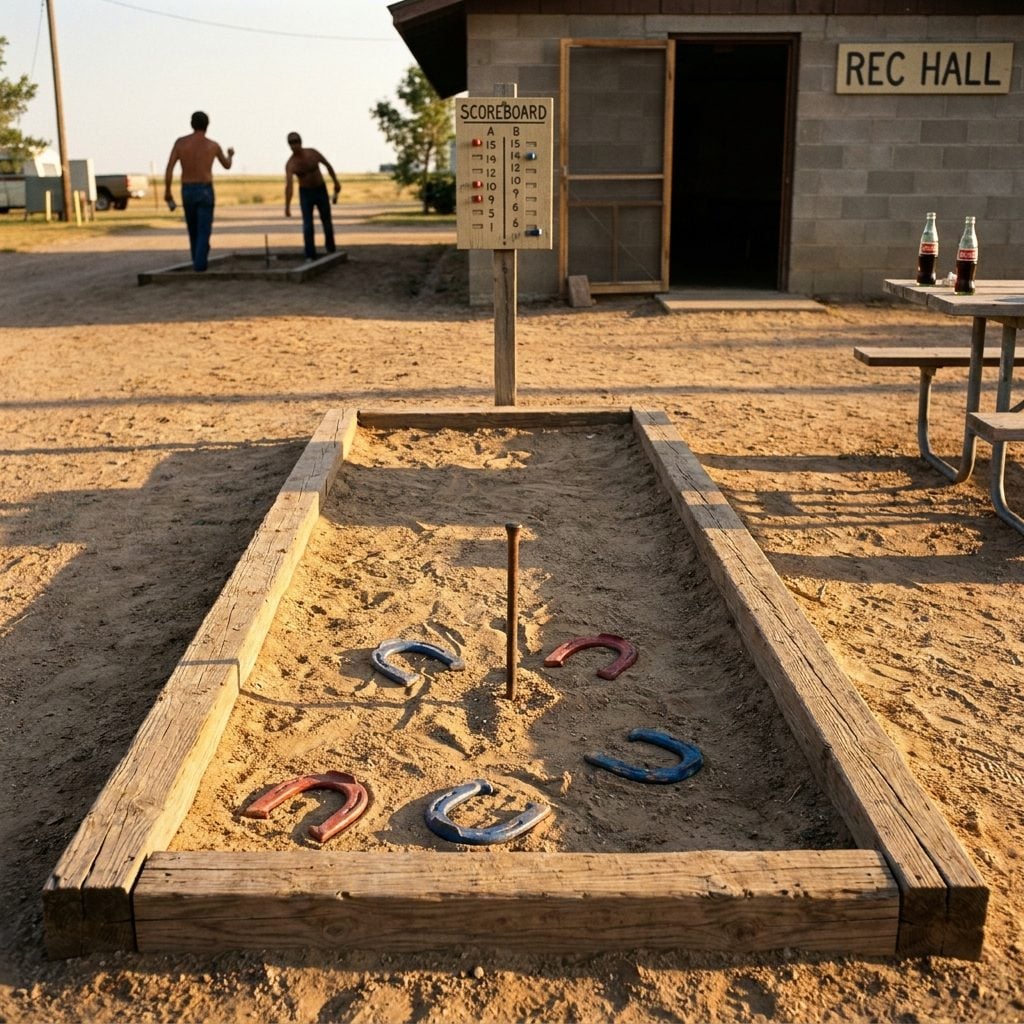
Cast iron striking an iron stake made a sound you mostly heard at campgrounds and county fairs. Ping. Thud, more often than not.
The adults claimed the pits after dinner while children drifted around the edges and offered unrequested scoring advice. Half the beads were missing from the peg board, so somebody kept score on the back of a receipt.
A ringer stopped every nearby conversation for half a second. Then the arguing resumed over whether a leaner counted.
8. The Wagon-Wheel Fence Around the Whole Place
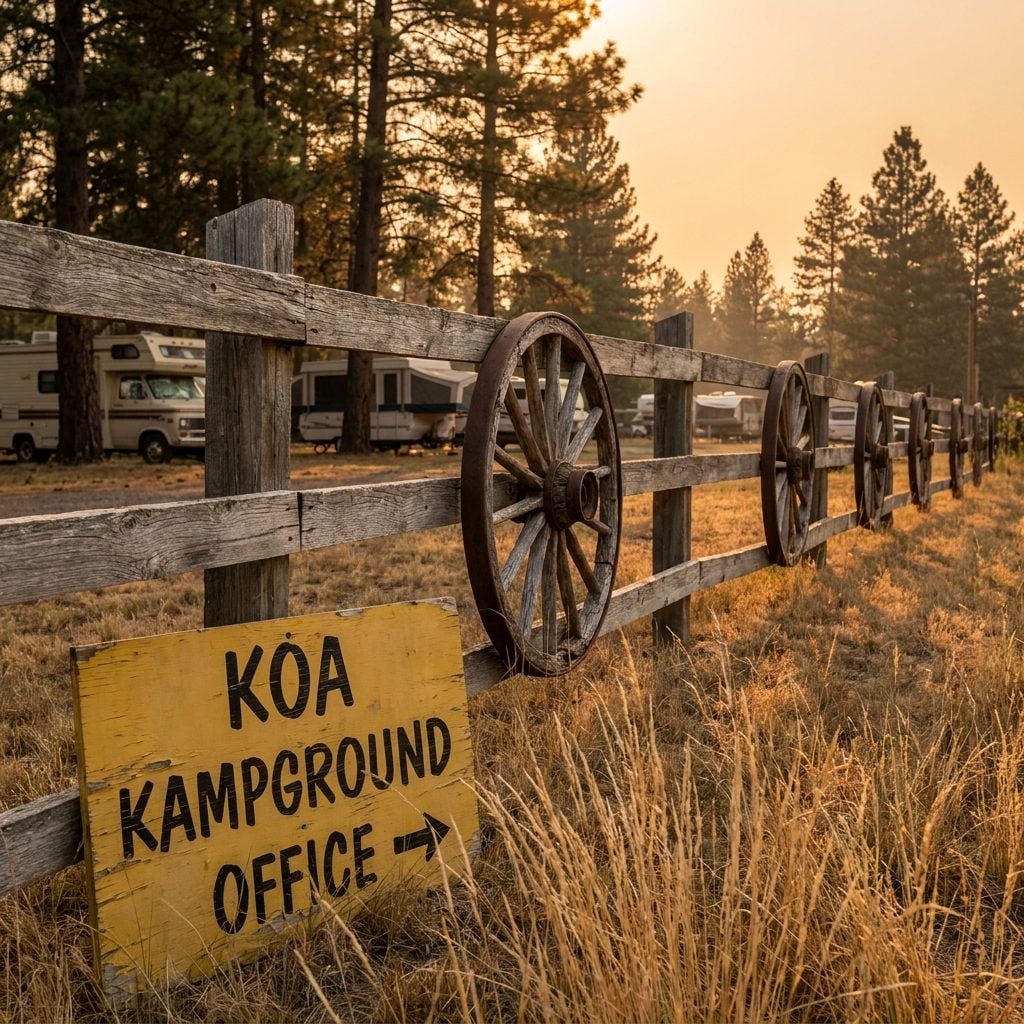
Some KOAs leaned hard into them. Actual wagon wheels worked into the fence line like the whole place had ridden in on a wagon train. Half were probably fake. All of them looked old, and the effect worked anyway.
You could spot the wagon wheels from the highway a good quarter-mile before the turnoff, and they made a visual promise: you’re not just parking somewhere, you’re arriving.
7. The Honor-System Firewood Bundles by the Coffee Can
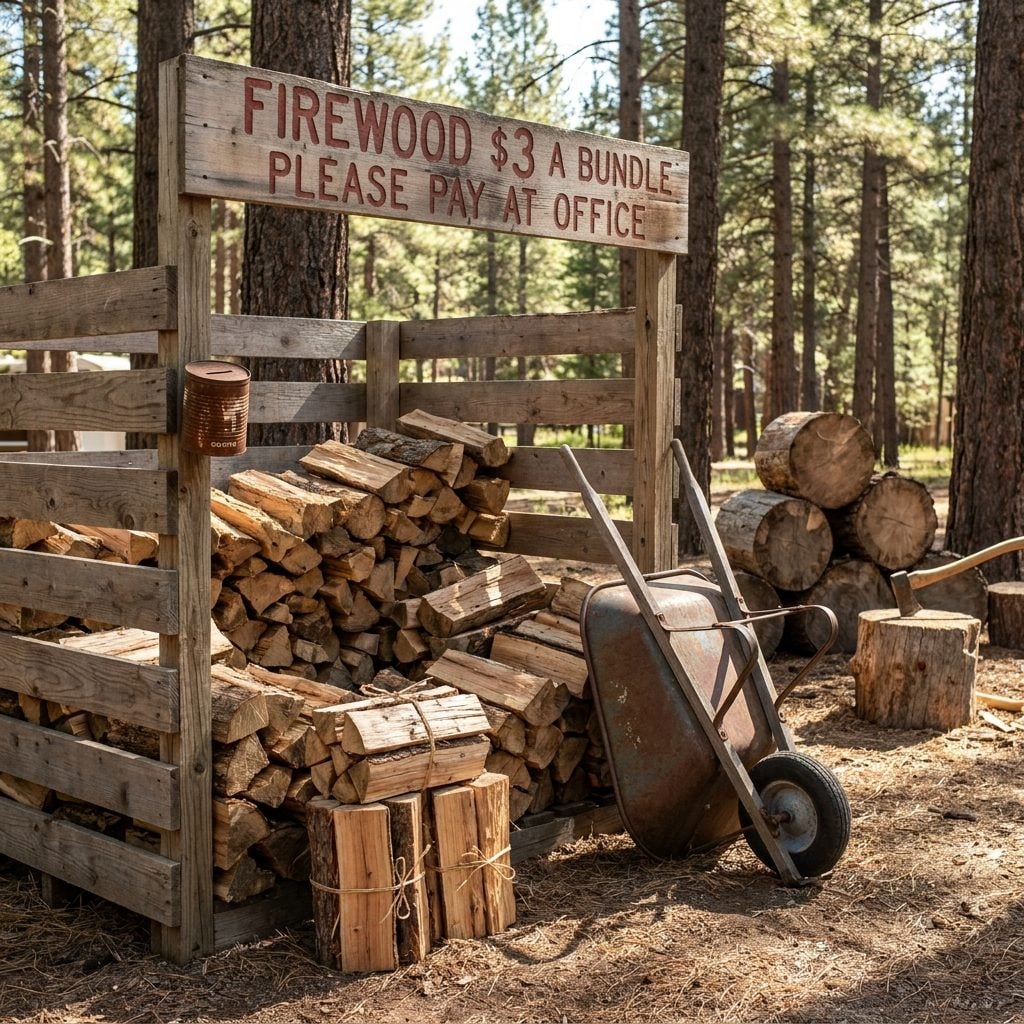
A few bucks a bundle in 1984, honor system at the coffee can nailed to the post. Bundles were smaller than they looked, and you’d burn through one in about forty-five minutes if you weren’t careful. Dad was never careful.
Somebody always tried to sneak an extra bundle. Grandma always noticed. Back to the can they went, dollar in hand.
6. The Sprinklers That Came On at Six in the Morning
🔥 Would you like to save this?
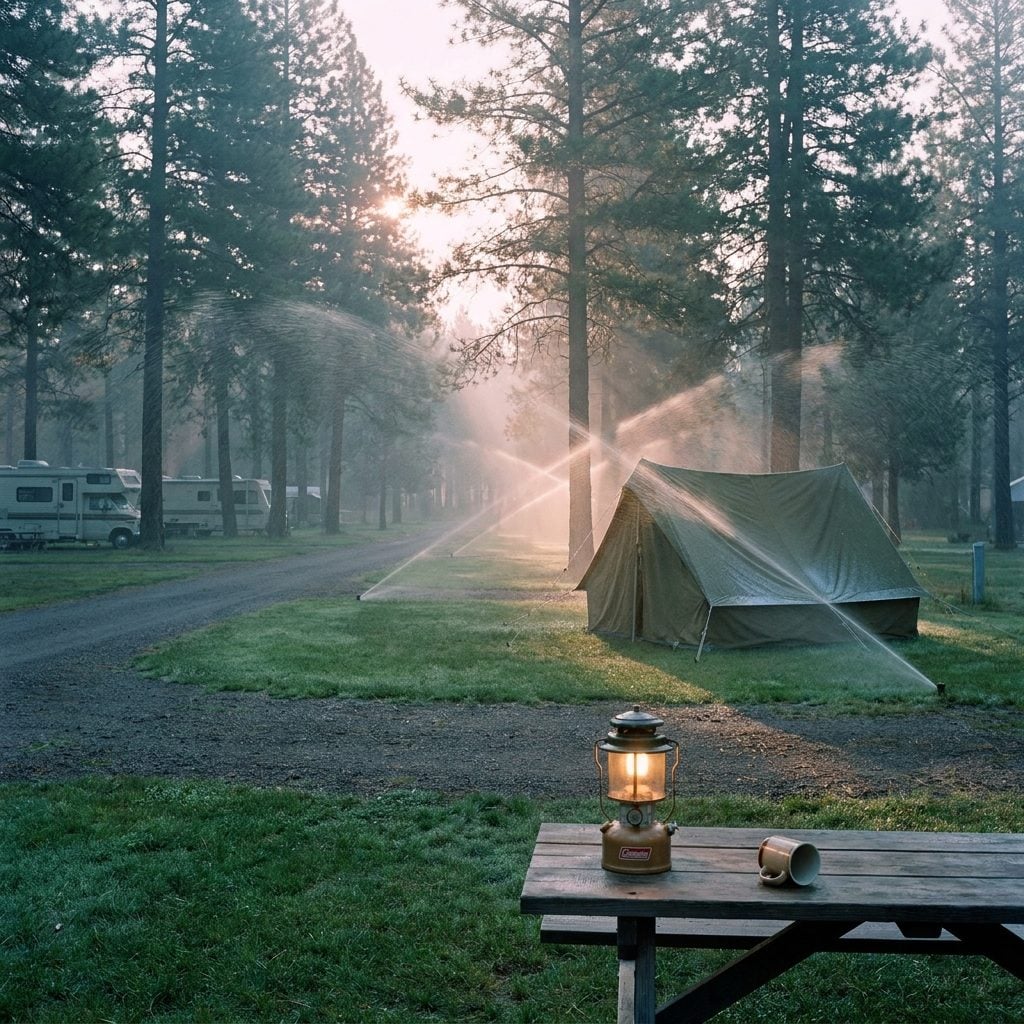
Chick-chick-chick-chick, then the long slow ratcheting return. If the sprinkler head was pointed even slightly wrong, it hit the side of your tent and you woke up thinking it was raining.
Dad would stumble out in his sleep shorts to move the tent, or the sprinkler, or himself, depending on the angle. Everyone else pretended to still be asleep.
By seven the sprinklers had shut off and the sun was up over the pines, and the whole campground smelled like wet grass and coffee somebody down the row had already started.
5. The Registration Book at the Front Office With Everyone’s Home State Written In
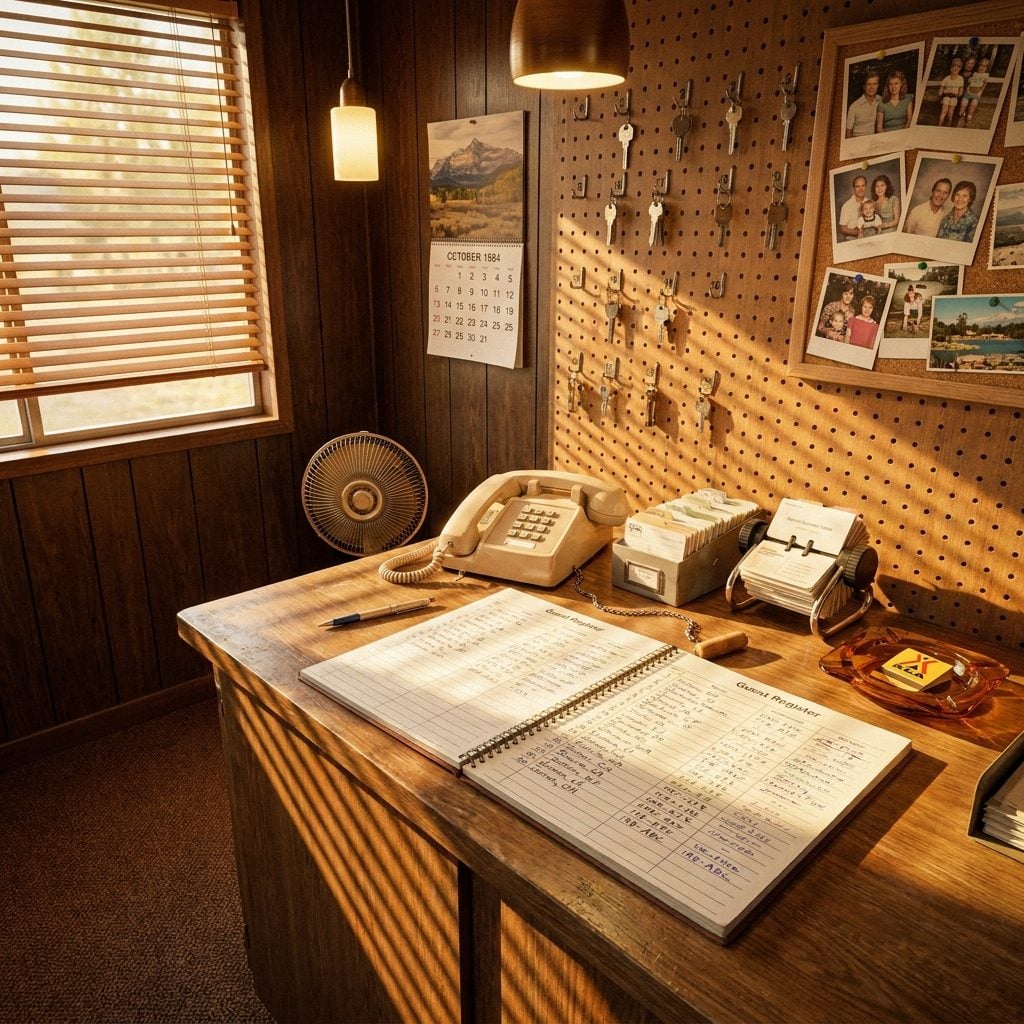
You’d flip through it while your parents checked in, hunting for a state farther from home than yours. Alaska, once. Someone from Alaska felt like meeting a celebrity.
The register lay open to the current page, half-filled with handwriting in six different pens, license plates copied down in the second column, home state in the third. Ohio, Ohio, Michigan, Ohio. Then Oregon, and you’d nudge your brother hard enough to leave a mark.
4. The Ice Machine Outside the Office That Sounded Like a Bowling Alley
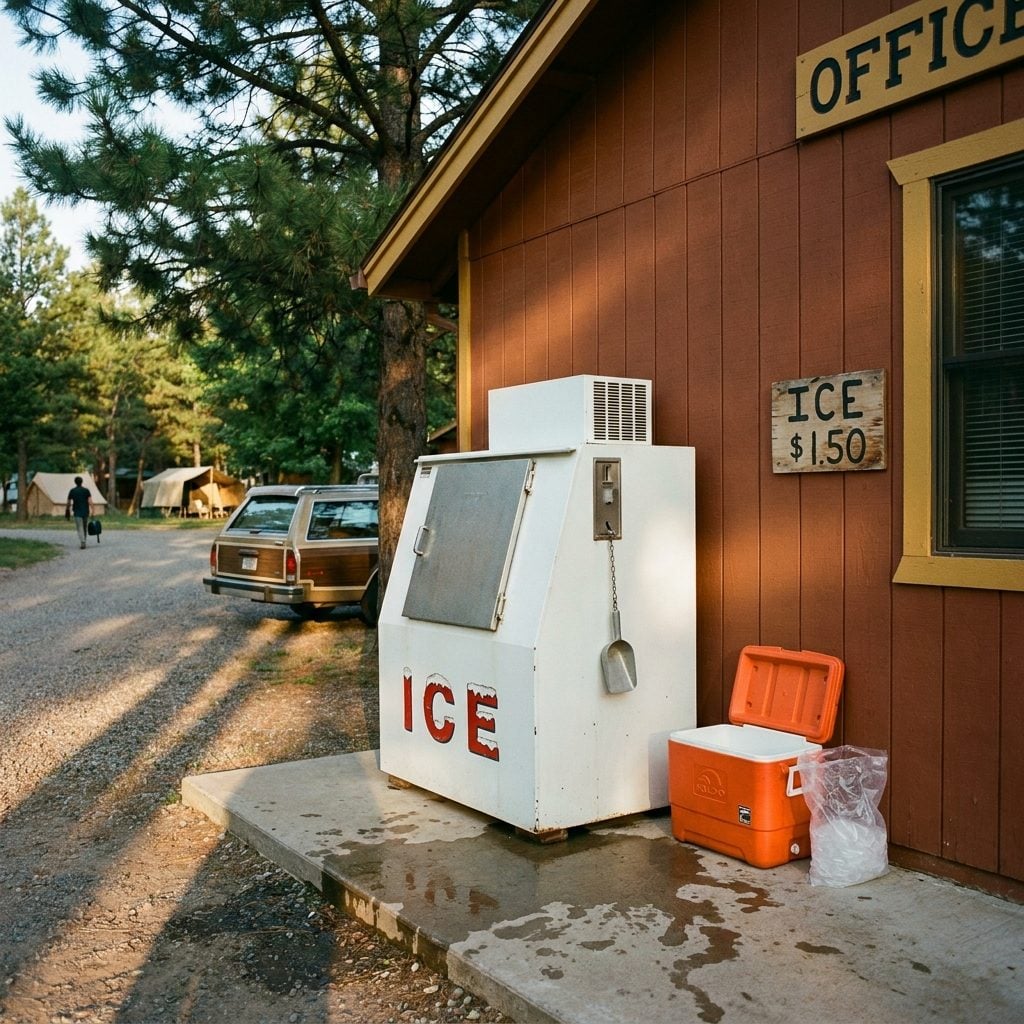
The whole machine shuddered when you fed the quarters in. A pause. The internal collapse followed right after, a rolling crash of cubes tumbling down the chute like a strike two lanes over.
You held the bag open with both hands while your dad worked the scoop, and half of it ended up on the concrete. Nobody cared. The cooler needed filling before dinner, and the ice was already sweating on the walk back to the site.
3. The Wooden Directional Signs at Every Fork in the Road
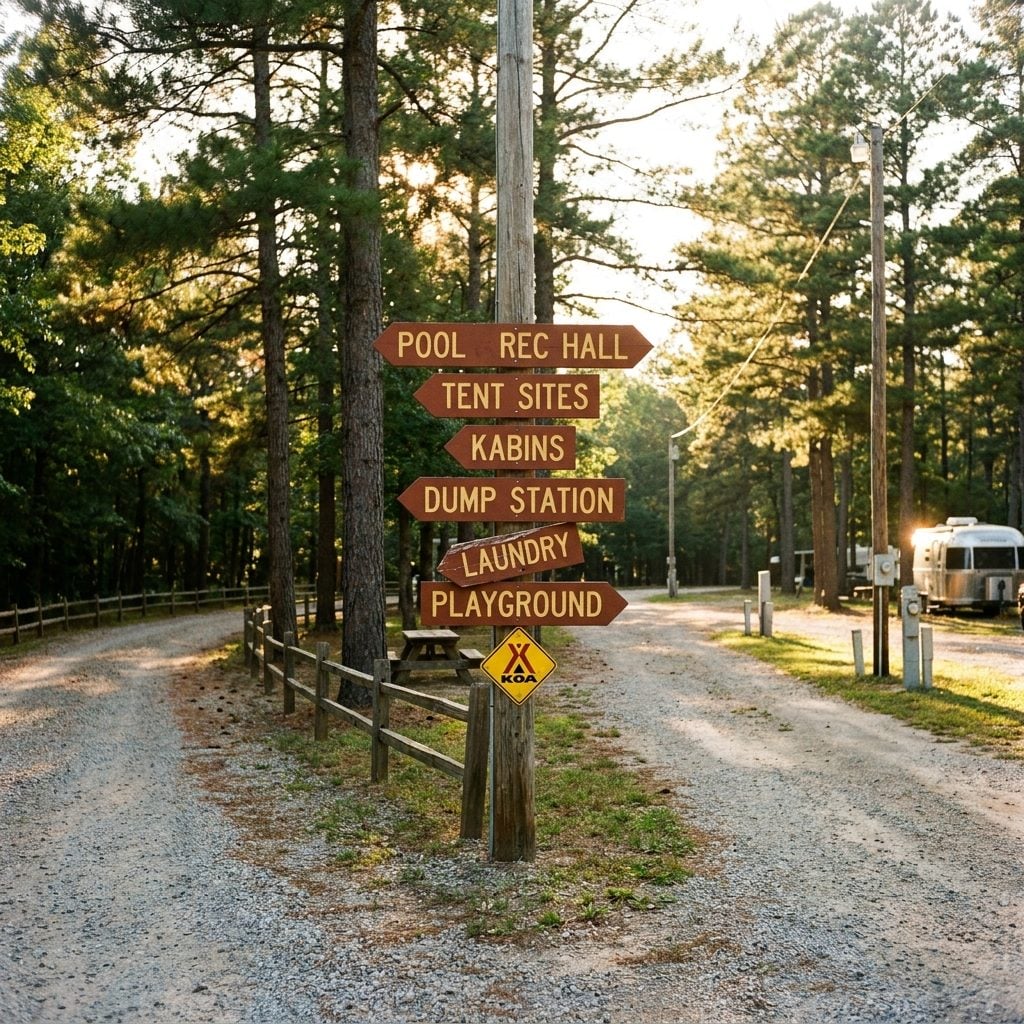
Six arrows on one post, each pointing a different way, all hand-routed in that same rust-brown paint with yellow letters. POOL up and to the left. KABINS straight ahead. DUMP STATION discreetly around the back, where nobody had to look at it.
Kids on bikes memorized the whole map by the second day and stopped bothering with the paper one from the office. You knew the second fork past the shower house went to the playground, and the third one went nowhere useful, just the maintenance shed with the tractor parked behind it and a wasp nest under the eaves.
2. The Nightly Quiet-Hours Check in the Little White Pickup
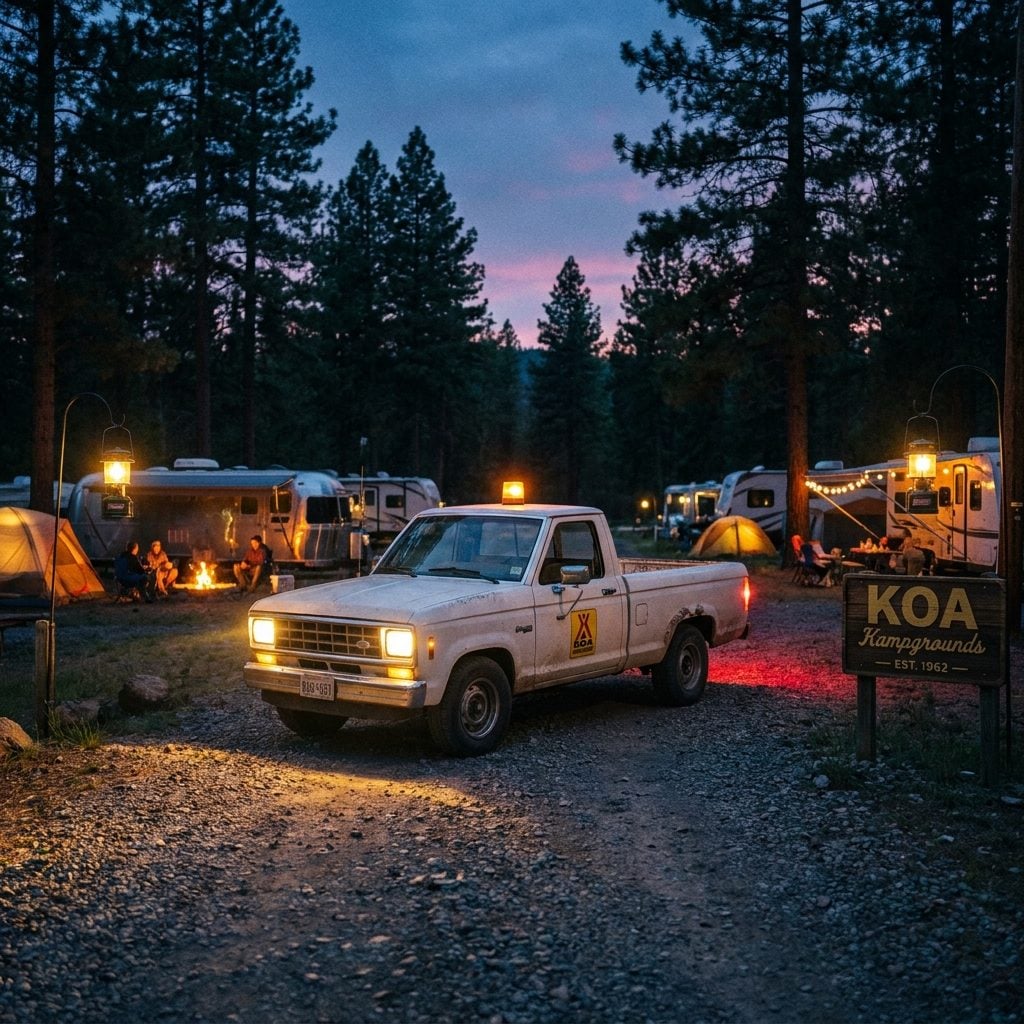
Ten o’clock. Headlights moved slowly around the loop, followed by a little white pickup with a KOA logo on the door. The camp host or night staffer waved at each site whether anyone was looking or not.
The job was mostly quiet hours: clearing the pool area, checking that fires were settling down, and reminding one loud table that voices carried farther after dark. From inside the tent, the crunch of tires on gravel meant the campground was closing itself for the night.
1. Saying Goodbye at the Dump Station on Sunday Afternoon
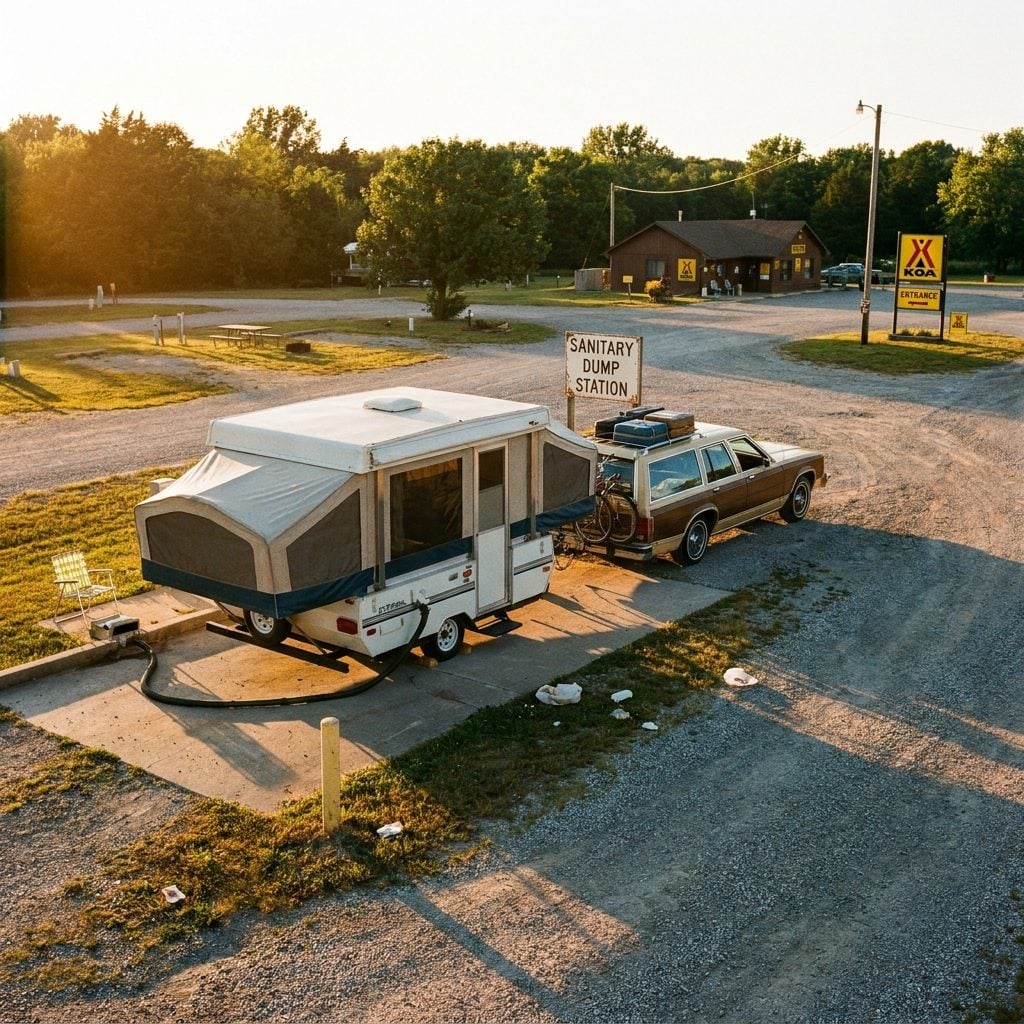
Sunday afternoon at a KOA had its own weather system. Quieter. A little sadder.
Half the campsites were already empty, fire rings full of gray ash, the pool cover on because Labor Day was almost here. Your dad was at the dump station doing the one job of the whole trip he refused to let anyone help with. Mom was folding the last towel. You sat on the picnic bench in a sweatshirt, watching a family two sites over pack up the same tent your family used to have.
You already missed it, and you hadn’t even left yet.
🔥 Would you like to save this?
Please note that some of the imagery in this article were created with the aid of AI image generators.