

🔥 Would you like to save this?
The rack was always near the cash register, spinning slowly, nobody touching it. You’d stand there in your flip-flops with sand still between your toes, dripping a little on the drugstore linoleum, trying to pick the right one. Not the sunset. Everyone sent the sunset. Maybe the one with the alligator wearing sunglasses. The stamp cost a dime. The whole ritual took twenty minutes and it mattered deeply. What follows is everything about that ritual that quietly disappeared.
26. Writing on Your Knee in the Back Seat Because There Was No Flat Surface
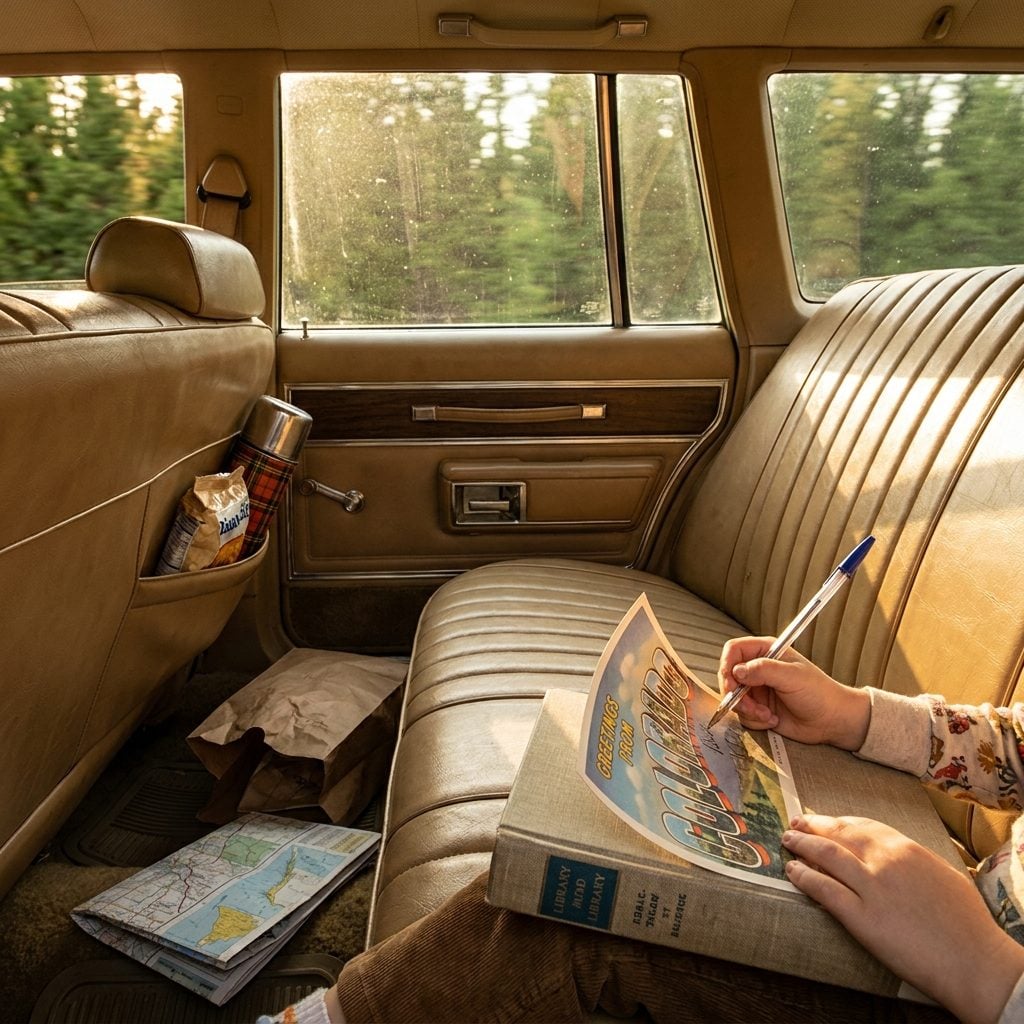
Every word came out wrong. The pen skipped where the card bent, your elbow hit the window, and by the time you finished ‘Having a great time,’ it looked like a ransom note. You used whatever was on the seat as a desk, a road atlas, a library book, once a Frisbee, and the results showed.
None of that mattered to the person who received it. That wobbly handwriting was proof you’d actually been somewhere, moving, alive. The imperfection was the message.
25. Hunting Down a Stamp When You Forgot to Buy Them at the Post Office
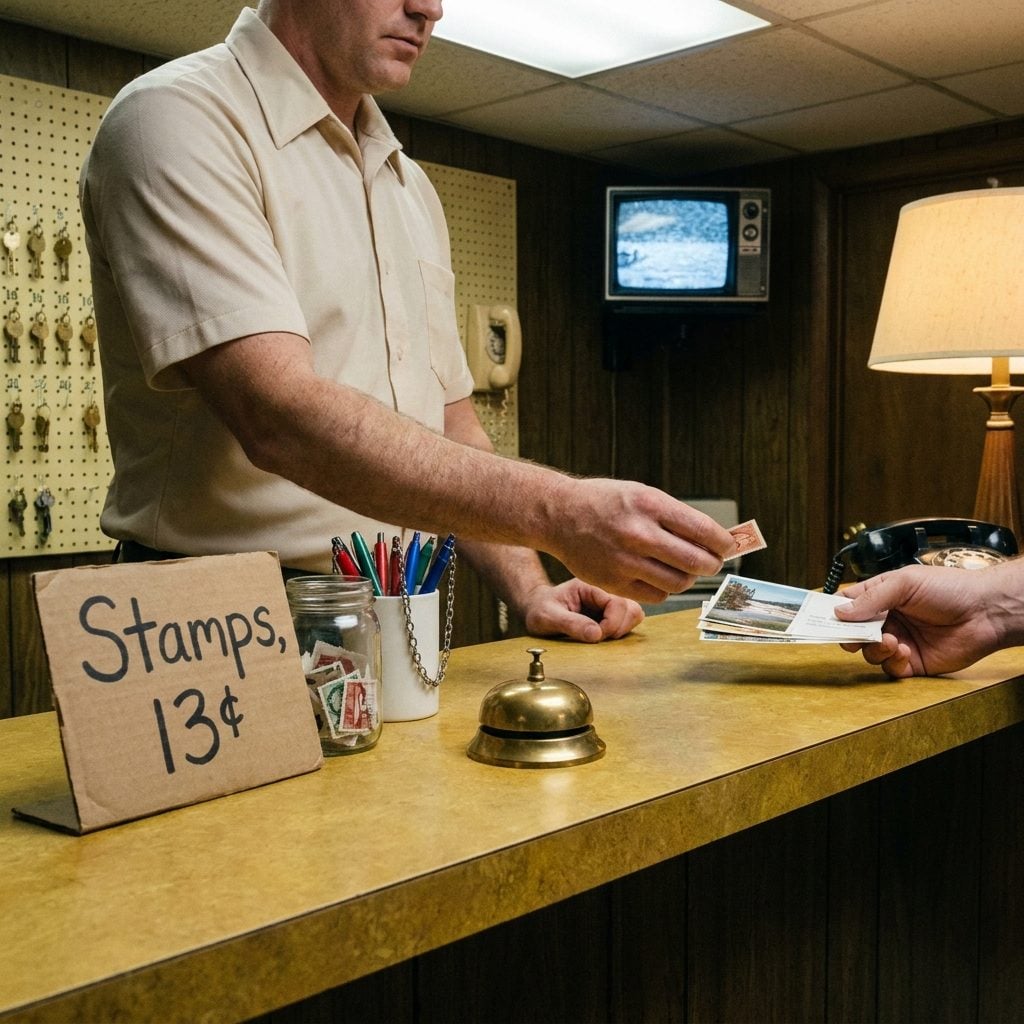
Stamps were always an afterthought. You’d write five postcards, address them, lick them shut in your mind, and then realize you had nothing to put on the corner. Gas stations sometimes had them. Pharmacies, occasionally. The motel front desk was your best bet, they kept a little jar of them and charged you whatever they felt like.
Thirteen cents for a first-class stamp in 1975. You’d buy exactly as many as you needed and not one more.
24. The Postcard That Arrived Home After You Did
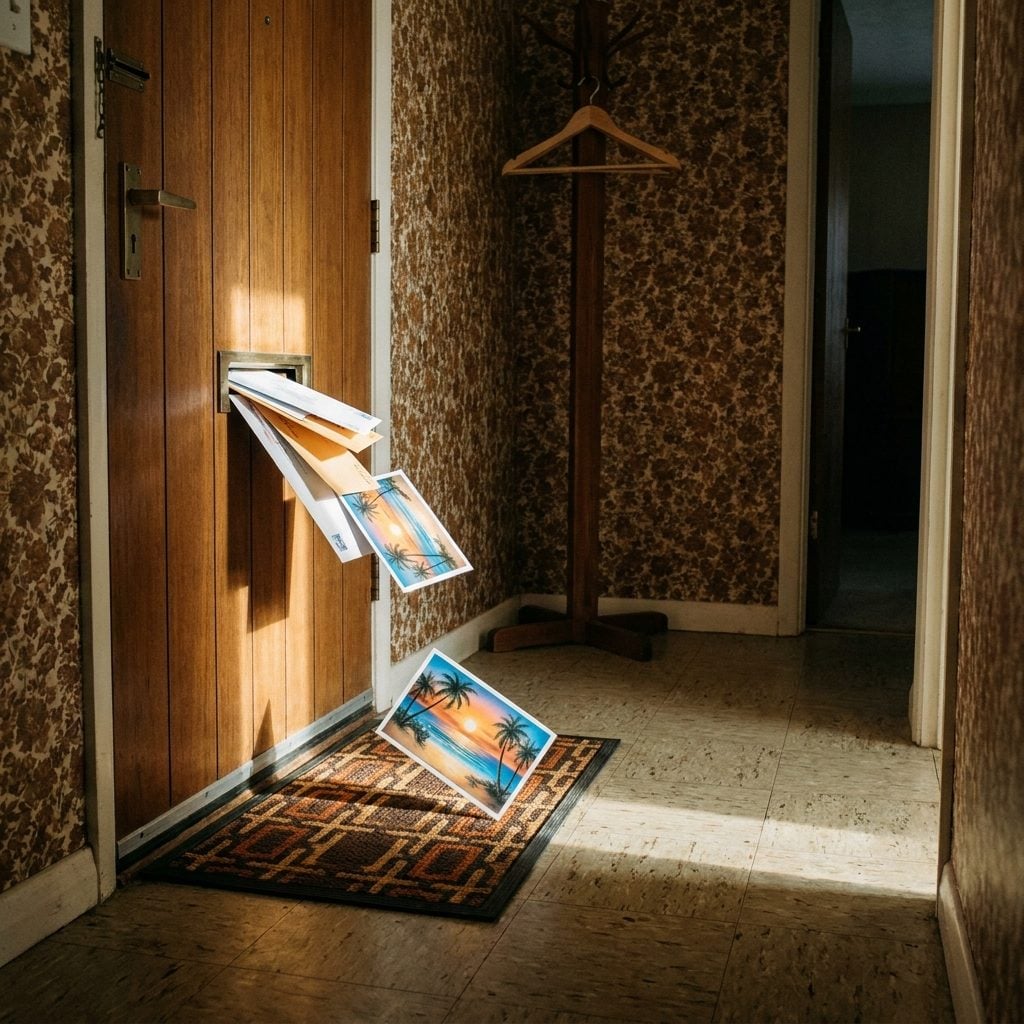
You mailed it from Gatlinburg on a Tuesday. You drove home, unpacked, did a load of laundry, and went back to work. The postcard arrived the following Friday. Your own handwriting, your own message, ‘Wish you were here!’, delivered to your house, addressed to yourself, a full ten days after you’d written it.
It happened to everyone at least once. The card sat on the kitchen counter for a week because no one could figure out what to do with it. You couldn’t throw it away. It was, technically, a piece of mail.
23. The Address Book Pulled From the Bottom of Mom’s Purse
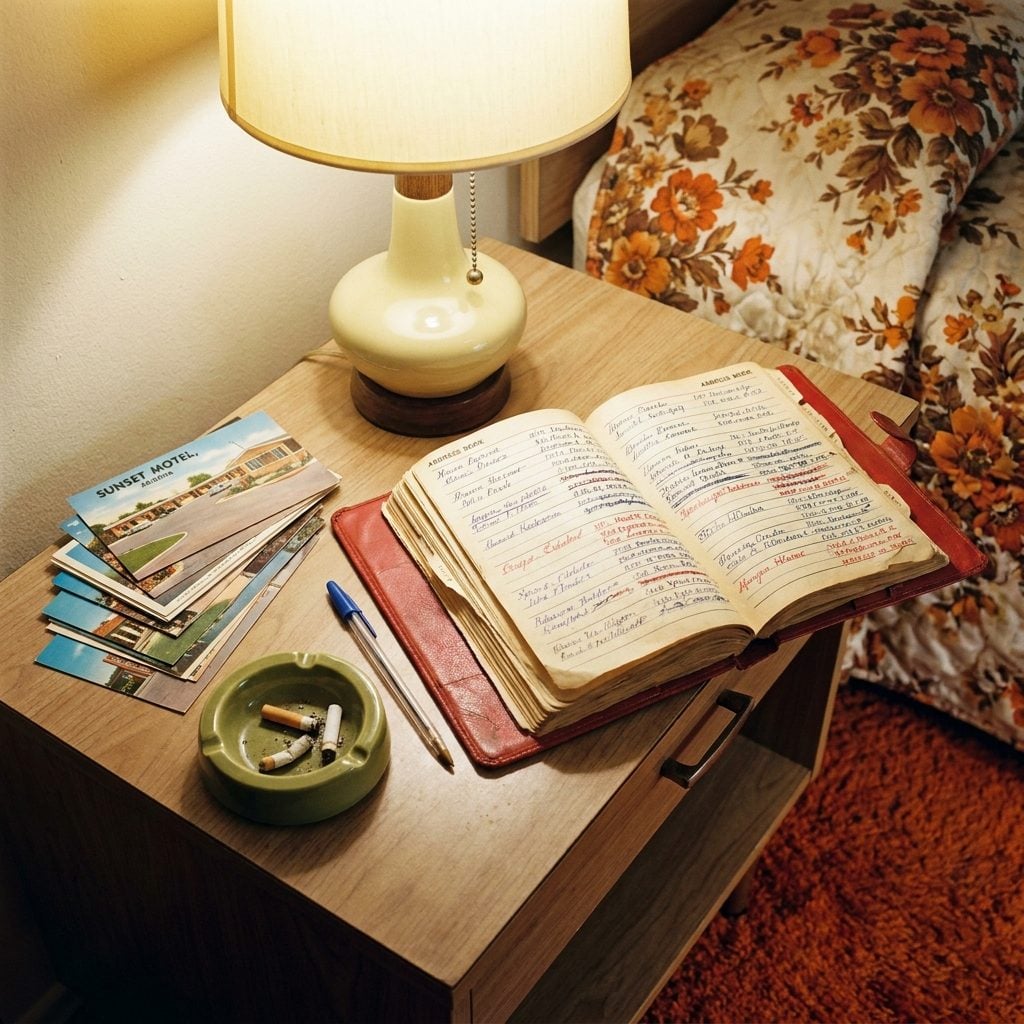
It lived at the bottom of the purse, under the tissues and the cough drops and the coin purse that weighed approximately four pounds. The address book was small, usually leather-covered, and it held every address the family had ever needed: grandma, the neighbors, your aunt in Phoenix, your dad’s coworker whose kid you’d met once at the company picnic.
You needed it because you didn’t have anyone’s address memorized. Nobody did. The book was the only way to send a postcard to a real person at a real house, and if your mother forgot to pack it, the cards stayed blank in the address field until you got home.
22. The Specific Font on Every ‘Greetings From’ Card
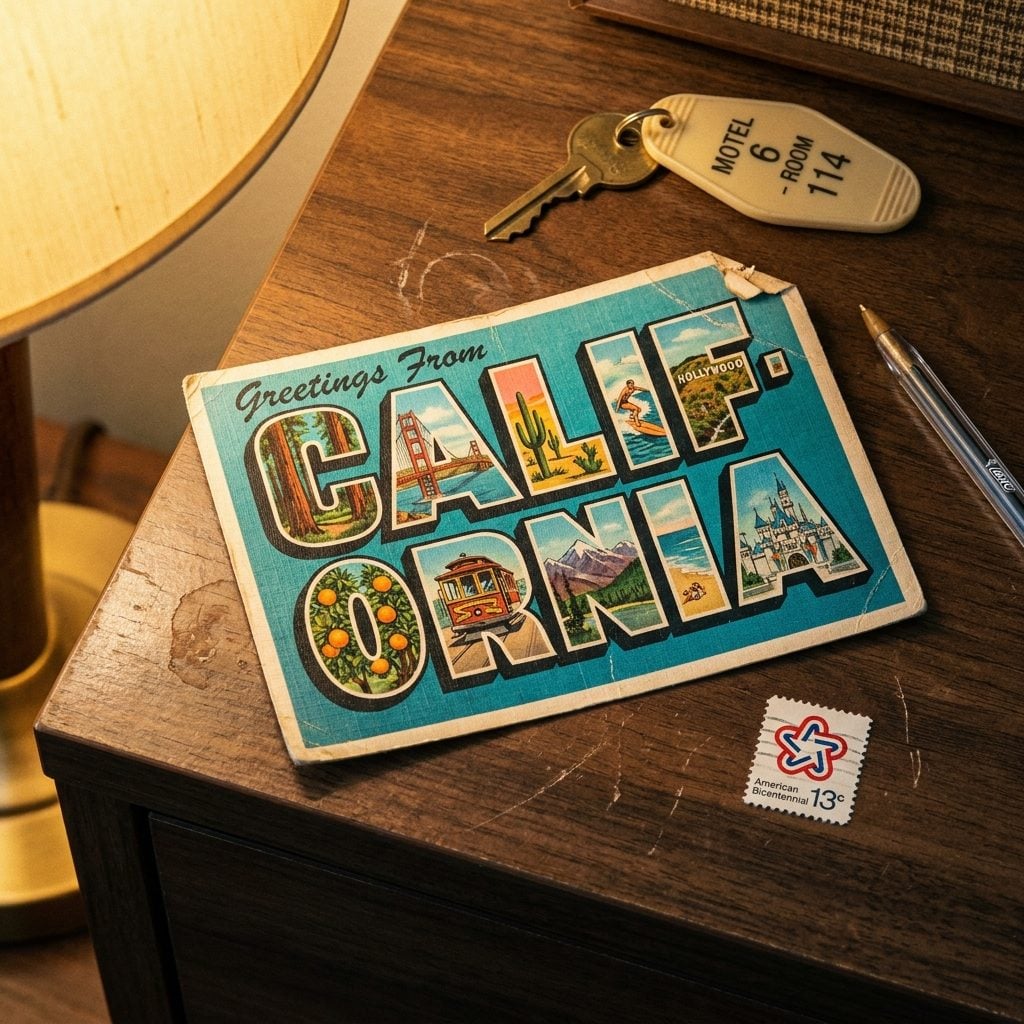
Big block letters, each one stuffed with a tiny painted scene. A lighthouse inside the letter ‘L.’ A cowboy inside the ‘C.’ The font was something between circus poster and roadside diner sign, and every state had its own version of it. They were called linen postcards originally, but by the 1970s the style was just the style, the one that said souvenir before you read a word.
Graphic designers have been trying to revive this aesthetic for thirty years. None of them have quite gotten it right, because the original wasn’t designed. It just happened, over and over, from printer to printer, until it became the visual language of being somewhere else.
21. Finding the One Mailbox in Town That Wasn’t Inside a Post Office
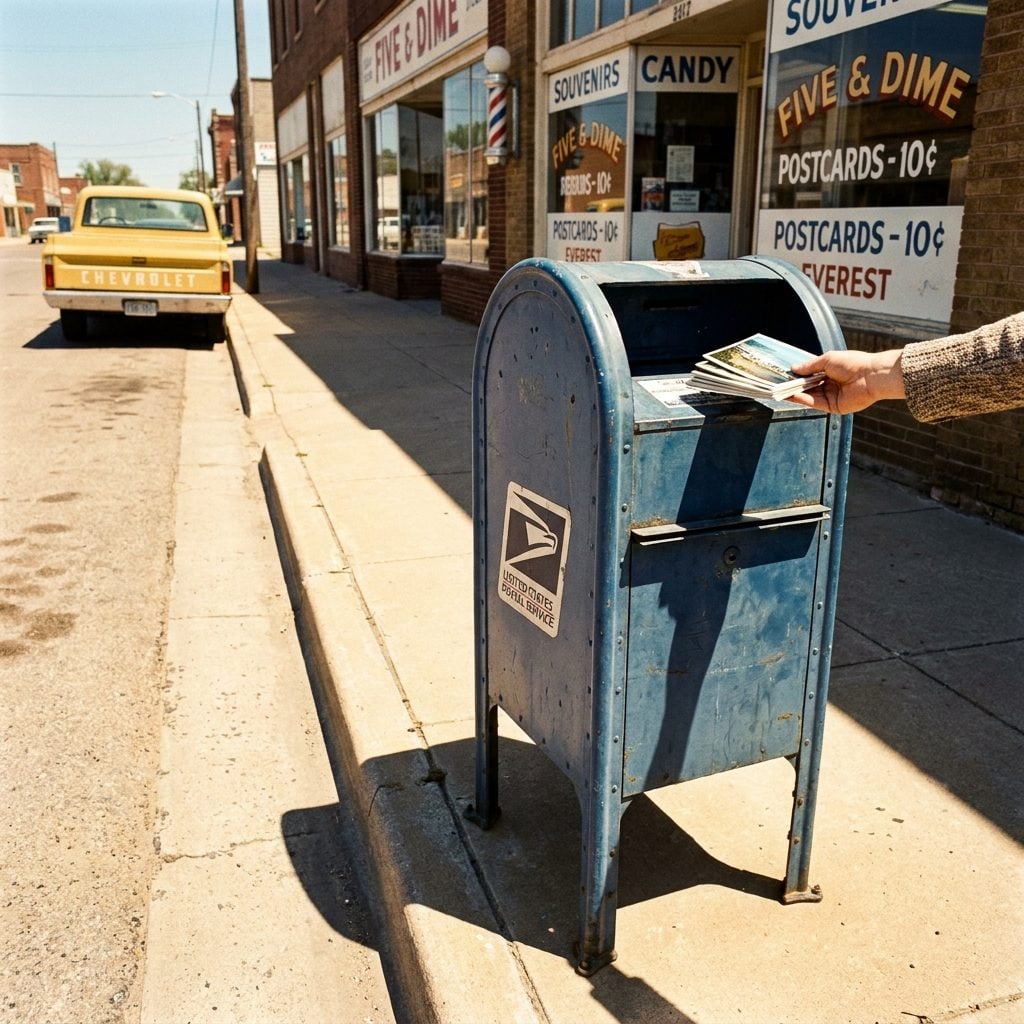
In a tourist town in the middle of nowhere, finding a mailbox was its own small adventure. You’d ask at the gift shop, get directions to the post office, discover the post office was closed Saturdays at noon, then eventually find the one blue collection box parked outside the hardware store three blocks off the main drag.
The satisfaction of dropping the cards through the slot was real and specific. The metal flap, the small thud of the cards hitting the bottom. Done. They were in the system now. They were officially on their way to people who were at home, working, jealous.
20. Writing Something Different on Every Single Card So No One Compared Notes
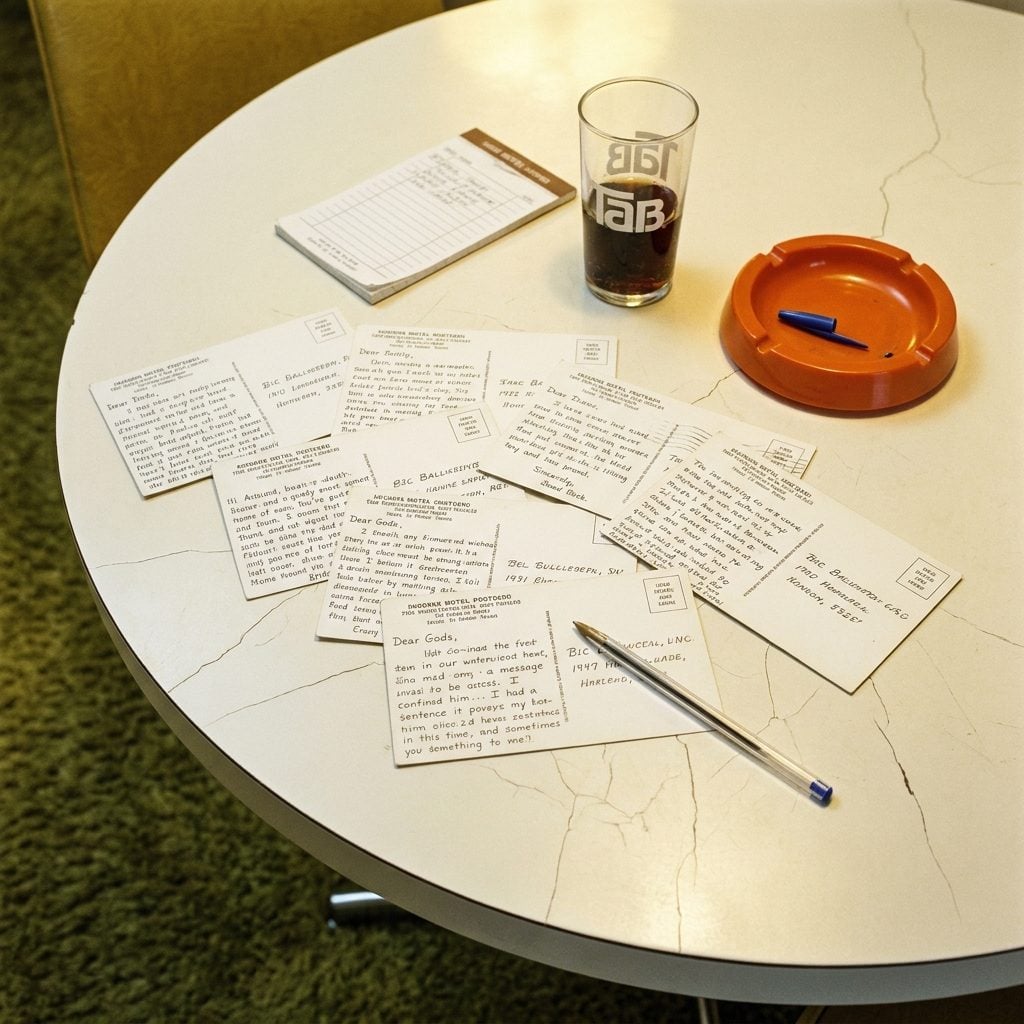
You couldn’t send your sister and your grandmother the exact same message. Not because anyone would have cared, but because you would have known, and it felt lazy in the way that mattered to no one except you. So you wrote seven slightly different versions of the same trip: the funny one for your college roommate, the sweet one for your grandmother, the complaining one for your best friend from work.
It took forty-five minutes. Your hand cramped. You ran out of things to say by card four and started describing the pool in detail just to fill the space. Nobody needed to know that much about the pool.
19. The Rotating Wire Rack That Made Choosing a Postcard a Twenty-Minute Event
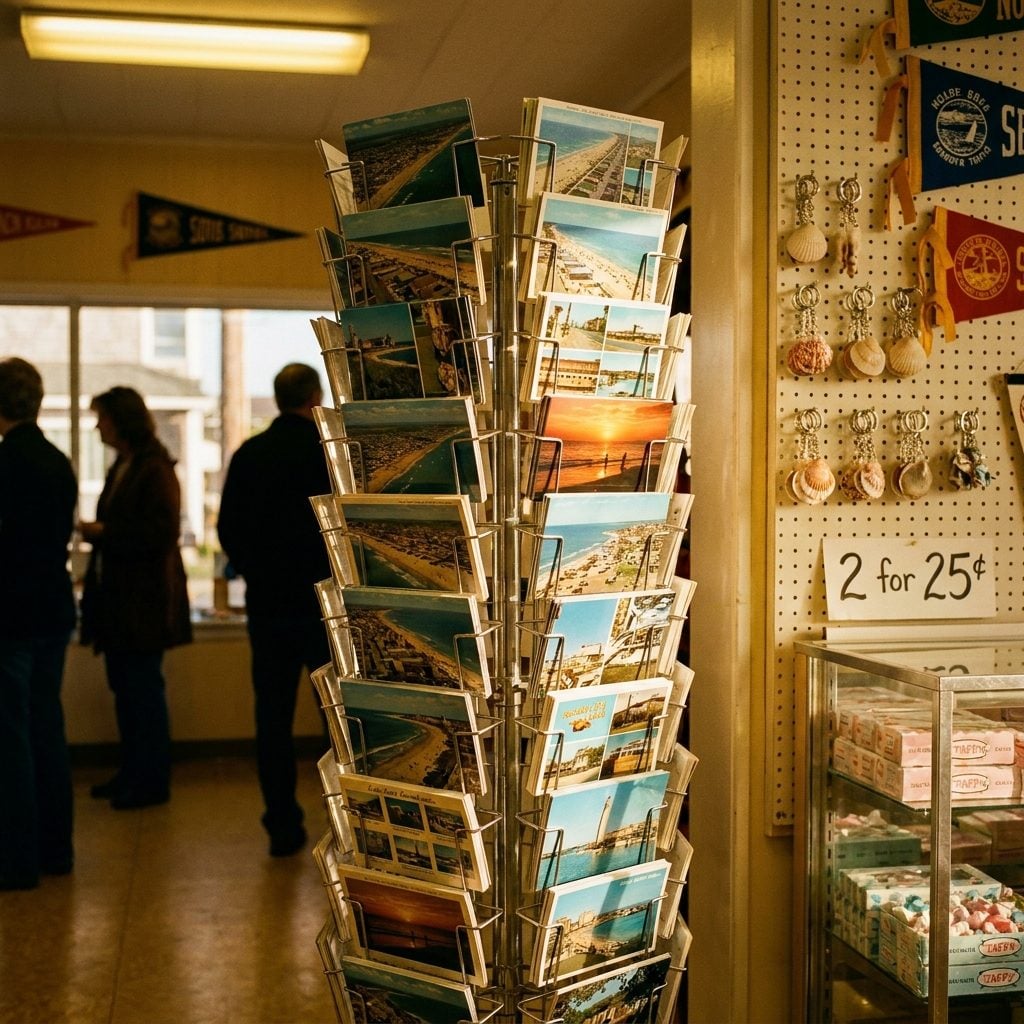
Every gift shop from Bar Harbor to Carlsbad had one: the wire rack that spun on a satisfying little pivot, crammed so full of postcards that pulling one out required the patience of a surgeon. You’d spin it once, look at everything, spin it again just to be sure, and eventually stand there for a genuinely embarrassing amount of time choosing between the aerial beach shot and the one with the cartoon lobster.
The cards themselves had that specific glossy weight, thick, slightly waxy, the printed colors a little too saturated to be real. Prices were hand-lettered on small cards tucked into the rack. Two for a quarter, usually. Nobody bought just one.
18. The Post Office That Was Only Open Until Noon on Saturdays
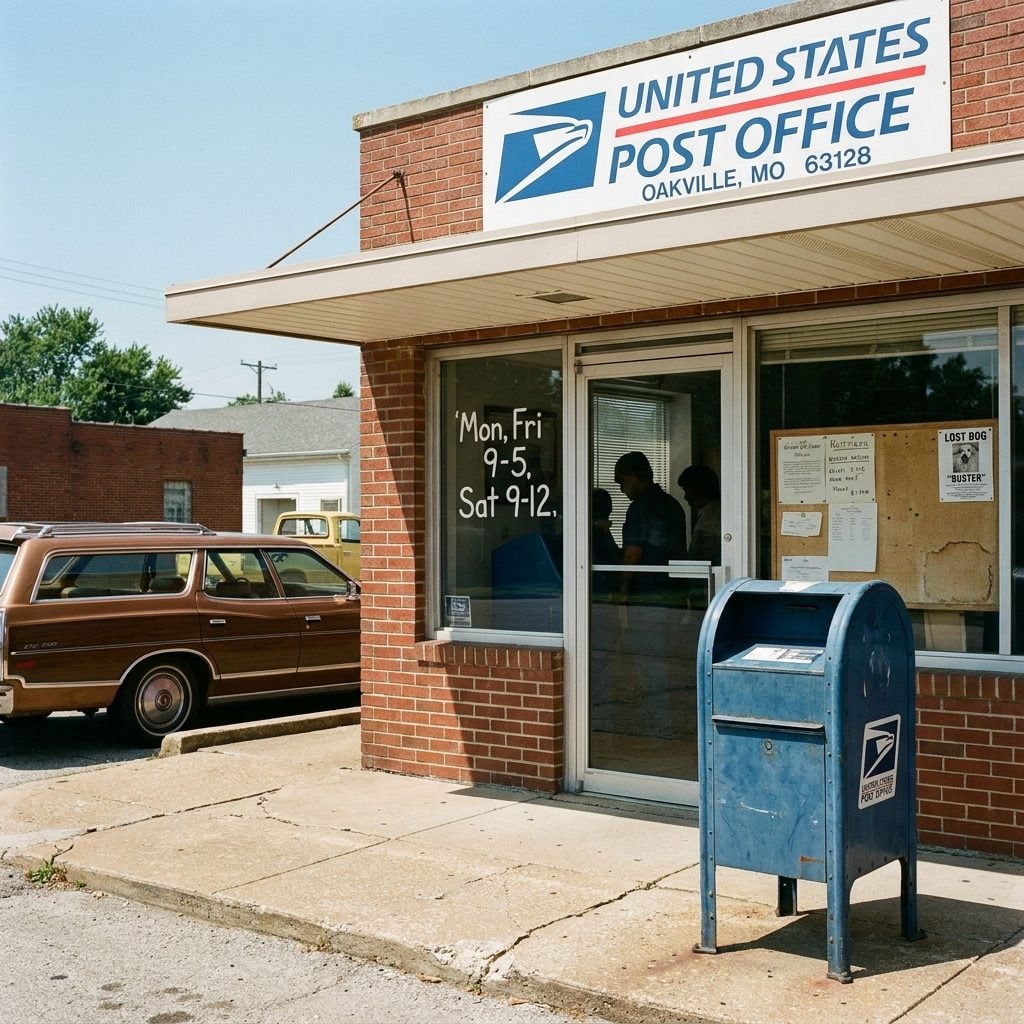
If you wanted stamps on a Saturday afternoon, you were out of luck. Post offices closed at noon on Saturdays, and that noon was not negotiable. The scramble to get there before twelve was a real vacation memory, somebody checking their watch, somebody else grabbing the postcards, the whole family speed-walking down Main Street past the fudge shop.
Miss the window and you were hunting for a drugstore that sold individual stamps from a little book, which felt like a moral compromise for reasons nobody could fully articulate.
17. Addressing the Card Without Anyone’s ZIP Code Memorized
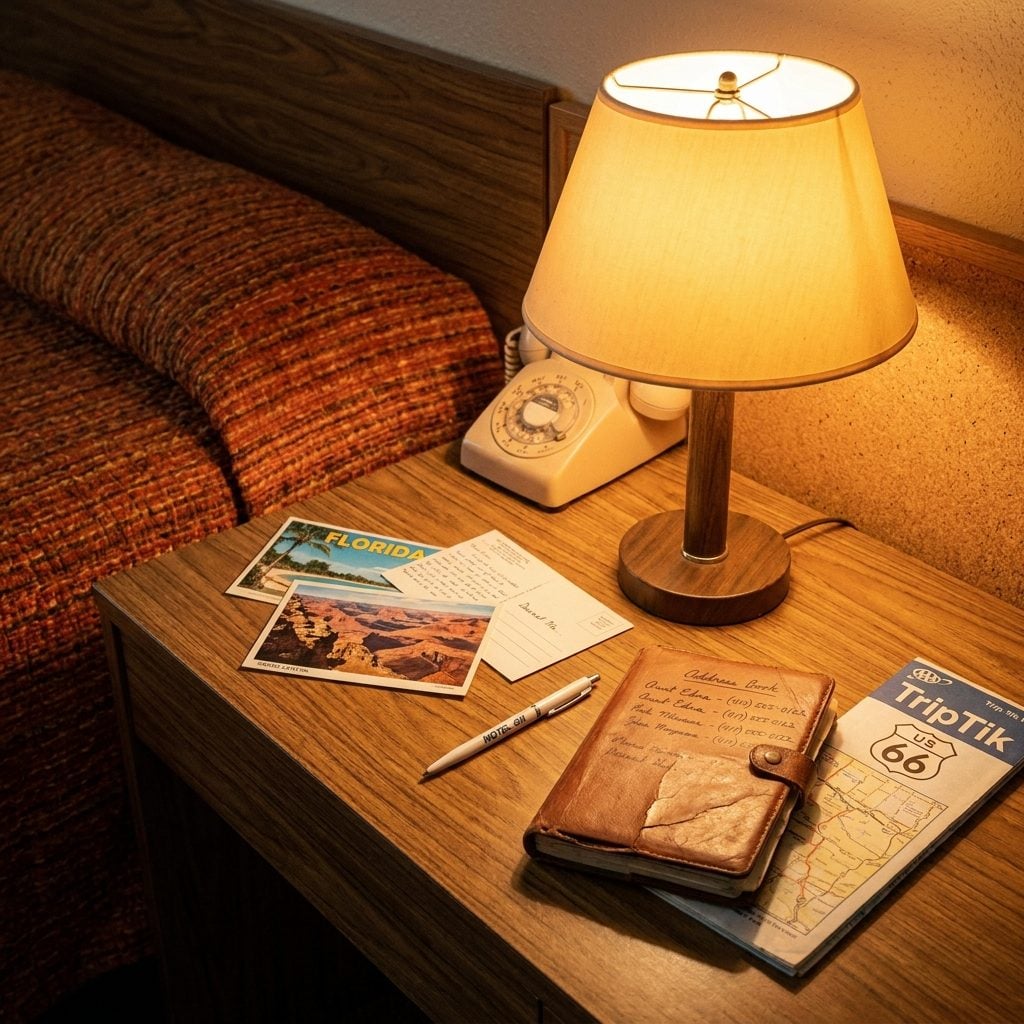
Nobody had ZIP codes memorized. Not for their own house, not for their parents’ house, not for their best friend’s apartment. You either had your address book, the small spiral one with the fake leather cover that lived in your purse, or you were guessing at the last two digits and hoping for the best.
The post office had ZIP code directories, heavy green volumes you could consult at the counter. Most people didn’t bother. The card got there anyway. Mail in the 1970s was forgiving in ways that felt almost personal.
16. Writing Everything Smaller and Smaller as You Ran Out of Space
🔥 Would you like to save this?
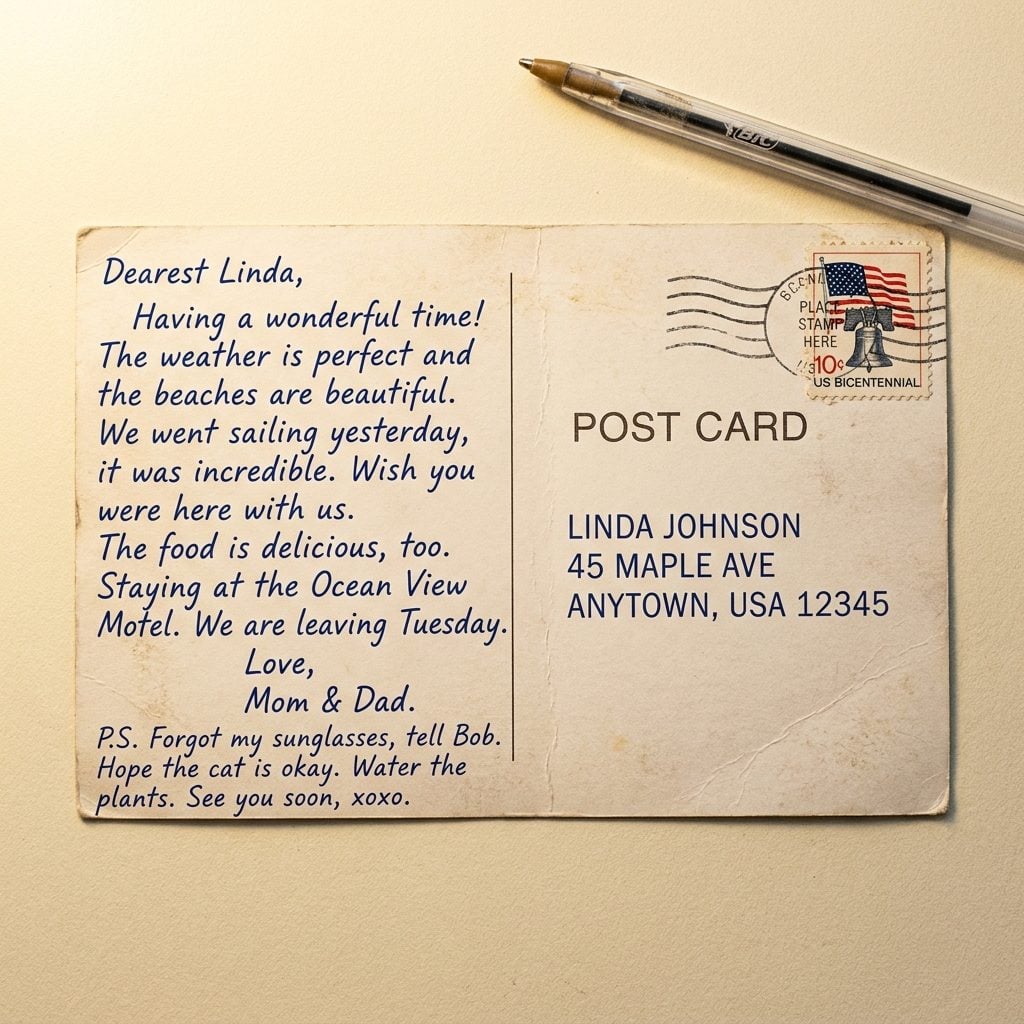
You always started with too much to say. The weather, the drive, the motel pool, the thing Dad said at the seafood restaurant. Then you’d look down and have six lines left for three people’s worth of news, and the handwriting would start shrinking. Not a little, dramatically. The last sentence was sometimes legible only to the recipient and possibly not even them.
15. The Specific Anxiety of Not Knowing If the Card Would Arrive Before You Did
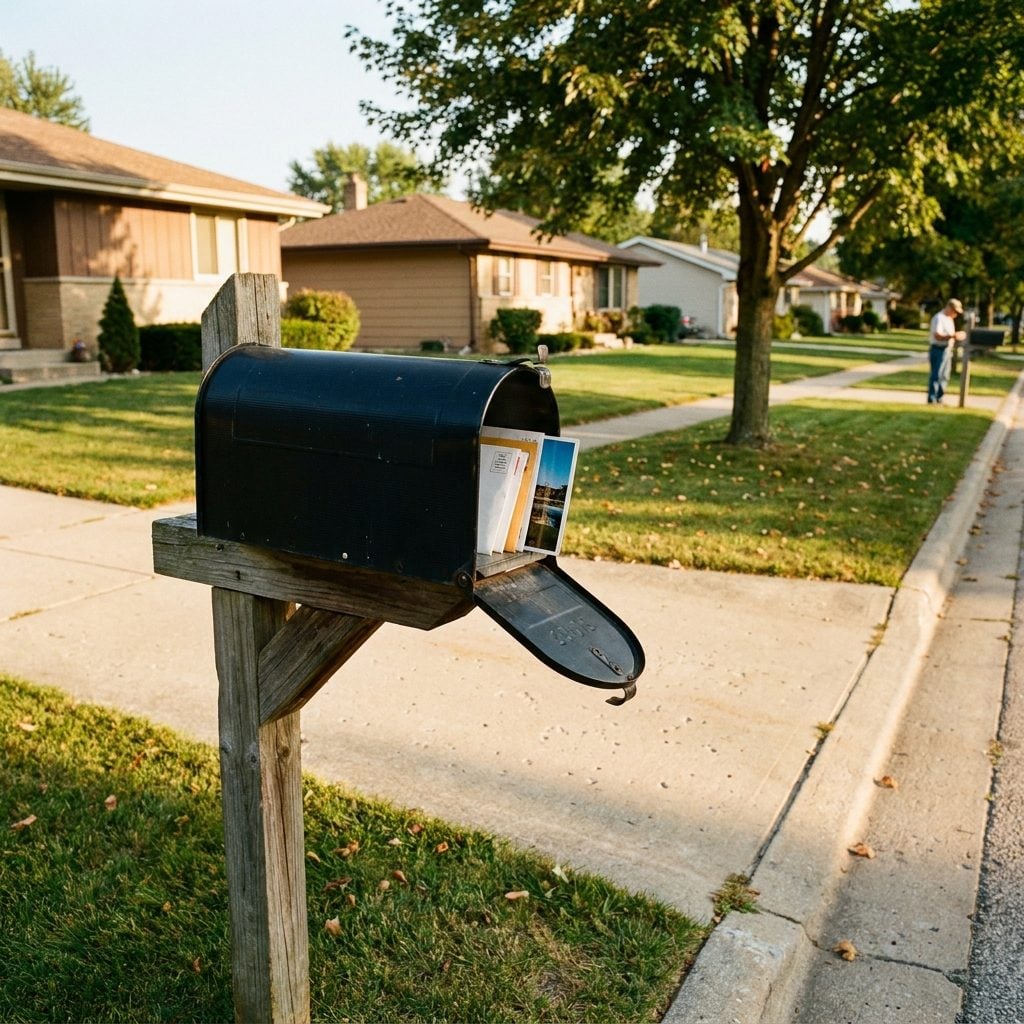
First-class postage was supposed to take three to five days. You were gone for eight. In theory, the timing worked. In practice, you never fully believed it. You’d mail a card from Myrtle Beach on Tuesday and spend the rest of the trip wondering whether Grandma would have it by the time you called from a payphone Friday night.
Sometimes the card arrived two days after you did, which everyone agreed was fine, even a little funny. Sometimes it arrived three weeks later with no explanation. The postal service of the 1970s operated on a schedule that felt more like a suggestion than a guarantee, and somehow that was just part of the deal.
14. Licking the Stamp and Tasting That Specific Flavor That Was Just Called ‘Stamp’
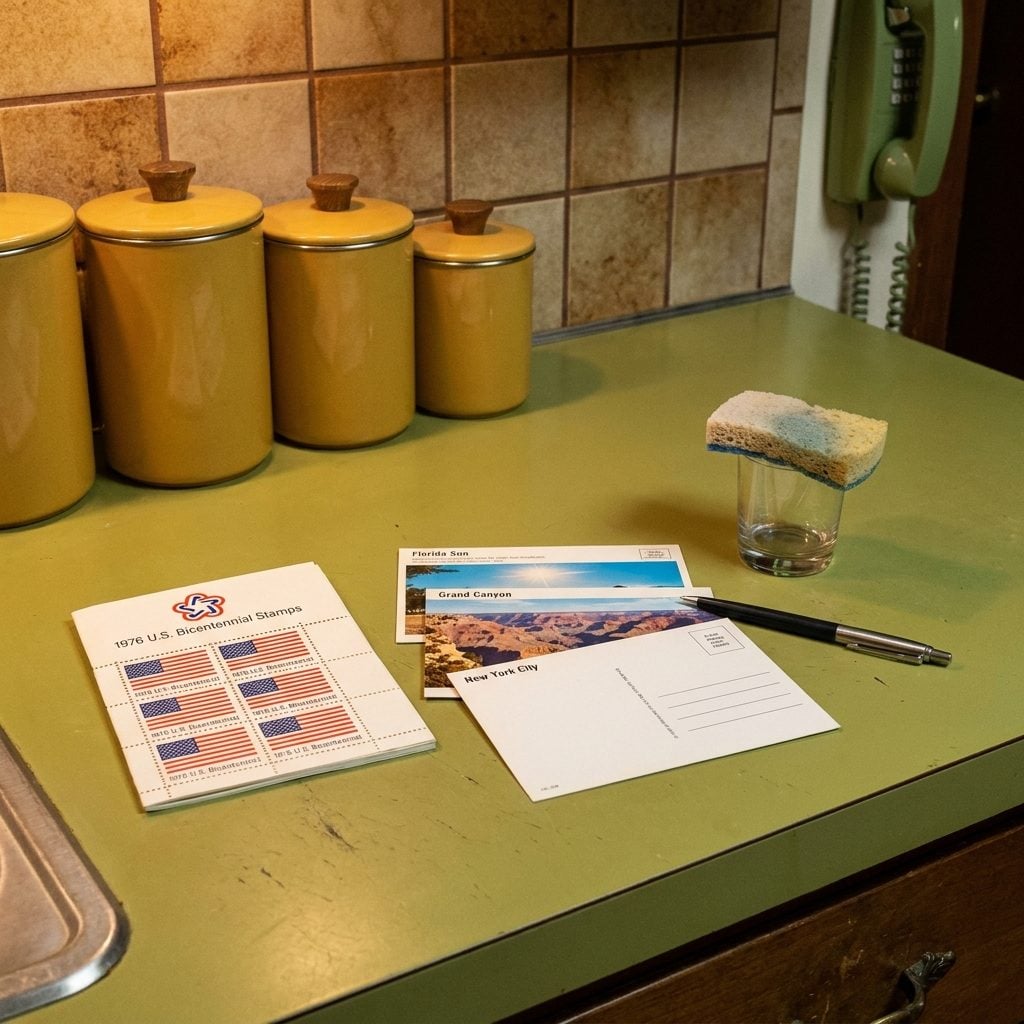
It was adhesive mixed with something vaguely papery and something vaguely chemical and something that had no name except that it tasted like a stamp. Every stamp tasted like a stamp. There was no variation, no improvement, no mint option. You licked it, you stuck it, you made a face that anyone watching would recognize immediately.
Some households kept a little sponge in a dish of water specifically to avoid this. Those were the households that had thought things through.
13. The Spinning Rack of Postcards at the Motel Gift Shop
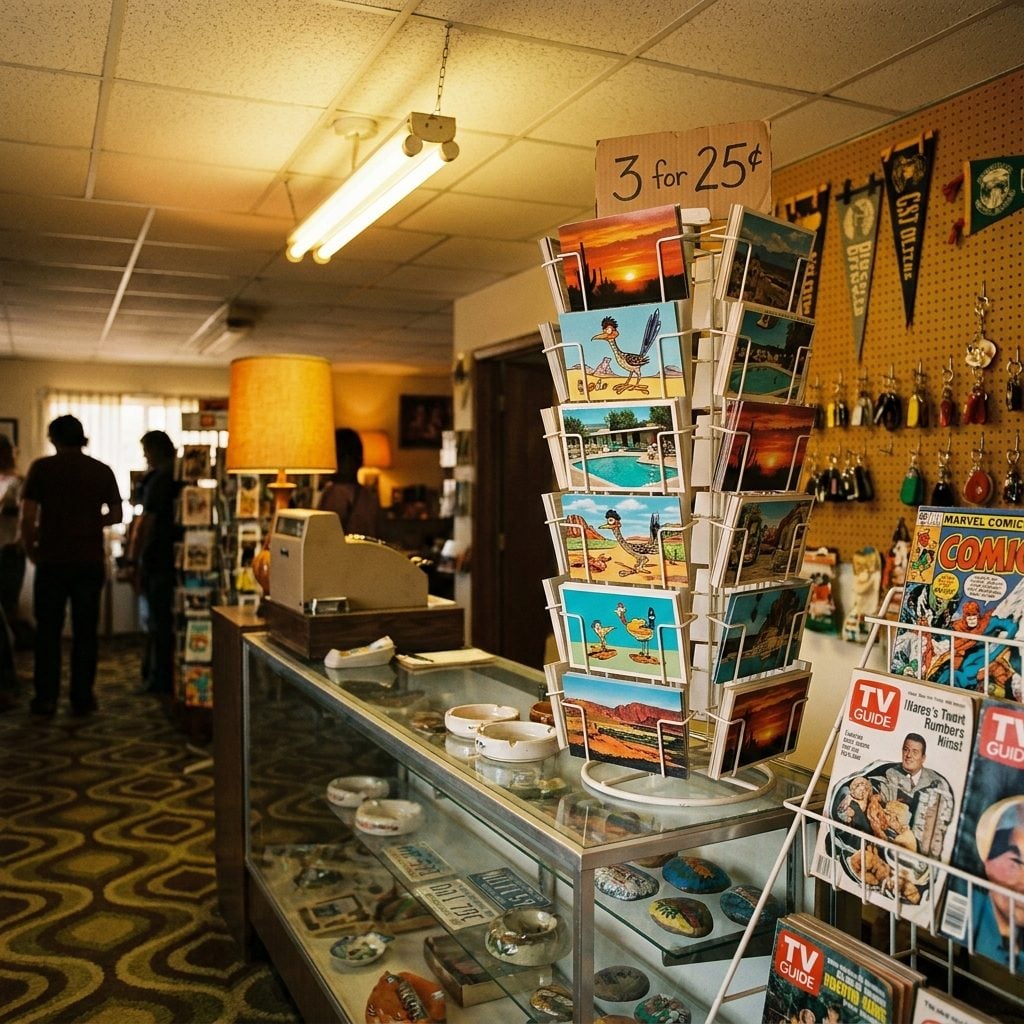
You could hear that rack before you reached it, the soft metallic spin, the little squeak at the top of the rotation. Every motel gift shop had one, usually parked between the candy bars and the bumper stickers, and it was always the first stop after check-in. The cards were impossibly vivid, printed in colors that didn’t exist in real life: swimming pools the blue of a gas flame, sunsets that looked hand-painted by someone who had never seen one.
Three for a quarter was the standard deal. You’d spin the rack twice, pull six cards, put three back, spin it again. Selecting postcards was its own ritual, and it took longer than anyone admitted.
12. The Motel Postcard Rack in the Lobby, Free for the Taking
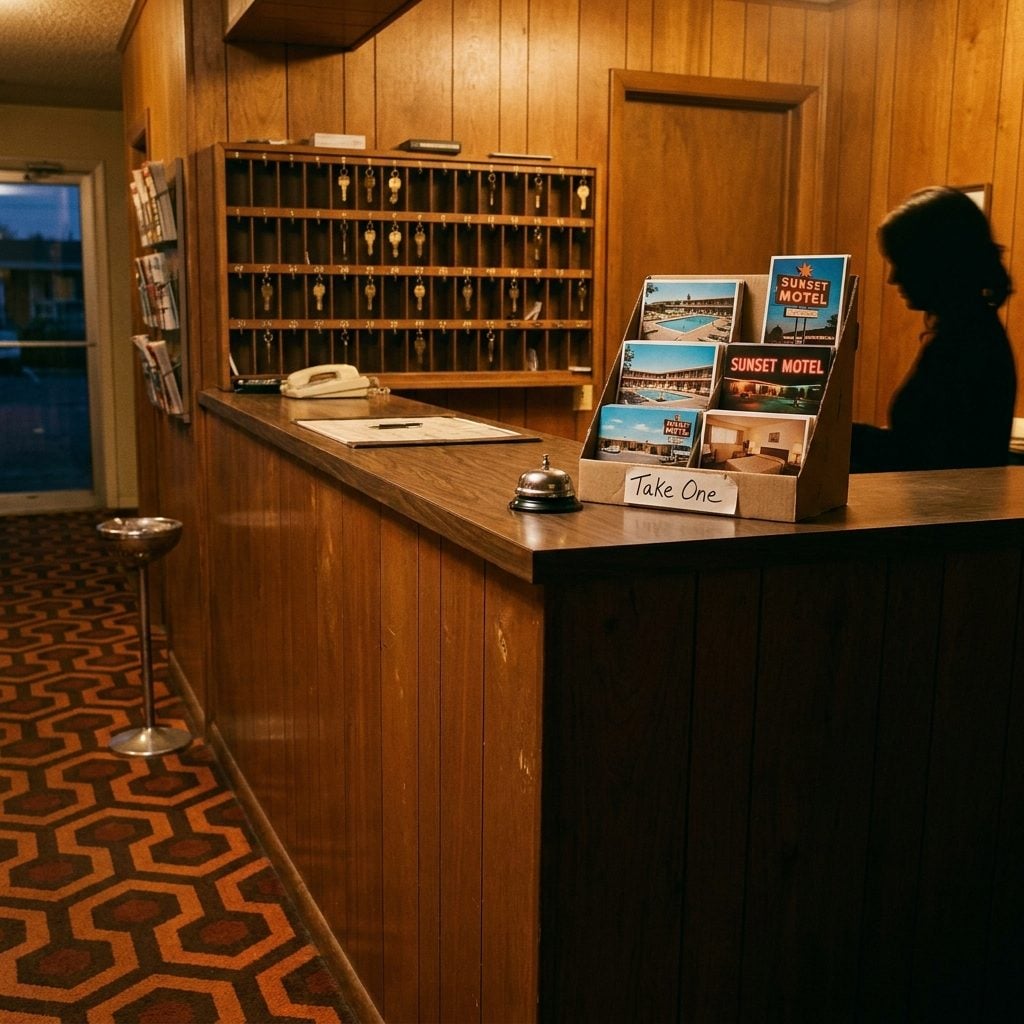
Every motel with any self-respect had its own postcard, usually displayed in a little cardboard rack on the check-in counter right next to the bell. The card showed the motel at its absolute best, the neon sign glowing perfectly, the pool a shade of blue that existed nowhere in nature, the parking lot suspiciously empty. Free for the taking. Nobody asked, nobody counted.
Mailing one of these felt like a small act of honesty: here is exactly where we are staying, and yes, it looks exactly like this, more or less.
11. Mailing One to Yourself Because Your Mom Said You’d Want the Postmark Someday
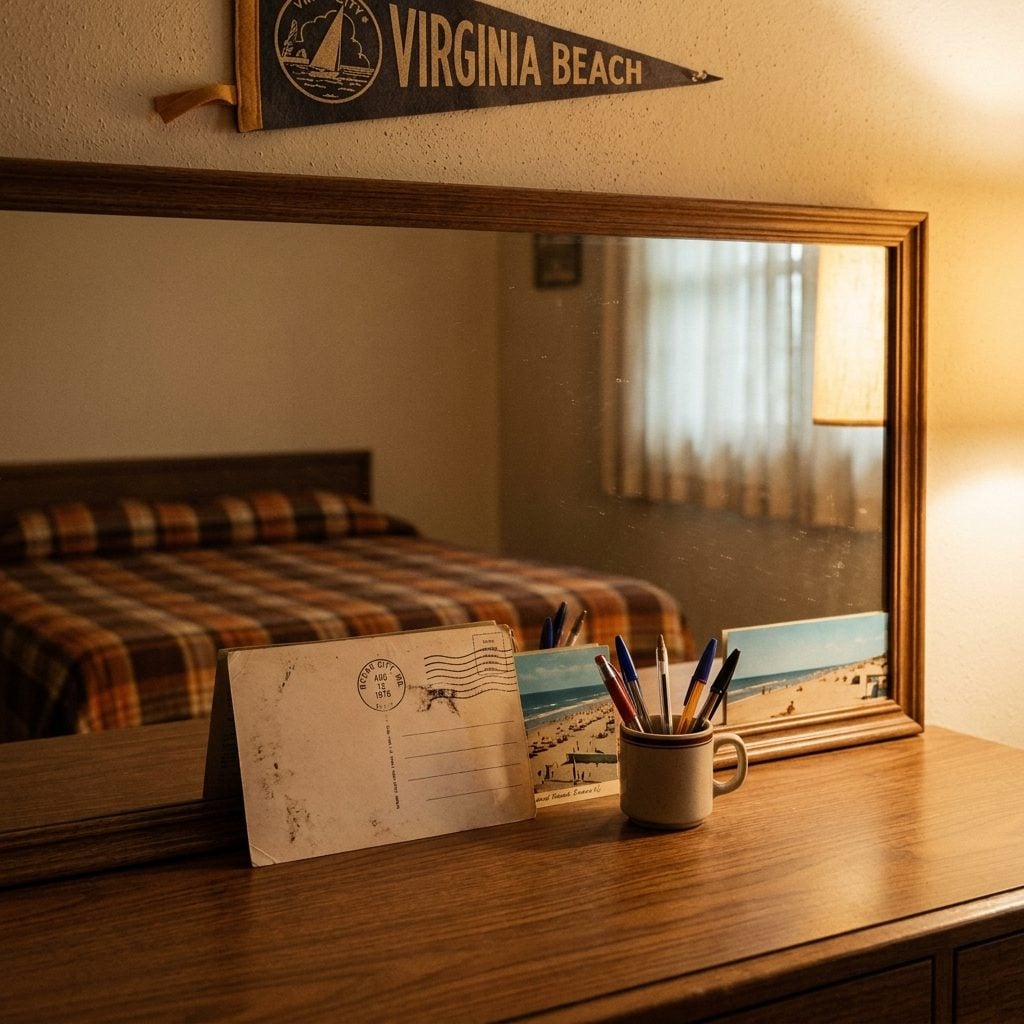
Moms said this with complete conviction: mail one to yourself, you’ll want the postmark someday. And so you did, feeling slightly ridiculous, addressing a postcard to your own house from a payphone outside a Stuckey’s in Georgia.
Three weeks later it appeared in the mailbox, slightly bent, the cancellation ink smeared from whatever machinery it had passed through. You kept it. Of course you kept it. Turns out she was right, which is its own specific kind of memory.
10. The Unspoken Rule That You Never Mailed Anything Until the Last Day
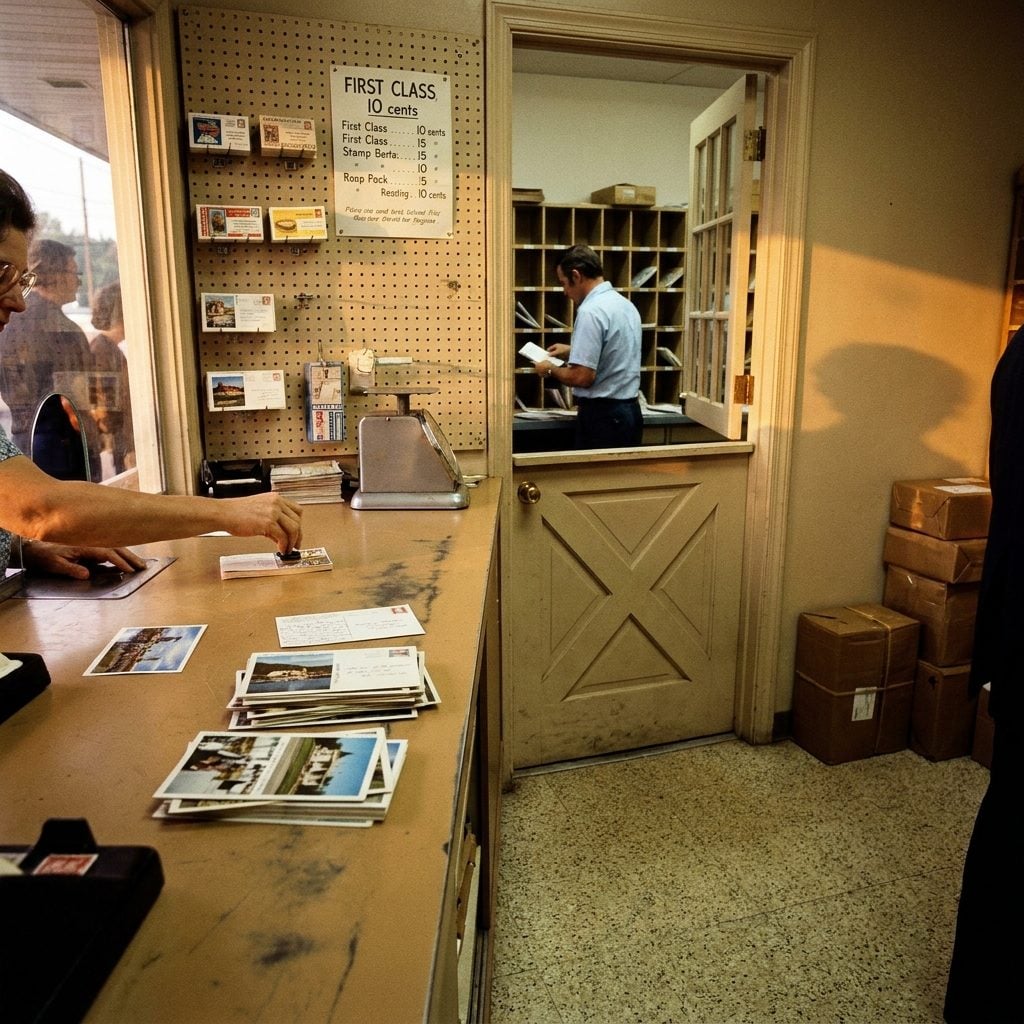
The postcards bought on day one, the ones with the carefully chosen view of the hotel pool or the mountain overlook, sat in a beach bag or a purse for the entire trip. Good intentions, absolutely. But the writing happened the night before checkout, all six cards in one sitting, with the same cramped summary of the week crammed into every one. “Having a great time, weather is beautiful, wish you were here.”
Then came the frantic post office run on the last morning, stamps purchased in a strip of ten, the cards dropped into the outgoing slot as the car idled outside. More than once, the card arrived home the same day the vacationers did. Nobody talked about that part.
9. Writing “Wish You Were Here” and Actually Meaning It
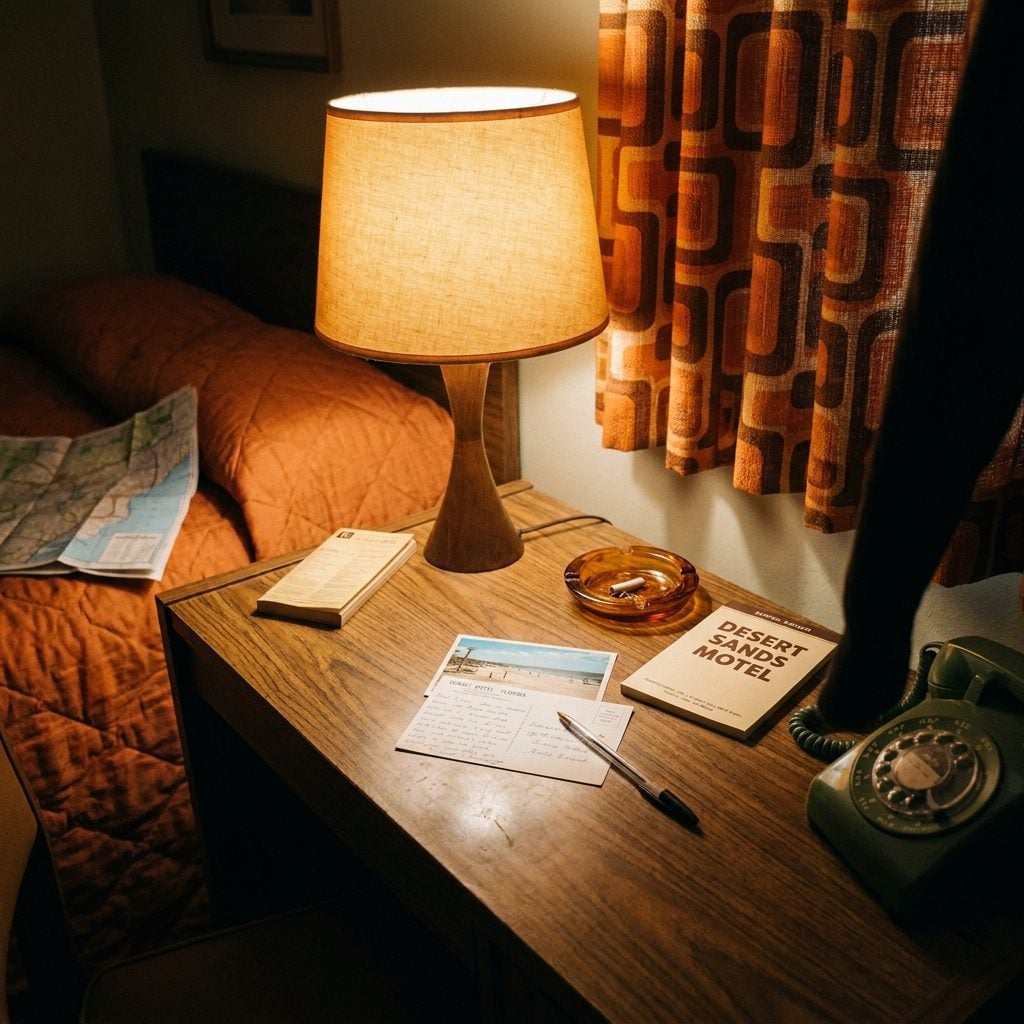
There was something about sitting in a strange room, in a town that wasn’t yours, with a pen in your hand and a three-inch rectangle of card stock in front of you, that made you actually think about the person you were writing to. Not the group text, not the tagged photo. One person. You picked them specifically, paid the stamp specifically, wrote their address out by hand.
The limitation was the point. Forty words, maybe fifty if your handwriting ran small. You had to decide what the trip actually meant in the space of two short sentences. A lot of people said something true in those two sentences that they never would have said on the phone.
8. The Ballpoint Pen Bleeding Through Because the Card Stock Was That Thin
🔥 Would you like to save this?
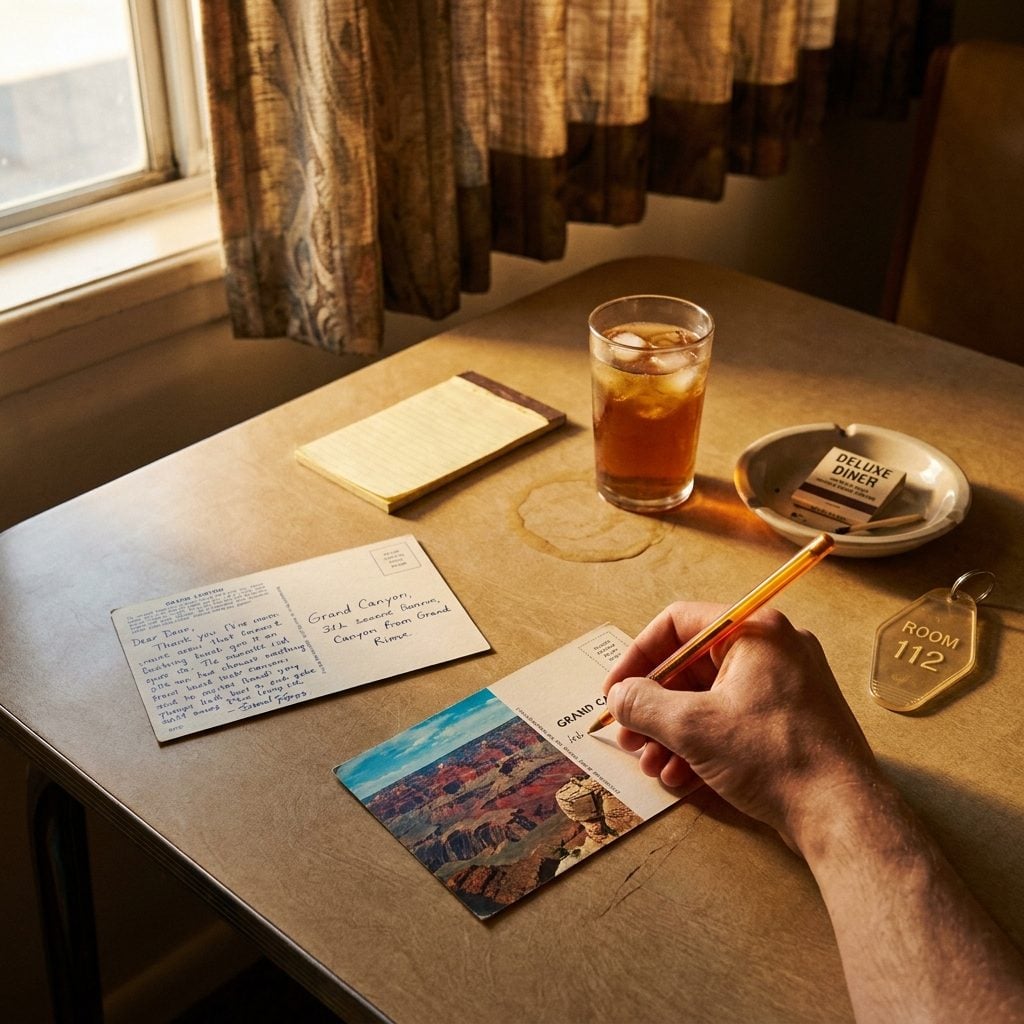
You’d press down to make sure the ink took, and by the third word the pen was catching on the fibers. Flip the card over and there it was — your loopy cursive faintly visible through the sky above the Grand Canyon.
Nobody made postcard stock to survive a Bic. Hold it up to the lamp mid-message and you could read your own handwriting through the picture side. Everyone did that at least once.
7. The Card That Featured a Photo From the Motel Itself, Pool and All
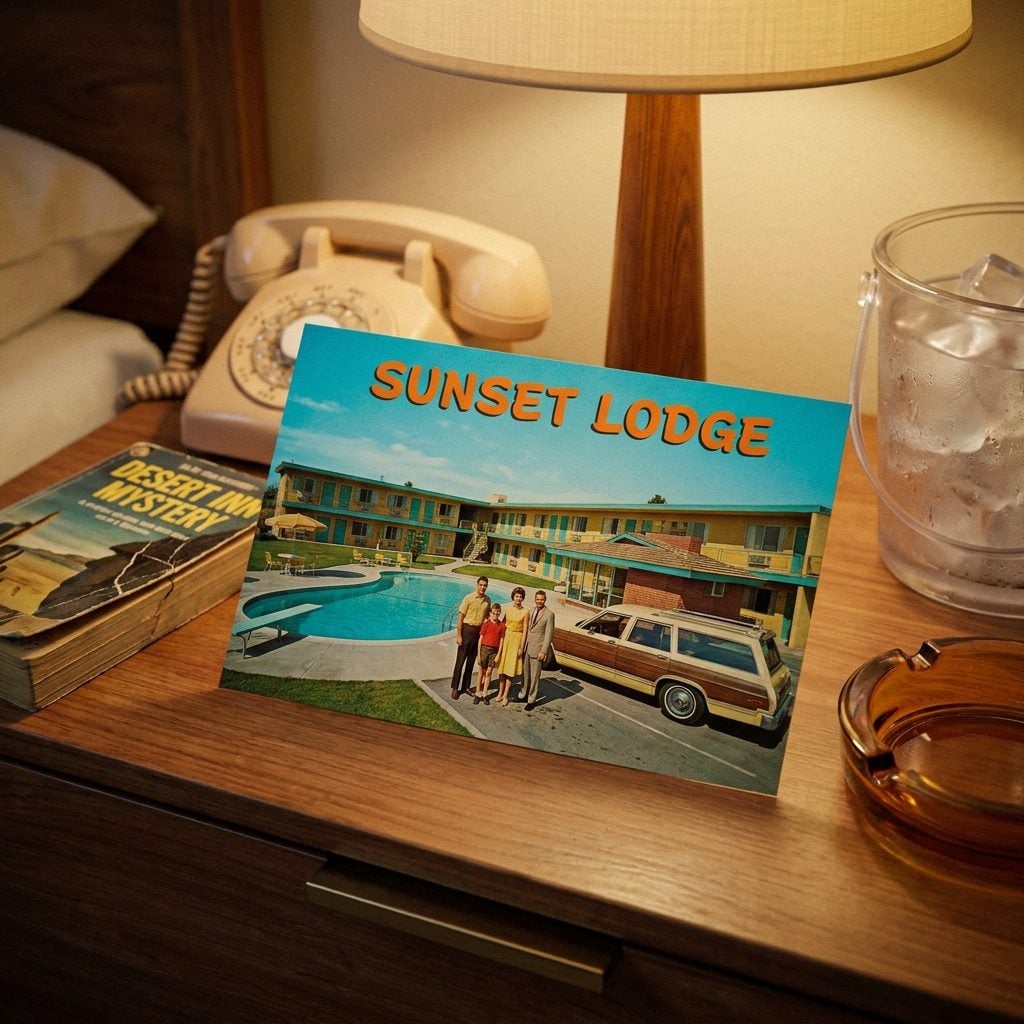
Every mid-tier motel had its own postcard, and the shot never varied: pool in the foreground, sign in the corner, some family arranged around the diving board like a diorama waiting to be labeled.
The photo had usually been taken in 1968 and the motel had not been repainted since, so the card was always a little more optimistic than the actual property. You’d send it anyway.
6. Signing It From the Whole Family Even Though Only One Person Wrote It
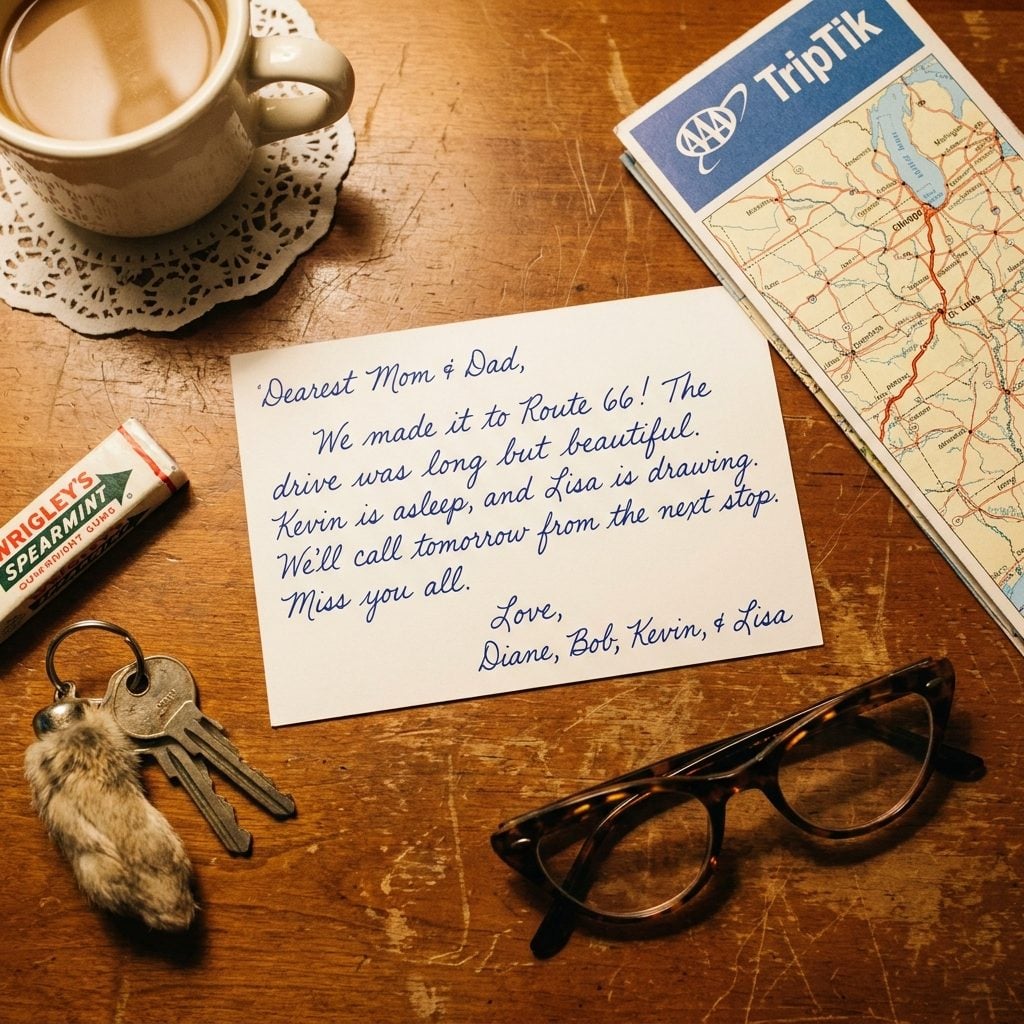
Mom wrote every postcard while everyone else stared at the pool or the television, and at the bottom, in her handwriting, all four names appeared like the family had gathered around and dictated together. They had not.
Dad didn’t write postcards. Kids didn’t write postcards. Mom wrote postcards, and Mom decided you loved Grandma this week.
5. The Cards That Never Got Mailed and Turned Up in a Drawer Two Years Later
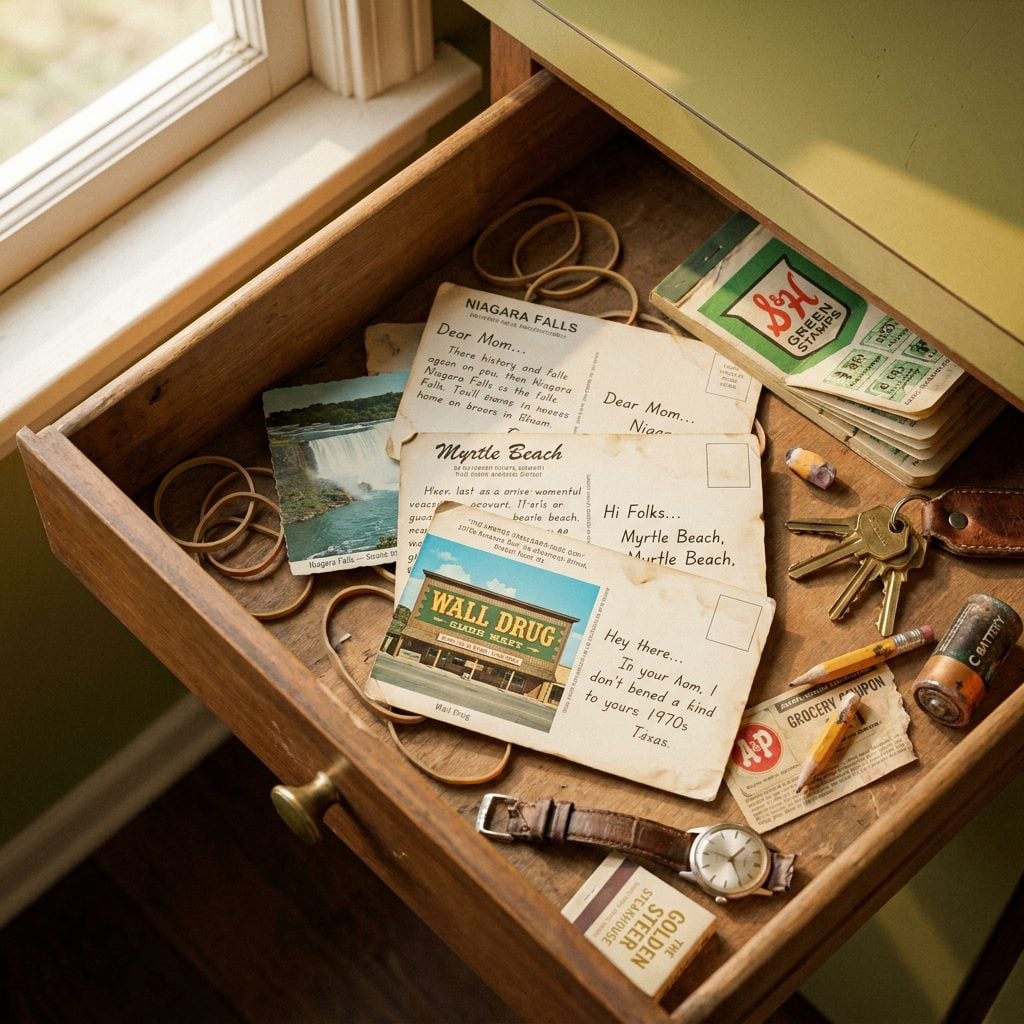
You wrote them at the motel meaning to drop them in a mailbox the next morning, but the trip kept moving and the cards stayed in the glove box, then in a suitcase, then in a drawer with the rubber bands.
Two years later, digging for something else entirely, you’d find your own handwriting telling somebody about a sunset they’d already forgotten to expect.
4. The Aunt Who Kept Every Postcard You Ever Sent Her in a Shoebox
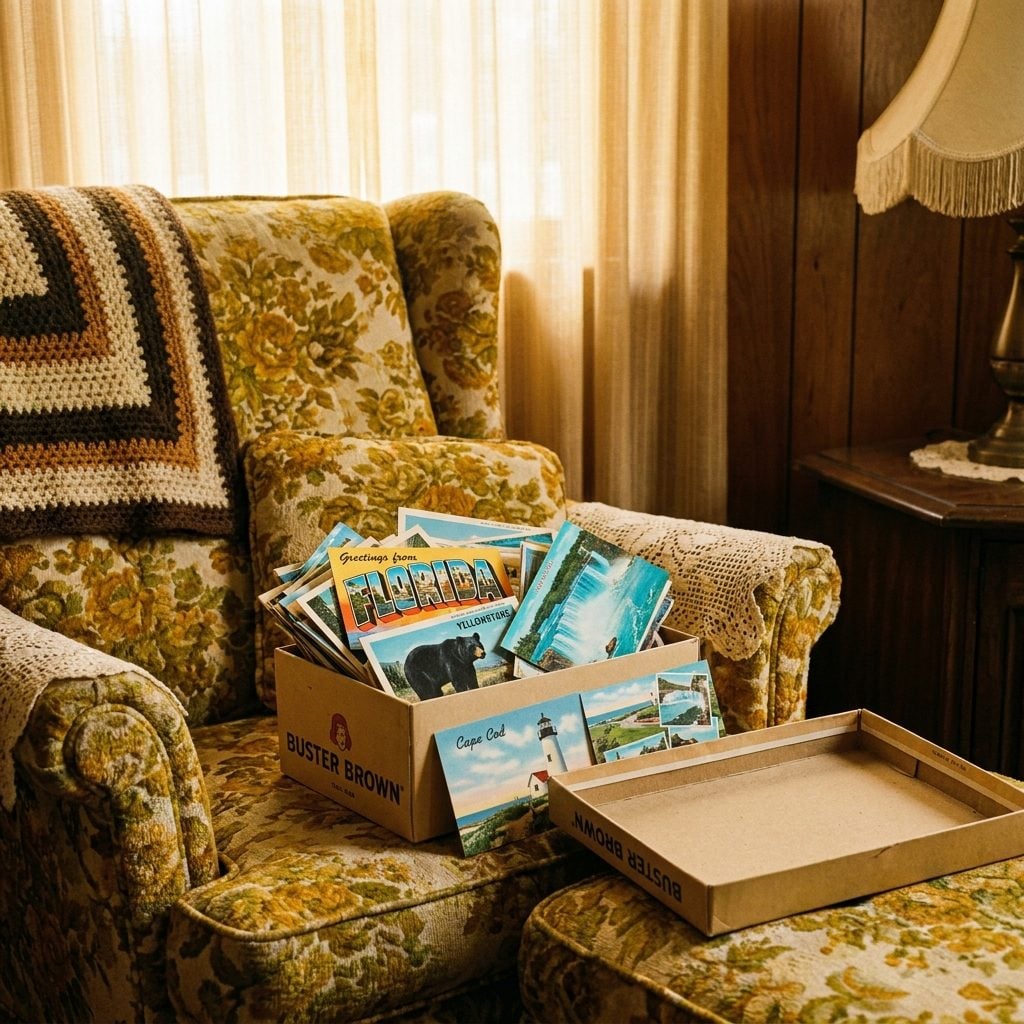
Aunt Marge had a shoebox. Every card anyone ever sent her went in that box — no rubber bands, no sorting by year, no system. She just dropped them in and closed the lid.
When she died, someone found the box in the hall closet. Forty years of other people’s vacations, in her hands, in one place. Nobody knew what to do with it. Nobody could throw it out either.
3. The Card With the Panoramic Fold-Out That Was Three Postcards Long
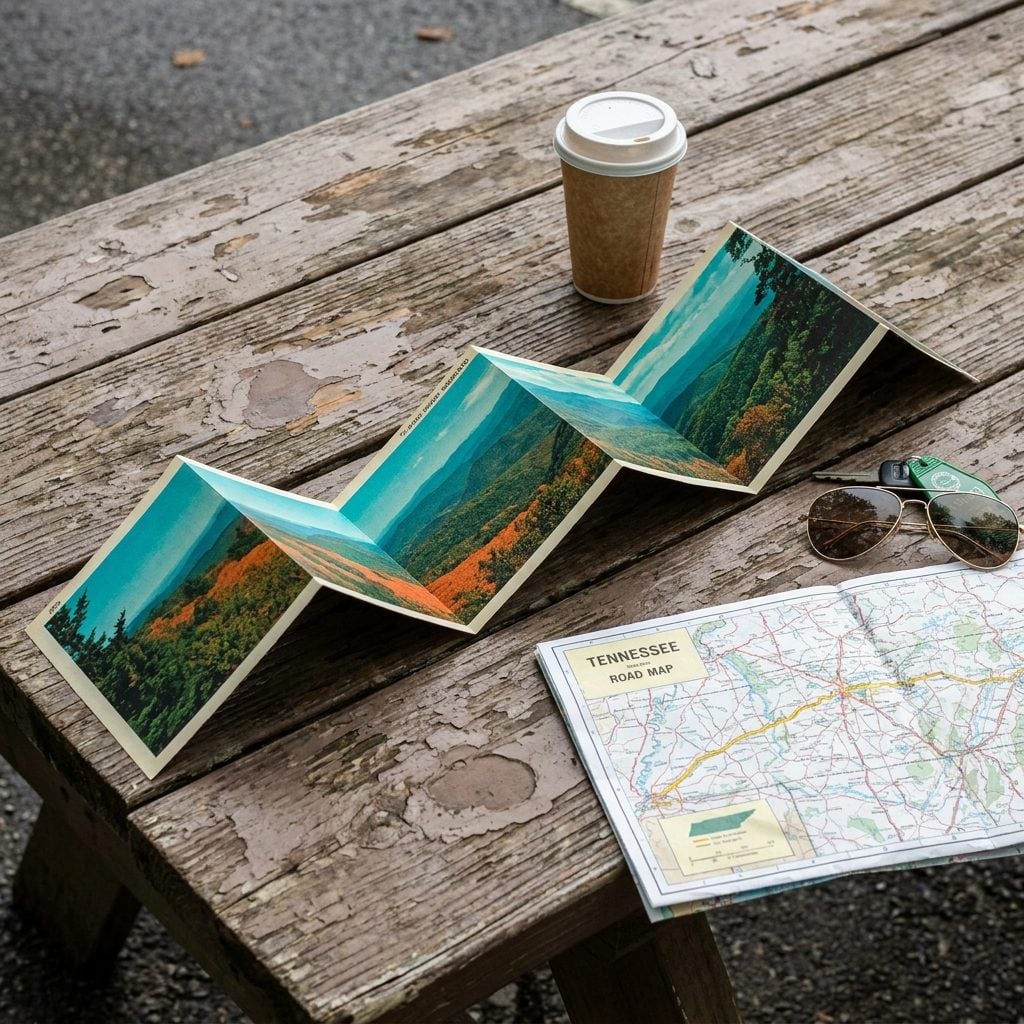
They folded like a road map and took up half the mailbox slot. You paid extra postage without complaining. Grandma got a card the size of a placemat and hung it on the fridge with three magnets because two wouldn’t hold it.
The photo was always some absurdly long vista — a mountain range, a whole beach, the entire Vegas strip — that no single card could contain. Bigger felt like more effort.
2. The Postcard Written on the Beach That Came Back With Sand Still in It
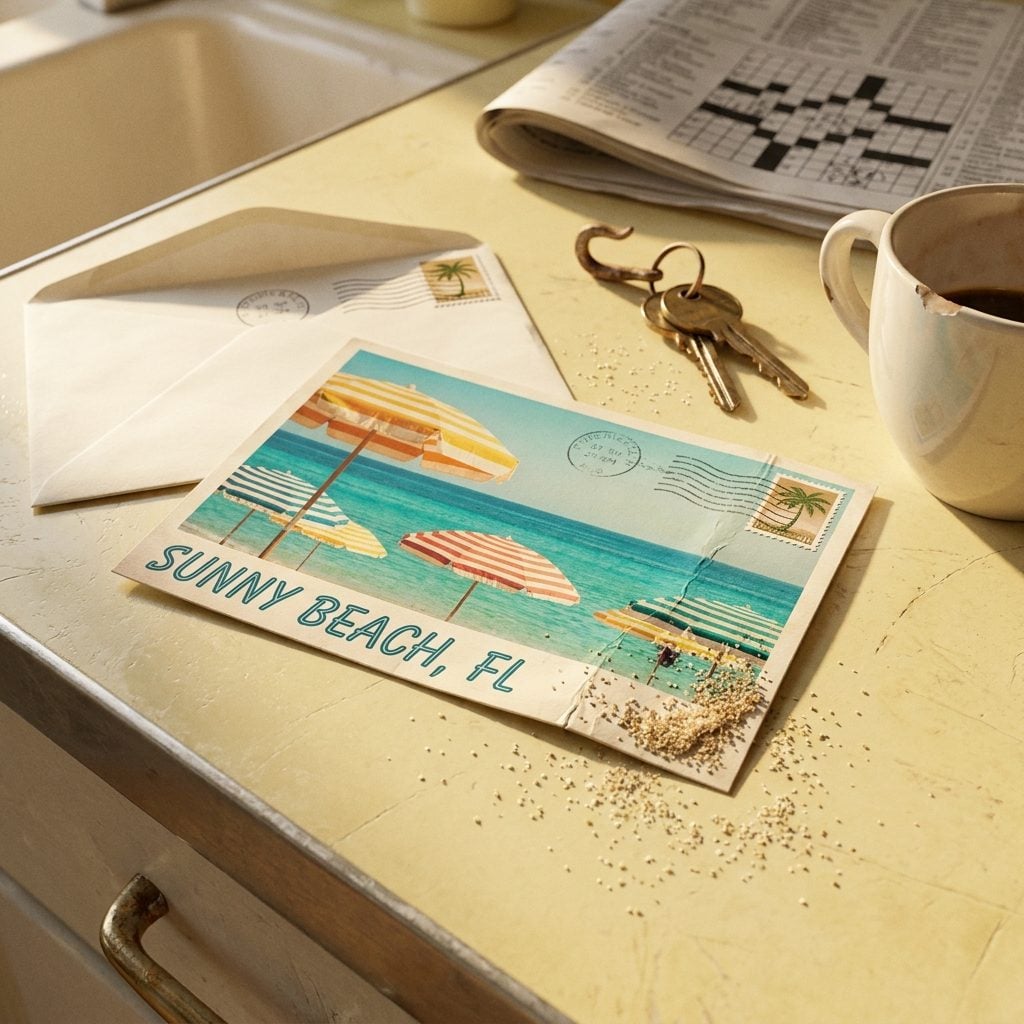
You wrote it on your towel, and sand got everywhere sand always got — under the stamp, in the crease, along the address line. You dropped it in a mailbox that afternoon without shaking it out.
Days later Grandma opened her mail and a small pinch of the Atlantic fell onto her kitchen counter. She kept the card. She swept up the sand. She mentioned it every time you called for a month.
1. The Card That Beat You Home by a Full Week Because You Forgot You Mailed It
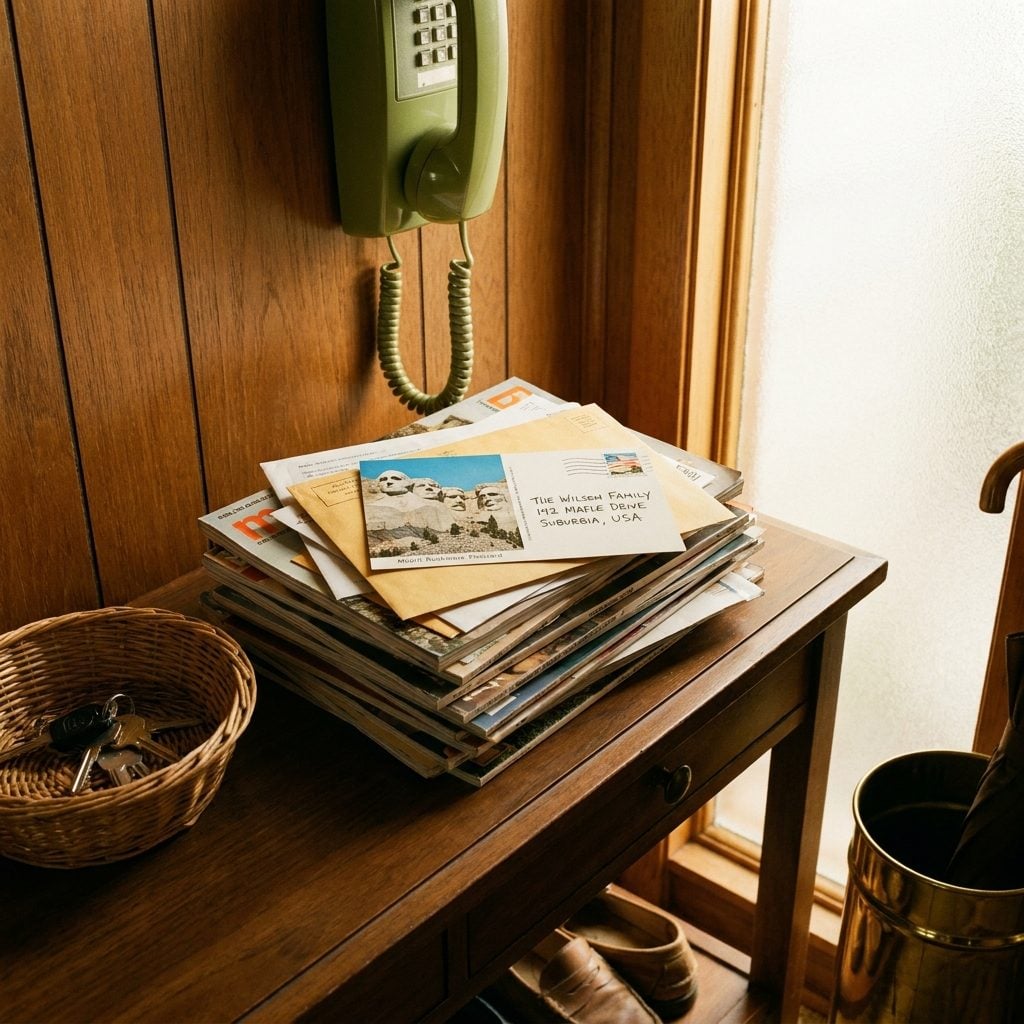
You walked in the door dragging a suitcase, kicked off your shoes, and there on the pile of held mail was a postcard in your own handwriting. From you. To you.
Mailed Tuesday. Home Sunday. The card beat you by a day and had been waiting patiently on the foyer table, like it had something to tell you that you already knew.
🔥 Would you like to save this?
Please note that some of the imagery in this article were created with the aid of AI image generators.