
🔥 Would you like to save this?
Half the cabins decorated for Christmas fail the same way. They buy the look instead of building the feeling. A string of blue LEDs, a plastic tree, a wreath that reeks of some chemical plant — none of it survives past the first cup of cocoa. But the cabins that actually feel festive get a small number of specific things right. Real fire. Real greenery. Light that flatters you instead of interrogating you. What follows are the choices that separate a cabin that photographs well from one you can’t bring yourself to leave.
39. A Real Wood-Burning Hearth as the Visual Anchor
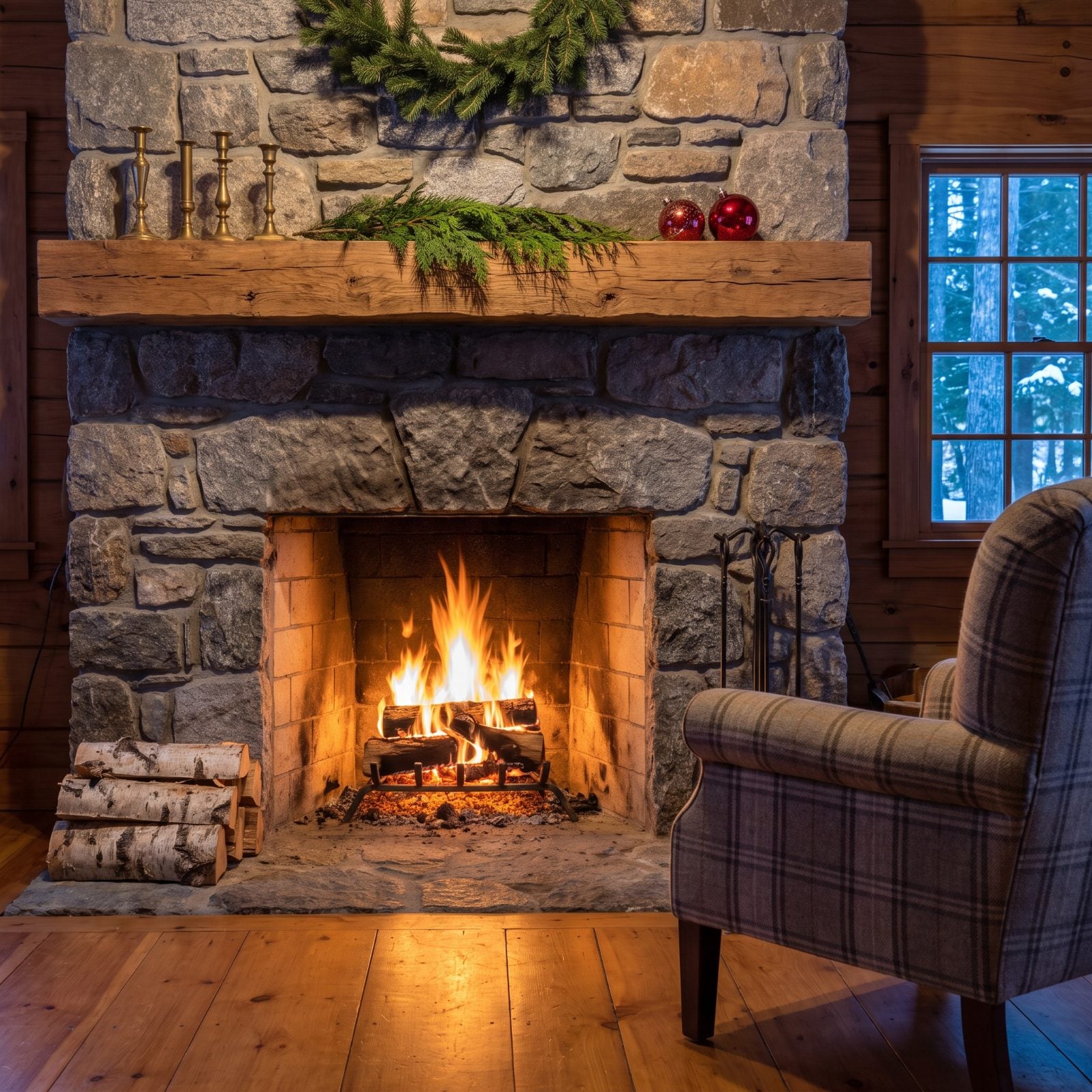
Everything in a winter cabin organizes itself around the fire, whether you plan it or not. A real wood-burning hearth does three jobs a flameless one never will: it throws irregular, living light across the room, it fills the space with that birch-and-woodsmoke smell, and it pops and settles with a sound your brain reads as safe. Build the whole room facing it.
Skip the symmetrical mantel styling. A single oak beam with a few brass candlesticks and a loose cedar sprig looks more like someone actually lives here than any magazine shoot ever will.
38. A Room-Scaled, Forest-Cut Tree With Naturally Uneven Branches
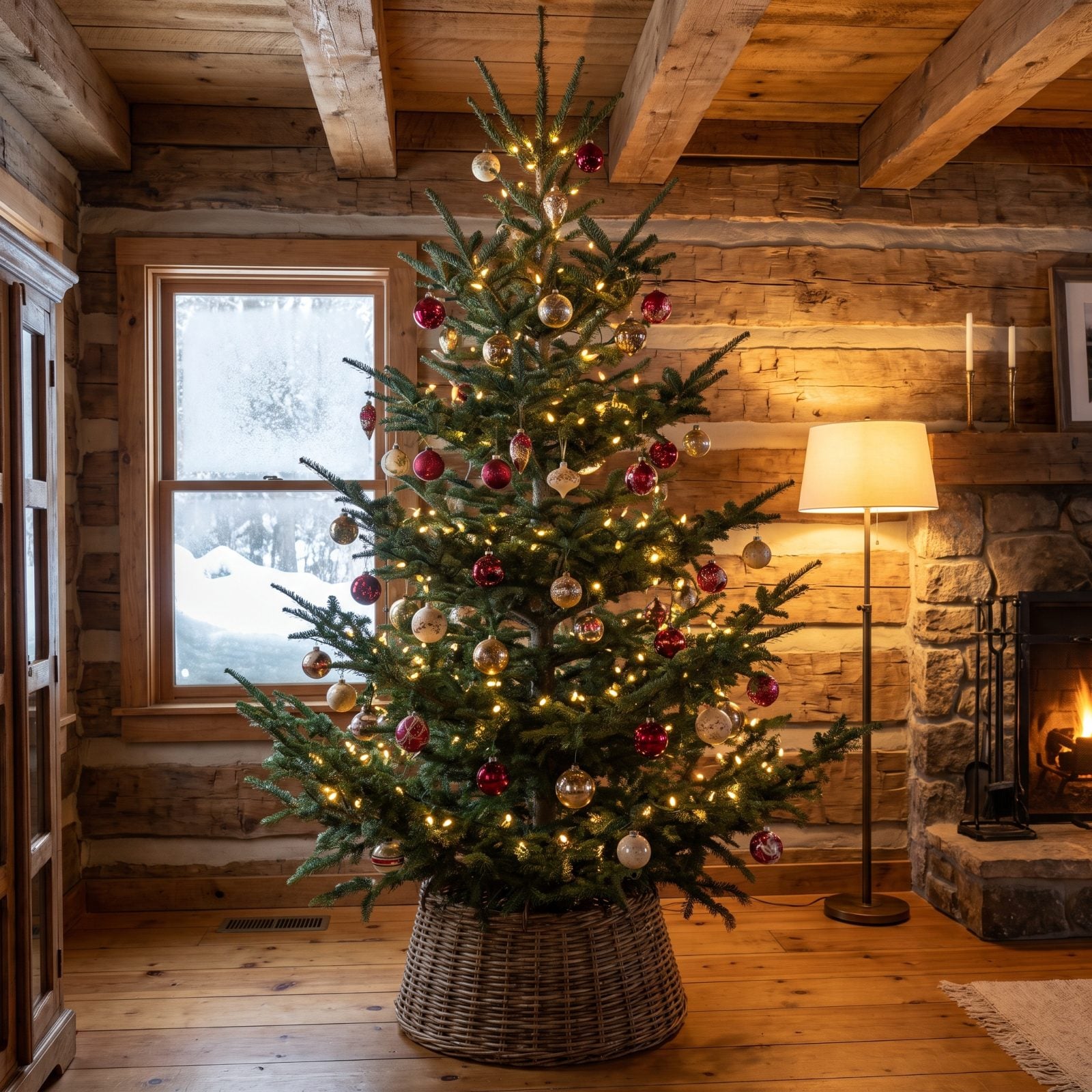
The perfect cone-shaped tree gives itself away — it came from a box. A forest-cut Fraser or balsam fir has gaps, a lean, branches that grew toward whatever light they could find, and that imperfection is exactly what you want. It reads as alive because it was.
Scale matters more than people admit. A cabin with vaulted ceilings can take a tree that would swallow a suburban living room, and the extra height makes the room feel taller rather than crowded. Go bigger than feels reasonable. Then let the branches settle for a day before you decorate — a fresh-cut tree drops and relaxes, so the shape you decorate on day one is not the shape you’ll be living with come Christmas morning.
37. A Cedar Wreath That Establishes the Mood at the Front Door
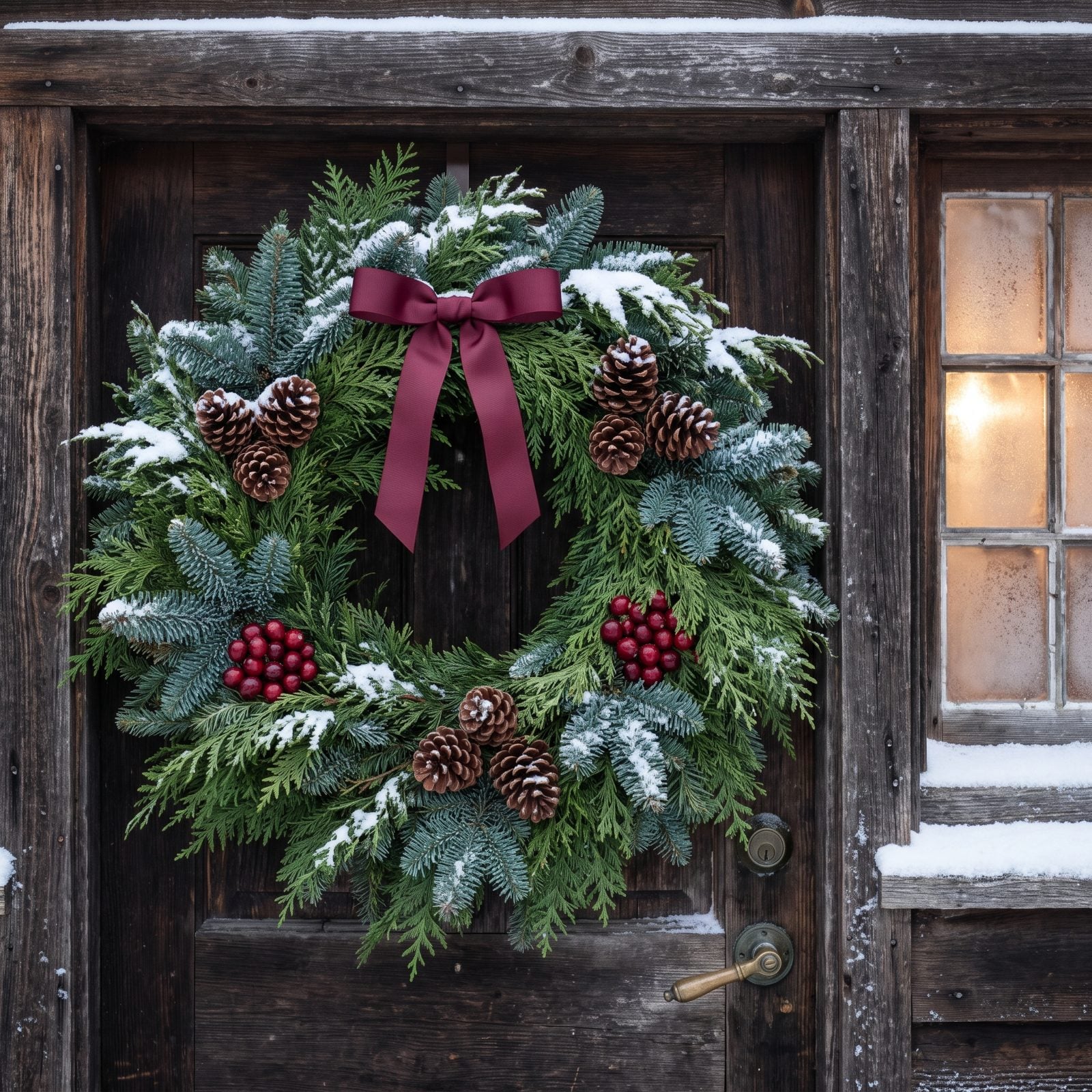
A wreath tells you what kind of Christmas you’re walking into before the door even opens. Reach for cedar. That resinous, clean scent hits you in the cold air, and the flat fronds hold their color and shape far longer than pine does once the temperature drops below freezing.
Keep it loose and a little wild. A tightly manicured wreath looks bought. One with a spray of spruce, a few pinecones, and a short burgundy ribbon looks gathered by hand that morning.
36. A Lantern-Lined Path Through the Snow
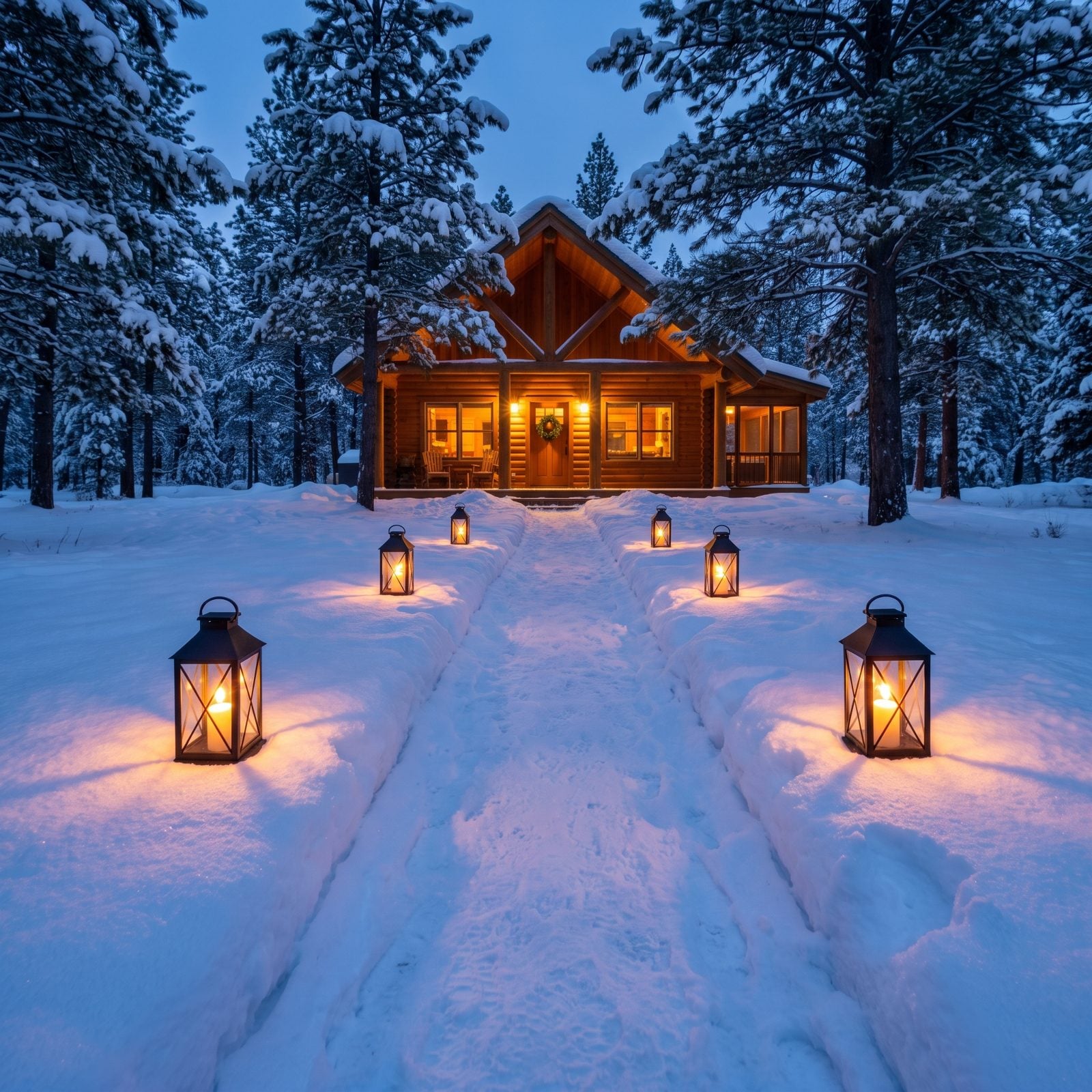
The approach matters as much as the arrival. A row of lanterns pressed into the snow along both sides of the path does something a porch light never can: it turns the walk to the door into a small procession, each pool of amber light on the blue snow its own little event.
Real candle flame beats battery light here, and yes, it’s worth the hassle. The flicker reads warm against all that cold white. Space them closer than feels necessary — five or six along a short path — so the light overlaps and no dark stretches creep in between.
35. A Boot Tray Filled With Fragrant Evergreen Clippings
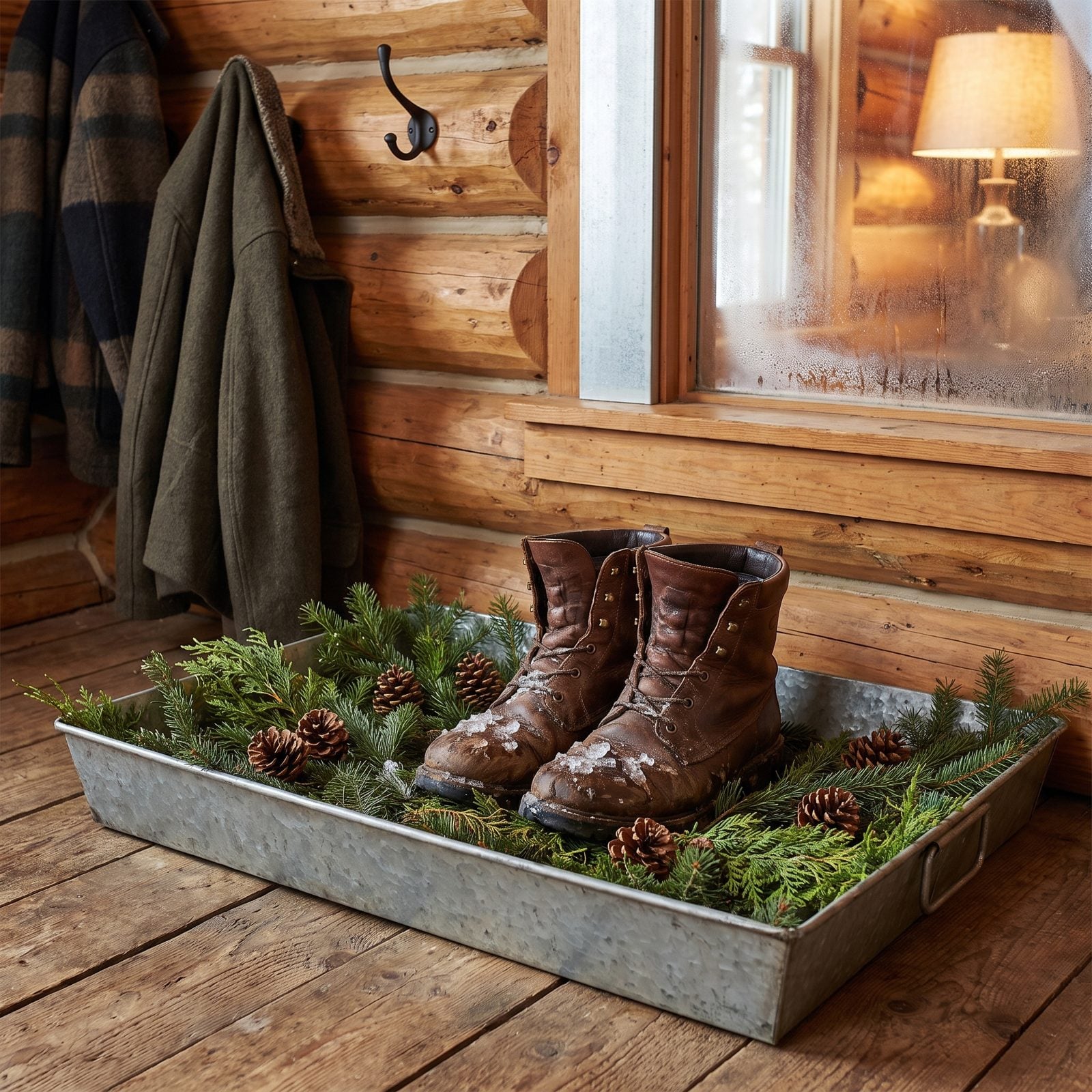
Nobody expects the entryway to smell like anything but wet wool and melting snow. That’s exactly why a boot tray packed with evergreen clippings lands so well. The moisture from the snow coaxes the oils out of the spruce and cedar, so every time someone stamps in from the cold the whole doorway gets a hit of resin and pine.
It’s the cheapest trick here and one of the best. You’re using the trimmings you cut off the tree anyway — a galvanized tray, your snowy boots, a handful of clippings tucked around them. Done.
34. Plaid Wool Blankets Draped Within Easy Reach
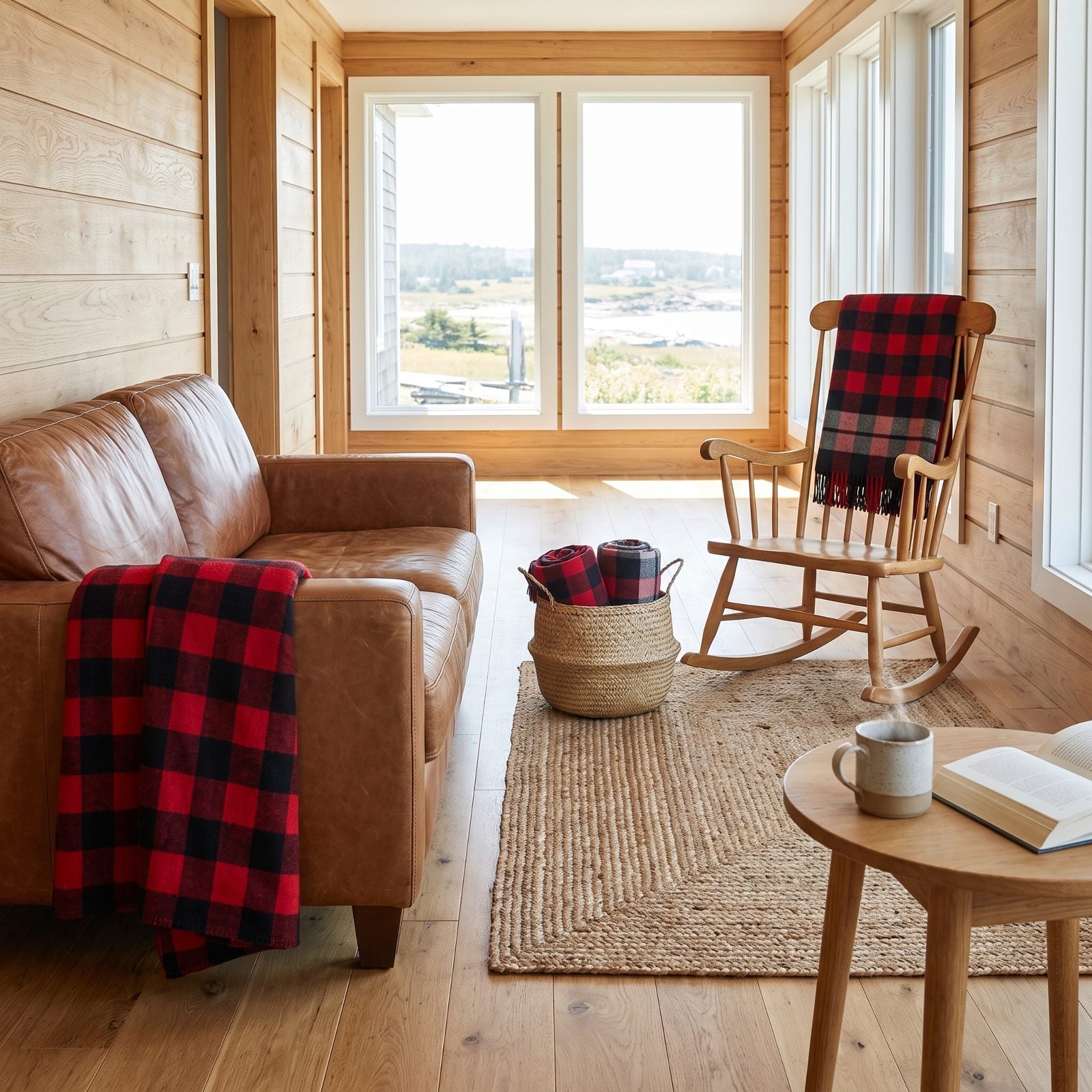
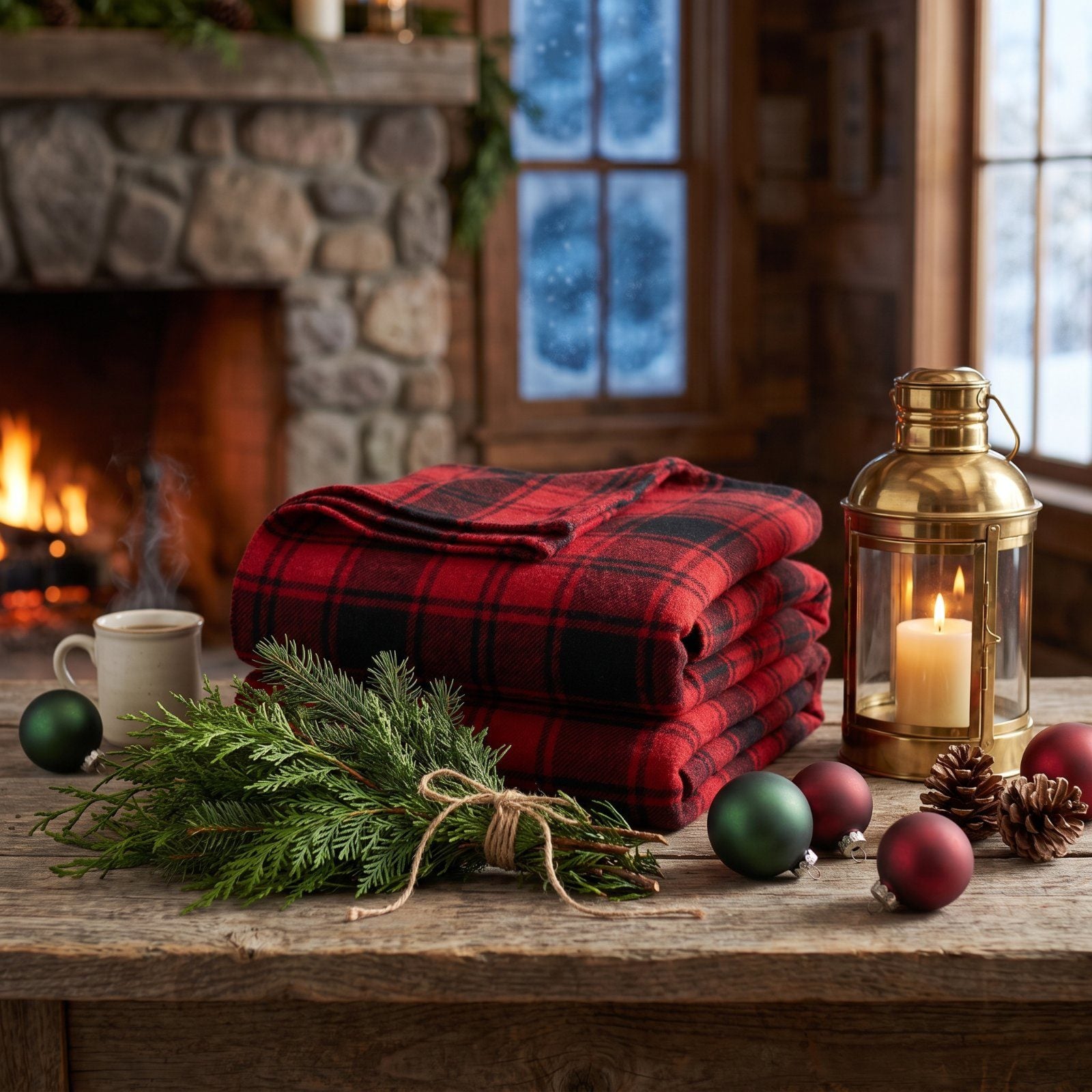
A folded blanket on a shelf is decoration. A plaid wool blanket slung over the sofa arm, half-pulled-off from the last person who used it, is an invitation. It all comes down to placement — put them where a hand lands, not where they look tidy.
Real wool over the synthetic throws, every time. Wool holds heat even when the cabin runs cold, and a red plaid wool blanket has that slightly scratchy, substantial weight fleece can only pretend at. Keep a woven storage basket of extras by the hearth so there’s always one more when the fire dies down.
33. A Restrained Palette of Forest Green, Cranberry, and Cream
Cranberry
Warm Cream
Honeyed Wood
Amber Firelight
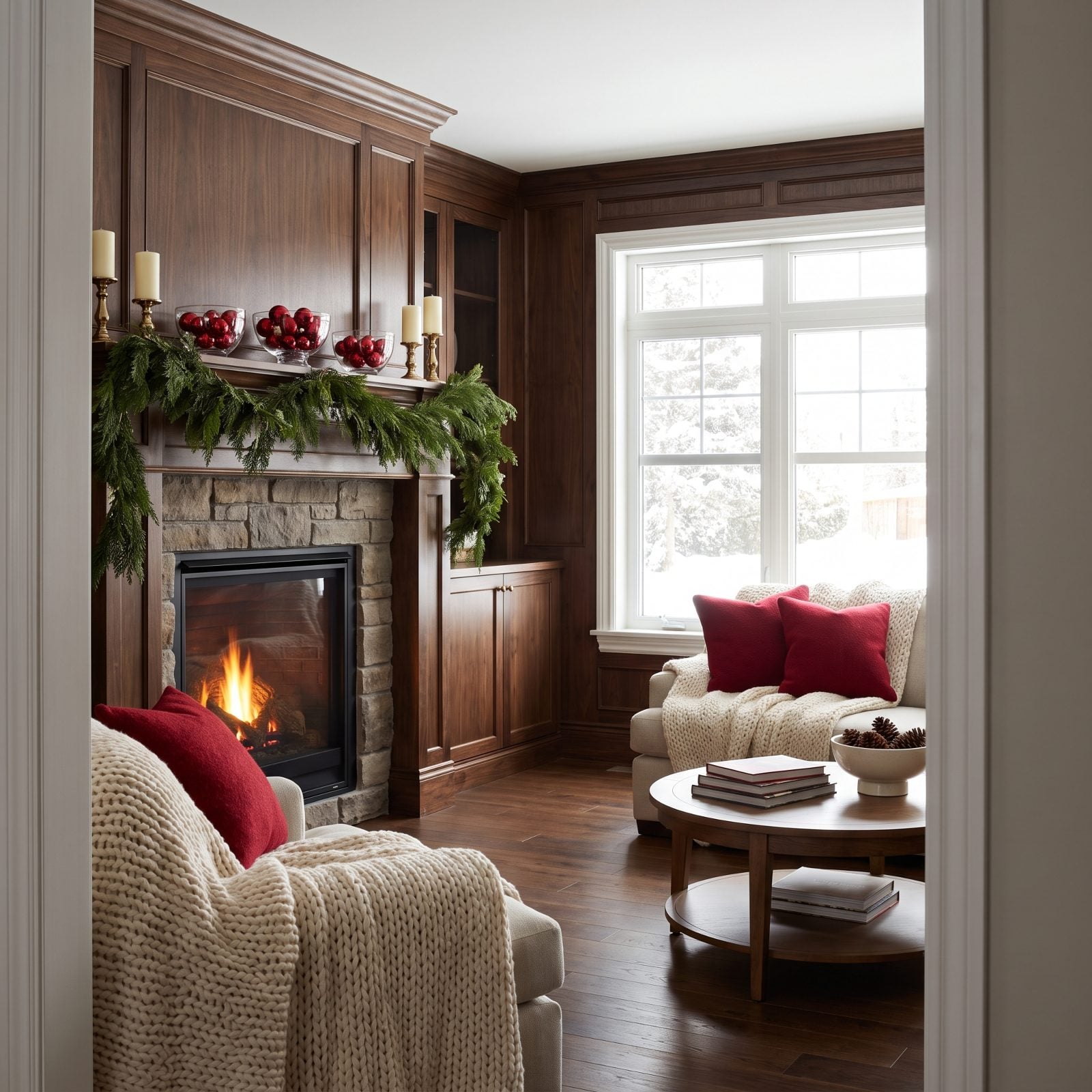
The fastest way to make a cabin look chaotic is to let every ornament color you own into the room. Three colors — that’s the discipline that pulls the whole thing into focus. Forest green for the greenery, cranberry for the warmth, cream to keep it from going heavy.
And the wood does a lot of quiet work here. Log walls and plank floors already carry a honeyed base tone, so you’re not starting from a blank white box. Those three colors sit against the grain and look settled, like they were always meant to be there.
32. A Tree Basket That Hides the Plastic Stand

The red-and-green plastic tree stand ruins more cabin Christmas photos than anything else. It’s the one jarring note of modern manufacturing in a room full of wood and wool. Drop the whole stand into a woven seagrass basket and the problem simply vanishes.
The trunk comes up through the top, the branches spill over the rim, and suddenly the tree looks like it’s growing out of something that belongs there. Tuck a cream knit blanket around the top edge to hide the gap. Costs almost nothing, and it’s the detail guests can never quite name but always feel.
31. Soft White Tree Lights Instead of Blue LEDs
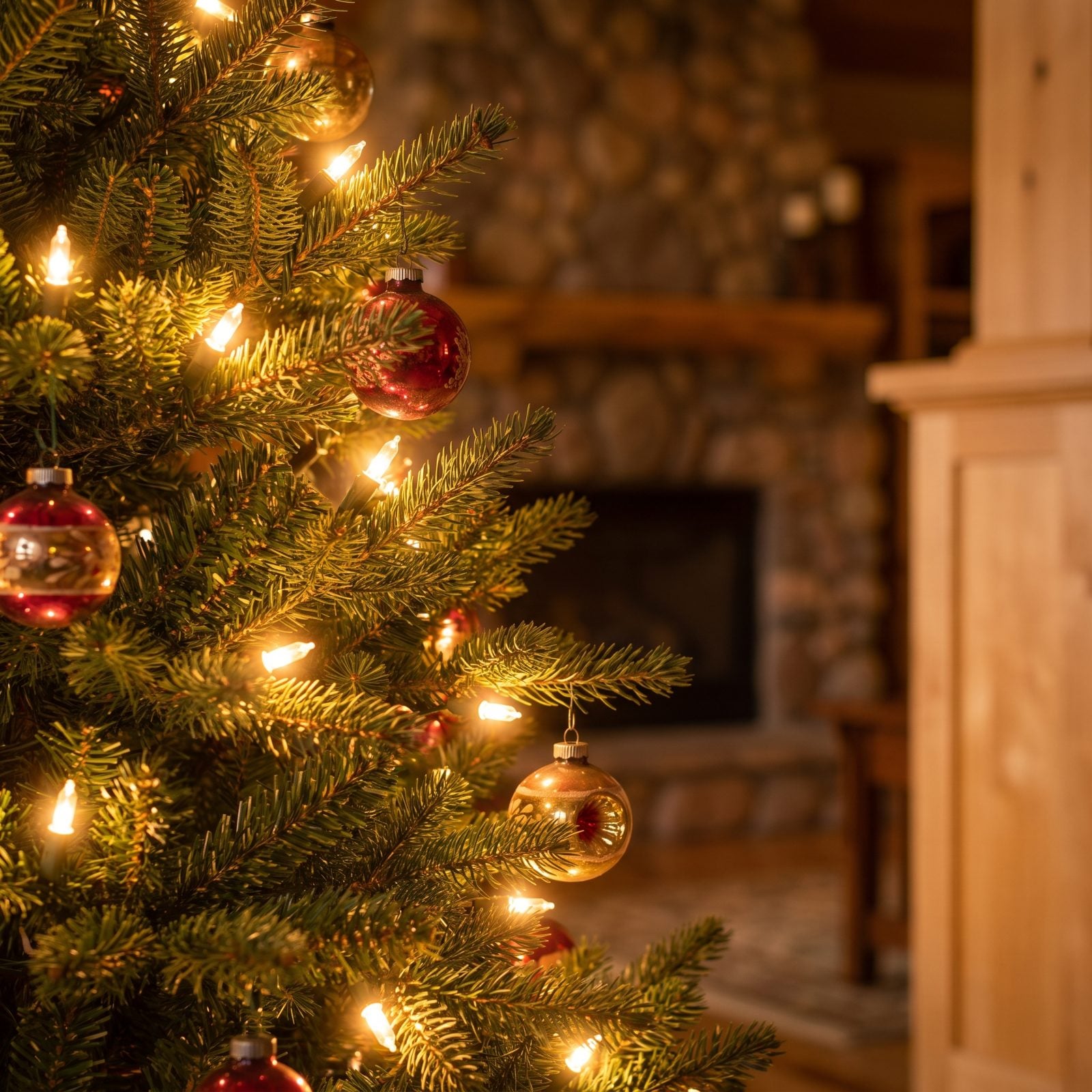
Blue-white LEDs are the single cheapest way to make a warm wood cabin feel like a dentist’s office. They throw a cold, clinical light that fights everything else around it. Warm white — the kind that glows amber-gold — is the only correct answer.
Hunt for bulbs labeled around 2700 Kelvin or lower, often sold as “warm white” or “incandescent-style.” They turn the tree into a lantern instead of a billboard. Set against honeyed wood and firelight, that golden glow makes the whole room feel lit by candle and flame rather than circuitry.
30. Collected Vintage Ornaments With a Family-Christmas Feel
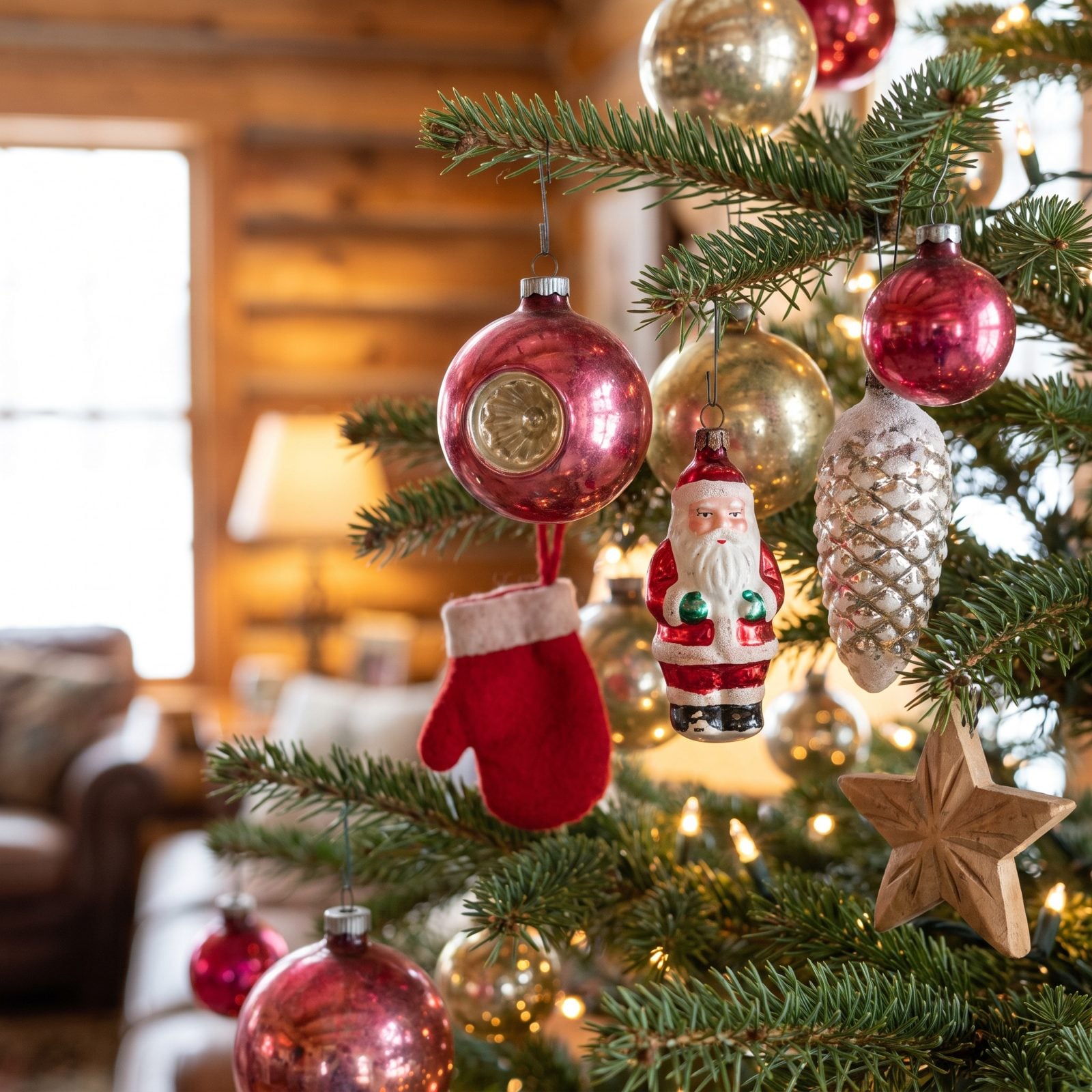
Matching ornament sets — all the same size, all the same finish — look like a store display someone bought in a single trip. A cabin tree wants the opposite. It wants the dented Shiny Brite, the hand-painted figural ornament, the felt mitten some kid made, the mercury-glass ball gone soft with age. Mismatched, a little faded, carrying a few decades of scuffs.
That’s the family-Christmas feel you can’t buy new. Each ornament looks like it holds a story even if it doesn’t. Haunt estate sales and antique shops for old glass. The patina does all the work, and it’s the one thing a brand-new ornament can never fake.
29. A Mantel Garland That Follows the Cabin Architecture
🔥 Would you like to save this?
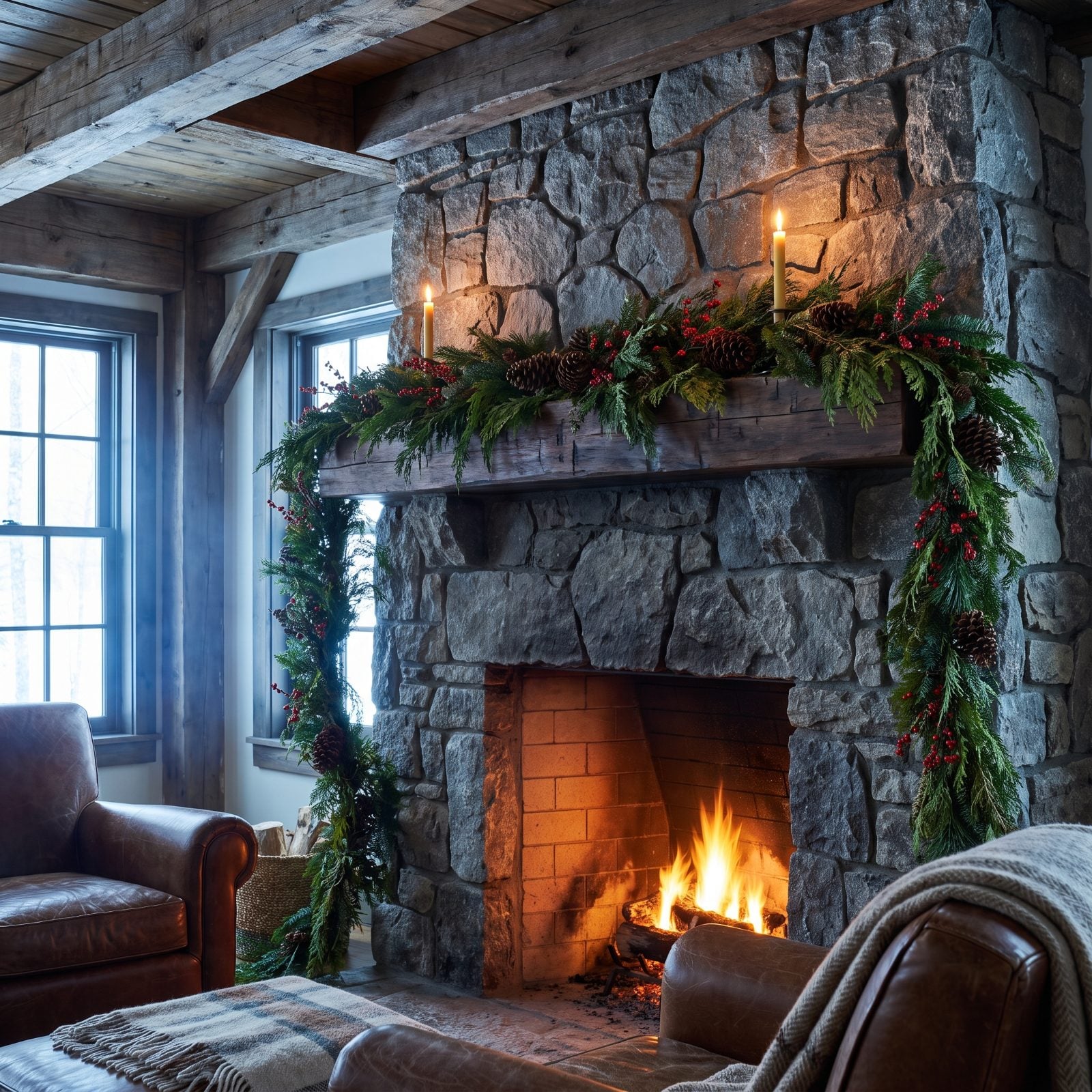
Most people drape a garland across a mantel and walk away. The good ones let it trace the whole building. If your fireplace is fieldstone that climbs to the ceiling, the greenery should follow it up, not stop dead at the mantel edge like it ran out of ideas.
Use fresh cedar and fir, not the wired plastic stuff that reflects light like a trash bag. Let it swag heavier at the corners where the stone turns. The cabin already has strong bones, and the garland’s only job is to agree with them.
28. Stockings Hung From Forged-Iron Hooks
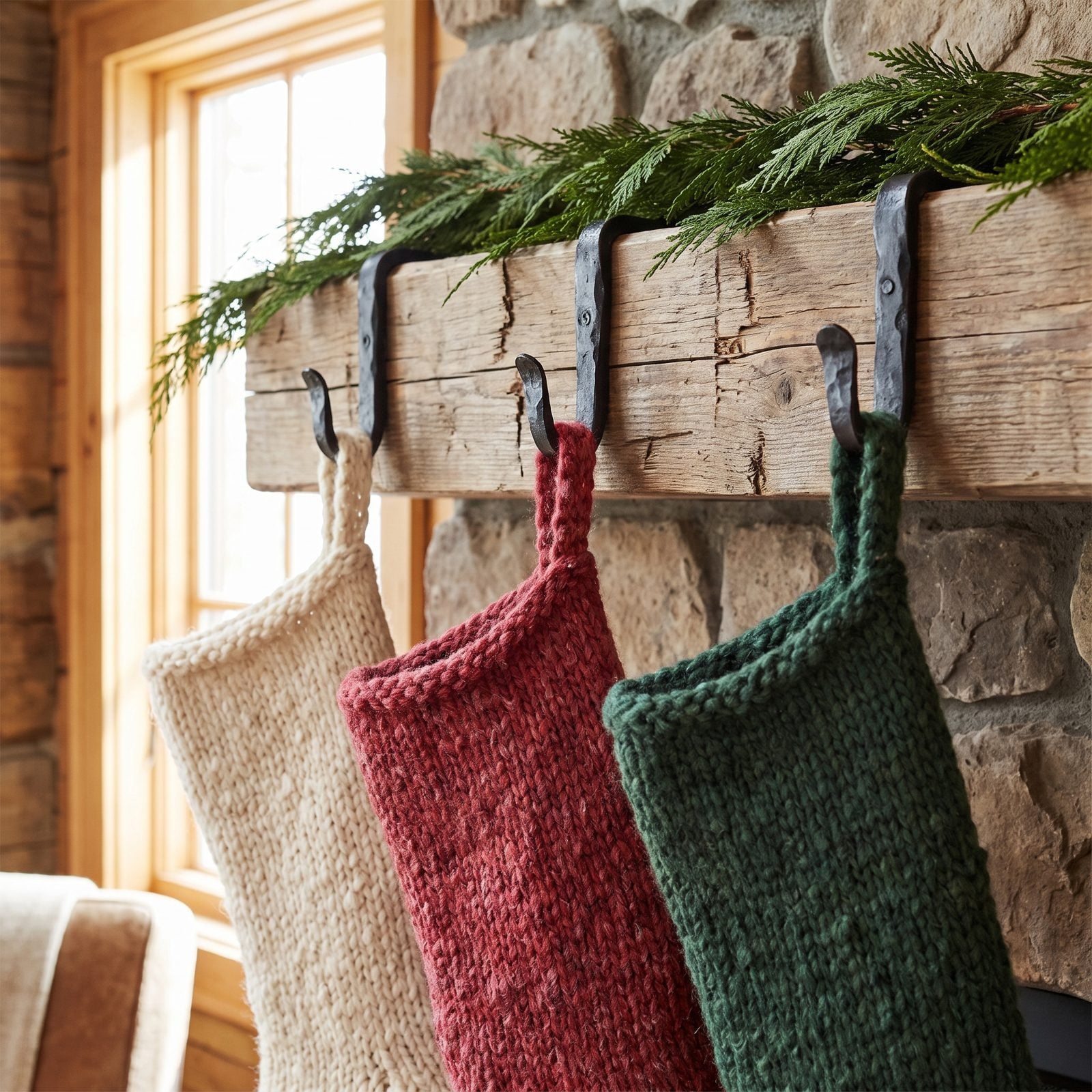
Those little adhesive stocking holders that cling to the mantel edge? They slide off at 2am and you find a stocking in the fireplace. Forged-iron hooks, screwed into the beam, hold the weight and look like they’ve been there since the cabin was built.
The cream cable-knit wool stocking beats the glittery felt one every time. Weight matters. A heavy hand-knit stocking hangs with gravity and purpose while the cheap ones just flutter.
27. Dried Orange Garlands That Add Color and Fragrance
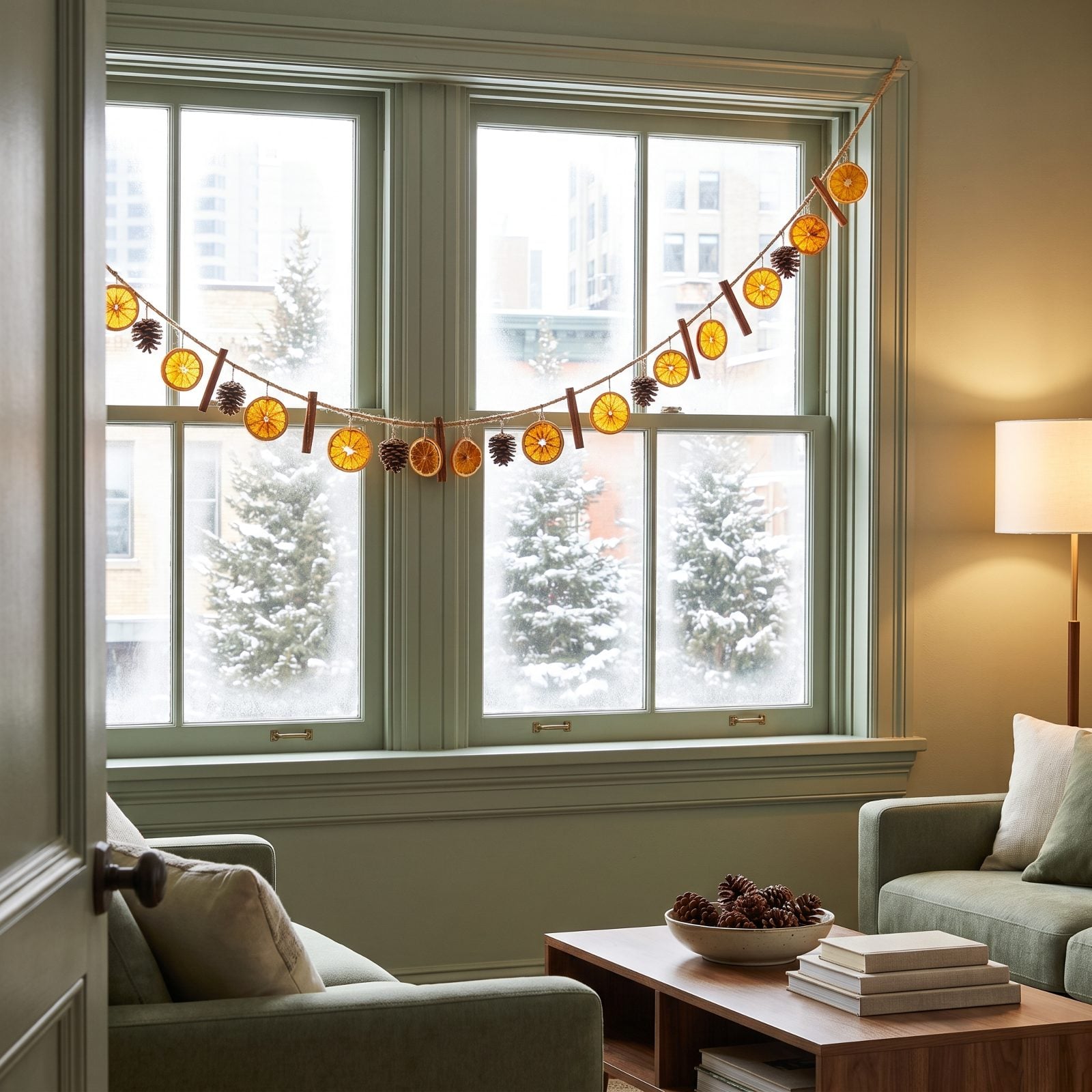
Dried orange slices do two things at once. Hung in a window, the sun turns them into little stained-glass coins, and the cabin starts smelling faintly of citrus and whatever cinnamon stick you tied in beside them.
String them on jute twine, not fishing line. You want the brown thread to show. This is a decoration that admits it was made by hand, and that’s the whole charm. I’ve seen people try to hide the twine. Don’t. The imperfection is what you’re after.
26. Red Berry Branches Arranged in Stoneware Crocks
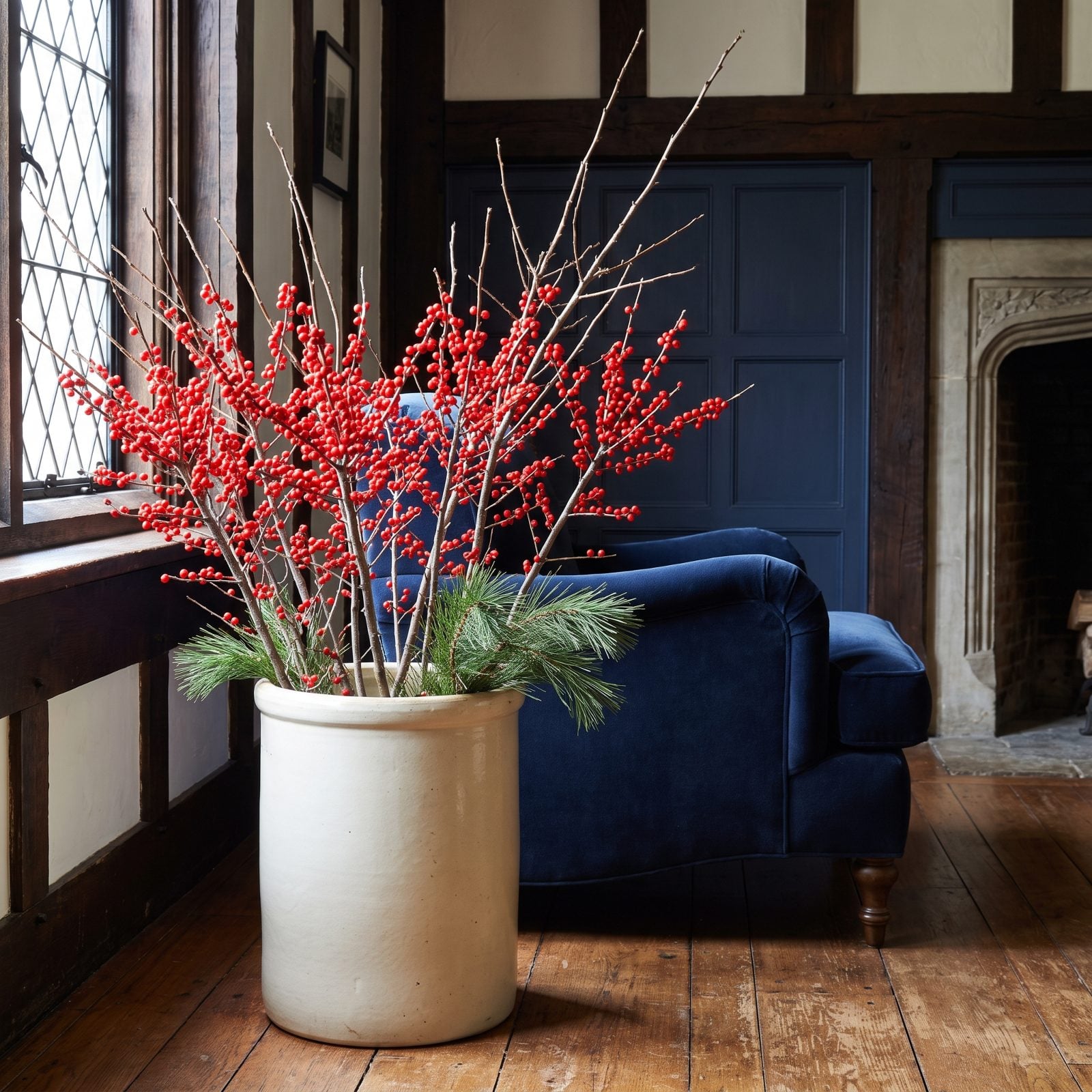
Skip the vase. A cream stoneware crock grounds the branches with weight and a bit of farmhouse history. Glass looks precious. Stoneware looks like it belongs in a cabin that makes its own bread.
Winterberry branches hold their red for weeks with no water fuss. Arrange them tall and a little wild, and let them lean. Over-arranged branches look like a florist bill, but a loose armful in a heavy crock looks like someone walked in from the woods with them.
25. Paper Stars Suspended in the Windows
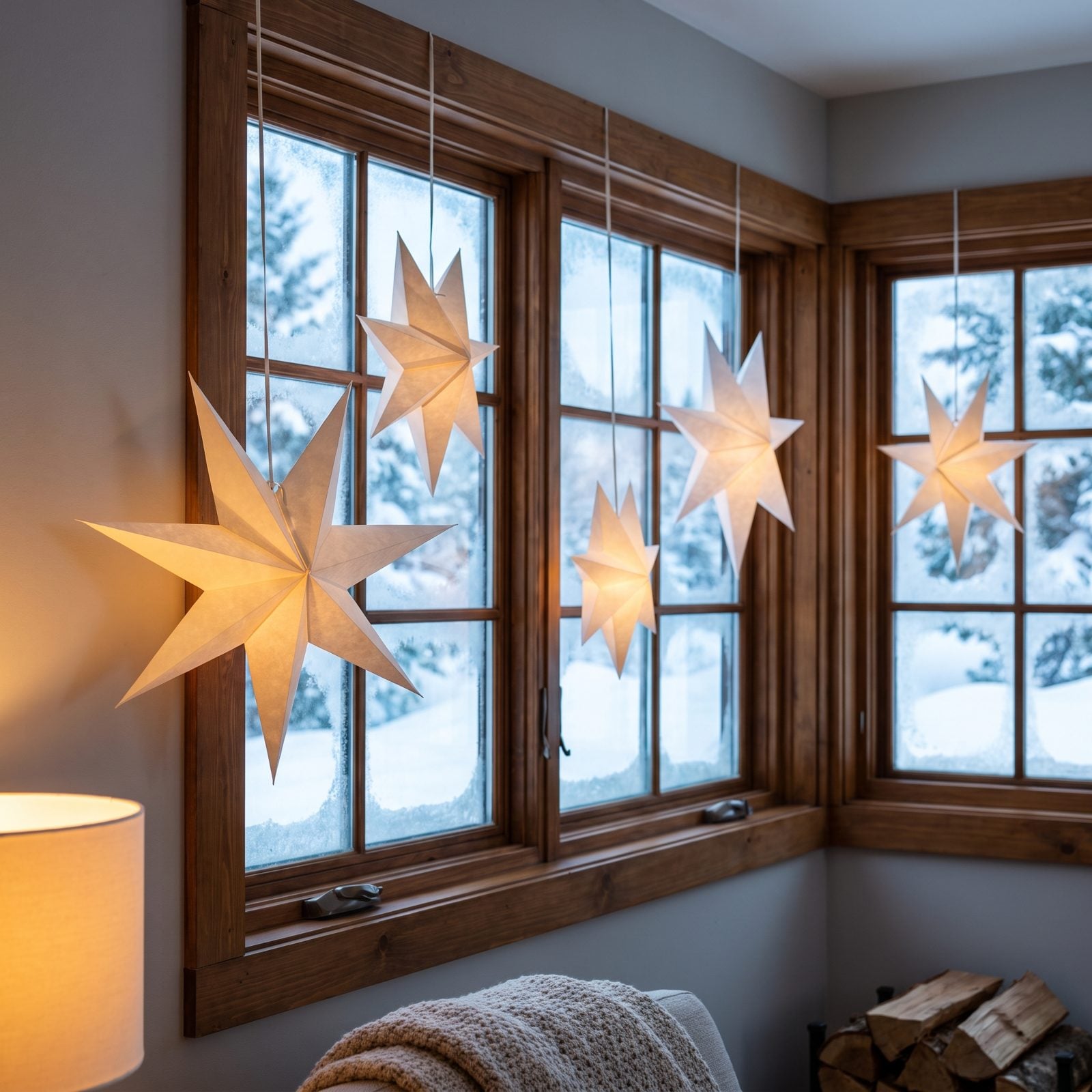
Paper stars are the quietest decoration in the cabin and somehow the one people comment on. Hung at staggered heights in a window, they catch the flat snow-light during the day and glow from the lamplight after dark.
Cream or warm white, never primary colors. You want them to read as light-catchers, not a craft project. Three or four is plenty. A window crammed full looks like a classroom bulletin board.
24. Multiple Low Lamps Instead of One Harsh Ceiling Fixture
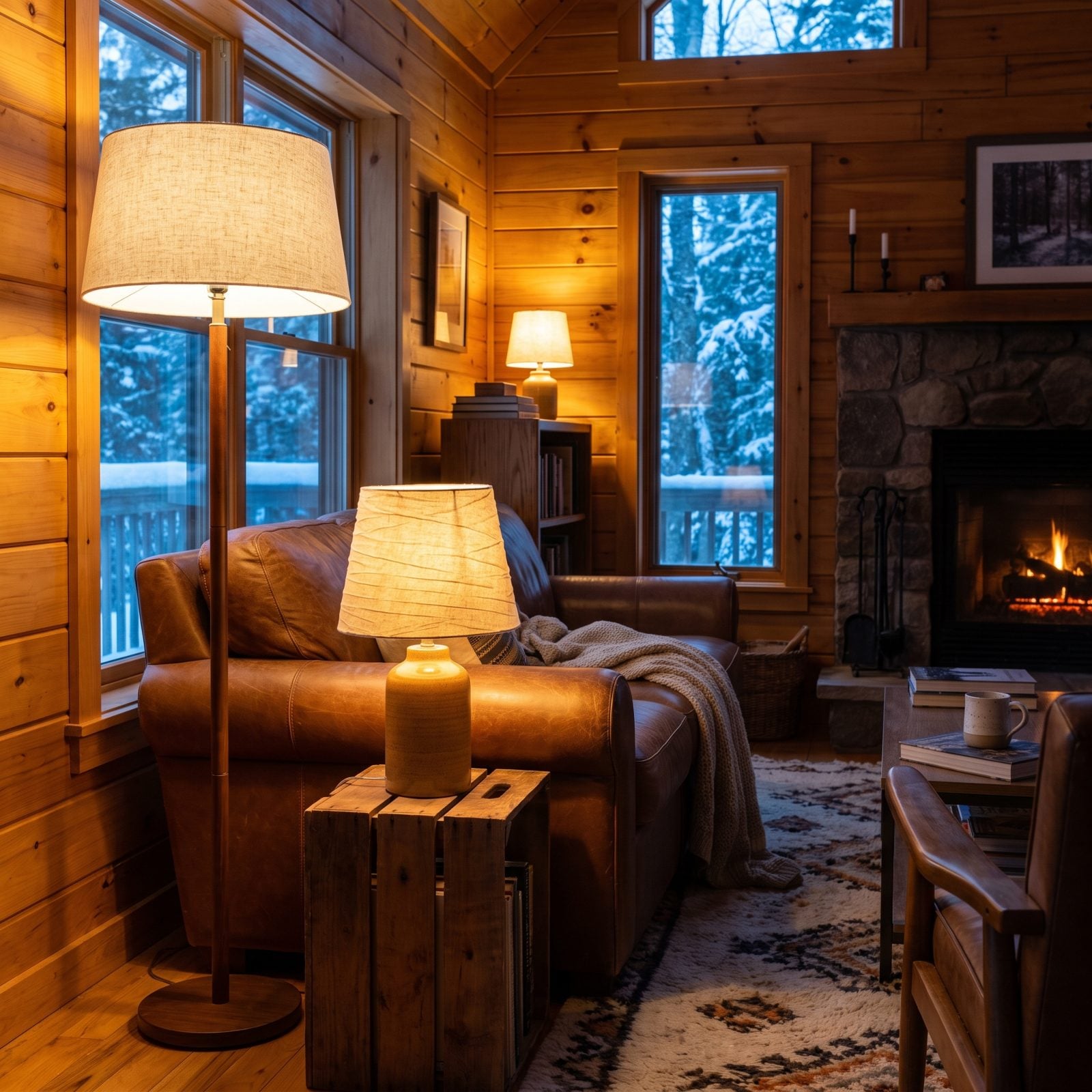
The single overhead fixture is the enemy of cozy. It flattens everything and casts shadows under your eyes like a police interrogation. Kill it.
Scatter three or four low lamps around the room instead, each with a warm bulb under a linen lamp shade. The pools of light overlap, the timber walls warm up, and the room grows corners and depth. This is one of the most effective tricks on the list and one of the cheapest, because you probably own the lamps already. You’ve just been drowning them out with the ceiling light.
23. Beeswax Tapers That Cast Honey-Colored Light
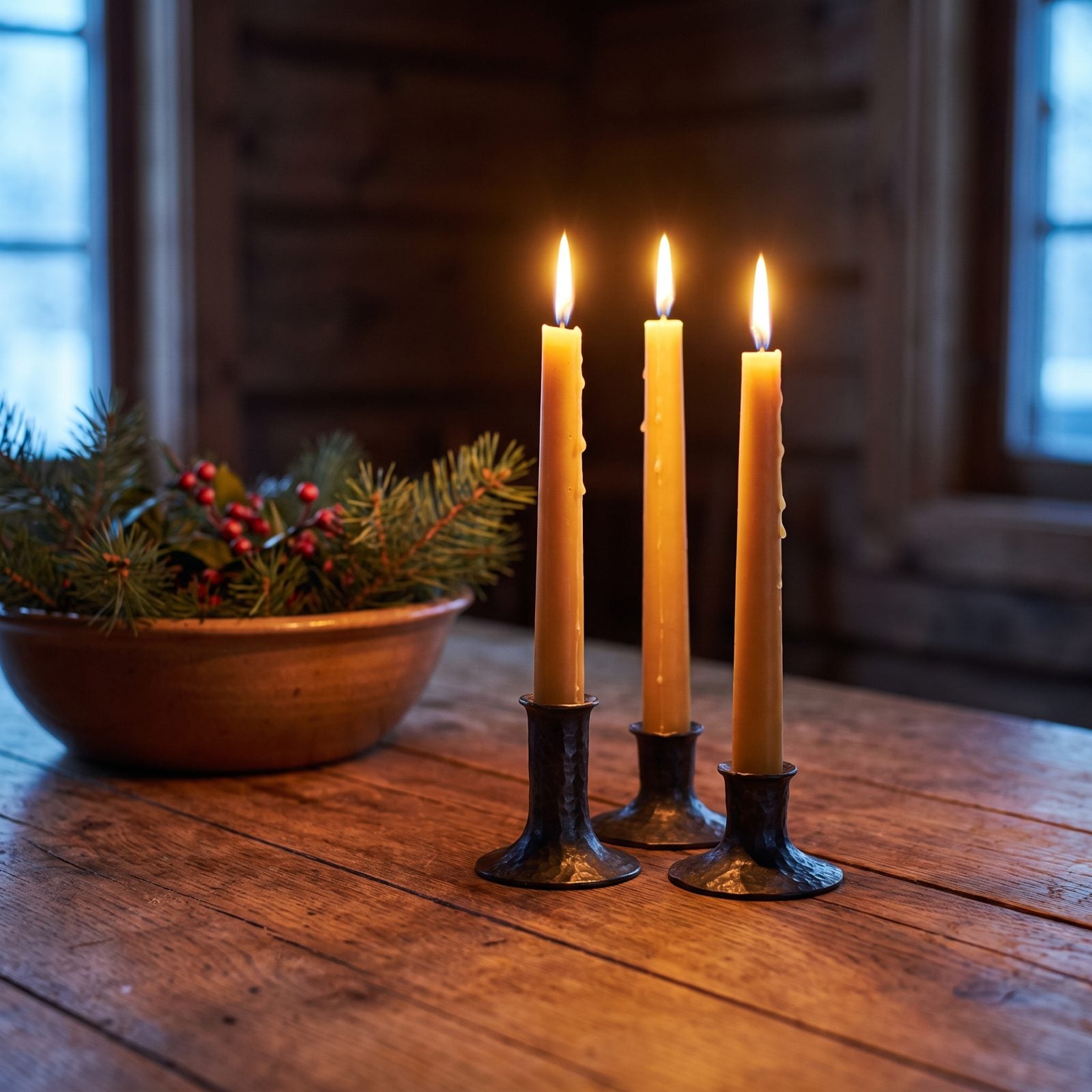
Not all candles burn the same color. Paraffin throws a slightly bluish, cheap light. Beeswax burns gold, warmer than any bulb, and it smells faintly of honey while it does it.
Group three beeswax taper candles in iron holders on the table and there’s your centerpiece, no arrangement needed. The flame does the work. And yes, they cost more and burn slower, which I consider a fair trade for not smelling like a laundry aisle.
22. A Reading Nook Built Around the Winter View
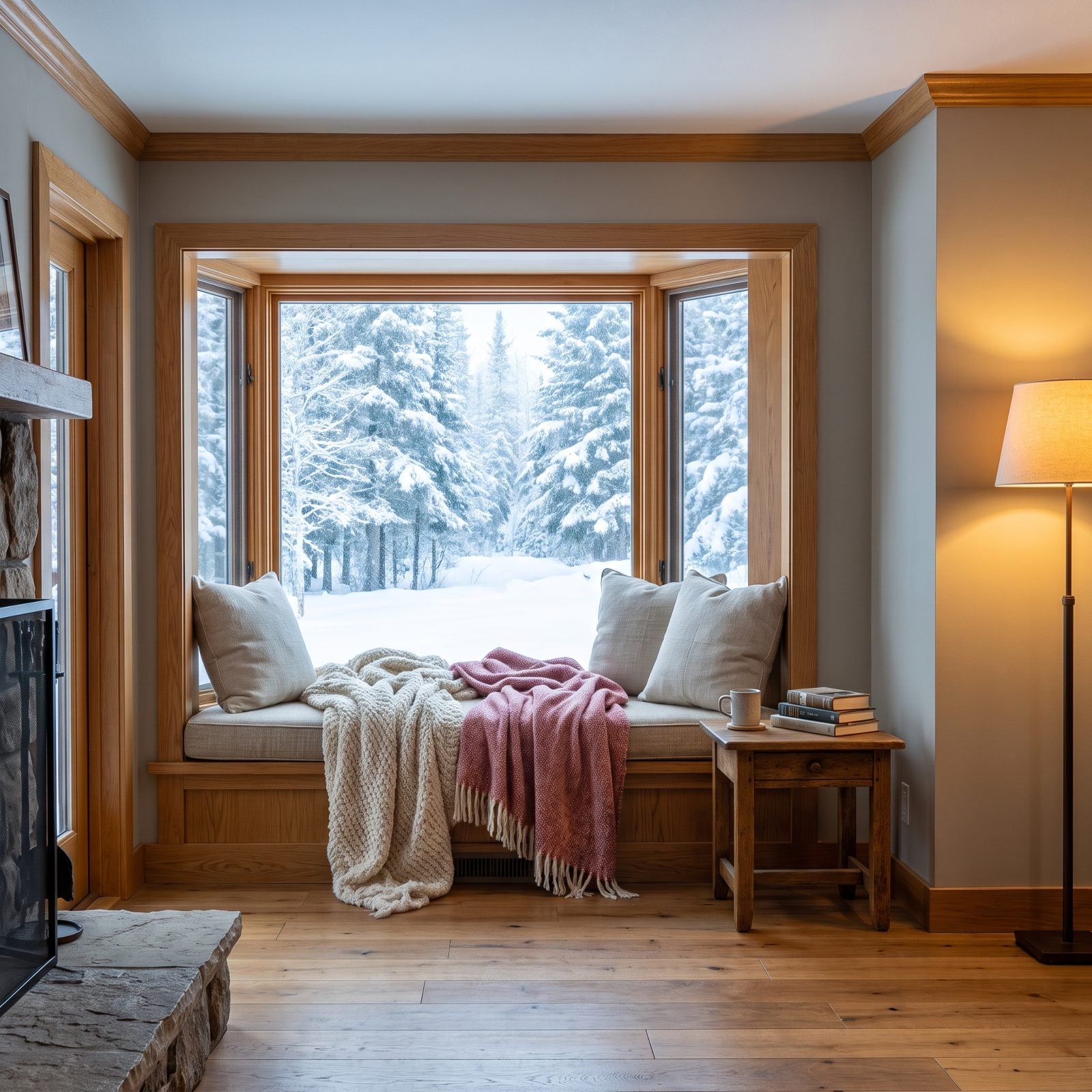
The best seat in a winter cabin faces the weather. A bench built into a window, or just an armchair pulled up to the glass, turns the snow into the entertainment. You watch it fall. That’s the whole activity, and it’s enough.
Pile it with a cream wool throw and a couple of linen pillows. Keep a lamp within reach so the nook stays usable after dark. A warm pool of light against the cold blue window is the whole mood in one square foot.
21. A Quilt That Looks Inherited Rather Than Theme-Park Festive
🔥 Would you like to save this?
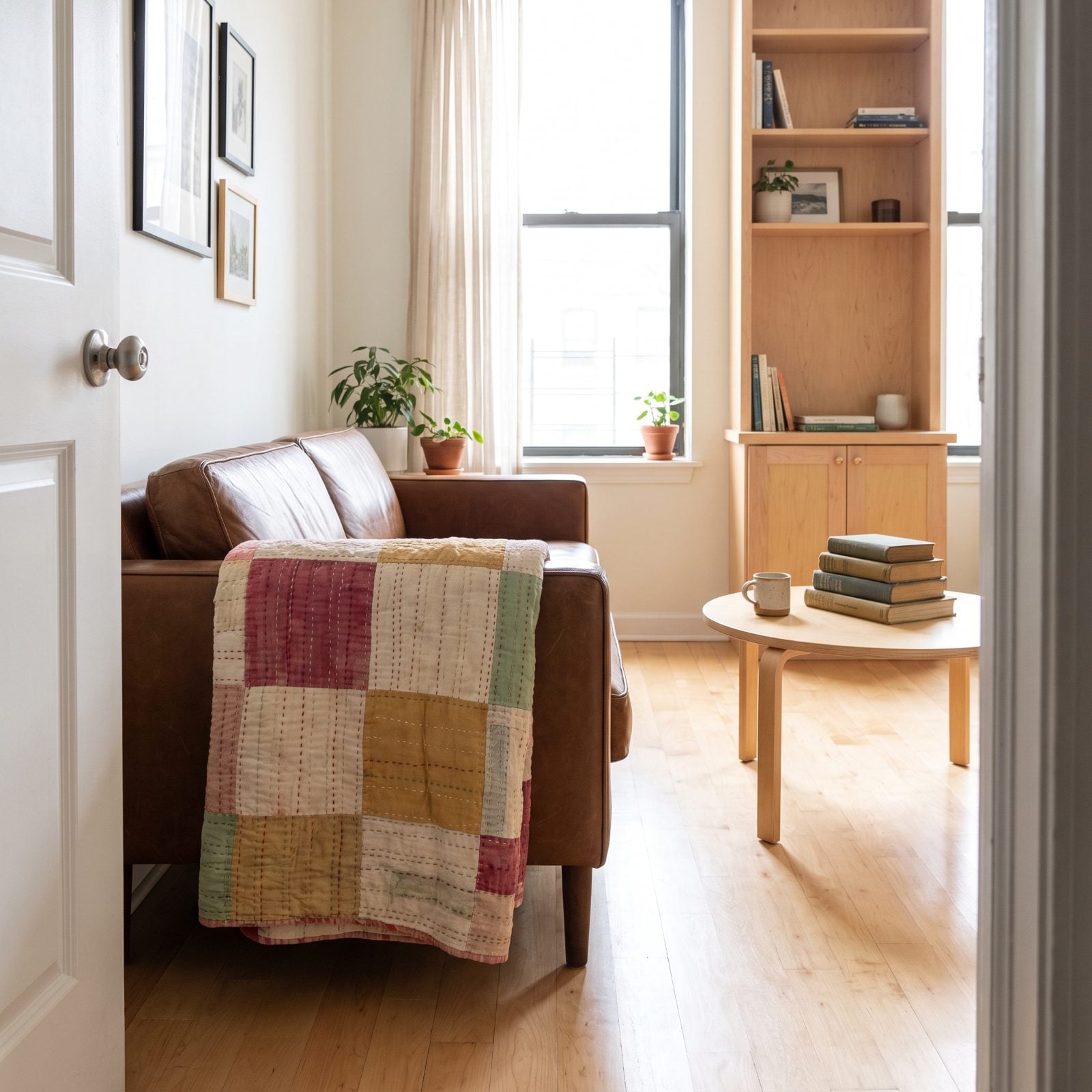
A brand-new quilt covered in cartoon snowmen screams gift shop. A faded patchwork in cranberry, cream, and dusty gold whispers that someone’s grandmother made it, and there’s your difference.
You don’t need a real heirloom. You need one with muted colors, visible hand-stitching, and fabric that looks like it’s been washed a hundred times. Drape it over the sofa arm instead of folding it into a hotel square. The slight slouch is what sells it. I’d take one soft worn quilt over a dozen themed throw pillows, and I will die on this hill.
20. A Dining Table Positioned Beside the Best Snow View
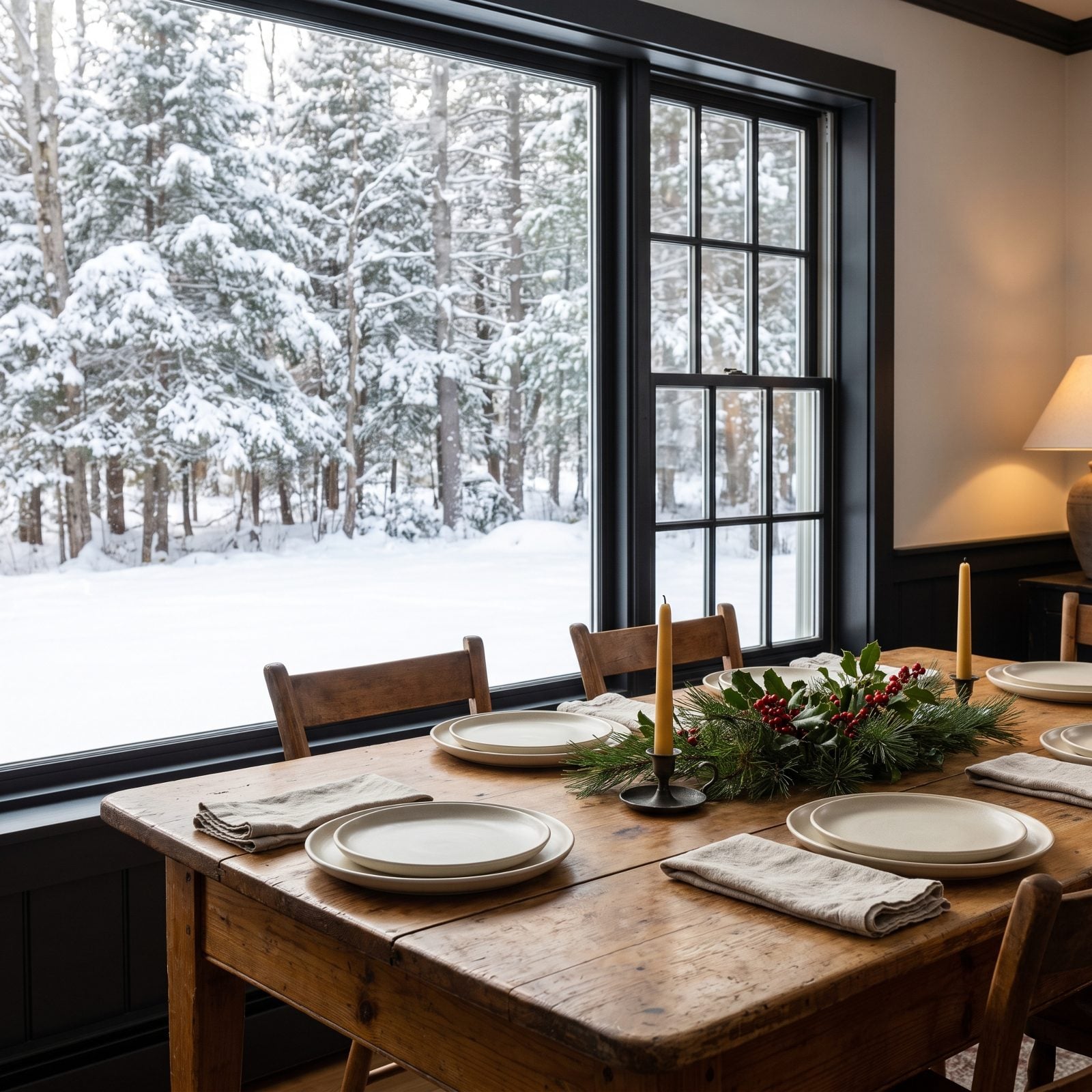
Where you put the table decides how the meal feels. Pushed against an interior wall, dinner is just dinner. Set beside the window, every meal comes with falling snow behind it, and people stay an hour longer without noticing.
Keep the centerpiece low so it doesn’t block the view or the faces across from you. Pine, a few berries, a couple of stoneware dinner plates, candlelight. The snow handles the rest for free. Honestly, it’s the most generous design partner you’ll ever get.
19. Mismatched Stoneware That Feels Collected Over Time
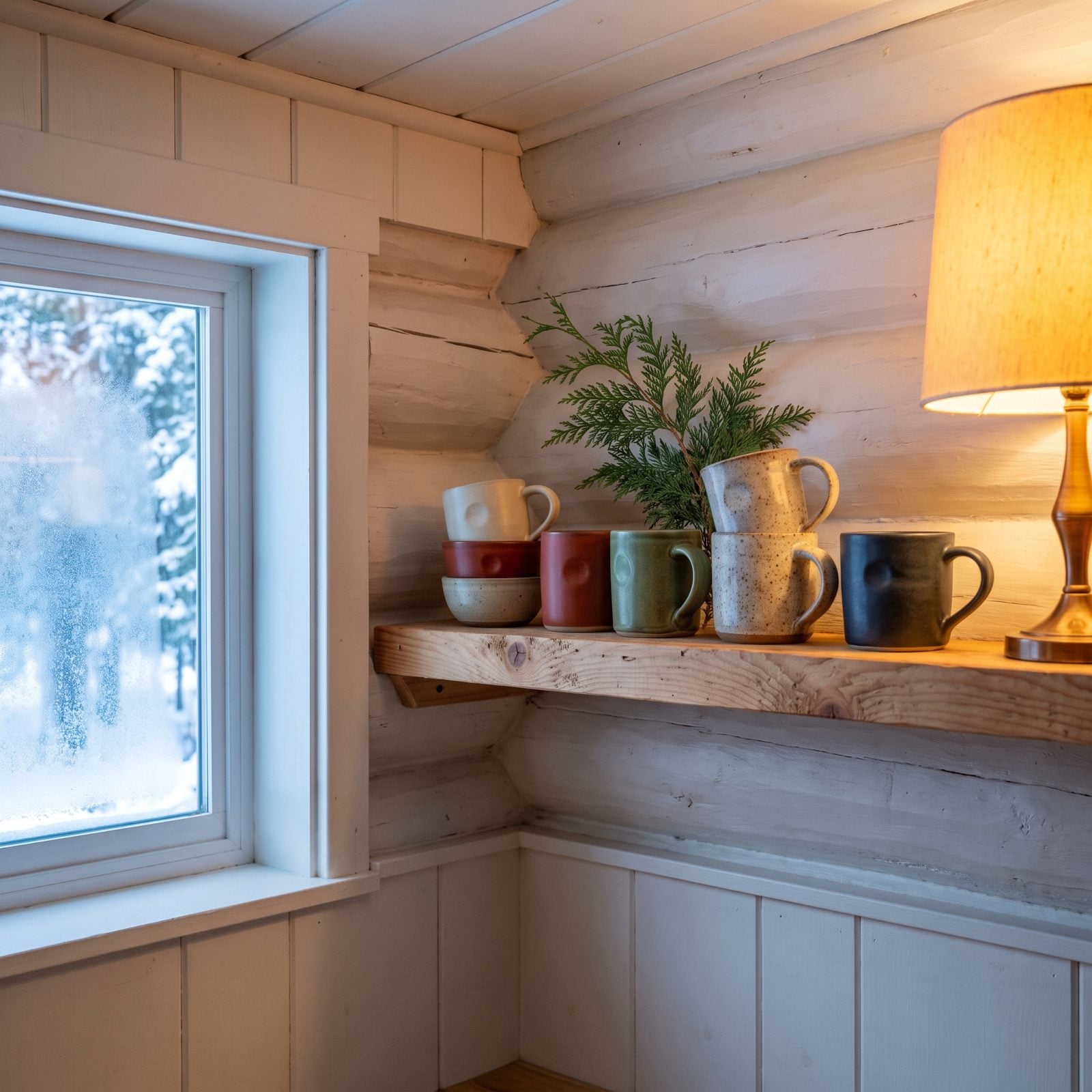
The matching 12-piece set is the fastest way to make a cabin look rented. Perfection reads as nobody-lives-here. What you want instead is the shelf that looks like it accumulated over fifteen winters, one mug at a time.
Mix glazes on purpose — a rust stoneware mug next to a speckled oatmeal bowl and a chipped cream plate. The variety signals history, and history is the whole feeling you’re after at Christmas.
18. Tartan Napkins Against Natural Wood
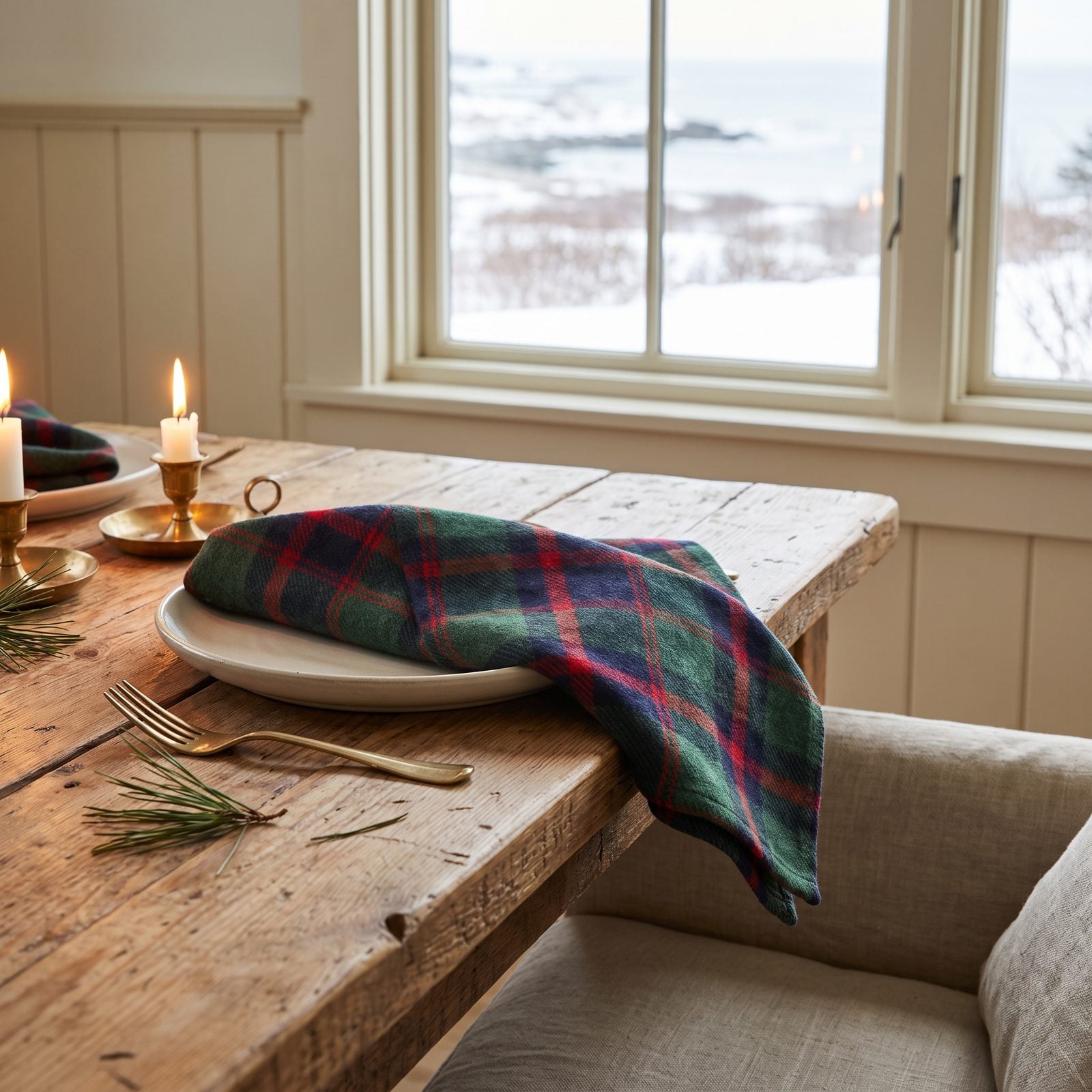
Plaid against bare wood is the oldest trick in the winter-cabin book, and it still lands because the two textures argue with each other. Soft nubby wool, hard grain. The napkin feels warm in your hand before you’ve even thought about why.
Go muted — a tartan plaid napkins in greens and faded reds rather than anything bright and glossy. On raw pine or oak the pattern reads traditional, not costume-y. Skip ironing them flat, too. A little rumple is the point.
17. Miniature Wreaths Tied to Dining Chairs
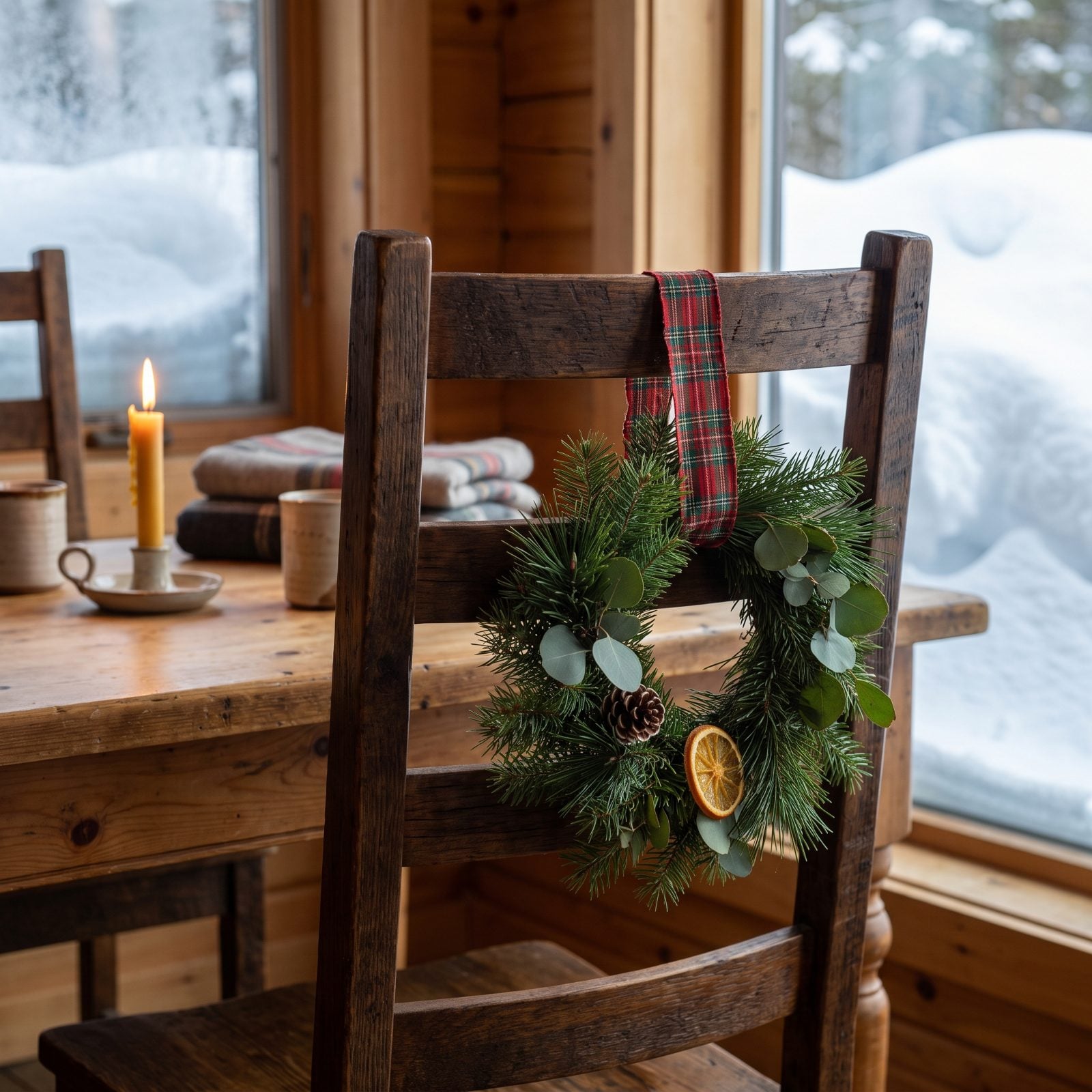
Chairs almost never get decorated, which is exactly why doing it works. A small fresh wreath tied to each chair back turns an ordinary dinner into something that feels planned for, without a single word about it.
Keep them tiny — six to eight inches, or they bang into everyone’s spine. Tie them on with a tartan ribbon instead of wire so you can swap them out when they dry. Fresh pine throws off scent every time someone sits down, and that moving smell is worth more than any centerpiece.
16. A Greenery Chandelier Over the Table
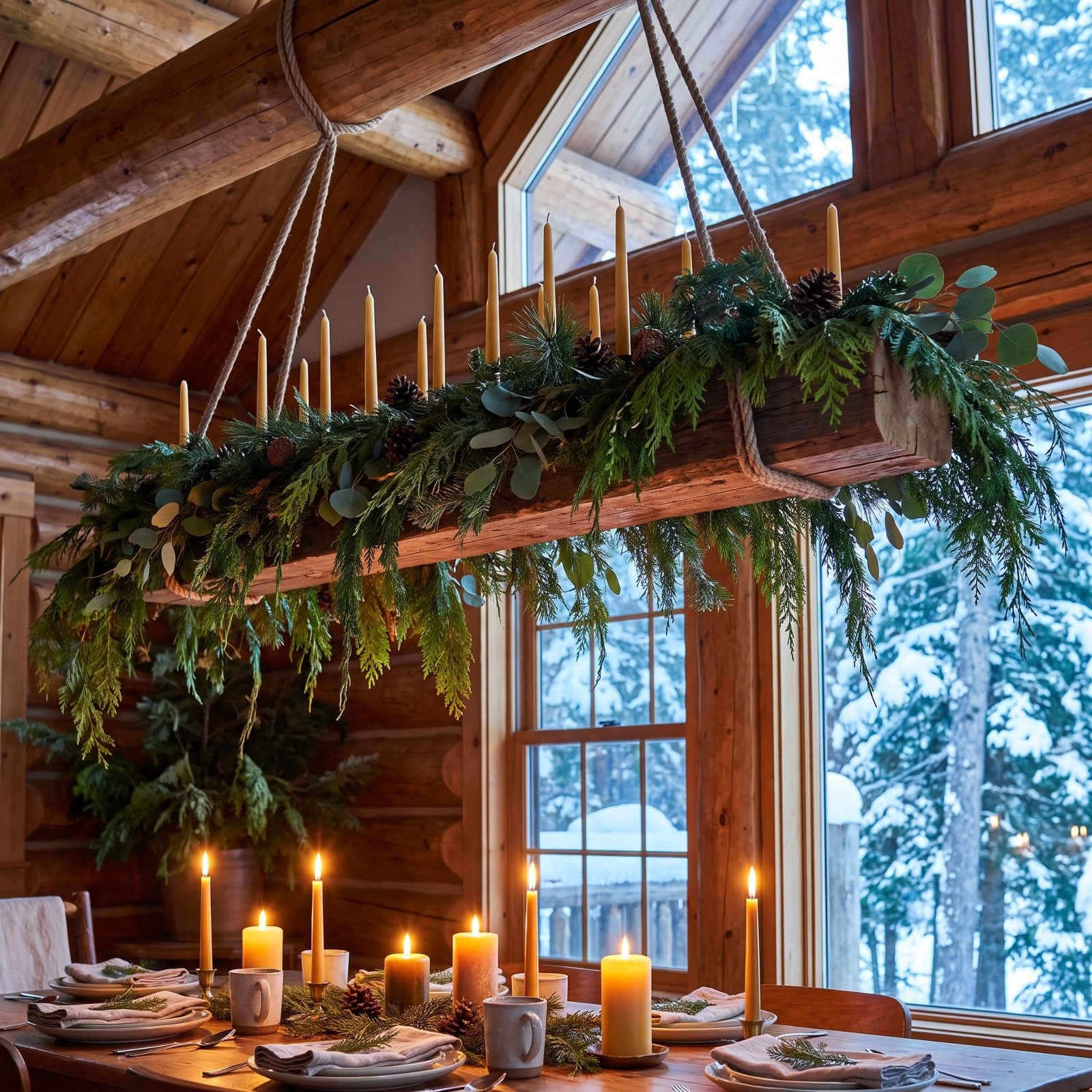
This is the move that makes people stop talking when they walk in. A greenery-draped beam or iron ring hung low over the table, loaded with fresh cedar and a row of slim tapers, does more for a room than any store-bought decoration ever will.
Height is everything. Hang it lower than feels right, so the candlelight sits close to faces and the greenery nearly brushes the centerpiece. A iron candle chandelier draped with real cedar garland beats a fake one in every way except convenience, and convenience was never the goal here.
15. A Hot-Cocoa Station in an Underused Corner
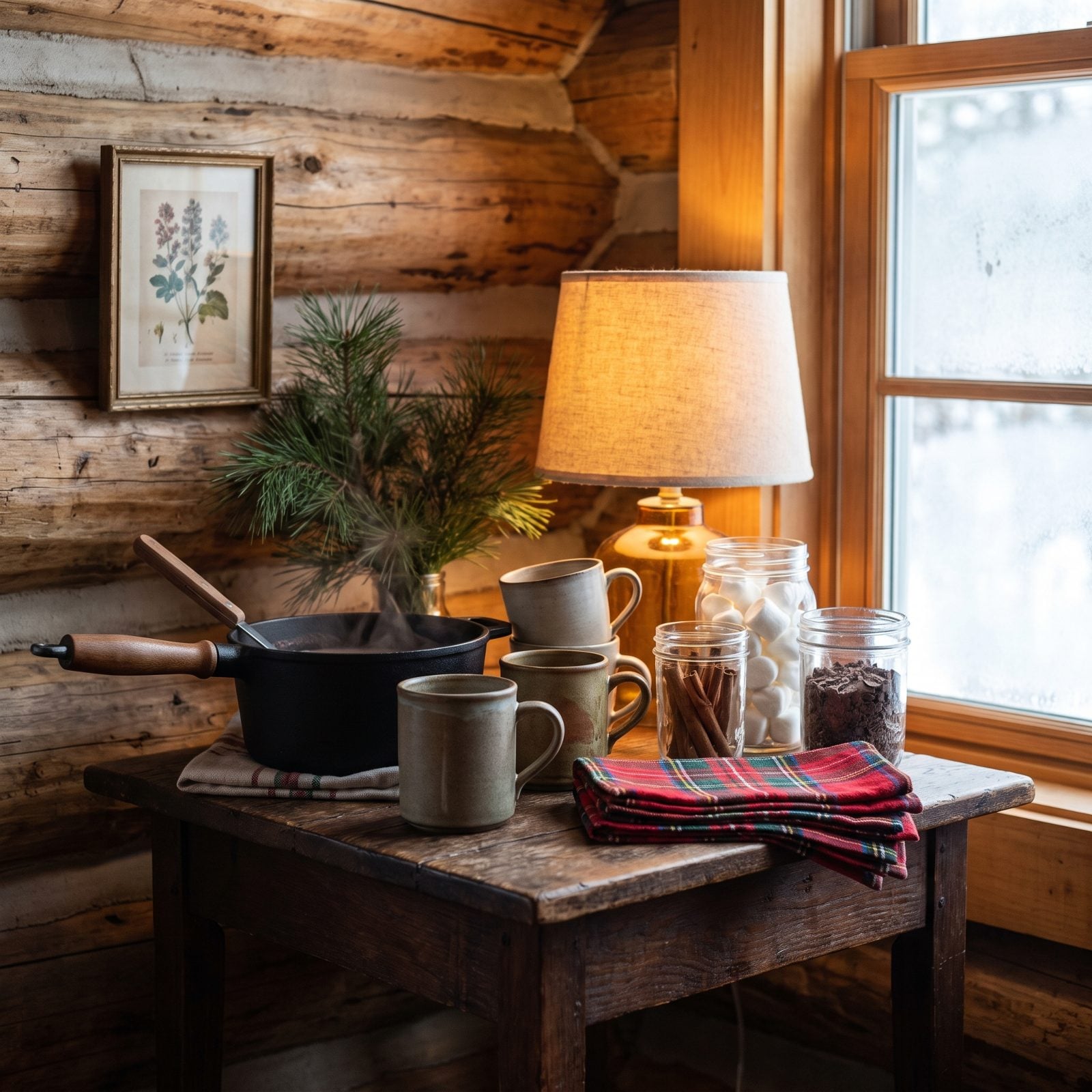
Every cabin has a dead corner — the one past the stairs, or the gap beside the bookshelf nobody uses. Put a little table there, a pot of cocoa, a few jars of marshmallows and cinnamon sticks, and suddenly that corner becomes a destination.
Set it on a rustic wood side table with a handful of glass storage jars so the toppings read as part of the display. The clever part is traffic. A cocoa station gives people a reason to drift out of the main room, and that drifting is what makes a space feel alive rather than staged.
14. A Cast-Iron Kettle Steaming Near the Fire
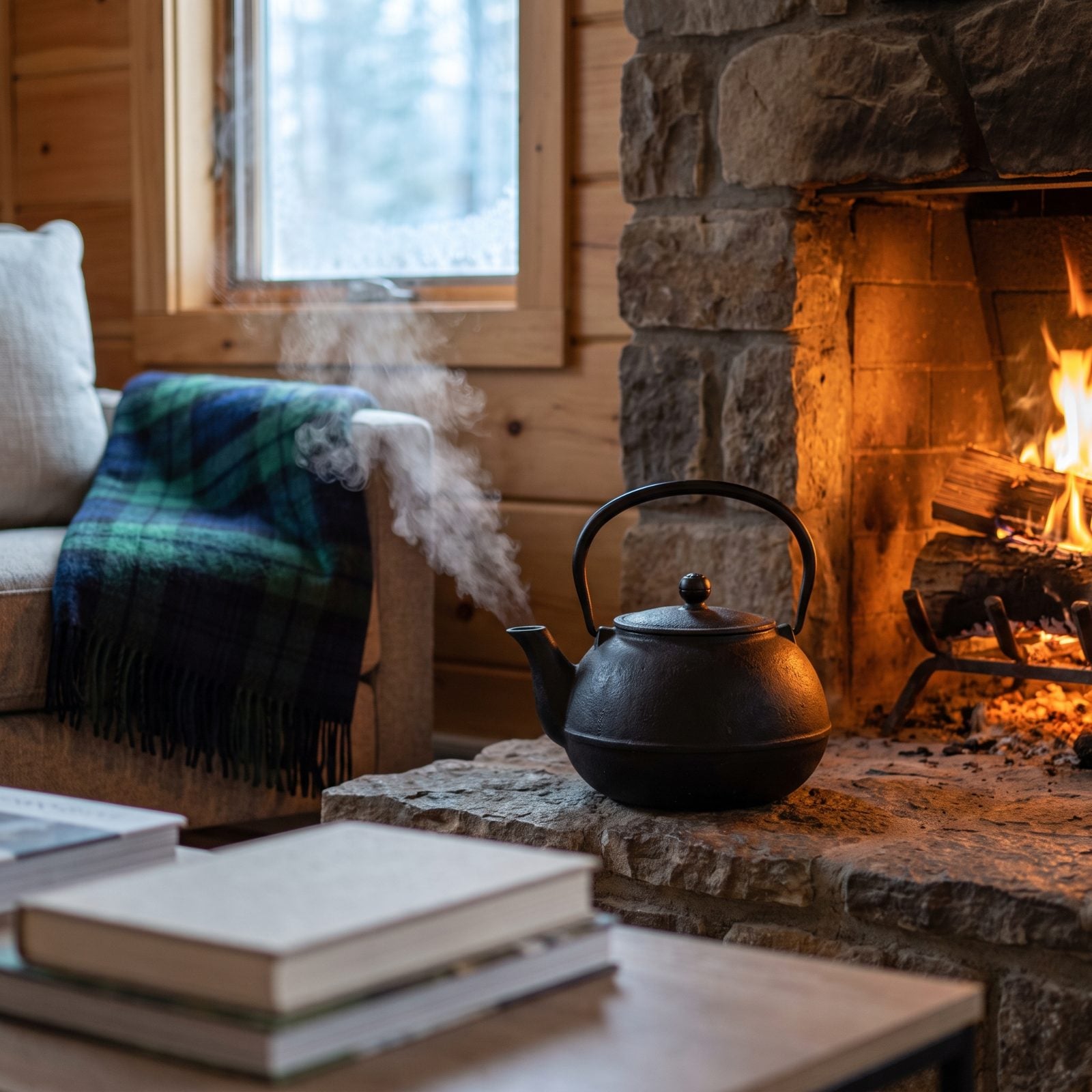
Steam is the detail nobody plans and everybody feels. A cast-iron kettle near the fire, quietly letting off a ribbon of vapor, adds humidity to dry winter air and a faint sound you register before you notice it.
A cast iron kettle on the hearth does double duty. It keeps the air from going desert-dry, which saves your throat and your skin, and that slow trickle of vapor reads as warmth even from across the room.
13. A Kitchen Island Set Up for Cookie Decorating
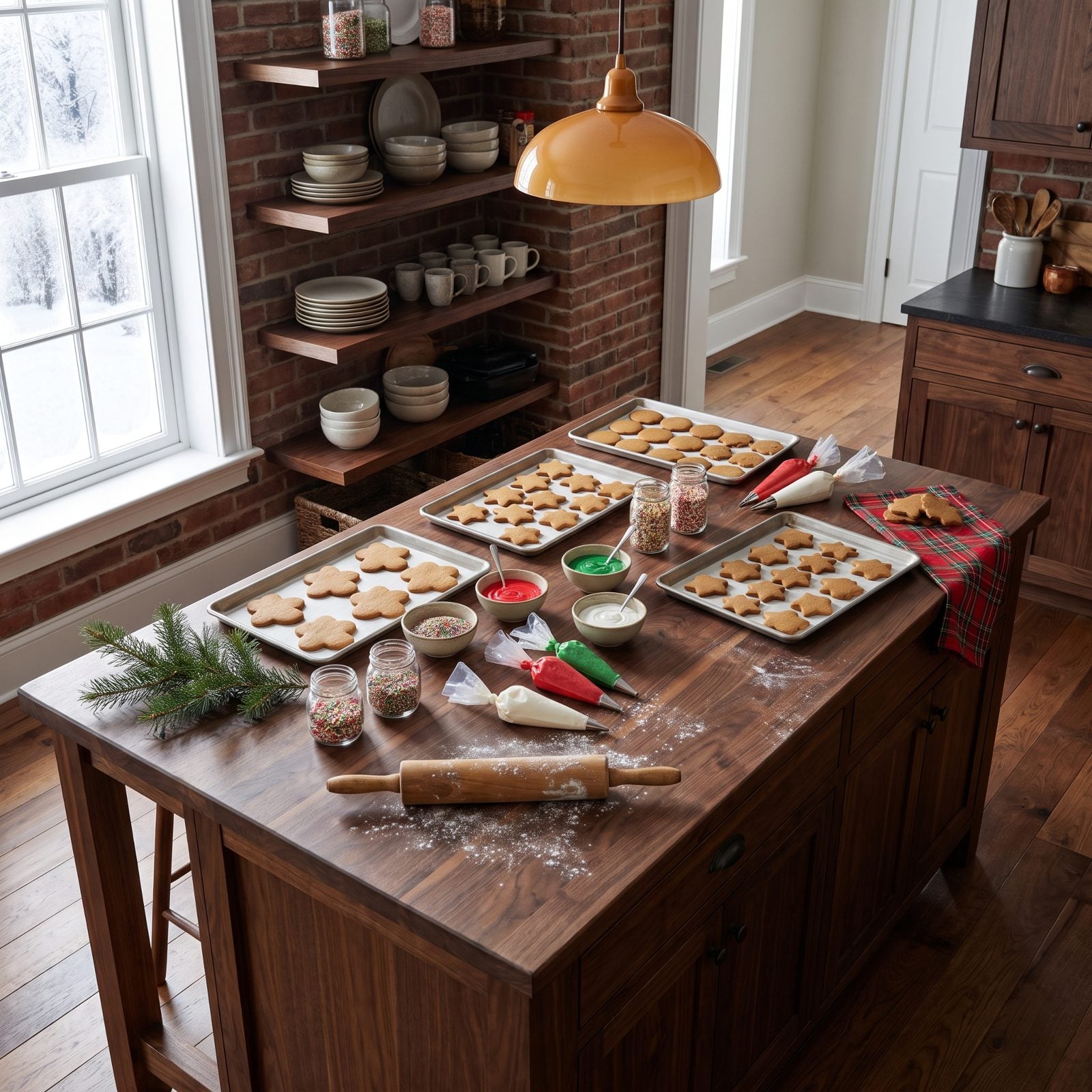
Clear the island, flour it lightly, and lay out plain cookies with little bowls of icing and jars of sprinkles. You’ve just built the thing everyone gravitates toward without being asked. A decorating setup turns the kitchen from a place food comes out of into a place people stay.
Line up glass sprinkle jars so the colors do the decorating for you, and keep a tartan tea towel within reach, because it will get sticky. Honestly? Give me a messy, flour-dusted island over a spotless one nobody touched, every single time.
12. Copper Cookware Catching the Christmas Lights
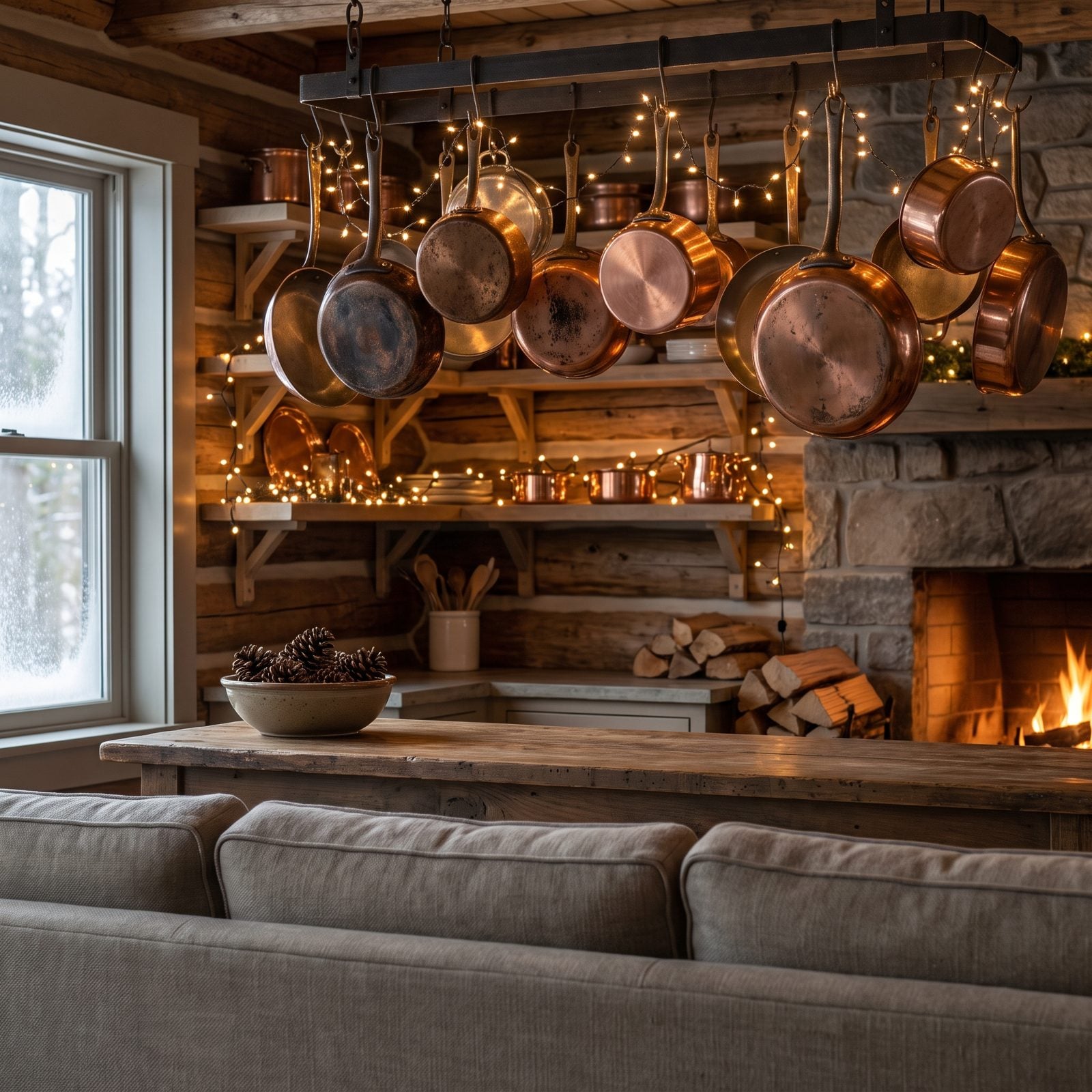
Copper does something no other metal pulls off at Christmas. It takes warm string lights and firelight and throws them back softer, so a wall of hanging pots turns into a wall of low golden glow.
Hang a mix — some polished, some wearing the darkened patina real cooking gives them. A row of copper cookware on an iron rack reads as decoration and as proof the kitchen gets used. The reflections shift as the fire does, and watching them move beats static decor in a way that’s hard to describe until you’ve seen it.
11. A Bowl of Clementines for an Old-Fashioned Color Note
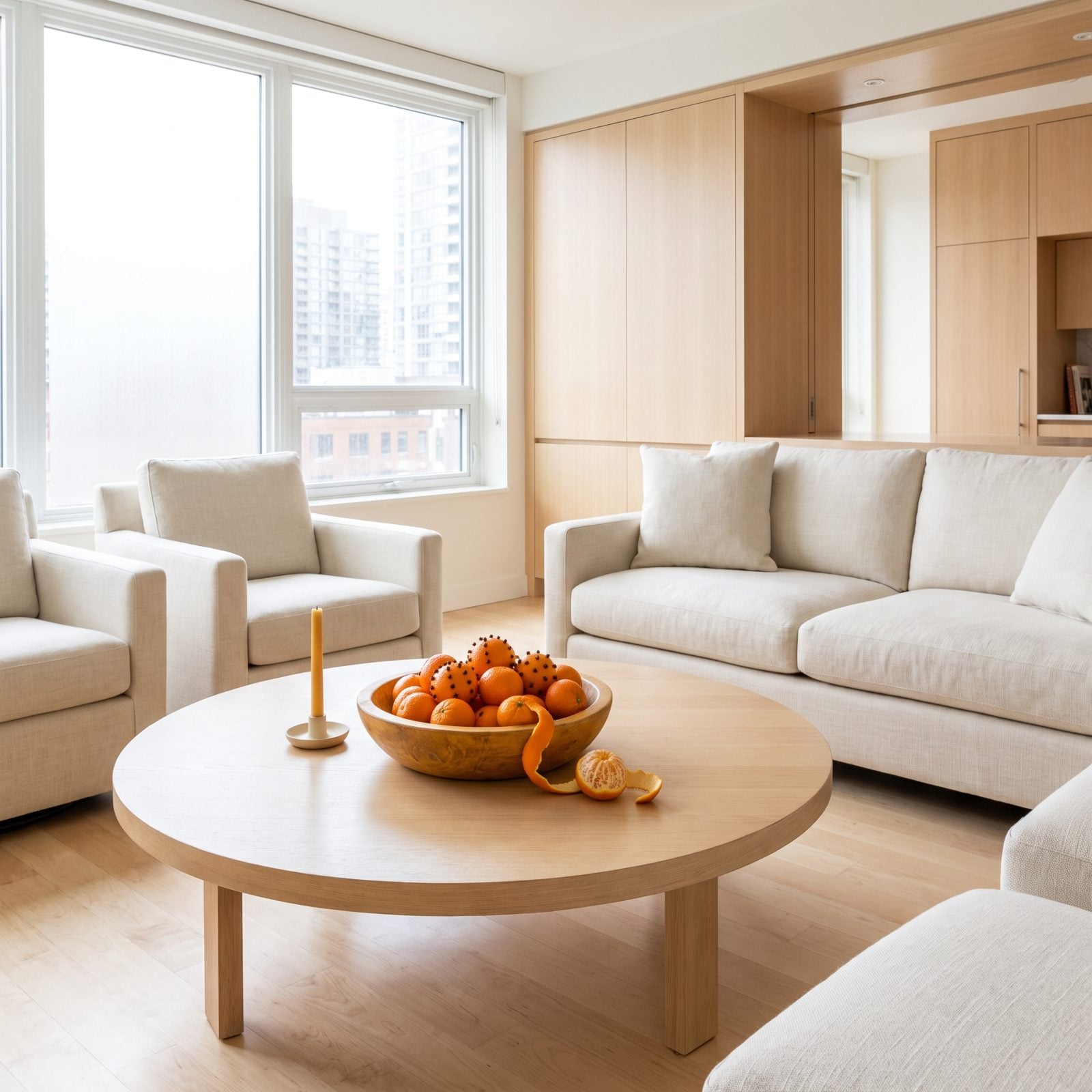
Before plastic ornaments, an orange in the toe of a stocking was the treat. That history is why clementines still read as Christmas, and why a simple bowl of them carries more warmth than a shelf of tinsel.
The color does real work. Bright orange against brown wood and green pine is about the oldest festive palette there is, and it costs next to nothing a bag. Pile them in a plain wooden fruit bowl and peel one, because the smell of citrus oil released into a warm room is half the reason to bother.
10. A Stack of Board Games Near the Hearth
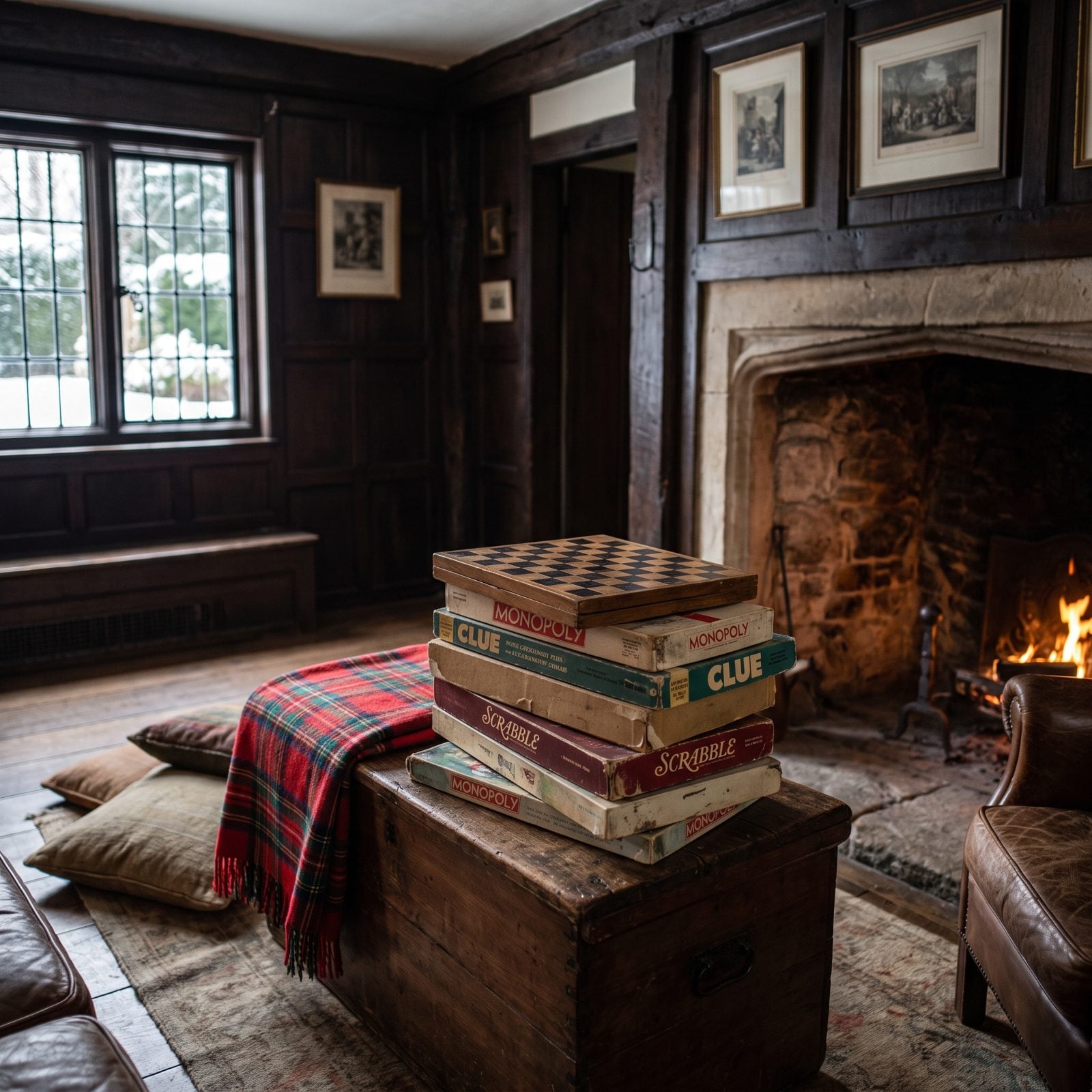
A stack of board games by the fire is a promise, not just decoration. It tells everyone the plan is to stay, slow down, and let the evening run long. That signal matters more than the games themselves.
Go for worn boxes over shiny new ones, and keep a wooden checkers set on top because it reads as timeless rather than trend-of-the-year. Throw a tartan wool blanket over the trunk they sit on. The whole corner then says one thing quietly: nobody here is in a hurry. Which is exactly why you came.
9. A Record Player With Holiday Albums on Display
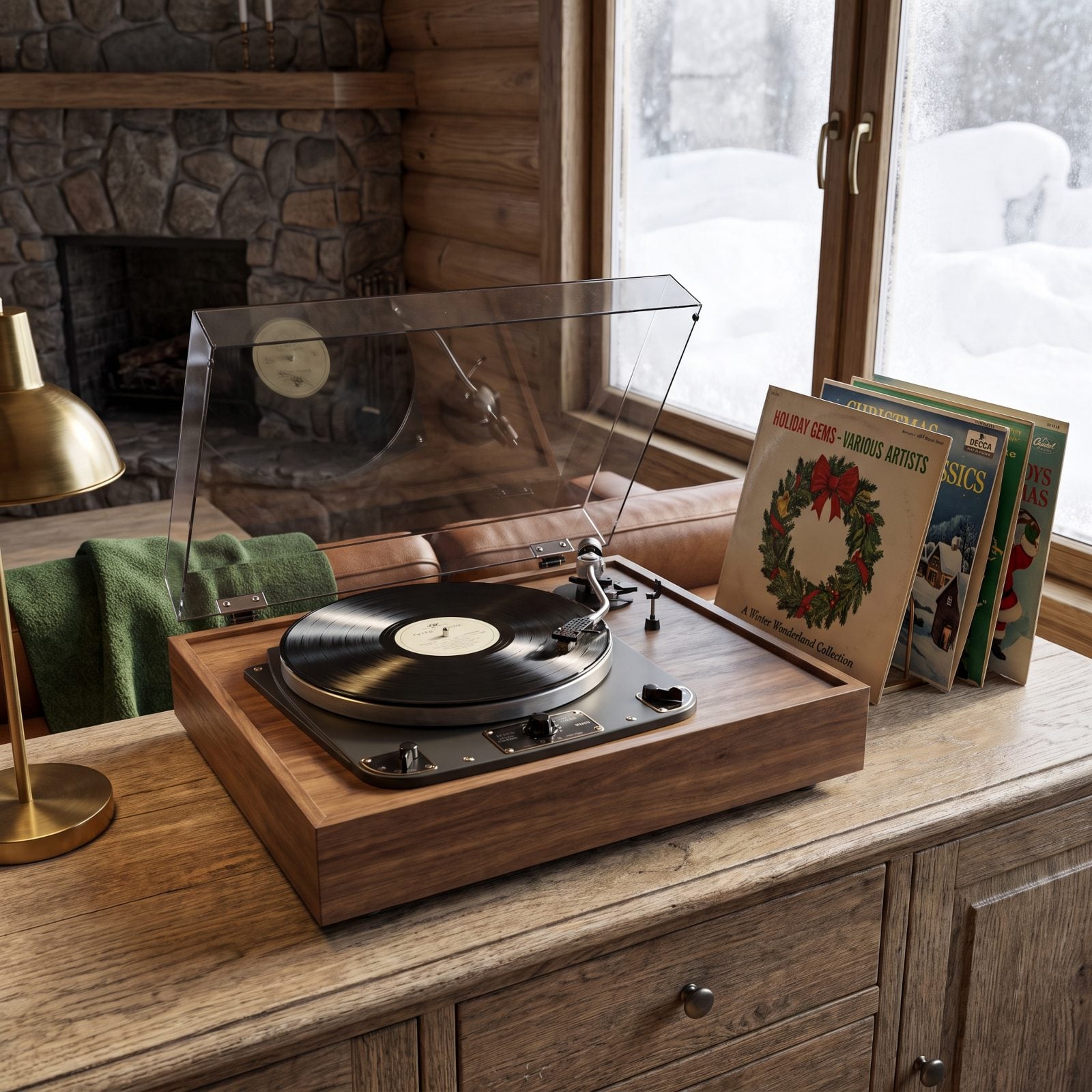
Music is the one Christmas decoration you can’t see, and it outworks the tree every time. A turntable set out with holiday records says someone in this cabin still treats a song like an occasion.
Prop the sleeves up where the firelight hits them. Faded cover art from the fifties and sixties reads as warmth before the needle even drops. Pick a walnut record console low enough to live on, not a shelf you have to reach for.
8. Brown Paper Packages Tied With Velvet Ribbon
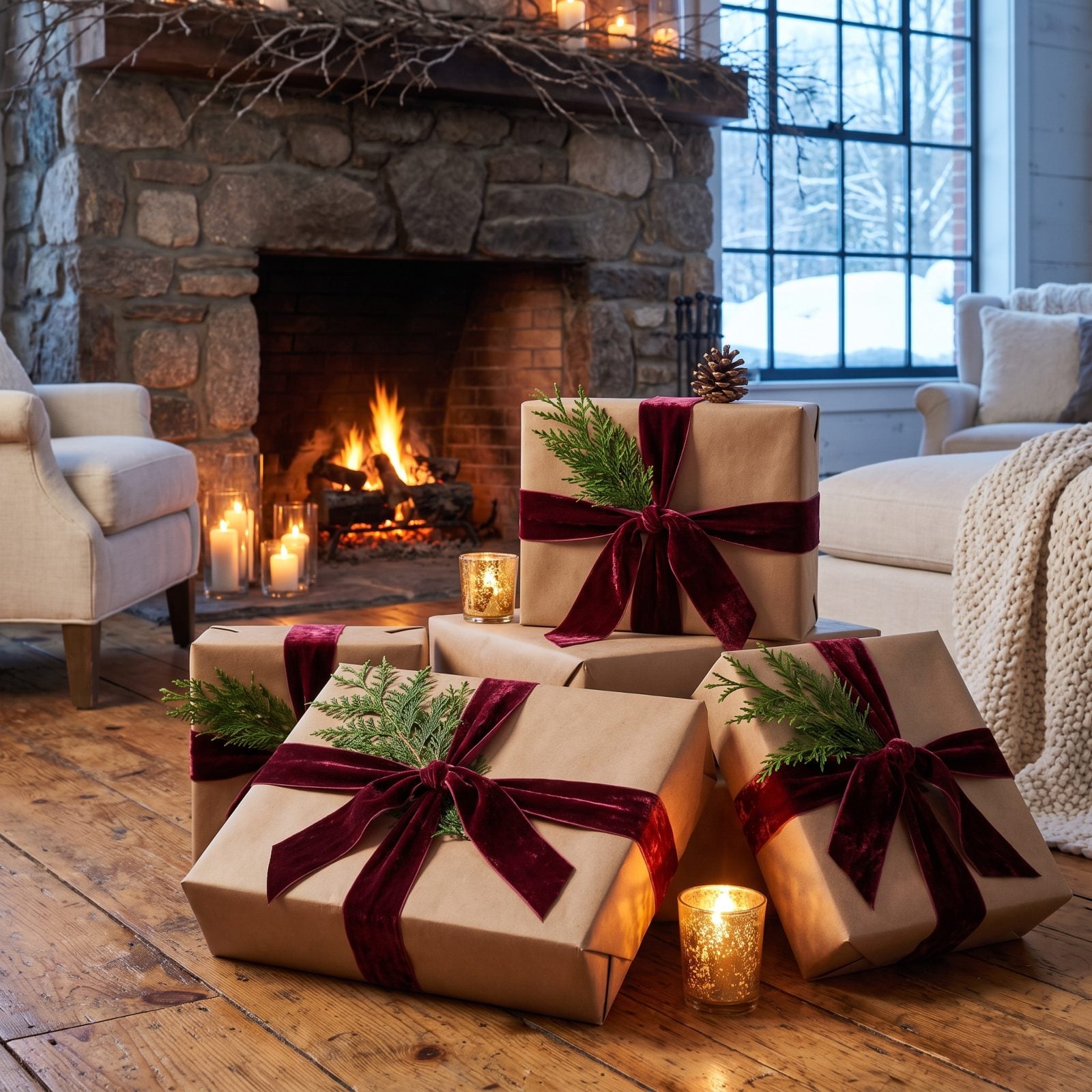
Shiny foil paper fights a cabin. Kraft paper and velvet ribbon belong there.
The trick is the ribbon width. Skinny ribbon looks like an afterthought, but wide burgundy velvet ribbon has heft, and when firelight catches the nap it glows like something expensive even though the paper underneath cost almost nothing. Tuck a sprig of cedar or a cinnamon stick under each knot and you’ve added scent and texture in one move.
7. Vintage Skis Displayed Without Turning the Room Into a Theme
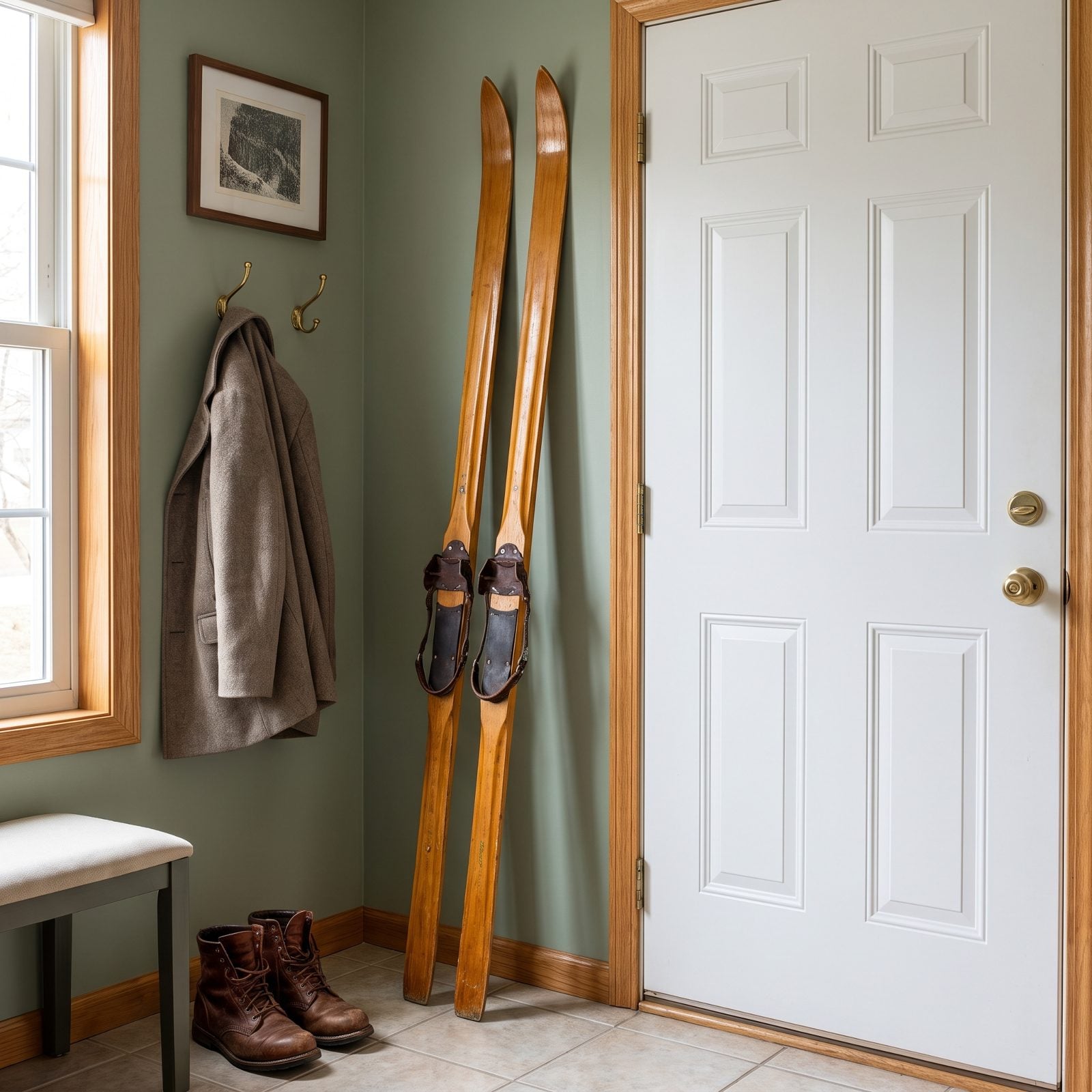
One pair. That’s the rule nobody tells you.
Vintage wooden skis leaned in a corner read as a cabin that’s lived through some winters. Hang a second pair, add a sled, nail up a pair of old snowshoes, and suddenly you’re standing in a ski-lodge gift shop. The honeyed wood and cracked leather bindings do the talking on their own.
Let them lean. Don’t mount them like a trophy. Scuffs and old wax are the whole appeal, and a restored-to-glossy pair loses everything that made them worth putting out.
6. A Covered Porch With Blankets and Storm Lanterns
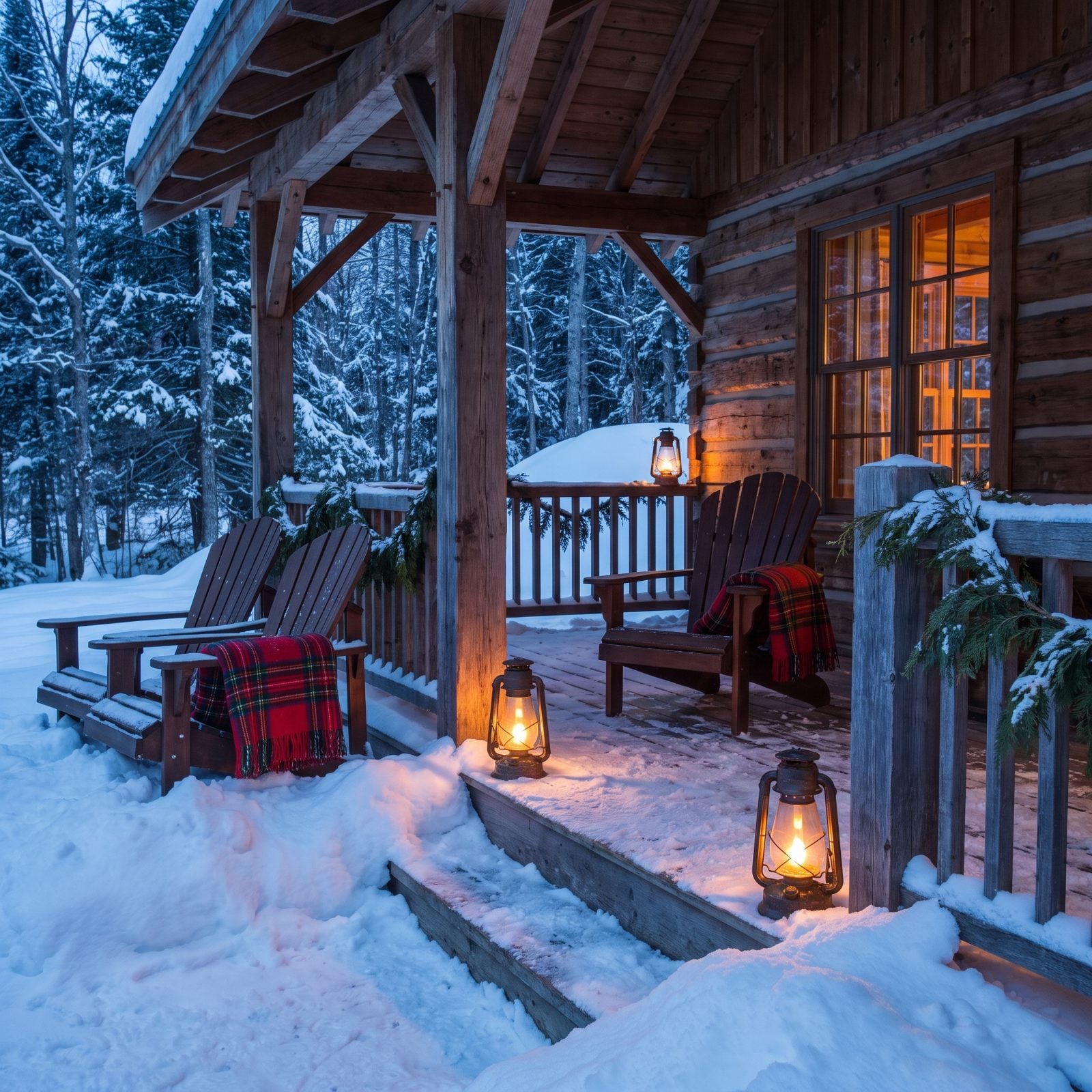
The porch is where Christmas greets people before they’re even inside, and most cabins waste it completely.
Fold heavy plaid wool blankets over the chair arms and set storm lanterns at staggered heights along the floor and rail. Real candles inside glass out here, none of those plastic flicker-bulbs. The lanterns throw gold onto blue snow, and that contrast is what does the work. Warm against cold makes a lit porch feel like a welcome instead of a security measure.
5. Fresh Greenery Framing Interior Doorways
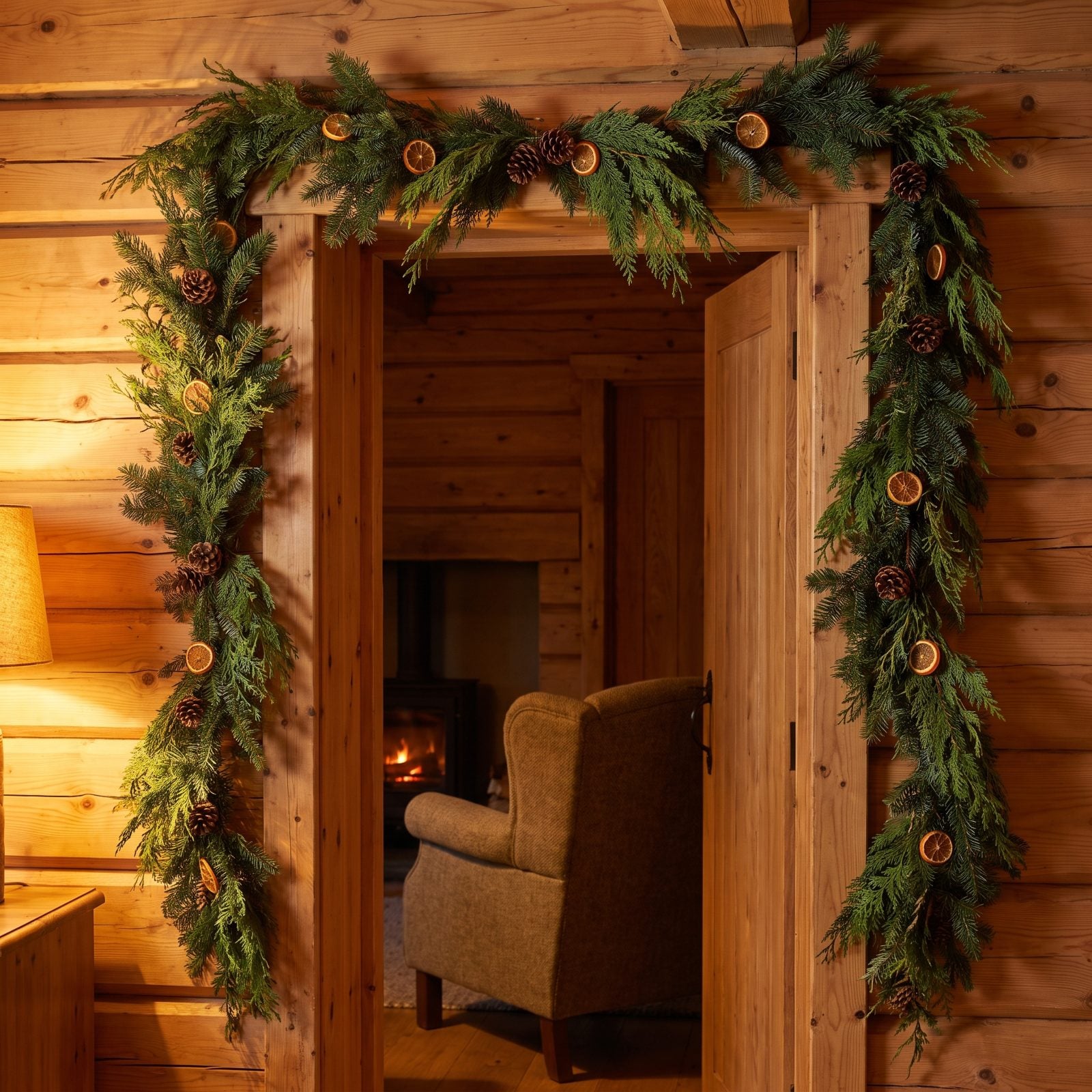
Everyone decorates the mantel and forgets the doors you actually walk through.
Pinning fresh fir around an interior doorframe turns a plain opening into something you pass under, not just through. Keep it loose. Garland trimmed into a perfect even tube looks fake and smells like nothing, while a branch sticking out at an odd angle is the branch that convinces people it’s real.
And the scent is half the reason to bother. Every time someone crosses the threshold they catch a hit of cut pine, which no candle quite nails.
4. Bells Tied to the Inside Door Handle
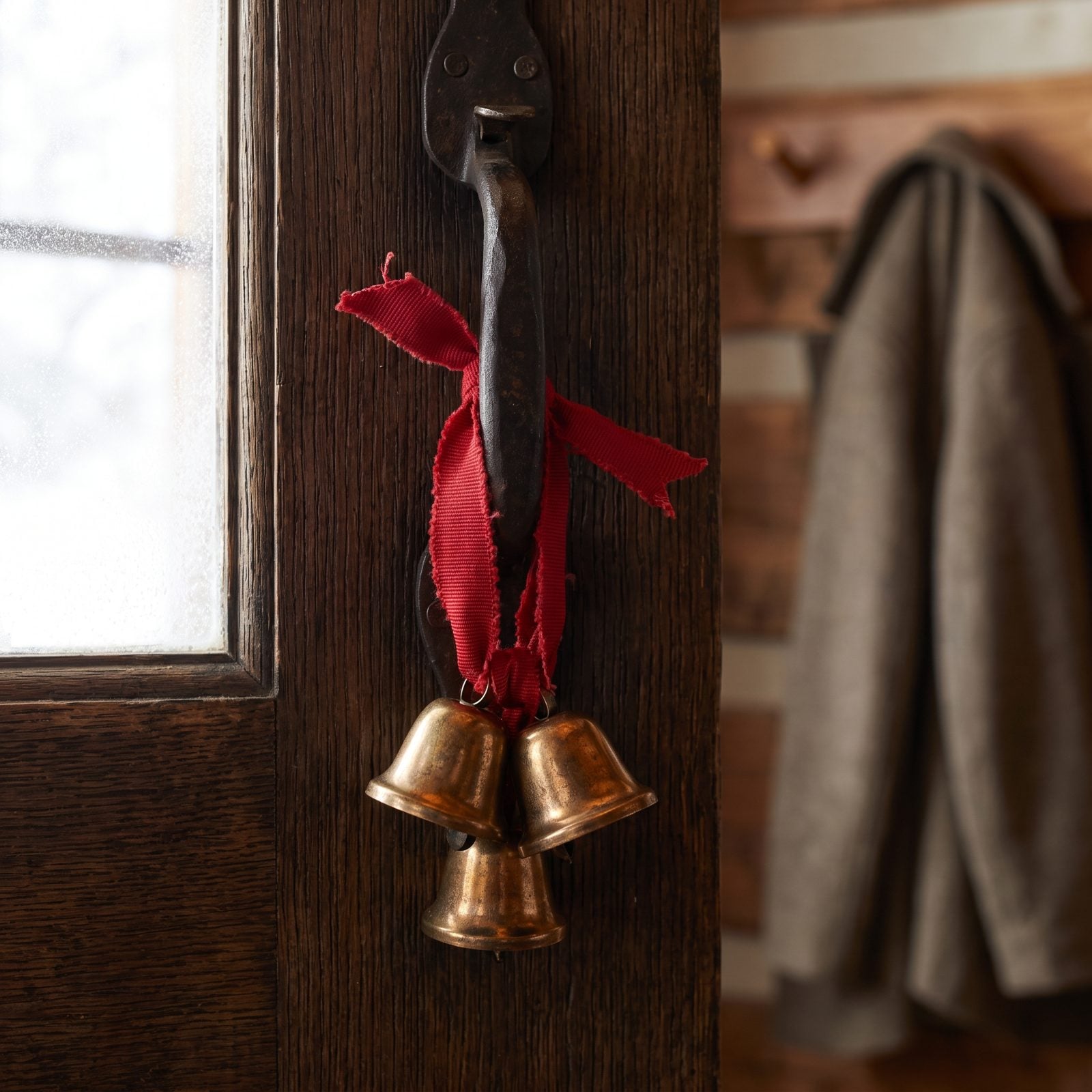
This one is sound, not sight. A small cluster of brass bells tied to the inside door handle means Christmas announces every arrival and departure before anyone says a word.
Pick bells with a real jingle, not a tinny rattle. Aged brass on a short red grosgrain ribbon does it. There’s a reason this detail sticks in people’s memory decades later: the ear places a sound faster than the eye places an image.
3. A Handmade Advent Calendar on a Timber Wall
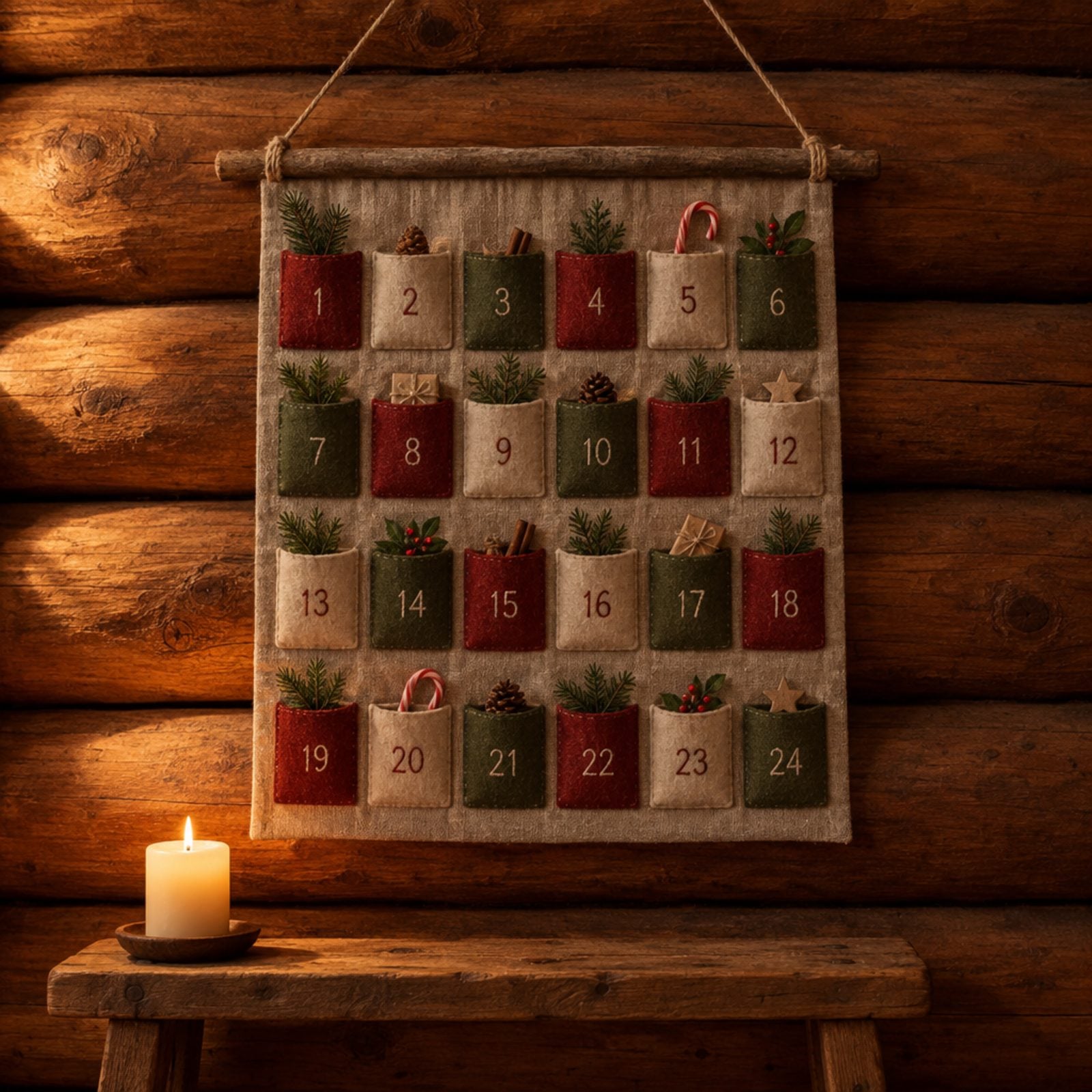
Store-bought advent calendars are chocolate behind cardboard. They don’t belong on a timber wall.
A handmade linen advent calendar, with felt pockets and hand-stitched numbers, reads as something kept and reused year after year, which is the quality a cabin rewards. Hang it low enough that the little hands counting down can actually reach the pockets.
Fill a few pockets with greenery sprigs or candy canes so it looks lived-in rather than waiting on December 1st.
2. A Miniature Village Displayed on a Rough-Hewn Console
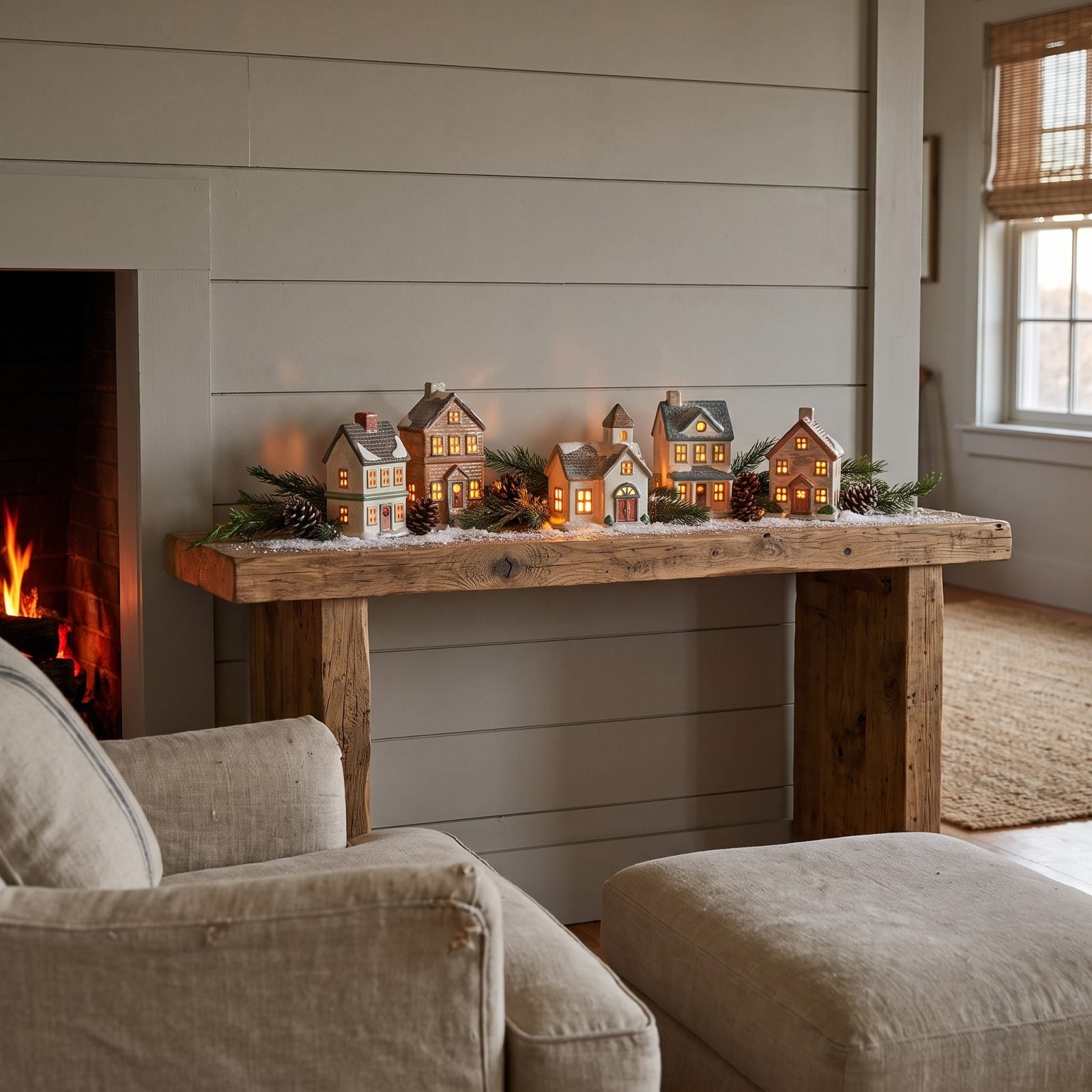
The lit ceramic village is where restraint earns its keep. Six or seven little houses on a rough timber console look like a hamlet in the snow. Thirty of them look like a yard sale.
Group them loosely, leave gaps, and tuck real greenery and pinecones between the buildings so the base doesn’t read as plastic. The magic lives in the interior glow. Those tiny lit windows against the dark wood echo exactly what your actual cabin windows are doing outside.
1. Electric Candles Creating Warm Windowlight Against the Snow
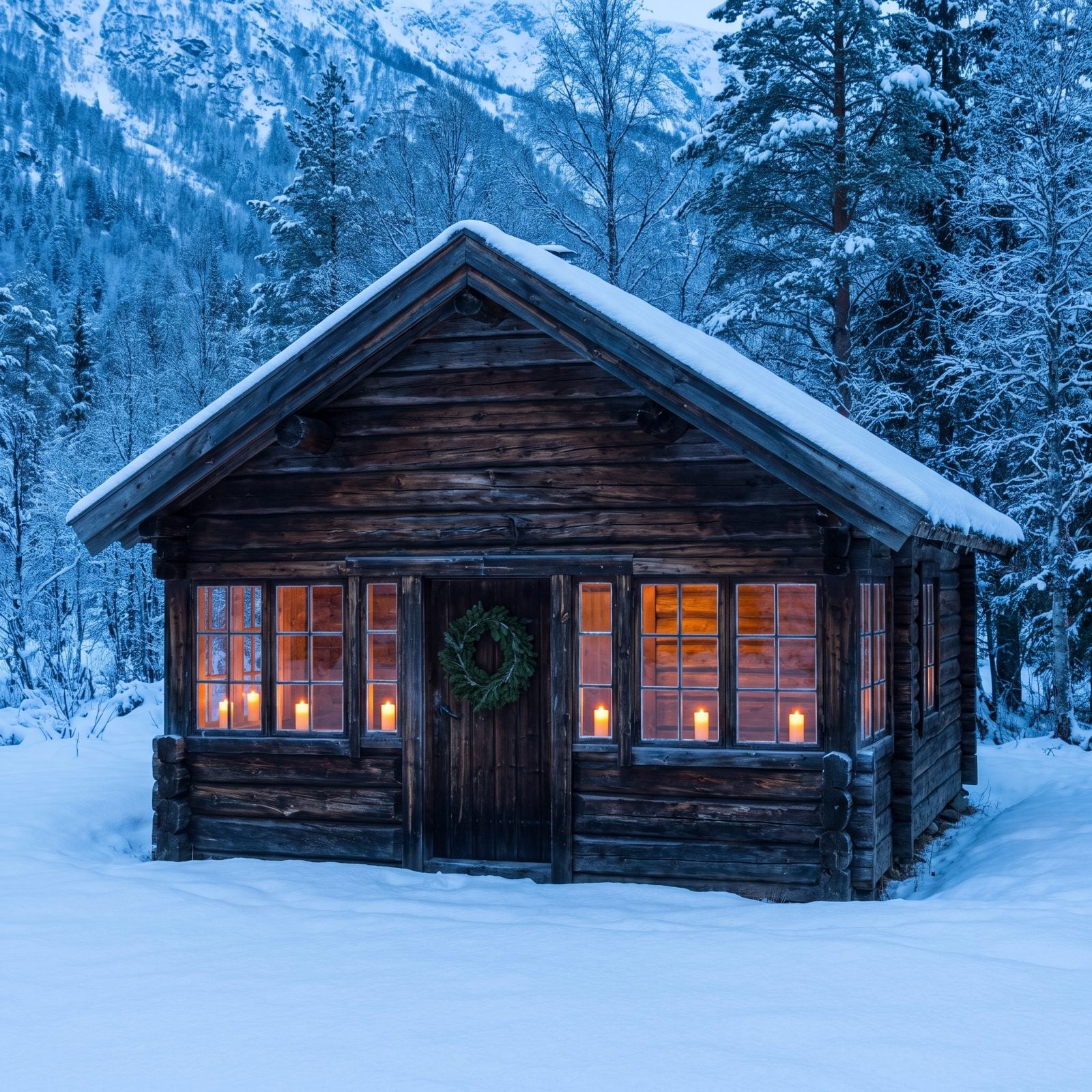
From the outside at dusk, a cabin lives or dies by its windows.
A single warm white window candle in each pane does what a yard full of inflatables never will. The light spills gold onto blue snow, and anyone coming up the drive reads it as home from a long way off. Match the bulbs to warm white, never cool. Blue-white electric candles look like a vacant office and kill the effect in one flick.
🔥 Would you like to save this?
Please note that some of the imagery in this article were created with the aid of AI image generators.